


Product Monograph - PHL-Hydromorphone -Syr 1mg/mL
ACTIONS AND CLINICAL PHARMACOLOGY
phl-HYDROmorphone (HYDROmorphone hydrochloride) is a hydrogenated ketone of morphine.
It is an opioid analgesic with many of the effects common to the class of drugs.
Central Nervous System: Opioid analgesics have multiple actions but exert their primary effects on the central nervous system and organs containing smooth muscle. The principal actions of therapeutic value are analgesia and sedation. A significant feature of the analgesia is that it occurs without loss of consciousness. Opioid analgesics also suppress the cough reflex and cause respiratory depression, mood changes, mental clouding, euphoria, dysphoria, nausea, vomiting and electroencephalographic changes. The precise mode of analgesic action of opioid analgesics is unknown. However, specific CNS opiate receptors have been identified. Opioids are believed to express their pharmacological effects by combining with these receptors. Opioids depress the cough reflex by direct effect on the cough centre in the medulla. Opioids produce respiratory depression by direct effect on brain stem respiratory centers. The mechanism of respiratory depression also involves a reduction in the responsiveness of the brain stem respiratory centers to increases in carbon dioxide tension. Opioids cause miosis. Pinpoint pupils are a common sign of opioid overdose but are not pathognomonic (i.e. pontine lesions of hemorrhagic or ischemic origin may produce similar findings) and marked mydriasis occurs when asphyxia intervenes.
Gastrointestinal Tract and Other Smooth Muscle: Gastric, biliary and pancreatic secretions are decreased by opioids. Opioids cause a reduction in motility associated with an increase in tone in the antrum portion of the stomach and duodenum. Digestion of food in the small intestine is delayed and propulsive contractions are decreased. Propulsive peristaltic waves in the colon are decreased, and tone may be increased to the point of spasm. The end result is constipation.
Opioids can cause a marked increase in biliary tract pressure as a result of spasm of the sphincter of Oddi.
Cardiovascular System: Certain opioids produce peripheral vasodilation which may result in orthostatic hypotension. Release of histamine may occur with opioids and may contribute to opioid-induced hypotension. Other manifestations of histamine release and/or peripheral vasodilation may include pruritus, flushing and red eyes. Effects on the myocardium after i.v.
administration of opioids are not significant in normal persons, vary with different opioid analgesic agents and vary with the hemodynamic state of the patient, state of hydration and sympathetic drive.
Pharmacokinetics: In normal human volunteers HYDROmorphone is metabolized primarily in the liver. It is excreted predominantly as the glucuronidated conjugate, with small amounts of parent drug and minor amounts of 6-hydroxy reduction metabolites. Following intravenous administration of HYDROmorphone to normal volunteers, the mean half-life of elimination was
2.64 " 0.88 hours.1 The mean volume of distribution was 91.5 liters, or 1.22 L/kg based on subject weight, suggesting extensive tissue uptake 1. HYDROmorphone is rapidly removed from the bloodstream and distributed to skeletal muscle, kidneys, liver, intestinal tract, lungs, spleen and brain. It also crosses the placental membranes. In terms of area under the analgesic effect-time curve, HYDROmorphone is approximately 5 to 7 times more potent than morphine
(i.e. 1.5-2 mg of HYDROmorphone produces analgesia equal to that produced by 10 mg of morphine). After intramuscular administration, HYDROmorphone has a slightly more rapid onset and slightly shorter duration of action than morphine. The duration of analgesia in the non-tolerant patient with usual doses may be up to 4-5 hours. However, in tolerant subjects, duration will vary substantially depending on tolerance and dose. Dose should be adjusted so that 3-4 hours of pain relief may be achieved.
INDICATIONS AND CLINICAL USE
phl-HYDROmorphone (HYDROmorphone hydrochloride) is indicated for relief of moderate to severe pain.
CONTRAINDICATIONS
phl-HYDROmorphone (HYDROmorphone hydrochloride) is contraindicated in patients with known hypersensitivity to the drug; patients with respiratory depression in the absence of resuscitative equipment; and in patients with status asthmaticus.
WARNINGS
Drug Dependence: phl-HYDROmorphone (HYDROmorphone hydrochloride) can produce drug dependence of the morphine type and therefore has the potential for being abused. As with other opioid drugs, psychic dependence, physical dependence and tolerance are likely to develop on repeated administration of HYDROmorphone, and it should be prescribed and administered with the same degree of caution appropriate for the use of morphine. Infants born to mothers physically dependent on HYDROmorphone will also be physically dependent and may exhibit respiratory difficulties and withdrawal symptoms (see PRECAUTIONS: Dependence Liability).
Impaired Respiration: Predisposed individuals include the elderly, the debilitated, and those suffering from conditions accompanied by hypoxia or hypercapnia, when even moderate therapeutic doses may dangerously decrease pulmonary ventilation. phl-HYDROmorphone should be used with extreme caution in patients with chronic obstructive pulmonary disease or corpulmonale, patients having a substantially decreased respiratory reserve, hypoxia, hypercapnia, or pre-existing respiratory depression. In such patients, even the usual therapeutic doses of opioid analgesics may decrease respiratory drive while simultaneously increasing airway resistance to the point of apnea.
Severe pain antagonizes the subjective and respiratory depressant actions of HYDROmorphone.
However, should pain suddenly subside, these effects may rapidly become manifest.
Patients who are scheduled for cordotomy or other interruptions of pain transmission pathways should not receive phl-HYDROmorphone within 24 hours of the procedure.
Head Injury and Increased lntracranial Pressure: The respiratory depressant effects of
HYDROmorphone with carbon dioxide retention and secondary elevation of cerebrospinal fluid pressure may be markedly exaggerated in the presence of head injury, other intracranial lesions, or pre-existing increase in intracranial pressure. Opioid analgesics, including HYDROmorphone may produce effects which can obscure the clinical course and neurologic signs of further increase in pressure in patients with head injuries.
Hypotensive Effect: Opioid analgesics, including HYDROmorphone, may cause severe hypotension in individuals whose ability to maintain normal blood pressure has already been compromised by depleted blood volume, or the concurrent administration of drugs such as phenothiazines and other tranquilizers, sedative-hypnotics, tricyclic antidepressants or general anesthetics (see also PRECAUTIONS: Drug Interactions). phl-HYDROmorphone may produce orthostatic hypotension in ambulatory patients. phl-HYDROmorphone should be administered with caution to patients in circulatory shock, since vasodilation produced by the drug may further reduce cardiac output and blood pressure.
Use in Pregnancy (see WARNINGS: Drug Dependence)
Human Data: There are no well controlled studies in women. Reports based on marketing experience do not identify any specific teratogenic risks following routine (short-term) clinical use.
Although there is no clearly defined risk, such reports do not exclude the possibility of infrequent or subtle damage to the human fetus. phl-HYDROmorphone should be used in pregnant women only when clearly needed (see also PRECAUTIONS: Dependence Liability).
Animal Data: Adequate animal studies on reproduction have not been performed to determine whether HYDROmorphone affects fertility in males or females.
Literature reports of HYDROmorphone hydrochloride administration to pregnant hamsters show that HYDROmorphone is teratogenic at a dose of 20 mg/kg which is 600 times the human dose. A maximal teratogenic effect (50% of fetuses affected) in the hamster was observed at a dose of
125 mg/kg.2
PRECAUTIONS
General: In general, opioids should be given with caution and the initial dose should be reduced for the elderly or debilitated and those with severe impairment of hepatic, pulmonary or renal function, myxedema or hypothyroidism, adrenocortical insufficiency (e.g. Addison's disease); CNS depression or coma; elevated intracranial pressure; toxic psychosis; prostatic hypertrophy or urethral stricture; gallbladder disease; acute alcoholism; delirium tremens or kyphoscoliosis.
The administration of opioid analgesics including HYDROmorphone may obscure the diagnosis or clinical course in patients with convulsive disorders.
Opioid analgesics including HYDROmorphone should also be used with caution in patients about to undergo surgery of the biliary tract, since it may cause spasm of the sphincter of Oddi.
Dependence Liability: Opioid analgesics may cause psychological and physical dependence
(see WARNINGS). Physical dependence results in withdrawal symptoms in patients who abruptly discontinue the drug. Withdrawal symptoms may also be precipitated in the patient with physical dependence by the administration of a drug with opioid antagonist activity, e.g. naloxone or mixed agonist-antagonists, e.g. pentazocine (see also SYMPTOMS AND TREATMENT OF
OVERDOSAGE). Physical dependence usually does not occur to a clinically significant degree until after several weeks of continued opioid usage. Tolerance, in which increasingly large doses are required in order to produce the same degree of analgesia, is initially manifested by a shortened duration of analgesic effect and, subsequently, by decreases in the intensity of analgesia. The dose required to produce analgesia is, therefore, related to the degree of tolerance.
In chronic-pain patients in whom opioid analgesics are abruptly discontinued, a severe abstinence syndrome should be anticipated. This may be similar to the abstinence syndrome
noted in patients withdrawing from heroin. The latter abstinence syndrome may be characterized by restlessness, lacrimation, rhinorrhea, yawning, perspiration, gooseflesh, restless sleep or
"yen" and mydriasis during the first 24 hours. These symptoms may increase in severity over the next 72 hours, and may be accompanied by increasing irritability, anxiety, weakness, twitching and spasms of muscles, kicking movements, severe backache, abdominal and leg pains, abdominal and muscle cramps, hot and cold flashes, insomnia, nausea, anorexia, vomiting, intestinal spasm, diarrhea, coryza and repetitive sneezing, increase in body temperature, blood pressure, respiratory rate and heart rate. Because of excessive loss of fluids through sweating, or vomiting and diarrhea, there is usually marked weight loss, dehydration, ketosis, and disturbances in acid-base balance. Cardiovascular collapse can occur. Without treatment, most observable symptoms disappear in 5-14 days; however, there appears to be a phase of secondary or chronic abstinence which may last for 2-6 months and is characterized by insomnia, irritability, muscular aches and autonomic instability. In the treatment of physical dependence on phl-HYDROmorphone (HYDROmorphone hydrochloride), the patient may be detoxified by gradual reduction of the dosage, although this is unlikely to be necessary in the terminal cancer patient. If abstinence symptoms become severe, the patient may be given methadone. Temporary administration of tranquilizers and sedatives may aid in reducing patient anxiety. Gastrointestinal disturbances or dehydration should be treated accordingly.
Drug Interactions: The concomitant use of other central nervous system depressants including sedatives or hypnotics, general anesthetics, phenothiazines, tranquilizers and alcohol may produce additive depressant effects. Respiratory depression, hypotension and profound sedation or coma may occur. When such combined therapy is contemplated the dose of one or both agents should be reduced. Opioid analgesics, including HYDROmorphone, may enhance the action of neuromuscular blocking agents and produce an increased degree of respiratory depression.
Nursing Mothers: Low levels of opioid analgesics have been detected in human milk. As a general rule, nursing should not be undertaken while a patient is receiving HYDROmorphone since it and other drugs in this class may be excreted in the milk.
Pediatric Use: Safety and effectiveness in children have not been established.
ADVERSE REACTIONS
The adverse effects of phl-HYDROmorphone (HYDROmorphone hydrochloride) are similar to those of other opioid analgesics and represent an extension of pharmacological effects of the drug class. The major hazards include respiratory depression and apnea. To a lesser degree, circulatory depression, respiratory arrest, shock and cardiac arrest have occurred.
The most frequently observed adverse effects are lightheadedness, dizziness, sedation, nausea, vomiting and sweating. These seem to be more prominent in ambulatory patients and in those not experiencing severe pain. Some adverse reactions in ambulatory patients may be alleviated if the patient lies down. When instituting prolonged therapy with an opioid for chronic pain, the prescribing of antiemetics for nausea and vomiting and an appropriate regimen of bowel management for constipation (stool softeners, laxatives) should be considered.
Sedation: Most patients experience initial drowsiness partly for pharmacokinetic reasons and partly because patients often recuperate from prolonged fatigue after the relief of persistent pain.
Drowsiness usually clears in 3 to 5 days and is usually not a reason for concern providing that it is not excessive, or associated with unsteadiness or confusional symptoms. If excessive sedation persists the reason for it must be sought. Some of these are: concomitant sedative medications, hepatic or renal failure, exacerbated respiratory failure, higher doses than tolerated in an older patient, or the patient is actually more severely ill than realized. If it is necessary to reduce the dose, it can be carefully increased again after 3 or 4 days if it is obvious that the pain is not being well controlled. Dizziness and unsteadiness may be caused by postural hypotension, particularly in elderly or debilitated patients. It can be alleviated if the patient lies down. Because of the slower clearance in patients over 50 years of age, an appropriate dose in this age group may be as low as half or less the usual dose in the younger age group.
Nausea and Vomiting: Nausea and vomiting occur frequently after single doses of opioids or as an early unwanted effect of regular opioid therapy. When instituting prolonged therapy for chronic pain, the routine prescription of an antiemetic should be considered. Patients taking the equivalent of a single dose of 2 mg or more of HYDROmorphone i.m. usually require an antiemetic during early therapy. Small doses of prochlorperazine or haloperidol are the most frequently prescribed antiemetics. Nausea and vomiting tend to lessen in a week or so but may
persist due to opioid-induced gastric stasis. In such patients, gastrointestinal prokinetic agents are often useful.
Constipation: Practically all patients become constipated while taking opioids on a persistent basis. In some instances, particularly the elderly or bedridden, fecal impaction may result. It is essential to caution the patients in this regard and to institute an appropriate regimen of bowel management at the start of prolonged opioid therapy. Softeners, laxatives and other appropriate measures should be used as required.
Less Frequently Observed with Opioid Analgesics: General and CNS: Dysphoria, euphoria, weakness, headache, agitation, tremor, uncoordinated muscle movements, alterations of mood
(nervousness, apprehension, depression, floating feelings, dreams), muscle rigidity, paresthesia, muscle tremor, blurred vision, nystagmus, diplopia and miosis, transient hallucinations, and disorientation, visual disturbances, insomnia and increased intracranial pressure may occur.
Cardiovascular: Flushing of the face, chills, tachycardia, bradycardia, palpitations, faintness, syncope, hypotension arid hypertension have been reported.
Respiratory: Bronchospasm and laryngospasm have been known to occur.
Gastrointestinal: Dry mouth, constipation, biliary tract spasm, anorexia, diarrhea, cramps and taste alterations have been reported.
Genitourinary: Urinary retention or hesitancy, and antidiuretic effects have been reported.
Dermatologic: Pruritus, urticaria, other skin rashes, wheal and flare over the vein with intravenous injection and diaphoresis have been reported with opioid analgesics.
You can report any suspected adverse reactions associated with the use of health products to the Canada Vigilance Program by one of the following 3 ways:
$ Report online at www.healthcanada.gc.ca/medeffect
$ Call toll-free at 1-866-234-2345
$ Complete a Canada Vigilance Reporting Form and:
- Fax toll-free to 1-866-678-6789, or
Mail to: Canada Vigilance Program
Health Canada
Postal Locator 0701E
Ottawa, ON K1A 0K9
Postage paid labels, Canada Vigilance Reporting Form and the adverse reaction reporting guidelines are available on the MedEffect™ Canada Web site at
www.healthcanada.gc.ca/medeffect.
NOTE: Should you require information related to the management of side effects, contact your health professional. The Canada Vigilance Program does not provide medical advice.
SYMPTOMS AND TREATMENT OF OVERDOSAGE
Symptoms: Serious overdosage with HYDROmorphone is characterized by respiratory depression, somnolence progressing to stupor or coma, skeletal muscle flaccidity, cold and clammy skin, constricted pupils, and sometimes bradycardia and hypotension. In serious overdosage, particularly following intravenous injection, apnea, circulatory collapse, cardiac arrest and death may occur.
Treatment: In the treatment of overdosage, primary attention should be given to the re-establishment of adequate respiratory exchange through provision of a patent airway and institution of assisted or controlled ventilation. It should be borne in mind that in individuals who are physically dependent on opioids and are receiving large doses of these drugs, administration of the usual dose of opioid antagonist will precipitate an acute withdrawal syndrome. The severity will depend on the degree of physical dependence and the dose of the antagonist administered.
Use of an opioid antagonist in such persons should be avoided. If it is necessary to treat serious respiratory depression in the physically dependent patient, the antagonist should be administered with extreme care and by titration commencing with 10-20% of the usual recommended initial dose of the antagonist.
Respiratory depression which may result from overdosage, or unusual sensitivity to
HYDROmorphone, in a non-opioid-tolerant patient, can be managed with the opioid antagonist naloxone. A dose of naloxone (usually 0.4 to 2.0 mg) should be administered intravenously, if possible, simultaneously with respiratory resuscitation. The dose can be repeated in 3 minutes.
Naloxone should not be administered in the absence of clinically significant respiratory or circulatory depression. Naloxone should be administered cautiously to persons who are known or suspected to be physically dependent on HYDROmorphone. In such cases, an abrupt or complete reversal of opioid effects may precipitate an acute abstinence syndrome.
Since the duration of action of HYDROmorphone may exceed that of the antagonist, the patient should be kept under continued surveillance; repeated doses of the antagonist may be required to maintain adequate respiration. Other supportive measures should be applied when indicated.
Supportive measures, including oxygen and vasopressors, should be employed in the management of circulatory shock and pulmonary edema accompanying overdosage, as indicated. Cardiac arrest or arrhythmias may require cardiac massage or defibrillation.
| For management of a suspected drug overdose, contact your regional | ||
| Poison Control Centre Immediately. |
DOSAGE AND ADMINISTRATION
phl-HYDROmorphone Syrup: Orally, for adults, 2 to 4 mg every 4 to 6 hours as required.
phl-HYDROmorphone Suppositories: One rectal suppository (3 mg) provides long-lasting relief and is especially useful at bedtime.
If phl-HYDROmorphone is substituted for a different opioid analgesic, the following equivalency
Table (Table 1) should be used as a guide to determine the appropriate dose of phl-
HYDROmorphone.
TABLE I
OPIOID ANALGESICS: APPROXIMATE ANALGESIC EQUIVALENCIES (A)
DRUG
Equivalent Dose (mg)(b)
(compared to morphine 10 mg IM)
Duration of
Action (hours)
Parenteral
Oral
Strong Opioid Agonists:
Morphine (single dose)
(chronic dose)
10
10
60
20 - 30(c)
3 - 4
3 - 4
HYDROmorphone
1.5 - 2
6 - 7.5
2 - 4
Anileridine
25
75
2 - 3
Levorphanol
2
4
4 - 8
Meperidine (d)
75
300
1 - 3
Oxymorphone
1.5
5 (rectal)
3 - 4
Methadone (e)
Heroin
5 - 8
10 - 15
3 - 4
Weak Opioid Agonists:
Codeine
120
200
3 - 4
Oxycodone
5 - 10
10 - 15
2 - 4
Propoxyphene
50
100
2 - 4
Mixed Agonist-Antagonists: (f)
Pentazocine (d)
60
180
3 - 4
Nalbuphine
10
3 - 6
Butorphanol
2
3 - 4
(a) Cancer Pain: A Monograph on the Management of Cancer Pain, Health and Welfare Canada, 1984.
Foley, KM., New Engl. J. Med. 313: 84-95,1985.
Aronoff, G. M. and Evans, W. O., In: Evaluation and Treatment of Chronic Pain, 2nd Ed., G. M. Aronoff (Ed.), Williams and Wilkins, Baltimore, pp. 359-368, 1992.
Chemy, N.I. and Portenoy, R.K., In: Textbook of Pain, 3rd Ed., P.D. Wall and R. Melzack (Eds.), Churchill Livingstone, London, pp. 1437-1467, 1994.
(b) Most of these data were derived from single-dose, acute pain studies and should be considered an approximation for selection of doses when treating chronic pain.
(c) For acute pain, the oral dose of morphine is six times the injectable dose. However, for chronic dosing, this ratio becomes 2 or 31, possibly due to the accumulation of active metabolites. (d) These drugs are not recommended for the management of chronic pain.
(e) Extremely variable equianalgesic dose. Patients should undergo personalized titration starting at an equivalent to 1/10 of the morphine dose.
(f) Mixed agonist-antagonists can precipitate withdrawal in patients on pure opioid agonists.
PHARMACEUTICAL INFORMATION
Drug Substance
Proper name: HYDROmorphone Hydrochloride
Chemical Name: 4,5α-Epoxy-3-hydroxy-I 7-methylmorphinan-6-one hydrochloride
Structural Formula:
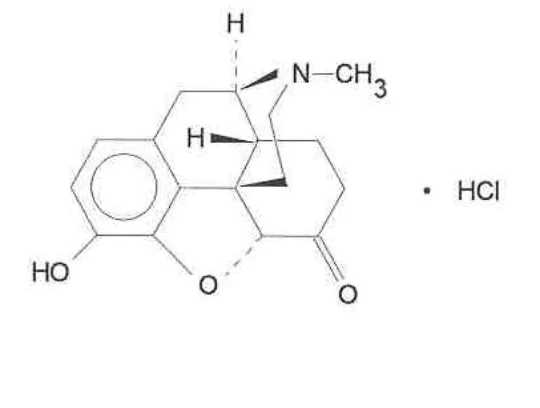
Molecular Formula: C17H19NO3@HCI
Molecular Weight: 321.8 g/mol
Description: A white odourless crystalline powder with a bitter taste. It is affected by light.
Soluble in 3 parts of water and in 100 parts of alcohol (90%). Almost insoluble in chloroform and in ether. Its specific rotation is between -136o and -139o. lt has a pka of 8.2 (20o). Melting point 305-315o, with decomposition.
Composition:
phl-HYDROmorphone Syrup: Each mL contains 1 mg of HYDROmorphone hydrochloride. Also contains, glycerin, methylparaben, propylparaben, sucrose and water. Final pH about 5.3.
phl-HYDROmorphone Suppositories: Each suppository contains 3 mg of HYDROmorphone hydrochloride. Also contains Wecobee M.
Stability and Storage Recommendations
The syrup and suppositories should be stored at 15-30oC. Protect from light.
AVAILABILITY OF DOSAGE FORMS
phl-HYDROmorphone Syrup: Each mL contains 1 mg of HYDROmorphone hydrochloride. Bottles of 500 mL.
phl-HYDROmorphone Suppositories: Each suppository contains 3 mg of HYDROmorphone hydrochloride. Boxes of 10 suppositories.
REFERENCES
- 1. Vallner JJ, Stewart JT, Kotzan JA, Kirsten EB, Honigberg IL. Pharmacokinetics and bioavailability of HYDROmorphone following intravenous and oral administration to human subjects. J Clin Pharmacol 1981; 21: 152-156.
- 2.
Geber WF, Schramm LC. Congenital malformations of the central nervous system produced by narcotic analgesics in the hamster. Am J Obstet Gynecol 1975; 123(7):
705-713.