


Product Monograph - PHL-Quetiapine
SUMMARY PRODUCT INFORMATION
Route of Administration | Dosage Form / Strength | Nonmedicinal Ingredients |
| oral | Tablet / 25 mg ,100 mg, 200 mg and 300 mg | The core of the tablet contains the excipients: dibasic calcium phosphate, lactose, magnesium stearate, microcrystalline cellulose, povidone and sodium starch glycolate The coating of each tablet contains: polyethylene glycol, titanium dioxide and hydroxypropyl methylcellulose. The coating of the 25 mg tablet also contains iron oxide red and iron oxide yellow. The coating of the 100 mg tablet contains iron oxide yellow. The coating of the 200 mg and 300 mg strengths also contain talc. |
INDICATIONS AND CLINICAL USE
Adults:
Schizophrenia
phl-QUETIAPINE (quetiapine fumarate) is indicated for the management of the manifestations of schizophrenia. The antipsychotic efficacy of quetiapine was established in short-term (6-week) controlled inpatient trials (see Part II: CLINICAL TRIALS). The efficacy of quetiapine in long-term use, that is, for more than 6 weeks, has not been systematically evaluated in controlled trials of patients with manifestations of schizophrenia.
Bipolar Disorder
phl-QUETIAPINE is indicated as monotherapy for the acute management of manic episodes associated with bipolar disorder.
The efficacy of quetiapine fumarate in bipolar mania was established in two 12-week clinical trials of bipolar patients (see Part II: CLINICAL TRIALS). The safety and effectiveness of quetiapine fumarate for long-term use, and for prophylactic use in bipolar mania has not been evaluated.
Geriatrics (>65 years of age): Quetiapine fumarate is not indicated in elderly patients with dementia. See WARNINGS AND PRECAUTIONS, Serious Warnings and Precautions Box and Special Populations.
Pediatrics (<18 years of age): The safety and efficacy of quetiapine fumarate in children under the age of 18 years have not been established and its use is not recommended (see WARNINGS AND PRECAUTIONS, Special Populations).
CONTRAINDICATIONS
phl-QUETIAPINE (quetiapine fumarate) is contraindicated in patients with a known hypersensitivity to this medication or any of its ingredients. For a complete listing, see the DOSAGE FORMS, COMPOSITION AND PACKAGING.
WARNINGS AND PRECAUTIONS
Serious Warnings and Precautions
Increased Mortality in Elderly Patients with Dementia
Elderly patients with dementia treated with atypical antipsychotic drugs are at an increased risk of death compared to placebo. Analyses of thirteen placebo-controlled trials with various atypical antipsychotics (modal duration of 10 weeks) in these patients showed a mean 1.6 fold increase in death rate in the drug-related patients. Although the causes of death were varied, most of the deaths appeared to be either cardiovascular (e.g., heart failure, sudden death) or infectious (e.g., pneumonia) in nature (see WARNINGS AND PRECAUTIONS, Special Populations, Use in Geriatric Patients with Dementia)
General
Body Temperature Regulation: Disruption of the body's ability to reduce core body temperature has been attributed to antipsychotic agents (including quetiapine fumarate). Appropriate care is advised when prescribing phl-QUETIAPINE for patients who will be experiencing conditions which may contribute to an elevation of core temperature, e.g., exercising strenuously, exposure to extreme heat, receiving concomitant medication with anticholinergic activity, or being subject to dehydration. See Adverse Reactions, Clinical Trial Adverse Drug Reactions, Other Adverse Events, Pyrexia.
Acute Withdrawal (discontinuation) Symptoms: Acute discontinuation symptoms such as insomnia, nausea, headache, diarrhea, vomiting, dizziness and irritability, have been described after abrupt cessation of antipsychotic drugs including quetiapine. Gradual withdrawal over a period of at least one to two weeks is advisable. Symptoms usually resolved after 1 week post-discontinuation.
Carcinogenesis and Mutagenesis
For animal data, see Part II: TOXICOLOGY.
Cardiovascular
Hypotension and Syncope: As with other drugs that have high α1 adrenergic receptor blocking activity, quetiapine may induce orthostatic hypotension, tachycardia, dizziness, and sometimes syncope, especially during the initial dose titration period. These events may lead to falls (see ADVERSE REACTIONS).
Syncope was reported in 1% (35/ 4083) of patients treated with quetiapine fumarate, compared with 0.3% (3/1006) on placebo, and 0.4% (2/527) on active control drugs. The risk of hypotension and syncope may be reduced by more gradual titration to the target dose (see DOSAGE AND ADMINISTRATION). phl-QUETIAPINE should be used with caution in patients with known cardiovascular disease (e.g., history of myocardial infarction or ischemic heart disease, heart failure or conduction abnormalities), cerebrovascular disease, or other conditions predisposing to hypotension (e.g., dehydration, hypovolemia and treatment with antihypertensive medications). (see OVERDOSAGE)
QT Prolongation: In clinical trials, quetiapine was not associated with a persistent increase in absolute QT intervals. However, in post-marketing experience, there were cases reported of QT prolongation with overdose (see OVERDOSAGE). As with other antipsychotics, caution should be exercised when quetiapine is prescribed in patients with cardiovascular disease or family history of QT prolongation. Also caution should be exercised when quetiapine is prescribed either with medicines known to increase QT interval or with concomitant neuroleptics, especially for patients with increased risk of QT prolongation, i.e., the elderly, patients with congenital long QT syndrome, congestive heart failure, heart hypertrophy, hypokalemia, or hypomagnesemia (see DRUG INTERACTIONS).
Endocrine and Metabolism
Worsening of More than one Metabolic Parameter (among Cholesterol and Triglyceride Elevations; Hyperglycaemia; Weight Gain): In some patients, a worsening of more than one of the metabolic factors of weight, blood glucose and lipids was observed in clinical studies. Changes in these parameters should be managed as clinically appropriate.
Cholesterol and Triglyceride Elevations: Very common (≥10%) cases of elevations in serum triglyceride levels (≥2.258 mmol/L on at least one occasion), elevations in total cholesterol (predominantly LDL cholesterol) (≥6.2064 mmol/L on at least one occasion) and decreases in HDL cholesterol (<1.025 mmol/L males; <1.282 mmol/L females at any time) have been observed during treatment with quetiapine in clinical trials (see ADVERSE REACTIONS). Lipid changes should be managed as clinically appropriate.
In short-term placebo-controlled schizophrenia trials, quetiapine fumarate-treated patients showed mean increases from baseline in cholesterol and triglyceride of 11% and 17%, respectively, compared to mean decreases in the placebo-treated patients. LDL cholesterol was not measured in these trials.
In short-term placebo-controlled bipolar depression trials, quetiapine fumarate -treated patients had decreases from baseline in mean cholesterol and increases from baseline in mean triglyceride of 0.7% and 12%, respectively, compared to decreases in mean cholesterol and increases in mean triglyceride of 1.8% and 2% respectively for placebo-treated patients.
Hyperglycaemia: As with other antipsychotics, hyperglycaemia and diabetes mellitus (including exacerbation of pre-existing diabetes, diabetic ketoacidosis, and diabetic coma including some fatal cases) in the aggregate have been reported rarely (≥0.01% - <0.1%) during the use of quetiapine in post-marketing experience, sometimes in patients with no reported history of hyperglycaemia (see ADVERSE REACTIONS, Post-Market Adverse Drug Reactions).
Increases in blood glucose and hyperglycaemia, and occasional reports of diabetes, have been observed in clinical trials with quetiapine (see ADVERSE REACTIONS, Abnormal Hematologic and Clinical Chemistry Findings).
Assessment of the relationship between atypical antipsychotic use and glucose abnormalities is complicated by the possibility of an increased background risk of diabetes mellitus in patients with schizophrenia and the increasing incidence of diabetes mellitus in the general population. Given these confounders, the relationship between atypical antipsychotic use and hyperglycaemia-related adverse events is not completely understood. However, epidemiological studies suggest an increased risk of treatment-emergent hyperglycaemia related adverse events in patients treated with the atypical antipsychotics. Precise risk estimates for hyperglycaemia-related adverse events in patients treated with atypical antipsychotics are not available.
Patients should have baseline and periodic monitoring of blood glucose. Patients treated with atypical antipsychotics should be monitored for symptoms of hyperglycaemia including polydipsia, polyuria, polyphagia, and weakness. Patients who develop symptoms of hyperglycaemia during treatment with atypical antipsychotics should undergo fasting blood glucose testing. In some cases, hyperglycaemia has resolved when the atypical antipsychotic was discontinued; however, some patients required continuation of anti-diabetic treatment despite discontinuation of the suspect drug. Patients with an established diagnosis of diabetes mellitus who are started on atypical antipsychotics should be monitored regularly for worsening of glucose control.
Weight Gain: In controlled schizophrenia clinical trials (up to 6 weeks), mean weight gain was approximately 2.3 kg compared to a mean weight gain of 0.1 kilograms in patients taking placebo (n=427). In open-label extension trials, after 9 to 13 weeks of quetiapine fumarate monotherapy, the mean weight increase was 1.58 kg (n=170). After 53 to 78 weeks of treatment, the mean weight increase was 1.98 kg (n=137). These data are obtained from uncontrolled, open-label trials; the relevance of these findings to clinical practice is unknown. Weight change over time appeared to be independent of quetiapine dose (see ADVERSE REACTIONS).
In the acute placebo-controlled bipolar mania clinical trials (up to 12 weeks) mean weight gain in patients taking quetiapine fumarate was 1.8 kg compared to a mean weight loss of 0.1 kg in patients taking placebo. In patients completing the entire 12 weeks of treatment mean weight gain in patients taking quetiapine fumarate was 2.8 kg.
In the acute placebo-controlled bipolar depression clinical trials (8 weeks) mean weight gain in patients taking quetiapine fumarate was 1.15 kg compared to a mean weight gain of 0.1 kg in patients taking placebo. During maintenance treatment, patients treated with quetiapine fumarate 300 mg or placebo lost on average 0.1 kg and 0.6 kg, respectively, while patients treated with quetiapine fumarate 600 mg gained on average 0.8 kg. In patients who completed 40 and 54 weeks of maintenance treatment a small mean decrease was seen in the quetiapine fumarate 300 mg group (-0.2 kg) and placebo group (-0.8 kg) while patients in the quetiapine fumarate 600 mg group showed a mean weight gain of 1.2 kg (see ADVERSE REACTIONS).
Based on the cumulative acute placebo-controlled clinical trial database, weight gain (based on ≥ 7% increase in body weight from baseline) was reported in 9.6% in quetiapine fumarate-treated patients and 3.8% in placebo-treated patients, which occurs predominantly during the early weeks of treatment in adults (see ADVERSE REACTIONS). Patients should have baseline and periodic monitoring of body weight.
Hyperprolactinemia: During clinical trials with quetiapine, elevation in prolactin levels occurred in 3.6% (158/4416) of patients treated with quetiapine compared to 2.6% (51/1968) on placebo (see ADVERSE REACTIONS).
Increased prolactin levels with quetiapine were observed in rat studies. As is common with compounds which stimulate prolactin release, the administration of quetiapine resulted in an increase in the incidence of mammary neoplasms in rats. The physiological differences between rats and humans with regard to prolactin make the clinical significance of these findings unclear. To date, neither clinical nor epidemiological studies have shown an association between chronic administration of drugs that stimulate prolactin release, and mammary tumorigenesis. Tissue culture experiments, however, indicate that approximately one third of human breast cancers are prolactin dependent in vitro; a factor of potential importance if prescription of these drugs is contemplated in a patient with previously detected breast cancer.
Possible manifestations associated with elevated prolactin levels are amenorrhea, galactorrhea, and menorrhagia. Long-standing hyperprolactinemia when associated with hypogonadism may lead to decreased bone mineral density in both female and male subjects.
In the multiple fixed-dose schizophrenia clinical trial there were no differences in prolactin levels at study completion for quetiapine fumarate, across the recommended dose range, and placebo.
Hypothyroidism: Clinical trials in schizophrenia demonstrated that quetiapine fumarate is associated with a dose-related decrease in total and free thyroxine (T4). On average quetiapine fumarate was associated with about a 20% mean reduction in thyroxine levels (both total and
free). Forty-two percent of quetiapine fumarate-treated patients showed at least a 30% reduction in total T4 and 7% showed at least a 50% reduction. Maximum reduction of thyroxine levels generally occurred during the first two to four weeks of treatment with quetiapine fumarate. These reductions were maintained without adaptation or progression during longer term treatment. Decreases in T4 were not associated with systematic changes in TSH or clinical signs or symptoms of hypothyroidism. Approximately 0.4% (12/2595) of patients treated with quetiapine fumarate (schizophrenia and bipolar mania studies combined) experienced persistent increases in TSH, and 0.25% of patients were treated with thyroid replacement. See ADVERSE REACTIONS.
Gastrointestinal
Antiemetic Effect: Consistent with its dopamine antagonist effects, quetiapine may have an antiemetic effect. Such an effect may mask signs of toxicity due to overdosage of other drugs, or may mask symptoms of disease such as brain tumor or intestinal obstruction.
Dysphagia and Aspiration Pneumonia: Dysphagia and aspiration have been reported with quetiapine. Although a causal relationship with aspiration pneumonia has not been established, quetiapine should be used with caution in patients at risk for aspiration pneumonia. See WARNINGS AND PRECAUTIONS, Special Populations and ADVERSE REACTIONS.
Genitourinary
Priapism: Rare cases of priapism have been reported with antipsychotic use, such as quetiapine fumarate. This adverse reaction, as with other psychotropic drugs, did not appear to be dose-dependent and did not correlate with the duration of treatment.
Hematologic
Neutropenia: Severe neutropenia (<0.5 x 10⁹/L) has been uncommonly reported in quetiapine clinical trials. There was no apparent dose relationship. Possible risk factors for leucopenia and/or neutropenia include pre-existing low white cell count (WBC) and history of drug induced leucopenia and/or neutropenia. Quetiapine should be discontinued in patients with a neutrophil count <1.0 x 10⁹/L. These patients should be observed for signs and symptoms of infection and neutrophil counts followed (until they exceed 1.5 x 10⁹/L). (See ADVERSE REACTIONS, Abnormal Hematologic and Clinical Chemistry Findings and Post-Market Adverse Drug Reactions).
Agranulocytosis: Agranulocytosis (including fatal cases) has been reported with other agents in the class.
Hepatic/Pancreatic
Hepatic Impairment: Decreased clearance of quetiapine fumarate was observed in patients with mild hepatic impairment (see ACTIONS and CLINICAL PHARMACOLOGY, Special Populations and Conditions). Patients with mild hepatic impairment should be started on 25 mg/day. The dose should be increased daily in increments of 25 to 50 mg/day to an effective dose, depending on the clinical response and tolerability in the individual patient. No pharmacokinetic data are available for any dose of quetiapine fumarate in patients with
moderate or severe hepatic impairment. However, should clinical judgement deem treatment with quetiapine fumarate necessary, the drug should be used with great caution in patients with moderate or severe hepatic impairment (see ACTIONS AND CLINICAL PHARMACOLOGY, Special Populations and Conditions and DOSAGE AND ADMINISTRATION).
Transaminase Elevations: During premarketing clinical trials, therapy with quetiapine fumarate was associated with elevation of hepatic transaminases, primarily ALT. Within a clinical trial database of 1892 quetiapine fumarate-treated schizophrenia patients, with baseline ALT levels <60 IU/L, 5.3% (101/1892) had treatment-emergent ALT (SGPT) elevations to >120 IU/L, 1.5% (29/1892) had elevations to >200 IU/L, and 0.2% (3/1892) had elevations to >400 IU/L. No patients had values in excess of 800 IU/L. None of the quetiapine fumarate-treated patients who had elevated transaminase values manifested clinical symptomatology associated with liver impairment. The majority of transaminase elevations were seen during the first two months of treatment. Most elevations were transient (80%) while patients continued on quetiapine fumarate therapy. Of the 101 quetiapine fumarate-treated patients whose enzyme levels increased to >120 IU/L, 40 discontinued treatment while their ALT values were still raised. In 114 quetiapine fumarate-treated patients whose baseline ALT was >90 IU/L, only 1 experienced an elevation to >400 IU/L.
In the bipolar disorder - trials, the proportions of patients with transaminase elevations of > 3 times the upper limits of the normal reference range, was approximately 1% for both quetiapine fumarate-treated and placebo-treated patients.
Precautions should be exercised when using quetiapine in patients with pre-existing hepatic disorders, in patients who are being treated with potentially hepatotoxic drugs, or if treatment emergent signs or symptoms of hepatic impairment appear.
For patients who have known or suspected abnormal hepatic function prior to starting quetiapine, standard clinical assessment, including measurement of transaminase levels is recommended. Periodic clinical reassessment with transaminase levels is recommended for such patients, as well as for patients who develop any signs and symptoms suggestive of a new onset liver disorder during quetiapine therapy (see ADVERSE REACTIONS, Abnormal Hematologic and Clinical Chemistry Findings).
Pancreatitis: Pancreatitis has been reported in clinical trials and during post marketing experience. Among post marketing reports, while not all cases were confounded by risk factors, many patients had factors which are known to be associated with pancreatitis such as increased triglycerides (see WARNINGS and PRECAUTIONS, Endocrine and Metabolism), gallstones, and alcohol consumption.
Neurologic
Neuroleptic Malignant Syndrome (NMS): Neuroleptic Malignant Syndrome is a potentially fatal symptom complex that has been reported in association with antipsychotic drugs, including quetiapine.
The clinical manifestations of NMS are hyperthermia, muscle rigidity, altered mental status, and evidence of autonomic instability (irregular pulse or blood pressure, tachycardia, diaphoresis, and cardiac dysrhythmia). Additional signs may include elevated creatine phosphokinase, myoglobinuria (rhabdomyolysis) and acute renal failure.
In arriving at a diagnosis, it is important to identify cases where the clinical presentation includes both serious medical illness (e.g., pneumonia, systemic infection, etc.) and untreated or inadequately treated extrapyramidal signs and symptoms. Other important considerations in the differential diagnosis include central anticholinergic toxicity, heat stroke, drug fever and primary central nervous system pathology.
The management of NMS should include immediate discontinuation of antipsychotic drugs, including quetiapine, and other drugs not essential to concurrent therapy; intensive symptomatic treatment and medical monitoring; and treatment of any concomitant serious medical problems for which specific treatments are available. There is no general agreement about specific pharmacological treatment regimens for uncomplicated NMS.
If a patient requires antipsychotic drug treatment after recovery from NMS, the potential reintroduction of drug therapy should be carefully considered. The patient should be carefully monitored since recurrences of NMS have been reported.
Tardive Dyskinesia (TD) and Extrapyramidal Symptoms (EPS): Tardive Dyskinesia is a syndrome of potentially irreversible, involuntary, dyskinetic movements that may develop in patients treated with antipsychotic drugs including quetiapine. Although the prevalence of the syndrome appears to be highest among the elderly, especially elderly women, it is impossible to rely upon estimates to predict which patients are likely to develop the syndrome.
In placebo-controlled clinical trials for schizophrenia and bipolar mania, the incidence of EPS was no different from that of placebo across the recommended therapeutic dose range. It has been hypothesized that agents with a lower EPS liability may also have a lower liability to produce TD. This relationship predicts that quetiapine should have less potential than typical antipsychotic agents to induce TD in schizophrenia and bipolar mania patients. In short-term, placebo-controlled clinical trials for bipolar depression, the incidence of EPS was higher in quetiapine treated patients than in placebo-treated patients. See ADVERSE REACTIONS.
The risk of developing TD and the likelihood that it will become irreversible are believed to increase as the duration of treatment and the total cumulative dose of antipsychotic drugs administered to the patient increase. However, the syndrome can develop, although much less commonly, after relatively brief treatment periods at low doses.
There is no known treatment for established cases of TD, although the syndrome may remit, partially or completely, if antipsychotic treatment is withdrawn. Antipsychotic treatment, itself, however, may suppress (or partially suppress) the signs and symptoms of the syndrome and thereby may possibly mask the underlying process. The effect that symptomatic suppression has upon the long-term course of the syndrome is unknown.
Given these considerations, quetiapine should be prescribed in a manner that is most likely to minimize the occurrence of TD. Chronic antipsychotic treatment should generally be reserved for patients who appear to suffer from a chronic illness that is known to respond to antipsychotic drugs, and for whom alternative, equally effective, but potentially less harmful treatments are not available or appropriate. In patients who do require chronic treatment, the smallest dose and the shortest duration of treatment producing a satisfactory clinical response should be sought. The need for continued treatment should be reassessed periodically.
If signs and symptoms of TD appear in a patient on quetiapine, dose reduction or drug discontinuation should be considered. Some patients may require treatment with quetiapine fumarate despite the presence of the syndrome. The symptoms of TD can worsen or even arise after discontinuation of treatment (see ADVERSE REACTIONS).
Seizures: In controlled schizophrenia clinical trials, there was no difference in the incidence of seizures in patients treated with quetiapine or placebo (incidence of 0.4% or 3 events per 100 patient years in patients given quetiapine, compared with 0.5% or 6.9 events per 100 patient years for placebo). Nevertheless, as with other antipsychotics, caution is recommended when treating patients with a history of seizures or with conditions associated with a lowered seizure threshold (see ADVERSE REACTIONS).
Potential Effect on Cognitive and Motor Performance: Somnolence was a very commonly reported adverse event in patients treated with quetiapine, especially during the initial dose titration period. Since quetiapine may cause sedation and impair motor skill, patients should be cautioned about performing activities requiring mental alertness, such as operating a motor vehicle or hazardous machinery, until they are reasonably certain that quetiapine therapy does not affect them adversely. Somnolence may lead to falls.
Ophthalmologic
Cataracts: The development of cataracts was observed in association with quetiapine treatment in chronic dog studies at 4 times the recommended human dose. Lens changes have also been observed in patients during long-term quetiapine fumarate treatment, but a causal relationship to quetiapine fumarate use has not been established. The possibility of lenticular changes during long-term use of quetiapine fumarate in man, thus can not be excluded at this time. Eye examinations (e.g., slit lamp exam) prior to or shortly after initiation of treatment with phl-QUETIAPINE and at 6 month intervals thereafter, are recommended. If clinically significant lens changes associated with quetiapine fumarate use are observed, discontinuation of phl-QUETIAPINE should be considered.
Psychiatric
Suicide/suicidal thoughts or clinical worsening: Depressive episodes are associated with an increased risk of suicidal thoughts, self-harm and suicide (suicide-related events). This risk persists until significant remission of depression occurs. As improvement may not occur during the first few weeks or more of treatment, patients should be closely monitored until such improvement occurs. It is general clinical experience that the risk of suicide may increase in the early stages of recovery. In addition to depressive episodes associated with bipolar disorder, depression may be co-morbid with schizophrenia.
Schizophrenia as well as manic episodes associated bipolar disorder, can also be associated with an increased risk of suicide-related events, and thus close supervision and appropriate clinical management of high risk patients should accompany drug therapy.
Patients with a history of suicide-related events are also known to be at a greater risk of suicidal thoughts or suicide attempts, and should receive careful monitoring during treatment.
In placebo-controlled bipolar depression clinical trials with quetiapine fumarate, the incidence of treatment emergent suicidal ideation or suicidal behaviour, as measured by the Columbia Analysis of Suicidal Behaviour, was 1.5% for quetiapine fumarate treated patients and 2.0% for placebo-treated patients.
Renal
There is little experience with quetiapine fumarate in patients with renal impairment, except in a low (subclinical) single dose study (see ACTIONS AND CLINICAL PHARMACOLOGY, Special Populations and Conditions). phl-QUETIAPINE should thus be used with caution in patients with known renal impairment, especially during the initial dosing period (see DOSAGE AND ADMINISTRATION).
Special Populations
Pregnant Women: Patients should be advised to notify their physician if they become pregnant or intend to become pregnant during treatment with quetiapine. The safety and efficacy of quetiapine during human pregnancy have not been established. Therefore, quetiapine should only be used during pregnancy if the expected benefits justify the potential risks.
Neonates: Neonates exposed to antipsychotic drugs including quetiapine fumarate during the third trimester of pregnancy are at risk for extrapyramidal and/or withdrawal symptoms following delivery. There have been reports of agitation, hypertonia, hypotonia, tremor, somnolence, respiratory distress and feeding disorder in these neonates. These complications have varied in severity; while in some cases symptoms have been self-limited, in other cases neonates have required intensive care unit support and prolonged hospitalization.
phl-QUETIAPINE should not be used during pregnancy unless the expected benefits to the mother markedly outweigh the potential risks to the fetus.
Nursing Women: There have been published reports of quetiapine excretion into human breast milk, however the degree of excretion was not consistent. Women who are breast-feeding should therefore be advised to avoid breast-feeding while taking quetiapine.
Pediatrics (< 18 years of age): The safety and efficacy of quetiapine fumarate in children under the age of 18 years have not been established and its use is not recommended.
Increased blood pressure (not seen in adults) occurs more frequently in quetiapine treated patients than in placebo in patients under the age of 18 years. Additionally, frequency categories for increased appetite, elevations in serum prolactin, vomiting, rhinitis and syncope
were higher in patients under the age of 18 years treated with quetiapine than in adults. Increased appetite, elevations in serum prolactin, and vomiting were very common in children and adolescents, and common in adults. Rhinitis and syncope were common in children and adolescents, and uncommon in adults (see ADVERSE REACTIONS, Adverse Drug Reactions in Pediatrics).
Long-term safety data including growth, maturation and behavioural development with quetiapine is not available for children and adolescents (10 to 17 years of age).
Geriatrics (≥ 65 years of age): The number of patients 65 years of age or over, with schizophrenia or related disorders, exposed to quetiapine fumarate, during clinical trials was limited (n=38). When compared to younger patients the mean plasma clearance of quetiapine was reduced by 30% to 50% in elderly subjects. In addition, as this population has more frequent hepatic, renal, central nervous system, and cardiovascular dysfunctions, and more frequent use of concomitant medication, caution should be exercised with the use of quetiapine in the elderly patient (see DOSAGE AND ADMINISTRATION).
Use in Geriatric Patients with Dementia:
Overall Mortality: Elderly patients with dementia treated with atypical antipsychotic drugs showed increased mortality compared to placebo in a meta-analysis of 13 controlled trials of various atypical antipsychotic drugs. In two placebo-controlled trials with oral quetiapine in this population, the incidence of mortality was 5.5% for quetiapine-treated patients compared to 3.2% for placebo-treated patients. phl-QUETIAPINE is not indicated in elderly patients with dementia.
Cerebrovascular adverse events: An increased risk of cerebrovascular adverse events has been seen in the dementia population with some atypical antipsychotics. The mechanism for this increased risk is not known. There is insufficient data with quetiapine to know if there is an increased risk of cerebrovascular events associated with quetiapine. An increased risk, however, cannot be excluded. phl-QUETIAPINE is not indicated in patients with dementia.
Vascular disease: Quetiapine should be used with caution in patients with risk factors for stroke or with a history of stroke.
Dysphagia: Esophageal dysmotility and aspiration have been associated with antipsychotic drug use. Aspiration pneumonia is a common cause of morbidity and mortality in elderly patients, in particular those with advanced Alzheimer’s dementia. Quetiapine and other antipsychotic drugs should be used cautiously in patients at risk for aspiration pneumonia. See WARNINGS AND PRECAUTIONS, Gastrointestinal and ADVERSE REACTIONS.
ADVERSE REACTIONS
The stated frequencies of adverse events represent the proportion of individuals who experienced, at least once, a treatment-emergent adverse event of the type listed. An event was
considered treatment-emergent if it occurred for the first time or worsened while receiving therapy following baseline evaluation.
Overview of Clinical Trial and Post Market Adverse Drug Reactions
The most commonly reported adverse drug reactions in both clinical trials and during postmarketing experience with quetiapine (≥10%) are somnolence dizziness, dry mouth, withdrawal (discontinuation) symptoms, elevations in serum triglyceride levels, elevations in total cholesterol (predominantly LDL cholesterol), decreases in HDL cholesterol, weight gain, decreased haemoglobin and extrapyramidal symptoms.
Clinical Trial Adverse Drug Reactions
The prescriber should be aware that the figures in the tables and tabulations cannot be used to predict the incidence of side effects in the course of usual medical practice where patient characteristics and other factors differ from those that prevailed in the clinical trials. Similarly, the cited frequencies cannot be compared with figures obtained from other clinical investigations involving different treatments, uses, and investigators. The figures cited, however, do provide the prescribing physician with some basis for estimating the relative contribution of drug and non-drug factors to the side effect incidence in the populations studied.
Adverse Events Associated with Discontinuation
Short-Term Placebo-Controlled Clinical Trials:
Schizophrenia: Overall, 3.9% of quetiapine fumarate treated patients (n=510) discontinued treatment due to adverse events compared with 2.9% of placebo-treated patients (n=206). Somnolence, the single most common adverse event leading to withdrawal from quetiapine treatment, led to the withdrawal of four quetiapine-treated patients and no placebo-treated patients. Postural hypotension, hypotension, and/or tachycardia led to withdrawal of 1.8% of quetiapine-treated subjects, compared to 0.5% of placebo-treated subjects.
Bipolar Disorder
Bipolar Mania: Discontinuations due to adverse events were similar for quetiapine fumarate (5.7%) and placebo (5.1%).
Bipolar Depression: Discontinuations due to adverse events were 13.1% for quetiapine fumarate and 6.3% for placebo. Sedation, somnolence and dizziness were the most common adverse events leading to discontinuation in the quetiapine fumarate treatment groups.
Combined Short- and Long-term Controlled Trial Database in Schizophrenia: In a premarketing controlled clinical trial database of 1710 quetiapine fumarate-treated patients, 5% discontinued due to an adverse event. Somnolence was the single most common adverse event leading to withdrawal of 24 patients from quetiapine fumarate, and was the only adverse event leading to withdrawal that occurred in more than 1% of patients. Cardiovascular adverse events (e.g., postural hypotension, hypotension, tachycardia, dizziness) accounted for 20% of all subject withdrawals from quetiapine treatment. Sixteen (0.9%) quetiapine-treated subjects were withdrawn due to elevated liver enzymes. Four quetiapine-treated subjects were
withdrawn because of leucopenia. Two of these subjects had at least one clinically significant, non-baseline low neutrophil count. Two quetiapine-treated subjects were withdrawn from the trial because of suspected neuroleptic malignant syndrome (NMS).
Commonly Observed Adverse Events in Short-Term Placebo-Controlled Clinical Trials
Schizophrenia: The following treatment-emergent adverse events, derived from Table 1, commonly occurred during acute therapy with quetiapine fumarate (incidence of at least 5%, and an incidence at least 5% higher than that observed with placebo): somnolence, dizziness, dry mouth, postural hypotension, and elevated ALT levels.
Bipolar Disorder
Bipolar Mania: In the bipolar mania studies, the following treatment-emergent adverse events, commonly occurred during acute therapy with quetiapine fumarate (incidence of at least 5%, and an incidence at least 5% higher than that observed with placebo): somnolence, dry mouth, and weight gain.
Bipolar Depression: In the bipolar depression studies, the following treatment-emergent adverse events commonly occurred during acute therapy with quetiapine fumarate (incidence of at least 5%, and an incidence at least 5% higher than that observed with placebo): dry mouth, somnolence, sedation, dizziness and constipation.
Incidence of Adverse Events in Placebo-Controlled Clinical Trials
Certain portions of the discussion below relating to objective or numeric safety parameters are derived from studies in patients with schizophrenia and have not been duplicated for bipolar mania trials. However, this information is also generally applicable to bipolar mania. Table 1 enumerates the incidence, rounded to the nearest percent, of treatment-emergent adverse events that occurred during acute therapy (up to 6 weeks) of schizophrenia in 1% or more of patients treated with quetiapine fumarate (doses of 150 mg/day or more) where the incidence in patients treated with quetiapine fumarate was greater than the incidence in placebo-treated patients.
Table 1 : Adverse Events Reported for at least 1% of Quetiapine Fumarate-Treated Subjects (Doses
≥150 mg/day) and for a Higher Percentage of Quetiapine Fumarate-Treated Subjects than Subjects Who Received Placebo in Short-Term, Placebo-Controlled Schizophrenia Phase II-III Trials
| Body system and COSTART Term | Percentage of subjects with adverse events* | |
Quetiapine fumarate (n = 449) | Placebo (n = 202) | |
| Whole body | ||
| Headache | 20 | 17 |
| Abdominal pain | 4 | 1 |
| Back pain | 2 | 1 |
| Fever | 2 | 1 |
| Nervous system | ||
| Somnolence | 18 | 11 |
| Dizziness | 10 | 4 |
| Digestive system | ||
| Constipation | 9 | 5 |
| Dry mouth | 7 | 2 |
| Dyspepsia | 6 | 2 |
| Gamma glutamyl transpeptidase increased | 2 | 1 |
| Cardiovascular system | ||
| Postural hypotension | 8 | 2 |
| Tachycardia | 7 | 5 |
| Palpitation | 1 | 0 |
| Metabolic and nutritional disorders | ||
| ALT increased | 7 | 2 |
| AST increased | 4 | 1 |
| Weight gain | 2 | 0 |
| Endocrine system | ||
| Hypothyroidism | 1 | 0 |
| Skin and appendages | ||
| Rash | 4 | 3 |
| Respiratory system | ||
| Rhinitis | 3 | 1 |
| Hemic and lymphatic system | ||
| Leucopenia | 2 | 0 |
| Special senses | ||
| Ear pain | 1 | 0 |
*Subjects may have had more than one adverse event.
Table 2 enumerates the incidence, rounded to the nearest percent, of treatment-emergent adverse events that occurred during acute therapy (8 weeks) of bipolar depression in ≥1% of patients treated with quetiapine fumarate (doses of 300 or 600 mg/day) where the incidence in patients treated with quetiapine fumarate was greater than the incidence in placebo-treated patients.
Table 2 Adverse Events Reported for at least 1% of Quetiapine Fumarate-Treated Subjects (Doses of 300 or 600 mg/day) and for a Higher Percentage of Quetiapine Fumarate–Treated Subjects than Subjects Who Received Placebo in 8-Week Placebo- Controlled Bipolar Depression Phase III Trials
| Body System and MedDRA Preferred Terma | Percentage of subjects with adverse events* | |
| Quetiapine fumarate (n = 1712) | Placebo (n = 602) | |
| General disorders | ||
| Fatigue | 7 | 5 |
| Irritability | 2 | 1 |
| Asthenia | 2 | 1 |
| Nervous system disorders | ||
| Somnolence | 22 | 6 |
| Sedation | 18 | 6 |
| Dizziness | 14 | 6 |
| Akathisia | 3 | 1 |
| Lethargy | 3 | 1 |
| Tremor | 2 | 1 |
| Paraesthesia | 2 | 1 |
| Hypersomnia | 2 | 0 |
| Extrapyramidal disorder | 2 | 1 |
| Dysarthria | 2 | 0 |
| Restless legs syndrome | 1 | 0 |
| Dysgeusia | 1 | 0 |
| Gastrointestinal disorders | ||
| Dry mouth | 29 | 9 |
| Constipation | 8 | 3 |
| Dyspepsia | 4 | 3 |
| Dysphagia | 1 | 0 |
| Cardiac disorders | ||
| Palpitations | 3 | 1 |
| Tachycardia | 2 | 0 |
| Orthostatic hypotension | 2 | 1 |
| Metabolism and nutritional disorders | ||
| Increased appetite | 4 | 2 |
| Weight increased | 3 | 1 |
| Musculoskeletal and connective tissue disorders | ||
| Arthralgia | 2 | 1 |
| Respiratory disorder | ||
| Nasal congestion | 3 | 1 |
| Cough | 2 | 1 |
| Special senses | ||
| Vision blurred | 3 | 1 |
* Events for which quetiapine fumarate incidence was equal to or less than placebo are not listed in the table.
Table reports percentage rounded to the nearest integer.
a Patients with multiple events falling under the same preferred term are counted only once in that term.
Other Adverse Events
Frequencies are reported as follows:
Very common (≥10%)
Common (≥1% - <10%)
Uncommon (≥0.1% - <1%)
Rare (≥0.01% - <0.1%)
Weight Gain: During acute therapy (up to 6 weeks) in placebo-controlled schizophrenia clinical trials, mean weight gain in patients taking quetiapine fumarate was 2.3 kilograms compared to a mean weight gain of 0.1 kilograms in patients taking placebo. In open-label extension trials with quetiapine fumarate monotherapy, mean weight gain after 9 to 13 weeks was 1.58 kg, after 14 to 26 weeks, 0.26 kg, after 27 to 39 weeks, 1.66 kg, after 40 to 52 weeks, -1.53 kg and after 53 to 78 weeks, 1.98 kg (see WARNINGS AND PRECAUTIONS, Endocrine and Metabolism). In the acute placebo-controlled bipolar mania clinical trials (up to 12 weeks) mean weight gain in patients taking quetiapine fumarate was 1.8 kg compared to a mean weight loss of 0.1 kg in patients taking placebo. In patients completing the entire 12 weeks of treatment mean weight gain in patients taking quetiapine fumarate was 2.8 kg.
In the acute placebo-controlled bipolar depression clinical trials (8 weeks) mean weight gain in patients taking quetiapine fumarate was 1.15 kg compared to a mean weight gain of 0.1 kg in patients taking placebo. During maintenance treatment, patients treated with quetiapine fumarate 300 mg or placebo lost on average 0.1 kg and 0.6 kg, respectively, while patients treated with quetiapine 600 mg gained on average 0.8 kg. In patients who completed 40 and 54 weeks of maintenance treatment a small mean decrease was seen in the quetiapine fumarate 300 mg group (-0.2 kg) and placebo group (-0.8 kg) while patients in the quetiapine fumarate 600 mg group showed a mean weight gain of 1.2 kg. See WARNINGS AND PRECAUTIONS.
Based on the cumulative acute placebo-controlled clinical trial database, weight gain (based on ≥7% increase in body weight from baseline) was reported in 9.6% in quetiapine-treated patients and 3.8% in placebo-treated patients, which occurs predominantly during the early weeks of treatment in adults (see WARNINGS AND PRECAUTIONS).
Seizures: There have been uncommon reports of seizures in patients administered quetiapine, although the frequency was no greater than that observed in patients administered placebo in controlled clinical trials (see WARNINGS AND PRECAUTIONS, Neurologic).
Restless Legs Syndrome: There have been uncommon cases of restless legs syndrome in patients administered quetiapine fumarate.
Priapism: There have been rare reports of priapism in patients administered quetiapine fumarate.
Somnolence: Somnolence may occur, usually during the first two weeks of treatment, which generally resolves with the continued administration of quetiapine.
Somnambulism: In rare cases, somnambulism and other related events have been reported.
Neuroleptic Malignant Syndrome: As with other antipsychotics, rare cases of neuroleptic malignant syndrome have been reported in patients treated with quetiapine (see WARNINGS AND PRECAUTIONS, Neurologic).
Hypothermia: There have been rare cases of hypothermia in patients treated with quetiapine.
Vital Signs: As with other antipsychotics with α1 adrenergic blocking activity, quetiapine may induce postural hypotension, associated with very common cases of dizziness, common cases of tachycardia and, in uncommon cases, some patients may experience syncope, especially during the initial dose titration period (see WARNINGS AND PRECAUTIONS, Cardiovascular). In placebo-controlled clinical trials in schizophrenia, postural hypotension was reported with an incidence of 8% in quetiapine fumarate-treated patients compared to 2% in placebo-treated patients. Quetiapine fumarate was associated with a mean baseline to endpoint increase in heart rate of 3.9 beats per minute, compared to 1.6 beats per minute among placebo-treated patients.
Bradycardia: Uncommon cases of bradycardia and related events have been reported in patients treated with quetiapine. It may occur at or near initiation of treatment and be associated with hypotension and/or syncope.
Pancreatitis: Rare cases of pancreatitis have been reported from a review of all clinical trials with quetiapine.
Dyspnea: Common cases of dyspnea often occurred in the setting of tachycardia, dizziness, orthostatic hypotension and/or underlying cardiac/respiratory disease.
Palpitations: Common cases of palpitations have occurred in the setting of tachycardia, dizziness, orthostatic hypotension and/or underlying cardiac/respiratory disease.
Peripheral Edema: As with other antipsychotic agents, common cases of peripheral edema have been reported in patients treated with quetiapine.
Pyrexia: There have been common cases of pyrexia in patients treated with quetiapine.
Vomiting: There have been common cases of vomiting in patients treated with quetiapine although this has been seen more often in elderly patients (>65 years of age).
Mild Asthenia: As with other antipsychotic agents, common cases of mild asthenia have been reported in patients treated with quetiapine.
Rhinitis: Uncommon cases of rhinitis have been reported.
Hypersensitivity: Uncommon cases of hypersensitivity including angioedema have been reported.
ECG Changes: Between group comparisons for pooled placebo-controlled trials revealed no statistically significant quetiapine fumarate/placebo differences in the proportions of patients
experiencing potentially important changes in ECG parameters, including QT, QTc, and PR intervals. However, the proportions of patients meeting the criteria for tachycardia were compared in four 3- to 6-week-placebo-controlled clinical trials for the treatment of schizophrenia revealing a 1% (4/399) incidence for quetiapine fumarate compared to 0.6% (1/156) incidence for placebo. Quetiapine fumarate use was associated with a mean increase in heart rate, assessed by ECG, of 7 beats per minute compared to a mean increase of 1 beat per minute among placebo patients. This slight tendency to tachycardia may be related to the potential of quetiapine for inducing orthostatic changes (see WARNINGS AND PRECAUTIONS, Cardiovascular). In bipolar mania trials the proportion of patients meeting the criteria for tachycardia was 0.5% (1/192) for quetiapine fumarate compared to 0% (0/178) for placebo. In bipolar depression trials, the proportion of patients meeting the criteria for tachycardia in the acute phase was 0.06% (1/1704) for quetiapine fumarate compared to 0% (0/598) for placebo. During maintenance treatment, the proportion was 0.4% (1/278) compared to 0.4% (0/284) for placebo.
Tardive Dyskinesia: There have been uncommon cases of tardive dyskinesia reported in patients administered quetiapine (see WARNINGS AND PRECAUTIONS, Neurologic).
Extrapyramidal Symptoms (EPS): There have been very common cases of EPS reported. Table 3 enumerates the percentage of patients with treatment-emergent extrapyramidal symptoms in a short-term acute phase clinical trial in patients with schizophrenia comparing five fixed doses of quetiapine fumarate with placebo (n = ~ 50 patients per group), as assessed by: 1) spontaneous complaints of parkinsonism (extrapyramidal syndrome, hypertonia, tremor and cogwheel rigidity), or akathisia; 2) Simpson-Angus scores (mean change from baseline); and 3) use of anticholinergic medication to treat emergent EPS.
Table 3: Treatment-Emergent Extrapyramidal Symptoms, Assessed by Spontaneous Reports, Simpson
Scale, and Incidence of Anticholinergic Use
| placebo | Quetiapine Fumarate | |||||
| 75 mg | 150 mg | 300 mg | 600 mg | 750 mg | ||
| Spontaneous Reports of Parkinsonian Symptoms* | 10% | 6% | 4% | 4% | 8% | 4% |
| Spontaneous Reports of Akathisia | 8% | 2% | 2% | 0% | 0% | 2% |
| Simpson Scale |
| -1.0 |
|
|
|
|
| Incidence of Anticholinergic Use | 14% | 11% | 10% | 8% | 12% | 11% |
*Patients may have had more than one Parkinsonism adverse event
There were no differences between the quetiapine fumarate and placebo treatment groups in the incidence of EPS or concomitant use of anticholinergics and no evidence of dose-related increase in EPS or in the use of concomitant anticholinergics across the dose range of 75 – 750 mg/day.
In 2 bipolar mania placebo-controlled clinical trials using variable doses of quetiapine fumarate, there were no differences between the quetiapine fumarate and placebo treatment groups in the incidence of EPS, as assessed by Simpson-Angus total scores and Barnes
Akathisia rating scale, spontaneous complaints of EPS and the use of concomitant anticholinergic medications to treat EPS.
In short-term placebo-controlled clinical trials in schizophrenia and bipolar mania, the aggregated incidence of EPS-related adverse events was similar to placebo (schizophrenia: 7.8% for quetiapine and 8.0% for placebo; bipolar mania: 11.2% for quetiapine and 11.4% for placebo). In short-term placebo-controlled clinical trials in bipolar depression, the aggregated incidence of EPS-related adverse events was 8.9% for quetiapine compared to 3.8% for placebo. The incidence of individual EPS-related adverse events (e.g., akathisia, extrapyramidal disorder, tremor, dyskinesia, dystonia, restlessness, muscle contractions involuntary, psychomotor hyperactivity and muscle rigidity), however was generally low and did not exceed 4% for any individual adverse event. In long-term studies of schizophrenia and bipolar disorder the aggregated exposure adjusted incidence of treatment-emergent EPS was similar between quetiapine and placebo. See WARNINGS AND PRECAUTIONS, Neurologic.
Blurred Vision: There have been common cases of blurred vision in patients administered quetiapine.
Dysphagia: There have been uncommon cases of dysphagia in patients administered quetiapine fumarate. In clinical trials an increase in the rate of dysphagia with quetiapine versus placebo was only observed in bipolar depression. See WARNINGS AND PRECAUTIONS, Gastrointestinal and Special Populations.
Dysarthria: There have been common cases of dysarthria in patients administered quetiapine.
Acute Withdrawal (discontinuation) Symptoms: Acute discontinuation symptoms such as insomnia, nausea, headache, diarrhea, vomiting, dizziness and irritability, have been described after abrupt cessation of antipsychotic drugs including quetiapine fumarate. Gradual withdrawal over a period of at least one to two weeks is advisable. Symptoms usually resolved after 1 week post-discontinuation. See WARNINGS AND PRECAUTIONS, General.
Abnormal dreams and nightmares: There have been common cases of abnormal dreams and nightmares in patients administered quetiapine.
Suicide-related events: In short-term placebo-controlled clinical trials across all indications and ages, the incidence of suicide-related events (suicidal thoughts, self-harm and suicide) was 0.8% for both quetiapine (76/9327) and for placebo (37/4845).
In these trials of patients with schizophrenia the incidence of suicide-related events was 1.4% (3/212) for quetiapine and 1.6% (1/62) for placebo in patients 18-24 years of age, 0.8% (13/1663) for quetiapine and 1.1% (5/463) for placebo in patients ≥ 25 years of age.
In these trials of patients with bipolar mania the incidence of suicide-related events was 0% for both quetiapine (0/60) and placebo (0/58) in patients 18-24 years of age, 1.2% for both quetiapine (6/496) and placebo (6/503) in patients ≥ 25 years of age.
In these trials of patients with bipolar depression the incidence of suicide-related events was 3.0% (7/233) for quetiapine and 0% (0/120) for placebo in patients 18-24 and 1.2% for both quetiapine (19/1616) and placebo (11/622) in patients ≥25 years of age. See WARNINGS AND PRECAUTIONS.
Irritability: There have been common cases of irritability in patients administered quetiapine.
Increased appetite: There have been common cases of increased appetite in patients administered quetiapine.
Constipation: Patients should be advised of the risk of severe constipation during quetiapine fumarate treatment, and that they should tell their doctor if constipation occurs or worsens.
Abnormal Hematologic and Clinical Chemistry Findings
As with other antipsychotics, common cases of leucopenia and/or neutropenia have been observed in patients administered quetiapine. Leucopenia cases were based on shifts from normal baseline to potentially clinically important values at anytime post-baseline in all trials. Shifts in white blood cells were defined as <3 x 10⁹ cells/L at any time (see WARNINGS AND PRECAUTIONS, Hematologic). Based on shifts (eosinophil shifts were defined as >1 x 10⁹ cells/L at any time) from normal baseline to potentially clinically important values at anytime post-baseline in all trials, common cases of increased eosinophils have been observed. Uncommon cases of eosinophilia and thrombocytopenia (platelet count decreased, ≤ 100 x 109 /L on at least one occasion) have been observed.
Decreased hemoglobin to ≤130 g/L males, ≤120 g/L females on at least one occasion occurred in 11% of quetiapine patients in all trials including open-label extensions. In short-term placebo-controlled trials, decreased hemoglobin to ≤130 g/L males, ≤120 g/L females on at least one occasion occurred in 8.3% of quetiapine patients compared to 6.2% of placebo patients.
Based on clinical trial adverse event reports not associated with neuroleptic malignant syndrome, rare cases of elevations in blood creatine phosphokinase have been reported in patients administered quetiapine.
Hyperprolactinemia: Common cases of elevations in serum prolactin levels have been observed (> 20 μg/L in males and > 30 μg/L in females) (see WARNINGS AND PRECAUTIONS, Hyperprolactinemia).
Neutropenia: In all short-term placebo-controlled monotherapy clinical trials, among patients with a baseline neutrophil count ≥ 1.5 x 10⁹ /L, the incidence of at least one occurrence of neutrophil count <1.5 x 10⁹ /L was 1.9% in patients treated with quetiapine, compared to 1.5% in placebo-treated patients. The incidence ≥0.5 - <1.0 x 10⁹/L was 0.2% in patients treated with quetiapine and 0.2% in placebo-treated patients. In clinical trials conducted prior to a protocol amendment for discontinuation of patients with treatment-emergent neutrophil count <1.0 x 10⁹/L, among patients with a baseline neutrophil count ≥1.5 x 10⁹/L, the incidence of at least
one occurrence of neutrophil count <0.5 x 10⁹/L was 0.21% in patients treated with quetiapine and 0% in placebo treated patients. (See WARNINGS AND PRECAUTIONS, Hematologic).
Transaminase Elevation: Common cases of asymptomatic elevations (shift from normal to >3 times the upper limits of normal at any time) in serum alanine aminotransferase (ALT) or gamma-GT levels have been observed in some patients administered quetiapine. Uncommon cases of asymptomatic elevations (shift from normal to 3 times the upper limits of normal at any time) in serum aspartate aminotranferase (AST) have been observed in some patients administered quetiapine. These elevations were usually reversible on continued quetiapine treatment (see WARNINGS AND PRECAUTIONS, Hepatic).
Thyroid: Quetiapine treatment was associated with dose-related decreases in thyroid hormone levels. Based on shifts (total T4, free T4, total T3 and free T3 <0.8 x LLN (pmol/L) and TSH >5mIU/L at anytime) from normal baseline to a potentially clinically important value at anytime post-baseline in all trials, uncommon cases of decreases in free T3 and common cases of decreases in total T4, free T4 and total T3 as well as increases in TSH have been reported. The following table shows the incidence of these shifts in short-term placebo-controlled clinical trials:
Incidence of potentially clinically significant shifts in thyroid hormone levels and TSH in short term placebo-controlled clinical trials*
| Total T4 | Free T4 | Total T3 | Free T3 | TSH | |||||
| Quetiapine | Placebo | Quetiapine | Placebo | Quetiapine | Placebo | Quetiapine | Placebo | Quetiapine | Placebo |
| 3.4 % (37/1097) | 0.6% (4/651) | 0.7% (52/7218) | 0.1% (4/3668) | 0.5% (2/369) | 0.0% (0/113) | 0.2% (11/5673) | 0.0% (1/2679) | 3.2% (240/7587) | 2.7% (105/3912) |
* Based on shifts from normal baseline to potentially clinically important value at anytime post-baseline. Shifts in total T4, free T4, total T3 and free T3 are defined as <0.8 x LLN (pmol/L) and shift in TSH is > 5 mIU/L at any time.
In short-term placebo-controlled monotherapy trials, the incidence of reciprocal, potentially clinically significant shifts in T3 and TSH was 0.0% for both quetiapine and placebo and 0.1% for quetiapine versus 0.0% for placebo for shifts in T4 and TSH. These changes in thyroid hormone levels are generally not associated with clinically symptomatic hypothyroidism. The reduction in total and free T4 was maximal within the first 6 weeks of quetiapine treatment, with no further reduction during long-term treatment. There was no evidence of clinically significant changes in TSH concentration over time. In nearly all cases, cessation of quetiapine treatment was associated with a reversal of the effects on total and free T4, irrespective of the duration of treatment. In 8 patients, where TBG was measured, levels of TBG were unchanged (see WARNINGS AND PRECAUTIONS, Endocrine and Metabolism).
Hyperglycaemia: Blood glucose increases to hyperglycaemic levels (fasting blood glucose ≥7.0 mmol/L or a non fasting blood glucose ≥11.1 mmol/L on at least one occasion) have been observed commonly (≥1% - <10%) with quetiapine in clinical trials. See WARNINGS AND PRECAUTIONS, Endocrine and Metabolism, Hyperglycaemia.
In 2 long-term bipolar maintenance placebo-controlled adjunct clinical trials, mean exposure 213 days for quetiapine fumarate (646 patients) and 152 days for placebo (680 patients), the exposure-adjusted rate of any increased blood glucose level (≥7.0 mmol/L) for patients more
than 8 hours since a meal was 18.0 per 100 patient years for quetiapine fumarate (10.7% of patients) and 9.5 for placebo per 100 patient years (4.6% of patients).
In short-term (12 weeks duration or less) placebo-controlled clinical trials (3342 treated with quetiapine and 1490 treated with placebo), the percent of patients who had a fasting blood glucose ≥7.0 mmol/L or a non fasting blood glucose ≥11.1 mmol/L was 3.5% for quetiapine and 2.1% for placebo.
In a 24 week trial (active-controlled, 115 patients treated with quetiapine fumarate) designed to evaluate glycemic status with oral glucose tolerance testing of all patients, at week 24 the incidence of a treatment-emergent post-glucose challenge glucose level ≥11.1 mmol/L was 1.7% and the incidence of a fasting treatment-emergent blood glucose level ≥7.0 mmol/L was 2.6%. See WARNINGS AND PRECAUTIONS, Endocrine and Metabolism.
Cholesterol and Triglyceride Elevations: Very common (≥10%) cases of elevations in serum triglyceride levels (≥2.258 mmol/L on at least one occasion), and elevations in total cholesterol (predominantly LDL cholesterol) (≥6.2064 mmol/L on at least one occasion), and decreases in HDL cholesterol levels (<1.025 mmol/L males; <1.282 mmol/L females at any time), have been observed during treatment with quetiapine in clinical trials (see WARNINGS AND PRECAUTIONS, Cardiovascular). Lipid changes should be managed as clinically appropriate.
In one 24-week clinical trial, where LDL cholesterol was directly measured as opposed to calculated, there was a slight mean increase in total cholesterol in patients administered quetiapine fumarate, which was driven by increases in LDL cholesterol. The mean LDL level increased at Week 24 by 10% in patients administered quetiapine fumarate, which was statistically significant. The total cholesterol/HDL ratio did not change significantly during therapy with quetiapine fumarate. Furthermore, triglycerides did not increase significantly nor did HDL cholesterol decrease during therapy. See WARNINGS AND PRECAUTIONS, Endocrine and Metabolism, Cholesterol and Triglyceride.
Adverse Drug Reactions in Pediatrics (<18 years of age)
The safety and efficacy of quetiapine fumarate in children under the age of 18 years have not been established and its use is not recommended.
The same adverse drug reactions described above for adults should be considered for children and adolescents. The following table summarizes adverse drug reactions that occur in a higher frequency category in children and adolescents patients (ages 10-17 years) than in the adult population or adverse drug reactions that have not been identified in the adult population, based on data for formulations containing quetiapine (see WARNINGS AND PRECAUTIONS, Special Populations).
Table 4 Adverse Drug Reactions in Children and Adolescentsa
| Body System and MedDRA Term | Percentage of Subjects With Adverse events | |
Quetiapine Fumarate (n=340)b | Placebo (n=165)b | |
| Metabolic and nutritional disorders | ||
| Increased appetite | 7.6 | 2.4 |
| Investigations | ||
| Prolactinc | 13.4 (Male) 8.7 (Female) | 4.0 (Male) 0.0 (Female) |
| Increases in blood pressured | 15.2 (Systolic) 40.6 (Diastolic) | 5.5 (Systolic) 24.5 (Diastolic) |
| Gastrointestinal disorders | ||
| Vomiting | 6.5 | 5.5 |
| Respiratory, thoracic, and mediastinal disorders | ||
| Rhinitis | 0.3 | 0.6 |
| Nervous system disorders | ||
| Syncope | 1.5 | 0.0 |
a Based on pooled data from schizophrenia and mania paediatric placebo-controlled studies b For the term increase in blood pressure, the “n” for the quetiapine fumarate arm was 335 and for the Placebo arm, was 163.
c Prolactin levels (patients <18 years of age): >20 μg/L males; >26 ug/L females at any time. Less than 1% of patients had an increase to a prolactin level 100 μg/L
d Based on shifts above clinically significant thresholds (adapted from the National Institute of Health criteria) or increases >20 mmHg for systolic or >10mmg for diastolic blood pressure at any time in two acute weeks (3-6 weeks) placebo-controlled trials in children or adolescents.
Weight Gain in Children and Adolescents:
In one 6-week, placebo-controlled trial in adolescent patients (13-17 years of age) with schizophrenia, the mean increase in body weight, was 2.0 kg in the quetiapine fumarate group and -0.4 kg in the placebo group. Twenty one percent of quetiapine fumarate treated patients and 7% of placebo-treated patients gained ≥ 7 % of their body weight. In one 3-week, placebo-controlled trial in children and adolescent patients (10-17 years of age) with bipolar mania, the mean increase in body weight was 1.7 kg in the quetiapine fumarate group and 0.4 kg in the placebo group. Twelve percent of quetiapine fumarate treated patients and 0% of placebo-treated patients gained ≥ 7 % of their body weight.
In the open-label study that enrolled patients from the above two trials, 63% of patients (241/380) completed 26 weeks of therapy with quetiapine fumarate. After 26 weeks of treatment, the mean increase in body weight was 4.4 kg. Forty five percent of the patients gained ≥ 7% of their body weight, not adjusted for normal growth. In order to adjust for normal growth over 26 weeks an increase of at least 0.5 standard deviation from baseline in BMI was used as a measure of a clinically significant change; 18.3% of patients on quetiapine fumarate met this criterion after 26 weeks of treatment.
In one 8-week, placebo-controlled trial in children and adolescent patients (10-17 years of age) with bipolar depression, the mean increase in body weight was 1.4 kg in the quetiapine fumarate extended-release tablet group and 0.6 kg in the placebo group. 12.5 % of quetiapine fumarate extended-release tablet -treated patients and 6% of placebo-treated patients gained ≥ 7 % of their body weight.
Cumulatively, 17% of quetiapine treated children and adolescents gained ≥ 7% of their body weight versus 2.5% of placebo treated in these studies. In contrast, 9.6% of adults treated with quetiapine gained ≥ 7% of their body weight versus 3.8% of placebo treated based on the cumulative acute placebo-controlled clinical trial database.
Extrapyramidal Symptoms in Children and Adolescent Population:
Across the placebo-controlled studies, the incidences of adverse events potentially related to extrapyramidal symptoms for adolescents and children in both schizophrenia and bipolar mania were higher in quetiapine treated patients, a finding that was not observed in trials of adults with these indications.
In a short-term placebo-controlled monotherapy trial in adolescent patients (13-17 years of age) with schizophrenia, the aggregated incidence of extrapyramidal symptoms was 12.9% for quetiapine fumarate and 5.3% for placebo, though the incidence of the individual adverse events (e.g., akathisia, tremor, extrapyramidal disorder, hypokinesia, restlessness, psychomotor hyperactivity, muscle rigidity, dyskinesia) was generally low and did not exceed 4.1% in any treatment group. In a short-term placebo-controlled monotherapy trial in children and adolescent patients (10-17 years of age) with bipolar mania, the aggregated incidence of extrapyramidal symptoms was 3.6% for quetiapine fumarate and 1.1% for placebo.
In a short-term placebo-controlled monotherapy trial in children and adolescent patients (10- 17 years of age) with bipolar depression, the aggregated incidence of extrapyramidal symptoms was 1.1% for quetiapine fumarate extended-release tablets and 0.0% for placebo.
Cholesterol and Triglyceride Elevations:
Very common (≥10%) cases of elevations in serum triglyceride levels (≥1.69 mmol/L on at least one occasion), elevations in total cholesterol (predominantly LDL cholesterol) (≥5.172 mmol/L on at least one occasion) have been observed during treatment with quetiapine in patients <18 years of age in clinical trials.
Increased Blood Pressure:
In placebo-controlled trials in children and adolescents with schizophrenia (6-week duration) or bipolar mania (3-week duration), the incidence of increases at any time in systolic blood pressure (≥20 mmHg) was 15.2% (51/335) for quetiapine fumarate and 5.5% (9/163) for placebo; the incidence of increases at any time in diastolic blood pressure (≥10 mmHg) was 40.6% (136/335) for quetiapine fumarate and 24.5% (40/163) for placebo. In the 26 week open-label clinical trial, one child with a reported history of hypertension experienced a hypertensive crisis.
Suicide Related Events:
Although not indicated, in clinical trials in patients <18 years of age with schizophrenia, the incidence of suicide-related events was 1.4% (2/147) for quetiapine and 1.3% (1/75) for placebo.
Although not indicated, in clinical trials in patients <18 years of age with bipolar mania, the incidence of suicide-related events was 1.0% (2/193) for quetiapine and 0% (0/90) for placebo.
Although not indicated, there has been one trial conducted in patients 10-17 years of age with bipolar depression. The incidence of suicide related events was 1.0% (1/92) for quetiapine and 0% (0/100) for placebo. In this study there were two additional events in two patients that occurred during an extended post-treatment follow-up phase of the study; one of these patients was on quetiapine at the time of the event.
Post-Market Adverse Drug Reactions
During post-marketing experience, leucopenia and/or neutropenia have been reported during quetiapine fumarate treatment. Resolution of leucopenia and/or neutropenia has followed cessation of therapy with quetiapine fumarate. Possible risk factors for leucopenia and/or neutropenia include pre-existing low white cell count and history of drug induced leucopenia and/or neutropenia. See WARNINGS AND PRECAUTIONS, Hematologic.
As with other antipsychotics, hyperglycaemia and diabetes mellitus (including exacerbation of pre-existing diabetes, diabetic ketoacidosis, and diabetic coma including some fatal cases) in the aggregate have been reported rarely (≥0.01% - <0.1%) during the use of quetiapine fumarate, sometimes in patients with no reported history of hyperglycaemia. See WARNINGS AND PRECAUTIONS, Endocrine and Metabolism.
Anaphylactic reactions have been reported very rarely in post-marketing reports, including a case with a fatal outcome, possibly related to quetiapine fumarate treatment. The reporting rate of anaphylaxis associated with quetiapine fumarate use, which is generally accepted to be an underestimate due to underreporting, does not exceed the background incidence rate estimates. Estimates of the background incidence rate (all cause) of severe life-threatening anaphylaxis in the general population range between 80 and 210 cases per million person-years, and the incidence rate of drug-induced anaphylaxis is reported to be 16 cases per million person-years. In addition, the all cause fatal anaphylaxis rate is reported to be one case per million person-years while the drug-induced fatal anaphylaxis is estimated to be 0.3 cases per million person-years. If a patient develops anaphylaxis after treatment with quetiapine, the drug should be discontinued and an alternative treatment started.
Based on post-marketing reports, galactorrhea has been reported rarely.
Other adverse reactions reported since market introduction, which were temporally related to quetiapine therapy, but not necessarily causally related include the following: rhabdomyolysis, and syndrome of inappropriate secretion of antidiuretic hormone (SIADH).
DRUG INTERACTIONS
Drug-Drug Interactions
Given the primary central nervous system effects of quetiapine, quetiapine should be used with caution in combination with other centrally acting drugs.
Caution should be exercised when quetiapine is used concomitantly with drugs known to cause electrolyte imbalance or to increase QT interval (see WARNINGS AND PRECAUTIONS, Cardiovascular).
The Effect of Quetiapine Fumarate on Other Drugs
Alcohol: Quetiapine fumarate potentiated the cognitive and motor effects of alcohol in a clinical trial in subjects with psychotic disorders. Alcoholic beverages should be avoided while taking quetiapine.
Antihypertensive Agents: Because of its potential for inducing hypotension, quetiapine may enhance the effects of certain antihypertensive agents.
Levodopa and Dopamine Agonists: As it exhibits in vitro dopamine antagonism, quetiapine may antagonize the effects of levodopa and dopamine agonists.
Lithium: The single dose pharmacokinetics of lithium were not altered when coadministered with quetiapine fumarate.
Antipyrine: Quetiapine fumarate did not induce the hepatic enzyme systems involved in the metabolism of antipyrine.
Lorazepam: Quetiapine fumarate did not affect the single dose pharmacokinetics of lorazepam.
Divalproex: Co-administration of quetiapine fumarate (150 mg bid) and divalproex (500 mg bid) increased the mean oral clearance and the mean maximum plasma concentration of total valproic acid (administered as divalproex) by 11%. These changes were not clinically relevant.
The Effect of Other Drugs on Quetiapine Fumarate
Hepatic Enzyme Inducers: Concomitant use of quetiapine with hepatic enzyme inducers such as carbamazepine may substantially decrease systemic exposure to quetiapine. In a multiple dose trial in patients to assess the pharmacokinetics of quetiapine given before and during treatment with carbamazepine (a known hepatic enzyme inducer), co-administration of carbamazepine significantly increased the clearance of quetiapine. This increase in clearance reduced systemic quetiapine exposure (as measured by AUC) to an average of 13% of the exposure during administration of quetiapine alone; although a greater effect was seen in some patients. As a consequence of this interaction, lower plasma concentrations can occur, and hence, in each patient, consideration for a higher dose of quetiapine, depending on clinical response, should be considered. It should be noted that the recommended maximum daily dose of phl-QUETIAPINE is 800 mg/day and continued treatment at higher doses should only be considered as a result of careful consideration of the benefit risk assessment for an individual patient.
Co-administration of quetiapine and another microsomal enzyme inducer, phenytoin, caused five-fold increases in the clearance of quetiapine. Increased doses of quetiapine may be required to maintain control of psychotic symptoms in patients co-administered quetiapine and phenytoin and other hepatic enzyme inducers (e.g., barbiturates, rifampicin, etc.).
The dose of quetiapine may need to be reduced if phenytoin or carbamazepine or other hepatic enzyme inducers are withdrawn and replaced with a non-inducer (e.g., sodium valproate).
CYP 3A4 inhibitors: CYP 3A4 is the primary enzyme responsible for cytochrome P450 mediated metabolism of quetiapine. Thus, coadministration of compounds (such as ketoconazole, erythromycin, clarithromycin, diltiazem, verapamil, or nefazodone), which inhibit CYP 3A4, may increase the concentration of quetiapine. In a multiple-dose trial in healthy volunteers to assess the pharmacokinetics of quetiapine given before and during treatment with ketoconazole, co-administration of ketoconazole resulted in an increase in mean Cmax and AUC of quetiapine of 235% and 522%, respectively, with a corresponding decrease in mean oral clearance of 84%. The mean half-life of quetiapine increased from 2.6 to 6.8 hours, but the mean tmax was unchanged. Due to the potential for an interaction of a similar magnitude in a clinical setting, the dosage of quetiapine should be reduced during concomitant use of quetiapine and potent CYP3A4 inhibitors (such as azole antifungals, macrolide antibiotics, and protease inhibitors). Special consideration should be given in elderly and debilitated patients. The risk-benefit ratio needs to be considered on an individual basis in all patients.
Divalproex: Co-administration of quetiapine fumarate (150 mg bid) and divalproex (500 mg bid) increased the mean maximum plasma concentration of quetiapine by 17% without changing the mean oral clearance.
Cimetidine: In a clinical study examining the pharmacokinetics of quetiapine fumarate following coadministration with cimetidine, (a non-specific P450 enzyme inhibitor), no clinically significant interaction was observed.
Thioridazine: Coadministration of thioridazine (200 mg b.i.d.) with quetiapine fumarate (300 mg b.i.d.), increased the clearance of quetiapine fumarate by 65%.
Fluoxetine, Imipramine, Haloperidol, and Risperidone: Fluoxetine (60 mg daily), imipramine (75 mg b.i.d.), haloperidol (7.5 mg b.i.d.), and risperidone (3 mg b.i.d.) did not significantly alter the steady state pharmacokinetics of quetiapine.
Drug-Food Interactions
phl-QUETIAPINE can be administered with or without food.
Drug-Herb Interactions
Interactions with herbal products have not been established.
Drug-Laboratory Interactions
There have been reports of false positive results in enzyme immunoassays for methadone and tricyclic antidepressants in patients who have taken quetiapine. Confirmation of questionable immunoassay screening results by an appropriate chromatographic technique is recommended.
DOSAGE AND ADMINISTRATION
Recommended Dose and Dosage Adjustment
phl-QUETIAPINE (quetiapine fumarate) can be administered with or without food (see ACTIONS AND CLINICAL PHARMACOLOGY, Pharmacokinetics).
Schizophrenia
The usual starting dose of phl-QUETIAPINE is 25 mg b.i.d., titrated with increments of 25-50 mg b.i.d. per day, as tolerated, to a target dose of 300 mg/day given b.i.d. within four to seven days.
Further dosage adjustments may be indicated depending on the clinical response and tolerability in the individual patient. Dosage adjustments should generally occur at intervals of not less than 2 days, as steady state for quetiapine fumarate would not be achieved for approximately 1-2 days in the typical patient. When adjustments are necessary, dose increments/decrements of 25-50 mg b.i.d. are recommended.
Clinical trials suggest that the usual effective treatment dose will be in the range of 300-600 mg/day (see Part II: CLINICAL TRIALS). However, some patients may require as little as 150 mg/day. In schizophrenia, the safety of doses above 800 mg/day has not been evaluated.
The need for continuing existing EPS medications should be re-evaluated periodically as quetiapine fumarate has not been associated with treatment-emergent EPS across the clinical dose range.
Bipolar Disorder
Bipolar Mania
Usual Dose: The titration rate, based on the clinical trials (see Part II: CLINICAL TRIALS) is shown in the table below:
| Day | 1 | 2 | 3 | 4 | 5 | 6 |
| BID | 100 mg/day | 200 mg/day | 300 mg/day | 400 mg/day | Up to 600 mg/day | Up to 800 mg/day |
Dosage adjustments should be made depending on the clinical response and tolerability in the individual patient.
Approximately 85% of patients responded between 400 and 800 mg/day, while over 50% of patients responded between 600 and 800 mg/day (the average median dose for responders during the last week of treatment was approximately 600 mg/day). In bipolar mania, the safety of doses above 800 mg/day has not been evaluated.
Dosing Considerations in Special Populations
Elderly: In clinical trials, 38 patients with schizophrenia or related disorders, 65 years of age or over, were treated with quetiapine fumarate (see WARNINGS AND PRECAUTIONS,
Special Populations). Given the limited experience with quetiapine fumarate in the elderly, and the higher incidence of concomitant illness and concomitant medication in this population, phl-QUETIAPINE should be used with caution. The mean plasma clearance of quetiapine fumarate was reduced by 30% to 50% in elderly subjects when compared to younger patients. The rate of dose titration may thus need to be slower, and the daily therapeutic target dose lower, than that used in younger patients.
Hepatic Impairment: Quetiapine is extensively metabolized by the liver (see ACTIONS AND PHARMACOLOGY, Special Populations and Conditions). Therefore, phl-QUETIAPINE should be used with caution in patients with mild hepatic impairment, especially during the initial dosing period. Patients with mild hepatic impairment should be started on 25 mg/day. The dose should be increased daily in increments of 25 to 50 mg/day to an effective dose, depending on the clinical response and tolerability in the individual patient. No pharmacokinetic data are available for any dose of quetiapine fumarate in patients with moderate to severe hepatic impairment. However, should clinical judgement deem treatment with phl-QUETIAPINE necessary, the drug should be used with great caution in patients with moderate or severe hepatic impairment (see WARNINGS AND PRECAUTIONS, Hepatic and ACTIONS AND CLINICAL PHARMACOLOGY, Special Populations and Conditions).
Renal Impairment: As clinical experience is lacking, caution is advised (see WARNINGS AND PRECAUTIONS, Renal).
Missed Dose
If a dose is missed by only a few hours, take it as soon as possible. If most of the day has passed since the missed dose, skip that dose and wait until next scheduled dose. Never take two doses at once.
OVERDOSAGE
Experience
Clinical Trials: One death has been reported in a clinical trial following an overdose of 13 600 mg of quetiapine alone, however, survival has also been reported in acute overdoses of up to 30 000 mg of quetiapine. Most patients who overdosed reported no adverse events or recovered fully from the reported events.
Post-marketing: In post-marketing experience, there have been cases of coma and death in patients taking a quetiapine fumarate overdose. The lowest reported dose associated with coma has been in a patient who took 5000 mg and had a full recovery within 3 days. The lowest reported dose associated with a death was in a patient who took 6000 mg.
In post-marketing experience, there were cases reported of QT prolongation with overdose.
Patients with pre-existing severe cardiovascular disease may be at an increased risk of the effects of overdose (see WARNINGS AND PRECAUTIONS, Cardiovascular, Hypotension and Syncope).
Symptoms
In general, reported signs and symptoms were those resulting from an exaggeration of the drug’s known pharmacological effects (e.g., drowsiness and sedation, tachycardia and hypotension).
Treatment
There is no specific antidote to quetiapine. In cases of severe intoxication, the possibility of multiple drug involvement should be considered, and intensive care procedures are recommended, including establishing and maintaining a patent airway, ensuring adequate oxygenation and ventilation, and monitoring and support of the cardiovascular system.
In cases of quetiapine overdose refractory hypotension should be treated with appropriate measures such as intravenous fluids and/or sympathomimetic agents (epinephrine and dopamine should be avoided, since beta stimulation may worsen hypotension in the setting of quetiapine-induced alpha blockade).
Close medical supervision and monitoring should be continued until the patient recovers.
ACTION AND CLINICAL PHARMACOLOGY
Mechanism of Action and Pharmacodynamics
Quetiapine, a dibenzothiazepine derivative, is an antipsychotic agent. Quetiapine and the active plasma metabolite, N-desalkyl quetiapine interact with a broad range of neurotransmitter receptors. The extent to which the N-desalkyl quetiapine metabolite contributes to the pharmacological activity of quetiapine is not known.
Quetiapine: Quetiapine exhibits affinity for brain serotonin 5HT2 and 5HT1A receptors (in vitro, Ki = 288 and 557 nM, respectively), and dopamine D1 and D2 receptors (in vitro, Ki = 558 and 531 nM, respectively). It is this combination of receptor antagonism with a higher selectivity for 5HT2 relative to D2 receptors, which is believed to contribute to the clinical antipsychotic properties and low extrapyramidal symptoms (EPS) liability of quetiapine compared to typical antipsychotics. Quetiapine also has high affinity for histamine H1 receptors (in vitro, Ki=10 nM) and adrenergic α1 receptors (in vitro, Ki = 13 nM), with a lower affinity for adrenergic α2 receptors (in vitro, Ki=782 nM), but no appreciable affinity at cholinergic muscarinic and benzodiazepine receptors.
N-desalkyl quetiapine: N-desalkyl quetiapine, similar to quetiapine, exhibits affinity for brain serotonin 5HT2 and dopamine D1 and D2 receptors. Additionally, like quetiapine, N-desalkyl quetiapine has high affinity at serotonin 5HT1 receptors, and histaminergic and adrenergic α1 receptors, with a lower affinity at adrenergic α2 receptors.
| For management of a suspected drug overdose, contact your regional | ||
| Poison Control Center immediately. |
Pharmacokinetics
The pharmacokinetics of quetiapine and N-desalkyl quetiapine are linear within the clinical dose range. The kinetics of quetiapine are similar in men and women, and smokers and non-smokers.
Absorption: Quetiapine is well absorbed following oral administration. In studies with radiolabelled drug, approximately 73% of the total radioactivity is recovered in the urine and 21% in the faeces over a period of one week. The bioavailability of quetiapine is marginally affected by administration with food, with Cmax and AUC values increased by 25% and 15%, respectively. Peak plasma concentrations of quetiapine generally occur within 2 hours after oral administration. Steady-state peak molar concentrations of the active metabolite N-desalkyl quetiapine are 35% of that observed for quetiapine.
Distribution: Quetiapine has a mean apparent volume of distribution of 10±4 L/kg, and is approximately 83% bound to plasma proteins.
Elimination and Metabolism: The elimination half-life of quetiapine is approximately 6 -7 hours upon multiple dosing within the proposed clinical dosage range. The elimination half-life of N-desalkyl quetiapine is approximately 12 hours. The average molar dose fraction of free quetiapine and the active human plasma metabolite N-desalkyl quetiapine is <5% excreted in the urine.
Quetiapine is extensively metabolized by the liver, with parent compound accounting for less than 5% of the dose in the urine and faeces, one week following the administration of radiolabelled quetiapine. Since quetiapine is extensively metabolised by the liver, higher plasma levels are expected in the hepatically impaired population, and dosage adjustment may be needed in these patients.
Major routes of metabolism of quetiapine involve oxidation of the alkyl side chain, hydroxylation of the dibenzothiazepine ring, sulphoxidation, and phase 2 conjugation. The principal human plasma metabolites are the sulfoxide, and the parent acid metabolite, neither of which are pharmacologically active.
In vitro investigations established that CYP3A4 is the primary enzyme responsible for cytochrome P450-mediated metabolism of quetiapine. N-desalkyl quetiapine is primarily formed and eliminated via CYP3A4.
Quetiapine and several of its metabolites (including N-desalkyl quetiapine) were found to be weak inhibitors of human cytochrome P450 1A2, 2C9, 2C19, 2D6 and 3A4 activities in vitro. In vitro CYP inhibition is observed only at concentrations approximately 5 to 50-fold higher than those observed at a dose range of 300 to 800 mg/day in humans.
Special Populations and Conditions
Geriatrics (≥ 65 years of age): The mean clearance of quetiapine in the elderly is approximately 30 to 50% of that seen in adults aged 18-65 years (see WARNINGS AND PRECAUTIONS, Special Populations and DOSAGE AND ADMINISTRATION).
Hepatic Impairment: In 8 cirrhotic subjects with mild hepatic impairment, administration of a single 25 mg (sub-clinical) oral dose of quetiapine resulted in a 40% increase in both AUC and Cmax. Clearance of the drug decreased by 25% whereas t½ was elevated by nearly 45%. Therefore, phl-QUETIAPINE should be used with caution in patients with mild hepatic impairment, especially during the initial dosing period. No pharmacokinetic data are available for any dose of quetiapine in patients with moderate or severe hepatic impairment (see WARNINGS AND PRECAUTIONS, Hepatic and DOSAGE AND ADMINISTRATION).
Renal Impairment: At single low (sub-clinical) doses, the mean plasma clearance of quetiapine was reduced by approximately 25% in subjects with severe renal impairment (creatinine clearance less than 30 mL/min/1.73 m2). However, the individual clearance values remained within the range observed for healthy subjects (see WARNINGS AND PRECAUTIONS, Renal and DOSAGE AND ADMINISTRATION).
STORAGE AND STABILITY
phl-QUETIAPINE should be stored between 15°C and 30°C.
DOSAGE FORMS, COMPOSITION AND PACKAGING
Dosage Forms and Packaging
phl-QUETIAPINE is available as film-coated tablets containing quetiapine fumarate equivalent to 25 mg, 100 mg, 200 or 300 mg of quetiapine free base as follows:
25 mg: A peach, round, biconvex coated tablet, debossed with “25” on one side and plain on the other side. Available in white high density polyethylene (HDPE) bottles of 100 tablets and in blister packages of 60 tablets.
100 mg: A yellow, round, biconvex coated tablet, debossed with “100” on one side and plain on the other side. Available in white high density polyethylene (HDPE) bottles of 100 tablets and in blister packages of 90 tablets.
200 mg: A white, round, biconvex coated tablet, debossed with “200” on one side and plain on the other side. Available in white high density polyethylene (HDPE) bottles of 100 tablets and in blister packages of 90 tablets.
300 mg: A white capsule-shaped biconvex coated tablet, debossed with “300” on one side and “plain on the other side. Available in white high density polyethylene (HDPE) bottles of 100 tablets.
Composition
phl-QUETIAPINE is available in 4 strengths containing 25 mg, 100 mg, 200 mg or 300 mg quetiapine per tablet (as quetiapine fumarate). The core of the tablet contains the excipients: dibasic calcium phosphate, lactose, magnesium stearate, microcrystalline cellulose, povidone and sodium starch glycolate
The coating of each tablet contains: polyethylene glycol, titanium dioxide and hydroxypropyl methylcellulose. The coating of the 25 mg tablet also contains iron oxide red and iron oxide yellow. The coating of the 100 mg tablet contains iron oxide yellow. The coating of the 200 mg and 300 mg strengths also contain talc.
PART II: SCIENTIFIC INFORMATION
PHARMACEUTICAL INFORMATION
Drug Substance
Common Name: quetiapine fumarate
Chemical Name: Bis[2-(2-[4-(dibenzo[b,f][1,4]thiazepin-11- yl)piperazin- 1yl] ethoxy)ethanol] fumarate (IUPAC)
Code Name: ICI 204, 636 fumarate
Molecular Formula: C42H50O4N6S2 . C4H4O4 ;
Molecular Mass: 883.1 g/mol
Structural Formula:
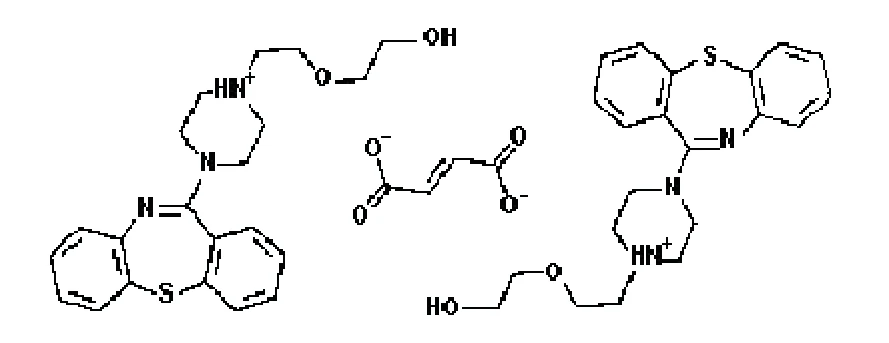
Physiochemical Properties:
Description: Quetiapine fumarate is a white to off-white powder. It is only very slightly soluble in ether, slightly soluble in water, and soluble in 0.1 N HCl
Ionization Constant: pKa1 = 6.83 in phosphate buffer at 22°C
pKa2 = 3.32 in formic buffer at 22°C
Partition Coefficient: Log P = 0.45 (octanol/water)
Melting Point: 172.0 - 174°C
CLINICAL TRIALS
Comparative Bioavailability Studies
A single center, randomized, single dose blinded, 2-period, 2-sequence crossover comparative bioavailability study was performed in 25 healthy male volunteers under fasting conditions on Quetiapine Tablets using Pharmel Inc. 25 mg tablets versus the reference product, SEROQUEL 25 mg Tablets, by AstraZeneca Canada Inc. The phl-QUETIAPINE 25 mg tablet administered in this study was proportionally formulated to the phl-QUETIAPINE 100, 200 and 300 mg tablets. This proportionally formulated phl-QUETIAPINE 25 mg tablets is not available commercially. The pharmacokinetic data calculated for the phl-QUETIAPINE 25 mg (proportional) and SEROQUEL tablets formulation are tabulated below:
SUMMARY TABLE OF THE COMPARATIVE BIOAVAILABILITY DATA
Quetiapine (1 x 25 mg tablet) From measured data uncorrected for potency Geometric Mean Arithmetic Mean (CV %) | ||||
| Parameter | Test* | Reference† | % Ratio of Geometric Means | Confidence Interval (90%) |
AUCT (ng·h/mL) | 197.657 222.491 (55.1) | 198.902 215.640 (41.2) | 99.37 | 91.67 – 107.73 |
AUCI (ng·h/mL) | 213.678 237.956 (53.0) | 214.715 231.472 (39.8) | 99.52 | 92.37 – 107.22 |
Cmax (ng/mL) | 62.678 70.028 (51.1) | 63.272 71.482 (48.6) | 99.06 | 86.00 – 114.11 |
Tmax§ (h) | 0.83 (0.50 – 2.00) | 0.83 (0.50 – 2.00) | ||
T½€ (h) | 3.16 (18.1) | 3.32 (22.9) | ||
* phl-QUETIAPINE
† SEROQUEL® is manufactured by AstraZeneca, Canada Inc. and was purchased in Canada. § Expressed as the median (range)
€ Expressed as the arithmetic mean (CV%)
A single center, randomized, single dose blinded, 2-period, 2-sequence crossover comparative bioavailability study was performed in 26 healthy male volunteers under fasting conditions on Quetiapine Tablets using Pharmel Inc. 25 mg tablets versus the reference product, SEROQUEL 25 mg Tablets, by AstraZeneca Canada Inc. The phl-QUETIAPINE 25 mg tablet administered in this study is not proportionally formulated to the phl-QUETIAPINE 100, 200 and 300 mg tablets. The phl-QUETIAPINE 25 mg tablet administered in this study is the commercial formulation. The pharmacokinetic data calculated for the phl-QUETIAPINE 25 mg (non-proportional) and SEROQUEL tablets formulation are tabulated below:
SUMMARY TABLE OF THE COMPARATIVE BIOAVAILABILITY DATA
Quetiapine (1 x 25 mg tablet) From measured data uncorrected for potency Geometric Mean Arithmetic Mean (CV %) | ||||
| Parameter | Test* | Reference† | % Ratio of Geometric Means | Confidence Interval (90%) |
AUCT (ng·h/mL) | 197.31 227.88 (53.4) | 202.17 241.21 (61.8) | 97.60 | 87.08 – 109.38 |
AUCI (ng·h/mL) | 215.25 244.48 (50.6) | 221.84 259.09 (59.0) | 97.03 | 87.77 – 107.28 |
Cmax (ng/mL) | 57.31 67.12 (59.5) | 57.23 70.41 (70.2) | 100.14 | 88.21 – 113.68 |
Tmax§ (h) | 0.83 (0.50 – 1.75) | 0.83 (0.50 – 1.75) | ||
T½€ (h) | 3.42 (23.6) | 3.50 (25.1) | ||
* phl-QUETIAPINE
† SEROQUEL® is manufactured by AstraZeneca, Canada Inc. and was purchased in Canada. § Expressed as the median (range)
€ Expressed as the arithmetic mean (CV%)
Study Results
Schizophrenia
The efficacy of quetiapine fumarate in the short-term management of schizophrenia was demonstrated in 3 short-term (6-week) controlled trials of inpatients who met a DSM-III-R diagnosis of schizophrenia. The results of the trials follow:
- 1. In a 6-week, placebo-controlled trial (n=361) involving 5 fixed doses of quetiapine fumarate (75, 150, 300, 600 and 750 mg/day on a t.i.d. schedule), the 4 highest doses of quetiapine fumarate were generally superior to placebo on the BPRS total score, the BPRS psychosis cluster and the CGI severity score, with the maximal effect seen at 300 mg/day, and the effects of doses of 150 to 750 were generally indistinguishable. Quetiapine fumarate, at a dose of 300 mg/day, was superior to placebo on the SANS.
- 2. In a 6-week, placebo-controlled trial (n=286) involving titration of quetiapine fumarate in high (up to 750 mg/day on a t.i.d. schedule) and low (up to 250 mg/day on a t.i.d. schedule) doses, only the high dose quetiapine fumarate group (mean dose, 500 mg/day) was generally superior to placebo on the BPRS total score, the BPRS psychosis cluster, the CGI severity score and the SANS.
- 3. In a 6-week dose and dose regimen comparison trial (n=618) involving two fixed doses of quetiapine fumarate (450 mg/day on both b.i.d. and t.i.d. schedules and 50 mg/day on a b.i.d. schedule), only the 450 mg/day (225 mg b.i.d. schedule) dose group was generally superior to the 50 mg/day (25 mg b.i.d.) quetiapine fumarate dose group on the BPRS total score, the BPRS psychosis cluster, the CGI severity score, and on the SANS.
Clinical trials have demonstrated that quetiapine fumarate is effective when given twice a day, although quetiapine has a pharmacokinetic half-life of approximately 7 hours. This is further supported by the data from a positron emission tomography (PET) study which identified that for quetiapine, 5HT2 and D2 receptor occupancy is maintained for up to 12 hours. The safety and efficacy of doses greater than 800 mg/day have not been evaluated.
Bipolar Disorder
Bipolar Mania
The efficacy of quetiapine fumarate in the treatment of manic episodes was established in two 12 week placebo-controlled monotherapy trials in patients who met DSM-IV criteria for Bipolar I disorder. These trials included patients with or without psychotic features and excluded patients with rapid-cycling and mixed episodes. There were from 95 to 107 patients per treatment group in each study.
The primary rating instrument used for assessing manic symptoms in these trials was the Young Mania Rating Scale (YMRS), and these studies included patients with a wide range of baseline YMRS scores (i.e. 18 to 58). The primary outcome in these trials was change from baseline in the YMRS total score at Day 21.
In the two 12-week trials comparing quetiapine fumarate to placebo, quetiapine fumarate was significantly superior to placebo in reducing manic symptoms. Of those patients with a clinical response, 87% received doses of quetiapine fumarate between 400 and 800 mg per day; in the two individual studies, 52% and 81% of responders received doses between 600 and 800 mg per day (b.i.d. dosing).
DETAILED PHARMACOLOGY
Quetiapine is a multiple receptor antagonist. It exhibits affinity for brain serotonin 5HT1A and 5HT2 receptors (IC50s=717 and 148 nM, respectively), and dopamine D1 and D2 receptors (IC50s=1268 and 329 nM, respectively). Quetiapine has lower affinity for dopamine D2 receptors, than serotonin 5HT2 receptors. Quetiapine also has high affinity at histamine H1 receptors (IC50=30 nM) and adrenergic α1 receptors (IC50=94 nM), with a lower affinity at adrenergic α2 receptors (IC50=271 nM), but no appreciable affinity at cholinergic muscarinic and benzodiazepine receptors (IC50s>5000 nM). N-desalkyl quetiapine is an active human plasma metabolite. Similar to quetiapine, it exhibits affinity for brain serotonin 5HT2 and dopamine D1 and D2 receptors. Additionally, N-desalkyl quetiapine has high affinity at serotonin 5HT1 receptors, and histaminergic and adrenergic α1 receptors, with a lower affinity at adrenergic α2 receptors.
Quetiapine is active in pharmacologic tests for antipsychotic activity, such as conditioned avoidance in primates. It also reverses the actions of dopamine agonists measured either behaviourally or electrophysiologically in mice, rats, cats and monkeys. Quetiapine also elevates levels of the dopamine metabolites homovanillic acid (HVA) and 3,4 dihydroxyphenylalanine (DOPAC) in brain, which are considered to be neurochemical indices of dopamine D2 receptor blockade. The extent to which the N-desalkyl quetiapine metabolite contributes to the pharmacological activity of quetiapine fumarate in humans is not known.
In preclinical tests predictive of EPS, quetiapine fumarate is unlike typical antipsychotics and has an atypical profile. Quetiapine fumarate does not produce dopamine D2 receptor supersensitivity after chronic administration. Quetiapine fumarate produces only weak catalepsy at effective dopamine D2 receptor blocking doses. Quetiapine fumarate demonstrates selectivity for the limbic system by producing depolarization blockade of the A10 mesolimbic but not the A9 nigrostriatal dopamine-containing neurons following chronic administration. Quetiapine fumarate exhibits minimal dystonic liability in haloperidol-sensitized or drug-naive Cebus monkeys after acute and chronic administration.
Pharmacology of Metabolites
Quetiapine and several of its metabolites (including N-desalkyl quetiapine fumarate) have been tested in vitro for their affinity for 5HT2, D1 and D2 receptors, and in vivo animal models. The major metabolites, parent acid and sulfoxide, are pharmacologically inactive in plasma. The 7-hydroxy and 7-hydroxy N-dealkylated metabolites are pharmacologically active with in vitro binding comparable to or greater than that for parent compound. The peak plasma
concentrations for the 7-hydroxy and 7-hydroxy N-dealkylated metabolites account for approximately only 5% and 2% of that of quetiapine at steady state, respectively.
TOXICOLOGY
Thyroid
Quetiapine caused a dose-related increase in pigment deposition in thyroid gland in rat toxicity studies which were 4 weeks in duration or longer and in a mouse 2 year carcinogenicity study. Doses were 10-250 mg/kg in rats, 75-750 mg/kg in mice; these doses are 0.1-3.0, and 0.1-4.5 times the maximum recommended human dose (on a mg/m2 basis), respectively. Pigment deposition was shown to be irreversible in rats. The identity of the pigment could not be determined, but was found to be co-localized with quetiapine in thyroid gland follicular epithelial cells. The functional effects and the relevance of this finding to human risk are unknown.
Cataracts
In dogs receiving quetiapine for 6 or 12 months, but not for 1 month, focal triangular cataracts occurred at the junction of posterior sutures in the outer cortex of the lens at a dose of 100 mg/kg, or 4 times the maximum recommended human dose on a mg/m2 basis. This finding may be due to inhibition of cholesterol biosynthesis by quetiapine. Quetiapine caused a dose related reduction in plasma cholesterol levels in repeat-dose dog and monkey studies; however, there was no correlation between plasma cholesterol and the presence of cataracts in individual dogs. The appearance of delta-8-cholestanol in plasma is consistent with inhibition of a late stage in cholesterol biosynthesis in these species. There also was a 25% reduction in cholesterol content of the outer cortex of the lens observed in a special study in quetiapine treated female dogs. Drug-related cataracts have not been seen in any other species; however, in a 1-year study in monkeys, a striated appearance of the anterior lens surface was detected in 2/7 females at a dose of 225 mg/kg or 5.5 times the maximum recommended human dose on a mg/m2 basis.
Acute Toxicity
Single dose studies were conducted in mice and rats by the oral and intraperitoneal routes and in dogs by the oral route. The principal clinical signs in mice, rats and dogs of decreased motor activity, ptosis, loss of righting reflex, tremors, ataxia, prostration and convulsions were consistent with the pharmacological activity of the drug. The lowest oral doses causing lethality were 250 mg/kg in mouse and 500 mg/kg in rat; no deaths occurred at the highest oral dose tested (750 mg/kg) in dogs. The highest parenteral non-lethal doses were 100 mg/kg in both mouse and rat.
Subacute/Chronic Toxicity
In multiple dose studies in rats, dogs and monkeys (refer to Table 5 for individual study details) anticipated central nervous system effects of an antipsychotic drug were observed with quetiapine (e.g., sedation at lower doses and tremor, convulsions or prostration at higher exposures).
Hyperprolactinaemia, induced through the dopamine D2 receptor antagonist activity of quetiapine or its metabolites, varied between species, but was most marked in the rat. A range of effects consequent to this were seen in the 12 month study including mammary hyperplasia, increased pituitary weight, decreased uterine weight and enhanced growth of females.
Reversible morphological and functional effects on the liver, consistent with hepatic enzyme induction, were seen in mouse, rat and monkey.
Thyroid follicular cell hypertrophy and concomitant changes in plasma thyroid hormone levels occurred in rat and monkey.
Pigmentation of a number of tissues, particularly the thyroid, was not associated with any morphological or functional effects.
Transient increases in heart rate, unaccompanied by an effect on blood pressure, occurred in dogs.
Posterior triangular cataracts seen after 6 months in dogs at 100 mg/kg/day were consistent with inhibition of cholesterol biosynthesis in the lens. No cataracts were observed in cynomolugus monkeys dosed up to 225 mg/kg/day, or in rodents. Monitoring in clinical studies did not reveal drug-related corneal opacities in man.
No evidence of neutrophil reduction or agranulocytosis was seen in any of the toxicity studies.
Carcinogenicity
Results from the 2 year carcinogenicity studies performed in mice and rats (and mouse sighting studies) are summarized in Table 6.
In the rat study (doses 0, 20, 75 and 250 mg/kg/day) the incidence of mammary adenocarcinomas was increased at all doses in female rats, consequential to prolonged hyperprolactinaemia.
In male rat (250 mg/kg/day) and mouse (250 and 750 mg/kg/day), there was an increased incidence of thyroid follicular cell benign adenomas, consistent with known rodent-specific mechanisms resulting from enhanced hepatic thyroxine clearance.
| Species/Strain | Route | Study Duration | Number/ Group/Sex | Dose (mg/kg/day) | Salient Observations |
Rat Hla:(SD)/BR | oral gavage | 4 weeks dosing and 4 weeks withdrawal | 14 | 0 25 50 150 | Ptosis at all doses. Body weight gain decreased at 150 mg/kg/day. Liver weight was increased and uterus, spleen and pituitary weights were decreased in all dose groups. Epididymis and heart weight was decreased at 150 mg/kg/day. Deciduoma-metrial gland changes at 50 mg/kg/day. |
| Rat Hla:(SD)BR | oral gavage | 6 months dosing and 4 weeks withdrawal | 29 | 0 25 50 150 | Ptosis at all doses. Reduced body weight gain at 50 mg/kg/day and 150 mg/kg/day. Plasma TSH increased and T3 reduced at 150 mg/kg/day. Pigment deposition and hypertrophy of thyroid follicular cells at 50 mg/kg/day and 150 mg/kg/day. In all dose groups, mammary gland hypertrophy/hyperplasia, atrophy and/or mucification of cervical/vaginal mucosa. Liver weight increased at all doses with hepatocellular vacuolation at 150 mg/kg/day. No adverse-effect dose level was 25 mg/kg. |
| Rat Crl:(WI)BR | oral gavage | 12 months of dosing then 5 weeks withdrawal | 20 | 0 10 25 75 250 | Hypoactivity and hyperprolactinaemia and sequelae (all doses). 27% decrement in body weight gain (250 mg/kg/day). Liver enlargement (75 and 250 mg/kg/day), hepatocyte fat vacuolation (dose related) and centrilobular hypertrophy with increased expression of CYP2B1/2 and CYP3A at 250 mg/kg/day. Increased TSH and T4 and thyroid follicular cell hypertrophy (250 mg/kg/day). Thyroid pigmentation (all doses). Adrenal cortical vacuolation (75 mg/kg/day and above). Increased pancreatic glucagon secreting cells (75 mg/kg/day and above). Increased alveolar macrophages (75 mg/kg/day and above). |
| Dog Beagle | oral tablets | 4 weeks | 3 | 0 25 50 100 | Decreased motor activity, ataxia, somnolence, miosis, increased heart rate and hypothermia were observed for animals in all compound-treated groups. In general the incidence was dose-related and decreased with time. All effects reversed on withdrawal. |
| Dog Beagle | oral tablets | 6 months dosing and 8 weeks withdrawal | 3 or 4 | 0 25 50 100 | Up to 8 weeks transient sedation and increased heart rate. Dose-related decreases in body weight gain. At 100 mg/kg/day 13-26% decrease in plasma cholesterol and prominent posterior Y sutures, swelling of lens fiber tips and 3/8 females with cataracts; 1 epileptiform seizure, 4/8 muscular twitching. 50 mg/kg/day was the no adverse-effect dose level. |
Table 5 Principal Multiple Dose Toxicity Studies with Quetiapine
| Species/Strain | Route | Study Duration | Number/ Group/Sex | Dose (mg/kg/day) | Salient Observations |
Dog Beagle | Oral Tablets | 12 months dosing and 8 weeks withdrawal | 4z | 0 10 25 50 100 | Sedation, miosis, abnormal gait and muscular tremors occurred at doses of 25 mg/kg/day and above, mainly in the first 10 weeks. Cataracts in animals given 100 mg/kg/day. Histopathological lenticular changes in 5/8 dogs given 50 mg/kg/day. At 100 mg/kg/day 13/14 dogs showed histological lenticular alterations, consistent with the ophthalmological observations. Fine brown granules in the epithelial cells of the lacrimal glands at all doses. |
| Cynomolgus monkey | oral gavage | 13 months | 4 | 0, rising dose for 4 weeks with one week at each dose level then 43.5 for 52 weeks | Signs of sedation from week 2, duration and severity increased with dose. 43.5 mg/kg/day was considered to be the maximum tolerated dose. Abnormal staring behaviour in 2 animals. Plasma prolactin reduced. No compound- related histopathological changes. No effect on plasma cholesterol. No ophthalmological changes were observed. |
| Cynomolgus monkey | oral gavage | 14 weeks | 3 | 6, 12, 24, 36, 48, 60, 84, 108, 132, 150, 180, 225, 285 and 350. Rising doses administered 3 doses/day. One week at each dose level | Sedation from 24 mg/kg/day, after which the duration and severity increased with dose, until at 225 mg/kg/day prostration occurred. Doses at 285 and 350 mg/kg/day caused reduction in body weight and food consumption, ataxia, increased incidence of prostration and one animal died at 350/mg/kg/day. Reductions in red blood cell parameters, plasma bilirubin, cholesterol (20-40% at 285 mg/kg) and ALP activity. No compound-related histopathological changes. |
| Cynomolgus monkey | oral gavage | 56 weeks dosing 4 weeks withdrawal | 4 | 0, rising dose for 4 weeks then 25, 100 and 225 mg/kg/day administered as 3 doses/day | Dose-related incidence and severity of behavioural changes. No abnormal signs on drug withdrawal. 40-60% reduction in plasma cholesterol at 225 mg/kg/day with delta-8-cholestanol present at 15% of cholesterol level at 100 and 225 mg/kg/day. No lens opacities. Minor lens changes at all doses with no lens pathology. Transient elevation of prolactin and mild mammary gland hyperplasia (in males) and T3 levels reduced and mild thyroid follicular cell hypertrophy at 100 and 250 mg/kg/day. Red cell indices reduced and liver enlargement with hepatocyte hypertrophy and fat deposition at 250 mg/kg/day. |
Table 5 Principal Multiple Dose Toxicity Studies With Quetiapine
| Species/Strain | Route | Study Duration | Number/ Group/Sex | Dose (mg/kg/day) | Salient Observations |
Mouse C57BL/ 10jfCD/1/Alpk | Oral in diet | 90 days | 25 | 0, 50, 100, 200, 300, 400 | Reductions in body weight at 100 mg/kg or greater. Seminiferous tubular atrophy severity increased at 100 mg/kg and above. Centrilobular hepatocyte enlargement at 200 mg/kg and above. At 50 mg/kg the only effect was an increase in liver weight in females. |
Mouse C57BL/ 10jfCD/1/Alpk | Oral in diet | 90 days | 15 | 0, 300-800, 400-1,100 (Rising dose maximal at 6 weeks) | Reduced body weight, liver weight increase and hepatocyte hypertrophy in both dose groups. Ovary weight decreased in high dose females and testicular weight decreased in low and high dose males. Low and high dose females had dose related decreases in number of corpora lutea. The parotid salivary gland had dose-related increased basophilia. Males had dose-related seminiferous tubular atrophy. Urinary bladder hyaline droplets and pigmentation in the epithelium in both groups. |
Mouse C57BL/ 10jfCD/1/Alpk | Oral in diet | 2 years | 100, 50, 50, 50, 50 | 0, 20, 75, 250, 750 (Rising dose maximal at 6 weeks) | Thyroid follicular cell hypertrophy and pigmentation. Increased incidence of thyroid follicular cell benign adenomas (incidence of 0%, 0%, 0%, 8% and 58% in males only at 0, 20, 75, 250 and 750 mg/kg/day, respectively). No other increases in tumour incidence. Other non-neoplastic changes similar to sighting studies. |
Rat/ Crl:(WI)BR | Oral by gavage | 2 years | 100 50 50 50 50 | 0 20 75 250 | Increased incidence of mammary adenocarcinomas in all groups of females (incidence of 10%, 26%, 22% and 32% in females given 0, 20, 75 and 250 mg/kg/day respectively). Increased incidence of follicular adenoma of the thyroid gland in males, but not females, given 250 mg/kg/day (incidence of 6%, 6%, 0% and 32% in males given 0, 20, 75 and 250 mg/kg/day respectively). Significant reductions in subcutaneous fibromas, thyroid parafollicular cell adenomas, uterine stromal polyps and carcinoma of the oral cavity. |
Table 6 Carcinogenicity (and Mouse Sighting) Studies with Quetiapine
Reproduction and Teratology
Results from the individual reproduction and teratology studies, performed with quetiapine in rats and rabbits, are summarized in Table 7.
Effects related to elevated prolactin levels (marginal reduction in male fertility and pseudopregnancy, protracted periods of diestrus, increased precoital interval and reduced pregnancy rate) were seen in rats, although these are not directly relevant to humans because of species differences in hormonal control of reproduction.
Quetiapine had no teratogenic effects.
Mutagenicity
Genetic toxicity studies with quetiapine show that it is not a mutagen or a clastogen. There was no evidence of mutagenic potential in reverse (Salmonella typhimurium and E. coli) or forward point mutation (CHO-HGPRT) assays or in two assays for chromosomal aberrations (human peripheral blood lymphocyte clastogenesis assay and the rat bone marrow erythrocyte micronucleus assay).
| Species/Strain | Route | Study Duration | Number/ Group | Dose (mg/kg/day) | Salient Observations |
Rat Alpk:APfSD Segment I Male fertility | Oral | males dosed for a total of 14 weeks | Fo generation: 1st pairing: 100 M, 200 F, 25 M, 50 F/Gp 2nd pairing: 25 M, 50 F/Gp (Groups I & IV only) | 0, 25, 50, 150 males only dosed, to the end of the first pairing period | First pairing: Reduced weight gain and marked clinical signs at all quetiapine fumarate dose levels. Reduced fertility in males dosed 150 mg/kg/day (longer precoital with second female). Second pairing: Effects on reduced fertility reversed, no difference between control and quetiapine fumarate dosed animals. |
Rat Alpk:APfSD Segment I Female fertility | Oral | 9 months Fogeneration: dosed to d14 prior to pairing up to d24 pp in animals assigned to litter | Fo generation: 264 M/132 F 66 F/Gp 33 M/Gp - not dosed F1 generation: 239 F/120 M 50 F/Gp (49 Gp I) 25 M/Gp | 0, 1, 10, 50 50 mg/kg/day dose reduced to 1 mg/kg/day from d17 gestation to d6 pp to avoid litter loss F1 generation not dosed | Inhibition of oestrus cyclicity during dosing at 50 mg/kg/day, females became pseudopregnant or with protracted periods of dioestrus, increased precoital interval and reduced pregnancy rate. Slight reduction in body weight gain during pregnancy and lactation at 50 mg/kg/day. No effects on fertility or reproduction in the F1 generation. |
Rat Alpk:APfSD Segment II Teratology | Oral | 21 days females dosed d6 to d15 gestation | Fo generation: 22 F 22 F 22 F 22 F | Reduced weight gain and adverse clinical signs at 50 and 200 mg/kg/day. No effects on fetal survival. Fetal weight reduced at 200 mg/kg/day. No major fetal abnormalities. Specific skeletal anomalies present associated with reduced fetal weight at 200 mg/kg/day. | |
Rat Crj: Wistar Segment II Teratology | Oral | 21 days females dosed from d6 to d15 gestation | Fo generation: 13 F/group | 0, 25, 50, 200 | Adverse clinical signs at all dose levels. No effect on reproductive function of the dams or development of fetuses, behaviour or reproductive function of the offspring at any dose level. |
Table 7 Reproduction and Teratology Studies with Quetiapine Fumarate
| Species/Strain | Route | Study Duration | Number/ Group | Dose (mg/kg/day) | Salient Observations |
Rabbit Dutch Belted Segment II Teratology | Oral | 28 days females dosed d6 to d18 gestation | Fo generation: 20 F 20 F 20 F 20 F | 0 25 50 100 | Reduced weight gain and adverse clinical signs at all doses. No effects on fetal survival. Fetal weight reduced at 100 mg/kg/day. No major fetal abnormalities. Specific skeletal anomalies present associated with reduced fetal weight at 100 mg/kg/day. |
Rat/ Alpk:APfSD Segment III Peri- & Postnatal | Oral | 44 days dosed d16 to d21 pp | Fo generation: 20 F 20 F 20 F 20 F | 0 1 10 20 | Reduced weight gain during first 2 weeks of lactation 20 mg/kg/day. No effects on survival or development of offspring. |
M = Male, F = Female
d6 = day 6 gestation, day of sperm positive smear (rats)/day of mating (rabbits) = day 0 gestation d16 = day 16 gestation, day of mating = day 1 gestation d17 = day 17 gestation, day of sperm positive smear = day 1 gestation d6 pp = day 6 post partum, day of parturition = day 1 post partum d8 pp = day 8 post partum, day of littering = day 1 post partum d21 pp = day 21 post partum, day of littering = day 1 post partum d24 pp = day 24 post partum, day of littering = day 1 post partum (pp = post partum)
REFERENCES
- 1.
Arvanitis LA, Miller BG, Seroquel Trial 13 Study Group. Multiple fixed doses of 'Seroquel'
(quetiapine) in patients with acute exacerbation of schizophrenia: a comparison with haloperidol and placebo. Biol Psychiatry 1997;42:233-46.
- 2.
Borison RL, Arvanitis LA, Miller BG, Study-Group. ICI 204,636, an atypical antipsychotic:
efficacy and safety in a multicenter, placebo-controlled trial in patients with schizophrenia. J Clin Psychopharmacol 1996;16(2):158-69.
- 3. Bowden CL, Grunze H, Mullen J, Brecher M, Paulsson B, Jones M, Vågerö M, Svensson K. A randomized, double-blind, placebo-controlled efficacy and safety study of quetiapine or lithium as monotherapy for mania in bipolar disorder. J Clin Psychiatry 2005;66(1):111-21.
- 4.
Calabrese JR, Keck PE, Macfadden W, Minkwitz M, Ketter TA, Weisler RH, Cutler AJ, McCoy
R, Wilson E, Mullen J. A randomized, double-blind, placebo-controlled trial of quetiapine in the treatment of bipolar I or II depression. Am J Psychiatry 2005;162(7):1351-60.
- 5. Casey DE. 'Seroquel' (quetiapine): preclinical and clinical findings of a new atypical antipsychotic. Exp Opin Invest Drugs 1996;5(8):939-57.
- 6.
Emsley RA, Raniwalla J, Bailey PJ, Jones AM. A comparison of the effects of quetiapine
(‘Seroquel’) and haloperidol in schizophrenic patients with a history of and a demonstrated partial response to conventional antipsychotic treatment. International Clinical Pharmacology 2000; 15(3):121-31.
- 7. Fabre LF, Arvanitis L, Pultz J, Jones VM, Malick JB, Slotnick VB. ICI 204,636, a novel atypical antipsychotic: early indication of safety and efficacy in patients with chronic and subchronic schizophrenia. Clin Ther 1995;17(3):366- 78.
- 8. Goldstein JM, Litwin LC, Sutton EB and Malick JB. Seroquel: electrophysiological profile of a potential atypical antipsychotic. Psychopharmacology 1993;112(2-3):293-8.
- 9. Hamner MB, Arvanitis LA, Miller BG, Link CGG, Hong WW. Plasma prolactin in schizophrenia subjects treated with SeroquelTM (ICI 204,636). Psychopharmacology Bull 1996;32(1):107-10.
- 10. McIntyre RS, Brecher M, Paulsson B, Huizar K, Mullen J. Quetiapine or haloperidol as monotherapy for bipolar mania - A 12-week, double blind, randomised, parallel-group, placebo-controlled trial. European Neuropsychopharmacology 2005;15(5):573-85.
- 11. Migler BM, Warawa EJ and Malick JB. Seroquel: behavioural effects in conventional and novel tests for atypical antipsychotic drug. Psychopharmacology 1993;112(2-3):299-307.
- 12. Peuskens J, Link CGG. A comparison of quetiapine and chlorpromazine in the treatment of schizophrenia. Acta Psychiatr Scand 1997;96:265-73.
- 13. Pinninti NR, Mago R, Townsend J, Doghramji K. Periodic restless legs syndrome associated with quetiapine use: a case report. J Clin Psychopharmacol. 2005 Dec;25(6):617-8.
- 14.
Pullen RH, Palermo KM and Curtis MA. Determination of an antipsychotic agent (ICI 204,636)
and its 7-hydroxy metabolite in human plasma by high-performance liquid chromatography and gas chromatography-mass spectrometry. J Chromatogr Biomed Appl 1992;573(1):49- 57.
- 15.
Saller CF, Salama AI. Seroquel: biochemical profile of a potential atypical antipsychotic.
Psychopharmacology 1993;112(2-3):285-92.
- 16. Small JG, Hirsch SR, Arvanitis LA, Miller BG, Link CG. Quetiapine in patients with schizophrenia. A high- and low-dose double-blind comparison with placebo. Arch Gen Psychiatry 1997;54:549-57.
- 17.
Suppes T, Hirschfeld RM, Vieta E, Raines S, Paulsson B. Quetiapine for the treatment of bipolar
II depression: Analysis of data from two randomized, double-blind, placebo-controlled studies. The World Journal of Biological Psychiatry 2007;1-14.
- 18. Swerdlow NR, Zisook D, Taaid N. Seroquel (ICI 204,636) restores prepulse inhibition of acoustic startle in apomorphine-treated rats: similarities to clozapine. Psychopharmacology 1994;114(4):675-8.
- 19. Thase ME, Macfadden W, Weisler RH, Chang W, Paulsson B, Khan A, Calabrease JR. Efficacy of Quetiapine Monotherapy in Bipolar I and II Depression: A Doubleblind, Placebo-controlled Study (The BOLDER II Study). J Clin Psychopharmacol 2006;26(6):600-9.
- 20.
Vieta E, Mullen J, Brecher M, Paulsson B, Jones M. Quetiapine monotherapy for mania associated with bipolar disorder: combined analysis of two international, double-blind, randomised, placebo-controlled studies. Current Medical Research and Opinion 2005;21(6):923-
34.
- 21. Wetzel H, Szegedi A, Hain C, Weisner J, Schlegel S and Benkert O. Seroquel (ICI 204,636), putative "atypical" antipsychotic, in schizophrenia with positive symptomatology: results of an open clinical trial and changes of neuroendocrinological and EEG parameters. Psychopharmacology 1995;119(2):231-8.
- 22.
Product Monograph for SEROQUEL, AstraZeneca Canada, Inc., Mississauga, Ontario, Canada.
Date of Revision March 26, 2012; Control No. 151705.