


Product Monograph - Piqray
1. Indications
PIQRAY® (alpelisib), in combination with fulvestrant, is indicated for the treatment of postmenopausal women, and men, with hormone receptor-positive, HER2-negative, PIK3CA- mutated advanced or metastatic breast cancer after disease progression following an endocrine-based regimen.
1.1. Pediatrics
No data are available to Health Canada; therefore, Health Canada has not authorized an indication for paediatric use.
1.2. Geriatrics
No overall differences in the efficacy of PIQRAY were observed between patients ≥ 65 years of age compared to younger patients (see 7 WARNINGS AND PRECAUTIONS, Special Populations, Geriatrics).
2. Contraindications
PIQRAY is contraindicated in patients who are hypersensitive to this drug or to any ingredient in the formulation, including any non-medicinal ingredient, or component of the container. For a complete listing, see 6 DOSAGE FORMS, STRENGTHS, COMPOSITION AND PACKAGING.
3. Serious Warnings and Precautions Box
The following serious adverse reactions were reported in patients treated with PIQRAY.
- Hypersensitivity, including anaphylactic reaction (see 7 WARNINGS AND PRECAUTIONS, Immune)
- Severe cutaneous adverse reactions including Stevens-Johnson Syndrome, Drug Reaction with Eosinophilia and Systemic Symptoms and Erythema Multiforme (see 7 WARNINGS AND PRECAUTIONS, Skin)
- Hyperglycemia, including hyperglycemic hyperosmolar non-ketotic syndrome and some fatal cases of diabetic ketoacidosis (see 7 WARNING AND PRECAUTIONS, Endocrine and Metabolism)
- Pneumonitis (see 7 WARNINGS AND PRECAUTIONS, Respiratory)
4. Dosage and Administration
Treatment with PIQRAY should be initiated by a physician experienced in the use of anticancer therapies.
4.1. Dosing Considerations
Patients with hormone receptor (HR) positive, HER2-negative advanced breast cancer, should be selected for treatment with PIQRAY based on the presence of a PIK3CA mutation using a validated test. There was no treatment benefit demonstrated in breast cancer patients without a PIK3CA mutation, in the phase III clinical study; therefore, treatment with PIQRAY is not recommended for these patients (see 14 CLINICAL TRIALS).
Correct glucose levels in patients with abnormal glucose levels before initiating PIQRAY, and closely monitor glucose levels to enable early detection and early treatment of hyperglycemia. Premedication with metformin (e.g., 500 mg twice daily on days 1-3, then increased to 1000 mg twice daily based on tolerability), administered 7 days prior to initiation of PIQRAY in combination with fulvestrant, should be considered based on patient risk factors for hyperglycemia and gastrointestinal tolerability (see 7 WARNINGS AND PRECAUTIONS and 8 ADVERSE REACTIONS).
4.2. Recommended Dose and Dosage Adjustment
The recommended dose of PIQRAY is 300 mg (2×150 mg film-coated tablets) taken orally, once daily on a continuous basis. PIQRAY should be taken immediately following food, at approximately the same time each day (see 10 CLINICAL PHARMACOLOGY and 9. DRUG INTERACTIONS).
The maximum recommended daily dose of PIQRAY is 300 mg.
If the patient vomits after taking the PIQRAY dose, the patient should not take an additional dose on that day and should resume the usual dosing schedule the next day, at the usual time.
When co-administered with PIQRAY, the recommended dose of fulvestrant is 500 mg administered intramuscularly on days 1, 15 and 29 and every 28 days thereafter. Please refer to the full prescribing information in the fulvestrant Product Monograph.
Treatment should continue as long as clinical benefit is observed or until unacceptable toxicity occurs. Dosing modifications may be necessary to improve tolerability.
Dose modifications
Management of severe or intolerable adverse drug reactions (ADRs) may require temporary dosing interruption, reduction, and/or discontinuation of PIQRAY. The dosing reduction guidelines for ADRs are listed in Table 4-1. A maximum of 2 dosing reductions are recommended, after which the patient should be discontinued from treatment with PIQRAY (see also 14 CLINICAL TRIALS). Dose reduction should be based on worst preceding toxicity.
In the phase III study, patients who discontinued PIQRAY were to continue taking fulvestrant as per the treating physician’s clinical judgment.
Table 4-1 Recommended dose reduction guidelines for adverse drug reactions
| PIQRAY dose level | Dose and schedule | Number and strength of tablets |
|---|---|---|
| Starting dose | 300 mg/day continuously | 2 x 150 mg tablets |
| First dose reduction | 250 mg/day continuously1 | 1 x 200 mg tablet and 1 x 50 mg tablet |
| Second dose reduction | 200 mg/day continuously2 | 1 x 200 mg tablet |
1 Only one dose reduction is permitted for pancreatitis 2 If further dose reduction below 200 mg/day is required, discontinue PIQRAY | ||
Tables 4-2, 4-3, 4-4 and 4-5 summarize recommendations for dosing interruption, reduction or discontinuation of PIQRAY in the management of specific ADRs. Clinical judgment of the treating physician, including confirmation of laboratory values if deemed necessary, should guide the management plan of each patient based on the individual benefit/risk assessment for treatment with PIQRAY.
Hyperglycemia
PIQRAY can cause hyperglycemia. Consultation with a health professional experienced in the treatment of hyperglycemia should always be considered and is recommended for patients with fasting glucose > 250 mg/dL. Patients should be instructed on lifestyle changes that may reduce hyperglycemia.
Dose adjustment should be based on fasting glucose values (Table 4-2). In patients with risk factors for hyperglycemia, monitor fasting glucose more closely and as clinically indicated (see 7 WARNINGS AND PRECAUTIONS).
Table 4-2 Dose modification and management for hyperglycemia
| Fasting Glucose (FG)1 | Recommendation |
| Fasting Glucose (FG)1 | Recommendation |
| Dose modifications and management should only be based on fasting glucose values (FG; either plasma or blood) | |
| Dose modifications and management should only be based on fasting glucose values (FG; either plasma or blood) | |
Grade 1 > ULN - 160 mg/dL or > ULN - 8.9 mmol/L | No PIQRAY dose adjustment required. Initiate or intensify oral anti-diabetic treatment2. |
Grade 2 > 160 - 250 mg/dL or > 8.9 - 13.9 mmol/L | No PIQRAY dose adjustment required. Initiate or intensify oral anti-diabetic treatment2. If FG does not decrease to ≤ 160 mg/dL or 8.9 mmol/L within 21 days with appropriate oral anti-diabetic treatment2,3, reduce PIQRAY dose by 1 dose level, and follow FG value specific recommendations. |
Grade 3 > 250 - 500 mg/dL or > 13.9 - 27.8 mmol/L | Interrupt PIQRAY. Initiate or intensify oral anti-diabetic treatment2 and consider additional anti-diabetic medications3 for 1-2 days until hyperglycemia improves, as clinically indicated. Administer intravenous hydration and consider appropriate treatment (e.g. intervention for electrolyte/ketoacidosis/hyperosmolar disturbances).
|
Grade 4 > 500 mg/dL or >27.8 mmol/L | Interrupt PIQRAY. Initiate or intensify appropriate anti-diabetic treatment2,3 (administer intravenous hydration and consider appropriate treatment (e.g. intervention for electrolyte/ketoacidosis/hyperosmolar disturbances)). Re-check FG within 24 hours and as clinically indicated.
|
1 Fasting glucose levels reflect hyperglycemia grading according to CTCAE Version 4.03. CTCAE=Common Terminology Criteria for Adverse Events. 2 Initiate applicable anti-diabetic medications, such as metformin, SGLT2 inhibitor, or insulin sensitizers (such as thiazolidinediones or dipeptidyl peptidase-4 inhibitors) and review respective prescribing information for dosing and dose titration recommendations, including local diabetic treatment guidelines. Metformin was recommended in the phase III clinical study with the following guidance: Initiate metformin 500 mg once daily. Based on tolerability, metformin dose may be increased to 500 mg bid, followed by 500 mg with breakfast, and 1000 mg with dinner, followed by further increase to 1000 mg bid if needed (see 7 WARNINGS AND PRECAUTIONS). 3 As recommended in the phase III clinical study, insulin may be used for 1-2 days until hyperglycemia resolves. However, this may not be necessary in the majority of alpelisib-induced hyperglycemia, given the short half-life of alpelisib and the expectation of glucose levels normalizing after interruption of PIQRAY. | |
Rash and severe cutaneous adverse reactions
PIQRAY can cause rash and severe cutaneous reactions (see 7 WARNINGS AND PRECAUTIONS, Skin). Oral antihistamine administration may be considered prophylactically, at the time of initiation of treatment with PIQRAY. Based on the severity of rash, PIQRAY may require dose interruption, reduction, or discontinuation as described in Table 4-3. Dermatologist consultation is recommended for any severe cutaneous adverse reaction (SCAR) such as Stevens-Johnson syndrome (SJS), toxic epidermal necrolysis (TEN), drug reaction with eosinophilia and systemic symptoms (DRESS) and erythema multiforme (EM). If a SCAR is confirmed, permanently discontinue PIQRAY.
Table 4-3 Dose modification and management for rash and severe cutaneous adverse reactions
| Grade1,2 | Recommendation |
| Grade1,2 | Recommendation |
Grade 1 (< 10% body surface area (BSA) with active skin toxicity) | No PIQRAY dose adjustment required. Initiate topical corticosteroid treatment. Consider adding oral antihistamine treatment to manage symptoms. If active rash is not improved within 28 days of appropriate treatment, add a low dose systemic corticosteroid. If the etiology is SCAR, permanently discontinue PIQRAY. |
| Grade 2 | No PIQRAY dose adjustment required. |
| (10% - 30% BSA with active skin toxicity) | Initiate or intensify topical corticosteroid and oral antihistamine treatment. Consider low dose systemic corticosteroid treatment. If rash improves to Grade ≤1 within 10 days, systemic corticosteroid may be discontinued. If the etiology is SCAR, permanently discontinue PIQRAY. |
Grade 3 (e.g., severe rash not responsive to medical management) (> 30% BSA with active skin toxicity) | Interrupt PIQRAY until rash improves to Grade ≤ 1. Initiate or intensify topical/systemic corticosteroid and anti-histamine treatment. If the etiology is SCAR, permanently discontinue PIQRAY. If the etiology is not a SCAR, interrupt dose until improvement to Grade ≤ 1, then resume PIQRAY at next lower dose level. |
Grade 4 (e.g.: severe bullous, blistering or exfoliating skin conditions) (any % BSA associated with extensive superinfection, with IV antibiotics indicated; life-threatening consequences) | Permanently discontinue PIQRAY. |
1 Grading according to CTCAE Version 5.0 2 For all grades of rash, consider consultation with a dermatologist | |
Table 4-4 Dose modification and management for diarrhea or colitis1
| Grade1, | Recommendation |
| Grade 1 | No PIQRAY dose adjustment required. Initiate appropriate medical therapy and monitor as clinically indicated. |
| Grade 2 | Interrupt PIQRAY dose until improvement to Grade ≤1, then resume PIQRAY at the same dose level. For recurrent Grade ≥2, interrupt PIQRAY dose until improvement to Grade ≤1, then resume PIQRAY at the next lower dose level. Initiate or intensify appropriate medical therapy and monitor as clinically indicated2. |
| Grade 3 | Interrupt PIQRAY dose until improvement to Grade ≤1, then resume PIQRAY at the next lower dose level. Initiate or intensify appropriate medical therapy and monitor as clinically indicated.2,3 |
Other toxicities
Table 4-5 Dose modification and management for other toxicities*
| Grade1 | Recommendation |
| Grade 1 or 2 | No PIQRAY dose adjustment required. Initiate appropriate medical therapy and monitor as clinically indicated2,3. |
| Grade 3 | Interrupt PIQRAY dose until improvement to Grade ≤1, then resume PIQRAY at the next lower dose level2. |
| Grade 4 | Permanently discontinue PIQRAY. |
* Excluding hyperglycemia, rash and severe cutaneous reactions and diarrhea or colitis 1 Grading according to CTCAE Version 5.0 2 For Grade 2 and 3 pancreatitis, interrupt PIQRAY dose until improvement to Grade ≤ 1 and resume at next lower dose level. Only one dose reduction is permitted. If toxicity re-occurs, permanently discontinue PIQRAY treatment. 3 For Grade 2 total bilirubin elevation, interrupt PIQRAY dose until improvement to Grade ≤ 1 and resume at the same dose if improved in ≤ 14 days or resume at the next lower dose level if improved in > 14 days. | |
Refer to the full prescribing information for fulvestrant for dose modification guidelines in the event of toxicity and other relevant safety information.
Special populations
Pediatrics (< 18 years)
Health Canada has not authorized an indication for pediatric use (see 1.1 Pediatrics).,
Renal impairment
No dose adjustment is recommended for patients with mild (eGFR 60 to < 90 mL/min/1.73 m2) and moderate renal impairment (eGFR 30 to < 60 mL/min/1.73 m2).
The effect of severe renal impairment (eGFR < 30 mL/min/1.73 m2) on alpelisib pharmacokinetics is unknown (see 10 CLINICAL PHARMACOLOGY, Special Populations and Conditions).
Hepatic impairment
No dose adjustment is necessary in patients with mild, moderate or severe hepatic impairment (Child-Pugh class A, B or C, respectively) (see 10 CLINICAL PHARMACOLOGY, Special Populations and Conditions).
Refer to the full prescribing information in the fulvestrant Product Monograph for dose modifications related to hepatic impairment.
| Grade1, | Recommendation |
| Grade 4 | Permanently discontinue PIQRAY3. |
1 Grading according to CTCAE Version 5.0 2 For Grade 2 and 3 colitis consider additional treatment, such as steroids. 3 For Grade 3 and 4 diarrhea patients should additionally be managed according to local standard of care, including electrolyte monitoring, administration of anti-emetics and antidiarrheal medicinal products and/or fluid replacement and electrolyte supplements, as clinically indicated. | |
4.4. Administration
PIQRAY tablets should be swallowed whole (tablets should not be chewed, crushed or split prior to swallowing). Tablets that are broken, cracked, or otherwise not intact should not be ingested.
4.5. Missed Dose
If a dose of PIQRAY is missed, it can be taken immediately following food and within 9 hours after the time it is usually administered. After more than 9 hours, the dose should be skipped for that day. On the next day, PIQRAY should be taken at its usual time. The dose should not be doubled in case of a missed dose.
5. Overdose
There is limited experience of overdose with PIQRAY in clinical studies. In clinical studies, PIQRAY was administered at doses up to 450 mg once daily. Higher incidences of commonly reported adverse events associated with these higher doses were observed, which included, but were not limited to, hyperglycemia, nausea, diarrhea, vomiting, asthenia and rash.
In all cases of over-dosage with PIQRAY, general symptomatic and supportive measures should be initiated. There is no known antidote for PIQRAY.
For the most recent information in the management of a suspected drug overdose, contact your regional poison control centre or Health Canada’s toll-free number, 1-844 POISON-X (1-844-764-7669).
- 6. Dosage Forms, Strengths, Composition, and Packaging
Dosage Forms, Strengths, and Composition
Description
50 mg PIQRAY tablet: Light pink, unscored, round and curved with bevelled edges, imprinted with “L7” on one side and “NVR” on the other side.
150 mg PIQRAY tablet: Pale red, unscored, ovaloid and curved with bevelled edges, imprinted with “UL7” on one side and “NVR” on the other side.
200 mg PIQRAY tablet: Light red, unscored, ovaloid and curved with bevelled edges, imprinted with “YL7” on one side and “NVR” on the other side.
PIQRAY is supplied in aluminium PVC/PCTFE blisters and are available in the following pack sizes:
| Route of Administration | Dosage Form / Strength / Composition | Non-medicinal Ingredients |
| Oral | Tablet 50 mg, 150 mg, 200 mg alpelisib | Film-coated tablet core: hypromellose, magnesium stearate, mannitol, microcrystalline cellulose, sodium starch glycolate Tablet coating: hypromellose, iron oxide black, iron oxide red, macrogol / polyethylene glycol (PEG), talc, titanium dioxide |
300 mg daily dose: each carton contains 4 blister packs. Each blister pack contains a 7-day supply of 14 tablets (56 tablets, 150 mg alpelisib per tablet).
250 mg daily dose: each carton contains 4 blister packs. Each blister pack contains a 7-day supply of 14 tablets (28 tablets, 200 mg alpelisib per tablet and 28 tablets, 50 mg alpelisib per tablet).
200 mg daily dose: each carton contains 2 blister packs. Each blister pack contains a 14-day supply of 14 tablets (28 tablets, 200 mg of alpelisib per tablet).
7. Warnings and Precautions
Please see 3 SERIOUS WARNINGS AND PRECAUTIONS BOX.
Endocrine and Metabolism
Hyperglycemia
Severe hyperglycemia, including Hyperglycemic Hyperosmolar non-ketotic Syndrome (HHNKS) or ketoacidosis, has been observed in patients treated with PIQRAY. Some cases of ketoacidosis with fatal outcome have been reported in the post marketing setting. Hyperglycemia was reported in 66% of patients treated with PIQRAY and 58% of patients managed hyperglycemia with anti-diabetic treatment in the phase III clinical study. Grade 3 (FPG > 250 – 500 mg/dL) and Grade 4 (FPG > 500 mg/dL) hyperglycemia were reported in 34% and 4% of patients, respectively. Patients considered pre-diabetic (FPG > 100 – 125 mg/dL (5.6 – 6.9 mmol/L) and/or HbA1c 5.7% – 6.4%) or diabetic (FPG ≥ 126 mg/dL (≥ 7.0 mmol/L) and/or HbA1c ≥ 6.5%) at baseline were at a higher risk of developing severe hyperglycemia and associated complications (e.g. ketoacidosis). Patients with type I or uncontrolled type II diabetes mellitus were excluded from the phase III clinical study.
Among the patients who had Grade ≥ 2 (FPG > 160 mg/dL) hyperglycemia in the phase III study, the median time to first occurrence of Grade ≥ 2 hyperglycemia was 15 days (range: 5 to 1458 days). The median duration of Grade 2 or higher hyperglycemia was 10 days. The median time to improvement by at least 1 Grade of the first event was 8 days (95% CI of 8 to 10 days). In all patients with elevated FPG, who continued fulvestrant treatment after discontinuing PIQRAY (n=61), 93% of patients returned to baseline (normal).
Hyperglycemia was manageable with appropriate oral anti-diabetic therapy and PIQRAY dose modifications or discontinuation (see 4 DOSAGE AND ADMINISTRATION, Table 4-2). Among the 191 patients with reported hyperglycemia event, 87% of patients were managed with anti-diabetic medication, (e.g. metformin), 40% of patients with dose interruption, 43% of patients with dose reduction, and 10% of patients with permanent discontinuation. In patients with hyperglycemia, 166/191 (87%) were managed with anti-diabetic medication and 145/191 (76%) reported use of metformin as single agent or in combination with other anti-diabetic medication. The maximum dose of metformin recommended in phase III clinical study was 2,000 mg per day.
In the phase III clinical study, patients with a history of diabetes mellitus intensified anti-diabetic medication(s) while on treatment with PIQRAY; therefore, these patients require monitoring and possibly intensified anti-diabetic treatment. Patients with poor glycemic control may be at a higher risk of developing severe hyperglycemia and associated complications. Patients with risk factors for hyperglycemia such as obesity (BMI ≥30), elevated FPG or HbA1c at or above the upper limit of normal, or age ≥75 are at a higher risk of developing severe hyperglycemia. Schedule for monitoring fasting glucose is presented in Table 7-1 (see Monitoring and Laboratory Tests).
Advise patients of the signs and symptoms of hyperglycemia (e.g. excessive thirst, urinating more often than usual or higher amount of urine than usual, increased appetite with weight loss).
Correct glucose levels in patients with abnormal glucose levels before initiating PIQRAY, and closely monitor glucose levels to enable early detection and early treatment of hyperglycemia.
In the METALLICA study, premedication with metformin, initiated 7 days prior to the start of treatment with PIQRAY, appeared to decrease the incidence and severity of hyperglycemia events, but increase the incidence of diarrhea, nausea, and vomiting, including Grade 3 diarrhea (see 4 DOSAGE AND ADMINISTRATION and 8 ADVERSE REACTIONS). Premedication with metformin prior to PIQRAY plus fulvestrant treatment should be considered based on patient risk factors for hyperglycemia and gastrointestinal tolerability.
Gastrointestinal
Diarrhea or Colitis, nausea and vomiting
Severe diarrhea and clinical consequences, such as dehydration and acute kidney injury, have been reported during treatment with PIQRAY (see 8 ADVERSE REACTIONS). In the phase III clinical study, Grade 2 and 3 diarrhea was reported in 20% and 7% of patients treated with PIQRAY, respectively.
There were no reported cases of Grade 4 diarrhea. Grade 3 gastrointestinal events (mostly diarrhea) were reported in 10% of patients and serious gastrointestinal events in 5% of patients. Among patients with Grade 2 or 3 diarrhea, median time to onset of the first event was 54 days (range: 1 to 1731 days). Anti-emetics (e.g., ondansetron) and anti-diarrheal medications (e.g., loperamide) were used in 19% and 65% of patients to manage gastrointestinal symptoms.
In the phase III clinical study, dose reductions of PIQRAY were required in 6% of patients and 3% of patients permanently discontinued PIQRAY due to diarrhea.
Colitis has been reported in the post marketing setting in patients treated with PIQRAY (see 8 ADVERSE REACTIONS).
Patients should be monitored for diarrhea and additional symptoms of colitis, such as abdominal pain and mucus or blood in stool. Based on the severity of the diarrhoea or colitis, PIQRAY may require dose interruption, reduction, or discontinuation as described in Table 4-4 (see 4 DOSAGE AND ADMINISTRATION). Dose modifications of PIQRAY are recommended in patients with Grade ≥ 2 diarrhea.
Patients should be advised to notify their healthcare provider if diarrhea or additional symptoms of colitis occur while taking PIQRAY. Patients experiencing gastrointestinal toxicity should be managed according to local standards of care, including electrolyte monitoring, administration of anti-emetics and antidiarrheal medications and/or fluid replacement and electrolyte supplements, as clinically indicated.
In case of colitis, additional treatment, such as steroids, may be considered as clinically indicated.
Immune
Hypersensitivity and anaphylactic reaction
Serious hypersensitivity reactions including anaphylactic reaction and anaphylactic shock, manifested by symptoms including, but not limited to, dyspnoea, flushing, rash, fever or tachycardia were reported in patients treated with PIQRAY in clinical trials. In the phase III clinical trial, hypersensitivity events were reported in 18% of patients treated with PIQRAY. The most common adverse events reported were hypersensitivity (4%), face oedema (4%) and swelling face (2%). The incidence of serious hypersensitivity reaction was 2%. Hypersensitivity and anaphylactic reactions were more common in Asian patients compared to other races. Angioedema has been reported in the post marketing setting in patients treated with PIQRAY (see 8 ADVERSE REACTIONS). PIQRAY should be permanently discontinued and should not be re-introduced in patients with serious hypersensitivity reactions (see 2 CONTRAINDICATIONS).
Monitoring and Laboratory Tests
Patients should be monitored for Hyperglycemia.
Table 7-1 Schedule of fasting glucose monitoring
| Recommended schedule for the monitoring of fasting glucose and HbA1c levels in all patients treated with PIQRAY | Recommended schedule of monitoring of fasting glucose and HbA1c levels in patients with diabetes, pre-diabetes, BMI ≥30 or age ≥75 years treated with PIQRAY | |
|---|---|---|
| At screening, before initiating treatment with PIQRAY | Test for fasting plasma glucose (FPG), HbA1c, and optimize the patient’s level of blood glucose. | |
| After initiating treatment with PIQRAY | Monitor/self-monitor fasting glucose at least once every week for the first 2 weeks, then at least once every 4 weeks, and as clinically indicated, according to the instructions of a healthcare professional*. | Monitor/self-monitor fasting glucose more frequently for the first few weeks of treatment. Then continue to monitor fasting glucose as frequently as needed to manage hyperglycemia according to the instructions of a healthcare professional*. |
| HbA1c should be monitored every 3 months as clinically indicated. | ||
| If hyperglycemia develops after initiating treatment with PIQRAY | Monitor fasting glucose regularly, as per local standard of care and at least until fasting glucose decreases to normal levels. | |
| During treatment with antidiabetic medication, continue monitoring fasting glucose at least once a week for 8 weeks, followed by once every 2 weeks, and monitor fasting glucose according to the instructions of a healthcare professional with expertise in the treatment of hyperglycemia. | ||
| * All glucose monitoring should be performed at the physician’s discretion as clinically indicated. | ||
Musculoskeletal
Osteonecrosis of the jaw (ONJ)
In the phase III clinical study, osteonecrosis of the jaw (ONJ) was reported in 6% of patients in the PIQRAY plus fulvestrant arm, including 3% with a serious event. All patients experiencing ONJ were also exposed to prior or concomitant bisphosphonates or RANK-ligand inhibitors (e.g. denosumab). Caution should be exercised when PIQRAY and drugs known to cause ONJ are used either simultaneously, or sequentially. PIQRAY treatment should not be initiated in patients with ongoing ONJ. Patients should be advised to promptly report any new or worsening oral symptoms (such as dental mobility, pain or swelling, non-healing of mouth sores, or discharge) during treatment with PIQRAY. A dental examination with appropriate preventive dentistry is recommended prior to treatment with PIQRAY in patients with risk factors for ONJ, such as invasive dental procedures, concomitant therapies, poor oral hygiene and comorbid disorders.
In patients who develop ONJ, standard medical management should be initiated, including maintaining good oral hygiene, controlling pain and treating areas of infection with antibiotics and oral antibiotic mouth rinses. Patients should have appropriate nutrition and oral fluid intake.
Reproductive Health
Reproduction
The pregnancy status for females of reproductive potential should be verified prior to starting treatment with PIQRAY.
Females of reproductive potential should be advised of the potential harm to the developing foetus (see 15 NON-CLINICAL TOXICOLOGY). Advise sexually-active females of reproductive potential to use effective contraception (methods that result in less than 1% pregnancy rates) when using PIQRAY, during treatment and for at least 1 week after stopping treatment. It is currently unknown whether PIQRAY may reduce the effectiveness of systemically acting hormonal contraceptives.
Advise male patients with sexual partners who are pregnant, possibly pregnant, or who could become pregnant, to use condoms during sexual intercourse while taking PIQRAY and for at least 1 week after stopping treatment with PIQRAY. Male patients are also advised not to donate or store semen during treatment and at least 1 week after the last dose of PIQRAY.
Fertility
There are no clinical data available on the effect of PIQRAY on human fertility. Based on repeated dose toxicity studies in animals, PIQRAY may impair fertility in males and females of reproductive potential. In fertility studies conducted in male and female rats, similar effects were observed
Respiratory
Pneumonitis
Pneumonitis, including serious cases of pneumonitis/acute interstitial lung disease, have been reported in clinical trials. In the phase III clinical study, pneumonitis was reported in 5 (2%) of patients treated with PIQRAY (see 8 ADVERSE REACTIONS). Advise patients to promptly report any new or worsening respiratory symptoms. In patients who have new or worsening respiratory symptoms or are suspected to have developed pneumonitis, interrupt PIQRAY treatment immediately and evaluate the patient for pneumonitis. Consider a diagnosis of non-infectious pneumonitis in patients presenting with non-specific respiratory signs and symptoms such as hypoxia, cough, dyspnoea, or interstitial infiltrates on radiologic exams and in whom infectious, neoplastic, and other causes have been excluded by means of appropriate investigations. Permanently discontinue PIQRAY in all patients with confirmed pneumonitis.
Skin
Severe cutaneous adverse reactions
Severe cutaneous adverse reactions have been reported with PIQRAY (see 8 ADVERSE REACTIONS). In the phase III study, Stevens-Johnson syndrome (SJS) and erythema multiforme (EM) were reported in 1 (< 1%) and 3 (1%) patients, respectively. Drug reaction with eosinophilia and systemic symptoms (DRESS) has been reported in the post marketing setting. Do not initiate PIQRAY treatment in patients with history of severe cutaneous reactions.
Advise patients of the signs and symptoms of severe cutaneous adverse reactions (e.g. a prodrome of fever, flu-like symptoms, mucosal lesions or progressive skin rash). If signs or symptoms of severe cutaneous adverse reactions are present, interrupt PIQRAY until the etiology of the reaction has been determined. Consultation with a dermatologist is recommended. If a severe cutaneous adverse reaction is confirmed, permanently discontinue PIQRAY. Do not reintroduce PIQRAY in patients who have experienced previous severe cutaneous adverse reactions. If a severe cutaneous adverse reaction is not confirmed, PIQRAY treatment may require interruption, dose reduction, or discontinuation as described in Table 4-3 Dose modification and management for rash and severe cutaneous adverse reactions (see 4 DOSAGE AND ADMINISTRATION).
Rash
In the phase III clinical study, rash (including rash maculo-papular, rash macular, rash generalised, rash papular, rash pruritic, dermatitis and dermatitis acneiform) were reported in 54% patients treated with PIQRAY plus fulvestrant. Rash as serious adverse events and discontinuation of PIQRAY due to a rash was reported in 3.5% and 4.2% of patients, respectively. Grade ≥ 2 rash were reported in 34% and the median time to first onset was 12 days (range: 2 to 220 days). Antihistamines, topical or systemic low-dose corticosteroids, and PIQRAY dose modification (see 4 DOSAGE AND ADMINISTRATION) were used to manage rash.
7.1. Special Populations
7.1.1 Pregnancy
There are no data regarding the use of PIQRAY in pregnant women. Embryo-foetal development studies have demonstrated that oral administration of alpelisib during organogenesis increased embryo-foetal death and teratogenicity in rats and rabbits, at doses below the exposure in humans (see 15 NON-CLINICAL TOXICOLOGY). Based on the animal data and its mechanism of action, PIQRAY can cause foetal harm when administered to a pregnant woman.
Do not use PIQRAY during pregnancy and in women of childbearing potential not using effective contraception. If the patient becomes pregnant while taking PIQRAY, inform the patient of the potential hazard to the foetus.
7.1.2 Breastfeeding
It is not known if alpelisib is transferred into human or animal milk after administration of PIQRAY. There are no data on the effects of alpelisib on the breastfed child or the effects of alpelisib on milk production.
Because of the potential for serious adverse reactions in the breastfed child from PIQRAY, it is recommended that women should not breastfeed during treatment and for at least 1 week after the last dose of PIQRAY.
7.1.3 Pediatrics
No data are available to Health Canada; therefore, Health Canada has not authorized an indication for paediatric use.
7.1.4 Geriatrics
Of the 284 patients who received PIQRAY plus fulvestrant in the phase III study, 41% of the patients were ≥ 65 years of age, including 12% ≥ 75 years of age. No overall differences in safety or effectiveness of PIQRAY were observed between these patients and younger patients; however, gastrointestinal toxicity (primarily diarrhea and nausea), hyperglycemia, weight decreased, hypokalaemia and dyspnoea were reported more frequently in older patients.
7.1.5 Race
Of the 284 patients who received PIQRAY plus fulvestrant in the phase III study, 21% of the patients were Asians. Rash, severe cutaneous reactions, hypersensitivity and anaphylactic reaction, and pancreatitis were more frequently reported in Asian patients compared to Caucasian patients.
8. Adverse Reactions
8.1. Adverse Reaction Overview
The overall safety evaluation of PIQRAY is based on data from the phase III clinical study of 572 patients (571 post-menopausal women and 1 male patient) who were enrolled into two cohorts, with or without a PIK3CA mutation. Patients were then randomized in a 1:1 ratio to receive PIQRAY plus fulvestrant or placebo plus fulvestrant. Overall, in the safety set (n=571), 284 patients received PIQRAY in combination with fulvestrant at the recommended starting dose of 300 mg, and 287 patients received placebo in combination with fulvestrant.
The median duration of exposure to PIQRAY plus fulvestrant was 8.2 compared to 5.6 months to placebo and fulvestrant.
Almost all patients (99%) in the PIQRAY plus fulvestrant group (vs. 93% in the placebo plus fulvestrant group) experienced at least one adverse event (AEs). The most common adverse reactions (ADRs) in PIQRAY plus fulvestrant-treated patients (reported at a frequency ≥ 20% and for which the frequency for PIQRAY plus fulvestrant exceeds the frequency for placebo plus fulvestrant) were hyperglycemia, diarrhea, rash, nausea, fatigue and asthenia, decreased appetite, stomatitis, vomiting, weight decreased and alopecia.
Severe (Grade 3 or 4) AEs were more frequently reported in the PIQRAY plus fulvestrant group (79% vs. 37% in the placebo plus fulvestrant arm). The most common Grade ≥ 3 adverse reactions (reported at a frequency ≥ 2% in the PIQRAY plus fulvestrant arm and for which the frequency for PIQRAY plus fulvestrant exceeds the frequency for placebo plus fulvestrant) were hyperglycemia, rash and maculo-papular rash, diarrhea, lipase increased, hypertension, hypokalaemia, weight decreased, fatigue and asthenia, anaemia, nausea, osteonecrosis of jaw, stomatitis, alanine aminotransferase increased, lymphopenia, mucosal inflammation and acute kidney injury.
Two patients died during treatment with PIQRAY plus fulvestrant due to causes other than the underlying disease (one cardio-respiratory arrest and one second primary malignancy). Neither was considered related to treatment with PIQRAY.
PIQRAY dose reductions due to AEs, regardless of causality, occurred in 60% of patients receiving PIQRAY plus fulvestrant and in 5% of patients receiving placebo plus fulvestrant. Permanent discontinuation of PIQRAY and/or fulvestrant due to AEs were reported in 26% of patients receiving PIQRAY plus fulvestrant, compared to 6% of patients receiving placebo plus fulvestrant. The most common AEs leading to treatment discontinuation of both PIQRAY and fulvestrant were hyperglycemia (6%), rash (3%), diarrhea (3%) and fatigue (2%).
8.2. Clinical Trial Adverse Reactions
Because clinical trials are conducted under very specific conditions, the adverse reaction rates observed in the clinical trials may not reflect the rates observed in practice and should not be compared to the rates in the clinical trials of another drug. Adverse reaction information from clinical trials is useful for identifying drug-related adverse events and for approximating rates.
Adverse reactions from the phase III clinical study (Table 8-1) are listed by MedDRA system organ class and ranked by frequency within each system organ class.
Table 8-1 Adverse reactions occurring in ≥ 10% of patients and with ≥ 2% higher incidence in the PIQRAY arm (all grades) in the phase III SOLAR-1 study
| PIQRAY plus fulvestrant N = 284 | Placebo plus fulvestrant N = 287 | |||||||||
|---|---|---|---|---|---|---|---|---|---|---|
| PIQRAY plus fulvestrant N = 284 | Placebo plus fulvestrant N = 287 | |||||||||
| System organ class/preferred term | All Grades % | Grade 3 % | Grade 4 % | All Grades % | Grade 3 % | Grade 4 % | ||||
| Blood and lymphatic system disorders | ||||||||||
| Anaemia | 13 | 5 | 0 | 7 | 1 | 0 | ||||
| Hypertension | 11 | 5 | <1 | 6 | 4 | 0 | ||||
| Gastrointestinal disorders | ||||||||||
| Diarrhea | 60 | 7 | 0 | 17 | <1 | 0 | ||||
| Nausea | 47 | 3 | 0 | 23 | <1 | 0 | ||||
| Stomatitis1 | 31 | 3 | 0 | 7 | 0 | 0 | ||||
| Vomiting | 30 | <1 | 0 | 10 | <1 | 0 | ||||
| Abdominal pain | 19 | 1 | 0 | 12 | 1 | 0 | ||||
| Dyspepsia | 12 | 0 | 0 | 6 | 0 | 0 | ||||
| General disorders and administration site conditions | ||||||||||
| Fatigue2 | 44 | 6 | 0 | 30 | 1 | 0 | ||||
| Mucosal inflammation | 20 | 2 | 0 | 1 | 0 | 0 | ||||
| Oedema peripheral | 17 | 0 | 0 | 6 | <1 | 0 | ||||
| Pyrexia | 17 | <1 | <1 | 6 | <1 | 0 | ||||
| Mucosal dryness3 | 13 | <1 | 0 | 5 | 0 | 0 | ||||
| Infections and infestations | ||||||||||
| Urinary tract infection4 | 10 | <1 | 0 | 6 | 1 | 0 | ||||
| Investigations | ||||||||||
| Weight decreased | 28 | 6 | 0 | 2 | 0 | 0 | ||||
| Blood creatinine increased | 13 | 2 | 0 | 1 | 0 | 0 | ||||
| Metabolism and nutrition disorders | ||||||||||
| Hyperglycemia | 66 | 34 | 4 | 10 | <1 | <1 | ||||
| Decreased appetite | 37 | 1 | 0 | 11 | <1 | 0 | ||||
| Hypokalaemia | 11 | 4 | 1 | 2 | <1 | 0 | ||||
| Nervous system disorders | ||||||||||
| Dysgeusia5 | 16 | <1 | 0 | 3 | 0 | 0 | ||||
| Headache | 19 | <1 | 0 | 13 | 0 | 0 | ||||
| Skin and subcutaneous tissue disorders | ||||||||||
| Rash6 | 52 | 19 | 0 | 8 | <1 | 0 | ||||
| Alopecia | 20 | 0 | 0 | 2 | 0 | 0 | ||||
| Pruritus | 19 | <1 | 0 | 7 | 0 | 0 | ||||
| Dry skin7 | 19 | <1 | 0 | 4 | 0 | 0 | ||||
Grading according to CTCAE Version 4.03 1 Stomatitis: including stomatitis, aphthous ulcer and mouth ulceration 2 Fatigue: including fatigue, asthenia 3 Mucosal dryness: including dry mouth, mucosal dryness, vulvovaginal dryness 4 Urinary tract infection: including UTI and single case of urosepsis 5 Dysgeusia : including dysgeusia, ageusia, hypogeusia 6 Rash: including rash, rash maculo-papular, rash macular, rash generalized, rash papular, rash pruritic 7 Dry skin: including dry skin, skin fissures, xerosis, xeroderma | ||||||||||
METALLICA (Prophylaxis Management of Hyperglycemia)
The METALLICA study was a multicenter, open-label, single-arm, two-cohort study evaluating the safety of premedication with metformin prior to treatment with PIQRAY in combination with endocrine therapy in patients with HR-positive, HER2-negative advanced breast cancer harboring PIK3CA mutation(s).
A total of 68 patients were enrolled in one of two cohorts. Cohort A enrolled 48 patients with normal glycemic status (FPG <100 mg/dL [<5.6 mmol/L] and HbA1c <5.7%) and cohort B enrolled 20 patients with impaired glycemic status (FPG 100 to 140 mg/dL [5.6 to 7.8 mmol/L] or HbA1c 5.7 to 6.4%). The majority of patients (63/68, 93% [45 in cohort A, 18 in cohort B]) received fulvestrant as endocrine therapy during the study.
Metformin was initiated 7 days prior to the start of treatment with PIQRAY, administered at a dose of 500 mg twice daily from day 1 to day 3, thereafter increased up to 1,000 mg twice daily based on tolerability.
The primary objective was to assess the occurrence of Grade 3/4 hyperglycemic events in the first two cycles of treatment. Grade 3/4 hyperglycemia occurred in 2% of patients in cohort A and 15% of patients in cohort B, with the overall incidence of any Grade hyperglycemia adverse events being 33% (16/48 patients) and 70% (14/20 patients) in cohorts A and B, respectively. The incidence of nausea, vomiting, and diarrhea adverse reactions, including Grade 3 diarrhea, increased with metformin premedication (see 7 WARNINGS AND PRECAUTIONS).
The most common AEs (≥30%) in the study overall were diarrhea (68%), nausea (68%), fatigue (46%), hyperglycemia (44%), rash (38%) and vomiting (34%). The most common Grade 3/4 AEs (≥5%) were rash (16%), diarrhea (13%) and hyperglycemia (6%). Serious adverse reactions occurred in 22% of patients overall, and included (≥2%) diarrhea (3%), rash (3%), and vomiting (3%).
Dose adjustment or interruption of PIQRAY due to adverse events occurred in 56% of patients, of which 28% were dose reductions. Permanent discontinuation of PIQRAY due to adverse reactions occurred in 19% of patients.
8.3. Less Common Clinical Trial Adverse Reactions
Other clinically significant adverse drug reactions reported in < 10% of patients and with higher incidences reported in the PIQRAY arm (all grades) are presented below.
Blood and lymphatic system disorders: lymphopenia (6%), thrombocytopenia (3%)
Eye disorders: vision blurred (5%), dry eye (4%)
Gastrointestinal disorders: toothache (5%), gingivitis (4%), cheilitis (3%), gingival pain (4%), pancreatitis (<1%)
General disorders and administration site conditions: oedema (7%)
Immune system disorders: hypersensitivity (4%)
Investigations: gamma-glutamyltransferase increased (9.9%), alanine aminotransferase increased (9.9%), lipase increased (8%), glycosylated haemoglobin increased (3%)
Metabolism and nutrition disorders: hypocalcaemia (4%), dehydration (4%), ketoacidosis1 (1%)
Musculoskeletal and connective tissue disorders: muscle spasms (8%), myalgia (7%), osteonecrosis of jaw (6%)
Psychiatric disorders: insomnia (8%)
Renal and urinary disorders: acute kidney injury (6%)
Respiratory, thoracic and mediastinal disorders: pneumonitis2 (2%)
Skin and subcutaneous tissue disorders: erythema3 (7%), dermatitis4 (4%), palmar-plantar erythrodysaesthesia syndrome (2%), erythema multiforme (1%), Stevens-Johnson syndrome (<1%)
Vascular disorders: lymphedema (6%)
1 Including diabetic ketoacidosis
2 Including interstitial lung disease
3 Including erythema generalized
4 Including dermatitis acneiform
8.4. Abnormal Laboratory Findings: Hematologic, Clinical Chemistry, and Other Quantitative Data
Table 8-2 Laboratory abnormalities occurring in ≥ 10% of patients and with ≥ 5% incidence in the PIQRAY plus fulvestrant arm in the phase III SOLAR-1 study
PIQRAY plus fulvestrant N = 284 | Placebo plus fulvestrant N = 287 | ||||||||||||
|---|---|---|---|---|---|---|---|---|---|---|---|---|---|
PIQRAY plus fulvestrant N = 284 | Placebo plus fulvestrant N = 287 | ||||||||||||
| Laboratory Abnormality | All Grades % | Grade 3 % | Grade 4 % | All Grades % | Grade 3 % | Grade 4 % | |||||||
| Haematological parameters | |||||||||||||
| Lymphocyte decreased | 56 | 9 | 1 | 41 | 5 | 0 | |||||||
| Haemoglobin decreased | 45 | 5 | 0 | 30 | 2 | 0 | |||||||
| Activated Partial Thromboplastin Time increased | 24 | <1 | 0 | 19 | <1 | 0 | |||||||
| Platelet decreased | 15 | <1 | <1 | 7 | <1 | 0 | |||||||
| Biochemical parameters | |||||||||||||
| Glucose increased | 79 | 34 | 6 | 35 | 1 | <1 | |||||||
| Creatinine increased | 68 | 3 | <1 | 27 | <1 | 0 | |||||||
| Gamma Glutamyl Transferase increased | 54 | 11 | 1 | 46 | 9 | 2 | |||||||
| Alanine Aminotransferase increased | 45 | 4 | 1 | 35 | 2 | 0 | |||||||
| Lipase, Pancreatic increased | 43 | 6 | 1 | 27 | 5 | 1 | |||||||
| Calcium Corrected decreased | 28 | 2 | <1 | 20 | <1 | 1 | |||||||
| Glucose decreased | 28 | 0 | <1 | 14 | 0 | 0 | |||||||
| Potassium decreased | 15 | 5 | 1 | 3 | <1 | 0 | |||||||
| Albumin decreased | 16 | <1 | 0 | 8 | 0 | 0 | |||||||
| Magnesium decreased | 13 | <1 | 0 | 5 | 0 | 0 | |||||||
8.5. Post-Market Adverse Reactions
Eye disorders: Uveitis.
Gastrointestinal disorders: Colitis.
Metabolism and nutrition disorders: Hyperglycemic Hyperosmolar nonketotic Syndrome (HHNKS).
Skin and subcutaneous tissue disorders: Angioedema, Drug reaction with eosinophilia and systemic symptoms (DRESS).
9. Drug Interactions
9.2. Drug Interactions Overview
In-vitro assessment of drug interactions
Alpelisib inhibits CYP3A4 in a time-dependent manner and induces cytochromes CYP2B6, CYP2C9 and CYP3A4.
Alpelisib is an inhibitor of P-gp (P-glycoprotein). Alpelisib has a low potential to inhibit BCRP (Breast Cancer Resistance Protein), MRP2 (Multidrug Resistance-associated Protein 2), BSEP (Bile Salt Export Pump), OATP1B1 (Organic Anion Transporting Polypeptide 1B1), OATP1B3 (Organic Anion Transporting Polypeptide 1B3), OCT1 (Organic Cation Transporter 1), OAT1 (Organic Anion Transporter 1), OAT3 (Organic Anion Transporter 3), OCT2 (Organic Cation Transporter 2), MATE1 (Multidrug And Toxin Extrusion Protein 1), and MATE2K (Multidrug and Toxin Extrusion Protein 2-K) at clinically relevant concentrations.
Alpelisib is a substrate for BCRP transporter.
9.4. Drug-Drug Interactions
The drugs listed in this table are based on either drug interaction case reports or studies, or potential interactions due to the expected magnitude and seriousness of the interaction (i.e., those identified as contraindicated).
Table 9-1 Established or potential drug-drug interactions
| [Proper/ Common name] | Source of Evidence | Effect | Clinical comment |
|---|---|---|---|
| Effect of PIQRAY on other drugs | |||
| CYP3A4, CYP2C8, CYP2C9, CYP2C19 and CYP2B6sub strates | CT | In a drug-drug interaction study, co-administration of repeated doses of alpelisib 300 mg with a single-dose of sensitive substrates of CYP3A4 (midazolam), CYP2C8 (repaglinide), CYP2C9 (warfarin), CYP2C19 (omeprazole) and CYP2B6 (bupropion), administered as a cocktail, showed that there is no clinically significant pharmacokinetic interaction. Co-administration with PIQRAY increased exposure (AUC) for omeprazole (+7%), bupropion (+15%), and repaglinide (37%), Co-administration with PIQRAY had no change for midazolam exposure (-1%). The magnitude of interaction observed is not considered clinically relevant. Exposure (AUC) of S-warfarin and R-warfarin increased (34% and 21%, respectively) when co- administered with PIQRAY but no effect was observed on prothrombin time, hence the magnitude of interaction is not clinically relevant. | No dose adjustment is required when administering PIQRAY with CYP3A4, CYP2C8, CYP2C9, CYP2C19 and CYP2B6 substrates. |
| CYP3A4 and P-gp substrates | CT | No clinically significant differences in pharmacokinetics of everolimus (a substrate of CYP3A4 and P-gp) were observed when co-administered with alpelisib in patients with advanced solid tumours. The Cmax of everolimus increased by 11% and the AUC0-24 decreased by 11% on co-administration with alpelisib and is not considered clinically meaningful. | No dose adjustment is required when administering PIQRAY with a CYP3A4 substrate (e.g., everolimus). A clinically relevant effect of PIQRAY on P-gp substrates can be excluded. |
| Effect of other drugs on PIQRAY | |||
| CYP3A4 inducers | CT | Co-administration of PIQRAY with a strong CYP3A4 inducer decreases alpelisib area under the curve (AUC) (see 10, CLINICAL PHARMACOLOGY), which may reduce alpelisib efficacy. Administration of 600 mg once daily rifampin, a strong CYP3A4 inducer, for 7 days, before co-administration with a single oral 300 mg PIQRAY dose on Day 8, decreased alpelisib Cmax by 38% and AUC by 57% in healthy adults (N = 25). Administration of 600 mg once daily rifampin for 15 days, coadministered with daily 300 mg alpelisib starting from Day 8 to Day 15 decreased the steady state alpelisib Cmax by 59% and AUC by 74%. | Co-administration of alpelisib with strong CYP3A4 inducers (e.g., apalutamide, carbamazepine, enzalutamide, mitotane, phenytoin, rifampin, St. John’s wort) should be avoided and selection of an alternative concomitant medicinal product, with no or minimal potential to induce CYP3A4, should be considered (see 10, CLINICAL PHARMACOLOGY) |
| BCRP inhibitors | in vitro data | Co-administration of PIQRAY with a BCRP inhibitor (e.g., cyclosporine, eltrombopag, lapatinib) may increase alpelisib concentration, which may increase the risk of toxicities. | Caution with the use of BCRP inhibitors in patients treated with PIQRAY. If unable to use alternative drugs, closely monitor for increased adverse reactions when PIQRAY is used in combination with BCRP inhibitors. |
| Acid-reducing agents | CT | Co-administration of the H2 receptor-antagonist ranitidine in combination with a single 300 mg oral dose of alpelisib decreased the absorption and overall exposure of alpelisib. In the presence of a low-fat low-calorie meal, AUC was decreased on average by 21% and Cmax by 36% with ranitidine. Under the fasted state, AUC was decreased on average by 30% and Cmax by 51% when co-administered with ranitidine based on the results of the clinical study. | PIQRAY can be co-administered with acid reducing agents, since PIQRAY should be taken with food. Food exhibited a more pronounced effect on the solubility of alpelisib than the effect of gastric pH value. |
| Fulvestrant | CT | Clinical study data in patients with breast cancer indicated no effect of fulvestrant on alpelisib exposure (and vice versa) following co-administration of these drugs. | N/A |
| Drugs known to cause QTc prolongatio n | CT | PIQRAY treatment is associated with QT prolongation. An analysis of clinical ECG data showed mean increases from baseline in QTcF were 8.7 ms (90% CI: 4.1, 13.3) in patients treated with PIQRAY at the clinically recommended dose (see 10 CLINICAL PHARMACOLOGY, Pharmacodynamics). | Caution should be taken if PIQRAY is used concomitantly with medicinal products that are known to prolong the QTc interval, and perform additional ECG monitoring as clinically indicated. |
Legend: CT = Clinical Trial
9.5 Drug-Food Interactions
In healthy patients, co-administration of alpelisib with food resulted in an increased AUC of alpelisib by 77% (see 10 CLINICAL PHARMACOLOGY and 4. DOSAGE AND ADMINISTRATION).
9.6 Drug-Herb Interactions
Interactions with herbal products have not been established.
9.7 Drug-Laboratory Test Interactions
Interactions with laboratory tests have not been established.
10. Clinical Pharmacology
10.1. Mechanism of Action
Alpelisib is an inhibitor of phosphatidylinositol3kinase (PI3K) with inhibitory activity predominantly against PI3Kα. Gain-of-function mutations in the gene encoding the catalytic α-subunit of PI3K (PI3Kα encoded by the PIK3CA gene) lead to activation of PI3Kα and Akt-signalling, cellular transformation and the generation of tumours in in vitro and in vivo models. In biochemical assays, alpelisib inhibited wild type PIK3α (IC50 = 4.6 nmol/L) and its two most common somatic mutations (H1047R, E545K) (IC50 ~ 4 nmol/L) more potently than the PI3Kδ (IC50 = 290 nmol/L) and PI3Kγ (IC50 = 250 nmol/L) isoforms and showed significantly reduced activity against PI3Kβ (IC50 = 1156 nmol/L).
In breast cancer cell lines, alpelisib inhibited the phosphorylation of PI3K downstream targets, including Akt, and showed activity in cell lines harbouring a PIK3CA mutation. In vivo, alpelisib inhibited the PI3K/Akt signalling pathway and reduced tumour growth in xenograft models, including models of breast cancer. PI3K inhibition by alpelisib treatment has been shown to induce an increase in oestrogen receptor (ER) transcription in breast cancer cells. The combination of alpelisib and fulvestrant demonstrated increased anti-tumour activity compared to either treatment alone in xenograft models derived from ER-positive, PIK3CA-mutated breast cancer cell lines.
10.2. Pharmacodynamics
Hyperglycemia
Hyperglycemia is an on-target effect of PI3K signalling pathway inhibition and alpelisib treatment has the potential to interfere with glucose and insulin homeostasis. Alpelisib, at concentrations > 20 μmol/L, produced a concentration-dependent glucose increase which led to hyperglycemia despite elevation of insulin plasma levels. In non-clinical studies with alpelisib, pancreas was identified as a secondary target organ due to changes in peripheral glucose uptake.
QTC prolongation
In vitro, the IC50 of alpelisib for the inhibition of hERG transmission was 9.4 μM, using voltage-clamped human embryonic kidney cells (HEK293), which is similar to mean Cmax (6.8 µM) and ~13-fold higher than the unbound Cmax (0.71 µM) in patients at the clinically recommended dose (300 mg). No relevant electrophysiological effect was seen in dogs.
A dedicated QTc study has not been conducted. ECGs were collected in a phase I study to evaluate the effect of alpelisib on the QTcF interval. In patients administered a 300 mg dose (n = 14), the mean QTcF change from baseline was 8.7 msec (90% CI: 4.1, 13.3) at the observed Cmax at steady-state.
10.3. Pharmacokinetics
The pharmacokinetics of alpelisib has been studied in healthy volunteers and adult patients with solid tumours. Steady-state alpelisib maximum plasma concentration (Cmax) and AUC increased proportionally over the dose range of 30 mg to 450 mg (0.1 to 1.5 times the approved recommended dosage of 300 mg QD) under fed conditions. The mean accumulation of alpelisib is 1.3 to 1.5 fold and steady-state plasma concentrations are reached within 3 days following daily dosage. In adult patients who received PIQRAY 300 mg once daily in the SOLAR-1 trial, mean steady-state alpelisib Cmax was 2480 ng/mL and AUCtau was 33224 ng*h/mL based on a population approach analysis. The geometric mean AUCinf was reduced by 37% and the Cmax was comparable in healthy volunteers compared to cancer patients administered alpelisib 300 mg single dose. Alpelisib exhibits low clearance with 9.4 L/hr based on population PK analysis under fed conditions. The population-derived half-life, independent of dose and time, was around 9 hours at steady state of 300 mg, once daily.
Table 10.1 Summary of alpelisib pharmacokinetic parameters1 in patients with solid tumours (including breast cancer) under fed conditions
| Dose | Cmax (ng/mL) (CV%) | Tmax (h) (CV%) | t½ (h) (CV%) | AUCtau (ng*h/mL) (CV%) | CL (L/h) (CV) | Vd (L) (SV%) |
| Dose | Cmax (ng/mL) (CV%) | Tmax (h) (CV%) | t½ (h) (CV%) | AUCtau (ng*h/mL) (CV%) | CL (L/h) (CV) | Vd (L) (SV%) |
| 300 mg, multiple dose | 2480 (23) | 4.6 (4) | 9 (3.7) | 33224 (21) | 9.4 (19) | 121 (35) |
1 Phase III population PK model estimates and derived PK parameters at 300 mg once daily Values denote arithmetic mean and median for Tmax. | ||||||
Absorption: Following oral administration of alpelisib, median time to reach peak plasma concentration (Tmax) ranged between 2.0 to 4.0 hours, independent of dose, time or regimen.
Food effect: Alpelisib absorption is affected by food. Co-administration of a single 300 mg oral dose of alpelisib, with a high-fat high-calorie (HFHC) meal (985 calories with 58.1 g of fat) increased AUC by 73% and Cmax by 84%, and co-administration with a low-fat low-calorie (LFLC) meal (334 calories with 8.7 g of fat) increased AUC by 77% and Cmax by 145%. No significant difference in alpelisib AUC was observed between LFLC and HFLC meals (see 4 DOSAGE AND ADMINISTRATION).
Distribution: The mean apparent volume of distribution of alpelisib at steady-state (Vss/F) is predicted to be 114 L. Protein binding of alpelisib is 89% and is independent of concentration.
Metabolism: Alpelisib is primarily metabolised by chemical and enzymatic hydrolysis to form its metabolite BZG791 and to a lesser extent by CYP3A4-mediated hydroxylation, in vitro. BZG791 accounted for approximately 40-45 % of the dose, CYP3A4-mediated metabolites and glucuronides amounted to approximately 15% of the dose. The rest of the dose, which was found as unchanged alpelisib in urine and feces, was either excreted as alpelisib or non-absorbed.
Elimination: Following a single oral dose of 400 mg radiolabelled alpelisib under fasted condition, 81% of the administered dose were primarily found in feces (36% unchanged, 32% BZG791) and 14% (2% unchanged, 7.1% BZG791) in urine. The elimination of alpelisib is majorly driven by non-hepatic hydrolysis mediated by multiple enzymes (esterases, amidases, choline esterase) and, to a lesser degree, CYP3A4 mediated metabolism (hydroxylation). The contribution of hepatobiliary export or intestinal secretion via BCRP in human is considered to be low.
Special Populations and Conditions
Paediatrics (below 18 years): The pharmacokinetics of PIQRAY in paediatric patients have not been established.
Geriatrics (65 years or above): Age had no clinically relevant effect on the pharmacokinetics of alpelisib based on population pharmacokinetic analysis. The CL of alpelisib decreased by 5% for patients 10 years older than average, with a median age of 62 years (range 25 to 87 years) based on population pharmacokinetic analysis of the phase III clinical data (see 7 WARNINGS AND PRECAUTIONS, Special Populations, Geriatrics).
Gender
Gender had no clinically relevant effect on the pharmacokinetics of alpelisib based on the population pharmacokinetic analysis. The AUC0-24, ss in males were lower by 25% compared to females, based on population pharmacokinetic analysis.
Body Weight
Body weight had no clinically relevant effect on the pharmacokinetics of alpelisib based on the population pharmacokinetic analysis. Compared to the typical patient weighing 67 kg, for a patient weighing 50 or 90 kg, AUC0-24, ss was estimated to be higher by 20% or lower by 17%, respectively.
Race/Ethnicity: Race had no clinically relevant effect on the pharmacokinetics of alpelisib based on the population pharmacokinetic analysis and a single agent study in Japanese cancer patients. The Cmax were higher by 19% in Japanese patients compared to non-Japanese patients, while the AUC’s were comparable based on a population pharmacokinetic analysis (see 7 WARNINGS AND PRECAUTIONS, Special Populations, Race).
Hepatic Impairment: In patients with moderate (Child-Pugh B) and severe hepatic impairment (Child-Pugh C) administered a single dose of alpelisib 300 mg QD, the total AUCinf and Cmax of alpelisib decreased by approximately 27% and 17% and the unbound AUCinf and Cmax decreased by 20% and 15% in patients with moderate hepatic impairment compared to patients with normal hepatic function. The total AUCinf and Cmax of alpelisib increased by approximately by 25% and 0%, and the unbound AUCinf and Cmax increased by 73% and 36% in patients with severe hepatic impairment compared to patients with normal hepatic function, based on the results of a hepatic impairment study in non-cancer patients. Mild hepatic impairment (Child-Pugh A) had no clinically relevant effect on the pharmacokinetics of alpelisib based on the population pharmacokinetic analysis (see 4 DOSAGE AND ADMINISTRATION).
Renal Impairment: Based on a population pharmacokinetic analysis that included 117 patients with normal renal function (eGFR ≥ 90 mL/min/1.73 m2)/(CLcr ≥ 90 mL/min), 108 patients with mild renal impairment (eGFR 60 to < 90 mL/min/1.73 m2)/(CLcr 60 to < 90 mL/min), and 45 patients with moderate renal impairment (eGFR 30 to < 60 mL/min/1.73 m2), the AUC0-24, ss of alpelisib increased by 2% and 8% in patients with mild and moderate renal impairment compared to patients with normal renal function. These increases in exposures are not considered clinically relevant. The effect of severe renal impairment (eGFR < 30 mL/min/1.73 m2) on alpelisib pharmacokinetics is unknown (see 4 DOSAGE AND ADMINISTRATION).
Genetic Polymorphism: The effects of genetic polymorphism on the pharmacokinetics of alpelisib have not been evaluated.
- 11. Storage, Stability, and Disposal
Do not store above 30°C. Store in the original package to protect from moisture.
PIQRAY must be kept out of the reach and sight of children.
Part 2: Scientific Information
13. Pharmaceutical Information
Drug Substance
Non-proprietary name of the drug substance: Alpelisib
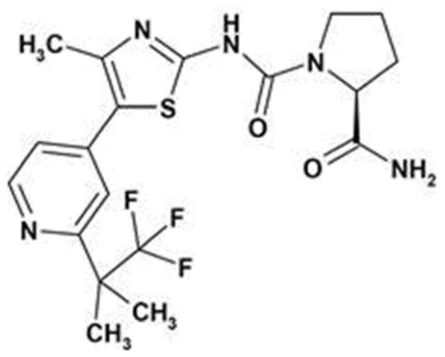
Chemical name: (2S)-1-N-{4-Methyl-5- [2-(1,1,1-trifluoro-2-methylpropan-2-yl)pyridin-4-yl]-1,3-thiazol-2-yl} pyrrolidine-1,2-dicarboxamide
Molecular formula and molecular mass: C19H22F3N5O2S
441.47
Structural formula:
Physicochemical properties: White to practically white powder
pH dependent solubility: soluble in low (acidic) pHs and insoluble in high (alkaline) pHs
| Solvent | Solubility (mg/mL) |
|---|---|
| Water | 0.02 |
| pH 1.0 (HCl 0.1 N) | 3.64 |
| pH 2.0 (HCl 0.01 N) | 0.42 |
| Buffer pH 4.0 (acetate) | 0.03 |
| Buffer pH 5.0 (acetate) | 0.02 |
| Buffer pH 6.8 (phosphate) | 0.02 |
14. Clinical Trials
14.1. Clinical Trials by Indication
PIQRAY (alpelisib), is indicated in combination with fulvestrant, for the treatment of postmenopausal women, and men, with hormone receptor-positive, HER2-negative, PIK3CA- mutated advanced or metastatic breast cancer after disease progression following an endocrine-based regimen.
PIQRAY was evaluated in a pivotal phase III, randomized, double-blind, placebo-controlled study (SOLAR-1) of PIQRAY in combination with fulvestrant in men and postmenopausal women with hormone receptor (HR) positive, human epidermal growth factor receptor 2 (HER2) negative locally advanced or metastatic breast cancer whose disease had progressed or recurred on or after an endocrine-based treatment. Patients with inflammatory breast cancer, symptomatic visceral disease, prior treatment of chemotherapy, or concurrently using other anticancer therapy, active CNS metastases, diabetes mellitus type I or uncontrolled type II, or clinically significant, uncontrolled heart disease and/or recent cardiac events (including long QT syndrome, QTcF > 450 ms for males or > 460 ms for females) at baseline were excluded.
Based on PIK3CA mutation tests using tumour tissue, a total of 572 HR-positive, HER2-negative patients were enrolled into two cohorts: PIK3CA mutation cohort or PIK3CA non-mutation cohort. PIK3CA mutation status in Exons 7, 9 and 20 (Exon 7: C420R; Exon 9: E542K, E545A, E545D [1635G>T only], E545G, E545K, Q546E, Q546R; and Exon 20: H1047L, H1047R, H1047Y) was determined by a validated real-time PCR sequencing assay. Overall, 60% of enrolled patients (n = 341) had tumours with one or more PIK3CA mutations and 40% (n = 231) had tumours without a PIK3CA mutation.
In each cohort, patients were randomized to receive either PIQRAY 300 mg plus fulvestrant or placebo plus fulvestrant in a 1:1 ratio. Randomization was stratified by presence of lung and/or liver metastasis and previous treatment with CDK4/6 inhibitor(s).
PIQRAY 300 mg or matching placebo was administered orally once daily on a continuous basis. Fulvestrant 500 mg was administered intramuscularly on Cycle 1 Day 1 and 15 and then at Day 1 of a 28-day cycle (administration +/- 3 days). Patients were not allowed to cross over from placebo to PIQRAY during the study or after disease progression. Patients were treated until disease progression or unacceptable toxicity. Overall, the median treatment duration was 8.2 months in the PIQRAY plus fulvestrant arm and 5.6 months in the placebo plus fulvestrant arm.
The primary endpoint for the study was progression-free survival (PFS) in patients with a PIK3CA mutation based on the investigator assessment using Response Evaluation Criteria in Solid Tumors (RECIST v1.1). The key secondary endpoint was overall survival (OS) for patients with a PIK3CA mutation. Other secondary endpoints included PFS and OS for patients without a PIK3CA mutation, overall response rate (ORR) and clinical benefit rate (CBR) for patients with and without a PIK3CA mutation.
Table 14.1 Summary of patient demographics and baseline disease characteristics in the PIK3CA-mutant cohort in SOLAR-1 (Full Analysis Set)
| Demographic and disease characteristic variable | Alpelisib + fulvestrant N=169 n (%) | Placebo + fulvestrant N=172 n (%) | All Patients N=341 n (%) | |||||||||
| Demographic and disease characteristic variable | Alpelisib + fulvestrant N=169 n (%) | Placebo + fulvestrant N=172 n (%) | All Patients N=341 n (%) | |||||||||
| Age (years) | ||||||||||||
| Median (Range) | 63.0 (25 – 87) | 64.0 (38 – 92) | 63.0 (25 – 92) | |||||||||
| Age category (years) | ||||||||||||
| 18 to < 65 | 95 (56.2) | 89 (51.7) | 184 (54.0) | |||||||||
| ≥ 65 | 74 (43.8) | 83 (48.3) | 157 (46.0) | |||||||||
| Sex | ||||||||||||
| Female | 168 (99.4) | 172 (100) | 340 (99.7) | |||||||||
| Male | 1 (0.6) | 0 | 1 (0.3) | |||||||||
| Race | ||||||||||||
| White | 117 (69.2) | 109 (63.4) | 226 (66.3) | |||||||||
| Asian | 34 (20.1) | 40 (23.3) | 74 (21.7) | |||||||||
| Black or African American | 1 (0.6) | 3 (1.7) | 4 (1.2) | |||||||||
| Other | 8 (4.7) | 10 (5.8) | 18 (5.3) | |||||||||
| ECOG performance status | ||||||||||||
| 0 | 112 (66.3) | 113 (65.7) | 225 (66.0) | |||||||||
| 1 | 56 (33.1) | 58 (33.7) | 114 (33.4) | |||||||||
| Missing | 1 (0.6) | 1 (0.6) | 2 (0.6) | |||||||||
| Stratum at randomisation | ||||||||||||
| Presence of lung and/or liver metastases | 84 (49.7) | 86 (50.0) | 170 (49.9) | |||||||||
| Prior CDK4/6 inhibitor | 9 (5.3) | 11 (6.4) | 20 (5.9) | |||||||||
| Last prior hormonal therapy | ||||||||||||
| Aromatase inhibitors | 165 (97.6) | 168 (97.7) | 333 (97.7) | |||||||||
| Anti-oestrogen therapy | 25 (14.8) | 29 (16.9) | 54 (15.8) | |||||||||
| Setting at last hormonal therapy | ||||||||||||
| Adjuvant | 88 (52.1) | 89 (51.7) | 177 (51.9) | |||||||||
| Therapeutic (Metastatic) | 80 (47.3) | 83 (48.3) | 163 (47.8) | |||||||||
| Endocrine resistance | ||||||||||||
| Primary1 | 23 (13.6) | 22 (12.8) | 45 (13.2) | |||||||||
| Secondary2 | 120 (71.0) | 127 (73.8) | 247 (72.4) | |||||||||
Last hormonal therapy refers to hormonal medication received in the last regimen
Primary and secondary resistance as per ESMO definition
1Relapse < 24 months while on endocrine therapy (ET) in adjuvant setting or progression < 6 months while on ET in metastatic setting
2Relapse ≥ 24 months while on ET in adjuvant setting or relapse <12 months after end of ET in adjuvant setting or progression ≥ 6 months while on ET in metastatic setting
Of the 341 patients in the PIK3CA mutation cohort, overall demographics and baseline disease characteristics, ECOG (Eastern Cooperative Oncology Group) performance status, tumour burden, and prior antineoplastic therapy were generally well balanced between the study arms (see Table 14.1). At baseline, 98% of patients had stage IV disease and 69% had < 3 metastatic sites. The majority of patients (74%) had bone metastases with or without other metastases at baseline, 23% having only bone metastases and 50% having liver/lung metastases.
The majority of patients (98%) received prior hormonal therapy as the last treatment (48% metastatic setting, 52% adjuvant setting), and 6% had previously been treated with a CDK4/6 inhibitor. Primary endocrine resistance, defined as relapsed within 24 months on adjuvant endocrine therapy or progression within 6 months on endocrine therapy for advanced disease, was observed in 13% of patients and secondary endocrine resistance, defined as relapsed after 24 months on adjuvant endocrine therapy, relapsed within 12 months of the end of adjuvant endocrine therapy, or progression after 6 months on endocrine therapy for advanced disease, was observed in 72% of patients.
Study Results
Primary analysis
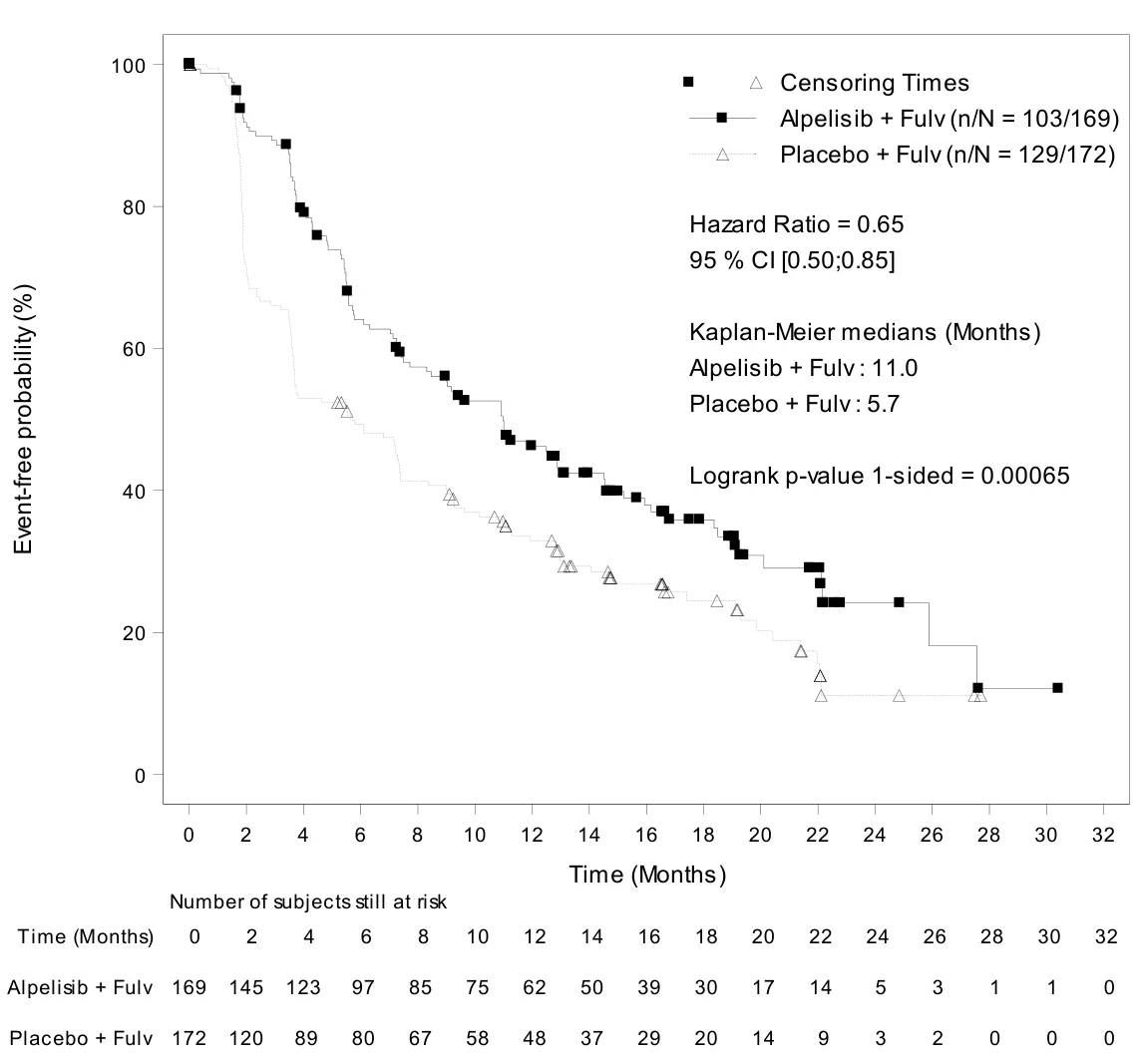
The study met its primary objective at the final PFS analysis (data cut-off date 12-Jun-2018) demonstrating a statistically significant improvement in PFS by investigator assessment in the PIK3CA mutant cohort for patients receiving PIQRAY plus fulvestrant, compared to patients receiving placebo plus fulvestrant. There was an estimated 35% risk reduction of disease progression or death in favor of treatment with PIQRAY plus fulvestrant. The median PFS was 5.7 months (95% CI: 3.7, 7.4) in the placebo plus fulvestrant arm and 11.0 months (95% CI: 7.5, 14.5) in the PIQRAY plus fulvestrant arm (HR=0.65; 95% CI: 0.50, 0.85; one-sided p-value = 0.00065) (see Table 14-2 and Figure 14-1).
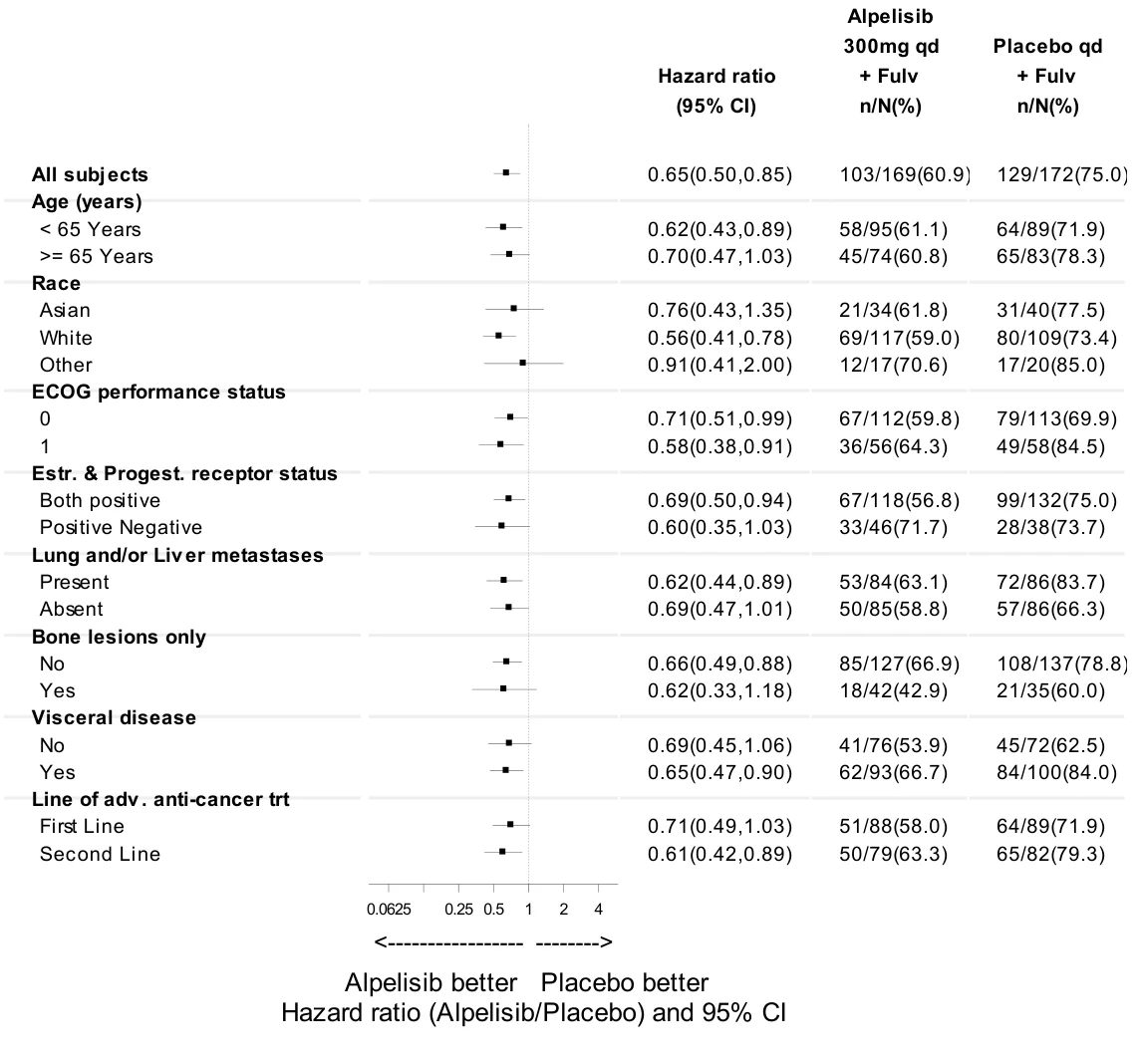
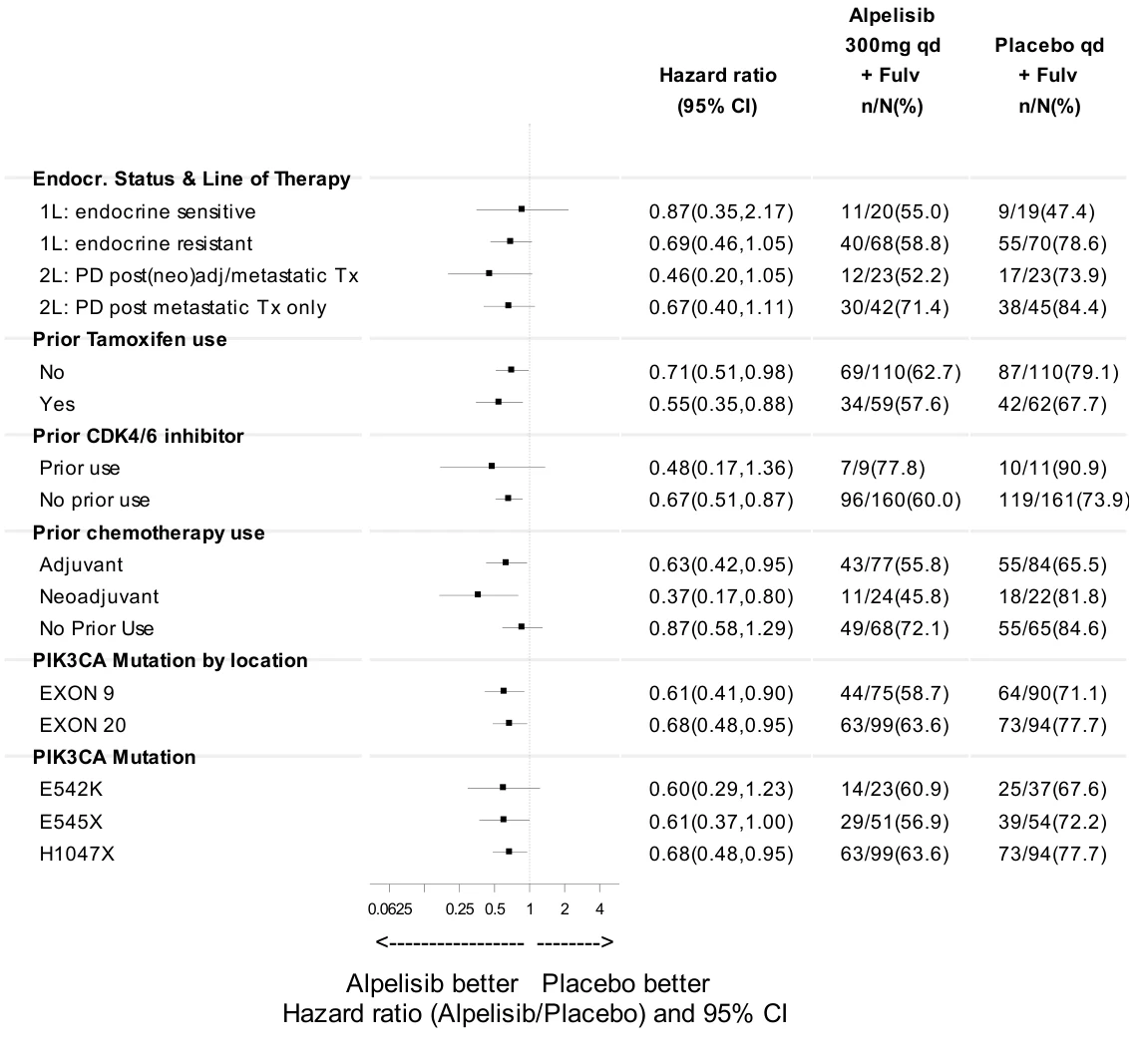
PFS results were supported by the results from a blinded independent review committee (BIRC) assessment in a randomly selected subset of approximately 50% of the patients in this cohort. Results were consistent across subgroups including stratification factors, major demographics, previous therapy and other prognostic factors, such as lung/liver metastases and bone lesions only (Figure 14-2).
A PFS benefit was not demonstrated in the cohort of patients without a PIK3CA mutation (HR = 0.85; 95% CI: 0.58, 1.25, one-sided p-value = 0.21). Therefore, PIQRAY is not indicated for use in this patient population.
At the time of final PFS analysis, overall survival was not mature with 92 (27%) deaths reported. The pre-specified O’Brien-Fleming stopping boundary was not crossed at the first interim OS analysis (see Table 14-2).
Efficacy results are summarized in Table 14-2, Figure 14-1 and 14-2.
Table 14-2 Summary of primary analysis efficacy results based on RECIST 1.1 criteria, in the cohort of patients with PIK3CA mutation, per investigator assessment in SOLAR-1
PIQRAY plus fulvestrant
Placebo plus fulvestrant
N = 169
N = 172
Primary endpoint
Progression-free survival
Number of PFS events – n (%)
103 (60.9)
129 (75.0)
Progressive disease
99 (58.6)
120 (69.8)
Death
4 (2.4)
9 (5.2)
Median PFS – months (95% CI)
11.0 (7.5, 14.5)
5.7 (3.7, 7.4)
Hazard ratio (95% CI) 1
0.65 (0.50, 0.85)
One-sided p-value1
0.00065
Secondary endpoints
Overall Response Rate
Full analysis set
N = 169
N= 172
ORR3 (95% CI)
26.6 (20.1, 34.0)
12.8 (8.2, 18.7)
CBR4 (95% CI)
61.5 (53.8, 68.9)
45.3 (37.8, 53.1)
Patients with measurable disease at baseline
N = 126
N = 136
ORR3 (95% CI)
35.7 (27.4, 44.7)
16.2 (10.4, 23.5)
1 Both log-rank test and Cox proportional hazards model are stratified by prior CDK4/6 inhibitor usage and presence of lung/liver metastases. P-value from log-rank test was compared to pre-specified Haybittle-Peto stopping boundary (one-sided p ≤ 0.0199).
2ORR (Overall Response Rate) = percentage of patients with confirmed Complete Response or Partial Response
3CBR (Clinical Benefit Rate) = proportion of patients with confirmed Complete Response or Partial Response, or Stable Disease or Non-Complete Response/Non-Progression Disease ≥ 24 weeks
Figure 14-1 Kaplan-Meier Progression Free Survival (PFS) curve in the cohort of patients with PIK3CA mutation per local investigator assessment in SOLAR-1 (Primary Analysis)
Figure 14-2 Forest plot of PFS based on investigator review in the cohort of patients with PIK3CA
mutation in SOLAR-1 (Primary Analysis)
X denotes multiple amino acid changes possible; E545X (E545A, E545D, E545G, E545K), H1047X (H1047Y, H1047R, H1047L)
Final OS analysis
At the final OS analysis (data cut-off date of 23-Apr-2020), the study did not meet its key secondary objective. Median OS was 31.4 months (95% CI: 26.8, 41.3) in the placebo plus fulvestrant arm and 39.3 months (95% CI: 34.1, 44.9) in the Piqray plus fulvestrant arm [HR = 0.86 (95% CI 0.64, 1.15); one-sided p-value = 0.15 not statistically significant]. Final OS results are summarized in Table 14-3.
Table 14-3 – Final OS results in the cohort of patients with PIK3CA mutation in SOLAR-1
PIQRAY plus fulvestrant
Placebo plus fulvestrant
N = 169
N = 172
Secondary endpoint
Overall survival
Number of OS events – n (%)
87 (51.5)
94 (54.7)
Median OS – months (95% CI)
39.3 (34.1, 44.9)
31.4 (26.8, 41.3)
Hazard ratio (95% CI)1
0.86 (0.64, 1.15)
One-sided p-value2
p= 0.15
1 Both log-rank test and Cox proportional hazards model are stratified by prior CDK4/6 inhibitor usage and presence of lung/liver metastases.
2 P-value was compared to prespecified O’Brien-Fleming efficacy boundary (one-sided p ≤ 0.0161) and was not significant.
15. Microbiology
No microbiological information is required for this drug product.
16. Non-Clinical Toxicology
Alpelisib was evaluated in safety pharmacology, single- and repeated dose toxicity, genotoxicity and photo-toxicity studies.
General toxicology
Repeat dose-toxicity studies revealed that the majority of the observed alpelisib effects were related to the pharmacological activity of alpelisib as a p110α specific inhibitor of the PI3K pathway, such as the influence on the glucose homeostasis resulting in hyperglycemia and the risk of increased blood pressure.
Bone marrow and hematopoietic and lymphopoietic organs, pancreas, reproductive organs of both genders and mucosal tissues of the alimentary tract were the main target organs for adverse effects, which were generally reversible upon cessation of treatment. In exploratory rat studies, evidence of T-cell activation inducing inflammatory changes of the skin was observed.
Genotoxicity
Alpelisib was not mutagenic in a bacterial reverse mutation (Ames), or aneugenic or clastogenic in human cell micronucleus and chromosome aberration tests in vitro, and it was not genotoxic in an in vivo rat micronucleus test.
Carcinogenicity
In the two-year oral carcinogenicity study in male and female Crl:WI(Han) rats, alpelisib was administered by oral gavage at doses of 1, 2, or 4 mg/kg/day for at least 104 weeks. The high dose of 4 mg/kg/day, selected based on a predicted maximum tolerated dose, corresponded to 0.2 times the AUC in patients at the recommended daily dose of 300 mg. Alpelisib was not carcinogenic in this study.
Reproductive and developmental toxicity
Embryo-foetal development studies
In embryo-foetal development studies in rats and rabbits, pregnant animals received oral doses of alpelisib up to 30 mg/kg/day, during the period of organogenesis.
In rats, oral administration of alpelisib was associated with maternal body weight loss or stagnation, low food consumption and embryonal death at 30 mg/kg/day, at approximately 3.2 times (based on AUC) the exposure in humans at the highest recommended dose of 300 mg. Low maternal body weight gain, increased incidences of enlarged brain ventricle in the foetuses, reduced foetal weight, decreased bone ossification and increased incidences of skeletal malformations were seen at 10 mg/kg/day, which is equal to approximately 0.9 times below the exposure in humans at the highest recommended dose.
In rabbits, at doses of ≥ 25 mg/kg/day, maternal body weight loss with reduced food intake was observed. At 15 mg/kg/day, slight transient body weight loss was observed. At ≥ 15 mg/kg/day, increased embryo-foetal deaths and malformations were observed, mostly related to the tail and head, and were associated with increased serum glucose levels in dams. At 25 mg/kg/day, reduced mean foetal weight was observed. The dose of 15 mg/kg/day dose in rabbits is equivalent to approximately 5.5 times (based on AUC) the exposure achieved at the highest recommended human dose.
Fertility studies
In repeated-dose toxicity studies up to 13 weeks duration, adverse effects were observed in reproductive organs of females and males, including vaginal atrophy and oestrus cycle variations in rats at doses ≥ 6 mg/kg/day (approximately 0.5 times the exposure in humans at the recommended dose of 300 mg/day based on AUC), and prostate atrophy in dogs at doses ≥ 15 mg/kg/day (approximately 2.8 times the exposure in humans at the recommended dose of 300 mg/day based on AUC). In general, the observed effects were reversible upon treatment discontinuation.
In two fertility studies, male rats were treated for 12-14 weeks (mated with untreated females) and females for about 5 weeks (mated with untreated males), similar effects on fertility were observed. In females at doses of 20 mg/kg/day (approximately 2 times the estimated exposure (based on AUC) in humans at the recommended dose of 300 mg), increased pre- and post-implantation losses led to reduced numbers of implantation sites and live embryos. The NOAEL (No-observed-adverse-effect-level) for female fertility was determined at 10 mg/kg/day (at exposure levels (based on AUC) at or below the recommended human dose of 300 mg). In males, at doses of ≥ 10 mg/kg/day, accessory glands weights (seminal vesicles, prostate) were reduced and correlated microscopically with atrophy and/or reduced secretion in prostate and seminal vesicles, respectively. Male fertility parameters were unaffected at doses up to 20 mg/kg/day.
Toxicokinetic endpoints were not included in either of the two fertility studies since the toxicokinetic parameters of alpelisib in rats had been sufficiently established earlier.
Juvenile Toxicity
No juvenile toxicity studies have been conducted.
Special toxicology
Phototoxicity
An in vitro phototoxicity test on the mouse Balb/c 3T3 fibroblast cell line did not identify a relevant phototoxicity potential for alpelisib.