


Product Monograph - PMS-Fingolimod
Recent Major Label Changes
| 7 Warnings and Precautions, Immune | 2025-12 |
|---|---|
| 7 Warnings and Precautions, 7.1.1 Pregnancy | 2025-12 |
Table of Contents
Certain sections or subsections that are not applicable at the time of the preparation of the most recent authorized product monograph are not listed.
Recent Major Label Changes .................................................................................................... 2
Table of Contents .................................................................................................................... 2
Part 1: Healthcare Professional Information ............................................................................ 4
- 1.
Indications ......................................................................................................................... 4
1.1. Pediatrics ..................................................................................................................... 4
1.2. Geriatrics ..................................................................................................................... 4
- 2. Contraindications ............................................................................................................... 4
- 4.
Dosage and Administration ................................................................................................ 5
4.1. Dosing Considerations ................................................................................................. 5
4.2. Recommended Dose and Dosage Adjustment ............................................................ 7
4.4. Administration ............................................................................................................. 8
4.5. Missed Dose ................................................................................................................ 9
- 5. Overdose ........................................................................................................................... 9
6 Dosage Forms, Strengths, Composition and Packaging .................................................... 10
7 Warnings and Precautions ............................................................................................... 10
7.1 Special Populations ................................................................................................... 24
7.1.1 Pregnancy .................................................................................................................. 24
7.1.2 Breastfeeding ............................................................................................................ 25
7.1.3 Pediatrics ................................................................................................................... 25
7.1.4 Geriatrics ................................................................................................................... 25
8 Adverse Reactions ........................................................................................................... 25
8.1 Adverse Reaction Overview ....................................................................................... 25
8.2 Clinical Trial Adverse Reactions ................................................................................. 26
8.4 Abnormal Laboratory Findings: Hematologic, Clinical Chemistry and Other Quantitative Data ...................................................................................................... 32
8.5 Post-Market Adverse Reactions ................................................................................ 32
9 Drug Interactions ............................................................................................................. 33
9.1 Serious Drug Interactions .......................................................................................... 33
9.2 Drug Interactions Overview ....................................................................................... 34
9.4 Drug-Drug Interactions .............................................................................................. 36
9.5 Drug-Food Interactions.............................................................................................. 38
9.6 Drug-Herb Interactions .............................................................................................. 38
9.7 Drug-Laboratory Test Interactions ............................................................................ 38
10 Clinical Pharmacology ...................................................................................................... 39
10.1 Mechanism of Action ................................................................................................. 39
10.2 Pharmacodynamics ................................................................................................... 39
10.3 Pharmacokinetics ...................................................................................................... 42
- 11. Storage, Stability, and Disposal ........................................................................................ 44
Part 2: Scientific Information ................................................................................................. 45
- 13. Pharmaceutical Information ............................................................................................ 45
14 Clinical Trials .................................................................................................................... 46
14.1 Clinical Trials by Indication ........................................................................................ 46
14.2 Comparative Bioavailability Study ............................................................................. 50
- 16. Non-Clinical Toxicology .................................................................................................... 51
- 17.
Supporting Product Monographs ..................................................................................... 54
Part 1: Healthcare Professional Information
1. Indications
- pms-FINGOLIMOD (fingolimod) is indicated as monotherapy for the treatment of patients with the relapsing-remitting form of multiple sclerosis (MS) to reduce the frequency of clinical exacerbations and to delay the progression of physical disability. pms-FINGOLIMOD is generally recommended in MS patients who have had an inadequate response to, or are unable to tolerate, one or more therapies for multiple sclerosis.
pms-FINGOLIMOD should only be prescribed by neurologists who are experienced in the treatment of multiple sclerosis, and are knowledgeable of the efficacy and safety profile of pms-FINGOLIMOD and are able to discuss benefits/risks with patients.
1.1. Pediatrics
Pediatrics (< 18 years of age): Based on the data submitted and reviewed by Health Canada, the safety and efficacy of pms-FINGOLIMOD in pediatric patients has not been established; therefore, Health Canada has not authorized an indication for pediatric use.
1.2. Geriatrics
Geriatrics (> 65 years of age): Clinical studies of fingolimod did not include sufficient numbers of patients aged 65 years and over to determine whether the safety and efficacy of fingolimod differs in elderly patients compared to younger patients. Due to the greater frequency of reduced hepatic, renal, immune, pulmonary and cardiovascular function, other concomitant diseases and concomitant drug therapy, treatment with pms-FINGOLIMOD warrants caution and may necessitate additional or more frequent monitoring in patients 65 years of age and older (see 2 Contraindications; and 7 Warnings and Precautions).
2. Contraindications
- Patients who are hypersensitive to fingolimod or to any ingredient in the formulation of pms-FINGOLIMOD (fingolimod), including any non-medicinal ingredient, or component of the container. For a complete listing, see the 6 Dosage Forms, Strengths, Composition And Packaging section of the product monograph.
- Patients with increased risk for opportunistic infections, including those who are immunocompromised due to treatment (e.g., antineoplastic, immunosuppressive or immunomodulating therapies, total lymphoid irradiation or bone marrow transplantation) or disease (e.g., immunodeficiency syndrome).
- Patients with severe active infections including active chronic bacterial, fungal or viral infections (e.g., hepatitis, tuberculosis). Initiate treatment with pms-FINGOLIMOD only when the infection has resolved.
- Patients with known active malignancies, except for patients with basal cell carcinoma.
- Patients with severe hepatic impairment (Child-Pugh Class C) (see 7 Warnings and Precautions, Hepatic/Biliary/Pancreatic; and 10.3 Pharmacokinetics, Special Populations and Conditions).
- Patients who in the last 6 months had myocardial infarction, unstable angina pectoris, stroke/transient ischemic attack, decompensated heart failure (requiring inpatient treatment), or New York Heart Association Class III/IV heart failure.
- Patients with severe cardiac arrhythmias requiring anti-arrhythmic treatment with Class Ia or Class III anti-arrhythmic drugs (see 7 Warnings and Precautions, Cardiovascular).
- Patients with second-degree Mobitz type II atrioventricular (AV) block or third-degree AV block, or sick-sinus syndrome, if they do not have a pacemaker (see 7 Warnings and Precautions, Cardiovascular).
- Patients with a baseline QTc interval ≥ 500 msec (see 7 Warnings and Precautions, Cardiovascular).
- Women (including female adolescents) who are pregnant or of childbearing potential not using effective contraception (see 7.1.1 Pregnancy). Pregnancy must be excluded before start of treatment as fingolimod may cause fetal harm.
4. Dosage and Administration
pms-FINGOLIMOD (fingolimod) should be used under the supervision of a neurologist experienced in the treatment of multiple sclerosis and familiar with the safety and efficacy of fingolimod.
All patients should have an electrocardiogram (ECG) performed prior to the first dose and 6 hours after the first dose. Patients should be monitored closely for signs and symptoms of bradyarrhythmia, with hourly pulse and blood pressure measurements, for at least 6 hours after the first dose.
4.1. Dosing Considerations
Prior to initiating treatment with pms-FINGOLIMOD, the following assessments should be done to guide patient selection and treatment.
Refer to the 7 Warnings and Precautions, Immune, Cardiovascular, Ophthalmologic, Hepatic/Biliary/Pancreatic, Special Populations, 9 Drug Interactions, and 16 Non-Clinical Toxicology sections for more complete information.
Immune system effects
Fingolimod reduces circulating lymphocyte counts to 20-30% of baseline values via reversible retention in lymphoid organs and may increase the risk of infections.
Check complete blood count (CBC) before starting therapy if no recent (i.e., within 6 months or after discontinuation of prior therapy) result is available. Treatment with
- pms-FINGOLIMOD should not be initiated when lymphocyte counts are consistently below the normal range.
- Check varicella-zoster virus (VZV) antibody status before starting therapy if there is no health professional confirmed history of chicken pox or vaccination with varicella vaccine; if negative, vaccination is recommended, with a delay in treatment initiation for 1 month after vaccination to allow full effect of vaccination to occur.
- Vaccination against human papilloma virus should be considered before initiating treatment with pms-FINGOLIMOD (see 7 Warnings and Precautions, Immune, Human Papilloma Virus).
- A recent cerebral MRI should be available before initiating treatment with pms-FINGOLIMOD to evaluate for findings suggestive of progressive multifocal leukoencephalopathy (PML) (see 7 Warnings and Precautions, Immune, Progressive Multifocal Leukoencephalopathy).
Cardiovascular effects
Initiation of pms-FINGOLIMOD treatment results in reversible heart rate decrease and has also been associated with atrioventricular (AV) conduction delays, including isolated cases of spontaneously resolving complete AV block (see 7 Warnings and Precautions, Cardiovascular; and 8.5 Post-Market Adverse Reactions).
- Obtain an electrocardiogram (ECG) for all patients to determine whether pre-existing conduction abnormalities are present.
- Determine whether patients are taking concomitant medications that reduce heart rate or atrioventricular conduction.
- If treatment with pms-FINGOLIMOD is considered in the context of certain cardiac conditions, an evaluation from a cardiologist should be sought prior to initiating treatment, to assess suitability of treatment and to determine the most appropriate strategy for monitoring cardiac effects.
See 7 Warnings and Precautions, Cardiovascular; and 2 Contraindications for more complete information regarding patients with certain cardiovascular conditions in which pms-FINGOLIMOD should not be used or may require additional monitoring. All patients require at least 6 hours of cardiovascular monitoring during administration of the first dose of pms-FINGOLIMOD (see 4.4 Administration).
Ophthalmologic effects
pms-FINGOLIMOD may cause macular edema with or without symptoms. Patients with diabetes mellitus or a history of uveitis are at increased risk of macular edema and should undergo an ophthalmic evaluation prior to initiating pms-FINGOLIMOD therapy (see 7 Warnings and Precautions, Ophthalmologic).
Hepatic effects
pms-FINGOLIMOD is contraindicated in patients with severe hepatic impairment (Child-Pugh Class C). Obtain transaminase and bilirubin levels prior to initiating treatment if no recent (i.e., within the last 6 months) results are available (see 7 Warnings and Precautions, Hepatic/Biliary/Pancreatic)
Skin cancer
Skin cancers have been reported in MS patients treated with fingolimod. Monitor for suspicious skin lesions before initiating treatment with pms-FINGOLIMOD, particularly in patients with risk factors for skin cancer (see 7 Warnings and Precautions, Neoplasm).
Pregnancy
pms-FINGOLIMOD is contraindicated in women (including female adolescents) who are pregnant or of childbearing potential not using effective contraception (see 7.1.1 Pregnancy)
- A negative pregnancy test must be obtained before initiation of treatment in women of childbearing potential.
Current or prior medications
For patients taking antineoplastic, immunosuppressive, or immune-modulating therapies, including other disease modifying treatments for multiple sclerosis and corticosteroids, or if there is a history a prior use of such drugs, consider possible unintended additive immunosuppressive effects before initiating treatment with pms-FINGOLIMOD (for more complete information, see 7 Warnings and Precautions, Immune and 9.2 Drug Interactions Overview).
4.2. Recommended Dose and Dosage Adjustment
The recommended dose of pms-FINGOLIMOD is 0.5 mg once daily.
Patients already on beta interferon or glatiramer acetate therapy can switch directly to pms-FINGOLIMOD if they do not display signs of treatment-related abnormalities such as cytopenia. Caution is advised when switching patients from natalizumab or teriflunomide to pms-FINGOLIMOD. For recommendations related to switching patients from other disease modifying therapies to pms-FINGOLIMOD, see 7 Warnings and Precautions, Immune, Prior and Concomitant Treatment with Antineoplastic, Immunosuppressive or Immune- modulating Therapies.
Dosing in Special Populations
- Renal impairment: pms-FINGOLIMOD should be used with caution in patients with severe renal impairment (see 10.3 Pharmacokinetics, Special Populations and Conditions).
- Hepatic impairment: pms-FINGOLIMOD is contraindicated in patients with severe hepatic impairment (Child-Pugh class C) (see 2 Contraindications). Although dose adjustments are not needed in patients with mild and moderate hepatic impairment, caution and monitoring should be exercised when initiating and during pms-FINGOLIMOD treatment in these patients (10.3 Pharmacokinetics, Special Populations and Conditions; 7 WARNINGS AND PRECAUTIONS, Hepatic/Biliary/Pancreatic, Liver Function).
- Pediatric patients (< 18 years of age): pms-FINGOLIMOD is not indicated for use in pediatric patients.
- Geriatric patients: pms-FINGOLIMOD should be used with caution in patients aged 65 years and over due to the greater frequency of reduced hepatic, renal, immune, pulmonary and cardiovascular function, other concomitant diseases and concomitant drug therapy (see 2 Contraindications; 7.1.4 Geriatrics; 10.3 Pharmacokinetics, Special Populations and Conditions).
- Ethnicity: No pms-FINGOLIMOD dose adjustments are needed based on ethnic origin (see 10.3 Pharmacokinetics, Special Populations and Conditions).
- Gender: No pms-FINGOLIMOD dose adjustments are needed based on gender (see 10.3 Pharmacokinetics, Special Populations and Conditions).
- Diabetic patients: pms-FINGOLIMOD should be used with caution in patients with diabetes mellitus due to a potential increased risk of macular edema (see 8.2 Clinical Trial Adverse Reactions, Macular Edema). Multiple sclerosis patients with concomitant diabetes mellitus were excluded from the clinical trials with fingolimod.
4.4. Administration
- pms-FINGOLIMOD is taken orally, with or without food.
- Patients should be advised that pms-FINGOLIMOD remains in the blood and continues to have effects, including decreased blood lymphocyte counts, for up to 2 months following the last dose.
First Dose Monitoring of Fingolimod
Because initiation of pms-FINGOLIMOD treatment is associated with reversible heart rate decrease and atrioventricular (AV) conduction delays, patients must be closely monitored for cardiac effects during the administration of the first dose. The same precautions for the first dose should be applied when treatment with fingolimod is re-initiated after discontinuation (see 4.5 Missed Dose).
For all patients, obtain an electrocardiogram (ECG) and measure blood pressure prior to
and 6 hours after the first dose of fingolimod.
- Monitor all patients for signs and symptoms of bradyarrhythmia, with hourly pulse and blood pressure measurements, for at least 6 hours after the first dose.
- If symptoms of bradyarrhythmia or atrioventricular (AV) block occur, initiate appropriate management, with continued monitoring (e.g., continuous ECG monitoring) until the symptoms have resolved.
- Should a patient require pharmacological intervention during the first dose observation period, continuous overnight monitoring (e.g., continuous ECG monitoring) in a medical facility should be instituted and the first dose monitoring strategy should be repeated when the second dose of fingolimod is administered.
Extended monitoring, until the finding has resolved, is also required:
- if the heart rate at 6 hours post-dose is <45 bpm, or is the lowest value post-dose, or
- if the ECG at 6 hours after the first dose shows new-onset second-degree or higher grade AV block.
- If the ECG at 6 hours after the first dose shows a QTc interval ≥500 msec, patients should be monitored overnight.
Patients should be advised that the ability to drive an automobile or operate dangerous equipment may be impaired during the first day of treatment.
See 7 Warnings and Precautions, Monitoring and Laboratory Tests for recommendations regarding monitoring that should be performed during therapy with pms-FINGOLIMOD.
4.5. Missed Dose
If a dose is missed, treatment should be continued with the next dose as planned.
Because the effects on heart rate and AV conduction may recur on re-introduction of fingolimod, the same precautions as for the first dose should apply (i.e., monitor for at least 6 hours after the first dose) if fingolimod therapy is discontinued:
- For one day or more within the first 2 weeks of treatment
- For more than 7 days during weeks 3 and 4 of treatment
- For more than 2 weeks, after the first month of treatment
5. Overdose
Single doses of fingolimod up to 40 mg (80-fold the recommended dose of 0.5mg) were well tolerated in healthy adult volunteers. Fingolimod doses of 5 mg to 40 mg were associated with a mild to moderate, dose dependent decrease in FEV1. At 40 mg, 5 of 6 subjects reported mild chest tightness or discomfort which was clinically consistent with small airway reactivity.
Fingolimod can induce bradycardia. The decline in heart rate usually starts within one hour of the first dose, and is maximal within 6 hours. There have been reports of slow atrioventricular conduction with isolated reports of transient, spontaneously resolving complete AV block (see 7 Warnings and Precautions, Cardiovascular; 8.2 Clinical Trial Adverse Reactions and 8.5 Post-Market Adverse Reactions).
In case of pms-FINGOLIMOD (fingolimod) overdosage, observe patients overnight with continuous ECG monitoring in a medical facility and obtain regular measurements of pulse rate and blood pressure (see 4.1 Dosing Considerations; and 7 Warnings and Precautions, Cardiovascular).
Neither dialysis nor plasma exchange results in removal of fingolimod from the body.
For the most recent information in the management of a suspected drug overdose, contact your regional poison control centre or Health Canada’s toll-free number, 1-844 POISON-X (1-844-764-7669).
6 Dosage Forms, Strengths, Composition and Packaging
Table 1 – Dosage Forms, Strengths, and Composition
Route of Administration | Dosage Form/Strength/ Composition | Non-Medicinal Ingredients |
| Oral | Capsules / 0.5 mg of fingolimod (as fingolimod hydrochloride) | Ammonium Hydroxide, Black Iron Oxide, Dibasic Calcium Phosphate Anhydrous, Gelatin, Magnesium Stearate, Propylene Glycol, Shellac Glaze, Titanium Dioxide, and Yellow Iron Oxide |
Description
pms-FINGOLIMOD (fingolimod) is supplied as hard capsules containing 0.5 mg fingolimod (as fingolimod hydrochloride).
0.5 mg: Hard gelatin, coni-snap size # 3, ink printed in black with “FIN” over “0.5 mg” on the bright yellow opaque cap and 2 yellow bands on the white opaque body. pms-FINGOLIMOD is available in blister package of 28 capsules (2 x 14).
7 Warnings and Precautions
General
Varicella vaccination
There have been very rare fatal cases of varicella zoster virus (VZV) infections in patients taking fingolimod at the recommended dose or at higher doses used in clinical trials. These patients received prolonged concomitant corticosteroid use (more than 5 days) for treatment of multiple sclerosis relapses. Patients need to be assessed for their immunity to varicella (chickenpox) prior to pms-FINGOLIMOD treatment. It is recommended that patients without a health professional confirmed history of chickenpox or documentation of a full course of vaccination with varicella vaccine undergo antibody testing to varicella zoster virus (VZV) before initiating pms-FINGOLIMOD therapy. A full course of vaccination for antibody-negative patients with varicella vaccine is recommended (if not contraindicated) prior to commencing treatment with pms-FINGOLIMOD, following which initiation of treatment with pms-FINGOLIMOD should be postponed for 1 month to allow full effect of vaccination to occur (see 7 Warnings and Precautions, Immune, Herpetic Infections).
Cardiovascular
Initiation of pms-FINGOLIMOD treatment is associated with decreased heart rate, PR interval prolongation and AV conduction delays, requiring patients to be monitored for at least 6 hours after receiving the first dose of pms-FINGOLIMOD (see 4.4 Administration, 4.5 Missed Dose, 7 Warnings and Precautions, Cardiovascular, Bradyarrhythmia; PR Interval Prolongation and Atrioventricular [AV] Block). Fingolimod is also associated with QTc interval prolongation (see 7 Warnings and Precautions, Cardiovascular, QTc interval prolongation).
Bradyarrhythmia
Decreased heart rate
Initiation of pms-FINGOLIMOD treatment results in a reversible decrease in heart rate. After the first dose, the heart rate decrease is maximal within 6 hours post-dosing. The heart rate returns to baseline progressively over approximately one month during chronic treatment (see 10.2 Pharmacodynamics, Heart Rate and Rhythm). Heart rates below 40 bpm were rarely observed (see 8 Adverse Reactions). Patients who experienced bradycardia in controlled multiple sclerosis clinical trials were generally asymptomatic but some patients (0.5% receiving fingolimod 0.5 mg and 0.2% of patients receiving placebo) experienced mild to moderate symptoms, including hypotension, dizziness, fatigue, palpitations, dyspnea, arrhythmia, and/or chest pain or chest discomfort, which resolved within the first 24 hours of treatment (see 8.2 Clinical Trial Adverse Reactions, ECG Findings and Bradyarrhythmia; 9.2 Drug Interactions Overview, Pharmacodynamic Interactions, and 10.2 Pharmacodynamics, Heart Rate and Rhythm).
PR Interval Prolongation and Atrioventricular (AV) Block
Initiation of fingolimod treatment has been associated with PR interval prolongation and AV conduction delays. The maximum increase in the PR interval occurs at about 6 h post-dosing. In Phase III controlled clinical trials, the incidence of first-degree AV block on ECG at 6 h after the first dose was 4.7% of patients receiving fingolimod 0.5 mg and 1.5% of patients receiving placebo, while the incidence of 2nd-degree AV block Mobitz type 1 was 0.2% for fingolimod 0.5 mg and 0 for placebo. On Holter monitoring 2nd-degree AV block, Mobitz type 1 (Wenckebach), was reported in 3.4% of patients receiving fingolimod 0.5 mg and 2% of patients on placebo, while 2:1 AV block was reported in 1.7% of patients receiving fingolimod 0.5 mg, but not in any patients receiving placebo. The conduction abnormalities typically were transient, asymptomatic, and resolved within the first 24-hours on treatment. Isolated cases of transient, spontaneously resolving complete AV block have been reported during post-marketing use of fingolimod (see 8.2 Clinical Trial Adverse Reactions, ECG Findings and Bradyarrhythmia; 9.2 Drug Interactions Overview, Pharmacodynamic Interactions; 10.2 Pharmacodynamics, Heart Rate and Rhythm).
QTc Prolongation
Fingolimod is associated with QTc interval prolongation (see 8.2 Clinical Trial Adverse Reactions, ECG Findings; 9.2 Drug Interactions Overview, Pharmacodynamic Interactions; and 10.2 Pharmacodynamics, Thorough QT Study).
In a thorough QT interval study of doses of 1.25 mg or 2.5 mg fingolimod at steady-state, when a negative chronotropic effect of fingolimod was still present, fingolimod treatment resulted in a prolongation of QTcI, with the upper limit of the 90% CI ≤ 13.0 ms. In the multiple sclerosis studies, clinically relevant effects on prolongation of the QTc-interval have not been observed. However, patients at risk for QT prolongation were excluded from clinical studies.
Treatment initiation recommendations in patients with certain cardiovascular conditions
Clinical trials in patients with multiple sclerosis excluded patients with several cardiovascular conditions and/or risk factors. Due to limited experience in patients with cardiovascular conditions and/or risk factors and the known effects of fingolimod on heart rate and cardiac conduction, pms-FINGOLIMOD should not be used in patients with the following conditions.
Since initiation of pms-FINGOLIMOD treatment results in decreased heart rate, and therefore a prolongation of the QT interval, pms-FINGOLIMOD should not be used in patients with significant QT prolongation (QTc >470 msec in females, or >450 msec in males) (see 2 Contraindications) or in patients with relevant risk factors for QT prolongation (e.g. hypokalemia, hypomagnesemia or congenital QT prolongation). pms-FINGOLIMOD should also not be used in patients with a history or presence of sino-atrial heart block, a history of recurrent syncope or symptomatic bradycardia, due to the risk of serious cardiac rhythm disturbances. In patients for whom pms-FINGOLIMOD is not contraindicated, if a decision is made to undertake treatment, such patients should be evaluated by a cardiologist prior to initiation of treatment, to assess suitability and to determine the most appropriate monitoring strategy, which should be at least overnight.
pms-FINGOLIMOD should not be used in patients with a history of cardiac arrest, uncontrolled hypertension or severe untreated sleep apnea because significant bradycardia may be poorly tolerated in these patients (see 2 Contraindications). In patients for whom pms-FINGOLIMOD is not contraindicated, if a decision is made to undertake treatment, such patients should be evaluated by a cardiologist prior to initiation of treatment, to assess suitability and to determine the most appropriate monitoring, strategy which should be at least overnight.
Fingolimod has not been studied in patients with arrhythmias requiring treatment with Class Ia (e.g. quinidine, disopyramide) or Class III (e.g. amiodarone, sotalol)
- antiarrhythmic drugs. Class Ia and Class III antiarrhythmic drugs have been associated with cases of torsades de pointes in patients with bradycardia (see 2 Contraindications).
- There is limited experience with fingolimod in patients receiving concurrent therapy with beta blockers, heart-rate lowering calcium channel blockers (such as verapamil or diltiazem), or other substances that may decrease heart rate (e.g., ivabradine, digoxin, cholinesterase inhibitors or pilocarpine). Since the initiation of pms-FINGOLIMOD treatment is also associated with bradycardia (see “Decreased Heart Rate”), concomitant use of these substances during fingolimod initiation may be associated with severe bradycardia and heart block. Because of the potential additive effect on heart rate, pms-FINGOLIMOD should not be initiated in patients who are concurrently treated with these substances. If treatment with pms-FINGOLIMOD is considered necessary, advice from a cardiologist should be sought regarding a switch to drugs that do not lower heart rate or for appropriate monitoring (e.g., at least overnight monitoring) during treatment initiation, if the heart-rate-lowering drugs cannot be discontinued (see 9 Drug Interactions).
- Fingolimod has not been studied in patients treated with drugs that prolong the QT interval. Because the risk of QT interval prolongation is expected to be greater in patients who receive concomitant treatment with other drugs that prolong the QT interval, the use of pms-FINGOLIMOD with such drugs should be avoided (see 9 Drug Interactions). If a decision is made to undertake treatment, such patients should be evaluated by a cardiologist prior to initiation of treatment, to assess suitability and to determine the most appropriate monitoring, which should be at least overnight. Many drugs that cause QTc prolongation are suspected to increase the risk of torsade de pointes, a polymorphic ventricular tachyarrhythmia. Torsade de pointes may be asymptomatic or experienced by the patient as dizziness, palpitations, syncope, or seizures. If sustained, torsade de pointes can progress to ventricular fibrillation and sudden cardiac death.
For patients with any of the above conditions, treatment should only be considered if the expected benefits outweigh the known risks.
Blood Pressure Effects
In multiple sclerosis clinical trials, patients treated with fingolimod 0.5 mg had an average increase of approximately 2 mmHg in systolic pressure, and approximately 1 mmHg in diastolic pressure, first detected after approximately 1 month of treatment initiation, and persisting with continued treatment. In controlled studies involving 854 multiple sclerosis patients on fingolimod 0.5 mg and 511 multiple sclerosis patients on placebo, hypertension was reported as an adverse reaction in 5% of patients on fingolimod 0.5 mg and in 3% of patients on placebo. Blood pressure should be monitored during treatment with pms-FINGOLIMOD (see 8.2 Clinical Trial Adverse Reactions, Blood Pressure; 10.2 Pharmacodynamics, Blood Pressure).
Endocrine and Metabolism
Total Cholesterol, LDL Cholesterol, and Triglycerides
Fingolimod treatment results in increased levels of total cholesterol, LDL cholesterol, and triglycerides (see 8.4 Abnormal Laboratory Findings: Hematologic, Clinical Chemistry and other Quantitative Data, Clinical Trial Findings, Cholesterol and Triglycerides). These observations should be taken into consideration when treating patients with pre-existing hyperlipidemia, atherosclerosis, or ischemic heart disease.
Hematologic
Isolated cases of autoimmune hemolytic anemia and thrombocytopenia, including with purpura, having a suspected relationship to fingolimod have been observed post-market. If a patient presents with symptoms of anemia or thrombocytopenia, confirm diagnosis with appropriate laboratory tests. If confirmed, promptly initiate appropriate medical intervention and consider discontinuation of pms-FINGOLIMOD (see 8.5 Post-Market Adverse Reactions).
Hepatic/Biliary/Pancreatic
Liver function
Signs of liver injury, including markedly elevated serum hepatic enzymes, mostly alanine aminotransaminase (ALT), and elevated total bilirubin have been reported in multiple sclerosis patients treated with fingolimod. These have occurred shortly following initiation of treatment as well after prolonged use. Post market cases of clinically significant liver injury and acute liver failure requiring liver transplant have also been reported. In clinical trials, a 3-fold the upper limit of normal (ULN) or greater elevation in ALT occurred in 8% of patients treated with fingolimod 0.5 mg, as compared to 2% of patients on placebo. Elevations 5-fold the ULN occurred in 2% of patients on fingolimod 0.5 mg and 1% of patients on placebo. In clinical trials, fingolimod was discontinued if the elevation exceeded 5 times the ULN. Recurrence of ALT elevations occurred with re-challenge in some patients, supporting a relationship to fingolimod. The majority of elevations occurred within 6-9 months of initiating treatment and serum transaminase levels returned to normal within approximately 2 months after discontinuation of fingolimod (see 8.4 Abnormal Laboratory Findings: Hematologic, Clinical Chemistry and other Quantitative Data, Clinical Trial Findings, Liver function).
For all patients, recent (i.e. within last 6 months) transaminase and bilirubin levels should be available before initiation of treatment with pms-FINGOLIMOD.
During treatment with pms-FINGOLIMOD, patients should be monitored for signs and symptoms of hepatic injury, such as unexplained vomiting, abdominal pain, fatigue, anorexia, or jaundice and/or dark urine. Liver enzymes and bilirubin should be evaluated promptly in the presence of symptoms suggestive of liver injury; otherwise, at months 1, 3, 6, 9, 12 and at regular intervals thereafter on therapy, until 2 months after pms-FINGOLIMOD discontinuation. If liver transaminases rise above 3 times the ULN, more frequent monitoring should be instituted, including serum alkaline phosphatase (ALP) measurement. With repeated confirmation of liver transaminases above 5 times the ULN, or if the if the patient has ALT greater than three times the reference range with serum total bilirubin greater than two times the reference range, treatment with pms-FINGOLIMOD should be interrupted. Treatment should not be resumed if a plausible alternative etiology for the signs and symptoms cannot be established, because these patients are at risk for severe drug-induced liver injury (see 8.4 Abnormal Laboratory Findings: Hematologic, Clinical Chemistry and other Quantitative Data, Clinical Trial Findings, Liver function).
Patients with pre-existing liver disease should be more closely monitored as they are at an increased risk of developing elevated liver enzymes during pms-FINGOLIMOD treatment. pms-FINGOLIMOD is contraindicated in patients with severe hepatic impairment (see 2 Contraindications, 10.3 Pharmacokinetics, Special Populations and Conditions).
Immune
Infections
A core pharmacodynamic effect of fingolimod is a dose-dependent reduction of peripheral lymphocyte count to 20-30% of baseline values. This is due to the reversible sequestration of lymphocytes in lymphoid tissues. Because elimination of fingolimod after discontinuation of fingolimod may take up to 2 months, recovery of peripheral lymphocyte counts to baseline values is gradual (see 10.2 Pharmacodynamics). pms-FINGOLIMOD may therefore increase the risk of infections, including opportunistic infections (see 8 Adverse Reactions), during treatment and for up to 2 months after discontinuation of treatment. Continue monitoring for infections and instruct patients to promptly report symptoms or signs suggestive of any infection during this period to facilitate early diagnosis and initiation of appropriate treatment.
pms-FINGOLIMOD is contraindicated in patients at an increased risk of opportunistic infections and in patients with severe active infections including active chronic bacterial, fungal or viral infections (see 2 Contraindications).
In the 24-month placebo controlled multiple sclerosis clinical trial, the overall rate of infections (72%) and serious infections (2%) with fingolimod 0.5 mg was similar to that of placebo. However, bronchitis and pneumonia were more common in fingolimod-treated patients (see 8 Adverse Reactions).
Physicians should advise patients about the potential for increased risk of infections and necessary vigilance during treatment and after discontinuation of treatment with pms-FINGOLIMOD (see 7 Warnings and Precautions, Immune System Effects Following Discontinuation of Treatment). For patients who develop serious infections, suspending treatment with pms-FINGOLIMOD should be considered, and the benefits and risks of treatment should be re-assessed prior to re-initiation of treatment.
Herpetic infections
Serious, life-threatening, and sometimes fatal, events of disseminated varicella zoster and herpes simplex infections, including cases of encephalitis, meningitis, meningoencephalitis and multiorgan failure, have occurred with fingolimod during controlled trials (1.25 mg and 0.5 mg) and in the post-marketing setting (0.5 mg).
Two patients died of herpetic infections during controlled trials, while being treated with a 1.25 mg dose of fingolimod (higher than the recommended dose). One death was due to a disseminated primary varicella zoster infection and the other to herpes simplex encephalitis. Very rare fatal cases of disseminated reactivation of varicella zoster virus have also been reported in the post-marketing experience in patients treated with the recommended dose of fingolimod (0.5 mg). In most of these fatal cases, patients had received prolonged (more than 5 days) concomitant corticosteroid therapy to treat suspected MS relapses (see 9.2 Drug Interactions Overview).
Physicians should be vigilant for clinical symptoms that may be suggestive of serious herpetic infections. Disseminated herpetic infections should be included in the differential diagnosis when patients who are receiving pms-FINGOLIMOD present with an atypical MS relapse or multiorgan failure. For cases of disseminated herpetic infections, antiviral therapy and discontinuation of pms-FINGOLIMOD treatment is recommended. Treatment of zoster should follow current relevant guidelines.
Progressive Multifocal Leukoencephalopathy (PML)
Cases of progressive multifocal leukoencephalopathy (PML), some of which have been fatal, have been reported in the post-marketing setting (see 8.5 Post-Market Adverse Reactions). PML is an opportunistic infection caused by JC virus (JCV) that typically only occurs in patients who are immunocompromised, which may be fatal or result in severe disability. In some of the reported cases, PML occurred in patients who had not been treated previously with natalizumab, which has a known association with PML, who had not previously taken or were not concomitantly taking any immunosuppressive or immunomodulatory medications, and who did not have any ongoing systemic medical conditions resulting in compromised immune system function. These cases of PML have occurred after approximately 2-3 years of treatment. The estimated risk appears to increase with cumulative exposure of fingolimod over time. The incidence rate for PML appears to be higher for patients in Japan; the reasons are currently unknown.
Physicians should be vigilant for clinical symptoms or MRI findings that may be suggestive of PML. If PML is suspected, pms-FINGOLIMOD treatment should be suspended until PML has been excluded. Typical symptoms associated with PML are diverse, progress over days to weeks, and include progressive weakness on one side of the body or clumsiness of limbs, disturbance of vision, and changes in thinking, memory, and orientation leading to confusion and personality changes.
MRI findings suggestive of PML may be apparent before clinical signs or symptoms. Cases of PML, diagnosed based on MRI findings and the detection of JCV DNA in the cerebrospinal fluid in the absence of clinical signs or symptoms specific to PML, have been reported in patients treated with MS medications associated with PML, including fingolimod. Many of these patients subsequently became symptomatic with PML. Therefore, monitoring with MRI for signs that may be consistent with PML may be useful, and any suspicious findings should lead to further investigation to allow for an early diagnosis of PML, if present. Before initiating treatment with pms-FINGOLIMOD, a recent MRI should be available. During routine MRI (in accordance with national and local recommendations), physicians should pay attention to PML suggestive lesions. Lower PML-related mortality and morbidity have been reported following discontinuation of another MS medication associated with PML in patients with PML who were initially asymptomatic compared to patients with PML who had characteristic clinical signs and symptoms at diagnosis. It is not known whether these differences are due to early detection and discontinuation of MS treatment or due to differences in disease in these patients.
If PML is confirmed, treatment with pms-FINGOLIMOD should be discontinued. After stopping treatment with pms-FINGOLIMOD in the setting of PML, patients should be monitored for development of immune reconstitution inflammatory syndrome (PML-IRIS) (see Immune System Effects Following Discontinuation of Treatment, PML and IRIS).
Cryptococcal Meningitis
Cases of cryptococcal meningitis have been reported in the post-marketing setting, generally after approximately 2-3 years of treatment, but may occur earlier. The relationship between the risk of cryptococcal infection and the duration of treatment is not known (see 8.5 Post-Market Adverse Reactions). Some cases of cryptococcal meningitis have been fatal. Patients with symptoms and signs consistent with cryptococcal meningitis should undergo prompt diagnostic evaluation and appropriate treatment should be initiated if cryptococcal meningitis is diagnosed.
Human Papilloma Virus
Human papilloma virus (HPV) infection, including papilloma, dysplasia, warts and HPV-related cancer, has been reported under treatment with fingolimod in the post-marketing setting (see 8 Adverse Reactions). Due to the immunosuppressive properties of fingolimod, vaccination against HPV should be considered prior to treatment initiation with pms-FINGOLIMOD taking into account vaccination recommendations (see 4.1 Dosing Considerations). Cancer screening, including Pap test, is recommended as per standard of care.
Vaccination
- The use of live attenuated vaccines during pms-FINGOLIMOD treatment and for two months after discontinuing treatment is not recommended due to the risk of infection from the vaccine (see 7 Warnings and Precautions, Infections).
Vaccination may be less effective during and for up to two months after discontinuing treatment with pms-FINGOLIMOD (see 7 Warnings and Precautions, Immune System Effects Following Discontinuation of Treatment; 10.2 Pharmacodynamics, Immune
- system).
- For patients with negative IgG antibody test results for VZV due to no previous exposure or vaccination and who do not have contraindications for the vaccine, a full course of vaccination with varicella vaccine is recommended prior to commencing treatment with pms-FINGOLIMOD. Initiation of pms-FINGOLIMOD therapy should be postponed for one month after vaccination to allow the full effect of vaccination to occur (see 7 Warnings and Precautions, Varicella Vaccination).
- The immunization recommendations (routine and specific risk groups) from the National Advisory Committee on Immunization (NACI) (http://www.phac-aspc.gc.ca/im/is-cv/index-eng.php) and local infectious disease experts should be considered when evaluating the need for other vaccinations, before commencing and during treatment with pms-FINGOLIMOD.
Immune System Effects Following Discontinuation of Treatment
If a decision is made to stop treatment with pms-FINGOLIMOD, the physician and patient need to be aware that fingolimod remains in the blood and has pharmacodynamic effects, such as decreased lymphocyte counts for up to two months, following the last dose. Lymphocyte counts typically return to the normal range within 2 months of stopping therapy (see 10.2
Pharmacodynamics, Immune System). Physicians should advise patients about the potential for increased risk of infections and necessary vigilance for up to two months after discontinuation of treatment with pms-FINGOLIMOD.
Because of the continuing pharmacodynamic effects of fingolimod, starting other therapies during the 2 months following stopping pms-FINGOLIMOD warrants the same precautions as concomitant treatment with pms-FINGOLIMOD. Use of immunosuppressants soon after the discontinuation of pms-FINGOLIMOD may lead to an additive effect on the immune system and, therefore, caution should be applied (see 9 Drug Interactions). Caution is also indicated when stopping fingolimod therapy due to the risk of reactivation of the disease and a severe increase in disability (see 7 Warnings and Precautions, Return of disease activity (rebound) and severe increase in disability after fingolimod discontinuation).
PML and IRIS (Immune Reconstitution Inflammatory Syndrome)
Immune reconstitution inflammatory syndrome (IRIS) has been reported in patients treated with S1P receptor modulators, including pms-FINGOLIMOD, who developed PML and subsequently discontinued treatment. The time to onset of IRIS in patients with PML was generally within weeks to a few months after S1P receptor modulator discontinuation. IRIS presents as a worsening in neurological status that may be rapid, resulting from sudden reconstitution of immune function. IRIS can lead to serious neurological complications and may be fatal. Monitoring for development of IRIS and appropriate treatment of the associated inflammatory reaction involving the brain should be undertaken.
Prior and Concomitant Treatment with Antineoplastic, Immunosuppressive or Immune- modulating Therapies
Coadministration of anti-neoplastic, immunosuppressive or immune-modulating therapies is not recommended due to the risk of additive immune system effects (see 9 Drug Interactions). For the same reason, corticosteroids should be coadministered with caution and specific decisions as to the dosage and duration of concomitant treatment should be based on clinical judgment. Coadministration of a short course of corticosteroids (up to 5 days as per study protocols) did not increase the overall rate of infection in patients treated with fingolimod in the Phase III clinical trials, compared to placebo.
When switching to or from another disease modifying therapy with immunosuppressive or immune modulating effects, the half-life and mode of action of fingolimod and the other therapy must be considered in order to avoid an additive immune effect whilst at the same time minimizing risk of disease reactivation. Prior to initiating the new treatment, a recent CBC should be available to ensure any immune effects (e.g., cytopenia) of the discontinued therapy have resolved.
Beta interferon, glatiramer acetate or dimethyl fumarate
pms-FINGOLIMOD can generally be started immediately after discontinuation of beta interferon, glatiramer acetate or dimethyl fumarate provided that immune effects (e.g., cytopenia) from these therapies have resolved.
Natalizumab or teriflunomide
Elimination of natalizumab usually takes up to 2-3 months following discontinuation. Without an accelerated elimination procedure, clearance of teriflunomide from plasma can take several months (average: 8 months) and up to 2 years. Due to the long half-life of natalizumab or teriflunomide, caution regarding potential additive immune effects is required when switching patients from these therapies to pms-FINGOLIMOD. A careful case-by-case assessment regarding the timing of the initiation of pms-FINGOLIMOD treatment is recommended.
Alemtuzumab
Due to the characteristics and duration of alemtuzumab immune suppressive effects described in its Product Monograph, initiating treatment with pms-FINGOLIMOD after alemtuzumab is not recommended unless the benefits of pms-FINGOLIMOD treatment clearly outweigh the risks for the individual patient.
Monitoring and Laboratory Tests
The following assessments should be done during treatment with pms-FINGOLIMOD.
- Monitor for signs and symptoms of infections regularly during treatment. Complete blood count should also be periodically monitored (see 7 Warnings and Precautions, Immune).
- Monitor for signs and symptoms of liver injury. See 7 Warnings and Precautions, Hepatic/Biliary/Pancreatic for detailed monitoring recommendations.
- Monitor for suspicious skin lesions regularly during treatment with pms-FINGOLIMOD, particularly in patients with risk factors for skin cancer (see 7 Warnings and Precautions, Neoplasm).
- An ophthalmic evaluation should be performed 3-4 months after treatment initiation in all patients, and at any time in any patient complaining of visual disturbances. Patients with diabetes mellitus or a history of uveitis are at increased risk for macular edema and should have regular ophthalmic evaluations while receiving pms-FINGOLIMOD therapy (see 7 Warnings and Precautions, Ophthalmologic).
- Monitor blood pressure regularly in all patients (see 7 Warnings and Precautions, Cardiovascular).
Neoplasm
For patients treated with immunosuppressive or immune modulating drugs there is potential for an increased risk of lymphomas and other malignancies, particularly of the skin.
Lymphoma
Cases of lymphoma, mainly Non-Hodgkin’s Lymphoma, including both T-cell and B-cell types and CNS lymphoma, have been reported in clinical trials and in the post-marketing setting with fingolimod (see 2 Clinical trial Adverse Reactions; 8.5 Post-market Adverse Reactions). The cases reported were heterogeneous in nature. The incidence of lymphoma (B-cell and T-cell) cases was higher in clinical trials than expected in the general population. Cutaneous T-cell lymphoma (including mycosis fungoides) has been reported with fingolimod in the post-market setting (see 8.5 Post-market Adverse Reactions).
Basal cell carcinoma and other cutaneous neoplasms
Basal cell carcinoma (BCC) and other cutaneous neoplasms, including malignant melanoma, squamous cell carcinoma, Merkel cell carcinoma and Kaposi’s sarcoma have been reported in patients receiving fingolimod (see 8.2 Clinical trial Adverse Reactions; 8.5 Post-market Adverse Reactions). Vigilance for cutaneous neoplasms is recommended in patients receiving pms-FINGOLIMOD. Health professionals and patients are advised to monitor for suspicious skin lesions before initiating treatment and regularly during treatment with pms-FINGOLIMOD, particularly for patients with risk factors for skin cancer. If a suspicious skin lesion is observed, it should be promptly evaluated.
Since there is a potential risk of malignant skin growths, patients treated with pms-FINGOLIMOD should be cautioned against exposure to sunlight and ultraviolet light by wearing protective clothing and using a sunscreen with a high protection factor. These patients should not receive concomitant phototherapy with UV-B-radiation or PUVA-photochemotherapy.
Neurologic
Posterior reversible encephalopathy syndrome
Rare cases of posterior reversible encephalopathy syndrome (PRES) have been reported at 0.5 mg dose in clinical trials and in the post-marketing setting. Symptoms reported included sudden onset of severe headache, nausea, vomiting, altered mental status, visual disturbances and seizure; status epilepticus has been reported in association with PRES. Symptoms of PRES are usually reversible but may evolve into ischemic stroke or cerebral hemorrhage. Delay in diagnosis and treatment may lead to permanent neurological sequelae. If PRES is suspected, pms-FINGOLIMOD should be discontinued.
Tumefactive Lesions
Cases of tumefactive lesions associated with MS relapse have been reported in the post- marketing setting. In case of severe relapses, MRI should be performed to exclude tumefactive lesions. Discontinuation of pms-FINGOLIMOD should be considered by the physician on a case-by-case basis taking into account individual benefits and risks.
Return of disease activity (rebound) and severe increase in disability after fingolimod discontinuation
Severe increase in disability accompanied by multiple new lesions on MRI has been reported after discontinuation of fingolimod in the post-marketing setting. Patients in most of these reported cases did not return to the functional status they had before stopping fingolimod. The increase in disability generally occurred within 12 weeks after stopping fingolimod, but was reported up to and beyond 24 weeks after fingolimod discontinuation. Therefore, caution is indicated when stopping fingolimod therapy. Monitor patients for development of high disease activity and severe increase in disability following discontinuation of pms-FINGOLIMOD and begin appropriate treatment as needed.
Seizures
Caution should be exercised when administering pms-FINGOLIMOD to patients with pre-existing seizure disorder. In the pivotal studies, cases of seizures were reported at a greater incidence for fingolimod-treated patients compared to their respective control arms (see 8.2 Clinical Trials Adverse Reactions). It is not known whether these events were related to the effects of MS alone, to fingolimod, or to a combination of both.
Ophthalmologic
Macular Edema
Macular edema (see 8.2 Clinical Trials Adverse Reactions, Macular Edema) with or without visual symptoms has been reported in 0.4% of patients treated with fingolimod 0.5 mg compared to 0.1% of patients receiving placebo. Macular edema was diagnosed predominantly in the first 3-4 months of therapy. Some patients presented with blurred vision or decreased visual acuity, but others were asymptomatic and diagnosed on routine ophthalmic examination. Macular edema generally improved or resolved with or without treatment after drug discontinuation, but some patients had residual visual acuity loss even after resolution of macular edema. In clinical trials, treatment with fingolimod was discontinued when patients developed macular edema and was not re-initiated when the adverse event resolved.
An ophthalmic evaluation is recommended 3-4 months after treatment initiation. If patients report visual disturbances at any time while on fingolimod therapy, an evaluation of the fundus, including the macula, should be carried out.
It is recommended that pms-FINGOLIMOD be discontinued if a patient develops macular edema. Continuation of treatment in patients with macular edema has not been evaluated. A decision on whether or not pms-FINGOLIMOD therapy should be re-initiated after resolution of macular edema needs to take into account the potential benefits and risks for the individual patient.
Macular edema in patients with history of uveitis or diabetes mellitus
Patients with a history of uveitis and patients with diabetes mellitus are at increased risk of macular edema (see 8.2 Clinical Trials Adverse Reactions, Macular Edema). Multiple sclerosis patients with concomitant diabetes mellitus were excluded from the clinical trials with fingolimod. In other clinical trials with fingolimod that included diabetic patients, the rate of macular edema was several-fold greater in diabetic patients compared to non-diabetic patients, and macular edema was twice as frequent in patients treated with fingolimod (diabetic and non-diabetic) compared to patients receiving control treatment.
In addition to an ophthalmic evaluation prior to initiating pms-FINGOLIMOD therapy and at 3-4 months after initiating treatment, regular follow-up evaluations are recommended for multiple sclerosis patients with diabetes mellitus or a history of uveitis while receiving pms-FINGOLIMOD therapy.
Psychiatric
Depression and Suicidal Ideation:
Depression and suicidal ideation are known to occur at an increased frequency in the MS population. A relationship between the occurrence of depression and/or suicidal ideation and the use of fingolimod in the MS population has not been established.
Patients, families and caregivers of patients being treated with pms-FINGOLIMOD should be advised to monitor for the emergence of any symptoms of depression and/or suicidal ideation and report such symptoms immediately to health professional, for prompt evaluation.
Reproductive Health
Women of childbearing potential / Contraception: pms-FINGOLIMOD is contraindicated in women (including female adolescents) who are pregnant or of childbearing potential not using effective contraception (see 2 Contraindications). Therefore, before initiation of treatment in women of childbearing potential, a negative pregnancy test result must be available and counselling should be provided regarding the serious risk to the fetus. Women of childbearing potential must use effective contraception during treatment and for 2 months after discontinuation of pms-FINGOLIMOD, since fingolimod takes approximately 2 months to eliminate from the body after treatment discontinuation (see 10.2 Pharmacodynamics, Immune System). If the woman becomes pregnant while taking this drug, the patient must be apprised of the risk to the fetus.
Fertility
Data from preclinical studies does not suggest that fingolimod would be associated with an increased risk of reduced fertility.
Teratogenic Risk
Female reproductive toxicity
Based on human and animal data, fingolimod is potentially teratogenic (see 2 Contraindications, 7.1.1 Pregnancy, 16 Non-Clinical Toxicology).
Male reproductive toxicity
Available data do not suggest that fingolimod would be associated with an increased risk of male-mediated fetal toxicity.
Respiratory
Dose-dependent reductions in forced expiratory volume over 1 second (FEV1) and diffusion lung capacity for carbon monoxide (DLCO) were observed in patients treated with fingolimod as early as 1 month after treatment initiation (see 8.2 Clinical Trials Adverse Reactions, Respiratory). The changes in FEV1 appear to be reversible after treatment discontinuation, but there is insufficient information to determine the reversibility of the decrease of DLCO after drug discontinuation.
Advise patients that they should contact their physician if they experience new onset or worsening dyspnea. Spirometric evaluation of respiratory function and evaluation of DLCO should be performed during therapy with pms-FINGOLIMOD if clinically indicated.
Multiple sclerosis patients with compromised respiratory function (e.g., pulmonary fibrosis, diagnosis of active pulmonary disease, abnormal pulmonary function tests) were excluded from fingolimod clinical trials.
pms-FINGOLIMOD should be used with caution in patients with severe respiratory disease, pulmonary fibrosis, moderate and severe asthma or chronic obstructive pulmonary disease (see 10.2 Pharmacodynamics, Pulmonary Function).
7.1 Special Populations
7.1.1 Pregnancy
pms-FINGOLIMOD is contraindicated in women (including female adolescents) who are pregnant or of child-bearing potential not using effective contraception (see 2 Contraindications). There are no adequate and well-controlled studies in pregnant women.
Available human data (post-marketing data and pregnancy registry information) suggest that use of fingolimod is associated with an increased risk of overall major congenital malformation (approximately 5%) when administered during pregnancy in comparison with the prevalence observed in the general population (2 – 4%).
The pattern of malformation reported for fingolimod is similar to that observed in the general population; however, increased prevalence of the following specific major malformations were noted:
- Congenital heart disease such as atrial and ventricular septal defects, tetralogy of Fallot
- Renal abnormalities
- Musculoskeletal abnormalities
There are no data on the effects of fingolimod on labor and delivery.
If a female becomes pregnant while taking pms-FINGOLIMOD, treatment must be discontinued.
pms-FINGOLIMOD must be discontinued 2 months before planning a pregnancy. Medical advice should be given regarding the risk of harmful effects on the fetus associated with treatment and medical follow-up examination should be performed (e.g., ultrasonography examination). Also, the possibility of severe exacerbation of disease should be considered in females discontinuing pms-FINGOLIMOD because of pregnancy or planned pregnancy, and patients should consult their physicians on potential alternatives (see 7 Warnings and Precautions, Return of disease activity (rebound) and severe increase in disability after fingolimod discontinuation; and Immune System Effects Following Discontinuation of Treatment).
Animal studies have shown that fingolimod induced reproductive toxicity including fetal loss and teratogenicity when given to pregnant animals. When fingolimod was administered orally to pregnant rats during the period of organogenesis, increased incidences of fetal malformations and embryo-fetal lethality were observed starting at doses corresponding to 2 times the exposure in humans at the recommended dose of 0.5 mg. The most common fetal visceral malformations in rats included persistent truncus arteriosus and ventricular septal defect. Oral administration of fingolimod to pregnant rabbits during organogenesis resulted in increased incidences of embryo-fetal lethality and fetal growth retardation starting at doses similar to the exposure in humans at the recommended dose of 0.5 mg (see 16 Non-Clinical Toxicology).
7.1.2 Breastfeeding
Fingolimod is excreted in the milk of animals treated during lactation. There are no data on the effects of fingolimod on the breastfed child or the effects of fingolimod on milk production. Since many drugs are excreted in human milk and because of the potential for serious adverse drug reactions to fingolimod in nursing infants, women receiving pms-FINGOLIMOD should not breastfeed.
7.1.3 Pediatrics
Pediatric patients (< 18 years of age): pms-FINGOLIMOD is not indicated for use in pediatric patients.
7.1.4 Geriatrics
Geriatrics (> 65 years of age): Clinical studies of fingolimod did not include sufficient numbers of patients aged 65 years and over to assess efficacy and safety in this age group. Due to the greater frequency of reduced hepatic, renal, immune, pulmonary and cardiovascular function, other concomitant diseases and concomitant drug therapy, treatment with pms-FINGOLIMOD merits caution and may necessitate additional or more frequent monitoring in patients 65 years of age and over (see 2 Contraindications and 7 Warnings and Precautions).
8 Adverse Reactions
8.1 Adverse Reaction Overview
A total of 1703 patients on fingolimod (0.5 or 1.25 mg dose) constituted the safety population in the two Phase III studies (D2301 and D2302) for approval in patients with relapsing-remitting multiple sclerosis (see 14 Clinical Trials). Study D2301 (FREEDOMS) was a 2-year placebo-controlled clinical study involving 1,272 multiple sclerosis patients treated with fingolimod (854: 425 on fingolimod 0.5 mg, 429 on fingolimod 1.25 mg) or placebo (n = 418).
In this study, the most serious adverse events (AEs) for the 0.5 mg recommended therapeutic dose were infections, macular edema, and bradycardia or atrioventricular blocks on treatment initiation (see 7 Warnings and Precautions). The most frequent AEs (incidence ≥10% and more frequent than with placebo) reported with the 0.5 mg dose were headache, influenza, diarrhea, back pain, liver enzyme elevations and cough. The only adverse event that led to more than 1% of patients receiving fingolimod 0.5 mg to stop therapy was serum transaminase elevations, leading to drug discontinuation in 3.8% of patients.
Study D2302 (TRANSFORMS) was a 1-year controlled study using interferon beta-1a as comparator involving 1280 patients with multiple sclerosis treated with fingolimod (n = 849: 429 on fingolimod 0.5 mg, 420 on fingolimod 1.25 mg) or interferon beta-1a (n = 431). In Study D2302, the most frequently reported AEs ≥ 10%), serious AEs and AEs leading to discontinuation were generally similar to those reported in placebo-controlled studies, taking into account the differences in study duration.
8.2 Clinical Trial Adverse Reactions
Clinical trials are conducted under very specific conditions. Therefore, the frequencies of adverse reactions observed in the clinical trials may not reflect frequencies observed in clinical practice and should not be compared to frequencies reported in clinical trials of another drug.
Treatment emergent adverse events (AEs) are listed according to MedDRA system organ class.
Table 2: Treatment-Emergent AEs Occurring in ≥ 1% of Patients in Study D2301, and Reported for Fingolimod 0.5 mg at ≥ 1% Higher Rate than for Placebo.
| Primary System Organ Class Preferred Term | Fingolimod 0.5mg N = 425 (%) | Placebo N = 418 (%) |
|---|---|---|
| Primary System Organ Class Preferred Term | Fingolimod 0.5mg N = 425 (%) | Placebo N = 418 (%) |
| Primary System Organ Class Preferred Term | Fingolimod 0.5mg N = 425 (%) | Placebo N = 418 (%) |
| Infections | ||
| Influenza viral infections | 55 (12.9) | 41 (9.8) |
| Bronchitis | 34 (8.0) | 15 (3.6) |
| Sinusitis | 28 (6.6) | 19 (4.5) |
| Gastroenteritis | 19 (4.5) | 13 (3.1) |
| Pneumonia* | 2 (0.5) | 1 (0.2) |
| Herpes viral infections* | 37 (8.7) | 33 (7.9) |
| Tinea infections | 16 (3.8) | 6 (1.4) |
| Cardiac Disorders | ||
| Bradycardia | 15 (3.5) | 4 (1.0) |
| Nervous System Disorders | ||
| Headache | 107 (25.2) | 96 (23.0) |
| Dizziness | 31 (7.3) | 23 (5.5) |
| Paresthesia | 23 (5.4) | 18 (4.3) |
| Migraine | 20 (4.7) | 6 (1.4) |
| Gastrointestinal Disorders | ||
| Diarrhea | 50 (11.8) | 31 (7.4) |
| General Disorders and Administration Site Conditions | ||
| Asthenia | 11 (2.6) | 5 (1.2) |
| Musculoskeletal and Connective Tissue Disorders | ||
| Back pain | 50 (11.8) | 29 (6.9) |
| Skin and Subcutaneous Tissue Disorders | ||
| Eczema | 14 (3.3) | 8 (1.9) |
| Alopecia | 15 (3.5) | 10 (2.4) |
| Pruritus | 11 (2.6) | 5 (1.2) |
| Investigations | ||
| Alanine transaminase (ALT) increased | 43 (10.1) | 16 (3.8) |
| Gamma-glutamyl transferase (GGT) increased | 22 (5.2) | 4 (1.0) |
| Hepatic enzyme increased | 14 (3.3) | 1 (0.2) |
| Weight decreased | 20 (4.7) | 14 (3.3) |
| Blood triglycerides increased | 11 (2.6) | 5 (1.2) |
| Liver function test abnormal | 6 (1.4) | 1 (0.2) |
| Respiratory, Thoracic and Mediastinal Disorders | ||
| Cough | 43 (10.1) | 34 (8.1) |
| Dyspnea | 34 (8.0) | 19 (4.5) |
| Psychiatric Disorders | ||
| Depression | 33 (7.8) | 28 (6.7) |
| Eye Disorders | ||
| Eye pain | 11 (2.6) | 6 (1.4) |
| Vision blurred | 15 (3.5) | 6 (1.4) |
| Vascular Disorders | ||
| Hypertension | 27 (6.4) | 16 (3.8) |
| Blood and Lymphatic System Disorders | ||
| Leucopenia | 12 (2.8) | 1 (0.2) |
| Lymphopenia | 15 (3.5) | 2 (0.5) |
* Plausible relationship to study drug
Infections
In the two-year multiple sclerosis clinical trial, the overall rate of infections (72%) and serious infections (2%) at the 0.5 mg dose was similar to placebo. However, bronchitis and pneumonia were more common in fingolimod-treated patients (Table 2).
There have been very rare fatal cases of VZV infections in patients taking fingolimod (at the recommended dose or higher doses used in clinical trials). These patients received prolonged concomitant corticosteroid use (more than 5 days) for treatment of multiple sclerosis relapses.
There have been very rare cases of other herpes viral infections with fatal outcome. Some cases of disseminated herpes infections have been reported, including fatal cases, with one case at the 0.5 mg dose (see 7 Warnings and Precautions, Immune, Herpetic Infections).
Macular Edema
In clinical trials, macular edema occurred in 0.4% of patients treated with the recommended fingolimod dose of 0.5 mg, 1.1% of patients treated with the higher 1.25 mg dose, and in 0.1% of patients that received placebo.
The majority of cases in multiple sclerosis clinical trials occurred within the first 3-4 months of therapy. Some patients presented with blurred vision or decreased visual acuity, but others were asymptomatic and diagnosed on routine ophthalmic examination. Treatment with fingolimod was discontinued in all cases of macular edema. The macular edema generally improved or resolved spontaneously after drug discontinuation. The risk of recurrence after re-challenge has not been evaluated (see 7 Warnings and Precautions, Ophthalmologic).
Macular edema incidence is increased in multiple sclerosis patients with a history of uveitis (approximately 20% in those with a history of uveitis vs. 0.6% without a history of uveitis).
Patients with diabetes mellitus were excluded from multiple sclerosis clinical trials. In renal transplant clinical studies where patients with diabetes mellitus were included, the incidence of macular edema was several-fold greater in patients with diabetes compared to non-diabetic patients. In addition, therapy with fingolimod 2.5 mg and 5 mg resulted in a 2-fold increase in the incidence of macular edema in those studies. Multiple sclerosis patients with diabetes mellitus are therefore expected to be at a higher risk for macular edema (see 7 Warnings and Precautions, Ophthalmologic).
ECG Findings
Fingolimod was associated with PR interval prolongation, QTc interval prolongation, and decreased heart rate (see 7 Warnings and Precautions, Cardiovascular; 9.2 Drug Interactions Overview, Pharmacodynamic Interactions; 10.2 Pharmacodynamics, Heart Rate and Rhythm; and Thorough QT Study).
Bradyarrhythmia
Initiation of fingolimod treatment results in a reversible decrease in heart rate that may also be associated with AV conduction delays (see 7 Warnings and Precautions, Cardiovascular; 9.2 Drug Interactions Overview, Pharmacodynamic Interactions; 10.2 Pharmacodynamics, Heart Rate and Rhythm).
In multiple sclerosis clinical trials, the mean maximum decrease in heart rate after taking the first dose was seen within 6 hours post-dose, with a decline in the mean heart rate of 8 beats per minute for fingolimod 0.5 mg at 5 h post-dosing. The placebo-adjusted change in mean hourly heart rate at 6 h post-dosing was approximately 13 beats per minute according to 24 h Holter monitoring. The second dose may result in a slight further decrease. Patients who experienced bradycardia were generally asymptomatic, but some patients experienced mild to moderate symptoms, including hypotension, dizziness, fatigue, palpitations, and/or chest pain or chest discomfort, which resolved within the first 24 hours of treatment. Heart rate returned to baseline within 1 month of chronic dosing.
In the multiple sclerosis clinical trial program first-degree AV block (prolonged PR interval on ECG) was detected following drug initiation in 4.7% of patients receiving fingolimod 0.5 mg, in 2.8% of patients receiving intramuscular interferon beta-1a and in 1.5% of patients receiving placebo. Second-degree AV block Mobitz type 1 (Wenckebach) was detected in 0.2% of patients on fingolimod 0.5 mg.
Isolated reports of complete AV block during the 6 hour observation period and delayed onset cardiac events, including transient asystole and unexplained death within 24 hours of the first dose, have been reported during post-marketing experience (see 8.5 Post-Market Adverse Reactions). These events were confounded by concomitant and/or pre-existing disease, and the relationship to fingolimod cannot be excluded.
The conduction abnormalities observed both in clinical trials and post-marketing were typically transient, asymptomatic and resolved within 24 hours. Although most patients in clinical trials did not require medical intervention, one patient on the 0.5 mg dose received isoprenaline (isoproterenol) for an asymptomatic 2nd-degree Mobitz I AV block.
Blood Pressure
Fingolimod is associated with a decrease of blood pressure after the first dose. Chronic treatment is associated with an increase in blood pressure.
On the first day of treatment in multiple sclerosis clinical trials, fingolimod was associated with a decrease in systolic, diastolic, and mean arterial BP, starting at 1-hour post-dose, reaching its maximal decrease after 4-5 hours. The maximal decrease from pre-dose values in mean arterial BP was 3.5 mmHg (5 hours post-dose) in the fingolimod 0.5 mg group compared to a maximal mean decrease of 1.8 mmHg (4 hours post-dose) in the placebo group (see 7 Warnings and Precautions, Cardiovascular; 10.2 Pharmacodynamics, Blood Pressure). Cases of syncope were also reported after the first dose of fingolimod in the post-marketing setting.
In multiple sclerosis clinical trials fingolimod 0.5 mg was associated with increases of approximately 2 mmHg in systolic pressure, and 1 mmHg in diastolic pressure manifesting after approximately 1 month of treatment initiation. These increases persisted with continued treatment. In controlled studies involving 854 multiple sclerosis patients on fingolimod 0.5 mg and 511 multiple sclerosis patients on placebo, hypertension was reported as an adverse reaction in 5% of patients on fingolimod 0.5 mg and in 3% of patients on placebo.
Vascular Events
Rare cases of ischemic stroke and hemorrhagic stroke have been reported in patients treated with fingolimod in clinical trials and in the post-marketing setting. The relationship to fingolimod remains uncertain. In phase III clinical trials, rare cases of peripheral arterial occlusive disease occurred in patients receiving fingolimod at doses of 1.25 mg (2.5 times the recommended dose) and 5.0 mg (10 times the recommended dose).
Neoplasms
There have been cases of cutaneous neoplasms and lymphoma reported in clinical studies and the post-marketing setting (see 7 Warnings and Precautions, Neoplasm; 8.5 Post-market Adverse Reactions).
Basal cell carcinoma and other cutaneous neoplasms
In pooled data from the two placebo-controlled Phase III clinical trials, D2301 (FREEDOMS) and D2309 (FREEDOMS II), basal cell carcinoma has been reported in 14/783 (1.8%) patients receiving fingolimod, and in 5/773 (0.6%) patients on placebo.
During Phase III placebo controlled clinical trials there was no difference in the frequency of melanoma in patients treated with fingolimod for up to 2 years, compared to patients receiving placebo. In open label clinical trials and in the post-marketing setting, melanoma has been reported in a small number of patients, who were treated with fingolimod, and who had no apparent risk factors, signs of melanoma at treatment initiation or concurrent medical conditions (see 7 Warnings and Precautions, Neoplasm).
Kaposi’s sarcoma has been reported in clinical trials and in the post-marketing setting in patients treated with fingolimod who did not have risk factors commonly associated with Kaposi’s sarcoma.
Lymphoma
Cases of lymphoma have been reported in clinical studies and the post-marketing setting. The reported lymphoma cases were heterogeneous in nature, mainly Non-Hodgkin’s Lymphoma, including B-cell and T-cell lymphomas. Cases of cutaneous T-cell lymphoma (including mycosis fungoides) have been observed in the post-marketing setting.
Respiratory System
Dose-dependent reductions in forced expiratory volume over 1 second (FEV1) and diffusion lung capacity for carbon monoxide (DLCO) were observed in patients treated with fingolimod as early as 1 month after treatment initiation (see 7Warnings and Precautions, Respiratory). At Month 24, the reduction from baseline in the percent of predicted values for FEV1 was 3.1% for fingolimod 0.5 mg and 2.0% for placebo, corresponding to a mean decrease of 150 mL/s and 120 mL/s, respectively. For DLCO, the reductions from baseline in percent of predicted values at Month 24 were 3.8% for fingolimod 0.5 mg and 2.7% for placebo. The changes in FEV1 appear to be reversible after treatment discontinuation, but there is insufficient information to determine the reversibility of the decrease of DLCO after drug discontinuation.
In the 24-month multiple sclerosis placebo-controlled trial, dyspnea was reported in 7.1% of patients receiving fingolimod 0.5 mg and 4.5% of patients receiving placebo. Several patients discontinued fingolimod because of unexplained dyspnea during the extension (uncontrolled) studies.
Seizures
Cases of seizures, including status epilepticus, have been reported with the use of fingolimod in clinical trials and in the post-marketing setting. In clinical trials, the rate of seizures was 0.9% in fingolimod treated patients and 0.3% in placebo treated patients. It is unknown whether these events were related to the effects of multiple sclerosis alone, to fingolimod, or to a combination of both.
Other Adverse Events Observed During Double-Blind, Controlled Clinical Trials in MS
The D2309 study (FREEDOMS II) was a 2-year prospective, double-blind study designed to evaluate the efficacy, safety, and tolerability of two doses of fingolimod (1.25 mg and 0.5 mg) compared with placebo in patients with RRMS. This Phase III study was completed after the approval of the fingolimod. The three arms of the study were fingolimod 1.25 mg (n = 370); fingolimod 0.5 mg (n = 358) and placebo (n = 355). The safety data from the study were very consistent with the D2301 study. In this study, the incidence of increased AST adverse events was higher for fingolimod (0.5 mg) than placebo (3.1% vs. 1.4%).
8.4 Abnormal Laboratory Findings: Hematologic, Clinical Chemistry and Other Quantitative Data
Clinical Trial Findings
Liver function
Increased hepatic enzymes (mostly ALT elevation) have been reported in multiple sclerosis patients treated with fingolimod. In clinical trials, patients treated with fingolimod experienced an asymptomatic elevation in serum levels of ALT, irrespective of adverse event reporting. Three-fold or greater increases in ALT were seen in 8.5% of patients receiving fingolimod 0.5 mg compared to 1.7% of those on placebo while ≥ 5-fold elevations were seen in 1.9% and 1.0% of patients, respectively, in the two-year placebo-controlled multiple sclerosis clinical trial. The majority of ALT elevations occurred within 6-9 months of initiating treatment with fingolimod. Findings were similar, but less frequent for AST and GGT.
ALT levels returned to normal after discontinuation of fingolimod within approximately 2 months. In a small number of patients (2 patients on fingolimod 0.5 mg), who experienced liver transaminase elevations of ≥ 5x ULN and who continued on fingolimod therapy, the ALT levels returned to normal within approximately 5 months (see 7 Warnings and Precautions, Hepatic/Biliary/Pancreatic).
Cholesterol and Triglycerides
In the 24-month placebo-controlled multiple sclerosis clinical trial D2301, total cholesterol and triglyceride levels were increased during treatment with fingolimod 0.5 mg from Week 2 to Month 24. The incidence of notable high cholesterol levels (> 6.21 mmol/L) was 39.6% for fingolimod 0.5 mg and 31.9% for placebo. The incidence of notable high triglyceride levels (> 3.39 mmol/L) was 13.7% for fingolimod 0.5 mg and 7.5% for placebo.
8.5 Post-Market Adverse Reactions
The following adverse reactions have been reported during post-marketing experience:
Because adverse reactions identified during post-marketing use are reported voluntarily from a population of uncertain size, it is not always possible to reliably estimate their frequency or to establish a causal relationship to drug exposure.
Cardiac Disorders: Isolated reports of transient, spontaneously resolving complete AV block have been observed during the six-hour observation period with fingolimod. Isolated delayed onset events, including transient asystole and unexplained death, have occurred within 24 hours of the first dose of fingolimod. These cases have been confounded by concomitant medications and/or pre-existing disease, but the relationship to fingolimod cannot be excluded.
Infections and Infestations: Hemophagocytic syndrome with fatal outcome has been reported with fingolimod treatment in the context of infection. Hemophagocytic syndrome is a rare condition that has been described in association with infections and a variety of autoimmune disease and cases have been reported in patients with MS.
Cases of infections with opportunistic viral pathogens (e.g., JCV causing Progressive Multifocal Leukoencephalopathy [PML], herpes simplex or varicella zoster virus which may lead to encephalitis, meningitis, meningoencephalitis and multiorgan failure), fungal pathogens (e.g., cryptococci causing cryptococcal meningitis), or bacterial pathogens (e.g., atypical mycobacterium), have been reported some of which have been fatal (see 7 Warnings and Precautions, Immune).
Cases of tuberculosis have been reported.
Human papilloma virus (HPV) infection, including papilloma, dysplasia, warts and HPV -related cancer, has been reported under treatment with fingolimod in the post-marketing setting (see 7 Warnings and Precautions, Immune, Human Papilloma Virus).
Immune system disorders: Hypersensitivity reactions, including rash, urticaria and angioedema upon treatment initiation, autoimmune hemolytic anemia.
Gastrointestinal disorders: Nausea
Hematologic: Thrombocytopenia (with or without purpura)
Hepatic and biliary: Liver injury
Investigations: Weight decreased
Musculoskeletal and connective tissue disorders: Myalgia, arthralgia
Nervous System Disorders: Severe exacerbation of disease after fingolimod discontinuation, posterior reversible encephalopathy syndrome, seizures including status epilepticus (see 7 Warnings and Precautions)
Neoplasms, benign, malignant, and unspecified (incl cysts and polyps): Melanoma, squamous cell carcinoma, Merkel cell carcinoma, Kaposi’s sarcoma, B-cell lymphoma, T-cell lymphoma, CNS lymphoma, cutaneous T-cell lymphoma (including mycosis fungoides).
9 Drug Interactions
9.1 Serious Drug Interactions
Serious Drug Interactions
- Class Ia or Class III anti-arrhythmic drugs
See 9.2 Drug Interactions Overview, Pharmacodynamic Interactions, QTc prolonging drugs
9.2 Drug Interactions Overview
Pharmacodynamic Interactions
Anti-neoplastic, immunosuppressive or immune-modulating drugs
Coadministration of anti-neoplastic, immunosuppressive or immune modulating therapies is not recommended due to the risk of additive immune system effects. Caution is recommended when switching patients from long-acting therapies with immune effects such as natalizumab, teriflunomide or mitoxantrone (see 7 Warnings and Precautions, Immune).
Coadministration of a short course of corticosteroids (up to five days as per study protocol) to treat relapses did not increase the overall rate of infection in patients treated with fingolimod in the Phase III clinical trials, compared to placebo (see 7 Warnings and Precautions and 8 Adverse Reactions). Patients should be reminded of the potential for increased risk of infection due to the risk of additive immune system effects of corticosteroids.
Heart rate lowering drugs: Fingolimod treatment results in PR interval prolongation during the first week and heart rate decrease during the first month of treatment. Due to potential additive effects on heart rate or cardiac conduction, pms-FINGOLIMOD should not be used concomitantly with antiarrhythmics, beta-blockers, heart-rate-lowering calcium channel blockers (such as verapamil or diltiazem), or other substances that may decrease heart rate (e.g., ivabradine, digoxin, cholinesterase inhibitors, or pilocarpine). If treatment with pms-FINGOLIMOD is considered necessary, advice from a cardiologist should be sought regarding the switch to a non-heart-rate lowering drug or for appropriate monitoring (e.g., at least overnight monitoring) during treatment initiation, if the heart-rate-lowering drugs cannot be discontinued (see 7 Warnings and Precautions, Cardiovascular; 10.2 Pharmacodynamics, Heart Rate and Rhythm).
QTc prolonging drugs: pms-FINGOLIMOD may result in QTc prolongation during the first month of treatment (See 7 Warnings and Precautions, Cardiovascular; 10.2 Pharmacodynamics, Thorough QT Study). Fingolimod has not been studied in patients treated with drugs that prolong the QT interval.
Class Ia antiarrhythmics (e.g., quinidine, disopyramide) and Class III antiarrhythmics (e.g., amiodarone, sotalol) may prolong the QTc interval and have been associated with cases of torsades de pointes in patients with bradycardia and these drugs were excluded from use in multiple sclerosis clinical trials. Since initiation of fingolimod treatment results in both a decreased heart rate and a prolongation of QTc interval, the coadministration of pms-FINGOLIMOD with Class Ia or Class III drugs is contraindicated (see 2 Contraindications; and 7 Warnings and Precautions, Cardiovascular, Bradyarrhythmia).
The initiation of treatment with pms-FINGOLIMOD in a patient taking other types of QTc prolonging drugs should be avoided. If a decision is made to undertake treatment, such patients should be evaluated by a cardiologist prior to initiation of treatment, to assess suitability and to determine the most appropriate monitoring, which should be at least overnight.
In addition to the Class Ia and Class III antiarrhythmic drugs, other drugs that have been associated with QTc interval prolongation and/or torsade de pointes include, but are not limited to, the examples found below. Chemical/ pharmacological classes are listed if some, although not necessarily all, class members have been implicated in QTc prolongation and/or torsade de pointes:
Class 1C antiarrhythmics (e.g., flecainide, propafenone); antipsychotics (e.g., chlorpromazine, haloperidol); antidepressants (e.g., fluoxetine, tricyclic/tetracyclic antidepressants e.g., amitriptyline, imipramine, maprotiline); opioids (e.g., methadone); macrolide antibiotics and analogues (e.g., erythromycin, clarithromycin, tacrolimus); quinolone antibiotics (e.g., ciprofloxacin); antimalarials (e.g., quinine, chloroquine); azole antifungals (e.g., ketoconazole); domperidone; 5-HT3 receptor antagonists (e.g., ondansetron); tyrosine kinase inhibitors (e.g., sunitinib); histone deacetylase inhibitors (e.g., vorinostat); beta-2 adrenoceptor agonists (e.g., salmeterol).
Current information sources should be consulted for newly approved drugs that prolong the QT/QTc interval, as well as for older drugs for which this effect has recently been established.
Vaccines: During and for up to 2 months after treatment with pms-FINGOLIMOD vaccination may be less effective. The use of live attenuated vaccines may carry the risk of infection and should therefore also be avoided during pms-FINGOLIMOD treatment and for up to 2 months after treatment with pms-FINGOLIMOD (see 7 Warnings and Precautions, Immune, Vaccination).
Pharmacokinetic Interactions
Fingolimod is primarily cleared via human cytochrome P450 4F2 (CYP4F2) and possibly other CYP4F isoenzymes. In vitro studies in hepatocytes indicated that CYP3A4 may contribute to fingolimod metabolism in the case of strong induction of CYP3A4.
Potential of fingolimod and fingolimod-phosphate to inhibit the metabolism of co- medications
In vitro inhibition studies using pooled human liver microsomes and specific metabolic probe substrates demonstrated that fingolimod and fingolimod-phosphate have little or no capacity to inhibit the activity of CYP enzymes (CYP1A2, CYP2A6, CYP2B6, CYP2C8, CYP2C9, CYP2C19, CYP2D6, CYP2E1, CYP3A4/5, or CYP4A9/11 [fingolimod only]). Therefore, fingolimod and fingolimod-phosphate are unlikely to reduce the clearance of drugs that are mainly cleared through metabolism by the major CYP isoenzymes.
Potential of fingolimod and fingolimod-phosphate to induce its own and/or the metabolism of comedications
Fingolimod was examined for its potential to induce human CYP3A4, CYP1A2, CYP4F2, and MDR1 (P-gp or P-glycoprotein) mRNA and CYP3A, CYP1A2, CYP2B6, CYP2C8, CYP2C9, CYP2C19, and CYP4F2 activity in primary human hepatocytes. Fingolimod did not induce mRNA or activity of the different CYP enzymes and MDR1 with respect to the vehicle control. Therefore, no clinically relevant induction of the tested CYP enzymes or MDR1 (P-gp) by fingolimod is expected at therapeutic concentrations. In vitro experiments did not provide an indication of CYP induction by fingolimod-phosphate.
Potential of fingolimod and fingolimod-phosphate to inhibit the active transport of co- medications
Based on in vitro data, fingolimod as well as fingolimod-phosphate are not expected to inhibit the uptake of co-medications and/or biologics transported by the organic anion transporting polypeptides 1B1 and 1B3 (OATP1B1, OATP1B3) or the sodium taurocholate co-transporting polypeptide (NTCP). Similarly, they are not expected to inhibit the efflux of co-medications and/or biologics transported by the breast cancer resistance protein (BCRP), the bile salt export pump (BSEP), the multidrug resistance-associated protein 2 (MRP2) or P-glycoprotein (P-gp) at therapeutic concentrations.
9.4 Drug-Drug Interactions
Table 3: Established or Potential Drug-Drug Interactions
The drugs listed in this table are based on either drug interaction case reports or studies, or potential interactions due to the expected magnitude and seriousness of the interaction (i.e., those identified as contraindicated.
| [Proper/Common name] | Source of Evidence | Effect | Clinical comment |
|---|---|---|---|
| [Proper/Common name] | Source of Evidence | Effect | Clinical comment |
| [Proper/Common name] | Source of Evidence | Effect | Clinical comment |
| Oral contraceptive (ethinylestradiol and levonorgestrel) | CT | The steady state co- administration of fingolimod and the oral contraceptive did not elicit any change in oral contraceptive exposure. Fingolimod and fingolimod-phosphate exposure were consistent with those from previous studies. | No interaction studies have been performed with oral contraceptives containing other progestogens, however an effect of fingolimod on their exposure is not expected. |
| Cyclosporine | CT | The pharmacokinetics of single-dose fingolimod were not altered during co-administration with | These data suggest that fingolimod is not likely to reduce or increase the clearance of drugs mainly cleared by CYP3A4 and that |
| cyclosporine at steady- state, nor were cyclosporine (CYP3A4 substrate) steady-state pharmacokinetics altered by single-dose, or multi-dose (28 days) fingolimod administration. | inhibition of CYP3A4 is unlikely to reduce the clearance of fingolimod. Potent inhibition of transporters P-gp, MRP2 and OATP1B1 does not influence fingolimod disposition. | ||
| Ketoconazole | CT | The co-administration of ketoconazole 200 mg twice daily at steady- state and a single dose of fingolimod 5 mg led to a 1.7-fold increase in the AUC of fingolimod and fingolimod- phosphate by inhibition of CYP4F2. | This study did not evaluate the effect of chronic co- administration of ketoconazole, a potent inhibitor of CYP3A and CYP4F2, on fingolimod pharmacokinetics. Therefore, caution should be exercised during chronic co- administration of pms-FINGOLIMOD and systemic ketoconazole and patients should be closely monitored as the risk of adverse events may be increased. |
| Isoproterenol and atropine | CT | Single-dose fingolimod and fingolimod- phosphate exposure was not altered by co- administered isoproterenol, or atropine. | |
| Carbamazepine | C | The co-administration of carbamazepine 600 mg twice daily at steady- state and a single dose of fingolimod 2 mg | The clinical relevance of this decrease is unknown; however, the co- administration of carbamazepine may decrease the efficacy of |
| decreased the AUC of fingolimod and fingolimod-phosphate by approximately 40%. | fingolimod treatment. | ||
| Atenolol and Diltiazem | CT | The co-administration of atenolol 50 mg/day at steady-state and a single dose of fingolimod 5 mg induced an additional 15% reduction of heart rate at fingolimod treatment initiation, an effect that was not observed with the co- administration of diltiazem 240 mg/day at steady-state. | Due to potential additive effects on heart rate or cardiac conduction, pms-FINGOLIMOD should not be used concomitantly with heart rate lowering drugs. If treatment with pms-FINGOLIMOD is considered necessary, advice from a cardiologist should be sought regarding the switch to a non-heart-rate lowering drug or for appropriate monitoring (see 7 Warnings and Precautions, Cardiovascular). |
Legend: C = Case Study; CT = Clinical Trial
9.5 Drug-Food Interactions
pms-FINGOLIMOD may be taken with or without food (see 4 Dosage and Administration; and 10.3 Pharmacokinetics, Absorption).
9.6 Drug-Herb Interactions
Interactions with herbal products have not been established.
9.7 Drug-Laboratory Test Interactions
Since fingolimod reduces blood lymphocyte counts via re-distribution in secondary lymphoid organs, peripheral blood lymphocyte counts cannot be utilized to evaluate the lymphocyte subset status of a patient treated with pms-FINGOLIMOD.
Laboratory tests requiring the use of circulating mononuclear cells require larger blood volumes due to reduction in the number of circulating lymphocytes.
10 Clinical Pharmacology
10.1 Mechanism of Action
Fingolimod is metabolized by sphingosine kinase to the active metabolite fingolimod- phosphate. Fingolimod phosphate, binds with high affinity to sphingosine 1-phosphate (S1P) receptors 1, 3, 4, and 5. Fingolimod-phosphate binding to S1P receptors on lymphocytes induces S1P receptor down-regulation on lymphocytes, and blocks the capacity of lymphocytes to egress from lymph nodes, reducing the number of lymphocytes in peripheral blood. The mechanism by which fingolimod exerts therapeutic effects in multiple sclerosis is not known, but may involve reduction of lymphocyte migration into the central nervous system.
10.2 Pharmacodynamics
Immune System
Effects on immune cell numbers in the blood. In a study in which 12 subjects were treated with fingolimod 0.5 mg/day for 28 days, the mean lymphocyte count was decreased to approximately 70% of baseline within 4 hours after the first dose and approximately 50% within 8 hours. With continued daily dosing, the lymphocyte count continued to decrease over a 2-week period, reaching a nadir count of approximately 500 cells/mcL or approximately 30% of baseline. Low lymphocyte counts are maintained with chronic daily dosing.
In the 2-year placebo-controlled multiple sclerosis clinical trial in which 425 patients were treated with fingolimod 0.5 mg and 418 patients received placebo, 18% of patients on 0.5 mg fingolimod reached a nadir below 200 cells/mcL on at least one occasion. Approximately 4% of patients on 0.5 mg fingolimod had lymphocyte counts below 200 cells/mcL on two or more consecutive tests separated by approximately 3 months, and for the majority of these patients lymphocyte counts remained at this level for at least 180 days. Treatment was interrupted when patients had confirmed lymphocyte counts below 200 cells/mcL and lymphocyte counts were monitored frequently until levels returned to 600 cells/mcL.
Peripheral lymphocyte count increases are evident within days of stopping fingolimod treatment. Because elimination of fingolimod after discontinuation of fingolimod may take up to 2 months (see 10.3 Pharmacokinetics), recovery of peripheral lymphocyte counts to baseline values is gradual. For patients in multiple sclerosis clinical trials who had lymphocyte count results available both at the end of treatment and during the 3-month interval following discontinuation of treatment, lymphocyte counts returned to normal values within 3 months of discontinuing treatment. Delayed recovery, beyond 3 months, of lymphocyte counts was uncommon and showed a potential correlation with higher doses of fingolimod, the occurrence of lymphocyte counts < 0.2 x 10⁹/L while on treatment, and longer duration of exposure to fingolimod.
Chronic fingolimod dosing leads to a mild decrease in the neutrophil count to approximately 80% of baseline. Monocytes are unaffected by fingolimod.
Effect on antibody response. Immunologic responses are decreased during treatment with fingolimod 0.5 mg. The immunogenicity of keyhole limpet hemocyanin (KLH) and pneumococcal polysaccharide vaccine (PPV-23) immunization were assessed by IgM and IgG titers in a steady-state, randomized, placebo-controlled study in healthy volunteers. Compared to placebo, antigen-specific IgM titers were decreased by 91% and 25% in response to KLH and PPV, respectively, in subjects on fingolimod 0.5 mg. Similarly, IgG titers were decreased by 45% and 50%, in response to KLH and PPV, respectively, in subjects on fingolimod 0.5 mg daily compared to placebo. The responder rate for fingolimod 0.5 mg as measured by the number of subjects with a > 4-fold increase in KLH IgG was comparable to placebo and 25% lower for PPV-23 IgG, while the number of subjects with a > 4-fold increase in KLH and PPV-23 IgM was 75% and 40% lower, respectively, compared to placebo. The capacity to mount a skin delayed-type hypersensitivity reaction to Candida and tetanus toxoid was decreased by approximately 30% in subjects on fingolimod 0.5 mg daily, compared to placebo. Immunologic responses were further decreased with fingolimod 1.25 mg (a dose higher than recommended in multiple sclerosis).
In the second study, the immunogenicity of Northern hemisphere seasonal influenza and tetanus toxoid vaccination was assessed in a 12-week steady-state, randomized, placebo-controlled study of fingolimod 0.5 mg in multiple sclerosis patients (n = 136). The responder rate 3 weeks after vaccination, defined as seroconversion or a ≥ 4-fold increase in antibody directed against at least 1 of the 3 influenza strains, was 54% for fingolimod 0.5 mg and 85% in the placebo group. The responder rate 3 weeks after vaccination, defined as seroconversion or a ≥ 4-fold increase in antibody directed against tetanus toxoid was 40% for fingolimod 0.5 mg and 61% in the placebo group.
Heart Rate and Rhythm
Fingolimod causes a reversible prolongation of PR interval and reduction in heart rate upon treatment initiation (see 8.2 Clinical Trial Adverse Reactions). The maximum decline in heart rate is seen in the first 6 hours post dose, with 70% of the negative chronotropic effect achieved on the first day. Heart rate progressively returns to baseline values within 1 month of chronic treatment.
Autonomic responses of the heart, including diurnal variation of heart rate and response to exercise are not affected by fingolimod treatment.
With initiation of fingolimod treatment there is an increase in atrial premature contractions, but there is no increased rate of atrial fibrillation/flutter, ventricular arrhythmias or ectopy. Fingolimod treatment is not associated with a decrease in cardiac output.
The decrease in heart rate induced by fingolimod can be reversed by atropine, isoproterenol (isoprenaline) or salmeterol.
Thorough QT Study
In a placebo-controlled, double-blind, parallel group study, healthy volunteers were randomized to receive placebo (N = 55), fingolimod 1.25 mg (N = 53), or fingolimod 2.5 mg (N = 61) for 7 days. A loading dose procedure was used to enable steady-state to be reached more quickly. The therapeutic 0.5 mg dose was not studied. Serial ECG recordings were performed for 12 h at baseline and on day 7. Fingolimod was associated with statistically significant QTc prolongation at all time points on day 7, with a maximum effect of 10.9 msec (90% CI 7.88, 13.91) at 6 h post-dosing in the fingolimod 1.25 mg group and 11.1 ms (90% CI 7.56, 14.62) at 6 h post-dosing in the fingolimod 2.5 mg group.
Blood Pressure
Acute dosing with fingolimod resulted in statistically significant decreases in standing systolic and diastolic blood pressure from 2-14 h on Day 1 dosing. The maximum decrease in standing systolic and diastolic blood pressure was -9.5 and -7.6 mmHg respectively at 6 h post-dosing in the fingolimod 1.25 mg treatment group. The therapeutic 0.5 mg dose was not studied.
Chronic dosing led to statistically significant increases in systolic and diastolic blood pressure on day 28. (see 7 Warnings and Precautions, Cardiovascular; 8.2 Clinical Trial Adverse Reactions, Blood Pressure).
Pulmonary Function
Single doses of fingolimod ≥ 5 mg (10-fold the recommended dose) are associated with a dose-dependent increase in airway resistance. In a 14-day study of 0.5, 1.25, or 5 mg/day, fingolimod was not associated with impaired oxygenation or oxygen desaturation with exercise or an increase in airway responsiveness to methacholine. Subjects on fingolimod treatment had a normal bronchodilator response to inhaled beta-agonists.
In a placebo-controlled study of subjects with moderate asthma but without multiple sclerosis given fingolimod at doses 0.5mg, 1.25 mg and 2.5 mg or placebo for 10 days (n=9 subjects/group), a significant 10% reduction in mean time-matched, baseline-corrected AUEC FEV1 for the period of 0 to 6 hours after dosing on Day 10 was observed in patients receiving fingolimod 1.25 mg (2.5-times the recommended dose). Changes in FEV1 in the fingolimod 0.5 mg and 2.5 mg dose groups were, however, not statistically different from those observed in the placebo group. Fingolimod 1.25 mg however was associated with a 5-fold increase in the use of rescue short acting beta-agonists. There was a 2-fold increase (not statistically significant) in the use of rescue short-acting agonists in the fingolimod 0.5 mg group.
10.3 Pharmacokinetics
Table 4: The pharmacokinetic parameters of fingolimod 0.5 mg after a single dose and at steady-state
| Cmax (ng/mL) | Tmax (h) | AUC0-24h (ng.h/mL) | ||||||
|---|---|---|---|---|---|---|---|---|
| Fingolimod | Single dose | 0.42 | 12 | 7.84 | ||||
| Steady-state | 3.66 | 12 | 76.1 | |||||
| Fingolimod-P | Single dose | 0.45 | 6 | 6.1 | ||||
| Steady-state | 1.81 | 6 | 33.1 | |||||
Values are mean, except Tmax (median)
Absorption
Fingolimod absorption is slow (Tmax of 12-16 hours) and extensive (≥ 85%, based on the amount of radioactivity excreted in urine and the amount of metabolites in feces extrapolated to infinity). The apparent absolute oral bioavailability is 93%.
Food intake does not alter Cmax or exposure (AUC) of fingolimod or fingolimod-phosphate. The time to reach maximum drug concentration in blood plasma (Tmax) is increased when fingolimod is taken with food. pms-FINGOLIMOD may be taken without regard to meals (see 4 Dosage and Administration).
Steady-state blood concentrations are reached within 1 to 2 months of once-daily administration, and steady-state levels are approximately 10-fold greater than with the initial dose.
Distribution
Fingolimod highly distributes in red blood cells, with the fraction in blood cells of 86%. Fingolimod-phosphate has a smaller uptake in blood cells of < 17%. Fingolimod and fingolimod-phosphate are highly protein bound (˃ 99.7%). Fingolimod and fingolimod-phosphate protein binding is not altered by renal or hepatic impairment.
Fingolimod is extensively distributed to body tissues with a volume of distribution of about 1200 ± 260 L.
Metabolism
The biotransformation of fingolimod in humans occurs by three main pathways; by reversible stereoselective phosphorylation to the pharmacologically active (S)-enantiomer of fingolimod- phosphate, by oxidative biotransformation catalyzed mainly by CYP4F2 and possibly other CYP4F isoenzymes and subsequent fatty acid-like degradation to inactive metabolites, and by formation of pharmacologically inactive non-polar ceramide analogs of fingolimod.
Following single oral administration of [14C] fingolimod, the major fingolimod-related components in blood, as judged from their contribution to the AUC up to 816 hours post-dose of total radio-labeled components, are fingolimod itself (23.3%), fingolimod-phosphate (10.3%), and inactive metabolites (M3 carboxylic acid metabolite (8.3%), M29 ceramide metabolite (8.9%) and M30 ceramide metabolite 7.3%)).
Elimination
Fingolimod blood clearance is 6.3 ± 2.3 L/h, and the average apparent terminal half-life (t1/2) is 6-9 days. Blood levels of fingolimod-phosphate decline in parallel with fingolimod in the terminal phase yielding similar half-life for both.
After oral administration, about 81% of the dose is slowly excreted in the urine as inactive metabolites. Fingolimod and fingolimod-phosphate are not excreted intact in urine but are the major components in the feces with amounts representing less than 2.5% of the dose each.
After 34 days, the recovery of the administered dose is 89%.
Special Populations and Conditions
- Pediatrics: pms-FINGOLIMOD is not indicated for use in pediatric patients.
- Geriatrics: Clinical studies of fingolimod did not include sufficient numbers of patients aged 65 years and over to determine whether the safety and efficacy of fingolimod differs in elderly patients compared to younger patients. Due to the greater frequency of reduced hepatic, renal, immune, pulmonary and cardiovascular function, other concomitant diseases and concomitant drug therapy, treatment with pms-FINGOLIMOD merits caution and may necessitate additional or more frequent monitoring in patients 65 years of age and over.
- Sex: Gender has no influence on fingolimod and fingolimod-phosphate pharmacokinetics.
- Ethnic Origin: The effects of ethnic origin on fingolimod and fingolimod phosphate pharmacokinetics are not of clinical relevance.
Hepatic Insufficiency: The pharmacokinetics of single-dose fingolimod (1 or 5 mg), when assessed in subjects with mild, moderate or severe hepatic impairments (Child-Pugh class A, B, and C), showed no change on fingolimod Cmax, but an increase in AUC by 12%, 44% and 103%, respectively. The apparent elimination half-life is unchanged in mild hepatic impairment but is prolonged by 49-50% in moderate and severe hepatic impairment. The rate of lymphocyte count recovery was approximately 4-fold slower in the subjects with severe hepatic impairment compared to subjects with normal hepatic function. pms-FINGOLIMOD is contraindicated in patients with severe hepatic impairment (Child-
- Pugh class C) (see 2 Contraindications). pms-FINGOLIMOD should be used with caution in patients with mild and moderate hepatic impairment (Child-Pugh classes A and B). It is not known if patients with hepatic impairment are at increased risk of developing elevated liver function tests, more severe liver injury or other adverse events during treatment with fingolimod.
Renal Insufficiency: Severe renal impairment increases fingolimod Cmax and AUC by 32% and 43%, respectively, and fingolimod-phosphate Cmax and AUC by 25% and 14%, respectively. The apparent elimination half-life is unchanged for both analytes. Exposure to fingolimod metabolites was markedly increased, as shown by a 14-fold increase in AUC for the metabolite M3. The clinical significance of such increase in exposure is not known because the toxicity of this metabolite has not been fully characterized.
Caution is recommended when using pms-FINGOLIMOD in patients with severe renal impairment.
The pharmacokinetics of fingolimod and its metabolites in subjects with mild or moderate renal impairment have not been evaluated.
- Storage, Stability, and Disposal
Store at 15°C to 25°C; protect from moisture.
pms-FINGOLIMOD must be kept out of the reach and sight of children.
Part 2: Scientific Information
13. Pharmaceutical Information
Drug Substance
Common name: Fingolimod Hydrochloride
Chemical name: 2-amino-2[2-(4-octylphenyl) ethyl] propane-1, 3-diol hydrochloride
Molecular formula and molecular mass: C19H33NO2 • HCl; 343.93 g/mol
Structural formula:
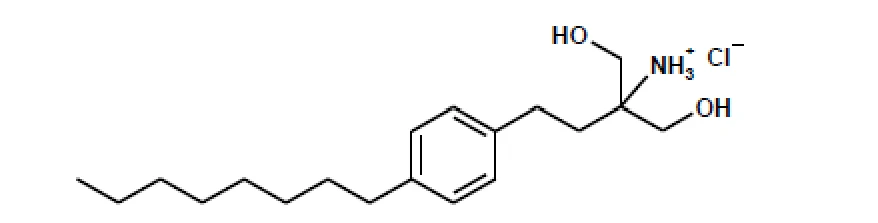
Physicochemical Properties:
Description: White to practically white powder
Solubility: Freely soluble in water
pKa: 1% solution in water at 22°C to 25°C is 4.0
14 Clinical Trials
14.1 Clinical Trials by Indication
Monotherapy for the treatment of patients with the relapsing-remitting form of multiple sclerosis (RRMS)
Table 5: Summary of Patient Demographics for Clinical Trials in RRMS
| Study # | Study design | Dosage, route of administration and duration | Study subjects (n) | Mean age (Range) | Sex |
|---|---|---|---|---|---|
Study D2301 (FREEDOMS) | Randomized, double-blind, placebo controlled study. | Fingolimod 0.5 mg or 1.25 mg, or placebo, once daily (oral) 2-year study | Fingolimod 0.5 mg: n = 425 Fingolimod 1.25 mg: n = 429 Placebo: n = 418 | 37.1 (17-55 years) | Male: 30.1% Female: 69.9% |
Study D2302 (TRANSFORMS) | Fingolimod 0.5 mg or 1.25 mg once-daily (oral), or interferon beta 1a 30 mcg once-weekly (IM) 1-year study | Fingolimod 0.5 mg: n = 429 Fingolimod 1.25 mg: n = 420 Interferon beta 1a: n = 431 | 36.2 (18-55 years) | Male: 32.7% Female: 67.3% |
The efficacy of fingolimod has been demonstrated in two studies evaluating once daily doses of fingolimod 0.5 mg and 1.25 mg in adult patients with relapsing-remitting multiple sclerosis. Both studies included patients who had experienced at least 2 clinical relapses during the 2 years prior to randomization or at least 1 clinical relapse during the 1 year prior to randomization, and had an Expanded Disability Status Scale (EDSS) score between 0 to 5.5.
Study D2301 (FREEDOMS)
The FREEDOMS study was a 2-year randomized, double-blind, placebo-controlled Phase III study in patients with relapsing-remitting multiple sclerosis who had not received any interferon beta or glatiramer acetate for at least the previous 3 months and had not received any natalizumab for at least the previous 6 months. Neurological evaluations were performed at Screening, every 3 months and at the time of suspected relapse. MRI evaluations were performed at Screening, month 6, month 12 and month 24. The primary endpoint was the annualized relapse rate (ARR).
Median age was 37 years, median disease duration was 6.7 years and median EDSS score at baseline was 2.0. Approximately 40% of patients had received treatment with other disease modifying therapies prior to entering the study, with interferon-beta being the most commonly used prior treatment (used by 29% of all patients). Patients were randomized to receive fingolimod 0.5 mg (n=425) or fingolimod 1.25 mg (n=429), or placebo (n=418) for up to 24 months. Median time on study drug was 717 days on 0.5 mg, 715 days on 1.25 mg and
718.5 days on placebo.
Study D2302 (TRANSFORMS)
The TRANSFORMS study was a 1-year randomized, double-blind, double-dummy, active (interferon beta-1a)-controlled Phase III study in patients with relapsing-remitting multiple sclerosis who had not received any natalizumab in the previous 6 months. Prior treatment with interferon-beta or glatiramer acetate up to the time of randomization was permitted.
Neurological evaluations were performed at Screening, every 3 months and at the time of suspected relapses. MRI evaluations were performed at Screening and at month 12. The primary endpoint was the annualized relapse rate.
Median age was 36 years, median disease duration was 5.9 years and median EDSS score at baseline was 2.0. Approximately 57% of patients had received treatment with other disease modifying therapies prior to entering the study, with interferon-beta being the most commonly used prior treatment (used by 49% of all patients). Patients were randomized to receive fingolimod 0.5 mg (n=429) or 1.25 mg (n=420) or interferon beta-1a 30 micrograms via the intramuscular route once weekly (n=431) for up to 12 months. Median time on study drug was 365 days on 0.5 mg, 364 days on 1.25 mg and 361 days on interferon beta-1a.
Table 6: Results of Study D2301 (FREEDOMS) in RRMS
| Fingolimod 0.5 mg N = 425 | Placebo N = 418 | p-value | |
|---|---|---|---|
Primary endpoint Annualized relapse rate† | 0.18 | 0.40 | <0.001 |
Key secondary endpoint Kaplan-Meier estimate of percentage (SE) of patients free of 3-month confirmed disability progression at Month 24 | 82.3 (1.89) | 75.9 (2.17) | 0.026 |
| Hazard ratio of disability progression (95% CI) | 0.70 (0.52, 0.96) | 0.024 |
† Based on confirmed relapses. Relapse was defined as neurologic symptoms together with an increase > 0.5 in the total EDSS score, or an increase of 1 point in each of two EDSS functional system scores, or an increase of two points in one EDSS functional system score (excluding bowel-bladder or cerebral functional systems). P-value determined by negative binomial regression adjusting for treatment, pooled country, number of relapses in previous 2 years and baseline EDSS.
Figure 1 Time to 3-month confirmed disability progression – Study D2301 (ITT population)
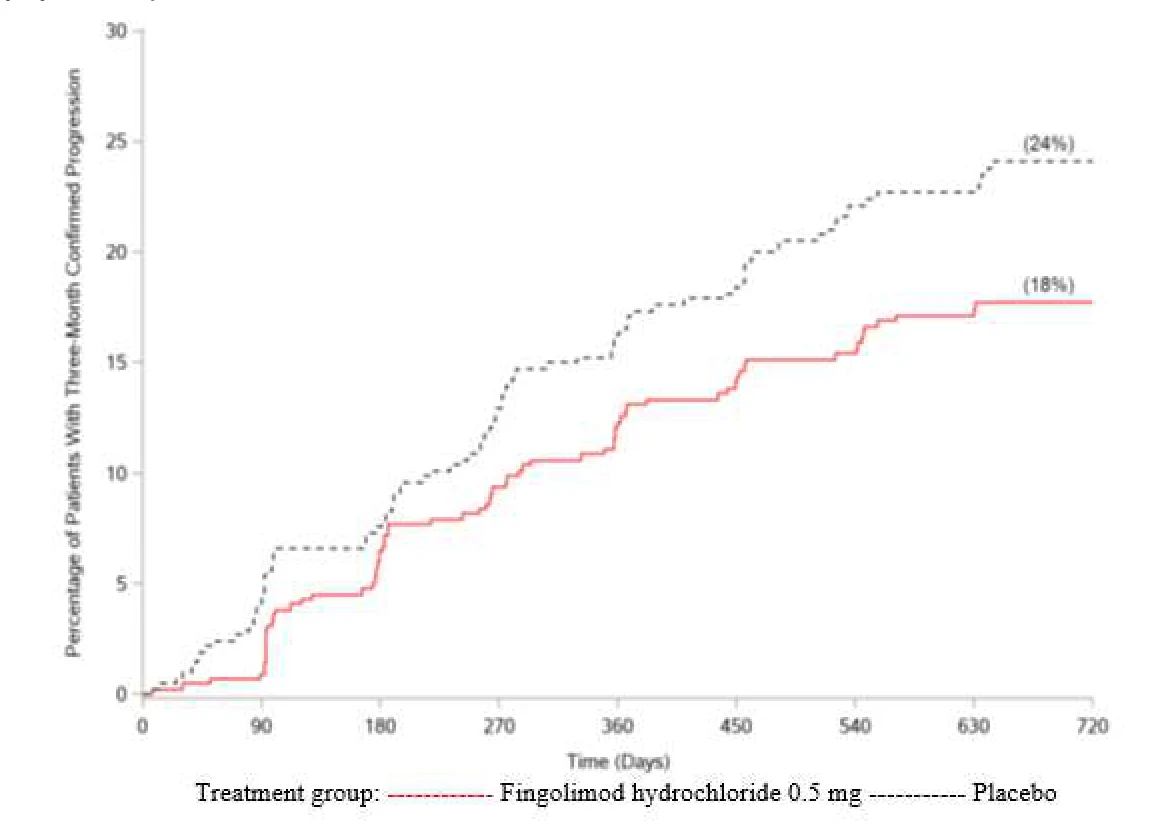
p = 0.026 for fingolimod vs. placebo.
The primary endpoint, the annualized relapse rate was significantly lower in patients treated with fingolimod than in patients who received placebo, with a relative reduction in relapse of 54% for patients treated with fingolimod 0.5 mg (see Table 6). The key secondary endpoint was the time to 3-month confirmed disability progression, as measured by a 1-point increase from baseline in EDSS (0.5 point increase for patients with baseline EDSS of 5.5) sustained for 3 months. Time to onset of 3-month sustained disability progression was significantly delayed with fingolimod treatment compared to placebo. The time to disability progression was significantly longer with fingolimod vs. placebo (see Table 5 and Figure 1). The 1.25 mg dose did not provide additional benefit over the 0.5 mg dose.
Secondary MRI endpoints included new and enlarging (active) T2 lesion counts, T1 Gadolinium (Gd)-enhancing lesion count and the rate of brain atrophy. The mean number of active T2 lesions over 24 months was 2.5 for fingolimod 0.5 mg and 9.8 for placebo (p<0.001), representing a 74% relative reduction. The mean number of Gd-enhancing lesions at Month 24 was 0.2 for fingolimod compared to 1.1 for placebo (p<0.001), a relative reduction of 81%. The rate of brain atrophy (mean % change in total brain volume) was less with fingolimod (-0.8%) than with placebo (-1.3%) over 24 months (p<0.001). Changes in brain volume were also significant at Months 6 and 12.
Table 7: Results of study D2302 (TRANSFORMS) in RRMS
| Fingolimod 0.5 mg | Interferon-beta-1a 30 mcg | p-value | ||||||||||
|---|---|---|---|---|---|---|---|---|---|---|---|---|
| N=429 | N=431 | |||||||||||
Primary endpoint Annualized relapse rate1 | 0.16 | 0.33 | <0.001 | |||||||||
| Key secondary endpoints MRI Mean (median) number of new or newly enlarging T2 lesions over 12 months2 | 1.6 (0) | 2.6 (1.0) | 0.002 | |||||||||
3-month confirmed disability progression Kaplan-Meier estimate of percentage (SE) of patients free of 3-month confirmed disability progression at Month 12 | 94.1 (1.25) | 92.1 (1.33) | 0.24 | |||||||||
| Hazard ratio of disability progression (95% CI) | 0.71 (0.42, 1.21) | 0.21 | ||||||||||
1Based on confirmed relapses. Relapse was defined as neurologic symptoms together with an increase > 0.5 in the total EDSS score, or an increase of 1 point in each of two EDSS functional system scores, or an increase of two points in one EDSS functional system score (excluding bowel-bladder or cerebral functional systems). P-value determined by negative binomial regression adjusting for treatment, country, number of relapses in previous 2 years and baseline EDSS.
2 Statistical analysis using negative binomial regression adjusted for treatment, country, number of relapses in previous 2 years and baseline EDSS.
The annualized relapse rate was significantly lower in patients treated with fingolimod than in patients who received interferon beta-1a, with a relative reduction in relapse of 52% for patients treated with fingolimod (see Table 7). The 1.25 mg dose did not provide additional benefit over the 0.5 mg dose.
The key secondary endpoints were the number of new or newly enlarging T2 lesions and the time to onset of 3-month confirmed disability progression as measured by at least a 1-point increase from baseline in EDSS (0.5 point increase for those with baseline EDSS of 5.5) sustained for 3 months. The number of new or newly enlarging T2 lesions was significantly lower in patients treated with fingolimod than in patients who received interferon beta-1a. There was no significant difference in the time to 3-month confirmed disability progression between fingolimod and interferon beta-1a-treated patients at 1 year (see Table 7). There were no significant differences between the 0.5 mg and the 1.25 mg doses on either endpoint.
Other secondary endpoints included the proportion of patients remaining relapse-free, T1 Gd- enhancing lesion count and the rate of brain atrophy. The proportion of patients remaining relapse-free after 12 months was 83% for fingolimod 0.5mg and 70% for those receiving interferon beta-1a (p<0.001). The mean number of Gd-enhancing lesions at Month 12 was 0.2 for fingolimod compared to 0.5 for interferon beta-1a (p<0.001), a relative reduction of 60%. The rate of brain atrophy (mean % change in total brain volume) was less with fingolimod (-0.3%) than with interferon beta-1a (-0.5%) over 12 months (p<0.001).
Pooled results of studies D2301 and D2302 showed a consistent reduction of annualized relapse rate compared to comparator in subgroups defined by gender, age, prior multiple sclerosis therapy, disease activity or disability levels at baseline.
14.2 Comparative Bioavailability Study
A single center, randomized, single oral dose, double-blind, two-treatment, two-period, two-sequence, crossover bioequivalence study comparing pms-Fingolimod 0.5 mg capsules (Pharmascience Inc.) to the Canadian reference product, PrGilenya® 0.5 mg capsules (Novartis Pharmaceuticals Canada Inc., Canada). The study drugs were administered as a single 1.0 mg dose (2 x 0.5 mg capsules) to 24 healthy, adult male subjects under fasting conditions.
The bioavailability data were measured and the results are summarized on 22 subjects in the following table:
SUMMARY TABLE OF THE COMPARATIVE BIOAVAILABILITY DATA
Fingolimod (2 x 0.5 mg) From measured data Geometric Mean Arithmetic Mean (CV %) | ||||
| Parameter | Test1 | Reference2 | % Ratio of Geometric Means | 90% Confidence Interval |
AUC0-72 (pg·h/mL) | 36,704.4 37,478.1 (20.7) | 36,849.8 37,483.7 (19.2) | 99.6 | 92.7 – 107.0 |
Cmax (pg/mL) | 628.8 642.6 (21.0) | 635.0 646.2 (19.2) | 99.0 | 91.5 – 107.1 |
Tmax§ (h) | 31.00 (12.00-38.00) | 32.00 (14.00-52.00) | ||
1 pms-FINGOLIMOD 0.5 mg capsules, Pharmascience Inc., Montréal, QC, Canada
2 PrGILENYA® 0.5 mg capsules, Novartis Pharmaceuticals Canada Inc., Canada, and was purchased in Canada
3 Expressed as the median (range) only
AUCI and T1/2 are not reported; these parameters could not be reliably estimated due to the long half-life of fingolimod and the design of the study
- 16. Non-Clinical Toxicology
Safety Pharmacology
A slight inhibition of hERG (25% or 18%) was present at the solubility limit of fingolimod or of the pharmacologically active S-enantiomer (0.5 mcM or 0.4 mcM) in stably transfected HEK293 cells.
In the Langendorff perfused rabbit heart model, fingolimod-phosphate increased cycle length and reduced coronary perfusion at target concentrations between 10 nM and 100 nM.
Oral fingolimod at 10 mg/kg induced significant decreases in heart rate, and increases in systolic and diastolic blood pressure in conscious, free-moving male cynomolgus monkeys.
Intravenous administration of the pharmacologically active S-enantiomer of fingolimod- phosphate decreased heart rate, decreased blood pressure, prolonged the PR interval, and caused sinus arrhythmias at doses of 0.01 and 0.1 mg/kg in anesthetized guinea pigs. The decrease in heart rate and prolongation of the PR interval caused by the S-enantiomer of fingolimod-phosphate were inhibited by pertussis toxin, suggesting the involvement of a Gαi/o-coupled S1P receptor.
In anesthetized rats intravenous fingolimod-phosphate decreased the heart rate and produced sinus arrhythmias at 0.3 mg/kg, prolonged the PR interval and decreased the respiratory tidal volume at doses greater than 0.03 mg/kg, and decreased respiratory minute volume at 0.03 mg/kg. Pertussis toxin inhibited the fingolimod-phosphate-induced decrease in heart rate, prolongation in PR interval, AV block and decrease in respiratory tidal volume.
Dyspnea, bradycardia and ECG findings of sino-atrial block, atrioventricular block, findings resembling left bundle branch block, atrial premature complexes, and ventricular premature complexes were present at 0.1 and/or 0.5 mg/kg in rats intravenously administered the pharmacologically active S-enantiomer of fingolimod-phosphate.
In dogs, by step-wise increasing the daily oral dose of fingolimod from 0.1 to 10 mg/kg, the decrease in heart rate and increase in blood pressure were less pronounced compared with giving an oral dose of ≥ 2.5 mg/kg on Day 1. An increase in frequency of AV block and ventricular premature contractions occurred in dogs given 10 mg/kg fingolimod orally.
Intravenous fingolimod (3 and 10 mg/kg) induced a marked and long-lasting increase in airway resistance in anesthetized rats. Pretreatment with B. pertussis toxin resulted in a reduction of the acute bronchoconstriction suggesting that the acute effects caused by fingolimod occur via signaling pathways involving Gi-GTP-binding protein.
Bronchoconstriction induced in anesthetized rats by IV injection of fingolimod was reversed by injection of the beta-2 adrenoceptor agonist, salbutamol.
Toxicology
General Toxicology: The preclinical safety profile of fingolimod was assessed in mice, rats, dogs and monkeys.
Fingolimod had a moderate level of acute toxicity. Deaths occurred following single dose IV administration of 50 mg/kg in mice and ≥ 25 mg/kg IV in rats, and following single dose oral administration of ≥ 300 mg/kg in rats. No deaths occurred in dogs after single oral doses of 1,000 or 2,000 mg/kg. Signs of acute toxicity were referable to respiratory, CNS and gastrointestinal systems and included dyspnea, incoordination, tremors, convulsions, sedation and decreased locomotor activity and forestomach ulcers in rodents, and vomiting and loose stools in dogs.
The major target organs in repeat-dose oral studies were lungs, and blood vessels with findings at administered dose levels and systemic exposures in animals that, in some instances, were without a defined margin compared with the human oral dose (0.5 mg/day) and associated systemic exposure.
Effects on the lymphoid system consisting of lymphopenia, lymphoid depletion (thymus cortex, spleen, lymph nodes), and increased size and density of staining of thymus medulla, were consistently observed across a wide range of doses in all animal species tested and essentially represent anticipated effects based on fingolimod pharmacology. Gastrointestinal protozoan infection was considered to reflect increased susceptibility to infection secondary to immunosuppression in monkeys administered 0.5 or 3 mg/kg. Granulomatous inflammation in lungs of mice and pneumonia observed in rats and dogs may also be secondary to immunosuppression.
Lung was a sensitive target organ in all animal species tested. Findings included increased lung weight and insufficient or lack of pulmonary collapse at necropsy. Microscopic lung changes included smooth muscle hypertrophy/hyperplasia and/or interstitial collagenization at the bronchoalveolar junction; hyperdistention of alveoli; and increased alveolar macrophage infiltrates. Lung pathologic changes occurred at ≥0.1 mg/kg in rats, ≥0.01 mg/kg in dogs, and
≥0.5 mg/kg in monkeys. In the 52-week monkey study respiratory distress was associated with ketamine administration at fingolimod doses of 3 and 10 mg/kg.
Vasculopathy in Wistar rats involved vessels in multiple organs including kidney, spleen, mesentery and brain. The lowest effect dose levels were 1.5 mg/kg in the 26-week study and
0.15 mg/kg in the 104-week carcinogenicity study. Vascular lesions in heart of dogs administered ≥1 mg/kg were considered related to hemodynamic effects of fingolimod.
Treatment-related kidney findings (nephropathy, tubular basophilia and/or hyaline casts) occurred in rodent studies (5 mg/kg in 13-week and ≥0.25 mg/kg in 104-week studies in mice;
≥0.3 mg/kg in 26-week and ≥0.05 mg/kg in 104-week studies in rats).
Pathologic changes were present in the nervous system in dogs at relatively high dose levels. Mononuclear cell infiltrates or perivascular mononuclear cells were present in brain or spinal cord at 10 mg/kg (26-week study) and 30 mg/kg (4-week study).
Treatment-related findings in repeat-dose toxicology studies generally showed evidence of potential reversibility following treatment withdrawal, although recovery was incomplete in some instances.
Effects on liver (increased transaminases in rats and dogs), pituitary (vacuolation and/or atrophy of anterior pituitary cells in rats and dogs), adrenal medulla (vacuolation and decrease in number of cells and fibrosis in dogs) and gastrointestinal tract (forestomach erosion in rats, stomach ulcers in dogs) mainly occurred at relatively high dose levels and inconsistently across species.
There were no treatment-related ophthalmoscopic findings in toxicology studies. Histopathological vasculopathy was observed in eyes for a small number of treated animals at
≥0.5 mg/kg in the 104-week rat study.
Genotoxicity: Fingolimod was not mutagenic in an Ames test and in a L5178Y mouse lymphoma cell line in vitro. No clastogenic effects were seen in vitro in V79 Chinese hamster lung cells. Fingolimod induced numerical (polyploidy) chromosomal aberrations in V79 cells at concentrations of 3.7 mcg/mL and above. Fingolimod was not clastogenic in the in vivo micronucleus tests in mice and rats.
Carcinogenicity: No evidence of carcinogenicity was observed in a 2-year bioassay in rats at oral doses of fingolimod up to the maximum tolerated dose of 2.5 mg/kg, representing an approximate 50-fold margin based on human systemic exposure (AUC) at the 0.5 mg dose. Vasculopathy and nephropathy were the main lesions contributing to the increased mortality at 0.5 and 2.5 mg/kg. In a 2-year mouse study, an increased incidence of malignant lymphoma was seen at doses of 0.25 mg/kg and higher, representing an approximate 6-fold margin based on human systemic exposure (AUC) at a daily dose of 0.5 mg.
Reproductive and Developmental Toxicology: Fingolimod had no effect on sperm count or motility, nor on fertility in male and female rats up to the highest dose tested (10 mg/kg), representing an approximate 150-fold margin based on human systemic exposure (AUC) at a daily dose of 0.5 mg.
Fingolimod was teratogenic at doses of 0.1 mg/kg or higher (corresponding to 2 or more times the exposure in humans at the recommended dose of 0.5 mg) when given to pregnant rats during the period of organogenesis. The most common fetal visceral malformations included persistent truncus arteriosus and ventricular septum defect. The receptor affected by fingolimod (sphingosine 1-phosphate receptor) is known to be involved in vascular formation during embryogenesis. An increase in post-implantation loss was observed in rats at doses of 1 mg/kg and higher and a decrease in viable fetuses at 3 mg/kg. Fingolimod was not teratogenic in the rabbit, but an increased incidence of embryo-fetal mortality was seen starting at doses of 1.5 mg/kg (corresponding to similar exposure in humans at the recommended dose of 0.5 mg), and a decrease in viable fetuses, as well as fetal growth retardation at 5 mg/kg.
In rats, F1 generation pup survival was decreased in the early postpartum period at doses administered during pregnancy and lactation that did not cause maternal toxicity (0.05, 0.15 and 0.5 mg/kg). However, F1 body weights, development, behavior, and fertility were not affected by treatment with fingolimod.
Fingolimod was excreted in the milk of treated animals during lactation. Fingolimod and its metabolites crossed the placental barrier in pregnant rabbits.
17. Supporting Product Monographs
- 1. GILENYA, capsules, 0.25 mg and 0.5 mg, control 291855, product monograph, Novartis Pharmaceuticals Canada Inc. (2025-04-17).