


Product Monograph - PMS-Rosiglitazone-Metformin
SUMMARY PRODUCT INFORMATION
| Route of | Dosage Form / Strength | Nonmedicinal Ingredients | ||
| Administration | ||||
| Oral | Tablet / 1 mg / 500 mg, 2 mg / 500 mg, 4 mg / 500 mg, 2 mg / 1000 mg, 4 mg / 1000 mg | Colloidal silicon dioxide, magnesium stearate, microcrystalline cellulose, povidone, pregelatinized starch, sodium starch glycolate. Additionally, each tablet is coated with the following non-medicinal ingredients: (1 mg/ 500 mg) Hydroxypropyl Methylcellulose, Iron Oxide Yellow, Polyethylene Glycol, and Titanium Dioxide; (2 mg/ 500 mg) Hydroxypropyl Methylcellulose, Iron Oxide Red, Polyethylene Glycol and Titanium Dioxide.; (4 mg/ 500 mg) Hydroxypropyl Methylcellulose, Iron Oxide Red, Iron Oxide Yellow, Polyethylene Glycol and Titanium Dioxide; (2 mg/ 1000 mg) Hydroxypropyl Methylcellulose, Iron Oxide Yellow, Polyethylene Glycol and Titanium Dioxide; (4 mg/ 1000 mg) Hydroxypropyl Methylcellulose, Iron Oxide Red, Polyethylene Glycol and Titanium Dioxide | ||
INDICATIONS AND CLINICAL USE
pms-ROSIGLITAZONE-METFORMIN (rosiglitazone maleate/metformin hydrochloride) is indicated as an adjunct to diet and exercise to improve glycemic control in patients with type 2 diabetes mellitus for whom all other oral antidiabetic agents, in monotherapy or in combination, do not result in adequate glycemic control or are inappropriate due to contraindications or intolerance. (See WARNINGS AND PRECAUTIONS, Serious Warnings and Precautions Box and Cardiovascular).
Prior to prescribing pms-ROSIGLITAZONE-METFORMIN, physicians must:
- Document the eligibility of patients to meet the above criteria;
- Counsel each patient on the risks and benefits of pms-ROSIGLITAZONE-METFORMIN, including the cardiovascular risks; and
- Obtain the patient’s written informed consent to take the drug.
Caloric restriction, weight loss, and exercise improve insulin sensitivity and are essential for the proper treatment of a diabetic patient. These measures are important not only in the primary treatment of type 2 diabetes, but also in maintaining the efficacy of drug therapy. Prior to initiation of therapy with pms-ROSIGLITAZONE-METFORMIN, secondary causes of poor glycemic control (e.g. infection) should be investigated and treated.
Geriatrics (≥ 65 years of age):
Rosiglitazone maleate
Evidence from clinical studies and experience suggest that use in the geriatric population may be associated with differences in safety (see WARNINGS & PRECAUTIONS, Cardiovascular).
Metformin hydrochloride
Limited data from controlled pharmacokinetic studies of metformin hydrochloride in healthy elderly subjects suggest that total plasma clearance of metformin is decreased, the half-life is prolonged and Cmax is increased, compared to healthy young subjects. From these data, it appears that the change in metformin pharmacokinetics with aging is primarily accounted for by a change in renal function. Metformin treatment and therefore treatment with pms-ROSIGLITAZONE-METFORMIN should not be initiated in patients 80 years of age or older unless measurement of creatinine clearance demonstrates that renal function is not reduced (see WARNINGS AND PRECAUTIONS and DOSAGE AND ADMINISTRATION).
Pediatrics (< 18 years of age):
The safety and effectiveness of rosiglitazone and metformin have not been established in patients younger than 18 years of age. Furthermore, thiazoledinediones promote the maturation of preadipocytes and have been associated with weight gain. Therefore, pms-ROSIGLITAZONE-METFORMIN is not indicated in patients younger than 18 years of age (see WARNINGS AND PRECAUTIONS, Special Populations).
CONTRAINDICATIONS
pms-ROSIGLITAZONE-METFORMIN is contraindicated in:
- Patients with New York Heart Association (NYHA) Class I to IV heart failure.
- Patients with renal impairment or for whom renal function is not known, in patients with serum creatinine levels above the upper limit of normal range, and in patients with renal disease or renal dysfunction (e.g., as suggested by serum creatinine levels ≥136 µmol/L (males), ≥124 µmol/L (females) or abnormal creatinine clearance) (< 60 mL/min) which may result from conditions such as cardiovascular collapse (shock), acute myocardial infarction, and septicemia (see WARNINGS AND PRECAUTIONS).
- Patients with known hypersensitivity to this product (rosiglitazone maleate or metformin hydrochloride), or any of its ingredients.
- Patients with acute or chronic metabolic acidosis, including diabetic ketoacidosis, with or without coma, history of ketoacidosis with or without coma. Diabetic ketoacidosis should be treated with insulin.
- Patients with a history of lactic acidosis, irrespective of precipitating factors.
- Patients with serious hepatic impairment (see WARNINGS AND PRECAUTIONS).
- Patients with Type 1 diabetes mellitus.
Pregnancy. Insulin is recommended during pregnancy to control blood glucose levels.
Oral antidiabetic agents should not be given (see WARNINGS AND PRECAUTIONS, Special Populations, Pregnant Women).
- Breastfeeding.
- Excessive alcohol intake, acute or chronic.
- In cases of cardiovascular collapse and in disease states associated with hypoxemia such as cardiorespiratory insufficiency, which are often associated with hyperlactacidemia.
- During stress conditions, such as severe infections, trauma or surgery and the recovery phase thereafter.
- In patients suffering from severe dehydration.
pms-ROSIGLITAZONE-METFORMIN should be temporarily discontinued in patients undergoing radiologic studies involving intravascular administration of iodinated contrast materials, because use of such products may result in acute alteration of renal function (see WARNINGS AND PRECAUTIONS).
WARNINGS AND PRECAUTIONS
Serious Warnings and Precautions
- Rosiglitazone, like other thiazolidinediones, can cause fluid retention and congestive heart failure (See Cardiovascular below).
Rosiglitazone may be associated with an increased risk of cardiac ischemia.
pms-ROSIGLITAZONE-METFORMIN is not recommended in patients with a history of ischemic heart disease, particularly those with myocardial ischemic symptoms. (See Cardiovascular below).
- pms-ROSIGLITAZONE-METFORMIN should be used only when all other oral antidiabetic agents, in monotherapy or in combination, do not result in adequate glycemic control or are inappropriate due to contraindications or intolerance (See Cardiovascular below).
General
pms-ROSIGLITAZONE-METFORMIN
Administration with other drugs: For safety reasons, the use of pms-ROSIGLITAZONE-METFORMIN in combination with insulin is not indicated (see CLINICAL TRIALS).
The use of pms-ROSIGLITAZONE-METFORMIN in combination with a sulfonylurea (triple therapy) is not indicated. An increase in reporting of fluid retention related events (including congestive heart failure) has been seen in patients receiving rosiglitazone in combination with metformin AND a sulfonylurea.
Close monitoring of glycemic control and dose adjustment of the rosiglitazone or metformin components may be needed when pms-ROSIGLITAZONE-METFORMIN is co-administered with CYP2C8 inhibitors or inducers or cationic drugs that are eliminated by renal tubular excretion (see DRUG INTERACTIONS).
Rosiglitazone maleate
Due to its mechanism of action, rosiglitazone is active only in the presence of endogenous insulin. Therefore, pms-ROSIGLITAZONE-METFORMIN should not be used in patients with type 1 diabetes.
Metformin hydrochloride
Radiologic studies involving the use of intravascular iodinated contrast materials (for example, intravenous urogram, intravenous cholangiography, angiography, and computed tomography (CT) scans with contrast materials): Intravascular contrast studies with iodinated materials can lead to acute alteration of renal function and have been associated with lactic acidosis in patients receiving metformin (see CONTRAINDICATIONS). Therefore, in patients in whom any such study is planned, pms-ROSIGLITAZONE-METFORMIN should be temporarily discontinued at the time of or prior to the procedure, and withheld for 48 hours subsequent to the procedure and reinstituted only after renal function has been re-evaluated and found to be normal.
Change in clinical status of previously controlled diabetic: A diabetic patient previously well controlled on pms-ROSIGLITAZONE-METFORMIN who develops laboratory abnormalities or clinical illness (especially vague and poorly defined illness) should be evaluated promptly for evidence of ketoacidosis or lactic acidosis. Evaluation should include serum electrolytes and ketones, blood glucose and, if indicated, blood pH, lactate, pyruvate and metformin levels. If acidosis of either form occurs, pms-ROSIGLITAZONE-METFORMIN must be stopped immediately and appropriate corrective measures initiated (see WARNINGS AND PRECAUTIONS, Lactic Acidosis).
Cardiovascular
Rosiglitazone maleate
Rosiglitazone can cause fluid retention, congestive heart failure, and may be associated with an increased risk of cardiac ischemia. Some studies have reported an increased cardiovascular risk with rosiglitazone compared to another member of the thiazolidinedione class, pioglitazone. pms-ROSIGLITAZONE-METFORMIN should be used only when all other oral antidiabetic agents, in monotherapy or in combination, do not result in adequate glycemic control or are inappropriate due to contraindications or intolerance.
Congestive heart failure: Thiazolidinediones, like rosiglitazone, alone or in combination with other antidiabetic agents, can cause fluid retention, which can exacerbate or lead to congestive heart failure. The fluid retention may very rarely present as rapid and excessive weight gain. All patients should be monitored for signs and symptoms of adverse reactions relating to fluid retention and heart failure (see ADVERSE REACTIONS). An increase in reporting of fluid retention related events including congestive heart failure has been seen in patients receiving rosiglitazone in combination with metformin and a sulfonylurea. This triple therapy regimen is not an approved indication.
Treatment with thiazolidinediones has been associated with cases of congestive heart failure, some of which were difficult to treat unless the medication was discontinued. pms-ROSIGLITAZONE-METFORMIN should be discontinued if any deterioration in cardiac status occurs.
pms-ROSIGLITAZONE-METFORMIN is contraindicated in patients with NYHA Class I, II, III and IV heart failure. Patients with severe heart failure (including NYHA Class III and IV cardiac status) were not studied during the clinical trials.
Edema and heart failure have been reported more frequently in elderly patients using rosiglitazone. Caution should be exercised in patients over 75 years because of the limited experience in this patient group.
Ischemic heart disease: In a retrospective analysis of data from pooled clinical studies (n=14,237), which included patients on combination therapy with insulin as well as patients with NYHA Class I and II heart failure, the overall incidence of events typically associated with cardiac ischemia was higher for rosiglitazone containing regimens, 2.00% versus comparators, 1.53% [Hazard ratio 1.30 (95% confidence interval 1.004 – 1.69)].
In a subgroup analysis of these data, this risk was further increased in patients receiving nitrates with approximately twice as many events in patients receiving rosiglitazone versus comparators. The use of pms-ROSIGLITAZONE-METFORMIN is therefore not recommended for patients being treated with nitrates.
In a meta-analyses of 52 double-blind, randomized, controlled clinical trials (mean duration 6 months) (n=16,995) statistically significant increases in myocardial infarction (Odds ratio (OR)= 1.80; 95% CI= [1.03, 3.25]), serious myocardial ischemic events (OR= 1.46; 95% CI= [1.06, 2.03]) and total myocardial ischemic events (OR= 1.34; 95% CI= [1.07, 1.70]) were demonstrated. A nearly statistically significant increase was shown for major adverse cardiovascular events (MACE) (OR= 1.44; 95% CI= [0.95, 2.20]). Non-statistically significant increases were also shown for CV death (OR= 1.46; 95% CI= [0.60, 3.77]) and all-cause death (OR=1.38; 95% CI= [0.72, 2.72]). The odds ratios for congestive heart failure and stroke were OR=1.93; 95% CI= [1.30, 2.93] and OR= 0.86; 95% CI= [0.40, 1.83], respectively.
Patients with a history of Ischemic Heart Disease: There are limited clinical trial data in patients with ischemic heart disease. In a subgroup of rosiglitazone users with a history of Ischemic Heart Disease of a large cardiovascular outcomes trial (383 out of 2220 patients) there was a non-significant increase in the primary endpoint of cardiovascular death or cardiovascular hospitalization (Hazard Ratio 1.26; 95% CI [0.95, 1.68]). pms-ROSIGLITAZONE-METFORMIN is not recommended in patients with a history of ischemic heart disease, particularly those with myocardial ischemic symptoms.
Edema: pms-ROSIGLITAZONE-METFORMIN should be used with caution in patients with edema. In healthy volunteers who received rosiglitazone 8 mg once daily as monotherapy for 8 weeks, there was a statistically significant increase in median plasma volume (1.8 mL/kg) compared to placebo. In controlled clinical trials of patients with Type 2 diabetes, mild to moderate edema was observed at a greater frequency in patients treated with rosiglitazone, and may be dose related (see ADVERSE REACTIONS). For information on macular edema, see WARNINGS AND PRECAUTIONS, Ophthalmologic.
Edema and heart failure have been reported more frequently in elderly patients using rosiglitazone. Caution should be exercised in patients over 75 years because of the limited experience in this patient group."
Metformin hydrochloride
Hypoxic states: Cardiovascular collapse (shock) from whatever cause, acute congestive heart failure, acute myocardial infarction and other conditions characterized by hypoxemia have been associated with lactic acidosis and may also cause prerenal azotemia. When such events occur in patients receiving pms-ROSIGLITAZONE-METFORMIN, the drug should be promptly discontinued.
Endocrine and Metabolism
Rosiglitazone-metformin
Loss of control of blood glucose: When a patient stabilized on any diabetic regimen is exposed to stress such as fever, trauma, infection, or surgery, a temporary loss of glycemic control may occur. At such times, it may be necessary to withhold pms-ROSIGLITAZONE-METFORMIN and temporarily administer insulin. pms-ROSIGLITAZONE-METFORMIN may be reinstituted after the acute episode is resolved.
Rosiglitazone maleate
Weight Gain: Dose-related weight gain was seen with rosiglitazone alone and in combination with other hypoglycemic agents. Treatment should be re-evaluated in patients with excessive weight gain (see ACTION AND CLINICAL PHARMACOLOGY and ADVERSE REACTIONS).
Metformin hydrochloride
Lactic acidosis: Lactic acidosis is a rare, but serious, metabolic complication that occurs due to metformin accumulation during treatment with ROSIGLITAZONE-METFORMIN; when it occurs, it is fatal in approximately 50% of cases. Lactic acidosis may also occur in association with a number of pathophysiologic conditions, including diabetes mellitus, and whenever there is significant tissue hypoperfusion and hypoxemia. Lactic acidosis is characterized by elevated blood lactate levels (>5 mmol/L), decreased blood pH, electrolyte disturbances with an increased anion gap, and an increased lactate/pyruvate ratio. When metformin is implicated as the cause of lactic acidosis, metformin plasma levels >5 µg/mL are generally found.
The reported incidence of lactic acidosis in patients receiving metformin is very low (approximately 0.03 cases/1000 patient-years, with approximately 0.015 fatal cases/1000 patient-years). Reported cases have occurred primarily in diabetic patients with significant renal insufficiency, including both intrinsic renal disease and renal hypoperfusion, often in the setting of multiple concomitant medical/surgical problems and multiple concomitant medications. Patients with congestive heart failure requiring pharmacologic management, in particular those with unstable or acute congestive heart failure who are at risk of hypoperfusion and hypoxemia, are at increased risk of lactic acidosis. In particular, treatment of the elderly should be accompanied by careful monitoring of renal function. ROSIGLITAZONE-METFORMIN treatment should not be initiated in patients 80 years of age or older, unless measurement of creatinine clearance demonstrates that renal function is not reduced, as these patients are more susceptible to developing lactic acidosis. The risk of lactic acidosis increases with the degree of renal dysfunction and the patient's age. The risk of lactic acidosis may, therefore, be significantly
decreased by regular monitoring of renal function in patients taking pms-ROSIGLITAZONE-METFORMIN and by use of the minimum effective dose of pms-ROSIGLITAZONE-METFORMIN.
In addition, pms- ROSIGLITAZONE-METFORMIN should be promptly withheld in the presence of any condition associated with hypoxemia, dehydration or sepsis. Because impaired hepatic function may significantly limit the ability to clear lactate, pms- ROSIGLITAZONE-METFORMIN should generally be avoided in patients with clinical or laboratory evidence of hepatic disease.
Patients should be cautioned against excessive alcohol intake, either acute or chronic, when taking pms-ROSIGLITAZONE-METFORMIN since alcohol potentiates the effects of metformin on lactate metabolism.
The onset of lactic acidosis often is subtle, and accompanied only by nonspecific symptoms such as malaise, myalgias, respiratory distress, increasing somnolence and nonspecific abdominal distress. There may be associated hypothermia, hypotension and resistant bradyarrhythmias with more marked acidosis. The patient and the patient's physician must be aware of the possible importance of such symptoms and the patient should be instructed to notify the physician immediately if they occur (see General). pms-ROSIGLITAZONE-METFORMIN should be withdrawn until the situation is clarified. Serum electrolytes, ketones, blood glucose and, if indicated, blood pH, lactate levels and even blood metformin levels may be useful. Once a patient is stabilized on any dose level of pms-ROSIGLITAZONE-METFORMIN gastrointestinal symptoms, which are common during initiation of therapy, are unlikely to be drug related. Later occurrence of gastrointestinal symptoms could be due to lactic acidosis or other serious disease. Levels of fasting venous plasma lactate above the upper limit of normal but less than 5 mmol/L in patients taking ROSIGLITAZONE-METFORMIN do not necessarily indicate impending lactic acidosis and may be explainable by other mechanisms, such as poorly controlled diabetes or obesity, vigorous physical activity or technical problems in sample handling. Lactic acidosis should be suspected in any diabetic patient with metabolic acidosis lacking evidence of ketoacidosis (ketonuria and ketonemia).
Lactic acidosis is a medical emergency that must be treated in a hospital setting. In a patient with lactic acidosis who is taking pms-ROSIGLITAZONE-METFORMIN, the drug should be discontinued immediately and general supportive measures promptly instituted. Because metformin hydrochloride is dialyzable (with a clearance of up to 170 mL/min under good hemodynamic conditions), prompt hemodialysis is recommended to correct the acidosis and remove the accumulated metformin. Such management often results in prompt reversal of symptoms and recovery (see Cardiovascular, Renal and Hepatic, and CONTRAINDICATIONS).
If acidosis of any kind develops, pms-ROSIGLITAZONE-METFORMIN should be discontinued immediately.
Vitamin B12 levels: Impairment of vitamin B12 and folic acid absorption has been reported in some patients on metformin. Therefore, measurements of serum vitamin B12 and folic acid are advisable at least every one to two years in patients on long-term treatment with pms-ROSIGLITAZONE-METFORMIN.
A decrease to subnormal levels of previously normal serum vitamin B12 levels, without clinical manifestations, is observed in approximately 7% of patients receiving metformin hydrochloride in controlled clinical trials of 28 weeks duration. Such a decrease, possibly due to interference with B12 absorption from the B12 -intrinsic factor complex, is, however, very rarely associated with anemia and appears to be rapidly reversible with discontinuation of metformin or vitamin B12 supplementation. Measurement of hematologic parameters on an annual basis is advised in patients on pms-ROSIGLITAZONE-METFORMIN and any apparent abnormalities should be appropriately investigated and managed (see Monitoring and Laboratory Tests). Certain individuals (those with inadequate vitamin B12 or calcium intake or absorption) appear to be predisposed to developing subnormal vitamin B12 levels.
Hypoglycemia: Hypoglycemia does not occur in patients receiving metformin alone under usual circumstances of use, but could occur when caloric intake is deficient, when strenuous exercise is not compensated by caloric supplementation, or during concomitant use with hypoglycemic agents (such as sulfonylureas) or ethanol. Elderly, debilitated or malnourished patients, and those with adrenal or pituitary insufficiency or alcohol intoxication are particularly susceptible to hypoglycemic effects. Hypoglycemia may be difficult to recognize in the elderly, and in people who are taking beta-adrenergic blocking drugs.
Hematologic
Rosiglitazone maleate
In controlled trials, there were dose-related decreases in hemoglobin and hematocrit. The magnitude of the decreases (≤ 11 g/L for hemoglobin and ≤ 0.034 for hematocrit) was small for rosiglitazone alone and rosiglitazone in combination with other hypoglycemic agents. The changes occurred primarily during the first 3 months of therapy or following an increase in rosiglitazone dose and remained relatively constant thereafter. Decreases may be related to increased plasma volume observed during treatment with rosiglitazone and have not been associated with any significant hematologic clinical effects (see ADVERSE REACTIONS, Abnormal Hematologic and Clinical Chemistry Findings). Patients with a hemoglobin value of <110 g/L for males and <100 g/L for females were excluded from the clinical trials.
Hepatic
Rosiglitazone maleate
Therapy with pms-ROSIGLITAZONE-METFORMIN should not be initiated in patients with increased baseline liver enzyme levels (ALT >2.5 times the upper limit of normal).
Rare cases of severe hepatocellular injury have been reported with thiazolidinediones.
In postmarketing experience with rosiglitazone, reports of hepatitis and of hepatic enzyme elevations to three or more times the upper limit of normal have been received. Very rarely, these reports have involved hepatic failure with and without fatal outcome, although causality has not been established (see ADVERSE REACTIONS, Post-Market Adverse Drug Reactions).
Liver enzymes should be checked prior to the initiation of therapy with rosiglitazone-metformin in all patients and periodically thereafter per the clinical judgement of the healthcare professional. Patients with mildly elevated liver enzymes (ALT levels ≤ 2.5 times the upper limit of normal) at
baseline or during therapy with rosiglitazone-metformin should be evaluated to determine the cause of the liver enzyme elevation.
Initiation of, or continuation of, therapy with rosiglitazone-metformin in patients with mild liver enzyme elevations should proceed with caution and include appropriate close clinical follow-up, including more frequent liver enzyme monitoring, to determine if the liver enzyme elevations resolve or worsen. If at any time ALT levels increase to >3 times the upper limit of normal in patients on therapy with rosiglitazone-metformin, liver enzyme levels should be rechecked as soon as possible. If ALT levels remain >3 times the upper limit of normal, therapy with rosiglitazone-metformin should be discontinued (see DOSAGE AND ADMINISTRATION).
If any patient develops symptoms suggesting hepatic dysfunction, which may include unexplained nausea, vomiting, abdominal pain, fatigue, anorexia and/or dark urine, liver enzymes should be checked. If jaundice is observed, drug therapy should be discontinued. In addition, if the presence of hepatic disease or hepatic dysfunction of sufficient magnitude to predispose to lactic acidosis is confirmed, therapy with rosiglitazone-metformin should be discontinued.
Metformin hydrochloride
Impaired hepatic function: Since impaired hepatic function has been associated with some cases of lactic acidosis, rosiglitazone-metformin should generally be avoided in patients with clinical or laboratory evidence of hepatic disease.
Musculoskeletal
Rosiglitazone maleate
In post-marketing experience, there have been very rare cases of creatinine kinase (CK) elevation, myalgia, and rhabdomyolysis reported with the use of rosiglitazone.
Fractures: Long-term studies showed an increased incidence of bone fractures in patients taking rosiglitazone. In females, this increased incidence was noted after the first year of treatment and persisted during long-term treatment. The majority of the fractures have occurred in the upper limbs and distal lower limbs (see ADVERSE REACTIONS). The risk of fracture should be considered in the care of all patients treated with rosiglitazone.
Decreases in spine and hip bone mineral density have been reported in men and women taking rosiglitazone in epidemiological and randomized clinical trials.
Ophthalmologic
Rosiglitazone maleate
New onset and/or worsening macular edema with decreased visual acuity has been reported rarely in postmarketing experience with rosiglitazone-metformin. In some cases, the visual events resolved or improved following discontinuation of rosiglitazone-metformin. Physicians should consider the possibility of macular edema if a patient reports disturbances in visual acuity (see Post-Market Adverse Drug Reactions).
Peri-Operative Considerations
Metformin hydrochloride
Surgical procedures: Use of rosiglitazone-metformin should be temporarily suspended for any surgical procedure (except minor procedures not associated with restricted intake of food and fluids). Rosiglitazone-metformin should be discontinued 2 days before surgical intervention and should not be restarted until the patient's oral intake has resumed and renal function has been evaluated as normal.
Renal
Metformin hydrochloride
Use of concomitant medications that may affect renal function or metformin disposition:
Concomitant medication(s) that may affect renal function or result in significant hemodynamic change or may interfere with the disposition of metformin, such as cationic drugs that are eliminated by renal tubular secretion (see DRUG INTERACTIONS), should be used with caution.
Sexual Function/Reproduction
Rosiglitazone maleate
Ovulation: As with other thiazolidinediones, rosiglitazone may result in resumption of ovulation in premenopausal, anovulatory women with insulin resistance (e.g., patients with polycystic ovary syndrome). As a consequence of their improved insulin sensitivity, these patients may be at risk of pregnancy if adequate contraception is not used.
Although hormonal imbalance has been seen in preclinical studies (see TOXICOLOGY, Carcinogenesis, Mutagenesis, Impairment of Fertility), no significant adverse experiences associated with menstrual disorders have been reported in clinical trial participants, including premenopausal women. If unexpected menstrual dysfunction occurs, the benefits of continued therapy should be reviewed.
Special Populations
Pregnant Women: There are no controlled trials of rosiglitazone-metformin in pregnant women. Rosiglitazone has been reported to cross the human placenta and to be detectable in fetal tissues. Rosiglitazone-metformin is contraindicated for use in pregnant women. Because current information strongly suggests that abnormal blood glucose levels during pregnancy are associated with a higher incidence of congenital anomalies as well as increased neonatal morbidity and mortality, most experts recommend that insulin be used during pregnancy to maintain blood glucose levels as close to normal as possible. In animal studies, rosiglitazone was not teratogenic but treatment during mid-late gestation caused fetal death and growth retardation in both rats and rabbits at 19- and 73-fold clinical systemic exposure, respectively (see TOXICOLOGY, Teratogenic Effects).
Labour and Delivery: The effect of rosiglitazone-metformin or its components on labour and delivery in humans is unknown.
Nursing Women: No studies have been conducted with the combined components of rosiglitazone-metformin. In studies performed with the individual components, both rosiglitazone-related material and metformin were detectable in milk from lactating rats. It is not known whether rosiglitazone and/or metformin is excreted in human milk. Because many drugs are excreted in human milk, rosiglitazone-metformin should not be administered to a nursing woman. If rosiglitazone-metformin is discontinued, and if diet alone is inadequate for controlling blood glucose, insulin therapy should be considered.
Pediatrics (< 18 years of age): There are no data on the use of rosiglitazone-metformin in patients under 18 years of age; therefore, rosiglitazone-metformin is not indicated for use in patients under 18 years of age. Thiazolidinediones promote the maturation of preadipocytes and have been associated with weight gain. Obesity is a major problem in adolescents with type 2 diabetes.
Geriatrics (≥ 65 years of age):
Rosiglitazone maleate
Evidence from clinical studies and experience suggest that use in the geriatric population may be associated with differences in safety (see WARNINGS & PRECAUTIONS, Cardiovascular).
Metformin hydrochloride
Metformin is known to be substantially excreted by the kidney and because the risk of serious adverse reactions to the drug is greater in patients with impaired renal function, rosiglitazone-metformin should only be used in patients with normal renal function (see CONTRAINDICATIONS and WARNINGS AND PRECAUTIONS). Because aging is associated with reduced renal function, rosiglitazone-metformin should be used with caution as age increases. Care should be taken in dose selection and should be based on careful and regular monitoring of renal function. Generally, elderly patients should not be titrated to the maximum dose of rosiglitazone-metformin (see WARNINGS, DOSAGE AND ADMINISTRATION).
Monitoring and Laboratory Tests
Periodic fasting blood glucose and A1C measurements should be performed to monitor therapeutic response.
Liver enzyme monitoring is recommended prior to initiation of therapy with rosiglitazone-metformin in all patients and periodically thereafter (see WARNINGS AND PRECAUTIONS, Hepatic).
Initial and periodic monitoring of hematologic parameters (e.g., hemoglobin/hematocrit and red blood cell indices) should be performed, at least on an annual basis. While megaloblastic anemia has rarely been seen with metformin therapy, if this is suspected, vitamin B12 deficiency should be excluded.
Monitoring of renal function: Metformin is known to be substantially excreted by the kidney, and the risk of metformin accumulation and lactic acidosis increases with the degree of impairment of renal function. Thus, patients with serum creatinine levels above the upper limit of normal for their age should not receive rosiglitazone-metformin (see Endocrine and Metabolism, Geriatrics (≥ 65 years of age) and DOSAGE AND ADMINISTRATION).
Before initiation of therapy with rosiglitazone-metformin and every 6 months while on rosiglitazone-metformin therapy, renal function should be assessed and verified as being within normal range. In patients in whom development of renal dysfunction is anticipated, renal function should be assessed more frequently and rosiglitazone-metformin discontinued if evidence of renal impairment is present.
ADVERSE REACTIONS
Adverse Drug Reaction Overview
Rosiglitazone maleate
In clinical trials, anemia and edema were generally dose-related, mild to moderate in severity and usually did not require discontinuation of treatment with rosiglitazone.
In clinical trials, edema was reported in 4.8% of patients taking rosiglitazone compared to 1.3% on placebo, and 2.2% on metformin monotherapy and 4.4% on rosiglitazone in combination with maximum doses of metformin. Treatment was required for 1.2% of patients on rosiglitazone monotherapy with an adverse event of edema. These adverse experiences rarely led to withdrawal. In these clinical trials, few patients (1.0%) were enrolled with a presenting medical condition of congestive heart failure (NYHA Class I/II). Edema was more frequently observed when rosiglitazone was used in combination with insulin (see WARNINGS AND PRECAUTIONS, General and CLINICAL TRIALS).
In double blind studies where rosiglitazone was administered for up to one year, serious adverse experiences of ischemic heart disease were reported in 1.3% of patients taking rosiglitazone maleate compared to 0.5% on placebo,1.3% on metformin and 1.2% on rosiglitazone in combination with maximum doses of metformin.
In a retrospective analysis of data from pooled clinical studies, which included patients on combination therapy with insulin as well as patients with NYHA Class I and II heart failure, the overall incidence of events typically associated with cardiac ischemia was higher for rosiglitazone containing regimens, 2.00% versus comparators, 1.53% [Hazard ratio 1.30 (95% confidence interval 1.004 – 1.69)].
In a subgroup analysis of this data, this risk was further increased in patients receiving nitrates with approximately twice as many events in patients receiving rosiglitazone versus comparators (see WARNINGS AND PRECAUTIONS, Cardiovascular, Rosiglitazone maleate, Ischemic heart disease).
In a meta-analyses of 52 double-blind, randomized, controlled clinical trials (mean duration 6 months) (n=16,995) statistically significant increases in myocardial infarction (Odds ratio (OR)= 1.80; 95% CI= [1.03, 3.25]), serious myocardial ischemic events (OR= 1.46; 95% CI= [1.06, 2.03]) and total myocardial ischemic events (OR= 1.34; 95% CI= [1.07, 1.70]) were demonstrated. A nearly statistically significant increase was shown for major adverse cardiovascular events (MACE) (OR= 1.44; 95% CI= [0.95, 2.20]). Non-statistically significant increases were also shown for CV death (OR= 1.46; 95% CI= [0.60, 3.77]) and all-cause death
(OR=1.38; 95% CI= [0.72, 2.72]). The odds ratios for congestive heart failure and stroke were OR=1.93; 95% CI= [1.30, 2.93] and OR= 0.86; 95% CI= [0.40, 1.83], respectively.
In a subgroup of rosiglitazone users with a history of Ischemic Heart Disease of a large cardiovascular outcomes trial (383 out of 2220 patients) there was a non-significant increase in the primary endpoint of cardiovascular death or cardiovascular hospitalization (Hazard Ratio 1.26; 95% CI [0.95, 1.68]) (see WARNINGS AND PRECAUTIONS, Cardiovascular, Rosiglitazone maleate, Ischemic heart disease, Patients with a history of Ischemic Heart Disease).
In clinical trials, dose-related weight gain was seen with rosiglitazone alone and in combination with other hypoglycemic agents (see ACTION AND CLINICAL PHARMACOLOGY and WARNINGS AND PRECAUTIONS).
Hypoglycemia was commonly observed and generally mild to moderate in nature and was dose-related when rosiglitazone was used in combination with metformin. Patients receiving rosiglitazone in combination with oral hypoglycemic agents may be at risk for hypoglycemia, and a reduction in the dose of rosiglitazone may be necessary.
In double blind studies, anemia was reported in 1.9% of patients taking rosiglitazone compared to 0.7% on placebo, and 2.2% on metformin and 7.1% on rosiglitazone in combination with maximum doses of metformin. Treatment was required for 0.3% of patients with an adverse event of anemia. These adverse experiences rarely led to withdrawal. Lower pre-treatment hemoglobin/hematocrit levels in patients enrolled in the metformin combination clinical trials may have contributed to the higher reporting rate of anemia in these studies (see ADVERSE REACTIONS, Abnormal Hematologic and Clinical Chemistry Findings).
Constipation was commonly observed and generally mild to moderate in nature in clinical trials of rosiglitazone with metformin.
Long-term studies showed an increased incidence of bone fracture in patients taking rosiglitazone (see WARNINGS AND PRECAUTIONS, Fractures, and ADVERSE REACTIONS, Clinical Trial Drug Adverse Reactions).
Metformin hydrochloride
Gastrointestinal Reactions: Gastrointestinal symptoms (diarrhea, nausea, vomiting, abdominal bloating, flatulence, and anorexia) are the most common reactions to metformin and are approximately 30% more frequent in patients on metformin monotherapy than in placebo-treated patients, particularly during initiation of metformin therapy. These symptoms are generally transient and resolve spontaneously during continued treatment. Occasionally, temporary dose reduction may be useful.
Because gastrointestinal symptoms during therapy initiation appear to be dose-related, they may be decreased by gradual dose escalation and by having patients take rosiglitazone-metformin with meals (see DOSAGE AND ADMINISTRATION).
Special Senses: During initiation of rosiglitazone-metformin therapy, approximately 3% of patients may complain of an unpleasant or metallic taste, which usually resolves spontaneously.
Dermatologic Reactions: The incidence of rash/dermatitis in controlled clinical trials was comparable to placebo for metformin monotherapy.
Clinical Trial Adverse Drug Reactions
Because clinical trials are conducted under very specific conditions the adverse reaction rates observed in the clinical trials may not reflect the rates observed in practice and should not be compared to the rates in the clinical trials of another drug. Adverse drug reaction information from clinical trials is useful for identifying drug-related adverse events and for approximating rates.
Controlled Clinical Trials: The incidence and types of adverse events reported in clinical trials of rosiglitazone as monotherapy or in combination with maximum doses of metformin of 2500 mg/day are shown in Table 1.
Table 1: Adverse Events (≥ 5% in Any Treatment Group) Reported by Patients in
Double-blind Clinical Trials with Rosiglitazone as Monotherapy or in Combination with Metformin
| Rosiglitazone | Placebo | Metformin | Rosiglitazone plus | |||||||||
| metformin | ||||||||||||
| N=2526 | N=601 | N=225 | N=338 |
Preferred term % % % % Upper respiratory
tract infection
9.9 8.7 8.9 16.0
Injury* 7.6 4.3 7.6 8.0 Headache 5.9 5.0 8.9 6.5 Back pain 4.0 3.8 4.0 5.0 Hyperglycemia 3.9 5.7 4.4 2.1 Fatigue 3.6 5.0 4.0 5.9 Sinusitis 3.2 4.5 5.3 6.2 Diarrhea 2.3 3.3 15.6 12.7 Viral infection 3.2 4.0 3.6 5.0 Arthralgia 3.0 4.0 2.2 5.0 Anemia 1.9 0.7 2.2 7.1 * includes cuts, burns, sprains, fractures, falls, accidents and surgical procedures
In clinical trials, reports of hypoglycemia in patients treated with rosiglitazone added to maximum metformin monotherapy were more frequent than in patients treated with rosiglitazone or metformin monotherapies. In double-blind studies, hypoglycemia was reported by 0.6% of patients receiving rosiglitazone as monotherapy compared to 0.2% on placebo and by 3.0% of patients receiving rosiglitazone in combination with maximum doses of metformin compared to 1.3% on metformin monotherapy.
Long-term Trials of Rosiglitazone: In a 4 to 6 year monotherapy study, fractures were reported in a greater number of females with rosiglitazone (9.3%, 2.7/100 patient-years) compared to glyburide (3.5%, 1.3/100 patient-years) or metformin (5.1%, 1.5/100 patient-years). The majority of the fractures in the females who received rosiglitazone were reported in the upper arm, hand and foot (see WARNINGS AND PRECAUTIONS, Fractures and Adverse Drug Reaction Overview).
In a multi-centre, randomized, open -label study with a mean follow-up of 5.5 years, there was an increased incidence of bone fractures for subjects randomized to rosiglitazone in addition to metformin or sulfonylurea compared to those randomized to metformin plus sulfonylurea (see WARNINGS AND PRECAUTIONS, Fractures). The risk of fracture was higher in females relative to control than in males relative to control.
Table 2 : Summary of Bone Fractures by Overall Rate, Gender and Relative Risk During
CV Follow-up (ITT Population)
| Bone fracture (female and male); n (%) subjects [no. of events] | RSG (N=2220) | MET/SU (N=2227) | Relative risk (95% CI) | p-value |
| Any event | 185 (8.3) [225 ] | 118 (5.3) [132] | 1.57 (1.26, 1.97) | p <0.001 |
Upper limb Distal lower limb Femur/hip Spine Pelvis Other | 86 (3.9) [101] 70 (3.2) [101] 10 (0.5) [11] 14 (0.6) [14] 0 25 (1.1) [26] | 55 (2.5) [58] 27 (1.2) [28] 8 (0.4) [8] 9 (0.4) [9] 4 (0.2) [4] 25 (1.1) [25] | 1.57 (1.12, 2.19) 2.60 (1.67, 4.04) 1.25 (0.50, 3.17) 1.56 (0.68, 3.60) NA 1.00 (0.58, 1.74) | p=0.0095 p<0.001 |
| Bone fracture in female subjects, n (%) subjects [no. of events] | RSG (N=1078) | MET/SU (N=1075) | Relative risk (95% CI) | p-value |
Any event Upper limb Distal lower limb Femur/hip Spine Pelvis Other | 124 (11.5) [154] 63 (5.8) [78] 47 (4.4) [49] 7 (0.6) [8] 8 (0.7) [8] 0 11 (1.0) [11] | 68 (6.3) [78] 36 (3.3) [39] 16 (1.5) [17] 7 (0.7) [7] 4 (0.4) [4] 1 (<0.1) [1] 10 (0.9) [10] | 1.82 (1.37, 2.41) 1.75 (1.17, 2.61) 2.93 (1.67, 5.13) 1.00 (0.35, 2.83) 1.99 (0.60, 6.60) NA 1.10 (0.46, 1.94) | p<0.001 p=0.0075 p<0.001 |
| Bone fracture in male subjects, n (%) subjects [no. of events] | RSG (N=1142) | MET/SU (N=1152) | Relative risk (95% CI) | p-value |
Any event Upper limb Distal lower limb Femur/hip Spine Pelvis Other | 61 (5.3) [71] 23 (2.0) [23] 23 (2.0) [24] 3 (0.3) [3] 6 (0.5) [6] 0 14 (1.2) [15] | 50 (4.3) [54] 19 (1.6) [19] 11 (1.0) [11] 1 (<0.1) [1] 5 (0.4) [5] 3 (0.3) [3] 15 (1.3) [15] | 1.23 (0.85, 1.77) 1.22 (0.67, 2.23) 2.11 (1.03, 4.31) 3.03 (0.32, 29.05) 1.21 (0.37, 3.96) NA 0.94 (0.46, 1.94) | p=0.3160 p=0.6261 p=0.0521 |
Abnormal Hematologic and Clinical Chemistry Findings
Hematological: Small decreases in hematological parameters were more common in the patients treated with rosiglitazone than in placebo-treated patients. Leukopenia was reported in 0.4% of rosiglitazone patients compared to 0.2% of patients on placebo, 0% on metformin and 0.3% on rosiglitazone in combination with maximum doses of metformin. Decreases may be related to increased plasma volume observed with treatment with rosiglitazone. The mean decrease in hemoglobin in patients treated with rosiglitazone was approximately 10 to 12 g/L; the decrease in hematocrit was 0.03 to 0.04.
During controlled clinical trials of 29 weeks duration, approximately 9% of patients on metformin monotherapy developed asymptomatic subnormal serum vitamin B12 levels; serum folic acid levels did not decrease significantly. However, only five cases of megaloblastic anemia have been reported with metformin administration (none during U.S. clinical studies) and no increased
incidence of neuropathy has been observed. Therefore, serum vitamin B12 levels should be appropriately monitored or periodic parenteral B12 supplementation considered (see WARNINGS AND PRECAUTIONS).
Lipids: Small increases in total cholesterol and LDL have been observed following treatment with rosiglitazone (see ACTION AND CLINICAL PHARMACOLOGY, Pharmacodynamics and Clinical Effects).
Serum Transaminase Levels: In clinical studies in 4598 patients treated with rosiglitazone encompassing approximately 3600 patient years of exposure, there was no evidence of drug-induced hepatotoxicity or elevated ALT levels.
In the controlled trials (including patients with ALT/AST of up to 2.5 times the upper limit of the reference range at study entry), 0.2% of patients treated with rosiglitazone had reversible elevations in ALT >3 times the upper limit of the reference range compared to 0.2% on placebo and 0.5% on active comparators. Hyperbilirubinemia was found in 0.3% of patients treated with rosiglitazone compared with 0.9% treated with placebo and 1% in patients treated with active comparators. Overall, there was a decrease in mean values for ALT, AST, alkaline phosphatase and bilirubin over time in patients treated with rosiglitazone (see WARNINGS AND PRECAUTIONS, Hepatic).
In the clinical program including long-term, open-label experience, the rate per 100 patient years exposure of ALT increase to >3 times the upper limit of normal was 0.35 for patients treated with rosiglitazone, 0.59 for placebo-treated patients, and 0.78 for patients treated with active comparator agents.
In pre-approval clinical trials, there were no cases of idiosyncratic drug reactions leading to hepatic failure.
Post-Market Adverse Drug Reactions
In postmarketing experience with rosiglitazone, as monotherapy and in combination with other antidiabetic agents, adverse events potentially related to volume expansion (e.g., congestive heart failure, pulmonary edema, and pleural effusions) have been reported (see WARNINGS AND PRECAUTIONS, Cardiovascular).
Reports of events related to cardiovascular ischemia including myocardial infarction, and hypertension or hypertension accelerated have been received.
Reports of new onset and/or worsening macular edema with decreased visual acuity occurring with the use of rosiglitazone have been received rarely. These patients frequently reported concurrent peripheral edema. In some cases, symptoms improved following discontinuation of rosiglitazone (see WARNINGS AND PRECAUTIONS,
Ophthalmologic).
Reports of anaphylactic reaction (such as angioedema and urticaria), rash and pruritus have been received very rarely.
In post-marketing experience, there have been very rare cases of creatinine kinase (CK) elevation, myalgia, and rhabdomyolysis reported with the use of rosiglitazone.
Long-term post-market studies have shown an increased incidence of bone fracture in patients taking rosiglitazone (see WARNINGS AND PRECAUTIONS, Fractures; and ADVERSE REACTIONS, Clinical Trial Drug Adverse Reactions).
Reports of hepatitis and of hepatic enzyme elevations to three or more times the upper limit of normal have been received. Very rarely, these reports have involved hepatic failure with and without fatal outcome, although causality has not been established.
Postmarketing reports of parotid gland enlargement have been associated with rosiglitazone and approximately one third of the reports resolved or improved following discontinuation of rosiglitazone.
DRUG INTERACTIONS
Overview
Rosiglitazone maleate
Drugs Metabolized by Cytochrome P450: It has been shown in vitro that rosiglitazone does not inhibit any of the major P450 enzymes at clinically relevant concentrations. In vitro studies demonstrate that rosiglitazone is predominantly metabolized by CYP2C8, with CYP2C9 as only a minor pathway. In vitro studies have shown that montelukast is an inhibitor of CYP 2C8 and may inhibit the metabolism of drugs primarily metabolized by CYP 2C8 (e.g. paclitaxel, rosiglitazone, repaglinide). No in vivo interaction studies have been performed with the CYP 2C8 inhibitor, montelukast; or, with CYP2C8 substrate paclitaxel. Although rosiglitazone is not anticipated to affect the pharmacokinetics of paclitaxel, concomitant use is likely to result in inhibition of the metabolism of rosiglitazone.
Co-administration of rosiglitazone with CYP2C8 inhibitors (e.g. gemfibrozil) resulted in increased rosiglitazone plasma concentrations. Since there is a potential for an increase in the risk of dose-related adverse reactions, a decrease in rosiglitazone may be needed when CYP2C8 inhibitors are co-administered.
Co-administration of rosiglitazone with a CYP2C8 inducer (e.g. rifampin) resulted in decreased rosiglitazone plasma concentrations. Therefore, close monitoring of glycemic control and changes in diabetic treatment should be considered when CYP2C8 inducers are co-administered.
Clinically significant interactions with CYP2C9 substrates or inhibitors are not anticipated.
CYP3A4 Substrates: Rosiglitazone (8 mg once daily) was shown to have no clinically relevant effect on the pharmacokinetics of nifedipine and oral contraceptives (ethinylestradiol and norethindrone), which are predominantly metabolized by CYP3A4. The results of these two drug interaction studies suggest that rosiglitazone is unlikely to cause clinically important drug interactions with other drugs metabolized via CYP3A4.
Metformin hydrochloride
In healthy volunteers, the pharmacokinetics of propranolol and ibuprofen were not affected by metformin when co-administered in single-dose interaction studies. Metformin is negligibly bound to plasma proteins and is therefore, less likely to interact with highly protein-bound drugs such as salicylates, sulfonamides, chloramphenicol and
probenecid.
Alcohol intake: Alcohol is known to potentiate the effect of metformin on lactate metabolism. Patients, therefore, should be warned against excessive alcohol intake, acute or chronic, while receiving rosiglitazone-metformin.
Drug-Drug Interactions
ROSIGLITAZONE- METFORMIN
Concurrent administration of rosiglitazone (2 mg twice daily) and metformin (500 mg twice daily) in healthy volunteers for 4 days had no effect on the steady-state pharmacokinetics of either metformin or rosiglitazone.
Rosiglitazone maleate
Oral Contraceptives: In 32 healthy women, rosiglitazone maleate (8 mg once daily) was shown to have no statistically significant effect on the pharmacokinetics of oral contraceptives (ethinylestradiol and norethindrone). Breakthrough bleeding occurred in 5 individuals when rosiglitazone was co-administered with an oral contraceptive. In one of these subjects a 40% decrease in ethinylestradiol exposure (AUC) was recorded. This was not correlated with a reduction in exposure to norethindrone, nor was there a consistent relationship between the occurrence of breakthrough bleeding and the pharmacokinetics of either ethinylestradiol or norethindrone in individual subjects.
Digoxin: Repeat oral dosing of rosiglitazone (8 mg once daily) for 14 days did not alter the steady-state pharmacokinetics of digoxin (0.375 mg once daily) in healthy volunteers. However, metformin has the potential for interaction with digoxin (see DRUG INTERACTIONS, Cationic Drugs).
Warfarin: Coadministration of rosiglitazone (4 mg twice daily for 7 days) did not alter the anticoagulant response of steady-state warfarin in healthy volunteers with baseline values of INR of <2.75. Repeat dosing with rosiglitazone had no clinically relevant effect on the steady-state pharmacokinetics of warfarin.
Fibrates: Some epidemiologic studies and case reports suggest that markedly decreased HDL-C in some patients involve the interaction of rosiglitazone with fenofibrate or bezafibrate. Laboratory findings in some case reports demonstrated that, in some cases, it is the combination of rosiglitazone and fenofibrate, and neither agent alone that lowers HDL-C.
A study conducted in normal healthy volunteers showed that gemfibrozil (an inhibitor of CYP2C8) administered as 600 mg twice daily, increased rosiglitazone systemic exposure two-fold at steady state (see WARNINGS AND PRECAUTIONS, General).
Rifampin: A study conducted in normal healthy volunteers showed that rifampin (an inducer of CYP2C8) administered as 600 mg daily, decreased the rosiglitazone systemic exposure three-fold (see WARNINGS AND PRECAUTIONS, General).
Methotrexate: An interaction study of 22 adult patients with psoriasis examined the effect of repeat doses of rosiglitazone (8 mg daily as a single dose for 8 days) on the pharmacokinetics of oral methotrexate administered as single oral doses of 5 to 25 mg weekly. Following 8 days of rosiglitazone administration, the Cmax and AUC(0-inf) of methotrexate increased by 18% (90% CI: 11% to 26%) and 15% (90% CI: 8% to 23%), respectively, when compared to the same doses of methotrexate administered in the absence of rosiglitazone.
Metformin hydrochloride
Furosemide: A single-dose, metformin-furosemide drug interaction study in healthy subjects demonstrated that pharmacokinetic parameters of both compounds were affected by co-administration. Furosemide increased the metformin plasma and blood Cmax by 22% and blood AUC by 15%, without any significant change in metformin renal clearance. When administered with metformin, the Cmax and AUC of furosemide were 31% and 12% smaller, respectively, than when administered alone, and the terminal half-life was decreased by 32%, without any significant change in furosemide renal clearance. No information is available about the interaction of metformin and furosemide when co-administered chronically.
Nifedipine: A single-dose, metformin-nifedipine drug interaction study in normal healthy volunteers demonstrated that co-administration of nifedipine increased plasma metformin Cmax and AUC by 20% and 9%, respectively, and increased the amount excreted in the urine. Tmax and half-life were unaffected. Nifedipine appears to enhance the absorption of metformin. Metformin had minimal effects on nifedipine.
Cationic Drugs: Cationic drugs (e.g., amiloride, digoxin, morphine, procainamide, quinidine, quinine, ranitidine, triamterene, trimethoprim, and vancomycin) that are eliminated by renal tubular secretion, theoretically have the potential for interaction with metformin by competing for common renal tubular transport systems. Such an interaction has been observed between metformin and oral cimetidine in normal healthy volunteers in both single- and multiple-dose, metformin-cimetidine drug interaction studies. These studies showed a 60% increase in peak metformin plasma and whole blood concentrations and a 40% increase in plasma and whole blood metformin AUC. There was no change in elimination half-life in the single-dose study. Metformin had no effect on cimetidine pharmacokinetics. Therefore, careful patient monitoring and dose adjustment of rosiglitazone-metformin or the interfering drug is recommended in patients who are taking cationic medications that are excreted via the proximal renal tubular secretory system.
Other: Other drugs tend to produce hyperglycemia and may lead to a loss of blood sugar control. These include thiazides and other diuretics, corticosteroids, phenothiazines, thyroid products, estrogens, estrogen plus progestogen, oral contraceptives, phenytoin, nicotinic acid, sympathomimetics, calcium channel blocking drugs, and isoniazid. When such drugs are administered to patients receiving rosiglitazone-metformin the patient should be closely observed to maintain adequate glycemic control.
Drug-Food Interactions
Interactions with food have not been established.
Drug-Herb Interactions
Interactions with herbal products have not been established.
Drug-Laboratory Test Interactions
Interactions with laboratory tests have not been established.
DOSAGE AND ADMINISTRATION
Dosing Considerations
The management of antidiabetic therapy with rosiglitazone-metformin should be individualized on the basis of effectiveness and tolerability while not exceeding the maximum recommended daily dose of 8 mg rosiglitazone/2000 mg metformin.
Consistent with the dosing of metformin (i.e., in divided doses), rosiglitazone-metformin should be given in divided doses with meals, with gradual dose escalation. This reduces GI side effects (largely due to metformin) and permits determination of the minimum effective dose for the individual patient.
Sufficient time should be given after initiation of rosiglitazone-metformin therapy or any dose increase to assess adequacy of therapeutic response. Fasting plasma glucose (FPG) should be used to determine the therapeutic response to rosiglitazone-metformin. After an increase in metformin dosage, dose titration is recommended if patients are not adequately controlled after 1-2 weeks. After an increase in rosiglitazone dosage, dose titration is recommended if patients are not adequately controlled after 8-12 weeks.
Increases in the rosiglitazone component to 8 mg/day should be undertaken cautiously following appropriate clinical evaluation to assess the patient’s risk of developing adverse reactions relating to fluid retention (see WARNINGS AND PRECAUTIONS; ADVERSE REACTIONS and CLINICAL TRIALS).
No studies have been performed specifically examining the safety and efficacy of rosiglitazone-metformin in patients previously treated with other oral hypoglycemic agents and switched to rosiglitazone-metformin. Any change in therapy of type 2 diabetes should be undertaken with care and appropriate monitoring as changes in glycemic control can occur.
Specific Patient Populations
Rosiglitazone-metformin is not recommended for use in pregnancy or for use in pediatric patients.
The initial and maintenance dosing of rosiglitazone-metformin should be conservative in patients with advanced age, due to the potential for decreased renal function in this population. Any dosage adjustment should be based on a careful assessment of renal function. Generally, elderly, debilitated, and malnourished patients should not be titrated to the maximum dose of rosiglitazone-metformin. Monitoring of renal function is necessary to aid in prevention of
metformin-associated lactic acidosis, particularly in the elderly (see WARNINGS AND PRECAUTIONS).
Therapy with rosiglitazone-metformin should not be initiated if the patient exhibits clinical evidence of active liver disease or increased serum transaminase levels (ALT >2.5 times the upper limit of normal at start of therapy) (see WARNINGS AND PRECAUTIONS, Hepatic and ACTION AND CLINICAL PHARMACOLOGY, Special Populations and Conditions, Hepatic Insufficiency). Liver enzyme monitoring is recommended in all patients prior to initiation of therapy with rosiglitazone-metformin and periodically thereafter. Rosiglitazone-metformin is contraindicated in patients with serious hepatic impairment (see CONTRAINDICATIONS, WARNINGS AND PRECAUTIONS, Hepatic).
Recommended Dose and Dosage Adjustment
For patients inadequately controlled on metformin monotherapy: the usual starting dose of rosiglitazone-metformin is 4 mg rosiglitazone (total daily dose) plus the dose of metformin already being taken (see Table 3).
Table 3: Rosiglitazone-Metformin Starting Dose
| PRIOR THERAPY | Usual rosiglitazone-metformin Starting Dose | |||||||
| Total Daily Dose | Tablet Strength | Number of tablets | ||||||
| Metformin HCl* 1000 mg/day 2000 mg/day | 2 mg/500 mg 2 mg/1000 mg | 1 tablet b.i.d 1 tablet b.i.d | ||||||
* For patients on 1500, 1700 or 2550 mg/day of metformin, initiation of rosiglitazone-metformin requires individualization of therapy.
When switching from combination therapy of rosiglitazone plus metformin as separate tablets: the usual starting dose of rosiglitazone-metformin is the dose of rosiglitazone and metformin already being taken.
If additional glycemic control is needed: the daily dose of rosiglitazone-metformin may be increased by increments of 4 mg rosiglitazone and/or 500 mg metformin, up to the maximum recommended total daily dose of 8 mg/2000 mg.
Missed Dose
If a dose of rosiglitazone-metformin is missed, the patient should be advised to take one dose as soon as they remember and the next dose at the usual time. Three doses should never be taken in one day to make up for a missed dose the day before. If a whole day of rosiglitazone-metformin is missed, the usual dosing schedule should be followed the next day without making up for the missed doses.
OVERDOSAGE
In the event of an overdose, appropriate supportive treatment should be initiated as dictated by the patient’s clinical status.
No data are available with regard to overdosage of rosiglitazone-metformin. In clinical studies in volunteers, rosiglitazone has been administered at single oral doses of up to 20 mg and was well tolerated.
Hypoglycemia has not been seen even with ingestion of up to 85 grams of metformin hydrochloride, although lactic acidosis has occurred in such circumstances (see WARNINGS AND PRECAUTIONS). Metformin is dialyzable with a clearance of up to 170 mL/min under good hemodynamic conditions. Therefore, hemodialysis may be useful for removal of accumulated drug from patients in whom metformin overdosage is suspected.
| For management of a suspected drug overdose, contact your regional Poison Control Centre | ||
| immediately. |
ACTION AND CLINICAL PHARMACOLOGY
Mechanism of Action
pms-ROSIGLITAZONE-METFORMIN tablets combine two antidiabetic agents with different but complementary mechanisms of action to improve glycemic control while reducing circulating insulin levels in patients with type 2 diabetes: rosiglitazone maleate, a member of the thiazolidinedione class and metformin hydrochloride, a member of the biguanide class. Thiazolidinediones are insulin sensitizing agents that act primarily by enhancing peripheral glucose utilization, whereas biguanides act primarily by decreasing endogenous hepatic glucose production.
Rosiglitazone maleate is an oral antidiabetic agent which acts primarily by increasing insulin sensitivity in type 2 diabetes. Rosiglitazone, a member of the thiazolidinedione class of antidiabetic agents, improves glycemic control while reducing circulating insulin levels. It improves sensitivity to insulin in muscle and adipose tissue and inhibits hepatic gluconeogenesis. Rosiglitazone is not chemically or functionally related to the sulfonylureas, the biguanides or the alpha-glucosidase inhibitors. Rosiglitazone is a highly selective and potent agonist for the peroxisome proliferator-activated receptor-gamma (PPARγ). In humans, PPAR receptors are found in key target tissues for insulin action such as adipose tissue, skeletal muscle and liver. Activation of PPARγ nuclear receptors regulates the transcription of insulin-responsive genes involved in the control of glucose production, transport, and utilization. In addition, PPARγ -responsive genes also participate in the regulation of fatty acid metabolism and in the maturation of preadipocytes, predominantly of subcutaneous origin.
Insulin resistance is a primary feature characterizing the pathogenesis of type 2 diabetes. Rosiglitazone maleate results in increased responsiveness of insulin-dependent tissues and significantly improves hepatic and peripheral (muscle) tissue sensitivity to insulin in patients with type 2 diabetes. Clinical studies in patients with type 2 diabetes treated with rosiglitazone either as monotherapy or in combination with metformin showed improved beta-cell function and decreased fasting plasma glucose, insulin and C-peptide values following 26 weeks of treatment. A homeostasis model assessment (HOMA) was conducted using fasting plasma glucose and insulin or C-peptide levels as a measure of insulin sensitivity and beta-cell function.
In these studies, reductions in mean plasma pro-insulin and pro-insulin split product concentrations were also observed.
Rosiglitazone significantly reduced hemoglobin A1C (A1C, a marker for long term glycemic control), and fasting blood glucose (FBG) in patients with type 2 diabetes. Inadequately controlled hyperglycemia is associated with an increased risk of diabetic complications, including cardiovascular disorders and diabetic nephropathy, retinopathy and neuropathy.
Studies between 8 and 26 weeks with rosiglitazone have shown a statistically significant reduction in markers of inflammation, C-reactive protein (CRP) and matrix metalloproteinase-9 (MMP-9). The clinical significance of these effects are still unknown. Further long term clinical trials are needed.
Estimates of LDL particle size can be determined by the LDL cholesterol (LDL) to apolipoprotein B (Apo B) ratio. In controlled clinical trials, rosiglitazone has been shown to increase the LDL cholesterol to Apo B ratio consistent with a beneficial change in LDL particle size from small dense LDL particles to larger more buoyant particles. This change has been confirmed by measuring LDL particle buoyancy (Rf) following 8 weeks treatment with rosiglitazone in an open-label study.
Metformin hydrochloride is an antihyperglycemic agent, which improves glucose tolerance in type 2 diabetes subjects, lowering both basal and postprandial plasma glucose. Metformin is not chemically or pharmacologically related to the oral sulfonylureas, thiazolidinediones, or alpha-glucosidase inhibitors. Metformin decreases hepatic glucose production, decreases intestinal absorption of glucose and improves insulin sensitivity by increasing peripheral glucose uptake and utilization. Unlike sulfonylureas, metformin does not produce hypoglycemia in either patients with type 2 diabetes or normal subjects (except in special circumstances, see WARNINGS AND PRECAUTIONS) and does not cause hyperinsulinemia. With metformin therapy, insulin secretion remains unchanged while fasting insulin levels and day-long plasma insulin response may actually decrease.
Pharmacodynamics and Clinical Effects
In clinical studies, treatment with rosiglitazone resulted in an improvement in glycemic control, as measured by fasting plasma glucose (FPG) and haemoglobin A1C (HbA1C), with a concurrent reduction in insulin and C-peptide. Postprandial glucose and insulin were also reduced. This is consistent with the mechanism of action of rosiglitazone as an insulin sensitizer. The improvement in glycemic control was durable. In open-labelled extension studies sustained improvements in glycemic control (as measured by A1C levels) were observed in patients receiving rosiglitazone monotherapy for 36 months.
Rosiglitazone is believed to act primarily on muscle and adipose tissue whereas metformin acts primarily on the liver to decrease hepatic glucose output. The co-administration of rosiglitazone with metformin resulted in significantly improved glycemic control compared to either of these agents alone. These results are consistent with a synergistic effect on glycemic control when rosiglitazone is used in combination with metformin. In patients whose type 2 diabetes was inadequately controlled with metformin monotherapy, the addition of rosiglitazone led to reductions in A1C levels that were sustained for over 30 months of treatment, in open-labelled studies.
Weight gain has been observed in clinical studies with rosiglitazone (see Table 4). In addition, rosiglitazone significantly decreased visceral (abdominal) fat stores while increasing subcutaneous abdominal fat. The reduction in visceral fat correlates with improved hepatic and peripheral tissue insulin sensitivity. Weight gain with thiazolidinediones can result from increases in subcutaneous adipose tissue and/or from fluid retention. Treatment should be re-evaluated in patients with excessive weight gain (see WARNINGS AND PRECAUTIONS and ADVERSE REACTIONS).
Table 4: Weight Changes (kg) from Baseline During Clinical Trials with Rosiglitazone
| Treatment Group | Duration | Control Group | Control | Rosiglitazone | Rosiglitazone | |||||||||
| Group | 4 mg | 8 mg | ||||||||||||
median (25th, 75th percentile) (range) | median | median | ||||||||||||
| (25th, 75th | (25th, 75th | |||||||||||||
| percentile) | percentile) | |||||||||||||
| (range) | (range) | |||||||||||||
| Monotherapy | ||||||||||||||
| Rosiglitazone | 26 weeks | Placebo | -0.9 (-2.8, 0.9) (-9.6 to 6.8) n=210 | 1.0 (-0.9, 3.6) (-11.6 to 12.7) N=436 | 3.1 (1.1, 5.8) (-6.8 to 13.9) N=439 | |||||||||
| Rosiglitazone | 52 weeks | Sulfonylurea | 2.0 (0, 4.0) (-11.5 to 12.2) n=173 | 2.0 (-0.6, 4.0) (-7.0 to 16) n=150 | 2.6 (0, 5.3) (-11.0 to 22.0) n=157 | |||||||||
| Rosiglitazone | 48 months | metformin | -2.4 (-5.4, 0.5) (-46.0 to 12.9) n = 1,441 | - | 3.5 (0.0, 8.1) (-31.0 to 41.3) n = 1,456 | |||||||||
| glyburide | 2.0 (-1.0, 4.8) (-28.6 to 24.9) n = 1,441 | |||||||||||||
| Combination Therapy | ||||||||||||||
| Rosiglitazone + sulfonylurea | 26 weeks | Sulfonylurea | 0 (-1.3, 1.2) (-6.0 to 14.0) n=1043 | 1.8 (0, 3.1) (-5.0 to 11.5) n=392 | - | |||||||||
| Rosiglitazone + metformin | 26 weeks | metformin | -1.4 (-3.2, 0.2) (-7.7 to 5.9) n=175 | 0.8 (-1.0, 2.6) (-6..8 to 9.8) n=100 | 2.1 (0, 4.3) (-5.4 to 13.1) n=184 | |||||||||
Patients with lipid abnormalities were not excluded from clinical trials of rosiglitazone. In all 26-week controlled trials, across the recommended dose range, rosiglitazone as monotherapy was associated with increases in total cholesterol, LDL, and HDL and decreases in free fatty acids. These changes were statistically significantly different from controls.
Increases in LDL occurred primarily during the first 1 to 2 months of therapy with rosiglitazone and LDL levels remained stable, but elevated above baseline throughout the trials. In contrast, HDL continued to rise over time. As a result, the LDL/HDL ratio peaked after 2 months of therapy and then appeared to decrease over time. The pattern of LDL and HDL changes following therapy with rosiglitazone in combination with metformin was generally similar to those seen with rosiglitazone in monotherapy.
The changes in triglycerides during therapy with rosiglitazone were variable and were generally not statistically different from controls.
The long term significance of the lipid changes is not known.
Pharmacokinetics
Bioavailability
ROSIGLITAZONE-METFORMIN
In a bioequivalence and dose proportionality study of rosiglitazone-metformin 4 mg/500 mg, both the rosiglitazone component and the metformin component were bioequivalent to coadministered 4 mg rosiglitazone maleate tablet and 500 mg metformin hydrochloride tablet under fasted conditions (see Table 5). In this study, dose proportionality of rosiglitazone in the combination formulations of 1 mg/500 mg and 4 mg/500 mg was demonstrated.
Table 5: Mean (SD) Pharmacokinetic Parameters for Rosiglitazone and Metformin
| Pharmacokinetic Parameter | ||||||||||||||||
| Regimen | N | AUC (0-inf) | Cmax | Tmax* (h) | T 1/2 | |||||||||||
| (ng.h/mL) | (ng/mL) | (h) | ||||||||||||||
| Rosiglitazone | ||||||||||||||||
| A | 25 | 1442 (324) | 242 (70) | 0.95 (0.48-2.47) | 4.26 (1.18) | |||||||||||
| B | 25 | 1398 (340) | 254 (69) | 0.57 (0.43-2.58) | 3.95 (0.81) | |||||||||||
| C | 24 | 349 (91) | 63.0 (15.0) | 0.57 (0.47-1.45) | 3.87 (0.88) | |||||||||||
| Metformin | ||||||||||||||||
| A | 25 | 7116 (2096) | 1106 (329) | 2.97 (1.02-4.02) | 3.46 (0.96) | |||||||||||
| B | 25 | 7413 (1838) | 1135 (253) | 2.50 (1.03-3.98) | 3.36 (0.54) | |||||||||||
| C | 24 | 6945 (2045) | 1080 (327) | 2.97 (1.00-5.98) | 3.35 (0.59) | |||||||||||
* = Median and range presented for Tmax
Regimen Key: Regimen A = 4 mg/500 mg rosiglitazone-metformin
Regimen B = 4 mg rosiglitazone maleate tablet + 500 mg metformin hydrochloride tablet Regimen C = 1 mg/500 mg rosiglitazone-metformin
Administration of rosiglitazone-metformin 4 mg/500 mg with food resulted in no change in overall exposure (AUC) for either rosiglitazone or metformin. However, there were decreases in Cmax of both components (22% for rosiglitazone and 15% for metformin, respectively) and a delay in Tmax of both components (1.5 hrs for rosiglitazone and 0.5 hrs for metformin, respectively). These changes are not likely to be clinically significant. The pharmacokinetics of both the rosiglitazone component and the metformin component of rosiglitazone-metformin when taken with food were similar to the pharmacokinetics of rosiglitazone and metformin when administered concomitantly as separate tablets with food.
Absorption
Rosiglitazone maleate
Rosiglitazone is rapidly and completely absorbed after oral administration with negligible first-pass metabolism. The absolute bioavailability of rosiglitazone is 99%. Peak plasma
concentrations are observed by 1 hour after dosing. Maximum plasma concentration (Cmax) and the area under the curve (AUC0-inf) of rosiglitazone increase in a dose-proportional manner over the therapeutic dose range. The elimination half-life is 3 to 4 hours and is independent of dose.
Metformin hydrochloride
Metformin absorption is relatively slow and may extend over about 6 hours. The absolute bioavailability of a 500 mg metformin hydrochloride tablet given under fasting conditions is approximately 50-60%. Studies using single oral doses of metformin tablets of 500 mg and 1500 mg, and 850 mg to 2550 mg, indicate that there is a lack of dose proportionality with increasing doses, which is due to decreased absorption rather than an alteration in elimination.
Distribution
Rosiglitazone maleate
The mean (SD) volume of distribution (Vss) of rosiglitazone after intravenous administration to healthy subjects is approximately 14.1 (3.1) litres. Rosiglitazone is approximately 99.8% bound to plasma proteins, primarily albumin.
Metformin hydrochloride
The apparent volume of distribution (V/F) of metformin following single oral doses of 850 mg metformin hydrochloride averaged 654 ± 358 L. Metformin is negligibly bound to plasma proteins. Metformin partitions into erythrocytes, most likely as a function of time. At usual clinical doses and dosing schedules of metformin, steady state plasma concentrations of metformin are reached within 24-48 hours and are generally < 1 µg/mL. During controlled clinical trials, maximum metformin plasma levels did not exceed 5 µg/mL, even at maximum doses.
Metabolism
Rosiglitazone maleate
Rosiglitazone is extensively metabolized with no unchanged drug excreted in the urine. The major routes of metabolism were N-demethylation and hydroxylation, followed by conjugation with sulfate and glucuronic acid. All the circulating metabolites are considerably less potent than the parent drug and, therefore, are not expected to contribute to the insulin-sensitizing activity of rosiglitazone. In vitro data demonstrate that rosiglitazone is predominantly metabolized by cytochrome P450 isoenzyme CYP2C8, with CYP2C9 contributing as only a minor pathway.
Metformin hydrochloride
Intravenous single-dose studies in normal subjects demonstrate that metformin is excreted unchanged in the urine and does not undergo hepatic metabolism (no metabolites have been identified in humans) nor biliary excretion. Renal clearance is approximately 3.5 times greater than creatinine clearance which indicates that tubular secretion is the major route of metformin elimination.
Excretion
Rosiglitazone maleate
Following oral or intravenous administration of [14C] rosiglitazone maleate, approximately 64% and 23% of the dose was eliminated in the urine and in the feces, respectively. The plasma half-life of [14C] related material ranged from 103 to 158 hours.
Metformin hydrochloride
Following oral administration, approximately 90% of the absorbed drug is eliminated via the renal route within the first 24 hours, with a plasma elimination half-life of approximately 6.2 hours. In blood, the elimination half-life is approximately 17.6 hours, suggesting that the erythrocyte mass may be a compartment of distribution.
Special Populations and Conditions
Pediatrics: The safety and effectiveness of rosiglitazone and metformin have not been established in patients younger than 18 years of age, therefore, rosiglitazone-metformin is not indicated in patients younger than 18 years of age. Thiazolidinediones promote the maturation of preadipocytes and have been associated with weight gain. Obesity is a major problem in adolescents with type 2 diabetes.
Geriatrics: Results of the population pharmacokinetic analysis (n=716 <65 years; n=331 ≥65 years) showed that age does not significantly affect the pharmacokinetics of rosiglitazone.
However, limited data from controlled pharmacokinetic studies of metformin hydrochloride in healthy elderly subjects suggest that total plasma clearance of metformin is decreased, the half-life is prolonged and Cmax is increased, compared to healthy young subjects. From these data, it appears that the change in metformin pharmacokinetics with aging is primarily accounted for by a change in renal function. Metformin treatment and therefore treatment with rosiglitazone-metformin should not be initiated in patients 80 years of age or older unless measurement of creatinine clearance demonstrates that renal function is not reduced (see WARNINGS AND PRECAUTIONS and DOSAGE AND ADMINISTRATION).
Gender: Results of the population pharmacokinetic analysis showed that the mean oral clearance of rosiglitazone in female patients (n=405) was 15% lower compared to male patients (n=642), primarily related to lower body weight in females. In rosiglitazone and metformin combination studies, efficacy was demonstrated with no gender differences in glycemic response. Metformin pharmacokinetic parameters did not differ significantly between normal subjects and patients with type 2 diabetes when analyzed according to gender (males = 19, females = 16). Similarly, in controlled clinical studies in patients with type 2 diabetes, the antihyperglycemic effect of metformin hydrochloride tablets was comparable in males and females.
Race: Results of a population pharmacokinetic analysis including subjects of white, black, and other ethnic origins indicate that race has no influence on the pharmacokinetics of rosiglitazone.
No studies of metformin hydrochloride pharmacokinetic parameters according to race have been performed. In controlled clinical studies of metformin in patients with type 2 diabetes, the antihyperglycemic effect was comparable in whites (n = 249), blacks (n = 51) and Hispanics (n = 24).
Hepatic Insufficiency: Unbound oral clearance of rosiglitazone was significantly lower in patients with moderate to severe liver disease (Child-Pugh Class B/C) compared to healthy subjects. As a result, unbound Cmax and AUC0-inf were increased 2- and 3-fold, respectively. Elimination half-life for rosiglitazone was about 2 hours longer in patients with liver disease, compared to healthy subjects. Therapy with rosiglitazone-metformin should not be initiated if the patient exhibits clinical evidence of active liver disease or increased serum transaminase levels (ALT > 2.5 times the upper limit of normal) at baseline (see WARNINGS AND PRECAUTIONS, Hepatic).
No pharmacokinetic studies have been conducted in subjects with hepatic insufficiency with metformin.
Renal Insufficiency: In subjects with decreased renal function (based on measured creatinine clearance), the plasma and blood half-life of metformin is prolonged and the renal clearance is decreased in proportion to the decrease in creatinine clearance (see WARNINGS AND PRECAUTIONS).
Since metformin is contraindicated in patients with renal impairment, administration of rosiglitazone-metformin is contraindicated in these patients.
STORAGE AND STABILITY
Store between 15°C and 30°C. Protect from light.
Special Instructions
Dispense in a tight, light-resistant container.
DOSAGE FORMS, COMPOSITION AND PACKAGING
pms-ROSIGLITAZONE-METFORMIN tablets contain rosiglitazone maleate and metformin hydrochloride equivalent to: 1 mg rosiglitazone with 500 mg metformin hydrochloride (1 mg/500 mg), 2 mg rosiglitazone with 500 mg metformin hydrochloride (2 mg/500 mg), 4 mg rosiglitazone with 500 mg metformin hydrochloride (4 mg/500 mg), 2 mg rosiglitazone with 1000 mg metformin hydrochloride (2 mg/1000 mg), and 4 mg rosiglitazone with 1000 mg metformin hydrochloride (4 mg/1000 mg).
Each tablet contains rosiglitazone as the maleate and metformin hydrochloride as follows:
1 mg/500 mg: yellow, ovaloid, coated tablet, debossed with “P” logo on one side and
“1/500” on the other side.
2 mg/500 mg: pale pink, ovaloid, coated tablet, debossed with “P” logo on one side and
“2/500” on the other side.
4 mg/500 mg: orange, ovaloid, coated tablet, debossed with “P” logo on one side and
“4/500” on the other side.
2 mg/1000 mg: yellow, ovaloid, coated tablet, debossed with “P” logo on one side and
“2/1000” on the other side.
4 mg/1000 mg: pink, ovaloid, coated tablet, debossed with “P” logo on one side and
“4/1000” on the other side.
Non-medicinal Ingredients, colloidal silicon dioxide, magnesium stearate, microcrystalline cellulose, povidone, pregelatinized starch, sodium starch glycolate. Additionally, each tablet is coated with the following non-medicinal ingredients:
1 mg/ 500 mg: Hydroxypropyl Methylcellulose, Iron Oxide Yellow, Polyethylene Glycol and Titanium Dioxide.
2 mg/ 500 mg: Hydroxypropyl Methylcellulose, Iron Oxide Red, Polyethylene Glycol and
Titanium Dioxide.
4 mg/ 500 mg: Hydroxypropyl Methylcellulose, Iron Oxide Red, Iron Oxide Yellow,
Polyethylene Glycol and Titanium Dioxide. 2 mg/ 1000 mg: Hydroxypropyl Methylcellulose, Iron Oxide Yellow, Polyethylene Glycol and Titanium Dioxide.
4 mg/ 1000 mg: Hydroxypropyl Methylcellulose, Iron Oxide Red, Polyethylene Glycol and
Titanium Dioxide.
Presentations: 1 mg/500 mg, 2 mg/500 mg, 4 mg/500 mg, 2 mg/1000 mg and 4 mg/1000 mg in bottles of 100 tablets.
PART II: SCIENTIFIC INFORMATION
PHARMACEUTICAL INFORMATION
Drug Substance
Proper name: Rosiglitazone maleate
Chemical name: (±)-5-[[4-[2-(methyl-2-pyridinylamino)ethoxy]phenyl] methyl]-
2,4-thiazolidinedione, (Z)-2-butenedioate (1:1)
Molecular formula: C18H19N3O3S
Molecular mass: 473.52 g /mol
Structural formula:
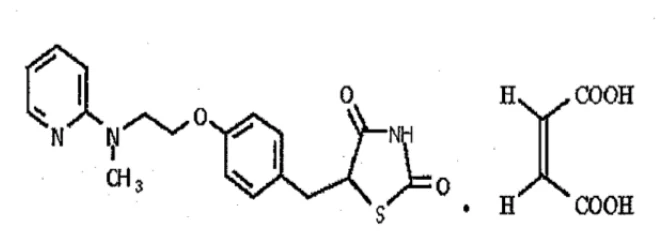
Physicochemical properties
Description: A white to off-white crystalline powder
Solubility: Readily soluble in ethanol and buffered aqueous
solution with pH 2.3; solubility decreases with increasing pH in the physiological range.
pH: pH value of a saturated solution of rosiglitazone maleate in water is 3.3, and in 0.9% saline is 3.4.
pKa: pKa1=6.1, pKa2=6.8
Partition Coefficient: The distribution coefficient of rosiglitazone maleate, was measured by the shake-flask method, using a pH 6.5 phosphate buffer. In n-octanol/water the distribution coefficient was determined to be 194 (logD = +2.29). In cyclohexane/water the distribution coefficient was determined to be 0.32 (logD = - 0.49).
Melting Point: Range of 122°C to 123°C
Drug Substance
Proper name: Metformin hydrochloride
Chemical name: N,N-dimethyl biguanide hydrochloride
Molecular formula: C4H12ClN5
Molecular mass: 165.67 g /mol.
Structural formula:
Physicochemical properties:
Description: Metformin hydrochloride is a white crystalline powder
Solubility: Soluble in water and in 95% ethyl alcohol and practically insoluble in ether and chloroform.
pH: The pH of a 1% aqueous solution of metformin hydrochloride is 6.68.
pKa: pKa=12.4
Melting Point: 218°C - 220°C
.
NH
NH
NH
NH2 N
(H3C)2
HCl
CLINICAL TRIALS
Comparative Bioavailability Studies
A comparative bioavailability study was performed to evaluate and compare the relative bioavailability of pms-ROSIGLITAZONE-METFORMIN (Rosiglitazone maleate / metformin HCl, Pharmascience Inc.) 4 mg/ 500 mg tablets with AVANDAMET® (GlaxoSmithKline) after a single oral dosage administration under fasting conditions. The study was a single center, randomized, single dose, blinded, crossover design performed with 18 healthy male subjects.
Metformin From measured data uncorrected for potency Geometric Mean Arithmetic Mean (CV %) | ||||
| Parameter | Test* | Reference† | % Ratio of Geometric Means | Confidence Interval (90%) |
AUCT (ng·h/mL) | 6208.0 6280.6 (15.2) | 6652.7 6722.4 (14.2) | 93.32 | 88.03-98.92 |
AUCI (ng·h/mL) | 6381.7 6457.4 (15.3) | 6814.0 6882.2 (13.9) | 93.65 | 88.46-99.15 |
Cmax (ng/mL) | 1042.6 1064.4 (20.6) | 1134.2 1149.6 (16.5) | 91.92 | 84.19-100.36 |
Tmax§ (h) | 2.00 (1.00-3.50) | 2.00 (1.00-3.00) | ||
T½€ (h) | 3.08 (28.4) | 3.08 (29.6) | ||
* pms-ROSIGLITAZONE-METFORMIN (Metformin portion) Pharmascience Inc., Montréal, Québec, Canada † AVANDAMET® (Metformin portion), GlaxoSmithKline Inc., Mississauga, Ontario, Canada § Expressed as the median (range)
€ Expressed as the arithmetic mean (CV%)
Rosiglitazone From measured data uncorrected for potency Geometric Mean Arithmetic Mean (CV %) | ||||
| Parameter | Test* | Reference† | % Ratio of Geometric Means | Confidence Interval (90%) |
AUCT (ng·h/mL) | 1485.03 1519.39 (22.5) | 1480.03 1533.99 (29.7) | 100.34 | 95.26-105.68 |
AUCI (ng·h/mL) | 1517.99 1553.87 (23.1) | 1519.25 1577.72 (30.8) | 99.92 | 94.60-105.54 |
Cmax (ng/mL) | 311.28 317.35 (20.6) | 310.55 320.78 (26.0) | 100.24 | 89.84-111.84 |
Tmax§ (h) | 0.67 (0.50-1.67) | 0.67 (0.50-1.67) | ||
T½€ (h) | 4.12 (15.1) | 4.22 (23.8) | ||
* pms-ROSIGLITAZONE-METFORMIN (Rosiglitazone portion) Pharmascience Inc., Montreal, Québec, Canada † AVANDAMET® Rosiglitazone portion), GlaxoSmithKline Inc., Mississauga, Ontario, Canada § Expressed as the median (range)
€ Expressed as the arithmetic mean (CV%)
A comparative bioavailability study was performed to evaluate and compare the relative bioavailability of pms-ROSIGLITAZONE-METFORMIN (Rosiglitazone maleate / metformin HCl, Pharmascience Inc.) 4 mg/ 500 mg tablets with AVANDAMET® (GlaxoSmithKline) after a single oral dosage administration under fed conditions. The study was a single center, randomized, single dose, blinded, crossover design performed with 20 healthy male subjects.
Metformin (1 x 500 mg/4 mg tablet of Metformin/Rosiglitazone, fed state) From measured data uncorrected for potency Geometric Mean Arithmetic Mean (CV %) | ||||
| Parameter | Test* | Reference† | % Ratio of Geometric Means | Confidence Interval (90%) |
AUCT (ng·h/mL) | 5146.5 5234.7 (19.1) | 4927.5 5018.8 (19.5) | 104.44 | 100.40-108.66 |
AUCI (ng·h/mL) | 5304.5 5393.3 (18.9) | 5089.2 5177.1 (18.9) | 104.23 | 100.31-108.30 |
Cmax (ng/mL) | 685.4 695.4 (17.4) | 667.5 676.2 (15.8) | 102.67 | 98.45-107.08 |
Tmax§ (h) | 3.75 (39.1) | 3.00 (42.0) | ||
T½€ (h) | 3.64 (25.5) | 3.43 (22.8) | ||
* pms-ROSIGLITAZONE-METFORMIN, Pharmascience Inc., Montreal, Quebec, Canada † AVANDAMET®, GlaxoSmithKline Inc., Mississauga, Ontario, Canada
§ Expressed as the median (range)
€ Expressed as the arithmetic mean (CV%)
Study results
There have been no clinical efficacy trials conducted with rosiglitazone-metformin (rosiglitazone maleate/metformin hydrochloride) tablets. However, studies utilizing the separate components have established the effective and safe use, and the additive benefits of the combination. Bioequivalence of rosiglitazone-metformin with co-administered rosiglitazone tablets and metformin tablets was demonstrated (see ACTION AND CLINICAL PHARMACOLOGY, Pharmacokinetics).
A total of 670 patients with type 2 diabetes participated in two 26-week, randomized, double-blind, placebo/active-controlled studies designed to assess the efficacy of rosiglitazone in combination with metformin. Rosiglitazone maleate, administered in either once-daily or twice-daily dosing regimens, was added to the therapy of patients who were inadequately controlled on a maximum dose (2.5 grams/day) of metformin hydrochloride.
In one study, patients inadequately controlled on 2.5 grams/day of metformin hydrochloride (mean baseline FPG 12.0 mmol/L and mean baseline A1C 0.088) were randomized to receive rosiglitazone 4 mg once daily, rosiglitazone 8 mg once daily, or placebo in addition to metformin. A statistically significant improvement in FPG and A1C was observed in patients treated with the combinations of metformin and rosiglitazone 4 mg once daily and rosiglitazone 8 mg once daily, versus patients continued on metformin alone (Table 6).
Table 6: Glycemic Parameters in a 26-Week Rosiglitazone maleate + Metformin hydrochloride
Combination Study
Metformin
2.5 g/day
Rosiglitazone 4 mg once daily
+metformin 2.5 g/day
Rosiglitazone 8 mg once daily
+metformin 2.5 g/day
N 113 116 110 FPG (mmol/L) Baseline (mean) 11.9 11.9 12.2 Change from baseline
(mean)
0.3 -1.8 -2.7
Difference from
metformin alone
(adjusted mean)
-2.2* -2.9*
Responders (≥1.7 mmol/L
decrease from baseline)
20% 45% 61%
A1C (ratio) Baseline (mean) 0.086 0.089 0.089 Change from baseline
(mean)
0.005 -0.006 -0.008
Difference from
metformin alone
(adjusted mean)
-0.010* -0.012*
Responders (≥0.007
decrease in ratio from
baseline)
11% 45% 52%
*<0.0001 compared to metformin
In a second 26-week study, patients with type 2 diabetes inadequately controlled on 2.5 grams/day of metformin who were randomized to receive the combination of rosiglitazone 4 mg twice daily and metformin (N=105) showed a statistically significant improvement in glycemic control with a mean treatment effect for FPG of -3.1 mmol/L and a mean treatment effect for A1C of -0.008 over metformin alone. The combination of metformin and rosiglitazone resulted in lower levels of FPG and A1C than either agent alone.
In a third 24 week double blind study, the efficacy of rosiglitazone in combination with 1.0 gram/day of metformin hydrochloride was compared with continued titration to 2.0 grams/day of metformin hydrochloride. Patients with type 2 diabetes inadequately controlled on 1.0 gram/day of metformin hydrochloride were randomized to receive rosiglitazone 4 mg twice daily in addition to metformin 1.0 gram/day or to receive 2.0 grams/day of metformin monotherapy. Patients receiving rosiglitazone received an initial dose of 2 mg twice daily for 8 weeks, followed by 4 mg twice daily for the remainder of the study. Patients receiving metformin monotherapy received 1.5 grams/day of metformin for 8 weeks, followed by 2.0 grams/day for the remainder of the study. At the end of week 24, the addition of rosiglitazone to 1.0 gram/day of metformin was at least as effective as 2.0 grams/day of metformin in improving A1C (mean reduction of A1C of 0.0093 and 0.0071, respectively). At the end of week 24, the reduction from baseline in FPG was significantly greater with rosiglitazone added to 1.0 gram/day (mean reduction of 2.29 mmol/L) compared to 2.0 grams/day of metformin (mean reduction of 1.12 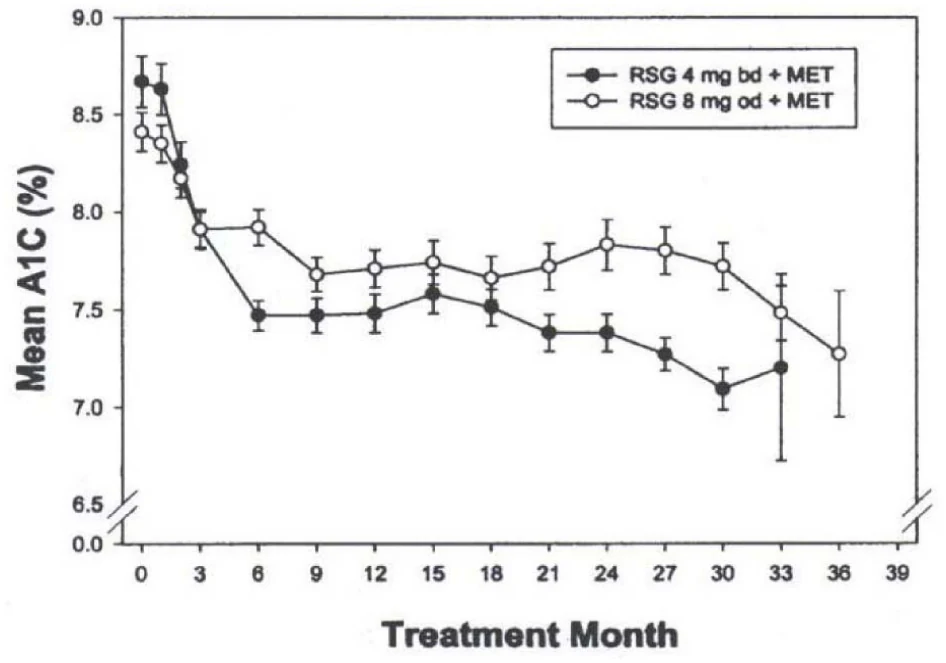
mmol/L). Significantly more patients receiving rosiglitazone plus 1.0 gram/day of metformin achieved a 0.007 or greater reduction from baseline in A1C (59.5%) compared to patients receiving 2.0 grams/day of metformin (49.5%) (p = 0.0247).
Open-labelled extension studies of rosiglitazone in combination with metformin double-blind, placebo-controlled trials showed a decrease in baseline A1C levels from 0.087 in the 4 mg bd group and 0.084 in the 8 mg od group to 0.071 and 0.077 respectively at month 30. In addition, FPG open-labelled baseline values decreased from 10.52 mmol/L in the 4 mg bd group and 10.36 mmol/L in the 8 mg od group to 7.55 mmol/L and 8.28 mmol/L respectively at month 30. Figures 1 and 2 show that the decreases in mean A1C and mean FPG values achieved during the treatment months were sustained in those patients who remained in the study.
Figure 1: Mean A1C Values Over Time
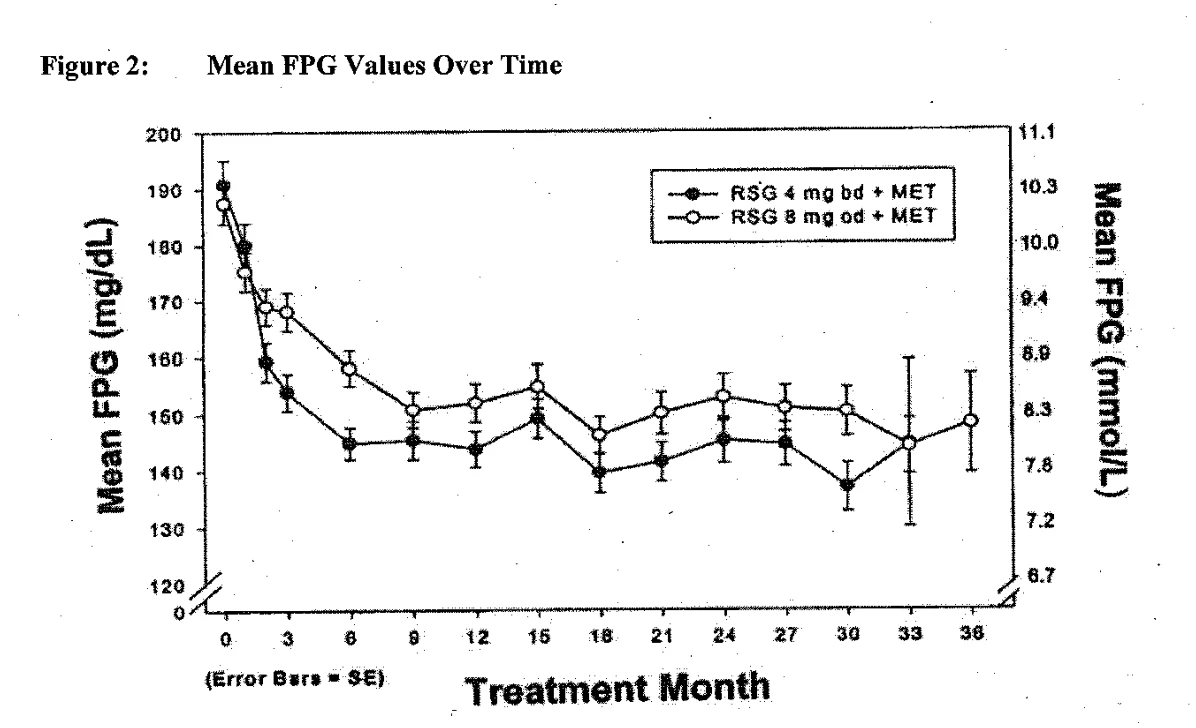
Cardiovascular Studies:
Two echocardiography studies in 437 type 2 diabetic patients (a 52-week study with rosiglitazone 4 mg twice daily and a 26-week study with 8 mg once daily), designed to detect a change in left ventricular mass of 10% or more, showed no deleterious alteration in cardiac structure or function. Compared to placebo, there was a small, statistically significant increase in median plasma volume (1.8 mL/kg) in healthy volunteers treated with rosiglitazone 8 mg once daily for 8 weeks. See ADVERSE REACTIONS for experience concerning serious cardiovascular adverse events.
Patients with congestive heart failure (CHF) New York Heart Association (NYHA) Class I and II treated with rosiglitazone have an increased risk of cardiovascular events. A 52-week, double-blind, placebo-controlled echocardiographic study was conducted in 224 patients with type 2 diabetes mellitus and NYHA Class I or II CHF (ejection fraction ≤ 45%) on background antidiabetic and CHF therapy. An independent committee conducted a blinded evaluation of fluid-related events (including congestive heart failure) and cardiovascular hospitalizations according to predefined criteria (adjudication). Separate from the adjudication, other cardiovascular adverse events were reported by investigators. Although no treatment difference in change from baseline of ejection fractions was observed, more cardiovascular adverse events were observed with rosiglitazone treatment compared to placebo during the 52-week study (see Table 7).
Table 7: Emergent Cardiovascular Adverse Events in Patients with congestive Heart Failure (NYHA
Class I and II) treated with Rosiglitazone or Placebo (in addition to Background Antidiabetic and CHF Therapy)
| Events | Placebo | Rosiglitazone | ||||
| N= 114 | N= 110 | |||||
| n (%) | n (%) | |||||
| Adjudicated | ||||||
| Cardiovascular Deaths | 4 (4) | 5 (5) | ||||
CHF Worsening With overnight hospitalization Without overnight hospitalization | 4 (4) 4 (4) 0 (0) | 7 (6) 5 (5) 2 (2) | ||||
| New or Worsening Edema | 10 (9) | 28 (25) | ||||
| New or Worsening Dyspnea | 19 (17) | 29 (26) | ||||
| Increases in CHF Medication | 20 (18) | 36 (33) | ||||
| Cardiovascular Hospitalization* | 15 (13) | 21 (19) | ||||
| Investigator-reported, Non-adjudicated | ||||||
| Ischemic Adverse Events Myocardial Infarction Angina | 5 (4) 2 (2) 3 (3) | 10 (9) 5 (5) 6 (5) | ||||
* Includes hospitalization for any cardiovascular reason
Rosiglitazone in Combination with Insulin
For safety reasons, the use of rosiglitazone in combination therapy with insulin is not indicated.
In two 26-week U.S. trials involving 611 patients with type 2 diabetes, rosiglitazone maleate plus insulin therapy was compared with insulin therapy alone. These trials included patients with long-standing diabetes and a high prevalence of pre-existing medical conditions, including peripheral neuropathy (34%), retinopathy (19%), ischemic heart disease (14%), vascular disease (9%), and congestive heart failure (2.5%). In these clinical studies, an increased incidence of cardiac failure and other cardiovascular adverse events were seen in patients on rosiglitazone and insulin combination therapy compared to insulin and placebo. Patients who experienced heart failure were on average older, had a longer duration of diabetes, and were mostly on the higher 8 mg daily dose of rosiglitazone. In this population, however, it was not possible to determine specific risk factors that could be used to identify all patients at risk of heart failure on insulin combination therapy. Three of 10 patients who developed cardiac failure on insulin combination therapy during the double blind part of the fixed dose studies had no known prior evidence of congestive heart failure, or pre-existing cardiac condition.
In 26-week double-blind fixed dose studies, edema was reported with higher frequency in the rosiglitazone plus insulin combination trials (insulin, 5.4%; and rosiglitazone in combination with insulin, 14.7%). Reports of new onset or exacerbation of congestive heart failure occurred at rates of 1% for insulin alone, and 2% (4 mg) and 3% (8 mg) for insulin in combination with rosiglitazone (see WARNINGS AND PRECAUTIONS). In these studies, approximately 2.5% of the patients were enrolled with a presenting medical condition of congestive heart failure (NYHA Class I/II). Patients with NYHA Class III and IV heart failure were excluded from all clinical trials.
In the retrospective analysis of data from pooled clinical studies, a greater increased risk of myocardial ischemic events was observed in studies where rosiglitazone was added to insulin.
DETAILED PHARMACOLOGY
The antidiabetic activity of rosiglitazone has been demonstrated in a number of animal models of type 2 diabetes in which hyperglycemia and/or impaired glucose tolerance is a consequence of insulin resistance in target tissues. Rosiglitazone normalizes blood glucose concentrations and reduces hyperinsulinemia in the ob/ob obese mouse, db/db diabetic mouse and fa/fa fatty Zucker rat. Rosiglitazone also prevents the development of overt diabetes in both the db/db mouse and Zucker fa/fa Diabetic Fatty (ZDF) rat models. In addition, rosiglitazone prevents the development of systolic hypertension, proteinuria, renal morphologic abnormalities and renal dysfunction in the Zucker rat and prevents the deleterious changes in pancreatic morphology seen in untreated db/db mice, ZDF rats and Zucker fa/fa rats.
In animal models, rosiglitazone's antidiabetic activity was shown to be mediated by increased sensitivity to insulin's action in the liver, muscle and adipose tissues. The expression of the insulin-regulated glucose transporter GLUT-4 was increased in adipose tissue. Rosiglitazone did not induce hypoglycemia in animal models of type 2 diabetes and/or impaired glucose tolerance.
TOXICOLOGY
No animal studies have been conducted with the combined products in rosiglitazone-metformin. The following data are based on findings in studies performed with rosiglitazone or metformin individually.
Rosiglitazone maleate
Teratogenic Effects
There was no effect on implantation or the embryo with rosiglitazone treatment during early pregnancy in rats, but treatment during mid-late gestation was associated with fetal death and growth retardation in both rats and rabbits. Teratogenicity was not observed. Rosiglitazone caused placental pathology (labyrinth congestion and increased weight) in rats (≥3 mg/kg/day) but not in rabbits at 100 mg/kg/day. Treatment of rats during gestation through lactation reduced litter size, neonatal viability and postnatal growth with growth retardation reversible after puberty. For effects on the placenta, embryo/fetus and offspring, the no-effect dose was 0.2 mg/kg/day (AUC=11.94 µg.h/mL) in rats and 15 mg/kg/day (AUC=12.5µg.h/mL) in rabbits.
Impairment of Fertility
Rosiglitazone had no effects on mating or fertility of male rats given up to 40 mg/kg/day. Rosiglitazone altered estrous cyclicity (≥2 mg/kg/day) and reduced fertility (40 mg/kg/day) of female rats in association with lower plasma levels of progesterone and estradiol with no such effects at 0.2 mg/kg/day (AUC=11.94 µg.h/mL). In monkeys, rosiglitazone (0.6 and 4.6 mg/kg/day [AUCs of 8.21 and 44.14 µg.h/mL]) diminished the follicular phase rise in serum estradiol with consequential reduction in the luteinizing hormone surge, lower luteal phase progesterone levels, and amenorrhea. The mechanism for these effects appears to be direct inhibition of ovarian steroidogenesis, apparently a thiazolidinedione class effect.
Carcinogenesis and Mutagenesis:
Two-year carcinogencity studies were conducted in Charles River CD-1 mice at doses of 0.4, 1.5 and 6 mg/kg/day in the diet and in Sprague-Dawley rats at oral gavage doses of 0.05, 0.3 and 2 mg/kg/day (top doses equivalent to approximately 10 to 20 times human AUC at the maximum recommended human dose of 8 mg/day). Rosiglitazone was not carcinogenic in the mouse. There was an increase in incidence of adipose hyperplasia in the mouse at doses >1.5 mg/kg/day (approximately 2 times human AUC). In rats, there was a significant increase in the incidence of benign adipose tissue tumors (lipomas) at doses >0.3 mg/kg/day (approximately 2 times human AUC). These proliferative changes in both species are considered due to the persistent pharmacological overstimulation of adipose tissue and appear to be rodent-specific. Rosiglitazone was not mutagenic or clastogenic in the in vitro bacterial assays for gene mutation, the in vitro chromosome aberration test in human lymphocytes, the in vivo mouse micronucleus test and the in vivo/in vitro rat UDS assay. There was a small (about 2-fold) increase in mutation in the in vitro mouse lymphoma assay at toxic concentrations of 150 to 200 µg/mL, but this was regarded as system-specific with no general relevance.
Cardiovascular-Renal
Heart weights were increased in mice (≥3 mg/kg/day), rats (≥5 mg/kg/day), and dogs (≥2 mg/kg/day) with rosiglitazone treatments. There were increases in wet and dry cardiac weight and total protein content. Morphometric analysis showed left ventricular hypertrophy, and echocardiographic assessments revealed an increase in left ventricular mass with a proportional increase in left ventricular wall area and lumen volume. The no-effect dose for cardiac hypertrophy was 0.5 mg/kg to 2 mg/kg among mice, rats and dogs in studies of up to 1 year duration.
In preclinical studies, thiazolidinediones caused plasma volume expansion and pre-load induced cardiac hypertrophy. The cardiac hypertrophy was an adaptive consequence of an increase in preload, as shown by an increase in diastolic wall stress, with no contribution from afterload. The increase in preload derives from plasma volume expansion due to increased renal sodium and fluid retention in response to increased blood flow to specific tissues (particularly adipose, skin and gastrointestinal) and mild vasorelaxation.
Liver
There was a small increase in liver weight in female rats (≥5 mg/kg/day) but no effects in male rats (40 mg/kg) or mice of either sex (20 mg/kg). Only in the dog were there increases in plasma enzyme activity (principally alanine aminotransferase, ALT) at doses of 0.5 mg/kg or greater. There was evidence of hepatocellular regeneration and oxidative stress in dogs with raised ALT. Species-specific hepatotoxicity in dogs may be attributed to toxic metabolites formed to a greater extent in this species rather than to parent drug exposure.
Endocrine System
In rats only, ovary weight was decreased in association with a reduction/absence of corpora lutea at doses ≥5 mg/kg, and there was increased pituitary weight with lactotroph hyperplasia at doses ≥0.2 mg/kg. These changes in the ovary and pituitary of female rats were attributed to reduced ovarian synthesis of estradiol and progesterone to a greater extent, with a net increase in the ratio of plasma estradiol to progesterone concentrations. Whereas such changes in steroid hormone levels causing persistent vaginal estrus and lactotroph hyperplasia in female rats are sex and species-specific outcomes, lower levels of estradiol and progesterone in the cynomolgus monkey
were associated with amenorrhea. The frequency of reports relating to menstrual dysfunction in clinical trials was low and similar to placebo (0.4% on rosiglitazone and placebo).
Metformin hydrochloride
Carcinogenesis and Mutagenesis:
Long-term carcinogenicity studies have been performed in rats (dosing duration of 104 weeks) and mice (dosing duration of 91 weeks) at doses up to and including 900 mg/kg/day and 1500 mg/kg/day, respectively. These doses are both approximately four times the maximum recommended human daily dose of 2000 mg of the metformin component of rosiglitazone-metformin based on body surface area comparisons. No evidence of carcinogenicity with metformin was found in either male or female mice. Similarly, there was no tumorigenic potential observed with metformin in male rats. There was, however, an increased incidence of benign stromal uterine polyps in female rats treated with 900 mg/kg/day.
There was no evidence of a mutagenic potential of metformin in the following in vitro tests: Ames test (S. typhimurium), gene mutation test (mouse lymphoma cells), or chromosomal aberrations test (human lymphocytes). Results in the in vivo mouse micronucleus test were also negative.
Impairment of Fertility
Fertility of male or female rats was unaffected by metformin when administrated at doses as high as 600 mg/kg/day, which is approximately three times the maximum recommended human daily dose of the metformin component of rosiglitazone-metformin based on body surface area comparisons.
Teratogenic Effects
Metformin was not teratogenic in rats and rabbits at doses up to 600 mg/kg/day. This represents an exposure of about two and six times the maximum recommended human daily dose of 2000 mg based on body surface area comparisons for rats and rabbits, respectively. Determination of fetal concentrations demonstrated a partial placental barrier to metformin.
REFERENCES
- 1. Alberti KG, Nattrass M. Lactic Acidosis, Lancet 1977; 2(8027):25-29.
- 2. American Diabetes Association. Detection and management of lipid disorders in diabetes. Diabetes Care 1993; 16(5):828-834.
- 3. Arlt W, Auchus RJ, Miller WL. Thiazolidinediones but not metformin directly inhibit the steroidogenic enzymes P450c17 and 3beta-hydroxysteroid hydrogenase. J Biol Chem. 2001; 276(20):16767-71.
- 4. AVANDIA® Product Monograph, 2001
- 5. Bailey CJ, Turner RC. Metformin. N Eng J Med 1996; 334(9):574-79.
- 6.
Balfour JA, Plosker GL. Rosiglitazone. Drugs: Adis New Drug Profile,
Rosiglitazone. Drugs 1999; 57(6):921-930
- 7.
Beckmann, R.: Absorption, distribution in the organism and elimination of
metformin. Diabetologia 1969; 5(5):318-324.
- 8.
Benoit R, Lacroix A, D’Amico P, Pesant P, Matte R. Lactic acidosis and phenformin. Union
Med Can 1976; 105(12): 1810-1814.
- 9. Berger W, et al. Problèmes d’actualité concernant le mécanisme d’action des biguanides. Jour. Diab. Hôtel-Dieu Paris, 239.258, 1975.
- 10. Bermond, P. The coefficient of insulin efficacy. Effect of Metformin on this parameter. Xième Congrès Fédération Int. Diabétologie, Stockholm, 1967. Ed. Excerpa Medica F. Amsterdam, 1968.
- 11. Biron, P. Metformin monitoring. Can Med Assoc J 1980; 123(1):11-12.
- 12. Bouaziz, PI. Apport a l’étude de l’épreuve d’hyperglycémie provoquée par voie veineuse sous thérapie diabétique. Thèse de doctorat en Médecine, Paris, 1966.
- 13. Campbell IW. Antidiabetic drugs present and future: will improving insulin resistance benefit cardiovascular risk in type 2 diabetes mellitus? Drugs 2000; 60(5):1017-1028.
- 14.
Carey DG, Cowen GJ, Galloway GJ, Jones NP, Richards JC, Biswas N et al. Effect of
Rosiglitazone on Insulin Sensitivity and Body Composition in Type 2 Diabetic Patients. Obesity Research October 2002; 10(10):1008-1015.
- 15. Chan LY, Yeung JH, Lau TK. Placental transfer of rosiglitazone in the first trimester of pregnancy. Fertility and Sterility 2005; 83(4):955-8.
- 16. Cohen RD. The relative risks of different biguanides in the causation of lactic acidosis. Research and Clinical Forums, l:(4) 125-134, 1979.
- 17.
Cohen Y et al. Étude autoradiographique chez la souris d’un antidiabétique oral, le N.N.
Diméthylbiguanide, marqué au C14 Thérapie 109-120, 1961.
- 18. Cohen Y, Hirsch C. Étude autoradiographique chez la souris d’un antidiabétique oral marqué au C14, le N.N. Diméthylbiguanide, après administrations répétées. Thérapie XXIII, 1185-1191, 1968.
- 19.
Cusi K, Defronzo RA. Metformin: a review of its metabolic effects. Diabetes
Reviews 1998; 6(2):89-131.
- 20.
Daubresse, JC et al: Acidose lactique et thérapeutique par biguanides. Méd. et Hyg.
1168,1975.
- 21. The DCCT Research Group. The effect of intensive treatment of diabetes on the development and progression of long-term complications in insulin-dependent diabetes mellitus. N Eng J Med. 1993; 329(14): 977-986.
- 22. Debry G, et al. Etude du mode d’excrétion du N.N. Diméthylbiguanide chez le diabétique adulte. Thérapie 1963; XX: 351-358.
- 23. Derot M. et al. Retrospective study of the cardiovascular fate of 190 patients treated for 5 year or more with biguanides alone. Abstracts, 11th Annual Meeting, Munich Sept., 1975.
- 24. DiCicco R, Allen A, Jorkasky D, Carr A, Freed M. Lack of pharmacokinetic drug interaction between rosiglitazone (BRL49653) and metformin. Clin Pharmacol Ther 1998;63(2):Abs P1-75.
- 25. DiCicco R, Allen A, Carr A, Fowles S, Jorkasky D, Freed M. Rosiglitazone does not alter the pharmacokinetics of metformin. J Clin Pharmacol 2000; 40:1280-1285.
- 26.
Duval D. Contribution a l’étude de l’action hypoglycémiante des biguanides. Thèse de
Doctorat en Médecine, Paris, 1960.
- 27. Duwoos H, Bertrand CM, Husson A, Cramer J, Tayot J. Hyperlactacidémie réversible induite par la phenformine avec asthénie musculaire et signes cardio-respiratoires. Presse Med. 78: 23-26, 1970.
- 28.
Finegood DT, McArthur MD, Dunichand-Hoedl A et al. The PPAR[gamma] Agonist,
Rosiglitazone, Reverses Hyperinsulinemia and Promotes Growth of Islet B-cell Mass. Diabetes 1998; 47(suppl 1):A47. Abstract 0182.
- 29.
Finegood DT, McArthur MD, Kojwang D, Thomas MJ, Topp BG, Leonard T et al. (B-Cell
Mass Dynamics in Zucker Diabetic Fatty Rats, Rosiglitazone Prevents the Rise in Net Cell Death. Diabetes 2001; 50(5):1021-1029.
- 30. Fonseca V, Rosenstock J, Patwardhan R, Salzman A. Effect of metformin and rosiglitazone combination therapy in patients with type 2 diabetes mellitus. JAMA 2000;283(13): 1695-1702. Erratum published due to incorrect wording and data presentation - JAMA 2000; 284(11)1384.
- 31. Fonseca V, Biswas N, Salzman A. Once-daily rosiglitazone (RSG) in combination with metformin (MET) effectively reduces hyperglycemia in patients with type 2 diabetes. Diabetes 1999; 48(S1):A100, Abs 431. (Poster 431, 59th American Diabetes Association meeting, San Diego, California. June 19-22, 1999.)
- 32. Fonseca V, Biswas N, Salzman A. Rosiglitazone in combination with metformin effectively reduces hyperglycemia in patients with type 2 diabetes. Diabetologia 1999; 42(S1):A230, Abs 864.
- 33.
Freed MI, Millet A, Inglis AM, et al. Rosiglitazone, a PPAR-gamma Agonist, Does Not
Alter the Pharmacokinetics of Nifedipine, a Cytochrome P450 3A4-Substrate. Diabetes 1998; 47(suppl 1):A94. Abstract 0368.
- 34. Freed MI, Ratner R, Marcovina SM, Kreider MM, Biswas N, Cohen BR et al. Effects of rosiglitazone alone and in combination with atorvastatin on the metabolic abnormalities in type 2 diabetes mellitus. Am J Cardiol 2002; 90(9): 947-952.
- 35.
Freed MI, Miller A, Jorkasky D, et al. Rosiglitazone Pharmacokinetics Are Not
Affected by Coadministration of Ranitidine. Diabetes. 1998; 47(suppl 1): A353.
- 36.
Gasic S, Bodenburg Y, Nagamani M, Green A, Urban RJ. Troglitazone Inhibits
Progesterone Production in Porcine Granulosa Cells. Endocrinology 1998; 139(12): 4962-4966.
- 37. GLUCOPHAGE® Product Monograph, 2006
- 38. GLUCOPHAGE® U.S. Prescribing Information, 2001
- 39. Gomez-Perez FJ, Fanghannel-Salmon G, Berry RA, Warsi G, Gould EM. Rosiglitazone-metformin combination therapy improves glycemic control in Mexican patients with type 2 diabetes. Diabetes 2001; 50(Suppl 2): A436 , Abs 1818-PO.
- 40.
Haffner SM, Greenberg AS, Weston WM, Chen H, Williams K, Freed MI. Effect of
Rosiglitazone Treatment on Nontraditional Markers of Cardiovascular Disease in Patients with Type 2 Diabetes Mellitus. Circulation 2002; 106(6):679-684.
- 41.
Hermann LS. Metformin: A review of its pharmacological properties and therapeutic use.
Diabete et Metabolisme 1979; 5(3):233-245.
- 42. Hermann LS. Metabolic effects of Metformin in relation to clinical effects and side effects in Biguanide Therapy Today. International Congress and Symposium, series published by the Royal Society of Medicine 1981; 48:17-43.
- 43. Hermans MP, Levy JC, Morris RJ, Turner R. Comparison of tests of beta-cell function across a range of glucose tolerance from normal to diabetes. Diabetes 1999; 48(9): 1779-1786.
- 44. Hermans MP, Levy JC, Morris RJ, Turner R. Comparison of insulin sensitivity tests across a range of glucose tolerance from normal to diabetes. Diabetologia 1999; 42(6): 678-687.
- 45. Holle A, Mangeis W, Dreyer M, Kuhnau J, Rudiger HW. Biguanide treatment increases the number of insulin receptor sites on human erythrocytes. The New Engl J Med 1981; 305(10):563-566.
- 46. Hunt J A, Catellier C, Dupre J, Gardiner RJ, McKendry JB, Toews CJ et al: The use of phenformin and metformin. Can Med Assoc J 1977; 117(5):429-430.
- 47.
Inglis AML, Miller AK, Thompson KA. Coadministration of rosiglitazone and acarbose
(A): lack of clinically relevant pharmacokinetic drug interaction. Diabetes 1998; 47(suppl 1):A353. Abstract 1366.
- 48.
Irsigler, K. Glucoseutilisation and Plasmaliporide bei adiposen Patienten unter dem
Einfluss von Dimethylbiguanide (GLUCOPHAGE®). wiener med. Wsch.1969; 119:191-194.
- 49.
Isnard F, Lavieuville M. Acidose lactique et biguanides. Etat actuel de la question en
France. Journ Annu Diabetol Hotel Dieu 1977; 362-375.
- 50.
Iozzo P, Hallsten K, Oikonen V, Virtanen KA, Parkkola R, Kemppainen J et al. Effect of
Metformin and Rosiglitazone Monotherapy in Insulin-mediated Hepatic Glucose Update and Their Relation to Visceral Fat in Type 2 Diabetes. Diabetes Care 2003; 26(7): 2069-2074.
- 51. Joncas F. Evaluation clinique de GLUCOPHAGE® pour le traitement du diabète de l’adulte. Hôpital Maisonneuve, Montréal. L’Union Médicale du Canada, Jan. Issue, 1972.
- 52. Jones T, Jones NP, Sautter M. Addition of rosiglitazone to metformin is effective in obese, insulin resistant patients with type 2 diabetes. Diabetologia 2000; 43(S1):A191, Abs 735.
- 53. Jones T, Jones NP, Sautter M. Rosiglitazone: Effective when added to metformin in obese, insulin-resistant patients with type 2 diabetes. Diab Res Clin Pract 2000; 50(suppl 1):P308. Poster 308 presented at the 17th IDF (International Diabetes Foundation) meeting, Mexico City, Mexico, November 5-10, 2000.
- 54. Jones NP, Mather R, Owen S, Porter LE, Patwardhan R. Rosiglitazone: Long term efficacy in combination with metformin or as monotherapy. Poster 307 presented at the 17th IDF (International Diabetes Foundation) meeting, Mexico City, Mexico, November 5-10, 2000. Diab Res Clin Pract 2000; 50(suppl 1):P307.
- 55.
Kannel WB, McGee DL. Diabetes and Glucose Tolerance as Risk Factors for
Cardiovascular Disease: The Framingham Study. Diabetes Care 1979; 2(2):120-126.
- 56. Kinosian B, Glick H, Garland G. Cholesterol and coronary heart disease: predicting risks by levels and ratios. Ann Intern Med 1994; 121(9):641-647.
- 57. Kreider M, Miller E, Patel J. Rosiglitazone is safe and well tolerated as monotherapy or combination therapy in patients with type II diabetes mellitus. Diabetes 1999; 48(Suppl 1):A117. Poster 506 presented at 59th American Diabetes Association meeting, San Diego, California. June 19-22, 1999.
- 58. Lamarche B, Tchernof A, Moorjani S, Cantin B, Dagenais GR, Lupien PF et al. Small, dense low-density lipoprotein particles as a predictor of the risk of ischemic heart disease in Men: Prospective results form the Quebec cardiovascular study. Circulation 1997; 95(1): 69-75.
- 59. Laurendeau E, et al: Traitement du diabète sucré chez des patients âgés, hospitalisés avec le N.N. Diméthylbuguanide (GLUCOPHAGE®). Hôpital Notre-Dame de la Merci. Montréal, 1970. Ref Lab. Franca (non publié).
- 60. Lefebvre P, et al. Le mécanisme d’action des biaguanides. Biguanides et sécrétion insulinique. Congrès International de Diabétologie de Rémini, 1968.
- 61. Leonard T, Bakst A, Warsi G, Bonora E. Rosiglitazone may reduce insulin resistance-related cardiovascular disease risk in type 2 diabetes patients. Poster 852 presented at 37th Annual EASD Meeting. Glasgow, Scotland. September 9-13, 2001.
- 62.
Levy JC, Matthews DR, Hermans MP. Correct homeostasis model assessment (HOMA)
evaluation uses the computer program. Diabetes Care 1998; 21(12): 2191-2192.
- 63. Maheux P, Berry RA, Warsi GG, Gould EM. Rosiglitazone-Metformin combination improves glycemic control in patients with type 2 diabetes. Poster 168 presented at the CDA/CSEM Professional Conference and Annual Meeting. Edmonton, Alberta. October 17-20, 2001.
- 64. Mainguet P, Lauvaux JP, Franckson JR. Intestinal glucose absorption in diabetic patients after acute administration of dimethylbiguanide. Diabete 1972; 20(1) :39-42.
- 65.
Marx N, Froehlich J, Siam L, Ittner J, Wierse G, Schmidt A et al. Antidiabetic PPAR(-
Activator Rosiglitazone Reduces MMP-9 Serum Levels in Type 2 Diabetic Patients With Coronary Artery Disease. Arterioscler Thromb Vasc Biol 2003; 23(2): 283-288.
- 66. McKlish A. Toxicité du N.N. Diméthylbiguanide chez le chien Beagle. Centre de recherches Laval, Québec (1970). Ref. Laboratoires Franca Inc. (non publié) 1970.
- 67. Meyer F, Ipaktchi M, Clauser H. Données nouvelles sur le mécanisme d’action des biguanide hypoglycémiants. Journ Annu Diabetol Hôtel Dieu 1967; 341-347.
- 68. Miller E, Patel J, Reichek N, Granett J. BRL 49653 (a thiazolidinedione) is Well Tolerated and Has No Effect on LV Mass Following 12 Weeks Treatment in NIDDM patients. Diabetes 1997; 46(suppl 1):96A. Abstract 0377.
- 69.
Oakes ND, Kennedy CJ, Jenkins AB, Laybutt DR, Chisholm DJ, Kraegen EW. A New
Antidiabetic Agent, BRL 49653, Reduces Lipid Availability and Improves Insulin Action and Glucoregulation in the Rat. Diabetes 1994; 43(10):1203-1210.
- 70.
Patel J, Miller E, Patwardhan R, The Rosiglitazone 011 Study Group. Rosiglitazone
(BRL49653) Monotherapy Has Significant Glucose Lowering Effect in Type 2 Diabetic Patients. Diabetes 1998; 47(suppl 1):A17. Abstract 0067.
- 71. Patwardhan R, Porter LE, Jones NP. Long-term efficacy of rosiglitazone as monotherapy or combination therapy in patients with type 2 diabetes mellitus. Poster 1826. Presented at the US Society of Endocrinology Meeting June 2000.
- 72. Pelletier G, et al. Etude de toxicité chronique de N.N. Diméthylbiguanide chez le rat. Centre de recherche Laval, Québec. Ref. Laboratoires Franca Inc. (non publiée).
- 73.
Pelletier G, et al. Etude tératologique avec le N.N. Diméthylbiguanide chez le rat. Centre de
Recherche Laval, Québec. Ref. laboratoires Franca Inc. (non publiée) 1970.
- 74. Pignard, P. Dosage spectrotométrique du N.N. Diméthylbiguanide dans le sang et l’urine. Annales de Biologie Clinique 1962; 20:225-233.
- 75.
Sidhu JS, Cowan D, Kaski JC. The Effect of Rosiglitazone a Peroxisome Proliferator-
Activated Receptor-gamma Agonist, on Markers of Endothelial Cell Activation, C-Reactive Protein, and Fibrinogen Levels in Non-Diabetic Coronary Artery Disease Patients. J Am Coll Cardiol 2003; 42(10): 1757-1763.
- 76.
Smith S, Boam D, Bretherton-Watt D. Rosiglitazone Increases Pancreatic Islet Area,
Density and Insulin Content, but not Insulin Gene Expression. Diabetes 1998; 47(suppl 1):A18. Abstract 0072.
- 77.
Smith S, Boam D, Cawthorne M. Rosiglitazone Improves Insulin Sensitivity and
Reduces Hyperexpression of Insulin and Amylin mRNA's in Pancreatic Islets. Diabetes 1998; 47(suppl 1):A94. Abstract 3065.
- 78.
Smith SA, Cawthorne MA, Coyle PJ. BRL 49653 Normalises Glycaemic Control in
Zucker fa/fa Rats by Improving Hepatic and Peripheral Tissue Sensitivity to Insulin. Diabetologia 1993; 36(suppl 1):A184. Abstract 707.
- 79. Sterne J. Oral Hypoglycemic agents. Medicinal Chemistry 1969; 9(5):193-294.
- 80.
Sterne J.M, et al: Oral hypoglycemic agents: Clinical pharmacology and therapeutic use.
Drugs 1977; 14:41-56.
- 81. Sterne J. Pharmacology and mechanism of action of the antidiabetic biguanides. Paper read in Moscow, April 1977, Unpublished.
- 82.
Stowers JM. Long-term therapy with biguanides in: Biguanide Therapy Today,
International Congress and Symposium, Series published by the Royal Society of Medecin, 48:49-57, 1981.
- 83. Stowers JM, Borthwick LJ. Oral hypoglycemic agents: Clinical pharmacology and therapeutic use. Drugs 1977; 14(1):41-56.
- 84.
Tiikkainen M, Hakkinen AM, Korsheninikova E, Nyman T, Makimattila S, Yki-
Jarvinen H. Effect of Rosiglitazone and Metformin on Liver Fat Content, Hepatic Insulin Resistance, Insulin Clearance, and Gene Expression in Adipose Tissue in Patients With Type 2 Diabetes. Diabetes 2004; 53:2169-2176.
- 85. UK Prospective Diabetes Study (UKPDS) Group. Intensive blood-glucose control with sulfonylureas or insulin compared with conventional treatment and risk of complications in patients with type 2 diabetes (UKPDS 33). Lancet 1998; 352: 837-853.
- 86. UK Prospective Diabetes Study (UKPDS) Group Association of glycaemia with macrovascular and microvascular complications of type 2 diabetes (UKPDS 35): prospective observational study. BMJ. 2000; 34: 405-412.
- 87.
Virtanen KA, Hallsten K, Parkkola R, et al. Differential Effects of Rosiglitazone and
Metformin on Adipose Tissue Distribution and Glucose Uptake in Type 2 Diabetic Subjects. Diabetes. 2003; 52: 283-290.
- 88.
Wang TD, Chen WJ, Lin JW et al. Effects of Rosiglitazone on Endothelial Function, C-
Reactive Protein, and Components of the Metobolic Syndrome in Nondiabetic Patients With the Metabolic Syndrome. Am J Cardiol. 2004; 93: 362-365.
- 89. Vague P. Effet d’une dose unique de metformine sur la tolérance au glucose des sujets normaux ou obèses. Le Diabète 1970; 18:35-39.
- 90. Vermulen A, Rottiers R. Influence of dimethylbiguanide (metformin) on carbohydrate metabolism in obese, non diabetic women. Diabetologia 1972; 8:8-11.
- 91.
Werner AL, Travaglini MT. A Review of Rosiglitazone in Type 2 Diabetes Mellitus.
Pharmacotherapy 2001; 21(9):1082-1099.
- 92.
Young PW, Cawthorne MA, Coyle PJ, Holder JC, Holman GD, Kozka IJ et al. Repeat
Treatment of Obese Mice With BRL 49653, a New and Potent Insulin Sensitizer, Enhances Insulin Action in White Adipocytes. Diabetes 1995; 44(9):1087-1092.
- 93.
AVANDAMET® Product Monograph (GlaxoSmithKline Inc.) Revision date: January
26, 2012, Control Number: 151070.
IMPORTANT: PLEASE READ