


Patient Medication Information: uses, side effects, how to take - PMS-Salbutamol
What pms-SALBUTAMOL is used for:
pms-SALBUTAMOL is used in adults and children (5 years and older) to treat severe, worsening breathing problems (bronchospasm) associated with:
- chronic bronchitis (inflammation of the airways of the lungs with mucus production);
- bronchial asthma (inflammation of the airways of the lungs).
How pms-SALBUTAMOL works:
pms-SALBUTAMOL belongs to a group of medicines known as “bronchodilators”. It works by relaxing the muscles of the small airways in the lungs. This helps open up the narrowed airways of the lungs making it easier to breathe.
The ingredients in pms-SALBUTAMOL are:
Medicinal ingredient: Salbutamol sulfate
Non-medicinal ingredients: Sodium Chloride, Sulfuric Acid (to adjust pH) and Water for Injection
pms-SALBUTAMOL comes in the following dosage forms:
Solution for oral inhalation using a nebulizer (a nebulizer is a medical device that turns pms-SALBUTAMOL solution into a mist that can be inhaled):
Each Polyneb® of pms-SALBUTAMOL (a Polyneb® is a small plastic container that holds one dose of liquid medicine to be used in a nebulizer) contains 0.5 mg/mL, 1 mg/mL or 2 mg/mL salbutamol (as salbutamol sulfate).
Do not use pms-SALBUTAMOL if:
- you are allergic to salbutamol sulfate or any of the other ingredients in pms-SALBUTAMOL.
- you have abnormal heart rhythms with a fast heartbeat (tachyarrhythmias).
- for the treatment of preterm labour or miscarriage.
To help avoid side effects and ensure proper use, talk to your healthcare professional before you take pms-SALBUTAMOL. Talk about any health conditions or problems you may have, including if you:
- have ever had to stop taking another medicine for this condition because you were allergic to it or because it caused problems.
- have thyroid problems.
- have heart or blood vessel problems.
- have high blood pressure.
- have diabetes.
- have a past history of seizures.
have low levels of potassium in your blood (hypokalemia), especially if you are taking:
- medicines known as xanthine derivatives (e.g., theophylline);
- steroids, medicines used to treat asthma;
- diuretics also known as “water pills”, medicines used to lower fluid levels and treat high blood pressure.
- have low oxygen levels in your body (hypoxia).
are pregnant or plan to become pregnant. Taking pms-SALBUTAMOL during pregnancy may cause harm to your baby. Your healthcare professional will consider the benefit to you and the risk to your baby of taking pms-SALBUTAMOL while you’re pregnant.
- are breastfeeding, plan to breastfeed, or are in labour. It is not known if pms-SALBUTAMOL passes into breast milk.
Other warnings you should know about:
You should always carry your fast-acting aerosol or dry powder asthma medication with you to use immediately in case you experience an asthma attack.
Overuse: If you are using pms-SALBUTAMOL more than twice a week to treat your asthma symptoms (not including before or after exercise or other triggers), talk to your healthcare professional. This may be a sign that your asthma is not well controlled and may increase the risk of severe asthma attacks. Your healthcare professional may need to reassess your treatment.
Paradoxical bronchospasm: If you feel tightness of the chest, coughing, wheezing or breathlessness right after using pms-SALBUTAMOL, you may have a serious condition called “paradoxical bronchospasm” (an unexpected closing of your airways). Stop using pms-SALBUTAMOL and seek medical help right away.
Tell your healthcare professional about all the medicines you take, including any drugs, vitamins, minerals, natural supplements, or alternative medicines.
The following may interact with pms-SALBUTAMOL:
- anti-depressants, medicines used to treat depression (e.g., monoamine oxidase inhibitors, and tricyclic antidepressants).
- medicines used to treat allergies.
- beta-blockers, medicines used to lower blood pressure (e.g., propranolol).
- diuretics also known as “water pills”, medicines used to lower fluid levels and treat high blood pressure.
- other bronchodilators, medicines used to open the airway (e.g., asthma medicines such as ipratropium bromide).
- epinephrine, a medicine that can be used to treat allergic reactions or sudden asthma attacks.
- digoxin, a medicine used to treat certain heart problems.
How to take pms-SALBUTAMOL:
- Take pms-SALBUTAMOL exactly as directed by your healthcare professional.
- It is important that you use pms-SALBUTAMOL properly. This will ensure that you receive the prescribed dose of your medicine. Make sure you know how, when, and how much solution you should use. Follow your healthcare professional’s instructions carefully. If you are not sure, ask your healthcare professional.
- pms-SALBUTAMOL should only be inhaled from a nebulizer. It must not be injected or swallowed. Avoid any other routes of administration.
- The nebulizer should be properly functioning and regularly maintained. Before starting treatment, be certain that you are completely familiar with the use and proper care of your nebulizer.
- Do NOT let the pms-SALBUTAMOL or the mist produced by the nebulizer get in your eyes. This may cause unwanted side effects.
- Use your nebulizer in a well-ventilated room. Some of the mist will be released into the air and may be breathed in by others.
- If pms-SALBUTAMOL is administered to you by a healthcare professional, they may monitor your blood and lung function.
- Other medicines (including asthma medicines) should only be used with pms-SALBUTAMOL when prescribed by your healthcare professional.
- If you are using an asthma anti-inflammatory medicine daily (such as an inhaled corticosteroid) continue using it regularly, even if you feel better.
You should call your healthcare professional immediately if:
- the effects of one dose last less than 3 hours;
- you notice a sudden worsening of your shortness of breath shortly after taking your medicine;
- your symptoms get worse (for example you have frequent symptoms or flare ups such as breathlessness, cough, wheezing, tight chest, night-time awakening or limited physical ability);
- your usual dose does not provide relief of wheezing or chest tightness;
- you need to use pms-SALBUTAMOL more often than before.
These may be signs that your asthma or chest condition is getting worse. Your healthcare professional may want to reassess your treatment plan.
Instructions for use of pms-SALBUTAMOL:
- 1. Use this medicine by breathing it in through a nebulizer. Do not open the foil pouch until you are ready to use the Polyneb® nebules.
- 2. Prepare the nebulizer for filling, with the medicine, according to the manufacturer’s instructions.
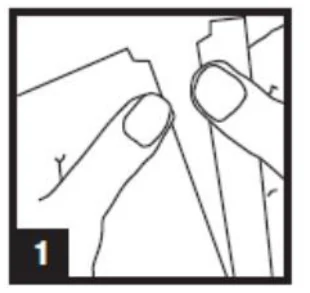
- 3. To open the foil pouch, tear the foil pouch at the small cut at the top of the pouch (Diagram 1). Remove the Polyneb® nebules.
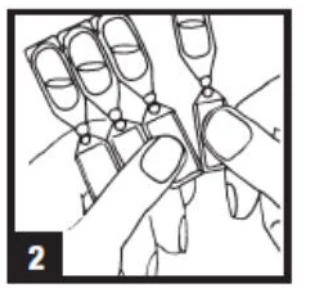
- 4. To remove a pms-SALBUTAMOL Polyneb®, hold the rest of the Polyneb® nebules firmly and push one Polyneb® sideways and away, starting with the cap (Diagram 2). Put the remaining Polyneb® nebules back in the foil pouch and return the pouch to the carton.
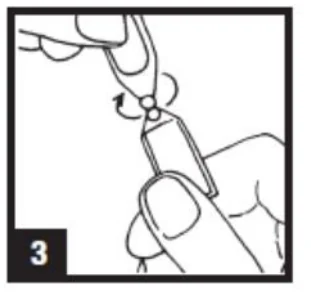
- 5. Hold the top of the Polyneb® securely and twist the body to open (Diagram 3).
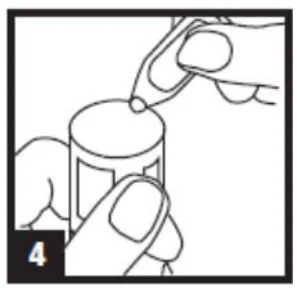
- 6. Carefully place the open end of the Polyneb® into the nebulizer cup and squeeze the Polyneb˚® nebule slowly (Diagram 4). Make sure to empty the contents of the Polyneb® nebule into the nebulizer cup.
- 7. Assemble the nebulizer and use as shown in the instructions.
- 8. Breathe calmly and evenly until you see no more mist coming from the nebulizer. At this point, treatment is finished.
- 9. After use, throw away any leftover liquid in the nebulizer cup. Clean the nebulizer according to the manufacturer’s instructions.
Children: pms-SALBUTAMOL in Polyneb® nebules should be used under the supervision of an adult who understands the proper use of the nebulizer, and only as directed by the healthcare professional.
Care of pms-SALBUTAMOL and the Nebulizer
- 1. Open only one foil pouch at a time.
- 2. Use all 5 Polyneb® nebules before opening the next foil pouch.
- 3. Write down the date when the foil pouch is first opened.
- 4. After removing a Polyneb® nebule for use, always return the unused Polyneb® nebules to the foil pouch and put the foil pouch back in the carton.
- 5. Throw away any unused Polyneb® nebules, in opened foil pouch, after 3 months.
To clean the nebulizer:
After each use, clean the nebulizer as instructed in the nebulizer manual or as follows:
- 1. Disassemble the supply tube and the nebulizer.
- 2. Wash in warm detergent solution. Rinse the tube with water.
- 3.
To wash the suction tubes:
a. Place 3 mL of detergent solution in the vial, assemble the unit and operate for 2 minutes.
b. Disassemble and rinse the vial with warm water, place 3 mL of warm water in the vial, assemble the unit and operate for 2 minutes.
c. Disassemble and rinse with warm water.
- 4.
To dry the external passage:
a. Connect the nebulizer tube to the pump with the supply tube.
b. Turn the pump and blow air through for 1 minute.
- 5. If there is evidence of clogging, clean the openings and tube connectors with the detergent, then rinse with water.
- 6. Reassemble.
Usual dose:
Your healthcare professional will decide your dose of pms-SALBUTAMOL. This may depend on your condition, your age, and how you react to pms-SALBUTAMOL. Your dose may be repeated every 4 to 6 hours as directed.
The usual dose is as follows:
- Adults and Adolescents (13 years of age and older): 1 ampoule of 2.5 mg (1 mg/mL) or 5 mg (2 mg/mL) of salbutamol, repeated every 4 to 6 hours to a maximum 4 times a day if necessary.
Children (5 to 12 years of age): 1 ampoule of 1.25 mg (0.5 mg/mL) or 2.5 mg (1 mg/mL) of salbutamol), repeated every 4 to 6 hours to a maximum 4 times a day if necessary.
5 mg (2 mg/mL) may be used if the child’s condition has not improved. This may be repeated 4 times a day if necessary.
Do not increase the dose or the number of times you use your medicine without asking your healthcare professional, as this may make you feel worse.
Overdose:
If you accidentally take a larger dose than prescribed, you are more likely to get side effects. These may include a faster heartbeat, headaches, and feeling shaky or restless. These effects usually wear off within a few hours, but you should tell your healthcare professional as soon as possible.
If you think you, or a person you are caring for, have taken too much pms-SALBUTAMOL, contact a healthcare professional, hospital emergency department, regional poison control centre or Health Canada’s toll-free number, 1-844 POISON-X (1-844-764-7669) immediately, even if there are no signs or symptoms.
Missed dose:
If you miss or forget to inhale a dose, skip the missed dose. Inhale the next dose at the time you would normally take it, or inhale a dose sooner than when it is scheduled if you become wheezy.
Possible side effects from using pms-SALBUTAMOL:
These are not all the possible side effects you may have when taking pms-SALBUTAMOL. If you experience any side effects not listed here, tell your healthcare professional.
Side effects of pms-SALBUTAMOL may include:
- changes in behaviour such as restlessness, excitability (hyperactivity) in children;
- changes in sleep patterns in children;
- difficulty urinating;
- drowsiness;
- dry or irritated throat;
- feeling a little shaky;
- feeling anxious, irritable, or nervous;
- flushing;
- headache;
- muscle cramps;
- trouble sleeping (insomnia);
- unusual taste in your mouth;
- vertigo.
Serious side effects and what to do about them
| Frequency/Side Effect/Symptom | Talk to your healthcare professional | Stop taking this drug and get immediate medical help | |
|---|---|---|---|
| Only if severe | In all cases | ||
| Common | |||
| Heart problems: faster heartbeat than usual, irregular heartbeats or rhythms, palpitations, chest discomfort, shortness of breath, or weakness. | ✓ | ||
| Rare | |||
| Angina (not enough oxygen to the heart muscle): pain or pressure in the chest, or discomfort in the shoulder, arm, back, throat, jaw or teeth. | ✓ | ||
| Hallucinations in children: seeing or hearing things that are not there. | ✓ | ||
| Hypertension (high blood pressure): shortness of breath, fatigue, dizziness, chest pain, or swelling in your ankles and legs. | ✓ | ||
| Hypokalemia (low level of potassium in the blood): irregular heartbeats, muscle weakness, feeling unwell, cramping, constipation, feeling of skipped heartbeats, fatigue. | ✓ | ||
| Very rare | |||
| Allergic reactions: swelling of the eyelids, face, lips, tongue or throat, difficulty breathing, difficulty speaking, difficulty swallowing, rash (hives), skin eruption or other effect on the skin or eyes, itchiness, fever, low blood pressure, or fainting. | ✓ | ||
| Bronchospasm (sudden narrowing of the airway): increased wheezing, tightness in the chest, or difficulty in breathing (can happen after taking your dose). | ✓ | ||
| Lactic acidosis (high level of acid in the blood): deep and rapid breathing, weight loss, fatigue, malaise, nausea, vomiting, abdominal pain, shortness of breath, feeling cold. | ✓ | ||
If you have a troublesome symptom or side effect that is not listed here or becomes bad enough to interfere with your daily activities, tell your healthcare professional.
Reporting side effects
You can report any suspected side effects associated with the use of health products to
Health Canada by:
- Visiting the Web page on Adverse Reaction Reporting (canada.ca/drug-device-reporting) for information on how to report online, by mail or by fax; or
- Calling toll-free at 1-866-234-2345.
NOTE: Contact your healthcare professional if you need information about how to manage your side effects. The Canada Vigilance Program does not provide medical advice.
Storage:
Store between 15°C and 25°C. Protect from light.
Keep out of reach and sight of children.
If you want more information about pms-SALBUTAMOL:
- Talk to your healthcare professional.
- Find the full product monograph that is prepared for healthcare professionals and includes the Patient Medication Information by visiting the Health Canada Drug Product Database website (https://www.canada.ca/en/health-canada/services/drugs-health-products/drug- products/drug-product-database.html); the manufacturer’s website (www.pharmascience.com), or by calling 1-888-550-6060.
You may need to read this leaflet again. PLEASE DO NOT THROW IT AWAY until you have finished your medicine.
Date of Authorization: 2026-05-19