


Product Monograph - Pristiq
RECENT MAJOR LABEL CHANGES
| 7 WARNINGS AND PRECAUTIONS, General, Neurologic | [10/2022] |
|---|---|
| 9.4 Drug-Drug Interactions | [10/2022] |
TABLE OF CONTENTS
Sections or subsections that are not applicable at the time of authorization are not listed.
RECENT MAJOR LABEL CHANGES ............................................................................................ 2
TABLE OF CONTENTS .............................................................................................................. 2
PART I: HEALTH PROFESSIONAL INFORMATION ...................................................................... 4
1 INDICATIONS ............................................................................................................... 4
1.1 Pediatrics ............................................................................................................... 4
1.2 Geriatrics ................................................................................................................ 4
2 CONTRAINDICATIONS ................................................................................................. 4
3 SERIOUS WARNINGS AND PRECAUTIONS BOX ............................................................ 5
4 DOSAGE AND ADMINISTRATION ................................................................................. 5
4.1 Dosing Considerations ........................................................................................... 5
4.2 Recommended Dose and Dosage Adjustment ....................................................... 6
4.4 Administration ....................................................................................................... 8
4.5 Missed Dose ........................................................................................................... 8
4.9 Discontinuation ...................................................................................................... 8
5 OVERDOSAGE .............................................................................................................. 8
6 DOSAGE FORMS, STRENGTHS, COMPOSITION AND PACKAGING ............................... 10
7 WARNINGS AND PRECAUTIONS ................................................................................ 10
7.1 Special Populations .............................................................................................. 17
7.1.1 Pregnant Women ................................................................................................. 17
7.1.2 Breast-feeding ...................................................................................................... 18
7.1.3 Pediatrics ............................................................................................................. 18
7.1.4 Geriatrics .............................................................................................................. 18
8 ADVERSE REACTIONS ................................................................................................ 18
8.1 Adverse Reaction Overview ................................................................................. 18
8.2 Clinical Trial Adverse Reactions ............................................................................ 19
8.2.1 Clinical Trial Adverse Reactions – Pediatrics ........................................................ 27
8.5 Post-Market Adverse Reactions ........................................................................... 29
9 DRUG INTERACTIONS ................................................................................................ 29
9.1 Serious Drug Interactions ..................................................................................... 29
9.2 Drug Interactions Overview ................................................................................. 29
9.3 Drug-Behavioural Interactions ............................................................................. 29
9.4 Drug-Drug Interactions ........................................................................................ 30
9.5 Drug-Food Interactions ........................................................................................ 35
9.6 Drug-Herb Interactions ........................................................................................ 35
9.7 Drug-Laboratory Test Interactions ....................................................................... 35
10 CLINICAL PHARMACOLOGY ....................................................................................... 36
10.1 Mechanism of Action ........................................................................................... 36
10.2 Pharmacodynamics .............................................................................................. 36
10.3 Pharmacokinetics ................................................................................................. 36
11 STORAGE, STABILITY AND DISPOSAL ......................................................................... 39
12 SPECIAL HANDLING INSTRUCTIONS ........................................................................... 39
PART II: SCIENTIFIC INFORMATION ....................................................................................... 40
13 PHARMACEUTICAL INFORMATION ............................................................................ 40
14 CLINICAL TRIALS ........................................................................................................ 40
14.1 Trial Design and Study Demographics .................................................................. 40
14.2 Study results ........................................................................................................ 41
15 MICROBIOLOGY ........................................................................................................ 42
16 NON-CLINICAL TOXICOLOGY ..................................................................................... 42
PATIENT MEDICATION INFORMATION .................................................................................. 45
PART I: HEALTH PROFESSIONAL INFORMATION
1 INDICATIONS
PRISTIQ (desvenlafaxine succinate) is indicated for:
- symptomatic relief of major depressive disorder in adults.
The short-term efficacy of PRISTIQ has been demonstrated in placebo-controlled trials of up to 8 weeks.
The efficacy of PRISTIQ in maintaining an antidepressant response for up to 26 weeks, following response during 20 weeks of acute, open-label treatment, was demonstrated in a placebo-controlled trial.
Physicians who elect to use PRISTIQ for extended periods should periodically re-evaluate the usefulness of the drug for individual patients.
1.1 Pediatrics
Pediatrics (<18 years of age): Based on the data submitted and reviewed by Health Canada, the safety and efficacy of PRISTIQ in pediatric patients have not been established; therefore, Health Canada has not authorized an indication for pediatric use.
Two placebo-controlled studies in 587 pediatric patients 7 to 17 years of age with MDD failed to demonstrate efficacy; neither short term, placebo-controlled study demonstrated statistically or clinically significant differences between PRISTIQ and placebo. See 7 WARNINGS AND PRECAUTIONS, Potential Association with Behavioural and Emotional Changes, Including Self-Harm; also 7.1.3 Pediatrics; 8.2.1 Clinical Trial Adverse Reactions – Pediatrics; 10.3 Pharmacokinetics, Pediatrics).
1.2 Geriatrics
Geriatrics (≥ 65 years of age): No overall differences in safety or efficacy were detected between geriatric subjects and younger subjects. See 4.2 Recommended Dose and Dosage Adjustment, Geriatrics; 7.1.4 Geriatrics, 10.3 Pharmacokinetics, Geriatrics.
2 CONTRAINDICATIONS
Monoamine Oxidase Inhibitors (MAOIs)
PRISTIQ (desvenlafaxine succinate) must not be used concomitantly in patients taking monoamine oxidase inhibitors (MAOIs), or in patients who have taken MAOIs within the preceding 14 days.
There is a risk of serious, sometimes fatal, drug interactions with selective serotonin reuptake inhibitor (SSRI) or serotonin norepinephrine reuptake inhibitor (SNRI) treatments, or with other serotonergic drugs when they are used concomitantly or within 14 days after an MAOI. For reversible MAOIs such as linezolid (an antibiotic), and methylene blue (a surgical dye), please refer to 4.2 Recommended Dose and Dosage Adjustment, Use of
Reversible MAOIs, such as Linezolid or Methylene Blue.
These interactions have been associated with symptoms that include tremor, myoclonus, diaphoresis, nausea, vomiting, flushing, dizziness, hyperthermia with features resembling neuroleptic malignant syndrome, seizures, rigidity, autonomic instability with possible rapid fluctuations of vital signs, and mental status changes that include extreme agitation progressing to delirium and coma.
Based on the half-life of desvenlafaxine succinate, at least 7 days should be allowed after stopping desvenlafaxine succinate and before starting an MAOI.
See 7 WARNINGS AND PRECAUTIONS, Neurologic, Serotonin Syndrome or Neuroleptic Malignant Syndrome (NMS)-Like Reactions and 9.4 Drug-Drug Interactions, Serotonergic Agents.
- Hypersensitivity
PRISTIQ is contraindicated in patients who are hypersensitive to venlafaxine, or to this drug (desvenlafaxine), or to any ingredient in the PRISTIQ formulation, including any non-medicinal ingredient, or component of the container. For a complete listing, see 6 DOSAGE FORMS, STRENGTHS, COMPOSITION AND PACKAGING.
3 SERIOUS WARNINGS AND PRECAUTIONS BOX
Serious Warnings and Precautions
| Increased risk of self-harm, harm to others, suicidal thinking and behavior with antidepressant use. Closely monitor all antidepressant-treated patients for clinical worsening and for emergence of agitation-type and/or suicidal thoughts and behaviors (see 7 WARNINGS AND PRECAUTIONS - Psychiatric - Potential association with behavioural and emotional changes, including self-harm). |
|---|
4 DOSAGE AND ADMINISTRATION
4.1 Dosing Considerations
General (See 4.2 Recommended Dose and Dosage Adjustment for details, unless otherwise indicated.)
- PRISTIQ is not indicated for use in children under the age of 18.
- Desvenlafaxine should only be used during pregnancy if the benefits markedly outweigh the risks, particularly during the third trimester as there are implications for neonatal health (see 7.1.1 Pregnant Women).
Due to the potential for life-threatening serotonin toxicity:
- Concurrent use with MAOIs is contraindicated.
- Washout periods are necessary if switching between desvenlafaxine and MAOIs.
Use with other serotonergic agents is not recommended (see 7 WARNINGS AND PRECAUTIONS, Neurologic, Serotonin Syndrome or Neuroleptic Malignant
- -Like Reactions).
- Dose tapering is recommended when switching between antidepressants, including venlafaxine.
Dosing:
- Reduced doses may be needed for the elderly, and those with renal impairment.
- All dose changes should be gradual, including discontinuation.
- Monitor for discontinuation symptoms when decreasing or stopping treatment.
- Periodically reassess the need for ongoing therapy.
Monitor for agitation, suicidal tendencies.
Rigorous clinical monitoring for suicidal ideation or other indicators of potential for suicidal behaviour is advised in patients of all ages, especially when initiating therapy or during any change in dose or dosage regimen. This includes monitoring for agitation-type emotional and behavioural changes. See 7 WARNINGS AND PRECAUTIONS, Psychiatric, Potential Association with Behavioural and Emotional Changes, Including Self-Harm.
4.2 Recommended Dose and Dosage Adjustment
- Initial Treatment
The recommended starting dose of PRISTIQ (desvenlafaxine succinate extended-release tablets) is 50 mg once daily, with or without food.
In clinical studies, no additional benefit was demonstrated at doses greater than 50 mg/day. If the physician, based on clinical judgment, decides a dose increase above 50 mg/day is warranted for an individual patient, the maximum recommended dose should not exceed 100 mg/day. In clinical studies, doses of 50-400 mg/day were shown to be effective, although no additional benefit was demonstrated at doses greater than 50 mg/day, and adverse events and discontinuations were more frequent at higher doses.
Patients should be periodically reassessed to determine the need for continued treatment.
- Maintenance/Continuation/Extended Treatment
It is generally agreed that acute episodes of major depression require several months or longer of sustained pharmacologic therapy beyond response to the acute episode. Long-term efficacy of PRISTIQ (50 mg daily) for up to 26 weeks, following response during 20 weeks of acute, open-label treatment, was established in a placebo-controlled trial.
Patients should be periodically reassessed to determine the need for maintenance treatment.
- Discontinuation
Do not discontinue PRISTIQ abruptly, due to the risk of discontinuation symptoms (see 4.9 Discontinuation).
- Switching Patients from Other Antidepressants to PRISTIQ
Discontinuation symptoms have been reported when switching patients from other antidepressants, including venlafaxine, to PRISTIQ. Tapering of the initial antidepressant may be necessary to minimize discontinuation symptoms (see 2 CONTRAINDICATIONS).
- Switching Patients to or from a Monoamine Oxidase Inhibitor
At least 14 days should elapse between discontinuation of an MAOI and initiation of therapy with PRISTIQ. In addition, based on the half-life of desvenlafaxine succinate, at least 7 days should be allowed after stopping desvenlafaxine succinate before starting an MAOI.
- Use of Reversible MAOIs, such as Linezolid or Methylene Blue
Do not start PRISTIQ in a patient who is being treated with a reversible MAOI such as linezolid or in whom intravenous methylene blue has been administered because there is increased risk of serotonin syndrome (see 2 CONTRAINDICATIONS). In a patient who requires more urgent treatment of a psychiatric condition, non-pharmacological interventions, including hospitalization, should be considered.
In some cases, a patient already receiving PRISTIQ therapy may require urgent treatment with linezolid or intravenous methylene blue. If acceptable alternatives to linezolid or intravenous methylene blue treatment are not available and the potential benefits of linezolid or intravenous methylene blue are judged to outweigh the risks of serotonin syndrome in a particular patient, PRISTIQ should be stopped promptly, and linezolid or intravenous methylene blue can be administered. The patient should be monitored for symptoms of serotonin syndrome for two weeks or until 24 hours after the last dose of linezolid or intravenous methylene blue, whichever comes first (see 7 WARNINGS AND PRECAUTIONS). Therapy with PRISTIQ may be resumed 24 hours after the last dose of linezolid or intravenous methylene blue.
Special Populations
- Severe renal impairment and end-stage renal disease
The recommended dose in patients with severe renal impairment (24-hr CrCl < 30 mL/min) or end-stage renal disease (ESRD) is 50 mg every other day. Because of individual variability in clearance in these patients, individualization of dosage may be desirable. Supplemental doses should not be given to patients after dialysis (see 10.3 Pharmacokinetics, Renal Insufficiency).
- Hepatic impairment
No dosage adjustment is necessary for patients with hepatic impairment (see 10.3 Pharmacokinetics, Hepatic Insufficiency).
- Geriatrics (≥ 65 years of age)
No dosage adjustment is required solely on the basis of age; however, possible reduced renal clearance of PRISTIQ should be considered when determining dose (see 10.3 Pharmacokinetics, Geriatrics).
- Pediatrics
PRISTIQ is not indicated for use in children under the age of 18 (see 7 WARNINGS AND PRECAUTIONS, Potential Association with Behavioural and Emotional Changes, Including Self-Harm 7.1.3 Pediatrics; and 10.3 Pharmacokinetics, Pediatrics).
4.4 Administration
PRISTIQ tablets must be swallowed whole with liquids, and must not be chewed, divided or crushed. The medication is contained within a non-absorbable shell designed to release the drug at a controlled rate. The tablet shell, along with insoluble core components, is eliminated from the body; patients should not be concerned if they occasionally notice something that looks like a tablet in their stool. Due to the controlled-release design, PRISTIQ tablets should only be used in patients who are able to swallow the tablets whole.
It is recommended that PRISTIQ be taken at approximately the same time each day.
4.5 Missed Dose
A patient missing a dose should take it as soon as they remember to. If it is almost time for the next dose, the missed dose should be skipped. The patient should be cautioned against taking two doses concomitantly to “make up” for the missed dose.
4.9 Discontinuation
Monitor for symptoms while tapering the dose gradually. If intolerable symptoms occur following a decrease in the dose or upon discontinuation of treatment, consider resuming the previously prescribed dose and tapering more gradually. Discontinuation regimens should take into account the individual circumstances of the patient, such as duration of treatment and dose at discontinuation. In some patients, discontinuation may need to occur over periods of months or longer. See 7 WARNINGS AND PRECAUTIONS, General, Discontinuation and 8.2 Clinical Trial Adverse Reactions, Discontinuation Symptoms.
5 OVERDOSAGE
- Human Experience
There is limited clinical experience with desvenlafaxine succinate overdosage in humans. In pre-marketing clinical trials, no cases of fatal acute overdose of desvenlafaxine succinate were reported.
Among the patients included in the pre-marketing major depressive disorder trials of desvenlafaxine succinate, there were four adults who ingested doses over 800 mg of desvenlafaxine (4000 mg [desvenlafaxine alone], 900, 1800 and 5200 mg [in combination with other drugs]); all patients recovered. In addition, a patient’s 11-month-old child accidentally ingested 600 mg of desvenlafaxine, was treated and recovered.
The adverse reactions reported within 5 days of an overdose > 600 mg that were possibly related to desvenlafaxine included: headache, vomiting, agitation, dizziness, nausea, constipation, diarrhea, dry mouth, paresthesia, and tachycardia.
In post-marketing experience, overdose cases (including cases with fatal outcome) have been reported with desvenlafaxine predominantly in combination with alcohol and/or other medicinal products.
Desvenlafaxine is the major active metabolite of venlafaxine. Overdose experience reported with venlafaxine (the parent drug of desvenlafaxine) is presented below; the identical information can be found in the Overdosage section of the venlafaxine Product Monograph.
- Post-marketing Experience with EFFEXOR (venlafaxine)
In post-marketing experience, overdose with venlafaxine was reported in combination with alcohol and/or other drugs such as methylphenidate, opioids, and benzodiazepines, including cases with fatal outcomes. Patients should be advised not to use alcohol, considering its central nervous system (CNS)-effects and potential of clinical worsening of psychiatric conditions, as well as the potential for adverse interactions with venlafaxine including CNS-depressant effects.
Fatal overdose has been reported with venlafaxine alone and at doses as low as approximately 1 gram.
The most commonly reported events in overdose include tachycardia, changes in level of consciousness (ranging from somnolence to coma), mydriasis, convulsion, and vomiting. Electrocardiographic changes (e.g., prolongation of QT interval, bundle branch block, QRS prolongation), ventricular tachycardia, bradycardia, hypotension, delayed rise in plasma creatine kinase levels, rhabdomyolysis, liver necrosis, serotonin syndrome, vertigo, and death have been reported. Muscle enzymes should be monitored in patients with venlafaxine overdose to detect development of rhabdomyolysis at an early stage and to initiate appropriate treatment.
Published retrospective studies report that venlafaxine overdosage may be associated with an increased risk of fatal outcomes compared to that observed with SSRI antidepressant products, but lower than that for tricyclic antidepressants. Epidemiological studies have shown that venlafaxine-treated patients have a higher burden of suicide risk factors than SSRI patients. The extent to which the finding of an increased risk of fatal outcomes can be attributed to the toxicity of venlafaxine in overdosage as opposed to some characteristics of venlafaxine-treated patients is not clear.
Prescriptions for PRISTIQ should be written for the smallest quantity of drug consistent with good patient management, in order to reduce the risk of overdose.
- Management of Overdosage
Treatment should consist of those general measures employed in the management of overdosage with any SSRI/SNRI.
Induction of emesis is not recommended. Because of the moderate volume of distribution of this drug, forced diuresis, dialysis, hemoperfusion, and exchange transfusion are unlikely to be of benefit. No specific antidotes for desvenlafaxine are known.
Ensure an adequate airway, oxygenation, and ventilation. Monitor cardiac rhythm and vital signs. General supportive and symptomatic measures are also recommended. Gastric lavage with a large-bore orogastric tube with appropriate airway protection, if needed, may be indicated if performed soon after ingestion or in symptomatic patients. Activated charcoal should be administered.
In managing an overdose, consider the possibility of multiple drug involvement. The physician should consider contacting a poison control center for additional information on the treatment of any overdose.
6 DOSAGE FORMS, STRENGTHS, COMPOSITION AND PACKAGING
Description
PRISTIQ (desvenlafaxine succinate) is available as:
- 50 mg extended-release tablets (light pink, square pyramid tablet debossed with “W” over “50” on the flat side).
- 100 mg extended-release tablet (reddish-orange, square pyramid tablet debossed with “W” over “100” on the flat side).
Table 1 – Dosage Forms, Strengths, Composition and Packaging
PRISTIQ (desvenlafaxine succinate) is supplied as follows:
- HDPE bottles of 14, 30 and 90 tablets.
- Unit dose blisters of 7, 14, 28 and 30 tablets.
7 WARNINGS AND PRECAUTIONS
General
See 3 Serious Warnings and Precautions box.
- Suicidality
See 9.1 Serious Drug-drug Interactions box.
- Serotonergic agents: MAOIs; Venlafaxine
Carcinogenesis and Mutagenesis
For animal data see 16 NON-CLINICAL TOXICOLOGY.
| For management of a suspected drug overdose, contact your regional poison control centre or Health Canada's toll-free number, 1-844 POISON-X (1-844-764-7669). |
|---|
| Route of Administration | Dosage Form / Strength/Composition | Non-medicinal Ingredients |
| Oral | extended-release tablets 50 and 100 mg desvenlafaxine base (as desvenlafaxine succinate) | film coating (which consists of iron oxides, polyethylene glycol, polyvinyl alcohol, talc, titanium dioxide, and sunset yellow aluminum lake), hypromellose, magnesium stearate, microcrystalline cellulose, and talc |
Cardiovascular
Caution is advised in administering PRISTIQ to patients with cardiovascular, cerebrovascular, or lipid metabolism disorders (see 8.2 Clinical Trial Adverse Reactions). Increases in blood pressure and heart rate were observed in clinical trials with PRISTIQ. PRISTIQ has not been evaluated systematically in patients with a recent history of myocardial infarction, unstable heart disease, uncontrolled hypertension, or cerebrovascular disease. Patients with these diagnoses, except for cerebrovascular disease, were excluded from clinical trials.
Effects on blood pressure
Cases of elevated blood pressure requiring immediate treatment have been reported with desvenlafaxine in post-marketing experience, including reports of hypertensive crisis and malignant hypertension. Increases in blood pressure were observed in some patients in clinical trials, particularly with higher doses. Caution should be exercised in treating patients with underlying conditions that might be compromised by increases in blood pressure (see 8.2 Clinical Trial Adverse Reactions). Pre-existing hypertension should be controlled before treatment with PRISTIQ. Patients receiving PRISTIQ should have regular monitoring of blood pressure. Sustained blood pressure increases could have adverse consequences. For patients who experience a sustained increase in blood pressure while receiving PRISTIQ, either dose reduction or discontinuation should be considered.
Treatment with PRISTIQ at all doses from 50 mg/day to 400 mg/day in controlled studies was associated with sustained hypertension (defined as treatment-emergent supine diastolic blood pressure ≥ 90 mm Hg and ≥10 mm Hg above baseline for 3 consecutive visits). Table 2 provides the incidence of patients meeting criteria for sustained hypertension.
| Table 2: Incidence (%) of Patients with Sustained Hypertension for All Short-Term Fixed-Dose Clinical Trials | |||||
|---|---|---|---|---|---|
| ----------------------- PRISTIQ-------------------- | |||||
| Placebo | 50 mg | 100 mg | 200 mg | 400 mg | |
| Sustained hypertension | 0.5 | 1.3 | 0.7 | 1.1 | 2.3 |
Dependence/Tolerance
Although desvenlafaxine succinate has not been systematically studied in preclinical or clinical trials for its potential for abuse, no indication of drug-seeking behavior was seen in the clinical trials.
Discontinuation
Discontinuation effects are known to occur with antidepressants. There have been post-market reports of adverse events occurring upon discontinuation of SSRIs and SNRIs, including desvenlafaxine, particularly when discontinuation was abrupt. In clinical trials, discontinuation effects generally occurred more frequently with longer duration of therapy.
Discontinuation symptoms reported post-market include dysphoric mood, irritability, agitation, dizziness, sensory disturbances (e.g., paraesthesias, such as electric shock sensations), anxiety, confusion, headache, lethargy, emotional lability, insomnia, hypomania, tinnitus, seizures, visual impairment and hypertension. See also 8.2 Clinical Trial Adverse Reactions, Discontinuation Symptoms). While these events are generally self-limiting, discontinuation symptoms can be serious, severe and protracted. Suicide/suicidal thoughts and aggression have been observed in patients during changes in desvenlafaxine dosing regimen, including during discontinuation.
It is therefore recommended that the dosage of desvenlafaxine be tapered gradually and individually and the patients be closely monitored during discontinuation. In some patients, discontinuation could take months or longer (see 4.2 Recommended Dose and Dosage Adjustment, 4.9 Discontinuation).
Driving and Operating Machinery
A clinical study that assessed the effects of desvenlafaxine on behavioral performance of healthy individuals did not reveal clinically significant impairment of psychomotor, cognitive, or complex behavior performance. However, since any CNS-active drug may impair judgment, thinking, or motor skills, patients should be cautioned about operating hazardous machinery, including automobiles, until they are reasonably certain that PRISTIQ therapy does not adversely affect their ability to engage in such activities.
Endocrine and Metabolism
- Serum Cholesterol Elevation
Increases in cholesterol (total and LDL) and triglycerides were observed in some patients treated with desvenlafaxine succinate in placebo-controlled pre-marketing clinical trials, particularly with higher doses. Measurement of serum lipid levels should be considered during treatment.
- Hyponatremia
Cases of hyponatremia and/or the Syndrome of Inappropriate Antidiuretic Hormone (SIADH) secretion have been described with SNRIs and SSRIs, usually in volume-depleted or dehydrated patients, including elderly patients and patients taking diuretics.
Gastrointestinal
- Potential for Gastrointestinal Obstruction
Because the PRISTIQ tablet does not appreciably change in shape in the gastrointestinal tract, PRISTIQ should not be administered to patients with pre-existing gastrointestinal narrowing (pathologic or iatrogenic, such as small bowel inflammatory disease, “short gut” syndrome due to adhesions or decreased transit time, past history of peritonitis, cystic fibrosis, chronic intestinal pseudo-obstruction, or Meckel’s diverticulum). There have been rare reports of obstructive symptoms in patients with known strictures in association with the ingestion of other drugs in nondeformable controlled-release formulations, and very rare reports of obstructive symptoms associated with the use of nondeformable controlled-release formulations in patients without known gastrointestinal stricture. Due to the controlled-release design, PRISTIQ tablets should only be used in patients who are able to swallow the tablets whole. (See 4 DOSAGE AND ADMINISTRATION; Recommended Dose and Dosage Adjustment).
Hematologic
- Abnormal Bleeding
SSRIs and SNRIs, including PRISTIQ, may increase the risk of bleeding events by causing abnormal platelet aggregation. Concomitant use of acetylsalicylic acid (ASA), nonsteroidal anti-inflammatory drugs (NSAIDs), warfarin and other anticoagulants may add to the risk. Case reports and epidemiological studies (case-control and cohort design) have demonstrated an association between use of drugs that interfere with serotonin reuptake and the occurrence of gastrointestinal bleeding. Bleeding events related to SSRIs and SNRIs use have ranged from ecchymoses, hematomas, epistaxis, and petechiae to life-threatening hemorrhages.
Patients should be cautioned about the risk of bleeding associated with the concomitant use of PRISTIQ and NSAIDs, ASA, or other drugs that affect coagulation (see 9.4 Drug-Drug Interactions, Drugs Affecting Platelet Function). Caution is advised in patients with a history of bleeding disorder or predisposing conditions (e.g, thrombocytopenia).
- Interstitial Lung Disease and Eosinophilic Pneumonia
Interstitial lung disease and eosinophilic pneumonia associated with venlafaxine (the parent drug of PRISTIQ) therapy have been rarely reported. The possibility of these adverse events should be considered in patients treated with PRISTIQ who present with progressive dyspnea, cough, or chest discomfort. Such patients should undergo a prompt medical evaluation, and discontinuation of PRISTIQ should be considered.
Immune
Patients should be advised to notify their physician if they develop a rash, hives or a related allergic phenomenon.
Monitoring and Laboratory Tests
- Heart Rate and Blood Pressure
Increases in heart rate and blood pressure were observed in some patients in clinical trials, particularly with higher doses. Measurement of blood pressure is recommended prior to initiating treatment and regularly during treatment with desvenlafaxine succinate (see 8 ADVERSE REACTIONS, Vital Sign Changes).
- Serum Lipids
Increases in cholesterol (total and LDL) and triglycerides were observed in some patients treated with desvenlafaxine succinate in placebo-controlled pre-marketing clinical trials, particularly with higher doses. Measurement of serum lipid levels should be considered during treatment.
Musculoskeletal
Epidemiological studies show an increased risk of bone fractures following exposure to some antidepressants, including SSRIs/SNRIs. The risks appear to be greater at the initial stages of treatment, but significant increased risks were also observed at later stages of treatment. The possibility of fracture should be considered in the care of patients treated with PRISTIQ. Elderly patients and patients with important risk factors for bone fractures should be advised of possible adverse events which increase the risk of falls, such as dizziness and orthostatic hypotension, especially at the early stages of treatment but also soon after withdrawal. Preliminary data from observational studies show association of SSRIs/SNRIs and low bone mineral density in older men and women. Until further information becomes available, a possible effect on bone mineral density with long term treatment with SSRIs/SNRIs, including PRISTIQ, cannot be excluded, and may be a potential concern for patients with osteoporosis or major risk factors for bone fractures.
Neurologic
- Seizures
Cases of seizures have been reported in trials with PRISTIQ. Desvenlafaxine succinate should be prescribed with caution in patients with a seizure disorder. Desvenlafaxine has not been systematically evaluated in patients with a seizure disorder.
- Serotonin Syndrome or Neuroleptic Malignant Syndrome (NMS)-Like Reactions
Serotonin toxicity (also known as serotonin syndrome) is a potentially life-threatening condition that has been reported with SSRIs and SNRIs, including PRISTIQ, particularly during combined use with other serotonergic drugs (see 9.4 Drug-Drug Interactions, Serotonergic Agents).
Serotonin toxicity is characterised by neuromuscular excitation, autonomic stimulation (e.g. tachycardia, flushing) and altered mental state (e.g. anxiety, agitation, hypomania). In accordance with the Hunter Criteria, serotonin toxicity diagnosis is likely when, in the presence of at least one serotonergic agent, one of the following is observed:
- Spontaneous clonus
- Inducible clonus or ocular clonus with agitation or diaphoresis
- Tremor and hyperreflexia
- Hypertonia and body temperature > 38°C and ocular clonus or inducible clonus.
Neuroleptic malignant syndrome has also been rarely reported with PRISTIQ, particularly during combined use with neuroleptic/antipsychotic drugs. The clinical manifestations of neuroleptic malignant syndrome often overlap with those of serotonin toxicity, including hyperthermia, hypertonia, altered mental status, and autonomic instability. In contrast to serotonin toxicity, patients with neuroleptic malignant syndrome may present with “lead pipe” muscle rigidity as well as hyporeflexia.
The concomitant use of PRISTIQ with MAOIs, including linezolid and methylthioninium chloride (methylene blue) is contraindicated (see 2 CONTRAINDICATIONS). PRISTIQ should be used with caution in patients receiving other serotonergic drugs, neuroleptics/antipsychotics or dopamine antagonists, or serotonin precursors (see 9.4 Drug-Drug Interactions, Serotonergic Agents). If concomitant treatment with PRISTIQ and other serotonergic agents is clinically warranted, careful observation of the patient is advised, particularly during treatment initiation and dose increases. If serotonin toxicity is suspected, discontinuation of the serotonergic agents should be considered.
Ophthalmologic
- Angle-Closure Glaucoma
As with other antidepressants, PRISTIQ can cause mydriasis, which may trigger an angle-closure attack in a patient with anatomically narrow ocular angles. Healthcare providers should inform patients to seek immediate medical assistance if they experience eye pain, changes in vision or swelling or redness in or around the eye.
Psychiatric
POTENTIAL ASSOCIATION WITH BEHAVIOURAL AND EMOTIONAL CHANGES, INCLUDING SELF-HARM.
- Pediatrics: Placebo-Controlled Clinical Trial Data
Recent analyses of placebo-controlled clinical trial safety databases from Selective Serotonin Reuptake Inhibitors (SSRIs) and other newer anti-depressants suggest that use of these drugs in patients under the age of 18 may be associated with behavioural and emotional changes, including an increased risk of suicidal ideation and behaviour over that of placebo.
The small denominators in the clinical trial database, as well as the variability in placebo rates, preclude reliable conclusions on the relative safety profiles among the drugs in the class.
PRISTIQ is not indicated for use in pediatric patients (see 1 INDICATIONS).
- Adults and Pediatrics: Additional data
There are clinical trial and post-marketing reports with SSRIs and other newer antidepressants in both pediatrics and adults of severe agitation-type adverse events coupled with self-harm or harm to others. The agitation-type events include: akathisia, agitation, disinhibition, emotional lability, hostility, aggression, depersonalization. In some cases, the events occurred within several weeks of starting treatment.
An FDA meta-analysis of placebo-controlled clinical trials of antidepressant drugs in adult patients ages 18 to 24 years with psychiatric disorders showed an increased risk of suicidal behaviour with antidepressants compared to placebo.
Rigorous clinical monitoring for suicidal ideation or other indicators of potential for suicidal behaviour is advised in patients of all ages especially when initiating therapy or during any change in dose or dosage regimen. This includes monitoring for agitation-type emotional and behavioural changes.
Patients, their families, and their caregivers should be encouraged to be alert to the emergence of anxiety, agitation, panic attacks, insomnia, irritability, hostility, aggressiveness, impulsivity, akathisia (psychomotor restlessness), hypomania, mania, other unusual changes in behaviour, worsening of depression, and suicidal ideation, especially when initiating therapy or during any change in dose or dosage regimen. The risk of suicide attempt must be considered, especially in depressed patients.
- Mania/hypomania
Mania/hypomania may occur in a small proportion of patients with mood disorders who have received medication to treat depression, including desvenlafaxine succinate. During clinical studies, mania and hypomania were reported in approximately 0.15% (12/8,453) of patients treated with PRISTIQ. Activation of mania/hypomania has also been reported in a small proportion of patients with major affective disorder who were treated with other marketed antidepressants. As with all antidepressants, PRISTIQ should be used cautiously in patients with a history or family history of mania or hypomania.
A major depressive episode may be the initial presentation of bipolar disorder. Patients with bipolar disorder may be at an increased risk of experiencing manic episodes when treated with antidepressants alone. Therefore, the decision to initiate symptomatic treatment of depression should only be made after patients have been adequately assessed to determine if they are at risk for bipolar disorder.
- Self-Harm
Rigorous clinical monitoring for suicidal ideation or other indicators of potential for suicidal behaviour is advised in patients of all ages. Patients, their families, and their caregivers should be encouraged to be alert to the emergence of anxiety, agitation, panic attacks, insomnia, irritability, hostility, aggressiveness, impulsivity, akathisia (psychomotor restlessness), hypomania, mania, other unusual changes in behavior, worsening of depression, and suicidal ideation, especially when initiating therapy or during any change in dose or dosage regimen.
- Aggression
Aggression may occur in some patients who have received antidepressants, including desvenlafaxine treatment, dose reduction, or discontinuation. As with other antidepressants, desvenlafaxine should be used cautiously in patients with a history of aggression.
Reproductive Health: Female and Male Potential
- Fertility
Reduced fertility was observed in a study in which both male and female rats received desvenlafaxine.
The human relevance of this finding is unknown (see 16 NON-CLINICAL TOXICOLOGY).
- Function
Sexual Dysfunction: Serotonin-norepinephrine reuptake inhibitors (SNRIs), including PRISTIQ, may cause symptoms of sexual dysfunction . Patients should be informed that there have been reports of long-lasting sexual dysfunction where the symptoms have continued despite discontinuation of SNRIs. See 8.2 Clinical Trial Adverse Reactions, Sexual Dysfunction Treatment Emergent Adverse Events.
7.1 Special Populations
7.1.1 Pregnant Women
The safety of desvenlafaxine in human pregnancy has not been established. Studies have demonstrated that desvenlafaxine crosses the human placenta. The extent of exposure to PRISTIQ in pregnancy during clinical trials was very limited. There are no adequate and well-controlled studies in pregnant women. Therefore, desvenlafaxine should be used during pregnancy only if the potential benefits justify the potential risks. If desvenlafaxine succinate is used until or shortly before birth, discontinuation effects in the newborn should be considered.
Complications following late third trimester exposure
Post-marketing reports indicate that some neonates exposed to SNRIs, SSRIs, or other newer antidepressants late in the third trimester have developed complications requiring prolonged hospitalization, respiratory support, and tube feeding. Such complications can arise immediately upon delivery. Reported clinical findings have included respiratory distress, cyanosis, apnea, seizures, temperature instability, feeding difficulty, vomiting, hypoglycemia, hypotonia, hypertonia, hyper-reflexia, tremor, jitteriness, irritability, and constant crying. These features are consistent with either a direct toxic effect of SNRIs, SSRIs and other newer antidepressants, or, possibly a drug discontinuation syndrome. It should be noted that, in some cases, the clinical picture is consistent with serotonin syndrome (see 9.4 Drug-Drug Interactions, Serotonergic Agents). When treating a pregnant woman with PRISTIQ during the third trimester, the physician should carefully consider the potential risks and benefits of treatment.
Any change in antidepressant medication (including dosage) during pregnancy should be discussed with the attending physician beforehand to discuss the benefits/risks with the patient.
Exposure to SNRIs in mid to late pregnancy may increase the risk for preeclampsia, and exposure to SNRIs near delivery may increase the risk for postpartum hemorrhage.
Patients should be advised to notify their physician if they become pregnant or intend to become pregnant during therapy.
Labour and Delivery
The effect of desvenlafaxine on labour and delivery in humans is unknown. PRISTIQ should be used during labour and delivery only if the potential benefits justify the potential risks.
7.1.2 Breast-feeding
Desvenlafaxine (O-desmethylvenlafaxine, a metabolite of desvenlafaxine) is excreted in human milk. The effects in infants have not been established. PRISTIQ should only be taken by breast-feeding women if the expected benefits outweigh any possible risk.
7.1.3 Pediatrics
Based on the data submitted and reviewed by Health Canada, the safety and efficacy of PRISTIQ in pediatric patients has not been established; therefore, Health Canada has not authorized an indication for pediatric use
Two placebo controlled studies in 587 pediatric patients 7 to 17 years of age with MDD failed to demonstrate efficacy; neither short term, placebo-controlled study demonstrated statistically or clinically significant differences between PRISTIQ and placebo (see 10.3 Pharmacokinetics, Pediatrics).
There are clinical trial and post-marketing reports with SSRIs and other newer antidepressants in pediatrics of severe agitation-type adverse events coupled with self-harm or harm to others. See 7 WARNINGS AND PRECAUTIONS, Psychiatric, Potential Association with Behavioural and Emotional Changes, Including Self-Harm. The long-term safety, including effects on growth, maturation, and behavioural development, in patients under 18 years of age has not been systematically evaluated. See 8 ADVERSE REACTIONS, Adverse Drug Reactions in Pediatrics.
7.1.4 Geriatrics
Of the 4,158 patients in clinical trials with PRISTIQ, 6% were 65 years of age or older. No overall differences in safety or efficacy were detected between these subjects and younger subjects. However, there was a higher incidence of increases in systolic blood pressure in patients ≥ 65 years of age compared to patients < 65 years of age treated with PRISTIQ. In addition, there was a higher incidence of systolic orthostatic hypotension in patients ≥ 65 years of age compared to all adults treated with desvenlafaxine. For elderly patients, possible reduced renal clearance of desvenlafaxine should be considered when determining dose (see 4.2 Recommended Dose and Dosage Adjustment, Geriatrics and 10.3 Pharmacokinetics, Geriatrics). Greater sensitivity of some older individuals cannot be ruled out.
Rigorous clinical monitoring for suicidal ideation or other indicators of potential for suicidal behaviour is advised in patients of all ages especially when initiating therapy or during any change in dose or dosage regimen. This includes monitoring for agitation-type emotional and behavioural changes. See 7 WARNINGS AND PRECAUTIONS, Potential Association with Behavioural and Emotional Changes, Including Self-Harm.
8 ADVERSE REACTIONS
8.1 Adverse Reaction Overview
The safety of PRISTIQ in major depressive disorder was evaluated in 8,453 patients exposed to at least one dose of PRISTIQ.
The most commonly observed treatment emergent adverse events (all-causality) (incidence of 5% or greater for the PRISTIQ pooled 50- to 400-mg doses, and incidence higher than placebo) in PRISTIQ treated MDD patients in clinical trials were: nausea, headache, dry mouth, dizziness, insomnia, hyperhidrosis, constipation, diarrhea, somnolence, fatigue, decreased appetite, vomiting, and blood pressure increased, and, in men, and erectile dysfunction.
- Adverse Events Reported as Reasons for Discontinuation of Treatment in MDD Clinical Trials
In the 8-week placebo-controlled, pre-marketing trials for MDD, 12% of the 1,834 patients who received PRISTIQ (50-400 mg/day) discontinued treatment due to an adverse experience, compared with 3% of the 1,116 placebo-treated patients in those trials.
At the recommended dose of 50 mg, the discontinuation rate due to an adverse experience for PRISTIQ (4.1%) was similar to the rate for placebo (3.8%) and only 1% of patients discontinued due to nausea.
The most common adverse reactions leading to discontinuation (i.e., leading to discontinuation in at least 2% and incidence higher than placebo) of the PRISTIQ-treated patients in short-term trials of up to 8 weeks were: nausea (4%); dizziness, headache and vomiting (2% each).
8.2 Clinical Trial Adverse Reactions
Clinical trials are conducted under very specific conditions. The adverse reaction rates observed in the clinical trials; therefore, may not reflect the rates observed in practice and should not be compared to the rates in the clinical trials of another drug. Adverse reaction information from clinical trials may be useful in identifying and approximating rates of adverse drug reactions in real-world use.
PRISTIQ was evaluated for safety in 8,453 patients diagnosed with major depressive disorder who participated in multiple-dose trials, representing 2,807 patient-years of exposure. Among these 8,453 PRISTIQ-treated patients, 2,495 patients participated in 8-week, placebo-controlled trials at doses ranging from 50 to 400 mg/day. Of the total 8,453 subjects exposed to at least 1 dose of PRISTIQ, 2,140 were exposed to PRISTIQ for greater than 6 months and 521 were exposed for 1 year.
Treatment-Emergent Adverse Events in Short-Term Premarket Trials
Table 3 lists alphabetically by body system, the treatment-emergent adverse events (TEAEs) that occurred among PRISTIQ-treated patients with an incidence ≥2% and greater than placebo
(pooled 8-week placebo-controlled, premarket clinical trials) in short-term placebo-controlled trials.
Reported treatment emergent adverse events were classified using a standard MedDRA-based Dictionary terminology.
| Table 3: Treatment Emergent Adverse Events (≥2% in Any PRISTIQ Group and More Frequent than Placebo): Percentage of Subjects in Short-Term, Placebo-Controlled MDD Studies | |||||||
|---|---|---|---|---|---|---|---|
| Percentage of Patients Reporting Reaction | |||||||
| PRISTIQ | |||||||
| System Organ Class Preferred Term | Placebo (n=636) | 50 mg (n=317) | 100 mg (n=424) | 200 mg (n=307) | 400 mg (n=317) | ||
| Cardiac disorders | |||||||
| Palpitations | 2 | 1 | 3 | 2 | 3 | ||
| Tachycardia | 1 | 1 | <1 | 1 | 2 | ||
| Ear and labyrinth disorders | |||||||
| Tinnitus | 1 | 2 | 1 | 1 | 2 | ||
| Vertigo | 1 | 2 | 1 | 5 | 3 | ||
| Eye disorders | |||||||
| Eye pain | <1 | 1 | 2 | <1 | <1 | ||
| Mydriasis | <1 | 2 | 2 | 6 | 6 | ||
| Vision blurred | 1 | 3 | 4 | 4 | 4 | ||
| Gastrointestinal disorders | |||||||
| Abdominal pain | 2 | 4 | 3 | 1 | 3 | ||
| Constipation | 4 | 9 | 9 | 10 | 14 | ||
| Diarrhea | 9 | 11 | 9 | 7 | 5 | ||
| Dry mouth | 9 | 11 | 17 | 21 | 25 | ||
| Dyspepsia | 4 | 2 | 3 | 3 | 5 | ||
| Flatulence | 1 | 2 | 2 | 2 | 2 | ||
| Nausea | 10 | 22 | 26 | 36 | 41 | ||
| Stomach discomfort | 1 | 2 | 1 | 1 | 1 | ||
| Vomiting | 3 | 3 | 4 | 6 | 9 | ||
| General disorders and administration site conditions | |||||||
| Chest pain | 0 | 0 | 1 | 1 | 2 | ||
| Chills | 1 | 1 | <1 | 3 | 4 | ||
| Fatigue | 4 | 7 | 7 | 10 | 11 | ||
| Feeling jittery | 1 | 1 | 2 | 3 | 3 | ||
| Irritability | 1 | 2 | 2 | 2 | 2 | ||
| Infections and infestations | |||||||
| Gastroenteritis viral | 1 | 0 | 1 | 2 | <1 | ||
| Influenza | 1 | 1 | 1 | 2 | 4 | ||
| Table 3: Treatment Emergent Adverse Events (≥2% in Any PRISTIQ Group and More Frequent than Placebo): Percentage of Subjects in Short-Term, Placebo-Controlled MDD Studies | |||||||
|---|---|---|---|---|---|---|---|
| Percentage of Patients Reporting Reaction | |||||||
| PRISTIQ | |||||||
| System Organ Class Preferred Term | Placebo (n=636) | 50 mg (n=317) | 100 mg (n=424) | 200 mg (n=307) | 400 mg (n=317) | ||
| Sinusitis | 1 | 2 | 1 | 2 | 2 | ||
| Urinary tract infection | <1 | 1 | 1 | 1 | 2 | ||
| Injury, poisoning and procedural complications | |||||||
| Accidental overdose | 1 | 0 | 1 | 1 | 2 | ||
| Investigations | |||||||
| Blood pressure increased | 1 | 1 | 1 | 2 | 2 | ||
| Weight decreased | 1 | 2 | 1 | 1 | 2 | ||
| Metabolism and nutrition disorders | |||||||
| Decreased appetite | 2 | 5 | 8 | 10 | 10 | ||
| Increased appetite | 1 | 2 | 1 | 0 | 1 | ||
| Musculoskeletal and connective tissue disorders | |||||||
| Muscle spasms | 1 | 2 | 3 | 2 | 2 | ||
| Muscle tightness | 1 | 1 | 2 | 1 | <1 | ||
| Nervous system disorders | |||||||
| Disturbance in attention | <1 | <1 | 1 | 2 | 1 | ||
| Dizziness | 5 | 13 | 10 | 15 | 16 | ||
| Dysgeusia | 1 | 1 | 1 | 1 | 2 | ||
| Headache | 23 | 20 | 22 | 29 | 25 | ||
| Migraine | 1 | 1 | <1 | 1 | 2 | ||
| Paresthesia | 1 | 2 | 2 | 1 | 3 | ||
| Sedation | 1 | 2 | 4 | 3 | 4 | ||
| Somnolence | 4 | 4 | 9 | 12 | 12 | ||
| Tremor | 2 | 2 | 3 | 9 | 9 | ||
| Psychiatric disorders | |||||||
| Abnormal dreams | 1 | 2 | 3 | 2 | 4 | ||
| Agitation | 1 | 0 | 1 | 1 | 3 | ||
| Anorgasmia | 0 | <1 | 2 | 2 | 6 | ||
| Anxiety | 2 | 3 | 5 | 4 | 4 | ||
| Initial insomnia | 1 | 2 | 2 | 0 | 2 | ||
| Insomnia | 6 | 9 | 12 | 14 | 15 | ||
| Libido decreased | 1 | 2 | 3 | 3 | 2 | ||
| Middle insomnia | 1 | 1 | 1 | 3 | 3 | ||
| Nervousness | 1 | <1 | 1 | 2 | 2 | ||
| Orgasm abnormal | <1 | 1 | 1 | 1 | 2 | ||
| Table 3: Treatment Emergent Adverse Events (≥2% in Any PRISTIQ Group and More Frequent than Placebo): Percentage of Subjects in Short-Term, Placebo-Controlled MDD Studies | |||||||
|---|---|---|---|---|---|---|---|
| Percentage of Patients Reporting Reaction | |||||||
| PRISTIQ | |||||||
| System Organ Class Preferred Term | Placebo (n=636) | 50 mg (n=317) | 100 mg (n=424) | 200 mg (n=307) | 400 mg (n=317) | ||
| Sleep disorder | <1 | 1 | <1 | 2 | 1 | ||
| Renal and urinary disorders | |||||||
| Dysuria | <1 | <1 | 0 | 3 | 2 | ||
| Urinary hesitation | 0 | <1 | 1 | 2 | 2 | ||
| Reproductive system and breast disorder | |||||||
| Dysmenorrhea | 1 | 0 | 1 | 2 | <1 | ||
| Ejaculation delayed | <1 | <1 | 2 | 3 | 3 | ||
| Ejaculation disorder | 0 | 0 | 1 | 1 | 2 | ||
| Erectile dysfunction | 1 | 1 | 2 | 3 | 5 | ||
| Respiratory, thoracic and mediastinal disorders | |||||||
| Yawning | <1 | 1 | 1 | 4 | 3 | ||
| Skin and subcutaneous tissue disorders | |||||||
| Hyperhidrosis | 4 | 10 | 11 | 18 | 21 | ||
| Night sweats | 1 | 2 | 1 | 1 | 1 | ||
| Rash | <1 | 1 | 1 | 2 | <1 | ||
| Vascular disorders | |||||||
| Hot flush | <1 | 1 | 1 | 2 | 2 | ||
| Hypertension | 1 | 1 | 1 | 2 | 1 | ||
Sexual Dysfunction Treatment Emergent Adverse Events
Table 4 shows the incidence of sexual dysfunction treatment emergent adverse events that occurred in ≥1% PRISTIQ-treated MDD patients in any fixed dose group (8-week, placebo-controlled, fixed and flexible-dose, pre-marketing clinical trials).
| Table 4: Sexual Dysfunction Treatment Emergent Adverse Events (≥ 1% in Men or Women in any PRISTIQ Group) During the On-Therapy Period: Percentage of Subjects in Short-Term, Placebo-Controlled MDD Studies | ||||||
|---|---|---|---|---|---|---|
| PRISTIQ | ||||||
Placebo (n=239) | 50 mg (n=108) | 100 mg (n=157) | 200 mg (n=131) | 400 mg (n=154) | ||
| Men only | ||||||
| Anorgasmia | 0 | 0 | 3 | 5 | 8 | |
| Libido decreased | 1 | 4 | 5 | 6 | 3 | |
| Orgasm abnormal | 0 | 0 | 1 | 2 | 3 | |
| Table 4: Sexual Dysfunction Treatment Emergent Adverse Events (≥ 1% in Men or Women in any PRISTIQ Group) During the On-Therapy Period: Percentage of Subjects in Short-Term, Placebo-Controlled MDD Studies | ||||||
|---|---|---|---|---|---|---|
| PRISTIQ | ||||||
Placebo (n=239) | 50 mg (n=108) | 100 mg (n=157) | 200 mg (n=131) | 400 mg (n=154) | ||
| Ejaculation delayed | <1 | 1 | 5 | 7 | 6 | |
| Erectile dysfunction | 1 | 3 | 6 | 8 | 11 | |
| Ejaculation disorder | 0 | 0 | 1 | 2 | 5 | |
| Ejaculation failure | 0 | 1 | 0 | 2 | 2 | |
| Sexual dysfunction | 0 | 1 | 0 | 0 | 2 | |
| PRISTIQ | ||||||
Placebo (n=397) | 50 mg (n=209) | 100 mg (n=267) | 200 mg (n=176) | 400 mg (n=163) | ||
| Women only | ||||||
| Anorgasmia | 0 | 1 | 1 | 0 | 3 | |
Other Treatment Emergent Adverse Events (All MDD Trials)
The following is a list of MedDRA preferred terms that reflect treatment-emergent adverse events observed during premarket and post-market clinical trials (all MDD trials). These TEAEs were reported by patients treated with PRISTIQ throughout the dose ranges studied (10 to 400 mg) during both short-term and long-term clinical trials. In general, the adverse events were most frequent in the first week of treatment.
Treatment Emergent Adverse Events are categorized by system organ class and listed in order of decreasing frequency using the following definitions:
Very common: ≥10% of patients
Common: ≥1% and <10% of patients
Uncommon: ≥0.1% and <1% of patients
Rare: ≥0.01% and <0.1% of patients
Very rare: <0.01% of patients
| System Organ Class | Treatment Emergent Adverse Events |
|---|---|
| Immune System Disorders | |
| Uncommon | Hypersensitivity |
| Metabolism and Nutrition Disorders | |
| Common | Decreased appetite |
| Rare | Hyponatraemia |
| Psychiatric Disorders | |
| Very common | Insomnia |
|---|---|
| Common | Withdrawal syndrome, anxiety, nervousness, abnormal dreams, irritability, libido decreased, anorgasmia |
| Uncommon | Depersonalisation, orgasm abnormal |
| Rare | Mania, hypomania, hallucination |
| Nervous System Disorders | |
| Very common | Headache, dizziness, somnolence |
| Common | Tremor, paraesthesia, disturbance in attention, dysgeusia |
| Uncommon | Syncope, dyskinesia |
| Rare | Convulsion, dystonia |
| Eye Disorders | |
| Common | Vision blurred, mydriasis |
| Ear and Labyrinth Disorders | |
| Common | Vertigo, tinnitus |
| Cardiac Disorders | |
| Common | Palpitations, tachycardia |
| Vascular Disorders | |
| Common | Blood pressure increased, hot flush |
| Uncommon | Orthostatic hypotension, peripheral coldness |
| Respiratory, Thoracic and Mediastinal Disorders | |
| Common | Yawning |
| Uncommon | Epistaxis |
| Gastrointestinal Disorders | |
| Very common | Nausea, dry mouth |
| Common | Constipation, diarrhea, vomiting |
| Skin and Subcutaneous Tissue Disorders | |
| Very common | Hyperhidrosis |
| Common | Rash |
| Uncommon | Alopecia |
| Rare | Angioedema, photosensitivity reaction |
| Musculoskeletal and Connective Tissue and Bone Disorders | |
| Common | Musculoskeletal stiffness |
| Renal and Urinary Disorders | |
| Uncommon | Urinary retention, urinary hesitation, proteinuria |
| Reproductive System and Breast Disorders | |
| Common | Erectile dysfunction, ejaculation delayed |
| Uncommon | Ejaculation disorder, ejaculation failure, sexual dysfunction |
| General Disorders and Administration Site Conditions | |
| Common | Fatigue, asthenia, chills, feeling jittery |
| Investigations | |
| Common | Liver function test abnormal, weight increased, |
| weight decreased | |
| Uncommon | Blood cholesterol increased, blood triglycerides increased, blood prolactin increased |
|---|---|
| ADR = adverse drug reaction; MDD = major depressive disorder. | |
- Ischemic cardiac adverse events
In clinical trials, there were uncommon reports of ischemic cardiac adverse events, including myocardial ischemia, myocardial infarction, and coronary occlusion requiring revascularization; these patients had multiple underlying cardiac risk factors. More patients experienced these events during desvenlafaxine treatment as compared to placebo (see 7 WARNINGS AND PRECAUTIONS, Cardiovascular).
- Discontinuation Symptoms
Adverse drug reactions reported in association with abrupt discontinuation, dose reduction or tapering of treatment in MDD pre-market clinical trials at a rate of ≥5% include: dizziness, nausea, headache, irritability, diarrhea, anxiety, abnormal dreams, fatigue, and hyperhidrosis. In general, discontinuation events occurred more frequently with longer duration of therapy. See 4.2 Recommended Dose and Dosage Adjustment, 4.9 Discontinuation and 7 WARNINGS AND PRECAUTIONS, General, Discontinuation.
- Orthostatic Hypotension
Of the 4,158 patients in pre-market clinical trials with PRISTIQ, 6% were 65 years of age or older. No overall differences in safety or efficacy were detected between these subjects and younger subjects. However, there was a higher incidence of orthostatic hypotension in patients ≥ 65 years of age compared to patients <65 years of age treated with desvenlafaxine. Greater sensitivity of some older individuals cannot be ruled out. For elderly patients, possible reduced renal clearance of desvenlafaxine should be considered when determining dose (see 4.2 Recommended Dose and Dosage Adjustment, Geriatrics and 10.3 Pharmacokinetics, Geriatrics).
- ECG Changes
Electrocardiograms were obtained from 1,492 PRISTIQ-treated patients with major depressive disorder and 984 placebo-treated patients in pre-market clinical trials lasting up to 8 weeks. No clinically relevant differences were observed between PRISTIQ-treated and placebo-treated patients for QT, QTc, PR, and QRS intervals. In a thorough QTc study with prospectively determined criteria, desvenlafaxine did not cause QT prolongation. No difference was observed between placebo and desvenlafaxine treatments for the QRS interval (see 10 CLINICAL PHARMACOLOGY).
A thorough QTc study was designed to assess the potential effect of 200 and 600 mg of PRISTIQ on QT interval prolongation (Table 5).
| Table 5: Estimated and 90% Confidence Interval for QTc Changes from Time-Matched Baseline Relative to Placebo at Hour 8 after Dose with Different Heart Rate Correctionsa | ||
|---|---|---|
| Treatment | Fridericia’s QT Correction | Population QT Correction |
| Table 5: Estimated and 90% Confidence Interval for QTc Changes from Time-Matched Baseline Relative to Placebo at Hour 8 after Dose with Different Heart Rate Correctionsa | ||
|---|---|---|
| (ms) | (ms) | |
| PRISTIQ 200 mgb | 1.5 (-0.88, 3.88) | 3.18 (0.87, 5.50) |
| PRISTIQ 600 mgb | -2.43 (-4.90, 0.04) | 0.98 (-1.42, 3.38) |
Moxifloxacin 400 mg (Active control) | 10.80 (8.44, 13.16) | 10.92 (8.62, 13.22) |
a. Mean (90% confidence intervals) b. The PRISTIQ doses of 200 and 600 mg were 2 and 6 times the maximum recommended dose, respectively. | ||
Abnormal Hematologic and Clinical Chemistry Findings
- Serum Lipids
Elevations in fasting serum total cholesterol, LDL cholesterol, and triglycerides occurred in the controlled trials. Some of these abnormalities were considered potentially clinically significant (see WARNINGS AND PRECAUTIONS, Serum Cholesterol Elevation and Monitoring and Laboratory Tests, Serum Lipids).
The percentage of subjects who exceeded a predetermined threshold for values of outliers is represented in Table 6.
| Table 6: Proportion (%) of Subjects With Lipid Abnormalities of Potential Clinical Significance for All Short-Term, Placebo-Controlled Clinical Trials | ||||||
| ---------------------- PRISTIQ------------------------ | ||||||
| Placeboa | 50 mg | 100 mg | 200 mg | 400 mg | 50-400 mga | |
| Total Cholesterol Increase ≥1.29 mmol/L and absolute value ≥6.75 mmol/L | 2 | 3 | 4 | 4 | 10 | 5 |
| LDL Cholesterol Increase ≥1.29 mmol/L and absolute value ≥4.91 mmol/L | <1 | 1 | 0 | 1 | 2 | 1 |
| Triglycerides ≥3.7 mmol/L | 3 | 2 | 1 | 4 | 6 | 3 |
| a. Includes data from all short-term, placebo-controlled studies including fixed-dose and flexible-dose studies. | ||||||
- Proteinuria
In pre-market placebo-controlled studies 6.4% of subjects treated with PRISTIQ had treatment-emergent proteinuria. Proteinuria was usually of trace amounts and was not associated with increases in BUN or creatinine or adverse events. The mechanism of the enhanced protein excretion is not clear but may be related to noradrenergic stimulation.
- Vital Sign Changes
Tables 7 and 8 summarize the changes that were observed in pre-market placebo-controlled, short-term trials with PRISTIQ in patients with MDD.
| Table 7: Mean Changes, Vital Signs, at Final On-Therapy for All Short-term, Fixed-dose Controlled Trials | ||||||
|---|---|---|---|---|---|---|
| ----------------------PRISTIQ---------------------- | ||||||
| Placebo | 50 mg | 100 mg | 200 mg | 400 mg | ||
Blood Pressure Supine systolic bp (mm Hg) | -1.4 | 1.2 | 2.0 | 2.5 | 2.1 | |
| Supine diastolic bp (mm Hg) | -0.6 | 0.7 | 0.8 | 1.8 | 2.3 | |
| Pulse rate | ||||||
| Supine pulse (bpm) | -0.3 | 1.3 | 1.3 | 0.9 | 4.1 | |
| Weight (kg) | 0.0 | -0.4 | -0.6 | -0.9 | -1.1 | |
At the final on-therapy assessment in the 6-month, double-blind, placebo-controlled phase of a long-term trial in patients who had responded to PRISTIQ during the initial 12-week, open-label phase, there was no statistical difference in mean weight change between PRISTIQ- and placebo-treated patients.
Table 8 provides the incidence of patients meeting criteria for sustained hypertension (defined as treatment-emergent supine diastolic blood pressure ≥ 90 mm Hg and ≥10 mm Hg above baseline for 3 consecutive visits).
| Table 8: Incidence (%) of Patients with Sustained Hypertension for All Short-Term Fixed-Dose Clinical Trials | |||||
|---|---|---|---|---|---|
| ----------------------- PRISTIQ-------------------- | |||||
| Placeb o | 50 mg | 100 mg | 200 mg | 400 mg | |
| Sustained hypertension | 0.5 | 1.3 | 0.7 | 1.1 | 2.3 |
8.2.1 Clinical Trial Adverse Reactions – Pediatrics
The safety and efficacy of PRISTIQ in children under the age of 18 years have not been established, and it is not indicated for this population. (see 7.1.3 Pediatrics).
All of the adverse events described above for adults with MDD should be considered in the case of children and adolescents taking PRISTIQ. Additional adverse events of note (including laboratory values and vitals) are summarized below (Table 9).
The listed events are those identified as worse in children compared to adults at the recommended therapeutic dose, due to greater frequency rates and/or greater differential from placebo.
Table 9: Adverse Events during short-term (8 weeks) treatment of children and adolescents with Major Depressive Disorder that were identified as worse in pediatrics compared to adults, or unique to pediatrics and greater than placebo
| Age Group | PRISTIQ | Placebo | |||
|---|---|---|---|---|---|
| Frequency n/N | Frequency n/N | ||||
| Pooled (Ages 7-11 and 12-17) | |||||
Weight loss1 (≥3.5% of baseline weight) | 17% 60/356* | 7% 16/231* | |||
| Upper abdominal pain 2 | 10% 34/358 | 7% 16/232 | |||
| Ages 7-11 | |||||
| Diarrhea 2 | 7% 8/116 | 1% 1/78 | |||
Triglycerides1 (increase > 2.258 mmol/L) | 19% 19/102* | 7% 5/72* | |||
| Hemoglobin in urine1 | 6% 6/102* | 3% 2/72* | |||
Orthostatic Systolic Blood Pressure1 (decrease ≥ 20 mg Hg from supine to standing) | 8% 9/116 | 1% 1/78 | |||
| Ages 12-17 | |||||
| Back/Flank pain 2 | 3% 8/242 | 0% 0/154 | |||
* Number of subjects with non-missing test result
1 Laboratory test or clinical measurement result
2 Reported MedDRA term
The risks associated with longer term PRISTIQ use were assessed in 6-month, open-label extension studies in pediatric patients (7 to 17 years of age) with MDD. In the total PRISTIQ-exposed population, the frequency of weight loss ≥ 3.5% was 23% (156 /684), with persistence of weight loss at study end in approximately 22% of these cases (35/156).
The long-term safety, including effects on growth, maturation and behavioural development in patients under 18 years of age has not been systematically evaluated.
- Suicidality-Related Events
In the desvenlafaxine pediatric studies, the totality of suicidality-related behaviours and ideation are captured by the Columbia Suicide Severity Rating Scale (C-SSRS), performed at all scheduled visits. The incidence rates below exclude events classified as “self-injurious behavior, no suicidal intent”.
In the two pooled, placebo-controlled 8 week studies, the incidence of suicidality-related events is 12.1% (28 /231) for placebo and 12.6% (45 /356) for PRISTIQ. In the 26-week, open-label extension studies that included the above trials, the incidence of suicidality-related events is 15.4% (105 /680).
The safety and efficacy of PRISTIQ in children under the age of 18 years have not been established and its use is not recommended.
8.5 Post-Market Adverse Reactions
The following adverse events have been identified during post-approval use of PRISTIQ. Because post-approval reactions are reported voluntarily from a population of uncertain size, it is not always possible to reliably estimate their frequency:
Cardiac Disorders: stress cardiomyopathy (Takotsubo cardiomyopathy)
Gastrointestinal: gastrointestinal bleeding, pancreatitis acute
Nervous System Disorder: serotonin syndrome
Skin and subcutaneous tissue disorders: Stevens-Johnson Syndrome, toxic epidermal necrolysis, erythema multiforme
9 DRUG INTERACTIONS
9.1 Serious Drug Interactions
Serious Drug Interactions
|
|---|
9.2 Drug Interactions Overview
Selected drug interaction studies were performed. The combination of linear pharmacokinetics, a simple metabolic profile without the potential for CYP polymorphism factors, weak interactions with selected probe substrates, and low protein binding results in a low potential for the interaction of desvenlafaxine with other prescribed medications.
9.3 Drug-Behavioural Interactions
- Ethanol
As with all CNS-active drugs, patients should be advised to avoid alcohol consumption while taking desvenlafaxine succinate.
- Interference with Cognitive and Motor Performance
A clinical study that assessed the effects of desvenlafaxine on behavioral performance of healthy individuals did not reveal clinically significant impairment of psychomotor, cognitive, or complex behavior performance. However, since any CNS-active drug may impair judgment, thinking, or motor skills, patients should be cautioned about operating hazardous machinery, including automobiles, until they are reasonably certain that PRISTIQ therapy does not adversely affect their ability to engage in such activities.
9.4 Drug-Drug Interactions
The drugs listed in this section are based on either drug interaction case reports or studies, or potential interactions due to the expected magnitude and seriousness of the interaction (i.e. those identified as contraindicated).
Table 10 - Established or Potential Drug-Drug Interactions
| [Proper/Common name] | Source of Evidence | Effect | Clinical comment |
| Central Nervous System Active Agents | T | Potential additive effect | The risk of using desvenlafaxine succinate in combination with other CNS-active drugs has not been systematically evaluated. Consequently, caution is advised when desvenlafaxine succinate is taken in combination with other CNS-active drugs. |
Drugs Affecting Platelet Function:
| C | Altered anticoagulant effects, including increased bleeding | Epidemiological studies of the case-control and cohort design that have demonstrated an association between use of psychotropic drugs that interfere with serotonin reuptake and the occurrence of upper gastrointestinal bleeding have also shown that concurrent use of an NSAID, ASA or other anticoagulants may potentiate this risk of bleeding. Altered anticoagulant effects, including increased bleeding, have been reported when SSRIs or SNRIs are co-administered with warfarin. Patients receiving warfarin therapy should be carefully monitored when PRISTIQ is initiated or discontinued (see 7 WARNINGS AND PRECAUTIONS, Hematologic, Abnormal Bleeding). |
Serotonergic Agents
| T | Rare post-marketing reports describe patients with symptoms suggestive or diagnostic of serotonin toxicity, following the combined use of a SSRI with 5HT1-agonists (triptans) or lithium. | Based on the mechanism of action of desvenlafaxine and the potential for serotonin syndrome, caution is advised when PRISTIQ is co-administered with other drugs or agents that may affect the serotonergic neurotransmitter systems. If concomitant treatment with PRISTIQ and a serotonergic agent is clinically warranted, appropriate observation of the patient for acute and long-term adverse events is advised. (see 7 WARNINGS AND PRECAUTIONS, Neurologic, Serotonin Syndrome) |
| Inhibitors of CYP3A4 | CT | Concomitant use of PRISTIQ with potent inhibitors of CYP3A4 may result in higher concentration s of PRISTIQ. | CYP3A4 is a minor pathway for the metabolism of PRISTIQ. In a clinical study, ketoconazole (200 mg BID) increased the area under the concentration vs. time curve AUC of PRISTIQ (400 mg single dose) by about 43% and Cmax by about 8%. |
| Inhibitors of other CYP enzymes | T | No effect | Based on in vitro data, drugs that inhibit CYP isozymes 1A1, 1A2, 2A6, 2D6, 2C8, 2C9, 2C19, and 2E1 are not expected to have significant impact on the pharmacokinetic profile of desvenlafaxine. |
| Drugs metabolized by CYP2D6 | CT | Concomitant use of desvenlafaxin e with a drug metabolized by CYP2D6 may result in increased concentration s of that drug and decreased concentration s of its CYP2D6 metabolites. | Clinical studies have shown that desvenlafaxine does not have a clinically relevant effect on CYP2D6 metabolism at the dose of 100 mg daily. When desvenlafaxine succinate was administered at a dose of 100 mg daily in conjunction with a single 50 mg dose of desipramine, a CYP2D6 substrate, the AUC of desipramine increased approximately 17%. When 400 mg of desvenlafaxine was administered (8 times the recommended 50 mg dose), the AUC of desipramine increased approximately 90%. When desvenlafaxine succinate was administered at a dose of 100 mg daily in conjunction with a single 60 mg dose of codeine, a CYP2D6 substrate metabolized to morphine, the AUC of codeine was unchanged, the AUC of morphine decreased approximately 8%. |
| Drugs metabolized by CYP3A4 | CT | Concomitant use of desvenlafaxin e with a drug metabolized by CYP3A4 may result in lower exposure to that drug. | In vitro, desvenlafaxine does not inhibit or induce the CYP3A4 isozyme. In a clinical study, desvenlafaxine (400 mg daily) was co-administered with a single 4 mg dose of midazolam (a CYP3A4 substrate). The AUC and Cmax of midazolam decreased by approximately 31% and 16%, respectively. In a second study, desvenlafaxine 50 mg daily was co-administered with a single 4 mg dose of midazolam. The AUC and Cmax of midazolam decreased by approximately 29% and 14%, respectively. |
| Drugs metabolized by a combination of both CYP2D6 and CYP3A4 | CT | No effect | Clinical studies with aripiprazole and tamoxifen suggest that desvenlafaxine at twice the recommended dose (100 mg daily) does not have a clinically relevant effect on drugs metabolized by a combination of both CYP2D6 and CYP3A4 enzymes. Desvenlafaxine succinate was studied at a dose of 100 mg daily in conjunction with a single 5 mg dose of aripiprazole, a CYP2D6 and CYP3A4 substrate metabolized to the active metabolite dehydroaripiprazole. A single 40 mg dose of tamoxifen, which is metabolized to active metabolites 4-hydroxy-tamoxifen and endoxifen by CYP2D6 and CYP3A4, was also studied in conjunction with desvenlafaxine succinate (100 mg daily). |
| Drugs metabolized by CYP1A2, 2A6, 2C8, 2C9 and 2C19 | T | No effect | In vitro, desvenlafaxine does not inhibit CYP1A2, 2A6, 2C8, 2C9, and 2C19 isozymes and would not be expected to affect the pharmacokinetics of drugs that are metabolized by these CYP isozymes. |
| P-glycoprotein transporter | T | No effect | In vitro, desvenlafaxine is not a substrate or an inhibitor for the P-glycoprotein transporter. The pharmacokinetics of desvenlafaxine are unlikely to be affected by drugs that inhibit the P-glycoprotein transporter and desvenlafaxine is not likely to affect the pharmacokinetics of drugs that are substrates of the P-glycoprotein transporter. |
Legend: C = Case Study; CT = Clinical Trial; T = Theoretical
Potential for other drugs to affect desvenlafaxine succinate (see also 10 CLINICAL PHARMACOLOGY)
See also 10.3 Pharmacokinetics.
- Electroconvulsive Therapy
There are no clinical data establishing the risks and/or benefits of electroconvulsive therapy combined with PRISTIQ treatment for MDD.
9.5 Drug-Food Interactions
Food does not alter the bioavailability of desvenlafaxine.
Concomitant use of tryptophan supplements increases the risk of serotonin toxicity, as tryptophan is a serotonin precursor. See 9.4 Drug-Drug Interactions, Serotonergic Agents.
9.6 Drug-Herb Interactions
St. John’s Wort
In common with SSRIs, pharmacodynamic interactions between PRISTIQ and the herbal remedy St. John’s Wort (Hypericum perforatum) may occur and may result in an increase in undesirable effects (see 9.4 Drug-Drug Interactions, Serotonergic Agents).
9.7 Drug-Laboratory Test Interactions
False positive urine immunoassay screening tests for phencyclidine (PCP) and amphetamine have been reported in patients taking PRISTIQ. This is due to lack of specificity of the screening tests. False positive test results may be expected for several days following discontinuation of PRISTIQ therapy. Confirmatory tests, such as gas chromatography/mass spectrometry, will distinguish PRISTIQ from PCP and amphetamine.
10 CLINICAL PHARMACOLOGY
10.1 Mechanism of Action
Desvenlafaxine is the major active metabolite of venlafaxine which is also approved for treatment of depression. Preclinical studies have shown that desvenlafaxine succinate is a selective serotonin and norepinephrine reuptake inhibitor. The clinical efficacy of desvenlafaxine succinate is thought to be related to the potentiation of these neurotransmitters in the central nervous system.
10.2 Pharmacodynamics
Desvenlafaxine lacked significant affinity for numerous receptors, including muscarinic-cholinergic, H1-histaminergic, or α1-adrenergic receptors in vitro. Desvenlafaxine also lacked significant affinity for various ion channels, including calcium, chloride, potassium and sodium ion channels and also lacked monoamine oxidase (MAO) inhibitory activity. Desvenlafaxine lacked significant activity in the in vitro cardiac potassium channel (hERG) assay.
10.3 Pharmacokinetics
Absorption
The absolute oral bioavailability of PRISTIQ after oral administration is about 80%. Mean time to peak plasma concentrations (tmax) is about 7.5 hours after oral administration.
A food-effect study involving administration of PRISTIQ to healthy volunteers under fasting and fed conditions (high-fat meal) indicated that the Cmax was increased about 16% in the fed state, while the AUCs were similar. This difference is not clinically significant; therefore, PRISTIQ can be taken without regard to meals.
Distribution
The plasma protein binding of desvenlafaxine is low (30%) and is independent of drug concentration. Desvenlafaxine’s volume of distribution at steady-state following intravenous administration is 3.4 L/kg, indicating distribution into nonvascular compartments.
Metabolism
Desvenlafaxine is primarily metabolized by conjugation (mediated by UGT isoforms) and, to a minor extent, through oxidative metabolism. CYP3A4 is the cytochrome P450 isozyme mediating the oxidative metabolism (N-demethylation) of desvenlafaxine.
Elimination
Approximately 45% of desvenlafaxine is excreted unchanged in urine at 72 hours after oral administration. Approximately 19% of the administered dose is excreted as the glucuronide metabolite and <5% as the oxidative metabolite (N,O-didesmethylvenlafaxine) in urine.
Residual Inert Matrix Tablet: Patients receiving PRISTIQ may notice an inert matrix tablet passing in the stool or via colostomy. Patients should be informed that the active medication has already been absorbed by the time the patient sees the inert matrix tablet.
Special Populations and Conditions
- Pediatrics
PRISTIQ is not indicated for use in children and adolescents. Two placebo controlled phase 3 studies in 587 pediatric patients 7 to 17 years of age with MDD failed to demonstrate efficacy; neither short term, placebo-controlled study demonstrated statistically or clinically significant differences between PRISTIQ and placebo (see also ADVERSE REACTIONS, Adverse Drug Reactions in Pediatrics (<18 years of age).
Phase 2 Pharmacokinetic Study
In a phase 2, 8-week open-label pharmacokinetic, safety, and tolerability study in 59 pediatric patients with MDD, PRISTIQ 10, 25, 50, and 100 mg was administered to 29 children (7 to 11 years old) and PRISTIQ 25, 50 100, and 200 mg was administered to 30 adolescents (12 to 17 years old). Mean CL/F (apparent oral dose clearance) values were higher in children (range: 0.441 to 0.540 L/h/kg) than values obtained in 397 adults (mean ± SD: [0.31± 0.15 L/h/kg]). Mean CL/F values for adolescents (range: 0.282 to 0.441 L/hr/kg) were more comparable to CL/F values in adults. The effect of body weight on dose normalized AUC could be described by an exponential equation for each age group. Comparison of the predictions for AUC (normalized by dose) based on age and body weight or based only on body weight showed that body weight alone provides an adequate prediction for AUC. Mean urinary recovery of total desvenlafaxine and total N,O-didesmethylvenlafaxine ranged from 40% to 61% in children and 55 to 69% in adolescents. The pharmacokinetic results in pediatric patients from this study and the comparison with adults should be considered preliminary.
Twenty children and 20 adolescents who completed the pharmacokinetics study entered a 6-month, open-label, phase 2 extension safety study. The total daily dose of PRISTIQ was flexible between 10, 25, 50, and 100 mg for children, and between 25, 50, 100, and 200 mg for adolescents. Eighteen subjects (45%) completed the extension study.
In both studies combined, 28 subjects (70%) reported 1 or more treatment-emergent adverse event (TEAE). Four (20.0%) children and 3 (15.0%) adolescents reported adverse events that led to discontinuation of treatment: aggression (by 2 children), disturbance in attention and psychomotor hyperactivity (by 1 child), negativism (by 1 child) and nausea (by 1 adolescent), nausea and headache (by 1 adolescent), and pregnancy (by 1 adolescent). For children, the most common TEAEs during the on-therapy period of both studies combined were headache and abdominal pain reported by 3 (15.0%) and 3 (15.0%) of patients, respectively. For adolescents, the most common TEAEs during the on-therapy period of both studies combined were: somnolence, nausea, headache, and abdominal pain upper, reported by 6 (30.0%), 4 (20.0%), 3 (15.0%) and 3 (15.0%) of subjects, respectively. In addition, for child and adolescent subjects in the combined study population, post-baseline suicidal ideation occurred in 3 adolescents, as assessed via the Columbia Suicide Severity Rating Scale (C-SSRS). Suicidal ideation was reported in 1 adolescent subject who did not report suicidal ideation at the baseline C-SSRS assessment (the baseline C-SSRS assessment was the screening visit of the pharmacokinetic study) (see 7 WARNINGS AND PRECAUTIONS, Psychiatric, Potential Association with Behavioural and Emotional Changes, Including Self-Harm).
- Geriatrics
In a trial of healthy subjects administered doses of up to 300 mg, there was an approximate 32% increase in Cmax and a 55% increase in AUC in subjects older than 75 years of age (n =17), compared with subjects 18 to 45 years of age (n = 16). Subjects 65 to 75 years of age (n =15) had no change in Cmax but an approximately 32% increase in AUC, compared to subjects 18 to 45 years of age. No dosage adjustment is required solely on the basis of age; however, possible reduced renal clearance of desvenlafaxine should be considered when determining dose.
- Sex
In a trial of healthy subjects administered doses up to of 300 mg, women had an approximately 25% higher Cmax and an approximately 10% higher AUC than age-matched men. No adjustment of dosage on the basis of sex is needed.
- Ethnic Origin
Pharmacokinetic analysis on the basis of race (White, N = 466; Black, N = 97; Hispanic, N = 39; Other, N =33) did not demonstrate an effect on the pharmacokinetics of PRISTIQ. No adjustment of dosage on the basis of ethnic origin is needed.
- Hepatic Insufficiency
The disposition of desvenlafaxine succinate after administration of 100 mg was studied in subjects with mild (Child-Pugh A, n = 8), moderate (Child-Pugh B, n = 8), and severe (Child-Pugh C, n = 8) hepatic impairment and to healthy subjects (n = 12). Average AUC was increased by approximately 31% and 35% in patients with moderate and severe hepatic impairment, respectively, as compared to healthy subjects. Average AUC values were similar in subjects with mild hepatic impairment and healthy subjects (<5% difference).
Systemic clearance (CL/F) was decreased by approximately 20% and 36% in patients with moderate and severe hepatic impairment, respectively, as compared to healthy subjects. CL/F values were comparable in mild hepatic impairment and healthy subjects (<5% difference).
The mean t1/2 changed from approximately 10 hours in healthy subjects and subjects with mild hepatic impairment to 13 and 14 hours in moderate and severe hepatic impairment, respectively. No dosage adjustment is necessary for patients with hepatic impairment.
- Renal Insufficiency
The disposition of desvenlafaxine after administration of 100 mg was studied in subjects with mild (n = 9), moderate (n = 8), severe (n = 7) and end-stage renal disease (ESRD) requiring dialysis (n = 9) and in healthy, age-matched control subjects (n = 8). Elimination was significantly correlated with creatinine clearance. Increases in AUCs of about 42% in mild renal impairment, about 56% in moderate renal impairment, about 108% in severe renal impairment, and about 116% in ESRD subjects were observed, compared with healthy, age-matched, control subjects.
The mean terminal half-life (t1/2) was prolonged from 11.1 hours in the control subjects to approximately 13.5, 15.5, 17.6, and 22.8 hours in mild, moderate, severe renal impairment and ESRD subjects, respectively. Less than 5% of the drug in the body was cleared during a standard 4-hour hemodialysis procedure. Therefore, supplemental doses should not be given to patients after dialysis.
Dosage adjustment is recommended in patients with significant impairment of renal function (see 4.2 Recommended Dose and Dosage Adjustment Severe renal impairment and end-stage renal disease).
11 STORAGE, STABILITY AND DISPOSAL
Store at 15° to 30°C; excursions permitted to 40°C. Any unused medicinal product should be disposed of in accordance with local requirements.
12 SPECIAL HANDLING INSTRUCTIONS
None.
PART II: SCIENTIFIC INFORMATION
13 PHARMACEUTICAL INFORMATION
Drug Substance
Common name: desvenlafaxine
Chemical name: 1-[(1RS)-2-( dimethylamino)-1-(4-hydroxyphenyl)ethyl]cyclohexanol succinate monohydrate
Molecular formula: C16H25NO2•C4H6O4•H2O; Molecular mass: 399.48 (succinate salt monohydrate); 263.38 (free base).
Structural formula:
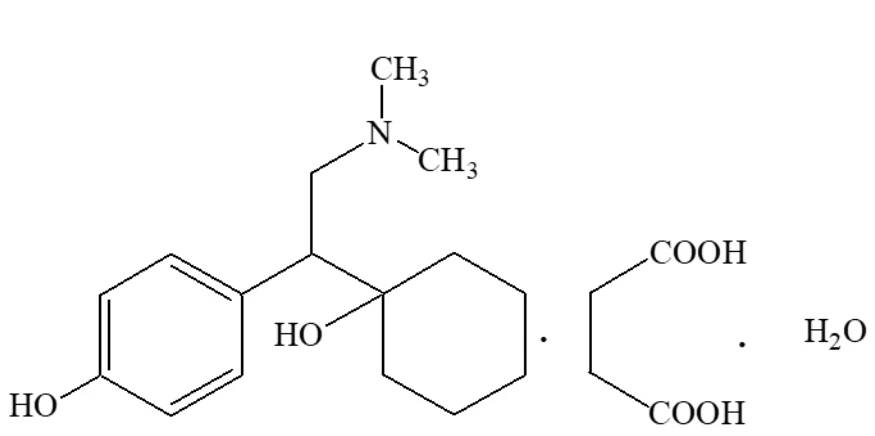
Physicochemical properties: Desvenlafaxine succinate is a white to off-white powder that is soluble in water. The solubility of desvenlafaxine succinate is pH dependent (solubility increases at lower pH). Its octanol:aqueous system (at pH 7.0) partition coefficient is 0.21.
pKa values: 8.34 (dimethylamino group); and 10.11 (phenolic group).
14 CLINICAL TRIALS
14.1 Trial Design and Study Demographics
The information on the trial design and study demographics on which the original indication was authorized is not available, other than as follows.
The efficacy of PRISTIQ for treatment of depression was established in four 8-week, randomized, double-blind, placebo-controlled, fixed-dose studies (at doses of 50 mg/day to 400 mg/day) in adult outpatients who met the Diagnostic and Statistical Manual of Mental Disorders (DSM-IV) criteria for major depressive disorder.
- In the first study, patients received 100 mg (n = 114), 200 mg (n = 116), or 400 mg (n = 113) of PRISTIQ once daily, or placebo (n = 118).
- In a second study, patients received either 200 mg (n = 121) or 400 mg (n = 124) of PRISTIQ once daily, or placebo (n = 124).
- In two additional studies, patients received 50 mg (n = 150 and n = 164) or 100 mg (n = 147 and n = 158) of PRISTIQ once daily, or placebo (n = 150 and n = 161).
The primary outcome measure in all studies was change in the 17-item Hamilton Rating Scale for Depression (HAM-D17) total score (LOCF Final). The main secondary outcome measure was overall improvement, as measured by the Clinical Global Impressions Scale - Improvement (CGI-I) (LOCF Final).
Other secondary outcome measures included change in HAM-D17 total score (Observed Case and MMRM) and CGI-I (Observed Case) at week 8, as well as change in the Montgomery Asberg Depression Rating Scale (MADRS) score, change in the Sheehan Disability Scale (SDS) score, and the percentage of CGI-I responders, HAM-D17 responders, and HAM-D17 remissions. CGI-I responder was defined as a score of 1 (very much improved) or 2 (much improved), HAM- D17 responder was defined as ≥50% decrease from baseline HAM-D-17 total score, and remission was defined as HAM-D17 ≤ 7.
14.2 Study results
The data on which the original indication was authorized are not available, other than as follows.
- Short-term Placebo-controlled MDD Studies
In these studies, the efficacy of PRISTIQ for treatment of depression was demonstrated by its superiority over placebo as measured by improvement on the primary outcome measure (HAM-D17) total score (LOCF) and the main secondary outcome measure (CGI-I) (LOCF). The results on the other secondary outcome measures were supportive of the positive primary and main secondary outcomes.
In studies directly comparing PRISTIQ doses of 50 mg/day and 100 mg/day, there was no suggestion of greater efficacy with the higher dose. Similarly in studies directly comparing PRISTIQ doses of 100 mg/day and 200 mg/day or 400 mg/day there was no suggestion of a greater efficacy with the higher doses [see 4 DOSAGE AND ADMINISTRATION]. In contrast adverse events and discontinuations tended to be more frequent at higher doses (see Tables 2 through 6), although no severe toxicity was observed.
- Long-Term Maintenance of Effect Studies
The efficacy of PRISTIQ in maintaining antidepressant effect was assessed in a long-term study.
In the long-term trial, adult outpatients meeting DSM-IV criteria for major depressive disorder, who responded to 8 weeks of open-label acute treatment with 50 mg/day PRISTIQ and subsequently remained stable for 12 weeks on PRISTIQ, were assigned randomly in a double-blind manner to remain on active treatment or switched to placebo for up to 26 weeks of observation for relapse. Response during the open phase was defined as a HAM-D17 total score of ≤ 11 and CGI-I ≤ 2 at the day 56 evaluation; stability was defined as not having a HAM-D17 total score of ≥ 16 at any office visit. Relapse during the double-blind phase was defined as follows: (1) a HAM-D17 total score of ≥ 16 at any office visit; (2) discontinuation for unsatisfactory efficacy response; (3) hospitalized for depression; (4) suicide attempt; or (5) suicide. Patients receiving continued PRISTIQ treatment experienced statistically significantly longer time to relapse compared with placebo. At 26 weeks, the Kaplan-Meier estimated probability of relapse was 14% with PRISTIQ treatment versus 30% with placebo.
Secondary efficacy measures that supported the primary outcome included: HAM-D17 total score, remission based on HAM-D17, HAM-D6, and CGI-S scores.
15 MICROBIOLOGY
No microbiological information is required for this drug product.
16 NON-CLINICAL TOXICOLOGY
General Toxicology: The principal toxicology studies included single-dose and repeat-dose studies in rats and dogs; genetic toxicology studies; 2-year carcinogenicity studies in mice and rats; and reproductive and developmental studies in rats and rabbits. Special studies were conducted to define target organ toxicity, to evaluate the gastrointestinal tolerability of the sustained release (SR) tablets that were used in clinical trials, and to further evaluate the effects of desvenlafaxine on fertility in male and female rats.
- Single-Dose
A single oral dosage of desvenlafaxine (salt form) resulted in death at ≥ 1800 mg/kg in mice and ≥ 2500 mg/kg in rats. A single IP dosage of desvenlafaxine (salt form) resulted in death at ≥ 250 mg/kg in mice. A single IP dosage of DVS resulted in death at ≥ 700 mg/kg in rats. There was no mortality in dogs given a single oral dosage of desvenlafaxine (salt form) at up to 500 mg/kg.
- Repeat-Dose
Rats: In the 1-month toxicity study in rats, the no-observed-adverse-effect level (NOAEL) was 675 mg/kg/day (the highest dosage), based on no toxicologically significant effects at any dosage. In the 3-month toxicity study in rats, the NOAEL was 100 mg/kg/day, based on mortality and decreased food consumption at 1000 mg/kg/day, and increased salivation and decreased body weights and body-weight gains at ≥ 500 mg/kg/day.
In the 6-month toxicity study in rats, the NOAEL was 100 mg/kg/day in males (based on decreases in body weight in males at 300 mg/kg/day) and 300 mg/kg/day in females (the highest dosage administered).
Dogs: In the 1-month toxicity study in dogs, the NOAEL was 175 mg/kg/day (the highest dosage), based on no toxicologically significant effects at any dosage. In the 3-month toxicity study in dogs, the NOAEL was 100 mg/kg/day, based on mortality and decreased body weights at 300 mg/kg/day and central nervous system (CNS)-related clinical observations (chorea-like movements, stereotypy, and convulsions as early as week 1) at 200 and 300 mg/kg/day. Because the target organ toxicity was not identified in this 3-month study, two (2) additional 3-month studies were conducted at higher dosages (oral gavage, up to 500 mg/kg/day; SR tablets up to 400 mg/kg/day). These 2 additional 3-month studies demonstrated the CNS to be the target organ based on clinical signs and the NOAEL was 100 mg/kg/day and 200 mg/kg/day in the oral gavage and SR tablet studies, respectively. In the 9-month toxicity study in dogs, the NOAEL was 50 mg/kg/day (the highest dosage), based on no adverse effects at any dosage.
Genotoxicity: Desvenlafaxine was not genotoxic in the in vitro bacterial mutation assay (Ames test) and was not clastogenic in an in vitro chromosome aberration assay in cultured CHO cells, an in vivo mouse micronucleus assay, or an in vivo chromosome aberration assay in rats. Additionally, desvenlafaxine was not genotoxic in the in vitro CHO mammalian cell forward mutation assay and was negative in the in vitro BALB/c-3T3 mouse embryo cell transformation assay.
Carcinogenicity: Desvenlafaxine succinate administered by oral gavage to mice and rats for 2 years did not increase the incidence of tumors in either study.
Mice: Mice received desvenlafaxine at dosages up to 500/300 mg/kg/day (dosage lowered after 45 weeks of dosing). The 300 mg/kg/day dose was 180 times on a mg/kg basis, the maximum recommended human dose (MRHD) of 100 mg/day, and 15 times the MRHD on a mg/m2 basis.
Rats: Rats received desvenlafaxine at dosages up to 300 mg/kg/day (males) or 500 mg/kg/day (females). The highest dose was 180 (males) or 300 (females) times, on a mg/kg basis the MRHD of 100 mg/day, and 29 (males) or 48 (females) times the MRHD of 100 mg/day, on a mg/m2 basis.
Reproductive and Developmental Toxicology:
See also Juvenile Toxicity, below.
- Reproductive Toxicology
When administered orally to pregnant rats throughout gestation and lactation and continued through weaning, desvenlafaxine has been shown to cause decrease in fetal weights, decrease in pup weights and increase in pup deaths when given in doses 180 times the human dose of 100 mg/day on a mg/kg basis, and 29 times on a mg/m2 basis. Post-weaning growth and reproductive performance of the progeny were not affected by maternal treatment with desvenlafaxine.
- Impairment of Fertility
Reduced fertility was observed in a study in which both male and female rats received desvenlafaxine. This effect was noted at oral doses approximately 60 times, on a mg/kg basis, and 10 times the maximum human dose (MRHD) of 100 mg/day on a mg/m2 basis. There was no effect on fertility at oral doses approximately 18 times the MRHD on a mg/kg basis and 3 times the MRHD on a mg/m2 basis. The human relevance of this finding is unknown.
- Teratogenicity
When desvenlafaxine was administered orally to pregnant rats and rabbits during the period of organogenesis, there was no evidence of teratogenicity in rats at any doses tested, up to 60 times on a mg/kg basis and up to 10 times the maximum recommended human dose (MRHD) of 100 mg/day (on a mg/m2 basis) in rats. In rabbits, there was no evidence of teratogenicity at doses up to 45 times (on a mg/kg basis) the MRHD of 100 mg/day, or 15 times the MRHD (on a mg/m2 basis). However, fetal weights were decreased in rats with a no effect dose 60 times the MRHD (on a mg/kg basis) and 10 times the MRHD (on a mg/m2 basis).
Juvenile Toxicity: In a juvenile animal study, male and female rats were treated with desvenlafaxine (75, 225 and 675 mg/kg/day) starting on postnatal day (PND) 22 through 112. Behavioral deficits (longer time immobile in a motor activity test, longer time swimming in a straight channel test, and lack of habituation in an acoustic startle test) were observed in males and females but were reversed after a recovery period. A No Adverse Effect Level (NOAEL) was not identified for these deficits. The Low Adverse Effect Level (LOAEL) was 75 mg/kg/day which was associated with plasma exposure (AUC) twice the levels measured with a pediatric dose of 100 mg/day.
In a second juvenile animal study, male and female rats were administered desvenlafaxine (75, 225 or 675 mg/kg/day) for 8-9 weeks starting on PND 22 and were mated with naïve counterparts. Delays in sexual maturation and decreased fertility, number of implantation sites and total live embryos were observed in treated females at all doses. The LOAEL for these findings is 75 mg/kg/day which was associated with an AUC twice the levels measured with a pediatric dose of 100 mg/day. These findings were reversed at the end of a 4-week recovery period.
The relevance of these findings to humans is not known.