


Product Monograph - Pro-Triazide
INDICATIONS
Fixed-dose combination drugs are not indicated for initial therapy. Patients should be titrated on the individual drugs. If the fixed combination represents the dosage so determined, its use may be more convenient in patient management. If during maintenance therapy dosage adjustment is necessary it is advisable to use the individual drugs.
PRO-TRIAZIDE (triamterene and hydrochlorothiazide) is indicated in the maintenance therapy of:
Patients with edema associated with congestive heart failure, hepatic cirrhosis, and nephrotic syndrome; also in steroidinduced edema and idiopathic edema.
Patients with mild to moderate hypertension in those patients who have developed hypokalemia while on thiazide-like diuretics alone, and in those patients in whom potassium depletion is considered especially dangerous (e.g. digitalized patients). Medical opinion is not unanimous regarding the incidence and/or clinical significance of hypokalemia occurring among hypertensive patients treated with thiazide-like diuretics alone, and concerning the use of potassium-sparing combinations as routine therapy in hypertension.
CONTRAINDICATIONS
PRO-TRIAZIDE should not be used in patients with pre-existing elevated serum potassium, or in patients who develop hyperkalemia while on the drug.
PRO-TRIAZIDE is contraindicated in patients with anuria, severe or progressive renal dysfunction, including oliguria and progressively increasing azotemia.
Severe or progressive hepatic dysfunction contraindicates further use of Pro-Triazide.
PRO-TRIAZIDE is contraindicated in patients who are hypersensitive to triamterene, hydrochlorothiazide, or other sulfonamide-derived drugs.
WARNINGS
Potassium supplementation in the form of medication should not be used routinely in conjunction with PRO-TRIAZIDE since hyperkalemia may result. Abnormal elevation of serum potassium, although uncommon, is potentially the most serious electrolyte disturbance.
Hyperkalemia has been reported (overall incidence less than 8%) and in some cases has been associated with cardiac irregularities. Hyperkalemia is more likely to occur in patients who are seriously ill, have known renal impairment, or in elderly (incidence approximately 12%) or diabetic patients with confirmed or suspected renal insufficiency. Fatalities have been reported in such patients. All patients on PRO-TRIAZIDE should be monitored carefully for clinical laboratory and electrocardiographic evidence of hyperkalemia and for acidosis.
Combination therapy with other potassium-conserving agents is potentially hazardous, since both can cause potassium retention and, in some cases, hyperkalemia. Such combination therapy should not be used routinely. If it is deemed essential the patient must be under close supervision and serum potassium levels determined frequently.
Warning signs or symptoms of hyperkalemia include paresthesias, muscular weakness, fatigue, flaccid paralysis of the extremities, bradycardia, shock, and ECG abnormalities.
When abnormal, the ECG in hyperkalemia is characterized primarily by tall, peaked T waves or elevations from previous tracings. There may also be lowering of the R wave and increased depth of the S wave, widening or disappearance of the P wave, progressive widening of the QRS complex, prolongation of the PR interval, and ST depression.
If hyperkalemia develops, discontinue Pro-Triazide, substitute the thiazide alone and restrict dietary potassium intake. When indicated by the clinical situation, excess potassium may be removed by dialysis or oral or rectal administration of sodium polystyrene sulfonate. Infusion of glucose and insulin have also been used to treat hyperkalemia.
PRO-TRIAZIDE should be used with caution in patients with impaired hepatic function or progressive liver disease, since minor alterations of fluid and electrolyte balance may precipitate hepatic coma.
Since triamterene has been found in renal stones, this should be taken into consideration before
PRO-TRIAZIDE is administered to patients who have a history of renal stones.
Usage in Pregnancy:
Thiazides cross the placental barrier and appear in cord blood. Triamterene has been shown to do the same in ewes and this may occur in humans. The use of PRO-TRIAZIDE in women who are or may become pregnant requires that the anticipated benefits be weighed against possible risks to the fetus. Hazards include fetal or neonatal jaundice, thrombocytopenia and possibly other adverse reactions which have occurred in the adult.
Usage in Nursing Mothers:
Thiazides appear in breast milk and triamterene appears in cow's milk. PRO-TRIAZIDE should be discontinued or the patient should stop nursing.
Usage in Children:
The safety for use of PRO-TRIAZIDE in children has not been established.
Ophthalmologic:
Acute Myopia and Secondary Angle-Closure Glaucoma
Hydrochlorothiazide, a sulfonamide, can cause an idiosyncratic reaction, resulting in acute transient myopia and acute angle-closure glaucoma. Symptoms include acute onset of decreased visual acuity or ocular pain and typically occur within hours to weeks of drug initiation.
Untreated acute angle-closure glaucoma can lead to permanent vision loss.
The primary treatment is to discontinue hydrochlorothiazide as rapidly as possible. Prompt medical or surgical treatments may need to be considered if the intraocular pressure remains uncontrolled. Risk factors for developing acute angle-closure glaucoma may include a history of sulphonamide or penicillin allergy.
PRECAUTIONS
Careful checks should be kept for signs of fluid or electrolyte imbalance (hyperkalemia, hyponatremia, hypokalemia and hypochloremic alkalosis). Serum and urine electrolyte determinations are particularly important when the patient is vomiting excessively or receiving parenteral fluids.
Because of the potassium-sparing characteristic of triamterene, hypokalemia occurs less frequently with PRO-TRIAZIDE than with thiazides alone. The effects of digitalis on the heart may be exaggerated in patients with hypokalemia and signs of digitalis intoxication may be seen at doses previously tolerated.
Triamterene may cause a decreasing alkali reserve with the possibility of metabolic acidosis.
Thiazides can precipitate hepatic coma in patients with severe liver disease. Potassium depletion induced by the thiazide may be important in this connection. Administer PRO-TRIAZIDE cautiously and be alert for such early signs of impending coma as confusion, drowsiness and tremor: if mental confusion increases discontinue PRO-TRIAZIDE for a few days. Attention must be given to other factors that may precipitate hepatic coma, such as blood in the gastrointestinal tract or pre-existing potassium depletion.
Any chloride deficit is generally mild and usually does not require specific treatment. A chloride deficit may be corrected by the use of ammonium chloride (except in patients with hepatic disease) and largely prevented by a near normal salt intake.
Dilutional hyponatremia may occur in edematous patients in hot weather. Appropriate therapy is water restriction rather than administration of salt except in rare instances when the hyponatremia is life threatening. In actual salt depletion, appropriate replacement is the therapy of choice.
Increases in urea nitrogen level and/or creatinine level have been reported. This apparently is secondary to a reversible reduction of glomerular filtration rate or a depletion of intravascular fluid volume (prerenal azotemia). Levels usually return to normal when PRO-TRIAZIDE is discontinued. Careful monitoring of BUN or serum creatinine levels is important when administering Pro-Triazide. If azotemia increases discontinue PRO-TRIAZIDE (see
Contraindications).
Calcium excretion is decreased by thiazides. Pathological changes in the parathyroid glands with hypercalcemia and hypophosphatemia have been observed in a few patients on prolonged thiazide therapy. The common complications of hyperparathyroidism such as renal lithiasis, bone resorption, and peptic ulceration have not been seen. Thiazides should be discontinued before carrying out tests for parathyroid function.
Hyperuricemia may occur or gout may be precipitated in certain patients receiving thiazide therapy.
Thiazides may cause hyperglycemia and glycosuria and may alter insulin requirements in diabetics.
Patients should be observed regularly for the possible occurrence of blood dyscrasias, liver damage, or other idiosyncratic reactions. There have been reports of blood dyscrasias in patients receiving triamterene. Leukopenia, thrombocytopenia, agranulocytosis, and aplastic anemia have been reported with the thiazides. Cirrhotics with splenomegaly may have marked variations in
their blood pictures - including thrombocyte and leukocyte levels – which are not related to drug therapy. Since the triamterene component of PRO-TRIAZIDE is a weak folic acid antagonist, it may contribute to the appearance of megaloblastosis in cases where folic acid stores are depleted. Periodic blood studies in these patients are recommended.
Sensitivity reactions to thiazides may occur in patients with or without a history of allergy or bronchial asthma.
Thiazides may decrease serum PBI levels without signs of thyroid disturbance.
The possibility of exacerbation or activation of systemic lupus erythmatosus have been reported.
The antihypertensive effect of PRO-TRIAZIDE may be enhanced in the post-sympathectomy patient.
DRUG INTERACTIONS
Drug-Drug Interactions:
| Proper Name | Ref. | Effect | Clinical comment |
| Alcohol, barbiturates, or narcotics | C | Potentiation of orthostatic hypotension may occur. | Avoid alcohol, barbiturates or narcotics, especially with initiation of therapy. |
| Amphotericin B | T | Amphotericin B increases the risk of hypokalemia induced by thiazide diuretics | Monitor serum potassium level. |
Antidiabetic agents (e.g. insulin and oral hypoglycemic agents) | CT | Thiazide-induced hyperglycemia may compromise blood sugar control. Depletion of serum potassium augments glucose intolerance. | Monitor glycemic control, supplement potassium if necessary, to maintain appropriate serum potassium levels, and adjust diabetes medications as required. |
| Antihypertensive drugs | CT | Hydrochlorothiazide may potentiate the action of other antihypertensive drugs (e.g. guanethidine, methyldopa, beta-blockers, vasodilators, calcium channel blockers, ACEI, ARB, and direct renin inhibitors). | |
Antineoplastic drugs, including cyclophosphamide and methotrexate | C | Concomitant use of thiazide diuretics may reduce renal excretion of cytotoxic agents and enhance their myelosuppressive effects. | Hematological status should be closely monitored in patients receiving this combination. Dose adjustment of cytotoxic agents may be required. |
| Bile acid sequestrants, e.g. cholestyramine | CT | Bile acid sequestrants bind thiazide diuretics in the gut and impair gastrointestinal absorption by 43-85%. Administration of thiazide 4 hours after a bile acid sequestrant reduced absorption of hydrochlorothaizide by 30-35%. | Give thiazide 2-4 hours before or 6 hours after the bile acid sequestrant. Maintain a consistent sequence of administration. Monitor blood pressure, and increase dose of thiazide, if necessary. |
| Calcium and vitamin D supplements | C | Thiazides decrease renal excretion of calcium and increase calcium release from bone. | Monitor serum calcium, especially with concomitant use of high doses of calcium supplements. Dose reduction or withdrawal of calcium and/or vitamin D supplements may be necessary. |
| Proper Name | Ref. | Effect | Clinical comment |
| Carbamazepine | C | Carbamazepine may cause clinically significant hyponatremia. Concomitant use with thiazide diuretics may potentiate hyponatremia. | Monitor serum sodium levels. Use with caution. |
| Corticosteroids, and adrenocorticotropic hormone (ACTH) | T | Intensified electrolyte depletion, particularly hypokalemia, may occur. | Monitor serum potassium, and adjust medications, as required. |
| Digoxin | CT | Thiazide-induced electrolyte disturbances, i.e. hypokalemia, hypomagnesemia, increase the risk of digoxin toxicity, which may lead to fatal arrhythmic events. | Concomitant administration of hydrochlorothiazide and digoxin requires caution. Monitor electrolytes and digoxin levels closely. Supplement potassium or adjust doses of digoxin or thiazide, as required. |
Drugs that alter GI motility, i.e., anti- cholinergic agents, such as atropine and prokinetic agents, such as metoclopramide, domperidone | CT, T | Bioavailability of thiazide diuretics may be increased by anticholinergic agents due to a decrease in gastrointestinal motility and gastric emptying. Conversely, prokinetic drugs may decrease the bioavailability of thiazide diuretics. | Dose adjustment of thiazide may be required. |
Gout medications (allopurinol, uricosurics, xanthine oxidase inhibitors) | T, RC | Thiazide-induced hyperuricemia may compromise control of gout by allopurinol and probenecid. The co-administration of hydrochlorothiazide and allopurinol may increase the incidence of hypersensitivity reactions to allopurinol. | Dosage adjustment of gout medications may be required. |
| Lithium | CT | Thiazide diuretics reduce the renal clearance of lithium and add a high risk of lithium toxicity. | Concomitant use of thiazide diuretics with lithium is generally not recommended. If such use is deemed necessary, reduce lithium dose by 50% and monitor lithium levels closely. |
| Nonsteroidal anti- inflammatory drugs (NSAID) | CT | NSAID-related retention of sodium and water antagonises the diuretic and antihypertensive effects of thiazides. NSAID-induced inhibition of renal prostaglandins leading to decreases of renal blood flow, along with thiazide-induced decreases in GFR may lead to acute renal failure. Patients with heart failure may be at particular risk | If combination use is necessary, monitor renal function, serum potassium, and blood pressure closely. Dose adjustments may be required. |
| Proper Name | Ref. | Effect | Clinical comment |
| Selective serotonin reuptake inhibitors (SSRIs, e.g. citalopram, escitalopram, sertraline) | T, C | Concomitant use with thiazide diuretics may potentiate hyponatremia. | Monitor serum sodium levels. Use with caution. |
| Skeletal muscle relaxants of the curare family, e.g., tubocurare | C | Thiazide drugs may increase the responsiveness of some skeletal muscle relaxants, such as curare derivatives | |
| Topiramate | CT | Additive hypokalemia. Possible thiazide-induced increase in topiramate serum concentrations. | Monitor serum potassium and topiramate levels. Use potassium supplements, or adjust topiramate dose as necessary. |
Legend: C = Case Study; RCS = Retrospective Cohort Study; CT = Clinical Trial; T = Theoretical
ADVERSE REACTIONS
The following adverse reactions have been associated with the use of thiazide diuretics and/or triamterene:
Gastrointestinal: Dry mouth, anorexia, gastric irritation, nausea, vomiting, cramps, diarrhea, constipation, jaundice (intrahepatic cholestatic), pancreatitis, sialadenitis.
Note: Symptoms of nausea and vomiting can also indicate electrolyte imbalance. (see
Precautions).
Central Nervous System: Dizziness, vertigo, paresthesias, headache, xanthopsia.
Dermatologic - Hypersensitivity: Purpura, photosensitivity, rash, urticaria, necrotizing angiitis
(vasculitis, cutaneous vasculitis), fever, respiratory distress including pneumonitis, anaphylactic reactions.
Hematologic: Leukopenia, thrombocytopenia, agranulocytosis, aplastic anemia.
Cardiovascular: Orthostatic hypotension.
Renal: Triamterene (and its metabolite p-hydroxytriamterene) have been found in renal stones in association with the usual components. Rare cases of interstitial nephritis have been reported.
Electrolyte Imbalance: (See Warnings and Precautions).
Miscellaneous: Hyperglycemia, glycosuria, hyperuricemia, muscle spasm, weakness, restlessness, transient blurred vision.
Newborn, whose mothers had received thiazides during pregnancy, in rare instances have developed thrombocytopenia or pancreatitis.
SYMPTOMS AND TREATMENT OF OVERDOSAGE
Electrolyte imbalance is the major concern (see Warnings section). Symptoms reported include:
polyuria, nausea, vomiting, weakness, lassitude, fever, flushed face, and hyperactive deep tendon reflexes. If hypotension occurs, it may be treated with pressor agents such as levarterenol to maintain blood pressure. Carefully evaluate the electrolyte pattern and fluid balance. Induce immediate evacuation of the stomach through emesis or gastric lavage. There is no specific antidote.
DOSAGE AND ADMINISTRATION
Dosage must be determined for individual patients by titration of each component separately.
Where the fixed combination in PRO-TRIAZIDE provides the dosage so determined, PRO-
TRIAZIDE may be used for maintenance therapy. If during maintenance therapy dosage adjustment is necessary, it is advisable to use the individual drugs.
PRO-TRIAZIDE should be taken after an adequate meal.
For management of a suspected drug overdose, contact your regional Poison Control Centre.
Adult Dosage:
Edema: The usual dosage is one tablet twice daily after meals. When dry weight is reached, one tablet daily will usually suffice. In some patients, one tablet every other day may be indicated.
Hypertension: The usual dosage is one tablet twice daily after meals. Dosage may be increased or decreased according to patient's need. If two or more tablets per day are needed they should be given in divided doses. Maximum daily dosage should not exceed four tablets (200 mg triamterene and 100 mg hydrochlorothiazide), and at this dosage the incidence of adverse effects may increase.
DOSAGE FORMS, COMPOSITIONS AND PACKAGING
Each round, flat-faced, single-scored, yellow PRO-TRIAZIDE tablet contains: triamterene
50 mg and hydrochlorothiazide 25 mg.
In addition to the active ingredients, triamterene and hydrochlorothiazide, each tablet also contains the non-medicinal ingredients colloidal silicon dioxide, croscarmellose sodium, lactose monohydrate, magnesium stearate, and sunset yellow aluminium lake 40 %.
Bottles of 100, 1000, and 5000 tablets.
CHEMISTRY
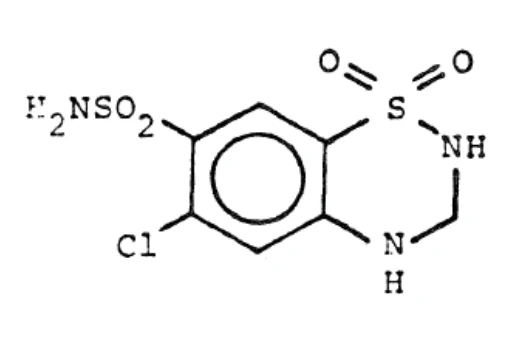
Hydrochlorothiazide
Molecular Formula: C7H8ClN3O4S2
Molecular Weight: 297.72 g/mol
Chemical Name: 6-Chloro-3,4-dihydro-2H-l,2,4-benzothiadiazine-7-sulfonamide 1,1-dioxide
Description: A white or almost white crystalline compound with a slightly bitter taste, almost insoluble in water.
Triamterene
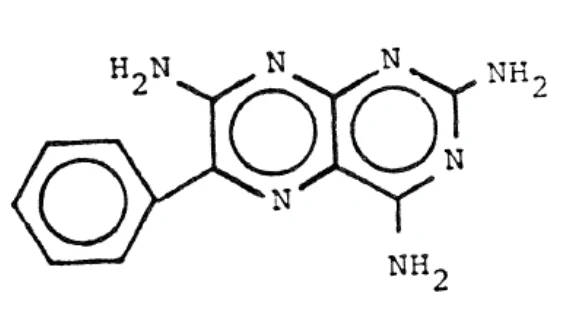
Molecular Formula: C12H11N7
Molecular Weight: 253.3 g/mol
Chemical Name: 2, 4, 7-triamino-6-phenylpteridine
Description: A yellow odourless crystalline compound, tasteless at first with a slightly bitter aftertaste; practically insoluble in water, or chloroform; unstable to light.
PHARMACOLOGY
Hydrochlorothiazide is a diuretic and antihypertensive agent. It inhibits the reabsorption of sodium and chloride in the distal segment and causes a simultaneous usually minimal loss of bicarbonate. Hydrochlorothiazide decreases the renal excretion of calcium, presumably by a direct action on renal transport. Magnesium excretion is increased.
Hydrochlorothiazide is absorbed from gastrointestinal tract relatively rapidly since a demonstrable diuretic effect is seen within one hour and reaches a peak effect in about 4 hours.
Its action persists for approximately 6-12 hours. Hydrochlorothiazide is eliminated rapidly by the kidney.
Triamterene has no significant pharmacological action other than those on the kidney.
Triamterene inhibits the reabsorption of sodium ions in exchange for potassium and hydrogen ions in the distal renal tubule through a direct effect and not by competitive aldosterone antagonism. The degree of natriuresis and dieresis produced by triamterene alone is limited; it has an additive diuretic effect when used with a thiazide diuretic.
Triamterene is rapidly absorbed from the gastrointestinal tract but to a variable extent (30-70% of the oral dose). It is excreted in the urine with a peak in renal excretion within 1 to 2 hours after oral ingestion. Diuretic effect following a single dose is evident within 2-4 hours and tapers off
7-9 hours after administration.
The peak plasma concentration of triamterene is reached 2 to 4 hours after an oral dose and the half-life of the drug in plasma ranges from 1.5 to 2 hours. Approximately 50% of triamterene is bound to human plasma protein. Triamterene and its metabolites are excreted by the kidney by filtration and tubular secretion. The peak in triamterene renal excretion occurs 1 to 2 hours after dosing. About 20% of an oral dose appears unchanged in the urine, 70% as the sulphate ester of hydroxytriamterene and 10% as free hydroxytriamterene and triamterene glucuronide.
Hydroxytriamterene has diuretic activity.
TOXICOLOGY
Hydrochlorothiazide:
In rats, the oral LD50's were greater than 2750 mg/kg.
Triamterene:
The oral LD50 values for triamterene were found to be:
Mouse: 490 mg/kg (95% C.L. 398 to 603 mg/kg)
Rat: 1600 mg/kg (95% C.L. 1409 to 1817 mg/kg)
Combination: Triamterene and Hydrochlorothiazide
Groups of 4 to 6 dogs were orally administered a 1:1 combination of triamterene and hydrochlorothiazide at dose levels of 0, 2, 4 and 15 mg/kg/day of each component for 15 weeks.
Elevations of serum alkaline phosphatase of borderline significance and sharp increases in SGPT were seen in the high dose group at 10 weeks with a return to normal at 15 weeks.
Groups of rats were orally administered triamterene-hydrochlorothiazide (1:1) in increasing doses to a maximum of 500 mg/kg/day (each ingredient) for 27 days. Male rats and the surviving female rats (5 of 10) at the maximum dose had enlarged kidneys and a characteristic nephropathy varying from slight to severe.
Dogs administered 50 mg/kg/day (each ingredient) triarnterenehydrochlorothiazide (1:1) for 6 days exhibited anorexia, bloody diarrhea mixed with mucous and granular yellow material in the feces. When the dose was increased to 200 mg/kg/day (each component) three of six dogs had elevated SGPT and four of six had slightly elevated serum alkaline phosphatase on day 12, and on day 25 exhibited dyspnea, mild convulsions, prostration and death. Drug-related toxic nephropatpy was clearly demonstrated.
Reproductive Study:
A reproductive study in 3 groups of 40 male and female rats given a 2:1 combination of triamterene and hydrochlorothiazide in food for 60 days prior to mating and through two litters was performed. One group was a control, the second received 9 mg/kg/day of the combination and a third group was started on 30 mg/kg/day but because of weight loss this was lowered to 15 mg/kg/day on day 5 and on day 52 to 12 mg/kg/day and kept there throughout the study.
Mortality among the parent rats was limited to 1 low dose female who died of dystocia. In the first breeding period the live birth index and viability index were similar in all 3 groups. Litter
size, birth weight and mean weight of progeny at 3 weeks of age did not differ significantly.
Similar results were found in the second breeding period although 3 congenital anomalies
(hydrops) were noted, one in each of the 3 groups.
Teratology Study:
Maass et al administered triamterene in doses ranging from 11.1 to 32.0 mg/kg/day to 4 groups of 15 female rats on the 8th through 10th day of gestation to investigate its effect on maternal weight gain, litter size and live birth index. Adverse effects on fetal tissue could not be demonstrated nor were physical abnormalities observed in the progeny.
REFERENCES
- 1. Aronoff, A. and Barkum, H.: Hyperuricemia and acute gouty arthritis precipitated by thiazide derivatives. An. Med. Assoc. J. 198:127, 1966.
- 2. Baba, W.I., Tudhope, G.R., and Wilson, G.M.: Site and mechanism of action of the diuretic, triamterene. Clin. Sci. 27:181-193, 1964.
- 3.
Beermann, B. and Groschinsky-Grind, M.: Pharmacokinetics of hydrochlorothiazide in man.
Eur. J. Clin. Pharmacol. 12:297-303, 1977.
- 4.
Beermann, B. and Groschinsky-Grind, M.: Antihypertensive effect of various doses of hydrochlorothiazide, and its relation to the plasma level of the drug. Eur. J. Clin. Pharmacol.
13:195-201, 1978.
- 5. Bender, A.D., Carter, C.L., and Hansen, K.B.: Use of a diuretic combination of triamterene and hydrochlorothiazide in elderly patients. J. Am. Geriatrics Soc. 15:166-173, 1967.
- 6.
Gundert-Remy, U., von Kenne, D., Weber, E., Geissler, H.E., Grevian, B., and Mutschler,
E.: Plasma and urinary levels of triamterene and certain metabolites after oral administration to man. Eur. J. Clin. Pharmacol. 16:39-44, 1979.
- 7.
Hansen, K.B. and Bender, A.D.: Changes in serum potassium levels occurring in patients treated with triamterene and a triamterene hydrochlorothiazide combination. Clin.
Pharmacol. Ther. ~:392-399, 1967.
- 8.
Maass,· A.R., Wiebelhaus, V.D., . Sosnowski, G., Jenkins, B., and Gessner, G.: Effect of
Triamterene on Folic Reductase Activity and Reproduction in the Rat. Toxicol. Appl.
Pharmacol. 10:413-423, 1967.
- 9. Magil, A. B., BaIlon, H. S., Cameron, E. C., and Rae, A.: Acute interstitial nephritis associated with thiazide diuretics. Am. J. Med. ~:939-943, 1980.
- 10.
Martindale; The Extra Pharmacoepoeia; 27th edition, Pharmaceutical Press (pub.) pp. 559-
560, 569-570, 1977.
- 11.
Mehta, B.R. and Robinson, B.H.B.: Lithium toxicity induced by triamterene
hydrochlorothiazide. Postgrad Med. J. 56:783-784, 1980.
- 12. Physicians Desk Reference, 35th Edition, Medical Economics Co., Oradell, N.J., 1981.
- 13.
Pruitt, A.W., Winkel, J.S., and Dayton, P.G.: Variations in the fate of triamterene. Clin.
Pharmacol. Ther. 21:610-619, 1977.
- 14.
Summary Basis of Approval for Dyazide, Dept. of Health and Human Services, Food and
Drug Administration, Rockville, Md. File 80-13867.
- 15.
Tannenbaum, P.J. and Crosley, A.P. Jr.: A comparison of the effects of hydrochlorothiazide and hydrochlorothiazide in combination with triamterene on electrolyte balance. Clin.
Pharmacol. Ther. 2:777-782, 1966.
- 16. The Pharmacological Basis of Therapeutics, 6th ed., A. Goodman Gilman, L.S. Goodman and A. Gilman, ed., Collier MacMillan, Toronto, 1980.