


Product Monograph - Prolastin-C
RECENT MAJOR LABEL CHANGES
Not Applicable
TABLE OF CONTENTS
Sections or subsections that are not applicable at the time of authorization are not listed.
RECENT MAJOR LABEL CHANGES ............................................................................... 2
TABLE OF CONTENTS ...................................................................................................... 2
PART I: HEALTH PROFESSIONAL INFORMATION ...................................................... 4
1 INDICATIONS ........................................................................................................... 4
1.1 Pediatrics .............................................................................................................. 4
1.2 Geriatrics ............................................................................................................... 4
2 CONTRAINDICATIONS ........................................................................................... 4
4 DOSAGE AND ADMINISTRATION ........................................................................ 5
4.1 Dosing Considerations ........................................................................................ 5
4.2 Recommended Dose and Dosage Adjustment ................................................ 5
4.3 Reconstitution ....................................................................................................... 5
4.4 Administration ....................................................................................................... 7
5 OVERDOSAGE......................................................................................................... 7
6 DOSAGE FORMS, STRENGTHS, COMPOSITION AND PACKAGING ............. 7
7 WARNINGS AND PRECAUTIONS ......................................................................... 8
7.1 Special Populations ............................................................................................. 9
7.1.1 Pregnant Women ........................................................................................... 9
7.1.2 Breast-feeding ................................................................................................ 9
7.1.3 Pediatrics ........................................................................................................ 9
7.1.4 Geriatrics ......................................................................................................... 9
8 ADVERSE REACTIONS ........................................................................................ 10
8.1 Adverse Reaction Overview ............................................................................. 10
8.2 Clinical Trial Adverse Reactions ...................................................................... 10
8.5 Post-Market Adverse Reactions ...................................................................... 11
9 DRUG INTERACTIONS ......................................................................................... 12
9.4 Drug-Drug Interactions ...................................................................................... 12
9.5 Drug-Food Interactions ..................................................................................... 12
9.6 Drug-Herb Interactions ...................................................................................... 12
9.7 Drug-Laboratory Test Interactions ................................................................... 12
10 CLINICAL PHARMACOLOGY .............................................................................. 12
10.1 Mechanism of Action ................................................................................... 12
10.2 Pharmacodynamics ..................................................................................... 13
10.3 Pharmacokinetics ......................................................................................... 13
11 STORAGE, STABILITY AND DISPOSAL ............................................................ 14
12 SPECIAL HANDLING INSTRUCTIONS ............................................................... 14
PART II: SCIENTIFIC INFORMATION ............................................................................ 14
13 PHARMACEUTICAL INFORMATION .................................................................. 14
14 CLINICAL TRIALS ................................................................................................. 16
14.1 Trial Design and Study Demographics ..................................................... 16
14.2 Study Results ............................................................................................... 17
14.3 Comparative Bioavailability Studies .......................................................... 18
15 MICROBIOLOGY .................................................................................................... 19
16 NON-CLINICAL TOXICOLOGY ............................................................................ 19
PATIENT MEDICATION INFORMATION ........................................................................ 21
PART I: HEALTH PROFESSIONAL INFORMATION
1 INDICATIONS
PROLASTIN-C (alpha1-proteinase inhibitor [human] injection) is indicated for:
- chronic replacement therapy of individuals having congenital deficiency of alpha1-PI (alpha1-antitrypsin deficiency), related to genotypes PiZZ, PiZ(null), Pi (null)(null), PiSZ or other deficiency causing alleles, and with clinically demonstrable emphysema.
Clinical and biochemical studies have demonstrated that with such therapy, it is possible to increase plasma levels of alpha1-PI, and that levels of functionally active alpha1-PI in the lung epithelial lining fluid are increased proportionately. As some individuals with alpha1-antitrypsin deficiency will not go on to develop emphysema, only those with evidence of such disease should be considered for chronic replacement therapy with Alpha1-Proteinase Inhibitor (Human). Subjects with the PiMZ or PiMS phenotypes of alpha1-antitrypsin deficiency should not be considered for such treatment as they appear to be at small risk for emphysema. Clinical data are not available as to the long-term effects derived from chronic replacement therapy of individuals with alpha1-antitrypsin deficiency with Alpha1-Proteinase Inhibitor (Human). Only adult subjects have received Alpha1-Proteinase Inhibitor (Human) to date.
1.1 Pediatrics
Pediatrics (<18 years): Based on the data submitted and reviewed by Health Canada, the safety and efficacy of Prolastin-C in pediatric patients has not been established; therefore, Health Canada has not authorized an indication for pediatric use.
1.2 Geriatrics
Geriatrics (≥65 years): Of 32 subjects randomized in a pharmacokinetic/safety study supporting a Liquid formulation of Prolastin-C, 17 were ≥65 years of age. While the data was limited, no overall differences for Prolastin-C have been observed between patients 65 years of age and older and younger patients (See Section 7.1.4).
2 CONTRAINDICATIONS
Prolastin-C is contraindicated in:
- patients who are hypersensitive to Alpha1-Proteinase Inhibitor (Human) or to any ingredient in the formulation or component of the container. For a complete listing, see the DOSAGE FORMS, STRENGTHS, COMPOSITION AND PACKAGING section.
- individuals with selective immunoglobulin A (IgA) deficiencies, since these patients may experience severe reactions, including anaphylaxis, to IgA which may be present.
- individuals with a history of anaphylaxis or other severe systemic reaction to alpha1-proteinase inhibitor (human) products.
4 DOSAGE AND ADMINISTRATION
4.1 Dosing Considerations
The “threshold” level of alpha1-PI in the serum believed to provide adequate anti-elastase activity in the lung of individuals with alpha1-antitrypsin deficiency is 80 mg/dL (based on commercial standards for alpha1-PI immunologic assay). However, assays of alpha1-PI based on commercial standards measure antigenic activity of alpha1-PI, whereas the labeled potency value of alpha1-PI is expressed as actual functional activity, i.e., actual capacity to neutralize porcine pancreatic elastase. As functional activity may be less than antigenic activity, serum levels of alpha1-PI determined using commercial immunologic assays may not accurately reflect actual functional alpha1-PI levels.
Therefore, although it may be helpful to monitor serum levels of alpha1-PI in individuals receiving Prolastin-C, using currently available commercial assays of antigenic activity, results of these assays should not be used to determine the required therapeutic dosage.
4.2 Recommended Dose and Dosage Adjustment
The recommended dosage of Prolastin-C is 60 mg/kg body weight administered once weekly by intravenous infusion. This dose is intended to increase and maintain a level of functional alpha1-PI in the epithelial lining of the lower respiratory tract, providing adequate anti-elastase activity in the lung of individuals with alpha1-antitrypsin deficiency.
4.3 Reconstitution
Prolastin-C should be reconstituted with Sterile Water for Injection, USP (see Table 1). Prolastin-C and diluent should be brought to room temperature prior to reconstitution. Prolastin-C should be filtered through a sterile filter needle as supplied in the package prior to use.
Table 1 - Reconstitution
| Approximate Alpha1-PI Functional Activity | Volume of Diluent to be Added to Prolastin-C Vial | Approximate Available Volume | Concentration per mL |
| 1000mg* | 20mL | 20.2 to 21.6 mL | ≥ 40 mg/mL |
* Each vial of Prolastin-C (Alpha1 Proteinase Inhibitor [Human]), has the functional activity, as determined by inhibition of porcine pancreatic elastase, stated on the label of the vial.
Administer within 3 hours after reconstitution. Do not refrigerate after reconstitution.
Vacuum Transfer
Aseptic technique should be followed.
- 1. Warm the Prolastin-C (Product) and sterile water (diluent) to room temperature (25°C) before reconstitution.
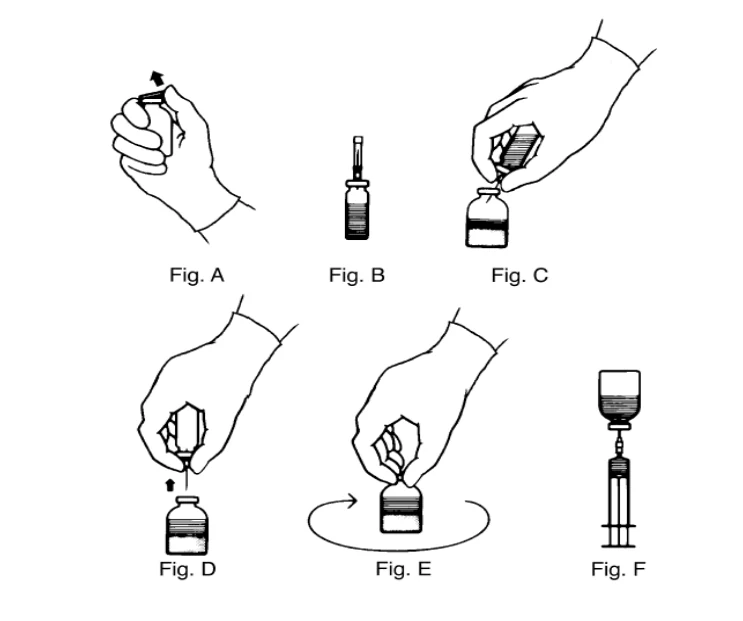
- 2. Remove the plastic flip-top caps from each vial (Figure 1: A). Swab the exposed stopper surfaces with alcohol and allow surface to dry.
- 3. Carefully remove the plastic sheath from the short end of the transfer needle. Insert the exposed needle into the center of the stopper in the diluent vial (Figure 1: B).
- 4. Carefully grip the sheath of the other end of the transfer needle and twist to remove it.
- 5. Invert the diluent vial and insert the attached needle into the Prolastin-C vial at a 45° angle (Figure 1: C). This will direct the stream of diluent against the wall of the Product vial and minimize foaming. The vacuum will draw the diluent into the Product vial. Because the vial of Prolastin-C is under vacuum, the stopper must only be pierced one time by the needle, to ensure complete transfer of diluent.
- 6. Remove the diluent vial and transfer needle (Figure 1: D).
- 7. Immediately after adding the diluent, swirl vigorously for 10–15 seconds to thoroughly break-up cake then swirl continuously until the powder is completely dissolved (Figure 1: E). Some foaming will occur, but this does not affect the quality of the product. The vial should then be visually inspected for particulate matter and discoloration prior to administration.
- 8. Attach the filter needle (from the package) to sterile syringe. Withdraw the Prolastin-C solution into the syringe through the filter needle (Figure 1: F).
- 9. Remove the filter needle from the syringe and replace with an appropriate injection needle for administration. Discard filter needle into a puncture-proof container.
- 10. The contents of more than one vial of Prolastin-C may be drawn into the same syringe before administration. If more than one vial of Prolastin-C is used, withdraw contents from vial using aseptic technique. Place contents into a sterile I.V. administration container (plastic or glass) using a syringe. Avoid pushing a large I.V. spike into the product container stopper as this has been known to force the stopper into the vial, with a resulting loss of sterility.
Described above is one acceptable method of reconstitution. The product may also be reconstituted with other appropriate transfer devices according to the manufacturer’s accepted procedure.
| Figure 1 – Steps in the Reconstitution of Prolastin-C |
|---|
 |
4.4 Administration
FOR INTRAVENOUS USE ONLY.
Parenteral drug products should be inspected visually for particulate matter and discoloration prior to administration, whenever solution and container permit. The reconstituted solution is clear or slightly opalescent, and colourless or pale yellow or pale green or pale brown. Do not use if the product is discoloured or cloudy.
Reconstituted Prolastin-C should be given alone, without mixing with other agents or diluting solutions.
Prolastin-C may be given at a rate of 0.08 mL/kg/min or greater and must be administered intravenously. The recommended dosage of 60 mg/kg takes approximately 15 minutes to infuse.
Record brand name, Drug Identification Number (DIN) and the batch/lot number of the product for each patient (see DOSAGE FORMS, STRENGTHS, COMPOSITION AND PACKAGING).
Following administration, discard open vials, administration equipment and unused solution per local requirements.
5 OVERDOSAGE
To date, there have been no reported cases of overdose for Prolastin-C or other Alpha1 Proteinase Inhibitor (Human) manufactured by Grifols. No data are available in regard to overdosage in humans.
| For management of a suspected drug overdose, contact your regional poison control centre. |
|---|
6 DOSAGE FORMS, STRENGTHS, COMPOSITION AND PACKAGING
To help ensure the traceability of biologic products, including biosimilars, health professionals should recognise the importance of recording both the brand name and the non-proprietary (active ingredient) name as well as other product-specific identifiers such as the Drug Identification Number (DIN) and the batch/lot number of the product supplied.
Table 2 – Dosage Forms, Strengths, Composition and Packaging
Prolastin-C is supplied as a sterile, white to beige, lyophilized powder in single use vials with
| Route of Administration | Dosage Form / Strength/Composition | Non-medicinal Ingredients |
| Intravenous injection | Lyophilized powder for reconstitution and injection 1000 mg/20 mL vial Human Alpha1 proteinase inhibitor | Sodium chloride, Sodium phosphate |
the total alpha1-PI functional activity, in milligrams, stated on the label of each vial (Approximate functional activity of 1000 mg per vial; see Table 1).
A suitable volume of Sterile Water for Injection, USP (20 mL), a sterile double-ended transfer needle and a sterile filter needle are provided.
Description
Prolastin-C (Alpha1-Proteinase Inhibitor [Human]) is a sterile, stable, lyophilized preparation of highly purified human Alpha1-Proteinase Inhibitor (alpha1-PI), also known as alpha1-antitrypsin. Alpha1-Proteinase Inhibitor (Human) is intended for use in therapy of congenital alpha1-antitrypsin deficiency.
Prolastin-C is prepared from pooled human plasma of normal donors by modification and refinements of the cold ethanol method of Cohn. See WARNINGS AND PRECAUTIONS. Prolastin-C is produced through a modification of the Prolastin manufacturing process that results in improved product purity and a higher concentration of the same active substance, alpha1-PI, in the reconstituted product.
7 WARNINGS AND PRECAUTIONS
General
Prolastin-C is made from human plasma and may carry a risk of transmitting infectious agents, e.g. such as viruses, the variant Creutzfeldt-Jakob disease (vCJD) agent, and theoretically, the Creutzfeldt-Jakob disease (CJD) agent, despite steps designed to reduce this risk. Prolastin-C is purified from human plasma obtained from healthy donors. When medicinal biological products are administered, infectious diseases due to transmission of pathogens cannot be totally excluded. However, in the case of products prepared from human plasma, the risk of transmission of pathogens is reduced by: (1) epidemiological controls on the population and selection of individual donors by a medical interview; (2) screening of individual donations and plasma pools for viral infection markers; and (3) manufacturing procedures with demonstrated capacity to inactivate/remove pathogens.
ALL infections thought by a physician possibly to have been transmitted by this product should be reported by the physician or other healthcare provider to Grifols Canada Ltd. [1-866-482-5226].
The physician should discuss the risks and benefits of this product with the patient, before prescribing or administering to the patient.
Administer only by the intravenous route.
As with any colloid solution, there will be an increase in plasma volume following intravenous administration of Alpha1-Proteinase Inhibitor (Human). Caution should therefore be used in patients at risk for circulatory overload.
Product administration and handling of the needles must be done with caution. Percutaneous puncture with a needle contaminated with blood can transmit infectious virus including HIV (AIDS) and hepatitis. Obtain immediate medical attention if injury occurs.
Carcinogenesis and Mutagenesis
Long-term studies in animals to evaluate carcinogenesis and mutagenesis have not been conducted.
Hypersensitivity Reactions
Hypersensitivity reactions, including anaphylaxis, may occur. Monitor vital signs and observe the patient carefully throughout the infusion. Early signs and symptoms of hypersensitivity reactions may include pruritus; generalized urticaria; flushing; swollen lips, tongue, or uvula; wheezing; tightness of the chest; dyspnea; hypotension; and syncope. If hypersensitivity symptoms occur, promptly stop Prolastin-C infusion and begin appropriate therapy. Have epinephrine and other appropriate therapy available for the treatment of any acute anaphylactic or anaphylactoid reaction.
Prolastin-C may contain trace amounts of IgA. Patients with known antibodies to IgA, which can be present in patients with selective or severe IgA deficiency, have a greater risk of developing potentially severe hypersensitivity and anaphylactic reactions.
Sexual Function/Reproduction
Long-term studies in animals to evaluate impairment of fertility have not been conducted.
7.1 Special Populations
7.1.1 Pregnant Women
Animal reproduction studies have not been conducted with Prolastin-C. It is also not known whether Prolastin-C can cause fetal harm when administered to a pregnant woman or can affect reproduction capacity. Prolastin-C should be given to a pregnant woman only if clearly needed.
7.1.2 Breast-feeding
It is not known whether Alpha1-PI is excreted in human milk. Because many drugs are excreted in human milk, caution should be exercised when Prolastin-C is administered to a nursing woman.
7.1.3 Pediatrics
Safety and effectiveness in the pediatric population have not been established.
7.1.4 Geriatrics
A clinical pharmacokinetic/safety study randomized 32 patients to a cross-over design for treatment with both Prolastin-C and a liquid formulation of human alpha1-proteinase inhibitor. Among the 32 patients, 17 were aged 65 years or older (range: 65 to 71 years).
8 ADVERSE REACTIONS
8.1 Adverse Reaction Overview
Therapeutic administration of Prolastin-C 60 mg/kg weekly, has been demonstrated to be well-tolerated. There have been very rare cases of anaphylactic/anaphylactoid reactions reported in post-marketing use of alpha1-proteinase inhibitor (Human) products.
8.2 Clinical Trial Adverse Reactions
Because clinical trials are conducted under very specific conditions the adverse reaction rates observed in the clinical trials may not reflect the rates observed in practice and should not be compared to the rates in the clinical trials of another drug. Adverse drug reaction information from clinical trials is useful for identifying drug-related adverse events and for approximating rates.
Two separate clinical studies were conducted with Prolastin-C: Study 11815, a 20 week, open-label, safety study in 38 subjects, and Study 11816, a 16 week, randomized, double-blind, cross-over pharmacokinetic comparability study vs. Prolastin® (original product) in 24 subjects, followed by an 8 week open label treatment with Prolastin-C.
Table 3: Adverse Event Frequency as a % of all infusions (> 0.5%) Irrespective of Causality
Prolastin-C No. of infusions: 1132 | Prolastin No. of infusions: 192 | |
| Adverse Event | No. of AE (percentage of all infusions) | No. of AE (percentage of all infusions) |
| Upper respiratory tract infection | 9 (0.8%) | 1 (0.5%) |
| Urinary tract infection | 8 (0.7%) | 0 |
| Nausea | 7 (0.6%) | 0 |
| Headache | 4 (0.4%) | 3 (1.6%) |
| Arthralgia | 2 (0.2%) | 2 (1.0%) |
Source: studies 11815 and 11816
Table 4: Adverse Reactions Occurring during the First 8 Weeks of Each Double- Blinded Treatment | ||||||
| Adverse Reaction*,† | Prolastin-C (N=24) | Prolastin® (N=24) | ||||
| No. of Subjects with Adverse Reaction (percentage of all subjects) | No. of Subjects with Adverse Reaction (percentage of all subjects) | |||||
| Pruritus | 1 (4) | 0 | ||||
* An adverse reaction is defined as any treatment-emergent adverse event that was considered drug “potentially related” to the investigational product. † Source: 11816 study. | ||||||
The most common drug related adverse event was chills, which occurred in 3.2% of Prolastin-C patients across both studies (n=2). The following drug related adverse events were reported in 1.6% of patients (one subject each) treated with Prolastin-C: malaise, headache, rash (severe), hot flush, and pruritus.
In clinical studies with the original product, Prolastin®, six reactions were observed with 517 infusions, or 1.16%. None of the reactions was severe. The adverse reactions reported included delayed fever (maximum temperature rise was 38.9°C, resolving spontaneously over 24 hours) occurring up to 12 hours following treatment (0.77%), light-headedness (0.19%), and dizziness (0.19%). Mild transient leukocytosis and dilutional anemia several hours after infusion have also been noted.
8.5 Post-Market Adverse Reactions
Additionally, since market entry of Alpha1-Proteinase Inhibitor (Human), occasional reports of the following events have been received: flu-like symptoms, allergic-like reactions, dyspnea, tachycardia, shortness of breath, bronchospasm, wheezing, urticaria, back pain, clamminess, sweating, diarrhea, and fatigue.
Table 5: Adverse Reaction Frequency as a Percent of All Infusions during the First 8 Weeks of Each Double-Blinded Treatment | ||||||
| Adverse Reaction*,† | Prolastin-C No. of infusions: 188 | Prolastin No. of infusions: 192 | ||||
No. of Adverse Reaction (percentage of all infusions) | No. of Adverse Reaction (percentage of all infusions) | |||||
| Pruritus | 1 (0.5) | 0 | ||||
* An adverse reaction is defined as any treatment-emergent adverse event that was considered drug “potentially related” to the investigational product. † Source: 11816 study. | ||||||
| Table 6: Adverse Reactions Occurring in Two or More Subjects (>5%) during the 20 Week Single-Arm Open-Label Trial | |||
| Adverse Reaction*,† | Prolastin-C (N=38) | ||
No. of Subjects with Adverse Reaction (percentage of all subjects) | |||
| Chills | 2 (5) | ||
* An adverse reaction is defined as any treatment-emergent adverse event that was considered drug “potentially related” to the investigational product. † Source: 11815 study. | |||
Less frequently, the following have also been reported: hypotension, anxiety, cyanosis, swelling of hands and feet, angio-, facial and lip edema, nasal congestion, sinusitis, abdominal pains or cramps, pallor, and weakness.
Rare cases of hypersensitivity reactions, transient increase in blood pressure or hypertension and chest pain have also been reported.
Very rare cases of anaphylactic/anaphylactoid reactions have also been reported.
9 DRUG INTERACTIONS
9.4 Drug-Drug Interactions
Interactions with other drugs have not been established.
9.5 Drug-Food Interactions
Interactions with food have not been established
9.6 Drug-Herb Interactions
Interactions with herbal products have not been established.
9.7 Drug-Laboratory Test Interactions
Interactions with laboratory tests have not been established.
10 CLINICAL PHARMACOLOGY
10.1 Mechanism of Action
Alpha1-antitrypsin deficiency is a chronic, hereditary, usually fatal, autosomal co-dominant disorder in which a low concentration of alpha1-PI (alpha1-antitrypsin)1 is associated with slowly progressive severe emphysema that most often manifests itself in the third to fourth decades of life. The emphysema is typically worse in the lower lung zones. The pathogenesis of development of emphysema in alpha1-antitrypsin deficiency is not well understood at this time. It is believed, however, to be due to a chronic biochemical imbalance between elastase (an enzyme capable of degrading elastin tissues, released by inflammatory cells, primarily neutrophils, in the lower respiratory tract) and alpha1-PI (the principal inhibitor of neutrophil elastase), which is deficient in alpha1-antitrypsin disease. As a result, it is believed that alveolar structures are unprotected from chronic exposure to elastase released from a chronic, low-level burden of neutrophils in the lower respiratory tract, resulting in progressive degradation of elastin tissues. The eventual outcome is the development of emphysema. Neonatal hepatitis with cholestatic jaundice appears in approximately 10% of newborns with alpha1-antitrypsin deficiency. In some adults, alpha1-antitrypsin deficiency is complicated by cirrhosis. Since severe alpha1-antitrypsin deficiency is one of the most common serious genetic conditions, it is
1 Although the terms "Alpha1-Proteinase Inhibitor" and "alpha1-antitrypsin" are used interchangeably in the scientific literature, the hereditary disorder associated with a reduction in the serum level of alpha1-PI is conventionally referred to as "alpha1-antitrypsin deficiency" while the deficient protein is referred to as “Alpha1-Proteinase Inhibitor”.
recommended that families of index cases also be screened for deficiency of the alpha1-PI protein.
A large number of phenotypic variants of alpha1-antitrypsin deficiency exists. The most severely affected individuals are those with the PiZZ variant, typically characterized by alpha1-PI serum levels <35% normal. Epidemiologic studies of individuals with various phenotypes of alpha1-antitrypsin deficiency have demonstrated that individuals with endogenous serum levels of alpha1-PI ≤50 mg/dL (based on commercial standards) have a risk of >80% of developing emphysema over a lifetime. However, individuals with endogenous alpha1-PI levels >80 mg/dL, in general, do not manifest an increased risk for development of emphysema above the general population background risk. From these observations, it is believed that the “threshold” level of alpha1-PI in the serum required to provide adequate anti-elastase activity in the lung of individuals with alpha1-antitrypsin deficiency is about 80 mg/dL (11 μM), based on commercial standards for immunologic assay of alpha1-PI. The maintenance of blood serum levels of alpha1-PI above 80 mg/dL (11 μM) is historically thought to provide therapeutically relevant anti-neutrophil elastase protection.
10.2 Pharmacodynamics
In clinical studies, patients received Alpha1-Proteinase Inhibitor (Human) replacement therapy, 60 mg/kg body weight, once weekly for up to 26 weeks (average 24 weeks of therapy). With this schedule of replacement therapy, blood levels of alpha1-PI were maintained above 80 mg/dL (based on the commercial standards for alpha1-PI immunologic assay).
No drug attributable pharmacodynamic changes were observed in any of the clinical studies to date. Increased anti-neutrophil elastase activity is achieved in both serum and ELF following intravenous administration. Development of antibodies directed against alpha1-PI has not been reported in any of the studies. Similarly, transmission of viral disease has not been seen.
10.3 Pharmacokinetics
In clinical studies, the mean in vivo recovery of alpha1-PI was 4.2 mg (immunologic)/dL per mg (functional)/kg body weight administered. The half-life of alpha1-PI in vivo was approximately 6 days.
In another study, several individuals with the PiZ phenotype of alpha1-antitrypsin deficiency were treated with a partially purified preparation of alpha1-PI. Using this material, five adults with severe serum alpha1-antitrypsin deficiency (PiZ phenotype) and advanced emphysema received 4 grams of Alpha1-Proteinase Inhibitor (Human), intravenously, at weekly intervals for four doses. During this period of weekly replacement therapy alpha1-PI serum levels were maintained at ≥70 mg/dL, the level likely required for effective anti-elastase protection of the lung.
In a subsequent study, nineteen subjects with alpha1-antitrypsin deficiency received Prolastin (the original formulation), intravenously 60 mg/kg body weight, once weekly for up to 26 weeks (average 24 weeks of therapy). With this schedule of replacement therapy, blood levels of alpha1-PI were maintained above 80 mg/dL (see CLINICAL TRIALS).
A further study evaluated an intravenous dosage of 250 mg/kg of alpha1-PI (Prolastin) administered every 28 days in an attempt to assess whether the intervals between dosing could be increased beyond one week, while still retaining protective anti-neutrophil elastase alpha1-PI levels in the serum and the epithelial lining fluid (ELF). Nine subjects were included. Analysis of the repeated dosage data indicated that overall, the serum alpha1-PI levels fell to below 80 mg/dL at about 18-21 days after the administration of the 250 mg/kg Prolastin dosage, reaching a nadir of about 50 mg/dL at 28 days. A serum level of 70 to 80 mg alpha1-PI/dL equates to a pulmonary alveolar ELF level of 1.2 μmol. This is the ELF level which is considered protective against elastase activity in the normal subject.
11 STORAGE, STABILITY AND DISPOSAL
Prolastin-C should be stored at temperatures not to exceed 25°C. Freezing should be avoided as breakage of the diluent vial might occur. Administer within 3 hours after reconstitution.
12 SPECIAL HANDLING INSTRUCTIONS
None
PART II: SCIENTIFIC INFORMATION
13 PHARMACEUTICAL INFORMATION
Drug Substance
Proper name: Alpha1-Proteinase Inhibitor (Human)
Chemical name: α1-antitrypsin [CAS 9041-92-3]
Molecular formula: 394 amino acid sequence (see below)
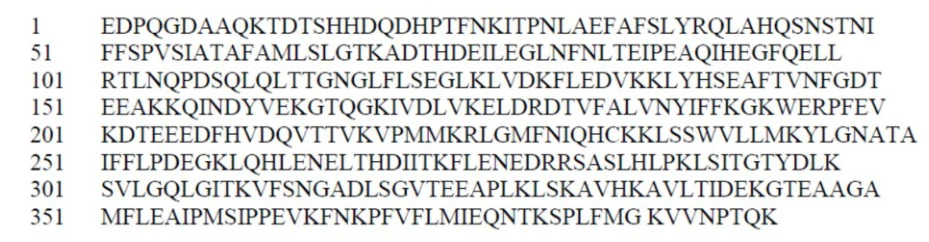
Molecular mass: 51 000 Daltons
Structural formula: 3D Structure of uncleaved Alpha1 Protease Inhibitor (Alpha1-PI)
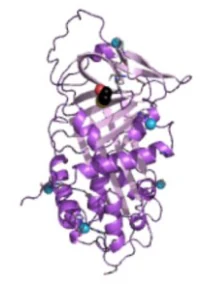
Physicochemical properties: isoelectric point of 4.4 to 4.8; functions by forming a tight complex with target proteases; glycoprotein (12% carbohydrate) with 3 N-asparagine linked chains which are externally exposed and cover the surface of the protein
Product Characteristics:
Prolastin-C is prepared from pooled human plasma of normal donors by modification and refinements of the cold ethanol plasma fractionation method first described by Cohn. Alpha1-proteinase inhibitor (Human) is obtained from Fraction IV-1 paste, which undergoes several purification steps, including the viral inactivation steps discussed below. The specific activity of Prolastin-C is ≥0.7 mg functional alpha1-PI per mg total protein, and when reconstituted as directed, the concentration of alpha1-PI is ≥ 40 mg/mL. When reconstituted, Prolastin-C has a pH of 6.6-7.4, a sodium content of 100-210 mM, a chloride content of 60-180 mM, and a sodium phosphate content of 15-25 mM.
Each vial of Prolastin-C contains the labelled amount of functionally active alpha1-PI in milligrams per vial (mg/vial), as determined by capacity to neutralize porcine pancreatic elastase. Prolastin-C contains no preservative and must be administered by the intravenous route.
Viral Inactivation
When medicinal biological products are administered, infectious diseases due to transmission of pathogens cannot be totally excluded. However, in the case of products prepared from human plasma, the risk of transmission of pathogens is reduced by epidemiological surveillance of the donor population and selection of individual donors by medical interview; testing of individual donations and plasma pools; and the presence in the manufacturing processes of steps with demonstrated capacity to inactivate/remove pathogens.
In the manufacturing process of Prolastin-C, there are several steps with the capacity for virus inactivation or removal. The main steps of the manufacturing process that contribute to the virus clearance capacity are as follows:
- Cold ethanol fractionation
- PEG precipitation
- Depth filtration
- Solvent Detergent treatment
- 15 nm Nanofiltration
Cold Ethanol Fractionation, PEG Precipitation, and Depth Filtration are important steps for purifying alpha1-PI and they have a very high pathogen removal capacity. Two additional steps, Solvent/Detergent Treatment and 15 nm Nanofiltration, are included in the process as dedicated steps with pathogen clearance capacity. The Solvent/Detergent Treatment step can effectively inactivate enveloped viruses. The 15 nm Nanofiltration step has been implemented because of its high capacity to remove enveloped and non-enveloped viruses as small as 18 nm.
To provide additional assurance of the pathogen safety of the final product, the capacity of the Prolastin-C manufacturing process to remove and/or inactivate viruses has been demonstrated by laboratory spiking studies on a scaled down process model using a wide range of viruses with diverse physicochemical properties.
The combination of all of the above-mentioned measures provides the final product with a high margin of safety from the potential risk of transmission of infectious viruses.
Additionally, the manufacturing process was investigated for its capacity to decrease the infectivity of an experimental agent of transmissible spongiform encephalopathy (TSE), considered as a model for the variant Creutzfeldt-Jakob disease (vCJD) and Creutzfeldt-Jakob disease (CJD) agents. These studies provide reasonable assurance that low levels of vCJD/CJD agent infectivity, if present in the starting material, would be removed by the manufacturing process.
14 CLINICAL TRIALS
Studies described in this section have been conducted with either Prolastin or Prolastin-C. The original Alpha1-Proteinase Inhibitor (Human), approved and marketed in Canada was Prolastin. This was replaced with Prolastin-C, which is produced through a modification of the Prolastin manufacturing process that results in improved product purity, a higher concentration of the same active substance, and a greater demonstrated margin of safety from the risk of transmission of infectious pathogens.
14.1 Trial Design and Study Demographics
Prolastin-C Studies
Prolastin-C has been studied in 62 individual subjects in 2 separate clinical trials. The first study was a randomized, double-blind, crossover trial comparing Prolastin-C to Prolastin (Study 11816). A total of 24 adult subjects with severe Alpha1-antitrypsin deficiency were enrolled in the study, with 12 subjects randomized to each treatment sequence. All but one subject had the PiZZ genotype and the remaining subject had PiSZ. All subjects had received prior alpha1-PI therapy Prolastin for at least 1 month. The primary pharmacokinetic endpoint was the AUC0-7days following 8 weeks of treatment with Prolastin-C or Prolastin.
Study subjects were randomly assigned to receive either 60 mg/kg body weight of functional Prolastin-C or Prolastin weekly by IV infusion during the first 8-week treatment period. Following the last dose in the first 8-week treatment period, subjects underwent PK serial sampling blood draws and then crossed over to the alternate treatment for the second 8-week treatment period. Following the last treatment in the second 8-week treatment period, subjects underwent serial PK blood sampling. In addition, blood samples were drawn for trough levels before infusion at Weeks, 6, 7, and 8, as well as before infusion at Weeks, 14, 15, and 16. In the 8-week open-label treatment phase that followed the crossover period, all subjects received 60 mg/kg body weight of functional Prolastin-C.
The second clinical trial was a multi-center, open-label safety study was conducted to evaluate the safety and tolerability of Prolastin-C (study 11815). In this study, 38 subjects were treated with weekly IV infusions of 60 mg/kg body weight of Prolastin-C for 20 weeks. Half the subjects were naïve to previous alpha1-PI augmentation prior to study entry and the other half were receiving augmentation with Prolastin prior to entering the study. A diagnosis of severe Alpha1-antitrypsin deficiency was confirmed by the demonstration of the PiZZ genotype in 32 of 38 (84.2%) subjects, and 6 of 38 (15.8%) subjects presented with other alleles known to result in severe Alpha1-antitrypsin deficiency. These groups were distributed evenly between the naïve and non-naïve cohorts.
Prolastin Studies
In earlier clinical studies conducted with Prolastin (Alpha1-Proteinase Inhibitor (Human)), 23 subjects with the PiZZ variant of congenital alpha1-antitrypsin deficiency and documented destructive lung disease participated in a study of acute and/or chronic replacement therapy with Alpha1-Proteinase Inhibitor (Human).
14.2 Study Results
Prolastin-C Studies
Results from the multi-center, open-label safety study conducted to evaluate the safety and tolerability of Prolastin-C (Study 11815) indicate that Prolastin-C is safe and well-tolerated.
Prolastin Studies
In 23 subjects with the PiZZ variant of congenital alpha1-antitrypsin deficiency and documented destructive lung disease, the mean in vivo recovery of alpha1-PI was 4.2 mg (immunologic)/dL per mg (functional)/kg body weight administered. The half-life of alpha1-PI in vivo was approximately 4.5 days. Based on these observations, a program of chronic replacement therapy was developed. Nineteen of the subjects in these studies received Prolastin® replacement therapy, 60 mg/kg body weight, once weekly for up to 26 weeks (average 24 weeks of therapy). With this schedule of replacement therapy, blood levels of alpha1-PI were maintained above 80 mg/dL (based on the commercial standards for alpha1-PI immunologic assay). Within a few weeks of commencing this program, bronchoalveolar lavage studies demonstrated significantly increased levels of alpha1-PI and functional antineutrophil elastase capacity in the epithelial lining fluid of the lower respiratory tract of the lung, as compared to levels prior to commencing the program of chronic replacement therapy with Alpha1-Proteinase Inhibitor (Human).
All 23 individuals who participated in the investigations were immunized with Hepatitis B Vaccine and received a single dose of Hepatitis B Immune Globulin (Human) on entry into the investigation. Although no other steps were taken to prevent hepatitis, neither hepatitis B nor non-A, non-B hepatitis occurred in any of the subjects. All subjects remained seronegative for HIV antibody. None of the subjects developed any detectable antibody to alpha1-PI or other serum protein.
Long-term controlled clinical trials to evaluate the effect of chronic replacement therapy with Alpha1-Proteinase Inhibitor (Human) on the development of or progression of emphysema in patients with congenital alpha1-antitrypsin deficiency have not been performed. Estimates of the sample size required of this rare disorder and the slow, progressive nature of the clinical course have been considered impediments in the ability to conduct such a trial. Studies to monitor the long-term effects have continued since the approval of Prolastin. Open-label assessments of patient registries, using untreated patients as controls, have evaluated the effects of long-term (up to 7 years) treatment with Alpha1-Proteinase Inhibitor (Human) on patients with alpha1 antitrypsin deficiency. The results of these assessments, while not as definitive as randomized, controlled trials, indicate that patients treated with Alpha1-Proteinase
Inhibitor (Human) have significantly reduced mortality and significantly slowed decline in FEV1 compared to untreated patients with alpha1-antitrypsin deficiency.
14.3 Comparative Bioavailability Studies
In study 11816, the key pharmacokinetic parameters of alpha1-PI in plasma, based on potency assays, showed comparability between Prolastin-C and Prolastin treatments, as shown in Table 7.
Table 7: Pharmacokinetic parameters of Alpha1-PI in plasma (Study 11816)
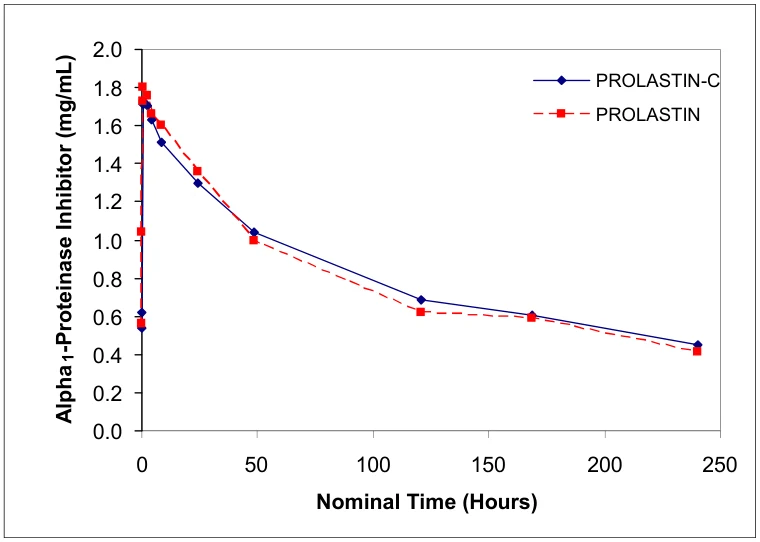
The geometric least-squares mean ratio for Prolastin-C vs. Prolastin was 1.03, with a 90% confidence interval of 0.97-1.09. A ratio so close to 1.0 indicates a high degree of concordance between treatments. Figure 2 shows the concentration vs. time curves of alpha1-PI after intravenous administration of Prolastin-C and Prolastin.
Figure 2: Mean Plasma Alpha1-PI Concentration vs. Time Curves
Following Treatment with Prolastin-C or Prolastin (study 11816)
| Treatment | AUC0-7days (hr*mg/mL) Mean (%CV) | Cmax (mg/mL) Mean (%CV) | tmax or Adj tmax (hr) Median (Range) | t1/2 (hr) Mean (%CV) |
|---|---|---|---|---|
Prolastin-C (n=22 or 23) | 155.9 (17%) | 1.797 (10%) | 0.673 (0.23-2.59) | 146.3 (16%) |
Prolastin (n=22 or 23) | 152.4 (16%) | 1.848 (15%) | 0.820 (0.25-2.90) | 139.3 (18%) |
Trough levels measured during the pharmacokinetic study via a content assay showed Prolastin-C treatment resulted in a mean trough of 16.9 µM with a coefficient of variation of 14%. All subjects (100%) maintained alpha1-PI plasma levels above 11 µM with both Prolastin-C and Prolastin.
15 MICROBIOLOGY
No microbiological information is required for this drug product.
16 NON-CLINICAL TOXICOLOGY
General Toxicology:
Single-doseToxicity
The acute toxicity of alpha1-PI administered intravenously, was determined in mice, rats, and rabbits and compared to the acute toxicity of the excipient control substance. At an infusion rate of 3 mL/min, the LD50 of alpha1-PI in mice was 3,750 mg/kg bw (150±6 mL/kg) and that of the control was >156 mL/kg. In rabbits, there was no indication of any toxicity at the highest dose of alpha1-PI tested, 517 mg/kg bw (20.7 mL/kg), which was infused at a rate of 6 mL/min although one of three rabbits each in the groups receiving 172 mg/kg bw and 517 mg/kg bw, respectively, of alpha1-PI died during the observation period. These two deaths were not related to administration of alpha1-PI. An additional three rabbits were administered alpha1-PI at a dose of 517 mg/kg bw without any sign of adverse effect throughout the 14-day observation period.
Repeat-dose Toxicity
A series of rabbits also received alpha1-PI or excipient control substance, 227 mg/kg bw (9.1 mL/kg)), administered intravenously at a rate of 6 mL/min, daily on five successive days. All rabbits in the study gained weight and there were no significant differences in weight gain on the 6th day or 33rd day of the study between animals receiving alpha1-PI compared to those receiving control substance. No significant hematologic abnormalities were noted on the 6th or 33rd days of the study following five consecutive days of administration of alpha1-PI. An unexplained decrease in the cholesterol level of animals receiving alpha1-PI was seen on day six in one series of animals but was not seen when repeated in another group. Two rabbits died during the course of the study, both of which were receiving alpha1-PI. One rabbit died on day 4, with diarrhea present, and its death was felt to be related to infection. The other rabbit died on day 27 (three weeks after the infusion period) and histopathology revealed no probable cause of death. Overall, no effects directly ascribable to administration of alpha1-PI were detected in animals undergoing necropsy and histopathologic analysis on days 6 or 33 of the study.
No studies were performed regarding subchronic or chronic toxicity.
Genotoxicity: No studies were performed regarding genotoxicity
Reproductive and Developmental Toxicology:
No studies were performed regarding reproductive toxicity.