


Product Monograph - Prolastin-C Liquid
RECENT MAJOR LABEL CHANGES
Not applicable
TABLE OF CONTENTS
Sections or subsections that are not applicable at the time of authorization are not listed.
RECENT MAJOR LABEL CHANGES ............................................................................... 2
TABLE OF CONTENTS ...................................................................................................... 2
PART I: HEALTH PROFESSIONAL INFORMATION ...................................................... 4
1 INDICATIONS ........................................................................................................... 4
1.1 Pediatrics ................................................................................................................ 4
1.2 Geriatrics ................................................................................................................ 4
2 CONTRAINDICATIONS ........................................................................................... 4
4 DOSAGE AND ADMINISTRATION ........................................................................ 5
4.1 Dosing Considerations ............................................................................................ 5
4.2 Recommended Dose and Dosage Adjustment ....................................................... 5
4.4 Administration ........................................................................................................ 5
5 OVERDOSAGE......................................................................................................... 6
6 DOSAGE FORMS, STRENGTHS, COMPOSITION AND PACKAGING ............. 6
7 WARNINGS AND PRECAUTIONS ......................................................................... 7
7.1 Special Populations................................................................................................. 8
7.1.1 Pregnant Women ............................................................................................. 8
7.1.2 Breast-feeding .................................................................................................. 8
7.1.3 Pediatrics .......................................................................................................... 8
7.1.4 Geriatrics .......................................................................................................... 8
8 ADVERSE REACTIONS .......................................................................................... 8
8.1 Adverse Reaction Overview .................................................................................... 8
8.2 Clinical Trial Adverse Reactions .............................................................................. 8
8.5 Post-Market Adverse Reactions ........................................................................... 12
9 DRUG INTERACTIONS ......................................................................................... 12
9.4 Drug-Drug Interactions ......................................................................................... 12
9.5 Drug-Food Interactions ......................................................................................... 12
9.6 Drug-Herb Interactions ......................................................................................... 12
9.7 Drug-Laboratory Test Interactions ........................................................................ 12
10 CLINICAL PHARMACOLOGY .............................................................................. 12
10.1 Mechanism of Action ...................................................................................... 12
10.2 Pharmacodynamics ........................................................................................ 13
10.3 Pharmacokinetics ........................................................................................... 13
11 STORAGE, STABILITY AND DISPOSAL ............................................................ 14
12 SPECIAL HANDLING INSTRUCTIONS ............................................................... 14
PART II: SCIENTIFIC INFORMATION ............................................................................ 15
13 PHARMACEUTICAL INFORMATION .................................................................. 15
14 CLINICAL TRIALS ................................................................................................. 16
14.1 Trial Design and Study Demographics ............................................................ 17
14.2 Study Results .................................................................................................. 18
14.3 Comparative Bioavailability Studies ................................................................ 18
15 MICROBIOLOGY .................................................................................................... 20
16 NON-CLINICAL TOXICOLOGY ............................................................................ 20
PATIENT MEDICATION INFORMATION ........................................................................ 22
PART I: HEALTH PROFESSIONAL INFORMATION
1 INDICATIONS
PROLASTIN-C LIQUID is indicated for:
- chronic replacement therapy of individuals having congenital deficiency of alpha1-PI (alpha1-antitrypsin deficiency), related to genotypes PiZZ, PiZ(null), Pi (null)(null), PiSZ or other deficiency causing alleles, and with clinically demonstrable emphysema.
Clinical and biochemical studies have demonstrated that with such therapy, it is possible to increase plasma levels of alpha1-PI, and that levels of functionally active alpha1-PI in the lung epithelial lining fluid are increased proportionately. As some individuals with alpha1-antitrypsin deficiency will not go on to develop emphysema, only those with evidence of such disease should be considered for chronic replacement therapy with Alpha1-Proteinase Inhibitor (Human) Subjects with the PiMZ or PiMS phenotypes of alpha1-antitrypsin deficiency should not be considered for such treatment as they appear to be at small risk for emphysema. Clinical data are not available as to the long-term effects derived from chronic replacement therapy of individuals with alpha1-antitrypsin deficiency with Alpha1-Proteinase Inhibitor (Human). Only adult subjects have received Alpha1-Proteinase Inhibitor (Human) to date.
1.1 Pediatrics
Pediatrics (<18 years): Based on the data submitted and reviewed by Health Canada, the safety and efficacy of Prolastin-C Liquid in pediatric patients has not been established; therefore, Health Canada has not authorized an indication for pediatric use.
1.2 Geriatrics
Geriatrics (≥65 years): Of the 32 subjects randomized in the primary pharmacokinetic/safety study supporting Prolastin-C Liquid, 17 were ≥65 years of age. While the data was limited, no overall differences for Prolastin-C Liquid have been observed between patients 65 years of age and older and younger patients (See Section 7.1.4)
2 CONTRAINDICATIONS
Prolastin-C Liquid is contraindicated in:
- patients who are hypersensitive to Alpha1-Proteinase Inhibitor (Human) or to any ingredient in the formulation or component of the container. For a complete listing, see DOSAGE FORMS, STRENGTHS, COMPOSITION AND PACKAGING section;
- individuals with selective immunoglobulin A (IgA) deficiencies, since these patients may experience severe reactions, including anaphylaxis, to IgA which may be present;
- individuals with a history of anaphylaxis or other severe systemic reaction to alpha1-proteinase inhibitor (human) products.
4 DOSAGE AND ADMINISTRATION
4.1 Dosing Considerations
The “threshold” level of alpha1-PI in the serum believed to provide adequate anti-elastase activity in the lung of individuals with alpha1-antitrypsin deficiency is 80 mg/dL (based on commercial standards for alpha1-PI immunologic assay). However, assays of alpha1-PI based on commercial standards measure antigenic activity of alpha1-PI, whereas the labeled potency value of alpha1-PI is expressed as actual functional activity, i.e., actual capacity to neutralize porcine pancreatic elastase. As functional activity may be less than antigenic activity, serum levels of alpha1-PI determined using commercial immunologic assays may not accurately reflect actual functional alpha1-PI levels.
Therefore, although it may be helpful to monitor serum levels of alpha1-PI in individuals receiving Prolastin-C Liquid, using currently available commercial assays of antigenic activity, results of these assays should not be used to determine the required therapeutic dosage.
4.2 Recommended Dose and Dosage Adjustment
The recommended dosage of Prolastin-C Liquid is 60 mg/kg body weight administered once weekly by intravenous infusion. This dose is intended to increase and maintain a level of functional alpha1-PI in the epithelial lining of the lower respiratory tract, providing adequate anti-elastase activity in the lung of individuals with alpha1-antitrypsin deficiency.
4.4 Administration
FOR INTRAVENOUS USE ONLY.
- 1) Allow unopened Prolastin-C Liquid to warm up to room temperature before administration.
- 2) Remove the plastic flip top from the vial.
- 3) Swab the exposed stopper surface with alcohol and allow to dry.
- 4) Parenteral drug products should be inspected visually for particulate matter and discoloration prior to pooling. Prolastin-C Liquid may contain a few protein particles. The solution is clear or slightly opalescent, and colorless or pale yellow or pale green or pale brown. Do not use if the product is discolored or cloudy.
- 5) Prolastin-C Liquid should be given alone, without mixing with other agents or diluting solutions.
- 6) Pool Prolastin-C Liquid from several vials to achieve the intended mg/kg body weight dose into an empty, sterile intravenous solution container using aseptic technique.
- 7) Keep pooled solution at room temperature and administer within three hours of entering the vials.
- 8) Prolastin-C Liquid may be given at a rate of 0.08 mL/kg/min or greater and must be administered intravenously. The recommended dosage of 60 mg/kg takes approximately 15 minutes to infuse.
- 9) Record brand name, Drug Identification Number (DIN) and the batch/lot number of the product for each patient (see DOSAGE FORMS, STRENGTHS, COMPOSITION AND PACKAGING).
- 10) Following administration, discard open vials, administration equipment and unused solution per local requirements
Additional Instructions for Home-Treatment / Self-Administration by the Patient
The first infusions of Prolastin-C Liquid should be administered under the supervision of a healthcare professional experienced in the use of human alpha1-proteinase inhibitor or in the treatment of alpha1-antitrypsin deficiency.
Following proper training by a qualified healthcare professional, subsequent infusions may be administered by a caregiver or by the patient themselves. The decision of whether a patient is suitable for home-treatment/self-administration should be made by the physician, and the appropriateness of a patient continuing with home-treatment/self-infusion should be reviewed regularly. Potential risks associated with home-treatment/self-administration are related to the administration itself as well as to the handling of adverse drug reactions, particularly hypersensitivity.
5 OVERDOSAGE
To date, there have been no reported cases of overdose for Prolastin-C Liquid or other Alpha1 Proteinase Inhibitor (Human) manufactured by Grifols. No data are available in regard to overdosage in humans.
| For management of a suspected drug overdose, contact your regional poison control centre. |
|---|
6 DOSAGE FORMS, STRENGTHS, COMPOSITION AND PACKAGING
To help ensure the traceability of biologic products, including biosimilars, health professionals should recognise the importance of recording both the brand name and the non-proprietary (active ingredient) name as well as other product-specific identifiers such as the Drug Identification Number (DIN) and the batch/lot number of the product supplied.
Table 1 – Dosage Forms, Strengths, Composition and Packaging
Prolastin-C Liquid is supplied as a sterile, liquid in 20 mL single use vials with 1000 mg total alpha1-PI functional activity. Primary packaging components are not made with natural rubber latex.
Description
Prolastin-C Liquid (Alpha1-Proteinase Inhibitor [Human]) is a sterile, stable preparation of highly purified human Alpha1-Proteinase Inhibitor (alpha1-PI), also known as alpha1-antitrypsin. Alpha1-Proteinase Inhibitor (Human) is intended for use in therapy of congenital alpha1-antitrypsin deficiency. Prolastin-C Liquid is prepared from pooled human plasma of normal
| Route of Administration | Dosage Form / Strength/Composition | Non-medicinal Ingredients |
| Intravenous injection | Injectable Solution 1000 mg/20 mL vial Human Alpha1 proteinase inhibitor | Alanine, sodium phosphate |
donors by modification and refinements of the cold ethanol method of Cohn. See WARNINGS AND PRECAUTIONS.
Prolastin-C Liquid is produced through a modification of the earlier Alpha1-proteinase inhibitor (Human) manufacturing process that results in improved product purity and a higher concentration of the same active substance, alpha1-PI.
7 WARNINGS AND PRECAUTIONS
Prolastin-C Liquid is made from human plasma, and may carry a risk of transmitting infectious agents, e.g. such as viruses, the variant Creutzfeldt-Jakob disease (vCJD) agent, and theoretically, the Creutzfeldt-Jakob Disease (CJD) agent, despite steps designed to reduce this risk. Prolastin-C Liquid is purified from human plasma obtained from healthy donors. When medicinal biological products are administered, infectious diseases due to transmission of pathogens cannot be totally excluded. However, in the case of products prepared from human plasma, the risk of transmission of pathogens is reduced by: (1) epidemiological controls on the donor population and selection of individual donors by a medical interview; (2) screening of individual donations and plasma pools for viral infection markers; and (3) manufacturing procedures with demonstrated capacity to inactivate/remove pathogens.
ALL infections thought by a physician possibly to have been transmitted by this product should be reported by the physician or other healthcare provider to Grifols Canada Ltd. [1-866-482-5226].
The physician should discuss the risks and benefits of this product with the patient, before prescribing or administering to the patient.
Administer only by the intravenous route.
As with any colloid solution, there will be an increase in plasma volume following intravenous administration of Alpha1-Proteinase Inhibitor (Human). Caution should therefore be used in patients at risk for circulatory overload.
Product administration and handling of the needles must be done with caution. Percutaneous puncture with a needle contaminated with blood can transmit infectious virus including HIV (AIDS) and hepatitis. Obtain immediate medical attention if injury occurs.
It is strongly recommended that every time Prolastin-C Liquid is administered, the name and batch number of the product are recorded in order to maintain a link between the patient and the specific batch used.
Carcinogenesis and Mutagenesis
Long-term studies in animals to evaluate carcinogenesis and mutagenesis have not been conducted.
Hypersensitivity Reactions
Hypersensitivity reactions, including anaphylaxis, may occur. Monitor vital signs and observe the patient carefully throughout the infusion. Early signs and symptoms of hypersensitivity reactions may include pruritus; generalized urticaria; flushing; swollen lips, tongue, or uvula; wheezing; tightness of the chest; dyspnea; hypotension; and syncope. If hypersensitivity symptoms occur, promptly stop Prolastin-C Liquid infusion and begin appropriate therapy. Have epinephrine and other appropriate therapy available for the treatment of any acute anaphylactic or anaphylactoid reaction.
Prolastin-C Liquid may contain trace amounts of IgA. Patients with known antibodies to IgA, which can be present in patients with selective or severe IgA deficiency, have a greater risk of developing potentially severe hypersensitivity and anaphylactic reactions.
Sexual Health/Reproduction
Long-term studies in animals to evaluate impairment of fertility have not been conducted.
7.1 Special Populations
7.1.1 Pregnant Women
Animal reproduction studies have not been conducted with Prolastin-C Liquid. It is also not known whether Prolastin-C Liquid can cause fetal harm when administered to a pregnant woman or can affect reproduction capacity. Prolastin-C Liquid should be given to a pregnant woman only if clearly needed.
7.1.2 Breast-feeding
It is not known whether Alpha1-PI is excreted in human milk. Because many drugs are excreted in human milk, caution should be exercised when Prolastin-C Liquid is administered to a nursing woman.
7.1.3 Pediatrics
Safety and effectiveness in the pediatric population have not been established.
7.1.4 Geriatrics
The clinical pharmacokinetic/safety study supporting Prolastin-C Liquid randomized 32 patients to a cross-over design for treatment with both the lyophilized and liquid formulations of human alpha1-proteinase inhibitor (see Section 14.1). Among the 32 patients, 17 were aged 65 years or older (range: 65 to 71 years).
8 ADVERSE REACTIONS
8.1 Adverse Reaction Overview
The most common adverse reactions during Prolastin-C Liquid clinical trials in >5% of subjects, were diarrhea and fatigue, each of which occurred in 2 subjects (6%). There have been very rare cases of anaphylactic/anaphylactoid reactions reported in post-marketing use of alpha1-proteinase inhibitor (Human) products.
8.2 Clinical Trial Adverse Reactions
Because clinical trials are conducted under very specific conditions, the adverse reaction rates observed in the clinical trials may not reflect the rates observed in practice and should not be compared to the rates in the clinical trials of another drug. Adverse reaction information from clinical trials is useful for identifying drug-related adverse events and for approximating rates.
One clinical trial was conducted with Prolastin-C Liquid: a 16 week, multicenter, randomized, double-blind crossover study to assess the safety, immunogenicity, and pharmacokinetic comparability of Prolastin-C Liquid to Prolastin-C (lyophilized formulation) in 32 subjects.
Adverse reactions (as defined in the footnote to Table 2) occurring in >5% of subjects during the 16-week double-blind crossover treatment period are shown in Table 2.
Table 3 below displays the adverse reaction (defined as per Table 2) rate as a percentage of infusions received during the 16-week double-blinded treatment period.
| Table 3: Adverse Reaction Frequency as a Percent of All Infusions and Occurring More than Once in the Prolastin-C Liquid Group during the 16 Week Double Blinded Treatment Period | ||||||
| Adverse Reaction* | Prolastin-C Liquid No. of infusions: 252 | Prolastin-C (Lyophilized Formulation) No. of infusions: 245 | ||||
| No. of Adverse Reactions (percentage of all infusions) | No. of Adverse Reactions (percentage of all infusions) | |||||
| Diarrhea | 3 (1.2) | 0 | ||||
| Fatigue | 2 (0.8) | 0 | ||||
| * Source: the randomized double-blinded comparator trial of Prolastin-C Liquid vs Prolastin-C. | ||||||
A total of 23 COPD exacerbations were reported for a total of 18 subjects (3/18 subjects experienced a COPD exacerbation on both Prolastin-C Liquid and Prolastin-C). Twelve subjects (12/32, 38%) receiving Prolastin-C Liquid had a total of 13 COPD exacerbations and 9 subjects (9/31, 29%) receiving Prolastin-C had a total of 10 COPD exacerbations. All COPD
Table 2: Adverse Reactions Occurring in >5% of Subjects during the Double-Blinded Crossover Treatment | |||||
| Adverse Reaction*,† | Prolastin-C Liquid (N=32) | Prolastin-C (Lyophilized Formulation) (N=31) | |||
| No. of Subjects with Adverse Reaction (percentage of all subjects) | No. of Subjects with Adverse Reaction (percentage of all subjects) | ||||
| Diarrhea | 2 (6) | 0 | |||
| Fatigue | 2 (6) | 0 | |||
* An adverse reaction is defined as any adverse event that occurred where either a) the event was not considered “unrelated” to administration of the product, or b) the occurrence was during or within 72 hours of the end of the previous infusion of the product, or c) the investigator's causality assessment of the event was missing or indeterminate, or d) the incidence during treatment with 1 investigational product was 130% or more of the incidence during treatment with the other investigational product. † Source: the randomized double-blinded comparator trial of Prolastin-C Liquid vs Prolastin-C. | |||||
exacerbations were of mild or moderate intensity. Of the subjects who experienced a COPD exacerbation, 2 subjects were naïve to augmentation therapy with Alpha1 Proteinase Inhibitor (Human). Three COPD exacerbations occurred during the Follow-Up Period after Prolastin-C Liquid treatment and 1 COPD exacerbation occurred after Prolastin-C treatment. No COPD exacerbation was reported as a serious adverse event during Prolastin-C Liquid treatment and all were reported as either mild or moderate in severity. No treatment-emergent COPD exacerbation resulted in early discontinuation from the study. None of the COPD exacerbations reported were considered to be related to the investigational product.
Immunogenicity testing was performed using a tiered approach which included screening, confirmatory and antibody titer enzyme-linked immunosorbent assay (ELISA) methods, and a neutralizing antibody method which utilized statistically derived cut points. All 32 enrolled subjects treated with Prolastin-C Liquid and/or Prolastin-C were tested for immunogenicity to detect alpha1-PI antibodies. Blood samples for immunogenicity testing were drawn prior to investigational product administration at Week 1 (Baseline) and at Weeks 9, 17, and 20. Samples collected at Week 1 (Baseline) and at Weeks 9 and 20 were tested for immunogenicity while samples collected at Week 17 were to be tested for immunogenicity only if deemed appropriate (e.g. unexpected PK profile). Based on the PK profiles of the subjects, immunogenicity testing of the Week 17 samples was not needed. No immunogenicity response was observed in subjects dosed with Prolastin-C Liquid or Prolastin-C in the clinical study, demonstrating comparable safety profiles for the 2 treatments with respect to immunogenicity.
Two separate prior clinical studies were conducted with Prolastin-C (the lyophilized formulation): Study 11815, a 20 week, open-label, safety study in 38 subjects, and Study 11816, a 16 week, randomized, double-blind, cross-over pharmacokinetic comparability study vs. Prolastin® (original product) in 24 subjects, followed by an 8 week open label treatment with Prolastin-C.
Table 4: Adverse Event Frequency as a % of all infusions (> 0.5%) Irrespective of Causality | |||
Prolastin-C No. of infusions: 1132 | Prolastin No. of infusions: 192 | ||
| Adverse Event | No. of AE (percentage of all infusions) | No. of AE (percentage of all infusions) | |
| Upper respiratory tract infection | 9 (0.8%) | 1 (0.5%) | |
| Urinary tract infection | 8 (0.7%) | 0 | |
| Nausea | 7 (0.6%) | 0 | |
| Headache | 4 (0.4%) | 3 (1.6%) | |
| Arthralgia | 2 (0.2%) | 2 (1.0%) | |
Source: studies 11815 and 11816
The most common drug related adverse event was chills, which occurred in 3.2% of Prolastin-C patients across both studies (n=2). The following drug related adverse events were reported in 1.6% of patients (one subject each) treated with Prolastin-C: malaise, headache, rash (severe), hot flush, and pruritus.
Table 5: Adverse Reactions Occurring during the First 8 Weeks of Each Double- Blinded Treatment | ||||||
| Adverse Reaction*,† | Prolastin-C (N=24) | Prolastin (N=24) | ||||
| No. of Subjects with Adverse Reaction (percentage of all subjects) | No. of Subjects with Adverse Reaction (percentage of all subjects) | |||||
| Pruritis | 1 (4) | 0 | ||||
* An adverse reaction is defined as any treatment-emergent adverse event that was considered drug “potentially related” to the investigational product. † Source: 11816 study. | ||||||
Table 6: Adverse Reaction Frequency as a Percent of All Infusions during the First 8 Weeks of Each Double-Blinded Treatment | ||||||
| Adverse Reaction*,† | Prolastin-C No. of infusions: 188 | Prolastin No. of infusions: 192 | ||||
No. of Adverse Reaction (percentage of all infusions) | No. of Adverse Reaction (percentage of all infusions) | |||||
| Pruritis | 1 (0.5) | 0 | ||||
* An adverse reaction is defined as any treatment-emergent adverse event that was considered drug “potentially related” to the investigational product. † Source: 11816 study. | ||||||
Table 7: Adverse Reactions Occurring in Two or More Subjects (>5%) during the 20 Week Single-Arm Open-Label Trial | |||
| Adverse Reaction*,† | Prolastin-C (N=38) | ||
No. of Subjects with Adverse Reaction (percentage of all subjects) | |||
| Chills | 2 (5) | ||
* An adverse reaction is defined as any treatment-emergent adverse event that was considered drug “potentially related” to the investigational product. † Source: 11815 study. | |||
In clinical studies with the earlier product, Prolastin, six reactions were observed with 517 infusions of Alpha1-Proteinase Inhibitor (Human), or 1.16%. None of the reactions was severe. The adverse reactions reported included delayed fever (maximum temperature rise was 38.9°C, resolving spontaneously over 24 hours) occurring up to 12 hours following treatment (0.77%), light-headedness (0.19%), and dizziness (0.19%). Mild transient leukocytosis and dilutional anemia several hours after infusion have also been noted.
8.5 Post-Market Adverse Reactions
Additionally, since market entry of Alpha1-Proteinase Inhibitor (Human), occasional reports of the following events have been received: flu-like symptoms, allergic-like reactions, dyspnea, tachycardia, shortness of breath, bronchospasm, wheezing, urticaria, back pain, clamminess, sweating, diarrhea, and fatigue.
Less frequently, the following have also been reported: hypotension, anxiety, cyanosis, swelling of hands and feet, angio-, facial and lip edema, nasal congestion, sinusitis, abdominal pains or cramps, pallor, and weakness.
Rare cases of hypersensitivity reactions, transient increase in blood pressure or hypertension and chest pain have also been reported.
Very rare cases of anaphylactic/anaphylactoid reactions have also been reported.
9 DRUG INTERACTIONS
9.4 Drug-Drug Interactions
Interactions with other drugs have not been established.
9.5 Drug-Food Interactions
Interactions with food have not been established.
9.6 Drug-Herb Interactions
Interactions with herbal products have not been established.
9.7 Drug-Laboratory Test Interactions
Interactions with laboratory tests have not been established.
10 CLINICAL PHARMACOLOGY
10.1 Mechanism of Action
Alpha1-antitrypsin deficiency is a chronic, hereditary, usually fatal, autosomal co-dominant disorder in which a low concentration of alpha1-PI (alpha1-antitrypsin)1 is associated with slowly progressive severe emphysema that most often manifests itself in the third to fourth decades of life. The emphysema is typically worse in the lower lung zones. The pathogenesis of development of emphysema in alpha1-antitrypsin deficiency is not well understood at this time. It is believed, however, to be due to a chronic biochemical imbalance between elastase (an enzyme capable of degrading elastin tissues, released by inflammatory cells, primarily neutrophils, in the lower respiratory tract) and alpha1-PI (the principal inhibitor of neutrophil elastase), which is deficient in alpha1-antitrypsin disease. As a result, it is believed that alveolar structures are unprotected from chronic exposure to elastase released from a chronic, low-level burden of neutrophils in the lower respiratory tract, resulting in progressive degradation of elastin tissues. The eventual outcome is the development of emphysema. Neonatal hepatitis with cholestatic jaundice appears in approximately 10% of newborns with alpha1-antitrypsin deficiency. In some adults, alpha1-antitrypsin deficiency is complicated by cirrhosis. Since severe alpha1- antitrypsin deficiency is one of the most common serious genetic conditions, it is recommended that families of index cases also be screened for deficiency of the alpha1-PI protein.
A large number of phenotypic variants of alpha1-antitrypsin deficiency exists. The most severely affected individuals are those with the PiZZ variant, typically characterized by alpha1-PI serum levels <35% normal. Epidemiologic studies of individuals with various phenotypes of alpha1-antitrypsin deficiency have demonstrated that individuals with endogenous serum levels of alpha1-PI ≤ 50 mg/dL (based on commercial standards) have a risk of >80% of developing emphysema over a lifetime. However, individuals with endogenous alpha1-PI levels >80 mg/dL, in general, do not manifest an increased risk for development of emphysema above the general population background risk. From these observations, it is believed that the “threshold” level of alpha1-PI in the serum required to provide adequate anti-elastase activity in the lung of individuals with alpha1-antitrypsin deficiency is about 80 mg/dL (11 μM), based on commercial standards for immunologic assay of alpha1-PI. The maintenance of blood serum levels of alpha1-PI above 80 mg/dL (11 μM) is historically thought to provide therapeutically relevant anti-neutrophil elastase protection.
10.2 Pharmacodynamics
In clinical studies, patients received Alpha1-Proteinase Inhibitor (Human) replacement therapy, 60 mg/kg body weight, once weekly for up to 26 weeks (average 24 weeks of therapy). With this schedule of replacement therapy, blood levels of alpha1-PI were maintained above 80 mg/dL (based on the commercial standards for alpha1-PI immunologic assay).
No drug attributable pharmacodynamic changes were observed in any of the clinical studies to date. Increased anti-neutrophil elastase activity is achieved in both serum and ELF following intravenous administration. Development of antibodies directed against alpha1-PI has not been reported in any of the studies. Similarly, transmission of viral disease has not been seen.
10.3 Pharmacokinetics
In clinical studies, the mean in vivo recovery of alpha1-PI was 4.2 mg (immunologic)/dL per mg (functional)/kg body weight administered. The half-life of alpha1-PI in vivo was approximately 6
1 Although the terms "Alpha1-Proteinase Inhibitor" and "alpha1-antitrypsin" are used interchangeably in the scientific literature, the hereditary disorder associated with a reduction in the serum level of alpha1-PI is conventionally referred to as "alpha1-antitrypsin deficiency" while the deficient protein is referred to as “Alpha1-Proteinase Inhibitor”
days.
In another study, several individuals with the PiZ phenotype of alpha1-antitrypsin deficiency were treated with a partially purified preparation of alpha1-PI. Using this material, five adults with severe serum alpha1-antitrypsin deficiency (PiZ phenotype) and advanced emphysema received 4 grams of alpha1-Proteinse Inhibitor (Human), intravenously, at weekly intervals for four doses. During this period of weekly replacement therapy alpha1-PI serum levels were maintained at ≥70 mg/dL, the level likely required for effective anti-elastase protection of the lung.
In a subsequent study, nineteen subjects with alpha1-antitrypsin deficiency received Prolastin (the original lyophilized formulation), intravenously 60 mg/kg body weight, once weekly for up to 26 weeks (average 24 weeks of therapy). With this schedule of replacement therapy, blood levels of alpha1-PI were maintained above 80 mg/dL (see CLINICAL TRIALS).
A further study evaluated an intravenous dosage of 250 mg/kg of alpha1-Proteinase Inhibitor (Prolastin) administered every 28 days in an attempt to assess whether the intervals between dosing could be increased beyond one week, while still retaining protective anti-neutrophil elastase alpha1-PI levels in the serum and the epithelial lining fluid (ELF). Nine subjects were included. Analysis of the repeated dosage data indicated that overall, the serum alpha1-PI levels fell to below 80 mg/dL at about 18-21 days after the administration of the 250 mg/kg dosage, reaching a nadir of about 50 mg/dL at 28 days. A serum level of 70 to 80 mg alpha1-PI/dL equates to a pulmonary alveolar ELF level of 1.2 μmol. This is the ELF level which is considered protective against elastase activity in the normal subject.
11 STORAGE, STABILITY AND DISPOSAL
Prolastin-C Liquid should be stored refrigerated at 2-8°C. Do not freeze. Product may be stored at room temperatures not exceeding 25°C for up to one month, after which the product must be used or immediately discarded. Administer within 3 hours after entering the vial.
12 SPECIAL HANDLING INSTRUCTIONS
None.
PART II: SCIENTIFIC INFORMATION
13 PHARMACEUTICAL INFORMATION
Drug Substance
Proper name: Alpha1-Proteinase Inhibitor (Human)
Chemical name: α1-antitrypsin [CAS 9041-92-3]
Molecular formula: 394 amino acid sequence (see below)
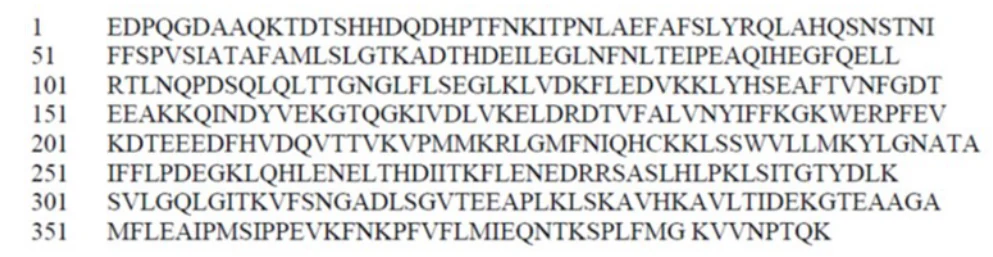
Molecular mass: 51 000 DaltonsStructural formula: 3D Structure of uncleaved Alpha1 Protease Inhibitor (Alpha1-PI)
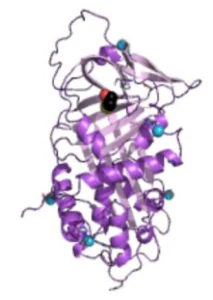
Physicochemical properties: isoelectric point of 4.4 to 4.8; functions by forming a tight complex with target proteases; glycoprotein (12% carbohydrate) with 3 N- asparagine linked chains which are externally exposed and cover the surface of the protein
Product Characteristics:
Prolastin-C Liquid is prepared from pooled human plasma of normal donors by modification and refinements of the cold ethanol plasma fractionation method first described by Cohn. Alpha1-proteinase inhibitor (Human) is obtained from Fraction IV-1 paste, which undergoes several purification steps, including the viral inactivation steps discussed below. The specific activity of Prolastin-C Liquid is ≥ 0.7 mg functional alpha1-PI per mg total protein, and the concentration of alpha1-PI is ≥ 40 mg/mL. Prolastin-C Liquid has a pH of 6.6-7.4, a total sodium concentration of ≤ 100 mEq/L, a sodium phosphate content of 13-25 mM, and is stabilized with 200-300 mM alanine.
Each vial of Prolastin-C Liquid contains 1000 mg functionally active alpha1-PI, as determined by capacity to neutralize porcine pancreatic elastase. Alpha1-Proteinase Inhibitor (Human) contains no preservative and must be administered by the intravenous route.
Viral Inactivation
When medicinal biological products are administered, infectious diseases due to transmission of pathogens cannot be totally excluded. However, in the case of products prepared from human plasma, the risk of transmission of pathogens is reduced by epidemiological surveillance of the donor population and selection of individual donors by medical interview; testing of individual donations and plasma pools; and the presence in the manufacturing processes of steps with demonstrated capacity to inactivate/remove pathogens.
In the manufacturing process of Prolastin-C Liquid, there are several steps with the capacity for virus inactivation or removal. The main steps of the manufacturing process that contribute to the virus clearance capacity are as follows:
- Cold ethanol fractionation
- PEG precipitation
- Depth filtration
- Solvent Detergent treatment
- 15 nm Nanofiltration
Cold Ethanol Fractionation, PEG Precipitation, and Depth Filtration are important steps for purifying alpha1-PI and they have a very high pathogen removal capacity. Two additional steps, Solvent/Detergent Treatment and 15 nm Nanofiltration, are included in the process as dedicated steps with pathogen clearance capacity. The Solvent/Detergent Treatment step can effectively inactivate enveloped viruses. The 15 nm Nanofiltration step has been implemented because of its high capacity to remove enveloped and non-enveloped viruses as small as 18 nm.
To provide additional assurance of the pathogen safety of the final product, the capacity of the Prolastin-C Liquid manufacturing process to remove and/or inactivate viruses has been demonstrated by laboratory spiking studies on a scaled down process model using a wide range of viruses with diverse physicochemical properties.
The combination of all of the above-mentioned measures provides the final product with a high margin of safety from the potential risk of transmission of infectious viruses.
Additionally, the manufacturing process was investigated for its capacity to decrease the infectivity of an experimental agent of transmissible spongiform encephalopathy (TSE), considered as a model for the variant Creutzfeldt-Jakob disease (vCJD) and Creutzfeldt-Jakob disease (CJD) agents. These studies provide reasonable assurance that low levels of vCJD/CJD agent infectivity, if present in the starting material, would be removed by the manufacturing process.
14 CLINICAL TRIALS
Studies described in this section have been conducted with either Prolastin-C Liquid, or one of two lyophilized products (Prolastin-C or it’s predecessor Prolastin. The original lyophilized Alpha1-Proteinase Inhibitor (Human), approved and marketed in Canada was Prolastin. This was replaced with Prolastin-C, which is produced through a modification of the Prolastin manufacturing process that results in improved product purity, a higher concentration of the same active substance, and a greater demonstrated margin of safety from the risk of transmission of infectious pathogens. Prolastin-C Liquid is manufactured using the same process as Prolastin-C, except that it is not lyophilized and contains a stabilizer (alanine).
14.1 Trial Design and Study Demographics
Prolastin-C Liquid
The pharmacokinetic (PK) study was a randomized, double-blind, crossover trial comparing Prolastin-C Liquid to Prolastin-C conducted in 32 adult subjects age 44 to 71 years with severe Alpha1- antitrypsin deficiency. Eighteen subjects were male and 14 subjects were female. Sixteen subjects were randomized to each treatment sequence. All but one subject had the PiZZ genotype and the remaining subject was PiSZ. Twenty-eight subjects had received prior Alpha1-PI augmentation therapy and 4 subjects were naïve to Alpha1-PI augmentation therapy. Study subjects were randomly assigned to receive either 60 mg/kg body weight of functional Prolastin-C Liquid or Prolastin-C weekly by intravenous infusion during the first 8-week treatment period. Following the last dose in the first 8-week treatment period, subjects underwent serial blood sampling for PK analysis and then crossed over to the alternate treatment for the second 8-week treatment period. Following the last treatment in the second 8-week treatment period, subjects underwent serial blood sampling for PK analysis. In addition, blood samples were drawn for trough levels before infusion at Weeks 6, 7, 8, and 9, as well as before infusion at Weeks 14, 15, 16, and 17. A final PK sample was drawn at Week 20 (4 weeks after the last dose) to correct for endogenous Alpha1-PI levels.
Prolastin-C (lyophilized product) Studies
Prolastin-C has been studied in 62 individual subjects in 2 separate clinical trials. The first study was a crossover pharmacokinetic study (Study 11816) involving 24 adult subjects with severe Alpha1-antitrypsin deficiency. The primary pharmacokinetic endpoint was the AUC0-7days following 8 weeks of treatment with Prolastin-C or Prolastin.
The second clinical trial was a multi-center, open-label safety study conducted to evaluate the safety and tolerability of Prolastin-C (Study 11815). In this study, 38 subjects were treated with weekly IV infusions of 60 mg/kg body weight of Prolastin-C for 20 weeks. Half the subjects were naïve to previous alpha1-PI augmentation prior to study entry and the other half were receiving augmentation with Prolastin prior to entering the study. A diagnosis of severe Alpha1-antitrypsin deficiency was confirmed by the demonstration of the PiZZ genotype in 32 of 38 (84.2%) subjects, and 6 of 38 (15.8%) subjects presented with other alleles known to result in severe Alpha1-antitrypsin deficiency. These groups were distributed evenly between the naïve and non-naïve cohorts.
Prolastin Studies
In earlier clinical studies conducted with Prolastin (Alpha1-Proteinase Inhibitor (Human)), 23 subjects with the PiZZ variant of congenital deficiency of alpha1-antitrypsin deficiency and documented destructive lung disease participated in a study of acute and/or chronic replacement therapy with Alpha1-Proteinase Inhibitor (Human).
14.2 Study Results
Prolastin-C (lyophilized product) Studies
Results from the multi-center, open-label safety study conducted to evaluate the safety and tolerability of Prolastin-C (Study 11815) indicate that Prolastin-C is safe and well-tolerated.
Prolastin Studies
In 23 subjects with the PiZZ variant of congenital alpha1-antitrypsin deficiency and documented destructive lung disease, the mean in vivo recovery of alpha1-PI was 4.2 mg (immunologic)/dL per mg (functional)/kg body weight administered. The half-life of alpha1-PI in vivo was approximately 4.5 days. Based on these observations, a program of chronic replacement therapy was developed. Nineteen of the subjects in these studies received Prolastin replacement therapy, 60 mg/kg body weight, once weekly for up to 26 weeks (average 24 weeks of therapy). With this schedule of replacement therapy, blood levels of alpha1-PI were maintained above 80 mg/dL (based on the commercial standards for alpha1-PI immunologic assay). Within a few weeks of commencing this program, bronchoalveolar lavage studies demonstrated significantly increased levels of alpha1-PI and functional antineutrophil elastase capacity in the epithelial lining fluid of the lower respiratory tract of the lung, as compared to levels prior to commencing the program of chronic replacement therapy with Alpha1-Proteinase Inhibitor (Human).
All 23 individuals who participated in the investigations were immunized with Hepatitis B Vaccine and received a single dose of Hepatitis B Immune Globulin (Human) on entry into the investigation. Although no other steps were taken to prevent hepatitis, neither hepatitis B nor non-A, non-B hepatitis occurred in any of the subjects. All subjects remained seronegative for HIV antibody. None of the subjects developed any detectable antibody to alpha1-PI or other serum protein.
Long-term controlled clinical trials to evaluate the effect of chronic replacement therapy with Alpha1-Proteinase Inhibitor (Human) on the development of or progression of emphysema in patients with congenital alpha1-antitrypsin deficiency have not been performed. Estimates of the sample size required of this rare disorder and the slow, progressive nature of the clinical course have been considered impediments in the ability to conduct such a trial. Studies to monitor the long-term effects have continued since the approval of Prolastin. Open-label assessments of patient registries, using untreated patients as controls, have evaluated the effects of long-term (up to 7 years) treatment with Alpha1-Proteinase Inhibitor (Human) on patients with alpha1 antitrypsin deficiency. The results of these assessments, while not as definitive as randomized, controlled trials, indicate that patients treated with Alpha1-Proteinase Inhibitor (Human) have significantly reduced mortality and significantly slowed decline in FEV1 compared to untreated patients with alpha1-antitrypsin deficiency.
14.3 Comparative Bioavailability Studies
Prolastin-C Liquid
The key pharmacokinetic parameter was the area under the serum Alpha1-PI concentration-by-antigenic-assay-time curve (AUC0-7 days) following 8 weeks of treatment with Prolastin-C Liquid or Prolastin-C. The 90% confidence interval (1.03-1.08) for the ratio of AUC0-7days for Prolastin-C Liquid and Prolastin-C indicated that the 2 products are bioequivalent, i.e. the entire range falls within the 0.80–1.25 interval. AUC0-7days of the serum-equivalent Alpha1-PI concentration by functional assay and Cmax by antigenic and functional assays gave comparable results for Prolastin-C Liquid and Prolastin-C, as shown in Table 8.
The half-life (t1/2) for antigenic content was comparable, specifically 156.39 hours versus 164.10 hours for Prolastin-C Liquid versus Prolastin-C, respectively. Similar half-life was also observed when assessed by functional activity between Prolastin-C Liquid versus Prolastin-C (126.57 hours versus 126.82 hours respectively).
Figure 1 shows the serum-equivalent concentration (functional activity) vs. time curves of Alpha1-PI after intravenous administration of Prolastin-C Liquid and Prolastin-C.
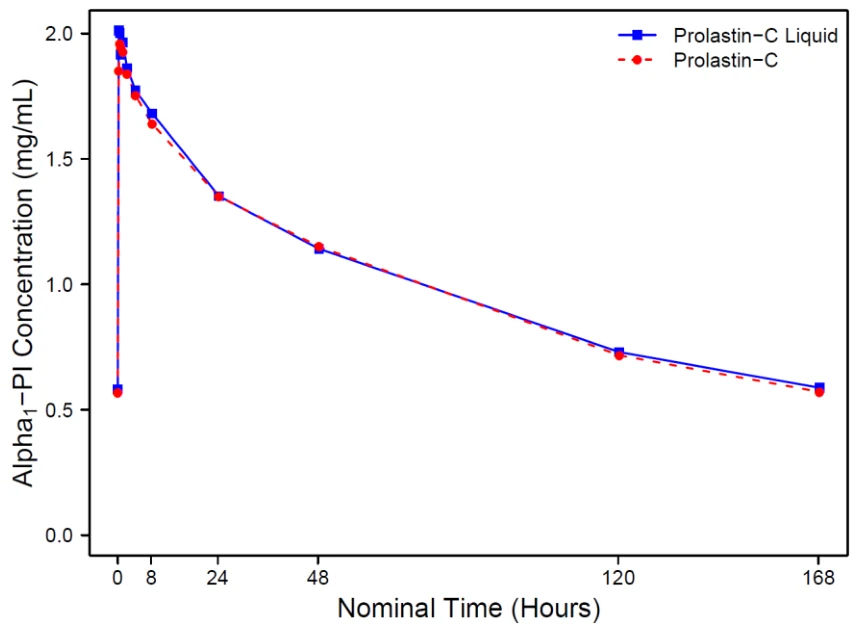
Figure 1: Mean Serum-equivalent Alpha1-PI Concentration (functional activity) vs. Time Curves Following Treatment with Prolastin-C Liquid or Prolastin-C
Table 8: Results of Statistical Analysis of Pharmacokinetic Parameters at Steady-State (PK Population) | ||||||||||||||||
|---|---|---|---|---|---|---|---|---|---|---|---|---|---|---|---|---|
| Treatment | AUC0-7days (mg*h/mL) | |||||||||||||||
| Antigenic Content | Functional Activity | |||||||||||||||
| Geometric LSM | Geometric LSM Ratio | 90% CI of Geometric LSM Ratio | Geometric LSM | Geometric LSM Ratio | 90% CI of Geometric LSM Ratio | |||||||||||
| Prolastin-C Liquid n=30 | 203.57 | 1.05 | 1.03, 1.08 | 169.86 | 1.04 | 1.01, 1.07 | ||||||||||
| Prolastin-C n=28 | 193.71 | 163.52 | ||||||||||||||
| Treatment | Cmax (mg/mL) | |||||||||||||||
| Prolastin-C Liquid n=30 | 2.517 | 1.04 | 1.00, 1.09 | 2.062 | 1.04 | 1.00, 1.07 | ||||||||||
| Prolastin-C n=28 | 2.415 | 1.992 | ||||||||||||||
Serum trough levels measured at steady state during the PK study using an antigenic content assay showed Prolastin-C Liquid resulted in a mean trough of 17.7 µM and Prolastin-C resulted in a mean trough of 16.9 µM.
Prolastin-C (lyophilized product) Studies
The geometric least-squares mean ratio for Prolastin-C vs. Prolastin was 1.03, with a 90% confidence interval of 0.97-1.09. A ratio so close to 1.0 indicates a high degree of concordance between treatments.
15 MICROBIOLOGY
No microbiological information is required for this drug product.
16 NON-CLINICAL TOXICOLOGY
General Toxicology:
Single-dose Toxicity
The acute toxicity of alpha1-PI administered intravenously, was determined in mice, rats, and rabbits and compared to the acute toxicity of the excipient control substance. At an infusion rate of 3 mL/min, the LD50 of alpha1-PI in mice was 3750 mg/kg bw (150±6 mL/kg) and that of the control was >156 mL/kg. In rabbits, there was no indication of any toxicity at the highest dose of alpha1-PI tested, 517 mg/kg bw (20.7 mL/kg), which was infused at a rate of 6 mL/kg although one of three rabbits each in the groups receiving 172 mg/kg bw and 517 mg/kg bw, respectively, of alpha1-PI died during the observation period. These two deaths were not related to administration of alpha1-PI. An additional three rabbits were administered alpha1-PI at a dose of 517 mg/kg bw without any sign of adverse effect throughout the 14-day observation period.
Repeat-dose Toxicity
A series of rabbits also received alpha1-PI or excipient control substance, 227 mg/kg bw (9.1 mL/kg), administered intravenously at a rate of 6 mL/min, daily on five successive days. All rabbits in the study gained weight and there were no significant differences in weight gain on the 6th day or 33rd day of the study between animals receiving alpha1-PI compared to those receiving control substance. No significant hematologic abnormalities were noted on the 6th or 33rd days of the study following five consecutive days of administration of alpha1-PI. An unexplained decrease in the cholesterol level of animals receiving alpha1-PI was seen on day six in one series of animals but was not seen when repeated in another group. Two rabbits died during the course of the study, both of which were receiving alpha1-PI. One rabbit died on day 4, with diarrhea present, and its death was felt to be related to infection. The other rabbit died on day 27 (three weeks after the infusion period) and histopathology revealed no probable cause of death. Overall, no effects directly ascribable to administration of alpha1-PI were detected in animals undergoing necropsy and histopathologic analysis on days 6 or 33 of the study.
No studies were performed regarding subchronic or chronic toxicity.
Genotoxicity:
No studies were performed regarding genotoxicity.
Reproductive Toxicology and Developmental Toxicology:
No studies were performed regarding reproductive toxicity.