


Product Monograph - PRZ-Nebivolol
RECENT MAJOR LABEL CHANGES
TABLE OF CONTENTS
Sections or subsections that are not applicable at the time of authorization are not listed. RECENT MAJOR LABEL CHANGES ............................................................................................. 2
TABLE OF CONTENTS ............................................................................................................... 2
PART I: HEALTH PROFESSIONAL INFORMATION ...................................................................... 4
- 1
INDICATIONS ............................................................................................................... 4
- 1.1 Pediatrics ................................................................................................................4
- 1.2 Geriatrics ................................................................................................................4
- 2 CONTRAINDICATIONS .................................................................................................. 4
- 4
DOSAGE AND ADMINISTRATION ................................................................................. 4
- 4.1 Dosing Considerations ............................................................................................4
- 4.2 Recommended Dose and Dosage Adjustment ........................................................5
- 4.4 Administration ........................................................................................................5
- 4.5 Missed Dose ...........................................................................................................5
- 5 OVERDOSAGE .............................................................................................................. 5
- 6 DOSAGE FORMS, STRENGTHS, COMPOSITION AND PACKAGING .................................. 6
- 7
WARNINGS AND PRECAUTIONS ................................................................................... 7
- 7.1 Special Populations ............................................................................................... 10
- 7.1.1 Pregnant Women ............................................................................................ 10
- 7.1.2 Breast-feeding ................................................................................................ 10
- 7.1.3 Pediatrics (<18 years of age) ........................................................................... 10
- 7.1.4 Geriatrics (<65 years of age) ........................................................................... 11
- 8
ADVERSE REACTIONS ................................................................................................. 11
- 8.1 Adverse Reaction Overview .................................................................................. 11
- 8.2 Clinical Trial Adverse Reactions ............................................................................ 11
- 8.3 Less Common Clinical Trial Adverse Reactions ..................................................... 13
- 8.4 Abnormal Laboratory Findings: Hematologic, Clinical Chemistry and Other Quantitative Data ........................................................................................................... 14
- 8.5 Post-Market Adverse Reactions ............................................................................ 15
- 9
DRUG INTERACTIONS ................................................................................................ 15
- 9.2 Drug Interactions Overview .................................................................................. 15
- 9.3 Drug-Behavioural Interactions .............................................................................. 15
- 9.4 Drug-Drug Interactions ......................................................................................... 15
- 9.5 Drug-Food Interactions ......................................................................................... 19
- 9.6 Drug-Herb Interactions ......................................................................................... 19
- 9.7 Drug-Laboratory Test Interactions ........................................................................ 19
- 10
CLINICAL PHARMACOLOGY ........................................................................................ 19
- 10.1 Mechanism of Action ...................................................................................... 19
- 10.2 Pharmacodynamics ......................................................................................... 19

- 10.3 Pharmacokinetics ............................................................................................ 20
- 11 STORAGE, STABILITY AND DISPOSAL ............................................................................... 23
- 12 SPECIAL HANDLING INSTRUCTIONS ........................................................................... 23
PART II: SCIENTIFIC INFORMATION ....................................................................................... 24
- 13 PHARMACEUTICAL INFORMATION ............................................................................ 24
- 14
CLINICAL TRIALS ........................................................................................................ 25
- 14.1 Clinical Trials by Indication .............................................................................. 25
Hypertension – Monotherapy……………………………………………………………………………………………….25
Hypertension - Concomitant Therapy Studies ................................................................27
- 14.2 Comparative Bioavailability Studies……………………………………………………………………….29
- 15 MICROBIOLOGY ......................................................................................................... 32
- 16 NON-CLINICAL TOXICOLOGY ...................................................................................... 32
17 SUPPORTING PRODUCT MONOGRAPHS……………………………………………………………………33
PATIENT MEDICATION INFORMATION……..………………………………………………………………………….34
PART I: HEALTH PROFESSIONAL INFORMATION
1 INDICATIONS
PRZ-NEBIVOLOL (nebivolol tablets) is indicated for
- The treatment of mild to moderate essential hypertension.
PRZ-NEBIVOLOL may be used alone or concomitantly with thiazide diuretics or angiotensin converting enzyme (ACE) inhibitors. See 9 DRUG INTERACTIONS, 4.2 Recommended Dose and Dosage Adjustment and 14 CLINICAL TRIALS.
PRZ-NEBIVOLOL is not recommended for the emergency treatment of hypertensive crises.
1.1 Pediatrics
The safety and efficacy of nebivolol in pediatric patients have not been established and therefore use in children is not recommended.
1.2 Geriatrics
No dosage adjustment is required in geriatric patients. Of the total number of patients receiving nebivolol in clinical studies, 436 (18%) were 65 years of age or older. No differences in efficacy or safety of nebivolol were observed between older and younger patients. See 4.2 Recommended Dose and Dosage Adjustment and 10.3 Pharmacokinetics.
2 CONTRAINDICATIONS
PRZ-NEBIVOLOL is contraindicated in patients with:
- Hypersensitivities to this drug or to any ingredient in the formulation, including any non-medicinal ingredient, or component of the container. For a complete listing, see the 6 DOSAGE FORMS, STRENGHTS, COMPOSITION AND PACKAGING section of the Product Monograph.
- Severe bradycardia (generally <50 bpm prior to start of therapy)
- Cardiogenic shock
- Decompensated cardiac failure
- Second or third degree atrioventricular (AV) block
- Sick sinus syndrome or sinoatrial block
- Severe hepatic impairment (Child-Pugh Score >B)
- Severe peripheral arterial circulatory disorders
- The rare hereditary conditions of Galactose intolerance, Lapp lactase deficiency or glucose galactose malabsorption
4 DOSAGE AND ADMINISTRATION
4.1 Dosing Considerations
In the treatment of mild to moderate essential hypertension, the dose of PRZ-NEBIVOLOL should be individualized to the needs of the patient
4.2 Recommended Dose and Dosage Adjustment
- For most patients, the recommended starting dose is 5 mg once daily, with or without food. For patients requiring further reduction in blood pressure, the dose can be increased at two-week intervals up to 20 mg once daily.
- Concomitant use of ACE inhibitors: When PRZ-NEBIVOLOL is to be co-administered with an ACE inhibitor, the lowest dose of the added agent should be employed initially and if needed, can be then increased at two-week intervals up to the maximum recommended dose See 9.4 Drug-Drug Interactions.
- Renal Impairment: In patients with severe renal impairment (ClCr less than 30 mL/min) the recommended initial dose is 2.5 mg once daily; titrate up slowly if needed. Nebivolol has not been studied in patients receiving dialysis and is therefore not recommended for use in this patient population. See 7 WARNINGS AND PRECAUTIONS, Renal and 10.3 Pharmacokinetics .
- Hepatic Impairment: In patients with moderate hepatic impairment, the recommended initial dose is 2.5 mg once daily; titrate up slowly if needed. Nebivolol has not been studied in patients with severe hepatic impairment and therefore is contraindicated in that population. See 2 CONTRAINDICATIONS, and 10.3 Pharmacokinetics.
- Geriatric Patients: No dose adjustments are usually necessary for elderly patients.
- CYP2D6 Polymorphism: No dose adjustments are necessary for patients who are CYP2D6 poor metabolizers. The clinical effect and safety profile observed in poor metabolizers were similar to those of extensive metabolizers. See 10.3 Pharmacokinetics.
4.4 Administration
Once-daily dosing has shown to sustain efficacy over 24 hours. A more frequent dosing regimen is unlikely to be beneficial. Nebivolol tablets can be taken with or without food.
4.5 Missed Dose
If patients miss a dose, they should wait until their next scheduled dose. Patients should not double their dose. PRZ-NEBIVOLOL should be taken once approximately every 24 hours.
5 OVERDOSAGE
Symptoms:
In clinical trials and worldwide post-marketing experience there were reports of nebivolol overdose. The most common signs and symptoms associated with nebivolol overdosage are bradycardia and hypotension. Other important adverse reactions reported with nebivolol overdose include heart failure, dizziness, hypoglycemia, fatigue and vomiting. Other adverse reactions associated with β-blocker overdose include bronchospasm and heart block.
The largest known ingestion of nebivolol worldwide involved a patient who ingested up to 500 mg of nebivolol along with several 100 mg tablets of acetylsalicylic acid in a suicide attempt. The patient experienced hyperhydrosis, pallor, depressed level of consciousness, hypokinesia, hypotension, sinus bradycardia, hypoglycemia, hypokalemia, respiratory failure and vomiting. The patient recovered.
Treatment:
Because of extensive drug binding to plasma proteins, hemodialysis is not expected to enhance nebivolol clearance. Administration of activated charcoal is not recommended as it has no effect on the pharmacokinetics of nebivolol.
If overdose occurs, provide general supportive and specific symptomatic treatment. Based on expected pharmacologic actions and recommendations for other β-blockers, consider the following general measures, including stopping PRZ-NEBIVOLOL, when clinically warranted:
- Bradycardia: Administer IV atropine. If the response is inadequate, isoproterenol or another agent with positive chronotropic properties may be given cautiously. Under some circumstances, transthoracic or transvenous pacemaker placement may be necessary.
- Hypotension: Administer IV fluids and vasopressors. Intravenous glucagon may be useful.
- Heart Block (second or third degree): Monitor and treat with isoproterenol infusion. Under some circumstances, transthoracic or transvenous pacemaker placement may be necessary.
- Congestive Heart Failure: Initiate therapy with digitalis glycoside and diuretics. In certain cases, consider the use of inotropic and vasodilating agents.
- Bronchospasm: Administer bronchodilator therapy such as a short-acting inhaled β2-agonist and/or aminophylline.
- Hypoglycemia: Administer IV glucose. Repeated doses of IV glucose or possibly glucagon may be required.
Supportive measures should continue until clinical stability is achieved.
6 DOSAGE FORMS, STRENGTHS, COMPOSITION AND PACKAGING
Table 1 – Dosage Forms, Strengths, Composition and Packaging
| Route of Administration | Dosage Form / Strength / Composition | Non-medicinal Ingredients |
|---|
For management of a suspected drug overdose, contact your regional poison control centre.
| Oral | Tablet 2.5 mg, 5 mg, 10 mg and 20 mg | Colloidal anhydrous silica, croscarmellose sodium, D&C Red #27 Lake (10 and 20 mg only), FD&C Blue #2 AL Lake, FD&C Yellow #6 Lake, hypromellose, lactose monohydrate, magnesium stearate, microcrystalline cellulose, pregelatinized starch, and polysorbate 80. |
|---|
PRZ-NEBIVOLOL (nebivolol tablets) is available as tablets for oral administration containing nebivolol hydrochloride equivalent to 2.5, 5, 10, and 20 mg of nebivolol, and will be supplied in bottles of 30 and 100 tablets.
Description
PRZ-NEBIVOLOL tablets:
2.5 mg: Light blue colored, triangular shaped, biconvex, unscored tablet engraved with “NBL” on one side and "21/2" on other side.
5.0 mg: Beige colored, triangular shaped, biconvex, unscored tablet engraved with “NBL” on one side and “5” on other side
10 mg: Pinkish purple colored, triangular shaped, biconvex, unscored tablet engraved with NBL on one side and “10” on other side.
20 mg: Light blue colored, triangular shaped, biconvex, unscored tablet, engraved with “NBL” on one side and “20” on other side.
7 WARNINGS AND PRECAUTIONS
General
Use with CYP2D6 Inhibitor
Nebivolol exposure increases significantly with inhibition of CYP2D6 [see 9.4 Drug-Drug Interactions]. The dose of PRZ-NEBIVOLOL may need to be reduced.
Cardiovascular
Abrupt Cessation of Therapy
Do not abruptly discontinue PRZ-NEBIVOLOL therapy in patients with coronary artery disease. Severe exacerbation of angina, myocardial infarction and ventricular arrhythmias have been reported in patients with coronary artery disease following the abrupt discontinuation of therapy with β-blockers. Myocardial infarction and ventricular arrhythmias may occur with or without preceding exacerbation of angina pectoris. Caution patients without overt coronary artery disease against interruption or abrupt discontinuation of therapy. As with other β-blockers, when discontinuation of PRZ-NEBIVOLOL is planned, the dosage should be gradually reduced over a period of about two weeks and the patient should be carefully observed and advised to limit physical activity to a minimum. The same frequency of administration should be maintained. In situations of greater urgency, PRZ-NEBIVOLOL should be discontinued stepwise over a shorter time and under closer observation.
If the angina worsens or acute coronary insufficiency develops, re-start PRZ-NEBIVOLOL promptly, at least temporarily.
Decreased Heart Rate and PR Interval Prolongation
Like other β1-blocking agents, nebivolol causes a decrease in heart rate and PR interval prolongation [see Electrocardiography]. Bradycardia and atrioventricular block have been reported with the use of nebivolol [see 8.2 Clinical Trial Adverse Reactions]. Caution should be observed in patients with first degree atrioventricular block, conduction disorders, a history of syncope or arrhythmia, angina, or ischemic heart disease. Concomitant medications that result in a decrease in heart rate and/or PR interval prolongation should be carefully considered to determine whether the therapeutic benefit outweighs the potential risk [see 9.2 Drug Interactions Overview].
Sinus Bradycardia
Severe sinus bradycardia may occur with the use of nebivolol from unopposed vagal activity remaining after blockade of β1-adrenergic receptors; in such cases, dosage should be reduced.
Peripheral Artery Disorders
β-blockers may aggravate the symptoms of peripheral arterial circulatory disorders, mainly due to their blood pressure lowering effect. Caution should be exercised in individuals with such disorders.
Non-dihydropyridine Calcium Channel Blockers
The combination of non-dihydropyridine calcium channel blockers of the verapamil and diltiazem type and β--blockers warrants caution since additive effects on myocardial contractility, heart rate and AV conduction have been observed. Close medical supervision is recommended [see 9.4 Drug-Drug Interactions].
Driving and Operating Machinery
No studies on the effects of nebivolol on the ability to drive and use machines have been performed. Some adverse effects of a reduction in blood pressure, such as light-headedness, dizziness or syncope may impair the patient’s ability to concentrate and react and, therefore, constitute a risk in situations where these abilities are of particular importance. Exercise caution when driving or operating a vehicle or potentially dangerous machinery.
Endocrine and Metabolism Diabetes and Hypoglycemia
PRZ-NEBIVOLOL should be used with caution in patients subject to hypoglycemic episodes since β-blockers may mask some of the manifestations of hypoglycemia, particularly tachycardia.
Nonselective β-blockers may potentiate insulin-induced hypoglycemia and delay recovery of serum glucose levels. Nebivolol is β1-selective; however, it is not known whether nebivolol has these effects. Patients subject to spontaneous hypoglycemia and diabetic patients receiving insulin or oral hypoglycemic agents should be advised about these possibilities.
Thyrotoxicosis
In patients with thyrotoxicosis, possible deleterious effects from long-term use of nebivolol have not been adequately appraised. β-blockers may mask clinical signs of hyperthyroidism, such as tachycardia and give a false impression of improvement. Therefore, these patients should be carefully monitored for thyroid function. Abrupt withdrawal of β-blockers may be followed by an exacerbation of the symptoms of hyperthyroidism or may precipitate a thyroid storm.
Pheochromocytoma
PRZ-NEBIVOLOL should be used with caution and only after pre-treatment with α-receptor blockers in patients with known or suspected pheochromocytoma.
Hepatic/Biliary/Pancreatic Impaired Hepatic Function
Metabolism of nebivolol is decreased in patients with moderate hepatic impairment. Nebivolol has not been studied in patients with severe hepatic impairment See 2 CONTRAINDICATIONS, 4.2 Recommended Dose and Dosage Adjustment, and 10.3 Pharmacokinetics.
Immune
Risk of Anaphylactic Reactions
While taking β-blockers, patients with a history of severe anaphylactic reactions to a variety of allergens may be more reactive to repeated accidental, diagnostic, or therapeutic challenge.
There may be increased difficulty in treating an allergic-type reaction in patients on β-blockers since these patients may be unresponsive to the usual doses of epinephrine used to treat allergic reactions. While larger doses of epinephrine may be needed to overcome the bronchospasm, these doses can be associated with excessive α-adrenergic stimulation with consequent hypertension, reflex bradycardia and heart block and possible potentiation of bronchospasm.
Peri-Operative Considerations Anesthesia and Major Surgery
It is not advisable to withdraw β-adrenoceptor blocking drugs prior to surgery in the majority of patients. However, care should be taken when using PRZ-NEBIVOLOL with anesthetic agents that depress the myocardial function, such as ether, cyclopropane, and trichloroethylene [see 9.4 Drug-Drug Interactions]. Some patients receiving β-adrenoceptor blocking drugs have been subject to protracted severe hypotension during anesthesia. Difficulty in restarting and maintaining the heartbeat has been reported.
In emergency surgery, the β-blocking effects of nebivolol can be reversed by β-agonists, e.g., dobutamine or isoproterenol.
If β-blocking therapy is withdrawn prior to major surgery, the impaired ability of the heart to respond to reflex adrenergic stimuli may augment the risks of general anesthesia and surgical procedures.
Renal
Impaired Renal Function
Renal clearance of nebivolol is decreased in patients with severe renal impairment. Nebivolol has not been studied in patients receiving dialysis and is therefore not recommended for use in this patient population [see 4.2 Recommended Dose and Dosage Adjustment, and 10.3 Pharmacokinetics].
Respiratory
Bronchospastic Disease
In general, patients with bronchospastic pulmonary disease should not receive β-blockers. However, because of its relative β1-selectivity, nebivolol may be used cautiously in patients with bronchospastic disease who do not respond to, or who cannot tolerate other antihypertensive treatment. Since β1-selectivity is not absolute, the lowest possible dose of PRZ-NEBIVOLOL should be employed, a β2-agonist (bronchodilator) should be made available, and the patient should be monitored closely. In patients already on bronchodilator therapy the dose may have to be increased.
Skin
Oculomucocutaneous Syndrome
Various skin rashes and conjunctival xerosis have been reported with β-blockers, including nebivolol. A severe syndrome (oculomucocutaneous syndrome) whose signs include conjunctivitis sicca and psoriasiform rashes, otitis, and sclerosing serositis has occurred with the chronic use of one β-adrenergic blocking agent (practolol). This syndrome has not been observed with nebivolol. However, physicians should be alert to the possibility of such reactions and should discontinue treatment in the event that they occur.
7.1 Special Populations
7.1.1 Pregnant Women
No studies of nebivolol were conducted in pregnant women. Use PRZ-NEBIVOLOL during pregnancy only if the potential benefit to the mother justifies the potential risk to the fetus, taking into account that toxicity was seen in animals.
Animal Data: In rats, maternal toxicity included mortality, ptosis and decreased body weights at
≥10 mg/kg (~5 times the maximum recommended human dose (MRHD) on body surface area basis). Reproductive toxicity included low prolonged gestation with dystocia, increased duration of gestation and decreased nursing behaviour at doses ≥5 mg/kg (~2.5 times the MRHD on body surface area basis). These effects were associated with increased fetal deaths and stillborn pups, and decreased birth weight, live litter size and pup survival rate.
Nebivolol or its metabolites crossed the placental barrier in pregnant rats. When nebivolol was administered to pregnant rats, developmental abnormalities including split thoracic vertebrae changes in sternebrae and ureter dilatation occurred at 40 mg/kg (~20 times the MRHD on body surface area basis).
7.1.2 Breast-feeding
It is not known whether this drug is excreted in human milk, but nebivolol and its metabolites have been found in the milk of lactating rats. Because of the potential for β- blockers to produce serious adverse reactions in nursing infants, especially bradycardia, PRZ-NEBIVOLOL is not recommended in nursing women. A decision should be made to discontinue nursing or discontinue the drug, taking into account the importance of the drug to the nursing mother.
7.1.3 Pediatrics (< 18 years of age)
Safety and efficacy in pediatric patients have not been established and therefore use in children is not recommended.
7.1.4 Geriatrics (<65 years of age)
Of the total number of patients receiving nebivolol in clinical studies, 436 (18%) were 65 years of age or older. No differences in efficacy or safety of nebivolol were observed between older and younger patients
8 ADVERSE REACTIONS
8.1 Adverse Reaction Overview
Nebivolol tablets has been evaluated for safety in more than 7,100 patients with hypertension with a clinical trial exposure to nebivolol in approximately 5,400 patients. Patients received nebivolol for up to 36 months, with over 1,000 patients treated for at least 6 months, and approximately 500 patients for more than one year.
In placebo-controlled monotherapy trials, the most common adverse events (≥ 2% of patients) observed with nebivolol were headache (7.1%), fatigue (3.6%), nasopharyngitis (3.1%), dizziness (2.9%), diarrhea (2.5%), and upper respiratory tract infections (2.1%). Nebivolol was well tolerated and adverse events have generally been mild to moderate in intensity.
In placebo-controlled monotherapy trials, discontinuation of therapy due to adverse events was reported in 2.6% of patients treated with nebivolol (47/1811), and in 2.0% of patients given placebo (4/205). The most common events leading to discontinuation are headache (0.2%), nausea (0.2%), bradycardia (0.2%), myocardial infarction (0.2%), orthostatic hypotension (0.1%), dyspnea (0.1%), and chest pain (0.1%) for patients who received nebivolol.
8.2 Clinical Trial Adverse Reactions
Clinical trials are conducted under very specific conditions. The adverse reaction rates observed in the clinical trials; therefore, may not reflect the rates observed in practice and should not be compared to the rates in the clinical trials of another drug. Adverse reaction information from clinical trials may be useful in identifying and approximating rates of adverse drug reactions in real-world use.
In three multi-center, randomized, parallel-group, double-blind, placebo-controlled monotherapy trials, 1,811 hypertensive patients were treated over 12 weeks with a nebivolol dose ranging from 1.25 mg to 40 mg, and 205 patients were given placebo. The median exposure to treatment in these three trials was 85-days.
Table 2: Number (%) of Patients with Adverse Events (Incidence ≥1% in any nebivolol group) by Preferred Term - Placebo-Controlled, 12-Week Monotherapy Studies (Pooled Safety Population)
Nebivolol 2.5 mg (n=131) | Nebivolol 5 mg (n=459) | Nebivolol 10 mg (n=461) | Nebivolol 20 mg (n=460) | Placebo (n=205) | |
|---|---|---|---|---|---|
Cardiac Disorders Bradycardia/Sinus Bradycardia Palpitations | 0 2 (1.5%) | 3 (0.7%) 2 (0.4%) | 3 (0.7%) 4 (0.9%) | 10 (2.2%) 1 (0.2%) | 1 (0.5%) 0 |
Eye Disorders Vision blurred | 2 (1.5%) | 2 (0.4%) | 3 (0.7%) | 3 (0.7%) | 0 |
Gastrointestinal Diarrhea Nausea Constipation Dry mouth Dyspepsia | 2 (1.5%) 3 (2.3%) 1 (0.8%) 2 (1.5%) 1 (0.8%) | 11 (2.4%) 3 (0.7%) 2 (0.4%) 3 (0.7%) 5 (1.1%) | 9 (2.0%) 13 (2.8%) 5 (1.1%) 3 (0.7%) 5 (1.1%) | 15 (3.3%) 10 (2.2%) 3 (0.7%) 1 (0.2%) 4 (0.9%) | 4 (2.0%) 1 (0.5%) 5 (2.4%) 0 3 (1.5%) |
General Disorders and Administration Site Conditions Fatigue Chest Pain Edema Edema Peripheral Pain | 6 (4.6%) 2 (1.5%) 2 (1.5%) 1 (0.8%) 0 | 10 (2.2%) 2 (0.4%) 0 4 (0.9%) 1 (0.2%) | 11 (2.4%) 5 (1.1%) 0 6 (1.3%) 1 (0.2%) | 27 (5.9%) 8 (1.7%) 1 (0.2%) 2 (0.4%) 5 (1.1%) | 3 (1.5%) 0 0 1 (0.5%) 0 |
Infections and Infestations Nasopharyngitis Upper Respiratory Tract Infection Urinary Tract Infection Sinusitis Influenza Bronchitis | 5 (3.8%) 2 (1.5%) 2 (1.5%) 0 0 0 | 17 (3.7%) 11 (2.4%) 9 (2.0%) 6 (1.3%) 6 (1.3%) 4 (0.9%) | 10 (2.2%) 6 (1.3%) 2 (0.4%) 7 (1.5%) 2 (0.4%) 4 (0.9%) | 17 (3.7%) 12 (2.6%) 7 (1.5%) 5 (1.1%) 6 (1.3%) 5 (1.1%) | 9 (4.4%) 5 (2.4%) 2 (1.0%) 2 (1.0%) 1 (0.5%) 1 (0.5%) |
Investigations C-Reactive Protein Increased Blood Triglycerides Increased Low Density Lipoprotein Increased | 5 (3.8%) 1 (0.8%) 2 (1.5%) | 3 (0.7%) 1 (0.2%) 2 (0.4%) | 4 (0.9%) 9 (2.0%) 1 (0.2%) | 5 (1.1%) 3 (0.7%) 1 (0.2%) | 1 (0.5%) 3 (1.5%) 1 (0.5%) |
Musculoskeletal and Connective Tissue Disorders Arthralgia Back Pain Pain In Limb | 3 (2.3%) 1 (0.8%) 1 (0.8%) | 6 (1.3%) 2 (0.4%) 5 (1.1%) | 7 (1.5%) 7 (1.5%) 2 (0.4%) | 4 (0.9%) 9 (2.0%) 3 (0.7%) | 3 (1.5%) 2 (1.0%) 1 (0.5%) |
Nervous System Disorders Headache | 8 (6.1%) | 41 (8.9%) | 28 (6.1%) | 28 (6.1%) | 12 (5.9%) |
Nebivolol 2.5 mg (n=131) | Nebivolol 5 mg (n=459) | Nebivolol 10 mg (n=461) | Nebivolol 20 mg (n=460) | Placebo (n=205) | |
|---|---|---|---|---|---|
Dizziness Carpal Tunnel Syndrome | 4 (3.1%) 2 (1.5%) | 7 (1.5%) 0 | 12 (2.6%) 0 | 19 (4.1%) 0 | 4 (2.0%) 0 |
Psychiatric Disorders Insomnia | 3 (2.3%) | 3 (0.7%) | 4 (0.9%) | 9 (2.0%) | 1 (0.5%) |
Respiratory, Thoracic and Mediastinal Disorders Cough Sinus Congestion Dyspnea Pharyngolaryngeal Pain | 3 (2.3%) 3 (2.3%) 0 1 (0.8%) | 5 (1.1%) 4 (0.9%) 1 (0.2%) 1 (0.2%) | 7 (1.5%) 4 (0.9%) 5 (1.1%) 3 (0.7%) | 3 (0.7%) 1 (0.2%) 7 (1.5%) 5 (1.1%) | 2 (1.0%) 0 1 (0.5%) 0 |
Skin and Subcutaneous Tissue Disorders Rash | 3 (2.3%) | 0 | 5 (1.1%) | 4 (0.9%) | 0 |
8.3 Less Common Clinical Trial Adverse Reactions
Adverse events reported in the placebo-controlled studies with incidence rates of less than <1% and at a higher frequency than placebo-treated patients are listed below:
Blood and Lymphatic System Disorders: anemia; leukopenia; lymphadenopathy
Cardiac Disorders: myocardial infarction; myocardial ischemia; angina pectoris; atrioventricular block first degree; cardiac failure congestive; extrasystoles; tachycardia; withdrawal arrhythmia
Ear And Labyrinth Disorders: deafness; ear pain; hearing impaired; vertigo
Eye Disorders: conjunctival haemorrhage; conjunctivitis; eye pain; glaucoma; vision disturbances
Gastrointestinal Disorders: abdominal pain; flatulence; gastro-oesophageal reflux disease; oral mucosal lesions; toothache; vomiting
General Disorders and Administration Site Conditions: influenza-like illness; pyrexia; weakness
Immune System Disorders: hypersensitivity
Infections and Infestations: fungal infection; gastroenteritis; hepatitis; localized infection; lower respiratory tract infection
Investigations: alanine aminotransferase increased; aspartate aminotransferase increased; blood alkaline phosphatase increased; blood glucose increased; blood uric acid increased; cardiac murmur; haematocrit/hemoglobin decreased; high density lipoprotein decreased; weight increased
Metabolism and Nutrition Disorders: diabetes mellitus; gout; hypercholesterolaemia; hyperkalaemia; hyperlipidaemia
Musculoskeletal and Connective Tissue Disorders: arthritis; muscle cramps; muscle weakness; myalgia
Nervous System Disorders: burning sensation; cerebral haemorrhage; hypoaesthesia; memory impairment; migraines; paraesthesia; transient ischemic attack
Psychiatric Disorders: anxiety; decreased libido; depression; nightmare
Renal and Urinary Disorders: haematuria; proteinuria; urinary frequency increased
Reproductive System and Breast Disorders: dysmenorrhoea; erectile dysfunction; galactorrhoea
Respiratory, Thoracic and Mediastinal Disorders: epistaxis; nasal congestion
Skin and Subcutaneous Tissue Disorders: angioneurotic oedema; contusion; pruritus; sweating
Vascular Disorders: deep vein thrombosis; flushing; hypotension; intermittent claudication; orthostatic hypotension; phlebitis
8.4 Abnormal Laboratory Findings: Hematologic, Clinical Chemistry and Other Quantitative Data
Clinical Trial Findings
In placebo-controlled monotherapy studies, patients were reported to have laboratory abnormalities of clinical significance for the clinical laboratory parameters shown in Table 3.
Table 3: Number of Patients with Abnormal Laboratory Results of Clinical Significance Occurring After First Dose of Treatment in Placebo-Controlled, 12-Week Monotherapy Studies (Pooled Safety Population)
| Parameters (values of clinical significance) | Placebo (n=205) | Nebivol ol | |||
|---|---|---|---|---|---|
| 2.5 mg (n=131) | 5 mg (n=459) | 10 mg (n=461) | 20 mg (n=460) | ||
| Chemistry | |||||
| AST (≥3 X ULN) | 0 | 0 | 3 (0.7%) | 2 (0.4%) | 4 (0.9%) |
| Blood urea nitrogen (BUN) (≥10.7 mmol/L) | 0 | 1 (0.8%) | 2 (0.4%) | 3 (0.7%) | 2 (0.4%) |
| Uric acid (Male≥625 mcgmol/L; Female ≥506 mcgmol/L) | 0 | 0 | 2 (0.4%) | 0 | 1 (0.2%) |
| Hematology | |||||
| Eosinophils (≥10%) | 2 (1.0%) | 1 (0.8%) | 8 (1.7%) | 3 (0.7%) | 5 (1.1%) |
| Hematocrit (Male≤37%; Female≤32%) | 3 (1.5%) | 2 (1.5%) | 4 (0.9%) | 5 (1.1%) | 9 (2.0%) |
| Hemoglobin (Male≤7.1 mmol/L; Female≤5.9 mmol/L) | 1 (0.5%) | 1 (0.8%) | 2 (0.4%) | 1 (0.2%) | 4 (0.9%) |
| Urinalysis | |||||
| Protein (increase≥2units) | 2 (1.0%) | 0 | 4 (0.9%) | 1 (0.2%) | 5 (1.1%) |
AST, aspartate aminotransferase; Normal ranges: AST: 0-42 U/L; BUN: 2.5-8.9 mmol/L; uric acid: 149-446 mol/L; hematocrit: 35-46%; hemoglobin: 7.4-9.7 mmol/L.
The clinical laboratory parameters for which patients were reported to experience shifts from normal at baseline to the out-of-normal range during nebivolol treatment phase with a higher frequency than in placebo-treated patients are listed below.
Triglycerides: Shifts from normal to values above the upper limit of normal (2.2 mmol/L) were reported in 11.5%, 14.3%, 17.0% and 16.3% of patients treated with nebivolol 2.5 mg, 5 mg, 10 mg and 20 mg, respectively, as compared to 10.5% with placebo.
HDL cholesterol: Shifts from normal to values below the lower limit of normal (0.9 mmol/L) were reported in 1.1%, 3.0%, 4.4% and 4.1% of patients treated with nebivolol 2.5 mg, 5 mg, 10 mg and 20 mg, respectively, as compared to 1.3% with placebo.
8.5 Post-Market Adverse Reactions
Other adverse events reported in post-marketing use include: abnormal hepatic function
(including increased AST, ALT and bilirubin), acute pulmonary edema, acute renal failure, angioedema, atrioventricular block (both second and third degree), bronchospasm, hepatitis, hypersensitivity (including urticaria and allergic vasculitis), peripheral ischemia/claudication, pruritus, psoriasis, Raynaud’s phenomenon, somnolence, suicidal ideation, syncope, thrombocytopenia and various rash and skin disorders. Few cases, some fatal, of cardiac arrest have been reported shortly after initiation of nebivolol therapy; causality has not been established.
9 DRUG INTERACTIONS
9.2 Drug Interactions Overview
Nebivolol is a substrate for CYP2D6. Inhibitors, inducers or substrates of CYP2D6 alter the exposure of nebivolol. When PRZ-NEBIVOLOL is co-administered with an inhibitor, inducer, or substrate of this enzyme, the dose of PRZ-NEBIVOLOL may need to be adjusted.
Based on in vitro results, the potential of nebivolol to have a clinically meaningful inhibitory effect on other cytochrome P450 isozymes is unlikely (i.e., CYP1A2, CYP2A6, CYP2B6, CYP2C8, CYP2C9, CYP2C19, CYP2E1, CYP3A4/5 and CYP4A9/11. See Animal Data).
Like other β1-blocking agents, nebivolol causes a decrease in heart rate and PR interval prolongation [see Cardiovascular and Electrocardiography]. The concomitant use of PRZ-NEBIVOLOL with other drugs that lower heart rate and/or prolong the PR interval, including, but not limited to, antiarrhythmics, non-dihydropyridine calcium channel blockers, digitalis glycosides, β2-adrenoceptor agonists, cholinesterase inhibitors, sphingosine-1 phosphate receptor modulators (e.g. fingolimod), and some of the HIV protease inhibitors, should be carefully considered to determine whether the therapeutic benefit outweighs the potential risk.
9.3 Drug-Behavioural Interactions
No formal drug-behavioural interaction studies were conducted.
9.4 Drug-Drug Interactions
The drugs listed in this table are based on either drug interaction case reports or studies, or potential interactions due to the expected magnitude and seriousness of the interaction (i.e., those identified as contraindicated).
Table 4: Established or Potential Drug-Drug Interactions
| Common name | Source of Evidence | Effect | Clinical comments |
|---|---|---|---|
| α2-adrenergic receptor agonists (e.g., clonidine, guanethidine) | T | The added β-blocking action of nebivolol may produce excessive reduction of sympathetic activity. | Closely monitor patients concomitantly treated with an α2- agonist. In patients who are receiving PRZ-NEBIVOLOL and clonidine, discontinue PRZ-NEBIVOLOL for several |
| Common name | Source of Evidence | Effect | Clinical comments |
|---|---|---|---|
days before the gradual tapering of clonidine. | |||
Angiotensin converting enzyme (ACE) inhibitors | CT | No pharmacokinetic interaction was seen when nebivolol was co-administered with ramipril. The risk of bradycardia/sinus bradycardia was slightly increased when nebivolol was given concomitantly with lisinopril compared to administration of nebivolol alone. More patients showed a shift in total cholesterol and low density lipoprotein cholesterol (LDL-C) from normal to high range when treated concomitantly with nebivolol and lisinopril compared to patients treated with each of these drugs alone. | Use caution when PRZ-NEBIVOLOL is co-administered with ACE inhibitors. |
Anesthetic agents (e.g., ether, cyclopropane and trichloroethylene) | T | Concomitant use with anesthetic agents which depress myocardial function can exacerbate myocardial depression. | Monitor patients ECG and blood pressure closely when PRZ-NEBIVOLOL is co-administered with anesthetic agents. |
Antiarrhythmics (e.g., amiodarone, disopyramide, flecainide) | C, T | Nebivolol can exacerbate the effects of myocardial depressants or inhibitors of atrioventricular conduction. | Monitor patients closely when PRZ-NEBIVOLOL is co-administered with antiarrhythmics. Dose adjustment may be needed. |
Antidiabetic agents (e.g., insulin and oral hypoglycemic agents) | C, T | β-blockers may mask some of the manifestations of hypoglycemia, particularly tachycardia. | Use caution when PRZ-NEBIVOLOL is co-administered in patients subject to hypoglycemic episodes. |
| Calcium channel blockers (particularly verapamil and diltiazem, etc.) | C*, T | Nebivolol can exacerbate the effects of myocardial depressants or inhibitors of atrioventricular conduction. Cases of serious effects (e.g., bradycardia, syncope, requiring | Monitor patients closely when PRZ-NEBIVOLOL is co-administered with non-dihydropyridine calcium channel blockers. |
| Common name | Source of Evidence | Effect | Clinical comments |
|---|---|---|---|
hospitalization) in patients treated with nebivolol and verapamil, diltiazem were reported. | |||
CYP2D6 inducers (e.g., dexamethasone, rifampin) | T | Inducers of CYP2D6 may decrease the exposure of nebivolol. | The dose of PRZ-NEBIVOLOL may need to be adjusted. |
CYP2D6 inhibitors (e.g., fluoxetine, quinidine, paroxetine, propafenone and cimetidine) and substrates (e.g., thioridazine, venlafaxine) | CT, C | Inhibitors or substrates of CYP2D6 increase the exposure of nebivolol. Fluoxetine, a CYP2D6 inhibitor, administered at 20 mg per day for 21 days prior to a single 10 mg dose of nebivolol to 10 healthy adults, led to an 8-fold increase in the AUC and 3-fold increase in Cmax for d-nebivolol. | Use caution when PRZ-NEBIVOLOL is co-administered with CYP2D6 inhibitors/substrates. The dose of PRZ-NEBIVOLOL may need to be reduced. |
| Digoxin | T, C* | Concomitant administration of nebivolol and digoxin can exacerbate slowing atrioventricular conduction and heart rate. Cases of bradycardia were reported with concomitant use. | Monitor patients closely when PRZ-NEBIVOLOL is co-administered with digoxin. |
| Diuretics: hydrochlorothiaz ide, furosemide, spironolactone | CT, C* | No pharmacokinetic interactions were observed in healthy adults between nebivolol (10 mg daily for 10 days) and furosemide (40 mg single dose), hydrochlorothiazide (25 mg once daily for 10 days), or spironolactone (25 mg once daily for 10 days). Cases of bradycardia, hypotension and loss of consciousness were reported with concomitant use. | Use caution when PRZ-NEBIVOLOL is co-administered with diuretics. |
| Fingolimod | CT | Bradycardia | Concomitant use of fingolimod with beta blockers may potentiate bradycardic effects and is not recommended. Where such coadministration is considered necessary, |
| Common name | Source of Evidence | Effect | Clinical comments |
|---|---|---|---|
| appropriate monitoring at treatment administration e.g., at least overnight monitoring, is recommended. | |||
| Histamine -2 Receptor Antagonis ts | CT | The pharmacokinetics of nebivolol (5 mg single dose) were not affected by the co-administration of ranitidine (150 mg twice daily). Cimetidine (400 mg twice daily) causes a 23% increase in the plasma levels of d-nebivolol. | No specific action required. |
| Sildenafil | CT | The co-administration of nebivolol and sildenafil decreased AUC and Cmax of sildenafil by 21 and 23% respectively. The effect on the Cmax and AUC for d- nebivolol was also small (<20%). Given that both agents modulate the nitric oxide pathway, vital signs were measured. | Use caution when PRZ-NEBIVOLOL® is co-administered with sildenafil. When co-administered, the effects on pulse and blood pressure were approximately the sum of the effects of sildenafil and nebivolol. |
| Valsartan | CT | Concomitant administration of nebivolol (20 mg once daily) and valsartan (320 mg once daily) in 30 healthy adult volunteers resulted in a 47% and 19% reduction in d-nebivolol Cmax and AUC, respectively. | |
| Legend: C=Case Study, CT=Clinical Trial, T=Theoretical, C* = Case Report from PSUR data | |||
No pharmacokinetic interaction has been observed when nebivolol is concomitantly administered with activated charcoal, alcohol, digoxin, losartan or warfarin in healthy adult volunteers.
Moreover, nebivolol has no significant effects on the anticoagulant activity of warfarin (prothrombin time and INR).
9.5 Drug-Food Interactions
Food does not significantly alter the pharmacokinetics of nebivolol. PRZ-NEBIVOLOL may be taken with or without food.
9.6 Drug-Herb Interactions
Interactions with herbal products have not been established.
9.7 Drug-Laboratory Test Interactions
Interactions with laboratory testing have not been established.
10 CLINICAL PHARMACOLOGY
10.1 Mechanism of Action
Nebivolol is a cardio selective β-adrenergic receptor antagonist with vasodilating activity. The exact mechanism of action of its antihypertensive response has not been definitively established. The ability of β-adrenergic receptor antagonists to decrease blood pressure appears to be related to decreased heart rate, decreased myocardial contractility, decreased sympathetic activity, and suppression of renin activity. Nebivolol also has vasodilating properties, likely due to its ability to increase nitric oxide release from human endothelial cells, which may decrease peripheral vascular resistance, but their relative contribution to the overall blood pressure lowering effect of nebivolol has not been demonstrated.
Nebivolol lacks appreciable affinity for α-adrenergic receptors. Nebivolol does not appear to have intrinsic sympathomimetic activity at β1-adrenergic receptors.
10.2 Pharmacodynamics
Nebivolol is preferentially β1-selective with a 320-fold higher affinity for human cardiac β1- vs. β2-adrenergic receptors. In extensive metabolizers (most of the population) and at doses less than or equal to 20 mg, nebivolol is preferentially β1-selective. At clinically relevant doses in extensive metabolizers, nebivolol is not expected to significantly block α1-adrenergic receptors as determined in a clinical study with the 5 mg dose and inferred from nebivolol Cmax (32 nM at 20 mg dose) in relation to its binding affinity for α1-adrenergic receptors (Ki of 330 nM). In poor metabolizers and at higher doses, nebivolol inhibits both β1- and β2-adrenergic receptors. Several metabolites of nebivolol that demonstrate binding affinity at the β1-adrenergic receptor have been identified following oral administration of nebivolol. The Ki for the active metabolites range from 0.7 nM to 19.8 nM, compared to Ki = 0.7 nM for nebivolol, suggesting that these metabolites may contribute to the β-blocking activity.
Nebivolol is a racemic mixture of d-nebivolol and l-nebivolol. Exposure to l-nebivolol is higher than to d-nebivolol but l-nebivolol contributes little to the drug’s β1-blocking activity as d- nebivolol’s β-receptor affinity is > 1000-fold higher than l-nebivolol.
Electrocardiography: A randomized, open-label, placebo- and active-controlled (atenolol and moxifloxacin), parallel group study was performed to assess the effect of nebivolol on electrocardiographic intervals in healthy subjects (N=67-71/group). Nebivolol was administered at a therapeutic dose of 20 mg QD on days 1-3 and a supratherapeutic dose of 40 mg QD on days 4-7. ECG assessments were performed on days 1, 4, and 7. Nebivolol reduced heart rate and increased the PR interval as presented in Table 5.
Table 5: Maximum Placebo-Adjusted Mean Changes from Baseline During Treatment with nebivolol on Days 1, 4, and 7
| Heart Rate (bpm) | PR Interval (msec) | ||||||||
|---|---|---|---|---|---|---|---|---|---|
| Mean (90% CI) | Time (h) | Mean (90% CI) | Time (h) | ||||||
| Day 1 | -14.2 ( -18.0, -10.3) | 6 | 13.0 ( 9.0, 17.0) | 2.5 | |||||
| Day 4 | -19.4 ( -23.1, -15.7) | 4 | 13.8 ( 9.3, 18.3) | 2.5 | |||||
| Day 7 | -20.8 ( -24.2, -17.4) | 23.5 | 11.4 ( 7.2, 15.5) | 4.0 | |||||
Similar effects on heart rate and the PR interval were seen with the active comparator atenolol, administered as 100 mg QD on days 1-3 and as 200 mg QD on days 4-7.
Nebivolol was not demonstrated to have a treatment-related effect on the Fridericia- corrected QT interval (QTcF=QT/RR0.33) in this study.
10.3 Pharmacokinetics
Table 6: Summary of d,l-Nebivolol Pharmacokinetic Parameters after Repeated Oral Administration of 10 mg Dose for 14 Days
Cmax (ng/ml) | Tmax (hr) | t½ (h) | AUC (ng.hr/ml) | CL/F (L/hr) | |
|---|---|---|---|---|---|
| Extensive Metabolizers (EM) | 3.5 | 1.2 | 12.7 | 19.7 | 657 |
| Poor Metabolizers (PM) | 32 | 3.7 | 56 | 663 | 16 |
Absorption
PRZ-NEBIVOLOL is an immediate release tablet. The absolute bioavailability has not been determined. Pharmacokinetic steady state is reached in 3 and 5 days in CYP2D6 extensive and poor metabolizers, respectively.
Food does not significantly alter the pharmacokinetics of nebivolol. Under fed conditions, nebivolol glucuronides are slightly reduced. PRZ-NEBIVOLOL may be administered with or without food.
Distribution
In human plasma, approximately 98% of nebivolol is bound to protein (mostly to albumin), regardless of nebivolol concentration, and the drug is widely distributed into tissues, including the brain.
Metabolism
Nebivolol is predominantly (75%) metabolized by cytochrome P450 2D6 via direct glucuronidation and to a lesser extent, via N-dealkylation and oxidation of the parent compound. Its stereospecific metabolites contribute to the pharmacologic activity. Nebivolol is also metabolized to a lesser extent by CYP3A4/5 (16-20%). d-Nebivolol, has an effective half- life of about 13 hours in CYP2D6 extensive metabolizers (EM, most people), and 22 hours in poor metabolizers (PM) and exposure to d-nebivolol is substantially increased in poor metabolizers. This may have less importance than usual, however, because the metabolites, including the hydroxyl metabolite and glucuronides (the predominant circulating metabolites), partially contribute to β-blocking activity of nebivolol.
Elimination
After a single oral administration of 14C-nebivolol, 37% of the dose was recovered in urine and 42% in feces for EMs and 57% in urine and 8% in feces for PMs. Essentially all nebivolol was excreted as multiple oxidative metabolites or their corresponding glucuronide conjugates.
Animal Data
Nebivolol antagonizes β1-adrenergic receptor mediated responses in isolated tissues from guinea pigs and dogs and in rat heart cell cultures in vitro. Nebivolol also effectively inhibits various β1-adrenergic receptors responses in vivo in rodent, cat and dog models. Nebivolol retains β1-adrenergic receptor selectivity in a wide variety of these test systems. Nebivolol does not have relevant effects in other test systems, such as α-adrenergic and muscarinic receptor systems.
Nebivolol, dose-dependently, reduces blood pressure in spontaneously hypertensive rats following acute and repeated administration and does not produce an increase in peripheral vascular resistance or decrease in cardiac output in anesthetized dogs, but at peak after 10 mg/kg orally, a 38% decrease of cardiac output was observed as compared to baseline in awake dogs.
Mechanistic studies in isolated coronary arteries showed that nebivolol and, more potently, l- nebivolol induce the release of nitric oxide from vascular endothelium in vitro. In both pre- clinical and clinical studies, nebivolol-induced vasodilation can be blocked by inhibitors of nitric oxide synthase. This property appears to contribute to the pharmacological profile of nebivolol.
In addition, nebivolol protected myocardial cells from calcium overload and preserved cardiac function in ischemic myocardium. Nebivolol demonstrated antiarrhythmic activity in vivo, suppressing experimentally induced arrhythmias produced by ischemia and reperfusion (rat and dog) as well as those induced by aconitine (rat) and by ouabain (guinea pig), but it also increased atrial conduction time thus leading to increased PQ and PR intervals and significantly decreased HR. Moreover, nebivolol increased the ventricular fibrillation threshold in anesthetized open- chest guinea pigs and dogs, but it increased AV blocks and branch bundle block occurrence.
Nebivolol seems to have low affinity for α-adrenoreceptors in in vitro receptor binding assays (Ki ≥ 295 nM) at target therapeutic concentrations, and had apparently little activity at α1- adrenergic receptors in in vivo and ex vivo functional assays (IC50 ≥ 1.4 μM). Nebivolol was found to lack appreciable activity or to be inactive on responses mediated by serotonin, histamine, dopamine, acetylcholine (muscarinic and nicotinic), angiotensin II and bradykinin receptor activation, but bound at higher concentrations to β2-adrenergic, serotonin (5HT1A) and dopamine receptors (D4.4) (Ki = 4.5 nM, 15.1 nM, 56.2 nM respectively). In addition, receptor binding or transactivation assays also demonstrated that nebivolol did not bind to opioid, GABAergic and various hormone receptors, such as the estrogen receptor. Therefore, at therapeutic plasma concentrations, nebivolol has little activity at other receptors that would produce vasodilation except for β2-adrenergic, serotonin (5HT1A) and dopamine receptors (D4.4).
In vitro studies have demonstrated that nebivolol has an inhibitory effect on cytochrome P450 isozymes including CYP3A4/5 (Ki: 13 µM), CYP2A6 (Ki: 49 µM), CYP2C8 (Ki: 55 µM), CYP2B6 (Ki: 92 µM), CYP1A2 (Ki: 92 µM), CYP2C9 (Ki: 110 µM), CYP2C19 (Ki: 130 µM) and CYP4A9/11 (Ki:
180 µM). In addition, nebivolol was also found to significantly increase (by 50%) the activity of CYP2E1. Given the Cmax/Ki ratios, it is unlikely that these inhibitory effects in vitro would translate into clinically meaningful inhibitory effects.
Special Populations and Conditions
- Pediatrics: The pharmacokinetics of nebivolol in patients <18 years of age has not been studied.
- Geriatrics: Based on the results of a population pharmacokinetic analysis, no differences were seen in the pharmacokinetics of nebivolol in elderly (≥ 65 years) patients as compared to younger patients.
- Sex: Based on the results of a population pharmacokinetic analysis, no differences in the pharmacokinetics of nebivolol were seen between males and females.
Genetic Polymorphism: A small percentage of the general population (about 7% of Caucasians, 2% of African Americans, and about 2% of Asians) is deficient in CYP2D6 enzyme activity and is considered poor metabolizers of CYP2D6 metabolized drugs. Nebivolol undergoes hepatic metabolism mainly (up to 77% in animals and 75% in humans) by CYP2D6 and is subject to this genetic polymorphism.
Poor CYP2D6 metabolizers have been shown to have markedly higher plasma concentrations of nebivolol and less oxidative related metabolites compared with people with normal CYP2D6 activity, while maintaining their ability to glucuronidate nebivolol.
- Ethnic Origin: Based on the results of a population pharmacokinetic analysis, no differences were observed in the pharmacokinetics of nebivolol and its glucuronide metabolites among different races.
- Hepatic Insufficiency: d-Nebivolol peak plasma concentration and exposure (AUC) increased 3.5-fold, and the apparent clearance decreased by 90% in patients with moderate hepatic impairment (Child-Pugh Class B). No studies have been performed in patients with severe hepatic impairment and nebivolol is contraindicated in these patients.
- Renal Insufficiency: The exposure (AUC) of d-nebivolol increased approximately 2- and 5-fold in patients with moderate and severe renal impairment, respectively. The apparent clearance of d-nebivolol was unchanged following a single 5 mg dose of nebivolol in patients with mild renal impairment (ClCr 50 to 80 mL/min, n=7), while it was reduced by 48% in patients with moderate (ClCr 30 to 50 mL/min, n=9), and by 66% in patients with severe renal impairment (ClCr <30 mL/min, n=5). No studies have been conducted in patients on dialysis.
11 STORAGE, STABILITY AND DISPOSAL
Store at controlled room temperature (15°C - 30°C). Protect from light.
12 SPECIAL HANDLING INSTRUCTIONS
No special handling is required.
PART II: SCIENTIFIC INFORMATION
13 PHARMACEUTICAL INFORMATION
Drug Substance
Proper name: Nebivolol hydrochloride
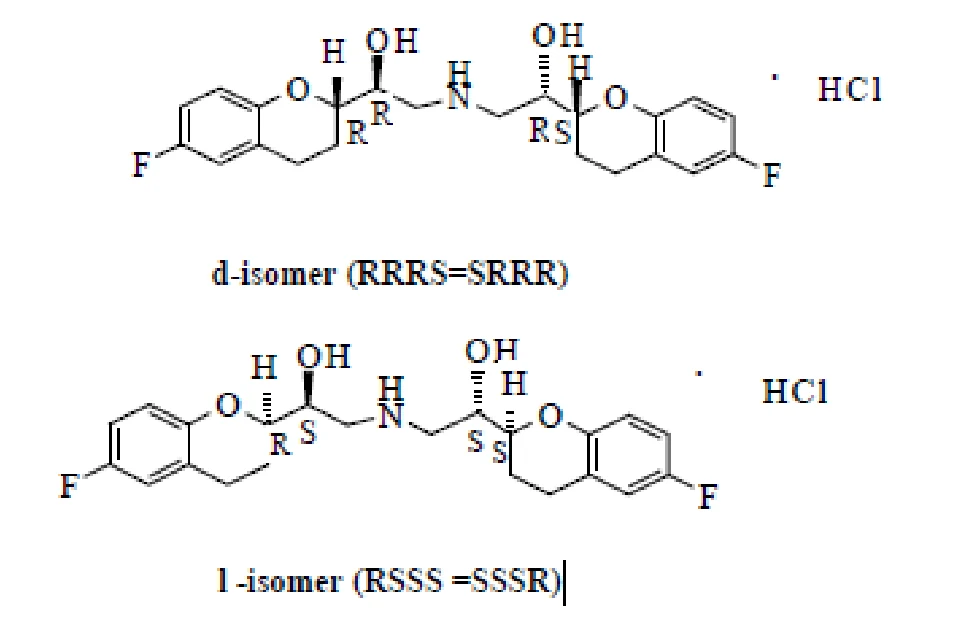
Chemical name: α,α'-[Iminobis(methylene)]bis[6-fluoro-3,4-dihydro-2H-1-benzopyran-2- methanol] hydrochloride salt
or
(1RS,1’RS)-1,1’-[(2RS,2’SR)-Bis(6-fluorochroman-2-yl)]-2,2’-iminodiethanol hydrochloride.
Molecular formula and molecular mass: C22H26O4NClF2, 441.90 g / mol
Structural formula: Nebivolol is a racemic mixture of d-Nebivolol and l-Nebivolol with the stereochemical designations of [SRRR]-nebivolol and [RSSS]-nebivolol, respectively.
Physicochemical properties: Nebivolol hydrochloride is a white to off white powder that is very slightly soluble in water, sparingly soluble in methanol, very slightly soluble in heptane. Non-hygroscopic in nature and the pKa (base) of nebivolol hydrochloride is 8.22.
14 CLINICAL TRIALS
14.1 Clinical Trials by Indication
Hypertension - Monotherapy
Table 7 - Summary of patient demographics for clinical trials in Treatment of Mild to Moderate Essential Hypertension
| Study # | Study design | Dosage, route of administration and duration | Study subjects ITT/completed | Median age (Range) | Sex |
|---|---|---|---|---|---|
| Study 1 | Double-blind, placebo- controlled | Oral Placebo, Nebivolol 1.25 mg, 2.5 mg, 5 mg, 10 mg, 20 mg, 30/40 mg 28 to 42-day, single- blind placebo run-in, 12 weeks double-blind treatment | Placebo 81/67 Nebivolol 1.25 mg 83/68, 2.5 mg 82/68, 5 mg 165/148, 10 mg 166/133, 20 mg 166/144, 30/40 mg 166/149 Total 909/777 | 54 years (22–84) | M: 518 (57%) F: 391 (43%) |
| Study 2 | Double-blind, placebo- controlled | Oral Placebo, Nebivolol 5 mg, 10 mg, 20 mg. 28 to 42-day single- blind placebo run-in, 12 weeks double-blind treatment | Placebo 75/61 Nebivolol 5 mg 244/218, 10 mg 244/206, 20 mg 244/217 Total 807/702 | 53 years (22–82) | M: 432 (53.5%) F: 375 (46.5%) |
| Study 3 | Double-blind, placebo- controlled | Oral Placebo, Nebivolol 2.5 mg, 5 mg, 10 mg, 20 mg, 40 mg 14 to 42-day, single- blind, placebo run-in, 12 weeks double-blind treatment | Placebo 49/41 Nebivolol 2.5 mg 49/42, 5 mg 50/41, 10 mg 51/47, 20 mg 50/45, 40 mg 51/43 Total 300/259 | 50 years (26–79) | M: 136 (45.3%) F: 164 (54.7%) |
The antihypertensive efficacy of nebivolol (nebivolol tablets) as monotherapy has been investigated in three randomized, double-blind, multi-centre, placebo-controlled trials at doses ranging from 1.25 to 40 mg for 12 weeks (Studies 1, 2 and 3). In two separate combination studies, additional antihypertensive effect was demonstrated when nebivolol was administered concomitantly with either thiazide diuretics or ACE inhibitors. Sustained efficacy over 24 hours has been shown for nebivolol once-daily dosing schedule.
The three monotherapy trials included a total of 2,016 patients (1,811 nebivolol, 205 placebo) with mild to moderate hypertension who had baseline diastolic blood pressures (DBP) of 95 to 109 mmHg. Patients received either nebivolol or placebo once daily for 12 weeks. Two of these monotherapy trials (Studies 1 and 2) studied 1,716 patients in the general hypertensive population with a mean age of 54 years, 55% males, 26% non-Caucasians, 7% diabetics and 6% genotyped as poor metabolizers (PMs). The third monotherapy trial (Study 3) studied 300 Black hypertensive patients with a mean age of 51 years, 45% males, 14% diabetics, and 2.3% as PMs.
Study Results
The primary endpoint in the three monotherapy trials was the change from baseline in trough sitting DBP as Week 12. Change from baseline in trough sitting systolic blood pressure (SBP) was used as a secondary endpoint. Blood pressure reductions by dose for each study are presented in Table 8. The least square (LS) mean reduction in trough sitting DBP was significantly greater with nebivolol doses ≥5 mg than with placebo in all studies. Nebivolol reduced trough sitting DBP in patients regardless of race, age or sex.
The LS mean reduction in trough sitting SBP was significantly greater with nebivolol than with placebo for all doses in Study 1, the 20 mg dose in Study 2 and the 10 mg and 20 mg doses in Study 3.
Table 8: Analysis of Sitting Diastolic and Systolic Blood Pressure (mmHg) at Trough at Week 12
| Study | Treatment group | Placebo | Nebivolol | ||||||||||||
|---|---|---|---|---|---|---|---|---|---|---|---|---|---|---|---|
| 2.5 mg | 5 mg | 10 mg | 20 mg | ||||||||||||
Study 1 Mean Baseline SBP/DBP: 153.1/99.5 mmHg | Trough Sitting Diastolic BP (mmHg) | ||||||||||||||
| LS Mean Changea | -2.9 | -8.5 | -8.4 | -9.2 | -9.8 | ||||||||||
| p-valuea,b | <0.001 | <0.001 | <0.001 | <0.001 | |||||||||||
| Trough Sitting Systolic BP (mmHg) | |||||||||||||||
| LS Mean Changea | +2.2 | -6.3 | -5.9 | -7.0 | -6.5 | ||||||||||
| p-valuea,b | <0.001 | <0.001 | <0.001 | <0.001 | |||||||||||
Study 2 Mean Baseline SBP/DBP: 151.3/99.0 mmHg | Trough Sitting Diastolic BP (mmHg) | ||||||||||||||
| LS Mean Changea | -4.6 | -- | -7.8 | -8.5 | -9.1 | ||||||||||
| p-valuea,b | -- | 0.002 | <0.001 | <0.001 | |||||||||||
| Trough Sitting Systolic BP (mmHg) | |||||||||||||||
| LS Mean Changea | -0.4 | -- | -4.2 | -3.5 | -6.7 | ||||||||||
| p-value a,b | -- | 0.035NS | 0.086 NS | <0.001 | |||||||||||
Study 3 Mean Baseline | Trough Sitting Diastolic BP (mmHg) | ||||||||||||||
| LS Mean Changea | -2.8 | -5.7 | -7.7 | -8.9 | -8.9 | ||||||||||
| p-valuea,b | 0.084 NS | 0.004 | <0.001 | <0.001 | |||||||||||
| Study | Treatment group | Placebo | Nebivolol | |||||||||||
|---|---|---|---|---|---|---|---|---|---|---|---|---|---|---|
| 2.5 mg | 5 mg | 10 mg | 20 mg | |||||||||||
| SBP/DBP: 152.2/100.2 mmHg | Trough Sitting Systolic BP (mmHg) | |||||||||||||
| LS Mean Changea | -0.4 | -1.9 | -3.0 | -6.4 | -7.6 | |||||||||
| p-valuea,b | 0.611NS | 0.383NS | 0.044 | 0.005 | ||||||||||
aFrom an ANCOVA with factor treatment and covariates (baseline blood pressure, metabolism rate, diabetes status, gender, race, and age group).
bBased on pairwise comparison of treatment vs. placebo LS=least-squares, NS=not significant
The blood pressure lowering effect of nebivolol was seen within two weeks of treatment and was maintained over the 24-hour dosing interval with trough-to-peak ratios for diastolic response ranging from 60 - 90% in all studies for nebivolol doses of 2.5 - 20 mg.
Twenty-eight days after cessation of nebivolol treatment, blood pressure returned toward baseline, without however reaching that level. There was no evidence of rebound hypertension after abrupt cessation of therapy.
After 12 weeks of treatment, the response rate in Study 1 was 50.0% for nebivolol 2.5 mg, 50.3% for 5 mg, 53.6% for 10 mg and 59.6% for 20 mg vs. 24.7% for placebo (all p≤0.001). The response rates in Study 2 were 49.3%, 66.0%, 66.8% and 68.9% in the placebo, nebivolol 5 mg, 10 mg, and 20 mg groups, respectively (all p≤0.009). In Study 3, the percentage of responders were 36.7%, 58.0%, 58.8% and 64.0% in the nebivolol 2.5 mg, 5 mg, 10 mg and 20 mg groups compared with a placebo response rate of 26.5% (p≤0.002 for nebivolol doses of 5 mg and above).
Heart rate was assessed in all studies. In Study 1, mean seated trough heart rate changes were
+0.2, -4.3, -6.5, -6.5 and -9.7 bpm for placebo, nebivolol 2.5 mg, 5 mg, 10 mg and 20 mg, respectively. The reductions observed with nebivolol were significant as compared to placebo (p<0.001 for doses 2.5 to 20 mg). Heart rate was also significantly lowered for all doses in Study 2. Mean placebo-subtracted reductions ranged from -5.1 bpm to -7.2 bpm (p < 0.001 vs. placebo). In Study 3, reductions in sitting heart rate at peak plasma drug level for nebivolol 5 mg, 10 mg, and 20 mg were statistically significant (p < 0.015).
Hypertension - Concomitant Therapy Studies
Diuretics
Nebivolol 1 mg, 5 mg and 10 mg and hydrochlorothiazide (HCTZ) 12.5 mg, and 25 mg were studied alone and in combination in a 12-week, randomized, double-blind, placebo-controlled, parallel-group, 12-arm factorial study including 240 patients with mild to moderate essential hypertension (mean baseline sitting SBP/DBP of 157.7/100.8 mmHg). The average age was 52 and 66% of the patients were male. The primary efficacy endpoint was the change from baseline in trough sitting DBP at Week 12. Blood pressure reductions by dose are presented in Table 9. The mean reductions in trough sitting DBP (primary efficacy endpoint) from baseline were statistically significant for all treatment arms (p<0.05 vs. baseline). All active treatment (monotherapy and combination) were also found to be more effective than placebo (p<0.05).
No statistical analysis for comparison vs. placebo was performed for the secondary endpoint, trough sitting SBP.
Table 9: Summary of Mean Changes from Baseline in Trough Sitting Blood Pressure (SBP/DBP) (mmHg) for Patients Receiving nebivolol, HCTZ, or nebivolol/HCTZ in Combination
| nebivolol | HCTZ | |||||||
|---|---|---|---|---|---|---|---|---|
| 0 mg | 12.5 mg | 25 mg | ||||||
| 0 mg | -0.2 / -1.4 | -11.2 / -4.6 | -15.0 / -5.8 | |||||
| 1 mg | -6.5 / -5.5 | -14.1 / -9.4 | -19.4 / -10.3 | |||||
| 5 mg | -16.7 / -8.5 | -16.0 / -9.9 | -17.9 / -12.4 | |||||
| 10 mg | -17.6 / -13.8 | -21.9 / -12.6 | -29.0 / -15.3 | |||||
N=20 patients/arm; within treatment comparisons to baseline were statistically significant for all treatment groups with p-value ≤0.003. DBP: all pairwise comparisons vs. placebo were statistically significant with p-value <0.05
SBP: comparisons vs. placebo not assessed
Significant reductions in trough sitting DBP from baseline were observed as early as week two. Significant increases in the percentage of patients who responded to treatment were obtained with nebivolol in combination with HCTZ, as compared to placebo (p < 0.02). The response rates were 60%, 85%, 80% and 85% for the 5 mg/12.5 mg, 5 mg/25 mg, 10 mg/12.5 mg and 10 mg/25 mg nebivolol/HCTZ combinations, respectively, and 15% for placebo. Nebivolol 5 mg and 10 mg in combination with HCTZ, 12.5 mg and 25 mg, provided heart rate reductions of -3 bpm to -10 bpm (p < 0.05 vs. placebo) for all combination groups excluding nebivolol 5 mg/HCTZ 25 mg.
Angiotensin Converting Enzyme (ACE) Inhibitors
Nebivolol 5 mg to 20 mg and lisinopril 10 mg to 40 mg were studied alone and in combination in a 12-week, multi-centre, randomized, double-blind, placebo- and active- controlled, parallel-group, 4-arm study including 656 patients with stage 2 diastolic hypertension (DBP ≥ 100 mm Hg). The mean baseline sitting SBP/DBP was 163.8/104.4 mmHg. The mean age of patients was 49.3 years, 57.8% were males, 14.9% were diabetic and 38.0% were non-Caucasian. The primary efficacy endpoint was the change from baseline in trough sitting DBP at Week 6 and the secondary efficacy endpoint was the change from baseline in trough sitting SBP at Week 6.
Blood pressure reductions by treatment group are presented in Table 10. The combination of nebivolol and lisinopril was significantly more effective in lowering DBP than nebivolol or lisinopril alone (p ≤ 0.001). All active treatments (combination and monotherapy) were more effective than placebo (p ≤ 0.0013). The combination treatment group showed a statistically significant greater reduction in DBP compared with the average effect of nebivolol and lisinopril (p < 0.0001). Significant reductions in trough sitting DBP from baseline were observed as early as two weeks of treatment.
Table 10: Analysis of Sitting Diastolic and Systolic Blood Pressure (mmHg) at Trough at Week 6
| Placebo (N=93) | Nebivolol + Lisinopril (N=189) | Nebivolol (N=185) | Lisinopril (N=189) | |||||||||||||
|---|---|---|---|---|---|---|---|---|---|---|---|---|---|---|---|---|
| Trough Sitting Diastolic BP (mmHg) | ||||||||||||||||
Mean Baseline DBP: 104.4 mmHg | Mean Change | -8.0 | -17.2 | -13.3 | -12.0 | |||||||||||
| LSMD* a | 9.0 | -- | 3.3 | 5.1 | ||||||||||||
| p-value 1a | <0.0001 | -- | 0.0010 | <0.0001 | ||||||||||||
| p-value 2b | -- | <0.0001 | -- | -- | ||||||||||||
| Trough Sitting Systolic BP (mmHg) | ||||||||||||||||
Mean Baseline SBP: 163.8 mmHg | Mean Change | -9.9 | -19.2 | -14.4 | -16.1 | |||||||||||
| LSMD* a | 10.0 | -- | 3.5 | 3.2 | ||||||||||||
| p-value 1a | <0.0001 | -- | 0.0470 | 0.0704 | ||||||||||||
| p-value 2b | -- | 0.0278 | -- | -- | ||||||||||||
ANCOVA, analysis of covariance; LSMD, least squares mean difference
* Analysis was based on ANCOVA model with treatment group and study center as factors and baseline value as a covariate
- a [*] comparing the combination group vs. placebo, the combination group vs. nebivolol, and the combination group vs. lisinopril.
- b [*] comparing the combination group vs. the average of nebivolol and lisinopril.
The combination of nebivolol and lisinopril was significantly more effective in lowering SBP than nebivolol alone (p = 0.0470). The combination showed a numerically greater reduction in SBP than lisinopril alone (p=0.0704). All active treatments (combination and monotherapy) were found to be more effective than placebo (p≤0.0033). The combination treatment group showed a statistically significant greater reduction in SBP compared with the average effect of nebivolol and lisinopril (p=0.0278).
After 6 weeks of treatment, the response rate (BP < 140/90 mmHg or < 130/80 mmHg for diabetic patients) was significantly greater for patients treated with the combination of nebivolol and lisinopril at 33.9%, compared to 21.6%, 21.7% and 7.5% for patients treated with nebivolol monotherapy, lisinopril monotherapy or placebo respectively (all p ≤ 0.0031).
14.2 Comparative Bioavailability Studies
A double blind, randomized, two-period, two-treatment, two-sequence, crossover, balanced, single dose oral bioequivalence study of PRZ-NEBIVOLOL 10 mg tablets (Pharmaris Canada Inc.) and PrBYSTOLIC® 10 mg tablets (Allergan Inc.) was conducted in healthy adult male subjects under fasting conditions. A summary of the bioavailability data from the 22 subjects who were included in the statistical analysis is presented in the following table:
SUMMARY TABLE OF THE COMPARATIVE BIOAVAILABILITY DATA
Nebivolol (1 × 10 mg) Geometric Mean Arithmetic Mean (CV %) | ||||
| Parameter | Test1 | Reference2 | % Ratio of Geometric Means | 90% Confidence Interval |
AUCT (ng/mL)*(hr) | 24.62 43.59 (224.32) | 22.55 41.10 (229.00) | 109.2 | (103.2% - 115.5%) |
AUCI (ng/mL)*(hr) | 27.05 69.09 (304.51) | 24.20 56.49 (286.59) | 111.8 | (105.5% - 118.4%) |
Cmax (ng/mL) | 3.80 4.26(61.59) | 3.45 3.98 (80.17) | 110.0 | (100.7% - 120.2%) |
Tmax3 (hr) | 1.00 (0.75- 5.00) | 1.00 (0.50- 3.00) | ||
T½4 (hr) | 14.68 (106.06) | 14.02 (80.11) | ||
1 PRZ-NEBIVOLOL 10 mg (nebivolol as nebivolol hydrochloride) tablets (Pharmaris Canada Inc.)
2 PrBystolic® 10 mg (nebivolol as nebivolol hydrochloride) tablets (Allergan Inc.), purchased in Canada
3 Expressed as the median (range) only
4 Expressed as the arithmetic mean (CV%) only
A double blind, randomized, two-period, two-treatment, two-sequence, crossover, balanced, single dose oral bioequivalence study of PRZ-NEBIVOLOL 20 mg tablets (Pharmaris Canada Inc.) and PrBYSTOLIC® 20 mg tablets (Allergan Inc.) was conducted in healthy adult male subjects under fasting conditions. A summary of the bioavailability data from the 21 subjects who were included in the statistical analysis is presented in the following table:
SUMMARY TABLE OF THE COMPARATIVE BIOAVAILABILITY DATA
Nebivolol (1 × 20 mg) Geometric Mean Arithmetic Mean (CV %) | ||||
| Parameter | Test1 | Reference2 | % Ratio of Geometric Means | 90% Confidence Interval |
AUCT (ng/mL)*(hr) | 51.93 109.05(187.69) | 50.82 101.99(178.57) | 101.8 | (96.7% - 107.2%) |
AUCI (ng/mL)*(hr) | 56.69 165.58 (229.28) | 54.51 134.04 (207.77) | 103.8 | (97.7% - 110.2%) |
Cmax (ng/mL) | 7.30 8.48 (67.28) | 6.335 7.25 (62.36) | 118.4 | (103.8% - 135.1%) |
Tmax3 (hr) | 1.25 (0.75- 6.00) | 1.25 (0.50- 6.00) | ||
T½4 (hr) | 15.05 18.01 (85.95) | 13.89 15.58 (60.00) | ||
1 PRZ-NEBIVOLOL 20 mg (nebivolol as nebivolol hydrochloride) tablets (Pharmaris Canada Inc.)
2 PrBystolic® 20 mg (nebivolol as nebivolol hydrochloride) tablets (Allergan Inc.), purchased in
Canada
3 Expressed as either the arithmetic mean (CV%) only or the median (range) only
4 Expressed as the arithmetic mean (CV%) only
15 MICROBIOLOGY
No microbiological information is required for this drug product.
16 NON-CLINICAL TOXICOLOGY
General Toxicology:
Acute Toxicity:
Single-dose study findings revealed that nebivolol has a low order of acute toxicity by the oral route. The highest non-lethal dose levels tested were approximately 80 and >260 times the maximum recommended human dose (MRHD) for the rat and dog, respectively, based on body surface area. Single-dose studies at high doses of nebivolol showed that female rats were more sensitive than male rats, while there were no sex differences with mice or dogs.
Long Term Toxicity:
Repeated dose oral toxicology studies of nebivolol were conducted in mice for 3 months and in rats and dogs for 3, 6 and 12 months duration. Target organs for repeat dose studies in rodents were spleen, adrenals, gonads, lungs, and lymph nodes, with decreases in hemoglobin, hematocrit, red blood cells, cholesterol, triglycerides, and phospholipids and an increase in potassium. The no-observed-adverse-effect level (NOAEL) for these effects in the one-year rat study was 5 mg/kg/day. The AUC values for 5 mg/kg/day were 5.6- and 7.2- (extensive metabolizers) and 0.17- and 0.23- (poor metabolizers) times the maximum anticipated human exposure for a 20 mg clinical dose for male and female rats, respectively. The target organs for nebivolol in dogs were spleen and heart. The changes in ECG reported in dog studies included the prolongation of QTc and QRS intervals at ≥20 and 40 mg/kg in the 6- and 12-month studies, respectively. A lengthening of the PQ interval was evident at ≥20 and ≥10 mg/kg, respectively. These doses were at least ≥17 times the MRHD. The NOAEL for the ECG changes in the 12- month study was 2.5 mg/kg, which corresponds to ∼2 times the MRHD based on body surface area.
Carcinogenicity:
In a two-year study of nebivolol in mice, a statistically significant increase in the incidence of testicular Leydig cell hyperplasia and adenomas was observed in male mice at 40 mg/kg/day (10 times the MRHD based on body surface area), but not at 10 mg/kg/day. This finding was unique to mice (i.e., not seen in rats or dogs). Relative exposures for male and female mice, respectively, at 40 mg/kg/day were 343- and 310- (extensive metabolizers) and 11- and 10- (poor metabolizers) times the maximum anticipated human exposure for a 20 mg clinical dose. At the 10 mg/kg/day dose, which did not show an increase in Leydig cell tumors, relative exposures were 37- (extensive metabolizers) and 1- (poor metabolizers) times the maximum anticipated human exposure for a 20 mg clinical dose. Development of testicular Leydig cell hyperplasia and adenomas were associated with an increase in serum LH level secondary to nebivolol-related decrease in serum testosterone. No evidence of a tumorigenic effect was observed in a 24-month study in Wistar rats receiving doses of nebivolol up to 40 mg/kg/day; relative exposures for males and females, respectively, at 40 mg/kg/day were 271- and 150- (extensive metabolizers) and 8- and 4- (poor metabolizers) times the maximum anticipated human exposure for a 20 mg clinical dose.
Genotoxicity: Nebivolol was not genotoxic when tested in a battery of assays (Ames, in vitro mouse lymphoma TK+/-, in vitro human peripheral lymphocyte chromosome aberration, in vivo Drosophila melanogaster sex-linked recessive lethal, and in vivo mouse bone marrow micronucleus tests).
Reproduction and Development Toxicology:
Effects on spermatogenesis were seen in male rats and mice at ≥40 mg/kg/day (20 and 10 times the MRHD, respectively, based on body surface area). For rats the effects on spermatogenesis were not reversed and may have worsened during a four-week recovery period. The effects of nebivolol on sperm in mice, however, were partially reversible.
Decreased pup body weights occurred at 1.25 and 2.5 mg/kg in rats, when exposed during the perinatal period (late gestation, parturition and lactation). At 5 mg/kg and higher doses (2.5 times the MRHD based on body surface area), prolonged gestation, dystocia and reduced maternal care were produced with corresponding increases in late fetal deaths and stillbirths and decreased birth weight, live litter size and pup survival. Insufficient numbers of pups survived at 5 mg/kg to evaluate the offspring for reproductive performance.
In studies in which pregnant rats were given nebivolol during organogenesis, reduced fetal body weights were observed at maternally toxic doses of 20 and 40 mg/kg/day (10 and 20 times the MRHD based on body surface area), and small reversible delays in sternal and thoracic ossification associated with the reduced fetal body weights and a small increase in resorption occurred at 40 mg/kg/day (20 times the MRHD based on body surface area). No adverse effects on embryo-fetal viability, sex, weight or morphology were observed in studies in which nebivolol was given to pregnant rabbits at doses as high as 20 mg/kg/day (20 times the MRHD based on body surface area).
17 SUPPORTING PRODUCT MONOGRAPHS
- 1. BYSTOLIC (tablets, 2.5 mg, 5 mg, 10 mg and 20 mg), Submission Control No. 268338, Product Monograph, AbbVie Corporation. NOV 7, 2022.