


Product Monograph - Q-Omeprazole
ACTIONS AND CLINICAL PHARMACOLOGY
Omeprazole inhibits the gastric enzyme H+, K+-ATPase (the proton pump) which catalyzes the exchange of H+ and K+. It is effective in the inhibition of both basal acid secretion and stimulated acid secretion. The inhibition is dose-dependent. Daily oral doses of omeprazole 20 mg and higher showed a consistent and effective acid control. A mean reduction of 24-hour intragastric acidity of approximately 80% was achieved during repeated dosing of 20 mg daily.
Treatment with omeprazole alone has been shown to suppress, but not eradicate Helicobacter pylori (H. pylori), a bacterium that is strongly associated with acid peptic disease. Approximately 90 to 100% of patients with duodenal ulcers, and 80% of patients with gastric ulcers, are infected with H. pylori. Clinical evidence indicates a synergistic effect between omeprazole and certain antibiotics in achieving eradication of H. pylori. Eradication of H. pylori is associated with symptom relief, healing of mucosal lesions, decreased rate of duodenal ulcer recurrence and long-term remission of peptic ulcer disease, reducing the need for prolonged antisecretory therapy.
There is no statistically significant change in the bioavailability (AUC, Cmax) of amoxicillin during concomitant treatment with omeprazole in healthy volunteers.
There is an increase in the bioavailability (AUC) and half-life of omeprazole, and bioavailability (AUC) and Cmax of clarithromycin, during concomitant administration in healthy volunteers.
There is no statistically significant change in the bioavailability (AUC, Cmax) of metronidazole during concomitant treatment with omeprazole in healthy volunteers.
Omeprazole is absorbed rapidly. After an initial oral dose of omeprazole, approximately 35% of the drug is absorbed from the gastrointestinal tract. Following one week of therapy the percentage absorbed is 43. Neither food nor antacids have any effect on the bioavailability. Peak plasma levels occur within about four hours.
The terminal plasma half-life is about 40 minutes. The antisecretory effect of omeprazole is directly proportional to the AUC; it is not dependent on the plasma concentration at any given time. Omeprazole is 95% bound to plasma proteins.
The omeprazole capsule (as a multiple unit formulation) is usually emptied gradually from the stomach into the intestine.
Omeprazole undergoes first-pass metabolism by the cytochrome P-450 system, mainly in the liver, through CYP 2C19 and CYP 3A4. The CYP 2C19 isozyme, which is involved in the metabolism of all available proton pump inhibitors, exhibits polymorphism. Approximately 3% of the Caucasian population and 15-20% of Asian populations lack a functional CYP 2C19 enzyme and are called poor metabolisers.
Following i.v. and oral administration of omeprazole, 80% of the dose is recovered as urinary metabolites. The remaining 20% is excreted in the feces.
INDICATIONS AND CLINICAL USE
Omeprazole is indicated in the treatment of conditions where a reduction of gastric acid secretion is required, such as
- duodenal ulcer;
- gastric ulcer;
- NSAID-associated gastric and duodenal ulcers;
- reflux esophagitis;
- symptomatic gastroesophageal reflux disease (GERD), i.e., heartburn and regurgitation;
- Zollinger-Ellison syndrome (pathological hypersecretory condition);
- eradication of Helicobacter pylori (H. pylori).
Omeprazole, in combination with clarithromycin and either amoxicillin or metronidazole, is indicated for the treatment of patients with peptic ulcer disease associated with Helicobacter pylori infection. The optimal timing for eradication therapy in patients whose ulcer is not clinically active (i.e., asymptomatic) remains to be determined.
Patients who fail to have their infection eradicated may be considered to have H. pylori resistant to the antimicrobials used in the eradication regimen. Therefore, therapy involving alternative effective antimicrobial agents should be considered (if re-treating).
It has been demonstrated that resistance to metronidazole is a negative predictive factor, decreasing the eradication rate of H. pylori obtained with triple therapy (omeprazole, metronidazole and clarithromycin) by 10-20%. The addition of omeprazole to metronidazole and clarithromycin appears to reduce the effect of primary resistance and the development of secondary resistance compared to antimicrobials alone.
Table 1 Results of studies in patients with a history of duodenal ulcer who were
H. pylori -positive.
| Treatment | Eradication Rate | ||
| APT or ITTAnalysis | PP analysis | ||
| Study 1 | omeprazole 20 mg + amoxicillin 1000 mg + clarithromycin 500 mg, all twice daily for one week | 96% | 98% |
| omeprazole 20 mg + metronidazole 400 mg* + clarithromycin 250 mg, all twice daily for one week | 95% | 94% | |
| Study 2 | omeprazole 20 mg + amoxicillin 1000 mg + clarithromycin 500 mg, all twice daily for one week | 94% | 95% |
| omeprazole 20 mg + metronidazole 400 mg* + clarithromycin 250 mg, all twice daily for one week | 87% | 91% | |
*500 mg metronidazole appears to be equivalent to 400 mg with regards to efficacy and safety. Study 1: Patients included in the APT and PP analyses were assessed for H. pylori status by UBT pre- and posttreatment,
n = 684 (APT analysis).
Study 2: Patients included in the ITT and PP analyses were assessed for H. pylori status by UBT and culture pre and post-treatment, n = 514 (ITT analysis).
Table 2 Results of studies in patients with active peptic ulcer who were H. pylori positive (ITT analysis).
| Treatment | Eradication Rate (PP Analysis) | Ulcer Healing Rate (Post Treatment) | Rate of Patients in Remission (6 months after cessation therapy) | |
| Study 3 | omeprazole 20 mg + amoxicillin 1000 mg + clarithromycin 500 mg, all twice daily for one week | 78% (87%) | 92% | 88% |
| omeprazole 20 mg + metronidazole 400 mg* + clarithromycin 250 mg, all twice daily for one week | 85% (92%) | 94% | 92% | |
| Study 4 | omeprazole 20 mg + amoxicillin 1000 mg + clarithromycin 500 mg, all twice daily for one week | 79% (83%) | 94% | 83% |
| omeprazole 20 mg + metronidazole 400 mg* + clarithromycin 250 mg, all twice daily for one week | 86% (93%) | 96% | 92% |
*500 mg metronidazole appears to be equivalent to 400 mg with regards to efficacy and safety. Study 3: Patients with duodenal ulcer, included in the ITT analysis, were assessed for H. pylori status by UBT and histology pre- and post-treatment, n = 146 (ITT analysis).
Study 4: Patients with gastric ulcer, included in the ITT analysis, were assessed for H. pylori status by UBT and histology pre- and post-treatment, n = 145 (ITT analysis).
CONTRAINDICATIONS
Hypersensitivity to omeprazole, substituted benzimidazoles or any of the components of this medication (see PHARMACEUTICAL INFORMATION).
WARNINGS
When gastric ulcer is suspected, the possibility of malignancy should be excluded before therapy with omeprazole is instituted, as treatment with omeprazole may alleviate symptoms and delay diagnosis.
Concomitant administration with atazanavir and nelfinavir is not recommended (see PRECAUTIONS, Drug Interactions).
Results from studies in healthy subjects have shown a pharmacokinetic/pharmacodynamic interaction between clopidogrel (300 mg loading dose/75mg daily maintenance dose) and omeprazole (80 mg once daily, i.e., four times the recommended dose) resulting in decreased exposure to the active metabolite of clopidogrel by an average of 46% and resulting in decreased maximum inhibition of (ADP induced) platelet aggregation by an average of 16%. Based on these data, concomitant use of omeprazole and clopidogrel should be avoided. See PRECAUTIONS, Drug Interactions.
Concomitant use of Proton Pump Inhibitors (PPIs) with Methotrexate
Literature suggests that concomitant use of PPIs with methotrexate (primarily at high dose) may elevate and prolong serum levels of methotrexate and/or its metabolite, possibly leading to methotrexate toxicities. A temporary withdrawal of the PPI may be considered in some patients receiving treatments with high dose methotrexate (see PRECAUTIONS, Drug Interactions).
Use in Pregnancy
The safety of omeprazole in pregnancy has not been established. Omeprazole should not be administered to pregnant women unless the expected benefits outweigh the potential risks.
Nursing Mothers
It is not known if omeprazole is secreted in human milk. Omeprazole should not be given to nursing mothers unless its use is considered essential.
Use in Children
The safety and effectiveness of omeprazole in children has not yet been established.
PRECAUTIONS
General
Pseudomembranous colitis has been reported with nearly all antibacterial agents, including clarithromycin and amoxicillin, which are used together with PPIs for the treatment of H. pylori, and may range in severity from mild to life threatening. Therefore, it is important to consider this diagnosis in patients who present with diarrhea subsequent to the administration of antibacterial agents.
Treatment with antibacterial agents alters the normal flora of the colon and may permit overgrowth of Clostridia. Studies indicate that a toxin produced by Clostridium difficile is a primary cause of “antibiotic-associated colitis”.
After the diagnosis of pseudomembranous colitis has been established, therapeutic measures should be initiated. Mild cases of pseudomembranous colitis usually respond to discontinuation of the drug alone. In moderate to severe cases, consideration should be given to management with fluids and electrolytes, protein supplementation, and treatment with an antibacterial drug clinically effective against Clostridium difficile colitis.
Decreased gastric acidity due to any means, including any proton pump inhibitors, increases gastric counts of bacteria normally present in the gastrointestinal tract. Treatment with proton pump inhibitors may lead to a slightly increased risk of gastrointestinal infections such as Salmonella, Campylobacter and possibly Clostridium difficile.
Use in the Elderly
Elderly subjects showed increased bioavailability (36%), reduced total plasma clearance (to 250 mL/min) and prolonged (50%) elimination half-life (to 1.0 hour). The daily dose in elderly patients should, as a rule, not exceed 20 mg (see DOSAGE AND ADMINISTRATION).
Geriatrics (>71 years of age): Benefits of use of PPIs should be weighed against the increased risk of fractures as patients in this category may already be at high risk for osteoporosis related fractures. If the use of PPIs is required, they should be managed carefully according to established treatment guidelines (see DOSAGE AND ADMINISTRATION and ADVERSE REACTIONS).
Patients with Hepatic Insufficiency
Patients with impaired liver function showed a 75% increase in bioavailability, reduced total plasma clearance (to 67 mL/min), and a four-fold prolongation of the elimination half-life (to 2.8 hours). Twenty mg given once daily to these patients for four weeks was well tolerated, with no accumulation of omeprazole or its metabolites. The daily dose in patients with severe liver disease should, as a rule, not exceed 20 mg (see DOSAGE AND ADMINISTRATION).
Patients with Renal Insufficiency
The disposition of intact omeprazole is unchanged in patients with impaired renal function and no dose adjustment is needed in these patients (see DOSAGE AND ADMINISTRATION).
Carcinogenicity
The rat carcinogenicity study (24 months) revealed a gradual development from gastric ECL-cell hyperplasia to carcinoids at the end of their normal life span during administration with 14 - 140 mg/kg/day of omeprazole. No metastasis developed. No carcinoids developed during 18 months' high-dose treatment of mice (14-140 mg/kg/day). Similarly, administration of omeprazole up to 28 mg/kg/day in dogs for seven years did not cause any carcinoids.
The gastric carcinoids in rats were related to sustained hypergastrinemia secondary to acid inhibition and not to omeprazole per se (see TOXICOLOGY). Similar observations have been made after administration of histamine H2-receptor blockers and also in partially fundectomized rats.
Short- and long-term treatment in a limited number of patients for up to six years has not resulted in any significant pathological changes in gastric oxyntic endocrine cells.
Endocrine and Metabolism
Hypomagnesaemia, Hypokalemia and Hypocalcemia: The chronic use of PPIs may lead to hypomagnesaemia. Moreover, hypokalemia and hypocalcemia have been reported in the literature as accompanying electrolyte disorders.
Cyanocobalamin (Vitamin B12) Deficiency: The prolonged use of PPIs, may impair the absorption of protein-bound Vitamin B12 and may contribute to the development of cyanocobalamin (Vitamin B12) deficiency.
Musculoskeletal and Connective Tissue
Bone Fracture: Several published observational studies suggest that proton pump inhibitor (PPI) therapy may be associated with an increased risk for osteoporosis-related fractures of the hip, wrist, or spine. The risk of fracture was increased in patients who received high-dose, defined as multiple daily doses, and long-term PPI therapy (a year or longer). Patients should use the lowest dose and shortest duration of PPI therapy appropriate to the condition being treated. Patients at risk for osteoporosis-related fractures should be managed according to established treatment guidelines (see DOSAGE AND ADMINISTRATION and ADVERSE REACTIONS).
Drug Interactions
The gastric acid suppression during treatment with omeprazole and other proton pump inhibitors might decrease or increase the absorption of drugs with gastric pH dependent absorption. Thus,
it can be predicted that the absorption of drugs such as ketoconazole, itraconazole, and erlotinib can decrease during omeprazole treatment, as it does during treatment with other acid secretion inhibitors or antacids.
Omeprazole is metabolized by the cytochrome P-450 system (CYP), mainly in the liver. The pharmacokinetics of the following drugs which are also metabolized through the cytochrome P-450 system have been evaluated during concomitant use of omeprazole in humans: aminopyrine, antipyrine, clopidogrel, diazepam, phenytoin, warfarin (or other vitamin K antagonists), cilostazol*, theophylline, voriconazole, digoxin, propranolol, metoprolol, lidocaine, quinidine, ethanol, piroxicam, diclofenac and naproxen.
Omeprazole inhibits CYP 2C19, the major omeprazole metabolizing enzyme, and is partially metabolized by CYP 3A4. Drugs known to inhibit CYP 2C19 or CYP 3A4 or both (such as clarythromycin and voriconazole) may lead to increased omeprazole serum levels by decreasing the rate of omeprazole’s metabolism. Drugs known to induce CYP 2C19 or CYP 3A4 or both (such as rifampin and St John’s Wort) may lead to decreased omeprazole serum levels by increasing omeprazole’s rate of metabolism.
Aminopyrine and Antipyrine
After 14 days' administration of 60 mg omeprazole once daily, the clearance of aminopyrine was reduced by 19%; the clearance of antipyrine was reduced by 14%. After 14 days' administration of 30 mg once daily, no significant changes in clearance were noted.
Clopidogrel
Results from studies in healthy subjects have shown a pharmacokinetic/pharmacodynamic interaction between clopidogrel (300 mg loading dose/75 mg daily maintenance dose) and omeprazole (80 mg once daily, ie, four times the recommended dose) resulting in decreased exposure to the active metabolite of clopidogrel by an average of 46%, and resulting in decreased maximum inhibition of (ADP induced) platelet aggregation by an average of 16%.
It is, however, uncertain to what extent this interaction is clinically important. One prospective, randomized (but incomplete) study (in over 3 760 patients comparing placebo with omeprazole 20 mg in patients treated with clopidogrel and ASA) and non-randomized, post-hoc analyses of data from large, prospective, randomized clinical outcome studies (in over 47 000 patients) did not show any evidence of an increased risk for adverse cardiovascular outcome when clopidogrel and PPIs, including omeprazole, were given concomitantly.
Results from a number of observational studies are inconsistent with regard to increased risk or no increased risk for CV thromboembolic events when clopidogrel is given together with a PPI.
When clopidogrel was given together with a fixed dose combination of esomeprazole 20 mg + ASA 81 mg compared to clopidogrel alone in a study in healthy subjects there was a decreased exposure by almost 40% of the active metabolite of clopidogrel. However, the maximum levels
of inhibition of (ADP induced) platelet aggregation in these subjects were the same in the clopidogrel and the clopidogrel + the combined (esomeprazole + ASA) product groups, likely due to the concomitant administration of low dose ASA (see WARNINGS).
Diazepam, Phenytoin, Warfarin (or other vitamin K antagonists) and Cilostazol*
As omeprazole is metabolized through cytochrome P-450 2C19, it can alter the metabolism and prolong elimination of diazepam, warfarin (R-warfarin), phenytoin and cilostazol*.
*not marketed in Canada
Diazepam
Following repeated dosing with omeprazole 40 mg once daily, the clearance of diazepam was decreased by 54%. The corresponding decrease after omeprazole 20 mg was 26%.
Warfarin (or other vitamin K antagonists)
Concomitant administration of omeprazole 20 mg in healthy subjects had no effect on plasma concentrations of the (S)-enantiomer of warfarin, but caused a slight, though statistically significant increase (12%) in the less potent (R)-enantiomer concentrations. A small but statistically significant increase (11%) in the anticoagulant effect of warfarin was also seen. In patients receiving warfarin or other vitamin K antagonists, monitoring of INR (International Normalised Ratio) is recommended and a reduction of the warfarin (or other vitamin K antagonist) dose may be necessary. Concomitant treatment with omeprazole 20 mg daily did not change coagulation time in patients on continuous treatment with warfarin.
Phenytoin
Following three weeks' treatment with omeprazole 20 mg once daily, the steady-state plasma levels of phenytoin in epileptic patients already receiving concomitant phenytoin treatment were not significantly affected. Urinary excretion of phenytoin and its main metabolite were also unchanged.
After single intravenous and oral doses of omeprazole 40 mg in young, healthy volunteers, the clearance of phenytoin was decreased by 15-20%, and half-life was prolonged by 20-30%. Following repeated dosing with omeprazole 40 mg once daily, the elimination half-life of phenytoin was increased by 27%. Thus, there appears to be a dose-dependent inhibition of elimination of phenytoin by omeprazole.
Patients receiving phenytoin and warfarin (or other vitamin K antagonists) should be monitored to determine if it is necessary to adjust the dosage of these drugs when taken concomitantly with omeprazole. Results from a range of interaction studies with omeprazole versus other drugs indicate that omeprazole, 20-40 mg given repeatedly, has no influence on any other clinically relevant isoforms of CYP, as shown by the lack of metabolic interaction with substrates for CYP 1A2 (caffeine, phenacetin, theophylline), CYP 2C9 (S-warfarin), CYP 2D6 (metoprolol, propranolol), CYP 2E1 (ethanol), and CYP 3A (cyclosporin, lidocaine, quinidine, estradiol).
Cilostazol*
Omeprazole, given in doses of 40 mg to health subjects in a cross-over study, increased Cmax and AUC for cilostazol by 18% and 26% respectively, and one of its active metabolites, 3,4- dihydrocilostazol, by 29% and 69% respectively.
*not marketed in Canada
Methotrexate
Case reports, published population pharmacokinetic studies, and retrospective analyses suggest that concomitant administration of PPIs and methotrexate (primarily at high dose) may elevate and prolong serum levels of methotrexate and/or its metabolite hydroxymethotrexate. However, no formal drug interaction studies of methotrexate with PPIs have been conducted (see WARNINGS).
Antiretroviral Drugs
Omeprazole, like other acid-reducing agents, has been reported to interact with some antiretroviral drugs. The clinical importance and the mechanisms behind these interactions are not always known. A change in gastric pH may change the absorption of the antiretroviral drug. Other possible interaction mechanisms are via CYP 2C19.
Reports indicate that omeprazole has a significant impact on atazanavir exposure, decreasing AUC, Cmax and Cmin. This interaction is only partially overcome by the addition of ritonavir to the atazanavir treatment regimen. Similarly, decreased serum levels of nelfinavir have also been reported when given together with omeprazole. Concomitant administration of omeprazole with atazanavir and nelfinavir is therefore not recommended. For other antiretroviral drugs, such as saquinavir, elevated serum levels have been reported. There are also some antiretroviral drugs where unchanged serum levels have been reported when given with omeprazole (see WARNINGS).
Tacrolimus
Although no clinical studies have been undertaken, there is a possibility that the concomitant administration of omeprazole and tacrolimus may increase serum levels of tacrolimus.
Theophylline
No effects on oral or i.v. theophylline kinetics have been observed after repeated once daily doses of 40 mg omeprazole.
Voriconazole
Concomitant administration of omeprazole and a CYP 2C19 and CYP 3A4 inhibitor, voriconazole, resulted in more than doubling of the omeprazole exposure. However, a dose adjustment of omeprazole is not required.
Digoxin
The absorption of digoxin can increase during treatment with omeprazole and other drugs that reduce gastric acidity. Concomitant treatment with omeprazole (20 mg daily) and digoxin in ten healthy subjects increased the bioavailability of digoxin by an average of 10% (up to 30% in two out of ten subjects).
Propranolol and Metoprolol
No effects on propranolol kinetics were observed in a steady-state trial with 20 mg of omeprazole daily. Similarly, no effects on steady state plasma levels of metoprolol were observed after concomitant treatment with 40 mg omeprazole daily.
Lidocaine
No interaction with a single intravenous dose of lidocaine or its active metabolite, MEGX, was found after one week of pretreatment with omeprazole 40 mg once daily. There were no interactions between omeprazole and lidocaine or MEGX concerning pharmacokinetic variables.
Quinidine
After one week of omeprazole 40 mg once daily, no effect was observed on the kinetics or pharmacodynamics of quinidine.
Ethanol
There was no significant effect on the pharmacokinetics of ethanol after omeprazole 20 mg.
Piroxicam, Diclofenac and Naproxen
There was no significant effect on the steady-state pharmacokinetics of piroxicam, diclofenac, and naproxen following repeated dosing with omeprazole 20 mg in healthy volunteers.
Antacids
No interaction with concomitantly administered antacids has been found. Food
No interaction with food has been found.
Laboratory Tests
During treatment with antisecretory drugs serum gastrin increases in response to the decreased acid secretion. Also chromogranin A (CgA) increases due to decreased gastric acidity. The increased CgA level may interfere with investigations for neuroendocrine tumours. Literature reports indicate that proton pump inhibitor treatment should be stopped 5 to 14 days before CgA measurement. Measurements should be repeated if levels have not normalized by this time.
Other Interactions
As demonstrated with other PPIs, prolonged use may impair the absorption of protein-bound Vitamin B12 and may contribute to the development of Vitamin B12 deficiency.
ADVERSE REACTIONS
Omeprazole is well tolerated. Most adverse reactions have been mild and transient and there has been no consistent relationship with the treatment. Adverse events have been recorded during controlled clinical investigations in 2764 patients exposed to omeprazole or reported from routine use. In a controlled clinical trial comparing omeprazole to placebo, the prevalence of adverse events with omeprazole 40 mg once daily was similar to the placebo group. In short-term, comparative, double-blind studies with histamine H2-receptor antagonists, there was no significant difference in the prevalence of adverse events between omeprazole and the H2-receptor antagonists. An extensive evaluation of laboratory variables has not revealed any significant changes during omeprazole treatment which are considered to be clinically important.
The following adverse events (at a rate of more than one percent) have been reported in individuals receiving omeprazole therapy in controlled clinical situations: diarrhea (2.8%); headache (2.6%); flatulence (2.3%); abdominal pain (1.7%); constipation (1.3%); and dizziness/vertigo (1.1%).
The following is a list of adverse events reported in clinical trials or reported from routine use. Events are classified within body system categories. The following definitions of frequencies are used: common: ≥ 1/100; uncommon: ≥ 1/1000 and <1/100; rare: <1/1000, and very rare: <1/10000.
Central and Peripheral Nervous System: Common: headache. Uncommon: dizziness, paraesthesia, somnolence, insomnia and vertigo. Rare: reversible mental confusion, agitation, aggression, depression and hallucinations, predominantly in severely ill patients.
Endocrine: Rare: gynaecomastia.
Gastrointestinal: Common: diarrhea, constipation, abdominal pain, nausea/vomiting and flatulence. Rare: dry mouth, stomatitis, gastrointestinal candidiasis and microscopic colitis.
Hematological: Rare: leukopenia, thrombocytopenia, agranulocytosis and pancytopenia.
Hepatic: Uncommon: increased liver enzyme levels. Rare: encephalopathy in patients with pre-existing severe liver disease; hepatitis with or without jaundice and hepatic failure.
Musculoskeletal: Rare: arthralgia, muscular weakness and myalgia.
Skin: Uncommon: rash, dermatitis and/or pruritus, and urticaria. Rare: photosensitivity, erythema multiforme, Stevens-Johnsons syndrome, toxic epidermal necrolysis (TEN) and alopecia.
Other Adverse Events: Uncommon: malaise, hypersensitive reactions including urticaria. Rare: hypersensitive reactions including angioedema, fever, bronchospasm, interstitial nephritis and anaphylactic shock; increased sweating, peripheral edema, blurred vision, taste disturbances and hyponatraemia. Very rare: hypomagnesaemia (severe hypomagnesaemia may result in hypocalcaemia and hypomagnesaemia may also result in hypokalaemia).
H. pylori Eradication Combination Therapy: The following adverse events (at a rate of more than 1%) were recorded during controlled clinical trials in 493 patients receiving omeprazole, amoxicillin and clarithromycin: diarrhea (28%), taste disturbances (15%), headache (5%), flatulence (4%), nausea (3%), abdominal pain (2%), ALT increased (1%), epigastric pain (1%), pharyngitis (1%) and glossitis (1%).
The following adverse events (at a rate of more than 1%) were recorded during controlled clinical trials in 494 patients receiving omeprazole, metronidazole and clarithromycin: taste disturbances (14%), diarrhea (13%), headache (6%), ALT increased (6%), flatulence (5%), nausea (5%), AST increased (5%), dyspepsia (3%), dry mouth (2%), dizziness/vertigo (2%), epigastric pain (1%), pharyngitis (1%), eructation (1%) and fatigue (1%).
Gastrointestinal: Withdrawal of long-term PPI therapy can lead to aggravation of acid related symptoms and may result in rebound acid hypersecretion.
Musculoskeletal and Connective Tissue: Osteoporosis and osteoporosis-related fractures have been reported with multiple daily doses and long-term PPI therapy.
SYMPTOMS AND TREATMENT OF OVERDOSAGE
For management of suspected drug overdose, contact your regional Poison Control Centre Immediately.
No information is available on the effects of higher doses in man and specific recommendations for treatment cannot be given. Single oral doses of up to 400 mg of omeprazole have not resulted in any severe symptoms and no specific treatment has been needed. As in all cases where overdosing is suspected, treatment should be supportive and symptomatic. Any unabsorbed material should be removed from the gastrointestinal tract, and the patient should be carefully monitored.
The oral LD50 of omeprazole in male and female rats and mice was greater than 4000 mg/kg. In dogs, the only sign of acute toxicity was vomiting which occurred at doses of approximately 600 mg/kg (see TOXICOLOGY).
When used in combination with antibiotics, the Prescribing Information/Product Monograph for those antibiotics should be consulted.
DOSAGE AND ADMINISTRATION
Patients should use the lowest dose and shortest duration of PPI therapy appropriate to the condition being treated.
Duodenal Ulcer
Acute Therapy: The recommended adult oral dose is 20 mg given once daily. Healing usually occurs within two weeks. For patients not healed after this initial course of therapy, an additional two weeks of treatment is recommended.
Refractory Patients: In patients with duodenal ulcer refractory to other treatment regimens, the recommended adult doses are 20 mg or 40 mg given once daily. Healing is usually achieved within four weeks in such patients.
Maintenance Therapy for Duodenal Ulcer: Over 95% of duodenal ulcer patients are H. pylori-positive, and should be treated with eradication therapy, as described below. A small percentage of patients who are H. pylori-negative will experience a disease recurrence and will require maintenance treatment with an antisecretory agent. The recommended omeprazole dose is 10 mg once daily, increased to 20-40 mg once daily, as necessary.
Gastric Ulcer
Acute Therapy: The recommended adult dose is 20 mg given once daily. Healing usually occurs within four weeks. For patients not healed after this initial course of therapy, an additional four weeks of treatment is recommended.
Refractory Patients: In patients with gastric ulcer refractory to other treatment regimens, the recommended dose is 40 mg given once daily. Healing is usually achieved within eight weeks.
Maintenance Therapy for Gastric Ulcer: About 80% of gastric ulcer patients are H. pylori-positive, and should be treated with eradication therapy, as described below. A small percentage of patients who are H. pylori-negative will experience a disease recurrence and will require maintenance treatment with an antisecretory agent. The recommended omeprazole dose is 20 mg once daily, increased to 40 mg once daily, as necessary.
NSAID-Associated Gastric or Duodenal Ulcers
The issue of whether or not eradication of H. pylori in patients with NSAlD-associated ulcers might have beneficial preventive effects has not yet been settled.
Acute Therapy: In patients with NSAlD-associated gastric or duodenal ulcers, the recommended adult dose is 20 mg given once daily. Symptom resolution is rapid and healing usually occurs within four weeks. For those patients not healed after this initial course of therapy, an additional four weeks of treatment is recommended.
Maintenance Therapy: For the prevention of relapse in patients with NSAID-associated gastric or duodenal ulcers, the recommended adult dose is 20 mg given once daily, for up to six months.
Reflux Esophagitis
Acute Therapy: The recommended adult dose is 20 mg given once daily. In most patients, healing occurs within four weeks. For patients not healed after this initial course of therapy, an additional four weeks of treatment is recommended.
Refractory Patients: For patients with reflux esophagitis refractory to other treatment regimens, the recommended dose is 40 mg given once daily. Healing is usually achieved within eight weeks.
Maintenance Therapy for Reflux Esophagitis: For the long-term management of patients with healed reflux esophagitis, 10 mg omeprazole once daily has been found to be effective in controlled clinical trials of 12 months' duration, and in continuous maintenance treatment in a limited number of patients for a period of up to six years. In the case of recurrence, the dose can be increased to 20-40 mg omeprazole.
Symptomatic Gastroesophageal Reflux Disease (i.e., Heartburn and Regurgitation)
The recommended adult dose is 20 mg given once daily. Symptom relief should be rapid. If symptom control is not achieved after four weeks, further investigation is recommended. Since some patients respond adequately to 10 mg given once daily, individual dose adjustment should be considered. For the maintenance of symptom relief in patients with gastroesophageal reflux disease (i.e., heartburn and regurgitation), the recommended adult dose is 10 mg given once daily.
Zollinger-Ellison Syndrome
The dose used in the treatment of Zollinger-Ellison Syndrome will vary with the individual patient.
The recommended initial dose is 60 mg, given once daily. More than 90% of the patients with the severe form of the disease and inadequate response to other therapies have been adequately controlled with doses of 20 mg to 120 mg daily. With doses greater than 80 mg, the dose should
be divided and given twice daily. Doses should be adjusted to the individual patient's need and should continue as long as clinically indicated. Doses up to 120 mg t.i.d. have been administered.
Patients with Renal Insufficiency: No dose adjustment is required (see PRECAUTIONS).
Patients with Hepatic Insufficiency: No dose adjustment is required. The daily dose should not exceed 20 mg (see PRECAUTIONS).
Elderly Patients: No dose adjustment is required. The daily dose should not exceed 20 mg (see PRECAUTIONS).
The capsules should be swallowed whole with sufficient water.
PHARMACEUTICAL INFORMATION
| Drug Substance | |
| Proper name | omeprazole |
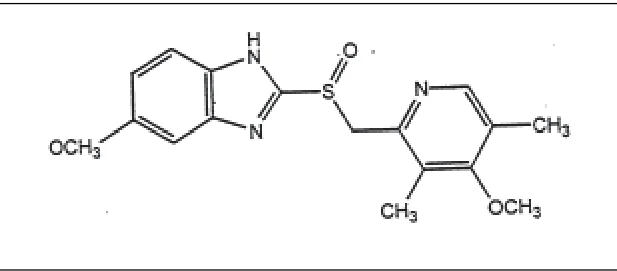
| Chemical Name | 1H-Benzimidazole, 5-methoxy-2-[[(4-methoxy-3, 5-dimethyl-2-pyridinyl)methyl]sulfinyl]-. 5-methoxy-2-[[(4-methoxy-3,5-dimethyl-2-pyridinyl)methyl]-sulfinyl]benzimidazole |
| Structural Formula | |
| Molecular Formula | C17H19N3O3S |
| Molecular Weight | 345.42 g/mol |
| Description | Omeprazole is a nonhygroscopic, crystalline substance which melts with decomposition at between 150ºC and 160ºC. The substance is soluble in dichloromethane, sparingly soluble in methanol and in alcohol and very slightly soluble in water. The pKa of the benzimidazole is 8.8 and that of the pyridinium ion, 4.0. |
Composition
Active: Omeprazole
Nonmedicinal ingredients:
Composition of 10 and 20 mg Capsule Fill
Sugar spheres
*Surelease® E-7-7050 (ethyl cellulose aqueous dispersion) Talc
Methacrylic acid copolymer dispersion (Eudragit L 30 D) Triethyl citrate (Eudraflex)
Hydroxypropylmethyl cellulose (hypromellose 2910) Titanium dioxide
Composition of Capsule Shells for 10 mg and 20 mg capsules FDA/E172 Red Iron Oxide
Titanium Dioxide
Gelatin
*Surelease® E-7-7050 solids consists of ethylcellulose, dibutyl sebacate, oleic acid, fumed silica and ammonium hydroxide.
Stability and Storage Recommendations
Store between 15 C and 25 C. Protect from light and moisture
AVAILABILITY OF DOSAGE FORMS
Q-OMEPRAZOLE 10 mg delayed release capsules, USP, are no. 3, dark pink opaque cap / dark pink opaque body, hard-shell gelatin capsule filled with white to off-white beads. The capsule is axially printed with MYLAN over OM 10 in black ink on both the cap and the body.
Q-OMEPRAZOLE 20 mg delayed release capsules, USP, are no. 2, red brown opaque cap / light pink opaque body, hard-shell gelatin capsule filled with white to off-white beads. The capsule is axially printed with MYLAN over OM 20 in black ink on both the cap and the body.
The 10 mg delayed-release capsules are provided in HDPE bottles of 30 and the 20 mg delayed-release capsules are provided in HDPE bottles of 30, 100 and 500.