


Product Monograph - Rapamune (Pfizer Canada, 1 mg)
RECENT MAJOR LABEL CHANGES
| 4 DOSAGE AND ADMINISTRATION | 07/2025 |
|---|
TABLE OF CONTENTS
Sections or subsections that are not applicable at the time of authorization are not listed.
RECENT MAJOR LABEL CHANGES ........................................................................................... 2
TABLE OF CONTENTS ............................................................................................................. 2
PART I: HEALTH PROFESSIONAL INFORMATION ..................................................................... 4
1 INDICATIONS .............................................................................................................. 4
1.1 Pediatrics ................................................................................................................... 4
1.2 Geriatrics ................................................................................................................... 4
2 CONTRAINDICATIONS ................................................................................................. 4
3 SERIOUS WARNINGS AND PRECAUTIONS BOX ............................................................ 4
4 DOSAGE AND ADMINISTRATION ................................................................................. 5
4.1 Dosing Considerations .............................................................................................. 5
4.2 Recommended Dose and Dosage Adjustment ......................................................... 6
4.4 Administration .......................................................................................................... 8
4.5 Missed Dose .............................................................................................................. 9
5 OVERDOSAGE ............................................................................................................. 9
6 DOSAGE FORMS, STRENGTHS, COMPOSITION AND PACKAGING ................................. 9
7 WARNINGS AND PRECAUTIONS ................................................................................ 10
7.1 Special Populations ................................................................................................. 16
7.1.1 Pregnant Women .............................................................................................. 16
7.1.2 Breast-feeding ................................................................................................... 16
7.1.3 Pediatrics ........................................................................................................... 16
7.1.4 Geriatrics ........................................................................................................... 16
8 ADVERSE REACTIONS................................................................................................ 17
8.1 Adverse Reaction Overview .................................................................................... 17
8.2 Clinical Trial Adverse Reactions .............................................................................. 17
8.2.1 Clinical Trial Adverse Reactions – Pediatrics..................................................... 26
8.3 Less Common Clinical Trial Adverse Reactions ....................................................... 26
8.4 Abnormal Laboratory Findings: Hematologic, Clinical Chemistry and Other Quantitative Data .............................................................................................................. 26
8.5 Post-Market Adverse Reactions .............................................................................. 26
9 DRUG INTERACTIONS ............................................................................................... 28
9.1 Serious Drug Interactions ....................................................................................... 28
9.2 Drug Interactions Overview .................................................................................... 28
9.4 Drug-Drug Interactions ........................................................................................... 29
9.5 Drug-Food Interactions ........................................................................................... 31
9.6 Drug-Herb Interactions ........................................................................................... 31
9.7 Drug-Laboratory Test Interactions.......................................................................... 31
10 CLINICAL PHARMACOLOGY ....................................................................................... 32
10.1 Mechanism of Action ........................................................................................ 32
10.2 Pharmacodynamics ........................................................................................... 32
10.3 Pharmacokinetics .............................................................................................. 33
11 STORAGE, STABILITY AND DISPOSAL ......................................................................... 39
12 SPECIAL HANDLING INSTRUCTIONS ........................................................................... 40
PART II: SCIENTIFIC INFORMATION ...................................................................................... 41
13 PHARMACEUTICAL INFORMATION ........................................................................... 41
14 CLINICAL TRIALS ....................................................................................................... 41
14.1 Clinical Trials by Indication ............................................................................... 41
14.2 Comparative Bioavailability Studies ................................................................. 50
15 MICROBIOLOGY ....................................................................................................... 52
16 NON-CLINICAL TOXICOLOGY ..................................................................................... 52
PATIENT MEDICATION INFORMATION ......................................... Error! Bookmark not defined.
PART I: HEALTH PROFESSIONAL INFORMATION
1 INDICATIONS
Rapamune (sirolimus oral solution and tablets) is indicated for the prophylaxis of organ rejection in patients receiving allogeneic renal transplants:
- In patients at low to moderate immunological risk, it is recommended that Rapamune be used initially in a regimen with cyclosporine and corticosteroids. Cyclosporine should be withdrawn 2 to 4 months after transplantation and the Rapamune dose should be increased to reach recommended blood concentrations (See 4 DOSAGE AND ADMINISTRATION).
- In patients at high immunologic risk (defined as Black transplant recipients and/or repeat renal transplant recipients who lost a previous allograft for immunologic reason and/or patients with high-panel reactive antibodies (PRA; peak PRA level > 80%), it is recommended that Rapamune be used in combination with cyclosporine and corticosteroids for the first year following transplantation (See 4 DOSAGE AND ADMINISTRATION and 14 CLINICAL TRIALS). Thereafter, any adjustments to the immunosuppressive regimen should be considered on the basis of the clinical status of the patient.
1.1 Pediatrics
Pediatrics (<13 years of age): The safety and efficacy of Rapamune in pediatric patients below the age of 13 years have not been established; therefore, Health Canada has not authorized an indication for patients under the age of 13 years.
1.2 Geriatrics
Geriatrics (> 65 years of age): Clinical studies of Rapamune did not include sufficient numbers of patients aged 65 and over to determine whether safety and efficacy differ in this population from younger patients. Based on the finding that blood clearance decreases linearly with age, consideration should be given to reducing the Rapamune dose in patients 65 years of age and over.
2 CONTRAINDICATIONS
Rapamune is contraindicated in patients with a hypersensitivity to sirolimus or its derivatives or any ingredient in the formulation, including any non-medicinal ingredient or component of the container. For a complete listing, see 6 DOSAGE FORMS, STRENGTHS, COMPOSITION AND PACKAGING.
3 SERIOUS WARNINGS AND PRECAUTIONS BOX
Serious Warnings and Precautions
- Increased susceptibility to infection and the possible development of lymphoma may result from immunosuppression.
Only physicians experienced in immunosuppressive therapy and management of organ transplant patients should use Rapamune. Patients receiving the drug should be managed in
- facilities equipped and staffed with adequate laboratory and supportive medical resources. The physician responsible for maintenance therapy should have complete information requisite for the follow-up of the patient.
- Hypersensitivity reactions, including anaphylactic/anaphylactoid reactions, angioedema, exfoliative dermatitis, and hypersensitivity vasculitis, have been associated with the administration of sirolimus.
- The safety and efficacy of sirolimus as immunosuppressive therapy have not been established in liver or lung transplant patients, and therefore, such use is not recommended.
4 DOSAGE AND ADMINISTRATION
4.1 Dosing Considerations
- In patients at low to moderate immunological risk, it is recommended that Rapamune should be used initially in a regimen with cyclosporine and corticosteroids. Cyclosporine withdrawal is recommended 2 to 4 months after transplantation in patients at low to moderate immunologic risk.
- In patients at high immunologic risk, it is recommended that Rapamune be used in combination with cyclosporine and corticosteroids for the first year following transplantation (See 4 DOSAGE AND ADMINISTRATION and 14 CLINICAL TRIALS).
- To minimize the variability of exposure to Rapamune, this drug should be taken once daily, preferably at the same time of day, and consistently with or without food.
- Cyclosporine microemulsion enhances absorption of Rapamune (See 9 DRUG INTERACTIONS). It is recommended that sirolimus be taken 4 hours after cyclosporine microemulsion administration.
- A daily dose of 2 mg Rapamune Tablets has been demonstrated to be clinically equivalent to 2 mg Rapamune Oral Solution. However, it is not known if higher doses of Rapamune tablets and oral solution are clinically equivalent on a mg-to-mg basis. (See 10 CLINICAL PHARMACOLOGY).
- It is recommended that a sirolimus trough concentration be taken 1 or 2 weeks after switching Rapamune formulations or altering the total daily dose to confirm that the trough concentration is within the recommended target range (see 7 WARNINGS AND PRECAUTIONS – Monitoring and Laboratory Tests – Blood Concentration Monitoring).
Blood sirolimus trough levels should be monitored:
- In patients receiving concentration-controlled Rapamune.
- In pediatric patients
- In patients with hepatic impairment.
- During concurrent administration of inhibitors and inducers of CYP3A4 and P-glycoprotein.
- If the cyclosporine dose is markedly reduced, or if cyclosporine is discontinued.
- The Rapamune dosage need not be adjusted because of impaired renal function (See 10.3 Pharmacokinetics - Special Populations and Conditions - Renal Insufficiency).
- It is recommended that the maintenance dose of Rapamune be reduced by approximately one third to one-half in patients with hepatic impairment. It is not necessary to modify the Rapamune loading dose. (See 10.3 Pharmacokinetics - Special Populations and Conditions - Hepatic Insufficiency). In patients with hepatic impairment, it is recommended that sirolimus whole blood trough levels be monitored.
- Based on the finding that blood clearance decreases linearly with age, consideration should be given to reducing the Rapamune dose in patients 65 years of age and over. (See 10.3 Pharmacokinetics, Special populations and Conditions, Geriatrics).
- The safety and efficacy of Rapamune in pediatric patients below the age of 13 years have not been established. The initial loading dose should be 3 mg/m2 in patients ≥13 years who weigh less than 40 kg. The maintenance dose should be adjusted, based on body surface area, to 1 mg/m2/day. It is recommended that sirolimus whole blood trough levels be monitored.
- The bioavailability of sirolimus (oral solution or tablet) is altered by concomitant food intake after administration. Rapamune should be taken consistently, either with or without food to minimize blood level variability.
- Bioavailability has not been determined for tablets after they have been crushed, chewed, or split and therefore this cannot be recommended. Patients unable to take the tablets should be prescribed the oral solution and instructed in its use.
- Rapamune oral solution contains up to 3.17 vol % ethanol (alcohol). A 6 mg loading dose contains up to 150 mg of alcohol which is equivalent to 3.80 mL beer or 1.58 mL wine. This dose could potentially be harmful for those suffering from alcoholism and should be taken into account in pregnant or breast-feeding women, children and high-risk groups such as patients with liver disease or epilepsy. Maintenance doses of 4 mg or less contain small amounts of ethanol (100 mg or less) that are likely to be too low to be harmful.
4.2 Recommended Dose and Dosage Adjustment
Patients at Low to Moderate Immunological Risk
Rapamune and Cyclosporine Combination Therapy: The initial dose of Rapamune should be administered as soon as possible after transplantation. For de novo transplant recipients, a loading dose of Rapamune corresponding to 3 times the maintenance dose should be given. For most patients, the maintenance dose is 2 mg/day, with a loading dose of 6 mg.
Although a maintenance dose of 5 mg/day, with a loading dose of 15 mg, was used in clinical trials of the oral solution and was shown to be safe and effective, no efficacy advantage over the 2 mg dose could be established for renal transplant patients. Patients receiving 2 mg of Rapamune oral solution per day demonstrated an overall better safety profile than did patients receiving 5 mg of Rapamune oral solution per day.
It is recommended that Rapamune oral solution and tablets be used initially in a regimen with cyclosporine and corticosteroids. Cyclosporine should be withdrawn 2 to 4 months after renal transplantation in patients at low to moderate immunologic risk, and the Rapamune dose should be increased to reach recommended blood concentrations (See Rapamune Maintenance Regimen). Cyclosporine withdrawal has not been studied in patients with Banff 93 grade III acute rejection or vascular rejection prior to cyclosporine withdrawal, those who are dialysisdependent, or with serum creatinine > 4.5 mg/dL, Black patients, re-transplants, multiorgan transplants, or patients with high-panel reactive antibodies (See 14 CLINICAL TRIALS).
It is recommended that Rapamune be taken 4 hours after cyclosporine microemulsion [(cyclosporine, USP) MODIFIED] administration.
Rapamune Maintenance Regimen (RMR, Rapamune following cyclosporine withdrawal):
Initially, patients considered for cyclosporine withdrawal should be receiving Rapamune and cyclosporine combination therapy. At 2 to 4 months following transplantation, cyclosporine should be progressively discontinued over 4 to 8 weeks and the Rapamune dose should be adjusted to obtain whole blood trough concentrations within the range of 16 to 24 ng/mL (chromatographic method) for the first year following transplantation. Thereafter, the target sirolimus concentrations should be 12 to 20 ng/mL (chromatographic method). The actual observations at year 1 and 5 were close to these ranges (See 7 WARNINGS AND PRECAUTIONS – Monitoring and Laboratory Tests – Blood Concentration Monitoring).
Patients at High Immunological Risk
Rapamune Combination Therapy: It is recommended that Rapamune be used in combination with cyclosporine and corticosteroids for the first year following transplantation in patients at high immunologic risk (defined as Black transplant recipients and/or repeat renal transplant recipients who lost a previous allograft for immunologic reason and/or patients with high-panel reactive antibodies [PRA; peak PRA level > 80%]) (See 14 CLINICAL TRIALS).
The safety and efficacy of these combinations in high-risk patients have not been studied beyond one year. Therefore, after the first year following transplantation, any adjustments to the immunosuppressive regimen should be considered on the basis of the clinical status of the patient.
For patients receiving Rapamune with cyclosporine, Rapamune therapy should be initiated with a loading dose of up to 15 mg on day 1 post-transplantation. Beginning on day 2, an initial maintenance dose of 5 mg/day should be given. A trough level should be obtained between days 5 and 7, and the daily dose of Rapamune should thereafter be adjusted to achieve whole blood trough sirolimus concentrations of 10-15 ng/mL.
The starting dose of cyclosporine should be up to 7 mg/kg/day in divided doses, and the dose should subsequently be adjusted to achieve whole blood trough concentrations of 200-300 ng/mL through week 2, 150-200 ng/mL from week 2 to week 26, and 100-150 ng/mL from week 26 to week 52. Prednisone should be administered at a minimum of 5 mg/day.
Antibody induction therapy may be used (See 14 CLINICAL TRIALS).
Pediatrics (<13 years of age): The safety and efficacy of Rapamune in pediatric patients below the age of 13 years has not been established; therefore, Health Canada has not authorized an indication for patients under the age of 13 years.
Rapamune Dosage Adjustment
Therapeutic drug monitoring should not be the sole basis for adjusting Rapamune therapy. Careful attention should be made to clinical signs/symptoms, tissue biopsies, and laboratory parameters (See 9 DRUG INTERACTIONS).
Cyclosporine inhibits the metabolism and transport of sirolimus, and consequently, whole blood sirolimus concentrations will decrease when cyclosporine is discontinued unless the Rapamune dose is increased. The Rapamune dose will need to be approximately 4-fold higher to account for both the absence of the pharmacokinetic interaction with cyclosporine (approximately 2-fold increase) and the augmented immunosuppressive requirement in the absence of cyclosporine (approximately 2-fold increase).
Sirolimus has a long half-life; therefore frequent Rapamune dose adjustments based on non-steady-state sirolimus concentrations can lead to overdosing or underdosing. Once the Rapamune maintenance dose is adjusted, patients should be retained on the new maintenance dose for at least 7 to 14 days before further dosage adjustment with trough concentration monitoring.
In most patients dose adjustments can be based on simple proportion:
New Rapamune dose = Current Dose x (Target Concentration ) Current Concentration)
A loading dose should be considered in addition to a new maintenance dose when it is necessary to considerably increase sirolimus trough concentrations:
Rapamune Loading Dose = 3 x (New Maintenance Dose - Current Maintenance Dose)
The maximum Rapamune dose administered on any day should not exceed 40 mg. If an estimated daily dose would exceed 40 mg due to the addition of a loading dose, the loading dose should be administered over 2 days. Sirolimus trough concentrations should be monitored at least 3 to 4 days after a loading dose(s).
4.4 Administration
Instructions for Dilution and Administration of Rapamune Oral Solution:
The amber oral dose syringe should be used to withdraw the prescribed amount of Rapamune from the bottle. Empty the correct amount of Rapamune from the syringe into a glass or plastic container holding at least two (2) ounces (¼ cup; 60 mL) of water or orange juice. No other liquids, including grapefruit juice, should be used for dilution. Stir vigorously and drink at once. Rinse the container with an additional volume (minimum of four [4] ounces; ½ cup; 120 mL) of water or orange juice, stir vigorously, and drink at once.
Rapamune oral solution contains polysorbate-80, which is known to increase the rate of di-(2- ethylhexyl) phthalate (DEHP) extraction from polyvinyl chloride (PVC). This should be considered during the preparation and administration of Rapamune oral solution. It is important that the recommendations in this section be followed closely.
Instructions for Rapamune Tablets:
Rapamune tablets should be taken with orange juice or water only. Rapamune tablets should not be taken with grapefruit juice.
4.5 Missed Dose
A missed dose should be taken as soon as remembered, but not within 4 hours of the next dose of cyclosporine. Medicines can then be taken as usual. If a dose is missed completely, a double dose should not be taken to make up for a forgotten dose.
5 OVERDOSAGE
There is limited experience with overdose. In general, the adverse effects of overdose are consistent with those listed in the 8 ADVERSE REACTIONS section. During clinical trials, there were two accidental Rapamune (sirolimus oral solution) ingestions, of 120 mg and 150 mg. One patient, receiving 150 mg, experienced an episode of transient atrial fibrillation. The other patient experienced no adverse effects. General supportive measures should be followed in all cases of overdose. Based on the poor aqueous solubility and high erythrocyte and plasma protein binding of Rapamune, it is anticipated that Rapamune is not dialyzable to any significant extent.
In mice and rats, the acute oral LD50 was greater than 800 mg/kg.
For the most recent information in the management of a suspected drug overdose, contact your regional poison control centre or Health Canada's toll-free number, 1-844 POISON-X (1-844-764-7669).
6 DOSAGE FORMS, STRENGTHS, COMPOSITION AND PACKAGING
Table 1 – Dosage Forms, Strengths, Composition and Packaging
| Route of Administration | Dosage Form / Strength/Composition | Non-medicinal Ingredients |
Oral Oral | Solution: 1 mg/mL Tablet: 1 mg | Phosal 50 PG® (ascorbyl palmitate, Eethanol, phosphatidyl-choline, propylene glycol, soybean oil fatty acids and sunflower mono and diglycerides) and Polysorbate 80 NF. Calcium Sulfate Anhydrous NF, Carnauba Wax NF, Glyceryl Monooleate, Lactose Monohydrate NF, Magnesium Stearate NF, Microcrystalline Cellulose NF, Pharmaceutical Glaze NF, |
Availability of Dosage Forms
Oral Solution:
Rapamune (sirolimus oral solution) is supplied at a concentration of 1 mg/mL in:
- Amber glass bottles of 60 mL
The bottles are supplied with an oral syringe adapter for fitting into the neck of the bottle and 30 disposable amber oral syringes and 30 caps for daily dosing.
Tablet:
Rapamune (sirolimus tablet) is available as:
- a white, triangular-shaped tablet containing 1 mg sirolimus marked “RAPAMUNE 1 mg” on one side
The tablets are supplied in:
- Bottles of 100 tablets
- Unit dose cartons of 100 tablets (10 blister cards of 10 tablets each)
7 WARNINGS AND PRECAUTIONS
Please see 3 SERIOUS WARNINGS AND PRECAUTIONS BOX.
General
Rapamune is intended for oral administration only.
Rapamune has been approved to be administered concurrently with cyclosporine (liquid and microemulsion) and corticosteroids. The efficacy and safety of the use of Rapamune in combination with other immunosuppressive agents has not been established.
Use in High-Risk Patients
The safety and efficacy of cyclosporine withdrawal in high-risk patients have not been adequately studied and it is therefore not recommended. This includes patients with Banff grade III acute rejection or vascular rejection prior to cyclosporine withdrawal, those who are dialysis-dependent, or with serum creatinine > 400 µmol/L (4.5 mg/dL), black patients, re-transplants, multi-organ transplants, and patients with high panel of reactive antibodies. It is recommended that Rapamune be used in combination with cyclosporine and corticosteroids for the first year following transplantation.
The safety and efficacy of this combination in high-risk renal transplant patients have not been studied beyond one year. Therefore, after the first year following transplantation any adjustments to the
| Polaxamer 188, Polyethylene Glycol 8000 Powdered NF, Polyethylene Glycol Type 20,000, Povidone USP, Vitamin E (dl-alpha tocopherol), Sucrose NF, Talc USP, Titanium Dioxide USP and Ink. |
immunosuppressive regimen should be considered on the basis of the clinical status of the patient (See 1 INDICATIONS, 4 DOSAGE AND ADMINISTRATION, and 14 CLINICAL TRIALS).
Angioedema
The concomitant administration of Rapamune and angiotensin-converting enzyme (ACE) inhibitors has resulted in angioneurotic edema-type reactions. Elevated sirolimus levels (with/without concomitant ACE inhibitors) may also potentiate angioedema. In some cases, the angioedema has resolved upon discontinuation or dose reduction of Rapamune.
Antimicrobial Prophylaxis
Cytomegalovirus (CMV) prophylaxis is recommended for 3 months after transplantation, particularly for patients at increased risk for CMV infection.
Cases of Pneumocystis carinii pneumonia have been reported in patients not receiving antimicrobial prophylaxis. Therefore, antimicrobial prophylaxis for Pneumocystis carinii pneumonia should be administered for 1 year following transplantation.
Carcinogenesis and Mutagenesis
Patients receiving immunosuppression regimens involving combinations of drugs, including Rapamune, as part of an immunosuppression regimen are at increased risk of developing lymphomas and other malignancies, particularly of the skin. The risk appears to be related to the intensity and duration of immunosuppression rather than to the use of any specific agent. As with all patients at an increased risk for skin cancer, exposure to sunlight and UV light should be limited by wearing protective clothing and using a sunscreen with a high protection factor.
Also, see 16 NON-CLINICAL TOXICOLOGY - Chronic Toxicology - Carcinogenicity, Mutagenicity, Reproductive and Developmental Toxicology.
Cardiovascular
Hyperlipidemia:
Increased serum cholesterol and triglycerides requiring treatment may occur in patients treated with Rapamune. The risk/benefit should be considered in patients with established hyperlipidemia before initiating an immunosuppressive regimen including Rapamune.
Drug-Drug Interactions
Co-administration of Rapamune with strong inhibitors of CYP3A4 and/or P-glycoprotein (P-gp) (such as ketoconazole, voriconazole, itraconazole, telithromycin, or clarithromycin) or strong inducers of CYP3A4 and/or P-gp (such as rifampicin or rifabutin) is not recommended. Co-administration of agents that inhibit or induce CYP3A4 and/or P-gp will increase or decrease respectively whole blood concentrations of sirolimus. If administered concomitantly with sirolimus, frequent monitoring of sirolimus whole blood concentrations and appropriate dose adjustments should be made during and after discontinuation of the co-administered agent.
Co-administration of Rapamune with letermovir may result in increased plasma concentrations of Rapamune. Frequent monitoring of sirolimus blood levels should be performed during and at discontinuation of letermovir and the dose of sirolimus adjusted as required.
There have been reports of increased blood levels of sirolimus during concomitant use with cannabidiol. Caution should be used when cannabidiol and Rapamune are co-administered. Closely monitor sirolimus blood levels and adverse events suggestive of sirolimus toxicity; the dose adjustment of sirolimus may be required (See 9 DRUG INTERACTIONS).
Hematologic
Patients receiving immunosuppressive agents such as Rapamune may develop leukopenia. The development of leukopenia may be related to Rapamune itself, concomitant medications, viral infection, or some combination of these causes. If leukopenia develops, dose reduction of Rapamune and/or other immunosuppressive agents should be considered.
Hepatic/Biliary/Pancreatic
Liver Transplantation Excess Mortality, Graft Loss, and Hepatic Artery Thrombosis (HAT):
The use of Rapamune in combination with tacrolimus was associated with excess mortality and graft loss in a study in de novo liver transplant recipients. Many of these patients had evidence of infection at or near the time of death. In this and another study in de novo liver transplant recipients, the use of Rapamune in combination with cyclosporine or tacrolimus was associated with an increase in HAT; most cases of HAT occurred within 30 days post-transplantation and most led to graft loss or death.
Hepatic impairment: When compared to normal subjects, the clearance of sirolimus is significantly decreased in patients with impaired hepatic function. Accordingly, the blood concentration of Rapamune should be closely monitored and the dose of Rapamune should be adjusted based on the blood concentration. It is not necessary to modify the loading dose (see 10 CLINICAL PHARMACOLOGY and 4 DOSAGE AND ADMINISTRATION).
Immune
Oversuppression of the immune system can increase susceptibility to opportunistic infections, sepsis, and fatal infections. Mucosal herpes simplex infections were significantly more frequent in the 5 mg/day Rapamune-treated patients compared to other treatment groups (see 8 ADVERSE REACTIONS). Activation of latent viral infections was reported, including BK virus associated nephropathy and JC virus associated progressive multifocal leukoencephalopathy (PML). These infections are often related to a high immunosuppressive burden and may lead to serious or fatal conditions. Reduction of immunosuppression should be considered for patients who develop evidence of BK virus-associated nephropathy and also in patients who develop PML.
Vaccinations: Immunosuppressants may affect response to vaccination (see 9 DRUG INTERACTIONS - Vaccination).
Monitoring and Laboratory Tests
Blood Concentration Monitoring: Whole blood trough concentrations of sirolimus should be monitored in patients receiving concentration-controlled Rapamune. Monitoring is also necessary in patients likely to have altered drug metabolism; in patients with hepatic impairment; in pediatric patients; during concurrent administration of inhibitors and inducers of CYP3A4 and P-glycoprotein; and if the cyclosporine dosage is markedly changed or discontinued. It is recommended that a whole blood trough concentration be measured 1 to 2 weeks after altering the total daily dose of Rapamune, or after switching between the solution and the tablet formulation., to confirm that the trough concentration is within the desired target range.
In controlled clinical trials, with concomitant cyclosporine (Studies 1 and 2), mean sirolimus whole blood trough concentrations through month 6 following transplantation, expressed as chromatographic assay value, were approximately 7.2 ng/mL (range 3.6-11 ng/mL [10th to 90th percentile]) for the 2 mg/day treatment group (n=226), and 14 ng/mL (range 8.0-22 ng/mL [10th to 90th percentile]) for the 5 mg/day dose (n=219; values were obtained using a research immunoassay, but are expressed as chromatographic equivalent values, using a +20% bias for the immunoassay).
In a controlled clinical trial with cyclosporine withdrawal (Study 4), the mean sirolimus whole blood trough concentrations during months 4 through 12 following transplantation, expressed as chromatographic assay values, were approximately 8.6 ng/mL (range 5.2-12 ng/mL [10th to 90th percentile]) in the concomitant Rapamune, cyclosporine and corticosteroid treatment group (n = 205) and were 19 ng/mL (range 14-24 ng/mL [10th to 90th percentile]) in the Rapamune maintenance group after withdrawal of cyclosporine (n=201). By month 60, the mean sirolimus whole blood trough concentrations remained stable in the concomitant Rapamune, cyclosporine and corticosteroid group (n=71) at 8.6 ng/mL (range 5.0 to 12 ng/mL [10th to 90th percentile]). For the cyclosporine withdrawal group (n=104) by month 60, the mean sirolimus whole blood concentration had fallen to 15 ng/mL (range 9.4 to 19 ng/mL [10th to 90th percentile]).
In a concentration-controlled clinical trial in high-risk adult patients (Study 5), the mean whole blood sirolimus trough concentrations, during months 9 through 12 months following transplantation, as measured by chromatography, were 11.2 ng/mL (range 6.8 – 15.9 ng/mL [10th to 90th percentile]) (n=127), and the mean whole blood trough concentrations of cyclosporine were 133 ng/mL (range 54 – 215 ng/mL [10th to 90th percentile]).
Results from other assays may differ from those with an immunoassay. On average, chromatographic methods [high-performance liquid chromatography with ultraviolet detection (HPLC UV) or liquid chromatography with tandem mass spectrometric detection (LC/MS/MS)] yield results that are approximately 20% (range 10%-29%) lower than the immunoassay whole blood concentration determinations. The recommended 24-hour trough concentration ranges for sirolimus are based on chromatographic methods. Several assay methodologies have been used to measure the whole blood concentrations of sirolimus. Currently in clinical practice, sirolimus whole blood concentrations are being measured by both chromatographic and immunoassay methodologies. The concentration values obtained by these different methodologies are not interchangeable. Adjustments to the targeted range should be made according to the assay being utilized to determine the sirolimus trough concentration. A discussion of different assay methods is contained in Clinical Therapeutics 2000; 22 Suppl B:B1-B132. Since assay results are also laboratory dependent, adjustment to the targeted therapeutic range must be made with a detailed knowledge of the site-specific assay used.
Lipids: The use of Rapamune may lead to increased serum cholesterol and triglycerides that may require treatment. Patients must be monitored for hyperlipidemia. In studies 1 and 2, high fasting triglyceride levels (>11.3 mmol/L [1000 mg/dL]) were observed in 0.8% of patients receiving Rapamune 2 mg/day and 3% of patients receiving Rapamune 5 mg/day. Monitoring of triglycerides should be included as part of routine post-transplant patient management, particularly in patients with antecedent dyslipidemia. Elevated triglycerides can be managed by appropriate medical therapy, dose reduction or, for severe elevations, discontinuation of Rapamune.
In Study 4 during the pre-randomization period, mean fasting serum cholesterol and triglyceride values rapidly increased with the administration of Rapamune, and peaked at 2 months with mean cholesterol values > 6.2 mmol/L (240 mg/dL) and triglycerides > 2.8 mmol/L (250 mg/dL). After 3 years of treatment with Rapamune, mean fasting cholesterol (5.9 versus 6.3 mmol/L; p=0.059) trended higher in the cyclosporine withdrawal arm, whereas HDL cholesterol, LDL cholesterol, and triglycerides were similar in the two groups.
Musculoskeletal
Rhabdomyolysis: In clinical trials, the concomitant administration of Rapamune and HMG-CoA reductase inhibitors and/or fibrates was well tolerated. During Rapamune therapy with or without cyclosporine, patients should be monitored for elevated lipids, and patients administered an HMG-CoA reductase inhibitor and/or fibrate should be monitored for the possible development of rhabdomyolysis and other adverse effects as described in the respective labelling for these agents.
Peri-Operative Considerations
mTOR inhibitors such as sirolimus have been shown in vitro to inhibit production of certain growth factors that may affect angiogenesis, fibroblast proliferation, and vascular permeability, which may be associated with impaired or delayed wound healing and/or fluid accumulation.
Impaired Wound Healing: Studies showed that in comparison with other immunosuppressive regimens the use of sirolimus-based immunosuppressive regimens was associated with a significantly higher incidence of wound-healing complications, including wound dehiscence, incisional herniae, anastomotic disruption, and lymphocele (see 8.5 Post-Market Adverse Drug Reactions, Metabolic: Abnormal healing). Greater post-operative measures should be taken to minimize this complication.
Fluid Accumulation: Use of sirolimus is associated with an increased incidence of fluid accumulation, including peripheral edema, lymphedema, pleural effusion and pericardial effusions (including hemodynamically significant effusions in children and adults).
Renal
Renal function: Patients treated with cyclosporine and Rapamune were noted to have higher serum creatinine levels, lower glomerular filtration rates, and a more rapid rate of decline in renal function compared with patients treated with cyclosporine and placebo or azathioprine controls (Studies 1 and 2) or patients continuing treatment with Rapamune following withdrawal of cyclosporine (Rapamune Maintenance Regimen: Study 4). In the Rapamune Maintenance Regimen Study that compared a regimen of Rapamune, cyclosporine and steroids to one in which cyclosporine was withdrawn 2-4 months post-transplantation, those in whom cyclosporine was not withdrawn had significantly higher serum creatinine levels and significantly lower glomerular filtration rates at 12 months through 60 months, and significantly lower graft survival at 48 months, the point at which it was decided by the sponsor to discontinue subjects from assigned therapy in the Rapamune and cyclosporine arm. When the protocol was amended all subjects had reached 48 months and some completed the 60 months of the study. In patients at low to moderate immunologic risk continuation of combination therapy with cyclosporine beyond 4 months following transplantation should only be considered when the benefits outweigh the risks of this combination for the individual patients (See 14 CLINICAL TRIALS - Rapamune Maintenance Regimen).
Renal function should be closely monitored during the administration of Rapamune in combination with cyclosporine. Appropriate adjustments of the immunosuppressive regimen, including discontinuation of cyclosporine and /or Rapamune should be considered in patients with elevated or increasing serum creatinine levels. Caution should be exercised when using agents (e.g., aminoglycosides and amphotericin B) that are known to have a deleterious effect on renal function.
In patients with delayed graft function, Rapamune may delay recovery of renal function.
Proteinuria: Periodic quantitative monitoring of urinary protein excretion is recommended. In a study evaluating conversion from calcineurin inhibitors to sirolimus in maintenance renal transplant patients 6 – 120 months post-transplant, conversion was associated with significantly increased urinary protein excretion. The safety and efficacy of conversion from calcineurin inhibitors to sirolimus in maintenance renal transplant population have not been established (see 8.2 Clinical Trial Adverse Drug Reactions and 10.2 Pharmacodynamics).
De novo use without calcineurin inhibitor (CNI): The safety and efficacy of de novo use of Rapamune, mycophenolate mofetil (MMF), and corticosteroids, in combination with interleukin-2 receptor antibody induction is not established and is not recommended in de novo renal transplant patients (See 14 CLINICAL TRIALS).
Hemolytic uremic syndrome/thrombotic thrombocytopenic purpura/thrombotic microangiopathy (HUS/TTP/TMA): The concomitant use of sirolimus with a calcineurin inhibitor may increase the risk of calcineurin inhibitor-induced HUS/TTP/TMA.
Reproductive Health: Female and Male Potential
See 16 NON-CLINICAL TOXICOLOGY - Chronic Toxicology - Carcinogenicity, Mutagenicity, and Reproductive and Developmental Toxicology.
Respiratory
Lung Transplantation - Bronchial Anastomotic Dehiscence: Cases of bronchial anastomotic dehiscence, most fatal, have been reported in de novo lung transplant patients when Rapamune has been used as part of an immunosuppressive regimen.
Interstitial Lung Disease: Cases of interstitial lung disease [including pneumonitis, and infrequently bronchiolitis obliterans organizing pneumonia (BOOP) and pulmonary fibrosis], some fatal, with no identified infectious etiology have occurred in patients receiving immunosuppressive regimens including sirolimus. In some cases, the interstitial lung disease has resolved upon discontinuation or dose reduction of sirolimus. The risk may be increased as the sirolimus trough concentration increases.
7.1 Special Populations
7.1.1 Pregnant Women
Because sirolimus is embryo/fetal toxic in rats at dosages of 0.1 mg/kg and above (approximately 1.4 times the maximum recommended human dose [MRHD]), it may cause fetal harm when administered to pregnant women. In animal studies, embryo/fetal toxicity was manifested as mortality and reduced fetal weights (with associated delays in skeletal ossification). However, no teratogenesis was evident. There were no effects on rabbit development at the maternally toxic dosage of 0.05 mg/kg (approximately 0.7 times the MRHD).
There are no adequate and well-controlled studies of Rapamune use in pregnant women. Consequently, use of Rapamune during pregnancy should be considered only if the potential benefit outweighs the potential risk to the embryo/fetus.
Effective contraception must be used before beginning Rapamune therapy, during Rapamune therapy and for 12 weeks after Rapamune has been stopped.
Transplant Pregnancy Registry International: This registry monitors maternal-fetal outcomes of pregnant women exposed to Sirolimus. Physicians are encouraged to register patients by calling 1-215-599-2078 or Toll-Free 1-877-955-6877
7.1.2 Breast-feeding
Nursing Women:
Studies in rats have shown that sirolimus is excreted in milk. It is not known whether sirolimus is excreted in human milk. A decision should be made whether to discontinue nursing or to discontinue the drug, taking into account the importance of the drug to the mother.
7.1.3 Pediatrics
Pediatrics (<13 years of age): The safety and efficacy of Rapamune in pediatric patients below the age of 13 years has not been established; therefore, Health Canada has not authorized an indication for patients under the age of 13 years.
Safety and efficacy information from a controlled clinical trial in pediatric and adolescent (<18 years of age) renal transplant recipients judged to be at high immunologic risk, defined as a history of one or more acute rejection episodes and/or the presence of chronic allograft nephropathy, do not support the chronic use of the combination of Rapamune oral solution or tablet in combination with calcineurin inhibitors and corticosteroids, due to the increased risk of lipid abnormalities and deterioration of renal function associated with these immunosuppressive regimens, without increased benefit with respect to acute rejection, graft survival, or patient survival.
7.1.4 Geriatrics
Geriatrics (> 65 years of age): Clinical studies of Rapamune did not include sufficient numbers of patients aged 65 and over to determine whether safety and efficacy differ in this population from younger patients. Based on the finding that blood clearance decreases linearly with age, consideration should be given to reducing the Rapamune dose in patients 65 years of age and over.
8 ADVERSE REACTIONS
8.1 Adverse Reaction Overview
- Increased susceptibility to infection and the possible development of lymphoma may result from immunosuppression.
- Clostridium difficile enterocolitis has been reported in patients receiving sirolimus.
- Hypersensitivity reactions, including anaphylactic/anaphylactoid reactions, angioedema, exfoliative dermatitis, and hypersensitivity vasculitis, have been associated with the administration of sirolimus.
8.2 Clinical Trial Adverse Reactions
Clinical trials are conducted under very specific conditions. The adverse reaction rates observed in the clinical trials; therefore, may not reflect the rates observed in practice and should not be compared to the rates in the clinical trials of another drug. Adverse reaction information from clinical trials may be useful in identifying and approximating rates of adverse drug reactions in real-world use.
Rapamune and cyclosporine combination therapy:
Rapamune Oral Solution: The incidence of adverse reactions was determined in two randomized, double-blind, multicentre controlled trials (Studies 1 and 2) in which 499 renal transplant patients received Rapamune (sirolimus oral solution) 2 mg/day, 477 received Rapamune oral solution 5 mg/day, 160 received azathioprine 2-3 mg/kg/day, and 124 received placebo. All patients were treated with cyclosporine and corticosteroids.
Adverse reactions associated with the administration of Rapamune which occurred at a significantly higher frequency than placebo or azathioprine control group include arthralgia, hirsutism, diarrhea, hypertension, hypokalemia, lymphocele, peripheral edema, rash, tachycardia, and some infections. In general, adverse events related to administration of Rapamune were dependent on dose/concentration. Dose related elevations of triglycerides and cholesterol and decreases in platelets and hemoglobin have occurred in patients receiving Rapamune.
The data presented by study group in Table 2 show the adverse reactions that occurred in any treatment group with an incidence of ≥10%.
Table -2: ADVERSE EVENTS OCCURRING AT A FREQUENCY OF ≥10% IN ANY TREATMENT GROUP IN PREVENTION OF ACUTE RENAL REJECTION TRIALS (%) AT 12 MONTHS POST-TRANSPLANTATION FOR STUDIES 1 AND 2a
Rapamune Oral Solution
Rapamune Oral Solution
Azathioprine
Placebo
Body system
2 mg/day
5 mg/day
2-3 mg/kg/day
Adverse Event
Study 1
Study 2
Study 1
Study 2
Study 1
Study 2
(n = 281)
(n = 218)
(n = 269)
(n = 208)
(n = 160)
(n = 124)
Body as a whole
Abdomen enlarged
15
8
9
13
9
10
Abdominal pain
20
26
24
31
22
23
Accidental injury
8
11
9
8
9
10
Asthenia
27
17
32
23
23
19
Back pain
13
20
21
15
19
17
Chest pain
10
16
15
18
12
16
Chills
7
5
8
12
2
8
Face edema
5
5
11
10
4
4
Fever
19
18
22
27
19
23
Headache
18
30
23
30
10
20
Lymphocele
12
11
15
13
3
6
Overdose
10
17
11
17
6
10
Pain
19
29
25
23
20
21
Transplant rejection
2
3
3
7
3
15
Cardiovascular system
Hypertension
38
39
34
43
23
41
Tachycardia
10
10
12
12
4
4
Hypotension
3
4
8
4
10
6
Digestive system
Constipation
25
34
30
34
34
28
Diarrhea
20
18
32
28
14
14
Dyspepsia
12
21
20
22
21
25
Liver function tests abnormal
9
7
11
11
9
7
Nausea
25
21
28
25
31
22
Vomiting
16
17
17
18
25
16
Endocrine system
15
15
20
20
12
15
Hemic and lymphatic system
Anemia
21
18
31
28
22
14
Leukopenia
6
7
12
9
12
2
Ecchymosis
5
6
6
12
7
3
Thrombocytopenia
10
12
18
24
7
3
Metabolic and nutritional
Creatinine increased
28
32
28
38
22
33
Edema
20
17
14
14
15
7
Healing abnormal
8
7
10
12
4
6
Hypercholesterolemia
33
41
37
46
24
20
Hyperglycemia
13
11
16
14
13
10
Hyperkalemia
13
14
10
12
19
23
Hyperlipemia
34
42
42
55
24
20
Table -2: ADVERSE EVENTS OCCURRING AT A FREQUENCY OF ≥10% IN ANY TREATMENT GROUP IN PREVENTION OF ACUTE RENAL REJECTION TRIALS (%) AT 12 MONTHS POST-TRANSPLANTATION FOR STUDIES 1 AND 2a
Rapamune Oral Solution
Rapamune Oral Solution
Azathioprine
Placebo
Body system
2 mg/day
5 mg/day
2-3 mg/kg/day
Adverse Event
Study 1
Study 2
Study 1
Study 2
Study 1
Study 2
(n = 281)
(n = 218)
(n = 269)
(n = 208)
(n = 160)
(n = 124)
Hypokalemia
12
7
17
15
9
6
Hypophosphatemia
16
14
21
17
18
18
Lactic dehydrogenase increased
10
11
13
18
6
5
Peripheral edema
53
48
56
51
48
42
Weight gain
17
8
11
6
13
13
Musculoskeletal system
Arthralgia
18
21
23
25
13
15
Nervous system
Dizziness
10
9
13
13
11
8
Hypesthesia
5
7
7
10
6
5
Insomnia
10
10
20
11
13
8
Tremor
23
17
26
17
18
11
Paresthesia
7
10
8
9
4
6
Respiratory system
Cough increased
14
8
16
15
13
17
Dyspnea
17
20
22
24
14
23
Epistaxis
4
4
6
11
<1
0
Pulmonary physical finding
9
13
11
11
5
12
Rhinitis
12
11
14
13
8
8
Skin and appendages
Acne
25
19
19
19
11
14
Rash
10
5
9
15
2
5
Hirsutism
5
8
12
8
3
8
Special senses
Abnormal vision
9
8
11
12
8
6
Urogenital system
Dysuria
9
10
13
17
10
6
Hematuria
11
14
15
17
13
9
Oliguria
5
4
4
7
6
10
Kidney tubular necrosis
9
9
10
10
7
4
Study event associated with miscellaneous factors
41
37
42
40
34
35
Local reaction to procedure
40
37
42
40
34
34 a: All patients in Study 1 and 2 received cyclosporine and corticosteroids.
Table 3 summarizes the incidence rates at 6 months for clinically important opportunistic or common transplant-related infections across treatment groups Studies 1 and 2. There were no significant differences in incidence rates between treatment groups, with the exception of mucosal infections with Herpes simplex, which occurred at a significantly greater rate in patients treated with Rapamune 5 mg/day.
Table -3: INCIDENCE (%) OF SELECTED CLINICALLY IMPORTANT INFECTIONS IN PREVENTION OF ACUTE RENAL REJECTION FOR STUDIES 1 AND 2a,b
Infection
Sirolimus
2 mg/day
(n=511)
Sirolimus
5 mg/day
(n=493)
Azathioprine
2-3 mg/kg/day
(n=161)
Placebo
(n=130)
Sepsis
6.3
6.7
3.7
6.9
CMV Infection (generalized)
2.9
4.1
3.7
5.4
CMV Infection (tissue-invasive)
0.4
1.0
1.2
0.8
Pneumonia
2.5
4.3
1.2
3.9
Pneumocystis carinii pneumonia
0.4
0
0
0
Herpes Simplex
5.3
12.2
3.7
6.2
Herpes Zoster
1.8
2.2
1.9
3.1
Urinary Tract Infection/Pyelonephritis
19.8
23.1
23
21.5
Wound Infection
6.5
8.3
5.0
6.9
Epstein-Barr Virus
0.6
0.6
0
0 a: Analysis performed on the intent-to-treat patient populations
b: All patients in Study 1 and 2 received cyclosporine and corticosteroids
Table 4 summarizes the incidence of malignancies in Studies 1 and 2. At 12 months following transplantation there was a very low incidence of malignancies and there were no significant differences between treatment groups.
Table -4: INCIDENCE (%) OF MALIGNANCY (STUDIES 1 AND 2 COMBINED, 12 MONTHS)
Malignancy
Rapamune
2 mg/day
(n = 511)
Rapamune
5 mg/day
(n = 493)
Placebo
(n = 130)
Azathioprine
(n = 161)
Lymphoma/PTLDa,b
0.4
1.4
0
0.6
Skin (excluding melanoma)c
0.4
1.4
3.1
1.2
Other
0.6
0.6
0
0
Table -4: INCIDENCE (%) OF MALIGNANCY (STUDIES 1 AND 2 COMBINED, 12 MONTHS)
a: Lymphoma/Post-transplant lymphoproliferative disorder.
b: p > 0.05 across treatment groups.
c: p < 0.05, placebo vs Rapamune 2 mg/day.
The following reactions (listed alphabetically by body system) were reported with a ≥1% incidence in patients treated with Rapamune in combination with cyclosporine and corticosteroids:
In general, adverse events related to administration of Rapamune were dependent on dose/concentration.
| Body as a whole: | Lymphocele, peripheral edema, generalized edema, hernia, hormone level altered, lab test abnormal, malaise, pelvic pain, abnormal healing, fever, fungal, viral and bacterial infections (such as Mycobacterial infections, Epstein-Barr virus, CMV, and Herpes zoster), herpes simplex, sepsis |
|---|---|
| Cardiovascular system: | Arterial anomaly, cardiomegaly, cardiovascular physical finding, congestive heart failure, hemorrhage, hypervolemia, palpitation, peripheral vascular disorder, postural hypotension, thrombophlebitis, thrombosis, vascular disorder, vasodilatation, venous thromboembolism (including pulmonary embolism, deep vein thrombosis), tachycardia |
| Digestive system: | Anorexia, eructation, esophagitis, flatulence, gingivitis, gum hyperplasia, ileus, increased appetite, mouth ulceration, rectal disorder, stomatitis, abdominal pain, diarrhea |
| Endocrine system: | Cushing's syndrome, diabetes mellitus, glycosuria, parathyroid disorder |
| Hemic and lymphatic system: | Leukocytosis, neutropenia, polycythemia, thrombotic thrombocytopenic purpura/hemolytic uremic syndrome, anemia, leukopenia, thrombocytopenia |
| Metabolic and Nutritional: | Acidosis, alkaline phosphatase increased, bilirubinemia, urea/BUN increased, creatine phosphokinase increased, dehydration, hypercalcemia, hypophosphatemia, hypocalcemia, hyperglycemia, hypomagnesemia, hyponatremia, hypoproteinemia, AST/SGOT increased, ALT/SGPT increased, weight loss, hypercholesterolemia, hypertriglyceridemia (hyperlipemia), hypokalemia, increased lactic dehydrogenase (LDH) |
| Musculskeletal system: | Bone necrosis, bone pain, joint disorder, leg cramps, myalgia, osteoporosis, tetany, arthralgia |
| Nervous system: | Agitation, anxiety, circumoral paresthesia, confusion, depression, hallucinations, hypertonia, hypesthesia, hypotonia, nervousness, neuropathy, somnolence |
| Respiratory system: | Asthma, atelectasis, hemoptysis, hiccup, hypoxia, lung edema, pharyngitis, pleural effusion, pneumonitis, sinusitis, epistaxis, pneumonia |
| Skin and appendages: | Nail disorder, pruritus, skin benign neoplasm, skin disorder, skin hypertrophy, skin ulcer, sweating, acne, rash, squamous cell carcinoma, basal cell carcinoma, neuroendocrine carcinoma of the skin |
| Special senses: | Cataract specified, conjunctivitis, ear pain, tinnitus |
| Urogenital system: | Albuminuria, bladder pain, hydronephrosis, impotence, kidney function abnormal, kidney pain, nocturia, scrotal edema, testis disorder, toxic nephropathy, urinary frequency, urinary incontinence, urinary retention, urinary tract disorder, urine abnormality, urinary tract infection, pyelonephritis, proteinuria, ovarian cysts; menstrual disorders (including amenorrhea and menorrhagia) |
Rapamune Tablet:
The incidence of adverse reactions through 12 months was determined in a randomized, multicentre, controlled trial (Study 3) in which 229 renal transplant patients received Rapamune Oral Solution 2 mg once daily and 228 patients received Rapamune Tablets 2 mg once daily. All patients were treated with cyclosporine and corticosteroids.
The adverse reactions that occurred in either treatment group with an incidence of ≥ 10% in Study 3 were similar to those reported for Studies 1 and 2. There was no notable difference in the incidence of these adverse events between treatment groups (oral solution versus tablets) in Study 3, with the exception of acne and pharyngitis, which occurred more frequently in the oral solution group, and liver function abnormal and tremor which occurred more frequently in the tablet group.
The adverse events that occurred in patients with an incidence of ≥3% and <10% in either treatment group in Study 3 were similar to those reported in Studies 1 and 2. There was no notable difference in the incidence of these adverse events between treatment groups (oral solution versus tablets) in Study 3, with the exception of hypertonia and urinary incontinence, which occurred more frequently in the oral solution group and cataract, acidosis, ascites, and dysphagia which occurred more frequently in the tablet group. In Study 3 alone, menorrhagia, metrorrhagia, and polyuria occurred with an incidence of ≥3% and <10%.
The clinically important opportunistic or common transplant-related infections were identical in all three studies and the incidences of these infections were similar in Study 3 compared with Studies 1 and 2. The incidence rates of these infections were not significantly different between the oral solution and tablet treatment groups in Study 3.
In Study 3, there were two cases of lymphoma or lymphoproliferative disorder in the oral solution treatment group (0.8%) and two reported cases of lymphoma or lymphoproliferative disorder in the tablet treatment group (0.8%). These differences were not statistically significant and were similar to the incidences observed in Studies 1 and 2.
Rapamune Maintenance Regimen (RMR): The incidence of adverse reactions was determined through 60 months in a randomized, multicentre controlled trial (Study 4). This study compared 430 renal transplant patients who were administered Rapamune, cyclosporine and corticosteroids for the first 3 months after transplantation (pre-randomization period) followed by a 1:1 randomization at 3 months ± 2 weeks to the withdrawal of cyclosporine (Rapamune maintenance regimen) or the continuation of the Rapamune, cyclosporine and steroid regimen. The safety profile prior to randomization (start of cyclosporine withdrawal) was similar to that of the 2 mg Rapamune groups in Studies 1, 2, and 3.
Patients who had cyclosporine eliminated from their immunosuppressive therapy at 3 months ± 2 weeks experienced significantly higher incidences of increased AST/SGOT and increased ALT/SGPT, liver damage, hypokalemia, thrombocytopenia, abnormal healing, acne, ileus, and joint disorder. Conversely, the incidence of acidosis, hypertension, cyclosporine toxicity, increased creatinine, abnormal kidney function, toxic nephropathy, edema, hyperkalemia, hyperuricemia, gout, benign skin neoplasm and gum hyperplasia was significantly higher in patients who remained on a Rapamune plus cyclosporine regimen. Mean systolic and diastolic blood pressure improved significantly following cyclosporine withdrawal.
The incidence of Herpes zoster infection (at 60 months) was significantly lower in patients receiving Rapamune following cyclosporine withdrawal compared with patients who continued to receive Rapamune and cyclosporine.
The incidence of malignancies in at 60 months post-transplant following cyclosporine withdrawal, is presented in Table 5. The incidence of lymphoma or lymphoproliferative disease was similar in all treatment groups. The overall incidence of malignancy, based upon the number of patients who had one or more malignancy, was lower in patients receiving Rapamune as part of the Rapamune maintenance regimen as compared with patients receiving Rapamune and cyclosporine (10.7% versus 15.8%, respectively; p=0.155).
Table -5: INCIDENCE (%) OF MALIGNANCIES IN STUDY 4 AT 60 MONTHS POST-TRANSPLANTa
Malignancyd
Nonrandomizedb
(n=95)
Rapamune with
Cyclosporine
Therapyc
(n=215)
Rapamune Following
Cyclosporine
Withdrawalc
(n=215)
Lymphoma/lymphoproliferative disease
1.1
1.4
0.5
Skin Carcinoma
Non-melanoma skin carcinoma
5.3
8.8
7.0
Melanoma
0.0
0.5
0.5
Other Malignancy
5.3
7.0
3.3 a: Includes patients who prematurely discontinued treatment.
b: Patients received Rapamune, cyclosporine and corticosteroids.
c: Patients received Rapamune and corticosteroids.
d: Patients may be counted in more than one category.
High-Risk Patients Study: Safety was assessed in a controlled trial (Study 5) (See 14 CLINICAL TRIALS) in 224 patients who received at least one dose of sirolimus with cyclosporine. Overall, the incidence and nature of adverse events was similar to those seen in previous combination studies with Rapamune. The incidence of malignancy was 1.3% at 12 months.
Table 6 shows the adverse reactions that occurred with an incidence of ≥10%.
Table -6: Number (%) of Subjects Reporting Treatment-Emergent Adverse Events With An Incidence ≥10% For Study 5.
Body Systema Adverse Event, Preferred Term
SRL + CsA (n = 224)
Body as a whole
Abdominal pain
73 (32.6)
Asthenia
67 (29.9)
Back pain
34 (15.2)
Chest pain
36 (16.1)
Chills
28 (12.5)
Fever
93 (41.5)
Headache
57 (25.4)
Infection
48 (21.4)
Lymphocele
61 (27.2)
Overdose
32 (14.3)
Pain
88 (39.3)
Cardiovascular system
Cardiovascular physical finding
24 (10.7)
Hypertension
130 (58.0)
Hypervolemia
38 (17.0)
Hypotension
43 (19.2)
Tachycardia
48 (21.4)
Digestive system
Abdominal distension
45 (20.1)
Anorexia
24 (10.7)
Constipation
75 (33.5)
Diarrhea
80 (35.7)
Dyspepsia
25 (11.2)
Liver function tests abnormal
31 (13.8)
Nausea
99 (44.2)
Vomiting
73 (32.6)
Endocrine system
Diabetes mellitus
28 (12.5)
Hemic and lymphatic system
Anemia
137 (61.2)
Leukopenia
78 (34.8)
Thrombocytopenia
55 (24.6)
Metabolic and nutritional system
Acidosis
54 (24.1)
Creatinine increased
89 (39.7)
Edema
59 (26.3)
Healing abnormal
49 (21.9)
Hypercholesterolemia
58 (25.9)
Table -6: Number (%) of Subjects Reporting Treatment-Emergent Adverse Events With An Incidence ≥10% For Study 5.
Body Systema Adverse Event, Preferred Term
SRL + CsA (n = 224)
Hyperglycemia
65 (29.0)
Hyperkalemia
71 (31.7)
Hyperlipemia
97 (43.3)
Hyperphosphatemia
23 (10.3)
Hypocalcemia
39 (17.4)
Hypokalemia
53 (23.7)
Hypomagnesemia
50 (22.3)
Hypophosphatemia
78 (34.8)
Peripheral edema
156 (69.6)
Weight gain
45 (20.1)
Weight loss
24 (10.7)
Musculoskeletal system
Arthralgia
47 (21.0)
Nervous system
Dizziness
38 (17.0)
Insomnia
45 (20.1)
Tremor
35 (15.6)
Respiratory system
Cough increased
46 (20.5)
Dyspnea
75 (33.5)
Lung edema
24 (10.7)
Pharyngitis
35 (15.6)
Pneumonia
17 (7.6)
Pulmonary physical finding
42 (18.8)
Rhinitis
49 (21.9)
Upper respiratory infection
33 (14.7)
Skin and appendages
Acne
42 (18.8)
Pruritus
22 (9.8)
Urogenital system
Dysuria
40 (17.9)
Hematuria
49 (21.9)
Impotenceb
16 (12.7)
Kidney tubular necrosis
103 (46.0)
Urinary frequency
25 (11.2)
Urinary tract disorder
26 (11.6)
Urinary tract infection
67 (29.9)
Treatment-emergent adverse event associated with miscellaneous factors
Local reaction to procedure
133 (59.4)
a: A subject may have reported 2 or more different adverse events in the same body system.
b: Sex-related event; the percentage is calculated using as the denominator the number of men in group I (120) or group II (126).
Abbreviations: CsA = cyclosporine; SRL = sirolimus
The safety and efficacy of conversion from calcineurin inhibitors to Rapamune in maintenance renal transplant patients have not been established. In a study evaluating the safety and efficacy of conversion (6 to 120 months after transplantation) from calcineurin inhibitors to Rapamune (sirolimus target levels of 12 - 20 ng/mL by chromatographic assay) in maintenance renal transplant patients 6 months – 10 years post-transplant, enrollment was stopped in the subset of patients (n=90) with a baseline glomerular filtration rate of less than 40 mL/min. There was a higher rate of serious adverse events including pneumonia, acute rejection, graft loss and death in this Rapamune treatment arm (n=60, median time post-transplant 36 months).
In a study evaluating the safety and efficacy of conversion from tacrolimus to Rapamune 3 to 5 months post renal transplant, a higher rate of acute rejection and new onset diabetes mellitus was observed following conversion to Rapamune (See 10.2 Pharmacodynamics).
The concomitant use of Rapamune with a calcineurin inhibitor may increase the risk of calcineurin inhibitor-induced hemolytic uremic syndrome/thrombotic thrombocytopenic purpura/thrombotic microangiopathy.
In patients with delayed graft function, Rapamune may delay recovery of renal function (See
7 WARNINGS AND PRECAUTIONS, Renal function).
8.2.1 Clinical Trial Adverse Reactions – Pediatrics
Safety was assessed in a controlled clinical trial in pediatric (< 18 years of age) renal transplant patients considered high immunologic risk, defined as a history of one or more acute allograft rejection episodes and/or the presence of chronic allograft nephropathy on a renal biopsy. The use of Rapamune in combination with calcineurin inhibitors and corticosteroids was associated with an increased risk of deterioration of renal function, serum lipid abnormalities (including but not limited to increased serum triglycerides and cholesterol), and urinary tract infections.
8.3 Less Common Clinical Trial Adverse Reactions
Less frequently occurring adverse events included: pancreatitis, lymphoma/post-transplant lymphoproliferative disorder, pancytopenia, melanoma, exfoliative dermatitis (See 7 WARNINGS AND PRECAUTIONS), nephrotic syndrome, pulmonary hemorrhage, and pericardial effusion (including hemodynamically significant effusions in children and adults).
8.4 Abnormal Laboratory Findings: Hematologic, Clinical Chemistry and Other Quantitative Data
Clinical Trial Findings
Abnormal hematologic and clinical chemistry findings are included in Clinical Trials Adverse Reactions (see 8.2 Clinical Trial Adverse Reactions).
8.5 Post-Market Adverse Reactions
Reporting rates determined on the basis of spontaneously reported post-marketing adverse events are generally presumed to underestimate the risks associated with drug treatments.
The following adverse events have been reported spontaneously during post-marketing experience with Rapamune. A causal relationship to Rapamune cannot be excluded for spontaneously reported events.
Body as a Whole: Lymphedema, tuberculosis
Cardiovascular System: Pericardial effusion (including hemodynamically significant effusions in children and adults).
Digestive: Ascites reports have been common. Clostridium difficile enterocolitis has been reported in patients receiving sirolimus.
Hemic and Lymphatic System: Pancytopenia
Hepatobiliary Disorders: Hepatotoxicity has been reported, including fatal hepatic necrosis with elevated trough sirolimus concentrations (i.e., exceeding therapeutic levels).
Immune System: Hypersensitivity reactions, including anaphylactic /anaphylactoid reactions, angioedema, exfoliative dermatitis, and hypersensitivity vasculitis, have been associated with the administration of sirolimus (see 7 WARNINGS AND PRECAUTIONS).
Metabolic and Nutritional: Fluid accumulation reports have been common.
Musculoskeletal: Rhabdomyolysis has been reported in patients administered Rapamune with HMG-CoA reductase inhibitors, with or without cyclosporine (See 7 WARNINGS AND PRECAUTIONS - Musculoskeletal).
Nerve system disorders: There have been cases of posterior reversible encephalopathy syndrome (PRES) reported with the use of immunosuppressants, including sirolimus.
Respiratory System: Cases of interstitial lung disease [including pneumonitis, and infrequently bronchiolitis obliterans organizing pneumonia (BOOP) and pulmonary fibrosis], some fatal, with no identified infectious etiology have occurred in patients receiving immunosuppressive regimens including Rapamune. In some cases, the interstitial lung disease has resolved upon discontinuation or dose reduction of Rapamune. The risk may be increased as the sirolimus trough concentration increases. Occurrence of pulmonary hemorrhage coincident with sirolimus administration has been reported in selected patients. Symptomatic improvement or resolution were seen after withdrawal of sirolimus. Pleural effusion reports have been common. Rare reports of alveolar proteinosis have been received.
Skin and Appendages: Abnormal healing following transplant surgery has been reported, including fascial dehiscence, incisional hernia and anastomotic disruption (e.g., wound, vascular, airway, ureteral, biliary).
Urogenital System: Azoospermia reports have been uncommon. Azoospermia reported with the use of Rapamune has been reversible upon discontinuation of Rapamune in most cases (see 16 NON-CLINICAL TOXICOLOGY, Carcinogenicity, Mutagenicity, and Reproductive and Developmental Toxicology). Focal segmental glomerulosclerosis (frequency unknown) has been reported.
9 DRUG INTERACTIONS
9.1 Serious Drug Interactions
Serious Drug Interactions
- Co-administration of Rapamune with strong inhibitors of CYP3A4 (such as ketoconazole, voriconazole, itraconazole, telithromycin, or clarithromycin) or inducers of CYP3A4 (such as rifampin or rifabutin) is not recommended (See 9.4 Drug-Drug interactions).
9.2 Drug Interactions Overview
Sirolimus is extensively metabolized by the CYP3A4 isozyme in the gut wall and liver and undergoes counter-transport from enterocytes of the small intestine by the P-glycoprotein drug-efflux pump. Therefore, absorption and the subsequent elimination of systemically absorbed sirolimus may be influenced by drugs that affect these proteins. A summary of the potential effects of these concomitantly administered drugs on the pharmacokinetics of sirolimus is given in Table 7.
Table -7: RATIOS OF SIROLIMUS PHARMACOKINETIC PARAMETERS AFTER CO-ADMINISTRATION WITH POTENTIALLY INTERACTING DRUGS | ||||||
|---|---|---|---|---|---|---|
Table -7: RATIOS OF SIROLIMUS PHARMACOKINETIC PARAMETERS AFTER CO-ADMINISTRATION WITH POTENTIALLY INTERACTING DRUGS | ||||||
| Ratio of Sirolimus Pharmacokinetic Parametersa,b | ||||||
| Ratio of Sirolimus Pharmacokinetic Parametersa,b | ||||||
| Population | Interacting Drug | tmax | Cmax | t1/2 | AUC | CL/F/W |
| Population | Interacting Drug | tmax | Cmax | t1/2 | AUC | CL/F/W |
| Healthy subjects | Acyclovir | 0.95 | ||||
| Cyclosporine microemulsion (simultaneous dosing)d | 1.92 | 2.16 | 3.3 | 0.3 | ||
Cyclosporine microemulsion (4 h dosing separation)d | 1.58 | 1.37 | 1.1 | 1.8 | 0.56 | |
| Cyclosporine microemulsion (simultaneous dosing)e | 0.7 | 6.12 | 0.93 | 2.48 | 0.4 | |
Cyclosporine microemulsion (4 h dosing separation)e | 0.67 | 1.33 | 0.9 | 1.33 | 0.75 | |
| Cyclosporine microemulsion (simultaneous dosing)f | 1.47 | 2.17 | 0.87 | 2.8 | 0.35 | |
Cyclosporine microemulsion (2 h after sirolimus dose)f | 0.95 | 0.98 | 0.97 | 0.99 | 1.01 | |
Cyclosporine microemulsion (2 h before sirolimus dose)f | 1.47 | 2.26 | 0.87 | 2.4 | 0.42 | |
| Digoxin | 1.03 | |||||
| Diltiazem | 1.29 | 1.43 | 0.85 | 1.6 | 0.38 | |
| Glyburide | ||||||
| Ketoconazole | 1.38 | 4.42 | 10.9 | 0.085 | ||
| Nifedipine | ||||||
| Norgestrel/ethinyl estradiol | - | - | 0.86 | 1.08 | ||
| Rifampicin | 0.29 | 0.18 | 5.53 | |||
| Renal post-transplant | Sulfamethoxazole/trimethoprim | - | - | |||
| Psoriasis | Cyclosporine liquid (simultaneous dosing) | - | - | - | 1.75c | - |
a: Ratio = (sirolimus + drug): (sirolimus alone). b: = no statistically significant change. c: Ratio of average sirolimus trough concentrations. d: 10 mg dose of sirolimus oral solution; 300 mg dose of cyclosporine microemulsion. e: 10 mg dose of sirolimus tablet; 300 mg dose of cyclosporine microemulsion. f: 5 mg dose of sirolimus oral solution given simultaneously, 2 hours before or 2 hours after 300 mg dose of cyclosporine microemulsion. | ||||||
Inhibitors of CYP3A4 and P-glycoprotein may increase sirolimus levels. Inducers of CYP3A4 and P-glycoprotein may decrease sirolimus levels. In patients in whom strong inhibitors or inducers of CYP3A4 and P-glycoprotein are indicated, alternative therapeutic agents with less potential for inhibition or induction of CYP3A4 and P-glycoprotein should be considered.
Care should be exercised when drugs or other substances that are nephrotoxic (eg, ganciclovir) or that are metabolized by CYP3A4 are administered concomitantly with Rapamune.
Rhabdomyolysis HMG-CoA reductase inhibitors and/or fibrates: In clinical trials, the concomitant administration of Rapamune and HMG-CoA reductase inhibitors and/or fibrates was well tolerated. During Rapamune therapy with or without cyclosporine, patients should be monitored for elevated lipids and patients administered an HMG-CoA reductase inhibitor and/or fibrate should be monitored for the possible development of rhabdomyolysis and other adverse effects as described in the respective labeling for these agents. (See 7 WARNINGS AND PRECAUTIONS - Musculoskeletal.)
Calcineurin Inhibitors: Calcineurin inhibitor-induced hemolytic uremic syndrome/thrombotic thrombocytopenic purpura/thrombotic microangiopathy (HUS/TTP/TMA) has been reported in patients receiving sirolimus with a calcineurin inhibitor.
Vaccination: Immunosuppressants may affect response to vaccination. Therefore, during treatment with Rapamune, vaccination may be less effective. The use of live vaccines should be avoided; live vaccines may include, but are not limited to measles, mumps, rubella, oral polio, BCG, yellow fever, varicella, and TY21a typhoid.
9.4 Drug-Drug Interactions
The drugs listed in Table 8 are based on either drug interaction case reports or studies, or potential interactions due to the expected magnitude and seriousness of the interaction (i.e., those identified as contraindicated).
Table -8: Established or Potential Drug-Drug Interactions
Drug Name
Ref
Effect
Clinical comment
Cannabidiol
C
Multiple-dose co-administration of sirolimus ↑median sirolimus Ctrough +5.1 ng/ml
Closely monitor sirolimus blood levels and adverse events suggestive of sirolimus
Table -8: Established or Potential Drug-Drug Interactions
Drug Name
Ref
Effect
Clinical comment
toxicity; the dose adjustment of sirolimus may be required.
Cyclosporine (microemulsion)
CT
Multiple dose, staggered administration of Rapamune and cyclosporine ↓cyclosporine oral dose clearance.
Based on dosing design of Phase III trials, it is recommended that Rapamune be administered 4 hours after cyclosporine microemulsion (Neoral®); slightly lower doses of cyclosporine needed to meet target cyclosporine concentrations.
Diltiazem
CT
Co-administration of 10 mg Rapamune oral solution and diltiazem (120 mg) ↑sirolimus Cmax, Tmax, AUC 1.4-, 1.3-, and 1.6-fold, respectively. Sirolimus did not affect the pharmacokinetics of either diltiazem or its metabolites desacetyldiltiazem and desmethyldiltiazem.
Sirolimus levels should be monitored and a dose adjustment of Rapamune may be necessary.
Erythromycin
CT
Multiple dose co-administration -↑ whole blood sirolimus Cmax, Tmax, and AUC 4.4-, 1.4-, and 4.2-fold, respectively, and ↑ Cmax, Tmax, and AUC of plasma erythromycin base 1.6-, 1.3-, and 1.7-fold, respectively.
Sirolimus levels should be monitored and appropriate dose reductions of both medications should be considered.
Ketoconazole
CT
Multiple-dose co-administration of sirolimus ↑ sirolimus Cmax, Tmax, and AUC 4.4-, 1.4-, and 10.9-fold, respectively.
Co-administration of Rapamune and ketoconazole is not recommended. Ketoconazole significantly affected the rate and extent of absorption and sirolimus exposure.
Letermovir
CT
Multiple doses of letermovir, 480 mg oral tablet once daily (day 1 to 16), co-administered with single 2mg oral tablet (day 8) of Rapamune ↑ Sirolimus Cmax, Tmax, and AUC 2.8-fold, +1.5 hr, 3.4-fold respectively.
Frequent monitoring of sirolimus blood levels should be performed during and at discontinuation of letermovir and the dose of sirolimus adjusted as required.
Rifampicin
CT
Pretreatment with multiple doses of rifampicin, 600 mg daily for 14 days, greatly ↓ sirolimus exposure following a single 10 mg dose of Rapamune oral solution.
Co-administration of Rapamune and rifampicin is not recommended.
Verapamil
CT
Multiple-dose co-administration of verapamil and Rapamune oral solution -↑sirolimus Cmax, Tmax, and AUC 2.3-, 1.1-, and 2.2-fold, respectively, and plasma S-(-) verapamil Cmax and AUC were both increased 1.5-fold, and tmax ↓ 24%.
Sirolimus levels should be monitored and appropriate dose reductions of both medications should be considered.
Legend: C = Case Study; CT = Clinical Trial
Other Inhibitors and Inducers of CYP3A4:
Care should be exercised and monitoring of sirolimus blood levels is recommended when drugs and other substances that are substrates and/or inhibitors or inducers of CYP3A4 are administered concomitantly with Rapamune. Other substances, aside from those mentioned above, that inhibit CYP3A4 include but are not limited to:
- Calcium channel blockers: nicardipine.
- Antifungal agents: clotrimazole, fluconazole.
- Antibiotics: troleandomycin.
- Gastrointestinal prokinetic agents: cisapride, metoclopramide.
- Other drugs: bromocriptine, cimetidine, cyclosporine, danazol, protease inhibitors (eg, for HIV that include drugs such as ritonavir, indinavir, and hepatitis C drugs such as boceprevir, and telaprevir).
- Grapefruit juice.
Other substances, aside from those mentioned above, that induce CYP3A4 include but are not limited to:
- Anticonvulsants: carbamazepine, phenobarbital, phenytoin.
- Antibiotics: rifapentine.
This list is not all-inclusive.
There were no clinically significant drug-drug interactions between sirolimus and acyclovir, atorvastatin, digoxin, glyburide, nifedipine, norgestrel 0.3 mg/ethinyl estradiol 0.03 mg, methylprednisolone, sulfamethoxazole/trimethoprim or tacrolimus. Therefore, they may be coadministered without dose adjustments.
Drug interaction studies have not been conducted with other drugs that may be commonly administered to renal transplant patients.
9.5 Drug-Food Interactions
The bioavailability of sirolimus is affected by concomitant food intake after administration of Rapamune oral solution or tablet. Rapamune should be taken consistently, either with or without food to minimize blood level variability. Grapefruit juice reduces CYP3A4-mediated drug metabolism and potentially enhances P-glycoprotein-mediated drug counter-transport from enterocytes of the small intestine. Grapefruit juice must not be taken with Rapamune tablets or oral solution or be used for oral solution dilution.
9.6 Drug-Herb Interactions
St. John's Wort (Hypericum perforatum) induces CYP3A4 and P-glycoprotein. Since sirolimus is a substrate for both cytochrome CYP3A4 and P-glycoprotein, there is the potential that the use of St. John's Wort in patients receiving Rapamune could result in reduced whole blood sirolimus concentrations.
9.7 Drug-Laboratory Test Interactions
No studies have been conducted on the interactions of sirolimus in commonly employed clinical laboratory tests.
10 CLINICAL PHARMACOLOGY
10.1 Mechanism of Action
Rapamune is a potent immunosuppressive agent. Sirolimus is a macrocyclic lactone produced by Streptomyces hygroscopicus. Sirolimus inhibits T lymphocyte activation and proliferation that occurs in response to antigenic and cytokine (Interleukin [IL]-2, IL-4, IL-7, and IL-15) stimulation by a mechanism that is distinct from that of other immunosuppressants. Sirolimus also inhibits antibody production. In cells, sirolimus binds to the immunophilin, FK Binding Protein-12 (FKBP-12), to generate an immunosuppressive complex. Unlike cyclosporine and tacrolimus, the sirolimus:FKBP-12 complex has no effect on calcineurin activity. Rather, this complex binds to and inhibits the activation of a specific cell cycle regulatory protein called the mammalian Target Of Rapamycin (mTOR). mTOR is a key regulatory kinase and its inhibition by sirolimus suppresses cytokine-driven T-cell proliferation, inhibiting the progression from the G1 to the S phase of the cell cycle.
10.2 Pharmacodynamics
In in vitro studies, sirolimus inhibits proliferation of T lymphocytes, B lymphocytes, and vascular and bronchial smooth muscle cells induced by cytokines and growth factors. Because sirolimus affects lymphocyte activation by a different mechanism, activation stimuli that resist inhibition by cyclosporine and tacrolimus have been shown to be sensitive to sirolimus. Sirolimus also affects B cell activation and antibody production. These effects contribute to the immunosuppressive properties of sirolimus.
Sirolimus prolongs allograft survival in animal models of transplantation, ranging from rodents to primates, both for solid organ and for cellular allografts. In mice, sirolimus prolongs the survival of heart, skin and islet allografts. Sirolimus prevents acute rejection of heart, kidney, small bowel, and pancreatico-duodenal grafts in rats and induces long-term tolerance. In rats, sirolimus reverses ongoing acute rejection of heart, kidney, and pancreas allografts, and suppresses accelerated heart allograft rejection in presensitized hosts. Sirolimus also prevents acute rejection of kidney allografts in dogs, pigs and baboons, as well as pancreatic islet cell rejection in dogs. Although in animals, sirolimus improves allograft survival as a single agent, it is synergistic with cyclosporine and is effective in combination with tacrolimus.
In animal models of autoimmune disease, sirolimus suppresses immune-mediated events associated with systemic lupus erythematosus, collagen-induced arthritis, autoimmune type I diabetes, autoimmune myocarditis, experimental allergic encephalomyelitis, graft versus host disease, and autoimmune uveoretinitis.
In rodents and primates, sirolimus mitigates the progression of chronic rejection by reducing the vascular intimal proliferation that is characteristic of chronic vascular rejection. In a pig model of coronary restenosis after angioplasty, sirolimus reduces the vascular proliferative response to mechanical vascular injury.
Animal studies have shown that sirolimus-mediated immunosuppression is reversible.
In an open-label, randomized, comparative, multicenter study where renal transplant patients were either converted from tacrolimus to sirolimus 3 to 5 months post-transplant or remained on tacrolimus, there was no significant difference in renal function at 2 years. There were more adverse events (99.2% versus 91.1%, p=0.002) and more discontinuations from the treatment due to adverse events (26.7% versus 4.1%, p<0.001) in the group converted to sirolimus compared to the tacrolimus group. The incidence of biopsy confirmed acute rejection was higher (p=0.020) for patients in the sirolimus group (11, 8.4%) compared to the tacrolimus group (2, 1.6%) through 2 years; most rejections were mild in severity (8 of 9 [89%] T-cell BCAR, 2 of 4 [50%] antibody mediated BCAR) in the sirolimus group. Patients who had both antibody-mediated rejection and T-cell-mediated rejection on the same biopsy were counted once for each category. More patients converted to sirolimus developed new onset diabetes mellitus defined as 30 days or longer of continuous or at least 25 days non-stop (without gap) use of any diabetic treatment after randomization, a fasting glucose ≥126 mg/dL or a non-fasting glucose ≥200 mg/dL after randomization (18.3% versus 5.6%, p=0.025). A lower incidence of squamous cell carcinoma of the skin was observed in the sirolimus group (0% versus 4.9%).
10.3 Pharmacokinetics
Sirolimus pharmacokinetic activity has been determined following oral administration in healthy subjects, pediatric dialysis patients, hepatically impaired patients and renal transplant patients. Sirolimus is rapidly absorbed and undergoes extensive metabolism to seven major metabolites that do not contribute significantly to the pharmacological effect.
Absorption:
Following administration of Rapamune oral solution, sirolimus is rapidly absorbed, with a time to peak concentration (tmax) of 1 hour in healthy subjects and 2-3 hours in renal transplant recipients. Following administration of Rapamune tablet, sirolimus tmax was approximately 3 hours after single doses in healthy volunteers and multiple doses in renal transplant patients. The systemic availability of sirolimus is approximately 14% after the administration of Rapamune Oral Solution. The mean bioavailability of sirolimus after administration of the Rapamune tablet is about 22% higher relative to the oral solution. Sirolimus tablets are not bioequivalent to the oral solution; however, clinical equivalence has been demonstrated at the 2 mg dose level over a 12-month period in renal allograft recipients, where clinical equivalence was measured as the rate of occurrence of the composite endpoint of first biopsy-proven acute rejection, graft loss, or death in the first 3 months after transplantation. (See 14 CLINICAL TRIALS – Rapamune Tablets and 4 DOSAGE AND ADMINISTRATION). Sirolimus concentrations are dose proportional between 3 and 12 mg/m2 following the administration of Rapamune oral solution to stable renal transplant patients, and between 5 and 40 mg after administration of Rapamune tablets in healthy volunteers. Upon repeated administration to stable renal transplant patients, the average blood concentration of sirolimus was increased approximately 3-fold.
Bioequivalence testing of the various sirolimus tablet strengths in healthy volunteers (n = 22) showed that 10 mg doses of the 1 mg, 2 mg, and 5 mg tablets were equivalent with respect to Cmax, AUC0-72h and AUC0-inf (see 14.3 Comparative Bioavailability Studies).
Food effects: In 22 healthy volunteers receiving Rapamune oral solution, a high fat breakfast (861.8 kcal, 54.9% kcal from fat) altered the bioavailability characteristics of sirolimus. Compared with fasting, a 34% decrease in the peak blood sirolimus concentration (Cmax), a 3.5-fold increase in the time to peak concentration (tmax), and a 35% increase in total exposure (AUC) was observed. The change in bioavailability is not clinically important. After administration of Rapamune tablets and a high-fat meal in 24 healthy volunteers, Cmax, tmax, and AUC showed increases of 65%, 32%, and 23%, respectively. Thus, a high-fat meal produced differences in the two formulations with respect to rate of absorption but not in extent of absorption. Evidence from a large randomized multicentre controlled trial comparing Rapamune oral solution to tablets, supports that the differences in absorption rate do not affect the efficacy of the drug.
To minimize variability, both Rapamune oral solution and tablets should be taken consistently with or without food (See 4 DOSAGE AND ADMINISTRATION). Bioequivalence testing based on AUC and Cmax showed that Rapamune administered with orange juice is equivalent to administration with water. Therefore, orange juice and water may be used interchangeably as administration liquids for Rapamune (See 4 DOSAGE AND ADMINISTRATION). Grapefruit juice reduces CYP3A4-mediated drug metabolism and potentially enhances P-glycoprotein-mediated drug counter-transport from enterocytes of the small intestine. Grapefruit juice must not be taken with Rapamune tablets or oral solution or be used for oral solution dilution.
Distribution:
The mean (± SD) blood-to-plasma ratio of sirolimus was 36 ± 17.9 in stable renal allograft recipients after administration of Rapamune oral solution, indicating that sirolimus is extensively partitioned into formed blood elements. The mean volume of distribution (Vss/F) of sirolimus by Rapamune oral solution is 12 ± 7.52 L/kg. Sirolimus is extensively bound (approximately 92%) to human plasma proteins. In man, the binding of sirolimus was shown mainly to be associated with serum albumin (97%), α1-acid glycoprotein, and lipoproteins.
Metabolism:
Sirolimus is a substrate for both cytochrome P450 IIIA4 (CYP3A4) and P-glycoprotein. Sirolimus is extensively metabolized by O-demethylation and/or hydroxylation. Seven major metabolites, including hydroxy, demethyl, and hydroxydemethyl, are identifiable in whole blood. Some of these metabolites are also detectable in plasma, fecal, and urine samples. The glucuronide and sulfate conjugates are not present in any of the biologic matrices. The combined demethyl and hydroxy metabolites show ≤30% of the in vitro immunosuppressive activity of sirolimus.
Elimination:
After a single dose of [14C] sirolimus by oral solution in healthy volunteers, the majority (91%) of radioactivity was recovered from the feces, and only a minor amount (2.2%) was excreted in urine.
The mean ± SD terminal elimination half-life (t½) of sirolimus after multiple dosing by Rapamune oral solution in stable renal transplant patients was estimated to be 62 ± 16 hours.
Pharmacokinetics in renal transplant patients
Rapamune and cyclosporine combination therapy:
Rapamune Oral Solution: Mean (± SD) pharmacokinetic parameters for Rapamune oral solution given daily in combination with cyclosporine and corticosteroids in renal transplant patients were determined at months 1, 3, and 6 after transplantation (Study 1; See 14 CLINICAL TRIALS). There were no significant differences in any of these parameters with respect to treatment group or month. Whole blood sirolimus trough concentrations (mean ± SD) for the 2 mg/day and 5 mg/day dose groups were 8.6 ± 4.0 ng/mL (n=226) and 17.3 ± 7.4 ng/mL (n=219), respectively. Whole blood trough sirolimus concentrations were significantly correlated (r2=0.95) with AUCϑ,ss. The table below provides a summary of these sirolimus pharmacokinetic parameters.
| Table -9: SIROLIMUS PHARMACOKINETIC PARAMETERS (MEAN ± SD) IN RENAL TRANSPLANT PATIENTS (MULTIPLE DOSE ORAL SOLUTION) a, b | |||||
|---|---|---|---|---|---|
| n | Dose | Cmax,ss c (ng/mL) | tmax,ss (h) | AUCϑ,ssc (ng•h/mL) | CL/Fd (mL/h/kg) |
| 19 | 2 mg | 12.2 ± 6.2 | 3.01 ± 2.40 | 158 ± 70 | 182 ± 72 |
| 23 | 5 mg | 37.4 ± 21 | 1.84 ± 1.30 | 396 ± 193 | 221 ± 143 |
a: Sirolimus administered four hours after cyclosporine microemulsion. b: As measured by the Liquid Chromatographic/Tandem Mass Spectrometric Method (LC/MS/MS). c: These parameters are dose normalized for the statistical comparison. d: CL/F= oral dose clearance. | |||||
Rapamune Tablets: Pharmacokinetic parameters for Rapamune tablets administered daily in combination with cyclosporine and corticosteroids in renal transplant patients are summarized below based on data collected at months 1 and 3 after transplantation (Study 3; See 14 CLINICAL TRIALS).
| Table -10: SIROLIMUS PHARMACOKINETIC PARAMETERS (MEAN ± SD) IN RENAL TRANSPLANT PATIENTS (MULTIPLE DOSE TABLETS) a, b | |||||
|---|---|---|---|---|---|
| n | Dose (2 mg/day) | Cmax,ss c (ng/mL) | tmax,ss (h) | AUCϑ,ssc (ng•h/mL) | CL/Fd (mL/h/kg) |
| 17 | Oral solution | 14.4 ± 5.3 | 2.12 ± 0.84 | 194 ± 78 | 173 ± 50 |
| 13 | Tablets | 15.0 ± 4.9 | 3.46 ± 2.40 | 230 ± 67 | 139 ± 63 |
a: Sirolimus administered four hours after cyclosporine microemulsion. b: As measured by the Liquid Chromatographic/Tandem Mass Spectrometric Method (LC/MS/MS). c: These parameters are dose normalized for the statistical comparison. d: CL/F= oral dose clearance. | |||||
Whole blood sirolimus trough concentrations, (mean ± SD), as measured by immunoassay, for 2 mg of oral solution and 2 mg of tablets over 6 months, were 8.9 ± 4.4 ng/mL (n = 172) and 9.5 ±
3.9 ng/mL (n = 179), respectively. Whole blood trough sirolimus concentrations, as measured by
LC/MS/MS, were significantly correlated (r2 = 0.85) with AUCτ,ss. Mean whole blood sirolimus trough concentrations in patients receiving either Rapamune Oral Solution or Rapamune Tablets with a loading dose of three times the maintenance dose achieved steady-state concentrations within 24 hours after the start of dose administration.
Use of Rapamune without concomitant cyclosporine administration:
Average Rapamune doses and sirolimus whole blood trough concentrations for Rapamune tablets administered daily in combination with cyclosporine and following cyclosporine withdrawal, in combination with corticosteroids in renal transplant patients (Study 4; See 14 CLINICAL TRIALS) are summarized in the table below.
Table -11: AVERAGE RAPAMUNE DOSES AND SIROLIMUS TROUGH CONCENTRATIONS (MEAN ± SD) IN RENAL TRANSPLANT PATIENTS AFTER MULTIPLE DOSE TABLET ADMINISTRATION
Rapamune with
Cyclosporine Therapy a
Rapamune Following Cyclosporine Withdrawal a
Months 4 to 12
Months 12 to 24
Rapamune Dose (mg/day) Months 24 to 36
Months 36 to 48
Months 48 to 60
2.1 ± 0.7
2.0 ± 0.8
2.0 ± 0.8
2.0 ± 0.8
2.1 ± 1.0
8.2 ± 4.2
6.4 ± 3.0
5.0 ± 2.5
4.8 ± 2.2
4.4 ± 2.0
Months 4 to 12
Months 12 to 24
Sirolimus Cmin, (ng/mL) b Months 24 to 36
Months 36 to 48
Months 48 to 60
10.7 ± 3.8
11.2 ± 4.1
11.4 ± 4.2
10.8 ± 3.7
10.7 ± 4.1
23.3 ± 5.0
22.5 ± 4.8
20.4 ± 5.4
19.4 ± 5.6
18.2 ± 5.3 a: 215 patients were randomized to each group.
b: Expressed by immunoassay and equivalence.
The time required for withdrawal of cyclosporine and concurrent increases in sirolimus trough concentrations to steady state was approximately 6 weeks. Larger Rapamune doses were required due to the absence of the inhibition of sirolimus metabolism and transport by cyclosporine and the need for higher target sirolimus concentrations during concentration-controlled administration of Rapamune following cyclosporine withdrawal.
Pharmacokinetics in high-risk patients:
Average Rapamune doses and sirolimus whole blood trough concentrations for tablets administered daily in combination with cyclosporine and corticosteroids in high-risk renal transplant patients (Clinical Trials) are summarized in the table below.
Table -12: AVERAGE RAPAMUNE DOSES AND SIROLIMUS TROUGH CONCENTRATIONS (MEAN ± SD) IN HIGH-RISK RENAL TRANSPLANT PATIENTS AFTER MULTIPLE-DOSE TABLET ADMINISTRATION
Rapamune with
Cyclosporine Therapy
Rapamune Dose (mg/day)
Months 3 to 6a
5.1 ± 2.4
Months 9 to 12b
5.0 ± 2.3
Sirolimus Cmin (ng/mL)c
Months 3 to 6
11.8 ± 4.2
Months 9 to 12
11.2 ± 3.8
a: n=109
b: n=127
c: Expressed by chromatography.
Special Populations and Conditions
Pediatrics (<13 years of age):
Sirolimus pharmacokinetic data were collected in concentration-controlled trials of pediatric renal transplant patients who were also receiving cyclosporine and corticosteroids. The target ranges for trough concentrations were either 10-20 ng/mL for the 21 children receiving tablets, or 5-15 ng/mL for the one child receiving oral solution. The children aged 6-11 years (n=8) received mean ± SD doses of 1.75 ± 0.71 mg/day (0.064 ± 0.018 mg/kg, 1.65 ± 0.43 mg/m2). The children aged 12-18 years (n=14) received mean ± SD doses of 2.79 ± 1.25 mg/day (0.053 ± 0.0150 mg/kg, 1.86 ± 0.61 mg/m2). At the time of sirolimus blood sampling for pharmacokinetic evaluation, the majority (80%) of these pediatric patients received the sirolimus dose at 16 hours after the once daily cyclosporine dose.
Table -13: sirolimus pharmacokinetic parameters (MEAN ± sd) IN PEDIATRIC RENAL TRANSPLANT PATIENTS (MULTIPLE DOSE concentration control)a,b
Age (y)
n
Body weight (kg)
Cmax,ss (ng/mL)
tmax,ss (h)
Cmin,ss (ng/ml)
AUCτ,ss (ng·h/mL)
CL/Fc (mL/h/kg)
CL/Fc (L/h/m2)
6-11
8
27 ± 10
22.1 ± 8.9
5.88 ± 4.05
10.6 ± 4.3
356 ± 127
214 ± 129
5.4 ± 2.8
12-18
14
52 ± 15
34.5 ± 12.2
2.7 ± 1.5
14.7 ± 8.6
466 ± 236
136 ± 57
4.7 ± 1.9
a: Sirolimus co-administered with cyclosporine oral solution (MODIFIED) (e.g., Neoral Oral Solution) and/or cyclosporine capsules (MODIFIED) (e.g., Neoral Soft Gelatin Capsules).
b: As measured by Liquid Chromatographic/Tandem Mass Spectrometric Method (LC/MS/MS).
c: Oral-dose clearance adjusted by either body weight (kg) or body surface area (m2).
The table below summarizes pharmacokinetic data obtained in pediatric dialysis patients with chronically impaired renal function receiving Rapamune by oral solution.
Table -14: SIROLIMUS PHARMACOKINETIC PARAMETERS (MEAN ± SD) IN PEDIATRIC PATIENTS WITH STABLE CHRONIC RENAL FAILURE MAINTAINED ON HEMODIALYSIS OR PERITONEAL DIALYSIS (1, 3, 9, 15 mg/m2 SINGLE DOSE)
Age Group
(y)
n
tmax
(h)
t1/2
(h)
CL/F/WT
(mL/h/kg)
5-11
9
1.1 ± 0.5
71 ± 40
580 ± 450
12-18
11
0.79 ± 0.17
55 ± 18
450 ± 232
Geriatrics (>65 years of age):
A decrease in CL/F of approximately 13% per decade was observed in population analyses. Clinical studies of Rapamune did not include a sufficient number of patients > 65 years of age to determine whether they will respond differently than younger patients. After the administration of Rapamune oral solution, sirolimus trough concentration data in 35 renal transplant patients > 65 years of age were similar to those in the adult population (n=822) 18 to 65 years of age. Similar results were obtained after the administration of Rapamune tablets to 12 renal transplant patients > 65 years of age compared with adults (n=167) 18 to 65 years of age.
Sex:
The pharmacokinetic differences between males and females are relatively small. Rapamune oral dose clearance after Rapamune oral solution in males was 12% lower than that in females; male subjects had a significantly longer t½ than did female subjects (72.3 hours versus 61.3 hours). A similar trend in the effect of gender on sirolimus oral dose clearance and t½ was observed after the administration of Rapamune tablets. Dose adjustments based on gender are not recommended.
Ethnic Origin:
In large phase 3 trials (Studies 1 and 2) using Rapamune and cyclosporine (microemulsion, Neoral®), there were no significant differences in mean trough sirolimus concentrations or AUC over time between black (n=139) and non-black (n=724) patients during the first 6 months after transplantation at Rapamune doses of 2 mg/day and 5 mg/day by oral solution. Similarly, after administration of Rapamune Tablets (2 mg/day) in a phase 3 trial, mean sirolimus trough concentrations over 6 months were not significantly different among black (n=51) and non-black (n=128) patients. There is limited information on black patients from a Phase 3 trial (Study 4) using Rapamune with cyclosporine elimination. In a Phase 2 study of similar design to Study 4, mean dose-normalized sirolimus trough concentrations in the control group (sirolimus 2 mg/day + cyclosporine) over 12 months were significantly decreased by approximately 31% among black (n=17) patients compared with non-black (n=72) patients. The mean dose-normalized sirolimus trough concentrations over 12 months in the Rapamune (concentration-controlled 10-20 ng/mL) with cyclosporine elimination group were significantly decreased by approximately 15% among black (n=15) patients compared with non-black (n=76) patients.
Hepatic Insufficiency:
Shown below are the mean (± SD) pharmacokinetic parameters for sirolimus following the administration of sirolimus to subjects with hepatic impairment and healthy subjects. Rapamune (15 mg) was administered as a single dose by oral solution to subjects with normal hepatic function and to patients with Child-Pugh classification A (mild), B (moderate) or C (severe) hepatic impairment, in which hepatic impairment was primary and not related to an underlying systemic disease.
| Table -15: SIROLIMUS PHARMACOKINETIC PARAMETERS (MEAN ± SD) IN 18 HEALTHY SUBJECTS AND 18 PATIENTS WITH MILD TO MODERATE HEPATIC IMPAIRMENT (15 mg SINGLE DOSE) | ||||
|---|---|---|---|---|
| Population | Cmax,ss a (ng/mL) | tmax (h) | AUC0-4 (ng•h/mL) | CL/F (mL/h/kg) |
| Healthy subjects | 78.2 ± 18.3 | 0.83 ± 0.17 | 970 ± 272 | 215 ± 76 |
| Hepatic impairment | 77.9 ± 23.1 | 0.84 ± 0.17 | 1567 ± 616 | 144 ± 62 |
| a: As measured by LC/MS/MS. | ||||
Table -16: WHOLE BLOOD SIROLIMUS PHARMACOKINETIC PARAMETERS (MEAN ± SD) IN 9 HEALTHY SUBJECTS AND 9 PATIENTS WITH SEVERE HEPATIC IMPAIRMENT (15 mg SINGLE DOSE)
Groupa
Cmax (ng/mL)
tmax (h)
t½ ( h)
AUC (ng•h/mL)
CL/F (mL/h/kg)
Vss/F (L/kg)
MRT (h)
Healthy subjects
72.3 ± 16.6
0.78 ± 0.16
80.0 ± 5.4
838 ± 277
300 ± 66
34.5 ± 7.2
77.5 ± 6.4
Severe hepatic impairment
56.2 ± 23.1
0.82 ± 0.17
214.5 ± 68.9
2597 ± 1092
98.1 ± 43.8
29.1 ± 12.9
280 ± 99
------------------------------ p-Values from ANOVA ------------------------------
0.108
0.652
0.0001
0.0002
0.0001
0.286
0.0001
Abbreviations: ANOVA=analysis of variance; AUC=area under the concentration-time curve; CL/F=apparent oral dose clearance; Cmax=peak concentration; MRT=mean residence time; SD=standard deviation; tmax=time peak concentration occurs; t½=terminal-phase elimination half-life; Vss/F= apparent oral-dose steady-state volume of distribution.
a. Sirolimus was administered by oral solution.
Compared with the values in the normal hepatic group, the hepatic impairment group had higher mean values for sirolimus AUC and t½ and had lower mean values for sirolimus CL/F. Sirolimus absorption was not altered by hepatic disease, as evidenced by no changes in Cmax and t max values. The initial maintenance dose of Rapamune should be reduced by approximately one third in patients with mild to moderate hepatic impairment and by approximately one half in patients with severe hepatic impairment. In patients with hepatic impairment, it is recommended that sirolimus whole blood trough levels be monitored. However, hepatic diseases with varying etiologies may show different effects.
Renal Insufficiency:
There is minimal (2.2%) renal excretion of the drug or its metabolites. The pharmacokinetics of sirolimus are very similar in various populations with renal function ranging from normal to absent (dialysis patients).
11 STORAGE, STABILITY AND DISPOSAL
Keep in a safe place out of the reach of children.
Rapamune Oral Solution:
Rapamune Oral Solution bottles should be stored protected from exposure to light and refrigerated at 2°C to 8°C. Do not freeze. Rapamune is stable until the expiration date indicated on the container label. Once the bottle is opened, it should be kept in a refrigerator and the contents used within one month. If not refrigerated, the opened bottles may be stored at room temperature (15°C to 30°C) for up to 5 days.
A syringe (amber color) and cap are provided for dosing and the product may be kept in the syringe for a maximum of 24 hours at room temperatures up to 30°C or refrigerated at 2°C to 8°C. The syringe should be discarded after one use. After dilution, the preparation should be used immediately.
Rapamune provided in bottles may develop a slight haze when refrigerated. If such a haze occurs allow the product to stand at room temperature and shake gently until the haze disappears. The presence of this haze does not affect the quality of the product.
Rapamune Tablets:
Rapamune Tablets should be stored at 15°C to 30°C. Dispense in a light-resistant container. Protect from exposure to light. Rapamune is stable until the expiration date indicated on the container label.
12 SPECIAL HANDLING INSTRUCTIONS
Since Rapamune is not absorbed through the skin, there are no special precautions. However, if direct contact with the skin or mucous membranes occurs, wash thoroughly with soap and water; rinse eyes with plain water.
PART II: SCIENTIFIC INFORMATION
13 PHARMACEUTICAL INFORMATION
Drug Substance
Proper name: Sirolimus
Chemical name: (3S,6R,7E,9R,10R,12R,14S,15E,17E,19E,21S,23S,26R,27R,34aS)- 9,10,12,13,14,21,22,23,24,25,26,27,32,33,34,34a-hexadecahydro-9,27-dihydroxy-3-[(1R)-2-[(1S,3R,4R)-4-hydroxy-3-methoxycyclohexyl]-1-methylethyl]-10,21-dimethoxy-6,8,12,14,20,26-hexamethyl-23,27-epoxy-3H-pyrido[2,1-c][1,4] oxaazacyclohentriacontine-1,5,11,28,29 (4H,6H,31H)-pentone
Molecular formula and molecular mass: C51 H79 NO13 (914.2 g/mol)
Structural formula:
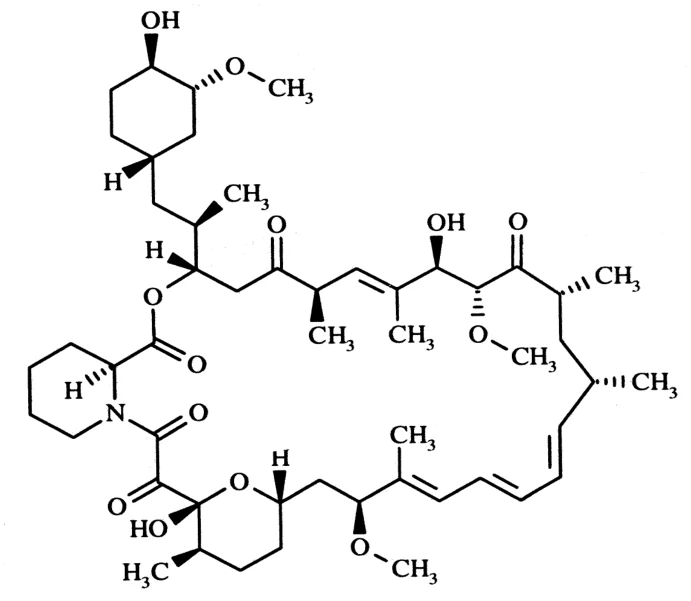
Physicochemical properties: Physical Form: White to off-white powder
Solubility: Insoluble in water but freely soluble in benzyl alcohol, chloroform, acetone, and acetonitrile. Since the water solubility is so low and constant over the pH range (pH 1-10), the n-octanol/water log partition coefficient (PC) is also relatively constant (log PC=4.02)
Melting Point range: 179-181°C
14 CLINICAL TRIALS
14.1 Clinical Trials by Indication
Rapamune and Cyclosporine Combination Therapy (Study 1, 2 and 3)
Rapamune Oral Solution: The safety and efficacy of Rapamune oral solution for the prevention of organ rejection following renal transplantation were assessed in two randomized, double-blind, multicentre, controlled trials. These studies compared two dose levels of Rapamune oral solution with azathioprine (Study 1) or placebo (Study 2) when administered in combination with cyclosporine and corticosteroids. In both studies, the use of antilymphocyte antibody induction therapy was prohibited.
Rapamune Tablets: The safety and efficacy of Rapamune oral solution and Rapamune tablets for the prevention of organ rejection following renal transplantation were compared in a randomized, multicentre, controlled trial (Study 3). This study compared a single dose level of Rapamune oral solution and Rapamune tablets when administered in combination with cyclosporine and corticosteroids. The use of antilymphocyte antibody induction therapy was prohibited.
Use of Rapamune without Concomitant Cyclosporine Administration (Study 4)
Rapamune Maintenance Regimen (RMR): The safety and efficacy of Rapamune as an immunosuppressive maintenance regimen were assessed following cyclosporine withdrawal at 3 months ± 2 weeks post renal transplantation in a randomized, multicentre, controlled trial (Study 4). This study compared patients who were administered Rapamune, cyclosporine, and corticosteroids continuously with patients who received the same standardized therapy for the first 3 months after transplantation (pre-randomization period) followed by the withdrawal of cyclosporine. Eligibility for randomization included no Banff Grade III (1993 criteria) acute rejection episode or vascular rejection in the 4 weeks before random assignment; serum creatinine ≤ 400 µmol/L (4.5 mg/dL); and adequate renal function to support cyclosporine withdrawal (in the opinion of the investigator).
Rapamune with Cyclosporine Administration (Study 5)
High-Risk Patients Study: Rapamune was studied in a one-year, randomized, open-label, controlled clinical trial in high risk patients who were defined as Black transplant recipients and/or repeat renal transplant recipients who lost a previous allograft for immunologic reason and/or patients with high-panel reactive antibodies (PRA; peak PRA level > 80%). Patients received concentration-controlled sirolimus and cyclosporine, and corticosteroids per local practice. Antibody induction was allowed per protocol as prospectively defined at each transplant center, and was used in 88.4% of patients.
The table below summarizes the demographics and trial design in controlled clinical trials that were conducted in renal transplant patients.
Table -17: SUMMARY OF PATIENT DEMOGRAPHICS FOR CLINICAL TRIALS IN RENAL TRANSPLANTATION | |||||
| Study # | Trial design | Dosage, route of administration and duration | Study subject s (n) | Mean age (Range) | Gender (% male) |
| Study 1 | Randomized, double blind, multicentre controlled trial | Treatment groups: Rapamune Oral Solution 2 mg/day Rapamune Oral Solution 5 mg/day Azathioprine 2-3 mg/kg/day All groups received CsA and corticosteroids. Duration 24 months. | 284 274 161 | 45.8 (12-79) | 65 |
| Study 2 | Randomized, double-blind, multicentre controlled trial | Treatment groups: Rapamune Oral Solution 2 mg/day Rapamune Oral Solution 5 mg/day Placebo All groups received CsA and corticosteroids. Duration 36 months. | 227 219 130 | 45.5 (15-71) | 67 |
| Study 3 | Randomized, placebo-controlled, multicentre controlled trial | Treatment groups: Rapamune Oral Solution 2 mg/day Rapamune Tablets 2 mg/day (2 x 1mg) Both groups received CsA and corticosteroids. Duration 12 months. | 238 239 | 45.3 (16-74) | 61 |
| Study 4 | Randomized, open label, 2-part, multicentre, controlled trial | Part 1a: Study Treatment: All patients - Rapamune Tablets 2 mg (target trough level > 5 ng/mL), CsA and corticosteroids. Part 2b: Treatment Groups: Rapamune Tablets with Cyclosporinec Rapamune Tablets and Cyclosporine Withdrawald Both groups received corticosteroids. Duration 60 months. | 525 215 215 | 45.9 (16-73) | 64 |
| Study 5 | Randomized, open label, concentratio n controlled, multicentre trial | Treatment Groupe: Rapamune, cyclosporine and coritcosteroids 12 month followup after transplant | 224 | 44.4 | 56 |
a. Part 1: Pre-transplant screening/baseline to randomization at 3 months ± 2 weeks post-transplant. b. Part 2: 3 months ± 2 weeks to 36 months post-transplant. c. Sirolimus 2 mg/day (target trough level > 5 ng/mL), CsA and corticosteroids. d. Sirolimus dose to target trough level 20-30 ng/mL for first 12 months; 15-25 ng/mL thereafter. At 3 months ± 2 weeks, CsA was eliminated over 4-6 weeks. e. Evaluable population, subjects who were randomly assigned, underwent transplantation and received at least one dose of study medication. These were stratified by race, either black or non-black. | |||||
Rapamune and Cyclosporine Combination Therapy (Studies 1, 2 and 3)
Rapamune Oral Solution: In both studies 1 and 2, the primary efficacy endpoint was the rate of efficacy failure in the first 6 months after transplantation. Efficacy failure was defined as the first occurrence of an acute rejection episode (confirmed by biopsy), graft loss, or death. The tables below summarize the results of the primary efficacy analyses from these trials. Rapamune oral solution, at doses of 2 mg/day and 5 mg/day, significantly reduced the incidence of the primary endpoint and the incidence of biopsy-proven acute rejection at 6 months following transplantation compared with both azathioprine and placebo.
Table -18: INCIDENCE (%) OF THE PRIMARY ENDPOINT AT 6 MONTHS: STUDY 1a
Rapamune
Oral Solution
2 mg/day
(n = 284)
Rapamune Oral Solution
5 mg/day
(n = 274)
Azathioprine
2-3 mg/kg/day
(n = 161)
Efficacy failure at 6 months
18.7b
16.8c
32.3
Components of efficacy failure
Biopsy-proven acute rejection
16.6
11.3
29.2
Graft loss
1.1
2.9
2.5
Death
0.7
1.8
0
Lost to follow-up
0.4
0.7
0.6 a: Patients received cyclosporine and corticosteroids
b: Rapamune 2 mg/day < Azathioprine (p = 0.002)
c: Rapamune 5 mg/day < Azathioprine (p < 0.001)
Table -19: INCIDENCE (%) OF THE PRIMARY ENDPOINT AT 6 MONTHS: STUDY 2a
Rapamune
Oral Solution
2 mg/day
(n = 227)
Rapamune
Oral Solution
5 mg/day
(n = 219)
Placebo
(n = 130)
Efficacy failure at 6 months
30.0b
25.6c
47.7
Components of efficacy failure
Biopsy-proven acute rejection
24.7
19.2
41.5
Graft loss
3.1
3.7
3.9
Death
2.2
2.7
2.3
Lost to follow-up
0
0
0 a: Patients received cyclosporine and corticosteroids
b: Rapamune 2 mg/day < Placebo (p = 0.002)
c: Rapamune 5 mg/day < Placebo (p < 0.001)
Patient and graft survival at 1 year were secondary efficacy endpoints. The table below shows graft and patient survival at 1 year in Study 1 and Study 2. The graft and patient survival rates at 1 year were equivalent in the Rapamune-treated and comparator-treated patients.
Table -20: 1 YEAR GRAFT AND PATIENT SURVIVAL (%)a
Rapamune
Oral Solution
2 mg/day
Rapamune
Oral Solution
5 mg/day
Azathioprine
2-3 mg/kg/day
Placebo
Study 1
(n = 284)
(n = 274)
(n = 161)
Graft survival
94.7
92.7
93.8
Patient survival
97.2
96.0
98.1
Study 2
(n = 227)
(n = 219)
(n = 130)
Graft survival
89.9
90.9
87.7
Patient survival
96.5
95.0
94.6 a: Patients received cyclosporine and corticosteroids
The histological grade of the first biopsy-confirmed acute rejection in Study 1 and Study 2 was assessed using the Banff 1993 criteria as Grade I (mild), Grade II (moderate), and Grade III (severe). In the Rapamune 2 and 5 mg/day treatment groups, the incidence of moderate and severe graded rejection episodes was lower than the respective control groups.
In Study 1, which was prospectively stratified by race within centre, efficacy failure was similar for Rapamune oral solution 2 mg/day and lower for Rapamune oral solution 5 mg/day compared with azathioprine in black patients. In Study 2, which was not prospectively stratified by race, efficacy failure was similar for both Rapamune oral solution doses compared with placebo in black patients. The decision to use the higher dose of Rapamune oral solution in black patients must be weighed against the increased risk of dose-dependent adverse events that were observed with the Rapamune oral solution 5 mg dose (See 8 ADVERSE REACTIONS).
Table -21: PERCENTAGE OF EFFICACY FAILURE BY RACE AT 6 MONTHS
Rapamune
Oral Solution
2 mg/day
Rapamune
Oral Solution
5 mg/day
Azathioprine
2-3 mg/kg/day
Placebo
Study 1
Non-black
Study 2
Non-black
(n=166)
(n=553)
(n=66)
(n=510)
34.9 (n=63)
14.0 (n=221)
30.8 (n=26)
29.9 (n=201)
18.0 (n=61)
16.4 (n=213)
33.7 (n=27)
24.5 (n=192)
33.3 (n=42)
31.9 (n=119)
38.5 (n=13)
48.7 (n=117)
The table below shows the percentage of patients treated with antibody therapy for the first acute rejection episode in Study 1 and Study 2. There is a significantly lower incidence in the use of antibody therapy to treat first, biopsy-confirmed acute rejection in Rapamune-treated patients than in the comparator groups.
Table -22: PERCENTAGE OF PATIENTS (%) TREATED WITH ANTIBODY
THERAPY FOR FIRST ACUTE REJECTION EPISODEa
Study
Rapamune
2 mg/day
Rapamune
5 mg/day
Azathioprine
2-3 mg/kg/day
Placebo
Study 1
(n = 284)
(n = 274)
(n = 161)
Table -22: PERCENTAGE OF PATIENTS (%) TREATED WITH ANTIBODY
THERAPY FOR FIRST ACUTE REJECTION EPISODEa
5.6b
2.9c
12.4
Study 2
(n = 227)b
(n = 219)
(n = 130)
4.0d
3.2e
8.5 a: Patients received cyclosporine and corticosteroids
b: Rapamune 2 mg/day < Azathioprine (p = 0.017)
c: Rapamune 5 mg/day < Azathioprine (p < 0.001)
d: Rapamune 2 mg/day < Placebo (p = 0.094)
e: Rapamune 5 mg/day < Placebo (p = 0.044)
Rapamune Tablets and Oral Solution – Clinical Equivalence Study: The primary efficacy endpoint in Study 3 was the rate of efficacy failure in the first 3 months after transplantation. Efficacy failure was defined as the first occurrence of an acute rejection episode (confirmed by biopsy), graft loss, or death. The table below summarizes the results of the efficacy failure analysis at 3 and 6 months from this trial. The overall rate of efficacy failure at 3 months in the tablet treatment group was equivalent to the rate in the oral solution treatment group.
Table -23: INCIDENCE (%) OF EFFICACY FAILURE AT 3 AND 6 MONTHS: STUDY 3a,b
Rapamune
Oral Solution
(n = 238)
Rapamune
Tablets
(n = 239)
Efficacy failure at 3 monthsc
23.5
24.7
Components of efficacy failure
Biopsy-proven acute rejection
18.9
17.6
Graft loss
3.4
6.3
Death
1.3
0.8
Efficacy failure at 6 months
26.1
27.2
Components of efficacy failure
Biopsy-proven acute rejection
21.0
19.2
Graft loss
3.4
6.3
Death
1.7
1.7 a: Patients received cyclosporine and corticosteroids.
b: Includes patients who prematurely discontinued treatment.
c: Efficacy failure at 3 months was the primary endpoint.
Graft and patient survival at 12 months were co-primary endpoints. There were no significant differences between the oral solution and tablet formulations for both graft and patient survival. Graft survival was 92.0% and 88.7% for the oral solution and tablet treatment groups, respectively. The patient survival rates in the oral solution and tablet treatment groups were 95.8% and 96.2%, respectively.
Rapamune without Concomitant Cyclosporine Administration (Study 4)
Rapamune Maintenance Regimen (RMR): The primary efficacy endpoint was graft survival at 12 months after transplantation in Study 4. Secondary efficacy endpoints were the rate of biopsy-confirmed acute rejection, patient survival, incidence of efficacy failure (defined as the first occurrence of either biopsy-proven acute rejection, graft loss, or death), and treatment failure (defined as the first occurrence of either discontinuation, acute rejection, graft loss, or death).
Based upon the analysis of data from 36 months and beyond, which showed a growing difference in graft survival and renal function, as well as significantly lower blood pressure in the cyclosporine withdrawal group, it was decided by the sponsor to discontinue subjects from the Rapamune with cyclosporine group. When the protocol was amended all subjects had reached 48 months and some completed the 60 months of the study.
The table below summarizes the resulting graft and patient survival at 12, 24, 36, 48 and 60 months for this trial. At 48 months, there was a statistically significant difference in graft survival between the two groups for both analyses (including and excluding loss to follow-up), although at 12, 24, 36 and 60 months, graft and patient survival were similar for both groups.
Table -24: GRAFT AND PATIENT SURVIVAL (%): STUDY 4a
Parameter
Rapamune with
Cyclosporine
Therapy
(n = 215)
Rapamune Following Cyclosporine
Withdrawal
(n = 215)
Graft Survival
Month 12b
Month 24
Month 36e
Month 48
Month 60
95.3c [95.3]d
91.6 [91.6]
87.0 [88.4]
75.3 [84.2]
67.9 [83.3]
97.2 [97.2]
94.0 [94.0]
91.6 [92.6]
86.0 [91.2]
80.0 [88.4]
Patient Survival
Month 12
Month 24
Month 36 e
Month 48
Month 60
97.2 [97.2]
94.4 [94.9]
91.6 [94.4]
78.6 [91.6]
68.8 [90.2]
98.1 [98.1]
95.8 [96.3]
94.0 [96.3]
86.5 [95.3]
80.9 [93.0]
a: Includes patients who prematurely discontinued treatment.
b: Primary efficacy endpoint.
c: Survival including loss to follow up as an event.
d: Survival excluding loss to follow up as an event.
e: Initial planned duration of the study.
The table below summarizes the incidence of first biopsy-proven acute rejection at 12 and 60 months. There was a significant difference in the incidence of first biopsy-proven acute rejection between the two groups during post-randomization through 12 months. However at month 60, the difference between the two groups was not significant (6.5% vs. 10.2%, respectively). Most of the post-randomization acute rejections occurred in the first 3 months following randomization.
Table -25: INCIDENCE OF FIRST BIOPSY-PROVEN ACUTE REJECTION (%) BY TREATMENT GROUP AT 60 MONTHS: STUDY 4a
Period
Rapamune with Cyclosporine Therapy
(n=215)
Rapamune Following Cyclosporine Withdrawal
(n=215)c
p-Value d
Pre-randomizationb
9.3
10.2
NS
Post-randomization through 12 monthsb
4.2
9.8
0.036
Post-randomization from 12 months to 60 months
2.3
0.4
NS
Post-randomization through 60 months
6.5
10.2
NS
Total at 60 months
15.8
20.5
NS a: Includes patients who prematurely discontinued treatment.
b: Randomization occurred at 3 months ± 2 weeks after transplantation.
c: Cyclosporine was withdrawn over a 6 week period after randomization.
d: Rapamune with cyclosporine therapy versus Rapamune following cyclosporine withdrawal.
NS: Not significant.
At 24 and 36 months, patients receiving renal allografts with >3 HLA mismatches experienced significantly higher rates of acute rejection following randomization to the cyclosporine withdrawal group compared with patients who continued cyclosporine (15.3% vs 3.0%). This difference was no longer statistically significant at months 48 and 60 (15.3% vs 6.0%). Patients receiving renal allografts with ≤3 HLA mismatches demonstrated similar rates of acute rejection between treatment groups throughout the course of the trial, with an incidence of (6.8% vs 7.7%) at month 60 following randomization.
The table below summarizes the mean calculated GFR in Study 4.
Table -26: CALCULATED GLOMERULAR FILTRATION RATES (mL/min) BY NANKIVELL EQUATION AT 12, 24, 36, 48 AND 60 MONTHS POST TRANSPLANT: STUDY 4a,b
Parameter
Rapamune with Cyclosporine Therapy
Rapamune Following Cyclosporine Withdrawal
Month 12
Mean ± SEM
53.2 ± 1.5
n=208
59.3 ± 1.5c n=203
Month 24
Mean ± SEM
48.4 ± 1.7
n=203
58.4 ± 1.6c n=201
Month 36
Mean ± SEM
47.0 ± 1.8
n=196
58.5 ± 1.9c n=199
Month 48
Mean ± SEM
43.5 ± 2.0
n=185
58.1 ± 2.0 n=187
Month 60
Mean ± SEM
42.7 ± 2.2
n=176
58.0 ± 2.1 n=193
Table -26: CALCULATED GLOMERULAR FILTRATION RATES (mL/min) BY NANKIVELL EQUATION AT 12, 24, 36, 48 AND 60 MONTHS POST TRANSPLANT: STUDY 4a,b
a: Includes patients who prematurely discontinued treatment.
b: Patients who had a graft loss were included in the analysis and had their GFR set to 0.0.
c: Analysis of covariance p <0.001 for Rapamune with cyclosporine therapy versus Rapamune following cyclosporine withdrawal.
The mean GFR at 12, 24, 36, 48 and 60 months, calculated by the Nankivell equation, was significantly higher for patients receiving Rapamune as a maintenance regimen than for those in the Rapamune plus cyclosporine therapy group. At month 60, patients with an acute rejection at any time after transplantation had a significantly higher mean calculated GFR for patient receiving Rapamune as a maintenance regimen following cyclosporine withdrawal compared to those in the Rapamune with cyclosporine group. At 36 months among patients with serial biopsies (n=63), the mean Chronic Allograft Damage Index (CADI) score was significantly lower for patients receiving Rapamune as a maintenance regimen than for those in the Rapamune plus cyclosporine therapy group (3.20 vs. 4.70, p=0.003), as was the mean tubular atrophy score (0.32 vs. 0.77, p=0.001).
The Banff 1993 classification was used in this study. After a posteriori review of the Banff grading criteria, it seems unlikely that the results of the present trial would have changed by using a more recent classification.
Rapamune with Cyclosporine Administration (Study 5)
High-Risk Patients Study: A total of 224 patients received a transplant and at least one dose of sirolimus and cyclosporine and was comprised of 77.2% Black patients, 24.1% repeat renal transplant recipients, and 13.5% patients with high PRA. Efficacy was assessed with the following endpoints, all measured at 12 months: efficacy failure (defined as the first occurrence of biopsy-confirmed acute rejection, graft loss, or death), first occurrence of graft loss or death, and renal function as measured by the calculated GFR using the Nankivell formula. The table below summarizes the results of these endpoints.
Table -27: EFFICACY FAILURE, GRAFT LOSS OR DEATH AND CALCULATED GLOMERULAR FUNCTION RATES (mL/min) BY NANKIVELL EQUATION AT 12 MONTHS POST TRANSPLANT: STUDY 5
Parameter
Rapamune with Cyclosporine, Corticosteroids (n = 224)
Efficacy Failure (%)
23.2
Graft Loss or Death (%)
9.8
Renal Function (mean ± SEM) a, b
52.6 ± 1.6
(n = 222)
a: Calculated glomerular filtration rate by Nankivell equation
b: Patients who had graft loss were included in this analysis with GFR set to 0.
Patient survival at 12 months was 94.6%. The incidence of biopsy-confirmed acute rejection was 17.4% and the majority of the episodes of acute rejection were mild in severity.
14.2 Comparative Bioavailability Studies
Rapamune Tablets: Bioequivalence of the 2 mg and 5 mg tablet strengths was established versus the 1 mg tablet. The study was a single-dose, open-label, randomized, 3-period crossover study in 24 healthy subjects. When subjects were randomly assigned to receive equimolar doses of 10 mg sirolimus during each period as either ten 1 mg tablets (reference product), five 2 mg tablets, or two 5 mg triangular tablets, peak exposure (Cmax) and total exposure (AUCt and AUC) remained equivalent. The exception was that tmax was longer for the 5 mg tablets compared with the other tablets. A summary of the results of the study are presented in the following tables:
Table -28: Summary Table of Comparative Bioavailability Data
SIROLIMUS (5 X 2 MG)
From measured and log transformed data
Geometric Mean
Arithmetic Mean (CV %)
Parameter
Test*
Reference†
% Ratio of
GLS# Means
90% Confidence Interval
AUC0-72h‡
(ng·h/mL)
487
503 (26.3)
476
487 (21.7)
103
96-110
AUC0-
(ng·h/mL)
767
792 (26.8)
742
765 (24.9)
104
98-110
CMAX
(ng/mL)
21.2
22.4 (33.0)
22.8
23.6 (27.8)
93
84-102
TMAX§
(h)
2.82 (94.0)
2.55 (69.4)
T½
(h)
63.5 (14.4)
66.6 (18.2)
* Rapamune five 2 mg Tablets.
† Rapamune ten 1 mg Tablets, Wyeth Pharmaceuticals, Canada.
§ Expressed as the arithmetic mean (CV%) only.
Expressed as the arithmetic mean (CV%) only.
# GLS= geometric least squares. All estimates of the GLS mean ratios were based on log-transformed data except tmax, which was untransformed
Table -29: Summary Table of Comparative Bioavailability Data
SIROLIMUS (2 X 5 MG)
From measured and log transformed data
Geometric Mean
Arithmetic Mean (CV %)
Parameter
Test*
Reference†
% Ratio of
GLS# Means
90% Confidence Interval
AUC0-72h‡
(ng·h/mL)
535
551 (25.1)
476
487 (21.7)
113
106-119
Table -29: Summary Table of Comparative Bioavailability Data
SIROLIMUS (2 X 5 MG)
From measured and log transformed data
Geometric Mean
Arithmetic Mean (CV %)
Parameter
Test*
Reference†
% Ratio of
GLS# Means
90% Confidence Interval
AUC0-
(ng·h/mL)
837
866 (27.8)
742
765 (24.9)
113
106-120
CMAX
(ng/mL)
20.1
20.8 (28.8)
22.8
23.6 (27.8)
88
80-96
TMAX§
(h)
4.14 (68.1)
2.55 (69.4)
T½
(h)
65.7 (17.7)
66.6 (18.2)
* Rapamune two 5 mg Tablets.
† Rapamune ten 1 mg Tablets, Wyeth Pharmaceuticals, Canada.
§ Expressed as the arithmetic mean (CV%) only.
Expressed as the arithmetic mean (CV%) only.
# GLS= geometric least squares. All estimates of the GLS mean ratios were based on log-transformed data except tmax, which was untransformed
Pediatric Study
Rapamune was evaluated in a 36-month, open-label, randomized, controlled clinical trial at 14 North American centres in pediatric (aged 3 to <18 years) renal transplant recipients considered to be at high immunologic risk for developing chronic allograft nephropathy, defined as a history of one or more acute allograft rejection episodes and/or the presence of chronic allograft nephropathy on a renal biopsy. Seventy-eight (78) subjects were randomized in a 2:1 ratio to Rapamune (sirolimus target concentrations of 5 to 15 ng/mL, by chromatographic assay, n=53) in combination with a calcineurin inhibitor and corticosteroids or to continue calcineurin-inhibitor-based immunosuppressive therapy (n=25). The primary endpoint of the study was efficacy failure as defined by the first occurrence of biopsy confirmed acute rejection, graft loss, or death, and the trial was designed to show superiority of Rapamune added to a calcineurin-inhibitor-based immunosuppressive regimen compared to a calcineurin inhibitor-based regimen. The cumulative incidence of efficacy failure up to 36 months was 45.3% in the Rapamune and calcineurin inhibitor group compared to 44.0% in the control group, and did not demonstrate superiority. There was one death in each group. The use of Rapamune in combination with calcineurin inhibitors and corticosteroids was associated with an increased risk of deterioration of renal function, serum lipid abnormalities (including but not limited to increased serum triglycerides and cholesterol), and urinary tract infections. This study does not support the addition of Rapamune to calcineurin-inhibitor-based immunosuppressive therapy in this subpopulation of pediatric renal transplant patients.
De novo use without calcineurin inhibitor (CNI): In two multi-center clinical studies, de novo renal transplant patients treated with Rapamune, MMF, corticosteroids, and an IL-2 receptor antagonist had significantly higher acute rejection rates and numerically higher death rates compared to patients treated with a calcineurin inhibitor, MMF, corticosteroids, and IL-2 receptor antagonist. A benefit, in terms of better renal function, was not apparent in the treatment arms with de novo use of Rapamune without a CNI. It should be noted that an abbreviated schedule of administration of daclizumab was employed in one of the studies (See 7 WARNINGS AND PRECAUTIONS).
15 MICROBIOLOGY
No microbiological information is required for this drug product.
16 NON-CLINICAL TOXICOLOGY
General Toxicology:
Acute Toxicology
The single-dose toxicity profile of sirolimus was evaluated in PO and IV studies in mice and rats.
Sirolimus elicited a relatively low order of acute toxicity. In PO studies, death occurred in one of 10 mice after administration of 500 mg/kg; however, no deaths occurred in mice or rats at the maximum feasible dosage of 800 mg/kg. Compound-related clinical signs in PO studies included decreased motor activity, ptosis, and rough hair coat in both mice and rats, and red pigmentation around the nose or mouth in rats.
In IV studies, mortality occurred in one of 10 mice and three of 10 rats at the maximum feasible dosage of 250 mg/kg (and the only dosage tested in rats). Compound-related clinical signs in IV studies included focal tail (injection site) abrasions in both mice and rats, ptosis and low carriage in mice, and immobility, ataxia, tachypnea and decreased motor activity in rats.
The clinical signs observed were typical for acute studies in rodents and no unexpected toxicities were demonstrated.
Chronic Toxicology
The repeated-dose toxicity profile of sirolimus was evaluated in PO studies in rats for up to 1 year (with a 1- and 3-month recovery period in the 3- and 6-month studies, respectively), and in monkeys for up to 6 months (with a 3-month recovery period in the 6-month study), and in IV studies in rats and monkeys for up to 1 month. Six repeated-dose toxicity studies were conducted in beagle dogs, with administration of sirolimus by the PO, IV, or intravaginal routes for up to 1 month. However, systemic vasculitis and ulceration of the alimentary tract epithelia precluded the use of dogs to further characterize the toxicity profile of sirolimus. Repeated-dose PO toxicity studies in mice were conducted to establish doses for the carcinogenicity studies.
The routes of administration and dosage ranges used in these studies are summarized in the table below:
Table -30: SUMMARY OF REPEATED-DOSE TOXICITY STUDIES
Species
Route of Administration
Dosage Range
(mg/kg/day)
Rat/Crl:CD
PO
0.025 – 10
IV
0.025 – 5
Table -30: SUMMARY OF REPEATED-DOSE TOXICITY STUDIES
Species
Route of Administration
Dosage Range
(mg/kg/day)
Dog (beagle)
PO
0.025 - 10, and 200 mg capsule
IV
0.025 – 10
Intravaginal
20 - 200 mg capsule
Monkey/Cynomolgus
PO
0.05 – 25
IV
0.025 – 10
The following table summarizes the major toxicology findings by dosage in rat and monkey:
Table -31: MAJOR COMPOUND-RELATED FINDINGS IN REPEATED-DOSE ORAL TOXICITY STUDIES IN RATS AND MONKEYS ADMINISTERED SIROLIMUS
Findings
Dosages Evaluated
(mg/kg/day)
LOEL
(mg/kg/day)
NOEL
(mg/kg/day)
Rats
Bone Loss (Lameness)
3-Month Study
Male
Female
1-Year Study
0.05 to 5
0.05 to 5
0.2 to 6
5
Not Observed
0.2
2
>5
NA
Hematopoiesis (Liver, Spleen) and Hemosiderosis (Kidney, Lung, Lymph Node, Spleen)
1-Year Study
0.2 to 6
0.2
NA
Lymphoid/Thymic Atrophy
1-Month Studies
1-Year Study
0.05 to 5
0.2 to 6
0.25
0.65
0.1
0.2
Myocardial Degeneration
1-Month Studies
3- and 6-Month Studies
1-Year Study
0.05 to 5
0.05 to 5
0.2 to 6
1
0.1
0.65
0.25
0.05
0.2
Ovarian Atrophy
1-Year Study
0.2 to 6
0.2
NA
Pancreatic Islet Cell Vacuolation
1-Month Studies
3-Month Study
1-Year Study
0.05 to 5
0.5 to 5
0.2 to 6
0.25
2
0.65
0.1
0.5
0.2
Pulmonary Alveolar Macrophages
1-Month Studies
3-Month Study
1-Year Study
0.05 to 5
0.5 to 5
0.2 to 6
1
0.5
0.2
0.25
NA
NA
Table -31: MAJOR COMPOUND-RELATED FINDINGS IN REPEATED-DOSE ORAL TOXICITY STUDIES IN RATS AND MONKEYS ADMINISTERED SIROLIMUS
Findings
Dosages Evaluated
(mg/kg/day)
LOEL
(mg/kg/day)
NOEL
(mg/kg/day)
Testicular Tubular Atrophy/Degeneration
3-Month Study
1-Year Study
0.5 to 5
0.2 to 6
2
0.65
0.5
0.2
Monkeys
Colitis
3- and 6-Month Studies
0.5 to 10
0.25
0.05
Lymphoid/Splenic/Thymic Atrophy
1-Month Studies
3- and 6-Month Studies
0.05 to 15
0.05 to 10
0.25
0.25
0.1
0.1
LOEL = Lowest-observable-effect level; NA= Not applicable (finding occurred at all dosages in study);
NOEL = No-observable-effect level
In repeated-dose studies in mice, rats, dogs, and monkeys, many of the compound-related findings were attributable to the immunosuppressive effect of sirolimus, and have been seen with other compounds of this class, such as cyclosporine and tacrolimus.
Carcinogenicity, Mutagenicity and Impairment of Fertility:
Sirolimus was not mutagenic in the in vitro bacterial reverse mutation assay, the Chinese hamster ovary cell chromosomal aberration assay, the mouse lymphoma cell forward mutation assay, or the in vivo mouse micronucleus assay.
Carcinogenicity:
Carcinogenicity studies were conducted in female mice and male and female rats. In the 86-week female mouse study at dosages of 0, 12.5, 25 and 50/6 mg/kg/day (dosage lowered from 50 to 6 mg/kg/day at week 31 due to infection secondary to immunosuppression) there was a statistically significant increase in malignant lymphoma at all dosages (approximately 86 to 357 times the maximum recommended human dose [MRHD]) compared to controls. In the 104-week rat study at dosages of 0, 0.05, 0.1, and 0.2 mg/kg/day, there was an increased incidence of testicular adenoma in the 0.1 and 0.2 mg/kg/day (approximately 1.4 to 2.9 times the MRHD) groups.
Reproductive and Developmental Toxicology:
There was no effect on fertility in female rats following the administration of sirolimus at dosages up to 0.5 mg/kg (approximately 7 times the MRHD). In male rats, there was no significant difference in fertility rate compared to controls at a dosage of 2 mg/kg (approximately 28 times the MRHD). Reductions in testicular weights and/or histological lesions (e.g., tubular atrophy and tubular giant cells) were observed in rats following dosages of 0.65 mg/kg (approximately 9 times the MRHD) and above and in a monkey study at 0.1 mg/kg (approximately 1.4 times the MRHD) and above. Sperm counts were reduced in male rats following the administration of sirolimus for 13 weeks at a dosage of 6 mg/kg (approximately 85 times the MRHD), but showed improvement by 3 months after dosing was stopped.
Pregnancy
Pregnancy Category C: Sirolimus was embryo/fetal toxic in rats at dosages of 0.1 mg/kg and above (approximately 1.4 times the MRHD). In animal studies, embryo/fetal toxicity was manifested as mortality and reduced fetal weights (with associated delays in skeletal ossification). However, no teratogenesis was evident. There were no effects on rabbit development at the maternally toxic dosage of 0.05 mg/kg (approximately 0.7 times the MRHD).
There are no adequate and well controlled studies of Rapamune use in pregnant women. Consequently, Rapamune should be used during pregnancy only if the potential benefit outweighs the potential risk to the embryo/fetus.