


Product Monograph - Redemplo
Recent Major Label Changes
| None at the time of approval |
|---|
Table of Contents
Sections or subsections that are not applicable at the time of authorization are not listed.
Recent Major Label Changes ................................................................................................... 2
Table of Contents ................................................................................................................... 2
Part 1: Healthcare Professional Information ........................................................................... 4
- 1.
Indications ....................................................................................................................... 4
1.1. Pediatrics ................................................................................................................... 4
1.2. Geriatrics ................................................................................................................... 4
- 2. Contraindications ............................................................................................................ 4
- 4.
Dosage and Administration ............................................................................................. 4
4.1. Dosing Considerations ............................................................................................... 4
4.2. Recommended Dose and Dosage Adjustment ........................................................... 4
4.4. Administration ........................................................................................................... 5
4.5. Missed Dose .............................................................................................................. 5
- 5. Overdose ......................................................................................................................... 5
- 6. Dosage Forms, Strengths, Composition, and Packaging ................................................... 5
- 7.
Warnings and Precautions ............................................................................................... 6
Endocrine and Metabolism ................................................................................................... 6
Hepatic .................................................................................................................................. 6
Monitoring and Laboratory Tests .......................................................................................... 6
Reproductive Health ............................................................................................................. 6
7.1. Special Populations .................................................................................................... 6
7.1.1. Pregnancy ........................................................................................................... 6
7.1.2. Breastfeeding ...................................................................................................... 7
7.1.3. Pediatrics ............................................................................................................ 7
7.1.4. Geriatrics ............................................................................................................ 7
- 8.
Adverse Reactions ........................................................................................................... 7
8.1. Adverse Reaction Overview ....................................................................................... 7
8.2. Clinical Trial Adverse Reactions .................................................................................. 8
8.3. Less Common Clinical Trial Adverse Reactions ........................................................... 8
8.4. Abnormal Laboratory Findings: Hematologic, Clinical Chemistry, and Other Quantitative Data ...................................................................................................... 9
- 9.
Drug Interactions ........................................................................................................... 10
9.2. Drug Interactions Overview ..................................................................................... 10
9.3. Drug-Behaviour Interactions .................................................................................... 10
9.4. Drug-Drug Interactions ............................................................................................ 10
9.5. Drug-Food Interactions ............................................................................................ 10
9.6. Drug-Herb Interactions ............................................................................................ 10
9.7. Drug-Laboratory Test Interactions ........................................................................... 10
- 10.
Clinical Pharmacology ................................................................................................... 10
10.1. Mechanism of Action ............................................................................................... 10
10.2. Pharmacodynamics ................................................................................................. 11
Cardiac Electrophysiology ................................................................................. 11
10.3. Pharmacokinetics .................................................................................................... 11
10.4. Immunogenicity ....................................................................................................... 13
- 11. Storage, Stability, and Disposal ...................................................................................... 13
Part 2: Scientific Information ................................................................................................ 14
- 13. Pharmaceutical Information .......................................................................................... 14
- 14.
Clinical Trials .................................................................................................................. 16
14.1. Clinical Trials by Indication ....................................................................................... 16
Familial Chylomicronemia Syndrome (FCS) ...................................................... 16
- 15. Microbiology ................................................................................................................. 18
- 16. Non-Clinical Toxicology .................................................................................................. 18
Patient Medication Information ........................................................................................... 21
Instructions For Use .............................................................................................................. 25
Part 1: Healthcare Professional Information
1. Indications
REDEMPLO (Plozasiran Injection) is indicated:
- as an adjunct to diet to reduce triglyceride levels for adult patients with familial chylomicronemia syndrome (FCS) for whom standard triglyceride lowering therapies have been inadequate.
1.1. Pediatrics
Pediatrics (< 18 years of age): No data are available to Health Canada; therefore, Health Canada has not authorized an indication for pediatric use.
1.2. Geriatrics
Geriatrics (≥ 65 years of age): Limited data are available in patients aged ≥ 65 years. No overall differences in safety or effectiveness were observed between patients aged ≥ 65 years and patients < 65 years of age, but greater sensitivity to adverse reactions in some older individuals cannot be ruled out (see 7 Special Populations, 7.1.4 Geriatrics).
2. Contraindications
REDEMPLO is contraindicated in patients who are hypersensitive to this drug or to any ingredient in the formulation, including any non-medicinal ingredient, or component of the container. For a complete listing, see 6 Dosage Forms, Strengths, Composition, and Packaging.
4. Dosage and Administration
4.1. Dosing Considerations
- Patients should adhere to a low-fat diet (less than or equal to 20 grams fat per day) prior and in conjunction with REDEMPLO treatment.
4.2. Recommended Dose and Dosage Adjustment
- The recommended dosage of REDEMPLO is 25 mg administered as a single subcutaneous injection every 3 months.
- Hepatic Impairment: There is limited data on the use of REDEMPLO in FCS patients with hepatic impairment. Based on population pharmacokinetic and pharmacodynamic analysis, no dose adjustments are necessary in patients with mild hepatic impairment. REDEMPLO has not been studied in patients with moderate or severe hepatic impairment (see 10.3 Pharmacokinetics).
- Renal Impairment: There is limited data on the use of REDEMPLO in FCS patients with renal impairment. Based on population pharmacokinetic and pharmacodynamic analysis, no dose adjustments are necessary for patients with mild or moderate renal impairment (eGFR ≥ 30 to 90 mL/min). REDEMPLO has not been studied in patients with severe renal impairment (eGFR < 30 mL/min) or end stage renal disease (see 10.3 Pharmacokinetics).
- Pediatrics (< 18 years of age): Health Canada has not authorized an indication for pediatric use (see 1 Indications, 1.1 Pediatrics).
4.4. Administration
REDEMPLO can be administered at home by the patient or a caregiver, or by a healthcare professional. Prior to initiating at-home administration, healthcare professionals should evaluate the adequacy of the patient or caregiver to perform the injection, including manual dexterity and comprehension of instructions, and provide training as appropriate to ensure safe administration.
- Review the Instruction for Use prior to administering REDEMPLO.
- Keep REDEMPLO refrigerated. Prior to use, allow REDEMPLO to warm to room temperature for 30 minutes before administration. Do not try to warm the prefilled syringe by using a heat source such as hot water or microwave.
- Inspect REDEMPLO visually for particulate matter and discoloration prior to administration.
- REDEMPLO is administered subcutaneously.
- Acceptable injection sites include the outer area of the upper arm (only when administered by caregiver or healthcare professional), thigh, and abdomen.
- Do not choose an area where the skin is damaged (tender, bruised, red, hard, or cut). Avoid injecting into areas with scars or stretch marks.
4.5. Missed Dose
If a dose is missed, administer REDEMPLO as soon as possible. Thereafter, resume dosing every 3 months from the most recently administered dose.
5. Overdose
Doses as high as 100 mg (4 times the recommended clinical dose) were administered by design in a Phase 1 study and did not result in any safety concerns. There are no known overdose antidotes.
For the most recent information in the management of a suspected drug overdose, contact your regional poison control centre or Health Canada’s toll-free number, 1-844 POISON-X (1-844-764-7669).
- 6. Dosage Forms, Strengths, Composition, and Packaging
Table 1 – Dosage Forms, Strengths, and Composition
Description
REDEMPLO is a sterile, preservative-free, clear, colorless to yellow solution for subcutaneous use supplied in a single-use prefilled syringe. Each syringe delivers 0.5 mL of solution containing 25 mg plozasiran (present as 27 mg plozasiran sodium). The prefilled syringe components are not made with natural rubber latex.
| Route of Administration | Dosage Form/ Strength/Composition | Non-Medicinal Ingredients |
| Subcutaneous injection | Solution / 25 mg / 0.5 mL plozasiran (as plozasiran sodium) | Sodium chloride, water for injection |
7. Warnings and Precautions
Endocrine and Metabolism
Modest increases in HbA1c were observed in the Phase 3 study, particularly in subjects with prediabetes or diabetes at baseline (See 8 Adverse Reactions, 8.4 Abnormal Laboratory Findings: Hematologic, Clinical Chemistry, and Other Quantitative Data). Treatment-emergent adverse events related to hyperglycemia occurred more frequently in REDEMPLO-treated subjects than placebo (see 8 Adverse Reactions, 8.2 Clinical Trial Adverse Reactions).
Monitor patients with or at risk of impaired glucose tolerance for changes in glycemic parameters accordingly.
Hepatic
The safety and efficacy of REDEMPLO in patients with moderate or severe hepatic impairment have not been studied. Increases in liver enzymes, alanine aminotransferase (ALT) and aspartate aminotransferase (AST), within the normal range were observed during the first 3 months of treatment and stabilized over time. No cases of Hy’s Law or clinically significant hepatotoxicity were reported (see 4 Dosage and Administration and 10 Clinical Pharmacology – Hepatic Insufficiency).
Monitoring and Laboratory Tests
Elevations in LDL-C were observed in patients treated with REDEMPLO. (See 8 Adverse Reactions, 8.4 Abnormal Laboratory Findings: Hematologic, Clinical Chemistry, and Other Quantitative Data).
Lipid parameters should be monitored periodically during treatment with REDEMPLO, particularly in patients who demonstrate elevated LDL-C while on therapy or in patients at high risk for cardiovascular disease.
Reproductive Health
Fertility
Plozasiran administered at 50 mg/kg to female rats once every three days or to male rats once weekly did not result in any effects on mating and fertility in males or females, sperm evaluations of males, and uterine, ovarian, and litter parameters of females (see 16 Non-Clinical Toxicology).
Function
There are no data on the effect of REDEMPLO on sexual function.
7.1. Special Populations
7.1.1. Pregnancy
REDEMPLO has not been prospectively studied in pregnant patients to evaluate for a drug-associated risk of major birth defects, miscarriage, or adverse maternal or fetal outcomes.
In animal reproduction studies, no adverse developmental effects were observed in rabbits with daily subcutaneous administration of plozasiran up to 180 mg/kg/day during organogenesis. No adverse developmental effects were observed in rats with daily subcutaneous administration of plozasiran at doses of up to 5 mg/kg (2 times the maximum recommended human dose [MRHD] based on body surface area (BSA) comparison] or with a single subcutaneous administration of up to 50 mg/kg (20 times the MRHD based on BSA comparison).
In pregnant rats receiving daily doses of plozasiran above 15 mg/kg (6 times the MRHD based on BSA comparison) from gestation day 6 to 17, plozasiran exhibited maternal toxicity characterized by increased mortality and early deliveries, decreases in body weights, body weight change, and food consumption, and teratogenic effects characterized by increased post-implantation loss and mean number of late resorptions, decreased gravid uterine and fetal body weights, as well as anatomic indications of developmental delay.
In a pre- and post-natal development study, there were no adverse plozasiran-related effects in the F0 generation rats and was well tolerated in maternal animals up to the top dose of 80 mg/kg (31 times the MRHD based on BSA) and in the F1 generation rats up to 8 mg/kg (3.1 times the MRHD based on BSA). Plozasiran increased the number of stillborn offspring and reduced live birth index at 80 mg/kg (31 times the MRHD based on BSA). There were decreases in offspring body weight and offspring survival at ≥24 mg/kg (9 times the MRHD based on BSA) (see 16 Non-Clinical Toxicology).
Discontinue REDEMPLO when pregnancy is recognized. Alternatively, consider the ongoing therapeutic needs of the individual patient.
7.1.2. Breastfeeding
There are no data on the presence of REDEMPLO in human milk, the effects on the breastfed child, or the effects on milk production. The developmental and health benefits of breastfeeding should be considered along with the mother’s clinical need for REDEMPLO and any potential adverse effects on the breastfed infant from REDEMPLO or from the underlying maternal condition.
7.1.3. Pediatrics
Pediatrics (< 18 years of age): No data are available to Health Canada; therefore, Health Canada has not authorized an indication for pediatric use.
7.1.4. Geriatrics
Of the 75 patients with FCS randomized in Study 1, 9 (12%) patients were 65 years of age or older, including 2 (3%) patients who were 75 years of age or older. No overall differences in safety or effectiveness of REDEMPLO were observed between patients who were ≥ 65 years of age and patients < 65 years of age, but greater sensitivity to adverse reactions of some older individuals cannot be ruled out.
8. Adverse Reactions
8.1. Adverse Reaction Overview
The safety of REDEMPLO was evaluated in one phase 3 clinical trial (Study 1 [AROAPOC3-3001]) (see 14 Clinical Trials).
The most common adverse reactions (incidence ≥15% of patients treated with REDEMPLO 25) mg are hyperglycemia (including diabetes mellitus, diabetes mellitus inadequate control, glucose tolerance impaired, glucose urine present, glycosylated haemoglobin increased, haematocrit decreased, hyperglycaemia) (5 patients, 19.2%), nausea (4 patients, 15.4%), and injection site reaction (including injection site pain and injection site reaction) (4 patients, 15.4%).
Adverse reactions led to discontinuation of treatment in 2 (7.7%) patients treated with REDEMPLO 25 mg and 0 of placebo-treated patients. The reasons for REDEMPLO treatment discontinuation were hyperglycemia and urticaria.
8.2. Clinical Trial Adverse Reactions
Clinical trials are conducted under very specific conditions. Therefore, the frequencies of adverse reactions observed in the clinical trials may not reflect frequencies observed in clinical practice and should not be compared to frequencies reported in clinical trials of another drug.
Study 1 was a 12-month, randomized, double-blind placebo-controlled, Phase 3 clinical trial conducted across the United States, Canada, Europe, and Japan, in adults with either genetic or phenotypical FCS without genetic confirmation (see 14 Clinical Trials).
Table 2 summarizes adverse reactions occurring in ≥10% of patients treated with REDEMPLO 25 mg and occurring >5% more frequently than placebo during Study 1.
Table 2 – Adverse Reactions Occurring in ≥10% of Patients Treated with REDEMPLO 25 mg and Occurring >5% More Frequently than Placebo in Study 1
System Organ Class / Preferred term | REDEMPLO 25 mg n = 26 n (%) | Placebo n = 25 n (%) | |||
| Cardiac disorder | |||||
| Palpitations | 3 (11.5) | 0 (0) | |||
| Gastrointestinal disorders | |||||
| Nausea | 4 (15.4) | 2 (8.0) | |||
| General disorders and administration site conditions | |||||
| Injection site reaction* | 4 (15.4) | 1 (4.0) | |||
| Infections and infestations | |||||
| Nasopharyngitis | 5 (19.2) | 3 (12.0) | |||
| Metabolism and nutrition disorders/Investigations | |||||
| Hyperglycaemia** | 5 (19.2) | 2 (8.0) | |||
*Injection site reaction (including injection site pain, injection site reaction).
**Hyperglycaemia (including diabetes mellitus, diabetes mellitus inadequate control, glucose tolerance impaired, glucose urine present, glycosylated haemoglobin increased, haematocrit decreased, hyperglycaemia).
8.3. Less Common Clinical Trial Adverse Reactions
Gastrointestinal disorder: abdominal pain, constipation
Hepatobiliary disorder: liver disorder (ALT increase)
Injury, poisoning and procedural complications: Procedural pain
Nervous system disorders: dizziness, dysgeusia, headache
Skin and subcutaneous tissue disorders: pruritus, urticaria
8.4. Abnormal Laboratory Findings: Hematologic, Clinical Chemistry, and Other Quantitative Data
Clinical Trial Findings
Increase in Glucose
Mean increases from baseline in HbA1c (up to 0.36%) and fasting glucose (up to 6.31 mmol/L) were observed in the REDEMPLO 25 mg group (Table 3). Incidence of hyperglycaemia (defined adverse events, new antidiabetic medication, or laboratory values) was higher in REDEMPLO 25 mg-treated patients without a medical history of diabetes at baseline (40%) compared to placebo-treated patients (20%).
Increase in Liver Enzymes
Increases from baseline in liver enzymes within the normal range were observed with REDEMPLO 25 mg treatment in the FCS population (Table 3). These increases occurred within the first 3 months of treatment and stabilized.
Increase in LDL-cholesterol
Increases in low-density lipoprotein cholesterol (LDL-C) and total apolipoprotein B (apoB) were observed in the FCS population treated with REDEMPLO 25 mg compared to those treated with placebo (Table 3). In the phenotypical FCS subgroup treated with REDEMPLO 25mg, LDL-C values exceeded 1.4 mmol/L with mean values of 1.53 mmol/L at Month 10 and 1.69 mmol/L at Month 12.
Table 3 – Maximum Chemistry Changes (Mean [SEM]) in Patients with FCS in Study 1
| Parameter | REDEMPLO 25 mg N=26 | Placebo (pooled) N=25 | ||||
|---|---|---|---|---|---|---|
| Parameter | REDEMPLO 25 mg N=26 | Placebo (pooled) N=25 | ||||
| Glycemic Control | BL | Month 9 | Change from BL at Month 9 | BL | Month 9 | Change from BL at Month 9 |
| Fasting glucose (mmol/L) | 5.66 (0.44) | 6.31 (0.47) | 0.72 (0.35) | 6.49 (0.64) | 5.92 (0.35) | -0.56 (0.54) |
| Hemoglobin A1c (%) | 5.8 (0.2) | 6.1 (0.2) | 0.36 (0.1) | 6.2 (0.3) | 6.1 (0.2) | -0.08 (0.1) |
| Liver Enzymes | BL | Month 12 | Change from BL at Month 12 | BL | Month 12 | Change from BL at Month 12 |
| AST (U/L) | 22.5 (1.1) | 29.1 (2.4) | 6.1 (1.8) | 23.0 (1.3) | 27.1 (2.3) | 3.9 (2.3) |
| ALT (U/L) | 23.2 (2.6) | 35.7 (4.1) | 11.8 (4.0) | 21.5 (2.2) | 22.3 (2.3) | 1.3 (1.9) |
| Lipid Parameters | BL | Month 12 | % Change from BL at Month 12 | BL | Month 12 | % Change from BL at Month 12 |
| LDL-C Ultracentrifugation (mmol/L) | 0.62 (0.07) | 1.27 (0.18) | 139.6 (26.1) | 0.73 (0.10) | 0.93 (0.27) | 20.5 (15.9) |
| ApoB (g/L) | 0.72 (0.06) | 0.91 (0.13) | 34.0 (13.3) | 0.79 (0.07) | 0.85 (0.10) | 10.4 (6.5) |
Abbreviations: ALT=alanine aminotransferase; ApoB=apolipoprotein; AST=aspartate aminotransferase; BL=baseline; FCS=familial chylomicronemia syndrome; LDL-C=low density lipoprotein cholesterol; SEM=standard error of the mean.
Notes:
The baseline of HbA1c is defined as the worst value measured any time during Screening or at Day 1.
For glucose, the last measurements between Day 1, Month 3, Month 6, and Month 9 are carried forward as the value for this visit; and the last measurements after Month 9 are carried forward to Month 12.
The baseline for AST, ALT, LDL-C, and ApoB was the last observed value of the parameter prior to the first administration of study treatment (this included unscheduled visits).
9. Drug Interactions
9.2. Drug Interactions Overview
No formal clinical drug interaction studies have been performed with REDEMPLO.
9.3. Drug-Behaviour Interactions
The interaction of REDEMPLO with individual behavioural risks (e.g. cigarette smoking, cannabis use, and/or alcohol consumption) has not been studied.
9.4. Drug-Drug Interactions
No clinical drug-drug interaction studies have been performed with REDEMPLO. In vitro studies suggest that plozasiran is not a substrate, inhibitor or inducer of cytochrome P450 (CYP450) enzymes or commonly encountered drug transporters. REDEMPLO is not expected to cause or be affected by drug-drug interactions via mechanisms involving drug metabolism or transports. Interactions with other oligonucleotide therapies, especially those targeting the liver should not be excluded.
9.5. Drug-Food Interactions
Interactions with food have not been established.
9.6. Drug-Herb Interactions
Interactions with herbal products have not been established.
9.7. Drug-Laboratory Test Interactions
Interactions with laboratory tests have not been established.
10. Clinical Pharmacology
10.1. Mechanism of Action
REDEMPLO is a N-acetylgalactosamine (GalNAc) conjugated double-stranded small interfering RNA against apolipoprotein C3 (APOC3) mRNA. Through its conjugation to GalNAc, REDEMPLO undergoes uptake by asialoglycoprotein receptors at the surface of hepatocytes. In hepatocytes, REDEMPLO selectively causes the degradation of APOC3 mRNA through the RNA interference mechanism, resulting in reduced levels of hepatic and serum APOC3 protein. This in turn enhances the activity of lipoprotein lipase and hepatocyte uptake of triglyceride-rich lipoprotein remnants, leading to decreases in serum triglycerides.
10.2. Pharmacodynamics
In Study 1 (see 14 Clinical Trials), following treatment with the recommended dose of 25 mg administered every 3 months (Q3M) in patients with FCS (defined based on either genetic testing or clinical criteria), REDEMPLO significantly reduced median fasting serum APOC3 protein and median triglycerides by 93% and 80%, respectively, at Month 10 (median difference from placebo of -90.5% and -58.7%, respectively) . The median reductions in fasting serum APOC3 protein and triglycerides at Month 1 were 94% and 85%, respectively, suggesting pharmacodynamic steady state is achieved following the first dose.
Cardiac Electrophysiology
In a randomized, double-blind, placebo- and positive-controlled, crossover study, thirty four healthy volunteers were administered 100 mg plozasiran (corresponding to 4 times the recommended therapeutic dose), moxifloxacin, and placebo. The largest increase in placebo-corrected, change from baseline in QTc was 1 ms at 3 and 6 hours after subcutaneous administration of plozasiran, with 90% CI including 0 at all time points, up to 28 hours post administration.
No clinically meaningful changes in QTc or any other ECG parameters were observed with the supratherapeutic dose of plozasiran.
10.3. Pharmacokinetics
Plasma concentrations do not reflect the extent or duration of the pharmacodynamic activity of plozasiran. Rapid and targeted uptake of plozasiran by the liver results in a rapid decline in plasma concentrations. In the liver, plozasiran exhibits a long half-life leading to maintenance of pharmacodynamic effect over the dosing interval.
Plozasiran exhibited linear and time-invariant pharmacokinetics following subcutaneous injections within the dose range of 10 mg to 100 mg. The following pharmacokinetic parameters were observed in healthy adults after receiving a single dose of 25 mg plozasiran as either the Clinical Formulation or REDEMPLO in a single dose crossover comparative bioavailability study.
Table 4 – Summary of Plozasiran Pharmacokinetic Parameters in Healthy Adults Receiving a Single Subcutaneous 25 mg Dose of Plozasiran as Clinical Formulation (200 mg/mL) or REDEMPLO (25 mg/0.5 mL of plozasiran, as plozasiran sodium)
| Single Dose Mean | Cmax (ng/mL) | Tmax (h) | t½ (h) | AUC0-∞ (h*ng/mL) | CL (L/h) | Vz/F (L) |
| Plozasiran Clinical Formulation (200 mg/mL)1 | 102 ± 61.3 | 4.0 (0.5 – 8.1) | 4.4 ± 1.5 | 904 ± 277 | 29.4 ± 6.43 | 187 ± 82.0 |
| REDEMPLO (25 mg/0.5 mL)2 | 110 ± 46.2 | 4.1 (3.0 – 8.0) | 3.8 ± 0.94 | 1080 ± 339 | 25.1 ± 7.01 | 137 ± 53.8 |
Parameter values are presented as arithmetic mean ± Standard Deviation. Tmax is presented as median (min-max).
1 N=19 for Cmax and Tmax. N=16 for t1/2 and N=15 for AUC0-∞, CL/F, and Vz/F
2 N=19 for Cmax and Tmax. N=18 for t1/2, AUC0-∞, CL/F, and Vz/F
Absorption
REDEMPLO peak plasma concentration (Cmax) is 110 ng/mL. The median time to reach Cmax (Tmax) is 4.1 hours.
Distribution
In in vitro studies, plozasiran was shown to be bound to human plasma proteins by as much as 78%. Following subcutaneous administration, plozasiran distributes to the plasma and extracellular body water with an apparent volume of distribution of 187 L and 137 L for the Clinical Formulation and REDEMPLO, respectively. While no dedicated human mass balance studies were conducted, animal studies demonstrate that plozasiran is primarily taken up by the liver, the primary site of plozasiran action, and the kidney (primary excretion site). Tissue uptake by the lung, the spleen, the heart and the brain was also noted at levels >100-fold lower than in the liver. Since other tissues were not studied, it can not be excluded the presence of plozasiran in off-target organs.
Metabolism
Plozasiran is primarily metabolized by ribonucleases to shorter oligonucleotides of varying lengths. Plozasiran is not a substrate, inhibitor or inducer of cytochrome P450 enzymes.
Elimination
The terminal elimination half-life of plozasiran in plasma is approximately 3-4 hours. The mean apparent systemic clearance is 25.1 L/hour. Approximately 16-19% of the SC dose is excreted in urine unchanged.
Special populations and conditions
- Pediatrics: Plozasiran has not been studied in patients < 18 years of age.
- Geriatrics: Of the 75 FCS patients randomized in Study 1, 9 patients (12%) were 65 years of age or older, including 2 (3%) patients who were 75 years of age or older. No clinically significant differences in plozasiran pharmacokinetics or pharmacodynamics were observed in the geriatric patients.
- Sex: Based on population pharmacokinetics and pharmacodynamics, there was no difference in plozasiran pharmacokinetics or pharmacodynamics based on sex in clinical studies.
- Pregnancy and breastfeeding: Plozasiran has not been studied in pregnancy or during breastfeeding.
- Genetic polymorphism: The enzymes responsible for plozasiran metabolism, exo- and endoribonucleases, are not known to exhibit genetic polymorphism. Plozasiran is not a substrate of CYP450 enzymes or transporters. Plozasiran is not expected to be affected by genetic polymorphisms in CYP enzymes or transporters.
- Ethnic origin: Based on population pharmacokinetics and pharmacodynamics, race or ethnicity was not identified as a significant covariate to affect plozasiran pharmacokinetics or pharmacodynamics in clinical studies.
Hepatic Insufficiency: There is limited data on the use of plozasiran in FCS patients with hepatic impairment. Based on population pharmacokinetics and pharmacodynamics, plozasiran pharmacokinetics and pharmacodynamics in patients with mild hepatic impairment (total bilirubin ≤ULN and AST >ULN, or total bilirubin >1.0 to 1.5 x ULN) were similar to the patients
- with normal hepatic function. Plozasiran has not been studied in patients with moderate to severe hepatic impairment.
- Renal Insufficiency: There is limited data on the use of plozasiran in FCS patients with renal impairment. Based on population pharmacokinetics and pharmacodynamics, plozasiran pharmacokinetics and pharmacodynamics in patients with mild or moderate renal impairment (eGFR ≥ 30 to < 90 mL/min) were similar to the patients with normal renal function. Plozasiran has not been studied in patients with severe renal impairment.
10.4. Immunogenicity
As with all oligonucleotide drugs, there is potential for immunogenicity. The detection of antibody formation is highly dependent on the sensitivity and specificity of the assay. Therefore, comparison of the incidence of antibodies to REDEMPLO in the study described below with the incidence of antibodies in other studies or to other products may be misleading.
In Study 1, none of the 50 patients with FCS treated with REDEMPLO over a period of 12 months developed treatment-induced or treatment-boosted anti-drug antibodies. Because of the limited number of treated patients, the effect of anti-drug antibodies on the efficacy, safety, pharmacokinetics, and/or pharmacodynamics remains unknown.
- 11. Storage, Stability, and Disposal
Store REDEMPLO refrigerated at 2°C to 8°C in the original carton, until ready for use. REDEMPLO can be kept at room temperature (20°C to 25°C) in the original carton for up to 30 days after removing from the refrigerator.
Keep out of sight and reach of children. Discard the used REDEMPLO in a sharps container. Any unused solution should be discarded.
See the Instructions For Use for detailed handling and disposal instructions.
Part 2: Scientific Information
13. Pharmaceutical Information
Drug Substance
Non-proprietary name of the drug substance: Plozasiran sodium
Chemical name: all-P-ambo-3′-O-[({(1s,4s)-4-[(3S,8S)-17-[(2-acetamido-2-deoxy-β-D-galactopyranosyl)oxy]-3,8-bis[(2-{2-[(2-acetamido-2-deoxy-β-D-galactopyranosyl)oxy]ethoxy}ethyl)carbamoyl]-6,11-dioxo-15-oxa-2,7,12-triazaheptadecan-1-oyl]cyclohexyl}oxy)(sulfanyl)phosphoryl]-1'-de(6-amino-9H-purin-9-yl)-2'-deoxy-P-thioadenylyl-(5'→5')-2'-O-methyladenylyl-(3'→5')-2'-O-methylcytidylyl-(3'→5')-2'-O-methylguanylyl-(3'→5')-2'-O-methylguanylyl-(3'→5')-2'-O-methylguanylyl-(3'→5')-2'-O-methyladenylyl-(3'→5')-2'-O-methylcytidylyl-(3'→5')-2'-O-methyladenylyl-(3'→5')-2'-deoxy-2'-fluoroguanylyl-(3'→5')-2'-deoxy-2'-fluorouridylyl-(3'→5')-2'-deoxy-2'-fluoroadenylyl-(3'→5')-2'-O-methyluridylyl-(3'→5')-2'-O-methyluridylyl-(3'→5')-2'-O-methylcytidylyl-(3'→5')-2'-O-methyluridylyl-(3'→5')-2'-O-methylcytidylyl-(3'→5')-2'-O-methyladenylyl-(3'→5')-2'-O-methylguanylyl-(3'→5')-2'-O-methyluridylyl-(3'→5')-2'-O-methylinosinylyl-(3'→5')-2'-O-methyl-P-thioadenylyl-(3'→3')-1'-de(6-amino-9H-purin-9-yl)-2'-deoxyadenosine duplex with all-P-ambo-2'-O-methyl-P-thiouridylyl-(5'→3')-2'-deoxy-2'-fluoroguanylyl-(5'→3')-2'-O-methylcytidylyl-(5'→3')-2'-deoxy-2'-fluorocytidylyl-(3'→5')-2'-O-methylcytidylyl-(5'→3')-2'-deoxy-2'-fluorouridylyl-2'-O-methylguanylyl-(5'→3')-2'-deoxy-2'-fluorouridylyl-(5'→3')-2'-O-methylcytidylyl-(5'→3')-2'-deoxy-2'-fluoroadenylyl-(5'→3')-2'-O-methyluridylyl-(5'→3')-2'-O-methyladenylyl-(5'→3')-2'-O-methyladenylyl-(5'→3')-2'-O-methylguanylyl-(5'→3')-2'-O-methyladenylyl-(5'→3')-2'-deoxy-2'-fluoroguanylyl-(5'→3')-2'-O-methyluridylyl-(5'→3')-2'-deoxy-2'-fluoro-P-thiocytidylyl-(5'→3')-2'-O-methyl-P-thioadenylyl-(5'→3')-2'-deoxy-2'-fluoro-P-thiocytidylyl-(5'→3')-2'-O-methyluridine, sodium salt
Molecular formula and molecular mass: C493H654F11N164O311P43S7, 15618.7 Da (free form)
C493H611F11N164Na43O311P43S7, 16563.9 Da (sodium form)
Structural formula:
Abbreviations: A = 2’-O-methyl adenosine; A = 2’-fluoro (2’-deoxy-2’-fluoro) adenosine; C = 2’-O-methyl cytidine; C = 2’-fluoro cytidine; G = 2’-O-methyl guanosine; G = 2’-fluoro guanosine; I = 2’-O-methyl inosine; U = 2’-O-methyl uridine; U = 2’- fluoro uridine; - (single line) = phosphodiester linkage; = (double line) = phosphorothioate linkage; · (middle dot) depicts base pairing between the two strands
Physicochemical properties:
- Plozasiran sodium is a white to off-white powder.
- Plozasiran sodium is freely soluble in water.
14. Clinical Trials
14.1. Clinical Trials by Indication
Familial Chylomicronemia Syndrome (FCS)
Table 5 – Summary of Patient Demographics for Clinical Trials in Familial Chylomicronemia Syndrome
| Study # | Study design | Dosage, route of administration and duration | Study subjects (n) | Mean age (range) | Sex |
Study 1 (AROAPOC3 -3001) | Randomized, double-blind, placebo-controlled | Plozasiran 25mg or placebo Subcutaneous every 3 months for 12 months | Placebo: n=25 25 mg: n=26 Total: n=51 | 46.6 years (22-76) | Male: 26 (51.0%) Female: 25 (49.0%) |
The efficacy of REDEMPLO was demonstrated in a randomized, double-blind, placebo-controlled, multicenter phase 3 trial (Study 1) in adult patients with genetically confirmed or phenotypical FCS who were maintained on a low-fat diet (≤20 grams fat per day). Patients were randomized to receive 4 total doses of REDEMPLO 25 mg (n=26) or matching placebo (n=25), administered subcutaneously (SC) once every 3 months (Q3M) over a 12-month treatment period.
The classification of FCS was made based on adults with a screening fasting triglyceride ≥ 10 mmol/L (≥ 880 mg/dL) refractory to lipid-lowering therapy, with a history of fasting triglycerides levels > 11.3 mmol/L (>1000 mg/dL) on at least three occasions, and either genetic confirmation by genotyping or evidence of low LPL activity, or protocol-defined diagnosis.
For patients with phenotypical FCS, inclusion criteria required one or more of the following: recurrent episodes of acute pancreatitis not caused by alcohol or cholelithiasis; recurrent hospitalizations for severe abdominal pain without other explainable cause; childhood pancreatitis; or family history of hypertriglyceridemia-induced pancreatitis.
Patients with diabetes mellitus newly diagnosed within 12 weeks prior to screening, or an HbA1c ≥9.0% (or >75 mmol/mol International Federation of Clinical Chemistry and Laboratory Medicine (IFCC) units) at screening were excluded. Patients with a history of acute coronary syndrome within 24 weeks prior to Day 1 were also excluded.
Patient demographics were generally similar across the treatment groups. Most subjects were White (73.3%), 21.3% were Asian and 4.6% were reported as other races. The mean Body Mass Index (BMI) was 25.5 kg/m2 and 53.3% of subjects were overweight (BMI ≥25 kg/m2). At enrollment, the proportion of patients with genetic confirmation of FCS was 46% in the REDEMPLO 25 mg group compared with 56% in the placebo group; diabetes was 15% in the REDEMPLO 25 mg group compared with 32% in the placebo group; and a history of documented acute pancreatitis in the previous 5 years was 54% in the REDEMPLO 25 mg group compared with 68% in the placebo group. Patients in the REDEMPLO 25 mg and placebo groups were treated with statins (43%), omega-3 fatty acids (29%), fibrates (69%), or no background triglyceride (TG) lowering therapies (25%) at study entry. Mean (Standard Deviation) and median fasting TG levels at baseline were 2,311 (1,258) mg/dL and 2,030 mg/dL, respectively (range of 747 to 5,596 mg/dL).
Study Results
The primary efficacy endpoint was percent change from baseline at Month 10 in fasting triglycerides. At Month 10, median percent changes from baseline were -80.1% in the REDEMPLO 25 mg group and -17.1% in the placebo group. The median difference between REDEMPLO and the placebo group was -58.7% (95% CI: -89.6, -27.9; p<0.0001).
For the Study 1, reductions in triglyceride levels and APOC3 for REDEMPLO 25 mg administered Q3M versus placebo at Month 10 are presented in Table 6. In REDEMPLO-treated patients, the reductions in triglyceride levels were apparent at Month 1 (first postbaseline measurement) and remained consistent throughout the 12‑month duration of the trial, with relatively small peak-to-trough fluctuations (Figure 1).
Table 6 – Results of Key Endpoints in Subjects with FCS in Study 1
| Endpoint | Parameter | REDEMPLO 25 mg (N = 26) | Placebo (Pooled) (N = 25) | Median Difference vs. Placebo (95% CI) | |||
|---|---|---|---|---|---|---|---|
| % Changea | |||||||
| Primary | Fasting TGs: % Change from BL at Month 10 | -80.1 | -17.1 | -58.7b (-89.6, -27.9) | |||
| Key Secondary | Fasting TGs: % Change from BL at Months 10 and 12 (Averaged) | -77.7 | -2.6 | -59.6b (-91.6, -27.5) | |||
Fasting APOC3: % Change from BL at Month 10 | -93.0 | -1.3 | -90.5b (-108.3, -72.7) | ||||
Abbreviations: BL=baseline; CI=confidence interval; CMH=Cochran-Mantel-Haenszel; TGs=triglycerides; APOC3=apolipoprotein C-III.
a Median values; Hodges-Lehmann method used to estimate median difference and 95% CI. Missing data were imputed using washout imputation.
b Reached statistical significance (p<0.0001) per Wilcoxon rank-sum test.
Figure 1 – Median Percent Change from Baseline in Fasting Triglycerides in Study 1
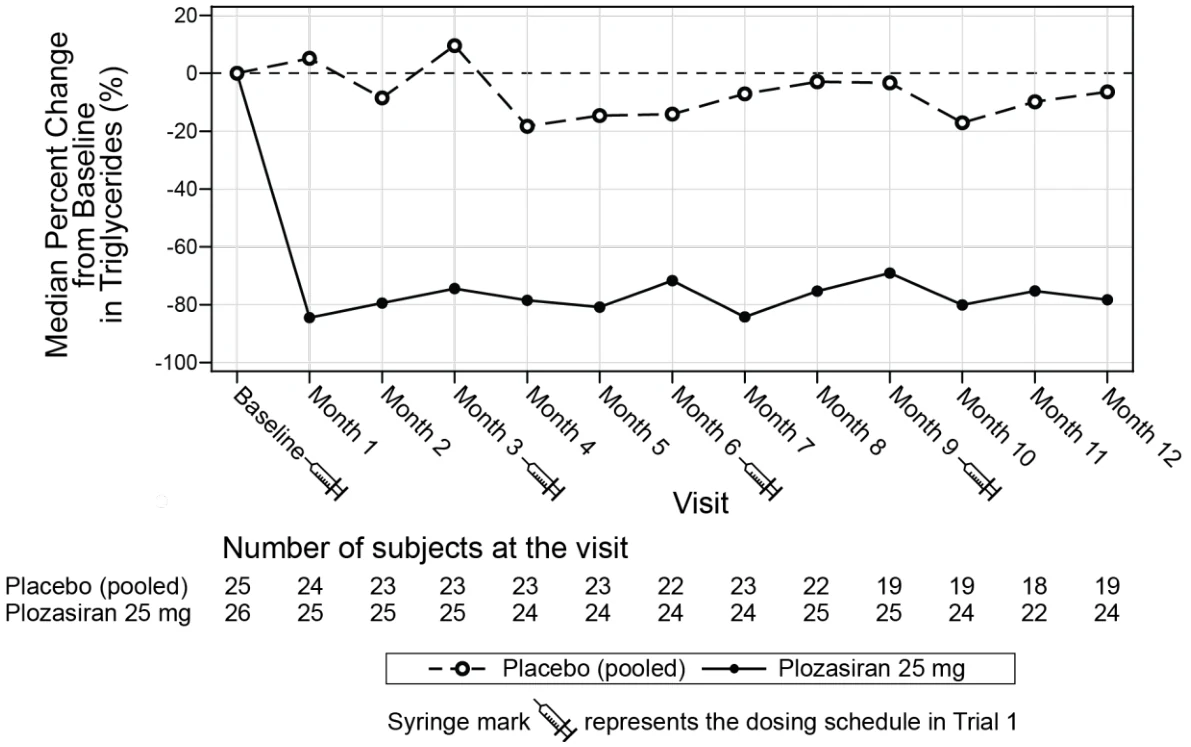
REDEMPLO 25 mg met key, alpha-controlled, secondary endpoints shown in Table 6. Over the 12-month treatment period, the numerical incidence of acute pancreatitis in patients treated with REDEMPLO 25 mg was lower compared with placebo (2 [8%] patients in the REDEMPLO 25 mg group compared with 5 [20.0%] patients in the placebo group).
15. Microbiology
REDEMPLO is not an antimicrobial drug.
16. Non-Clinical Toxicology
General toxicology
General toxicology studies in rat (up to 24 weeks duration) and monkey (up to 37 weeks) showed that plozasiran was well tolerated in animals following subcutaneous administration with NOAELs up to and including 300 mg/kg in the 4-week studies and 15 mg/kg (male rat) and 30 mg/kg (female rat) or 180 mg/kg (monkey) for the chronic length studies, without any dose-limiting toxicity at doses greater than the proposed clinical dose (ie, 25 mg).
In monkeys, the observed plozasiran-related clinical pathology effects and histopathology findings in the liver, lymph nodes, and injection site were not considered significant.
In rats, plozasiran-related clinical pathology effects were generally minimal in magnitude, non-progressive and transient, and lacked a dose response relationship or evidence of reversibility. Changes in hepatocellular/hepatobiliary enzyme activities were accompanied by microscopic liver findings of minimal hepatocyte necrosis. Cholesterol and triglyceride effects were noted and associated with altered lipid metabolism. Microscopic changes occurred in the liver, kidney, and lymph nodes, spleen and injection site were more prevalent in the 24-week study, in comparison to 4-weeks. Additionally, hepatic oval cell hyperplasia, individual hepatocyte necrosis, Kupffer cell pigment, karyocytomegaly/multinucleated hepatocytes and foci of eosinophilic cellular alteration were observed in males administered 30 mg/kg and in females administered 120 mg/kg (12 and 46 times the MHRD based on BSA, respectively). These microscopic findings at these doses were accompanied by decreased liver organ weights and higher alkaline phosphatase activity and were considered adverse.
Genotoxicity
Plozasiran was negative for mutagenicity in the bacterial mutation (Ames) assay, negative for induction of micronuclei in cultured TK6 lymphoblastoid cells without metabolic activation, had no biologically relevant induction in the presence of exogenous S-9 metabolic activation in the in vitro micronucleus assay, and was non-cytotoxic in both assays.
Carcinogenicity
In a 26-week study in CByB6F1-Tg[HRAS]2Jic mice, plozasiran was administered subcutaneously every eight weeks (Q8W) at dose levels of 30, 60, and 120 mg/kg (84 to 336-fold the clinical dose level of 25 mg). Plozasiran was not carcinogenic up to the highest dose evaluated.
In a 2-year rat carcinogenicity study, benign hepatocellular adenomas and a low incidence of carcinomas were noted in males at 50 mg/kg and females at 100 mg/kg. Body surface area adjusted safety margins established at the next highest dose levels where no carcinogenic potential was noted, 25 and 40 mg/kg, were 10- and 16-fold in males and females, respectively. In addition, while the relevance of these tumors to humans is unknown, the available evidence suggests these findings are specific to rodents and coupled with the high safety margins and the absence of identified genotoxicity, the risk to humans is low.
Reproductive and developmental toxicology
Plozasiran administered at 50 mg/kg to female rats once every three days or to male rats once weekly did not result in any effects on mating and fertility in males or females, sperm evaluations of males, and uterine, ovarian, and litter parameters of females.
In animal reproduction studies, plozasiran administration during organogenesis was well tolerated in rabbits up to 180mg/kg/day, and in rats up to 5 mg/kg/day (2 times the maximum recommended human dose [MRHD] based on body surface area [BSA] comparison) and up to 50 mg/kg single dose (19 times the MRHD based on BSA comparison). In pregnant rats receiving daily doses of plozasiran above 15 mg/kg (6 times the MRHD based on BSA comparison) from gestation day 6 to 17, plozasiran exhibited maternal toxicity characterized by increased mortality and early deliveries, decreases in body weights, body weight change, and food consumption, and teratogenic effects characterized by increased post-implantation loss and mean number of late resorptions, decreased gravid uterine and fetal body weights, as well as anatomic indications of developmental delay.
In a pre- and post-natal development study, there were no adverse plozasiran-related effects in the F0 generation rats and was well tolerated in maternal animals up to the top dose of 80 mg/kg (31 times the MRHD based on BSA) and in the F1 generation rats up to 8 mg/kg (3.1 times the MRHD based on BSA). Plozasiran increased the number of stillborn offspring and reduced live birth index at 80 mg/kg (31 times the MRHD based on BSA). There were decreases in offspring body weight and offspring survival at ≥24 mg/kg (9 times the MRHD based on BSA).
Special toxicology
No local tolerance studies have been conducted with plozasiran. Microscopic evaluation of the injection sites in rats and monkeys was conducted as part of repeat-dose toxicity studies. After chronic dose administration, vacuolated macrophages were noted at the injection site in rats and non-adverse fibrosis in the dermis and mononuclear cell infiltrates were noted at the injection site in monkeys.