


Product Monograph - Rezurock
1 INDICATIONS
REZUROCK is indicated for the treatment of adult and pediatric patients 12 years and older with chronic graft-versus-host disease (GVHD) after failure of at least two prior lines of systemic therapy.
Efficacy in patients with chronic GVHD was based on objective response rate and duration of response in a single-arm study (see 14 CLINICAL TRIALS).
1.1 Pediatrics
Pediatrics (≥ 12-18 years of age): No patients under the age of 18 were enrolled in the clinical development program. Use of REZUROCK in pediatric patients 12 years and older is supported by evidence from studies in adults with additional population pharmacokinetic data demonstrating that age and body weight had no clinically meaningful effect on the pharmacokinetics of drug substance, that the exposure of drug substance is expected to be similar between adults and pediatric patients age 12 years and older, and that the course of disease is sufficiently similar in adult and pediatric patients to allow extrapolation of data in adults to these pediatric patients.
Pediatrics (< 12 years of age): The safety and efficacy of REZUROCK in pediatric patients younger than 12 years of age have not been established.
1.2 Geriatrics
Geriatrics (≥ 65 years): Evidence from clinical experience/studies suggests that the use in the geriatric population is not associated with any overall differences in safety or effectiveness in older patients versus younger patients (see 7 WARNINGS AND PRECAUTIONS, 7.1 Special Populations).
2 CONTRAINDICATIONS
REZUROCK is contraindicated in patients who are hypersensitive to this drug or to any ingredient in the formulation, including any non-medicinal ingredient, or component of the container. For a complete listing, see 6 DOSAGE FORMS, STRENGTHS, COMPOSITION AND PACKAGING.
4 DOSAGE AND ADMINISTRATION
4.1 Dosing Considerations
- Treatment with REZUROCK has not been studied in patients with pre-existing severe renal or hepatic impairment. For patients with pre-existing severe renal or hepatic impairment, consider the risks and potential benefits before initiating treatment with REZUROCK (see 10 CLINICAL PHARMACOLOGY, Special Populations and Conditions).
- A complete blood count (CBC), renal function (creatinine) and liver function tests (LFTs) should be performed prior to starting REZUROCK.
- Coadministration of rifampin, a strong CYP3A inducer, decreased plasma belumosudil concentrations. Avoid coadministration of REZUROCK with strong CYP3A inducers. If coadministration cannot be avoided, increase the dose of REZUROCK to 200 mg twice daily (see 9 DRUG INTERACTIONS).
- Coadministration of rabeprazole and omeprazole decreased plasma belumosudil concentrations. Coadministration of REZUROCK with proton pump inhibitors may decrease belumosudil exposure. Increase the dose of REZUROCK to 200 mg twice daily when coadministered with a proton pump inhibitor (see 9 DRUG INTERACTIONS).
- Pregnancy testing is recommended for women of childbearing potential prior to initiating REZUROCK.
4.2 Recommended Dose and Dosage Adjustment
The recommended dose of REZUROCK is 200 mg given orally once daily, with food, at approximately the same time each day. Treatment should continue until progression of chronic GVHD that requires a new systemic therapy or occurrence of unacceptable toxicity.
Pediatrics
Health Canada has not authorized an indication for pediatric use in patients under the age of 12 years.
No dosing adjustments are required in adolescents aged ≥ 12-18 years (see 1 INDICATIONS, 1.1 Pediatrics).
Geriatrics
No dose adjustment is required in patients ≥ 65 years of age (see 10 CLINICAL PHARMACOLOGY, Special Populations and Conditions).
Recommended Dose Modifications for Adverse Reactions
The recommended REZUROCK dosage modifications in case of adverse reactions are provided in Table 1.
| Table 1 Recommended Dosage Modifications for REZUROCK for Adverse Reactions | |||||
|---|---|---|---|---|---|
| Adverse Reaction | Severity* | REZUROCK Dosage Modifications | |||
| Hepatotoxicity (see 8 ADVERSE REACTIONS) | Grade 3 ALT or AST (> 5 to 20 x ULN) or Grade 2 bilirubin (> 1.5 to 3 x ULN) | Hold REZUROCK until recovery to ≤ Grade 1, then resume REZUROCK at the recommended dose. | |||
*Based on Common Terminology Criteria for Adverse Events (CTCAE) v4.03
4.4 Administration
The recommended dose of REZUROCK is 200 mg given orally once daily until progression of chronic GVHD that requires new systemic therapy.
Instruct the patient on the following:
- Swallow REZUROCK tablets whole. Do not cut, crush, or chew tablets.
- Take REZUROCK with a meal at approximately the same time each day (see 10 CLINICAL PHARMACOLOGY, 10.3 Pharmacokinetics).
Treatment with REZUROCK has not been studied in patients with pre-existing severe renal or hepatic impairment. For patients with pre-existing severe renal or hepatic impairment, consider the risks and potential benefits before initiating treatment with REZUROCK (see 10 CLINICAL PHARMACOLOGY, 10.3 Pharmacokinetics).
4.5 Missed Dose
In the event of a missed daily dose of REZUROCK, the missed dose should be taken as soon as possible on the same day. Resume the regular daily dose schedule for REZUROCK the next day. Patients should not take extra doses to make up for the missed dose.
5 OVERDOSAGE
There is limited experience with overdose in clinical trials with REZUROCK. There is no known antidote for overdoses with REZUROCK. In the event of suspected overdose, undertake general supportive measures, and observe until clinical stabilization.
| For management of a suspected drug overdose, contact your regional poison control centre. |
|---|
| Table 1 Recommended Dosage Modifications for REZUROCK for Adverse Reactions | |||||
|---|---|---|---|---|---|
| Adverse Reaction | Severity* | REZUROCK Dosage Modifications | |||
| Grade 4 ALT or AST (> 20 x ULN) or Grade >3 bilirubin (> 3 x ULN) | Permanently discontinue REZUROCK. | ||||
| Other adverse reactions (see 8 ADVERSE REACTIONS) | Grade 3 | Hold REZUROCK until recovery to ≤ Grade 1, then resume REZUROCK at the recommended dose level. | |||
| Grade 4 | Permanently discontinue REZUROCK. | ||||
6 DOSAGE FORMS, STRENGTHS, COMPOSITION AND PACKAGING
Table – Dosage Forms, Strengths, Composition and Packaging
REZUROCK is available as 200 mg pale yellow, oblong tablets, debossed with “KDM” on one side and “200” on the other side. Each tablet contains 200 mg belumosudil (equivalent to 242.5 mg belumosudil mesylate).
REZUROCK is packaged in 60 cc high density polyethylene (HDPE) bottles each containing 30 tablets.
7 WARNINGS AND PRECAUTIONS
Cardiovascular
Hypertension
Of the 83 patients with chronic GVHD who received the recommended dose of 200 mg once daily, hypertension occurred in 21% of patients, including Grade 3-4 hypertension in 6% of patients. Of note, 52.7% of patients had a concomitant medical condition of hypertension. Optimize blood pressure prior to initiating REZUROCK. Consider monitoring blood pressure monthly and/or as clinically indicated. Withhold or permanently discontinue REZUROCK based on severity (see 4 DOSAGE AND ADMINISTRATION).
Hypotension
Based on the on-target effect of pan-ROCK inhibitors and the observed lowering of blood pressure in nonclinical studies, hypotension is a potential risk with belumosudil treatment. Of the 83 patients with chronic GVHD who received 200 mg once daily, 4.8% and 7.2% of subjects experienced at least one TEAE of hypotension or systolic blood pressure < 90 mm Hg respectively. Of these, grade ≥ 3 TEAEs of hypotension was reported in 2.4% and systolic blood pressure < 90 mm Hg in 4.8% of subjects with 2.4% of subjects requiring dose interruption. Optimize blood pressure prior to initiating REZUROCK. Consider monitoring blood pressure monthly and/or as clinically indicated. Withhold or permanently discontinue REZUROCK based on severity (see 4 DOSAGE AND ADMINISTRATION).
| Route of Administration | Dosage Form / Strength/Composition | Non-medicinal Ingredients |
| Oral | Tablets 200 mg belumosudil (as belumosudil mesylate) | Colloidal silicon dioxide, croscarmellose sodium, hypromellose, magnesium stearate, microcrystalline cellulose, polyethylene glycol, polyvinyl alcohol, talc, titanium dioxide and yellow iron oxide. |
Gastrointestinal
Diarrhea
Of the 83 patients with chronic GVHD who received the recommended dose of 200 mg once daily, diarrhea occurred in 32.5%, with Grade ≥ 3 diarrhea in 5% of patients. A fatal adverse reaction was reported in one patient with severe nausea, vomiting, diarrhea and multi-organ failure; relevant medical history included acute myeloid leukemia, chronic kidney disease, cardiac disorder, and hypertension (see 8 ADVERSE REACTIONS). To prevent dehydration, administer fluid and electrolyte replacement and antidiarrheal medications as needed. Withhold or permanently discontinue REZUROCK based on severity (see 4 DOSAGE AND ADMINISTRATION).
Hematologic
Cytopenias
Of the 83 patients with chronic GVHD who received the recommended dose of 200 mg once daily, cytopenias, including lymphocyte count decreased (2.4%), white blood cell count decreased (3.6%; Grade ≥ 3 in 2.4%), neutrophil count decreased (1.2%), platelet count decreased (4.8%) and anemia (12%) were reported. Grade ≥ 3 leukopenia on laboratory tests was reported in 2.4% of patients, 2 patients experienced on-treatment shifts from Grade 0 to Grade 4 (see 8 ADVERSE REACTIONS). Patients should have their complete blood counts monitored monthly. Withhold or permanently discontinue REZUROCK based on severity (see 4 DOSAGE AND ADMINISTRATION).
Hemorrhage
Of the 83 patients with chronic GVHD who received the recommended dose of 200 mg once daily, Grade ≥ 3 hemorrhagic events, mainly contusion and hematoma, occurred in 5% of patients treated with REZUROCK. Withhold or permanently discontinue REZUROCK based on severity (see 4 DOSAGE AND ADMINISTRATION).
Hepatic
Of the 83 patients with chronic GVHD who received the recommended dose of 200 mg once daily, hepatotoxicity events occurred (see 8 ADVERSE REACTIONS). Liver function test (LFT) elevations, including elevations in ALT, AST, GGT, blood alkaline phosphatase, and increased bilirubin levels were frequently reported in belumosudil clinical studies. Grade > 3 LFT elevations were uncommon, with grade > 3 AST/ALT elevations occurring in 1.2% and GGT in 4.8% of patients. Liver function (ALT, AST, GGT and total bilirubin) should be monitored prior to the start of REZUROCK, and then once a month or as clinically indicated, with more frequent testing in patients who develop increased transaminases or bilirubin. Withhold or permanently discontinue REZUROCK based on severity (see 4 DOSAGE AND ADMINISTRATION).
Immune
Infection
Of the 83 patients with chronic GVHD who received the recommended dose of 200 mg once daily, infection occurred in 53% of patients, with Grade 3 or 4 infections in 16% of patients. The majority of infections were mild or moderate and non-serious. The number of subjects discontinuing or interrupting treatment due to infection events was low. Most infections were viral, followed in frequency by bacterial infections. Respiratory infections were most common and included upper respiratory tract (28.9%), pneumonia (10.8%), sinusitis (4.8%), influenza (3.6%), and respiratory tract infection (3.6%). Fungal and opportunistic infections were uncommon. Patients should be monitored for fever, neutropenia, and infection, and appropriate anti-infective therapy should be initiated as indicated. Withhold or permanently discontinue REZUROCK based on severity (See 4 DOSAGE AND ADMINISTRATION, 4.2 Recommended Dose Modifications for Adverse Reactions).
Reproductive Health: Female and Male Potential
Fertility
No human data on the effects of REZUROCK on fertility in females and males are available. Based on findings from rats, REZUROCK may impair female fertility. Based on findings from rats and dogs, REZUROCK may impair male fertility. The effect on male and female fertility is partially or fully reversed after treatment discontinuation (see 16 NON-CLINICAL TOXICOLOGY, Reproductive and Developmental Toxicology).
Teratogenic Risk
Based on findings in animals and its mechanism of action, REZUROCK can cause fetal harm (embryofetal mortality and embryofetal malformations) when administered to pregnant women. There are no available data on REZUROCK use in pregnant women. No conclusions can be drawn regarding whether or not REZUROCK is safe for use during pregnancy. The use of REZUROCK in pregnant women is not recommended (see 16 NON-CLINICAL TOXICOLOGY, Reproductive and Developmental Toxicology). Pregnancy testing is recommended for women of childbearing potential prior to initiating REZUROCK.
Women of childbearing potential should be advised to avoid becoming pregnant and use highly effective contraceptive measures while receiving REZUROCK and for 1 week after ending treatment (see 7.1.1 Pregnant Women).
Men with female partners of reproductive potential should be advised to use effective contraception during treatment with REZUROCK and for 3 months after the final dose.
Skin
Photosensitivity
REZUROCK absorbs UV light and shows affinity for melanin. REZUROCK demonstrated phototoxicity in an in vitro assay using Balb/c 3T3 mouse fibroblast cells (see 16 NON-CLINICAL TOXICOLOGY). While phototoxicity has not been observed in clinical studies, patients should be advised that skin reactions due to phototoxicity could potentially occur with REZUROCK.
7.1 Special Populations
7.1.1 Pregnant Women
There are no clinical data on the use of REZUROCK in pregnant women. Based on findings in animals and its mechanism of action, REZUROCK can cause fetal harm when administered to pregnant women. Administration of belumosudil to pregnant rabbits during organogenesis was associated with embryofetal mortality and embryofetal malformations at maternal exposures (AUC) lower than exposures in patients at the recommended dose (see 16 NON-CLINICAL TOXICOLOGY and 10 CLINICAL PHARMACOLOGY).
REZUROCK should not be used during pregnancy, unless clearly necessary and after a careful consideration of the need of the mother and the risk to the fetus. Verify pregnancy status of females of reproductive potential prior to initiating REZUROCK. Advise females of reproductive potential to inform their healthcare provider of a known or suspected pregnancy. If REZUROCK is used during pregnancy or if the patient becomes pregnant while taking REZUROCK, the patient should be apprised of the potential hazard to the fetus.
7.1.2 Breast-feeding
No human or animal data are available to assess the impact of REZUROCK on milk production, its presence in breast milk, or its effects on the breastfed infant. No conclusions can be drawn regarding whether REZUROCK is safe for use during breastfeeding. Lactating women should avoid breastfeeding during treatment with REZUROCK and for at least one week after the last dose.
7.1.3 Pediatrics
Pediatrics (≥ 12-18 years of age): No patients under the age of 18 years were enrolled in the clinical development program. Use of REZUROCK in pediatric patients 12 years and older is supported by evidence from studies in adults with additional population pharmacokinetic data demonstrating that age and body weight had no clinically meaningful effect on the pharmacokinetics of drug substance, that the exposure of drug substance is expected to be similar between adults and pediatric patients age 12 years and older, and that the course of disease is sufficiently similar in adult and pediatric patients to allow extrapolation of data in adults to pediatric patients.
REZUROCK may impair fertility in male and female adolescents of reproductive potential (see
16 NON-CLINICAL TOXICOLOGY, Reproductive and Developmental Toxicology).
The safety of long-term use of REZUROCK in adolescent patients has not been evaluated.
No dose adjustments in this population are required.
Pediatrics (< 12 years of age): The safety and efficacy of REZUROCK in pediatric patients younger than 12 years of age have not been established.
7.1.4 Geriatrics
Of the 65 patients with chronic GVHD who were evaluated for efficacy of REZUROCK, 26% were 65 years and older. Of the 186 patients with chronic GVHD receiving all doses and who were evaluated for safety of REZUROCK, 26% were 65 years and older. No clinically meaningful differences in safety or effectiveness of REZUROCK were observed in patients over the age of 65 years in comparison to younger patients.
No dose adjustments in this population are recommended.
8 ADVERSE REACTIONS
8.1 Adverse Reaction Overview
The safety of REZUROCK reflects exposure to REZUROCK 200 mg once daily in patients with chronic GVHD receiving corticosteroid or other immunosuppressive treatments after failure of at least one line of prior systemic therapy.
The most frequently observed adverse reactions with the 200 mg/day dose (≥ 20%), including laboratory abnormalities, were infections, fatigue, nausea, diarrhea, cough, edema, hemorrhage, abdominal pain, musculoskeletal pain, headache, phosphate decreased, gamma glutamyl transferase increased, lymphocytes decreased, and hypertension.
Permanent discontinuation of REZUROCK due to adverse events occurred in 18% of patients. The most frequent reasons for treatment interruption in patients receiving the 200 mg/day dose were progression of chronic GVHD (13%) and recurrence of the underlying malignancy (8%). Adverse events leading to dose interruption occurred in 29% of patients. The adverse events leading to dose interruption in ≥ 2% were infections (11%), diarrhea (4%), and asthenia, dyspnea, hemorrhage, hypotension, liver function test abnormal, nausea, pyrexia, edema, and renal failure (2% each).
A fatal adverse reaction was reported in one patient with severe nausea, vomiting, diarrhea and multi-organ failure (see 7 WARNINGS AND PRECAUTIONS).
8.2 Clinical Trial Adverse Reactions
Clinical trials are conducted under very specific conditions. The adverse reaction rates observed in the clinical trials; therefore, may not reflect the rates observed in practice and should not be compared to the rates in the clinical trials of another drug. Adverse reaction information from clinical trials may be useful in identifying and approximating rates of adverse drug reactions in real-world use.
The safety of REZUROCK in adult patients with chronic GVHD was evaluated in two clinical trials (KD025-213 and KD025-208) in which chronic GVHD patients were treated with 200 mg once daily (N=83), 200 mg twice daily (N=82) or 400 mg once daily (N=21) (see 14 CLINICAL TRIALS, 14.1 Efficacy and Safety Studies).
Study KD025-213 was a randomized, open-label, multicenter two arm, phase 2 study examining belumosudil in the treatment of patients with chronic GVHD who had failed two to five prior lines of systemic therapy (N=66 200 mg once daily). Study KD025-208 was a phase 2A dose-escalation trial evaluating the activity of belumosudil in subjects with active, steroid-dependent chronic GVHD who had failed 1-3 previous lines of treatment (N=17 200 mg once daily). The median duration of treatment in the 83 patients receiving 200 mg/day was 6.9 months (range: 0.5 to 38.7 months).
Of all belumosudil-treated subjects with chronic GVHD, 109 (58.6%) of the 186 subjects were male and 77 (41.4%) were female. Median age was 54.5 years (range: 20-77 years). Most subjects were White (159 subjects, 85.5%) and not Hispanic or Latino (157 subjects, 84.4%). The median number of organs affected by chronic GVHD was 3.5 and 4.0 for belumosudil-treated subjects in Studies KD025-208 and KD025-213, respectively, with > 50% of subjects having 4 or more organs involved. All subjects with chronic GVHD were taking a concomitant systemic corticosteroid at study initiation. The median duration of treatment with belumosudil in the 186 subjects with chronic GVHD was 6.83 months (range: 0.39-38.74 months), with 84 subjects (45.2%) having been exposed to belumosudil for ≥ 6 to 12 months and 31 subjects (16.7%) treated for ≥ 12 months.
| Table 2 Adverse Reactions Occurring with a Frequency of ≥ 10% in Clinical Trials with REZUROCK | |||||
|---|---|---|---|---|---|
| System Organ Class | REZUROCK 200 mg once daily (N=83) | ||||
All Gradesa (%) | Grade 3-4a (%) | ||||
| Gastrointestinal | |||||
| Nauseab | 42 | 4 | |||
| Diarrhea | 35 | 5 | |||
| Abdominal painc | 22 | 1 | |||
| Dysphagia | 15 | 0 | |||
| General disorders and administration site conditions | |||||
| Astheniad | 46 | 4 | |||
| Oedemae | 27 | 1 | |||
| Pyrexia | 18 | 1 | |||
| Infections and infestations | |||||
| Infection (pathogen not specified)f | 53 | 16 | |||
| Viral infectiong | 19 | 4 | |||
| Bacterial infectionh | 16 | 4 | |||
| Investigations | |||||
| Alanine aminotransferase increased | 12 | 1 | |||
| Aspartate aminotransferase increased | 12 | 1 | |||
| Gamma-glutamyltransferase increased | 11 | 5 | |||
| Metabolism and nutrition | |||||
| Decreased appetite | 17 | 1 | |||
| Musculoskeletal and connective tissue | |||||
| Musculoskeletal paini | 22 | 4 | |||
| Muscle spasm | 17 | 0 | |||
| Arthralgia | 15 | 2 | |||
| Nervous system | |||||
| Headachej | 21 | 0 | |||
| Respiratory, thoracic and mediastinal | |||||
| Dyspneak | 33 | 5 | |||
| Coughl | 30 | 0 | |||
| Nasal congestion | 12 | 0 | |||
| Skin and subcutaneous | |||||
| Rashm | 12 | 0 | |||
| Pruritusn | 11 | 0 | |||
| Table 2 Adverse Reactions Occurring with a Frequency of ≥ 10% in Clinical Trials with REZUROCK | |||||
|---|---|---|---|---|---|
| System Organ Class | REZUROCK 200 mg once daily (N=83) | ||||
All Gradesa (%) | Grade 3-4a (%) | ||||
| Vascular | |||||
| Hemorrhageo | 23 | 5 | |||
| Hypertension | 21 | 7 | |||
a Adverse events were coded according to MedDRA Version 20.0 b includes nausea, vomiting. c includes abdominal pain, abdominal pain upper, abdominal pain lower. d includes fatigue, asthenia, malaise. e includes oedema peripheral, generalized oedema, face oedema, localized oedema, oedema. f infection with an unspecified pathogen includes acute sinusitis, device related infection, ear infection, folliculitis, gastroenteritis, gastrointestinal infection, hordeolum, infectious colitis, lung infection, skin infection, tooth infection, urinary tract infection, wound infection, upper respiratory tract infection, pneumonia, conjunctivitis, sinusitis, respiratory tract infection, bronchitis, sepsis, septic shock. g includes influenza, rhinovirus infection, gastroenteritis viral, viral upper respiratory tract infection, bronchitis viral, Epstein-Barr viremia, Epstein-Barr virus infection, parainfluenzae virus infection, Varicella zoster virus infection, viral infection. h includes cellulitis, Helicobacter infection, Staphylococcal bacteremia, catheter site cellulitis, Clostridium difficile colitis, Escherichia urinary tract infection, gastroenteritis Escherichia coli, Pseudomonas infection, urinary tract infection bacterial. i includes pain in extremity, back pain, flank pain, limb discomfort, musculoskeletal chest pain, neck pain, musculoskeletal pain. j includes headache, migraine. k includes dyspnea, dyspnea exertional, apnea, orthopnea, sleep apnea syndrome. l includes cough, productive cough. m includes rash, rash maculo-papular, rash erythematous, rash generalized, dermatitis exfoliative. n includes pruritus, pruritus generalized. o includes contusion, hematoma, epistaxis, increased tendency to bruise, conjunctival hemorrhage, hematochezia, mouth hemorrhage, catheter site hemorrhage, hematuria, hemothorax, purpura. | |||||
8.3 Less Common Clinical Trial Adverse Reactions
The following less common adverse reactions were reported in clinical trials KD025-213 and KD025-208 with a frequency > 2% in adult patients with chronic GVHD receiving REZUROCK.
Gastrointestinal disorders: nausea, diarrhea, vomiting, constipation.
General disorders and administration site conditions: fatigue, peripheral oedema, pyrexia.
Infections and infestations: upper respiratory tract infection.
Investigation: increased aspartate aminotransferase, increased alanine aminotransferase, increased gamma glutamyl transferase, increased blood alkaline phosphatase, decreased platelet count, decreased lymphocyte count, decreased weight.
Metabolism and nutrition disorders: hyperglycaemia, decreased appetite.
Musculoskeletal and connective tissue disorders: muscle spasm, arthralgia.
Nervous system disorders: headache, peripheral neuropathy.
Respiratory, thoracic and mediastinal disorders: dyspnea, cough.
Vascular disorders: hypertension.
8.4 Abnormal Laboratory Findings: Hematologic, Clinical Chemistry and Other Quantitative Data
Clinical Trial Findings
Table 3 below lists the laboratory abnormalities which worsened from baseline in patients with chronic GVHD who received REZUROCK in the two clinical trials.
| Table 3 Select Laboratory Abnormalities Worsening from Baseline in Chronic GVHD | |||||||||
|---|---|---|---|---|---|---|---|---|---|
REZUROCK 200 mg once daily (N=83) | |||||||||
Grade 0-1 Baseline | Grade 2-4 Max Post | Grade 3-4 Max Post | |||||||
| Parameter | (N) | (%) | (%) | ||||||
| Chemistry | |||||||||
| Phosphate decreased | 76 | 28 | 7 | ||||||
| Gamma glutamyl transferase increased | 47 | 21 | 11 | ||||||
| Calcium decreased | 82 | 12 | 1 | ||||||
| Alkaline phosphatase increased | 80 | 9 | 0 | ||||||
| Potassium increased | 82 | 7 | 1 | ||||||
| Alanine aminotransferase increased | 83 | 7 | 2 | ||||||
| Creatinine increased | 83 | 4 | 0 | ||||||
| Table 3 Select Laboratory Abnormalities Worsening from Baseline in Chronic GVHD | |||||||||
|---|---|---|---|---|---|---|---|---|---|
REZUROCK 200 mg once daily (N=83) | |||||||||
Grade 0-1 Baseline | Grade 2-4 Max Post | Grade 3-4 Max Post | |||||||
| Parameter | (N) | (%) | (%) | ||||||
| Hematology | |||||||||
| Lymphocytes decreased | 62 | 29 | 13 | ||||||
| Hemoglobin decreased | 79 | 11 | 1 | ||||||
| Platelets decreased | 82 | 10 | 5 | ||||||
| Neutrophil count decreaseda | 83 | 8 | 4 | ||||||
aNeutrophil data for KD025-208 study only.
Elevations of ALT and AST were reported in patients receiving 200 mg REZUROCK once daily in chronic GVHD trials. The majority (90%) of these were mild in severity (Grade 1) and resolved with few drug interruptions (1.2%) and no dose reductions or drug discontinuations.
Cytopenia, mainly anemia and decreased hemoglobin, was reported in 14.5% of patients treated with REZUROCK 200 mg once daily in chronic GVHD trials. Most patients recovered and no drug interruptions, discontinuations or dose reductions were required. Grade 3 cytopenias were often associated with relapse of the underlying malignancy.
9 DRUG INTERACTIONS
9.2 Drug Interactions Overview
Strong CYP3A inducers: Belumosudil is a substrate of CYP3A4. Coadministration of REZUROCK with strong CYP3A inducers decreases belumosudil exposure, which may reduce the efficacy of REZUROCK. Avoid coadministration of REZUROCK with strong CYP3A inducers (see 9.4 Drug-Drug Interactions).
Proton pump inhibitors: Coadministration of REZUROCK with proton pump inhibitors decreases belumosudil exposure, which may reduce the efficacy of REZUROCK. Increase the dose of REZUROCK when coadministered with proton pump inhibitors (see 9.4 Drug-Drug Interactions).
UGT1A1 substrates: Belumosudil is an inhibitor of UGT1A1. Avoid coadministration of REZUROCK with UGT1A1 substrates for which minimal concentration changes may lead to serious toxicities (see 9.4 Drug-Drug Interactions).
OATP1B1, OATP1B3 or BCRP substrates: Belumosudil inhibits BCRP/OATP1B1 at clinically relevant concentrations. Avoid coadministration of REZUROCK with OATP1B1, OATP1B3 or BCRP substrates (see 9.4 Drug-Drug Interactions).
P-glycoprotein (P-gp) substrates: Avoid coadministration of REZUROCK with P-gp substrates for which minimal concentration changes may lead to serious toxicities (see 9.4 Drug-Drug Interactions).
9.4 Drug-Drug Interactions
The drugs listed in Table 4 are based on either drug interactions case reports or studies or potential interactions due to the expected magnitude and seriousness of the interactions.
Table 4 Established or Potential Drug-Drug Interactions with REZUROCK
| Drug Name or Group | Source of Evidence | Effect | Clinical Comment |
|---|---|---|---|
| Effects of Other Drugs on Belumosudil | |||
| Strong CYP3A Inducers (e.g.; rifampin) | Clinical trial | Coadministration of multiple doses of rifampin decreased belumosudil Cmax by 59% and AUC by 72%. | Avoid coadministration of REZUROCK with strong CYP3A inducers. If coadministration cannot be avoided, increase the dose of REZUROCK to 200 mg twice daily. |
| Moderate CYP3A Inducers (e.g.; efavirenz) | Clinical trial | Coadministration of REZUROCK with efavirenz is predicted to decrease belumosudil Cmax by 32% and AUC by 35% in healthy subjects. | No REZUROCK dose adjustment is necessary. |
| Strong CYP3A Inhibitors (e.g.; itraconazole) | Clinical trial | Coadministration of REZUROCK with itraconazole did not have clinically meaning effects on belumosudil exposure. | No REZUROCK dose adjustment is necessary. |
| Proton Pump Inhibitors (e.g.; rabeprazole, omeprazole) | Clinical trial | Coadministration of multiple doses of rabeprazole decreased belumosudil Cmax by 87% and AUC by 80%. Coadministration of multiple doses of omeprazole decreased belumosudil Cmax by 68% and AUC by 47%. | Increase the dose of REZUROCK to 200 mg twice daily when coadministered with proton pump inhibitors. |
| Drug Name or Group | Source of Evidence | Effect | Clinical Comment |
|---|---|---|---|
| Effects of Belumosudil on Other Drugs | |||
| CYP3A Substrates (e.g.; midazolam) | Clinical trial | Coadministration of REZUROCK is predicted to increase midazolam Cmax and AUC approximately 1.3- and 1.5-fold in healthy subjects, respectively. | CYP3A substrates’ dosing adjustments may be required to avoid increase in plasma concentration and toxicity. |
| UGT1A1 Substrates (e.g.; raltegravir) | Clinical trial | Coadministration of multiple doses of belumosudil with raltegravir decreased the Cmax of raltegravir-glucuronide by 40%. | Avoid coadministration of REZUROCK with UGT1A1 substrates for which minimal concentration changes may lead to serious toxicities. If coadministration cannot be avoided, decrease the UGT1A1 substrate dosage in accordance with its Product Monograph. Closely monitor patients for adverse reactions. |
| P-glycoprotein (P-gp) Substrates (e.g., dabigatran etexilate) | Clinical trial | Coadministration of multiple doses of belumosudil increased dabigatran Cmax and AUC by 2.36- and 2.06-fold, respectively. | Avoid coadministration of REZUROCK with P-gp substrates for which minimal concentration changes may lead to serious toxicities. If coadministration cannot be avoided, decrease the P-gp substrate dosage in accordance with its Product Monograph. Closely monitor patients for adverse reactions. |
| OATP1B1, OATP1B3 or BCRP substrates (e.g., rosuvastatin) | Clinical trial | Coadministration of multiple doses of belumosudil increased rosuvastatin Cmax and AUC by 3.6- and 4.6-fold, respectively. | Avoid coadministration of REZUROCK with OATP1B1, OATP1B3 or BCRP substrates. If coadministration cannot be avoided (e.g. rosuvastatin) consider switching to a drug less sensitive to OATP1B1 and BCRP inhibition when possible. If used together the dose of rosuvastatin should not exceed 5 mg once daily. Closely monitor patients for adverse reactions. |
CYP2C9 Substrates: Coadministration of REZUROCK is not expected to have clinically meaningful effect on the exposure of CYP2C9 substrates (such as warfarin).
CYP2C8 Substrates: Coadministration of REZUROCK is not expected to have clinically meaningful effect on the exposure of CYP2C8 substrates that are not an OATP1B1 substrate.
In vitro studies
Enzymes: In vitro, belumosudil is an inhibitor of CYP2C8, CYP2C9, CYP2C19, CYP3A, UGT1A1, UGT1A3, and UGT1A9.
Transporters: Belumosudil is a substrate of P-gp.
Belumosudil inhibits BCRP, P-gp, OATP1B1, MATE1, and MATE2-K in vitro. The co-administration of oral BCRP, P-gp, OATP1B1, MATE1 or MATE2-K substrates with REZUROCK may increase the concentrations of the substrate drugs.
9.5 Drug-Food Interactions
Administration of belumosudil with a high-fat and high-calorie meal was found to delay absorption and increase exposure of belumosudil in healthy subjects. REZUROCK should be taken with food (see 4 DOSAGE AND ADMINISTRATION and 10 CLINICAL PHARMACOLOGY, 10.3 Pharmacokinetics).
9.6 Drug-Herb Interactions
Interactions of belumosudil with herbal products have not been established.
9.7 Drug-Laboratory Test Interactions
Interactions of belumosudil with laboratory tests have not been established.
10 CLINICAL PHARMACOLOGY
10.1 Mechanism of Action
Belumosudil is an inhibitor of Rho-associated, coiled-coil containing protein kinase-2 (ROCK2) and ROCK1, with IC50 values of approximately 100 nM and 3 μM, respectively. Belumosudil downregulated proinflammatory responses via regulation of CD4+ T-cell activity and STAT3/STAT5 phosphorylation in ex vivo or in vitro human T cell assays. Belumosudil also inhibited pro-fibrotic signaling in vitro. In vivo, REZUROCK demonstrated activity in animal models of chronic GVHD.
10.2 Pharmacodynamics
Cardiac Electrophysiology
A dedicated QT study has not been conducted with REZUROCK.
10.3 Pharmacokinetics
The belumosudil pharmacokinetic parameters are presented following administration of the approved recommended dosage in patients with chronic GVHD, unless otherwise specified.
Exposure to belumosudil (Cmax and AUC) increased approximately dose proportionally over a dosage range of 200 and 400 mg (1 to 2 times once daily recommended dosage). With once daily administration, steady-state concentrations of belumosudil were achieved with an accumulation ratio of 1.4.
Table 5 Summary of Steady State Pharmacokinetic Parameters of Belumosudil following 200 mg Once Daily Dose in Patients with Chronic GVHD Given a High-Fat Meal
| PK Parameter | Cmax (ng/mL) | Tmax (h) | T1/2 (h) | AUC0-24 (h•ng/mL) | CL/F (L/h) | V/F (L) | ||||||
|---|---|---|---|---|---|---|---|---|---|---|---|---|
Mean (CV%) | 2390 (44%) | 1.98 to 2.53 | 19.0 (39.0%) | 22700 (48%) | 9.83 (46%) | 184 (67.6%) | ||||||
Cmax = maximum concentration; Tmax = time of maximum concentration; T1/2 = elimination half-life; AUC0-24 = area under the concentration-time curve calculated from time 0 to 24 h; CL/F = apparent oral clearance; V/F apparent oral volume of distribution aData presented as mean (coefficient of variation %), except for Tmax which is presented as range of medians observed in patients with chronic GVHD patients and V/F which is presented as the geometric mean (geometric CV%) in healthy subjects following a single dose. | ||||||||||||
Absorption
The median Tmax of belumosudil across studies in patients with chronic GVHD following administration of 200 mg QD was 1.98 to 2.53 h. Following a single oral dose of belumosudil 200 mg, the mean (%CV) bioavailability was 63.7% (17.3%) in healthy subjects.
Effect of Food
In healthy subjects, the administration of a single 200 mg dose of belumosudil with a high-fat, high-calorie meal (800 to 1,000 calories with approximately 50% of the total caloric content of the meal from fat) increased belumosudil Cmax to 2.2 times that following fasted administration and AUC to 2 times that following fasted administration. Median Tmax was delayed 0.5 hour.
Distribution
The geometric mean volume of distribution after a single dose of belumosudil in healthy subjects was 184 L (geo CV% 67.7%). In in vitro preparations, binding to human serum albumin was 99.9% and binding to ɑ1-acid glycoprotein was 98.6%.
Metabolism
In vitro, belumosudil is primarily metabolized by CYP3A4, and to a lesser extent by CYP2D6, CYP2C8, and UGT1A9.
Elimination
Following a single oral dose of radiolabeled belumosudil in healthy subjects, 85% of radioactivity was recovered in feces (30% as unchanged) and less than 5% was recovered in urine. The mean (%CV) elimination half-life of belumosudil was 19.0 h (39%). The mean (%CV) clearance of belumosudil was 9.83 L/h (46%).
Special Populations and Conditions
Based on the population pharmacokinetic analysis in adult patients with chronic GVHD, body weight (38.6 kg to 143 kg) has no clinically meaningful effect on belumosudil pharmacokinetics.
- Pediatrics: Belumosudil pharmacokinetics have not been studied in a pediatric population.
- Geriatrics: In the population pharmacokinetic analysis, no clinically meaningful differences in belumosudil pharmacokinetics were observed based on age (18 to 77 years).
- Sex: In the population pharmacokinetic analysis, no clinically significant differences in belumosudil pharmacokinetics were observed based on sex.
- Renal Insufficiency: Belumosudil pharmacokinetics are not expected to be affected by mild (eGFR ≥ 60 and < 90 mL/min/1.72m2) to moderate (eGFR ≥ 30 and < 60 mL/min/1.72m2) renal impairment. The effect of severe renal impairment on belumosudil pharmacokinetics has not been studied.
- Hepatic impairment: no dose adjustment is recommended when administering belumosudil to patients with mild hepatic impairment (Child-Pugh A). Avoid use in patients with pre-existing moderate (Child-Pugh B) or severe hepatic impairment (Child-Pugh C), consider the risks and potential benefits before initiating treatment with belumosudil. The safety and efficacy of belumosudil in moderate (Child-Pugh B) and severe (Child-Pugh C) hepatic impairment has not been evaluated. Monitor patients frequently for adverse reactions.
11 STORAGE, STABILITY AND DISPOSAL
Temperature
Store at room temperature, 15oC to 30oC.
Moisture
Store in the original container only to protect from moisture. Replace cap securely each time after opening. Do not discard desiccant.
Others
Keep this and all medicines out of the reach and view of children.
Unused tablets should be disposed in accordance with local requirements.
12 SPECIAL HANDLING INSTRUCTIONS
No special handling requirements
PART II: SCIENTIFIC INFORMATION
13 PHARMACEUTICAL INFORMATION
Drug Substance
Proper/Common name: belumosudil mesylate
CAS Registry Number: 2109704-99-4 (mesylate salt); 911417-87-3 (free base)
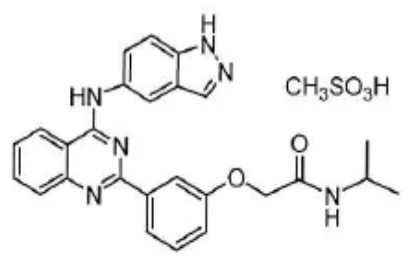
Chemical Name: 2-{3-[4-(1H-indazol-5-ylamino)quinazolin-2-yl]phenoxy}-N-(propan-2-yl) acetamide-methane sulfonate (1:1)
Molecular formula and molecular mass: C26H24N6O2.CH3SO3H (salt); 548.62 g/mol
Structural Formula (mesylate salt):
Physicochemical properties:
Belumosudil mesylate is a yellow crystalline solid. It is very slightly hygroscopic. There is one known stable crystal form and no known polymorph.
It is soluble in dimethylsulfoxide (DMSO), slightly soluble in dimethylformamide (DMF) and methanol, very slightly soluble in 2.0 pH (PBS buffer), and practically insoluble in water, acetonitrile, toluene, ethyl acetate, dichloromethane (DCM), acetone, isopropyl alcohol, n-heptane and in 2.0, 4.5, and 6.8 pH (PBS buffers).
Melting point range: 255 – 275oC
pH: 3.075 (in 1% w/v suspension in water)
pKa: 1.57 and 5.33
14 CLINICAL TRIALS
14.1 Efficacy and Safety Studies
Chronic Graft Versus Host Disease (cGVHD)
Table 6 Summary of Patient Demographics for Clinical Trials in Chronic GVHD
| Study No. | Trial Design | Dosage, Route of Administration and Duration | Study Subjects (N) | Mean Age (yrs) (Range) | Sex |
|---|---|---|---|---|---|
KD025-208 (NCT02841995) | Phase 2a, dose-escalation, open label, multicentre study in patients with chronic GVHD, who had received 1 to 3 prior lines of systemic therapy | 200 mg QD or 200 mg BID or 400 mg QD orally. Median duration: 8.4 months* | 54 | Median age: 51.5 (20-75) | Male: 34 (63%) Female: 20 (37%) |
KD025-213 (ongoing) (NCT03640481) | Phase 2, randomized, open-label multicentre study in patients with chronic GVHD who had received 2 to 5 prior lines of systemic therapy. | 200 mg QD or 200 mg BID orally. Median duration: 6.7 months* | 132 | Median age: 55.5 (21-77) | Male: 75 (56.8%) Female: 57 (43.2) |
| *Patients were treated in 28-day cycles until clinically significant progression of chronic GVHD requiring new systemic therapy, recurrence of malignancy or unacceptable toxicity. | |||||
Study KD025-213 was a randomised, open-label, multicentre study of REZUROCK for treatment of patients with chronic GVHD who had received 2 to 5 prior lines of systemic therapy and required additional treatment. Patients were randomised to receive 200 mg once daily (N=66) or 200 mg twice daily (N=66) of REZUROCK. Patients were excluded from the studies if platelets were < 50 × 109/L; absolute neutrophil count < 1.5 × 10⁹/L; AST or ALT> 3 × ULN; total bilirubin > 1.5 × ULN; QTc(F) > 480 ms; eGFR < 30 mL/min/1.73 m2; or FEV1 ≤39%. There were 66 patients treated with REZUROCK 200 mg taken orally once daily. Concomitant treatment with supportive care therapies for chronic GVHD was permitted. Concomitant treatment with GVHD prophylaxis and standard care systemic chronic GVHD therapies was permitted as long as the subject has been on a stable dose for at least 2 weeks prior to study. Initiation of new systemic chronic GVHD therapy while on study was not permitted.
The primary endpoint was Overall Response Rate (ORR), defined as the proportion of patients whose best overall response met the criteria for Partial Response (PR) and Complete Response
(CR) (per the 2014 NIH Consensus Development Project for Clinical trials in chronic GVHD criteria) through Cycle 7 Day 1 (C7D1).
Table 7 Overall Response Rate through Cycle 7 Day 1 for Patients with Chronic GVHD in Study KD025-213
REZUROCK 200 mg once daily (N=65) | |||||
|---|---|---|---|---|---|
| Overall Response Rate (ORR) | 49 (75%) | ||||
| 95% Confidence Interval a | (63%, 85%) | ||||
| Complete Response | 4 (6%) | ||||
| Partial Response | 45 (69%) | ||||
| a Estimated using Clopper-Pearson method | |||||
Complete response (CR) was achieved in 4 patients. The median time to response was 8 weeks (range, 4 to 41 weeks). Responses, including complete responses, were achieved across all organs involved (skin, eyes, joints/fascia, mouth, lung, esophagus, upper GI, lower GI and liver).
The duration of response (DOR) was calculated from first response by C7D1 to death or new systemic therapies for chronic GVHD. Median DOR was not reached in the 200 mg once daily group. Durability of response was longer than 12 months in 62% (95% CI: 46, 74) of patients in the 200 mg once daily group. The median duration of response calculated from first response to first documentation of deterioration from best ORR, initiation of new systemic therapy for chronic GVHD, or death was 3.7 months (95% CI: 1.9, 8.3). The median duration of response, calculated from first response to progression from nadir in any organ, death, or new systemic therapies for chronic GVHD, was 1.9 months (95% CI: 1.2, 2.9). The median time to first response was 1.8 months (95% CI: 1.0, 1.9). The median (range) duration of follow-up for efficacy was 13.5 months (0.6, 21.9).
ORR results were supported by exploratory analyses of patient-reported symptom bother which showed at least a 7-point decrease in the Lee Symptom Scale summary score through Cycle 7 Day 1 in 52% (95% CI: 40, 65) of patients.
15 MICROBIOLOGY
No microbiological information is required for this drug product.
16 NON-CLINICAL TOXICOLOGY
General Toxicology
Repeated dose studies with belumosudil of up to 26 weeks in rats and 39 weeks in dogs were conducted. In the 26-week rat study, belumosudil was administered orally at 50, 125, and 275 mg/kg/day. The NOAEL was 125 mg/kg/day (~3 to 7-fold the AUC at the human recommended dose of 200 mg daily). In a 3-month dog study, belumusodil was administered orally at 35, 70, and 125 mg/kg/day. In a separate 39-week dog study, belumusodil was administered orally at 5, 20, and 40 mg/kg/day. The NOAEL in the 3-month and 9-month dog study was 35 and 40 mg/kg/day, respectively, which is comparable to human exposures at the recommended dose (~1-fold AUC). Adverse effects observed in one or both species included toxicities in the gastrointestinal (GI) tract (emesis, loose stools, and/or abnormal black contents, increase in salivation), liver (elevated liver enzymes, hypertrophy/increased organ weight, and cholestasis/inflammation), kidney (increased blood urea nitrogen [BUN], tubular changes, pigmentation, intracellular protein droplets in the epithelium), hemolymphoid system (regenerative anemia), and reproductive system. In females, changes included lower uterine weights that correlated with uterine/cervical hypoplasia and decreased follicular development; findings were reversible. In males, toxicities included lower epididymis and testes weights associated with multifocal bilateral spermatozoan degeneration in the epididymis and testes, and multinucleated spermatids in the testes, and the changes were partially or fully reversible.
Carcinogenicity
Carcinogenicity studies have not been conducted with belumosudil.
Genotoxicity
Belumosudil was not mutagenic in an in vitro bacterial mutagenicity (Ames) assay and was not clastogenic in either an in vitro chromosome aberration assay in mammalian (CHO) cells or an in vivo mouse bone marrow micronucleus assay.
Reproductive and Developmental Toxicology
In a combined male and female rat fertility study, belumosudil-treated animals were mated with untreated females, or untreated males were mated with belumosudil-treated females. Belumosudil (50, 150, or 275 mg/kg/day) was administered orally to male rats 70 days prior to and throughout the mating period, and to female rats 14 days prior to mating and up to gestation day 7. In female rats at 275 mg/kg/day, adverse findings included pre- and post-implantation loss, and decreased number of viable embryos. In male rats at 275 mg/kg/day, adverse effects on sperm (reduced motility, reduced count, and increased percentage of abnormal sperm) and testes/epididymis organ changes (reduced weight and degeneration). Fertility was reduced in both treated males or females at the 275 mg/kg/day dose and reached statistical significance in males.
Adverse changes in male and female reproductive organs also occurred in general toxicology studies; findings included spermatozoa degeneration at a belumosudil dose of 35 mg/kg/day in dogs and decreased follicular development in ovaries at 275 mg/kg/day in rats. Changes were partially or fully reversed during the recovery period. The exposure (AUC) at the doses of 35 mg/kg/day in dogs, and 275 mg/kg/day in rats is 0.5 times and 8-9 times, respectively, the clinical exposure at the recommended dose of 200 mg daily.
In embryo-fetal developmental studies in pregnant female rats receiving belumosudil (15, 50, or 150 mg/kg/day), belumosudil administered at 150 mg/kg/day during the period of organogenesis was associated with decreased fetal weight (approximately 4 times the exposure [AUC] in patients receiving the recommended dose). In embryo-fetal studies in pregnant rabbits receiving belumosudil (50, 125, or 225 mg/kg/day), embryofetal mortality and malformations were noted at maternal exposures lower than human exposure (0.4-fold of human AUC), and skeletal malformations were noted at maternal exposures comparable to human exposures at the recommended dose of belumosudil (~1-fold of human AUC).
Special Toxicology
Phototoxicity
In-vitro belumosudil has demonstrated photo-absorbance between 290 and 370 nm and positive phototoxic potential in the in vitro 3T3 Neutral Red Uptake Assay. No phototoxicity studies have been performed in animals.