


Product Monograph - Jascayd
Recent Major Label Changes
Not applicable.
Table of Contents
Certain sections or subsections that are not applicable at the time of the preparation of the most recent authorized product monograph are not listed.
Recent Major Label Changes ................................................................................................... 2
Table of Contents ................................................................................................................... 2
Part 1: Healthcare Professional Information ........................................................................... 4
- 1.
Indications ....................................................................................................................... 4
1.1. Pediatrics .................................................................................................................. 4
1.2. Geriatrics .................................................................................................................. 4
- 2. Contraindications ............................................................................................................ 4
- 4.
Dosage and Administration ............................................................................................. 4
4.1. Dosing Considerations .............................................................................................. 4
4.2. Recommended Dose and Dosage Adjustment ......................................................... 4
4.4. Administration .......................................................................................................... 5
4.5. Missed Dose ............................................................................................................. 6
- 5. Overdose ......................................................................................................................... 6
- 6. Dosage Forms, Strengths, Composition, and Packaging ................................................... 6
- 7.
Warnings and Precautions ............................................................................................... 7
General ................................................................................................................................. 7
Reproductive Health ............................................................................................................. 7
7.1. Special Populations .................................................................................................. 7
7.1.1. Pregnancy ........................................................................................................ 7
7.1.2. Breastfeeding .................................................................................................. 8
7.1.3. Pediatrics ......................................................................................................... 8
7.1.4. Geriatrics ......................................................................................................... 8
- 8.
Adverse Reactions ........................................................................................................... 8
8.1. Adverse Reaction Overview ...................................................................................... 8
8.2. Clinical Trial Adverse Reactions .............................................................................. 10
8.3. Less Common Clinical Trial Adverse Reactions ....................................................... 11
- 9.
Drug Interactions ........................................................................................................... 11
9.2. Drug Interactions Overview .................................................................................... 11
9.3. Drug-Behaviour Interactions .................................................................................. 11
9.4. Drug-Drug Interactions ........................................................................................... 11
9.5. Drug-Food Interactions........................................................................................... 13
9.6. Drug-Herb Interactions ........................................................................................... 13
9.7. Drug-Laboratory Test Interactions ......................................................................... 13
- 10.
Clinical Pharmacology ................................................................................................... 13
10.1. Mechanism of Action .............................................................................................. 13
10.2. Pharmacodynamics ................................................................................................ 13
10.3. Pharmacokinetics ................................................................................................... 14
- 11. Storage, Stability, and Disposal ...................................................................................... 15
Part 2: Scientific Information ................................................................................................ 17
- 13. Pharmaceutical Information .......................................................................................... 17
- 14.
Clinical Trials .................................................................................................................. 19
14.1. Clinical Trials by Indication ..................................................................................... 19
- 16. Non-Clinical Toxicology .................................................................................................. 34
Patient Medication Information ........................................................................................... 37
Part 1: Healthcare Professional Information
Indications
JASCAYD is indicated for the treatment of adult patients with Idiopathic Pulmonary Fibrosis (IPF).
JASCAYD is indicated for the treatment of adult patients with Progressive Pulmonary Fibrosis (PPF).
1.1. Pediatrics
No data are available to Health Canada; therefore, Health Canada has not authorized an indication for pediatric use.
1.2. Geriatrics
No overall differences in safety and efficacy were observed for patients aged below or above 65 years.
2. Contraindications
- JASCAYD is contraindicated in patients who are hypersensitive to this drug or to any ingredient in the formulation, including any non-medicinal ingredient, or component of the container. For a complete listing, see 6 Dosage Forms, Strengths, Composition and Packaging.
4. Dosage and Administration
4.1 Dosing Considerations
Treatment should be initiated by physicians experienced in the diagnosis and treatment of conditions for which JASCAYD is indicated.
4.2. Recommended Dose and Dosage Adjustment
IPF and PPF, adults
The recommended dosage of JASCAYD is 18 mg twice daily, administered approximately 12 hours apart.
Based on individual patient tolerability and patient characteristics (see 8 Adverse Reactions and 14 Clinical Trials), the dosage may be reduced to 9 mg twice daily (except in patients who concomitantly use pirfenidone).
Concomitant use with CYP3A inhibitors
If used concomitantly with strong CYP3A inhibitors, the dosage of JASCAYD must be reduced to 9 mg twice daily (see section 9 Drug Interactions).
Concomitant use with pirfenidone:
Concomitant use of JASCAYD with pirfenidone decreased nerandomilast exposure by approximately 50% (see section 9 Drug Interactions). In patients using pirfenidone, the recommended dosage of JASCAYD is 18 mg twice daily and must not be reduced to 9 mg twice daily.
Concomitant use with CYP3A inducers:
Avoid use of JASCAYD with strong or moderate CYP3A inducers. Nerandomilast is a CYP3A substrate. Concomitant use of JASCAYD with moderate or strong CYP3A inducers is expected to decrease exposure of nerandomilast, which may decrease the efficacy of JASCAYD (see 10.3 Pharmacokinetics).
Special populations
Elderly patients:
No overall differences in safety and efficacy were observed for patients aged below or above 65 years. No dose adjustment is required in elderly patients (see section 10.3 Pharmacokinetics).
Renal impairment:
No dose adjustment is necessary in patients with mild, moderate, or severe renal impairment (eGFR ≥ 15 and < 90 mL/min/1.73 m2, based on CKD-EPI formula) (see section 10.3 Pharmacokinetics).
The pharmacokinetics, safety, and efficacy in patients with end stage renal disease (eGFR < 15 mL/min/1.73 m2) have not been investigated. Treatment of patients with end stage renal disease (eGFR < 15 mL/min/1.73 m2) with JASCAYD is not recommended.
Hepatic impairment:
No dose adjustment is necessary in patients with mild (Child-Pugh class A) or moderate (Child-Pugh class B) hepatic impairment (see section 10.3 Pharmacokinetics).
The pharmacokinetics, safety, and efficacy of nerandomilast in patients with severe (Child-Pugh class C) hepatic impairment have not been investigated. Treatment of patients with severe hepatic impairment with JASCAYD is not recommended.
Pediatric patients:
Health Canada has not authorized an indication for pediatric use.
The safety and efficacy in pediatric patients have not been established.
4.4. Administration
JASCAYD is for oral use. The tablets should be swallowed whole with water.
JASCAYD can be taken with or without food (see section 10.3 Pharmacokinetics).
For patients who have difficulty swallowing the whole tablet, a tablet of JASCAYD may be dispersed in a glass with approximately 100 mL of non-carbonated, room temperature drinking water. No other liquids should be used. The tablet should be dropped in water without crushing it and stirred regularly for approximately 15-20 min until the tablet is dispersed into very small pieces (the tablets will not completely dissolve). The resultant dispersion should be drunk within 2 hours of mixing. If the dispersion is not drunk immediately, patients must stir again before drinking. The glass should be rinsed with approximately 100 mL of water which should also be drunk to ensure the full dose is administered.
4.5. Missed Dose
If a dose of JASCAYD is missed, the next dose should be taken at the next scheduled time.
The patient should not take an additional dose. The recommended maximum dosage of 18 mg twice daily should not be exceeded.
5. Overdose
Symptoms
Single doses of up to 48 mg of nerandomilast were well tolerated in clinical trials with healthy volunteers. No clinically relevant changes in vital signs or ECG changes were observed.
In clinical trials, cases of accidental overdose of JASCAYD were reported in patients who received doses up to 72 mg/day for up to 17 days. No serious adverse events were reported as a result of the overdosage.
Therapy
In case of an overdose, it is recommended that the patient is monitored for any signs or symptoms of adverse reactions and appropriate symptomatic treatment is provided.
| For the most recent information in the management of a suspected drug overdose, contact your regional poison control centre or Health Canada’s toll-free number, 1-844 POISON-X (1-844-764-7669). |
|---|
- 6. Dosage Forms, Strengths, Composition, and Packaging
Table 1 – Dosage Forms, Strengths, and Composition
| Route of Administration | Dosage Form/ Strength/Composition | Non-Medicinal Ingredients |
| Oral | Tablets 9 mg, 18 mg | 9 mg: Croscarmellose sodium, hydroxypropylcellulose, hypromellose 2910, iron oxide yellow, lactose monohydrate, macrogol 8000, magnesium stearate, mannitol, microcrystalline cellulose, talc 18 mg: Croscarmellose sodium, hydroxypropylcellulose, Hypromellose 2910, iron oxide black, iron oxide red, lactose monohydrate, macrogol 8000, |
Description
JASCAYD tablets 9 mg are light yellow, oval, biconvex, and about 9.5 x 4.6 mm in length and width. One side is debossed with the BI company symbol, and the other side is debossed with ‘F9’.
JASCAYD tablets 18 mg are light red, oval, biconvex, and about 12 x 5.9 mm in length and width. One side is debossed with the BI company symbol, and the other side is debossed with ‘F18’.
This medicinal product contains less than 1 mmol sodium (23 mg) per dose, i.e., essentially ‘sodium-free’.
JASCAYD is packaged in polyvinyl chloride aluminum blisters (10-count blister card). Six blister cards are packed into a folding box resulting in pack sizes of 6 x 10 tablets per pack.
7. Warnings and Precautions
General
JASCAYD contains lactose
Each 9 mg tablet contains 81.1 mg lactose (as monohydrate).
Each 18 mg tablet contains 162.2 mg lactose (as monohydrate).
Patients with rare hereditary problems of galactose intolerance, total lactase deficiency or glucose-galactose malabsorption should not take this medicine.
Reproductive Health
See 7.1.1 Pregnancy, 16 Non-Clinical Toxicology
Fertility
See 7.1.1 Pregnancy, 16 Non-Clinical Toxicology
7.1. Special Populations
7.1.1. Pregnancy
There are no data from the use of JASCAYD in pregnant women. Based on findings in animal studies, JASCAYD may cause loss of pregnancy. In rats, embryo-fetal loss was observed at 5-times human exposure at the maximum recommended human dose (MRHD); this effect was not observed at approximately 3-times human exposure at the MRHD (see section 16 Non-Clinical Toxicology).
Females of reproductive potential should be advised to avoid becoming pregnant while taking JASCAYD. JASCAYD is not recommended during pregnancy.
| magnesium stearate, mannitol, microcrystalline cellulose, talc |
Female patients should be advised to notify their health care provider if they become pregnant or suspect they may be pregnant during therapy with JASCAYD. Pregnant women and females of reproductive potential should be advised of the potential risk of fetal loss.
Contraception
Based on findings in animal studies, JASCAYD may cause loss of pregnancy (see sections 7.1.1 Pregnancy and 16 Non-Clinical Toxicology).
Females of reproductive potential should be advised to avoid becoming pregnant and to use effective contraceptive methods during treatment with JASCAYD.
Fertility
There are no data on the impact of nerandomilast on human fertility. No adverse effects on fertility were observed in male rats at 4-times human exposure at the MRHD and in female rats at 2.5-times human exposure at the MRHD (see section 16 Non-Clinical Toxicology).
7.1.2. Breastfeeding
There are no data on the presence of nerandomilast in human milk or its effects on either the breast-fed child or on milk production. Studies in rats have shown excretion of nerandomilast in milk (see section 16 Non-Clinical Toxicology).
A risk to the breast-fed infant cannot be excluded. Breast-feeding should be discontinued during treatment with JASCAYD.
7.1.3. Pediatrics
No data are available to Health Canada; therefore, Health Canada has not authorized an indication for pediatric use.
7.1.4. Geriatrics
No overall differences in safety and efficacy were observed for patients aged below or above 65 years.
8. Adverse Reactions
8.1. Adverse Reaction Overview
IPF and PPF
The safety data provided in the following are based on 52-week data from the studies described in section 8.2.
In clinical trials, the most frequent adverse reaction associated with JASCAYD was diarrhea.
Diarrhea
IPF:
In patients treated with JASCAYD in the FIBRONEER-IPF trial, the frequency of diarrhea depended on the presence and type of background IPF treatment. In patients without background IPF treatment, diarrhea was reported in 26% of patients treated with JASCAYD 18 mg, 17% of patients treated with JASCAYD 9 mg versus 8% of patients receiving placebo. In patients on background nintedanib treatment, the frequency was 62% in patients treated with JASCAYD 18 mg, 49% in patients treated with JASCAYD 9 mg versus 27% in patients receiving placebo. In patients on background pirfenidone treatment, the frequency was 23%, in patients treated with JASCAYD 18 mg, versus 8% in patients receiving placebo.
In most patients treated with JASCAYD, diarrhea was of mild to moderate intensity and generally occurred within the first 3 months of treatment.
In the FIBRONEER-IPF trial diarrhea was the most common adverse reaction associated with treatment discontinuation and occurred most frequently in patients treated with JASCAYD 18 mg concomitantly with background nintedanib therapy (13%) versus patients receiving JASCAYD 9 mg (2%) or placebo (1%) and background nintedanib. In patients without background IPF treatment, diarrhea led to treatment discontinuation in 1% of patients treated with JASCAYD 18 mg, and no patients receiving JASCAYD 9 mg or placebo. In patients receiving background pirfenidone treatment, there were no treatment discontinuations in patients receiving nerandomilast 18 mg or placebo.
PPF:
In patients treated with JASCAYD in the FIBRONEER-ILD trial, the frequency of diarrhea depended on the presence or absence of background nintedanib treatment. In patients without background nintedanib treatment, diarrhea was reported in 27% of patients treated with JASCAYD 18 mg, 15% of patients treated with JASCAYD 9 mg versus 16% of patients receiving placebo. In patients on background nintedanib treatment, the frequency was 49% in patients treated with JASCAYD 18 mg, 48% in patients treated with JASCAYD 9 mg versus 36% in patients receiving placebo.
In most patients treated with JASCAYD, diarrhea was of mild to moderate intensity and generally occurred within the first 3 months of treatment.
In the FIBRONEER-ILD trial, diarrhea was the most common adverse reaction associated with treatment discontinuation and occurred most frequently in patients treated with JASCAYD 18 mg concomitantly with background nintedanib therapy (4%) versus patients receiving JASCAYD 9 mg (3%) or placebo (1%) and background nintedanib. In patients without background nintedanib treatment, diarrhea led to treatment discontinuation in 1% of patients treated with JASCAYD 18 mg, and no patients receiving JASCAYD 9 mg or placebo.
Weight decrease
IPF:
In the FIBRONEER-IPF trial, the mean absolute change in body weight from baseline to week 52 was -2.6 kg for patients treated with JASCAYD 18 mg, -2.4 kg for patients treated with JASCAYD 9 mg, and -1.8 kg for patients receiving placebo.
The frequency of reported weight decrease depended on the presence and type of background IPF treatment. In patients without background IPF treatment, weight decrease was reported in 7% of patients treated with JASCAYD 18 mg, 1% of patients treated with JASCAYD 9 mg versus 6% of patients receiving placebo. In patients on background nintedanib treatment, the frequency was 16% in patients treated with JASCAYD 18 mg, 13% in patients treated with JASCAYD 9 mg versus 11% in patients receiving placebo. In patients on background pirfenidone treatment, the frequency was similar in patients treated with JASCAYD 18 mg and placebo (5%).
PPF:
In the FIBRONEER-ILD trial, the mean absolute change in body weight from baseline to week 52 was -3.2 kg for patients treated with JASCAYD 18 mg, -2.0 kg for patients treated with JASCAYD 9 mg and -2.0 kg for patients receiving placebo.
In patients without background nintedanib treatment, weight decrease was reported in 10% of patients treated with JASCAYD 18 mg, 5% of patients treated with JASCAYD 9 mg versus 4% of patients receiving placebo. In patients on background nintedanib treatment, the frequency of weight decrease was 11% in patients treated with JASCAYD 18 mg, 9% in patients treated with JASCAYD 9 mg versus 8% in patients receiving placebo.
8.2. Clinical Trial Adverse Reactions
Clinical trials are conducted under very specific conditions. Therefore, the frequencies of adverse reactions observed in the clinical trials may not reflect frequencies observed in clinical practice and should not be compared to frequencies reported in clinical trials of another drug.
Idiopathic Pulmonary Fibrosis
JASCAYD was studied in a randomized, placebo-controlled, double-blind trial (FIBRONEER-IPF), in which 1,177 adult patients with IPF were randomized in a 1:1:1 ratio to receive JASCAYD 9 mg twice daily, JASCAYD 18 mg twice daily, or matching placebo in the presence or absence of background IPF treatment with nintedanib or pirfenidone for at least 52 weeks. The median duration of exposure was 14 months in each treatment arm. Subjects ranged in age from 42 to 90 years (mean age was 70 years); 68% of subjects were White, 32% were Asian, and 1% were Black or African American; 83% of subjects were male.
The most frequent adverse reaction associated with JASCAYD was diarrhea. Table 2 lists the most common adverse reactions with an incidence of ≥5% in JASCAYD -treated patients and more frequently than in the placebo group.
Table 2 – Adverse Reactions Reported in ≥5% of Patients Treated with JASCAYD and More Frequently than in the Placebo Group (FIBRONEER-IPF)*
| JASCAYD 18 mg n=392 | JASCAYD 9 mg n=392 | Placebo n=393 | |
| Diarrhea | 41% | 31% | 16% |
| Depression** | 12% | 11% | 10% |
| Weight decreased | 10% | 9% | 8% |
| Nausea | 8% | 9% | 7% |
| Decreased appetite | 9% | 8% | 5% |
| Fatigue | 7% | 8% | 6% |
| Headache | 7% | 6% | 5% |
| Back pain | 6% | 5% | 3% |
| Dizziness | 5% | 6% | 5% |
* Adverse reactions not occurring with higher frequency in at least one of the JASCAYD treatment groups relative to placebo in pooled Phase 3 safety data were excluded.
** Includes depression, depressed mood, depression rating scale score increased, suicidal ideation, adjustment disorder with depressed mood, depressive symptom.
Progressive Pulmonary Fibrosis
JASCAYD was studied in a randomized, placebo-controlled, double-blind trial (FIBRONEER-ILD), in which 1,178 adult patients with PPF were randomized in a 1:1:1 ratio to receive JASCAYD 9 mg twice daily, JASCAYD 18 mg twice daily, or matching placebo in the presence or absence of background PPF treatment with nintedanib for at least 52 weeks. The median duration of exposure was 15 months in each treatment arm. Subjects ranged in age from 26 to 88 years (mean age was 66 years); 58% of subjects were White, 38% were Asian, and 1% were Black or African American; 56% of subjects were male.
Overall, the safety profile of JASCAYD in patients with PPF in the FIBRONEER-ILD trial was generally consistent with that observed in patients with IPF during the FIBRONEER-IPF trial.
8.3. Less Common Clinical Trial Adverse Reactions
Additional treatment-emergent adverse events occurred in the FIBRONEER-IPF and FIBRONEER-ILD trials involving JASCAYD with an incidence of less than 5% and at a greater incidence in at least one of the JASCAYD treatment groups compared to the placebo group in both trials. The frequency of these adverse events from data pooled from the whole duration of the two trials was as follows:
Vasculitis (diagnosis confirmed by adjudication) - 18 mg bid nerandomilast: 0.6%, 9 mg bid nerandomilast: 0.4%; placebo: 0.3%.
Atrial fibrillation – 18 mg bid nerandomilast: 2.6%; 9 mg bid nerandomilast: 1.8%; placebo: 0.8%.
Asthenia – 18 mg bid nerandomilast: 3.7%; 9 mg bid nerandomilast: 3.3%; placebo: 2.5%.
Amylase increased – 18 mg bid nerandomilast: 1.1%; 9 mg bid nerandomilast: 1%; placebo: 0.4%.
9. Drug Interactions
9.2. Drug Interactions Overview
Based on in vitro assessment, nerandomilast is mainly metabolized by CYP3A and is also a substrate of P-gp.
9.3. Drug-Behaviour Interactions
The interaction of JASCAYD with individual behavioural risks (e.g. cigarette smoking, cannabis use, and/or alcohol consumption) has not been studied.
9.4. Drug-Drug Interactions
Table 3 – Established or Potential Drug-Drug Interactions
| Nerandomilast | Source of evidence | Effect | Clinical comment |
| Nerandomilast | Source of evidence | Effect | Clinical comment |
| Nerandomilast | Source of evidence | Effect | Clinical comment |
| Strong cytochrome P450 3A (CYP3A) inhibitors (examples: clarithromycin, itraconazole, ritonavir) | CT | Based on in vitro data, nerandomilast is a substrate of CYP3A. When a single dose of 6 mg nerandomilast was co-administered with multiple doses of itraconazole (a dual strong inhibitor of CYP3A and P-gp) in healthy volunteers, the | If used concomitantly with strong CYP3A inhibitors, the dosage of JASCAYD must be reduced to 9 mg twice daily (see section 4 Dosage and Administration). |
| exposure of nerandomilast increased by 2.2-times for AUC and by 1.3-times for Cmax. | |||
| Pirfenidone | CT | Concomitant use with pirfenidone decreased exposure of nerandomilast by approximately 50%, based on Ctrough,ss. The mechanism of this interaction is currently unknown. When JASCAYD was co-administered with pirfenidone in patients with IPF in a Phase 3 trial, efficacy was not observed at the 9 mg dose but was demonstrated with 18 mg JASCAYD (see section 14 Clinical Trials). When co-administered with single doses of pirfenidone in healthy volunteers, nerandomilast did not change the exposure of pirfenidone. | In patients using pirfenidone, the recommended dosage of JASCAYD is 18 mg twice daily and must not be reduced to 9 mg twice daily (see section 4 Dosage and Administration). |
| Nintedanib | CT | Concomitant use with nintedanib did not alter the exposure of nerandomilast. When co-administered with single doses of nintedanib in healthy volunteers, nerandomilast did not change the exposure of nintedanib. | No dose adjustment of JASCAYD is required when used concomitantly with nintedanib. |
| Cytochrome P450 substrates (examples: oral contraceptives, proton pump inhibitors, statins) | CT | When co-administered with midazolam (a sensitive CYP3A index substrate) in healthy volunteers, nerandomilast did not change midazolam exposure to a clinically relevant extent. Based on this result, nerandomilast is not expected to decrease or increase the systemic exposure of drugs that are mainly | |
| metabolized by CYP3A and clinically relevant induction of CYPs 2C8, 2C9 or CYP 2C19 by nerandomilast is also not expected. | |||
Legend: CT = Clinical Trial
In vitro evaluation of drug interaction potential
In vitro, nerandomilast was a substrate of the transporter protein P-gp, but not of BCRP, OATP1B1, OATP1B3, OAT1, OAT3, and OCT2.
Nerandomilast inhibited P-gp, MATE1, and MATE-2K and weakly inhibited BCRP and OAT3 in vitro, but this is not expected to occur at clinically relevant nerandomilast concentrations. Nerandomilast is not an inhibitor of OAT1, OCT2, OATP1B1 and OATP1B3.
9.5. Drug-Food Interactions
This drug may be taken with or without food.
9.6. Drug-Herb Interactions
Interactions with herbal products have not been established.
9.7. Drug-Laboratory Test Interactions
Interactions with laboratory tests have not been established.
10. Clinical Pharmacology
10.1. Mechanism of Action
Nerandomilast is a selective inhibitor of phosphodiesterase 4 (PDE4) with at least 9-fold preferential inhibition of the PDE4B isoenzyme over PDE4A, C and D based on in vitro data. PDE4 hydrolyses and inactivates cyclic adenosine monophosphate (cAMP). Nerandomilast exerts both anti-fibrotic and immunomodulatory effects as preferential PDE4B inhibition elevates intracellular cAMP levels and reduces the expression of pro-fibrotic growth factors and inflammatory cytokines, which are overexpressed in fibrotic lung disease.
10.2. Pharmacodynamics
Pharmacodynamic effects
Anti-fibrotic and immunomodulatory activity:
In cellular and animal models, nerandomilast was shown to reduce the levels of the inflammatory cytokines TNF-alpha and IL-2, the influx of neutrophils to the bronchoalveolar compartment, the gene expression of extra-cellular matrix components, and the extent of fibroblast-to-myofibroblast transformation and fibroblast proliferation (synergistic with nintedanib).
Nerandomilast also showed efficacy in lung fibrosis models in mice and rats.
In clinical studies in healthy volunteers and in IPF patients, nerandomilast inhibited the lipopolysaccharide-stimulated release of pro-inflammatory cytokines TNF-alpha and IFN-gamma using an ex vivo whole blood assay.
Cardiac electrophysiology
At single doses of nerandomilast up to 48 mg (2.2-times the estimated Cmax,ss exposure at the maximum recommended human dose), clinically significant QTc interval prolongation was not observed.
10.3. Pharmacokinetics
The pharmacokinetics of nerandomilast have been characterised in healthy volunteers, patients with IPF and patients with PPF. No clinically relevant differences in pharmacokinetics of nerandomilast were noted between these populations.
Table 4 – Summary of nerandomilast pharmacokinetic parameters after single oral administration of 18 mg nerandomilast in healthy volunteers (n=63).
| Cmax [nmol/L] | Tmax [h]1 | AUC0-∞ [nmol·h/L] | |
| gMean | 418 | 1.25 | 2300 |
| gCV (%) | 37.5 | 0.500-4.00 | 28.5 |
1 For tmax, median and range (Min-Max) are provided
Absorption
Nerandomilast reached peak plasma concentrations (Cmax) at a median time (Tmax) of 1.00-1.25 h (range between 0.5-4 hours) after oral administration of 9 mg and 18 mg doses. The absolute oral bioavailability of nerandomilast was 73% (90% CI:67-79%).
Administration of 18 mg nerandomilast with a high-fat and high caloric meal did not change nerandomilast exposure to a clinically relevant extent (AUC increased by approximately 15% while Cmax decreased by approximately 14%).
Distribution
After single intravenous administration of nerandomilast, the geometric mean volume of distribution Vss was approximately 94 L (gCV 32.0%).
In-vitro human plasma protein binding of nerandomilast was 77% with no concentration dependence.
In healthy volunteers, nerandomilast was preferentially distributed in plasma with a blood-to-plasma ratio of 0.6-0.8.
Metabolism
Biotransformation:
Nerandomilast is mainly metabolized via oxidation by CYP3A and glucuronidation by multiple UGT enzymes.
Following single oral administration, nerandomilast was the primary circulating component representing approximately 50% of circulating radioactivity.
After multiple oral administrations of 12 mg nerandomilast twice daily, the only major metabolite identified in plasma at steady state was the di-oxidative metabolite BI 764333/M480(4). This metabolite, pharmacologically inactive at clinically relevant exposures, represented 12% of the total plasma material at steady state consisting of both parent compound and all its metabolites.
Nerandomilast has a chiral sulfur atom and JASCAYD predominantly contains chirally pure nerandomilast (R-enantiomer). After oral administration of nerandomilast, chiral inversion from R-enantiomer to S-enantiomer occurs via metabolism. The S-enantiomer was identified as a minor (3% of total circulating radioactivity) metabolite of nerandomilast and is pharmacologically inactive at clinically relevant exposures. The pharmacologically active R-enantiomer remained as the predominant circulating enantiomer.
Elimination
Following multiple oral doses of 18 mg nerandomilast twice daily, the terminal half-life was approximately 10 to 17 h and the geometric mean apparent plasma clearance at steady state was 274 mL/min with inter-individual variability (gCV%) of 23.6%. After oral administration of a single 18 mg dose of radiolabelled nerandomilast, approximately 95% of the dose was recovered within 9 days after dosing, with 58% recovered in feces (13% unchanged) and 36% recovered in urine (12% unchanged).
Linearity/non-linearity
Nerandomilast exhibited dose proportional pharmacokinetics following oral administration of both, single doses (2 to 48 mg) and multiple doses (1 to 18 mg twice daily).
Following oral administration of 18 mg nerandomilast twice daily, steady state was achieved within 4 days with an accumulation ratio of up to 1.38 based on AUC and Cmax.
Special populations and conditions
Age, sex, ethnicity, renal or hepatic impairment
No clinically significant differences in the pharmacokinetics of nerandomilast were observed based on age (18-90 years), sex, ethnicity (Hispanic/Latino or not Hispanic/Latino), mild, moderate, and severe renal impairment (eGFR ≥ 15 and < 90 ml/min/1.73 m², based on CKD-EPI formula), or mild (Child Pugh A) or moderate (Child Pugh B) hepatic impairment. Subjects with end stage renal disease and subjects with severe hepatic impairment (Child Pugh C) have not been studied.
Race
Asian patients have up to 47% higher nerandomilast trough concentration compared to White patients. This effect is not expected to be clinically meaningful.
Body weight
A population PK analysis indicated higher nerandomilast exposure in patients with lower body weight and lower exposure in patients with higher body weight. The impact of body weight on nerandomilast plasma concentrations is not expected to be clinically meaningful.
- 11. Storage, Stability, and Disposal
Keep this medicine out of the sight and reach of children.
Do not use this medicine after the expiry date which is stated on the blister and on the carton after EXP. The expiry date refers to the last day of that month.
Store in the original package in order to protect from light.
Store at room temperature (15 to 30°C).
Do not throw away any medicines via wastewater. Ask your pharmacist how to throw away medicines you no longer use. These measures will help protect the environment.
Part 2: Scientific Information
13. Pharmaceutical Information
Drug Substance
Non-proprietary name of the drug substance(s): nerandomilast
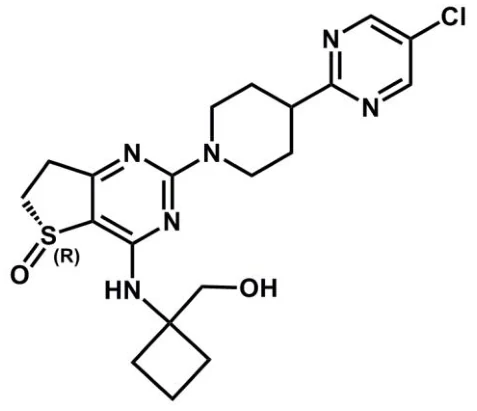
Chemical name: [1-[[(5R)-2-[4-(5-chloropyrimidin-2-yl)-1-piperidyl]-5-oxo-6,7-dihydrothieno[3,2-d]pyrimidin-4-yl]amino]cyclobutyl]methanol
Molecular formula and molecular mass:
C20H25ClN6O2S
448.97 g/mol
Structural formula:
Physicochemical properties:
Melting point: 235oC (10oC/min)
pKa = 4.23 was measured by pH titration from pH 2.0-12.0
Polymorphic form of drug substance: Form II
Solubility of nerandomilast at various pH values after 2 hours at 37oC:
| Condition | Solubility1 |
|---|---|
| pH = 1.12 (0.1M Hydrochloric acid) | Slightly soluble |
| pH 2.25 (0.01M Hydrochloric acid) | Slightly soluble |
| pH 3.28 (0.001M Hydrochloric acid) | Very slightly soluble |
| pH 4.04 (0.02M Sodium Acetate buffer) | Practically insoluble |
| pH 4.53 (0.02M Sodium Acetate buffer) | Practically insoluble |
| pH 5.01 (0.05M Sodium Acetate buffer) | Practically insoluble |
| pH 6.04 (0.05M Potassium Phosphate buffer) | Practically insoluble |
| pH 6.80 (0.05M Potassium Phosphate buffer) | Practically insoluble |
1 Per <USP, Ph. Eur.> descriptive term
Solubility of nerandomilast at room temperature in organic solvents after 48 hours:
| Solvents | Solubility2 |
|---|---|
| Acetonitrile | Very slightly soluble |
| Isopropyl alcohol | Very slightly soluble |
| Acetone | Very slightly soluble |
| Methanol | Slightly soluble |
| Ethanol | Slightly soluble |
| Propylene Glycol | Slightly soluble |
| PEG 400 | Slightly soluble |
| DMSO | Sparingly soluble |
2 Per <USP, Ph. Eur.> descriptive term
Product Characteristics:
White to off-white to light yellow powder
Non-hygroscopic
Pharmaceutical standard: non-compendial drug substance controlled according to manufacturer-established specifications
14. Clinical Trials
14.1. Clinical Trials by Indication
Idiopathic Pulmonary Fibrosis (IPF)
Table 5 – Summary of Patient Demographics for Clinical Trials in Idiopathic Pulmonary Fibrosis (IPF)
Study Name | Study design | Dosage, route of administration and duration | Study subjects (n) | Mean age (range) | Sex |
| FIBRONEER -IPF | Randomized, double-blind, placebo-controlled trial | Tablets Oral 52 weeks | 1177 | 70 years (42 to 90 years) | Male: 83% Female: 17% |
A randomized, double-blind, placebo-controlled trial (FIBRONEER-IPF) evaluated the clinical efficacy and safety of JASCAYD in adult patients with IPF with or without receiving background treatment of nintedanib or pirfenidone. Patients were required to have a diagnosis of IPF based on ATS/ERS/JRS/ALAT criteria. Diagnosis was confirmed by the investigator based on chest high-resolution computed tomography (HRCT) scan and, if available, lung biopsy, and usual interstitial pneumonia (UIP) or probable UIP HRCT pattern consistent with the clinical diagnosis of IPF. Patients were also required to be greater than or equal to 40 years of age with an FVC greater than or equal to 45% of predicted and a carbon monoxide diffusing capacity (DLCO, corrected for haemoglobin) greater than or equal to 25% of predicted. Prior to Visit 1 and during screening, patients had to be on stable treatment with nintedanib or pirfenidone (no dose changes for at least 12 weeks) and planned to stay on this background antifibrotic treatment after randomization. Alternatively, patients were required to be naïve to or have previously discontinued nintedanib or pirfenidone for at least 8 weeks and did not plan to start or re-start background antifibrotic treatment. Patients with active vasculitis, severe depression or suicidal behavior or ideation, or use of immunomodulatory medications (other than prednisone ≤15 mg/day or equivalent) were excluded.
1177 patients were randomized in a 1:1:1 ratio to receive JASCAYD 9 mg twice daily, JASCAYD 18 mg twice daily, or placebo twice daily for at least 52 weeks. Randomization was stratified by the presence of nintedanib or pirfenidone versus the absence of these background treatments at baseline. The primary endpoint of the trial was the absolute change from baseline in Forced Vital Capacity (FVC) in mL at 52 weeks compared with placebo. The key secondary endpoint was the time to the first occurrence of any of the components of the composite endpoint: first acute IPF exacerbation, first hospitalization for respiratory cause, or death over the duration of the trial.
At the time of the main analysis, median observation time was 14.3 months; at the end-of trial analysis, median observation time was 17.0 months.
The study population consisted of 83% men and 17% women with a mean age of 70 years (range: 42 to 90 years). 68% of the study population were White, 32% Asian and 0.5% Black/African American. For ethnicity, 8% of patients identified as Hispanic or Latino. At baseline, the mean FVC was 2843 mL and 78% of predicted normal. 78% of the patients were on stable treatment with nintedanib (46%) or with pirfenidone (32%) and 22% were on none of these treatments (15% of patients were treatment naïve and 8% previously discontinued treatment with nintedanib or pirfenidone).
Change from baseline in FVC
Overall, the primary endpoint of absolute change from baseline in FVC (in mL) at 52 weeks in patients receiving JASCAYD was statistically significantly improved compared with patients receiving placebo. The adjusted mean decline in patients receiving 18 mg or 9 mg JASCAYD twice daily was -115 mL and -139 mL, respectively, whereas in the placebo group, an adjusted mean decline of -183 mL was observed. The respective treatment difference compared with the placebo group was 69 mL (95% CI: 30, 107; p-value: 0.0005) and 45 mL (95% CI: 6, 83; p-value: 0.0222).
The primary analysis was consistent with all sensitivity and supplementary analyses as well as across pre-specified subgroups of age, gender, race, ethnicity, bodyweight, and baseline FVC.
A drug-drug interaction was observed in patients receiving pirfenidone as background IPF treatment (see section 9 Drug Interactions). In these patients, no treatment effect was observed when receiving 9 mg nerandomilast twice daily.
Results for the primary endpoint in the overall population and by background IPF treatment for the JASCAYD 18 mg and 9 mg doses versus matching placebo are presented in Figure 1 and Figure 2, respectively.
Figure 1. Absolute change from baseline in FVC (mL) at 52 weeks for patients receiving 18 mg JASCAYD compared to placebo in the FIBRONEER-IPF study
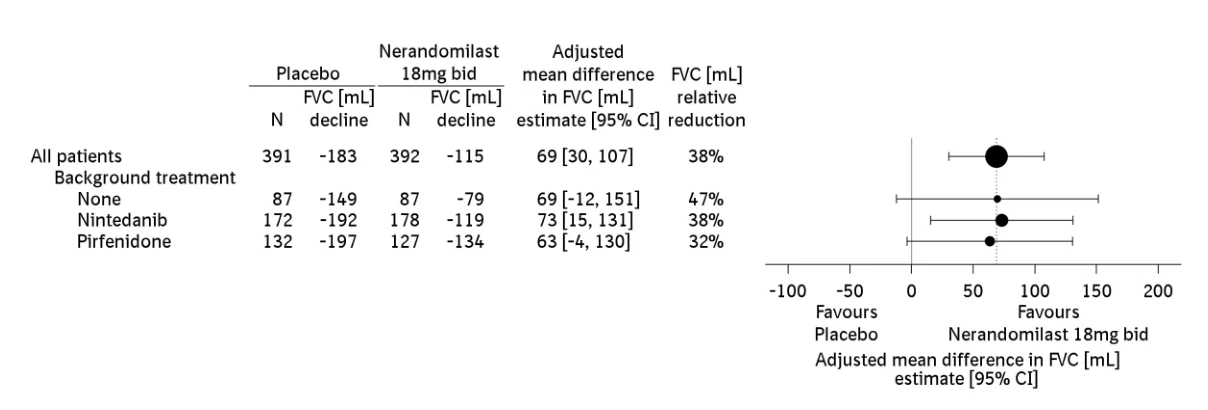
For patients who died before week 52, a lowest 10th percentile change from baseline value was assigned.
Subgroup results based on background treatment are exploratory.
bid = twice daily
Figure 2. Absolute change from baseline in FVC (mL) at 52 weeks for patients receiving 9 mg JASCAYD compared to placebo in the FIBRONEER-IPF study
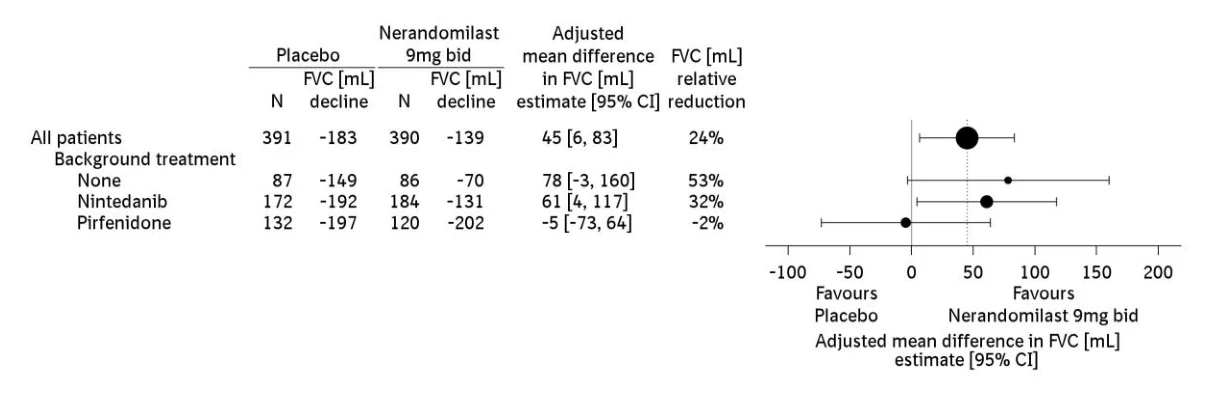
For patients who died before week 52, a lowest 10th percentile change from baseline value was assigned.
Subgroup results based on background treatment are exploratory.
bid = twice daily
Figures 3 and Figure 4 show the change in FVC from baseline over time in patients receiving JASCAYD 18 mg twice daily and JASCAYD 9 mg twice daily (patients without pirfenidone background therapy) compared to matching placebo. When the mean adjusted FVC change from baseline was plotted over time, difference in FVC change is seen as early as week 2 and continued to diverge up to week 52 and beyond. This effect over time was consistently observed across the subgroups by background IPF treatment.
Figure 3. Change from baseline in FVC (mL) over time in the FIBRONEER-IPF study – JASCAYD 18 mg
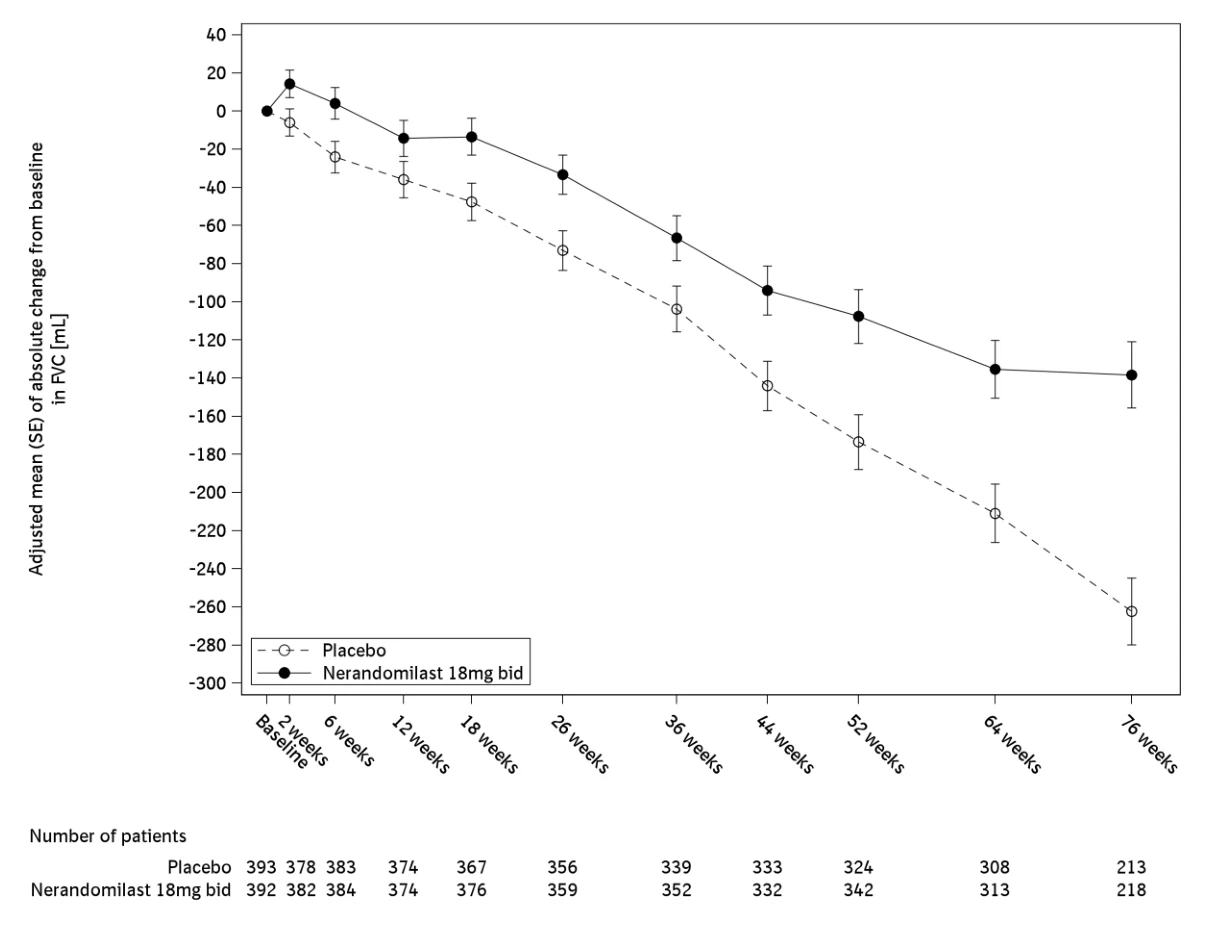
Display based on adjusted mean change from baseline values estimated from MMRM (Mixed Model with Repeated Measurements) using patients’ FVC data that were available at each week.
bid = twice daily
Figure 4. Change from baseline in FVC (mL) over time in the FIBRONEER-IPF study - JASCAYD 9 mg (patients without pirfenidone background therapy)
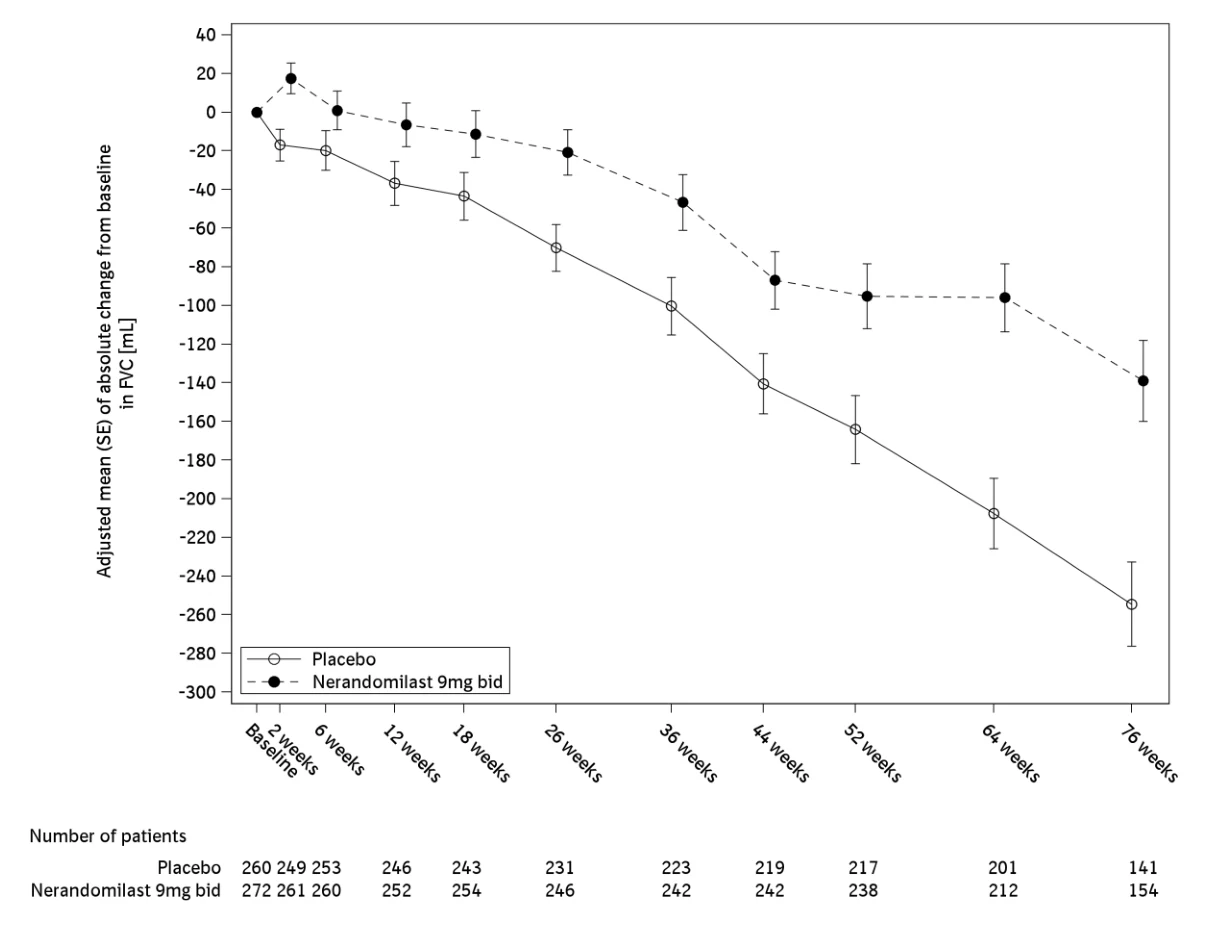
Display based on adjusted mean change from baseline values estimated from MMRM (Mixed Model with Repeated Measurements) using patients’ FVC data that were available at each week.
bid = twice daily
Time to first acute IPF exacerbation, first hospitalization for respiratory cause, or death
The key secondary composite endpoint was the time to the first event of acute IPF exacerbation, hospitalization for respiratory cause, or death over the duration of the trial. Acute IPF exacerbation was defined as acute worsening or development of dyspnea typically less than 1 month duration, computed tomography with new bilateral ground-glass opacity and/or consolidation superimposed on a background pattern consistent with IPF, and deterioration not fully explained by cardiac failure or fluid overload. Neither acute IPF exacerbations nor respiratory hospitalizations were adjudicated. Overall, there was no statistically significant treatment difference for the JASCAYD 18 mg or 9 mg groups compared to placebo for the key secondary composite endpoint. At time of main analysis for 18 mg and 9 mg dose, respectively: HR 1.17 (95% CI: 0.86, 1.59; p-value: 0.3102) and HR 1.03 (95% CI: 0.75, 1.41; p-value: 0.8568); and at time of end-of trial analysis for 18 mg and 9 mg dose, respectively: HR 0.99 (95% CI: 0.75, 1.31) and HR 0.92 (95% CI: 0.69, 1.22).
There were also no statistically significant treatment differences for the JASCAYD 18 mg or 9 mg groups compared to placebo for the individual components of the key secondary endpoint, and for the related endpoints 'first acute IPF exacerbation or death' and 'first hospitalization for respiratory cause or death' over the duration of the FIBRONEER-IPF study at the time of the end-of trial analysis.
Survival
In the pre-specified analysis of survival over the duration of the FIBRONEER-IPF study, the risk for all-cause mortality was not significantly different in the JASCAYD 18 mg group (HR 0.66; 95% CI: 0.41, 1.08) or JASCAYD 9 mg group (patients without pirfenidone background therapy) (0.84; 95% CI: 0.48, 1.48) compared with matching placebo at the time of end-of trial analysis (see Figure 5 and Figure 6; results were not controlled for Type I error).
Figure 5. Cumulative incidence of death over the duration of the FIBRONEER-IPF study – JASCAYD 18 mg
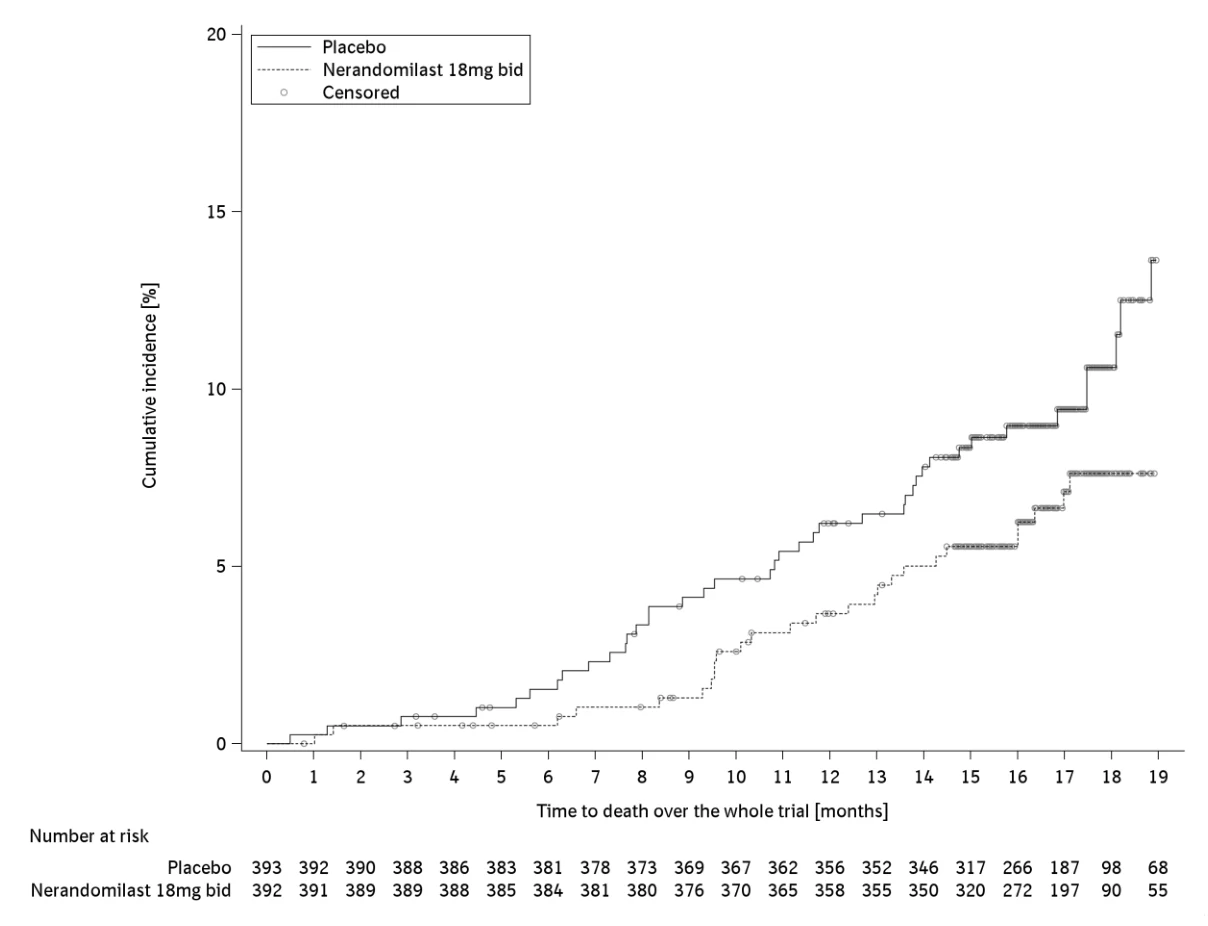
bid = twice daily
Figure 6. Cumulative incidence of death over the duration of the FIBRONEER-IPF study- JASCAYD 9 mg (patients without pirfenidone background therapy)
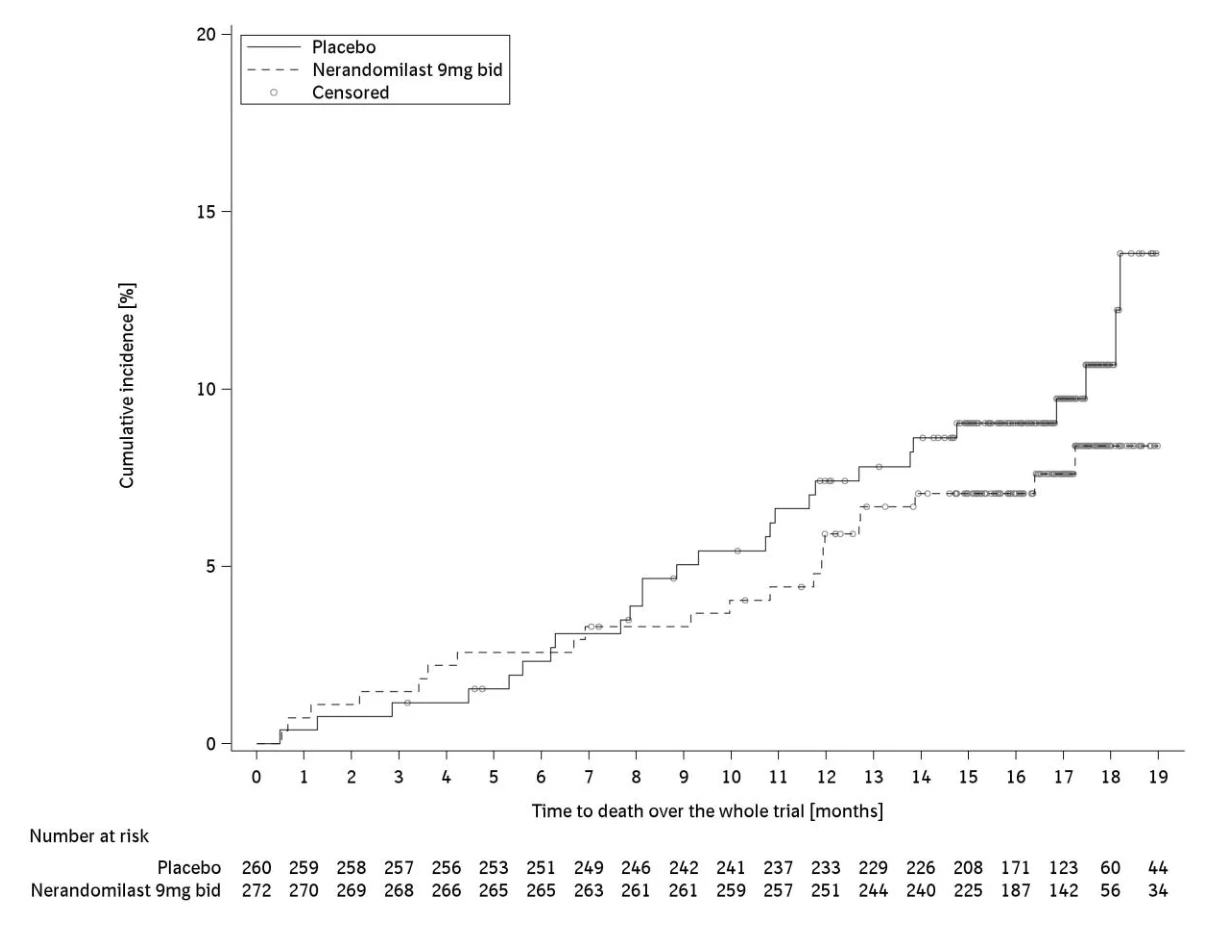
bid = twice daily
Progressive Pulmonary Fibrosis (PPF)
Table 6 – Summary of Patient Demographics for Clinical Trials in Progressive Pulmonary Fibrosis (PPF)
Study name | Study design | Dosage, route of administration and duration | Study subjects (n) | Mean age (range) | Sex |
| FIBRONEER -ILD | Randomized, double-blind, placebo-controlled trial | Tablets Oral 52 weeks | 1178 | 66 years (26 to 88 years) | Male: 55.6% Female: 44.4% |
A randomized, double-blind, placebo-controlled trial (FIBRONEER-ILD) evaluated the clinical efficacy and safety of JASCAYD in adult patients with PPF. Patients with PPF were selected if they had relevant fibrosis (greater than 10% fibrotic features) on HRCT and presented with clinical signs of progression
(defined as FVC decline greater than or equal to 10%, FVC decline greater than or equal to 5% and less than 10% with worsening of respiratory symptoms or imaging or worsening of respiratory symptoms and worsening imaging all in the 24 months prior to screening). Patients were required to have an FVC greater than or equal to 45% of predicted and a DLCO greater than or equal to 25% of predicted normal corrected for haemoglobin. Eligible patients were or were not on stable background treatment with nintedanib. Patients were excluded from the trial if they had a pre-bronchodilator FEV1/FVC less than 0.7, acute ILD exacerbation within 3 months prior to the trial, active vasculitis within 8 weeks prior to the trial, a history of suicidal behavior or ideation, or severe depression. Patients were also excluded if they were being treated with the following medications prior to the trial: prednisone >15 mg/day or equivalent within 4 weeks; cyclophosphamide, tocilizumab, mycophenolate, pirfenidone within 8 weeks; rituximab within 6 months.
1178 patients were randomized in a 1:1:1 ratio to receive JASCAYD 9 mg twice daily, JASCAYD 18 mg twice daily, or placebo twice daily for at least 52 weeks. Randomization was stratified by the presence or absence of background treatment with nintedanib and by HRCT pattern (UIP or UIP-like fibrotic pattern vs Other fibrotic patterns) using central review.
The primary endpoint of the trial was the absolute change from baseline in FVC in mL at 52 weeks compared with placebo. The key secondary endpoint was the time to the first occurrence of any of the components of the composite endpoint: the first acute ILD exacerbation, first hospitalization for respiratory cause, or death over the duration of the trial.
At the time of the main analysis, median observation time was 15.2 months; at the end-of trial analysis, median observation time was 17.2 months.
The study population consisted of 56% men and 44% women with a mean age of 66 years (range: 26 to 88 years). 58% of the study population were White, 39% Asian and 1% Black or African American. For ethnicity, 14% of patients identified as Hispanic or Latino.
At baseline, the mean FVC was 2353 mL and 70% of predicted normal. 44% of the patients were on stable treatment with nintedanib and 56% not treated with nintedanib (44% of patients were treatment naïve and 12% previously discontinued nintedanib treatment). On baseline HRCT, 71% of the patients had UIP or UIP-like fibrotic pattern and 29% of the patients had other fibrotic patterns. The underlying clinical ILD diagnoses were autoimmune ILDs (28%), hypersensitivity pneumonitis (20%), unclassifiable idiopathic interstitial pneumonia (20%), idiopathic nonspecific interstitial pneumonia (19%), and other ILDs (14%).
Change from baseline in FVC
Overall, the primary endpoint of absolute change from baseline in FVC (in mL) at 52 weeks in patients receiving JASCAYD was statistically significantly improved compared with patients receiving placebo.
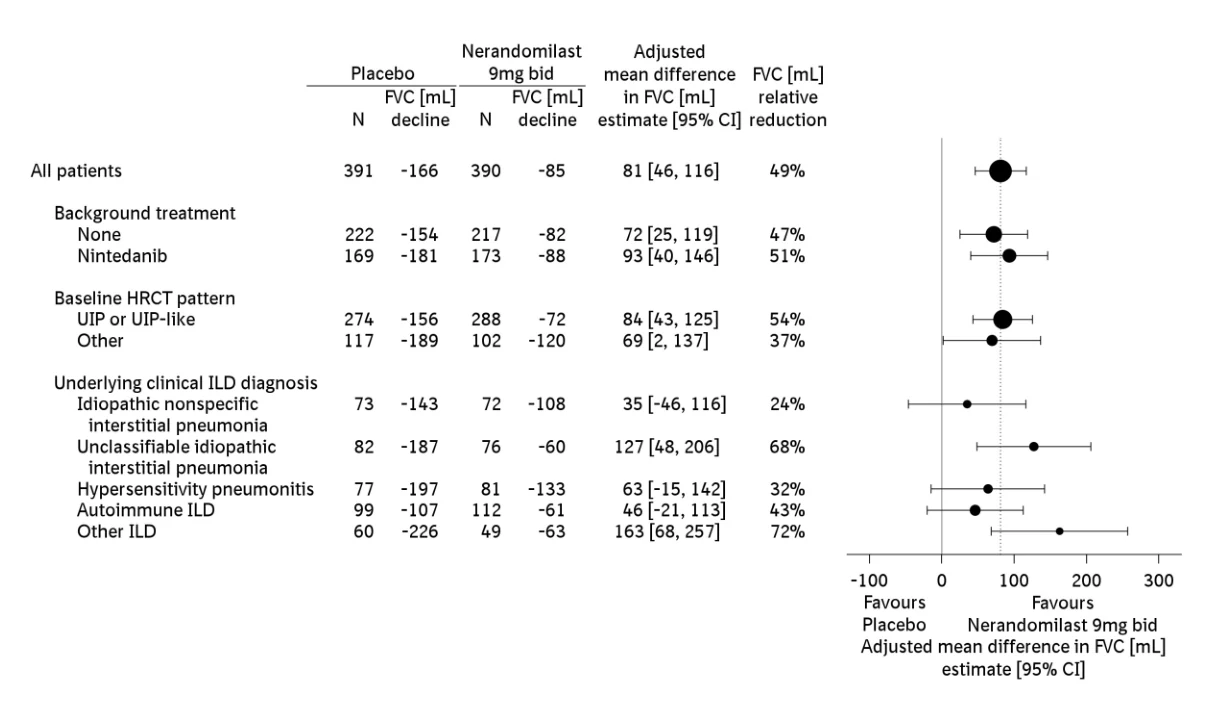
The adjusted mean decline in patients receiving 18 mg or 9 mg JASCAYD twice daily was -99 mL and -85 mL, respectively, whereas in the placebo group, an adjusted mean decline of -166 mL was observed. The respective treatment difference compared with the placebo group was 67 mL (95% CI: 32, 102; p-value: 0.0002) and 81 mL (95% CI: 46, 116; p-value: < 0.0001).
The primary analysis was consistent with all sensitivity and supplementary analyses as well as across pre-specified subgroups by presence or absence of nintedanib background treatment, HRCT pattern, and underlying clinical ILD diagnoses. See Figure 7 and Figure 8.
Figure 7. Absolute change from baseline in FVC (mL) at 52 weeks for patients receiving 18 mg JASCAYD compared to placebo in the FIBRONEER-ILD study
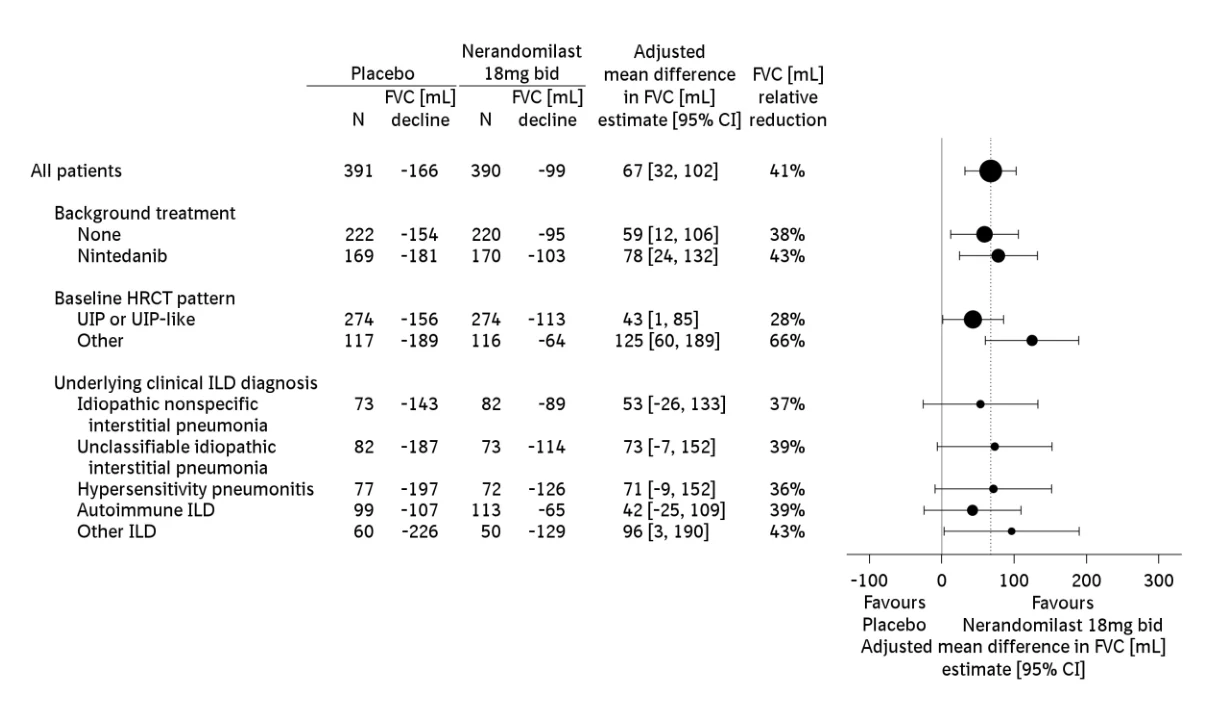
For patients who died before week 52, a lowest 10th percentile change from baseline value was assigned. Subgroup results based on background treatment, HRCT pattern, and underlying clinical ILD diagnosis are exploratory.
bid = twice daily
Figure 8. Absolute change from baseline in FVC (mL) at 52 weeks for patients receiving 9 mg JASCAYD compared to placebo in the FIBRONEER-ILD study
For patients who died before week 52, a lowest 10th percentile change from baseline value was assigned.
Subgroup results based on background treatment, HRCT pattern, and underlying clinical ILD diagnosis are exploratory.
bid = twice daily
The results of the primary endpoint were generally consistent across the other pre-specified subgroups (defined by age, gender, race, ethnicity, bodyweight, baseline FVC).
Figure 9 and Figure 10 show the change in FVC from baseline over time in patients receiving JASCAYD 18 mg twice daily and JASCAYD 9 mg twice daily compared to matching placebo. When the mean observed FVC change from baseline was plotted over time, the curves started to separate at week 2 and separation was maintained up to week 52 and beyond. This effect over time was consistently observed regardless of background nintedanib treatment.
Figure 9. Change from baseline in FVC (mL) over time in the FIBRONEER-ILD study – JASCAYD 18 mg
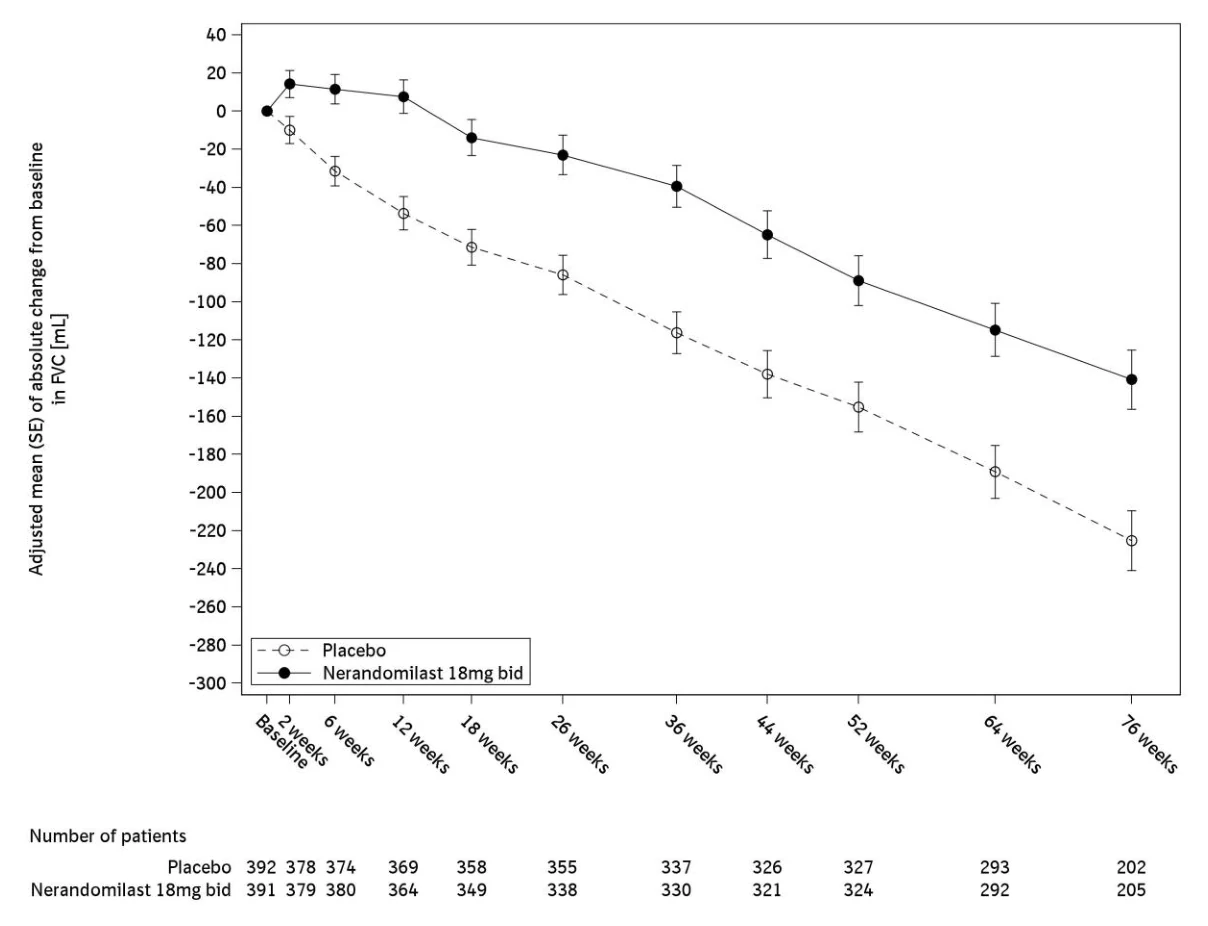
Display based on adjusted mean change from baseline values estimated from MMRM (Mixed Model with Repeated Measurements) using patients’ FVC data that were available at each week.
bid = twice daily
Figure 10. Change from baseline in FVC (mL) over time in the FIBRONEER-ILD study - JASCAYD 9 mg
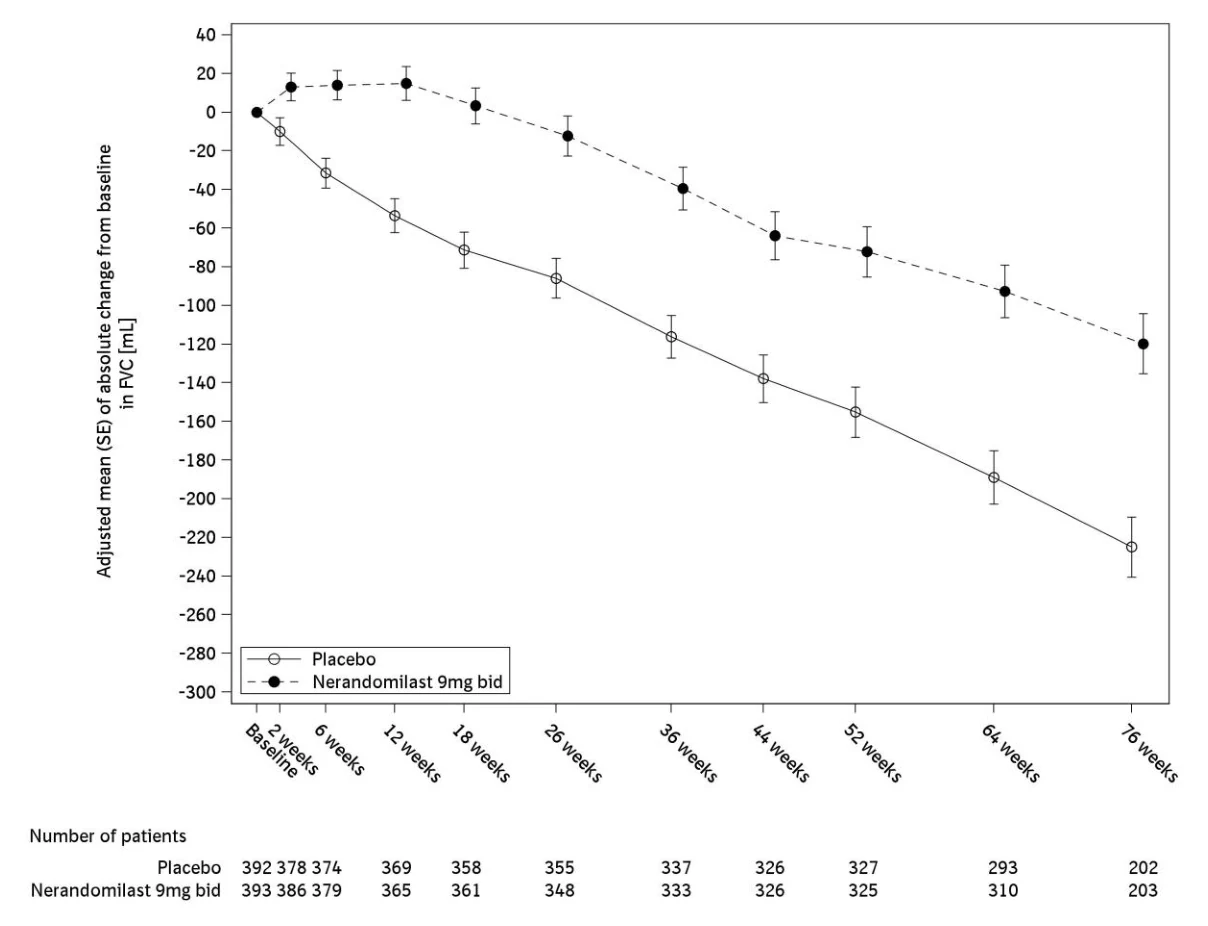
Display based on adjusted mean change from baseline values estimated from MMRM (Mixed Model with Repeated Measurements) using patients’ FVC data that were available at each week.
bid = twice daily
Time to first acute ILD exacerbation, first hospitalization for respiratory cause, or death
The key secondary composite endpoint was the time to the first event of acute ILD exacerbation, hospitalization for respiratory cause, or death over the duration of the trial. Acute ILD exacerbation was defined as acute worsening or development of dyspnea typically less than 1 month duration, computed tomography with new bilateral ground-glass opacity and/or consolidation superimposed on a background pattern consistent with fibrosing ILD, and deterioration not fully explained by cardiac failure or fluid overload. Neither acute ILD exacerbations nor respiratory hospitalizations were adjudicated.
At the time of main analysis, the risk for the key secondary endpoint was numerically lower for JASCAYD 18 mg or 9 mg groups, respectively, compared to placebo: HR 0.77 (95% CI: 0.59, 1.01; p-value: 0.0602) and HR 0.88 (95% CI: 0.68, 1.14; p-value: 0.3398)). The end of trial analysis resulted in HR 0.77 (95% CI: 0.60, 0.99) and HR 0.78 (95% CI: 0.61, 1.00) for the 18 mg and 9 mg dose, respectively.
See Figure 11 and Figure 12 for results of JASCAYD 18 mg twice daily and JASCAYD 9 mg twice daily versus placebo for the key secondary endpoint, its components, and related endpoints 'first acute ILD exacerbation or death' and 'first hospitalization for respiratory cause or death' over the duration of the FIBRONEER-ILD study at the time of the end-of-trial analysis. These results are considered to be exploratory.
Figure 11. Acute ILD exacerbation, hospitalization for respiratory cause or death over the duration of the FIBRONEER-ILD study* - JASCAYD 18 mg
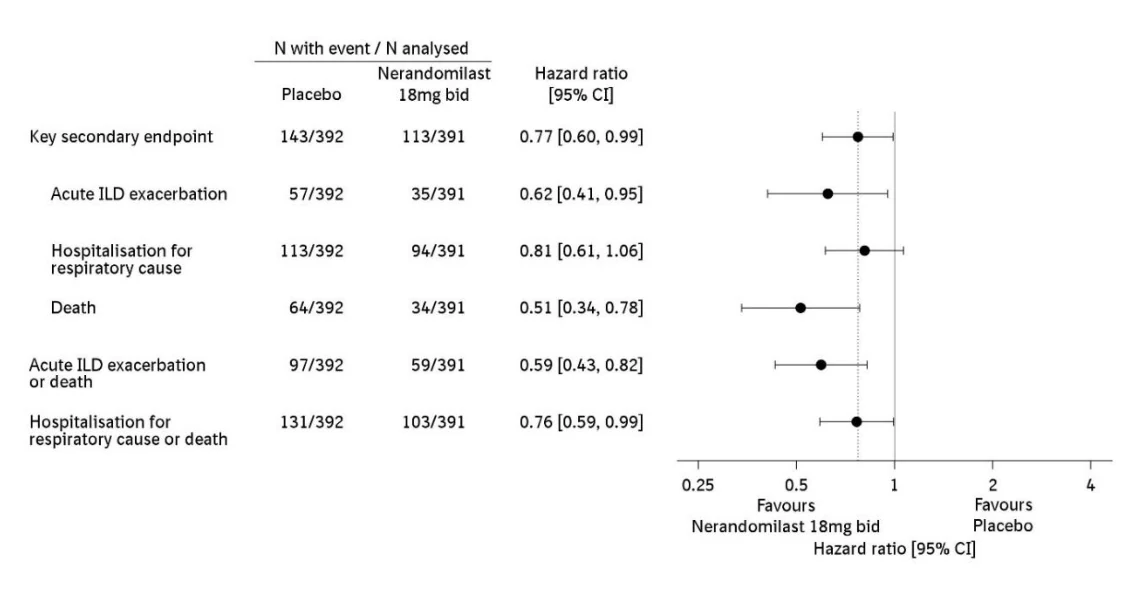
Results for the components of the key secondary endpoint are exploratory.
* Blinded trial duration was up to 109 weeks.
bid = twice daily
Figure 12. Acute ILD exacerbation, hospitalization for respiratory cause or death over the duration of the FIBRONEER-ILD study* - JASCAYD 9 mg
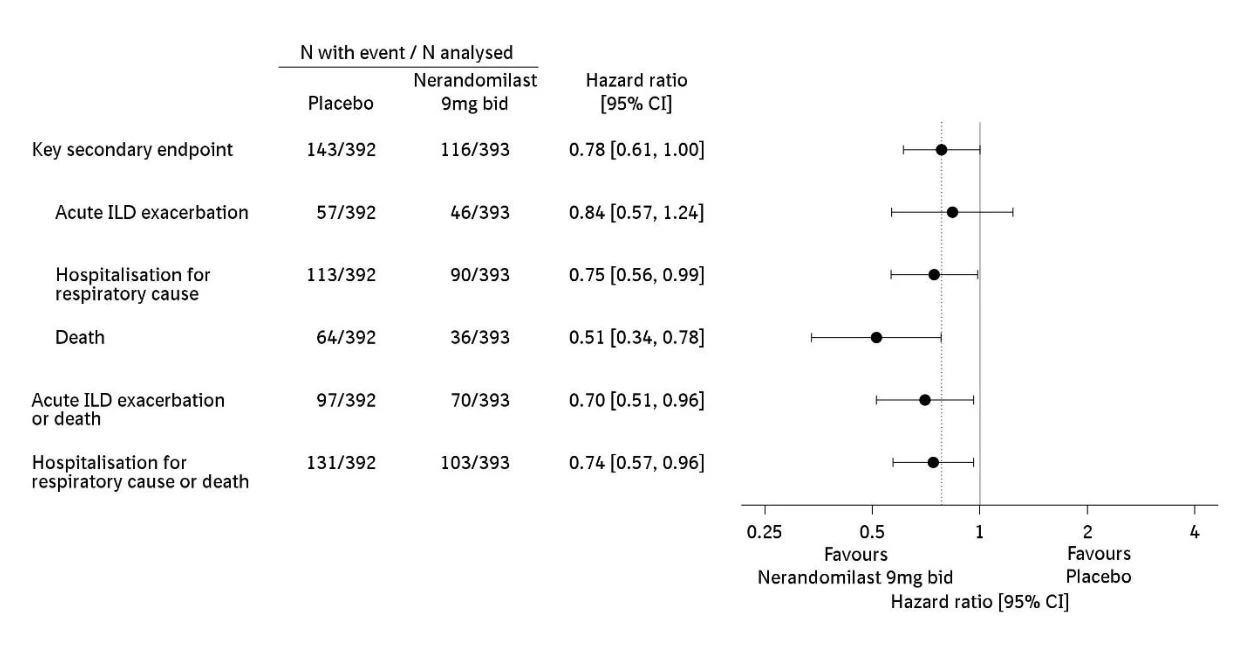
Results for the components of the key secondary endpoint are exploratory.
* Blinded trial duration was up to 109 weeks.
bid = twice daily
Survival
In the pre-specified analysis of survival over the duration of the FIBRONEER-ILD study, the risk for all-cause mortality was 49% lower in the JASCAYD 18 mg group (HR 0.51; 95% CI: 0.34, 0.78) and the JASCAYD 9 mg group (HR 0.51; 95% CI: 0.34, 0.78) compared with matching placebo at the end of trial analysis (see Figure 13 and Figure 14; results were not controlled for Type I error). Across treatment groups, the majority of deaths (64%) were respiratory-related.
In a post-hoc analysis, the risk for respiratory-related mortality compared to the placebo group was 57% lower in the JASCAYD 18 mg group (HR 0.43; 95% CI: 0.25, 0.72) and 62% lower in the JASCAYD 9 mg group (HR 0.38; 95% CI: 0.22, 0.65).
Figure 13. Cumulative incidence of death over the duration of the FIBRONEER-ILD study (nerandomilast 18 mg vs placebo)
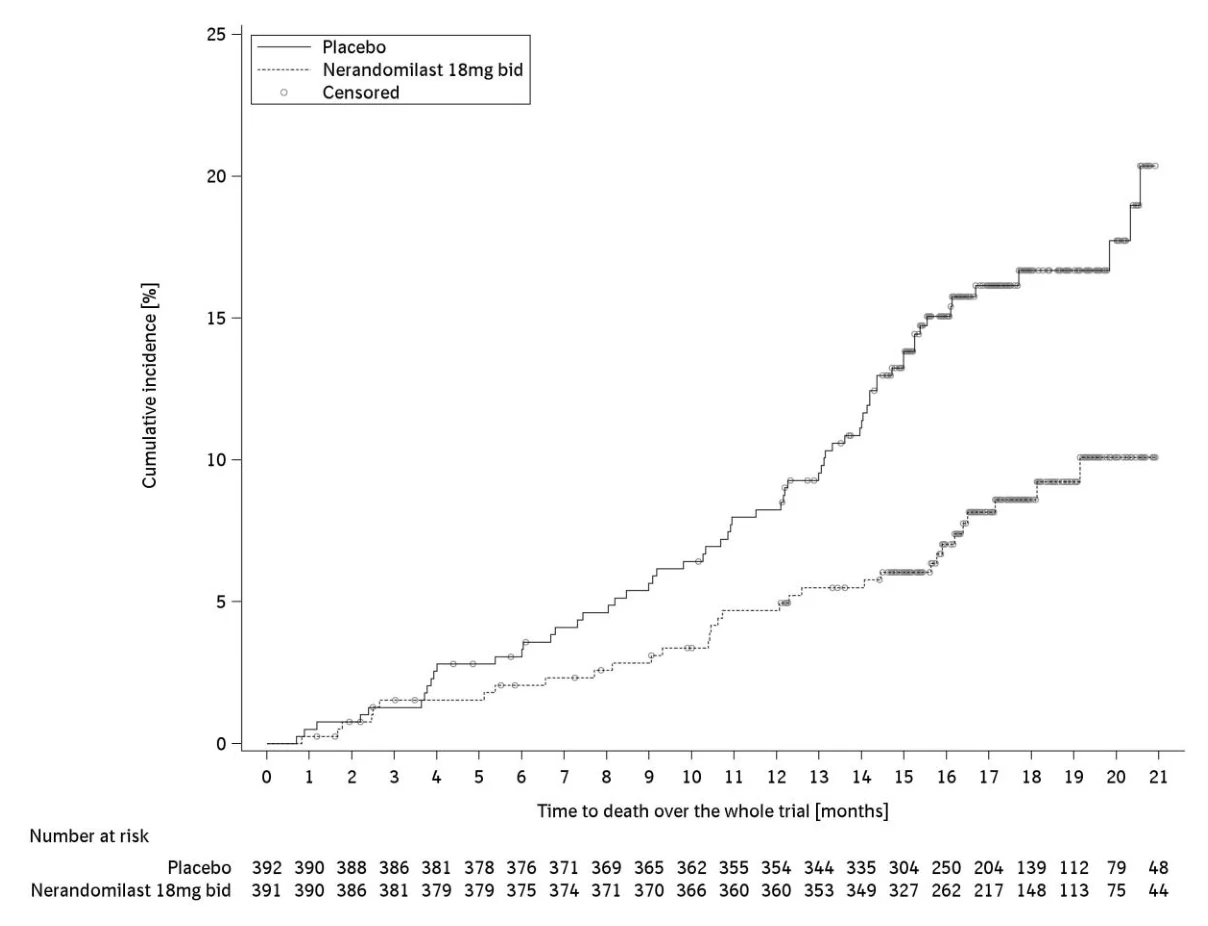
bid = twice daily
Figure 14. Cumulative incidence of death over the duration of the FIBRONEER-ILD study (nerandomilast 9 mg vs placebo)
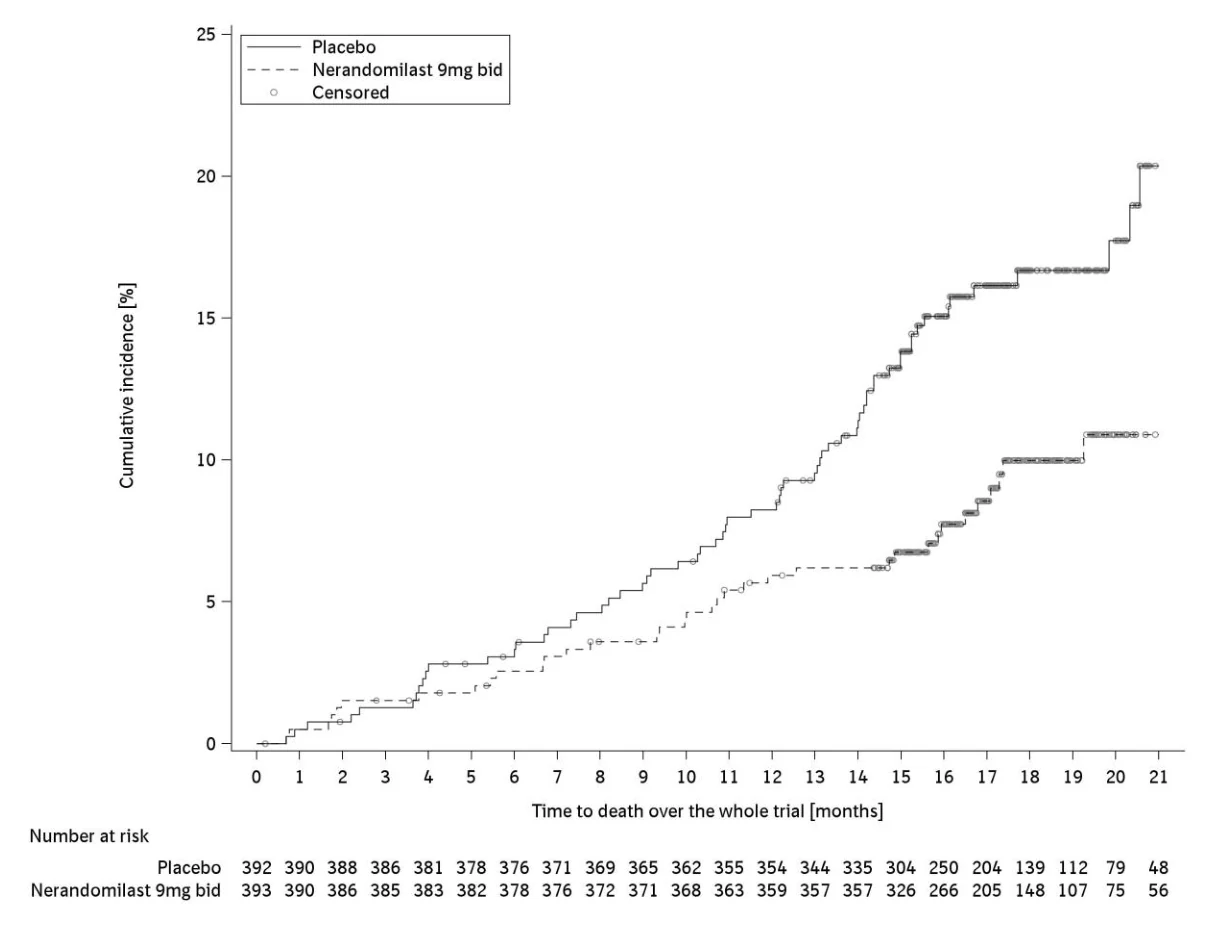
bid = twice daily
16. Non-Clinical Toxicology
General toxicology
Safety pharmacology studies revealed no safety concerns following measurements of cardiovascular, CNS, and respiratory effects and there was no evidence of phototoxic potential.
Repeat-dose toxicity studies were conducted in rats, minipigs, and monkeys. Vasculopathy (inflammation, haemorrhage, and blood vessel necrosis) was the primary finding observed in the rat and minipig. No adverse vascular effects were observed in monkeys administered up to 30 mg/kg/day (10-times human exposure based on AUC at the MRHD (see section 4 Dosage and Administration)). Adverse vascular effects observed in rats and in minipigs affected various tissues (i.e., mesentery and GI tract in rats, heart and lung in minipigs). In long-term studies, no adverse vascular changes were observed in rats at 2 mg/kg/day, and vascular changes were observed in one minipig at 3 mg/kg/day (both equivalent to human exposure, based on AUC at the MRHD). The exposure margin in monkeys, considered the most relevant species to humans, suggests that primates are less sensitive to vascular effects than other species.
In toxicology studies in monkeys at exposures higher than 10-times human exposure based on AUC at the MRHD, emesis and heart findings (focal degeneration or necrosis not accompanied by vascular changes) were observed.
Genotoxicity
Nerandomilast was not mutagenic in the in-vitro bacterial reverse mutation assay. It showed no potential to induce chromosome aberrations in human peripheral blood lymphocytes or in the in-vivo rat micronucleus assay.
Carcinogenicity
Nerandomilast showed no evidence of carcinogenic potential in rats and transgenic mice. This was based on results of a 104-week study in rats at 2 mg/kg/day and a 26-week study in male/female transgenic (Tg.rasH2) mice at 60/100 mg/kg/day (approximately 2- and 47/57-times human exposure based on AUC at the MRHD).
Reproductive and developmental toxicology
Fertility and early embryonic development
In a fertility study in male rats, nerandomilast administration at a dose of 6 mg/kg/day (approximately 4-times human exposure based on AUC at the MRHD) showed no effect on mating, fertility, or sperm indices.
In female rats, decreased indices for mating, pregnancy, and fertility were observed at the highest tested dose of 9 mg/kg/day (approximately 9-times human exposure based on AUC at the MRHD) and were related to general toxicity. No such effects were observed at the No Observed Adverse Effects Level (NOAEL) dose of 6 mg/kg/day (approximately 4-times human exposure at the MRHD).
In repeat-dose toxicity studies in rats, minipigs and monkeys, no nerandomilast-related effects on male and female reproductive organs were observed that were considered adverse.
Sexually mature female monkeys administered nerandomilast for 39 weeks showed sporadic menstrual cycle prolongation at dose levels of 10 mg/kg/day and 30 mg/kg/day (approximately 3- or 10-times human exposure based on AUC at the MRHD). Menstrual cycles were not affected in monkeys at 3 mg/kg/day (equivalent to human exposure based on AUC at the MRHD). No changes in estrous cycles were observed in rats.
Embryo-fetal development
Administration of a single oral radiolabelled dose of nerandomilast to pregnant rats resulted in radioactivity being detected in the placenta and embryo-fetal tissues, with the level of radioactivity in embryo-fetal tissue being up to 2.9%- 82% of the level of radioactivity measured in maternal blood. These data indicate exposure to nerandomilast can occur in utero.
Embryo-fetal development studies in rats and rabbits showed no teratogenicity, no skeletal variations and no fetotoxicity up to the highest tested dose levels of 9 mg/kg/day and 15 mg/kg/day, equivalent to 7- and 4-times human exposure based on AUC at the MRHD, respectively. Embryo-fetal lethality due to post-implantation loss related to an increase in early resorptions was observed in rats at the dose of 6 mg/kg/day (5-times human exposure based on AUC at the MRHD) administered from gestation day 6 to 17. No embryo-fetal lethality was observed in rats and rabbits at the NOAEL dose of 3 mg/kg/day and 15 mg/kg/day (approximately 3- and 4-times human exposure based on AUC at the MRHD, respectively).
Pre- and postnatal development
In a dose range-finding pre- and postnatal development study in rats, a maternal dose of 6 mg/kg/day (approximately 5- to 6-times human exposure at the MRHD) from gestation day 6 to lactation day 6 resulted in lower pup weights. In the pivotal pre- and postnatal development study, nerandomilast administered to pregnant female rats from gestation day 6 to lactation day 20, had no adverse effects on maternal performance or toxicity or on F1 generation (offspring) development, behaviour, and reproductive performance up to the highest tested dose of 3mg/kg/day (approximately 2-times human exposure based on AUC at the MRHD). In this study, nerandomilast was present in the plasma of rat pups during the lactation period. In a single dose milk secretion study in lactating rats dosed with radiolabeled nerandomilast by the oral route, similar concentrations of total radioactivity were observed in the milk and plasma of lactating females, with the maximum radioactive concentration observed at 1 hour post dose that was significantly reduced by 24 hours post dose. The concentration of total radioactivity in animal milk does not necessarily predict the concentration of drug in human milk.