


Product Monograph - Co Mycophenolate
SUMMARY PRODUCT INFORMATION
Route of Administration | Dosage Form / Strength | Clinically Relevant Nonmedicinal Ingredients |
| Oral | Tablets / 500 mg | Colloidal silicon dioxide, croscarmellose sodium, magnesium stearate, microcrystalline cellulose and povidone. Tablet film coating contains: lecithin, polyethylene glycol, polyvinyl alcohol, talc, titanium dioxide, iron oxide black, iron oxide red and iron oxide yellow. |
INDICATIONS AND CLINICAL USE
CO MYCOPHENOLATE (mycophenolate mofetil) is indicated for:
Adults:
- The prophylaxis of organ rejection in patients receiving allogeneic renal, cardiac or hepatic transplants. CO MYCOPHENOLATE should be used concomitantly with cyclosporine and corticosteroids.
Pediatrics (2-18 years of age):
- CO MYCOPHENOLATE is indicated for the prophylaxis of organ rejection in pediatric patients (2 to 18 years) receiving allogeneic renal transplants. CO MYCOPHENOLATE should be used concomitantly with cyclosporine and corticosteroids.
CONTRAINDICATIONS
- CO MYCOPHENOLATE (mycophenolate mofetil) is contraindicated in patients with a hypersensitivity to mycophenolate mofetil, mycophenolic acid or any component of the drug product. (See DOSAGE FORMS, COMPOSITION AND PACKAGING).
WARNINGS AND PRECAUTIONS
Warning
Increased susceptibility to infection and the possible development of lymphoma may result from immunosuppression. Only physicians experienced in immunosuppressive therapy and management of solid organ transplant patients should use CO MYCOPHENOLATE (mycophenolate mofetil). Patients receiving the drug should be managed in facilities equipped and staffed with adequate laboratory and supportive medical resources. The physician responsible for maintenance therapy should have complete information requisite for the follow-up of the patient.
Carcinogenesis and Mutagenesis
Patients receiving immunosuppressive regimes involving combinations of drugs, including mycophenolate mofetil, as part of an immunosuppressive regimen are at increased risk of developing lymphomas and other malignancies, particularly of the skin. The risk appears to be related to the intensity and duration of immunosuppression rather than to the use of any specific agent. As with all patients at an increased risk for skin cancer, exposure to sunlight and UV light should be limited by wearing protective clothing and using a sunscreen with a high protection factor.
Lymphoproliferative disease or lymphoma developed in 0.4%-1% of patients receiving mycophenolate mofetil (2 g or 3 g) with other immunosuppressive agents in controlled clinical trials of renal, cardiac and hepatic transplant patients (See ADVERSE REACTIONS).
Endocrine and Metabolism
Because mycophenolate mofetil is an inosine monophosphate dehydrogenase (IMPDH) inhibitor, on theoretical grounds it should be avoided in patients with rare hereditary deficiency of hypoxanthine-guanine phosphoribosyl-transferase (HGPRT) such as Lesch-Nyhan and Kelley-Seegmiller syndrome.
Gastrointestinal
CO MYCOPHENOLATE should be administered with caution in patients with active serious digestive system disease. Gastrointestinal bleeding (requiring hospitalization) has been observed in approximately 3% of renal, in 1.7% of cardiac and in 5.4% of hepatic transplant patients treated with mycophenolate mofetil 3 g daily. Mycophenolate mofetil has been associated with an increased incidence of digestive system adverse events, including infrequent cases of gastrointestinal tract ulceration, and rarely perforation (colon, gall bladder). Most patients receiving mycophenolate mofetil were also receiving other drugs that are known to be associated with these complications. Patients with active peptic ulcer disease were excluded from enrollment in studies with mycophenolate mofetil.
Immune
The efficacy and safety of the use of mycophenolate mofetil in combination with other immunosuppressive agents has not been determined. Mycophenolate mofetil has been
administered in combination with the following agents in clinical trials: anti-thymocyte globulin [equine] (Atgam®) induction, muromonab-CD3 (Orthoclone OKT®3), cyclosporine (Sandimmune®, Neoral®), and corticosteroids.
Over suppression of the immune system can also increase susceptibility to infection, including opportunistic infections, fatal infections and sepsis. Such infections include latent viral reactivation, such as hepatitis B or hepatitis C reactivation or infections caused by polyomaviruses. Cases of hepatitis due to reactivation of hepatitis B or hepatitis C have been reported in carrier patients treated with immunosuppresants.
Cases of progressive multifocal leukoencephalopathy (PML) associated with the JC virus, sometimes fatal, have been reported in mycophenolate mofetil treated patients. The reported cases had risk factors for PML, including immunosuppressant therapies and impairment of immune function. In immunosuppressed patients, physicians should consider PML in the differential diagnosis in patients reporting neurological symptoms and consultation with a neurologist should be considered as clinically indicated.
BK virus-associated nephropathy has been observed during the use of mycophenolate mofetil in patients post renal transplant. This infection can be associated with serious outcomes, sometimes leading to renal graft loss. Patient monitoring may help detect patients at risk for BK virus-associated nephropathy. Reduction in immunosuppression should be considered for patients who develop evidence of BK virus-associated nephropathy.
Cases of pure red cell aplasia (PRCA) have been reported in patients treated with mycophenolate mofetil in combination with other immunosuppressive agents. The mechanism for mycophenolate mofetil induced PRCA is unknown. In some cases PRCA was found to be reversible with dose reduction or cessation of mycophenolate mofetil therapy. In transplant patients however reduced immunosuppression may place the graft at risk.
In patients receiving mycophenolate mofetil (2 g or 3 g) in controlled studies for prevention of renal, cardiac or hepatic rejection, fatal infection/sepsis occurred in approximately 2% of renal and cardiac patients and in 5% of hepatic patients (See ADVERSE REACTIONS).
Severe neutropenia (absolute neutrophil count [ANC] < 0.5 x 10³/μL) developed in up to 2.0% of renal, up to 2.8% of cardiac and up to 3.6% hepatic transplant patients receiving mycophenolate mofetil 3 g daily. (See ADVERSE REACTIONS).
Patients receiving CO MYCOPHENOLATE should be monitored for neutropenia (See WARNINGS AND PRECAUTIONS: Monitoring and Laboratory Tests and DOSAGE AND ADMINISTRATION: Dosage Adjustment). The development of neutropenia may be related to mycophenolate mofetil itself, concomitant medications, viral infections, or some combination of these causes. If neutropenia develops (ANC <1.3 x 10³/μL), dosing with mycophenolate mofetil should be interrupted or the dose reduced, appropriate diagnostic tests performed, and the patient managed appropriately. Neutropenia has been observed most frequently in the period from 31 to
180 days post-transplant for patients treated for prevention of renal, cardiac and hepatic rejection.
Patients receiving CO MYCOPHENOLATE should be instructed to report immediately any evidence of infection, unexpected bruising, bleeding or any other manifestation of bone marrow depression.
Renal
Administration of doses of mycophenolate mofetil greater than 1 g administered twice a day to renal transplant patients with severe chronic renal impairment (GFR < 25 mL/min/1.73m2) should be avoided and patients should be carefully observed. (See ACTION AND CLINICAL PHARMACOLOGY: Pharmacokinetics, Special Populations and Conditions, Renal Insufficiency and DOSAGE AND ADMINISTRATION: Dosage Adjustment, Renal Impairment).
No data are available for cardiac or hepatic transplant patients with severe chronic, renal impairment. Mycophenolate mofetil should be used for cardiac or hepatic transplant patients with severe, chronic, renal impairment if the potential benefits outweigh the potential risks.
Special Populations
Pregnant Women:
There are no adequate and well-controlled studies in pregnant women. However, an increased risk of first trimester pregnancy loss and congenital malformations of heart, ear, face, hand, eye, vertebrae, oesophagus, and multiple congenital abnormalities have been reported in offspring of patients exposed to mycophenolate mofetil in combination with other immunosupressants during pregnancy. Mycophenolate mofetil has been shown to have teratogenic effects in animals, it may cause fetal harm when administered to a pregnant woman (See TOXICOLOGY: Reproductive Toxicity). Therefore, mycophenolate mofetil should not be used in pregnant women unless the potential benefit justifies the potential risk to the fetus.
Women of childbearing potential should be instructed of the potential risks during pregnancy. Effective contraception must be used before beginning mycophenolate mofetil therapy, during therapy, and for 6 weeks following discontinuation of therapy, even where there has been a history of infertility, unless due to hysterectomy. Two reliable forms of contraception must be used simultaneously unless abstinence is the chosen method (See DRUG INTERACTIONS). If pregnancy does occur during treatment, the physician and patient should discuss the desirability of continuing the pregnancy. (See CONSUMER INFORMATION).
Women of childbearing potential should have a negative serum or urine pregnancy test with a sensitivity of at least 50 mIU/mL within 1 week prior to beginning therapy. It is recommended that CO MYCOPHENOLATE therapy should not be initiated by the physician until a report of a negative pregnancy test has been obtained.
Nursing Women:
Studies in rats have shown mycophenolate mofetil is excreted in milk. It is not known whether this drug is excreted in human milk. Because many drugs are excreted in human milk and because of the potential for serious adverse reactions in nursing infants from mycophenolate mofetil, a decision should be made whether to discontinue nursing or to discontinue the drug, taking into account the importance of the drug to the mother (See CONSUMER INFORMATION).
Pediatrics (2 years to 18 years):
Safety and efficacy in children receiving allogeneic cardiac or hepatic transplants have not been established.
For pediatric patients receiving renal transplants also see ACTION AND CLINICAL PHARMACOLOGY: Pharmacokinetics, Special Populations and Conditions, Pediatrics; CLINICAL TRIALS; ADVERSE REACTIONS: Pediatrics; and DOSAGE AND ADMINISTRATION: Pediatrics.
Geriatrics:
Elderly patients may be at an increased risk of adverse events compared with younger individuals.
Monitoring and Laboratory Tests
Complete blood counts should be performed weekly during the first month, twice monthly for the second and third months of treatment, then monthly through the first year. (See WARNINGS AND PRECAUTIONS: Immune and DOSAGE AND ADMINISTRATION).
Information for Patients
Patients should be informed of the need for repeated appropriate laboratory tests while they are receiving mycophenolate mofetil (See WARNINGS AND PRECAUTIONS: Immune). Patients should be given complete dosage instructions and informed of the increased risk of lymphoproliferative disease and certain other malignancies.
ADVERSE REACTIONS
Clinical Trial Adverse Drug Reactions
Because clinical trials are conducted under very specific conditions the adverse reaction rates observed in the clinical trials may not reflect the rates observed in practice and should not be compared to the rates in the clinical trials of another drug. Adverse drug reaction information from clinical trials is useful for identifying drug-related adverse events and for approximating rates.
Adverse Drug Reaction Overview
The adverse event profile associated with the use of immunosuppressive drugs is often difficult to establish owing to the presence of underlying disease and the concurrent use of many other medications. The principal adverse reactions associated with the administration of mycophenolate mofetil include diarrhea, leukopenia, sepsis and vomiting, and there is evidence of a higher frequency of certain types of infections.
The incidence of adverse events for mycophenolate mofetil was determined in randomized comparative double-blind trials in prevention of rejection in renal (2 active, 1 placebo controlled trials), cardiac (1 active controlled trial) and hepatic (1 active controlled trial) transplant patients.
Safety data are summarized below for all active controlled trials in renal (2 trials), cardiac (1 trial) and hepatic (1 trial) transplant patients. Approximately 53% of renal patients, 65% of the cardiac patients and 45% of the hepatic patients have been treated for more than one year.
Adverse events, whether or not deemed to be causally associated with the study medication, reported in ≥ 10% of patients in treatment groups are presented below.
Table 1: Adverse Events in Controlled Studies in Prevention of Renal, Cardiac or Hepatic Allograft Rejection (Reported in ≥10% of Adult Patients
Randomized to Mycophenolate Mofetil)
| Renal Studies | Cardiac Study | Hepatic Study | |||||||||||||||||||||
| Mycophenolate | Mycophenolate | Azathioprine | Mycophenolate | Azathioprine | Mycophenolate | Azathioprine | |||||||||||||||||
| Mofetil | Mofetil | 1-2 mg/kg/day or | Mofetil | 1.5-3 | Mofetil | 1-2 | |||||||||||||||||
| 2 g/day | 3 g/day | 100-150 mg/day | 3 g/day | mg/kg/day | 3 g/day | mg/kg/day | |||||||||||||||||
| (N=336) | (N=330) | (N=326) | (N=289) | (N=289) | (N=277) | (N=287) | |||||||||||||||||
| % | % | % | % | % | % | % | |||||||||||||||||
| Body as a Whole | |||||||||||||||||||||||
| Pain | 33.0 | 31.2 | 32.2 | 75.8 | 74.7 | 74.0 | 77.7 | ||||||||||||||||
| Abdominal pain | 24.7 | 27.6 | 23.0 | 33.9 | 33.2 | 62.5 | 51.2 | ||||||||||||||||
| Fever | 21.4 | 23.3 | 23.3 | 47.4 | 46.4 | 52.3 | 56.1 | ||||||||||||||||
| Headache | 21.1 | 16.1 | 21.2 | 54.3 | 51.9 | 53.8 | 49.1 | ||||||||||||||||
| Infection | 18.2 | 20.9 | 19.9 | 25.6 | 19.4 | 27.1 | 25.1 | ||||||||||||||||
| Sepsis | 17.6 | 19.7 | 15.6 | 18.7 | 18.7 | 27.4 | 26.5 | ||||||||||||||||
| Asthenia | 13.7 | 16.1 | 19.9 | 43.3 | 36.3 | 35.4 | 33.8 | ||||||||||||||||
| Chest pain | 13.4 | 13.3 | 14.7 | 26.3 | 26.0 | 15.9 | 13.2 | ||||||||||||||||
| Back pain | 11.6 | 12.1 | 14.1 | 34.6 | 28.4 | 46.6 | 47.4 | ||||||||||||||||
| Accidental injury | -- | -- | -- | 19.0 | 14.9 | 11.2 | 15.0 | ||||||||||||||||
| Chills | -- | -- | -- | 11.4 | 11.4 | 10.8 | 10.1 | ||||||||||||||||
| Ascites | -- | -- | -- | -- | -- | 24.2 | 22.6 | ||||||||||||||||
| Abdomen enlarged | -- | -- | -- | -- | -- | 18.8 | 17.8 | ||||||||||||||||
| Hernia | -- | -- | -- | -- | -- | 11.6 | 8.7 | ||||||||||||||||
| Peritonitis | -- | -- | -- | -- | -- | 10.1 | 12.5 | ||||||||||||||||
| Cardiovascular | |||||||||||||||||||||||
| Hypertension | 32.4 | 28.2 | 32.2 | 77.5 | 72.3 | 62.1 | 59.6 | ||||||||||||||||
| Hypotension | -- | -- | -- | 32.5 | 36.0 | 18.4 | 20.9 | ||||||||||||||||
| Cardiovascular disorder | -- | -- | -- | 25.6 | 24.2 | -- | -- | ||||||||||||||||
| Tachycardia | -- | -- | -- | 20.1 | 18.0 | 22.0 | 15.7 | ||||||||||||||||
| Arrhythmia | -- | -- | -- | 19.0 | 18.7 | -- | -- | ||||||||||||||||
| Bradycardia | -- | -- | -- | 17.3 | 17.3 | -- | -- | ||||||||||||||||
| Pericardial effusion | -- | -- | -- | 15.9 | 13.5 | -- | -- | ||||||||||||||||
| Heart failure | -- | -- | -- | 11.8 | 8.7 | -- | -- | ||||||||||||||||
| Digestive | |||||||||||||||||||||||
Renal Studies Cardiac Study Hepatic Study
Mycophenolate
Mofetil
2 g/day
Mycophenolate
Mofetil
3 g/day
Azathioprine 1-2 mg/kg/day or 100-150 mg/day
Mycophenolate
Mofetil
3 g/day
Azathioprine
1.5-3
mg/kg/day
Mycophenolate
Mofetil
3 g/day
Azathioprine
1-2 mg/kg/day
(N=336) (N=330) (N=326) (N=289) (N=289) (N=277) (N=287) % % % % % % % Diarrhea 31.0 36.1 20.9 45.3 34.3 51.3 49.8 Constipation 22.9 18.5 22.4 41.2 37.7 37.9 38.3 Nausea 19.9 23.6 24.5 54.0 54.3 54.5 51.2 Dyspepsia 17.6 13.6 13.8 18.7 19.4 22.4 20.9 Vomiting 12.5 13.6 9.2 33.9 28.4 32.9 33.4 Nausea and
vomiting
10.4 9.7 10.7 11.4 7.6 -- --
Oral moniliasis 10.1 12.1 11.3 11.4 11.8 10.1 10.1 Flatulence -- -- -- 13.8 15.6 12.6 9.8 Anorexia -- -- -- -- -- 25.3 17.1 Liver function tests
abnormal
-- -- -- -- -- 24.9 19.2
Cholangitis -- -- -- -- -- 14.1 13.6 Hepatitis -- -- -- -- -- 13.0 16.0 Cholestatic jaundice -- -- -- -- -- 11.9 10.8 Hemic and
Lymphatic
Anemia 25.6 25.8 23.6 42.9 43.9 43.0 53.0 Leukopenia 23.2 34.5 24.8 30.4 39.1 45.8 39.0 Thrombocytopenia 10.1 8.2 13.2 23.5 27.0 38.3 42.2 Hypochromic
anemia
7.4 11.5 9.2 24.6 23.5 13.7 10.8
Leukocytosis 7.1 10.9 7.4 40.5 35.6 22.4 21.3 Ecchymosis -- -- -- 16.6 8.0 -- -- Metabolic and
Nutritional
Peripheral edema 28.6 27.0 28.2 64.0 53.3 48.4 47.7 Hypercholesteremia 12.8 8.5 11.3 41.2 38.4 -- -- Hypophosphatemia 12.5 15.8 11.7 -- -- 14.4 9.1 Edema 12.2 11.8 13.5 26.6 25.6 28.2 28.2 Hypokalemia 10.1 10.0 8.3 31.8 25.6 37.2 41.1 Hyperkalemia 8.9 10.3 16.9 14.5 19.7 22 23.7 Hyperglycemia 8.6 12.4 15.0 46.7 52.6 43.7 48.8 Creatinine
increased
-- -- -- 39.4 36.0 19.9 21.6
BUN increased -- -- -- 34.6 32.5 10.1 12.9 Lactic
dehydrogenase
increased
-- -- -- 23.2 17 -- --
Bilirubinemia -- -- -- 18 21.8 14.4 18.8 Hypervolemia -- -- -- 16.6 22.8 -- -- Generalized edema -- -- -- 18.0 20.1 14.8 16 Hyperuricemia -- -- -- 16.3 17.6 -- -- SGOT increased -- -- -- 17.3 15.6 -- -- Hypomagnesemia -- -- -- 18.3 12.8 39 37.6 Acidosis -- -- -- 14.2 16.6 -- -- Weight gain -- -- -- 15.6 15.2 -- -- SGPT increased -- -- -- 15.6 12.5 -- -- Hyponatremia -- -- -- 11.4 11.8 -- -- Hyperlipemia -- -- -- 10.7 9.3 -- -- Hypocalcemia -- -- -- -- -- 30 30 Hypoproteinemia -- -- -- -- -- 13.4 13.9 Hypoglycemia -- -- -- -- -- 10.5 9.1 Healing abnormal -- -- -- -- -- 10.5 8.7 Musculoskeletal
System
Leg cramps -- -- -- 16.6 15.6 -- --
Renal Studies Cardiac Study Hepatic Study
Mycophenolate
Mofetil
2 g/day
Mycophenolate
Mofetil
3 g/day
Azathioprine 1-2 mg/kg/day or 100-150 mg/day
Mycophenolate
Mofetil
3 g/day
Azathioprine
1.5-3
mg/kg/day
Mycophenolate
Mofetil
3 g/day
Azathioprine
1-2 mg/kg/day
(N=336) (N=330) (N=326) (N=289) (N=289) (N=277) (N=287) % % % % % % % Myasthenia -- -- -- 12.5 9.7 -- -- Myalgia -- -- -- 12.5 9.3 -- -- Nervous System Tremor 11.0 11.8 12.3 24.2 23.9 33.9 35.5 Insomnia 8.9 11.8 10.4 40.8 37.7 52.3 47.0 Dizziness 5.7 11.2 11.0 28.7 27.7 16.2 14.3 Anxiety -- -- -- 28.4 23.9 19.5 17.8 Paresthesia -- -- -- 20.8 18.0 15.2 15.3 Hypertonia -- -- -- 15.6 14.5 -- -- Depression -- -- -- 15.6 12.5 17.3 16.7 Agitation -- -- -- 13.1 12.8 -- -- Somnolence -- -- -- 11.1 10.4 -- -- Confusion -- -- -- 13.5 7.6 17.3 18.8 Nervousness -- -- -- 11.4 9.0 10.1 10.5 Respiratory Infection 22.0 23.9 19.6 37.0 35.3 15.9 19.9 Dyspnea 15.5 17.3 16.6 36.7 36.3 31 30.3 Cough increased 15.5 13.3 15.0 31.1 25.6 15.9 12.5 Pharyngitis 9.5 11.2 8.0 18.3 13.5 14.1 12.5 Lung disorder -- -- -- 30.1 29.1 22 18.8 Sinusitis -- -- -- 26.0 19.0 11.2 9.8 Rhinitis -- -- -- 19.0 15.6 -- -- Pleural effusion -- -- -- 17.0 13.8 34.3 35.9 Asthma -- -- -- 11.1 11.4 -- -- Pneumonia -- -- -- 10.7 10.4 13.7 11.5 Atelectasis -- -- -- -- -- 13 12.9 Skin and
Appendages
Acne 10.1 9.7 6.4 12.1 9.3 -- -- Rash -- -- -- 22.1 18.0 17.7 18.5 Skin disorder -- -- -- 12.5 8.7 -- -- Pruritus -- -- -- -- -- 14.1 10.5 Sweating -- -- -- -- -- 10.8 10.1 Special Senses Amblyopia -- -- -- 14.9 6.6 -- -- Urogenital Urinary tract
infection
37.2 37.0 33.7 13.1 11.8 18.1 17.8
Hematuria 14 12.1 11.3 -- -- -- -- Kidney tubular
necrosis
6.3 10.0 5.8 -- -- -- --
Kidney function
abnormal
-- -- -- 21.8 26.3 25.6 28.9
Oliguria -- -- -- 14.2 12.8 17 20.6
The placebo-controlled renal transplant study generally showed fewer adverse events occurring in ≥10% of patients. In addition, those that occurred were not only qualitatively similar to the azathioprine-controlled renal transplant studies, but also occurred at lower rates, particularly for infection, leukopenia, hypertension, diarrhea and respiratory infection. However, the following adverse events were reported in the placebo-controlled renal transplant study but not reported in the azathioprine-controlled renal transplant studies with an incidence of ≥10%: urinary tract disorder, bronchitis and pneumonia.
The above data demonstrate that in three pivotal trials for prevention of renal rejection, patients receiving 2 g per day of mycophenolate mofetil had an overall better safety profile than did patients receiving 3 g per day of mycophenolate mofetil.
The above data demonstrate that the types of adverse events observed in multicentre controlled trials in renal, cardiac and hepatic transplant patients are qualitatively similar except for those that are unique to the specific organ involved.
Sepsis, which was generally CMV viremia, was slightly more common in renal transplant patients treated with mycophenolate mofetil compared to patients treated with azathioprine. The incidence of sepsis was comparable in patients treated with mycophenolate mofetil or azathioprine in cardiac and hepatic studies.
In the digestive system, diarrhea was increased in renal and cardiac transplant patients receiving mycophenolate mofetil compared to patients receiving azathioprine, but was comparable in hepatic transplant patients treated with mycophenolate mofetil or azathioprine.
The incidence of malignancies among the 1,483 patients treated in controlled trials for the prevention of renal allograft rejection who were followed for ≥1 year was similar to the incidence reported in the literature for renal allograft recipients.
Lymphoproliferative disease or lymphoma developed in 0.4%-1% of patients receiving mycophenolate mofetil (2 g or 3 g daily) with other immunosuppressive agents in controlled clinical trials of renal, cardiac and hepatic transplant patients followed for at least 1 year (See WARNINGS AND PRECAUTIONS: Carcinogenesis and Mutagenesis). Non-melanoma skin carcinomas occurred in 1.6%-4.2% of patients, other types of malignancy in 0.7%-2.1% of patients. Three-year safety data in renal and cardiac transplant patients did not reveal any unexpected changes in incidence of malignancy compared to the 1-year data.
Severe neutropenia (ANC < 0.5 x 10³/μL) developed in up to 2.0% of renal transplant patients, up to 2.8% of cardiac transplant patients and up to 3.6% of hepatic transplant patients receiving mycophenolate mofetil 3 g daily (See WARNINGS AND PRECAUTIONS: Immune and Monitoring and Laboratory Tests and DOSAGE ADMINISTRATION: Dosage Adjustment)
The following table shows the incidence of opportunistic infections that occurred in the renal, cardiac and hepatic transplant populations in the azathioprine-controlled prevention trials:
Table 2: Viral and Fungal Infections in Controlled Studies in Prevention of Renal,
Cardiac or Hepatic Transplant Rejection
| Renal Studies | Cardiac Study | Hepatic Study | |||||||||||||||||||
| Mycophenolate | Mycophenolate | Azathioprine | Mycophenolate | Azathioprine | Mycophenolate | Azathioprine | |||||||||||||||
| Mofetil | Mofetil | 1-2 mg/kg/day or | Mofetil | 1.5-3 | Mofetil | 1-2 | |||||||||||||||
| 2 g/day | 3 g/day | 100-150 mg/day | 3 g/day | mg/kg/day | 3 g/day | mg/kg/day | |||||||||||||||
| (%) | (%) | (%) | (%) | (%) | (%) | (%) | |||||||||||||||
| Herpes simplex | 16.7 | 20.0 | 19.0 | 20.8 | 14.5 | 10.1 | 5.9 | ||||||||||||||
| CMV | |||||||||||||||||||||
| 13.4 | 12.4 | 13.8 | 12.1 | 10.0 | 14.1 | 12.2 | ||||||||||||||
| -Tissue invasive disease | 8.3 | 11.5 | 6.1 | 11.4 | 8.7 | 5.8 | 8.0 | ||||||||||||||
| Herpes zoster | 6.0 | 7.6 | 5.8 | 10.7 | 5.9 | 4.3 | 4.9 | ||||||||||||||
| 6.0 | 7.3 | 5.5 | 10.0 | 5.5 | 4.3 | 4.9 | ||||||||||||||
| Candida | 17.0 | 17.3 | 18.1 | 18.7 | 17.6 | 22.4 | 24.4 | ||||||||||||||
| 15.5 | 16.4 | 15.3 | 18.0 | 17.3 | 18.4 | 17.4 | ||||||||||||||
The following other opportunistic infections occurred with an incidence of less than 4% in patients treated with mycophenolate mofetil in the above azathioprine-controlled studies: Herpes zoster, visceral disease; Candida, urinary tract infection, fungemia/disseminated disease, tissue invasive disease; Cryptococcosis; Aspergillus/Mucor; Pneumocystis jiroveci.
In the placebo-controlled renal transplant study, the same pattern of opportunistic infection was observed compared to the azathioprine-controlled renal studies, with a notably lower incidence of the following: Herpes simplex and CMV tissue-invasive disease.
In patients receiving mycophenolate mofetil (2 g or 3 g) in controlled studies for prevention of renal, cardiac or hepatic rejection, fatal infection/sepsis occurred in approximately 2% of renal and cardiac patients and in 5% of hepatic patients (See WARNINGS AND PRECAUTIONS: Immune).
In cardiac transplant patients, the overall incidence of opportunistic infections was approximately 10% higher in patients treated with mycophenolate mofetil than in those receiving azathioprine, but this difference was not associated with excess mortality due to infection/sepsis among patients treated with mycophenolate mofetil.
The following adverse events were reported with ≥3% - < 10% incidence in renal, cardiac and hepatic transplant patients treated with mycophenolate mofetil, in combination with cyclosporine and corticosteroids.
Table 3: Adverse Events Reported in ≥3% - <10% of Adult Patients Treated with
Mycophenolate Mofetil in Combination with Cyclosporine and Corticosteroids
| Body System | Renal | Cardiac | Hepatic | ||||||||
| Body as a whole | abdomen enlarged, accidental injury, chills occurring with fever, cyst, face edema, flu syndrome, hemorrhage, hernia, malaise, pelvic pain | abdomen enlarged, cellulitis, chills occurring with fever, cyst, face edema, flu syndrome, hemorrhage, hernia, malaise, neck pain, pelvic pain | abscess, cellulitis, chills occurring with fever, cyst, flu syndrome, hemorrhage, lab test abnormal, malaise, neck pain | ||||||||
| Cardiovascular | angina pectoris, atrial fibrillation, cardiovascular disorder, hypotension, palpitation, peripheral vascular disorder, postural hypotension, tachycardia, thrombosis, vasodilatation | angina pectoris, atrial fibrillation, atrial flutter, congestive heart failure, extrasystole, heart arrest, palpitation, pallor, peripheral vascular disorder, postural hypotension, pulmonary hypertension, supraventricular tachycardia, supraventricular extrasystoles, syncope, vasospasm, ventricular extrasystole, ventricular tachycardia, venous pressure increased | arrhythmia, arterial thrombosis, atrial fibrillation, bradycardia, palpitation, syncope, vasodilatation | ||||||||
| Digestive | anorexia, esophagitis, flatulence, gastritis, gastroenteritis, gastrointestinal hemorrhage, gastrointestinal moniliasis, gingivitis, gum hyperplasia, hepatitis, ileus, infection, liver function tests abnormal, mouth ulceration, rectal disorder | anorexia, dysphagia, esophagitis, gastritis, gastroenteritis, gastrointestinal disorder, gingivitis, gum hyperplasia, infection, jaundice, liver damage, liver function tests abnormal, melena, rectal disorder, stomatitis | dysphagia, esophagitis, gastritis, gastrointestinal disorder, gastrointestinal hemorrhage, ileus, infection, jaundice, melena, mouth ulceration, nausea and vomiting, rectal disorder, stomach ulcer | ||||||||
| Endocrine | diabetes mellitus, parathyroid disorder | Cushing’s syndrome, diabetes mellitus, hypothyroidism | diabetes mellitus | ||||||||
| Hemic and Lymphatic | ecchymosis, polycythemia | petechia, prothrombin time increased, thromboplastin time increased | coagulation disorder, ecchymosis, pancytopenia, prothrombin time increased | ||||||||
| Metabolic and Nutritional | acidosis, alkaline phosphatase increased, creatinine increased, dehydration, gamma glutamyl transpeptidase increased, hypercalcemia, hyperlipemia, hyperuricemia, hypervolemia, hypocalcemia, hypoglycemia, hypoproteinemia, lactic dehydrogenase increased, SGOT increased, SGPT increased, weight gain | abnormal healing, alkaline phosphatase increased, alkalosis, dehydration, gout, hypocalcemia, hypochloremia, hypoglycemia, hypoproteinemia, hypophosphatemia, hypovolemia, hypoxia, respiratory acidosis, thirst, weight loss | acidosis, alkaline phosphatase increased, dehydration, hypercholesteremia, hyperlipemia, hyperphosphatemia, hypervolemia, hyponatremia, hypoxia, hypovolemia, SGOT increased, SGPT increased, weight gain, weight loss | ||||||||
| Musculoskeletal | arthralgia, joint disorder, leg cramps, myalgia, myasthenia | arthralgia, joint disorder | arthralgia, leg cramps, myalgia, myasthenia, osteoporosis | ||||||||
| Nervous | anxiety, depression, hypertonia, paresthesia, somnolence | convulsion, emotional lability, hallucinations, neuropathy, thinking abnormal, vertigo | agitation, convulsion, delirium, dry mouth, hypertonia, hypesthesia, neuropathy, psychosis, thinking abnormal, somnolence | ||||||||
| Body System | Renal | Cardiac | Hepatic | ||||||||
| Respiratory | asthma, bronchitis, lung edema, lung disorder, pleural effusion, pneumonia, rhinitis, sinusitis | apnea, atelectasis, bronchitis, epistaxis, hemoptysis, hiccup, lung edema, neoplasm, pain, pneumothorax, respiratory disorder, sputum increased, voice alteration | asthma, bronchitis, epistaxis, hyperventilation, lung edema, pneumothorax, respiratory disorder, respiratory moniliasis, rhinitis | ||||||||
| Skin and Appendages | alopecia, fungal dermatitis, hirsutism, pruritus, rash, skin benign neoplasm, skin carcinoma, skin disorder, skin hypertrophy, skin ulcer, sweating | fungal dermatitis, hemorrhage, pruritus, skin benign neoplasm, skin carcinoma, skin hypertrophy, skin ulcer, sweating | acne, fungal dermatitis, hemorrhage, hirsutism, skin benign neoplasm, skin disorder, skin ulcer, vesiculobullous rash | ||||||||
| Special Senses | amblyopia, cataract (not specified), conjunctivitis | abnormal vision, conjunctivitis, deafness, ear disorder, ear pain, eye hemorrhage, tinnitus, lacrimation disorder | abnormal vision, amblyopia, conjunctivitis, deafness | ||||||||
| Urogenital | albuminuria, dysuria, hydronephrosis, impotence, pain, pyelonephritis, urinary frequency, urinary tract disorder | dysuria, hematuria, impotence, kidney failure, nocturia, prostatic disorder, urine abnormality, urinary frequency, urinary incontinence, urinary retention | acute kidney failure, dysuria, hematuria, kidney failure, scrotal edema, urinary frequency, urinary incontinence | ||||||||
Post-Market Adverse Drug Reactions
The following adverse events, not mentioned above, were reported in clinical trials and in postmarketing experience in patients treated with mycophenolate mofetil:
Congenital disorders: an increased risk of first trimester pregnancy loss and congenital malformations of heart, ear, face, hand, eye, vertebrae, oesophagus, and multiple congenital abnormalities have been reported in offspring of patients exposed to mycophenolate mofetil in combination with other immunosupressants during pregnancy.
Digestive: colitis (sometimes caused by cytomegalovirus), pancreatitis, isolated cases of intestinal villous atrophy.
Hemic and Lymphatic: Cases of pure red cell aplasia (PRCA) have been reported in patients treated with mycophenolate mofetil in combination with other immunosuppressive agents.
Resistance Mechanism Disorders: Serious life-threatening infections such as meningitis and infectious endocarditis have been reported occasionally and there is evidence of a higher frequency of certain types of infection such as tuberculosis and atypical mycobacterial infection.
Cases of progressive multifocal leukoencephalopathy (PML), sometimes fatal, have been reported in mycophenolate mofetil treated patients. The reported cases had risk factors for PML, including immunosuppressant therapies and impairment of immune function.
BK virus-associated nephropathy has been observed in patients treated with mycophenolate mofetil. This infection can be associated with serious outcomes, sometimes leading to renal graft loss.
Respiratory Disorders: There have been isolated reports of interstitial lung disease and pulmonary fibrosis in patients treated with mycophenolate mofetil in combination with other immunosuppressants, some of which have been fatal.
DRUG INTERACTIONS
Drug-Drug Interactions
It is recommended that CO MYCOPHENOLATE (mycophenolate mofetil) should not be administered concomitantly with azathioprine because both have the potential to cause bone marrow suppression and such concomitant administration has not been studied clinically.
In view of the significant reduction in the AUC of mycophenolic acid (MPA) by cholestyramine, caution should be used in the concomitant administration of mycophenolate mofetil with drugs that interfere with enterohepatic recirculation because of the potential to reduce the efficacy of mycophenolate mofetil.
Patients should be advised that during treatment with mycophenolate mofetil vaccinations may be less effective and the use of live attenuated vaccines should be avoided. Prescribers should refer to the Canadian Immunization Guideline for further guidance.
Drug interaction studies with mycophenolate mofetil have been conducted with acyclovir, antacids, cholestyramine, cyclosporine A, ganciclovir, tacrolimus, oral contraceptives, and trimethoprim/sulfamethoxazole. Drug interaction studies have not been conducted with other drugs that may be commonly administered to renal, cardiac or hepatic transplant patients. Mycophenolate mofetil has not been administered concomitantly with azathioprine.
Acyclovir: Co-administration of mycophenolate mofetil (1 g) and acyclovir (800 mg) to twelve healthy volunteers resulted in no significant change in MPA AUC and Cmax. However, the phenolic glucuronide of MPA (MPAG) and acyclovir plasma AUCs were increased 10.6% and 21.9%, respectively. Because MPAG plasma concentrations are increased in the presence of renal impairment, as are acyclovir concentrations, the potential exists for mycophenolate and acyclovir or its prodrug e.g., valacyclovir to compete for tubular secretion, further increasing the concentrations of both drugs.
Antacids with magnesium and aluminum hydroxides and proton pump inhibitors (PPIs):
Absorption of a single dose of mycophenolate mofetil (2 g) was decreased when administered to rheumatoid arthritis patients also taking Maalox® TC (10 mL four times daily). The Cmax and AUC values for MPA were 38% and 17% lower, respectively, than when mycophenolate mofetil was administered alone under fasting conditions. Mycophenolate mofetil may be administered to patients who are also taking antacids containing magnesium and aluminum hydroxides; however, it is recommended that mycophenolate mofetil and the antacid not be administered simultaneously. Decreased mycophenolic acid (MPA) exposure has also been observed when
PPIs, including lansoprazole and pantoprazole, were administered with CellCept. This information from pharmacokinetic studies needs to be interpreted with caution as potential effects of decreased MPA exposure (when CellCept is given with PPIs or antacid medication) on efficacy endpoints, such as transplant rejection rates or graft loss, have not been studied.
Cholestyramine: Following single dose administration of 1.5 g mycophenolate mofetil to normal healthy subjects pretreated with 4 g three times daily of cholestyramine for 4 days, there was a mean 40% reduction in the AUC of MPA. This decrease is consistent with interruption of enterohepatic recirculation by irreversible binding, in the intestine, of recirculating MPAG with cholestyramine. Therefore, mycophenolate mofetil is not recommended to be given with cholestyramine or other agents that may interfere with enterohepatic recirculation.
Cyclosporine: Mycophenolate mofetil has been investigated with Sandimmune® but not with the Neoral® formulation. Cyclosporine (Sandimmune®) pharmacokinetics (at doses of 275 mg/day to 415 mg/day) were unaffected by single and multiple doses of 1.5 g twice daily of mycophenolate mofetil in ten stable renal transplant patients. The mean (±SD) AUC0-12 and Cmax of cyclosporine after 14 days of multiple doses of mycophenolate mofetil were 3290 (±822) ng•h/mL and 753 (±161) ng/mL, respectively, compared to 3245 (±1088) ng•h/mL and 700 (±246) ng/mL, respectively, 1 week before administration of mycophenolate mofetil. The effect of cyclosporine on mycophenolate mofetil pharmacokinetics could not be evaluated in this study; however, plasma concentrations of MPA were similar to that for healthy volunteers. In renal transplant patients concomitant administration of mycophenolate mofetil and cyclosporine resulted in reduced MPA exposures by 30-50% compared with patients receiving the combination of sirolimus and similar doses of mycophenolate mofetil.
Ganciclovir: Following single-dose administration to twelve stable renal transplant patients, no pharmacokinetic interaction was observed between mycophenolate mofetil (1.5 g) and IV ganciclovir (5 mg/kg). Mean (±SD) ganciclovir AUC and Cmax (n=10) were 54.3 (±19.0) μg•h/mL and 11.5 (±1.8) μg/mL, respectively after co-administration of the two drugs, compared to 51.0 (±17.0) μg•h/mL and 10.6 (±2.0) μg/mL, respectively after administration of IV ganciclovir alone. The mean (±SD) AUC and Cmax of MPA (n=12) after co-administration were 80.9 (±21.6) μg•h/mL and 27.8 (±13.9) μg/mL, respectively compared to values of 80.3 (±16.4) μg•h/mL and 30.9 (±11.2) μg/mL, respectively after administration of mycophenolate mofetil alone. Therefore, no substantial alteration of MPA pharmacokinetics is anticipated and mycophenolate mofetil dose adjustment is not required. However, because MPAG plasma concentrations are increased in the presence of renal impairment, as are ganciclovir concentrations, the potential exists for the two drugs to compete for tubular secretion and thus further increases in concentrations of both drugs may occur. In patients with renal impairment in which mycophenolate mofetil and ganciclovir or its prodrug e.g., valganciclovir are co-administrated, the dose recommendations for ganciclovir, or its prodrug e.g., valganciclovir should be observed and patients monitored carefully.
Rifampicin: After correction for dose a 70% decrease in MPA exposure (AUC0-12h) has been observed with concomitant rifampicin administration in a single heart-lung transplant patient. It
is therefore recommended to monitor MPA exposure levels and to adjust mycophenolate mofetil doses accordingly to maintain clinical efficacy when the drugs are administered concomitantly.
Tacrolimus: Exposure to tacrolimus concomitantly administered with mycophenolate mofetil had no effect on the AUC or Cmax of MPA in hepatic transplant recipients. A similar finding was observed in a recent study in kidney transplant recipients.
In renal transplant patients it was shown that the tacrolimus concentration did not appear to be altered by mycophenolate mofetil.
However, in hepatic transplant patients, there was a 20% increase in tacrolimus AUC when multiple doses of mycophenolate mofetil (1.5 g twice daily) were administered to patients on tacrolimus.
Oral contraceptives: Following single dose administration to healthy women, no pharmacokinetic interaction was observed between mycophenolate mofetil (1 g) and two tablets of Ortho-Novum® 7/7/7 (1 mg norethindrone [NET] and 35 μg ethinyl estradiol [EE]).
Similarly, a study of co-administration of mycophenolate mofetil (1 g twice daily) and combined oral contraceptives containing ethinylestradiol (0.02 mg - 0.04 mg) and levonorgestrel (0.05 mg - 0.20 mg), desogestrel (0.15 mg) or gestodene (0.05 mg - 0.10 mg), showed that the pharmacokinetics of oral contraceptives were unaffected by co-administration of mycophenolate mofetil. This study was conducted in 18 women with psoriasis over 3 menstrual cycles and showed no clinically relevant influence of mycophenolate mofetil on serum levels of progesterone, LH and FSH, thus indicating no influence of mycophenolate mofetil on the ovulation-suppressing action of the oral contraceptives.
Although these studies demonstrate the lack of a gross pharmacokinetic interaction, one cannot exclude the possibility of changes in the pharmacokinetics of the oral contraceptive under long term dosing conditions with mycophenolate mofetil which might adversely affect the efficacy of the oral contraceptive.
Trimethoprim/sulfamethoxazole, norfloxacin and metronidazole: Following single dose administration of mycophenolate mofetil (1.5 g) to twelve healthy male volunteers on day 8 of a 10 day course of Bactrim® DS (trimethoprim 160 mg/sulfamethoxazole 800 mg) administered twice daily, no effect on the bioavailability of MPA was observed. The mean (±SD) AUC and Cmax of MPA after concomitant administration were 75.2 (±19.8) μg•h/mL and 34.0 (±6.6) μg/mL, respectively compared to 79.2 (±27.9) μg•h/mL and 34.2 (±10.7) μg/mL, respectively after administration of mycophenolate mofetil alone.
No effect on the systemic exposure of MPA was observed when mycophenolate mofetil was concomitantly administered with any antibiotic separately. In contrast, the systemic exposure (AUC) of MPA was reduced by 10%, 19%, and 33% when mycophenolate mofetil was concomitantly administered with norfloxacin, metronidazole, and norfloxacin plus
metronidazole, respectively, following a single dose of mycophenolate mofetil (statistically significant only for the differences seen in norfloxacin plus metronidazole when compared to baseline (P=.01)).
Ciprofloxacin and amoxicillin plus clavulanic acid: Reductions in pre-dose (trough) MPA concentrations of 54% have been reported in renal transplant recipients in the days immediately following commencement of oral ciprofloxacin or amoxicillin plus clavulanic acid. Effects tended to diminish with continued antibiotic use and cease after discontinuation. The change in pre-dose level may not accurately represent changes in overall MPA exposure therefore clinical relevance of these observations is unclear.
Live vaccines: Live vaccines should not be given to patients with an impaired immune response. The antibody response to other vaccines may be diminished.
Other interactions: The measured value for renal clearance of MPAG indicates removal occurs by renal tubular secretion as well as glomerular filtration. Consistent with this, co-administration of probenecid, a known inhibitor of tubular secretion, with mycophenolate mofetil in monkeys raises plasma AUC of MPAG by 3-fold. Thus, other drugs known to undergo renal tubular secretion may compete with MPAG and thereby raise plasma concentrations of MPAG or the other drug undergoing tubular secretion.
Drugs that alter the gastrointestinal flora may interact with mycophenolate mofetil by disrupting enterohepatic recirculation. Interference of MPAG hydrolysis may lead to less MPA available for absorption.
Concomitant administration of sevelamer and mycophenolate mofetil in adults and pediatric patients decreased the MPA Cmax and AUC0-12 by 30% and 25 %, respectively. This data suggests that sevelamer or other calcium free phosphate binders should not be administered simultaneously with mycophenolate mofetil to minimize the impact on the absorption of MPA.
DOSAGE AND ADMINISTRATION
Dosing Considerations
- CO MYCOPHENOLATE (mycophenolate mofetil) should be used concomitantly with standard cyclosporine and corticosteroid therapy.
- The initial oral dose of CO MYCOPHENOLATE should be given as soon as possible following renal, cardiac or hepatic transplantation. Food had no effect on MPA AUC, but has been shown to decrease MPA Cmax by 40%. It is recommended that CO MYCOPHENOLATE be administered on an empty stomach.
Recommended Dose
Adults
Renal Transplantation
A dose of 1 g administered orally twice a day (daily dose of 2 g) is recommended for use in renal transplant patients. Although a dose of 1.5 g administered twice daily (daily dose of 3 g) was used in clinical trials and was shown to be safe and effective, no efficacy advantage could be established for renal transplant patients. Patients receiving 2 g per day of mycophenolate mofetil in these trials demonstrated an overall better safety profile than did patients receiving 3 g per day of mycophenolate mofetil.
Cardiac Transplantation
A dose of 1.5 g twice daily oral (daily dose of 3 g) is recommended for use in adult cardiac transplant patients.
Hepatic Transplantation
A dose of 1.5 g twice daily oral (daily dose of 3 g) is recommended for use in adult hepatic transplant patients.
Pediatrics (2 to 18 years)
Patients with a body surface area >1.5 m2 may be dosed with CO MYCOPHENOLATE tablets at a dose of 1 g twice daily (2 g daily dose).
Dosage Adjustment
Renal Impairment
In renal transplant patients with severe chronic renal impairment (GFR <25 mL/min/1.73m2) outside the immediate post-transplant period, doses of CO MYCOPHENOLATE greater than 1 g administered twice a day should be avoided. These patients should also be carefully observed. (See ACTION AND CLINICAL PHARMACOLOGY: Pharmacokinetics, Special Populations and Conditions, Renal Insufficiency).
No data are available for cardiac or hepatic transplant patients with severe chronic renal impairment. CO MYCOPHENOLATE should be used for cardiac or hepatic transplant patients with severe chronic renal impairment if the potential benefits outweigh the potential risks.
If neutropenia develops (ANC <1.3 x 10³/μL), dosing with CO MYCOPHENOLATE should be interrupted or the dose reduced, appropriate diagnostic tests performed, and the patient managed appropriately. (See WARNINGS AND PRECAUTIONS: Immune, Monitoring and Laboratory Tests and ADVERSE REACTIONS).
Delayed Renal Graft Function Post Transplant:
No dose adjustment is recommended for these patients, however, they should be carefully observed. (See ACTION AND CLINICAL PHARMACOLOGY: Pharmacokinetics, Special Populations and Conditions, Renal Insufficiency).
Administration
CO MYCOPHENOLATE tablets should be administered orally, and should be taken on an empty stomach (See ACTIONS AND CLINICAL PHARMACOLOGY: Absorption).
OVERDOSAGE
For management of a suspected drug overdose, contact your regional Poison Control Centre immediately.
Reports of overdoses with mycophenolate mofetil have been received from clinical trials and during post-marketing experience. In many of these cases no adverse events were reported. In those overdose cases in which adverse events were reported, the events fall within the known safety profile of the drug.
It is expected that an overdose of mycophenolate mofetil could possibly result in oversuppression of the immune system and increase susceptibility to infections and bone marrow suppression (See WARNINGS AND PRECAUTIONS: Immune). If neutropenia develops, dosing with CO MYCOPHENOLATE should be interrupted or the dose reduced (See WARNINGS AND PRECAUTIONS: Immune).
The highest dose administered to renal transplant patients in clinical trials has been 4 g per day. In limited experience with cardiac and hepatic transplant patients in clinical trials, the highest doses used were 4 g or 5 g per day. At doses of 4 g or 5 g per day, there appears to be a higher rate, compared to the use of 3 g per day or less, of gastrointestinal intolerance (nausea, vomiting, and/or diarrhea), and occasional hematologic abnormalities, principally neutropenia, leading to a need to reduce or discontinue dosing.
At clinically encountered concentrations, MPA and MPAG are not removed by hemodialysis. However, at high MPAG plasma concentrations (>100 μg/mL), small amounts of MPAG are removed. By interfering with enterohepatic recirculation of the drug, bile acid sequestrants, such as cholestyramine reduce the MPA AUC.
ACTION AND CLINICAL PHARMACOLOGY
Mechanism of Action
Mycophenolate mofetil (MMF) has been demonstrated in experimental animal models to prolong the survival of allogeneic transplants (kidney, heart, liver, intestine, limb, small bowel,
pancreatic islets, and bone marrow). MMF has also been shown to reverse ongoing acute rejection in the canine renal and rat cardiac allograft models. MMF also inhibited proliferative arteriopathy in experimental models of aortic and heart allografts in rats, as well as in primate cardiac xenografts. MMF was used alone or in combination with other immunosuppressive agents in these studies. MMF has been demonstrated to inhibit immunologically-mediated inflammatory responses in animal models and to inhibit tumor development and prolong survival in murine tumor transplant models.
MMF is rapidly absorbed following oral administration and hydrolyzed to form MPA, which is the active metabolite. MPA is a potent, selective, uncompetitive and reversible inhibitor of inosine monophosphate dehydrogenase (IMPDH), and therefore inhibits the de novo pathway of guanosine nucleotide synthesis without incorporation into DNA. Because T- and B-lymphocytes are critically dependent for their proliferation on de novo synthesis of purines whereas other cell types can utilize salvage pathways, MPA has potent cytostatic effects on lymphocytes. MPA inhibits proliferative responses of T- and B-lymphocytes to both mitogenic and allospecific stimulation. Addition of guanosine or deoxyguanosine reverses the cytostatic effects of MPA on lymphocytes. MPA also suppresses antibody formation by B-lymphocytes. MPA prevents the glycosylation of lymphocyte and monocyte glycoproteins that are involved in intercellular adhesion to endothelial cells and may inhibit recruitment of leukocytes into sites of inflammation and graft rejection. MMF did not inhibit early events in the activation of human peripheral blood mononuclear cells, such as the production of interleukin-1 (IL-1) and interleukin-2 (IL-2), but did block the coupling of these events to DNA synthesis and proliferation.
Pharmacokinetics
Following oral administration, MMF undergoes rapid and complete metabolism to MPA, the active metabolite. Oral absorption of the drug is rapid and essentially complete. After oral administration, the parent drug MMF concentration is below the limit of quantitation (0.4 μg/mL).
Absorption: In 12 healthy volunteers, the mean absolute bioavailability of oral MMF relative to IV MMF (based on MPA AUC) was 94%. The area under the plasma-concentration time curve (AUC) for MPA appears to increase in a dose-proportional fashion in renal transplant patients receiving multiple doses of MMF up to a daily dose of 3 g (See Table 4 below for pharmacokinetic parameters).
Effect of Food: Food (27 g fat, 650 calories) had no effect on the extent of absorption (MPA AUC) of MMF when administered at doses of 1.5 g twice daily to renal transplant patients. However, MPA Cmax was decreased by 40% in the presence of food. (See DOSAGE AND ADMINISTRATION).
Distribution: The mean (±SD) apparent volume of distribution of MPA in twelve healthy volunteers is approximately 4.0 (±1.2) L/kg following oral administration. MPA, at clinically relevant concentrations, is 97% bound to plasma albumin. MPAG is 82% bound to plasma albumin at MPAG concentration ranges that are normally seen in stable renal transplant patients;
however, at higher MPAG concentrations (observed in patients with renal impairment or delayed graft function), the binding of MPA may be reduced as a result of competition between MPAG and MPA for protein binding. Mean blood to plasma ratio of radioactivity concentrations was approximately 0.6 indicating that MPA and MPAG do not extensively distribute into the cellular fractions of blood.
In vitro studies to evaluate the effect of other agents on the binding of MPA to human serum albumin (HSA) or plasma proteins showed that salicylate (at 25 mg/dL with HSA) and MPAG (at ≥460 μg/mL with plasma proteins) increased the free fraction of MPA. At concentrations exceeding those encountered clinically, cyclosporine, digoxin, naproxen, prednisone, propranolol, tacrolimus, theophylline, tolbutamide, and warfarin did not increase the free fraction of MPA. MPA at concentrations as high as 100 μg/mL had little effect on the binding of warfarin, digoxin or propranolol, but decreased the binding of theophylline from 53% to 45% and phenytoin from 90% to 87%.
Metabolism: Following oral dosing, MMF undergoes complete metabolism to MPA, the active metabolite. Metabolism to MPA occurs presystemically after oral dosing. MPA is metabolized principally by glucuronyl transferase to form the phenolic glucuronide of MPA (MPAG) which is not pharmacologically active.
In vivo, MPAG is converted to free MPA via enterohepatic recirculation. The following metabolites of the 2-hydroxyethyl-morpholino moiety are also recovered in the urine following oral administration of MMF to healthy subjects: N-(2-carboxymethyl)-morpholine, N-(2- hydroxyethyl)-morpholine, and the N-oxide of N-(2-hydroxyethyl)-morpholine.
Secondary peaks in the plasma MPA concentration-time profile are usually observed 6-12 hours post-dose. The co-administration of cholestyramine (4 g three times daily) resulted in approximately a 40% decrease in the MPA AUC (largely as a consequence of lower concentrations in the terminal portion of the profile). These observations suggest that enterohepatic recirculation contributes to MPA plasma concentrations.
Renal insufficiency has no consistent effect on MPA pharmacokinetics. Mean MPA AUC was increased by 50% in severe renal impairment (GFR <25 mL/min/1.73 m2), however, there was considerable variation about the mean. For MPAG, there is an increase (3 - 6 fold) in mean AUC. (See ACTIONS AND CLINICAL PHARMACOLOGY: Special Populations and Conditions, Renal Insufficiency).
Excretion: Negligible amount of drug is excreted as MPA (<1% of dose) in the urine. Orally administered radiolabeled MMF resulted in complete recovery of the administered dose; with 93% of the administered dose recovered in the urine and 6% recovered in feces. Most (about 87%) of the administered dose is excreted in the urine as MPAG. At clinically encountered concentrations MPA is not removed by hemodialysis. Similarly, MPAG concentrations normally encountered are unaffected by hemodialysis, however, at high MPAG plasma concentrations (>100 μg/mL), small amounts of this metabolite are removed.
Mean (±SD) apparent half-life and plasma clearance of MPA are 17.9 (±6.5) hours and 193 (±48) mL/min following oral administration, respectively.
Special Populations and Conditions
Pharmacokinetics in Healthy Volunteers, Renal, Cardiac and Hepatic Transplant Patients:
Shown below are the mean (±SD) pharmacokinetic parameters for MPA following the administration of oral MMF given as single doses to healthy volunteers and multiple doses to renal, cardiac and hepatic transplant patients. In the early post-transplant period (< 40 days post-transplant), renal, cardiac and hepatic transplant patients had mean MPA AUCs approximately 30% lower and Cmax approximately 40% lower compared to the late transplant period (3-6 months post-transplant).
MPA AUC values obtained following administration of 1 g twice daily intravenous mycophenolate mofetil to renal transplant patients in the early post-transplant phase are comparable to those observed following 1 g twice daily oral mycophenolate mofetil. In hepatic transplant patients, administration of 1 g twice daily intravenous mycophenolate mofetil followed by 1.5 g twice daily oral mycophenolate mofetil resulted in MPA AUC values similar to those found in renal transplant patients administered 1 g mycophenolate mofetil twice daily.
Table 4: Pharmacokinetic Parameters For MPA [mean (±SD)]
Following Administration Of MMF To Healthy Volunteers (Single Dose), Renal, Cardiac And Hepatic Transplant Patients (Multiple Doses)
| Dose/Route | Tmax | Cmax | Total AUC | |||||||
| (h) | (μg/mL) | (μg•h/mL) | ||||||||
| Healthy Volunteers (single dose) | 1 g/oral | 0.80 | 24.5 | 63.9 | ||||||
| (± 0.36) | (± 9.5) | (± 16.2) | ||||||||
| (N=129) | (N=129) | (N=117) | ||||||||
Renal Transplant Patients (twice daily dosing) Time After Transplantation | Dose/Route | Tmax (h) | Cmax (μg/mL) | Interdosing Interval AUC0-12 (μg•h/mL) | ||||||
| 5 days | 1 g/iv | 1.58 (± 0.46) (N=31) | 12.0 (± 3.82) (N=31) | 40.8 (± 11.4) (N=31) | ||||||
| 6 days | 1 g/oral | 1.33 (± 1.05) (N=31) | 10.7 (± 4.83) (N=31) | 32.9 (± 15.0) (N=31) | ||||||
| Early (< 40 days) | 1 g/oral | 1.31 (± 0.76) (N=25) | 8.16 (± 4.50) (N=25) | 27.3 (± 10.9) (N=25) | ||||||
| Early (< 40 days) | 1.5 g/oral | 1.21 (± 0.81) (N=27) | 13.5 (± 8.18) (N=27) | 38.4 (± 15.4) (N=27) | ||||||
| Dose/Route | Tmax | Cmax | Total AUC | |||||||
| (h) | (μg/mL) | (μg•h/mL) | ||||||||
| Healthy Volunteers (single dose) | 1 g/oral | 0.80 | 24.5 | 63.9 | ||||||
| (± 0.36) | (± 9.5) | (± 16.2) | ||||||||
| (N=129) | (N=129) | (N=117) | ||||||||
| Late (>3 months) | 1.5 g/oral | 0.90 (± 0.24) (N=23) | 24.1 (± 12.1) (N=23) | 65.3 (± 35.4) (N=23) | ||||||
Cardiac Transplant Patients (twice daily dosing) Time After Transplantation | Dose/Route | Tmax (h) | Cmax (μg/mL) | Interdosing Interval AUC0-12 (μg•h/mL) | ||||||
Early (day before discharge) | 1.5 g/oral | 1.8 (± 1.3) (N-11) | 11.5 (± 6.8) (N=11) | 43.3 (± 20.8) (N=9) | ||||||
| Late (>6 months) | 1.5 g/oral | 1.1 (± 0.7) (N=52) | 20.0 (± 9.4) (N=52) | 54.1* (± 20.4) (N=49) | ||||||
Hepatic Transplant Patients (twice daily dosing) Time After Transplantation | Dose/Route | Tmax (h) | Cmax (μg/mL) | Interdosing Interval AUC0-12 (μg•h/mL) | ||||||
| 4 – 9 days | 1 g/iv | 1.50 (± 0.517) (N=22) | 17.0 (± 12.7) (N=22) | 34.0 (± 17.4) (N=22) | ||||||
| Early (5 – 8 days) | 1.5 g/oral | 1.15 (± 0.432) (N=20) | 13.1 (± 6.76) (N=20) | 29.2 (± 11.9) (N=20) | ||||||
| Late (3 months) | 1.5 g/oral | 1.44 (± 1.03) (N=9) | 16.3 (± 11.9) (N=9) | 38.6 (± 10.8) (N=9) | ||||||
| Late (>6 months) | 1.5 g/oral | 1.37 (± 0.477) (N=9) | 19.6 (± 9.86) (N=9) | 52.5 (± 14.4) (N=9) | ||||||
* AUC0-12 values quoted are extrapolated from data from samples collected over 4 hours.
Renal and Hepatic Insufficiency:
Shown below are the mean (±SD) pharmacokinetic parameters for MPA following the administration of oral MMF given as single doses to non-transplant subjects with renal and hepatic impairment.
Table 5: Pharmacokinetic Parameters for MPA [mean (±SD)] Following Single Doses of MMF Capsules in Chronic Renal and Hepatic Impairment
| Renal Impairment | Dose | Tmax | Cmax | AUC0-96 | ||||||||
| (no. of patients) | (h) | (μg/mL) | (μg•h/mL) | |||||||||
| Healthy Volunteers GFR >80 mL/min/1.73m2 (N=6) | 1 g | 0.75 (± 0.27) | 25.3 (± 7.99) | 45.0 (± 22.6) | ||||||||
Mild Renal Impairment GFR 50-80 mL/min/1.73m2 (N=6) | 1 g | 0.75 (± 0.27) | 26.0 (± 3.82) | 59.9 (± 12.9) |
Moderate Renal Impairment GFR 25-49 mL/min/1.73m2 (N=6) | 1 g | 0.75 (± 0.27) | 19.0 (± 13.2) | 52.9 (± 25.5) |
| Severe Renal Impairment GFR < 25 mL/min/1.73m2 (N=7) | 1 g | 1.00 (± 0.41) | 16.3 (± 10.8) | 78.6 (± 46.4) |
| Hepatic Impairment (no. of patients) | Dose | Tmax (h) | Cmax (μg/mL) | AUC0-48 (μg•h/mL) |
| Healthy Volunteers (N=6) | 1 g | 0.63 (± 0.14) | 24.3 (± 5.73) | 29.0 (± 5.78) |
| Alcoholic cirrhosis (N=18) | 1 g | 0.85 (± 0.58) | 22.4 (± 10.1) | 29.8 (± 10.7) |
Renal Insufficiency:
In a single-dose study, MMF was administered as capsule or intravenous infusion over 40 minutes. The mean plasma MPA AUC observed after oral dosing to volunteers with severe chronic renal impairment (glomerular filtration rate [GFR] <25 mL/min/1.73 m2) was about 75% higher relative to the mean observed in healthy volunteers (GFR >80 L/min/1.73 m2). However, the mean single dose plasma MPAG AUC was 3-6 fold higher in volunteers with severe renal impairment than in volunteers with mild renal impairment or healthy volunteers, consistent with the known renal elimination of MPAG. No data are available on the safety of long-term exposure to this level of MPAG.
Plasma MPA AUC observed after single dose (1 g) intravenous dosing to volunteers (n=4) with severe chronic renal impairment (GFR <25 mL/min/1.73 m2) was 62.4 μg•h/mL (±19.3). Multiple dosing of MMF in patients with severe chronic renal impairment has not been studied. (See DOSAGE AND ADMINISTRATION: Recommended Dose and Dosage Adjustment, Renal Impairment)
Subjects with severe chronic renal impairment who have received single doses of MMF showed higher mean plasma MPA and MPAG AUCs relative to subjects with lesser degrees of renal impairment or normal healthy subjects. No data are available on the safety of long-term exposure to these levels of MPAG.
Delayed Renal Graft Function Post-Transplant:
In patients with delayed renal graft function post-transplant, mean MPA AUC0-12 was comparable, but MPAG AUC0-12 was 2-3 fold higher, compared to that seen in post-transplant patients without delayed renal graft function. In the three pivotal studies of prevention of rejection, 298 of 1,483 patients (20%) experienced delayed graft function. Although patients with delayed graft function have a higher incidence of certain adverse events (anemia, thrombocytopenia, hyperkalemia) than patients without delayed graft function, these events were not more frequent in patients receiving mycophenolate mofetil than azathioprine or placebo. No dose adjustment is recommended for these patients, however, they should be carefully observed.
See DOSAGE AND ADMINISTRATION: Dosage Adjustment, Delayed Renal Graft Function Post-Transplant).
Hemodialysis:
At clinically encountered concentrations, MPA is not removed by hemodialysis. Similarly, MPAG concentrations normally encountered are unaffected by hemodialysis, however, at high MPAG concentrations (>100 μg/mL), hemodialysis removes only small amounts of MPAG.
Hepatic Insufficiency:
In a single dose (1 g, oral) study of 18 volunteers with alcoholic cirrhosis and 6 healthy volunteers, hepatic MPA glucuronidation processes appeared to be relatively unaffected by hepatic parenchymal disease when pharmacokinetic parameters of healthy volunteers and alcoholic cirrhosis patients within this study were compared. However, it should be noted that for unexplained reasons, the healthy volunteers in this study had about a 50% lower AUC as compared to healthy volunteers in other studies, thus making comparisons between volunteers with alcoholic cirrhosis and healthy volunteers difficult. Effects of hepatic disease on this process probably depend on the particular disease. Hepatic disease with other etiologies may show a different effect. In a single-dose (1 g) intravenous study of 6 volunteers with alcoholic cirrhosis, MPA AUC was 44.1 μg•h/mL (±15.5).
Pediatrics:
The pharmacokinetic parameters of MPA and MPAG have been evaluated in 55 pediatric patients (ranging from 1 year to 18 years of age) receiving mycophenolate mofetil oral suspension at a dose of 600 mg/m2 twice daily (up to a maximum of 1 g twice daily) after allogeneic renal transplantation. This dose achieved MPA AUC values in pediatric patients similar to those seen in adult renal transplant patients receiving mycophenolate mofetil capsules at a dose of 1g twice daily in the early post-transplant period. As observed in adults, early post-transplant MPA AUC values were approximately 45%-53% lower than those observed in the later post-transplant period (>3 months). MPA AUC values were similar in the early and late post-transplant period across the 1-18 year age range.
Geriatrics:
Pharmacokinetics in the elderly has not been formally evaluated.
Gender:
Data obtained from several studies were pooled to examine any gender-related differences in the pharmacokinetics of MPA (data were adjusted to 1 g oral dose). Mean (±SD) MPA AUC0-12 for males (n=79) was 32.0 (±14.5) and for females (n=41) was 36.5 (±18.8) μg•h/mL while mean (±SD) MPA Cmax was 9.96 (±6.19) in the males and 10.6 (±5.64) μg/mL in the females. These differences are not of clinical significance.
STORAGE AND STABILITY
Store CO MYCOPHENOLATE Tablets at room temperature (15ºC to 30ºC). Store in original package.
SPECIAL HANDLING INSTRUCTIONS
Because MMF has demonstrated teratogenic effects in rats and rabbits, CO MYCOPHENOLATE tablets should not be crushed.
DOSAGE FORMS, COMPOSITION AND PACKAGING
Dosage Forms
CO MYCOPHENOLATE tablets are formulated for oral administration and are available as 500 mg tablets with the following description:
CO MYCOPHENOLATE 500 mg tablets are lavender-coloured, film-coated, capsule-shaped, biconvex tablet with ‘MO500’ on one side and “ ” on the other.
Composition
Each CO MYCOPHENOLATE tablet contains 500 mg of mycophenolate mofetil as the active ingredient and the following inactive ingredients: colloidal silicon dioxide, croscarmellose sodium, magnesium stearate, microcrystalline cellulose and povidone. In addition, the tablet film coating contains: lecithin, polyethylene glycol, polyvinyl alcohol, talc, titanium dioxide, iron oxide black, iron oxide red and iron oxide yellow.
Packaging
CO MYCOPHENOLATE 500 mg are available in HDPE bottles of 50 and 100 tablets, and in unit dose blister packs of 50 tablets and 100 tablets (blister strip of 10 tablets).
Atgam® (Anti-thymocyte globulin [equine]) is a registered Trade-mark of Pharmacia & Upjohn Company LLC Bactrim® DS is a Trade-Mark of Hoffmann-La Roche Limited
Maalox® TC is a registered Trade-mark of Novartis Consumer Health Canada Inc.
Neoral® (cyclosporine) is a registered Trade-Mark of Novartis AG
Sandimmune® (cyclosporine) is a registered Trade-Mark of Novartis AG
Orthoclone OKT®3 (muromonab-CD3) is a registered Trade-mark of Johnson & Johnson Ortho-Novum® 7/7/7 is a registered Trade-mark of Johnson & Johnson
PART II: SCIENTIFIC INFORMATION
PHARMACEUTICAL INFORMATION
Drug Substance
Proper name: Mycophenolate Mofetil USP
Chemical name: 4-Hexenoic acid, 6-(1,3-dihydro-4-hydroxy-6-methoxy-7-methyl-
3-oxo-5-isobenzofuranyl)-4-methyl-, 2-(4-morpholinyl)ethyl ester, (4E)
Molecular formula: C23H31NO7
Molecular mass: 433.50 g/mol
Structural formula:
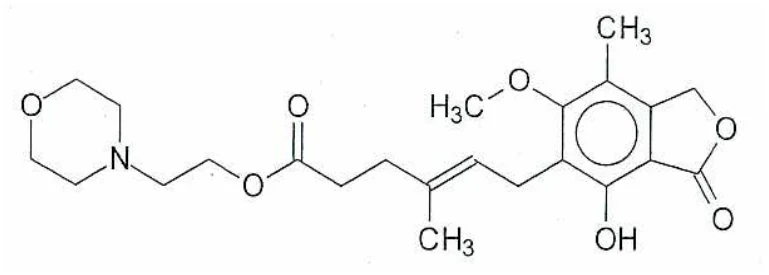
Physical Form: Mycophenolate mofetil is a white or almost white crystalline powder.
Solubility: Practically insoluble in water. It is freely soluble in acetone, and sparingly soluble in anhydrous ethanol.
Melting point: 93 - 94°C
_____________________________________________________________________________________________ CLINICAL TRIALS
Comparative Bioavailability Studies
A blinded, single-dose, randomized, two-period, two-sequence, two-treatment, crossover comparative bioavailability study of CO MYCOPHENOLATE(mycophenolate mofetil) 500 mg tablets and CellCept® (mycophenolate mofetil) 500 mg tablet by Hoffmann-La Roche Limited, Canada, was conducted under fasting conditions with 40 non-smoking, male and post-menopausal and/or surgically sterile female subjects. A summary of the bioavailability from the 38 subjects who completed the study is presented in the following table. The data is based on the active metabolite of mycophenolic mofetil, mycophenolic acid.
Comparative Bioavailability Data for CO MYCOPHENOLATE 500 mg Tablets vs. CellCept ® 500 mg Tablets
Analyte Name Mycophenolic Acid (1 x 500 mg) From measured data uncorrected for potency Geometric Mean Arithmetic Mean (CV %) | ||||
| Parameter | Test* | Reference† | % Ratio of Geometric Means | Confidence Interval, 90% |
AUCT (µg*h/mL) | 23.5026 24.2983 (27) | 23.6324 24.1377 (21) | 99.45 | 95.63 – 103.42 |
AUCI (µg*h/mL) | 25.9668 27.1774 (31) | 25.5411 25.4984 (20) | 101.67 | 96.63 – 106.96 |
Cmax (µg/mL) | 11.7056 13.6587 (48) | 12.8297 13.7937 (35) | 91.24 | 78.12 – 106.55 |
Tmax§ (h) | 0.72 (69) | 0.59 (25) | ||
T½§ (h) | 15.97 (93) | 13.56 (49) | ||
* Mycophenolate Mofetil 500 mg Tablets (Cobalt Pharmaceuticals Inc., Canada). † CellCept® 500 mg Tablets (Hoffmann-La Roche Limited, Canada) was purchased in Canada. § Expressed as the arithmetic mean (CV%) only.
Safety and Efficacy Trials
The safety and efficacy of mycophenolate mofetil as adjunctive therapy for the prevention of organ rejection were assessed in randomized, double-blind, multicentre trials in renal (3 trials), in cardiac (1 trial) and in hepatic (1 trial) transplant patients.
Renal Transplant: Adults
The three renal studies compared two dose levels of oral mycophenolate mofetil (1 g twice daily and 1.5 g twice daily) with azathioprine (2 studies) or placebo (1 study) when administered in combination with cyclosporine and corticosteroids to prevent acute rejection episodes. One study also included anti-thymocyte globulin [equine] (Atgam®) induction therapy. These studies are described by geographic location of the investigational sites. One study was conducted in the US at 14 sites, one study was conducted in Europe at 20 sites, and one study was conducted in Europe, Canada, and Australia at a total of 21 sites.
The primary efficacy endpoint was the proportion of patients in each treatment group who experienced biopsy-proven acute rejection or treatment failure (defined as early termination from the study for any reason without prior biopsy-proven rejection) within the first six months after transplantation. Mycophenolate mofetil, when administered with anti-thymocyte globulin [equine] (Atgam®) induction (one study) and with cyclosporine and corticosteroids (all three studies), was shown to significantly reduce the incidence of treatment failure compared to the following three therapeutic regimens: (1) anti-thymocyte globulin [equine] (Atgam®) induction/ azathioprine/ cyclosporine/corticosteroids, (2) azathioprine/ cyclosporine /corticosteroids, and (3) cyclosporine/corticosteroids.
Mycophenolate mofetil, in combination with corticosteroids and cyclosporine reduced (statistically significant at the <0.05 level) the incidence of treatment failure within the first 6 months following transplantation. The following tables summarize the results of these studies. These tables show (1) the proportion of patients experiencing treatment failure, (2) the proportion of patients who experienced biopsy-proven acute rejection on treatment, and (3) early termination, for any reason other than graft loss or death, without a prior biopsy-proven acute rejection episode. Patients who prematurely discontinued treatment were followed for the occurrence of death or graft loss, and the cumulative incidence of graft loss and patient death are summarized separately. Patients who prematurely discontinued treatment were not followed for the occurrence of acute rejection after termination. More patients discontinued receiving mycophenolate mofetil (without prior biopsy-proven rejection, death or graft loss) than discontinued in the control groups, with the highest rate in the mycophenolate mofetil 3 g/day group. Therefore, the acute rejection rates may be underestimated, particularly in the mycophenolate mofetil 3 g/day group.
_____________________________________________________________________________________________ Table 6: Renal Transplant Studies
Incidence of Treatment Failure (Biopsy-Proven Rejection or Early Termination for Any Reason)
| USA Study (N=499 patients) | Mycophenolate Mofetil 2 g/day (N=167 patients) | Mycophenolate Mofetil 3 g/day (N=166 patients) | Azathioprine 1-2 mg/kg/day (N=166 patients) |
| All treatment failures | 31.1% | 31.3% | 47.6% |
| Early termination without prior acute rejection* | 9.6% | 12.7% | 6.0% |
| Biopsy-proven rejection episode on treatment | 19.8% | 17.5% | 38.0% |
Europe/Canada/Australia Study (N=503 patients) | Mycophenolate Mofetil 2 g/day (N=173 patients) | Mycophenolate Mofetil 3 g/day (N=164 patients) | Azathioprine 100-150 mg/day (N=166 patients) |
| All treatment failures | 38.2% | 34.8% | 50.0% |
| Early termination without prior acute rejection* | 13.9% | 15.2% | 10.2% |
| Biopsy-proven rejection episode on treatment | 19.7% | 15.9% | 35.5% |
| Europe Study (N=491 patients) | Mycophenolate Mofetil 2 g/day (N=165 patients) | Mycophenolate Mofetil 3 g/day (N=160 patients) | Placebo (N=166 patients) |
| All treatment failures | 30.3% | 38.8% | 56.0% |
| Early termination without prior acute rejection* | 11.5% | 22.5% | 7.2% |
| Biopsy-proven rejection episode on treatment | 17.0% | 13.8% | 46.4% |
* Does not include death and graft loss as reason for early termination.
Cumulative incidence of 12-month graft loss and patient death are presented below. No advantage of mycophenolate mofetil with respect to graft loss and patient death was established. Numerically, patients receiving mycophenolate mofetil 2 g/day and 3 g/day experienced a better outcome than controls in all three studies; patients receiving mycophenolate mofetil 2 g/day experienced a better outcome than mycophenolate mofetil 3 g/day in two of the three studies. Patients in all treatment groups who terminated treatment early were found to have a poor outcome with respect to graft loss and patient death at 1 year.
Table 7: Renal Transplant Studies
Cumulative Incidence of Combined Graft Loss and Patient Death at 12 Months
| Study | Mycophenolate Mofetil 2 g/day | Mycophenolate Mofetil 3 g/day | Control (Azathioprine or Placebo) |
| USA | 8.5% | 11.5% | 12.2% |
| Europe/Canada/Australia | 11.7% | 11.0% | 13.6% |
| Europe | 8.5% | 10.0% | 11.5% |
Cardiac Transplant:
A double-blind, randomized, comparative, parallel-group, multicentre study in primary cardiac transplant recipients was performed at 20 centers in the United States, one in Canada, five in Europe and two in Australia. The total number of patients enrolled was 650; 72 patients did not receive study drug and 578 patients received study drug. Patients received mycophenolate mofetil 1.5g twice daily (n=289) or azathioprine 1.5-3 mg/kg/day (n=289), in combination with cyclosporine (Sandimmune® or Neoral®) and corticosteroids as maintenance immunosuppressive therapy. The two primary efficacy endpoints were: (1) the proportion of patients who, after transplantation, had at least one endomyocardial biopsy-proven rejection with hemodynamic compromise, or were retransplanted or died, within the first six months, and (2) the proportion of patients who died or were transplanted during the first twelve months following transplantation. Patients who prematurely discontinued treatment were followed for the occurrence of allograft rejection for up to 6 months and for the occurrence of death for 1 year.
(1) Rejection: No difference was established between mycophenolate mofetil and azathioprine (AZA) with respect to biopsy-proven rejection with hemodynamic compromise.
(2) Survival: mycophenolate mofetil was shown to be at least as effective as AZA in preventing death or retransplantation at 1 year (See table below).
Table 8: Cardiac Transplant Study
Rejection at 6 Months Death or Retransplantation at 1 Year
| All Patients | Treated Patients | |||
Azathioprine N=323 | Mycophenolate Mofetil N=327 | Azathioprine N=289 | Mycophenolate Mofetil N=289 | |
Biopsy-proven rejection with hemodynamic compromise at 6 months* | 121 (38%) | 120 (37%) | 100 (35%) | 92 (32%) |
| Death or Retransplantation at 1 year | 49 (15.2%) | 42 (12.8%) | 33 (11.4%) | 18 (6.2%) |
* Hemodynamic compromise occurred if any of the following criteria were met: pulmonary capillary wedge pressure ≥ 20 mm or a 25% increase; cardiac index < 2.0 L/min/m2 or a 25% decrease; ejection fraction ≤ 30%; pulmonary artery oxygen saturation <60% or a 25% decrease; presence of new S3 gallop; fractional shortening was ≤ 20% or a 25% decrease; inotropic support required to manage the clinical condition.
Hepatic Transplant:
A double-blind, randomized, comparative, parallel-group, multicentre study in primary hepatic transplant recipients was performed at 16 centers in the United States, 2 in Canada, 4 in Europe and 1 in Australia. The total number of patients enrolled was 565. Patients received mycophenolate mofetil 1g twice daily intravenously for up to 14 days followed by mycophenolate mofetil 1.5 g twice daily orally or azathioprine 1-2 mg/kg/day intravenously followed by azathioprine 1-2 mg/kg/day orally, in combination with cyclosporine (Neoral®) and corticosteroids as maintenance immunosuppressive therapy. The two primary endpoints were: (1) the proportion of patients who experienced, in the first 6 months post-transplantation, one or more episodes of biopsy-proven and treated rejection or death/retransplantation, and (2) the proportion of patients who experienced graft loss (death/retransplantation) during the first 12
_____________________________________________________________________________________________ months posttransplantation. Patients who prematurely discontinued treatment were followed for the occurrence of allograft rejection and for the occurrence of graft loss (death/retransplantation) for 1 year. Results: In the primary (intent-to-treat) analyses mycophenolate mofetil in combination with corticosteroids and cyclosporine was statistically significant (p < 0.02) compared to azathioprine for prevention of acute rejection and equivalent to azathioprine for survival.
Table 9: Hepatic Transplant Study
Rejection at 6 Months / Death or Retransplantation at 1 Year
Azathioprine N=287 | Mycophenolate Mofetil N=278 | |
| Biopsy-proven and treated rejection at 6 months | 137 (47.7%) | 106 (38.1%) |
| Death or retransplantation at 1 year | 42 (14.6%) | 39 (14.0%) |
DETAILED PHARMACOLOGY
Animal Pharmacology
Survival of Allografts and Treatment of Allograft Rejection in Different Experimental Models
The effect of MMF for the prevention of rejection and for the reversion of ongoing rejection was studied in several experimental allograft models.
Survival of Kidney Allografts and Treatment of Acute Allograft Rejection in Dogs
To determine the efficacy of MMF in preventing graft rejection in a large animal model, a renal allograft between outbred mongrel dogs was used. In control dogs receiving no immunosuppression, the median graft survival (MST) was 8.1 days. MMF administered orally at 40 mg/kg/day significantly increased the allograft survival (MST = 36 days). Some gastrointestinal toxicity and weight loss was observed in this group of dogs. When MMF (20 mg/kg/day) was given in combination with subtherapeutic doses of cyclosporin A (CsA, 5 mg/kg/day) and methylprednisolone (MP, 0.1 mg/kg/day), the MST was >122.4 days (n=16). Using this triple therapy, three dogs survived >200 days and one was euthanized on Day 150 to obtain tissue samples for histologic examination. In the animals treated with triple therapy, no significant toxicity was observed. There was a two-fold transient increase in alkaline phosphatase. Control dogs treated with CsA (5 mg/kg/day) and MP (0.1 mg/kg/day) had a MST = 8.5, essentially identical to that in untreated dogs. In dogs receiving 20 mg/kg/day MMF and 0.1 mg/kg/day MP without CsA, all animals survived >50 days (n=6). The treatment was discontinued in 4 of those animals to test for tolerance after 50 days. Within a few days those 4 animals underwent acute renal rejection, indicating that tolerance had not developed. Nonetheless, the double therapy treatment without CsA was as effective at preventing rejection as was the therapy with CsA.
The ability of MMF to reverse ongoing acute rejection was also examined in the canine renal allograft model. Kidney allografts were performed in bilaterally nephrectomized female mongrel
dogs. All animals received a baseline immunosuppressive treatment (MMF - 10 mg, CsA - 5 mg and MP - 0.1 mg/kg/day, orally), previously shown to be insufficient to prevent renal graft rejection, but sufficient to slow the rate of progression. Rejection was defined by a 50% or greater rise in serum creatinine level relative to the lowest observed creatinine during the first postoperative week. Before the initiation of rejection treatment, a percutaneous kidney biopsy was performed to confirm the rejection. At the time of rejection, experimental animals received rescue therapy consisting of either MMF 80 mg/kg/day, twice daily, for 3 days, (experimental group) or bolus MP: 14 mg/kg, 7 mg/kg and 3.5 mg/kg, respectively, on each day (control group). After completion of the rejection treatment, the baseline immunosuppression was increased to MMF 20 mg/kg, with the same doses of CsA and MP.
Control animals (n=11) all died of ongoing rejection (MST 19 days). In the experimental group, MMF treatment successfully reversed the acute ongoing rejection in 14/16 (87.5%) of the dogs. Reversion of the rejection process was proven by biopsy as well as normalization of the creatinine levels. The rejection treatment with MMF resulted in a lymphopenia that persisted for about 4 weeks, while liver enzymes such as AST, ALT and alkaline phosphatase were minimally elevated during the first two weeks after rejection treatment. During the rescue therapy with MMF, gastrointestinal side effects such as vomiting and diarrhea were also observed.
In summary, MMF significantly prolonged kidney allograft survival in dogs. Using a combined treatment with subtherapeutic doses of CsA and MP, the graft survival was >122 days, without any serious adverse effects. In addition, MMF was highly effective in reversing acute renal allograft rejection in dogs, while bolus administration of steroids did not show efficacy in the same model. These studies show the efficacy of MMF in preventing and treating allograft rejection without limiting toxicity or increased susceptibility to infections in a large animal model.
Prevention of Acute Rejection in Heart Allografts and Xenografts in Mice and Rats
MMF was found to effectively prolong heart allograft survival in mice and rats, and increase xenograft survival and reverse ongoing allograft rejection without severe toxicity in rats. The survival of grafts long beyond cessation of treatment, and even after challenge with a second graft from the same donor, suggested induction of tolerance. Combination therapy with MMF and CsA, using low doses of both drugs, can prevent graft rejection and allow survival even after cessation of treatment. Thus CsA and MMF have at least additive effects in preventing allograft rejection, without indication of increased toxicity. Similarly, MMF and brequinar also demonstrated an additive effect on preventing heart allograft rejection in rats, without increased toxicity.
Prevention of Chronic Rejection in Heart Allografts and Aortic Allografts in Rats
A manifestation of chronic allograft rejection is a proliferative and obliterative arteriopathy. MPA in clinically attainable concentrations (0.09-3.2 μM) inhibits the proliferation of human arterial smooth muscle cells in culture, whereas CsA and brequinar do not. Once daily oral administration of MMF (30 mg/kg/day, Days 1-30 and 20 mg/kg/day, Days 31-100) to Lewis rat recipients prevented the development of chronic rejection in transplanted Brown Norway rat heart allografts.
_____________________________________________________________________________________________ Male ACI rat donors and Lewis recipient rats were used in an orthotopic aortic allograft model to test the effect of MMF in preventing development of chronic rejection. Treatment with a MMF dose (20 mg/kg) for 3 months significantly inhibited intimal proliferation when used alone and in combination therapy with brequinar sodium. By contrast, brequinar monotherapy and CsA alone did not prevent neointimal proliferation at the doses used. MMF was also tested at lower doses with other immunosuppressive regimens containing rapamycin and was found to be partially active.
Survival of Cardiac Xenografts in Primates
Cynomolgus monkeys served as donors for ABO-matched, B-cell-crossmatched negative, baboons. Four treatment groups were used: Group 1, no immunosuppression; Group 2, CsA 15 mg/kg/day intramuscularly starting 1 day preoperatively + methylprednisolone acetate 0.8 mg/kg/day intramuscularly; Group 3, same as Group 2 + azathioprine 4 mg/kg/day orally starting 21 days preoperatively; Group 4, same as Group 3 with MMF 70 mg/kg/day orally instead of azathioprine.
Group 1 baboons (n = 4, untreated controls) had a MST of 9 days (range 8-10 days). CsA and steroid treatment in Group 2 (n = 6) prolonged mean survival to 77 days (range 16-200 days). Hearts undergoing early rejection showed a histologic picture of rejection similar to that of Group 1. Hearts with longer survival demonstrated histological appearance consistent with repeated episodes of rejection, with healing and gradual replacement of myocardium with connective tissue. Graft biopsy was performed at 1, 2, 4, 8 and 12 weeks postoperatively in groups 3 and 4 with follow-up biopsy 1 week after rejection therapy. In Group 3 (n = 5), mean survival was prolonged to 94 days (range 3-392). Four of 9 rejection episodes were reversed using high-dose steroids. ATG 10 mg/kg per day intravenously reversed 2 of 4 episodes of steroid-resistant rejection. Despite rescue from cellular rejection, these grafts were later lost to humoral rejection. In Group 4 (n = 3), mean survival was 296 days (range 49-618). A cardiac biopsy taken from 1 animal in group 4 at 618 days post-transplant showed a coronary artery free of intimal occlusive disease. Coronary artery disease of a low degree of severity was found in only 2 other biopsy specimens in group 4 and consisted of moderate endothelial swelling. There was no evidence of coronary intimal proliferation in this group.
Ultrastructural examination of the coronary arteries and veins from the same animal showed no indication of vasculopathy in any of the vessels examined. The endothelium in some vessels was bulbous in appearance rather than the normal flat endothelial lining.
In conclusion, MMF in combination with a subtherapeutic dose of CsA and steroids significantly prolonged cardiac xenograft survival in primates far beyond any other immunosuppressive regime so far tested. The vascular pathological changes seen in long-term survivors with cardiac xenografts treated with other immunosuppressive therapies were not observed in animals treated with MMF.
In addition, MMF significantly inhibited neointimal proliferation in rat aortic allografts after 6 months treatment, while CsA and brequinar did not. MMF also prevented the intimal proliferation observed in long-term recipients of rat heart allografts, while CsA and azathioprine did not. This effect may be explained by the ability of MMF to inhibit not only T-lymphocyte responses, but also antibody formation and proliferation of smooth muscle cells, which are considered important factors contributing to the pathogenesis of chronic rejection.
Other Models of Allograft Rejection
MMF (80 mg/kg/day) was effective for prevention of pancreatic islet allograft rejection in mice rendered diabetic using streptozotocin. After cessation of treatment, recipients of pancreatic islet allografts continued normoglycemic, indicating that a state of tolerance was induced. Tolerant mice resisted challenge with a second graft from the same donor strain but rejected a third party graft, indicating that the tolerance induced by MMF was specific. In animals (NOD mice) spontaneously developing diabetes, MMF (80 mg/kg/day) did not decrease the incidence of disease.
MMF was also effective in graft versus host disease (GVHD) in several experimental models using splenocytes from parental C57BI/6 mice into F1 (C57BI/6 x C3H/H3N) mice, rat small bowl transplant from parental into F1 recipients, and a sublethally irridiated mouse recipient of allogenic spleen cells model. In other models of allograft rejection such as limb transplants in rats and liver and intestinal allograft in dogs and rats, MMF alone and in combination with CsA showed increased survival and greater efficacy than other immunosuppressive therapies tested in parallel.
Mechanism of Action: Immunosuppressive Effects
In vitro Studies with Human Cells
The effects of MMF and MPA on lymphocyte function were studied in vitro. MPA and MMF (IC50=17-80 nM) inhibit proliferative responses of human peripheral blood mononuclear cells (PBMCs) to the T- and B-cell mitogens phytohemagglutinin (PHA), pokeweed mitogen (PWM), concanavalin A (Con A) and Staphylococcus protein A-sepharose (SPAS). By contrast MPAG was not inhibitory of lymphocyte proliferation in response to PWM and SPAS up to 10μM concentration. Lymphocyte response to phytohemagglatin PHA was inhibited by MPAG with an IC50=8.9μM. This concentration is about 100-fold greater than the MPA concentration required for the same bioactivity. The residual activity in the MPAG sample can be explained by a small contamination with MPA as detected by HPLC analysis (≈0.3%).
Addition of guanosine (Guo) or deoxyguanosine (dGuo) reversed the inhibitory effect of MMF and MPA, while adenosine and deoxyadenosine had no effect. Human fibroblasts, endothelial cells, and smooth muscle cells were about one log less sensitive to the antiproliferative effects of the drug than were lymphocytes.
In addition, MMF and MPA inhibited the formation of antibodies by human peripheral blood B- lymphocytes stimulated with mitogens (Staphylococcus aureus Cowan 1 or PWM) at nanomolar concentrations (IC50 of approximately 20-50 nM).
Measurements of nucleotide pools in human lymphocytes activated with concanavalin A (Con A), as well as in the human T-cell line CCRF-CEM, have shown that MPA (1 μM) markedly depletes pools of GTP. When either Guo (1 μM) or dGuo (10 μM) were added to the medium, the GTP level was restored. The dGTP pools were even more affected by MPA than those of GTP, and dGuo (10 μM) restored the level to above the controls. By contrast, GTP levels in human polymorphonuclear leukocytes (PMNs) were essentially unaffected by MPA, while adherent mononuclear cells (monocyte-enriched) were also GTP depleted. The effect of MPA was greater in mononuclear cells stimulated by Con A than on resting cells.
_____________________________________________________________________________________________
MMF and MPA were also shown to be potent inhibitors of the proliferation of human B- and T- lymphocytic and promonocytic cell lines, while the erythroid precursor cell line, K562, was less susceptible. Several human tumor cell were found to have various degrees of susceptibility to the antiproliferative effects of MMF and MPA. Addition of guanine or dGuo to the cultures reversed the antiproliferative effect of MPA in a concentration- and time-dependent manner, showing the selectivity of the drug’s effect.
The observation that MPA added to mixed lymphocyte cultures after 72 hours still inhibited proliferation suggests that the drug affects late events following antigenic stimulation. MMF and MPA did not inhibit early events in lymphocyte activation, such as production of IL-1 by human peripheral blood monocytes stimulated with lipopolysaccharide, the production of IL-2 in Con A stimulated human peripheral blood lymphocyte (PBL) and the mobilization of calcium following stimulation of T-cells with mitogens.
Interferon (IFN-γ) is another cytokine produced by stimulated T-lymphocytes. MMF (hydrochloride) did not inhibit IFN production in 2 assays. Subsequently, MMF was found to inhibit IFN production with an IC50 of 0.37-0.42 μM, which is about 10-fold greater than the concentration required to inhibit lymphocyte proliferation.
Although inhibition of T- and B-lymphocyte proliferation is the primary target of the drug, it is likely that depletion of GTP will have other metabolic effects on these cells. For example, it is known that GTP is required for the activation of mannose and fucose, through dolichol phosphate intermediates, for glycoprotein (and glycolipid) biosynthesis. Fucose – containing oligosaccharides are components of adhesion molecules such as ligands for selections which are expressed on activated endothelial cells, lymphocytes and monocytes and facilitate their interactions at sites of inflammation and graft rejection.
Cultures of human umbilical vein endothelial cells (HUVEC) and a human T-lymphocytic cell line (CEM) were used to evaluate the effect of MPA on cell adhesion. When the HUVEC were stimulated with cytokines such as IL-1 or TNF, there was a dose-dependent increase in the number of lymphocytic cells adhering to the endothelial cells (EC). The number of lymphocytes attached to the cultured EC was measured by counting under the microscope or using 51Cr-labelled T-cells. When the T-cells were treated for 4 hr with 1 μM MPA prior to incubation with EC, a reduction in the number of adherent cells was observed. Treatment of both, the EC and the T-cells with MPA (10 μM) for the same time, markedly decreased the attachment between the two cell types. This observation suggests that MPA prevents the glycosylation of adhesion molecules on lymphocytes and EC. Similar results have been obtained using human PBL stimulated with Con A instead of a T-cell line.
Immunoprecipitation studies using monoclonal antibodies specific for the adhesion molecules, VLA-4 and LFA-1, showed that MPA (10 μM) inhibited the incorporation of sugars (3H- mannose and 3H-glucosamine) on the surface of PHA-activated human PBM. By flow-cytometry, MPA was also shown to inhibit the binding by PHA activated PBM of specific lectins that recognize terminal mannose residues and sialic acid attached to terminal galactose.
In summary, MPA in clinically attainable doses can inhibit the binding of mononuclear cells to endothelial cells. This mechanism could contribute to the efficacy of MMF in preventing allograft rejection and in the treatment of ongoing rejection when clones of lymphocytes with specificity for alloantigens have already expanded.
MPA inhibited the proliferation of human arterial smooth muscle cells (SMC) and endothelial cells (HUVEC) with IC50s between 0.09-3.2 μM.
In another study, MPA was tested for effects on the growth of arterial smooth muscle cells. Human iliac artery smooth muscle cells were obtained from medial explants and were passaged several times before use. MPA was inactive at low doses, but showed 30% inhibition of cell proliferation at a concentration of 1.6 μM. MPA was also studied using human breast carcinoma cell lines BT20 and MCF-7 in comparison with non-transformed human foreskin fibroblasts. MPA at concentrations between 5-50 μM inhibited the growth of both the breast carcinoma lines and the human foreskin fibroblasts (HFF) by 50%. The sensitivity of the breast cancer cell lines to the antiproliferative effect of MPA was not significantly different from the HFF.
MMF and MPA at submicromolar concentration also inhibited proliferation and induced differentiation of promonocytic cells (U-937, HL-60 and THP-1), as measured by increased expression of cell surface markers, increased secretion of lysozyme and raised intracellular concentrations of lysosomal enzymes. U-937 and THP-1 cells cultured for 72 hr with 1 μM MPA had an increased lipid droplet content as determined by fluorescence microscopy and transmission electron microscopy. MPA also induced human derived macrophages to produce lysosomal hydrolases, supernatant lysozyme and the interleukin-1 receptor antagonist protein (IL-1ra). These effects are characteristic of compounds having long-acting anti-inflammatory effects (DMARDs) such as chloroquine and gold salts which suggests that MMF could have a disease-modifying effect in chronic inflammatory conditions such as rheumatoid arthritis.
In vitro Studies with Cells from Laboratory Animals
MPA was tested in vitro at concentrations of 0.001 to 10 μM for inhibition of lymphocyte proliferation in cell cultures from rhesus monkey, rabbit, guinea pig, rat and mice. The mitogens used were PHA, PWM, Con A, SPAS and bacterial lipopolysaccharide (LPS). MPA inhibited lymphocyte proliferation to all of the mitogens in lymphocyte cultures from all of the above named species with IC50s between <1-60 nM.
Mixed lymphocyte reactions were initiated using C57Bl/6J mouse splenocytes as responder cells and BALB/cJ mouse splenocytes as stimulator cells. After 4 days incubation in the presence of MPA at various concentrations, cell proliferation was determined by 3H-thymidine incorporation and cell viability was determined by trypan blue dye exclusion. The IC50 for MPA was determined to be 0.4 μM; cell viability was reduced at MPA concentrations ≥ 0.3 μM.
The effects of MPA on murine in vitro antibody-forming cells were analysed in a series of studies. In 1 study, MPA suppressed the in vitro response to sheep red blood cells (SRBC) >85% at concentrations of 0.1 or 1.0 μM. In this same study, a dose-response curve gave an estimated IC50 of approximately 0.04 μM. In a second study with mouse spleen cells stimulated with SRBC, only the 1.0 μM dose was suppressive and the dose-response curve showed significant suppression beginning at 50 nM. In the last study, murine spleen cells and peritoneal
_____________________________________________________________________________________________ lymphocytes were stimulated in culture with LPS and evaluated for the production of autoantibodies to murine red blood cell antigens pretreated with bromelain. Both splenic and peritoneal B-cells showed variability in response to MPA. Peritoneal cell IC50 ranged from 0.27 μM to >10 μM, whereas spleen cell IC50 ranged from 0.59 μM to >100 μM.
The effect of MPA on the effector phase of NK-cell activity in mice was also assessed at MPA concentrations of 1, 10 and 100 μM using YAC-1 tumor cells as targets. Only at the 100 μM concentration did MPA inhibit the effector phase of NK-cell activity in 2 of 3 experiments. MPA tested on the effector phase of T-cell-mediated cytotoxicity in a murine system (spleen cells sensitized to P815 tumor target cells) was only partially inhibitory (30% decrease in specific lysis) at the highest concentration tested (100 μM) in 1 of 2 experiments.
The effect of MPA on the degranulation of rat peritoneal mast cells (RMC) was studied. RMC were pretreated for 48 hr with 0.1-10 μM MPA before the cells were sensitized with IgE and triggered with specific antigen. The net amount of 3H-5HT released from granules was decreased by 44 and 32% at 1 and 10 μM, respectively. MPA inhibition of degranulation was completely reversed by the addition of 30 μM guanosine to the medium. MPA had no effect on any other cell parameters studied (IgE receptors or PGD2 production).
In vivo Studies in Experimental Animals
The effects of MMF and MPA on antibody formation were tested using SRBC to immunize mice and rats. Significant inhibition (40%-88%) of the antibody response was observed in mice with oral doses of 20-100 mg/kg/day of MMF or MPA administered once daily for 4 days. In rats immunized with SRBC and treated with MPA for 4 days only, the ED50 was approximately 14 mg/kg/day. Significant inhibition of antibody formation against SRBC was observed also in rats treated with 9 and 30 mg/kg/day for 28 days, and immunized 4 days before the end of treatment.
MPAG, the main metabolite of MPA, was also tested for activity on antibody production in mice immunized with SRBC. MPAG given orally for 4 days at 50 mg/kg/day, significantly inhibited the total number of antibody-forming cells in the spleen (PFC) by 60%. These results show that MPAG, which in vitro is >100-fold less active than MPA on lymphocyte proliferation, has comparable in vivo activity. These results are consistent with the observations that in vivo, MPAG is converted to free MPA, probably by enterohepatic recirculation, with bioactivity comparable to that induced by MPA administration.
Primary and secondary antibody responses were analyzed in mice immunized with B/Yamagata influenza virus hemagglutinin in adjuvant. MPA given orally (80 mg/kg) from the time of primary immunization, for 10 days, significantly reduced the antibody titers after primary immunization and also after challenge, even though no additional drug treatment was given. Moreover, if no treatment was given at the time of primary immunization, but only after challenge, the antibody response was not reduced. These observations indicate that MPA effectively suppresses antibody responses if administered during immunization but is less effective after sensitization has already occurred.
Oral administration of MMF and MPA (50-120 mg/kg/day) from day 1 to 11 to C57Bl/6 mice also suppresses the generation of cytotoxic T-lymphocytes able to lyse allogeneic tumor target cells (P-815 mastocytoma) given intraperitoneally (day 1). Cytotoxic T-cells are thought to be
the main effector mechanism responsible for acute allograft rejection. The efficacy of MMF and MPA in preventing cytotoxic cell generation provides the rationale for the prophylactic use of this drug to prevent rejection in allograft recipients.
MPA administered orally or intraperitoneally (100 mg/kg, 3-5 days) to mice immunized with ovalbumin was found to inhibit the synthesis of DNA as measured by 3H-TdR incorporation in lymphoid tissue but not in other rapidly dividing cells such as germinal cells of the testes. Thus MPA has a more potent cytostatic effect on lymphoid cells than in other cell types, in vivo as well as in vitro.
Anti-Inflammatory Effects
MMF and MPA were tested in a number of experimental models of inflammation. Both MMF and MPA suppress adjuvant-induced arthritis and experimental allergic encephalomyelitis in rats.
The autoimmune disease that develops in genetically predisposed MRL/pr mice was also partially reduced by treatment with MPA for 30 days, starting at 5.5 months of age. In collagen-induced arthritis in mice, MPA did not produce any significant changes of the disease symptoms or incidence at the dose tested (10.5 mg/kg/day). However, this dose was considered to be below the threshold of therapeutic activity in mice, as shown in other models.
No effect was observed when MPA was administered to rats in two other models of acute inflammation, carrageenan-induced paw swelling and granuloma induced by implant of a cotton-pellet impregnated with carrageenan.
Finally, MPA was found to have no effect on IL-1-induced ornithine decarboxylase in mice (used as a measure of an acute phase response).
As part of a random screening, MPA was tested in vitro for inhibition of 15-lipoxygenase and 5 lipoxygenase (5-LO) activity, and for thromboxane B2 and leukotriene B4 (LTB4) synthesis by human whole blood. A partial inhibitory effect on LTB4 synthesis and 5-LO activity was found only at the highest concentrations tested (312 and 100 μM, respectively).
These results indicate that MMF and MPA can prevent inflammatory responses that are immunologically driven but have no effect on acute inflammatory responses such as those responding to cyclo-oxygenase and 5-LO inhibitors.
Antitumor Effects
Antitumor activity of MMF was assessed in several models of xenogeneic (human tumor cells into nude mice) as well as in a syngeneic metastasis model in mice. MMF significantly prolonged survival and delayed tumor development with different degrees of efficacy according to the type of tumor.
Antiviral Effects
Antiviral activity of MMF and MPA was evaluated against different viruses in culture. Anti- HIV activity was tested using different cell lines of T-cell and monocytic origin. In general, the reduction in reverse transcriptase (RT) was directly correlated with the reduction in the cell
_____________________________________________________________________________________________ number, suggesting that the effect of MPA is at the cellular level rather than on the virus replication. Antiviral activity against herpes, parainfluenza virus, respiratory syncitial virus and against murine Friend Leukemia Virus (FLV) were all obtained at low (micromolar) concentrations of MPA, but the window between antiviral concentration and cytostatic effects was narrow. In vivo, MMF and MPA inhibited splenomegaly and the number of focus forming units in FLV-infected mice. Some activity of MMF and MPA against cytomegalovirus and human cytomegalovirus was observed; these drugs augmented the antiviral activity of ganciclovir.
General Pharmacology
General pharmacology studies were conducted to assess the effects of MMF on the central nervous, cardiovascular, respiratory, and gastrointestinal systems.
CNS effects were determined in mice in studies that included a gross behavioral assay (Irwin Profile), a spontaneous locomotor activity assay, an induced neurological deficit test, maximal electroshock and pentylenetetrazol anticonvulsant assays, and a hexobarbital sleep test. MMF was administered as single oral doses ranging from 1.09 to 1090 mg/kg. Except for depressed locomotor function at 10.9 mg/kg and higher doses in the Irwin profile assay or at 109 mg/kg in the spontaneous locomotor activity assay, there was no evidence of central nervous system or autonomic effects with MMF.
Cardiovascular and respiratory effects were assessed in anesthetized dogs, 3 animals per group. Each animal received escalating doses of MMF (0.3-31.6 mg/kg, orally). No significant effects were seen.
Effects on gastrointestinal function were determined in rats, 5-10 animals per group. Each rat received single oral doses of MMF (25-100 mg/kg). MMF significantly decreased gastrointestinal motility at 100 mg/kg, but had no effects on gastric secretory activity. MMF appeared to diminish signs of colitis in a mouse model; however, this model was unverified and the results are inconclusive.
To further assess the affinity of MMF and MPA at various neurotransmitter receptors, radioligand binding assays were performed. Both MMF and MPA showed low affinities (pKi values ≤ 4-5) at α-adrenergic, β-adrenergic, and muscarinic receptors, suggesting probable lack of activity for these compounds on the autonomic nervous system.
Pharmacokinetics and Disposition
MMF administered orally to animals and humans was rapidly and extensively converted to MPA. Following oral administration of unlabeled MMF or [14C-MPA] MMF to mice (10 mg/kg), rats (6 mg/kg), rabbits (40 mg/kg), dogs (9 mg/kg), mini pigs (45 mg/kg), cynomolgus monkeys (6 mg/kg), and humans (1000 mg), MMF was not detected in plasma by HPLC-UV or HPLC-radiometric methods. Following IV infusion of MMF, however, MMF was observed in the plasma throughout the infusion period but was not detected >5 minutes after terminating the infusion. Subsequent in vitro studies using monkey and human tissues demonstrated that homogenates of liver, gut mucosa, and kidney hydrolyze MMF to MPA and hydroxyethyl morpholine.
Pharmacokinetic-based Drug Interactions
Co-administration of MMF (20 mg/kg orally) and probenecid (500 mg) twice daily for 4 days increased the AUC0-12 hr for MPA and MPAG 1.7 and 2.9 fold respectively.
The potential for drug interaction at the level of protein binding was evaluated in human plasma in vitro by equilibrium dialysis and ultrafiltration methods. When MPA concentrations of 5, 20, and 50 μg/mL were used, concentrations of MPAG as high as 230 μg/mL had little effect on the binding of MPA. However, MPAG concentrations of 460 and 920 μg/mL reduced the plasma binding of MPA (50 μg/mL) from 97.1% to 95.4% and 92.8%, respectively. At plasma concentrations encountered clinically, tolbutamide, theophylline, and digoxin had no effect on the binding of MPA to human plasma, but cyclosporine at 500 ng/mL reduced the binding of MPA (75 μg/mL) from 97.2% to 96.5%. MPA concentrations as high as 100 μg/mL had little effect on the plasma binding of warfarin, digoxin, or proprandol, but decreased binding of theophylline from 52.8% to 45.0%, and decreased binding of phenytoin from 90.0% to 86.8%.
Miscellaneous Studies
The potential for MMF to induce hepatic cytochrome P450 enzymes was evaluated in male rats. MMF did not induce total hepatic P450.
Glucuronidation of MPA by Hepatic Microsomes
Apparent Km and Vmax of glucuronidation of MPA were determined with hepatic microsomes from mice, rats, dogs, cynomolgus monkeys, and humans (CL 6755). Microsomes from all species catalyzed the formation of MPAG from MPA, and the reaction followed Michaelis- Menton kinetics.
TOXICOLOGY
Nonclinical toxicity studies were conducted to evaluate the acute, subchronic/chronic, reproductive, carcinogenic, and mutagenic effects of MMF.
Clinically MMF will be administered orally as a capsule. Therefore, the primary route of exposure for the toxicology studies was oral (gavage). Oral bioavailability of MPA following MMF administration, and absorption efficiency of MMF, were known to range from approximately 80% to 100% in rodents (mice, rats) to 50% to 70% in non-rodents (dogs, monkeys). Additional toxicology studies were conducted by the intravenous and subcutaneous routes to further characterize MMF’s toxicologic profile.
Animal models used in toxicology evaluations included mice, rats, dogs (beagle), and monkeys (cynomolgus), and were selected in part for their known pharmacological responsiveness to MMF and similar metabolism of MMF compared with man.
Single-dose (Acute) Toxicity
The acute toxicity of MMF was evaluated by oral, subcutaneous, and intravenous routes in mice, rats, and/or monkey.
Table 10: Single Dose (Acute) Toxicity Studies
_____________________________________________________________________________________________
| Document No. | Study Type | Species | Dose (mg/kg) | Route |
| Oral Toxicology Formulation: | ||||
| AT 4107 | Acute | Mouse | 500-4000 | Oral |
| AT 4108 | Acute | Rat | 125-1000 | Oral |
| AT 4109 | Acute | Rat | 250-2000 | Subcutaneous |
| AT 4099 | Acute | Monkey | 500-1000 | Oral |
| Intravenous Toxicology Formulation: | ||||
| AT 5996 | Acute | Rat | 10-100 | Intravenous |
Single acute minimum lethal oral doses were greater than 4000 mg/kg in mice, 250 mg/kg in rats, and 1000 mg/kg in monkeys. The acute minimum lethal dose in rats was greater than 1000 mg/kg by the subcutaneous route. In these oral and subcutaneous acute toxicity studies, treatment-related mortality occurred only in the rat. Most deaths occurred 3 to 6 days after dosing and were associated with gastrointestinal toxicity, evidenced pathologically by excess fluid, mucosal reddening, and/or ulceration in the stomach and/or small intestine.
The acute minimum lethal dose in rats was between 30 and 100 mg/kg by the intravenous route. Most rats died within 2 minutes after dosing. Clinical changes at 30 and 100 mg/kg included collapse, inactivity, tonic convulsion, labored respiration, and/or gasping; these changes abated by 3 hours postdosing. No treatment-related pathologic changes occurred.
In acute oral toxicity studies, no deaths occurred in adult mice at doses up to 4000 mg/kg or in adult monkeys at doses up to 1000 mg/kg; these were the highest doses of mycophenolate mofetil tested in these species. These doses represent 11 times the recommended clinical dose in renal transplant patients and approximately 7 times the recommended clinical dose in cardiac transplant patients when corrected for body surface area (BSA). In adult rats, deaths occurred after single oral doses of 500 mg/kg of mycophenolate mofetil. The dose represents 3 times the recommended clinical dose in renal transplant patients and approximately twice the recommended clinical dose in cardiac transplant patients when corrected for BSA.
Multiple-dose Toxicity
Multiple-dose toxicity studies with MMF were conducted in mice, rats, dogs, and monkeys as illustrated below; the duration of these studies ranged from 1 to 12 months by the oral route, and 2 weeks to 1 month by the intravenous route.
Table 11: Multiple-dose Toxicity Studies
| Document No. | Study Type | Species | Dose (mg/kg/day) | Route | Durationa |
| Oral Toxicology Formulation: | |||||
| AT 5316 | Subchronic | Mouse | 0,6,25,100,300 | Oral | 3 months |
| AT 4155 | Subchronic | Rat | 0,3,9,30 | Oral | 1 month/1 month |
| AT 4831 | Chronic | Rat | 0,2,6,20 | Oral | 6 months/1 month |
| AT 6213 | Chronic | Rat | 0,2,6,15 | Oral | 12 months |
| AT 5105 | Subchronic | Dog | 0,6,20,60 | Oral | 3 months |
| AT 6214 | Chronic | Dog | 0,3,9,30 | Oral | 12 months/1 month |
| AT 4119 | Subchronic | Monkey | 0,15,45,150 | Oral | 1 month/1 month |
| AT 4858 | Chronic | Monkey | 0,6,20,70 | Oral | 6 months/1 month |
| Intravenous Toxicology Formulation: | |||||
| AT 5995 | Subchronic | Rat | 0,3,9,30 | Intravenous | 1 month |
| AT 6687 | Subchronic | Monkey | 0,50,100,200 | Intravenous | 2 weeks |
| AT 5997 | Subchronic | Monkey | 0,5,15,25 | Intravenous | 1 month |
a Duration of dosing/duration of recovery period.
Oral Dosing
The principal target organ systems in mice, rats, dogs, and monkeys dosed orally for up to 12 months with MMF were the hematopoietic and/or lymphoid systems. In these oral studies, the target organ changes were present at 100 mg/kg/day in the mouse, 6 mg/kg/day in the rat, 60 mg/kg/day in the dog, and 45 mg/kg/day in the monkey. Hematopoietic toxicity was evident in mice and rats primarily as decreased erythrocytic parameters and in dogs and monkeys primarily as decreased lymphocyte counts. Deaths related to anemia occurred in rats treated chronically with oral doses of 20 mg/kg/day. Lymphoid toxicity in rats, dogs, and monkeys included thymic atrophy and/or decreased numbers of active germinal centers in secondary lymphoid organs (lymph nodes, spleen, and/or intestine). Immunosuppression, the anticipated therapeutic mechanism, was achieved at or below no-effect dose levels for toxicity in subchronic/chronic studies in rat and monkey, as assessed in vitro by the effect of serum from dosed animals on lymphocyte mitogen response.
Recovery from the hematopoietic and lymphoid toxicity of MMF was observed in the rat 1- and 6-month studies after a one month postdosing recovery period. Evaluation of recovery was planned for the 1- and 6 month monkey studies, but could not be accomplished due to the premature demise or termination of animals in affected dose groups.
An increased incidence of viral (herpes virus B) and parasitic lesions occurred in monkeys after 3 months of dosing at 70 mg/kg/day. These effects involved a virus and an enzootic parasite known to be endemic in these feral animals, and were considered secondary to the expected pharmacologic (immunosuppressive) effects of MMF. No treatment-related infections occurred in the rodent or dog multiple-dose studies; the mice (CD-1®) and rats (CD®) used were virus-antibody free animals (VAF/Plus™, Charles River Laboratories).
Gastrointestinal and/or renal toxicity were present in the dog and the monkey at the higher dosages studied in these species. Multi-nucleated sperm precursors were present in the testes of monkeys at 1 month when treated with 150 mg/kg of MMF and at 3 or 6 months when treated with 70 or 20 mg/kg MMF, respectively. Dogs given oral doses of 60 mg/kg/day of MMF once daily for 3 months exhibited mortality and gastrointestinal erosion and necrosis. An increased frequency of diarrhea and soft feces occurred in dogs given 30 mg/kg/day for 1 year. Gastrointestinal and renal toxicity and associated mortality were present in monkeys given 150 mg/kg/day orally for 1 month.
Toxicokinetic data collected from the multiple-dose oral toxicity studies demonstrated dose-related increases in plasma concentrations of mycophenolic acid (MPA) and its glucuronide conjugate (MPAG), the principal metabolites of MMF. The approximate Cmax and AUC0-24 hr ranges for MPA corresponding with the doses of MMF (2 to 300 mg/kg/day) administered in the multiple-dose oral toxicity studies were 0.4 to 51.9 μg/mL and 0.7 to 523 μg•hr/mL, respectively. At a given oral dose of MMF, the resulting plasma levels of both MPA and MPAG tended to
_____________________________________________________________________________________________ remain similar over a wide range of dosing duration (single dose up to 1 year dosing). There were no detectable levels of MMF in the plasma after oral administration of MMF.
Intravenous Dosing
Rats were given 1, 3, or 10 mg/mL MMF by intravenous infusion once daily for 28 days to deliver 3, 9, or 30 mg/kg/day. No treatment-related effects occurred at 3 or 9 mg/kg/day. At 30 mg/kg/day, decreased body weight gain, anemia, lymphoid atrophy, and decreased erythroid and increased myeloid cells in bone marrow were present. Injection site inflammatory changes suggestive of local irritation occurred at 30 mg/kg/day.
Monkeys were given 5 mg/mL MMF by intravenous infusion once daily for 0.5, 1, or 2 hours to deliver 50, 100, or 200 mg/kg/day, respectively, for 14 days. All monkeys survived the duration of treatment. Changes characteristic of local irritation were present in the veins of monkeys infused with MMF. At 200 mg/kg/day, decreased erythrocytic parameters in peripheral blood and reduced numbers of erythroid cells in the bone marrow were present. No other histopathologic signs of systemic toxicity occurred.
Monkeys were given 1, 3, or 5 mg/mL MMF by intravenous infusion once daily for 28 days to deliver 5, 15, or 25 mg/kg/day. Decreases in erythrocyte count, hemoglobin, and hematocrit were present at 25 mg/kg/day. Inflammatory changes suggestive of local irritation were present in injection veins of monkeys given 15 or 25 mg/kg/day. No histopathologic signs of systemic toxicity occurred.
Toxicokinetic data collected from the multiple-dose intravenous toxicity studies demonstrated dose-related increases in plasma concentrations of mycophenolic acid (MPA) and its glucuronide conjugate (MPAG), the principal metabolites of MMF. The approximate Cmax ranges for MPA corresponding with the doses of MMF (3 to 200 mg/kg/day) administered in the multiple-dose intravenous toxicity studies were 5.9 to 215 μg/mL. AUC0-24 hr values were not determined as part of the intravenous toxicity studies. MMF was detected in plasma of monkeys dosed by intravenous infusion, when blood samples were collected during infusion.
Carcinogenicity Studies
Two-year bioassays with MMF were conducted in mice and rats as listed below in Table 12.
Table 12: Carcinogenicity Studies in Mice and Rats
| Document No. | Study Type | Species | Dose (mg/kg/day) | Route | Duration |
| AT 6703 | Carcinogenicity | Mouse | 0,25,75,180 | Oral | 24 months (104 weeks) |
| AT 6702 | Carcinogenicity | Rat | 0,3,7,15 | Oral | 24 months (104 weeks) |
Mice were dosed orally by gavage with MMF once daily for at least 104 weeks at 25, 75, and 180 mg/kg/day. MMF was not carcinogenic in the mouse. The highest dose, 180 mg/kg/day, was considered the maximum tolerated dose that could be administered based on treatment-related effects that included anemia, decreased numbers of erythrocytic cells and increased numbers of granulocytic cells and megakaryocytes in bone marrow, and increased granulopoiesis and
lymphoid atrophy in spleen. The highest dose tested was 0.5 times the recommended clinical dose (2 g/day) in renal transplant patients and 0.3 times the recommended clinical dose (3 g/day) in cardiac transplant patients when corrected for differences in BSA.
Rats were dosed orally by gavage with MMF once daily for at least 104 weeks at 3, 7, or 15 mg/kg/day. MMF was not carcinogenic in the rat. The highest dose, 15 mg/kg/day, was considered the maximum tolerated dose that could be administered based on treatment-related effects that included decreased survival (males), decreased body weight gain, and anemia. The highest dose was 0.08 times the recommended clinical dose in renal transplant patients and 0.05 times the recommended clinical dose in cardiac transplant patients when corrected for BSA. While these animal doses were lower than those given to patients, they were maximal in those species and were considered adequate to evaluate the potential for human risk. (See Table 13: Special Toxicity Studies).
The special toxicity studies listed below were conducted with the oral formulation of MMF or with MPA.
Table 13: Special Toxicity Studies
| Document No. | Study Type | Species | Dose (mg/kg/day) | Route | Durationa |
| MMF - Oral Toxicology Formulation: | |||||
| AT 6705 | Neonatal Toxicity | Rat | 0,3,9,30 | Oral | 1 month |
| AT 4671 | Sensitization | Guinea Pig | 4 mg per dose for 6 doses (10 mg/mL) | Dermal | 1 month |
| AT 6143 | Irritation | Rabbit | 0.5 g | Dermal | 4 hours/3 days |
| AT 6123 | Irritation | Rabbit | 0.1 g | Ocular | Single/3 days |
| Mycophenolic Acid: | |||||
| AT 4664 | Sensitization | Guinea Pig | 4 mg per dose for 6 doses (10 mg/mL) | Dermal | 1 month |
a Duration of dosing/Duration of observation period.
Oral Toxicology Formulation
Neonatal (14 day-old) rats were given oral doses of 3, 9, or 30 mg/kg/day of MMF once daily for 4 weeks. Decreased body weight gain was present in males at 30 mg/kg/day and in females at 9 and 30 mg/kg/day. At 30 mg/kg/day, reduced red blood cell parameters, reduced bone marrow cellularity, reduced active lymphoid germinal centers, increased platelet counts, and increased splenic extramedullary hematopoiesis were present. No treatment-related effects occurred at 3 mg/kg/day.
Formulations of 10 mg/mL of MMF or MPA applied topically were not sensitizing in the guinea pig.
MMF was not an acute dermal irritant or an occular irritant when tested in rabbits.
Reproductive Toxicity
Male and female reproduction studies, teratology studies, and a perinatal/postnatal reproduction study were conducted in rats and/or rabbits after oral dosing of MMF.
_____________________________________________________________________________________________
Table 14: Reproductive Toxicity Studies
| Document No. | Study Type | Species | Dose (mg/kg) | Route |
| AT 4832 | Male fertility & reproduction | Rat | 0,2,6,20 | Oral |
| AT 4987 | Female fertility & reproduction | Rat | 0,0.5,1.5,4.5 | Oral |
| AT 4552 | Teratology | Rat | 0,0.6,2,6 | Oral |
| AT 4667 | Teratology | Rabbit | 0,10,30,90 | Oral |
| AT 6206 | Perinatal/post-natal reproduction | Rat | 0,1,3,10 | Oral |
Fertility and Reproduction (Segment I)
No treatment-related effects occurred in a male fertility and reproduction study conducted in rats dosed orally at 2, 6, or 20 mg/kg/day. The males were dosed as part of the 6-month toxicity study. This dose represents 0.1 times the recommended clinical dose in renal transplant patients and 0.07 times the recommended clinical dose in cardiac transplant patients when corrected for BSA.
In a female fertility and reproduction study conducted in rats dosed orally at 0.5, 1.5, or 4.5 mg/kg/day, the highest dose caused malformations (principally of the head and eyes) in the first-generation (F1) pups in the absence of maternal toxicity. This dose was 0.02 times the recommended clinical dose in renal transplant patients and 0.01 times the recommended clinical dose in cardiac transplant patients when corrected for BSA. The spectrum of malformations that occurred was similar to that present in the rat teratology study. No treatment-related effects on fertility were present in P1 females, P2 females, or P2 males. The no-observed-effect level was 1.5 mg/kg/day.
Teratology (Segment II)
Teratology studies were conducted by oral dosing in rats at 0.6, 2, or 6 mg/kg/day and in rabbits at 10, 30, or 90 mg/kg/day. Increased fetal resorptions and increased fetal malformations occurred in rats at 6 mg/kg/day and in rabbits at 90 mg/kg/day. These effects occurred in the absence of maternal toxicity. Principal malformations included head and ventral wall anomalies in the rat, and cardiovascular anomalies, ventral body wall fissures, renal anomalies, and oligopulmonism/hypopulmonism in the rabbit.
Decreased fetal weight also occurred in rats at 6 mg/kg/day. The no-effect levels for teratologic changes in rats and rabbits given MMF were 2 and 30 mg/kg/day, respectively.
Perinatal/Postnatal Reproduction (Segment III)
No adverse effects on parturition or the postnatal development of the offspring occurred when female rats were dosed orally at 1, 3, or 10 mg/kg/day.
Mutagenicity Studies
MMF was not genotoxic, with or without metabolic activation, in several assays: the bacterial mutation assay, the yeast mitotic gene conversion assay, the mouse micronucleus aberration assay, or the Chinese hamster ovary cell (CHO) chromosomal aberration assay.
A battery of in vitro and in vivo mutagenicity tests was performed with MMF. MPA was evaluated in a single-plate Ames assay.
Table 15: In vitro and In vivo Mutagenicity Studies
| Document No. | Study Type | Species/Assay/Doses |
| MMF: | ||
| AM 0312 | Mutagenicity | Salmonella typhimurium (with and without activation). Ames mutation assay. 1-10,000 μg per plate. |
| AM 0313 | Mutagenicity | Saccharomyces cerevisiae (with and without activation). Mitotic gene conversion assay. 1-10,000 μg/mL. |
| AM 0314 | Mutagenicity | Chinese hamster ovary cells (with and without activation). Chromosomal aberration assay. 10-1,000 μg/mL. |
| AM 0341 | Mutagenicity | Chinese hamster ovary cells (with and without activation). Chromosomal aberration assay. 0.89-1293.1 μg/mL. |
| AM 0315 | Mutagenicity | Mouse micronucleus assay. 300, 1000, 3000 mg/kg. Oral. Single dose followed by 3 days of observation. |
| Mycophenolic Acid: | ||
| AM 0207 | Mutagenicity | Salmonella typhimurium (with and without activation). Ames (single plate) mutation assay (non-GLP screening study). 1-10,000 μg per plate. |
MMF did not induce point mutations (Ames assay) or primary DNA damage (yeast mitotic gene conversion assay) in the presence or absence of metabolic activation. In two assays for clastogenic effects, MMF was not mutagenic in vivo (mouse micronucleus assay) or in vitro with metabolic activation (Chinese hamster ovary [CHO] cell chromosomal aberration assay). Chromosome aberrations occurred in vitro without metabolic activation in the initial CHO cell chromosomal aberration assay but only at dose levels (249 to 300 μg/mL) that were markedly cytotoxic, producing effects that included unhealthy cell monolayers, floating cellular debris, and few visible mitotic cells. No mutagenic activity was present with or without metabolic activation in a repeat CHO cell assay conducted at dose levels (0.89 to 5 μg/mL) that were less overtly toxic. The highest dose for this repeat study produced targeted levels of toxicity in the cultured cells (50% to 80% reduction in mitotic index). Based on overall assessment of results from the two assays, the initial CHO cell assay without activation was considered to have produced false-positive results attributable to excessive cytotoxicity.
MPA did not induce point mutations in a single-plate Ames assay in the presence or absence of metabolic activation.
CellCept® (mycophenolate mofetil) is a registered Trade-Mark of Syntex Pharm AG, used under license Neoral® (cyclosporine) is a registered Trade-mark of Novartis AG
Sandimmune® (cyclosporine) is a registered Trade-mark of Novartis AG
_____________________________________________________________________________________________ REFERENCES
Nonclinical
- 1.
D´Alessandro AM, Rankin M, McVay J, Hafez GR, Sollinger HW, Kalayoglu M, Belzer
FO. Prolongation of canine intestinal allograft survival with RS-61443, cyclosporine and prednisone. Transplantation. 1993;55:695-701.
- 2. Benhaim P, Anthony JP, Lin LY-T, McCalmont TH, Mathes SJ. A long-term study of allogeneic rat hindlimb transplants immunosuppressed with RS-61443. Transplantation. 1993;56:911-7.
- 3.
Van den Helder TBM, Benhaim P, Anthony JP, McCalmont TH, Mathes SJ. Efficacy of
RS-61443 in reversing acute rejection in a rat model of hindlimb allotransplantation. Transplantation. 1994;57:427.
- 4. Shaffer D, Blakely ML, Gottschalk R, Monaco AP. Small bowel transplantation in rats using RS 61443: Effect on GVHD and rejection. Transplantation Proc. 1992;24:1159-60.
- 5. Sonmino RE. RS-61443 prevents graft-versus-host disease but not rejection in allogeneic rat small bowel transplantation. Transplantation Proc. 1992;24:1190.
- 6. Platz KP, Sollinger HW, Hullett DA, Eckhoff DE, Eugui EM, Allison AC. RS-61443: A new, potent immunosuppressive agent. Transplantation. 1991;51:27-31.
- 7. Platz KP, Eckhoff DE, Hullett DA, Sollinger HW. Prolongation of dog renal allograft survival by RS 61443, a new, potent immunosuppressive agent. Transplantation Proc. 1991;23:497-8.
- 8. Platz KP, Bechstein WO, Eckhoff DE, Suzuki Y, Sollinger HW. RS-61443 reverses acute allograft rejection in dogs. Surgery 1991;100:736-41.
- 9. Morris RE, Hoyt EG, Murphy MP, Eugui EM, Allison AC. Mycophenolic acid morpholinoethylester (RS-61443) is a new immunosuppressant that prevents and halts allograft rejection by selective inhibition of T- and B-cell purine synthesis. Transplantation Proc. 1990;22:1659-62.
- 10. McMannus RP, O'Hair DP, Komorowski R, Scott JP. Immunosuppressant combinations in primate cardiac xenografts: A review. Ann NY Acad Sci. 1993;696:281.
- 11.
Kuwamura T, Hullett DA, Suzuki Y, Bechstein WO, Allison AC, Sollinger HW.
Enhancement of allograft survival by combination RS-61443 and DUP-785 therapy. Transplantation. 1993;55:691-5.
- 12.
Morris RE, Wang J, Blum JR, Flovin T, Murphy MP, Almquist SJ, Chu N, Tam YL,
Kaloostian M, Allison AC, Eugui EM. Immunosuppressive effects of the
morpholinoethyl ester of mycophenolic acid (RS-61443) in rat and nonhuman primate recipients of heart allografts. Transplantation Proc. 1991;23:19-25.
- 13.
Steele DM, Hullett DA, Bechstein WO, Kowalski J, Smith LS, Kennedy E, Allison AC,
Sollinger HW. Effects of immunosuppressive therapy on the rat aortic allograft model. Transplantation Proc. 1993;25:754-5.
- 14. Hao L, Lafferty KJ, Allison AC, Eugui EM. RS-61443 allows islet allografting and specific tolerance induction in adult mice. Transplantation Proc. 1990;22:876.
- 15. Hao L, Calcinaro F, Gill RG, Eugui EM, Allison AC, Lafferty KJ. Facilitation of specific tolerance induction in adult mice by RS-61443. Transplantation. 1992;53:590-5.
- 16. Shaffer D, Muanza T, Blakely ML, Simpson MA, Monaco AP. Prevention of graft-versus- host disease by RS-61443 in two different rodent models. Transplantation. 1993;55:221-3.
Clinical
- 17. European Mycophenolate Mofetil Cooperative Study Group. Placebo-controlled study of mycophenolate mofetil combined with cyclosporin and corticosteroids for prevention of acute rejection. Lancet. 1995;345:1321-25.
- 18.
Sollinger HW, for the US Renal Transplant Mycophenolate Mofetil Study Group.
Mycophenolate mofetil for the prevention of acute rejection in primary cadaveric renal allograft recipients. Transplantation. 1995;60:225 - 232.
- 19. The Tricontinental Mycophenolate Mofetil Renal Transplantation Study Group. A blinded, randomized clinical trial of mycophenolate mofetil for the prevention of acute rejection in cadaveric renal transplantation. Transplantation. 1996;61:1029-1037.
- 20.
Halloran P, Mathew T, Tomlanovich S, Groth C, Hooftman L, and Barker C, for the
International Mycophenolate Mofetil Renal Transplant Study Groups. Mycophenolate mofetil in renal allograft recipients: a pooled efficacy analysis of three randomized, double-blind, clinical studies in prevention of rejection. Transplantation. 1997;63:39-47.
- 21. Deirhoi MH, Diethelm AG, Kauffman RS, Sollinger HW, Belzer FO. One year follow-up results of a phase I trial of mycophenolate mofetil (RS 61443) in cadaveric renal transplantation. Transplant Proc 1993;25:693-4.
- 22.
Deierhoi MH, Hudson SL, Phil D, Julian BA, Laskow DA, Kauffman RS, Braber WH,
Curtis JJ, Gaston RS, Diethelm AG. Experience with mycophenolate mofetil (RS 61443) in renal transplantation at a single center. Ann Surg 1993;217:476-84.
- 23. Laskow DA, Hudson SL, Curtis JJ, Deierhoi MH, Orr CL, Diethelm AG. The incidence of subsequent acute rejection following the treatment of refractory renal allograft rejection with mycophenolate mofetil (RS 61443). Transplantation. 1994;57:640-3.
_____________________________________________________________________________________________
- 24.
Sollinger HW, Belzer O, Kauffman RS, Deierhoi MH, Diethelm AG. RS 61443 A phase
I clinical trial and pilot rescue study. Transplantation. 1992;53:428-32.
- 25.
Sollinger HW, Deierhoi MH, Gonwa TA, Klintmalm GB, Roberts J, Belzer FO, Diethelm
AG, Kauffman RS, McDiarmid SV, Rosenthal JT. RS 61443 (mycophenolate mofetil). A multicentre study for refractory kidney transplant rejection. Ann Surg. 1992;216:513-9.
- 26.
Sollinger HW, Deierhoi MH, Gonwa TA, Klintmalm GB, Roberts J, Tomlanovich SJ,
Belzer FO, Diethelm AG, Kauffman RS, McDiarmid SV, Rosenthal JT. RS 61443: rescue therapy in refractory kidney transplant rejection. Tranplant Proc. 1993;25:698-9.
- 27.
Product Monograph for CellCept® (mycophenolate mofetil). Hoffmann-La Roche Ltd.,
Ontario. Submission Control No 163944; Date of Revision: July 4, 2013.