


Product Monograph - Risperidone (Sanis Health)
RECENT MAJOR LABEL CHANGES
7 WARNINGS AND PRECAUTIONS, Skin, August 2021
TABLE OF CONTENTS
PART I: HEALTH PROFESSIONAL INFORMATION ......................................................................... 4
1 INDICATIONS ............................................................................................................................... 4
1.1 Pediatrics .................................................................................................................... 4
1.2 Geriatrics .................................................................................................................... 4
2 CONTRAINDICATIONS ............................................................................................................... 4
3 SERIOUS WARNINGS AND PRECAUTIONS BOX ................................................................... 5
4 DOSAGE AND ADMINISTRATION ............................................................................................. 5
4.1 Dosing Considerations ................................................................................................ 5
4.2 Recommended Dose and Dosage Adjustment ............................................................ 5
4.3 Administration ............................................................................................................. 8
4.4 Missed Dose ............................................................................................................... 8
5 OVERDOSAGE ............................................................................................................................. 8
6 DOSAGE FORMS, STRENGTHS, COMPOSITION AND PACKAGING ................................... 9
7 WARNINGS AND PRECAUTIONS ........................................................................................... 10
7.1 Special Populations ................................................................................................... 17
7.1.1 Pregnant Women .................................................................................................17
7.1.2 Breast-feeding .....................................................................................................18
7.1.3 Pediatrics .............................................................................................................18
7.1.4 Geriatrics .............................................................................................................18
8 ADVERSE REACTIONS ............................................................................................................ 20
8.1 Clinical Trial Adverse Reactions ................................................................................ 20
8.2 Abnormal Laboratory Findings: Hematologic, Clinical Chemistry and Other Quantitative Data ............................................................................................................... 29
8.3 Post-Market Adverse Reactions ................................................................................ 29
9 DRUG INTERACTIONS ............................................................................................................. 31
9.1 Overview ................................................................................................................... 31
9.2 Drug-Drug Interactions .............................................................................................. 31
9.3 Drug-Food Interactions ............................................................................................. 35
9.4 Drug-Herb Interactions .............................................................................................. 35
9.5 Drug-Laboratory Test Interactions ............................................................................. 36
9.6 Drug-Lifestyle Interactions ......................................................................................... 36
10 ACTION AND CLINICAL PHARMACOLOGY .......................................................................... 36
10.1 Mechanism of Action ................................................................................................. 36
10.2 Pharmacokinetics ...................................................................................................... 36
11 STORAGE, STABILITY AND DISPOSAL ................................................................................. 38
12 SPECIAL HANDLING INSTRUCTIONS .................................................................................... 38
PART II: SCIENTIFIC INFORMATION............................................................................................... 39
13 PHARMACEUTICAL INFORMATION ....................................................................................... 39
14 CLINICAL TRIALS ...................................................................................................................... 40
14.1 Comparative Bioavailability Studies .......................................................................... 43
15 MICROBIOLOGY ...................................................................................................................... 444
16 NON CLINICAL TOXICOLOGY ............................................................................................... 444
17 SUPPORTING PRODUCT MONOGRAPHS ........................................................................... 511
PATIENT MEDICATION INFORMATION ........................................................................................ 522
PART I: HEALTH PROFESSIONAL INFORMATION
1 INDICATIONS
Adults
Schizophrenia
RISPERIDONE (risperidone) is indicated for the acute treatment and maintenance treatment of schizophrenia and related psychotic disorders. In controlled clinical trials, risperidone was found to improve both positive and negative symptoms of schizophrenia.
Risperidone has been shown to be effective in maintaining clinical improvement during long-term therapy (1 year).
Severe Dementia of the Alzheimer type – Symptomatic management of aggression and psychotic symptoms
RISPERIDONE is indicated for the short-term symptomatic management of aggression or psychotic symptoms in patients with severe dementia of the Alzheimer type unresponsive to non-pharmacological approaches and when there is a risk of harm to self or others. Other behavioural disturbances seen in this patient population as well as disease stage remained unaffected by risperidone treatment (see CLINICAL TRIALS).
Physicians are advised to assess the risks and benefits of the use of RISPERIDONE in elderly patients with dementia of the Alzheimer type, taking into account risk predictors for stroke or existing cardiovascular comorbidities in the individual patient (see WARNINGS AND PRECAUTIONS; ADVERSE REACTIONS; and DOSAGE AND ADMINISTRATION).
Bipolar Disorder – Mania
RISPERIDONE is indicated as monotherapy for the acute management of manic episodes associated with Bipolar I disorder.
The efficacy of risperidone in the treatment of acute bipolar mania was established in three 3-week, placebo-controlled trials. The safety and effectiveness of risperidone for long-term use, and for prophylactic use in bipolar disorder have not been evaluated. Physicians who elect to use RISPERIDONE for extended periods should periodically re-evaluate the long-term risks and benefits of the drug for the individual patient (see DOSAGE AND ADMINISTRATION).
1.1 Pediatrics
Pediatrics (< 18 years of age): No data available and its use is not recommended. See WARNINGS AND PRECAUTIONS, Special Populations.
1.2 Geriatrics
Geriatrics (> 65 years of age): See SERIOUS WARNINGS AND PRECAUTIONS BOX; and WARNINGS AND PRECAUTIONS, Special Populations.
2 CONTRAINDICATIONS
RISPERIDONE is contraindicated in patients who are hypersensitive to risperidone paliperidone, or to any ingredients in the formulation or component of the container. For a complete listing of ingredients, see DOSAGE FORMS, STRENGTHS, COMPOSITION AND PACKAGING.
3 SERIOUS WARNINGS AND PRECAUTIONS BOX
Serious Warnings and Precautions
Increased Mortality in Elderly Patients with Dementia Elderly patients with dementia treated with atypical antipsychotic drugs are at an increased risk of death compared to placebo. Analyses of thirteen placebo-controlled trials with various atypical antipsychotics (modal duration of 10 weeks) in these patients showed a mean 1.6-fold increase in the death rate in the drug-treated patients. Although the causes of death were varied, most of the deaths appeared to be either cardiovascular (e.g., heart failure, sudden death) or infectious (e.g., pneumonia) in nature (see WARNINGS AND PRECAUTIONS, Special Populations, Geriatrics, Use in Geriatric Patients with Dementia). |
4 DOSAGE AND ADMINISTRATION
4.1 Dosing Considerations
Refer to Special Populations for dosing recommendations in the following patients:
- Geriatrics
- Patients prone to hypotension
- Patients with impaired liver function
- Patients with impaired kidney function
4.2 Recommended Dose and Dosage Adjustment
Adults
Schizophrenia and Related Psychotic Disorders
RISPERIDONE can be administered on either a o.d. or b.i.d. schedule, generally beginning with 1 to 2 mg per day. The dose should be adjusted gradually over several days based on clinical response to a target dose of 4 to 6 mg per day. Some patients may benefit from lower initial doses and/or a slower adjustment schedule.
Further dosage adjustments, if indicated, should generally occur at intervals of not less than one week since steady state for the active metabolite would not be achieved for approximately one week in the typical patient. When dosage adjustments are necessary, small increments/decrements of 1 mg are recommended.
In controlled clinical trials, optimal therapeutic effects were seen in the 4 to 8 mg per day dose range. However, clinical experience indicates that in the majority of patients, adequate therapeutic effect is achieved at the 6 mg per day dose. Doses above 10 mg per day have not been shown to be more efficacious than lower doses and were associated with more extrapyramidal symptoms and other adverse events.
The safety of risperidone has not been established above 16 mg total daily dose, administered twice daily. If administered once daily, safety has not been established beyond a single dose of 8 mg.
Switching from Other Antipsychotics
When medically appropriate, gradual discontinuation of the previous treatment, while RISPERIDONE therapy is initiated, is recommended. In all cases, the period of overlapping antipsychotic administration should be minimized. When switching patients from depot antipsychotics, initiate RISPERIDONE therapy in place of the next scheduled injection. The need for continuing existing antiparkinsonian medications should be re-evaluated periodically.
Maintenance Therapy
It is recommended that responding patients be continued on RISPERIDONE at the lowest dose needed to maintain remission. Patients should be reassessed periodically to determine the need for maintenance treatment. While there is no body of evidence available to answer the question of how long the patient should be treated with RISPERIDONE, the effectiveness of maintenance treatment is well established for many other antipsychotic drugs.
Severe Dementia of the Alzheimer Type
Physicians are advised to assess the risks and benefits of the use of RISPERIDONE in elderly patients with dementia of the Alzheimer type, taking into account risk predictors for stroke or existing cardiovascular comorbidities in the individual patient (see INDICATIONS; WARNINGS AND PRECAUTIONS; and ADVERSE REACTIONS).
Discontinuation should be considered if signs and symptoms of cerebrovascular adverse events occur.
A starting dose of RISPERIDONE 0.25 mg b.i.d. is recommended. This dosage should be adjusted by increments of 0.25 mg per day approximately every 2 to 4 days. The optimal dose is 0.5 mg b.i.d. (1.0 mg per day) for most patients. Some patients, however, may benefit from higher doses up to a maximum of 1.0 mg b.i.d. (2.0 mg per day).
Periodic dosage adjustments (increase or decrease) or discontinuation of treatment should be considered because of the instability of the symptoms treated.
Since there is no experience in younger patients, dosage recommendations cannot be made.
Bipolar Mania
RISPERIDONE should be administered on a once-daily schedule, starting with 2 mg to 3 mg per day. Dosage adjustments, based on clinical response and tolerability, should occur at intervals of not less than 24 hours and in dosage increments or decrements of 1 mg per day. Risperidone doses higher than 6 mg per day were not studied in patients with bipolar disorder. In two controlled trials, the most common daily dose was 1 - 4 mg/day. In each of the three controlled trials, risperidone was effective across the dose range used, although the effect size in the 3 - 4 mg/day mean modal dose group was larger than in the 5 - 6 mg/day mean modal dose group (mean modal dose is the average of the most frequent daily dose across the three trials).
The safety and effectiveness of risperidone for long-term use and for prophylactic use in bipolar disorder have not been evaluated. Physicians who elect to use RISPERIDONE for extended periods should periodically re-evaluate the long-term risks and benefits of the drug for the individual patient.
Special Populations
Pediatrics
RISPERIDONE has not been studied in children younger than 18 years old.
Geriatrics
Risperidone is substantially excreted by the kidneys. Thus, the risk of toxic reactions to this drug may be greater in patients with impaired renal function. Because elderly patients are more likely to have decreased renal function, caution should be taken in dose selection and titration. It may also be useful to monitor renal function in these patients (see WARNINGS AND PRECAUTIONS, Special Populations; and ACTION AND CLINICAL PHARMACOLOGY, Special Populations and Conditions).
In elderly schizophrenic patients, the doses of RISPERIDONE should be adjusted slowly from a 0.25 mg b.i.d. starting dose to a maximum daily dose of 3 mg. Since the elimination of risperidone is somewhat slower in these patients, the potential for accumulation should be considered (see ACTION AND CLINICAL PHARMACOLOGY, Special Populations and Conditions).
Patients Prone to Hypotension
Caution should be exercised in patients prone to hypotension and the use of lower starting doses of 0.25 to 0.5 mg b.i.d. should be considered.
Patients with Hepatic Impairment
RISPERIDONE should be used with caution in patients with hepatic impairment.
Patients with impaired hepatic function have increases in plasma concentration of the free fraction of risperidone and this may result in an enhanced effect. In general, starting and consecutive dosing should be halved, and dose titration should be slower for patients with hepatic impairment, administered on a b.i.d. schedule.
In patients with schizophrenia and related psychotic disorders with impaired liver function, the starting dose should be 0.25 to 0.5 mg b.i.d. This dosage can be individually adjusted in 0.5 mg b.i.d. increments to 1 to 2 mg b.i.d. Increases to dosages above 1.5 mg b.i.d. should generally occur at intervals of at least 1 week (see WARNINGS AND PRECAUTIONS, Hepatic/Biliary/Pancreatic; and ACTION AND CLINICAL PHARMACOLOGY, Special Populations and Conditions).
Patients with Renal Impairment
RISPERIDONE should be used with caution in patients with renal impairment.
Patients with renal impairment have less ability to eliminate the active antipsychotic fraction than normal adults. In general, starting and consecutive dosing should be halved, and dose titration should be slower for patients with renal impairment, administered on a b.i.d. schedule. The recommended initial dose is 0.5 mg b.i.d. and dosage increases should be in increments of no more than 0.5 mg b.i.d. Increases to dosages above 1.5 mg b.i.d. should generally occur at intervals of at least 1 week. In some patients, slower titration may be medically appropriate (see WARNINGS AND PRECAUTIONS, Renal; and ACTION AND CLINICAL PHARMACOLOGY, Special Populations and Conditions).
4.3 Administration
RISPERIDONE may be given as tablets. Both may be taken with or without meals. In order to avoid orthostatic hypotension, the dose of RISPERIDONE should be adjusted gradually.
4.4 Missed Dose
The missed dose should be taken at the next scheduled dose. Doses should not be doubled.
5 OVERDOSAGE
Cases of overdose have been reported with risperidone; the estimated doses were between 20 and 360 mg. In general, reported signs and symptoms were those resulting from an exaggeration of the drug’s known pharmacological effects, namely drowsiness, sedation, tachycardia, hypotension and extrapyramidal symptoms. In overdose, QT-prolongation, widened QRS complex, convulsions, hyponatremia and hypokalemia were also reported. Torsades de pointes has been reported in association with combined overdose of oral risperidone and paroxetine.
Treatment of Overdosage
Since there is no specific antidote to risperidone, treatment is primarily supportive. A patent airway must be established and maintained to ensure adequate ventilation and oxygenation. Administration of activated charcoal together with a laxative should be considered.
Cardiovascular monitoring should commence immediately and should include continuous electrocardiographic monitoring to detect possible arrhythmias. Hypotension and circulatory collapse should be treated with appropriate measures such as intravenous fluids. Epinephrine should not be used since beta stimulation may worsen hypotension in the setting of risperidone-induced alpha blockade. In cases of severe extrapyramidal reactions, anticholinergic medication should be administered. Close medical supervision and monitoring should continue until the patient recovers.
In managing overdosage, the physician should consider the possibility of multiple drug involvement.
| For management of a suspected drug overdose, contact your regional Poison Control Centre. |
6 DOSAGE FORMS, STRENGTHS, COMPOSITION AND PACKAGING
| Route of Administration | Dosage Form / Strength / Composition | All Non-Medicinal Ingredients |
|---|---|---|
| Oral | Tablet / 0.25 mg, 0.5 mg, 1 mg, 2 mg, 3 mg and 4 mg | All tablets contain the following non-medicinal ingredients: Colloidal Silicon Dioxide, Corn Starch, Lactose Monohydrate, Magnesium Stearate, Microcrystalline Cellulose, Polyethylene Glycol and Sodium Lauryl Sulphate. The 0.25 mg tablets also contain Iron Oxide Yellow, Polyvinyl Alcohol and Titanium Dioxide. The 0.5 mg tablets also contain Iron Oxide Red, Polyvinyl Alcohol, Talc and Titanium Dioxide. The 1 mg tablets also contain Hydroxypropyl Methylcellulose, Polydextrose, Titanium Dioxide and Triethyl Citrate. The 2 mg tablets also contain FD & C Yellow No.6 Aluminum Lake, Polyvinyl Alcohol, Talc and Titanium Dioxide. The 3 mg tablets also contain D & C Yellow No.10 Aluminum Lake, FD & C Yellow No.6 Aluminum Lake, Polyvinyl Alcohol, Talc and Titanium Dioxide. The 4 mg tablets also contain D & C Yellow No.10 Aluminum Lake, FD & C Blue No.2 Aluminum Lake, Polyvinyl Alcohol and Talc. |
RISPERIDONE (risperidone) is available as the following:
Film-Coated Tablets
0.25 mg: Yellowish-Orange, oblong, coated tablet debossed with “0.25" on one side and “R” on the other side.
0.5 mg: Brownish-red, oblong, coated tablet debossed with “R” on the left side of a score line on one side and “0.5" on the other side of the tablet.
1 mg: White, oblong, coated tablet debossed with “R1" on both side of the tablet.
2 mg: Salmon, oblong, coated, scored tablet, debossed with “R” and “2” respectively on either side of the score on both sides of the tablet.
3 mg: Yellow, oblong, coated, scored tablet debossed with “R” and “3” respectively on either side of the score on both sides of the tablet.
4 mg: Light green, oblong, coated, scored tablet debossed with “R” and “4” respectively on either side of the score, nothing on the other side of the tablet.
All strengths are available in bottles of 100. The 0.25 mg, 0.5 mg and 1 mg tablets are available in bottles of 500.
7 WARNINGS AND PRECAUTIONS
Please see the Serious Warnings and Precautions Box at the beginning of Part I: HEALTH PROFESSIONAL INFORMATION.
General
Body Temperature Regulation
Disruption of the body’s ability to reduce core body temperature has been attributed to antipsychotic drugs. Appropriate care is advised when prescribing RISPERIDONE for patients who will be experiencing conditions which may contribute to an elevation or reduction of core temperature, e.g., exercising strenuously, exposure to extreme heat or cold, receiving concomitant medication with anticholinergic activity, or being subject to dehydration (see ADVERSE REACTIONS, Post-Market Adverse Reactions).
Dysphagia
Esophageal dysmotility and aspiration have been associated with antipsychotic drug use. Aspiration pneumonia is a common cause of morbidity and mortality in patients with advanced Alzheimer’s dementia. RISPERIDONE and other antipsychotic drugs should be used cautiously in patients at risk for aspiration pneumonia.
Falls
Somnolence, postural hypotension, motor and sensory instability have been reported with the use of antipsychotics, including RISPERIDONE, which may lead to falls and, consequently, fractures or other fall-related injuries. For patients, particularly the elderly, with diseases, conditions, or medications that could exacerbate these effects assess the risk of falls when initiating antipsychotic treatment and recurrently for patients on long-term antipsychotic therapy.
Carcinogenesis and Mutagenesis
Carcinogenesis
Carcinogenicity studies were conducted in Swiss albino mice and Wistar rats. Risperidone was administered in the diet at doses of 0.63, 2.5 and 10 mg/kg for 18 months to mice and for 25 months to rats. These doses are equivalent to 2.4, 9.4 and 37.5 times the maximum recommended human dose (MRHD) (16 mg/day) on a mg/kg basis or 0.2, 0.75 and 3 times the MRHD (mice) or 0.4, 1.5 and 6 times the MRHD (rats) on a mg/m2 basis. A maximum tolerated dose was not achieved in male mice. There were statistically significant increases in pituitary gland adenomas, endocrine pancreas adenomas, and mammary gland adenocarcinomas. Table 1.1 summarizes the multiples of the human dose on a mg/m2 (mg/kg) basis at which these tumours occurred.
Table 1.1: Summary of Carcinogenicity Studies in Mice and Rats
| Tumour Type | Species | Sex | Multiples of Maximum Human Dose in mg/m2 (mg/kg) | |
|---|---|---|---|---|
| Lowest Effect Level | Highest No-Effect Level | |||
| Pituitary adenomas | mouse | female | 0.75 (9.4) | 0.2 (2.4) |
| Endocrine pancreas adenomas | rat | male | 1.5 (9.4) | 0.4 (2.4) |
| Tumour Type | Species | Sex | Multiples of Maximum Human Dose in mg/m2 (mg/kg) |
|---|
| Lowest Effect Level | Highest No-Effect Level |
|---|---|
Mammary gland adenocarcinomas Mammary gland neoplasm, Total | |
mouse rat rat rat | |
female female male male | |
0.2 (2.4) 0.4 (2.4) 6.0 (37.5) 1.5 (9.4) | none none 1.5 (9.4) 0.4 (2.4) |
Antipsychotic drugs have been shown to chronically elevate prolactin levels in rodents. Serum prolactin levels were not measured during the risperidone carcinogenicity studies; however, measurements during subchronic toxicity studies showed that risperidone elevated serum prolactin levels 5- to 6-fold in mice and rats at the same doses used in the carcinogenicity studies. An increase in mammary, pituitary, and endocrine neoplasms has been found in rodents after chronic administration of other antipsychotic drugs and is considered to be prolactin-mediated. The relevance for human risk of the findings of prolactin-mediated endocrine tumours is unknown (see WARNINGS AND PRECAUTIONS, Endocrine and Metabolism).
Mutagenicity
Risperidone had no mutagenic effects when tested by the DNA-repair test in rat hepatocytes, the Ames reverse mutation test in Salmonella typhimurium and Escherichia coli, the mammalian cell gene mutation test in mouse lymphoma cells, the sex-linked recessive lethal test in Drosophila melanogaster, the chromosome aberration test in human lymphocytes and Chinese hamster lung cells, and the micronucleus test in the mouse bone marrow cells.
Impairment of Fertility
Risperidone (0.16 to 5 mg/kg) was shown to impair mating, but not fertility, in Wistar rats in three reproductive studies (two Segment I and a multigenerational study) at doses 0.1 to 3 times the maximum recommended human dose (MRHD) on a mg/m2 basis. The effect appeared to be in females, since impaired mating behaviour was not noted in the Segment I study in which males only were treated. In a subchronic study in Beagle dogs in which risperidone was administered at doses of 0.31 to 5 mg/kg, sperm motility and concentration were decreased at doses 0.6 to 10 times the MRHD on a mg/m2 basis. Dose-related decreases were also noted in serum testosterone at the same doses. Serum testosterone and sperm parameters partially recovered, but remained decreased after treatment was discontinued. No no-effect doses were noted in either rat or dog.
Cardiovascular
During clinical trials, risperidone has been observed to cause orthostatic hypotension and tachycardia, especially during the initial dose titration period and the first few weeks of treatment. Rare cases of syncope, cardiac arrhythmias and first-degree AV-block have been reported. Clinically significant hypotension has also been observed post-marketing with concomitant use of risperidone and antihypertensive treatment. The likelihood of excessive hypotension or syncope can be minimized by limiting the initial dose of the drug to 1- 2 mg per day, o.d. or b.i.d., in adult patients and to 0.25 to 0.5 mg b.i.d. in special patient populations, and by increasing the dose slowly (see DOSAGE AND ADMINISTRATION). A dose reduction should be considered if hypotension occurs.
Patients with a history of clinically significant cardiac disorders were excluded from clinical trials. Therefore, RISPERIDONE should be used with caution in patients with cardiovascular diseases (e.g., heart failure, history of myocardial infarction or ischemia, cerebrovascular disease, conduction abnormalities) and other conditions such as dehydration and hypovolemia. Special care should be taken to avoid hypotension in patients with a history of cerebrovascular insufficiency or ischemic heart disease, and in patients taking medications to lower blood pressure. Monitoring of orthostatic vital signs should be considered in all such patients.
QT Interval
As with other antipsychotics, caution should be exercised when RISPERIDONE is prescribed in patients with a history of cardiac arrhythmias, in patients with congenital long QT syndrome, and in concomitant use with drugs known to prolong the QT interval.
Endocrine and Metabolism
Dyslipidemia
Undesirable alterations in lipids have been observed in patients treated with atypical antipsychotics.
Hyperglycemia and Diabetes Mellitus
As with some other antipsychotics, hyperglycemia, diabetes mellitus and exacerbation of pre-existing diabetes, in some cases serious and associated with ketoacidosis or hyperosmolar coma or death, have been reported during the use of risperidone (see ADVERSE REACTIONS, Post-Market Adverse Reactions).
Diabetic ketoacidosis (DKA) has occurred in patients treated with antipsychotics with no reported history of hyperglycemia. Appropriate clinical monitoring of patients treated with antipsychotics is advisable in accordance with utilized antipsychotic guidelines.
Assessment of the relationship between atypical antipsychotic use and glucose abnormalities is complicated by the possibility of an increased background risk of diabetes mellitus in patients with schizophrenia and the increasing incidence of diabetes mellitus in the general population. Given these confounders, the relationship between atypical antipsychotic use and hyperglycemia-related adverse events is not completely understood. However, epidemiological studies suggest an increased risk of treatment-emergent hyperglycemia-related adverse events in patients treated with the atypical antipsychotics. Precise risk estimates for hyperglycemia-related adverse events in patients treated with atypical antipsychotics are not available.
Any patient treated with atypical antipsychotics, including RISPERIDONE, should be monitored for symptoms of hyperglycemia and diabetes mellitus including polydipsia, polyuria, polyphagia, and weakness. Patients who develop symptoms of hyperglycemia and diabetes mellitus during treatment with atypical antipsychotics should undergo fasting blood glucose testing. In some cases, hyperglycemia has resolved when the atypical antipsychotic was discontinued; however, some patients required continuation of antidiabetic treatment despite discontinuation of the suspect drug. Patients with risk factors for diabetes mellitus (e.g., obesity, family history of diabetes) who are starting treatment with atypical antipsychotics should undergo fasting blood glucose testing at the beginning of treatment and periodically during treatment. Patients with an established diagnosis of diabetes mellitus who are started on atypical antipsychotics should be monitored regularly for worsening of glucose control.
Hyperprolactinemia
As with other atypical antipsychotics that antagonize dopamine D2 receptors, risperidone elevates prolactin levels and the elevation persists during chronic administration.
Schizophrenia: In controlled clinical trials, prolactin levels were higher in patients treated with risperidone than in haloperidol-treated patients; however, the incidence of solicited adverse events considered to be possibly prolactin related in patients treated with risperidone (≤ 10 mg/day) was low (< 6%), and similar to that in haloperidol-treated patients (see ADVERSE REACTIONS, , Table 1.2).
Bipolar disorder: In controlled clinical trials, patients treated with risperidone had higher prolactin levels than patients treated with haloperidol. The incidence of potentially prolactin-related adverse events in patients treated with 1 - 6 mg/day risperidone was 2.3%, and greater than what was reported for patients on placebo (0.5%) or haloperidol (0%) (see ADVERSE REACTIONS).
Since tissue culture experiments indicate that approximately one-third of human breast cancers are prolactin dependent in vitro, RISPERIDONE should only be administered to patients with previously detected breast cancer if the benefits outweigh the potential risks. Caution should also be exercised when considering RISPERIDONE treatment in patients with pituitary tumours. Possible manifestations associated with elevated prolactin levels are amenorrhea, galactorrhea, gynecomastia, abnormal sexual function, ejaculation failure, decreased libido, impotence, nonpuerperal lactation and menorrhagia (see ADVERSE REACTIONS). Long-standing hyperprolactinemia when associated with hypogonadism may lead to decreased bone mineral density in both female and male subjects.
In carcinogenicity studies, the administration of risperidone resulted in an increase in the incidence of mammary neoplasms in both rats and mice. In addition, adenomas of the endocrine pancreas in male rats and pituitary adenomas in female mice have been noted. These changes have been attributed to elevated prolactin levels and have also been observed with other dopamine receptor antagonists. The physiological differences between rats and humans with regard to prolactin make the clinical significance of these findings unclear. To date, neither clinical studies nor epidemiological studies have shown an association between chronic administration of these drugs and mammary tumorigenesis.
Weight Gain
Significant weight gain has been reported in both clinical trials and post-marketing. Monitoring weight gain is advised when RISPERIDONE is being used (see ADVERSE REACTIONS, Post-Market Adverse Reactions).
Schizophrenia: In pooled 6 to 8-week placebo-controlled clinical trials, which compared risperidone and placebo in the treatment of schizophrenia, 18% of patients treated with risperidone and 9% of placebo-treated patients met a weight gain criterion of ≥ 7% of baseline body weight. This difference was statistically significant. With continued treatment, weight gain (mean: 2.3 kg in long-term studies) has been seen.
Bipolar disorder: In the 3-week controlled clinical trials, the incidence of weight increases of ≥ 7% was similar among patients treated with placebo, risperidone and haloperidol (2.5%, 2.6% and 3.5%, respectively). The incidence of patients with weight increases of ≥ 7% was higher with longer treatment duration: 16.7% in patients who received an additional 9 weeks of risperidone during open-label treatment extensions and 15% and 11% in patients treated for a total of 12 weeks with risperidone and haloperidol, respectively.
Gastrointestinal
Antiemetic Effect
Consistent with its dopamine antagonistic effects, risperidone may have an antiemetic effect. Such an effect may mask signs of toxicity due to overdosage with other drugs, or may mask symptoms of disease such as brain tumour, or intestinal obstruction or Reye’s syndrome.
Genitourinary
Priapism
Drugs with alpha-adrenergic blocking effects have been reported to induce priapism. Priapism has been reported with risperidone during post-marketing surveillance. This adverse reaction, as with other psychotropic drugs, did not appear to be dose dependent and did not correlate with the duration of treatment.
Hematologic
Leukopenia, Neutropenia, and Agranulocytosis Class Effect
In clinical trial and/or post-marketing experience, events of leukopenia/neutropenia have been reported temporally related to antipsychotic agents, including risperidone. Granulocytopenia and agranulocytosis have also been reported.
Possible risk factors for leukopenia/neutropenia include pre-existing low white blood cell count (WBC) and history of drug-induced leukopenia/neutropenia. Patients with a history of a clinically significant low WBC or a drug-induced leukopenia/neutropenia should be monitored during the first few months of therapy and discontinuation of RISPERIDONE should be considered at the first sign of a clinically significant decline in WBC in the absence of other causative factors.
Patients with clinically significant neutropenia should be carefully monitored for fever or other symptoms or signs of infection and treated promptly if such symptoms or signs occur. Patients with severe neutropenia (absolute neutrophil count < 1 x 10⁹/L) should discontinue RISPERIDONE and have their WBC followed until recovery (see ADVERSE REACTIONS, Post-Market Adverse Reactions).
Venous Thromboembolism
Venous thromboembolism (VTE), including fatal pulmonary embolism, has been reported with antipsychotic drugs, including risperidone, in case reports and/or observational studies.
When prescribing RISPERIDONE, all potential risk factors for VTE should be identified and preventative measures undertaken.
Hepatic/Biliary/Pancreatic
Although the pharmacokinetics of risperidone in patients with hepatic impairment were comparable to those in young volunteers, the free fraction of risperidone was increased by about 35% (see ACTION AND CLINICAL PHARMACOLOGY, Special Populations and Conditions, Table 1.9). Since this may lead to a more pronounced pharmacological effect, lower starting doses and lower maximal doses are recommended in patients with any degree of hepatic impairment (see DOSAGE AND ADMINISTRATION).
Neurologic
Extrapyramidal symptoms and psychostimulants
Caution is warranted in patients receiving both psychostimulants (e.g., methylphenidate) and risperidone concomitantly, as extrapyramidal symptoms could emerge when adjusting one or both medications. Gradual withdrawal of one or both treatments should be considered (see DRUG INTERACTIONS, Drug-Drug Interactions).
Neuroleptic Malignant Syndrome (NMS)
Neuroleptic malignant syndrome is a potentially fatal symptom complex that has been reported in association with antipsychotic drugs, including risperidone.
Clinical manifestations of NMS are hyperthermia, muscle rigidity, altered mental status (including catatonic signs) and evidence of autonomic instability (irregular blood pressure, tachycardia, cardiac arrhythmias, and diaphoresis). Additional signs may include elevated creatine phosphokinase, myoglobinuria (rhabdomyolysis) and acute renal failure.
In arriving at a diagnosis, it is important to identify cases where the clinical presentation includes both serious medical illness (e.g., pneumonia, systemic infection, etc.) and untreated or inadequately treated extrapyramidal signs and symptoms. Other important considerations in the differential diagnosis include central anticholinergic toxicity, heat stroke, drug fever, and primary central nervous system pathology.
The management of NMS should include: 1) immediate discontinuation of all antipsychotic drugs including risperidone, and other drugs not essential to concurrent therapy; 2) intensive symptomatic treatment and medical monitoring; and 3) treatment of any concomitant serious medical problems for which specific treatments are available. There is no general agreement about specific pharmacological treatment regimens for uncomplicated NMS.
If a patient requires antipsychotic drug treatment after recovery from NMS, the potential reintroduction of drug therapy should be carefully considered. The patient should be carefully monitored, since recurrence of NMS has been reported.
Potential Effect on Cognitive and Motor Performance
Since risperidone may cause somnolence, patients should be cautioned against driving a car or operating hazardous machinery until they are reasonably certain that RISPERIDONE does not affect them adversely.
Schizophrenia: In controlled clinical trials (see ADVERSE REACTIONS, Tables 1.3 and 1.4), the incidence of somnolence in patients on risperidone was clinically similar to placebo (3 - 4% of patients on risperidone ≤ 10 mg versus 1% of patients on placebo).
Bipolar disorder: In controlled clinical trials for the acute management of manic episodes (see ADVERSE REACTIONS, Table 1.7), the incidence of somnolence was higher in patients treated with risperidone compared to placebo or haloperidol (12% of patients on risperidone 1 - 6 mg/day versus 4% of patients on placebo and 4% of patients on haloperidol).
Seizures
Antipsychotic drugs are known to lower the seizure threshold. In clinical trials, seizures have occurred in a few patients treated with risperidone. Therefore, caution should be used in administering RISPERIDONE to patients having a history of seizures or other predisposing factors.
Tardive Dyskinesia (TD)
A syndrome consisting of potentially irreversible, involuntary, dyskinetic movements may develop in patients treated with conventional antipsychotic drugs. Although TD appears to be most prevalent in the elderly, especially elderly females, it is impossible to predict at the onset of treatment which patients are likely to develop TD. It has been suggested that the occurrence of parkinsonian side effects is a predictor for the development of TD. In clinical studies, the observed incidence of drug-induced parkinsonism was lower with risperidone than with haloperidol. In the optimal clinical dose range, the difference between risperidone and haloperidol was significant. The risk of developing TD may be less with risperidone. In longer-term clinical studies, risperidone was associated with a lower incidence of treatment-emergent dyskinesia compared to haloperidol.
The risk of developing TD and the likelihood that it will become irreversible are believed to increase as the duration of treatment and the total cumulative dose of antipsychotic drugs administered to the patient increase. However, the syndrome can develop, although less commonly, after relatively brief periods of treatment at low doses. There is no known treatment for established cases of TD. The syndrome may remit, partially or completely, if antipsychotic drug treatment is withdrawn. However, antipsychotic drug treatment itself may suppress the signs and symptoms of TD, thereby masking the underlying process. The effect of symptom suppression upon the long-term course of TD is unknown.
In view of these considerations, RISPERIDONE should be prescribed in a manner that is most likely to minimize the risk of TD. As with any antipsychotic drug, RISPERIDONE should be reserved for patients who appear to be obtaining substantial benefit from the drug. In such patients, the smallest dose and the shortest duration of treatment should be sought. The need for continued treatment should be reassessed periodically.
If signs and symptoms of TD develop during treatment with risperidone, withdrawal of the drug should be considered. However, some patients may require treatment with RISPERIDONE despite the presence of the syndrome.
Use in Patients with Parkinson’s Disease or Dementia with Lewy Bodies (DLB)
Physicians should weigh the risks versus the benefits when prescribing antipsychotics, including RISPERIDONE, to patients with Parkinson’s Disease or Dementia with Lewy Bodies (DLB) since both groups may be at increased risk of Neuroleptic Malignant Syndrome as well as having an increased sensitivity to antipsychotic medications. Manifestation of this increased sensitivity can include confusion, obtundation, and postural instability with frequent falls, in addition to extrapyramidal symptoms.
Ophthalmologic
Intraoperative Floppy Iris Syndrome
Intraoperative Floppy Iris Syndrome (IFIS) has been observed during cataract surgery in patients treated with medicines with alpha1a-adrenergic antagonist effect, including risperidone (see ADVERSE REACTIONS, Post-Market Adverse Reactions).
This variant of small pupil syndrome is characterized by the combination of a flaccid iris that billows in response to intraoperative irrigation currents, progressive intraoperative miosis despite preoperative dilation with standard mydriatic drugs and potential prolapse of the iris toward the phacoemulsification incisions. IFIS may increase the risk of eye complications during and after the operation. Current or past use of medicines with alpha1a-adrenergic antagonist effect should be made known to the ophthalmic surgeon in advance of surgery. The potential benefit of stopping alpha1 blocking therapy prior to cataract surgery has not been established and must be weighed against the risk of stopping the antipsychotic therapy.
Psychiatric
Suicide
The possibility of suicide or attempted suicide is inherent in psychosis and bipolar mania, and thus, close supervision and appropriate clinical management of high-risk patients should accompany drug therapy.
Renal
The pharmacokinetics of risperidone were significantly altered in patients with renal disease. In patients with moderate to severe renal disease, clearance of risperidone and its active metabolite 9-hydroxyrisperidone, combined, decreased by 60%, compared to young, healthy subjects (see ACTION AND CLINICAL PHARMACOLOGY, Special Populations and Conditions, Table 1.9). Therefore, lower starting doses and lower maximal doses of RISPERIDONE are recommended in patients with any degree of renal impairment. It may also be useful to monitor renal function in these patients (see DOSAGE AND ADMINISTRATION).
Skin
Severe cutaneous adverse reactions (SCARs), including Stevens-Johnson syndrome (SJS), toxic epidermal necrolysis (TEN) and drug reaction with eosinophilia and systemic symptoms (DRESS) are potentially life-threatening adverse drug reactions that have been reported with atypical antipsychotic exposure. SCARs commonly present as a combination of the following symptoms: malaise, mucosal ulceration, extensive cutaneous rash or exfoliative dermatitis, fever, lymphadenopathy and possible eosinophilia. Discontinue RISPERIDONE if severe cutaneous adverse reactions occur (see ADVERSE REACTIONS, Post-Market Adverse Reactions).
7.1 Special Populations
7.1.1 Pregnant Women
Teratogenic Effects
The safety of risperidone during pregnancy has not been established. A retrospective observational cohort study based on a US claims database compared the risk of congenital malformations for live births among women with and without antipsychotic use during the first trimester of pregnancy. Compared to no antipsychotic exposure, the relative risk of congenital malformations with risperidone, after adjusting for confounder variables available in the database, was statistically significant (relative risk = 1.26, 95% CI: 1.02-1.56). No biological mechanism has been identified to explain these findings and teratogenic effects have not been observed in non-clinical studies. Based on the findings of this single observational study, a causal relationship between in utero exposure to risperidone and congenital malformations has not been established.
In animal studies, risperidone did not show direct reproductive toxicity. However, due to its prolactin-elevating and CNS-depressant activities, reproductive performance and pup survival were adversely affected in rats. Risperidone was not teratogenic in either rats or rabbits.
Placental transfer of risperidone occurs in rat pups. There are no adequate and well-controlled studies in pregnant women. However, there was one report of a case of agenesis of the corpus callosum in an infant exposed to risperidone in utero. The causal relationship to risperidone therapy is unknown
Non-Teratogenic Effects
Neonates exposed to antipsychotic drugs (including risperidone) during the third trimester of pregnancy are at risk of extrapyramidal and/or withdrawal symptoms following delivery. There have been reports of agitation, hypertonia, hypotonia, tremor, somnolence, respiratory distress and feeding disorder in these neonates. These complications have varied in severity; while in some cases symptoms have been self-limited, in other cases neonates have required intensive care unit support and prolonged hospitalization.
RISPERIDONE should not be used during pregnancy unless the expected benefits to the mother markedly outweigh the potential risks to the fetus.
7.1.2 Breast-feeding
Risperidone appeared in the milk of lactating dogs. The concentration of risperidone was similar in milk and plasma, while that of 9-hydroxyrisperidone was higher in the milk than in plasma. It has been demonstrated that risperidone and 9-hydroxyrisperidone are also excreted in human breast milk.
Breast-feeding should not be undertaken while a patient is receiving RISPERIDONE.
7.1.3 Pediatrics
Pediatrics (< 18 years of age): The safety and efficacy of risperidone in children under the age of 18 have not been established and its use is not recommended.
Weight gain has been observed with atypical antipsychotic use in pediatric and adolescent patient populations. Independent of any drug-specific effects, weight gain can be associated with adverse changes in other metabolic parameters (e.g., glucose and lipid metabolism). Abnormal childhood weight and metabolic status can have adverse effects on cardiovascular outcomes in adulthood.
Weight gain and adverse effects on other metabolic parameters associated with typical antipsychotics can be more frequent or more severe in pediatric and adolescent patients than in the adult patients.
The long-term safety, including cardiometabolic effects and effects on growth, maturation and behavioural development in patients under 18 years of age has not been systematically evaluated.
7.1.4 Geriatrics
Geriatrics (> 65 years of age): Geriatric patients generally have decreased renal, hepatic and cardiac function, and an increased tendency to postural hypotension. Therefore, lower starting doses, lower rates of dose adjustment and lower maximal doses are recommended in these patients.
Risperidone is substantially excreted by the kidneys. Thus, the risk of toxic reactions to this drug may be greater in patients with impaired renal function. Because elderly patients are more likely to have decreased renal function, caution should be taken in dose selection and titration. It may also be useful to monitor renal function in these patients (see DOSAGE AND ADMINISTRATION; and ACTION AND CLINICAL PHARMACOLOGY, Special Populations and Conditions, Table 1.9).
In schizophrenic patients, doses exceeding 3 mg per day are not recommended. In patients with severe dementia of the Alzheimer type undergoing treatment for aggression or psychotic symptoms, the optimal dose is 0.5 mg b.i.d. (1.0 mg per day) and the maximal dose is 1 mg b.i.d. (2.0 mg per day).
Use in Geriatric Patients with Dementia
Overall Mortality
Elderly patients with dementia treated with atypical antipsychotic drugs have an increased mortality compared to placebo in a meta-analysis of 13 controlled trials of various atypical antipsychotic drugs. In six placebo-controlled trials with risperidone in this population, the incidence of mortality was 4.0% for risperidone-treated patients compared to 3.1% for placebo-treated patients.
Concomitant Use with Furosemide
In risperidone placebo-controlled trials in elderly patients with dementia, a higher incidence of mortality was observed in patients treated with furosemide plus risperidone (7.3%; mean age 89 years, range 75-97) when compared to patients treated with risperidone alone (3.1%; mean age 84 years, range 70-96), furosemide alone (4.1%; mean age 80 years, range 67-90) or placebo without furosemide (2.9%; mean age 88 years, range 71-100). The increase in mortality in patients treated with furosemide plus risperidone was observed in two of the four clinical trials.
No pathophysiological mechanism has been identified to explain this finding, and no consistent pattern for cause of death observed. Nevertheless, caution should be exercised, and the risks and benefits of this combination should be considered, prior to the decision to use. There was no increased incidence of mortality among patients taking other diuretics as concomitant medication with risperidone. Irrespective of treatment, dehydration was an overall risk factor for mortality and should therefore be carefully avoided in elderly patients with dementia.
Cerebrovascular Adverse Events (CVAEs) in Elderly Patients with Dementia
Analysis of clinical trials in elderly patients with dementia suggests that the use of risperidone in dementia patients may be associated with an increased incidence of reports of CVAEs such as stroke and transient ischemic attacks, including fatalities. In placebo-controlled trials, there was a significantly higher incidence of CVAEs in patients treated with risperidone compared to placebo-treated patients (see ADVERSE REACTIONS). There is insufficient information to determine whether CVAEs in elderly patients with dementia are associated specifically with risperidone or other antipsychotic agents.
Therefore, physicians are advised to assess risks and benefits of the use of RISPERIDONE in elderly patients with dementia taking into account risk predictors for stroke in the individual patient. Patients/caregivers should be advised to immediately report signs and symptoms of potential CVAEs such as sudden weakness or numbness in the face, arms or legs, and speech or vision problems (see INDICATIONS; ADVERSE REACTIONS; and DOSAGE AND ADMINISTRATION).
All treatment options should be considered without delay, including discontinuation. Furthermore, caution should be exercised in prescribing RISPERIDONE to patients with vascular comorbidities, such as hypertension and cardiovascular disease (see WARNINGS AND PRECAUTIONS, Cardiovascular).
Dysphagia
Esophageal dysmotility and aspiration have been associated with antipsychotic drug use. Aspiration pneumonia is a common cause of morbidity and mortality in patients with advanced Alzheimer’s dementia. RISPERIDONE and other antipsychotic drugs should be used cautiously in patients at risk for aspiration pneumonia.
8 ADVERSE REACTIONS
8.1 Clinical Trial Adverse Reactions
Because clinical trials are conducted under very specific conditions, the adverse reaction rates observed in the clinical trials may not reflect the rates observed in practice and should not be compared to the rates in the clinical trials of another drug. Adverse reaction information from clinical trials is useful for identifying drug-related adverse events and for approximating rates.
Schizophrenia and Related Psychotic Disorders
Adverse Events Associated with Discontinuation of Treatment
An estimated 9% of approximately 1,800 patients who received risperidone in controlled clinical trials discontinued treatment due to adverse reactions. The more common events causing discontinuation included: Psychiatric (4.1%): primarily psychosis, agitation, suicide attempt, somnolence; Neurological (3.2%): primarily extrapyramidal disorder, dizziness; and Cardiovascular (1.2%): primarily hypotension. Other events leading to discontinuation included: tachycardia/palpitations (0.6%), nervousness (0.4%), nausea (0.3%) and insomnia (0.3%).
Commonly Observed Adverse Events in Short-term Clinical Trials
The most frequent adverse reactions reported during clinical trials with risperidone were insomnia, agitation, extrapyramidal disorder, anxiety, headache and rhinitis (see Table 1.3 and Table 1.4). In some instances, it has been difficult to differentiate adverse events from symptoms of the underlying psychosis.
Serious Adverse Events
The most serious adverse reactions reported were rare cases of syncope, cardiac arrhythmias, first degree AV-block, and seizures.
Extrapyramidal Symptoms
Parkinsonian side effects reported were usually mild, but dose related; they were reversible upon dose reduction and/or administration of antiparkinsonian medication.
Vital Sign Changes
Hypotension (including orthostatic) and tachycardia (including reflex tachycardia) have been observed following the administration of risperidone (see WARNINGS AND PRECAUTIONS, Cardiovascular).
ECG Changes
Electrocardiograms were evaluated in patients treated with risperidone (N = 380), haloperidol (N = 126) and placebo (N = 120). In the risperidone group, eight patients had a slight increase in QTc intervals from less than 450 msec at baseline to intervals ranging from 450 to 474 msec during treatment. Changes of this type were not seen in placebo-treated patients but were observed in three haloperidol-treated subjects.
Hyperprolactinemia
Risperidone elevated plasma prolactin levels. Associated manifestations, namely amenorrhea, galactorrhea, and menorrhagia, have occurred.
In controlled clinical trials prolactin levels were higher in patients treated with risperidone than in haloperidol-treated patients; however, the incidence of solicited adverse events considered to be possibly prolactin-related in patients treated with risperidone (≤ 10 mg / day) was low (< 6%), and similar to that in haloperidol-treated patients.
Table 1.2: Prolactin-Related Adverse Events Solicited from Women and Men in the Two Fixed-Dose Schizophrenia Trials
| Risperidone (mg/day) | Placebo | |||||||||||
|---|---|---|---|---|---|---|---|---|---|---|---|---|
| 1-2 | 4-6 | 8-10 | ||||||||||
| Women | n = 78 | n = 90 | n = 98 | n = 14 | ||||||||
| Amenorrhea | 5 (6%) | 4 (4%) | 6 (6%) | 1 (7%) | ||||||||
| Galactorrhea | 1 (1%) | 2 (2%) | 2 (2%) | 0 | ||||||||
| Men | n = 238 | n = 223 | n = 219 | n = 74 | ||||||||
| Ejaculatory dysfunction | 7 (3%) | 6 (3%) | 9 (4%) | 2 (3%) | ||||||||
| Erectile dysfunction | 6 (2%) | 9 (4%) | 6 (3%) | 1 (1%) | ||||||||
| Gynecomastia | 2 (1%) | 0 | 1 (<1%) | 1 (1%) | ||||||||
Note: Adverse events were solicited using the UKU questionnaire. See Kleinberg DL, Davis JM, De Coster R, Van Baelen B, Brecher M. Prolactin levels and adverse events in patients treated with risperidone. J Clin Psychopharmacol 1999; 19(1):57-61.
Weight Gain
In a pool of 6- to 8-week placebo-controlled clinical trials, which compared risperidone and placebo in the treatment of schizophrenia, 18% of patients treated with risperidone and 9% of placebo-treated patients met a weight gain criterion of ≥ 7% of baseline body weight. This difference was statistically significant. With continued treatment, weight gain (mean: 2.3 kg in long-term studies) has been seen.
Other Adverse Events
Erectile dysfunction, ejaculatory dysfunction, orgastic dysfunction, and rash have also been reported during treatment with risperidone. As with other antipsychotics, cases of water intoxication, either due to polydipsia or to syndrome of inappropriate secretion of antidiuretic hormone (SIADH), have occasionally been reported during treatment with risperidone.
Adverse Events in North American Studies
Table 1.3 enumerates adverse events that occurred at an incidence of 1% or more, and were at least as frequent among patients treated with risperidone receiving doses of ≤ 10 mg/day as among placebo-treated patients in the pooled results of two 6- to 8-week controlled trials. Patients received risperidone at fixed doses of 2, 6, 10, or 16 mg/day in the dose comparison trial, or up to a maximum dose of 10 mg/day in the flexible dose study. Table 1.3 shows the percentage of patients in each dose group (≤ 10 mg/day or 16 mg/day) who spontaneously reported at least one episode of an event at some time during their treatment. Patients given doses of 2, 6, or 10 mg did not differ substantially in these rates. Reported adverse events were classified using the World Health Organization preferred terms.
Table 1.3: Treatment-Emergent Adverse Experience Incidence in 6- to 8-Week Controlled Clinical Trials in Schizophrenia1
Body System / Preferred Term | Risperidone | Placebo (N = 142) | |
|---|---|---|---|
≤ 10 mg/day (N = 324) | 16 mg/day (N = 77) | ||
Psychiatric Insomnia Agitation Anxiety Somnolence Aggressive reaction | 26% 22% 12% 3% 1% | 23% 26% 20% 8% 3% | 19% 20% 9% 1% 1% |
Neurological Extrapyramidal symptoms2 Headache Dizziness | 17% 14% 4% | 34% 12% 7% | 16% 12% 1% |
Gastrointestinal Constipation Nausea Dyspepsia Vomiting Abdominal pain Saliva increased Toothache | 7% 6% 5% 5% 4% 2% 2% | 13% 4% 10% 7% 1% 0% 0% | 3% 3% 4% 4% 0% 1% 0% |
Respiratory Rhinitis Coughing Sinusitis Pharyngitis Dyspnea | 10% 3% 2% 2% 1% | 8% 3% 1% 3% 0% | 4% 1% 1% 0% 0% |
Body as a Whole Back pain Chest pain Fever | 2% 2% 2% | 0% 3% 3% | 1% 1% 0% |
Dermatological Rash Dry skin Seborrhea | 2% 2% 1% | 5% 4% 0% | 1% 0% 0% |
Infections Upper respiratory | 3% | 3% | 1% |
Visual Abnormal vision | 2% | 1% | 1% |
Musculoskeletal Arthralgia | 2% | 3% | 0% |
Cardiovascular Tachycardia | 3% | 5% | 0% |
1 Events reported by at least 1% of patients treated with risperidone ≤ 10 mg/day are included, and are rounded to the nearest %. Comparative rates for risperidone 16 mg/day and placebo are provided as well. Events for which the risperidone incidence (in both dose groups) was equal to or less than placebo are not listed in the table, but included the following: nervousness, injury, and fungal infection.
2 Includes tremor, dystonia, hypokinesia, hypertonia, hyperkinesia, oculogyric crisis, ataxia, abnormal gait, involuntary muscle contractions, hyporeflexia, akathisia, and extrapyramidal disorders. Although the incidence of “extrapyramidal symptoms” does not appear to differ for the “≤ 10 mg/day” group and placebo, the data for individual dose groups in fixed-dose trials do suggest a dose/response relationship.
Adverse Events in All International Trials
Table 1.4 lists the overall incidence of adverse reactions noted for all international controlled clinical trials including the North American trials. Some adverse events were reported at a higher incidence in the North American trials than appear in Table 1.3, due to differences in reporting practices and/or methodology.
Table 1.4: Adverse Reactions Reported at a Frequency of ≥ 1% in all International Trials in Schizophrenia1
Body System / Preferred Term | Risperidone | Placebo (N = 176) | |||||
|---|---|---|---|---|---|---|---|
≤ 10 mg/day (N = 1,202) | > 10mg/day (N = 535) | ||||||
Psychiatric Insomnia Agitation Anxiety Somnolence Nervousness Impaired concentration Aggressive reaction Suicide attempt Psychosis | 13% 9% 7% 4% 2% 1% 1% 1% 1% | 10% 7% 6% 2% 2% 0% 1% 2% 1% | 16% 16% 7% 1% 3% 0% 3% 1% 0% | ||||
Neurological Extrapyramidal disorder Headache Dizziness Hyperkinesia (includes akathisia) Tremor Rigidity Hypokinesia Dystonia Oculogyric crisis Dyskinesia | 7% 6% 3% 2% 1% 1% 1% 1% 1% 1% | 13% 3% 2% 3% 2% 2% 1% 2% 1% 1% | 7% 10% 1% 2% 2% 2% 1% 1% 1% 1% | ||||
Gastrointestinal Constipation Nausea Vomiting Increased salivation Dyspepsia Anorexia Abdominal pain | 3% 3% 2% 2% 1% 1% 1% | 2% 1% 2% 2% 2% 0% 0% | 2% 2% 3% 1% 3% 1% 1% | ||||
Respiratory Rhinitis Coughing | 3% 1% | 1% 1% | 3% 1% | ||||
Special Senses Abnormal vision | 2% | 0% | 1% | ||||
Cardiovascular Tachycardia | 1% | 2% | 0% | ||||
Other Fatigue | 2% | 1% | 1% | ||||
1 Events reported by at least 1% of patients treated with risperidone are rounded to the nearest %.
Adverse Reactions During Long-Term Treatment
Long-term clinical trials with risperidone were carried out in 1,235 chronic schizophrenic patients, with 671 patients receiving the drug for at least one year. The pattern of adverse events observed in patients receiving risperidone in long-term clinical trials is consistent with those observed in short-term trials.
Adverse events were collected through spontaneous reporting, open questioning or utilization of the UKU side effect rating scale. Listed (in decreasing order) are those events which developed or showed deterioration during treatment compared to baseline in at least 10% of patients. Psychic: asthenia/lassitude/increased fatigability, concentration difficulties, sleepiness/sedation, reduced duration of sleep, increased duration of sleep, failing memory, increased dream activity, insomnia; Autonomic: orthostatic dizziness, constipation, nausea/vomiting, polyuria/polydipsia, palpitations/tachycardia, reduced salivation, accommodation disturbances, increased tendency to sweating, diarrhea, micturition disturbances; Other: weight gain, weight loss, amenorrhea, ejaculatory dysfunction, erectile dysfunction, diminished sexual desire, tension headache, headache, increased sexual desire, orgastic dysfunction, pruritus.
Elderly Patients with Severe Dementia
Adverse Events Associated with Discontinuation of Treatment
In the fixed-dose, dose-response study, 95/617 patients discontinued treatment due to an adverse event. The most frequently reported adverse events were somnolence, extrapyramidal symptoms (EPS), and agitation, with somnolence and EPS being dose-related.
Table 1.5: Adverse Events Leading to Discontinuation in Trials in Elderly Patients with Dementia
| Adverse Event | Placebo | Risperidone | ||
|---|---|---|---|---|
(N = 161) % | 0.5 mg/day (N = 147) % | 1 mg/day (N = 147) % | 2 mg/day (N = 162) % | |
| Somnolence | 1.9 | 0 | 4.8 | 6.8 |
| Extrapyramidal symptoms (EPS) | 1.2 | 1.4 | 3.4 | 3.7 |
| Agitation | 2.5 | 2 | 1.4 | 3.7 |
Incidence of Adverse Events
Table 1.6 enumerates adverse events from the fixed-dose, dose-response study that were more frequent in the risperidone groups than in the placebo group and/or were dose-related.
Table 1.6: Treatment-Emergent Adverse Events in the Fixed-Dose Study in Elderly Patients with Dementia
Body System/ Preferred Term | Placebo | Risperidone | ||
|---|---|---|---|---|
(N = 161) % | 0.5 mg/day (N = 147) % | 1 mg/day (N = 147) % | 2 mg/day (N = 162) % | |
Body as a Whole Edema peripheral | 6 | 16 | 13 | 18 |
Psychiatric Somnolence | 8 | 10 | 17 | 27 |
Neurological Extrapyramidal symptoms (EPS) | 8 | 7 | 13 | 22 |
Respiratory Rhinitis Dyspnea | 5 1 | 5 1 | 6 1 | 10 5 |
Cardiovascular Hypotension Tachycardia | 3 1 | 2 1 | 3 0 | 5 2 |
Events are rounded to the nearest %.
Other adverse events which occurred in this study with a high incidence but with similar frequencies in the patients treated with risperidone and placebo included injury (28 to 38%), falls (13 to 25%), urinary tract infection (13 to 21%), and purpura (10 to 17%).
In addition, the following adverse drug reactions were reported in six 4- to 12-week, double-blind, placebo-controlled trials in elderly patients with dementia at a frequency ≥ 5% and at least twice the frequency seen in other adult populations: urinary tract infection, peripheral edema, lethargy, and cough.
Cerebrovascular Adverse Events (CVAEs) in Elderly Patients with Dementia
In 6 placebo-controlled dementia trials for elderly patients taking risperidone for 4 to 12 weeks within the approved dosage range, the pooled incidence rate of CVAEs was 3%, compared to 1% for age-matched patients taking placebo. Five patients died in the risperidone group (5/1,009) versus 1 patient in the placebo group (1/712) (see INDICATIONS; WARNINGS AND PRECAUTIONS; and DOSAGE AND ADMINISTRATION).
Bipolar Disorder - Mania
Adverse Events Associated with Discontinuation of Treatment
In the 3-week placebo-controlled trials, a total of 4.2% of patients discontinued from the studies because of an adverse event: 4.1% for placebo, 4.8% for risperidone and 2.8% for haloperidol. The most common adverse event leading to discontinuation was manic reaction: 1.0% for placebo and 1.6% for risperidone.
Incidence of Adverse Events
In the 3-week placebo-controlled trials, in which patients received dosages of 1 - 6 mg/day risperidone, the most commonly observed adverse events associated with the use of risperidone (incidence of ≥ 5% and at least twice placebo) included extrapyramidal disorder, hyperkinesia, dystonia and somnolence. Adverse events that occurred in these trials with an incidence of ≥ 1% and more frequently in patients treated with risperidone than placebo are shown in Table 1.7.
Table 1.7: Treatment-Emergent Adverse Events Reported in Double-Blind Monotherapy Trials in Bipolar Disorder (≥ 1% and More Frequent than Placebo)
Adverse Event System Organ Class Adverse Event Preferred Term | Placebo (N = 409) n (%) | Risperidone (N = 434) n (%) |
|---|---|---|
| Total no. subjects with Emerging Adverse Event | 232 (56.7) | 305 (70.3) |
Central and peripheral nervous system disorders Extrapyramidal disorder Headache Hyperkinesia Tremor Dizziness Dystonia Hypertonia Muscle contractions involuntary | 99 (24.2) 25 (6.1) 30 (7.3) 10 (2.4) 15 (3.7) 20 (4.9) 2 (0.5) 4 (1.0) 1 (0.2) | 200 (46.1) 85 (19.6) 39 (9.0) 37 (8.5) 28 (6.5) 24 (5.5) 22 (5.1) 16 (3.7) 5 (1.2) |
Psychiatric disorders Somnolence Manic reaction | 78 (19.1) 15 (3.7) 11 (2.7) | 103 (23.7) 53 (12.2) 13 (3.0) |
Gastrointestinal system disorders Nausea Dyspepsia Saliva increased Mouth dry | 63 (15.4) 4 (1.0) 9 (2.2) 2 (0.5) 4 (1.0) | 82 (18.9) 18 (4.1) 16 (3.7) 13 (3.0) 5 (1.2) |
Body as a whole - general disorders Fatigue Pain Fever Asthenia Edema | 44 (10.8) 3 (0.7) 6 (1.5) 3 (0.7) 3 (0.7) 1 (0.2) | 51 (11.8) 8 (1.8) 8 (1.8) 6 (1.4) 5 (1.2) 5 (1.2) |
Adverse Event System Organ Class Adverse Event Preferred Term | Placebo (N = 409) n (%) | Risperidone (N = 434) n (%) |
|---|---|---|
Respiratory system disorders Rhinitis Sinusitis | 30 (7.3) 5 (1.2) 1 (0.2) | 33 (7.6) 6 (1.4) 6 (1.4) |
Skin and appendages disorders Acne | 15 (3.7) 0 | 23 (5.3) 5 (1.2) |
Musculoskeletal system disorders Myalgia | 14 (3.4) 7 (1.7) | 16 (3.7) 8 (1.8) |
Cardiovascular disorders, general Hypertension | 12 (2.9) 8 (2.0) | 14 (3.2) 9 (2.1) |
Vision disorders Vision abnormal | 6 (1.5) 3 (0.7) | 11 (2.5) 8 (1.8) |
Heart rate and rhythm disorders Tachycardia | 5 (1.2) 2 (0.5) | 10 (2.3) 6 (1.4) |
Reproductive disorders, female Lactation nonpuerperal | 5 (2.8) 0 | 8 (4.4) 5 (2.8) |
Liver and biliary system disorders SGOT increased | 2 (0.5) 1 (0.2) | 6 (1.4) 5 (1.2) |
Note: Incidence is based on the number of subjects, not the number of events.
Note: Incidence for female reproductive disorders is based on the number of female subjects (placebo, N = 181; risperidone, N = 180).
Suicide
In the 3-week double-blind phase of controlled clinical trials, suicide-related adverse events occurred at an incidence of 0.45% for patients treated with risperidone (2 patients/448) compared to 0 for patients treated with placebo (0 patients/424). Suicide attempt and completed suicide occurred in one patient each.
The incidence of suicide-related adverse events was 0.67% (3 patients/446) during 9 weeks of open-label risperidone treatment. Suicide attempts were reported for two patients and completed suicide occurred in one patient.
Hyperprolactinemia
In controlled clinical trials, patients treated with risperidone had higher prolactin levels than patients treated with placebo or haloperidol. Associated manifestations that occurred in fewer than 1% of patients treated with risperidone during the bipolar clinical trials, which are not listed in Table 1.7, included ejaculation failure, abnormal sexual function, decreased libido, and impotence.
Extrapyramidal Symptoms in Bipolar Disorder Clinical Trials
Adverse events related to extrapyramidal symptoms (EPS) were reported more frequently in all clinical trials for bipolar disorder than schizophrenia, regardless of study population demographics, and this may be consistent with a greater susceptibility to EPS-related adverse reactions in bipolar patients that has been observed in clinical practice. The lower mean body weight and body mass index (BMI) of an Indian study population (RIS-IND-2) and a higher mean risperidone dose may have contributed to a higher incidence of EPS-related AEs in this trial (45%, mean modal dose 5.6 mg/day; mean modal dose is the average of individual subjects’ most frequent daily dose) compared to the U.S. (36.6%, mean modal dose 4.0 mg/day) and international (31.2%, mean modal dose 4.2 mg/day) trials. EPS-related adverse events in all studies were usually mild, dose-related and reversible upon dose reduction and/or administration of antiparkinsonian medication.
Other Clinical Trial Adverse Drug Reactions Reported with Paliperidone and Risperidone
Paliperidone is the active metabolite of risperidone. Therefore, the adverse reaction profiles of both the oral and injectable formulations of paliperidone are relevant to one another and, also, to risperidone. In addition to the above adverse reactions, the following adverse reactions, classified using MedDRA terminology, have been noted with the use of paliperidone and /or risperidone products and can be expected to occur with both the oral and injectable formulations of risperidone. The following ADRs were reported with risperidone and/or paliperidone by < 1% of risperidone-treated subjects in the pooled clinical trial database.
General disorders and administration site conditions
Body temperature decreased, Chills, Discomfort, Drug withdrawal syndrome, Face edema, Malaise, Peripheral coldness, Thirst
Blood and lymphatic system disorders
Eosinophil count increased, Haematocrit decreased, Neutropenia, White blood cell count decreased
Cardiac disorders
Atrioventricular block, Bradycardia, Conduction disorder, Electrocardiogram abnormal, Electrocardiogram QT prolonged, Sinus arrhythmia
Ear and labyrinth disorders
Tinnitus, Vertigo
Endocrine disorders
Glucose urine present, Hyperprolactinemia
Eye disorders
Dry eye, Eye rolling, Eyelid margin crusting, Glaucoma, Lacrimation increased, Ocular hyperaemia
Gastrointestinal disorders
Cheilitis, Fecal incontinence, Flatulence, Gastroenteritis, Swollen tongue
Hepatobiliary disorders
Gamma-glutamyltransferase increased, Hepatic enzyme increased, Transaminases increased
Infections and infestations
Acarodermatitis, Bronchitis, Cystitis, Ear infection, Eye infection, Infection, Localized infection, Onychomycosis, Respiratory tract infection, Tonsillitis, Viral infection
Injury, poisoning and procedural complications
Procedural pain
Metabolism and nutrition disorders
Anorexia, Blood cholesterol increased, Blood triglycerides increased, Hyperglycemia, Polydipsia, Weight decreased
Musculoskeletal and connective tissue disorders
Joint stiffness, Muscular weakness, Rhabdomyolysis
Nervous system disorders
Cerebrovascular disorder, Convulsion (includes Grand mal convulsion), Coordination abnormal, Diabetic coma, Hypoesthesia, Loss of consciousness, Paresthesia, Psychomotor hyperactivity, Tardive dyskinesia, Unresponsive to stimuli
Psychiatric disorders
Blunted affect, Depression, Libido decreased, Nightmare, Sleep disorder
Renal and urinary disorders
Dysuria
Reproductive system and breast disorders
Amenorrhea, Breast discharge, Ejaculation disorder, Gynecomastia, Menstrual disorder (includes Menstruation irregular, Oligomenorrhea), Sexual dysfunction, Vaginal discharge
Respiratory, thoracic and mediastinal disorders
Dysphonia, Hyperventilation, Pneumonia aspiration, Rales, Respiratory disorder, Respiratory tract congestion, Wheezing
Skin and subcutaneous tissue disorders
Eczema, Skin discolouration, Skin disorder, Skin lesion
Vascular disorders
Flushing
8.2 Abnormal Laboratory Findings: Hematologic, Clinical Chemistry and Other Quantitative Data
In one study in which testosterone levels were measured, testosterone decreased below the normal range in 6 out of 85 patients.
8.3 Post-Market Adverse Reactions
Adverse events first identified during post-market experience with risperidone are included in Table 1.8. In Table 1.8, ADRs are presented by frequency category based on spontaneous reporting rates according to the following convention:
| Very common | ≥ 1/10 |
| Common | ≥ 1/100 and < 1/10 |
| Uncommon | ≥ 1/1,000 and < 1/100 |
| Rare | ≥ 1/10,000 and < 1/1,000 |
| Very rare | <1/10,000, including isolated reports |
| Not known | Cannot be estimated from the available data |
Table 1.8: Adverse Drug Reactions Identified During Post-Marketing Experience with Risperidone and/or Paliperidone by Frequency Category Estimated from Spontaneous Reporting Rates with Risperidone
| Blood and Lymphatic Disorders | |
| Very rare | Thrombocytopenia |
| Immune System Disorders | |
| Rare | Anaphylactic reaction |
| Endocrine Disorders | |
| Very rare | Inappropriate antidiuretic hormone secretion |
| Metabolism and Nutrition Disorders | |
| Rare | Hyperinsulinemia |
| Very rare | Diabetes mellitus, Diabetic ketoacidosis, Hypoglycemia, Water intoxication |
| Psychiatric Disorders | |
| Very rare | Catatonia, Mania |
| Nervous System Disorders | |
| Very rare | Dysgeusia |
| Eye Disorders | |
| Very rare | Floppy iris syndrome (intraoperative) |
| Cardiac Disorders | |
| Very rare | Atrial fibrillation |
| Vascular Disorders | |
| Very rare | Deep vein thrombosis, Pulmonary embolism |
| Respiratory, Thoracic, and Mediastinal Disorders | |
| Very rare | Sleep apnea syndrome |
| Gastrointestinal Disorders | |
| Very rare | Pancreatitis, Ileus |
| Hepatobiliary Disorders | |
| Very rare | Jaundice |
| Skin and Subcutaneous Tissue Disorders | |
| Very rare | Alopecia, Angioedema, Steven-Johnson Syndrome/Toxic epidermal necrolysis |
| Renal and Urinary Disorders | |
| Very rare | Urinary retention |
| Pregnancy Puerperium and Perinatal Conditions | |
| Very rare | Drug withdrawal syndrome neonatal |
| Reproductive System and Breast Disorders | |
| Very rare | Priapism |
| General Disorders | |
| Very rare | Hypothermia |
Adverse events reported since market introduction of risperidone, which were temporally (but not necessarily causally) related to risperidone therapy, include the following: angioedema, skin manifestations of allergy, systemic manifestations of allergy including a case of anaphylactic shock, neuroleptic malignant syndrome, body temperature dysregulation, apnea, atrial fibrillation, benign pituitary adenomas, intestinal obstruction, Parkinson’s disease aggravated, and cerebrovascular adverse events, such as strokes (cerebrovascular accident), and transient ischemic attacks, including some fatalities.
Hyperglycemia and exacerbation of pre-existing diabetes have been reported during risperidone treatment (see WARNINGS AND PRECAUTIONS, Endocrine and Metabolism).
As with other neuroleptics, sudden death, torsades de pointes, ventricular tachycardia, arrhythmia, cardiopulmonary arrest and QT prolongation have been reported during risperidone treatment. Many of the patients had pre-existing cardiovascular disease, were on concomitant medications known to prolong the QT interval, had risk factors for QT prolongation, took an overdose of risperidone, and/or were morbidly obese. Very rarely, QT prolongation has been reported in the absence of confounding factors.
Significant weight gain has been reported in both clinical trials and post-marketing (see WARNINGS AND PRECAUTIONS, Endocrine and Metabolism).
In clinical trial and/or post-marketing experience, events of leukopenia/neutropenia have been reported temporally related to antipsychotic agents, including risperidone. Granulocytopenia and agranulocytosis have also been reported (see WARNINGS AND PRECAUTIONS, Hematologic).
In post-marketing experience, drug withdrawal syndrome neonatal has been reported very rarely.
Atypical antipsychotic drugs, such as risperidone, have been associated with cases of sleep apnea, with or without concomitant weight gain. In patients who have a history of, or that are at risk of, sleep apnea, RISPERIDONE should be prescribed with caution.
Risks of somnambulism (sleep walking) and sleep-related eating disorder have been associated with the use of atypical antipsychotics including RISPERIDONE.
9 DRUG INTERACTIONS
9.1 Overview
Centrally-acting Drugs and Alcohol
Given the primary central nervous system effects of risperidone, caution should be used when it is taken in combination with other centrally acting drugs and alcohol.
Levodopa and Dopamine Agonists
Risperidone may antagonize the effects of levodopa and dopamine agonists.
Drugs with Hypotensive Effects
Because of its potential for inducing hypotension, risperidone may enhance the hypotensive effects of other therapeutic agents.
Clinically significant hypotension has been observed post-marketing with concomitant use of risperidone and antihypertensive medications.
Drugs Known to Prolong the QT interval
Caution is advised when prescribing RISPERIDONE with drugs known to prolong the QT interval.
9.2 Drug-Drug Interactions
Risperidone is mainly metabolized through CYP2D6, and to a lesser extent through CYP3A4. Both risperidone and its active metabolite 9-hydroxyrisperidone are substrates of P-glycoprotein
(P-gp). Substances that modify CYP2D6 activity, or substances strongly inhibiting or inducing CYP3A4 and/or P-gp activity, may influence the pharmacokinetics of the risperidone active antipsychotic fraction.
Strong CYP2D6 Inhibitors
Coadministration of risperidone with a strong CYP2D6 inhibitor may increase the plasma concentrations of risperidone, but less so of the active antipsychotic fraction (risperidone and 9-hydroxyrisperidone combined). Higher doses of a strong CYP2D6 inhibitor may elevate concentrations of the risperidone active antipsychotic fraction (e.g., paroxetine, see below). When concomitant paroxetine or another strong CYP2D6 inhibitor, especially at higher doses, is initiated or discontinued, the physician should re-evaluate the dosing of RISPERIDONE.
CYP3A4 and/or P-gp Inhibitors
Coadministration of risperidone with a strong CYP3A4 and/or P-gp inhibitor may substantially elevate plasma concentrations of the risperidone active antipsychotic fraction. When concomitant itraconazole or another strong CYP3A4 and/or P-gp inhibitor is initiated or discontinued, the physician should re-evaluate the dosing of RISPERIDONE.
CYP3A4 and/or P-gp Inducers
Coadministration of risperidone with a strong CYP3A4 and/or P-gp inducer may decrease the plasma concentrations of the risperidone active antipsychotic fraction. When concomitant carbamazepine or another strong CYP3A4 and/or P-gp inducer is initiated or discontinued, the physician should re-evaluate the dosing of RISPERIDONE.
Highly Protein-bound Drugs
When risperidone is taken together with highly protein-bound drugs, there is no clinically relevant displacement of either drug from the plasma proteins.
When using concomitant medication, the corresponding label should be consulted for information on the route of metabolism and the possible need to adjust dosages.
Concomitant Use with Furosemide
See WARNINGS AND PRECAUTIONS, Special Populations regarding increased mortality in elderly patients with dementia concomitantly receiving furosemide.
The Effect of Other Drugs on the Metabolism of Risperidone
SSRIs and Tricyclic Antidepressants
Fluoxetine
Fluoxetine, a strong CYP 2D6 inhibitor, increases the plasma concentration of risperidone but less so of risperidone and 9-hydroxyrisperidone combined. Pharmacokinetic interaction with fluoxetine was examined in a study which measured steady-state plasma levels of risperidone and its metabolites before and following 3 weeks of co-treatment with fluoxetine (n = 10). The addition of fluoxetine resulted in about a 2- to 3- fold increase in peak and AUC levels of risperidone and about a 50% increase in peak and AUC levels for risperidone and 9-hydroxyrisperidone combined. When concomitant fluoxetine is initiated or discontinued, the physician should re-evaluate the dosing of RISPERIDONE.
Paroxetine
Paroxetine, a strong CYP 2D6 inhibitor, increases the plasma concentration of risperidone but, at dosages up to 20 mg/day, less so of risperidone and 9-hydroxyrisperidone combined.
However, higher doses of paroxetine may elevate concentrations of the risperidone active antipsychotic fraction. Pharmacokinetic interaction with paroxetine was examined in a study which measured steady-state plasma levels of risperidone and its metabolites before and following 4 weeks of co-treatment with paroxetine (n = 10). After 4 weeks of paroxetine treatment, the sum of the concentrations of risperidone and 9-hydroxyrisperidone increased significantly by 45% over baseline. When concomitant paroxetine is initiated or discontinued, the physician should re-evaluate the dosing of RISPERIDONE.
Tricyclic Antidepressants
Tricyclic antidepressants may increase the plasma concentrations of risperidone but not those of the active antipsychotic fraction. Amitriptyline does not affect the pharmacokinetics of risperidone or the active antipsychotic fraction.
Sertraline
Sertraline, a weak inhibitor of CYP2D6, and fluvoxamine, a weak inhibitor of CYP3A4, at dosages up to 100 mg/day are not associated with clinically significant changes in concentrations of the risperidone active antipsychotic fraction. However, doses higher than 100 mg/day of sertraline or fluvoxamine may elevate concentrations of the risperidone active antipsychotic fraction.
Antibacterials
Erythromycin
Erythromycin, a moderate CYP 3A4 inhibitor, did not change the pharmacokinetics of risperidone or risperidone and 9-hydroxyrisperidone combined. Risperidone was administered as a single dose of 1 mg with multiple doses of erythromycin (500 mg q.i.d.) in healthy volunteers (n = 18).
Rifampicin
Rifampicin, a strong CYP3A4 inducer and a P-gp inducer, decreased the plasma concentrations of the active antipsychotic fraction.
Anticholinesterases
Galantamine and Donepezil
Galantamine (n = 15) and donepezil (n = 24), both CYP2D6 and CYP3A4 substrates, did not show an effect on the pharmacokinetics of risperidone or risperidone and 9-hydroxyrisperidone combined. Galantamine 12 mg o.d. was coadministered with risperidone 0.5 mg o.d. in healthy elderly volunteers. Donepezil 5 mg o.d. was coadministered with risperidone 0.5 mg b.i.d. in healthy male volunteers.
Antiepileptics
Carbamazepine and Other CYP 3A4 Enzyme Inducers
Carbamazepine, a strong CYP3A4 inducer and a P-gp inducer, has been shown to decrease substantially the plasma levels of risperidone and its active metabolite, 9-hydroxyrisperidone (n = 11).
Topiramate:
Healthy Volunteers
A drug-drug interaction study between risperidone and topiramate was conducted in 12 healthy volunteers (6 males, 6 females), ages 28-40 years, with single-dose administration of risperidone (2 mg) and multiple doses of topiramate (titrated up to 200 mg/day). In the presence of topiramate, systemic exposure of risperidone and 9-hydroxyrisperidone-combined was reduced such that mean AUC0-∞ was 11% lower and mean Cmax was statistically significantly
(18%) lower. In the presence of topiramate, systemic exposure of risperidone was statistically significantly reduced such that mean Cmax and AUC0-∞ were 29% and 23% lower, respectively. The pharmacokinetics of 9-hydroxyrisperidone were unaffected. The effects of a single dose (2 mg/day) of risperidone on the pharmacokinetics of multiple doses of topiramate have not been studied.
Patients with Bipolar Disorder
A drug-drug interaction study conducted in 52 patients with various types of bipolar disorder (24 males, 28 females), ages 19-56 years, evaluated the steady-state pharmacokinetics of risperidone and topiramate when administered concomitantly. Eligible subjects were stabilized on a risperidone dose of 1-6 mg/day for 2 to 3 weeks. Topiramate was then titrated up to escalating doses of 100, 250 and 400 mg/day along with risperidone for up to 6 weeks. Risperidone was then tapered and discontinued over 4 weeks while maintaining topiramate (up to 400 mg/day). There was a statistically significant reduction in risperidone systemic exposure (16% and 33% for AUC12 and 13% and 34% for Cmax at the 250 and 400 mg/day doses, respectively). Minimal alterations were observed in the pharmacokinetics of risperidone and 9-hydroxyrisperidone combined and of 9-hydroxyrisperidone. Topiramate systemic exposure was slightly reduced (12.5% for mean Cmax and 11% for mean AUC12) in the presence of risperidone, which achieved statistical significance. There were no clinically significant changes in the systemic exposure of risperidone and 9-hydroxyrisperidone combined or of topiramate. The effects of higher doses of topiramate (> 400 mg/day) are unknown. Therefore, if combination therapy is chosen, patients receiving both risperidone and topiramate should be closely monitored.
Antifungals
Itraconazole
Itraconazole, a strong CYP3A4 inhibitor and a P-gp inhibitor, at a dosage of 200 mg/day increased the plasma concentrations of the active antipsychotic fraction by about 70%, at risperidone doses of 2 to 8 mg/day.
Ketoconazole
Ketoconazole, a strong CYP3A4 inhibitor and a P-gp inhibitor, at a dosage of 200 mg/day increased the plasma concentrations of risperidone and decreased the plasma concentrations of 9-hydroxyrisperidone.
Antipsychotics
Phenothiazines
Phenothiazines may increase the plasma concentrations of risperidone but not those of the active antipsychotic fraction.
Clozapine
Chronic administration of clozapine with risperidone may decrease the clearance of risperidone.
Antivirals
Protease inhibitors
No formal study data are available; however, since ritonavir is a strong CYP3A4 inhibitor and a weak CYP2D6 inhibitor, ritonavir and ritonavir-boosted protease inhibitors potentially raise concentrations of the risperidone active antipsychotic fraction.
Beta-Blockers
Some beta-blockers may increase the plasma concentrations of risperidone but not those of the active antipsychotic fraction.
Calcium Channel Blockers
Verapamil
A moderate inhibitor of CYP3A4 and an inhibitor of P-gp, increases the plasma concentration of risperidone and the active antipsychotic fraction.
Gastrointestinal Drugs
H2-receptor antagonists (Cimetidine and Ranitidine)
Risperidone was administered as a single dose of 1 mg with multiple doses of either cimetidine (400 mg b.i.d.) or ranitidine (150 mg b.i.d.), both weak inhibitors of CYP2D6 and CYP3A4, in healthy young adult volunteers (n = 12). The effect of the drug interaction of cimetidine and ranitidine on risperidone and 9-hydroxyrisperidone combined was minimal.
Effects of Risperidone on the Metabolism of Other Drugs
Aripiprazole
A CYP2D6 and CYP3A4 substrate; Risperidone tablets did not affect the pharmacokinetics of the sum of aripiprazole and its active metabolite, dehydroaripiprazole.
Lithium
Risperidone (3 mg b.i.d.) did not show an effect on the pharmacokinetics of lithium (400, 450 or 560 mg b.i.d.) (n = 13).
Valproate
Risperidone (4 mg o.d.) did not show an effect on the pharmacokinetics of valproate (1,000 mg/day) (n=9). However, more subjects reported adverse events with the risperidone-valproate therapy compared to the placebo-valproate group in the clinical trial.
Digoxin
The effect of risperidone (0.5 mg/day administered b.i.d.) on the steady state plasma concentrations of digoxin (0.125 mg/day) was examined in a double-blind, two-way, crossover trial in healthy elderly volunteers (median age 68 years, range 61 to 75 years, n = 19). Risperidone did not affect the steady state pharmacokinetics of digoxin, and concurrent administration of the two drugs was well tolerated.
In vitro studies, in which risperidone was given in the presence of various, highly protein-bound agents, indicated that clinically relevant changes in protein binding would not occur either for risperidone or for any of the drugs tested.
Psychostimulants
The combined use of psychostimulants (e.g. methylphenidate) with risperidone can lead to the emergence of extrapyramidal symptoms upon change of either or both treatments (see WARNINGS AND PRECAUTIONS, Neurologic).
9.3 Drug-Food Interactions
Food does not affect the absorption of risperidone.
9.4 Drug-Herb Interactions
Interactions with herbal products have not been established.
9.5 Drug-Laboratory Test Interactions
Interactions with laboratory tests have not been established.
9.6 Drug-Lifestyle Interactions
Centrally-acting Drugs and Alcohol
Given the primary central nervous system effects of risperidone, caution should be used when it is taken in combination with other centrally acting drugs and alcohol.
10 ACTION AND CLINICAL PHARMACOLOGY
10.1 Mechanism of Action
Risperidone, a benzisoxazole derivative, is a novel antipsychotic drug which binds with high affinity to serotonin type 2 (5-HT2), dopamine type 2 (D2), and α1-adrenergic receptors. Risperidone binds with a lower affinity to the α2-adrenergic and histamine H1 receptors. Risperidone does not bind to dopamine D1 receptors and has no affinity (when tested at concentrations > 10-5 M) for muscarinic cholinergic receptors. Due to the lack of muscarinic receptor binding, risperidone is not expected to produce anticholinergic adverse effects.
Receptor occupancy was also demonstrated in vivo in humans. Using positron emission tomography, risperidone was shown to block both 5-HT2A and dopamine D2 receptors in three healthy volunteers. Although risperidone is a potent D2 antagonist, which is considered to improve the positive symptoms of schizophrenia, it causes less depression of motor activity and induction of catalepsy in animal models than classical antipsychotics. Risperidone has also been found to be one of the most potent known antagonists of 5-HT2A (cloned human receptor); 5-HT2A antagonism has been shown to reverse deficits in several in vivo animal models predictive of novel antipsychotic activity (PCP-induced social deficit, microdialysis assessment of dopamine output in prefrontal cortex, glutamate antagonist- induced hyperlocomotion). Balanced central serotonin and dopamine antagonism may reduce extrapyramidal side-effect liability.
10.2 Pharmacokinetics
Absorption
Risperidone was well absorbed after oral administration, had high bioavailability, and showed dose-proportionality in the therapeutic dose range, although inter-individual plasma concentrations varied considerably. Mean peak plasma concentrations of risperidone and 9-hydroxyrisperidone were reached at about 1 hour and 3 hours, respectively, after drug administration. Food did not affect the extent of absorption; thus, risperidone can be given with or without meals.
Distribution
Risperidone is rapidly distributed. The volume of distribution is 1-2 L/kg. Steady-state concentrations of risperidone and 9-hydroxyrisperidone were reached within 1-2 days and 5 - 6 days, respectively. In plasma, risperidone is bound to albumin and alpha1-acid glycoprotein (AGP). The plasma protein binding of risperidone is approximately 88%, that of the metabolite 77%.
Metabolism
Risperidone is extensively metabolized in the liver by CYP 2D6 to a major active metabolite, 9-hydroxyrisperidone, which appears approximately equi-effective with risperidone with respect to receptor-binding activity (a second minor pathway is N-dealkylation). Consequently, the clinical effect of the drug likely results from the combined concentrations of risperidone plus 9-hydroxyrisperidone. The hydroxylation of risperidone is dependent upon debrisoquine 4-hydroxylase, i.e., the metabolism of risperidone is sensitive to the debrisoquine hydroxylation type genetic polymorphism. Consequently, the concentrations of parent drug and active metabolite differ substantially in extensive and poor metabolizers. However, the concentration of risperidone and 9-hydroxyrisperidone combined did not differ substantially between extensive and poor metabolizers, and elimination half-lives were similar in all subjects (approximately 20 to 24 hours).
Excretion
One week after administration, 70% of the dose is excreted in the urine and 14% in the faeces. In urine, risperidone plus 9-hydroxyrisperidone represents 35-45% of the dose. The remainder is inactive metabolites.
Special Populations and Conditions
Table 1.9 summarizes the pharmacokinetic parameters observed in various subpopulations:
Table 1.9: Median Pharmacokinetic Parameters of Risperidone and 9-hydroxyrisperidone Combined Following a Single, 1 mg Oral Dose of Risperidone in Different Patient Populations
| Parameters | Young | Elderly | Liver Disease | Renal Disease | |
|---|---|---|---|---|---|
| Moderate | Severe | ||||
| N | 8 | 12 | 8 | 7 | 7 |
age (yr) range | 30 25-35 | 69 65-78 | 51 35-73 | 57 34-68 | 52 29-66 |
| Tmax, h | 2 | 1.5 | 1 | 1 | 2 |
| Cmax, ng/mL | 9.1 | 10.2 | 8.5 | 13 | 13.3 |
| t½, h | 17 | 23 | 16 | 25 | 29 |
| AUC0-4, ng.h/mL | 132 | 189 | 145 | 272 | 417 |
| C1ren, mL/min/1.73 m2 | 55 | 41 | 57 | 17 | 9.5 |
| risperidone, % unbound | 16 | 14 | 22 | 14 | 16 |
| Cloral, mL/min | 127 | 89 | 119 | 61 | 40 |
N number of subjects
Tmax: time to peak plasma concentration
Cmax: peak plasma concentration
T½: elimination half-life
AUC0-4: area under plasma concentration time curve
Clren: renal clearance
Cl oral: oral clearance
The results indicate that a 1 mg dose of risperidone produced modest pharmacokinetic changes in elderly subjects, including reduced clearance of the active antipsychotic fraction by about 30%. In patients with impaired liver function, the unbound fraction of risperidone was increased by about 35% due to diminished concentrations of both α1-AGP and albumin. In patients with impaired renal function, the changes were substantial; Cmax and AUC of risperidone and
9-hydroxyrisperidone combined were increased by about 40% and 160% respectively, half-life was prolonged by about 60% and clearance decreased by about 60%.
Plasma Levels in Patients with Severe Dementia
The plasma levels of risperidone and its major metabolite, 9-hydroxyrisperidone, were determined at steady state. Blood samples were obtained from 85% of all trial patients receiving risperidone. Blood samples were drawn prior to the morning dose. Thus, the plasma levels shown in Table 1.10 represent trough levels.
Table 1.10: Median Trough Plasma Levels of Risperidone and 9-hydroxyrisperidone Combined at Steady State in Patients with Severe Dementia
| Dose (mg/day) (b.i.d. dosing) | Median trough plasma levels (ng/mL) |
| 0.5 | 5.8 |
| 1.0 | 14.3 |
| 2.0 | 24.0 |
The plasma concentration of risperidone and 9-hydroxyrisperidone combined was dose proportional over the dosing range of 0.5 to 2 mg daily dose (0.25 to 1 mg b.i.d.).
11 STORAGE, STABILITY AND DISPOSAL
RISPERIDONE tablets should be stored between 15oC and 30oC in its original container. Protect from light and moisture.
RISPERIDONE should be kept out of the reach and sight of children.
12 SPECIAL HANDLING INSTRUCTIONS
Not applicable.
PART II: SCIENTIFIC INFORMATION
13 PHARMACEUTICAL INFORMATION
Drug Substance
Proper name: risperidone
Chemical name: 3-[2-[4-(6-fluoro-1,2-benzisoxazol-3-yl) piperidinyl]ethyl]-6,7,8,9-tetrahydro-2-methyl-4H-pyrido [1,2-a]pyrimidin-4-one
Molecular formula: C23H27FN4O2
Molecular mass: 410.49 g/mol
Structural formula:
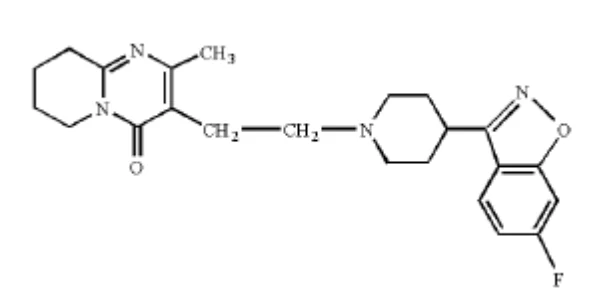
Physicochemical properties: Risperidone is a white or almost white powder.
It is practically insoluble in water (pH= 8.7), freely soluble in dichloromethane, and soluble in methanol and 0.1N HCl.
Ionization Constant: pKa1 = 8.24
pKa2 = 3.11
Partition Coefficient: log P = 3.04
Melting Point: 169oC – 173oC
14 CLINICAL TRIALS
Schizophrenia
Short-Term Clinical Trials
The efficacy of risperidone in the management of the manifestations of schizophrenia was established in three well-controlled, short-term (6- to 8- week), double-blind, clinical trials of psychotic in patients who met the DSM-III-R criteria of schizophrenia.
Psychiatric signs and symptoms were assessed according to the following rating scales: PANSS (Positive and Negative Syndrome Scale) total score and positive and negative subscales, BPRS (Brief Psychiatric Rating Scale) total score and psychosis cluster (conceptual disorganization, hallucinatory behaviour, suspiciousness, and unusual thought content), CGI-S (Clinical Global Impression - Severity of Illness) and SANS (Scale for Assessing Negative Symptoms).
The results of the trials follow:
A 6-week, double-blind, flexible-dose trial (N = 160) compared risperidone up to 10 mg per day with haloperidol up to 20 mg per day or placebo. The mean daily dose of risperidone was 7.8 mg at endpoint. Risperidone was statistically significantly superior to placebo on the BPRS total score and psychosis cluster, as well as on the SANS and CGI-S.
An 8-week, double-blind, fixed-dose trial (N = 1,356) compared 5 doses of risperidone (1, 4, 8, 12 and 16 mg per day) with haloperidol 10 mg per day or placebo. The higher doses generally produced better results than the 1 mg dose. On the PANSS total score and negative subscale, as well as on the BPRS total score, a bell-shaped dose response relationship was established with optimal therapeutic responses occurring at the 4 mg and 8 mg doses. On the PANSS positive subscale and BPRS psychosis cluster, the dose-response relationship was linear (i.e., increasing doses produced increasing efficacy).
An 8-week, double-blind, fixed-dose trial (N = 513) compared 4 doses of risperidone (2, 6, 10 or 16 mg per day) with haloperidol 20 mg per day or placebo. Risperidone was statistically significantly superior to placebo on all scales measured (PANSS total score and positive and negative subscales, BPRS total score and psychosis cluster and CGI-S), although the difference between the 2 mg daily dose and placebo did not reach statistical significance in each case. The most consistent response on all measures was seen with the 6 mg per day dose, and there was no indication that the larger doses provided greater benefits.
The efficacy and safety of once-daily risperidone were established in a 4-week, placebo-controlled trial. In patients (N = 246), who met the DSM-IV criteria of schizophrenia, received fixed doses of risperidone, 4 or 8 mg per day, or placebo. Both risperidone groups were superior to placebo on several measures, including ‘clinical response’ (> 20% reduction in PANSS total score), PANSS total score and the BPRS psychosis cluster (derived from PANSS). Patients receiving 8 mg per day risperidone did generally better than those receiving the 4 mg per day dose.
In all studies, parkinsonian adverse events were mild, but dose related. Risperidone elevated serum prolactin levels. Due to the α1-adrenergic blocking activity, orthostatic hypotension with compensatory tachycardia was also observed.
Long-Term Clinical Trials
Long-term efficacy and safety of risperidone were demonstrated in a double-blind, randomized, parallel-group trial (N = 365) (duration 1 to 2 years) which compared time to relapse during maintenance treatment with risperidone (1-8 mg/day, mean = 5 mg/day) and haloperidol (2.5-20 mg/day, mean = 8 mg/day) in chronic patients who met the DSM-IV criteria of schizophrenia or schizoaffective disorder and had been stable for at least one month. There was a statistically significant difference between the risperidone and the haloperidol treatment groups for distribution of time to relapse (mean = 452 days vs. 391 days).
The pattern of adverse events observed in patients receiving risperidone in long-term clinical trials is consistent with those observed in short-term trials.
Elderly Patients with Severe Dementia
The effect of risperidone upon the management of behavioural disturbances in geriatric patients with severe dementia was evaluated in two well-controlled clinical trials. The first study was a fixed-dose, dose-response study in which risperidone, at daily doses of 0.5, 1.0 and 2.0 mg per day, was compared to placebo (N = 617). The second study was a flexible-dose study in which risperidone was compared to haloperidol and placebo (N = 344). The duration of the studies was 12 weeks. In both studies, patients had to meet the DSM-IV criteria for Alzheimer’s and/or vascular dementia. The scales used to assess symptomatic efficacy included the BEHAVE-AD (Behavioural Pathology in Alzheimer’s Disease Rating Scale), the CMAI (Cohen-Mansfield Agitation Inventory) and the CGI-C (Clinical Global Impression-Change). Potential extrapyramidal adverse events were assessed by the ESRS (Extrapyramidal Symptom Rating Scale).
In the fixed-dose study, 73%, 16% and 12% of patients were diagnosed with Alzheimer’s, vascular and mixed dementia, respectively. At baseline, the MMSE (Mini-Mental State Examination) scores ranged from 6.0 to 7.8, and more than 95% of patients were at least at stage 6 on the FAST (Functional Assessment Staging). The median ages of the patients treated with risperidone ranged from 82 to 84 years with an overall range of 60 to 105 years. Risperidone, 1.0 and 2.0 mg per day, given b.i.d., decreased significantly both verbal and physical aggression and psychotic behaviour. The differences between the 0.5 mg dose and placebo did not reach statistical significance. The incidence of extrapyramidal adverse events was significantly higher with risperidone, 2.0 mg per day, than with placebo. The difference between risperidone 0.5 mg and 1.0 mg per day and placebo was not significant.
In the flexible-dose study, 67%, 26% and 7% of patients were diagnosed with Alzheimer’s, vascular and mixed dementia, respectively. At baseline, the MMSE scores ranged from 7.9 to 8.8, and 61% and 31% of patients were at stage 6 and stage 7 on the FAST, respectively. The median age of the patients treated with risperidone was 81 years (range 68 to 97 years).
Risperidone, at a mean endpoint dose of 1.1 mg per day, given b.i.d., decreased significantly aggressive behaviour but not psychosis. ESRS scores, assessing extrapyramidal symptoms, were similar in patients treated with risperidone and placebo.
Risperidone had no effect on any of the other behaviours assessed by the BEHAVE-AD, namely activity disturbances, anxieties and phobias, or affective disturbances. Furthermore, the drug had no effect on either the MMSE scores or the FAST.
Bipolar Disorder – Mania
The efficacy of risperidone in the acute treatment of manic episodes associated with Bipolar I disorder was demonstrated in 3 double-blind, placebo-controlled monotherapy trials. The trials included initially hospitalized patients who met the DSM-IV criteria for Bipolar I disorder with manic episodes (with or without psychotic features).
In all 3 trials, patients were randomized to placebo (n = 409) or risperidone (n = 434). One of the trials also included a group of patients treated with haloperidol (n = 144). All 3 studies were 3 weeks in duration.
Flexible dosages of 1 mg to 6 mg/day were studied in these trials. Patients received an initial dose of 2 or 3 mg risperidone on Day 1, after which the dosage could be increased or decreased by 1 mg/day, based on the patient’s response and tolerability. The primary rating instrument for assessing manic symptoms was the Young Mania Rating Scale (YMRS) and the primary outcome was the change from baseline in total YMRS score at the Week 3 endpoint (LOCF).
- At a flexible dosage range of 1-6 mg/day, the 3 trials demonstrated that risperidone was statistically significantly superior to placebo in reducing manic symptoms as measured by the primary outcome, mean change in total YMRS score from baseline to endpoint (LOCF) over 3 weeks (p < 0.001).
- In general, secondary efficacy outcomes were consistent with the primary outcome. The percentage of patients with a decrease of ≥ 50% in total YMRS score from baseline to endpoint (3 weeks, LOCF) was significantly higher for risperidone than for placebo in all studies.
Bioequivalence of Oral Formulations
Pharmacokinetic studies indicate that risperidone tablets and risperidone orally disintegrating tablets are bioequivalent based on Cmax, AUClast, and AUC∞ measurements with respect to risperidone, 9-hydroxyrisperidone and risperidone and 9-hydroxyrisperidone combined. Risperidone orally disintegrating tablets can be used as an alternative to risperidone tablets.
Risperidone orally disintegrating tablets are bioequivalent to risperidone tablets.
14.1 Comparative Bioavailability Studies
Tablets
A Comparative Bioavailability Study of Sanis Health Inc. RISPERIDONE 1 mg tablet was performed versus Janssen-Ortho Inc. RISPERDAL® 1 mg tablet. Bioavailability data were measured, and the results are summarized in the following table:
SUMMARY TABLE OF THE COMPARATIVE BIOAVAILABILITY DATA FOR SINGLE DOSE STUDIES
Risperidone (A single 1 mg dose - 1 X 1 mg) From measured data Geometric Mean Arithmetic Mean (CV %) | ||||
| Parameter | Test RISPERIDONE | Reference * RISPERDAL® | % ratio of Geometric means | 90% confidence interval |
AUCT (ng.h/mL) | 23.412 35.519 (97.5) | 20.459 30.960 (94.8) | 114.43 | 105.94 – 123.60 |
AUCI (ng.h/mL) | 24.727 38.442 (107.0) | 21.636 33.223 (102.1) | 114.29 | 105.87 – 123.37 |
Cmax (ng/mL) | 4.761 5.540 (50.5) | 4.304 5.117 (48.8) | 110.63 | 101.52 – 120.55 |
| Tmax** (h) | 1.33 (27.1) | 1.33 (53.2) | ||
| T½** (h) | 4.66 (103.9) | 4.50 (98.7) | ||
* RISPERDAL® is manufactured by Janssen-Ortho Inc. RISPERDAL® was purchased in Canada.
** Expressed as arithmetic mean (CV %) only.
15 MICROBIOLOGY
Non applicable
16 NON CLINICAL TOXICOLOGY
Acute Toxicity
Table 2.1: LD50 values for risperidone, 14 days after administration
| Route | Species | Number and Sex of Animals | LD50 in mg/kg (limits) |
|---|---|---|---|
| ORAL | Mice Rats Dogs | 90M 90F 60M 60F 32M & F 2M | 82 (73-92) 63 (56-71) 113 (82-157) 57 (39-83) 18 (14-24) > 10 |
| INTRAVENOUS | Mice Rats Dogs | 60M 70F 70M 70F 20M 20F | 30 (26-33) 27 (23-31) 34 (31-38) 35 (32-39) 14 (11-18) 18 (14-24) |
| SUBCUTANEOUS | Rats | 60M 60F | 172 (132-225) 98 (59-162) |
In acute toxicity studies, after 14 days of administration to mice, rats and dogs, toxicity was manifested by symptoms such as palpebral ptosis, prostration, catalepsy, sedation, hypothermia, and hypotonia at all doses, and clonic convulsions and loss of righting reflex at near lethal and lethal doses.
Occasionally, signs of gastrointestinal disturbance were present. Autopsy occasionally revealed gastric lesions and bleeding in rodents. All survivors recovered within the 14-day observation period.
The acute oral toxicity of 9-hydroxyrisperidone in rats was similar to that of the parent drug.
Subacute Toxicity
Oral Toxicity Study in Wistar Rats (3 months)
Groups of 20 male and 20 female Wistar rats were administered risperidone in the diet at doses of approximately 0, 0.63, 2.5 or 10 mg/100 g food/day. There was no drug-related mortality or effects on behaviour and physical appearance. There was an increase in body weight gain in females (low-and mid-dosed groups), a temporary and transient decrease in body weight gain in males (mid-dosed group), and a persistent decreased body weight gain in both high-dosed groups.
The following changes were observed in serum biochemistry: decreased aspartate aminotransferase in high-dosed males and mid-and high-dosed females; increased cholinesterase in high-dosed males.
In females the weight of the adrenals was decreased. In high-dosed males, the weight of the adrenals was increased, and the weight of the kidneys was decreased. The major histological findings at autopsy included stimulation of the mammary gland (mid-and high-dosed male and all treated female rats), decreased glandular development of the uterus with decreased vaginal cornification and epithelial thickness, and inflammatory cell infiltration in the prostate (mid and high doses).
Oral Toxicity in Wistar Rats (3 months + 1 month recovery)
Groups of 10 male and 10 female Wistar rats (complemented with 5 male and 5 female rats in the control group and high-dosed group for a 1-month recovery period) were administered risperidone by gavage at 0 (vehicle), 0.16, 0.63, 2.5 and 10 mg/kg body weight/day. There was no drug-related mortality. The findings were qualitatively similar to those observed in the 3-month study using the dietary route of administration.
Laboratory examination revealed the following changes: a slight increase in hematocrit, hemoglobin and red blood cells (within the normal range); a slight increase, at the borderline of normal limits, in blood urea nitrogen in both males and females at 2.5 and 10 mg/kg body weight; a slight decrease in glucose (females at 10 mg/kg body weight), total protein (males and females at 10 mg/kg body weight), calcium, albumin and triglycerides (mostly within the normal range) at 10 mg/kg body weight in males. Urinalysis showed a slight decrease in specific gravity and creatinine in male and female rats dosed at 2.5 and 10 mg/kg body weight; a slightly increased pH (males and females dosed at 10 mg/kg body weight) and volume (males and females dosed at 2.5 and 10 mg/kg body weight); and increased appearance of bacteria at 10 mg/kg body weight (males and females).
Gross and histopathological examination displayed prolactin-dependent changes similar to those seen in the 3-month study, consisting of mammary gland stimulation, changes in the prostate, and uterine and vaginal changes.
After 1 month of recovery, most of the changes showed reversibility. Mammary gland stimulation was still present in the high-dosed animals.
Oral Toxicity in Beagle Dogs (3 months)
Groups of 4 male and 4 female Beagle dogs were administered risperidone orally in gelatin capsules at 0 (untreated), 0.31, 1.25 and 5 mg/kg body weight/day. All animals survived the 3-month study. Adverse clinical signs included dose-related sedation, miosis, soft faeces and congested conjunctiva. There was a transient decrease of body weight gain in high-dosed dogs during the first half of the study.
Hematological and serum analysis revealed: dose-dependent decrease of hematocrit, hemoglobin and red blood cells (within normal range) in medium-and high-dosed dogs; a dose-related moderate increase in haptoglobin (within the normal range) at all doses; and an increase of cholesterol and phospholipids at the medium and high doses.
Testicular and prostate weights decreased in a dose-related manner. Gross and histopathological examination revealed: increased presence of red blood cells in the spleen red pulp of the high-dosed group; decreased glandular development of the uterus and reduced epithelial thickness of the vagina in all dosed females; an immature aspect of the prostate and incomplete spermatogenesis in mid-and high-dosed male dogs.
Oral Toxicity in Beagle Dogs (3 months + 2 months recovery)
Groups of 6 male Beagle dogs were administered risperidone orally in capsules at 0 (untreated), 0.31, 1.25 and 5 mg/kg body weight/day. Four dogs/group were sacrificed after 3 months and the remaining 2 after 5 months. There was no drug-related mortality and findings were similar to those of the first 3-month study. A dose-related sedation and an initial body weight decrease at all doses were present.
Male dogs were studied in order to establish the effects of risperidone upon male genitalia and assess their reversibility.
Erythrocytic parameters decreased in a dose-related manner; the changes were reversible. Haptoglobin, cholesterol and phospholipid levels increased dose-dependently; the changes were reversible.
At the end of the treatment period only 2 low-dosed dogs ejaculated; at the end of the recovery period 2 low-dosed dogs were normal, 1 out of 2 medium-dosed dogs ejaculated normal sperm and 1 out of 2 high-dosed dogs ejaculated poor quality sperm (reduced sperm motility and concentration). At the end of the treatment period, testosterone levels were dose-dependently reduced. At the end of the recovery period, the levels were still reduced in the 2 high-dosed dogs.
Prostate and testicle weights were dose-dependently decreased and associated with immaturity. At the end of the recovery period, prostate weights remained slightly lower than in control animals. Dose-related increases in liver and spleen weights were reversible.
Chronic Toxicity
Oral Toxicity Study in Wistar Rats (12 months)
Groups of 20 male and 20 female Wistar rats were administered risperidone in the diet at doses of approximately 0, 0.63, 2.5 and 10 mg/100 g food/day. Doses expressed as mg/kg were lower. There was no drug-related mortality. High-dose males and females exhibited decreased weight gain. At 2.5 mg/kg, serum analysis revealed slightly decreased potassium and blood urea nitrogen levels and a slight increase in cholinesterase (within normal limits) in males; and decreased alanine aminotransferase level in females.
In addition to the changed serum variables seen at 2.5 mg/kg, dosing at 10 mg/kg resulted in a markedly decreased body weight gain; and a marginally reduced number of white blood cells and thrombocytes, decreased glucose, decreased urine creatinine and increased urine volume (within normal limits) in males, and decreased glucose, total protein and albumin in females. Most changes were slight.
Histopathology indicated changes in the prostate and mammary glands of medium- and high-dosed males and in the uterus, ovaries and mammary glands of all treated females. Medium- and high-dosed males showed diffuse hyperplasia of the pituitary, and in high-dosed males, the zona fasciculata of the adrenals was increased.
Oral Toxicity Study in Beagle Dogs (12 months)
Groups of 4 male and 4 female Beagle dogs were administered risperidone orally via gelatin capsules at doses of 0 (untreated), 0.31, 1.25 and 5 mg/kg body weight/day. All animals survived the 12-month study. At the low dose, the main effects were related to the expected pharmacological action of risperidone, i.e., sedation and an interaction with the endocrine system (male and female genital tract changes). Mid and high dosing produced a slight to moderate toxicity that is similar to that described in the 3-month studies.
Laboratory examination revealed slight anemia during the first 3 months (decreased hematocrit, hemoglobin and red blood cells); dose-dependent moderate increase of haptoglobin, cholesterol and phospholipids; and a slight decrease of potassium (high-dosed group).
Organ weight changes included increases in spleen and pituitary weight and decreases in the weight of testes and prostate. Histopathology examination showed changes in the male and female genital tract, namely prostatic changes (fibrosis and clear basal cells), degenerative changes in the testicles of some dogs, decreased glandular development of the uterus, and the absence of corpora lutea. In addition, an increased number of red blood cells were seen in the spleen.
Reproductive and Developmental Toxicology
Fertility and General Reproductive Performance in Wistar Rats
One hundred and ninety-two Wistar rats were divided into groups of 24 males and 24 females. Risperidone, at approximately 0, 0.31, 1.25 or 5 mg/kg body weight/day was administered orally through the diet to males for a minimum of 60 days prior to and during mating. Females were dosed for a minimum of 14 days prior to mating (with equivalently dosed males) and further during the first part of pregnancy up to Day 8. No drug- or dose-related mortalities occurred.
Paternal and maternal effects were responsible for dose-dependent decreased and delayed mating behaviour (all doses), manifested by lower copulation indices, which caused lower pregnancy rates in rats receiving risperidone. However, where copulation occurred, the pregnancy rates were normal.
Fertility Study in Male Wistar Rats
One hundred and ninety-two Wistar rats were divided into groups of 24 males and 24 females. Risperidone, 0 (vehicle), 0.16, 0.63 and 2.5 mg/kg body weight/day was administered by gavage to male rats 60 days prior to and during mating to untreated female rats. No drug-related mortality occurred.
Fertility, gestation and copulation indices and the cohabitation-mating interval were comparable between groups. Litter data were comparable between groups and no teratogenic effects were present. These findings indicate no adverse effects on male fertility.
Fertility Study in Female Wistar Rats
One hundred and forty-four Wistar rats were divided into groups of 12 males and 24 females. Risperidone, 0 (vehicle), 0. 16, 0.63 or 2.5 mg/kg body weight/day was administered by gavage to female rats from 14 days prior to mating (with untreated male rats) up to Day 8 of pregnancy. All animals survived the study. A dose-related sedation was present in the medium- and high-dosed groups.
The cohabitation-mating interval was slightly increased in the low- and medium-dosed groups. The interval was clearly prolonged in the high-dosed group. However, the number of corpora lutea was not affected indicating a normal ovulation rate once ovulation occurred.
Fertility, copulation and pregnancy indices were comparable between groups, and in pregnant females, no adverse effects were observed in the offspring. No teratogenic effects were found.
Embryotoxicity and Teratogenicity Study in Sprague-Dawley Rats
Two Segment II studies were conducted in Sprague-Dawley rats. Groups of 24 female rats received risperidone 0 (vehicle), 0.63, 2.5 or 10 mg/kg body weight/day by gavage from Day 6 through Day 16 of pregnancy. There was no drug-related mortality.
The weights of the pups of the high-dosed group slightly decreased in one of the studies. Risperidone was not teratogenic at the doses studied.
Embryotoxicity and Teratogenicity Study in Wistar Rats
Groups of 36 female rats were administered risperidone 0 (vehicle), 0.63, 2.5 or 10 mg/kg body weight/day by gavage from Day 8 through Day 18 of pregnancy. Twelve females per group were allowed to deliver naturally, followed by an evaluation of the second generation, whereas the others were sacrificed at the end of the pregnancy period following a Caesarean section. There was no drug-related mortality. Dose-related sedation was present at all dosage levels.
In the low- and medium-dosage groups no adverse effects on the litter were present. In the high dosage group, there was maternal toxicity (decreased weight gain) associated with decreased pup weight and slightly delayed ossification (reduced number of visible metatarsal bones). During the lactation period, pup weights were slightly increased, and survival rates were normal. Risperidone was not teratogenic at the doses studied.
In the undosed second generation, physical and behavioural development was comparable between groups and no adverse effects on fertility or on other reproduction parameters were observed.
Placental transfer of risperidone occurs in rat pups. There are no adequate and well-controlled studies in pregnant women. However, there was one report of a case of agenesis of the corpus callosum in an infant exposed to risperidone in utero. The causal relationship to risperidone therapy is unknown (see WARNINGS AND PRECAUTIONS, Special Populations).
Embryotoxicity and Teratogenicity Study in New Zealand White Rabbits
Groups of 15 female rabbits were administered risperidone at 0 (vehicle), 0.31, 1.25 or 5 mg/kg/day by gavage from Day 6 through Day 18 of pregnancy. Maternal toxicity was evidenced in the high dosage group by the death of 3 dams and by reduced body weight gain. At the doses studied, no embryotoxicity or teratogenic effects were seen.
Perinatal and Postnatal Study in Wistar Rats
Groups of 24 female Wistar rats were administered risperidone orally through the diet, at approximately 0, 0.31, 1.25 or 5 mg/100 g food/day from Day 16 of pregnancy through a 3-week lactation period. There was no drug-related mortality. Both body weight and food consumption decreased at all dose levels during lactation in a dose-dependent way. Duration of gestation was normal in all groups.
The survival rate of pups was decreased in the high-dosed group with only 32% surviving. On day 4 of lactation, the body weight of pups in the high-dosed group was significantly less than that of controls.
Perinatal and Postnatal Study in Wistar Rats (with Second Generation Evaluation)
Groups of 24 female Wistar rats were administered risperidone 0 (vehicle), 0.16, 0.63 or 2.5 mg/kg body weight/day by gavage from Day 18 of pregnancy through a 3-week lactation period. All females were allowed to deliver naturally. No drug-related mortality was noted.
Maternal adverse effects were evidenced by a small but significant increase in duration of gestation and by decreased food consumption and weight gain during lactation in the high-dosed dams.
An increased number of stillborn pups was observed in the high-dosed group and survival was reduced at all doses probably due to decreased nursing.
In the non-dosed second generation (F1), 10 females/group were mated with males from the same group. Pups were delivered by Caesarean section. There were no adverse effects on fertility or on other reproductive parameters. Observation of pups of the F2 generation indicated no abnormalities.
Two-Generation Reproduction Study
One hundred and ninety-two Wistar rats were divided into groups of 24 males and 24 females. Risperidone, at approximately 0, 0.16, 0.63 or 2.5 mg/100 g food/day was administered orally through the diet to males for 60 days prior to and during mating. Females were dosed for 14 days prior to mating (with equivalently dosed males), during pregnancy and lactation until weaning of the first generation. There was no dosing of the second generation. No drug-related mortalities occurred.
The cohabitation-mating interval increased with increasing dose levels. However, the duration of gestation was comparable between groups. Pregnancy and copulation indices decreased significantly in the high-dosed rats, but all mated females became pregnant. During pregnancy, body weight gain decreased in the medium- and high-dosed females. Dosing during lactation resulted in a reduced body weight of the high-dosed dams. Teratogenic effects were not evidenced at any dose.
Litter data including litter size, weight at birth, weight gain, and survival rate were comparable between controls and low- and medium-dosed rats. In the high-dosed rats, birth weight and survival rate were slightly lowered. The latter was related to decreased nursing behaviour. After weaning, physical and behavioural development were unaffected.
In the non-dosed second generation, no relevant adverse effects on fertility or on other reproduction parameters were noted.
Juvenile Toxicity Studies in Rats and Dogs
In a toxicity study in juvenile rats treated with oral risperidone (0, 0.04, 0.16, 0.63 or 2.5/1.25 mg/kg/day), increased pup mortality and a delay in physical development was observed. In a 40-week study with juvenile dogs treated with oral risperidone (0, 0.31, 0.125 or 5 mg/kg/day), sexual maturation was delayed. Based on AUC, long bone growth was not affected in dogs at 3.6-times the maximum human oral exposure in adolescents (1.5 mg/day); while effects on long bones and sexual maturation were observed at 15 times the maximum human oral exposure in adolescents.
Mutagenicity
Risperidone had no mutagenic effects when tested by the DNA-repair test in rat hepatocytes, the Ames reverse mutation test in Salmonella typhimurium and Escherichia coli, the mammalian cell gene mutation test in mouse lymphoma cells, the sex-linked recessive lethal test in Drosophila melanogaster, the chromosome aberration test in human lymphocytes and Chinese hamster lung cells, and the micronucleus test in the mouse bone marrow cells.
Carcinogenicity
Carcinogenicity Study in Albino Swiss Mice (18 months)
Four groups of 50 male and 50 female mice received risperidone orally through the diet, at doses of approximately 0, 0.63, 2.5 or 10 mg/kg body weight/day. A slightly increased mortality was present in medium- and high-dosed females. In female mice at all doses, body weight gain was increased.
Hematological (decreased erythrocytic parameters and an increase in platelets) and serum biochemical changes (decrease in glucose and increase in cholinesterase; and in females only increase in cholesterol, phospholipids, haptoglobin, total protein, calcium and albumin) were similar to those observed in rat chronic toxicity studies.
Organ weight changes included increases in liver, spleen and heart weight. The weight of gonads in both sexes and the weight of adrenals in females were decreased.
Gross and histopathological examination demonstrated an increased incidence of non-neoplastic, prolactin-dependent changes in the accessory sex glands (coagulating gland, seminal vesicle), pancreas, and pituitary gland in the medium- and high-dosed males. In females, at all doses, the changes involved increased (mammary gland, pituitary gland), or decreased (female genital tract) prolactin-dependent modifications.
Neoplastic changes: there was a positive trend for mammary adenocarcinomas and pituitary gland adenomas in females. Regarding prolactin-independent neoplasia, there was a positive trend for lung tumours in female animals (the incidence was within the range of historical controls).
Carcinogenicity Study in Wistar Rats (25 months)
Four groups of 50 male and 50 female rats received risperidone orally through the diet at doses of approximately 0, 0.63, 2.5 or 10 mg/100 g food/day. Mortality was increased in medium- and high- dosed males, and high-dosed females. In males at all doses and in mid- and high-dosed females, toxicity was expressed by decreased body weight gain, deterioration in general condition (males) and some changes in hematological and biochemical parameters. Organ weight changes included increased adrenal and decreased gonad weights.
Macroscopically, changes were seen in the mammary and pituitary gland, testes and uterus. Histopathological examination revealed prolactin-mediated non-neoplastic changes in the mammary gland, the pituitary gland and in the male and female genital tract at all doses, as well as renal pathology.
Neoplastic changes included a dose-related increase in mammary gland adenocarcinoma in both males and females and an increase in pancreatic endocrine adenoma in males. Neoplasms of the female genital tract (vagina, cervix, uterus) were decreased.
17 SUPPORTING PRODUCT MONOGRAPHS
RISPERDAL® Product Monograph, Janssen Inc., Revision Date: December 17, 2020; Control No.: 241861.