


Product Monograph - Sandoz Cefixime
INDICATIONS AND USAGE
Sandoz Cefixime (cefixime) is indicated in the treatment of the following infections caused by susceptible strains of the designated microorganisms:
Upper Respiratory Tract:
Pharyngitis and tonsillitis caused by S. pyogenes.
Middle Ear:
Otitis media caused by S. pneumoniae, H. influenzae (beta-lactamase positive and negative strains), M. catarrhalis (former B. catarrhalis) (beta-lactamase positive and negative strains) and S. pyogenes.
Paranasal sinuses:
Sinusitis caused by S. pneumoniae, H. influenzae (beta-lactamase positive and negative strains), and M. catarrhalis (former B. catarrhalis) (beta-lactamase positive and negative strains).
Lower Respiratory Tract:
Acute bronchitis caused by S. pneumoniae, M. catarrhalis (former B. catarrhalis) (beta-lactamase positive and negative strains) and H. influenzae (beta-lactamase positive and negative strains).
Urinary Tract:
Acute uncomplicated cystitis and urethritis caused by E. coli, P. mirabilis, and Klebsiella species.
Uncomplicated Gonorrhea:
Uncomplicated gonorrhea (cervical/urethral and rectal) caused by Neisseria gonorrhoeae, including penicillinase (beta-lactamase-positive) and nonpenicillinase (beta-lactamase- negative) producing strains.
Appropriate cultures should be taken for susceptibility testing before initiating treatment with Sandoz Cefixime. If warranted, therapy may be instituted before susceptibility results are known; however, once these are obtained, therapy may need to be adjusted.
To reduce the development of drug-resistant bacteria and maintain the effectiveness of Sandoz Cefixime and other antibacterial drugs, Sandoz Cefixime should be used only to treat infections that are proven or strongly suspected to be caused by susceptible bacteria. When culture and susceptibility information are available, they should be considered in selecting or modifying antibacterial therapy. In the absence of such data, local epidemiology and susceptibility patterns may contribute to the empiric selection of therapy.
CONTRAINDICATIONS
Sandoz Cefixime is contraindicated in patients with known allergies to the cephalosporin or penicillin antibiotics or to any ingredients in the formulation or component of the container.
WARNINGS
Hypersensitivity:
IN PENICILLIN-SENSITIVE PATIENTS, SANDOZ CEFIXIME SHOULD BE ADMINISTERED CAUTIOUSLY. PATIENTS MAY BE SENSITIVE TO PENICILLINS AND NOT TO CEPHALOSPORINS SUCH AS SANDOZ CEFIXIME OR BE SENSITIVE TO BOTH. MEDICAL LITERATURE INDICATES THAT PATIENTS SENSITIVE TO CEPHALOSPORINS ARE VERY LIKELY TO BE PENICILLIN SENSITIVE.
Antibiotics, including Sandoz Cefixime, should be administered cautiously to any patient who has demonstrated some form of allergy, particularly to drugs.
Severe Cutaneous Adverse Reactions:
Severe cutaneous adverse reactions (SCAR) such as acute generalized exanthematous pustulosis (AGEP), drug reaction with eosinophilia and systemic symptoms (DRESS), Stevens-Johnson syndrome (SJS), and toxic epidermal necrolysis (TEN) have been reported in association with beta- lactam treatment. When SCAR is suspected, Sandoz Cefixime should be discontinued and appropriate therapy and/or measures should be taken.
Clostridium Difficile-Associated Disease:
Clostridium difficile-associated disease (CDAD) has been reported with use of many antibacterial agents, including cefixime (see ADVERSE REACTIONS). CDAD may range in severity from mild diarrhea to fatal colitis. It is important to consider this diagnosis in patients who present with diarrhea, or symptoms of colitis, pseudomembranous colitis, toxic megacolon, or perforation of colon subsequent to the administration of any antibacterial agent. CDAD has been reported to occur over 2 months after the administration of antibacterial agents.
Treatment with antibacterial agents may alter the normal flora of the colon and may permit overgrowth of Clostridium difficile. C. difficile produces toxins A and B, which contribute to the development of CDAD. CDAD may cause significant morbidity and mortality. CDAD can be refractory to antimicrobial therapy.
If the diagnosis of CDAD is suspected or confirmed, appropriate therapeutic measures should be initiated. Mild cases of CDAD usually respond to discontinuation of antibacterial agents not directed against Clostridium difficile. In moderate to severe cases, consideration should be given to management with fluids and electrolytes, protein supplementation, and treatment with an antibacterial agent clinically effective against Clostridium difficile. Surgical evaluation should be instituted as clinically indicated, as surgical intervention may be required in certain severe cases
Hemolytic Anemia:
SANDOZ CEFIXIME SHOULD NOT BE USED IN PATIENTS WITH A HISTORY OF CEPHALOSPORIN-ASSOCIATED HEMOLYTIC ANEMIA SINCE THE RECURRENCE OF HEMOLYSIS IS MUCH MORE SEVERE.
An immune mediated hemolytic anemia has been observed in patients receiving cephalosporin class antibacterials, including cefixime. Severe cases of hemolytic anemia, including fatalities, have been reported with cephalosporins in both adults and children. If a patient develops anemia anytime during, or within 2-3 weeks subsequent to the administration of Sandoz Cefixime, the diagnosis of a cephalosporin-associated anemia should be considered and the drug discontinued until the etiology is determined.
Patients may benefit from periodic monitoring for signs and symptoms of hemolytic anemia, including measurement of hematological parameters or drug-induced antibody testing, where appropriate (see ADVERSE REACTIONS).
Acute Renal Failure:
As with other cephalosporins, Sandoz Cefixime may cause acute renal failure including tubulointerstitial nephritis. When acute renal failure occurs, Sandoz Cefixime should be discontinued and appropriate therapy and/or measures should be taken.
Neurologic:
Cephalosporins have been associated with the occurrence of seizures, particularly, but not exclusively, in patients with renal impairment when the dosage was not reduced. Seizures have also been described in individuals without a preceding history of renal impairment whose renal function deteriorates while taking the cephalosporin. If seizures associated with Sandoz Cefixime occur, the drug should be discontinued if clinically appropriate. Anticonvulsant therapy can be given if clinically indicated..
Susceptibility/Resistance:
Development of Drug Resistant Bacteria
Prescribing Sandoz Cefixime in the absence of a proven or strongly suspected bacterial infection is unlikely to provide benefit to the patient and risks the development of drug-resistant bacteria.
PRECAUTIONS
General:
If an allergic reaction to Sandoz Cefixime occurs, the drug should be discontinued, and, if necessary, the patient should be treated with appropriate agents, e.g., pressor amines, antihistamines, or corticosteroids.
The possibility of the emergence of resistant organisms, which might result in overgrowth, should be kept in mind, particularly during prolonged treatment. In such use, careful observation of the patient is essential. If superinfection occurs during therapy, appropriate measures should be taken.
Broad-spectrum antibiotics such as Sandoz Cefixime should be prescribed with caution in individuals with a history of gastrointestinal disease.
Once daily dosing only must be used for urinary tract infections, since twice daily dosing was shown to be not as effective in clinical studies.
Do not use Sandoz Cefixime to treat Staphylococcus aureus as this strain of staphylococcus is resistant to cefixime.
Renal Impairment:
Sandoz Cefixime should be used with particular care in the presence of severely impaired renal function. Dose modification is recommended for patients with moderate or severe renal impairment (i.e., creatinine clearance of < 40 mL/min) (see PHARMACOLOGY and DOSAGE AND ADMINISTRATION).
Bioavailability Differences between Tablet and Suspension:
The area under the time versus concentration curve is greater by approximately 26.4% and the Cmax is greater by approximately 20.7% with the cefixime oral suspension when compared to a cefixime tablet after doses of 400 mg. This increased absorption should be taken into consideration if the cefixime oral suspension is to be substituted for a cefixime tablet. Because of the lack of bioequivalence, cefixime tablets should not be substituted for cefixime oral suspension particularly in the treatment of otitis media where clinical trial experience with the suspension only is available (see DOSAGE AND ADMINISTRATION).
Drug/Drug Interactions:
Sandoz Cefixime should be administered with caution to patients receiving coumarin-type anticoagulants such as warfarin potassium. Since Sandoz Cefixime may enhance effects of the anticoagulants, prolonged prothrombin time with or without bleeding may occur (see ADVERSE REACTIONS and PHARMACOLOGY).
Drug/Laboratory Interactions:
A false-positive reaction for ketones in the urine may occur with tests using nitroprusside but not with those using nitroferricyanide.
The administration of beta-lactams may result in a false-positive reaction for glucose in the urine using Clinitest*, Benedict's solution, or Fehling's solution. It is recommended that glucose tests based on enzymatic glucose oxidase reactions (such as Clinistix*) be used.
A false-positive direct Coombs test has been reported during treatment with cephalosporin antibiotics; therefore, it should be recognized that a positive Coombs test may be due to the drug.
Usage in Pregnancy:
The safety of cefixime in the treatment of infection in pregnant women has not been established.
Reproduction studies have been performed in mice and rats at doses up to 400 times the human dose and have revealed no evidence of impaired fertility or harm to the fetus due to cefixime. Because animal reproduction studies are not always predictive of human response, this drug should be used during pregnancy only if the likely benefits of using Sandoz Cefixime outweigh the potential risk to the fetus and/or the mother.
Labour and Delivery:
Cefixime has not been studied for use during labour and delivery.
* Reg. Trademark of Bayer Healthcare LLC subsidiary of Bayer Corporation.
Nursing Mothers:
It is not known whether cefixime is excreted in human milk. Because many drugs are excreted in human milk, caution should be exercised when Sandoz Cefixime is administered to a nursing woman.
Usage in Children:
Safety and effectiveness of cefixime in children less than six months old have not been established.
ADVERSE REACTIONS
Clinical Trials:
Five percent (5%) of patients in the clinical trials discontinued therapy because of drug-related adverse reactions. Thirty-six percent of the pediatric patient population experienced at least one adverse reaction (mild 25%, moderate 9%, severe 2%). Forty-seven percent of the adult patients experienced at least one adverse reaction (mild 24%, moderate 19%, severe 4%). The most commonly seen adverse reactions in the clinical trials of the tablet formulation were gastrointestinal events, which were reported in 37% of all adult patients treated (mild 21%, moderate 13%, severe 3%). The predominant adverse events seen in adults in clinical trials with cefixime were diarrhea 15%, (mild 7.2%, moderate 6.2%, severe 1.5%), headache
11%, stool changes 12%, nausea 9%, abdominal pain 5%, dyspepsia 3%, flatulence (3%), dizziness (3%) and vomiting (2%). The rates of the most prevalent adverse reactions were similar in the once a day and twice a day dosing regimens with the exception of headache, which appears slightly more frequently in adults, dosed once a day (12.9%) versus twice a day (8%). Other than for generally mild rashes or emesis, which were each observed in 5% of children treated, the incidence of adverse reactions in pediatric patients receiving the suspension was generally comparable to the incidence seen in adult patients receiving tablets.
These symptoms usually responded to symptomatic therapy or ceased when cefixime was discontinued.
Several patients developed severe diarrhea and/or documented pseudomembranous colitis, and a few required hospitalization.
When cefixime was used as single 400 mg dose therapy in clinical trials in the treatment of uncomplicated gonorrhoea, adverse reactions which were considered to be related to cefixime therapy, were reported for 5.9% (21/358) of patients. Clinically mild gastrointestinal side effects occurred in 3.7% of all patients, moderate events occurred in 0.9% of all patients and no adverse reactions were reported as severe. Individual event rates included diarrhea 1% and loose or frequent stools 1%. Incidence rates for all other adverse reactions reported for adults in these trials were less than 1%.
Clinical Trial and Post-Market Adverse Drug Reactions:
The following adverse reactions have been observed during clinical trial studies and/or during marketed use.
Blood and lymphatic system disorders:
Thrombocytopenia, thrombocytosis, leucopenia, eosinophilia, neutropenia, agranulocytosis, immune hemolytic anemia (see WARNINGS, Hemolytic Anemia).
Gastrointestinal disorders:
Diarrhea, stool changes, nausea, abdominal pain, dyspepsia, flatulence, vomiting.
General disorders and administration site conditions:
Drug fever, face oedema.
Hepatobiliary disorders:
Jaundice (cholestatic and/or hepatocellular).
Immune system disorders:
Serum sickness-like reaction, anaphylactic reactions (urticaria and angioedema).
Infections and infestations:
Vaginitis, candidiasis, pseudomembranous colitis.
Investigations:
Elevations of alanine aminotransferase (ALT or SGPT), aspartate aminotransferase (AST or SGOT), alkaline phosphatase and bilirubin.
Elevations in Blood Urea Nitrogen (BUN) or creatinine. Prolongation in prothrombin time.
Nervous system disorders:
Headaches, dizziness, convulsions.
Renal and urinary disorders:
Acute renal failure including tubulointerstitial nephritis.
Reproductive system and breast disorders:
Genital pruritus.
Respiratory, thoracic and mediastinal disorders:
Dyspnea, respiratory distress.
Skin and subcutaneous tissue disorders:
Skin rashes, pruritus, urticaria, toxic epidermal necrolysis (TEN), drug rash with eosinophilia and systemic symptoms (DRESS), bullous skin reactions (erythema multiforme and Stevens- Johnson syndrome).
In addition to the adverse reactions listed above which have been observed in patients treated with cefixime the following adverse reactions and altered laboratory tests have been reported for cephalosporin-class antibiotics: superinfection, renal dysfunction, toxic nephropathy, hepatic dysfunction including cholestasis, aplastic anemia, hemorrhage, elevated lactate dehydrogenase (LDH) and pancytopenia.
SYMPTOMS AND TREATMENT OF OVERDOSAGE
Activated charcoal may be administered to aid in the removal of unabsorbed drug. General supportive measures are recommended.
No specific antidote exists. General supportive measures are recommended.
Cefixime is not removed in significant quantities from the circulation by hemodialysis or peritoneal dialysis.
DOSAGE AND ADMINISTRATION
Adults:
The recommended dose of Sandoz Cefixime is 400 mg once daily. When necessary, a dose of 200 mg given twice daily may be considered except for urinary tract infections where once daily dosing must be used.
For treatment of uncomplicated gonococcal infections, a single oral dose of 400 mg is recommended.
Children (≥ 6 months):
The recommended dose of Sandoz Cefixime is 8 mg / kg / day once daily. When necessary, a dose of 4 mg / kg given twice daily may be considered except for urinary tract infections where once daily dosing must be used.
Table 1 - Pediatric dosage chart
| WEIGHT (Kg) | DOSE / DAY (mg) | DOSE / DAY (mL) |
|---|---|---|
6 12.5 19 25 35 | 48 100 152 200 280 | 2.4 5 7.6 10 14 |
For the most recent information in the management of a suspected drug overdose, contact your regional poison control centre or Health Canada’s toll-free number, 1-844 POISON-X (1-844-764-7669).
Children weighing more than 50 kg or older than 12 years should be treated with the recommended adult dose. Safety and effectiveness in infants aged less than six months have not been established.
Otitis media should be treated with the suspension formulation. Clinical studies of otitis media were conducted with the cefixime oral suspension only and the suspension results in higher peak blood levels than a cefixime tablet when administered at the same dose. Therefore, a cefixime tablet should not be substituted for cefixime suspension in the treatment of otitis media (see PRECAUTIONS).
Reconstitution Directions for Oral Suspension:
Bottle:
| RECONSTITUTION DIRECTIONS | |
|---|---|
| 40 mL | Suspend with 28 mL water |
| 50 mL | Suspend with 35 mL water |
| 100 mL | Suspend with 70 mL water |
| Method: | Tap the bottle several times to loosen powder contents prior to reconstitution. Add a total volume of water as follows: 28 mL of water for 40 mL size, 35 mL of water for 50 mL size, 7 0 mL of water for 100 mL size. The total volume of water should be split into TWO SEPARATE PORTIONS when added to the powder. Mix well after each addition. Mixing should be for a minimum of 10 seconds. Provides 20 mg/mL. |
After mixing, the suspension may be kept for 14 days at room temperature or under refrigeration without significant loss of potency. Keep container tightly closed. Shake well before using. Discard unused portion after 14 days. Do not freeze.
The product is supplied with a 10 mL oral syringe for accurate oral administration as per the recommended adult dose and pediatric dosage chart. Wash the syringe with hot or warm water in between doses (after and prior to use) and after each syringe full of solution when more than 10 mL is required per dose.
Duration of Therapy:
Duration of dosage in clinical trials was 10 to 14 days. The duration of treatment should be guided by the patient's clinical and bacteriological response.
In the treatment of infections due to Streptococcus pyogenes, a therapeutic dose of Sandoz Cefixime should be administered for at least 10 days.
Renal Impairment:
Sandoz Cefixime may be administered in the presence of impaired renal function. Normal dose and schedule may be employed in patients with creatinine clearances of 40 mL/min or greater. Patients whose clearance is between 20 and 40 mL/min should be given 75% of the standard daily dosage. Patients whose creatinine clearance is less than 20 mL/min should be given 50% of the standard daily dosage.
Experience in children with renal impairment is very limited.
NOTE: Neither hemodialysis, nor peritoneal dialysis remove significant amounts of cefixime from the body.
PHARMACEUTICAL INFORMATION
Chemistry:
Trade Name:
Sandoz Cefixime
Proper Name:
Cefixime
Chemical Name:
(6R, 7R)-7-[[(Z)-2-(2-aminothiazol-4-yl)-2- [(carboxymethoxy)imino]acetyl]amino]-3-ethenyl-8-oxo- 5-thia-1-azabicyclo[4.2.0]oct-2-ene-2-carboxylic acid trihydrate.
Structural Formula:
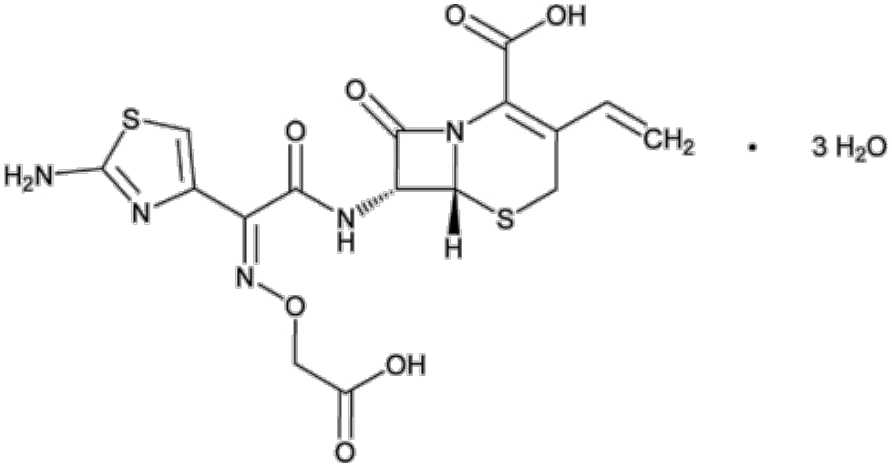
Molecular Formula:
C16H15N507S2.3H20
Molecular Weight:
507.50
Description:
Cefixime is a white to light yellow powder. Slightly soluble in water, soluble in methanol, sparingly soluble in ethanol, practically insoluble in ethyl acetate.
The pH of a 0.5 g in 10 mL suspension is between 2.6 and 4.1
Composition:
Sandoz Cefixime is available in powder for oral suspension, which can be reconstituted to provide 100 mg / 5 mL.
Inactive Ingredients:
Powder for Oral Suspension:
The powder for oral suspension contains strawberry powder aroma, silica colloidal anhydrous, sodium benzoate, sucrose and xanthan gum.
AVAILABILITY
Powder for Oral Suspension:
Sandoz Cefixime Powder for Oral Suspension is a white to slightly yellowish powder.
The powder for oral suspension is packaged in bottle containing 0.848 g cefixime (as cefixime trihydrate) for 40 mL bottle, 1.06 g cefixime (as cefixime trihydrate) for 50 mL bottle and 2.12 g cefixime (as cefixime trihydrate) for 100 mL bottle. Once reconstituted as directed, the suspension contains 100 mg / 5 mL cefixime (40 ml, 50 mL or 100 mL of suspension).
Storage:
The powder for oral suspension (dry powder) should be stored at controlled room temperature 15 - 30 °C.
Store suspension at room temperature (15 °C - 30 °C) or refrigerate for up to 14 days, then discard unused portion after 14 days. Do not freeze.
MICROBIOLOGY
In vitro activity of cefixime against various gram-positive and gram-negative organisms is presented in Table 2.
Table 2 - Activity of cefixime against clinical isolates of bacteria
| Organism | Number of isolates | MIC50a(µg/mL) | MIC90(µg/mL) | |||||
|---|---|---|---|---|---|---|---|---|
| GRAM-NEGATIVE | ||||||||
| Acinetobacter calcoaceticus | 434 | 9.07 | 19.41 | |||||
| Moraxella catarrhalis (formerly Branhamella catarrhalis) | 108 | 0.14 | 0.40 | |||||
| Campylobacter jejuni | 10 | 1.60 | 1.60 | |||||
| Citrobacter amalonaticus | 56 | 0.32 | 1.54 | |||||
| Citrobacter diversus | 154 | 0.12 | 0.16 | |||||
| Citrobacter Freundii | 766 | 2.01 | 57.4 | |||||
| Enterobacter aerogenes | 644 | 0.85 | 38.3 | |||||
| Enterobacter agglomerans | 63 | 0.40 | 25.70 | |||||
| Enterobacter cloacae | 1532 | 2.48 | 48.40 | |||||
| Enterobacter species | 442 | 3.27 | 20.00 | |||||
| Escherichia coli | 6190 | 0.19 | 0.71 | |||||
| Haemophilus influenzae | 751 | 0.04 | 0.13 | |||||
| H. influenzae, Ampicillin-susceptible | 2236 | 0.03 | 0.12 | |||||
| H. influenzae, Ampicillin-resistant | 30 | 0.08 | 0.08 | |||||
| H. influenzae, Beta-lactamase-negative | 82 | 0.05 | 0.05 | |||||
| H. influenzae, Beta-lactamase-positive | 188 | 0.03 | 0.06 | |||||
| H. parainfluenzae | 2 | 0.05 | 0.05 | |||||
| Klebsiella oxytoca | 490 | 0.04 | 0.06 | |||||
| Klebsiella pneumoniae | 2760 | 0.06 | 0.10 | |||||
| Klebsiella species | 128 | 0.08 | 0.34 | |||||
| Morganella morganii | 741 | 0.74 | 17.00 | |||||
| Neisseria gonorrhoeae | 325 | 0.15 | 0.15 | |||||
| Neisseria gonorrhoeae Beta-lactamase-negative | 325 | 0.008 | 0.015 | |||||
| Neisseria gonorrhoeae Beta-lactamase-positive | 195 | 0.008 | 0.03 | |||||
| Neisseria gonorrhoeae Tetracycline-resistant | 99 | 0.008 | 0.015 | |||||
| Neisseria gonorrhoeae Chromasomally-resistant | 173 | 0.015 | 0.06 | |||||
| Neisseria meningitis | 19 | 0.06 | 0.06 | |||||
| Pasteurella multocida | 1 | 0.06 | 0.06 | |||||
| Proteus mirabilis | 1983 | 0.05 | 0.06 | |||||
| Proteus vulgaris | 658 | 0.03 | 0.10 | |||||
| Proteus, indole-positive | 118 | 0.06 | 5.91 | |||||
| Proteus species | 4 | 0.25 | 0.25 | |||||
| Providencia rettgeri | 346 | 0.05 | 0.37 | |||||
| Providencia stuartii | 241 | 0.10 | 0.67 | |||||
| Providencia species | 15 | 0.40 | 2.15 | |||||
| Pseudomonas aeruginosa | 2003 | 47.00 | 53.10 | |||||
| Pseudomonas cepacia | 132 | 2.42 | 6.87 | |||||
| Salmonella enteriditis | 27 | 0.17 | 0.34 | |||||
| Salmonella species | 337 | 0.09 | 0.21 | |||||
| Serratia marcescens | 1552 | 0.71 | 12.90 | |||||
| Shigella species | 327 | 0.12 | 0.48 | |||||
| Yersinia enterocolitica | 62 | 0.37 | 1.62 | |||||
| GRAM-POSITIVE | ||||||||
| Enterococcus faecalis | 161 | 65.60 | 100.00 | |||||
| Enterococcus species | 988 | 33.00 | 33.00 | |||||
| Staphylococcus aureus | 1949 | 17.50 | 36.50 | |||||
| Staphylococcus epidermidis | 438 | 10.80 | 61.80 | |||||
| Streptococcus agalactiae | 48 | 0.21 | 0.32 | |||||
| Streptococcus pyogenes | 830 | 0.11 | 0.16 | |||||
| Streptococcus Group B | 112 | 0.17 | 0.22 | |||||
| Streptococcus pneumoniae | 547 | 0.13 | 0.29 | |||||
| Streptococcus viridans | 42 | 0.84 | 26.70 | |||||
a Geometric mean MIC for 50% and 90% of the isolates. Abbreviation: MIC, minimal inhibitory concentration.
The following organisms are resistant to cefixime:
. Pseudomonas species
. strains of group D streptococci (including enterococci)
. Listeria monocytogenes
. most strains of staphylococci (including methicillin-resistant strains)
. most strains of Enterobacter
. most strains of Bacteroides fragilis and Clostridia.
Susceptibility testing:
Susceptibility Tests: Diffusion Techniques:
Quantitative methods that require measurement of zone diameters give an estimate of antibiotic susceptibility. One such procedure has been recommended for use with disks to test susceptibility to cefixime. Interpretation involves correlation of the diameters obtained in the disk test with the minimum inhibitory concentration (MIC) for cefixime.
Reports from the laboratory giving results of the standard single-disk susceptibility test with a 5 µg cefixime disk should be interpreted according to the following criteria:
Table 3 - Recommended Susceptibility Ranges: Agar Disk Diffusion
| Organisms | Resistant | Moderately Resistant | Susceptible |
|---|---|---|---|
| Neisseria gonorrhoeaea | - | - | > 31 mm |
| All other organisms | < 15 mm | 16-18 mm | > 19 mm |
a Using GC Agar Base with a defined 1% supplement with cysteine.
A report of "Susceptible" indicates that the pathogen is likely to be inhibited by generally achievable blood levels. A report of "Moderately Susceptible" indicates that inhibitory concentrations of the antibiotic may well be achieved if high dosage is used or if the infection is confined to tissues and fluids (e.g., urine) in which high antibiotic levels are attained. A report of "Resistant" indicates that achievable concentrations of the antibiotic are unlikely to be inhibitory and other therapy should be selected.
Standardized procedures require the use of laboratory control organisms. The 5 µg disk should give the following zone diameter:
Table 4 - Control organisms: Agar Disk Diffusion
| Organism | Zone Diameter (mm) |
|---|---|
| E. coli ATCC 25922 | 23-27 |
| N. gonorrhoeae ATCC 49226a | 37-45 |
a Using GC Agar Base with a defined 1% supplement with cysteine.
The class disk for cephalosporin susceptibility testing (the cephalothin disk) is not appropriate because of spectrum differences with cefixime. The 5 µg cefixime disk should be used for all in vitro testing of isolates.
Dilution Techniques:
Broth or agar dilution methods can be used to determine the minimum inhibitory concentration (MIC) value for susceptibility of bacterial isolates to cefixime. The recommended susceptibility breakpoints are as follows:
Table 5 - MIC Interpretive Standards (µg /mL)
| Organisms | Resistant | Moderately Resistant | Susceptible |
|---|---|---|---|
| Neisseria gonorrhoeaea | - | - | < 0.25 |
| All other organisms | > 4 | 2 | < 1 |
a Using GC Agar Base with a defined 1% supplement with cysteine.
As with standard diffusion methods, dilution procedures require the use of laboratory control organisms. Standard cefixime powder should give the following MIC ranges in daily testing of quality control organisms:
Table 6 - Control organisms: Dilution technique
| Organism | MIC Range (µg /mL) |
|---|---|
| E. coli ATCC 25922 | 0.25 - 1 |
| S. aureus ATCC 29213 | 8 - 32 |
| N. gonorrhoeae ATCC 49226a | 0.004 - 0.03 |
a Using GC Agar Base with a defined 1% supplement with cysteine.
COMPARATIVE BIOAVAILABILITY STUDIES
A randomized, two-treatment, two-sequence, two-period, single 200 mg dose (10 mL x 100 mg/5 mL) bioequivalence study of Sandoz Cefixime (Cefixime for oral suspension, 100mg/5 mL) and SUPRAX® (Cefixime for oral suspension, 100 mg/5 mL) (Odan Laboratories Ltd.) was conducted in 36 healthy adult Asian male (n=30) and female (n=6) participants under fasting conditions. A summary of the bioavailability data from the 35 participants that completed the study is presented in the following table.
SUMMARY TABLE OF THE COMPARATIVE BIOAVAILABILITY DATA
Cefixime (10 mL x 100 mg/5mL) From measured data Geometric Mean Arithmetic Mean (%CV) | ||||
|---|---|---|---|---|
| Parameter | Test1 | Reference2 | % Ratio of Geometric Means | 90% Confidence Interval |
AUCT (ng.h/mL) | 29948.21 30578.89 (20.92) | 29282.82 30148.22 (24.10) | 102.2 | 97.8 - 106.9 |
AUCI (ng.h/mL) | 30634.60 31310.64 (21.39) | 29929.16 30849.32 (24.61) | 102.3 | 97.8 - 107.0 |
| Cmax (ng/mL) | 3520.61 3573.92 (17.77) | 3436.45 3512.26 (20.69) | 102.4 | 98.2 -106.7 |
| Tmax3 (h) | 4.50 (3.00 - 5.50) | 4.50 (3.00 - 6.00) | ||
| T1/24 (h) | 3.90 (15.16) | 3.86 (12.27) | ||
1 Sandoz Cefixime (Cefixime for oral suspension, 100mg/5 mL)
2 SUPRAX® (Cefixime for oral suspension, 100 mg/5 mL) (Odan Laboratories Ltd., Canada)
3 Expressed as the median (range) only.
4 Expressed as the arithmetic mean (CV%) only.
PHARMACOLOGY
Animal Pharmacology:
Tissue Distribution/Accumulation:
In rats, 14C-labelled cefixime was distributed (in order of descending amounts) to the kidneys, lungs, liver, heart, spleen, and brain at 1 hour following a single oral dose of cefixime and to the kidneys, urinary bladder, blood, liver, and lungs at 5 minutes after a single intravenous dose. In dogs, tissue radioactivity was noted in bile, kidney, liver, lung, testes, heart, and brain after single or multiple intravenous dosing with 14C-labelled cefixime.
After multiple oral dosing, accumulation of cefixime was negligible in the serum and urine of adult rats and dogs. The doses used in these studies were 100 and 1000 mg/kg/day administered for 1 month to rats and up to 400 mg/kg/day (100, 200 and 400 mg/kg/day) for 53 weeks to dogs. In addition, there was no evidence of drug accumulation in serum or urine after two weeks of intravenous dosing (320 and 1000 mg/kg/day) in adult dogs.
In animal studies, it was noted that cefixime is excreted in the bile in excess of 10% of the administered dose.
Human Pharmacokinetics:
Absorption:
Cefixime, given orally, is about 40% to 50% absorbed.
The oral suspension, in adults, following 200 mg and 400 mg doses produces average concentrations of 2.8 µg/mL (range 1 to 4.5 µg/mL) and 4.4 µg/mL (range 1.9 to 7.7 µg/mL), respectively.
Peak serum concentrations occur between 2 and 6 hours following oral administration of 400 mg suspension of cefixime. Peak serum concentrations occur between 2 and 5 hours following a single administration of 200 mg suspension. See Table 7.
Table 7 - Serum Levels of Cefixime in Adults after Administration of Oral Suspension (µg/mL)
| DOSE | 1hr | 2hr | 4hr | 6hr | 8hr | 12hr | 24hr |
|---|---|---|---|---|---|---|---|
| 100 mg | 0.7 | 1.1 | 1.3 | 0.9 | 0.6 | 0.2 | 0.02 |
| 200 mg | 1.2 | 2.1 | 2.8 | 2.0 | 1.3 | 0.5 | 0.07 |
| 400 mg | 1.8 | 3.3 | 4.4 | 3.3 | 2.2 | 0.8 | 0.07 |
The serum half-life of cefixime in healthy subjects is independent of dosage form and averaged 3 to 4 hours but may range up to 9 hours in some normal volunteers.
Metabolism:
There is no evidence of metabolism of cefixime in vivo. Excretion:
Cefixime is excreted by renal and biliary mechanisms.
The urinary recoveries of orally administered 200 mg and 400 mg doses of cefixime in 12 healthy men are presented in Table 8. Over a 24 hour period, approximately 20% and 16% of a 200 mg and 400 mg dose of cefixime, respectively was excreted in the urine. An additional 10% or more was recovered from bile.
Table 8 - Mean urinary excretion of cefixime after 200 and 400 mg dose in 12 healthy men
| DOSE | 24-h Urinary Recovery of Cefixime (% of administered dose) | Maximum Concentration of Cefixime in Urine (µg/mL) |
|---|---|---|
| 200 mg | 20.0 | 107 |
| 400 mg | 16.1 | 164 |
Distribution and Accumulation:
Cefixime appears to be widely distributed; however, adequate tissue concentration data relating to tablet and suspension are not available.
Serum protein binding is concentration independent with a bound fraction of approximately 65%. Multiple dose studies conducted with 200 mg or 400 mg tablets in normal volunteers showed there was little or no accumulation of drug in serum or urine after dosing for 14 days.
Adequate data on cerebrospinal fluid (CSF) levels of cefixime are not available. Factors Affecting Pharmacokinetics:
RENAL
In patients with moderate impairment of renal function (20 to 40 mL/min creatinine clearance), the average serum half-life of cefixime is prolonged to 6.4 hours. In severe renal impairment (5 to 20 mL/min creatinine clearance), the half-life increased to an average of 11.5 hours. The drug is not cleared significantly from the blood by hemodialysis or peritoneal dialysis.
AGE (CHILDREN)
The dose proportionality of cefixime suspension was evaluated in 42 pediatric patients who were 6 months of age or older. With doses of 4, 6, and 8 mg/kg, serum concentrations at a single time point after administration (3.5 hours) increased with dose but not in a dose-proportional manner. In particular, the 8 mg/kg dose did not produce twice the serum level observed with the 4 mg/kg dose. The mean serum concentrations following the 4 mg/kg dose were 2.2 to 2.6 µg/mL. The serum concentrations after the 6 and 8 mg/kg doses were
2.5 to 4.8 µg/mL. (Table 9).
Table 9 - Mean pharmacokinetic values in 42 pediatric patients following administration of a single dose of cefixime suspension
| Mean Serum Concentration (µg/mL) at 3.5 h after administration at the following age ranges (yr) | ||||
|---|---|---|---|---|
| DOSE | 0.5 to 2 | > 2 to < 6 | ≥ 6 | All Patients |
| 4 mg/kg | 2.56 | 2.51 | 2.22 | 2.44 |
| 6 mg/kg | 4.48 | 2.51 | 4.82 | 4.07 |
| 8 mg/kg | 3.40 | 3.55 | 4.79 | 3.91 |
AGE (ELDERLY PATIENTS)
All adults may be given the same dosage regimen of cefixime regardless of age. A comparative pharmacokinetic study in 12 healthy men over 64 years of age and in 12 men 18 to 35 years of age used a 400 mg dose of cefixime administered once daily for 5 days. Blood and urine samples were obtained at frequent intervals. Table 10 shows the mean serum concentration-time profiles of cefixime. Cmax and AUC were greater in the elderly on the first (4.77 µg/mL and 41.0 µg.h/mL) and fifth (5.45 µg/mL and 49.5 µg.h/mL) days of dosing when compared with corresponding values in the young subjects on day 1 (3.64 µg/mL and 28.6 µg.h/mL) and day 5 (4.53 µg/mL and 34.9 µg.h/mL). These differences were statistically significant, but their magnitude was too small to be of clinical significance. T1/2 values were not different between the two groups.
Table 10 - Mean pharmacokinetic parameters for cefixime on day 5 in young and elderly subjects given 400 mg daily for 5 days
| GROUP | AGE (yrs) | Cmax (µg/mL) | Tmax (h) | AUC0-inf. (µg.h/mL | T1/2 (h) | fe (% dose) | |||||||
|---|---|---|---|---|---|---|---|---|---|---|---|---|---|
| Young | 20-32 | 4.74 | 3.9 | 34.9 | 3.5 | 20.2 | |||||||
| Elderly | 65-74 | 5.68 | 4.3 | 49.5 | 4.2 | 24.6 | |||||||
| Abbreviations: Cmax | = | peak serum concentration; | |||||||||||
| Tmax | = | time to reach maximum serum concentration; | |||||||||||
| AUC | = | area under the serum concentration versus time curve; | |||||||||||
| T1/2 | = | serum half-life; | |||||||||||
| fe | = | urinary recovery of cefixime expressed as a fraction of the administered | |||||||||||
| dose. | |||||||||||||
FOOD (EFFECT OF FOOD ON ABSORPTION)
There was no clinically significant effect of food on the absorption of cefixime. Cefixime was administered as a single 400 mg dose with and without food in a crossover study in 20 healthy men. Cmax values were 4.22 and 4.24 µg/mL in the fed and fasted states, respectively. Food slowed the time to reach Cmax by about 1 hour (3.8 hours versus 4.8 hours). This effect is of no clinical significance and probably reflects a small delay in gastric emptying due to the presence of food. Urinary recovery was unaffected by the presence of food: 18.4% (fed) and 17.7% (fasted) of the doses were recovered in 24 hours.
DRUG INTERACTION
A four-way crossover study in 12 healthy men evaluated the pharmacokinetics of cefixime when administered with, before, and after aluminum/magnesium containing antacids. The administration of antacid did not significantly alter the pharmacokinetic parameters of cefixime.
In a protein-binding interaction study using human serum, there was no statistically significant change in the fraction of unbound cefixime with the addition of acetaminophen, heparin, phenytoin, ibuprofen, furosemide or diazepam at their reported maximum therapeutic concentrations. With salicylic acid there was a significant, approximately two fold increase from 35% to 66% in the unbound fraction. When the interaction was studied in dogs, it was confirmed that ASA-related products (i.e. salicylic acid) caused an increase in the unbound fraction of cefixime, which ultimately resulted in an increase in the volume of distribution and the clearance of the drug. However, since the volume of distribution and clearance increased to the same extent, there was no net effect on the elimination half-life of cefixime.
An open-label, randomized, crossover study in 15 healthy men found that concomitant administration of ASA (650 mg) with cefixime 400 mg tablet had no effect on protein binding, half-life, or renal clearance of cefixime. ASA did, however, appear to decrease absorption of cefixime as evidenced by a 26% reduction in Cmax and 19% reduction in AUC values.
TOXICOLOGY
Single-Dose Toxicity:
Oral LD50 values were > 10 g/kg for mice (5-10/sex/group), rats (5-10/sex/group) and rabbits (5/sex/group). In 13 dogs, lethal dose determination was limited by emesis occurring at a single oral dose of 0.32 g/kg or higher; there was no mortality among these dogs. After intravenous, intraperitoneal, or subcutaneous injection, LD50 values were greater than 3, 7, or 10 g/kg, respectively, for mice (5-10/sex/group), and 5, 8 or 10 g/kg, respectively for rats (5-10/sex/group). The tolerated intravenous dose in rabbits (3M/group) was 0.32 g/kg. In one male dog, a total intravenous infusion dose of 5.5 g/kg was not associated with lethality. Signs of toxicity in this dog were decreased blood pressure and respiratory rate, emesis, and electrocardiogram abnormalities.
Following oral dosing in young animals (10/sex/group), LD50 values were 3 g/kg in 4-day old mice, 7 g/kg in 4-day old rats, and > 10 g/kg in 20- and 34-day old rats. Oral doses of 3.2 g/kg in 2 week old dogs (2M/1F) and 8-week old dogs (1M/2F) were not lethal, did not affect body weight and were not associated with gross postmortem or histopathologic changes. Young dogs were able to tolerate higher doses of cefixime without emesis than were older dogs due to the incomplete maturation of the emetic centre in young dogs.
Multiple-Dose Toxicity:
Multiple-dose oral toxicity studies were conducted for periods of 4 weeks to 1 year in rats and dogs. Studies in rats utilized doses up to 3200 mg/kg administered once daily (15-20/sex/group) or up to 500 mg/kg given twice daily (12/sex/group). Studies in dogs (4-5/sex/group) employed doses up to 200 mg/kg administered twice daily. In addition, studies of 2 weeks duration were conducted in rats (10/sex/group) and dogs (2/sex/group) to assess the effects of daily intravenous administration of cefixime. An 8-day study in dogs (3/sex/group) utilizing ascending intravenous doses of 80 to 2500 mg/kg was conducted to assess the nephrotoxic potential of cefixime. The results of these studies follow.
Soft feces, enlargement of the cecum and increased cecal weights were seen across all rat studies. These are common findings in rats following treatment with antibiotics. Decreased urobilinogen was also observed and is considered to be related to changes in the intestinal flora resulting in reduced production of urobilinogen from bilirubin. The chronic nephropathy of aging rats was exacerbated following administration of high doses of cefixime (1000 mg/kg/day) for 53 weeks. In dog studies, emesis, which was related to treatment, was noted in some animals receiving cefixime orally; there were no other findings related to cefixime following oral administration. In an 8-day, ascending intravenous dose study in dogs, cefixime was not lethal at a cumulative dose of 7295 mg/kg. In this study, emesis and nephrotoxicity (i.e. elevated blood urea nitrogen and serum creatinine; protein, glucose, and ketones in the urine; tubular degeneration and necrosis of kidneys) were seen.
The multiple-dose oral toxicity of cefixime was also investigated in young rats (15/sex/group) and dogs (3/sex/group) at doses up to 3200 mg/kg and 400 mg/kg, respectively, administered once daily for 5 weeks. In addition, the oral toxicity of cefixime was investigated in young dogs (7/sex/group) at single daily doses of up to 180 mg/kg or 60 mg/kg administered twice daily for 5 weeks. The rat study showed cecal effects similar to those seen in the studies with adult animals. Soft feces were noted in all dose groups. Results of the dog studies showed no drug-related toxicity at doses up to 400 mg/kg/day in adult animals and up to 180 mg/kg/day in young animals.
Mutagenicity:
Cefixime did not exhibit mutagenic or clastogenic potential in a battery of genetic toxicology tests. Drug concentrations of 0.001 to 1.0 µg/plate were used in microbial mutagencity tests, 3200 µg/mL in a mammalian point mutation assay, 1 to 2500 µg/mL in an unscheduled DNA synthesis test, and 6000 to 10 000 µg/mL in an in vitro cytogenetics test. Two investigational product (IP) doses of 100 to 3200 mg/kg were given to mice in an in vivo micronucleus test.
Reproductive Toxicity:
Fertility and general reproductive performance, teratology, and perinatal/postnatal studies were conducted in animals. In the fertility and reproductive performance study in rats, no difference between control and drug-treated animals was detected in mating behavior, pregnancy rate, litter parameters (determined at sacrifice on day 13 of pregnancy), length of pregnancy or delivery at oral doses up to 1000 mg/kg/day administered to males (for 68 days prior to pairing and during the cohabitation period) and females (for 14 days before pairing to weaning). The results of teratology studies in mice and rats show that cefixime, at doses up to 3200 mg/kg/day is not teratogenic. In these studies in mice and rats, cefixime did not affect postnatal development or reproductive capacity of the F1 generation or fetal development of the F2 generation. In studies designed to assess the teratogenic potential of cefixime in rabbits, cefixime at doses of 3.2, 10 or 32 mg/kg given daily on days 6 through 18 of pregnancy was not teratogenic in this species. Toxic responses (abortions and/or maternal deaths) typically associated with the administration of antibiotics in this species were elicited at > 10 mg/kg. The results of studies in rats designed to assess the effect of cefixime administered to dams during the perinatal and postnatal periods, at oral doses up to 3200 mg/kg/day, show that cefixime does not affect the duration of pregnancy, process of parturition, or development and viability of offspring. In addition, reproductive capacity of the F1 generation and development of their fetuses (F2) were not affected.
Antigenicity:
Results of tests in mice, rats, rabbits, and guinea pigs show that cefixime alone has no antigenic potential when administered orally and only weak antigenic potential when administered parenterally with adjuvants or carrier proteins. There was no cross-reactivity detected between cefixime and several other cephalosporin antibiotics.
Carcinogenesis:
Lifetime studies in animals to evaluate carcinogenic potential have not been conducted.
BIBLIOGRAPHY
l. Asmar, B., Barone, J., Clark, P., Simpkins, D. A comparative trial of cefixime and amoxicillin in the treatment of acute otitis media with effusion. Workshop, l5th International Congress of Chemotherapy, July l987. Advances in Experimental and Clinical Chemotherapy l988; l: 44-48.
- 2. Barry, A.L., Jones, R.N. Cefixime: spectrum of antibacterial activity against l6,0l6 clinical isolates. Pediatric Infectious Disease l987; 6: 954-957.
- 3. Beumer, H.M. Cefixime versus amoxicillin/clavulanic acid in lower respiratory tract infections. International Journal of Clinical Pharmacology l989; 27: 30-33.
- 4. Bergeron, M.G., Lavoie, G.Y., Boucher, F.D.W. Comparative bactericidal activity of cefixime, carumonan, enoxacin and roxithromycin with those of other antibiotics against resistant Haemophilus influenzae including beta-lactam tolerant strains. Journal of Antimicrobial Chemotherapy l987; 20: 663-669.
- 5. Bialer, M., Tonelli, A.P., Kantrowitz, J.D., Yacobi, A. Serum protein binding of a new oral cephalosporin, CL 284,635, in various species. Drug Metabolism and Disposition l986; 14: 132-136.
- 6. Bialer, M., Wu, W.H., Faulkner, R.D., Silbert, B.M., Yacobi, A. In vitro protein binding interaction studies involving cefixime. Biopharmaceutics and Drug Disposition l988; 9: 3l5-320.
- 7. Bowie, W.R., Shaw, C.E., Chan, D.G.W., Boyd, J., Black, W.A. In vitro activity of difloxacin hydrochloride (A566l9), A56620 and cefixime (CL 284,635; FK027) against selected genital pathogens. Antimicrobial Agents and Chemotherapy l986; 30: 590-593.
- 8. Brittain, D.C., Scully, B.E., Hirose, T., Neu, H.C. The pharmacokinetic and bactericidal characteristics of oral cefixime. Clinical Pharmacology and Therapeutics l985; 38: 590-594.
- 9. Carenfelt, C. Melen, I., Odkvist, L., Olsson, O., Prellner, K., Rudblad, S., Savolainen, S., Skaftason, S., Sorri, M., Synnerstad, B. Treatment of Sinus Empyema in Adults. Acta Otolaryngol (StockH) 1990; 110: 128-135.
- 10. Centers of Disease Control. Plasmid-mediated antimicrobial resistance in N. gonorrhoeae - United States; 1988 and 1989. MMWR 1990; 39:284-293.
- 11. Counts, G.W., Baugher, L.K., Ulness, B.K., Hamilton, D.J. Comparative in vitro activity of the new oral cephalosporin cefixime. European Journal of Clinical Microbiology and Infectious Disease l988; 7: 428-431.
- 12. Cullman, W., Dick, W., Opferkuch, W. Antibacterial activity of cefixime with regard to plasmid and chromosomally mediated beta-lactamases. Workshop, l5th International Congress of Chemotherapy, July l987. Advances in Experimental and Clinical Chemotherapy l985; l: 9-14.
- 13. Dornbusch, K. Kronvall, G., Goransson, E. Comparative in vitro antibacterial activity and beta-lactamase stability of cefixime. Workshop, l5th International Congress of Chemotherapy, July l987. Advances in Experimental and Clinical Chemotherapy l988; l: 1-8.
l4. Dorow, P. Safety and efficacy of cefixime in comparison to cefaclor in respiratory tract infections. Workshop, l5th International Congress of Chemotherapy, July l987. Advances in Experimental and Clinical Chemotherapy l988; l: 33-37.
- 15. Easmon, C.S.F., Ison, C.A. Neisseria gonorrhoeae: a versatile pathogen. J. Clin Pathol 1987; 40:1088-1097.
l6. Faulkner, R.D., Bohaychuk, W., Desjardins, R.E., Look, Z.M., Haynes, J.D., Weiss, A.I., Silber, B.M. Pharmacokinetics of cefixime after once-a-day and twice-a-day dosing to steady state. Journal of Clinical Pharmacology l987; 27: 807-812.
l7. Faulkner, R.D., Bohaychuk, W., Haynes, J.D., Desjardins, R.E., Yacobi, A., Silber, B.M. Pharmacokinetics of cefixime in the fasted and fed state. European Journal of Clinical Pharmacology l988; 34: 525-528.
l8. Faulkner, R.D., Bohaychuk, W., Lane, R.A., Haynes, J.D., Desjardins, R.E., Yacobi, A., Silber, B.M. Pharmacokinetics of cefixime in the young and elderly. Journal of Antimicrobial Chemotherapy l988; 21: 787-794.
l9. Faulkner, R.D., Fernandez, P., Lawrence, G., Sia, L.L., Falkowski, A.J., Weiss, A.I., Yacobi, A., Silber, B.M. Absolute bioavailability of cefixime in man. The Journal of Clinical Pharmacology l988; 28: 700-706.
- 20. Faulkner, R.D., Yacobi, L.A., Barone J.S., Kaplan S.A., Silber, B.M. Pharmacokinetic profile of cefixime in man. Pediatric Infectious Disease l987; 6: 963-970.
- 21. Finegold, S.M., Ingram-Drake, L., Gee, R., Reinhardt, J., Edelstein, M.A.C., MacDonald, K., Wexler, H. Bowel flora changes in humans receiving cefixime (CL 284,635) or cefaclor. Antimicrobial Agents and Chemotherapy l987; 3l: 443-446.
- 22.
Fuchs, P.C., Jones, R.N., Barry, A.L., Thornsberry, C., Ayers, L.W., Gavan, L., Gerlach,
E.H. In vitro evaluation of cefixime (FK 027, FR l7027, CL 284,635): Spectrum against recent clinical isolates, comparative antimicrobial activity, beta-lactamase stability and preliminary susceptibility testing criteria. Diagnostic Microbiology and Infectious Diseases l986; 5: l5l-l62.
- 23. Greene, D., Anslow, J., Bohaychuk, W., Faulkner, R., Silber, M., Woodward, D, Dabrowski, J., Kibbe, A. Pharmacokinetics of cefixime in the fed and fasted state. Workshop, l5th International Congress of Chemotherapy, July, l987. Advances in Experimental and Clinical Chemotherapy l988; l: 2l-23.
- 24. Hegran, D.W., Lefebvre, K., Willetts, V., Bowie, W.R. Single-dose oral cefixime versus amoxicillin plus probenecid for the treatment of uncomplicated gonorrhea in men. Antimicrob Agents Chemother 1990; 34:355-357.
- 25. Hook, E.W. III, Holmes, K.K., Hansfield, H.H. Division of Infectious Diseases, Department of Medicine, University of Washington, Harborview Medical Center, Seattle, Washington. Letter of January 7, 1985 addressed to Al Dornbush with data.
- 26. Howie, V.M., Owen, M.J. Bacteriologic and clinical efficacy of cefixime compared with amoxicillin in acute otitis media. Pediatric Infectious Disease l987; 6: 989-99l.
- 27. Iravani, A., Richard, G.A., Johnson, D., Bryant, A. A double-blind, multicenter comparative study of the safety and efficacy of cefixime versus amoxicillin in the treatment of acute urinary tract infections in adult patients. American Journal of Medicine l988; 85 (Suppl. 3A): 27-25.
- 28. Janda, Wm., Department of Medical Laboratory Sciences, The University of Illinois at Chicago, Chicago, Ill. Letter of September 23, 1988 addressed to Lynne Fredericks, with data.
- 29. Jones, R.N., Department of Pathology, The University of Iowa Hospitals and Clinics, Iowa City, Iowa. Letter of October 4, 1990 addressed to Lynne Fredericks, with data.
- 30. Kamidono, S., Arakawa, S., Kataoka, N., Hikosaka, K., Mita, T., Ishigami, J. In vitro and clinical evaluation of FK027 for the treatment of urinary tract infections. l4th International Congress of Chemotherapy, Kyoto, 23-28 June, l985. Japan Convention Services, Inc., l985.
- 31. Kamimura, T., Kojo, H., Matsumoto, Y., Mine, Y., Goto S., Kuwahara, S. In vitro and in vivo antibacterial properties of FK027, a new orally active cephem antibiotic. Antimicrobial Agents and Chemotherapy l984; 25: 98-l04.
- 32. Kawamura, S., Fujimaki, Y., Sugita, R., Watanabe, I., Nakamura, M., Asai, S. Tissue distributions and clinical results with cefixime for ENT infections. Workshop, l5th International Congress of Chemotherapy, July l987. Advances in Experimental Clinical Chemotherapy l988; l: 24-32.
- 33. Kenna, M., Bluestone, C.D., Fall, P., Stephenson, J., Kurs-Lasky, M., Wucher, F.P., Blatter, M.M., Reisinger, K.S. Cefixime vs cefactor in the treatment of acute otitis media in infants and children. Pediatric Infectious Disease l987; 6: 992-996.
- 34. Kiani, R., Johnson, D., Nelson, B. Clinical results of cefixime 200mg bid in the treatment of patients with acute respiratory tract infections. Workshop, l5th International Congress of Chemotherapy, July l987. Advances in Experimental and Clinical Chemotherapy l988; l: 38-43.
- 35. Kiani, R., Johnson, D., Nelson B. Comparative multicentre studies of cefixime and amoxicillin in the treatment of respiratory tract infections. American Journal of Medicine l988; 85: 6-l3.
- 36. Krepel, C.J., Schopf, L.R., Gordon, R.C., Edmiston, C.E. Comparative in vitro activity of cefixime with eight other antimicrobials against Enterobacteriaceae, streptococci and Haemophilus influenzae. Current Therapeutic Research l988; 43: 296-302.
- 37. Kuhlwein, A., Hies, B.A. Efficacy and safety of a single 400 mg oral dose of cefixime in the treatment of uncomplicated gonorrhea. Eur J Clin Microbial Infect Dis 1989; 8:261- 262.
- 38. Kumar, A., Kelly, K.J. In vitro activity of cefixime (CL 284635) and other antimicrobial agents against Haemophilus isolates from pediatric patients. Chemotherapy l988, 34: 30-35,
- 39. McLinn, S.E. Randomized, open label, multicenter trial of cefixime compared with amoxicillin for treatment of acute otitis media with effusion. Pediatric Infectious Disease l987; 6: 997-l00l.
- 40. Nakashima, M., Uematsu, T., Takiguchi, Y., Kanamaru, M. Phase l study of cefixime, a new oral cephalosporin. Journal of Clinical Pharmacology l987; 27: 425-43l.
- 41. Neu, H.C. In vitro activity of a new broad spectrum beta-lactamase-stable oral cephalosporin, cefixime. Pediatric Infectious Disease l987; 6: 958-962.
- 42. Neu, H.C., Chin, N.X., Labthavikul, P. Comparative in vitro activity and beta-lactamase stability of FR l7027, a new orally active cephalosporin. Antimicrobial Agents and Chemotherapy l984; 26: l74-l80.
- 43. Powell, M., Kentsia-Carouzou, C., Voutsinas, D., Williams, J.D. A comparison of the in vitro activity of ampicillin and cefixime against 2458 clinical isolates of Haemophilus influenzae. Workshop, l5th International Congress of Chemotherapy, July, l987. Advances in Experimental and Clinical Chemotherapy l988; l: l5-l7.
- 44. Risser, W.L., Barone, J.S., Clark, P.A., Simpkins, D.L. Noncomparative open label multicentre trial of cefixime for treatment of bacterial pharyngitis, cystitis, pneumonia in pediatric patients. Pediatric Infectious Disease l987; 6: l002-l006.
- 45. Silber, D.M., Bohaychuk, W., Stout, M., Haynes, J.D., Schneider, J., Woodward, D.L., Look, Z.M., Weiss, A.I., Yacobi, A., Faulkner, R.D. Pharmacokinetics of cefixime in young and elderly volunteers. Workshop, l5th International Congress of Chemotherapy, July l987. Advances in Experimental and Clinical Chemotherapy l988; l: l8-20.
- 46. Smith, S.M., Eng, R.H.K. Activity of Cefixime (FK027) for resistant gram-negative bacilli. Chemotherapy l988; 34: 455-46l.
- 47. Stone, J.W., Liong, G., Andrews, J.M., Wise, R. Cefixime, in vitro activity, pharmacokinetics and tissue penetration. Journal of Antimicrobial Chemotherapy l989; 23: 22l-228.
- 48. Tally, F.P., Desjardins, R.E., McCarthy, E.F., Cartwright, K. Safety profile of cefixime. Pediatric Infectious Disease l987; 6: 976-980.
- 49. SUPRAX®, (Cefixime for oral suspension, Mfr. Std., 100 mg/5 mL, Cefixime tablets 400 mg), Control No.: 233967, Product Monograph, ODAN LABORATORIES LTD. Date of Revision: March 17, 2020