


Product Monograph - Sandoz Dolutegravir
RECENT MAJOR LABEL CHANGES
| 4 Dosage and Administration, 4.1 Dosing Considerations | 08/2022 |
|---|---|
| 4 Dosage and Administration, 4.2 Recommended Dose and Dosage Adjustment | 08/2022 |
| 7 Warnings and Precautions, 7.1.3 Pediatrics | 08/2022 |
| 7 Warnings and Precautions, 7.1.1 Pregnant women | 08/2022 |
TABLE OF CONTENTS
Sections or subsections that are not applicable at the time of authorization are not listed.
RECENT MAJOR LABEL CHANGES ............................................................................................. 2
TABLE OF CONTENTS ................................................................................................................ 2
PART I: HEALTH PROFESSIONAL INFORMATION ....................................................................... 4
1 INDICATIONS ................................................................................................................ 4
1.1 Pediatrics ................................................................................................................. 4
1.2 Geriatrics ................................................................................................................. 4
2 CONTRAINDICATIONS ................................................................................................... 4
4 DOSAGE AND ADMINISTRATION .................................................................................. 4
4.1 Dosing Considerations ............................................................................................. 4
4.2 Recommended Dose and Dosage Adjustment ......................................................... 5
4.5 Missed Dose ............................................................................................................. 6
5 OVERDOSAGE ............................................................................................................... 6
6 DOSAGE FORMS, STRENGTHS, COMPOSITION AND PACKAGING .................................. 7
7 WARNINGS AND PRECAUTIONS .................................................................................... 7
7.1 Special Populations .................................................................................................. 9
7.1.1 Pregnant Women ..................................................................................................... 9
7.1.2 Breast-feeding ....................................................................................................... 11
7.1.3 Pediatrics ............................................................................................................... 11
7.1.4 Geriatrics ............................................................................................................... 11
8 ADVERSE REACTIONS .................................................................................................. 11
8.1 Adverse Reaction Overview ................................................................................... 11
8.2 Clinical Trial Adverse Reactions ............................................................................. 11
8.2.1 Clinical Trial Adverse Reactions - Pediatrics .......................................................... 14
8.3 Less Common Clinical Trial Adverse Reactions ...................................................... 14
8.4 Abnormal Laboratory Findings: Hematologic, Clinical Chemistry and Other Quantitative Data ............................................................................................................ 15
8.5 Post-Market Adverse Reactions ............................................................................. 19
9 DRUG INTERACTIONS ................................................................................................. 19
9.2 Drug Interactions Overview ................................................................................... 19
9.4 Established and Other Potentially Significant Drug-Drug Interactions ................... 20
9.5 Drug-Food Interactions .......................................................................................... 24
9.6 Drug-Herb Interactions .......................................................................................... 24
9.7 Drug-Laboratory Test Interactions ......................................................................... 24
10 CLINICAL PHARMACOLOGY ......................................................................................... 25
10.1 Mechanism of Action ......................................................................................... 25
10.2 Pharmacodynamics ............................................................................................ 25
10.3 Pharmacokinetics ............................................................................................... 25
11 STORAGE, STABILITY AND DISPOSAL .......................................................................... 32
12 SPECIAL HANDLING INSTRUCTIONS ............................................................................ 32
PART II: SCIENTIFIC INFORMATION ........................................................................................ 33
13 PHARMACEUTICAL INFORMATION ............................................................................. 33
14 CLINICAL TRIALS ......................................................................................................... 33
14.1 Clinical Trials by Indication ................................................................................. 33
14.3 Comparative Bioavailability Studies ................................................................... 46
15 MICROBIOLOGY .......................................................................................................... 47
16 NON-CLINICAL TOXICOLOGY ...................................................................................... 49
17 SUPPORTING PRODUCT MONOGRAPHS ..................................................................... 50
PATIENT MEDICATION INFORMATION ................................................................................... 51
PART I: HEALTH PROFESSIONAL INFORMATION
1 INDICATIONS
Sandoz Dolutegravir, in combination with other antiretroviral agents, is indicated for the treatment of human immunodeficiency virus (HIV-1) infection in adults and in INSTI-naïve children at least 6 years of age and weighing ≥ 40kg.
1.1 Pediatrics
Pediatrics (aged less than 6 years or weighing less than 40 kg or INSTI-experienced):
Safety and efficacy of dolutegravir have not been established in children aged less than 6 years or who are INSTI-experienced with documented or clinical suspected resistance to other INSTIs. Sandoz Dolutegravir is not recommended in patients weighing less than 40 kg because no dose adjustment can be made.
1.2 Geriatrics
Geriatrics (> 65 years of age): Clinical studies of dolutegravir did not include sufficient numbers of patients aged 65 years and older to determine whether they respond differently from adult patients < 65 years of age.
2 CONTRAINDICATIONS
- Patients who are hypersensitive to this drug or to any ingredient in the formulation or component of the container. For a complete listing, see 6 DOSAGE FORMS, STRENGTHS, COMPOSITION AND PACKAGING.
- Sandoz Dolutegravir is contraindicated in combination with drugs with narrow therapeutic windows, that are substrates of organic cation transporter 2 (OCT2), including but not limited to dofetilide, or fampridine (also known as dalfampridine) (see 9 DRUG INTERACTIONS).
4 DOSAGE AND ADMINISTRATION
4.1 Dosing Considerations
As with all antiretroviral drugs, dolutegravir therapy should be initiated by a healthcare practitioner experienced in the management of HIV infection.
Perform pregnancy testing before initiation of Sandoz Dolutegravir in individuals of childbearing potential.
The following should be considered prior to initiating treatment with dolutegravir:
- Poor virologic response was observed in subjects treated with Sandoz Dolutegravir 50mg twice daily with an integrase strand transfer inhibitor (INSTI) -resistance Q148 substitution plus 2 or more additional INSTI-resistance substitutions, including, but not limited to T66A, L74I/M, E138A/K/T, G140A/C/S, Y143R/C/H, E157Q, G163S/E/K/Q, or G193E/R.
Dolutegravir tablets may be taken with or without food.
Sandoz Dolutegravir is available as tablets. For dosing recommendations using tablets see the recommenced dose for adults and Table 2 for pediatric patients.
4.2 Recommended Dose and Dosage Adjustment
Adult Patients
Table 1 Recommended Dosing Regimen in Adults
| Patient Population | Tablet Dose | Regimen |
|---|---|---|
| Treatment-naïvea | 50 mg | QD* |
| Treatment-experienced, INSTI-naïvea | 50 mg | QD |
| Treatment-experienced, INSTI-resistantb | 50 mg | BID** |
* QD – once daily
** BID – twice daily
a The dose of dolutegravir is 50 mg twice daily when co-administered with potent UGT1A/CYP3A inducers, including efavirenz, tipranavir/ritonavir, fosamprenavir/ritonavir or rifampin (see 9 DRUG INTERACTIONS).
b Alternative combinations that do not include metabolic inducers should be used where possible for INSTI-resistant patients. The safety and efficacy of doses above 50 mg twice daily have not been evaluated (see 9 DRUG INTERACTIONS).
Geriatrics
There are limited data available on the use of dolutegravir in patients aged 65 years and older. In general, caution should be exercised in the administration of Sandoz Dolutegravir in elderly patients reflecting the greater frequency of decreased hepatic, renal, or cardiac function, and of concomitant disease or other drug therapy.
Pediatric
Treatment-naive or Treatment-experienced INSTI-naive
The recommended dose of Sandoz Dolutegravir in pediatric patients aged at least 6 years and weighing at least 40 kg is provided in Table 2.
Safety and efficacy of dolutegravir have not been established in pediatric patients aged less than 6 years, or who are INSTI-experienced with suspected or confirmed INSTI-resistant HIV-1. Sandoz Dolutegravir is not recommended in patients weighing less than 40 kg because no dose adjustment can be made.
Table 2 Recommended Dosing Regimen in pediatric patients
| Body Weight (kg) | Once Daily Dosing Regimena |
|---|---|
| ≥ 40 | 50 mg (one 50 mg tablet) |
a If certain UGT1A or CYP3A inducers including efavirenz, tipranavir/ritonavir, fosamprenavir/ritonavir or rifampin are coadministered, then increase the weight-based dose of dolutegravir to twice daily (see 9 DRUG INTERACTIONS).
To reduce the risk of choking, do not swallow more than one tablet at a time.
Hepatic Insufficiency
No dosage adjustment is required in patients with mild or moderate hepatic impairment (Child-Pugh Score A or B). The effect of severe hepatic impairment (Child-Pugh Score C) on the pharmacokinetics of dolutegravir has not been studied. Therefore, dolutegravir is not recommended for use in patients with severe hepatic impairment (Child-Pugh Score C) (see 10.3 Pharmacokinetics, Special Populations and Conditions, Hepatic Insufficiency).
Renal Insufficiency
Dolutegravir plasma concentrations were decreased in subjects with severe renal impairment compared with those in matched healthy controls. No dosage adjustment is required in INSTI-naïve patients with mild, moderate or severe (CrCl<30 mL /min, not on dialysis) renal impairment. Caution is advised for INSTI-resistant patients with severe renal impairment as the decreased dolutegravir exposure may result in loss of therapeutic effect and development of resistance to dolutegravir. There is limited information on dolutegravir in patients receiving dialysis (see 10.3 Pharmacokinetics, Special Populations and Conditions, Renal Insufficiency).
4.5 Missed Dose
If a dose is missed, patients should take the missed dose as soon as possible unless it is within 4 hours of their next scheduled dose. If a dose is skipped, the patient should not double the next dose.
5 OVERDOSAGE
Symptoms and signs
There is currently limited experience with overdosage in dolutegravir.
Limited experience of single higher doses (up to 250 mg in healthy subjects) revealed no specific symptoms or signs, apart from those listed as adverse reactions.
Treatment
There is no specific treatment for an overdose of dolutegravir. If overdose occurs, the patient should be closely monitored and treated supportively as necessary. As dolutegravir is highly bound to plasma proteins, it is unlikely that it will be significantly removed by dialysis.
For management of a suspected drug overdose, contact your regional poison control centre.
6 DOSAGE FORMS, STRENGTHS, COMPOSITION AND PACKAGING
Table 3 Route of Administration, Dosage Form, Strength and Non-medicinal Ingredients
| Route of Administration | Dosage Form / Strength/Composition | Non-medicinal Ingredients |
| Oral | Film-coated tablets / 50 mg dolutegravir (as dolutegravir sodium) | Ethylene glycol, Ferric oxide red, Ferric oxide yellow, Mannitol, Microcrystalline cellulose, Povidone, Sodium starch glycolate, Sodium stearyl fumarate, Titanium dioxide and Vinyl alcohol graft copolymer . |
Each film-coated tablet of Sandoz Dolutegravir for oral administration contains 52.60 mg of dolutegravir sodium, which is equivalent to 50 mg dolutegravir free acid.
Dosage Forms
Sandoz Dolutegravir 50 mg tablets are yellow, round, biconvex film-coated tablets debossed ‘DG 50’ on one side. Each tablet contains 50 mg dolutegravir (as dolutegravir sodium).
Packaging
Sandoz Dolutegravir 50 mg is available in bottles of 30 tablets.
7 WARNINGS AND PRECAUTIONS
General
Patients receiving Sandoz Dolutegravir or any other antiretroviral therapy may still develop opportunistic infections and other complications of HIV infection. Therefore patients should remain under close clinical observation by physicians experienced in the treatment of these associated HIV diseases.
While effective viral suppression with antiretroviral therapy has been proven to substantially reduce the risk of sexual transmission, a residual risk cannot be excluded Precautions to prevent transmission should be taken in accordance with national guidelines.
Driving and Operating Machinery
Exercise caution when driving or operating a vehicle or potentially dangerous machinery.
Hepatic/Biliary/Pancreatic
Hepatoxicity
Cases of hepatic toxicity including elevated serum liver biochemistries, hepatitis, and acute liver failure have been reported in patients receiving a dolutegravir-containing regimen who had no pre-existing hepatic disease or other identifiable risk factors. Drug-induced liver injury leading to liver transplant has been reported with TRIUMEQ (dolutegravir/abacavir/lamivudine). Monitoring for hepatotoxicity is recommended.
Liver chemistry changes in patients with hepatitis B or C co-infection
Patients with underlying hepatitis B or C may be at increased risk for worsening or development of transaminase elevations with use of dolutegravir. Liver chemistry elevations consistent with immune reconstitution inflammatory syndrome were observed in some hepatitis B and/or C co-infected patients at the start of dolutegravir therapy. Monitoring of liver chemistries is recommended in patients with hepatitis B and/or C co-infection. Particular diligence should be applied in initiating or maintaining effective hepatitis B therapy (referring to treatment guidelines) when starting dolutegravir-based therapy in hepatitis B co-infected patients (see 8.2 Clinical Trial Adverse Reactions, Co-infection with Hepatitis B or C).
Hypersensitivity Reactions
Hypersensitivity reactions have been reported with integrase inhibitors, including dolutegravir, and were characterized by rash, constitutional findings, and sometimes, organ dysfunction, including liver injury. Discontinue Sandoz Dolutegravir and other suspect agents immediately if signs or symptoms of hypersensitivity reactions develop (including, but not limited to, severe rash or rash accompanied by fever, general malaise, fatigue, muscle or joint aches, blisters, oral lesions, conjunctivitis, facial edema, hepatitis, eosinophilia, angioedema). Clinical status including liver aminotransferases should be monitored and appropriate therapy initiated. Delay in stopping treatment with Sandoz Dolutegravir or other suspect agents after the onset of hypersensitivity may result in a life-threatening reaction.
Immune
Immune Reconstitution Inflammatory Syndrome (IRIS)
Immune reconstitution inflammatory syndrome has been reported in HIV-infected patients treated with combination antiretroviral therapy, including dolutegravir. During the initial phase of treatment, patients responding to antiretroviral therapy may develop an inflammatory response to indolent or residual opportunistic infections [such as Mycobacterium avium-complex (MAC), cytomegalovirus (CMV), Pneumocystis jirovecii pneumonia (PCP), and tuberculosis (TB)], which may necessitate further evaluation and treatment.
Autoimmune disorders (such as Graves’ disease, polymyositis, autoimmune hepatitis and Guillain-Barre syndrome) have also been reported to occur in the setting of immune reconstitution; however, the time to onset is more variable, and can occur many months after initiation of treatment and sometimes can be an atypical presentation.
7.1 Special Populations
7.1.1 Pregnant Women
Dolutegravir has not been studied in pregnant women. Sandoz Dolutegravir should not be used in pregnant women unless the potential benefits outweigh the potential risks to the fetus (see 16 NON-CLINICAL TOXICOLOGY, Reproductive and Developmental Toxicology). Women of childbearing potential (WOCBP) should be informed about the potential risk of neural tube defects with Sandoz Dolutegravir and counselled about the use of effective contraception. It is recommended that pregnancy testing is conducted prior to initiation of Sandoz Dolutegravir. If there are plans to become pregnant, or if pregnancy is confirmed within the first trimester while on Sandoz Dolutegravir, the risks and benefits of continuing Sandoz Dolutegravir versus switching to another antiretroviral regimen should be discussed with the patient. Factors to consider should include feasibility of switching, tolerability, ability to maintain viral suppression, actual gestational age, risk of transmission to the infant and the available data around the potential risk of neural tube defects and other pregnancy outcomes for dolutegravir and alternative antiretroviral drugs.
In a birth outcome surveillance study in Botswana, a numerically higher rate of neural tube defects was identified with exposure to dolutegravir compared to non-dolutegravir-containing antiretroviral regimens at the time of conception, however, the difference was not statistically significant. Seven cases of neural tube defects were reported in 3,591 deliveries (0.19%) to mothers taking dolutegravir-containing regimens at the time of conception, compared with 21 cases in 19,361 deliveries (0.11%) to mothers taking non-dolutegravir-containing regimens at the time of conception (Prevalence Difference 0.09%; 95% CI -0.03, 0.30). In the same study, an increased risk of neural tube defects was not identified in women who started dolutegravir during pregnancy. Two out of 4,448 deliveries (0.04%) to mothers who started dolutegravir during pregnancy had a neural tube defect, compared with five out of 6,748 deliveries (0.07%) to mothers who started non dolutegravir-containing regimens during pregnancy. A causal relationship of these events to the use of dolutegravir has not been established. The incidence of neural tube defects in the general population ranges from 0.5-1 case per 1,000 live births. As most neural tube defects occur within the first 4 weeks of foetal development (approximately 6 weeks after the last menstrual period) this potential risk would concern women exposed to dolutegravir at the time of conception and in early pregnancy.
Data analysed to date from other sources including the Antiretroviral Pregnancy Registry, clinical trials, and post-marketing data are insufficient to address the risk of neural tube defects with dolutegravir. From the APR, one NTD has been identified in 312 (0.32%) live births with periconceptual exposures to DTG. More than 1000 outcomes from second and third trimester exposure in pregnant women indicate no evidence of increased risk of adverse birth outcomes and the APR continues to monitor for DTG safety in pregnancy.
Dolutegravir use during pregnancy have been evaluated in the Antiretroviral Pregnancy Registry (APR) in over 700 women. Available human data from the APR do not show an increased risk of major birth defects for dolutegravir compared to the background rate.
Based on prospective reports to the APR of over 700 exposures to dolutegravir during pregnancy resulting in live births (including over 450 exposed in the first trimester), there was no difference between the overall risk of birth defects for dolutegravir when compared to the background birth defect rate of 2.7% and 4.17% from two population based surveillance systems (Metropolitan Atlanta Congenital Defects Program (MACDP) with defects of 2.72 per 100 live births and the Texas Birth Defects Registry (TBDR) with 4.17 per 100 live births). The prevalence of defects in live births was 3.5% (95% CI: 2.0% to 5.6%) following first trimester exposure to dolutegravir-containing regimens and 4.2% (95% CI: 2.2% to 7.2%) following second/third trimester exposure to dolutegravir- containing regimens.
In reproductive toxicity studies in animals, dolutegravir was shown to cross the placenta and no evidence of teratogenicity, reproductive function, relevant embryonic or fetal toxicity, including neural tube defects, was identified (see 16 NON-CLINICAL TOXICOLOGY).
Antiretroviral Pregnancy Registry: To monitor maternal-fetal outcomes of pregnant women with HIV exposed to Sandoz Dolutegravir and other antiretroviral agents, an Antiretroviral Pregnancy Registry has been established. Physicians are encouraged to register patients:
http://www.apregistry.com
Telephone: (800) 258-4263
Fax: (800) 800-1052
7.1.2 Breast-feeding
HIV-1-infected mothers should not breast-feed their infants to avoid risking postnatal transmission of HIV. It is expected that dolutegravir will be secreted into human milk based on animal data, although this has not been confirmed in humans. Nursing mothers should be instructed not to breast-feed if they are receiving Sandoz Dolutegravir.
7.1.3 Pediatrics
Pediatrics (aged less than 6 years or weighing less than 40 kg or INSTI-experienced): Sandoz Dolutegravir is not recommended in pediatric patients aged less than 6 or weighing less than 40 kg. Safety and efficacy of dolutegravir have not been established in children aged less than 6 years or weighing less than 40 kg or who are INSTI-experienced with documented or clinical suspected resistance to other INSTIs.
7.1.4 Geriatrics
Geriatrics (> 65 years of age): Clinical studies of dolutegravir did not include sufficient numbers of patients aged 65 and older to determine whether they respond differently from adult patients less than 65 years of age. In general, caution should be exercised in dose selection for the elderly patients due to the greater frequency of decreased hepatic, renal, or cardiac function, and of concomitant disease or other drug therapy.
8 ADVERSE REACTIONS
8.1 Adverse Reaction Overview
The overall safety profile of dolutegravir is based on over 1500 HIV-infected patients treated with a dolutegravir-based regimen in Phase 2 and 3 clinical studies. The overall safety profile was similar across the treatment-naïve, treatment-experienced (and integrase-naïve) and integrase-resistant patient populations. The most common adverse reactions of moderate to severe intensity and incidence ≥ 2% (in those receiving dolutegravir in any one study) are insomnia, headache, fatigue, nausea, and diarrhea.
8.2 Clinical Trial Adverse Reactions
Clinical trials are conducted under very specific conditions. The adverse reaction rates observed in the clinical trials; therefore, may not reflect the rates observed in practice and should not be compared to the rates in the clinical trials of another drug. Adverse reaction information from clinical trials may be useful in identifying and approximating rates of adverse drug reactions in real-world use.
Treatment-Naïve Patients
The safety assessment of dolutegravir in HIV-1-infected treatment-naïve patients is based on the analyses of 48-week data from two randomized, ongoing, international, multicentre, double-blind studies, SPRING-2 (ING113086) and SINGLE (ING114467).
In SPRING-2, 822 adult patients were randomized and received at least one dose of either dolutegravir 50 mg once daily (QD) or ISENTRESS 400 mg twice daily (BID), both in combination with fixed-dose dual nucleoside reverse transcriptase inhibitor (NRTI) treatment (either abacavir sulfate and lamivudine [KIVEXA] or emtricitabine/tenofovir [TRUVADA]). The rate of adverse events leading to discontinuation was 2% in both treatment arms.
In SINGLE, 833 adult patients were randomized to receive at least one dose of either dolutegravir 50 mg with fixed-dose abacavir and lamivudine (KIVEXA) once daily or fixed-dose efavirenz/emtricitabine/tenofovir (ATRIPLA) once daily. The rate of adverse events leading to discontinuation were 2% in patients receiving dolutegravir 50 mg once daily + KIVEXA and 10% in patients receiving ATRIPLA once daily.
Treatment-emergent adverse reactions (adverse events assessed as causally related by the investigators) of moderate to severe intensity with a ≥ 2% frequency in either treatment arm in SPRING-2 and SINGLE studies are provided in Table 4.
The adverse drug reactions and laboratory abnormalities observed at 96 weeks in SPRING-2 and at 144 weeks in SINGLE were generally consistent with those seen at 48 weeks.
Table 4: Treatment-Emergent Adverse Reactions of at Least Moderate Intensity (Grades 2-4) and ≥ 2% Frequency in Treatment-Naïve Patients in SPRING-2 and SINGLE Trials (Through 48 weeks)
| SPRING-2 | SINGLE | ||||||||||||
|---|---|---|---|---|---|---|---|---|---|---|---|---|---|
| SPRING-2 | SINGLE | ||||||||||||
Body System/ Preferred Term | Dolutegravir 50 mg QD + 2 NRTIs (N = 411) | ISENTRESS 400 mg BID + 2 NRTIs (N = 411) | Dolutegravir 50 mg + KIVEXA QD (N = 414) | ATRIPLA QD (N = 419) | |||||||||
Body System/ Preferred Term | Dolutegravir 50 mg QD + 2 NRTIs (N = 411) | ISENTRESS 400 mg BID + 2 NRTIs (N = 411) | Dolutegravir 50 mg + KIVEXA QD (N = 414) | ATRIPLA QD (N = 419) | |||||||||
Psychiatric Insomnia Abnormal dreams | 1 (<1%) 1 (<1%) | 1 (<1%) 1 (<1%) | 13 (3%) 2 (<1%) | 9 (2%) 8 (2%) | |||||||||
Nervous System Dizziness | 1 (<1%) | 1 (<1%) | 2 (<1%) | 19 (5%) | |||||||||
| Headache | 3 (<1%) | 4 (<1%) | 7 (2%) | 9 (2%) | |||||||||
Gastrointestinal Nausea Diarrhea | 6 (1%) 2 (<1%) | 5 (1%) 2 (<1%) | 3 (<1%) 4 (<1%) | 12 (3%) 7 (2%) | |||||||||
Skin and Subcutaneous Tissue Rash | 0 | 2 (<1%) | 1 (<1%) | 14 (3%) | |||||||||
Ear and Labyrinth Vertigo | 0 | 1 (<1%) | 0 | 7 (2%) | |||||||||
Antiretroviral-Experienced and Integrase Inhibitor-Naïve Patients
In an international, multicentre, double-blind study (ING111762, SAILING), 719 HIV-1-infected, antiretroviral treatment-experienced adults were randomized to receive either dolutegravir 50 mg once daily or ISENTRESS 400 mg twice daily with investigator-selected background regimen (BR) consisting of up to 2 agents, including at least one fully active agent. At 48 weeks, the rates of adverse events leading to discontinuation were 2% (7/357) in patients receiving dolutegravir 50 mg once daily + BR and 4% (13/362) in patients receiving ISENTRESS 400 mg twice daily + BR.
Through 48 wks, the only treatment-emergent adverse reaction of moderate to severe intensity with a ≥ 2% frequency in either treatment group was diarrhea, 2% (6/357) in subjects receiving dolutegravir 50 mg once daily + BR and 1% (5/362) in subjects receiving ISENTRESS 400 mg twice daily + BR.
Integrase Inhibitor-Resistant Patients
In a multicentre, open-label, single-arm study (ING112574, VIKING-3), 183 HIV-1-infected, antiretroviral treatment-experienced adults with virologic failure with current or historical evidence of raltegravir and/or elvitegravir resistance received dolutegravir 50 mg twice daily with the current failing background regimen for 7 days and with Optimized Background Therapy (OBT) from Day 8. The rate of discontinuation due to adverse events was 4% of patients at the Week 48 analysis.
Treatment-emergent adverse reactions (adverse events assessed as causally related by the investigator) of moderate to severe intensity with a ≥ 2% frequency are listed in Table 5.
Table 5: Treatment-Emergent Adverse Reactions of at Least Moderate Intensity (Grades 2 to 4) and ≥ 2% Frequency in Integrase Inhibitor-Resistant Patients in the VIKING-3 Study (Week 24 and Week 48 Analyses)
| Week 24 | Week 48 | |
|---|---|---|
Body System/ Preferred Term | Dolutegravir 50 mg BID + OBT (N = 183) | Dolutegravir 50 mg BID + OBT (N = 183) |
Gastrointestinal Diarrhea Nausea | 4 (2%) 3 (2%) | 4 (2%) 3 (2%) |
Nervous System Headache | 3 (2%) | 2 (1%) |
Co-infection with Hepatitis B or C
In Phase III studies, patients with hepatitis B and/or C co-infection were permitted to enrol provided that baseline liver chemistry tests did not exceed 5 times the upper limit of normal (ULN). Overall, the safety profile in patients co-infected with hepatitis B and/or C was similar to that observed in patients without hepatitis B or C co-infection, although the rates of AST and ALT abnormalities were higher in the subgroup with hepatitis B and/or C co-infection for all treatment groups. Grades 2 to 4 ALT abnormalities in hepatitis B and/or C co-infected patients compared with HIV mono-infected patients receiving dolutegravir were observed in 18% vs. 3% with the 50 mg once-daily dose and 13% vs. 9% with the 50 mg twice-daily dose. Liver chemistry elevations consistent with immune reconstitution inflammatory syndrome were observed in some subjects with hepatitis B and/or C co-infection at the start of dolutegravir therapy, particularly in those whose anti-hepatitis B therapy was withdrawn (see 7 WARNINGS AND PRECAUTIONS, Hepatic/Biliary/Pancreatic, Liver chemistry changes in patients with hepatitis B or C co-infection).
8.2.1 Clinical Trial Adverse Reactions - Pediatrics
Based on limited data in 46 children and adolescents over 48 weeks, the ADR profile was similar to that for adults. Grade 2 ADRs reported by more than one subject were decreased neutrophil count (n = 3) and diarrhea (n = 2). There were no Grade 3 or 4 drug-related ADRs reported. No ADRs led to discontinuation.
Grade 3 or 4 laboratory abnormalities reported in more than one subject were elevated total bilirubin (n=3) and decreased neutrophil count (n=2). The change in mean serum creatinine was similar to that observed in adults.
8.3 Less Common Clinical Trial Adverse Reactions
The following treatment-emergent adverse reactions occurred in < 2 % of treatment-naïve or treatment-experienced adult patients in any one study receiving dolutegravir in a combination regimen. These events have been included because of their assessment of potential causal relationship and/or severity:
Gastrointestinal Disorders: Abdominal pain, abdominal discomfort, flatulence, upper abdominal pain, vomiting
General Disorders: Fatigue
Hepatobiliary Disorders: Hepatitis
Immune System Disorders: Hypersensitivity, immune reconstitution inflammatory syndrome
Skin and Subcutaneous Tissue Disorders: Pruritus
Musculoskeletal and Connective Tissue Disorders: Myalgia, myositis
Psychiatric Disorders: Depression, suicidal ideation or suicide attempt (particularly in patients with a pre-existing history of depression or psychiatric illness)
Renal and Urinary Disorders: Renal impairment
8.4 Abnormal Laboratory Findings: Hematologic, Clinical Chemistry and Other Quantitative Data
A summary of laboratory abnormalities is presented below by the treatment population.
Treatment-Naïve Patients
Selected laboratory abnormalities, with a worsening grade from baseline in ≥ 2% (Grades 2 to 4) of patients in SPRING-2 and SINGLE studies are presented in Table 6.
Table 6: Selected Laboratory Abnormalities (Grades 2 to 4) in Treatment-Naïve Patients in SPRING-2 and SINGLE Studies (Analysis through 48 Weeks)
Laboratory Parameter Preferred Term (Unit) | SPRING-2 | SINGLE | ||
|---|---|---|---|---|
Laboratory Parameter Preferred Term (Unit) | SPRING-2 | SINGLE | ||
Dolutegravir 50 mg QD+ 2 NRTIs (N = 411) | ISENTRESS 400 mg BID + 2 NRTIs (N = 411) | Dolutegravir 50 mg + KIVEXA QD (N = 414) | ATRIPLA QD (N = 419) | |
Dolutegravir 50 mg QD+ 2 NRTIs (N = 411) | ISENTRESS 400 mg BID + 2 NRTIs (N = 411) | Dolutegravir 50 mg + KIVEXA QD (N = 414) | ATRIPLA QD (N = 419) | |
ALT (IU/L) Grade 2 (>2.5-5.0 x ULN) Grade 3 to 4 (>5.0 x ULN) | 8 (2%) 9 (2%) | 14 (3%) 7 (2%) | 9 (2%) 1 (<1%) | 20 (5%) 2 (<1%) |
AST (IU/L) Grade 2 (>2.5-5.0 x ULN) Grade 3 to 4 (>5.0 x ULN) | 15 (4%) 11 (2%) | 14 (3%) 9 (2%) | 7 (2%) 0 | 13 (3%) 10 (2%) |
Total Bilirubin (mcMol/L) Grade 2 (1.6-2.5 x ULN) Grade 3 to 4 (>2.5 x ULN) | 8 (2%) 2 (<1%) | 8 (2%) 1 (<1%) | 2 (<1%) 1 (<1%) | 1 (<1%) 1 (<1%) |
Creatine kinase (IU/L) Grade 2 (6.0-9.9 x ULN) Grade 3 to 4 (>10.0 x ULN) | 8 (2%) 20 (5%) | 14 (3%) 14 (3%) | 15 (4%) 11 (3%) | 7 (2%) 19 (5%) |
Hyperglycemia (mmol/L) Grade 2 (6.95-13.88 mmol/L) Grade 3 to 4 (>13.88 mmol/L) | 24 (6%) 2 (<1%) | 23 (6%) 6 (1%) | 28 (7%) 6 (1%) | 19 (5%) 1 (<1%) |
Lipase (U/L) Grade 2 (>1.5-3.0 x ULN) Grade 3 to 4 (>3.0 x ULN) | 23 (6%) 7 (2%) | 25 (6%) 14 (3%) | 33 (8%) 11 (3%) | 30 (7%) 8 (2%) |
Phosphorus, inorganic (mmol/L) Grade 2 (0.65-0.80 mmol/L) Grade 3 to 4 (<0.65mmol/L) | 34 (8%) 5 (1%) | 48 (12%) 7 (2%) | 37 (9%) 5 (1%) | 52 (12%) 12 (3%) |
Total neutrophils (103/mcL) Grade 2 (0.75-0.99 x 10⁹) Grade 3 to 4 (<0.75 x 10⁹) | 15 (4%) 8 (2%) | 11 (3%) 7 (2%) | 10 (2%) 7 (2%) | 15 (4%) 12 (3%) |
ULN = Upper limit of normal.
The mean change from baseline observed for selected lipid values is presented in Table 7.
Table 7: Mean Change from Baseline in Fasted Lipid Values in Treatment-Naïve Subjects in SPRING-2 and SINGLE Studies (Week 48 Analysis)
Laboratory Parameter Preferred Term (Unit) | SPRING-2 | SINGLE | ||||||||
|---|---|---|---|---|---|---|---|---|---|---|
Dolutegravir 50 mg QD + 2 NRTIs (N = 411) | ISENTRESS 400 mg BID + 2 NRTIs (N = 411) | Dolutegravir 50 mg + KIVEXA QD (N = 414) | ATRIPLA QD (N = 419) | |||||||
| Cholesterol (mmol/L)* | 0.18 | 0.23 | 0.44 | 0.62 | ||||||
| HDL cholesterol (mmol/L) | 0.07 | 0.07 | 0.14 | 0.21 | ||||||
| LDL cholesterol** (mmol/L) | 0.08 | 0.09 | 0.22 | 0.34 | ||||||
| Total cholesterol/HDL (ratio) | -0.04 | -0.05 | -0.09 | -0.10 | ||||||
| Triglycerides (mmol/L) | 0.10 | 0.10 | 0.20 | 0.21 | ||||||
SINGLE Study: p-value versus ATRIPLA at Week 48; p-value adjusted for baseline value and stratification factors: *p=0.005, **p=0.032
Treatment-experienced and Integrase Inhibitor-Naїve Patients
Selected laboratory abnormalities, with a worsening grade from baseline, in ≥ 2% (Grades 2 to 4) of patients are presented in Table 8. The mean change from baseline observed for lipid values was similar across both treatment groups at Week 48.
Table 8: Selected Laboratory Abnormalities (Grades 2 to 4) in Antiretroviral Treatment-Experienced and Integrase Inhibitor-Naïve Patients in the SAILING Trial (Week 48 Analysis)
| Laboratory Parameter Preferred Term (Unit) | Dolutegravir 50 mg QD + BRa (N = 357) | ISENTRESS 400 mg BID + BRa (N = 362) |
|---|---|---|
| Laboratory Parameter Preferred Term (Unit) | Dolutegravir 50 mg QD + BRa (N = 357) | ISENTRESS 400 mg BID + BRa (N = 362) |
ALT (IU/L) Grade 2 (>2.5-5.0 x ULN) Grade 3 to 4 (>5.0 x ULN) | 13 (4%) 9 (3%) | 9 (2%) 7 (2%) |
AST (IU/L) Grade 2 (>2.5-5.0 x ULN) Grade 3 to 4 (>5.0 x ULN) | 7 (2%) 12 (3%) | 16 (4%) 5 (1%) |
Bilirubin (mcmol/L) Grade 2 (1.6-2.5 x ULN) Grade 3 to 4 (>2.5 x ULN) | 23 (6%)b 21 (6%)b | 26 (7%)b 14 (4%)b |
Creatine kinase (IU/L) Grade 2 (6.0-9.9 x ULN) Grade 3 to 4 (≥10.0 x ULN) | 4 (1%) 7 (2%) | 8 (2%) 4 (1%) |
Hyperglycemia (mmol/L) Grade 2 (6.95-13.88 mmol/L) Grade 3 to 4 (>13.88 mmol/L) | 32 (9%) 4 (1%) | 25 (7%) 7 (2%) |
Lipase (U/L) Grade 2 (>1.5-3.0 x ULN) Grade 3 to 4 (>3.0 x ULN) | 26 (7%) 4 (1%) | 30 (8%) 7 (2%) |
Total neutrophils (103/mcL) Grade 2 (0.75-0.99 x 10⁹) Grade 3 to 4 (<0.75 x 10⁹) | 12 (3%) 12 (3%) | 10 (3%) 10 (3%) |
a Background Regimen
b Grade 2: 20/23 on dolutegravir and 23/26 on raltegravir received atazanavir. Grade 3 to 4: 16/21 on dolutegravir and 11/14 on raltegravir received atazanavir.
ULN = Upper limit of normal.
Treatment-experienced and Integrase Inhibitor-Resistant Patients
In VIKING-3 at Week 48, treatment-emergent changes in clinical chemistry to Grade 3 events occurred in 21% (39/183) of patients and 5% (10/183) had a Grade 4 event. The most common laboratory abnormality was Grade 3 to 4 elevated creatine kinase (5%, 9/183). Two percent (4/183) of patients had a Grade 3 to 4, treatment-emergent hematology laboratory abnormality, with neutropenia (2%, 3/183) being the most frequently reported.
Changes in Clinical Laboratory Values
Dolutegravir has been shown to increase serum creatinine due to inhibition of tubular secretion of creatinine without affecting renal glomerular function. Increases in serum creatinine occurred within the first 4 weeks of treatment with dolutegravir and remained stable through 48 weeks. In treatment-naïve patients a mean change from baseline of 9.96 mcmol/L (range: -53 mcmol/L to 54.8 mcmol/L) was observed after 48 weeks of treatment. Creatinine increases were comparable by background NRTIs, and were similar in treatment-experienced patients (see 10.2 Pharmacodynamics, Effects on Renal Function).
Increases in total bilirubin (without clinical jaundice) were observed on dolutegravir and ISENTRESS (but not efavirenz) arms in the programme. These changes of -0.04 mcmol/L (range
-24 mcmol/L to 14 mcmol/L) are not considered clinically relevant as they likely reflect competition between dolutegravir and unconjugated bilirubin for a common clearance pathway (UGT1A1) (see 10.3 Pharmacokinetics, Metabolism).
In Phase III studies, Grade 3 to 4 creatine phosphokinase (CPK) abnormalities were reported 3% to 5% in treatment-naїve patients, 2% in treatment-experienced INSTI-naїve subjects, and 4% in INSTI-resistant patients with dolutegravir therapy. Cases of myalgia or myositis with concurrent CPK elevations have been reported and relationship with the use of dolutegravir could not be excluded.
8.5 Post-Market Adverse Reactions
Hepatobiliary disorders: acute hepatic failure
Musculoskeletal and connective tissue disorders: arthralgia, myalgia
Psychiatric disorders: anxiety*
*In a post marketing analysis of clinical trial data, the total number of anxiety cases seen with dolutegravir therapy was 4% (n=1672), versus the total number of anxiety cases seen with comparator arms of 5% (n=1681).
Investigations: weight increased
9 DRUG INTERACTIONS
9.2 Drug Interactions Overview
Effect of Dolutegravir on the Pharmacokinetics of Other Agents
In vitro, dolutegravir inhibited the renal organic cation transporter, OCT2 (IC50 = 1.93 micromolar), multidrug and toxin extrusion transporter (MATE) 1 (IC50 = 6.34 micromolar) and MATE2-K (IC50 = 24.8 micromolar). Dolutegravir has a low potential to affect the transport of MATE2-K substrates. In vivo, dolutegravir inhibits tubular secretion of creatinine by inhibiting OCT2. Based on this observation, dolutegravir may increase plasma concentrations of drugs in which excretion is dependent upon OCT2 (for example dofetilide, fampridine (also known as dalfampridine) [see 2 CONTRAINDICATIONS], metformin) or MATE1 (see Table 9).
In vitro, dolutegravir inhibited the basolateral renal transporters: organic anion transporter (OAT) 1 (IC50 = 2.12 micromolar) and OAT3 (IC50 = 1.97 micromolar). Based upon the dolutegravir unbound plasma concentration, in silico modelling and no notable effect on the in vivo pharmacokinetics of the OAT substrates tenofovir and para aminohippurate, dolutegravir thus has a low propensity to cause drug interactions via inhibition of OAT transporters.
In vitro, dolutegravir did not inhibit (IC50 >50 mcM) the enzymes: cytochrome P450 (CYP)1A2, CYP2A6, CYP2B6, CYP2C8, CYP2C9, CYP2C19, CYP2D6, CYP3A, uridine diphosphate glucuronosyl transferase (UGT)1A1 or UGT2B7, or transporters: P-glycoprotein (Pgp), breast cancer resistance protein (BCRP), bile salt export pump (BSEP), organic anion transporter polypeptide (OATP)1B1, OATP1B3, OCT1, or multidrug resistance protein (MRP)2 or MRP4. In vitro, dolutegravir did not induce CYP1A2, CYP2B6, or CYP3A4. Based on these data, dolutegravir is not expected to affect the pharmacokinetics of drugs that are substrates of these enzymes or transporters.
In drug interaction studies, dolutegravir did not have a clinically relevant effect on the pharmacokinetics of the following: midazolam, tenofovir, methadone, rilpivirine, daclatasvir and oral contraceptives containing norgestimate and ethinyl estradiol. Using cross-study comparisons to historical pharmacokinetic data for each interacting drug, dolutegavir did not appear to affect the pharmacokinetics of the following drugs: atazanavir, darunavir, efavirenz, etravirine, fosamprenavir, lopinavir, ritonavir, boceprevir, and telapravir.
Effect of Other Agents on the Pharmacokinetics of Dolutegravir
Dolutegravir is metabolized by UGT1A1 with some contribution from CYP3A. Dolutegravir is also a substrate of UGT1A3, UGT1A9, CYP3A4, Pgp, and BCRP in vitro; therefore drugs that induce those enzymes and transporters, may decrease dolutegravir plasma concentration and reduce the therapeutic effect of dolutegravir.
Co-administration of dolutegravir and other drugs that inhibit UGT1A1, UGT1A3, UGT1A9, CYP3A4, and/or Pgp may increase dolutegravir plasma concentration (see Table 9).
In vitro, dolutegravir is not a substrate of human OATP1B1, OATP1B3, or OCT1, therefore drugs that solely modulate these transporters are not expected to affect dolutegravir plasma concentration.
Etravirine significantly reduced plasma concentrations of dolutegravir but the effect of etravirine was mitigated by co-administration of lopinavir/ritonavir or darunavir/ritonavir, and is expected to be mitigated by atazanavir/ritonavir.
Tenofovir, nelfinavir, lopinavir/ritonavir, darunavir/ritonavir, rilpivirine, boceprevir, telaprevir, prednisone, rifabutin, daclatasvir and omeprazole had no clinically significant effect on dolutegravir pharmacokinetics.
9.4 Established and Other Potentially Significant Drug-Drug Interactions
The drugs listed in this table are based on either drug interaction case reports or studies, or potential interactions due to the expected magnitude and seriousness of the interaction (i.e., those identified as contraindicated).
Table 9 Established or Potential Drug-Drug Interactions
Concomitant Drug Class: Drug Name | Effect on Concentration of Dolutegravir and/or Concomitant Drug | Clinical Comment | |
|---|---|---|---|
Concomitant Drug Class: Drug Name | Effect on Concentration of Dolutegravir and/or Concomitant Drug | Clinical Comment | |
Concomitant Drug Class: Drug Name | Effect on Concentration of Dolutegravir and/or Concomitant Drug | Clinical Comment | |
Concomitant Drug Class: Drug Name | Effect on Concentration of Dolutegravir and/or Concomitant Drug | Clinical Comment | |
Concomitant Drug Class: Drug Name | Effect on Concentration of Dolutegravir and/or Concomitant Drug | Clinical Comment | |
| HIV-1 Antiviral Agents | |||
| Non-nucleoside Reverse Transcriptase Inhibitor: Etravirine (ETR) | Dolutegravir ↓ ETR ↔ | The recommended QD dose of dolutegravir (see Table 1) should be given twice daily when co- | |
administered with etravirine without boosted protease inhibitors. In pediatric patients, increase the weight-based dose to twice daily (Table 2). No dose adjustment is needed in these patients if etravirine is taken with atazanavir/ritonavir, darunavir/ritonavir, or lopinavir/ritonavir. Sandoz Dolutegravir should only be used with etravirine when co-administered with atazanavir/ritonavir, darunavir/ritonavir or lopinavir/ritonavir in INSTI resistant patients. | |||
| Non-nucleoside Reverse Transcriptase Inhibitor: Efavirenz (EFV)a | Dolutegravir ↓ EFV ↔ | The recommended QD dose of Sandoz Dolutegravir (see Table 1) should be given twice daily when co-administered with efavirenz in ART-naїve and ART-experienced, INSTI-naїve patients. Alternative combinations that do not include efavirenz should be used where possible in INSTI-resistant patientsb. In pediatric patients, increase the weight-based dose to twice daily (Table 2). | |
| Non-nucleoside Reverse Transcriptase Inhibitor: Nevirapine | Dolutegravir ↓ | Co-administration with nevirapine should be avoided because there are insufficient data to make a dosing recommendation. | |
| Protease Inhibitor: Atazanavir (ATV) | Dolutegravir ↑ ATV ↔ | Atazanavir increased dolutegravir plasma concentration. No dose adjustment is necessary. | |
| Protease Inhibitor: | Dolutegravir ↑ | Atazanavir/ritonavir increased | |
| Atazanavir/ritonavir (ATV/RTV) | ATV ↔ RTV ↔ | dolutegravir plasma concentration. No dose adjustment is necessary. | |
| Protease Inhibitor: Tipranavir/ritonavira (TPV+RTV) | Dolutegravir ↓ TPV ↔ | The recommended QD dose of Sandoz Dolutegravir see Table 1) should be given twice daily when co-administered with tipranavir/ritonavir in ART-naїve and ART-experienced, INSTI-naїve patients. In pediatric patients, increase the weight-based dose to twice daily (Table 2). Alternative combinations that do not include tipranavir/ritonavir should be used where possible in INSTI-resistant patientsb. | |
| Protease Inhibitor: Fosamprenavir/ritonavira (FPV/RTV) | Dolutegravir ↓ FPV ↔ RTV ↔ | A dose adjustment to the recommended QD dose twice daily should be given in ART-naive and ART-experienced, INSTI-naive adult patients (see Table 1). In pediatric patients, increase the weight-based dose to twice daily (Table 2). Alternative combinations that do not include fosamprenavir/ritonavir should be used where possible in INSTI-resistant patientsb. | |
| Other Agents | |||
Antiarrhythmic: Dofetilide | Dofetilide ↑ | Co-administration of dolutegravir has the potential to increase dofetilide plasma concentration via inhibition of OCT2 transporter; co-administration has not been studied. Sandoz Dolutegravir and | |
| dofetilide co-administration is contraindicated due to potential life-threatening toxicity caused by high dofetilide concentration. | |||
| Potassium channel blocker: Fampridine (also known as dalfampridine) | Fampridine/dalfampridine ↑ | Co-administration is contraindicated with Sandoz Dolutegravir due to potential for seizures associated with fampridine/dalfampridine. | |
Anticonvulsants: Oxcarbazepine Phenytoin Phenobarbital Carbamazepine | Dolutegravir ↓ | The recommended QD dose of Sandoz Dolutegravir (see Table 1) should be given twice daily in adults when co-administered with these metabolic inducers. In pediatric patients, increase the weight-based dose to twice daily (Table 2). Co-administration with these metabolic inducers should be avoided in INSTI-resistant patients. | |
Medications containing polyvalent cations (e.g. Mg or Al) Cation-containing antacidsa or laxative, sucralfate, buffered medications | Dolutegravir ↓ | Sandoz Dolutegravir is recommended to be administered 2 hours before or 6 hours after taking medications containing polyvalent cations. | |
| Calcium and iron supplementsa | Dolutegravir ↓ | When taken with food, Sandoz Dolutegravir and calcium and/or iron supplements or multivitamins containing calcium and/or iron can be taken at the same time. Under fasting conditions, dolutegravir should be taken 2 hours before or 6 hours after taking supplements containing calcium and/or iron. | |
| Metformin | Metformin ↑ | Consider metformin dose adjustments when starting or stopping concomitant treatment to maintain glycemic control. | |
| Rifampina | Dolutegravir ↓ | The recommended QD dose of Sandoz Dolutegravir (see Table 1) should be given twice daily when co-administered with rifampin in ART-naїve and ART-experienced, INSTI-naїve adult patients. In pediatric patients, increase the weight-based dose to twice daily (Table 2). Alternatives to rifampin should be used where possible for INSTI-resistant patientsb. | |
a See 10.3 Pharmacokinetics for magnitude of interaction (Table 11 and Table 12).
b The lower dolutegravir exposure when co-administered with potential metabolic inducers may result in loss of therapeutic effect and development of resistance to dolutegravir or other co-administered antiretroviral agents in patients with suspected or confirmed INSTI-resistance.
9.5 Drug-Food Interactions
The rate and extent of absorption of dolutegravir increased while the time to reach maximum concentrations was prolonged when dolutegravir tablets were administered with food. (see 4.1 Dosing Considerations and 10.3 Pharmacokinetics, Effects of Food on Oral Absorption).
9.6 Drug-Herb Interactions
No interaction study has been conducted, however, St. John’s Wort is a potent CYP3A inducer and may potentially decrease dolutegravir plasma concentration. In adults, the recommended QD dose of dolutegravir twice daily (see Table 1) may be considered when taken together with St. John’s Wort. St. John’s Wort should be avoided in INSTI-resistant patients. In pediatric patients the weight-based, once-daily dose should be administered twice-daily (see Table 2).
9.7 Drug-Laboratory Test Interactions
Interactions with laboratory tests have not been established.
10 CLINICAL PHARMACOLOGY
10.1 Mechanism of Action
Dolutegravir inhibits HIV integrase by binding to the integrase active site and blocking the strand transfer step of retroviral Deoxyribonucleic acid (DNA) integration, which is essential for the HIV replication cycle. In vitro, dolutegravir dissociates slowly from the active site of the wild-type integrase-DNA complex (t ½ 71 hours). Strand transfer biochemical assays using purified HIV-1 integrase and pre-processed substrate DNA resulted in IC50 values of 2.7 nM and 12.6 nM.
10.2 Pharmacodynamics
In a randomized, dose-ranging trial, HIV-1-infected subjects treated with dolutegravir monotherapy (ING111521) demonstrated rapid and dose-dependent antiviral activity, with mean declines from baseline to Day 11 in HIV-1 RNA of 1.5, 2.0, and 2.5 log10 for dolutegravir 2 mg, 10 mg, and 50 mg once daily, respectively. This antiviral response was maintained for 3 to 4 days after the last dose in the 50 mg group.
Effects on Electrocardiogram: In a randomized, placebo-controlled, cross-over trial, 42 healthy subjects received single-dose oral administrations of placebo, dolutegravir 250 mg suspension (exposures approximately 3-fold of the 50 mg once-daily dose at steady state), and moxifloxacin (400 mg, active control) in random sequence. After baseline and placebo adjustment, the maximum mean QTc change based on Fridericia correction method (QTcF) was 1.99 msec (1-sided 95% upper CI: 4.53 msec). Dolutegravir did not prolong the QTc interval for 24 hours post-dose.
Effects on Renal Function: The effect of dolutegravir on serum creatinine clearance (CrCl), glomerular filtration rate (GFR) using iohexol as the probe and effective renal plasma flow (ERPF) using para-aminohippurate (PAH) as the probe was evaluated in an open-label, randomized, 3-arm, parallel, placebo-controlled study in 37 healthy subjects, who were administered dolutegravir 50 mg once daily (n=12), 50 mg twice daily (n=13) or placebo once daily (n=12) for 14 days. A decrease in CrCl, as determined by 24-hour urine collection, was observed with both doses of dolutegravir (9% and 13%, for dolutegravir 50 mg once daily and twice daily, respectively). Dolutegravir had no significant effect on GFR or ERPF at either dose level.
10.3 Pharmacokinetics
The pharmacokinetic properties of dolutegravir have been evaluated in healthy adult patients and HIV-1-infected adult patients. Dolutegravir pharmacokinetics are generally similar between healthy subjects and HIV-infected patients. The non-linear exposure of dolutegravir following 50 mg twice daily compared with 50 mg once daily in HIV-1-infected patients (Table 10) was attributed to the use of metabolic inducers in their background antiretroviral regimens (e.g. darunavir/ritonavir) of subjects receiving dolutegravir 50 mg twice daily. Dolutegravir was administered without regard to food in these trials.
Table 10: Steady-State Dolutegravir Pharmacokinetic Parameter Estimates in HIV-1-Infected Adults
| Parameter | 50 mg QD Geometric mean (% CV)a | 50 mg BID Geometric mean (% CV)b |
|---|---|---|
| AUC (0-24) (mcg.hr/mL) | 53.6 (27) | 75.1 (35) |
| Cmax (mcg/mL) | 3.67 (20) | 4.15 (29) |
| Cmin (mcg/mL) | 1.11 (46) | 2.12 (47) |
a Based on population pharmacokinetic analyses using data from SPRING-1 AND SPRING-2 b Based on population pharmacokinetic analyses using data from VIKING and VIKING-3
Absorption
Following oral administration peak plasma concentrations were observed 2 to 3 hours post-dose for the tablet formulation. With once-daily dosing, pharmacokinetic steady state is achieved within approximately 5 days of dosing with average accumulation ratios for AUC, Cmax, C24 hr ranging from 1.2 to 1.5. Dolutegravir plasma concentration increased in a less than dose proportional manner above 50 mg. The absolute bioavailability of dolutegravir has not been established.
Distribution
Dolutegravir is highly bound (≥ 98.9%) to human plasma proteins based on in vivo data and binding is independent of plasma dolutegravir concentration. The apparent volume of distribution (Vd/F) following 50 mg once daily oral administration was estimated at 17.4 L based on population pharmacokinetic analysis.
Cerebrospinal Fluid (CSF): In 12 treatment-naïve subjects on dolutegravir plus abacavir/lamivudine, the median dolutegravir concentration in CSF was 18 ng/mL (ranging from 4 to 23 ng/mL) 2 to 6 hours post-dose after 2 weeks of treatment. The clinical relevance of this finding has not been established.
Metabolism
Dolutegravir is primarily metabolized via UGT1A1 with some contribution from CYP3A. Renal elimination of unchanged drug was low (< 1% of the dose). After a single oral dose of [14C] dolutegravir, 53% of the total oral dose was excreted unchanged in the faeces. Thirty-one percent of the total oral dose was excreted in the urine, represented by an ether glucuronide of dolutegravir (18.9% of total dose), N-dealkylation metabolite (3.6% of total dose), and a metabolite formed by oxidation at the benzylic carbon (3.0% of total dose).
Elimination
Dolutegravir has a terminal half-life of approximately 14 hours and an apparent clearance (CL/F) of 0.9-1.05 L/hr based on population pharmacokinetic analyses.
Effects of Food on Oral Absorption
The rate and extent of absorption of dolutegravir increased while the time to reach maximum concentrations was prolonged when dolutegravir tablets were administered with food. When compared to administration under fasting conditions, low, moderate and high fat meals increased AUCT by 34%, 42%, and 67%, respectively, AUC (0-∞) by 33%, 41%, and 66%, respectively, Cmax by 46%, 52%, and 67%, respectively and prolonged Tmax to 3, 4, and 5 hours, respectively.
Drug interactions
Drug interaction studies were performed with dolutegravir and other drugs likely to be co-administered or commonly used as probes for pharmacokinetic interactions. As there is low propensity of dolutegravir to alter the pharmacokinetics of other drugs dependent on hepatic metabolism (Table 11), the primary focus of these drug interaction studies was to evaluate the effect of co-administered drug on dolutegravir (Table 12).
Dosing recommendations as a result of established and other potentially significant drug-drug interactions with dolutegravir are provided in Table 9.
Table 11: Summary of Effect of Dolutegravir on the Pharmacokinetics of Co-administered Drugs
| Co-administered Drug(s) and Dose(s) | Dose of Dolutegravir | n | Geometric Mean Ratio (90% CI) of Pharmacokinetic Parameters of Co-administered Drug With/Without Dolutegravir No Effect = 1.00 | ||
|---|---|---|---|---|---|
| Co-administered Drug(s) and Dose(s) | Dose of Dolutegravir | n | Geometric Mean Ratio (90% CI) of Pharmacokinetic Parameters of Co-administered Drug With/Without Dolutegravir No Effect = 1.00 | ||
| CT or C24 | AUC | Cmax | |||
| CT or C24 | AUC | Cmax | |||
Ethinyl estradiol 0.035 mg | 50 mg twice daily | 15 | 1.02 (0.93, 1.11) | 1.03 (0.96, 1.11) | 0.99 (0.91, 1.08) |
Methadone 20 to 150 mg | 50 mg twice daily | 12 | 0.99 (0.91, 1.07) | 0.98 (0.91, 1.06) | 1.00 (0.94, 1.06) |
Midazolam 3 mg | 25 mg once daily | 10 | _ | 0.95 (0.79, 1.15) | _ |
Norgestimate 0.25 mg | 50 mg twice daily | 15 | 0.93 (0.85, 1.03) | 0.98 (0.91, 1.04) | 0.89 (0.82, 0.97) |
Rilpivirine 25 mg once daily | 50 mg once daily | 16 | 1.21 (1.07, 1.38) | 1.06 (0.98, 1.16) | 1.10 (0.99, 1.22) |
Tenofovir disoproxil fumarate 300 mg once daily | 50 mg once daily | 16 | 1.19 (1.04, 1.35) | 1.12 (1.01, 1.24) | 1.09 (0.97, 1.23) |
Metformin 500 mg twice daily | 50 mg once daily | 14 | _ | 1.79 (1.65, 1.93) | 1.66 (1.53, 1.81) |
Metformin 500 mg twice daily | 50 mg twice daily | 14 | _ | 2.45 (2.25, 2.66) | 2.11 (1.91, 2.33) |
Table 12: Summary of Effect of Co-administered Drugs on the Pharmacokinetics of Dolutegravir
| Co-administered Drug(s) and Dose(s) | Dose of Dolutegravir | n | Geometric Mean Ratio (90% CI) of Dolutegravir Pharmacokinetic Parameters With/Without Co-administered Drugs No Effect = 1.00 | ||
|---|---|---|---|---|---|
| Co-administered Drug(s) and Dose(s) | Dose of Dolutegravir | n | Geometric Mean Ratio (90% CI) of Dolutegravir Pharmacokinetic Parameters With/Without Co-administered Drugs No Effect = 1.00 | ||
| Co-administered Drug(s) and Dose(s) | Dose of Dolutegravir | n | Geometric Mean Ratio (90% CI) of Dolutegravir Pharmacokinetic Parameters With/Without Co-administered Drugs No Effect = 1.00 | ||
| CT or C24 | AUC | Cmax | |||
| CT or C24 | AUC | Cmax | |||
| CT or C24 | AUC | Cmax | |||
Atazanavir 400 mg once daily | 30 mg once daily | 12 | 2.80 (2.52, 3.11) | 1.91 (1.80, 2.03) | 1.50 (1.40, 1.59) |
Atazanavir/ritonavir 300/100 mg once daily | 30 mg once daily | 12 | 2.21 (1.97, 2.47) | 1.62 (1.50, 1.74) | 1.34 (1.25, 1.42) |
Tenofovir 300 mg once daily | 50 mg once daily | 15 | 0.92 (0.82, 1.04) | 1.01 (0.91, 1.11) | 0.97 (0.87, 1.08) |
Darunavir/ritonavir 600/100 mg twice daily | 30 mg once daily | 15 | 0.62 (0.56, 0.69) | 0.78 (0.72, 0.85) | 0.89 (0.83, 0.97) |
Efavirenz 600 mg once daily | 50 mg once daily | 12 | 0.25 (0.18, 0.34) | 0.43 (0.35, 0.54) | 0.61 (0.51, 0.73) |
Etravirine 200 mg twice daily | 50 mg once daily | 15 | 0.12 (0.09, 0.16) | 0.29 (0.26, 0.34) | 0.48 (0.43, 0.54) |
Etravirine + darunavir/ritonavir 200 mg + 600/100 mg twice daily | 50 mg once daily | 9 | 0.63 (0.52, 0.76) | 0.75 (0.69, 0.81) | 0.88 (0.78, 1.00) |
| Etravirine + lopinavir/ritonavir | 50 mg once daily | 8 | 1.28 | 1.11 (1.02, 1.20) | 1.07 |
| 200 mg + 400/100 mg twice daily | (1.13, 1.45) | (1.02, 1.13) | |||
Fosamprenavir/ritonavir 700 mg + 100 mg twice daily | 50 mg once daily | 12 | 0.51 (0.41, 0.63) | 0.65 (0.54, 0.78) | 0.76 (0.63, 0.92) |
Lopinavir/ritonavir 400/100 mg twice daily | 30 mg once daily | 15 | 0.94 (0.85, 1.05) | 0.97 (0.91, 1.04) | 1.00 (0.94, 1.07) |
| Maalox | 50 mg single dose | 16 | 0.26 (0.21, 0.31) | 0.26 (0.22, 0.32) | 0.28 (0.23, 0.33) |
Maalox 2 hrs after dolutegravir | 50 mg single dose | 16 | 0.70 (0.58, 0.85) | 0.74 (0.62, 0.90) | 0.82 (0.69, 0.98) |
Calcium Carbonate 1200 mg simultaneous administration (fasted) | 50 mg single dose | 12 | 0.61 (0.47, 0.80) | 0.61 (0.47, 0.80) | 0.63 (0.50, 0.81) |
Calcium Carbonate 1200 mg simultaneous administration (fed) | 50 mg single dose | 11 | 1.08 (0.81, 1.42) | 1.09 (0.84, 1.43) | 1.07 (0.83, 1.38) |
Calcium Carbonate 1200 mg 2 hrs after dolutegravir | 50 mg single dose | 11 | 0.90 (0.68, 1.19) | 0.94 (0.72, 1.23) | 1.00 (0.78, 1.29) |
Ferrous Fumarate 324 mg simultaneous administration (fasted) | 50 mg single dose | 11 | 0.44 (0.36, 0.54) | 0.46 (0.38, 0.56) | 0.43 (0.35, 0.52) |
Ferrous Fumarate 324 mg simultaneous administration (fed) | 50 mg single dose | 11 | 1.00 (0.81, 1.23) | 0.98 (0.81, 1.20) | 1.03 (0.84, 1.26) |
Ferrous Fumarate 324 mg 2 hrs after dolutegravir | 50 mg single dose | 10 | 0.92 (0.74, 1.13) | 0.95 (0.77, 1.15) | 0.99 (0.81, 1.21) |
Multivitamin One tablet once daily | 50 mg single dose | 16 | 0.68 (0.56, 0.82) | 0.67 (0.55 , 0.81) | 0.65 (0.54, 0.77) |
Omeprazole 40 mg once daily | 50 mg single dose | 12 | 0.95 | 0.97 (0.78, 1.20) | 0.92 |
| (0.75, 1.21) | (0.75, 1.11) | ||||
Prednisone 60 mg once daily with taper | 50 mg once daily | 12 | 1.17 (1.06, 1.28) | 1.11 (1.03, 1.20) | 1.06 (0.99, 1.14) |
Rifampina 600 mg once daily | 50 mg twice dailya | 11 | 0.28 (0.23, 0.34) | 0.46 (0.38, 0.55) | 0.57 (0.49, 0.65) |
Rifampinb 600 mg once daily | 50 mg twice dailyb | 11 | 1.22 (1.01, 1.48) | 1.33 (1.15, 1.53) | 1.18 (1.03, 1.37) |
Rifabutin 300 mg once daily | 50 mg once daily | 9 | 0.70 (0.57, 0.87) | 0.95 (0.82, 1.10) | 1.16 (0.98, 1.37) |
Rilpivirine 25 mg once daily | 50 mg once daily | 16 | 1.22 (1.15, 1.30) | 1.12 (1.05, 1.19) | 1.13 (1.06, 1.21) |
Tipranavir/ritonavir 500/200 mg twice daily | 50 mg once daily | 14 | 0.24 (0.21, 0.27) | 0.41 (0.38, 0.44) | 0.54 (0.50, 0.57) |
Telaprevir 750 mg every 8 hours | 50 mg once daily | 15 | 1.37 (1.29, 1.45) | 1.25 (1.20, 1.31) | 1.18 (1.11, 1.26) |
Boceprevir 800 mg every 8 hours | 50 mg once daily | 13 | 1.08 (0.91, 1.28) | 1.07 (0.95, 1.20) | 1.05 (0.96, 1.15) |
Carbamazepine 300 mg twice daily | 50 mg once daily | 14 | 0.27 (0.24, 0.31) | 0.51 (0.48, 0.55) | 0.67 (0.61, 0.73) |
Daclatasvir 60 mg once daily | 50 mg once daily | 12 | 1.06 (0.88, 1.29) | 0.98 (0.83, 1.15) | 1.03 (0.84, 1.25) |
a Comparison is rifampin taken with dolutegravir 50 mg twice daily compared with dolutegravir 50 mg twice daily.
b Comparison is rifampin taken with dolutegravir 50 mg twice daily compared with dolutegravir 50 mg once daily.
Special Populations and Conditions
Pediatrics: The pharmacokinetics, safety, virologic and immunologic responses were evaluated in 46 treatment-experienced, integrase-inhibitor naïve, HIV-1 infected patients aged 6 to <18 years (weighing ≥ 40 kg), who received dolutegravir in an open-label, multicentre, dose-finding non-comparative clinical trial; IMPAACT P1093. The pharmacokinetics results showed that the response to dolutegravir in treatment-experienced, INSTI- naïve HIV-1 infected children and adolescents weighing at least 40 kg was similar to HIV-1-infected adults receiving 50 mg once daily (Table 13).
Table 13 Dolutegravir Steady-State Pharmacokinetic Parameters in Pediatric Subjects
| Weight (n) | Dose of Dolutegravir | Dolutegravir Pharmacokinetic Parameter Estimates Geometric Mean (%CV) |
|---|---|---|
Cmax (mcg/mL) | AUC (0-24) (mcg.h/mL) | C24 (mcg/mL) |
| ≥40 kg (n = 14) | ||
| 50 mg once daily | 3.89 (43) | |
| 50.1 (53) | 0.99 (66) | |
a Based on population pharmacokinetic analyses using data from IMPAACT P1093.
See also 8.2.1 Clinical Trial Adverse Reactions-Pediatrics; and 14.1 Clinical Trials by Indication, Pediatric.
- Geriatrics: Population pharmacokinetic analysis using pooled pharmacokinetic data from adult studies indicated age had no clinically relevant effect on the pharmacokinetics of dolutegravir.
- Gender: Population PK analyses using pooled pharmacokinetic data from adult studies revealed no clinically relevant effect of gender on the exposure of dolutegravir.
- Ethnic Origin: Population PK analyses using pooled pharmacokinetic data from Phase IIb and Phase III adult studies revealed no clinically relevant effect of race on the exposure of dolutegravir.
- Hepatic Insufficiency: Dolutegravir is primarily metabolized and eliminated by the liver. In a study comparing 8 subjects with moderate hepatic impairment (Child-Pugh Score B) to 8 matched healthy adult controls, exposure of dolutegravir from a single 50 mg dose was similar between the two groups. No dosage adjustment is necessary for patients with mild to moderate hepatic impairment (Child-Pugh Score A or B). The effect of severe hepatic impairment (Child-Pugh Score C) on the pharmacokinetics of dolutegravir has not been studied. Therefore, dolutegravir is not recommended for use in patients with severe hepatic impairment.
- Renal Insufficiency: Renal clearance of unchanged drug is a minor pathway of elimination for dolutegravir. In a study evaluating the pharmacokinetics of a single 50 mg tablet of dolutegravir comparing 8 subjects with severe renal impairment (CrCL<30 mL/min) to 8 matched healthy controls, the mean AUC, Cmax and C24 of dolutegravir in renally impaired subjects were decreased by 40%, 23% and 43%, respectively. No dosage adjustment is necessary for INSTI-naїve patients with renal impairment or INSTI-experienced patients with mild to moderate renal impairment. Caution is advised for INSTI-experienced patients with severe renal impairment, as the reduced dolutegravir plasma concentrations may result in loss of therapeutic effect and development of resistance. There is limited information on dolutegravir in patients on dialysis.
- Polymorphisms in Drug Metabolizing Enzymes: In a meta-analysis using pharmacogenomics samples collected in clinical studies in healthy subjects, subjects with UGT1A1 (n=7) genotypes conferring poor dolutegravir metabolism had a 32% lower clearance of dolutegravir and 46% higher AUC compared with subjects with genotypes associated with normal metabolism via UGT1A1 (n=41).
- Hepatitis B/Hepatitis C Co-infection: Population analyses using pooled pharmacokinetic data from adult studies indicated no clinically relevant effect of hepatitis C co-infection on the pharmacokinetics of dolutegravir. There were limited data on hepatitis B co-infection.
11 STORAGE, STABILITY AND DISPOSAL
Store Sandoz Dolutegravir 50 mg at room temperature (15oC – 30oC).
12 SPECIAL HANDLING INSTRUCTIONS
There are no special requirements for use or handling of this product.
PART II: SCIENTIFIC INFORMATION
13 PHARMACEUTICAL INFORMATION
Drug Substance
Proper name: dolutegravir sodium
Chemical name: sodium (4R,12aS)-9-{[(2,4-difluorophenyl)methyl]carbamoyl}-4-methyl-6,8-dioxo-3,4,6,8,12,12a-hexahydro-2H-pyrido[1',2':4,5]pyrazino[2,1-b][1,3]oxazin-7-olate
Molecular formula and molecular mass: C20H18F2N3NaO5; 441.36 g/mol
Structural formula:
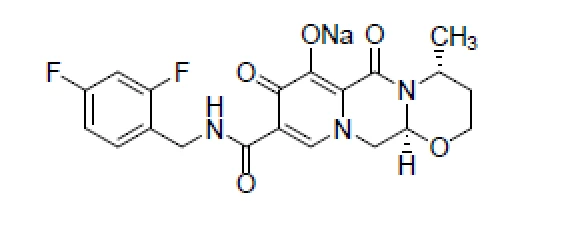
Physicochemical properties: Dolutegravir sodium is a white to light yellow powder and is slightly soluble in water.
14 CLINICAL TRIALS
The efficacy of dolutegravir in treatment-naïve, HIV-1-infected patients (n=1,655), is based on analyses of data from two studies, SPRING-2 (ING113086) and SINGLE (ING114467). The efficacy of dolutegravir in treatment-experienced, INSTI-naїve (n=715) and INSTI-resistant (n=183), HIV-1-infected patients is based on analyses of data from one study, SAILING (ING111762) and one study, VIKING-3 (ING112574), respectively. The SPRING-2, SINGLE, SAILING and VIKING-3 studies were conducted using the 50 mg tablet dose. The use of dolutegravir in pediatric patients aged 6 years and older is based on the ongoing evaluation of safety, pharmacokinetics and efficacy through 48 weeks in a multicentre, open-label trial in patients without INSTI-resistance. The IMPAACT study was conducted with tablet formulation.
14.1 Clinical Trials by Indication
Treatment of human immunodeficiency virus (HIV-1) infection in adults and in INSTI-naïve children at least 6 years of age and weighing ≥ 40kg
Trial Design and Study Demographics
Treatment-Naïve Patients
The efficacy of dolutegravir in HIV-infected, therapy-naїve subjects is based on the analyses of 48-week data from two randomized, international, double-blind, active-controlled trials, SPRING-2 (ING113086) and SINGLE (ING114467).
In SPRING-2, 822 adults were randomized and received at least one dose of either dolutegravir 50 mg once daily or ISENTRESS 400 mg twice daily, both administered with fixed-dose dual NRTI therapy (either KIVEXA [ABC/3TC] or TRUVADA [TDF/FTC]).
In SINGLE, 833 patients were randomized and received at least one dose of either dolutegravir 50 mg once daily with fixed-dose abacavir-lamivudine (KIVEXA) or fixed-dose efavirenz-tenofovir-emtricitabine (EFV/TDF/FTC, ATRIPLA). Table 14 shows baseline characteristics of patients in the SPRING-2 study and SINGLE study. The baseline characteristics were similar between treatment groups. Side-by-side tabulation is to simplify presentation; direct comparisons across studies should not be made due to differing study designs.
Table 14: Baseline Population Characteristics in ART-Naїve, HIV-1-Infected Adult Patients (SPRING-2 and SINGLE)
| Demographic Characteristics | SPRING-2 | SINGLE | ||
|---|---|---|---|---|
| Demographic Characteristics | SPRING-2 | SINGLE | ||
Dolutegra vir 50 mg QD N=411 n (%) | ISENTRESS 400 mg BID N=411 n (%) | Dolutegravir 50 mg + ABC/3TC QD N=414 n (%) | ATRIPLA QD N=419 n (%) | |
Dolutegra vir 50 mg QD N=411 n (%) | ISENTRESS 400 mg BID N=411 n (%) | Dolutegravir 50 mg + ABC/3TC QD N=414 n (%) | ATRIPLA QD N=419 n (%) | |
| Age in Years, median (range) | 37 (18-68) | 35 (18-75) | 36 (18-68) | 35 (18-85) |
| Sex | ||||
| Male | 348 (85) | 355 (86) | 347 (84) | 356 (85) |
| Female | 63 (15) | 56 (14) | 67 (16) | 63 (15) |
| Race | ||||
| African American/African Heritage | 49 (12) | 39 (9) | 98 (24) | 99 (24) |
| American Indian or Alaska Native | 7 (2) | 9 (2) | 13 (3) | 17 (4) |
| White – White/Caucasian/European Heritage | 346 (84) | 352 (86) | 284 (69) | 285 (68) |
| Median Baseline HIV-1 RNA (log10 c/mL) | 4.52 | 4.58 | 4.67 | 4.70 |
| ≤100,000 | 297 (72) | 295 (72) | 280 (68) | 288 (69) |
| >100,000 | 114 (28) | 116 (28) | 134 (32) | 131 (31) |
| Median Baseline CD4+ (cells/mm3) | 359.0 | 362.0 | 334.5 | 339.0 |
| <200 | 55 (13) | 50 (12) | 57 (14) | 62 (15) |
| 200 to <350 | 144 (35) | 139 (34) | 163 (39) | 159 (38) |
| ≥350 | 212 (52) | 222 (54) | 194 (47) | 198 (47) |
| Hepatitis B and/or C co-infectiona | ||||
| B only* | 7 (2) | 8 (2) | - | - |
| C only | 41 (10) | 35 (9) | 27 (7) | 29 (7) |
| B and C* | 1 (<1) | 0 | - | - |
| Neither | 359 (87) | 363 (89) | 385 (93) | 385 (92) |
| CDC Category | ||||
| A: Asymptomatic or lymphadenopathy or acute HIV | 359 (87) | 347 (84) | 343 (83) | 350 (84) |
| B: Symptomatic, not AIDS | 43 (10) | 55 (13) | 53 (13) | 52 (12) |
| C: AIDS | 9 (2) | 9 (2) | 18 (4) | 17 (4) |
a. Denominator reflects subjects with result for hepatitis B or hepatitis C; for ISENTRESS arm, N=410
* Hepatitis B co-infection is one of the exclusion criteria in the SINGLE study
Treatment-Experienced (and Integrase Inhibitor-Naïve) Patients
In the international, multicentre, double-blind SAILING study (ING111762), 719 HIV-1-infected, treatment-experienced adults were randomized and received either dolutegravir 50 mg once daily or ISENTRESS 400 mg twice daily with investigator selected background regimen consisting of up to 2 agents (including at least one fully active agent). All patients had at least two-class ART resistance, and 49% of subjects had at least 3-class ART resistance at baseline. The baseline characteristics were similar between treatment groups. The baseline characteristics for patients in the SAILING study are shown in Table 15.
Table 15: Baseline Population Characteristics (SAILING)
| Demographic Characteristics | Dolutegravir 50 mg QD N=354 n (%) | ISENTRESS 400 mg BID N = 361 n (%) |
|---|---|---|
| Age (years) | ||
| Median (Range) | 42 (21-69) | 43 (18-73) |
| Sex | ||
| Female | 107 (30) | 123 (34) |
| Male | 247 (70) | 238 (66) |
| Race | ||
| African American/African heritage | 143 (41) | 160 (44) |
| American Indian or Alaska native | 10 (3) | 17 (5) |
| White – White/Caucasian/European Heritage | 175 (50) | 172 (48) |
| CDC Classification | ||
| A: Asymptomatic or lymphadenopathy or acute HIV | 111 (31) | 114 (32) |
| B: Symptomatic, not AIDS | 70 (20) | 89 (25) |
| C: AIDS | 173 (49) | 158 (44) |
| Hepatitis B and/or C co-infection | 49 (14) | 65 (18) |
| B only | 17 (5) | 16 (4) |
| C only | 31 (9) | 48 (13) |
| B and C | 1 (<1) | 1 (<1) |
| Neither | 288 (81) | 271 (75) |
| Clade | ||
| B | 241 (68) | 245 (68) |
| C | 55 (16) | 48 (13) |
| Other | 57 (16) | 68 (19) |
| Baseline HIV-1 RNA copies/mL | ||
| <50,000 | 249 (70) | 254 (70) |
| ≥50,000 | 105 (30) | 107 (30) |
| Baseline CD4+ cells/mm3 | ||
| <50 | 62 (18) | 59 (16) |
| 50 to <200 | 111 (31) | 125 (35) |
| 200 to <350 | 82 (23) | 79 (22) |
| ≥ 350 | 99 (28) | 98 (27) |
Integrase Inhibitor-Resistant Patients
VIKING-3 examined the effect of dolutegravir 50 mg twice daily over 7 days of functional monotherapy, followed by optimized background therapy and continued dolutegravir twice daily treatment.
In the multicentre, open-label, single arm VIKING-3 study (ING112574), 183 HIV-1-infected, treatment-experienced adults with virological failure and current or historical evidence of raltegravir and/or elvitegravir resistance received dolutegravir 50 mg twice daily with the current failing background regimen for 7 days, and then received dolutegravir with optimized background therapy from Day 8. Of the 183 patients enrolled, 133 showed INSTI-resistance (genotypic or phenotypic) at Screening and 50 had only historical evidence of resistance (and not at Screening). Table 16 shows baseline characteristics of patients in the VIKING-3 trial.
Table 16: Baseline Characteristics for all 183 patients enrolled that reached Week 24 (VIKING-3)
| Demographic Characteristics | ITT-E |
|---|---|
| Demographic Characteristics | ITT-E |
Dolutegravir 50 mg BID N=183 n (%) | |
Dolutegravir 50 mg BID N=183 n (%) | |
| Age (years) | |
| Median (Range) | 48 (19-67) |
| Sex | |
| Female | 42 (23) |
| Male | 141 (77) |
| Race | |
| African American/African heritage | 49 (27) |
| American Indian or Alaska native & White | 1 (<1) |
| White | 130 (71) |
| CDC Classification | |
| A: Asymptomatic or lymphadenopathy or acute HIV | 44 (24) |
| B: Symptomatic, not AIDS | 37 (20) |
| C: AIDS | 102 (56) |
| Hepatitis B and/or C co-infection | |
| B only | 10 (5) |
| C only | 26 (14) |
| B and C | 2 (1) |
| Baseline CD4+ cell counts cells/mm3 | |
| Median CD4+ (range) | 140.0 (19, 1100) |
| Prior Antiretroviral Therapy (ART) | |
| Etravirine | 103 (56) |
| Darunavir-ritonavir | 133 (73) |
| Enfuvirtide | 89 (49) |
| Maraviroc | 58 (32) |
| Median Number of prior ART (range) | 14 (3-22) |
| Median Duration (years) of prior ART (range) | 14 (4 months, 27 years) |
| Number (%) of Major ART Associated Mutations at Baseline | |
| ≥2 NRTI | 145 (79) |
| ≥1 NNRTI | 137 (75) |
| ≥2 PI | 129 (70) |
| Prevalence of CCR5 and/or CXCR4 Tropism at Baseline | |
| CCR5 | 61 (33) |
| Non-CCR5 | 113 (62) |
Mean reduction from baseline in HIV RNA at Day 8 (primary endpoint) was 1.4 log10 (95% CI 1.3 – 1.5 log10, p < 0.001). More than 90% of subjects achieved full response (>1 log10 c/mL decline or <50 c/mL plasma HIV-1 RNA) at Day 8 in the group of subjects without detectable Q148 primary mutations. In subjects with Q148 mutations, virologic response at Day 8 decreased with increasing number of secondary mutations (i.e. viral response rate was dropped to 71% and to 45% in Q148 plus 1 or ≥ 2 secondary substitutions, respectively).
Pediatric
In the ongoing Phase I/II 48-week multicentre, non-comparative, open-label study (IMPAACT P1093/ING112578), the pharmacokinetic parameters, safety, tolerability and efficacy of dolutegravir were evaluated in combination regimens in HIV-1-infected treatment-naïve or treatment experienced INSTI-naïve children and adolescents. Subjects were stratified by age into cohorts, enrolling adolescents first (Cohort I: aged 12 to <18 years) and then younger children (Cohort IIA: aged 6 to <12 years). All subjects received the recommended weight-based dose of dolutegravir (see 4.2 Recommended Dose and Dosage Adjustment, Pediatric).
These 46 patients had a mean age of 12 years (range: 6 to 17), were 54% female, and 52% black. At baseline, mean plasma HIV-1 RNA was 4.6 log10 copies/mL, median CD4+ cell count was 639 cells/mm3 (range: 9 to 1700), and median CD4% was 23% (range: 1% to 44%). Overall, 39% had baseline plasma HIV-1 RNA ≥ 50,000 copies/mL and 33% had a CDC HIV clinical classification of category C. Most patients had previously used at least 1 NNRTI (50%) or 1 PI (70%).
Study Results
Treatment-Naïve Patients
Week 48 outcomes (including outcomes by key baseline covariates) for SPRING-2 and SINGLE are shown in Table 17.
Table 17 Virologic Outcomes of SPRING-2 and SINGLE at 48 Weeks (Snapshot algorithm)
| SPRING-2 | SINGLE | |||||||||||||||||||||||||
|---|---|---|---|---|---|---|---|---|---|---|---|---|---|---|---|---|---|---|---|---|---|---|---|---|---|---|
| SPRING-2 | SINGLE | |||||||||||||||||||||||||
Dolutegravir 50 mg QD + 2 NRTI N=411 n (%) | ISENTRESS 400 mg BID + 2 NRTI N=411 n (%) | Dolutegravir 50 mg + KIVEXA QD N=414 n (%) | ATRIPLA QD N=419 n (%) | |||||||||||||||||||||||
Dolutegravir 50 mg QD + 2 NRTI N=411 n (%) | ISENTRESS 400 mg BID + 2 NRTI N=411 n (%) | Dolutegravir 50 mg + KIVEXA QD N=414 n (%) | ATRIPLA QD N=419 n (%) | |||||||||||||||||||||||
| HIV-1 RNA <50 copies/mL | 361 (88) | 351 (85) | 364 (88) | 338 (81) | ||||||||||||||||||||||
| Treatment Difference* | 2.5% (95% CI: -2.2%, 7.1%) | 7.4% (95% CI: 2.5%, 12.3%), p = 0.003 | ||||||||||||||||||||||||
| Virologic non-response† | 20 (5) | 31 (8) | 21 (5) | 26 (6) | ||||||||||||||||||||||
| No virologic data at Week 48 window | 30 (7) | 29 (7) | 29 (7) | 55 (13) | ||||||||||||||||||||||
Reasons: Discontinued study/study drug due to adverse event or death‡ | 9 (2) | 6 (1) | 9 (2) | 40 (10) | ||||||||||||||||||||||
| Discontinued study/study drug for other reasons§ | 21 (5) | 23 (6) | 20 (5) | 14 (3) | ||||||||||||||||||||||
| Missing data during window but on study | 0 | 0 | 0 | 1 (<1) | ||||||||||||||||||||||
HIV-1 RNA <50 copies/mL by Baseline Plasma Viral Load (copies/mL) | n / N (%) | n / N (%) | n / N (%) | n / N (%) | ||||||||||||||||||||||
| ≤100,000 | 267 / 297 (90) | 264 / 295 (89) | 253 / 280 (90) | 238 / 288 (83) | ||||||||||||||||||||||
| >100,000 | 94 / 114 (82) | 87 / 116 (75) | 111 / 134 (83) | 100 / 131 (76) | ||||||||||||||||||||||
| HIV-1 RNA <50 copies/mL by Baseline CD4+ (cells/ mm3) | ||||||||||||||||||||||||||
| <200 | 43 / 55 (78) | 34 / 50 (68) | 45 / 57 (79) | 48 / 62 (77) | ||||||||||||||||||||||
| 200 to <350 | 128 / 144 (89) | 118 / 139 (85) | 143 / 163 (88) | 126/ 159 (79) | ||||||||||||||||||||||
| ≥350 | 190 / 212 (90) | 199 / 222 (90) | 176 / 194 (91) | 164 / 198 (83) | ||||||||||||||||||||||
| HIV RNA <50 copies/mL by NRTI backbone | ||||||||||||||||||||||||||
| KIVEXA [ABC/3TC] | 145 / 169 (86) | 142 / 164 (87) | 364 / 414 (88) | N/A | ||||||||||||||||||||||
| TRUVADA [TDF/FTC] | 216 / 242 (89) | 209 / 247 (85) | N/A | 338/ 419 (81) | ||||||||||||||||||||||
| HIV RNA <50 copies/mL by baseline HIV-RNA and NRTI backbone | ||||||||||||||||||||||||||
| ≤100,000 c/mL, ABC/3TC | 115/132 (87) | 110/125 (88) | 253 / 280 (90) | N/A | ||||||||||||||||||||||
| ≤100,000 c/mL, TDF/FTC | 152/165 (92) | 154/170 (91) | N/A | 238 / 288 (83) | ||||||||||||||||||||||
| >100,000 c/mL, ABC/3TC | 30/37 (81) | 32/39 (82) | 111 / 134 (83) | N/A | ||||||||||||||||||||||
| >100,000 c/mL, TDF/FTC | 64/77 (83) | 55/77 (71) | N/A | 100 / 131 (76) | ||||||||||||||||||||||
| Gender | ||||||||||||||||||||||||||
| Male | 308 / 348 (88) | 305 / 355 (86) | 307 / 347 (88) | 291/ 356 (82) | ||||||||||||||||||||||
| Female | 53 / 63 (84) | 46 / 56 (82) | 57 / 67 (85) | 47 / 63 (75) | ||||||||||||||||||||||
| Race | ||||||||||||||||||||||||||
| White | 306 / 346 (88) | 301 / 352 (86) | 255 / 284 (90) | 238 /285 (84) | ||||||||||||||||||||||
| Non white | 55 / 65 (85) | 50 / 59 (85) | 109 / 130 (84) | 99 / 133 (74) | ||||||||||||||||||||||
| Age (years) | ||||||||||||||||||||||||||
| <50 | 324 / 370 (88) | 312 / 365 (85) | 319 / 361 (88) | 302/ 375 (81) | ||||||||||||||||||||||
| ≥50 | 37 / 41 (90) | 39 / 46 (85) | 45 / 53 (85) | 36 / 44 (82) | ||||||||||||||||||||||
* Adjusted for baseline stratification factors.
† Includes patients who changed BR to new class or changed BR not permitted per protocol or due to lack of efficacy prior to Week 48 (for SPRING-2 only), patients who discontinued prior to Week 48 for lack or loss of efficacy and patients who are ≥ 50 copies in the 48 week window.
‡ Includes patients who discontinued due to an adverse event or death at any time point from Day 1 through the Week 48 window if this resulted in no virologic data on treatment during the Week 48 window.
§ Includes reasons such as withdrew consent, loss to follow-up, moved, protocol deviation.
Notes: ABC/3TC = abacavir 600 mg, lamivudine 300 mg in the form of Kivexa/Epzicom fixed dose combination (FDC)
EFV/TDF/FTC = efavirenz 600 mg, tenofovir 300 mg, emtricitabine 200 mg in the form of Atripla FDC.
N = Number of patients in each treatment group
Snapshot algorithm: Subjects whose last HIV-1 RNA result was <50 c/mL in the analysis window (ie, 48 ± 6 weeks) were counted as responders; subjects who were not suppressed or did not have data at the analysis time point were counted as non-responders. The SPRING-2 protocol allowed one switch in backbone NRTI for management of toxic effects; patients who switched NRTI after week 4 were regarded as non-responders according to the Snapshot algorithm.
In the SPRING-2 study, at 48 weeks, virologic suppression (HIV-1 RNA < 50 copies/mL) in the dolutegravir group (88%) was non-inferior to the raltegravir group (85%) (non-inferiority margin – 10%; treatment difference 2.5% 95 CI: -2.2%, 7.1%). Virologic suppression treatment differences were comparable across baseline characteristics (gender, race, age, ART backbone, and baseline viral load) at 48 weeks.
The median changes in CD4+ T cell count from baseline were + 230 cells/mm3 in the group receiving dolutegravir and the ISENTRESS group at 48 weeks.
Virologic suppression was maintained through 96 weeks (the proportion of subjects achieving HIV-1 RNA <50 copies/mL was 81% for the dolutegravir group and 76% for the raltegravir group, treatment difference 4.5% (95CI: -1.1%, 10.0%)). The median change in CD4+ T cell count from baseline to 96 weeks was 276 cell/mm3 in the dolutegravir group compared to 264 cells/mm3 in the ISENTRESS group
In the SINGLE study, there was a statistically significant difference in the proportion of subjects achieving viral suppression (HIV-1 RNA <50 copies/mL) between the group receiving dolutegravir + KIVEXA (88%) compared to the ATRIPLA group (81%) based on the primary 48-week analysis (7.4% 95% CI: 2.5%, 12.3% p=0.003). The virologic suppression treatment differences were comparable across baseline characteristics (gender, race, and age) at Week 48.
At Week 48, the adjusted mean change in CD4+ T cell count from baseline were 267 cells/mm3 in the group receiving dolutegravir + KIVEXA and 208 cells/mm3 for the ATRIPLA arm. The adjusted difference and 95% CI were statistically significant at Week 48 [58.9 (33.4, 84.4; p<0.001)] (repeated measure model adjusting for the baseline stratification factors: baseline HIV-1 RNA and baseline CD4+ T cell count, among other factors). This analysis was pre-specified and the Week 48 analysis was adjusted for multiplicity.
The median time to viral suppression was 28 days in the group receiving dolutegravir + KIVEXA and 84 days in the ATRIPLA arm in SINGLE at 48 weeks (p<0.0001). At 28 days (Week 4), 63% of patients in the dolutegravir arm reached virologic suppression, compared to 14% in the ATRIPLA arm.
Virologic suppression was maintained through 96 weeks (the proportion of subjects achieving HIV-1 RNA <50 copies/mL was 80% for the dolutegravir + KIVEXA group and 72% for the ATRIPLA group (treatment difference 8.0%, 95CI: 2.3%, 13.8%, p=0.006)). The adjusted mean change in CD4+ T cell count from baseline was 325 cells/mm3 in the group receiving dolutegravir + KIVEXA, which continued to be statistically significantly different from the ATRIPLA arm (281 cells/mm3) (treatment difference 44 cells/mm3 (95% CI: 14.34, 73.55) p=0.004).
Virologic suppression was maintained through 144 weeks (open-label phase week 96 to 144 week). The proportion of subjects achieving HIV-1 RNA<50 copies/mL was 71% for the dolutegravir + KIVEXA group and 63% for the ATRIPLA group (treatment difference 8.3% (95% CI: 2.0%, 14.6%, p=0.010)). The adjusted mean change in CD4+ T cell count from baseline was 378 cells/mm3 in the group receiving dolutegravir + KIVEXA, which continued to be statistically significantly different from the ATRIPLA arm (332 cells/mm3) (treatment difference 47 cells/mm3 (95% CI: 15.61, 78.20) p=0.003).
Through 96 weeks in SPRING-2 and 144 weeks in SINGLE, no INSTI-resistant mutations or treatment-emergent resistance in background therapy were isolated on the dolutegravir-containing arms.
Treatment-Experienced (and Integrase Inhibitor-Naïve) Patients
Week 48 outcomes (including outcomes by key baseline covariates) for SAILING are shown in Table 18.
| Table 18: Virologic Outcomes of SAILING at 48 Weeks (Snapshot algorithm) | ||||||||||||
|---|---|---|---|---|---|---|---|---|---|---|---|---|
| Table 18: Virologic Outcomes of SAILING at 48 Weeks (Snapshot algorithm) | ||||||||||||
| SAILING | ||||||||||||
| SAILING | ||||||||||||
Dolutegravir 50 mg QD + BR N=354§ n/N (%) | ISENTRESS 400 mg BID + BR N=361§ n/N (%) | |||||||||||
Dolutegravir 50 mg QD + BR N=354§ n/N (%) | ISENTRESS 400 mg BID + BR N=361§ n/N (%) | |||||||||||
| HIV-1 RNA <50 copies/mL | 251/354 (71) | 230/361 (64) | ||||||||||
| Adjusted Treatment Difference‡ | 7.4% (95% CI: 0.7%, 14.2%), p=0.030 | |||||||||||
| Virologic non-response† | 71/354 (20) | 100/361 (28) | ||||||||||
No virologic data Reasons | 32/354 (9) | 31/361 (9) | ||||||||||
| Discontinued study/study drug due to adverse event or death‡ | 9 (3) | 13 (4) | ||||||||||
| Discontinued study/study drug for other reasons§ | 16 (5) | 14 (4) | ||||||||||
| Missing data during window but on study | 7 (2) | 4 (1) | ||||||||||
| HIV-1 RNA <50 copies/mL by baseline covariates | ||||||||||||
| Baseline Plasma Viral Load (copies/mL) | ||||||||||||
| ≤50,000 copies/mL | 186 / 249 (75) | 180 / 254 (71) | ||||||||||
| >50,000 copies/mL | 65 / 105 (62) | 50 / 107 (47) | ||||||||||
| Baseline CD4+ (cells/ mm3) | ||||||||||||
| <50 | 33 / 62 (53) | 30 / 59 (51) | ||||||||||
| 50 to <200 | 77 / 111 (69) | 76 / 125 (61) | ||||||||||
| 200 to <350 | 64 / 82 (78) | 53 / 79 (67) | ||||||||||
| ≥ 350 | 77 / 99 (78) | 71 / 98 (73) | ||||||||||
| Background Regimen | ||||||||||||
Phenotypic Susceptibility Score * < 2 Phenotypic Susceptibility Score * = 2 Genotypic Susceptibility Score * < 2 Genotypic Susceptibility Score * = 2 No darunavir use Darunavir use with primary PI substitutions Darunavir use without primary PI substitutions | 70 / 104 (67) 181 / 250 (72) 155 / 216 (72) 96 / 138 (70) 143 / 214 (67) 58 / 68 (85) 50 / 72 (69) | 61 / 94 (65) 169 / 267 (63) 129 / 192 (67) 101 / 169 (60) 126 / 209 (60) 50 / 75 (67) 54 / 77 (70) | ||||||||||
| Gender | ||||||||||||
| Male | 172 / 247 (70) | 156 / 238 (66) | ||||||||||
| Female | 79 / 107 (74) | 74 / 123 (60) | ||||||||||
| Race | ||||||||||||
| White | 133 / 178 (75) | 125 / 175 (71) | ||||||||||
| African-American/African Heritage/Other | 118 / 175 (67) | 105 / 185 (57) | ||||||||||
| Age (years) | ||||||||||||
| <50 | 196 / 269 (73) | 172 / 277 (62) | ||||||||||
| ≥50 | 55 / 85 (65) | 58 / 84 (69) | ||||||||||
| HIV sub type | ||||||||||||
| Clade B | 173 / 241 (72) | 159 / 246 (65) | ||||||||||
| Clade C | 34 / 55 (62) | 29 / 48 (60) | ||||||||||
| Other† | 43 / 57 (75) | 42 / 67 (63) | ||||||||||
‡Adjusted for pre-specified stratification factors
§ 4 patients were excluded from the efficacy analysis due to data integrity at one study site
*The Phenotypic Susceptibility Score (PSS) and the Genotypic Susceptibility Score (GSS) were defined as the total number of ARTs in BR to which a subject’s viral isolate showed susceptibility at baseline based upon phenotypic or genotypic resistance tests. Background regimen was restricted to ≤ 2 ARTs with at least one fully active agent, however, n=11 PSS 0, n=2 PSS 3.
†Other clades included: Complex (n = 42), F1 (n = 32), A1 (n = 18), BF (n = 14), all others n = <10.
Notes: BR = background regimen, DTG = dolutegravir, RAL = raltegravir; N = Number of patients in each treatment group
At Week 48, virologic suppression (HIV-1 RNA < 50 copies/mL) in the dolutegravir arm (71%) was statistically significantly greater than the raltegravir arm (64%), (p=0.030) (see Table 19). Virologic suppression (HIV-1 RNA < 50 copies/mL) treatment differences were comparable across the baseline characteristics of gender, race, and HIV sub type.
The median changes in CD4+ T cell count from baseline were 144.0 cells/mm3 in the group receiving dolutegravir and 137.0 cells/mm3 for the ISENTRESS group.
Statistically significantly fewer patients failed therapy with treatment-emergent resistance in the IN gene on dolutegravir (4/354, 1%) than on ISENTRESS (17/361, 5%), p=0.003.
Integrase Inhibitor-Resistant Patients
After the monotherapy phase, patients’ background regimens were optimized when possible. Week 24 and Week 48 virologic response and outcomes for VIKING-3 are shown in Table 19.
Table 19: Virologic Outcomes of VIKING-3 at Week 24 and Week 48 (Snapshot Algorithm)
| Week 24 | Week 48 | |||||||||||
|---|---|---|---|---|---|---|---|---|---|---|---|---|
Dolutegravir 50 mg BID + OBT (N = 183) | Dolutegravir 50 mg BID + OBT (N = 183) | |||||||||||
| HIV-1 RNA <50 copies/mL | 126 (69%) | 116 (63%) | ||||||||||
| Virologic non-response | 50 (27%) | 58 (32%) | ||||||||||
No virologic data Reasons Discontinued study/study drug due to adverse event or death | 5 (3%) | 5 (3%) | ||||||||||
| Discontinued study/study drug for other reasons§ | 2 (1%) | 4 (2%) | ||||||||||
| Missing data during window but on study | 0 (0%) | 0 (0%) | ||||||||||
| Proportion (%) with HIV-1 RNA < 50 c/mL by Baseline Category | ||||||||||||
| Gender | ||||||||||||
| Male | 96/141 (68) | 89/141 (63) | ||||||||||
| Female | 30/42 (71) | 27/42 (64) | ||||||||||
| Race | ||||||||||||
| White | 91/130 (70) | 82/130 (63) | ||||||||||
| African-American/African Heritage/Other | 35/53 (66) | 34/53 (64) | ||||||||||
| Median change from baseline in CD4+ cell count (range) in cells/mm3 | 61.0 (20.0, 130.0) | 110.0 (40.0, 190.0) | ||||||||||
Of the 183 patients who completed 24 weeks on study or discontinued before data cut-off, 126 (69%) had < 50 copies/mL RNA at Week 24 (FDA Snapshot algorithm). Patients harbouring virus with Q148H/K/R with 2 or more additional Q148-associated secondary mutations (L74I, E138A/K/T, or G140A/C/S) had a marked lower response at Week 24. Background overall susceptibility score (OSS) was not associated with Week 24 response.
Table 20: Virologic Response (HIV-1 RNA <50 copies/mL) by Derived Integrase-Resistance Substitution Group at Week 24 and Week 48 (Intent-to-Treat Exposed Population: Snapshot Algorithm)
| Derived Integrase-Resistance Substitution Group | Dolutegravir 50 mg BID (N = 183) Week 24 | Dolutegravir 50 mg BID (N = 183) Week 48 |
|---|---|---|
| No Q148H/K/R substitutiona | 100/126 (79%) | 90/126 (71%) |
| Q148 + 1 secondary substitutionb | 21/36 (58%) | 20/36 (56%) |
| Q148 + ≥2 secondary substitutionsb | 5/21 (24%) | 6/21 (29%) |
a N155H, Y143C/H/R, T66A, E92Q, or historical resistant evidence only.
b Includes key secondary substitutions G140A/C/S, E138A/K/T, L74I.
The response rate at Week 48 was sustained with 116/183 (63%) patients having HIV-1 RNA <50 copies/mL (Snapshot algorithm). Response was also sustained through Week 48 in patients harbouring virus with Q148 with additional Q148-associated secondary mutations (see Table 20). Background overall susceptibility score (OSS) was not associated with Week 48 response.
Pediatric
Week 24 and 48 outcomes for IMPAACT P1093/ING112578 are shown in Table 21.
Table 21: Virologic (Snapshot algorithm) and Immunologic Activity of Treatment for Subjects 6 Years and Older in IMPAACT P1093/ING112578
| Dolutegravir ~ 1 mg/kg once daily + OBT | |||||||||
|---|---|---|---|---|---|---|---|---|---|
| Dolutegravir ~ 1 mg/kg once daily + OBT | |||||||||
Cohort I (12 to <18 years) (n = 23) | Cohort IIA (6 to < 12 years) (n = 23) | ||||||||
Cohort I (12 to <18 years) (n = 23) | Cohort IIA (6 to < 12 years) (n = 23) | ||||||||
| HIV-1-RNA < 50 copies/ml at 24 weeks | 16 (70%) | 14 (61%) | |||||||
| HIV-1-RNA < 50 copies/ml at 48 weeks, n (%) | 14 (61%) | -a | |||||||
| HIV-1-RNA < 400 copies/ml at 24 weeks, n (%) | 19 (83%) | 18 (78%) | |||||||
| HIV-1-RNA < 400 copies/ml at 48 weeks, n (%) | 17 (74%) | -a | |||||||
| Virologic non-response | 6 | 3 | |||||||
CD4+ Cell Count Median Change from Baseline, cells/mm3 Median | 84b 5 %a | 209c 8 %b | |||||||
| Percent Change from Baseline | |||||||||
a Data not yet available
b 22 subjects contributed Week 48 CD4+ cell count data
c 21 subjects contributed Week 24 CD4+ cell count data
Virologic outcomes were also evaluated based on body weight. Across both cohorts, virologic suppression (HIV-1 RNA less than 50 copies per mL) at Week 24 was achieved in 75% (18/24) of subjects weighing at least 40 kg. At Week 48, 63% (12/19) of the subjects in Cohort I weighing at least 40 kg were virologically suppressed.
The median CD4+ cell count increase from baseline to Week 48 was 84 cells per mm3 in Cohort I. For Cohort IIA, the median CD4+ cell count increase from baseline to Week 24 was 209 cells per mm3.
14.3 Comparative Bioavailability Studies
A blinded, single-dose, randomized, two-way, crossover, bioequivalence study of SANDOZ DOLUTEGRAVIR Tablets, 50 mg (Sandoz Canada Inc.) and PrTIVICAY Tablets, 50 mg (ViiV Healthcare ULC), was conducted in 30 healthy, adult, male and female subjects under fasting conditions. A summary of the comparative bioavailability data from the 26 subjects who completed the study is presented in the following table:
SUMMARY TABLE OF THE COMPARATIVE BIOAVAILABILITY DATA
Dolutegravir (1 x 50 mg) Geometric Mean Arithmetic Mean (CV %) | ||||
|---|---|---|---|---|
Dolutegravir (1 x 50 mg) Geometric Mean Arithmetic Mean (CV %) | ||||
| Parameter | Test1 | Reference2 | % Ratio of Geometric Means | 90% Confidence Interval |
| Parameter | Test1 | Reference2 | % Ratio of Geometric Means | 90% Confidence Interval |
AUCT (mcg·h/mL) | 38.9 40.7 (28.3) | 42.1 43.4 (24.6) | 92.5 | 84.6 - 101.3 |
AUCI (mcg·h/mL) | 42.3 44.3 (28.6) | 42.3 44.3 (28.6) | 93.8 | 86.0 - 102.3 |
Cmax (mcg/mL) | 2.1 2.2 (28.5) | 2.4 2.4 (26.0) | 88.4 | 80.5 - 97.0 |
Tmax3 (h) | 2.5 (0.7 - 4.5) | 2.5 (0.7 - 4.5) | ||
T1/24 (h) | 15.8 (21.6) | 14.9 (20.7) | ||
1 SANDOZ DOLUTEGRAVIR (dolutegravir as dolutegravir sodium) Tablets, 50 mg (Sandoz Canada Inc.)
2 PrTIVICAY (dolutegravir as dolutegravir sodium) Tablets, 50 mg (ViiV Healthcare ULC, Canada)
3 Expressed as the median (range) only.
4 Expressed as arithmetic mean (CV%) only.
15 MICROBIOLOGY
Antiviral Activity in cell culture
Dolutegravir exhibited antiviral activity against laboratory strains of wild-type HIV-1 with mean EC50 values of 0.51 nM to 2.1 nM in peripheral blood mononuclear cells (PBMCs) and MT-4 cells.
In a viral integrase susceptibility assay using the integrase coding region from 13 clinically diverse clade B isolates, dolutegravir demonstrated antiviral potency similar to laboratory strains, with a mean EC50 of 0.52 nM. When tested in PBMC assays against a panel consisting of 24 HIV-1 clinical isolates [group M (clade A, B, C, D, E, F and G) and group O] and 3 HIV-2 clinical isolates, the geometric mean EC50 was 0.20 nM (0.02 to 2.14 nM) for HIV-1, while the geometric mean EC50 was 0.18 nM (0.09 to 0.61 nM) for HIV-2 isolates.
Antiviral Activity in combination with other antiviral agents
The following drugs were not antagonistic with dolutegravir in in vitro assessments conducted in checkerboard format: stavudine, abacavir, efavirenz, nevirapine, lopinavir, amprenavir, enfuvirtide, maraviroc, adefovir and raltegravir. In addition, the anti-HCV drug ribavirin had no apparent effect on dolutegravir activity.
Effect of Human Serum and Serum Proteins
In vitro studies suggested a 75-fold shift in EC50 of dolutegravir in the presence of 100% human serum (by method of extrapolation), and the protein adjusted EC90 (PA-IC90) in PBMCs was estimated to be 0.064 mcg/mL. Dolutegravir trough concentration for a single 50 mg dose in integrase inhibitor naïve patients was 1.20 mcg/mL, 19 times higher than the estimated PA-EC90.
Resistance in vitro
Isolation from wild-type HIV-1: Viruses highly resistant to dolutegravir were not observed during the 112-day passage of strain IIIB, with a 4.1-fold maximum fold change (FC) observed for the passaged resistant virus populations with substitutions at the conserved IN positions S153Y and S153F.
Passage of the wild-type HIV-1 strain NL432 in the presence of dolutegravir selected for E92Q (passage population virus FC=3.1) and G193E (passage population virus FC=3.2) substitutions on Day 56. Additional passage of wild-type subtype B, C, and A/G viruses in the presence of dolutegravir selected for R263K, G118R, and S153T.
Anti-HIV Activity Against Resistant Strains: Reverse Transcriptase Inhibitor- and Protease Inhibitor-Resistant Strains: Dolutegravir demonstrated equivalent antiviral activity against 2 non-nucleoside (NN)-RTI-resistant, 3 nucleoside (N)-RTI-resistant, and 2 PI-resistant HIV-1 mutant clones (1 triple and 1 sextuple) compared to the wild-type strain.
Integrase Inhibitor-Resistant HIV-1 Strains: Sixty integrase inhibitor-resistant mutant HIV-1 viruses (28 with single substitutions and 32 with 2 or more substitutions) were produced from wild-type virus NL-432 using site-directed mutagenesis. Dolutegravir showed anti-HIV activity (susceptibility) with FC < 5 against 27 of 28 integrase inhibitor-resistant mutant viruses with single substitutions including T66A/I/K, E92Q/V, Y143C/H/R, Q148H/K/R, and N155H, while for raltegravir and elvitegravir there were 17/28 and 11/21 tested mutant viruses with FC < 5, respectively. In addition, of the 32 integrase inhibitor-resistant mutant viruses with 2 or more substitutions, 23 of 32 showed FC < 5 to dolutegravir compared with FC < 5 for 4 of 32 for raltegravir and FC < 5 for 2 of 25 tested for elvitegravir.
Integrase Inhibitor-Resistant HIV-2 Strains: Site-directed mutant HIV-2 viruses were constructed based on patients infected with HIV-2 and treated with raltegravir who showed virologic failure (n=6). Overall the HIV-2 FCs observed were similar to HIV-1 FCs observed for similar pathway mutations. Dolutegravir FC was <5 against 4 HIV-2 viruses (S163D, G140A/Q148R, A153G/N155H/S163G and E92Q/T97A/N155H/S163D); for E92Q/N155H, dolutegravir FC was 8.5, and for G140S/Q148R, dolutegravir FC was 17. Dolutegravir, raltegravir and elvitegravir all had had the same activity against site-directed mutant HIV-2 with S163D as wild-type, and for the remaining mutant HIV-2 virus raltegravir FC ranges were 6.4 to 420 and elvitegravir FC ranges were 22 to 640.
Clinical Isolates From Raltegravir Treatment Virologic Failure Patients: Thirty clinical isolate samples with genotypic and phenotypic resistance to raltegravir (median FC > 81) were examined for susceptibility to dolutegravir (median FC 1.5) using the Monogram Biosciences PhenoSense assay. The median FC to dolutegravir for isolates containing changes at G140S + Q148H was 3.75; G140S + Q148R was 13.3; T97A + Y143R was 1.05 and N155H was 1.37.
Seven hundred and five raltegravir-resistant isolates (based on RAL FC > 1.5) from raltegravir-experienced patients were analyzed for susceptibility to dolutegravir using the Monogram Biosciences PhenoSense assay. Dolutegravir has a less than or equal to 10 FC against 93.9% of the 705 clinical isolates. Sixteen of 184 isolates with Q148+1 IN mutation and 25 of 92 isolates with Q148 +≥ 2 IN mutations had dolutegravir FC>10.
Resistance in vivo: integrase inhibitor-naïve patients (ART-naïve and -experienced)
No INSTI-resistant mutations or treatment-emergent resistance to the NRTI backbone therapy were isolated with dolutegravir 50 mg once daily in treatment-naïve studies (SPRING-2, and/or SINGLE studies). In the SAILING study for treatment-experienced (and integrase-naïve) patients (n=354 in the dolutegravir arm), treatment-emergent integrase substitutions were observed at Week 48 in 4 of 17 subjects receiving dolutegravir with virologic failure. Of these four, 2 patients had a unique R263K integrase substitution, with a maximum FC of 1.93, 1 patient had a polymorphic V151V/I integrase substitution, with maximum FC of 0.92, and 1 subject had pre-existing integrase mutations and is assumed to have been integrase-experienced or infected with integrase-resistant virus by transmission. Treatment emergent N155H and T97A integrase substitutions along with dolutegravir FC of 2.4 and RAL FC of 113 were observed at Week 84 for one patient who was non-compliant with IP and thus a protocol deviator. Significantly fewer subjects failed therapy at Week 48 with treatment-emergent resistance in the integrase gene on dolutegravir (4/354 [1.0%]), than on raltegravir (17/361 [5%]). The treatment difference was statistically significant in favour of dolutegravir (p=0.003) based on a pre-specified analysis of this key secondary endpoint (see 14 CLINICAL TRIALS).
Resistance in vivo: integrase inhibitor-resistant patients
The VIKING-3 study examined dolutegravir (plus optimized background therapy) in patients with pre-existing INSTI-resistance. Thirty six patients (36/183) experienced protocol defined virologic failure through to Week 24. Of these, 32 had paired baseline and PDVF resistance data for analysis and 17/32 (53%) had treatment emergent mutations. Treatment-emergent mutations or mixtures of mutations observed were L74L/M (n=1), E92Q (n=2), T97A (n=9), E138K/A/T (n=8), G140S (n=2), Y143H (n=1), S147G (n=1), Q148H/K/R (n=4), N155H (n=1) and E157E/Q (n=1). Fourteen of the 17 patients with virus exhibiting treatment-emergent mutations harboured Q148 pathway virus present at baseline or historically. Five further patients experienced PDVF between Weeks 24 and 48, and 2 of these 5 had treatment-emergent mutations. Treatment-emergent mutations or mixtures of mutations observed were L74I (n=1), N155H (n=2). Post Week 48, 4 additional subjects experienced PDVF at Week 60 (n=2), Week72 (n=1) and Week 84 (n=1). Three of these 4 subjects had treatment-emergent mutations. Treatment- emergent mutations or mixtures of mutations observed were T97A (n=1), E138K (n=1), Q148H (n=2), G140S (n=2), N155H (n=1). L74M/V (n=1).
16 NON-CLINICAL TOXICOLOGY
Carcinogenicity/mutagenicity : Dolutegravir was not mutagenic or clastogenic using in vitro tests in bacteria and cultured mammalian cells, and an in vivo rodent micronucleus assay. Dolutegravir was not carcinogenic in long-term studies in the mouse and rat at exposures ~14 and ~12 times, respectively, above the 50 mg twice-daily human clinical exposure based on AUC.
Reproductive and Developmental Toxicology : There are no data on the effects of dolutegravir on human male or female fertility. Animal studies indicate no effects of dolutegravir on male or female fertility. Dolutegravir did not affect male or female fertility in rats at doses up to 1000 mg/kg/day, the highest dose tested (~24 times the 50 mg twice-daily human clinical exposure based on AUC).
Oral administration of dolutegravir to pregnant rats at doses up to 1000 mg/kg daily from Days 6 to 17 of gestation did not elicit maternal toxicity, developmental toxicity or teratogenicity (~27 times the 50 mg twice-daily human clinical exposure based on AUC).
Oral administration of dolutegravir to pregnant rabbits at doses up to 1000 mg/kg daily from Days 6 to 18 of gestation did not elicit developmental toxicity or teratogenicity (0.4 times the 50 mg twice-daily human clinical exposure based on AUC). In rabbits, maternal toxicity (decreased food consumption, scant/no faeces/urine, suppressed body weight gain) was observed at 1000 mg/kg (0.4 times the 50 mg twice-daily human clinical exposure based on AUC).
In a non-clinical distribution study in animals, dolutegravir was shown to cross the placenta.
Animal toxicology and/or pharmacology: The effect of prolonged daily treatment with high doses of dolutegravir has been evaluated in repeat oral dose toxicity studies in rats (up to 26 weeks) and in monkeys (up to 38 weeks). The primary effect of dolutegravir was gastrointestinal intolerance or irritation in rats and monkeys at doses that produce systemic exposures approximately 21 and 0.8 times the 50 mg twice-daily human clinical exposure based on AUC, respectively. Because gastrointestinal (GI) intolerance is considered to be due to local drug administration, mg/kg or mg/m2 metrics are appropriate determinates of safety cover for this toxicity. GI intolerance in monkeys occurred at 15 times the human mg/kg equivalent dose (based on 50 kg human), and 5 times the human mg/m2 equivalent dose for a clinical dose of 50 mg twice-daily. Dolutegravir was slightly to mildly irritating to skin and eyes in the rabbit.
17 SUPPORTING PRODUCT MONOGRAPHS
- 1. Pr TIVICAY®, Tablets of 10mg, 25mg and 50mg, Submission Control: 254989, Product Monograph, ViiV Healthcare ULC. Date of Revision: December 21, 2021.