


Product Monograph - Vocabria
Recent Major Label Changes
| 4 Dosage and Administration, 4.2 Recommended Dose and Dosage Adjustment, Renal Insufficiency | 06/2025 |
|---|---|
| 4 Dosage and Administration, 4.4 Administration | 11/2023 |
| 7 Warnings and Precautions, General | 07/2023 |
| 7 Warnings and Precautions, Depressive Disorders | 11/2023 |
| 7 Warnings and Precautions, Skin and hypersensitivity Reactions | 06/2025 |
Table of Contents
Certain sections or subsections that are not applicable at the time of the preparation of the most recent authorized product monograph are not listed.
Recent Major Label Changes ................................................................................................. 2
Table of Contents ................................................................................................................. 2
Part 1: Healthcare Professional Information.......................................................................... 5
1 Indications ................................................................................................................ 5
1.1 Pediatrics ................................................................................................................ 5
1.2 Geriatrics ................................................................................................................ 5
2 Contraindications ...................................................................................................... 5
4 Dosage and Administration ....................................................................................... 6
4.1 Dosing Considerations ........................................................................................... 6
4.2 Recommended Dose and Dosage Adjustment ...................................................... 7
4.4 Administration ..................................................................................................... 11
4.5 Missed Dose ......................................................................................................... 11
5 Overdose ................................................................................................................ 14
6 Dosage Forms, Strengths, Composition, and Packaging ............................................ 15
7 Warnings and Precautions ....................................................................................... 16
General ............................................................................................................................. 16
Baseline and Pharmacokinetics factors associated with virologic failure ....................... 16
Depressive Disorders ....................................................................................................... 16
Hepatoxicity ..................................................................................................................... 17
Long-Acting Properties of CABENUVA ............................................................................. 17
Loss of Virologic Response Due to Drug Interactions ...................................................... 17
Post-Injection Reactions .................................................................................................. 17
Risk of Resistance Due to Treatment Discontinuation .................................................... 18
Skin and Hypersensitivity Reactions ................................................................................ 18
Reproductive Health: Female and Male Potential........................................................... 19
7.1 Special Populations .............................................................................................. 19
7.1.1 Pregnancy ......................................................................................................... 19
7.1.2 Breastfeeding ................................................................................................... 20
7.1.3 Pediatrics .......................................................................................................... 20
7.1.4 Geriatrics .......................................................................................................... 21
8 Adverse Reactions ................................................................................................... 21
8.1 Adverse Reaction Overview ................................................................................. 21
8.2 Clinical Trial Adverse Reactions ........................................................................... 21
8.2.1 Clinical Trial Adverse Reactions – Pediatrics.................................................... 25
8.3 Less Common Clinical Trial Adverse Reactions .................................................... 25
8.4 Abnormal Laboratory Findings: Hematologic, Clinical Chemistry and Other Quantitative Data ............................................................................................................. 25
8.5 Post-Market Adverse Reactions ........................................................................... 27
9 Drug Interactions .................................................................................................... 27
9.2 Drug Interactions Overview ................................................................................. 27
9.4 Drug-Drug Interactions ........................................................................................ 27
9.5 Drug-Food Interactions ........................................................................................ 34
9.6 Drug-Herb Interactions ........................................................................................ 35
9.7 Drug-Laboratory Test Interactions....................................................................... 35
10 Clinical Pharmacology ............................................................................................. 35
10.1 Mechanism of Action ........................................................................................... 35
10.2 Pharmacodynamics .............................................................................................. 35
10.3 Pharmacokinetics ................................................................................................. 36
11 Storage, Stability, and Disposal ................................................................................ 42
12 Special Handling Instructions ................................................................................... 42
Part 2: Scientific Information .............................................................................................. 43
13 Pharmaceutical Information .................................................................................... 43
14 Clinical Trials ........................................................................................................... 44
14.1 Clinical Trials by Indication .................................................................................. 44
Treatment of HIV-1 Infection in Virologically Stable and Suppressed (HIV-1 RNA < 50 copies/mL) Adults. ........................................................................................................... 44
Monthly Dosing: FLAIR and ATLAS ................................................................................... 44
Every Two Months Dosing: ATLAS-2M ............................................................................ 50
Pediatrics 12 Years Of Age and Older and Weighing At Least 35 kg: MOCHA ................ 56
15 Microbiology ........................................................................................................... 58
16 Non-Clinical Toxicology ........................................................................................... 61
17 Supporting Product Monographs ............................................................................. 63
Patient Medication Information ......................................................................................... 64
Part 1: Healthcare Professional Information
1 Indications
VOCABRIA (cabotegravir tablets) is indicated, in combination with EDURANT (rilpivirine tablets), as a complete regimen for short-term treatment of human immunodeficiency virus type 1 (HIV-1) infection in patients, at least 12 years of age and weighing at least 35 kg, who are virologically stable and suppressed (HIV-1 RNA less than 50 copies/mL) as:
- an oral lead-in to assess tolerability of cabotegravir prior to initiating CABENUVA
- oral bridging therapy for missed CABENUVA injections
CABENUVA (cabotegravir and rilpivirine extended release injectable suspensions) is indicated:
- as a complete regimen for the treatment of HIV-1 infection in patients, at least 12 years of age and weighing at least 35 kg, to replace the current antiretroviral regimen in patients who are virologically stable and suppressed (HIV-1 RNA less than 50 copies/mL).
1.1 Pediatrics
Pediatrics (≥ 12 and < 18 years of age): the use of VOCABRIA and CABENUVA in adolescent patients 12 years of age and older and weighing at least 35 kg is supported by the interim safety and pharmacokinetic data of an ongoing phase 1/2 open-label, non-comparative study in which oral and injectable cabotegravir or oral and injectable rilpivirine, each as a single agent, was administered in combination with other antiretroviral agents, and also by the pharmacokinetic data from studies with VOCABRIA, CABENUVA and oral and injectable rilpivirine use in adults (see 8.2.1 Clinical Trial Adverse Reactions-Pediatrics, 10.3 Pharmacokinetics, and 14 CLINICAL TRIALS; oral rilpivirine use refers to the EDURANT product monograph).
Pediatrics (< 12 years of age): The safety and efficacy of VOCABRIA and CABENUVA have not been established in pediatric patients less than 12 years of age or weighing less than 35 kg.
1.2 Geriatrics
Geriatrics (> 65 years of age): Clinical studies of VOCABRIA and CABENUVA did not include sufficient numbers of patients aged 65 years and older to determine whether they respond differently from adult patients < 65 years of age.
2 Contraindications
VOCABRIA and CABENUVA are contraindicated in patients who are hypersensitive to cabotegravir or rilpivirine or to any ingredient in the formulations, including any non-medicinal ingredient, or component of the containers. For a complete listing, see 6 DOSAGE FORMS, STRENGTHS, COMPOSITION AND PACKAGING.
VOCABRIA is contraindicated with strong inducers of UGT1A1 or UGT1A9, including the following (see 9 DRUG INTERACTIONS):
- Anticonvulsants: Carbamazepine, oxcarbazepine, phenobarbital, and phenytoin
- Antimycobacterials: Rifampin, rifapentine
Prior to initiation of VOCABRIA, healthcare professionals should be aware that use of CABENUVA with rifabutin is contraindicated.
As VOCABRIA is taken in combination with rilpivirine tablets, the prescribing information for EDURANT should be consulted for additional contraindications.
CABENUVA is contraindicated in combination with the following (see 9 DRUG INTERACTIONS):
- Anticonvulsants: Carbamazepine, oxcarbazepine, phenobarbital, and phenytoin
- Antimycobacterials: Rifabutin, rifampin, rifapentine
- Glucocorticoid: Systemic dexamethasone (more than a single-dose)
- St John’s wort (Hypericum perforatum) (see 9.6 Drug-Herb Interactions)
4 Dosage and Administration
4.1 Dosing Considerations
- As with all antiretroviral drugs, therapy should be initiated by a healthcare professional experienced in the management of HIV infection.
- VOCABRIA and CABENUVA should not be used in patients with known or suspected resistance to cabotegravir or rilpivirine. Baseline archived RPV RAMs, in combination with other factors (HIV-1 subtype A6/A1, and/or ≥ BMI 30 kg/m2) are associated with an increased risk of virologic failure (See 7 WARNINGS AND PRECAUTIONS, and 14 CLINICAL TRIALS).
- Since VOCABRIA is indicated in combination with EDURANT, as a complete regimen, the product monograph for EDURANT should be consulted.
- VOCABRIA may be used in combination with EDURANT as an oral lead-in prior to the initiation of CABENUVA to assess tolerability to cabotegravir (see Table 1 and Table 3).
- Alternatively, the health care provider and patient may proceed directly to injection therapy with CABENUVA (see Table 2 and Table 4, for monthly and every 2 month dosing recommendations, respectively).
- Prior to starting CABENUVA, healthcare professionals should carefully select patients who agree to the required injection dosing schedule and counsel patients about the importance of adherence to scheduled dosing visits to help maintain viral suppression, reduce the risk of viral rebound and potential development of resistance with missed doses (see 7 WARNINGS AND PRECAUTIONS).
- The date of the first initiation injection becomes the target treatment date going forward. The dose can be given up to 7 days before or 7 days after the target treatment date (e.g. if the target treatment date is the 12th of the month, the injection window is the 5th to the 19th of the same month, regardless of when the injection was given the previous month).
- Should there be an interruption in dosing (e.g. due to a missed injection or use of oral bridging therapy, see Table 6), the date the injections are resumed becomes the revised target treatment date.
- Cabotegravir and rilpivirine injections should be administered at separate gluteal injection sites during the same visit.
4.2 Recommended Dose and Dosage Adjustment
Adults and pediatric patients 12 years of age and older and weighing at least 35 kg:
When an oral lead-in is used, dosing for CABENUVA consists of 3 distinct phases:
- An oral lead-in with VOCABRIA taken together with EDURANT,
- Initiation injections of CABENUVA (3 mL), and
- Continuation injections with CABENUVA (3 mL every 2 months or 2 mL every month).
CABENUVA may also be initiated directly. Refer to the recommended monthly and every 2 month dosing sections below (see Table 2 and Table 4).
Oral lead-in
The recommended dose of VOCABRIA is one tablet, taken together with one tablet of EDURANT (rilpivirine), orally once daily with a meal.
VOCABRIA is recommended to be administered for approximately one month (at least 28 days) prior to the initiation of CABENUVA to assess tolerability of the patient to cabotegravir. The final oral doses of VOCABRIA and EDURANT should be taken on the same day injections with CABENUVA are started. See Table 1 for recommended oral dosing schedule.
If a patient plans to miss a scheduled CABENUVA injection visit by more than 7 days, VOCABRIA may be used in combination with EDURANT once daily to replace up to 2 consecutive planned missed monthly injection visits (see Table 6).
Following use of the oral lead-in, or initiating directly with CABENUVA, there are two possible dosing schedules: monthly or every 2 months.
Monthly Intramuscular Injection Dosing
Initiation Injections (3 mL Dosing Kit)
Initiate injections on the final day of oral lead-in (see Table 1). When starting CABENUVA directly, initiate injections on the final day of prior antiretroviral therapy (see Table 2). The recommended initial injection doses of CABENUVA are a single 3 mL (600 mg) intramuscular injection of cabotegravir and a single 3 mL (900 mg) intramuscular injection of rilpivirine. Continuation injections should be initiated a month after the initiation injection.
Continuation Injections (2mL Dosing Kit)
One month following the initiation injections (see Table 1 or Table 2, as applicable), the recommended continuation injection doses of CABENUVA are a single 2 mL (400 mg) intramuscular injection of cabotegravir and a single 2 mL (600 mg) intramuscular injection of rilpivirine administered once monthly.
Patients may be given CABENUVA up to 7 days before or after the date of the scheduled injection dosing visit (see Table 6).
Table 1 Recommended Monthly Dosing Schedule when using an Oral lead-in
| ORAL LEAD-IN | I.M. INITIATION INJECTIONS | I.M. CONTINUATION INJECTIONS | ||
|---|---|---|---|---|
| Month Prior to Starting Injections* | Month 1** | Month 2 onwards | ||
VOCABRIA 30 mg cabotegravir tablet once daily | CABENUVA 3 mL (600 mg) cabotegravir injection and 3 mL (900 mg) rilpivirine injection | CABENUVA 2 mL (400 mg) cabotegravir injection and 2 mL (600 mg) rilpivirine injection | ||
EDURANT 25 mg rilpivirine tablet once daily | ||||
IM = Intramuscular injection *At least 28 days
**Final oral doses of VOCABRIA and EDURANT should be taken on the same day as initiation injections are started.
Table 2 Recommended Monthly dosing when starting CABENUVA directly:
| I.M. INITIATION INJECTIONS | I.M. CONTINUATION INJECTIONS | |
|---|---|---|
| Month 1 | Month 2 onwards | |
CABENUVA 3 mL (600 mg) cabotegravir injection and 3 mL (900 mg) rilpivirine injection | CABENUVA 2 mL (400 mg) cabotegravir injection and 2 mL (600 mg) rilpivirine injection |
Every 2-Month Intramuscular Injection Dosing
Initiation Injections (3 mL Dosing Kit)
Initiate injections on the final day of oral lead-in (see Table 3). When starting CABENUVA directly, initiate injections on the final day of prior antiretroviral therapy (see Table 4). The recommended initial injection doses of CABENUVA are a single 3 mL (600 mg) intramuscular injection of cabotegravir and a single 3 mL (900 mg) intramuscular injection of rilpivirine.
One month later, a second set of 3mL initiation injections should be administered. The second set of injections may be given to patients up to 7 days before or after the date of the scheduled injection dosing visit (see Table 3 or Table 4, as applicable).
Continuation Injections (3 mL Dosing Kit)
After the initiation injections, the recommended continuation injection doses of CABENUVA are a single 3 mL (600 mg) intramuscular injection of cabotegravir and a single 3 mL (900 mg) intramuscular injection of rilpivirine (see Table 3, or Table 4, as applicable).
Patients may be given CABENUVA up to 7 days before or after the date of the scheduled injection dosing visit (see Table 3, or Table 4, as applicable).
Table 3 Recommended Every 2-Month Dosing Schedule when using an Oral lead-in
| ORAL LEAD-IN | I.M. INITIATION INJECTIONS | I.M. CONTINUATION INJECTIONS | ||
|---|---|---|---|---|
| Month Prior to Starting Injections* | Month 1** and Month 2a | Month 4 and every 2 months onwards | ||
VOCABRIA 30 mg cabotegravir tablet once daily | CABENUVA 3 mL (600 mg) cabotegravir injection and 3 mL (900 mg) rilpivirine injection | CABENUVA 3 mL (600 mg) cabotegravir injection and 3 mL (900 mg) rilpivirine injection | ||
EDURANT 25 mg rilpivirine tablet once daily | ||||
I.M. = Intramuscular injection
*At least 28 days
**Final oral doses of VOCABRIA and EDURANT should be taken on the same day as initiation injections are started.
aInitiation injection doses should be given one month apart
Table 4 Recommended Every 2 Months Dosing schedule when starting CABENUVA directly
| I.M. INITIATION INJECTIONS | I.M. CONTINUATION INJECTIONS | |
|---|---|---|
| Month 1 and Month 2* | Month 4 onwards | |
CABENUVA 3 mL (600 mg) cabotegravir injection and 3 mL (900 mg) rilpivirine injection | CABENUVA 3 mL (600 mg) cabotegravir injection and 3 mL (900 mg) rilpivirine injection |
I.M. = Intramuscular injection
*First and second injections one month apart, third injection onwards, every two months
Dosing recommendations when Switching from Monthly to Every 2-Month Injections
For patients switching injection dosing schedules see Table 5.
Table 5 Recommended Dosing Schedule: Switching from Monthly to Every 2 Months Dosing or Every 2 Months to Monthly
| From Monthly Dosing | SWITCH | To Every 2 Month Dosing |
|---|---|---|
| One Month after last monthly dose, and every 2 months thereafter | ||
CABENUVA 2 mL (400 mg) cabotegravir injection and 2 mL (600 mg) rilpivirine injection | CABENUVA 3 mL (600 mg) cabotegravir injection and 3 mL (900 mg) rilpivirine injection | |
| To Monthly Dosing | SWITCH | From Every 2 Month Dosing |
| Two Months after last every 2 Month dosing, and monthly thereafter | ||
CABENUVA 2 mL (400 mg) cabotegravir injection and 2 mL (600 mg) rilpivirine injection | CABENUVA 3 mL (600 mg) cabotegravir injection and 3 mL (900 mg) rilpivirine injection | |
Pediatrics (< 12 years of age)
The safety and efficacy of VOCABRIA and CABENUVA have not been established in pediatric patients less than 12 years of age or weighing less than 35 kg.
Geriatrics (> 65 years of age)
Clinical studies of VOCABRIA and CABENUVA did not include sufficient numbers of patients aged 65 years and older to determine whether they respond differently from adult patients < 65 years of age. In general, caution should be exercised in administration of VOCABRIA and CABENUVA in elderly patients reflecting greater frequency of decreased hepatic, renal, or cardiac function, and of concomitant diseases or other drug therapy.
Hepatic Insufficiency
No dosage adjustment of VOCABRIA or CABENUVA is required in patients with mild or moderate hepatic insufficiency (Child-Pugh score A or B). VOCABRIA and CABENUVA have not been studied in patients with severe hepatic insufficiency (Child-Pugh score C) and therefore, caution should be exercised when administering VOCABRIA and CABENUVA to these patients (see 10.3 Pharmacokinetics, Special Populations and Conditions, Hepatic Insufficiency).
Renal Insufficiency
No dosage adjustment of VOCABRIA or CABENUVA is required for patients with mild (CrCl ≥ 60 to < 90 mL/min) to moderate (CrCl ≥ 30 to < 60 mL/min) renal impairment. No dosage adjustment of VOCABRIA is required for patients with severe renal impairment (CrCl ≥ 15 to < 30 mL/min, not on dialysis). CABENUVA has not been studied in patients with severe renal impairment or end stage renal disease (CrCl < 30 mL/min) or in patients on dialysis; increased monitoring for adverse events is recommended (see 10.3 Pharmacokinetics, Special Populations and Conditions, Renal Insufficiency).
4.4 Administration
Intramuscular Injections of CABENUVA
Injections must be administered by a healthcare professional. A complete dose requires 2 injections: one injection of cabotegravir and one injection of rilpivirine. Refer to the Instructions for Use for complete administration instructions with illustrations. Carefully follow these instructions when preparing the suspension for injection to avoid leakage.
CABENUVA injections are intended for gluteal intramuscular use only. Do not administer by any other route. Administer each injection at separate gluteal injection sites during the same visit. The ventrogluteal site is recommended. Consider the body mass index (BMI) of the patient to ensure that the needle length is sufficient to reach the gluteus muscle. Longer needle lengths (not included in the dosing kit) may be required for patients with higher BMI (greater than 30 kg/m2) to ensure that injections are administered intramuscularly as opposed to subcutaneously.
4.5 Missed Dose
Missed VOCABRIA or EDURANT Tablet
If the patient misses a dose of VOCABRIA or EDURANT, the patient should take the dose as soon as they remember if it is more than 12 hours until the next dose. If the next dose is due within 12 hours, the patient should skip the missed dose and resume the usual dosing schedule.
Missed CABENUVA Injections
Adherence to the CABENUVA injection dosing schedule is strongly recommended. Patients who miss a scheduled injection visit should be clinically reassessed to ensure resumption of therapy remains appropriate. Refer to Table 6, Table 7, and Table 8 for dosing recommendations after missed injections.
Table 6 Monthly Dosing Schedule: Recommendations for Missed Injections
| Time Since Last Injection | Recommendations for Oral Bridging |
|---|---|
| Less than or equal to 1 Month + 7 days | Continue with 2 mL (400 mg) cabotegravir and 2 mL (600 mg) rilpivirine injections. |
| Greater than 1 Month + 7 days | Planned Missed Injections If a patient plans to miss a scheduled injection visit by more than 7 days, the patient should be initiated on oral therapy (1 tablet each of VOCABRIA and EDURANT, once daily), with the first oral dose taken approximately 1 month after the last injection doses. Injections are to be resumed on the same day as the last day of oral therapy dosing. Oral therapy can be used to replace up to 2 consecutive monthly injection visits. Alternatively, any other fully suppressive oral antiretroviral regimen may be used until injections are resumed. For oral therapy durations greater than two months, an alternate oral regimen is recommended. |
| Greater than 1 Month + 7 days | Unplanned Missed Injections If a patient’s monthly injection visit is missed or delayed for more than 7 days and oral therapy has not been taken, patients should be clinically reassessed to ensure resumption of injections remains appropriate (e.g. evaluate patient commitment to comply with the dosing schedule and consider HIV-1 RNA viral load retesting). |
| Time Since Last Injection | Recommendation for Resumption of Injections |
| Less than or equal to 2 months | If clinically appropriate, resume with 2 mL (400 mg) cabotegravir and 2 mL (600 mg) rilpivirine injections as soon as possible. If the patient was on oral therapy, injections are to be resumed on the same day as the last day of oral therapy dosing. |
| Greater than 2 months | If clinically appropriate, reinitiate the patient on 3 mL (600 mg) cabotegravir and 3 mL (900 mg) rilpivirine, and then continue to follow the monthly 2 mL (400 mg) cabotegravir and 2 mL (600 mg) rilpivirine injection schedule. If the patient was on oral therapy, injections are to be resumed on the same day as the last day of oral therapy dosing. |
Table 7 Every 2-Month Dosing Schedule: Recommendation for Missed 2nd Initiation Injection
| Time Since Last Injection | Recommendations for Oral Bridging |
|---|---|
| Less than or equal to 1 Month + 7 days | Continue with 3 mL (600 mg) cabotegravir and 3 mL (900 mg) rilpivirine initiation injections. |
| Greater than 1 Month + 7 days | It is strongly recommended that patients begin the every 2-month dosing regimen only if they are able to attend both initiation injections visits. If the patient plans to miss the second initiation injection visit by more than 7 days, the patient should be initiated on oral therapy (1 tablet each of VOCABRIA and EDURANT, once daily) approximately 1 month after the initial initiation injection for up to two months. Injections are to be resumed on the same day as the last day of oral therapy dosing. Alternatively, any other fully suppressive oral antiretroviral regimen may be used until injections are resumed. For oral therapy durations greater than two months, an alternate oral regimen is recommended. If oral therapy has not been taken, patients should be clinically reassessed to ensure resumption of injections remains appropriate (e.g. evaluate patient commitment to comply with the dosing schedule and consider HIV-1 RNA viral load retesting). |
| Time Since Last Injection | Recommendations for Resumption of Injections |
| Less than or equal to 2 Months | If clinically appropriate, resume with 3 mL (600 mg) cabotegravir and 3 mL (900 mg) rilpivirine injections as soon as possible. Then follow with the every 2-month injection dosing schedule. |
| Greater than 2 Months | If clinically appropriate, reinitiate the patient on 3 mL (600 mg) cabotegravir and 3 mL (900 mg) rilpivirine injections, followed one month later by a second dose of 3 ml (600 mg) cabotegravir and 3 mL (900 mg) rilpivirine injections. Then follow the every 2-month injection dosing schedule. |
Table 8 Every 2-Month Dosing Schedule: Recommendation for Missed Continuation Injection
| Time Since Last Injection | Recommendations for Oral Bridging |
|---|---|
| Less than or equal to 2 Months + 7 days | Continue with 3 mL (600 mg) cabotegravir and 3 mL (900 mg) rilpivirine injections. |
| Greater than 2 Months + 7 days | Planned Missed Injections If a patient plans to miss a scheduled injection visit by more than 7 days, the patient should be initiated on oral therapy (1 tablet each of VOCABRIA and EDURANT, once daily), with the first oral dose taken approximately 2 months after the last injection doses. Injections are to be resumed on the same day as the last day of oral therapy dosing. Oral therapy can be used for a duration of up to two months. Alternatively, any other fully suppressive oral antiretroviral regimen may be used until injections are resumed. For oral therapy durations greater than two months, an alternate regimen is recommended. |
| Greater than 2 Months + 7 days | Unplanned Missed Injections If a patient’s injection visit is missed or delayed for more than 7 days and oral therapy has not been taken, patients should be clinically reassessed to ensure resumption of injections remains appropriate (e.g. evaluate patient commitment to comply with the dosing schedule and consider HIV-1 RNA viral load retesting). |
| Time Since Last Injection | Recommendation for Resumption of Injections |
| Less than or equal to 3 Months | If clinically appropriate, resume with 3 mL (600 mg) cabotegravir and 3 mL (900 mg) rilpivirine injections as soon as possible. If the patient was on oral therapy, injections are to be resumed on the same day as the last day of oral therapy dosing. Continue with the every 2-month injection dosing schedule. |
| Greater than 3 Months | If clinically appropriate, reinitiate the patient on 3 mL (600 mg) cabotegravir and 3 mL (900 mg) rilpivirine injections, followed one month later by the second initiation dose of 3 ml (600 mg) cabotegravir and 3 mL (900 mg) rilpivirine injections. If the patient was on oral therapy, injections are to be resumed on the same day as the last day of oral therapy dosing. Continue with the every 2-month injection dosing schedule. |
5 Overdose
Symptoms and signs
Experience with overdose with cabotegravir or rilpivirine is limited.
Treatment
There is no known specific treatment for overdose with cabotegravir or rilpivirine. If overdose occurs, the patient should be monitored and standard supportive treatment applied as required.
For CABENUVA this includes monitoring of vital signs and ECG (QT interval) as well as observation of the clinical status of the patient. As both cabotegravir and rilpivirine are highly bound to plasma proteins, it is unlikely that either would be significantly removed by dialysis. Consider the prolonged exposure to cabotegravir and rilpivirine (components of CABENUVA) following an injection when assessing treatment needs and recovery.
| For the most recent information in the management of a suspected drug overdose, contact your regional poison control centre or Health Canada’s toll-free number, 1-844 POISON-X (1-844-764-7669). |
|---|
6 Dosage Forms, Strengths, Composition, and Packaging
Table 9 Dosage Forms, Strengths, Composition and Packaging.
Dosage Forms
VOCABRIA tablets are white, film-coated, oval tablets debossed with “SV CTV” on one side. Each film-coated tablet contains 30 mg of cabotegravir (equivalent to 31.62 mg cabotegravir sodium).
CABENUVA kits contain cabotegravir 200 mg/mL as a white to light pink, free-flowing extended release injectable suspension and rilpivirine 300 mg/mL as a white to off-white extended release injectable suspension.
| Route of Administration | Dosage Form / Strength/Composition | Non-medicinal Ingredients |
| Oral | Tablet / 30 mg cabotegravir (as cabotegravir sodium) | hypromellose, lactose monohydrate, magnesium stearate, microcrystalline cellulose, polyethylene glycol, sodium starch glycolate, and titanium dioxide |
| Intramuscular | Extended Release Injectable Suspension/ 600 mg cabotegravir / 3 mL Extended Release Injectable Suspension/ 900 mg rilpivirine / 3 mL | Cabotegravir: mannitol, polysorbate 20, polyethylene glycol (PEG) 3350, water for injection Rilpivirine: citric acid monohydrate, glucose monohydrate, poloxamer 338, sodium dihydrogen phosphate monohydrate, sodium hydroxide, water for injection |
| Intramuscular | Extended Release Injectable Suspension/ 400 mg cabotegravir / 2 mL Extended Release Injectable Suspension/ 600 mg rilpivirine / 2 mL | |
Packaging
VOCABRIA tablets are supplied in white HDPE (high density polyethylene) bottles with child-resistant closures. Each bottle contains 30 film-coated tablets.
CABENUVA is supplied as 2 mL and 3 mL dosing kits. Each kit contains cabotegravir extended release injectable suspension 200 mg/mL and rilpivirine extended release injectable suspension 300 mg/mL, as follows:
2 mL CABENUVA Kit containing:
- One 2 mL single-dose vial, with a dark grey flip-off cap, of cabotegravir extended release injectable suspension containing 400 mg of cabotegravir.
- One 2 mL single-dose vial, with a mist grey flip-off cap, of rilpivirine extended release injectable suspension containing 600 mg of rilpivirine.
3 mL CABENUVA Kit containing:
- One 3 mL single-dose vial, with an orange flip-off cap, of cabotegravir extended release injectable suspension containing 600 mg of cabotegravir.
- One 3 mL single-dose vial, with a yellow flip-off cap, of rilpivirine extended release injectable suspension containing 900 mg of rilpivirine.
Each 2 mL and 3 mL dosing kit also contains 2 syringes, 2 vial adaptors, and 2 needles for intramuscular injection (23-gauge, 1½ inch). The vial stoppers are not made with natural latex rubber.
7 Warnings and Precautions
General
As with other antiretroviral medicinal products, resistance testing and/or historical resistance data should guide the use of VOCABRIA and CABENUVA. The regimen should not be used in patients with known or suspected resistance to cabotegravir or rilpivirine.
Patients receiving VOCABRIA or CABENUVA or any other antiretroviral therapy may still develop opportunistic infections and other complications of HIV infection. Therefore, patients should remain under close clinical observation by physicians experienced in the treatment of these associated HIV diseases.
Baseline and Pharmacokinetics factors associated with virologic failure
Multivariable analyses indicate that the following baseline factors may be associated with an increased risk of virologic failure when present in a combination of at least 2: archived rilpivirine resistance mutations, HIV-1 subtype A6/A1, and/or ≥BMI 30 kg/m2. In patients with an incomplete or uncertain treatment history without pre-treatment resistance analyses, caution is warranted in the presence of either BMI ≥30 kg/m2 and/or HIV-1 A6/A1 subtype (see 14 CLINICAL TRIALS, Post Hoc Analysis).
Depressive Disorders
Depressive disorders (including depressed mood, depression, dysphoria, major depression, mood altered, negative thoughts, suicide attempt, and suicidal ideation) have been reported with CABENUVA or the individual products (see 8 ADVERSE REACTIONS). Promptly evaluate patients with depressive symptoms to assess whether the symptoms are related to CABENUVA and to determine whether the risks of continued therapy outweigh the benefits.
Hepatoxicity
Cases of hepatotoxicity, presenting as serum transaminase elevations, have been reported in patients receiving cabotegravir with or without known pre-existing hepatic disease or other identifiable risk factors (see 8 ADVERSE REACTIONS).
Hepatic adverse events have been reported in patients receiving oral rilpivirine-containing regimens. Patients with underlying hepatitis B or C or marked elevations in transaminases prior to treatment may be at increased risk for worsening or development of transaminase elevations. A few cases of hepatoxicity have been reported in adult patients receiving oral rilpivirine-containing regimens who had no pre-existing hepatic disease or other identifiable risk factors.
Monitoring of liver chemistries is recommended, and treatment with VOCABRIA and CABENUVA should be discontinued if hepatotoxicity is suspected (see 7 WARNINGS AND PRECAUTIONS, Long-Acting Properties of CABENUVA and Risk of Resistance Due to Treatment Discontinuation).
Long-Acting Properties of CABENUVA
Residual concentrations of cabotegravir and rilpivirine injections may remain in the systemic circulation of patients for prolonged periods (up to 12 months or longer). Consider the long-acting characteristics of cabotegravir and rilpivirine injections if CABENUVA is discontinued (see 7 WARNINGS AND PRECAUTIONS; 9 DRUG INTERACTIONS).
Loss of Virologic Response Due to Drug Interactions
The concomitant use of VOCABRIA or CABENUVA and other drugs may result in known or potentially significant drug interactions, some of which may lead to loss of therapeutic effect of VOCABRIA and/or CABENUVA and possible development of viral resistance (see 2 CONTRAINDICATIONS; 9 DRUG INTERACTIONS).
EDURANT at the recommended oral dose of 25 mg once daily is not associated with a clinically relevant effect on QTc interval (see 10.2 Pharmacodynamics). Plasma rilpivirine concentrations after rilpivirine injections are comparable to those during EDURANT therapy which do not prolong the QTc interval. In healthy subjects, 75 mg oral once daily rilpivirine (3 times the dose of EDURANT) and 300 mg once daily (12 times the dose of EDURANT) have been shown to prolong the QTc interval of the electrocardiogram (see 9 DRUG INTERACTIONS; 10.2 Pharmacodynamics).
CABENUVA should be used with caution when used in combination with drugs that are known to have a risk of Torsade de Pointes. See 9.4 Drug-Drug Interactions, Table 13 for steps to prevent or manage these possible and known significant drug interactions, including dosing recommendations. Consider the potential for drug interactions prior to and during therapy with VOCABRIA and CABENUVA; review concomitant medications during therapy with VOCABRIA and CABENUVA.
Post-Injection Reactions
In clinical trials, serious post-injection reactions were reported within minutes after the injection of rilpivirine. These events included symptoms such as dyspnea, bronchospasm, agitation, abdominal cramping, rash/urticaria, dizziness, flushing, sweating, oral numbness, presyncope and changes in blood pressure, and pain (e.g., back and chest). These events were reported in less than 0.5% of subjects and began to resolve within minutes after the injection and some of the patients received supportive care. These events may have been associated with accidental intravenous administration during the intramuscular injection procedure.
Carefully follow the Instructions for Use when preparing and administering CABENUVA. Prior to administration, the CABENUVA vials should be brought to room temperature. The suspension should be injected slowly, and care should be taken to avoid accidental intravenous administration. Observe patients briefly (approximately 10 minutes) after injection. If a patient experiences a post-injection reaction, monitor and treat as clinically indicated.
Risk of Resistance Due to Treatment Discontinuation
It is important to carefully select patients who agree to the required injection dosing schedule because non-adherence to injections could lead to loss of virologic response and development of resistance. To minimize the risk of developing viral resistance, it is essential to adopt an alternative, fully suppressive antiretroviral regimen. The regimen should begin no later than 1 month after the final injection doses of CABENUVA when on a monthly injection regimen, and no later than two months after the final injection doses of CABENUVA when on an every 2-month injection regimen. If virologic failure is suspected, switch the patient to an alternative regimen as soon as possible (see 9 DRUG INTERACTIONS).
Skin and Hypersensitivity Reactions
Hypersensitivity reactions have been reported in association with integrase inhibitors (INSTIs) including cabotegravir. These reactions were characterized by rash, constitutional findings, and sometimes organ dysfunction, including liver injury. Discontinue VOCABRIA, CABENUVA or other suspected agents, immediately should signs or symptoms of hypersensitivity reaction develop.
Severe skin and hypersensitivity reactions have been reported during post marketing experience with cabotegravir and rilpivirine-containing regimens. Reactions associated with cabotegravir include Stevens-Johnson syndrome (SJS) and toxic epidermal necrolysis (TEN). Reactions associated with rilpivirine-containing regimens include cases of drug reaction with eosinophilia and systemic symptoms (DRESS). While some skin reactions were accompanied by constitutional symptoms such as fever, other skin reactions were associated with organ dysfunctions, including elevations in hepatic serum biochemistries (see 8 ADVERSE REACTIONS).
Discontinue VOCABRIA or CABENUVA immediately if signs or symptoms of severe skin or hypersensitivity reactions develop (including, but not limited to, severe rash, or rash accompanied by fever, general malaise, fatigue, muscle or joint aches, blisters or peeling of the skin, mucosal involvement [oral blisters or lesions], conjunctivitis, facial edema, hepatitis, eosinophilia, angioedema, or difficulty breathing). Clinical status, including laboratory parameters with liver transaminases, should be monitored and appropriate therapy initiated.
For information regarding the long-acting properties of CABENUVA, see 7 WARNINGS AND PRECAUTIONS. Administer the oral lead-in dosing prior to administration of CABENUVA to help identify patients who may be at risk of a hypersensitivity reaction (see 2 CONTRAINDICATIONS; 4 DOSAGE AND ADMINISTRATION).
Reproductive Health: Female and Male Potential
- Fertility
There are no data on the effects of cabotegravir and/or rilpivirine on human male or female fertility. Animal studies indicate no effects of cabotegravir or rilpivirine on male or female fertility.
Cabotegravir when administered orally to male and female rats at exposure (AUC) greater than 20 times the exposure at the Maximum Recommended Human Dose (MRHD) of 30 mg dosed orally or 400 mg IM injection did not cause adverse effects on male or female reproductive organs or spermatogenesis, and no functional effects on mating or fertility were observed.
In rats, there were no effects on mating or fertility with rilpivirine at exposures >28 times the exposure at the MRHD of 25 mg orally once daily or 600 mg IM injection monthly.
- Reproduction
Antiretroviral Pregnancy Registry (APR): To monitor maternal-fetal outcomes of pregnant women with HIV exposed to VOCABRIA, CABENUVA and other antiretroviral agents, an Antiretroviral Pregnancy Registry has been established. Physicians are encouraged to register patients:
http://www.apregistry.com
Telephone: (800) 258-4263
Fax: (800) 800-1052
7.1 Special Populations
7.1.1 Pregnancy
VOCABRIA and CABENUVA have not been studied in pregnant women. There are insufficient human data on the use of CABENUVA during pregnancy to adequately assess a drug-associated risk of birth defects and miscarriage. While there are insufficient human data to assess the risk of neural tube defects (NTDs) with exposure to CABENUVA during pregnancy, NTDs were reported with dolutegravir, another integrase inhibitor. VOCABRIA and CABENUVA should not be used in pregnant women unless the potential benefits outweigh the potential risks to the fetus.
Cabotegravir
Reproductive toxicity studies in pregnant rats showed that cabotegravir crosses the placenta and can be detected in fetal tissue. Cabotegravir was not teratogenic when studied in pregnant rats and rabbits but in rats caused decreased fetal weight, a delay in the onset of parturition and increased stillbirths and neonatal deaths at exposures higher than for therapeutic doses. The relevancy to human pregnancy is unknown.
In an embryo-fetal development study, there were no adverse developmental outcomes following oral administration of cabotegravir to pregnant rabbits at doses with exposures up to 0.66 times the exposure at the MRHD of 30 mg. In rats, alterations in fetal growth (decreased body weights) were observed at exposures that were 28 times the exposure at the MRHD.
In the rat pre- and post-natal studies at exposures 28 times the exposures at the MRHD of 30 mg oral or 400 mg IM dose, cabotegravir was associated with delayed onset of parturition, and increased number of stillbirths and neonatal mortalities immediately after birth. In a cross-fostering study, similar incidences of stillbirths and early postnatal deaths were observed when rat pups born to cabotegravir-treated mothers were nursed from birth by control mothers. There was no effect on neonatal survival of control pups nursed from birth by cabotegravir-treated mothers. A lower dose of cabotegravir (at exposures >10 times the exposure at the MRHD of 30 mg oral or 400 mg IM dose) was not associated with delayed parturition or neonatal mortality in rats. In rabbit and rat studies there was no effect on survival when fetuses were delivered by caesarean section.
Rilpivirine
No significant toxicological effects were observed in embryo-fetal toxicity studies performed with rilpivirine in rats and rabbits at exposures ≥12 (rats) and ≥57 (rabbits) times the exposure at the MRHD of 25 mg orally once daily or 600 mg IM injection monthly dose of rilpivirine in HIV-1 infected patients. In a rat pre and postnatal development study, no adverse effects were noted in the offspring at maternal exposures ≥51 times the exposure at the MRHD of 25 mg orally once daily or 600 mg IM injection monthly dose of rilpivirine in HIV-1 infected patients.
Oral rilpivirine in combination with a background regimen was evaluated in a clinical trial of 19 pregnant women during the second and third trimesters, and postpartum. The pharmacokinetic data demonstrate that total exposure (AUC) to rilpivirine as a part of an antiretroviral regimen was approximately 30% lower during pregnancy compared with postpartum (6-12 weeks). Virologic response was preserved throughout the trial period. No mother to child transmission occurred in all 10 infants born to the mothers who completed the trial and for whom the HIV status was available. Rilpivirine was well tolerated during pregnancy and postpartum. There were no new safety findings compared with the known safety profile of rilpivirine in HIV-1 infected adults.
Viral load should be monitored closely if the patient receives CABENUVA during pregnancy. Cabotegravir and rilpivirine have been detected in systemic circulation for up to 12 months or longer after the last injections have been administered. Therefore, consideration should be given to the potential for fetal exposure during pregnancy (see 7 WARNINGS AND PRECAUTIONS).
7.1.2 Breastfeeding
HIV-1 infected mothers should not breastfeed their infants to avoid risking postnatal transmission of HIV-1 infection. Based on animal studies, it is expected that cabotegravir and rilpivirine could be present in breast milk. HIV-1-infected mothers should be instructed not to breastfeed if they are receiving VOCABRIA or CABENUVA. After the last injection has been administered, cabotegravir and rilpivirine could be present in human milk for 12 months or longer.
7.1.3 Pediatrics
Pediatrics (<12 years): Safety and efficacy of VOCABRIA and CABENUVA have not been established in pediatric patients less than 12 years of age or weighing less than 35 kg.
7.1.4 Geriatrics
Geriatrics (>65 years): Clinical studies of VOCABRIA and CABENUVA did not include sufficient numbers of patients aged 65 and older to determine whether they respond differently from adult patients less than 65 years of age.
8 Adverse Reactions
8.1 Adverse Reaction Overview
The following adverse drug reactions are discussed in the 7 WARNINGS AND PRECAUTIONS section:
- Depressive disorders
- Hepatotoxicity
- Post-injection reactions
- Skin and hypersensitivity reactions
8.2 Clinical Trial Adverse Reactions
Clinical trials are conducted under very specific conditions. Therefore, the frequencies of adverse reactions observed in the clinical trials may not reflect frequencies observed in clinical practice and should not be compared to frequencies reported in clinical trials of another drug.
The safety assessment of CABENUVA and VOCABRIA in HIV-1-infected, virologically-suppressed patients is based on primary Week 48 analyses of data from 3 international, multicenter open-label studies: FLAIR and ATLAS (pooled analysis), and ATLAS-2M. Additional safety information from Phase 1 and 2 studies is presented where relevant.
In FLAIR and ATLAS, a total of 1,182 HIV-1 infected patients were randomized to receive either a cabotegravir plus rilpivirine monthly dosing regimen or remain on their baseline antiretroviral regimen. Patients randomized to receive the cabotegravir plus rilpivirine monthly dosing regimen, initiated treatment with daily oral lead-in dosing with one VOCABRIA tablet plus one EDURANT tablet for at least 4 weeks followed by treatment with CABENUVA, with injections administered once a month, for at least an additional 44 weeks.
In ATLAS, patients were antiretroviral treatment-experienced and virologically-suppressed (HIV-1 RNA <50 copies per mL) at time of study enrollment. In FLAIR, patients were antiretroviral treatment-naive at time of enrollment and received a dolutegravir (INSTI)-containing regimen for 20 weeks. If virologically-suppressed, patients were randomized into the cabotegravir plus rilpivirine regimen or continued with their dolutegravir (INSTI)-containing regimen.
In ATLAS 2M, patients were antiretroviral treatment-experienced and virologically-suppressed (HIV-1 RNA <50 copies per mL) at time of study enrollment and entered the study either from a current standard of care (SOC) regimen or from ATLAS. Patients (n=1045) were randomized and received either cabotegravir + rilpivirine either as a monthly or every 2-month dosing regimen. Those transitioning from their current SOC regimen, initiated treatment with daily oral lead-in dosing with one VOCABRIA tablet plus one EDURANT tablet for at least 4 weeks followed by treatment with CABENUVA.
Adverse reactions were reported following exposure to CABENUVA long-acting injectable suspensions (median exposure time: 54 weeks in ATLAS and FLAIR, and 64 weeks in ATLAS-2M). Adverse reactions were also reported following exposure to VOCABRIA (cabotegravir) tablets and EDURANT (rilpivirine) tablets administered in combination as oral lead-in therapy (median time exposures: 5.3 weeks in ATLAS and FLAIR, and 5.6 weeks in ATLAS-2M). Adverse reactions include those attributable to both the oral and injectable formulations of cabotegravir and rilpivirine administered as a combination regimen. Refer to the prescribing information for EDURANT for other adverse reactions associated with oral rilpivirine.
Overall, 4% of patients receiving CABENUVA and 2% of patients in the control group discontinued due to adverse events in ATLAS and FLAIR. Adverse events leading to discontinuation and occurring in more than 1 patient were injection site reactions, hepatitis A, acute hepatitis B, headache, and diarrhea which occurred with an incidence of ≤1%. In ATLAS-2M (Week 48), 2% of patients in both treatment groups discontinued due to adverse events. Adverse events leading to discontinuation and occurring in more than 1 patient in ATLAS- 2M (Week 48), were injection site reactions, fatigue, pyrexia, headache, presyncope, acute hepatitis B and abnormal dreams which occurred with an incidence of ≤1% in either treatment group. At Week 96, the overall safety profile in the ATLAS-2M study was consistent with that observed at Week 48, with no new safety findings identified.
The most common adverse reactions of all Grades reported in ≥2% of patients in the individual and pooled analyses from the FLAIR and ATLAS studies at Week 48 are presented in Table 10. In ATLAS-2M, the types and frequencies of adverse reactions reported in subjects receiving CABENUVA once monthly or CABENUVA once every 2-months for 48 weeks were similar (see Table 10). Selected laboratory abnormalities are included in Table 12. At Week 96, the overall safety profile for FLAIR was consistent with that observed at Week 48, with no new safety findings identified. In the extension phase of the FLAIR study, at Week 124, the overall safety profile was consistent with that observed at Week 48. No new safety findings were identified when CABENUVA was initiated directly without the oral lead-in phase.
Table 10 Adverse Reactions (Grades 1 to 4) Reported in ≥2% of Virologically Suppressed Subjects with HIV-1 Infection in FLAIR, ATLAS, and ATLAS-2M Trials (Week 48)
| FLAIR | ATLAS | POOLED (FLAIR and ATLAS) | ATLAS-2M | ||||||||
|---|---|---|---|---|---|---|---|---|---|---|---|
| Adverse Reactiona | CAB plus RPV (n=283) | CAR (n=283) | CAB plus RPV (n=308) | CAR (n=308) | CAB plus RPV (n=591) | CAR (n=591) | CAB plus RPV monthly dosing (n=523) | CAB plus RPV every 2-month dosing (n=522) | |||
| Injection site reactionsb | 84% | 0 | 81% | 0 | 83% | 0 | 75% | 75% | |||
| Pyrexiac | 8% | 0 | 8% | 0 | 8% | 0 | 8% | 7% | |||
| Fatigued | 5% | 2% | 5% | 0 | 5% | <1% | 6% | 5% | |||
| Headache | 5% | 1% | 4% | 0 | 4% | <1% | 2% | 2% | |||
| Musculoskeletal paine | 2% | <1% | 3% | 0 | 3% | <1% | 2% | 1% | |||
| Nausea | 1% | 2% | 4% | 0 | 3% | 1% | 2% | <1% | |||
| Sleep disordersf | <1% | <1% | 3% | <1% | 2% | <1% | 1% | <1% | |||
| Dizziness | 1% | <1% | 2% | 0 | 2% | <1% | <1% | 2% | |||
| Rashg | 2% | 0 | 2% | 0 | 2% | 0 | <1% | <1% | |||
| Diarrhoea | 2% | <1% | <1% | 0 | 1% | <1% | <1% | 2% | |||
a Adverse reactions defined as “treatment-related” as assessed by the investigator.
b See Injection-Associated Adverse Reactions for additional information.
c Pyrexia: includes pyrexia, feeling hot, chills, influenza-like illness, body temperature increased. The majority of pyrexia events were reported within one week of injections.
d Fatigue: includes fatigue, malaise, asthenia.
e Musculoskeletal pain: includes musculoskeletal pain, musculoskeletal discomfort, back pain, myalgia, pain in extremity.
f Sleep disorders: includes insomnia, poor quality sleep, somnolence.
g Rash: includes erythema, pruritis, pruritis generalized, purpura, rash, rash- erythematous, generalized, macular.
CAR = current antiretroviral regimen.
Local Injection Site Reactions (ISRs)
Local ISRs were the most frequent adverse events associated with the intramuscular administration of CABENUVA. Overall, ISRs were similar in frequency and type for every 2-months and monthly dosing injections. When dosing monthly, out of 30,393 injections, 6,815 ISRs were reported. When dosing every two months, out of 8,470 injections, 2,507 ISRs were reported. The severity of reactions for both dosing regimens was generally mild (Grade 1, 70% to 75% of subjects) or moderate (Grade 2, 27% to 36% of subjects). Severe ISRs (Grade 3) were experienced by 3% to 4% of subjects, and no subjects experienced Grade 4 ISRs. The median duration of overall ISR events was 3 days. The percentage of subjects reporting ISRs decreased over time. In each of the phase III studies, FLAIR, ATLAS, and ATLAS-2M, approximately ≤1% of patients discontinued treatment with CABENUVA because of ISRs. The injection site reactions observed in FLAIR at Week 96 and Week 124 were overall similar to those seen at Week 48.
At the Week 48 analysis, at least 1 local ISR were reported by up to 84% of patients in the monthly dosing arms (FLAIR and ATLAS (pooled), ATLAS-2M) and by 75% of patients in the every 2-month dosing arm (ATLAS-2M). Table 11 shows the frequencies of ISRs reported in more than 1% of patients during the analysis period.
Table 11 Injection Site Reactions (Grades 1 to 3) Reported in ≥1% of Subjects in FLAIR and ATLAS (pooled) and ATLAS-2M Trials (Week 48)
| Injection Site Reactionsa | Monthly Dosing b Pooled FLAIR and ATLAS n=591 ATLAS-2M n=523 | Every 2-Month Dosing ATLAS-2M n=522 |
|---|---|---|
| Pain/discomfort | 79% | 73% |
| Nodules | 17% | 10% |
| Induration | 12% | 8% |
| Swelling | 8% | 5% |
| Erythema | 4% | 2% |
| Pruritis | 5% | 5% |
| Bruising/discolouration | 3% | 2% |
| Warmth | 2% | 1% |
| Haematoma | 3% | <1% |
aMedDRA system organ class preferred term
bHighest frequency observed for either FLAIR and ATLAS pooled or ATLAS-2M monthly dosing arm.
Anaesthesia, abscess, cellulitis, and hemorrhage (minor bleeding) at the injection site were each reported in <1% of patients.
Other Injection-Associated Adverse Reactions
Vasovagal or pre-syncopal reactions were reported in less than 1% of patients after injection with rilpivirine or cabotegravir.
In the ATLAS and FLAIR clinical trials, an increased incidence of pyrexia (8%) was reported by patients receiving CABENUVA injections (see Table 10) compared with no events among patients receiving current antiretroviral regimen. In ATLAS and FLAIR, no cases were serious or led to withdrawal and the occurrences of pyrexia may represent a response to administration of CABENUVA via intramuscular injection. In ATLAS-2M, incidences of pyrexia led to withdrawal in a few cases.
In ATLAS and FLAIR, reports of musculoskeletal pain (3%) and less frequently, sciatica, were also more common in patients receiving CABENUVA compared with the current antiretroviral regimen and some events had a temporal association with injection.
8.2.1 Clinical Trial Adverse Reactions – Pediatrics
Based on data from the Week 16 (cohort 1) and Week 24 (cohort 2) analyses of the MOCHA study, no new safety concerns were identified in adolescents (aged at least 12 years and weighing 35 kg or more) when compared with the safety profile established in adults.
8.3 Less Common Clinical Trial Adverse Reactions
Select adverse reactions of all Grades that occurred in less than 2% of patients receiving cabotegravir and rilpivirine are presented below.
Gastrointestinal Disorders: Abdominal pain (including upper abdominal pain), gastritis, dyspepsia, flatulence, nausea, vomiting.
Hepatobiliary Disorders: Hepatotoxicity.
Investigations: Weight increase.
Psychiatric Disorders: Anxiety (including irritability), depression, abnormal dreams.
Skin and Hypersensitivity: Hypersensitivity reactions.
8.4 Abnormal Laboratory Findings: Hematologic, Clinical Chemistry and Other Quantitative Data
Selected laboratory abnormalities with a worsening grade from baseline and representing the worst-grade toxicity are presented in Table 12.
Table 12 Selected Laboratory Abnormalities (Grades 3 to 4) in FLAIR ATLAS, and ATLAS-2M Studies (Week 48)
| FLAIR and ATLAS (pooled) | ATLAS-2M | ||||||||||
|---|---|---|---|---|---|---|---|---|---|---|---|
Laboratory Parameter Preferred Term | CAB + RPV Monthly Dosing (n = 591) | CAR (n = 591) | CAB + RPV Every 2-Month Dosing (n = 522) | CAB + RPV Monthly Dosing (n = 523) | |||||||
| ALT (≥5.0 x ULN) | 2% | <1% | <1% | <1% | |||||||
| AST (≥5.0 x ULN) | 3% | <1% | <1% | 1% | |||||||
| Bilirubin (≥2.6 x ULN) | <1% | <1% | <1% | <1% | |||||||
| Creatine phosphokinase (≥10.0 x ULN) | 8% | 4% | 3% | 4% | |||||||
| Lipase (≥3.0 x ULN) | 5% | 3% | 3% | 2% | |||||||
ALT = Alanine aminotransferase, ULN = Upper limit of normal AST = Aspartate transaminase.
Changes in Transaminases: Elevated transaminases (ALT/AST) were observed in patients receiving the cabotegravir and rilpivirine regimens during clinical trials. These elevations were primarily attributed to acute viral hepatitis. A few subjects had transaminase elevations attributed to suspected drug-related hepatotoxicity.
Changes in Total Bilirubin: Small, non-progressive increases in total bilirubin (without clinical jaundice) were observed with cabotegravir and rilpivirine regimens. These changes are not considered clinically relevant as they likely reflect competition between cabotegravir and unconjugated bilirubin for a common clearance pathway (UGT1A1) (see 10.3 Pharmacokinetics).
Changes in Creatine Phosphokinase (CPK): Asymptomatic CPK elevations, mainly in association with exercise, have also been reported with cabotegravir plus rilpivirine.
Changes in Lipase
Elevated lipases were observed during clinical trials with cabotegravir and rilpivirine; Grade 3 and 4 lipase increases occurred at a higher incidence (see Table 12) with cabotegravir and rilpivirine compared with CAR. These elevations were generally asymptomatic and did not lead to discontinuation.
Weight Increased: At Week 48, patients in FLAIR and ATLAS who received cabotegravir plus rilpivirine had a median weight gain of 1.5 kg; those in the CAR group gained a median weight gain of 1.0 kg (pooled analysis). In the individual FLAIR and ATLAS studies, the median weight gain in patients receiving cabotegravir plus rilpivirine were 1.3 kg and 1.8 kg respectively, compared to 1.5 kg and 0.3 kg in patients receiving CAR. At Week 48, patients in ATLAS-2M had a median weight gain in both the monthly and every 2-month cabotegravir plus rilpivirine dosing arms of 1.0 kg.
Adrenal Function:
In the pooled Phase 3 trials of EDURANT (rilpivirine), the overall mean change from baseline in basal cortisol was -0.69 (-1.12, 0.27) micrograms/dL in the group receiving EDURANT compared with -0.02 (-0.48, 0.44) micrograms/dL in the control group. Abnormal responses to ACTH stimulation tests were also higher in the group receiving EDURANT. The clinical significance of the higher abnormal rate of ACTH stimulation tests in the group receiving EDURANT is not known. Refer to the EDURANT product monograph for additional information.
8.5 Post-Market Adverse Reactions
These events have been chosen for inclusion due to either their seriousness, frequency of reporting, potential causal connection to cabotegravir- or oral rilpivirine-containing regimens, or a combination of these factors. Because they are reported voluntarily from a population of unknown size, estimates of frequency cannot be made.
Immune System Disorders: Hypersensitivity reactions (including angioedema and urticaria)
Skin and Subcutaneous Tissue Disorders: Severe skin and hypersensitivity reactions, including DRESS (see 7 WARNINGS AND PRECAUTIONS, Stevens-Johnson syndrome (SJS) and toxic epidermal necrolysis (TEN)
Psychiatric Disorders: Suicidal ideation, Suicide attempt (particularly in patients with a pre-existing history of depression or psychiatric illness)
9 Drug Interactions
9.2 Drug Interactions Overview
VOCABRIA (in combination with EDURANT) and CABENUVA are complete regimens, therefore, co-administration with other antiretroviral medications for the treatment of HIV-1 infection is not recommended. However, there are no limitations on the use of other antiretroviral medications if VOCABRIA or CABENUVA are discontinued (see 9.4 Drug-Drug Interactions, Established or Potential Drug Interactions). For additional drug interactions involving oral rilpivirine see the EDURANT product monograph.
9.4 Drug-Drug Interactions
Effect of Cabotegravir and Rilpivirine on the Pharmacokinetics of Other Agents
In vitro, cabotegravir did not inhibit (IC50 >50 micromolar) the enzymes and transporters: cytochrome P450 (CYP)1A2, 2A6, 2B6, 2C8, 2C9, 2C19, 2D6, 3A4; uridine diphosphate glucuronosyl transferase (UGT) 1A1, 1A3, 1A4, 1A6, 1A9, 2B4, 2B7, 2B15, and 2B17; P-glycoprotein (P-gp); breast cancer resistance protein (BCRP); Bile salt export pump (BSEP); organic cation transporter (OCT)1, OCT2; organic anion transporter polypeptide (OATP) 1B1, OATP1B3; multidrug and toxin extrusion transporter (MATE) 1, MATE 2-K; multidrug resistance protein (MRP) 2 or MRP4.
In vitro, cabotegravir is a metabolism dependent inhibitor of CYP3A4; however, no clinical drug interaction was observed with repeat administration of cabotegravir once daily with the CYP3A4 substrates midazolam or rilpivirine (see Table 14).
In vitro, cabotegravir inhibited the basolateral renal transporters, organic anion transporters (OAT) 1 (IC50=0.81 micromolar) and OAT3 (IC50=0.41 micromolar). However, based on physiologically based pharmacokinetics (PBPK) modelling no interaction with OAT substrates is expected at clinically relevant concentrations. Therefore, caution is advised when co-dosing CABENUVA with narrow therapeutic index OAT 1/3 substrate drugs (e.g. methotrexate).
In vitro, cabotegravir did not induce CYP1A2, CYP2B6, or CYP3A4. Based on these data and the results of drug interaction studies, cabotegravir is not expected to affect the pharmacokinetics of drugs that are substrates of these enzymes or transporters.
Rilpivirine injection is not likely to have a clinically relevant effect on the exposure of drugs metabolized by CYP enzymes.
Based on their in vitro and clinical drug interaction profiles, cabotegravir and rilpivirine are not expected to alter concentrations of other antiretroviral medications including protease inhibitors, nucleoside reverse transcriptase inhibitors, non-nucleoside reverse transcriptase inhibitors, integrase inhibitors, entry inhibitors, and ibalizumab.
Effect of Other Agents on the Pharmacokinetics of Cabotegravir or Rilpivirine
Cabotegravir
Cabotegravir is metabolized by UGT1A1 with some contribution from UGT1A9. Drugs which are strong inducers of UGT1A1 or 1A9 are expected to decrease cabotegravir plasma concentrations and may result in loss of virologic response; therefore, co-administration with these drugs is contraindicated (see 2 CONTRAINDICATIONS). Simulations using PBPK modeling show that no clinically significant interaction is expected with co-administration of cabotegravir with drugs that inhibit these enzymes.
In vitro, cabotegravir is not a substrate of OATP1B1, OATP1B3, OATP2B1, or OCT1 therefore drugs that solely modulate these transporters are not expected to affect cabotegravir plasma concentration.
In vitro, cabotegravir is a substrate of BCRP and P-gp, however, because of its high permeability, no alteration in cabotegravir absorption is expected when co-administered with BCRP or P-gp inhibitors.
Antacid products containing polyvalent cations (e.g. Aluminum or magnesium hydroxide, calcium carbonate) are recommended to be administered at least 2 hours before or 4 hours after taking VOCABRIA.
No drug interaction studies have been performed with cabotegravir injection. The drug interaction data provided in Table 13 is obtained from studies with oral cabotegravir.
Rilpivirine
Rilpivirine is primarily metabolized by CYP3A, and medicinal products that induce or inhibit CYP3A may affect the clearance of rilpivirine. Co-administration of rilpivirine with medicinal products that induce CYP3A may result in decreased plasma concentrations of rilpivirine and loss of virologic response and possible resistance to rilpivirine or to the class of non-nucleoside reverse transcriptase inhibitor (NNRTIs). Co-administration of rilpivirine and medicinal products that inhibit CYP3A may result in increased plasma concentrations of rilpivirine (see 2 CONTRAINDICATIONS; 9 DRUG INTERACTIONS; 10 CLINICAL PHARMACOLOGY).
QT-Prolonging Drugs: Oral rilpivirine (EDURANT) at the recommended dose of 25 mg once daily is not associated with a clinically relevant effect on QTc interval. Plasma rilpivirine concentrations after rilpivirine injections are comparable to those during EDURANT therapy. In healthy subjects, 75 mg and 300 mg once daily oral doses of rilpivirine (3 times and 12 times the dose of EDURANT) has been shown to prolong the QTc interval of the electrocardiogram (see 10.2 Pharmacodynamics). CABENUVA should be used with caution in combination with drugs with a known risk of Torsade de Pointes.
No drug interaction studies have been performed with rilpivirine injection. The drug interaction data provided in Table 13 is obtained from studies with oral rilpivirine.
Established or Potential Drug Interactions
Established and theoretical interactions with selected medicinal products are listed in Table 13. The drugs listed in this table are not all-inclusive. Recommendations are based on either drug interaction studies, or potential or predicted interactions due to the expected magnitude of interaction and/or potential for serious adverse events or loss of efficacy.
Table 13 Established or Potential Drug-Drug Interactions
| Concomitant Drug Class: Drug Name | Effect on Concentration | Clinical comment |
| Antacids containing polyvalent cations (e.g., Aluminum or magnesium hydroxide, calcium carbonate) | ↓Cabotegravir (tablets) | Administer antacid products at least 2 hours before or 4 hours after taking VOCABRIA. |
Anticonvulsants: Carbamazepine Oxcarbazepine Phenobarbital Phenytoin | ↓Cabotegravir ↓Rilpivirine | Co-administration is contraindicated with VOCABRIA and CABENUVA. |
Antimycobacterials: Rifampina Rifapentine | ↓Cabotegravir ↓Rilpivirine | Co-administration is contraindicated with VOCABRIA and CABENUVA. |
Antimycobacterial: Rifabutina | ↓Cabotegravir ↔Rifabutin ↓Rilpivirine | No dose adjustment is required with VOCABRIA. Co-administration is contraindicated with CABENUVA. |
Glucocorticoid (systemic): Dexamethasone (more than a single-dose treatment) | ↓Rilpivirine | Co-administration is contraindicated with CABENUVA. |
Macrolide or ketolide antibiotics: Clarithromycin Erythromycin Telithromycin | ↔Cabotegravir ↑Rilpivirine | For co-administration with CABENUVA, where possible, consider alternatives, such as azithromycin. |
Narcotic analgesic: Methadonea | ↔Cabotegravir ↓Methadone ↔Rilpivirine | No dose adjustment is required when starting coadministration of methadone with CABENUVA. However, clinical monitoring is recommended as methadone maintenance therapy may need to be adjusted in some patients. |
Legend: ↑ = Increase, ↓ = Decrease, ↔ = No change.
aSee Table 15, Table 16 and Table 17 for magnitude of interaction.
Drugs without Clinically Significant Interactions
Cabotegravir
Based on drug interaction study results, the following drugs can be co-administered with cabotegravir without a dose adjustment: etravirine, midazolam, oral contraceptives containing levonorgestrel and ethinyl estradiol, and rilpivirine (see Table 14 and Table 15).
Rilpivirine
Based on drug interaction study results, the following drugs can be co-administered with rilpivirine: acetaminophen, atorvastatin, cabotegravir, chlorzoxazone, dolutegravir, ethinyl estradiol, norethindrone, raltegravir, ritonavir-boosted atazanavir, ritonavir-boosted darunavir, sildenafil, tenofovir alafenamide, and tenofovir disoproxil fumarate. Rilpivirine did not have a clinically significant effect on the pharmacokinetics of digoxin or metformin. No clinically relevant drug-drug interaction is expected when rilpivirine is co-administered with maraviroc, ribavirin, or the nucleoside reserve transcriptase inhibitors (NRTIs) abacavir, emtricitabine, lamivudine, stavudine, and zidovudine (see Table 16 and Table 17).
The effects of CAB and RPV on the exposure of co-administered drugs are shown in Table 14 and Table 16, respectively. The effects of co-administered drugs on the exposure of CAB and RPV are shown in Table 15 and Table 17, respectively.
Table 14 Effect of Cabotegravir on the Pharmacokinetics of Coadministered Drugs
Coadministered Drug(s) and Dose(s) | Dose of Cabotegravir | n | Geometric Mean Ratio (90% CI) of Pharmacokinetic Parameters of Coadministered Drug with/without Cabotegravir No Effect = 1.00 | ||
| Cmax | AUC | Cτ or C24 | |||
Ethinyl estradiol 0.03 mg once daily | 30 mg once daily | 19 | 0.92 [0.83, 1.03] | 1.02 [0.97, 1.08] | 1.00 [0.92, 1.10] |
Levonorgestrel 0.15 mg once daily | 30 mg once daily | 19 | 1.05 [0.96, 1.15] | 1.12 [1.07, 1.18] | 1.07 [1.01, 1.15] |
Midazolam 3 mg | 30 mg once daily | 12 | 1.09 [0.94, 1.26] | 1.10 [0.95, 1.26] | NA |
Rilpivirine 25 mg once daily | 30 mg once daily | 11 | 0.96 [0.85, 1.09] | 0.99 [0.89, 1.09] | 0.92 [0.79, 1.07] |
CI = Confidence Interval; n = Maximum number of subjects with data; NA = Not available.
Table 15 Effect of Co-administered Drugs on the Pharmacokinetics of Cabotegravir
Co-administered Drug(s) and Dose(s) | Dose of Cabotegravir | n | Geometric Mean Ratio (90% CI) of Cabotegravir Pharmacokinetic Parameters with/without Co-administered Drugs No Effect = 1.00 | ||
| Cmax | AUC | Cτ or C24 | |||
Etravirine 200 mg twice daily | 30 mg once daily | 12 | 1.04 [0.99, 1.09] | 1.01 [0.96, 1.06] | 1.00 [0.94, 1.06] |
Rifabutin 300 mg once daily | 30 mg once daily | 12 | 0.83 [0.76, 0.90] | 0.79 [0.74, 0.83] | 0.74 [0.70, 0.78] |
Rifampin 600 mg once daily | 30 mg single dose | 15 | 0.94 [0.87, 1.02] | 0.41 [0.36, 0.46] | NA |
Rilpivirine 25 mg once daily | 30 mg once daily | 11 | 1.05 [0.96, 1.15] | 1.12 [1.05, 1.19] | 1.14 [1.04, 1.24] |
CI = Confidence Interval; n = Maximum number of subjects with data; NA = Not available.
Table 16 Effect of Rilpivirine on the Pharmacokinetics of Co-administered Drugs
Co-administered Drug(s) and Dose(s) | Dose of Rilpivirine | n | Geometric Mean Ratio (90% CI) of Co-administered Drug Pharmacokinetic Parameters with/without EDURANT No Effect = 1.00 | ||
Co-administered Drug(s) and Dose(s) | Dose of Rilpivirine | n | Geometric Mean Ratio (90% CI) of Co-administered Drug Pharmacokinetic Parameters with/without EDURANT No Effect = 1.00 | ||
| Cmax | AUC | Cmin | |||
| Cmax | AUC | Cmin | |||
| Other Drugs | |||||
Acetaminophen 500 mg single dose | 150 mg once dailya | 16 | 0.97 (0.86 to 1.10) | 0.91 (0.86 to 0.97) | NA |
Atorvastatin 40 mg once daily | 150 mg once dailya | 16 | 1.35 (1.08 to 1.68) | 1.04 (0.97 to 1.12) | 0.85 (0.69 to 1.03) |
Chlorzoxazone 500 mg single dose taken 2 hours after rilpivirine | 150 mg once dailya | 16 | 0.98 (0.85 to 1.13) | 1.03 (0.95 to 1.13) | NA |
Darunavir/ritonavir 800/100 mg once daily | 150 mg once dailya | 15 | 0.90 (0.81-1.00) | 0.89 (0.81-0.99) | 0.89 (0.68-1.16) |
Didanosine 400 mg once daily delayed release capsules taken 2 hours before rilpivirine | 150 mg once dailya | 13 | 0.96 (0.80-1.14) | 1.12 (0.99-1.27) | NA |
Digoxin 0.5 mg single dose | 25 mg once daily | 22 | 1.06 (0.97 to 1.17) | 0.98 (0.93 to 1.04)c | NA |
Ethinyl estradiol 0.035 mg once daily | 25 mg once daily | 17 | 1.17 (1.06 to 1.30) | 1.14 (1.10 to 1.19) | 1.09 (1.03 to 1.16) |
Norethindrone 1 mg once daily | 0.94 (0.83 to 1.06) | 0.89 (0.84 to 0.94) | 0.99 (0.90 to 1.08) | ||
Ketoconazole 400 mg once daily | 150 mg once dailya | 14 | 0.85 (0.80 to 0.90) | 0.76 (0.70 to 0.82) | 0.34 (0.25 to 0.46) |
Lopinavir/ritonavir 400/100 mg twice daily (soft gel capsule) | 150 mg once dailya | 15 | 0.96 (0.88-1.05) | 0.99 (0.89-1.10) | 0.89 (0.73-1.08) |
Methadone 60-100 mg once daily, individualized dose | 25 mg once daily | 13 | |||
| R(-) methadone | 0.86 (0.78 to 0.95) | 0.84 (0.74 to 0.95) | 0.78 (0.67 to 0.91) | ||
| S(+) methadone | 0.87 (0.78 to 0.97) | 0.84 (0.74 to 0.96) | 0.79 (0.67 to 0.92) | ||
Metformin 850 mg single dose | 25 mg once daily | 20 | 1.02 (0.95 to 1.10) | 0.97 (0.90 to 1.06)b | NA |
Raltegravir 400 mg twice daily | 25 mg once daily | 23 | 1.10 (0.77-1.58) | 1.09 (0.81-1.47) | 1.27 (1.01-1.60) |
Rifampin 600 mg once daily | 150 mg once dailya | 16 | 1.02 (0.93 to 1.12) | 0.99 (0.92 to 1.07) | NA |
Sildenafil 50 mg single dose | 75 mg once dailya | 16 | 0.93 (0.80 to 1.08) | 0.97 (0.87 to 1.08) | NA |
Tenofovir disoproxil fumarate 300 mg once daily | 150 mg once dailya | 16 | 1.19 (1.06-1.34) | 1.23 (1.16-1.31) | 1.24 (1.10-1.38) |
CI = Confidence Interval; n = Maximum number of subjects with data; NA = Not available.
a This interaction study has been performed with a dose higher than the recommended dose for rilpivirine (25 mg once daily) assessing the maximal effect on the coadministered drug.
b N (maximum number of subjects with data) for AUC(0-∞) = 15.
c AUC(0-last).
Table 17 Effect of Co-administered Drugs on the Pharmacokinetics of Rilpivirine
Coadministered Drug(s) and Dose(s) | Dose of Rilpivirine | n | Geometric Mean Ratio (90% CI) of Rilpivirine Pharmacokinetic Parameters with/without Coadministered Drugs No Effect = 1.00 | ||
Coadministered Drug(s) and Dose(s) | Dose of Rilpivirine | n | Geometric Mean Ratio (90% CI) of Rilpivirine Pharmacokinetic Parameters with/without Coadministered Drugs No Effect = 1.00 | ||
| Cmax | AUC | Cmin | |||
| Cmax | AUC | Cmin | |||
| Other Drugs | |||||
Acetaminophen 500 mg single dose | 150 mg once dailya | 16 | 1.09 (1.01 to 1.18) | 1.16 (1.10 to 1.22) | 1.26 (1.16 to 1.38) |
Atorvastatin 40 mg once daily | 150 mg once dailya | 16 | 0.91 (0.79 to 1.06) | 0.90 (0.81 to 0.99) | 0.90 (0.84 to 0.96) |
Chlorzoxazone 500 mg single dose taken 2 hours after rilpivirine | 150 mg once dailya | 16 | 1.17 (1.08 to 1.27) | 1.25 (1.16 to 1.35) | 1.18 (1.09 to 1.28) |
Darunavir/ritonavir 800/100 mg once daily | 150 mg once dailya | 14 | 1.79 (1.56-2.06) | 2.30 (1.98-2.67) | 2.78 (2.39-3.24) |
Didanosine 400 mg once daily delayed release capsules taken 2 hours before rilpivirine | 150 mg once dailya | 21 | 1.00 (0.90-1.10) | 1.00 (0.95-1.06) | 1.00 (0.92-1.09) |
Ethinyl estradiol/ Norethindrone 0.035 mg once daily/ 1 mg once daily | 25 mg once daily | 15 | ↔b | ↔b | ↔b |
Ketoconazole 400 mg once daily | 150 mg once dailyb | 15 | 1.30 (1.13 to 1.48) | 1.49 (1.31 to 1.70) | 1.76 (1.57 to 1.97) |
Methadone 60-100 mg once daily, individualized dose | 25 mg once daily | 12 | ↔b | ↔b | ↔b |
Rifabutin 300 mg once daily | 25 mg once daily | 18 | 0.69 (0.62 to 0.76) | 0.58 (0.52 to 0.65) | 0.52 (0.46 to 0.59) |
Rifabutin 300 mg once daily | 50 mg once daily | 18 | 1.43 (1.30 to 1.56) | 1.16 (1.06 to 1.26) | 0.93 (0.85 to 1.01) |
| (as compared to 25-mg-once-daily rilpivirine alone) | |||||
Rifampin 600 mg once daily | 150 mg once dailya | 16 | 0.31 (0.27 to 0.36) | 0.20 (0.18 to 0.23) | 0.11 (0.10 to 0.13) |
Sildenafil 50 mg single dose | 75 mg once dailya | 16 | 0.92 (0.85 to 0.99) | 0.98 (0.92 to 1.05) | 1.04 (0.98 to 1.09) |
Tenofovir disoproxil fumarate 300 mg once daily | 150 mg once dailya | 16 | 0.96 (0.81-1.13) | 1.01 (0.87-1.18) | 0.99 (0.83-1.16) |
CI = Confidence Interval; n = Maximum number of subjects with data; NA = Not available; ↔ = No change.
a This interaction study has been performed with a dose higher than the recommended dose for rilpivirine (25 mg once daily) assessing the maximal effect on the co-administered drug.
b Comparison based on historic controls.
9.5 Drug-Food Interactions
VOCABRIA may be taken without regard to food. EDURANT should be taken with a meal to ensure optimal rilpivirine plasma concentrations. A protein-rich nutritional drink is not considered a meal (see 10 CLINICAL PHARMACOLOGY).
9.6 Drug-Herb Interactions
Co-administration of St. John’s wort with regimens that include rilpivirine (i.e. EDURANT and CABENUVA) may significantly decrease rilpivirine plasma concentrations, resulting in loss of therapeutic effect. Co-administration of these regimens with products containing St. John’s wort is contraindicated.
9.7 Drug-Laboratory Test Interactions
No Drug-Laboratory interactions have been identified.
10 Clinical Pharmacology
10.1 Mechanism of Action
Cabotegravir inhibits HIV integrase by binding to the integrase active site and blocking the strand transfer step of retroviral deoxyribonucleic acid (DNA) integration which is essential for the HIV replication cycle.
Rilpivirine is a diarylpyrimidine NNRTI of HIV-1. Rilpivirine activity is mediated by non-competitive inhibition of HIV-1 reverse transcriptase (RT). Rilpivirine does not inhibit the human cellular DNA polymerases α, β, and γ.
10.2 Pharmacodynamics
Effects on Electrocardiogram
Cabotegravir
In a randomized, placebo-controlled, 3-period cross-over trial, 42 healthy subjects were randomized into 6 random sequences and received 3 oral doses of placebo, cabotegravir 150 mg every 12 hours (mean steady state Cmax was approximately 2.8-fold, 5.4-fold and 5.6-fold above the 30-mg oral once-daily dose, the 400 mg cabotegravir injection monthly dose and the 600 mg cabotegravir injection every 2 month dose, respectively), and a single dose of moxifloxacin 400 mg (active control). After baseline and placebo adjustment, the maximum time-matched mean QTc change based on Fridericia’s correction method (QTcF) for cabotegravir was 2.62 msec (1-sided 90% upper CI: 5.26 msec). Cabotegravir did not prolong the QTc interval over 24 hours post dose.
Rilpivirine
The effect of rilpivirine at the recommended oral dose of 25 mg once daily on the QTcF interval was evaluated in a randomised, placebo and active (moxifloxacin 400 mg once daily) controlled crossover study in 60 healthy adults. Rilpivirine at the recommended dose of 25 mg once daily is not associated with a clinically relevant effect on QTc. The maximum mean time-matched (95% upper confidence bound) differences in QTcF interval from placebo after baseline correction was 2.0 (5.0) msec (i.e., below the threshold of clinical concern).
When supratherapeutic doses of 75 mg and 300 mg once daily oral of rilpivirine were studied in healthy adults, the maximum mean time-matched (95% upper confidence bound) differences in QTcF interval from placebo after baseline correction were 10.7 (15.3) and 23.3 (28.4) msec, respectively. Steady-state administration of rilpivirine 75 mg and 300 mg once daily resulted in a mean Cmax approximately 4.4-fold and 11.6-fold, respectively, higher than the mean steady-state Cmax observed with the recommended 600-mg monthly dose of rilpivirine long-acting injectable suspension (see 7 WARNINGS
AND PRECAUTIONS; 9 DRUG INTERACTIONS). Steady state administration of oral rilpivirine 75 mg once daily and 300 mg once daily resulted in a mean Cmax approximately 4.1-fold and 10.7-fold, respectively, higher than the mean steady state Cmax observed with the recommended 900-mg every 2 months dose of rilpivirine long-acting injectable suspension.
10.3 Pharmacokinetics
The pharmacokinetic (PK) properties of the components of VOCABRIA and CABENUVA are provided in Table 18. The multiple-dose pharmacokinetic parameters are provided in Table 19 and Table 20.
Table 18 Pharmacokinetic Properties of VOCABRIA (Cabotegravir Tablets) and CABENUVA (Cabotegravir Injection and Rilpivirine Injection)
Cabotegravir Tablets | Cabotegravir Injection | Rilpivirine Injection | ||||||||||||
|---|---|---|---|---|---|---|---|---|---|---|---|---|---|---|
| Absorption | ||||||||||||||
| Tmax, median | 3 hours | 7 days | 3 to 4 days | |||||||||||
| Effect of high-fat meal (relative to fasting): AUCT ratioa | 1.14 (1.03, 1.27) | NA | NA | |||||||||||
| Distribution | ||||||||||||||
| Bound to human plasma proteins | >99.8% | >99.8% | 99.7% | |||||||||||
| Blood-to-plasma ratio | 0.5 | 0.5 | 0.7 | |||||||||||
| Metabolism | ||||||||||||||
| Metabolic pathways | UGT1A1 UGT1A9 (minor) | UGT1A1 UGT1A9 (minor) | CYP3A | |||||||||||
| Elimination | ||||||||||||||
| t1/2, mean | 41 (h) | 5.6 to 11.5 (wks.)b | 13 to 28 (wks.)b | |||||||||||
| Major route of elimination | Metabolism | Metabolism | Metabolism | |||||||||||
| % Dose excreted as total 14C (unchanged drug) in urinec | 27 (0) | ND | ND | |||||||||||
| % Dose excreted as total 14C (unchanged drug) in fecesc | 59 (47) | ND | ND | |||||||||||
a Geometric mean ratio (fed/fasted) in pharmacokinetic parameters and 90% confidence interval. High calorie/high-fat meal = 870 kcal, 53% fat.
b t1/2 absorption rate limited; wks. = weeks
c Dosing in mass balance studies: single-dose oral administration of [14C] cabotegravir; single-dose oral administration of [14C] rilpivirine.
Table 19 Multiple-Dose Pharmacokinetic Properties of VOCABRIA (Cabotegravir Tablets)
| Parameter | Geometric Mean (95% CI)a |
|---|---|
| Cmax (mcg/mL) | 8.1 (7.9, 8.2) |
| AUCtau (mcg.h/mL) | 146 (143, 149) |
| Ctrough (mcg/mL) | 4.7 (4.6, 4.8) |
a Pharmacokinetic parameter values were based on individual post-hoc estimates from the final population pharmacokinetic model for subjects receiving 30 mg of oral cabotegravir once daily in FLAIR and ATLAS
Table 20 Multiple-Dose Pharmacokinetic Parameters following Monthly and Every 2-Month IM Injections of the Components of CABENUVA (Cabotegravir Injection and Rilpivirine Injection)
| Drug | Dose | Geometric Mean (95% CI)a | |
|---|---|---|---|
| Cabotegravir | |||
| AUCtau (mcg•h/mL) | Cmax (mcg/mL) | Ctrough (mcg/mL) | |
| 400-mg monthly IM Injection | 2,461 (2,413, 2,510) | 4.2 (4.1, 4.3) | 2.9 (2.9, 3.0) |
| 600-mg every 2 month IM Injection | 3764 (3689, 3841) | 4.0 (3.9, 4.1) | 1.6 (1.6,1.7) |
| Rilpivirine | |||
| AUCtau (ng•h/mL) | Cmax (ng/mL) | Ctrough (ng/mL) | |
| 600-mg monthly IM Injection | 65,603 (63,756, 67,503) | 116 (113, 119) | 82.2 (79.9, 84.6) |
| 900-mg every 2 month IM Injection | 132, 450 (128,361, 136,668) | 138 (133, 142) | 68.9 (66.7, 71.3) |
a Pharmacokinetic (PK) parameter values were based on individual post-hoc estimates from separate cabotegravir and rilpivirine population PK models for patients in FLAIR and ATLAS for the monthly regimen and in ATLAS-2M for the every 2-month regimen.
Absorption:
Oral Cabotegravir
Cabotegravir is rapidly absorbed following oral administration of the tablet formulation, with median Tmax at 3 hours. Following oral administration of the tablet formulation, cabotegravir pharmacokinetics was slightly less than dose-proportional from 5 mg to 50 mg. With once daily dosing, pharmacokinetic steady-state is achieved by 7 days.
The absolute bioavailability of cabotegravir has not been established.
Effects of Food on Oral Absorption
Food increased the rate and extent of absorption of cabotegravir: high fat meals increased cabotegravir AUC (T) by 14% and increased Cmax by 14% relative to fasted conditions. These increases are not clinically significant.
Cabotegravir Injection
Cabotegravir injection exhibits absorption-limited (flip-flop) kinetics resulting from slow absorption from the gluteal muscle into systemic circulation resulting in sustained plasma concentrations. Following a single intramuscular dose, plasma cabotegravir concentrations are detectable on the first day and gradually rise to reach maximum plasma concentration with a median Tmax of 7 days. Cabotegravir has been detected in plasma up to 52 weeks or longer after administration of a single injection. Pharmacokinetic steady-state is achieved by 44 weeks.
Plasma cabotegravir exposure increases in proportion or slightly less than in proportion to dose following single and repeat IM injection of doses ranging from 100 to 800 mg.
Rilpivirine Injection
Rilpivirine injection exhibits absorption-limited (flip-flop) kinetics resulting from slow absorption from the gluteal muscle into the systemic circulation resulting in sustained plasma concentrations. Following a single intramuscular dose, plasma rilpivirine concentrations are detectable on the first day and gradually rise to reach maximum plasma concentration with a median Tmax of 3-4 days. Rilpivirine has been detected in plasma for longer than 52 weeks after administration of a single injection. About 80% of the rilpivirine steady-state exposure is reached by 48 weeks. After that, there is limited accumulation, with pharmacokinetic steady-state reached after approximately 2 years.
Plasma rilpivirine exposure increases in proportion or slightly less than in proportion to dose following single and repeat IM injection of doses ranging from 300 to 1200 mg.
Distribution:
Cabotegravir
Cabotegravir is highly bound (approximately >99%) to human plasma proteins, based on in vitro data. Following administration of oral tablets, the mean apparent oral volume of distribution (Vz/F) in plasma was 12.3 L. In humans, the estimate of plasma cabotegravir Vc/F was 5.27 L and Vp/F was 2.43 L. These volume estimates, along with the assumption of high F, suggest some distribution of cabotegravir to the extracellular space.
Cabotegravir is present in the female and male genital tract. Median cervical and vaginal tissue:plasma ratios ranged from 0.16 to 0.28 and median rectal tissue:plasma ratios were ≤0.08 following a single 400mg IM injection at 4, 8, and 12 weeks after dosing.
Rilpivirine
Rilpivirine is highly bound (approximately 99.7%) to plasma proteins in vitro, primarily to albumin. Data from investigator studies suggest that rilpivirine distributes into genital tract.
Cerebrospinal Fluid (CSF)
Cabotegravir is present in CSF. In HIV-1 infected patients receiving cabotegravir long-acting injectable suspension plus rilpivirine long-acting injectable suspension in combination, the median cabotegravir CSF-to-plasma concentration ratio (n=16) was 0.304% to 0.344% (range: 0.218% to 0.449%) and higher than corresponding median unbound cabotegravir concentrations in plasma 1 week following a steady-state cabotegravir injection or rilpivirine injection given monthly or every 2 months. Rilpivirine is present in CSF. In the same 16 patients, the median rilpivirine CSF to plasma ratio was 1.07% to 1.32% (range: not quantifiable to 1.69%). Consistent with therapeutic cabotegravir and rilpivirine concentrations in the CSF, CSF HIV-1 RNA concentrations (n=16) were <50 copies/mL in 100% and <2 copies/mL in 15/16 (94%) of patients. At the same time point, plasma HIV-1 RNA concentrations (n=18) were <50 copies/mL in 100% and <2 copies/mL in 12/18 (66.7%) of patients.
Metabolism:
Cabotegravir
Cabotegravir is primarily metabolised by UGT1A1 with a minor UGT1A9 component. Cabotegravir is the predominant circulating compound in plasma, representing > 90% of plasma total radiocarbon. Following oral administration in humans, cabotegravir is primarily eliminated through metabolism; renal elimination of unchanged cabotegravir is low (<1% of the dose). Forty-seven percent of the total oral dose is excreted as unchanged cabotegravir in the faeces. It is unknown if all or part of this is due to unabsorbed drug or biliary excretion of the glucuronide conjugate, which can be further degraded to form the parent compound in the gut lumen. Cabotegravir was observed to be present in duodenal bile samples. The glucuronide metabolite was also present in some but not all of the duodenal bile samples. Twenty-seven percent of the total oral dose is excreted in the urine, primarily as a glucuronide metabolite (75% of urine radioactivity, 20% of total dose).
Rilpivirine
In vitro experiments indicate that rilpivirine primarily undergoes oxidative metabolism mediated by the cytochrome P450 (CYP) 3A system.
Elimination:
Oral Cabotegravir
Cabotegravir has a mean terminal half-life of 41 h and an apparent clearance (CL/F) of 0.21 L/h.
Cabotegravir Injection
Cabotegravir mean apparent terminal phase half-life is absorption-rate limited and is estimated to be 5.6 to 11.5 weeks after a single dose IM injection. The significantly longer apparent half-life compared to oral administration reflects absorption from the injection site into the systemic circulation. The apparent CL/F was 0.151 L/h.
Rilpivirine Injection
The rilpivirine apparent terminal elimination half-life after IM injection is absorption-rate limited and estimated to be 13 to 28 weeks. The apparent plasma clearance (CL/F) of rilpivirine after IM administration was 5.08 L/h. After single-dose oral administration of 14C-rilpivirine, on average 85% and 6.1% of the radioactivity could be retrieved in feces and urine, respectively. In feces, unchanged rilpivirine accounted for on average 25% of the administered dose. Only trace amounts of unchanged rilpivirine (< 1% of dose) were detected in urine.
Special Populations and Conditions
- Pediatrics: Population pharmacokinetic analyses revealed no clinically relevant differences in exposure between adolescent participants (at least 12 years of age and weighing ≥ 35 kg) and HIV-1 infected and uninfected adult participants from the CAB + RPV development programme, therefore, no dosage adjustment is needed for adolescents weighing ≥ 35 kg.
Table 21 Pharmacokinetic parameters following cabotegravir orally once daily, monthly and every 2 month continuation intramuscular injections in Adolescent Participants aged 12 to less than 18 years (≥35 kg)
| Dosing Phase | Dosage Regimen | Plasma CAB PK Parameter Geometric Mean (5th, 95th)a | |||||||||
|---|---|---|---|---|---|---|---|---|---|---|---|
| AUC(0-tau)b (µg•h/mL) | Cmax (µg/mL) | Ctaub (µg/mL) | |||||||||
| Oral lead-in | 30 mg once daily | 203 (136, 320) | 10.7 (7.36, 16.6) | 6.43 (4.15, 10.5) | |||||||
| Every 1-month injection | 400 mg IM Every 1-month | 3416 (2303, 5109) | 5.73 (3.76, 8.90) | 4.24 (2.74, 6.45) | |||||||
| Every 2-month injection | 600 mg IM Every 2-month | 5184 (3511, 7677) | 5.10 (3.06, 8.24) | 2.54 (1.25, 4.19) | |||||||
a Pharmacokinetic (PK) parameter values were based on individual post-hoc estimates from population PK models in both a HIV-1 infected adolescent population (n = 147) weighing 35.2 to 98.5 kg and a HIV-1-uninfected adolescent population (n = 62) weighing 39.9 to 167 kg. Pharmacokinetic parameter values represent steady state.
b tau is dosing interval: 24 hours for oral administration; 1 month for every 1 month IM injections and 2 months for every 2 month IM injections of extended-release injectable suspension.
Table 22 Pharmacokinetic parameters following rilpivirine orally once daily, monthly and every 2 month continuation intramuscular injections in adolescent participants aged 12 to less than 18 years (weighing ≥35 kg)a
| Dosing Phase | Dosage Regimen | Plasma RPV PK Parameter Geometric Mean (5th, 95th Percentile) | ||
|---|---|---|---|---|
| AUC(0-tau)b (ng•h/mL) | Cmax (ng/mL) | Ctaub (ng/mL) | ||
| Oral lead-inc | 25 mg once daily | 2389 (1259, 4414) | 144 (80.8, 234) | 76.1 (27.9, 184) |
| Every 1-month injectiond | 600 mg IM Every 1-month | 84,280 (49,444, 156,987) | 146 (84.8, 269) | 109 (64.8, 202) |
| Every 2-month injectione | 900 mg IM Every 2-month | 110,686 (78,480, 151,744) | 108 (68.0, 164) | 61.8 (44.5, 88.0) |
- a. Based on individual post-hoc estimates from rilpivirine IM population pharmacokinetic model (MOCHA, IMPAACT 2017).
- b. tau is dosing interval: 24 hours for oral administration; 1 month for every 1 month IM injections and 2 months for every 2 month IM injections of extended-release injectable suspension.
- c. Oral Lead-In PK parameter values represent steady state. Data in adolescents represent simulated values from 1000 virtual adolescent participants for AUC(0-tau) and Cmax; Ctau is calculated from observed data (n=147).
- d. Every month injection: 11th RPV LA IM Injection (40-44 weeks after initiation injection) calculated from the individual exposure parameters.
- e. Every 2 months injection: 6th RPV LA IM Injection (36-44 weeks after initiation injection) calculated from the individual exposure parameters.
The pharmacokinetics and dosing recommendations for cabotegravir and rilpivirine in children less than 12 years of age or weighing less than 35 kg have not been established.
- Geriatrics: Population pharmacokinetic analyses indicated age had no clinically relevant effect on the pharmacokinetics of cabotegravir or rilpivirine. Pharmacokinetic data in subjects aged 65 years and older are limited.
- Gender: Population pharmacokinetic analyses revealed that gender had no clinically relevant effect on the pharmacokinetics of cabotegravir or rilpivirine.
- Ethnic origin: Population pharmacokinetic analyses revealed that race had no clinically relevant effect on the pharmacokinetics of cabotegravir or rilpivirine.
Hepatic Insufficiency: No clinically important pharmacokinetic differences between patients with moderate hepatic impairment and matching healthy subjects were observed with oral cabotegravir. No dosage adjustment is necessary for patients with mild to moderate hepatic impairment (Child-Pugh Score A or B). The effect of severe hepatic impairment (Child-Pugh Score C) on the pharmacokinetics of cabotegravir has not been studied.
Rilpivirine exposure was 47% higher in subjects (n = 8) with mild hepatic impairment (Child-Pugh Score A) and 5% higher in subjects (n = 8) with moderate hepatic impairment (Child-Pugh Score B) compared with matched controls. The effect of severe hepatic impairment (Child-Pugh Score C) on the pharmacokinetics of rilpivirine has not been studied.
Renal Insufficiency: No clinically important pharmacokinetic differences between subjects with severe renal impairment (CrCL ≥ 15 to < 30 mL/min and not on dialysis) and matching healthy subjects were observed with oral cabotegravir. No dosage adjustment is necessary for patients with mild, moderate or severe renal impairment (not on dialysis). Cabotegravir has not been studied in patients requiring dialysis.
Population pharmacokinetic analyses indicated that mild renal impairment had no clinically relevant effect on the exposure of oral rilpivirine. There is limited or no information regarding the pharmacokinetics of rilpivirine in patients with moderate or severe renal impairment, end-stage renal disease, or patients requiring dialysis.
- Obesity: Population pharmacokinetic analyses revealed no clinically relevant effect of BMI on the exposure of cabotegravir or rilpivirine, therefore no dose adjustment is required on the basis of BMI. When preparing to administer CABENUVA, consider the BMI of the patient to ensure that the needle length is sufficient to reach the gluteus muscle.
- Hepatitis B or Hepatitis C Co-infection: Cabotegravir plus rilpivirine has not been studied in patients with hepatitis B co-infection. There is limited experience in patients with hepatitis C co-infection without evidence of advanced liver disease receiving cabotegravir and rilpivirine.
- Polymorphisms in Drug Metabolising Enzymes: In a meta-analysis of healthy and HIV-infected subjects, HIV-infected subjects with UGT1A1 genotypes conferring poor cabotegravir metabolism had a 1.2-fold increase in mean steady-state cabotegravir AUC, Cmax, and Ctau following cabotegravir long-acting injection vs. 1.38-fold mean increase following oral cabotegravir administration. This was similar to 1.3- to 1.5-fold mean increase in steady-state cabotegravir, cabotegravir AUC, Cmax, and Ctau observed following oral cabotegravir in healthy and HIV infected subjects combined. Polymorphisms in UGT1A9 were not associated with differences in the pharmacokinetics of cabotegravir, therefore, no dose adjustment is required in subjects with either UGT1A1 or UTG1A9 polymorphisms.
11 Storage, Stability, and Disposal
Store VOCABRIA up to 30°C.
Store CABENUVA in refrigerator at 2°C to 8°C in the original carton. Do not freeze.
12 Special Handling Instructions
CABENUVA
Prior to administration, vials should be brought to room temperature (not to exceed 25°C). Vials may remain in the carton at room temperature for up to 6 hours; do not put back into the refrigerator. If not used within 6 hours, they must be discarded.
Once the suspension has been drawn into the respective syringes, the injections should be administered as soon as possible, but may remain in the syringe for up to 2 hours. The filled syringes should not be placed in the refrigerator. If the medicines remain in the syringes for more than 2 hours, the filled syringes and needles must be discarded.
Part 2: Scientific Information
13 Pharmaceutical Information
Drug Substance
Cabotegravir – Oral Tablets
Proper name: cabotegravir sodium
Chemical name: sodium (3S,11aR)-N-[(2,4-difluorophenyl)methyl]-6-hydroxy-3-methyl-5,7-dioxo-2,3,5,7,11,11a-hexahydro[1,3]oxazolo[3,2-a]pyrido [1,2-d]pyrazine-8-carboxamide
Molecular formula and molecular mass: C19H16F2N3NaO5
427.33 g/mol
Structural formula:
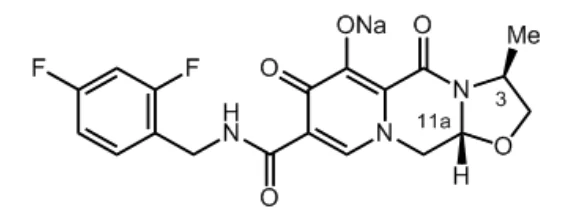
Physicochemical properties: Cabotegravir sodium is a white to almost white solid that is slightly soluble in water. Over most of the physiological pH range cabotegravir sodium is practically insoluble.
Cabotegravir – Extended Release Injectable Suspension
Proper name: cabotegravir
Chemical name: (3S,11aR)-N-[(2,4-Difluorophenyl)methyl]-6-hydroxy-3-methyl-5,7-dioxo-2,3,5,7,11,11a-hexahydro[1,3]oxazolo[3,2-a]pyrido[1,2-d]pyrazine-8-carboxamide
Molecular formula and molecular mass: C19H17F2N3O5
405.35 g/mol
Structural formula:
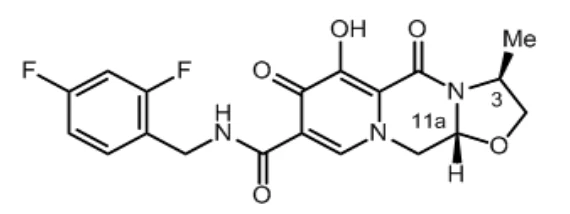
Physicochemical properties: Cabotegravir is white to almost white solid that is practically insoluble in water. Over most of the physiological pH range cabotegravir is practically insoluble.
Rilpivirine – Extended Release Injectable Suspension
Proper name: rilpivirine
Chemical name: 4-[[4-[[4-[(E)-2-cyanoethenyl]-2,6-dimethylphenyl]amino]-2-pyrimidinyl]amino]benzonitrile
Molecular formula and molecular mass: C22H18N6
366.42 g/mol
Structural formula:
Physicochemical properties: Rilpivirine drug substance is a white to slightly yellow powder. It is practically insoluble or insoluble in aqueous media over the physiological range.
14 Clinical Trials
14.1 Clinical Trials by Indication
Treatment of HIV-1 Infection in Virologically Stable and Suppressed (HIV-1 RNA < 50 copies/mL) Adults.
Monthly Dosing: FLAIR and ATLAS
FLAIR and ATLAS Trial Design and Study Demographics
The efficacy of VOCABRIA and CABENUVA monthly dosing has been evaluated in two Phase 3 randomised, multicenter, active-controlled, parallel-arm, open-label, non-inferiority trials, [FLAIR (201584) and ATLAS (201585)] in virologically-suppressed patients.
Table 23 Summary of Study Design for FLAIR and ATLAS (Pivotal Phase 3 studies)
| Study # | Study design | Dosage, route of administration and duration |
|---|---|---|
FLAIR (201584) | Randomized, multicenter, active-controlled, parallel-arm, open-label, non-inferiority study. HIV-1-infected, antiretroviral treatment-naive patients (n = 629) received a dolutegravir INSTI-containing regimen for 20 weeks (either DTG/ABC/3TC or DTG plus 2 other NRTIs if subjects were HLA-B*5701 positive). Subjects who were virologically-suppressed (HIV-1 RNA <50 copies per mL, n = 566) were then randomised to receive the cabotegravir + rilpivirine regimen (oral lead-in + monthly injections) or remain on CAR. Primary endpoint: The proportion of subjects with plasma HIV-1 RNA ≥50 copies/mL at Week 48 (snapshot algorithm for the ITT-E population). | Cabotegravir + rilpivirine regimen: Oral Lead-In (at least 4 weeks): Daily oral lead-in dosing with one 30-mg cabotegravir (VOCABRIA) tablet plus one 25-mg rilpivirine tablet (EDURANT). Monthly IM injections (additional 44 weeks): cabotegravir long-acting injectable suspension plus rilpivirine long-acting injectable suspension (CABENUVA). CAR (Current Antiretroviral Regimen): 48-weeks: Oral dosing of DTG/ABC/3TC or DTG plus 2 other NRTIs if HLA B*5701 positive. |
| ATLAS (201585) | Randomized, multicenter, active-controlled, parallel-arm, open-label, non-inferiority study. HIV-1-infected, ART-experienced, virologically-suppressed patients [HIV-1 RNA <50 copies per mL, for at least 6 months (median 4.3 years), n = 616] were randomised and received the cabotegravir + rilpivirine regimen (oral lead-in + monthly injections) or remain on CAR. Primary endpoint: The proportion of subjects with plasma HIV-1 RNA ≥50 copies/mL at Week 48 (snapshot algorithm for the ITT-E population). | Cabotegravir + rilpivirine regimen: Oral Lead-In (at least 4 weeks): Daily oral lead-in dosing with one 30-mg cabotegravir (VOCABRIA) tablet plus one 25-mg rilpivirine tablet (EDURANT). Monthly IM injections (additional 44 weeks): cabotegravir long-acting injectable suspension plus rilpivirine long-acting injectable suspension (CABENUVA). CAR: 48-weeks: Oral dosing of NNRTI+2NRTIs or PI+2NRTIs or INSTI+2NRTIs. |
A summary of the demographic characteristics for FLAIR and ATLAS are presented in Table 24 and Table 25.
Table 24 Summary of Demographic Characteristics for Studies FLAIR (201584), ATLAS (201585) and Pooled Data (ITT-E Population)
FLAIR 201584 | ATLAS 201585 | Pooled | ||||||||||||||||||||
|---|---|---|---|---|---|---|---|---|---|---|---|---|---|---|---|---|---|---|---|---|---|---|
| Demographic Characteristic | CAB + RPV N=283 | CAR N=283 | CAB + RPV N = 308 | CAR N = 308 | CAB + RPV N = 591 | CAR N = 591 | ||||||||||||||||
| Age (yrs) | ||||||||||||||||||||||
| Median (range) | 34.0 (19 - 68) | 34.0 (18 – 68) | 40.0 (21 – 74) | 43.0 (18 – 82) | 38.0 (19 – 74) | 38.0 (18 – 82) | ||||||||||||||||
| Age, Groups (yrs), n (%) | ||||||||||||||||||||||
| <35 | 143 (51) | 145 (51) | 80 (26) | 80 (26) | 223 (38) | 225 (38) | ||||||||||||||||
| 35 to <50 | 107 (38) | 109 (39) | 162 (53) | 132 (43) | 269 (46) | 241 (41) | ||||||||||||||||
| ≥50 | 33 (12) | 29 (10) | 66 (21) | 96 (31) | 99 (17) | 125 (21) | ||||||||||||||||
| Sex at Birth, n (%) | ||||||||||||||||||||||
| Female | 63 (22) | 64 (23) | 99 (32) | 104 (34) | 162 (27) | 168 (28) | ||||||||||||||||
| Male | 220 (78) | 219 (77) | 209 (68) | 204 (66) | 429 (73) | 423 (72) | ||||||||||||||||
| Body Mass Index (kg/m2) at Baseline a | ||||||||||||||||||||||
| Median (range) | 24.10 (17.3 – 44.9) | 24.00 (12.6 – 47.4) | 25.50 (15.3-50.9) | 25.50 (17.8-57.7) | 24.90 (15.3-50.9) | 24.80 (12.6-57.7) | ||||||||||||||||
| Race Subgroups, n (%) | ||||||||||||||||||||||
| African American/African Heritage | 47 (17) | 56 (20) | 62 (20) | 77 (25) | 109 (18) | 133 (23) | ||||||||||||||||
| Asian | 12 (4) | 15 (5) | 22 (7) | 13 (4) | 34 (6) | 28 (5) | ||||||||||||||||
| White | 216 (76) | 201 (71) | 214 (69) | 207 (67) | 430 (73) | 408 (69) | ||||||||||||||||
| Other | 8 (3) | 9 (3) | 10 (3) | 11 (4) | 18 (3) | 20 (3) | ||||||||||||||||
CAR = Current antiretroviral regimen For Study 201584, CAR = ABC/DTG/3TC or DTG+2NRTIs if HLA B*5701 positive For Study 201585, CAR = NNRTI+2NRTIs or PI+2NRTIs or INSTI+2NRTIs
| ||||||||||||||||||||||
Table 25 Summary of Baseline Characteristics for Studies FLAIR (201584), ATLAS (201585) and Pooled Data (ITT-E Population)
FLAIR 201584 | ATLAS 201585 | Pooled | ||||||||||||||||||||||||||
|---|---|---|---|---|---|---|---|---|---|---|---|---|---|---|---|---|---|---|---|---|---|---|---|---|---|---|---|---|
FLAIR 201584 | ATLAS 201585 | Pooled | ||||||||||||||||||||||||||
| CAB + RPV | CAR | CAB + RPV | CAR | CAB + RPV | CAR | |||||||||||||||||||||||
| CAB + RPV | CAR | CAB + RPV | CAR | CAB + RPV | CAR | |||||||||||||||||||||||
| (N=283) | (N=283) | (N=308) | (N=308) | (N=591) | (N=591) | |||||||||||||||||||||||
| (N=283) | (N=283) | (N=308) | (N=308) | (N=591) | (N=591) | |||||||||||||||||||||||
| Induction Baseline (Week -20) HIV-1 RNA c/mL, n (%) | ||||||||||||||||||||||||||||
| <100,000 | 227 (80) | 227 (80) | NA | NA | NA | NA | ||||||||||||||||||||||
| ≥100,000 | 56 (20) | 56 (20) | NA | NA | NA | NA | ||||||||||||||||||||||
| Time from First HIV-1 RNA <50 c/mL until Maintenance Phase Start | ||||||||||||||||||||||||||||
| Median (Weeks) (IQR) | 16.10 (12.40, 16.10) | 16.10 (15.30, 16.30) | NA | NA | NA | NA | ||||||||||||||||||||||
| Time Since First ART Until Maintenance Phase Start | ||||||||||||||||||||||||||||
| Time | 20 weeks a | 20 weeks a | 52 months b (IQR 33, 87) | 52 months b (IQR 33, 84) | ||||||||||||||||||||||||
| Baseline CD4+ (cells/mm3) | ||||||||||||||||||||||||||||
| Median (IQR)) | 624 (473, 839) | 625 (472, 799) | 654 (497, 816) | 653 (488, 844) | 645 (487, 824) | 641 (480, 821) | ||||||||||||||||||||||
| Baseline CD4+ (cells/mm3), n (%) | ||||||||||||||||||||||||||||
| <350 | 19 (7) | 27 (10) | 23 (7) | 27 (9) | 42 (7) | 54 (9) | ||||||||||||||||||||||
| ≥350 to <500 | 64 (23) | 60 (21) | 56 (18) | 57 (19) | 120 (20) | 117 (20) | ||||||||||||||||||||||
| ≥500 | 200 (71) | 196 (69) | 229 (74) | 224 (73) | 429 (73) | 420 (71) | ||||||||||||||||||||||
| Derived Baseline CDC Classification, n (%) | ||||||||||||||||||||||||||||
| HIV infection stage 1 | 200 (71) | 196 (69) | 229 (74) | 224 (73) | 429 (73) | 420 (71) | ||||||||||||||||||||||
| HIV infection stage 2 | 78 (28) | 82 (29) | 78 (25) | 83 (27) | 156 (26) | 165 (28) | ||||||||||||||||||||||
| HIV infection stage 3 | 5 (2) | 5 (2) | 1 (<1) | 1 (<1) | 6 (1) | 6 (1) | ||||||||||||||||||||||
| Induction Baseline (Week -20) Most Prevalent HIV-1 Subtype | ||||||||||||||||||||||||||||
| A | 46 (16) | 36 (13) | NA | NA | NA | NA | ||||||||||||||||||||||
| B | 174 (61) | 174 (61) | NA | NA | NA | NA | ||||||||||||||||||||||
| C | 18 (6) | 20 (7) | NA | NA | NA | NA | ||||||||||||||||||||||
| Baseline Third Agent Class, n (%) | ||||||||||||||||||||||||||||
| NNRTI | NA | NA | 155 (50) | 155 (50) | NA | NA | ||||||||||||||||||||||
| INSTI c | NA | NA | 102 (33) | 99 (32) | NA | NA | ||||||||||||||||||||||
| PI | NA | NA | 51 (17) | 54 (18) | NA | NA | ||||||||||||||||||||||
| Hepatitis C, n (%) | ||||||||||||||||||||||||||||
| Non-reactive | 264 (93) | 274 (97) | 285 (93) | 277 (90) | NA | NA | ||||||||||||||||||||||
| Reactive | 19 (7) | 9 (3) | 23 (7) | 31 (10) | NA | NA | ||||||||||||||||||||||
CAR = Current antiretroviral regimen For Study 201584, CAR = ABC/DTG/3TC or DTG+2NRTIs if HLA B*5701 positive For Study 201585, CAR = NNRTI+2NRTIs or PI+2NRTIs or INSTI+2NRTIs
| ||||||||||||||||||||||||||||
FLAIR and ATLAS Study Results
The primary endpoint of FLAIR and ATLAS was the proportion of patients with plasma HIV-1 RNA ≥50 copies/mL at week 48 (snapshot algorithm for the ITT-E population).
In FLAIR and ATLAS studies, CABENUVA was non-inferior to CAR on the proportion of patients having plasma HIV-1 RNA ≥50 copies/mL (see Table 26).
The non-inferiority result established in the FLAIR and ATLAS studies provides evidence that the length of HIV-1 RNA virologic suppression (i.e. < 6 months or ≥ 6 months) prior to initiation of CABENUVA did not impact overall response rates.
In the FLAIR study, at 96 Weeks, the results remained consistent with the results at 48 Weeks. The proportion of subjects having plasma HIV-1 RNA ≥50 c/mL in cabotegravir plus rilpivirine (n=283) and current antiretroviral regimen (CAR) (n=283) was 3.2% for each treatment arm (adjusted treatment difference between cabotegravir plus rilpivirine and CAR [0.0; 95% CI: -2.9, 2.9]). The proportion of subjects having plasma HIV-1 RNA <50 c/mL in cabotegravir plus rilpivirine and CAR was 87% and 89%, respectively (adjusted treatment difference between cabotegravir plus rilpivirine and CAR [-2.8; 95% CI: -8.2, 2.5]).
In the FLAIR study at Week 124 (Extension Phase), the safety and efficacy of CABENUVA was evaluated in patients who switched (at Week 100) from their current antiretroviral regimen to CABENUVA, with and without an oral lead-in phase, creating an oral lead-in (OLI) group (n=121) and a direct to injection (DTI) group (n=111). At Week 124, the proportion of subjects with HIV-1 RNA ≥50 copies/mL was 0.8% and 0.9% for the OLI and DTI arms, respectively. The rates of virologic suppression (HIV-1 RNA <50 copies/mL) were similar in both the OLI group (113/121 [93.4%]) and the DTI group (110/111 [99.1%]). Initiating the CABENUVA regimen with DTI did not identify any new safety concerns related to omitting the OLI phase.
Treatment differences across baseline characteristics in FLAIR and ATLAS (CD4+ count, gender, age, race, BMI, baseline 3rd agent treatment class) were comparable (see Table 27). Patients in FLAIR and ATLAS were virologically-suppressed prior to Day 1 or study entry, respectively, no clinically relevant change from baseline in CD4+ cell counts was observed.
Table 26 Virologic Outcomes of Randomized Treatment of FLAIR, ATLAS and Pooled Data (ITT-E) at 48 Weeks (Snapshot analysis)
| FLAIR | ATLAS | Pooled Data | ||||||||||||||||||||||
|---|---|---|---|---|---|---|---|---|---|---|---|---|---|---|---|---|---|---|---|---|---|---|---|---|
CAB + RPV (N = 283) n (%) | CAR (N = 283) n (%) | CAB + RPV (N = 308) n (%) | CAR (N = 308) n (%) | CAB + RPV (N = 591) n (%) | CAR (N = 591) n (%) | |||||||||||||||||||
| HIV-1 RNA ≥50 copies/mLa | 6 (2) | 7 (2) | 5 (2) | 3 (1) | 11 (2) | 10 (2) | ||||||||||||||||||
| Treatment Differenceb | -0.4% (95% CI: -2.8%, 2.1%) | 0.7% (95% CI: -1.2%, 2.5%) | 0.2% (95% CI: -1.4%, 1.7%) | |||||||||||||||||||||
| HIV-1 RNA <50 copies/mL | 265 (94) | 264 (93) | 285 (93) | 294 (95) | 550 (93) | 558 (94) | ||||||||||||||||||
| Treatment Differencec | 0.4% (95% CI: -3.7%, 4.5%) | -3.0% (95% CI: -6.7%, 0.7%) | -1.4% (95% CI: -4.1%, 1.4%) | |||||||||||||||||||||
| No virologic data at Week 48 window | 12 (4) | 12 (4) | 18 (6) | 11 (4) | 30 (5) | 23 (4) | ||||||||||||||||||
| Discontinued due to adverse event or death | 8 (3) | 2 (<1) | 11 (4) | 5 (2) | 19 (3) | 7 (1) | ||||||||||||||||||
| Discontinued for other reasons | 4 (1) | 10 (4) | 7 (2) | 6 (2) | 11 (2) | 16 (3) | ||||||||||||||||||
| Missing data during window but on study | 0 | 0 | 0 | 0 | 0 | 0 | ||||||||||||||||||
CAB = Cabotegravir, RPV = Rilpivirine, CAR = Current Antiretroviral Regimen, n = Number of subjects in each treatment group, CI = Confidence interval.
aIncludes subjects who discontinued for lack of efficacy, discontinued while not suppressed.
bTreatment difference [(cabotegravir plus rilpivirine)–current antiretroviral regimen]. Adjusted for baseline stratification factors and assessed using a non-inferiority margin of 6% (FLAIR and ATLAS) and 4% (Pooled) (Intent-to-Treat Exposed population).
cTreatment difference [(cabotegravir plus rilpivirine)–current antiretroviral regimen] Adjusted for baseline stratification factors and assessed using a non-inferiority margin of -10% (FLAIR, ATLAS and Pooled) (Intent-to-Treat Exposed population).
Table 27 Proportion of Subjects in FLAIR and ATLAS with Plasma HIV-1 RNA ≥50 copies/mL at Week 48 for Key Baseline Factors (Snapshot Algorithm).
| Baseline Factor | FLAIR and ATLAS Pooled Data | |
|---|---|---|
CAB + RPV N = 591 n/N (%) | CAR N = 591 n/N (%) | |
Baseline CD4+ (cells/ mm3) <350 ≥350 to <500 ≥500 | 0/42 | 2/54 (4) |
| 5/120 (4) | 0/117 | |
| 6/429 (1) | 8 / 420 (2) | |
Gender Male Female | 6/429 (1) 5/162 (3) | 9/423 (2) 1/168 (<1) |
Race White African-American/African Heritage Asian/Other | 9/430 (2) 2/109 (2) 0/52 | 7/408 (2) 3/133 (2) 0/48 |
BMI <30 kg/m2 ≥30 kg/m2 | 6/491 (1) 5/100 (5) | 8/488 (2) 2/103 (2) |
Age (years) <50 ≥50 | 9/492 (2) 2/99 (2) | 8/466 (2) 2/125 (2) |
Baseline antiviral therapy at randomization PI containing regimen INSTI containing regimen NNRTI containing regimen | 1/51 (2) 6/385 (2) 4/155 (3) | 0/54 9/382 (2) 1/155 (<1) |
Notes: CAB = Cabotegravir, RPV = Rilpivirine, CAR = Current Antiretroviral Regimen.
Every Two Months Dosing: ATLAS-2M
ATLAS-2M Trial Design and Study Demographics
The efficacy of the CABENUVA every 2-months dosing has been evaluated in a Phase 3 randomised, multicenter, parallel-arm, open-label, non-inferiority trials in virologically-suppressed patients.
Table 28 Summary of Study Design for ATLAS-2M
| Study # | Study design | Dosage, route of administration and duration |
|---|---|---|
ATLAS-2M (207966) | Randomized, multicenter, parallel-arm, open-label, non-inferiority study. HIV-1-infected, ART-experienced, virologically-suppressed patients [n = 1045] either on a current standard of care regimen or from the ATLAS study, were randomised and received the cabotegravir + rilpivirine regimen administered either monthly or every 2 months. Primary endpoint: The proportion of subjects with plasma HIV-1 RNA ≥50 copies/mL at Week 48 (snapshot algorithm for the ITT-E population). | Subjects initially on non-cabotegravir + rilpivirine regimens received oral lead-in (at least 4 weeks): One 30-mg cabotegravir (VOCABRIA) tablet plus one 25-mg rilpivirine tablet (EDURANT) daily. Monthly dosing Cabotegravir + rilpivirine regimen: Monthly IM injections (additional 44 weeks): After initiation injections, cabotegravir 2 mL (400 mg) long-acting injectable suspension plus rilpivirine 2 mL (600 mg) long-acting injectable suspension (CABENUVA). Every 2-Months dosing Cabotegravir + rilpivirine regimen: IM injections every 2 months (additional 44 weeks): After initiation injections, cabotegravir 3 mL (600 mg) long-acting injectable suspension plus rilpivirine 3 mL (900 mg) long-acting injectable suspension (CABENUVA). |
A summary of the demographic characteristics for ATLAS-2M are presented Table 29 and Table 30.
Table 29 Summary of Demographic Characteristics for ATLAS-2M (207966) (ITT-E Population)
| Demographic Characteristic | Every 2-month Dosing (N=522) | Monthly Dosing (N=523) | |||||
|---|---|---|---|---|---|---|---|
| Age (yrs) | |||||||
| Median (range) | 42.0 (20 – 83) | 42.0 (19 – 75) | |||||
| Age, Groups (yrs), n (%) | |||||||
| <35 | 137 (26) | 145 (28) | |||||
| 35 to <50 | 242 (46) | 239 (46) | |||||
| ≥50 | 143 (27) | 139 (27) | |||||
| Sex at Birth, n (%) | |||||||
| Female | 137 (26) | 143 (27) | |||||
| Male | 385 (74) | 380 (73) | |||||
| Body Mass Index (kg/m2) at Baseline | |||||||
| Median (range) | 25.724 (17.75 – 48.27) | 25.923 (16.57 – 77.52) | |||||
| Race, n (%) | |||||||
| White | 370 (71) | 393 (75) | |||||
| Non-White | 152 (29) | 130 (25) | |||||
| Black or African American | 101 (19) | 90 (17) | |||||
Table 30 Summary of Baseline Characteristics for ATLAS-2M (207966) (ITT-E Population)
Every 2-month Dosing (N=522) | Monthly Dosing (N=523) | ||||||||||||
|---|---|---|---|---|---|---|---|---|---|---|---|---|---|
| Baseline CD4+ (cells/mm3) | |||||||||||||
Median (IQR) | 642 (499, 827) | 688 (523, 878) | |||||||||||
| Baseline CD4+ (cells/mm3), n (%) | |||||||||||||
| <350 | 35 (7) | 27 (5) | |||||||||||
| 350 to <500 | 96 (18) | 89 (17) | |||||||||||
| ≥500 | 391 (75) | 407 (78) | |||||||||||
| Derived Baseline CDC Classification, n(%) | |||||||||||||
| HIV infection stage 1 | 391 (75%) | 407 (78%) | |||||||||||
| HIV infection stage 2 | 129 (25%) | 113 (22%) | |||||||||||
| HIV infection stage 3 | 2 (<1%) | 3 (<1%) | |||||||||||
| Baseline Third Agent Class, n (%) | |||||||||||||
| NNRTI | 368 (70) | 382 (73) | |||||||||||
| INSTI | 334 (64) | 341 (65) | |||||||||||
| PI | 115 (22) | 111 (21) | |||||||||||
| Hepatitis B | |||||||||||||
| n | 522 | 522 | |||||||||||
| Negative | 520 (>99) | 521 (>99) | |||||||||||
| Positive | 2 (<1) | 1 (<1) | |||||||||||
| Hepatitis C | |||||||||||||
| n | 522 | 522 | |||||||||||
| Negative | 517 (>99) | 516 (99) | |||||||||||
| Positive | 5 (<1) | 6 (1) | |||||||||||
| Hepatitis B and C | |||||||||||||
| n | 522 | 522 | |||||||||||
| B only | 2 (<1) | 1 (<1) | |||||||||||
| C only | 5 (<1) | 6 (1) | |||||||||||
| B and C | 0 | 0 | |||||||||||
| Neither | 515 (99) | 515 (99) | |||||||||||
Note: Subjects classified as Hepatitis B positive at entry by serology but subsequently determined to have no active Hepatitis B infection, and were allowed to participate in the study. Note: Hepatitis C positive was determined based on positive detection of HCV antibody and RNA. | |||||||||||||
ATLAS-2M Study Results
In ATLAS-2M, cabotegravir + rilpivirine administered every 2 months was non-inferior to cabotegravir and rilpivirine administered every month on the proportion of subjects having plasma HIV-1 RNA ≥50 c/mL (1.7% and 1.0% respectively) at Week 48. The adjusted treatment difference between cabotegravir + rilpivirine administered every 2 months and every month (0.8; 95% CI: -0.6, 2.2) met the non-inferiority criterion (upper bound of the 95% CI below 4%). Furthermore, cabotegravir + rilpivirine dosed every 2 months was non-inferior to CAB+RPV dosed every month on the proportion of subjects having plasma HIV-1 RNA <50 c/mL (94% and 93%, respectively) at Week 48. The adjusted treatment difference between cabotegravir + rilpivirine dosed every 2 months and monthly (0.8; 95% CI: -2.1, 3.7) met the non-inferiority criteria (lower bound of the 95% CI greater than -10% (see Table 31).
The non-inferiority result established in ATLAS-2M, were also supported by prior treatment exposure to cabotegravir plus rilpivirine (i.e. 0., 1 to 24 weeks and >24 weeks) which did not impact overall response rates.
In ATLAS-2M, treatment differences across the baseline characteristics; CD4+ count, age, race, BMI and age were comparable between the two treatment groups. In females with prior exposure to cabotegravir plus rilpivirine ≥1 week, and for cabotegravir plus rilpivirine baseline third agent class, a statistically significant difference in proportion between treatment groups was observed.
In ATLAS-2M, treatment differences on the primary endpoint across baseline characteristics (CD4+ lymphocyte count, gender, race, BMI, age and prior exposure to cabotegravir/rilpivirine) were not clinically meaningful.
Table 31 Virologic Outcomes of Randomized Treatment of ATLAS-2M at 48 Weeks (Snapshot analysis)
| Every 2-month Dosing | Monthly Dosing | |||||||||
|---|---|---|---|---|---|---|---|---|---|---|
| N=522 (%) | N=523 (%) | |||||||||
| HIV-1 RNA≥50 copies/mL† | 9 (1.7) | 5 (1.0) | ||||||||
| Treatment Difference % (95% CI)* | 0.8 (-0.6, 2.2) | |||||||||
| HIV-1 RNA <50 copies/mL | 492 (94.3) | 489 (93.5) | ||||||||
| Treatment Difference % (95% CI)* | 0.8 (-2.1, 3.7) | |||||||||
| No virologic data at week 48 window | 21 (4.0) | 29 (5.5) | ||||||||
| Reasons: | ||||||||||
| Discontinued study due to AE or death | 9 (1.7) | 13 (2.5) | ||||||||
| Discontinued study for other reasons a | 12 (2.3) | 16 (3.1) | ||||||||
| On study but missing data in window | 0 | 0 | ||||||||
* Adjusted for baseline stratification factors.
† Includes subjects who discontinued for lack of efficacy, discontinued while not suppressed.
N = Number of subjects in each treatment group, CI = confidence interval, CAR = current antiviral regimen.
Table 32 Proportion of Subjects with Plasma HIV-1 RNA ≥50 copies/mL at Week 48 for key baseline factors (Snapshot Outcomes).
BMI= body mass index
In ATLAS-2M, through Week 96, cabotegravir + rilpivirine administered every 2 monthsremained non-inferior to cabotegravir and rilpivirine administered every month. The efficacy results at Week 96 are consistent with the results of the Week 48 primary endpoint. The proportion of subjects having plasma HIV-1 RNA ≥50 c/mL at Week 96 in cabotegravir plus rilpivirine every 2 months dosing (n=522) and
Number of HIV-1 RNA ≥50 c/mL/ Total Assessed (%) | |||||
|---|---|---|---|---|---|
| 2 Month Dosing | Monthly dosing | ||||
| Baseline CD4+ cell count (cells/mm3) | <350 | 1/ 35 (2.9) | 1/ 27 (3.7) | ||
| 350 to <500 | 1/ 96 (1.0) | 0/ 89 | |||
| ≥500 | 7/391 (1.8) | 4/407 (1.0) | |||
| Gender | Male | 4/385 (1.0) | 5/380 (1.3) | ||
| Female | 5/137 (3.5) | 0/143 | |||
| Race | White | 5/370 (1.4) | 5/393 (1.3) | ||
| Non-White | 4/152 (2.6) | 0/130 | |||
| Black/African American | 4/101 (4.0) | 0/ 90 | |||
| Non-Black/African American | 5/421 (1.2) | 5/421 (1.2) | |||
| BMI | <30 kg/m2 | 3/409 (0.7) | 3/425 (0.7) | ||
| ≥30 kg/m2 | 6/113 (5.3) | 2/98 (2.0) | |||
| Age (years) | <35 | 4/137 (2.9) | 1/145 (0.7) | ||
| 35 to <50 | 3/242 (1.2) | 2/239 (0.8) | |||
| >50 | 2/143 (1.4) | 2/139 (1.4) | |||
| Prior exposure CAB/RPV | None | 5/327 (1.5) | 5/327 (1.5) | ||
| 1-24 weeks | 3/69 (4.3) | 0/68 | |||
| >24 weeks | 1/126 (0.8) | 0/128 | |||
cabotegravir plus rilpivirine monthly dosing (n=523) was 11 (2.1%) and 6 (1.1%) respectively (adjusted treatment difference between cabotegravir plus rilpivirine every 2 months dosing and monthly dosing [1.0; 95% CI: -0.6, 2.5]) (ITT-E). The proportion of subjects having plasma HIV-1 RNA <50 c/mL at Week 96 in cabotegravir plus rilpivirine every 2 months dosing and cabotegravir plus rilpivirine monthly dosing was 475 (91.0%) and 472 (90.2%), respectively (adjusted treatment difference between cabotegravir plus rilpivirine every 2 months dosing and monthly dosing [0.8; 95% CI: -2.8, 4.3]) (ITT-E).
Post-Hoc Analysis
Multivariable analyses of pooled phase 3 studies (ATLAS, FLAIR, and ATLAS-2M), including data from 1039 HIV-infected adults with no prior exposure to cabotegravir and rilpivirine long acting injection , examined the influence of baseline viral and participant characteristics, dosing regimen, and post-baseline plasma drug concentrations on confirmed virologic failure (CVF) using regression modelling with a variable selection procedure. Through Week 48 in these studies, 13/1039 (1.25%) of participants had CVF while receiving cabotegravir and rilpivirine.
Four covariates were significantly associated (P<0.05 for each adjusted odds ratio) with increased risk of CVF: rilpivirine resistance mutations at baseline identified by proviral DNA genotypic assay, HIV-1 subtype A6/A1 (associated with integrase L74I polymorphism), rilpivirine trough concentration 4 weeks following initial injection dose, body mass index of at least 30kg/m2 (associated with cabotegravir pharmacokinetics). Other variables including Q4W or Q8W dosing, female gender, or other viral subtypes (non A6/A1) had no significant association with CVF. No baseline factor, when present in isolation, was predictive of virologic failure. However, a combination of at least 2 of the following baseline factors was associated with an increased risk of CVF: rilpivirine resistance mutations, HIV-1 subtype A6/A1, or BMI ≥30 kg/m2.
Table 33 Week 48 outcomes by presence of key baseline factors of rilpivirine resistance associated mutations, Subtype A6/A11, and BMI ≥30kg/m2
| Baseline Factors (number) | Virologic Successes (%)2 | Confirmed Virologic Failure (%)3 |
|---|---|---|
| 0 | 694/732 (94.8) | 3/732 (0.41) |
| 1 | 261/272 (96.0) | 1/272 (0.37)4 |
| ≥2 | 25/35 (71.4) | 9/35 (25.7) 5 |
| TOTAL (95% Confidence Interval) | 980/1039 (94.3) (92.74%, 95.65%) | 13/1039 (1.25) (0.67%, 2.13%) |
1 HIV-1 subtype A1 or A6 classification based on Los Alamos National Library panel from HIV
Sequence database (June 2020)
2 Based on the FDA Snapshot algorithm of RNA <50 copies/mL.
3 Defined as two consecutive measurements of HIV RNA >200 copies/mL.
4 Positive Predictive Value (PPV) <1%; Negative Predictive Value (NPV) 98%; sensitivity 8%; specificity 74%
5 PPV 26%; NPV 99.6%; sensitivity 69%; specificity 97.5%
Pediatrics 12 Years Of Age and Older and Weighing At Least 35 kg: MOCHA
The safety, tolerability, and pharmacokinetics of oral and injectable cabotegravir and oral and injectable rilpivirine were assessed in an ongoing Phase 1/2 multicenter, open-label, non- comparative study, MOCHA (IMPAACT 2017) (see 8.2.1 Clinical Trial Adverse Reactions – Pediatrics and 10.3 Pharmacokinetics).
Cohort 1
Fifty-five HIV-1–infected and virologically suppressed adolescents aged 12 to younger than 18 years and weighing at least 35 kg were enrolled to 1 of 4 subgroups, 1C: cabotegravir monthly dosing, 1C: cabotegravir every-2-month dosing, 1R: rilpivirine monthly dosing or 1R: every-2-month dosing. In cohort 1C, participants (n = 30) received one 30-mg cabotegravir tablet daily for at least 4 weeks, followed by three monthly cabotegravir injections (Month 1: 600-mg injection, Months 2 and 3: 400-mg injection), or every-2-month cabotegravir injections for 2 months (Months 1 and 2: 600-mg injection), while continuing background antiretroviral therapy. In cohort 1R, participants (n = 25) received one 25-mg rilpivirine tablet daily for at least 4 weeks followed by three monthly rilpivirine injections (Month 1: 900-mg injection, Months 2 and 3: 600-mg injection), or every-2-month rilpivirine injections for 2 months (Months 1 and 2: 900-mg injection), while continuing background antiretroviral therapy.
At baseline, in cohort 1 (n=55), the median age of participants was 15.0 years, the median weight was 50.0 kg (range: 37.4, 98.5), 47% were female, 93% were non-White; and no participant had a CD4+ cell count <350 cells per mm3. At baseline, median CD4+ cell count was 725 cells per mm3 (range: 397 to 1808).
The primary objectives at Week 16, which were to confirm the use of the adult dose through the evaluation of safety and pharmacokinetics for oral and injectable cabotegravir and injectable rilpivirine in HIV-1–infected virologically suppressed adolescents, were met enabling the progression of participants to cohort 2 (see 8.2.1 Clinical Trial Adverse Reactions – Pediatrics and 10.3 Pharmacokinetics).
Cohort 2
Cohort 2 enrolled eligible participants who had completed cohort 1 as well as eligible participants who had not been previously enrolled in the study. Cohort 2 participants (n = 144) discontinued their background antiretroviral therapy and received one 30-mg cabotegravir tablet plus one 25-mg rilpivirine tablet daily for at least 4 weeks followed by every-2-month cabotegravir injections (Months 1 and 2: 600-mg injection, then 600-mg injection once every 2 months) and rilpivirine injections (Months 1 and 2: 900-mg injection, then 900-mg injection once every 2 months).
At baseline, in cohort 2, the median age of participants was 15.0 years, the median weight was 48.5 kg (range 35.2, 100.9), 51% were female, 99% were non-White, and 4 participants had a CD4+ cell count less than 350 cells per mm3. At baseline, median CD4+ cell count was 739.5 cells pe mm3 (range: 81 to 1925).
The primary objective at Week 24, which was to confirm the safety of injectable cabotegravir plus injectable rilpivirine in HIV-1-infected virologically suppressed adolescents, was met (see 8.2.1 Clinical Trial Adverse Reactions – Pediatrics). Antiviral activity was assessed as a secondary objective: 139 of the 141 (98.6%) participants with available data remained virologically suppressed (HIV-1 RNA <50 copies/mL) at Week 24.
15 Microbiology
Antiviral Activity in Cell Culture
Cabotegravir exhibited antiviral activity against laboratory strains of wild-type HIV-1 with mean concentration of cabotegravir necessary to reduce viral replication by 50 percent (EC50) values of 0.22 nM in peripheral blood mononuclear cell (PBMCs), 0.74 nM in 293T cells and 0.57 nM in MT-4 cells. Cabotegravir demonstrated antiviral activity in cell culture against a panel of 24 HIV-1 clinical isolates (3 in each group of M [clades A, B, C, D, E, F, and G] and 3 in group O) with EC50 values ranging from 0.02 nM to 1.06 nM for HIV-1. Cabotegravir EC50 values against three HIV-2 clinical isolates ranged from 0.10 nM to 0.14 nM. No clinical data is available in patients with HIV-2.
Rilpivirine exhibited activity against laboratory strains of wild-type HIV-1 in an acutely infected T-cell line with a median EC50 value for HIV-1IIIB of 0.73 nM (0.27 ng per mL). Rilpivirine also demonstrated antiviral activity against a broad panel of HIV-1 group M (clades A, B, C, D, F, G, and H) primary isolates with EC50 values ranging from 0.07 nM to 1.01 nM and group O primary isolates with EC50 values ranging from 2.88 to 8.45 nM.
Antiviral Activity in Combination with Other Antiviral Agents
Neither cabotegravir nor rilpivirine were antagonistic with all tested anti-HIV agents or with each other when tested in combination (in vitro assessments were conducted in combination with rilpivirine, lamivudine, tenofovir and emtricitabine).
Effect of Human Serum and Serum Proteins
in vitro studies suggested a 408-fold shift in EC50 of cabotegravir in the presence of 100% human serum (by method of extrapolation), and the protein adjusted EC50 (PA-EC50) was estimated to be 102 nM in MT4 cells. Rilpivirine is highly bound (approximately 99.7%) to plasma proteins in vitro, primarily to albumin.
Resistance In Vitro
Isolation from wild-type HIV-1 and activity against resistant strains:
Cabotegravir-resistant viruses were selected during passage of HIV-1 strain IIIB in MT-2 cells in the presence of cabotegravir. Amino acid substitutions in integrase which emerged and conferred decreased susceptibility to cabotegravir included Q146L (fold change: 1.3 to 4.6), S153Y (fold change: 2.8 to 8.4), and I162M (fold change: 2.8). The integrase substitution T124A also emerged alone (fold change: 1.1 to 7.4 in cabotegravir susceptibility), in combination with S153Y (fold change: 3.6 to 6.6 in cabotegravir susceptibility), or I162M (2.8-fold change in cabotegravir susceptibility). Cell culture passage of virus harboring integrase substitutions Q148H, Q148K, or Q148R selected for additional substitutions (C56S, V72I, L74M, V75A, T122N, E138K, G140S, G149A, and M154I), with substituted viruses having reduced susceptibility to cabotegravir of 2.0-fold to 410-fold change. The combinations of E138K+Q148K and V72I+E138K+Q148K conferred the greatest reductions of 53-fold to 260-fold change and 410-fold change, respectively.
Rilpivirine-resistant strains were selected in cell culture starting from wild-type HIV-1 of different origins and subtypes as well as NNRTI-resistant HIV-1. The frequently observed amino acid substitutions that emerged and conferred decreased phenotypic susceptibility to rilpivirine included: L100I; K101E; V106I and A; V108I; E138K and G, Q, R; V179F and I; Y181C and I; V189I; G190E; H221Y; F227C; and M230I and L.
Resistance In Vivo
In LATTE (oral), there were three Confirmed Virologic Failure with resistance through Week 96. Three additional Confirmed Virologic Failure with resistance occurred through Week 264. The substitutions associated with resistance to oral cabotegravir through week 264 are Q148R (3), E138Q (1), G140A (1), and G140S (1). The substitutions associated with rilpivirine resistance are E138A (1), K101E (1), K101K/E (1), and E138E/K (1). All CVFs had Subtype B virus.
In LATTE-2 (long acting injection) there was one subject with Confirmed Virologic Failure with resistance through Week 48. The substitution associated with resistance to cabotegravir is Q148R. The substitutions associated with NNRTI resistance are K103N, E138G, and K238T. This CVF had Subtype AG virus. There were no confirmed virologic failures after Week 48.
In the FLAIR study, from Week 48 to Week 96, there were no additional confirmed virologic failures on cabotegravir plus rilpivirine and 1 additional confirmed virologic failure on current antiretroviral regimen.
In the FLAIR study during the Extension Phase, there was one confirmed virologic failure at Week 108 in the group randomized to cabotegravir plus rilpivirine. This subject had NNRTI resistance-associated substitutions V106V/A, V108V/I, E138G, and M230L with 27-fold change to rilpivirine, INSTI resistance-associated substitutions N155H and R263K with 9-fold change to cabotegravir and 3.8-fold change to dolutegravir. In the group receiving current antiretroviral regimen who switched to cabotegravir plus rilpivirine direct to injection at Week 100, there was one confirmed virologic failure at Week 112 with no INSTI resistance-associated substitutions detected.
In FLAIR Baseline genotyping was performed on HIV-1 RNA; mutations were reported as treatment emergent. ATLAS Baseline genotyping was performed on PBMC DNA and mutations were reported as on treatment. The number of patients who met confirmed virologic failure (CVF) criteria was low across the pooled FLAIR and ATLAS studies. In the pooled analysis, there were 7 CVFs on cabotegravir plus rilpivirine (7/591, 1.2%) and 7 CVFs on current antiretroviral regimen (7/591, 1.2%). The substitutions associated with resistance to cabotegravir long-acting injection observed in the pooled ATLAS and FLAIR trials, are G140R (n = 1), Q148R (n = 2), and N155H (n = 1). The substitutions associated with resistance to rilpivirine are K101E (1), E138E/A/K/T (1), E138K (2), E138A (1), E138E/K (1) and E138K (1). The CVFs had subtypes A, A1, or AG.
In the ATLAS-2M trial confirmed virologic failure was low with 11 subjects meeting confirmed virologic failure (CVF) criteria through Week 96: 9 subjects (1.7%) in the every 2-months dosing arm and 2 subjects (0.4%) in the monthly dosing arm. Ten subjects met CVF criteria at or before the Week 48. One additional subject in the every 2-months dosing arm met CVF criteria between 48 and 96 weeks. Among the 11 subjects with CVF (Q8W-9 subjects; Q4W-2 subjects), 5 carried HIV-1 subtype B, 3 had either subtype A1 or A and 2 had subtype C, and 1 was with complex subtypes at Baseline.
In addition to the above 8 CVF subjects in the every 2-months dosing arm that were described in the Week 48 analysis, 1 subject met CVF at the Week 88 timepoint. For this subject, there were 2 major NNRTI mutations, K103N and RPV resistance-associated mutation, Y181C identified at Baseline. INSTI substitution L74L/I was also observed at Baseline. At the suspected virologic failure timepoint, virus from this subject had the same NNRTI mutations observed at Baseline but did not retain the L74L/I
INSTI substitution and had no additional INSTI mutations. Phenotypic analysis showed decreased RPV sensitivity (FC=5.17), but the virus was sensitive to CAB (FC=1.25).
At Baseline in the every 2-months dosing arm, 5 subjects had RPV resistance-associated mutations of Y181Y/C + H221H/Y, Y188Y/F/H/L, Y188L, E138A or E138E/A and 1 subject contained cabotegravir resistance mutation, G140G/R (in addition to the above Y188Y/F/H/L resistance-associated mutation). At the suspected virologic failure timepoint in the every 2-months dosing arm, 7 subjects had major NNRTI resistance-associated substitutions with 2 of these subjects having an addition of K101E and 1 subject having an addition of E138E/K from Baseline to the suspected virologic failure timepoint. Rilpivirine fold change for these 7 subjects ranged from 2.4 to 15. Five of the 7 subjects with NNRTI resistance-associated substitutions, also had major INSTI resistance-associated substitutions N155H (2), Q148R, or Q148Q/R+N155N/H (2). Fold changes for subjects in the every 2 months dosing arm ranged from 0.6 to 9.1 for cabotegravir, 0.8 to 2.2 for dolutegravir and 0.8 to 1.7 for bictegravir. The integrase genotype and phenotype assay failed for one subject and cabotegravir phenotype was unavailable for another. INSTI polymorphism L74I was seen in 4 of 7 subjects. Three subjects had NRTI resistance-associated substitutions that were also present at Baseline.
In the monthly dosing arm, neither subject had any RPV or INSTI resistance-associated substitutions at Baseline. One subject had the NNRTI polymorphisms G190Q + V189I. These subjects also had NRTI resistance-associated substitutions M41L+D67N+L210W, or D67N. At the suspected virologic failure timepoint, one subject had RPV resistance- associated mutations, K101E + M230L and the other had an addition of NNRTI polymorphism, V179V/I. Rilpivirine fold changes were 17 and >119.2. Both subjects had INSTI resistance-associated mutations, either N155N/H or Q148R + E138E/K with cabotegravir fold changes of 1.8 and 4.6, dolutegravir fold changes of 1.0 and 1.4 and bictegravir fold changes of 1.1 and 1.5, respectively. Both subjects had NRTI resistance-associated substitutions that were also present at Baseline.
Association of Subtype A1 and Baseline L74I Substitution in Integrase with Cabotegravir plus Rilpivirine Virologic Failure
Five of the 7 cabotegravir plus rilpivirine virologic failures in FLAIR and ATLAS had HIV-1 subtype A1 and the integrase L74I substitution (IN L74I) detected at baseline and failure timepoints. Patients with subtype A1 infection whose virus did not have IN L74I at baseline did not experience virologic failure (FLAIR results shown in
Table 34). In addition, there was no detectable phenotypic resistance to cabotegravir conferred by the presence of IN L74I at baseline.
The other 2 virologic failures had subtype AG and did not have the IN L74I substitution. Six of the virologic failures with subtype A1 and AG were from Russia where the prevalence of subtypes A, A1, and AG are high. Subtypes A, A1, and AG are uncommon in Canada.
The presence of the IN L74I substitution in other subtypes, such as subtype B commonly seen in Canada, was not associated with virologic failure (
Table 34). In contrast to the FLAIR and ATLAS Phase 3 trials where all virologic failures were subtype A, A1 or AG, in the ATLAS-2M Phase 3 trial, subtypes of the cabotegravir plus rilpivirine virologic failures included A1, A, B, C and complex.
Table 34 Rate of Virologic Failure in FLAIR Trial: Baseline Analysis (Subtypes A1 and B, and Presence of IN L74I)
| Patient Characteristics | Cabotegravir plus Rilpivirinea | Current Antiretroviral Regimenb |
|---|---|---|
| Subtype A1 | 3/8 (38%) | 1/4 (25%) |
| +IN L74I | 3/5 (60%) | 1/3 (33%) |
| -IN L74I | 0/3 | 0/1 |
| Subtype B | 0/174 | 2/174 (1%) |
| +IN L74I | 0/12 | 0/11 |
| -IN L74I | 0/153 | 2/150 (1%) |
| Missing data | 0/9 | 0/13 |
| Russia | 4/54 (7%) | 1/39 (3%) |
| +IN L74I | 3/35 (9%) | 1/29 (3%) |
| -IN L74I | 1/12 (8%) | 0/7 |
| Missing data | 0/7 | 0/3 |
aThere were 4 virologic failures in the cabotegravir arm. One virologic failure in the cabotegravir arm had subtype AG.
bThere were 3 virologic failures in the current antiretroviral regimen arm. Two virologic failures in the current antiretroviral regimen arm had subtype B.
Cross-resistance
Cabotegravir: Cross-resistance has been observed among INSTIs. Cabotegravir had reduced susceptibility (greater than 5-fold change) to recombinant HIV-1 strain NL432 viruses harbouring the following integrase amino acid substitutions: G118R, Q148K, Q148R, T66K+L74M, E92Q+N155H, E138A+Q148R, E138K+Q148K/R, G140C+Q148R, G140S+Q148H/K/R, Y143H+N155H, and Q148R+N155H (range: 5.1-fold to 81-fold). The substitutions E138K+Q148K and Q148R+N155H conferred the greatest reductions in susceptibility of 81-fold and 61-fold, respectively. Cabotegravir was active against viruses harboring the NNRTI substitutions K103N or Y188L, or the NRTI substitutions M184V, D67N/K70R/T215Y, or V75I/F77L/F116Y/Q151M.
Rilpivirine: Cross-resistance in site-directed mutant virus has been observed among NNRTIs. The single NNRTI substitutions K101P, Y181I, and Y181V conferred 52-, 15-, and 12 times fold change to rilpivirine, respectively. The K103N substitution did not show reduced susceptibility to rilpivirine by itself. Combinations of 2 or 3 NNRTI resistance-associated substitutions gave 3.7- to 554-fold change to rilpivirine in 38% and 66% of substitutions, respectively. Considering all available cell culture and clinical data, any of the following amino acid substitutions, when present at baseline, are likely to decrease the antiviral activity of rilpivirine: K101E and P; E138A, G, K, R, and Q; V179L; Y181C, I, and V; Y188L; H221Y; F227C; M230I and L, and the combination of L100I/K103N.
16 Non-Clinical Toxicology
General Toxicology
The effect of prolonged daily treatment with high doses of cabotegravir has been evaluated in repeat oral dose toxicity studies in rats (26 weeks) and in monkeys (39 weeks). There were no drug-related adverse effects in rats or monkeys given cabotegravir orally at doses that produced exposures >20 times or 4 to 6 times the exposure in humans at the MRHD, respectively.
In the 14-day monkey toxicity study, a dose of 1,000 mg/kg/day was not tolerated and resulted in morbidity associated with gastro-intestinal (GI) effects (body weight loss, emesis, loose/watery feces, and moderate to severe dehydration).
In the 28-day monkey toxicity study, end of study exposure at 500 mg/kg/day a dose that produced no adverse effects was similar to that achieved in the 14-day study at 1000 mg/kg/day. This suggests that GI intolerance observed in the 14-day study was the result of local drug administration and not systemic toxicity.
In a 3-month study in rats, when cabotegravir was administered by monthly subcutaneous (SC) injection (up to100 mg/kg/dose); monthly IM injection (up to 75 mg/kg/dose) or weekly SC injection (up to 100 mg/kg/dose), there were no adverse effects noted and no new target organ toxicities (at exposures >30 times the exposure in humans at the MRHD of 400 mg IM dose).Local effects at the injection sites were observed and these included dose-proportional increases in redness and swelling at all dose-levels accompanied by inflammatory reactions (erythema and edema graded very slight to severe) in animals given monthly IM injections, at all doses in female animals given monthly SC injections (≥5 mg/kg/month) and in males given ≥30 mg/kg/month. Treatment-related microscopic findings consisted of granulomatous inflammation and mixed inflammatory cell infiltration at the injection sites, with correlating macroscopic changes (pale areas, nodules, and masses).
Animal toxicology studies have been conducted with rilpivirine in mice, rats, rabbits, dogs and cynomolgus monkeys. The target organs and systems of toxicity were the adrenal cortex and the associated steroid biosynthesis (mouse, rat, dog, cynomolgus monkey), the reproductive organs (female mouse, male and female dog), the liver (mouse, rat, dog), the thyroid and pituitary gland (rat), the kidney (mouse, dog), the hematopoietic system (mouse, rat, dog), and the coagulation system (rat).
Studies of IM administration of rilpivirine long-acting injections were conducted in minipigs (9-month study with once monthly repeated IM dosing) and dogs (2 IM injections with a 2-week interval). There were no new target organ toxicities identified due to the change in route of administration (rilpivirine IM) versus what was seen in oral rilpivirine toxicity studies.
Carcinogenesis/mutagenesis
Two-year carcinogenicity studies in mice and rats were conducted with cabotegravir. In mice, no drug-related increases in tumor incidence were observed at cabotegravir exposures (AUC) up to 8 times (males) and 7 times (females) MRHD. In rats, no drug-related increases in tumor incidence were observed at cabotegravir exposures up to 26 times MRHD. Cabotegravir was not genotoxic in the bacterial reverse mutation assay, mouse lymphoma assay, or in the vivo rodent micronucleus assay.
Rilpivirine was not carcinogenic in rats. In mice, rilpivirine was positive for hepatocellular neoplasms in both males and females. The observed hepatocellular findings in mice may be rodent specific. At the lowest tested doses in the carcinogenicity studies, the systemic exposures (based on AUC) to rilpivirine were ≥17 times (mice) and ≥2 times (rats) the exposure in human at the MRHD of 25 mg once daily in HIV-1–infected patients or 600 mg monthly or 900 mg every 2 months IM injection dose of rilpivirine long-acting injectable suspension. Rilpivirine was not genotoxic in the bacterial reverse mutation assay, mouse lymphoma assay, or in the in vivo rodent micronucleus assay.
17 Supporting Product Monographs
- 1. EDURANT (tablets, 25 mg rilpivirine), submission control #223685, Product Monograph, Janssen Inc. (March 4, 2019)