


Product Monograph - Sibboran
RECENT MAJOR LABEL CHANGES
| None at time of authorization |
|---|
TABLE OF CONTENTS
Sections or subsections that are not applicable at the time of authorization are not listed.
RECENT MAJOR LABEL CHANGES .......................................................................................... 2
TABLE OF CONTENTS ............................................................................................................ 2
PART I: HEALTH PROFESSIONAL INFORMATION .................................................................... 4
1 INDICATIONS ............................................................................................................. 4
1.1 Pediatrics .................................................................................................................. 4
1.2 Geriatrics .................................................................................................................. 4
2 CONTRAINDICATIONS ................................................................................................ 4
3 SERIOUS WARNINGS AND PRECAUTIONS BOX ........................................................... 5
4 DOSAGE AND ADMINISTRATION ................................................................................ 5
4.1 Dosing Considerations ............................................................................................. 5
4.2 Recommended Dose and Dosage Adjustment ........................................................ 5
4.3 Reconstitution .......................................................................................................... 6
4.4 Administration ......................................................................................................... 7
5 OVERDOSAGE ............................................................................................................ 7
6 DOSAGE FORMS, STRENGTHS, COMPOSITION AND PACKAGING ................................ 8
7 WARNINGS AND PRECAUTIONS ................................................................................. 8
7.1 Special Populations ................................................................................................ 10
7.1.1 Pregnant Women ................................................................................................. 10
7.1.2 Breast-feeding ...................................................................................................... 11
7.1.3 Pediatrics .............................................................................................................. 11
7.1.4 Geriatrics .............................................................................................................. 11
8 ADVERSE REACTIONS............................................................................................... 11
8.1 Adverse Reaction Overview ................................................................................... 11
8.2 Clinical Trial Adverse Reactions ............................................................................. 11
8.3 Less Common Clinical Trial Adverse Reactions (<1%) ............................................ 13
8.4 Abnormal Laboratory Findings: Hematologic, Clinical Chemistry and Other Quantitative Data ................................................................................................... 13
8.5 Post-Market Adverse Reactions ............................................................................. 14
9 DRUG INTERACTIONS .............................................................................................. 16
9.2 Drug Interactions Overview ................................................................................... 16
9.4 Drug-Drug Interactions .......................................................................................... 17
9.5 Drug-Food Interactions .......................................................................................... 19
9.6 Drug-Herb Interactions .......................................................................................... 19
9.7 Drug-Laboratory Test Interactions......................................................................... 20
10 CLINICAL PHARMACOLOGY ...................................................................................... 20
10.1 Mechanism of Action ....................................................................................... 20
10.2 Pharmacodynamics .......................................................................................... 20
10.3 Pharmacokinetics ............................................................................................. 21
11 STORAGE, STABILITY AND DISPOSAL ........................................................................ 22
12 SPECIAL HANDLING INSTRUCTIONS .......................................................................... 22
PART II: SCIENTIFIC INFORMATION ..................................................................................... 23
13 PHARMACEUTICAL INFORMATION .......................................................................... 23
14 CLINICAL TRIALS ...................................................................................................... 24
14.1 Trials by Indication .......................................................................................... 24
15 MICROBIOLOGY ...................................................................................................... 29
16 NON-CLINICAL TOXICOLOGY .................................................................................... 29
PATIENT MEDICATION INFORMATION ................................................................................ 32
PART I: HEALTH PROFESSIONAL INFORMATION
1 INDICATIONS
SIBBORAN (landiolol hydrochloride) is indicated for:
- The short-term reduction of ventricular rate in patients with supraventricular tachycardia including atrial fibrillation and atrial flutter in perioperative, postoperative, or other acute circumstances where short-term control of the ventricular rate with a short acting agent is desirable.
SIBBORAN is not intended for use in chronic settings.
1.1 Pediatrics
Pediatrics (<18 years of age): No data are available to Health Canada; therefore, Health Canada has not authorized an indication for pediatric use.
1.2 Geriatrics
Geriatrics (>65 years of age): There is limited data in patients >65 years of age. Evidence from clinical studies and experience suggests that use in the geriatric population is not associated with differences in safety or effectiveness.
2 CONTRAINDICATIONS
SIBBORAN is contraindicated in patients with:
- Hypersensitivity to this drug or to any ingredient in the formulation, including any non-medicinal ingredient, or component of the container. For a complete listing, see 6 DOSAGE FORMS, STRENGTHS, COMPOSITION AND PACKAGING.
- Severe bradycardia (less than 50 beats per minute)
- Sick sinus syndrome
- Severe atrioventricular (AV) nodal conductance disorders (without pacemaker): 2nd or 3rd degree AV block
- Cardiogenic shock
- Severe hypotension
- Decompensated heart failure when considered not related to the arrhythmia
- Pulmonary hypertension
- Untreated pheochromocytoma
- Acute asthmatic attack
- Severe, uncorrectable metabolic acidosis
3 SERIOUS WARNINGS AND PRECAUTIONS BOX
Serious Warnings and Precautions
|
|---|
4 DOSAGE AND ADMINISTRATION
4.1 Dosing Considerations
- SIBBORAN is intended for intravenous use in a monitored setting. SIBBORAN should be administered by a qualified health care professional.
- The dosage of SIBBORAN should be titrated individually to desired effect.
- Data regarding the treatment in patients with hepatic impairment is limited (see 7 WARNINGS AND PRECAUTIONS and 10 CLINICAL PHARMACOLOGY - Pharmacokinetics). Patients with mild to moderate hepatic impairment showed an increase of landiolol plasma levels by 40%. Landiolol has not been studied in patients with severe hepatic impairment. Landiolol should be started with the lowest dose and carefully titrated to obtain the lowest possible effective dose in patients with all degrees of hepatic impairment.
- In patients with impaired left ventricular function (LVEF <40%, CI <2.5 L/min/m2, NYHA 3-4) e.g., after cardiac surgery, during ischemia or in septic states, lower doses starting from 1 mcg/kg/min and increased in a stepwise fashion under close blood pressure monitoring up to 10 mcg /kg/min have been used to achieve heart rate control.
4.2 Recommended Dose and Dosage Adjustment
- The infusion is usually started at a dose of 10 - 40 mcg/kg/min, which will establish the heart rate lowering effect within 2 - 16 min.
- If rapid onset of the heart rate lowering effect is desired (within 1 to 4 min), an optional loading dose of 100 mcg/kg/min for 1 min can be considered, followed by continuous intravenous infusion of 10 - 40 mcg/kg/min.
- The maintenance dose may be increased up to a maximum of 80 mcg/kg/min for a limited time period (see 10.3 Pharmacokinetics) if the cardiovascular status of the patient requires and allows for such an increase to the dose, and if the maximum daily dose is not exceeded.
- The maximum recommended daily dose of SIBBORAN is 57.6 mg/kg/day (e.g., infusion of 40 mcg/kg/min for 24 hours).
- SIBBORAN infusion is for short term use only
- There is limited experience with SIBBORAN infusion durations beyond 24 hours.
- Patients with cardiac dysfunction: The recommended dose range for patients with cardiac dysfunction is usually 1-10mcg/kg/min, however further dose increases may be considered under close hemodynamic monitoring if required and tolerated by the patient´s cardiovascular status.
Table 1 demonstrates the dose rates by bodyweight based on a one (1) vial of SIBBORAN, mixed according to the instructions provided in section 4.3 Reconstitution.
Table 1 - Conversion Table for the Initial Intravenous Infusion from mcg/kg/min to mL/h
- In case of an adverse reaction (see 8 ADVERSE REACTIONS), the dose of SIBBORAN should be reduced, or the infusion discontinued, and patients should receive appropriate medical management if needed. In the event of hypotension or bradycardia, administration of SIBBORAN can be restarted at a lower dose after the blood pressure or heart rate have returned to an acceptable level.
- In patients with a low systolic blood pressure and SIBBORAN is still indicated, extra caution is needed when adjusting the dosage and during the maintenance infusion.
Transition to an alternative drug: After achieving adequate control of the heart rate and a stable clinical status, transition to alternative medicinal products (such as an oral antiarrhythmic) may be accomplished. When SIBBORAN is replaced by alternative medicinal products the dosage of SIBBORAN can be reduced as follows:
- Within the first hour after the first dose of the alternative medicinal product has been administered, the infusion rate of SIBBORAN should be reduced by one-half (50%).
- After administration of the second dose of the alternative medicinal product, the patient’s response should be supervised and if satisfactory control is maintained for a least one hour, the SIBBORAN infusion can be discontinued.
- Discontinuation: The effects of SIBBORAN are rapidly reversible due to its short Tmax and half-life (approximately 4 min) (see 10.3 Pharmacokinetics).
4.3 Reconstitution
SIBBORAN must be reconstituted before administration (see Table 2).
| kg body weight | 1 mcg/kg/min | 2 mcg/kg/min | 5 mcg/kg/min | 10 mcg/kg/min | 20 mcg/kg/min | 30 mcg/kg/min | 40 mcg/kg/min |
|---|---|---|---|---|---|---|---|
| 40 | 0.4 mL/h | 0.8 mL/h | 2 mL/h | 4 mL/h | 8 mL/h | 12 mL/h | 16 mL/h |
| 50 | 0.5 mL/h | 1 mL/h | 2.5 mL/h | 5 mL/h | 10 mL/h | 15 mL/h | 20 mL/h |
| 60 | 0.6 mL/h | 1.2 mL/h | 3 mL/h | 6 mL/h | 12 mL/h | 18 mL/h | 24 mL/h |
| 70 | 0.7 mL/h | 1.4 mL/h | 3.5 mL/h | 7 mL/h | 14 mL/h | 21 mL/h | 28 mL/h |
| 80 | 0.8 mL/h | 1.6 mL/h | 4 mL/h | 8 mL/h | 16 mL/h | 24 mL/h | 32 mL/h |
| 90 | 0.9 mL/h | 1.8 mL/h | 4.5 mL/h | 9 mL/h | 18 mL/h | 27 mL/h | 36 mL/h |
| 100 | 1 mL/h | 2 mL/h | 5 mL/h | 10 mL/h | 20 mL/h | 30 mL/h | 40 mL/h |
Table 2 - Reconstitution
| Vial Size | Volume of Diluent to be Added to Vial | Concentration per mL | |||
| 50 mL | 50 mL of NaCl 9 mg/mL 0.9% Normal Saline (NS) solution | 6 mg/mL | |||
| 50 mL of Dextrose 50 mg/mL (5%) solution | |||||
| 50 mL of Ringer’s Lactate (RL) solution | |||||
| 50 mL of Ringer’s solution | |||||
The white to almost white powder dissolves completely after reconstitution. Mix gently until a clear solution is obtained. Reconstituted solutions should be visually examined for visible particles and discoloration. Only clear and colourless solutions should be used.
Any unused medicinal product or waste material should be disposed of in accordance with local requirements (see 11 STORAGE, STABILITY AND DISPOSAL).
4.4 Administration
SIBBORAN must be reconstituted before administration (see 4.3 Reconstitution) and used within 24 hours (see 11 STORAGE STABILITY AND DISPOSAL).
SIBBORAN must not be mixed with other medicinal products except those listed in section 4.3 Reconstitution.
SIBBORAN should be administered intravenously via a central line or a peripheral line and should not be administered through the same intravenous line as other medicinal products (see 9.4 Drug-Drug Interactions).
Contrary to other beta-blockers, SIBBORAN did not show withdrawal tachycardia in response to abrupt termination after 24 h continuous infusion. There is limited information in patients receiving over 24 hours of continuous infusion regarding withdrawal tachycardia. Nevertheless, patients should be closely monitored when administration of SIBBORAN is to be discontinued.
5 OVERDOSAGE
In case of overdose, the following symptoms can occur: hypotension, bradycardia, AV block, heart insufficiency, cardiogenic shock, cardiac arrest, vasospasm, mesenteric ischemia, peripheral cyanosis, bronchospasm, respiratory insufficiency, sleep and mood disturbances, fatigue, lethargy, loss of consciousness to coma, convulsions, nausea, vomiting, hypoglycemia, and/or hyperkalemia.
In case of overdose, administration of SIBBORAN should be discontinued immediately. The time taken for symptoms to disappear following overdosing will depend on the amount of landiolol administered. Although the heart rate reducing effect of SIBBORAN decreases rapidly after the end of administration, this may take longer than 30 minutes, as seen with discontinuation at therapeutic dose levels.
Artificial respiration may be necessary. Based on the observed clinical effects, the following general measures should be considered:
- Bradycardia: atropine or another anticholinergic medicinal product should be administered intravenously and then a beta-1-stimulant (dobutamine, etc.). If bradycardia cannot be treated sufficiently, a pacemaker may be necessary.
- Bronchospasm: nebulized beta-2-sympathomimetics (e.g. salbutamol) should be administered. If this treatment is not sufficient, intravenous beta-2-sympathomimetics or aminophylline may be considered.
- Symptomatic hypotension: fluids and/or pressor agents should be administered intravenously.
- Cardiovascular depression or cardiac shock: diuretics (in case of lung edema) or sympathomimetics may be administered. The dose of sympathomimetics (depending on the symptoms e.g. dobutamine, dopamine, norepinephrine, adrenaline, etc.) depends on the therapeutic effect. In case further treatment is necessary, the following agents can be given intravenously: atropine, inotropic agents, calcium ions.
| For management of a suspected drug overdose, contact your regional poison control centre. |
|---|
6 DOSAGE FORMS, STRENGTHS, COMPOSITION AND PACKAGING
Table 3 - Dosage Forms, Strengths, Composition and Packaging
Description
SIBBORAN is a white to almost white powder available in colourless glass (Type 1) 50 mL vial with a chlorobutyl rubber stopper and an aluminium flip-off seal.
Each vial contains 300 mg landiolol hydrochloride which is equivalent to 280 mg landiolol.
After reconstitution (see section 4.3 Reconstitution), each mL contains 6 mg landiolol hydrochloride.
7 WARNINGS AND PRECAUTIONS
Cardiovascular
The most frequently observed side effects are hypotension and bradycardia which are rapidly reversible with dosage reduction or discontinuation of landiolol and/or additional treatment.
It is advised to continuously monitor the blood pressure, heart rate and the ECG in all patients treated with SIBBORAN.
Beta-blockers should be avoided in patients with pre-excitation syndrome in combination with atrial fibrillation. In these patients, beta-blockade of the atrioventricular node may increase the conduction through the accessory pathway and may precipitate ventricular fibrillation.
Due to its negative effect on conduction time, beta-blockers should only be given with caution to patients with first degree heart block.
| Route of Administration | Dosage Form / Strength/Composition | Non-medicinal Ingredients |
| Intravenous | Powder for solution, 300 mg/vial | Mannitol, sodium hydroxide |
SIBBORAN should be used with caution when concomitantly used with verapamil, diltiazem, digitalis preparations, Class I antiarrhythmics and Class III antiarrhythmics since co-administration can result in excessive suppression of cardiac function (see 9 DRUG INTERACTIONS).
Concomitant administration of SIBBORAN with verapamil or diltiazem is not recommended in patients with atrioventricular conduction abnormalities (see 9.4 Drug-Drug Interactions).
Beta-blockers may increase the number and the duration of anginal attacks in patients with Prinzmetal’s angina due to unopposed alpha-receptor mediated coronary artery vasoconstriction. Non-selective beta-blockers should not be used for these patients and beta-1 selective blockers only with the utmost care.
SIBBORAN should be used with caution in patients with heart failure, hemodynamic instability, or concomitantly with other drugs that decrease peripheral resistance, myocardial filling, myocardial contractility, or electrical impulse propagation in the myocardium. The benefits of potential rate control should be balanced against the risk of further depressing myocardial contractility. At the first sign or symptom of further worsening, dose should not be increased and, if considered necessary, SIBBORAN should be discontinued and patients should receive appropriate medical management.
The use of SIBBORAN for the control of ventricular response in patients with supraventricular arrhythmias should be undertaken with caution when the patient is compromised hemodynamically or is taking other drugs that decrease any or all of the following: peripheral resistance, myocardial filling, myocardial contractility, or electrical impulse propagation in the myocardium.
In patients with peripheral circulatory disorders (Raynaud’s disease or syndrome, intermittent claudication), beta-blockers should be used with great caution as aggravation of these disorders may occur.
There are no data available in patients with acute or recent myocardial infarction (within 1 month), therefore SIBBORAN should be used with caution in this population.
Endocrine and Metabolism
SIBBORAN should be used with caution in diabetic patients or in patients with hypoglycemia. Hypoglycemia is more severe with less cardio-selective beta-blockers. Beta-blockers can mask the prodromal symptoms of hypoglycemia such as tachycardia. Dizziness and sweating, however, may not be affected.
Immune
Beta-blockers may increase both the sensitivity toward allergens and the seriousness of anaphylactic reactions. Patients using beta-blockers may be unresponsive to the usual doses of epinephrine used to treat anaphylactic reactions.
Monitoring and Laboratory Tests
It is advised to continuously monitor the blood pressure, heart rate and the ECG in all patients treated with landiolol.
Renal
The main metabolite of landiolol (M1) is excreted through the kidneys and is likely to accumulate in patients with renal impairment. Although this metabolite has no beta-blocking activity even at doses 200 times higher than the parent drug, landiolol, as with all beta-blockers, should be used with caution in patients with renal impairment.
In patients with pheochromocytoma, landiolol should be used with caution and only after pre-treatment with alpha-receptor blockers (see 2 CONTRAINDICATIONS).
Hepatic
Data regarding the treatment in patients with hepatic impairment is limited. SIBBORAN should be used with caution in patients with hepatic impairment (see 4.1 Dosing Considerations and 10 CLINICAL PHARMACOLOGY - Pharmacokinetics).
Reproductive Health: Female and Male Potential
Fertility
Landiolol was not shown to alter fertility in animal studies. Indeed, in reproductive and development toxicity studies, landiolol did not impair fertility in rats and did not adversely affect embryofetal development up to maternally toxic doses. In a peri- and postnatal development study in rats, decreased body weight gain and decreased survival at 4 days after birth were observed in high-dose F1 pups at maternally toxic doses. This effect is likely not clinically relevant because it occurred after repeated administration.
Respiratory
Landiolol, unlike other beta-blockers, can be used with caution in bronchospastic patients because of its high relative beta-1 selectivity and titratability. Landiolol should be carefully titrated to obtain the lowest possible effective dose. In the event of bronchospasm, the infusion should be terminated immediately, and a beta-2 agonist should be administered, if necessary. If the patient already uses a beta-2 receptor-stimulating agent, it might be necessary to reduce the dose of this agent.
7.1 Special Populations
7.1.1 Pregnant Women
There are limited data from the use of landiolol in pregnant women available. In a randomized-controlled clinical study in 32 patients scheduled for caesarean delivery, 200 micrograms/kg landiolol administered at time of anaesthesia induction attenuated the hemodynamic response caused by tracheal intubation. No adverse events were reported. No differences were observed in fetal Apgar scores at 1 min and 5 min between landiolol-treated and untreated patients. Because of its high beta-1 selectivity, landiolol did not affect uterine contractions. Animal studies do not indicate clinically relevant effects with respect to reproductive toxicity (see 7 WARNINGS AND PRECAUTIONS - Reproductive Health: Female and Male Potential).
Based on the pharmacological action of beta-blocking agents, in the later period of pregnancy, side effects on the fetus and neonate (especially hypoglycemia, hypotension and bradycardia) should be taken into account.
As a precautionary measure, it is preferable to avoid the use of SIBBORAN during pregnancy. If the treatment with landiolol is considered necessary, the uteroplacental blood flow and fetal growth should be monitored. The newborn must be closely monitored.
7.1.2 Breast-feeding
It is unknown if landiolol or its metabolites are excreted in human milk. Available pharmacokinetic data in animals have shown excretion of landiolol in milk. A risk to the breastfed child is unlikely but cannot be excluded. A decision must be made whether to discontinue breastfeeding or to discontinue/abstain from SIBBORAN therapy taking into account the benefit of breastfeeding for the child and the benefit of therapy for the woman.
7.1.3 Pediatrics
Pediatrics (≤ 18 years): No data are available to Health Canada; therefore, Health Canada has not authorized an indication for pediatric use.
7.1.4 Geriatrics
The available data do not demonstrate differences in the geriatric population.
8 ADVERSE REACTIONS
8.1 Adverse Reaction Overview
The most frequently observed adverse drug reactions reported from clinical trials were hypotension (6.4%) and bradycardia (1.5%), some serious in nature. Hypotension was resolved by dose reduction or discontinuation of landiolol and/or additional treatment.
Rare cases of shock (0.05%), embolic stroke (0.05%) and cardiac failure (0.05%) have been observed in clinical trials.
Adverse events observed with landiolol are similar to those observed for other β-blockers.
8.2 Clinical Trial Adverse Reactions
Clinical trials are conducted under very specific conditions. The adverse reaction rates observed in the clinical trials; therefore, may not reflect the rates observed in practice and should not be compared to the rates in the clinical trials of another drug. Adverse reaction information from clinical trials may be useful in identifying and approximating rates of adverse drug reactions in real-world use.
Table 4 summarizes the adverse events that occurred in ≥ 1% from all 38 studies conducted in Japan (19 placebo-controlled, 5 active-controlled, 4 non-treatment-controlled, as well as 10 uncontrolled studies), in which a total of 2,101 patients were treated with landiolol. Of those 2,101 patients, 713 have received landiolol at dose <10 μg/kg/min.
Table 4 - Treatment-Emergent Adverse Events with Landiolol (Reported by ≥ 1.0% of Patients, all Studies, Safety Set)
| System Organ Class Preferred Term | Landiolol N=2101 Number of patients (%) |
|---|---|
| Any adverse event | 347 (16.5%) |
| Cardiac disorders | 64 (3.0%) |
| Bradycardia | 32 (1.5%) |
| Investigations | 101 (4.8%) |
| Protein Total Decrease | 17 (0.8%) |
| Nervous system disorders | 21 (1.0%) |
| Vocal cord paralysis | 9 (0.4%) |
| Vascular disorders | 154 (7.3%) |
| Hypotension | 135 (6.4%) |
Table 5 summarizes the adverse events frequencies that occurred in ≥ 1% of patients from the 3 placebo-controlled pivotal studies in a surgical setting (see section 14 Clinical Trials, Table 10), in which 266 patients were administered landiolol at the proposed dosing.
Table 5 - Treatment-Emergent Adverse Events with Landiolol in Pooled Placebo-controlled Pivotal Studies (≥ 1.0%)
| System Organ Class Preferred Term | Landiolol N=266 | Placebo N= 220 | ||||
| Number of patients (%) | ||||||
| Any adverse reaction | 132 (49.6%) | 90 (41.0%) | ||||
| Investigations | ||||||
| Laboratory test abnormal* | 29 (11.0 %) | 3 (1.4%) | ||||
| White blood cell count increase | 5 (1.9 %) | 5 (2.3%) | ||||
| Vascular disorders | ||||||
| Hypotension | 44 (16.5%) | 12 (5.5%) | ||||
* The increased laboratory values were mainly related to hepatobiliary disorders. All abnormal changes in laboratory values were resolved or remitted without any action being taken.
Nagai et al. 2013 (Study 4), a non-surgical study, included 200 adult patients with atrial fibrillation or atrial flutter, and left ventricular dysfunction (left ventricular ejection fraction [LVEF] of 25-50%). Adverse events occurred in 30 patients (32.3%) in the landiolol group and in 35 patients (32.7%) in the digoxin group. Adverse events in the landiolol group included hypotension (7 patients [7.5%] vs 4 patients [3.7%] with digoxin), vomiting (4 patients [4.3%] vs 1 patient [0.9%] with digoxin), nausea, blood creatinine increased and blood urea increased (in 3 patients [3.2%] each vs zero patient, 3 patients [2.8%] and 1 patient [0.9%] respectively with digoxin), and asthma (1 patient[1.1%] vs zero patient with digoxin). Two serious adverse events were reported in patients in the landiolol group (congestive heart failure and embolic stroke in one patient each). The event of heart failure was fatal, however, the relationship with landiolol was not reported.
8.3 Less Common Clinical Trial Adverse Reactions (<1%)
Cardiac disorders: tachycardia, atrial fibrillation, myocardial infarction, atrioventricular block, bundle branch block right, cardia arrest, cardiac failure, low cardiac syndrome
Gastrointestinal disorders: vomiting, nausea, ileus, diabetes mellitus
General disorders and administration site conditions: pyrexia, chest discomfort, chills, death
Hepatobiliary disorders: liver disorders
Injury, poisoning and procedural complications: anastomotic leak
Infections and infestations: pneumonia, mediastinitis
Investigations: protein total decreased, white blood cell count increased, blood albumin decreased, alanine aminotransferase increased, aspartate aminotransferase increased, blood bilirubin increased, blood creatinine phosphokinase increased, blood lactate dehydrogenase increased, blood sodium decreased, blood urea decreased, blood chloride increased, blood creatinine increased, hematocrit decreased, hemoglobin decreased, platelet count decreased, red blood cell count decreased, blood alkaline phosphatase increased, blood cholesterol increased, electrocardiogram ST segment depression, protein urine present, blood chloride decreased, blood potassium decreased, blood triglycerides decreased, blood triglycerides increased, electrocardiogram T wave inversion, glucose urine present, PO2 decreased, pulmonary arterial pressure increased, red blood cell count increased, urea urine increased,
Metabolism and nutrition disorders: hyponatremia
Nervous system disorders: vocal cord paralysis, cerebral ischemia, paralysis recurrent laryngeal nerve, cerebral infarction, headache
Respiratory, thoracic and mediastinal disorders: asthma, dyspnea, hypoxia, respiratory disorder, respiratory distress
Skin and subcutaneous tissue disorders: cold sweat, erythema
Vascular disorders: hypertension, embolic stroke, hot flush, shock
8.4 Abnormal Laboratory Findings: Hematologic, Clinical Chemistry and Other Quantitative Data
Clinical Trial Findings
The published studies with landiolol generally did not include any details on results from laboratory assessments. Abnormal changes in laboratory values were reported in the context of adverse events but were also reported separately. In pivotal placebo-controlled studies, abnormal laboratory tests associated with hepatobiliary disorders were reported in 11% of landiolol treated patients (n=266) and in 1.4% of the control group (n=220). The overall frequency of changes in laboratory parameters in these studies was 27% in landiolol treated patients and 33% in the control group. The changes in laboratory values were resolved and were not considered clinically relevant.
Post-Market Findings
A summary of post-marketing data regarding abnormal laboratory findings is provided in Table 6 below.
Table 6 - Post-Marketing Laboratory Test Findings
| Intra-and Post-operative administration | |||
|---|---|---|---|
| No. of patients | N= 1257 patients (%) | ||
| Chemistry | |||
| Disorder of hepatic function | 5 (0.4) | ||
| Elevated AST (GOT) level | 5 (0.4) | ||
| Elevated blood bilirubin level | 5 (0.4) | ||
| Elevated blood LDH level | 3 (0.2) | ||
| Elevated ALT (GPT) level | 2 (0.2) | ||
| Hematology | |||
| Decreased platelet count | 1 (0.08) | ||
| Increased platelet count | 1 (0.08) | ||
| Thrombocytopenia | 1 (0.08) | ||
| Quantitative data | |||
| Lowered blood pressure | 56 (4.4) | ||
| ECG: Prolonged QRS complex | 1 (0.08) | ||
8.5 Post-Market Adverse Reactions
The more frequent adverse events observed in post-marketing are hypotension (0.8%) and bradycardia (0.7%).
Table 7 presents an overview of serious and non-serious reactions from marketing experience, spontaneous reports from healthcare professionals, consumers, scientific literature and competent authorities worldwide. Serious and non-serious reactions are presented side-by-side, grouped by the respective MedDRA SOC and listed according to the respective PT (both listed alphabetically).
Table 7 - Summary Tabulations of Serious and Non-serious Adverse Reactions with Landiolol from Post-Marketing Data Sources
SOC Preferred Term | Adverse Events based on n=26,002 since February 2017 to February 2020 | Total spontaneous (n) | |||||||
|---|---|---|---|---|---|---|---|---|---|
| Serious (n) | Non-Serious (n) | ||||||||
| Cardiac disorders | 4 | 0 | 4 | ||||||
| Angina pectoris | 1 | 0 | 1 | ||||||
| Bradycardia | 2 | 0 | 2 | ||||||
| Cardiac arrest | 1 | 0 | 1 | ||||||
| General disorders and administration site conditions | 0 | 1 | 1 | ||||||
| Drug ineffective | 0 | 1 | 1 | ||||||
| Investigations | 2 | 2 | 4 | ||||||
| Blood pressure decreased | 2 | 1 | 3 | ||||||
| Venous oxygen saturation decreased | 0 | 1 | 1 | ||||||
| Nervous system disorders | 1 | 0 | 1 | ||||||
| Syncope | 1 | 0 | 1 | ||||||
| Surgical and medical procedures | 2 | 0 | 2 | ||||||
| Resuscitation | 2 | 0 | 2 | ||||||
| Vascular disorders | 3 | 0 | 3 | ||||||
| Circulatory collapse | 1 | 0 | 1 | ||||||
| Hypotension | 2 | 0 | 2 | ||||||
| Total | 12 | 3 | 15 | ||||||
* Three cases of landiolol use in pediatric patients coded as PTs “Off label use” and PT “Product use issue” (LLT Drug use in unapproved population, in pediatric population)
Safety data for landiolol is available from two post-marketing surveys conducted by the Pharmaceuticals and Medical Devices Agency (PMDA, the Japanese regulatory authority). These surveys provide overall incidence rates for serious adverse events, which include shock (0.05%), cardiac arrest (0.1%), complete AV block (incidence unknown, spontaneous reports only), sinus arrest (0.05%), heart failure (incidence unknown, spontaneous reports only), and severe bradycardia (0.1%).
These surveys also provide safety data in elderly patients (> 65 years of age), and indicate that the incidence rate of adverse events is similar in elderly patients (9.3%) than younger population (7.8%) in post-operative use.
The adverse event frequencies for hypotension and bradycardia were 0.8% and 0.7%, respectively. All cases of hypotension and bradycardia related to landiolol in the described studies resolved or improved, without any action being taken, or within minutes following dose adaptation, or discontinuation of landiolol and/or additional treatment.
Hepatic
The two post-marketing surveys included patients with hepatic impairment. In the first survey, the adverse events incidence rate in patients with hepatic complications was 20.5% (8/39 patients), which was significantly higher than the adverse events incidence rate of 6.3% (35/556 patients) in patients with no hepatic complications. None of the adverse event in patients with hepatic complications was serious. In the second survey, the adverse events incidence rate in patients with hepatic complications was 16.0% (4/25 patients), and no statistically significant difference was observed in comparison with the rate of 8.6% (50/582 patients) in patients with no hepatic complications.
9 DRUG INTERACTIONS
9.2. Drug Interactions Overview
Calcium antagonists such as dihydropyridine derivatives (e.g., nifedipine) may increase the risk of hypotension. In patients with cardiac insufficiency, concomitant treatment with beta-blocking agents may lead to cardiac failure. Careful titration of landiolol and appropriate hemodynamic monitoring is recommended. Administration of landiolol should be titrated with caution when concomitantly used with verapamil, diltiazem, digitalis preparations, Class I antiarrhythmics (e.g., procainamide, disopyramide) and Class III antiarrhythmics (e.g., amiodarone, sotalol), since co-administration can result in excessive suppression of cardiac function and/or atrioventricular conduction abnormalities.
Landiolol should not be used concomitantly with verapamil or diltiazem in patients with atrioventricular conduction abnormalities (see 7 WARNINGS AND PRECAUTIONS).
The combination of landiolol with ganglion blocking agents can enhance the hypotensive effect of landiolol. NSAIDs may decrease the hypotensive effects of beta-blockers.
Special caution must be taken when using floctafenine concomitantly with beta-blockers.
Concomitant administration of landiolol with tricyclic antidepressants, barbiturates, phenothiazines or antihypertensive agents may increase the blood pressure lowering effect. Administration of landiolol should be adjusted carefully to avoid unexpected hypotension.
The effects of landiolol may be counteracted if concomitantly administered with sympathomimetic medicinal products having beta-adrenergic agonist activity. The dose of either agent may need to be adjusted based on patient response, or use of alternate therapeutic agents considered.
Concomitant use of fingolimod with beta blockers may potentiate bradycardic effects and is not recommended. Where such coadministration is considered necessary, appropriate monitoring at treatment initiation, i.e. at least overnight monitoring, is recommended.
Catecholamine-depleting agents or antisympathotonic agents (e.g. reserpine, clonidine, dexmedetomidine) may have an additive effect when concomitantly administered with landiolol. Patients treated concurrently with these agents should be closely monitored for evidence of hypotension or marked bradycardia.
Concomitant use of clonidine and beta-blockers increase the risk of “rebound” hypertension. Although a rebound hypertensive effect was not observed after landiolol administration for 24 hours, such an effect cannot be excluded if landiolol is used in combination with clonidine.
Anaphylactic reactions caused by other medicinal products may be more serious in patients taking beta-blockers. These patients can be resistant to treatment with epinephrine at the normal dose, but intravenous injection of glucagon is effective.
The interaction potential of the landiolol metabolite M1 with concomitant used medicinal products is not known. The pharmacodynamic effects of the metabolites are considered not clinically relevant.
Concomitant use of landiolol and insulin or oral antidiabetic medicinal products may affect the blood sugar lowering effect. Attention should be given to the blood sugar levels when these medicinal products are administered concomitantly, as beta-adrenergic blockade may mask signs of hypoglycemia such as tachycardia.
Drug products used during anaesthesia
Continuation of the beta-blocker use during induction of narcosis, intubation and termination of narcosis reduces the risk of arrhythmia.
In cases where the patient’s intravascular volume status is uncertain or antihypertensive medicinal products are concomitantly administered with landiolol, reflex tachycardia may be attenuated, and the risk of hypotension can increase.
The hypotensive effects of inhalation anaesthetic agents may be increased in the presence of landiolol. The dosage of either agent may be adjusted as needed to maintain the desired hemodynamics. Administration of landiolol should be titrated with caution when concomitantly used with anaesthetics with heart rate lowering effects, esterase substrates (e.g. succinylcholine chloride) or cholinesterase inhibitors (e.g. neostigmine), since co-administration may intensify the heartrate lowering effect or prolong the duration of action of landiolol.
9.4 Drug-Drug Interactions
The drugs listed in Table 8 are based on either drug interaction case reports or studies, or potential interactions due to the expected magnitude and seriousness of the interaction (i.e., those identified as contraindicated).
Table 8 - Established or Potential Drug-Drug Interactions
| Proper/Common name | Source of Evidence | Effect | Clinical Comment |
|---|---|---|---|
| and blood pressure lowering effects | effects on heart rate decrease, blood pressure decrease, and PR-interval prolongation | ||
| Midazolamb | C | heart rate-lowering, PR-interval prolonging and blood pressure lowering effects | Concomitant use with landiolol resulted in additive or synergistic effects on heart rate decrease, blood pressure decrease, and PR-interval prolongation |
| Morphineb | C | blood pressure lowering effect | Concomitant use with landiolol resulted in additive effects on blood pressure decrease |
Nitroglycerin Prostaglandin E1 (PGE1) | C | PR-interval prolonging and blood pressure lowering effects | Reduced the effect of landiolol on PR-interval prolongation and resulted in additive effects on blood pressure decrease |
| blood pressure lowering effect | Concomitant use with landiolol resulted in additive effects on blood pressure decrease | ||
| Proper/Common name | Source of Evidence | Effect | Clinical Comment |
atrioventricular conduction abnormalities. Landiolol should not be used concomitantly with diltiazem in patients with atrioventricular conduction abnormalities (see section 4.4). | |||
| Disopyramide | C | heart rate-lowering and PR-interval prolonging effects | Concomitant use with landiolol resulted in an additive heart rate decrease and a synergistic effect on PR-interval prolongation |
| Dopamine | C | heart rate-increasing effect | Concomitant use with landiolol resulted in reduced effect on heart rate decrease |
Dobutamine Enalapril | C C | heart rate-increasing effect and PR interval changes | Concomitant use with landiolol reduced the effect of landiolol on PR-interval prolongation and reduced effect of heart rate decrease |
| Heparin | C | When heparin was administered intravenously during landiolol infusion in patients undergoing cardiovascular surgery, there was a 50% decrease in landiolol plasma levels in conjunction with a heparin induced decrease in blood pressure and an increase in landiolol circulation time. Heart rate values did not change in this situation. | Plasma concentration of landiolol decreased and heparin induced blood pressure decrease. Concomitant use should be with caution. |
| Isoflurane | C | heart rate-lowering, PR-interval prolonging | Concomitant use with landiolol resulted in additive or synergistic |
| Proper/Common name | Source of Evidence | Effect | Clinical Comment |
| Amiodarone | C | heart rate-lowering, PR-interval prolonging and blood pressure lowering effects | Administration of landiolol should be titrated with caution when concomitantly used with amiodarone preparations since co-administration can result in excessive suppression of cardiac function and/or atrioventricular conduction abnormalities. |
| Digoxin | T | PR-interval prolonging and blood pressure lowering effects | Concomitant use with landiolol resulted in an additive or synergistic effects on PR-interval prolongation and a reduced blood pressure lowering effect |
| Diltiazem | C | heart rate-lowering, PR-interval prolonging and blood pressure lowering effects | Administration of landiolol should be titrated with caution when concomitantly used with diltiazem preparations since co-administration can result in excessive suppression of cardiac function and/or |
C
heart rate-lowering, blood pressure lowering effects
Concomitant use with landiolol reduced the effect of landiolol on heart rate decrease and blood pressure decrease
| Verapamil | C | PR-interval prolonging and blood pressure lowering effects | Administration of landiolol should be titrated with caution when concomitantly used with verapamil preparations since co-administration can result in excessive suppression of cardiac function and/or atrioventricular conduction abnormalities. Landiolol should not be used concomitantly with verapamil in patients with atrioventricular conduction abnormalities. |
|---|
Legend: C = Case Study; CT = Clinical Trial; T = Theoretical
a Since it was found that midazolam required time to reach steady state when administered by continuous intravenous infusion, a single rapid intravenous administration was performed before intravenous continuous administration (midazolam: 30 or 100 mcg/kg respectively before administration of 0.5 or 5 mcg/kg/min, intravenously.).
b High doses of morphine and midazolam can excessively reduce blood pressure when used alone (these doses exceed the dose normally used clinically).
9.5 Drug-Food Interactions
Interactions with food have not been established.
9.6 Drug-Herb Interactions
Interactions with herbal products have not been established.
9.7 Drug-Laboratory Test Interactions
Interactions with laboratory tests have not been established.
10 CLINICAL PHARMACOLOGY
10.1 Mechanism of Action
Landiolol is a selective beta-1-adrenoreceptor (AR) antagonist (selectivity for beta-1-receptor blockade is 255 times higher than that for beta-2-receptor blockade) that inhibits the positive chronotropic effects of the catecholamines adrenaline and noradrenaline on the heart, where beta-1-receptors are predominantly located. Landiolol reduce the sympathetic drive, resulting in the reduction of heart rate, decreasing the spontaneous firing of ectopic pacemakers, while slowing the conduction and increasing the refractory period of the AV node. Landiolol does not exhibit any membrane-stabilizing activity or intrinsic sympathomimetic activity in vitro. In preclinical and clinical studies, landiolol controlled tachycardia in an ultra-short-acting manner with fast onset and offset of action, while further demonstrating anti-ischemic and cardioprotective effects.
10.2 Pharmacodynamics
The specificity of landiolol for the beta-1-AR was demonstrated in vitro by Ki values for recombinant human beta-1-, beta-2, and beta-3-ARs at 62.1, 1,890, and 19,400 nM, respectively, resulting in a beta-1-selectivity of 30.4 (beta-2/beta-1) or 312 (beta-3/beta-1) for landiolol. Landiolol has low affinity for receptors other than beta-receptors as well as ion channels.
Results obtained with ex vivo (rabbit and dog) models confirmed that landiolol is an ultra-short-acting beta-blocker inhibiting the positive chronotropic effect of the beta1-selective agonist norepinephrine
Intravenously administered landiolol (10, 30, and 100 mcg/kg) in dogs enhanced the reduction of cardiac output by decreasing the heart rate and increasing stroke volume. However, when high doses of landiolol were administered in an overdose scenario, cardiac output was compromised
Landiolol has no significant effect on glucose and lipid metabolism and plasma renin activity.
10.3 Pharmacokinetics
Table 9 - Summary of Landiolol Hydrochloride Pharmacokinetic Parameters in Healthy Volunteers
| Cmax (ng/mL) | Tmax (min) | t½ (min) | AUC0-∞ (ng.h/mL) | CL (mL/kg.min) | Vd (mL/kg) | |
| Single dose mean* | 1003 (1142) | 4.5 (4.2, 16.0) | 4.5 (1.2) | 15331 (1185) | 56.1 (1.2) | 365.8 (1.2) |
* Landiolol has been administered at dose of 10 mcg/kg/min for 2 hours, followed by 20 mcg/kg/min for 2 hours and 40 mcg/kg/min for 20 hours
Geometric mean (geometric SD) is presented for all values, except for tmax which is presented as median (range)
Absorption
In healthy volunteers, the mean peak plasma concentration of landiolol was 0.294 mcg/ml following a single landiolol bolus administration of 100 mcg/kg. The respective steady-state plasma levels after 2 h infusion of 10, 20 and 40 mcg/kg/min were 0.2, 0.4 and 0.8 mcg/mL, respectively.
Due to the molecular characteristics of landiolol (low molecular weight of approx. 0.5 kDa and low protein binding capacity), no significant reabsorption by active transport via renal uptake transporters OAT1, OAT3 or OCT2 is anticipated.
Distribution:
The volume of distribution of landiolol was 0.3 L/kg - 0.4 L/kg following a single bolus administration of 100 – 300 mcg/kg or in steady state during a landiolol infusion of 20 - 80 mcg/kg/min.
Protein binding of landiolol is low (<10%) and dose dependent.
Metabolism:
Landiolol is metabolized via hydrolysis of the ester moiety. In vitro and in vivo data suggest that landiolol is mainly metabolized in the plasma by pseudocholinesterases and carboxylesterases. Hydrolysis releases a ketal (the alcoholic component) that is further cleaved to yield glycerol and acetone, and the carboxylic acid component (metabolite M1), which subsequently undergoes beta-oxidation to form metabolite M2 (a substituted benzoic acid). The beta -1-adrenoreceptor blocking activity of landiolol metabolites M1 and M2 is 1/200 or less of the parent compound indicating a negligible effect on pharmacodynamics considering the maximum recommended landiolol dose and infusion duration.
Neither landiolol nor the metabolites M1 and M2 showed inhibitory effects on the metabolic activity of different cytochrome P450 molecular species (CYP1A2, 2C9, 2C19, 2D6 and 3A4) in vitro. The cytochrome P450 content was not affected in rats after repeated intravenous administration of landiolol. There are no data on a potential effect of landiolol or its metabolites on CYP P450 induction or time dependent inhibition available.
Elimination
In humans, the main excretion pathway of landiolol is urine. After intravenous administration, about 75% of the administered dose (54.4% as metabolite M1 and 11.5% as metabolite M2) is excreted within 4 hours. The primary excretion/elimination pathway of landiolol is via urine with a urinary excretion rate for landiolol and its major metabolites M1 and M2 of greater than 99% within 24 hours.
The total body clearance of landiolol was 66.1 mL/kg/min after a single landiolol bolus administration of 100 mcg/kg, and 57 mL/kg/min in steady state after a 20-hour continuous landiolol infusion of 40 mcg/kg/min.
The elimination half-life of landiolol was 3.2 minutes after a single landiolol bolus administration of 100 mcg/kg, and 4.52 minutes after a 20-hour continuous landiolol infusion of 40 mcg/kg/min.
Special Populations and Conditions
Ethnic Origin
No major differences in the pharmacokinetics of landiolol are observed between a Caucasian and Japanese population.
Hepatic Insufficiency
Landiolol was administered for 1 min at 0.06 mg/kg/min and then continuously intravenously administered at 0.02 mg/kg/min for 60 min to six patients with mild to moderate hepatic impairment (5 patients Child-Pugh class A and one patient Child-Pugh class B, Child-Pugh class C patients were excluded from the study) and six healthy volunteers. Patients with hepatic impairment show a reduction in the volume of distribution of landiolol and an increase of landiolol plasma levels by 40%. The half-life and elimination of the drug is not different from healthy adults.
Renal Insufficiency
The pharmacokinetics in patients with renal impairment have not been evaluated.
11 STORAGE, STABILITY AND DISPOSAL
SIBBORAN should be stored at room temperature (15-25oC).
Once reconstituted (see 4.3 Reconstitution) landiolol is stable for 24 hours at room temperature. From a microbiological point of view, the product should be used immediately. It should not be frozen.
12 SPECIAL HANDLING INSTRUCTIONS
N/A
PART II: SCIENTIFIC INFORMATION
13 PHARMACEUTICAL INFORMATION
Drug Substance
Proper name: Landiolol Hydrochloride
Chemical name: (4S)-2,2-dimethyl-1,3-dioxolan-4-yl]methyl 3-[4-[(2S)- 2-hydroxy-3-[2-(morpholine-4- carbonylamino)ethylamino]propoxy]phenyl]propanoate, hydrochloride
Molecular formula and molecular mass: C25H39N3O8.ClH
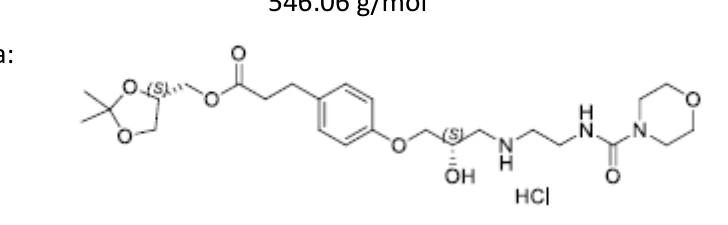
546.06 g/mol
Structural formula:
Physicochemical properties: Landiolol hydrochloride is a white crystalline powder. Landiolol hydrochloride is very soluble in water and methanol, freely soluble in N, N-DMF, soluble in ethanol and slightly soluble in acetonitrile.
14 CLINICAL TRIALS
14.1 Trials by Indication
The short-term reduction of ventricular rate in patients with supraventricular tachycardia including atrial fibrillation and atrial flutter in perioperative, postoperative, or other acute circumstances where short-term control of the ventricular rate with a short acting agent is desirable.
Table 10 - Summary of Patient Demographics for Clinical Trials in Patients with Supraventricular Tachycardia including Atrial Fibrillation and Atrial Flutter in Peri-Operative, Post-Operative and or Other Acute Circumstances
| Study # | Study design | Dosage, route of administration and duration | Study patients (n) | Mean age (Range) | Sex |
| Peri-operative setting | |||||
| 1 (Yoshiya 1997) | Prospective, Phase 3, multi-center, randomized, double-blind, placebo-controlled | 125 mcg/kg/min i.v. for 1 min, 40 mcg/kg/min iv. for 10 min | Landiolol High risk (61) Low risk (75) Placebo High Risk (66) Low risk (73) | Landiolol High risk: 60.8 years (NA) Landiolol low risk: 47.1 years (NA) Placebo High Risk: 61.5 years (NA) Placebo Low risk: 45.4 years (NA) | 154 males 121 females |
| 2 (Yoshiya 2002) | Prospective, Phase 3, multi-center, randomized, double-blind, placebo-controlled | 125 mcg/kg/min i.v. for 1 min, 40 mcg/kg/min i.v for 10 min | Landiolol (27) Placebo (27) | Landiolol: 58.3 years (NA) Placebo: 59.3 years (NA) | 35 males 19 females |
| Post-operative setting | |||||
| 3 (Taenaka and Kikawa 2013b) | Prospective, multi-center, randomized, double-blind, placebo-controlled study Study design | Low dose = 30 mcg/kg for 1 min, 10 mcg/kg/min for 10 min Medium dose= 60 mcg/kg for 1 min, 20 mcg/kg/min for 10 min | LM group (50) MH group (51) Placebo (50) Study patients (n) | LM group: 63.6 years (NA) MH group: 62.2 years (NA) | 112 males 39 females |
| Study # | Dosage, route of administration and duration | Mean age (Range) | Sex | ||
High dose= 125 mcg/kg for 1 min, 40 mcg/kg/min for 10 min LM group: low dose followed by medium dose MH group: medium dose followed by high dose | Placebo:64. 8 years (NA) | ||||
| Non-surgical setting | |||||
| 4 (Nagai 2013) | Prospective, randomized, multi-center, single-blind, active-controlled study | Landiolol: 1 mcg/kg/min for 2 hours, followed by 1-10 mcg/kg/min up to 72 hours Digoxin: 0.25 mg followed 2 hours later by an additional 0.25 mg, if necessary | Landiolol (93) Digoxin (107) | 71.6 years (NA) | 106 males 94 females |
NA: Not available
i.v. = intravenous
High risk: patients with pre-existing ischemic heart disease and/or hypertension with a risk of cardiac function worsening due to sustained tachycardia
Low risk: patients with tachyarrhythmia due to endocrine diseases or sustained tachycardia triggered by the surgical procedure or the anesthetic procedure
Study 1 (Yoshiya 1997) included adult patients with or without ischemic heart disease and/or hypertension, undergoing various types of surgery (head/neck, abdomen, chest, bone/joints) who developed peri-operative tachycardia or tachyarrhythmia (heart rate [HR] ≥100 beats per minute [bpm] during anesthesia). The patients were excluded if they had acute or recent MI (within one month of onset), severe heart failure, AV block (degree II or higher) or sick sinus syndrome, and severe liver, kidney or blood disorder.
A total of 284 patients were randomized and were stratified into a “high-risk” group (i.e. pre-existing ischemic heart disease and/or hypertension with a risk of cardiac function worsening due to sustained tachycardia), and a “low-risk” group (i.e. tachyarrhythmia due to endocrine diseases or sustained tachycardia triggered by the surgical or the anesthetic procedure). The majority of patients in the “high risk” subset had hypertension as the risk factor. For the vast majority of patients (>95%), the type of tachyarrhythmia was sinus tachycardia.
Study 2 (Yoshiya 2002) included adult patients with a history of ischemic heart disease (angina or MI) and/or hypertension or ischemic ECG changes, undergoing various types of surgery (head/neck, abdomen, chest, bone/joints) who developed peri-operative tachyarrhythmia. Patients were excluded if they had acute or recent MI (within one month of onset), severe heart failure (NYHA stage III or IV), AV block (degree II or higher) or sick sinus syndrome, and kidney or blood disorder.
In the majority of patients, the risk factors were hypertension or pre-operative ischemic changes. For 93% of patients, the type of tachyarrhythmia was sinus tachycardia, while for the remaining patients, paroxysmal atrial fibrillation (PAF) was reported.
Study 3 (Taenaka and Kikawa 2013b) included adult patients with risk factors for myocardial ischemia (hypertension, prior MI, angina, ischemic changes in ECG) who developed supraventricular tachycardia (SVT) within 7 days after cardiovascular surgery, esophageal cancer resection, thoracotomy or upper abdominal surgery persisting despite correction of potential precipitating causes. Patients were excluded if they had acute MI (within one month of onset), severe heart failure (NYHA functional class ≥III), AV block (degree II or higher), sick sinus syndrome (including patients with an implanted pacemaker), and a blood pressure decrease (<90/60 mmHg) during the study run-in period. The most common type of SVT was sinus tachycardia (62.3%), followed by PAF (33.8% of patients across groups).
Study 4 (Nagai 2013) included adult patients with atrial fibrillation or atrial flutter and left ventricular (LV) dysfunction (LVEF 25-50%) experiencing tachycardia (HR ≥ 120 bpm) in a non-surgical setting. Patients were excluded if they had the necessity for electrical cardioversion, severe valve stenosis, suspected or confirmed hyperthyroidism, implantable cardiac pacemaker and/or implantable defibrillator, the necessity for mechanical ventilation or cardiogenic shock (SBP < 90 mmHg).
Demographics and baseline characteristics were very similar between the 2 groups. NYHA class was III in 77.2% and IV in 22.8% of patients treated with landiolol vs. 86.0% and 14.0 % of patients treated with digoxin. The mean LVEF was 36.4% in the landiolol group vs 36.7% in the digoxin group. The most common cardiovascular disease at baseline was hypertension (68% in the landiolol group and 65% in the digoxin group), followed by ischemic heart disease (13% in the landiolol group and 17% in the digoxin group). The most common type of arrhythmia was AF, occurring in 86% of the patients in the landiolol group and 88% in the digoxin group. The mean pre-dose HR was 138 bpm in both groups.
Table 11 - Results of Studies 1 (Yoshiya 1997), 2 (Yoshiya 2002) in Patients with Peri-Operative Supraventricular Tachyarrhythmia
| Endpoints | Study 1 (n= 244) | Study 2 (n=41) | |||||||||||||
| Landiolol* | Placebo | Landiolol* (n=21) | Placebo (n =20) | ||||||||||||
| High Risk (n=61) | Low Risk (n=75) | High Risk (n=66 | Low Risk (n=73) | ||||||||||||
| Primary Endpoints | |||||||||||||||
| Rate of switch to rescue treatment (Per Protocol) | 10.6 %a | 9.4%a | 65.9%a | 68.8%a | N/A | ||||||||||
| Moderate improvement of tachyarrhythmia or better (Per Protocol) | 82.0%b | 79.1%b | 6.7%b | 11.9%b | 85.7%a | 10.0%a | |||||||||
| Substantial improvement of tachyarrhythmia (Per Protocol) | 46.0% | 26.9% | 3.3%a | 3.0%a | 66.7%a | 0.0%a | |||||||||
| Secondary Endpoints | |||||||||||||||
Change in HR from baseline
| -20.1% -28.7% | -18.6% -25.4% | -5.5%c -11.8%d | -5.1%c -11.2%d | -28.3%a -34.9%a | -3.5% a -16.4%a | |||||||||
*125 mcg/kg/min for 1 min, then 40 mcg/kg/min for 10 min
ap-value= 0.0001 (chi-square test)
bp-value= 0.0001 (Wilcoxon’s rank sum test)
c p-value= 0.0001 (t-test with Bonferroni correction: 3-5 minutes)
dp-value= 0.0001 (t-test)
Table 12 - Results of Study 3 (Taenaka and Kikawa 2013b) in Patients with Post-Operative Supraventricular Tachycardia
| Endpoints | Study 3 (n=146) | |||||||||
| Landiolol | Placebo (n =48) | |||||||||
| LM* group (n=48) | MHǂ group (n=50) | |||||||||
| Primary Endpoints | ||||||||||
| Improvement of HR (HR reduction ≥20% from baseline and HR <100 bpm) after final dose | 60.4%a | 42.0%a | 0.0%a | |||||||
| Improvement of HR (HR reduction ≥20% from baseline and HR <100 bpm) after initial dose | 8.3%a | 22.0%a | 0.0%a | |||||||
| Secondary Endpoints | ||||||||||
Change in HR from baseline
| -15.0%b -23.3%b | -13.7%b -18.9%b | -1.6%b -2.4%b | |||||||
* LM: dose L (1-min loading dose of 0.03 mg/kg followed by continuous infusion at 10 μg/kg/min for 10 min) followed by dose M (1-min loading dose of 0.06 mg/kg followed by continuous infusion at 20 μg/kg/min for 10 min)
ǂ MH: dose M (see above) followed by dose H (1-min loading dose of 0.125 mg/kg followed by continuous infusion at 40 μg/kg/min for 10 min)
a p-value= 0.0001 (chi-square test)
b p-value= 0.0001 (Dunnett test)
Table 13 - Results of Study 4 (Nagai 2013) in Patients with Atrial Fibrillation and Atrial Flutter (Other Acute Circumstances)
| Endpoints | Study 4 (n=200) | |||||
Landiolol* (n=93) | Digoxinǂ (n=107) | |||||
| Primary Endpoints | ||||||
| HR control (HR <110 bpm HR and HR reduction ≥20% from baseline) | 48.0%a | 13.9%a | ||||
| Secondary Endpoints | ||||||
Change in HR from baseline
| -27.0 bpm (-19.6%)b -39.9 bpm (-28.9%)b | -16.0 bpm (-11.6%)b -35.7bpm (-25.9%)b | ||||
* 1 mcg/kg/min for 2 hours, followed by 1-10 mcg/kg/min up to 72 hours
ǂ 0.25 mg followed 2 hours later by an additional 0.25 mg, if necessary
a p-value= 0.0001 (chi-square test)
b p-value= 0.0001 (Mixed-effects model used to compare data between the landiolol and digoxin groups (interaction [group × time])
15 MICROBIOLOGY
No microbiological information is required for this drug product.
16 NON-CLINICAL TOXICOLOGY
General Toxicology:
The systemic toxicity of landiolol was evaluated in rats and dogs using either intravenous bolus injection (rat and dog) or continuous intravenous infusion (dog) for single or repeated administration of landiolol.
Single dose toxicity studies in both rats and dogs were conducted with No Observed Adverse Effect Level (NOAEL) of 75 and 25 mg/kg/day (intravenous bolus), respectively. In these studies, landiolol caused mortality at 150 mg/kg and higher doses in rats and at the 100 mg/kg dose in dogs, with the observed symptoms (decreased locomotor activity, hypoactivity and respiratory abnormalities) attributed to its excessive β-blocking activity at high doses. An additional single dose toxicity study in rats (continuous 24-h infusion, that covers the maximum clinical infusion rate and daily dose with a safety margin of 2.8 has been conducted. There were no mortalities and no adverse events observed in any of the treatment groups. The NOAEL was determined to be 1000 mg/kg/day in rats.
In rats, repeated administration of landiolol for 4 weeks at 100 mg/kg/day resulted in several mortalities. Dose-limiting clinical signs such as bradypnea/apnea, clonic convulsion, and hypoactivity appeared in general immediately after administration at doses above the NOAEL. These effects are considered to be pharmacologically mediated and a consequence of the beta-AR blocking effect of landiolol. Further, these symptoms disappeared rapidly, supporting the view that they were caused by exaggerated pharmacology of high doses of the ultra-short acting landiolol. There were no changes observed in other clinical signs, in hematology, electrocardiography, clinical chemistry, urinalysis, ophthalmology, gross tissue evaluation, organ weights or histopathologic tissue evaluation in rats or dogs, indicative of direct target organ toxicity. When administered as a daily intravenous bolus injection for 28 days in rats, the NOAEL of landiolol was considered at a dose of 50 mg/kg/day.
In dogs, repeated administration of landiolol for 4 weeks at 12.5, 25, and 50 mg/kg/day did not result in mortalities. Clinical signs appeared as nausea and vomiting at 25 and 50 mg/kg/day immediately after administration for up to 10 minutes after administration. In addition, diarrhea and soft feces were recorded at 25 and 50 mg/kg/day, the frequency of these findings decreasing over time. There were no major treatment-related effects on body weight, food consumption, ophthalmoscopy, electrocardiography, respiratory rate, urinalysis, organ weights, macroscopic or histopathological observations. Clinical pathology showed statistically significant but minimal changes for individual parameters with no dose response relationship or within the range of pre-dose values and/or historical control data and without macroscopic or microscopic correlate. When administered as a daily intravenous bolus injection for 28 days in dogs, the NOAEL of landiolol was considered at a dose of 12.5 mg/kg/day.
Genotoxicity:
Landiolol was not mutagenic in the in vitro bacterial reverse mutation assay (Ames test), did not cause chromosomal aberrations in the in vitro chromosome aberration assay in mouse lymphoma cells, and was not clastogenic in the in vivo bone marrow micronucleus test in rats.
Reproductive and Developmental Toxicology:
In the Fertility and Early Embryonic Development (FEED) toxicity study, maternal and paternal toxicity was evident in rats at 100 mg/kg/day. Females in the 100 mg/kg group showed suppression of body weight gain and decreased food consumption during the treatment period, and had low body weight in the gestation period after the end of administration. Nevertheless, copulation rates and insemination or conception rates of both sexes and number of estrus cycles in females were the same in the control group and treatment groups, indicating that landiolol had no effect on reproductive ability in rats. Implantation rates in the 25 and 100 mg/kg groups were slightly lower than the control group rate, but the number of corpora lutea and number of implantations per dam were not notably different from the control group, and there were no changes indicating toxicity of landiolol. Fetal external anomalies, skeletal anomalies and visceral malformations and variations in the landiolol groups occurred with the same frequency as in the control group and were considered spontaneous changes not induced by landiolol. Based on the results, the parental NOAEL of landiolol was defined at 50 mg/kg, based on mortalities and clinical signs at 100 mg/kg/day. On the other hand, the NOAEL for the reproductive ability of parents and for the development of fetuses was estimated to be 100 mg/kg.
In the Embryo-Fetal Development (EFD) study in rats (n = 40/dose level) bradypnea, clonic convulsion, loss of righting reflex, hypoactivity and chromodacryorrhea were observed after administration in the 100 mg/kg group and 2 animals died. These symptoms were attributed to exaggerated pharmacology of landiolol. There were no significant changes in body weight, food consumption, gestation period, delivery, birth rates, lactation ability, number of weaned pups, and necropsy findings between the landiolol groups and the control group. There were no changes observed in the numbers of corpora lutea, implantations, live fetuses, dead fetuses, as well as sex ratio and fetal weight, except for a decrease in the placental weights of fetuses in the 50 and 100 mg/kg groups with. There were no notable external, skeletal and visceral findings, except for the sporadic occurrence of intraventricular septal defect, hydronephrosis and ectopic kidney in the landiolol-treated groups. On the other hand, a significant decrease in day 4 survival rate, as well as an increased incidence of unossified talus were observed in the 50 and 100 mg/kg groups. Finally, subsequent tests of growth, function and behavior, as well as examination of organ weights, external differentiation, necropsy or reproductive ability revealed no landiolol-related changes. Based on these results, the NOAEL of landiolol (administered during the period of fetal organogenesis) was considered 50 mg/kg for dams, and 25 mg/kg for F1 pups.
In the EFD study in rabbits (n = 16/dose level), 3 females in the 100 mg/kg group and 1 female in the 50 mg/kg group died immediately after landiolol administration. Moreover, animals in the 100 mg/kg group presented with acute but transient symptoms including bradypnea, transient apnea, clonic convulsion, and hypoactivity that resolved within minutes. Necropsy on gestation day 29 found splenomegaly in the landiolol groups, but there were no clear changes in spleen weights and no findings in histopathology. Otherwise, there were no significant differences in body weight, food consumption, necropsy assessment, and organ weights between the landiolol groups and the control group. Furthermore, there were no external anomalies and no changes in the fetal skeletal and visceral features observed in fetuses in any of the study groups. From the above results, the authors estimated that the NOAEL of landiolol when administered during the period of fetal organogenesis in rabbits is 25 mg/kg for dams, and 100 mg/kg for fetuses. In the Peri- and Postnatal Development (PPND) study in rats (n = 25/dose level), bradypnea, dyspnea, clonic convulsion, hypoactivity and chromodacryorrhea were observed in the 100 mg/kg group, leading to 2 deaths in the gestation period and 3 deaths in the lactation period. The decreases in body weight and food consumption in the 100 mg/kg group towards the end of weaning were attributed to the brief but repeated occurrence of these symptoms after every dose. Nevertheless, these decreases had no effect on maintenance of gestation, delivery or lactation. As for landiolol-associated effects on the offspring (F1), there was a decrease in day 4 survival rate in the 100mg/kg live-born pups as well as a decrease in their body weight during the lactation period. On the other hand, there was no significant differences in the number of implantations, implantation rate, sex ratio, percentages of newborn pups and live-born pups, external anomalies, and general condition of live-born pups with the weaning and growth rates similar in all groups. Finally, there were no differences in the skeletal examination, external differentiation, general behavior tests, sensory function tests, open field tests, water navigation tests, necropsy findings, or reproductive ability in the F1 pups. From these results, it was estimated that the NOAEL of landiolol is 50 mg/kg both for dams when administered in the perinatal and lactation periods, as well as for their offspring.