


Product Monograph - Som-Pam
RECENT MAJOR LABEL CHANGES
| 1 Indications, 1.2 Geriatrics | 08/2022 |
| 3 Serious Warnings and Precautions Box | 08/2022 |
| 4 Dosage and Administration | 08/2022 |
| 7 Warnings and Precautions | 08/2022 |
| 7 Warnings and Precautions, 7.1.4 Geriatrics | 08/2022 |
TABLE OF CONTENTS
Sections or subsections that are not applicable at the time of authorization are not listed.
RECENT MAJOR LABEL CHANGES ............................................................................................. 2
TABLE OF CONTENTS ............................................................................................................. 2
PART I: HEALTH PROFESSIONAL INFORMATION ........................................................................ 4
1 INDICATIONS ............................................................................................................. 4
1.1 Pediatrics......................................................................................................... 4
1.2 Geriatrics ......................................................................................................... 4
2 CONTRAINDICATIONS................................................................................................. 4
3 SERIOUS WARNINGS AND PRECAUTIONS BOX ............................................................... 5
4 DOSAGE AND ADMINISTRATION .................................................................................. 5
4.1 Dosing Considerations ....................................................................................... 5
4.2 Recommended Dose and Dosage Adjustment ....................................................... 6
4.4 Administration.................................................................................................. 6
4.5 Missed Dose..................................................................................................... 6
5 OVERDOSAGE ............................................................................................................ 6
6 DOSAGE FORMS, STRENGTHS, COMPOSITION AND PACKAGING ...................................... 7
7 WARNINGS AND PRECAUTIONS ................................................................................... 7
7.1 Special Populations ......................................................................................... 12
7.1.1 Pregnant Women ...................................................................................... 12
7.1.2 Breast-feeding .......................................................................................... 12
7.1.3 Pediatrics ................................................................................................. 12
7.1.4 Geriatrics ................................................................................................. 12
8 ADVERSE REACTIONS................................................................................................ 12
8.1 Adverse Reaction Overview .............................................................................. 12
8.5 Post-Market Adverse Reactions......................................................................... 13
9 DRUG INTERACTIONS ............................................................................................... 13
9.1 Serious Drug Interactions ................................................................................. 13
9.2 Drug Interactions Overview .............................................................................. 13
9.3 Drug-Behavioural Interactions .......................................................................... 14
9.4 Drug-Drug Interactions .................................................................................... 14
9.5 Drug-Food Interactions .................................................................................... 14
9.6 Drug-Herb Interactions .................................................................................... 15
9.7 Drug-Laboratory Test Interactions ..................................................................... 15
10 CLINICAL PHARMACOLOGY ....................................................................................... 15
10.1 Mechanism of Action....................................................................................... 15
10.2 Pharmacodynamics ......................................................................................... 15
10.3 Pharmacokinetics............................................................................................ 15
11 STORAGE, STABILITY AND DISPOSAL .......................................................................... 16
12 SPECIAL HANDLING INSTRUCTIONS ............................................................................ 16
PART II: SCIENTIFIC INFORMATION ........................................................................................ 17
13 PHARMACEUTICAL INFORMATION ............................................................................. 17
14 CLINICAL TRIALS....................................................................................................... 17
15 MICROBIOLOGY ....................................................................................................... 17
16 NON-CLINICAL TOXICOLOGY...................................................................................... 17
PATIENT MEDICATION INFORMATION ................................................................................... 19
PART I: HEALTH PROFESSIONAL INFORMATION
1 INDICATIONS
SOM-PAM (flurazepam hydrochloride) is indicated for:
- the symptomatic relief of transient and short-term insomnia characterized by difficulty in falling asleep, frequent nocturnal awakenings and/or early morning awakening.
The use of hypnotics should be restricted for insomnia where disturbed sleep results in impaired daytime functioning.
1.1 Pediatrics
Pediatrics (< 18 years of age):
The safety and efficacy of SOM-PAM in children below the age of 18 have not been established. Therefore, Health Canada has not authorized an indication for use in this pediatric population.
1.2 Geriatrics
Geriatrics: Evidence from clinical studies and experience suggests that use in the geriatric population is associated with differences in safety or effectiveness.
Long-term use of SOM-PAM should be avoided in elderly patients. Enhanced monitoring is recommended (see 7 WARNINGS AND PRECAUTIONS, Falls and fractures; 4.1 Dosing considerations).
2 CONTRAINDICATIONS
SOM-PAM (flurazepam hydrochloride) is contraindicated:
- In patients with known hypersensitivity to this drug or to other benzodiazepines, or to any ingredient in the formulation, including any non-medicinal ingredient, or component of the container. For a complete listing, see 6 DOSAGE FORMS, STRENGTHS, COMPOSITION AND PACKAGING.
- In patients with severe impairment of respiratory function, e.g. significant sleep apnea syndrome
- In patients who have myasthenia gravis
- In patients with severe hepatic insufficiency
3 SERIOUS WARNINGS AND PRECAUTIONS BOX
Serious Warnings and Precautions
Addiction, Abuse and Misuse The use of benzodiazepines, including SOM-PAM, can lead to abuse, misuse, addiction, physical dependence and withdrawal reactions. Abuse and misuse can result in overdose or death, especially when benzodiazepines are combined with other medicines, such as opioids, alcohol or illicit drugs.
Withdrawal Benzodiazepines, like SOM-PAM, can produce severe or life-threatening withdrawal symptoms.
(see 7 WARNINGS AND PRECAUTIONS, Dependence/Tolerance) Risks from Concomitant use with Opioids Concomitant use of SOM-PAM and opioids may result in profound sedation, respiratory depression, coma and death (see 7 WARNINGS AND PRECAUTIONS, General, Concomitant use with opioids).
|
4 DOSAGE AND ADMINISTRATION
4.1 Dosing Considerations
- Sleep disturbance may be the presenting manifestation of a physical and/or psychiatric disorder. Consequently, a decision to initiate symptomatic treatment of insomnia should only be made after the patient has been carefully evaluated.
- The use of hypnotics should be restricted for insomnia where disturbed sleep results in impaired daytime functioning.
- SOM-PAM should always be prescribed at the lowest effective dose for the shortest duration possible.
- Treatment with SOM-PAM should be as short as possible, and should usually not exceed 7-10 consecutive days. Use for more than 2-3 consecutive weeks requires complete re-evaluation of the patient. Prescriptions for SOM-PAM should be written for short-term use (7 to 10 days) and it should not be prescribed in quantities exceeding a one-month supply.
Discontinuation
- SOM-PAM can produce withdrawal signs and symptoms or rebound phenomena following abrupt discontinuation or rapid dose reduction (see 3 SERIOUS WARNINGS AND PRECAUTIONS BOX and 7 WARNINGS AND PRECAUTIONS, Dependence/Tolerance). Abrupt discontinuation should be avoided and treatment - even if only of short duration - should be terminated by gradually tapering the dosage schedule under close monitoring.
- Tapering should be tailored to the specific patient. Special attention should be given to patients with a history of seizure.
- If a patient experiences withdrawal signs and symptoms, consider postponing the taper or raising the benzodiazepine to the previous dosage prior to proceeding with a gradual taper.
Geriatric
- Geriatric patients in particular may be more sensitive to benzodiazepines (see 7 WARNINGS AND PRECAUTIONS, Falls and Fractures).
- Long-term use of SOM-PAM should be avoided in elderly patients. Enhanced monitoring is recommended.
4.2 Recommended Dose and Dosage Adjustment
Recommended Dose
Adults: The usual adult dose is 30 mg before retiring, although some patients may require only 15 mg.
Elderly and/or Debilitated Patients: In elderly and/or debilitated patients, it is recommended that therapy be initiated with 15 mg until individual responses are determined.
Pediatrics (< 18 years of age): Health Canada has not authorized an indication for pediatric patients under 18 years of age (see 1.1 Pediatrics).
Dosage Adjustment
Dosage should be individualized for maximal beneficial effects.
4.4 Administration
SOM-PAM should be taken orally just before going to bed. The patient should be checked regularly at the start of the treatment in order to decrease, if necessary, the dose or frequency of administration to prevent overdose due to accumulation.
4.5 Missed Dose
If the patient misses a dose, inform the patient to skip the missed dose and take the next dose at the regular dosing schedule.
5 OVERDOSAGE
Manifestations of flurazepam hydrochloride overdosage include somnolence, confusion and coma. Respiration, pulse, and blood pressure should be monitored as in all cases of drug overdosage. General supportive measures should be employed. Intravenous fluids should be administered and an adequate airway maintained. Hypotension and CNS depression may be combated by judicious use of appropriate therapeutic agents. The value of dialysis has not been determined. If excitation occurs in patients following flurazepam hydrochloride overdosage, barbiturates should not be used.
As with the management of intentional overdosage with any drug, it should be borne in mind that multiple agents may have been ingested. The benzodiazepine antagonist, flumazenil, is a specific antidote in known or suspected benzodiazepine overdose.
| For management of a suspected drug overdose, contact your regional poison control centre. |
6 DOSAGE FORMS, STRENGTHS, COMPOSITION AND PACKAGING
Table – Dosage Forms, Strengths, Composition and Packaging
| Route of Administration | Dosage Form / Strength/Composition | Non-medicinal Ingredients |
| Oral | Capsule 15 mg, 30 mg | Corn starch, gelatin and lactose |
SOM-PAM 15 mg: Branded hard gelatin capsules, size #2, with orange opaque body and grey opaque cap containing 15 mg flurazepam hydrochloride. Available in bottles of 100 and 500.
SOM-PAM 30 mg: Branded hard gelatin capsules, size #2 with scarlet opaque body and grey opaque cap containing 30 mg flurazepam hydrochloride. Available in bottles of 100 and 500.
7 WARNINGS AND PRECAUTIONS
Please see 3 SERIOUS WARNINGS AND PRECAUTIONS BOX.
General
SOM-PAM should be used with caution in patients who in the past manifested paradoxical reactions to alcohol and/or sedative medications.
The failure of insomnia to remit after 7-10 days of treatment may indicate the presence of a primary psychiatric and/or medical illness or the presence of sleep-state misperception.
Worsening of insomnia or the emergence of new abnormalities of thinking or behaviour may be the consequence of an unrecognized psychiatric or physical disorder. These have also been reported to occur in association with the use of drugs that act at the benzodiazepine receptors.
Concomitant use with opioids Concomitant use of benzodiazepines, including SOM-PAM, and opioids may result in profound sedation, respiratory depression, coma, and death. Because of these risks, reserve concomitant prescribing of these drugs for use in patients for whom alternative treatment options are not possible (see 3 SERIOUS WARNINGS AND PRECAUTIONS BOX, Risks from Concomitant use with Opioids; 9.1 Serious Drug Interactions).
Observational studies have demonstrated that concomitant use of opioid analgesics and benzodiazepines increases the risk of drug-related mortality compared to use of opioid analgesics alone. Because of similar pharmacological properties, it is reasonable to expect similar risk with the concomitant use of other CNS depressant drugs with benzodiazepines.
If a decision is made to prescribe SOM-PAM concomitantly with opioids, prescribe the lowest effective dosages and minimum durations of concomitant use. In patients already receiving an opioid analgesic, prescribe a lower initial dose of SOM-PAM than indicated, and titrate based on clinical response. If an opioid analgesic is initiated in a patient already taking SOM-PAM, prescribe a lower initial dose of the opioid analgesic and titrate based on clinical response. Follow patients closely for signs and symptoms of respiratory depression and sedation (see 5 OVERDOSAGE).
Advise both patients and caregivers about the risks of respiratory depression and sedation when SOM-PAM is used with opioids.
Advise patients not to drive or operate heavy machinery until the effects of concomitant use of the opioid have been determined.
Dependence/Tolerance
Use of benzodiazepines, such as SOM-PAM, can lead to abuse, misuse, addiction, physical dependence (including tolerance) and withdrawal reactions. Abuse and misuse can result in overdose or death, especially when benzodiazepines are combined with other medicines, such as opioids, alcohol, or illicit drugs.
The risk of dependence increases with higher doses and longer term use but can occur with short-term use (days to weeks) at recommended therapeutic doses. The risk of dependence is greater in patients with a history of psychiatric disorders and/or substance (including alcohol) use disorder.
- Discuss the risks of treatment with SOM-PAM with the patient, considering alternative (including non-drug) treatment options.
- Carefully evaluate each patient’s risk of abuse, misuse and addiction, considering their medical condition and concomitant drug use, prior to prescribing SOM-PAM. In individuals prone to substance use disorder, SOM-PAM should only be administered if deemed medically necessary, employing extreme caution and close supervision.
- SOM-PAM should always be prescribed at the lowest effective dose for the shortest duration possible.
- All patients receiving benzodiazepines should be routinely monitored for signs and symptoms of misuse and abuse. If a substance use disorder is suspected, evaluate the patient and refer them for substance abuse treatment, as appropriate.
Withdrawal
Benzodiazepines, such as SOM-PAM, can produce withdrawal signs and symptoms, ranging from mild to severe and even life threatening, following abrupt discontinuation or rapid dose reduction. Other factors that may precipitate withdrawal are switching from a long-acting to a short-acting benzodiazepine, decreasing blood levels of the drug or administration of an antagonist. The risk of withdrawal is higher with higher dosages and/or prolonged use, but can occur with short-term use (days to weeks) at recommended therapeutic doses.
The onset of withdrawal signs and symptoms can range from hours to weeks following drug cessation and occur even with tapered dosage. Some symptoms can persist for months. Since symptoms are often similar to those for which the patient is being treated, it may be difficult to distinguish from a relapse of the patient’s condition.
Severe or life-threatening signs and symptoms of withdrawal include catatonia, delirium tremens, depression, dissociative effects (e.g. hallucinations), homicidal thoughts, mania, psychosis, seizures (including status epilepticus) and suicidal ideation and behaviour.
Other withdrawal signs and symptoms include abdominal cramps, cognitive impairment, diarrhea, dysphoria, extreme anxiety or panic attacks, headache, hypersensitivity to light, noise and physical contact, insomnia, irritability, muscle pain or stiffness, paresthesia, restlessness, sweating, tension, tremors and vomiting. There is also a possibility of rebound anxiety or rebound insomnia.
- Abrupt discontinuation should be avoided and treatment - even if only of short duration - should be terminated by gradually tapering the dosage schedule under close monitoring.
- Tapering should be tailored to the specific patient. Special attention should be given to patients with a history of seizure.
- If a patient experiences withdrawal symptoms, consider postponing the taper or raising the benzodiazepine to the previous dosage prior to proceeding with a gradual taper.
- Inform patients of risk of discontinuing abruptly, reducing dosage rapidly or switching medications.
- Stress the importance of consulting with their health care professional in order to discontinue safely.
- Patients experiencing withdrawal symptoms should seek immediate medical attention.
(see 3 SERIOUS WARNINGS AND PRECAUTIONS BOX, Addiction, Abuse and Misuse, 3 SERIOUS WARNINGS AND PRECAUTIONS BOX, Withdrawal; 4.1 Dosing Considerations)
Driving and Operating Machinery
Because of SOM-PAM's CNS depressant effect, patients receiving the drug should be cautioned against engaging in hazardous occupations requiring complete mental alertness such as operating machinery or driving a motor vehicle. For the same reason, patients should be warned against the concomitant ingestion of SOM-PAM and alcohol or CNS-depressant drugs (see 9.3 Drug-Behavioural Interactions, 9.4 Drug-Drug Interactions).
Falls and fractures
There have been reports of falls and fractures among benzodiazepine users due to adverse reactions such as sedation, dizziness and ataxia. The risk is increased in those taking concomitant sedatives (including alcoholic beverages), the elderly or debilitated patients.
Hepatic/Biliary/Pancreatic
SOM-PAM is contraindicated in patients with severe hepatic insufficiency (see 2 CONTRAINDICATIONS).
SOM-PAM should be given with caution to patients with impaired hepatic function.
Immune
Severe Anaphylactic and Anaphylactoid Reactions: Rare cases of angioedema involving the tongue, glottis or larynx have been reported in patients after taking the first or subsequent doses of sedative-hypnotics, including SOM-PAM. Some patients have had additional symptoms such as dyspnea, throat closing or nausea and vomiting that suggest anaphylaxis. Some patients have required medical therapy in the emergency department. If angioedema involves the throat, glottis or larynx, airway obstruction may occur and be fatal. Patients who develop angioedema after treatment with SOM-PAM should not be rechallenged with the drug.
Monitoring and Laboratory Tests
Rare cases of elevated bilirubin and liver enzyme levels, leukopenia, and granulocytopenia have been reported with SOM-PAM (see 8.1 Adverse Reaction Overview).
Should SOM-PAM be used repeatedly, periodic blood counts, liver, and kidney function tests should be performed.
Neurologic
Memory disturbance: Anterograde amnesia of varying severity has been reported following therapeutic doses of benzodiazepines. The event is rare with SOM-PAM. Anterograde amnesia is a dose-related phenomenon and elderly subjects may be at particular risk.
Cases of transient global amnesia and “traveler's amnesia” have also been reported in association with benzodiazepines, the latter in individuals who have taken benzodiazepines, often in the middle of the night, to induce sleep while traveling. Transient global amnesia and traveler's amnesia are unpredictable and not necessarily dose-related phenomena. Patients should be warned not to take SOM-PAM under circumstances in which a full night's sleep and clearance of the drug from the body are not possible before they need again to resume full activity.
Psychiatric
Abnormal thinking and psychotic behavioural changes: Abnormal thinking and psychotic behavioural changes have been reported to occur in association with the use of benzodiazepines including SOM-PAM, although rarely. Some of the changes may be characterized by decreased inhibition, e.g., aggressiveness or extroversion that seem excessive, similar to that seen with alcohol and other CNS depressants (e.g., sedative/hypnotics). Particular caution is warranted in patients with a history of violent behaviour and a history of unusual reactions to sedatives including alcohol and the benzodiazepines. Psychotic behavioural changes that have been reported with benzodiazepines include bizarre behaviour, hallucinations, and depersonalization. Abnormal behaviours associated with the use of benzodiazepines have been reported more with chronic use and/or high doses but they may occur during the acute, maintenance or withdrawal phases of treatment.
It can rarely be determined with certainty whether a particular instance of abnormal behaviours listed above is drug induced, spontaneous in origin, or a result of an underlying psychiatric disorder. Nevertheless, the emergence of any new behavioural sign or symptom of concern requires careful and immediate evaluation.
Confusion: The benzodiazepines affect mental efficiency, e.g., concentration, attention, and vigilance. The risk of confusion is greater in the elderly and in patients with cerebral impairment.
Anxiety, Restlessness: An increase in daytime anxiety and/or restlessness have been observed during treatment with short half-life benzodiazepines although the syndrome can apply on occasion to drugs with longer elimination half-lives as well. Flurazepam has a long half-life.
Depression: Caution should be exercised if SOM-PAM is prescribed to patients with signs or symptoms of depression that could be intensified by hypnotic drugs. The potential for self-harm (e.g., intentional overdose) is high in patients with depression and thus, the least amount of drug that is feasible should be available to them at any one time.
Complex Sleep-related Behaviours: Complex sleep-related behaviours such as “sleep-driving” (i.e., driving while not fully awake after ingestion of a sedative-hypnotic, with amnesia for the event) have been reported in patients who have taken SOM-PAM. Other potentially dangerous behaviours have been reported in patients who got out of bed after taking a sedative-hypnotic and were not fully awake, including preparing and eating food, making phone calls, leaving the house, etc. As with “sleep-driving”, patients usually do not remember these events. The use of alcohol and other CNS-depressants with SOM-PAM appears to increase the risk of such behaviours, as does the use of SOM-PAM at doses exceeding the maximum recommended dose. SOM-PAM is not to be taken with alcohol.
Caution is needed with concomitant use of other CNS depressant drugs. Due to the risk to the patient and the community, discontinuation of SOM-PAM should be strongly considered for patients who report any such sleep- related behaviours.
Rebound Insomnia: A transient syndrome whereby the symptoms that led to treatment with a benzodiazepine recur in an enhanced form, may occur on withdrawal of hypnotic treatment.
Renal
SOM-PAM should be given with caution to patients with impaired renal function.
Reproductive Health: Female and Male Potential
Fertility
No effect of flurazepam hydrochloride on fertility was observed in animal studies (see 16 NON-CLINICAL TOXICOLOGY).
Teratogenic Risk
Teratogenic and non-teratogenic effects have been reported in association to use of benzodiazepines during pregnancy. The use of SOM-PAM during pregnancy is not recommended (see 7.1.1 Pregnant Women).
Respiratory
Respiratory depression has been reported in patients with compromised respiratory function.
SOM-PAM is contraindicated in patients with severe impairment of respiratory function (see 2 CONTRAINDICATIONS).
7.1 Special Populations
7.1.1 Pregnant Women
The use of SOM-PAM (flurazepam hydrochloride) during pregnancy is not recommended. Benzodiazepines may cause fetal damage when administered during pregnancy. Several studies have suggested an increased risk of congenital malformations associated with the use of the benzodiazepines during the first trimester of pregnancy. During the last weeks of pregnancy, ingestion of therapeutic doses of a benzodiazepine hypnotic has resulted in neonatal CNS depression due to transplacental distribution.
If SOM-PAM is prescribed to a woman of child-bearing potential, the patient should be warned of potential risk to a fetus and advised to consult her physician regarding the discontinuation of the drug if she intends to become or suspects that she might be pregnant.
Non-teratogenic effects: a child born to a mother who is on benzodiazepines may be at risk for withdrawal symptoms from the drug during the postnatal period. Also, neonatal flaccidity has been reported in an infant born to a mother who had been receiving benzodiazepines.
7.1.2 Breast-feeding
The safety of SOM-PAM during lactation has not been established. Therefore, its use during nursing is not recommended.
7.1.3 Pediatrics
Pediatrics (< 18 years of age): The safety and efficacy of SOM-PAM in children below the age of 18 have not been established. Therefore, Health Canada has not authorized an indication for use in this pediatric population.
7.1.4 Geriatrics
Long-term use of SOM-PAM should be avoided in elderly or debilitated patients who may be more sensitive to benzodiazepines. There is an increased risk of cognitive impairment, delirium, falls, fractures, hospitalizations and motor vehicle accidents in these users. Enhanced monitoring is recommended in this population.
Elderly patients are especially susceptible to dose-related adverse effects, such as drowsiness, dizziness, or impaired coordination. Inappropriate, heavy sedation may result in accidental events/falls. Therefore, the lowest possible dose (15 mg) should be used in these subjects (see 4.2 Recommended Dose and Dosage Adjustment).
8 ADVERSE REACTIONS
8.1 Adverse Reaction Overview
The most common adverse reactions reported with SOM-PAM (flurazepam hydrochloride) are dizziness, drowsiness, light-headedness, and ataxia. These adverse effects are particularly common in elderly and debilitated patients (See 7.1.4 Geriatrics). Severe sedation, lethargy, disorientation and coma, probably indicative of drug intolerance or overdosage, have been reported.
Isolated instances of headache, heartburn, upset stomach, nausea, vomiting, amnesia, diarrhea, constipation, gastrointestinal pain, nervousness, apprehension, irritability, weakness, palpitations, chest pains, and genitourinary complaints have been reported. However, in controlled studies, these appeared as often or more often with placebo than with the active drug.
There have also been rare occurrences of leukopenia, granulocytopenia, sweating, flushes, difficulty in focussing, blurred vision, faintness, hypotension, shortness of breath, pruritus, skin rash, dry mouth, bitter taste, excessive salivation, anorexia, euphoria, depression, slurred speech, confusion, restlessness, hallucinations, nightmares, numbed emotions, reduced alertness, change in libido, inappropriate behaviour, and elevated SGOT, SGPT, total and direct bilirubins, and alkaline phosphatase. Paradoxical reactions, e.g. excitement, stimulation, agitation, aggressiveness, rages, psychoses, and hyperactivity also have been reported in rare instances when using drugs that act at the benzodiazepine receptors.
8.5 Post-Market Adverse Reactions
Injury, Poisoning and Procedural Complications: There have been reports of falls and fractures in benzodiazepine users due to adverse reactions such as sedation, dizziness and ataxia. The risk is increased in those taking concomitant sedatives (including alcoholic beverages), the elderly and debilitated patients.
Dependence/Withdrawal: Development of physical dependence and withdrawal following discontinuation of therapy has been observed with benzodiazepines such as SOM-PAM. Severe and life-threatening symptoms have been reported. (see 3 SERIOUS WARNINGS AND PRECAUTIONS BOX, Addiction, Abuse and Misuse; 7 WARNINGS AND PRECAUTIONS, Dependence/Tolerance)
9 DRUG INTERACTIONS
9.1 Serious Drug Interactions
| Serious Drug Interactions |
Concomitant use of SOM-PAM and opioids may result in profound sedation, respiratory depression, coma and death.
|
9.2 Drug Interactions Overview
SOM-PAM may produce additive CNS depressant effects when co- administered with alcohol, sedative antihistamines, narcotic analgesics, anticonvulsants, or psychotropic medications which themselves can produce CNS depression.
Compounds which inhibit certain hepatic enzymes (particularly cytochrome P450) may enhance the activity of benzodiazepines. Examples include cimetidine or erythromycin.
9.3 Drug-Behavioural Interactions
SOM-PAM may produce additive CNS depressant effects when co-administered with alcohol.
9.4 Drug-Drug Interactions
The drugs listed in this table are based on either drug interaction case reports or studies, or potential interactions due to the expected magnitude and seriousness of the interaction (i.e., those identified as contraindicated).
Table 2 - Established or Potential Drug-Drug Interactions
| [Proper/Common name] | Source of Evidence | Effect | Clinical comment |
| Sedative antihistamines | T | Co-administration with benzodiazepines may produce additive CNS depressant effects | Caution is warranted and therapeutic concentration monitoring is recommended |
| Anticonvulsants | T | ||
| Psychotropic medications | T | ||
| Cimetidine | T | Compounds which inhibit certain hepatic enzymes (particularly cytochrome P450) may enhance the activity of benzodiazepines | |
| Erythromycin | T | ||
| Opioids or narcotic analgesics | T | Due to additive CNS depressant effect, the concomitant use of benzodiazepines, including SOM-PAM, and opioids increases the risk of profound sedation, respiratory depression, coma, and death. | Reserve concomitant prescribing of these drugs for use in patients for whom alternative treatment options are inadequate. Limit dosages and durations of concomitant use of benzodiazepines and opioids to the minimum required. Follow patients closely for respiratory depression and sedation. |
Legend: T = Theoretical
9.5 Drug-Food Interactions
Interactions with food have not been established.
9.6 Drug-Herb Interactions
Interactions with herbal products have not been established.
9.7 Drug-Laboratory Test Interactions
Interactions with laboratory tests have not been established.
10 CLINICAL PHARMACOLOGY
10.1 Mechanism of Action
SOM-PAM (flurazepam hydrochloride), a benzodiazepine derivative, is a hypnotic agent which does not appear to decrease dream time as measured by rapid eye movements (REM). SOM-PAM decreases sleep latency and number of awakenings for a consequent increase in total sleep time.
10.2 Pharmacodynamics
The duration of hypnotic effect and the profile of unwanted effects may be influenced by the alpha (distribution) and beta (elimination) half-lives of the administered drug and any active metabolites formed. When half-lives are long, the drug or metabolite may accumulate during periods of nightly administration and be associated with impairments of cognitive and motor performance during waking hours. If half-lives are short, the drug and metabolites will be cleared before the next dose is ingested, and carry-over effects related to sedation or CNS depression should be minimal or absent. However, during nightly use and for an extended period, pharmacodynamic tolerance or adaptation to some effects of benzodiazepine hypnotics may develop. If the drug has a very short elimination half-life, it is possible that a relative deficiency (i.e., in relation to the receptor site) may occur at some point in the interval between each night's use. This sequence of events may account for two clinical findings reported to occur after several weeks of nightly use of rapidly eliminated benzodiazepine hypnotics: 1) increased wakefulness during the last third of the night; and 2) the appearance of increased daytime anxiety (see 7 WARNINGS AND PRECAUTIONS, Psychiatric).
Flurazepam is a benzodiazepine with a long half-life.
In animals, flurazepam hydrochloride has been shown to produce sedative, anticonvulsant, taming, and muscle relaxant effects. At high doses, flurazepam hydrochloride exhibited sedative effects in rats (36 mg/kg), as well as a depressant effect on behaviour in squirrel monkeys (40 mg/kg). Some cardiovascular depressant effects were also observed, but were largely attributed to the central nervous system depressant effects of high doses.
Flurazepam and its metabolites bind with high affinity to mouse brain membranes. In vitro specific binding affinities (Ki) for flurazepam, hydroxyethyl-flurazepam, flurazepam aldehyde and desalkyl-flurazepam were 10.7, 16.2, 10.6, and 0.85 nM, respectively. Flurazepam hydrochloride is rapidly absorbed from the gastrointestinal tract and is rapidly metabolized. Metabolic studies in rats with 14C-labelled flurazepam hydrochloride indicated that the drug is widely distributed throughout body tissues with no excessive accumulation of drug or metabolite in any one tissue.
10.3 Pharmacokinetics
Absorption
Following oral administration of 15 mg flurazepam hydrochloride to male and female volunteers, measurable concentrations for the parent compound were not detectable.
Metabolism
Flurazepam undergoes rapid and pronounced metabolism to two pharmacologically active metabolites, namely hydroxyethyl flurazepam and flurazepam aldehyde. In healthy volunteers, Cmax values for the two metabolites were 8.6 and 2.5 ng/mL, respectively. They were reached in an average of 1.0 and 1.2 hours, respectively.
The final active and principal metabolite, desalkyl flurazepam (DAFLZ), appears in the systemic circulation more slowly, with a mean Cmax of 14 ng/mL attained an average of 10.6 hours after dosing.
Elimination
The mean elimination half-lives for hydroxyethyl flurazepam and flurazepam aldehyde were less than 2.5 hours.
The mean elimination half- life of DAFLZ is approximately 75 hours (range 50 to 100 hours). Therefore, multiple-dose therapy with flurazepam leads to the accumulation of DAFLZ.
More than 50% of the total dose of flurazepam appears in the urine in 24 hours, with eventual urinary excretion accounting for 80% or more of the total dose. The major urinary metabolite is conjugated hydroxyethyl flurazepam. Less than 1% of the dose is excreted in the urine as DAFLZ. Approximately 10% of the total dose of flurazepam appears in the feces.
Special Populations and Conditions
- Geriatrics: Following 15 days of treatment with 15 mg flurazepam once daily, mean steady-state plasma levels of DAFLZ were higher in elderly than in young men (81 and 53 ng/mL, p<0.05), but were similar in elderly and young women (86 and 85 ng/mL). The half-life of DAFLZ was found to be longer in elderly males than in young males (160 versus 74 hours, p<0.05), but was similar in elderly and young females (120 versus 90 hours, p=N.S.). DAFLZ was extensively bound to plasma protein. The unbound fraction increased with age regardless of sex.
11 STORAGE, STABILITY AND DISPOSAL
Keep in a tightly closed, light-resistant container. Store at 15-30ºC.
12 SPECIAL HANDLING INSTRUCTIONS
Not applicable
PART II: SCIENTIFIC INFORMATION
13 PHARMACEUTICAL INFORMATION
Drug Substance
Proper Name: Flurazepam Hydrochloride
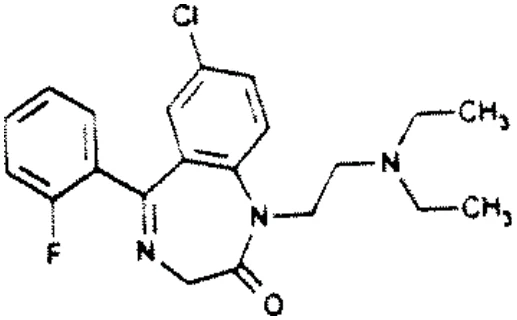
Chemical Name: 7-chloro-1-[2(diethylamino)ethyl]-5-(0-fluorophenyl)-1, 3-dihydro-2H-1, 4- benzodiazepin-2-one-dihydrochloride
Molecular formula and molecular mass: C21H23ClFN3O·2HCl and 460.81
Structural Formula:
Physiochemical Properties: Flurazepam hydrochloride is an off-white to yellow, crystalline powder. It is odourless, or has a slight odour, and its solutions are acid to litmus. Melts at about 212°C with decomposition. Freely soluble in water and in alcohol; slightly soluble in isopropyl alcohol and in chloroform.
14 CLINICAL TRIALS
The clinical trial data on which the original indication was authorized is not available.
15 MICROBIOLOGY
No microbiological information is required for this drug product.
16 NON-CLINICAL TOXICOLOGY
General Toxicology: The oral LD50 values of flurazepam hydrochloride have been reported to be 870 mg/kg in mice, 1232 mg/kg in rats and 568 mg/kg in rabbits.
Chronic toxicity studies for one year indicated that the tolerated dose is 80 mg/kg/day in the rat and 10 mg/kg/day in the dog.
Reproductive and Developmental Toxicology: A two-cycle reproduction study in rats has been reported at doses of 5 and 50 mg/kg/day of flurazepam hydrochloride. There were no significant teratogenic or other adverse effects related to the drug. In the second series of rat reproduction studies, doses of 3 and 20 mg/kg/day of flurazepam hydrochloride did not induce changes in fertility and general reproductive performance. There were no significant teratogenic effects related to the drug or adverse effects in the perinatal and postnatal study. In another reproduction study in rats at doses of 10, 20, 40, and 80 mg/kg/day, no adverse effects on reproduction and no significant teratological changes were noted.
Two teratogenic studies of flurazepam hydrochloride in rabbits have been reported. In one study, flurazepam hydrochloride was administered in doses of 5 and 20 mg/kg/day. Twenty-three live litters were obtained in this study. One animal which received 20 mg/kg/day had a litter of nine viable but deformed foetuses. In the second study, the dose of flurazepam hydrochloride was increased to 40 mg/kg/day without the occurrence of abnormalities in all eleven litters. In both studies, there were no significant differences between the control and treated groups in maternal weight, body weight of viable foetuses, foetal body weight and litter size.