


Product Monograph - Spravato
Recent Major Label Changes
| 7 Warnings and Precautions, Cardiovascular | 2025-05 |
|---|---|
| 7 Warnings and Precautions, Neurologic, Seizures | 2025-05 |
Table of Contents
Certain sections or subsections that are not applicable at the time of the preparation of the most recent authorized product monograph are not listed.
Recent Major Label Changes .................................................................................................. 2
Table of Contents................................................................................................................... 2
Part 1: Healthcare Professional Information........................................................................... 5
- 1.
Indications ...................................................................................................................... 5
1.1. Pediatrics ............................................................................................................. 5
1.2. Geriatrics ............................................................................................................. 6
- 2. Contraindications............................................................................................................ 6
- 3. Serious Warnings and Precautions Box ........................................................................... 6
- 4.
Dosage and Administration............................................................................................. 7
4.1. Dosing Considerations .......................................................................................... 7
4.2. Recommended Dose and Dosage Adjustment ....................................................... 9
4.4. Administration ................................................................................................... 10
SPRAVATO Administration and Monitoring Checklist ...................................................... 16
4.5. Missed Dose....................................................................................................... 18
- 5. Overdose ...................................................................................................................... 18
- 6. Dosage Forms, Strengths, Composition, and Packaging ................................................. 19
- 7.
Warnings and Precautions ............................................................................................ 19
General ......................................................................................................................... 19
Cardiovascular............................................................................................................... 19
Dependence, Tolerance and/or Abuse Liability ............................................................... 21
Driving and Operating Machinery................................................................................... 21
Endocrine and Metabolism ............................................................................................ 22
Gastrointestinal ............................................................................................................. 22
Genitourinary ................................................................................................................ 22
Hepatic/Biliary/Pancreatic ............................................................................................. 22
Monitoring and Laboratory Tests ................................................................................... 22
Neurologic..................................................................................................................... 23
Psychiatric ..................................................................................................................... 24
Respiratory.................................................................................................................... 25
7.1. Special Populations ............................................................................................ 26
7.1.1. Pregnancy .................................................................................................. 26
7.1.2. Breastfeeding............................................................................................. 26
7.1.3. Pediatrics ................................................................................................... 26
7.1.4. Geriatrics ................................................................................................... 27
- 8.
Adverse Reactions ........................................................................................................ 27
8.1. Adverse Reaction Overview ............................................................................... 27
8.2. Clinical Trial Adverse Reactions .......................................................................... 28
8.3. Less Common Clinical Trial Adverse Reactions .................................................... 33
8.5. Post-Market Adverse Reactions ......................................................................... 34
- 9.
Drug Interactions .......................................................................................................... 34
9.2. Drug Interactions Overview ............................................................................... 34
9.3. Drug-Behavioural Interactions ........................................................................... 35
9.4. Drug-Drug Interactions ...................................................................................... 35
9.5. Drug-Food Interactions ...................................................................................... 37
9.6. Drug-Herb Interactions ...................................................................................... 37
9.7. Drug-Laboratory Test Interactions ..................................................................... 37
- 10.
Clinical Pharmacology ................................................................................................... 37
10.1. Mechanism of Action.......................................................................................... 37
10.2. Pharmacodynamics ............................................................................................ 37
10.3. Pharmacokinetics ............................................................................................... 38
- 11. Storage, Stability, and Disposal ..................................................................................... 41
- 12. Special Handling Instructions ........................................................................................ 41
Part 2: Scientific Information ............................................................................................... 42
- 13. Pharmaceutical Information ......................................................................................... 42
- 14.
Clinical Trials ................................................................................................................. 42
14.1. Clinical Trials by Indication.................................................................................. 42
Indication - Major depressive disorder in adults who have not responded adequately to at least two separate courses of treatment with different antidepressants................... 42
Indication - Short-term treatment of major depressive disorder requiring urgent psychiatric care ............................................................................................................. 49
- 15. Microbiology................................................................................................................. 51
- 16. Non-Clinical Toxicology ................................................................................................. 51
Patient Medication Information........................................................................................... 54
Part 1: Healthcare Professional Information
1. Indications
SPRAVATO® (esketamine) is indicated:
- in combination with a SSRI or SNRI, for the treatment of major depressive disorder in adults who have not responded adequately to at least two separate courses of treatment with different antidepressants, each of adequate dose and duration, in the current moderate to severe depressive episode.
in combination with oral antidepressant therapy, as short-term treatment, for the rapid reduction of depressive symptoms in adult patients with a moderate to severe episode of major depressive disorder, which according to clinical judgement requires urgent psychiatric care. See 14.1 Clinical Trials by Indication for a description of the population studied.
Use of SPRAVATO does not preclude the need for hospitalization if clinically warranted, even if patients experience improvement after an initial dose of SPRAVATO.
Prescribing Information
SPRAVATO can only be prescribed by a physician who is experienced and proficient in the management of major depressive disorder and enrolled in the JANSSEN JOURNEY™ Program.
Prior to being treated with SPRAVATO, patients must be enrolled in the JANSSEN JOURNEY™ Program. The prescriber must ensure that patients are informed of and understand the conditions of use and risks of treatment with SPRAVATO. By enrolling, patients attest that they understand and accept the elements discussed with their prescriber.
Distribution Information
SPRAVATO is only available through a controlled distribution program called the JANSSEN JOURNEY™ Program. Only pharmacists enrolled in the program can dispense SPRAVATO.
JANSSEN JOURNEY™ Program requirements include:
- Physicians who prescribe SPRAVATO and pharmacists who dispense SPRAVATO are trained on the risks of the product and have agreed to adhere to the requirements of the JANSSEN JOURNEY™ Program.
- SPRAVATO is only dispensed to sites of care where patients self-administer the product under the direct supervision of a healthcare professional and are monitored by a healthcare professional post-administration.
For more information, please contact the JANSSEN JOURNEY™ Program at 1-833-257-7191 or email contact@janssenjourneyprogram.ca.
1.1. Pediatrics
Pediatrics (<18 years of age): No data are available to Health Canada; therefore, Health Canada has not authorized an indication for pediatric use (see 7.1.3 Pediatrics).
1.2. Geriatrics
Initiation of SPRAVATO is not recommended in patients 65 years of age and older. In a clinical trial in this population, evidence of efficacy was not established. Greater sensitivity to adverse drug reactions in some older individuals cannot be ruled out (see 4.2 Recommended Dose and Dosage Adjustment; 7.1.4 Geriatrics).
SPRAVATO has not been studied in elderly patients as short-term treatment of major depressive disorder requiring urgent psychiatric care.
2. Contraindications
SPRAVATO is contraindicated in patients:
- with a hypersensitivity to esketamine, ketamine, or to any ingredient in the formulation, including any non-medicinal ingredient, or component of the container. For a complete listing, see 6 Dosage Forms, Strengths, Composition and Packaging.
for whom an increase in blood pressure or intracranial pressure poses a serious risk, including but not limited to patients with:
- aneurysmal vascular disease (including intracranial, thoracic or abdominal aorta, or peripheral arterial vessels)
- arteriovenous malformation
- history of intracerebral hemorrhage
- recent (within 6 weeks) major cardiovascular event (such as myocardial infarction or cerebrovascular accident)
(see 7 Warnings and Precautions - Cardiovascular)
3. Serious Warnings and Precautions Box
Administration and Post-Administration Observation
|
|---|
Cardiovascular and Respiratory Conditions SPRAVATO is contraindicated in patients for whom an increase in blood pressure or intracranial pressure poses a serious risk (see 2 Contraindications). Carefully assess patients with other clinically significant or unstable cardiovascular, cerebrovascular or respiratory conditions before prescribing SPRAVATO and initiate treatment only if the benefit outweighs the risk. In these patients, administer SPRAVATO in a setting where appropriate resuscitation equipment and healthcare professionals with training in cardiopulmonary resuscitation are available (see 4.1 Dosing Considerations; 7 Warnings and Precautions - Cardiovascular, - Respiratory). Abuse and Misuse
Suicidal Thoughts and Behaviours Rigorously monitor for suicidal ideation or other indicators of potential for suicidal behaviour early in treatment and following any intended or unintended changes to treatment, including dosing modifications, interruption and discontinuation (see 7 Warnings and Precautions - Psychiatric). |
4. Dosage and Administration
4.1. Dosing Considerations
- A treatment session consists of nasal administration of SPRAVATO by the patient and post-administration observation under the direct supervision of a healthcare professional.
- Before SPRAVATO administration, instruct patients not to engage in potentially hazardous activities, such as driving a motor vehicle or operating machinery until the next day after a restful sleep (see 7 Warnings and Precautions - Driving and Operating Machinery, - Neurologic).
- Efficacy of SPRAVATO has not been demonstrated in patients of East Asian ancestry (see 4.2 Recommended Dose and Dosage Adjustment).
Blood Pressure Assessment Before and After Treatment and Cardiovascular Risk Precautions
- DO NOT administer SPRAVATO in patients for whom an increase in blood pressure or intracranial pressure poses a serious risk (see 2 Contraindications).
- Carefully assess patients with clinically significant or unstable cardiovascular, cerebrovascular or respiratory conditions before prescribing SPRAVATO and initiate treatment only if the benefit outweighs the risk. In these patients, administer SPRAVATO in a setting where appropriate resuscitation equipment and healthcare professionals with training in cardiopulmonary resuscitation are available.
- Assess blood pressure in all patients prior to dosing with SPRAVATO. If baseline blood pressure is elevated (e.g., >140 mmHg systolic, >90 mmHg diastolic), a decision to delay or avoid SPRAVATO therapy should take into account the balance of benefit and risk to the individual patient.
- Reassess blood pressure following SPRAVATO administration. Elevations in blood pressure caused by SPRAVATO peak at approximately 40 minutes post-dose. Include an assessment at this time point and continue to monitor until blood pressure returns to acceptable levels, as clinically warranted.
Ensure patient is clinically stable at 2 hours post-dose or continue monitoring. If blood pressure remains high, assistance should be promptly sought from practitioners experienced in blood pressure management. Refer patients experiencing symptoms of a hypertensive crisis (e.g., chest pain, shortness of breath) or hypertensive encephalopathy (e.g., sudden severe headache, visual disturbances, seizures, diminished consciousness or focal neurological deficits) immediately for emergency care.
(see 3 Serious Warnings and Precautions Box; 7 Warnings and Precautions - Cardiovascular).
Food and Liquid Intake Recommendations Prior to Administration
- Since some patients may experience nausea and vomiting after administration of SPRAVATO, patients should be advised not to eat for at least 2 hours before administration and not to drink liquids at least 30 minutes prior to administration (see 7 Warnings and Precautions - Gastrointestinal; 8.2 Clinical Trial Adverse Reactions).
- Instruct patients to abstain from alcohol within 24 hours before and after each treatment session. Do not administer SPRAVATO if the patient appears intoxicated (see 9.3 Drug-Behavioural Interactions).
Nasal Corticosteroid or Nasal Decongestant
- Patients who require a nasal corticosteroid or nasal decongestant on a dosing day should be advised not to administer these medications within 1 hour before administration of SPRAVATO (see 9.4 Drug-Drug Interactions).
Post-Administration Observation
- During and after SPRAVATO administration, at each treatment session, a healthcare professional must monitor the patient for at least 2 hours until the patient is clinically stable. Monitor patients with delayed or prolonged reactions appropriately.
- Ensure that medical support is available to appropriately manage reactions such as dissociation, anxiety, sedation as well as the potential for respiratory depression.
- Following administration of SPRAVATO, advise patients to limit ambulatory activity and allow recovery in an area with reduced environmental stimuli.
- An assessment must be performed to determine when the patient is ready to leave the healthcare setting. A SPRAVATO Administration and Monitoring Checklist (4.4 Administration) has been developed to support healthcare professionals in preparing patients for administration and in the monitoring of patients during the post-administration observation period.
- Instruct patients to arrange safe transportation following treatment with SPRAVATO (see 7 Warnings and Precautions - Driving and Operating Machinery).
4.2. Recommended Dose and Dosage Adjustment
- Adults (≥18 years of age):
Major depressive disorder in adults who have not responded adequately to at least two separate courses of treatment with different antidepressants:
Administer SPRAVATO in combination with a SSRI or SNRI.
The dosage recommendations for SPRAVATO are shown in Table 1. Dose adjustments should be made based on efficacy and tolerability to the previous dose with the aim of maintaining the patient on the lowest dose at the lowest dosing frequency required to maintain an adequate response. In a single fixed dose study, the efficacy of 84 mg SPRAVATO was not established over that of 56 mg SPRAVATO (see 14.1 Clinical Trials by Indication).
Table 1: Recommended dosing for SPRAVATO for major depressive disorder in adults who have not responded adequately to at least two separate courses of treatment with different antidepressants.
| Induction Phase | Maintenance Phase |
|---|---|
Weeks 1-4 (two treatment sessions/week): Starting Day 1 dose: 28 mg1 or 56 mg Subsequent doses: 28 mg1, 56 mg or 84 mg | Weeks 5-8: 28 mg1, 56 mg or 84 mg once weekly From Week 9: 28 mg1, 56 mg or 84 mg every 2 weeks or once weekly2 |
| Evaluate therapeutic effect at the end of induction phase. If the patient has not demonstrated an adequate response to SPRAVATO following 4 weeks of treatment, a decision should be made whether to continue to the maintenance phase or discontinue treatment with SPRAVATO. | Periodically re-examine the need for continued treatment. |
- 1. For patients ≥65 years. All dose changes should be in 28 mg increments. Efficacy in patients ≥65 years was not established; therefore, initiation of SPRAVATO in this population is not recommended.
- 2. Individualize to the lowest dose and the lowest dosing frequency to maintain remission/response.
Do not continue two treatment sessions per week beyond the induction phase since the safety and efficacy of this approach was not investigated in clinical trials.
After depressive symptoms improve, Canadian Network for Mood and Anxiety Treatments (CANMAT) clinical guidelines recommend that treatment be maintained for at least 6 months.
Short-term treatment of major depressive disorder requiring urgent psychiatric care:
Administer SPRAVATO in combination with oral antidepressant therapy.
The recommended dosage of SPRAVATO for the short-term treatment of major depressive disorder in adults requiring urgent psychiatric care is 84 mg twice per week for 4 weeks. Dosage may be reduced to 56 mg twice per week based on tolerability. After 4 weeks of treatment with SPRAVATO, evidence of therapeutic benefit should be evaluated to determine the need for continued treatment. The use of SPRAVATO beyond the 4 weeks has not been evaluated in the treatment of depressive symptoms in patients with major depressive disorder requiring urgent psychiatric care.
- Pediatrics (<18 years of age): The safety and efficacy of SPRAVATO have not been established in patients aged 17 years and younger. SPRAVATO is not authorized for pediatric use (see 1.1 Pediatrics; 7.1.3 Pediatrics).
Geriatrics: Initiation of SPRAVATO is not recommended in patients 65 years and older. The efficacy of SPRAVATO has not been established in this population. Greater sensitivity to adverse drug reactions in some older individuals cannot be ruled out (see 1.2 Geriatrics; 7.1.4 Geriatrics).
In a clinical trial, subjects 65 years and older were initiated at 28 mg and maintained on 28 mg, 56 mg or 84 mg (see Table 1) with incremental changes to dose based on response and tolerability (see 14.1 Clinical Trials by Indication).
Race: SPRAVATO should not be used in adults of East Asian ancestry with major depressive disorder who have not responded adequately to at least two separate courses of treatment with different antidepressants. A Phase 2 clinical trial conducted in Japan and a Phase 3 clinical trial conducted in China did not demonstrate efficacy of SPRAVATO. Some adverse reactions were observed with higher frequencies in the study conducted in China than in other similar esketamine Phase 3 studies (see 8.2 Clinical Trial Adverse Reactions; 10.3 Pharmacokinetics).
There are insufficient data regarding the efficacy and safety of SPRAVATO for the short-term treatment of major depressive disorder requiring urgent psychiatric care in patients of Japanese or Chinese ancestry.
Patients with Hepatic Impairment: No dosage adjustment is necessary in patients with mild (Child-Pugh class A) or moderate (Child-Pugh class B) hepatic impairment. However, due to greater and prolonged exposure, patients with moderate hepatic impairment may need to be monitored more carefully post-dose and over a longer period following administration of SPRAVATO.
SPRAVATO has not been studied in patients with severe hepatic impairment (Child-Pugh class C). Use in this population is not recommended (see 7 Warnings and Precautions - Hepatic/Biliary/Pancreatic; 10.3 Pharmacokinetics).
4.4. Administration
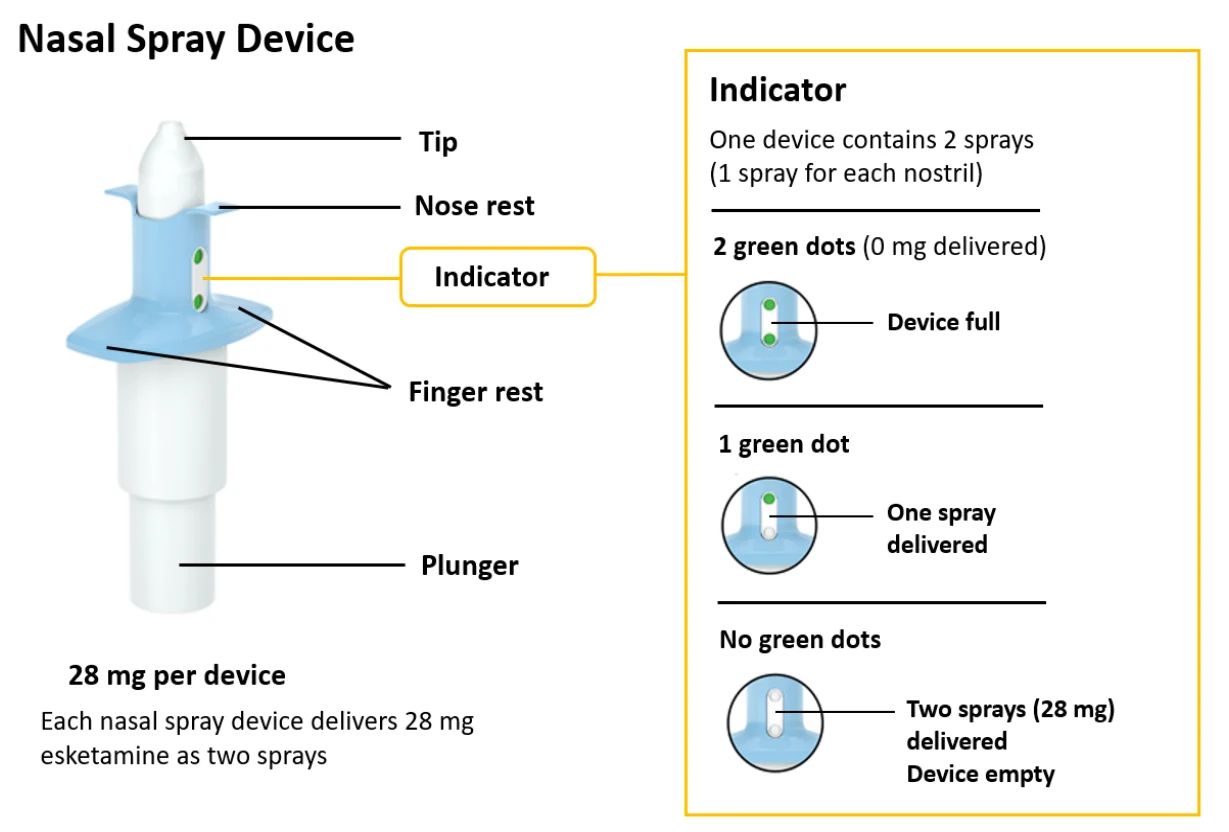
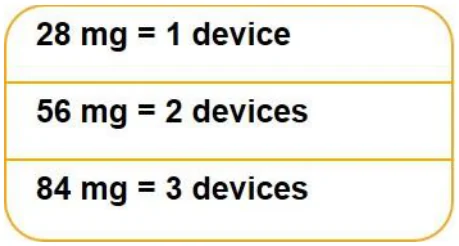
SPRAVATO is for intranasal use only. The nasal spray device is a single-use device that delivers a total of 28 mg of esketamine (as esketamine hydrochloride) in two sprays (one spray per nostril). DO NOT prime the device before use. It is intended for administration by the patient under the direct supervision of a healthcare professional, using 1 device (for a 28 mg dose), 2 devices (for a 56 mg dose) or 3 devices (for an 84 mg dose), with a 5-minute rest between use of each device.
Carefully read the following Instructions for Use in full before training and supervising patient.
Instructions for Use
IMPORTANT:
- This device is intended for administration by the patient, under the direct supervision of a healthcare professional. Read this Instructions for Use in full before training and supervising patient.
- Before administration, instruct patients not to engage in potentially hazardous activities, such as driving a motor vehicle or operating machinery until the next day after a restful sleep.
Before first device only:
Instruct patient to blow nose before first device only.
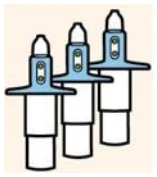
Confirm required number of devices
Healthcare professional:
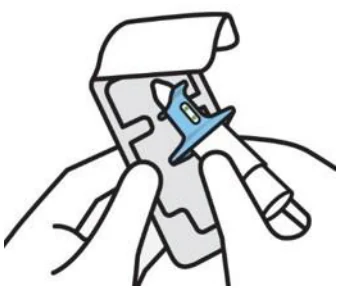
Check the expiration date (‘EXP’). If expired, get a new device. Peel blister and remove device.
Healthcare professional:

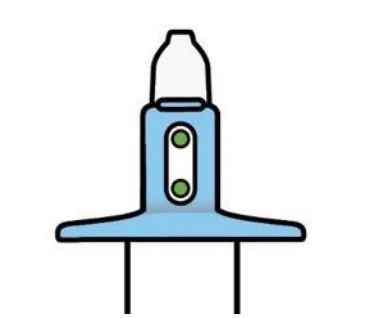
Do not prime device. This will result in a loss of medication.
Check that indicator shows 2 green dots. If not, dispose of device and get a new one.
Hand device to patient.
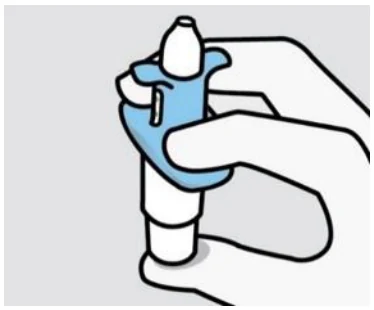
Patient should:
Hold device as shown with the thumb gently supporting the plunger.
Do not press the plunger.
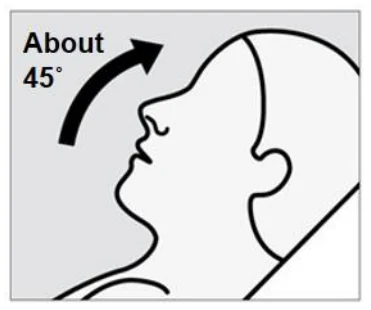
Patient should:
Recline head at about 45 degrees during administration to keep medication inside the nose.

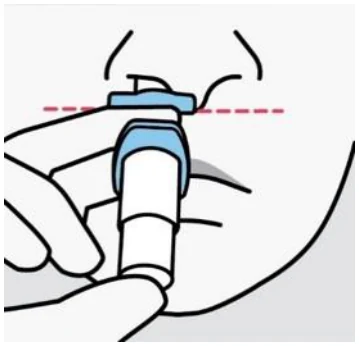
Patient should:
Insert tip straight into the first nostril.
Nose rest should touch the skin between the nostrils.
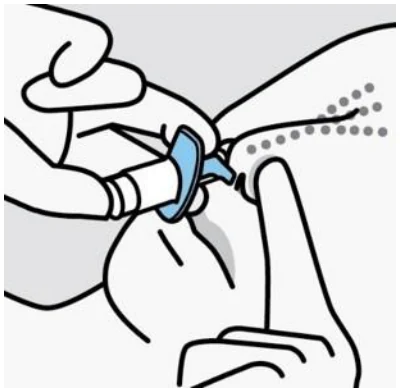
Patient should:
Close opposite nostril.
Breathe in through nose while pushing plunger all the way until it stops.
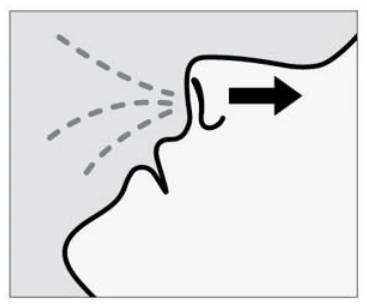
Patient should:
Sniff gently after spraying to keep medication inside nose.
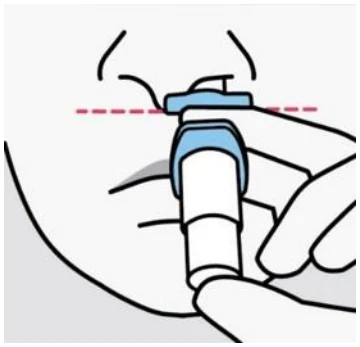
Patient should:
Switch hands to insert tip into the second nostril.
Repeat Step 4 to deliver second spray.

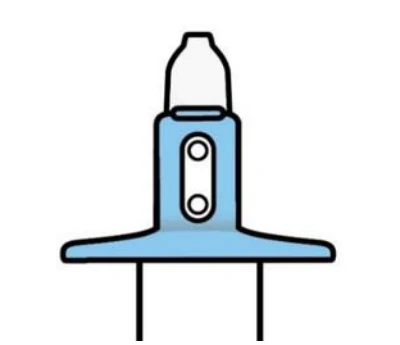
Healthcare professional:
Take device from patient.
Check that indicator shows no green dots. If you see a green dot, have patient spray again into the second nostril.
Check indicator again to confirm device is empty.
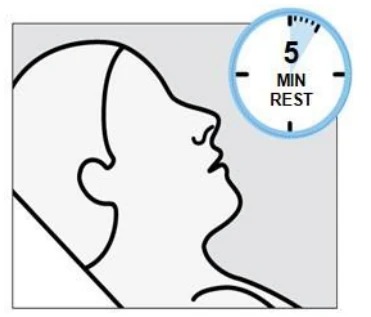
Patient should:
Rest in a comfortable position (preferably, semi-reclined) for 5 minutes after each device.
Do not blow nose. If liquid drips out, dab nose with a tissue.


IMPORTANT: Ensure that patient waits 5 minutes after each device to allow medication to absorb.
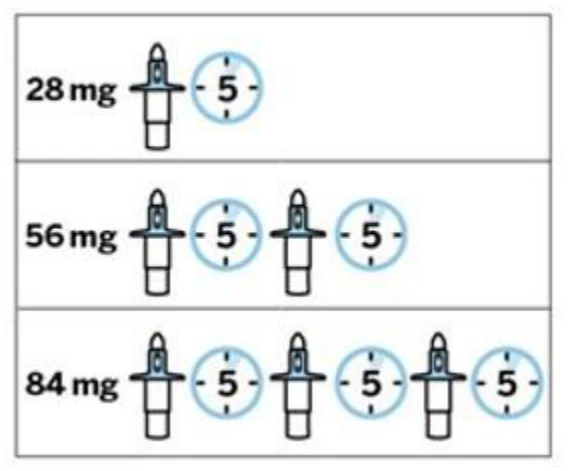
Healthcare professional:
Repeat Steps 2-5 if more than one device is required.

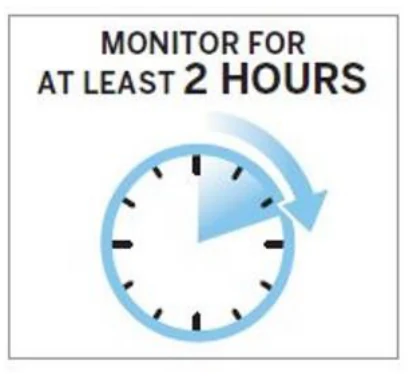
Healthcare professional:
Observe the patient for at least 2 hours until stable and ready to leave.
Reinforce to patients not to engage in potentially hazardous activities, such as driving a motor vehicle or operating machinery until the next day after a restful sleep.
A checklist to facilitate administration and monitoring of SPRAVATO is available below and through the JANSSEN JOURNEY™ Program at 1-833-257-7191 or email contact@janssenjourneyprogram.ca
Disposal: Dispose of used device(s) in accordance with local procedures for controlled substances.
SPRAVATO Administration and Monitoring Checklist
Patient name:
Date of treatment:
Dose to be administered:
Preparing for the administration
Verify the patient has not:
[ ] Consumed food for at least 2 hours before administration.
[ ] Consumed fluids for at least 30 minutes before administration.
[ ] Consumed alcohol within the last 24 hours before administration.
[ ] Used a nasal corticosteroid or nasal decongestant for at least 1 hour before administration.
Additionally confirm:
[ ] The patient has been told that SPRAVATO is not recommended if she is pregnant or breast-feeding.
[ ] The pre-dose blood pressure has been checked. If the blood pressure is not within the normal range, a decision to delay or avoid SPRAVATO therapy should be based on the balance of benefit and risk for the individual patient.*
[ ] The use of concomitant medications that may cause sedation or blood pressure changes has been checked.
[ ] Signs or symptoms of urinary tract and bladder problems have been checked for, including pain when urinating or blood in urine.
[ ] Signs of medication abuse or dependence are monitored.
[ ] The patient does not appear intoxicated.
[ ] The patient has been alerted of the need to monitor for any clinical worsening, suicidal behaviour or thoughts and unusual changes in behaviour.
* As a general guide, elevated blood pressure is >140/90 mmHg.
Administration
Before administration:
[ ] Instruct patient to blow their nose (before use of the first device only).
[ ] Ensure patient’s head is reclined back at about 45°, which can be achieved using a reclining chair, or a couch and pillows, to support the patient’s back and head.
[ ] Ensure two green dots are visible on the device before administration.
After administration:
[ ] Ensure the full dose has been received (no green dots should be visible on the device).
[ ] Monitor for signs of any treatment-related adverse reactions, such as dissociative effects, sedation, or an increase in blood pressure.
Before the patient leaves the office/healthcare setting, ensure:
[ ] The patient has been monitored and is considered clinically stable, regarding:
[ ] Dissociative symptoms and perception disturbances
[ ] Sedation and somnolence
[ ] Changes in blood pressure*
[ ] The patient has been reminded not to engage in potentially hazardous activities requiring complete mental alertness and motor coordination, such as driving a motor vehicle or operating machinery, until the next day after a restful sleep.
[ ] The next treatment session has been scheduled and the patient supplied with a written record as a reminder.
* As a general guide, elevated blood pressure is >140/90 mmHg.
For further information, please see 3 Serious Warnings and Precautions Box; 4.1 Dosing Considerations; 7 Warnings and Precautions - Cardiovascular, - Neurologic, - Psychiatric; 7.1.1 Pregnancy; 7.1.2 Breastfeeding.
4.5. Missed Dose
If a patient misses treatment session(s), provided there is no worsening of their depressive symptoms, the patient should continue the current dosing schedule.
For patients who miss treatment session(s) during maintenance treatment and have worsening of depressive symptoms, per clinical judgement, consider returning to the patient’s previous dosing schedule (see Table 1).
If sneezing occurs immediately after administration, DO NOT use a replacement device.
If administration in the same nostril occurs, DO NOT use a replacement device.
5. Overdose
No cases of overdose were reported in clinical studies with SPRAVATO.
Symptoms and Signs
The maximum single esketamine nasal spray dose tested in healthy volunteers was 112 mg, which was associated with higher rates of adverse reactions including dizziness, hyperhidrosis, somnolence, hypoesthesia, feeling abnormal, nausea and vomiting.
Life-threatening symptoms are expected based on experience with ketamine given at 25-fold the usual anesthetic dose. Clinical symptoms are described as convulsions, cardiac arrhythmias, and respiratory arrest. Respiratory depression, apneic episodes and airway complications have been described at doses 5- to 10-fold the usual anesthetic dose, while mild or moderate transient respiratory depression has been reported at anesthetic doses with rapid intravenous administration or high anesthetic doses.
Treatment
There is no specific antidote for esketamine overdose. In the case of overdose, the possibility of multiple drug involvement should be considered. It is advisable to contact a poison control center to obtain the latest recommendations for the management of an overdose. Management of SPRAVATO overdose should consist of treating clinical symptoms and relevant monitoring. Close supervision and monitoring should continue until the patient recovers.
| For the most recent information in the management of a suspected drug overdose, contact your regional poison control centre or Health Canada's toll-free number, 1-844 POISON-X (1-844-764-7669). |
|---|
- 6. Dosage Forms, Strengths, Composition, and Packaging
Table 2: Dosage Forms, Strengths, and Composition
| Route of Administration | Dosage Form / Strength / Composition | Non-medicinal Ingredients |
|---|---|---|
| Intranasal | Solution for intranasal administration Each single-use nasal spray device delivers a total of 28 mg of esketamine (as hydrochloride) in two sprays | Citric acid monohydrate Disodium edetate Sodium hydroxide Water for injection |
SPRAVATO is available as an aqueous solution of esketamine hydrochloride within a single-use nasal spray device. The device delivers two sprays, one spray into each nostril. Total volume of drug product per device to be delivered is 0.2 mL containing a total of 32.3 mg of esketamine hydrochloride (equivalent to 28 mg of esketamine).
SPRAVATO Nasal Spray 28 mg is packaged in a sealed blister and placed in cartons. SPRAVATO is for single use only. Dispose of any unused medicinal product or waste material in accordance with local requirements.
Each SPRAVATO carton is provided with a separate “Instructions for Use” leaflet and a “Patient Medication Information” leaflet.
7. Warnings and Precautions
Please see 3 Serious Warnings and Precautions Box.
General
SPRAVATO should not be used in adults of East Asian ancestry with major depressive disorder who have not responded adequately to at least two separate courses of treatment with different antidepressants (see 8.2 Clinical Trial Adverse Reactions; 10.3 Pharmacokinetics).
Cardiovascular
- Effect on Blood Pressure and Cardiovascular Risk:
SPRAVATO increases systolic and diastolic blood pressure at all recommended doses. These elevations peak at approximately 40 minutes after drug administration and last up to 4 hours. A substantial increase in blood pressure could occur even if smaller blood pressure effects were observed with previous administrations (see 8.2 Clinical Trial Adverse Reactions; 10.2 Pharmacodynamics).
SPRAVATO is contraindicated in patients for whom an increase in blood pressure or intracranial pressure poses a serious risk (e.g. patients with aneurysmal vascular disease, arteriovenous malformation, history of intracerebral hemorrhage or recent major cardiovascular event) (see 2 Contraindications).
Carefully assess patients with other clinically significant or unstable cardiovascular and cerebrovascular conditions before prescribing SPRAVATO and initiate treatment only if the benefit outweighs the risk. In these patients, administer SPRAVATO in a setting where appropriate resuscitation equipment and healthcare professionals with training in cardiopulmonary resuscitation are available (see 3 Serious Warnings and Precautions Box; 4.1 Dosing Considerations). Examples of conditions for which initiation of SPRAVATO should be carefully considered include, but are not limited to:
- Unstable or poorly controlled hypertension
- History of cardiovascular event, including myocardial infarction (MI), provided these patients are clinically stable and cardiac symptom free prior to dosage administration
- Patients with uncontrolled brady- or tachyarrhythmias that lead to haemodynamic instability
- History of ischemic stroke or transient ischemic attack
- Hemodynamically significant valvular heart disease such as mitral regurgitation, aortic stenosis, or aortic regurgitation
- New York Heart Association (NYHA) Class III-IV heart failure of any etiology.
Carefully assess patients with a history of brain injury, hypertensive encephalopathy, intrathecal therapy with ventricular shunts, or any other condition associated with increased intracranial pressure, and only initiate treatment if the benefit outweighs the risk. In these patients, more intensive post-administration monitoring, including frequent blood pressure and symptom assessment, is warranted. These patients are at increased risk for developing encephalopathy with even small increases in blood pressure.
Approximately 8% to 17% of SPRAVATO-treated patients and 1% to 3% of placebo-treated patients experienced an increase of more than 40 mmHg in systolic blood pressure and/or 25 mmHg in diastolic blood pressure in the first 1.5 hours after administration at least once during the first 4 weeks of treatment.
Assess blood pressure prior to SPRAVATO administration. In patients whose blood pressures prior to dose administration are judged to be elevated (as a general guide: >140/90 mmHg), a decision to delay or avoid SPRAVATO therapy should take into account the balance of benefit and risk in individual patients. Lifestyle and/or pharmacologic therapies to reduce blood pressure are recommended before starting treatment with SPRAVATO.
Reassess blood pressure following SPRAVATO administration. Include an assessment at approximately 40 minutes post-dose and continue to monitor until blood pressure returns to acceptable levels, as clinically warranted (see 4.1 Dosing Considerations). Ensure patient is clinically stable at 2 hours post-dose or continue monitoring. If blood pressure remains high, assistance should be promptly sought from practitioners experienced in blood pressure management. Refer patients experiencing symptoms of a hypertensive crisis (e.g., chest pain, shortness of breath) or hypertensive encephalopathy (e.g., sudden severe headache, visual disturbances, seizures, diminished consciousness or focal neurological deficits) immediately for emergency care.
Concomitant use of SPRAVATO with other drugs that increase blood pressure, including, but not limited to, psychostimulants (e.g. amphetamines, methylphenidate), other sympathomimetics, triptans, monoamine oxidase inhibitors (MAOIs), and vascular endothelial growth factor receptor inhibitors should be avoided or undertaken with intensified blood pressure monitoring (see 9.4 Drug-Drug Interactions).
Inform patients that SPRAVATO increases blood pressure and may change heart rate. Tachycardia was observed during SPRAVATO clinical trials (2% to 4% in SPRAVATO-treated, 0% to 1% in placebo). Rare cases of bradycardia in patients with or without concomitant disease or medications have been reported in the post-market setting. Patients should be observed by a healthcare professional until these effects resolve (see 8.5 Post-Market Adverse Reactions).
Dependence, Tolerance and/or Abuse Liability
SPRAVATO contains esketamine, a Schedule I Controlled Substance. SPRAVATO has the potential to be abused, misused, cause physical dependence, and is therefore subject to diversion. Take appropriate measures to safeguard SPRAVATO from diversion (see 3 Serious Warnings and Precautions Box).
SPRAVATO is only available through a controlled distribution program called the JANSSEN JOURNEY™ Program (see 1 Indications).
Ketamine, the racemic mixture of arketamine and esketamine, is a drug of abuse. Comparable scores on subjective ratings of “drug liking” and on other measures of subjective drug effects were observed between SPRAVATO (at 84 mg and 112 mg) and intravenous ketamine in recreational polydrug users, suggesting a similar potential for abuse. In clinical trials, very common reactions reported with SPRAVATO included dissociation, dizziness and somnolence. Common reactions included feeling abnormal, feeling drunk, euphoric mood and hallucinations (see 8.2 Clinical Trial Adverse Reactions).
In published reports, individuals who were dependent on ketamine reported withdrawal symptoms of cravings, anxiety, shaking, sweating, and palpitations.
Individuals with a history of drug abuse or dependence may be at greater risk for abuse and misuse of SPRAVATO. Careful consideration of the risks and benefits of prescribing SPRAVATO is advised prior to treatment of individuals with a history of substance use disorder, including alcohol. Assess each patient’s risk for abuse or misuse prior to prescribing SPRAVATO and monitor all patients receiving SPRAVATO for signs and symptoms of abuse, misuse or dependence including drug seeking behaviour and symptoms of withdrawal. If you suspect substance abuse or misuse, carefully weigh the risks of continuing versus stopping treatment and consult clinical guidelines on depression with comorbid substance use disorder. If needed, refer patient to a psychiatrist with experience in managing this condition.
Driving and Operating Machinery
SPRAVATO has a major influence on the ability to drive and use machines.
Before SPRAVATO administration, instruct patients that they cannot engage in potentially hazardous activities requiring complete mental alertness and motor coordination, such as driving a motor vehicle or operating machinery, until the next day and following a restful sleep. Instruct patients to arrange safe transportation following treatment with SPRAVATO.
Two studies were conducted to assess the effects of SPRAVATO on the ability to drive. Although the effects of SPRAVATO 84 mg were comparable to placebo at 8 hours and 18 hours post-dose, two SPRAVATO-treated subjects in one of the studies discontinued the driving test at 8 hours post-dose due to SPRAVATO-related adverse reactions (see 3 Serious Warnings and Precautions Box; 10.2 Pharmacodynamics).
Endocrine and Metabolism
Use SPRAVATO with caution in patients with hyperthyroidism that has not been sufficiently treated due to the increased risk of hypertension and tachycardia. Carefully assess patients before prescribing SPRAVATO and treatment initiated only if the benefit outweighs the risk.
Gastrointestinal
- Nausea and Vomiting:
Nausea and vomiting were among the most common adverse drug reactions reported in clinical trials with SPRAVATO, with approximately 27% and 10% of patients, respectively, reporting reactions. In general, these events occurred and resolved on the day of dosing. Severe events were reported in <2% of patients across trials.
Discuss with patients the potential for nausea and vomiting following administration of SPRAVATO. Advise patients not to eat for at least 2 hours before administration and not to drink liquids at least 30 minutes prior to administration (see 4.1 Dosing Considerations).
Genitourinary
- Ulcerative or Interstitial Cystitis:
Cases of ulcerative or interstitial cystitis have been reported in subjects using ketamine for recreational use or for treatment of chronic pain at high doses with long-term use. In short-term studies, patients treated with SPRAVATO had a higher incidence of lower urinary tract symptoms, such as pollakiuria, dysuria, micturition urgency, nocturia and cystitis (see 8.2 Clinical Trial Adverse Reactions).
Monitor for urinary tract and bladder symptoms during the course of treatment with SPRAVATO, and refer to appropriate healthcare provider as clinically warranted.
Hepatic/Biliary/Pancreatic
- Patients with Hepatic Impairment:
SPRAVATO has not been studied in patients with severe hepatic impairment (Child-Pugh class C). Use in this population is not recommended.
Patients with moderate (Child-Pugh class B) hepatic impairment may have stronger or prolonged adverse reactions. Therefore, these patients may need to be monitored more carefully and for a longer period after dosing than those without hepatic impairment (see 4.2 Recommended Dose and Dosage Adjustment; 10.3 Pharmacokinetics).
- Hepatotoxicity:
Hepatocellular and cholestatic patterns of elevations in liver enzymes as well as biliary ductal dilatations and hepatic fibrosis have been reported following exposure to ketamine, especially with repeated doses, chronic use or misuse. Since a potential for hepatotoxicity with the use of SPRAVATO cannot be excluded, consider periodic monitoring of liver function and treatment discontinuation if clinically significant elevations are observed (see 8.5 Post-Market Adverse Reactions).
Monitoring and Laboratory Tests
SPRAVATO must be administered under the direct supervision of a healthcare professional. Monitor:
- blood pressure prior to and following SPRAVATO administration. Include an assessment at approximately 40 minutes post-dose and continue to monitor until blood pressure returns to acceptable levels. Intensify monitoring in patients with medical conditions or taking concomitant medications that may exacerbate blood pressure elevations or potentiate the risk of blood pressure elevations for the patient.
- patients for at least 2 hours at each treatment session until clinically stable and ensure that medical support is available to appropriately manage reactions. An assessment must be performed to determine when the patient is ready to leave the healthcare setting. See the SPRAVATO Administration and Monitoring Checklist (4.4 Administration).
- for signs and symptoms of abuse, misuse or dependence.
- for suicidal ideation or other indicators of potential for suicidal behaviour, particularly early in treatment and following any intended or unintended changes to treatment, including dosing modifications, interruption and discontinuation.
- for urinary tract and bladder symptoms.
- liver function periodically.
Neurologic
- Cognitive Impairment:
SPRAVATO causes acute adverse reactions (such as somnolence, sedation, dissociative symptoms, perception disturbances, dizziness, vertigo, and anxiety) that impair attention, judgment, thinking, reaction speed and motor skills (see 8.2 Clinical Trial Adverse Reactions). In clinical studies, SPRAVATO caused a decline in cognitive performance at 40 minutes post-dose. Average cognitive performance and mental effort were comparable between SPRAVATO and placebo at 2 hours post-dose. Sleepiness was comparable after 4 hours post-dose.
Long-term cognitive and memory impairment have been reported with chronic ketamine use. No adverse effects of SPRAVATO nasal spray on cognitive functioning were observed in younger patients in a one-year open-label safety study; however, a slowing of reaction time to complete cognitive tasks was observed in elderly patients. The long-term cognitive effects of SPRAVATO have not been systematically evaluated beyond one year, therefore the risks for cognitive and memory impairment remain unknown.
In animal studies with esketamine and ketamine, findings suggestive of long-term cognitive deficits have been reported (see 16 Non-Clinical Toxicology). Long-term neuronal cell loss has been reported with ketamine.
- Dizziness and Vertigo:
Dizziness and vertigo were among the most common adverse drug reactions reported with SPRAVATO (reported in 28% to 51% of patients across clinical studies) (see 8.2 Clinical Trial Adverse Reactions). Most events resolved on the day of dosing; however, some were prolonged or had a delayed onset. Severe events were reported in <3% of patients across trials.
- Sedation:
Sedation and somnolence-related adverse drug reactions were among the most commonly reported with SPRAVATO (see 3 Serious Warnings and Precautions Box; 8.2 Clinical Trial Adverse Reactions).
Most events resolved on the day of dosing; however, some were prolonged or had a delayed onset. Cases of deep sedation were rare.
Concomitant use with CNS depressants (e.g., benzodiazepines, opioids, alcohol) may increase sedation (see 9.3 Drug-Behavioural Interactions; 9.4 Drug-Drug Interactions). Exercise extra caution and closely monitor for sedation with concomitant use of SPRAVATO with CNS depressants.
- Seizures:
During clinical trials, the overall incidence of seizures in SPRAVATO arms was 0.05% (placebo: 0%). Patients with previous history of seizures were excluded from these studies. Post-marketing cases of seizures have also been reported. Caution is recommended if SPRAVATO is administered to patients with previous history of seizures (see 8.5 Post-market Adverse Reactions).
- Management of Post-Administration Neurologic Reactions:
Discuss with patients the potential for acute cognitive impairment, dizziness and sedation following treatment with SPRAVATO (see 3 Serious Warnings and Precautions Box). Advise patients to report any latent or prolonged effects.
Following SPRAVATO administration, at each treatment session, patients must be monitored for at least 2 hours until clinically stable. Carefully follow all procedures outlined in 4.1 Dosing Considerations.
Psychiatric
- Dissociation:
Dissociation and derealization-related adverse drug reactions were among the most commonly reported with SPRAVATO (see 3 Serious Warnings and Precautions Box; 8.2 Clinical Trial Adverse Reactions). In a fixed dose trial, measures of dissociative symptoms were dose-related. In <4% of cases dissociative effects were severe. For some patients, dissociative symptoms can be associated with anxiety or panic, particularly when initiating treatment. Dissociative effects generally occurred and resolved on the day of dosing.
Use SPRAVATO with caution in patients with presence or history of psychosis. Carefully assess the patient before prescribing SPRAVATO and initiate treatment only if the benefit outweighs the risk.
Discuss with patients the dissociative properties of SPRAVATO and what subjective experiences they may encounter, including derealization, feeling drunk or abnormal, perceptual disturbances and hallucinations.
Following SPRAVATO administration, at each treatment session, patients must be monitored for at least 2 hours until clinically stable. Carefully follow all procedures outlined in 4.1 Dosing Considerations.
- Mania and Bipolar Disorder:
Mania was observed with SPRAVATO in clinical trials.
Use SPRAVATO with caution in patients with the presence or history of mania or bipolar disorder. Carefully assess the patient before prescribing SPRAVATO and initiate treatment only if the benefit outweighs the risk.
- Suicide:
Cases of completed suicide were observed in patients with exposure to SPRAVATO in clinical trials including in patients with no known history of suicidal behaviour or who achieved remission of depression. These events occurred during open-label, uncontrolled phases of clinical studies. Therefore, it is not possible to reliably assess the causal relationship of these events to treatment with SPRAVATO.
Depression is associated with an increased risk of suicidal thoughts, self-harm and suicide (suicide related events). It is general clinical experience that the risk of suicide may increase in the early stages of recovery.
Patients with a history of suicide-related events or those exhibiting a significant degree of suicidal ideation prior to commencement of treatment are known to be at greater risk of suicidal thoughts or suicide attempts. Ensure these patients receive careful monitoring during treatment.
Rigorously monitor for suicidal ideation or other indicators of potential for suicidal behaviour early in treatment and following any intended or unintended changes to treatment, including dosing modifications, interruption and discontinuation. Alert patients (and patient caregivers) to the need to monitor for any clinical worsening, suicidal behaviour or thoughts and unusual changes in behaviour and to immediately seek medical advice if these symptoms present (see 3 Serious Warnings and Precautions Box).
The effectiveness of SPRAVATO in preventing suicide or in reducing suicidal ideation or behaviour was not demonstrated in Phase 3 clinical trials (see 14.1 Clinical Trials by Indication). Use of SPRAVATO does not preclude the need for hospitalization if clinically warranted, even if patients experience improvement after an initial dose of SPRAVATO.
Respiratory
Respiratory depression may occur at high doses or following rapid intravenous injection of anesthetic doses of esketamine or ketamine.
During post-marketing use, respiratory depression has been observed in rare cases with the use of SPRAVATO. Most cases occurred in combination with other CNS depressants and in patients with comorbidities such as obesity, anxiety, cardiovascular and respiratory conditions. These events were transient in nature and resolved after verbal/tactile stimulation or supplemental oxygen.
Concomitant use of SPRAVATO with CNS depressants may increase the risk for respiratory depression (see 9.4 Drug-Drug Interactions). Closely monitor for respiratory depression with concomitant use of SPRAVATO and CNS depressants. Ensure that medical support is available to appropriately manage the potential for respiratory depression.
Carefully assess patients with clinically significant or unstable respiratory conditions before prescribing SPRAVATO and initiate treatment only if the benefit outweighs the risk (see 3 Serious Warnings and Precautions Box; 4.1 Dosing Considerations). In these patients, administer SPRAVATO in a setting where appropriate resuscitation equipment and healthcare professionals with training in cardiopulmonary resuscitation are available. Examples of conditions for which initiation of SPRAVATO should be carefully considered include, but are not limited to:
- Significant pulmonary insufficiency, including COPD.
- Sleep apnea with morbid obesity (BMI ≥35).
7.1. Special Populations
7.1.1. Pregnancy
The use of SPRAVATO should be avoided in women of childbearing potential intending to become pregnant and during pregnancy, with careful consideration given to the potential hazard to the child and potential benefits to the mother. To avoid exposing the fetus to esketamine, women of reproductive potential should be advised to use highly effective contraception during and up to 6 weeks after the last treatment with SPRAVATO. If a woman becomes pregnant during treatment, SPRAVATO should be discontinued and the patient should be counseled about the potential risk to the fetus and clinical/therapeutic options as soon as possible.
The risks of SPRAVATO during pregnancy have not been studied. Human data in pregnant women during clinical trials with SPRAVATO were very limited. Animal studies with ketamine, the racemic mixture of arketamine and esketamine, show evidence of developmental neurotoxicity. The potential for esketamine to have neurotoxic effects on fetuses cannot be excluded (see 16 Non-Clinical Toxicology).
Pregnancy Registry
There is a pregnancy exposure registry that monitors pregnancy outcomes in women exposed to antidepressants, including SPRAVATO, during pregnancy. Encourage pregnant women exposed to SPRAVATO to enroll in the National Pregnancy Registry for Antidepressants. Information on the registry can also be found by calling: 1-866-961-2388 or at the following website: https://womensmentalhealth.org/research/pregnancyregistry/antidepressants/.
7.1.2. Breastfeeding
The use of SPRAVATO should be avoided in women who are breast-feeding. Advise patients either not to undergo therapy with SPRAVATO while breast-feeding or discontinue breast-feeding if treatment with SPRAVATO is initiated.
The risks of SPRAVATO during breast-feeding have not been studied in humans. There are no data available to assess the effects of esketamine on human milk production, its presence in human milk, or effects on the breastfed infant. Esketamine is expected to be excreted to human milk, based on its detection in the plasma of lactating rat pups (see 16 Non-Clinical Toxicology) and published data showing presence of ketamine in the milk of cows exposed to intravenously-administered ketamine.
7.1.3. Pediatrics
Pediatrics (<18 years of age): No data are available to Health Canada; therefore, Health Canada has not authorized an indication for pediatric use (see 1.1 Pediatrics).
7.1.4. Geriatrics
Initiation of SPRAVATO is not recommended in patients 65 years of age and older. Evidence of efficacy was not established in this population (see 1.2 Geriatrics; 14.1 Clinical Trials by Indication).
Pharmacokinetic analysis showed that mean esketamine Cmax and AUC values were higher in elderly patients compared with younger adult patients (see 10.3 Pharmacokinetics). Therefore, in clinical studies, SPRAVATO was initiated at 28 mg and could be titrated to 56 mg or 84 mg (see 4.2 Recommended Dose and Dosage Adjustment; 14.1 Clinical Trials by Indication).
There was no evidence of a meaningful difference in safety profile in patients 65 years of age and older in a study compared to studies conducted in adults <65 years of age. However, a greater sensitivity of elderly patients (e.g., risk of fall) cannot be ruled out (see 8.2 Clinical Trial Adverse Reactions).
SPRAVATO has not been studied in elderly patients as a short-term treatment of major depressive disorder requiring urgent psychiatric care.
8. Adverse Reactions
8.1. Adverse Reaction Overview
Major depressive disorder in adults who have not responded adequately to at least two separate courses of treatment with different antidepressants:
SPRAVATO was evaluated for safety in 1601 adults with major depressive disorder (who were non-responders to at least two oral antidepressant treatments, of adequate dosage and duration, in the current major depressive episode) from five Phase 3 studies (3 short-term and 2 long-term studies). Of all SPRAVATO treated patients in the completed Phase 3 studies, 479 (29.9%) received at least 6 months of treatment exposure, and 178 (11.1%) received at least 12 months of exposure.
In the Phase 3 program, the most commonly observed adverse reactions in patients treated with SPRAVATO plus oral antidepressant were dissociation, dizziness, nausea, sedation, headache, vertigo, dysgeusia, hypoesthesia, blood pressure increased, anxiety and vomiting. The majority of these events were transient, occurring and resolving on the day of administration.
Including an ongoing long-term trial, serious adverse events considered by the investigator to be related to SPRAVATO and reported by at least 2 patients were suicidality (2 of suicidal ideation and 1 of suicide attempt), hypertension (1 of increased blood pressure and 1 hypertensive emergency) and anxiety (1 of anxiety disorder and 1 of anxiety). The most common adverse events leading to SPRAVATO discontinuation (in order of decreasing frequency) were: anxiety, depression, blood pressure increased, dizziness, suicidal ideation, dissociation, nausea, vomiting, headache, muscular weakness, vertigo, hypertension, panic attack and sedation. In a given study, each was reported with an incidence of ≤2%.
Short-term treatment of major depressive disorder requiring urgent psychiatric care:
SPRAVATO was evaluated for safety in 227 adults for the treatment of major depressive disorder requiring urgent psychiatric care in two short-term Phase 3 studies (see 14.1 Clinical Trials by Indication section for a description of the population studied). Of all SPRAVATO treated patients in the completed Phase 3 studies, 184 (81%) received all eight doses over a 4-week treatment period.
The most commonly observed adverse reactions in patients treated with SPRAVATO plus oral antidepressant (incidence ≥5% and at least twice that of placebo nasal spray plus oral antidepressant)
were dissociation, dizziness, sedation, blood pressure increased, hypoesthesia, vomiting, euphoric mood and vertigo. The majority of these events were transient, occurring and resolving on the day of administration.
The serious adverse events considered by the investigator as possibly related to SPRAVATO included 1 patient each in the SPRAVATO plus oral antidepressant group with depersonalization/derealization disorder and suicide attempt. The most common adverse events leading to SPRAVATO discontinuation in more than 1 patient (in order of decreasing frequency) were: dissociation, depersonalization /derealization disorder, blood pressure increased and nausea. Each was reported with an incidence of <2%.
8.2. Clinical Trial Adverse Reactions
Clinical trials are conducted under very specific conditions. The adverse reaction rates observed in the clinical trials; therefore, may not reflect the rates observed in practice and should not be compared to the rates in the clinical trials of another drug. Adverse reaction information from clinical trials is useful for identifying and approximating rates of adverse drug reactions in real-world use.
Major depressive disorder in adults who have not responded adequately to at east two separate courses of treatment with different antidepressants:
Table 3 shows the incidence of adverse reactions that occurred in adult patients (aged 18 to <65) with major depressive disorder who have not responded to ≥2 previous courses of treatment. The data is from a safety pool of two short-term (4 week) randomized, double-blind, placebo-controlled studies.
Table 3: Treatment emergent adverse events occurring in ≥1% patients treated with SPRAVATO + oral antidepressant and greater than placebo + oral antidepressant in data pool of 2 short-term (4 week) clinical trials in adults (18 to <65 years of age) with major depressive disorder who have not responded to ≥2 previous courses of treatment
SPRAVATO1 + oral antidepressant2 (N=346) | Placebo + oral antidepressant2 (N=222) | ||||||
|---|---|---|---|---|---|---|---|
SPRAVATO1 + oral antidepressant2 (N=346) | Placebo + oral antidepressant2 (N=222) | ||||||
SPRAVATO1 + oral antidepressant2 (N=346) | Placebo + oral antidepressant2 (N=222) | ||||||
Cardiac disorders Tachycardia3 | 6 (2%) | 1 (0%) | |||||
Ear and labyrinth disorders Vertigo3 | 78 (23%) | 6 (3%) | |||||
Gastrointestinal disorders Nausea Vomiting Diarrhoea Dry mouth Constipation Dyspepsia Abdominal discomfort | 98 (28%) 32 (9%) 23 (7%) 19 (5%) 11 (3%) 7 (2%) 6 (2%) | 19 (9%) 4 (2%) 13 (6%) 7 (3%) 3 (1%) 4 (2%) 0 | |||||
General disorders and administration site conditions Feeling drunk | 19 (5%) 12 (3%) 7 (2%) | 1 (0%) 0 2 (1%) | |||||
Feeling abnormal Crying | |||||||
Infections and infestations Urinary tract infection | 6 (2%) | 3 (1%) | |||||
Investigations Blood pressure increased Weight increased | 36 (10%) 4 (1%) | 6 (3%) 0 | |||||
Metabolism and nutrition disorders Increased appetite | 5 (1%) | 0 | |||||
Musculoskeletal and connective tissue disorders Muscle spasms Back pain | 8 (2%) 4 (1%) | 0 2 (1%) | |||||
Nervous system disorders Dizziness3 Sedation3 Headache3 Dysgeusia3 Hypoesthesia3 Lethargy3 Dysarthria3 Tremor3 Mental impairment Tunnel vision Migraine | 101 (29%) 79 (23%) 70 (20%) 66 (19%) 63 (18%) 37 (11%) 15 (4%) 12 (3%) 11 (3%) 5 (1%) 4 (1%) | 17 (8%) 21 (9%) 38 (17%) 30 (14%) 5 (2%) 12 (5%) 0 2 (1%) 2 (1%) 2 (1%) 1 (0%) | |||||
Psychiatric disorders Dissociation3 Anxiety3 Insomnia Euphoric mood Libido decreased Psychomotor retardation Depression | 142 (41%) 45 (13%) 29 (8%) 15 (4%) 5 (1%) 5 (1%) 4 (1%) | 21 (9%) 14 (6%) 16 (7%) 2 (1%) 0 0 0 | |||||
Renal and urinary disorders Pollakiuria3 Dysuria | 11 (3%) 6 (2%) | 1 (0%) 0 | |||||
Respiratory, thoracic and mediastinal disorders Nasal discomfort3 Throat irritation | 23 (7%) 23 (7%) 9 (3%) 7 (2%) | 11 (5%) 9 (4%) 5 (2%) 2 (1%) | |||||
Oropharyngeal pain Rhinorrhea Upper-airway cough syndrome Cough Epistaxis | 6 (2%) 4 (1%) 4 (1%) | 3 (1%) 0 2 (1%) | |||||
Skin and subcutaneous tissue disorders Hyperhidrosis Pruritus | 14 (4%) 7 (2%) | 5 (2%) 1 (0%) | |||||
- 1. SPRAVATO administered at recommended 56 mg or 84 mg doses on fixed or flexible regimens.
- 2. Investigators selected from one of duloxetine, venlafaxine extended release; escitalopram or sertraline.
- 3.
The following terms were combined:
Anxiety includes: anxiety; anticipatory anxiety; anxiety disorder; generalized anxiety disorder; agitation; fear; nervousness; tension; panic attack; panic disorder; panic reaction; feeling jittery; irritability; psychogenic tremor. Blood pressure increased includes: blood pressure increased; blood pressure systolic increased; blood pressure diastolic increased; hypertension; hypertensive heart disease; hypertensive crisis. Dissociation includes: dissociation; depersonalization/derealization disorder; derealization; dissociative disorder; flashback; hallucination; auditory hallucination; somatic hallucination; visual hallucination; illusion; hyperacusis; tinnitus; diplopia; vision blurred; ocular discomfort; photophobia; visual impairment; dysesthesia; oral dysesthesia; paresthesia; paresthesia oral; pharyngeal paresthesia; time perception altered; daydreaming; delusional perception; feeling hot; feeling cold; feeling of body temperature change. Dizziness includes: dizziness; dizziness postural; procedural dizziness; dizziness exertional. Dysarthria includes: dysarthria; speech disorder; slow speech. Dysgeusia includes: dysgeusia; hypogeusia. Headache includes: headache; sinus headache. Hypoesthesia includes: hypoesthesia; hypoesthesia oral; hypoesthesia teeth; pharyngeal hypoesthesia; intranasal hypoesthesia. Lethargy includes: lethargy; fatigue; listless. Nasal discomfort includes: nasal discomfort; nasal crusting; nasal dryness, nasal pruritus. Sedation includes: sedation; somnolence; altered state of consciousness; depressed level of consciousness; hypersomnia; stupor. Tachycardia includes: sinus tachycardia; tachycardia; heart rate increased; extrasystole. Tremor includes: tremor; intention tremor. Vertigo includes: vertigo; vertigo positional.
- •
Short-term treatment of major depressive disorder requiring urgent psychiatric care:
Table 4 shows the incidence of adverse reactions that occurred in patients treated with SPRAVATO plus oral antidepressant and greater than patients treated with placebo nasal spray plus oral antidepressant.
Table 4: Treatment emergent adverse events occurring in ≥1% patients with major depressive disorder requiring urgent psychiatric care treated with SPRAVATO + oral antidepressant and at a greater rate than patients treated with placebo nasal spray + oral antidepressant
SPRAVATO + oral antidepressant (N=227) | Placebo + oral antidepressant (N=225) | |
SPRAVATO + oral antidepressant (N=227) | Placebo + oral antidepressant (N=225) | |
| Cardiac disorders | ||
| Tachycardia1 | 8 (4%) | 2 (1%) |
| Ear and labyrinth disorders | ||
| Vertigo | 14 (6%) | 1 (0.4%) |
| Gastrointestinal disorders | ||
| Nausea | 61 (27%) | 31 (14%) |
| Vomiting | 26 (11%) | 12 (5%) |
| Constipation | 22 (10%) | 14 (6%) |
| Dry mouth | 8 (4%) | 6 (3%) |
| Toothache | 5 (2%) | 2 (1%) |
| General disorders and administration site conditions | ||
| Feeling drunk | 8 (4%) | 1 (0.4%) |
| Feeling of relaxation | 5 (2%) | 3 (1%) |
| Asthenia | 4 (2%) | 0 (0%) |
| Crying | 4 (2%) | 0 (0%) |
| Investigations | ||
| Blood pressure increased1 | 34 (15%) | 14 (6%) |
| Musculoskeletal and connective tissue disorders | ||
| Myalgia | 5 (2%) | 1 (0.4%) |
| Nervous system disorders | ||
| Dizziness1 | 103 (45%) | 34 (15%) |
| Sedation1 | 66 (29%) | 27 (12%) |
| Dysgeusia1 | 46 (20%) | 29 (13%) |
| Hypoesthesia1 | 30 (13%) | 4 (2%) |
| Lethargy1 | 10 (4%) | 4 (2%) |
| Confusional state | 5 (2%) | 0 (0%) |
| Mental Impairment | 3 (1%) | 0 (0%) |
| Dysarthria1 | 3 (1%) | 1 (0.4%) |
| Psychiatric disorders | ||
| Dissociation1 | 108 (48%) | 30 (13%) |
| Anxiety1 | 34 (15%) | 20 (9%) |
| Euphoric mood | 17 (7%) | 1 (0.4%) |
| Intentional self-injury | 7 (3%) | 3 (1%) |
| Dysphoria | 5 (2%) | 0 (0%) |
| Renal and urinary disorders | ||
| Pollakiuria1 | 5 (2%) | 2 (1%) |
| Dysuria | 3 (1%) | 0 (0%) |
| Respiratory, thoracic and mediastinal disorders | ||
| Oropharyngeal pain | 10 (4%) | 3 (1%) |
| Throat irritation | 9 (4%) | 5 (2%) |
| Skin and subcutaneous tissue disorders | ||
| Hyperhidrosis1 | 11 (5%) | 5 (2%) |
- 1.
The following terms were combined:
Anxiety includes: agitation; anxiety; anxiety disorder; fear; irritability; nervousness; panic attack; psychomotor hyperactivity; tension
Blood pressure increased includes: blood pressure diastolic increased; blood pressure increased; blood pressure systolic increased; hypertension
Dissociation includes: depersonalization/derealization disorder; derealization; diplopia; dissociation; dysesthesia; feeling cold; feeling hot; hallucination; hallucination, auditory; hallucination, visual; hallucinations, mixed; hyperacusis; paresthesia; paresthesia oral; pharyngeal paresthesia; photophobia; time perception altered; tinnitus; vision blurred
Dizziness includes: dizziness; dizziness exertional; dizziness postural
Dysarthria includes: dysarthria; slow speech
Dysgeusia includes: dysgeusia; hypogeusia
Hyperhidrosis includes: cold sweat; hyperhidrosis
Hypoesthesia includes: hypoesthesia; hypoesthesia oral; intranasal hypoesthesia; pharyngeal hypoesthesia
Lethargy includes: fatigue; lethargy; psychomotor retardation
Pollakiuria includes: micturition urgency; pollakiuria
Sedation includes: sedation; somnolence; stupor
Tachycardia includes: heart rate increased; sinus tachycardia; tachycardia
Scale-based incidences of dissociation and sedation
Major depressive disorder in adults who have not responded adequately to at least two separate courses of treatment with different antidepressants:
In the short-term (4-week) fixed-dose trial in adults (18 to <65 years of age), scale-based incidences of dissociation and sedation were dose-related.
- Based on a scale of dissociative symptoms, the Clinician-Administered Dissociative States Scale (CADSS), the incidence of dissociation (CADSS total score >4 post-dose and change >0) was 61% in patients treated with SPRAVATO 56 mg + oral antidepressant and 69% in patients treated with SPRAVATO 84 mg + oral antidepressant, compared to 5% in patients treated with placebo + oral antidepressant.
- Based on an objective scale of sedation, the Modified Observer’s Alertness/Sedation scale (MOAA/s), the incidence of sedation (MOAA/s score <5) was 50% in patients treated with SPRAVATO 56 mg + oral antidepressant and 61% in patients treated with SPRAVATO 84 mg + oral antidepressant, compared to 11% in patients treated with placebo + oral antidepressant.
Short-term treatment of major depressive disorder requiring urgent psychiatric care:
- In studies for the treatment of major depressive disorder requiring urgent psychiatric care, a greater proportion of patients treated with SPRAVATO plus oral antidepressant (84%) demonstrated dissociation (CADSS total score >4 and change >0) compared to patients treated with placebo plus oral antidepressant (16%).
- There was also a higher incidence of sedation (MOAA/S score <5) in patients treated with SPRAVATO plus oral antidepressant (47.6%) compared to patients treated with placebo plus oral antidepressant (17.8%).
East Asian ancestry
SPRAVATO may not be efficacious and side effects may be more frequent in adults of East Asian ancestry with major depressive disorder who have not responded adequately to at least two separate courses of treatment with different antidepressants.
SPRAVATO was not efficacious in a randomized, double-blind, active-controlled, multicenter Phase 3 clinical trial (n=252) conducted in China. In addition, the frequencies of adverse reactions related to dizziness/vertigo, nausea, vomiting, hypoaesthesia, and blurred vision were higher than those observed in other similar esketamine Phase 3 studies. Also, SPRAVATO was not efficacious in a randomized, double-blind, placebo-controlled, multicenter Phase 2 clinical trial (n=202) conducted in Japan.
Geriatric patients (≥65 years of age)
The safety of SPRAVATO in geriatric patients (≥65 years of age) was evaluated in a 4-week placebo-controlled Phase 3 study. In this study, SPRAVATO was initiated at 28 mg and could be titrated to 56 mg or 84 mg, twice-weekly, due to tolerability concerns. On Day 25, the proportions of patients receiving 28 mg, 56 mg and 84 mg were 10%, 26% and 65%, respectively. There was no evidence of a meaningful difference in safety profile in patients 65 years of age and older in this study compared to studies conducted in adults under 65 years of age. However, a greater sensitivity of elderly patients (e.g., risk of fall) cannot be ruled out. In a long-term (52-week) study, a slowing of reaction time to complete cognitive tasks was observed in elderly patients from Week 20.
Long-term studies
In a relapse-prevention study and a long-term (up to 52 weeks) open-label study with SPRAVATO, there was no evidence of a meaningful difference in safety profile compared to short-term studies in patients with major depressive disorder who have not responded adequately to at least two separate courses of treatment with different antidepressants.
The long-term safety profile of SPRAVATO, beyond 4 weeks, has not been evaluated in patients with major depressive disorder requiring urgent psychiatric care.
8.3. Less Common Clinical Trial Adverse Reactions
Treatment-related adverse events occurring in ≥2 patients treated with SPRAVATO + oral antidepressant and greater than placebo + oral antidepressant are listed below:
Cardiac disorders: palpitations
Ear and labyrinth disorders: ear discomfort, hypoacusis
Gastrointestinal disorders: salivary hypersecretion
General disorders: asthenia, malaise, thirst
Musculoskeletal disorders: musculoskeletal stiffness, myalgia
Nervous system disorders: amnesia, balance disorder, disturbance in attention, nystagmus
Psychiatric disorders: abnormal dreams, affect liability, bradyphrenia, confusional state, disorientation, restlessness
Renal and urinary disorders: micturition urgency
Respiratory disorders: dyspnea, nasal congestion, sneezing
Vascular disorders: hot flush
8.5. Post-Market Adverse Reactions
Bradycardia
Rare post-marketing reports of bradycardia have been received. Some were considered serious and involved patients with or without cardiovascular history, concomitant disease or medication. Observe patient until heart rate returns to or near normal values. Emergency care may be required if bradycardia is associated with other events including chest pain, shortness of breath, or loss of consciousness (see 7 Warnings and Precautions - Cardiovascular).
Seizures
There have been post-marketing reports of seizures in patients with or without previous history of seizures, who received varying doses of SPRAVATO. In some cases, seizures occurred in the absence of changes in blood pressure. In some patients, SPRAVATO treatment was discontinued following the occurrence of seizures (see 7 Warnings and Precautions - Neurologic, Seizures).
Hepatobiliary toxicity has been reported with acute and chronic use of ketamine. Clinically important elevations in liver enzymes, suggestive of both hepatocellular and cholestatic changes are a potential risk of acute use of ketamine. Liver enzyme elevations and biliary ductal dilatations are potential risks of repeated, chronic use or misuse of ketamine. Both the biochemical and structural hepatobiliary changes may be reversible.
During post-marketing use, respiratory depression has been observed in rare cases with the use of SPRAVATO (see 7 Warnings and Precautions - Respiratory).
Hypotension has been observed in very rare cases, with the use of SPRAVATO.
9. Drug Interactions
9.2. Drug Interactions Overview
Drug interactions of greatest clinical significance were pharmacodynamic in nature.
Concomitant use of SPRAVATO with CNS depressants (e.g., benzodiazepines, opioids, alcohol) may increase sedation and respiratory depression. Therefore, dose adjustments should be considered and patients closely monitored following administration of SPRAVATO.
Concomitant use of SPRAVATO with other drugs having pressor effects [e.g. psychomotor stimulants, monoamine oxidase inhibitors (MAOIs), sympathomimetics, triptans and vascular endothelial growth factor receptor inhibitors, and certain weight-loss medications] should be avoided or undertaken with intensified blood pressure monitoring.
Patients who require a nasal corticosteroid or nasal decongestant on a dosing day should be advised not to administer these medications within 1 hour before administration of SPRAVATO.
9.3. Drug-Behavioural Interactions
Drug-Behavioural interactions have not been studied.
Alcohol: Concomitant use of alcohol with SPRAVATO may increase sedation and respiratory depression. Alcohol should not be consumed within 24 hours prior to and following SPRAVATO administration (see 4.1 Dosing Considerations; 7 Warnings and Precautions - Neurologic).
Caffeine: Caffeine is a stimulant and may increase the risk of clinically significant blood pressure elevations, when used in combination with SPRAVATO. Advise patients to limit caffeine consumption within 24 hours prior to and following SPRAVATO administration (see 7 Warnings and Precautions - Cardiovascular).
Cannabis: Cannabis (marijuana) has a CNS depressant effect. As a result, additive effects may occur when esketamine is combined with cannabis. Advise patients to avoid use of cannabis within 24 hours prior to and following SPRAVATO administration (see 7 Warnings and Precautions - Neurologic; - Respiratory).
9.4. Drug-Drug Interactions
The drugs listed in this table are based on either drug interaction case reports or studies, or potential interactions due to the expected magnitude and seriousness of the interaction.
Table 5: Established or Potential Drug-Drug Interactions
| Drug Class | Source of Evidence | Effect | Clinical Comment |
CNS Depressants (e.g. benzodiazepines, opioids, alcohol) | CT, C, T | May increase sedation and respiratory depression. | Closely monitor for sedation and respiratory depression with concomitant use. Dose adjustments may be considered (see 7 Warnings and Precautions - Neurologic; - Respiratory). |
CNS Stimulants (e.g. amphetamines, methylphenidate, modafinil, armodafinil) | CT, C, T | Increased risk of clinically significant blood pressure elevations and hypertensive crisis. | Avoid concomitant use of SPRAVATO with psychostimulants or undertake with intensified blood pressure monitoring. |
| Monoamine Oxidase Inhibitors (MAOIs) | CT, C, T | Increased risk of clinically significant | Avoid concomitant use of SPRAVATO with MAOIs. |
| (e.g. selegiline, phenelzine) | blood pressure elevations and hypertensive crisis. | ||
Other Drugs that Increase Blood Pressure (e.g. triptans, sympathomimetics, certain weight-loss medications, vascular endothelial growth factor receptor inhibitors such as pazopanib, sunitinib, sorafenib) | CT, C, T | Increased risk of clinically significant blood pressure elevations and hypertensive crisis. | Avoid concomitant use of SPRAVATO with other drugs that increase blood pressure. Closely monitor blood pressure if concomitant use cannot be avoided (see 7 Warnings and Precautions - Cardiovascular). |
Other Nasal Spray Products (e.g. nasal decongestants such as oxymetazoline hydrochloride, nasal corticosteroids such as mometasone furoate) | CT | No significant differences in the PK of SPRAVATO when administered 1 hour prior to SPRAVATO. | Do not to administer these medications within 1 hour before administration of SPRAVATO (see 4.1 Dosing Considerations). |
Legend: C = Case Study; CT = Clinical Trial; T = Theoretical
Based on clinical studies, no dose adjustment is necessary for concomitant use of SPRAVATO with CYP2B6 or CYP3A4 inhibitors or inducers or other drugs metabolized by these enzymes.
The CYP2B6 inhibitor, ticlopidine (250 mg twice daily for 9 days prior to and on the day of esketamine administration), had no effect on esketamine Cmax but was shown to increase esketamine AUC by 29%, while the CYP3A4 inhibitor, clarithromycin (500 mg twice daily for 3 days prior to and on the day of esketamine administration), elevated esketamine plasma Cmax by 11% and AUC by 4%. Rifampicin, an inducer of both CYP enzymes, was shown to reduce esketamine plasma Cmax and AUC by 17% and 28%, respectively. SPRAVATO was shown to reduce the plasma AUC of midazolam by 16%, a drug metabolized by CYP3A4, but had no effect on the pharmacokinetics of bupropion, a drug metabolized by CYP2B6.
In Vitro Studies
- Enzyme Systems:
Esketamine has modest induction effects on CYP2B6 and CYP3A4 in human hepatocytes. Esketamine and its major metabolites did not induce CYP1A2. Esketamine and its major circulating metabolites did not demonstrate any significant inhibition of CYPs or UGTs, aside from a weak reversible inhibition of CYP3A4 by noresketamine.
- Transporter Systems:
Esketamine and its active metabolite noresketamine were not a substrate of transporters P-glycoprotein (P-gp; multidrug resistance protein 1), breast cancer resistance protein (BCRP), or organic anion transporter (OATP) 1B1, or OATP1B3. In addition, noresketamine was not a substrate of the transporters OAT1, OAT3, OCT1 and OCT2. However, the concentration of esketamine used in these experiments fell below the concentration obtained in humans after a therapeutic dose (84 mg) of esketamine. Esketamine and its major circulating metabolites did not inhibit these transporters or multi-drug and toxin extrusion 1 (MATE1) and MATE2-K, or organic cation transporter 2 (OCT2), OAT1, or OAT3.
9.5. Drug-Food Interactions
Interactions with food have not been established.
9.6. Drug-Herb Interactions
Interactions with herbal products have not been established.
Certain herbs and dietary supplements with CNS sedative properties or stimulant properties should be avoided within 24 hours prior to and following SPRAVATO administration.
9.7. Drug-Laboratory Test Interactions
Interactions with laboratory tests have not been established.
10. Clinical Pharmacology
10.1. Mechanism of Action
Esketamine is the S-enantiomer of racemic ketamine and it is an activity-dependent glutamate receptor modulator. It is a non-selective, non-competitive antagonist of the N-methyl-D-aspartate (NMDA) receptor, an ionotropic glutamate receptor. The mechanism by which esketamine exerts its antidepressant effect is unknown. The major circulating metabolite of esketamine (noresketamine) demonstrated activity at the same receptor with less affinity.
10.2. Pharmacodynamics
Effect on driving
Two studies were conducted to assess the effects of SPRAVATO on driving abilities, one study in adult subjects with major depressive disorder and one study in healthy subjects. On-road driving performance was assessed by the mean standard deviation of the lateral position (SDLP), a measure of driving impairment.
- Subjects with major depressive disorder: A single-blind, placebo-controlled study in 25 adult subjects with major depressive disorder evaluated the effects of a single 84 mg dose of SPRAVATO on next day driving. An ethanol beverage was the positive control. The SDLP after administration of SPRAVATO was similar to placebo. There was no impact on any driving parameter on next day driving.
- Healthy subjects: A randomized, double-blind, crossover, placebo-controlled study in 23 healthy subjects evaluated the effects of a single 84 mg dose of SPRAVATO on driving. Mirtazapine 30 mg was the positive control. Although the SDLP, assessed at 8 hours after SPRAVATO administration, was similar to placebo, two SPRAVATO treated subjects discontinued the test due to adverse reactions that interfered with driving ability (i.e. pressure behind the eyes, paresthesia of the hands and feet, headache, anxiety and light sensitivity). Subjects also reported requiring “more effort” to complete the test 8 hours after SPRAVATO administration.
Cardiac Electrophysiology and Hemodynamics
The effects of single doses of esketamine (84 mg nasal spray and 0.8 mg/kg solution intravenously infused over 40 minutes) on ECG interval parameters and blood pressure were evaluated in a randomized, double-blind, placebo-, and positive-controlled, 4-period, crossover study in 60 healthy subjects. Maximum plasma concentrations produced by the intravenous infusion were approximately 3-times higher than the maximum concentrations produced by the nasal dose of 84 mg. Esketamine caused an increase in heart rate and shortening of the QTcP and PR intervals. During treatment with the 84 mg intranasal dose, the difference from placebo in mean change from baseline heart rate was 14.5 bpm (90% CI 12.6, 16.4) at 25 minutes post-dose, 11.3 bpm (90% CI 9.4, 13.3) at 50 minutes post-dose, 7.1 bpm (90% CI 5.2, 9.0) at 1.5 hours post-dose, and 3.3 bpm (90% CI 1.3, 5.2) at 3 hours post-dose. In subjects receiving esketamine 84 mg intranasal, the maximum differences from placebo in mean change from baseline QTcP and PR intervals were -5.8 ms (90% CI -8.0, -3.5) and -5.9 ms (90% CI -7.8, -3.9), respectively, both at 25 minutes post-dosing.
Esketamine significantly increased systolic and diastolic blood pressure. In the esketamine 84 mg intranasal treatment arm, the differences from placebo in mean change from baseline systolic blood pressure were 18.2 mmHg (95% CI 15.3, 21.1) at 50 minutes post-dosing and 11.8 mmHg (95% CI 8.8, 14.7) at 90 minutes post-dosing. The differences from placebo in mean change from baseline diastolic blood pressure were 11.3 mmHg (95% CI 9.5, 13.2) at 50 minutes post-dosing and 6.6 mmHg (95% CI 4.8, 8.5) at 90 minutes post-dosing.
10.3. Pharmacokinetics
Table 6: Summary of Nasally Administered Esketamine Pharmacokinetic Parameters in Healthy Subjects
| Esketamine | Cmax (ng/mL) | Tmax (h) | t½ (h) | AUC0-∞ (ng*h/mL) |
|---|---|---|---|---|
| 28 mg | 49.7 - 70.5 | 0.33 - 0.67 | 7 - 12 | 128 - 183 |
| 56 mg | 71.8 - 117 | 0.50 - 0.77 | 216 - 317 | |
| 84 mg | 95.0 - 174 | 0.53 - 0.83 | 310 - 489 | |
| Note: After intravenous administration of a 28-mg dose of esketamine, the calculated CL is 89 L/h and Vd is 709 L. | ||||
Absorption
The mean absolute bioavailability of 84 mg esketamine administered as a nasal spray is approximately 48%.
The time to reach maximum plasma concentration (tmax) is typically 20 minutes to 40 minutes after the last nasal spray of a treatment session (see 4.1 Dosing Considerations).
Dose-dependent, linear increases in the plasma Cmax and AUC∞ of esketamine nasal spray were produced by doses of 28 mg, 56 mg and 84 mg. The increase in Cmax and AUC values was less than dose-proportional between 28 mg and 56 mg or 84 mg, but it was nearly dose proportional between 56 mg and 84 mg.
The pharmacokinetic profile of esketamine is similar after a single dose and repeat dose administration with no accumulation in plasma when esketamine is administered twice a week.
The inter-subject variability of esketamine ranges from 27% to 66% for Cmax and 18% to 45% for AUC∞. The intra-subject variability of esketamine is approximately 15% for Cmax and 10% for AUC∞.
Distribution
The mean steady-state volume of distribution of esketamine administered by the intravenous route is 709 L.
The proportion of protein-bound esketamine in human plasma was approximately 43% to 45%. The degree to which esketamine is bound to plasma proteins is not dependent on hepatic or renal function.
Esketamine is not a substrate of transporters P-glycoprotein (P-gp; multidrug resistance protein 1), breast cancer resistance protein (BCRP), or organic anion transporter (OATP) 1B1, or OATP1B3. Esketamine does not inhibit these transporters or multi-drug and toxin extrusion 1 (MATE1) and MATE2-K, or organic cation transporter 2 (OCT2), OAT1, or OAT3.
The brain-to-plasma ratio of noresketamine is 4- to 6-times lower than that of esketamine.
There is evidence from humans and animal models that esketamine and ketamine can cross the placental barrier. Ketamine has been shown to be rapidly distributed to fetal tissues, including monkey brain.
Metabolism
Esketamine is extensively metabolized in the liver. The primary metabolic pathway of esketamine in human liver microsomes is N-demethylation to noresketamine. The main CYP enzymes responsible for esketamine N-demethylation are CYP2B6 and CYP3A4, while other CYP enzymes, including CYP2C19 and CYP2C9, contribute to a lesser extent. Noresketamine is subsequently metabolized via CYP-dependent pathways to other metabolites, some of which undergo glucuronidation.
In simulated gastric fluid, there is no evidence that N-nitroso-esketamine is formed out of the fraction of the nasally-administered dose of esketamine that is orally absorbed.
Elimination
The mean clearance of esketamine administered by the intravenous route was approximately 89 L/hour. After Cmax was reached following nasal administration, the decline in esketamine concentrations in plasma was rapid for the first few hours and then more gradual. The mean terminal half-life following administration as a nasal spray ranged from approximately 7 to 12 hours.
Following intravenous or oral administration, esketamine-derived metabolites were primarily recovered in urine (≥78% of a radiolabeled dose) and to a lesser extent in feces (≤2% of a radiolabeled dose). Less than 1% of the dose was excreted in the urine as unchanged drug.
Special populations and conditions
- Pediatrics (<18 years of age): Health Canada has not authorized an indication for pediatric use (see 1.1 Pediatrics). No data are available to Health Canada.
Geriatrics: The pharmacokinetics of esketamine, administered as a nasal spray, were compared between elderly healthy subjects and younger healthy adults. The mean esketamine Cmax and AUC∞ values produced by a 28-mg dose were 21% and 18% higher, respectively, in elderly subjects (age range 65 to 81 years) compared with younger adult subjects (age range 22 to 50 years). The mean esketamine Cmax and AUC∞ values produced by an 84-mg dose were 67%
- and 38% higher in elderly subjects (age range 75 to 85 years) compared with younger adult subjects (age range 24 to 54 years). The terminal half-life of esketamine was similar in the elderly and younger adult subjects.
- Sex: A population pharmacokinetic analysis including healthy subjects (138 males and 118 females) and patients with major depressive disorder (203 males and 361 females) indicated that the pharmacokinetics of esketamine, administered as a nasal spray, are not influenced by sex.
- Pregnancy and breastfeeding: The use of SPRAVATO should be avoided in women who are pregnant, planning to become pregnant, or are breast-feeding. There is no information on the pharmacokinetics of esketamine in women who are pregnant or breast-feeding and no data are available on the presence of esketamine in human milk or the breast-fed infant. Based on animal studies, esketamine is expected to be excreted to human milk (see 16 Non-Clinical Toxicology).
- Ethnic origin: The pharmacokinetics of esketamine nasal spray were compared between healthy Asian subjects and Caucasian subjects. Mean plasma esketamine Cmax and AUC∞ values produced by a single, 56-mg dose of esketamine were approximately 14% and 33% higher, respectively, in Chinese subjects compared to Caucasians. On average, esketamine Cmax was 10% lower and AUC∞ was 17% greater in Korean subjects, relative to Caucasian subjects. In Japanese subjects, both parameters were approximately 40% higher relative to Caucasian subjects in one study, but 46% and 48% higher for Cmax and AUC∞ in another study. In this second study, a higher incidence of treatment-emergent adverse events was noted in comparison to Caucasian subjects. The mean terminal half-life of esketamine in the plasma of Asian subjects ranged from 7.1 to 8.9 hours and was 6.8 to 7.3 hours in Caucasian subjects.
Hepatic impairment: The Cmax and AUC∞ of esketamine produced by a 28-mg dose were similar between subjects with Child-Pugh class A (mild) hepatic impairment and healthy subjects. The Cmax and AUC∞ of esketamine were 8% higher and 103% higher, respectively, in subjects with Child-Pugh class B (moderate) hepatic impairment, relative to healthy subjects. The t1/2 values for subjects with moderate hepatic impairment was also slightly longer than was seen in healthy subjects (mean[±SD] 18.7[2.2] vs 16.5[12.1] respectively).
There is no clinical experience with esketamine administered as a nasal spray in patients with Child-Pugh class C (severe) hepatic impairment.
Renal impairment: Relative to the subjects with normal renal function (creatinine clearance [CLCR], 88 to 140 mL/min), the Cmax of esketamine was on average 20 to 26% higher in subjects with mild (CLCR, 58 to 77 mL/min), moderate (CLCR, 30 to 47 mL/min), or severe (CLCR, 5 to 28 mL/min, not on dialysis) renal impairment following administration of a 28-mg dose of esketamine nasal spray. The AUC∞ was 13 to 36% higher in the subjects with mild to severe renal impairment.
There is no clinical experience with esketamine administered as a nasal spray in patients on dialysis.
- Body Weight: A population pharmacokinetic analysis was conducted that included 256 healthy subjects and 564 patients with major depressive disorder. The total body weight of the subjects ranged from 39 to 170 kg. The results indicated that the pharmacokinetics of esketamine administered as a nasal spray is not influenced by body weight.
- Allergic Rhinitis: The pharmacokinetics of a single, 56 mg dose of esketamine administered as a nasal spray was similar in subjects with allergic rhinitis who were exposed to grass pollen compared to healthy subjects.
- Storage, Stability, and Disposal
Store SPRAVATO at 15°C to 30°C in the original package.
Keep out of the sight and reach of children.
Used devices should be disposed of in accordance with local procedures for controlled substances.
12. Special Handling Instructions
There are no special handling instructions.
Part 2: Scientific Information
13. Pharmaceutical Information
Drug Substance
Proper name: esketamine hydrochloride
Chemical name: (S)-2-(o-chlorophenyl)-2-(methylamino)cyclohexanone hydrochloride
Molecular formula and molecular mass:
Esketamine free base: C13H16ClNO, 237.7 g/mol;
Esketamine hydrochloride: C13H16ClNO·HCl, 274.2g/mol
Structural formula:
| Esketamine free base | Esketamine hydrochloride |
|---|
Physicochemical properties: The drug substance is a white to almost white, crystalline powder. The drug substance is freely soluble in demineralized water (pH 3.8), citrate buffer (pH 3 and 5), and slightly soluble in phosphate buffer (pH 7). The drug substance has a dissociation constant pKa of 7.5 (basic amine moiety).
14. Clinical Trials
14.1. Clinical Trials by Indication
Indication - Major depressive disorder in adults who have not responded adequately to at least two separate courses of treatment with different antidepressants
The efficacy and safety of SPRAVATO® (esketamine) nasal spray were evaluated for the treatment of major depressive disorder in adults (aged 18 to <65) who did not respond adequately to at least two different antidepressants in three Phase 3 studies (see Table 7). Two of the three studies, a short-term (4-week) double-blind, placebo-controlled, flexible dose study (TRD3002), and a long-term randomized withdrawal study (TRD3003) supported the efficacy of SPRAVATO in adults aged 18 to <65. A short-term (4-week) double-blind placebo-controlled, fixed-dose study (TRD3001) did not.
A fourth study evaluated the efficacy and safety of SPRAVATO for the treatment of major depressive disorder in geriatric patients (≥65 years of age) who did not respond adequately to at least two different antidepressants. In this short-term (4-week) double-blind placebo-controlled, flexible dose study, SPRAVATO was initiated at 28 mg twice-weekly to facilitate tolerability and could be titrated to 56 mg or 84 mg administered twice-weekly. However, this study was not supportive of efficacy in this population.
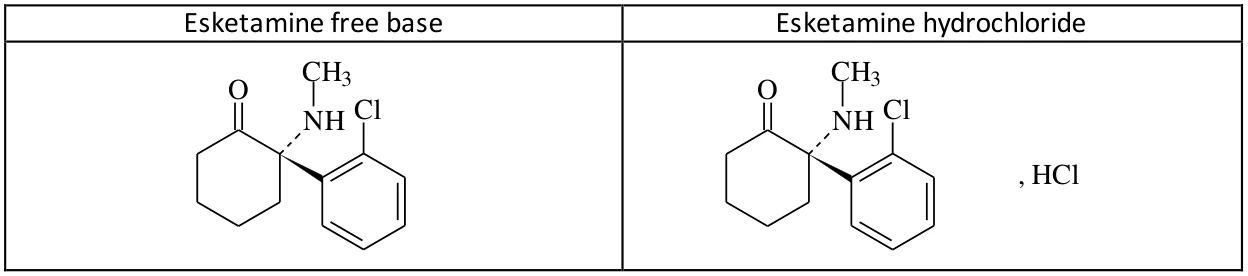 | |
|---|
All studies evaluated subjects who met DSM-5 criteria for major depressive disorder and were non-responders to at least two courses of different oral antidepressant treatment, of adequate dosage and duration, in the current major depressive episode. Subjects were excluded if they had conditions that included poorly controlled hypertension, bipolar disorder, suicidal ideation with intent to act within the past 6 months, or a history of suicidal behaviour within the past year.
Short-Term Studies: Trial Design and Study Demographics
Patients in TRD3001 and TRD3002 initiated treatment on Day 1 with either SPRAVATO plus a newly initiated daily oral antidepressant or placebo plus a newly initiated daily oral antidepressant. The oral antidepressant could be one of either duloxetine, venlafaxine extended release, escitalopram, or sertraline, as determined by the investigator based on the patient’s prior treatment history. SPRAVATO doses of 56 mg or 84 mg were fixed in Study TRD3001 and flexible in Study TRD3002. All patients received SPRAVATO 56 mg on Day 1. In Study TRD3001, dose was either maintained on 56 mg or titrated to 84 mg on the second administration day according to the randomized fixed dosing regimen. In Study TRD3002, SPRAVATO could be titrated between 56 mg and 84 mg from the second administration day onward, based on investigator discretion. All subjects received study drug twice weekly during a 4-week double-blind induction phase.
Table 7: Summary of patient demographics for clinical trials (double blind phases)
| Study No. | Trial design | Dosage and route of administration | Study subjects (n = number)1 | Age (years) Mean (SD) Range | Gender (%M/%F) |
|---|---|---|---|---|---|
| Study No. | Trial design | Dosage and route of administration | Study subjects (n = number)1 | Age (years) Mean (SD) Range | Gender (%M/%F) |
| TRD3001 | Fixed dose, randomized, multicenter, double-blind, placebo-controlled parallel group | Placebo (i.n.) + oral antidepressant2 | n = 113 | 46.8 (11.4) 18, 64 | 28 / 72 |
| SPRAVATO 56 mg (i.n.) + oral antidepressant2 | n = 115 | 46.4 (11.2) 22, 64 | 30 / 70 | ||
| SPRAVATO 84 mg + oral antidepressant2 | n = 114 | 45.7 (11.1) 18, 64 | 31 / 69 | ||
| TRD3002 | Flexible dose, randomized, multicenter, double-blind, placebo-controlled parallel group | Placebo (i.n.) + oral antidepressant2 | n = 109 | 46.4 (11.1) 20, 64 | 42 / 58 |
| SPRAVATO 56/84 mg (i.n.) + oral antidepressant2 | n = 114 | 45 (12.6) 19, 64 | 34 / 66 | ||
| TRD3003 | Randomized withdrawal, multicenter, double-blind, placebo-controlled | Stable Remitters | |||
| Placebo (i.n.) + oral antidepressant2 | n = 86 | 46.2 (11.2) 19, 64 | 31 / 69 | ||
| SPRAVATO 56/84 mg (i.n.) + oral antidepressant2 | n = 90 | 45.4 (12.1) 19, 64 | 36 / 64 | ||
| Stable Responders | |||||
| Placebo (i.n.) + oral antidepressant2 | n = 59 | 46.7 (9.8) 24, 64 | 29 / 71 | ||
| SPRAVATO 56/84 mg (i.n.) + oral antidepressant2 | n = 62 | 47.2 (11.0) 23, 63 | 39 / 61 | ||
| i.n. = intranasal | |||||
- 1. Based on full analysis set (all randomized subjects who received at least 1 dose each of i.n. medication and oral antidepressant)
- 2. Investigators selected from one of duloxetine, venlafaxine extended release; escitalopram or sertraline.
The baseline demographic and disease characteristics of patients in TRD3001 and TRD3002 were similar between the SPRAVATO plus oral antidepressant and the placebo plus oral antidepressant groups.
In Study TRD3001, 77% of subjects were Caucasian, 6% were African American, 1% were Asian, 0.3% were American Indian, and 16% were undefined. Subjects were enrolled in North America (United States and Canada: 45%), Europe (25%) and Other Region (Brazil and Mexico: 30%). At the time of screening the mean duration of the current episode of depression was 203 weeks. Approximately 57% initiated oral antidepressant treatment with a SNRI and 43% with a SSRI.
In Study TRD3002, 93% of subjects were Caucasian, 5% were African American, 1% were Asian, and 1% were undefined. Subjects were enrolled in Europe (60%) and the North America (United States: 40%). At the time of screening the mean duration of the current episode of depression was 115 weeks. Approximately 68% initiated oral antidepressant treatment with a SNRI and 32% with a SSRI.
The primary efficacy measure in both studies was change from baseline in the Montgomery-Åsberg Depression Rating Scale (MADRS) total score at the end of the 4-week double-blind induction phase. The MADRS is a ten-item, clinician-rated scale used to assess severity of depressive symptoms. Scores on the MADRS range from 0 to 60, with higher scores indicating more severe depression.
A fixed sequence approach was applied to adjust for multiplicity and to control type I error across the primary and key secondary efficacy endpoints: onset of clinical response by Day 2 (24 hours), change in Sheehan Disability Scale (SDS) total score and change in Patient Health Questionnaire-9 (PHQ-9) total score.
Short-Term Studies: Study Results
In the fixed dose study TRD3001, for the primary efficacy measure of improvement in depressive symptoms (change in MADRS total scores from baseline at the end of the 4-week induction phase), SPRAVATO 84 mg plus oral antidepressant did not demonstrate statistical superiority compared to placebo plus oral antidepressant. Therefore, in accordance with the pre-defined testing sequence, the SPRAVATO 56 mg plus oral antidepressant treatment group and key secondary endpoints could not be formally evaluated.
In this study, withdrawal rate was 16% in the SPRAVATO 84 mg group and 5% in each the placebo and SPRAVATO 56 mg groups. Eleven of the 19 subjects in the SPRAVATO 84 mg group discontinued after receiving the first dose (56 mg).
In the flexible dose study TRD3002, for the primary efficacy measure of improvement in depressive symptoms (change in MADRS total scores from baseline at the end of the 4-week induction phase), SPRAVATO plus oral antidepressant demonstrated clinically meaningful and statistical superiority compared to placebo plus oral antidepressant. Key secondary endpoints were either not statistically significant (onset of clinical response by Day 2) or could not be formally evaluated (SDS total score and PHQ-9 total score).
In this study, 67% of patients randomized to SPRAVATO were receiving 84 mg by the last test day (Day 28). Withdrawal rate was 16% in the SPRAVATO group and 11% in the placebo group.
Table 8: Primary Efficacy Results for Change in MADRS Total Score for 4 Week Clinical Trials (MMRM)
| Study No. | Treatment Group1 | Number of Patients2 | Mean Baseline Score (SD) | LS Mean Change from Baseline to end of Week 4 | LS Mean Difference (95% CI) | 2-sided p-value | ||||||
|---|---|---|---|---|---|---|---|---|---|---|---|---|
| TRD3001 | SPRAVATO 56 mg + oral antidepressant | 115 | 37.4 (4.8) | -18.8 | -4.1 (-7.7, -0.5) | N.E. | ||||||
| SPRAVATO 84 mg + oral antidepressant | 114 | 37.8 (5.6) | -18.5 | -3.2 (-6.9, 0.5) | 0.09 | |||||||
| Placebo + oral antidepressant | 113 | 37.5 (6.2) | -14.8 | - | - | |||||||
| TRD3002 | SPRAVATO (56 mg or 84 mg) + oral antidepressant | 114 | 37.0 (5.7) | -19.8 | -4.0 (-7.3; -0.6) | 0.02 | ||||||
| Placebo + oral antidepressant | 109 | 37.3 (5.7) | -15.8 | - | - | |||||||
| MMRM = mixed-effects model for repeated measures; SD = standard deviation; LS Mean = least-squares mean; CI = unadjusted confidence interval; N.E. = Not formally evaluated in accordance with the pre-defined testing sequence | ||||||||||||
- 1. Nasally administered esketamine or placebo; oral antidepressant = newly initiated oral antidepressant
- 2. Based on full analysis set (all randomized subjects who received at least 1 dose each of i.n. medication and oral antidepressant)
Randomized Withdrawal Study: Trial Design and Study Demographics
Study TRD3003 was a long-term randomized, double-blind, parallel-group, active-controlled, multicenter randomized withdrawal study. Overall, a total of 705 patients were enrolled:
- 437 directly enrolled
- 150 transferred from TRD3001, and
- 118 transferred from TRD3002.
Induction Phase: Patients directly enrolled were administered SPRAVATO (56 mg or 84 mg twice-weekly) plus a newly initiated open-label oral antidepressant (either duloxetine, venlafaxine extended release, escitalopram, or sertraline, as determined by the investigator based on the patient’s prior treatment history) in a 4-week open-label induction phase. Patients who responded continued receiving treatment with SPRAVATO plus oral antidepressant in a 12-week optimization phase.
Optimization Phase: A total of 455 patients who responded to SPRAVATO (273 direct entry, 112 from TRD3001 and 70 from TRD3002) continued to receive SPRAVATO during the 12-week optimization phase. In the initial 4 weeks of the optimization phase, patients were administered SPRAVATO (56 mg or 84 mg) on a weekly basis. Thereafter, an algorithm (based on the MADRS) was used to determine dosing frequency, with the objective of maintaining the patient on the lowest dosing frequency to maintain response/remission.
- MADRS total score >12: once weekly dosing for the next 4 weeks
- MADRS total score ≤12: once every 2 weeks
Maintenance Phase: At the end of 16 weeks of treatment period (4 weeks in the induction phase plus a total of 12 weeks in the optimization phase), 176 patients in stable remission and 121 patients with a stable response were separately randomized (1:1) to either continue with SPRAVATO or switch to placebo in the double-blind maintenance phase. In all cases, subjects continued treatment with the same oral antidepressant. The maintenance phase was of variable duration and continued until the individual patient had a relapse of depressive symptoms or discontinued for any other reason, or the study ended because the required number of relapse events occurred.
The primary endpoint was time to relapse in the stable remitter group.
Stable remission was defined as MADRS total score ≤12 at least 3 of the last 4 weeks of the optimization phase.
Stable response was defined as ≥50% reduction in the MADRS total score from baseline for the last 2 weeks of the optimization phase, but not in stable remission.
Relapse was defined as a MADRS total score ≥22 for two consecutive weeks or hospitalization for worsening depression or any other clinically relevant event indicative of relapse.
The baseline demographic and disease characteristics of the patients randomized to the double-blind maintenance phase were similar between the SPRAVATO plus oral antidepressant and the placebo plus oral antidepressant groups (see Table 7). The majority of patients (90%) were Caucasian, 4% were African American, 0.3% were Asian, 0.3% were American Indian, and 5% were undefined. Subjects were enrolled in North America (United States and Canada: 26%), Europe (58%) and Other Region (Brazil and Mexico: 17%). At the time of screening the mean duration of the current episode of depression was 120 weeks. Approximately 64% of patient were taking a SNRI and 36% with a SSRI.
Randomized Withdrawal Study: Study Results
Stable Remission
Patients in stable remission who continued treatment with SPRAVATO plus oral antidepressant experienced a statistically significant longer time to relapse of depressive symptoms than did patients on placebo plus oral antidepressant (Figure 1).
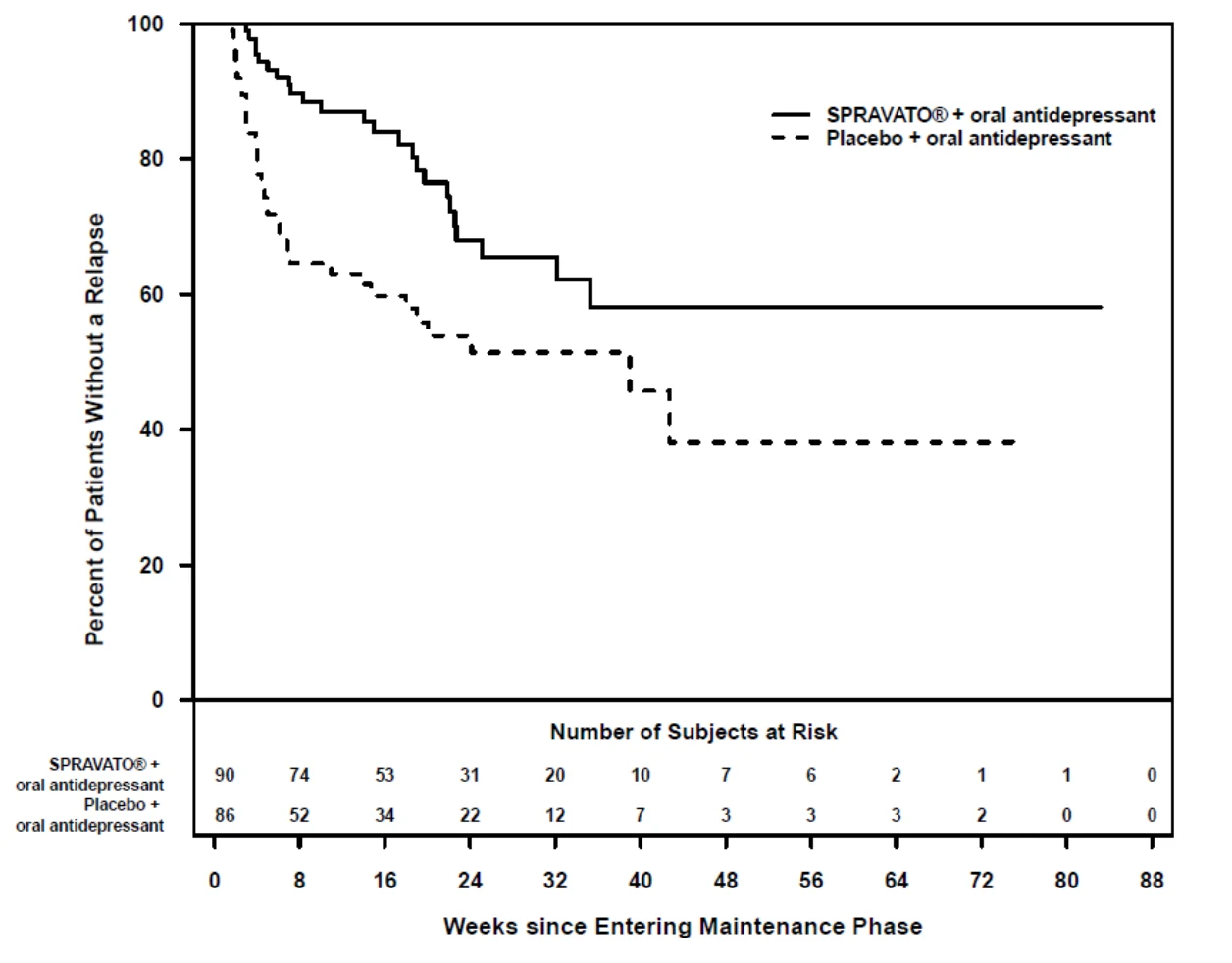
Figure 1: Time to Relapse in Patients in Stable Remission in Study TRD3003 (Full Analysis Set)
For patients in stable remission, the estimated hazard ratio (95% CI) of SPRAVATO plus oral antidepressant relative to placebo plus oral antidepressant based on weighted estimates was 0.49 (95% CI: 0.29, 0.84), weighted log-rank p-value = 0.003.
Stable Response
Patients with a stable response who continued treatment with SPRAVATO plus oral antidepressant experienced a statistically significant longer time to relapse of depressive symptoms than did patients on placebo plus oral antidepressant (Figure 2).
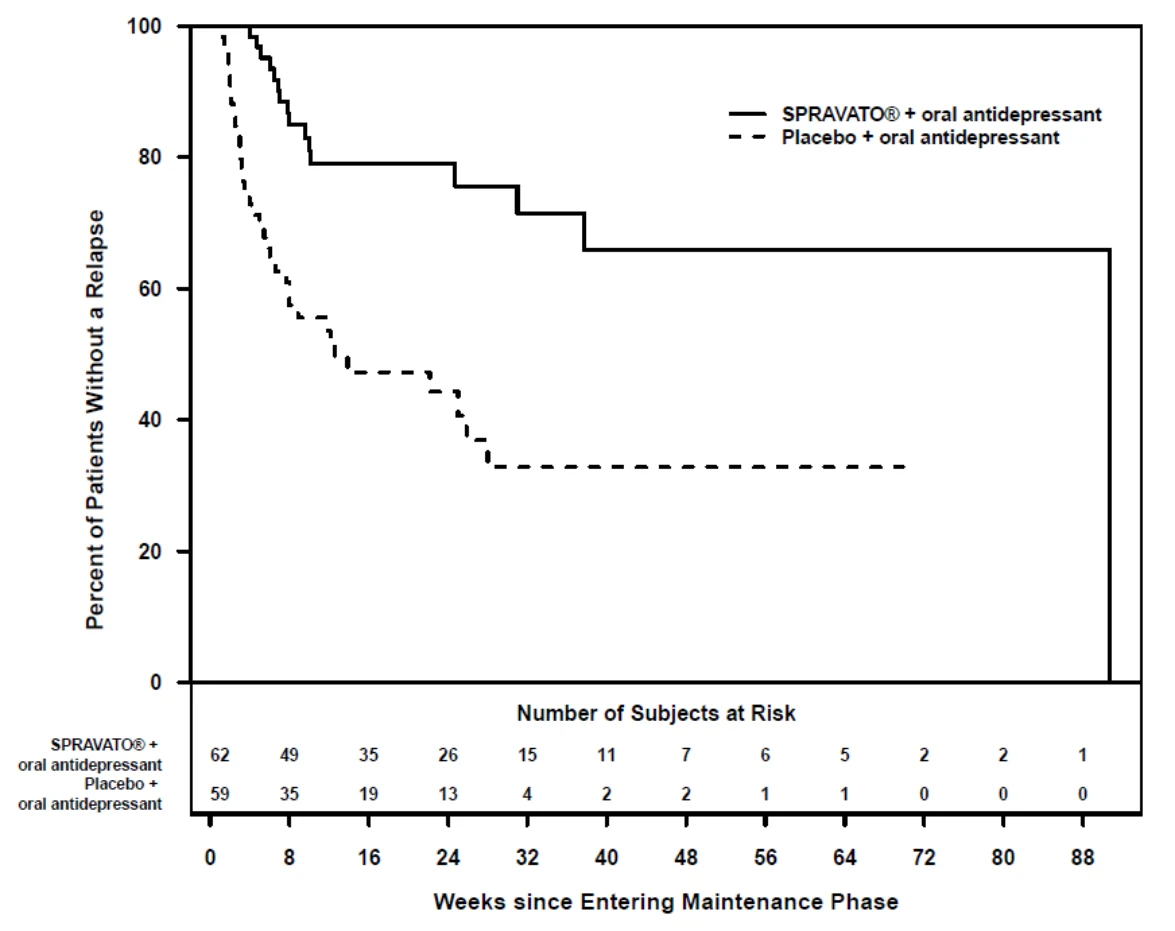
Figure 2: Time to Relapse in Patients in Stable Response in Study TRD3003 (Full Analysis Set)
For patients with a stable response, the estimated hazard ratio (95% CI) of SPRAVATO plus oral antidepressant relative to placebo plus oral antidepressant based on Cox proportional hazards model was 0.30 (95% CI: 0.16, 0.55), log-rank p-value <0.001.
Of the subjects randomized to SPRAVATO, 60% received 84 mg and 40% received 56 mg dose. The dosing frequency used the majority of the time is shown in Table 9.
Table 9: Dosing Frequency Used the Majority of the Time; Maintenance Phase (Study TRD3003)
| Stable Remission | Stable Responders | |||||||||||
SPRAVATO + oral antidepressant (N=90) | Placebo + oral antidepressant (N=86) | SPRAVATO + oral antidepressant (N=62) | Placebo + oral antidepressant (N=59) | |||||||||
| Majority dosing frequency | ||||||||||||
| Weekly | 21 (23.3%) | 27 (31.4%) | 34 (54.8%) | 36 (61.0%) | ||||||||
| Every other week | 62 (68.9%) | 48 (55.8%) | 21 (33.9%) | 19 (32.2%) | ||||||||
| Weekly or every other week | 7 (7.8%) | 11 (12.8%) | 7 (11.3%) | 4 (6.8%) | ||||||||
Indication - Short-term treatment of major depressive disorder requiring urgent psychiatric care
Trial Design and Study Demographics:
SPRAVATO was evaluated in two identical Phase 3 short-term (4-week) randomized, double-blind, multicenter, placebo-controlled studies (SUI3001, SUI3002) in adult patients with moderate to severe major depressive disorder (MADRS total score >28) who had active suicidal ideation and intent as assessed by affirmative responses to MINI questions:
- B3 (“Think [even momentarily] about harming, or of hurting, or of injuring yourself: with at least some intent or awareness that you might die as a result; or think about suicide [i.e., about killing yourself]?”) and
- B10 (“Intend to act on thoughts of killing yourself in the past 24 hours?”).
In these studies, patients received treatment with SPRAVATO 84 mg or placebo nasal spray twice-weekly for 4 weeks. After the first dose, a dose reduction to SPRAVATO 56 mg was allowed for patients unable to tolerate the 84 mg dose. All patients received comprehensive standard of care treatment, including an initial inpatient psychiatric hospitalization and a newly initiated or optimized oral antidepressant (antidepressant monotherapy or antidepressant plus augmentation therapy) as determined by the investigator. After completion of the 4-week treatment period with SPRAVATO or placebo nasal spray, study follow-up continued through Day 90.
The baseline demographic and disease characteristics of patients in SUI3001 and SUI3002 were similar between the SPRAVATO plus standard of care or placebo nasal spray plus standard of care treatment groups. The median patient age was 40 years (range 18 to 64 years), 61% were female; 73% Caucasian, 6% African American, 13% Asian, 0.4% Native Hawaiian, 0.2% American Indian, and 7% undefined; and 63% of patients had at least one prior suicide attempt. Subjects were enrolled in North America (United States and Canada: 27%), Europe (49%), Asia (12%), and South America (12%). Prior to entering the study, 92% of the patients were receiving antidepressant therapy. During the study, as part of standard of care treatment, 40% of patients received antidepressant monotherapy, 54% of patients received antidepressant plus augmentation therapy, and 6% received both antidepressant monotherapy/antidepressant plus augmentation therapy.
Study Results:
The primary efficacy measure was the change from baseline in the MADRS total score at 24 hours after first dose (Day 2). In SUI3001 and SUI3002, SPRAVATO plus standard of care demonstrated statistical superiority on the primary efficacy measure compared to placebo nasal spray plus standard of care.
Table 10: Primary Efficacy Results for Change from Baseline in MADRS Total Score at 24 Hours After First Dose
| Study No. | Treatment Group1 | Number of Patients | Mean Baseline Score (SD) | LS Mean Change from Baseline to 24 hr Post First Dose (SE) | LS Mean Difference (95% CI) p-value2 |
|---|---|---|---|---|---|
| SUI3001 | SPRAVATO 84 mg + SOC3 | 111 | 41.3 (5.87) | -15.9 (1.04) | -3.8 (-6.56; -1.09) |
| p=0.006 | Placebo nasal spray + SOC | 112 | 41.0 (6.29) | -12.0 (1.02) | |
| SUI3002 | SPRAVATO 84 mg + SOC3 | 113 | 39.4 (5.21) | -16.0 (1.02) | -3.9 (-6.60; -1.11) p=0.006 |
| Placebo nasal spray + SOC | 113 | 39.9 (5.76) | -12.2 (1.05) | ||
SD=standard deviation; SE=standard error; LS Mean=least-squares mean; CI=confidence interval; SOC=standard of care.
|
Time course of treatment response
In both SUI3001 and SUI3002, SPRAVATO treatment difference compared to placebo was observed starting at 4 hours. Between 4 hours and Day 25, both the SPRAVATO and placebo groups continued to improve; the difference between the groups generally remained but did not appear to increase over time through Day 25. Figure 3 depicts time course of the primary efficacy measure of change in MADRS total score from SUI3001.
Figure 3: Least Squares Mean Change (±SE) from Baseline in MADRS Total Score Over Time in Study SUI3001* (Full Efficacy Analysis Set) – MMRM Analysis
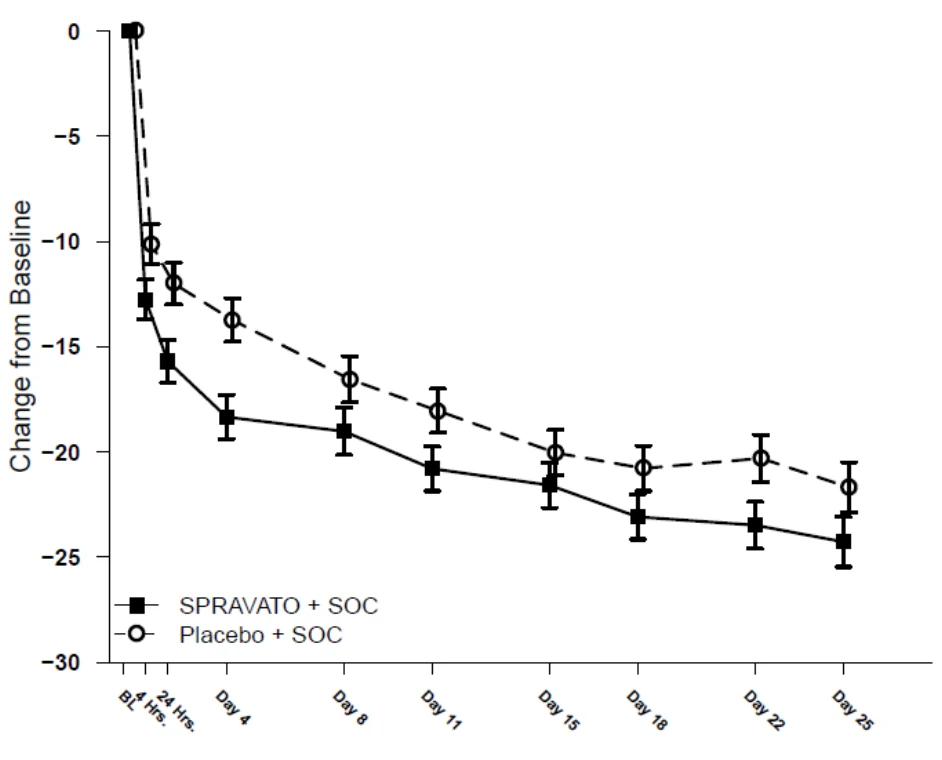
* Note: In SUI3001, after the first dose, a dose reduction to SPRAVATO 56 mg was allowed for patients unable to tolerate the 84 mg dose. Approximately 19% of patients had reduction in SPRAVATO dosage from 84 mg to 56 mg twice weekly.
Effects on suicidality
Overall, patients in both the SPRAVATO and placebo treatment groups experienced improvement in severity of suicidality as measured by the Clinical Global Impression – Severity of Suicidality - revised (CGI-SS-r) scale at the 24-hour endpoint (key secondary endpoint), though there was no statistically significant difference between the treatment groups.
The efficacy of SPRAVATO to prevent suicide was not demonstrated.
15. Microbiology
Not applicable.
16. Non-Clinical Toxicology
General toxicology: Toxicity was evaluated based on maximum feasible doses rather than maximum tolerated doses. Therefore, No Observable Adverse Effect Levels (NOAEL) were determined mainly on pharmacological action, rather than systemic toxicity.
Once-daily or intermittent (3 days a week) nasal administration of esketamine to rats at doses up to 9 mg/day for 3 months or once daily for 6 months resulted in serious central nervous system-related clinical signs (ataxia, changes in level of activity, unsteady gait). These may be related, at least in part, to the anesthetic properties of esketamine. Reduced scores in motor activity and coordination, as well as impaired spatial learning were noted after 5, 13 or 21 weeks of administration. Microscopic changes to the nasal epithelium were limited to the highest dose (9 mg/day) after 3 months of administration, but also included the intermediate dose (3 mg/day) in the 6-month study. Due to a possible contamination issue with the 6-month study plasma samples, the data from the 6-month time-point of the 2-year rat carcinogenicity study was used as a surrogate to establish a safety margin. The NOAEL in the chronic toxicity study is established at 3 mg/day, which provides a safety margin based on AUC of less than 1-fold the maximum recommended human dose (MRHD) (0.4 times).
Once-daily or intermittent (3 days a week) nasal administration of esketamine to dogs at doses up to 72 mg/day for 3 months or once daily for 9 months resulted in serious central nervous system-related clinical signs. These included ataxia, rubbing nose and shaking head, increased activity, uncoordinated gait, as well as vomiting; these observations may be related, at least in part, to the anesthetic properties of esketamine. Reduced weight gain and increased heart rate were noted at the highest dose of 72 mg/day. Increased heart rates were still noted in females after 1 month without administration of esketamine. After 9 months of daily administration, microscopic changes to the olfactory epithelium were noted in the intermediate and high dose groups 48 and 72 mg/day). At the NOAEL of 48 mg/day, for 3 or 9 months, the extent of exposure (AUC) was 1.4 times the AUC at the MRHD of 84 mg.
Neurotoxicity: Published animal studies have demonstrated that the administration of ketamine (at relevant doses) increases neuronal loss and cellular changes in the brain, resulting in long-term cognitive deficits.
In a single-dose neurotoxicity study where esketamine was nasally-administered to rats (up to 9 mg/rat), there were no histological brain lesions noted, at exposures lower than those achieved with ketamine (when resulting in lesions). The exposure (AUC0-t) of esketamine in this study provided a safety margin 2-times the exposure at the MRHD.
In the 6-month rat repeated-dose toxicology study, there were some decreases in motor function and learning observed at the highest dose of esketamine (9 mg/rat). In the 9-month dog study, there were no comparably detailed neurological assessments.
The clinical significance of these nonclinical findings is not known.
Genotoxicity: Esketamine was not mutagenic with or without metabolic activation in the Ames test. Genotoxic effects with esketamine were seen in a screening in vitro micronucleus test in the presence of metabolic activation. However, intravenously-administered esketamine was devoid of genotoxic properties in an in vivo Comet assay in rat liver cells.
The weight of evidence indicates that esketamine lacks genotoxic potential in vivo.
Carcinogenicity: The carcinogenic potential of esketamine is considered low; however, due to the unsustained exposure throughout the treatment period, it is not possible to fully ascertain the risk to humans.
Once-daily nasal administration of esketamine did not increase the incidence of tumors in a 2-year rat carcinogenicity study at doses up to 9 mg/day. However, exposure to esketamine at this dose was lower than the human exposure at the MRHD of 84 mg after 6 months of administration. Esketamine did not increase the incidence of tumors with once-daily subcutaneous administration in a 6-month study in transgenic (Tg.rasH2) mice at doses up to 70 mg/kg/day (reduced to 40 mg/kg/day at Week 17 of 26 due to lack of tolerability). The lowest dose of 10 mg/kg/day was associated with the least adverse events, with an exposure corresponding to 1.7 times the AUC at the MRHD.
Reproductive and developmental toxicology: In a fertility and early embryonic developmental toxicity study in rats, esketamine nasally-administered at 0.9, 3, or 9 mg/day caused maternal and paternal toxicity at 3 and 9 mg/day, which corresponds to exposure equivalent to 0.3 and 0.6 times the mean exposures of esketamine at the 84 mg MRHD. Fertility and reproductive capacities were not adversely affected at any dose in males, but some females of the higher dose group had fewer successful implants, leading to smaller litters.
In an embryo-fetal developmental toxicity study with nasally-administered ketamine in rats, the offspring were not adversely affected in the presence of maternal toxicity at doses up to 150 mg/kg/day. In rats, the AUC-based safety margin estimated for esketamine at the 150 mg/kg/day dose of ketamine was 12-fold compared to the maximum recommended human dose (MRHD) of esketamine of 84 mg. In an embryo-fetal developmental toxicity study with nasally-administered ketamine in rabbits, fetal body weight was reduced at maternally toxic doses (30 mg/kg/day). In rabbits, the estimated exposure to esketamine at the administered ketamine dose with the least observed maternal toxicity (10 mg/kg/day) corresponded to 1% of the maximum exposure of 84 mg in humans.
Ketamine, the racemic mixture of arketamine and esketamine, administered intravenously at anesthetic dose levels to female rats in the second trimester of pregnancy showed developmental neurotoxicity, caused neuronal cell abnormalities in the brains of their offspring, which showed behavioural changes and impaired memory up to young adult age. When female monkeys were treated intravenously with ketamine at anesthetic dose levels in the third trimester of pregnancy, neuronal cell death was observed in the brains of their fetuses. Ketamine-induced neuronal cell death was also observed with early postnatal intraperitoneal or subcutaneous treatment of rat and mice pups, a period of rapid brain growth. This period of brain development translates into the third trimester of human pregnancy. It cannot be excluded that esketamine induces neurotoxicity in developing fetuses (see 7.1.1 Pregnancy).
In a pre- and postnatal developmental toxicity study with nasally-administered esketamine up to 9 mg/day in rats, slight gestational delays in dams were observed at doses ≥3 mg/day, while in pups, pre-weaning sensorimotor delays and post-weaning motor activity decreases were observed (in pups from dams at all dose levels). Esketamine was detected in the plasma of lactating pups (that were not directly administered esketamine), indicating that esketamine passes in the mother’s milk (see 7.1.2 Breastfeeding).
Juvenile toxicity: No juvenile toxicology studies were performed for esketamine.