


Product Monograph - Synflorix
RECENT MAJOR LABEL CHANGES
None at time of the most recent authorization.
TABLE OF CONTENTS
Sections or subsections that are not applicable at the time of authorization are not listed.
RECENT MAJOR LABEL CHANGES .......................................................................................................... 2
TABLE OF CONTENTS ............................................................................................................................ 2
1 INDICATIONS ........................................................................................................................... 4
1.1 Pediatrics ..…………………………………………………………………………………………………………………………… 4
1.2 Geriatrics ……………………………………………………………………………………………………………………………… 4
2 CONTRAINDICATIONS .............................................................................................................. 4
4 DOSAGE AND ADMINISTRATION .............................................................................................. 4
4.1 Dosing Considerations ..……………………………………………………………………………………………………….. 4
4.2 Recommended Dose and Dosage Adjustment .......................................................................... 4
4.4 Administration…………….............................................................................................................. 6
5 OVERDOSAGE .......................................................................................................................... 7
6 DOSAGE FORMS, STRENGTHS, COMPOSITION AND PACKAGING .............................................. 7
7 WARNINGS AND PRECAUTIONS ............................................................................................... 8
7.1 Special Populations ..…………………………………………………………………………………………………………… 9
7.1.1 Pregnant Women .................................................................................................................... 9
7.1.2 Breast-feeding ......................................................................................................................... 9
7.1.3 Pediatrics ................................................................................................................................. 9
7.1.4 Geriatrics ................................................................................................................................. 9
8 ADVERSE REACTIONS ............................................................................................................. 10
8.2 Clinical Trial Adverse Reactions ............................................................................................... 10
8.2.1 Clinical Trial Adverse Reactions – Pediatrics ......................................................................... 10
8.5 Post-Market Adverse Reactions ............................................................................................... 15
9 DRUG INTERACTIONS ............................................................................................................. 15
9.4 Drug-Drug Interactions ........................................................................................................... 15
9.5 Drug-Food Interactions ........................................................................................................... 16
9.6 Drug-Herb Interactions ........................................................................................................... 16
9.7 Drug-Laboratory Test Interactions ........................................................................................... 16
10 CLINICAL PHARMACOLOGY .................................................................................................... 16
10.1 Mechanism of Action ........................................................................................................... 16
11 STORAGE, STABILITY AND DISPOSAL ...................................................................................... 16
12 SPECIAL HANDLING INSTRUCTIONS ........................................................................................ 16
PART II: SCIENTIFIC INFORMATION .................................................................................................... 18
13 PHARMACEUTICAL INFORMATION ......................................................................................... 18
14 CLINICAL TRIALS..................................................................................................................... 19
14.1 Clinical Trials by Indication ..................................................................................................... 19
Active immunization against diseases caused by Streptococcus pneumoniae .............................. 19
14.3 Immunogenicity Data ........................................................................................................... 27
15 MICROBIOLOGY ..................................................................................................................... 39
16 NON-CLINICAL TOXICOLOGY .................................................................................................. 39
PATIENT MEDICATION INFORMATION ............................................................................................... 41
PART I: HEALTH PROFESSIONAL INFORMATION
1 INDICATIONS
SYNFLORIX is indicated for active immunization of infants and children from 6 weeks up to 5 years of age against diseases caused by Streptococcus pneumoniae serotypes 1, 4, 5, 6B, 7F, 9V, 14, 18C, 19F, 23F and cross-reactive 19A:
- invasive disease (including sepsis, meningitis, bacteraemic pneumonia, pleural empyema and bacteraemia) (see 14 CLINICAL TRIALS)
- pneumonia
- acute otitis media (AOM)
1.1 Pediatrics
Pediatrics (6 weeks to 5 years): Based on the data submitted and reviewed by Health Canada, the safety and efficacy of SYNFLORIX in pediatric patients less than 5 years of age has been established. Therefore, Health Canada has authorized an indication for pediatric use (see 14 CLINICAL TRIALS).
1.2 Geriatrics
Geriatrics (>65 years of age): Studies have not been conducted in adults 65 years and older.
2 CONTRAINDICATIONS
SYNFLORIX should not be administered to subjects with known hypersensitivity to any component of the vaccine. For a complete listing, see 6 DOSAGE FORMS, STRENGTHS, COMPOSITION AND PACKAGING.
4 DOSAGE AND ADMINISTRATION
4.1 Dosing Considerations
Official recommendations in accordance with the Canadian Immunization Guide should be taken into account when immunizing with SYNFLORIX.
It is recommended that subjects who receive a first dose of SYNFLORIX complete the full vaccination course with SYNFLORIX.
4.2 Recommended Dose and Dosage Adjustment
Infants from 6 weeks to 6 months of age:
Three-dose primary series
The recommended immunization series to ensure optimal protection consists of four doses, each of 0.5 mL.
Table 1 Vaccine Schedule for Infants from 6 weeks to 6 months of age
| Dose | Dose 1* | Dose 2** | Dose 3** | Dose 4^ |
|---|---|---|---|---|
| Age at Dose | 2 months | 4 months | 6 months | 12 - 15 months |
* First dose may be given as early as 6 weeks of age.
**An interval of at least 1 month between doses is recommended. Results available to date suggest a 2-4-6 month schedule provides a better immune response as compared with 2-3-4 or 3-4-5 month schedules.
^ A booster dose is recommended at least 6 months after the last primary dose and may be given from the age of 9 months onwards.
See 14 CLINICAL TRIALS.
Two-dose primary series
Alternatively, when SYNFLORIX is given as part of a routine infant immunization program, a series consisting of three doses, each of 0.5 mL may be given.
Table 2 Vaccine Schedule for Infants from 2 to 6 months of age
| Dose | Dose 1* | Dose 2** | Dose 3^ |
|---|---|---|---|
| Age at Dose | 2 months | 4 months | 11-12 months |
* First dose may be given as early as 6 weeks of age.
**An interval of 2 months between doses is recommended.
^ A booster dose is recommended at least 6 months after the last primary dose and may be given from the age of 9 months onwards.
Note: it is possible that the 2-dose primary schedule, outside of a routine infant schedule, may not provide optimal protection, especially in infants with high risk of pneumococcal disease.
See 14 CLINICAL TRIALS.
Premature infants born between 27 to 36 weeks of gestation:
The primary vaccination schedule consists of three doses of 0.5 mL with the first dose usually given at 2 months of age and with an interval of at least 1 month between doses (see 14 CLINICAL TRIALS).
A booster dose is recommended at least 6 months after the last priming dose (see 14 CLINICAL TRIALS).
Previously unvaccinated older infants and children:
For children who are beyond the age of routine infant vaccination schedule, the following catch-up schedule applies:
Table 3 SYNFLORIX Schedule for Previously Unvaccinated Children ≥ 7 Months through 5 Years of Age
| Age at First Dose | Total Number of 0.5 mL Doses |
|---|---|
| 7-11 months of age | 3a |
| 12 months to 5 years of age | 2b* |
a2 doses at least 1 month apart; third dose is recommended after the 1 year birthday, separated from the second dose by at least 2 months.
b2 doses at least 2 months apart.
*The immune response elicited after two doses of SYNFLORIX in children 12-23 months of age is comparable to the response elicited after three doses in infants (see 14 CLINICAL TRIALS). A 2-dose schedule in 12-23 month children with high risk of pneumococcal disease (such as children with sickle-cell disease, asplenia, HIV infection, chronic illness or who are immunocompromised) may not be sufficient to provide optimal protection.
High risk populations (with underlying immunocompromising conditions, predisposed to invasive pneumococcal disease):
The safety and immunogenicity of SYNFLORIX in children with underlying immunocompromising conditions predisposed to invasive pneumococcal disease (such as SCD, or HIV infection) have been studied in children below 2 years of age. Limited data are available for children with asplenia or splenic dysfunction ages 2 to 5 years. SYNFLORIX may be given according to the above mentioned schedules, except that a three-dose primary series should be given in infants starting vaccination from 6 weeks to 6 months of age, with a booster dose recommended at least 6 months after the last primary dose (also see 7 WARNINGS AND PRECAUTIONS, Immune and 14 CLINICAL TRIALS). Vaccination with pneumococcal conjugate vaccine does not replace the use of 23-valent pneumococcal polysaccharide vaccines.
4.4 Administration
Pre-filled Syringe Instructions
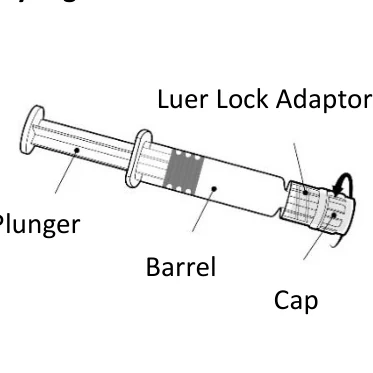
Hold the syringe by the barrel, not by the plunger.
Unscrew the syringe cap by twisting it anticlockwise.
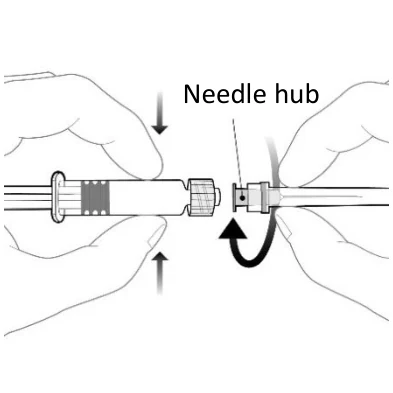
To attach the needle, connect the hub to the Luer Lock Adaptor and rotate a quarter turn clockwise until you feel it lock.
Do not pull the syringe plunger out of the barrel. If it happens, do not administer the vaccine.
SYNFLORIX should be given by intramuscular injection. The preferred sites are anterolateral aspect of the thigh in infants or the deltoid muscle of the upper arm in children.
A fine white deposit with a clear colourless supernatant may be observed upon storage of the syringe. This does not constitute a sign of deterioration.
The content of the syringe should be inspected visually both before and after shaking for any foreign particulate matter and/or abnormal physical appearance prior to administration. In the event of either being observed, discard the vaccine.
Shake well before use.
Any unused product or waste material should be disposed of in accordance with local requirements.
Plunger
Barrel
Cap
Luer Lock Adaptor
Needle hub
5 OVERDOSAGE
No cases of overdosage have been reported.
For management of a suspected drug overdose, contact your regional poison control centre.
6 DOSAGE FORMS, STRENGTHS, COMPOSITION AND PACKAGING
To help ensure the traceability of vaccines for patient immunization record-keeping as well as safety monitoring, health professionals should record the time and date of administration, quantity of administered dose (if applicable), anatomical site and route of administration, brand name and generic name of the vaccine, the product lot number and expiry date.
Table 4 Route of Administration, Dosage Forms, Strengths and Non-medicinal Ingredients
1 conjugated to protein D (derived from Non-Typeable Haemophilus influenzae) carrier protein
2 conjugated to tetanus toxoid carrier protein
3 conjugated to diphtheria toxoid carrier protein
Dosage Form
SYNFLORIX [pneumococcal conjugate vaccine (Non-Typeable Haemophilus influenzae (NTHi) protein D, diphtheria or tetanus toxoid conjugates) adsorbed] is a 10-valent pneumococcal polysaccharide conjugate vaccine using protein D derived from Non-Typeable Haemophilus influenzae as a carrier protein for 8 out of the 10 serotypes (1, 4, 5, 6B, 7F, 9V, 14 and 23F). Serotypes 18C and 19F are
| Route of Administration | Dosage Form / Strength | Non-medicinal Ingredients |
| Intramuscular | Sterile Suspension for injection 1 dose (0.5 mL) contains: Pneumococcal polysaccharide serotype 11 1 mcg Pneumococcal polysaccharide serotype 41 3 mcg Pneumococcal polysaccharide serotype 51 1 mcg Pneumococcal polysaccharide serotype 6B1 1 mcg Pneumococcal polysaccharide serotype 7F1 1 mcg Pneumococcal polysaccharide serotype 9V1 1 mcg Pneumococcal polysaccharide serotype 141 1 mcg Pneumococcal polysaccharide serotype 18C2 3 mcg Pneumococcal polysaccharide serotype 19F3 3 mcg Pneumococcal polysaccharide serotype 23F1 1 mcg | Aluminium (as aluminium phosphate), sodium chloride, water for injections. |
conjugated to tetanus toxoid and to diphtheria toxoid, respectively. All conjugates are adsorbed onto aluminium phosphate. Immunological similarities are expected amongst serotypes from the same serogroup.
SYNFLORIX is available as a sterile suspension for injection.
Packaging
Pre-filled Syringes
SYNFLORIX is available as:
- 0.5 mL of suspension in a pre-filled syringe (type I glass) for 1 dose with a plunger stopper (rubber butyl) with or without needles in pack sizes of 1 or 10.
7 WARNINGS AND PRECAUTIONS
SYNFLORIX is indicated and intended for use in children up to 5 years of age (see 1 INDICATIONS). For appropriate usage of SYNFLORIX across age groups, children below 5 years of age should receive the appropriate-for-age SYNFLORIX vaccination series (see 4.2 Recommended Dose and Dosage Adjustment).
General
It is good clinical practice to precede vaccination by a review of the medical history (especially with regard to previous vaccination and possible occurrence of undesirable events) and a clinical examination.
As with other vaccines, the administration of SYNFLORIX should be postponed in subjects suffering from acute severe febrile illness. However, the presence of a minor infection, such as a cold, should not result in the deferral of vaccination.
SYNFLORIX should under no circumstances be administered intravascularly or intradermally. No data are available on subcutaneous administration of SYNFLORIX.
SYNFLORIX will not protect against pneumococcal serogroups or serotypes that are not included in the vaccine, except the cross-reactive serotype 19A (see 13 PHARMACEUTICAL INFORMATION, Product Characteristics). The observed immune responses to the vaccine varied with each of the vaccine serotypes (see 14 CLINICAL TRIALS). Although antibody response to diphtheria toxoid, tetanus toxoid and protein D (protein D is highly conserved in all H. influenzae strains including NTHi) occurs, immunization with SYNFLORIX does not substitute routine immunization with diphtheria, tetanus or Haemophilus influenzae type b vaccines. Official recommendations for the immunizations against diphtheria, tetanus and Haemophilus influenzae type b should also be followed.
Prophylactic administration of antipyretics before or immediately after vaccine administration can reduce the incidence and intensity of post-vaccination febrile reactions. Post-market clinical data generated with acetaminophen and ibuprofen suggest that the use of prophylactic acetaminophen might reduce the immune response to SYNFLORIX. The clinical relevance of this observation as well as the impact of antipyretics other than acetaminophen and ibuprofen remains unknown.
Syncope (fainting) can occur following, or even before, any vaccination as a psychogenic response to the needle injection. It is important that procedures are in place to avoid injury from faints.
Driving and Operating Machinery
Exercise caution when driving or operating a vehicle or potentially dangerous machinery.
Hematologic
As for other vaccines administered intramuscularly, SYNFLORIX should be given with caution to individuals with thrombocytopenia or any coagulation disorder since bleeding may occur following an intramuscular administration to these subjects.
Immune
As with all injectable vaccines, appropriate medical treatment and supervision should always be readily available in case of a rare anaphylactic event following the administration of the vaccine.
As with any vaccine, a protective immune response may not be elicited in all vaccinees.
Children with impaired immune responsiveness, whether due to the use of immunosuppressive therapy, a genetic defect, Human Immunodeficiency Virus (HIV) infection, or other causes, may have reduced antibody response to vaccination.
Safety and immunogenicity data for SYNFLORIX are available for HIV infected infants, children with sickle cell disease and children with splenic dysfunction (high risk populations predisposed to invasive pneumococcal disease). Safety and immunogenicity data are not available for individuals in other specific immunocompromised groups, (see 8.2.1 Clinical Trial Adverse Reactions – Pediatrics and 14 CLINICAL TRIALS). The use of pneumococcal conjugate vaccine does not replace the use of 23-valent pneumococcal polysaccharide vaccines which should be given according to local recommendations in those children.
7.1 Special Populations
7.1.1 Pregnant Women
As SYNFLORIX is not intended for use in adults, adequate human data on use during pregnancy and adequate animal reproduction studies are not available.
7.1.2 Breast-feeding
As SYNFLORIX is not intended for use in adults, adequate human data on use during lactation and adequate animal reproduction studies are not available.
7.1.3 Pediatrics
The potential risk of apnoea and the need for respiratory monitoring for 48-72 hours should be considered when administering the primary immunization series to very premature infants (born ≤ 28 weeks of gestation) and particularly for those with a previous history of respiratory immaturity. As the benefit of vaccination is high in this group of infants, vaccination should not be withheld or delayed (see 4.2 Recommended Dose and Dosage Adjustment and 14 CLINICAL TRIALS).
7.1.4 Geriatrics
Studies have not been conducted in adults 65 years and older.
8 ADVERSE REACTIONS
8.2 Clinical Trial Adverse Reactions
Clinical trials are conducted under very specific conditions. The adverse reaction rates observed in the clinical trials; therefore, may not reflect the rates observed in practice and should not be compared to the rates in the clinical trials of another drug. Adverse reaction information from clinical trials may be useful in identifying and approximating rates of adverse drug reactions in real-world use.
8.2.1 Clinical Trial Adverse Reactions – Pediatrics
Safety assessment of SYNFLORIX was based on clinical trials involving the administration of approximately 64,000 doses of SYNFLORIX to approximately 22,500 healthy children and 137 healthy premature infants as primary vaccination. Furthermore, approximately 19,500 healthy children and 116 premature infants received a booster dose of SYNFLORIX in the second year of life. Safety was also assessed in 400 children from 2 to 5 years of age. In all trials, SYNFLORIX was administered concurrently with the recommended childhood vaccines.
No increase in the incidence or severity of the adverse reactions was seen with subsequent doses of the primary vaccination series.
The most common adverse reactions observed after primary vaccination were redness at the injection site and irritability which occurred after approximately 41% and 55% of all doses respectively. Following booster vaccination, the most common adverse reactions were pain at the injection site and irritability, which occurred at approximately 51% and 53% respectively. The majority of these reactions were of mild to moderate severity and were not long lasting.
Adverse reactions reported (for all age groups) are listed according to the following frequency (see Table 5).
Table 5 Adverse reactions considered as being at least possibly related to vaccination
| Frequency | System/Organ Class | Adverse Reactions |
|---|---|---|
| Frequency | System/Organ Class | |
| Very common (≥ 1/10) | General disorders and administration site conditions | Pain, redness, swelling at the injection site, fever ≥ 38°C rectally (age < 2 years) |
| Metabolism and nutrition disorders | Appetite loss | |
| Nervous system disorders | Drowsiness | |
| Psychiatric disorders | Irritability | |
Common (≥ 1/100 to < 1/10) | General disorders and administration side conditions | Injection site reactions like site injection induration, fever > 39°C rectally (age < 2 years) Fever ≥ 38°C rectally (age 2 to 5 years)* |
Adverse Reactions
| Uncommon (≥ 1/1,000 to < 1/100) | Gastrointestinal disorders | Diarrhoea, vomiting Nausea (age 2 to 5 years)* |
|---|---|---|
| General disorders and administration site conditions | Injection site reactions like injection site haematoma, haemorrhage and nodule Injection site reactions like pruritus*, fever > 40°C rectally (age < 2 years)*, fever >39°C rectally (age 2 to 5 years)*, diffuse swelling of the injected limb, sometimes involving the adjacent joint* | |
| Nervous system disorders | Headache (age 2 to 5 years)* | |
| Psychiatric disorders | Crying abnormal | |
| Respiratory, thoracic and mediastinal disorders | Apnoea (see section 7 WARNINGS AND PRECAUTIONS, General in very premature infants [≤ 28 weeks of gestation]) | |
| Skin and subcutaneous tissue disorders | Rash | |
Rare (≥ 1/10,000 to < 1/1,000) | Immune system disorders | Allergic reactions (such as allergic dermatitis, atopic dermatitis, eczema) |
| Nervous system disorders | Febrile and non-febrile convulsions | |
| Skin and subcutaneous tissue disorders | Urticaria | |
Very rare (<1/10000) | Immune system disorders | Angioedema |
| Vascular disorders | Kawasaki disease |
* reported following booster vaccination of primary series and/or catch-up vaccination
Following booster vaccination, children > 12 months of age are more likely to experience injection site reactions compared to the rates observed in infants during the primary series with SYNFLORIX.
Following catch-up vaccination in children 12 to 23 months of age, urticaria was reported more frequently (uncommon) compared to the rates observed in infants during primary and booster vaccination.
The incidence of solicited local and general adverse events reported within 4 days after each vaccination dose of SYNFLORIX was within the same range as after vaccination with the 7-valent Pneumococcal Conjugate Vaccine (PCV) vaccine (see Table 6).
Table 6 Percentage of subjects reporting local and general adverse events within 4 days (day 0-3) following each dose in primary vaccination course and after a booster dose of SYNFLORIX or the 7-valent PCV vaccine in primary study 10PN-PD-DIT-001 and subsequent booster study 10PN-PD-DIT-007
| Dose 1 | Dose 2 | Dose 3 | Dose 4 | ||||||||||||||||||
|---|---|---|---|---|---|---|---|---|---|---|---|---|---|---|---|---|---|---|---|---|---|
| SYNFLORIX | 7-valent PCV vaccine | SYNFLORIX | 7-valent PCV vaccine | SYNFLORIX | 7-valent PCV vaccine | SYNFLORIX | 7-valent PCV vaccine | ||||||||||||||
| Local symptom | N = 1230 | N = 415 | N = 1217 | N = 414 | N = 1216 | N = 411 | N = 735 | N = 91 | |||||||||||||
| Pain | 35.5 | 27.2 | 27.8 | 26.8 | 22.8 | 23.4 | 56.6 | 49.5 | |||||||||||||
| Redness | 37.3 | 38.3 | 37.6 | 39.1 | 37.8 | 36.3 | 51.7 | 57.1 | |||||||||||||
| Swelling | 28.9 | 26.0 | 30.1 | 27.8 | 28.3 | 24.6 | 36.9 | 38.5 | |||||||||||||
| General symptom | |||||||||||||||||||||
| Fever ≥ 38°C | 36.7 | 30.1 | 35.3 | 39.6 | 25.6 | 31.4 | 33.3 | 36.3 | |||||||||||||
| Fever > 39°C | 2.0 | 1.4 | 2.2 | 2.4 | 1.8 | 2.4 | 3.3 | 7.7 | |||||||||||||
| Irritability | 66.1 | 64.6 | 61.5 | 61.8 | 51.2 | 55.5 | 59.6 | 60.4 | |||||||||||||
| Drowsine ss | 58.0 | 54.7 | 47.5 | 45.2 | 33.1 | 35.3 | 41.2 | 52.7 | |||||||||||||
| Loss of appetite | 29.8 | 28.4 | 23.7 | 23.4 | 16.9 | 21.9 | 31.3 | 34.1 | |||||||||||||
Study 10PN-PD-DIT-001 = 3 doses of SYNFLORIX or the 7-valent PCV vaccine+ DTPa-HBV-IPV/Hib at 2, 3 and 4 months of age Study 10PN-PD-DIT-007 = 1 dose of SYNFLORIX or the 7-valent PCV vaccine+ DTPa-HBV-IPV/Hib at 12 to 18 months of age | |||||||||||||||||||||
The most common adverse reactions after primary vaccination of premature and healthy full-term children were irritability (36.1%), redness (28.3%) and pain (27.3%) in premature children and irritability (40.0%), redness (48.2%) and swelling (43.5%) in the healthy full-term children. Following booster vaccination of premature and healthy full-term children, the most common adverse reactions observed were pain (42.0% and 54.9%, respectively) and irritability (32.1% and 40.2%, respectively) in both premature and healthy children.
Table 7 The overall per dose incidence of local adverse events within 4 days (day 0-3) following the primary vaccination course of SYNFLORIX co-administered with DTPa-HBV-IPV/Hib vaccine in preterm infants (Study 10PN-PD-DIT-015) and after a booster dose of SYNFLORIX co-administered with DTPa-IPV/Hib at 16-18 months of age (Study 10PN-PD-DIT-016)
| Study 10PN-PD-DIT-015 | ||||||
|---|---|---|---|---|---|---|
Premature (N = 399) (%†) | Full-Term (N = 425) (%†) | |||||
| Local Symptom | Total‡ | SYNFLORIX | DTPa-HBV-IPV/Hib | Total | SYNFLORIX | DTPa-HBV-IPV/Hib |
| Pain | 27.3 | 24.1 | 21.8 | 32.7 | 28.7 | 28.8 |
| Redness | 28.3 | 24.1 | 21.1 | 48.2 | 41.9 | 39.9 |
| Swelling | 21.1 | 16.0 | 14.8 | 43.5 | 36.5 | 36.3 |
| Study 10PN-PD-DIT-016 | ||||||
Premature (N = 112) (%†) | Full-Term (N = 122) (%†) | |||||
| Local Symptom | Total | SYNFLORIX | DTPa- IPV/Hib | Total | SYNFLORIX | DTPa- IPV/Hib |
| Pain | 42.0 | 37.5 | 33.9 | 54.9 | 48.4 | 46.7 |
| Redness | 31.3 | 27.7 | 23.2 | 53.3 | 50.8 | 45.1 |
| Swelling | 24.1 | 21.4 | 17.0 | 45.1 | 40.2 | 36.9 |
Premature – infants born after a gestation period of 27-36 weeks
Full-Term – infants born after a gestation period of more than 36 weeks
N – number of documented doses
†Percentage of doses followed by at least one type of symptom
‡Total represents percentage of doses with at least one local symptom whatever the number of injections
During the primary vaccination course, the overall per dose incidence of fever with rectal temperature > 39.0°C was 1.0% in the pooled Premature group and 2.1% in the Full-term group. Following booster vaccination, fever > 39°C was reported in 7.1% of subjects in the pooled Premature group and in 4.9% in the Full-term group.
Swelling reactions following vaccination in healthy populations:
In the clinical program, the occurrence of large swelling reactions (i.e., swelling with a diameter > 50 mm, noticeable diffuse swelling or noticeable increase of limb circumference) was solicited following booster or catch-up vaccination. In booster and catch-up vaccination study groups, 61 and 39 cases of large swelling reactions were reported respectively at the SYNFLORIX injection site. For all subjects the onset of swelling occurred within three days after vaccination and all resolved within eight days after vaccination, except for 2 cases which lasted 32 days and 33 days. Most of these swellings were local and limited to the injection site. There were 13 cases of diffuse swelling not involving adjacent joints.
Serious Adverse Events (SAE) following vaccination in healthy populations:
Fifteen out of 22,429 subjects (0.07%) receiving primary vaccination with SYNFLORIX and three out of 1461 7-valent PCV vaccinees (0.2%) experienced an SAE that was assessed by the investigator as causally related to vaccination. In booster studies seven out of 19,466 subjects (0.04%) receiving a booster dose of SYNFLORIX and none of the 1011 7-valent PCV vaccinees reported an SAE that was assessed by the investigator as causally related to vaccination. In the catch-up vaccination, none of the SAEs were considered to be causally related to vaccination.
Deaths following vaccination in healthy populations:
In primary vaccination studies, 21 (out of 22,429) SYNFLORIX vaccinees (receiving 63,905 doses) experienced serious adverse events with a fatal outcome. One of the fatalities among the SYNFLORIX vaccinees was considered to be causally related to vaccination by the investigator (1 day after dose 1 co-administered with Tritanrix HepB/Hib and 1 day after concomitant administration of oral polio vaccine). One out of 1,461 7-valent PCV vaccinees died due to muscle atrophy. In booster studies 8 (out of 19,466 subjects) receiving a booster dose of SYNFLORIX and one (out of the 1011) 7-valent PCV vaccinees reported an SAE with a fatal outcome. None of the fatalities reported in the booster studies was considered by the investigator to be causally related to vaccination. No fatal serious adverse events were reported in the completed catch-up immunization studies.
High risk populations (with underlying immunocompromising conditions, predisposed to invasive pneumococcal disease)
Safety of SYNFLORIX was assessed in 83 HIV positive (HIV+/+) infants (asymptomatic or mild disease (WHO, 2007), with a mean CD4 cell counts of 1,936 cell/mm3), 101 HIV negative infants born from an HIV positive mother (HIV+/-) and 50 infants with sickle cell disease (SCD), receiving primary vaccination. Of these, 76, 96 and 49 infants, respectively, received a booster dose. Safety of SYNFLORIX was also assessed in 50 children with SCD starting vaccination at 7-11 months of age, all of them receiving the booster vaccination, and in 50 children with SCD starting vaccination at 12-23 months of age. Results suggest that reactogenicity and safety profile of SYNFLORIX for these high risk groups were consistent with healthy children.
Safety of SYNFLORIX was also assessed in 6 children with splenic dysfunction or complement deficiencies aged 2 to 5 years, and 40 children with splenic dysfunction aged 6 to 17 years (SYNFLORIX is indicated up to 5 years of age).
Swelling reactions following vaccination in high risk populations:
No large swelling reactions were reported after vaccination with SYNFLORIX in HIV+/+ or HIV+/- infants and in children with SCD, splenic dysfunction or complement deficiencies.
SAE following vaccination in high risk populations:
One HIV+/+ infant experienced a non-fatal SAEs assessed by the investigator to be causally related to vaccination (gastroenteritis), this event resolved without sequelae. No non-fatal SAEs were assessed by the investigator to be causally related to vaccination in HIV+/- infant, or following vaccination of children with SCD, splenic dysfunction or complement deficiencies.
Deaths following vaccination in high risk populations:
Fatal SAEs were reported for 5 HIV+/+ infants and 3 HIV+/- infants during the post-primary phase and for 1 HIV+/- infant during the post-booster phase. Among these fatal SAEs, 1 HIV+/- infant was assessed by the investigator to be causally related to vaccination (sudden infant death syndrome) given the time interval between vaccination and the onset of the event (3 days).
Fatal SAEs were reported for 1 infant with SCD (salmonella meningitis) during the period between the primary and booster phases and for one child with SCD in the group starting vaccination at 7-11 months of age (pyrexia) during the post-booster phase. None of the fatal events was assessed by the investigator as causally related to vaccination.
No fatal events were reported during the study period for children with splenic dysfunction or complement deficiencies.
8.5 Post-Market Adverse Reactions
The following events have been spontaneously reported during post-approval use of SYNFLORIX. Because these events were reported voluntarily from a population of uncertain size, it is not possible to reliably estimate their frequency or to establish a causal relationship to vaccine exposure.
Immune system disorders:
Very rare: anaphylaxis
Nervous system disorders:
Rare: hypotonic-hyporesponsive episode
9 DRUG INTERACTIONS
9.4 Drug-Drug Interactions
Use with other vaccines
SYNFLORIX can be given concomitantly with any of the following monovalent or combination vaccines [including DTPa-HBV-IPV/Hib]: diphtheria-tetanus-acellular pertussis vaccine (DTPa), hepatitis B vaccine (HBV), inactivated polio vaccine (IPV), Haemophilus influenzae type b vaccine (Hib), measles-mumps-rubella vaccine (MMR), varicella vaccine, meningococcal serogroup C conjugate vaccine (CRM197 and TT conjugates), meningococcal serogroups A, C, W-135 and Y conjugate vaccine (TT conjugate) and rotavirus vaccine. Different injectable vaccines should always be given at different injections sites.
Clinical studies demonstrated that the immune responses of the co-administered vaccines were unaffected, with the exception of the inactivated poliovirus type 2 response, for which inconsistent results were observed across studies (seroprotection ranging from 78% to 100%). In addition, one month after co-administration with a meningococcal polysaccharide groups A, C, W-135 and Y conjugate vaccine, lower Geometric Mean antibody Concentrations (GMCs) and opsonophagocytic assay (OPA) antibody GMTs were observed for one pneumococcal serotype (18C conjugated to tetanus toxoid carrier protein). There was no impact of co-administration on the other nine pneumococcal serotypes. Enhancement of antibody response to Hib-TT conjugate, diphtheria and tetanus antigens was observed. The clinical relevance of the above observations is unknown.
The safety profiles of the co-administered vaccines appeared unaffected.
Use with systemic immunosuppressive medications
As with other vaccines it may be expected that in patients receiving immunosuppressive treatment an adequate response may not be elicited.
Use with prophylatic administration of antipyretics
See section 7 WARNINGS AND PRECAUTIONS, General.
9.5 Drug-Food Interactions
Interactions with food have not been established.
9.6 Drug-Herb Interactions
Interactions with herbal products have not been established.
9.7 Drug-Laboratory Test Interactions
Interactions with laboratory tests have not been established.
10 CLINICAL PHARMACOLOGY
10.1 Mechanism of Action
SYNFLORIX is a conjugate vaccine, adsorbed, composed of 10 active ingredients:
the S. pneumoniae polysaccharide serotypes 1, 4, 5, 6B, 7F, 9V, 14, 18C, 19F and 23F,
each conjugated to a carrier protein (protein D (PD), tetanus toxoid (TT) or diphtheria toxoid (DT)).
The carrier proteins (PD, TT and DT) provide T-cell help to B-cells to produce a boostable antibody response of high affinity to the polysaccharide antigens, thereby providing protection against bacterial tract infections caused by S. pneumoniae.
The amount of pneumococcal capsular polysaccharide antibodies elicited by the vaccine is measured by enzyme-linked immunosorbent assay (ELISA). These antibodies help to protect the host by facilitating opsonization of pneumococci and thus facilitating phagocytosis. The ability of a serum sample to facilitate opsonization of bacteria can be measured by in vitro opsonophagocytosis assays. It is generally agreed that opsonophagocytic activity (OPA) is the best functional correlate of protection against IPD (see 14 CLINICAL TRIALS).
11 STORAGE, STABILITY AND DISPOSAL
Store in a refrigerator (2°C - 8°C). Do not freeze. Discard the vaccine if frozen.
Store in the original package in order to protect from light.
Do not use after the expiry date shown on the label.
SYNFLORIX should be administered as soon as possible after being removed from the refrigerator. However, stability data generated indicate that SYNFLORIX remains stable and can be administered when the vaccine has been stored outside the refrigerator for up to 72 hours at temperatures between 8°C and 25°C. These data are not recommendations for storage.
12 SPECIAL HANDLING INSTRUCTIONS
In the absence of compatibility studies, SYNFLORIX must not be mixed with other medicinal products.
A fine white deposit with a clear colourless supernatant may be observed upon storage of the syringe. This does not constitute a sign of deterioration.
The content of the syringe should be inspected visually both before and after shaking for any foreign particulate matter and/or abnormal physical appearance prior to administration. In the event of either being observed, discard the vaccine.
The vaccine should be well shaken before use.
Any unused product or waste material should be disposed of in accordance with local requirements.
PART II: SCIENTIFIC INFORMATION
13 PHARMACEUTICAL INFORMATION
Drug Substance
Proper name:
- Pneumococcal polysaccharide serotypes 1, 4, 5, 6B, 7F, 9V, 14 and 23F conjugated to Non-Typeable Haemophilus influenzae (NTHi) protein D
- Pneumococcal polysaccharide serotype 18C conjugated to tetanus toxoid carrier protein
- Pneumococcal polysaccharide serotype 19F conjugated to diphtheria toxoid carrier protein
All drug substances are individually adsorbed onto aluminium phosphate.
Product Characteristics
Individual polysaccharides, tetanus toxoid and diphtheria toxoid are prepared from fermentation, inactivation and purification of isolates.
Protein D is a 40kD cell-surface protein originally derived from Non-Typeable H. influenzae and now produced recombinantly.
Each polysaccharide serotype is conjugated and adsorbed onto aluminium phosphate as a monovalent preparation prior to mixing into the final vaccine formulation.
Serotype 19A and 19F polysaccharides belong to the same serogroup and are closely related biochemically. They are composed of similar trisaccharide units polymerized through phosphate diester groups and differ only in position of the linkage to the α-L-rhamnose residue. SYNFLORIX elicits cross-reactive antibodies against serotype 19A due to the inclusion of serotype 19F (see 14 CLINICAL TRIALS).
14 CLINICAL TRIALS
14.1 Clinical Trials by Indication
Active immunization against diseases caused by Streptococcus pneumoniae
Table 8 outlines the study design of primary vaccination and booster studies in the healthy and high-risk populations (subjects with HIV, SCD and splenic dysfunction).
Table 8 Study design
| Study No. | Trial design | Vaccine schedule | No. of subjects† |
|---|---|---|---|
| Study No. | Trial design | Vaccine schedule | No. of subjects† |
| Study No. | Trial design | Vaccine schedule | No. of subjects† |
| Primary vaccination studies | |||
| 10PN-PD-DIT-001 | Multi-centre, single-blind, randomized, controlled | 2, 3 and 4 months of age | SYNFLORIX = 1235 7-valent PCV vaccine = 415 |
| 10PN-PD-DIT-002* | Multi-centre, open, randomized | 2 and 4 months or 2, 3 and 4 months of age | SYNFLORIX = 351 |
| 10PN-PD-DIT-003 | Single centre, single-blind, randomized, controlled | 2, 3 and 4 months of age | SYNFLORIX = 70 7-valent PCV vaccine = 64 |
| 10PN-PD-DIT-005 | Single centre, observer-blind, randomized, controlled | 2, 4 and 6 months of age | SYNFLORIX = 119 Hepatitis A vaccine = 121 |
| 10PN-PD-DIT-010 | Single centre, open, randomized, controlled | 3, 4 and 5 months of age | SYNFLORIX = 459 |
| 10PN-PD-DIT-013§ | Single-centre, open, controlled | 3, 4 and 5 months of age | SYNFLORIX = 150 |
| 24 months-5 years of age | SYNFLORIX = 150 | ||
| 10-PN-PD-DIT-015◊ | Multi-centre, open, randomized, controlled | 2, 4 and 6 months of age | SYNFLORIX = 286◊ Preterm I group = 50 Preterm II group = 87 Full term group = 149 |
| 10PN-PD-DIT-028∑ | Multi-centre, double-blind, randomized, controlled | 2, 4, 6 and 15-18 months of age | SYNFLORIX = 11798 |
| 10PN-PD-DIT-043γ | Multi-centre, cluster-randomized, controlled | 6 weeks-6 months of age | SYNFLORIX = 20327 |
| 7-11 months of age | SYNFLORIX = 3880 | ||
| 12-18 months of age | SYNFLORIX = 6535 | ||
| 10PN-PD-DIT-046** | Multi-centre, open, controlled, long-term study | 36-46 months of age and 38-48 months of age | SYNFLORIX = 62 |
| 10PN-PD-DIT-053β | Multi-centre, cluster-randomized, controlled | 6 weeks-6 months of ageκ | SYNFLORIX= 3165 |
| 7-11 months of age | SYNFLORIX=241 | ||
| 12-18 months of age | SYNFLORIX=368 | ||
| Booster studies | |||
| 10PN-PD-DIT-002¶ | Multi-centre, open, randomized | 11 months of age | SYNFLORIX = 345 |
| 10PN-PD-DIT-007 | Multi-centre, single-blind, partially randomized, controlled | 12-18 months of age | SYNFLORIX = 1020 7-valent PCV vaccine = 92 |
| 10PN-PD-DIT-022 | Single centre, open, randomized, controlled | 12-16 months of age | SYNFLORIX = 324 |
| 10-PN-PD-DIT-016 Ω | Multi-centre, open, controlled | 16-18 months of age | SYNFLORIX = 245 Ω Preterm I group = 44 Preterm II group = 72 Full term group = 129 |
| Post-Booster studies | |||
| 10PN-PD-DIT-046∆ (Follow-up of Study 10PN-PD-DIT-002) | Multi-centre, open, controlled, long-term, follow-up study | 36-46 months of age | SYNFLORIX = 110 |
| Studies in Immunocompromised Subjects | |||
| 10PN-PD-DIT-034¥ | Single-centre, open, partially randomized, controlled study | Subjects with HIV: | |
| 6, 10, 14 wks and 9-10 months of age | HIV+/+(3+1) SYNFLORIX = 83 HIV+/-(3+1) SYNFLORIX = 101 | ||
| Healthy subjects: | |||
| 6, 10, 14 wks and 9-10 months of age | HIV-(3+1) SYNFLORIX = 100 | ||
| 6, 14 wks and 9-10 months of age | HIV-(2+1) SYNFLORIX = 100 | ||
| 6, 10, 14 wks of age | HIV-(3+0) SYNFLORIX = 100 | ||
| 10-PN-PD-DIT-064θ | Single-centre, open, study with 6 parallel groups stratified according to age and SCD status | Subjects with SCD: | |
| 8 wks to 2 years of age | < 6 mo. SYNFLORIX = 50 7-11 mo. SYNFLORIX = 50 12-23 mo. SYNFLORIX = 50 | ||
| Healthy subjects: | |||
| 8 wks to 2 years of age | < 6 mo. SYNFLORIX = 50 7-11 mo. SYNFLORIX = 50 12-23 mo. SYNFLORIX = 50 | ||
| 10PN-PD-DIT-072π | Multi-centre, open, controlled study with 4 parallel groups stratified according primed/unprimed and splenic dysfunction | Subjects with Splenic Dysfunction: | |
| status | 2 to 4 years of age | SYNFLORIX = 6 | |
| 2 to 17 years of age | 24-59 mo. SYNFLORIX = 6 60-131 mo. SYNFLORIX = 20 132-215 mo. SYNFLORIX = 20 | ||
| Healthy subjects: | |||
† Number of subjects represent total vaccinated cohort for safety.
* Study 10PN-PD-DIT-002 evaluated both primary and booster vaccination: numbers of subjects are the numbers evaluated for the primary vaccination phase.
§ Study 10PN-PD-DIT-013 evaluated primary, booster and catch-up vaccination: numbers of subjects is the number evaluated in the primary vaccination phase below 6 months of age and 24 months-5 years of age.
¶ Study 10PN-PD-DIT-002 evaluated both primary and booster vaccination: numbers of subjects are the numbers evaluated for the booster vaccination phase.
**Study 10PN-PD-DIT-046 evaluated the long-term immunogenicity and safety in children from study 10PN-PD-DIT-002. It also evaluated the immunogenicity and safety of a 2-dose catch-up vaccination in the 4th year of age in children who had not received any pneumococcal vaccine.
∆ Study 10PN-PD-DIT-046 evaluated the immunological memory after an additional dose of SYNFLORIX at 36-46 months of age in children previously vaccinated in Study 10PN-PD-DIT-002 by a 2-dose or 3-dose primary course within the first 6 months and booster vaccination at 11-12 months of age.
◊ Study 10PN-PD-DIT-015 evaluated primary vaccination in premature infants versus full term born infants less than 6 months of age. The study included three parallel groups as follows: Preterm group I (very premature infants born after a gestation period of 27-30 weeks, Preterm group II (mild premature infants born after a gestation period of 31-36 weeks) and Full term group (infants born after a gestation period of more than 36 weeks).
Ω Study 10PN-PD-DIT-016 is the booster study of 10-PN-DIT-015 and included the same three parallel groups as study 10PN-PD-DIT-015.
∑ Study 10PN-PD-DIT-028 evaluated both primary and booster vaccination: three dose primary at 6-16 weeks of age and booster dose at 15-18 months.
γ Study 10PN-PD-DIT-043 evaluated both primary and booster vaccination: two dose or three dose primary at 6 weeks to 6 months of age followed by a booster dose preferably within 6 months for infants < 7 months of age, or two dose primary at 7-11 months of age followed by a booster dose preferably within 6 months for children between 7 and 11 months of age, or 2 doses for children aged 12-18 months at least six months apart.
β Study 10PN-PD-DIT-053 was a nested study within study 10PN-PD-DIT-043 which evaluated both primary and booster vaccination: two dose or three dose primary at 6 weeks to 6 months of age followed by a booster dose preferably within 6 months for infants < 7 months of age, or two dose primary at 7-11 months of age followed by a booster dose preferably within 6 months for children between 7 and 11 months of age, or 2 doses for children aged 12-18 months at least six months apart.
κ Number of subjects represent SYNFLORIX total vaccinated cohort for safety combined 3+1 and 2+1 dose schedules.
¥ Study 10PN-PD-DIT-034 evaluated both primary and booster vaccination in 5 parallel groups: three dose primary (3+1) at 6, 10, and 14 weeks in HIV infected (HIV+/+) infants and HIV exposed uninfected (HIV+/-) infants followed by a booster dose at 9-10 months of age. HIV unexposed uninfected (HIV-) infants were randomized into 3 sub-groups: Group HIV- (3+1) received 3 doses at 6, 10, 14 weeks of age and a booster dose at 9-10 months of age. Group HIV- (3+0) received 3-doses at 6, 10,14 weeks without a booster; and Group HIV- (2+1) received 2 doses at 6 and14 weeks with a booster at 9-10 months of age.
Θ Study 10-PN-PD-DIT-064 evaluated primary, booster, and catch-up vaccination in children with SCD compared to healthy children: 3-dose primary vaccination at 8, 12 and 16 weeks of age, with an early booster dose administered at 9-10 months and three dose or two dose catch-up vaccination in children between 7 and 11 or between 12 and 23 months of age at the time of first vaccination.
πStudy 10PN-PD-DIT-072 assessed the immunogenicity, reactogenicity and safety of SYNFLORIX in children aged 2-17 years with splenic dysfunction including anatomical or functional asplenia, or with complement deficiency. Primed subjects were those children who had been previously immunised with at least one dose of any PCV or with 23-valent pneumococcal polysaccharide vaccines more than 2 years (24 months) and less than 5 years (60 months) before enrolment.
Efficacy and Effectiveness Data
In a large-scale phase III/IV, double-blind, cluster-randomized, controlled, clinical trial in Finland (FinIP) (Study 10PN-PD-DIT-043), children were randomized into 4 groups according to the two infant vaccination schedules [2-dose (3, 5 months of age) or 3-dose (3, 4, 5 months of age) primary schedule followed by a booster dose as of 11 months of age] to receive either SYNFLORIX (2/3 of clusters) or hepatitis vaccines as control (1/3 of clusters). In the catch-up cohorts, children between 7-11 months of age at first dose received 2 doses of either SYNFLORIX or hepatitis B control vaccine followed by a booster and children between 12-18 months of age at first dose received 2 doses of either SYNFLORIX or hepatitis A control vaccine. Average follow-up, from first vaccination, was 24 to 28 months for invasive disease, hospital-diagnosed pneumonia and outpatient antimicrobial prescriptions. In a nested study also conducted in Finland (Study FinIP 10PN-PD-DIT-053), infants were followed up until approximately 21 months of age to assess impact of nasopharyngeal carriage.
In a large-scale phase III, randomized, double-blind clinical trial (Clinical Otitis Media and Pneumonia Study - COMPAS 10PN-PD-DIT-028) conducted in Argentina, Panama, and Colombia, healthy infants aged 6 to 16 weeks received either SYNFLORIX or hepatitis B control vaccine at 2, 4 and 6 months of age followed respectively by either SYNFLORIX or hepatitis A control vaccine at 15 to 18 months of age.
Invasive Pneumococcal Disease (IPD)
Effectiveness/efficacy against IPD in clinical trials
Vaccine effectiveness or efficacy (VE) was demonstrated in preventing culture-confirmed IPD due to vaccine pneumococcal serotypes when SYNFLORIX was given to infants in either 2+1 or 3+1 schedules in FinIP or 3+1 schedule in COMPAS (see Table 9).
Table 9 Number of vaccine serotype IPD cases and vaccine effectiveness (FinIP) in infants below 7 months of age at enrolment receiving at least one vaccine dose (Infant total vaccinated cohort)
| FinIP | ||||||||||||||
|---|---|---|---|---|---|---|---|---|---|---|---|---|---|---|
| Type of IPD | No. of IPD cases | VE (95% CI) | ||||||||||||
| SYNFLORIX 3+1 schedule (N=10,273) | SYNFLORIX 2+1 schedule (N=10,054) | Control(2) (N=10,200) | 3+1 schedule | 2+1 schedule | ||||||||||
| Vaccine serotype IPD(1) | 0 | 1 | 12 | 100%(3) (82.8; 100) | 91.8%(4) (58.3; 99.6) | |||||||||
| Serotype 6B IPD | 0 | 0 | 5 | 100% (54.9; 100) | 100% (54.5; 100) | |||||||||
| Serotype 14 IPD | 0 | 0 | 4 | 100% (39.6; 100) | 100% (43.3; 100) | |||||||||
IPD Invasive Pneumococcal Disease
VE Vaccine effectiveness
N number of subjects per group
- (1) In FinIP apart from serotypes 6B and 14, culture-confirmed vaccine serotype IPD cases included 7F (1 case in the SYNFLORIX 2+1 clusters), 18C, 19F and 23F (1 case of each in the control clusters).
- (2) the 2 groups of control clusters of infants were pooled
- (3) p-value<0.0001
- (4) p-value=0.0009
In FinIP, the observed VE against culture-confirmed IPD due to any serotype reported in the Total Vaccinated Cohort (TVC cohort) was 100% (95% CI, 85.6; 100; 0 versus 14 cases) for the 3+1 schedule, 85.8% (95% CI, 49.1; 97.8; 2 versus 14 cases) for the 2+1 schedule and 93.0% (95% CI, 74.9; 98.9; 2 versus 14 cases) regardless of the primary vaccination schedule.
In the COMPAS study, the observed vaccine efficacy (VE) against IPD due to vaccine serotypes reported in the According To Protocol Cohort (ATP) cohort was 100%. The observed VE against IPD due to any serotype reported in the ATP cohort was 65.0%.
Effectiveness following catch-up immunization
Among the 15,447 children in the catch-up vaccinated cohorts, there were no culture-confirmed IPD cases in the SYNFLORIX groups while 7 IPD cases were observed in the control groups (serotypes 7F and 14 in the 7-11 month cohort and serotypes 3, 4, 6B, 15C and 19F in the 12-18 month cohort).
Effectiveness in post-marketing surveillance
In line with WHO recommendations, post-marketing studies have been and continue to be conducted to confirm the efficacy of SYNFLORIX. The post-marketing effectiveness of SYNFLORIX has been assessed in three post-marketing observational studies conducted in Brazil, Finland and Quebec and the effectiveness of SYNFLORIX has been observed against vaccine serotype and cross-reactive serotype 19A IPD.
As with all post-marketing observational studies, the results from the following three observational studies should be interpreted with caution. For detailed information, including the inherent limitations of each study, please refer to the relevant publication.
In Quebec, Canada, SYNFLORIX was introduced into the infant immunization program (2 primary doses to infants less than 6 months of age and a booster dose at 12 months) following 4.5 years of use of 7-valent Pneumococcal Conjugate Vaccine PCV vaccine. Based on 1.5-years of surveillance following SYNFLORIX introduction, with over 90% coverage in the vaccine-eligible age group, a decrease in vaccine serotype IPD incidence (largely due to changes in serotype 7F disease) was observed with no concomitant increase in non-vaccine serotype IPD incidence, leading to an overall decrease in IPD incidence in the target age group compared to the incidence reported during the preceding period.
In Quebec, an established post-marketing study has been in place since 2005 to estimate vaccine effectiveness against IPD in children aged 2 to 59 months of age. To date, results of this study have included an 8-year study period when PCV7 (PREVNAR), PCV10 (SYNFLORIX) and PCV13 (PREVNAR 13) were used sequentially in that province. SYNFLORIX vaccine effectiveness (VE) (≥ 1 dose) was 97% against vaccine-type and 6A IPD and 71% against 19A IPD. SYNFLORIX VE (≥ 2 doses) against any IPD serotype was 75% and against 19A IPD was 71% (Deceuninck et al, 2015).
In Brazil, SYNFLORIX was introduced into the national immunization program (NIP) in March 2010, using a 3+1 schedule in infants (2, 4, 6 months of age and a booster dose at 12 months) with a catch-up campaign in children up to 2 years of age. Based on almost 3 years of surveillance following SYNFLORIX introduction, a matched case-control study reported VE was 84% against VT IPD. Against 6B and 14, VE IPD was 83% and 88%, respectively. Against 19A IPD, VE was 82% (Domingues et al, 2014).
In Finland, SYNFLORIX was introduced into NIP in September 2010, with a 2+1 schedule in infants (3, 5 months of age and a booster dose at 12 months) without a catch-up campaign. Before and after NIP comparison suggests a decrease of 80% in the incidence of any culture confirmed IPD, a decrease of 92% in any VT IPD and a reduction of 62% IPD due to serotype 19A (Jokinen et al, 2015).
Pneumonia
Efficacy against pneumonia was assessed in COMPAS. For the interim analysis (IA, which contained the final analysis of the event-driven primary objective), the median follow-up duration was 24.3 months (1st quartile 19.9 months, 3rd quartile 28.4 months) from 2 weeks post-dose 3 in the ATP cohort; for the end-of-study analysis, the median follow-up duration was 32.3 months (1st quartile 27.6 months, 3rd quartile 36.2 months) in the ATP cohort.
Efficacy of SYNFLORIX against first episodes of likely bacterial Community Acquired Pneumonia (CAP) was demonstrated in the according-to-protocol (ATP) cohort (immunized with at least the three-dose primary series) (P value ≤ 0.002) as the primary objective in the IA (Table 10). Likely bacterial CAP is defined as radiologically confirmed CAP cases with either alveolar consolidation/pleural effusion on the chest X-ray, or with non alveolar infiltrates but with C reactive protein (CRP) ≥40 mg/L.
The vaccine efficacy against likely bacterial CAP observed in this study, is presented below (Table 10).
Table 10 Numbers and percentages of subjects with first episodes of likely bacterial CAP after 3 doses of SYNFLORIX or a control vaccine and vaccine efficacy (IA, ATP cohort for efficacy)
SYNFLORIX N=10,295 | Control vaccine N=10,201 | Vaccine efficacy 95% CI |
|---|---|---|
| n | ||
| % (n/N) | ||
| n | % (n/N) | |
| 240 | ||
| 2.3% | ||
| 304 | 3.0% | 22.0% (7.7; 34.2)* (P value ≤ 0.002)α |
N number of subjects per group
n number of subjects reporting a first episode of likely bacterial CAP anytime from 2 weeks after the administration of the 3rd dose
% percentage of subjects reporting a first episode of likely bacterial CAP anytime from 2 weeks after the administration of the 3rd dose
CI Confidence Interval
* Type I error not adjusted for the interim analysis
α Adjusted one-sided alpha level of 1.75%
In the IA in the ATP cohort, the vaccine efficacy against CAP with alveolar consolidation or pleural effusion was 25.7% and against clinically suspected CAP referred for X-ray was 6.7%.
In the end of study analysis, the vaccine efficacy against likely bacterial CAP was 18.2% against CAP with alveolar consolidation or pleural effusion 22.4% and against clinically suspected CAP referred for X-ray 7.3%. The reduction in likely bacterial CAP was greatest in children < 36 months of age (vaccine efficacy of 20.6%). The persistence of protection against bacterial CAP beyond the age of 36 months is currently not established.
In the FinIP study, vaccine effectiveness in reducing hospital-diagnosed pneumonia cases reported in the TVC cohort (identified based on the ICD 10 codes for pneumonia) was 26.7% in the 3+1 infant schedule and 29.3% in the 2+1 infant schedule. For catch-up vaccination, vaccine effectiveness was 33.2% in the 7-11 month cohort and 22.4% in the 12-18 month cohort.
AOM
Two efficacy studies, COMPAS and POET (Pneumococcal Otitis Media Efficacy Trial), were conducted with pneumococcal conjugate vaccines containing protein D: SYNFLORIX and an investigational 11-valent conjugate vaccine (11PN-PD) containing the 10 serotypes of SYNFLORIX along with serotype 3, respectively. In COMPAS, 7,214 subjects [Total Vaccinated cohort (TVC)] were included in the AOM efficacy analysis, of which 5,989 subjects were in the ATP cohort (Table 11).
Table 11 Vaccine efficacy against first episodes of AOM(1) in COMPAS (ATP cohort)
| Type or cause of AOM | Vaccine efficacy (95% CI) |
|---|---|
| COMPAS (SYNFLORIX) | |
| Clinical AOM regardless of aetiology | 16.1% (-1.1; 30.4)(2) |
| Any pneumococcal serotype | 56.1% |
| 10 pneumococcal vaccine serotypes | 67.1% |
| NTHi only | 15.0% |
CI Confidence Interval.
- (1) ATP=5989 subjects (3010 subjects in the 10Pn group and 2979 subjects in the control group)
- (2) Not statistically significant by pre-defined criteria (One sided p=0.032).
In the TVC cohort, vaccine efficacy against clinical AOM episodes was 19%.
In a prior large randomized double-blind Pneumococcal Otitis Media Efficacy Trial (POET) conducted in the Czech Republic and in Slovakia, 2,489 infants received 11Pn-PD, containing the 10 serotypes of SYNFLORIX along with serotype 3 for which efficacy was not demonstrated, or the control vaccine, according to a 3, 4, 5 and 12-15 months vaccination schedule. Serotype 3 was removed from the SYNFLORIX formulation based on the absence of protection against AOM caused by this serotype and because the ELISA post-booster response was lower than the post-primary response. This was contrary to what was observed for other serotypes.
In the POET ATP cohort, a total of 333 clinical AOM episodes were confirmed by ENT specialists in the 11Pn-PD group and 499 in the control group. There was a statistically significant reduction of AOM irrespective of etiology in the 11Pn-PD group by 33.6% (95%CI, 20.8; 44.3). The overall efficacy against AOM episodes due to any of the 11 pneumococcal serotypes contained in the 11Pn-PD vaccine was 57.6% (95% CI, 41.4; 69.3).
No increase in the incidence of AOM due to non-vaccine/non-cross reactive serotypes, or due to other bacterial pathogens, was observed in either COMPAS (based on the few cases reported) or POET trial.
Impact on nasopharyngeal carriage (NPC)
The effect of SYNFLORIX on nasopharyngeal carriage was studied in 2 double-blind randomized studies using an inactive control: in the nested study of FinIP in Finland and in COMPAS, including 5,023 subjects and 1,700 subjects with swabs cultured after at least one visit, respectively.
In both studies, there was a trend that SYNFLORIX reduced vaccine type carriage and increased non-vaccine (excluding cross reactive) type carriage after booster vaccination in the TVC cohort. In COMPAS, overall, the VE against NPC of any serotype and VTs were 3.0% and 25.6%, respectively. In the nested study of FinIP, Study 053, overall, the VE against NPC of any serotype and VTs were 11.5% and 37.6%, respectively in the infants group with the 3+1 schedule and 7.9% and 28.4%, respectively in the infants group with the 2+1 schedule. A trend for reduced serotype 19A NPC was observed in SYNFLORIX vaccinated children compared to those receiving control vaccine for 3+1 and 2+1schedules in Study 053. The reduction in serotype 19A NPC in exploratory, pooled analyses across all study visits for the 3+1 and 2+1 schedules in Study 053 was 47.4% and 12.6%, respectively. The VE across all visits for 19A in the 2+1 group in Study 028 was -6.5%.
In a clinical study assessing NPC in HIV positive (asymptomatic or mild disease (WHO, 2007) with a mean CD4 cell counts of 1, 936 cell/mm3) infants (HIV +/+, N = 83) and HIV negative infants born from an HIV positive mother (HIV +/-, N = 101), the percentages of nasopharyngeal (NP) swab positive for vaccine-type S. pneumoniae and non-typeable H. influenzae in HIV +/+ infants and HIV +/- infants were in line with that in HIV negative infants born from an HIV negative mother (HIV -/-, N = 100).
14.3 Immunogenicity Data
Invasive Pneumococcal Disease (IPD)
At the time of initial licensure, the indication against IPD, which includes sepsis, meningitis, bacteraemic pneumonia and bacteraemia, was based on World Health Organization (WHO) recommendations (see 14.3 Immunogenicity, WHO Criteria). These recommendations state that approval of any new pneumococcal conjugate vaccines against IPD can be based on the demonstration of immunological non-inferiority to the licensed 7-valent CRM197 conjugate vaccine (7-valent PCV vaccine). These immunological data for serotypes contained in the vaccine are presented below (see 14.3 Immunogenicity, WHO Criteria). Additionally, immunological data for cross-reactive serotype 19A is also presented (see 14.3 Immunogenicity, Additional Immunogenicity Data, Table 16). A large-scale phase III/IV clinical trial, titled Finnish Invasive Pneumococcal disease vaccine effectiveness trial (FinIP), was conducted to evaluate the clinical efficacy of SYNFLORIX against vaccine-type IPD in children vaccinated with at 2+1 or 3+1 schedule (see 14.1 Clinical Trials by Indication, IPD). Another study conducted with a different formulation demonstrated that the vaccine was able to confer protection against pneumococcal acute otitis media (see 14.1 Clinical Trials by Indication, AOM).
WHO Criteria
The WHO recommendations state that approval of any new pneumococcal conjugate vaccines against IPD can be based on the demonstration of immunological non-inferiority to 7-valent PCV vaccine by measuring the total amount of anticapsular IgG with an enzyme-linked immunosorbent assay (ELISA).
According to these recommendations, the primary endpoint for demonstration of immunological non-inferiority is the percentage of subjects reaching a predetermined antibody threshold one month after three primary doses of pneumococcal conjugate vaccine. As serotype specific thresholds were not identified, the WHO recommended the use of a single antibody threshold for all serotypes. This threshold was derived from a pooled analysis of three efficacy trials conducted with pneumococcal conjugated vaccines and was found to be 0.35 μg/mL with the second generation ELISA available at that time. The chosen threshold does not represent an individual antibody protection level.
To increase specificity, third generation ELISAs including a 22F adsorption step have been developed. WHO recommendations state that third generation ELISAs must be bridged to the second generation ELISA. An antibody concentration of 0.2 μg/mL in the GSK third generation ELISA was shown in bridging experiments to be equivalent to the 0.35 μg/mL WHO reference threshold. The 0.2 μg/mL threshold was therefore used for the demonstration of immunological non-inferiority compared to 7-valent PCV vaccine in a head-to-head comparative study.
The WHO also requires demonstration of functionality of the elicited antibodies. Opsonophagocytosis (antibody mediated killing of the bacteria) is recognized as the main mechanism of protection against pneumococcal disease. Measurement of the ability of the vaccine-elicited antibodies to opsonise and promote killing of the pneumococcus can be performed in vitro through an opsonophagocytosis activity assay (OPA). The percentage of subjects with an OPA titre ≥ 8 is used for comparison between vaccines, although the data to support the OPA titre ≥ 8 as a marker of protection are currently insufficient.
Finally, demonstration that vaccines induce immune memory is also required for registration.
Results
Immunological non-inferiority compared to 7-valent PCV vaccine was evaluated in the pivotal 10PN-PD-DIT-001 study in which infants were vaccinated according to a 2-3-4 months vaccination schedule. The study was randomized, controlled, multi-centric, conducted in Poland, France and Finland. Immunological non-inferiority was met when the upper limit of the 96.5% CI around the difference between groups (7-valent PCV vaccine minus SYNFLORIX) in terms of subjects with antibody concentration ≥ 0.2µg/ml was lower than 10%.
As shown in Table 12, SYNFLORIX non inferiority was demonstrated by ELISA for all serotypes, except for 6B and 23F (upper limit of the 96.5% CI around the difference between groups > 10%). For serotypes 6B and 23F, respectively, 65.9% and 81.4% of vaccinees reached the threshold one month after the third primary dose (versus 79.0% and 94.1% for 7-valent PCV vaccine). The clinical relevance of these differences is not known. For the other serotypes contained in each vaccine, 95.4% to 99.5% of vaccinees reached the threshold. The percentage of vaccinees reaching the threshold for the three additional serotypes (1, 5 and 7F) was respectively 97.3%, 99.0% and 99.5% and was at least as good as the aggregate 7-valent PCV vaccine response against the 7 common serotypes (95.8%).
Table 12 Study 10PN-PD-DIT-001: Non-inferiority analysis using ELISA
| Antibody | SYNFLORIX | 7-valent PCV vaccine | Difference in % ≥ 0.2 mcg/ml (7-valent PCV vaccine minus SYNFLORIX) | |||||||||||||
|---|---|---|---|---|---|---|---|---|---|---|---|---|---|---|---|---|
| N | % | N | % | % | 96.5%CI | |||||||||||
| Anti-4 | 1106 | 97.1 | 373 | 100 | 2.89 | 1.71 | 4.16 | |||||||||
| Anti-6B | 1100 | 65.9 | 372 | 79.0 | 13.12 | 7.53 | 18.28 | |||||||||
| Anti-9V | 1103 | 98.1 | 374 | 99.5 | 1.37 | -0.28 | 2.56 | |||||||||
| Anti-14 | 1100 | 99.5 | 374 | 99.5 | -0.08 | -1.66 | 0.71 | |||||||||
| Anti-18C | 1102 | 96.0 | 374 | 98.9 | 2.92 | 0.88 | 4.57 | |||||||||
| Anti-19F | 1104 | 95.4 | 375 | 99.2 | 3.83 | 1.87 | 5.50 | |||||||||
| Anti-23F | 1102 | 81.4 | 374 | 94.1 | 12.72 | 8.89 | 16.13 | |||||||||
Table 13 presents the percentages of subjects reaching the non-inferiority threshold and the geometric mean concentrations (GMCs) of pneumococcal antibodies following the third primary dose (2-3-4 months schedule), prior to and after the booster dose (12-18 months) of SYNFLORIX or 7-valent PCV vaccine in the pivotal non-inferiority study (10PN-PD-DIT-001) and its booster phase (10PN-PD-DIT-007).
Post-primary GMCs elicited by SYNFLORIX against the seven serotypes in common were lower than those elicited by 7-valent PCV vaccine. However, antibody persistence 8 to 12 months after the last primary dose was similar or higher in SYNFLORIX vaccinees compared to 7-valent PCV vaccine vaccinees for all serotypes, except serotype 14. After the booster dose, the GMCs elicited by SYNFLORIX remained lower for most serotypes in common with 7-valent PCV vaccine (see Table 13), however the percentages of subjects reaching the 0.2 µg/mL threshold were similar for both vaccines.
In the same study, SYNFLORIX was shown to elicit functional antibodies to all vaccine serotypes. For each of the serotypes in common, 87.7% to 100% of SYNFLORIX vaccinees and 92.1% to 100% of 7-valent PCV vaccine vaccinees reached an OPA titre ≥ 8 one month after the third dose. The difference between both vaccines in terms of percentage of subjects with OPA titres ≥ 8 was below 5% for all serotypes in common, including 6B and 23F.
For serotypes 1, 5 and 7F, the percentages of SYNFLORIX vaccinees reaching an OPA titre ≥ 8 were respectively 65.7%, 90.9% and 99.6% after the primary vaccination course and 91.0%, 96.3% and 100% after the booster dose. OPA responses for serotypes 1 and 5 were lower in magnitude than the responses against the other serotypes, especially after the primary course. This may result in a lower efficacy for these serotypes prior to the booster dose which induces an anamnestic response. The clinical relevance of this observation is unknown as in studied populations, the vast majority of serotype 1 and 5 IPD cases occur after one year of age. The response observed for serotype 7F was in the same range as for the seven serotypes in common.
Table 13 Percentages of subjects reaching the non-inferiority threshold and antibody GMCs, one month post-primary vaccination, prior and one month after booster vaccination – 10PN-PD-DIT-001 and -007
| Serotype | Timing | SYNFLORIX | 7-valent PCV vaccine | |||||||||||||
|---|---|---|---|---|---|---|---|---|---|---|---|---|---|---|---|---|
| Serotype | Timing | SYNFLORIX | 7-valent PCV vaccine | |||||||||||||
| % ≥0.2 mcg /ml | GMC | % ≥0.2 mcg /ml | GMC | |||||||||||||
| % ≥0.2 mcg /ml | GMC | % ≥0.2 mcg /ml | GMC | |||||||||||||
| 1 | Post-primary | 97.3 (96.1;98.2) | 1.05 (1.00;1.10) | 4.0 (2.3;6.6) | 0.03 (0.03;0.03) | |||||||||||
| Pre-booster | 36.4 (31.3;41.8) | 0.14 (0.13;0.16) | 3.7 (0.8;10.3) | 0.03 (0.03;0.04) | ||||||||||||
| Post-booster | 99.4 (97.9;99.9) | 1.53 (1.40;1.68) | 4.9 (1.4;12.2) | 0.04 (0.03;0.05) | ||||||||||||
| 4 | Post-primary | 97.1 (95.9;98.0) | 1.45 (1.38;1.53) | 100.0 (99.0;100.0) | 2.78 (2.58;3.00) | |||||||||||
| Pre-booster | 57.3 (51.9;62.6) | 0.23 (0.21;0.26) | 67.9 (56.4;78.1) | 0.30 (0.25;0.37) | ||||||||||||
| Post-booster | 99.7 (98.4;100.0) | 3.35 (3.06;3.67) | 100.0 (95.9;100.0) | 4.40 (3.75;5.15) | ||||||||||||
| 5 | Post-primary | 99.0 (98.2; 99.5) | 1.70 (1.62;1.78) | 1.9 (0.8;3.8) | 0.03 (0.03;0.03) | |||||||||||
| Pre-booster | 67.2 (61.9;72.1) | 0.27 (0.25;0.30) | 6.0 (2.0;13.3) | 0.04 (0.04;0.05) | ||||||||||||
| Post-booster | 99.4 (97.9;99.9) | 2.20 (2.00;2.42) | 6.1 (2.0;13.7) | 0.05 (0.04;0.07) | ||||||||||||
| 6B | Post-primary | 65.9 (63.0;68.7) | 0.33 (0.30;0.36) | 79.0 (74.5;83.1) | 0.59 (0.51;0.67) | |||||||||||
| Pre-booster | 67.0 (61.6;72.0) | 0.31 (0.27;0.35) | 30.7 (20.5;42.4) | 0.14 (0.11;0.19) | ||||||||||||
| Post-booster | 96.5 (93.9;98.2) | 1.94 (1.74;2.17) | 97.7 (91.9;99.7) | 3.53 (2.83;4.41) | ||||||||||||
| 7F | Post-primary | 99.5 (98.8;99.8) | 1.72 (1.64;1.80) | 4.5 (2.7;7.2) | 0.04 (0.04;0.04) | |||||||||||
| Pre-booster | 90.6 (87.0;93.5) | 0.57 (0.52;0.62) | 4.7 (1.3;11.6) | 0.03 (0.03;0.04) | ||||||||||||
| Post-booster | 100.0 (98.9;100.0) | 3.50 (3.25;3.76) | 7.1 (2.6;14.7) | 0.04 (0.03;0.05) | ||||||||||||
| 9V | Post-primary | 98.1 (97.1;98.8) | 1.32 (1.25;1.38) | 99.5 (98.1;99.9) | 2.68 (2.47;2.91) | |||||||||||
| Pre-booster | 84.6 (80.3;88.2) | 0.54 (0.48;0.60) | 90.9 (82.2;96.3) | 0.62 (0.51;0.76) | ||||||||||||
| Post-booster | 100.0 (98.9;100.0) | 3.25 (2.99;3.53) | 100.0 (95.9;100.0) | 6.09 (5.19;7.15) | ||||||||||||
| 14 | Post-primary | 99.5 (98.9;99.9) | 2.90 (2.75;3.05) | 99.5 (98.1;99.9) | 4.49 (4.07;4.96) | |||||||||||
| Pre-booster | 79.8 (75.1;83.9) | 0.66 (0.56;0.76) | 93.3 (85.1;97.8) | 1.06 (0.82;1.38) | ||||||||||||
| Post-booster | 99.1 (97.4;99.8) | 5.56 (5.01;6.18) | 100.0 (95.8;100.0) | 9.29 (7.85;10.99) | ||||||||||||
| 18C | Post-primary | 96.0 (94.7;97.1) | 1.66 (1.56;1.77) | 98.9 (97.3;99.7) | 2.46 (2.25;2.69) | |||||||||||
| Pre-booster | 70.4 (65.2;75.2) | 0.30 (0.28;0.34) | 72.3 (61.4;81.6) | 0.32 (0.26;0.39) | ||||||||||||
| Post-booster | 100.0 (98.9;100.0) | 5.01 (4.60;5.46) | 100.0 (95.8;100.0) | 5.21 (4.44;6.11) | ||||||||||||
| 19F | Post-primary | 95.4 (94.0;96.5) | 1.84 (1.71;1.98) | 99.2 (97.7;99.8) | 3.42 (3.16;3.70) | |||||||||||
| Pre-booster | 78.4 (73.7;82.6) | 0.53 (0.46;0.61) | 44.7 (33.9;55.9) | 0.23 (0.17;0.31) | ||||||||||||
| Post-booster | 99.4 (97.9;99.9) | 6.05 (5.46;6.71) | 100.0 (95.8;100.0) | 3.35 (2.83;3.97) | ||||||||||||
| 23F | Post-primary | 81.4 (79.0;83.7) | 0.53 (0.50;0.57) | 94.1 (91.2;96.3) | 1.34 (1.18;1.52) | |||||||||||
| Pre-booster | 60.9 (55.5;66.2) | 0.27 (0.23;0.31) | 55.8 (44.1;67.2) | 0.24 (0.19;0.31) | ||||||||||||
| Post-booster | 97.4 (95.0;98.8) | 2.38 (2.13;2.66) | 98.9 (93.8;100.0) | 6.67 (5.38;8.26) | ||||||||||||
Additional immunogenicity data
Infants less than 6 months of age:
3-dose primary schedule
In clinical trials, the immunogenicity of SYNFLORIX was evaluated after a 3-dose primary vaccination course according to different schedules (including 2-3-4, 3-4-5 or 2-4-6 months of age) and after a fourth (booster) dose given at least 6 months after the last primary dose and from the age of 9 month onwards.
In a clinical study, it has been demonstrated that SYNFLORIX can be safely administered as a booster dose in the second year of life to children who had received 3 primary doses of 7-valent PCV vaccine. This study has shown that the immune response against the 7 common serotypes was comparable after the booster dose. However, as these children were not primed by 7-valent PCV vaccine against the additional serotypes contained in SYNFLORIX (1, 5, 7F), a lower level of protection is anticipated against diseases caused by these three serotypes compared to other serotypes.
2-dose primary schedule
In clinical trials, the immunogenicity of SYNFLORIX was evaluated after a 2-dose primary vaccination course according to different schedules (including 6-14 weeks, 2-4 or 3-5 months of age) and after a third (booster) dose given at least 6 months after the last primary dose and from the age of 9 months onwards. In study 10PN-PD-DIT-002, the immunogenicity was compared in an exploratory analysis between the 2+1 schedule and 3+1 schedule. Please refer to Table 14.
Table 14 Seropositivity rates and GMCs for ANTI-1, ANTI-4, ANTI-5, ANTI-6B, ANTI-7F, ANTI-9V, ANTI-14, ANTI-18C, ANTI-19F and ANTI-23F antibodies (ATP cohort for immunogenicity)
| ≥ 0.2 mcg/mL | GMC | |||||||
|---|---|---|---|---|---|---|---|---|
| Antibody | Group | Timing | N | n | % | 95% CI | value | 95% CI |
| ANTI-1 | 10Pn_2d | PII(M3) | 153 | 149 | 97.4 | 93.4; 99.3 | 1.03 | 0.90; 1.18 |
| PIII(M10) | 156 | 155 | 99.4 | 96.5; 100 | 1.85 | 1.59; 2.15 | ||
| 10Pn_3d | PIII(M3) | 151 | 149 | 98.7 | 95.3; 99.8 | 1.23 | 1.07; 1.42 | |
| PIV(M10) | 147 | 147 | 100 | 97.5; 100 | 1.88 | 1.62; 2.17 | ||
| ANTI-4 | 10Pn_2d | PII(M3) | 153 | 150 | 98.0 | 94.4; 99.6 | 1.37 | 1.21; 1.55 |
| PIII(M10) | 155 | 155 | 100 | 97.6; 100 | 3.06 | 2.68; 3.49 | ||
| 10Pn_3d | PIII(M3) | 153 | 152 | 99.3 | 96.4; 100 | 1.71 | 1.47; 1.99 | |
| PIV(M10) | 147 | 147 | 100 | 97.5; 100 | 3.47 | 3.03; 3.98 | ||
| ANTI-5 | 10Pn_2d | PII(M3) | 152 | 146 | 96.1 | 91.6; 98.5 | 1.32 | 1.14; 1.52 |
| PIII(M10) | 155 | 155 | 100 | 97.6; 100 | 2.65 | 2.31; 3.03 | ||
| 10Pn_3d | PIII(M3) | 149 | 149 | 100 | 97.6; 100 | 1.85 | 1.63; 2.10 | |
| PIV(M10) | 147 | 147 | 100 | 97.5; 100 | 3.21 | 2.81; 3.67 | ||
| ANTI-6B | 10Pn_2d | PII(M3) | 149 | 83 | 55.7 | 47.3; 63.8 | 0.19 | 0.15; 0.24 |
| PIII(M10) | 156 | 138 | 88.5 | 82.4; 93.0 | 1.12 | 0.88; 1.41 | ||
| 10Pn_3d | PIII(M3) | 149 | 94 | 63.1 | 54.8; 70.8 | 0.31 | 0.25; 0.38 | |
| PIV(M10) | 147 | 142 | 96.6 | 92.2; 98.9 | 1.85 | 1.54; 2.22 | ||
| ANTI-7F | 10Pn_2d | PII(M3) | 153 | 148 | 96.7 | 92.5; 98.9 | 1.28 | 1.13; 1.46 |
| PIII(M10) | 156 | 156 | 100 | 97.7; 100 | 2.81 | 2.51; 3.15 | ||
| 10Pn_3d | PIII(M3) | 152 | 151 | 99.3 | 96.4; 100 | 2.14 | 1.90; 2.40 | |
| PIV(M10) | 147 | 147 | 100 | 97.5; 100 | 3.88 | 3.45; 4.37 | ||
| ANTI-9V | 10Pn_2d | PII(M3) | 152 | 142 | 93.4 | 88.2; 96.8 | 0.92 | 0.81; 1.05 |
| PIII(M10) | 156 | 155 | 99.4 | 96.5; 100 | 2.95 | 2.59; 3.37 | ||
| 10Pn_3d | PIII(M3) | 153 | 152 | 99.3 | 96.4; 100 | 1.47 | 1.29; 1.68 | |
| PIV(M10) | 147 | 147 | 100 | 97.5; 100 | 3.97 | 3.49; 4.50 | ||
| ANTI-14 | 10Pn_2d | PII(M3) | 152 | 146 | 96.1 | 91.6; 98.5 | 1.72 | 1.45; 2.05 |
| PIII(M10) | 156 | 155 | 99.4 | 96.5; 100 | 4.19 | 3.62; 4.85 | ||
| 10Pn_3d | PIII(M3) | 152 | 152 | 100 | 97.6; 100 | 2.57 | 2.22; 2.97 | |
| PIV(M10) | 147 | 145 | 98.6 | 95.2; 99.8 | 5.47 | 4.68; 6.40 | ||
| ANTI-18C | 10Pn_2d | PII(M3) | 152 | 146 | 96.1 | 91.6; 98.5 | 1.26 | 1.06; 1.51 |
| PIII(M10) | 156 | 156 | 100 | 97.7; 100 | 6.24 | 5.43; 7.18 | ||
| 10Pn_3d | PIII(M3) | 153 | 152 | 99.3 | 96.4; 100 | 3.42 | 2.87; 4.07 | |
| PIV(M10) | 147 | 146 | 99.3 | 96.3; 100 | 7.20 | 6.08; 8.52 | ||
| ANTI-19F | 10Pn_2d | PII(M3) | 152 | 141 | 92.8 | 87.4; 96.3 | 2.43 | 1.97; 2.98 |
| PIII(M10) | 156 | 150 | 96.2 | 91.8; 98.6 | 5.58 | 4.65; 6.69 | ||
| 10Pn_3d | PIII(M3) | 152 | 146 | 96.1 | 91.6; 98.5 | 4.43 | 3.60; 5.45 | |
| PIV(M10) | 147 | 144 | 98.0 | 94.2; 99.6 | 6.95 | 5.92; 8.17 | ||
| ANTI-23F | 10Pn_2d | PII(M3) | 153 | 106 | 69.3 | 61.3; 76.5 | 0.38 | 0.30; 0.47 |
| PIII(M10) | 154 | 148 | 96.1 | 91.7; 98.6 | 2.41 | 1.98; 2.94 | ||
| 10Pn_3d | PIII(M3) | 152 | 118 | 77.6 | 70.2; 84.0 | 0.52 | 0.42; 0.63 | |
| PIV(M10) | 147 | 141 | 95.9 | 91.3; 98.5 | 2.78 | 2.31; 3.35 | ||
10Pn_2d = 10Pn-PD-DiT (2-4-11 months)+DTPa-(HBV)-IPV/Hib(2-4-11 months)
10Pn_3d = 10Pn-PD-DiT (2-3-4-11 months)+DTPa-(HBV)-IPV/Hib(2-4-11 months)
GMC = geometric mean antibody concentration; N = number of subjects with available results; n/% = number/percentage of subjects with concentration within the specified range.
PII(M3) = One month after dose 2 (for the 2 primary doses group); PIII(M10) = One month after booster dose (for the 2 primary doses group); PIII(M3) = One month after dose 3 (for the 3 primary doses group); PIV(M10) = One month after booster dose (for the 3 primary doses group)
Note: The Confidence Intervals are presented for descriptive purposes and are not intended to be used to draw conclusions.
The clinical consequences of the lower post-primary and post-booster immune responses observed after the two-dose primary schedule are not known.
In Study 10PN-PD-DIT-002, one month after primary vaccination, there was no significant difference between the 2 dose schedule and the 3 dose schedule in the percentages of subjects with antibody concentration ≥ 0.2 µg/ml (ELISA) and antibody GMCs against cross-reactive serotype 19A. However, the percentage of subjects with OPA titres ≥ 8 and GMTs were lower in the 2 dose schedule than those in the 3 dose schedule following priming series and the booster. In both schedules, a booster response indicative of immunological priming was observed for cross-reactive serotype 19A (Table 15).
Table 15 Study 10 PN-PD-DIT-002: Percentage of subjects with antibody concentrations greater or equal to 0.2 µg/mL, OPA titres greater or equal to 8 and GMCs/GMTs against pneumococcal cross-reactive serotype 19A (ATP cohort for immunogenicity)
| ELISA | OPA | ||||||||||||||||||||||||||||||||||
|---|---|---|---|---|---|---|---|---|---|---|---|---|---|---|---|---|---|---|---|---|---|---|---|---|---|---|---|---|---|---|---|---|---|---|---|
| N | 0.2 mcg/mL | GMC | N | ≥ 8 | GMT | ||||||||||||||||||||||||||||||
| 95% CI | 95% CI | 95% CI | 95% CI | ||||||||||||||||||||||||||||||||
Group (Schedule) | Timing | n | % | LL | UL | value | LL | UL | n | % | LL | UL | Value | LL | UL | ||||||||||||||||||||
10Pn_3d (2,3,4 months) | One month after dose 3 | 150 | 80 | 53.3 | 45.0 | 61.5 | 0.19 | 0.16 | 0.24 | 130 | 46 | 35.4 | 27.2 | 44.2 | 15.8 | 11.2 | 22.3 | ||||||||||||||||||
| Before booster dose | 147 | 76 | 51.7 | 43.3 | 60.0 | 0.20 | 0.16 | 0.24 | 133 | 5 | 3.8 | 1.2 | 8.6 | 4.6 | 4.0 | 5.2 | |||||||||||||||||||
| One month after booster dose | 147 | 122 | 83.0 | 75.9 | 88.7 | 0.87 | 0.69 | 1.11 | 116 | 54 | 46 | 37.2 | 56.0 | 27.2 | 18.0 | 41.2 | |||||||||||||||||||
10Pn_2d (2-4 months) | One month after dose 2 | 150 | 64 | 42.7 | 34.6 | 51.0 | 0.14 | 0.12 | 0.17 | 133 | 17 | 12.8 | 7.6 | 19.7 | 5.5 | 4.8 | 6.5 | ||||||||||||||||||
| Before booster dose | 149 | 63 | 42.3 | 34.2 | 50.6 | 0.14 | 0.12 | 0.17 | 134 | 2 | 1.5 | 0.2 | 5.3 | 4.2 | 3.9 | 4.6 | |||||||||||||||||||
| One month after booster dose | 156 | 127 | 81.4 | 74.4 | 87.2 | 0.73 | 0.58 | 0.92 | 119 | 29 | 24.4 | 17.0 | 33.1 | 8.7 | 6.6 | 11.6 | |||||||||||||||||||
10Pn_2d = SYNFLORIX (2-4-11 months)+ Infanrix hexa/ Infanrix-IPV/Hib (2-4-11 months)
10Pn_3d = SYNFLORIX (2-3-4-11 months)+ Infanrix hexa/ Infanrix-IPV/Hib (2-4-11 months)
GMC/T = geometric mean concentration/titre;
N = number of subjects with available results;
n/% = number/percentage of subjects with concentration/titre within the specified range;
95% CI = 95% confidence interval; LL = Lower Limit, UL = Upper Limit
A study conducted in South Africa assessed the immunogenicity of SYNFLORIX given as a booster dose at 9 to 10 months of age after a 3-dose (at 6, 10 and 14 weeks of age) or 2-dose (at 6 and 14 weeks of age) priming. The booster dose induced marked increases in antibody GMCs and OPA GMTs for each vaccine serotype and serotype 19A in both 2-dose and 3-dose priming groups indicative of immunological priming.
Immune memory
The administration of a booster dose in the second year of life elicited an anamnestic antibody response as measured by ELISA and OPA for the 10 serotypes included in the vaccine demonstrating the induction of immune memory after the three-dose primary course. In study 10PN-PD-DIT-008, administration of unconjugated pneumococcal polysaccharides at 13 months of age, after the primary series with SYNFLORIX was also followed by a sharp increase in antibody response for the 10 serotypes further confirming that SYNFLORIX induces immune memory.
In study10PN-PD-DIT-046, based on a subset of the subjects originally randomized to Study 10PN-PD-DIT-002, (110/351 = 31%) 24-36 months after completion of the 2+1 schedule or the 3+1 schedule, at least 83.7% or 96.6% subjects, respectively, remained seropositive (i.e., detectable antibody > 0.05 mcg/mL) to each of the vaccine pneumococcal serotypes. In this subset of subjects, a single dose of SYNFLORIX administered during the 4th year of life, as a challenge dose, elicited higher ELISA antibody GMCs 7-10 days following vaccination in 2-dose primed subjects (ranging from 4.00 to 20.28 mcg/mL) and 3-dose primed subjects (ranging from 4.72 to 30.55 mcg/mL).
Premature infants
In studies 10PN-PD-DIT-015 and 10PN-PD-DIT-016, immunogenicity of SYNFLORIX in very premature (born after a gestation period of 27-30 weeks) (N=42), premature (born after a gestation period of 31-36 weeks) (N=82) and full term (born after a gestation period of more than 36 weeks) (N=132) infants was evaluated descriptively following a three dose primary vaccination course at 2, 4, and 6 months of age. Immunogenicity was also evaluated in 44 very premature, 69 premature and 127 full term infants following a booster dose at 16 to 18 months of age. See immunogenicity data by ELISA in Table 16 below.
Table 16 ELISA responders and ELISA GMCs to the 10 common serotypes one month post-primary vaccination (study 10PN-PD-DIT-015), prior to and one month after booster vaccination (study 10PN-PD-DIT-016)
| ELISA | |||||||||||||||||
|---|---|---|---|---|---|---|---|---|---|---|---|---|---|---|---|---|---|
| ELISA | |||||||||||||||||
| ELISA | |||||||||||||||||
| ≥ 0.2 mcg/mL | GMC | ||||||||||||||||
| ≥ 0.2 mcg/mL | GMC | ||||||||||||||||
| ≥ 0.2 mcg/mL | GMC | ||||||||||||||||
| Serotype | Group | Timing | % | 95% CI | Value | 95% CI | |||||||||||
| Serotype | Group | Timing | % | 95% CI | Value | 95% CI | |||||||||||
| Serotype | Group | Timing | % | 95% CI | Value | 95% CI | |||||||||||
| 1 | PT1 | Post-primary | 97.6 | 87.4; 99.9 | 0.97 | 0.75; 1.26 | |||||||||||
| Pre-booster | 37.2 | 23.0; 53.3 | 0.15 | 0.11; 0.20 | |||||||||||||
| Post-booster | 100 | 91.8; 100 | 1.57 | 1.20; 2.05 | |||||||||||||
| PT2 | Post-primary | 100 | 95.6; 100 | 1.10 | 0.93; 1.30 | ||||||||||||
| Pre-booster | 42.4 | 30.3; 55.2 | 0.14 | 0.11; 0.18 | |||||||||||||
| Post-booster | 100 | 94.6; 100 | 1.74 | 1.41; 2.15 | |||||||||||||
| FT | Post-primary | 99.2 | 95.8; 100 | 1.35 | 1.18; 1.55 | ||||||||||||
| Pre-booster | 43.8 | 34.8; 53.1 | 0.17 | 0.15; 0.21 | |||||||||||||
| Post-booster | 99.2 | 95.4; 100 | 1.98 | 1.66; 2.37 | |||||||||||||
| 4 | PT1 | Post-primary | 97.6 | 87.1; 99.9 | 1.53 | 1.19; 1.98 | |||||||||||
| Pre-booster | 53.5 | 37.7; 68.8 | 0.25 | 0.18; 0.35 | |||||||||||||
| Post-booster | 100 | 91.8; 100 | 2.98 | 2.31; 3.85 | |||||||||||||
| PT2 | Post-primary | 98.8 | 93.4; 100 | 1.88 | 1.61; 2.20 | ||||||||||||
| Pre-booster | 58.0 | 45.5; 69.8 | 0.24 | 0.20; 0.30 | |||||||||||||
| Post-booster | 100 | 94.6; 100 | 3.67 | 3.07; 4.39 | |||||||||||||
| FT | Post-primary | 100 | 97.2; 100 | 2.42 | 2.13; 2.74 | ||||||||||||
| Pre-booster | 66.7 | 57.6; 74.9 | 0.30 | 0.25; 0.35 | |||||||||||||
| Post-booster | 100 | 96.9; 100 | 4.23 | 3.67; 4.88 | |||||||||||||
| 5 | PT1 | Post-primary | 100 | 91.6; 100 | 1.45 | 1.13; 1.86 | |||||||||||
| Pre-booster | 62.8 | 46.7; 77.0 | 0.24 | 0.18; 0.33 | |||||||||||||
| Post-booster | 100 | 91.8; 100 | 1.84 | 1.43; 2.38 | |||||||||||||
| PT2 | Post-primary | 100 | 95.6; 100 | 1.93 | 1.65; 2.25 | ||||||||||||
| Pre-booster | 63.2 | 50.7; 74.6 | 0.27 | 0.21; 0.34 | |||||||||||||
| Post-booster | 100 | 94.6; 100 | 2.38 | 1.93; 2.94 | |||||||||||||
| FT | Post-primary | 100 | 97.2; 100 | 2.31 | 2.00; 2.66 | ||||||||||||
| Pre-booster | 84.7 | 77.1; 90.5 | 0.40 | 0.34; 0.48 | |||||||||||||
| Post-booster | 100 | 96.9; 100 | 2.58 | 2.20; 3.02 | |||||||||||||
| 6B | PT1 | Post-primary | 92.7 | 80.1; 98.5 | 0.85 | 0.61; 1.19 | |||||||||||
| Pre-booster | 65.1 | 49.1; 79.0 | 0.28 | 0.21; 0.38 | |||||||||||||
| Post-booster | 100 | 91.6; 100 | 2.44 | 1.87; 3.17 | |||||||||||||
| PT2 | Post-primary | 95.1 | 88.0; 98.7 | 1.11 | 0.89; 1.37 | ||||||||||||
| Pre-booster | 61.2 | 48.5; 72.9 | 0.30 | 0.23; 0.37 | |||||||||||||
| Post-booster | 98.5 | 91.8; 100 | 2.46 | 1.97; 3.06 | |||||||||||||
| FT | Post-primary | 93.9 | 88.3; 97.3 | 1.18 | 1.00; 1.39 | ||||||||||||
| Pre-booster | 79.8 | 71.7; 86.5 | 0.37 | 0.31; 0.45 | |||||||||||||
| Post-booster | 100 | 96.9; 100) | 2.67 | 2.27; 3.13 | |||||||||||||
| 7F | PT1 | Post-primary | 100 | 91.4; 100 | 1.87 | 1.47; 2.39 | |||||||||||
| Pre-booster | 79.1 | 64.0; 90.0 | 0.42 | 0.31; 0.56 | |||||||||||||
| Post-booster | 100 | 91.8; 100 | 3.11 | 2.48; 3.90 | |||||||||||||
| PT2 | Post-primary | 100 | 95.6; 100 | 2.37 | 2.07; 2.73 | ||||||||||||
| Pre-booster | 86.2 | 75.3; 93.5 | 0.46 | 0.37; 0.58 | |||||||||||||
| Post-booster | 100 | 94.6; 100 | 4.16 | 3.52; 4.90 | |||||||||||||
| FT | Post-primary | 100 | 97.2; 100 | 2.69 | 2.39; 3.03 | ||||||||||||
| Pre-booster | 93.5 | 87.6; 97.2 | 0.66 | 0.57; 0.77 | |||||||||||||
| Post-booster | 100 | 96.9; 100 | 3.93 | 3.45; 4.47 | |||||||||||||
| 9V | PT1 | Post-primary | 97.6 | 87.1; 99.9 | 1.43 | 1.17; 1.74 | |||||||||||
| Pre-booster | 90.7 | 77.9; 97.4 | 0.51 | 0.39; 0.67 | |||||||||||||
| Post-booster | 100 | 91.8; 100 | 2.87 | 2.23; 3.70 | |||||||||||||
| PT2 | Post-primary | 100 | 95.6; 100 | 1.69 | 1.44; 1.99 | ||||||||||||
| Pre-booster | 85.5 | 75.0; 92.8 | 0.42 | 0.35; 0.52 | |||||||||||||
| Post-booster | 100 | 94.6; 100 | 3.47 | 2.86; 4.20 | |||||||||||||
| FT | Post-primary | 100 | 97.2; 100 | 2.41 | 2.13; 2.73 | ||||||||||||
| Pre-booster | 93.5 | 87.6; 97.2 | 0.59 | 0.51; 0.69 | |||||||||||||
| Post-booster | 100 | 96.9; 100 | 4.17 | 3.60; 4.83 | |||||||||||||
| 14 | PT1 | Post-primary | 100 | 91.4; 100 | 3.52 | 2.81; 4.42 | |||||||||||
| Pre-booster | 95.3 | 84.2; 99.4 | 0.78 | 0.54; 1.11 | |||||||||||||
| Post-booster | 100 | 91.8; 100 | 4.88 | 3.42; 6.98 | |||||||||||||
| PT2 | Post-primary | 100 | 95.6; 100 | 3.28 | 2.77; 3.89 | ||||||||||||
| Pre-booster | 80.9 | 69.5; 89.4 | 0.48 | 0.37; 0.61 | |||||||||||||
| Post-booster | 100 | 94.6; 100 | 5.14 | 4.22; 6.25 | |||||||||||||
| FT | Post-primary | 100 | 97.2; 100 | 3.71 | 3.21; 4.30 | ||||||||||||
| Pre-booster | 84.7 | 77.1; 90.5 | 0.68 | 0.55; 0.84 | |||||||||||||
| Post-booster | 100 | 96.9; 100 | 5.98 | 5.10; 7.02 | |||||||||||||
| 18C | PT1 | Post-primary | 100 | 91.4; 100 | 3.28 | 2.51; 4.29 | |||||||||||
| Pre-booster | 83.7 | 69.3; 93.2 | 0.58 | 0.42; 0.80 | |||||||||||||
| Post-booster | 100 | 91.8; 100 | 9.51 | 7.36; 12.29 | |||||||||||||
| PT2 | Post-primary | 100 | 95.5; 100 | 4.86 | 3.92; 6.02 | ||||||||||||
| Pre-booster | 88.2 | 78.1; 94.8 | 0.56 | 0.45; 0.70 | |||||||||||||
| Post-booster | 100 | 94.6; 100 | 13.20 | 10.97; 15.89 | |||||||||||||
| FT | Post-primary | 98.5 | 94.6; 99.8 | 5.22 | 4.27; 6.38 | ||||||||||||
| Pre-booster | 84.8 | 77.3; 90.6 | 0.60 | 0.49; 0.73 | |||||||||||||
| Post-booster | 99.2 | 95.4; 100 | 12.38 | 10.21; 15.00 | |||||||||||||
| 19F | PT1 | Post-primary | 100 | 91.6; 100 | 3.60 | 2.83; 4.57 | |||||||||||
| Pre-booster | 88.4 | 74.9; 96.1 | 0.86 | 0.58; 1.30 | |||||||||||||
| Post-booster | 100 | 91.8; 100 | 6.83 | 5.24; 8.89 | |||||||||||||
| PT2 | Post-primary | 100 | 95.6; 100 | 4.80 | 4.15; 5.55 | ||||||||||||
| Pre-booster | 97.1 | 89.8; 99.6 | 1.07 | 0.78; 1.46 | |||||||||||||
| Post-booster | 100 | 94.6; 100 | 9.78 | 8.19; 11.68 | |||||||||||||
| FT | Post-primary | 100 | 97.2; 100 | 4.56 | 3.95; 5.26 | ||||||||||||
| Pre-booster | 96.0 | 90.9; 98.7 | 1.27 | 1.02; 1.59 | |||||||||||||
| Post-booster | 100 | 96.9; 100 | 9.72 | 8.38; 11.29 | |||||||||||||
| 23F | PT1 | Post-primary | 95.1 | 83.5; 99.4 | 1.05 | 0.74; 1.49 | |||||||||||
| Pre-booster | 69.8 | 53.9; 82.8 | 0.27 | 0.20; 0.36 | |||||||||||||
| Post-booster | 97.6 | 87.4; 99.9 | 2.70 | 1.91; 3.81 | |||||||||||||
| PT2 | Post-primary | 96.3 | 89.7; 99.2 | 1.33 | 1.07; 1.65 | ||||||||||||
| Pre-booster | 65.2 | 52.8; 76.3 | 0.30 | 0.24; 0.38 | |||||||||||||
| Post-booster | 100 | 94.6; 100 | 3.45 | 2.93; 4.06 | |||||||||||||
| FT | Post-primary | 95.4 | 90.3; 98.3 | 1.54 | 1.28; 1.85 | ||||||||||||
| Pre-booster | 80.5 | 72.4; 87.1 | 0.42 | 0.35; 0.51 | |||||||||||||
| Post-booster | 99.2 | 95.4; 100 | 3.30 | 2.74; 3.99 | |||||||||||||
PT1 = Preterm I group (children born as preterm after a gestation period of 27-30 weeks); PT2 = Preterm II group (children born as preterm after a gestation period of 31-36 weeks); FT = Full term group (children born after a gestation period of more than 36 weeks); GMC = geometric mean antibody concentration; % = percentage of subjects with concentration within the specified range
In premature infant studies 10PN-PD-DIT-015 and 10PN-PD-DIT-016 one month after primary vaccination, similar antibody GMCs and OPA GMTs for the cross-reactive serotype 19A were observed for all infants except lower antibody GMCs in preterm I infants (born after a gestation period of 27-30 weeks). The clinical relevance of these differences is unknown.
One month after the booster dose, increases of antibody GMCs and OPA GMTs were observed from the pre- to the post-booster time points for serotype 19A (4.6- to 6.9-fold and 5.8- to 7.8-fold increase for antibody GMCs and OPA GMTs, respectively), indicative of immunological memory. Regardless of maturity, similar antibody GMCs and OPA GMTs were observed for all infants groups for cross-reactive serotype 19A.
The profiles of ELISA GMTs and OPA GMTs observed for serotype 19A were in line with those observed for the serotypes contained in the vaccine.
Previously Unvaccinated Older Infants and Children
One clinical study (study 013) evaluated catch-up vaccination in children older than 7 months of age (three age groups with different schedules). In the 7-11 months group, children received 2 primary doses followed by a booster dose in the second year of life, the 12 to 23 month group received 2 doses with at least a 2 month interval and the children in the group ≥ 24 months to 5 years of age received 1 dose.
Table 17 Antibody GMCs Against the Vaccine Pneumococcal Serotypes (One month after the final dose)
| Serotype | <6 months of age (4th dose) N=137 (95% CI) | 7 to 11 months of age (3rd dose) N=114 (95% CI) | 12 to 23 months of age (2nd dose) N=133 (95% CI) | ≥ 24 months to 5 years of age (1 dose) N=138-140 (95% CI) |
|---|---|---|---|---|
| 1 | 1.84 (1.59; 2.12) | 1.77 (1.55; 2.02) | 1.22 (1.06; 1.40) | 0.77 (0.66; 0.89) |
| 4 | 2.98 (2.60; 3.42) | 3.79 (3.27; 4.40) | 4.21 (3.77; 4.69) | 5.72 (5.00; 6.54) |
| 5 | 2.21 (1.94; 2.53) | 2.88 (2.48; 3.34) | 1.80 (1.57; 2.06) | 1.16 (0.99; 1.36) |
| 6B | 1.62 (1.35; 1.94) | 1.39 (1.14; 1.69) | 0.53 (0.43; 0.65) | 0.38 (0.30; 0.47) |
| 7F | 3.31 (2.92; 3.74) | 3.73 (3.24; 4.28) | 3.62 (3.22; 4.06) | 2.60 (2.25; 3.01) |
| 9V | 3.41 (2.96; 3.92) | 2.13 (1.82; 2.50) | 1.50 (1.30; 1.73) | 1.01 (0.84; 1.22) |
| 14 | 3.96 (3.39; 4.62) | 5.41 (4.71; 6.22) | 4.24 (3.64; 4.95) | 1.36 (1.06; 1.74) |
| 18C | 5.28 (4.55; 6.12) | 9.40 (8.04; 10.98) | 9.20 (8.22; 10.29) | 4.65 (4.06; 5.31) |
| 19F | 3.38 (2.81; 4.06) | 5.71 (4.68; 6.97) | 5.45 (4.63; 6.41) | 5.26 (4.34; 6.39) |
| 23F | 2.76 (2.37; 3.21) | 1.65 (1.33; 2.03) | 0.88 (0.73; 1.05) | 0.37 (0.30; 0.47) |
N=number of subjects with available results
Note: The Confidence Intervals are presented for descriptive purposes and are not intended to be used to draw conclusions.
In another clinical study, a single dose of SYNFLORIX administered during the second year of life after two catch-up doses at 12-20 months of age elicited a marked increase of ELISA GMCs and OPA GMTs (when comparing the responses pre and post the last dose), indicating that two catch-up doses provide adequate priming.
In study 002, children were vaccinated according to either a 3-dose (shown below in Table 18) or 2-dose primary vaccination within the first 6 months of age and a booster vaccination at 11 months of age. In study 046, a 2 dose catch-up vaccination was given to children in their 4th year of life who had not previously received any pneumococcal vaccine.
Table 18 Antibody GMCs Against the Vaccine Pneumococcal Serotypes
| Serotype | 002* 3rd dose N=149-153 | 046^ Unprimed N=60 |
|---|---|---|
| 1 | 1.23 | 2.81 |
| 4 | 1.71 | 8.44 |
| 5 | 1.85 | 3.54 |
| 6B | 0.31 | 1.11 |
| 7F | 2.14 | 6.10 |
| 9V | 1.47 | 2.22 |
| 14 | 2.57 | 6.48 |
| 18C | 3.42 | 22.28 |
| 19F | 4.43 | 17.03 |
| 23F | 0.52 | 1.09 |
N=number of subjects with available results
*One month after dose 3 (3 dose primary vaccination)
^2 doses; children unprimed in their fourth year of life
Hyporesponsiveness
No evidence of hyporesponsiveness has been seen following a booster dose of SYNFLORIX or pneumococcal polysaccharide vaccine.
There are no data available to indicate whether the administration of pneumococcal polysaccharide vaccine to SYNFLORIX primed children may result in hyporesponsiveness to further doses of pneumococcal polysaccharide or to pneumococcal conjugate vaccine.
Immunogenicity in Immunocompromised populations:
HIV positive (HIV+/+) infants and HIV negative infants born from an HIV positive mother (HIV+/-)
In a clinical study conducted in South Africa the immunogenicity of SYNFLORIX administered as a 3-dose primary vaccination course (at 6, 10 and 14 weeks of age) followed by a booster dose (at 9 to 10 months of age) was assessed in 70 HIV positive (HIV+/+) infants (asymptomatic or mild disease (WHO, 2007), with a mean CD4 cell count of 1, 936 cell/mm3), 91 HIV negative infants born from an HIV positive mother (HIV+/-) and 93 HIV negative infants born from an HIV negative mother (HIV-/-).
For most vaccine serotypes, group comparisons did not suggest any differences in post-primary immune responses between the HIV+/+ and HIV-/- groups, or the HIV+/- and HIV-/- groups, except for a trend towards a lower percentage of subjects reaching OPA titres ≥ 8 and lower OPA GMTs in the HIV+/+ group. The clinical relevance of this lower post-primary OPA response is not known. For the cross-reactive serotype 19A, the results did not suggest any differences in ELISA antibody GMCs and OPA GMTs between groups.
The booster dose of SYNFLORIX in HIV+/+ and HIV+/- infants induced robust increases in ELISA antibody GMCs and OPA GMTs for each vaccine serotype and serotype 19A indicative of immunological priming. For most vaccine serotypes and serotype 19A, group comparisons did not suggest any differences post-booster dose in ELISA antibody GMCs and OPA GMTs between the HIV+/+ and HIV-/- groups, or the HIV+/- and HIV-/- groups.
The results for protein D suggested comparable post-primary and post-booster immune responses between groups.
Children with sickle cell disease
A clinical study conducted in Burkina Faso assessed the immunogenicity of SYNFLORIX administered to 146 children with SCD (48 children <6 months of age received primary vaccination at 8, 12 and 16 weeks of age, followed by a booster dose at 9-10 months of age, 50 children aged 7-11 months and 48 aged 12-23 months started catch-up vaccination according to their age) compared to 143 age-matched children without SCD. The immune response to SYNFLORIX for each of the vaccine serotype and serotype 19A, as well as for protein D, did not appear to be influenced by SCD.
Children with splenic dysfunction
Immunogenicity and safety of SYNFLORIX were assessed in a limited number of subjects with congenital or acquired asplenia, splenic dysfunction or complement deficiencies: 6 subjects 2-5 years of age and 40 subjects 6-17 years of age (SYNFLORIX is indicated up to 5 years of age). SYNFLORIX was shown to be immunogenic and no new safety concerns were observed in this study.
15 MICROBIOLOGY
No microbiological information is required for this drug product.
16 NON-CLINICAL TOXICOLOGY
Animal Pharmacology:
In primary pharmacodynamic studies, the proposed 10-valent vaccine or related 11-valent vaccines were shown to be immunogenic in mice, guinea pigs and rabbits. Several 11-valent related phase II formulations were developed. These formulations contained the same serotypes as the current 10Pn-PD-DiT vaccine and in addition serotype 3, and the vaccine formulations differed in carrier protein (protein D- PD, tetanus toxoid – TT and diphtheria toxoid- DT). All vaccine formulations induced polysaccharide-specific IgG to all serotypes in the animal models tested. The predictivity of the animal models for human immunogenicity is not clear, and the assessment of comparability for immune response between vaccine formulations was further supported by clinical data. The clinical route of I.M. injection was used for immunogenicity analysis, and ELISA was used in all studies to determine serum antibody levels to each of the serotype. The sera of immunised mice and guinea pigs had functional (opsonophagocytic) activity in vitro against several test serotypes.
Two immunogenicity studies in mice showed the enhancing effect of the adjuvant on the antibody response for most of the serotypes. Further justification for the inclusion of aluminium phosphate as adjuvant in the vaccine was given by clinical data.
With respect to the non-clinical data for protein D, the carrier protein from H influenzae, a juvenile chinchilla otitis media model was used to demonstrate that passive inoculation with the sera of children administered the 10- or 11-valent vaccine conferred protection against otitis media caused by non-typeable H influenzae. The passively transferred sera provided ∼34% protection against otitis media, and there were no significant differences between the 2 vaccines.
Animal Toxicology:
Although no toxicology studies have been performed with the final 10Pn-PD-DiT SYNFLORIX vaccine, toxicology studies were performed with similar 11-valent formulated vaccines containing higher amounts of antigen, carrier proteins or residues. The vaccine formulations used in these studies were immunogenic, well tolerated and without evidence of toxicity, other than injection site reactions which were reversible over time. The toxicity studies with similar 11-valent formulated vaccines are considered to be representative of the final 10-valent 10Pn-PD-DiT vaccine proposed for registration.
The potential side-effects of intramuscular administration of 11Pn-PD-DiT vaccine on cardiovascular and respiratory parameters in the anaesthetised male Wistar rat was studied and did not produce any treatment-related effects on any of the cardiovascular or respiratory parameters measured in the study.
Acute and repeat-dose toxicity studies in which rabbits were administered the full human dose of several 11-valent vaccines showed no systemic toxicity or target organ toxicity, providing overall evidence that the vaccine was safe and well tolerated in the studied animal species. A local inflammatory response was observed which tended to diminish over time with no long-term muscle damage or impairment being observed, consistent with other aluminium-adjuvanted vaccines.
4-dimethylaminopyridine (DMAP) is an impurity resulting from the conjugation of the polysaccharide serotypes to their respective carrier proteins. The toxicity, mutagenicity and sensitisation potential of DMAP have been investigated. Since DMAP is not mutagenic and only a moderate skin sensitizer in guinea pigs at very high doses as compared to the human vaccine dose, it does not present any hazard to vaccinated subjects.
Carcinogenicity:
SYNFLORIX has not been evaluated for the potential to cause carcinogenicity or genotoxicity.
Reproductive and Developmental Toxicology:
No studies on reproductive and developmental toxicity have been performed. This vaccine is not intended for women of child-bearing potential.