


Product Monograph - Teva-Valganciclovir
Serious Warnings and Precautions
|
General
The clinical toxicity of valganciclovir hydrochloride includes granulocytopenia, anemia and thrombocytopenia. In animal and in-vitro studies ganciclovir was mutagenic, carcinogenic, teratogenic and caused aspermia. Therefore it should be considered a potential teratogen and carcinogen in humans. TEVA-VALGANCICLOVIR is indicated for use only in immunocompromised patients, where the potential benefit outweighs the risks. Safety and efficacy of valganciclovir hydrochloride have not been established for congenital or neonatal CMV disease; nor for the treatment of established CMV disease other than retinitis; nor for use in non-immunocompromised individuals.
Strict adherence to dosage recommendations is essential to avoid overdose.
Specific Solid Organ Transplant (SOT) Subgroups
Liver: In an unpowered subanalysis of the SOT study, PV16000, there was a higher incidence of tissue-invasive CMV disease in liver transplant patients treated with valganciclovir hydrochloride compared with the oral ganciclovir group (see CLINICAL TRIALS). The clinical significance of this is unknown.
Other: The safety and efficacy of valganciclovir hydrochloride for the prevention of CMV disease in other SOT patients not mentioned in the INDICATIONS & CLINICAL USE section, such as lung transplant patients, have not been established.
Carcinogenesis and Mutagenesis
No long-term carcinogenicity studies have been conducted with valganciclovir. However, upon oral administration, valganciclovir is rapidly and extensively converted to ganciclovir. Therefore, like ganciclovir, valganciclovir is a potential carcinogen (see TOXICOLOGY: Carcinogenesis, Mutagenesis for discussion on animal data).
Hematologic Toxicity
TEVA-VALGANCICLOVIR should not be administered if the absolute neutrophil count is less than 500 cells/mcL, the platelet count is less than 25,000/mcL, or the hemoglobin is less than 80 g/L.
Severe leukopenia, neutropenia, anemia, thrombocytopenia, pancytopenia, bone marrow failure and aplastic anemia have been observed in patients treated with valganciclovir hydrochloride tablets (and ganciclovir) (see WARNINGS AND PRECAUTIONS: Monitoring and Laboratory Tests, ADVERSE REACTIONS and DOSAGE AND ADMINISTRATION: Dosing Considerations).
TEVA-VALGANCICLOVIR should, therefore, be used with caution in patients with pre-existing hematological cytopenias, a history of drug-related hematological cytopenia, or who have received or are receiving myelosuppressive drugs or irradiation. Cytopenia may occur at any time during treatment and may increase with continued dosing. Cell counts usually begin to recover within 3 to 7 days of discontinuing drug. Colony-stimulating factors have been shown to increase neutrophil counts in patients receiving ganciclovir for treatment of CMV retinitis.
Due to the frequency of neutropenia, anemia and thrombocytopenia in patients receiving valganciclovir hydrochloride (see ADVERSE REACTIONS), complete blood counts with differential and platelet counts should be performed frequently, especially in patients with renal impairment and especially in patients in whom ganciclovir or other nucleoside analogues have previously resulted in leukopenia, or in whom neutrophil counts are less than 1000 cells/mcL at the beginning of treatment.
Thrombocytopenia
Patients with low baseline platelet counts (< 100,000 /mcL) have an increased risk of developing thrombocytopenia. Patients with iatrogenic immunosuppression due to treatment with immunosuppressive drugs are at greater risk of thrombocytopenia than patients with HIV. Severe thrombocytopenia may be associated with potentially life-threatening bleeding. (see ADVERSE REACTIONS).
Renal
Since ganciclovir is excreted by the kidneys, normal clearance depends on adequate renal function. If renal function is impaired, dosage adjustments are required for TEVA-VALGANCICLOVIR. Such adjustments should be based on measured or estimated creatinine clearance values (see DOSAGE AND ADMINISTRATION: Dosage Adjustment, Renal Impairment).
Patients undergoing hemodialysis:
Dosage adjustment is necessary for patients on hemodialysis (CrCl < 10mL/min) (see DOSAGE
AND ADMINISTRATION: Dosing Considerations and Dosage Adjustment).
Acute Kidney Injury
Acute kidney injury may occur in:
Elderly patients with or without reduced renal function. Caution should be exercised when administering TEVA-VALGANCICLOVIR to geriatric patients, and dosage reduction is recommended for those with impaired renal function (see DOSAGE AND ADMINISTRATION: Dosage Adjustment, Renal Impairment).
Patients receiving potential nephrotoxic drugs. Caution should be exercised when administering TEVA-VALGANCICLOVIR to patients receiving potential nephrotoxic drugs.
Patients without adequate hydration. Adequate hydration should be maintained for all patients.
Sexual Function/Reproduction
Mutagenesis and Carcinogenesis
In animal studies, ganciclovir was found to be mutagenic and carcinogenic. Valganciclovir should, therefore, be considered a potential teratogen and carcinogen in humans with the potential to cause birth defects and cancers (see SPECIAL HANDLING INSTRUCTIONS).
Impairment of Fertility
Based on non-clinical studies, TEVA-VALGANCICLOVIR may cause temporary or permanent inhibition of spermatogenesis. Animal data indicate that administration of ganciclovir causes inhibition of spermatogenesis and subsequent infertility. These effects were reversible at lower doses and irreversible at higher doses (see TOXICOLOGY: Carcinogenesis). Animal data also indicate that suppression of fertility in females may occur.
Based on a clinical study in renal transplant patients receiving valganciclovir hydrochloride for CMV prophylaxis for up to 200 days, spermatogenesis was inhibited during treatment with valganciclovir hydrochloride compared to an untreated control group.
Fetal Toxicity
Ganciclovir may cause fetal toxicity when administered to pregnant women based on findings in animal studies. When given to pregnant rabbits at dosages resulting in 2-times the human exposure (based on AUC), ganciclovir caused malformations in multiple organs of the fetuses. Maternal and fetal toxicity were also observed in pregnant mice and rabbits. Therefore, TEVA-VALGANCICLOVIR has the potential to cause birth defects. Pregnancy should be avoided in female patients taking TEVA-VALGANCICLOVIR and in females with male partners taking TEVA-VALGANCICLOVIR.
Prior to initiation of treatment with TEVA-VALGANCICLOVIR., patients should be advised of the potential mutagenic and teratogenic risk of ganciclovir to the fetus. Women of reproductive potential should be advised to use effective contraception during and for at least 30 days after treatment. Similarly, men are recommended to use condoms with female partners during, and for at least 90 days following, treatment with TEVA-VALGANCICLOVIR. If pregnancy does occur during treatment or within 30 days from stopping treatment, the patient must be advised of the potential significant teratogenic risk of TEVA-VALGANCICLOVIR to the fetus (see TOXICOLOGY: Carcinogenesis, Mutagenesis).
For further discussion on animal data see TOXICOLOGY: Reproduction.
Special Populations
Pregnant Women: Since there are no adequate and well-controlled studies in pregnant women the safety of valganciclovir hydrochloride for use in pregnant women has not been established. However, ganciclovir readily diffuses across the human placenta. The use of TEVA-VALGANCICLOVIR should be avoided in pregnant women unless the benefit to the mother outweighs the potential risk to the fetus (see TOXICOLOGY: Reproduction).
Nursing Women: Human data are not available but animal data indicates that ganciclovir is excreted in the milk of lactating rats. Since many drugs are excreted in human milk and, because carcinogenic and teratogenic effects occurred in animals treated with ganciclovir, the possibility of serious adverse reactions from ganciclovir in nursing infants is considered likely. TEVA-VALGANCICLOVIR should not be given to breastfeeding mothers. Mothers should be instructed to discontinue the drug or discontinue nursing if they are receiving TEVA-VALGANCICLOVIR.
Pediatrics: Safety and efficacy of valganciclovir hydrochloride in pediatric patients have not been established. The use of TEVA-VALGANCICLOVIR in children warrants extreme caution due to the probability of long-term carcinogenicity and reproductive toxicity. Administration to children should be undertaken only after careful evaluation and only if the potential benefits of treatment outweigh these considerable risks.
Geriatrics (> 65 years of age): The pharmacokinetic profiles of valganciclovir hydrochloride in elderly patients have not been established. Since elderly individuals frequently have a reduced glomerular filtration rate, particular attention should be paid to assessing renal function before and during administration of TEVA-VALGANCICLOVIR (see DOSAGE AND ADMINISTRATION and ACTION AND CLINICAL PHARMACOLOGY: Pharmacokinetics , Special Populations and Conditions).
Clinical studies of valganciclovir hydrochloride did not include sufficient numbers of subjects aged 65 and over to determine whether they respond differently from younger subjects. In general, dose selection for an elderly patient should be cautious, reflecting the greater frequency of decreased hepatic, renal, or cardiac function, and of concomitant disease or other drug therapy. Valganciclovir hydrochloride is known to be substantially excreted by the kidney, and the risk of toxic reactions to this drug may be greater in patients with impaired renal function.
Because elderly patients are more likely to have decreased renal function, care should be taken in dose selection. In addition, renal function should be monitored and dosage adjustments should be made accordingly (see WARNINGS AND PRECAUTIONS and ACTION AND CLINICAL PHARMACOLOGY: Special Populations and Conditions, Renal Insufficiency and DOSAGE AND ADMINISTRATION: Dosage Adjustment, Renal Impairment).
Patients with Renal Impairment: TEVA-VALGANCICLOVIR should be used with caution in patients with impaired renal function. Both the plasma half-life of ganciclovir as well as peak plasma levels are increased in patients with elevated serum creatinine levels.
Patients with Hepatic Impairment: The safety and efficacy of valganciclovir hydrochloride have not been established in patients with hepatic impairment.
Patients with HIV and CMV retinitis: TEVA-VALGANCICLOVIR is not a cure for CMV retinitis, and immunocompromised patients may continue to experience progression of retinitis during or following treatment. Patients should be advised to have ophthalmologic follow-up examinations at a minimum of every 4 to 6 weeks while being treated with TEVA-VALGANCICLOVIR. Some patients will require more frequent follow-up.
Patients with HIV may be receiving zidovudine (ZDV); patients should be counselled that as zidovudine and TEVA-VALGANCICLOVIR each have the potential to cause neutropenia and anemia, some patients may not tolerate concomitant therapy (see DRUG INTERACTIONS.
Transplant Recipients: Renal and hepatic dysfunction are reported more frequently in organ transplant patients.
Monitoring and Laboratory Tests
Due to the frequency of neutropenia, anemia and thrombocytopenia in patients receiving valganciclovir hydrochloride (see ADVERSE REACTIONS), complete blood counts with differential and platelet counts should be performed frequently, especially in patients with renal impairment and especially in patients in whom ganciclovir or other nucleoside analogues have previously resulted in leukopenia, or in whom neutrophil counts are less than 1000 cells/mcL at the beginning of treatment.
In patients with severe leukopenia, neutropenia, anemia and/or thrombocytopenia, treatment with hematopoietic growth factors and/or the dose interruption of therapy is recommended. Increased serum creatinine levels have been observed in trials evaluating valganciclovir hydrochloride tablets. Patients should have serum creatinine or creatinine clearance values monitored carefully to allow for dosage adjustments in renally impaired patients (see DOSAGE AND ADMINISTRATION: Dosage Adjustment, Renal Impairment).
ADVERSE REACTIONSError! Bookmark not defined.
Clinical Trial Adverse Drug Reactions
Because clinical trials are conducted under very specific conditions the adverse reaction rates observed in the clinical trials may not reflect the rates observed in practice and should not be compared to the rates in the clinical trials of another drug. Adverse drug reaction information from clinical trials is useful for identifying drug-related adverse events and for approximating rates.
Adverse Drug Reaction Overview
Valganciclovir is a prodrug of ganciclovir, and is rapidly converted to ganciclovir after oral administration. The undesirable effects known to be associated with ganciclovir usage can therefore be expected to occur with TEVA-VALGANCICLOVIR (valganciclovir hydrochloride). All of the adverse drug reactions and adverse events observed in clinical studies of valganciclovir hydrochloride have been previously observed with ganciclovir. Therefore, adverse drug reactions reported with IV or oral ganciclovir (no longer available) or with valganciclovir are included in the table of adverse reactions (see Table 1).
In patients treated with valganciclovir/ganciclovir the most serious and frequent adverse drug reactions are haematological reactions and include neutropenia, anaemia and thrombocytopenia.
HIV-1 INFECTED SUBJECTS
The frequencies presented in the table of adverse reactions are derived from a pooled population of HIV-infected patients (n=1704) receiving maintenance therapy with ganciclovir (GAN 1697, GAN 1653, 2304, GAN 1774, GAN 2226, AVI 034, GAN 041) or valganciclovir (WV1537, WV15705). Exception is made for anaphylactic reaction, agranulocytosis and granulocytopenia the frequencies of which are derived from post-marketing experience. Frequencies are presented as percentages and as CIOMS frequency categories defined as very common (≥ 1/10), common (≥ 1/100 to < 1/10), uncommon (≥ 1/1,000 to < 1/100), rare (≥ 1/10,000 to < 1/1,000) and very rare (< 1/10,000).
The overall safety profile of ganciclovir/valganciclovir is consistent in HIV and transplant populations except that retinal detachment has only been reported in HIV patients with CMV retinitis. However, there are some differences in the frequency of certain reactions. Valganciclovir is associated with a higher risk of diarrhoea compared to intravenous ganciclovir. Pyrexia, candida infections, depression, severe neutropenia (ANC < 500/mcL) and skin reactions are reported more frequently in patients with HIV. Renal and hepatic dysfunction are reported more frequently in organ transplant recipients.
Table 1: Frequency of Ganciclovir/Valganciclovir ADRs Reported in HIV Patients Receiving Maintenance Therapy (n=1704)
| ADR (MedDRA) System Organ Class | Percentage | |
| Infections and infestations | ||
| Candida infections including oral candidiasis | 22.42% | |
| Upper respiratory tract infection | 16.26% | |
| Sepsis | 6.92% | |
| Influenza | 3.23% |
| Urinary tract infection | 2.35% |
| Cellulitis | 1.47% |
| Blood and lymphatic disorders: | |
| Neutropenia | 26.12% |
| Anemia | 19.89% |
| Thrombocytopenia | 7.34% |
| Leukopenia | 3.93% |
| Pancytopenia | 1.06% |
| Bone marrow failure | 0.29% |
| Aplastic anaemia | 0.06% |
| Agranulocytosis* | 0.02% |
| Granulocytopenia* | 0.02% |
| Immune system disorders | |
| Hypersensitivity | 1.12% |
| Anaphylactic reaction* | 0.02% |
| Metabolic and nutritional disorders | |
| Decreased appetite | 12.09% |
| Weight decreased | 6.46% |
| Psychiatric disorders | |
| Depression | 6.69% |
| Confusional state | 2.99% |
| Anxiety | 2.64% |
| Agitation | 0.59% |
| Psychotic disorder | 0.23% |
| Thinking abnormal | 0.18% |
| Hallucinations | 0.18% |
| Nervous system disorders: | |
| Headache | 17.37% |
| Insomnia | 7.22% |
| Neuropathy peripheral | 6.16% |
| Dizziness | 5.52% |
| Paraesthesia | 3.58% |
| Hypoaesthesia | 2.58% |
| Seizures | 2.29% |
| Dysgeusia (taste disturbance) | 1.35% |
| Tremor | 0.88% |
| Eye Disorders | |
| Visual impairment | 7.10% |
| Retinal detachment** | 5.93% |
| Vitreous floaters | 3.99% |
| Eye pain | 2.99% |
| Conjunctivitis | 1.58% |
| Macular oedema | 1.06% |
| Ear and labyrinth disorders | |
| Ear pain | 1.17% |
| Deafness | 0.65% |
| Cardiac disorders | |
| Arrhythmias | 0.47% |
| Vascular disorders | |
| Hypotension | 2.05% |
| Respiratory, thoracic and mediastinal disorders | |
| Cough | 18.31% |
| Dyspnoea | 11.80% |
| Gastrointestinal disorders | |
| Diarrhea | 34.27% |
| Nausea | 26.35% |
| Vomiting | 14.85% |
| Abdominal pain | 10.97% |
| Dyspepsia | 4.81% |
| Flatulence | 4.58% |
| Abdominal pain upper | 4.58% |
| Constipation | 3.70% |
| Mouth ulceration | 3.17% |
| Dysphagia | 2.93% |
| Abdominal distention | 2.41% |
| Pancreatitis | 1.64% |
| Hepato-biliary disorders | |
| Blood alkaline phosphatase increased | 3.58% |
| Hepatic function abnormal | 3.23% |
| Aspartate aminotransferase increased | 1.88% |
| Alanine aminotransferase increased | 1.23% |
| Skin and subcutaneous tissue disorder | |
| Dermatitis | 11.80% |
| Night sweats | 7.92% |
| Pruritus | 4.58% |
| Rash | 2.52% |
| Alopecia | 1.29% |
| Dry skin | 0.94% |
| Urticaria | 0.70% |
| Musculo-skeletal and connective tissue disorders | |
| Back pain | 4.46% |
| Myalgia | 3.52% |
| Arthralgia | 3.35% |
| Muscle spasms | 2.99% |
| Renal and urinary disorders | |
| Renal impairment | 2.52% |
| Creatinine clearance renal decreased | 2.35% |
| Blood creatinine increased | 1.88% |
| Kidney injury | 0.76% |
| Hematuria | 0.70% |
| Reproductive system and breast disorders | |
| Infertility male | 0.23% |
| General disorders and administration site conditions | |
| Pyrexia | 33.51% |
| Fatigue | 18.96% |
| Pain | 5.81% |
| Chills | 5.40% |
| Malaise | 2.11% |
| Asthenia | 2.00% |
| Chest pain | 0.88% |
*The frequencies of these adverse reactions are derived from post-marketing experience
Description of selected adverse reactions
**Retinal detachment has only been reported in HIV patients treated for CMV retinitis
Neutropenia
The risk of neutropenia is not predictable on the basis of the number of neutrophils before treatment. Neutropenia usually occurs during the first or second week of induction therapy. The cell count usually normalizes within 2 to 5 days after discontinuation of the drug or dose reduction (see WARNINGS AND PRECAUTIONS).
Treatment of CMV Retinitis in AIDS Patients
The safety profiles of valganciclovir and intravenous ganciclovir during 28 days of randomized study phase (21 days induction dose and 7 days maintenance) in 79 patients each were comparable. The most frequently reported events were diarrhea, neutropenia and pyrexia. More patients reported diarrhea, oral candidiasis, headache and fatigue in the oral valganciclovir arm, and nausea and injection site related events in the intravenous ganciclovir arm (see Table 2).
Table 2: Percentage of Patients with Selected Adverse Events Occurring During the Randomized Study Phase
| Adverse event | Valganciclovir arm N=79 | Intravenous ganciclovir arm N=79 | |||
| Diarrhea | 19% | 10% | |||
| Oral candidiasis | 14% | 6% | |||
| Headache | 9% | 5% | |||
| Fatigue | 8% | 5% | |||
| Nausea | 9% | 14% | |||
| Venous phlebitis and thrombophlebitis | - | 6% | |||
| Pyrexia | 14% | 13% | |||
| Neutropenia | 14% | 13% |
Table 3 shows the adverse events regardless of seriousness and drug relationship with an incidence of ≥ 5% obtained either from trials looking at the use of valganciclovir in patients with CMV retinitis or the use of valganciclovir in solid organ transplant patients.
The information in Table 3 pertaining to the patients with CMV retinitis is based on two clinical trials (n=370) where patients with CMV retinitis received valganciclovir hydrochloride at a dosage of 900 mg twice daily or once daily, corresponding to the induction or maintenance regimen, respectively.
A total of 370 patients received maintenance therapy with valganciclovir hydrochloride tablets 900 mg once daily, with approximately 252 (68%) of these patients receiving valganciclovir hydrochloride tablets for more than nine months (maximum duration was 36 months).
The most frequently reported adverse events (% of patients), regardless of seriousness and drug relationship in patients taking valganciclovir hydrochloride reported from these two clinical trials (n=370) were diarrhea (41%), pyrexia (31%), nausea (30%), neutropenia (27%) and anemia (26%). The majority of the adverse events were of mild or moderate intensity. The most frequently reported adverse reactions (% of patients), regardless of seriousness that were considered related (remotely, possibly or probably) to valganciclovir hydrochloride by the investigator were neutropenia (23%), anemia (17%), diarrhea (13%) and nausea (10%).
Prevention of CMV Disease in Solid Organ Transplantation
Table 3 shows the adverse events regardless of seriousness and drug relationship with an incidence of ≥ 5% from a clinical trial, PV16000 (up to 28 days after study treatment) where heart, kidney, kidney-pancreas, and liver transplant patients received valganciclovir (N=244) or oral ganciclovir (N=126) starting within 10 days of transplantation until Day 100 post-transplant.
The most frequently reported adverse events (% of patients), regardless of seriousness and drug relationship in patients taking valganciclovir hydrochloride reported in this clinical trial (n=244) were diarrhea (30%), tremors (28%), graft rejection (24%), nausea (23%), headache (22%), edema lower limb (21%), constipation (20%), back pain (20%), insomnia (20%), hypertension (18%) and vomiting (16%). These events were also seen with oral ganciclovir at a comparable incidence. The majority of adverse events were of mild or moderate intensity.
The most frequently reported adverse reactions (% of patients), regardless of seriousness, that were considered related (remotely, possibly or probably) to valganciclovir hydrochloride by the investigator in solid organ transplant patients treated until Day 100 post-transplant were leukopenia (9%), diarrhea (7%), nausea (6%), neutropenia (5%). Leukopenia and neutropenia were more common in patients taking valganciclovir hydrochloride compared to the oral ganciclovir arm (4% and 1%, respectively).
Table 3: Percentage of Patients with Adverse Events Occurring in ≥5% of Patients in either CMV Retinitis or Solid Organ Transplantation Clinical Trials with Valganciclovir or Ganciclovir
Patients with CMV Retinitis (Studies WV15376 and WV15705) | Solid Organ Transplant Patients (Study PV16000) (Dosing until Day 100 Post-Transplant) | |
|---|---|---|
| System Organ Class | Valganciclovir N = 370 (%) | Valganciclovir Oral Ganciclovir N = 244 N = 126 (%) (%) |
Blood and lymphatic system disorders Neutropenia Anemia Thrombocytopenia Leukopenia Lymphadenopathy | 27 26 6 5 5 | 8 3 12 15 5 5 14 7 -- -- |
| Eye disorders Retinal detachment Vision blurred Vitreous floaters Macular edema | 15 7 5 5 | -- -- 1 4 -- -- -- -- |
Gastrointestinal disorders Diarrhea Nausea Vomiting Abdominal pain Constipation Abdominal pain upper Dyspepsia Abdominal distention Ascites | 41 30 21 15 8 6 4 3 -- | 30 29 23 23 16 14 14 14 20 20 9 6 12 10 6 6 9 6 |
General disorders and administration site disorders Pyrexia Fatigue Edema lower limb Influenza-like illness Weakness Pain Edema Edema peripheral | 31 21 6 6 5 3 1 1 | 13 14 13 15 21 16 3 1 6 6 5 7 11 9 6 7 |
Patients with CMV Retinitis (Studies WV15376 and WV15705) | Solid Organ Transplant Patients (Study PV16000) (Dosing until Day 100 Post-Transplant) |
|---|
| System Organ Class | Valganciclovir N = 370 (%) | Valganciclovir Oral Ganciclovir N = 244 N = 126 (%) (%) |
|---|---|---|
Hepatobiliary disorders Hepatic function abnormal | 5 | 9 11 |
Immune system disorders Graft rejection | -- | 24 30 |
Infections and infestations Oral candidiasis Influenza Upper respiratory tract infection Pharyngitis/nasopharyngitis Sinusitis Bronchitis Pneumonia | 24 15 12 12 12 11 9 | 3 3 -- -- 7 7 4 8 3 -- -- 1 4 2 |
Pneumocystis carnii pneumonia Urinary tract infection Candida Esophageal candidiasis | 6 6 5 5 | -- -- 11 9 1 1 -- -- |
Injury, poisoning and procedural complications Wound drainage increased Wound dehiscence | -- < 1 | 5 9 5 6 |
Investigations Weight decrease Blood creatinine increased | 11 1 | 3 3 10 14 |
Metabolism and nutrition disorders Appetite decreased Dehydration Cachexia Anorexia Hypokalemia Hyperkalemia Hypomagnesemia Hyperglycemia Hypocalcemia Hypophosphatemia | 9 7 6 5 3 1 1 1 1 < 1 | 4 5 5 6 -- -- 3 -- 8 8 14 14 8 8 6 7 4 6 9 6 |
Patients with CMV Retinitis (Studies WV15376 and WV15705) | Solid Organ Transplant Patients (Study PV16000) (Dosing until Day 100 Post-Transplant) |
|---|
| System Organ Class | Valganciclovir N = 370 (%) | Valganciclovir Oral Ganciclovir N = 244 N = 126 (%) (%) |
|---|---|---|
Musculoskeletal and connective tissue disorders Back pain Arthralgia Pain in limb Muscle cramps | 8 8 4 3 | 20 15 7 7 5 7 6 11 |
Neoplasms, benign, malignant and unspecified Kaposi’s sarcoma | 5 | -- -- |
Nervous system disorders Headache Insomnia Dizziness (excluding vertigo) Peripheral neuropathy Paresthesia Anxiety Tremors | 22 16 11 9 8 5 2 | 22 27 20 16 10 6 1 1 5 5 6 5 28 25 |
Psychiatric disorders Depression | 11 | 7 6 |
Renal and urinary disorders Dysuria Renal impairment | 2 1 | 7 6 7 12 |
Respiratory, thoracic and mediastinal disorders Cough Dyspnea Productive cough Nasal congestion Sore throat Rhinorrhea Pleural effusion | 19 9 6 5 5 3 < 1 | 6 8 11 10 2 2 4 1 3 5 4 6 7 8 |
Skin and subcutaneous tissue disorders Dermatitis Pruritus Night sweats Acne | 22 8 8 < 1 | 4 5 7 4 3 4 4 6 |
Patients with CMV Retinitis (Studies WV15376 and WV15705) | Solid Organ Transplant Patients (Study PV16000) (Dosing until Day 100 Post-Transplant) |
|---|
| System Organ Class | Valganciclovir N = 370 (%) | Valganciclovir Oral Ganciclovir N = 244 N = 126 (%) (%) |
|---|---|---|
Surgical and medical procedures Postoperative pain Postoperative wound infection Postoperative complications | 2 2 1 | 13 7 11 6 12 8 |
Vascular disorders Hypertension Hypotension | 3 1 | 18 15 3 8 |
Serious adverse events considered related by the company to the use of valganciclovir hydrochloride reported from these three clinical trials (n= 614) with a frequency of less than 5% and which are not mentioned in the two tables above, are listed below:
Bleeding complications: Potentially life-threatening bleeding associated with thrombocytopenia
Body as a whole: Valganciclovir hypersensitivity
Central and peripheral nervous system: Convulsion, psychotic disorder, hallucinations, confusion, agitation
Hemic and lymphatic system: Pancytopenia, bone marrow failure, aplastic anemia
Urogenital system: Decreased creatinine clearance
Experience with ganciclovir
Valganciclovir hydrochloride is rapidly converted to ganciclovir. Key adverse events reported with ganciclovir, and not mentioned above, are listed below. However, for a full listing of ganciclovir adverse reactions please refer to the current CYTOVENE product monograph.
Body as a whole - general disorders: asthenia, bacterial, fungal and viral infections, hemorrhage, malaise, mucous membrane disorder, photosensitivity reaction, rigors, sepsis.
Hepatic system disorders: hepatitis, jaundice.
Cardiovascular system disorders: arrhythmia (including ventricular arrhythmia), migraine, phlebitis, tachycardia, thrombophlebitis deep, vasodilatation.
Central and peripheral nervous system disorders: abnormal dreams, amnesia, ataxia, coma, dry mouth, emotional disturbance, hyperkinetic syndrome, hypertonia, libido decreased, myoclonic jerks, nervousness, somnolence, thinking abnormal.
Gastrointestinal system disorders: cholangitis, dysphagia, eructation, esophagitis, fecal incontinence, flatulence, gastritis, gastrointestinal disorder, gastrointestinal hemorrhage, mouth ulceration, pancreatitis, tongue disorder.
Hemic and lymphatic: eosinophilia, leukocytosis, splenomegaly.
Hepatic system disorders: hepatitis, jaundice.
Metabolic and nutritional disorders: blood alkaline phosphatase increased, blood creatine phosphokinase increased, blood glucose decreased, blood lactic dehydrogenase increased, diabetes mellitus, hypoproteinemia.
Musculoskeletal system disorders: musculoskeletal pain, myasthenic syndrome.
Respiratory system disorders: sinus congestion.
Skin and appendages disorders: alopecia, dry skin, sweating increased, urticaria.
Special senses: amblyopia, blindness, earache, eye hemorrhage, eye pain, deafness, glaucoma, taste disturbance, tinnitus, vision abnormal, vitreous disorder.
Urogenital system disorders: hematuria present, impotence, kidney injury, urinary frequency.
Abnormal Hematologic and Clinical Chemistry Findings
Laboratory abnormalities reported with valganciclovir hydrochloride tablets in CMV retinitis studies and transplantation are listed below.
Table 4: Laboratory Abnormalities Reported in Two Clinical Studies in the Treatment of CMV Retinitis and One Clinical Study in Transplantation
| CMV Retinitis Patients (WV15376 and WV15705) | Solid Organ Transplant Patients (PV16000) | ||||||||
| Laboratory Abnormalities | Valganciclovir N = 370 (%) | Valganciclovir N = 244 (%) | Oral Ganciclovir N = 126 (%) | ||||||
Anemia: Hemoglobin g/L <65 65 - <80 80 - <95 | 7 13 16 | 1 5 31 | 2 7 25 | ||||||
Neutropenia: ANC/mcL <500 500 - <750 750 - <1000 | 19 17 17 | 5 3 5 | 3 2 2 |
Serum Creatinine: mg/dL >2.5 >1.5 - 2.5 | 3 12 | 14 45 | 21 47 |
Thrombocytopenia: Platelets/mcL <25000 25000 - <50000 50000 - <100000 | 4 6 22 | 0 1 18 | 2 3 21 |
Severe neutropenia (ANC <500/mcL) is seen more frequently in CMV retinitis patients (19%) undergoing treatment with valganciclovir than in solid organ transplant patients receiving valganciclovir (5%) or oral ganciclovir (3%) until Day 100 post-transplant. There was a greater increase in serum creatinine seen in solid organ transplant patients treated until Day 100 post-transplant with both valganciclovir and oral ganciclovir when compared to CMV retinitis patients. Impaired renal function is a feature common to solid organ transplantation patients.
Post-Market Adverse Events
As valganciclovir hydrochloride is rapidly and extensively converted to ganciclovir, any adverse events associated with ganciclovir might also occur with TEVA-VALGANCICLOVIR. Adverse reactions from post-marketing spontaneous reports with intravenous and oral ganciclovir not mentioned in any section above, and for which a causal relationship cannot be excluded are listed below:
- Anaphylaxis
- Decreased fertility in males
Safety reports from the postmarketing setting are consistent with safety data from clinical trials with valganciclovir and ganciclovir (see Ganciclovir Post-Marketing Adverse Events) / valganciclovir.
Ganciclovir Post-Marketing Adverse Events
The following adverse events have been reported since the marketing introduction of ganciclovir. Because they are reported voluntarily from a population of unknown size, estimates of frequency cannot be made. These events have been chosen for inclusion due to either the seriousness frequency of reporting, the apparent causal connection, or a combination of these factors:
Acidosis, allergic reaction, anaphylactic reaction, arthritis, bronchospasm, cardiac arrest, cardiac conduction abnormality, cataracts, cholelithiasis, cholestasis, congenital anomaly, dry eyes, dysesthesia, dysphasia, elevated triglyceride levels, exfoliative dermatitis, extrapyramidal reaction, facial palsy, hallucinations, hemolytic anemia, hemolytic-uremic syndrome, hepatic failure, hepatitis, hypercalcemia, hyponatremia inappropriate serum ADH, infertility, intestinal ulceration, intracranial hypertension, irritability, ischemia, loss of memory, loss of sense of smell, myelopathy, peripheral oculomotor nerve paralysis, pulmonary fibrosis, renal tubular disorder, rhabdomyolysis, Stevens-Johnson syndrome, stroke, testicular hypotrophy, Torsades de Pointes, vasculitis, ventricular tachycardia.
Adverse events from post-marketing spontaneous reports with ganciclovir that were reported in HIV infected or other immunocompromised patients such as transplant recipients, which are not mentioned in any section above, and for which a causal relationship cannot be excluded, are: anaphylaxis, decreased fertility in males.
DRUG INTERACTIONSError! Bookmark not defined.
Overview
Drug Interaction Studies Conducted with Valganciclovir: Valganciclovir (pro-drug of ganciclovir) is rapidly and extensively converted to ganciclovir; therefore interactions associated with ganciclovir are expected.
Drug Interaction Studies Conducted With Ganciclovir: Binding of ganciclovir to plasma proteins is only about 1% to 2%, and drug interactions involving binding site displacement are not anticipated.
Drug-drug interaction studies were conducted in patients with normal renal function. Patients with impaired renal function may have increased concentrations of ganciclovir and the coadministered drug following concomitant administration of valganciclovir hydrochloride and drugs excreted by the same pathway as ganciclovir. Therefore, these patients should be closely monitored for toxicity of ganciclovir and the coadministered drug.
Drug-Drug Interactions
Table 5: Results of Drug Interaction Studies With Ganciclovir: Effects of Coadministered Drug on Ganciclovir Plasma AUC and Cmax Values
Coadministered Drug | Ganciclovir Dosage | n | Ganciclovir Pharmacokinetic (PK) Parameter | Clinical Comment |
|---|---|---|---|---|
Zidovudine 100 mg every 4 hours | 1000 mg every 8 hours | 12 | AUC ↓ 17 ± 25% (range: -52% to 23%) | Zidovudine and valganciclovir hydrochloride each have the potential to cause neutropenia and anemia. A pharmacodynamics interaction may occur during concomitant administration of these drugs. Some patients may not tolerate concomitant therapy at full dosage. |
Coadministered Drug | Ganciclovir Dosage | n | Ganciclovir Pharmacokinetic (PK) Parameter | Clinical Comment |
|---|---|---|---|---|
Didanosine 200 mg every 12 hours administered 2 hours before ganciclovir | 1000 mg every 8 hours | 12 | AUC ↓ 21 ± 17% (range: -44% to 5%) | Effect not likely to be clinically significant. |
Didanosine 200 mg every 12 hours simultaneously administered with ganciclovir | 1000 mg every 8 hours | 12 | No effect on ganciclovir PK parameters observed | No effect expected. |
IV ganciclovir 5 mg/kg twice daily | 11 | No effect on ganciclovir PK parameters observed | No effect expected. | |
IV ganciclovir 5 mg/kg once daily | 11 | No effect on ganciclovir PK parameters observed | No effect expected. | |
Probenecid 500 mg every 6 hours | 1000 mg every 8 hours | 10 | AUC ↑ 53 ± 91% (range: -14% to 299%) Ganciclovir renal clearance ↓ 22 ± 20% (range: -54% to -4%) | Patients taking probenecid and Valganciclovir hydrochloride should be closely monitored for evidence of ganciclovir toxicity. |
Trimethoprim 200 mg once daily | 1000 mg every 8 hours | 12 | Ganciclovir renal clearance ↓ 16.3% Half-life ↑15% | Effect not likely to be clinically significant. |
Mycophenolate mofetil 1.5 g single dose | IV ganciclovir 5 mg/kg single dose | 12 | No effect on ganciclovir PK parameters observed (patients with normal renal function) | Patients with renal impairment should be monitored carefully as levels of metabolites of both drugs may increase. |
Table 6: Results of Drug Interaction Studies With Ganciclovir: Effects of Ganciclovir on Plasma AUC and Cmax Values of Coadministered Drug
Coadministered Drug | Ganciclovir Dosage | N | Coadministered Drug Pharmacokinetic (PK) Parameter | Clinical Comment |
|---|---|---|---|---|
Zidovudine 100 mg every 4 hours | 1000 mg every 8 hours | 12 | AUC0-4 ↑ 19 ± 27% (range: -11% to 74%) | Zidovudine and valganciclovir hydrochloride each have the potential to cause neutropenia and anemia. A pharmacodynamic interaction may occur during concomitant administration of these drugs. Some patients may not tolerate concomitant therapy at full dosage. |
Coadministered Drug | Ganciclovir Dosage | N | Coadministered Drug Pharmacokinetic (PK) Parameter | Clinical Comment |
|---|---|---|---|---|
Didanosine 200 mg every 12 hours when administered 2 hours prior to or concurrent with ganciclovir | 1000 mg every 8 hours | 12 | AUC0-12 ↑111 ± 114% (range: 10% to 493%) | Patients should be closely monitored for didanosine toxicity (e.g. pancreatitis). |
Didanosine 200 mg every 12 hours | IV ganciclovir 5 mg/kg twice daily | 11 | AUC0-12 ↑70 ± 40% (range: 3% to 121%) Cmax↑49 ± 48% (range: -28% to 125%) | Patients should be closely monitored for didanosine toxicity (e.g. pancreatitis). |
Didanosine 200 mg every 12 hours | IV ganciclovir 5 mg/kg once daily | 11 | AUC0-12 ↑50 ± 26% (range: 22% to 110%) Cmax ↑36 ± 36% (range: -27% to 94%) | Patients should be closely monitored for didanosine toxicity (e.g. pancreatitis). |
Trimethoprim 200 mg once daily | 1000 mg every 8 hours | 12 | Increase (12%) in Cmin | Effect not likely to be clinically significant. |
Mycophenolate mofetil (MMF) 1.5 g single dose | IV ganciclovir 5 mg/kg single dose | 12 | No PK interaction observed (patients with normal renal function) | Patients with renal impairment should be monitored carefully as levels of metabolites of both drugs may increase. |
Cyclosporine: There was no evidence that introduction of ganciclovir affects the pharmacokinetics of cyclosporine based on the comparison of cyclosporine trough concentrations. However, there was some evidence of increases in the maximum serum creatinine value observed following initiation of ganciclovir therapy.
Didanosine: Didanosine has been associated with pancreatitis. In three controlled trials, pancreatitis was reported in 2% of patients taking didanosine and CYTOVENE (ganciclovir sodium for injection) or ganciclovir capsules. The rates of pancreatitis were similar in the intravenous solution and capsule groups.
Other than laboratory abnormalities, concomitant treatment with zidovudine, didanosine, or zalcitabine did not appear to affect the type or frequency of reported adverse events, with the exception of moderately increased rates of diarrhea. Among patients taking CYTOVENE as ganciclovir sodium for injection or ganciclovir capsules, the diarrhea rates were 51% and 49% respectively with didanosine versus 39% and 35% respectively, without didanosine.
Imipenem-cilastatin: Seizures have been reported in patients taking ganciclovir and imipenem-cilastatin concomitantly and a pharmacodynamics interaction between these two drugs cannot be discounted. TEVA-VALGANCICLOVIR should not be used concomitantly with imipenem-cilastatin unless the potential benefits outweigh the potential risks.
Stavudine: No statistically significant pharmacokinetic interaction was observed when stavudine and oral ganciclovir were given in combination.
It is possible that drugs that inhibit replication of rapidly dividing cell populations such as bone marrow, spermatogonia and germinal layers of skin and gastrointestinal mucosa may have additive toxicity when administered concomitantly with ganciclovir. In addition, toxicity may be enhanced when ganciclovir / valganciclovir is coadministered with other drugs known to be myelosuppressive or associated with renal impairment. This includes nucleoside analogues (e.g. zidovudine, didanosine, stavudine), immunosuppressants (e.g. cyclosporine, tacrolimus, mycophenolate mofetil), antineoplastic agents (e.g.vincristine, vinblastine, doxorubicin, hydroxyurea), anti-infective agents (trimethoprim/sulphonamides, dapsone, amphotericin B, flucytosine, pentamidine) and pegylated interferons/ribavirin. Therefore, these drugs should only be considered for concomitant use with valganciclovir if the potential benefits outweigh the potential risks.
Since ganciclovir is excreted through the kidney via glomerular filtration and active tubular secretion (see ACTION AND CLINICAL PHARMACOLOGY: Pharmacokinetics, Excretion), coadministration of valganciclovir with antiretroviral drugs that share the tubular secretion pathway, such as nucleos(t)ide reverse transcriptase inhibitors, may change the plasma concentrations of valganciclovir and/or the coadministered drug.
DOSAGE AND ADMINISTRATIONError! Bookmark not defined.
Dosing Considerations
- Caution - Strict adherence to dosage recommendations is essential to avoid overdose.
- TEVA-VALGANCICLOVIR (valganciclovir hydrochloride) is administered orally, and should be taken with food (see ACTION AND CLINICAL PHARMACOLOGY: Pharmacokinetics, Absorption). After oral administration, valganciclovir is rapidly and extensively converted into the active ingredient ganciclovir. The bioavailability of ganciclovir from valganciclovir hydrochloride is significantly higher than from oral ganciclovir. The dosage and administration of TEVA-VALGANCICLOVIR tablets as described below should be closely followed (see WARNINGS AND PRECAUTIONS: General and OVERDOSAGE).
- Dosage adjustment is necessary for patients on hemodialysis (CrCl < 10mL/min) (see WARNINGS AND PRECAUTIONS: General and Patients undergoing hemodialysis, DOSAGE AND ADMINISTRATION: Dosage Adjustment).
Severe leukopenia, neutropenia, anemia, thrombocytopenia, pancytopenia, bone marrow depression and aplastic anemia have been observed in patients treated with valganciclovir hydrochloride tablets (and ganciclovir). Therapy should not be initiated if the absolute neutrophil count is less than 500 cells/mcL, or the hemoglobin is less than 80 g/L, or the platelet count is less than 25,000/mcL (see WARNINGS AND PRECAUTIONS:
- Hematologic Toxicity, and Monitoring and Laboratory Tests, and ADVERSE REACTIONS).
- Due to the frequency of leukopenia, granulocytopenia (neutropenia), anemia, thrombocytopenia, pancytopenia, bone marrow failure and aplastic anemia in patients taking valganciclovir hydrochloride, it is recommended that complete blood counts and platelet counts be performed frequently, especially in patients in whom ganciclovir or other nucleoside analogues have previously resulted in cytopenia, or in whom neutrophil counts are less than 1000 cells/mcL at the beginning of treatment. Patients should have serum creatinine or creatinine clearance values followed carefully to allow for dosage adjustments in renally impaired patients (see DOSAGE AND ADMINISTRATION: Renal Impairment).
Recommended Dose For the Treatment of CMV Retinitis in Adult Patients with Normal
Renal Function
Induction Treatment: For patients with active CMV retinitis, the recommended dosage is 900 mg twice a day (with food) for 21 days. Prolonged induction treatment may increase the risk of bone marrow toxicity (see WARNINGS AND PRECAUTIONS: Hematologic Toxicity).
Maintenance Treatment: Following induction treatment, or in patients with inactive CMV retinitis, the recommended dosage is 900 mg once daily (with food). Patients whose retinitis worsens may repeat induction treatment (see Induction Treatment). The duration of maintenance treatment should be determined on an individual basis.
Recommended Dose For the Prevention of CMV Disease in Adult Patients with Solid
Organ Transplantation
For patients who have received a solid organ transplant, the recommended dose is 900 mg once daily (with food) starting within 10 days of transplantation and continuing until 100 days post-transplantation.
Evidence for safety and efficacy of valganciclovir hydrochloride for the prevention of CMV disease in solid organ transplant patients beyond the follow-up of 6 months post-transplant is not available.
Dosage Adjustment
Reduction of Dose: Dosage reductions in renally impaired patients are required for TEVA-VALGANCICLOVIR (see Renal Impairment). Dosage reductions should also be considered for those with neutropenia, anemia and/or thrombocytopenia (see ADVERSE REACTIONS). TEVA-VALGANCICLOVIR should not be administered in patients with severe neutropenia (ANC less than 500/mcL), severe thrombocytopenia (platelets less than 25,000/mcL), or severe anemia (hemoglobin less than 80 g/L).
Renal Impairment: Serum creatinine or estimated creatinine clearance levels should be monitored carefully. Dosage adjustment is required for adult patients based on creatinine clearance as shown in Table 7 below (see WARNINGS AND PRECAUTIONS: Renal and ACTION AND CLINICAL PHARMACOLOGY: Special Populations and Conditions, Renal Insufficiency).
The dose-reduction algorithm was based on predicted ganciclovir exposures. The range of exposures in renally impaired patients may be greater than in renally sufficient patients. Thus, increased monitoring for cytopenias may be warranted in patients with renal impairment (see
WARNINGS AND PRECAUTIONS: Monitoring and Laboratory Tests).
Patients undergoing hemodialysis:
Dosage adjustment is necessary for patients on hemodialysis (CrCl < 10 mL/min) and a dosing recommendation is given in Table 7 below (see WARNINGS AND PRECAUTIONS: Patients undergoing hemodialysis, DOSAGE AND ADMINISTRATION: Dosing Considerations).
Table 7: Valganciclovir Hydrochloride Tablet Dose for Patients with Impaired Renal Function
| CrCl* (mL/min) | Treatment of CMV Retinitis | Prophylaxis of CMV Disease in Solid Organ Transplantation Valganciclovir Hydrochloride Tablets | ||||||||
Induction Dose Valganciclovir HydrochlorideTablets | Maintenance Dose Valganciclovir Hydrochloride Tablets | |||||||||
| ≥ 60 | 900 mg twice daily | 900 mg once daily | 900 mg once daily | |||||||
| 40-59 | 450 mg twice daily | 450 mg once daily | 450 mg once daily | |||||||
| 25-39 | 450 mg once daily | 450 mg every 2 days | 450 mg every 2 days | |||||||
| 10-24 | 450 mg every 2 days | 450 mg twice weekly | 450 mg twice weekly | |||||||
| < 10 | not recommended | not recommended | not recommended | |||||||
*Estimated creatinine clearance is calculated from serum creatinine by the following formulas:
For males = (140 - age [years]) x (body weight [kg])
(72) x (0.011 x serum creatinine [micromol/L])
For females = 0.85 x male value
Missed Dose
The missed dose should be taken as soon as remembered, then the regular dosing schedule should be continued. Two doses of TEVA-VALGANCICLOVIR should not be taken at the same time.
Administration
TEVA-VALGANCICLOVIR should be administered orally, and should be taken with food (see ACTION AND CLINICAL PHARMACOLOGY: Absorption).
OVERDOSAGEError! Bookmark not defined.
| For management of a suspected drug overdose, contact your regional Poison Control Centre. |
Overdose Experience with Valganciclovir Hydrochloride Tablets and with Intravenous Ganciclovir
Ganciclovir is readily removable by hemodialysis. Data obtained during intermittent haemodialysis in patients dosed with valganciclovir showed estimated dialysis clearance as 138 mL/min ± 9.1% (N = 3) and intra-dialysis half-life estimated to 3.47 h (N = 6). During a 3 hour dialysis session, 55% of ganciclovir was removed (see ACTION AND CLINICAL PHARMACOLOGY: Special Populations and Conditions, Hemodialysis).
One adult developed fatal bone marrow failure (medullary aplasia) after several days of dosing that was at least 10-fold greater than recommended for the patient’s estimated degree of renal impairment (decreased creatinine clearance).
It is expected that an overdose of TEVA-VALGANCICLOVIR could result in increased renal toxicity (see WARNINGS AND PRECAUTIONS: General and DOSAGE AND ADMINISTRATION: Dosage Adjustment, Renal Impairment).
Reports of overdoses with intravenous ganciclovir, some with fatal outcomes, have been received from clinical trials and during post-marketing experience. In some of these cases no adverse reactions were reported. The majority of patients experienced one or more of the following adverse reactions:
Gastrointestinal toxicity: abdominal pain, diarrhea, vomiting.
Hematological toxicity: myelosuppression including pancytopenia, bone marrow failure, leukopenia, neutropenia, granulocytopenia.
Hepatotoxicity: hepatitis, liver function disorder.
Neurotoxicity: generalized tremor, seizure.
Renal toxicity: worsening of hematuria in a patient with pre-existing renal impairment, acute kidney injury, elevated creatinine.
ACTION AND CLINICAL PHARMACOLOGYError! Bookmark not defined.
Mechanism of Action
Valganciclovir is an L-valyl ester salt (prodrug) of ganciclovir that exists as a mixture of two diastereomers. After oral administration, both diastereomers are rapidly converted to ganciclovir by intestinal and hepatic esterases. Ganciclovir is a synthetic analogue of 2’-deoxyguanosine, which inhibits replication of herpes viruses in vitro and in vivo.
In CMV-infected cells, ganciclovir is initially phosphorylated to ganciclovir monophosphate by the viral protein kinase, UL97. Further phosphorylation occurs by cellular kinases to produce ganciclovir triphosphate, which is then slowly metabolized intracellularly. This has been shown to occur in CMV-infected cells (half-life 18 hours) and HSV-infected cells (half-life between 6 and 24 hours) after removal of extracellular ganciclovir. As the phosphorylation is largely dependent on the viral kinase, phosphorylation of ganciclovir occurs preferentially in virus- infected cells.
The virustatic activity of ganciclovir is due to inhibition of viral DNA synthesis by: (a) competitive inhibition of incorporation of deoxyguanosine-triphosphate into DNA by viral DNA polymerase, and (b) incorporation of ganciclovir triphosphate into viral DNA causing termination of, or very limited, further viral DNA elongation.
The median concentration of ganciclovir that inhibits CMV replication (IC50) in vitro (laboratory strains or clinical isolates) has ranged from 0.02 to 3.58 mcg/mL (0.08 to 14.32 mcM). Ganciclovir inhibits mammalian cell proliferation (CIC50) in vitro at higher concentrations ranging from 10.21 to >250 mcg/mL (40 to >1000 mcM). Bone marrow-derived colony-forming cells are more sensitive (CIC50 0.69 to 3.06 mcg/mL; 2.7 to 12 mcM). The relationship of in vitro sensitivity of CMV to ganciclovir and clinical response has not been established.
Pharmacokinetics
Absorption: Valganciclovir, a prodrug of ganciclovir, is well absorbed from the gastrointestinal tract and rapidly metabolized in the intestinal wall and liver to ganciclovir. The absolute bioavailability of ganciclovir from valganciclovir hydrochloride tablets following food was approximately 60% (3 studies, n=18; n=16; n=28). Dose proportionality with respect to ganciclovir AUC following administration of valganciclovir hydrochloride tablets in the dose range 450 to 2625 mg was demonstrated only under fed conditions. Systemic exposure to the prodrug, valganciclovir, was transient and low, and the AUC24 and Cmax values were approximately 1% and 3% of those of ganciclovir, respectively.
When valganciclovir hydrochloride tablets were administered with food at a dose of 900 mg, the area under the plasma concentration time curve (AUC) over 24 hours was 28.0 ± 8.9 mcg•h/mL (n=75), and the maximum plasma concentration (Cmax) was 5.37 ± 1.53 mcg/mL (n=76).
Food Effects:
When valganciclovir hydrochloride tablets were administered with a meal containing 569 calories (31.1 g fat, 51.6 g carbohydrates, and 22.2 g protein) at a dosage of 875 mg once daily to 16 HIV-positive subjects, the steady-state ganciclovir AUC increased by 30% (95% CI: 12 to 51%), and the Cmax increased by 14% (95% CI: -5 to 36%), without any prolongation in time to peak plasma concentrations (Tmax). Therefore it is recommended that TEVA-VALGANCICLOVIR be administered with food (see DOSAGE AND ADMINISTRATION).
Distribution: Due to the rapid conversion of valganciclovir to ganciclovir, plasma protein binding of valganciclovir was not determined. Plasma protein binding of ganciclovir was 1% to
2% over concentrations of 0.5 and 51 mcg/mL. When ganciclovir was administered intravenously, the steady state volume of distribution of ganciclovir was 0.680 ± 0.161 L/kg (n=114).
After administration of valganciclovir hydrochloride tablets, no correlation was observed between ganciclovir AUC and weight; oral dosing of valganciclovir hydrochloride according to weight is not required.
Metabolism: Valganciclovir is rapidly hydrolyzed to ganciclovir; no other metabolites have been detected. Ganciclovir itself is not metabolized to a significant extent (1% - 2%).
Excretion: The major route of elimination of valganciclovir is by renal excretion as ganciclovir through glomerular filtration and active tubular secretion. Systemic clearance of intravenously administered ganciclovir was 3.05 ± 0.81 mL/min/kg (n=86) while renal clearance was 2.40 ±
0.93 mL/min/kg (n=46). In patients with normal renal function greater than 90% of IV administered ganciclovir was recovered un-metabolized in the urine within 24 hours. In patients with normal renal function the post-peak plasma concentrations of valganciclovir decline with a half-life ranging from 0.4 to 2.0 hours. In these patients ganciclovir concentrations decline with a half-life ranging from 3.5 to 4.5 hours similarly to that observed after direct IV administration of ganciclovir.
The terminal half-life (t½) of ganciclovir following oral administration of valganciclovir hydrochloride tablets to either healthy or HIV-positive/CMV-positive subjects was 4.18 ± 0.80 hours (n=244), and that following administration of intravenous ganciclovir was 3.85 ± 0.74 hours (n=87). In liver transplant recipients, the t½ of ganciclovir after oral administration of valganciclovir hydrochloride tablets (900 mg dose) was 5.10 ± 1.10 hours (n=28), compared to 5.17 ± 1.39 hours (n=27) after intravenous administration of ganciclovir.
Special Populations and Conditions
Pediatrics: The pharmacokinetic characteristics of valganciclovir hydrochloride in pediatric patients have not been well established (see WARNINGS AND PRECAUTIONS: Special Populations, Pediatrics and CLINICAL TRIALS).
Geriatrics: No studies of valganciclovir hydrochloride have been conducted in adults older than 65 years of age (see WARNINGS AND PRECAUTIONS: Special Populations, Geriatrics). However as valganciclovir is a pro-drug of ganciclovir and because ganciclovir is mainly renally excreted and since renal clearance decreases with age, a decrease in ganciclovir total body clearance and a prolongation of ganciclovir half-life can be anticipated in elderly.
Gender: Insufficient data are available to demonstrate any effect of gender on the pharmacokinetics of valganciclovir.
Race: Insufficient data are available to demonstrate any effect of race on the pharmacokinetics of valganciclovir.
Renal Insufficiency: The pharmacokinetics of ganciclovir from a single oral dose of 900 mg valganciclovir hydrochloride tablets were evaluated in 24 otherwise healthy adult individuals with renal impairment.
Table 8: Pharmacokinetics of Ganciclovir From a Single Oral Dose of 900 mg Valganciclovir Hydrochloride Tablets
Estimated Creatinine Clearance (mL/min) | N | Apparent Clearance (mL/min) Mean ± SD | AUClast (mcg•h/mL) Mean ± SD | Half-life (hours) Mean ± SD |
51-70 21-50 11-20 ≤ 10 | 6 6 6 6 | 249 ± 99 136 ± 64 45 ± 11 12.8 ± 8 | 49.5 ± 22.4 91.9 ± 43.9 223 ± 46 366 ± 66 | 4.85 ± 1.4 10.2 ± 4.4 21.8 ± 5.2 67.5 ± 34 |
Decreased renal function resulted in decreased clearance of ganciclovir from valganciclovir, and a corresponding increase in terminal half-life. Therefore, dosage adjustment is required for renally impaired patients (see WARNINGS AND PRECAUTIONS: Renal and DOSAGE AND
ADMINISTRATION: Dosage Adjustment, Renal Impairment).
Hemodialysis:
Ganciclovir is readily removable by hemodialysis. Data obtained during intermittent haemodialysis in patients dosed with valganciclovir showed estimated dialysis clearance as 138 mL/min ± 9.1% (N = 3) and intra-dialysis half-life estimated to 3.47 h (N = 6). During a 3 hour dialysis session, 55% of ganciclovir was removed.
Hepatic Impairment: No pharmacokinetic study has been conducted and no population PK data was collected in patients with hepatic impairment undergoing valganciclovir therapy.
STORAGE AND STABILITYError! Bookmark not defined.
TEVA-VALGANCICLOVIR tablets: Store in tightly closed container between temperatures of 15 ºC and 30 ºC.
SPECIAL HANDLING INSTRUCTIONSError! Bookmark not defined.
Caution should be exercised in the handling of TEVA-VALGANCICLOVIR (valganciclovir hydrochloride) tablets. Tablets should not be broken or crushed. Since valganciclovir is considered a potential teratogen and carcinogen in humans, caution should be observed in handling broken tablets (see WARNINGS AND PRECAUTIONS: Sexual Function/Reproduction). Avoid direct contact of broken or crushed tablets with skin or mucous membranes. If such contact occurs, wash thoroughly with soap and water, and rinse eyes thoroughly with sterile water or plain water if sterile water is not available.
Disposal of unused/expired medicines: The release of pharmaceuticals in the environment should be minimized. Medicines should not be disposed of via wastewater and disposal through household waste should be avoided. Used established “collection systems” if available at your location. Several guidelines for the handling and disposal of hazardous pharmaceuticals (including cytotoxic drugs) are available (e.g. CSHP, 1997). Disposal of TEVA-VALGANCICLOVIR should follow provincial, municipal, and local hospital guidelines or requirements.
DOSAGE FORMS, COMPOSITION AND PACKAGINGError! Bookmark not defined.
Film-Coated Tablet
Composition: Each tablet contains 496.3 mg of valganciclovir hydrochloride (corresponding to
450 mg valganciclovir). The non-medicinal ingredients are: Colloidal anhydrous silica, crospovidone, hypromellose, iron oxide red, lactose monohydrate, magnesium stearate, mannitol, microcrystalline cellulose, titanium dioxide and triacetin.
Availability: TEVA-VALGANCICLOVIR (valganciclovir hydrochloride) 450 mg tablets are available in bottles of 60, as oval, pink, film-coated tablets with bevelled edges and debossed 93 on one side and 5465 on the other side.
PART II: SCIENTIFIC INFORMATIONError! Bookmark not defined.
PHARMACEUTICAL INFORMATIONError! Bookmark not defined.
Drug Substance : Valganciclovir
Trade Name TEVA-VALGANCICLOVIR
Common Name Valganciclovir hydrochloride
Chemical name: L-Valine, ester with 9-[[2-Hydroxy-1-
(hydroxymethyl)ethoxy]methyl] guanine, monohydrochloride
Molecular formula: C14H22N6O5HCl
Molecular mass: 390.83 g/mol
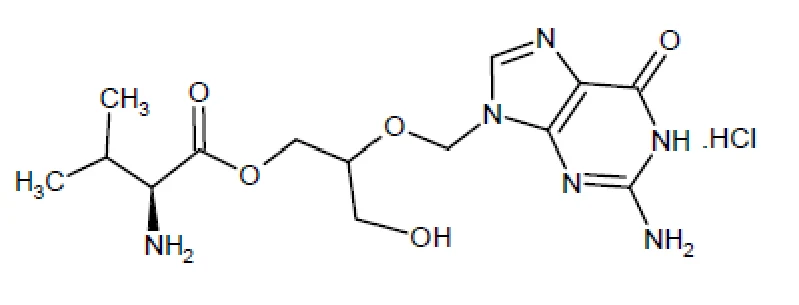
Structural formula:
Physical Form Valganciclovir hydrochloride is white-to off-white powder
Solubility Valganciclovir hydrochloride is a polar hydrophilic compound with a solubility of 70 mg/mL in water at 25 °C at a pH of 6.8 pKa 7.6
Partition Co-efficient: Valganiclcovir hydrochloride has an n-octanol/water partition coefficient of 0.0095 at pH 7.0.
Melting Point: Valganciclovir hydrochloride melts with decomposition above
180°C.
CLINICAL TRIALSError! Bookmark not defined.
Comparative Bioavailability Studies
A randomized, blinded, single-dose, 2-way crossover bioavailability study of 2 x 450 mg Teva-Valganciclovir tablets (valganciclovir HCl) (Teva Canada Limited) and 2 x 450 mg Valcyte (valganciclovir HCl) tablets (Hoffman-La Roche Limited) was conducted in 32 adult male and female healthy volunteers under fasting conditions. Summary of the results for valganciclovir are presented in the following table:
Valganciclovir (2 x 450 mg tablets) From measured data Geometric Mean Arithmetic Mean (CV %) | ||||
|---|---|---|---|---|
| Parameter | Test* | Reference† | % Ratio of Geometric Means | Confidence Interval 90% |
AUCT‡ (ng.h/mL) | 402.25 409.18 (18.44%) | 428.02 443.79 (31.17%) | 93.98 | (88.88, 99.37) |
AUCI (ng.h/mL) | 407.23 414.09 (18.24%) | 432.97 448.53 (30.82%) | 94.05 | (89.00, 99.39) |
Cmax (ng/mL) | 281.42 291.94 (27.83%) | 296.90 309.32 (30.52%) | 94.78 | (87.69, 102.46) |
Tmax§ (h) | 0.703 (36.37) | 0.891 (38.96) | ||
| T½§ (h) | 1.00 (22.91) | 0.95 (20.59) | ||
* Teva-Valganciclovir 450 mg tablets (Teva Canada Limited)
† Valcyte 450 mg tablets (Hoffman-La Roche Limited) were purchased in Canada
§ Expressed as the arithmetic mean (CV%) only
Induction Therapy of CMV Retinitis: Study WV15376
In a randomized, open-label controlled study, 160 patients with AIDS and newly diagnosed
CMV retinitis were randomized to receive treatment with either valganciclovir hydrochloride tablets (900 mg twice daily for 21 days, then 900 mg once daily for 7 days) or with CYTOVENE-IV (ganciclovir sodium for injection) (5 mg/kg twice daily for 21 days, then 5 mg/kg once daily for 7 days).
Study participants were: male (91%), White (53%), Hispanic (31%), and Black (11%). The median age was 39 years, the median baseline HIV-1 RNA was 4.9 log10, and the median CD4 cell count was 23 cells/mm3. A determination of CMV retinitis progression by the masked review of retinal photographs taken at baseline and week 4 was the primary outcome measurement of the three week induction therapy. Table 9 provides the outcomes at four weeks.
Table 9: Week 4 Masked Review of Retinal Photographs in Study WV15376
| CYTOVENE-IV | Valganciclovir Hydrochloride | |
| Determination of CMV retinitis progression at Week 4 | N=80 | N=80 |
Progressor Non-progressor | 7 63 | 7 64 |
Death Discontinuations due to Adverse Events Failed to return | 2 1 1 | 1 2 1 |
| CMV not confirmed at baseline or no interpretable baseline photos | 6 | 5 |
In evaluable patients, photographic evidence of progression was observed in 7 of 70 patients
(10%) in the intravenous ganciclovir treatment group and in 7 of 71 patients (9.7%) treated with valganciclovir hydrochloride. The difference in the proportion progressing was 0.1% (95% CI = -9.7 to 10.0%). Based on the a priori definition of comparable efficacy, valganciclovir hydrochloride tablets 900 mg twice daily demonstrated similar efficacy to that of intravenous ganciclovir 5 mg/kg twice daily.
Maintenance Therapy of CMV Retinitis
No comparative clinical data are available on the efficacy of valganciclovir hydrochloride for the maintenance therapy of CMV retinitis because all patients in study WV15376 received open-label valganciclovir hydrochloride after week 4. However, the AUC for ganciclovir is similar following administration of 900 mg valganciclovir once daily and 5 mg/kg intravenous ganciclovir once daily. Although the ganciclovir Cmax is lower following valganciclovir administration compared to intravenous ganciclovir, it is higher than the Cmax obtained following oral ganciclovir administration (see Figure 1 in DETAILED PHARMACOLOGY). Therefore, use of valganciclovir as maintenance therapy is supported by a plasma concentration-time profile similar to that of two approved products for maintenance therapy of CMV retinitis.
Prevention of CMV Disease in Solid Organ Transplantation: Study PV16000
A double-blind, double-dummy clinical active comparator study has been conducted in 372 heart, liver and kidney transplant patients at high-risk for CMV disease (Donor seropositive/Recipient seronegative [(D+/R-)]). Patients were randomized (2 valganciclovir hydrochloride: 1 oral ganciclovir) to receive either valganciclovir hydrochloride tablets (900 mg once daily) or oral ganciclovir (1000 mg three times a day) starting within 10 days of transplantation until Day 100 post-transplant. The proportion of patients who developed CMV disease, including CMV syndrome and/or tissue invasive disease during the first 6 months post-transplant was 12.1% in the patients treated with valganciclovir hydrochloride (N=239) compared with 15.2% in the oral ganciclovir arm (N=125). However, in liver transplant patients, the incidence of tissue-invasive CMV disease was significantly higher in the group treated with valganciclovir hydrochloride compared with the ganciclovir group. These results are summarized in Table 10.
Table 10: Percentage of Patients with CMV Disease and Tissue-Invasive CMV Disease by Organ Type: Endpoint Committee, 6 Months ITT Population
| CMV Disease1 | Tissue-Invasive CMV Disease | CMV Syndrome | ||||||||||||
| Organ | VGCV (N=239) | GCV (N=125) | VGCV (N=239) | GCV (N=125) | VGCV (N=239) | GCV (N=125) | ||||||||
| Liver (n=177) | 19% (22/118) | 12% (7/59) | 14% (16/118) | 3% (2/59) | 5% (6/118) | 9% (5/59) | ||||||||
| Kidney (n=120) | 6% (5/81) | 23% (9/39) | 1% (1/81) | 5% (2/39) | 5% (4/81) | 18% (7/39) | ||||||||
| Heart (n=56) | 6% (2/35) | 10% (2/21) | 0% (0/35) | 5% (1/21) | 6% (2/35) | 5% (1/21) | ||||||||
| Kidney / Pancreas (n=11) | 0% (0/5) | 17% (1/6) | 0% (0/5) | 17% (1/6) | 0% (0/5) | 0% (0/6) | ||||||||
GCV = oral ganciclovir; VGCV= valganciclovir hydrochloride
1 Number of Patients with CMV Disease = Number of Patients with Tissue-Invasive CMV Disease + Number of
Patients with CMV Syndrome.
The majority of CMV disease events occurred after the end of the treatment phase, when patients were no longer receiving anti-CMV prophylaxis with either oral ganciclovir or valganciclovir.
During this post-treatment period, time to CMV disease was generally shorter on the ganciclovir arm.
The incidence of acute graft rejection up to 6 months post-transplant was slightly higher on the ganciclovir arm of the study (36.0%, versus 29.7% on the valganciclovir arm).
Extending prophylaxis with valganciclovir hydrochloride up to 200 days post-transplant may provide some benefit in high-risk D+/R- kidney transplant recipients. However, a higher frequency of treatment-related adverse events, including leukopenia and neutropenia, was observed when the prophylaxis was extended to 200 days post-transplant compared with 100 days post-transplant. The decision to extend the prophylaxis should be undertaken only where the potential benefits outweigh the risks (See WARNINGS and PRECAUTIONS).
Pediatric Use
The pharmacokinetics and safety of valganciclovir was studied in 109 pediatric SOT recipients.
Common adverse events (reported in more than 10% of patients) observed in these patients included diarrhea (32%), pyrexia (24%), hypertension (22%), upper respiratory tract infection
(22%), vomiting (21%), anemia (14%), neutropenia (13%), constipation (11%), nausea (11%), and transplant rejection (10%).
DETAILED PHARMACOLOGYError! Bookmark not defined.
Animal Pharmacology
A range of routine safety pharmacology studies was undertaken to assess the effect of valganciclovir on the major bodily systems. There were no clinically relevant effects detected with valganciclovir in safety pharmacology tests on renal, intestinal, autonomic nervous or cardio-respiratory systems and on gross behaviour.
Human Pharmacology
Because the major elimination pathway for ganciclovir is renal, dosage reductions according to creatinine clearance are required for TEVA-VALGANCICLOVIR (valganciclovir hydrochloride). For dosing instructions in patients with renal impairment, refer to DOSAGE AND ADMINISTRATION.
The pharmacokinetic properties of valganciclovir have been evaluated in HIV-and CMV- seropositive patients, patients with AIDS and CMV retinitis and in solid organ transplant patients.
The parameters which control the exposure of ganciclovir from valganciclovir are the oral absorption of valganciclovir and the renal excretion of ganciclovir.
The ganciclovir pharmacokinetic measures following administration of 900 mg valganciclovir and 5 mg/kg intravenous ganciclovir and 1000 mg three times daily oral ganciclovir are summarized in Table 11.
Table 11: Mean Ganciclovir Pharmacokinetic* Measures in Healthy Volunteers and HIV-positive/CMV-positive Adults at Maintenance Dosage
| Formulation | Valganciclovir Hydrochloride Tablets | CYTOVENE IV | Ganciclovir Capsules |
| Dosage | 900 mg once daily with food | 5 mg/kg once daily | 1000 mg three times daily with food |
| AUC0-24 hr (mcg•h/mL) | 29.1 ±9.7 (3 studies, n=57) | 26.5±5.9 (4 studies, n=68) | Range of means 12.3 to 19.2 (6 studies, n=94) |
| Cmax (mcg/mL) | 5.61 ±1.52 (3 studies, n=58) | 9.46±2.02 (4 studies, n=68) | Range of means 0.955 to 1.40 (6 studies, n=94) |
| Absolute oral bioavailability (%) | 59.4 ±6.1 (2 studies, n=32) | Not Applicable | Range of means 6.22 ±1.29 to 8.53 ±1.53 (2 studies, n=32) |
Elimination half-life (hr) | 4.08 ±0.76 (4 studies, n=73) | 3.81 ±0.71 (4 studies, n=69) | Range of means 3.86 to 5.03 (4 studies, n=61) |
Renal clearance (mL/min/kg) | 3.21 ±0.75 (1 study, n=20) | 2.99 ±0.67 (1 study, n=16) | Range of means 2.67 to 3.98 (3 studies, n=30) |
*Data were obtained from single and multiple dose studies in healthy volunteers, HIV-positive patients, and
HIV-positive/CMV-positive patients with and without retinitis. Patients with CMV retinitis tended to have higher ganciclovir plasma concentrations than patients without CMV retinitis.
The area under the plasma concentration-time curve (AUC) for ganciclovir administered as valganciclovir hydrochloride tablets is comparable to the ganciclovir AUC for intravenous ganciclovir. Ganciclovir AUC0-24h, achieved by a single dose of 900 mg valganciclovir hydrochloride tablets under fed conditions was comparable to the AUC0-24h achieved following administration of 5 mg/kg intravenous ganciclovir (42.69 mcg•h/mL vs 47.61 mcg•h/mL, respectively). Ganciclovir Cmax following valganciclovir administration is 40% lower than following intravenous ganciclovir administration. During maintenance dosing, ganciclovir AUC0-24h and Cmax following oral ganciclovir administration (1000 mg three times daily) are lower relative to valganciclovir and intravenous ganciclovir. The ganciclovir Cmin following intravenous ganciclovir and valganciclovir administration are less than the ganciclovir Cmin following oral ganciclovir administration.
Figure 1: Ganciclovir Plasma Concentration Time Profiles in HIV-positive/CMV-positive Patients*
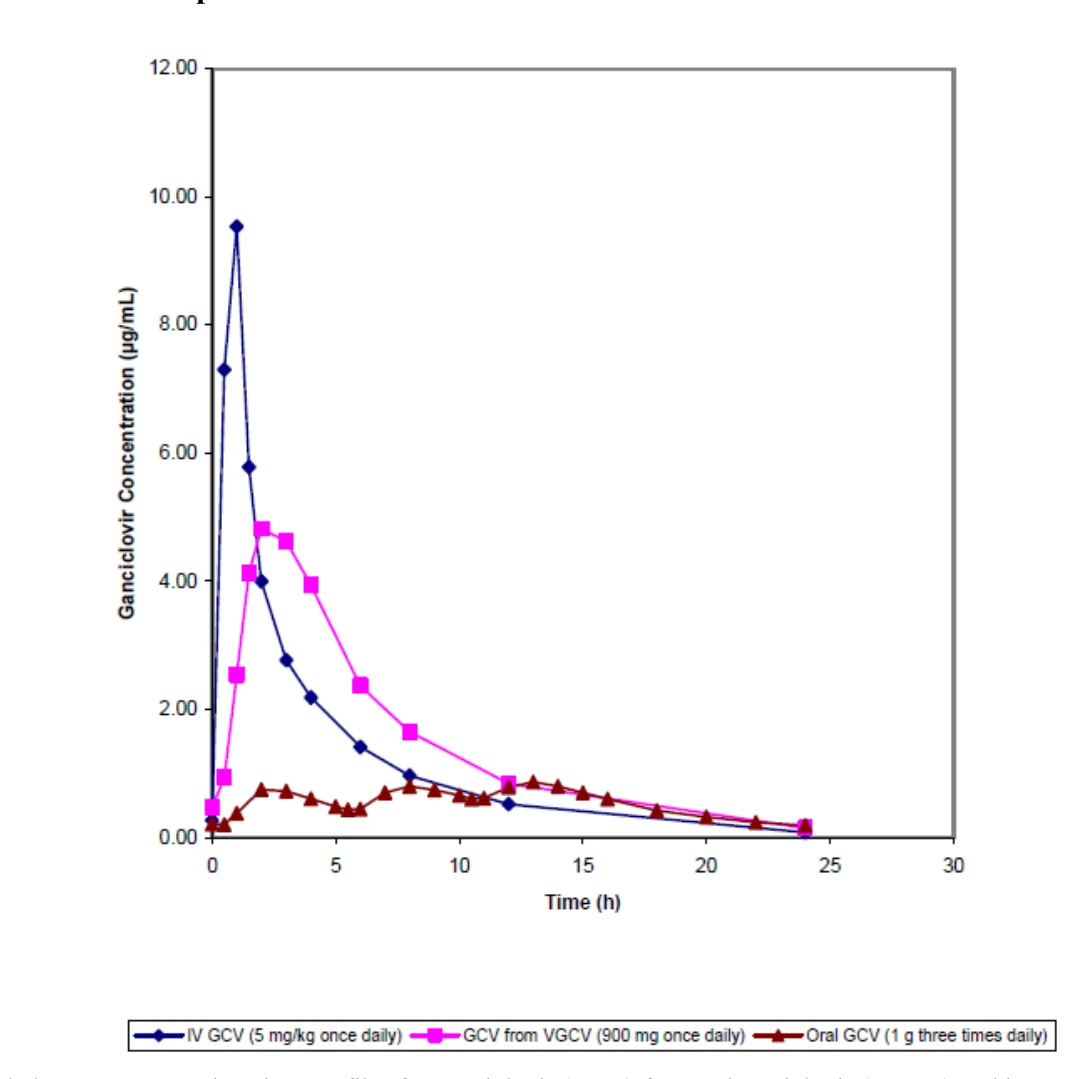
*Plasma concentration-time profiles for ganciclovir (GCV) from valganciclovir (VGCV) and intravenous ganciclovir were obtained from a multiple dose study (WV15376 n=21 and n=18, respectively) in HIV-positive/CMV-positive patients with CMV retinitis. The plasma concentration-time profile for oral ganciclovir was obtained from a multiple dose study (GAN2230 n=24) in HIV-positive/CMV-positive patients without CMV retinitis.
A study conducted with ganciclovir, GANS 2226, has demonstrated that ganciclovir AUC is the key pharmacokinetic parameter most predictive of clinical response.
Increases in ganciclovir average AUC0-24h were associated with statistically significant increases in time to progression of CMV retinitis when fitted by the Cox regression model (P=.0002).
Multivariate regression analysis showed the association between AUC0-24h and time to progression of CMV retinitis was highly statistically significant (P=.0019), while the association of Cmax and time to progression of CMV retinitis was not (P=.6022). These findings indicate that average AUC0-24h is a better predictor of time to progression, and that average Cmax does not add predictive value over average AUC0-24h.
In heart, kidney, kidney-pancreas, and liver transplant recipients, the mean systemic exposure to ganciclovir was 1.7 x higher following administration of 900 mg valganciclovir hydrochloride tablets once daily versus 1000 mg ganciclovir capsules three times daily, when both drugs were administered according to their renal function dosing algorithms. The steady state systemic exposure (AUC0-24h) of solid organ transplant patients to ganciclovir after daily oral administration of valganciclovir and ganciclovir was 46.3 ± 15.2 mcg•h/mL and 28.0 ± 10.9 mcg•h/mL, respectively.
The systemic ganciclovir exposures attained were comparable across kidney, heart and liver transplant recipients based on a population pharmacokinetics evaluation.
Table 12: Mean Ganciclovir Pharmacokinetic Measures by Organ Type (Study PV16000)
| Parameter | Ganciclovir Capsules | Valganciclovir Hydrochloride Tablets |
| Dosage | 1000 mg three times daily with food | 900 mg once daily with food |
| Heart Transplant Recipients | N=13 | N=17 |
| AUC0-24 hr (mcg•h/mL) | 26.6 ± 11.6 | 40.2 ± 11.8 |
| Cmax (mcg/mL) | 1.4 ± 0.5 | 4.9 ± 1.1 |
| Elimination half-life (hr) | 8.47 ± 2.84 | 6.58 ± 1.50 |
| Liver Transplant Recipients | N=33 | N=75 |
| AUC0-24 hr (mcg•h/mL) | 24.9 ± 10.2 | 46.0 ± 16.1 |
| Cmax (mcg/mL) | 1.3 ± 0.4 | 5.4 ± 1.5 |
| Elimination half-life (hr) | 7.68 ± 2.74 | 6.18 ±1.42 |
| Kidney Transplant Recipients* | N=36 | N=68 |
| AUC0-24 hr (mcg•h/mL) | 31.3 ± 10.3 | 48.2 ± 14.6 |
| Cmax (mcg/mL) | 1.5 ± 0.5 | 5.3 ± 1.5 |
| Elimination half-life (hr) | 9.44 ± 4.37 | 6.77 ± 1.25 |
* Includes kidney-pancreas
The pharmacokinetics of valganciclovir hydrochloride tablets in stable liver transplant patients were investigated in one open label 4-part crossover study (n=28). The bioavailability of ganciclovir from valganciclovir following a single dose of 900 mg valganciclovir hydrochloride tablets under fed conditions was approximately 60%.
Ganciclovir AUC0-24h, achieved following a single dose of 900 mg valganciclovir hydrochloride tablets under fed conditions, was 41.7 ± 9.9 mcg•h/mL (n=28), compared to 48.2 ± 17.3 mcg•h/mL (n=27) after 5 mg/kg of intravenous ganciclovir was administered.
MICROBIOLOGYError! Bookmark not defined.
Antiviral Effect: Treatment of CMV Retinitis in AIDS Patients
In a study of valganciclovir hydrochloride tablets for the treatment of CMV retinitis in patients with acquired immunodeficiency syndrome (AIDS), the antiviral effect of valganciclovir hydrochloride tablets was demonstrated by a decrease in CMV shedding (see Table 13).
Table 13: Antiviral Effect of Valganciclovir Hydrochloride Tablets
| Patients With Positive CMV Cultures | Patients With Viremia by Qualitative CMV Polymerase Chain Reaction | |||||||||||
| Time | Valganciclovir Hydrochloride Tablets* | Intravenous Ganciclovir† | Valganciclovir Hydrochloride Tablets* | Intravenous Ganciclovir† | ||||||||
| Pretreatment | 46% (33/71) | 65% (46/71) | 40% (31/77) | 51% (39/76) | ||||||||
| Week 4 | 7% (4/58) | 6% (4/64) | 4% (3/71) | 3% (2/70) | ||||||||
* 900 mg bid for 21 days followed by 900 mg daily for 7 days
† 5 mg/kg bid for 21 days followed by 5 mg/kg daily for 7 days
Viral Suppression: Prevention of CMV Disease in Solid Organ Transplantation
In a study of valganciclovir hydrochloride tablets in the prevention of CMV disease in heart, kidney, kidney-pancreas, and liver transplant recipients, the incidence of viremia (CMV viral load above a detection limit of 400 copies/mL) was lower on the valganciclovir arm while patients were receiving prophylaxis with study drug (2.9%, versus 10.4% on the ganciclovir arm). By the 6 month post transplant time point, a comparable proportion of patients had experienced viremia on the two treatment arms (39.7% valganciclovir, 43.2% ganciclovir).
Antiviral Activity against Human Herpes Viruses
Sensitive human viruses include human cytomegalovirus (HCMV), herpes-simplex virus-1 and -
2 (HSV-1 and HSV-2), human herpes virus type 6, 7 and 8 (HHV-6, HHV-7, HHV-8), Epstein- Barr virus (EBV), varicella-zoster virus (VZV) and hepatitis B virus. The demonstration of antiviral activity against these viruses does not necessarily correlate to clinical response.
Viral Resistance
Viruses resistant to ganciclovir can arise after chronic dosing with valganciclovir by selection of mutations in either the viral kinase gene (UL97) responsible for ganciclovir monophosphorylation and/or in the viral polymerase gene (UL54). UL97 mutations arise earlier and more frequently than mutations in UL54. Virus with mutations in the
UL97 gene is resistant to ganciclovir alone with M460V/I, H520Q, C592G, A594V, L595S, C603W being the most frequently reported ganciclovir resistance-associated substitutions, whereas virus with mutations in the UL54 gene may show cross-resistance to other antivirals that target the viral polymerase and vice versa. Amino acid substitutions in UL54 conferring cross-resistance to ganciclovir and cidofovir are generally located within the exonuclease domains and region V, however amino acid substitutions conferring cross-resistance to foscarnet are diverse, but concentrate at and between regions II (codon 696-742) and III (codon 805-845).
The current working definition of CMV resistance to ganciclovir in in vitro assays is IC50 >1.5 mcg/mL (6.0 mcM). CMV resistance to ganciclovir has been observed in individuals with AIDS and CMV retinitis who have never received ganciclovir therapy. Viral resistance has also been observed in patients receiving prolonged treatment for CMV retinitis with ganciclovir. The possibility of viral resistance should be considered in patients who show poor clinical response or experience persistent viral excretion during therapy.
Treatment of CMV Retinitis in AIDS Patients
Genotypic analysis of CMV in polymorphonuclear leukocyte (PMNL) samples from 148 AIDS patients with CMV retinitis enrolled in one clinical study has shown that 2.2%, 6.5%, 12.8% and
15.3% contain UL97 mutations after 3, 6, 12 and 18 months, respectively, of valganciclovir treatment.
Prevention of CMV Disease in Solid Organ Transplant Recipients
During a clinical study of valganciclovir (and ganciclovir) for the prevention of CMV disease in heart, kidney, kidney-pancreas and liver transplant recipients, resistance to ganciclovir was studied by genotypic analysis of CMV in white blood cell samples collected: 1) on Day 100 (end of study drug prophylaxis); and 2) in cases of suspected CMV disease with viremia up to 6 months post-transplant.
At the end of study drug prophylaxis (Day 100), the incidence of resistance was 0/198 samples
(0%) for patients receiving valganciclovir and 2/103 samples (1.9%) for patients receiving ganciclovir.
For cases of CMV disease with viremia, the incidence of resistance was 0/50 samples (0%) for patients receiving valganciclovir and 2/29 samples (6.9%) for patients receiving ganciclovir.
TOXICOLOGYError! Bookmark not defined.
Studies have shown that valganciclovir shares the same toxicity profile as ganciclovir.
Carcinogenesis: In a study conducted over 18 months, ganciclovir was carcinogenic in the mouse at oral doses of 20 and 1000 mg/kg/day (approximately 0.1x and 1.4x, respectively, the mean drug exposure in humans following the recommended intravenous dose of 5 mg/kg, based on area under the plasma concentration-time curve [AUC] comparisons). At the dose of 1000 mg/kg/day there was a significant increase in the incidence of tumours of the preputial gland in males, forestomach (nonglandular mucosa) in males and females, and reproductive tissues and liver in females. At the dose of 20 mg/kg/day, a slightly increased incidence of tumours was noted in the preputial and harderian glands in males, forestomach in males and females, and liver in females. No carcinogenic effect was observed in mice administered ganciclovir at 1 mg/kg/day (estimated as 0.01x the human dose based on AUC comparison). Except for histiocytic sarcoma of the liver, ganciclovir-induced tumours were generally of epithelial or vascular origin. Although the preputial and clitoral glands, forestomach and harderian glands of mice do not have human counterparts, ganciclovir should be considered a potential carcinogen in humans.
Reproduction: Reprotoxicity studies have not been repeated with valganciclovir because of the rapid and extensive conversion to ganciclovir. Valganciclovir is expected to have similar reprotoxicity effects as ganciclovir. Ganciclovir caused decreased mating behavior, decreased fertility, and an increased incidence of embryolethality in female mice following intravenous doses of 90 mg/kg/day (approximately 1.7x the mean drug exposure in humans following the dose of 5 mg/kg, based on AUC comparisons). Ganciclovir caused decreased fertility in male mice after daily intravenous doses of ≥ 2 mg/kg and daily oral doses of ≥ 10 mg/kg. These effects were reversible after daily intravenous doses of 2 mg/kg and daily oral doses of 10 mg/kg, but were irreversible or incompletely reversible after daily intravenous doses of 10 mg/kg and daily oral doses of 100 or 1000 mg/kg. Ganciclovir has also caused hypospermatogenesis in rats after daily oral doses of ≥ 100 mg/kg and in dogs after daily intravenous and oral doses of ≥ 0.4 mg/kg and 0.2 mg/kg, respectively.
Ganciclovir has been shown to be embryotoxic in rabbits and mice following intravenous administration, and teratogenic in rabbits. Fetal resorptions were present in at least 85% of rabbits and mice administered 60 mg/kg/day and 108 mg/kg/day (2x the human exposure based on AUC comparisons), respectively. Effects observed in rabbits included: fetal growth retardation, embryolethality, teratogenicity and/or maternal toxicity. Teratogenic changes included cleft palate, anophthalmia/microphthalmia, aplastic organs (kidney and pancreas), hydrocephaly and brachygnathia. In mice, effects observed were maternal/fetal toxicity and embryolethality.
Daily intravenous doses of 90 mg/kg administered to female mice prior to mating, during gestation, and during lactation caused hypoplasia of the testes and seminal vesicles in the month- old male offspring, as well as pathologic changes in the nonglandular region of the stomach. The drug exposure in mice as estimated by the AUC was approximately 1.7x the human AUC.
Data obtained using an ex vivo human placental model show that ganciclovir crosses the placenta and that simple diffusion is the most likely mechanism of transfer. The transfer was not saturable over a concentration range of 1 to 10 mg/mL and occurred by passive diffusion.
Valganciclovir may be teratogenic or embryotoxic at dose levels recommended for human use.
There are no adequate and well-controlled studies in pregnant women. TEVA-VALGANCICLOVIR (valganciclovir hydrochloride) should be used during pregnancy only if the potential benefit justifies the potential risk to the fetus.
Note: All dose comparisons presented in this subsection are based on the human AUC following administration of a single 5 mg/kg infusion of intravenous ganciclovir as used during the maintenance phase of treatment. Compared with the single 5 mg/kg intravenous infusion, human exposure is doubled during the intravenous induction phase (5 mg/kg bid). The cross-species dose comparisons should be multiplied by 2 for intravenous induction treatment with intravenous ganciclovir.
Acute Toxicity: The acute toxicity of valganciclovir was assessed in single-dose oral studies in mice and dogs. The studies performed, and their results, are presented in the following table.
Table 14: Acute (oral gavage) Toxicity Studies Conducted with Valganciclovir
| Species Strain [Ref#] | No/ group/ sex | Dose mg/kg | Dose volume mL/kg | Observation period (days) | Lethal dose | Observations | |
Mouse Swiss Webster [1012] | 5 | 0 | 20 | 14 | >2000* | Administration of valganciclovir did not induce any effects at the time of dosing and during the observation period. *One female mouse (2000 mg/kg) died 7-24 hours after dosing from an unknown cause. | |
| 5 | 1000 | 10 | |||||
| 5 | 2000 | 20 | |||||
Dog Beagle [1013] | 1 | 0 | 10 | 14 | >1000 | Administration of 1000 mg/kg/day to dogs by oral gavage induced vomiting within 3 hrs of dosing. WBC, neutrophil and platelet counts declined in males administered 500 and 1000 mg/kg and in females administered 500 mg/kg. | |
| 1 | 500 | 5 | |||||
| 1 | 1000 | 10 | |||||
Multi-dose Toxicity: Studies in the mouse, rat and dog with valganciclovir demonstrated that the reproductive, hematopoietic, renal and gastrointestinal systems were the main organs for induced toxicity.
An i.v. study in mice, where the systemic exposure of valganciclovir was 10 times that expected in man demonstrated that valganciclovir induced the same range of findings as ganciclovir with no additional findings.
The male reproductive system was the most frequently affected target organ. Lesions seen were testicular epithelial cell atrophy, oligospermia, and changes in accessory sex organs at sub-therapeutic exposure levels. Female reproductive changes were confined to uterine, ovarian and clitoral atrophy.
Valganciclovir induced intestinal mucosal and/or crypt degeneration in mice and dogs. A range of hematopoietic changes were induced which included lymphoreticular gland atrophy, leukopenia -particularly neutropenia, anemia, thrombocytopenia and bone marrow hypocellularity.
Renal toxicity was recorded in mice as tubular basophilia, pelvic dilatation and necrosis with associated changes in clinical pathology.
No studies were undertaken on the reproductive toxicology or on carcinogenicity. Since valganciclovir behaves as ganciclovir in all studies, it is assumed that the teratogenicity, mutagenicity and carcinogenicity seen with ganciclovir will apply equally to valganciclovir.
The multi-dose toxicity studies performed with valganciclovir are summarized in the following table.
Table 15: Multi-dose Studies Conducted with Valganciclovir
| Species Strain [Ref.#] | Route | No/ Group/ Sex | Dose mg/kg/day Duration | Objectives/Observations |
|---|---|---|---|---|
Mouse Crl:CD-1 (ICR) [1085] | Intraveno us | 10 | 0, 20, 100, 14 days | Objectives: To record the valganciclovir toxicity profile under conditions of high i.v. exposure and thus avoid the effects of rapid first pass metabolism. Observations:
|
Mouse Crl:CFW (SW) [1015] | Oral gavage | 10 (5 recovery) | 0, 1.5, 15, 150, 500 4 weeks with 4 week recovery groups | Objectives: Standard 4-week study performed to support clinical administration and record the oral toxicity of valganciclovir. Observations:
|
| Species Strain [Ref.#] | Route | No/ Group/ Sex | Dose mg/kg/day Duration | Objectives/Observations | |
|---|---|---|---|---|---|
| lesion was non- reversible. | |||||
Mouse Crl:CD-1 (ICR) [1016] 13-Week Interim Report [1017] | Oral gavage | 20 (10 recovery) | 0, 1, 10, 100 26 weeks with 4 week recovery groups | Objectives: To record the toxicity of valganciclovir administered for 13 and 26 weeks and to support extended clinical administration to patients. Observations:
| |
Rat HsdBrl:W H (Wistar) [1018] | Oral gavage | 10 | 0, 2, 20, 200 13 weeks | Objectives: This gavage study was undertaken as a 13-week range-finding study. Observations:
| |
| Rat | Oral | 15 males | 200, 400 | Objectives: | |
| Species Strain [Ref.#] | Route | No/ Group/ Sex | Dose mg/kg/day Duration | Objectives/Observations |
|---|---|---|---|---|
HsdBrl:W H (Wistar) [1019] | valgancic lovir i.v. valgancic lovir | 50, 100 13 weeks |
Observations:
Conclusion:
| |
Dog Beagle [1020] | Oral gavage | 3 | 0, 0.15, 1.5, 15, 50 4 weeks with 2 weeks recovery | Objectives: To determine the oral toxicity of valganciclovir in the non-rodent species, the dog. Observations:
|
Dog Beagle [1021] | Oral, liquid filled gelatin capsule | 3 (2 recovery) | 0, 0.2, 2, 20/10 13 weeks with 9 week recovery | Objectives: A 13-week oral capsule study was undertaken with valganciclovir for the purposes of supporting extended clinical dosing. Observations:
|
Mutagenesis: Ganciclovir caused point mutations and chromosomal damage in mammalian cells in vitro and in vivo, but did not cause point mutations in bacterial or yeast cells, dominant lethality in mice, or morphologically transformed cells in vitro.
Bacterial mutation, mammalian cell mutation, and in vivo chromosome analysis studies were undertaken to assess the mutagenic and clastogenic potential of valganciclovir. Valganciclovir was mutagenic in the Mouse Lymphoma Assay with and without metabolic activation and clastogenic in the Micronucleus Assay at a cytotoxic dose. The mutagenicity studies performed are summarized in the table below.
Table 16: Mutagenicity Studies
| Study Type [Ref.#] | Assay System | Concentration Assayed | Duration of Exposure | Data |
|---|---|---|---|---|
Bacterial Cell Mutation (Ames Test) [1026] |
Salmonella Strains TA 1535, 1537, 1538, 98, 100 and E. coli WP2uvrA ± S9 activation
|
| 48-72 hrs | No mutagenic activity with and without activation. No precipitation nor appreciable cytotoxicity |
Mammalia n Cell Gene Mutation (Mouse Lymphoma Assay) [1025] | Mouse lymphoma cells (L5178Y TK±) ± S9 activation | Without activation 1000-5000 mcg/mL With activation 10-500 mcg/mL | 24-48 hrs | Increased mutagenic activity with 2000 mcg/mL and above without activation and 250 mcg/mL and above with activation. |
Chromoso me Analysis in vivo [1024] | Mouse micronucleus study | 0, 60, 300, 1500 mg/kg | 24, 48, and 72 hrs | Increase in frequency of micro nucleated polychromatic erythrocytes with 1500 mg/kg which was also excessively cytotoxic. |
REFERENCESError! Bookmark not defined.
- 1. Alcorn J and McNamara PJ. Acyclovir, Ganciclovir, and Zidovudine Transfer into Rat Milk. Antimicrobial Agents and Chemotherapy 2002;46(6):1831–1836
- 2. Brown F, Banken L, Saywell K, Arum I. Pharmacokinetics of valganciclovir and ganciclovir following multiple oral dosages of valganciclovir in HIV- and CMV - seropositive volunteers. Clin Pharmacokinet 1999;37(2):167-176.
- 3. Guidelines for the handling and disposal of hazardous pharmaceuticals (including cytotoxic drugs). In: Canadian Society of Hospital Pharmacists. CSHP Official Publications. Ottawa ON: Canadian Society of Hospital Pharmacists. 2001:93-104
- 4. Chou S, Marousek G, Guentzel S, Follansbee SE, Poscher ME, Lalezari JP, et al. Evolution of mutations conferring multidrug resistance during prophylaxis and therapy for cytomegalovirus disease. J Infect Dis 1997;176 (3):786-789.
- 5. CYTOVENE (ganciclovir capsules and ganciclovir sodium for injection) Product Monograph. Mississauga, ON: Hoffmann-La Roche Limited; May 29, 2008.
- 6. Czock D et al. Pharmacokinetics of valganciclovir and ganciclovir in renal impairment. Clin Pharmacol. Ther. 2000:72 (2):142-150
- 7. Faulds D, Heel RC. Ganciclovir. A review of its antiviral activity, pharmacokinetic properties and therapeutic efficacy in cytomegalovirus infections. Drugs 1990;39(4):597-638.
- 8. Gilstrap LC, Bawdon RE, Roberts SW, Sobhi S. The transfer of nucleoside analog ganciclovir across the perfused human placenta. Am J Obstet Gynecol 1994; 170(4):967- 973.
- 9. Henderson GI, Hu ZQ, Yang Y, Perez TB, Devi BG, Frosto TA, et al. Ganciclovir transfer by human placenta and its effects on rat fetal cells. Am J Med Sci 1993;306 (3):151-156.
- 10. Hochster H, Dietrich D, et al. Toxicity of Combined Ganciclovir and Zidovudine. Annals of Internal Medicine. 1990;113:111-117
- 11. Jung D, Griffy K, Wong R, Colburn W, Hulse J. Absolute bioavailability and dose proportionality of oral ganciclovir after ascending multiple doses in human immunodeficiency virus (HIV)-positive patients. J Clin Pharmacol 1998;38 (12):1122- 1128.
- 12. Jung D, Griffy K, Dorr A. Effect of food on high-dose oral ganciclovir disposition in HIV-positive subjects. J Clin Pharmacol 1999;39(2):161-165.
- 13. Jung D, Dorr A. Single dose pharmacokinetics of valganciclovir in HIV- and CMVseropositive subjects. J Clin Pharmacol 1999;39(8):800-804.
- 14. Lalezari JP, Friedberg DN, Bissett J, Giordano MF, Hardy WD, Drew WL, et al. High dose oral ganciclovir treatment for cytomegalovirus retinitis. J Clin Virol 2002;24(1-2):67-77.
- 15.
Lalezari J, Lindley J, Walmsley S, Kuppermann B, Fisher M, Friedberg D, et al. A safety
study of oral valganciclovir maintenance treatment of cytomegalovirus retinitis. J Acquir Immune Defic Syndr 2002;30(4):392-400.
- 16. Manuel O. Venetz J-P, et al. Efficacy and safety of universal valganciclovir prophylaxis combined with a tacrolimus/mycophenolate-based regimen in kidney transplantation. SWISS MED Weekly 2007; 137: 669 – 676
- 17. Martin DF, Sierra Madero J, Walmsley S, Wolitz RA, Macey K, Georgiou P, et al, for the Valganciclovir Study Group. A controlled trial of valganciclovir as induction therapy for cytomegalovirus retinitis. N Engl J Med 2002;346:1119-1126.
- 18. Morris DJ, Adverse Effects and Drug Interactions of Clinical Importance with Antiviral Drugs. Drug Safety 1994: 10 (4): 281-291
- 19. Paya C, Humar A, Dominguez E, et al. Efficacy and safety of valganciclovir vs. oral ganciclovir for prevention of cytomegalovirus disease in solid organ transplant recipients. Am J Tran 2004; 4: 611-620.
- 20. Pescovitz MD, Rabkin J, Merion RM, Paya CV, Pirsch J, Freeman RB, et al. Valganciclovir results in improved oral absorption of ganciclovir in liver transplant recipients. Antimicrob Agents & Chemother 2000;44(10):2811-2815.
- 21. Sorbera LA, Castaner R, Castaner J. Valganciclovir hydrochloride. Anti-cytomegalovirus drug. Drugs Fut 2000;25(5):474-480.
- 22. Sugawara M, Huang W, Fei YJ, Leibach FH, Ganapathy V, Ganapathy ME. Transport of valganciclovir, a ganciclovir prodrug, via peptide transporters PEPT1 and PEPT2. J Pharm Sci 2000;89(6):781-789.
- 23. Taburet A-M, and Singlas E, Drug Interactions with Antiviral Drugs. Clinical Pharmacokinetics 1996 May; 30 (5), 385-401
- 24. Walter E, Kissel T, Amidon GL. The intestinal peptide carrier: A potential transport system for small peptide derived drugs. Adv Drug Deliv Rev 1996;20:33-58.
- 25. Valcyte® Product Monograph, Hoffmann-La Roche Limited. Control Number 208920. Revision date December 5, 2017.
PART III: CONSUMER INFORMATIONError! Bookmark not defined.
PrTEVA-VALGANCICLOVIR
Valganciclovir Hydrochloride Tablets
This leaflet is part III of a three-part "Product Monograph" published when TEVA-VALGANCICLOVIR was approved for sale in Canada and is designed specifically for Consumers. This leaflet is a summary and will not tell you everything about TEVA-VALGANCICLOVIR. Contact your doctor or pharmacist if you have any questions about the drug.
| ABOUT THIS MEDICATION |
What the medication is used for:
- TEVA-VALGANCICLOVIR is a prescription medication that belongs to the family of drugs known as “antivirals”.
- TEVA-VALGANCICLOVIR is used to treat cytomegalovirus (CMV) retinitis in adults who have acquired immunodeficiency syndrome (AIDS).
- TEVA-VALGANCICLOVIR is also used to prevent cytomegalovirus (CMV) disease in adults who have received a solid organ transplant and are at risk of developing CMV disease.
What it does:
- TEVA-VALGANCICLOVIR works by slowing the growth of CMV virus, the virus that causes CMV retinitis as well as CMV infection at other sites in the body. For most people with CMV retinitis, TEVA-VALGANCICLOVIR prevents CMV from progressing (spreading) into healthy cells as quickly as it would without treatment, thereby protecting eyesight from damage due to CMV disease.
- TEVA-VALGANCICLOVIR does not cure CMV retinitis, and some people may experience progression of retinitis during or following treatment with TEVA-VALGANCICLOVIR. Therefore, you must follow your doctor’s advice and have your eyes checked regularly.
- For most patients who have received a solid organ transplant, TEVA-VALGANCICLOVIR prevents the occurrence of CMV disease up to 6 months after the transplant.
- TEVA-VALGANCICLOVIR is a prodrug of ganciclovir. This means it is changed to ganciclovir once it is absorbed into the body. Ganciclovir is the active part of the drug that actually slows the growth of CMV virus.
When it should not be used:
Do not take TEVA-VALGANCICLOVIR if you have ever had a serious reaction to valganciclovir, ganciclovir (as TEVA-VALGANCICLOVIR or ganciclovir capsules or CYTOVENE®IV).
Do not take if you have had sensitivity reactions with acycloviror its pro-drug valacyclovir as a similar reaction can occur with TEVA-VALGANCICLOVIR.
Do not take TEVA-VALGANCICLOVIR if you have any reaction to any of the non-medicinal ingredients (see “What the non-medicinal ingredients are”).
What the medicinal ingredient is:
The medicinal ingredient found in TEVA-VALGANCICLOVIR is valganciclovir hydrochloride.
What the non-medicinal ingredients are:
TEVA-VALGANCICLOVIR tablets contain the following non- medicinal ingredients: Colloidal anhydrous silica, crospovidone, hypromellose, iron oxide red, lactose monohydrate, magnesium stearate, mannitol, microcrystalline cellulose, titanium dioxide and triacetin.
What dosage forms it comes in:
TEVA-VALGANCICLOVIR is available as a pink 450 mg valganciclovir film-coated tablet (as valganciclovir hydrochloride).
WARNINGS AND PRECAUTIONS
Serious Warnings and Precautions
|
BEFORE you use TEVA-VALGANCICLOVIR talk to your doctor or pharmacist if:
- you have ever had a bad reaction to TEVA-VALGANCICLOVIR (valganciclovir) or any of the inactive ingredients shown above.
- you have ever had a bad reaction to ganciclovir, acyclovir or valacyclovir.
- you are allergic to other medicines, food and dyes.
- you are taking ANY other medicines (prescription or nonprescription) including herbal or natural products.
- you have any other illnesses/diseases, including a history of liver or kidney disease.
- you are receiving hemodialysis as dosage adjustment is required.
- you have blood problems or have abnormal results on your blood tests.
- you are breast-feeding or planning to breast feed. You should not take TEVA-VALGANCICLOVIR while breastfeeding. Women who are HIV positive should not
- breast feed because HIV infection can be passed to the baby via the breast milk.
Pregnancy:
Tell your doctor if you are pregnant or planning to become pregnant.
TEVA-VALGANCICLOVIR may cause birth defects in humans and should not be used during pregnancy.
If you are a woman of child-bearing potential then you should:
- avoid pregnancy
- use effective contraception during treatment and for 30 days after stopping treatment
- effective contraception includes:
- a barrier method ( e.g. condom) and
- an additional method ( e.g. birth control pills, intrauterine device)
If you are a male taking TEVA-VALGANCICLOVIR, whose partner is female, then you should:
- use a barrier method (e.g. condom) during treatment and for 90 days after stopping treatment, unless it is certain that the female partner is not at risk of becoming pregnant.
This information will help your doctor and you decide whether you should use TEVA-VALGANCICLOVIR and what extra care may need to be taken while you are on the medication. You should always consult your doctor or pharmacist before using other medications while on TEVA-VALGANCICLOVIR
| INTERACTIONS WITH THIS MEDICATION |
Tell your doctor or pharmacist about all medications that
you are taking, including those you buy over the counter and herbal or natural products. TEVA-VALGANCICLOVIR may change the effect of other medications.
Tell your doctor if you are taking any of the following drugs:
- that reduce your immunity such as cyclosporine, tacrolimus, mycophenolate mofetil
- that act against tumours such as vincristine, vinblastine, doxorubicin, hydroxyurea
- that fight infections such as trimethoprim/sulphonamides, dapsone, amphotericin B, flucytosine, pentamidine
- pegylated interferons with ribavirin
The following drugs may need to have their dose changed when taken with TEVA-VALGANCICLOVIR:
- Videx®(didanosine, ddI)
- Retrovir® (zidovudine, ZDV, AZT)
- BenurylTM (probenecid)
Imipenem-cilastin - talk to your doctor if you are taking imipenem-cilastin. Seizures have occurred in patients taking imipenem-cilastin and ganciclovir. You may discuss different options with your doctor.
| PROPER USE OF THIS MEDICATION |
Dosing Considerations:
- Your doctor has prescribed TEVA-VALGANCICLOVIR after carefully studying your case. Other people may not benefit from taking this medicine, even though their problems may seem similar to yours. Do not give your TEVA-VALGANCICLOVIR to anyone else.
- To make sure that your therapy is as effective as possible, take your TEVA-VALGANCICLOVIR exactly as your doctor prescribes it. Do not skip any doses, or take more than the recommended dose.
- Take TEVA-VALGANCICLOVIR with food.
- Do not break or crush TEVA-VALGANCICLOVIR tablets. Avoid contact with broken TEVA-VALGANCICLOVIR tablets on your skin, mucous membranes or eyes. If contact occurs, wash your skin well with soap and water or rinse your eyes well with sterile or plain water if sterile water is not available.
Usual Dose:
Treatment of CMV Retinitis in Patients with HIV
- The usual dosage for adults to get active CMV retinitis under control (induction therapy) is two 450 mg tablets twice a day for 21 days.
- The usual dosage for adults to help keep CMV retinitis under control (maintenance therapy) is two 450 mg tablets once a day.
Prevention of CMV Disease Solid Organ Transplantation
- The usual dosage to prevent CMV in adults who received a solid organ transplant is two 450 mg tablets once a day starting within 10 days of transplant and continuing until 100 days after the transplant.
Overdose:
| If you think you have taken too much TEVA-VALGANCICLOVIR, contact your health care professional, hospital emergency department or regional Poison Control Centre immediately, even if there are no symptoms. |
Missed Dose:
- If you forget to take a dose of TEVA-VALGANCICLOVIR take it as soon as possible, then just carry on with the regular times you take your medication. If you remember your missed dose close to the time for your next dose, do not take the missed dose. Two doses of TEVA-VALGANCICLOVIR should not be taken at the same time.
- Do not let your TEVA-VALGANCICLOVIR run out. The amount of virus in your blood may increase if your medicine is stopped, even for a short time.
- It may be a good idea to ask your doctor or pharmacist ahead of time what to do about missed doses.
| SIDE EFFECTS AND WHAT TO DO ABOUT THEM |
Unwanted effects are possible with all medicines. Tell your doctor or pharmacist as soon as possible if you do not feel well while you are taking TEVA-VALGANCICLOVIR.
Blood problems. TEVA-VALGANCICLOVIR can cause serious blood cell problems. These include reduced numbers of certain white blood cells (granulocytopenia, neutropenia, or leukopenia), reduced numbers of red blood cells (anemia), and reduced numbers of platelets (thrombocytopenia). TEVA-VALGANCICLOVIR may also cause blood creatinine elevation, increased potassium in the blood, and abnormal liver function. Your doctor should recommend that you have blood tests done on a regular basis.
Kidney problems. TEVA-VALGANCICLOVIR can cause an increase in serum creatinine (an indicator of kidney function). An increase in serum creatinine may indicate abnormal kidney function. Your doctor may have blood tests done on a regular basis to monitor your serum creatinine.
Common side effects. TEVA-VALGANCICLOVIR can cause other side effects. In studies, the most common side effects with the use of valganciclovir hydrochloride (although not necessarily related to valganciclovir hydrochloride) were diarrhea, nausea, vomiting, fever, headache, trembling, graft rejection, swelling of the legs, constipation, back pain, insomnia (sleeplessness), high blood pressure.
Other side effects. Seizures, dizziness, ataxia (unsteadiness) and/or confusion have also been reported with the use of valganciclovir hydrochloride. If they occur, these side effects may affect a person’s ability to drive a car or operate machinery.
Although there is no supporting information from clinical trials in humans, animal studies indicate that valganciclovir hydrochloride may cause cancer and infertility in humans.
| SERIOUS SIDE EFFECTS, HOW OFTEN THEY HAPPEN AND WHAT TO DO ABOUT THEM | ||||
|---|---|---|---|---|
| Symptom / effect | Talk with your doctor or pharmacist | Stop taking drug and call your doctor or pharmacist | ||
| Only if severe | In all cases | |||
| Common | Blood Problems -Reduced number of white blood cells Symptoms of infection of the gums, throat, upper airways and skin include: chills, fever (over 100◦F or 38◦C), sore mouth, cough, redness, pain or swelling of any area of your body, or pain or burning when you pass your urine. -Reduced number of red blood cells Symptoms: tiredness and weakness. -Reduced number of platelets Symptoms: increased bruising and bleeding. | √ | ||
| Uncomm on | Kidney Problems -Increase in serum creatinine Symptoms: decreased urine output, lower back pain or side pain, or swelling of feet or lower legs. | √ | ||
This is not a complete list of side effects. For any unexpected effects while taking TEVA-VALGANCICLOVIR, contact your doctor or pharmacist.
| HOW TO STORE IT |
- Keep out of the reach and sight of children.
- Store TEVA-VALGANCICLOVIR tablets in a clean dry area at room temperature (15-30°C).
- Keep container tightly closed.
- Do not use medication after the expiry date on the package.
Reporting Side Effects You can report any suspected side effects associated with the use of health products to Health Canada by: |
NOTE: Contact your health professional if you need information about how to manage your side effects. The Canada Vigilance Program does not provide medical advice. |
| MORE INFORMATION |
REMINDER: This medicine has been prescribed only for you. Do not give it to anybody else. If you have any further questions, please ask your doctor or pharmacist.
If you want more information about TEVA-VALGANCICLOVIR:
- Talk to your healthcare professional
- Find the full Product Monograph that is prepared for healthcare professionals and includes this Consumer Information by visiting the Health Canada website (https://health-products.canada.ca/dpd-bdpp/index-eng.jsp); the manufacturer’s website http://www.tevacanada.com; or by calling 1-800-268-4127 ext. 3; or email druginfo@tevacanada.com.
Teva Canada Limited
30 Novopharm Court
Toronto, Ontario
M1B 2K9
Canada
Last revised: June 7, 2019