


Product Monograph - Timoptic (Merck Canada)
INDICATIONS AND CLINICAL USE
TIMOPTIC® (timolol maleate ophthalmic solution, Merck Frosst Std.) is indicated for the reduction of elevated intraocular pressure.
In clinical trials TIMOPTIC® has been shown to reduce intraocular pressure in:
! Patients with chronic open-angle glaucoma
! Patients with ocular hypertension
! Aphakic patients having glaucoma, including those wearing contact lenses
! Patients with narrow angles and a history of spontaneous or iatrogenically-induced narrow-angle closure in the opposite eye in whom reduction of intraocular pressure is necessary (see PRECAUTIONS).
CONTRAINDICATIONS
Bronchospasm, including bronchial asthma or a history of bronchial asthma or chronic obstructive pulmonary disease.
Sinus bradycardia; second-and third-degree atrioventricular block; overt cardiac failure; cardiogenic shock.
Hypersensitivity to any component of this product.
WARNINGS
As with other topically applied ophthalmic drugs, this drug may be absorbed systemically. The same adverse reactions reported with systemic beta-adrenergic blocking agents may occur with topical administration.
TIMOPTIC® (timolol maleate ophthalmic solution, Merck Frosst Std.) should be used with caution in patients subject to spontaneous hypoglycemia or in diabetic patients
(especially those with labile diabetes) who are receiving insulin or oral hypoglycemic agents. Beta-adrenergic blocking agents may mask the signs and symptoms of acute hypoglycemia.
In patients with angle-closure glaucoma, the immediate objective of treatment is to reopen the angle. This requires constricting the pupil with a miotic. Timolol maleate has little or no effect on the pupil. When TIMOPTIC® is used to reduce elevated intraocular pressure in angle-closure glaucoma they should be used with a miotic and not alone.
Cardiac failure should be adequately controlled before beginning therapy with
TIMOPTIC®. In patients with a history of severe cardiac disease, signs of cardiac failure should be watched for and pulse rates should be checked.
Respiratory reactions and cardiac reactions, including death due to bronchospasm in patients with asthma and rarely death in association with cardiac failure, have been reported following administration of timolol maleate ophthalmic solutions.
PRECAUTIONS
Choroidal Detachment
Choroidal detachment has been reported with administration of aqueous suppressant therapy (e.g., timolol, acetazolamide or combination) after filtration procedures. Management of eyes with chronic or recurrent choroidal detachment should include stopping all forms of aqueous suppressant therapy and treating endogenous inflammation vigorously.
As with the use of other antiglaucoma drugs, diminished responsiveness to
TIMOPTIC® (timolol maleate ophthalmic solution, Merck Frosst Std.) after prolonged therapy has been reported in some patients. However, in clinical studies in which
164 patients have been followed for at least 3 years, no significant difference in mean intra ocular pressure has been observed after initial stabilization.
Contact Lenses
The preservative in TIMOPTIC® is benzalkonium chloride. This preservative is a quaternary ammonium compound that may be absorbed by soft contact lenses.
Therefore, TIMOPTIC® should not be administered while wearing soft contact lenses. The contact lenses should be removed before application of the drops and not be reinserted earlier than 15 minutes after use.
Risk from Anaphylactic Reaction
While taking beta blockers, patients with a history of atopy or a history of severe anaphylactic reaction to a variety of allergens may be more reactive to repeated challenge with such allergens, either accidental, diagnostic, or therapeutic. These patients may be more resistant to treatment of anaphylactic reactions with the usual doses of epinephrine since timolol may blunt the beta agonist effect of epinephrine.
In such cases, alternatives to epinephrine should be considered.
Major Surgery
The necessity or desirability of withdrawal of $-adrenergic blocking agents prior to major surgery is controversial. If necessary during surgery, the effects of $-adrenergic blocking agents may be reversed by sufficient doses of such agonists as isoproterenol, dopamine, dobutamine or levarterenol.
Thyrotoxicosis
$-adrenergic blocking agents may mask certain clinical signs of hyperthyroidism
(e.g., tachycardia). Patients suspected of developing thyrotoxicosis should be managed carefully to avoid abrupt withdrawal of $-adrenergic blocking agents which might precipitate a thyroid storm.
Muscle Weakness
$-adrenergic blockade has been reported to increase muscle weakness consistent with certain myasthenic symptoms (e.g., diplopia, ptosis, and generalized weakness). Timolol has been reported rarely to increase muscle weakness in some patients with myasthenic symptoms.
Use in Pregnancy
TIMOPTIC® has not been studied in human pregnancy. The use of TIMOPTIC® require that the anticipated benefit be weighed against possible hazards.
Nursing Mothers
Timolol is detectable in human milk. Because of the potential for serious adverse reactions from timolol in nursing infants, a decision should be made whether to discontinue nursing or to discontinue the drug, taking into account the importance of the drug to the mother.
Use in Children
Safety and effectiveness in children have not been established.
Drug Interactions
Beta-adrenergic Blockers
Patients who are already receiving a beta blocker systemically and who are given
TIMOPTIC® should be observed for a potential additive effect on the intraocular pressure or on the known systemic effects of beta blockers (hypotension and/or bradycardia). The concomitant use of two topical beta-adrenergic blocking agents is not recommended.
Epinephrine
Although TIMOPTIC® used alone has little or no effect on pupil size, mydriasis resulting from concomitant therapy with timolol maleate ophthalmic solutions and epinephrine has been reported occasionally.
Quinidine
Potentiated systemic beta blockade (e.g., decreased heart rate) has been reported during combined treatment with quinidine and timolol, possibly because quinidine inhibits the metabolism of timolol via the P-450 enzyme, CYP2D6.
Calcium Channel Blockers or Catecholamine-depleting Drugs
The potential exists for additive effects and production of hypotension and/or marked bradycardia when TIMOPTIC® is administered together with an oral calcium channel blocker or catecholamine-depleting drugs such as reserpine.
Clonidine
Oral $-adrenergic blocking agents may exacerbate the rebound hypertension which can follow the withdrawal of clonidine. If the two drugs are coadministered, the $-adrenergic blocking agent should be withdrawn several days before the gradual withdrawal of clonidine. If replacing clonidine by $-blocker therapy, the introduction of $-adrenergic blocking agents should be delayed for several days after clonidine administration has stopped.
Information to be Provided to the Patient
- Patients should be advised that if they develop any ocular reactions, particularly conjunctivitis and lid reactions, they should immediately seek their physician’s advice about continuing treatment with TIMOPTIC®.
- Patients should be instructed to avoid allowing the tip of the dispensing container to contact the eye or surrounding structures. Ocular solutions, if handled improperly, can become contaminated by common bacteria known to cause ocular infections. Serious damage to the eye and subsequent loss of vision may result from using contaminated solutions.
- Patients should also be advised that if they develop an intercurrent ocular condition (e.g., trauma, ocular surgery or infection), they should immediately seek their physician’s advice concerning the continued use of the present multidose container.
- There have been reports of bacterial keratitis associated with the use of multiple dose containers of topical ophthalmic products. These containers had been inadvertently contaminated by patients who, in most cases, had a concurrent corneal disease or a disruption of the ocular epithelial surface.
- Patients with bronchial asthma, a history of bronchial asthma, severe chronic obstructive pulmonary disease, sinus bradycardia, second-or third- degree atrioventricular block, or cardiac failure should be advised not to take this product (see CONTRAINDICATIONS).
- If more than one topical ophthalmic drug is being utilized, the drugs should be administered at least ten minutes apart.
Patients Wearing Contact Lenses
Patients should be instructed to remove their lenses before application of the drops and not to re-insert the lenses earlier than 15 minutes after use.
ADVERSE REACTIONS
TIMOPTIC® (timolol maleate ophthalmic solution, Merck Frosst Std.) is usually well tolerated.
The following adverse reactions have been reported with ocular administration of this or other timolol maleate formulations, either in clinical trials or since the drug has been marketed.
Special Senses
Signs and symptoms of ocular irritation: including burning and stinging, conjunctivitis, blepharitis, keratitis, decreased corneal sensitivity, and dry eyes.
Visual disturbances: including refractive changes (due to withdrawal of miotic therapy in some cases), diplopia, ptosis, and choroidal detachment following filtration surgery (see PRECAUTIONS).
Tinnitus.
Integumentary
Alopecia, psoriasiform rash or exacerbation of psoriasis.
Hypersensitivity
Signs and symptoms of allergic reactions including anaphylaxis, angioedema, urticaria, localized and generalized rash.
Cardiovascular
Aggravation or precipitation of certain cardiovascular pulmonary and other disorders presumably related to effects of systemic beta blockade has been reported (see
CONTRAINDICATIONS and PRECAUTIONS). These include bradycardia, arrhythmia, hypotension, syncope, heart block, cerebrovascular accident, cerebral ischemia, palpitation, cardiac arrest, congestive heart failure, edema, claudication,
Raynaud’s phenomenon, cold hands and feet and in insulin-dependent diabetics masked symptoms of hypoglycemia have been reported rarely.
Respiratory
Bronchospasm (predominantly in patients with pre-existing bronchospastic disease), respiratory failure, dyspnea, cough.
Body as a Whole
Headache, asthenia, fatigue, chest pain.
Nervous System/Psychiatric
Dizziness, depression, insomnia, nightmares, memory loss, increase in signs and symptoms of myasthenia gravis, paresthesia.
Digestive
Nausea, diarrhea, dyspepsia, dry mouth.
Urogenital
Decreased libido, Peyronie’s disease.
Immunologic
Systemic lupus erythematosus.
Causal Relationship Unknown
The following adverse reactions have been reported but a causal relationship to therapy with TIMOPTIC® has not been established: aphakic cystoid macular edema, nasal congestion, anorexia, CNS effects (e.g., behavioral changes including confusion, hallucinations, anxiety, disorientation, nervousness, somnolence, and other psychic disturbances), hypertension, retroperitoneal fibrosis and pseudopemphigoid.
Potential Adverse Reactions
Adverse reactions reported in clinical experience with systemic timolol maleate may be considered potential side effects of ophthalmic timolol maleate.
Clinical Laboratory Test
Clinically important changes in standard laboratory parameters were rarely associated with the administration of systemic timolol maleate. Slight increases in blood urea nitrogen, serum potassium, serum uric acid and triglycerides and slight decreases in hemoglobin, hematocrit, and HDL-cholesterol occurred, but were not progressive or associated with clinical manifestations.
SYMPTOMS AND TREATMENT OF OVERDOSAGE
There have been reports of inadvertent overdosage with TIMOPTIC® (timolol maleate ophthalmic solution, Merck Frosst Std.) resulting in systemic effects similar to those seen with systemic beta-adrenergic blocking agents such as dizziness, headache, shortness of breath, bradycardia, bronchospasm, and cardiac arrest (see also ADVERSE REACTIONS).
The following additional therapeutic measures should be considered: (1) Gastric lavage: if ingested. Studies have shown that timolol does not dialyze readily.
(2) Symptomatic bradycardia: use atropine sulfate intravenously in a dosage of
0.25 to 2 mg to induce vagal blockade. If bradycardia persists, intravenous isoproterenol hydrochloride should be administered cautiously. In refractory cases the use of a transvenous cardiac pacemaker may be considered.
(3) Hypotension: use sympathomimetic pressor drug therapy, such as dopamine, dobutamine or levarterenol. In refractory cases the use of glucagon hydrochloride has been reported to be useful.
(4) Bronchospasm: use isoproterenol hydrochloride. Additional therapy with aminophylline may be considered.
(5) Acute cardiac failure: conventional therapy with digitalis, diuretics and oxygen should be instituted immediately. In refractory cases the use of intravenous aminophylline is suggested. This may be followed if necessary by glucagon hydrochloride which has been reported to be useful.
(6) Heart block (second-or third-degree): use isoproterenol hydrochloride or a transvenous cardiac pacemaker.
DOSAGE AND ADMINISTRATION
The recommended starting dosage is one drop 0.25% timolol maleate ophthalmic solution in the affected eye twice a day.
If clinical response is not adequate, dosage may be changed to one drop 0.5% solution in each affected eye twice a day. If needed, concomitant therapy with other agent(s) for lowering intraocular pressure may be given with TIMOPTIC® (timolol maleate ophthalmic solution, Merck Frosst Std.). The use of two topical beta-adrenergic blocking agents is not recommended (see PRECAUTIONS).
Since in some patients the pressure-lowering response to TIMOPTIC® may require a few weeks to stabilize, evaluation should include a determination of intraocular pressure after approximately 4 weeks of treatment with TIMOPTIC®.
If the intraocular pressure is maintained at satisfactory levels, many patients can be placed on once-a-day therapy. Because of naturally occurring diurnal variations in intraocular pressure, satisfactory response is best determined by measuring the intraocular pressure at different times during the day.
How to Transfer Patients from Other Therapy
When a patient is transferred from another topical ophthalmic beta-adrenergic blocking agent, that agent should be discontinued after proper dosing on one day and treatment with TIMOPTIC® started on the following day with one drop of 0.25%
TIMOPTIC® in the affected eye(s) twice a day. The dose may be increased to one drop of 0.5% TIMOPTIC® twice a day if the clinical response is not adequate.
When a patient is transferred from a single antiglaucoma agent, other than a topical ophthalmic beta-adrenergic blocking agent, continue the agent already being used and add one drop of 0.25% TIMOPTIC® in each affected eye twice a day. On the following day, discontinue the previously used antiglaucoma agent completely and continue with TIMOPTIC®. If a higher dosage of TIMOPTIC® is required, substitute one drop of 0.5% solution in each affected eye twice a day.
When a patient is transferred from several concomitantly administered antiglaucoma agents, individualization is required. The physician may be able to discontinue some or all of the other antiglaucoma agents. Adjustments should involve one agent at a time.
Clinical trials have shown the addition of TIMOPTIC® to be useful in patients who respond inadequately to the maximum tolerable antiglaucoma drug therapy.
PHARMACEUTICAL INFORMATION
I. DRUG SUBSTANCE
Proper Name: Timolol maleate
Structural Formula:
Molecular Formula: C13H24N4O3S.C4H4O4
Molecular Weight: 432.49
Chemical Name: (S)-1-[(1,1-dimethylethyl)amino]-3-[[4-(4-
morpholinyl)-1,2,5-thiadiazol-3-yl]oxy]-2-propanol
(Z)-2-butenedioate(1:1) (salt)
Description: Timolol maleate is a beta-adrenergic receptor blocking agent. It possesses an asymmetric carbon atom in its structure and is provided as the levo isomer. It is a white odourless, crystalline powder which is soluble in water, methanol and alcohol.
II. COMPOSITION
TIMOPTIC® is supplied as a sterile, isotonic, buffered, aqueous solution. Each mL contains 2.5 mg of timolol (3.4 mg of timolol maleate) for TIMOPTIC® 0.25%, or
5 mg of timolol (6.8 mg of timolol maleate) for TIMOPTIC® 0.5%. Non-medicinal ingredients: monobasic and dibasic sodium phosphate, sodium hydroxide to adjust pH, and water for injection. Benzalkonium chloride 0.01% is added as preservative.
III. STABILITY AND STORAGE RECOMMENDATIONS
OCUMETER PLUS® is a Registered Trademark of Merck & Co., Inc.
Used under license.
Store at room temperature (15°-25°C). Protect from light.
AVAILABILITY OF DOSAGE FORMS
TIMOPTIC® (timolol maleate ophthalmic solution, Merck Frosst Std.) is a clear, colourless to light yellow solution, supplied in translucent, high-density polyethylene
OCUMETER PLUS® ophthalmic dispenser, with a sealed dropper tip, a flexible fluted side area which is depressed to dispense the drops and a 2-piece cap assembly.
The opaque, white, 2-piece cap mechanism punctures the dropper tip seal upon initial use, then locks to provide a single cap during the usage period. Tamper evidence is provided by a safety strip on the container label.
Ophthalmic Solution TIMOPTIC®, equivalent to 2.5 mg (0.25%) timolol per mL; in
5 mL, 10 mL and 15 mL dispensers, colour-coded with a light pink label on the cap.
Ophthalmic Solution TIMOPTIC®, equivalent to 5 mg (0.5%) timolol per mL; in 5 mL,
10 mL and 15 mL dispensers, colour-coded with a dark pink label on the cap.
INFORMATION FOR THE PATIENT
TIMOPTIC®
(timolol maleate)
Sterile Ophthalmic Solution
TIMOPTIC® is the brandname of Merck Frosst Canada Ltd. for the medication timolol maleate ophthalmic solution available only on prescription through your physician. TIMOPTIC® is an ophthalmic solution of a beta-blocking drug which lowers the pressure in the eye.
Remember - This medicine is prescribed for the particular condition that you have.
Do not give this medicine to other persons, nor use it for any other condition.
Do not use this medicine after the date shown on the container.
Do not use TIMOPTIC® if you:
- are allergic to any of its components
- have asthma or have ever had asthma
- have chronic obstructive lung disease
- have certain heart diseases or conditions
- are breast feeding or intend to breast feed.
Keep all medicines out of the reach of children.
Read the following information carefully. If you need any explanations, or further information, ask your physician or pharmacist.
BEFORE APPLYING TIMOPTIC®
This medicine may not be suitable for some patients. So, tell your physician if you think any of the following applies to you:
- If you have any medical problems now or have had any in the past, especially asthma and other lung problems or heart problems;
- If you have any allergies to any medications;
- TIMOPTIC® contains benzalkonium chloride as a preservative. This preservative may be absorbed by soft contact lenses. If you wear soft contact lenses, consult your physician before using TIMOPTIC®. Do not administer while wearing (soft) contact lenses. Remove lenses before application and reinsert no earlier than 15 minutes after use.
- If you are pregnant or intend to become pregnant;
- If you are breast feeding or intend to breast feed;
Your physician also needs to know about drugs (including eye drops) that you are using or plan to use, including drugs obtained without a prescription. This is particularly important if you are taking medicine to lower blood pressure or to treat heart disease.
TIMOPTIC® IS NOT RECOMMENDED FOR CHILDREN.
PROPER USE OF THIS MEDICINE
- It is important to apply TIMOPTIC® as prescribed by your physician. If you miss a dose, apply it as soon as possible. However, if it is almost time for the next dose, skip the missed dose and go back to your regular dosing schedule.
- Do not start taking any other medicines unless you have discussed the matter with your physician or pharmacist.
- If you suspect that TIMOPTIC® is causing an allergic reaction (for example, skin rash or redness and itching of the eye), stop its use and contact your physician as soon as possible.
- If you develop any eye irritation or any new eye problems such as redness of the eye or swelling of the eyelids, contact your physician immediately. • The appropriate dosage and duration of treatment will be established by your physician.
- The usual dose is one drop in the affected eye(s) in the morning and in the evening.
- If you are using TIMOPTIC® with another eyedrop, the drops should be instilled at least 10 minutes apart.
- Do not change the dosage of the drug without consulting your physician. If you must stop treatment, contact your physician immediately.
Do not allow the tip of the container to touch the eye or areas around the eye.
It may become contaminated with bacteria that can cause eye infections leading to serious damage of the eye, even loss of vision. To avoid possible contamination of the container, keep the tip of the container away from contact with any surface.
Contact your physician without delay if you have ocular surgery or develop a condition that was not present at the time this medication was prescribed (eg.
trauma, an infection, etc.)
INSTRUCTIONS FOR USE
- Before using the medication for the first time, be sure the Safety Strip on the front of the bottle is unbroken. A gap between the bottle and the cap is normal
for an unopened bottle.
- 2.
Tear off the Safety Strip to break the seal.
Opening Arrows º
Safety Strip º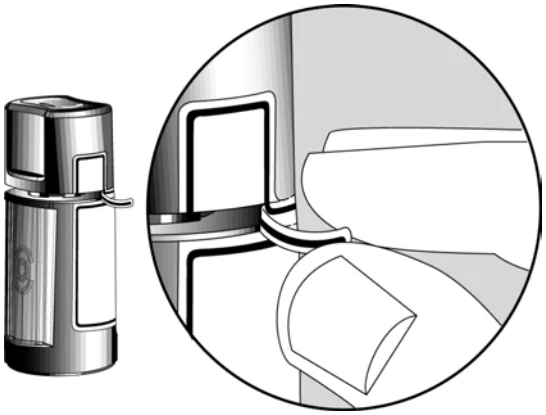
Gapº
Finger Push Areaº 3. To open the bottle, unscrew the cap by turning as indicated by the arrows.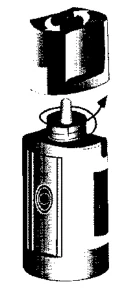
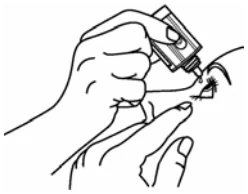
- 4. Tilt your head back and pull your lower eyelid down slightly to form a pocket
between your eyelid and your eye.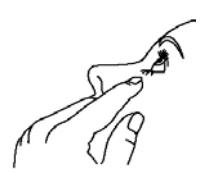
- 5.
Invert the bottle, grasping it with the thumb or index finger over the Finger
Push Area as shown. Press lightly until a single drop is dispensed into the eye as directed by your doctor. DO NOT TOUCH YOUR EYE OR
EYELID WITH THE DROPPER TIP.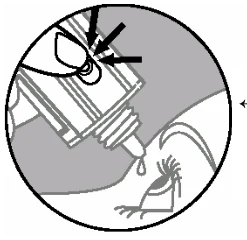
- 6.
Repeat steps 4 & 5 with the other eye if instructed to do so by your doctor.
Finger Push Area º
² Finger Push Area 7. Replace the cap by turning until it is firmly touching the bottle. Do not overtighten the cap.
- 8. The dispenser tip is designed to provide a pre-measured drop; therefore, do NOT enlarge the hole of the dispenser tip.
- 9.
After you have used all doses, there will be some TIMOPTIC® left in the bottle. You should not be concerned since an extra amount of
TIMOPTIC® has been added and you will get the full amount of
TIMOPTIC® that your doctor prescribed. Do not attempt to remove excess medicine from the bottle.
SIDE EFFECTS OF THIS MEDICINE - AND WHAT YOU SHOULD DO
- Any medicine may have unintended or undesirable effects, so-called side effects. Although not all of these side effects may occur, if they do occur, you may need medical attention.
- You may experience eye symptoms such as burning and stinging, dry eyes redness of the eye, or visual changes, such as double vision.
Other side effects may also occur rarely, and some of these may be serious.
These may include shortness of breath.
- Your physician or pharmacist has a complete list of the possible side effects from this medication. Please tell your physician or pharmacist promptly about any unusual symptom.
- There are side effects of TIMOPTIC® that may affect some patients’ ability to drive and use machines.
- If you put too many drops in your eye or swallow any of the contents of the bottle, you should contact your physician immediately.
Store at room temperature 15/ - 25/C. Protect from light.
Keep all medicines safely away from children.
INGREDIENTS
Active ingredients: TIMOPTIC® (timolol maleate) ophthalmic solution is a sterile eye drop. Each mL contains 2.5 mg (0.25%) timolol or 5 mg (0.5%) of timolol (as timolol maleate).
Non-medicinal ingredients: monobasic and dibasic sodium phosphate, sodium hydroxide, and water for injection. Benzalkonium chloride is added as a preservative.
PHARMACOLOGY
TIMOPTIC® (timolol maleate ophthalmic solution, Merck Frosst Std.) reduces elevated and normal intraocular pressure whether or not associated with glaucoma.
Elevated intraocular pressure is a major risk factor in the pathogenesis of glaucomatous visual field loss. The higher the level of intraocular pressure, the greater the likelihood of glaucomatous visual field loss and optic nerve damage.
Onset of action of timolol maleate is usually rapid, occurring approximately
20 minutes after topical application on the eye. Maximum reduction of intraocular pressure occurs in one to two hours. Significant lowering of intraocular pressure has been maintained for as long as 24 hours with 0.25% or 0.5% Ophthalmic
Solution TIMOPTIC® twice a day. Repeated observations over a period of three years indicate that the intraocular pressure-lowering effect of TIMOPTIC® is well maintained.
Timolol maleate is a non-selective beta-adrenergic receptor blocking agent that does not have significant intrinsic sympathomimetic, direct myocardial depressant, or local anesthetic (membrane-stabilizing) activity.
The precise mechanism of action of timolol maleate in lowering intraocular pressure is not clearly established at this time, although a fluorescein study and tonography studies indicate that its predominant action may be related to reduced aqueous formation. However, in some studies a slight increase in outflow facility was also observed. Unlike miotics, timolol maleate reduces intraocular pressure with little or no effect on accommodation or pupil size. Thus, changes in visual acuity due to increased accommodation are uncommon, and dim or blurred vision and night blindness produced by miotics are not evident. In addition, in patients with cataracts the inability to see around lenticular opacities when the pupil is constricted by miotics is avoided. When changing patients from miotics to TIMOPTIC® a refraction might be necessary when these effects of the miotic have passed. TIMOPTIC® was generally well tolerated and produced fewer and less severe side effects than either pilocarpine or epinephrine. Bradycardia was reported with
TIMOPTIC® (see PRECAUTIONS). At trough (12 hours post-dose), the mean reduction was 3.6 beats/minute. At two hours post-dose, the mean reduction in heart rate was 5 beats/minute.
TIMOPTIC® has also been used in patients with glaucoma wearing conventional hard contact lenses, and has generally been well tolerated. TIMOPTIC® has not been studied in patients wearing lenses made with materials other than polymethylmethacrylate.
TOXICOLOGY
Ocular effects
No adverse ocular effects were observed in rabbits and dogs administered
TIMOPTIC® (timolol maleate ophthalmic solution, Merck Frosst Std.) topically in studies lasting one and two years respectively.
Acute Toxicity (LD50)
Species and Age Sex Route of Administration LD50
mg/kg
Mouse (A) F
F
F
Oral
Intravenous Subcutaneous
Rat (YA) M
F
M
M
F
Oral
Oral
Oral (Fed) Intraperitoneal Intraperitoneal
Rat (W) M
F
M/F
Oral
Oral
Intraperitoneal
Rat (I) M/F
M/F
Oral
Subcutaneous
Rabbit (A) M/F
M/F
Oral
Subcutaneous
(A)=Adult;(YA)=Young Adult;
(W)=Weanling;(I)=Infant
Signs of toxicity occurred immediately after intravenous administration and from 10 to 30 minutes following oral, intraperitoneal or subcutaneous administration. The signs observed included lacrimation, ataxia, tremors and bradypnea. Clonic convulsions usually preceded death.
Oral Interactions Studies
Oral acute interaction studies in mice in which timolol maleate was administered with probenecid, methyldopa, hydralazine, hydrochlorothiazide, or tolbutamide, showed that these drugs had no influence on the toxicity of timolol maleate. Timolol maleate had no effect on the hypoprothrombinemia induced by bishydroxycoumarin in the dog.
Subacute Toxicity
In rats treated with 100 to 400 mg/kg/day for seven weeks, excessive salivation seen 5 to 10 minutes after dosing had a dose related incidence in the first week of the study. At necropsy, organ weight studies revealed a significant increase in the kidneys, spleen and liver of some treated animals. Except for splenic congestion, there were no morphological changes to account for the increase in organ weights.
Rats treated with 1 gram per day for eight weeks exhibited ptyalism, muscle tremors and transient pale extremities.
In dogs, doses of 200 mg/kg/day or higher, were lethal to some animals. Low grade tubular nephrosis and trace amounts of hyaline casts in the collecting and convoluted tubules occurred in one of two dogs administered 100 mg/kg/day and in both dogs receiving 400 mg/kg/day. Small foci of tubular degeneration and regeneration occurred in the nephrotic areas. Similar slight multi focal degeneration of the collecting tubules in the medulla of both kidneys was evident in one of four dogs in a 15-day intravenous toxicity study.
Chronic Toxicity
RATS
Timolol was administered orally to rats at dose levels of 5, 10 and 25 mg/kg/day for up to 67 weeks. No physical signs, ocular signs or deaths which could be attributed to the drug were evident.
DOGS
In a 54-week oral study timolol was administered at doses of 5, 10 and
25 mg/kg/day. Body weight and food consumption were normal and no physical signs attributable to treatment were evident. Slight focal hyperplasia of the transitional epithelium was seen in the renal pelvis of one dog receiving
25 mg/kg/day.
Tumorigenic Tests
Lifetime studies with timolol have been completed in rats at oral doses of 25,
100 and 300 mg/kg/day and in mice at oral doses of 5, 50 and 500 mg/kg/day. In male and female rats and male mice at all dose levels, and in female mice at dose levels of 5 and 50 mg/kg/day, timolol demonstrated no carcinogenic effect. There was a slight increase in the incidence of mammary adenocarcinomas in female mice that received 500 mg/kg/day (about 500 times the maximum recommended human oral dose, on a mg/kg basis). Timolol caused dose-related elevations of serum prolactin in female mice at doses of 100 mg/kg/day or more, but only very slight transient elevations were found in male mice at doses of 500 mg/kg/day. Since numerous studies have demonstrated that drugs which cause elevations of serum prolactin are associated with mammary tumors in rodents, the mammary tumors in the female mice in the highest dosage group of this study were considered to have resulted from an increased serum prolactin. In humans, no such association between serum prolactin and mammary carcinoma has been established.
Furthermore, in adult human female subjects who received oral dosages of up to
60 mg of timolol, the maximum recommended human oral dosage, there were no clinically meaningful changes in serum prolactin.
Reproductive Studies
Teratogenic studies in the mouse and rabbit at dose levels of 2 to 50 mg/kg/day did not reveal evidence of teratogenicity but did suggest embryotoxicity at the highest dose. Oral administration of timolol maleate to rats at dose levels of 4 to
100 mg/kg/day did not adversely affect the fertility of male or female rats, their reproductive performance, or the development of their offspring.
BIBLIOGRAPHY
- 1. Katz IM, Hubbard WA, Getson AJ, Gould LA. Intraocular pressure decrease in normal volunteers following timolol ophthalmic solution. Invest Ophthalmol 1976;15(6):489-92.
- 2. Katz IM, Kulaga SF, Gould AL, Miller IM, Clineschmidt CM, Wittreich JM. Long-term tolerability and efficacy of timolol ophthalmic solution. Glaucoma 1987;9:84-8.
- 3. Mackie JA, Seal DV, Pescod JM. Beta-adrenergic receptor blocking drugs: tear lysozyme and immunological screening for adverse reaction. Br J Ophthalmol 1977;61:354-9.
- 4. Rozier A, Mazuel C, Grove J, Plazonnet B. GELRITE: A novel, ion-activated, in situ Gelling polymer for ophthalmic vehicles. Effect on bioavailability of timolol. Intl J Pharmaceut 1989;57:163-68.
- 5. Samples JR, Meyer SM. Use of ophthalmic medications in pregnant and nursing women. Am J of Ophthalmol 1988;106(5):616-23.
- 6.
Toogood JH. Beta-blocker therapy and the risk of anaphylaxis. Can Med Assoc
J 1987;136(9):929-33.
- 7. Yablonski ME, Zimmerman TJ, Waltman SR, Becker B. A fluorophotometric study of the effect of topical timolol on aqueous humor dynamics. Exp Eye Res 1978;27:135-42
- 8.
Zimmerman TJ, Harbin R, Pett M, Kaufman HE. Timolol and facility of outflow.
Invest Ophthalmol Vis Sci 1977;16(7):623-4.
- 9. Zimmerman TJ, Kaufman HE. Timolol a $-adrenergic blocking agent for the treatment of glaucoma. Arch Ophthalmol 1977;95:601-4.
- 10.
Zimmerman TJ, Kaufman HE. Timolol: A new drug for the treatment of
Glaucoma? Symposium on Ocular Therapy 1977;10:69-76.
- 11.
Zimmerman TJ, Kaufman HE. Timolol: Dose response and duration of action.
Arch Ophthalmol 1977;95:605-7.
- 12.
Zimmerman TJ. Timolol maleate - a new glaucoma medication? Invest
Ophthalmol Vis Sci 1977;16(8):687-8.
- 13. Vela MA, Campbell DG. Hypotony and ciliochoroidal detachment following pharmacologic aqueous suppressant therapy in previously filtered patients. Ophthalmol 1985;92(1):50-7.
- 14. Berke SJ, Bellows AR, Shingleton BJ, Richter CU, Hutchinson BT. Chronic and recurrent choroidal detachment after glaucoma filtering surgery. Ophthalmol 1987;94(2):154-62.
- 15. Dinai Y, Sharir M, Navey (Floman) N, Halkin H. Bradycardia induced by interaction between quinidine and ophthalmic timolol. Ann Intern Med 1985;103(6):890-1.
- 16. Edeki TI, He H, Wood AJJ. Pharmacogenetic explanation for excessive $-blockade following timolol eye drops. JAMA 1995;274(20):1611-3.
- 17. Higginbotham EJ. Topical $-adrenergic antagonists and quinidine: A risky interaction. Arch Ophthalmol 1996;114(6):745-6.
- 18.
Kaila R, Huupponen R, Karhuvaara S, Havula P, Scheinin M, Lisalo E,
Salminen L. $-Blocking effects of timolol at low plasma concentrations. Clin Pharmacol 1991;49(1):53-8.