


Product Monograph - Tirocap
1 INDICATIONS
TIROCAP™ (levothyroxine sodium capsules) is indicated for:
Hypothyroidism
TIROCAP™ is indicated as a replacement or supplemental therapy in adult and pediatric patients 6 years and older for primary (thyroidal), secondary (pituitary), and tertiary (hypothalamic) congenital or acquired hypothyroidism of any etiology in any state (including pregnancy) except transient hypothyroidism during the recovery phase of subacute thyroiditis.
Pituitary Thyrotropin (Thyroid-Stimulating Hormone, TSH) Suppression
TIROCAP™ is indicated as an adjunct to surgery and radioiodine therapy in the management of adults and pediatric patients 6 years and older with thyrotropin-dependent well-differentiated papillary or follicular carcinoma of the thyroid.
1.1 Pediatrics
Pediatrics (>6 to <18 years of age): Based on the data submitted and reviewed by Health Canada, the safety and efficacy of TIROCAP™ in pediatric patients has been established; however, since it is not possible to crush the capsule and suspend it in water, Health Canada has authorized an indication for pediatric use in patients 6 years of age and older who are able to swallow an intact capsule (see DOSAGE AND ADMINISTRATION, Recommended Dose and Dosage Adjustment – Pediatric Dosage).
1.2 Geriatrics
Geriatrics: TIROCAP™ is approved for use in the geriatric population. However, dosing precautions apply (see DOSAGE AND ADMINISTRATION, Recommended Dose and Dosage Adjustment).
2 CONTRAINDICATIONS
TIROCAP™ is contraindicated in:
- Patients who are hypersensitive to thyroid hormones or any ingredient in the formulation, including any non-medicinal ingredient, or component of the container. For a complete listing, see DOSAGE FORMS, STRENGTHS, COMPOSITION and PACKAGING section.
- Patients with untreated subclinical thyrotoxicosis (suppressed serum TSH with normal L-triiodothyronine/liothyronine [T3] and L-thyroxine/levothyroxine [T4] levels) or overt thyrotoxicosis of any etiology.
- Patients with acute myocardial infarction.
- Patients with uncorrected/untreated adrenal insufficiency, as thyroid hormones increase tissue demands for adrenocortical hormones and may thereby precipitate acute adrenal crisis by increasing the metabolic clearance of glucocorticoids (see WARNINGS AND PRECAUTIONS).
- Pregnant women with hyperthyroidism treated with anti-thyroid agents. Combination therapy of hyperthyroidism with levothyroxine and anti-thyroid agents is not indicated in pregnancy.
3 SERIOUS WARNINGS AND PRECAUTIONS BOX
4 DOSAGE AND ADMINISTRATION
4.1 Dosing Considerations
The dosage and frequency of administration of TIROCAP™ is determined by the indication and must be individualized in every case according to patient response and laboratory findings.
Unless bioequivalence has been established, levothyroxine sodium products from different manufacturers should not be used interchangeably without retesting of the patient and re-titration of the dosage, as necessary.
Hypothyroidism:
The goal of therapy for primary hypothyroidism is to achieve and maintain a clinical and biochemical euthyroid state with consequent resolution of hypothyroid signs and symptoms. The starting dose of levothyroxine sodium, the frequency of dose titration, and the optimal full replacement dose must be individualized for every patient, and will be influenced by such factors as age, weight, cardiovascular status, presence of other illness, and the severity and duration of hypothyroid symptoms.
In patients with hypothyroidism resulting from pituitary or hypothalamic disease, the possibility of secondary adrenal insufficiency should be considered, and if present, treated with glucocorticoids prior to initiation of levothyroxine sodium. The adequacy of levothyroxine sodium therapy should be assessed in these patients by measuring free T4 (FT4), which should be maintained in the upper half of the normal range, in addition to clinical assessment. Measurement of TSH is not a reliable indicator of response to therapy for this condition.
TSH Suppression in Thyroid Cancer:
TIROCAP™ is used as ancillary therapy for the suppression of thyroid cancer following surgery or radioactive iodine therapy. No controlled studies have compared the various degrees of TSH suppression in the treatment of malignant thyroid nodular disease. The dose of levothyroxine sodium used for TSH suppression should therefore be individualized by the nature of the disease, the patient being treated, and the desired clinical response, weighing the potential benefits of therapy against the risks of iatrogenic thyrotoxicosis. In general, levothyroxine sodium should be given in the smallest dose that will achieve the desired clinical response.
Medullary and anaplastic carcinoma of the thyroid is unresponsive to TSH suppression therapy.
Pediatrics – Congenital or acquired hypothyroidism:
The levothyroxine sodium pediatric dosage varies with age and body weight. Levothyroxine
Serious Warnings and Precautions
Thyroid hormones, including TIROCAP™, either alone or with other therapeutic agents, should not be used for the treatment of obesity or for weight loss. In euthyroid patients, doses within the range of daily hormonal requirements are ineffective for weight reduction. Larger doses may produce serious or even life-threatening manifestations of toxicity, particularly when given in association with sympathomimetic amines such as those used for their anorectic effects.
sodium should be given at a dose that maintains T4 or FT4 in the upper half of the normal range and serum TSH in the normal range (see WARNINGS AND PRECAUTIONS, Special Populations – Pediatrics). In general, despite the smaller body size of children, the dosage (on a weight basis) required to sustain full development and general thriving is higher than in adults.
4.2 Recommended Dose and Dosage Adjustment
Adult Dosage
Hypothyroidism
In younger, healthy adults, therapy is usually initiated at the anticipated full replacement dose of TIROCAP™, which is approximately 1.7 mcg/kg/day administered once daily (for example: 100-125 mcg per day for a 70 kg adult). Dose adjustments by 13 to 25 mcg increments every 4 to 6 weeks until the patient is clinically euthyroid and the serum TSH returns to normal is required.
In older patients, the full replacement dose may be altered by decreases in T4 metabolism and levothyroxine sodium absorption. Older patients may require less than 1 mcg/kg/day.
For most patients older than 50 years and for patients under 50 years of age with a history of an underlying cardiac disease, an initial starting dose of 25 to 50 mcg/day of TIROCAP™ is recommended, with gradual increments (13 to 25 mcg) in dose at 6 to 8 week intervals, as needed.
The recommended starting dose of TIROCAP™ in patients over 50 with cardiac disease is 13 to 25 mcg/day, with gradual dose increments (13 to 25 mcg) at 4 to 6 week intervals. If cardiac symptoms develop or worsen, the cardiac disease should be evaluated and the dose of TIROCAP™ reduced. Rarely, worsening angina or other signs of cardiac ischemia may prevent achieving a TSH in the normal range.
Women who are maintained on levothyroxine sodium during pregnancy may require increased doses. See WARNINGS AND PRECAUTIONS, Special Populations - Pregnant Women.
Treatment of subclinical hypothyroidism may require lower than usual replacement doses e.g., 1.0 mcg/kg/day. Patients for whom treatment is not initiated should be monitored yearly for changes in clinical status, TSH, and thyroid antibodies.
Few patients require doses greater than 200 mcg/day. An inadequate response to daily doses of 300 to 400 mcg/day is rare, and may suggest malabsorption, poor patient compliance, and/or drug interactions.
Clinical and laboratory evaluations should be performed at 6 to 8 week intervals (2 to 3 weeks in severely hypothyroid patients), and the dosage adjusted by 13 to 25 mcg increments until the serum TSH concentration is normalized and signs and symptoms resolve. Once optimal replacement is achieved, clinical and laboratory evaluations should be conducted at least annually or whenever warranted by a change in patient status.
TSH Suppression in Thyroid Cancer
For well-differentiated thyroid cancer, TSH is generally suppressed to less than 0.1 mU/L and requires doses of TIROCAP™ greater than 2 mcg/kg/day. However, in patients with high-risk tumors, the target level for TSH suppression may be lower. Exogenous thyroid hormone may inhibit recurrence of tumour growth and may produce regression of metastases from well-differentiated (follicular and papillary) carcinoma of the thyroid.
TIROCAP™ should be administered with caution to patients in whom there is a suspicion of thyroid gland autonomy, in view of the fact that the effects of exogenous hormone administration will be additive to endogenous thyroid hormone production.
Pediatric Dosage
Congenital or Acquired Hypothyroidism
Only administer TIROCAP™ to pediatric patients 6 years and older who are able to swallow an intact capsule.
The recommended daily dose of TIROCAP™ in pediatric patients with hypothyroidism is based on body weight and changes with age. Therapy is usually initiated at the full replacement dose (see Table 1).
Table 1: Dosing Guidelines for Pediatric Hypothyroidism
| Age | Daily Dose (mcg) per kg of Body Weighta |
| 6-12 years | 4-5 mcg/kg/day |
| >12 years but growth and puberty incomplete | 2-3 mcg/kg/day |
| Growth and puberty complete | 1.6-1.7 mcg/kg/day |
a The dose should be adjusted based on clinical response and laboratory parameters (see WARNINGS AND PRECAUTIONS, Monitoring and Laboratory Tests and Special Populations – Pediatrics).
In children with severe, longstanding hypothyroidism or pre-existing cardiac insufficiency, TIROCAP™ should be initiated gradually, with an initial 25 mcg dose for two weeks, then increasing by 25 mcg every 2 to 4 weeks until the desired dose, based on serum T4 and TSH levels, is achieved. See WARNINGS AND PRECAUTIONS, Special Populations - Pediatrics.
Serum T4 and TSH measurements should be evaluated at the following intervals, with subsequent dosage adjustments to normalize serum total T4 or FT4 and TSH:
- 2 and 4 weeks after therapy initiation,
- every 3 to 12 months thereafter until growth is completed.
Evaluation at more frequent intervals is indicated when compliance is questioned, or abnormal laboratory values are obtained. Patient evaluation is also advisable approximately 2 to 4 weeks after any change in dose.
Table 2 summarizes the Dosage and Administration of TIROCAP™.
Table 2: Dosing and Administration
| Medical Condition(s) | Patient Population | Starting Dose | Dosing Increment | Interval for Monitoring/ Dosing Increment | Therapeutic Goal |
| Congenital/Acquired Hypothyroidism | Children | See Table 1 | 25 mcg/day | 3-12 months* | FT4 level in upper half of normal range, normal TSH |
| Hypothyroidism w ith Completed Grow th and Puberty | Children | 1.6-1.7 mcg/kg/day | 25-50 mcg/day | 6-8 w eeks | Normal TSH (age-specific reference range) |
| Hypothyroidism | Adults <50 years | 1.7 mcg/kg/day | 25-50 mcg/day | 6-8 w eeks | Normal TSH (betw een 0.5 and 2.0 mU/L) |
| Adults >50 years | 25-50 mcg/day | 13-25 mcg/day | 6-8 w eeks | ||
| Hypothyroidism w ith Cardiac Disease | Adults <50 years | 25-50 mcg/day | 13-25 mcg/day | 6-8 w eeks | Normal TSH (betw een 0.5 and 2.0 mU/L) |
| Adults >50 years | 13-25 mcg/day | 13-25 mcg/day | 4-6 w eeks | ||
| Severe Hypothyroidism | Adults <50 years | 13-25 mcg/day | 25 mcg/day | 2-4 w eeks | Normal TSH (betw een 0.5 and 2.0 mU/L) |
| Children | 25 mcg/day | 25 mcg/day | 2-4 w eeks | Normal TSH (age-specific reference range) | |
| Hypothyroidism (short period) or Recently Treated w ith Hyperthyroidism | Adults >50 years | <1.7 mcg/kg/day | 25-50 mcg/day | 6-8 w eeks | Normal TSH (betw een 0.5 and 2.0 mU/L) |
| Hypothyroidism w ith Pregnancy | Pregnant Women | 1.7 mcg/kg/day (Increased dose may be required) | 25-50 mcg/day | Every 4 w eeks during first half of pregnancy; at least once betw een w eek 26 and 32; approximately 6 w eeks postpartum | Normal TSH (trimester-specific) and FT4 in the upper third of normal range 1st trimester: <2.5 mU/L 2nd trimester: <3.0 mU/L 3rd trimester: <3.5 mU/L |
| Secondary Hypothyroidism | Not Specified | ** | ** | ** | FT4 level in upper third of normal range |
| Tertiary Hypothyroidism | Not Specified | ** | ** | ** | FT4 level in upper third of normal range |
| Subclinical Hypothyroidism | Not Specified | 25-50 mcg/day | Adjust as necessary | 6-8 w eeks | Normal TSH (betw een 0.5 and 2.0 mU/L) |
| Well-differentiated (papillary or follicular) Thyroid Cancers | Not Specified | > 2 mcg/kg/day | 25-50 mcg/day | 6-8 w eeks | TSH < 0.1 mU/L TSH <0.01 mU/L for patients w ith high risk tumors |
*For Congenital Hypothyroidism, the current guidelines recommend a 2 week monitoring interval at the beginning of therapy until normalization of TSH levels
**Depending on age, duration of hypothyroidism and cardiovascular risk factor
4.3 Administration
Administer TIROCAP™ as a single daily oral dose, on an empty stomach, one-half to one hour before breakfast.
Administer TIROCAP™ at least 4 hours before or after drugs known to interfere with TIROCAP™ absorption (see Drug Interactions).
Evaluate the need for dose adjustments when regularly administering within one hour of certain foods that may affect TIROCAP™ absorption (see Drug Interactions and Clinical Pharmacology).
Swallow TIROCAP™ capsules whole, do not cut, crush, or chew.
4.4 Missed Dose
If a scheduled dose is missed, the dose should be taken as soon as the patient remembers, unless it is almost time for the patient’s next dose. Two doses should not be taken together. If more than two doses are missed, the patient should consult with their doctor.
5 OVERDOSAGE
Signs and Symptoms
Excessive doses of TIROCAP™ result in a hypermetabolic state indistinguishable from thyrotoxicosis of endogenous origin. Signs and symptoms of thyrotoxicosis include exophthalmic goiter, weight loss, increased appetite, palpitations, nervousness, diarrhea, abdominal cramps, sweating, tachycardia, increased pulse and blood pressure, cardiac arrhythmias, angina pectoris, tremors, insomnia, heat intolerance, fever, menstrual irregularities, In addition, confusion and disorientation may occur. Cerebral embolism, shock, coma, and death have been reported. Seizures have occurred in a child ingesting 18 mg of levothyroxine. Overdose of TIROCAP™ may result in hyperthyroidism and could lead to symptoms of acute psychosis, especially in patients at risk of psychotic disorders. Symptoms are not always evident or may not appear until several days after ingestion of levothyroxine sodium.
Treatment of Overdosage
TIROCAP™ should be reduced in dose or temporarily discontinued if signs and symptoms of overdosage appear.
In the treatment of acute massive levothyroxine sodium overdosage, symptomatic and supportive therapy should be instituted immediately. Treatment is aimed at reducing gastrointestinal absorption and counteracting central and peripheral effects, mainly those of increased sympathetic activity. The stomach should be emptied immediately by emesis or gastric lavage if not otherwise contraindicated (e.g., by coma, convulsions or loss of gag reflex). Cholestyramine and activated charcoal have also been used to decrease levothyroxine sodium absorption. Beta-receptor antagonists, particularly propranolol, are useful in counteracting many of the effects of increased central and peripheral sympathetic activity, especially when no contraindications exist for its use. Provide respiratory support as needed; control congestive heart failure and arrhythmia, control fever, hypoglycemia, and fluid loss as necessary. Large doses of antithyroid drugs (e.g., methimazole, carbimazole, or propylthiouracil) followed in one to two hours by large doses of iodine may be given to inhibit synthesis and release of thyroid hormones. Cardiac glycosides may be administered if congestive heart failure develops. Glucocorticoids may be administered to inhibit the conversion of T4 to T3. Plasmapheresis, charcoal hemoperfusion and exchange transfusion have been reserved for cases in which continued clinical deterioration occurs despite conventional therapy. Since T4 is extensively protein bound, very little drug will be removed by dialysis.
| For management of a suspected drug overdose, contact your regional poison control centre. |
6 DOSAGE FORMS, STRENGTHS, COMPOSITION AND PACKAGING
Table 3: Dosage Forms, Strengths, Composition and Packaging.
All TIROCAP™ strengths are formulated without colour additives for patients who are sensitive to dyes.
TIROCAP™ capsules are available in 12 different strengths and are supplied as amber-coloured, round/biconvex capsules containing a viscous amber-coloured liquid. Capsules are imprinted with a dosage strength specific letter on one side as follows:
Table 4: TIROCAP™ Capsule Characteristics
| Strength (mcg) | Capsule Imprint Code | Packaging Colour* |
| 13 | A | Light Green |
| 25 | E | Orange |
| 50 | G | White |
| 75 | H | Purple |
| 88 | J | Olive Green |
| 100 | K | Yellow |
| 112 | M | Rose |
| 125 | N | Brown |
| 137 | P | Dark Blue |
| 150 | S | Blue |
| 175 | U | Lilac |
| 200 | Y | Pink |
*Shown on box and blister packaging, not on individual capsules.
All TIROCAP™ strengths are available in blister packages of 30 capsules (three blisters with 10 capsules each).
| Route of Administration | Dosage Form / Strength/Composition | Non-medicinal Ingredients |
| Oral | Capsules 13, 25, 50, 75, 88, 100, 112, 125, 137, 150, 175 and 200 mcg | Gelatin, glycerin and water |
7 WARNINGS AND PRECAUTIONS
Please see the Serious Warnings and Precautions Box at the beginning of Part I: Health Professional Information.
General
TIROCAP™ has a narrow therapeutic index. Regardless of the indication for use, careful dosage titration is necessary to avoid the consequences of over- or under- treatment. These consequences include, among others, effects on growth and development, cardiovascular function, bone metabolism, reproductive function, cognitive function, emotional state, gastrointestinal function, and on glucose and lipid metabolism.
Many drugs interact with TIROCAP™ necessitating adjustments in dosing or monitoring of clinical or laboratory parameters to maintain therapeutic response (see DRUG INTERACTIONS).
The bioavailability of levothyroxine sodium may differ to some extent among marketed brands. Once the patient is stabilized on a particular brand of levothyroxine sodium, caution should be exercised when a change in drug product brand is implemented. Unless bioequivalence has been established, if a switch to another levothyroxine-containing product is required, there is a need to undertake close clinical and biological monitoring during the transition period due to a potential risk of imbalance. In some patients, a dose adjustment could be necessary.
It has been shown that differences in formulations of levothyroxine, despite an identical content of active ingredient, may be associated with differences in fractional gastrointestinal absorption. These differences may not be observed through measurement of total T3 and T4 serum levels. Therefore, unless bioequivalence has been established, it is recommended that patients who are switched from one levothyroxine sodium formulation to another be re-titrated to the desired thyroid function. Accuracy in re-titration can best be achieved by using sensitive thyrotropin assays.
Seizures have been reported rarely in association with the initiation of levothyroxine sodium therapy, and may be related to the effect of thyroid hormone on seizure threshold.
Carcinogenesis and Mutagenesis
Although animal studies to determine the mutagenic or carcinogenic potential of thyroid hormones have not been performed, synthetic T4 is identical to that produced by the human thyroid gland. A reported association between prolonged thyroid hormone therapy and breast cancer has not been confirmed and patients receiving levothyroxine sodium for established indications should not discontinue therapy.
Cardiovascular
TIROCAP™ should be used with caution in patients with cardiovascular disorders, including angina, coronary artery disease, and hypertension, and in the elderly, who have a greater likelihood of occult cardiac disease. In these patients, TIROCAP™ therapy should be initiated at lower doses than those recommended in younger individuals or in patients without cardiac diseases (see WARNINGS AND PRECAUTIONS, Special Populations – Geriatrics and DOSAGE AND ADMINISTRATION, Recommended Dose and Dosage Adjustment). If cardiac symptoms develop or worsen, the TIROCAP™ dose should be reduced or withheld for one week and then cautiously restarted at a lower dose.
Over-treatment with levothyroxine sodium may have adverse cardiovascular effects such as an increase in heart rate, cardiac wall thickness, and cardiac contractility and may precipitate angina or arrhythmias.
Patients with coronary artery disease who are receiving TIROCAP™ therapy should be closely monitored during surgical procedures, since the possibility of precipitating cardiac arrhythmias may be greater in those treated with levothyroxine sodium. Concomitant administration of thyroid hormone and sympathomimetic agents to patients with coronary artery disease may increase the risk of coronary insufficiency.
Endocrine and Metabolism
Thyroid hormones, either alone or together with other therapeutic agents, should not be used for the treatment of obesity or for weight loss. In euthyroid patients, doses within the range of daily hormonal requirements are ineffective for weight reduction. Larger doses may produce serious or even life-threatening manifestations of toxicity, particularly when given in association with sympathomimetic amines such as those used for their anorectic effects.
Myxedema Coma
Myxedema coma is a life-threatening emergency characterized by poor circulation and hypometabolism, and may result in unpredictable absorption of levothyroxine sodium from the gastrointestinal tract. Use of oral thyroid hormone drug products is not recommended to treat myxedema coma. Administer thyroid hormone products formulated for intravenous administration to treat myxedema coma.
Effects on Bone Mineral Density
In women, long-term levothyroxine therapy has been associated with increased bone resorption, thereby decreasing bone mineral density, especially in postmenopausal women on greater replacement doses or in women who are receiving suppressive doses of levothyroxine sodium. The increased bone resorption may be associated with increased serum levels and urinary excretion of calcium and phosphorous, elevations in bone alkaline phosphatase and suppressed serum parathyroid hormone levels. Therefore, it is recommended that patients receiving TIROCAP™ be given the minimum dose necessary to achieve the desired clinical and biochemical response.
Patients with Nontoxic Diffuse Goiter or Nodular Thyroid Disease
In patients with non-toxic diffuse goiter or nodular thyroid disease, particularly the elderly or those with underlying cardiovascular disease, levothyroxine therapy is contraindicated if the serum TSH level is already suppressed due to the risk of precipitating overt thyrotoxicosis (see CONTRAINDICATIONS).
Hypothalamic/pituitary Hormone Deficiencies
In patients with secondary or tertiary hypothyroidism, additional hypothalamic/pituitary hormone deficiencies should be considered, and, if diagnosed, treated by adequate replacement therapy before starting treatment with levothyroxine, to prevent acute adrenal insufficiency (See CONTRAINDICATIONS).
Autoimmune Polyglandular Syndrome
Use of TIROCAP™ in patients with concomitant diabetes mellitus, diabetes insipidus or adrenal cortical insufficiency may aggravate the intensity of their symptoms. Appropriate adjustments of the various therapeutic measures directed at these concomitant endocrine diseases may therefore be required. Treatment of myxedema coma may require simultaneous administration of glucocorticoids. See DOSAGE AND ADMINISTRATION.
Hematologic
T4 enhances the response to anticoagulant therapy. Prothrombin time should be closely monitored in patients taking both levothyroxine sodium and oral anticoagulants, and the dosage of anticoagulant adjusted accordingly.
Monitoring and Laboratory Tests
Treatment of patients with TIROCAP™ requires periodic assessment of thyroid status by appropriate laboratory tests and clinical evaluation. Selection of appropriate tests for the diagnosis and management of thyroid disorders depends on patient variables such as presenting signs and symptoms, pregnancy, and concomitant medications.
Measuring FT4 and TSH levels using sensitive assays is recommended to confirm a diagnosis of thyroid disease. Normal ranges for these parameters are age-specific in younger children.
TSH alone may be useful for thyroid disease screening and for monitoring therapy for primary hypothyroidism since a linear inverse correlation exists between serum TSH and FT4. Measurement of total serum T4 and T3, resin T3 uptake, and free T3 concentrations may also be useful.
Antithyroid microsomal antibodies are an indicator of autoimmune thyroid disease. Positive microsomal antibody presence in an euthyroid patient is a major risk factor for the development of hypothyroidism. An elevated serum TSH in the presence of a normal T4 may indicate subclinical hypothyroidism.
Intracellular resistance to thyroid hormone is quite rare, and is suggested by clinical signs and symptoms of hypothyroidism in the presence of high serum T4 levels. Adequacy of levothyroxine sodium therapy for hypothyroidism of pituitary or hypothalamic origin should be assessed by measuring FT4, which should be maintained in the upper half of the normal range. Measurement of TSH is not a reliable indicator of response to therapy for this condition.
Adequacy of levothyroxine sodium therapy for congenital and acquired pediatric hypothyroidism should be assessed by measuring serum total T4 or FT4; these should be maintained in the upper half of the normal range. In congenital hypothyroidism, serum TSH normalization may lag behind serum T4 normalization by 2 to 3 months or longer. In rare patients, serum TSH remains relatively elevated despite clinical euthyroidism and age-specific normal T4 or FT4 levels. See WARNINGS AND PRECAUTIONS, Special Populations - Pediatrics.
Psychiatric
When initiating TIROCAP™ therapy in patients at risk of psychotic disorders, it is recommended to start at a low TIROCAP™ dose at the beginning of the therapy and to slowly increase the dosage thereafter. Monitoring of the patient is advised. If signs of psychotic disorders occur, adjustment of the dose of levothyroxine should be considered.
Sexual Function/Reproduction
The use of TIROCAP™ is unjustified in the treatment of male or female infertility unless this condition is associated with hypothyroidism.
7.1 Special Populations
7.1.1 Pregnant Women
Studies in pregnant women have not shown that levothyroxine sodium increases the risk of fetal abnormalities if administered during pregnancy.
Hypothyroidism during pregnancy is associated with a higher rate of complications, including spontaneous abortion, preeclampsia, stillbirth and premature delivery. Maternal hypothyroidism may have an adverse effect on fetal and childhood growth and development. Therefore, TIROCAP™ should not be discontinued during pregnancy, and hypothyroidism diagnosed during pregnancy should be treated.
Thyroid hormones cross the placental barrier to some extent. T4 levels in the cord blood of athyroid fetuses have been shown to be about one-third of maternal levels. Nevertheless, maternal-fetal transfer of T4 may not prevent in utero hypothyroidism.
Studies have shown that during pregnancy T4 concentrations may decrease and TSH concentrations may increase to values outside normal ranges. As such, trimester-specific TSH reference values are recommended (See DOSAGE & ADMINISTRATION, Recommended Dose and Dose Adjustment - Table 2). Postpartum values are similar to preconception values. Elevations in TSH may occur as early as the fourth week of gestation.
Pregnant women who are maintained on TIROCAP™ should have their TSH measured approximately every 4 weeks during the first half of pregnancy, and at least once between week 26 and 32, as levothyroxine dose adjustments are often required.
An elevated TSH should be corrected by an increase in levothyroxine sodium dose. After pregnancy, the dose can be decreased to the optimal preconception dose. A serum TSH level should be obtained approximately six weeks postpartum.
7.1.2 Breast-feeding
Minimal amounts of thyroid hormones are excreted in human milk. While caution should be exercised when TIROCAP™ is administered to a breast-feeding woman, adequate replacement doses of levothyroxine sodium are generally needed to maintain normal lactation.
7.1.3 Pediatrics
Congenital hypothyroidism
Rapid restoration of normal serum T4 concentrations is essential for preventing the adverse effects of congenital hyperthyroidism on intellectual development as well as on overall physical growth, and maturation. Treatment should be initiated immediately upon diagnosis and generally maintained for life. TIROCAP™ capsules is indicated only in children 6 years of age and older.
Acquired hypothyroidism
The initial TIROCAP™ dose varies with age and body weight, and should be adjusted to maintain serum total T4 or FT4 levels in the upper half of the normal range. In general, unless there are overriding clinical concerns, children should be started on a full replacement dose.
Children with underlying heart disease should be started at lower dosages, with careful upward titration. Children with severe, longstanding hypothyroidism may also be started on a lower initial dose followed by an upward titration, attempting to avoid premature epiphyseal closure. The recommended dose per body weight decreases with age. See DOSAGE AND ADMINISTRATION, Recommended Dose and Dosage Adjustment - Pediatric Dosage.
Treated children may resume growth at a greater than normal rate (period of transient catch-up growth). In some cases, the catch-up may be adequate to normalize growth. However, severe and prolonged hypothyroidism may reduce adult height. Excessive thyroxine replacement may initiate accelerated bone maturation, producing disproportionate skeletal age advancement and shortened adult stature.
If transient hypothyroidism is suspected, hypothyroidism permanence may be assessed. Levothyroxine sodium therapy may be interrupted for 30 days and serum T4 and TSH measured. Low T4 and elevated TSH confirm permanent hypothyroidism; therapy should be re-instituted. If T4 and TSH remain in the normal range, a presumptive diagnosis of transient hypothyroidism can be made. In this instance, continued clinical monitoring and periodic thyroid function test re-evaluation may be warranted.
Since some more severely affected children may become clinically hypothyroid when treatment is discontinued for 30 days, an alternate approach is to reduce the replacement dose of TIROCAP™ by half during the 30-day trial period. If, after 30 days, the serum TSH is elevated above 20 mU/L, the diagnosis of permanent hypothyroidism is confirmed, and full replacement therapy should be resumed. However, if the serum TSH has not risen to greater than 20 mU/L, TIROCAP™ treatment should be discontinued for another 30-day trial period followed by repeat serum T4 and TSH testing.
7.1.4 Geriatrics
Because of the increased prevalence of cardiovascular disease among the elderly, levothyroxine sodium therapy should not be initiated at the full replacement dose (see WARNINGS AND PRECAUTIONS, Cardiovascular and DOSAGE AND ADMINISTRATION, Recommended Dose and Dosage Adjustment). Atrial arrhythmias can occur in elderly patients. Atrial fibrillation is the most common of the arrhythmias observed with levothyroxine overtreatment in the elderly.
8 ADVERSE REACTIONS
8.1 Adverse Reaction Overview
Adverse reactions associated with TIROCAP™ are primarily those of thyrotoxicosis due to therapeutic overdosage (see WARNINGS AND PRECAUTIONS and OVERDOSAGE).
Adverse reactions observed with levothyroxine use include the following:
| Cardiac Disorders: | palpitations, tachycardia, arrhythmias, increased pulse and blood pressure, cardiac failure, angina, myocardial infarction and cardiac arrest; |
| Gastrointestinal System: | diarrhea, vomiting, abdominal cramps; |
| General: | fatigue, heat intolerance, fever and excessive sweating; |
| Immune system disorders | Hypersensitivity reactions to inactive ingredients have occurred in patients treated with thyroid hormone products. These include urticaria, pruritus, skin rash, flushing, angioedema, various GI symptoms (abdominal pain, nausea, vomiting and diarrhea), fever, arthralgia, serum sickness and wheezing. Hypersensitivity to levothyroxine itself is not known to occur. |
| Investigations: | decreased bone mineral density; elevations in liver function tests; |
| Metabolism and nutrition disorders | increased appetite, weight loss; |
| Musculoskeletal and connective tissue: | tremors, muscle weakness, muscle spasm; slipped capital femoral epiphysis in children, excessive dose may result in premature closure of the epiphyses in children (with resultant compromised adult height); |
| Nervous System: | headache, pseudotumor cerebri, seizures; |
| Psychiatric disorders: | hyperactivity, nervousness, anxiety, irritability, emotional lability and insomnia; |
| Reproductive System: | menstrual irregularities, impaired fertility; |
| Respiratory System: | dyspnea; |
| Skin and subcutaneous tissue disorders: | alopecia (generally transient), flushing, rash; |
| Vascular Disorders | flushing |
9 DRUG INTERACTIONS
9.1 Overview
The magnitude and relative clinical importance of the effects noted below are likely to be patient-specific and may vary by such factors as age, gender, race, intercurrent illnesses, dose of either agent, additional concomitant medications, and timing of drug administration. Any agent that alters thyroid hormone synthesis, secretion, distribution, effect on target tissues, metabolism, or elimination may alter the optimal therapeutic dose of TIROCAP™.
9.2 Drug-Drug Interactions
Many drugs affect thyroid hormone synthesis and secretion, pharmacokinetics (e.g., absorption, metabolism, protein binding), and target tissue response, and may alter the therapeutic response to TIROCAP™. In addition, thyroid hormones and thyroid status have varied effects on the pharmacokinetics and actions of other drugs. A listing of drug-thyroidal axis interactions is contained in Table 5.
The list of drug-thyroidal axis interactions in Table 5 may not be comprehensive due to the introduction of new drugs that interact with the thyroidal axis or the discovery or previously unknown interactions. The prescriber should be aware of this fact and should consult appropriate reference sources (e.g., package inserts of newly approved drugs, medical literature) for additional information if a drug-drug interaction with levothyroxine is suspected.
The drugs listed in this table are based on either drug interaction case reports or studies, or potential interactions due to the expected magnitude and seriousness of the interaction (i.e., those identified as contraindicated).
Table 5: Established or Potential Drug-Drug Interactions (Drug-Thyroidal Axis Interactions)
| Drug or Drug Class | Effect |
|---|---|
| Drugs that may reduce TSH secretion - the reduction is not sustained; therefore, hypothyroidism does not occur | |
Dopamine/Dopamine Agonists Glucocorticoids Octreotide | Use of these agents may result in a transient reduction in TSH secretion w hen administered at the follow ing doses:
|
| Drugs that alter thyroid hormone secretion | |
| Drugs that may decrease thyroid hormone secretion, which may result in hypothyroidism | |
| Aminoglutethimide | Long-term aminoglutethimide therapy may minimally decrease T4 and T3 levels and increase TSH, although all values remain within normal limits in most patients. Oral cholecystographic agents and amiodarone are slowly excreted, producing more prolonged hypothyroidism than parenterally administered iodinated contrast agents. Lithium blocks the TSH-mediated release of T4 and T3. Thyroid function should therefore be carefully monitored during lithium |
| Amiodarone | |
| Iodide (including iodine-containing radiographic contrast agents) | |
| Lithium | |
| Thioamides | |
| |
| Drug or Drug Class | Effect |
|---|---|
initiation, stabilization, and maintenance. If hypothyroidism occurs during lithium treatment, a higher than usual TIROCA P™ dose may be required. Long-term lithium therapy can result in goiter in up to 50% of patients, and either subclinical or overt hypothyroidism, each in up to 20% of patients. The fetus, neonate, elderly and euthyroid patients with underlying thyroid disease (e.g., Hashimotos’s thyroiditis or with Grave’s disease previously treated with radioiodine or surgery) are among those individuals who are particularly susceptible to iodine-induced hypothyroidism. |
|
| |
| Sulfonamides | |
| Tolbutamide | |
| Drugs that may increase thyroid hormone secretion, which may result in hyperthyroidism | |
| Amiodarone | Amiodarone may induce hyperthyroidism by causing thyroiditis. Iodide and drugs that contain pharmacologic amounts of iodide may cause hyperthyroidism in euthyroid patients with Grave’s disease previously treated with antithyroid drugs or in euthyroid patients with thyroid autonomy. Hyperthyroidism may develop over several weeks and may persist for several months after therapy discontinuation. |
| Iodide (including iodine-containing radiographic contrast agents) | |
| Drugs that may decrease T4 absorption, which may result in hypothyroidism | |
Anion-Cation Exchange Resins
Antacids
Simethicone Bile Acid Sequestrants
Calcium Carbonate Lanthanum carbonate Ferrous Sulfate Orlistat Sucralfate | Concurrent use may reduce the efficacy of levothyroxine sodium by binding and delaying or preventing absorption, potentially resulting in hypothyroidism. Calcium carbonate may form an insoluble chelate with levothyroxine sodium, and ferrous sulfate likely forms a ferric-thyroxine complex. Administer levothyroxine sodium at least four (4) hours apart from these agents. Patients treated concomitantly with orlistat and levothyroxine should be monitored for changes in thyroid function. Hypothyroidism and/or reduced control of hypothyroidism may occur. The mechanism, although not proven, may involve a decreased absorption of iodine salts and/or levothyroxine. |
| Drugs that may alter T4 and T3 serum transport - but FT4 concentration remains normal; and therefore, the patient remains euthyroid | |
Clofibrate Estrogen-containing Oral Contraceptives Estrogens (oral) Heroin/Methadone 5-Fluorouracil Mitotane Tamoxifen | Increase serum TBG Concentration |
| Drug or Drug Class | Effect |
|---|---|
Androgens/Anabolic Steroids Asparaginase Glucocorticoids Slow -Release Nicotinic Acid | Decrease serum TBG Concentration |
| Drugs that may cause protein-binding site displacement | |
| Furosemide (greater than 80 mg IV) | Administration of these agents with levothyroxine sodium results in an initial transient increase in FT4. Continued administration results in a decrease in Serum T4 and normal FT4 and TSH concentrations and, therefore, patients are clinically euthyroid. Salicylates inhibit binding of T4 and T3 to TBG and transthyretin. An initial increase in serum FT4 is followed by return of FT4 to normal levels with sustained therapeutic serum saliyclate concentrations, although total T4 levels may decrease by as much as 30%. |
| Heparin | |
| Hydantoins | |
| Non-Steroidal Anti-Inflammatory Drugs | |
| |
| |
| Salicylates (greater than 2 g/day) | |
| Drugs that may alter T4 and T3 metabolism | |
| Drugs that may increase hepatic metabolism, which may result in hypothyroidism | |
| Carbamazepine | Phenytoin and carbamazepine reduce serum protein binding of levothyroxine sodium, and total and FT4 may be reduced by 20 to 40%, but most patients have normal serum TSH levels and are clinically euthyroid. Stimulation of hepatic microsomal drug-metabolizing enzyme activity such as rifampicin and barbiturates may cause increased hepatic degradation of levothyroxine sodium, resulting in increased levothyroxine sodium requirements. Post marketing cases have been reported indicating a potential interaction between ritonavir containing products and levothyroxine, resulting in TSH increased levels and hypothyroidism. TSH should be monitored in patients treated concomintantly with ritonavir and levothyroxine for at least the first month after starting and/or ending ritonavir treatment. |
| Hydantoins | |
| Phenobarbital | |
Rifampin Ritonavir | |
| Drugs that may decrease T4 5'-deiodinase activity | |
| Amiodarone | Administration of these enzyme inhibitors decreases the peripheral conversion of T4 to T3, leading to decreased T3 levels. However, serum T4 levels are usually normal but may occasionally be slightly increased. In patients treated with large doses of propanolol (greater than 160 mg/day), T3 and T4 levels change slightly, TSH levels remain normal, and patients are clinically euthyroid. It should be noted that actions of particular beta-adrenergic antagonists may be impaired when the hypothyroid patient is converted to the euthyroid state. Short-term administration of large doses of glucocorticoids may decrease serum T3 concentrations by 30% with minimal change in serum T4 levels. However, long-term glucocorticoid therapy may result in slightly decreased T3 and T4 levels due to decreased TBG production (see above). |
| Beta-adrenergic antagonists | |
| |
| Glucocorticoids | |
| |
| Propylthiouracil (PTU) | |
| Miscellaneous | |
| Anticoagulants (oral) | Thyroid hormones appear to increase the catabolism of vitamin K-dependent clotting factors, thereby increasing the anticoagulant activity |
| |
| Drug or Drug Class | Effect |
|---|---|
| of oral anticoagulants. Concomitant use of these agents impairs the compensatory increases in clotting factor synthesis. Prothrombin time should be carefully monitored in patients taking levothyroxine sodium and oral anticoagulants and the dose of anticoagulant therapy adjusted accordingly. |
|
| Antidepressants | Concurrent use of tri/tetracyclic antidepressants and levothyroxine sodium may increase the therapeutic and toxic effects of both drugs, possibly due to increased receptor sensitivity to catecholamines. Toxic effects may include increased risk of cardiac arrhythmias and CNS stimulation; onset of action of tricyclics may be accelerated. Administration of sertraline in patients stabilized on levothyroxine sodium may result in increased levothyroxine sodium requirements. |
| |
| |
| |
| Antidiabetic Agents | Addition of levothyroxine sodium to antidiabetic or insulin therapy may result in increased antidiabetic agent or insulin requirements. Careful monitoring of diabetic control is recommended, especially when thyroid therapy is started, changed, or discontinued. |
| |
| |
| |
| |
| |
| Cardiac glycosides | Serum digitalis glycoside levels may be reduced in hyperthyroidism or when the hypothyroid patient is converted to the euthyroid state. Therapeutic effect of digitalis glycosides may be reduced. |
| Cytokines | Therapy w ith interferon-alpha has been associated w ith the development of antithyroid microsomal antibodies in 20% of patients and some have transient hypothyroidism, hyperthyroidism, or both. Patients who have antithyroid antibodies before treatment are at higher risk for thyroid dysfunction during treatment. Interleukin-2 has been associated with transient painless thyroiditis in 20% of patients. Interferon-beta and -gamma have not been reported to cause thyroid dysfunction. |
| |
| |
| Grow th Hormones | Excessive use of thyroid hormones w ith grow th hormones may accelerate epiphyseal closure. However, untreated hypothyroidism may interfere w ith grow th response to grow th hormone. |
| |
| Ketamine | Concurrent use may produce marked hypertension and tachycardia; cautious administration to patients receiving thyroid hormone therapy is recommended. |
| Methylxanthine Bronchodilators | Decreased theophylline clearance may occur in hypothyroid patients; clearance returns to normal when the euthyroid state is achieved. |
| |
| Radiographic agents | Thyroid hormones may reduce the uptake of 123I, 131I, and 99mTc. |
| Sympathomimetics | Concurrent use may increase the effects of sympathomimetics or thyroid hormone. Thyroid hormones may increase the risk of coronary insufficiency when sympathomimetic agents are administered to patients w ith coronary artery disease. |
| Tyrosine Kinase Inhibitors | Plasma concentration of levothyroxine (thyroxine) possibly reduced by Tyrosine Kinase Inhibitors (e.g. imatinib, sunitinib). |
| Proton Pump Inhibitors | Plasma concentration of levothyroxine (thyroxine) possibly reduced by Proton Pump Inhibitors. Monitoring of TSH plasma level is recommended. |
| Chloral Hydrate | These agents have been associated with thyroid hormone and/or TSH level alterations by various mechanisms. |
| Diazepam | |
| Ethionamide | |
| Lovastatin | |
| Metoclopramide | |
| 6-Mercaptopurine | |
| Drug or Drug Class | Effect |
|---|---|
| Nitroprusside | |
| Para-aminosalicylate sodium | |
| Perphenazine | |
Resorcinol (excessive topical use) Raloxifen | |
| Thiazide Diuretics | |
TBG = thyroxine-binding globulin
9.3 Drug-Food Interactions
Consumption of certain foods may affect levothyroxine sodium absorption thereby necessitating adjustments in dosing. Soybean flour, cotton seed meal, walnuts, calcium and calcium-fortified orange juice, and dietary fibre may decrease the absorption of levothyroxine sodium from the gastrointestinal tract. Grapefruit juice may delay the absorption of levothyroxine sodium and reduce its bioavailability.
9.4 Drug-Laboratory Test Interactions
A number of drugs are known to alter serum levels of TSH, T4 and T3 and may thereby influence the interpretation of laboratory tests of thyroid function.
Changes in Thyroxine-Binding Globulin (TBG) concentration should be taken into consideration when interpreting T4 and T3 values. Drugs such as estrogens and estrogen-containing oral contraceptives increase serum TBG concentrations. TBG concentrations may also be increased during pregnancy, in infectious hepatitis and acute intermittent porphyria. Decreases in TBG concentrations are observed in nephrosis, severe hypoproteinemia, severe liver disease, acromegaly, and after androgen or corticosteroid therapy. Familial hyper- or hypo-thyroxine-binding-globulinemias have been described. The incidence of TBG deficiency is approximately 1 in 9000. Certain drugs such as salicylates inhibit the protein-binding of T4. In such cases, the unbound (free) hormone should be measured and/or determination of the free T4 index (FT4I) should be done.
Persistent clinical and laboratory evidence of hypothyroidism despite an adequate replacement dose suggests either poor patient compliance, impaired absorption, drug interactions, or decreased potency of the preparation due to improper storage.
10 ACTION AND CLINICAL PHARMACOLOGY
10.1 Mechanism of Action
TIROCAP™ contains levothyroxine sodium, which is the synthetic form of the hormone thyroxine (T4) produced by the thyroid gland.
The synthesis and secretion of the major thyroid hormones, T3 and T4, from the normally functioning thyroid gland are regulated by complex feedback mechanisms of the hypothalamic-pituitary-thyroid axis. The thyroid gland is stimulated to secrete thyroid hormones by the action of thyrotropin (thyroid stimulating hormone, TSH), which is produced in the anterior pituitary gland. TSH secretion is in turn controlled by thyrotropin-releasing hormone (TRH) produced in the hypothalamus, circulating thyroid hormones, and possibly other mechanisms. Thyroid hormones circulating in the blood act as feedback inhibitors of both TSH and TRH secretion. Thus, when serum concentrations of T3 and T4 are increased, secretion of TSH and TRH decreases. Conversely, when serum thyroid hormone concentrations are decreased, secretion of TSH and TRH is increased. Administration of exogenous thyroid hormones to euthyroid individuals results in suppression of endogenous thyroid hormone secretion.
The mechanisms by which thyroid hormones exert their physiologic actions have not been completely elucidated, but it is thought that their principal effects are exerted through control of DNA transcription and protein synthesis. T3 and T4 are transported into cells by passive and active mechanisms. T3 in cell cytoplasm and T3 generated from T4 within the cell diffuse into the nucleus and bind to thyroid receptor proteins, which appear to be primarily attached to DNA. Receptor binding leads to activation or repression of DNA transcription, thereby altering the amounts of mRNA and resultant proteins. Changes in protein concentrations are responsible for the metabolic changes observed in organs and tissues.
Thyroid hormones enhance oxygen consumption of most body tissues and increase the basal metabolic rate and metabolism of carbohydrates, lipids, and proteins. Thus, they exert a profound influence on every organ system and are of particular importance in the development of the central nervous system. Thyroid hormones also appear to have direct effects on tissues, such as increased myocardial contractility and decreased systemic vascular resistance.
The physiologic effects of thyroid hormones are produced primarily by T3, a large portion of which (approximately 80%) is derived from the deiodination of T4 in peripheral tissues. About 70 to 90 percent of peripheral T3 is produced by monodeiodination of T4 at the 5 position (outer ring). Peripheral monodeiodination of T4 at the 5 position (inner ring) results in the formation of reverse triiodothyronine (rT3), which is calorigenically inactive.
10.2 Pharmacodynamics
Oral levothyroxine sodium is a synthetic T4 hormone that exerts the same physiologic effect as endogenous T4, thereby maintaining normal T4 levels when a deficiency is present.
10.3 Pharmacokinetics
Absorption: Few clinical studies have evaluated the kinetics of orally administered thyroid hormone. In animals, the most active sites of absorption appear to be the proximal and midjejunum. T4 is not absorbed from the stomach and little, if any, drug is absorbed from the duodenum. There seems to be no absorption of T4 from the distal colon in animals. A number of human studies have confirmed the importance of an intact jejunum and ileum for T4 absorption and have shown some absorption from the duodenum. Studies involving radioiodinated T4 fecal tracer excretion methods, equilibration, and AUC methods have shown that absorption varies from 48 to 80 percent of the administered dose. The extent of absorption is increased in the fasting state and decreased in malabsorption syndromes, such as coeliac disease (gluten enteropathy). Absorption may also decrease with age. The degree of T4 absorption is dependent on the product formulation as well as on the character of the intestinal contents, the intestinal flora, including plasma protein and soluble dietary factors, which bind thyroid hormone, making it unavailable for diffusion. Decreased absorption may result from administration of ferrous sulfate, sodium polystyrene sulfonate, aluminum hydroxide, sucralfate, or bile acid sequestrants. T4 absorption following intramuscular administration is variable. The relative bioavailability of levothyroxine sodium tablets, compared to an equal nominal dose of oral levothyroxine sodium solution, is approximately 93%. The relative bioavailability of levothyroxine sodium capsules, compared to an equal nominal dose of oral levothyroxine sodium tablets, ranges between 103 and 111%.
Distribution: Distribution of thyroid hormones in human body tissues and fluids has not been fully elucidated. More than 99% of circulating hormones is bound to serum proteins, including thyroxine-binding globulin (TBG), thyroxine-binding prealbumin (TBPA), and albumin (TBA). T4 is more extensively and firmly bound to serum proteins than is T3. Only unbound thyroid hormone is metabolically active. The higher affinity of TBG and TBPA for T4 partly explains the higher serum levels, slower metabolic clearance, and longer serum elimination half-life of this hormone.
Certain drugs and physiologic conditions can alter the binding of thyroid hormones to serum proteins and/or the concentrations of the serum proteins available for thyroid hormone binding. These effects must be considered when interpreting the results of thyroid function tests (see WARNINGS AND PRECAUTIONS, Monitoring and Laboratory Tests and DRUG INTERACTIONS).
Metabolism: The liver is the major site of degradation for both hormones. T3 and T4 are conjugated with glucuronic and sulfuric acids and excreted in the bile. There is an enterohepatic circulation of thyroid hormones, as they are liberated by hydrolysis in the intestine and reabsorbed. A portion of the conjugated material reaches the colon unchanged, is hydrolyzed there, and is eliminated as free compounds in the feces. In man, approximately 20 to 40 percent of T4 is eliminated in the stool. About 70 percent of the T4 secreted daily is deiodinated to yield equal amounts of T3 and rT3. Subsequent deiodination of T3 and rT3 yields multiple forms of diiodothyronine. A number of other minor T4 metabolites have also been identified. Although some of these metabolites have biologic activity, their overall contribution to the therapeutic effect of T4 is minimal.
Elimination: Thyroid hormones are primarily eliminated by the kidneys. T4 is eliminated slowly from the body (see Table 6), with a half-life of 6 to 7 days. T3 has a half-life of 1 to 2 days.
Table 6: Pharmacokinetic Parameters of Thyroid Hormones in Euthyroid Patients
| Hormone | Ratio in Thyroglobulin | Biologic Potency | T½ (days) | Protein Binding (%)a |
| Levothyroxine, T4 | 10 to 20 | 1 | 6 to 7b | 99.96 |
| Liothyronine, T3 | 1 | 4 | ≤ 2 | 99.5 |
a Includes TBG, TBPA, and TBA
b 3-4 days in hyperthyroidism, 9-10 days in hypothyroidism
11 STORAGE, STABILITY AND DISPOSAL
Store at 15°C to 25°C. Protect from exposure to heat, light and moisture.
12 SPECIAL HANDLING INSTRUCTIONS
Keep out of reach and sight of children.
PART II: SCIENTIFIC INFORMATION
13 PHARMACEUTICAL INFORMATION
Drug Substance
Proper name: levothyroxine sodium
Chemical name: L-3,3',5,5'-tetraiodothyronine, sodium salt, pentahydrate
Molecular formula and molecular mass: C15H10I4NNaO4 • xH2O 798.86 (anhydrous)
Structural formula:
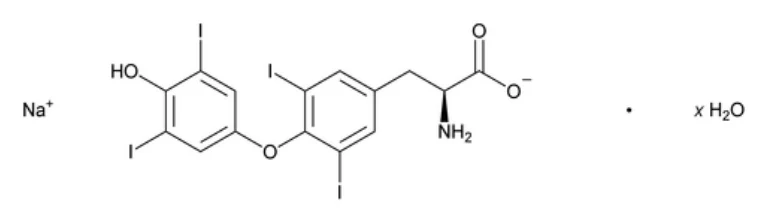
where x = 5
Physicochemical properties: Levothyroxine sodium is an almost white to faintly brownish-yellow powder, soluble in alkali hydroxide solutions and in 1 M sodium carbonate solution (hot), slightly soluble: in ethanol 96%, very slightly soluble in water and practically insoluble in acetone, in chloroform and in ether.
14 CLINICAL TRIALS
14.1 Comparative Bioavailability Studies
Comparative Bioavailability Study of TIROCAP™ Capsules and Euthyrox® Tablets
This study was performed to assess the bioavailability of TIROCAP™ capsules in comparison to Euthyrox® tablets following oral administration of a single 600 mcg total dose to healthy volunteers under fasting conditions.
This was an open-label, randomised, single-dose, two-way, two sequence crossover fasted pharmacokinetic bioavailability study. The study enrolled 17 males and 17 females aged 27 to 50 years and randomised them to receive a single dose of either 600 mcg of TIROCAP™ or 600 mcg of Euthyrox® (3 x 200 mcg capsules or tablets) following a 10-hour fast. A total of 32 subjects completed the clinical phase of the study. Pharmacokinetic sampling was conducted three times pre-dose and serially up to 72 hours post-dose. Single oral doses were separated by a washout period of 35 days.
Levothyroxine (Baseline-Adjusted) 600 mcg (3 x 200 mcg) From measured data Geometric Mean Arithmetic Mean (CV %) | ||||
|---|---|---|---|---|
| Parameter | Testa | Referenceb | % Ratio of Geometric Means | 90% Confidence Interval |
AUC0-48h (ng*h/mL) | 1824 2568 (27) | 1644 2350 (31) | 111 | 103 - 119 |
CMAX (ng/mL) | 73 75 (25) | 63 65 (23) | 115 | 107 - 123 |
| TMAX (h) § | 2.2 (38) | 2.6 (45) | ||
a TIROCAP™ (Levothyroxine Sodium) 200 mcg Capsules, IBSA
b Euthyrox® (Levothyroxine Sodium) 200 mcg Tablets of Merck Pharma GmbH, purchased in Europe
§ Expressed as arithmetic mean (CV)
Note: Due to the long half-life of levothyroxine, the terminal elimination constant Kel could not be reliably estimated in this study, and therefore AUCI and T1/2, which are derived from Kel, are not be provided in the summary table
15 Non-Clinical Toxicology
Few toxicity studies have been conducted to investigate the potential for toxic effects after acute overdosage or repeated administration and demonstrated that levothyroxine has a low toxicity in this respect. The limited studies on reproduction toxicity and investigations on the general toxicity profile did not report any indication of a clinically relevant effect.
16 Supporting Product Monographs
Synthroid® (levothyroxine sodium tablets, USP, 25 mcg, 50 mcg, 75 mcg, 88 mcg, 100 mcg, 112 mcg, 125 mcg, 137 mcg, 150 mcg, 175 mcg, 200 mcg and 300 mcg), Submission Control No. 185008, Product Monograph, BGP Pharma ULC, September 3, 2015.