


Product Monograph - Tomudex
RECENT MAJOR LABEL CHANGES
| NA | NA |
TABLE OF CONTENTS
Sections or subsections that are not applicable at the time of authorization are not listed.
RECENT MAJOR LABEL CHANGES..........................................................................................2
TABLE OF CONTENTS ............................................................................................................2
PART I: HEALTH PROFESSIONAL INFORMATION ...................................................................4
1 INDICATIONS ............................................................................................................4
1.1 Pediatrics ........................................................................................................4
1.2 Geriatrics.........................................................................................................4
2 CONTRAINDICATIONS ...............................................................................................4
4 DOSAGE AND ADMINISTRATION...............................................................................4
4.1 Dosing Considerations .....................................................................................4
4.2 Recommended Dose and Dosage Adjustment...................................................5
4.3 Reconstitution .................................................................................................6
4.4 Administration.................................................................................................7
5 OVERDOSAGE ...........................................................................................................7
6 DOSAGE FORMS, STRENGTHS, COMPOSITION AND PACKAGING ...............................7
7 WARNINGS AND PRECAUTIONS ................................................................................8
7.1 Special Populations ..........................................................................................9
7.1.1 Pregnant Women .......................................................................................9
7.1.2 Breast-feeding............................................................................................9
7.1.3 Pediatrics ...................................................................................................9
7.1.4 Geriatrics ...................................................................................................9
8 ADVERSE REACTIONS ................................................................................................9
8.1 Adverse Reaction Overview..............................................................................9
8.2 Clinical Trial Adverse Reactions ...................................................................... 11
9 DRUG INTERACTIONS.............................................................................................. 15
9.2 Drug Interactions Overview............................................................................ 15
9.5 Drug-Food Interactions .................................................................................. 15
9.6 Drug-Herb Interactions .................................................................................. 15
9.7 Drug-Laboratory Test Interactions .................................................................. 15
10 CLINICAL PHARMACOLOGY ..................................................................................... 15
10.1 Mechanism of Action................................................................................ 15
10.2 Pharmacodynamics .................................................................................. 15
10.3 Pharmacokinetics ..................................................................................... 16
11 STORAGE, STABILITY AND DISPOSAL ....................................................................... 17
12 SPECIAL HANDLING INSTRUCTIONS......................................................................... 17
PART II: SCIENTIFIC INFORMATION .................................................................................... 18
13 PHARMACEUTICAL INFORMATION.......................................................................... 18
14 CLINICAL TRIALS...................................................................................................... 18
14.1 Trial Design and Study Demographics ....................................................... 18
14.2 Study Results ........................................................................................... 18
15 MICROBIOLOGY ...................................................................................................... 18
16 NON-CLINICAL TOXICOLOGY ................................................................................... 19
PATIENT MEDICATION INFORMATION ............................................................................... 23
PART I: HEALTH PROFESSIONAL INFORMATION
1 INDICATIONS
TOMUDEX (raltitrexed) is indicated in the treatment of advanced colorectal cancer.
1.1 Pediatrics
Pediatrics (<18 years of age): No data are available to Health Canada; therefore, Health Canada has not authorized an indication for pediatric use (see section 2 CONTRAINDICATIONS).
1.2 Geriatrics
Geriatrics: Evidence from clinical studies and experience suggests that use in the geriatric population is associated with differences in safety or effectiveness (see section 7 WARNINGS AND PRECAUTIONS, 7.1.4 Geriatrics).
2 CONTRAINDICATIONS
- TOMUDEX (raltitrexed) is contraindicated in patients with hypersensitivity to the drug or any of its components (see section 6 DOSAGE FORMS, STRENGTHS, COMPOSITION AND PACKAGING).
- TOMUDEX is contraindicated in pregnant women, in women who may become pregnant during treatment or women who are breast feeding (see 7 WARNINGS AND PRECAUTIONS, 7.1.1 Pregnant Women and 7.1.2 Breast-feeding).
- TOMUDEX is not recommended for use in children (<18 years of age), as safety and efficacy have not been established in this group of patients.
- TOMUDEX is contraindicated in patients with severe renal and/or hepatic impairment.
4 DOSAGE AND ADMINISTRATION
4.1 Dosing Considerations
As with other cytotoxic drugs, the administration of TOMUDEX (raltitrexed) is associated with certain adverse reactions; these mainly include reversible effects on the gastrointestinal tract, haematopoietic system and liver enzymes. Prior to the initiation of treatment and before each subsequent treatment a full blood count (including a differential count and platelets), liver transaminases, serum bilirubin and serum creatinine measurements should be performed. The total white cell count should be greater than 4,000/mm3, the neutrophil count greater than 2,000/mm3 and the platelet count greater than 100,000/mm3 prior to treatment (See 4.2 Recommended Dose and Dosage Adjustment).
Pregnancy should be excluded before treatment with TOMUDEX is commenced (see 2 CONTRAINDICATIONS).
4.2 Recommended Dose and Dosage Adjustment
The dose of TOMUDEX (raltitrexed) is calculated on the basis of body surface area. The recommended dose is 3 mg/m2 given intravenously, as a single shot, intravenous infusion in 50 to 250 mL diluted in 0.9% sodium chloride or 5% dextrose (glucose) solution. It is recommended that the infusion be given over a 15 minute period. In the absence of toxicity, treatment may be repeated every 3 weeks.
Dose escalation above 3 mg/m2 is not recommended, since higher doses have been associated with an increased incidence of life threatening or fatal toxicity.
In the event of toxicity the next scheduled dose should be withheld until signs of toxic effects regress. In particular, signs of gastrointestinal toxicity (diarrhoea or mucositis) and haematological toxicity (neutropenia or thrombocytopenia) should have resolved completely before subsequent treatment is allowed. Patients who develop signs of gastrointestinal toxicity should have their full blood counts monitored at least weekly for signs of haematological toxicity. Treatment in patients with suspected drug-related rises in liver enzymes should be deferred until they show evidence of reversibility to at least WHO grade 2.
Based on the worst grade of gastrointestinal and haematological toxicity observed on the previous treatment and provided that such toxicity has resolved completely, the following dose reductions are recommended for subsequent treatment:
* 25% dose reduction: in patients with WHO grade 3 haematological toxicity (neutropenia or thrombocytopenia) or WHO grade 2 gastrointestinal toxicity (diarrhoea or mucositis).
* 50% dose reduction: in patients with WHO grade 4 haematological toxicity (neutropenia or thrombocytopenia) or WHO grade 3 gastrointestinal toxicity (diarrhoea or mucositis). Once a dose reduction has been made, all subsequent doses should be given at the reduced dose level.
Treatment should be discontinued in the event of any WHO grade 4 gastrointestinal toxicity (diarrhoea or mucositis) or in the event of a WHO grade 3 gastrointestinal toxicity associated with WHO grade 4 haematological toxicity. Patients with such toxicity should be managed promptly with standard supportive care measures including i.v. hydration and bone marrow support to help neutrophil and platelet recovery thus reducing the likelihood of fatal sepsis or haemorrhage. Based on data in animals where delayed administration of leucovorin after TOMUDEX (raltitrexed) produced earlier recovery from weight loss and some improvement to intestinal damage and recovery of neutrophil and platelet numbers, consideration should be given to the administration of leucovorin (folinic acid). From clinical experience with other antifolates leucovorin may be given at a dose of 25 mg/m2 i.v. every 6 hours until the resolution of symptoms. Further use of TOMUDEX in such patients is not recommended.
It is essential that the dose reduction scheme be adhered to since the potential for life threatening and fatal toxicity increases if the dose is not reduced or treatment not stopped as appropriate.
Geriatric Patients:
Dosage and administration as for adults. However, as with other cytotoxics, TOMUDEX should be used with caution in elderly patients (see 7 WARNINGS AND PRECAUTIONS, 7.1.4 Geriatrics).
Renal Impairment:
For patients with abnormal serum creatinine, before the first or any subsequent treatment, a creatinine clearance should be performed or calculated. For patients with a normal serum creatinine when the serum creatinine may not correlate well with the creatinine clearance due to factors such as age or weight loss, the same procedure should be followed. If creatinine clearance is < 65 mL/min, the following dose modifications are recommended:
Table 1
| Creatinine clearance | Dose as % of 3.0 mg/m2 | Dosing interval |
| > 65 mL/min | Full dose | 3-weekly |
| 55 to 65 mL/min | 75% | 4-weekly |
| 25 to 54 mL/min | % equivalent to mL/min* | 4-weekly |
| <25 mL/min | No therapy | Not applicable |
*For example, if the creatinine clearance = 30 mL/min, 30% of the full dose should be given.
Patients with renal impairment may have an increased propensity for side-effects and should be monitored appropriately.
Hepatic Impairment: No dosage adjustment is necessary for patients with mild (WHO grade 2) to moderate (WHO grade 3) hepatic impairment. However, given that a proportion of the drug is excreted via the faecal route (see 10 CLINICAL PHARMACOLOGY) and that these patients usually form a poor prognosis group, patients with mild (WHO grade 2) to moderate (WHO grade 3) hepatic impairment need to be treated with caution. Treatment in patients with suspected drug-related rises in liver enzymes should be deferred until they show evidence of reversibility to at least WHO grade 2. TOMUDEX has not been studied in patients with severe hepatic impairment, clinical jaundice or decompensated liver disease and its use in such patients is not recommended.
Health Canada has not authorized an indication for pediatric use.
4.3 Reconstitution
Parenteral Products:
Each vial, containing 2 mg of raltitrexed, should be reconstituted with 4 mL of sterile water for injections to produce a 0.5 mg/mL solution. The appropriate dose of solution, calculated on the basis of body surface area, is diluted in 50 - 250 mL of either 0.9% sodium chloride or 5% glucose (dextrose) injection and administered by a short continuous intravenous infusion over a period of 15 minutes.
There is no preservative or bacteriostatic agent present in TOMUDEX or the materials specified for reconstitution or dilution. TOMUDEX must therefore be reconstituted and diluted under aseptic conditions (See 12 SPECIAL HANDLING INSTRUCTIONS) and it is recommended that solutions of TOMUDEX should be used as soon as possible. Reconstituted TOMUDEX solution may be stored refrigerated (2 - 8°C) for up to 24 hours. The admixed solution must be completely used or discarded within 24 hours of reconstitution of TOMUDEX intravenous injection.
Reconstituted and diluted solutions do not need to be protected from light.
Do not store partially used vials or admixed solutions for future patient use.
Table 2
| Vial size | Volume of diluent to be added to vial | Approximate available volume | Nominal concentration per mL |
| 2 mg raltitrexed/vial | 4 mL sterile water for inj. | 4 mL | 0.5 mg/mL |
There is no information on incompatibilities at present and therefore TOMUDEX should not be mixed with any other drug.
As with all parenteral drug products, I.V. admixtures should be inspected visually for clarity, particulate matter, precipitate, discolouration and leakage prior to administration whenever solutions and containers permit.
4.4 Administration
Other drugs should not be mixed with TOMUDEX in the same infusion container.
5 OVERDOSAGE
The expected manifestations of overdose are likely to be an exaggerated form of the adverse drug reactions anticipated with the administration of the drug. Patients should, therefore, be monitored carefully for signs of gastrointestinal and haematological toxicity. Symptomatic treatment and standard supportive care measures for the management of this toxicity should be applied.
There is no clinically proven antidote available. In the case of inadvertent or accidental administration of an overdose, consideration should be given to the administration of leucovorin. From clinical experience with other antifolates, leucovorin may be given at a dose of 25 mg/m2 i.v. every 6 hours. As the time interval between TOMUDEX (raltitrexed) administration and leucovorin rescue increases, its effectiveness in counteracting toxicity may decrease. Data in animals show that delayed administration of leucovorin after TOMUDEX (raltitrexed) produced earlier recovery from weight loss and some improvement to intestinal damage and neutrophil and platelet numbers.
| For management of a suspected drug overdose, contact your regional poison control centre. |
6 DOSAGE FORMS, STRENGTHS, COMPOSITION AND PACKAGING
Table 3 – Dosage Forms, Strengths, Composition and Packaging
| Route of Administration | Dosage Form / Strength/Composition | Non-medicinal Ingredients |
| Intravenous injection | Raltitrexed 2 mg sterile lyophilized powder per vial | Dibasic sodium phosphate Mannitol Nitrogen Sodium hydroxide |
Composition: TOMUDEX is a sterile lyophilized powder without preservative or bacteriostatic agent. The quantitative composition of TOMUDEX is shown below |
Table 4
| Ingredient | mg per vial |
| Raltitrexed | 2.0 |
| Mannitol | 203.0 |
| Dibasic sodium phosphate* | 1.5 |
| Sodium hydroxide | qs to pH 7.4 |
| Nitrogen | qs (vial head space) |
* Hydration state is not defined after processing. For consistency the quantity is expressed as the heptahydrate equivalent.
AVAILABILITY OF DOSAGE FORMS
TOMUDEX (raltitrexed) is available as a sterile, lyophilized powder containing 2 mg of raltitrexed in single dose vials.
7 WARNINGS AND PRECAUTIONS
General
It is recommended that TOMUDEX (raltitrexed) is only given by or under the supervision of a physician who is experienced in cancer chemotherapy, and in the management of chemotherapy related toxicity. Patients undergoing therapy should be subject to appropriate supervision so that signs of possible toxic effects or adverse reactions (particularly diarrhoea) may be detected and treated promptly (see 4 DOSAGE AND ADMINISTRATION).
TOMUDEX (raltitrexed) is a cytotoxic agent and should be handled according to normal procedures adopted for such agents (see 12 SPECIAL HANDLING INSTRUCTIONS).
Driving and Operating Machinery
TOMUDEX may cause malaise or asthenia following infusion and the ability to drive or use machinery could be impaired while symptoms continue.
Hematologic
As with other cytotoxic agents of this type, caution is necessary in patients with depressed bone marrow function, poor general condition, or prior radiotherapy.
Hepatic/Biliary/Pancreatic
A proportion of TOMUDEX is excreted via the faecal route (see 10 CLINICAL PHARMACOLOGY) therefore, patients with mild (WHO grade 2) to moderate (WHO grade 3) hepatic impairment should be treated with caution.
Reproductive Health: Female and Male Potential
(see 2 CONTRAINDICATIONS, 7.1.1 Pregnant Women)
Fertility: No data available
7.1 Special Populations
7.1.1 Pregnant Women
TOMUDEX is contraindicated in pregnant women, in women who may become pregnant during treatment. Teratology studies in the rat indicate that TOMUDEX caused embryolethality and fetal abnormalities in pregnant rats. Pregnancy should be excluded before treatment with TOMUDEX is commenced and should be avoided during treatment and for at least 6 months after cessation of treatment if either partner is receiving TOMUDEX (see 2 CONTRAINDICATIONS).
7.1.2 Breast-feeding
TOMUDEX is contraindicated in women who are breast-feeding (see 2 CONTRAINDICATIONS).
7.1.3 Pediatrics
Pediatrics (<18 years of age): No data are available to Health Canada; therefore, Health Canada has not authorized an indication for pediatric use (see 2 CONTRAINDICATIONS).
7.1.4 Geriatrics
Elderly patients are more vulnerable to the toxic effects of TOMUDEX. Extreme care should be taken to ensure adequate monitoring of adverse reactions, especially signs of gastrointestinal toxicity (diarrhoea or mucositis).
8 ADVERSE REACTIONS
8.1 Adverse Reaction Overview
As with other cytotoxic drugs, the administration of TOMUDEX (raltitrexed) is associated with certain adverse reactions; these mainly include reversible effects on the gastrointestinal tract, haematopoietic system and liver enzymes.
Gastrointestinal system
The most frequent effects were nausea (58%), vomiting (37%), diarrhoea (38%) and anorexia (28%). Other less frequent effects were mucositis, stomatitis (including mouth ulceration), dyspepsia and constipation. Gastrointestinal bleeding which may be associated with mucositis and/or thrombocytopenia has been reported.
Diarrhoea is usually mild or moderate (WHO grade 1 and 2) and can occur at any time following the administration of TOMUDEX. However, severe diarrhoea (WHO grade 3 and 4) can occur, and may be associated with concurrent haematological suppression, especially leucopenia (neutropenia in particular). Subsequent treatment may need to be discontinued or the dose reduced depending on the grade of toxicity (see 4 DOSAGE AND ADMINISTRATION).
Nausea and vomiting are usually mild (WHO grade 1 and 2), occur usually for the first week following the administration of TOMUDEX, and are responsive to antiemetics.
Haematopoietic system
Leucopenia (neutropenia in particular), anemia and thrombocytopenia, alone and in combination, have been reported as possible adverse drug reactions in clinical trials (22%, 18% and 5% of patients, respectively). They are usually mild to moderate (WHO grade 1 and 2) and occur in the first or second week after treatment and recovering by the third week. Severe (WHO grade 3 and 4) leucopenia (neutropenia in particular) and thrombocytopenia of WHO grade 4 can occur and may be life threatening or fatal, especially if associated with signs of gastrointestinal toxicity.
Hepatic
Reversible increases in AST and ALT have been commonly reported as adverse drug reactions in clinical trials (16% and 14% of patients, respectively). Such changes have usually been asymptomatic and self limiting when not associated with progression of the underlying malignancy. Other less frequent effects are weight loss, dehydration, peripheral edema, hyperbilirubinaemia and increases in alkaline phosphatase.
Cardiovascular system
A number of cardiac rhythm or cardiac function abnormalities have been reported in clinical trials in advanced colorectal cancer. These ranged from sinus tachycardia and supraventricular tachycardia to atrial fibrillation and congestive heart failure. The incidence of disorders of rhythm and function in patients treated with TOMUDEX was 2.8% and 1.8% respectively compared to 1.9% and 1.4% for patients on the comparator treatment. A causal relationship could not be established since many of the abnormalities were concurrent with the underlying conditions such as sepsis and dehydration and more than one third of the patients reported cardiovascular abnormalities prior to treatment.
Musculoskeletal and Nervous System
Arthralgia and hypertonia (usually muscular cramps) have each been reported as possible adverse drug reactions in less than 2% of patients who received TOMUDEX in clinical trials.
Skin, Appendages and Special Senses
Rash was commonly reported in clinical trials (14% of patients), sometimes associated with pruritus. Other less frequent effects were desquamation, alopecia, sweating, taste perversion and conjunctivitis.
Whole Body
The most frequent effects in clinical trials were asthenia (49% of patients) and fever (22% of patients), which were usually mild to moderate following the first week of administration of TOMUDEX, and reversible. Severe asthenia can occur and may be associated with malaise and a flu like syndrome. Other less frequent effects were abdominal pain, pain, headache, cellulitis and sepsis.
8.2 Clinical Trial Adverse Reactions
Clinical trials are conducted under very specific conditions. The adverse reaction rates observed in the clinical trials; therefore, may not reflect the rates observed in practice and should not be compared to the rates in the clinical trials of another drug. Adverse reaction information from clinical trials may be useful in identifying and approximating rates of adverse drug reactions in real-world use.
The following effects were reported as possible adverse drug reactions occurring with an incidence of 2% or more in patients with colorectal cancer treated with TOMUDEX in clinical trials.
Table 5 Drug-related adverse events reported for at least 2% of patients treated with TOMUDEX 3 mg/m2 in core colorectal cancer trials.
| Body System | Number and Percentage of patients | |||||||
|---|---|---|---|---|---|---|---|---|
| COSTART Term | Four colorectal cancer trials | Controlled colorectal cancer trials | ||||||
Tomudex 3 mg/m2 (N=861) | Tomudex 3 mg/m2 (N=684) | 5-FU-LV (N=656) | ||||||
| Whole Body | ||||||||
| Asthenia | 418 | 48.5% | 315 | 46.1% | 243 | 37% | ||
| Fever | 192 | 2.3% | 158 | 23.1% | 108 | 16.5% | ||
| Mucous membrane disorder | 103 | 12.0% | 85 | 12.4% | 269 | 41.0% | ||
| Flu syndrome | 70 | 8.1% | 38 | 5.6% | 17 | 2.6% | ||
| Abdominal pain | 146 | 17.0% | 126 | 18.4% | 115 | 17.5% | ||
| Headache | 51 | 5.9% | 44 | 6.4% | 25 | 3.8% | ||
| Infection | 25 | 2.9% | 21 | 3.1% | 15 | 2.3% | ||
| Cellulitis | 27 | 3.1% | 18 | 2.6% | 0 | 0% | ||
| Pain | 36 | 4.2% | 30 | 4.4% | 35 | 5.3% | ||
| Malaise | 33 | 3.8% | 27 | 3.9% | 15 | 2.3% | ||
| Chills | 31 | 3.6% | 30 | 4.4% | 15 | 2.3% | ||
| Sepsis | 20 | 2.3% | 18 | 2.6% | 12 | 1.8% | ||
| Digestive | ||||||||
| Nausea | 502 | 58.3% | 390 | 57.0% | 327 | 49.8% | ||
| Diarrhoea | 324 | 37.6% | 256 | 37.4% | 382 | 58.2% | ||
| Vomiting | 320 | 37.2% | 257 | 37.6% | 197 | 30.0% | ||
| Anorexia | 238 | 27.6% | 180 | 26.3% | 98 | 14.9% | ||
| Stomatitis | 94 | 10.9% | 77 | 11.2% | 229 | 34.9% | ||
| Body System | Number and Percentage of patients |
|---|
| COSTART Term | Four colorectal cancer trials | Controlled colorectal cancer trials |
|---|
Tomudex 3 mg/m2 (N=861) | Tomudex 3 mg/m2 (N=684) | 5-FU-LV (N=656) | |||||
|---|---|---|---|---|---|---|---|
| Constipation | 115 | 13.4% | 104 | 15.2% | 77 | 11.7% | |
| Dyspepsia | 55 | 6.4% | 38 | 5.6% | 31 | 4.7% | |
| Flatulence | 20 | 2.3% | 18 | 2.6% | 14 | 2.1% | |
| Dry mouth | 21 | 2.4% | 18 | 2.6% | 17 | 2.6% | |
| Haemic and lymphatic | |||||||
| Leucopenia | 188 | 21.8% | 139 | 20.3% | 231 | 35.2% | |
| Anemia | 152 | 17.7% | 103 | 15.1% | 50 | 7.6% | |
| Thrombocytopenia | 45 | 5.2% | 39 | 5.7% | 16 | 2.4% | |
| Metabolic and nutritional | |||||||
| AST increased | 137 | 15.9% | 121 | 17.7% | 14 | 2.1% | |
| ALT increased | 118 | 13.7% | 104 | 15.2% | 17 | 2.6% | |
| Peripheral edema | 82 | 9.5% | 69 | 10.1% | 31 | 4.7% | |
| Weight loss | 51 | 5.9% | 39 | 5.7% | 19 | 2.9% | |
| Dehydration | 49 | 5.7% | 45 | 6.6% | 35 | 5.3% | |
| Alkaline phosphatase increased | 20 | 2.3% | 17 | 2.5% | 4 | 0.6% | |
| Creatinine increased | 20 | 2.3% | 20 | 2.9% | 1 | 0.2% | |
| Bilirubinemia | 19 | 2.2% | 18 | 2.6% | 9 | 1.4% | |
| Hypokalemia | 17 | 2.0% | 15 | 2.2% | 12 | 1.8% | |
| Musculoskeletal | |||||||
| Arthralgia* | 8* | 2%* | 4 | 2%* | 0 | 0%* | |
| Myalgia | 22 | 2.6% | 17 | 2.5% | 11 | 1.7% | |
| Nervous System | |||||||
| Insomnia | 29 | 3.4% | 28 | 4.1% | 19 | 2.9% | |
| Depression | 22 | 2.6% | 21 | 3.1% | 11 | 1.7% | |
| Dizziness | 35 | 4.1% | 33 | 4.8% | 22 | 3.4% | |
| Paresthesia | 21 | 2.4% | 18 | 2.6% | 18 | 2.7% | |
| Hypertonia* | 9* | 2%* | 5 | 2%* | 0 | 0%* | |
| Body System | Number and Percentage of patients |
|---|
| COSTART Term | Four colorectal cancer trials | Controlled colorectal cancer trials |
|---|
Tomudex 3 mg/m2 (N=861) | Tomudex 3 mg/m2 (N=684) | 5-FU-LV (N=656) | |||||
|---|---|---|---|---|---|---|---|
| Respiratory | |||||||
| Cough increased | 41 | 4.8% | 36 | 5.3% | 26 | 4.0% | |
| Dyspnea | 37 | 4.3% | 34 | 5.0% | 25 | 3.8% | |
| Pharyngitis | 37 | 4.3% | 36 | 5.3% | 41 | 6.3% | |
| Skin and Appendages | |||||||
| Rash | 123 | 14.3% | 98 | 14.3% | 127 | 19.4% | |
| Alopecia | 52 | 6.0% | 42 | 6.1% | 127 | 19.4% | |
| Pruritus | 28 | 3.3% | 23 | 3.4% | 18 | 2.7% | |
| Sweating | 27 | 3.1% | 25 | 3.7% | 19 | 2.9% | |
| Special Senses | |||||||
| Taste perversion | 48 | 5.6% | 40 | 5.8% | 31 | 4.7% | |
| Conjunctivitis | 21 | 2.4% | 17 | 2.5% | 34 | 5.2% | |
| Urogenital | |||||||
| Urinary tract infection | 22 | 2.6% | 21 | 3.1% | 17 | 2.6% | |
5-FU-LV = 5-fluorouracil and leucovorin
* These values are the results of only 2 clinical trials (study IL/002 and study IL/003). The incidence of these events when calculated for all 4 trials was less than 2%.
Presented below is a table that lists the incidence of WHO Grade 3/4 adverse events reported for at least 2% of patients.
Table 6 Adverse Events of WHO Grade 3/4 (incidences 2% or more)
| Adverse Event | Four Colorectal Trials Tomudex 3.0 mg/m2 na= 861 | Controlled Colorectal Cancer Trials | ||||
|---|---|---|---|---|---|---|
Tomudex 3.0 mg/m2 na = 684 | 5FU + LV (LD+HD) na = 656 | |||||
| Nausea and vomiting | 100 | 11.6% | 80 | 11.7% | 58 | 8.8% |
| Diarrhea | 96 | 11.1% | 78 | 11.4% | 100 | 15.2% |
| Constipation | 17 | 2.0% | 16 | 2.3% | 11 | 1.7% |
| Oral effects | 18 | 2.1% | 16 | 2.3% | 105 | 16.0% |
| Pain | 63 | 7.3% | 54 | 7.9% | 54 | 8.2% |
| Adverse Event | Four Colorectal Trials Tomudex 3.0 mg/m2 na= 861 | Controlled Colorectal Cancer Trials |
|---|
Tomudex 3.0 mg/m2 na = 684 | 5FU + LV (LD+HD) na = 656 | |||||
|---|---|---|---|---|---|---|
| Asthenia | -b | -b | 64 | 9.4% | 28 | 4.3% |
| Infection | 43 | 5.0% | 33 | 4.8% | 32 | 4.9% |
| Hemoglobin decreased | 56 | 6.5% | 53 | 7.7% | 17 | 2.6% |
| Platelets | 30 | 3.5% | 28 | 4.1% | 7 | 1.1% |
| Leukocytes | 111 | 12.9% | 85 | 12.4% | 176 | 26.8% |
| Transaminase increases | 87 | 10.1% | 69 | 10.1% | 2 | 0.3% |
| Bilirubin | 19 | 2.2% | 11 | 1.6% | 12 | 1.8% |
a ‘n’ = total number of patients
b COSTART term not reported
The number of serious adverse events reported in the four colorectal trials, including those where hospitalization was the criterion for seriousness, are presented below. In total, 37% of patients participating in these trials experienced a serious adverse event that included hospitalization.
Table 7 Number of SAEs where Hospitalization was a Criterion for Seriousness in Trials 1694IL/0002C, 1694IL/0003, 1694IL/0010 and 1694IL/0012.
1694IL/0002C 3 mg/m2 na = 177 | 1694IL/0003 3 mg/m2 na = 222 | 1694IL/0010 3 mg/m2 na = 217 | 1694IL/0012 3 mg/m2 na = 245 | Total Four Colorectal Cancer Trials na = 861 | ||||||||||||||
|---|---|---|---|---|---|---|---|---|---|---|---|---|---|---|---|---|---|---|
| N | % | N | % | N | % | N | % | N | % | |||||||||
| Total number of SAEbs | 234 | 21 | 319 | 29 | 309 | 28 | 245 | 22 | 1107 | - | ||||||||
| Total number of SAEbs where hospitalisation was a criterion of seriousness | 181 | 19 | 280 | 29 | 274 | 29 | 216 | 23 | 951 | - | ||||||||
| Total number of patients with an SAEb | 81 | 46 | 116 | 52 | 91 | 42 | 87 | 35 | 375 | 44 | ||||||||
| Total number of patients with an SAEb where hospitalisation was a criterion of seriousness | 66 | 37 | 99 | 45 | 75 | 35 | 76 | 31 | 316 | 37 | ||||||||
a ‘n’ is the total number of patients in trial
b SAE = Serious Adverse Event
9 DRUG INTERACTIONS
9.2 Drug Interactions Overview
No specific clinical drug drug interaction studies have been conducted.
Leucovorin (folinic acid), folic acid or vitamin preparations containing these agents must not be given immediately prior to or during administration of TOMUDEX, since they may interfere with its action.
There is no experience to date in relation to the combined use of TOMUDEX with other cytotoxic agents.
TOMUDEX is 93% protein bound and while it has the potential to interact with other highly protein bound drugs, no interactions due to displacement between TOMUDEX and warfarin has been observed in vitro. Active tubular secretion may contribute to the renal excretion of raltitrexed, indicating a potential interaction with other actively secreted drugs such as non steroidal anti inflammatory drugs (NSAIDS). However, a review of the clinical trial safety database does not reveal evidence of clinically significant interaction in patients treated with TOMUDEX who also received concomitant NSAIDS, warfarin and other commonly prescribed drugs.
9.5 Drug-Food Interactions
Interactions with food have not been established.
9.6 Drug-Herb Interactions
Interactions with herbal products have not been established.
9.7 Drug-Laboratory Test Interactions
Interactions with laboratory tests have not been established.
10 CLINICAL PHARMACOLOGY
10.1 Mechanism of Action
TOMUDEX (raltitrexed) is a quinazoline folate analogue that selectively inhibits thymidylate synthase (TS). Thymidylate synthase is a key enzyme in the de novo synthesis of thymidine triphosphate (TTP), a nucleotide required exclusively for deoxyribonucleic acid (DNA) synthesis. Inhibition of thymidylate synthase leads to DNA fragmentation and cell death.
10.2 Pharmacodynamics
Raltitrexed is transported into cells via a reduced folate carrier (RFC) and is then extensively polyglutamated by the enzyme folyl polyglutamate synthetase (FPGS) to polyglutamate forms that are retained in cells and are even more potent inhibitors of thymidylate synthase. Raltitrexed polyglutamation enhances thymidylate synthase inhibitory potency and increases the duration of thymidylate synthase inhibition in cells which may improve antitumour activity. Polyglutamation could also contribute to increased toxicity due to drug retention in normal tissues.
10.3 Pharmacokinetics
Following intravenous administration at 3.0 mg/m2, the concentration time profile in patients is triphasic. Peak concentrations, at the end of infusion, are followed by a rapid initial decline in concentration. This is followed by a slow elimination phase. The key pharmacokinetic parameters are presented below:
Table 8 Key Pharmacokinetic Parameters of Raltitrexed.
| Cmax (ng/mL) | AUC0- ∞ (ng.h/mL) | CL (mL/min) | CLr (mL/min) | Vss (L) | T½β (h) | t½γ (h) |
| 656 | 1856 | 51.6 | 25.1 | 548 | 1.79 | 198 |
Cmax : peak plasma concentration AUC: area under plasma concentration-time curve
CL : clearance Vss: volume of distribution at steady state
CLr : renal clearance
t½β : half life of the second phase
t½γ : terminal half life
Absorption
The maximum concentrations of raltitrexed increased linearly with dose over the clinical dose range tested.
Distribution:
Raltitrexed is 93% protein bound in humans.
Metabolism:
There is no clinically significant plasma accumulation of raltitrexed in patients with normal renal function during repeat administration at three week intervals.
In the study following [14C] labelled raltitrexed, approximately half of the radiolabel was not recovered during the study period suggesting that a proportion (50%) of the raltitrexed dose is retained within tissues, perhaps as raltitrexed polyglutamates, beyond the end of the measurement period. Trace levels of radiolabel were detected in red blood cells on Day 29.
Elimination
Apart from the expected intracellular polyglutamation, raltitrexed was mainly (approximately 50%) excreted unchanged in the urine. It is also excreted in the faeces with approximately 15% of the dose being eliminated over a 10 day period.
Special Populations and Conditions
Raltitrexed pharmacokinetics are independent of age and gender.
- Pediatrics: Pharmacokinetics have not been evaluated in children.
- Hepatic Insufficiency: Mild (WHO grade 2) to moderate (WHO grade 3) hepatic impairment led to a reduction in plasma clearance of less than 25%.
- Renal Insufficiency: Mild to moderate renal impairment (creatinine clearance of 25 to 65 mL/min) led to a significant reduction (approximately 50%) in raltitrexed plasma clearance.
11 STORAGE, STABILITY AND DISPOSAL
Store at 2 to 25°C protected from light. Once reconstituted, TOMUDEX is chemically stable for 24 hours at 25°C exposed to ambient light, however, it is recommended that TOMUDEX should be refrigerated to avoid bacterial contamination (for further information see 4 DOSAGE AND ADMINISTRATION, 4.3 Reconstitution).
12 SPECIAL HANDLING INSTRUCTIONS
Special Instructions:
TOMUDEX is a cytotoxic agent and should be handled according to the normal procedures adopted for such agents in each institution. At minimum the following are recommended:
Any unused injection or reconstituted solution should be discarded in a suitable manner for cytotoxics.
TOMUDEX should be reconstituted for injection by trained personnel in a designated area for the reconstitution of cytotoxic agents. Cytotoxic preparations such as TOMUDEX should not be handled by pregnant women.
Reconstitution should normally be carried out in a partial containment facility with extraction capabilities e.g. a laminar air flow cabinet, and work surfaces should be covered with disposable plastic backed absorbent paper.
Appropriate protective clothing, including surgical gloves and goggles, should be worn. In case of contact with skin, wash immediately with water. For splashes in the eyes irrigate with clean water, holding the eyelids apart, for at least 10 minutes. Seek medical attention.
Any spillage should be cleared up using standard procedures consistent with the handling of chemotherapeutic agents.
Waste material should be disposed of by incineration in a manner consistent with the handling of cytotoxic agents.
PART II: SCIENTIFIC INFORMATION
13 PHARMACEUTICAL INFORMATION
Drug Substance
Proper name: raltitrexed
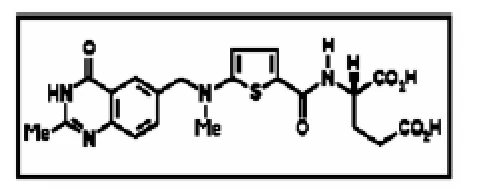
Chemical name: N-(5-[N-(3,4-dihydro-2-methyl-4-oxoquinazolin-6-ylmethyl)-N-methylamino]-2-thenoyl)-L-glutamic acid (IUPAC)
Molecular formula and molecular mass: C21H22N4O6S, 458.49
Structural formula:
Physicochemical properties: Raltitrexed is a pale yellow-brown to brown powder. Based on the estimated pKa values of the two carboxylic acid groups (4.5 and 5.7 at 25°C) the solubility is susceptible to pH. The melting point of raltitrexed is 179-181°C.
14 CLINICAL TRIALS
14.1 Trial Design and Study Demographics
In clinical trials TOMUDEX (raltitrexed), administered as a single 3mg/m2 i.v. dose every 3 weeks, demonstrated clinical antitumour activity with an acceptable toxicity profile in patients with advanced colorectal cancer.
14.2 Study Results
Four large clinical trials have been conducted with TOMUDEX in advanced colorectal cancer. Of the three comparative trials, two showed no statistical difference between TOMUDEX and the combination of 5-Fluorouracil plus leucovorin for survival, while one trial showed a statistically significant difference in favour of the combination of 5-Fluorouracil plus leucovorin. TOMUDEX as a single agent was as effective as the combination of 5-Fluorouracil and leucovorin in terms of objective response rate in all trials.
15 MICROBIOLOGY
No microbiological information is required for this drug product.
16 NON-CLINICAL TOXICOLOGY
Acute Toxicity
The approximate LD50 values for the mouse range from 875 to 1249 mg/kg. The approximate LD value for the rat is greater than 500 mg/kg. In the mouse, levels of 750 mg/kg and above caused death by general toxicity.
Long-Term Toxicity
In one month continuous and six month intermittent dosing studies in the rat, toxicity was related entirely to the cytotoxic nature of the drug. Principal target organs were the gastrointestinal tract, bone marrow and testis. In similar studies in the dog, cumulative dose levels similar to those used clinically elicited pharmacologically-mediated changes in proliferating tissue. Target organs in the dog were similar to the rat. The only finding of questionable aetiology was a reduction in heart rate with concomitant increase in R-R interval in dogs of the high dose group given raltitrexed for more than 18 consecutive days. This phenomenon was reversible, was not associated with cardiac pathology, and occurred only after repeated daily dosing without a recovery period. The effect did not occur in studies of 6 months duration in which a recovery period similar to that used in the clinic was included between each cycle of dosing. Details of each study are provided in the following table.
Table 9 Long -Term Toxicity
| SPECIES | DURATION | NO. OF ANIMALS/GROUP | ROUTE | DOSE MG/KG/DAY | EFFECTS |
|---|---|---|---|---|---|
| Rat Wistar | 5 days | 24 M + 24 F* | Intravenous | 0, 2,10, 50 | No changes observed in the clinical findings or necropsy/histological findings. |
| Rat Crl:(WI)BR | 30 days | 15 M + 15 F | Intravenous | 0, 1, 5, 15 | One 5 mg/kg/day treated and 9,15 mg/kg/day - treated males died or were killed in extremis during the dosing period. 2, 15 mg/kg/day - treated males died or were killed during the withdrawal period. 5, 15 mg/kg/day - treated females died prematurely and a further 2 died during the withdrawal period. All deaths were considered due to the cytotoxic properties of the drug. Principle target organs were the gastrointestinal tract, bone marrow, testis/epididymis and thymus. |
| Rat Wistar | 6 months dosed 5 days each month followed by a 23 day recovery period | 35 M+ 35 F (0, 25 & 50 mg/kg/day) 25 M + 35 F (5 mg/kg/day) | Intravenous | 0, 5, 25, 50 | There were no deaths, no ophthalmological or urine changes There were no deaths, no ophthalmological or urine changes attributed to ZD1694. Decreases in both food consumption and body weight gain were recorded in all dosed groups. Abnormal incisors were observed in animals receiving 25 or 50 mg/kg/day but there were no histological changes. |
| Dog Beagle | 5 days (pilot study) | 1 animal/group | Intravenous | 0.01, 0.05 | The animal dosed intravenously at 0.01 mg/kg exhibited no adverse clinical findings. Five daily doses of 0.05 mg/kg/day resulted in loose faeces on days 1 and 4, and emesis occurring on days 5-7. Dehydration and low body temperature were recorded on day 7. Between days 5 and 8 the animal became subdued and ate no food. Weight loss occurred between days 1 and 8 but by day 9 recovery was evident and no further atypical signs were observed until the end of the 62 day study period. |
| SPECIES | DURATION | NO. OF ANIMALS/GROUP | ROUTE | DOSE MG/KG/DAY | EFFECTS |
|---|---|---|---|---|---|
| Dog Beagle | 5 days | 6 M+ 6 F (0 & 0.02 mg/kg/day) 3 M +3 F (0.01 & 0.04 mg/kg/day) | Intravenous | 0, 0.01, 0.02, 0.04 | All the dogs survived until necropsy. Inappetance, reduction in body weight and subdued behaviour were seen in the 0.02 and 0.04 mg/kg groups, emesis was recorded for 4 dogs in the latter group. No changes were seen in ophthalmology, physiology, coagulation or urine analysis. |
| Dog Beagle | 30 days | 6 M + 6 F (0 & 0.015 mg/kg/day) 3 M + 3 F (0.005 & 0.01 mg/kg/day) | Intravenous | 0, 0.005, 0.01, 0.015 | One male and one female receiving 0.015 mg/kg/day were killed (days 24 and 19 respectively) because of inappetance and deteriorating condition. The remaining animals scheduled for killing at 30 days in this dose group were terminated on day 24 and others were left undosed until the end of the withdrawal period. All animals given 0.01 or 0.005 mg/kg/day survived the one month dosing period. Body weight, food consumption, white blood cell count, neutrophil count, lymphocyte count and platelet count were all decreased in the 0.015 mg/kg/day groups. There was a reduction in heart rate with a concomitant increase in the R-R interval at the end of the 0.015 mg/kg/day dosing period (24 days). |
| Dog Beagle | 6 months dosed 5 days each month followed by a 23 day recovery period | 7 M + 7 F (0 & 0.02 mg/kg/day) 4 M+ 4 F (0.005 & 0.01 mg/kg/day) | Intravenous | 0, 0.005, 0.01, 0.02 | There were no deaths during the study and no ophthalmological or physiological changes attributed to ZD1694. There were cyclic decreases in body weight and food consumption in the 0.02 mg/kg groups. |
*Reflects group related extra animals (e.g. for pharmacokinetics etc.)
Carcinogenicity:
The carcinogenic potential of raltitrexed has not been evaluated.
Mutagenicity:
Raltitrexed was not mutagenic in the Ames test or in supplementary tests using E. coli or chinese hamster ovary cells. Raltitrexed caused increased levels of chromosome damage in an in vitro assay of human lymphocytes. This effect was ameliorated by the addition of thymidine, thus confirming it to be due to the anti metabolic nature of the drug. An in vivo micronucleus study in the rat indicated that at cytotoxic dose levels, raltitrexed is capable of causing chromosome damage in the bone marrow.
Reproduction & Developmental Toxicology:
Fertility studies in the rat indicate that raltitrexed can cause impairment of male fertility. Fertility returned to normal three months after dosing ceased. Raltitrexed caused embryolethality and foetal abnormalities in pregnant rats.
Tolerance Studies:
Perivascular tolerance studies in animals did not reveal any significant irritant reaction.