


Product Monograph - Folotyn
1 INDICATIONS
FOLOTYN® (pralatrexate injection) is indicated for the treatment of patients with relapsed or refractory peripheral T-cell lymphoma (PTCL).
Approval is based on response rates demonstrated in a single-arm trial [see Clinical Trials]. Prolongation of progression-free survival (PFS), overall survival (OS) and improvement in quality-of-life has not been demonstrated.
1.1 Pediatrics
Pediatrics (<18 years of age): No data are available to Health Canada; therefore, Health Canada has not authorized an indication for pediatric use.
1.2 Geriatrics
Geriatrics (>65 years of age): Evidence from clinical studies and experience suggests that use in the geriatric population is not associated with differences in safety or effectiveness, although greater sensitivity of some older individuals cannot be ruled out. Due to the contribution of renal excretion to overall clearance of pralatrexate, age-related decline in renal function may lead to a reduction in clearance and a commensurate increase in plasma exposure.
2 CONTRAINDICATIONS
FOLOTYN® (pralatrexate injection) is contraindicated in patients who are hypersensitive to this drug or to any ingredient in the formulation, including any non-medicinal ingredient, or component of the container. For a complete listing, see Dosage Forms, Strengths, Composition and Packaging.
FOLOTYN® (pralatrexate injection) is indicated for the treatment of patients with relapsed or refractory peripheral T-cell lymphoma (PTCL), has been issued marketing authorization with conditions, pending the results of trials to verify its clinical benefit. Patients should be advised of the nature of the authorization. For further information for FOLOTYN® please refer to Health Canada’s Notice of Compliance with conditions - drug products web site.
NNOOCC//cc
NNOOCC//cc
3 SERIOUS WARNINGS AND PRECAUTIONS BOX
4 DOSAGE AND ADMINISTRATION
4.1 Dosing Considerations
- FOLOTYN® is for intravenous use only. It should be administered under the supervision of a qualified physician experienced in the use of antineoplastic agents.
- For severe renal impairment see Section 4.2 Recommended Dose and Dosage Adjustment.
- Monitor complete blood cell counts and severity of mucosal inflammation at baseline and weekly. Perform serum chemistry tests, including renal and hepatic function, prior to the start of the first and fourth dose of each cycle [see Section 4.2 Recommended Dose and Dosage Adjustment].
Prior to administering any dose of FOLOTYN®:
- Mucosal inflammation should be ≤ Grade 1.
- Platelet count should be ≥ 100 x 109/L for first dose and ≥ 50 x 109/L for all subsequent doses.
- Absolute neutrophil count (ANC) should be ≥ 1 x 10⁹/L.
4.2 Recommended Dose and Dosage Adjustment
Vitamin Supplementation
Folic Acid: Patients should take folic acid 1.0-1.25 mg orally once daily beginning 10 days before the first dose of FOLOTYN®. Continue folic acid during the full course of therapy and for 30 days after the last dose of FOLOTYN® [see Warnings and Precautions].
Vitamin B12: Administer vitamin B12 1 mg intramuscularly within 10 weeks prior to the first dose of FOLOTYN® and every 8-10 weeks thereafter. Subsequent vitamin B12 injections may be given the same day as treatment with FOLOTYN® [see Warnings and Precautions].
Recommended Dose
The recommended dose of FOLOTYN® is 30 mg/m2 administered as an intravenous push over 3-5 minutes via the side port of a free-flowing 0.9% Sodium Chloride Injection, intravenous line once weekly for 6 weeks in 7-week cycles until progressive disease or unacceptable toxicity. The calculated dose of FOLOTYN® should be aseptically withdrawn into a syringe for immediate use. Do not dilute FOLOTYN®.
Serious Warnings and Precautions
- Dermatologic Reactions [see Warnings and Precautions]
- Bone Marrow Suppression [see Warnings and Precautions, Hematologic]
- Infection [see Warnings and Precautions]
- Mucosal Inflammation [see Warnings and Precautions]
- Tumour Lysis Syndrome [see Warnings and Precautions]
Potential fetal harm [see Warnings and Precautions, Embryo-Fetal Toxicity and
Sexual Health; Non-Clinical Toxicology]
- Pulmonary Toxicity [see Warnings and Precautions, Respiratory] NNOOCC//cc
NNOOCC//cc
For patients with severe renal impairment (eGFR 15 to < 30 mL/min/1.73m2), the recommended dose of FOLOTYN® is 15 mg/m2.
Health Canada has not authorized an indication for pediatric use.
Dose Adjustment
Doses may be omitted or reduced based on patient tolerance. Omitted doses should not be made up at the end of the cycle; once a dose reduction occurs for toxicity, do not re-escalate. For dose modifications and omissions, use the guidelines in Tables 1, 2, and 3.
Table 1 FOLOTYN® Dose Modifications for Mucosal inflammation
| Mucosal inflammation Gradea on Day of Treatment | Action | Dose upon Recovery to ≤ Grade 1 | Dose Upon Recovery in Patients with Severe Renal Impairment |
| Grade 2 | Omit dose | Continue prior dose | Continue prior dose |
| Grade 2 recurrence | Omit dose | 20 mg/m2 | 10 mg/m2 |
| Grade 3 | Omit dose | 20 mg/m2 | 10 mg/m2 |
| Grade 4 | Stop therapy | -- | -- |
a Per National Cancer Institute - Common Terminology Criteria for Adverse Events (NCI CTCAE, Version 3.0)
Table 2 FOLOTYN® Dose Modifications for Hematologic Toxicities
| Blood Count on Day of Treatment | Duration of Toxicity | Action | Dose upon Restart | Dose Upon Recovery in Patients with Severe Renal Impairment |
Platelet < 50 x 109/L | 1 week | Omit dose | Continue prior dose | Continue prior dose |
| 2 weeks | Omit dose | 20 mg/m2 | 10 mg/m2 | |
| 3 weeks | Stop therapy | -- | -- | |
| ANC 0.5-1 x 10⁹/L and no fever | 1 week | Omit dose | Continue prior dose | Continue prior dose |
| ANC 0.5-1 x 10⁹/L with fever or ANC < 0.5 x 10⁹/L | 1 week | Omit dose, give G-CSF or GM-CSF support | Continue prior dose with G- CSF or GM-CSF support | Continue prior dose with G-CSF or GM-CSF support |
| 2 weeks or recurrence | Omit dose, give G-CSF or GM-CSF support | 20 mg/m2 with G-CSF or GM-CSF support | 10 mg/m2 with G-CSF or GM-CSF support | |
3 weeks or 2nd recurrence | Stop therapy | -- | -- |
G-CSF=granulocyte colony-stimulating factor; GM-CSF=granulocyte macrophage colony-stimulating factor
Table 3 FOLOTYN® Dose Modifications for All Other Treatment-related Toxicities
| Toxicity Gradea on Day of Treatment | Action | Dose upon Recovery to ≤ Grade 2 | Dose Upon Recovery in Patients with Severe Renal Impairment |
| Grade 3 | Omit dose | 20 mg/m2 | 10 mg/m2 |
| Grade 4 | Stop therapy | -- | -- |
a Per National Cancer Institute-Common Terminology Criteria for Adverse Events (NCI CTCAE, Version 3.0)
4.3 Administration
FOLOTYN® is administered as an intravenous push over 3-5 minutes via the side port of a free-flowing 0.9% Sodium Chloride Injection. Do not dilute FOLOTYN®.
Single use vial. Discard unused portion.
4.4 Missed Dose
Missed/omitted doses should not be made up at the end of the cycle.
5 OVERDOSAGE
No specific information is available on the treatment of overdosage of FOLOTYN® (pralatrexate injection). If an overdose occurs, general supportive measures should be instituted as deemed necessary by the treating physician. Based on FOLOTYN®’s mechanism of action, prompt administration of leucovorin, adequate hydration, and alkalinisation of the urine should be considered.
For management of a suspected drug overdose, contact your regional poison control centre.
6 DOSAGE FORMS, STRENGTHS, COMPOSITION AND PACKAGING
Table 4 – Dosage Forms, Strengths, Composition and Packaging
| Route of Administration | Dosage Form / Strength | Non-medicinal Ingredients |
| Intravenous | Solution 20 mg/mL 1 and 2 mL single use vials | Sodium chloride, sodium hydroxide and hydrochloric acid |
FOLOTYN® (pralatrexate injection) is supplied as a preservative-free, sterile, isotonic, non-pyrogenic clear yellow aqueous parenteral solution contained in a single dose clear glass vial (Type I) for intravenous administration. Each mL of solution contains 20 mg of pralatrexate, sufficient sodium chloride to achieve an isotonic (280-300 mOsm) solution, and sufficient sodium hydroxide, and hydrochloric acid if needed, to adjust and maintain the pH at 7.5-8.5. FOLOTYN® is supplied as either 20 mg (1 mL) or 40 mg (2 mL) single use vials at a concentration of 20 mg/mL.
Parenteral drug products should be inspected visually for particulate matter and discoloration prior to administration, whenever solution and container permit. Do not use any vials exhibiting particulate matter or discoloration.
7 WARNINGS AND PRECAUTIONS
General
Fatigue was commonly reported in clinical trials with FOLOTYN® but was generally mild to moderate in intensity. If affected, patients should be instructed not to drive cars, use machines or perform hazardous tasks [see Adverse Reactions and Drug Interactions, Drug-Lifestyle Interactions].
Carcinogenesis and Mutagenesis
Carcinogenicity studies have not been performed with pralatrexate [see Non-Clinical Toxicology].
Dermatologic Reactions
FOLOTYN® can cause severe dermatologic reactions, which may result in death. These dermatologic reactions have been reported in clinical studies (14/663 patients [2.1%]) and post marketing experience, and have included skin exfoliation, ulceration, and toxic epidermal necrolysis (TEN). Serious and potentially life-threatening dermatological reactions have occurred, including fatal cases occurring after the first dose. Patients with extensive skin disease or a history of adverse skin reactions appear to be at higher risk of developing theses severe reactions, with onset occurring early in the course of therapy in most cases. They may be progressive and increase in severity with further treatment, and may involve skin and subcutaneous sites of known lymphoma. Monitor patients with dermatologic reactions closely, and if severe, withhold or discontinue FOLOTYN® [see Adverse Reactions and Special Populations].
Embryo-Fetal Toxicity
FOLOTYN® should not be used during pregnancy, as it can cause fetal harm when administered to a pregnant woman. FOLOTYN® was embryotoxic and fetotoxic in rats and rabbits. If the patient becomes pregnant while taking this drug, the patient should be informed of the potential hazard to the fetus [see Special Populations].
Hepatic Toxicity
FOLOTYN® can cause hepatic toxicity and liver function test abnormalities. Persistent liver function test abnormalities may be indicators of hepatic toxicity and require dose modification or discontinuation. Monitor liver function tests. Omit dose until recovery, adjust or discontinue therapy based on the severity of the hepatic toxicity [see Dosage and Administration and Special Populations].
NNOOCC//cc
Hematologic
FOLOTYN® can cause bone marrow suppression, manifested by thrombocytopenia, neutropenia, and/or anemia. Fatal cases have been reported. Monitor complete blood counts and omit and/or reduce the dose based on ANC and platelet count prior to each dose as outlined in Section 4.2 Recommended Dose and Dosage Adjustment - Tables 1, 2 and 3. Administer vitamin B12 and instruct patients to take folic acid to reduce the risk of treatment-related hematological toxicity [see Dosage and Administration and Adverse Reactions].
Infection
Serious adverse events such as pneumonia, sepsis, septic shock, herpes zoster (including fatal outcomes) have been reported in clinical trials and in the post-market setting with FOLOTYN®. Patients should be carefully monitored during treatment for the emergence of possible infections [see Adverse Reactions].
Monitoring and Laboratory Tests
Management of severe or intolerable adverse reactions may require dose omission, reduction, or discontinuation of FOLOTYN® therapy.
Monitor complete blood cell counts and severity of mucosal inflammation at baseline and weekly. Perform serum chemistry tests, including renal and hepatic function, prior to the start of the first and fourth dose of each cycle, or more often if required.
Mucosal inflammation
FOLOTYN® can cause mucosal inflammation. Fatal cases have been reported. Monitor for mucosal inflammation weekly and if ≥ Grade 2 mucosal inflammation is observed, omit and/or reduce the dose as outlined in Section 4.2 Recommended Dose and Dosage Adjustment - Table 1. Administer vitamin B12 and instruct patients to take folic acid to reduce the risk of mucosal inflammation [see Dosage and Administration and Adverse Reactions].
Renal
Acute kidney injury and renal failure have been reported with FOLOTYN® treatment in clinical trials and in the post-market setting. Monitor renal function tests.
Patients with moderate to severe renal function impairment may be at greater risk for increased exposure and toxicity. Monitor patients for renal function and systemic toxicity and adjust dosing accordingly as outlined in Section 4.2 Recommended Dose and Dosage Adjustment-Tables 1-3.
Serious adverse drug reactions including toxic epidermal necrolysis and mucositis were reported in patients with end stage renal disease (ESRD) undergoing dialysis who were administered FOLOTYN® therapy. Avoid FOLOTYN® use in patients with end stage renal disease including those undergoing dialysis unless the potential benefit justifies the potential risk [see Dosage and Administration, Adverse Reactions, Special Populations, and Clinical Pharmacology].
Respiratory
Cases of pulmonary toxicity (including pneumonitis, respiratory failure, and acute respiratory distress syndrome), some with fatal outcomes, have been reported in patients treated with FOLOTYN®. Across clinical studies, pneumonitis was reported in 9 patients (1.3%), including 7 patients with PTCL. Four (4) of the study reports were non-serious. Most cases were considered causally related to pralatrexate.
Sexual health
Female Patients: Females of childbearing potential must be informed of the potential hazard to the fetus which includes potential birth defects and fetal death (embryotoxicity). Due to the potential hazard to the fetus, females of childbearing potential should be advised to avoid becoming pregnant while receiving treatment with FOLOTYN®. Adequate contraception should be used while receiving FOLOTYN® and up to 8 weeks after ending treatment.
Male Patients: It is not known if pralatrexate is present in semen. Male patients must take appropriate precautions to avoid fathering a child during FOLOTYN® treatment. Male patients should use condoms with spermicide, even after a vasectomy, during sexual intercourse with female partners while being treated with FOLOTYN®.
It is not known if pralatrexate has the potential to affect sexual function and fertility. Semen preservation prior to initiation of FOLOTYN® therapy could be considered.
Tumour Lysis Syndrome
FOLOTYN® can cause tumour lysis syndrome (TLS), reported to occur in 0.6% of patients in clinical trials. Monitor patients who are at increased risk of TLS, and initiate prophylactic or treatment measures, as appropriate.
7.1 Special Populations
7.1.1 Pregnant Women
FOLOTYN® should not be used during pregnancy. FOLOTYN® can cause fetal harm when administered to a pregnant woman. Pralatrexate was embryotoxic and fetotoxic in rats. Treatment with pralatrexate caused a dose-dependent decrease in fetal viability manifested as an increase in late, early, total resorptions, and an increase in post-implantation loss. In rabbits pralatrexate caused abortion and fetal lethality, manifested as early and total resorptions, post-implantation loss, and a decrease in the total number of live fetuses [see Non-Clinical Toxicology]. If patients become pregnant while taking this drug, they should be informed of the potential hazard to the fetus.
7.1.2 Breast-feeding
No preclinical or clinical studies have been conducted to determine whether pralatrexate is excreted in milk from nursing mothers. It is therefore unknown if pralatrexate is excreted in human milk. Because many drugs are excreted in human milk, and because of the potential for serious adverse reactions in nursing infants from this drug, taking into account the importance of FOLOTYN® to the mother, it is recommended that nursing be discontinued.
7.1.3 Pediatrics
Pediatrics < 18 years of age: No data are available to Health Canada; therefore, Health Canada has not authorized an indication for pediatric use.
7.1.4 Geriatrics
In the PROPEL study, 36% of patients (n = 40) were 65 years of age and over. No overall differences in efficacy and safety were observed in patients based on age (<65 years compared with ≥65 years). Due to the contribution of renal excretion to overall clearance of pralatrexate (approximately 34%), age-related decline in renal function may lead to a reduction in clearance and a commensurate increase in plasma exposure. In general, dose selection for an elderly patient should be cautious, reflecting the greater frequency of decreased hepatic, renal, or cardiac function, and of concomitant disease or other drug therapy. Since elderly patients may be at higher risk, monitor more closely. Omit dose and subsequently adjust or discontinue therapy for exposure related toxicity [see Dosage and Administration, Warnings and Precautions, Special Populations, and Clinical Pharmacology].
7.1.5 Hepatic Impairment
The safety, efficacy and pharmacokinetics of FOLOTYN® have not been evaluated in patients with hepatic impairment. Patients with the following laboratory values were excluded from the pralatrexate lymphoma clinical trials: total bilirubin > upper limit of normal (ULN); aspartate aminotransferase (AST) or alanine aminotransferase (ALT) > 2.5 x ULN; and AST or ALT > 5 x ULN if documented hepatic involvement with lymphoma. Treatment with FOLOTYN® can cause hepatic toxicity and liver function test abnormalities [see Dosage and Administration and Warnings and Precautions]. Patients should be monitored closely for hepatic toxicity [see Monitoring and Laboratory Tests].
7.1.6 Renal Impairment
For patients with severe renal impairment (eGFR 15 to < 30 mL/min/1.73m2), the recommended dose of FOLOTYN® is 15 mg/m2. For patients with mild to moderate renal impairment, dose reduction is not necessary.
Serious adverse drug reactions, including TEN and mucositis have been reported in patients with ESRD undergoing dialysis. Monitor patients for renal function and for systemic toxicity due to increased drug exposure and adjust dosing accordingly. Avoid the use of FOLOTYN® in patients with end stage renal disease undergoing dialysis unless the potential benefit justifies the potential risk [see Dosage and Administration, Warnings and Precautions, Adverse Reactions, and Clinical Pharmacology].
8 ADVERSE REACTIONS
8.1 Adverse Reaction Overview
Common Adverse events
The most common adverse events (≥20%) observed in patients treated with FOLOTYN® (pralatrexate injection) in the PROPEL study were mucosal inflammation (70%), thrombocytopenia (41%), nausea (40%), fatigue (36%), anaemia (34%), constipation (33%), pyrexia (32%), oedema (30%), cough (28%), epistaxis (26%), vomiting (25%), diarrhoea (21%) [see Section 8.2 Clinical Trial Adverse Reactions].
Serious Adverse Events
Forty-four percent of patients (n = 49) experienced a serious adverse event while on study or within 30 days after their last dose of FOLOTYN® in the PROPEL study. The most common serious adverse events (≥3%), were pyrexia (7%), febrile neutropenia (5%), sepsis (5%), dehydration (4%), dyspnea (4%), mucosal inflammation (4%), herpes zoster (3%), neutropenia (3%), pneumonia (3%), and thrombocytopenia (3%).
NNOOCC//cc
One death from cardiopulmonary arrest in a patient with mucositis and febrile neutropenia was reported in this trial. Deaths from mucosal inflammation, febrile neutropenia, sepsis, and pancytopenia occurred in 1.2% of patients treated on all FOLOTYN® trials at doses ranging from 30 to 325 mg/m2.
Discontinuations
Twenty-three percent of patients (n = 25) in the PROPEL study discontinued treatment with FOLOTYN® due to adverse reactions. The adverse reactions reported most frequently as the reason for discontinuation of treatment were mucosal inflammation (6%, n = 7) and thrombocytopenia (5%, n = 5).
Dose Modifications
The target dose of FOLOTYN® was 30 mg/m2 once weekly for 6 weeks in 7-week cycles. Sixty-nine percent (69%, n = 77) of patients in the PROPEL study remained at the target dose for the duration of treatment. Overall, 85% of scheduled doses were administered. A total of 76 (38%) patients required at least one dose omission mainly due to mucosal inflammation (n = 46; 41%), thrombocytopenia (n = 28; 25%) and neutropenia (n = 14; 13%). Thirty five (32%) patients required a dose reduction; the most common cause was mucosal inflammation (n = 25; 23%). Other reasons for dose reduction occurring in 2 or more patients were liver function abnormality, thrombocytopenia and fatigue (each n = 2; 2%).
8.2 Clinical Trial Adverse Reactions
Because clinical trials are conducted under very specific conditions, the adverse reaction rates observed in the clinical trials may not reflect the rates observed in practice and should not be compared to the rates in the clinical trials of another drug. Adverse reaction information from clinical trials is useful for identifying drug-related adverse events and for approximating rates.
The safety of FOLOTYN® was evaluated in an open-label, single-arm, multi-center, international trial in 111 patients with relapsed or refractory peripheral T-cell lymphoma. Patients received a starting dose of 30 mg/m2 once weekly for 6 weeks in 7-week cycles [see Clinical Trials]. The median duration of treatment was 70 days (range 1-540 days).
Table 5 - Adverse Events Occurring in ≥10% of Patients in pivotal study PROPEL
| Adverse Events | PROPEL Study (n = 111) | ||
Total n (%) | Grade 3 n (%) | Grade 4 n (%) | |
| Any Adverse Events | 111 (100) | 48 (43) | 34 (31) |
| Blood and Lymphatic System Disorders | |||
| Thrombocytopenia* | 45 (41) | 15 (14) | 21 (19) |
| Anaemia* | 38 (34) | 17 (15) | 2 (2) |
| Neutropenia* | 27 (24) | 14 (13) | 8 (7) |
| Leucopenia* | 12 (11) | 3 (3) | 4 (4) |
| Cardiac Disorders | |||
| Tachycardia | 11 (10) | 0 (0) | 0 (0) |
Table 5 - Adverse Events Occurring in ≥10% of Patients in pivotal study PROPEL
Adverse Events
| PROPEL Study (n = 111) | |||
Total n (%) | Grade 3 n (%) | Grade 4 n (%) | |
| Gastrointestinal Disorders | |||
| Nausea | 44 (40) | 4 (4) | 0 (0) |
| Constipation | 37 (33) | 0 (0) | 0 (0) |
| Vomiting | 28 (25) | 2 (2) | 0 (0) |
| Diarrhea | 23 (21) | 2 (2) | 0 (0) |
| Abdominal Pain | 13 (12) | 4 (4) | 0 (0) |
| General Disorders | |||
| Mucosal Inflammation* | 78 (70) | 19 (17) | 4 (4) |
| Fatigue | 40 (36) | 5 (5) | 2 (2) |
| Pyrexia | 36 (32) | 1 (1) | 1 (1) |
| Oedema* | 33 (30) | 1 (1) | 0 (0) |
| Asthenia | 11 (10) | 1 (1) | 0 (0) |
| Infections and Infestations | |||
| Upper Respiratory Tract Infection | 11 (10) | 1 (1) | 0 (0) |
| Investigations | |||
| Liver Function Test Abnormal* | 14 (13) | 6 (5) | 0 (0) |
| Metabolism and Nutrition Disorders | |||
| Anorexia* | 17 (15) | 3 (3) | 0 (0) |
| Hypokalaemia* | 17 (15) | 4 (4) | 1 (1) |
| Musculoskeletal and Connective Tissue Disorders | |||
| Pain in Extremities | 13 (12) | 0 (0) | 0 (0) |
| Back Pain | 12 (11) | 3 (3) | 0 (0) |
| Respiratory, Thoracic and Mediastinal Disorders | |||
| Cough | 31 (28) | 1 (1) | 0 (0) |
| Epistaxis | 29 (26) | 0 (0) | 0 (0) |
| Dyspnoea | 21 (19) | 8 (7) | 0 (0) |
| Pharyngolaryngeal Pain | 15 (14) | 1 (1) | 0 (0) |
| Skin and Subcutaneous Disorders | |||
| Rash | 17 (15) | 0 (0) | 0 (0) |
| Pruritus* | 16 (14) | 2 (2) | 0 (0) |
| Night Sweats | 12 (11) | 0 (0) | 0 (0) |
*Grouped preferred terms for the following:
Thrombocytopenia (including Platelet Count Decreased) Anaemia (including Haemoglobin Decreased) Oedema (including Oedema Peripheral and Pitting Oedema)
Neutropenia (including Neutrophil Count Deceased)
Anorexia (including Decreased Appetite)
Hypokalaemia (including Blood Potassium Decreased)
Pruritus (including Pruritus Generalised)
Liver Function Test Abnormal (including Alanine Aminotransferase Increased, Alanine Aminotransferase, Aspartate Aminotransferase Increased, Aspartate Aminotransferase and Transaminases Increased) Leucopenia (including White Blood Cell Count Decreased)
Mucosal Inflammation (including Stomatitis Anal Inflammation, Vaginal Inflammation, Rectal Mucositis, Oesophagitis, Mouth Ulceration, Oral Mucosal Erythema, Pharyngeal Inflammation and Pharyngitis)
Description of selected Adverse Events in the pivotal PROPEL study
Mucosal Inflammation
Under the grouped term of mucosal inflammation, 78 patients (70%) had an event, which was the most frequently occurring AE when analyzed by grouping similar preferred terms. The severity was Grade 1-2 (n = 55, 50%), Grade 3 (n = 19, 17%), and Grade 4 (n = 4, 4%).The median time to onset for ≥ Grade 3 mucosal inflammation was 15 days and the median duration of mucosal inflammation in patients who had ≥ Grade 3 was 13 days.
Bone Marrow Suppression
Bone marrow suppression can be manifested by thrombocytopenia, neutropenia, and/or anemia.
Thrombocytopenia
Thrombocytopenia occurred second most frequently when similar preferred terms were combined. Thrombocytopenia occurred in 45 patients (41%), and the severity was Grade 1-2 (n = 9, 8%), Grade 3 (n = 15, 14%), and Grade 4 (n = 21, 19%). None of the thrombocytopenic events were associated with Grade 3 or 4 bleeding events.
The median time to onset of ≥ Grade 3 thrombocytopenia was 15 days and the median duration of thrombocytopenia in patients who had ≥ Grade 3 was 16 days
Neutropenia
Under the grouped term of neutropenia, 24 patients (27%) had an event; 5 patients (5%) had Grade 2, 14 patients (13%) had Grade 3, and 8 patients (7%) had Grade 4. There were no patients who had Grade 1 neutropenia.
The median time to onset of ≥ Grade 3 neutropenia was 22 days. The median duration of neutropenia in patients who had ≥ Grade 3 was 8 days.
Anemia
Under the grouped term of anemia, 38 patients (34%) had an event; 19 patients (17%) had Grade 1-2, 17 patients (15%) had Grade 3, and 2 patients (2%) had Grade 4. Anemia was not selected for time-related analyses.
Infection
Under the grouped term of Infection and Infestations, 60 patients (54%) experienced an event. The most frequently Adverse Event reported as infections was upper respiratory tract infections (n = 11, 10%). The types of infection reported ≥5% in PROPEL were sinusitis (n = 9, 8%), nasopharyngitis (n = 8, 7%), oral herpes (n = 7, 6%), candidiasis (n = 6, 5%), folliculitis (n = 6, 5%), herpes zoster (n = 6, 5%), sepsis (n = 6, 5%), urinary tract infections (n = 6, 5%), cellulitis (n = 5, 5%), oral candidiasis (n = 5, 5%).
There were four Grade 4 infections: 2 occurrences of sepsis, and1 each of pneumonia and septic shock.
8.3 Less Common Clinical Trial Adverse Reactions
The common (≥1% and <10%) and uncommon (≥0.1 % and <1%) adverse events, irrespective of causality, listed below were reported with FOLOTYN® in the PROPEL trial.
Blood and Lymphatic System Disorders:
Common: febrile neutropenia, leukopenia, lymph node pain, lymphadenopathy, lymphopenia, pancytopenia and splenomegaly.
Uncommon: haemolytic anemia and leukocytosis.
Cardiac Disorders:
Common: sinus tachycardia.
Uncommon: angina pectoris, atrial fibrillation, cardiomegaly, cardio-respiratory arrest, pericardial effusion, supraventricular tachycardia and ventricular tachycardia.
Congenital, Familial and Genetic Disorders:
Common: phimosis.
Uncommon: hydrocele.
Ear and Labyrinth Disorders:
Common: ear pain, tinnitus and vertigo.
Uncommon: deafness and hypoacusis.
Endocrine Disorders:
Uncommon: inappropriate antidiuretic hormone secretion.
Eye Disorders:
Common: conjunctival hyperaemia, conjunctivitis, eye irritation, lacrimation increased, ocular hyperaemia and vision blurred.
Uncommon: cataract, conjunctivitis haemorrhage, dry eye, eye haemorrhage, eye oedema, eye pain, eyelid oedema, eyelid ptosis, eyelids pruritus, parophthalmia, photopsia, scleral hyperaemia, uveitis, visual acuity reduced and visual disturbance.
Gastrointestinal Disorders:
Common: abdominal discomfort, abdominal distension, abdominal pain upper, abdominal tenderness, aphthous stomatitis, dry lip, dry mouth, dyspepsia, dysphagia, flatulence, gastritis, gastroesophageal reflux disease, haemorrhoids, lip ulceration, oesophagitis and oral pain. Uncommon: abdominal pain lower, anal inflammation, ascites, cheilitis, cheilosis, cholitis, duodenal obstruction, gingival oedema, gingival pain, gingivitis, haemorrhoidal hemorrhage, lip pain, mouth ulceration, obstruction gastric, odynophagia, oesophageal pain, oral disorder, oral mucosal erythema, pancreatitis, perianal erythema, polyp colorectal, rectal lesion and toothache.
General Disorders and Administration Site Conditions:
Common: axillary pain, chest pain, chills, face oedema, influenza like illness, infusion-related reaction, oedema pain, and sensation of pressure.
Uncommon: catheter site inflammation, catheter site related reaction, early satiety, effusion,
felling cold, felling of body temperature change, gait disturbance, general physical health deterioration, localised oedema, malaise, mucosal dryness, pitting oedema and tenderness.
Hepatobiliary Disorders:
Common: hyperbilirubinaemia.
Uncommon: cholangitis, cholecystitis acute, cholestasis, hepatomegaly and hepatosplenomegaly.
Infections and Infestations Disorders:
Common: bacterial infection, candidiasis, cellulitis, ear infection, folliculitis, fungal infection, genital herpes, herpes simplex, herpes zoster, infection, influenza, localised infection, nasopharyngitis, oral candidiasis, oral herpes, pneumonia, sepsis, sinusitis and urinary tract infection.
Uncommon: abscess, bronchitis, catheter site infection, cystitis, cytomegalovirus colitis, eye infection viral, eye infection, fungal skin infection, genitourinary tract infection, herpes dermatitis, herpes virus infection, lower respiratory tract infection, lung infection, lymph gland infection, nail infection, oesophageal candidiasis, pharyngitis, pilonidal cyst, rhinitis, septic shock, sinusitis bacterial, urinary tract infection enterococcal, urinary tract infection fungal, vulvovaginal mycotic infection and wound infection.
Injury, Poisoning and Procedural Complications:
Common: excoriation.
Uncommon: arthropod bite, chorioretinal scar, corneal abrasion, fall, joint sprain, muscle strain, skin laceration and thermal burn.
Investigations:
Common: alanine aminotransferase increased, alanine aminotransferase, aspartate aminotransferase increased, aspartate aminotransferase, blood albumin decreased, blood alkaline phosphatase increased, blood bilirubin increased, blood creatinine increased, blood uric acid increased, haemoglobin decreased, neutrophil count decreased, weight decreased and white blood cell count decreased.
Uncommon: blood calcium decreased, blood creatinine, blood glucose increased, blood lactate, dehydrogenase increased, blood magnesium decreased, blood phosphorus decreased, blood phosphorus increased, blood potassium decreased, blood urea abnormal, cardiac murmur, culture urine positive, ear, nose, throat examination abnormal, ejection fraction decreased, heart abnormal sounds, liver function test abnormal, transaminases increase, white blood cell count abnormal and white blood cell count increased.
Metabolism and Nutrition Disorders:
Common: anorexia, decreased appetite, dehydration, hypercalcemia, hyperglycemia, hyperkalaemia, hyperuricaemia, hypocalcemia, hypoglycaemia, hypomagnesaemia and hypophosphatemia.
Uncommon: cell death, fluid imbalance, hyperphosphataemia, hypoglycaemic unconsciousness, hypokalemia and hyponatraemia.
Musculoskeletal and Connective Tissue Disorders:
Common: arthralgia, joint stiffness, muscle spasms, musculoskeletal, musculoskeletal chest pain, musculoskeletal discomfort, musculoskeletal stiffness, myalgia and neck pain. Uncommon: arthritis, arthropathy, bone pain, costochondritis, flank pain, groin pain and muscular weakness.
Neoplasms Benign, Malignant and Unspecified (incl. cysts and polyps):
Common: cancer pain, tumour associated fever and tumour lysis syndrome. Uncommon: bile duct cancer, malginant ascites and skin papilloma.
Nervous System Disorders:
Common: cerebral infarction, dizziness, hypoesthesia, memory impairment, neuropathy peripheral, paraesthesia, peripheral sensory neuropathy, sinus headache and syncope. Uncommon: carotid sinus syndrome, convulsion, dizziness postural, dysgeusia, formication, hyperaesthesia, ischaemic stroke, neuralgia, restless leg syndrome, sensory loss and somnolence.
Psychiatric Disorders:
Common: anxiety, confusional state, insomnia and depression.
Uncommon: agitation, delusion, disorientation, hallucination and mental status changes.
Renal and Urinary Disorders:
Common: renal failure and renal failure acute.
Uncommon: dysuria, haematuria, hydronephrosis and urinary hesitation.
Reproductive System and Breast Disorders:
Common: balanoposthitis and testicular pain.
Uncommon: genital rash, genital ulceration, scrotal swelling, testicular swelling and vulvovaginal pruritis.
Respiratory, Thoracic and Mediastinal Disorders:
Common: atelectasis, dry throat, dysphonia, dyspnoea, exertional, hiccups, hypoxia, pharyngeal inflammation, pleural effusion, pleuritic pain, productive cough, rhinorrhoea, and sinus congestion.
Uncommon: asthma, haemoptysis, increase upper airway secretion, lung consolidation, lung disorder, nasal congestion, pneumonitis, post nasal drip, rales, reflux laryngitis, rhonchi, tachypnea, throat tightness and wheezing.
Skin and Subcutaneous Tissue Disorders:
Common: alopecia, blister, dry skin, erythema, penile ulceration, periorbital edema, petechiae, rash erythematous, rash generalised, rash pruritic, skin lesion, skin ulcer and urticaria. Uncommon: dermatitis contact, ecchymosis, eczema, generalized erythema, neurodermatitis, pain of skin, pruritus generalised, rash macular, rash maculo-papular, rash papular, scar, skin disorder, skin exfoliation, skin haemorrhage, skin toxicity, swelling face and yellow skin.
Surgical and Medical Procedures:
Uncommon: sinus operation.
Vascular Disorders:
Common: deep vein thrombosis, flushing, hypertension, hypotension and subclavian vein thrombosis.
Uncommon: arteriosclerosis, hot flashes, jugular vein thrombosis, orthostatic hypotension, phlebitis, superior vena caval occlusion, thrombophlebitis superficial and venous thrombosis.
8.4 Abnormal Laboratory Findings: Hematologic, Clinical Chemistry and Other
Quantitative Data
Table 6 Hematologic and Clinical Chemistry-Related Adverse Events in ≥5% of
Patients
| Adverse Events | PROPEL Study (n = 111) | ||
| Total n (%) | Grade 3 n (%) | Grade 4 n (%) | |
Hematology Platelet count decreased Hemoglobin decreased White blood cell count decreased Neutrophil count decreased Clinical Chemistry Alanine aminotransferase increased Aspartate aminotransferase increased | 13 (12) 9 (8) 7 (6) 6 (5) 10 (9) 5 (5) | 4 (4) 3 (3) 2 (2) 4 (4) 4 (4) 2 (2) | 5 (5) 1 (1) 1 (1) 0 (0) 0 (0)0 (0) |
Refer to “Investigations” in Table 6 for clinical chemistry adverse events that occurred in <5% of patients in the PROPEL study.
8.5 Post-Market Adverse Reactions
Dermatologic Reactions
Toxic epidermal necrolysis (TEN), sometimes fatal, has been reported during post-marketing use of FOLOTYN®. Fatal cases have been reported following the first dose of FOLOTYN®, including when a reduced dose is given, and have been reported in patients with end-stage renal disease undergoing dialysis [see Warnings and Precautions, Special Populations and Clinical Pharmacology].
9 DRUG INTERACTIONS
9.1 Overview
No formal clinical assessments of pharmacokinetic drug-drug interactions between FOLOTYN® (pralatrexate injection) and other drugs have been conducted. The effect of co-administration of the uricosuric drug probenecid (an inhibitor of multiple transporter systems including the multidrug resistance-associated protein 2 (MRP2) efflux transporter) on pralatrexate pharmacokinetics was investigated in a Phase 1 clinical study. Co-administration of increasing doses of probenecid resulted in delayed clearance of pralatrexate and a commensurate increase in exposure [see Clinical Pharmacology].
When administering FOLOTYN® to patients receiving probenecid or other drugs (eg, NSAIDs) that may affect relevant transporter systems, monitor patients closely for signs of systemic toxicity due to increased drug exposure.
Due to the contribution of renal excretion (approximately 34%) to the overall clearance of pralatrexate, concomitant administration of drugs that are subject to substantial renal clearance (eg, NSAIDs, trimethoprim/sulfamethoxazole) may result in delayed clearance of pralatrexate.
9.2 Drug-Drug Interactions
In vitro studies indicated that pralatrexate does not induce or inhibit the activity of CYP450 isozymes at concentrations of pralatrexatethat can be reasonably expected clinically.
In vitro, pralatrexateis a substrate for the breast cancer resistance protein (BCRP), MRP2, multidrug resistance-associated protein 3 (MRP3), and organic anion transport protein 1B3 (OATP1B3) transporter systems at concentrations of pralatrexatethat can be reasonably expected clinically. Pralatrexateis not a substrate of the P-glycoprotein (P-gp), organic anion transport protein 1B1 (OATP1B1), organic cation transporter 2 (OCT2), organic anion transporter 1 (OAT1), and organic anion transporter 3 (OAT3) transporter systems.
In vitro, pralatrexate inhibits MRP2 and MRP3 transporter systems ([I]/IC50 > 0.1) at concentrations of pralatrexate that can be reasonably expected clinically. MRP3 is a transporter that may affect the transport of etoposide and teniposide.
In vitro, pralatrexate did not significantly inhibit the P-gp, BCRP, OCT2, OAT1, OAT3, OATP1B1, and OATP1B3 transporter systems at concentrations of pralatrexate that can be reasonably expected clinically.
9.3 Drug-Food Interactions
Interactions with food have not been established.
9.4 Drug-Herb Interactions
Interactions with herbal products have not been established.
9.5 Drug-Laboratory Test Interactions
Interactions with laboratory tests have not been established.
9.6 Drug-Lifestyle Interactions
No studies of the effects of FOLOTYN® on the ability to drive or operate machines have been performed. However, treatment with FOLOTYN® is commonly associated with fatigue which can be severe [see Adverse Reactions]. If affected, patients should be instructed not to drive cars, use machines or perform hazardous tasks.
10 ACTION AND CLINICAL PHARMACOLOGY
10.1 Mechanism of Action
Pralatrexate is a folate analog metabolic inhibitor that selectively enters cells expressing reduced folate carrier type 1 (RFC-1), a protein that is overexpressed on certain cancer cells compared to normal cells. Pralatrexate competitively inhibits dihydrofolate reductase (DHFR) and is also a competitive inhibitor for polyglutamylation by the enzyme folylpolyglutamyl synthetase (FPGS). This inhibition results in the depletion of thymidine and other biological molecules leading in the inhibition RNA synthesis and of DNA replication in dividing cells and to cancer growth inhibition and apoptosis.
10.2 Pharmacodynamics
Primary Pharmacodynamics
The selectivity of pralatrexate to cancer cells may be due in part to increased cellular uptake via RFC-1 and the formation of polyglutamylated metabolites by FPGS. Polyglutamylation is a time- and concentration-dependent process that occurs in tumour cells, and to a lesser extent, normal tissues. The polyglutamylation of pralatrexate results in prolonged intracellular retention and enhanced DHFR inhibition, leading to enhanced cytotoxicity in malignant cells. The relative differences in cellular uptake and polyglutamate formation in normal versus malignant cells may account for the relatively selective anticancer activity of pralatrexate.
As can be predicted from its antifolate activity, the main toxicities of pralatrexate manifest as mucosal inflammation (stomatitis, mucositis) and myelotoxicity (neutropenia and thrombocytopenia). Results from a supportive study suggested that patients with high levels of methylmalonic acid (MMA) and homocysteine (Hcy) who experienced mucositis, but who consecutively began vitamin supplementation with folic acid and vitamin B12, corrected their abnormally high levels of MMA and Hcy, and did not experience recurrence of their mucositis on re-challenge with pralatrexate. The latter observation provided evidence for the routine supplementation with vitamin B12 and folic acid with pralatrexate administration.
Safety Pharmacology
Safety evaluation of pralatrexate in preclinical pharmacology and toxicology studies indicated that pralatrexate does not produce direct, dose-limiting effects on central nervous system (CNS), cardiovascular, respiratory, or renal function.
Cardiovascular safety assessment in in vitro studies showed that pralatrexate does not inhibit the human Ether-à-go-go-Related Gene (hERG) or affect dog Purkinje fiber action potential at concentrations well above the clinically observed Cmax. In vivo studies in dogs revealed no effects of pralatrexate on blood pressure (systolic, diastolic, and mean arterial pressure), heart rate, body temperature, and electrocardiographic parameters (heart rate, PR, QRS, RR, and QT/QTc intervals).
Electrocardiogram and QTc Interval
A QTc assessment was completed in a sub-group of 14 evaluable NSCLC patients in a pharmacokinetic study. Five patients were treated with pralatrexate a supratherapeutic dose of 230 mg/m2 administered IV over 3-5 minutes or over 60 minutes. 12-lead electrocardiograms (ECGs) were performed at screening, at baseline (just prior to pralatrexate injection), at the end of infusion, and 1, 3 and 6 hours post infusion in conjunction with pralatrexate plasma PK collections. The mean change from pre-injection QTcF interval at the end of infusion was 6.1 ms NNOOCC//cc
(90%CI: -0.6, 12.7), and at 1 hour post-injection was 7.8 ms (90%CI: 3.0, 12.6). No patient exceeded a QTcF of 470 msec and only 1 patient exhibited an absolute QTcF interval >450 msec. No patient exhibited an absolute increase from baseline in QTcF exceeding 30 msec.
10.3 Pharmacokinetics
Table 7 Summary of Pralatrexate Pharmacokinetic Parameters in PROPEL Study
Cmax 1 [ng/mL] | t½ 2 (hr) | AUC0-∞ 1 [ng/mL·min] | CLtotal 2 [mL/min] | Vdss 2 [L] | |
Single dose mean | 5,815 | 12-18 | 267,854 | 191-417 | 37-105 |
1 Racemic mixture (PDX-10a + PDX-10b), males and females (mean)
2 Range of the mean observed for males and females and for PDX-10a and PDX-10b
The pharmacokinetics of pralatrexate did not change significantly over multiple treatment cycles, and no accumulation of pralatrexate was observed.
Absorption: The pharmacokinetics of pralatrexate administered as a single agent at a dose of 30 mg/m2 administered as an intravenous push over 3-5 minutes once weekly for 6 weeks in 7-week cycles have been evaluated in 10 patients with PTCL. The total systemic clearance of pralatrexate diastereomers was 417 mL/min (S-diastereomer) and 191 mL/min (R-diastereomer). The terminal elimination half-life of pralatrexate was 12-18 hours (coefficient of variance [CV] = 62-120%). Pralatrexate total systemic exposure (AUC) and maximum plasma concentration (Cmax) increased proportionally with dose (dose range 30-325 mg/m2, including pharmacokinetics data from high-dose solid tumour clinical studies).
Distribution: Pralatrexate diastereomers showed a steady-state volume of distribution of 105 L (S-diastereomer) and 37 L (R-diastereomer). In vitro studies indicate that pralatrexate is approximately 67% - 84% bound to plasma proteins.
Metabolism: In vitro studies using human hepatocytes, liver microsomes and S9 fractions, and recombinant human CYP450 isozymes showed that pralatrexate is not significantly metabolized by the phase I hepatic CYP450 isozymes or phase II hepatic glucuronidases.
Elimination: The mean fraction of unchanged pralatrexate diastereomers excreted in urine following a pralatrexate dose of 30 mg/m2 administered as an intravenous push over 3-5 minutes was 31% (S-diastereomer) (CV = 47%) and 38% (R-diastereomer) (CV = 45%), respectively. In a mass balance study conducted in patients with advanced cancer, an average of 39% (CV = 28%) of the administered radiolabeled pralatrexate dose was excreted in urine as parent, racemic pralatrexate (fe). An average of 34% (CV = 88%) of the administered dose was recovered in feces as total radiation (fe TR) which included both parent pralatrexate and/or any metabolites. An average of 10% (CV = 95%) of total dose was exhaled as total radioactivity over 24 hours.
Special Populations and Conditions
Geriatrics: The average age of the clinical PK population was approximately 60 (range 21-85) years. Covariate analysis revealed that CLCreaCG and age (P = 0.06) were the only significant covariates; however, this accounted for only approximately 10% of the observed population variability. Since age is a factor in the estimation of CLCreaCG, both covariate effects likely reflect
the underlying reduction in pralatrexate CLtot, resulting from the physiological age-related decline in renal function. Thus, age-related decline in renal function may lead to a reduction in clearance and a commensurate increase in plasma exposure (AUC0-∞). However, the effect is not likely to be of major clinical significance and no dosing adjustment is recommended.
Gender: There was no significant effect of gender on pharmacokinetics.
Ethnic origin: There was no significant effect of ethnic origin on pharmacokinetics. However, due to the limited population sample size and relative lack of racial diversity, the observed overall PK variability cannot be excluded.
Hepatic Insufficiency: Pralatrexate has not been studied in patients with hepatic impairment.
Renal Insufficiency: In patients with cancer without renal impairment, approximately 34% of pralatrexate was excreted unchanged into urine following a single dose of 30 mg/m2 administered as an intravenous push over 3-5 minutes. The pharmacokinetics of FOLOTYN® was studied in patients with varying degrees of renal impairment. In patients with severe renal impairment (eGFR 15 to <30 mL/min/1.73m2), the FOLOTYN® dose was 15 mg/m2. Patients with normal renal clearance, mild renal impairment, and moderate renal impairment were all dosed with 30 mg/m2. Mean exposures of the pralatrexate S-diastereomer and R-diastereomer were comparable across cohorts. The mean fraction of the administered dose excreted as unchanged diastereomers in urine (fe) decreased with declining renal function. The non-renal clearance and volume of distribution of pralatrexate were unaffected by renal impairment [see Special Populations].
11 STORAGE, STABILITY AND DISPOSAL
FOLOTYN® (pralatrexate injection) is available in single use clear glass vials containing pralatrexate at a concentration of 20 mg/mL as a preservative-free, sterile, clear yellow solution individually packaged for intravenous use in the following presentations:
- 20 mg of pralatrexate in 1 mL solution in a vial (20 mg / 1 mL)
- 40 mg of pralatrexate in 2 mL solution in a vial (40 mg / 2 mL)
Each vial of FOLOTYN® is intended for single use only. Any unused drug remaining after injection must be discarded.
Storage: Vials must be refrigerated at 2-8°C in original carton to protect from light. Unopened vial(s) of FOLOTYN® are stable if stored in the original carton at room temperature for 72 hours. Any unopened vials left at room temperature for greater than 72 hours should be discarded.
12 SPECIAL HANDLING INSTRUCTIONS
FOLOTYN® (pralatrexate injection) is a cytotoxic anticancer agent. Caution should be exercised in handling, preparing, and administering of the solution. If FOLOTYN® comes in contact with the skin, immediately and thoroughly wash with soap and water. If FOLOTYN® comes in contact with mucous membranes, flush thoroughly with water.
Handle and dispose of FOLOTYN® according to guidelines issued for cytotoxic drugs, including the use of gloves and other protective clothing to prevent skin contact.
PART II: SCIENTIFIC INFORMATION
13 PHARMACEUTICAL INFORMATION
Drug Substance
Proper/Common name: pralatrexate
Chemical name:
(2S)-2-[[4-[(1RS)-1-[(2,4-diaminopteridin-6-yl)methyl]but-3ynyl]benzoyl]amino]pentanedioic acid
Molecular formula and molecular mass: C23H23N7O5, 477.48 g/mol
Structural formula:
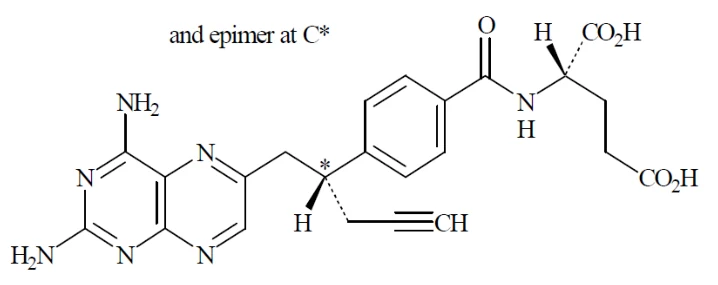
pralatrexate is a 1:1 racemic mixture of S- and R- diastereomers at the C10 position (indicated with *).
Physicochemical properties:
Pralatrexate is an off-white to yellow solid. It is soluble in aqueous solutions at pH 6.5 or higher. Pralatrexate is practically insoluble in chloroform and ethanol. The pKa values are 3.25, 4.76, and 6.17.
FOLOTYN® (pralatrexate injection) is indicated for the treatment of patients with relapsed or refractory peripheral T-cell lymphoma (PTCL), has been issued marketing authorization with conditions, pending the results of trials to verify its clinical benefit. Patients should be advised of the nature of the authorization. For further information for FOLOTYN® please refer to Health Canada’s Notice of Compliance with conditions - drug products web site.
14 CLINICAL TRIALS
14.1 Trial Design and Study Demographics
Table 8 - Summary of Patient Demographics for Clinical Trials in Relapsed and Refractory PTCL
| Study | Trial Design | Dosage, Route of Administration and Duration | Study Subject s (n) | Mean Age (Range) | Gender n (%) |
PROPEL (PDX-008) | Phase II, open-label, single-arm, multi-center, international trial | 30 mg/m2/wk for 6 weeks followed by 1 week of rest (7-week cycle) Intravenous push over 3 to 5 minutes Treatment was continued until disease progression or unacceptable toxicity | 111 | 57.7 (21-85) | M: 76 (68) F: 35 (32) |
The safety and efficacy of FOLOTYN® was evaluated in an open-label Phase II, single-arm, multi-center, international trial that enrolled 115 patients with relapsed or refractory PTCL. One hundred and eleven patients were treated with FOLOTYN® at 30 mg/m2 once weekly by IV push over 3-5 minutes for 6 weeks in 7-week cycles until disease progression or unacceptable toxicity. Of the 111 patients treated, 109 patients were evaluable for efficacy. Evaluable patients had histologically confirmed PTCL by independent central review using the Revised European American Lymphoma (REAL) World Health Organization (WHO) disease classification, and relapsed or refractory disease after at least one prior treatment.
The primary efficacy endpoint was overall response rate (complete response, complete response unconfirmed, and partial response) as assessed by the 1999 International Workshop Criteria (IWC). The key secondary efficacy endpoint was duration of response. Response assessments were scheduled at the end of cycle 1 and then every other cycle (every 14 weeks). Duration of response was measured from the first day of documented response to disease progression or death. Response and disease progression were evaluated by independent central review using the IWC.
The median age of treated patients was 59.0 years (range 21-85); 68% were male and 32% were female. Most patients were White (72%) and other racial origins included: Black (13%), Hispanic (8%), Asian (5%), other and unknown (<1% each).
Patients had an Eastern Cooperative Oncology Group (ECOG) performance status at study entry of 0 (39%), 1 (44%), or 2 (17%). The median time from initial diagnosis to study entry was 15.6 months (range 0.8 – 322.3).
As determined by histopathology central review, 53% of patients had a PTCL unspecified, 15% anaplastic large cell lymphoma, 12% angioimmunoblastic T-cell lymphoma, 11% transformed mycosis fungoides and 10% of patients other T-cell lymphoma subtypes (i.e. blastic NK NNOOCC//cc
lymphoma, T/NK-cell lymphoma nasal, extranodal peripheral T/NK-cell lymphoma unspecified or adult T-cell leukemia/lymphoma) at study entry.
The median number of prior systemic therapies was 3 (range 1-12). Approximately one-fourth of patients (24%, n = 26) did not have evidence of response to any previous therapy. Approximately two-thirds of patients (63%, n = 69) did not have evidence of response to their most recent prior therapy before entering the study and 16% (n = 18) had a relapse after autologous stem cell transplantation (ASCT). Median time from diagnosis to study entry was 15.6 months.
14.2 Study Results
Table 9 - Best Response Analysis per Independent Central Review (based on IWC)*
| Evaluable Patients (n = 109) | ||||
| n (%) | 95% CI | Median Duration of Response | Range of Duration of Response | |
| Best Response | ||||
| CR + Cru + PR | 29 (27) | 19, 36 | 287 days (9.4 months) | 1-503 days |
| CR / CRu | 9 (8) | |||
| PR | 20 (18) | |||
| SD | 24 (22) | |||
Fourteen patients went off treatment in cycle 1; 2 patients were unevaluable for response due to insufficient material provided to central review.
CR = Complete Response, CRu = Complete Response unconfirmed,
*IWC = 1999 International Workshop Criteria, PR = Partial Response, SD = Stable Disease.
The response rate according to IWC was 27% (n = 29). Nine patients (8%) achieved a CR and 20 patients (18%) achieved a PR. Twenty-four patients (22%) had stable disease (SD). The median duration of treatment was 70 days (range: 1-540). The median number of cycles administered to patients (based on cycles initiated) was 2.0 (range: 1-12).
Nineteen patients (66% of responders) responded within cycle 1. The median time to first response was 45 days (range 37-349 days).
Response rate by histopathology was similar among the subtypes, with the possible exception of angioblastic T-cell lymphoma in which there was only 1 responder out of a limited number of patients (n=13) with this histological subtype, for a responder rate for that subtype of 8%. The study was not designed to assess tumour responsiveness by histological subtype.
15 NON-CLINICAL TOXICOLOGY
General Toxicology (single and repeat-dose studies).
Single Dose Toxicity
Since pralatrexate injection is not intended for single dose administration; no single dose toxicity studies in rats were performed with pralatrexate.
An exploratory IV dose-range finding study in Beagle dogs was performed to determine appropriate doses of pralatrexate for subsequent repeat-dose studies. The pralatrexate drug product used in this study had undergone forced degradation in order to investigate the effect of increased content of 4-OH-PDX, the major degradation product of pralatrexate. The total impurity content was determined to be 5.25% (4.0% 4-OH-PDX), and therefore the adjusted doses of the parent compound (pralatrexate) were 2.8, 5.6, and 8.5 mg/kg respectively. By study day (SD) 3, all of the dogs that received pralatrexate, regardless of dose, had developed bloody diarrhea. Bloody vomiting was also observed at all doses. All pralatrexate-treated dogs became moribund and were euthanized or died between SD 4 and SD 6. Although the drug product used in this study had increased impurity and 4-OH-PDX content, the observed toxicities were likely due to pralatrexate as gastrointestinal (GI) toxicity is 1 of the primary dose-limiting toxicities for folate analogs of this class.
Repeat Dose Toxicity
Pralatrexate was administered under various dosing schedules to rats and dogs.
In 8-Week Repeat-Dose Toxicity Study in Sprague-Dawley Rats, pralatrexate-related effects in males included diarrhea, hunched posture, rough haircoat, and thin appearance at 50 mg/kg. In females, clinical signs of toxicity included thin appearance at 50 and 75 mg/kg, hunched posture and languidness at 25, 50, and 75 mg/kg, and rough haircoat and few feces at 75 mg/kg.
In 14-Week Repeat-Dose Toxicity Study in Sprague-Dawley Rats, a significant decrease in the mean absolute testes weight and in testes-to-brain weight ratio was noted in the 25 mg/kg males. A significant increase in spleen-to-body weight ratio was also noted in the 25 mg/kg males. Changes in erythroid parameters consistent with minimal anemia were observed at doses ≥ 5 mg/kg, but most erythroid parameters returned to normal after the 1-week dose-free period, suggesting that the effect was transient and reversible with cessation of treatment.
Repeat-dose toxicology studies in rats at doses up to 25 mg/kg (150 mg/m2) indicated reversible body weight loss and decreased erythroid parameters. The NOEL in rats could not be established. Toxicokinetics (TK) after the first dose and after repeat-dose administration showed a biphasic disposition pattern with an initial rapid decline, followed by a more gradual terminal decline, without evidence of drug accumulation
Pralatrexate was administered IV for two 7-week cycles (a cycle consisted of once a week dosing for 6 weeks followed by 1 dose-free week) in male and female Beagle dogs. With the exception of occasional signs associated with diarrhea, administration of pralatrexate at doses ≤ 0.3 mg/kg/week did not result in signs of toxicity. Therefore, based on the results of this study, the NOAEL for pralatrexate is 0.3 mg/kg/week (6 mg/m2/week). Vitamin B12 and folic acid supplementation appeared to be beneficial to the 1 remaining high dose female.
Repeat-dose toxicology studies in dogs at doses up to 0.7 mg/kg (14 mg/m2) showed reversible body weight loss due to gastrointestinal stress and emesis, and decreased erythroid and leukocyte parameters. All effects were reversible and no microscopic findings were noted in recovery animals.
Carcinogenicity
Carcinogenicity studies have not been performed with pralatrexate.
Genotoxicity
Pralatrexate did not cause mutations in the Ames test or the Chinese hamster ovary cell chromosome aberration assay. Nevertheless, these tests do not reliably predict genotoxicity for this class of compounds. Pralatrexate did not cause mutations in the mouse micronucleus assay.
Reproductive and Developmental Toxicology
Fertility
No fertility studies were performed with pralatrexate.
Embryo-Fetal Development
Data from embryo-fetal development studies in pregnant rats and rabbits studies indicated that pralatrexate may cause irreversible infertility in humans [see Warnings and Precautions, Embryo-Fetal Toxicity].
In a dose-range finding study in pregnant Sprague-Dawley rats, pralatrexate administered via intravenous injection at doses of 0.03, 0.1, 0.3, or 2 mg/kg/day (ie, 0.18, 0.6, 1.8, and 12 mg/m2/day) from gestation day (GD) 7 through 20 resulted in treatment-related maternal mortality, clinical signs, and decreases in body weight and food consumption parameters at doses ≥ 0.1 mg/kg/day. Treatment with pralatrexate had a detrimental effect on fetal viability at ≥ 0.1 mg/kg/day.
At 0.06 mg/kg, pralatrexate caused significant decreases in maternal body weight, body weight changes, and food consumption. At 0.06 mg/kg pralatrexate, there was a significant increase in intra-uterine deaths and post-implantation loss and lower gravid uterine weight. At 0.06 mg/kg, pralatrexate treatment resulted in significantly lower mean litter weight, mean fetal weight, and mean male and female weights per litter but there was no effect on fetal morphology (external, visceral, skeletal). Therefore, the maternal NOEL and maternal reproductive NOEL was considered to be 0.03 mg/kg/day.
In a dose-range finding study with pregnant New Zealand White rabbits, pralatrexate administered via IV injection to pregnant rabbits at doses of ≥ 1 mg/kg/day resulted in red/tan vaginal discharge, increases in the number of early resorptions, total resorptions, total post implantation loss, percent post implantation loss, body weight adjusted for gravid uterine weight, and decreases in uterine weight. Treatment with pralatrexate had an adverse effect on fetal viability at ≥ 1 mg/kg/day. Therefore, the maternal NOEL and maternal reproductive NOEL was considered to be 0.03 mg/kg/day (0.36 mg/m2/day). There was a statistically significant decrease in mean litter weight in the 1 mg/kg/day group, due to the decrease in the number of viable fetuses.