


Product Monograph - Tri-Lena 21
SUMMARY PRODUCT INFORMATION
| Route of Administration | Dosage Form / Strength | All Nonmedicinal Ingredients |
| Oral | Tablets / 0.180 mg norgestimate and 0.025 mg ethinyl estradiol 0.215 mg norgestimate and 0.025 mg ethinyl estradiol 0.250 mg norgestimate and 0.025 mg ethinyl estradiol | Pr Tri-Lena™ Lo 21 : Active Tablets (with hormones): D&C Yellow No. 10 (0.180/0.025 mg & 0.215/0.025 mg tablets only), FD&C Yellow No. 6, lactose, magnesium stearate, microcrystalline cellulose, polacrilin potassium, povidone, and vitamin E. Pr Tri-Lena™ Lo 28 : Active Tablets (with hormones): D&C Yellow No. 10 (0.180/0.025 mg & 0.215/0.025 mg tablets only), FD&C Yellow No. 6, lactose, magnesium stearate, microcrystalline cellulose, polacrilin potassium, povidone, and vitamin E. Placebo Tablets (no hormones): D&C Yellow No. 10, FD&C Blue No. 2, lactose, magnesium stearate, and microcrystalline cellulose. |
INDICATIONS AND CLINICAL USE
Tri-Lena™ Lo tablets are indicated for conception control.
In an active controlled clinical trial including 1,673 subjects completing 11,003 cycles of norgestimate / ethinyl estradiol use, a total of 20 pregnancies were reported among norgestimate / ethinyl estradiol users. This represents an overall use-efficacy (typical user efficacy) pregnancy rate of 2.36 per 100 women-years of use. This figure for Pearl Index is slightly higher than other Pearl Indices for similar products marketed in Canada and may be attributed to differences in clinical trial design.
| Table 1: Percentage of Women Experiencing an Unintended Pregnancy During the First Year of Typical Use and the First Year of Perfect Use of Contraception and the Percentage Continuing Use at the End of the First Year | |||||||
|---|---|---|---|---|---|---|---|
% of Women Experiencing an Unintended Pregnancy Within the First Year of Use | % of Women Continuing Use at One Year3 | ||||||
| Method | Typical Use1 | Perfect Use2 | |||||
| Chance4 | 85 | 85 | |||||
| Spermicides5 | 26 | 6 | 40 | ||||
| Periodic Abstinence | 25 | ||||||
| Calendar | 9 | ||||||
| Ovulation Method | 3 | ||||||
| Sympto-Thermal6 | 2 | ||||||
| Post-Ovulation | 1 | ||||||
| Withdrawal | 19 | 4 | |||||
| Cap7 | |||||||
| Parous Women | 40 | 26 | 42 | ||||
| Nulliparous Women | 20 | 9 | 56 | ||||
| Sponge | |||||||
| Parous Women | 40 | 20 | 42 | ||||
| Nulliparous Women | 20 | 9 | 56 | ||||
| Diaphragm7 | 20 | 6 | 56 | ||||
| Condom8 | |||||||
| Female (Reality) | 21 | 5 | 56 | ||||
| Male | 14 | 3 | 61 | ||||
| Pill | 5 | ||||||
| Progestin Only | 0.5 | ||||||
| Combined | 0.1 | ||||||
| IUD | |||||||
| Progesterone T | 2.0 | 1.5 | 81 | ||||
| CopperT380A | 0.8 | 0.6 | 78 | ||||
| LNg 20 | 0.1 | 0.1 | 81 | ||||
| Table 1: Percentage of Women Experiencing an Unintended Pregnancy During the First Year of Typical Use and the First Year of Perfect Use of Contraception and the Percentage Continuing Use at the End of the First Year |
|---|
% of Women Experiencing an Unintended Pregnancy Within the First Year of Use | % of Women Continuing Use at One Year3 |
|---|
| Method | Typical Use1 | Perfect Use2 | |
|---|---|---|---|
| Depo-Provera | 0.3 | 0.3 | 70 |
| Female Sterilization | 0.5 | 0.5 | 100 |
| Male Sterilization | 0.15 | 0.10 | 100 |
Source: Trussell J. Contraceptive efficacy. In Hatcher RA, Trussell J, Stewart F, Cates W, Stewart GK, Kowel D, Guest F, Contraceptive Technology: Seventeenth Revised Edition. New York NY: Irvington Publishers, 1998.
1 Among typical couples who initiate use of a method (not necessarily for the first time), the percentage who experience an accidental pregnancy during the first year if they do not stop for any other reason.
2 Among couples who initiate use of a method (not necessarily for the first time) and who use it perfectly (both consistently and correctly), the percentage who experience an accidental pregnancy during the first year if they do not stop use for any other reason.
3 Among couples attempting to avoid pregnancy, the percentage who continue to use a method for one year.
4 The percentages of women becoming pregnant in columns (2) and (3) are based on data from populations where contraception is not used and from women who cease using contraception in order to become pregnant. Among such populations, about 89% become pregnant within one year. This estimate was lowered slightly (to 85%) to represent the percent who would become pregnant within one year among women now relying on reversible methods of contraception if they abandoned contraception altogether.
5 Foams, creams, gels, vaginal suppositories, and vaginal films.
6 Cervical mucus (ovulation) method supplemented by calendar in the pre-ovulatory and basal body temperature in the post-ovulatory phases.
7 With spermicidal cream or jelly.
8 Without spermicides.
CONTRAINDICATIONS
- History of or actual thrombophlebitis or thromboembolic disorders
- Known thrombophilic conditions
- History of or actual cerebrovascular disorders
- History of or actual myocardial infarction or coronary arterial disease
- History of or actual prodromi of a thrombosis (e.g., transient ischemic attack, angina pectoris)
- Active liver disease or history of or actual benign or malignant liver tumours
- Known or suspected carcinoma of the breast
- Carcinoma of the endometrium or other known or suspected estrogen-dependent neoplasia
- Undiagnosed abnormal vaginal bleeding
- Any ocular lesion arising from ophthalmic vascular disease, such as partial or complete loss of vision or defect in visual fields
- When pregnancy is suspected or diagnosed
- Valvular heart disease with complications
- Steroid-dependent jaundice, cholestatic jaundice or history of jaundice of pregnancy
- Current or history of migraine with focal aura
- History of or actual pancreatitis if associated with severe hypertriglyceridemia.
Presence of severe or multiple risk factor(s) for arterial or venous thrombosis:
- persistent blood pressure values ≥160 mm Hg systolic or ≥100 mm Hg diastolic
- hereditary or acquired predisposition for venous or arterial thrombosis, such as Factor V Leiden mutation and activated protein C (APC-) resistance, antithrombin-III-deficiency, protein C deficiency, protein S deficiency, hyperhomocysteinemia (e.g., due to MTHFR C677T, A1298 mutations), prothrombin mutation G20210A, and antiphospholipid-antibodies (anticardiolipin antibodies, lupus anticoagulant)
- severe dyslipoproteinemia
- over age 35 and smoke
- diabetes mellitus with vascular involvement
- major surgery associated with an increased risk of postoperative thromboembolism
- prolonged immobilization
- Hypersensitivity to this drug or to any ingredient in the formulation or component of the container. For a complete listing, see DOSAGE FORMS, COMPOSITION AND PACKAGING section of the product monograph.
WARNINGS AND PRECAUTIONS
General
Discontinue Medication at the Earliest Manifestation of the Following:
- A. Thromboembolic and Cardiovascular Disorders such as thrombophlebitis, pulmonary embolism, cerebrovascular disorders, myocardial ischemia, mesenteric thrombosis, and retinal thrombosis.
- B. Conditions that Predispose to Venous Stasis and to Vascular Thrombosis (e.g. immobilization after accidents or confinement to bed during long-term illness). Other non-hormonal methods of contraception should be used until regular activities are resumed. For use of oral contraceptives when surgery is contemplated, see WARNINGS AND PRECAUTIONS, Peri-Operative Considerations.
- C. Visual Defects – Partial or Complete
Serious Warnings and Precautions
Cigarette smoking increases the risk of serious cardiovascular events from combination oral contraceptive use. This risk increases with age, particularly in women over 35 years of age, and with the number of cigarettes smoked. For this reason, combination oral contraceptives, including Tri-Lena™ Lo, should not be used by women who are over 35 years of age and smoke (see Cardiovascular section below).
Oral contraceptives DO NOT PROTECT against sexually transmitted infections (STIs) including HIV/AIDS. For protection against STIs, it is advisable to use latex or polyurethane condoms IN COMBINATION WITH oral contraceptives.
- D. Papilledema or Ophthalmic Vascular Lesions
- E. Severe Headache of Unknown Etiology or Worsening of Pre-existing Migraine Headache
- F. Increase in Epileptic Seizures
The following information is provided from studies of combination oral contraceptives (COCs).
The use of COCs is associated with increased risks of several serious conditions including myocardial infarction, thromboembolism, stroke, hepatic neoplasia and gallbladder disease, although the risk of serious morbidity and mortality is small in healthy women without underlying risk factors. The risk of morbidity and mortality increases significantly if associated with the presence of other risk factors such as hypertension, hyperlipidemias, obesity and diabetes. Other examples of medical conditions which have been associated with adverse circulatory events are: systemic lupus erythematosus1, hemolytic uremic syndrome2-4, chronic inflammatory bowel disease (Crohn’s disease or ulcerative colitis)5, sickle cell disease6, valvular heart disease and atrial fibrillation7,8.
The following conditions have been reported to occur or deteriorate with both pregnancy and COC use, although a direct association with COCs has not been firmly established: porphyria9, systemic lupus erythematosus10, hemolytic uremic syndrome11, Sydenham’s chorea12,13, herpes gestationis14,15 and otosclerosis-related hearing loss16.
The information contained in this section is principally from studies carried out in women who used COCs with higher formulations of estrogen and progestogens than those in common use today. The effect of long-term use of COCs with lower doses of both estrogen and progestogen administered orally remains to be determined.
Carcinogenesis and Mutagenesis
Breast Cancer
Increasing age and a strong family history are the most significant risk factors for the development of breast cancer. Other established risk factors include obesity, nulliparity and late age for first full-term pregnancy. The identified groups of women that may be at increased risk of developing breast cancer before menopause are long-term users of oral contraceptives (more than eight years) and starters at an early age. In a few women, the use of oral contraceptives may accelerate the growth of an existing but undiagnosed breast cancer. Since any potential increased risk related to oral contraceptive use is small, there is no reason to change prescribing habits at present.
Women receiving oral contraceptives should be instructed in self-examination of their breasts. Their physicians should be notified whenever any masses are detected. A yearly clinical breast examination is also recommended because, if a breast cancer should develop, drugs that contain estrogen may cause a rapid progression.
Cervical Cancer
The most important risk factor for cervical cancer is persistent human papilloma virus (HPV) infection. Some epidemiological studies have indicated that long-term use of COCs may further contribute to this increased risk but there continues to be controversy about the extent to which this finding is attributable to confounding effects, e.g., cervical screening and sexual behaviour including use of barrier contraceptives.
Hepatocellular Carcinoma
Hepatocellular carcinoma may be associated with oral contraceptives. The risk appears to increase with duration of hormonal contraceptive use. However, the attributable risk (the excess incidence) of liver cancers in oral contraceptive users is extremely small. See TOXICOLOGY for discussion on animal data.
Cardiovascular
Predisposing Factors for Coronary Artery Disease
Cigarette smoking increases the risk of serious cardiovascular events and mortality from combination oral contraceptive (COC) use. This risk increases with age, particularly in women over 35 years of age, and with the number of cigarettes smoked. For this reason, COCs, including Tri-Lena™ Lo, should not be used by women who are over 35 years of age and smoke.
Other women who are independently at high risk for cardiovascular disease include those with diabetes, hypertension, abnormal lipid profile, or a family history of these. Whether oral contraceptives accentuate this risk is unclear.
In low-risk, non-smoking women of any age, the benefits of oral contraceptive use outweigh the possible cardiovascular risks associated with low-dose formulations. Consequently, oral contraceptives may be prescribed for these women up to the age of menopause.
Hypertension
Patients with essential hypertension whose blood pressure (BP) is well controlled may be given oral contraceptives but only under close supervision. If a significant and persistent elevation of blood pressure in previously normotensive or hypertensive subjects occurs at any time during the administration of the drug, cessation of medication is necessary and an alternate method of contraception should be prescribed (see CONTRAINDICATIONS).
An increase in BP has been reported in women taking COCs, and this increase is more likely in older women and with extended duration of use.
Endocrine and Metabolism
Diabetes
Current low-dose oral contraceptives exert minimal impact on glucose metabolism. Diabetic patients, or those with a family history of diabetes, should be observed closely to detect any worsening of carbohydrate metabolism. Patients predisposed to diabetes who can be kept under close supervision may be given oral contraceptives. Young diabetic patients whose disease is of recent origin, well-controlled, and not associated with hypertension or other signs of vascular disease such as ocular fundal changes, should be monitored more frequently while using oral contraceptives.
Lipid and Other Metabolic Effects
A small proportion of women will have adverse lipid changes while on oral contraceptives. Alternative contraception should be used in women with uncontrolled dyslipidemias (see also CONTRAINDICATIONS). Elevations of plasma triglycerides may lead to pancreatitis and other complications.
Gastrointestinal
Published epidemiological studies indicate a possible association of combination oral contraceptives use and the development of Crohn’s disease and ulcerative colitis, although this has not been firmly established17-22.
Genitourinary
Vaginal Bleeding
Persistent irregular vaginal bleeding requires assessment to exclude underlying pathology.
Fibroids
Patients with fibroids (leiomyomata) should be carefully observed. Sudden enlargement, pain, or tenderness requires discontinuation of the use of oral contraceptives.
Hematologic
Venous and Arterial Thrombosis and Thromboembolism
Venous thrombosis and thromboembolism
Epidemiological studies have shown that the incidence of venous thromboembolism (VTE) in users of oral contraceptives with low estrogen content (<50 μg ethinyl estradiol) ranges from about 20 to 40 cases per 100,000 women-years, but this risk estimate varies according to the progestogen. This compares with 5 to 10 cases per 100,000 women-years for non-users.
The use of any combined oral contraceptive COC carries an increased risk of VTE compared with no use. The excess risk of VTE is highest during the first year a woman ever uses a COC or restarts (following a 4-week or greater pill-free interval) the same of a different COC. The increased risk is less than the risk of VTE associated with pregnancy, which is estimated as 60 cases per 100,000 pregnancies. VTE is fatal in 1-2% of cases23.
If a hereditary or acquired predisposition for VTE is suspected, the woman should be referred to a specialist for advice before deciding on any COC use.
Arterial thrombosis and thromboembolism
The use of COCs increases the risk of arterial thrombotic and thromboembolic events. Reported events include myocardial infarction and cerebrovascular events (ischemic and hemorrhagic stroke and transient ischemic attack).
The risk of arterial thrombotic and thromboembolic events is further increased in women with underlying risk factors. Caution must be exercised when prescribing COCs for women with risk factors for arterial thrombotic and thromboembolic events.
Other Risk Factors for Venous or Arterial Thromboembolism or of a Cerebrovascular Accident
Other generalized risk factors for venous or arterial thromboembolism include but are not limited to age, severe obesity (body mass index >30 kg/m2), a personal history, a positive family history (the occurrence of VTE/ATE in a direct relative at a relatively early age may indicate genetic predisposition) and systemic lupus erythematosus. If a hereditary or acquired predisposition for venous or arterial thromboembolism is suspected, the woman should be referred to a specialist for advice before deciding on any COC use. The risk of VTE/ATE may be temporarily increased with prolonged immobilization, major surgery, or trauma. In these situations, it is advisable to discontinue COC use (in the case of elective surgery at least four weeks in advance) and not to resume COC use until 2 weeks after complete remobilization. Also, patients with varicose veins and leg cast should be closely supervised. Other risk factors may include smoking (with heavier smoking and increasing age, the risk further increases, especially in women over 35 years of age), dyslipoproteinemia, hypertension, migraine, valvular heart disease, and atrial fibrillation.
Biochemical factors that may be indicative of hereditary or acquired predisposition for venous or arterial thrombosis include Activated Protein C (APC) resistance, hyperhomocysteinemia, antithrombin-III deficiency, protein C deficiency, protein S deficiency, and antiphospholipid antibodies (anticardiolipin antibodies, lupus anticoagulant).
Postpartum Period
Since the immediate postpartum period is also associated with an increased risk of thromboembolism, oral contraceptives should be started no earlier than 4 weeks after delivery in women who elect not to breastfeed (see DOSAGE AND ADMINISTRATION, Special Notes on Administration).
Post-abortion/Post-miscarriage
After an induced or spontaneous abortion that occurs at or after 20 weeks gestation, hormonal contraceptives may be started either on Day 21 post-abortion or on the first day of the first spontaneous menstruation, whichever comes first (see DOSAGE AND ADMINISTRATION Special Notes on Administration).
Hepatic/Biliary/Pancreatic
Acute or chronic disturbances of liver function may necessitate the discontinuation of COC use until markers of liver function return to normal.
Jaundice
Patients who have had jaundice, including a history of cholestatic jaundice during pregnancy, should be given oral contraceptives with great care and under close observation. Oral contraceptive-related cholestasis has been described in women with a history of pregnancy-related cholestasis. Women with a history of cholestasis may have the condition recur with subsequent hormonal contraceptive use.
The development of severe generalized pruritus or icterus requires that the medication be withdrawn until the problem is resolved.
If a patient develops jaundice that proves to be cholestatic in type, the use of oral contraceptives should not be resumed. In patients taking oral contraceptives, changes in the composition of the bile may occur and an increased incidence of gallstones has been reported.
Gallbladder Disease
Patients taking oral contraceptives have a greater risk of developing gallbladder disease requiring surgery within the first year of use. The risk may double after four or five years of use. Gallbladder disease including cholecystitis and cholelithiasis has been reported with oral contraceptive use.
Hepatic Nodules
Hepatic nodules (adenoma and focal nodular hyperplasia) have been reported, particularly in long-term users of oral contraceptives. Although these lesions are extremely rare, they have caused fatal intra-abdominal hemorrhage and should be considered in women with an abdominal mass, acute abdominal pain, or evidence of intra-abdominal bleeding.
Immune
Angioedema
Exogenous estrogens may induce or exacerbate symptoms of angioedema, in particular in women with hereditary angioedema24-26.
Neurologic
Migraine and Headache
The onset or exacerbation of migraine or the development of headache of a new pattern that is recurrent, persistent or severe, requires discontinuation of oral contraceptives and evaluation of the cause. Women with migraine headaches who take oral contraceptives may be at increased risk of stroke (see CONTRAINDICATIONS).
Ophthalmologic
Ocular Disease
Patients who are pregnant or are taking oral contraceptives, may experience corneal edema that may cause visual disturbances and changes in tolerance to contact lenses, especially of the rigid type. Soft contact lenses usually do not cause disturbances. If visual changes or alterations in tolerance to contact lenses occur, temporary or permanent cessation of wear may be advised.
Ocular Lesions
There have been clinical reports of retinal thrombosis associated with the use of oral contraceptives. Oral contraceptives should be discontinued if there is unexplained transient, partial or complete loss of vision; onset of proptosis or diplopia; papilledema or retinal vascular lesions. Appropriate diagnostic and therapeutic measures should be undertaken immediately.
Peri-Operative Considerations
Thromboembolic Complications - Post-surgery
A two- to four-fold increase in relative risk of postoperative thromboembolic complications has been reported with the use of hormonal contraceptives. The relative risk of venous thrombosis in women who have predisposing conditions is twice that of women without such medical conditions.
Hormonal contraceptives should be discontinued and an alternative method substituted at least four weeks prior to elective surgery of a type associated with an increase in risk of thromboembolism and during prolonged immobilization. Hormonal contraceptives should not be resumed until the first menstrual period after hospital discharge following surgery or following prolonged immobilization.
Psychiatric
Emotional Disorders
Patients with a history of emotional disturbances, especially the depressive type, may be more prone to have a recurrence of depression while taking oral contraceptives. In cases of a serious recurrence, a trial of an alternative method of contraception should be made which may help to clarify the possible relationship. Women with premenstrual syndrome (PMS) may have a varied response to oral contraceptives, ranging from symptomatic improvement to worsening of the condition.
Sexual Function/Reproduction
Amenorrhea
In the event of amenorrhea, pregnancy should be ruled out.
In some women, withdrawal bleeding may not occur during the tablet-free interval. If the COC has been taken according to directions, it is unlikely that the woman is pregnant. However, if the COC has not been taken according to directions prior to the first missed withdrawal bleed, or if two withdrawal bleeds are missed, pregnancy must be ruled out before COC use is continued.
Women having a history of oligomenorrhea, secondary amenorrhea, or irregular cycles may remain anovulatory or become amenorrheic following discontinuation of estrogen-progestin combination therapy.
Amenorrhea, especially if associated with breast secretion that continues for six months or more after withdrawal, warrants a careful assessment of hypothalamic-pituitary function.
Return to Fertility
After discontinuing oral contraceptive therapy, the patient should delay pregnancy until at least one normal spontaneous cycle has occurred in order to date the pregnancy. An alternative contraceptive method should be used during this time.
Reduced Efficacy
The efficacy of COCs may be reduced in the event of missed tablets, gastro-intestinal disturbances or concomitant medication (see DRUG INTERACTIONS).
Skin
Chloasma may occasionally occur, especially in women with a history of chloasma gravidarum. Women with a tendency to chloasma should avoid exposure to the sun or ultraviolet radiation while taking this preparation. Chloasma is often not fully reversible.
Special Populations
Pregnant Women:
Tri-Lena™ Lo is contraindicated during pregnancy. If pregnancy occurs during treatment with Tri-Lena™ Lo, further intake must be stopped. However, if conception accidentally occurs while taking the pill, there is no conclusive evidence that the estrogen and progestin contained in the oral contraceptive will damage the developing child.
Nursing Women:
Contraceptive steroids and/or their metabolites may be excreted in breast milk. In addition, combination hormonal contraceptives given in the postpartum period may interfere with lactation by decreasing the quantity and quality of breast milk. If possible, the nursing mother should be advised not to use Tri-Lena™ Lo or other combination hormonal contraceptives, but to use other forms of contraception until the child is fully weaned.
Pediatrics (< 16 years of age):
Safety and efficacy of Norgestimate and Ethinyl Estradiol Tablets have been established in women of reproductive age. Use of this product before menarche is not indicated.
Geriatrics (> 65 years of age):
Tri-Lena™ Lo is not indicated for use in post-menopausal women.
Monitoring and Laboratory Tests
Physical Examination and Follow-up
Before oral contraceptives are used, a thorough history and physical examination should be performed, including a blood pressure determination and the family case history carefully noted. In addition, disturbances of the clotting system must be ruled out if any members of the family have suffered from thromboembolic diseases (e.g., deep vein thrombosis, stroke, myocardial infarcation) as a young age. Breasts, liver, extremities, and pelvic organs should be examined. A Papanicolaou (PAP) smear should be taken if the patient has been sexually active.
The first follow-up visit should be three months after oral contraceptives are prescribed. Thereafter, examinations should be performed at least once a year, or more frequently if indicated. At each annual visit, examination should include those procedures that were done at the initial visit as outlined above or per recommendations of the Canadian Task Force on Periodic Health Examination. Their suggestion was that, for women who had two consecutive negative PAP smears, screening could be continued every three years up to the age of 69.
Tissue Specimens
Pathologists should be advised of oral contraceptive therapy when specimens obtained from surgical procedures and PAP smears are submitted for examination.
ADVERSE REACTIONS
Adverse Drug Reaction Overview
An increased risk of the following serious adverse reactions has been associated with the use of oral contraceptives:
Thrombophlebitis and venous thrombosis with or without embolism
Arterial thromboembolism
Pulmonary embolism
Mesenteric thrombosis
Neuro-ocular lesions (e.g., retinal thrombosis)
Myocardial infarction
Cerebral thrombosis
Cerebral hemorrhage
Hypertension
Benign hepatic tumours
Gallbladder disease
The following adverse reactions also have been reported in patients receiving oral contraceptives: Nausea and vomiting, usually the most common adverse reaction, occurs in approximately 10 per cent or less patients during the first cycle. Other reactions, as a general rule, are seen less frequently or only occasionally, as follows:
Cardiovascular System: Edema
Slight rise of blood pressure
Genital Tract: Breakthrough bleeding
Spotting
Change in menstrual flow
Dysmenorrhea
Amenorrhea during and after treatment
Vaginal candidiasis
Premenstrual-like syndrome
Temporary infertility after discontinuance of treatment
Vaginitis
Endocervical hyperplasias
Increase in cervical erosion and secretion
Neoplasms: Malignant hepatic tumours
Cervical cancer
Increase in size of uterine leiomyomata
Breast cancer
Breast: Pain, tenderness, enlargement, and secretion
Possible diminution in lactation when given immediately postpartum
Skin and Subcutaneous Tissue: Chloasma or melasma which may persist
Rash (allergic)
Hirsutism
Loss of scalp hair
Erythema multiforme
Erythema nodosum
Raynaud's phenomenon
Hemorrhagic eruption
Porphyria
Acne
Seborrhea
Pemphigoid (herpes gestationis)
Urticaria
Angioedema
CNS: Migraine
Depression
Headache
Nervousness
Dizziness
Changes in libido
Chorea
Metabolic: Reduced tolerance to carbohydrates
Change in weight (increase or decrease)
Changes in appetite
Gastro-intestinal Tract: Gastrointestinal symptoms (such as abdominal cramps and bloating)
Colitis
Pancreatitis
Hepatobiliary: Cholestatic jaundice
Budd-Chiari syndrome
Eyes: Intolerance to contact lenses
Change in corneal curvature (steepening)
Cataracts
Optic neuritis
Retinal thrombosis
Urinary: Impaired renal function
Hemolytic uremic syndrome
Cystitis-like syndrome
Others: Rhinitis
Auditory disturbances
Clinical Trial Adverse Drug Reactions
Because clinical trials are conducted under very specific conditions the adverse reaction rates observed in the clinical trials may not reflect the rates observed in practice and should not be compared to the rates in the clinical trials of another drug. Adverse drug reaction information from clinical trials is useful for identifying drug-related adverse events and for approximating rates.
The safety of norgestimate / ethinyl estradiol was evaluated in 1723 subjects who participated in a randomized, partially blinded, multicentre, active-controlled clinical trial of norgestimate / ethinyl estradiol for contraception. This trial examined healthy, nonpregnant volunteers aged 18-
45 (nonsmoker if 35-45 years of age), who were sexually active with regular coitus. Subjects were followed for up to 13 cycles. The most frequent adverse reactions reported in ≥5% of subjects were headache, nausea, dysmenorrhea, abdominal pain, breast tenderness, muscle spasms, back pain and acne. Adverse reactions reported by ≥1% of norgestimate / ethinyl estradiol-treated subjects in this trial are shown in Table 2.
| Table 2: Adverse Drug Reactions Reported by ≥ 1% of Norgestimate / Ethinyl Estradiol-treated Subjects in 1 Blinded1 Clinical Trial of Norgestimate / Ethinyl Estradiol | |||
|---|---|---|---|
System/Organ Class Adverse Reaction | % (N = 1723) | ||
| Infections and Infestations | |||
| Urinary tract infection | 4.5 | ||
| Vulvovaginal mycotic infection | 2.0 | ||
| Vaginal infection | 1.6 | ||
| Immune System Disorders | |||
| Hypersensitivity | 1.4 | ||
| Metabolism and Nutrition Disorders | |||
| Increased appetite | 1.0 | ||
| Psychiatric Disorders | |||
| Depression | 3.1 | ||
| Mood altered | 2.7 | ||
| Mood swings | 2.0 | ||
| Insomnia | 1.5 | ||
| Emotional disorder | 1.0 | ||
| Nervous System Disorders | |||
| Headache | 29.2 | ||
| Dizziness | 3.4 | ||
| Migraine | 2.1 | ||
| Gastrointestinal Disorders | |||
| Nausea | 14.9 | ||
| Abdominal pain2 | 9.2 | ||
| Diarrhea | 3.3 | ||
| Vomiting | 3.5 | ||
| Abdominal distension | 2.8 | ||
| Skin and Subcutaneous Tissue Disorders | |||
| Acne | 5.1 | ||
| Rash | 1.2 | ||
| Table 2: Adverse Drug Reactions Reported by ≥ 1% of Norgestimate / Ethinyl Estradiol-treated Subjects in 1 Blinded1 Clinical Trial of Norgestimate / Ethinyl Estradiol |
|---|
System/Organ Class Adverse Reaction | % (N = 1723) |
|---|---|
| Musculoskeletal and Connective Tissue Disorders | |
| Muscle spasms | 7.5 |
| Back pain | 5.2 |
| Myalgia | 1.5 |
| Pain in extremity | 1.0 |
| Reproductive System and Breast Disorders | |
| Dysmenorrhea | 9.2 |
| Breast tenderness | 8.1 |
| Cervical dysplasia | 1.9 |
| Vaginal discharge | 1.5 |
| Breast pain | 1.3 |
| Vulvovaginal pruritus | 1.2 |
| General Disorders and Administration Site Conditions | |
| Fatigue | 2.1 |
| Irritability | 1.9 |
| Investigations | |
| Weight increased | 2.4 |
1 Subjects were randomized to receive either one of three blinded regimens of Norgestimate/Ethinyl Estradiol or an open-label control regimen of Norethindrone Acetate/Ethinyl Estradiol 1/20.
2 The incidence for the term Abdominal pain represents the combined incidence for the following preferred terms: Abdominal pain, Abdominal discomfort, Abdominal pain lower, and Abdominal pain upper and Abdominal tenderness.
Additional adverse reactions reported by <1% of norgestimate / ethinyl estradiol-treated subjects in this clinical trial are shown in Table 3.
| Table 3: Adverse Drug Reactions Reported by < 1% of Norgestimate / Ethinyl Estradiol-treated Subjects in 1 Blinded Clinical Trial of Norgestimate / Ethinyl Estradiol | |||
|---|---|---|---|
System/Organ Class Adverse Reaction | % (N = 1723) | ||
| Neoplasms benign, malignant and unspecified (incl. cysts and polyps) | |||
| Cervix carcinoma in situ | 0.1 | ||
| Metabolism and Nutrition Disorders | |||
| Fluid retention | 0.5 | ||
| Table 3: Adverse Drug Reactions Reported by < 1% of Norgestimate / Ethinyl Estradiol-treated Subjects in 1 Blinded Clinical Trial of Norgestimate / Ethinyl Estradiol |
|---|
System/Organ Class Adverse Reaction | % (N = 1723) |
|---|---|
| Decreased appetite | 0.2 |
| Hypertriglyceridemia | 0.1 |
| Appetite disorder | 0.1 |
| Psychiatric Disorders | |
| Anxiety | 0.9 |
| Libido decreased | 0.9 |
| Nervousness | 0.2 |
| Depressed mood | 0.2 |
| Aggression | 0.1 |
| Nervous System Disorders | |
| Paresthesia | 0.5 |
| Crying | 0.2 |
| Syncope | 0.2 |
| Convulsion | 0.1 |
| Eye Disorders | |
| Visual impairment | 0.3 |
| Contact lens intolerance | 0.1 |
| Dry eye | 0.1 |
| Ear and Labyrinth Disorders | |
| Vertigo | 0.2 |
| Cardiac Disorders | |
| Palpitations | 0.2 |
| Vascular Disorders | |
| Hot flush | 0.8 |
| Hypertension | 0.3 |
| Respiratory, Thoracic and Mediastinal Disorders | |
| Dyspnea | 0.3 |
| Gastrointestinal Disorders | |
| Flatulence | 0.7 |
| Constipation | 0.6 |
| Skin and Subcutaneous Tissue Disorders | |
| Pruritus | 0.5 |
| Table 3: Adverse Drug Reactions Reported by < 1% of Norgestimate / Ethinyl Estradiol-treated Subjects in 1 Blinded Clinical Trial of Norgestimate / Ethinyl Estradiol |
|---|
System/Organ Class Adverse Reaction | % (N = 1723) |
|---|---|
| Urticaria | 0.5 |
| Alopecia | 0.4 |
| Hyperhidrosis | 0.3 |
| Skin discoloration | 0.2 |
| Erythema nosodum | 0.1 |
| Hair growth abnormal | 0.1 |
| Reproductive System and Breast Disorders | |
| Premenstrual syndrome | 0.9 |
| Ovarian cyst | 0.8 |
| Vulvovaginal dryness | 0.7 |
| Metrorrhagia | 0.6 |
| Breast Swelling | 0.5 |
| Menorrhagia | 0.5 |
| Uterine spasm | 0.5 |
| Breast enlargement | 0.4 |
| Pelvic pain | 0.3 |
| Coital bleeding | 0.2 |
| Vaginal hemorrhage | 0.2 |
| Breast discharge | 0.2 |
| Breast discomfort | 0.2 |
| Nipple pain | 0.2 |
| Breast cyst | 0.1 |
| Amenorrhea | 0.1 |
| Genital discharge | 0.1 |
| Menstrual discomfort | 0.1 |
| Menstrual disorder | 0.1 |
| General Disorders and Administration Site Conditions | |
| Chest pain | 0.6 |
| Edema peripheral | 0.3 |
| Edema | 0.1 |
| Investigations | |
| Blood pressure increased | 0.4 |
| Table 3: Adverse Drug Reactions Reported by < 1% of Norgestimate / Ethinyl Estradiol-treated Subjects in 1 Blinded Clinical Trial of Norgestimate / Ethinyl Estradiol |
|---|
System/Organ Class Adverse Reaction | % (N = 1723) |
|---|---|
| Weight decreased | 0.2 |
| Blood cholesterol increased | 0.1 |
Post-Market Adverse Drug Reactions
Adverse drug reactions first identified during post-marketing experience with norgestimate/ethinyl estradiol (NGM/EE) are included in Table 4.
| Table 4: Adverse Drug Reactions Identified During Post-Marketing Experience with NGM/EE from Spontaneous Reports |
|---|
| Infections and Infestations |
| Urinary tract infection |
| Neoplasms Benign, Malignant and Unspecified (Incl. Cysts and Polyps) |
| Breast cancer, cervical dysplasia, benign breast neoplasm, hepatic adenoma, focal nodular hyperplasia, fibroadenoma of breast, breast cyst |
| Immune System Disorders |
| Hypersensitivity |
| Metabolism and Nutrition Disorders |
| Dyslipidaemia |
| Psychiatric Disorders |
| Anxiety, insomnia |
| Nervous System Disorders |
| Cerebrovascular accident, syncope, convulsion, parasthesia, dizziness |
| Eye Disorders |
| Retinal vascular thrombosis, visual impairment, dry eye, contact lens intolerance |
| Ear and Labyrinth Disorders |
| Vertigo |
| Cardiac Disorders |
| Myocardial infarction, Tachycardia, Palpitations |
| Vascular Disorders |
| Arterial thromboembolism, Deep vein thrombosis, Hot flush |
| Respiratory, Thoracic and Mediastinal Disorders |
| Pulmonary embolism, Dyspnea |
| Gastrointestinal Disorders |
| Table 4: Adverse Drug Reactions Identified During Post-Marketing Experience with NGM/EE from Spontaneous Reports |
|---|
| Pancreatitis, Abdominal distension, Diarrhea, Constipation |
| Hepatobiliary Disorders |
| Hepatitis |
| Skin and Subcutaneous Tissue Disorders |
| Angioedema, Erythema nodosum, Hirsutism, Night sweats, Hyperhidrosis, Photosensitivity reaction, Urticaria, Pruritus, Acne |
| Musculoskeletal, Connective Tissue, and Bone Disorders |
| Muscle spasms, Pain in extremity, Myalgia, Back pain |
| Reproductive System and Breast Disorders |
| Ovarian cyst, Suppressed lactation, Vulvovaginal dryness |
| General Disorders and Administration Site Conditions |
| Chest pain, Asthenic conditions |
DRUG INTERACTIONS
Overview
The concurrent administration of oral contraceptives with other drugs may result in an altered response to either agent (see Table 5 and Table 6). Reduced effectiveness of the oral contraceptive, should it occur, is more likely with the low-dose formulations.
It is important to ascertain all drugs that a patient is taking, both prescription and non-prescription, including herbal preparations/remedies, before oral contraceptives are prescribed.
Physicians are advised to consult the labelling of concurrently used drugs to obtain further information about interactions with hormonal contraceptives or the potential for enzyme alterations and the possible need to adjust dosages.
Refer to Oral Contraceptives 1994 (Chapter 8), Health Canada, for other possible drug interactions with OCs.
Drug-Drug Interactions
Interactions between oral contraceptives and other drugs have been reported in the literature. No formal drug-drug interaction studies were conducted with norgestimate / ethinyl estradiol.
| Table 5: Drugs That May Decrease the Efficacy of Oral Contraceptives | ||||||
|---|---|---|---|---|---|---|
| Class of Compound | Drug | Proposed Mechanism | Suggested Management | |||
| Antacids | Decreased intestinal absorption of progestins. | Dose two hours apart. | ||||
| Anticonvulsants | Carbamazepine Eslicarbazepine acetate Ethosuximide Felbamate Lamotrigine Oxcarbazepine Phenobarbital Phenytoin Primidone Rufinamide Topiramate | Induction of hepatic microsomal enzymes. Rapid metabolism of estrogen and increased binding of progestin and ethinyl estradiol to SHBG. | Use higher dose OCs (50 Φ g ethinyl estradiol), another drug or another method. | |||
| Antibiotics | Ampicillin Cotrimoxazole Penicillin | Enterohepatic circulation disturbance, intestinal hurry. | For short course, use additional method or use another drug. For long course, use another method. | |||
Rifabutin Rifampin | Increased metabolism of progestins. Suspected acceleration of estrogen metabolism. | Use another method. | ||||
Chloramphenicol Metronidazole Neomycin Nitrofurantoin Sulfonamides Tetracyclines | Induction of hepatic microsomal enzymes. Also disturbance of enterohepatic circulation. | For short course, use additional method or use another drug. For long course, use another method. | ||||
| Troleandomycin | May retard metabolism of OCs, increasing the risk of cholestatic jaundice. | |||||
| Antifungals | Griseofulvin | Stimulation of hepatic metabolism of contraceptive steroids may occur. | Use another method. | |||
Cholesterol Lowering Agents | Cholestyramine | May result in hastened elimination and impaired effectiveness. | ||||
| Clofibrate | Reduces elevated serum triglycerides and cholesterol; this reduces OC efficacy. | Use another method. | ||||
| Table 5: Drugs That May Decrease the Efficacy of Oral Contraceptives |
|---|
| Class of Compound | Drug | Proposed Mechanism | Suggested Management | |||
|---|---|---|---|---|---|---|
| HCV Protease Inhibitors | Boceprevir Telaprevir | Uncertain, but may be due to an effect on GI transporters, leading to a decrease in the AUC of ethinyl estradiol | Exposure to ethinyl estradiol was decreased when co-administered with telaprevir or boceprevir. Additional methods of non-hormonal contraception should be used when hormonal contraceptives are co-administered with telaprevir or boceprevir. | |||
| HIV Protease Inhibitors | Nelfinavir Ritonavir Ritonavir-boosted protease inhibitors | Induction of hepatic microsomal enzymes. | Use another drug or another method. | |||
| Non-nucleoside reverse transcriptase inhibitors | Nevirapine | Induction of hepatic microsomal enzymes. | Use another drug or another method. | |||
Sedatives and Hypnotics | Benzodiazepines Barbiturates Chloral Hydrate Glutethimide Meprobamate | Induction of hepatic microsomal enzymes. | For short course, use additional method or another drug. For long course, use another method or higher dose OCs. | |||
| Other Drugs | Phenylbutazone Antihistamines Analgesics Antimigraine preparations Vitamin E Modafinil | Reduced OC efficacy has been reported. Remains to be confirmed. | ||||
| Bosentan | Induction of hepatic microsomal enzymes. | Consider switching to a non-hormonal contraceptive method or adding a barrier method to oral contraceptive therapy. | ||||
| Colesevelam | A bile acid sequestrant, given together with a combined oral hormonal contraceptive, has been shown to significantly decrease the AUC of ethinyl estradiol. | Take contraceptive 4 hours before colesevelam. | ||||
| (fos)aprepitant | Induction of hepatic microsomal enzymes | Use another method | ||||
Antibiotics: There have been reports of pregnancy while taking hormonal contraceptives and antibiotics, but clinical pharmacokinetic studies have not shown consistent effects of antibiotics on plasma concentrations of synthetic steroids.
| Table 6: Modification of Other Drug Action by Oral Contraceptives | ||||||
|---|---|---|---|---|---|---|
| Class of Compound | Drug | Modification of Drug Action | Suggested Management | |||
| Alcohol | Possible increased levels of ethanol or acetaldehyde. | Use with caution. | ||||
Alpha-II Adrenoreceptor Agents | Clonidine | Sedation effect increased. | Use with caution. | |||
| Anticoagulants | All | OCs increase clotting factors, decrease efficacy. However, OCs may potentiate action in some patients. | Use another method. | |||
| Anticonvulsants | All | Fluid retention may increase risk of seizures. | Use another method. | |||
| Lamotrigine | Significantly decreased lamotrigine levels (due to induction of lamotrigine glucuronidation) may lead to breakthrough seizures. | Adjust dose of drug if necessary. | ||||
| Antidiabetic Drugs | Oral hypoglycemics and Insulin | OCs may impair glucose tolerance and increase blood glucose. | Use low-dose estrogen and progestin OC or another method. Monitor blood glucose. | |||
Antihypertensive Agents | Guanethidine and Methyldopa | Estrogen component causes sodium retention, progestin has no effect. | Use low-dose estrogen OC or use another method. | |||
| Beta blockers | Increased drug effect (decreased metabolism). | Adjust dose of drug if necessary. Monitor cardiovascular status. | ||||
| Antipyretics | Acetaminophen | Increased metabolism and renal clearance. | Dose of drug may have to be increased. | |||
| Antipyrine | Impaired metabolism. | Decrease dose of drug. | ||||
| Salicyclic Acid | Plasma levels may be decreased (due to induction of glucuronidation) | Use with caution. | ||||
| ASA | Effects of ASA may be decreased by the short-term use of OCs. | Patients on chronic ASA therapy may require an increase in ASA dosage. | ||||
| Aminocaproic Acid | Theoretically, a hypercoagulable state may occur because OCs augment clotting factors. | Avoid concomitant use. | ||||
| Table 6: Modification of Other Drug Action by Oral Contraceptives |
|---|
| Class of Compound | Drug | Modification of Drug Action | Suggested Management |
|---|---|---|---|
| Betamimetic Agents | Isoproterenol | Estrogen causes decreased response to these drugs. | Adjust dose of drug as necessary. Discontinuing OCs can result in excessive drug activity. |
| Caffeine | The actions of caffeine may be enhanced as OCs may impair the hepatic metabolism of caffeine. | Use with caution. | |
| Corticosteroids | Prednisone Prednisolone | Markedly increased serum levels. | Possible need for decrease in dose. |
| Cyclosporine | May lead to an increase in cyclosporine levels and hepatotoxicity. | Monitor hepatic function. The cyclosporine dose may have to be decreased. | |
| Folic Acid | OCs have been reported to impair folate metabolism. | May need to increase dietary intake, or supplement. | |
| Meperidine | Possible increased analgesia and CNS depression due to decreased metabolism of meperidine. | Use combination with caution. | |
| Morphine | Decreased morphine levels (due to induction of glucuronidation) | Use with caution. | |
Phenothiazine Tranquilizers | All Phenothiazines, Reserpine and similar drugs | Estrogen potentiates the hyperprolactinemia effect of these drugs. | Use other drugs or lower dose OCs. If galactorrhea or hyperprolactinemia occurs, use other method. |
| Proton pump Inhibitors | Omeprazole | May lead to an increase in omeprazole plasma levels (due to CYP inhibition) | Use with caution. |
Sedatives and Hypnotics | Chlordiazepoxide Lorazepam Oxazepam Diazepam | Increased effect (increased metabolism). | Use with caution. |
| Temazepam | Decreased temazepam plasma level (due to induction of glucuronidation) | Use with caution. | |
| Theophylline | All | Decreased oxidation, leading to possible toxicity. | Use with caution. Monitor theophylline levels. |
Tricyclic Antidepressants | Clomipramine (possibly others) | Increased side effects; i.e. depression. | Use with caution. |
| Vitamin B12 | OCs have been reported to reduce serum levels of Vitamin B12. | May need to increase dietary intake, or supplement. |
| Table 6: Modification of Other Drug Action by Oral Contraceptives |
|---|
| Class of Compound | Drug | Modification of Drug Action | Suggested Management |
|---|---|---|---|
| Other Drugs | Selegiline | May lead to an increase in selegiline plasma levels (due to CYP inhibition) | Avoid concomitant use. |
| Tizanidine | May lead to an increase in tizanidine plasma levels (due to CYP inhibition) | Use with caution. | |
| Voriconazole | May lead to an increase in voriconazole plasma levels (due to CYP inhibition) | Use with caution. | |
Several of the anti-HIV protease inhibitors (e.g., ritonavir) and non-nucleoside reverse transcriptase inhibitors (e.g., nevirapine) have been studied with co-administration of oral combination hormonal contraceptives; significant changes (both increases and decreases) in the mean AUC of the estrogen and progestin and the potential to affect hepatic metabolism have been noted in some cases. The efficacy and safety of oral contraceptive products may be affected. Health care providers should refer to the label of the individual anti-HIV protease inhibitor for further drug-drug interaction information.
Increase in Plasma Hormone Levels Associated with Co-Administered Drugs:
Some drugs and grapefruit juice may increase the plasma levels of ethinyl estradiol if co-administered. Examples include:
- Acetaminophen
- Ascorbic acid
- CYP3A4 inhibitors (including itraconazole, ketoconazole, voriconazole, fluconazole and grapefruit juice)
- some HIV protease inhibitors (e.g., atazanavir and indinavir)
- HMG-CoA reductase inhibitors (including atorvastatin and rosuvastatin)
- some non-nucleoside reverse transcriptase inhibitors (e.g., etravirine)
Drug-Herb Interactions
Herbal products containing St. John’s Wort (Hypericum perforatum) may induce hepatic enzymes (cytochrome P450) and p-glycoprotein transporter and may reduce the effectiveness of contraceptive steroids. This may also result in breakthrough bleeding.
Drug-Laboratory Test Interactions
Results of laboratory tests should be interpreted in light of the fact that the patient is on oral contraceptives. The following laboratory tests are modified.
| A. | Liver Function Tests | |
| Bromsulphthalein Retention Test (BSP) | Moderate increase | |
| AST (SGOT) and GGT | Minor increase | |
| Alkaline Phosphatase | Variable increase | |
| Serum Bilirubin | Increased, particularly in conditions predisposing to or associated with hyperbilirubinemia | |
| B. | Coagulation Tests | |
| Factors II, VII, IX, X, XII and XIII | Increased | |
| Factor VIII | Mild increase | |
| Platelet aggregation and adhesiveness | Mild increase in response to common aggregating agents | |
| Fibrinogen | Increased | |
| Plasminogen | Mild increase | |
| Antithrombin III | Mild decrease | |
| Prothrombin Time | Increased | |
| C. | Thyroid Function Tests | |
| Protein-bound Iodine (PBI) | Increased | |
| Total Serum Thyroxine (T4) | Increased | |
| Thyroid Stimulating Hormone (TSH) | Unchanged | |
| T3 Resin-uptake | Decreased | |
| Free T4 Concentration | Unchanged | |
| D. | Adrenocortical Function Tests | |
| Plasma Cortisol | Increased | |
| E. | Miscellaneous Tests | |
| Serum Folate | Occasionally decreased | |
| Glucose Tolerance Test | May be decreased | |
| Insulin Response | Mild to moderate increase | |
| c-Peptide Response | Mild to moderate increase |
Lipoproteins
Small changes of unproven clinical significance may occur in lipoprotein cholesterol fractions.
Gonadotropins
LH and FSH levels are suppressed by the use of oral contraceptives. Wait at least two weeks after discontinuing the use of oral contraceptives before measurements are made.
NON-CONTRACEPTIVE BENEFITS OF ORAL CONTRACEPTIVES
Several health advantages other than contraception have been reported.
- 1. Combination oral contraceptives reduce the incidence of cancer of the endometrium and ovaries.
- 2. Oral contraceptives reduce the likelihood of developing benign breast disease and, as a result, decrease the incidence of breast biopsies.
- 3. Oral contraceptives reduce the likelihood of development of functional ovarian cysts.
- 4. Pill users have less menstrual blood loss and have more regular cycles, thereby reducing the chance of developing iron-deficiency anemia.
- 5. The use of oral contraceptives may decrease the severity of dysmenorrhea and premenstrual syndrome, and may improve acne vulgaris, hirsutism, and other androgen-mediated disorders. Tri-Lena™ Lo tablets are also used to treat moderate acne in females who are able to take oral contraceptives.
- 6. Oral contraceptives decrease the incidence of acute pelvic inflammatory disease and, thereby, reduce as well the incidence of ectopic pregnancy.
- 7. Oral contraceptives have potential beneficial effects on endometriosis.
DOSAGE AND ADMINISTRATION
INFORMATION TO PATIENTS ON HOW TO TAKE THE BIRTH CONTROL PILL
- 1.
READ THESE DIRECTIONS
- before you start taking your pills, and
- any time you are not sure what to do.
- 2.
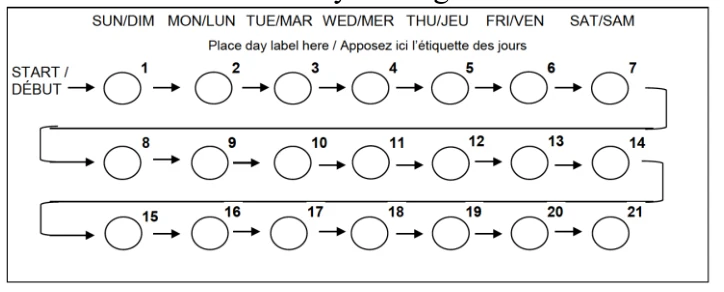
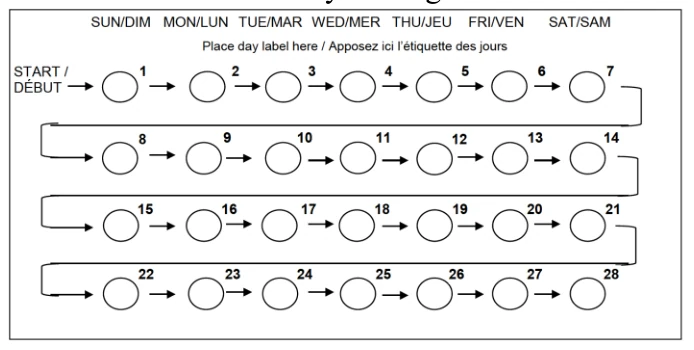
LOOK AT YOUR PILL PACK to see if it has 21 or 28 pills:
- Tri-Lena™ Lo 21 is a 21-Pill Pack: 21 active pills (with hormones) taken daily for three weeks, and then no pills taken for one week or
- Tri-Lena™ Lo 28 is a 28-Pill Pack: 21 active pills (with hormones) taken daily for three weeks, and then seven "reminder" pills (no hormones) taken daily for one week.
ALSO CHECK the pill pack for instructions on 1) where to start and 2) direction to take pills.
| 21-day Package | 28-Day Package |
 |  |
- 3. You may wish to use a second method of birth control (e.g. latex or polyurethane condoms and spermicidal foam or gel) for the first seven days of the first cycle of pill use. This will provide a back-up in case pills are forgotten while you are getting used to taking them.
- 4. When receiving any medical treatment, be sure to tell your doctor that you are using birth control pills.
- 5. MANY WOMEN HAVE SPOTTING OR LIGHT BLEEDING, OR MAY FEEL SICK TO THEIR STOMACH DURING THE FIRST THREE MONTHS ON THE PILL. If you do feel sick, do not stop taking the pill. The problem will usually go away. If it does not go away, check with your doctor or clinic.
- 6. MISSING PILLS ALSO CAN CAUSE SOME SPOTTING OR LIGHT BLEEDING, even if you make up the missed pills. You also could feel a little sick to your stomach on the days you take two pills to make up for missed pills.
- 7.
IF YOU MISS PILLS AT ANY TIME, YOU COULD GET PREGNANT. THE GREATEST RISKS FOR PREGNANCY ARE:
- when you start a pack late, or
- when you miss pills at the beginning or at the very end of the pack.
- 8.
ALWAYS BE SURE YOU HAVE READY:
- ANOTHER KIND OF BIRTH CONTROL (such as latex or polyurethane condoms and spermicidal foam or gel) to use as a back-up in case you miss pills, and
- AN EXTRA, FULL PACK OF PILLS.
- 9. IF YOU EXPERIENCE VOMITING OR DIARRHEA, OR IF YOU TAKE CERTAIN MEDICINES, such as antibiotics, your pills may not work as well. Use a back-up method, such as latex or polyurethane condoms and spermicidal foam or gel, until you can check with your doctor or clinic.
- 10. IF YOU FORGET MORE THAN ONE PILL TWO MONTHS IN A ROW, talk to your doctor or clinic about how to make pill-taking easier or about using another method of birth control.
- 11. IF YOUR QUESTIONS ARE NOT ANSWERED HERE, CALL YOUR DOCTOR OR CLINIC.
WHEN TO START THE FIRST PACK OF PILLS
BE SURE TO READ THESE INSTRUCTIONS:
- before you start taking your pills, and
- any time you are not sure what to do.
Decide with your doctor or clinic what is the best day for you to start taking your first pack of pills. Your pills may be either a 21-day or a 28-day type.
DIRECTIONS FOR 21-DAY AND 28-DAY PILL PACKS
- 1. THE FIRST DAY OF YOUR MENSTRUAL PERIOD (BLEEDING) IS DAY 1 OF YOUR CYCLE. The pills may be started up to Day 6 of your cycle. Your starting day will be chosen in discussion with your doctor. You will always begin taking your pill on this day of the week. Your doctor may advise you to start taking the pills on Day 1, on Day 5, or on the first Sunday after your period begins. If your period starts on Sunday, start that same day.
- 2.
IF YOU ARE USING A:
21-DAY Pill Pack:
With this type of birth control pill, you are on pills for 21 days and off pills for seven days. You must not be off the pills for more than seven days in a row.
Take one pill at approximately the same time every day for 21 days. THEN DO NOT TAKE A PILL FOR SEVEN DAYS. Start a new pack on the eighth day. You will probably have a period during the seven days off the pill. (This bleeding may be lighter and shorter than your usual period.)
28-DAY Pill Pack:
With this type of birth control pill, you take 21 pills that contain hormones and seven pills that contain no hormones.
Take one pill at approximately the same time every day for 28 days. Begin a new pack the next day, NOT MISSING ANY DAYS ON THE PILLS. Your period should occur during the last seven days of using that pill pack.
INSTRUCTIONS FOR USING YOUR PACKAGE FOR BOTH 21-DAY AND 28-DAY PACKS
FOLLOW THESE INSTRUCTIONS CAREFULLY:
| 21-day Package 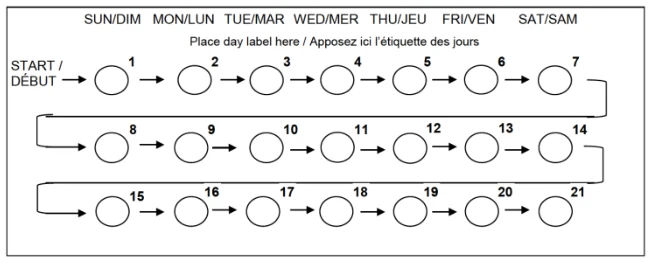 | |
28-Day Package 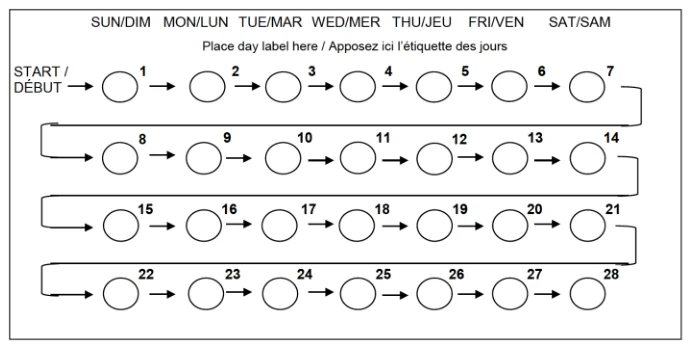 | ||
WHAT TO DO DURING THE MONTH
- 1.
TAKE A PILL AT APPROXIMATELY THE SAME TIME EVERY DAY UNTIL THE PACK IS EMPTY.
- Try to associate taking your pill with some regular activity such as eating a meal or going to bed.
- Do not skip pills even if you have bleeding between monthly periods or feel sick to your stomach (nausea).
- Do not skip pills even if you do not have sex very often.
- 2.
WHEN YOU FINISH A PACK
21 PILLS
WAIT SEVEN DAYS to start the next pack. You will have your period during that week.
28 PILLS
Start the next pack ON THE NEXT DAY. Take one pill every day. Do not wait any days between packs.
WHAT TO DO IF YOU MISS PILLS
The following chart outlines the actions you should take if you miss one or more of your birth control pills. Match the number of pills missed with the appropriate starting time for your type of pill pack.
SUNDAY START MISS ONE PILL | OTHER THAN SUNDAY START MISS ONE PILL |
| Take it as soon as you remember and take the next pill at the usual time. This means that you might take two pills in one day. | Take it as soon as you remember and take the next pill at the usual time. This means that you might take two pills in one day. |
| MISS TWO PILLS IN A ROW | MISS TWO PILLS IN A ROW |
First Two Weeks
Third Week
IF YOU MISS TWO PERIODS IN A ROW, CALL YOUR DOCTOR OR CLINIC. | First Two Weeks
Third Week
IF YOU MISS TWO PERIODS IN A ROW, CALL YOUR DOCTOR OR CLINIC. |
| MISS THREE OR MORE PILLS IN A ROW | MISS THREE OR MORE PILLS IN A ROW |
Any Time in the Cycle
IF YOU MISS TWO PERIODS IN A ROW, CALL YOUR DOCTOR OR CLINIC. | Any Time in the Cycle
IF YOU MISS TWO PERIODS IN A ROW, CALL YOUR DOCTOR OR CLINIC. |
NOTE: 28-DAY PACK – If you forget any of the seven "reminder" pills (without hormones) in Week 4, just safely dispose of the pills you missed. Then keep taking one pill each day until the pack is empty. You do not need to use a back-up method.
Always be sure you have on hand:
- a back-up method of birth control (such as latex or polyurethane condoms and spermicidal foam or gel) in case you miss pills and
- an extra, full pack of pills.
IF YOU FORGET MORE THAN ONE PILL TWO MONTHS IN A ROW, TALK TO YOUR DOCTOR OR CLINIC about ways to make pill-taking easier or about using another method of birth control.
Special Notes on Administration
Use after childbirth:
Tri-Lena™ Lo should be started no earlier than 4 weeks postpartum in women who elect not to breastfeed due to increased risk of thromboembolism (see WARNINGS AND PRECAUTIONS, Hematologic). The possibility of ovulation and conception prior to initiation of medication should also be considered.
Use after abortion or miscarriage:
After an abortion or miscarriage that occurs prior to 20 weeks gestation, Tri-Lena™ Lo may be started immediately. An additional method of contraception is not needed. Be advised that ovulation may occur within 10 days of an abortion or miscarriage.
After an induced or spontaneous abortion that occurs at or after 20 weeks gestation, Tri-Lena™ Lo may be started either on Day 21 post-abortion or on the first day of the first spontaneous menstruation, whichever comes first. The incidence of ovulation on Day 21 post-abortion (at 20 weeks gestation) is not known. A non-hormonal contraceptive must be used concurrently for the first 7 days of the first cycle.
OVERDOSAGE
In case of overdose or accidental ingestion by children, the physician should observe the patient closely, although generally no treatment is required20. Gastric lavage may be utilized if considered necessary. Overdosage may cause nausea and vomiting and withdrawal bleeding may occur in females. There are no antidotes and treatment should be symptomatic.
For management of a suspected drug overdose, contact your regional Poison Control Centre.
ACTION AND CLINICAL PHARMACOLOGY
Mechanism of Action
Combination oral contraceptives act by suppression of gonadotropins. Although the primary mechanism of this action is inhibition of ovulation, other alterations include changes in the cervical mucus (which increase the difficulty of sperm entry into the uterus) and the endometrium (which reduce the likelihood of implantation).
Pharmacodynamics
Receptor binding studies, as well as studies in animals and humans, have shown that norgestimate and 17-deacetyl norgestimate (norelgestromin), the major serum metabolite, combine high progestational activity with minimal intrinsic androgenicity. Norgestimate, in combination with ethinyl estradiol, does not counteract the estrogen-induced increases in sex hormone binding globulin (SHBG), resulting in lower serum testosterone.
Norgestimate plus ethinyl estradiol elevated HDL levels across all studies. Norgestimate plus ethinyl estradiol exhibited minimal androgenicity. Sex hormone binding globulin levels were increased and testosterone was not readily displaced from its binding sites by norgestimate.
Pharmacokinetics
Absorption
Norgestimate (NGM) and ethinyl estradiol (EE) are rapidly absorbed following oral administration. Norgestimate is rapidly and completely metabolized by first-pass (intestinal and/or hepatic) mechanisms to norelgestromin (NGMN) and norgestrel (NG), which are the primary and secondary active metabolites of norgestimate, respectively. Mean pharmacokinetic parameters for NGMN, NG and EE during three cycles of administration of norgestimate and ethinyl estradiol tablets are summarized in Table 7.
| Table 7: Mean (SD) Pharmacokinetic Parameters of Norgestimate and Ethinyl Estradiol During a Three Cycle Study | ||||||
|---|---|---|---|---|---|---|
| Analyte1 | Cycle | Day | Cmax | tmax (h) | AUC0-24h | t1/2 (h) |
| NGMN (2-4) | 1 | 1 | 0.91 (0.27) | 1.8 (1.0) | 5.86 (1.54) | NC |
| 3 | 7 | 1.42 (0.43) | 1.8 (0.7) | 11.3 (3.2) | NC | |
| 14 | 1.57 (0.39) | 1.8 (0.7) | 13.9 (3.7) | NC | ||
| 21 | 1.82 (0.54) | 1.5 (0.7) | 16.1 (4.8) | 28.1 (10.6) | ||
| NG (2-4) | 1 | 1 | 0.32 (0.14) | 2.0 (1.1) | 2.44 (2.04) | NC |
| 3 | 7 | 1.64 (0.89) | 1.9 (0.9) | 27.9 (18.1) | NC | |
| 14 | 2.11 (1.13) | 4.0 (6.3) | 40.7 (24.8) | NC | ||
| 21 | 2.79 (1.42) | 1.7 (1.2) | 49.9 (27.6) | 36.4 (10.2) | ||
| Table 7: Mean (SD) Pharmacokinetic Parameters of Norgestimate and Ethinyl Estradiol During a Three Cycle Study |
|---|
| Analyte1 | Cycle | Day | Cmax | tmax (h) | AUC0-24h | t1/2 (h) |
|---|---|---|---|---|---|---|
| EE (2,3,5) | 1 | 1 | 55.6 (18.1) | 1.7 (0.5) | 421 (118) | NC |
| 3 | 7 | 91.1 (36.7) | 1.3 (0.3) | 782 (329) | NC | |
| 14 | 96.9 (38.5) | 1.3 (0.3) | 796 (273) | NC | ||
| 21 | 95.9 (38.9) | 1.3 (0.6) | 771 (303) | 17.7 (4.4) |
1 NGMN = Norelgestromin, NG = norgestrel, EE = ethinyl estradiol
2 Cmax = peak serum concentration, tmax = time to reach peak serum concentration, AUC0-24h = area under serum concentration vs time curve from 0 to 24 hours, t1/2 = elimination half-life.
3 units for all analytes; h = hours
4 units for NGMN and NG; Cmax = ng/mL, AUC0-24h = h.ng/mL
5 units for EE only; Cmax = pg/mL, AUC0-24h = h.pg/mL
NC = not calculated
These results indicate that: (1) Peak serum concentrations of NGMN and EE were generally reached by 2 hours after dosing; (2) Accumulation following multiple dosing of the 180 μg NGM/25 μg EE dose is approximately 1.5- to 2-fold for NGMN and approximately 1.5-fold for EE compared with single-dose administration, in agreement with that predicted based on linear kinetics of NGMN and EE; (3) The kinetics of NGMN are dose proportional following NGM doses of 180 to 250 μg; (4) Steady-state conditions for NGMN following each NGM dose and for EE were achieved during the three-cycle study; (5) Non-linear accumulation (4.5- to 14.5-fold) of norgestrel was observed as a result of high affinity binding to SHBG, which limits its biological activity.
Distribution
Norelgestromin and norgestrel (a serum metabolite of norelgestromin) are highly bound (> 97%) to serum proteins. Norelgestromin is bound to albumin and not to SHBG, while norgestrel is bound primarily to SHBG. Ethinyl estradiol is extensively bound (> 97%) to serum albumin.
Metabolism
Norgestimate is extensively metabolized by first-pass mechanisms in the gastrointestinal tract and/or liver. Norgestimate’s primary active metabolite is norelgestromin. Subsequent hepatic metabolism of norelgestromin occurs and secondary metabolites include norgestrel, which is also active, and various hydroxylated and conjugated metabolites. Ethinyl estradiol is also metabolized to various hydroxylated products and their glucuronide and sulfate conjugates.
Excretion
Following 3 cycles of administration of norgestimate / ethinyl estradiol, the mean (± SD) elimination half-life values, at steady-state, for norelgestromin, norgestrel and ethinyl estradiol were 28.1 (± 10.6) hours, 36.4 (± 10.2) hours and 17.7 (± 4.4) hours, respectively (Table 7). The metabolites of norelgestromin and ethinyl estradiol are eliminated by renal and fecal pathways.
Special Populations
Effects of Body Weight, Body Surface Area, and Age
The effects of body weight, body surface area, age and race on the pharmacokinetics of norelgestromin, norgestrel and ethinyl estradiol were evaluated in 79 healthy women using pooled data following single-dose administration of NGM 180 or 250 μg/EE 25 μg tablets in four pharmacokinetic studies. Increasing body weight and body surface area were each associated with decreases in Cmax and AUC0-24h values for norelgestromin and ethinyl estradiol and increases in CL/F (oral clearance) for ethinyl estradiol. Increasing body weight by 10 kg is predicted to reduce the following parameters: NGMN Cmax by 9% and AUC0-24h by 19%, norgestrel Cmax by 12% and AUC0-24h by 46%, EE Cmax by 13% and AUC0-24h by 12%. These changes were statistically significant. Increasing age was associated with slight decreases (6% with increasing age by 5 years) in Cmax and AUC0-24h for norelgestromin and were statistically significant, but there was no significant effect for norgestrel or ethinyl estradiol. Only a small to moderate fraction (5-40%) of the overall variability in the pharmacokinetics of norelgestromin and ethinyl estradiol following norgestimate and ethinyl estradiol tablets may be explained by any or all of the above demographic parameters.
In clinical studies involving 1673 subjects with a mean weight of 141 pounds, there was no association between pregnancy and weight.
Renal and Hepatic Impairment
No studies with norgestimate / ethinyl estradiol have been conducted in women with renal or hepatic impairment.
Drug-Drug Interactions
Although norelgestromin and its metabolites inhibit a variety of P450 enzymes in human liver microsomes, under the recommended dosing regimen, the in vivo concentrations of norelgestromin and its metabolites, even at the peak serum levels, are relatively low compared to the inhibitory constant (Ki).
Special Populations and Conditions
Pediatrics
Safety and efficacy of norgestimate and ethinyl estradiol tablets have been established in women of reproductive age. Use of this product before menarche is not indicated.
Geriatrics
Tri-Lena™ Lo is not indicated for use in postmenopausal women.
Renal and Hepatic Impairment
No studies with norgestimate / ethinyl estradiol have been conducted in women with renal or hepatic impairment.
STORAGE AND STABILITY
Store between 15°C – 30°C. Leave contents in protective packaging until time of use.
DOSAGE FORMS, COMPOSITION AND PACKAGING
Dosage Form
Tri-LenaTM Lo (norgestimate and ethinyl estradiol) tablets are available in a 21-day Package (Tri-LenaTM Lo 21) and a 28-day Package (Tri-LenaTM Lo 28).
Tri-LenaTM Lo 21 (21-day Package) contains:
- 7 LIGHT ORANGE, round, bi-convex, beveled-edged tablets with ‘WATSON’ on one side and ‘945’ on the other side. Each tablet contains 0.180 mg norgestimate and 0.025 mg ethinyl estradiol
- 7 ORANGE, round, bi-convex, beveled-edged tablets with ‘WATSON’ on one side and ‘946’ on the other side. Each tablet contains 0.215 mg norgestimate and 0.025 mg ethinyl estradiol
- 7 PEACH, round, bi-convex, beveled-edged tablets with ‘WATSON’ on one side and ‘947’ on the other side. Each tablet contains 0.250 mg norgestimate and 0.025 mg ethinyl estradiol
Tri-LenaTM Lo 28 (28-day Package) contains:
- 7 LIGHT ORANGE, round, bi-convex, beveled-edged tablets with ‘WATSON’ on one side and ‘945’ on the other side. Each tablet contains 0.180 mg norgestimate and 0.025 mg ethinyl estradiol
- 7 ORANGE, round, bi-convex, beveled-edged tablets with ‘WATSON’ on one side and ‘946’ on the other side. Each tablet contains 0.215 mg norgestimate and 0.025 mg ethinyl estradiol
- 7 PEACH, round, bi-convex, beveled-edged tablets with ‘WATSON’ on one side and ‘947’ on the other side. Each tablet contains 0.250 mg norgestimate and 0.025 mg ethinyl estradiol
- 7 GREEN, round, bi-convex, beveled-edge tablets with ‘WATSON’ on one side and ‘P’ on the other side. Each tablet contains with inert ingredients
Composition
Each light orange Tri-LenaTM Lo tablet contains 0.180 mg norgestimate plus 0.025 mg ethinyl estradiol. Each light orange tablet also contains D&C Yellow No. 10 Aluminum Lake, FD&C Yellow No. 6 Aluminum Lake, lactose, magnesium stearate, microcrystalline cellulose, polacrilin potassium, povidone, and vitamin E.
Each orange Tri-LenaTM Lo tablet contains 0.215 mg norgestimate plus 0.025 mg ethinyl estradiol. Each orange tablet also contains D&C Yellow No. 10 Aluminum Lake, FD&C Yellow
No. 6 Aluminum Lake, lactose, magnesium stearate, microcrystalline cellulose, polacrilin potassium, povidone, and vitamin E.
Each peach Tri-LenaTM Lo tablet contains 0.250 mg norgestimate plus 0.025 mg ethinyl estradiol. Each peach tablet also contains FD&C Yellow No. 6 Aluminum Lake, lactose, magnesium stearate, microcrystalline cellulose, polacrilin potassium, povidone, and vitamin E.
Each green tablet contains inert ingredients, namely, D&C Yellow No. 10 Aluminum Lake, FD&C Blue No. 2 Aluminum Lake, lactose, magnesium stearate, and microcrystalline cellulose.
PART II: SCIENTIFIC INFORMATION
PHARMACEUTICAL INFORMATION
Drug Substance
Proper Name: Norgestimate
Chemical Name: 18,19-dinor-17-pregn-4-en-20-yn-3-one, 17-(acetyl-oxy)-13-ethyl-, oxime,(17α)-(+)-
Structural Formula:
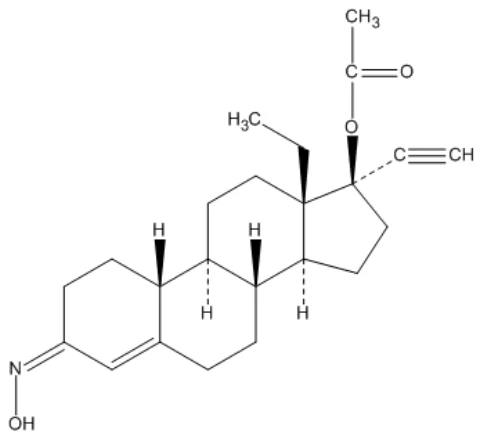
Molecular Weight: 369.50 g/mol
Molecular Formula: C23H31NO3
Description:
White or light yellow powder. Melting range is 224°C – 228°C.
Solubility (at room temperature):
Solvent Solubility (mL of solvent to solubilize 1g of product)
Acetone 20.67
Dichloromethane 2.65
Ethyl acetate 35.0
Methanol 45.67
Tetrahydrofuran 4.83
Water 10 mg in 100 mL did not solubilize
Norgestimate has a partition coefficient of Log P = 5.28 (Octanol/water). No pKa was determined because of its poor solubility in water.
Norgestimate is an optically active mixture of syn and anti isomers having a specific rotation of + 40° to + 46° (10 mg/mL in chloroform).
Drug Substance
Proper Name: Ethinyl Estradiol
Chemical Name: 19-nor-17α-pregna-1,3,5(10)-trien-20-yne-3,17β-diol
Structural Formula:
HO OH C CH CH3
Molecular Weight: 296.41 g/mol
Molecular Formula: C20H24O2
Description:
Ehinyl estradiol is a white to practically white crystals or powder with a melting range of 180°C to 186°C. It is insoluble in water and soluble in alcohol, chloroform, ether, vegetable oils and solutions of fixed alkali hydroxides.
CLINICAL TRIALS
Comparative Bioavailability Studies
A single dose crossover comparative bioavailability study comparing Tri-Lena™ Lo (norgestimate / ethinyl estradiol) 0.250 mg / 0.025 mg tablets to Tri-cyclen® Lo (norgestimate / ethinyl estradiol) 0.250 mg / 0.025 mg tablets was conducted in 30 healthy female volunteers following the administration of a 0.500 mg/ 0.50 mg (2 x 0.25 mg / 0.025 mg) dose under fasting conditions. A summary of the bioavailability data from 27 subjects is presented in the tables below.
| Summary Table of the Comparative Bioavailability Data for Norgestimate | ||||
|---|---|---|---|---|
Norgestimate (2 x 0.250 mg) From measured data uncorrected for potency Geometric LS Mean Arithmetic Mean (CV %) | ||||
| Parameter | Test* | Reference† | % Ratio of Geometric LS Means | 90 % Confidence Interval (%) |
AUC0-T (pg·h/mL) | 81.39 87.23 (38.0) | 82.52 90.55 (44.0) | 98.6 | 89.6 – 108.5 |
AUC0-∞ (pg·h/mL) | 88.80 95.48 (39.6) | 93.82 101.64 (40.6) | 94.7 | 85.3 – 105.1 |
Cmax (pg/mL) | 68.88 73.84 (42.9) | 62.55 69.75 (47.2) | 110.1 | 95.6 – 126.9 |
Tmax§ (h) | 0.67 (0.33 – 2.00) | 0.67 (0.33 – 2.50) | ||
T½€ (h) | 0.55 (40.7) | 0.71 (70.7) | ||
* Tri-Lena™ Lo (Norgestimate/Ethinyl Estradiol Tablets, USP) 0.250mg/ 0.025mg (Actavis Pharma Company)
† TRI-CYCLEN® LO (Norgestimate/Ethinyl Estradiol Tablets) 0.250mg/ 0.025mg (Janssen Inc., Toronto, Ontario M3C1L9) was purchased in Canada
§ For Tmax median (range) is presented
€ T1/2 arithmetic mean (CV %) is presented
N=27
| Summary Table of the Comparative Bioavailability Data for Ethinyl Estradiol | ||||
|---|---|---|---|---|
Ethinyl Estradiol (2 x 0.025 mg) From measured data Geometric LS Mean Arithmetic Mean (CV %) | ||||
| Parameter | Test* | Reference† | % Ratio of Geometric LS Means | 90 % Confidence Interval (%) |
AUC0-T (pg·h/mL) | 938.07 982.76 (30.6) | 993.89 1044.69 (31.8) | 94.4 | 91.5 – 97.4 |
AUC0-∞ (pg·h/mL) | 1025.08 1073.23 (32.2) | 1086.63 1140.58 (32.8) | 94.3 | 90.9 – 97.9 |
Cmax (pg/mL) | 110.56 116.88 (31.2) | 117.47 123.55 (31.1) | 94.1 | 90.2 – 98.2 |
Tmax§ (h) | 1.50 (0.67 – 2.50) | 1.50 (1.00 – 2.50) | ||
| Summary Table of the Comparative Bioavailability Data for Ethinyl Estradiol |
|---|
Ethinyl Estradiol (2 x 0.025 mg) From measured data Geometric LS Mean Arithmetic Mean (CV %) |
|---|
| Parameter | Test* | Reference† | % Ratio of Geometric LS Means | 90 % Confidence Interval (%) |
|---|---|---|---|---|
T½€ (h) | 16.42 (21.5) | 17.16 (20.2) |
* Tri-Lena™ Lo (Norgestimate/Ethinyl Estradiol Tablets, USP) 0.250mg/ 0.025mg (Actavis Pharma Company)
† TRI-CYCLEN® LO (Norgestimate/Ethinyl Estradiol Tablets) 0.250mg/ 0.025mg (Janssen Inc., Toronto, Ontario M3C1L9) was purchased in Canada
§ For Tmax median (range) is presented
€ T1/2 arithmetic mean (CV %) is presented
N=27
Clinical Efficacy of Norgestimate And Ethinyl Estradiol Tablets
Contraception
In a pivotal controlled phase III study, there were 20 on-therapy pregnancies in the 1,673 efficacy evaluable subjects treated with the norgestimate / ethinyl estradiol regimen and 19 on-therapy pregnancies in the 1,141 efficacy evaluable subjects treated with the comparator norethindrone acetate-ethinyl estradiol containing product (1/20) regimen. Through Cycle 13, the cumulative probability of no pregnancy was 98.1% for the norgestimate / ethinyl estradiol treatment group and 97.4% for the norethindrone acetate-ethinyl estradiol containing product (1/20) treatment group. The respective probabilities of no on-therapy pregnancies due to method failure were 98.5% and 97.6%. The overall Pearl Index has been reported as 2.36 for norgestimate and ethinyl estradiol tablets and 3.29 for norethindrone acetate-ethinyl estradiol containing product (1/20).
The proportion of subjects who experienced intermenstrual bleeding during Cycle 3 was the primary endpoint for the analysis of cycle control data in this study. The incidence of intermenstrual bleeding during Cycle 3 was lowest in the norgestimate / ethinyl estradiol treatment group (23.6%) compared to the norethindrone acetate-ethinyl estradiol containing product (1/20) group (37.2%), (p<0.001). A total of 3 (0.2%) of the women discontinued norgestimate / ethinyl estradiol, at least in part, due to bleeding or spotting.
Clinical Safety of Norgestimate and Ethinyl Estradiol Tablets
Phase III Study: The Primary Safety Population
A total of 3,059 subjects were randomized to two treatment regimens: 1,826 to norgestimate and ethinyl estradiol tablets and 1,233 subjects to norethindrone acetate-ethinyl estradiol containing product (1/20). A total of 2,894 subjects were known to have taken at least one tablet of study medication and/or had safety information following randomization and thus were evaluable for safety [norgestimate / ethinyl estradiol, 1,723; norethindrone acetate-ethinyl estradiol containing product (1/20), 1,171].
The incidence of discontinuation for specific reasons was similar across treatment groups. The most frequently stated reason for premature discontinuation was "subject choice" (norgestimate / ethinyl estradiol, 11.6%; norethindrone acetate-ethinyl estradiol containing product (1/20), 11.1%) and “lost to follow-up” (norgestimate and ethinyl estradiol, 6.5%; norethindrone acetate-ethinyl estradiol containing product (1/20), 5.8%). The incidence of discontinuation due to adverse events was 4.2% and 3.4%, respectively.
Phase III Study: Overall Incidence of Treatment Emergent Adverse Events
The percentage of subjects reporting treatment emergent adverse events was similar in the norgestimate and ethinyl estradiol (78.2%) and norethindrone acetate-ethinyl estradiol containing product (1/20) (78.1%) treatment groups. There were no notable differences between the treatment groups based on the incidence of the most common treatment emergent adverse events.
The most frequently reported treatment emergent adverse events in the norgestimate / ethinyl estradiol or norethindrone acetate-ethinyl estradiol containing product (1/20) treatment groups were headache (29.4% and 27.0%, respectively); upper respiratory tract infection (16.8% and 17.8%, respectively); nausea (14.7% and 13.8%, respectively); abdominal pain (13.7% and 14.3%, respectively); breast pain (9.8% and 7.9%, respectively); dysmenorrhea (9.7% and 7.3%, respectively); and sinusitis (9.1% and 8.4%, respectively). There were no notable trends in the incidence of less common treatment emergent adverse events (those reported by < 5% of subjects in any treatment group).
Phase III Study: Laboratory Tests
A broad range of clinical laboratory data has been collected in a number of studies. Statistically significant laboratory changes were generally clinically insignificant and consistent with use of low-dose oral contraceptives.
There were no clinically meaningful changes in mean values for any red blood cell indices, white blood cell counts or differentials, liver enzyme values, or any other laboratory tests, based on changes between baseline and Cycle 6, baseline and Cycle 13, or baseline and Last Visit.
The most common laboratory abnormality reported as a treatment emergent adverse event related to study medication was hypertriglyceridemia. The incidence of hypertriglyceridemia was similar in the norgestimate / ethinyl estradiol (0.4%) and the norethindrone acetate-ethinyl estradiol containing product (1/20) (0.3%) treatment groups. There was no indication that treatment with norgestimate / ethinyl estradiol increased the incidence of treatment-related laboratory abnormalities relative to treatment with the norethindrone acetate-ethinyl estradiol containing product (1/20).
DETAILED PHARMACOLOGY
Oral Contraception
Norgestimate, alone and in combination with ethinyl estradiol, is an effective antiovulatory agent27. It is moderately potent in the standard in vivo progestational assay which measures endometrial proliferation in rabbits, and it effectively blocks ovulation in rats, hamsters and rabbits. In rats, this blockade correlates well with suppression of the proestrus LH surge and the antiovulatory activity of norgestimate is overcome by LHRH. The blockade appears, like that of other progestational agents, to be the result of inhibition of the hypothalamic/pituitary axis. Norgestimate is an active progestin when administered either orally or parenterally and binds to progestational receptors in vitro. Like other progestins, norgestimate inhibits the action of estrogen but is not estrogenic itself. Studies measuring the stimulation of ventral prostate growth in rats, the ability to bind to human SHBG in vitro, and the effects on serum SHBG levels in rabbits demonstrate that in contrast to levonorgestrel, norgestimate is not androgenic. It also does not inhibit the action of androgen in rats. No adverse effects on the reproductive, thyroid or adrenal endocrine systems were seen in rats given norgestimate orally for 7 days at doses up to 100 times the clinical dose. In vitro studies indicate that norgestimate does not directly alter ovarian aromatase activity. Norgestimate does not exhibit central nervous system or autonomic nervous system activities in rats and does not interfere with autonomic-mediated responses of the cardiovascular system in dogs. In vitro studies indicate that norgestimate does not possess antimicrobial activity against diverse pathogenic microorganisms. Ethinyl estradiol is a potent estrogen which stimulates the uterus and the vagina. Its preclinical pharmacology is well established28,29.
TOXICOLOGY
Toxicology studies have evaluated norgestimate alone as well as in combination with ethinyl estradiol in the mouse, rat, rabbit, dog and monkey27. Ethinyl estradiol has also been evaluated both alone and in combination with synthetic steroidal progestogens in the rat, rabbit, dog and monkey27,32-34. Compound-related gross and microscopic lesions have been minimal and show the typical pathological changes that are known to occur with the administration of progestogen and estrogen.
Acute Toxicity Studies
Mice
In HaM/1CR CD-1 mice oral norgestimate alone and oral norgestimate + ethinyl estradiol (5:1) each had an LD50 greater than 5 g/kg body weight. Norgestimate alone at 5 g/kg caused no overt signs of toxicity while the combination caused transient changes in behaviour and one death (one female out of 10 females and 10 males) at 5 g/kg. Oral ethinyl estradiol alone at 5 g/kg caused a transient period of depression and slightly laboured breathing (in males only) with no mortality. The drug was given as a single dose, suspended in carboxymethylcellulose or carboxymethylcellulose and sesame oil.
Rats
In hooded Long-Evans rats no deaths or toxic signs were seen at 5 g/kg or 6.2 g/kg orally of norgestimate alone. Norgestimate in combination with ethinyl estradiol (5:1) orally at 5 g/kg caused no deaths or overt signs of toxicity other than a slight decrease in body weight compared to controls. At autopsy prostate, seminal vesicles and testes were smaller in animals receiving 5 g/kg of the combination than in controls. Ethinyl estradiol alone had an oral LD50 of 5.3 g/kg for males and 3.2 g/kg for females. Drug was administered suspended in carboxymethylcellulose.
Dogs
Oral norgestimate at 5 g/kg caused no deaths or signs of toxicity in female beagles. Also, no deaths or signs of toxicity were seen in female beagles given ethinyl estradiol 5.0 g/kg orally. Drugs were given suspended in carboxymethylcellulose.
Norgestimate (14.3 mg/kg) plus ethinyl estradiol (2.0 mg/kg) in ethanol given by i.v. infusion caused no deaths and the only toxic signs were those of acute ethanol intoxication and were also seen in controls.
Subacute Toxicity Studies
Rats
In female hooded Long-Evans rats oral norgestimate at 10.0, 2.5, 1.0, 0.5 and 0 mg/kg/day for 90 days caused no deaths, and all animals appeared normal on the 90th day. Daily observation showed no symptoms of drug-induced effect or toxicity. Hematological examination results were within normal range and urinalysis results gave no indication of toxicity throughout the test period. Biochemical evaluation showed blood components to be within normal range at termination. A dose-related decrease in cholesterol levels was seen. Gross pathological and histopathological examination did not reveal any toxic effects at any dose level.
Norgestimate plus ethinyl estradiol (10:1) was given orally 11.0, 2.75, 1.10, 0.55 mg/kg/day for 90 days, caused no deaths nor symptoms indicating drug-induced toxicity. Lab testing and necropsy results were all in the normal range although treated animals appeared to have an increased incidence of nephrocalcinosis and unilateral hydronephrosis.
Dogs
Female beagles were given oral doses of norgestimate up to 5.0 mg/kg/day. No deaths were seen. Hematological test results were normal as were clinical chemistry values except for a slight depression of cholesterol in higher-dose animals early in the study. Urinalysis results were normal.
Some test groups showed a decrease in organ weight or organ/body weight ratio for uterus and ovaries when compared to controls and test animals showed suppression of luteinization and/or follicular maturation. Glandular cystic hyperplasia of gallbladder was seen in treated dogs. An extremely low degree of toxicity was exhibited.
Female beagles were given oral doses of norgestimate + ethinyl estradiol (5:1) up to 5.5 mg/kg/day for 90 days. No deaths occurred. Hematological test values were normal for control and low-dose (0.28 mg/kg) animals while WBC was elevated in the two higher-dose groups. Clinical chemistry results were normal except for 1 dog in the high-dose and 2 in middle-dose groups which had slightly depressed BUN values. Uterus weight increased and ovary weight decreased in test animals when compared to controls. Test animals showed suppression of luteinization and/or follicular maturation and gallbladder glandular hyperplasia.
Monkeys
Female Rhesus monkeys given norgestimate orally at doses of 5.0, 1.50, 0.25 and 0 mg/kg/day for 90 days showed no signs of toxicity in their behaviour, body weight, hematology results, urinalysis, or clinical chemistry values.
Histological examination revealed no lesions attributable to the drug. The same was seen for oral norgestimate + ethinyl estradiol (10:1) for doses of 5.5, 1.65, 0.275 and 0 mg/kg/day for 90 days except in high-dose animals. These animals showed hypertrophy of cervical mucus glands and an increase in size and number of mammary acini. Evidence of hyperplasia and epithelial sloughing of uterine endometrium was also noted. There was a dose-dependent stimulation of mucus secretion of the cervix.
Long-Term Toxicity Studies
Rats
Adult female Long-Evans rats were given norgestimate + ethinyl estradiol (5:1) at doses of 3.00, 0.60, 0.15 and 0 mg/kg/day orally for 24 months. There were 70 animals in each group receiving drug and 110 animals in the vehicle-only group.
One hundred and five animals did not survive the dosing schedule. The highest mortality rate was seen in controls. In drug-treated rats, the middle-dose group had the lowest mortality rate while the low-dose group had the highest.
Mean body weights of all treated groups decreased slightly as compared to controls, while the mean food consumption was not significantly different. In all test groups, there was a slight to moderate decrease in RBCs, hematocrit and hemoglobin compared to controls. Clinical chemistry showed a significant decrease in serum cholesterol in all drug-treated groups.
Hepatic changes were seen in all groups (including controls) at 2 years. The severity and incidence of these changes was higher in high- and mid-dose groups than in others. These changes were: nodular or generalized hepatocyte hypertrophy and hyperplasia, hyperplasia foci of hepatocyte coagulation necrosis, sinusoidal telangiectasis, and formation of hematocysts. The reproductive organs showed little microscopic evidence of drug effect, although uterine endometrial hyperplasia was increased in treated animals. The incidence of benign mammary tumours was higher in treated animals than in controls. However, the incidence was statistically significant only in the highest dose group. At 50 to 1000 times the human dose, this combination produced effects remarkably similar to those of other progestin-estrogen combinations.
In a second study, female Long-Evans rats were given norgestimate + ethinyl estradiol at (5:1) at 0.150, 0.0375 and 0.01875 mg/kg/day (6.5 to 50 times the human dose), norgestimate alone and ethinyl estradiol alone each at 0.025 mg/kg/day (50 times human dose) or d-norgestrel at 0.150, 0.075, and 0.0375 mg/kg/day (50 times human dose) for 104 weeks. There were 50 rats in each test group and 100 vehicle controls. Mortality was 55.9% overall with no difference between groups. Minor transient changes were seen for food consumption and body weight early in the study. Periodic hematological examination showed no deviations beyond normal range except for a slight decrease in hematocrit in the high-dose norgestimate + ethinyl estradiol groups. All clinical chemistry parameters measured demonstrated large variations associated with aging in all groups. The only statistically significant changes were a decrease in the cholesterol in ethinyl estradiol only and norgestimate + ethinyl estradiol high-dose groups, and an elevation of triglycerides in all combination groups. There was no significant difference between control and test rats for either benign or malignant tumours.
Dogs
Adult female beagles were given norgestimate + ethinyl estradiol orally at doses of 0.60 mg/kg/day (16 dogs) and 0.15, 0.06, and 0 (vehicle controls) mg/kg/day (20 dogs/group) for two years. This constitutes 20 to 200 times the human dose.
No deaths occurred. All animals were in good health at termination and no changes in behaviour were noted. In year 1, estrus was seen in all controls. In year 2, it was seen in 13 of 16 controls and was not seen in any test dog during the study. High-dose dogs had decreased RBCs and hematocrit throughout the study and an increased WBC count from 3 to 18 months of study. Decreased lymphocytes were seen in high- and mid-dose dogs and cholesterol was decreased in the low- and mid-dose dogs. Histologic changes were all estrogenic in nature with minimal evidence of progestational response. In a 7-year study, 15 female beagles/group were given oral doses of 0.1425, 0.057, 0.0057 and 0 mg/kg/day norgestimate + ethinyl estradiol in the 21 days on followed by 7 days off cycle. There were 9 deaths during the study: 2 in the control, 2 in the high-dose, 4 in the mid-dose and 1 in the low-dose group. Daily observation revealed no unexpected adverse effects. Near the end of the study, slight to moderate alopecia and enlarged uteri were palpated in some dogs from the high- and the intermediate-dose groups. Hysterectomies resulting from pyometra were greatest in high-dose and least in low-dose and control animals. Nodules palpated during mammary exams were greatest in number for the low-dose group followed by controls and lowest in the high-dose groups; none appeared drug-related. Heart rate, blood pressure and ECG intervals were all within normal range and no meaningful differences were seen in mean body weights between treated and control dogs.
Hematology findings in the last year included decreases in hematocrit, hemoglobin, and red blood cell mean values in the high-dose group. Throughout, a decline in hematocrit was observed in all groups, but was most evident in the high-dose group, and appears to be drug-related. White blood cell counts were generally normal. Mean percent of segmented neutrophil values were higher in the high-dose group at the 84-month interim, but over the course of the study, this was not generally the case. Mean sedimentation rates at 84 months were increased, primarily in the high-dose group. However, over the entire study, changes in sedimentation rates noted were related to isolated individual increases observed in all test groups.
Coagulation parameters showed sporadic, statistically significant differences, but in general, values over the study were within normal limits. No trends were observed. Decreases in cholesterol and triglycerides and slight increases in potassium and albumin values occurred during the study in treated dogs.
Urinalysis results were generally normal although near the end of the study some dogs from control, high- and low-dose groups had trace to 4 + protein.
Monkeys
Norgestimate + ethinyl estradiol was given orally to female Rhesus monkeys (20/group except for the high-dose group which had 16) at 0.60, 0.30, 0.06 and 0 mg/kg/day in a 21-day treatment followed by a 7-day no-treatment cycle for 2 years. This dose represents 20 to 200 times the human dose. During the study 1 control, 1 high-dose and 4 mid-dose monkeys died.
No changes in behaviour were observed. A grey mammary discharge was seen more frequently in treated animals as compared to controls, and was seen mainly during withdrawal periods. Early in the study, treated monkeys had lower mean RBC, hematocrit and hemoglobin values, but were comparable to controls and within normal limits by month 12. All treated groups showed elevated triglycerides and decreased alkaline phosphatase values throughout the study. Decreased serum albumin and low total serum protein values were seen at various times during the study. Other clinical chemistry results were within normal limits, as were clotting study results, urinalysis and urinary steroid determinations. PAP smears produced no evidence of neoplasia.
At autopsy, no drug-related gross or microscopic pathologic lesions were observed in any monkeys, including those that died during the study. Isolated cases of focal hepatic sinusoidal dilation, congestion and/or small hemorrhages were seen at the capsular surfaces. It is believed that they are of little pathological importance due to an absence of any significant liver changes over the 2-year dosing period and the high- (up to 200 times the human dose) dose levels of drug. Except for an increase in intralobular stromal tissue in a high-dose monkey, mammary nodules found were focal nodular hyperplasia and these occurred in both control and treated animals. The only organ weight changes seen were decreased ovarian and uterine weights in treated monkeys from the 0.30 and 0.60 mg/kg/day groups.
In a 10-year study, female Rhesus monkeys (16/group) were given oral norgestimate + ethinyl estradiol (5:1) at 150, 30, 3, and 0 µg/kg/day in a 21-day on followed by 7 days off repeating cycle for the first 4 years. For the remaining 6 years, the monkeys received the medications in a 7:1 ratio, (285, 57, 5.7, 0 mg/kg/day) in the same cycle. Six (3 control, 1 low- and 2 high-dose) monkeys died during the study.
While there were some early differences in weight gains all groups were similar from the second year on. Mammary nodules were noted in all groups during the study and most regressed or disappeared. At the end of the study, the number of animals with nodules was 0, 0, 1 and 1 in the low, mid, high, and control dose groups, respectively. Mammary secretions were noted in some mid- and high-dose monkeys throughout the study.
Hematocrit, erythrocytic parameter changes, mean corpuscular volume, mean leukocyte counts and coagulation parameters were generally similar for all groups.
Clinical chemistry showed a dose-related increase in SGPT. All groups also showed an increase with time, generally lower alkaline phosphatase values for treated monkeys and intermittent slight decreases in serum protein for treated monkeys. BUN for all groups was well within reference range and no difference between groups was noted for glucose. Reports from the literature indicate a dose-related increase in triglycerides and a decrease in cholesterol for the mid-dose group5.
Thyroid function test results were typical of those expected for oral contraceptive use in humans. Urinalysis results showed no difference between groups and the results for urinary steroids were unremarkable.
Terminal organ weights for the liver and pituitary were increased while the ovary weights decreased.
The salient non-neoplastic histologic findings consisted predominantly of genito-urinary changes and multifocal myocardial fibrosis. Except for minor histopathologic differences in the ovaries, findings affecting the lower dose animals were essentially comparable with those of the controls. The findings seen in the tissues of the genital tracts and related tissues in the mid- and high-dose animals, included: ovarian atrophy associated with absence of active corpora lutea and occasional reduction in the number of maturing follicles, varying degrees of endometrial atrophy occasionally associated with stromal proliferation and/or decidualization of the endometrial stroma, increased mucus secretion of the cervix often associated with villous elongation and crypt dilation of the mucosa, atrophy and columnar cell metaplasia of the vaginal mucosa, occasional atrophy of the oviduct, lobular hyperplasia of some of the mammary glands and dose-related hypertrophy of the pars distalis of the pituitary gland. Multifocal myocardial fibrosis was noted in animals of each group, including controls, although in a slightly higher incidence in the treated groups. This finding was most prominent in 4 of 7 affected high-dose animals. The significance of this lesion is uncertain based on its presence in controls and the known spontaneous occurrence especially in aging animals.
Neoplasms of tissues other than the genitourinary tract were few and all were considered to be spontaneous. Neoplasms associated with the genito-urinary tract were as follows:
Neoplasm Dose Group
One muco-epidermoid adenocarcinoma of cervix high a
One leiomyoma of vagina high a
One lobular carcinoma in situ of mammary gland high b
One papilloma of mammary gland high b
One adenoma of mammary gland high
One urinary bladder papilloma mid
a = Same Animal; b = Same Animal
The previously listed tumours of monkeys are single occurrences and are generally in different organs. Each of these tumour types have been reported in the literature as spontaneous occurrences. It is difficult to make a definitive etiologic association of the single cervical adenocarcinoma in one high-dose monkey. However, the absence of any antecedent changes (dysplasia, carcinoma in situ) in any of the other 47 treated monkeys, the known spontaneous occurrence (although rare in monkeys) suggest the tumour is probably spontaneous in origin.
Reproductive Studies
A fertility and general reproductive performance study was conducted in female Long-Evans rats to assess the effects of norgestimate + ethinyl estradiol (5:1) at 0.120, 0.0833, 0.060, 0.050 and 0.030 mg/kg/day on conception rates, fetal development, parturition and lactation and the viability, growth and reproductive performance of the offspring.
Norgestimate + ethinyl estradiol results in a dose-related suppression of fertility, decreased implantation efficiency and litter size, and an increased fetal resorption in the F0 females at all dose levels. Slight increases in the incidence of stillbirths were noted in all of the treated females. In addition, there was a decrease in neonatal survival at 0.060, 0.0833 and 0.120 mg/kg/day.
Similar dose-related findings were observed for the F1 females but to a lesser degree than the F0 generation. Trends toward decreased fertility, decreased implantation, F2 litter size, and increased resorptions were noted in all dose groups. Dystocia and an increased number of stillbirths occurred at the 0.060 mg/kg level. At the 0.060 and 0.0833 mg/kg dose levels, survival of offspring was reduced.
Teratology and Fetal Toxicity
Rat
Female Long-Evans rats were treated orally with norgestimate + ethinyl estradiol (5:1) at 0 (vehicle), 0.012, 0.060, and 0.300 mg/kg/day dose levels on days 6-15 of gestation. An increase in "wavy ribs" was noted in rats receiving 0.060 (3/159 fetuses) and 0.300 mg/kg/day (9/128 fetuses) which was statistically significant only in the high-dose group compared to controls (1/152 fetuses). A reduction in the implantation efficiency and an increase in the number of resorptions were also noted in the high-dose group.
In addition, norgestimate + ethinyl estradiol (5:1) was administered orally to pregnant Long-Evans rats from day 15 of pregnancy through day 21 of lactation at dose levels of 0 (vehicle), 0.03, 0.18, 0.30, and 0.060 mg/kg/day. These levels represent approximately 10, 60, 100, and 200 times the proposed human dose levels. In the F0 generation, no significant adverse effects were seen on maternal growth, behaviour and reproductive performance. However, there was some evidence of lactational insufficiency at the high-dose level.
In the F1 generation, viability, growth and reproductive performance were unaffected in the 0.03 mg/kg/day group. At 0.18, 0.30 and 0.60 mg/kg/day, there was a dose-related reduction in female fertility. The remaining drug effects were limited to the high-dose level which showed significantly decreased offspring viability from birth to weaning and depressed pup weight during the mid-lactation period.
There was no significant drug effect on F2 generation development at any dose level.
Rabbit
Female New Zealand white rabbits were given oral doses of 0.5% sodium carboxymethylcellulose suspensions of norgestimate + ethinyl estradiol (5:1) at concentrations of 0 (vehicle), 0.012, 0.060 or 0.300 mg/kg/day from day 7 through day 19 of gestation. The only drug-related effect was the high rate of fetal resorptions observed in the high and intermediate 100% and 65.5% dose groups, respectively. No drug-related teratogenic changes were observed in any of the fetuses examined.
REFERENCES
- 1. Asherson RA, Cervera R, Font J. Multiorgan thrombotic disorders in systemic lupus erythematosus: a common link? Lupus 1992;1(4):199-203.
- 2. Kwaan HC, Soff GA. Management of thrombotic thrombocytopenic purpura and haemolytic uremic syndrome. Semin Hematol 1997;34(2):81-9.
- 3. Sibai BM, Kustermann L, Velasco J. Current understanding of severe preeclampsia, pregnancy-associated hemolytic uremic syndrome, thrombotic thrombocytopenic purpura, hemolysis, elevated liver enzymes, and low platelet syndrome, and postpartum acute renal failure: different clinical syndromes or just different names? Curr Opin Nephrol Hypertens 1994;3(4):436-45.
- 4. Stewart CL, Tina LU. Hemolytic uremic syndrome. Pediatr Rev 1993;14(6):218-24.
- 5. Koenigs KP, McPhedran P, Spiro HM. Thrombosis in inflammatory bowel disease. J Clin Gastroenterol 1987;9(6):627-31.
- 6. Knijff SCM, Goorissen EM, Velthuis-te Wierik EJM, Korver T, Grimes DA. Sickle Cell Disease. In: Summary of contraindications to oral contraceptives. New York: Parthenon Publishing Group; 2000. p. 243-6.
- 7. Adams HP, Biller J. Ischemic cerebrovascular disease. In: Bradley WG, Daroff RB, Fenichel GM, Marsden CD, editors. Neurology in clinical practice. Boston: Butterworth-Heinemann; 1996. p. 1014-9.
- 8. Carlone JP, Keen PD. Oral contraceptive use in women with chronic medical conditions. Nurse Pract 1989;14(9):9-10, 12-13, 16.
- 9. Gross U, Honcamp M, Daume E, Frank M, Dusterberg B, Doss MO. Hormonal oral contraceptives, urinary porphyrin excretion and porphyrias. Horm Metab Res 1995;27(8):379-83.
- 10. Petri M, Robinson C. Oral contraceptives and systemic lupus erythematosus. Arthritis Rheum 1997;40(5):797-803.
- 11. Knijff SCM, Goorissen EM, Velthuis-te Wierik EJM, Korver T, Grimes DA. Hemolytic uremic syndrome. In: Summary of contraindications to oral contraceptives. New York:Parthenon Publishing Group; 2000. p. 211-8.
- 12. Galimberti D. Chorea induced by the use of oral contraceptives. Report of a case and review of the literature. Ital J Neurol Sci 1987;8(4):383-6.
- 13. Knijff SCM, Goorissen EM, Velthuis-te Wierik EJM, Korver T, Grimes DA. Sydenham's chorea. In: Summary of contraindications to oral contraceptives. New York: Parthenon Publishing Group; 2000. p. 415-9.
- 14. Knijff SCM, Goorissen EM, Velthuis-te Wierik EJM, Korver T, Grimes DA. Herpes gestationis. In: Summary of contraindications to oral contraceptives. New York: Parthenon Publishing Group; 2000. p. 367-70.
- 15. Morgan JK. Herpes gestationis influenced by an oral contraceptive. Br J Dermatol 1968;80(7):456-8.
- 16. Knijff SCM, Goorissen EM, Velthuis-te Wierik EJM, Korver T, Grimes DA. Otosclerosis. In: Summary of contraindications to oral contraceptives. New York: Parthenon Publishing Group; 2000. p. 387-91.
- 17. Boyko EJ, Theis MK, Vaughan TL, Nicol-Blades B. Increased risk of inflammatory bowel disease associated with oral contraceptive use. Am J Epidemiol 1994;140(3):268-78.
- 18. Godet PG, May GR, Sutherland LR. Meta-analysis of the role of oral contraceptive agents in inflammatory bowel disease. Gut 1995;37(5):668-73.
- 19. Logan RF, Kay CR. Oral contraception, smoking and inflammatory bowel disease--findings in the Royal College of General Practitioners Oral Contraception Study. Int J Epidemiol 1989;18(1):105-7.
- 20. Ramcharan S, Pellegrin FA, Ray R, Hsu J-P, Vessey MP. General summary of findings; general conclusions; implications. In: The Walnut Creek Contraceptive Drug Study: a prospective study of the side effects of oral contraceptives. Volume III: An interim report: a comparison of disease occurrence leading to hospitalization or death in users and nonusers of oral contraceptives. NIH Publication No. 81-564. Bethesda (MD): US Department of Health, Education, and Welfare, Center for Population Research; 1981. p. 211-38.
- 21. Sutherland LR, Ramcharan S, Bryant H, Fick G. Effect of oral contraceptive use on reoperation following surgery for Crohn's disease. Dig Dis Sci 1992;37(9):1377-82.
- 22. Vessey M, Jewell D, Smith A, Yeates D, McPherson K. Chronic inflammatory bowel disease, cigarette smoking, and use of oral contraceptives: findings in a large cohort study of women of childbearing age. Br Med J (Clin Res Ed) 1986;292(6528):1101-3.
- 23. EMEA. CPMP Public assessment report: combined oral contraceptives and venous thromboembolism. London: EMEA Committee for Proprietary Medicinal Products(CPMP) 2001 Sep 28. Report No.: EMEA/CPMP/2201/01/en Final.
- 24. Binkley KE, Davis A, 3rd. Clinical, biochemical, and genetic characterization of a novel estrogen-dependent inherited form of angioedema. J Allergy Clin Immunol. 2000 Sep;106(3):546-50.
- 25. Bork K, Fischer B, Dewald G. Recurrent episodes of skin angioedema and severe attacks of abdominal pain induced by oral contraceptives or hormone replacement therapy. Am J Med. 2003 Mar;114(4):294-8.
- 26. Nzeako UC, Frigas E, Tremaine WJ. Hereditary angioedema: a broad review for clinicians. Arch Intern Med. 2001 Nov 12;161(20):2417-29. (CPMP) 2001 Sep 28. Report No.: EMEA/CPMP/2201/01/en Final.
- 27. Data on file, Janssen Inc.
- 28. Helton ED, Goldzieher JW. The Pharmacokinetics of Ethinyl Estrogens. A Review. Contraception 1977;15(3):255-284.
- 29. Desaulles SH, Krahenbuhl C. Comparison of the Antifertility and Sex Hormonal Activities of Sex Hormones and their Derivatives. Acta Endocr 1964;47:444-456.
- 30. Alton KB, Hetyei NS, Shaw C, Patrick JE. Biotransformation of Norgestimate in Women. Contraception 1984;29(1):19-29.
- 31. Aldercreutz H, Martin F, Jarvenpaa P, Fotisis T. Steroid Absorption and Enterohepatic Recycling. Contraception 1979;20(3):201-223.
- 32. Schardein JL, Kaump DH, Woosley ET, Jellema MM. Long-term Toxicologic and Tumorigenesis Studies on an Oral Contraceptive Agent in Albino Rats. Toxicol Appl Pharmacol 1970;16:10-23.
- 33. Committee on the Safety of Medicines: Carcinogenicity Tests of Oral Contraceptives. Her Majesty's Stationery Office, London 1972.
- 34. Fairweather FA. Toxicological Requirements of Oral Contraceptives. J Reprod Fertil 1968;(5 Suppl): 47-49.
- 35. Rossner S, Frankman O, Marsk L. Effects of Various Low Dose Contraceptive Pills On Serum Lipoproteins in Proceedings of Lipoprotein Metabolism and Endocrine Regulation, Workshop, In: Hessel LW, Krans HMJ, editors. Development in Endocrinology. New York: Elsevier/North Holland Biomedical Press,1979;91-98.
- 36. Raymond Moss Hampton, Marilyn Short, Eric Bieber, Celine Bouchard, Normand Ayotte, Gary Shangold, Alan C. Fisher, George W. Creasy, Comparison of a novel norgestimate/ ethinyl estradiol oral contraceptive (ORTHO TRI-CYCLEN® LO) with the oral contraceptive Loestrin Fe 1/ 20. Contraception 63 (2001) 289 – 295
- 37. Product Monograph for TRI-CYCLEN® LO, marketed by Janssen Inc. Date of revision: November 12, 2015; Control No.: 186553.
RELEVANT LITERATURE
- 1. Drugs Directorate Guidelines. Directions for Use of Estrogen-Progestin Combination Oral Contraceptives. 1995.
- 2. Francis WG, Dalzeil D. Accidental Ingestion of Oral Contraceptives by Children. Can Med Assoc J 1965;92:191.
- 3. Committee on the Safety of Medicines. Carcinogenicity Tests of Oral Contraceptives. Her Majesty's Stationery Office, London, 1972.
- 4. Fairweather FA. Toxicological Requirements of Oral Contraceptives. J Reprod Fertil 1968;(5 Suppl): 47-49.
- 5. Bingel AS, Benoit PS. Oral Contraceptives: Therapeutics Versus Adverse Reactions, with an Outlook for the Future. Int J Pharm Sci 1973;62:179-200.
- 6. Bingel AS, Benoit PS. Oral Contraceptives: Therapeutics Versus Adverse Reactions, with an Outlook for the Future II. J Pharm Sci 1973;62:349-362.
- 7. Pearl R. Contraception and Fertility in 2000 Women. Hum Biol 1932;4:363-407.
- 8. Potter RG. Application of Life Table Techniques to Measurement of Contraceptive Effectiveness. Demography 1966;3:297-304.
- 9. Royal College of General Practitioners. Oral Contraception and Thromboembolic Disease. J Coll Gen Pract 1967;13:267-279.
- 10. Inman WHW, Vessey MP. Investigation of Deaths from Pulmonary, Coronary and Cerebral Thrombosis and Embolism in Women of Child-Bearing Age. Br Med J 1968;2:193-199.
- 11. Vessey MP, Doll R. Investigation of Relation Between Use of Oral Contraceptives and Thromboembolic Disease. A Further Report. Br Med J 1969;2:651-657.
- 12. Sartwell PE, Masi AT, Arthes FG, Green GR, Smith HE. Thromboembolism and Oral Contraceptives: An epidemiologic Case-Control Study. Am J Epidemiol 1969;90:365-380.
- 13. Oral Contraception and Increased Risk of Cerebral Ischemia or Thrombosis. N Engl J Med 1973; 288(17):871-878.
- 14. Oral Contraceptives and Stroke in Young Women. Associated Risk Factors. JAMA 1975; 231(7):718-722.
- 15. Oral Contraceptives and Venous Thromboembolic Disease, Surgically Confirmed Gallbladder Disease, and Breast Tumors. Report from the Boston Collaborative Drug Surveillance Programme. Lancet 1973;1:1399-1404.
- 16. Royal College of General Practitioners. Oral Contraceptives and Health. Pitman, London 1974;1-100.
- 17. Greene GR, Sartwell PE. Oral Contraceptive Use in Patients with Thromboembolism Following Surgery, Trauma, or Infection. Am J Pub Health 1972;62(5):680-685.
- 18. Nora James J, Nora Audrey H. Birth Defects and Oral Contraceptives. Lancet 1973;1:941-942.
- 19. Progestogens and the Cardiovascular System. Am J Obstet Gynecol 1982;142(B Part 2):717-816.
- 20. Kannel WB, Castelli WP, Gordon T. Cholesterol in the Production of Atherosclerotic Disease. New Perspectives Based on the Framingham study. Am Intern Med 1979;90: 85-91.
- 21. Oral Contraceptives and the Risk of Cardiovascular Disease. The Medical Letter 1983;25 (640):69-70.
- 22. Chapdelaine A, Desmarais J, et al. Clinical evidence of the minimal androgenic activity of norgestimate. Int J Fertil 1989; 34(5): 347-352.
- 23. Janaud A, Rouffy J, et al. A comparison study of lipid and androgen metabolism with triphasic oral contraceptive formulations containing norgestimate or levonorgestrel. Acta Obstet Gynecol Scand 1992; 71, Suppl 156: 33-38.
- 24. London RS, Chapdelaine A, et al. Comparative contraceptive efficacy and mechanism of action of the norgestimate-containing triphasic oral contraceptive. Acta Obstet Gynecol Scand 1992; 71, Suppl 156: 9-14.
- 25. Becker H. Supportive European data on a new oral contraceptive containing norgestimate. Acta Obstet Gynecol Scand 1990; Suppl 152: 33-39.