


Patient Medication Information: uses, side effects, how to take - Trimbow
What TRIMBOW is used for:
TRIMBOW is used in adults who have not been adequately treated by certain combination inhaler medications:
- for the long-term treatment of chronic obstructive pulmonary disease (COPD; a lung disease that makes it hard to breathe), by managing airway blockage. This can include chronic bronchitis (inflammation of the lungs) and emphysema (damage to parts of the lung known as alveoli).
- to make breathing easier and help prevent worsening of COPD symptoms (“flare-ups”). You may experience “flare-ups” during which your symptoms become worse. If you have a history of experiencing “flare-ups”, TRIMBOW can help prevent them from developing in the first place.
TRIMBOW is not meant to treat asthma, or to provide immediate relief of an asthma attack. Use a fast acting “rescue” inhaler for any sudden asthma attacks. If you do not have a rescue inhaler, ask your healthcare professional to prescribe one for you.
How TRIMBOW works:
TRIMBOW contains 3 medicinal ingredients:
- beclomethasone dipropionate, an inhaled corticosteroid (ICS).
- glycopyrronium (as bromide), a long-acting muscarinic antagonist (LAMA).
- formoterol fumarate dihydrate, a long-acting beta2 agonist (LABA).
Beclomethasone dipropionate belongs to a group of medicines called corticosteroids. It reduces inflammation in the airways of your lungs, which can ease breathing problems, and help prevent “flare-ups” of your COPD.
Glycopyrronium and formoterol fumarate dihydrate belong to a group of medicines called long-acting bronchodilators. These two medicines work together to help open and relax the muscles of the airways. This allows more air to get in and out of the lungs. This makes it easier for people with COPD to breathe and helps prevent shortness of breath and wheezing.
TRIMBOW is not a cure for COPD, but it can help to control it. Therefore, it is important to continue to take it regularly, even if you feel fine.
The ingredients in TRIMBOW are:
Medicinal ingredients: beclomethasone dipropionate, glycopyrronium (as bromide) and formoterol fumarate dihydrate.
Non-medicinal ingredients: ethanol anhydrous, hydrochloric acid (as aqueous solution), and norflurane.
TRIMBOW comes in the following dosage form:
Pressurized inhalation solution in a metered dose inhaler (for oral inhalation): 100 mcg beclomethasone dipropionate / 10 mcg glycopyrronium (as bromide) / 6 mcg formoterol fumarate dihydrate per metered actuation (also called puffs).
Do not use TRIMBOW:
- if you are allergic to beclomethasone dipropionate, glycopyrronium bromide, formoterol fumarate dihydrate or any of the other ingredients in TRIMBOW.
- to treat sudden severe symptoms of COPD (sudden shortness of breath or wheezing). TRIMBOW is not a rescue inhaler and should not be used to give you fast relief from your COPD. You must use a rescue inhaler during sudden COPD flare-ups. Keep this rescue medication with you at all times.
- to treat asthma.
To help avoid side effects and ensure proper use, talk to your healthcare professional before you take TRIMBOW. Talk about any health conditions or problems you may have, including if you:
- are using a rescue inhaler on a regular basis.
- are a smoker. It is important to quit smoking if you use TRIMBOW, this will help decrease the symptoms of COPD and may increase your lifespan.
have heart problems such as:
- heart disease.
- rapid or irregular heart beat or any problems with how your heart beats.
- a condition called “QT prolongation”.
- have high blood pressure.
- have poor blood flow to the heart due to blockage or narrowing of the blood vessels.
- know that you have an abnormal bulge in the wall of a blood vessel (also known as an aneurysm).
- used to take 20 mg or more of prednisone per day.
- have prostate or bladder problems, or any problems passing urine.
- have problems with your thyroid gland.
- have diabetes.
- have a tumour of the adrenal gland (also known as a pheochromocytoma).
- have low levels of potassium in your blood.
- have or are at risk for decreased bone mineral content.
- are planning to have any surgery or dental procedures under anesthesia. Tell your healthcare professionals, including dentists, that you are taking TRIMBOW. They may ask you to stop using TRIMBOW at least 12 hours before your surgery or procedure.
- have kidney or liver problems.
- have ever had to stop taking another medication for your breathing problems because you were allergic to it or it caused problems.
- have been taking other corticosteroids by mouth or inhalation.
- have any allergies to food or medicines.
- have or ever had tuberculosis.
- have or have a history of lung infections such as pneumonia.
have chronic or untreated infections such as:
- bacterial infection
- viral infection
- fungal infection (yeast infection or thrush)
- parasitic infection
- herpes simplex infection of the eye
are pregnant or trying to become pregnant. Your healthcare professional will consider the benefit to you and the risk to your unborn baby. Talk to your healthcare professional right away if you become pregnant while taking TRIMBOW.
- are breastfeeding or planning to breastfeed. You and your healthcare professional should decide if you should breastfeed or use TRIMBOW. You should not do both.
- have eye problems such as increased pressure in the eye, glaucoma, cataracts, blurry vision or other changes in vision.
- have ever had seizures.
Other warnings you should know about:
Do not stop taking TRIMBOW without talking to your healthcare professional first. If you stop treatment on your own, your symptoms may worsen. Talk to your healthcare professional right away if during your treatment with TRIMBOW:
- there is a change in your symptoms such as more coughing, wheezing, chest tightness or breathlessness;
- you find that you need to use your rescue inhaler more often than usual.
These could be warning signs that your condition may be getting worse.
Alcohol content: TRIMBOW contains a small amount of alcohol (ethanol) in each actuation. The amount in two puffs of this medicine is equivalent to less than 1 mL of wine or beer. The small amount of alcohol in this medicine will not have any noticeable effects.
Paradoxical bronchospasm: If you feel tightness of the chest, coughing, wheezing or breathlessness right after using TRIMBOW, you may have a serious condition called “paradoxical bronchospasm” (an unexpected closing of your airways). Stop using TRIMBOW and seek medical help right away.
Eye problems: TRIMBOW can cause eye disorders such as:
- Cataracts: clouding of the lens in the eye, blurry vision, eye pain;
- Glaucoma: an increased pressure in your eyes, eye pain, halos around lights or coloured images, red eyes. If left untreated, it may lead to permanent vision loss.
- Central serous chorioretinopathy (CSCR): blurry vision or other changes in vision.
If you have any changes in your vision, tell your healthcare professional right away. You may need regular eye exams.
Chicken pox and measles: You should avoid exposure to chicken pox and measles, and tell your healthcare professional if you are exposed. This is important if you are taking any cortisone-type medicine and your immune system is not working well (if you have difficulty in fighting an infection).
Infections: TRIMBOW may make you more susceptible to infections. If you experience an infection, it is important that you tell your healthcare professional right away even if it is mild.
Eosinophilic granulomatosis with polyangiitis (EGPA): Some people experience a flu-like illness called EGPA when taking an inhaled corticosteroid. Tell your healthcare professional if you have:
- a rash;
- pins and needles or numbness of your arms or legs;
- a severe sinus infection; and
- worsening lung or breathing problems.
Driving and using machines: TRIMBOW can cause headaches or blurry vision, which may affect your ability to drive and use machines. Use caution when driving and using machines until you know how TRIMBOW affects you.
Monitoring: During treatment with TRIMBOW, your healthcare professional may monitor:
- your bones and eyes;
- the effects of corticosteroid therapy on your body;
- your blood sugar levels, especially if you have diabetes;
- your blood potassium levels, especially if you already have low levels of potassium.
Tell your healthcare professional about all the medicines you take, including any drugs, vitamins, minerals, natural supplements or alternative medicines.
The following may interact with TRIMBOW:
- other medicines used to treat breathing problems, such as medicines containing tiotropium, ipratropium, aclidinium, umeclidinium, salmeterol, arformoterol, vilanterol, olodaterol, indacaterol, theophylline or aminophylline.
- medicines called “anticholinergics”.
- medicines used to treat bacterial infections, such as metronidazole or furazolidone.
- medicines used to treat fungal infections, such as ketoconazole or itraconazole.
- medicines used to treat HIV infection, such as ritonavir or cobicistat.
- medicines called beta-blockers, used to treat high blood pressure or other heart problems (e.g., atenolol, propranolol) or used to treat glaucoma (e.g., timolol).
- medicines used to treat abnormal heart rhythms, such as quinidine, disopyramide or procainamide.
- medicines used to treat allergies (also known as antihistamines).
- medicines used to treat depression, such as tricyclic antidepressants (e.g., phenelzine) or monoamine oxidase inhibitors (e.g., amitriptyline, imipramine).
- medicines used to treat symptoms of schizophrenia and other psychotic disorders, such as phenothiazines.
- medicines that lower the amount of potassium in your blood, such as some diuretics (also known as “water pills”).
- oral corticosteroids, used to suppress the immune system and treat inflammation (e.g., prednisone).
- certain anesthetics, used to prevent pain during surgery and other procedures.
- procarbazine, used to treat cancer.
- levodopa, used to treat Parkinson’s disease.
- levothyroxine, used to treat an underactive thyroid gland.
- oxytocin, used to help start labour and control bleeding after delivery.
- disulfiram, used to treat alcohol dependence.
- alcohol.
How to take TRIMBOW:
- Read the Instructions for Use for complete information on how to use TRIMBOW. If you have any questions, talk to your healthcare professional.
- This medicine has been prescribed for you personally and you should not pass it on to others. It may harm them, even if their symptoms are the same as yours.
- Take TRIMBOW exactly as your healthcare professional tells you to.
- Take everyday as prescribed, even if you have no symptoms of COPD.
- After you take your dose, always rinse your mouth with water and spit it out. Do not swallow.
Usual dose:
The recommended dose is 2 oral inhalations (puffs) twice daily in the morning and evening. They should be taken at the same time every day.
Overdose:
Signs of an overdose with TRIMBOW may include:
- dry mouth
- nausea or vomiting
- muscle spasms or shaking (tremors)
- headache
- fast heartbeat
- high blood pressure
- feeling sleepy
- increased pressure in the eye, which causes eye pain, vision changes or reddening of the eye
- increased blood sugar levels
- constipation
- being unable to pass urine
| If you think you, or a person you are caring for, have taken too much TRIMBOW, contact a healthcare professional, hospital emergency department, regional poison control centre or Health Canada’s toll-free number, 1-844 POISON-X (1-844-764-7669) immediately, even if there are no signs or symptoms. |
|---|
Missed dose:
Do not take a double dose to make up for a forgotten dose. If you miss a dose, take it as soon as you remember. However, if it is nearly time for your next dose, skip the missed dose and go back to your regular dosing schedule. Do not take more than 2 puffs twice a day.
Possible side effects from using TRIMBOW:
These are not all the possible side effects you may have when taking TRIMBOW. If you experience any side effects not listed here, tell your healthcare professional.
Side effects with TRIMBOW may include:
- abnormal tastes
- cough
- diarrhea
- difficulty swallowing
- dry mouth
- excessive sweating
- feeling anxious
- feeling dizzy
- feeling sick (nausea)
- flu symptoms (fever, aches, chills)
- fungal or viral infection of the airways
- headache
- hoarse voice, irritated throat
- indigestion
- inflammation of the mouth and/or throat
- lack of energy or feeling restless
- muscle spasms, shaking (tremors)
- nose bleeds
- numbness
- pain in muscles, bones and joints
- pain or swelling of the hands, arms, legs or feet
- painful or difficult urination
- skin rash or itching
- stuffy or runny nose
- swollen abdomen
- trouble falling and/or staying asleep
Serious side effects and what to do about them
| Frequency/Side Effect/Symptom | Talk to your healthcare professional | Stop taking this drug and get immediate medical help | |
|---|---|---|---|
| Frequency/Side Effect/Symptom | Talk to your healthcare professional | Stop taking this drug and get immediate medical help | |
| Frequency/Side Effect/Symptom | Talk to your healthcare professional | Stop taking this drug and get immediate medical help | |
| Only if severe | In all cases | ||
| Only if severe | In all cases | ||
| Only if severe | In all cases | ||
| Common | |||
| Pneumonia (infection in the lungs): chest pain when you breathe or cough, confusion, cough which may produce phlegm, fatigue, fever, sweating and shaking chills, nausea, vomiting or diarrhea, shortness of breath | ✓ | ||
| Thrush (yeast infection of the mouth or throat): thick white patches in the mouth, tongue or on the throat, sore throat | ✓ | ||
| Urinary tract infection (infection in urinary system including kidneys, ureters, bladder and urethra): pain or burning sensation while urinating, frequent urination, blood in urine, pain in the pelvis, strong smelling urine, cloudy urine | ✓ | ||
| Uncommon | |||
| Arrhythmia (abnormal heart rhythms): rapid, slow or irregular heartbeat | ✓ | ||
| Hyperglycemia (high blood sugar): increased thirst, frequent urination, dry skin, headache, blurred vision and fatigue | ✓ | ||
| Hypertension (high blood pressure): shortness of breath, fatigue, dizziness or fainting, chest pain or pressure, racing pulse or heart palpitations | ✓ | ||
| Hypokalemia (low level of potassium in the blood): muscle weakness, muscle spasms, cramping, constipation, feeling of skipped heart beats or palpitations, fatigue, tingling or numbness | ✓ | ||
| Rare | |||
| Allergic reaction: difficulty swallowing or breathing, wheezing, feeling weak or lightheaded, feeling sick to your stomach and throwing up, hives or rash, swelling of the face, lips, tongue, or throat | ✓ | ||
| Angina (not enough oxygen to the heart muscle): discomfort in the shoulder, arm, back, throat, jaw or teeth, pain or pressure in the chest | ✓ | ||
| Bronchospasm (when there is a sudden narrowing of the airway): difficulty breathing with wheezing or coughing immediately after inhaling your medicine | ✓ | ||
| Urinary retention (inability to pass urine or to empty the bladder): painful urination, pain or swelling in the lower abdomen | ✓ | ||
| Very rare | |||
| Cataracts: clouding of the lens in the eye, blurry vision, dim vision and/or eye pain | ✓ | ||
| Decreased adrenal function: tiredness, weakness, nausea and vomiting, low blood pressure | ✓ | ||
| Glaucoma: increased pressure in your eyes, eye and head pain, swelling or redness in or around the eye, changes in vision, hazy or blurred vision, sudden sight loss | ✓ | ||
| Osteoporosis (broken bone or weakening of the bones): in situations where healthy people would not normally break a bone you may have sudden pain in any location and especially in the wrist, spine, or hip | ✓ | ||
| Unknown | |||
| Depression (sad mood that won’t go away): difficulty sleeping or sleeping too much, changes in appetite or weight, feelings of worthlessness, guilt, regret, helplessness or hopelessness, withdrawal from social situations, family, gatherings and activities with friends, reduced sex drive and thoughts of death or suicide. If you have a history of depression, your depression may become worse. | ✓ | ||
If you have a troublesome symptom or side effect that is not listed here or becomes bad enough to interfere with your daily activities, tell your healthcare professional.
Reporting side effects
You can report any suspected side effects associated with the use of health products to Health Canada by:
NOTE: Contact your healthcare professional if you need information about how to manage your side effects. The Canada Vigilance Program does not provide medical advice. |
Storage:
Store below 25°C. Do not freeze.
Warning: The canister should not be broken, punctured or burnt, even when it seems empty. Do not use or store near heat or open flames. Do not expose the canister directly to sunlight. Do not expose to temperatures higher than 50°C.
Use by date: Do not use TRIMBOW after the expiry date on the label/carton. The expiry date refers to the last day of the month.
Once you receive your inhaler, it must be used:
- within 2 months for an inhaler that contains 60 actuations;
- within 4 months for an inhaler that contains 120 or 180 actuations; or
- by the expiry date, whichever comes first.
Dispose of your inhaler after the last dose, following local guidelines. Ask you pharmacist how to dispose of medicines no longer required. These measures will help protect the environment.
Keep out of reach and sight of children.
If you want more information about TRIMBOW:
- Talk to your healthcare professional
- Find the full product monograph that is prepared for healthcare professionals and includes the Patient Medication Information by visiting the Health Canada Drug Product Database website (Drug Product Database: Access the database); the distributor’s website www.methapharm.com, or by calling 1-800-287-7686.
Date of Authorization: 2025-04-28
Instructions for Use
Pr TRIMBOW™
beclomethasone dipropionate, glycopyrronium (as bromide) and formoterol fumarate dihydrate pressurized inhalation solution
Read this Instructions for Use before you start using TRIMBOW and each time you get a new pack. There may be new information. This information does not take the place of talking to your healthcare professional about your medical condition or treatment.
Important Information:
- For oral inhalation use only.
- Use TRIMBOW exactly as your healthcare professional tells you to.
- If you have any questions about the use of your inhaler, ask your doctor or pharmacist.
- Clean your inhaler once each week. It is very important to keep the actuator clean so that the medicine will not build-up and block the spray through the mouthpiece. See Steps 1 through 5 under “How to clean your TRIMBOW inhaler”.
Parts of your TRIMBOW inhaler (see Figure 1):
TRIMBOW comes as a canister that fits into an actuator with a dose counter or indicator.
- Do not use the TRIMBOW actuator with a canister of medicine from any other inhaler.
- Do not use the TRIMBOW canister with an actuator from any other inhaler.
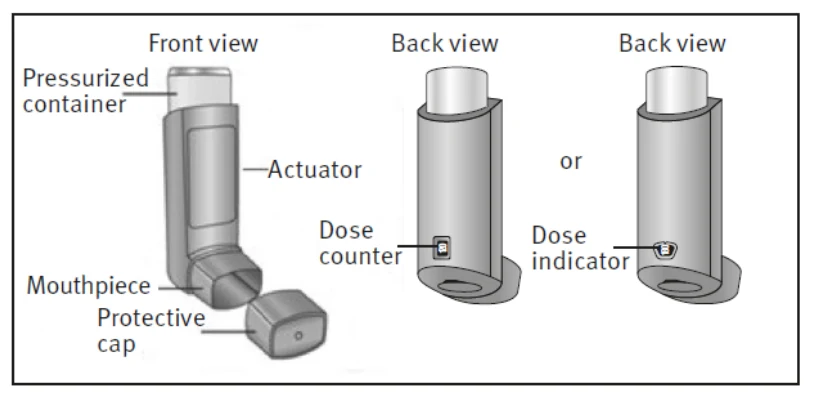
Figure 1
TRIMBOW is available in three container sizes:
- A container providing 60 puffs
- A container providing 120 puffs
- A container providing 180 puffs.
There is a dose counter or indicator located on the back of the actuator (see Figure 1). The display window of the dose counter or indicator will show you how many puffs of medicine you have left. A puff of medicine is released each time you press the top of the canister.
- If you have been prescribed a container providing 60 puffs or 120 puffs: Each time a puff of medicine is released, the dose counter will count down by one.
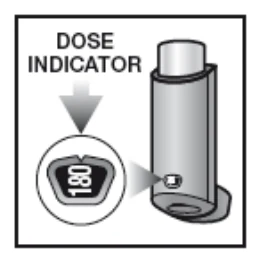
- If you have been prescribed a container providing 180 puffs: Each time a puff of medicine is released, the dose indicator rotates by a small amount. The number of puffs remaining is displayed in intervals of 20 with the use of a pointer. For example, the pointer will be pointing between 160 and 180 after you take 10 puffs. This means that there are 170 puffs of medicine left in the canister.
- Take care not to drop the inhaler as this may cause the dose counter or dose indicator to count down.
Priming your TRIMBOW inhaler:
Before you use TRIMBOW for the first time:
- you must prime the inhaler so that you get the right amount of medicine when you use it.
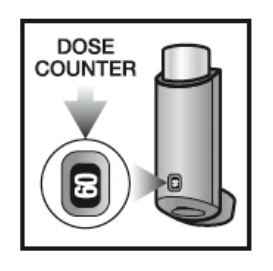
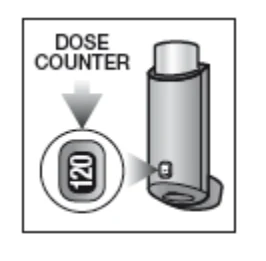
- depending on the container size prescribed to you (60 puffs, 120 puffs or 180 puffs), check that the dose counter reads 61 or 121, or that the dose indicator reads 180 respectively.
Step 1: Remove the cap from the mouthpiece.
Step 2: Hold your inhaler upright with the mouthpiece at the bottom.
Step 3: Direct the mouthpiece away from yourself and firmly press the top of the canister until the canister stops moving in the actuator to release a puff of medicine from the mouthpiece.
Step 4: Check the dose counter or dose indicator. If you are testing your inhaler for the first time, the counter or indicator should read:
60
| 120
| 180
|
|---|
- An extra puff is provided for priming your inhaler when you use it for this first time. Do not skip priming.
- Re-prime your inhaler if it was not used for more than 14 days.
 |  |  |
|---|
Using your TRIMBOW inhaler:
- Stand up or sit up when using TRIMBOW.
- IMPORTANT: Do not perform Steps 2 to 5 too quickly.
Step 1: Remove the cap from the mouthpiece and check that the mouthpiece is clean and free from dust and dirt (see Figure A).
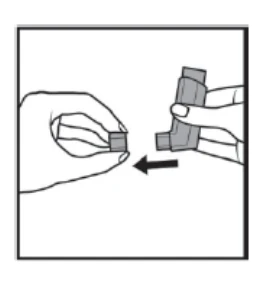
Figure A
Step 2: Breathe out through your mouth, as slowly and fully as you comfortably can, to empty your lungs (see Figure B).
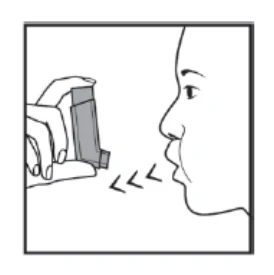
Figure B
Step 3: Hold the inhaler upright with the mouthpiece at the bottom and place the mouthpiece between your teeth without biting it. Close your lips around the mouthpiece, keeping your tongue flat below the mouthpiece (see Figure C).
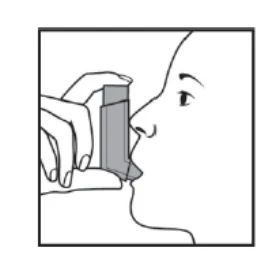
Figure C
Step 4: Breathe in deeply and slowly through your mouth to fill your lungs with air (for about 4 - 5 seconds). Just after you start breathing in, press down firmly on the top of the canister until it stops moving in the actuator and a puff of medicine has been released (see Figure D). Then stop pressing the canister.
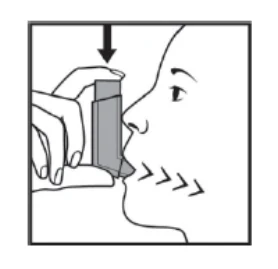
Figure D
Step 5: Hold your breath for as long as you comfortably can (see Figure E). When you have finished holding your breath, remove the inhaler from your mouth and breathe out slowly. Do not breathe out into the inhaler.
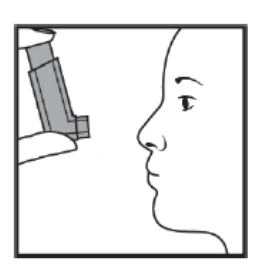
Figure E
Step 6: Check that the dose counter has moved down by one (for the 60- or 120-puff inhaler) or that the dose indicator has rotated by a small amount (for the 180-puff inhaler).
For your second puff of TRIMBOW, keep the inhaler in the upright position for about half a minute, then repeat Steps 2 to 6.
If you see “mist” coming from the top of the inhaler or the sides of your mouth, this means that TRIMBOW did not get into your lungs as it should. Take another puff, following the instructions starting again from Step 2.
If you have a weak grip, it may be easier to hold the inhaler with both hands: hold the upper part of the inhaler with both index fingers and its lower part with both thumbs.
If you find it difficult to use the inhaler while starting to breathe in, you may use the AeroChamber Plus® spacer device. Ask your doctor or pharmacist about this device.
It is important that you read the package leaflet which is supplied with your AeroChamber Plus® spacer device. You should carefully follow the instructions on how to use the AeroChamber Plus® spacer device and how to clean it.
Step 7: Replace the cap over the mouthpiece right away after use.
Step 8: Rinse your mouth with water and spit it out. Do not swallow. This is to prevent fungal infections in the mouth and throat.
How to clean your TRIMBOW inhaler:
Clean your inhaler once each week. It is very important to keep your inhaler clean so that medicine will not build-up and block the spray through the mouthpiece.
Step 1:
- Do not remove the canister from the actuator. It should be kept in the actuator during cleaning.
- Do not use water or other liquids to clean your inhaler.
Step 2: Take the cap off the mouthpiece by pulling it away from your inhaler.
Step 3: Wipe inside and outside of the mouthpiece and the inhaler with a clean, dry cloth or tissue.
Step 4: Look into the mouthpiece to make sure any medicine build-up has been completely wiped away. If there is any build-up, repeat Step 3.
Step 5: Replace the cap on the mouthpiece.
When to get a new inhaler:
You should get a replacement when the dose counter or dose indicator shows the number 20. Stop using the inhaler when the counter or indicator shows 0. Any medicine left in the inhaler may not be enough to give you a full puff.
Date of Authorization: 2025-05-16