


Product Monograph - Vancomycin Hydrochloride for Injection, USP (Pfizer Canada)
INDICATIONS AND CLINICAL USE
VANCOMYCIN HYDROCHLORIDE FOR INJECTION, USP is indicated in the therapy of severe or life-threatening staphylococcal infections in patients who cannot receive or have failed to respond to the penicillins or cephalosporins, or who have infections with staphylococci resistant to other antibiotics, including methicillin.
To reduce the development of drug-resistant bacteria and maintain the effectiveness of VANCOMYCIN HYDROCHLORIDE FOR INJECTION, USP and other antibacterial drugs, VANCOMYCIN HYDROCHLORIDE FOR INJECTION, USP should be used only to treat infections that are proven or strongly suspected to be caused by susceptible bacteria. When culture and susceptibility information are available, they should be considered in selecting or modifying antibacterial therapy. In the absence of such data, local epidemiology and susceptibility patterns may contribute to the empiric selection of therapy.
In the treatment of staphylococcal endocarditis, vancomycin has been used successfully alone.
In other infections due to staphylococci, including osteomyelitis, pneumonia, septicemia and soft-tissue infections, vancomycin's effectiveness has been documented. Antibiotics are used as adjuncts to appropriate surgical measures when staphylococcal infections are localized and purulent.
Although no controlled clinical efficacy trials have been conducted, intravenous vancomycin has been suggested by the American Heart Association and the American Dental Association as prophylaxis against bacterial endocarditis in patients allergic to penicillin who have congenital and/or rheumatic or other acquired valvular heart disease when they undergo dental procedures or surgical procedures of the upper respiratory tract. (Note: When selecting antibiotics for the prevention of bacterial endocarditis, the physician or dentist should read the full joint statement of the American Heart Association and the American Dental Association.)
For the treatment of staphylococcal enterocolitis and antibiotic-associated pseudomembranous colitis produced by Clostridium difficile, vancomycin should be used orally. Parenteral administration of vancomycin is not effective for these indications, therefore vancomycin must be given orally. For the treatment of other types of infection vancomycin is not effective by the oral route.
Specimens for bacteriological cultures should be obtained in order to isolate and identify the causative organisms and to determine their susceptibility to vancomycin.
CONTRAINDICATIONS
VANCOMYCIN HYDROCHLORIDE FOR INJECTION, USP is contraindicated in patients with known hypersensitivity to the antibiotic.
WARNINGS
Exaggerated hypotension, including shock, and rarely cardiac arrest may result from rapid bolus administration (e.g., over several minutes) of vancomycin hydrochloride.
Toxic serum levels can occur when given intravenously. Vancomycin is excreted fairly rapidly by the kidney and with decreased renal clearance, blood levels increase markedly. The risk of toxicity appears appreciably increased by high blood concentrations or prolonged treatment during parenteral therapy. Orally, vancomycin is poorly absorbed. Therefore, toxic serum levels are not attained from oral dosage.
When serum levels exceed 80 mcg/mL, ototoxicity has occurred. Tinnitus may precede deafness. The elderly are more likely to experience auditory damage. Deafness may be progressive despite cessation of treatment, as experience with other antibiotics suggests.
Careful monitoring is required with concurrent and sequential use of other neurotoxic and/or nephrotoxic agents, particularly aminoglycoside antibiotics, cephaloridine, polymixin B, colistin, viomycin, paromomycin, cisplatin and neuromuscular blocking agents.
If parenteral and oral vancomycin are administered concomitantly, an additive effect may occur, which should be considered when calculating the total dose given. Levels of vancomycin in serum should be monitored in these circumstances.
Susceptibility/Resistance
Development of Drug Resistant Bacteria
Prescribing VANCOMYCIN HYDROCHLORIDE FOR INJECTION, USP in the absence of a proven or strongly suspected bacterial infection is unlikely to provide benefit to the patient and risks the development of drug-resistant bacteria.
PRECAUTIONS
To avoid rapid infusion-related reactions, VANCOMYCIN HYDROCHLORIDE FOR INJECTION, USP should be administered in a dilute solution over a period of not less than 60 minutes. A prompt cessation of these reactions usually results when the infusion is stopped (see DOSAGE AND ADMINISTRATION and ADVERSE REACTIONS).
Vancomycin hydrochloride should be used with care in patients with renal insufficiency because of its ototoxicity and nephrotoxicity. The dose and/or dose intervals should be adjusted carefully and blood levels monitored if it is necessary to use vancomycin parenterally in patients with renal impairment.
In patients with previous hearing loss, vancomycin should be avoided (if possible). If used in such patients, the dose of vancomycin should be monitored by periodic determination of drug levels in blood. Serial tests of auditory function and of vancomycin blood levels should be performed in patients with renal insufficiency and in individuals over the age of 60. Periodic hematologic studies, urinalyses and liver and renal function tests should be taken in all patients receiving vancomycin.
The overgrowth of non-susceptible organisms may result with the use of vancomycin. Appropriate measures should be taken if new infections due to bacteria or fungi appear during therapy with this product. These measures should include the withdrawal of vancomycin.
In rare instances, there have been reports of pseudomembranous colitis due to Clostridium difficile developing in patients who receive intravenous vancomycin.
Vancomycin should never be given intramuscularly. Vancomycin is irritating to tissue and causes drug fever, pain and possibly necrosis if injected intramuscularly. Therefore, it must be administered intravenously. In many patients receiving vancomycin, pain and thrombophlebitis occur and are occasionally severe. By administering the drug in a volume of at least 200 mL of glucose or saline solution and by rotating the sites of injection, the frequency and severity of thrombophlebitis can be minimized.
The frequency of infusion-related events (including hypotension, flushing, erythema, urticaria and pruritus) has been reported to increase with concomitant administration of anesthetic agents. The administration of vancomycin hydrochloride as a 60-minute infusion prior to anesthetic induction may minimize infusion-related events.
The safety and efficacy of administering vancomycin by the intrathecal (intralumbar or intraventricular) route have not been assessed.
Some patients with inflammatory disorders of the intestinal mucosa may have significant systemic absorption of oral vancomycin and may thus be at risk of developing adverse reactions associated with parenteral administration of vancomycin. This risk is greater in the presence of renal impairment. Total systemic and renal clearance of vancomycin are reduced in the elderly.
When patients with underlying renal dysfunction or those receiving concomitant therapy with an aminoglycoside are being treated, serial monitoring of renal function should be performed.
Use in Pregnancy
Vancomycin should be given during pregnancy only if clearly needed. Vancomycin levels of 13.2, and 16.7 mcg/mL were measured in cord blood of 2/10 pregnant women treated with vancomycin in a controlled clinical study of serious staphylococcal infection complicating intravenous drug abuse. Because the number of patients treated in this study was small and vancomycin administered only in the second and third trimesters, it is not known whether vancomycin causes fetal harm.
Nursing Mothers
Vancomycin is excreted in human milk. Caution should be exercised if vancomycin is administered to a nursing mother. The potential for adverse effects warrants that a decision be made whether to discontinue nursing of the infant or administration of vancomycin, taking into account the importance of the drug to the nursing mother.
Pediatrics
In premature neonates and in young infants, it may be advisable to confirm desired serum levels of vancomycin.
Concomitant administration of vancomycin and anesthetic agents has been associated with erythema and histamine-like flushing in children.
Geriatrics
Vancomycin dosage levels should be adjusted in elderly patients. The natural decrease in glomerular filtration rate with increasing age may lead to elevated concentrations of vancomycin in serum if dosages are not adjusted.
Burn Patients
Burn patients reportedly have higher total body clearance rates for vancomycin and may thus require more frequent and higher doses. Dosage individualisation and close monitoring of burn patients being treated with vancomycin may be warranted.
ADVERSE REACTIONS
Infusion-Related Events
Associated with the administration of vancomycin are nausea, chills, fever, wheezing, dyspnea, pruritus, urticaria and macular rashes. Eosinophilia and anaphylactoid reactions may also be produced. A throbbing type of pain in the muscles of the back and neck has been described and can usually be minimized or avoided by slower administration (see DOSAGE AND ADMINISTRATION). There have been reports of hypotension which is more apt to occur with rapid administration. During rapid administration flushing of the skin over the neck and shoulder with transitory fine rash including urticaria ("red neck") has also been observed. These reactions may persist for several hours but usually resolve within 20 - 30 minutes.
Nephrotoxicity
Renal failure has been reported rarely in patients treated with vancomycin, principally manifested by increased serum creatinine or BUN, particularly in patients given large doses. Most of these have occurred in patients who had pre-existing kidney dysfunction or who were given aminoglycosides concomitantly. Azotemia resolved in most patients upon discontinuance of vancomycin. Rare cases of interstitial nephritis have been reported in patients treated with vancomycin.
Ototoxicity
Hearing loss associated with vancomycin has been reported by approximately two dozen patients. In most cases, patients also had kidney dysfunction, pre-existing hearing loss or concomitant treatment with an ototoxic drug. Rarely have there been reports of vertigo, dizziness and tinnitus.
Hematopoietic
The development of reversible neutropenia, usually starting one week or more after onset of therapy with vancomycin or after a total dose of more than 25 g has been reported, including some 24 "spontaneous cases" from published reports and other sources. Upon discontinuance of vancomycin, neutropenia appears to be promptly reversible. Thrombocytopenia has been reported rarely. Reversible agranulocytosis (granulocyte count less than 5 000/mm3) has been reported rarely.
Phlebitis
Inflammation at the injection site has been reported.
Miscellaneous
Drug fever, exfoliative dermatitis, Stevens-Johnson syndrome, Drug Reaction with Eosinophilia and Systemic Symptoms (DRESS) Syndrome, Toxic Epidermal Necrolysis (TEN) and rare cases of vasculitis, have been associated with the administration of vancomycin.
OVERDOSAGE
| For management of a suspected drug overdose, contact your regional Poison Control Centre. |
Hemofiltration and hemoperfusion with polysulfone resins reportedly results in increased clearance of vancomycin. As no specific antidote is known, general supportive treatment is indicated. Significant amounts of vancomycin are not removed by dialysis.
DOSAGE AND ADMINISTRATION
DOSAGE
Each dose should be administered at a rate of no more than 10 mg/min or over a period of at least 60 minutes.
Intravenous Dosage
Adults:
The usual intravenous dose is 500 mg every 6 hours or 1 g every 12 hours. Other patient factors such as age or obesity may call for modification of the usual intravenous daily dose.
Adults with Impaired Renal Function:
To avoid toxic serum levels dosage adjustment is required in patients with impaired renal function. Since accumulation in such patients has been reported to occur over several weeks of treatment, serum levels should be checked regularly.
The dosage calculation may be made by using the following nomogram if the creatinine clearance value is known for most patients with renal impairment or the elderly:
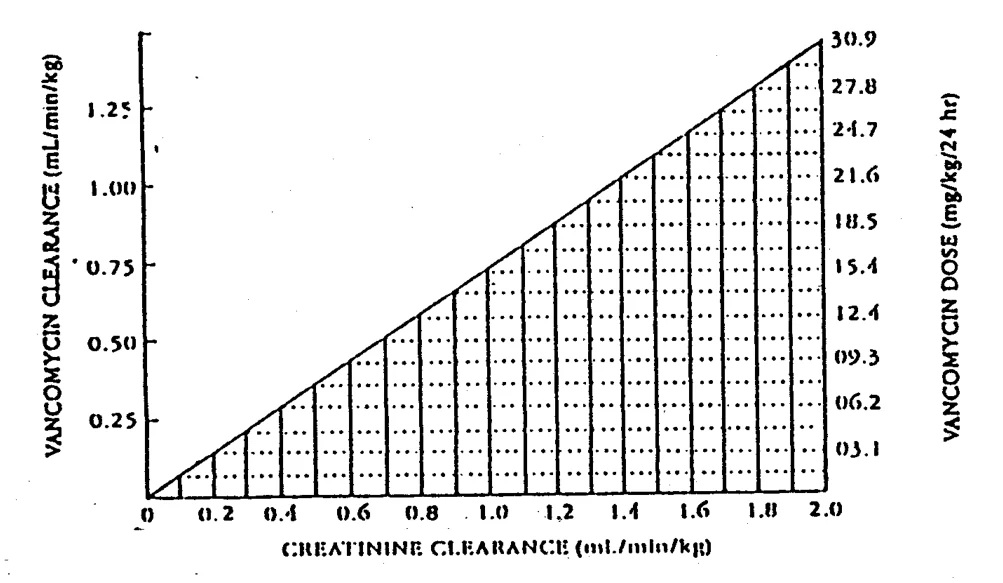 |
(Moellering et al. 1981)
For functionally anephric patients on dialysis, the nomogram is not valid. In order to achieve therapeutic serum levels promptly in such patients, a loading dose of 15 mg/kg of body weight should be given. The dose required to maintain stable serum levels is 1.9 mg/kg/24 h.
When only serum creatinine is available, the conversion of this value into estimated creatinine clearance may be accomplished by using the following formula based on sex, weight and age of the patient.
A steady state of renal function is represented by the serum creatinine.
Males: Weight (kg) x (140 - age) 72 x serum creatinine
Females: 0.85 x above value
Neonates, Infants and Children:
The dosage schedule which follows has been used. Infusions can be divided and incorporated in the child's 24-hour fluid requirement and should be infused over 60 minutes.
Infants and Neonates: It is suggested that an initial dose of 15 mg/kg be administered followed by 10 mg/kg every twelve hours for neonates in the first week of life and every eight hours thereafter up to the age of one month. Each dose should be given over 60 minutes. Close monitoring of serum concentrations of vancomycin may be warranted in these patients.
Children: The usual intravenous dosage of vancomycin is 10 mg/kg given every six hours.
The majority of patients with infections caused by organisms susceptible to the antibiotic demonstrate a therapeutic response by 48 to 72 hours. The total duration of therapy is determined by the type and severity of the infection and the clinical response of the patient. In staphylococcal endocarditis, therapy for three weeks or longer is recommended.
Oral Dose
Vancomycin, when administered orally, is to be used only in the treatment of staphylococcal enterocolitis, and/or pseudomembranous colitis associated with toxigenic Clostridium difficile.
Adults:
The usual daily dose for antibiotic-associated colitis and/or staphylococcal enterocolitis is 125 - 500 mg orally every 6 - 8 hours for 7 - 10 days.
Children:
The usual daily dosage is approximately 40 mg/kg in 3 or 4 divided doses for 7 - 10 days. The total daily dose should not exceed 2 g.
ADMINISTRATION
Intermittent Intravenous Infusion:
It is necessary to further dilute the reconstituted solution with 100 – 200 mL Normal Saline or D5W (dextrose in sterile water for injection). The infusion should be over a period of at least 60 minutes (see PHARMACEUTICAL INFORMATION - Reconstitution).
Continuous Intravenous Infusion:
Only when intermittent infusion is not practical should continuous intravenous infusion be used. A concentration no greater than 10 mg/mL is recommended. An infusion of 10 mg/min or less is associated with fewer infusion-related adverse events.
Oral Administration:
By diluting the contents of the intravenous vial (500 mg) in 30 mL of water, the patient is permitted to drink the antibiotic or the solution may be administered via nasogastric tube.
PHARMACEUTICAL INFORMATION
Drug Substance
Proper Name: Vancomycin hydrochloride
Chemical Name: (Sa)-(3S,6R,7R,22R,23S,26S,36R,38aR)-44-[[2-O-(3-Amino-2,3,6- trideoxy-3-C- methyl-α-l-lyxo-hexopyranosyl)-ß-d-glucopyranosyl]oxy]-3- (carbamoylmethyl)-10,19- dichloro-2,3,4,5,6,7,23,24,25,26,36,37,38,38a- tetradecahydro-7,22,28,30,32- pentahydroxy-6-[(2R)-4-methyl-2-(methylamino)valeramido]-2,5,24,38,39-pentaoxo- 22H-8,11:18,21- dietheno-23,36-(iminomethano)-13,16:31,35-dimetheno-1H,16H- [1,6,9]oxadiazacyclohexadecino[4,5-m][10,2,16]benzoxadiazacyclotetracosine-26- carboxylic acid,monohydrochloride.
Structural Formula:
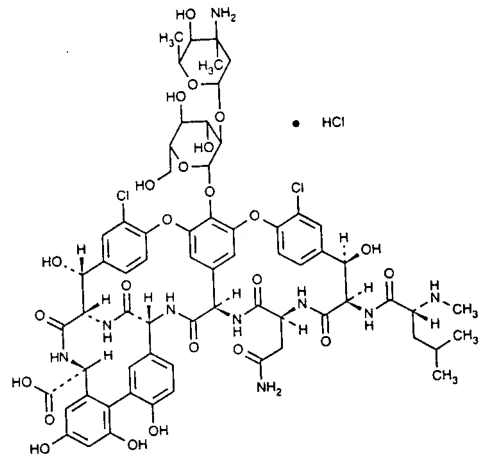
Molecular Formula: C66H75Cl2N9O24HCl
Molecular Weight: 1485.73 g/mole
Description:
Vancomycin hydrochloride is a tricyclic glycopeptide antibiotic. It is an off-white, free-flowing powder, very soluble in water at pH 4, moderately soluble in aqueous methanol, but insoluble in higher alcohols, acetone or ether. The melting point is 105 °C.
COMPOSITION
Sterile vials contain vancomycin hydrochloride equivalent to either 500 mg, 1 g, 5 g or 10 g of vancomycin base as a lyophilized drug. When reconstituted in Sterile Water for Injection, it forms a clear solution with a pH of 4.0 (2.5 to 4.5). May contain hydrochloric acid and/or sodium hydroxide for pH adjustment.
Reconstitution
Flip-Top Vial
Solution for Reconstitution: Sterile Water for Injection
Reconstitute as follows (see Table 1):
Table 1 Reconstitution | |||
Flip Top Vial Size | Volume to be Added to Vial | Approx. Available Volume | Vancomycin Concentration |
| 500 mg | 10 mL | 10.3 mL | 50 mg/mL |
| 1 g | 20 mL | 20.6 mL | 50 mg/mL |
| 5 g | 100 mL | 100 mL | 50 mg/mL |
| 10 g | 95 mL | 100 mL | 100 mg/mL |
Note: FURTHER DILUTION IS REQUIRED
Complete dissolution may take as long as 3 or 5 minutes for the 5g and 10g, respectively.
For Intermittent Intravenous Infusion
500 mg vial: Reconstituted solutions must be diluted with at least 100 mL of 0.9% Sodium Chloride Injection or 5% Dextrose in Sterile Water for Injection.
1 g vial: Reconstituted solutions must be diluted with at least 200 mL of 0.9% Sodium Chloride Injection or 5% Dextrose in Sterile Water for Injection.
5 g vial: Further dilution of the reconstituted solution is required. The 5 g vial is a pharmacy bulk package intended for pharmacy use only.
10 g vial: Further dilution of the reconstituted solution is required. The 10 g vial is a pharmacy bulk package intended for pharmacy use only.
For Continuous Intravenous Infusion
The vials reconstituted according to Table 1 (Reconstitution) should be further diluted to the desired volume with one of the following intravenous solutions:
5% Dextrose Injection
3.3% Dextrose Injection and 0.3% Sodium Chloride Injection
Lactated Ringer's Injection
0.9% Sodium Chloride Injection
A concentration of no greater than 5 mg/mL is recommended.
Directions for Dispensing from Pharmacy Bulk Package:
Pharmacy bulk packages (5 g and 10 g) are for use in a pharmacy admixture service only in suitable work area such as a laminar flow hood. The pharmacy bulk package should be hung by the integral labeling hanger and suspended in the laminar flow hood. The container closure should be penetrated only one time utilizing a suitable sterile dispensing set which allows measured distribution of the contents. Use of a syringe and needle is not recommended as it may cause leakage. Insert the dispensing set into the pharmacy bulk package using aseptic technique.
Once the sterile dispensing set has been inserted into the container, withdrawal of the contents should be accomplished without delay. However, if this is not possible, a maximum time of 8 hours from the initial entry may be allowed to complete fluid aliquoting/transferring operations.
This time limit should begin with the introduction of solution or diluent into the pharmacy bulk package. Discard the container no later than 8 hours after initial closure puncture.
STABILITY AND STORAGE RECOMMENDATIONS
Dry Powder
Vancomycin hydrochloride powder should be stored between 20 and 25 °C.
Solutions
Reconstituted solutions and further diluted infusion mixtures should be used within 24 hours if kept at room temperature or within 96 hours if stored under refrigeration (5 °C).
NOTE: As with all parenteral drug products, intravenous admixtures should be inspected visually for clarity, particulate matter, precipitate, discolouration and leakage prior to administration whenever solution and container permit. Solutions showing haziness, particulate matter, precipitate, discolouration or leakage should not be used. Single-dose vials. Discard unused portion.
Incompatibility
The following are some of the specific substances found to be incompatible: aminophylline, amobarbital sodium, chloramphenicol sodium succinate, chlorothiazide sodium, dexamethasone sodium phosphate, methicillin sodium, vitamin B complex with C, heparin sodium, penicillin G potassium, phenobarbital sodium, phenytoin sodium, secobarbital sodium, sodium bicarbonate and warfarin sodium.
NOTE: Common flavouring syrups have been added to the solution to improve the taste for oral administration. There is no information to indicate that the potency or efficacy of the drug is affected by the addition of these agents.
AVAILABILITY OF DOSAGE FORMS
VANCOMYCIN HYDROCHLORIDE FOR INJECTION, USP is available as a sterile, lyophilized powder as follows:
- 10 mL single-use vials containing vancomycin hydrochloride equivalent to 500 mg vancomycin base.
- 30 mL single-use vials containing vancomycin hydrochloride equivalent to 1 g vancomycin base.
- 100 mL single-use vials containing vancomycin hydrochloride equivalent to 5 g vancomycin base.
- 100 mL single-use vials containing vancomycin hydrochloride equivalent to 10 g vancomycin base.
MICROBIOLOGY
Vancomycin hydrochloride has not demonstrated cross-resistance with other classes of antibiotics. A slow, stepwise laboratory-induced resistance has been reported to occur. Neither changes in pH nor the presence of serum significantly alter vancomycin's activity. Most strains of the following organisms are sensitive in vitro and in clinical infections to vancomycin:
Staphylococcus aureus (including heterogenous methicillin-resistant strains)
Clostridium difficile
Staphylococcus epidermidis (including heterogenous methicillin-resistant strains)
Streptococcus pneumoniae (including multiple-resistant strains)
Streptococcus pyogenes (group A beta-hemolytic)
Streptococcus agalactiae (group B beta-hemolytic)
Streptococcus bovis
Alpha-hemolytic streptococci (viridans groups)
Enterococci (e.g., Staphylococcus fecalis)
Bacillus sp.
Listeria monocytogenes
Lactobacillus sp.
Neisseria sp.
Diphtheroids
Actinomyces sp.
Note: In vitro, many strains of streptococci, staphylococci, Clostridium difficile and other gram-positive bacteria are susceptible to concentrations of 0.5 to 5 mcg/mL. A small proportion of Staphlylococcus aureus strains requires 10 to 20 mcg/mL for inhibition whereas staphylococci are generally susceptible to less than 5 mcg/mL of vancomycin hydrochloride. In vivo and in vitro resistance to vancomycin has been reported in clinically significant coagulase negative staphylococci identified as Staphylococcus hemolyticus.
Enterococci of various species resistant to vancomycin and related glycopeptide antibiotics have been isolated from hospitalised patients in France, UK, and in the USA. Transfer of resistance to Enterococcus faecium, or Enterococcus fecalis, and to Streptococcus sanguis has also been documented.
In vitro, vancomycin is not effective against gram-negative bacilli, mycobacteria, or fungi.
TABLE 2
In Vitro Activity of Vancomycin
Organism
Number of Strains
MIC (mcg/mL)
Range Median
Staphylococcus aureus 7343835 *≤ 1.0 -
0.25 - 1.0 -
0.8 - 6.25 -
| Staphylococcus aureus | 241554 | 1.0 - 4.0 | - |
| (methicillin-resistant) | 0.25 - 2.0 | - |
0.5 - 1.0 -
Staphylococcus epidermidis 29488 0.1 - 6.25 -
*≤ 2.0 -
Streptococcus pneumoniae 18
-
≤ 0.06 - 0.5 -
0.3 - 1.0 -
Streptococcus pyogenes 12 0.8 - 3.1 -
Streptococcus viridans 8221 0.39 - 1.56
*≤ 1.0
0.78
-
Streptococcus fecalis 382 0.8 - > 100 3.1
Clostridium perfringens 43 0.4 - 1.6 0.8
C. ramosum 49 3.1 - 12.5 6.2
Clostridium difficile 1478 < 0.4 - 3.1 -
1.0 - 4.0 -
* Given in reference as MIC100.
Methods of Susceptibility Testing
A 30 mcg disc of vancomycin should produce a zone of more than 11 mm when in contact with "susceptible" organisms when the standardized method of disc susceptibility testing is used. Intermediate susceptibility is indicated by a zone size of 10 - 11 mm and resistance is indicated by a zone size of 9 mm or less.
Susceptibility to vancomycin is indicated by an MIC of ≤ 5 mcg/mL with the WHO-ICS agar dilution and broth dilution methods.
Assay Methods
Bennett's agar-well diffusion method, which can quantitatively measure vancomycin concentrations from 0.5 to 8 mcg/mL, can be used to determine vancomycin serum and tissue levels.
Two disc-diffusion assay methods, both using Bacillus subtilis as the test organism, are available for vancomycin. Antibiotic medium No. 5 is used in the first method which is capable of measuring vancomycin levels from approximately 5 to 40 mcg/mL. Vancomycin concentrations from about 0.8 to 25 mcg/mL can be detected with the second method which uses minimal salt agar. A reliable bioassay for vancomycin (in concentrations of 0.78 to 50.0 mcg/mL) in the presence of rifampin or aminoglycosides is permitted with modification of the latter assay. An automated fluorescence polarization immunoassay and a radio- immunoassay are two available commercially prepared assay methods.
PHARMACOLOGY
Human Pharmacology Adults:
Intravenous Administration
Multiple 500 mg dosages infused over 30 minutes every 6 hours gave peak concentrations ranging from 41 - 57 mcg/mL. Mean peak plasma concentrations were 64 mcg/mL immediately post infusion, 12.5 mcg/mL at 6 hours and 7 mcg/L at 12 hours post infusion following multiple 60 minute 1 g intravenous infusions of vancomycin in healthy volunteers.
A single intravenous injection of 1 g infused over a period of 30 minutes produced peak levels of 85 mcg/mL after 2 hours, 11 mcg/mL at 6 hours, and 5.1 mcg/mL at 12 hours. A single injection of 500 mg resulted in mean serum concentrations of 51 mcg/mL, with levels of 18.6 mcg/mL, and 5.8 mcg/mL at 6, and 12 hours respectively. Plasma half-life ranged from 3 - 8 hours with a mean of 4.5 hours.
Renal Insufficiency
Twenty-nine anephric patients were infused with 1 g of vancomycin in 250 mL of D5W over 30 minutes. The serum concentration was still 3.5 mcg/mL after 18 days with intermittent dialysis at 3-day intervals. The half-life of elimination was about 7.5 days.
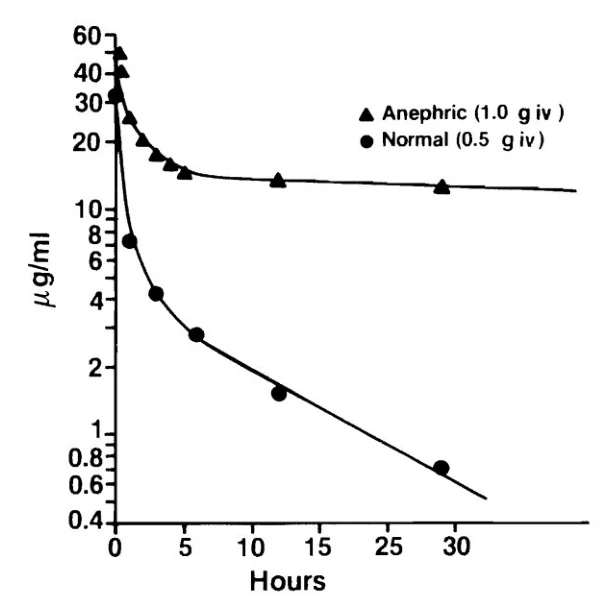 | 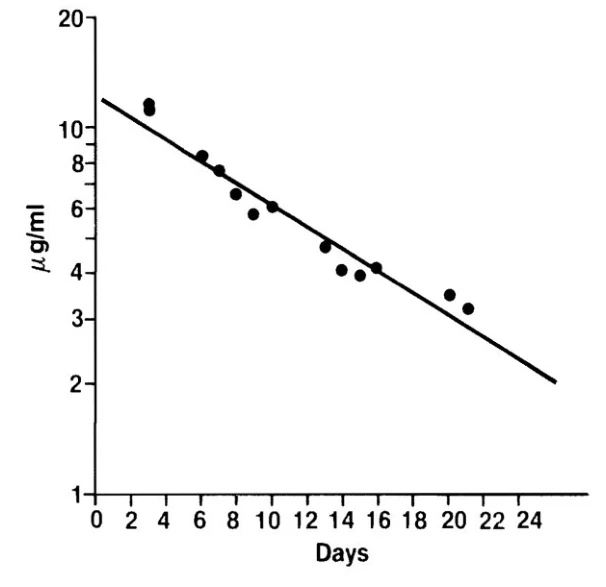 |
Figure 1. Elimination of vancomycin by anephric Figure 2. Elimination of vancomycin after a patients and by patients with normal renal function. single 1 g intravenous dose by anephric patients undergoing hemodialysis at three-day intervals.
| Table 3. Pharmacokinetic parameters of vancomycin in anephric and normal patients, as analyzed by two-compartment distribution. | |||||||||||||||
| Parameter* | |||||||||||||||
| Type of patient | CpO (mcg/ml) | K21 (days-1) | Kel (days-1) | K12 (days-1) | t1/2(β) (days) | Cl (ml/min) | Vd (liters) | Vc (liters) | |||||||
| Anephric | 48.3 | 5.74 | 0.32 | 10.69 | 7.5 | 6.88 | 67.6 | 24.5 | |||||||
| Normal† [8] | 33.4 | 5.95 | 10.25 | 18.64 | 0.37 | 110 | 119.1 | 14.97 | |||||||
* CpO = peak concentration in serum; K21 and K12 = first –order rate constants for distribution of drug from tissue into plasma and from plasma into tissue, respectively; Kel = elimination rate constant; t1/2(β) = elimination half-life; Cl = rate of drug clearance; Vd = apparent volume of distribution; Vc = volume of distribution in central compartment. Values given are means. † This group was composed of patients with normal renal function. † This group was composed of patients with normal renal function. | |||||||||||||||
(Cunha et al. 1981)
Oral Administration
Vancomycin is poorly absorbed after oral administration, only trace amounts are found in urine and blood. Following a dose of 125 mg orally four times daily, the mean concentration of vancomycin in stools was approximately 350 mcg/g. After up to ten daily doses of 2 g, a mean level of 3 100 mcg/g (with a range of 905 – 8 760 mcg/g) was detected in feces of patients with pseudomembranous colitis.
Tissue Penetration and Distribution
Central Nervous System
Vancomycin does not readily diffuse across normal meninges into spinal fluid, but penetrates into spinal fluid when the meninges are inflamed.
Other Tissues and Fluids
Vancomycin concentrations in human bile, pleural, ascitic, pericardial, and synovial fluids reach approximately one-third of the equivalent serum level after single intravenous doses. A level of 7.6 mcg/mL was achieved in the brain cyst of an infant following intravenous infusion of 40 mg/kg daily for 4 days.
TOXICOLOGY
Acute Toxicity
Table 4 LD50 (mg/kg) of Vancomycin in Various Animals | |||
| Route of Administration | Rat | Mouse | Dog |
| Intravenous | 319 ± 14 | 489 ± 41 | 292 ± 29 |
| Intraperitoneal | 2 218 ± 240 | 1 734 ± 227 | |
| Subcutaneous | > 5 000 | ||
| Oral | > 5 000 | ||
Dogs died several days after drug administration, generally from kidney failure, while rats died quickly from CNS-mediated effects.
Vancomycin caused a slight dose-related drop in blood pressure when administered intravenously in a 5 percent solution to dogs at a rate of 0.6 mL/minute. Blood pressure dropped dramatically, as much as 40%, when the same dogs were given the same doses at a rate of 15 mL/minute. It is unknown, at present, whether the response is due to a direct effect on histamine receptors, or to the possible release of histamine from mast cells.
Chronic Toxicity
Vancomycin was given to dogs in daily doses of 12.5, 25 and 50 mg/kg for 21 - 311 days. Renal damage was seen in 4/22 dogs receiving 50 mg/kg/day.
Irritation at the injection site was the only toxic effect resulting from the daily intravenous administration of 25 or 50 mg/kg to monkeys for 16 to 187 days.
No evidence of systemic toxicity was seen in cats receiving daily intramuscular doses of 25 and 50 mg/kg for 3 months.
Nine guinea pigs that received 100 mg vancomycin subcutaneously did not develop anaphylaxis when challenged 25 days later with a 25 mg intravenous dose.
Neither 150 mg vancomycin nor 60 mg tobramycin given alone to rats produced nephrotoxicity. However, significant renal toxicity occurred when administered together.
Ototoxicity was not produced in a guinea pig model administered 1000 mg/kg vancomycin and 40 mg/kg ethacrynic acid concurrently.
Neuromuscular blocking has not been demonstrated in rabbits treated with vancomycin.
REFERENCES
- 1.
Anderson RC, Worth HM, Harris PN, Chen KK. Vancomycin, a new antibiotic. IV. Pharmacologic and toxicologic studies. Antibiotics Annual 1956-1957; 75-81.
- 2. Conrad DA, Scribner RK, Weber AH, Marks MI. In vitro activity of BMY - 28142 against pediatric pathogens, including isolates from cystic fibrosis sputum. Antimicrob Agents Chemother 1985; 28:58-63.
- 3. Cooper GL, Given DB, Eds. Vancomycin a comprehensive review of 30 years of clinical experience. Lilly Research Laboratories, Indianapolis, Indiana, pp 23-38,69-79, 1986.
- 4. Cunha BA, Quintiliani R, Deglin JM, Izard MW, Nightingale CH, Pharmacokinetics of vancomycin in anuria. Rev Infect Dis 1981; 3:5269-5272.
- 5. Dudley MN, McLaughlin JC, Carrington G, Frick V, Nightingale CH, Quintiliani R. Oral bacitracin vs vancomycin therapy for clostridium difficile-induced diarrhoea, Arch Intern Med 1986; 146:1101-1104.
- 6. Durack DT. Current practice in prevention of bacterial endocarditis. Br Heart J 1975; 37:478-481.
- 7. Ehrenkranz NJ, Cohen H, Romero A. The clinical evaluation of vancomycin in treatment of multiantibiotic refractory staphylococcal infections. II. The use of vancomycin after failure of bactericidal antibiotics. Arch Intern Med 1960; 106:158-167.
- 8. Farber BF, Moellering RC. Retrospective study of the toxicity of preparations of vancomycin from 1974 to 1981. Antimicrob Agents Chemother 1983; 23:138-141.
- 9. Furmaga KM. Vancomycin-associated adverse reactions. Clin Trends Hosp Pharm 1988; 2:9-11.
- 10. Geraci JE, Vancomycin Mayo Clin Proc 1977; 50:631-634.
- 11. Geraci JE, Heilman FR, Nichols DR, Wellman WE, Ross GT. Some laboratory and clinical experiences with a new antibiotic, vancomycin. Staff Meet Mayo Clin 1956; 31:564-582.
- 12. Geraci JE, Nichols DR, Wellman WE. Vancomycin in serious staphylococcal infections, Arch Intern Med 1962; 109:53-61.
- 13. Goldstein EJC, Citron DM. Comparative in vitro activity of imipenem and 15 other antimicrobial agents against clinically important aerobic and anaerobic bacteria. Clin Ther 1988; 10:487-515.
- 14. Gump DW. Vancomycin for treatment of bacterial meningitis. Rev Infect Dis. 1981;3:S289-S292.
- 15. Hawley HB, Gump DW. Vancomycin Therapy of bacterial meningitis. AM J Dis Child 1973; 126:261-264.
- 16. Hook EW, Johnson WD. Vancomycin Therapy of bacterial endocarditis, Am J Med 1978; 65:411-415.
- 17. Kaplan EL, Anthony BF, Bisno A, Durack D, Houser H, Millard HD, Sanford J, Shulman ST, Stillerman M, Taranta A, Wenger N. Prevention of bacterial endocarditis. Circulation 1977:56;139A-143A.
- 18. Khan MY, Hall WH. Staphylococcal entercolitis-treatment with oral vancomycin. Ann Intern Med 1966; 65:1-8.
- 19. Lorian J, ED. Antibiotics in laboratory medicine. Second Edition 1985. Williams and Wilkins, Baltimore, MD.
- 20. Louria DB, Kaminski T, Buchman J. Vancomycin in severe staphylococcal infections. Arch Intern Med 1961; 107:125-140.
- 21. Mandell GL, Lindsey E, Hook EW. Synergism of vancomycin and streptomycin for enterococci. Amer J. Med Sciences 1970; 259:346-349.
- 22. McHenry MC, Gavan TL. Vancomycin. Pediatr Clin N Am 1983; 30:31-47.
- 23. Moellering RC, Krogstad DJ, Greenblatt DJ. Pharmacokinetics of vancomycin in normal subjects and in patients with reduced renal function. Rev Infect Dis 1981; 3:S230-S235.
- 24. Moellering RC, Krigstad DJ, Greenblatt DJ. Vancomycin therapy in patients with impaired renal function: a nomogram for dosage. Ann Intern Med 1981; 94:343-346.
- 25. Muoghalu BU, Lattimer GL. Delayed red neck syndrome with generic vancomycin. Drug Intell Clin Pharm 1988; 22:173.
- 26. Newfield P, Roizen MF. Hazards of rapid administration of vancomycin. Am Coll Physicians. Ann Intern Med 1970; 91:581.
- 27. Riley HD. Vancomycin and novobiocin. Med Clin N Am 1970; 54:1277- 1289.
- 28. Rybak MJ, Albrecht LM, Berman JE, Warbasse LH, Svennson CK. Vancomycin pharmacokinetics in burn patients and intravenous drug abusers. Antimicrob. Ag. & Chemother 1990; 34:792-795.
- 29.
Sachdeva M, Hackbarth C, Stella FB, Chambers HF. Comparative activity of CGP 31608, nafcillin, cefamandole, imipenem, and vancomycin against methicillin-susceptible and
- methicillin-resistant staphylococci. Antimicrob Agents Chemother 1987; 31:1549-1552.
- 30. Schaad UB, McCracken GH, Nelson JD. Clinical pharmacology and efficacy of vancomycin in pediatric patients. J Pediatr 1980; 96:119-126.
- 31. Schwalbe RS, Ritz WJ, Venna PR, Barranco ER, Gilligan PH. Selection for vancomycin resistance in clinical isolates of Staphylococcus hemolyticus. J. Infect Dis. 1990; 161:45-51.
- 32. Schwalbe RS, Stapleton JT, Gilligan PH. Emergence of vancomycin resistance in coagulase negative staphylococci. N. Engl. J. Med. 1987; 927-931.
- 33. Shlaes DM, Binczewski B. Entercoccal resistance to vancomycin and related glycopeptide antibiotics. Eur J Clin Micro Infect Dis. 1990; 106-110.
- 34. Shlaes DM, Bouvet A, Shlaes JH, Devine C, Albeid S, Williamson R. Inducible, transferable resistance to vancomycin in Enterococcus fecalis. Antimicrob Ag. & Chemother. 1989; 33:198- 203.
- 35. Shuttleworth R, Taylor M, Jones DM. Antimicrobial susceptibilities of clostridium difficile. J Clin Pathol 1980; 33:1002-1005.
- 36. Silva J, Batts DH, Plouffe JF, Rifkin GD, Baird J. Treatment of clostridium difficile colitis and diarrhoea with vancomycin. Am J Med 1981; 71:815-822.
- 37. Smith Sm, Eng RHK. Activity of ciprofloxacin against methicillin-resistant staphylococcus aureus. Antimicrob Agents Chemother 1985; 27:688-691.
- 38. Sorrell TC, Packham DR, Shanker S, Foldes M, Munro R. Vancomycin therapy for methicillin- resistant staphylococcus aureus. Ann Intern Med 1982; 97:344-350.
- 39. Waisbren BA, Kleinerman L, Skemp J, Bratcher G. Comparative clinical effectiveness and toxicity of vancomycin, ristocetin, and kanamycin. Arch Intern Med 1960; 106:69-83.
- 40. Walker CA, Kopp B. Sensitive bioassay for vancomycin. Antimicrob Agents Chemother 1978; 12:30-33.
- 41. Wallace JF, Smith RH, Petersdorf RG. Oral administration of vancomycin in the treatment of staphylococcal enterocolitis. N Engl J Med. 1965; 272:1014-1015.
- 42. Wise RI Summary. The vancomycin symposium: summary and comments. Rev Infect Dis. 1981; 3:S293-S300.
- 43. Wold JS, Turnipseed SA. Toxicology of vancomycin in laboratory animals. Rev Infect Dis.1981; 3:S224-S229.
- 44. Woodford N, Johnson AP, Morrison D, Chin ATL, Stephenson JR, George RC. Two distinct forms of resistance among enterococci in the UK. Lancet 1990; 335:226.
- 45. AHFS Drug Information 1987. American Society of Hospital Pharmacists Inc. Bethesda, MD, USA. 1987; 328-330.
- 46. Compendium of Pharmaceuticals and Specialities 1988. 23rd Edition Canadian Pharmaceutical Association, Ottawa, Ontario. Canada. 1988; 978-979.
- 47. Product monograph, Vancocin*, Eli Lilly Canada Inc., Toronto, Ontario, Canada. February 9, 1987.
- 48. Product Monograph,Vancomycin Hydrochloride for Injection, USP, Fresenius Kabi Canada Ltd. Submission Control No.204448, February 27, 2018.
*Registered Trademark