


Patient Medication Information: uses, side effects, how to take - Verkazia
What is Verkazia used for?
Verkazia is used in children [4 years through adolescents (12 to 18 years of age)] to treat a severe form of eye allergy called “vernal keratoconjunctivitis”.
How does Verkazia work?
Verkazia is thought to:
- Lower the production of chemicals that cause inflammation (swelling).
- Reduce inflammation in the cornea (clear layer at the front of the eye) and conjunctiva (thin membrane covering the eye).
What are the ingredients in Verkazia?
Medicinal ingredients: cyclosporine
Non-medicinal ingredients: Cetalkonium chloride, glycerol, medium-chain triglycerides, poloxamer 188, tyloxapol, sodium hydroxide (to adjust pH), water for injection.
Verkazia comes in the following dosage forms:
Eye drop emulsion (liquid mixture), 0.1% w/v.
Do not use Verkazia if you:
- are allergic to cyclosporine or any of the other ingredients in Verkazia (listed above).
- have an eye infection.
- have a cancer or a precancerous condition in or around your eye.
To help avoid side effects and ensure proper use, talk to your healthcare professional before you take Verkazia. Talk about any health conditions or problems you may have, including if you:
- have a history of herpes, chickenpox, shingles, or another similar virus in or near your eye.
- have any other kind of eye disease.
Other warnings you should know about:
Contact lenses: Verkazia has not been studied in patients wearing contact lenses. If you wear contact lenses, using Verkazia is not recommended.
Pregnancy and breastfeeding: If you are pregnant, breastfeeding, think you may be pregnant, or are planning to become pregnant, talk to your healthcare professional before using Verkazia.
Do not use Verkazia if you are pregnant. If you might become pregnant while using this medicine, you must use birth control.
Verkazia may pass into breast milk in very small amounts. If you are breastfeeding talk to your healthcare professional before using Verkazia.
Driving and using machines: After using Verkazia, your vision might be blurry for a while. If this happens, wait until your vision clears before you drive or use machines.
Tell your healthcare professional about all the medicines you take, including any drugs, vitamins, minerals, natural supplements or alternative medicines.
The following may interact with Verkazia:
Talk to your healthcare professional if you are using eye drops that contain steroids. They might increase the risk of side effects if used with Verkazia.
How to take Verkazia:
- Verkazia is for use in the eyes only.
- Always use Verkazia exactly as your healthcare professional has told you. Ask your healthcare professional if you are not sure.
- Do not stop using Verkazia without talking to your healthcare professional. If you stop using Verkazia your eye allergy could get worse, and this could lead to problems with your vision.
- If you are using any other eye drops wait at least 15 minutes after using them before using Verkazia.
Usual dose:
The recommended dose for children (4 -18) is 1 drop of Verkazia in the affected eye(s) 4 times a day (morning, noon, afternoon and evening).
Adults should help children when starting treatment, especially if the child is younger than 10 years old. Adults should continue to help until the child is able to properly use Verkazia alone.
Instructions for use:
Follow these instructions carefully. Ask your healthcare professional if there is anything you do not understand.
- 1. Wash your hands.
- 2. Open the aluminum pouch, which contains 5 single-dose containers.
- 3. Take 1 single-dose container from the aluminum pouch. Leave the remaining containers in the pouch.
- 4. Gently shake the single-dose container.
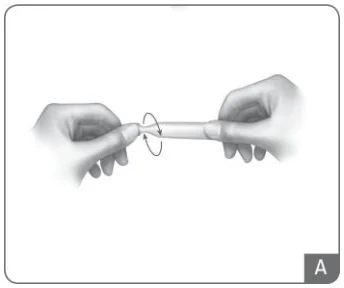
- 5. Twist off the cap (picture A).
- 6. Pull down your lower eyelid (picture B).
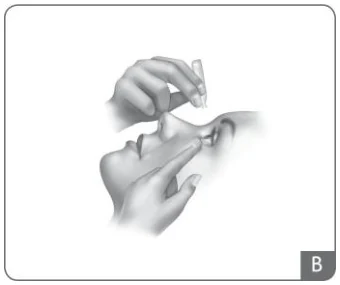
- 7. Tilt your head back and look up at the ceiling.
- 8. Gently squeeze 1 drop of the medicine onto your eye. Make sure that the tip of the container does not touch your eye. If a drop misses your eye, try again.
- 9. Blink a few times so that the medicine spreads across your eye.
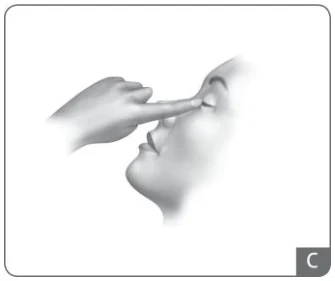
- 10. After using Verkazia, press the corner of your eye closest to your nose and gently close the eyelid for 2 minutes (picture C). This stops Verkazia from getting into the rest of the body.
- 11. If you need to use drops in both eyes, repeat steps 6 to 10 for your other eye. There is enough medicine in one single-dose container to use in both eyes.
- 12. Throw away the empty container after use. If there is any unused medicine, return the container to the pharmacy for disposal.
Overdose:
If you put more Verkazia onto your eye than you should, rinse your eye with water. Do not apply any more drops until your next regular dose.
| If you think you have taken too much Verkazia, contact your healthcare professional, hospital emergency department or regional poison control centre immediately, even if there are no symptoms. |
|---|
Missed Dose:
If you forget to use Verkazia, skip that dose and continue with the next dose as planned. Do not double your dose to make up for the dose you forgot.
What are possible side effects from using Verkazia?
These are not all the side effects you may feel when taking Verkazia. If you experience any side effects not listed here, contact your healthcare professional. The most common side effects while using Verkazia occur in and around the eyes.
Side effects may include:
- Eye pain
- Itching or redness in or around the eye
- Irritation and discomfort in or around the eye, including a feeling that there is something in your eye
- Increased watering of the eye
- Reduced vision
- Runny nose, sore throat and other symptoms of the common cold
- Ear pain
- Cough
- Headache
- Swelling and redness on the edge of the eyelid
If you have a troublesome symptom or side effect that is not listed here or becomes bad enough to interfere with your daily activities, talk to your healthcare professional.
Reporting Side Effects
You can report any suspected side effects associated with the use of health products to Health Canada by:
NOTE: Contact your health professional if you need information about how to manage your side effects. The Canada Vigilance Program does not provide medical advice. |
Storage:
Do not freeze. Store Verkazia below 30°C.
Do not use Verkazia after the expiration date that appears on the outer carton, pouch and single-dose container after "EXP". The expiration date is the last day of that month.
After opening the pouch, keep single-dose containers in the pouch to protect from light and avoid evaporation. Any opened single-dose container with any medicine left over should be thrown out immediately after use.
Keep out of reach and sight of children.
Do not throw away any medicines via wastewater or household waste. Return unused medicine to your pharmacist for disposal.
If you want more information about Verkazia:
•
- Talk to your healthcare professional.
•
This document plus the full product monograph, prepared for healthcare professionals
can be found by visiting the Health Canada website (https://www.canada.ca/en/health-canada.html); the manufacturer’s website (http://www.apotex.ca/products), or by calling 1-800-667-4708