


Product Monograph - Winrevair
Recent Major Label Changes
| 1 Indications | 2025-11 |
|---|---|
| 7 Warnings and Precautions – Monitoring and Laboratory Tests | 2025-11 |
Table Of Contents
Certain sections or subsections that are not applicable at the time of authorization are not listed.
Recent Major Label Changes ................................................................................................... 2
Table Of Contents ................................................................................................................... 2
Part 1: Healthcare Professional Information ........................................................................... 4
1 Indications .................................................................................................................. 4
1.1 Pediatrics .............................................................................................................. 4
1.2 Geriatrics .............................................................................................................. 4
2 Contraindications ........................................................................................................ 4
4 Dosage and Administration ......................................................................................... 4
4.1 Dosing Considerations .......................................................................................... 5
4.2 Recommended Dose and Dosage Adjustment ..................................................... 5
4.3 Reconstitution ...................................................................................................... 8
4.4 Administration ...................................................................................................... 9
4.5 Missed Dose ....................................................................................................... 10
5 Overdose................................................................................................................... 10
6 Dosage Forms, Strengths, Composition, and Packaging ............................................. 10
7 Warnings and Precautions ......................................................................................... 11
Hematologic ......................................................................................................................... 11
Monitoring and Laboratory Tests ......................................................................................... 12
Reproductive Health ............................................................................................................. 12
7.1 Special Populations ............................................................................................. 12
7.1.1 Pregnancy ....................................................................................................... 12
7.1.2 Breastfeeding ................................................................................................. 13
7.1.3 Pediatrics ........................................................................................................ 13
7.1.4 Geriatrics ........................................................................................................ 13
8 Adverse Reactions ..................................................................................................... 13
8.1 Adverse Reaction Overview ................................................................................ 13
8.2 Clinical Trial Adverse Reactions .......................................................................... 14
8.3 Less Common Clinical Trial Adverse Reactions ................................................... 17
8.4 Abnormal Laboratory Findings: Hematologic, Clinical Chemistry, and Other Quantitative Data ........................................................................................................... 18
8.5 Post-Market Adverse Reactions ......................................................................... 18
9 Drug Interactions ...................................................................................................... 19
9.2 Drug Interactions Overview .................................................................................... 19
10 Clinical Pharmacology ............................................................................................... 19
10.1 Mechanism of Action .......................................................................................... 19
10.2 Pharmacodynamics ............................................................................................ 19
10.3 Pharmacokinetics ............................................................................................... 19
10.4 Immunogenicity .................................................................................................. 20
11 Storage, Stability, and Disposal ................................................................................. 20
12 Special Handling Instructions .................................................................................... 21
Part 2: Scientific Information ................................................................................................ 22
13 Pharmaceutical Information ...................................................................................... 22
14 Clinical Trials ............................................................................................................. 22
14.1 Clinical Trials by Indication ................................................................................. 22
16 Non-Clinical Toxicology ............................................................................................. 29
Patient Medication Information ........................................................................................... 31
Part 1: Healthcare Professional Information
1 Indications
WINREVAIR® (sotatercept) is indicated:
- In combination with standard pulmonary arterial hypertension (PAH) therapy, for the treatment of adults with World Health Organization [WHO] Group 1 PAH and Functional Class (FC) II, III or IV (see 14 Clinical Trials).
1.1 Pediatrics
Pediatrics (less than 18 years of age): No data are available to Health Canada; therefore, Health Canada has not authorized an indication for pediatric use.
1.2 Geriatrics
Geriatrics (≥ 65 years of age): No overall difference in safety or efficacy was reported between patients who were aged 65 and older and younger patients (see 7.1.4 Geriatrics and 14 Clinical Trials).
2 Contraindications
Patients who are hypersensitive to sotatercept or to any ingredient in the formulation or component of the container. For a complete listing, see 6 Dosage Forms, Strengths, Composition, and Packaging.
4 Dosage and Administration
The single-use vial (45 mg or 60 mg) representation of WINREVAIR® is intended to be administered by a healthcare professional. Based on their weight a patient may require the use of two 45 mg vials or two 60 mg vials of lyophilized product.
The single-use vials (45 mg or 60 mg) packaged in a kit representation of WINREVAIR® is intended for administration by the patient or caregiver use under the guidance of a healthcare professional. Patients and caregivers may administer WINREVAIR® when considered appropriate and when they receive training and follow-up from the healthcare professional (HCP) in how to reconstitute, prepare, measure, and inject WINREVAIR®. Review the Instructions for Use (IFU) with the patient or caregiver step-by-step. Provide training to the patient or caregiver regarding proper preparation and administration of WINREVAIR® and decide whether a patient or caregiver is capable of preparing and administering WINREVAIR® independently. Make sure the patient or caregiver can do the following correctly:
- reconstitute the medicine,
- measure the correct amount of medicine according to the patient’s prescription,
- select and prepare a proper injection site, and
- inject the medicine subcutaneously.
Selecting the Appropriate Product Kit:
If a patient’s weight requires the use of two 45 mg vials or two 60 mg vials of lyophilized product, a 2-vial kit should be used instead of two individual 1-vial kits. A 2-vial kit includes instructions to combine the contents of two vials, which aids in measuring the proper dosage and eliminates the need for multiple injections (see 11 Storage, Stability, and Disposal). The healthcare professional should consider confirming at subsequent visits that the patient or caregiver can prepare and administer WINREVAIR® correctly:
- if the dose changes or the patient requires a different kit,
- if the patient develops erythrocytosis (see 7 Warnings and Precautions - Erythrocytosis and 8 Adverse Reactions).
4.1 Dosing Considerations
Considerations related to Hemoglobin or Platelet Count Prior to and During Treatment
Increases in hemoglobin (Hgb) to levels greater than 2 g/dL above the upper limit of normal (ULN) and decreases in platelet count < 50,000/mm3 (< 50.0 x 10⁹/L) have been observed after initiating treatment.
Obtain Hgb and platelet count prior to the first dose of WINREVAIR® and before each dose for at least the first 5 doses or longer if values are unstable. Thereafter, monitor Hgb and platelet count periodically. Consider assessment of benefit-risk for the individual patient in determining whether dose modification is appropriate (see 4.2 Recommended Dose and Dosage Adjustment). Do not initiate treatment if platelet count is < 50,000/mm3 (< 50.0 x 10⁹/L) or if patient is experiencing a bleeding event.
Serious bleeding events and severe thrombocytopenia are more common with WINREVAIR® treatment in patients on prostacyclin therapy; exercise caution in initiating WINREVAIR® treatment in these patients (see 7 Warnings and Precautions – Serious Bleeding and 8 Adverse Reactions).
4.2 Recommended Dose and Dosage Adjustment
WINREVAIR® is administered once every 3 weeks by subcutaneous (SC) injection according to patient weight.
Recommended Starting Dosage
The starting dose of WINREVAIR® is 0.3 mg/kg (see Table 1).
Table 1: Injection Volume for Dose of 0.3 mg/kg
| Patient Weight Range (kg) | Injection Volume (mL) | Single Dose Vial | Single Dose Vial Packaged in a Kit | |||||
|---|---|---|---|---|---|---|---|---|
| 30.0 – 40.8 | 0.2 | 45 mg | 45 mg kit (containing 1 x 45 mg vial) | |||||
| 40.9 – 57.4 | 0.3 | |||||||
| 57.5 – 74.1 | 0.4 | |||||||
| 74.2 – 90.8 | 0.5 | |||||||
| 90.9 – 107.4 | 0.6 | |||||||
| 107.5 – 124.1 | 0.7 | |||||||
| 124.2 – 140.8 | 0.8 | |||||||
| 140.9 – 157.4 | 0.9 | |||||||
| 157.5 – 174.1 | 1.0 | 60 mg | 60 mg kit (containing 1 x 60 mg vial) | |||||
| 174.2 – 180.0 | 1.1 | |||||||
Recommended Target Dosage
The target dose of WINREVAIR® is 0.7 mg/kg (see Table 2) administered every 3 weeks.
Obtain and review Hgb and platelet count prior to increasing to the target dose. Continue treatment at 0.7 mg/kg every 3 weeks unless dosage adjustments are required (see Dosage Modifications Due to Hemoglobin Increase or Platelet Count Decrease, below).
Table 2: Injection Volume for Dose of 0.7 mg/kg
| Patient Weight Range (kg) | Injection Volume (mL) | Single Dose Vial(s) | Single Dose Vial(s) Packaged in a Kit | |||||||
|---|---|---|---|---|---|---|---|---|---|---|
| 30.0 – 31.7 | 0.4 | 45 mg | 45 mg kit (containing 1 x 45 mg vial) | |||||||
| 31.8 – 38.9 | 0.5 | |||||||||
| 39.0 – 46.0 | 0.6 | |||||||||
| 46.1 – 53.2 | 0.7 | |||||||||
| 53.3 – 60.3 | 0.8 | |||||||||
| 60.4 – 67.4 | 0.9 | |||||||||
| 67.5 – 74.6 | 1.0 | 60 mg | 60 mg kit (containing 1 x 60 mg vial) | |||||||
| 74.7 – 81.7 | 1.1 | |||||||||
| 81.8 – 88.9 | 1.2 | |||||||||
| 89.0 – 96.0 | 1.3 | 2 x 45 mg | 90 mg kit (containing 2 x 45 mg vials) | |||||||
| 96.1 – 103.2 | 1.4 | |||||||||
| 103.3 – 110.3 | 1.5 | |||||||||
| 110.4 – 117.4 | 1.6 | |||||||||
| 117.5 – 124.6 | 1.7 | |||||||||
| 124.7 – 131.7 | 1.8 | |||||||||
| 131.8 – 138.9 | 1.9 | 2 x 60 mg | 120 mg kit (containing 2 x 60 mg vials) | |||||||
| 139.0 – 146.0 | 2.0 | |||||||||
| 146.1 – 153.2 | 2.1 | |||||||||
| 153.3 – 160.3 | 2.2 | |||||||||
| 160.4 – 167.4 | 2.3 | |||||||||
| 167.5 and above | 2.4 | |||||||||
Dosage Modifications Due to Hemoglobin Increase or Platelet Count Decrease
Delay treatment for 3 weeks if any of the following occur:
- Hgb increases > 2.0 g/dL from the previous dose and is above ULN.
- Hgb increases > 4.0 g/dL from baseline.
- Hgb increases > 2.0 g/dL above ULN.
- Platelet count decreases to < 50,000/mm3 (< 50.0 x 10⁹/L).
Continue to delay treatment until Hgb stabilizes and platelets are ≥ 50,000/mm3. For treatment delays lasting > 9 weeks, restart treatment at the starting dose of 0.3 mg/kg.
Dosing for Special Populations
Pediatric Patients: Health Canada has not authorized an indication for pediatric use.
Geriatric Patients: No dose adjustment of WINREVAIR® is required based on age (see 7.1.4 Geriatrics and 10 Clinical Pharmacology).
Renal Impairment: No dose adjustment of WINREVAIR® is required based on renal impairment.
Hepatic Impairment: WINREVAIR® use has not been studied in patients with hepatic impairment (Child-Pugh Classification A to C). Hepatic impairment is not expected to influence sotatercept metabolism since sotatercept is metabolized via cellular catabolism (see 10 Clinical Pharmacology).
Pregnancy Testing: Pregnancy testing is recommended for females of reproductive potential before starting treatment.
4.3 Reconstitution
Patients and caregivers should receive training and follow-up from the healthcare professional in how to reconstitute, prepare, measure, and inject WINREVAIR®.
WINREVAIR® lyophilized powder should be prepared and administered by a healthcare professional.
Consider confirming at subsequent visits that the patient or caregiver can prepare and administer WINREVAIR® correctly:
- if the dose changes or the patient requires a different kit,
- if the patient develops erythrocytosis (see 7 Warnings and Precautions - Erythrocytosis).
Refer to the IFU for detailed instructions on the proper preparation and administration of WINREVAIR®.
Selecting the Appropriate Product Kit
If a patient’s weight requires the use of two 45 mg vials or two 60 mg vials of lyophilized product, a 2-vial kit should be used instead of two individual 1-vial kits. A 2-vial kit includes instructions to combine the contents of two vials, which aids in measuring the proper dosage and eliminates the need for multiple injections (see 11 Storage, Stability, and Disposal).
Reconstitution Instructions for kit and vial(s)
- Remove the injection kit or vial(s) from the refrigerator and wait 15 minutes to allow the prefilled syringe(s) and drug product to come to room temperature prior to preparation.
- Check that the product is not expired. The powder should be white to off-white and may look like a whole or fragmented cake.
- Remove the lid from the vial containing the WINREVAIR® lyophilized powder and swab the rubber stopper with an alcohol wipe.
If using a pre-filled syringe (kit):
- Attach the vial adapter to the vial.
- Visually inspect the pre-filled syringe for any damage or leaks and the sterile water inside to ensure there are no visible particles.
- Snap off the cap of the pre-filled syringe and attach the syringe to the vial adapter.
- Inject all of the sterile water from the attached syringe into the vial containing the lyophilized powder. This will provide a final concentration of 50 mg/mL.
If using only the vial (without pre-filled syringe): reconstitute the content of the vial with sterile water (Table 3):
- For each vial of WINREVAIR® 45 mg, inject 1.0 mL of sterile water
- For each vial of WINREVAIR® 60 mg, inject 1.3 mL of sterile water
- This will provide a final concentration of 50 mg/mL.
Table 3: Reconstitution Instructions (if using only the vial)
| Strength | Volume of Sterile Water for Injection to be Added to Vial | Approximate Available Volume | Concentration per mL |
|---|---|---|---|
| 45 mg/vial | 1.0 mL | 0.9 mL | 50 mg/mL |
| 60 mg/vial | 1.3 mL | 1.2 mL | 50 mg/mL |
- Gently swirl the vial to reconstitute the drug product. DO NOT shake or vigorously agitate.
- Allow the vial to stand for up to 3 minutes to allow bubbles to disappear.
- Visually inspect the reconstituted solution. When properly mixed, WINREVAIR® should be clear to opalescent and colorless to slightly brownish-yellow and does not have clumps or powder.
- Unscrew the syringe from the vial adapter and discard the emptied syringe into a sharps container.
- If prescribed a 2-vial presentation, repeat the steps within this section to prepare the second vial.
- Use the reconstituted solution as soon as possible, but no later than 4 hours after reconstitution.
Syringe Preparation for pre-filled syringe (kit)
- Swab the vial adapter with an alcohol wipe.
- Remove dosing syringe from packaging and attach the syringe to the vial adapter.
Turn the syringe and vial upside-down and withdraw the appropriate volume for injection, based on the patient’s weight.
- If the dose amount requires the use of two vials, withdraw the entire contents of the first vial and slowly transfer full contents into the second vial.
- Turn the syringe and vial upside-down and withdraw the required amount of drug product.
- If necessary, push plunger in to remove excess drug product or air from the syringe.
- Remove the syringe from the vial and attach the needle.
4.4 Administration
WINREVAIR® is for subcutaneous injection.
Select the injection site: abdomen (at least 2 inches away from navel), upper thigh, or upper arm, and swab with an alcohol wipe. Select a new site for each injection and check that it is not scarred, tender, or bruised.
- For administration by the patient or caregiver, use only the abdomen and upper thigh (see IFU).
- Perform subcutaneous injection.
- Discard the emptied syringe into a sharps container. Do not reuse the syringe.
4.5 Missed Dose
If a dose of WINREVAIR® is missed, administer as soon as possible. If the missed dose of WINREVAIR® is not taken within 3 days of the scheduled date, adjust the schedule to maintain 3-week dosing intervals.
For the Kit presentation only: In case of an underdose, consider retraining the patient or caregiver on proper administration as appropriate.
5 Overdose
In healthy volunteers, WINREVAIR® dosed at 1 mg/kg resulted in increases in Hgb associated with hypertension; both improved with phlebotomy. In the event of overdose, monitor closely for erythrocytosis, increases in Hgb and blood pressure, and provide supportive care as appropriate. WINREVAIR® is not dialyzable during hemodialysis.
For the Kit presentation only: In case of an overdose, consider retraining the patient or caregiver on proper administration as appropriate.
For the most recent information in the management of a suspected drug overdose, contact your regional poison control centre or Health Canada’s toll-free number, 1-844 POISON-X (1-844-764-7669).
6 Dosage Forms, Strengths, Composition, and Packaging
Table 4: Dosage Forms, Strengths, and Composition
| Route of Administration | Dosage Form/Strength/Composition | Non-medicinal Ingredients | ||
| Subcutaneous (SC) | lyophilized powder 45 mg/vial* After reconstitution with 1.0 mL Sterile Water for Injection, the resulting concentration is 50 mg/mL of sotatercept and the nominal deliverable volume is 0.9 mL | citric acid monohydrate polysorbate 80 sucrose tri-sodium citrate dihydrate | ||
lyophilized powder 60 mg/vial* After reconstitution with 1.3 mL Sterile Water for Injection, the resulting concentration is 50 mg/mL of sotatercept and the nominal deliverable volume is 1.2 mL. | ||||
| *white to off-white lyophilized powder in a single-use vial for reconstitution | ||||
WINREVAIR® (sotatercept) for injection is supplied in:
- single-use vial (45 mg or 60 mg)
single-use vial (45 mg or 60 mg) packaged in a kit. The kit contains the following components (see Table 5 for quantities):
- 3 mL dosing syringe for administration
- safety needle for injection
- vial adapter(s)
- pre-filled syringe of sterile water for injection, necessary to reconstitute the lyophilized powder in the dose vial
- alcohol wipes
Table 5: WINREVAIR® Kit Contents
| WINREVAIR® | Vial | 3 mL Dosing Syringe | Safety Needle | Vial Adapter | Alcohol Wipe | Pre-filled Syringe of Sterile Water for Injection |
|---|---|---|---|---|---|---|
| 45 mg kit | 1 x 45 mg | 1 | 1 | 1 | 4 | 1 x 1.0 mL |
| 60 mg kit | 1 x 60 mg | 1 | 1 | 1 | 4 | 1 x 1.3 mL |
| 90 mg kit | 2 x 45 mg | 1 | 1 | 2 | 8 | 2 x 1.0 mL |
| 120 mg kit | 2 x 60 mg | 1 | 1 | 2 | 8 | 2 x 1.3 mL |
7 Warnings and Precautions
Hematologic
Erythrocytosis: Hgb increases have been observed in patients during treatment with WINREVAIR®. Severe erythrocytosis may increase the risk of thromboembolic events or hyperviscosity syndrome. In clinical studies, moderate elevations in Hgb (> 2 g/L above ULN) occurred in 15% of patients taking WINREVAIR®. (see 4 Dosage and Administration, 7 Warnings and Precautions; Monitoring and Laboratory Tests and 8 Adverse Reactions).
Severe Thrombocytopenia: Decreased platelet count has been observed in some patients taking WINREVAIR®. In clinical studies, severe thrombocytopenia (platelet count < 50,000/mm3 (< 50.0 x 10⁹/L)) occurred in 3% of patients taking WINREVAIR®. Thrombocytopenia occurred more frequently in patients also receiving prostacyclin infusion (see 8 Adverse Reactions).
WINREVAIR® should not be initiated in patients with platelet count < 50,000/mm3 (< 50.0 x 10⁹/L) (see 4 Dosage and Administration and 7 Warnings and Precautions; Monitoring and Laboratory Tests).
Serious Bleeding: In clinical studies, serious bleeding events (e.g., gastrointestinal, intracranial hemorrhage) were reported in 4% of patients taking WINREVAIR® and 1% of patients taking placebo.
Patients with serious bleeding events were more likely to be on prostacyclin background therapy and/or antithrombotic agents, or have low platelet counts. Advise patients about signs and symptoms of blood loss. Evaluate and treat bleeding accordingly. Do not administer WINREVAIR® if the patient is experiencing a serious bleeding event (see 4 Dosage and Administration and 8 Adverse Reactions).
Other Bleeding events: Higher incidences of mucosal bleeding events such as epistaxis and, to a lesser extent, gingival bleeding were observed with WINREVAIR® compared to placebo (see 8 Adverse Reactions).
Monitoring and Laboratory Tests
It is recommended that Hgb and platelet counts are measured prior to the initiation of WINREVAIR®, before each of the first 5 doses or longer if values are unstable and periodically thereafter to determine whether dose adjustments are required.
Closely monitor signs or symptoms of bleeding, especially in elderly patients and those receiving background treatment with prostacyclin and/or antithrombotic agents, or who have low platelet counts.
Reproductive Health
Pregnancy Testing
WINREVAIR® should not be used during pregnancy. Pregnancy testing is recommended for females of reproductive potential before starting treatment.
Females of reproductive potential should use effective contraception during treatment with WINREVAIR® and for at least 4 months after the last dose if treatment is discontinued (see 7.1 Special Populations and 16 Non-Clinical Toxicology).
Fertility
Based on findings in animals, WINREVAIR® may impair female and male fertility. Advise patients on the potential effects on fertility (see 7.1 Special Populations and 16 Non-Clinical Toxicology).
7.1 Special Populations
7.1.1 Pregnancy
WINREVAIR® should not be used immediately before or during pregnancy. Females of reproductive potential should use effective contraception during treatment with WINREVAIR® and for at least 4 months after the last dose if treatment is discontinued.
There are no available data on WINREVAIR® use in pregnant women to inform a drug-associated risk of major birth defects and miscarriage. Based on developmental toxicity observed in animal embryo-fetal toxicity studies (increases in post-implantation loss, reduction in fetal body weights, and delays in ossification) WINREVAIR® may cause developmental toxicity when administered to a pregnant woman
(see 16 Non-Clinical Toxicology).
Advise females to contact their healthcare professional if they become pregnant or if pregnancy is suspected during treatment with WINREVAIR®.
Report exposure during pregnancy to Merck Canada Medical Information Center at 1-800-567-2594.
7.1.2 Breastfeeding
It is unknown if sotatercept is excreted in human milk. Breastfeeding is not recommended during treatment with WINREVAIR® and for 4 months after the after the final dose if treatment is discontinued.
7.1.3 Pediatrics
Pediatrics (less than 18 years of age): No data are available to Health Canada; therefore, Health Canada has not authorized an indication for pediatric use.
7.1.4 Geriatrics
A total of 99 patients ≥ 65 years of age were treated with WINREVAIR® in clinical studies for PAH.
Bleeding events occurred more frequently patients ≥65-year-old than in patients < 65 years-old (see 8 Adverse Reactions).
8 Adverse Reactions
8.1 Adverse Reaction Overview
The safety of WINREVAIR® was evaluated in two Phase III double blind placebo controlled clinical studies (STELLAR and ZENITH) totalling 495 adult patients with PAH FC II, III or IV receiving standard PAH therapies (see 14 Clinical Trials). Overall, the incidence of adverse reactions was higher in patients receiving WINREVAIR® compared with placebo, however, the majority of events were mild to moderate and few led to treatment discontinuation.
In the STELLAR trial (323 adult patients with WHO FC II or III PAH), the most frequently reported TEAEs (incidence ≥ 5%) were headache (20%), COVID-19 (15%), upper respiratory tract infections (13%), diarrhoea (12%), and epistaxis (12%). Serious adverse events occurred in 22.1% of WINREVAIR®-treated patients and 27.5% in the placebo group; the serious events were deemed to be treatment-related for 1.8% of WINREVAIR®-treated patients and 1.3% in the placebo group. AEs leading to discontinuation were infrequent and occurred at similar rates across treatment groups (4 % with sotatercept vs. 7% with placebo).
In the ZENITH trial (172 adult patients with WHO FC III or IV at high risk of mortality), frequently reported AEs (incidence ≥ 4 participants) that occurred in a higher proportion of participants in the sotatercept group than in the placebo group were epistaxis (44.2%), telangiectasia (25.6%), gingival bleeding (10.5%), hemoglobin increased (9.3%), and erythema (5.8%).
Severe reduction in platelet count < 50,000/mm3 (< 50.0 x 10⁹/L) occurred in 6% of patients taking WINREVAIR®. No participant in the WINREVAIR® group discontinued study intervention due to an adverse event.
8.2 Clinical Trial Adverse Reactions
Clinical trials are conducted under very specific conditions. Therefore, the frequencies of adverse reactions observed in the clinical trials may not reflect the frequencies observed in clinical practice and should not be compared to frequencies reported in clinical trials of another drug (see 14 Clinical Trials).
STELLAR
The safety of WINREVAIR® was evaluated in the pivotal trial STELLAR, a long-term placebo-controlled trial conducted in adult patients with PAH (WHO Group 1 FC II or III) who were already on standard PAH therapies.
Table 6: Treatment-emergent adverse events (TEAEs) occurring in ≥ 5% of Sotatercept-treated patients and more frequently than in Placebo-treated patients during the 24-week double-blind placebo-controlled period of the STELLAR study
Treatment-Emergent Adverse Events (Preferred Term) | Sotatercept n = 163 n (%) | Placebo n = 160 n (%) | |||
Treatment-Emergent Adverse Events (Preferred Term) | Sotatercept n = 163 n (%) | Placebo n = 160 n (%) | |||
| Blood and lymphatic system disorders | |||||
| Thrombocytopenia | 8 (5%) | 3 (2%) | |||
| Gastrointestinal disorders | |||||
| Diarrhoea | 20 (12%) | 12 (7.5%) | |||
| General disorders and administration site conditions | |||||
| Fatigue | 17 (10%) | 12 (7.5%) | |||
| Injection site reactionsa | 17 (10%) | 10 (6%) | |||
| Infections and infestations | |||||
| COVID-19 | 24 (15%) | 21 (13%) | |||
| Upper respiratory tract infectionsb | 21 (13%) | 16 (10%) | |||
| Metabolism and nutrition disorders | |||||
| Hypokalemia | 9 (5.5%) | 5 (3%) | |||
| Nervous System Disorders | |||||
| Headache | 33 (20%) | 24 (15%) | |||
| Dizziness | 17 (10%) | 3 (2%) | |||
| Respiratory, thoracic and mediastinal disorders | |||||
| Epistaxis | 20 (12%) | 3 (2%) | |||
| Skin and subcutaneous tissue disorders | |||||
| Telangiectasia | 17 (10%) | 5 (3%) | |||
| Rash | 9 (5.5%) | 4 (2.5%) | |||
| Vascular disorders | |||||
| Flushing | 9 (5.5%) | 3 (2%) | |||
a: As a MedDRA HLT which includes the following MedDRA preferred terms: injection site bruising, injection site erythema, injection site inflammation, injection site irritation, injection site pain, injection site pruritus, injection site rash, injection site swelling, injection site warmth
b: As a MedDRA HLT which includes the following MedDRA preferred terms: nasopharyngitis, pharyngitis, rhinitis, sinusitis, tonsillitis, upper respiratory tract infection.
ZENITH
The safety of WINREVAIR® was also evaluated in the pivotal trial ZENITH, a placebo-controlled trial conducted in adult patients with PAH (WHO Group 1 FC III or IV at high risk of mortality) based on Week 24 data. Patients who did not experience a primary endpoint event remained in the Double-Blind Placebo-Controlled (DBPC) Treatment Period, while patients who experienced an event of PAH worsening-related hospitalization of ≥ 24 hours were eligible to enroll into the open-label, long-term follow-up (LTFU) study SOTERIA.
Table 7: Treatment-emergent adverse events (TEAEs) occurring in ≥5% of Sotatercept-treated patients and more frequently than in Placebo-treated patients during the 24-week double-blind placebo-controlled period of the ZENITH study
Treatment-Emergent Adverse Events (Preferred Term) | Sotatercept n = 86 n (%) | Placebo n = 86 n (%) |
Treatment-Emergent Adverse Events (Preferred Term) | Sotatercept n = 86 n (%) | Placebo n = 86 n (%) |
| Cardiac disorders | ||
| Atrial fibrillation | 7 (8.1) | 2 (2.3) |
| Gastrointestinal disorders | ||
| Vomiting | 11 (12.8) | 5 (5.8) |
| Infections and infestations | ||
| Urinary tract infection | 7 (8.1) | 2 (2.3) |
| Musculoskeletal and connective tissue disorders | ||
| Back pain | 9 (10.5) | 4 (4.7) |
| Respiratory, thoracic and mediastinal disorders | ||
| Epistaxis | 38 (44.2) | 8 (9.3) |
| Skin and subcutaneous tissue disorders | ||
| Telangiectasia | 22 (25.6) | 3 (3.5) |
| Erythema | 5 (5.8) | 0 (0.0) |
| Rash | 5 (5.8) | 1 (1.2) |
a: As a MedDRA SMQ that includes the following MedDRA preferred terms: Thrombocytopenia, platelet count decreased
b: As a composite of MedDRA preferred terms: haemoglobin increased, polychthemia, haematocrit increased
Adverse Events of Interest (AEI) reported in the STELLAR double-blind placebo-controlled and long-term double-blind periods include the following:
Increased hemoglobin
Increases in Hgb (Hgb increased, polycythaemia) were reported in 6.1% of patients taking sotatercept and in no patients taking placebo. Moderate elevations in Hgb (> 2g/dL above ULN) occurred in 15.3% of patients taking sotatercept. No severe elevations (≥ 4g/dL above ULN) were observed. Increases in Hgb were manageable by dose delays (10%), dose reductions (6%), or both (5%) (see 4 Dosage and Administration and 7 Warnings and Precautions – Erythrocytosis).
Thrombocytopenia
Thrombocytopenia (thrombocytopenia and platelet count decreased) was reported in 8.6% of patients taking sotatercept and 3.1% of patients taking placebo. Severe reduction in platelet count < 50,000/mm3 (< 50.0 x 10⁹/L) occurred in 3.1% of patients taking sotatercept. Events of thrombocytopenia were manageable by dose delays (2%), dose reductions (2%), or both (2%) (see 4 Dosage and Administration and 7 Warnings and Precautions – Severe Thrombocytopenia).
Telangiectasia
Telangiectasia was observed in 14.1% of patients taking sotatercept and 3.8% of patients taking placebo. In all patients exposed to sotatercept, who experienced telangiectasia, the median time to onset was 36.1 weeks. Discontinuations of treatment due to telangiectasia were 1% in the sotatercept group versus 0% in the placebo group. No episodes of serious bleeding associated with telangiectasia were observed in the clinical trial.
Increased blood pressure
Increased blood pressure (hypertension, blood pressure diastolic increased, blood pressure increased) was reported in 4.3% of patients taking sotatercept and 0.6% of patients taking placebo. In patients taking sotatercept, mean systolic blood pressure increased from baseline by 2.2 mmHg and diastolic blood pressure increased by 4.9 mmHg at 24 weeks. In patients taking placebo, the mean systolic blood pressure decreased from baseline by 1.6 mmHg and diastolic blood pressure decreased by 0.6 mmHg at 24 weeks.
Bleeding events
The incidence of bleeding events (Hemorrhages), was higher in the sotatercept group than in the placebo (31.9% vs. 15.6%). The most commonly reported bleeding events in the sotatercept group were epistaxis
(20.2% vs. 1.9%) followed by gingival bleeding (4.3% vs. 0.6%). None of the epistaxis or gingival bleeding events were serious or severe. The incidence of bleeding events occurred more frequently patients ≥65-year-old than in < 65 years-old (31% vs. 18.5%) (see 7 Warnings and Precautions).
Overall, the incidence of AEIs in patients taking sotatercept vs. patients taking placebo in the ZENITH trial was higher than that observed in the STELLAR trial, reflecting the more advanced disease state of the population studied, i.e., increased hemoglobin (12.8% vs. 1.2%), thrombocytopenia (14% vs. 8.1%), telangiectasia (25.6% vs. 3.5%), and bleeding events (62.8% vs. 34.9%) with higher incidence of epistaxis (44.2% vs. 9.3%) followed by gingival bleeding (10.5% vs. 2.3%).
Right-to-Left Intrapulmonary Shunting
In SOTERIA, an ongoing open-label study of the long-term safety and efficacy of WINREVAIR®, right-to left intrapulmonary shunting has been reported in 2 participants (<0.5%) who developed worsening hypoxemia despite improved PAH hemodynamics.
8.3 Less Common Clinical Trial Adverse Reactions
Treatment-related adverse events reported in < 5% patients by system organ class (SOC) are shown below:
Blood and lymphatic system disorders: iron deficiency anaemia, polycythaemia
Cardiac disorders: atrial flutter, atrial fibrillation, bradycardia, cardiopulmonary failure, supraventricular tachycardia
Ear and labyrinth disorders: excessive cerumen production, otorrhea
Eye disorders: cataract, eczema of the eyelid, erythema of eyelid, eye inflammation, eye irritation, eye pruritus, eye swelling, ocular hyperaemia, periorbital swelling, refraction disorder, swelling of eyelid, vision blurred, visual impairment
Gastrointestinal disorders: abdominal discomfort, abdominal distension, abdominal pain, bowel movement irregularity, chapped lips, dental caries, dry mouth, feces discoloured, gastritis, gastrointestinal disorder, gastrointestinal hemorrhage, gingival bleeding, inguinal hernia, pancreatitis, melaena
General disorders and administration site conditions: application site haematoma, application site pain, catheter site erythema, chest discomfort, chills, feeling hot, mucosal dryness, non cardiac chest pain, pyrexia, swelling face, thirst
Immune system disorders: sarcoidosis
Infections and infestations: carbuncle, catheter site infection, cellulitis, clostridium difficile infection, conjunctivitis, device related infection, fungal infection, furuncle, gastroenteritis, gastrointestinal bacterial overgrowth, gastrointestinal infection, gastrointestinal viral infection, gingivitis, herpes zoster, influenza, injection site abscess, injection site infection, lower respiratory tract infection, ophthalmic herpes simplex, oral candidiasis, otitis media, pneumonia influenza, post-viral fatigue syndrome, pulpitis dental, pyelonephritis, sialoadenitis, tooth infection, urinary tract infection, vascular device infection
Injury, poisoning and procedural complications: arthropod bite, cartilage injury, epicondylitis, fall, nasal injury, post procedural hematoma, spinal compression fracture, thoracic vertebral fracture, vaccination complication
Investigations: blood cholesterol increased, blood cholinesterase increased, blood pressure diastolic increased, blood pressure increased, computerised tomogram thorax abnormal, c-reactive protein increased, eosinophil count increased, hemoglobin increased, lipase increased, mean cell volume increased, platelet count decreased
Metabolism and nutrition disorders: decreased appetite, dyslipidemia, gout, hypercalcemia, hypertriglyceridemia, hypovolemia, hypomagnesemia, increased appetite
Musculoskeletal and connective tissue disorders: arthralgia, back pain, bursitis, coccydynia, groin pain, jaw disorder, joint swelling, musculoskeletal pain, myositis, osteoporosis, pain in extremity, rheumatoid arthritis, Sjogren’s syndrome, systemic lupus erythematosus, tenosynovitis
Neoplasms benign, malignant and unspecified (including cysts and polyps): haemangioma, leukoerythroblastosis
Nervous System disorders: cerebral hematoma, facial paralysis, hypoestesia, lethargy, migraine, nerve compression, restless leg syndrome, sciatica, somnolence, sinus headache, tunnel vision
Psychiatric disorders: abnormal dreams, enuresis, initial insomnia, insomnia, pica
Renal and urinary disorders: nephritis, renal impairment
Reproductive system and breast disorders: amenorrhoea, breast mass, dysmenorrhea, menstruation delayed, vaginal haematoma, vaginal haemorrhage, vaginal lesion, vulvovaginal dryness
Respiratory, thoracic and mediastinal disorders: bronchial hyperactivity, dry throat, haemoptysis, hyperventilation, lung opacity, nasal congestion, nasal obstruction, obstructive airways disorder, pleuritic pain, pulmonary artery aneurysm, pulmonary embolism, pulmonary mass, rhinitis hypertrophic, rhinorrhea, sinus congestion, vasomotor rhinitis, wheezing
Skin and subcutaneous tissue disorders: alopecia, acne, cold sweat, dermatitis, dermatitis contact, dry skin, lichen sclerosus, macule, onycholysis, palmar erythema, pruritus, rash erythematous, rash macular, rash maculo-papular, skin disorder, skin lesion, skin mass, skin ulcer
Vascular disorders: angiopathy, claudication of jaw muscles, hematoma, hot flush, hypertension, orthostatic hypotension, superficial vein thrombosis
8.4 Abnormal Laboratory Findings: Hematologic, Clinical Chemistry, and Other Quantitative Data
Clinical Trial Findings
See 7 Warnings and Precautions - Hematologic and 8.2 Clinical Trial Adverse Reactions for information on increases in hemoglobin and erythrocytes and decreases in platelets with sotatercept treatment. See 4.1 Dosing Considerations for recommendations related to monitoring of hemoglobin and platelets with sotatercept treatment.
8.5 Post-Market Adverse Reactions
The following adverse reaction has been reported during post-approval use of WINREVAIR®. Because these reactions are reported voluntarily from a population of uncertain size, it is generally not possible to reliably estimate their frequency or establish a causal relationship to drug exposure.
- Cardiac disorders: pericardial effusion
9 Drug Interactions
9.2 Drug Interactions Overview
Interactions of WINREVAIR® with individual behavioural risks, with other drugs, food, herbal product or laboratory tests have not been established.
10 Clinical Pharmacology
10.1 Mechanism of Action
Sotatercept, a recombinant activin receptor type IIA-Fc (ActRIIA-Fc) fusion protein, is an activin signalling inhibitor that binds to activin A and other TGF- β superfamily ligands. As a result, sotatercept improves the balance between the pro-proliferative (ActRIIA/Smad2/3-mediated) and anti-proliferative (BMPRII/Smad1/5/8-mediated) signalling to modulate vascular proliferation.
10.2 Pharmacodynamics
In patients with PAH, a significantly greater decrease from baseline in pulmonary vascular resistance (PVR) was observed in the sotatercept 0.7 mg/kg and 0.3 mg/kg treatment groups compared with the placebo group in STELLAR and ZENITH (see 14 Clinical Trials).
10.3 Pharmacokinetics
Following subcutaneous administration of sotatercept at the dose of 0.7 mg/kg once every three weeks (Q3W) in patients with PAH in the phase 2 and phase 3 studies PULSAR, SPECTRA, and STELLAR, the geometric mean (%CV) steady-state AUC and steady-state peak concentration (Cmax) were 171.3 mcg*d/mL (34.2%) and 9.7 mcg/mL (30%CV), respectively. Sotatercept AUC and Cmax increase proportionally with dose. Steady state is achieved after approximately 15 weeks following multiple Q3W dosing. The accumulation ratio of sotatercept AUC was approximately 2.2.
In Phase 3 study ZENITH, following subcutaneous administration of sotatercept at the dose of 0.7 mg/kg once every 3 week (Q3W), the geometric mean (%CV) steady-state AUC and steady-state peak concentration (Cmax) were 129.6 mcg*d/mL (44.9%) and 7.3 mcg/mL (42.5%CV), which were consistent with the above data, respectively.
Absorption
Following SC administration, the absolute bioavailability of sotatercept is approximately 66%. The median time to peak drug concentration (Tmax) of sotatercept is approximately 7 days (range from 2 to 8 days) following multiple (0.1 mg/kg every 4 weeks) SC doses.
Distribution
The population PK model estimated central and peripheral volumes of distribution (%CV) of sotatercept are approximately 3.6 L (24.7%) and 1.7 L (73.3%), respectively.
Metabolism
Sotatercept is catabolized by general protein degradation processes.
Elimination
Sotatercept clearance is approximately 0.18 L/day, estimated by population PK model. The geometric mean terminal half-life (%CV) is approximately 21 days (33.8%).
Special Populations and Conditions
Specific Populations
- Age, Sex and Ethnic Origin: No clinically significant differences in sotatercept pharmacokinetics (PK) were observed based on age (18 to 81 years of age), sex, or race.
- Hepatic Insufficiency: Sotatercept has not been studied in PAH patients with hepatic impairment (Child-Pugh Classification A to C).
- Renal Insufficiency: Sotatercept PK was comparable in PAH patients with mild to moderate renal impairment (eGFR ranging from 30 to 89 mL/min/1.73m2) to those with normal renal function (eGFR ≥ 90 mL/min/1.73m2). Severe renal impairment (eGFR ranging from 15 to 30 mL/min/1.73m2) had no clinically meaningful impact on the PK of sotatercept based on limited data (n=3 patients). Studies in non-PAH patients with end-stage kidney disease (ESKD) (eGFR < 15 mL/min/1.73m2) did not reveal significant impact of severe renal impairment on Sotatercept PK. Sotatercept is not dialyzable during hemodialysis.
- Body Weight: The clearance (CL) and central volume of distribution (Vc) of sotatercept increased with increasing body weight. The body weight effect on PK of sotatercept is not clinically relevant if following recommended weight-based dosing regimen.
10.4 Immunogenicity
The observed incidence of anti-drug antibodies is highly dependent on the sensitivity and specificity of the assay. Differences in assay methods preclude meaningful comparisons of the incidence of anti-drug antibodies in the studies described below with the incidence of anti-drug antibodies in other studies, including those of WINREVAIR® or of other sotatercept products.
During the 24-week treatment period in the pivotal study (STELLAR), 44/163 (27%) of sotatercept-treated patients developed anti-sotatercept antibodies. Among these 44 patients, 12 (27%) tested positive for neutralizing antibodies against sotatercept.
During the ZENITH study with a median sotatercept treatment duration of 46 weeks, 33/84 (39%) patients developed anti-sotatercept antibodies. Among these 33 patients, 16 (48%) tested positive for neutralizing antibodies against sotatercept.
There was no clinically meaningful impact of anti-sotatercept antibodies on pharmacokinetics, pharmacodynamics, safety, or effectiveness of sotatercept in these studies.
11 Storage, Stability, and Disposal
Store vials refrigerated at 2°C to 8°C in original carton to protect from light. Do not freeze.
Use the reconstituted solution as soon as possible, but no later than 4 hours after reconstitution.
Do not reuse any of the supplies. This product is disposable and should only be used one time.
12 Special Handling Instructions
Any unused medicinal product or waste material should be disposed of in accordance with local requirements.
Part 2: Scientific Information
13 Pharmaceutical Information
Drug Substance
Proper name: sotatercept
Chemical name: Activin receptor type IIA (ActRIIA-IgG1Fc)
Molecular formula and molecular mass: Approximately 78 kDa as a non-glycosylated homodimer.
Structural formula: Sotatercept is a recombinant human homodimeric fusion protein consisting of the extracellular domain (ECD) of human activin receptor type IIA (ActRIIA) linked to Fc domain of human IgG1. Each monomer consists of 344 amino acids. Sotatercept contains a total of 16 disulfide bonds.
Physicochemical properties: Sotatercept drug substance (DS) is formulated in 10 mM citrate buffer at a pH of 5.8 ± 0.5 at a final target bulk concentration of 75 mg/mL and is a clear to opalescent solution, colorless to slightly yellow solution that is essentially free of visible particulates.
Product Characteristics
Sotatercept is produced in Chinese Hamster Ovary (CHO) cells by recombinant DNA technology. Sotatercept for injection is a sterile, preservative-free, white to off-white lyophilized powder available in 45 mg and 60 mg single-dose vials for SC administration after reconstitution.
14 Clinical Trials
14.1 Clinical Trials by Indication
Pulmonary Arterial Hypertension Adult Subjects
STELLAR
The efficacy of WINREVAIR® was evaluated in adult patients with PAH in the STELLAR trial (NCT04576988). STELLAR was a global, double-blind, placebo-controlled, multicenter, parallel-group clinical trial in which 323 patients with PAH (WHO Group 1 FC II or III) were randomized 1:1 to WINREVAIR® (target dose 0.7 mg/kg) (n=163) or placebo (n=160) administered subcutaneously once every 3 weeks, in addition to standard of care PAH therapies. After completing the primary 24-week treatment phase, patients continued into a long-term double-blind (LTDB) treatment period, maintaining their treatment assignment.
Table 8: Summary of patient demographics for clinical trials in Pulmonary Arterial Hypertension (WHO Group 1 FC II or III)
| Study # | Study design | Dosage, route of administration and duration | Study subjects (n) | Mean age (Range) | Sex |
| STELLAR (Phase 3) | multicenter placebo-controlled double-blind parallel-group | 0.7 mg/kg subcutaneous every 3 weeks Median duration of exposure: 313 days (sotatercept) and 273 days (placebo) | n=163 (sotatercept) n=160 (placebo) | 48.0 years (18 to 82 years) | 79.3% Female |
The demographic and baseline clinical characteristics were generally comparable between the WINREVAIR® and placebo groups. Participants in this study were adults with a mean age of 47.9 years (range: 18 to 82 years); 89.2% of participants were White and 79.3% were female. PAH etiologies were idiopathic PAH (58.5%), heritable PAH (18.3%), and PAH associated with connective tissue diseases (CTD) (14.9%), PAH associated with simple congenital heart disease with repaired systemic-to-pulmonary shunts (5%), or drug or toxin-induced PAH (3.4%). The mean time since PAH diagnosis to screening was 8.76 years. Most participants were receiving either triple (61.3%) or double (34.7%) background PAH therapy, and more than one-third (39.9%) were receiving prostacyclin infusions. The proportions of participants in WHO FC II (48.6%) and WHO FC III (51.4%) were similar in both groups. The STELLAR trial excluded patients diagnosed with human immunodeficiency virus (HIV)-associated PAH, PAH associated with portal hypertension, schistosomiasis-associated PAH, and pulmonary veno occlusive disease.
Study results
The primary efficacy endpoint was the change from baseline at Week 24 in 6-Minute Walk Distance (6MWD). The placebo-adjusted median change increase in 6MWD for WINREVAIR® was 40.8 meters (95% CI: 27.5, 54.1; p < 0.001). The treatment effect was consistent across the different subgroups including sex, PAH diagnostic group, background therapy at baseline, prostacyclin infusion therapy at baseline, WHO FC, and baseline PVR.
Multicomponent improvement was a pre-defined endpoint measured by the proportion of patients achieving all three of the following criteria at Week 24 relative to baseline: improvement in 6MWD (increase ≥ 30 m), improvement in N-terminal pro-B-type natriuretic peptide (NT-proBNP) (decrease in NT-proBNP ≥ 30% or maintenance/achievement of NT-proBNP level < 300 ng/L), and improvement in WHO FC or maintenance of WHO FC II. Disease progression was measured by the time to death or first occurrence of a clinical worsening event. Clinical worsening events included worsening-related listing for lung and/or heart transplant, need to initiate rescue therapy with an approved background PAH therapy or the need to increase the dose of infusion prostacyclin by ≥ 10%, need for atrial septostomy, hospitalization for worsening PAH (≥ 24 hours), or deterioration of PAH (worsened WHO FC and decrease in 6MWD ≥ 15% with both events occurring at the same time or different times). Clinical worsening events and death were captured until the last patient completed the week 24 visit (data up to the data cutoff; median duration of exposure 33.6 weeks).
Results for key secondary endpoints are presented in Table 9 below.
Table 9: Results of Key Endpoints in STELLAR
| Endpoint | WINREVAIR® (N=163) | Placebo (N=160) | 95% CI | p-value |
|---|---|---|---|---|
| Proportion of Patients Achieving Multicomponent Improvement (MCI) from Baseline at Week 24, n (%) | 63 (38.9)a | 16 (10.1) | N/A | <0.001b |
| Hodges-Lehmann location shift from placebo estimate in change from Baseline PVR at Week 24 (ASE) (dynes*sec/cm^5) | -234.6 (27.5)c | N/A | (-288.4, -180.8) | <0.001d |
| Hodges-Lehmann location shift from placebo estimate in change from Baseline NT-proBNP Levels at Week 24 (ASE) (pg/mL) | -441.6 (67.3)e | N/A | (-573.5, -309.6) | <0.001d |
| Proportion of Patients who Improve FC Class from Baseline at Week 24, n (%) | 48 (29.4)a | 22 (13.8) | N/A | <0.001b |
| Time to Death or the First Occurrence of a Worsening Event, n (%) | 9 (5.5) | 42 (26.3) | HR f: 0.163 (0.076, 0.347)f | <0.001g |
| Proportion of Patients who Maintained or Achieved a Low Risk Scoreh at Week 24 vs. Baseline, n (%) | 64 (39.5) | 29 (18.2) | N/A | <0.001b |
ASE= asymptotic standard error.
Note: Wherever stratified randomization factors were used, the stratified randomization factors were baseline WHO FC (Class II or III) and background PAH therapy (mono/double or triple therapy).
a A missing result at Week 24 not due to COVID-19 was considered a non-responder. Subjects who missed assessments due to COVID-19 were removed from the denominator.
b Comparison with placebo uses Cochran-Mantel-Haenszel (CMH) method stratified by randomization factors.
c Hodges-Lehmann location shift from placebo estimate (median of all paired differences). Change from baseline in PVR at Week 24 for subjects who died was assigned as 20000 to receive the worst rank. Change from baseline in PVR at Week 24 for subjects who had missing data due to a non-fatal clinical worsening event was imputed as 15000 to receive the next-worst rank.
d Wilcoxon p-value refers to p-value from the aligned rank-stratified Wilcoxon test with randomization factors as strata.
e Hodges-Lehmann location shift from placebo estimate (median of all paired differences). Change from baseline in NT-proBNP at Week 24 for subjects who died was assigned as 200000 to receive the worst rank. Change from baseline in NT-proBNP at Week 24 for subjects who had missing data due to a non-fatal clinical worsening event was imputed as 150000 to receive the next-worst rank.
f The hazard ratio (WINREVAIR® / placebo) was derived from a Cox proportional hazard model with treatment group as the covariate stratified by the randomization factors.
g Log-rank test comparison with placebo stratified by the randomization factors.
h Utilizing French Risk score calculator.
Table 10: Death or Clinical Worsening Events in STELLAR
| WINREVAIR® (N=163) | Placebo (N=160) | ||||||
| Duration of exposure in days: median (min, max) | 252.0 (61, 518) | 229.5 (21, 566) | |||||
| Total number of subjects who experienced death or at least one clinical worsening event, n (%) | 9 (5.5) | 42 (26.3) | |||||
| HR (95% CI)a | 0.163 (0.076, 0.347) | N/A | |||||
| Assessment of death or first occurrence of clinical worsening events b, n (%) | |||||||
| Death | 2 (1.2) | 6 (3.8) | |||||
| Worsening-related listing for lung and/or heart transplant | 1 (0.6) | 1 (0.6) | |||||
| Need to initiate rescue therapy with an approved PAH therapy or the need to increase the dose of infusion prostacyclin by 10% or more | 2 (1.2) | 17 (10.6) | |||||
| Need for atrial septostomy | 0 (0.0) | 0 (0.0) | |||||
| PAH-specific hospitalization (≥ 24 hours) | 0 (0.0) | 7 (4.4) | |||||
| Deterioration of PAHc | 4 (2.5) | 15 (9.4) | |||||
a Hazard ratio (HR) estimated by a Cox proportional hazards model stratified by randomization factors b A subject can have more than one assessment recorded for their first event of clinical worsening. There were 3 placebo subjects and 0 sotatercept subjects who had more than one assessment recorded for their first event of clinical worsening.
c Deterioration of PAH therapy is defined by both of the following events occurring at any time, even if they began at different times, as compared to their baseline values: (a) Worsened WHO functional class (II to III, III to IV, II to IV, etc.); and (b) Decrease in 6MWD by ≥15% (confirmed by two 6MWTs at least 4 hours apart but no more than one week). N = number of subjects in FAS population; n = number of subjects in the category. N/A = not applicable.
Percentages are calculated as (n/N)*100
Figure 1: Time to Death or First Occurrence of Clinical Worsening Events Kaplan-Meier Plot in STELLAR
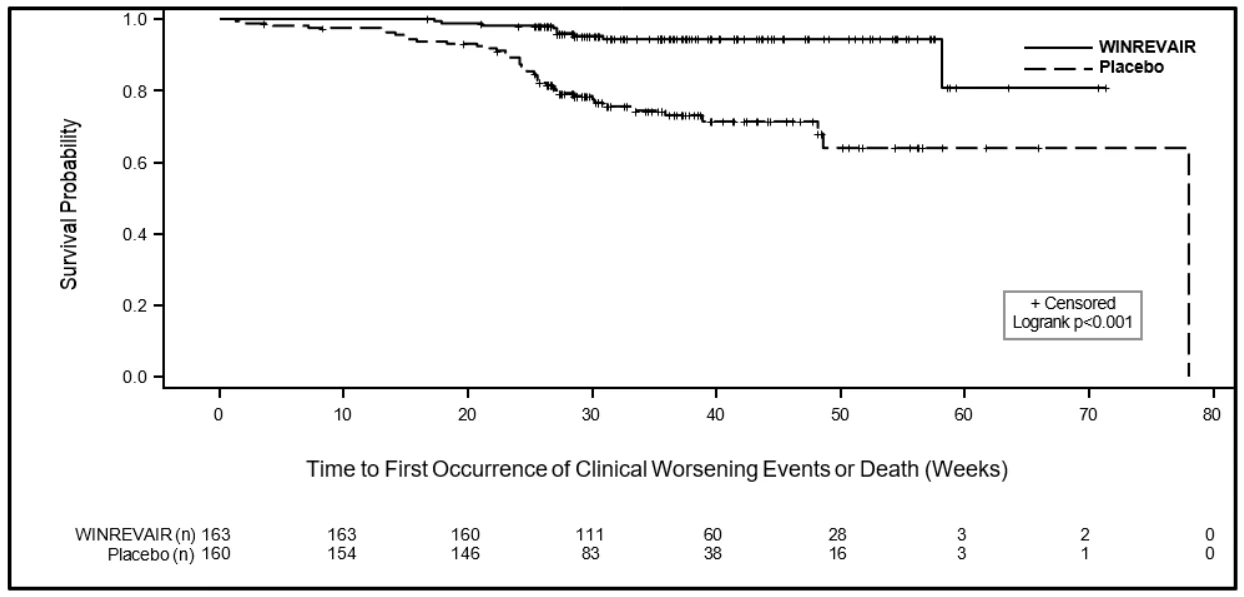
n= Number of subjects at risk
ZENITH
The efficacy of WINREVAIR® was evaluated in adult PAH patients with WHO FC III or IV at high risk of mortality in the ZENITH trial. ZENITH was a global, double-blind, placebo-controlled, multicenter, parallel-group clinical trial in which 172 patients were randomized 1:1 to WINREVAIR® (target dose 0.7 mg/kg) (n=86) or placebo (n=86) administered subcutaneously once every 3 weeks.
Table 11: Summary of Patient Demographics for Clinical Trials in Pulmonary Arterial Hypertension (WHO Group 1 C III or IV)
| Study | Study design | Dosage, route of administration and duration | Study subjects (n) | Mean age (Range) | Sex |
ZENITH (Phase 3) | multicenter placebo-controlled double-blind parallel-group | 0.7 mg/kg subcutaneous every 3 weeks. Median duration of exposure: 322 days (sotatercept) and 215.5 days (placebo) | n=86 (sotatercept) n=86 (placebo) | 57.5 years (18 to 75 years) | 76.7% Female |
The demographic and baseline clinical characteristics were generally comparable between the WINREVAIR® and placebo groups. Participants in this study were adults with a median age of 57.5 years (range: 18 to 75 years); 86.6% of participants were White, and 87.8% were not Hispanic or Latino; and 76.7% were female. The most common PAH etiologies were idiopathic PAH (50.0%), PAH associated with connective tissue diseases (CTD) (27.9%), and heritable PAH (10.5%). The mean time since PAH diagnosis to screening was 7.68 years. There were more participants on background PAH triple therapy (72.1%) compared with double therapy (27.9%), and 59.3% of participants were on prostacyclin infusion therapy. There were more participants in WHO FC III (74.4%) compared with WHO FC IV (25.6%). The REVEAL Lite 2 risk score was <9 for 2.3% of participants, 9 to 10 for 67.4% of participants, and ≥11 for 30.2% of participants. The ZENITH trial excluded patients diagnosed with human immunodeficiency virus (HIV)-associated PAH, PAH associated with portal hypertension, pulmonary veno-occlusive disease or pulmonary capillary hemangiomatosis or overt signs of capillary and/or venous involvement.
Study results
The primary efficacy endpoint was the time to first event of all-cause death, lung transplantation, or PAH worsening-related hospitalization of ≥24 hours. At the interim analysis which was performed when at least 50% of the targeted number of primary endpoint event had been accrued, the risk of a first event of all-cause death, lung transplantation, or PAH worsening-related hospitalization of ≥24 hours was 76% lower in the WINREVAIR® treatment group compared with the placebo group (HR: 0.24; 95% CI: 0.13, 0.43; p<0.0001) (see Table 12 and Figure 2). The study was stopped at the prespecified interim analysis as the statistical boundary was crossed.
Table 12: Components of the Primary Endpoint
| WINREVAIR® | Placebo | Hazard Ratio | |
|---|---|---|---|
| (N=86) | (N=86) | (95% CI) | |
| n (%) | n (%) | p-value* | |
| Primary Endpoint* | |||
| Number (%) of participants with ≥ 1 primary event | 15 (17.4) | 47 (54.7) | 0.24 (0.13, 0.43) |
during or post ZENITH Median time (months) to first primary endpoint event (95% CI) | NE** (NE, NE) | 9.6 (6.2, 14.8) | <0.0001*** |
| Components of the primary endpoint† | |||
| All-cause death | 7 (8.1) | 13 (15.1) | |
| Lung transplantation | 1 (1.2) | 6 (7.0) | |
| PAH worsening-related hospitalization of ≥ 24 hours | 8 (9.3) | 43 (50.0) |
* The primary composite endpoint analysis includes the first occurrence of an adjudicated morbidity-mortality event up to the data cutoff. All deaths up to the data cutoff are included, regardless of adjudication and regardless of whether they occurred during or post-ZENITH, except for those occurring after lung transplantation or enrollment in SOTERIA. The hazard ratio and the 95% confidence interval (CI) were estimated using a stratified Cox proportional hazard model with Efron’s method of tie handling and randomization factors as strata. The p-value was determined using the stratified log-rank test with randomization factors as strata.
† Shows each component of the composite primary endpoint as a standalone outcome. A participant is included in more than one row if multiple events meeting primary endpoint definition were observed.
** Not Estimable (NE) as the median for the treatment group was not attained within the study period.
*** Statistically significant based on a one-sided alpha level of 0.0021 at the interim analysis.
Figure 2: Time to First Event of All-cause Death, Lung Transplantation, or PAH Worsening-related Hospitalization of ≥ 24 Hours Kaplan-Meier Plot
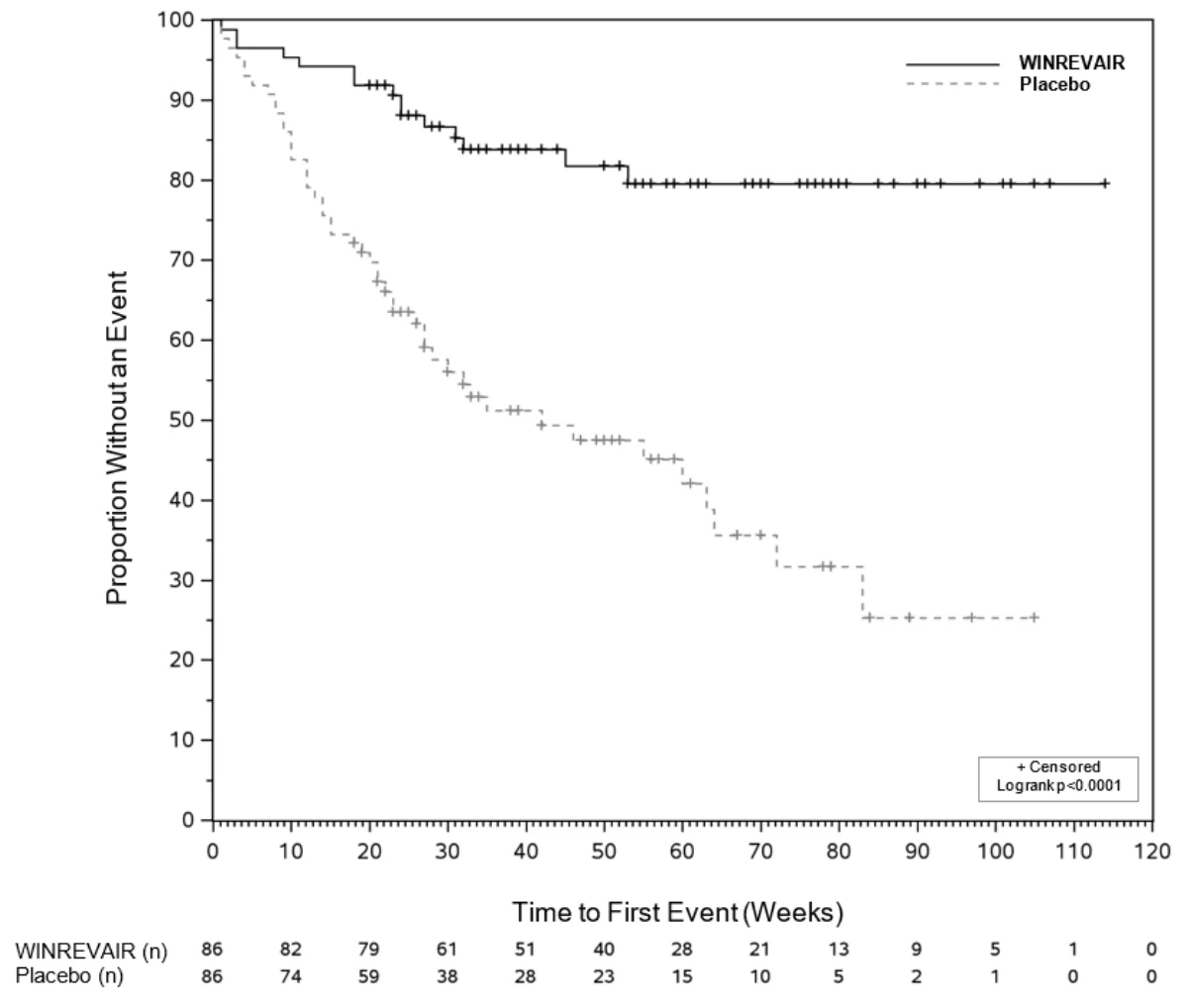
n= Number of subjects at Risk
The treatment effect of WINREVAIR® was consistent across the prespecified subgroups including age, sex, PAH subtype (CTD-associated versus not CTD-associated), WHO FC, background therapy at baseline, prostacyclin infusion therapy at baseline, baseline PVR, and baseline estimated glomerular filtration rate (eGFR).
The primary analysis of the first secondary endpoint in the hierarchical testing strategy, overall survival (OS), included all deaths up to the data cutoff, except for those occurring after lung transplantation or enrolment in a long-term follow-up study (see Table 11).The HR was 0.42 (95% CI: 0.17, 1.07). When including all deaths even those occurring after lung transplantation or enrollment in a long-term follow-up study the HR was 0.40 (95% CI: 0.17, 0.93).
16 Non-Clinical Toxicology
General toxicology
Single-dose studies
No acute toxicity was observed in repeated-dose SC toxicity studies at dosages up to 30 mg/kg in rats and 50 mg/kg in monkeys (single doses provided exposures approximately 15-fold and 38-fold, respectively, the human exposure at the MRHD based on estimated area under the curve [AUC]).
In rats administered a single IV dose of 10 mg/kg or 30 mg/kg of sotatercept, adrenal gland necrosis was observed 28-days after dosing. A NOAEL was not determined in this study.
Repeat-dose studies
In rats and monkeys, the longest duration SC toxicity studies were 3-months and 9-months in duration, respectively.
In rats administered once weekly doses of 0.3, 3, and 30 mg/kg for 3 months (equal to exposures 0.4-, 2-, or 18-fold the MRHD based on AUC), adverse findings included efferent duct/testicular degeneration, adrenal gland congestion/necrosis, and membranoproliferative glomerulonephritis and tubulointerstitial nephritis in the kidneys. The adrenal changes demonstrated reversibility following a 1-month recovery period. A NOAEL could not determined for this study due to the adverse effects observed at all doses. In a subsequent rat 3-month toxicity study with 1 month recovery period that investigated the same dosing regimen, sotatercept-mediated renal toxicity (occurring at doses ≥ 0.3 mg/kg Q1W) was non-reversible and developed into chronic progressive nephropathy
In monkeys administered 1, 2.6, and 10 mg/kg once every 4 weeks and 10 mg/kg once every 2 weeks for 9 months, adverse changes were limited to glomerulonephritis and tubulointerstitial nephritis in the kidneys that impacted the physical condition of individual animals. These kidney changes partially resolved following a 3-month recovery period. Additionally, inflammatory infiltrates occurred in the choroid plexus of the brain. The changes in the brain and kidneys were not associated with immune complex formation/deposition, they occurred due to the direct effects of sotatercept. The NOAEL was determined to be 1 mg/kg (equal to exposure at the MRHD based on AUC). In separate study, monkeys were administered 10, 30, or 50 mg/kg once every 2 weeks for 6 months. Two mid-dose animals (where the sotatercept AUC was 32-fold higher than at the MRHD) were euthanized following clinical signs of renal failure, with renal toxicity confirmed at necropsy. Findings in this study were consistent with the 9-month study.
Carcinogenicity: No carcinogenicity studies have been conducted with sotatercept.
Mutagenesis: No mutagenicity studies have been conducted with sotatercept.
Genotoxicity: No genotoxicity studies have been conducted with sotatercept.
Reproductive and Developmental Toxicology:
In a fertility and early embryonic development study in female rats, sotatercept was administered SC once weekly at doses of 5, 15, or 50 mg/kg beginning 2 weeks prior to mating and through gestation day 7. Two high-dose females were euthanized during gestation due to hind limb swelling and/or limb impairment. Enlarged and discoloured adrenal glands were observed in females given ≥ 15 mg/kg. At doses ≥ 15 mg/kg (≥ 9-fold the MRHD, based on estimated AUC), pregnancy rates were decreased and there were increases in pre-implantation and post-implantation loss and reductions in live litter size. Increased estrous cycle duration occurred at 50 mg/kg only (21-fold the MRHD, based on estimated AUC). The NOAEL for female fertility and early embryonic development was determined to be 5 mg/kg.
In a fertility study in male rats, sotatercept was administered SC once weekly at doses of 0.3, 3, or 30 mg/kg for 13 weeks (beginning 10 weeks prior to mating). A subset of animals was examined after a 13-week recovery period. At ≥ 0.3 mg/kg (0.5-fold the MRHD, based on estimated AUC) there were non-reversible histologic changes in the efferent ducts, testes, and epididymides. At 30 mg/kg there was also reduced lack of sperm in the epididymides. Reversible decreases in fertility occurred at 30 mg/kg (20-fold the MRHD, based on estimated AUC). A NOAEL was not determined for this study.
In embryo-fetal developmental toxicity studies, pregnant animals were dosed subcutaneously with sotatercept during the period of organogenesis. Sotatercept was administered to rats on gestation days 6 and 13 at doses of 5, 15, or 50 mg/kg (equal to 2, 4, and 15-fold the MRHD based on AUC, respectively) and to rabbits on gestation days 7 and 14 at doses of 0.5, 1.5, or 5 mg/kg (equal to 0.4, 0.6 and 4-fold the MRHD based on AUC, respectively). Sotatercept was detected in fetal rabbit plasma, confirming that sotatercept crosses the placenta. Effects in both species included reductions in numbers of live fetuses and fetal body weights, delays in ossification, and increases in resorptions and post-implantation losses. In rats only, skeletal variations (increased number of supernumerary ribs and changes in the number of thoracic or lumbar vertebrae) occurred at an exposure 15-fold the human exposure at the MRHD. In rats and rabbits, the NOAELS for developmental toxicity were 5 mg/kg and 0.5 mg/kg, which provided exposures 2-fold and 0.4-fold the MRHD based on AUC, respectively.
In a pre- and postnatal development study in rats, sotatercept was administered subcutaneously at doses of 1.5 and 5 mg/kg on gestation days 6 and 13, or at dosages of 1.5, 5, or 10 mg/kg (equal to 0.6, 2 and 4-fold the MRHD based on AUC, respectively) during lactation days 1, 8, and 15. The maternal NOAEL was 5 mg/kg or 10 mg/kg when administered during gestation or lactation, respectively. There were no adverse effects in first filial generation (F1) pups from dams dosed during gestation at estimated exposures up to 2-fold the MRHD (NOAEL 5 mg/kg, 2-fold the MRHD based on AUC). In F1 pups from dams dosed during lactation, decreases in pup weight correlated with delays in sexual maturation at estimated exposures (based on AUC) ≥ 2-fold the MRHD (NOAEL 1.5 mg/kg , 0.6-fold the MRHD based on AUC).