


Product Monograph - Sandoz Riociguat
RECENT MAJOR LABEL CHANGES
| 2 CONTRAINDICATIONS | 04/2023 |
|---|
TABLE OF CONTENTS
Sections or subsections that are not applicable at the time of authorization are not listed.
RECENT MAJOR LABEL CHANGES ............................................................................................ 2
TABLE OF CONTENTS .............................................................................................................. 2
PART I: HEALTH PROFESSIONAL INFORMATION ...................................................................... 4
1 INDICATIONS .............................................................................................................. 4
1.1 Pediatrics ................................................................................................................... 4
1.2 Geriatrics ................................................................................................................... 4
2 CONTRAINDICATIONS ................................................................................................. 4
4 DOSAGE AND ADMINISTRATION ................................................................................. 5
4.1 Dosing Considerations ............................................................................................... 5
4.2 Recommended Dose and Dosage Adjustment ......................................................... 5
4.5 Missed Dose .............................................................................................................. 7
5 OVERDOSAGE ............................................................................................................. 7
6 DOSAGE FORMS, STRENGTHS, COMPOSITION AND PACKAGING .................................. 8
7 WARNINGS AND PRECAUTIONS .................................................................................. 8
7.1 Special Populations ................................................................................................. 10
7.1.1 Pregnant Women ..................................................................................................... 10
7.1.2 Breast-feeding .......................................................................................................... 11
7.1.3 Pediatrics .................................................................................................................. 11
7.1.4 Geriatrics .................................................................................................................. 11
8 ADVERSE REACTIONS ................................................................................................ 11
8.1 Adverse Reaction Overview .................................................................................... 11
8.2 Clinical Trial Adverse Reactions ............................................................................... 12
8.3 Less Common Clinical Trial Adverse Reactions ....................................................... 15
8.4 Abnormal Laboratory Findings: Hematologic, Clinical Chemistry and Other Quantitative Data .............................................................................................................. 15
9 DRUG INTERACTIONS ................................................................................................ 16
9.1 Serious Drug Interactions ........................................................................................ 16
9.2 Drug Interactions Overview .................................................................................... 16
9.4 Drug-Drug Interactions ............................................................................................ 17
9.5 Drug-Food Interactions ........................................................................................... 24
9.6 Drug-Herb Interactions ........................................................................................... 24
9.7 Drug-Laboratory Test Interactions .......................................................................... 25
10 CLINICAL PHARMACOLOGY ....................................................................................... 25
10.1 Mechanism of Action ........................................................................................... 25
10.2 Pharmacodynamics.............................................................................................. 25
10.3 Pharmacokinetics ................................................................................................ 25
11 STORAGE, STABILITY AND DISPOSAL ......................................................................... 27
12 SPECIAL HANDLING INSTRUCTIONS ........................................................................... 27
PART II: SCIENTIFIC INFORMATION ...................................................................................... 28
13 PHARMACEUTICAL INFORMATION ............................................................................ 28
14 CLINICAL TRIALS........................................................................................................ 29
14.1 Clinical Trials by Indication .................................................................................. 29
14.3 Comparative Bioavailability Studies .................................................................... 41
15 MICROBIOLOGY ........................................................................................................ 42
16 NON-CLINICAL TOXICOLOGY ..................................................................................... 42
17 SUPPORTING PRODUCT MONOGRAPHS .................................................................... 46
PATIENT MEDICATION INFORMATION .................................................................................. 47
PART I: HEALTH PROFESSIONAL INFORMATIONERROR! BOOKMARK NOT DEFINED.
1 INDICATIONS
Pulmonary Hypertension
Sandoz Riociguat (Riociguat Tablets) is indicated for the treatment of:
- inoperable chronic thromboembolic pulmonary hypertension (CTEPH, WHO Group 4)
- persistent or recurrent CTEPH after surgical treatment
- pulmonary arterial hypertension (PAH, WHO Group 1), as monotherapy or in combination with endothelin receptor antagonists
in adult patients (≥18 years of age) with WHO Functional Class II or III pulmonary hypertension.
Sandoz Riociguat should only be used by clinicians experienced in the diagnosis and treatment of CTEPH or PAH.
1.1 Pediatrics
Pediatrics (< 18 years of age): Safety and effectiveness in pediatric patients have not been established (see 7.1.3 Pediatrics). Therefore, Health Canada has not authorized an indication for pediatric use.
1.2 Geriatrics
Geriatrics (≥ 65 years of age): Evidence from clinical studies and experience suggests that use in the geriatric population (up to 80 years of age) is associated with increases in some adverse events (see 7.1.4 Geriatrics).
2 CONTRAINDICATIONS
Concomitant use of Sandoz Riociguat with other drugs affecting the nitric oxide-soluble guanylate cyclase- cyclic guanosine monophosphate (NO-sGC-cGMP) pathway is contraindicated, due to the risk of developing potentially life-threatening episodes of hypotension or syncope.
These drugs include:
- Phosphodiesterase type 5 (PDE5) inhibitors, such as sildenafil, tadalafil, vardenafil
- Nitrates, taken either regularly or intermittently, in any form (e.g. oral, sublingual, transdermal, by inhalation)
- Nitric oxide donors, such as amyl nitrite (See 9.4 Drug-Drug Interactions)
- Concomitant use with other soluble guanylate cyclase stimulators is contraindicated (see 9.4 Drug-Drug Interactions).
- Sandoz Riociguat is contraindicated during pregnancy and nursing (see 7.1.2 Breast-feeding and 16 NON-CLINICAL TOXICOLOGY).
- Hypersensitivity to Sandoz Riociguat or to any ingredient in the formulation (see 6 DOSAGE FORMS, STRENGTHS, COMPOSITION AND PACKAGING).
- Sandoz Riociguat is contraindicated in patients with pulmonary hypertension associated with idiopathic interstitial pneumonias (PH-IIP).
4 DOSAGE AND ADMINISTRATION
4.1 Dosing Considerations
Treatment should only be initiated and monitored under the supervision of a clinician experienced in the diagnosis and treatment of CTEPH or PAH.
4.2 Recommended Dose and Dosage Adjustment
Treatment Initiation
The recommended starting dose of Sandoz Riociguat is 1 mg 3 times daily for 2 weeks. Tablets should be taken 3 times daily approximately 6 to 8 hours apart, with or without food. A lower starting dose of 0.5 mg 3 times daily may be used at the discretion of the physician to minimize the potential of hypotensive events.
Dosage should be increased in 2-week intervals by 0.5 mg increments to a maximum of 2.5 mg 3 times daily, if systolic blood pressure is ≥ 95 mmHg and the patient has no signs or symptoms of hypotension. If systolic blood pressure falls below 95 mmHg, dosage should be maintained provided the patient does not show any signs or symptoms of hypotension. If, at any time during the up-titration phase, systolic blood pressure decreases below 95 mmHg, and the patient shows signs or symptoms of hypotension, the next 3 doses should be withheld and dosing should be restarted, decreased by 0.5 mg three times daily, 24 hours later, as clinically warranted.
Maintenance Dose
The established individual dose should be maintained unless signs and symptoms of hypotension occur. The maximum total daily dose of Sandoz Riociguat is 7.5 mg.
If not tolerated, dose reduction might be considered at any time.
Treatment Discontinuation
In case treatment has to be interrupted for 3 days or more, restart treatment at the starting dose 3 times daily for 2 weeks, and continue dose titration regimen as described above.
Transitioning between PDE5 inhibitors and Riociguat
Discontinue sildenafil at least 24 hours or tadalafil at least 48 hours prior to administering riociguat. Begin treatment with Sandoz Riociguat as normally recommended (see 4.2 Recommended Dose and Dosage Adjustment - Treatment Initiation). Discontinue Sandoz Riociguat at least 24 hours prior to administering a PDE5 inhibitor. It is recommended to monitor for signs and symptoms of hypotension after any transition (see 2 CONTRAINDICATIONS and 9.4 Drug-Drug Interactions).
A 24-week, uncontrolled study investigated the transition from PDE5 inhibitors, sildenafil or tadalafil, to Riociguat Tablets, in 61 adult PAH patients stable on PDE5 inhibitors. All patients were WHO Functional Class III and 82% received background therapy with an endothelin receptor antagonist (ERA). All patients in the study were transitioned from sildenafil (up to 80 mg tid) or tadalafil (up to 40 mg od) to 1 mg three times daily Riociguat Tablets (median treatment-free washout period of 1 day for sildenafil and 3 days for tadalafil). Overall, the safety profile observed in the study was comparable with that observed in the pivotal trials, with no serious adverse events reported during the transition period. Six patients (10%) experienced at least one clinical worsening event, including 2 deaths unrelated to study drug.
Geriatrics (≥65 years of age)
Elderly (≥ 65 years) patients exhibited higher plasma concentrations than younger patients. Particular care should be exercised during individual dose titration (see 10.3 Pharmacokinetics - Special Populations and Conditions: Geriatrics).
Pediatrics
Safety and effectiveness in pediatric patients have not been established. Therefore, Health Canada has not authorized an indication for pediatric use.
Hepatic Impairment
Particular care should be exercised during individual dose titration in patients with moderate hepatic impairment (Child Pugh B) (see 10.3 Pharmacokinetics – Special Populations and Conditions: Hepatic Insufficiency).
Sandoz Riociguat is not recommended in patients with severe hepatic impairment (Child Pugh C) (see 7.1 Special Populations).
Renal Impairment
Particular care should be exercised during individual dose titration in patients with mild, moderate, or severe renal impairment (creatinine clearance 15 to 80 mL/min) (see 10.3 Pharmacokinetics – Special Populations and Conditions: Renal Insufficiency).
Sandoz Riociguat is not recommended in patients with creatinine clearance <15 mL/min or on dialysis (see 7.1 Special Populations).
Smoking Status
Current smokers should be advised to stop smoking. Plasma concentrations of riociguat in smokers are reduced compared to non-smokers. Dose adjustment of Sandoz Riociguat may be required in patients who stop or start smoking during treatment (see 9.2 Drug Interactions Overview and 10.3 Pharmacokinetics - Metabolism).
Concomitant Use with Antacids
Antacids should be taken at least 1 hour after Sandoz Riociguat (see 9.2 Drug Interactions Overview).
Strong CYP and P-gp/BCRP Inhibitors
Coadministration of Riociguat Tablets with strong multipathway CYP and P-gp/BCRP inhibitors such as azole antimycotics (e.g. ketoconazole, itraconazole) or HIV protease inhibitors (e.g. ritonavir) increases exposure to Riociguat Tablets (see 9.2 Drug Interactions Overview). Consider a starting dose of 0.5 mg, three times a day when initiating Sandoz Riociguat in patients on stable doses of strong multipathway CYP and P-gp/BCRP inhibitors to mitigate risk of hypotension. Monitor for signs and symptoms of hypotension on initiation and on treatment with strong multipathway CYP and P-gp/BCRP inhibitors. Consider a dose reduction for patients on Sandoz Riociguat doses higher than or equal to 1.0 mg if the patient develops signs or symptoms of hypotension (see 7 WARNINGS AND PRECAUTIONS, Concomitant Use with CYP or P-gp/BCRP Inhibitors and 9.2 Drug Interactions Overview).
4.5 Missed Dose
If a dose is missed, the next dose should be taken as scheduled. The dose should not be doubled to make up for the missed dose.
5 OVERDOSAGE
| For management of suspected drug overdose, contact your regional Poison Control Centre. |
|---|
Inadvertent overdosing with total daily doses of 9 to 25 mg Riociguat Tablets between 2 to 32 days was reported. Adverse reactions were similar to those seen at lower doses (see 8 ADVERSE REACTIONS).
No specific antidote exists.
In case of overdose, standard supportive measures should be adopted as required.
In case of pronounced hypotension, active cardiovascular support may be required.
Based on the high plasma protein binding riociguat is not expected to be dialyzable.
6 DOSAGE FORMS, STRENGTHS, COMPOSITION AND PACKAGING1
Table 1: Dosage forms, strengths, composition and packaging
| Route of Administration | Dosage Form / Strength | Nonmedicinal Ingredients |
| oral | Film-coated tablet, 0.5 mg, 1 mg, 1.5 mg, 2 mg and 2.5 mg | Crospovidone, hypromellose, lactose monohydrate, magnesium stearate, microcrystalline cellulose, sodium lauryl sulfate. The film coating is composed of hypromellose 3 mPas, hydroxypropyl cellulose, iron oxide yellow, iron oxide red, propylene glycol, titanium dioxide. Iron oxide yellow is present in the Sandoz Riociguat 1 mg, 1.5 mg, 2 mg and 2.5 mg strengths, and iron oxide red is present in Sandoz Riociguat 2 mg and 2.5 mg strengths. |
Sandoz Riociguat tablets are film-coated:
0.5 mg round, biconvex, white to off white film coated tablet, debossed with
“L” on one side and “12” on other side.
1 mg round, biconvex, Pale-Yellow film coated tablet, debossed with “L” on one side and “13” on other side.
1.5 mg round, biconvex, Cream Yellow-Orange film coated tablet, debossed with “L” on one side and “14” on other side.
2 mg round, biconvex, Light-Brown film coated tablet, debossed with “L” on one side and “15” on other side.
2.5 mg round, biconvex, Pale-Orange film coated tablet, debossed with “L” on one side and “16” on other side.
Sandoz Riociguat 0.5 mg, 1 mg, 1.5 mg, 2 mg, and 2.5 mg tablets are supplied in HDPE bottles of 30 and 90 and in blisters of 42.
7 WARNINGS AND PRECAUTIONS
General
Concomitant Use with CYP or P-gp/BCRP Inhibitors
The concomitant use of Riociguat Tablets with strong multi pathway CYP and P-gp/BCRP inhibitors, such as azole antimycotics (eg, ketoconazole, itraconazole), or HIV protease inhibitors (eg, ritonavir) results in a pronounced increase in riociguat exposure (see 9.4 Drug-Drug Interactions), and may result in hypotension.
1 Not all presentations may be available in Canada.
Assess the benefit-risk for each patient individually before prescribing Sandoz Riociguat in patients on stable doses of strong multi pathway CYP and P-gp/BCRP inhibitors. Consider a starting dose of 0.5 mg Sandoz Riociguat three times a day to mitigate the risk of hypotension. Monitor for signs and symptoms of hypotension on initiation and on treatment and consider a dose reduction for patients on Sandoz Riociguat doses higher than or equal to 1.0 mg if the patient develops signs or symptoms of hypotension (see 4 DOSAGE AND ADMINISTRATION, Strong CYP and P-gp/BCRP Inhibitors and 9.4 Drug-Drug Interactions).
In patients on stable doses of Sandoz Riociguat, the initiation of strong multi pathway CYP and P-gp/BCRP inhibitors is not recommended as no dosage recommendation can be given due to limited data. Alternative treatments should be considered.
The concomitant use of Sandoz Riociguat with strong CYP1A1 inhibitors, such as the tyrosine kinase inhibitor erlotinib, or strong P-gp/BCRP inhibitors, such as the immunosuppressant cyclosporine A, may result in increased riociguat exposure (see 9.4 Drug- Drug Interactions). These drugs should be used with caution when co-administered with Sandoz Riociguat. Blood pressure should be monitored and dose reduction of Sandoz Riociguat might be considered.
Drugs Affecting the NO-sGC-cGMP Pathway
Riociguat Tablets and other drugs that result in increased levels of intracellular cGMP act as vasodilators. Additive or synergistic effects on systemic blood pressure should be anticipated. Concomitant use of PDE5-inhibitors, nitrates or nitric oxide donors is contraindicated (see 2 CONTRAINDICATIONS).
Effect of Cigarette Smoking
In cigarette smokers, riociguat exposure is reduced by 50 to 60% (see 10.3 Pharmacokinetics - Metabolism). Therefore patients are advised to stop smoking. Dose adjustment of Sandoz Riociguat may be required in patients who stop or start smoking during treatment (see 4.2 Recommended Dose and Dosage Adjustment).
Bleeding
In patients with pulmonary hypertension there is an increased likelihood of bleeding, particularly among patients receiving anticoagulation therapy. Bleeding risk should be carefully evaluated before initiating Sandoz Riociguat therapy, and should be monitored periodically, particularly in patients taking anticoagulants. The risk of serious and fatal bleeding, including respiratory tract bleeding, may be further increased under treatment with Sandoz Riociguat, especially in the presence of risk factors, such as recent episodes of serious hemoptysis including those managed by bronchial arterial embolization. Sandoz Riociguat should be avoided in patients with a history of serious hemoptysis or who have previously undergone bronchial arterial embolization.
In the placebo-controlled clinical trials program, serious bleeding occurred in 2.4% of patients taking Riociguat Tablets compared to 0% of placebo patients. Serious hemoptysis occurred in 5 (1%) patients taking Riociguat Tablets compared to 0 placebo patients, including one event with fatal outcome. Serious hemorrhagic events also included 2 patients with vaginal hemorrhage, 2 with catheter site hemorrhage, and 1 each with subdural hematoma, hematemesis, and intra-abdominal hemorrhage. In long-term extension studies, there was no evidence for temporal clustering of bleeding events throughout the period of treatment with Riociguat Tablets.
Patients should be instructed to notify the treating physician of any unexpected or excessive bleedings.
Cardiovascular
Hypotension
As a sGC stimulator, Riociguat Tablets acts as a vasodilator, lowering both pulmonary and systemic blood pressure. The demonstrated risk of hypotension should be carefully considered (see 8 ADVERSE REACTIONS), in particular in patients with concomitant or underlying conditions such as low systemic blood pressure (e.g., systolic blood pressure < 95 mmHg), coronary artery disease (CAD), hypovolemia, resting hypotension, severe left ventricular outflow obstruction, autonomic dysfunction, as well as in patients on concomitant treatment with antihypertensives or strong CYP and P-gp/BCRP inhibitors (see 7 WARNINGS AND PRECAUTIONS, Concomitant Use with CYP or P-gp/BCRP Inhibitors).
Driving and operating machinery
Dizziness has been reported and may affect the ability to drive and use machines. Patients should be aware of how they react to Sandoz Riociguat, before driving or operating machinery.
Pulmonary Veno-Occlusive Disease
Pulmonary vasodilators may significantly worsen the cardiovascular status of patients with pulmonary veno-occlusive disease (PVOD). Therefore, administration of Sandoz Riociguat to such patients is not recommended. Should signs of pulmonary edema occur, the possibility of associated PVOD should be considered and treatment with Sandoz Riociguat should be discontinued.
7.1 Special Populations
Riociguat Tablets has not been studied in the following patient populations and its use is therefore not recommended in:
- Patients with systolic blood pressure <95 mm Hg at treatment initiation
- Patients with severe hepatic impairment (Child Pugh C)
- Patients with creatinine clearance <15 mL/min or on dialysis
7.1.1 Pregnant Women
There are no adequate data from the use of Riociguat Tablets in pregnant women. Studies in animals have shown reproductive toxicity (see 16 NON-CLINICAL TOXICOLOGY, Reproductive and Developmental Toxicology). Therefore, Sandoz Riociguat is contraindicated in females who are or may become pregnant (see 2 CONTRAINDICATIONS). Women of childbearing potential should be advised to use effective contraception during treatment with Sandoz Riociguat.
No specific studies with Riociguat Tablets in humans have been conducted to evaluate effects on fertility. In studies that evaluated male and female fertility in rats, no effects were seen with riociguat up to 5.1 times human exposure when corrected for species differences in protein binding, whereas its main metabolite produced a slight decrease in implantation rate at systemic exposure comparable to human systemic exposure (see 16 NON-CLINICAL TOXICOLOGY, Reproductive and Developmental Toxicology).
7.1.2 Breast-feeding
No data on the use of Riociguat Tablets in breast-feeding women are available. Data from animals indicate that riociguat is excreted into milk.
Because of the potential for serious adverse reactions in nursing infants, the use of Sandoz Riociguat during breast-feeding is contraindicated (see 2 CONTRAINDICATIONS). A decision must be made whether to discontinue breast-feeding or to discontinue/abstain from therapy, taking into account the importance of the drug for the mother.
7.1.3 Pediatrics
The safety and effectiveness of Riociguat Tablets in patients younger than 18 years of age has not been established in the CTEPH and PAH study programs. Therefore, Health Canada has not authorized an indication for pediatric use.
7.1.4 Geriatrics
Forty-three percent (43%) of the Riociguat Tablets -treated patients in the CTEPH and 26% of the Riociguat Tablets -treated patients in the PAH study programs were 65 to 80 years of age. In contrast to younger patients, dizziness and hypotension occurred more frequently in these older patients when treated with Riociguat Tablets, compared to same-aged patients on placebo. Dose titrations should be performed with caution in this age group.
8 ADVERSE REACTIONS
8.1 Adverse Reaction Overview
Serious hemoptysis and pulmonary hemorrhage, including cases with fatal outcome have been observed in patients with CTEPH or PAH treated with Riociguat Tablets (see 7 WARNINGS AND PRECAUTIONS, Bleeding).
The most commonly reported adverse reactions, occurring in ≥10 % of patients under Riociguat
Tablets treatment (up to 2.5 mg tid) were headache, dizziness, dyspepsia, peripheral edema, nausea, diarrhea, and vomiting.
The safety of Riociguat Tablets has been evaluated in Phase III trials of more than 650 patients with CTEPH or PAH receiving at least 1 dose of Riociguat Tablets (see 14 CLINICAL TRIALS).
The overall rates of discontinuation due to an adverse event (AE) in these pooled pivotal placebo-controlled trials were 2.9% for Riociguat Tablets, and 5.1% for placebo.
Since Riociguat Tablets is a vasodilator, common to very common AEs in the pooled Phase III trials were dizziness, (pre)syncope and hypotension.
Dizziness occurred in 19.8% of patients on riociguat, compared to 13.1% of the placebo patients (see Table 4).
Hypotensive events occurred as AEs in 49 (10%) of the patients on riociguat - in 2 cases as a non-fatal SAE - and in 8 (3.7%) of the patients on placebo; in no case as an SAE (see Table 4).
Bleeding events were very common in the riociguat-treated patients in the pooled Phase III trials. Idiopathic bleeding events, i.e., events not caused by procedures, were observed in 58 (11.8%) of the riociguat-treated patients, of which 10 cases were noted as SAEs, 1 of which was fatal. In the placebo groups, 18 (8.4%) idiopathic bleeding events were observed, none as an SAE (see Table 4).
Anemia occurred commonly in the pooled Phase III trials. Anemia (or respective changes in laboratory values) reported as an AE was noted in 33 (6.7%) of the patients on riociguat, in 2 of these cases as an SAE. Anemia occurred in 5 (2.3%) of the patients on placebo, once as an SAE (see Table 4).
8.2 Clinical Trial Adverse Reactions
Clinical trials are conducted under very specific conditions. The adverse reaction rates observed in the clinical trials; therefore, may not reflect the rates observed in practice and should not be compared to the rates in the clinical trials of another drug. Adverse reaction information from clinical trials may be useful in identifying and approximating rates of adverse drug reactions in real-world use.
| Table 2: Treatment-Emergent Adverse Reactions Reported by ≥1% of Patients Treated with Riociguat Tablets (CHEST-1 data) | |||||||
| System Organ Class | Riociguat Tablets % (n=173) | Placebo % (n=88) | |||||
| Infections and Infestations | |||||||
| Gastroenteritis | 2.3 | 1.1 | |||||
| Blood and the lymphatic system disorders | |||||||
| Bleeding (incl. epistaxis and hemoptysis) | 12.7 | 9.1 | |||||
| Anemia (incl. respective laboratory parameters) | 4.6 | 2.3 | |||||
| Nervous system disorders | |||||||
| Headache | 24.9 | 13.6 | |||||
| Dizziness | 23.1 | 13.6 | |||||
| Cardiac disorders | |||||||
| Palpitations | 3.5 | 4.5 | |||||
| Vascular disorders | |||||||
| Hypotension (incl. blood pressure decreased) | 11.0 | 4.5 | |||||
| Respiratory, thoracic and mediastinal disorders | |||||||
| Nasal congestion | 3.5 | 3.4 | |||||
| Gastrointestinal disorders | |||||||
| Dyspepsia (incl. epigastric discomfort and eructation) | 18.5 | 8.0 | |||||
| Nausea | 11.0 | 8.0 | |||||
| Diarrhea | 9.8 | 4.5 | |||||
| Vomiting | 9.8 | 3.4 | |||||
| Gastrointestinal and abdominal pains | 9.8 | 5.7 | |||||
| Gastrooesophageal reflux disease | 4.0 | 0 | |||||
| Constipation | 5.8 | 1.1 | |||||
| Gastritis | 3.5 | 0 | |||||
| Dysphagia | 3.5 | 0 | |||||
| Abdominal distension | 1.2 | 0 | |||||
| General disorders and administration site conditions | |||||||
| Edema peripheral | 15.6 | 20.5 | |||||
| Table 3: Treatment-Emergent Adverse Reactions Reported by ≥1% of Patients Treated with Riociguat Tablets (PATENT-1 data)* | ||||||
|---|---|---|---|---|---|---|
| System Organ Class | Riociguat Tablets % (n=317) | Placebo % (n=126) | ||||
| Infections and Infestations | ||||||
| Gastroenteritis | 2.5 | 0.8 | ||||
| Blood and the lymphatic system disorders | ||||||
| Table 3: Treatment-Emergent Adverse Reactions Reported by ≥1% of Patients Treated with Riociguat Tablets (PATENT-1 data)* | ||||||||||
|---|---|---|---|---|---|---|---|---|---|---|
| System Organ Class | Riociguat Tablets % (n=317) | Placebo % (n=126) | ||||||||
| Bleeding (incl. epistaxis and hemoptysis) | 11.4 | 7.9 | ||||||||
| Anemia (incl. respective laboratory parameters) | 7.9 | 2.4 | ||||||||
| Nervous system disorders | ||||||||||
| Headache | 28.1 | 20.6 | ||||||||
| Dizziness | 18.0 | 12.7 | ||||||||
| Cardiac disorders | ||||||||||
| Palpitations | 7.9 | 4.8 | ||||||||
| Vascular disorders | ||||||||||
| Hypotension (incl. blood pressure decreased) | 9.1 | 3.2 | ||||||||
| Respiratory, thoracic and mediastinal disorders | ||||||||||
| Nasal congestion | 4.7 | 2.4 | ||||||||
| Gastrointestinal disorders | ||||||||||
| Dyspepsia (incl. epigastric discomfort and eructation) | 18.6 | 8.7 | ||||||||
| Nausea | 15.8 | 12.7 | ||||||||
| Diarrhea | 13.2 | 10.3 | ||||||||
| Vomiting | 10.4 | 8.7 | ||||||||
| Gastrointestinal and abdominal pains | 9.1 | 7.9 | ||||||||
| Gastrooesophageal reflux disease | 5.7 | 3.2 | ||||||||
| Constipation | 3.8 | 1.6 | ||||||||
| Gastritis | 2.5 | 0 | ||||||||
| Dysphagia | 1.6 | 0 | ||||||||
| Abdominal distension | 2.5 | 0.8 | ||||||||
| General disorders and administration site conditions | ||||||||||
| Edema peripheral | 18.3 | 11.1 | ||||||||
* Pooled data from the Individual Dose Titration Group (1 to 2.5 mg tid) and the Capped Dose Group (1 to 1.5 mg tid)
| Table 4: Treatment-Emergent Adverse Reactions Reported by ≥1% of Patients Treated with Riociguat Tablets (pooled CHEST-1 and PATENT-1 data) | ||||||
| System Organ Class | Riociguat Tablets % (n=490) | Placebo % (n=214) | ||||
| Infections and Infestations | ||||||
| Gastroenteritis | 2.4 | 0.9 | ||||
| Blood and the lymphatic system disorders | ||||||
| Bleeding (incl. epistaxis and hemoptysis) | 11.8 | 8.4 | ||||
| Anemia (incl. respective laboratory parameters) | 6.7 | 2.3 | ||||
| Table 4: Treatment-Emergent Adverse Reactions Reported by ≥1% of Patients Treated with Riociguat Tablets (pooled CHEST-1 and PATENT-1 data) | |||||||
| System Organ Class | Riociguat Tablets % (n=490) | Placebo % (n=214) | |||||
| Nervous system disorders | |||||||
| Headache | 26.9 | 17.8 | |||||
| Dizziness | 19.8 | 13.1 | |||||
| Cardiac disorders | |||||||
| Palpitations | 6.3 | 4.7 | |||||
| Vascular disorders | |||||||
| Hypotension | 10.0 | 3.7 | |||||
| Respiratory, thoracic and mediastinal disorders | |||||||
| Nasal congestion | 4.3 | 2.8 | |||||
| Gastrointestinal disorders | |||||||
| Dyspepsia | 18.6 | 8.4 | |||||
| Nausea | 14.1 | 10.7 | |||||
| Diarrhea | 12.0 | 7.9 | |||||
| Vomiting | 10.2 | 6.5 | |||||
| Gastrointestinal and abdominal pains | 9.4 | 7.0 | |||||
| Gastrooesophageal reflux disease | 5.1 | 1.9 | |||||
| Constipation | 4.5 | 1.4 | |||||
| Gastritis | 2.9 | 0 | |||||
| Dysphagia | 2.2 | 0 | |||||
| Abdominal distension | 2.0 | 0.5 | |||||
| General disorders and administration site conditions | |||||||
| Edema peripheral | 17.3 | 15.0 | |||||
8.3 Less Common Clinical Trial Adverse Reactions
Pulmonary hemorrhage was reported in ≤1 % of patients treated during the long term extension studies with Riociguat Tablets.
8.4 Abnormal Laboratory Findings: Hematologic, Clinical Chemistry and Other Quantitative Data
Treatment-emergent values below the lower limit of normal for erythrocytes, hematocrit, and hemoglobin were observed more frequently in the riociguat group than in the placebo group.
In a pooled analysis of placebo-controlled Phase III studies in patients with CTEPH or PAH, changes from baseline in mean hemoglobin (-0.58 g/dL vs. 0.13 g/dL) and hematocrit (-1.66% vs. 0.45%) were observed in patients receiving Riociguat Tablets or placebo, respectively.
Decreases in hemoglobin (24.1% vs. 9.1%) and hematocrit (13.3% vs. 4.9%) were observed in patients receiving Riociguat Tablets and placebo, respectively. Anemia had a higher rate in the Riociguat Tablets group (6.7%) compared to placebo (2.3%).
Mean changes in group values from baseline were small for most of the clinical chemistry parameters in the pooled controlled Phase III studies.
9 DRUG INTERACTIONS
9.1 Serious Drug Interactions
Serious Drug Interactions
See 9.4 Drug-Drug Interactions for detailed information. |
|---|
9.2 Drug Interactions Overview
Effects of Other Substances on Riociguat
Riociguat Tablets is cleared mainly via biliary/direct fecal excretion of the unchanged drug, and renal excretion of the unchanged drug via glomerular filtration. Riociguat Tablets is mainly catalysed to its main metabolite M1 by several CYP isoforms (CYP1A1, CYP2J2, CYP3A4, CYP3A5). Based on in vitro studies, riociguat was found to be a substrate for the membrane transport proteins P-gp/BCRP. Inhibitors or inducers of these enzymes or transporters may affect riociguat exposure.
Riociguat exhibits a reduced solubility at neutral pH vs. acidic medium. Co-medication of drugs increasing the upper gastro-intestinal pH may lead to lower oral bioavailability.
Effects of Riociguat on Other Substances
Riociguat and its main metabolite are neither inhibitors nor inducers of major CYP isoforms (including CYP3A4) or transporters (eg, P-gp/BCRP) in vitro at therapeutic plasma concentrations.
Patients must not get pregnant during Sandoz Riociguat therapy (see 2 CONTRAINDICATIONS). Riociguat (2.5 mg three times per day) did not have a clinically meaningful effect on the exposure of combined oral contraceptives containing levonorgestrel and ethinyl estradiol when concomitantly administered to healthy female subjects.
Riociguat and its main metabolite revealed to be strong inhibitors of CYP1A1 in vitro.
Therefore, clinically relevant drug-drug interactions with co-medications which are significantly cleared by CYP1A1-mediated biotransformation, such as erlotinib or granisetron, cannot be ruled out.
9.4 Drug-Drug Interactions
The drugs listed in this table are based on either drug interaction case reports or studies, or potential interactions due to the expected magnitude and seriousness of the interaction (i.e., those identified as contraindicated).
| Table 5: Established or Potential Drug-Drug Interactions | ||||||
| Proper Name | Ref | Effect | Clinical Comment | |||
| Nitrates | CT | Riociguat Tablets 2.5 mg potentiated the blood pressure lowering effect of sublingual nitroglycerin (0.4 mg) taken 4 and 8 hours after intake. | Coadministration of Sandoz Riociguat with nitrates or nitric oxide donors (such as amyl nitrite) in any form is contraindicated (see 2 CONTRAINDICATIONS) | |||
| Table 5: Established or Potential Drug-Drug Interactions | ||||||
| Proper Name | Ref | Effect | Clinical Comment | |||
PDE5 inhibitors:
| CT | Studies in animal models showed additive systemic blood pressure lowering effect when Riociguat Tablets was combined with either sildenafil or vardenafil. With increased doses, over additive effects on systemic blood pressure were observed in some cases. In an exploratory interaction study in 7 patients with PAH on stable sildenafil treatment (20 mg three times daily) single doses of Riociguat Tablets (0.5 mg and 1 mg sequentially) showed additive hemodynamic effects, but no pharmacodynamic advantages. Doses above 1 mg Riociguat Tablets were not investigated in this study. A 12-week combination study in 18 patients with PAH on stable sildenafil treatment (20 mg three times daily) and Riociguat Tablets (1 mg-2.5 mg three times daily) compared to sildenafil alone was performed. In the long-term extension part (non-controlled) the concomitant use of sildenafil and Riociguat Tablets resulted in a high rate of discontinuation, predominately due to hypotension. There was no evidence of a favorable clinical effect of the combination in the population studied. | Concomitant administration of Sandoz Riociguat with PDE5 inhibitors (such as sildenafil, tadalafil, vardenafil) is contraindicated (see 2 CONTRAINDICATIONS). For information on transitioning between Sandoz Riociguat and PDE5 inhibitors (ie, tadalafil and sildenafil) see 4.2 Recommended Dose and Dosage Adjustment, Transitioning between PDE5 inhibitors and Riociguat. | |||
| Other Soluble Guanylate Cyclase Stimulators | T | Co-administration of Sandoz Riociguat with other soluble guanylate cyclase (sGC) stimulators is contraindicated (see 2 CONTRAINDICATIONS). | ||||
Antifungal Agents:
| CT, I | Concomitant administration of 400 mg once daily ketoconazole led to a 150% (range up to 370%) increase in riociguat mean AUC and a 46% increase in mean Cmax. Terminal half-life increased from 7.3 to 9.2 hours and total body clearance decreased from 6.1 to 2.4 L/h. Pronounced inhibition of recombinant human CYP1A1 by the antifungal agents was observed in vitro (ketoconazole, clotrimazole and miconazole, IC50 values of 0.3 to 0.6 mcM). In vitro, riociguat main metabolite M1 formation in human liver microsomes was also inhibited by the antifungal agents (ketoconazole > miconazole > clotrimazole, IC50 values of 0.6 to 5.7 mcM). Ketoconazole and itraconazole showed inhibitory potency on P-gp/ BCRP mediated efflux of riociguat in vitro (ketoconazole [I1]/IC50: 0.01, [I2]/IC50 >10; itraconazole [I1]/IC50: 0.3; [I2]/IC50 >10). | Due to limited clinical experience, Sandoz Riociguat and multi pathway CYP or P-gp/BCRP inhibitors should be co-administered with caution. When initiating Sandoz Riociguat therapy in patients on stable doses of strong multi pathway CYP and P-gp/BCRP inhibitors, e.g. ketoconazole or itraconazole, consider a starting dose of 0.5 mg riociguat, three times a day to mitigate the risk of hypotension. Monitor for signs and symptoms of hypotension on initiation and on treatment. Consider a dose reduction for patients on Sandoz Riociguat doses higher than or equal to 1.0 mg if the patient develops signs or symptoms of hypotension (see 7 WARNINGS AND PRECAUTIONS, Concomitant Use with CYP or P-gp/BCRP Inhibitors). In patients on stable doses of Sandoz Riociguat, the initiation of strong multi pathway CYP and P-gp/BCRP inhibitors is not recommended as no dosage recommendation can be given due to limited data. Alternative treatments should be considered. |
| Highly active | I, | In vitro, abacavir, rilpivirine, | Due to limited clinical |
| antiretroviral therapy (HAART) including HIV protease inhibitors | CT | efavirenz, ritonavir, cobicistat and elvitegravir inhibited CYP1A1 and the metabolism of riociguat in the order listed with abacavir as the strongest inhibitor. Cobicistat, ritonavir, atazanavir and darunavir are additionally classified as CYP3A inhibitors. In vitro, riociguat main metabolite M1 formation in human liver microsomes was considerably inhibited by HIV protease inhibitors (ritonavir, atazanavir > indinavir, IC50 values of 5.3 to 11.7 mcM). Ritonavir and saquinavir showed inhibitory potency on P-gp/BCRP mediated efflux of riociguat in vitro ([I1]/IC50 >0.1 or [I2]/IC50>10). The impact of HAART (including different combinations of abacavir, atazanavir, cobicistat, darunavir, dolutegravir, efavirenz, elvitegravir, emtricitabine, lamivudine, rilpivirine, ritonavir, and tenofovir) on riociguat exposure was investigated in a pharmacokinetic drug-drug interaction study with HIV non-PAH patients. Concomitant administration of a stable regimen of varying HAART combinations with a single 0.5 mg dose of Riociguat Tablets led to an increase in Riociguat Tablets mean AUC and Cmax of up to about 160% and 30%, respectively in HIV non-PAH patients compared to a healthy historical control group. No new safety findings were observed in this single dose study. | experience, Sandoz Riociguat and multi pathway CYP or P-gp/BCRP inhibitors should be co-administered with caution. When initiating Sandoz Riociguat treatment in patients on stable doses of strong multi pathway CYP and P-gp/BCRP inhibitors, e.g. as contained in HAART therapy, consider a starting dose of 0.5 mg riociguat, three times a day to mitigate the risk of hypotension. Monitor for signs and symptoms of hypotension on initiation and on treatment. Consider a dose reduction for patients on Sandoz Riociguat doses higher than or equal to 1.0 mg if the patient develops signs or symptoms of hypotension (see 7 WARNINGS AND PRECAUTIONS, Concomitant Use with CYP or P-gp/BCRP Inhibitors). In patients on stable doses of Sandoz Riociguat, the initiation of strong multi pathway CYP and P-gp/BCRP inhibitors is not recommended as no dosage recommendation can be given due to limited data. Alternative treatments should be considered. |
| Cyclosporine A | I | Based on in vitro studies, | Drugs strongly inhibiting P- |
| Table 5: Established or Potential Drug-Drug Interactions | ||||||
| Proper Name | Ref | Effect | Clinical Comment | |||
| cyclosporine A inhibited efflux of riociguat mediated by the membrane transport proteins P-gp/BCRP (IC50: 4 mcM; [I1]/IC50 < 0.1, [I2]/IC50 > 10, respectively). | gp/BCRP, such as cyclosporine A, should be used with caution (see 7 WARNINGS AND PRECAUTIONS, Concomitant Use with CYP or P-gp/BCRP Inhibitors). Blood pressure should be monitored, and dose reduction of Sandoz Riociguat should be considered (see 7 WARNINGS AND PRECAUTIONS, Concomitant Use with CYP or P-gp/BCRP Inhibitors). | |||||
| Quinidine | I | Quinidine inhibited P-gp/BCRP mediated efflux of riociguat (IC50: 19 mcM, [I1]/IC50: 0.12, [I2]/IC50: 105 for P-gp, and IC50: 300 mcM, [I1]/IC50: 0.01, [I2]/IC50: 16 for BCRP, respectively). | Drugs strongly inhibiting P-gp/BCRP should be used with caution (see 7 WARNINGS AND PRECAUTIONS, Concomitant Use with CYP or P-gp/BCRP Inhibitors). Blood pressure should be monitored, and dose reduction of Sandoz Riociguat should be considered. | |||
Tyrosine kinase inhibitors
| I, T | In vitro, pronounced inhibition of recombinant human CYP1A1 by tyrosine kinase inhibitors (eg, erlotinib, gefitinib, imatinib, sorafenib and sunitinib) was observed (IC50 values: 0.2 to 4.2 mcM), and the tyrosine kinase inhibitors also affected the M1 formation in human liver microsomes (IC50 values: 6.9 to 20.1 mcM). | Strong CYP1A1 inhibitors should be used with caution (see 7 WARNINGS AND PRECAUTIONS, Concomitant Use with CYP or P-gp/BCRP Inhibitors). Blood pressure should be monitored, and dose reduction of Sandoz Riociguat should be considered. | |||
| Table 5: Established or Potential Drug-Drug Interactions | ||||||
| Proper Name | Ref | Effect | Clinical Comment | |||
| Carvedilol | I, T | In vitro, pronounced inhibition of recombinant human CYP1A1 was observed (IC50 value: 0.7 mcM); M1 formation in human liver microsomes was also affected (IC50 value: 11 mcM). | Strong CYP1A1 inhibitors should be used with caution (see 7 WARNINGS AND PRECAUTIONS, Concomitant Use with CYP or P-gp/BCRP Inhibitors). Blood pressure should be monitored, and dose reduction of Sandoz Riociguat should be considered. | |||
| Clarithromycin | CT | Co-administration of clarithromycin (500 mg twice daily), classified as strong and selective CYP3A4 inhibitor and also reported to be a weak-to-moderate P-gp inhibitor, moderately increased mean AUC by 41% without significant change in Cmax. This is not considered clinically relevant. | No dose adjustment required. | |||
H+, K+-ATPase (proton pump) inhibitor
| CT, I | Pre- and co-treatment with the proton pump inhibitor omeprazole (40 mg once daily) reduced riociguat mean AUC by 26% and mean Cmax by 35% in healthy volunteers. This is due to increased gastric pH by omeprazole as anticipated from in vitro solubility data. Riociguat exhibits a reduced solubility at neutral pH vs. acidic medium in vitro. Pantoprazole reduced the BCRP mediated efflux of riociguat concentration dependent with an IC50 of 4.0 mcM ([I1]/IC50:1.5, [I2]/IC50: 100). | No dose adjustment required. | |||
| Table 5: Established or Potential Drug-Drug Interactions | ||||||
| Proper Name | Ref | Effect | Clinical Comment | |||
| Aluminum hydroxide/ magnesium hydroxide | CT | Co-administration of the antacid aluminum hydroxide / magnesium hydroxide reduced riociguat mean AUC by 34% and mean Cmax by 56% (see 4 DOSAGE AND ADMINISTRATION). | Antacids should be taken at least 1 hour after Sandoz Riociguat. | |||
| Amiodarone | I | Amiodarone inhibited P-gp mediated transport of riociguat across L-MDR1 cells (IC50: 4.3 mcM, [I2]/IC50: 277). Amiodarone showed a weak inhibition of the recombinant human CYP1A1 mediated M-1 formation with IC50 value of 4.9 mcM. | No dose adjustment required. | |||
| Bosentan | CT | Bosentan, reported to be a moderate inducer of CYP3A4, led to a decrease of riociguat steady-state plasma concentrations in PAH patients by 27% without compromising the efficacy of the combination. | No dose adjustment required. | |||
Phenytoin, Carbamazepine, Phenobarbitone St. John’s Wort | CT | The concomitant use of Riociguat Tablets with strong CYP3A4 inducers (eg, phenytoin, carbamazepine, phenobarbitone, or St. John’s Wort) may also lead to decreased riociguat plasma concentration. | No dose adjustment required. | |||
| Verapamil | I | Verapamil inhibited P-gp mediated transport of riociguat across L-MDR1 cells (IC50: 3.3 mcM, [I2]/IC50: 92). | No dose adjustment required. | |||
| Table 5: Established or Potential Drug-Drug Interactions | ||||||
| Proper Name | Ref | Effect | Clinical Comment | |||
| Warfarin/ Phenprocoumo n | CT | Concomitant treatment with Riociguat Tablets and warfarin did not alter prothrombin time induced by the anticoagulant. The concomitant use of Riociguat Tablets with other coumarin-derivates (eg, phenprocoumon) is also not expected to alter prothrombin time. Lack of mutual pharmacokinetic interactions between riociguat and the CYP2C9 substrate warfarin was demonstrated in vivo. | No dose adjustment required. | |||
| Acetylsalicylic Acid (ASA) | CT | Riociguat did neither potentiate the bleeding time caused by acetylsalicylic acid nor affect the platelet aggregation in humans. | No dose adjustment required. | |||
| UGT1A1, UGT1A9 inhibitors | I, T | UGT1A1 and 1A9 are involved in the N-glucuronidation of metabolite M1 to M4. In vitro, the UGT1A1 inhibitor atazanavir, considerably reduced the M4 formation. In addition, the UGT1A9 inhibitor niflumic acid, inhibited the N-glucuronidation of M1. Thus, UGT1A1 and 1A9 inhibitors may potentially increase the exposure of M1, which is pharmacologically active (pharmacological activity: 1/10th to 1/3rd of riociguat). | Drugs strongly inhibiting UGT1A1 and/or UGT1A9 should be used with caution. Blood pressure should be monitored, and dose reduction of Sandoz Riociguat should be considered. Concomitant use with atazanavir is not recommended (see HIV protease inhibitors in this table). | |||
Legend: CT = Clinical Trial; I= In Vitro; T = Theoretical
[I1]: maximum steady-state inhibitor systemic concentration
[I2]: hypothetical intestinal concentration (highest dose/250 mL)
9.5 Drug-Food Interactions
No clinically relevant interaction with food was observed (see 10.3 Pharmacokinetics).
9.6 Drug-Herb Interactions
Interactions with herbal products have not been established.
9.7 Drug-Laboratory Test Interactions
Interactions with laboratory tests have not been established.
Drug-Lifestyle Interactions
In cigarette smokers riociguat exposure is reduced by 50 to 60% (see 10.3 Pharmacokinetics - Metabolism). Therefore patients are advised to stop smoking (see 4.2 Recommended Dose and Dosage Adjustment, Smoking Status). Dose adjustment of Sandoz Riociguat may be required in patients who stop or start smoking during treatment.
10 CLINICAL PHARMACOLOGY
10.1 Mechanism of Action
Riociguat Tablets is a stimulator of the soluble guanylate cyclase (sGC), an enzyme found in most mammalian cells including those of the cardiopulmonary system. sGC is also the receptor for nitric oxide (NO).
10.2 Pharmacodynamics
There is a direct relationship between riociguat plasma concentration and hemodynamic parameters such as systemic and pulmonary vascular resistance, systolic blood pressure, and cardiac output.
10.3 Pharmacokinetics
| Table 6: Summary of Pharmacokinetic Parameters in Humans | |||||||||
|---|---|---|---|---|---|---|---|---|---|
Cmax (mcg/L) | t 1/2 (h) | AUC 0-7/8 (mcg*h/L) | Clearance/F (L/h) | Ctrough (mcg/L) | |||||
| Single Dose Studies | |||||||||
| 119 | 11.7 | 1411 | 1.77 | 72.6 | |||||
| Multiple Dose Studies | |||||||||
| 203 | 11.8 | 1387 | 1.68 | 137 | |||||
Absorption
The absolute bioavailability of riociguat is high (94%). Riociguat is rapidly absorbed with maximum concentrations (Cmax) appearing 1 to 1.5 hours after tablet intake.
Intake with food does not affect riociguat AUC. Cmax was reduced to a minor extent (35% lowering). Therefore, riociguat can be taken with or without food.
Distribution
Plasma protein binding in humans is high at approximately 95%, with serum albumin and α1-acidic glycoprotein being the main binding components.
Metabolism
N-demethylation, catalyzed by CYP1A1, CYP3A4, CYP3A5, and CYP2J2, is the major biotransformation pathway of riociguat leading to its major circulating active metabolite M1 (pharmacological activity: 1/10th to 1/3rd of riociguat) which is further metabolized to the pharmacologically inactive N-glucuronide.
CYP1A1 catalyzes the formation of riociguat’s main metabolite in liver and lungs and is known to be inducible by polycyclic aromatic hydrocarbons, for instance, present in cigarette smoke.
Elimination
Total riociguat (parent compound and metabolites) is excreted via both renal (33 to 45%) and biliary/fecal routes (48 to 59%). Four to 19% of the administered dose is excreted as unchanged riociguat via the kidneys, and 9 to 44% of the administered dose is found as unchanged riociguat in feces.
Linearity / Non-linearity
Riociguat pharmacokinetics is linear from 0.5 to 2.5 mg.
In pulmonary hypertension patients, inter-individual variability (CV%) of riociguat exposure (AUC) across all doses is approximately 60%. The intra-individual variability is considerably lower with 35% for riociguat trough plasma concentration (Ctrough).
Special Populations and Conditions
- Geriatrics (≥65 years): exhibited higher plasma concentrations than younger patients, with mean AUC values being approximately 40% higher in elderly, mainly due to reduced (apparent) total and renal clearance (see 4 DOSAGE AND ADMINISTRATION).
- Gender, Ethnicity, Weight Categories: Pharmacokinetic studies revealed no relevant differences due to gender, ethnicity or weight in the exposure to riociguat.
Hepatic Insufficiency: There was no clinically relevant change in exposure in cirrhotic subjects with mild-hepatic impairment (classified as Child Pugh A).
In cirrhotic subjects with moderate hepatic impairment (classified as Child Pugh B), riociguat mean AUC was increased by 50 to 70% compared to healthy controls (see 4 DOSAGE AND ADMINISTRATION, Hepatic Impairment).
There are no data in patients with severe hepatic impairment (classified as Child Pugh C), and, therefore, the use of Sandoz Riociguat is not recommended in these patients (see 7.1 Special Populations and 4 DOSAGE AND ADMINISTRATION, Hepatic Impairment).
Renal Insufficiency: Overall, mean dose- and weight- normalized exposure values for riociguat were higher in subjects with renal impairment compared to subjects with normal renal function. Corresponding values for the main metabolite were higher in subjects with renal impairment compared to healthy subjects. In individuals with mild (creatinine clearance 50 to 80 mL/min), moderate (creatinine clearance 30 to < 50 mL/min) or severe (creatinine clearance < 30 mL/min) renal impairment, riociguat plasma concentrations (AUC) were increased by 43%, 104%, or 44%, respectively (see 4.2 Recommended Dose and Dosage Adjustment, Renal Impairment).
There are no data in patients with creatinine clearance < 15 mL/min or on dialysis. Therefore use is not recommended in patients with creatinine clearance < 15 mL/min or on dialysis (see 7.1 Special Populations and 4.2 Recommended Dose and Dosage Adjustment, Renal Impairment).
Due to the high plasma protein binding riociguat is not expected to be dialyzable.
11 STORAGE, STABILITY AND DISPOSAL
Sandoz Riociguat should be stored at room temperature between 15°C to 30°C.
12 SPECIAL HANDLING INSTRUCTIONS
There are no special handling requirements for Sandoz Riociguat.
PART II: SCIENTIFIC INFORMATION
13 PHARMACEUTICAL INFORMATION
Drug Substance
Proper name: Riociguat
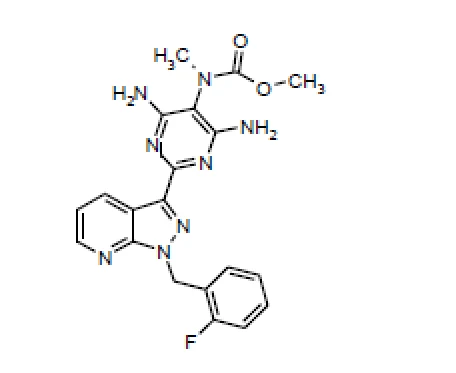
Chemical name: Methyl 4,6-diamino-2-[1-(2-fluorobenzyl)-1H-pyrazolo[3,4-b]pyridin-3-yl]-5-pyrimidinyl(methyl)carbamate
Molecular formula: C20H19FN8O2
Molecular mass: 422.42 g/mol
Structural formula:
Physicochemical properties: Riociguat is a white to yellowish, crystalline, non-hygroscopic substance. In solid form it is stable to temperature, light, and humidity.
The solubility at 25°C in water: 4 mg/L, in ethanol: 800 mg/L, in 0.1 M HCl (pH 1): 250 mg/L and in buffer (phosphate) pH 7: 3 mg/L. In the pH range of 2 to 4 the solubility showed strong pH-dependency. Solubility increases at lower pH values.
14 CLINICAL TRIALS
The Riociguat Tablets Phase III program included the CHEST-1 study in CTEPH patients, and the PATENT-1 study in patients with PAH.
14.1 Clinical Trials by Indication
Table 7: Summary of patient demographics for clinical trials
| Study # | Study Design | Dosage, Route of administration and duration | Study subjects (n) | Mean Age (range) | Sex |
|---|---|---|---|---|---|
| Use in patients with chronic thromboembolic pulmonary hypertension (CTEPH) | |||||
| CHEST-1 | Randomized, double-blind, multi-national, multi-centre, placebo controlled Phase III study | Patients treated and valid for safety randomized to one of two treatment groups: riociguat individual dose titration (IDT) up to 2.5 mg tid (n=173, referred to as the riociguat group), or placebo (n=88). During an 8-week titration phase, the dose of riociguat was titrated every 2-weeks based on the patient’s systolic blood pressure and signs or symptoms of hypotension. An individualized dose was reached at the end of the titration. At the end of the 16-week treatment phase, 77% of patients in the riociguat group were on the highest dose of 2.5 mg, 13% were on 2.0 mg and the remainder on lower doses. | 261 patients | The patient population included male and female patients between the ages of 19 and 80 (mean age: 59.3 years). | Male and Female |
| CHEST-2 | Open-label extension trial | Patients previously randomized to either riociguat or placebo in CHEST-1 received individualized dose-titrated riociguat (capped at 2.5 mg tid) | 237 patients who had completed CHEST-1 | The patient population from CHEST-1 included male and female patients between the ages of 19 and 80 (mean age: 59.3 years). | Male and Female |
| Study # | Study Design | Dosage, Route of administration and duration | Study subjects (n) | Mean Age (range) | Sex |
|---|---|---|---|---|---|
| Use in patients with pulmonary arterial hypertention (PAH) | |||||
| PATENT-1 | Randomized, double-blind, multi-national, multi-centre, placebo controlled, phase III study | In PATENT-1, 443 patients with baseline 6MWD of 150 to 450 m, a PVR > 300 dyn*s*cm-5, mean PAP >25 mmHg and systemic systolic pressure >95 and <180 mmHg were randomized to three groups in a 4 to 2 to 1 ratio to either: (1) and Individual Dose Titration (IDT) group on riociguat 1.0 to 2.5 mg tid (254 patients titrated by steps of 0.5 mg tid every two weeks), (2) placebo (126 patients), or (3) to a riociguat 1.0 to 1.5 mg tid dose group with dose capped at 1.5 mg tid (63 patients - exploratory arm, no statistical testing performed). | 443 patients | The overall patient population included male and female (79%) patients who were between the ages of 18 and 80 years (mean age: 51 years and approximately 25% ≥65 years) | Male and Female |
| PATENT-2 | open label extension study | Individual optimal doses of riociguat | 396 patients who had completed PATENT-1 | The overall patient population in PATENT-1 included male and female (79%) patients who were between the ages of 18 and 80 years (mean age: 51 years and approximately 25% ≥65 years) | Male and Female |
CHEST-1 and CHEST-2 Study in patients with chronic thromboembolic pulmonary hypertension (CTEPH)
CHEST-1: This study was conducted in patients with inoperable, or persistent or recurrent CTEPH after surgical treatment. Patients were included who were inoperable (assessed by an independent adjudication committee or an experienced surgeon), or who had recurrent or persistent CTEPH after undergoing pulmonary endarterectomy (PEA).
72% of patients had inoperable CTEPH, 28% had recurrent or persistent CTEPH following PEA.
The majority of patients were classified as World Health Organization (WHO) Functional Class II (31%) or III (64%) at baseline. The mean baseline 6MWD was 347 m. All patients were treatment naïve (PAH-specific medication was excluded).
Eligible patients had the option to enter an open-label extension trial (CHEST-2), where all patients received an individualized optimal dose of riociguat.
PATENT-1 and PATENT-2 Study in patients with pulmonary arterial hypertension (PAH)
PATENT-1: This study (PATENT-1) was conducted in patients with PAH who were either treatment-naïve or pre-treated with an endothelin receptor antagonist (ERA) or a prostacyclin analogue (PCA) (inhaled, oral or subcutaneous).
The patient population had been diagnosed with either idiopathic PAH (61%), familial PAH (2%), PAH associated with connective tissue disease (25%), operated congenital heart disease (8%), portal hypertension (3%), or associated PAH due to anorexigen or amphetamine use (1%).
The majority of patients were classified as WHO Functional Class II (42%) or III (54%) at baseline. The overall mean baseline 6MWD was 363 m. 50% of patients were treatment naïve, 44% were pretreated with ERAs and 6% were pretreated with prostacyclin analogues alone.
The 12-weeks treatment period included an 8-week titration phase, during which the dose of riociguat was titrated every 2 weeks based on the patient’s systolic blood pressure and signs or symptoms of hypotension, was followed by a 4-week treatment at the ‘optimal’ dose reached during the titration phase. At the end of the 12-week treatment phase, 75% of patients in the riociguat IDT group were on the highest dose of 2.5 mg, 15% were on 2.0 mg and the remainder on lower doses. Eligible patients of the three groups had the option to enter an open-label extension trial (PATENT-2), where all patients received individual optimal doses of riociguat.
CHEST-1 and CHEST-2 Study in patients with chronic thromboembolic pulmonary hypertension (CTEPH)
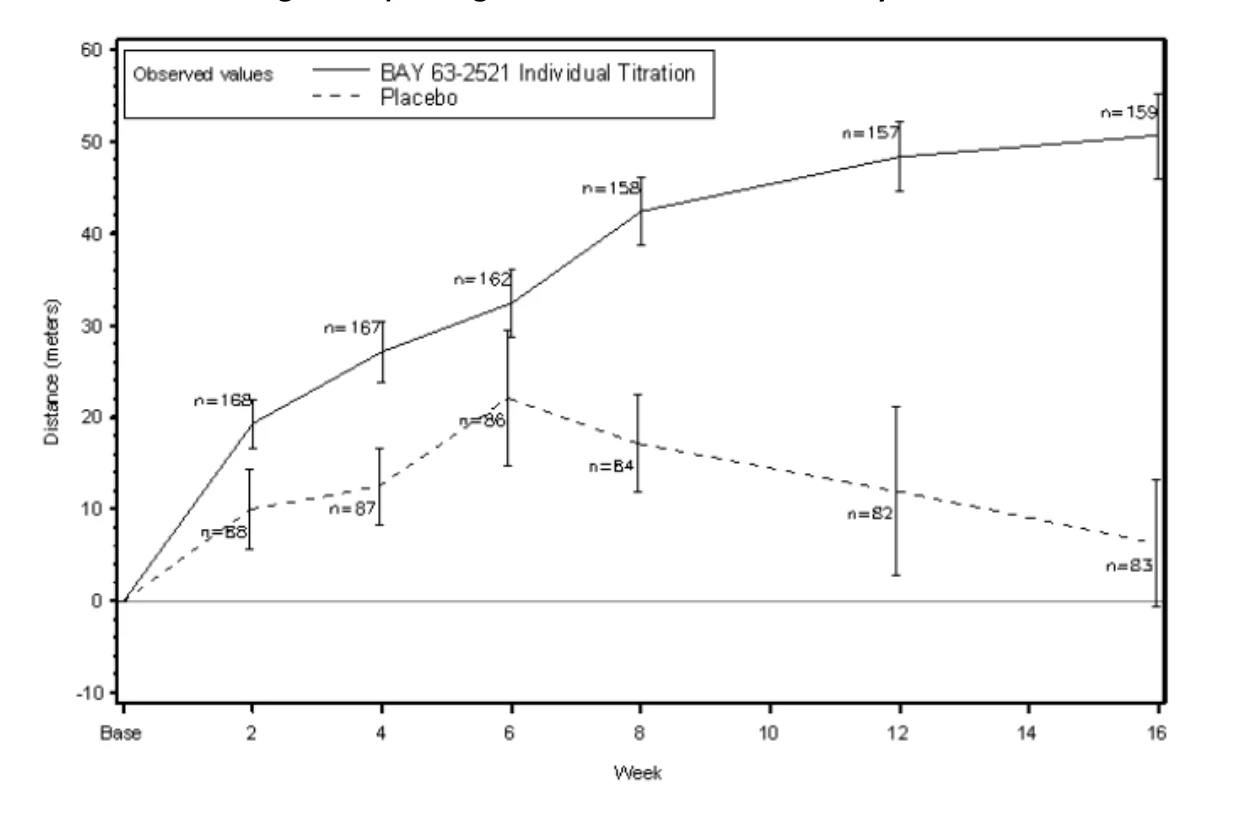
CHEST-1: Improvements in the primary efficacy variable, the six minute walk distance (6MWD), were apparent from week 2 onward, and at week 16 the increase in 6MWD within the riociguat group was 46 m (least-squares mean) (95% Confidence Interval (CI): 25 m to 67 m; p < 0.0001) compared to placebo (ITT analysis, see Figure 1). Improvements of riociguat over placebo were observed in all sub-groups evaluated. Inoperable patients (n=189) demonstrated an increase in 6MWD of 54 m (29 m to 79 m), and patients with recurrent or persistent CTEPH following PEA
(n=72) demonstrated an increase in 6MWD of 27 m (-10 m to 63 m). In patients with a WHO Functional Class of III/IV at baseline, riociguat led to a 53 m (27 m to 79 m) improvement in the 6MWD from baseline to week 16; in patients with a WHO Functional Class of I/II at baseline, the treatment effect was 26 m (-9 m to 59 m).
A larger proportion of patients in the riociguat group than in the placebo group had an improvement in 6MWD of at least 30 m by week 16: (63% vs. 30%) (see Figure 1).
Figure 1: Mean (± standard error) changes from baseline in the distance walked in 6 minutes (modified intention-to-treat population without imputation of missing values) during the 16 week of CHEST-1 study
Treatment with riociguat resulted in improvements across the secondary efficacy variables. There were significant reductions in PVR and NT-proBNP, and a significant improvement in WHO Functional Class of at least one Functional Class in the riociguat group at week 16 [last visit] of 33% vs. 15% in the placebo group, while a decline of at least one Functional Class was observed in 5% of patients in riociguat group vs. 7% in placebo group (p=0.0026) (see Table 8). There were also favorable effects in the riociguat group on time to clinical worsening, Borg CR 10 Scale, EQ-5D questionnaire, and LPH questionnaire (see Table 9).
| Table 8: Effects of Riociguat on the Change in WHO Functional Class in CHEST-1 from Baseline to Week 16 | |||||||
|---|---|---|---|---|---|---|---|
| Change in WHO Functional Class | Riociguat (n=173) | Placebo (n=87) | |||||
| Improved | 57 (33%) | 13 (15%) | |||||
| Stable | 107 (62%) | 68 (78%) | |||||
| Deteriorated | 9 (5%) | 6 (7%) | |||||
| p-value=0.0026 | |||||||
| Table 9: Summary of Efficacy Results for Pre-defined Variables in the Hierarchical Testing Order - CHEST-1, ITT Analysis Set | |||||||||||||
|---|---|---|---|---|---|---|---|---|---|---|---|---|---|
| Variable | LS mean (treatment difference of riociguat IDT to placebo) | 95% CI | Stratified Wilcoxon test p-value | ||||||||||
| 6MWD (m) (primary) | 46 | 25 to 67 | <0.0001* | ||||||||||
| PVR (dyn*s* cm-5) | -246 | -303 to -190 | <0.0001* | ||||||||||
| NT-proBNP (pg/mL) | -444 | -843 to -45 | <0.0001* | ||||||||||
| WHO Functional Class | 32.9%a riociguat 14.9%a placebo | N/A | 0.0026* | ||||||||||
| Time to clinical worseningb | 2.3%c riociguat 5.7%c placebo | N/A | 0.1724d | ||||||||||
| Borg CR 10 score | -0.8e riociguat 0.2e placebo | N/A | 0.0035f | ||||||||||
| EQ-5D score | 0.13 | 0.06 to 0.21 | <0.0001 | ||||||||||
| LPH score | -5.76 |
| 0.1220 | ||||||||||
Abbreviations: LS = least square; CI = confidence interval; IDT = individual dose titration (riociguat 1.0 to 2.5 mg); 6MWD = 6 minute walking distance; PVR = pulmonary vascular resistance; NT-proBNP = N-terminal prohormone brain natriuretic peptide; EQ-5D = European quality of life 5-dimensions instrument; LPH = Living with Pulmonary Hypertension
* Statistically significant
a Improvement by at least 1 WHO Functional Class in the respective treatment group
b Time to clinical worsening is defined as the number of days from start of study drug to the event of clinical worsening
c Percentage of subjects with one or more clinical worsening event in the respective treatment group d Stratified log-rank test p-value for time to clinical worsening
e Change from baseline to last visit in the respective treatment group
f Due to the hierarchical testing strategy, formal statistical testing stopped at this point.
Invasive hemodynamic parameters were assessed in CHEST-1. Right heart catheterization was performed at the beginning and the end of the study period in 233 patients. A statistically significant reduction of PVR (-246 dyn*s*cm-5, p<0.0001), mean pulmonary artery pressure (PAPmean) (-5.0 mmHg¸ p < 0.0001) and an increase in cardiac index (0.47 L/min/m2; p < 0.0001) was shown in the riociguat group compared to placebo (see Table 10).
| Table 10: CHEST 1, Change in Hemodynamic Parameters from Baseline to Last Visit | ||||||||||||
|---|---|---|---|---|---|---|---|---|---|---|---|---|
| Parameter (unit) | Mean change | LS mean difference | 95% CI | Stratified Wilcoxon test p-value | ||||||||
| RIO | PBO | |||||||||||
| PCWP (mmHg) | 0.59 | 0.18 | 0.58 | -0.36 to 1.53 | 0.2285 | |||||||
| RAP (mmHg) | -1.04 | -0.55 | -0.55 | -1.72 to 0.62 | 0.3593 | |||||||
| PAPsyst (mmHg) | -6.84 | 0.95 | -7.52 | -10.88 to -4.16 | <0.0001 | |||||||
| PAPdiast (mmHg) | -3.05 | 0.67 | -3.62 | -5.30 to -1.95 | 0.0002 | |||||||
| PAPmean (mmHg) | -4.31 | 0.76 | -4.96 | -6.75 to -3.16 | <0.0001 | |||||||
| MAP (mmHg) | -9.27 | -0.29 | -9.15 | -11.83 to -6.46 | <0.0001 | |||||||
| SvO2 (%) | 2.95 | -0.44 | 3.85 | 1.46 to 6.25 | 0.0010 | |||||||
| CO (L/min) | 0.81 | -0.03 | 0.86 | 0.59 to 1.12 | <0.0001 | |||||||
| CI (L/min/m2) | 0.45 | -0.01 | 0.47 | 0.33 to 0.62 | <0.0001 | |||||||
| PVR* (dyn*s*cm-5) | -226 | 23.1 | -246.43 | -303.33 to -189.53 | <0.0001 | |||||||
| PVRI (dyn*s*cm-5*m2) | -397 | 48.3 | -448.95 | -553.62 to -344.27 | <0.0001 | |||||||
| SVR (dyn*s*cm-5) | -445 | 16.6 | -478.24 | -602.30 to -354.19 | <0.0001 | |||||||
| SVRI (dyn*s*cm-5*m2) | -799 | 53.7 | -914.16 | -1140.97 to -687.35 | <0.0001 | |||||||
Abbreviations: CI = Cardiac Index; CO = Cardiac Output; MAP = Mean Arterial Pressure; PAPdiast = Diastolic Pulmonary Arterial Pressure; PAPmean = Mean Pulmonary Arterial Pressure; PAPsyst = Systolic Pulmonary Arterial Pressure; PBO = Placebo; PCWP = Pulmonary Capillary Wedge Pressure; PVR = Pulmonary Vascular Resistance; PVRI = Pulmonary Vascular Resistance Index; RAP = Right Atrial Pressure; RIO = Riociguat 1.0-2.5 mg; SvO2 = Venous Oxygen Saturation Rate; SVR = Systolic Vascular Resistance; SVRI = Systolic Vascular Resistance Index
* PVR was a secondary endpoint in the study
NT-proBNP levels were significantly reduced: placebo-corrected mean change from baseline was -444 pg/mL, CI -843 to -45, p<0.0001 (see Table 9).
A greater improvement in WHO Functional Class was observed in the riociguat IDT group than in the placebo group (see Table 9). A higher proportion of patients in the riociguat IDT group than in the placebo group had an improvement of at least one Functional Class (32.9% vs. 14.9%).
Time to clinical worsening (TTCW) was not statistically significantly different compared to placebo, but there was a trend in favour of the riociguat-treated patients (see Table 9). The secondary efficacy variable of TTCW was a combined endpoint of death (all-cause mortality), and events reflective of residual clinical worsening. Benefit was observed in both inoperable and operable CTEPH patients.
Patients previously randomized to either riociguat or placebo in CHEST-1 received individualized dose-titrated riociguat (capped at 2.5 mg tid) in an open-label extension study of CHEST-1.
CHEST-2: The open label extension study (CHEST-2) included 237 patients who had completed CHEST-1. At the cut-off date in the CHEST-2 study, the mean treatment duration total population was 1077 days (± 433). The probabilities of survival at 1, 2, and 3 years were 97%, 93%, and 89%, respectively. Without a control group, these data must be interpreted cautiously and cannot be used to determine the long-term effect of riociguat on mortality.
Patients on riociguat in CHEST-1 (n=129) ended the study with a 51.2 ± 61.8 m (mean ± SD) improvement in 6MWD compared to baseline; in CHEST-2 improvement in 6MWD in the riociguat group was 57.4 ± 69.0 m (n=155), 55.8 ± 62.5 m (n=138), and 51.0 ± 65.5m (n=128) at 12 weeks, 12 months and 24 months. Patients on placebo in CHEST-1 ended the study with a 4.1 ± 66.2 m (n=65) improvement in 6MWD compared to baseline; in CHEST-2 improvement in 6MWD in this former placebo group was 43.0 ± 72.3 m (n=82), 45.3±70.8 m (n=71), 41.3±77.8 (n=65) 12 weeks, 12 months and 24 months. Improvements in 6MWD persisted at 2 years in CHEST-2. Mean change from baseline for the overall population (N=237) was 56.5 m at 6 months (n=218), 50.9 m at 9 months (n=219), 52.2 m at 12 months (n=209) and 47.8m at 24 months (n=193).
Of the patients on riociguat in CHEST-1, 34.9% completed that study with a ≥ 1 class improvement in WHO Functional Class, and 3.9% with a 1 class deterioration compared to baseline in CHEST-1: 34.9/3.9% (n=129). At 12 weeks and 24 months into CHEST-2, these improvement/deterioration fractions in the riociguat group were 40.7/3.2% (n=68) and 41.8%/2.2% (n=59), respectively. Of the patients on placebo in CHEST-1, 13.8% ended that study with a ≥ 1 class improvement in WHO Functional Class, and 3.1% with a 1 class deterioration compared to baseline in CHEST-1: 13.8%/3.1% (n=65). At 12 weeks and 24 months into CHEST-2 these improvement/deterioration fractions in the former placebo group were 39.5%/2.5% (n=34) and 34.3%/2.9% (n=26), respectively.
The probability of survival was 97% after 1 year and 93% after to 2 years of Riociguat Tablets treatment. Without a control group, these data must be interpreted cautiously and cannot be used to determine the long-term effect of riociguat on mortality.
PATENT-1 and PATENT-2 Study in patients with pulmonary arterial hypertension (PAH)
PATENT-1: Treatment with riociguat IDT resulted in a statistically significant (p =< 0.0001) improvement in 6MWD compared to placebo by a mean increase at 12 week of 36 m (95% CI 20, 52).
The pre-specified primary endpoint of the study was the change in 6MWD from baseline to week 12 and was based on imputed values. The imputation for missing values included last observed value, not including follow-up for patients who completed the study or withdrew. In case of death or clinical worsening without a termination visit or a measurement at that termination visit, the imputed worst value (zero) was used.
Results of the 6MWD over 12 weeks for the PATENT-1 study are shown in Figure 2.
Figure 2: PATENT-1 Mean Change from Baseline in the 6-Minute Walk Distance
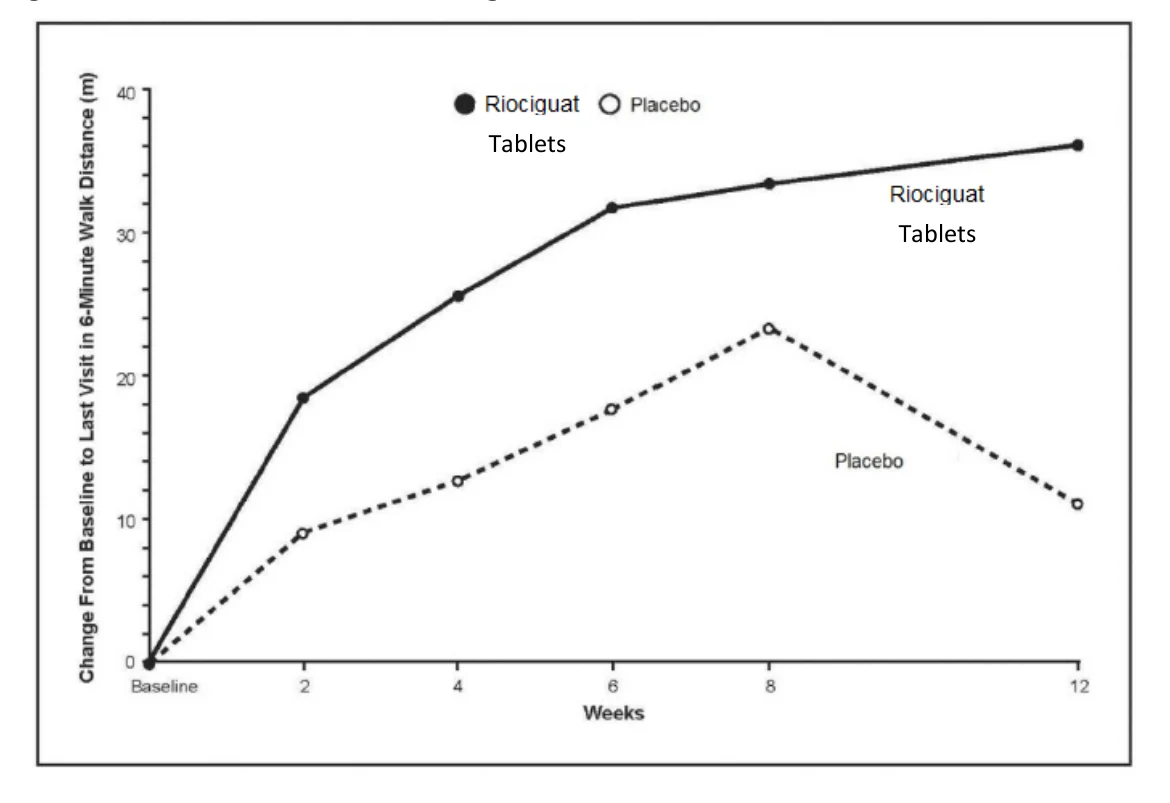
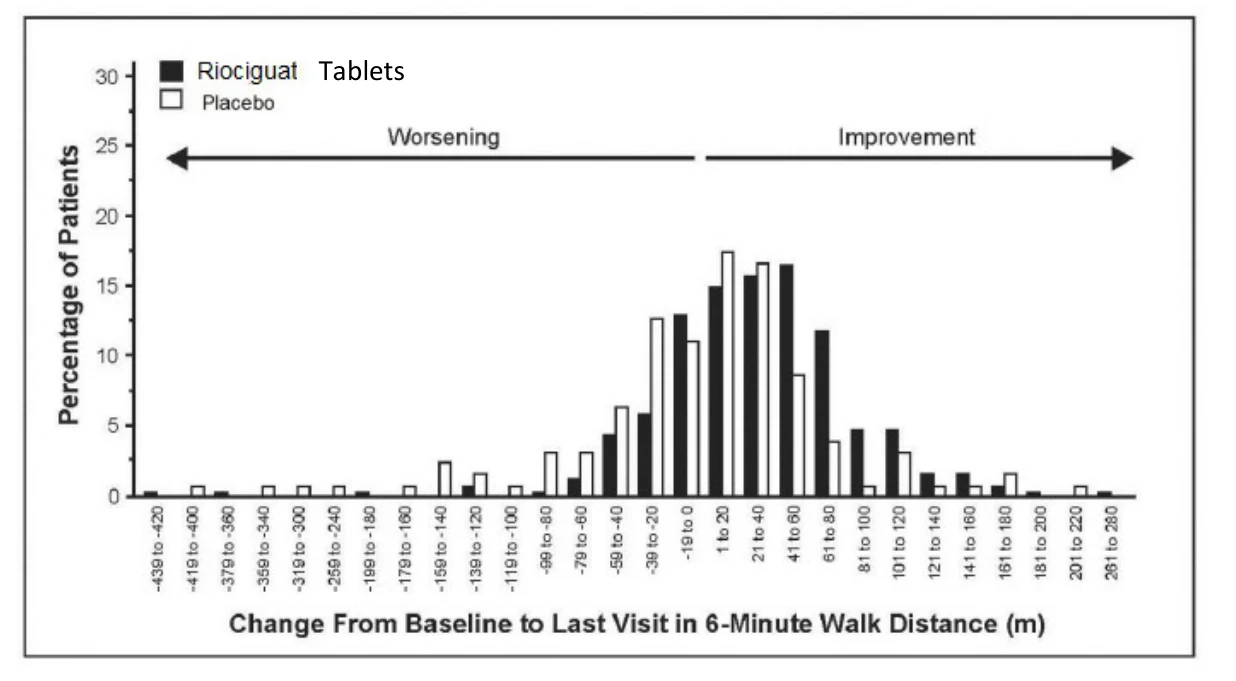
Figure 3 illustrates the results of the Riociguat Tablets and placebo treatment groups displayed as a histogram summarizing the treatment effect on the 6MWD. The patients are grouped by change in 20 meters from baseline. Overall this figure shows that patients treated with Riociguat Tablets benefit compared to those treated with placebo. As demonstrated in Figure 3, 193 patients receiving Riociguat Tablets (76%) experienced an improvement in 6MWD compared to 74 patients (59%) on placebo.
Tablets
Tablets
Figure 3: PATENT-1 Distribution of Patients by Change from Baseline in 6-Minute Walk Distance
Improvements 6MWD were apparent from Week 2 onward. At Week 12, the placebo-adjusted mean increase in 6MWD within the Riociguat Tablets group was 36 m (95% CI: 20 m to 52 m; p<0.0001). For PATENT-1, the median difference (Hodges-Lehmann non-parametric estimate) in 6MWD was 29 m (95% CI, 17 m to 40 m). There was an exploratory 1.5 mg capped titration arm (n = 63). The data did not suggest incremental benefit from escalating dose from 1.5 mg three times a day to 2.5 mg three times a day.
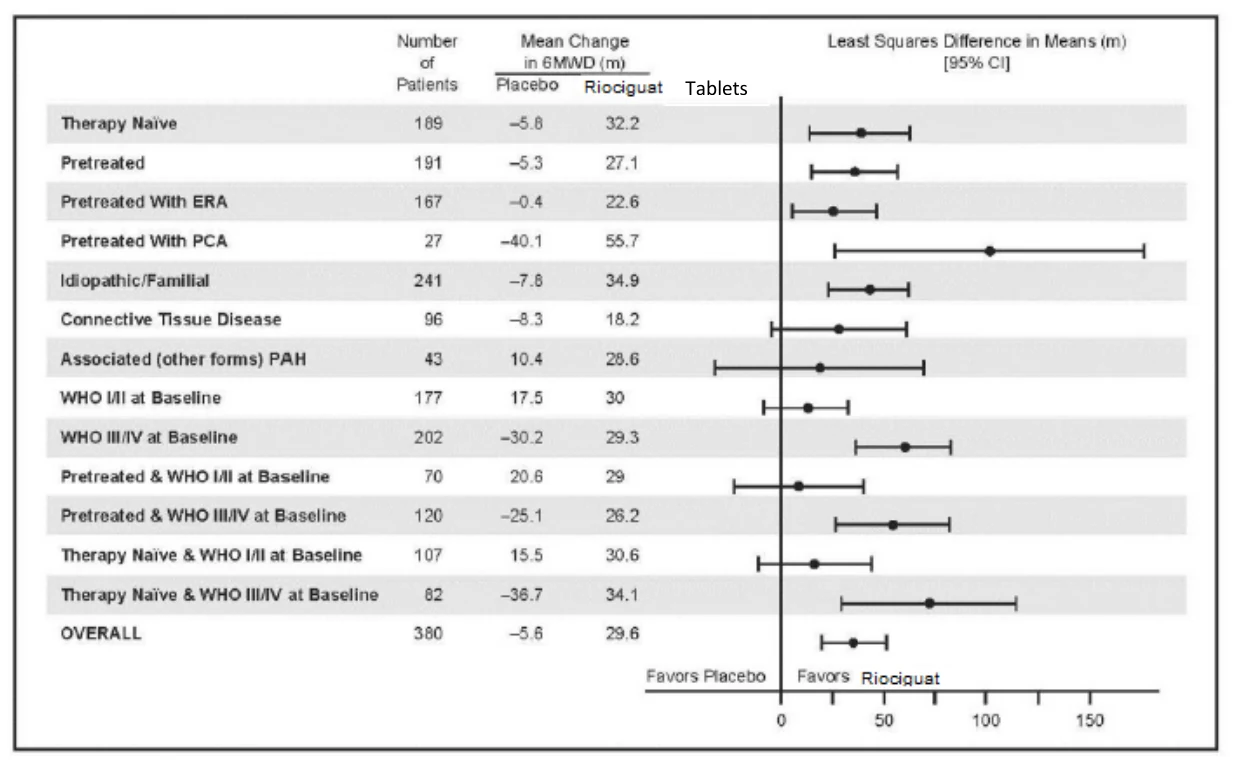
Placebo-adjusted changes in 6MWD at 12 weeks were evaluated in subgroups (see Figure 4).
Tablets
Figure 4: PATENT-1 Mean Treatment Difference in Change from Baseline to Last Visit in 6-Minute Walk Distance (meter) by Prespecified Subgroups
WHO Functional Class improvements in the IDT (individual dose titration) arm of the PATENT-1 trial are shown in Table 11.
| Table 11: Effects of Riociguat on the Change in WHO Functional Class in PATENT-1 from Baseline to Week 12 | ||||||
|---|---|---|---|---|---|---|
| Change in WHO Functional Class | Riociguat Tablets (IDT) (n=254) | Placebo (n=125) | ||||
| Improved | 53 (21%) | 18 (14%) | ||||
| Stable | 192 (76%) | 89 (71%) | ||||
| Deteriorated | 9 (4%) | 18 (14%) | ||||
| p-value = 0.0033 | ||||||
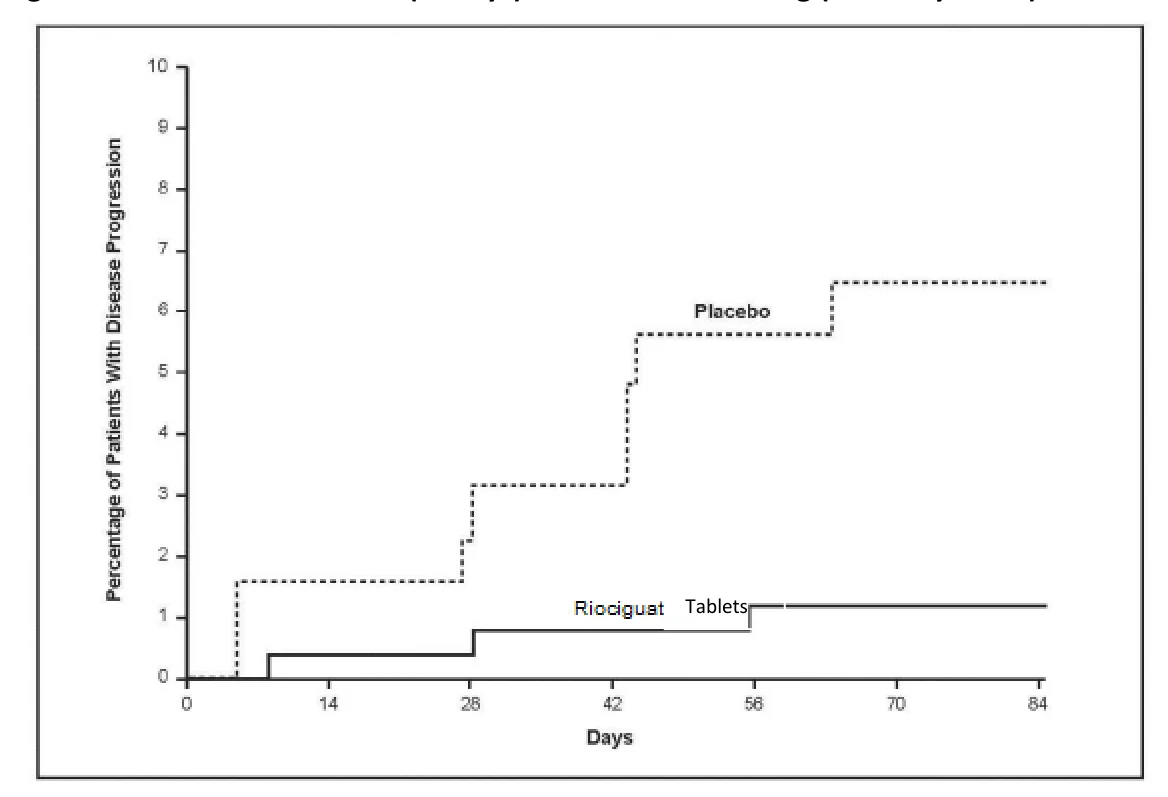
Time to clinical worsening was a combined endpoint defined as death (all-cause mortality), heart/lung transplantation, atrial septostomy, hospitalization due to persistent worsening of pulmonary hypertension, start of new PAH-specific treatment, persistent decrease in 6MWD and persistent worsening of WHO Functional Class.
Effects of Riociguat Tablets in PATENT-1 on events of clinical worsening are shown in Table 12.
Tablets
| Table 12: Effects of Riociguat Tablets in PATENT-1 on Events of Clinical Worsening (ITT analysis set) | ||||||
|---|---|---|---|---|---|---|
| Clinical Worsening Events | Riociguat Tablets (IDT) (n=254) | Placebo (n=126) | ||||
| Patients with any clinical worsening* | 3 (1.2%) | 8 (6.3%) | ||||
| Death | 2 (0.8%) | 3 (2.4%) | ||||
| Hospitalizations due to PH | 1 (0.4%) | 4 (3.2%) | ||||
| Decrease in 6MWD due to PH | 1 (0.4%) | 2 (1.6%) | ||||
| Persistent worsening of FC due to PAH | 0 | 1 (0.8%) | ||||
| Start of new PAH treatment | 1 (0.4%) | 5 (4.0%) | ||||
* p-value=0.0285 (Mantel-Haenszel estimate)
Note: Patients may have had more than one event of clinical worsening
Riociguat Tablets-treated patients experienced a significant delay in time to clinical worsening versus placebo-treated patients (p=0.0046; Stratified log-rank test). Significantly fewer events of clinical worsening up to week 12 (last visit) were observed in patients treated with Riociguat Tablets (1.2%) compared to placebo (6.3%) (p=0.0285, Mantel-Haenszel estimate). The Kaplan-Meier plot of time to clinical worsening is presented in Figure 5.
Figure 5: PATENT-1 Time (in Days) to Clinical Worsening (ITT analysis set)
Tablets
In the PATENT-1 study riociguat demonstrated a statistically significant reduction of NT-proBNP, placebo-corrected mean change from baseline: -432 ng/L, 95% CI -782 to -82 and Borg CR 10 scale, change from baseline to last visit in the respective treatment group: -0.4 riociguat vs 0.1 placebo.
Invasive hemodynamic parameters were assessed in PATENT-1 and are shown in Table 13. Right heart catheterization was performed at the beginning and the end of the study period in 339 patients.
| Table 13: PATENT-1 Change in Hemodynamic Parameters from Baseline to Last Visit: Comparison of Riociguat IDT and Placebo | ||||||||||
|---|---|---|---|---|---|---|---|---|---|---|
| Parameter (unit) | Mean change | LS meana difference | 95% CI | Stratifiedb Wilcoxon test p-value | ||||||
| RIO | PBO | |||||||||
| PCWP (mmHg) | 1.08 | 0.46 | 0.41 | -0.36 to 1.18 | 0.0830 | |||||
| RAP (mmHg) | -0.20 | 0.97 | -1.01 | -2.15 to 0.13 | 0.0734 | |||||
| PAPsyst (mmHg) | -5.39 | 0.78 | -6.73 | -9.43 to -4.04 | <0.0001 | |||||
| PAPdiast (mmHg) | -3.19 | -1.12 | -2.41 | -4.15 to -0.68 | 0.0110 | |||||
| PAPmean (mmHg) | -3.93 | -0.50 | -3.83 | -5.61 to -2.06 | 0.0002 | |||||
| MAP (mmHg) | -8.54 | -1.40 | -7.25 | -9.60 to -4.90 | <0.0001 | |||||
| SvO2 (%) | 3.15 | -2.33 | 5.02 | 3.20 to 6.84 | <0.0001 | |||||
| CO (L/min) | 0.93 | -0.01 | 0.93 | 0.70 to 1.15 | <0.0001 | |||||
| CI (L/min/m2) | 0.54 | -0.02 | 0.56 | 0.44 to 0.69 | <0.0001 | |||||
| PVR (dyn*s*cm-5) | -223 | -8.9 | -225.72 | -281.37 to -170.08 | <0.0001 | |||||
| PVRI (dyn*s*cm-5*m2) | -374 | -22.4 | -376.81 | -468.90 to -284.72 | <0.0001 | |||||
| SVR (dyn*s*cm-5) | -448 | -67.5 | -394.57 | -472.95 to -316.19 | <0.0001 | |||||
| SVRI (dyn*s*cm-5*m2) | -753 | -130 | -675.31 | -800.84 to -549.79 | <0.0001 | |||||
Abbreviations: CI = Cardiac Index; CO = Cardiac Output; MAP = Mean Arterial Pressure; PAPdiast = Diastolic Pulmonary Arterial Pressure; PAPmean = Mean Pulmonary Arterial Pressure; PAPsyst = Systolic Pulmonary Arterial Pressure; PBO = Placebo; PCWP = Pulmonary Capillary Wedge Pressure; PVR = Pulmonary Vascular Resistance; PVRI = Pulmonary Vascular Resistance Index; RAP = Right Atrial Pressure; RIO = Riociguat 1.0-2.5 mg; SvO2 = Venous Oxygen Saturation Rate; SVR = Systolic Vascular Resistance; SVRI = Systolic Vascular Resistance Index a Last visit = Last observed value post-baseline (not including follow-up)
b Stratified Wilcoxon test by region and stratification group
PATENT-2: An open label extension study (PATENT-2) included 396 patients who had completed PATENT-1. At the cut-off date in the PATENT-2 study, the mean treatment duration total population was 1146 days (± 479). The probabilities of survival at 1, 2, and 3 years were 97%, 93%, and 88%, respectively. Without a control group, these data must be interpreted cautiously and cannot be used to determine the long-term effect of riociguat on mortality.
The long-term 6MWD data indicate maintenance of the riociguat treatment effect, with improvement in 6MWD observed for at least 18 months. Mean change from baseline in PATENT-2 for the total group (N=396) was 50.2 ± 65.5 m at 12 weeks (n=396), 50.2 ± 72.6 m at 12 months (n=351) and 46.1 ± 83.0 m at 24 months (n=316).
The findings for 6MWD, NT-proBNP, WHO Functional Class and Borg CR 10 Scale in study PATENT-2 were maintained and consistent with the key findings seen in study PATENT-1.
14.3 Comparative Bioavailability Studies
Blind, balanced, randomized, two-treatment, two-sequence, two-period, single-dose, crossover oral bioequivalence study of two formulations of Riociguat tablets 2.5 mg in 65 healthy, adult, human male subjects under fasting conditions.
SUMMARY TABLE OF THE COMPARATIVE BIOAVAILABILITY DATA
Riociguat (1 x 2.5 mg) Geometric Mean Arithmetic Mean (CV%) | ||||
| Parameter | Test1 | Reference2 | % Ratio of Geometric Means | 90% Confidence Interval |
AUCT‡ (ng·h/mL) | 1345.82 1416.60 (29.94) | 1304.05 1376.52 (31.55) | 103.3 | 100.1-106.5 |
AUCI (ng·h/mL) | 1410.03 1496.94 (33.14) | 1366.52 1453.81 (34.01) | 103.3 | 99.9-106.7 |
CMAX (ng/mL) | 150.60 154.77 (23.15) | 137.17 140.24 (20.62) | 109.9 | 105.1-114.9 |
TMAX3 (h) | 0.75 (0.50-3.50) | 0.77 (0.50-4.50) | ||
T½4 (h) | 10.12 (31.14) | 10.05 (31.71) | ||
1 Riociguat tablets 2.5 mg (Sandoz Canada Inc.)
2 PrADEMPAS® (riociguat) tablets 2.5 mg (Bayer Canada Inc.)
3 Expressed as either the median (range) only
4 Expressed as the arithmetic mean (CV%) only
15 MICROBIOLOGY
No microbiological information is required for this drug product.
16 NON-CLINICAL TOXICOLOGY
General Toxicology
Non-clinical data revealed no unusual hazard for humans based on conventional studies of safety pharmacology, single dose toxicity, phototoxicity, genotoxicity, and carcinogenicity. Embryo-fetal toxicity, including malformations, was seen in developmental/reproductive studies.
Repeated Dose Toxicity
Effects observed in repeat-dose toxicity studies were mainly due to the pharmacodynamic activity of riociguat (hemodynamic and smooth muscle relaxing effects), and occurred at systemic exposures comparable to or less than that at the maximum human recommended dose (MRHD).
In rats, these included: clinical signs such as penile erection likely due to vasodilation; increased water consumption and urine volume and consequently decreased urine density and concentrations of constituents, increased adrenal gland weight and width of the zona glomerulosa; prominent/dilated vascular spaces in wall of mesenteric veins; increased red blood cell parameters and reticulocyte counts; and intestinal effects (distended abdomen, increased girth, elongated intestines, dilated cecum) presumed due to reduced gastrointestinal motility.
Bile duct activation and/or hyperplasia and increased periportal inflammatory infiltration was seen in rats given 100 g/kg/day in a 13-week study resulting exposures about 7 times that at the MRHD, although the incidence of biliary cysts was increased in high dose males rats in the carcinogenicity study at exposures only slightly above that at the MRHD. Similar findings were not seen in mice or dogs.
Increased heart weight at therapeutic exposures was without microscopic correlate in subchronic and chronic rat studies. However, cardiac enlargement and increased incidences of atrial thrombus, dilation, cardiomyopathy, and vasculopathy in high dose males in the rat carcinogenicity study occurred at exposures more than twice that at the MRHD, although exposure was less than that at the MRHD at the no-effect dose.
Clinical effects in dogs were mainly referable to the gastrointestinal system, and included vomiting, diarrhea, decreased food consumption, and weight loss.
In dogs, marked decreases in systolic and diastolic blood pressure and compensatory increases in heart rate that occurred at ≥ 0.3 mg/kg/day were without a no effect dose level. Pathologic lesions in heart (myocardial degeneration, myocardial fibrosis of papillary muscle, endocarditis) and in coronary vessels (vascular/perivascular edema, vascular hypertrophy) also occurred at ≥ 0.3 mg/kg/day. Hemodynamic and cardiovascular hemodynamic changes occurred in dogs at systemic exposures comparable to or less than exposure at the MRHD.
Carcinogenicity
In rats, at systemic exposure corresponding up to 7-fold of the human exposure, riociguat was non-carcinogenic.
In the carcinogenicity study in mice, statistically non-significant increases in intestinal tumors were seen at exposure levels slightly less and more than the human therapeutic exposure were considered to be a consequence of chronic nonneoplastic large intestinal lesions including inflammation, mucosal degeneration, and reactive hyperplasia.
Genotoxicity
Neither riociguat nor its major circulating active metabolite was genotoxic, both being negative in bacterial mutation (Ames) assays, in vitro chromosome aberration assays in Chinese Hamster V79 cells, and in vivo bone marrow micronucleus studies in male mice. Riociguat was also negative in an in vivo bone marrow cytogenetic study conducted in male mice.
Reproductive and Developmental Toxicology
Studies in rats and rabbits have shown marked reproductive toxicity of riociguat and its main metabolite.
Administration of riociguat to rats in the pre- and postnatal period resulted in a decreased live birth index and decreased survival up to day 4 post-partum. At the no-observed-adverse-effect level (NOAEL) for the effects, the rat systemic exposure to riociguat was lower than the maximum human exposure. Administration of riociguat to rats during the gestation period resulted in an increased rate of cardiac malformations and an increase in post-implantation loss, including early resorption. At the NOAEL for these effects, the rat systemic exposure to riociguat was in the range of the maximum human exposure. The major fetal effects of the main metabolite (M1) of riociguat, administered to rats during the gestation period included: a decrease in fetal weight, an increased incidence of underdeveloped or missing thyroid glands, and retarded ossification. At the NOAEL for these effects, the rat systemic exposure to M1 was comparable to the maximum human exposure.
In rabbits, abortion and fetal toxicity were seen with riociguat administered during the gestation period starting at systemic exposure lower than the maximum human exposure. Also in rabbits, abortion and total resorption were seen with M1 administered during the gestation period. At the NOAEL for these effects, the rabbit systemic exposure to M1 was lower than the maximum human exposure.
In rats, no effects on male and female fertility were seen with riociguat, but its main metabolite (M1) produced a slight decrease in implantation rate at systemic exposure comparable to maximum human exposure.
Bone Toxicity
In fast growing, adolescent rats, effects on bone formation (i.e., an increase in overall bone mass) were seen. In adult rats, when treatment was initiated during adolescence, increased bone remodeling/hyperostosis in the femur was observed in the 26-week chronic toxicity study at steady state systemic exposures in the range of human therapeutic levels. No bone effects were seen when treatment was initiated in adult, full grown rats.
Animal Pharmacology
In all species tested, the toxicological profile of ADEMPAS was characterized by effects secondary to the pharmacological mode of action – stimulation of the soluble guanylate cyclase and subsequent increase of intracellular cGMP levels. The cardiovascular, the gastrointestinal and the skeletal system were shown to be most sensitive to these effects.
Nonclinical safety testing of ADEMPAS revealed no toxicity of specific concern like hepatotoxicity and renal toxicity. Studies addressing the risk for QT-prolongation in vitro showed no relevant intrinsic effect of ADEMPAS on cardiac repolarization. The QT interval was not considered as affected when corrected for heart rate in conscious or anesthetized dogs after single oral administration of ADEMPAS or its main metabolite M1.
Human Pharmacology
Riociguat Tablets is a stimulator of soluble guanylate cyclase (sGC), an enzyme found in most mammalian cells including those of the cardiopulmonary system. sGC is also the receptor for nitric oxide (NO).
Pharmacodynamics
When NO binds to sGC, the enzyme catalyzes the synthesis of the signaling molecule cyclic guanosine monophosphate (cGMP). Intra-cellular cGMP plays an important role in regulating processes that influence vascular tone, proliferation, fibrosis, and inflammation.
Pulmonary hypertension is associated with endothelial dysfunction, impaired synthesis of nitric oxide, and insufficient stimulation of the NO-sGC-cGMP pathway.
Riociguat has a dual mode of action. It sensitizes sGC to endogenous NO by stabilizing the NO-sGC binding. Riociguat also directly stimulates sGC via a different binding site, independently of NO.
Riociguat restores the NO-sGC-cGMP pathway and leads to increased generation of cGMP.
There is a direct relationship between riociguat plasma concentration and hemodynamic parameters such as systemic and pulmonary vascular resistance, systolic blood pressure, and cardiac output.
Pharmacokinetics
Absorption and Bioavailability
The absolute bioavailability of riociguat is high (94%). Riociguat is rapidly absorbed with maximum concentrations (Cmax) appearing 1 to 1.5 hours after tablet intake.
Intake with food does not affect riociguat AUC. Cmax was reduced to a minor extent (35% lowering). Therefore, riociguat can be taken with or without food.
Distribution
Plasma protein binding in humans is high at approximately 95%, with serum albumin and α1-acidic glycoprotein being the main binding components.
The volume of distribution is moderate with volume of distribution at steady state being approximately 30 L.
Metabolism
N-demethylation, catalyzed by CYP1A1, CYP3A4, CYP3A5, and CYP2J2, is the major biotransformation pathway of riociguat leading to its major circulating active metabolite M1 (pharmacological activity: 1/10th to 1/3rd of riociguat) which is further metabolized to the pharmacologically inactive N-glucuronide.
In vitro, ketoconazole, classified as a strong CYP3A4 and P-glycoprotein (P-gp) inhibitor, has been shown to be a ‘multipathway CYP and P-gp/breast cancer resistance protein (BCRP) inhibitor’ for riociguat metabolism and excretion.
From the recombinant CYP isoforms investigated in vitro CYP1A1 most effectively catalyzed formation of riociguat main metabolite. The class of tyrosine kinase inhibitors was identified as potent inhibitors of CYP1A1, with erlotinib and gefitinib exhibiting the highest inhibitory potency in vitro. Therefore, drug-drug interactions by inhibition of CYP1A1 could result in increased riociguat exposure, especially in smokers. Therefore, strong CYP1A1 inhibitors should be used with caution.
Excretion
Total riociguat (parent compound and metabolites) is excreted via both renal (33 to 45%) and biliary/fecal routes (48 to 59%). Four to 19% of the administered dose is excreted as unchanged riociguat via the kidneys, and 9 to 44% of the administered dose is found as unchanged riociguat in feces.
Based on in vitro data riociguat and its main metabolite are substrates of the transporter proteins P-gp (P-glycoprotein) and BCRP (breast cancer resistance protein).
With a systemic clearance of about 3 to 6 L/h, riociguat can be classified as a low-clearance drug. Elimination half-life is about 7 hours in healthy subjects and about 13 hours in patients.
Linearity / Non-linearity
Riociguat pharmacokinetics is linear from 0.5 to 2.5 mg.
Inter-individual variability (CV%) of riociguat exposure (AUC) across all doses is approximately 60%. The intra-individual variability is considerably lower with 35% for riociguat trough plasma concentration (Ctrough).
17 SUPPORTING PRODUCT MONOGRAPHS
- 1. PrADEMPAS® (Tablets, 0.5 mg, 1 mg, 1.5 mg, 2 mg, 2.5 mg), submission control 262975, Product Monograph, Bayer Inc. (October 13, 2022).