


Product Monograph - Auro-Ambrisentan
Recent Major Label Changes
| 7 Warnings and Precautions, 7.1.3 Pediatrics | 06/2026 |
|---|
Table of Contents
Certain sections or subsections that are not applicable at the time of the preparation of the most recent authorized product monograph are not listed.
Recent Major Label Changes .......................................................................................................... 2
Table of Contents .................................................................................................................................. 2
Part 1: Healthcare Professional Information .................................................................................. 4
1 Indications .................................................................................................................................. 4
1.1 Pediatrics ............................................................................................................................. 4
1.2 Geriatrics ............................................................................................................................. 4
2 Contraindications ........................................................................................................................ 4
4 Dosage and Administration ......................................................................................................... 4
4.1 Dosing Considerations ......................................................................................................... 4
4.2 Recommended Dose and Dosage Adjustment .................................................................... 5
4.5 Missed Dose ........................................................................................................................ 5
5 Overdose .................................................................................................................................... 6
6 Dosage Forms, Strengths, Composition, and Packaging ............................................................... 6
7 Warnings and Precautions .......................................................................................................... 7
Carcinogenesis and Genotoxicity ........................................................................................................... 7
Driving and Operating Machinery .......................................................................................................... 7
Fluid retention ........................................................................................................................................ 7
Hematologic ........................................................................................................................................... 7
Hepatic/Biliary/Pancreatic ..................................................................................................................... 7
Monitoring and Laboratory Tests ........................................................................................................... 8
Pulmonary Veno-Occlusive Disease ....................................................................................................... 9
Renal 9
Reproductive Health ............................................................................................................................... 9
Sensitivity/Resistance ............................................................................................................................. 9
7.1 Special Populations.............................................................................................................. 9
7.1.1 Pregnancy ...................................................................................................................... 10
7.1.2 Breastfeeding ................................................................................................................ 10
7.1.3 Pediatrics ....................................................................................................................... 10
7.1.4 Geriatrics ....................................................................................................................... 10
8 Adverse Reactions ..................................................................................................................... 10
8.1 Adverse Reaction Overview .............................................................................................. 10
8.2 Clinical Trial Adverse Reactions ......................................................................................... 11
8.3 Less Common Clinical Trial Adverse Reactions ................................................................. 13
8.4 Abnormal Laboratory Findings: Hematologic, Clinical Chemistry and Other Quantitative Data................................................................................................................................. 13
8.5 Post-Market Adverse Reactions ......................................................................................... 14
9 Drug Interactions ...................................................................................................................... 14
9.2 Drug Interactions Overview ............................................................................................... 14
9.4 Drug-Drug Interactions ...................................................................................................... 15
9.5 Drug-Food Interactions ..................................................................................................... 18
9.6 Drug-Herb Interactions ...................................................................................................... 18
9.7 Drug-Laboratory Test Interactions .................................................................................... 18
10 Clinical Pharmacology ............................................................................................................. 18
10.1 Mechanism of Action....................................................................................................... 18
10.2 Pharmacodynamics ......................................................................................................... 18
10.3 Pharmacokinetics ............................................................................................................ 21
11 Storage, Stability, and Disposal ............................................................................................... 22
12 Special Handling Instructions .................................................................................................. 22
Part 2: Scientific Information ....................................................................................................... 23
13 Pharmaceutical Information .................................................................................................... 23
14 Clinical Trials ........................................................................................................................... 24
14.1 Clinical Trials by Indication .............................................................................................. 24
14.2 Comparative Bioavailability Studies ............................................................................... 29
15 Microbiology ........................................................................................................................... 30
16 Non-Clinical Toxicology ........................................................................................................... 30
17 Supporting Product Monographs ............................................................................................ 31
Patient Medication Information ................................................................................................... 32
Part 1: Healthcare Professional Information
1 Indications
Auro-Ambrisentan (ambrisentan tablets) is indicated for:
- The treatment of idiopathic (‘primary’) pulmonary arterial hypertension (IPAH) and pulmonary arterial hypertension (PAH) associated with connective tissue disease in adult patients with WHO functional class II or III symptoms.
Auro-Ambrisentan should only be used by clinicians experienced in the diagnosis and treatment of IPAH or PAH.
1.1 Pediatrics
Pediatrics (< 18 years of age): No clinical data are available to Health Canada; therefore, Health Canada has not authorized an indication for pediatric use (see 7.1.3 Pediatrics and 16 Non-Clinical Toxicology, Juvenile toxicity regarding data available in juvenile animals).
1.2 Geriatrics
Geriatrics (≥ 65 years of age): There is limited safety and effectiveness data in the geriatric population (see 7.1.4 Geriatrics and 10.3 Pharmacokinetics).
2 Contraindications
Auro-Ambrisentan is contraindicated in:
- Patients with a known or suspected hypersensitivity to Auro-Ambrisentan or any of the ingredients in the formulation (see 6 Dosage Forms, Strengths, Composition, and Packaging).
- Pregnancy (see 7.1.1 Pregnancy).
- Breastfeeding (see 7.1.2 Breastfeeding).
- Patients with severe hepatic impairment (with or without cirrhosis) (see 7 Warnings and Precautions, Hepatic/Biliary/Pancreatic, and 4 Dosage and Administration).
- Patients with baseline values of hepatic aminotransferases (aspartate aminotransferases (AST) and/or alanine aminotransferases (ALT)) >3x ULN (see 7 Warnings and Precautions, Hepatic/Biliary/Pancreatic, and 4 Dosage and Administration).
- Patients with idiopathic pulmonary fibrosis (IPF), with or without pulmonary hypertension.
4 Dosage and Administration
4.1 Dosing Considerations
- Treatment should only be initiated by a physician experienced in the treatment of PAH.
- Assess liver function before starting Auro-Ambrisentan (see 7 Warnings and Precautions, Hepatic/Biliary/Pancreatic, and Monitoring and Laboratory Tests).
- Auro-Ambrisentan treatment should only be initiated in women of child-bearing potential following a negative pregnancy test and providing they are using a reliable method of contraception (see 2 Contraindications; 7.1.1 Pregnancy).
- Auro-Ambrisentan is contraindicated in patients with severe hepatic impairment and those with baseline AST or ALT >3x ULN. Auro-Ambrisentan should be used with caution in patients with moderate hepatic impairment (see 7 Warnings and Precautions; 10.3 Pharmacokinetics, and Special Populations and Conditions, Hepatic Insufficiency).
- Patients with PAH associated with connective tissue disease may require 10 mg Auro-Ambrisentan for optimal efficacy. Consider increasing the dose to 10 mg Auro-Ambrisentan providing the 5 mg dose is well tolerated (see 8 Adverse Reactions).
4.2 Recommended Dose and Dosage Adjustment
Adult Dosage
Auro-Ambrisentan should be initiated at a dose of 5 mg once daily. Additional benefit may be obtained by increasing the dose to 10 mg once daily.
The maximum recommended daily dose is 10 mg.
When co-administered with cyclosporine A, the dose of Auro-Ambrisentan should be limited to 5 mg once daily (see 9.4 Drug-Drug Interactions, Cyclosporine A).
Auro-Ambrisentan can be administered with or without food.
Pediatrics (< 18 years of age)
No clinical data are available to Health Canada; therefore, Health Canada has not authorized an indication for pediatric use (see 7.1.3 Pediatrics and 16 Non-Clinical Toxicology, Juvenile toxicity regarding data available in juvenile animals).
Geriatric patients aged 65 years and over
No dose adjustment is required in patients aged 65 years and over. In clinical monotherapy studies, peripheral edema was reported as dose dependent and more common in patients ≥65 years of age.
Patients with renal impairment
Renal metabolism and excretion of Auro-Ambrisentan is minimal, so dose adjustment is unlikely to be required in patients with renal impairment.
4.5 Missed Dose
If a dose of Auro-Ambrisentan is missed, the patient should be advised to take it as soon as they remember, and then continue with the next dose at the regular interval. Two doses should not be taken at the same time to make up for a missed dose.
5 Overdose
In healthy volunteers, single doses of 50 and 100 mg (5 to 10 times the maximum recommended dose) were associated with headache, flushing, dizziness, nausea, and nasal congestion.
Due to the mechanism of action of ambrisentan, an overdose of Auro-Ambrisentan could potentially result in hypotension. In the case of pronounced hypotension, active cardiovascular support may be required. No specific antidote is available.
| For the most recent information in the management of a suspected drug overdose, contact your regional poison control centre or Health Canada’s toll-free number, 1-844 POISON-X (1-844-764-7669). |
|---|
6 Dosage Forms, Strengths, Composition, and Packaging
Table 1 – Dosage Forms, Strengths, and Composition
| Route of Administration | Dosage Form/ Strength/Composition | Non-Medicinal Ingredients |
|---|---|---|
| Oral | Tablet 5 mg, 10 mg | Cellulose microcrystalline, Croscarmellose sodium, FD&C Red #40 Aluminum Lake, Lactose monohydrate, Lecithin (soya), Macrogol, Magnesium Stearate, polyvinyl alcohol, Talc, Titanium dioxide. |
Description
Auro-Ambrisentan 5 mg film-coated tablets are pale pink, approximately 6.9 mm Square shaped convex tablets debossed with "AS" on one side and "5" on other side.
Auro-Ambrisentan 10 mg film-coated tablets are deep pink, film coated approximately 9.8 X 4.9 mm oval shaped convex tablets debossed with "AS" on one side and "10" on other side.
Auro-Ambrisentan tablets are available in blister packs of 30 (3 x 10’s) tablets.
7 Warnings and Precautions
Carcinogenesis and Genotoxicity
There are no human data available (see 16 Non-Clinical Toxicology, Carcinogenicity and Genotoxicity).
Driving and Operating Machinery
There have been no studies to investigate the effect of ambrisentan on driving performance or the ability to operate machinery. Further, a detrimental effect on such activities cannot be predicted from the pharmacology of the active substance.
Fluid retention
Peripheral edema (fluid retention) has been observed with endothelin receptor antagonists (ERAs) including ambrisentan. Peripheral edema may also be a clinical consequence of PAH. Ambrisentan induced a dose-dependent increased incidence of mild to moderate peripheral edema (see 8 Adverse Reactions).
Post-market reports confirm that fluid retention may occur within weeks after starting ambrisentan and, in some cases, has required intervention with a diuretic or hospitalization for fluid management or decompensated heart failure (see 8.2 Clinical Trial Adverse Reactions, Table 2). If patients have pre-existing fluid overload, this should be managed as clinically appropriate prior to starting Auro-Ambrisentan.
If clinically significant peripheral edema develops during therapy with Auro-Ambrisentan, with or without associated weight gain, further evaluation should be undertaken to determine the cause, such as the use of Auro-Ambrisentan or the existence of underlying heart failure. The possible need for specific treatment or discontinuation of Auro-Ambrisentan therapy should also be evaluated.
Hematologic
The development of drug-related decreases in hemoglobin concentration and hematocrit has been associated with administration of endothelin receptor antagonists and was observed in clinical studies with ambrisentan in monotherapy. There have been cases where this has resulted in anemia requiring transfusion. These decreases were generally observed within the first few weeks of treatment with ambrisentan, and stabilized thereafter (see 8 Adverse Reactions).
Initiation of Auro-Ambrisentan is not recommended for patients with clinically significant anemia (see 7 Warnings and Precautions, Monitoring and Laboratory Tests).
Hepatic/Biliary/Pancreatic
Liver function abnormalities have been associated with pulmonary arterial hypertension. Hepatic enzyme elevations potentially related to therapy have been observed with endothelin receptor antagonists (ERAs). Therefore, hepatic function should be evaluated prior to initiation of Auro-Ambrisentan. Monitor liver function as clinically indicated for patients with normal liver function or mild hepatic impairment. Initiation of Auro-Ambrisentan is contraindicated for patients with aminotransferase (alanine aminotransferase, ALT or aspartate aminotransferase, AST) concentrations greater than 3 times the upper limit of normal (>3x ULN) or patients with severe hepatic impairment. Auro-Ambrisentan should be used with caution in patients with moderate hepatic impairment and monthly monitoring of ALT and AST is recommended (see 4 Dosage and Administration, and 10 Clinical Pharmacology).
Although the incidence of aminotransferase abnormalities was low, the possibility of serum aminotransferase elevations associated with ambrisentan administration cannot be excluded. Therefore monthly monitoring of ALT and AST is recommended in particularly vulnerable patients such as those with moderate hepatic impairment or those with clinically significant right heart failure, pre-existing liver disease, previous elevations of aminotransferases due to medications or taking concurrent medications known to elevate aminotransferases who may be at increased risk for developing elevated aminotransferases on ambrisentan. If patients develop clinically significant aminotransferase elevations or if aminotransferase elevations are accompanied by signs or symptoms of hepatic injury (e.g. jaundice), Auro-Ambrisentan therapy should be discontinued.
In patients without clinical symptoms of hepatic injury or of jaundice, re-initiation of Auro-Ambrisentan may be considered following resolution of hepatic enzyme abnormalities. Hepatic injury and autoimmune hepatitis are known to occur in PAH patients and autoantibodies are frequently found in IPAH. Cases consistent with autoimmune hepatitis, including possible exacerbation of underlying autoimmune hepatitis, and hepatic injury have been reported with ambrisentan therapy, although the contribution of ambrisentan to these events is unclear.
Therefore, patients should be monitored for signs of hepatic injury and caution exercised when Auro-Ambrisentan is used alone or concomitantly with other medicinal products known to be associated with hepatic injury as the additive effects of ambrisentan with these agents are not known. Management of autoimmune hepatitis in PAH patients should be optimized prior to initiation of Auro-Ambrisentan and during Auro-Ambrisentan therapy. If patients develop signs or symptoms of hepatitis, or suffer exacerbation of existing autoimmune hepatitis, Auro-Ambrisentan should be discontinued.
Other ERAs have been associated with aminotransferase (AST, ALT) elevations, hepatotoxicity, and cases of liver failure (see 8 Adverse Reactions) In patients who develop hepatic impairment after Auro-Ambrisentan initiation, the cause of liver injury should be fully investigated. Discontinue Auro-Ambrisentan if elevations of liver aminotransferases are >3x ULN or if elevations are accompanied by bilirubin >2x ULN, or by signs or symptoms of liver dysfunction and other causes are excluded.
Monitoring and Laboratory Tests
Hemoglobin and Hematocrit
Ambrisentan has been associated with reductions in hemoglobin concentrations and hematocrit. Initiation of Auro-Ambrisentan is not recommended for patients with clinically significant anemia. It is recommended that hemoglobin and/or hematocrit levels are measured prior to the initiation of Auro-Ambrisentan, again at one month, and periodically thereafter as clinically indicated.
Decreases in hemoglobin and/or hematocrit were observed as very common clinical trial adverse drug reactions (see Table 2). In monotherapy studies, the mean decrease in hemoglobin from baseline to the end of treatment for patients receiving ambrisentan in 12-week placebo-controlled studies was 0.8 g/dL
Hemoglobin reductions were observed to persist for 4 years.
If a clinically significant decrease in hemoglobin or hematocrit is observed, and other causes have been excluded, discontinuation of Auro-Ambrisentan should be considered.
Liver Function Tests
Liver transaminase levels should be measured prior to initiation of treatment and subsequently at monthly intervals in vulnerable patients, or generally in any patient as clinically indicated (see 7 Warnings and Precautions, Hepatic/Biliary/Pancreatic).
If patients develop clinically significant elevations of transaminases greater than 3x ULN), or if transaminase elevations are accompanied by signs or symptoms of hepatic injury (such as nausea, vomiting, fever, abdominal pain, jaundice or unusual lethargy or fatigue) or if elevations are accompanied by increases in bilirubin 2xULN, treatment with Auro-Ambrisentan should be stopped.
In patients without clinical symptoms of hepatic injury or jaundice, re-initiation of Auro-Ambrisentan may be considered following resolution of hepatic enzyme abnormalities (see 7 Warnings and Precautions, Hepatic/Biliary/Pancreatic).
Pulmonary Veno-Occlusive Disease
If patients develop acute pulmonary edema during initiation of Auro-Ambrisentan, the possibility of pulmonary veno-occlusive disease should be considered.
Renal
Ambrisentan has not been studied in individuals with renal impairment. Auro-Ambrisentan does not undergo significant renal metabolism or renal clearance (excretion), and therefore dose adjustment is unlikely to be required in patients with renal impairment (see 10.3 Pharmacokinetics).
Reproductive Health
Fertility
The development of testicular tubular atrophy in male animals has been linked to the chronic administration of ERAs, including ambrisentan (see 16 Non-Clinical Toxicology). The effect on male human fertility is not known (see 14 Clinical Trials and 16 Non-Clinical Toxicology).
Sensitivity/Resistance
Auro-Ambrisentan contains the azo colouring agent FD&C Red #40 Aluminum Lake which may cause allergic-type reactions.
7.1 Special Populations
7.1.1 Pregnancy
The use of Auro-Ambrisentan is contraindicated in pregnant women. Teratogenicity is a class effect of ERAs. Animal studies in rats and rabbits have shown that ambrisentan is teratogenic with reports of increased incidences of fetal malformations and abnormalities following administration of ERAs including ambrisentan (see 16 Non-Clinical Toxicology).
Women of child bearing potential should be advised of the risk of fetal harm if Auro-Ambrisentan is taken during pregnancy. Pregnancy must be excluded before the start of treatment with Auro-Ambrisentan and prevented thereafter by reliable contraception. Pregnancy tests during treatment with Auro-Ambrisentan are recommended as clinically indicated.
Women of child bearing potential should be advised to contact their physician immediately if they become pregnant or suspect they may be pregnant. If pregnancy is to be continued, Auro-Ambrisentan should be discontinued and alternative treatment should be initiated (see 2 Contraindications and 16 Non-Clinical Toxicology, Reproductive and Development Toxicology).
7.1.2 Breastfeeding
It is unknown if ambrisentan is excreted in human milk. Therefore breastfeeding is contraindicated in patients taking Auro-Ambrisentan (see 2 Contraindications).
7.1.3 Pediatrics
Pediatrics (< 18 years of age): No clinical data are available to Health Canada; therefore, Health Canada has not authorized an indication for pediatric use (see 16 Non-Clinical Toxicology, Juvenile toxicity).
In addition, animal studies indicated a risk of a decrease in brain weight (compared to controls); the clinical relevance of this finding is unknown but may be considered a higher potential risk for children under 4 years of age (see 16 Non-Clinical Toxicology, Juvenile toxicity).
7.1.4 Geriatrics
Geriatrics (>65 years of age): No dose adjustment is required in patients aged 65 years and over.
In clinical studies where ambrisentan was used in monotherapy, peripheral edema was reported as dose dependent, was more common and tended to be more severe in patients ≥65 years of age. (see 8 Adverse Reactions, 10 Clinical Pharmacology, Special Populations and Conditions and 4 Dosage and Administration).
8 Adverse Reactions
8.1 Adverse Reaction Overview
The safety of ambrisentan has been evaluated in Phase II and Phase III clinical studies totalling 483 patients with PAH who were treated with doses of 1, 2.5, 5, or 10 mg once daily, ranging in exposure from 1 day to 3.5 years. Overall, ambrisentan was well tolerated.
In placebo-controlled 12-week studies, the most commonly (≥10%) reported adverse drug reactions with ambrisentan were peripheral edema, headache, and nasal congestion (see Table 2).
In placebo-controlled phase III studies, the proportion of subjects who discontinued because of adverse events was similar across all treatment groups: 3.0% in the placebo group and 2.3% in the ambrisentan group.
In the placebo-controlled studies, six (4.5%) subjects in the placebo group died and 4 (1.5%) subjects in the ambrisentan groups died. A higher proportion of subjects in the placebo group had at least one non-fatal serious adverse event (SAE) compared to the ambrisentan -treated patients. The most frequent SAEs for both the placebo and ambrisentan -treated patients were right ventricular failure (placebo, 6.1%;ambrisentan, 1.1%) and (worsening) pulmonary hypertension (placebo, 3.8 %; ambrisentan, 1.1 %). Treatment-related SAEs occurred with a similar frequency across all ambrisentan treatment groups.
8.2 Clinical Trial Adverse Reactions
Clinical trials are conducted under very specific conditions. Therefore, the frequencies of adverse reactions observed in the clinical trials may not reflect frequencies observed in clinical practice and should not be compared to frequencies reported in clinical trials of another drug.
Experience from Short-term Clinical Studies
The following safety data for ambrisentan were obtained from two Phase III 12-week placebo-controlled studies in subjects with PAH (ARIES-1 and ARIES-2). A total of 197 patients received ambrisentan at doses of 5 or 10 mg once daily and 132 patients received placebo.
The adverse drug reactions observed in ARIES-1 and ARIES-2 are summarized in Table 2.
Table 2 – Adverse Drug Reactions for PAH Patients Receiving Ambrisentan in Short-Term Studies (ARIES-1 and ARIES-2, integrated analysis)
| System organ class/preferred term | Placebo n = 132 (%) | Ambrisentan 5 mg n = 130 (%) | Ambrisentan 10 mg n = 67 (%) | ||||||
|---|---|---|---|---|---|---|---|---|---|
| System organ class/preferred term | Placebo n = 132 (%) | Ambrisentan 5 mg n = 130 (%) | Ambrisentan 10 mg n = 67 (%) | ||||||
| Blood and lymphatic system disorders | |||||||||
| Anemia | 2 (1.5) | 2 (1.5) | 2 (3.0) | ||||||
| Cardiac disorders | |||||||||
| Palpitations | 3 (2.3) | 5 (3.8) | 3 (4.5) | ||||||
| Gastrointestinal disorders | |||||||||
| Constipation | 2 (1.5) | 4 (3.1) | 4 (6.0) | ||||||
| Abdominal paina | 1 (0.8) | 6 (4.6) | 4 (6.0) | ||||||
| General disorders and administration site conditions | |||||||||
| Peripheral edema | 14 (10.6) | 24 (18.5) | 19 (28.4) | ||||||
| Fluid retentionb | 4 (3.0) | 4 (3.1) | 4 (6.0) | ||||||
| Nervous system disorders | |||||||||
| Headache | 18 (13.6) | 20 (15.4) | 13 (19.4) | ||||||
| Respiratory, thoracic and mediastinal disorders | |||||||||
| Nasal congestion | 2 (1.5) | 7 (5.4) | 7 (10.4) | ||||||
| Nasopharyngitis | 1 (0.8) | 7 (5.4) | 2 (3.0) | ||||||
| Sinusitis | 0 | 4 (3.1) | 3 (4.5) | ||||||
| Vascular disorders | |||||||||
| Flushingc | 2 (1.5) | 5 (3.8) | 1 (1.5) | ||||||
- a) Includes Abdominal Pain Upper b) Includes Fluid Retention, Fluid Overload, and Local Swelling c) Includes Hot Flush.
Adverse drug reactions in short-term monotherapy trials were generally mild to moderate. The higher dose (10 mg) was associated with a higher incidence of peripheral edema, headache, nasal congestion, palpitations, constipation sinusitis, anemia, abdominal pain, and fluid retention. Peripheral edema was the most common adverse drug reaction observed with ambrisentan, and incidence rates varied with age. Among younger patients (<65 years), the incidence was 18% (28/155) among those receiving ambrisentan compared to 13% (13/104) receiving placebo. Among elderly patients (≥65 years), the incidence of peripheral edema was greater: 36% (15/42) among those receiving ambrisentan compared to 4% (1/28) receiving placebo. The results of such subgroup analyses must be interpreted cautiously.
Experience from Long-term Clinical Studies
The long-term safety (>3 months) of ambrisentan in monotherapy was evaluated in 383 patients with PAH in the ARIES-E study, a non-placebo controlled clinical trial extension of ARIES-1 and ARIES-2. Adverse drug reactions observed in long-term study ARIES-E are summarized in Table 3.
Table 3 – Adverse Drug Reactions for PAH Patients Receiving Ambrisentan in Long-term Studies (>3 months), ARIES-E data
| System organ class/ preferred term | ARIES-E Ambrisentan Monotherapy n = 383 (%) |
|---|---|
| Blood and lymphatic system disorders | |
| Anemia | 52 (14) |
| Cardiac disorders | |
| Palpitations | 50 (13) |
| Eye disorders | |
| Visual impairmenta | 13 (3) |
| Gastrointestinal disorders | |
| Nausea | 53 (14) |
| Vomiting | 30 (8) |
| Constipation | 33 (9) |
| Abdominal painb | 55 (14) |
| General disorders and administration site conditions | |
| Peripheral edema | 168 (44) |
| Fluid retentionc | 24 (6) |
| Fatigue | 47 (12) |
| Asthenia | 20 (5) |
| Immune system disorders | |
| Hypersensitivityd | 13 (3) |
| Nervous system disorders | |
| Headache | 96 (25) |
| Dizziness | 66 (17) |
| Respiratory, thoracic and mediastinal disorders | |
| Nasal congestion | 48 (13) |
| Nasopharyngitis | 58 (15) |
| Sinusitis | 39 (10) |
| Dyspnoeae | 64 (17) |
| Skin and subcutaneous tissue disorders | |
| Rashf | 27 (7) |
| Vascular disorders | |
| Flushingg | 23 (6) |
- a) Visual impairment includes Vision blurred and Visual disturbance. b) Abdominal pain includes Abdominal pain upper c) Fluid retention includes Fluid retention, Fluid overload, and Local swelling d) Hypersensitivity includes Drug hypersensitivity e) Dyspnea includes Dyspnea exertional. f) Rash includes Rash erythematous, Rash generalised, Rash macular, Rash papular, and Rash pruritic g) Flushing includes Hot flush.
In general, no new or unexpected adverse events were observed during the long-term extension of ARIES-1 and ARIES-2 which had lasted 12 weeks. Of the 67 (18%) deaths during the extension study, six serious adverse reactions observed in four patients (N=32; 13%) were considered by the investigators to be causally related to ambrisentan.
An adverse event led to permanent discontinuation of 85 (22%) patients due mainly to worsening of pulmonary hypertension (5.2%) and right ventricular failure. Sixteen (4%) subjects had ALT and/or AST elevation >3 times the upper limit of normal which led to discontinuation of only one patient. Decrease in hemoglobin persisted for the full duration of treatment. Patients on warfarin or other anticoagulants had no clinically relevant changes in mean PT or INR.
8.3 Less Common Clinical Trial Adverse Reactions
The following less common clinical trial adverse reaction occurred in PAH patients receiving ambrisentan in phase III 12-week placebo-controlled studies in subjects with PAH (ARIES-1 and ARIES-2):
Immune system disorders: Hypersensitivity
8.4 Abnormal Laboratory Findings: Hematologic, Clinical Chemistry and Other Quantitative Data
Hematologic Changes
In the placebo-controlled Phase III studies in patients with PAH, the mean changes from baseline (in patients receiving placebo, ambrisentan 5 mg and 10 mg, respectively) were (+0.15, -0.77, -0.93) for hemoglobin and (+0.01%, -2%, -3%) for hematocrit. These changes were not dose-related in patients receiving ambrisentan 5 mg and 10 mg. Marked decreases in hemoglobin (> 15% decrease from baseline resulting in a value below the lower limit of normal) were observed in 7% of patients receiving ambrisentan and 4% of patients receiving placebo. Similar decreases in hemoglobin/hematocrit have been observed with other ERAs; the cause of the decrease is not fully understood, but it is not due to hemorrhage or hemolysis. Adverse events related to anemia, low hemoglobin or low hematocrit appeared to be more frequent with 10 mg ambrisentan than lower doses or placebo. Mean decreases from baseline (ranging from 0.9 to 1.2 g/dL) in hemoglobin concentrations persisted for up to 4 years of treatment with ambrisentan in the long-term open-label extension of the pivotal Phase III clinical studies.
Clinical Chemistry Changes
A number of patients (19%) showed an increase of γGT (>3x ULN). The clinical significance is not known.
8.5 Post-Market Adverse Reactions
In addition to adverse drug reactions identified from clinical studies, the following adverse drug reactions were identified during post-approval use of ambrisentan. Events of ‘unknown’ frequency have been reported voluntarily from a population of unknown size, therefore estimates of frequency cannot be made.
Cardiac Disorders
Fluid retention and heart failure associated with fluid retention occurring within weeks after starting ambrisentan therapy have been reported post-marketing. In some cases, these events have required intervention with a diuretic or hospitalization for fluid management or decompensated heart failure.
Blood and Lymphatic System Disorders
Anemia requiring transfusion.
Hepatobiliary Disorders
Cases of increased hepatic transaminases (AST and ALT >3x ULN), autoimmune hepatitis (see 7 Warnings and Precautions), including cases of exacerbation of autoimmune hepatitis, and hepatic injury of unclear etiology (including increased blood bilirubin >2x ULN) have been reported during ambrisentan therapy. The incidence of liver events was similar in patients with left ventricular dysfunction.
9 Drug Interactions
9.2 Drug Interactions Overview
Studies with human liver tissue indicate that ambrisentan (ambrisentan) is metabolized by uridine 5’-diphosphate glucuronosyltransferases (UGTs) 1A9S, 2B7S, and 1A3S, CYP3A4 and CYP2C19. In vitro studies suggest that ambrisentan is a substrate of Organic Anion Transport Protein (OATP). In vitro studies also show ambrisentan is a substrate but not an inhibitor of P-glycoprotein (P-gp).
In vitro data show that ambrisentan at concentrations up to 300 mcM does not markedly inhibit UGT1A1, UGT1A6, UGT1A9, UGT2B7 or cytochrome P450 enzymes 1A2, 2A6, 2B6, 2C8, 2C9, 2C19, 2D6, 2E1 and 3A4. Further, in vitro studies using cell-lines transfected with the human transporter genes showed that ambrisentan does not inhibit P-gp, breast cancer receptor protein (BCRP), multi-drug resistance related protein 2 (MRP2), or bile salt export pump (BSEP) at concentrations up to 100 mcM. Ambrisentan showed weak in vitro inhibition of OATP1B1, OATP1B3 and sodium-taurocholate co-transporter (NTCP) with IC50 values of 47 mcM, 45 mcM, and approximately 100 mcM, respectively. In vitro studies in rat and human hepatocytes showed no evidence for ambrisentan inhibition of NTCP, OATP, BSEP and MRP2.
Furthermore, ambrisentan did not induce MRP2, P-gp or BSEP protein expression in rat hepatocytes. Taken together, the in vitro data suggest that ambrisentan, at clinically relevant concentrations, would not be expected to have an effect on UGT1A1, UGT1A6, UGT1A9, UGT2B7 or cytochrome P450 enzymes 1A2, 2A6, 2B6, 2C8, 2C9, 2C19, 2D6, 2E1, 3A4 or transport via BSEP, BCRP, P-gp, MRP2, OATP1B1/3, or NTCP.
9.4 Drug-Drug Interactions
The drugs listed in this table are based on either drug interaction case reports or studies, or potential interactions due to the expected magnitude and seriousness of the interaction.
Table 4 – Established or Potential Drug-Drug Interactions
| Non-proprietary name(s) of the drug product(s) | Source of evidence | Effect | Clinical comment |
|---|---|---|---|
| Non-proprietary name(s) of the drug product(s) | Source of evidence | Effect | Clinical comment |
| Non-proprietary name(s) of the drug product(s) | Source of evidence | Effect | Clinical comment |
| Non-proprietary name(s) of the drug product(s) | Source of evidence | Effect | Clinical comment |
| Cyclosporine A | CT | The effects of repeat dosing of cyclosporine A (100 – 150 mg twice daily) on the steady-state pharmacokinetics of ambrisentan (5 mg once daily), and the effects of repeat dosing of ambrisentan (5 mg once daily) on the steady-state pharmacokinetics of cyclosporine A (100 – 150 mg twice daily) were studied in healthy volunteers. The Cmax and AUC(0–τ) of ambrisentan increased (48% and 121%, respectively) in the presence of multiple doses of cyclosporine A. The apparent plasma t1/2 of ambrisentan in the presence of cyclosporine increased by 38% as compared to ambrisentan alone (from 8.36h to 11.5h). No important differences in the median tmax were observed. However, multiple doses of ambrisentan had no clinically relevant effect on cyclosporine A exposure. It should be noted that the apparent mean t1/2 value of cyclosporine A increased by 32% from 4.79h | The dose of ambrisentan should be limited to 5 mg once daily when co-administered with cyclosporine A (see 4.2 Recommended Dose and Dosage Adjustment). No dose adjustment of cyclosporine A is warranted. |
| (cyclosporine A alone) to 6.33h in the presence of ambrisentan. | |||
| Phosphodiesterase inhibitors (Sildenafil; Tadalafil) | CT | In healthy volunteers, co-administration of ambrisentan with a phosphodiesterase inhibitor, (either sildenafil or tadalafil) did not significantly affect the pharmacokinetics of the phosphodiesterase inhibitor or ambrisentan. The effects of steady-state ambrisentan (10 mg once daily) on the pharmacokinetics of a single dose of tadalafil, and the effects of steady-state tadalafil (40 mg once daily) on the pharmacokinetics of a single dose of ambrisentan were studied in 23 healthy volunteers. Ambrisentan did not have any clinically relevant effects on the pharmacokinetics of tadalafil. Similarly, co-administration with tadalafil did not affect the pharmacokinetics of ambrisentan. In healthy volunteers receiving a single dose of sildenafil (20 mg), daily doses of ambrisentan (10 mg) did not have a clinically relevant effect on the pharmacokinetics of sildenafil or the active metabolite, n-desmethyl sildenafil. Similarly, daily doses of sildenafil (20 mg tid) did not have a clinically relevant effect on the pharmacokinetics of a single dose of ambrisentan (10 mg) (see, 10.3 Pharmacokinetics). | The Co-Administration Of ambrisentan With Tadalafil Was Studied In A Multicenter, Double-Blind, Active-Controlled Study. See 7 Warnings and Precautions, 8 Adverse Reactions, 4 Dosage and Administration, and 14 Clinical Trials |
| Ketoconazole | CT | Steady-state administration of ketoconazole increased the AUC∞ and Cmax of ambrisentan by 35% and 20%, respectively. The clinical significance of these changes is not known. | Patients on 10 mg of ambrisentan while on ketoconazole should be monitored closely for any signs of adverse effects. |
| Digoxin | CT | The effects of repeat dosing of ambrisentan (10 mg) on the pharmacokinetics of single dose digoxin were studied in 15 healthy volunteers. Multiple doses of ambrisentan resulted in slight but significant increases in digoxin AUC(0-last) (16%) and trough concentrations, and a 29% increase in digoxin Cmax. The increase in digoxin exposure (by 9% | No dose adjustment of digoxin is warranted. However, given the narrow therapeutic index of digoxin, caution and monitoring are recommended. |
of AUC(0-
| |||
| Oral contraceptives | CT | In a clinical study in healthy volunteers, steady-state dosing with ambrisentan 10 mg once daily did not significantly affect the single-dose pharmacokinetics of the ethinyl estradiol and norethindrone components of a combined oral contraceptive. Based on this pharmacokinetic study, ambrisentan would not be expected to significantly affect exposure to oestrogen- or progestogen- based contraceptives. The effects of 12 days dosing with ambrisentan (10 mg once daily) on the pharmacokinetics of a single dose of oral contraceptive containing ethinyl estradiol (35 μg) and norethindrone (1 mg) were studied in healthy female volunteers. The Cmax and AUC(0–∞) were slightly decreased for ethinyl estradiol (8% and 4%, respectively), and slightly increased for norethindrone (13% and 14 %, respectively). These changes in exposure to ethinyl estradiol or norethindrone were small and are unlikely to be clinically significant. | No dose adjustment is warranted. |
| Strong 2C19 inhibitor (omeprazole) | CT | In clinical studies of patients with PAH, co-administration of ambrisentan and omeprazole (an inhibitor of CYP2C19) did not significantly affect the pharmacokinetics of ambrisentan. | No dose adjustment is warranted. |
| Rifampin | CT | The effects of acute and repeat dosing of rifampin (600 mg once daily) on the steady-state pharmacokinetics of ambrisentan (10 mg once daily) were studied in healthy volunteers. Following initial doses of rifampin, a transient increase in ambrisentan AUC(0–
Apparent plasma t1/2 of ambrisentan decreased by 50% from 8.28h to 4.59h when co-administered with rifampin. However, there was no clinically relevant effect on ambrisentan exposure by day 8, | No dose adjustment of ambrisentan is warranted upon concomitant administration with rifampin. |
| following administration of multiple doses of rifampin. | |||
| Warfarin | CT | In healthy volunteers receiving warfarin, daily doses of ambrisentan (10 mg) did not have a clinically relevant effect on prothrombin time (PT), International Normalized Ratio (INR), or the pharmacokinetics of S-warfarin (CYP2C9 substrate) or R-warfarin (CYP3A4 substrate). In patients with PAH receiving warfarin-type anticoagulants, concomitant administration of ambrisentan did not result in a clinically relevant change in PT, INR or anticoagulant dose (see 10.3 Pharmacokinetics). | No dose adjustment is warranted. |
9.5 Drug-Food Interactions
Auro-Ambrisentan can be taken with or without food (see 10.3 Pharmacokinetics).
9.6 Drug-Herb Interactions
Interactions with herbal products have not been established.
9.7 Drug-Laboratory Test Interactions
Interactions with laboratory tests have not been established.
10 Clinical Pharmacology
10.1 Mechanism of Action
Ambrisentan is an orally active, propanoic acid-class, endothelin receptor antagonist (ERA) that is selective for the endothelin type A (ETA) receptor. Selective inhibition of the ETA receptor inhibits phospholipase C-mediated vasoconstriction and protein kinase C-mediated cell proliferation, while preserving nitric oxide and prostacyclin production, cyclic GMP- and cyclic AMP-mediated vasodilation, and endothelin-1 (ET-1) clearance that is associated with the endothelin type B (ETB) receptor.
Ambrisentan is a specific, competitive endothelin receptor antagonist, with ETA receptor selectivity. This pharmacologic property is the primary mode of action of ambrisentan.
Pharmacological activity of ambrisentan has been evaluated in a series of assays and animal models.
10.2 Pharmacodynamics
Cardiopulmonary Hemodynamics
Invasive hemodynamic parameters were assessed in patients with pulmonary arterial hypertension (PAH) at baseline and after 12 weeks (n=29) in a Phase II study. The cardiac index for treatment with ambrisentan 5 mg and 10 mg was increased by 0.5 L/min/m2 (95% CI: -0.01 to 0.95; p=0.0518) and
0.4 L/min/m2 (95% CI: -0.02 to 0.76; p=0.0560), respectively. The mean pulmonary artery pressure for treatment with ambrisentan 5 mg and 10 mg were -4.3 mmHg (95% CI: -8.0 to -0.6; p=0.0272) and -
13.3 mmHg (95% CI: -26.1 to -0.6; p=0.0460), respectively. The mean pulmonary vascular resistance for treatment with ambrisentan 5 mg and 10 mg were -3.5 mmHg/L/min (95% CI: -6.0 to -0.94; p=0.0131) and - 4.3 mmHg/L/min (95% CI: -11.3 to 2.7; p=0.1179), respectively. There was no significant reduction in mean right atrial pressure.
B-type Natriuretic Peptide
Two Phase III placebo-controlled studies demonstrated that plasma concentrations of BNP in patients who received ambrisentan for 12 weeks decreased by 29% in the 2.5 mg, 30% in the 5 mg, and 45% in the 10 mg group (p < 0.001 for each dose group) and increased by 11% in the placebo group.
Cardiac Electrophysiology
In a randomized, positive- and placebo-controlled, parallel-group study, healthy subjects received either ambrisentan 10 mg daily followed by a single dose of 40 mg, placebo followed by a single dose of moxifloxacin 400 mg, or placebo alone. Ambrisentan 10 mg daily had no significant effect on the QTc interval. The 40 mg dose of ambrisentan increased mean QTc at tmax by 5 ms with an upper 95% confidence limit of 9 ms. The effect of concomitant therapy of ambrisentan with metabolic inhibitors of ambrisentan (i.e. ketoconazole, cyclosporine A) on QT prolongation is unknown (see 9 Drug Interactions).
Primary Pharmacodynamics
In vitro studies using membrane preparations from human ventricular myocytes, showed that ambrisentan is an endothelin antagonist with a Ki of 16 pM against ETA receptors. The selectivity of ambrisentan for ETA receptors over ETB receptors is about 4000-fold. The relative affinity of the R-enantiomer was markedly weaker as compared to the value for the S-enantiomer.
In vivo studies have been performed in a rat model of endothelin-induced hypertension. Ambrisentan dose-dependently (1, 3, or 10 mg/kg p.o.) reduced the increases in arterial pressure resulting from endothelin (Big ET-1) infusion.
No studies were performed on the pharmacodynamic effects of ambrisentan in animal models of pulmonary hypertension.
Secondary Pharmacodynamics
When tested for specificity using a battery (100) of receptors and ion channels, ambrisentan at 10
- M was not active (< 50% inhibition). The R-enantiomer and 4-hydroxymethyl metabolite of ambrisentan were also inactive in a similar specificity panel.
In normotensive rats, oral administration of 300 mg/kg of ambrisentan or intravenous administration of 100 mg/kg ambrisentan caused initial increases in arterial pressure and heart rate that were followed by sustained reductions in these cardiovascular parameters.
In normotensive dogs, oral administration of 1, 10, and 100 mg/kg of ambrisentan caused dose-dependent reductions in arterial pressure that were not compensated for by increased heart rate.
Safety Pharmacology
Safety pharmacology studies were conducted to examine the effect of ambrisentan on the central and peripheral nervous system, cardiovascular and respiratory, gastrointestinal and renal systems, as well as cardiac conductivity (hERG cell current and guinea pig papillary muscle), uterine smooth muscle contractility, blood coagulation and spleen cell mitogenicity.
There was no evidence of overt central or peripheral effects in mice and rats after intravenous and oral administration of doses up to 100 mg/kg and 300 mg/kg, respectively.
The results from these safety pharmacology tests indicate that high concentrations of ambrisentan produced little to no effects in in vitro, ex vivo and in whole animal models and suggests minimal risk for off-target biological effects; however, large single doses of ambrisentan could lower arterial pressure and have the potential for causing hypotension and symptoms related to vasodilation. In addition, in rats, ambrisentan (single i.v. or oral doses) reduced renal sodium, chloride and calcium excretion rates in a dose-dependent manner.
No pharmacodynamic drug interaction studies were performed.
Long-term Treatment
Eligible Patients from the two pivotal studies, ARIES-1 and ARIES-2, were enrolled into an open-label extension study: ARIES-E. The main purpose of ARIES-E was to evaluate the incidence and severity of adverse events associated with long-term exposure to ambrisentan, including the effects on serum amino transferases. Patients who received ambrisentan in ARIES-1 and ARIES-2 remained on their current dose at enrolment into ARIES-E, whereas patients who received placebo were randomized to ambrisentan 2.5 mg, 5 mg or 10 mg once daily (N=383). Patients could be up-titrated or down-titrated and could receive prostanoid drugs approved for PAH therapy as needed in the course of ARIES-E (13% of patients required prostanoid therapy). Of the 96 patients on 2.5 mg, 190 on 5 mg and 97 on 10 mg at randomization, 82%, 68% and 49% remained in the study at 1, 2 and 3 years, respectively and 91%, 83%, 79% of these patients were on ambrisentan monotherapy during these time periods.
Survival
In ARIES-E, patients who were treated with ambrisentan (2.5 mg, 5 mg, or 10 mg once daily), Kaplan-Meier estimates of survival at 1, 2, and 3 years were 93%, 85%, and 79%, respectively. Of the patients who remained on ambrisentan for up to 3 years, the majority received no other treatment for PAH as mentioned above. A dose-response relationship was not observed. These uncontrolled observations do not allow comparison with a group not given ambrisentan and cannot be used to determine the long-term effect of ambrisentan on mortality.
Efficacy
In general, benefits observed during the placebo-controlled trials, ARIES-1 and ARIES-2, were maintained in the majority of the patients remaining in ARIES-E during the full period of observation.
10.3 Pharmacokinetics
Absorption
Ambrisentan is absorbed rapidly in humans. The absolute bioavailability of ambrisentan is not known. After oral administration, maximum plasma concentrations (Cmax) of ambrisentan typically occurs between 1 and 2 hours post dose under both fasted and fed conditions. Cmax and area under the plasma concentration-time curve (AUC) increase dose proportionally over the therapeutic dose range. Steady-state is generally achieved following 4 days of repeat dosing.
A food-effect study involving administration of ambrisentan to healthy volunteers under fasting conditions and with a high-fat meal indicated that the Cmax was decreased 12% while the AUC remained unchanged. This decrease in peak concentration is not clinically significant, and therefore ambrisentan can be taken with or without food.
Distribution
Ambrisentan is highly plasma protein bound. The in vitro plasma protein binding of ambrisentan was, on average, 99% and independent of concentration over the range of 0.2 - 20 mcg/mL. Ambrisentan is primarily bound to albumin (96.5%) and to a lesser extent to alpha1-acid glycoprotein.
The distribution of ambrisentan S into red blood cells is low, with a mean blood:plasma ratio of 0.57 and 0.61 in males and females, respectively.
Metabolism
Ambrisentan is primarily glucuronidated via several UGT isoenzymes (UGT1A9S, UGT2B7S, and UGT1A3S) to form ambrisentan glucuronide (13%). To a lesser extent, ambrisentan also undergoes oxidative metabolism mainly by CYP3A4 and to an even lesser extent by CYP3A5 and CYP2C19 to form 4-hydroxymethyl ambrisentan (21%) which is further glucuronidated to 4-hydroxymethyl ambrisentan glucuronide (5%). The binding affinity of 4-hydroxymethyl ambrisentan for the human endothelin receptor is 65-fold less than ambrisentan. Therefore at concentrations observed in the plasma (approximately 20% relative to parent ambrisentan), 4-hydroxymethyl ambrisentan is not expected to contribute to pharmacological activity of ambrisentan.
Interaction of ambrisentan with UGTs, cytochromes and drug transporters have been studied in vitro (see 9.4 Drug-Drug Interactions).
Elimination
Ambrisentan and its metabolites are primarily found in the feces following hepatic and/or extra-hepatic metabolism. Approximately 22% of the administered dose is recovered in the urine following oral administration with 3.3% being unchanged ambrisentan. The half-life after multiple dosing is approximately 15 hours (range 13.6 to 16.5 hours) in healthy volunteers and 9 to 15 hours in PAH patients. The mean oral clearance of ambrisentan is 38 mL/min and 19 mL/min in healthy subjects and in PAH patients, respectively.
Special populations and conditions
Pediatrics
Pediatrics (< 18 years of age): No clinical data are available to Health Canada; therefore, Health Canada has not authorized an indication for pediatric use (see 7.1.3 Pediatrics and 16 Non-Clinical Toxicology, Juvenile toxicity regarding data available in juvenile animals).
Geriatrics
Based on the results of a population pharmacokinetic analysis in healthy volunteers and patients with PAH, the pharmacokinetics of ambrisentan were not significantly influenced by age (see 4 Dosage and Administration)
Gender
Based on the results of a population pharmacokinetic analysis in healthy volunteers and patients with PAH, the pharmacokinetics of ambrisentan were not significantly influenced by gender.
Hepatic Insufficiency
The pharmacokinetics of ambrisentan in patients with severe hepatic impairment or with clinically significant elevated hepatic transaminases has not been studied. However, since the main routes of metabolism of ambrisentan are glucuronidation and oxidation with subsequent elimination in the bile, hepatic impairment might be expected to increase exposure (Cmax and AUC) of ambrisentan, however the magnitude of this and any effect on safety and efficacy has not been evaluated. Therefore, ambrisentan is contraindicated in patients with severe hepatic impairment or levels of ALT/AST >3x ULN. Ambrisentan should be used with caution in patients with moderate hepatic impairment (see 7 Warnings and Precautions, Hepatic/Biliary/Pancreatic, and 4 Dosage and Administration).
Renal Insufficiency
No pharmacokinetic studies have been conducted in renally impaired patients. However, the renal excretion of ambrisentan is minimal, therefore renal impairment should not significantly increase exposure to ambrisentan.
11 Storage, Stability, and Disposal
Store between 15-30°C.
12 Special Handling Instructions
There are no special handling instructions.
Part 2: Scientific Information
13 Pharmaceutical Information
Drug Substance
Non-proprietary name of the drug substance(s): ambrisentan
Chemical name: (+)-(2S)-2-[(4,6-dimethylpyrimidin-2-yl)oxy]-3-methoxy-3,3-diphenylpropanoic acid
Molecular formula and molecular mass: C22H22N2O4, 378.42 g/mol
Structural formula:
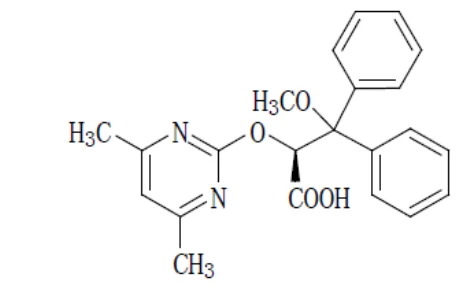
Physicochemical properties: Ambrisentan is a white to light-yellow crystalline powder. Ambrisentan is freely soluble in THF and methanol, sparingly soluble in ethyl acetate, slightly soluble in ethanol, practically insoluble in n-hexane and water. Ambrisentan is practically insoluble in aqueous solutions. It is a carboxylic acid with a pKa of 4.0.
14 Clinical Trials
14.1 Clinical Trials by Indication
Pulmonary Arterial Hypertension (PAH)
Table 5 – Summary of the Design and Patient Demographics in Pivotal Clinical Trials of Ambrisentan (ambrisentan tablets) in Patients with Pulmonary Arterial Hypertension (PAH)
| Study | Trial design | Dosage, route of administration and duration | Study subjects (n=number randomized) | Age (range) | Sex | PAH Etiology n (%) |
|---|---|---|---|---|---|---|
| ARIES-1 | Phase III, randomized, double-blind, placebo-controlled, multicentre, multinational | 5 mg and 10 mg tablets taken orally q.d. for 12 weeks | Placebo: n=67 5 mg: n=67 10 mg: n=67 | 50.1 (17-82) | Male: 33 (16.4%) Female: 168 (83.6%) | IPAH*: 126 (62.7%) Non-IPAH: 75 (37.3%) |
| ARIES-2 | Phase III, randomized, double-blind, placebo-controlled, multicentre, multinational | 2.5 mg and 5 mg tablets taken orally q.d. for 12 weeks | Placebo: n=65 2.5 mg: n=64 5 mg: n=63 | 50.9 (20-81) | Male: 49 (25.5%) Female: 143 (74.5%) | IPAH*: 125 (65.1%) Non-IPAH: 67 (34.9%) |
*IPAH = idiopathic PAH
Ambrisentan Monotherapy for the Treatment of PAH
Two randomised, double-blind, multi-centre, placebo controlled, Phase III pivotal studies were conducted (ARIES-1 and ARIES-2). The design and patient demographics are shown in Table 5. In both studies, ambrisentan was added to patients’ supportive/background medication, which may have included a combination of digoxin, anticoagulants, diuretics, oxygen and vasodilators (calcium channel blockers, ACE inhibitors). The primary study endpoint was 6-minute walk distance (6MWD). In addition, clinical worsening, WHO functional class, Borg Dyspnea Index and SF-36 Health Survey were assessed.
Non-IPAH was predominately associated with connective tissue disease, and a few percent associated with anorexigen use or HIV infection. The majority of patients had WHO functional Class II (38%) or Class III (55%) symptoms.
Results of Ambrisentan Monotherapy for the Treatment of PAH
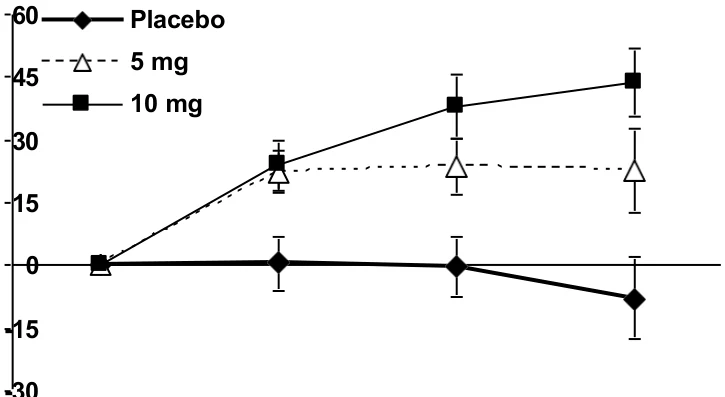
The primary endpoint defined for these studies was improvement in exercise capacity assessed by change from baseline in 6MWD at 12 weeks. In both studies, treatment with ambrisentan resulted in a statistically significant improvement in 6MWD for each dose of ambrisentan as shown in Table 6. The improvement in exercise capacity was evident after 4 weeks of treatment and was maintained at week 12 of the double-blind treatments as illustrated in Figure 1.
Table 6 – Changes from Baseline in 6-minute Walk Distance (metres) at Week 12 in Phase III studies (Idiopathic and Non-Idiopathic PAH Patients: see also Table 10)
| ARIES-1 | ARIES-2 | ||||||||||||||
|---|---|---|---|---|---|---|---|---|---|---|---|---|---|---|---|
Placebo (N=67) | 5 mg (N=67) | 10 mg (N=67) | Placebo (N=65) | 2.5 mg (N=64) | 5 mg (N=63) | ||||||||||
| Baseline | 341.9 ± 73.47 | 339.6 ± 76.68 | 341.5 ± 78.28 | 342.7 ± 85.93 | 347.3 ± 83.81 | 355.3 ± 84.45 | |||||||||
| Mean change from baseline | -7.8 ± 78.88 | 22.8 ± 82.98 | 43.6 ± 65.91 | -10.1 ± 93.79 | 22.2 ± 82.67 | 49.4 ± 75.36 | |||||||||
Median change from baseline | 0.5 | 21.1 | 32.5 | -3.5 | 27.5 | 40.0 | |||||||||
| Placebo adjusted mean change from baseline | 30.6 | 51.4 | 32.3 | 59.4 | |||||||||||
| 95% CI | 2.9, 58.3 | 26.6, 76.2 | 1.5, 63.1 | 29.6, 89.3 | |||||||||||
| p-value† | 0.008 | <0.001 | 0.022 | <0.001 | |||||||||||
Mean ± standard deviation
† p-values are Wilcoxon rank sum test comparisons of ambrisentan to placebo at Week 12 stratified by idiopathic PAH and non-idiopathic PAH patients
Figure 1 Mean Change in 6-minute Walk Distance (Phase III Studies) in Idiopathic and Non-Idiopathic PAH Patients
60
45
30
15
0
-15
-30
Baseline Week 4 Week 8 Week 12
Placebo 5 mg
10 mg
Meters
ARIES-1
ARIES-2
Mean change from baseline in 6-minute walk distance in the placebo and ambrisentan groups Values are expressed as mean ± standard error of mean.
Symptoms of PAH were assessed using Borg Dyspnea Index (BDI), WHO functional class and SF-36 Health Survey physical functioning scale. Treatment with ambrisentan led to statistically significant improvements in BDI at week 12 (Table 7). Improvements in the physical functioning scale (SF-36) were also observed, however, were not statistically significant.
Table 7 – Summary of Secondary Endpoints from Study ARIES-1 and ARIES-2 at 12 Weeks (Population ITT)
| ARIES-1 | ARIES-2 | |||||||||||||||||||||||||
|---|---|---|---|---|---|---|---|---|---|---|---|---|---|---|---|---|---|---|---|---|---|---|---|---|---|---|
| Placebo | Ambrisentan 5 mg | Ambrisentan 10 mg | Placebo | Ambrisentan 2.5 mg | Ambrisentan 5 mg | |||||||||||||||||||||
| Change in | Change from | 0.0 | -0.3 | -0.9 | 0.8 | -0.2 | -0.4 | |||||||||||||||||||
Borg Dyspnea Index | baseline to Week 12 | (-0.55, 0.54) | (-0.79, 0.16) | (-1.3, -0.41) | (0.17, 0.54) | (-0.74, 0.34) | (-0.87, 0.14) | |||||||||||||||||||
| (BDI) | Comparison | -0.3 | -0.9 | -1.0 | -1.2 | |||||||||||||||||||||
| vs placebo, | (-1.0, 0.4) | (-1.6, -0.2) | (-1.9, -0.2) | (-2.0, -0.4) | ||||||||||||||||||||||
point estimate | p=0.316 | p=0.002 | p=0.046 | p=0.040 | ||||||||||||||||||||||
| (95% CI) | - | + | + | + | ||||||||||||||||||||||
| Change in | Improved | 16 | 19 (28.4%) | 20 (29.9%) | 11 | 10 (15.6%) | 9 (14.3%) | |||||||||||||||||||
| WHO | (23.9%) | (16.9%) | ||||||||||||||||||||||||
Class, N (%) | ||||||||||||||||||||||||||
| Deteriorate d | 11 (16.4%) | 1 (1.5%) | 3 (4.5%) | 12 (18.5%) | 3 (4.7%) | 2 (3.2%) | ||||||||||||||||||||
| Comparison | p=0.0726 | p=0.0957 | p= 0.2058 | p=0.1872 | ||||||||||||||||||||||
| with placebo1 | - | - | - | - | ||||||||||||||||||||||
60
45
Placebo
2.5 mg
5 mg
30
15
0
-15
-30
Baseline
Week 4
Week 8
Week 12
Meters
| Change in | Change from | 1.82 | 1.88 (8.68) | 4.79 (7.90) | -0.15 | 3.78 (7.63) | 2.97 (7.79) | ||||
|---|---|---|---|---|---|---|---|---|---|---|---|
| SF-36 | baseline, | (9.25) | (7.29) | ||||||||
| Physical | Mean (SD) | ||||||||||
| component summary | |||||||||||
| Comparison with placebo | p=0.992 - | p=0.056 - | 0.005 + | 0.052 - | |||||||
1 Based on analysis of 7-point change from baseline scale
+ statistically significant result, - not statistically significant
Ambrisentan delayed clinical worsening (the measure included a benefit for both death and hospitalization for PAH), although this did not reach a level of statistical significance. Time to clinical worsening of PAH was defined as the time from randomization to the first occurrence of death, lung transplantation, hospitalization for PAH, atrial septostomy, study discontinuation due to the addition of other PAH therapeutic agents, or study discontinuation due to two or more early escape criteria (see Table 8).
Table 8 – Summary of Clinical Worsening of PAH Events from Study ARIES-1 and ARIES-2 at 12 Weeks
(Population ITT)
Treatment Group Event n (%) | ARIES-1 | ARIES-2 | ||||
|---|---|---|---|---|---|---|
Placebo (N=67) | Ambrisentan 5 mg (N=67) | Ambrisentan 10 mg (N=67) | Placebo (N=65) | Ambrisentan 2.5 mg (N=64) | Ambrisentan 5 mg (N=63) | |
| Death | 2 (3.0) | 1 (1.5) | 1 (1.5) | 3 (4.6) | 2 (3.1) | 0 (0.0) |
| Lung transplantation | 0 (0.0) | 0 (0.0) | 0 (0.0) | 0 (0.0) | 0 (0.0) | 0 (0.0) |
| Hospitalization for PAH | 2 (3.0) | 2 (3.0) | 2 (3.0) | 9 (13.8) | 3 (4.7) | 2 (3.2) |
| Atrial septostomy | 0 (0.00) | 0 (0.0) | 0 (0.0) | 0 (0.0) | 0 (0.0) | 0 (0.0) |
| Study discontinuation due to addition PAH treatment | 1 (1.5) | 0 (0.0) | 1 (1.5) | 0 (0.0) | 0 (0.0) | 0 (0.0) |
| Escape criteria | 3 (4.5) | 0 (0.0) | 2 (3.0) | 7 (10.8) | 2 (3.1) | 1 (1.6) |
Total subjects with ≥1 events | 6 (9.0) | 3 (4.5) | 3 (4.5) | 14 (21.5) | 3 (4.7) | 3 (4.8) |
p-value (ambrisentan vs placebo)* | 0.4925 | 0.4925 | 0.008 | 0.008 | ||
*Fisher exact test comparison to placebo
In the ARIES studies, those patients with WHO functional class II symptoms at baseline had a mean BDI of 2.98, a mean 6MWD of 375 m; 47% had a 6MWD of more than 400 m. Those with WHO functional class III symptoms had a mean BDI of 4.38 and a mean 6MWD of 330 m at baseline.
In patients with class II and class III symptoms, increases in mean 6MWD were observed with 5 mg and 10 mg ambrisentan compared to placebo after 12 weeks treatment (Table 9). Improvement in secondary endpoints also supported efficacy in both WHO functional class II and class III patients.
Table 9 – Improvement in 6MWD at Week 12 in Phase III Studies in patients with WHO Functional Class II symptoms or WHO Functional Class III symptoms (Population ITT)
| ARIES-1 | ARIES-2 | ||||||||
|---|---|---|---|---|---|---|---|---|---|
| Placebo | Ambrisentan 5 mg | Ambrisentan 10 mg | Placebo | Ambrisentan 2.5 mg | Ambrisentan 5 mg | ||||
WHO Class II | Change in 6MWD from baseline to Week 12, mean (95% CI) | -0.3 (-19.3, 18.7) | +26.6 (-1.0, 54.2) | +43.4 (17.6, 69.2) | -7.3 (-45.9, 31.4) | +37.0 (9.1,64.9) | +61.4 (31.3, 91.5) | ||
Placebo-Adjusted improvement in 6MWD, mean (95% CI) | 27.0 (-4.8, 58.7) p=0.0460 | 43.7 (12.8, 74.7) p=0.0072 | +44.2 (-1.1, 89.6) p=0.0624 | +68.6 (21.5, 115.8) p=0.0104 | |||||
| WHO | Change in | -15.2 | +18.7 | +42.2 | -15.2 | +6.2 | +38.3 | ||
| Class III | 6MWD from baseline to Week 12, | (-45.0, 14.5) | (-5.8, 43.3) | (21.0, 63.4) | (-48.3, 17.8) | (-26.2, 38.7) | (11.7, 64.9) | ||
| mean (95% CI) | |||||||||
| Placebo- | +34.0 | +57.4 | 21.4 | 53.5 | |||||
Adjusted improvement | (-4.1, 72.1) | (20.5, 94.3) | (-24.8, 67.7) | (11.2, 95.8) | |||||
| in 6MWD, | p=0.0624 | p=0.0187 | p=0.4500 | p=0.0217 | |||||
| mean (95% CI) | |||||||||
A summary of the 6-Minute Walk Distance (6MWD) change from baseline to Week 12 is provided in Table 10.
Table 10 – Summary of 6-Minute Walk Distance Change from Baseline to Week 12 by PAH
Stratification using LOCF (Population: ITT)
| ARIES-1 | ARIES-2 | |||||||||||||||||||
|---|---|---|---|---|---|---|---|---|---|---|---|---|---|---|---|---|---|---|---|---|
| Treatment Group | Placebo | Ambrisentan 5 mg | Ambrisentan 10 mg | Placebo | Ambrisentan 2.5 mg | Ambrisentan 5 mg | ||||||||||||||
| IPAH | ||||||||||||||||||||
| Change from baseline to Week 12 | N | 43 | 42 | 41 | 42 | 42 | 41 | |||||||||||||
| Mean (SD) | -6.3 (82.14) | 36.6 (85.42) | 50.6 (58.22) | -20.6 (101.23) | 35.7 (67.97) | 55.1 (86.58) | ||||||||||||||
| Comparison versus placebo | Point estimate | 42.9 | 56.9 | 56.3 | 75.7 | |||||||||||||||
| p-value1 | 0.0053 | 0.0011 | 0.005 | <0.001 | ||||||||||||||||
| Non-IPAH | ||||||||||||||||||||
| Change from baseline to Week 12 | N | 24 | 25 | 26 | 23 | 22 | 22 | |||||||||||||
| Mean (SD) | -10.6 (74.32) | -0.4 (74.69) | 32.4 (76.38) | 9.1 (76.77) | -3.5 (102.10) | 38.6 (47.96) | ||||||||||||||
| Comparison versus placebo | Point estimate | 10.2 | 43.0 | -12.6 | 29.5 | |||||||||||||||
| p-value1 | 0.4965 | 0.0487 | 1.000 | 0.170 | ||||||||||||||||
1Wilcoxon rank sum test stratified by IPAH and non-IPAH subjects
Hepatic Safety
Hepatic function was assessed in clinical studies. In ARIES 1 and 2, there were no cases of aminotransferase abnormalities >3x the upper limit of normal (ULN) in 262 patients receiving ambrisentan compared with three cases (out of 132) in patients receiving placebo (2.3%). The cumulative incidence of serum aminotransferase abnormalities >3x ULN in all Phase II and III (including extension) studies was 3.5% (17 of 483 subjects over a mean exposure duration of 79.5 weeks). In the ARIES-E open label long term extension study of ARIES-1 and ARIES-2 (N=383), the 2 year risk of developing serum aminotransferase elevations >3x ULN in patients treated with ambrisentan was 3.9%.
14.2 Comparative Bioavailability Studies
A randomized, double blinded, two-way, crossover, single-dose, oral bioequivalence study of Auro-Ambrisentan 10 mg Tablets (Auro Pharma Inc.) versus PrVOLIBRIS (ambrisentan) tablets, 10 mg (GlaxoSmithKline Inc., Canada) was conducted in 42 healthy, adult, Asian male subjects under fasting conditions. A summary of the comparative bioavailability data of 40 subjects who completed the study is presented in the following table.
Summary Table of the Comparative Bioavailability Data
Ambrisentan (1 X 10 mg) Geometric Mean Arithmetic Mean (% CV) | ||||
Ambrisentan (1 X 10 mg) Geometric Mean Arithmetic Mean (% CV) | ||||
| Parameter | Test1 | Reference2 | % Ratio of Geometric Means | 90% Confidence Interval |
| Parameter | Test1 | Reference2 | % Ratio of Geometric Means | 90% Confidence Interval |
AUCT (ng•h/mL) | 8066.5 8413.1 (31.2) | 8064.3 8348.8 (26.6) | 100.0 | 97.3-102.8 |
AUCI (ng•h/mL) | 8194.7 8560.5 (31.9) | 8200.3 8498.6 (27.2) | 99.9 | 97.2-102.7 |
Cmax (ng/mL) | 1055.6 1075.3 (19.2) | 925.7 936.4 (15.2) | 114.0 | 108.4-120.0 |
Tmax3 (h) | 1.0 (0.75 – 4.0) | 1.75 (0.75 – 4.0) | ||
T½4 (h) | 13.2 (25.1) | 13.8 (22.1) | ||
1 Auro-Ambrisentan (ambrisentan) tablets, 10 mg (Auro Pharma Inc.)
2 PrVOLIBRIS (ambrisentan) tablets, 10 mg (GlaxoSmithKline Inc., Canada.)
3 Expressed as the median (range) only.
4 Expressed as arithmetic mean (% CV) only.
15 Microbiology
No microbiological information is required for this drug product.
16 Non-Clinical Toxicology
General toxicology
The principal findings in repeat dose toxicity studies in mice and rats with ambrisentan (ambrisentan) are in part attributed to exaggerated pharmacology and include effects in the nasal cavity and testes. Repeat dose studies in the dog reveal ambrisentan to be well tolerated with findings limited to fundic glandular atrophy and clinical signs of audible breathing and gastrointestinal disturbance. Deaths or findings resulting in early sacrifice of animals attributed to oral administration of ambrisentan occurred in repeat-dose toxicity studies in rats at ≥ 100 mg/kg/day and in dogs at 1500 mg/kg/day. An increased mortality rate also occurred in 2-year carcinogenicity studies in rats at 30/20 and 60/40 mg/kg/day (initial daily dose of 30 mg/kg/day subsequently lowered to 20 mg/kg/day, and 60 mg/kg/day subsequently lowered to 40 mg/kg/day) and mice at 250/150 mg/kg/day (initial daily dose of 250 mg/kg/day subsequently lowered to 150 mg/kg/day).
Inflammation and changes in the nasal cavity epithelium and/or turbinates have been seen with chronic administration of ambrisentan and other endothelin receptor antagonists (ERAs) to rodents and, to a lesser extent, dogs.
Genotoxicity
The genotoxicity of ambrisentan was assessed in a comprehensive battery of in vitro and in vivo studies. Ambrisentan was clastogenic in human lymphocytes in vitro both in the presence and absence of metabolic activation. Ambrisentan was not mutagenic to Salmonella typhimurium, did not elicit unscheduled DNA synthesis in rat liver, and was not clastogenic in an in vivo micronucleus study conducted in male rats.
Carcinogenicity
There was no evidence of carcinogenic potential in 2 year oral daily dosing studies in rats and mice. There was a small increase in mammary fibroadenomas, a benign tumor, in male rats at the highest dose only.
Reproductive and developmental toxicology
The development of testicular tubular atrophy and sterility in male animals has been linked to the chronic administration of ERAs, including ambrisentan, to rodents. Testicular tubular atrophy was observed at all dose levels (10 to 300 mg/kg/day) in oral fertility studies with male rats that was not reversible after 13 or 20 weeks following cessation of dosing. Reduced fertility and morphologic effects on sperm only occurred at 300 mg/kg/day and were reversible. No effects on sperm count or sperm motility were observed. Testicular tubular atrophy (focal/multifocal or diffuse) was also observed in repeat dose studies in rats and mice. There were no significant effects on fertility or embryofetal development in female rats dosed up to the time of implantation.
Teratogenicity is a class effect of ERAs. The effect of ambrisentan on embryo-fetal development has been assessed in rats and rabbits after oral dose administration on gestation days 6-17 and 6-18, respectively. In both species, abnormalities of the lower jaw, tongue, and/or palate were consistently observed at all dose levels. Additionally, interventricular septal defects, trunk vessel defects, thyroid and thymus abnormalities, ossification of the basisphenoid bone, and the occurrence of the umbilical artery located on the left side of the urinary bladder instead of the right side and heart and associated blood vessel abnormalities were seen in the rabbit study.
Juvenile toxicity
In a juvenile rat study, oral administration of ambrisentan once daily during postnatal day (PND) 7 to 62 decreased brain weight -4% in males and females with no brain morphologic effects at 20 mg/kg/day, after a period of breathing sounds which occurred at doses of 4 mg/kg/day and above (1.5 to 6.4 times higher than the maximum recommended human adult dose of 10 mg, based on AUC). In two separate respiratory function juvenile rat studies, 20 mg/kg/day of ambrisentan administered on PND 7 to 26 or PND 7 to 36 evoked decreases in brain weight (-3% to -8%, compared to controls), and also caused breathing sounds (a singular audible click), irregular respiratory function, apnea and hypoxia starting 10 days after dosing, and continuing two days after treatment stopped, with no detection of these effects at one month after dose interruption. There were no neurobehavioral changes observed at the end of treatment and one month after dose interruption, and a morphometric assessment of changes to the pharynx and larynx was inconclusive. Although the mechanisms by which ambrisentan reduces brain weight of juvenile rats have not been fully elucidated, it is plausible that this effect is mediated by chronic hypoxia that may be associated with mechanically induced apnea originating from pharyngeal dysmorphogenesis occurring during postnatal pharyngeal development. The clinical relevance of this finding in humans is unknown; however, this postnatal time frame would likely correlate to human pharyngeal development from 0 to 4 years of age. Safety and efficacy of ambrisentan have not been established in patients under 18 years of age. Ambrisentan should therefore not be used in this age group.
17 Supporting Product Monographs
- 1. Pr VOLIBRIS tablets, 5 mg and 10 mg, control 299437, product monograph, GlaxoSmithKline Inc., December 02, 2025.