


Product Monograph - Wyost
RECENT MAJOR LABEL CHANGES
| Not Applicable |
|---|
TABLE OF CONTENTS
Sections or subsections that are not applicable at the time of authorization are not listed.
RECENT MAJOR LABEL CHANGES ............................................................................................ 2
PART I: HEALTH PROFESSIONAL INFORMATION ...................................................................... 4
1 INDICATIONS ............................................................................................................... 4
1.1 Pediatrics ................................................................................................................ 4
1.2 Geriatrics ................................................................................................................ 4
2 CONTRAINDICATIONS ................................................................................................. 4
3 SERIOUS WARNINGS AND PRECAUTIONS BOX ............................................................ 5
4 DOSAGE AND ADMINISTRATION ................................................................................. 5
4.1 Dosing Considerations ............................................................................................ 5
4.2 Recommended Dose and Dosage Adjustment ....................................................... 5
4.4 Administration ........................................................................................................ 5
4.5 Missed Dose ........................................................................................................... 6
5 OVERDOSAGE .............................................................................................................. 6
6 DOSAGE FORMS, STRENGTHS, COMPOSITION AND PACKAGING ................................. 6
7 WARNINGS AND PRECAUTIONS .................................................................................. 7
7.1 Special Populations............................................................................................... 10
7.1.1 Pregnant Women ........................................................................................... 10
7.1.2 Breast-feeding ................................................................................................ 11
7.1.3 Pediatrics ........................................................................................................ 11
7.1.4 Geriatrics ........................................................................................................ 12
8 ADVERSE REACTIONS ................................................................................................ 12
8.1 Adverse Reaction Overview .................................................................................. 12
8.2 Clinical Trial Adverse Reactions ............................................................................ 13
8.3 Less Common Clinical Trial Adverse Reactions ..................................................... 21
8.4 Abnormal Laboratory Findings: Hematologic, Clinical Chemistry and Other Quantitative Data ........................................................................................................... 21
8.5 Post-Market Adverse Reactions ........................................................................... 21
9 DRUG INTERACTIONS ................................................................................................ 22
9.2 Drug Interactions Overview .................................................................................. 22
9.3 Drug-Behavioural Interactions .............................................................................. 22
9.4 Drug-Drug Interactions ......................................................................................... 22
9.5 Drug-Food Interactions ......................................................................................... 22
9.6 Drug-Herb Interactions ......................................................................................... 22
9.7 Drug-Laboratory Test Interactions ........................................................................ 22
10 CLINICAL PHARMACOLOGY ....................................................................................... 22
10.1 Mechanism of Action ...................................................................................... 22
10.2 Pharmacodynamics ........................................................................................ 24
10.3 Pharmacokinetics ........................................................................................... 24
11 STORAGE, STABILITY AND DISPOSAL ......................................................................... 26
12 SPECIAL HANDLING INSTRUCTIONS ........................................................................... 27
PART II: SCIENTIFIC INFORMATION ....................................................................................... 28
13 PHARMACEUTICAL INFORMATION ............................................................................ 28
14 CLINICAL TRIALS ........................................................................................................ 28
14.1 Clinical Trials by Indication ............................................................................. 28
14.3 Immunogenicity ............................................................................................. 35
15 MICROBIOLOGY ........................................................................................................ 35
16 NON-CLINICAL TOXICOLOGY ..................................................................................... 35
17 SUPPORTING PRODUCT MONOGRAPHS .................................................................... 43
PATIENT MEDICATION INFORMATION .................................................................................. 44
WYOSTTM (denosumab) is a biosimilar biologic drug (biosimilar) to XGEVA®. A biosimilar is a biologic drug that was granted authorization based on a demonstration of similarity to a version previously authorized in Canada, known as the reference biologic drug.
PART I: HEALTH PROFESSIONAL INFORMATION
1 INDICATIONS
WYOST (denosumab injection) is indicated for:
- reducing the risk of developing skeletal-related events in patients with multiple myeloma and in patients with bone metastases from breast cancer, prostate cancer, non-small cell lung cancer, and other solid tumours.
- treatment of adults and skeletally mature adolescents with giant cell tumour of bone that is unresectable or where surgical resection is likely to result in severe morbidity (see 14 CLINICAL TRIALS).
- treatment of hypercalcemia of malignancy that is refractory to intravenous bisphosphonate (see 14 CLINICAL TRIALS).
1.1 Pediatrics
Pediatrics (<18 years of age): The safety and efficacy of denosumab have not been studied in pediatric populations other than skeletally mature adolescents (aged 13-17 years) with giant cell tumour of bone (GCTB). WYOST is not indicated for use in pediatric patients other than skeletally mature adolescents with GCTB (see 7.1.3 Pediatrics).
1.2 Geriatrics
Geriatrics (≥ 65 years of age): Of the total number of patients in the pivotal clinical studies in patients with advanced cancer, 1271 patients (44.4%) treated with denosumab, were ≥ 65 years old. Of the total number of patients in the pivotal clinical study in patients with multiple myeloma, 387 patients (45.1%) treated with denosumab, were > 65 years old. No overall differences in safety or efficacy were observed between older and younger patients.
2 CONTRAINDICATIONS
- Patients who are hypersensitive to this drug or to any ingredient in the formulation or component of the container. For a complete listing, see 6 DOSAGE FORMS, STRENGTHS, COMPOSITION AND PACKAGING. Anaphylactic reactions have been reported (see 7 WARNINGS AND PRECAUTIONS, Hypersensitivity and 8.5 Post-Market Adverse Reactions).
- Pre-existing hypocalcemia must be corrected prior to initiating therapy with Wyost (see 7 WARNINGS AND PRECAUTIONS, Endocrine and Metabolism, Hypocalcemia).
3 SERIOUS WARNINGS AND PRECAUTIONS BOX
Serious Warnings and Precautions
| Osteonecrosis of the jaw (ONJ) (see 7 WARNINGS AND PRECAUTIONS, Other, and 8 ADVERSE REACTIONS) |
|---|
4 DOSAGE AND ADMINISTRATION
4.1 Dosing Considerations
All patients, except those with hypercalcemia, should receive at least 500 mg calcium daily and at least 400 IU vitamin D daily.
4.2 Recommended Dose and Dosage Adjustment
Wyost is not indicated for use in pediatric patients other than skeletally mature adolescents (aged 13-17 years) with GCTB (see 7.1.3 Pediatrics)
Multiple Myeloma and Bone Metastasis from Solid Tumours
The recommended dose of Wyost is 120 mg administered as a single subcutaneous injection once every 4 weeks.
Giant Cell Tumour of Bone
The recommended dose of Wyost is 120 mg administered as a subcutaneous injection once every 4 weeks with a loading dose of 120 mg on days 8 and 15 of the first month of therapy.
Hypercalcemia of Malignancy Refractory to Intravenous Bisphosphonate
The recommended dose of Wyost is 120 mg administered as a subcutaneous injection once every 4 weeks with a loading dose of 120 mg on days 8 and 15 of the first month of therapy.
4.4 Administration
Prior to administration, Wyost may be removed from the refrigerator and brought to room temperature (up to 25oC) by standing in the original carton. This generally takes 15 to 30 minutes. Do not warm Wyost in any other way (see 11 STORAGE, STABILITY AND DISPOSAL).
Visually inspect Wyost for particulate matter and discolouration prior to administration. Wyost is a clear, colourless to slightly yellowish or slightly brownish. Do not use if the solution is cloudy or if the solution contains visible particles or foreign particulate matter.
Use a 27-gauge needle to withdraw and inject the entire contents of the vial. The vial is filled to ensure a deliverable dose of 120 mg. Do not re-enter the vial. Discard vial and any liquid remaining in the vial.
Wyost is intended for use under the guidance and supervision of physicians who have fully familiarized themselves with the efficacy/safety profile of Wyost. After an initial training in proper subcutaneous injection technique, patients may self-inject Wyost if a physician determines that is appropriate and with medical follow-up as necessary.
Wyost is intended for subcutaneous route only and should not be administered intravenously, intramuscularly, or intradermally. Administer Wyost via subcutaneous injection in the upper arm, the upper thigh, or the abdomen.
4.5 Missed Dose
If a dose of Wyost is missed, administer the injection as soon as the patient is available. Thereafter, injections should be scheduled every 4 weeks from the date of the last injection.
5 OVERDOSAGE
There is no experience with overdosage of denosumab.
| For management of a suspected drug overdose, contact your regional poison control centre. |
|---|
6 DOSAGE FORMS, STRENGTHS, COMPOSITION AND PACKAGING
To help ensure the traceability of biologic products, health professionals should record both the brand name and the non-proprietary (active ingredient) name as well as other product-specific identifiers such as the Drug Identification Number (DIN) and the batch/lot number of the product supplied.
Table 1 Dosage Forms, Strengths, Composition and Packaging
Wyost is a sterile, preservative-free, clear, colourless to slightly yellowish or slightly brownish solution, formulated at pH 5.2.
Wyost is supplied in a single-use vial containing 120 mg denosumab, 1.85 mg acetic acid, 0.17 mg polysorbate 20, 78.9 mg sorbitol, 0.91 mg sodium hydroxide, water for injection, hydrochloric acid and sodium hydroxide to a pH of 5.2.
Wyost is supplied in a carton containing 1 vial.
Description
Wyost is a genetically engineered human IgG2 kappa type monoclonal antibody directed against the transmembrane or soluble receptor activator of nuclear factor kappa-B ligand (RANKL). The mode of action of Wyost is to bind to RANKL and consequently inhibit bone resorption by preventing RANKL from activating its receptor, RANK, on the surface of osteoclasts, their precursors, and osteoclast-like giant cells.
The antibody is produced by recombinant DNA technology in a Chinese Hamster Ovary
| Route of Administration | Dosage Form / Strength/Composition | Non-medicinal Ingredients |
| Subcutaneous | 120 mg denosumab in 1.7 mL solution in a single-use vial | Acetic acid, hydrochloric acid, polysorbate 20, sodium hydroxide, sorbitol, water for injection |
mammalian cell expression system. Wyost is isolated by a primary separation and a series of purification steps, typical for monoclonal antibodies, including chromatography steps as well as virus removal and inactivation steps.
7 WARNINGS AND PRECAUTIONS
Please see 3 SERIOUS WARNINGS AND PRECAUTIONS BOX.
General
Patients being treated with Wyost should not be treated concomitantly with other denosumab-containing medicinal products.
Patients being treated with Wyost should not be treated concomitantly with bisphosphonates (see 9.4 Drug-Drug Interactions).
Carcinogenesis and Mutagenesis
Please see 16 NON-CLINICAL TOXICOLOGY.
Dermatologic
Skin Infections
An imbalance of skin infections leading to hospitalization was reported in a single placebo-controlled study of postmenopausal women with osteoporosis treated with denosumab 60 mg every 6 months (denosumab 0.4%, placebo < 0.1%). These cases were predominantly cellulitis. In clinical trials in patients with advanced cancer treated with denosumab or zoledronic acid, skin infections leading to hospitalization were reported more frequently in the denosumab group (0.9%) compared with the zoledronic acid group (0.7%). Patients should be advised to seek prompt medical attention if they develop signs or symptoms of cellulitis.
Endocrine and Metabolism
Hypocalcemia
Denosumab can cause severe symptomatic hypocalcemia and fatal cases have been reported. Signs and symptoms of severe hypocalcemia may include, for example, altered mental status, tetany, seizures and QTc prolongation. Pre-existing hypocalcemia must be corrected prior to initiating therapy with Wyost. Monitor calcium levels, (i) prior to the initial dose of Wyost, (ii) within two weeks after the initial dose, and (iii) if suspected symptoms of hypocalcemia occur. Administer adequate calcium and vitamin D, and magnesium, as necessary. Additional monitoring should be considered during therapy in patients with risk factors for hypocalcemia, or if otherwise indicated based on the clinical condition of the patient. Monitor levels more frequently when Wyost is administered with other drugs that can also lower calcium levels. If hypocalcemia occurs while receiving Wyost, additional short-term calcium supplementation and additional monitoring may be necessary (see 4 DOSAGE AND ADMINISTRATION, and 8 ADVERSE REACTIONS, Hypocalcemia and 8.5 Post-Market Adverse Reactions).
An increased risk of hypocalcemia has been observed in patients with increasing degree of renal impairment. Patients with severe renal impairment (creatinine clearance less than 30 mL/min and/or receiving dialysis), are at a greater risk of developing hypocalcemia which is accompanied by an elevation in parathyroid hormone levels. Absence of calcium supplementation also plays a role in the increased risk of hypocalcemia development in patients with renal impairment. More frequent monitoring of calcium levels in these patients, within two weeks after administration of Wyost, is especially important. If hypocalcemia occurs, administer adequate calcium, vitamin D, and magnesium, as necessary (see 7 WARNINGS AND PRECAUTIONS, Renal and 8 ADVERSE REACTIONS).
No dose adjustment is necessary in patients with renal impairment and there is no additional need for more frequent renal monitoring due to Wyost administration (see 7 WARNINGS AND PRECAUTIONS, Renal).
Hypercalcemia Following Treatment Discontinuation in Patients with Giant Cell Tumour of Bone and in Patients with Growing Skeletons
Clinically significant hypercalcemia requiring hospitalization and complicated by acute renal injury has been reported in denosumab-treated patients with GCTB and patients with growing skeletons weeks to months following treatment discontinuation. After treatment is discontinued, monitor patients for signs and symptoms of hypercalcemia, consider periodic assessment of serum calcium as clinically indicated, and reevaluate the patients’ calcium and vitamin D supplementation requirements. Manage hypercalcemia as clinically appropriate (see 7.1.3 Pediatrics and 8 ADVERSE REACTIONS).
Hepatic/Biliary/Pancreatic
No clinical studies have been conducted to evaluate the effect of hepatic impairment on the pharmacokinetics of denosumab.
Hypersensitivity
Clinically significant hypersensitivity reactions including anaphylaxis have been reported with denosumab. Symptoms have included hypotension, dyspnea, throat tightness, facial and upper airway edema, pruritus, and urticaria.
If an anaphylactic or other clinically significant allergic reaction occurs, initiate appropriate treatment immediately and discontinue further use of Wyost (see 2 CONTRAINDICATIONS and 8 ADVERSE REACTIONS).
Monitoring and Laboratory Tests
Monitor calcium levels, (i) prior to the initial dose of Wyost, (ii) within two weeks after the initial dose, and (iii) if suspected symptoms of hypocalcemia occur. Additional monitoring should be considered during therapy in patients with risk factors for hypocalcemia, or if otherwise indicated based on the clinical condition of the patient. Calcium levels should be monitored more frequently when Wyost is administered with other drugs that can also lower calcium levels (See 7 WARNINGS AND PRECAUTIONS, Endocrine and Metabolism, Hypocalcemia).
Other
Atypical Femoral Fractures
Atypical femoral fracture has been reported with denosumab. Atypical femoral fractures may occur with little or no trauma in the subtrochanteric and diaphyseal regions of the femur and may be bilateral. Specific radiographic findings characterize these events. Atypical femoral fractures have also been reported in patients with certain comorbid conditions (eg, vitamin D deficiency, rheumatoid arthritis, hypophosphatasia) and with use of certain pharmaceutical agents (eg, bisphosphonates, glucocorticoids, proton pump inhibitors). These events have also occurred without antiresorptive therapy. During Wyost treatment, patients should be advised to report new or unusual thigh, hip, or groin pain. Patients presenting with such symptoms should be evaluated for an incomplete femoral fracture, and the contralateral femur should also be examined.
Multiple Vertebral Fractures (MVF) Following Treatment Discontinuation
Multiple vertebral fractures (MVF), not due to bone metastases, may occur following discontinuation of treatment with denosumab, particularly in patients with risk factors such as osteoporosis or prior fractures.
Advise patients not to interrupt Wyost therapy without their physician’s advice. When Wyost treatment is discontinued, evaluate the individual patient’s risk for vertebral fractures.
Osteonecrosis of the Jaw (ONJ)
ONJ has been reported in patients treated with denosumab or bisphosphonates, another class of anti-resorptive agents. ONJ can manifest as jaw pain, osteomyelitis, osteitis, bone erosion, tooth or periodontal infection, toothache, gingival ulceration, or gingival erosion. Persistent pain or slow healing of the mouth or jaw after dental surgery may also be manifestations of ONJ.
In clinical trials, the incidence of ONJ was higher with longer duration of exposure (see 8 ADVERSE REACTIONS). ONJ has also been diagnosed after treatment with denosumab with the majority of cases occurring within 5 months after the last dose.
Poor oral hygiene, invasive dental procedures (eg, tooth extraction, dental implants, oral surgery), treatment with anti-angiogenic medication, local gum or oral infection were risk factors for ONJ in patients receiving denosumab in clinical trials. Other risk factors for ONJ include infections, older age, concomitant therapies (eg, chemotherapy, corticosteroids, radiotherapy to the head and neck), smoking and previous treatment with bisphosphonates. In patients with risk factors for ONJ, an individual benefit-risk assessment should be performed before initiating therapy for Wyost.
An oral exam should be performed by the prescriber prior to initiation of Wyost treatment and a dental examination with appropriate preventive dentistry is recommended prior to treatment with Wyost, especially in patients with risk factors for ONJ. Good oral hygiene practices should be maintained during treatment with Wyost. Patients should receive routine dental check-ups, and immediately report any oral symptoms such as dental mobility, pain or swelling during treatment with Wyost.
While on treatment, patients should avoid invasive dental procedures. For patients in whom invasive dental procedures cannot be avoided, the clinical judgment of the treating physician should guide the management plan of each patient based on individual benefit-risk assessment.
Patients who are suspected of having or who develop ONJ while on Wyost should receive care by a dentist or an oral surgeon. In these patients, extensive dental surgery to treat ONJ may exacerbate the condition. In patients who develop ONJ during treatment with Wyost, a temporary interruption of treatment should be considered based on individual benefit-risk assessment until the condition resolves.
Renal
Two clinical trials were conducted in subjects without cancer and with varying degrees of renal function. In one study, subjects (N = 55) with varying degrees of renal function (ranging from normal through end-stage renal disease requiring dialysis) received a single 60 mg subcutaneous dose of denosumab. In a second study, patients (N = 32) with severe renal impairment (creatinine clearance less than 30 mL/minute and/or on dialysis) were given two 120 mg subcutaneous doses of denosumab. In both studies, there was a greater risk of developing hypocalcemia with increasing degree of renal impairment, and in the absence of, or inadequate calcium supplementation. The development of hypocalcemia in patients with severe renal impairment (creatinine clearance less than 30 mL/min and/or receiving dialysis) was accompanied by an elevation in parathyroid hormone levels.
No dose adjustment is necessary in patients with renal impairment and there is no additional need for more frequent renal monitoring due to Wyost administration. Adequate intake of calcium and vitamin D is important in patients with severe renal impairment or receiving dialysis (see 7 WARNINGS AND PRECAUTIONS, 8 ADVERSE REACTIONS, and 10 CLINICAL PHARMACOLOGY).
7.1 Special Populations
7.1.1 Pregnant Women
The safety and efficacy of denosumab in pregnant women have not been established.
Wyost is not recommended for use in pregnant women.
At area under the curve (AUC) exposures up to 16-fold higher than the human exposure (120 mg every 4 weeks), denosumab showed no evidence of impaired fertility in female cynomolgus monkeys.
In a study of cynomolgus monkeys dosed with denosumab during the period equivalent to the first trimester at AUC exposures up to 10-fold higher than the human dose (120 mg every 4 weeks), there was no evidence of maternal or fetal harm. In this study, fetal lymph nodes were not examined.
In another study, in utero denosumab exposure in cynomolgus monkeys at 50 mg/kg body weight every 4 weeks, from gestation day 20 through to parturition resulted in increased fetal loss, stillbirths and postnatal mortality. Findings in the infants included skeletal abnormalities resulting from impaired bone resorption during rapid growth, reduced bone strength and treatment-related bone fractures; reduced hematopoiesis; tooth malalignment and dental dysplasia (in the absence of adverse effects on tooth eruption); absence of peripheral lymph nodes; and decreased neonatal growth. There was no evidence of maternal toxicity. Maternal mammary gland development was normal.
In genetically engineered mice in which the gene for RANK ligand (RANKL) has been deleted (a “knockout mouse”), the absence of RANKL caused fetal lymph node agenesis and led to postnatal impairment of dentition and bone growth. Pregnant RANKL knockout mice also showed altered maturation of the maternal mammary gland, leading to impaired lactation postpartum (see 16 NON-CLINICAL TOXICOLOGY).
Women should be advised not to become pregnant during Wyost therapy. Advise females of reproductive potential to use highly effective contraception during therapy, and for at least 5 months after the last dose of Wyost.
7.1.2 Breast-feeding
It is not known whether denosumab is excreted into human milk. Because many drugs are excreted in human milk and because of the potential for serious adverse reactions in nursing infants from denosumab, a decision should be made whether to discontinue nursing or discontinue the drug, taking into account the importance of the drug to the mother.
Maternal exposure to denosumab during pregnancy may impair mammary gland development and lactation based on animal studies in pregnant mice lacking the RANK/RANKL signaling pathway which showed altered maturation of the maternal mammary gland, leading to impaired lactation postpartum (see 16 NON-CLINICAL TOXICOLOGY).
7.1.3 Pediatrics
The safety and efficacy of denosumab have not been established in pediatric patients other than skeletally mature adolescents (aged 13-17 years) with GCTB.
Wyost is not recommended for use in pediatric patients other than skeletally mature adolescents with GCTB. Clinically significant hypercalcemia after treatment discontinuation has been reported in the post-marketing setting in pediatric patients with growing skeletons who received denosumab for GCTB or for other unauthorized uses (see 7 WARNINGS AND PRECAUTIONS).
Denosumab was studied in a phase 2 open-label trial that enrolled a subset of adolescent patients (10 at interim analysis and 28 at final analysis; aged 13-17 years) with GCTB who had reached skeletal maturity defined by at least 1 mature long bone (eg, closed epiphyseal growth plate of the humerus) and body weight ≥ 45 kg (see 1 INDICATIONS and 14 CLINICAL TRIALS). The adverse reaction profile appeared similar in skeletally mature adolescents and adults.
Treatment with denosumab may impair bone growth in children with open growth plates and may inhibit eruption of dentition. In neonatal rats, inhibition of RANKL (target of denosumab therapy) with a construct of osteoprotegerin bound to Fc (OPG-Fc) at doses ≤ 10 mg/kg was associated with inhibition of bone growth and tooth eruption. Adolescent monkeys dosed with denosumab at 15 times (50 mg/kg dose) and 2.8 times (10 mg/kg dose) the area under the curve (AUC) exposure in adult humans dosed at 120 mg subcutaneously every 4 weeks had abnormal growth plates, considered to be consistent with the pharmacological activity of denosumab. In neonatal cynomolgus monkeys exposed in utero to denosumab at 50 mg/kg, there was increased postnatal mortality; skeletal abnormalities resulting from impaired bone resorption during rapid growth, reduced bone strength and treatment-related bone fractures; reduced hematopoiesis; tooth malalignment and dental dysplasia (in the absence of adverse effects on tooth eruption); absence of peripheral lymph nodes; and decreased neonatal growth. Following a recovery period from birth out to 6 months of age, findings still observed were mildly reduced bone length (femoral, vertebral, jaw), reduced cortical thickness with associated reduced strength; extramedullary hematopoiesis; dental dysplasia; and the absence or decreased size of some lymph nodes. One infant had minimal to moderate mineralization in multiple tissues (see 16 NON-CLINICAL TOXICOLOGY).
7.1.4 Geriatrics
Of the total number of patients in the pivotal clinical studies in patients with advanced cancer, 1271 patients (44.4%) treated with denosumab were ≥ 65 years old. Of the total number of patients in the pivotal clinical study in patients with multiple myeloma, 387 patients (45.1%) treated with denosumab, were > 65 years old. No overall differences in safety or efficacy were observed between older and younger patients.
8 ADVERSE REACTIONS
8.1 Adverse Reaction Overview
The following adverse reactions are discussed below and elsewhere in the Product Monograph:
- Hypocalcemia (see 7 WARNINGS AND PRECAUTIONS, Endocrine and Metabolism, Hypocalcemia)
- Osteonecrosis of the jaw (see 7 WARNINGS AND PRECAUTIONS, Other, Osteonecrosis of the Jaw (ONJ))
- Multiple vertebral fractures following treatment discontinuation (see 7 WARNINGS AND PRECAUTIONS, Other, Multiple Vertebral Fractures (MVF) Following Treatment Discontinuation)
The most common adverse reactions in patients with bone metastasis from solid tumours receiving denosumab (per-patient incidence ≥ 10%) were dyspnea and musculoskeletal pain.
The most common serious adverse reaction in patients with bone metastasis from solid tumours receiving denosumab was dyspnea.
The most common adverse reactions in patients with bone metastasis from solid tumours resulting in discontinuation of denosumab were osteonecrosis and hypocalcemia.
The most common adverse reactions in patients with multiple myeloma (per-patient incidence ≥ 10%) was hypocalcemia.
The most common serious adverse reactions in patients with multiple myeloma (per-patient incidence ≥ 1%) was osteonecrosis of the jaw.
The most common adverse reactions resulting in discontinuation of denosumab in patients with multiple myeloma (per-patient incidence ≥ 1%) was osteonecrosis of the jaw.
In the initial integrated analysis (final analysis of Study 5 [20040215] and interim analysis of Study 6 [20062004]), the most common adverse reactions in patients with GCTB receiving denosumab (per-patient incidence ≥ 5%) were musculoskeletal pain, and hypophosphatemia. In the final integrated analysis (final analyses of both Studies 5 and 6), the following additional common adverse reactions were observed (per-patient incidence ≥ 5%): osteonecrosis of the jaw, hypocalcemia, and dyspnea.
In both the initial integrated analysis (final analysis of Study 5 and interim analysis of Study 6) and final integrated analysis (final analyses of both Studies 5 and 6), the most common serious adverse reaction in patients with GCTB receiving denosumab was osteonecrosis of the jaw.
In both the initial integrated analysis (final analysis of Study 5 and interim analysis of Study 6) and final integrated analysis (final analyses of both Studies 5 and 6), the most common adverse reaction in patients with GCTB receiving denosumab resulting in discontinuation of denosumab was osteonecrosis of the jaw.
8.2 Clinical Trial Adverse Reactions
Clinical trials are conducted under very specific conditions. The adverse reaction rates observed in the clinical trials; therefore, may not reflect the rates observed in practice and should not be compared to the rates in the clinical trials of another drug. Adverse reaction information from clinical trials may be useful in identifying and approximating rates of adverse drug reactions in real-world use.
An adverse reaction is an unintended event, reasonably associated with the use of a drug, whereas adverse events do not necessarily have a causal relationship to the drug. Although most data presented in this section reflect adverse reactions, some data include information on specific adverse events.
Bone Metastasis from Solid Tumours
myeloma received at least one dose of denosumab. In Studies 1, 2, and 3, patients were randomized to receive either 120 mg of denosumab every 4 weeks as a subcutaneous injection or 4 mg (dose adjusted for reduced renal function) of zoledronic acid every 4 weeks by intravenous (IV) infusion. Entry criteria included serum calcium (corrected) from 8 to 11.5 mg/dL (2 to 2.9 mmol/L) and creatinine clearance 30 mL/min or greater. Patients who had received IV bisphosphonates were excluded, as were patients with prior history of ONJ or osteomyelitis of the jaw, an active dental or jaw condition requiring oral surgery, non-healed dental/oral surgery, or any planned invasive dental procedure. During the study, serum chemistries including calcium and phosphorus were monitored every 4 weeks. Calcium and vitamin D supplementation was recommended but not required.
The median duration of exposure to denosumab was 12 months (range: 0.1 – 41) and median duration on-study was 13 months (range: 0.1 – 41). Of patients who received denosumab, 46% were female. Eighty-five percent were White, 5% Hispanic/Latino, 6% Asian, and 3% Black. The median age was 63 years (range: 18 – 93). Seventy-five percent of patients who received denosumab received concomitant chemotherapy.
The adverse reactions occurring during the studies were generally of a type and frequency expected in patients with cancer and bone metastases, many of whom were undergoing antineoplastic therapy. Table 2 describes adverse reactions occurring in ≥ 1% of patients in these studies.
Table 2. Adverse Reactions Occurring in ≥ 1% Subject Incidence in Either Treatment Group (Primary Advanced Cancer Safety Analysis Set)
(Studies 1, 2 and 3 Integrated Analysis)
System Organ Class Preferred Term | Denosumab 120 mg Q4W (N = 2841) n (%) | Zoledronic Acid 4 mg Q4W (N = 2836) n (%) |
|---|---|---|
| Metabolism and nutrition disorders | ||
| Hypocalcemia | 265 (9.3) | 134 (4.7) |
| Hypophosphatemia | 61 (2.1) | 32 (1.1) |
| Musculoskeletal and connective tissue disorders | ||
| Musculoskeletal pain | 357 (12.6) | 385 (13.6) |
| Respiratory, thoracic and mediastinal disorders | ||
| Dyspnea | 585 (20.6) | 507 (17.9) |
| Adjudicated positive osteonecrosis of the jaw a | 52 (1.8) | 37 (1.3) |
N = Number of subjects who received ≥ 1 active dose of investigational product (IP)
n = Number of subjects reporting ≥ 1 event
a Adverse reactions by preferred term are summarized, except for adjudicated positive osteonecrosis of the jaw.
Includes only treatment-emergent events which is defined as all events started after first dose of IP.
Preferred terms are coded using MedDRA version 12.1.
Multiple Myeloma
In Study 4, denosumab was evaluated in an international, randomized (1:1), double blind, active controlled study comparing denosumab with zoledronic acid in patients with newly diagnosed multiple myeloma (see 14 CLINICAL TRIALS). In this study, 1718 multiple myeloma patients with at least 1 bone lesion were randomized to receive 120 mg denosumab subcutaneously every 4 weeks or 4 mg zoledronic acid intravenously (IV) every 4 weeks (dose adjusted for renal impairment and patients with creatinine clearance less than 30 mL/min were excluded based on zoledronic acid prescribing information).
The number of patients across both study arms with ISS stage I, stage II, and stage III at diagnosis were 32.4%, 38.2%, and 29.3%, respectively. In the denosumab group, 46% were female, 82% were White, 12% Asian, and 4% Black. The median age was 63 years (range: 29 - 91). The median duration of exposure to denosumab was 16 months (range: 1 – 50) and median duration on study was 17 months (range: 0 – 49). The median number of doses administered was 16 for denosumab and 15 for zoledronic acid.
Table 3 describes adverse reactions occurring in ≥ 1% of patients in this study.
Table 3. Adverse Reactions Occurring in ≥ 1% Subject Incidence in Either Treatment Group (Multiple Myeloma Safety Analysis Set)
(Study 4 Primary Analysis)
System Organ Class Preferred Term | Denosumab 120 mg Q4W (N = 850) n (%) | Zoledronic Acid 4 mg Q4W (N = 852) n (%) |
|---|---|---|
| Metabolism and nutrition disorders | ||
| Hypocalcemia | 139 (16.4) | 101 (11.9) |
| Hypophosphatemia | 54 (6.4) | 43 (5.0) |
| Musculoskeletal and connective tissue disorders | ||
| Musculoskeletal pain | 64 (7.5) | 67 (7.9) |
| Respiratory, thoracic and mediastinal disorders | ||
| Dyspnea | 72 (8.5) | 89 (10.4) |
| Adjudicated positive osteonecrosis of the jaw a | 35 (4.1) | 24 (2.8) |
N = Number of subjects who received ≥ 1 active dose of investigational product (IP)
n = Number of subjects reporting ≥ 1 event
a Adverse reactions by preferred term are summarized in the table, except for adjudicated positive atypical femur fracture and adjudicated positive osteonecrosis of the jaw.
Includes only treatment-emergent events (defined as events occurred from the first dose of IP to 30 days after the last dose of IP, or end of treatment phase visit, whichever is longer), except for adjudicated positive osteonecrosis of the jaw where all events started after first dose of IP are included.
Preferred terms are coded using MedDRA version 19.0.
Giant Cell Tumour of Bone
The safety of denosumab was evaluated in two phase 2 open-label, single arm studies (Study 5 and 6) (see 14 CLINICAL TRIALS) in which patients (n=304 at initial integrated analysis and n=548 at final integrated analysis) with GCTB received at least 1 dose of denosumab. Patients received 120 mg denosumab subcutaneously every 4 weeks with a loading dose of 120 mg on days 8 and 15. In the initial integrated analysis (final analysis of Study 5 and interim analysis of Study 6), of the 304 patients who received denosumab, 147 patients were treated with denosumab for ≥ 1 year, 46 patients for ≥ 2 years, and 15 patients for ≥ 3 years. The median number of doses received was 14 (range: 1 to 60 doses) and the median number of months on study was 11 (range: 0 to 54 months).
Fifty-eight percent of the enrolled subjects were women. The majority of subjects were white (80.3%). The median (range) age was 33 (13 to 83) years; 10 subjects were skeletally mature adolescents (aged 13 to 17 years).
At the final integrated analysis of both Studies 5 and 6, of the 548 patients who received denosumab, 467 patients were treated with denosumab for ≥ 1 year, 323 patients for ≥ 2 years, and 255 patients for ≥ 3 years. The median number of doses received was 33 (range: 4 to 138 doses) and the median number of months on study was 60 (range: 0 to 140 months) in the final integrated analysis.
Fifty-seven percent of the enrolled subjects were women. The majority of subjects were white (81.9%). The median (range) age was 33 (13 to 83) years; 28 subjects were skeletally mature adolescents (aged 13 to 17 years).
Table 4 describes adverse reactions at initial integrated analysis (final analysis of Study 5 and interim analysis of Study 6) occurring in ≥ 1% of patients in these studies.
Table 4 Adverse Reactions Occurring in ≥ 1% Subject Incidence
(Giant Cell Tumour of Bone Safety Analysis Set, Treatment Analysis Phase)
(Studies 5 and 6 Initial Integrated Analysis)
System Organ Class Preferred Term | Denosumab 120 mg Q4W (N = 304) n (%) |
|---|---|
| Metabolism and nutrition disorders | |
| Hypophosphatemia | 17 (5.6) |
| Hypocalcemia | 13 (4.3) |
| Musculoskeletal and connective tissue disorders | |
| Musculoskeletal pain | 26 (8.6) |
| Respiratory, thoracic and mediastinal disorders | |
| Dyspnea | 11 (3.6) |
| Adjudicated positive osteonecrosis of the jaw a | 4 (1.3) |
|---|
N = Number of subjects who received ≥ 1 active dose of investigational product (IP)
n = Number of subjects reporting ≥ 1 event
a Adverse reactions by preferred term are summarized in the table, except for adjudicated positive osteonecrosis of the jaw.
Includes only treatment-emergent events which is defined as all events started after first dose of IP, except hypercalcaemia. For hypercalcemia events, includes all adverse events which occurred after 30 days following last dose of denosumab in the initial treatment phase. Subjects who rolled over from 20040215 to 20062004 or who discontinued 20040215 and re-entered 20062004 are counted only once and their analysis period will start from study 20040215 and end at study 20062004.
Preferred terms are coded using MedDRA version 14.1.
In the final analysis of Study 6, of the 526 subjects who received ≥ 1 dose of denosumab, the most common treatment-emergent adverse reactions were musculoskeletal pain (12.7%), hypophosphatemia (12.4%), osteonecrosis of the jaw (6.7%), and hypocalcemia (6.5 %). The most common treatment-emergent serious adverse reaction was osteonecrosis of the jaw (3.8%). In addition, the following treatment-emergent adverse events of interest were also observed, musculoskeletal pain (68.4%), infections (53.4%), adverse events potentially associated with hypersensitivity (20.2%), vascular disorders (10.3%) and cardiac disorders (6.1%). The incidence of treatment-emergent fatal adverse events was 2.1% (11 of 526 subjects) with three deaths being considered by investigators as being related to denosumab (0.6%; bone sarcoma, rhabdomyosarcoma and sarcoma). The incidence of treatment-emergent adverse events leading to treatment phase discontinuation was 9.9% (52 of 526 patients).
Hypercalcemia of Malignancy Refractory to Intravenous Bisphosphonate
The safety of denosumab was evaluated in an open-label, single-arm trial (Study 7) in which 33 patients were enrolled with hypercalcemia of malignancy (with or without bone metastases) refractory to treatment with intravenous bisphosphonate. Patients received denosumab subcutaneously every 4 weeks with additional 120 mg doses on Days 8 and 15 of the first month of therapy.
Of the 33 patients who received denosumab, 33 patients were treated with denosumab for ≥ 1 month, 5 patients for ≥ 6 months, and 3 patients for ≥ 1 year. The median number of doses received was 4 (range: 1 to 25 doses) and the median number of months on study was 1.8 (range: 0 to 23 months). Sixty-four percent of enrolled patients were men and 70% were White. The median age was 63 years (range: 22 to 89 years).
The adverse reaction profile of denosumab in patients with hypercalcemia of malignancy was similar to that reported in Studies 1, 2, 3, 5, and 6 (Table 5). The most common adverse reactions (≥ 10%) were dyspnea (9 patients, 27%) and hypophosphatemia (4 patients, 12.1%). The patient incidence of fatal adverse events was 78.8%. The most frequently reported serious adverse reaction was dyspnea (3 subjects, 9%). No adverse reactions leading to discontinuation were reported as related to denosumab treatment.
Table 5. Adverse Reactions Occurring in ≥ 1% Subject Incidence
(Hypercalcemia of Malignancy Safety Analysis Set)
(Study 7 Safety Follow-up Analysis Data))
System Organ Class Preferred Term | Denosumab 120 mg Q4W (N = 33) n (%) |
|---|---|
| Metabolism and nutrition disorders | |
| Hypophosphatemia | 4 (12.1) |
| Hypocalcemia | 3 (9.1) |
| Musculoskeletal and connective tissue disorders | |
| Musculoskeletal pain | 2 (6.1) |
| Respiratory, thoracic and mediastinal disorders | |
| Dyspnea | 9 (27.3) |
N = Number of subjects who received ≥ 1 active dose of investigational product (IP)
n = Number of subjects reporting ≥ 1 event
Adverse reactions by preferred term are summarized in the table. Includes only treatment-emergent events which is defined as all events started after first dose of IP. Preferred terms are coded using MedDRA version 16.0.
One fatal event (cardiac arrest) and 1 serious grade 4 colitis were reported by the investigator to be related to denosumab therapy. The denosumab therapy-related grade 3 events of fatigue, infections and hypophosphatemia were reported in 3%, 6.1% and 9.1% of the patients, respectively.
Hypocalcemia
In clinical trials in patients with advanced cancer and adequate renal function (defined as estimated creatinine clearance ≥ 30 mL/min), hypocalcemia was reported as an adverse event in 9.6% of patients in the denosumab group and 5.0% of patients in the zoledronic acid group.
Severe hypocalcemia (corrected serum calcium less than 7 mg/dL or less than 1.75 mmol/L) occurred in 3.1% of patients treated with denosumab and 1.3% of patients treated with zoledronic acid. Of patients who experienced severe hypocalcemia, 33% experienced 2 or more episodes of severe hypocalcemia and 16% experienced 3 or more episodes (see 7 WARNINGS AND PRECAUTIONS, Endocrine and Metabolism, Hypocalcemia).
Initially in clinical trials in patients with GCTB, moderate hypocalcemia (corrected serum calcium less than 8 to 7 mg/dL or less than 2 to 1.75 mmol/L) occurred in 2.6% of patients treated with denosumab. At the final integrated analysis of clinical trials in patients with GCTB, moderate hypocalcemia (as defined above) occurred in 4.4% of patients treated with denosumab.
Two clinical trials were conducted in subjects without cancer and with varying degrees of renal function.
In one study, subjects (N = 55) with varying degrees of renal function (ranging from normal through end-stage renal disease requiring dialysis) received a single 60 mg subcutaneous dose of denosumab. Hypocalcemia was observed in 8 subjects (15%), 1 (2%) of whom was symptomatic. Two subjects (4%) each experienced an adverse event of hypocalcemia that was classified as serious. Both subjects had severe chronic kidney disease (CKD) and were enrolled before the protocol required supplementation of calcium and vitamin D.
In a second study, patients (N = 32) with severe renal impairment (creatinine clearance less than 30 mL/minute and/or on dialysis) were given two 120 mg subcutaneous doses (Days 1 and 29) of denosumab. Two patients overall (1 in each group) had symptomatic hypocalcemia, based on clinical adverse events and concomitant symptoms. One patient in the severe CKD group had concomitant muscle spasms and 1 patient in the CKD on dialysis group had concomitant paresthesia. Hence, the overall incidence of clinically significant hypocalcemia (corrected serum calcium less than 1.75 mmol/L or symptomatic hypocalcemia) was 9.4%: 1 of 16 patients (6.3%) in the severe group and 2 of 16 patients (12.5%) in the CKD on dialysis group. Both events of symptomatic hypocalcemia were mild in severity. Accompanying increases in parathyroid hormone (PTH) have also been observed in patients receiving denosumab with severe renal impairment or receiving dialysis. At baseline, median (range) intact PTH (iPTH) values were 6.1 pmol/L (1.06 pmol/L, 13.2 pmol/L) and 16.3 pmol/L (0.3 pmol/L, 37.0 pg/mL) in the severe CKD and CKD on dialysis groups, respectively. At end of study (Day 113), median (range) iPTH values were 7.1 pmol/L (0.85 pmol/L, 372.2 pmol/L) and 31.5 pmol/L (1.3 pmol/L, 136.1 pmol/mL) in the severe CKD and CKD on dialysis groups, respectively. The median percent change from baseline to end of study (Day 113) was 15.0% in the severe CKD group and 107.5% in the CKD on dialysis group. The median (range) maximal elevation of PTH was 19.4 pmol/L (2.8 pmol/L, 372.2 pmol/L) in the severe CKD group and 64.2 pmol/L (1.3 pmol/L, 396.1 pmol/L) in the CKD on dialysis group. The median (range) % change of the maximal elevation of PTH values from baseline was 164.8% (28.2%, 2729.0%) in the severe CKD group and 256.1% (46.8%, 1681.9%) in the CKD on dialysis group. The median (range) time to reach maximal elevation of PTH was 22.5 days (3 days, 115 days) in the severe CKD group and 64.0 days (6 days, 115 days) in the CKD dialysis group. The median duration (range) of the elevation (20% above baseline) of PTH was 41.0 days (3.0 days, 112.0 days) in the severe CKD group and 79.5 days (11.0 days, 216.0 days) in the CKD on dialysis group.
In both studies, there was a greater risk of developing hypocalcemia with increasing degree of renal impairment, and in the absence of, or inadequate calcium supplementation.
Osteonecrosis of the Jaw (ONJ)
In clinical trials in patients with advanced cancer, ONJ was confirmed in 1.8% of patients in the denosumab group (median exposure of 12.0 months; range 0.1 – 40.5) and 1.3% of patients in the zoledronic acid group (see 7 WARNINGS AND PRECAUTIONS). Fifty-eight percent of subjects in the denosumab group and 65% of subjects in the zoledronic acid group had a prior or concurrent tooth extraction, 42% of subjects in the denosumab group and 27% of subjects in the zoledronic acid group had used a denture or other dental appliance, and 31% of subjects in the denosumab group and 32% of subjects in the zoledronic acid group had poor oral hygiene.
The trials in patients with breast or prostate cancer included an denosumab extension treatment phase (median overall exposure of 14.9 months; range 0.1 – 67.2) (see 14 CLINICAL
TRIALS). For patients who were randomized to denosumab and continued on denosumab in the open label extension phase, the patient-year adjusted incidence of confirmed ONJ was 1.1 per 100 patient-years during the first year of treatment, 3.7 in the second year, and 4.6 thereafter. The median time to ONJ was 20.6 months (range: 4 – 53) (see 7 WARNINGS AND PRECAUTIONS).
In a phase 3 double-blind, active-controlled clinical trial in patients with newly diagnosed multiple myeloma, ONJ was confirmed in 4.1% of patients in the denosumab group (median exposure of 15.8 months; range 1 – 49.8) and 2.8% of patients in the zoledronic acid group. At the completion of the double-blind treatment phase of this trial, the patient-year adjusted incidence of confirmed ONJ in the denosumab group (median exposure of 19.4 months; range 1 – 52) was 2.0 per 100 patient-years during the first year of treatment, 5.0 in the second year, and 4.5 thereafter. The median time to ONJ was 18.7 months (range: 1 - 44) (see 7 WARNINGS AND PRECAUTIONS).
In clinical trials in patients with GCTB, at initial integrated analysis (final analysis of Study 5 and interim analysis of Study 6), ONJ was confirmed in 4 of 304 (1.3%) patients who received denosumab. The median time to ONJ was 16 months (range: 13 to 20 months).
A final analysis of a phase 2 open-label clinical trial (Study 6) in patients with GCTB demonstrated that ONJ was confirmed in 36 of 526 (6.8%) patients (median number of 34 doses; range 4 – 116). Of these 36 cases, 26 (4.9%) were reported as serious adverse events by investigators. At the completion of the trial, median time on trial including safety follow-up phase was 60.9 months (range: 0 – 112.6). The patient-year adjusted incidence of confirmed ONJ was 1.5 per 100 patient-years overall (0.2 per 100 patient-years during the first year of treatment, 1.5 in the second year, 1.8 in the third year, 2.1 in the fourth year, 1.4 in the fifth year, and 2.2 thereafter). The median time to ONJ was 41 months (range: 11 – 96) (see 7 WARNINGS AND PRECAUTIONS).
Atypical Femoral Fractures
In the clinical trial program, atypical femoral fracture has been reported uncommonly in patients treated with denosumab 120 mg and the risk increased with longer duration of treatment. Events have occurred during treatment and up to 9 months after treatment was discontinued.
Malignancies
In a pooled safety analysis of clinical trials in cancer patients with bone metastases, the overall incidence of new primary malignancies was 0.99% (28 out of 2841 patients) in the denosumab group and 0.63% (18 out of 2836 patients) in the zoledronic acid group. In the breast cancer trial, the incidence was 0.5 % in both denosumab (5/1020 patients) and zoledronic acid groups (5/1013 patients). In other solid tumours or multiple myeloma, the incidence was 0.6% (5/878 patients) and 0.3% (3/878 patients) in the denosumab and zoledronic acid groups, respectively. In the prostate cancer trial, the incidence was 1.9% (18/943 patients) in the denosumab group and 1.1% (10/945 patients) in the zoledronic acid group. In the final analysis of the GCTB trial (Study 6), the incidence of malignancy was 3.8% (20/526 patients, all adults).
8.3 Less Common Clinical Trial Adverse Reactions
Less Common Clinical Trial Adverse Reactions (< 1%) in Patients with Advanced Malignancies Involving Bone by System Organ Class
IMMUNE SYSTEM DISORDERS: drug hypersensitivity
Less Common Clinical Trial Adverse Reactions (< 1%) in Patients with Multiple Myeloma by System Organ Class
IMMUNE SYSTEM DISORDERS: drug hypersensitivity
8.4 Abnormal Laboratory Findings: Hematologic, Clinical Chemistry and Other Quantitative Data
Clinical Trial Findings
In clinical trials in cancer patients with bone metastases, a grade 3 decrease in serum calcium levels was experienced in 2.5% of patients treated with denosumab and 1.2% of patients treated with zoledronic acid. A grade 4 decrease in serum calcium levels was experienced in 0.6% of patients treated with denosumab and 0.2% of patients treated with zoledronic acid (see 7 WARNINGS AND PRECAUTIONS, Renal). In studies, the development of hypocalcemia in patients with severe renal impairment (creatinine clearance less than 30 mL/min and/or receiving dialysis) was accompanied by an elevation in parathyroid hormone levels.
Severe hypophosphatemia (Grade 3) occurred in 15.4% of patients treated with denosumab and 7.4% of patients treated with zoledronic acid.
In the clinical trials in patients with GCTB (final analysis of Study 5 and interim analysis of Study 6), the subject incidence of grade 2 corrected serum calcium decreases was 2.6%, while no grade 3 or grade 4 incidences were observed. In the same integrated analysis, Common Terminology Criteria for Adverse Events (CTCAE) grade 3 low phosphorus values were observed for 29 patients (9.5%).
In the final integrated analysis of both Studies 5 and 6, the subject incidence of grade 2, 3 and 4 corrected serum calcium decreases were 4.4%, 0.2% and 0.4%, respectively. CTCAE grade 3 low phosphorus values were observed for 108 patients (19.7%).
8.5 Post-Market Adverse Reactions
In the post-marketing experience, the following have been reported in patients receiving denosumab:
- Severe symptomatic hypocalcemia, including fatal cases
- Hypersensitivity, including anaphylactic reactions
- Musculoskeletal pain, including severe cases
- Lichenoid drug eruptions (eg, lichen planus-like reactions)
- Alopecia
9 DRUG INTERACTIONS
9.2 Drug Interactions Overview
No formal drug interaction studies have been conducted with denosumab.
9.3 Drug-Behavioural Interactions
Drug-behavioural interactions have not been established.
9.4 Drug-Drug Interactions
Interactions with other drugs have not been established.
In clinical trials, denosumab has been administered in combination with standard anti-cancer treatment and in patients previously receiving bisphosphonates. Apparent differences in the pharmacokinetics and pharmacodynamics of denosumab with concomitant chemotherapy and/or hormone therapy, or previous exposure to intravenous bisphosphonate were small in relation to inherent inter-subject variability within a patient population.
9.5 Drug-Food Interactions
Interactions with food have not been established.
9.6 Drug-Herb Interactions
Interactions with food herbal products have not been established.
9.7 Drug-Laboratory Test Interactions
Interactions with laboratory tests have not been established.
10 CLINICAL PHARMACOLOGY
10.1 Mechanism of Action
Wyost (denosumab) is a fully human IgG2 monoclonal antibody with high affinity and specificity for human RANK Ligand (RANKL). Denosumab binds to RANK Ligand (RANKL), a transmembrane or soluble protein essential for the formation, function, and survival of osteoclasts, the cells responsible for bone resorption. Binding of denosumab to RANKL inhibits RANKL from activating its only receptor, RANK, on the surface of osteoclasts and their precursors. Prevention of RANKL-RANK interaction inhibits osteoclast formation, function and survival, thereby decreasing bone resorption and interrupting cancer-induced bone destruction.
Multiple Myeloma and Bone Metastasis from Solid Tumours
Denosumab prevents RANKL from activating its receptor, RANK, on the surface of osteoclasts and their precursors. Increased osteoclast activity, stimulated by RANKL, is a key mediator of bone disease in metastatic tumours and multiple myeloma. Prevention of the RANKL/RANK interaction inhibits osteoclast formation, function, and survival, thereby decreasing bone resorption and interrupting cancer-induced bone destruction.
Giant Cell Tumour of Bone
GCTB are characterized by stromal cells expressing RANKL and osteoclast-like giant cells expressing RANK. In patients with GCTB, denosumab binds to RANKL, significantly reducing or eliminating osteoclast-like giant cells. Consequently, osteolysis is reduced and proliferative tumour stroma is replaced with non-proliferative, differentiated, densely woven new bone.
Hypercalcemia of Malignancy Refractory to Intravenous Bisphosphonates
The primary etiology of both skeletal and humoral HCM is increased bone resorption, which leads to elevated calcium concentrations in the extracellular fluid. The increase in bone resorption is initiated by the release of signaling molecules such as PTHrP, prostaglandins, and cytokine by malignant and stromal cells. These molecules stimulate osteoblasts and other stromal cells to express RANK ligand (RANKL), which upon binding its receptor RANK upregulates osteoclast recruitment and differentiation and thus bone resorption, with a resultant increase in calcium concentrations of the extracellular fluid and serum. Denosumab binds to RANKL preventing RANK/RANKL mediated osteoclast formation, function, and survival thereby lowering serum calcium levels.
Animal Pharmacology
Denosumab has been shown to be a potent inhibitor of bone resorption in monkeys via inhibition of RANKL. Adolescent monkeys dosed with denosumab at 15 times (50 mg/kg dose) and 2.8 times (10 mg/kg dose) the area under the curve (AUC) exposure in adult humans dosed at 120 mg subcutaneously every 4 weeks had abnormal growth plates, considered to be consistent with the pharmacological activity of denosumab. Tissue distribution studies indicated that denosumab does not bind to tissues known for expression of other members of the TNF superfamily, including TNF-related apoptosis-inducing ligand (TRAIL).
Since the biological activity of denosumab in animals is specific to nonhuman primates, evaluation of genetically engineered (knockout) mice or use of other biological inhibitors of the RANK/RANKL pathway, such as OPG-Fc and RANK-Fc, were used to evaluate the pharmacodynamic properties of denosumab in rodent models. In mouse bone metastasis models of human prostate cancer, NSCLC, and estrogen receptor (ER) positive and negative breast cancer, OPG-Fc reduced osteolytic, osteoblastic, and osteolytic/osteoblastic lesions, delayed formation of de novo bone metastasis, and reduced skeletal tumour growth. When OPG-Fc was combined with hormonal therapy (tamoxifen) or chemotherapy (docetaxel) in these models, there was additive inhibition of skeletal tumour growth in breast, prostate or lung cancer respectively. In a mouse model of mammary tumour induction, RANK-Fc delayed tumour formation.
The role of osteoclast-mediated hypercalcemia was evaluated in 2 murine models of humoral hypercalcemia of malignancy through the use of osteoprotegerin (OPG), an endogenous decoy receptor that binds and neutralizes RANKL. In one model, mice were inoculated with syngeneic colon adenocarcinoma cells, and in the other mice were injected with high-dose parathyroid hormone-related protein (PTHrP) (0.5 mg/kg, SC, twice per day). In both models, a single injection of OPG caused more rapid reversal of established hypercalcemia and longer lasting suppression of hypercalcemia than high-dose bisphosphonates.
RANK/RANKL knockout mice exhibited absence of lymph node formation, as well as an absence of lactation due to inhibition of mammary gland maturation (lobulo-alveolar gland development during pregnancy). Neonatal RANK/RANKL knockout mice exhibited reduced bone growth and lack of tooth eruption. A corroborative study in 2-week-old rats given the RANKL inhibitor OPG-Fc also showed reduced bone growth, altered growth plates and impaired tooth eruption. These changes were partially reversible in this model when dosing with the RANKL inhibitors was discontinued (see 7.1.3 Pediatrics).
10.2 Pharmacodynamics
In a phase 2 study of patients with breast cancer and bone metastases who had not previously received intravenous (IV) bisphosphonate therapy, subcutaneous (SC) doses of denosumab 120 mg every 4 weeks caused a rapid reduction in markers of bone resorption (uNTX/Cr and serum CTx) with a median reduction of 82% for uNTX/Cr within 1 week. Reductions in bone turnover markers were maintained, with median uNTX/Cr reductions of 74% to 82% from weeks 2 to 25 of continued 120 mg every 4 weeks dosing. In phase 3 clinical studies of patients with advanced cancer who had not previously received IV bisphosphonate therapy, median reductions of approximately 80% in uNTx/Cr from baseline after 3 months of treatment were observed across 2075 denosumab-treated advanced cancer patients (breast, prostate, multiple myeloma or other solid tumours).
Similarly, in a phase 2 study of patients with solid tumours and bone metastases (including patients with multiple myeloma and bone disease) who were receiving IV bisphosphonate therapy, yet had uNTX/Cr levels > 50 nM/mM, SC dosing of denosumab administered either every 4 weeks or every 12 weeks caused an approximate 80% reduction in uNTX/Cr from baseline after 3 and 6 months of treatment.
In a phase 3 study of patients with newly diagnosed multiple myeloma who received SC doses of denosumab 120 mg every 4 weeks (Q4W), median reductions in uNTx/Cr of approximately 75% were observed by week 5. Reductions in bone turnover markers were maintained, with median reductions of 74% to 79% for uNTx/Cr from weeks 9 to 49 of continued 120 mg Q4W dosing.
In a phase 2 study of patients with GCTB who received SC doses of denosumab 120 mg every 4 weeks (Q4W) with loading doses on days 8 and 15, median reductions in uNTx/Cr and serum CTx of approximately 80% were observed by week 9. Reductions in bone turnover markers were maintained, with median reductions of 56% to 77% for uNTx/Cr and 79% to 83% for serum CTx from weeks 5 to 25 of continued 120 mg Q4W dosing.
10.3 Pharmacokinetics
Following SC administration, bioavailability was 62% based on a population PK analysis. Relative AUC exposure ratios for SC vs. IV dosing were 78% and 75% for doses of 1.0 and 3.0 mg/kg in postmenopausal women. Denosumab displayed non-linear pharmacokinetics with dose over a wide dose range, but approximately dose-proportional increases in exposure for doses of 60 mg (or 1 mg/kg) and higher (for example, 3.8- to 4.0-fold increases in mean Cmax and AUC values for a 3-fold increase in dose from 60 to 180 mg). In subjects with advanced cancer, who received multiple SC doses of 120 mg every 4 weeks an approximate 2.5-fold accumulation in serum denosumab AUC(0-tau) exposures was observed and steady-state was achieved on or after 6 doses. These results indicate that denosumab pharmacokinetics does not change with time or multiple dosing. In subjects with multiple myeloma who received 120 mg every 4 weeks, median trough levels varied by less than 8% between months 6 and 12. In subjects with GCTB who received 120 mg every 4 weeks with a loading dose on days 8 and 15, steady-state levels were achieved within the first month of treatment. Between weeks 9 and 49, median trough levels varied by less than 9%. At steady-state in these subjects, the mean serum trough concentration was 20.6 mcg/mL (range, 0.456 to 56.9 mcg/mL). In patients who discontinued 120 mg every 4 weeks dosing, the mean half-life was 28 days (range 14 to 55 days).
A population pharmacokinetic analysis was performed to evaluate the effects of demographic characteristics. This analysis suggested that there were no notable differences in various pharmacokinetics parameters (clearance, volume of distribution, absorption rate, bioavailability) with age (18 to 87 years), race, body weight (36 to 174 kg), or across patients with solid tumours, multiple myeloma, and GCTB. Denosumab pharmacokinetics and pharmacodynamics were similar in men and women and in patients transitioning from IV bisphosphonate therapy. Denosumab pharmacokinetics and pharmacodynamics were not affected by the formation of binding antibodies to denosumab.
Special Populations and Conditions
Pediatrics
The pharmacokinetics of denosumab has not been established in pediatric patients other than skeletally mature adolescents (aged 13-17 years) with GCTB.
In skeletally-mature adolescents (13 – 17 years of age; N = 10) with GCTB, the pharmacokinetics of denosumab were similar to those observed in adult subjects with GCTB (N = 15).
Geriatrics
The pharmacokinetics of denosumab was not affected by age from 18 years to 87 years.
Sex
The pharmacokinetics of denosumab was not different in men and women.
Ethnic Origin
The pharmacokinetics of denosumab was not affected by race.
Hepatic Insufficiency
No clinical studies have been conducted to evaluate the effect of hepatic impairment on the pharmacokinetics of denosumab.
Renal Insufficiency
Two clinical trials were conducted in patients without cancer and with varying degrees of renal function. In one study, patients (N = 55) with varying degrees of renal function (ranging from normal through end-stage renal disease requiring dialysis) received a single 60 mg subcutaneous dose of denosumab. Hypocalcemia was observed in 8 subjects (15%), 1 (2%) of whom was symptomatic. Two patients (4%) each experienced an adverse reaction of hypocalcemia that was classified as serious. Both patients had severe chronic kidney disease (CKD) and were enrolled before the protocol required supplementation of calcium and vitamin D.
In a second study, patients (N = 32) with severe renal impairment (creatinine clearance less than 30 mL/minute and/or on dialysis) were given two 120 mg subcutaneous doses (Days 1 and 29) of denosumab. Two patients overall (1 in each group) had symptomatic hypocalcemia, based on clinical adverse events and concomitant symptoms. One patient in the severe CKD group had concomitant muscle spasms and 1 patient in the CKD on dialysis group had concomitant paresthesia. Hence, the overall incidence of clinically significant hypocalcemia (corrected serum calcium less than 1.75 mmol/L or symptomatic hypocalcemia) was 9.4%: 1 of 16 patients (6.3%) in the severe group and 2 of 16 patients (12.5%) in the CKD on dialysis group. Both events of symptomatic hypocalcemia were mild in severity.
Accompanying increases in parathyroid hormone have also been observed in patients receiving denosumab with severe renal impairment or receiving dialysis.
In both studies in patients with varying degrees of renal function, including patients on dialysis, the degree of renal impairment had no effect on the pharmacokinetics and pharmacodynamics of denosumab. The risk of developing hypocalcemia increased with increasing degree of renal impairment, and in the absence of, or inadequate calcium supplementation.
Dose adjustment for renal impairment is not required and there is no additional need for more frequent renal monitoring due to Wyost administration.
11 STORAGE, STABILITY AND DISPOSAL
Store in a refrigerator between 2°C and 8°C. Do not freeze.
If needed, you may store the vial at room temperature up to 25°C for up to 30 days. Discard Wyost if not used within the 30 days.
Keep the vial in the original carton until ready to use in order to protect from light.
Do not shake.
Keep out of sight and reach of children.
Do not use Wyost after the expiry date printed on the label.
12 SPECIAL HANDLING INSTRUCTIONS
Not applicable
PART II: SCIENTIFIC INFORMATION
13 PHARMACEUTICAL INFORMATION
Drug Substance
Proper name: denosumab
Molecular formula and molecular mass: 145 kDa
Structural formula: Denosumab is a fully human IgG2 monoclonal antibody heterotetramer consisting of two heavy chains of the gamma 2 subclass (447 amino acids per chain) and two light chains of the kappa subclass (215 amino acids per chain)
Physicochemical
Properties: Wyost (denosumab) is a clear, colourless to slightly yellowish or slightly brownish solution.
Product Characteristics:
Denosumab is produced in genetically engineered mammalian (Chinese hamster ovary) cells.
14 CLINICAL TRIALS
14.1 Clinical Trials by Indication
Bone Metastasis from Solid Tumours
| Table 6. Summary of Patient Demographics for Clinical Trials in Patients with Advanced Malignancies Involving Bone | |||||
| Study # | Study design | Dosage, route of administration and duration* | Study subjects (n = number) | Mean age (Range) | Sex (Female:Male) % |
| Study 1 | Phase 3, randomized, double-blind, active-controlled | Denosumab 120 mg SC and zoledronic acid placebo IV Q4W or zoledronic acid 4mg IV and denosumab placebo SC Q4W | 2046 adults with advanced breast cancer and bone metastasis (Denosumab: 1026 Zoledronic acid: 1020) | 57 (24, 91) | Denosumab (99.2:0.8) Zoledronic acid (99.1:0.9) |
| Table 6. Summary of Patient Demographics for Clinical Trials in Patients with Advanced Malignancies Involving Bone | |||||
| Study # | Study design | Dosage, route of administration and duration* | Study subjects (n = number) | Mean age (Range) | Sex (Female:Male) % |
| Study 2 | Phase 3, randomized, double-blind, active-controlled | Denosumab 120 mg SC and zoledronic acid placebo IV Q4W or zoledronic acid 4mg IV and denosumab placebo SC Q4W | 1776 adults with advanced cancers including solid tumours [excluding breast and prostate], multiple myeloma, and lymphoma (Denosumab: 886 Zoledronic acid: 890) | 60 (18, 89) | Denosumab (33.6:66.4) Zoledronic acid (38.0:62.0) |
| Study 3 | Phase 3, randomized, double-blind, active-controlled | Denosumab 120 mg SC and zoledronic acid placebo IV Q4W or zoledronic acid 4mg IV and denosumab placebo SC Q4W | 1901 adult men with castrate-resistant prostate cancer and bone metastasis (Denosumab: 950 Zoledronic acid: 951) | 71 (38, 93) | Denosumab (0:100) Zoledronic acid (0:100) |
* Studies were event-driven: the length of the primary double-blind treatment phase was determined by the anticipated date on which ~745 subjects experienced an initial on-study skeletal-related event.
The efficacy of denosumab for the treatment of patients with advanced malignancies involving bone was demonstrated by three pivotal phase 3, international, randomized, double blind, active controlled studies compared with zoledronic acid (Table 6): Study 1 in 2046 adults with advanced breast cancer and bone metastases; Study 2 in 1776 adults with other solid tumours [including non- small cell lung cancer (NSCLC), renal cell cancer, colorectal cancer, small cell lung cancer, bladder cancer, head and neck cancer, GI/genitourinary cancer and others, excluding breast cancer and prostate cancer] and bone metastases or multiple myeloma; and Study 3 in 1901 men with castrate-resistant prostate cancer and bone metastases.
Patients received either 120 mg denosumab SC every 4 weeks or 4 mg zoledronic acid (dose-adjusted for reduced renal function) IV every 4 weeks. No dosage adjustments were necessary in patients receiving denosumab. In accordance with the zoledronic acid prescribing information, patients with creatinine clearance < 30 mL/min were excluded. Daily supplements of ≥ 500 mg calcium and ≥ 400 IU of vitamin D were strongly recommended, unless hypercalcemia was present.
In each study, the primary outcome measure was to demonstrate non-inferiority of time to first on study skeletal-related event (SRE) as compared to zoledronic acid. The secondary outcome measures were superiority of time to first on-study SRE and superiority of time to first and subsequent SRE; testing for the secondary outcome measures occurred if the primary outcome measure was statistically significant. An SRE is defined as any of the following: pathologic fracture, radiation therapy to bone, surgery to bone or spinal cord compression.
Study results
Denosumab reduced the risk of developing (delayed time to) first SRE and multiple (first and subsequent) SREs in patients with advanced malignancies involving bone. Efficacy results are provided in Table 7.
Table 7. Efficacy Results for Denosumab Compared to Zoledronic Acid in Patients with Advanced Malignancies Involving Bone
Study 1 Advanced Breast Cancer | Study 2 Advanced Cancer (Other Solid Tumours and Multiple Myeloma) | Study 3 Advanced Prostate Cancer | |||||||||||||||||||||||||
|---|---|---|---|---|---|---|---|---|---|---|---|---|---|---|---|---|---|---|---|---|---|---|---|---|---|---|---|
| Denosumab | Zoledronic Acid | Denosumab | Zoledronic Acid | Denosumab | Zoledronic Acid | ||||||||||||||||||||||
| N | 1026 | 1020 | 886 | 890 | 950 | 951 | |||||||||||||||||||||
| First On-Study Skeletal Related Event (SRE) | |||||||||||||||||||||||||||
| Number and Proportion of Subjects with SREs (%) | 315 (30.7) | 372 (36.5) | 278 (31.4) | 323 (36.3) | 341 (35.9) | 386 (40.6) | |||||||||||||||||||||
| Components of First SRE | |||||||||||||||||||||||||||
| Radiation to Bone | 82 (8.0) | 119 (11.7) | 119 (13.4) | 144 (16.2) | 177 (18.6) | 203 (21.3) | |||||||||||||||||||||
| Pathological Fracture | 212 (20.7) | 238 (23.3) | 122 (13.8) | 139 (15.6) | 137 (14.4) | 143 (15.0) | |||||||||||||||||||||
| Surgery to Bone | 12 (1.2) | 8 (0.8) | 13 (1.5) | 19 (2.1) | 1 (0.1) | 4 (0.4) | |||||||||||||||||||||
| Spinal Cord Compression | 9 (0.9) | 7 (0.7) | 24 (2.7) | 21 (2.4) | 26 (2.7) | 36 (3.8) | |||||||||||||||||||||
| Median Time (months) | NR | 26.4 | 20.5 | 16.3 | 20.7 | 17.1 | |||||||||||||||||||||
| Hazard Ratio (95% CI) | 0.82 (0.71, 0.95) | 0.84 (0.71, 0.98) | 0.82 (0.71, 0.95) | ||||||||||||||||||||||||
| Non-inferiority P-value | <0.0001 | 0.0007 | 0.0002 | ||||||||||||||||||||||||
| Superiority P-value † | 0.0101 | 0.0619 | 0.0085 | ||||||||||||||||||||||||
| First and Subsequent SRE * | |||||||||||||||||||||||||||
| Mean Number/Patient | 0.46 | 0.60 | 0.44 | 0.49 | 0.52 | 0.61 | |||||||||||||||||||||
| Rate Ratio (95% CI) | 0.77 (0.66, 0.89) | 0.90 (0.77, 1.04) | 0.82 (0.71, 0.94) | ||||||||||||||||||||||||
| Superiority P-value † | 0.0012 | 0.1447 | 0.0085 | ||||||||||||||||||||||||
NR = not reached
CI = confidence interval
Superiority testing performed only after denosumab demonstrated to be non-inferior to zoledronic acid within trial.
*Accounts for all skeletal events over time; only events occurring ≥ 21 days after the previous event are counted.
†P-values, adjusted for multiplicity, are presented for Studies 1, 2 and 3
Overall survival and disease progression in all three studies were comparable in patients with advanced cancer between denosumab and zoledronic acid treatment groups (see Table 8). In
Study 2, mortality was higher with denosumab in a subgroup analysis of patients with multiple myeloma [hazard ratio (95% CI) of 2.26 (1.13, 4.50); n = 180].
Table 8. Summary of Exploratory Tumour Outcomes
Denosumab vs Zoledronic acid Hazard Ratio | ||||||
|---|---|---|---|---|---|---|
| Study 1 | Study 2 | Study 3 | ||||
| Endpoint | Pt Est | 95% CI* | Pt Est | 95% CI* | Pt Est | 95% CI* |
| Overall survival | 0.95 | 0.81, 1.11 | 0.95 | 0.83, 1.08 | 1.03 | 0.91, 1.17 |
| Time to disease progression excluding death | 1.00 | 0.89, 1.11 | 1.00 | 0.89, 1.12 | 1.06 | 0.95, 1.18 |
Pt Est = point estimate
CI = confidence interval
*Not adjusted for multiplicity
Multiple Myeloma
In Study 4, denosumab was evaluated in an international, randomized (1:1), double-blind, active-controlled study comparing denosumab with zoledronic acid in patients with newly diagnosed multiple myeloma.
In this study, 1718 multiple myeloma patients with at least 1 bone lesion were randomized to receive 120 mg denosumab subcutaneously every 4 weeks or 4 mg zoledronic acid intravenously (IV) every 4 weeks (dose adjusted for renal impairment and patients with creatinine clearance less than 30 mL/min were excluded based on zoledronic acid prescribing information). Randomization was stratified by intent to undergo autologous peripheral blood stem cell (PBSC) transplantation (yes or no), the anti-myeloma agent being utilized/planned to be utilized in first-line therapy [novel therapy-based or non-novel therapy-based (novel therapies include bortezomib, lenalidomide, or thalidomide)], stage at diagnosis (International Staging System I or II or III), previous SRE (yes or no), and region (Japan or other countries). The primary outcome measure was demonstration of non-inferiority of time to first skeletal-related event (SRE) as compared to zoledronic acid. Secondary outcome measures included superiority of time to first SRE, superiority of time to first and subsequent SRE, and overall survival. An SRE was defined as any of the following: pathologic fracture (vertebral or non-vertebral), radiation therapy to bone (including the use of radioisotopes), surgery to bone, or spinal cord compression.
Across both study arms, 54.5% of patients intended to undergo autologous PBSC transplantation, 95.8% patients utilized/planned to utilize a novel anti-myeloma agent in first-line therapy, and 60.7% of patients had a previous SRE. The number of patients across both study arms with ISS stage I, stage II, and stage III at diagnosis were 32.4%, 38.2%, and 29.3%, respectively.
Median age was 63 years (range: 29 – 91), 82% of patients were White, 12% Asian, 4% Black, and 46% of patients were women. The median number of doses administered was 16 for denosumab and 15 for zoledronic acid.
Study Results
In patients with newly diagnosed multiple myeloma, denosumab was non-inferior to zoledronic acid in delaying the time to first SRE following randomization (Table 9).
Table 9. Efficacy Results for Denosumab Compared to Zoledronic Acid in Patients with Newly Diagnosed Multiple Myeloma
Denosumab (N = 859) | Zoledronic Acid (N = 859) | |||||||||
|---|---|---|---|---|---|---|---|---|---|---|
| First SRE | ||||||||||
| Number of Patients who had SREs (%) | 376 (43.8) | 383 (44.6) | ||||||||
| Median Time to SRE (months) (95% CI) | 22.83 (14.72, NE) | 23.98 (16.56, 33.31) | ||||||||
| Hazard Ratioa (95% CI) | 0.98 (0.85, 1.14) | |||||||||
| Non-inferiority p-valuea | 0.010 | |||||||||
| Components of First SRE | ||||||||||
| Radiation to Bone | 47 (5.5) | 62 (7.2) | ||||||||
| Pathological Fracture | 342 (39.8) | 338 (39.3) | ||||||||
| Surgery to Bone | 37 (4.3) | 48 (5.6) | ||||||||
| Spinal Cord Compression | 6 (0.7) | 4 (0.5) | ||||||||
a Based on a Cox proportional hazards model stratified by randomization stratification factors
The hazard ratio between denosumab and zoledronic acid treatment groups and 95% CI for overall survival (OS) was 0.90 (0.70, 1.16).
Giant Cell Tumour of Bone
Table 10. Summary of Patient Demographics for Clinical Trials in Patients with Giant Cell Tumour of Bone (GCTB)
| Study # | Study design | Dosage, route of administration | Study subjects (n = number) | Mean age (Range)a | Sex (Female:Male) %a |
| Study 5 | Phase 2, open-label, multicenter | Denosumab 120 mg SC Q4W with a loading dose on study days 8 and 15 of the first month of therapy | Adult subjects with GCTB (n = 37) | 34 (19, 63) | (54:46) |
| Study 6 (interim analysis) | Phase 2, open-label, multicenter | Denosumab 120 mg SC Q4W with a loading dose on study days 8 and 15 of the first month of therapy | Adult subjects with GCTB (n = 272) And Skeletally Mature Adolescents with GCTB (n = 10) | 36 (13, 83) | (58:42) |
a Pooled data
The safety and efficacy of denosumab was studied in two phase 2 open-label, single arm trials (Studies 5 and 6) that enrolled patients with GCTB that was either unresectable or for which surgery was associated with severe morbidity (Table 10).
Study 5 enrolled 37 adult patients with histologically confirmed unresectable or recurrent GCTB and the main outcome measure of the trial was response rate based on histological or radiographic evidence.
At the interim analysis, Study 6 enrolled 282 adults, and 10 skeletally mature adolescents (aged 13-17 years) with GCTB. By the end of the study, Study 6 had enrolled 507 adults and 28 skeletally mature adolescents (aged 13-17 years) with GCTB. The main outcome measure was to evaluate the safety profile of denosumab. Efficacy was assessed by evaluation of time to disease progression in subjects with unresectable GCTB and by evaluation of the proportion of subjects who do not require surgery in the subjects with resectable GCTB.
A retrospective independent review of radiographic imaging data from 190 of 305 patients enrolled in Studies 5 and 6 was performed. Patients were evaluated using modified Response Evaluation Criteria in Solid Tumours (RECIST 1.1) to evaluate tumour burden based on computed tomography (CT)/magnetic resonance imaging (MRI).
Study Results
Overall, in the retrospective interim analysis, an objective response by RECIST 1.1 was observed in 47 of 187 (25.1%) evaluable patients (95% CI: 19.1, 32.0), including 2 of 6 (33.3%) evaluable adolescent patients. All responses were partial responses. The median time to response was 3 months (range: 1.5 to 20.9 months). The median duration of response was not estimable as only three patients experienced disease progression following an objective response. The median follow-up duration for evaluable patients was 13 months (range: 2 to 49 months).
Hypercalcemia of Malignancy Refractory to Intravenous Bisphosphonate
The safety and efficacy of denosumab was studied in a phase 2 open-label, single-arm trial (Study 7) that enrolled 33 patients with hypercalcemia of malignancy (with or without bone metastases) refractory to treatment with intravenous bisphosphonate. In this study, refractory hypercalcemia of malignancy was defined as an albumin-corrected serum calcium (CSC) of >12.5 mg/dL (3.1 mmol/L) despite treatment with intravenous bisphosphonate in the last 7-30 days. Patients receiving dialysis for renal failure or who had treatment with thiazides, calcitonin, mithramycin, or gallium nitrate within their window of expected therapeutic effect prior to the date of screening corrected serum calcium (CSC) were excluded. Twenty-six (79%) patients had advanced solid tumours and 7 (21%) patients had advanced hematologic malignancies. Twenty-five patients (76%) had poor performance status (Eastern Cooperative Oncology Group [ECOG] ≥ 2) at baseline. Metastatic disease was present in 30 (91%) patients and metastatic bone disease in 13 (39%) patients at baseline. Three (9%) patients had non-metastatic disease, 2 with myeloma and 1 with non-Hodgkin’s lymphoma.
At the time of enrollment, the median serum calcium level was 13.7 mg/dL (3.42 mmol/L). During the study, serum calcium was collected every few days in the first month, weekly during the second month, and monthly thereafter.
The primary outcome measure was the proportion of patients achieving a response, defined as CSC ≤ 11.5 mg/dL (2.9 mmol/L), within 10 days after denosumab administration. Additional secondary outcomes were assessed and are presented in Table 11.
Patients received denosumab subcutaneously every 4 weeks with additional 120 mg doses on days 8 and 15 of the first month of therapy.
Study Results
Based on Kaplan-Meier estimates, 59% of patients met the primary end point by day 10 and 73.9% by day 57, responding to denosumab treatment with CSC levels ≤ 11.5 mg/dL.
Figure 1. Corrected serum calcium by visit (median and interquartile range)
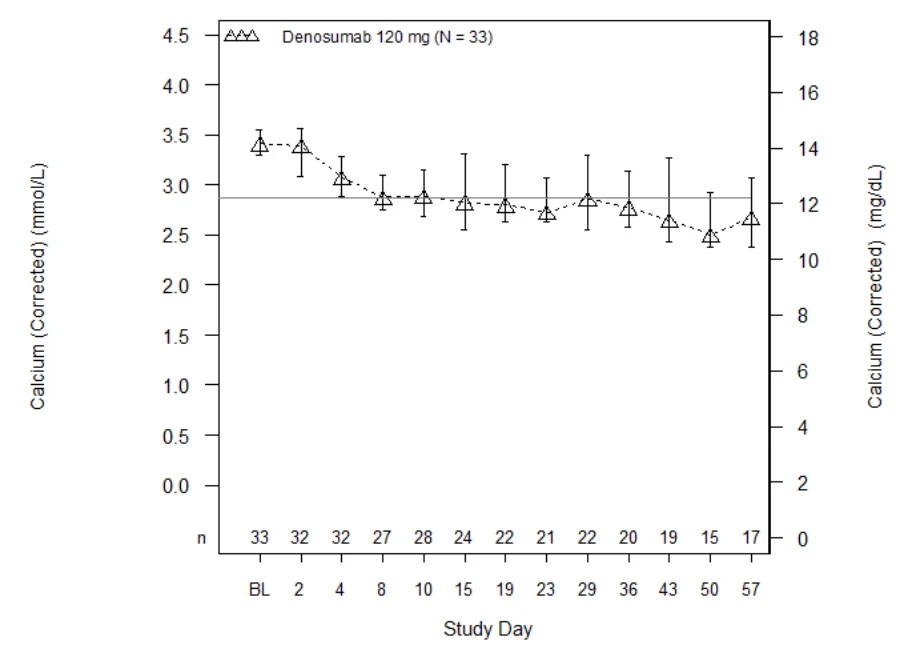
N = Number of patients who received at least 1 dose of denosumab; n = Number of patients who had no missing data at baseline and the timepoint of interest
Table 11. Efficacy in Patients with Hypercalcemia of Malignancy Refractory to Bisphosphonate Therapy
| N = 33 | Kaplan-Meier Estimates by Visit (95% CIa) | |
|---|---|---|
| All Responders (CSC ≤ 11.5 mg/dL) by Day 10 | 21 | 59.0% (41.5%, 74.5%) |
| All Responders by Day 57 | 23 | 73.9% (56.7%, 86.2%) |
| Complete Responders (CSC ≤ 10.8 mg/dL) by Day 10 | 12 | 34.3% (19.3%, 52.7%) |
| All Complete Responders by Day 57 | 21 | 75.2% (56.3%, 88.4%) |
N = Number of subjects who received ≥ 1 investigational product and have a screening serum calcium corrected by albumin (from local lab) > 12.5 mg/dL (3.1 mmol/L).
CSC = corrected serum calcium
a Confidence interval is calculated using bootstrap method
Median time to response (CSC < 11.5 mg/dL) was 9 days (95% CI: 8, 19), and the median duration of response was 104 days (95% CI: 7, not estimable). Median time to complete response (CSC <10.8 mg/dL) was 23 days (95% CI: 9, 36), and the median duration of complete response was 34 days (95% CI: 1, 134).
14.3 Immunogenicity
Denosumab is a human monoclonal antibody. As with all therapeutic proteins, there is potential for immunogenicity. In clinical studies, neutralizing antibodies have not been observed for denosumab in advanced cancer patients or GCTB patients. Using an electro chemiluminescent bridging immunoassay, less than 1% of patients treated with denosumab for up to 3 years tested positive for binding antibodies (including pre-existing, transient, and developing antibodies). None of the patients tested positive for neutralizing antibodies as assessed using a chemiluminescent cell-based in vitro biological assay. There was no evidence of altered pharmacokinetic profile, toxicity profile, or clinical response associated with binding antibody development.
The incidence of antibody formation is highly dependent on the sensitivity and specificity of the assay. Additionally, the observed incidence of a positive antibody (including neutralizing antibody) test result may be influenced by several factors, including assay methodology, sample handling, timing of sample collection, concomitant medications, and underlying disease. For these reasons, comparison of antibodies to denosumab with the incidence of antibodies to other products may be misleading.
15 MICROBIOLOGY
No microbiological information is required for this drug product.
16 NON-CLINICAL TOXICOLOGY
General Toxicity
See Table 12.
Carcinogenicity
Since denosumab is highly species-specific and is not active in rodents, traditional rodent cancer bioassays could not be performed. RANKL inhibition (the target of denosumab) has been studied in a wide range of short-term animal models of cancer and shown no carcinogenic potential. Additionally, RANKL inhibition has shown no evidence of immunosuppression in a wide range of animal models (see Table 12).
Genotoxicity
The genotoxic potential of denosumab has not been evaluated. Denosumab is a recombinant protein made up entirely of naturally-occurring amino acids and contains no inorganic or synthetic organic linkers or other non-protein portions. Therefore, it is unlikely that denosumab or any of its derived fragments would react with DNA or other chromosomal material.
Reproductive and Developmental Toxicology
Denosumab had no effect on female fertility or male reproductive organs in monkeys at exposures that were 9.5- to 16-fold higher than the human exposure for 120 mg SC administered once every 4 weeks (see Tables 12 and 13).
| Table 12. Summary of Preclinical Toxicity and Reproductive Studies with Denosumab | |||||||
|---|---|---|---|---|---|---|---|
| Type of Study | Species and strain | Number per sex per group | Route of Administration | Dose (mg/kg) and dosing regimen | Study Duration | Treatment related findings | NOAEL (mg/kg) |
| Repeated- dose Toxicity | Cynomolgus monkey | 6 | Subcutaneous or Intravenous | Once weekly: 0, 0.1, 1.0, & 10.0 (SC); 10.0 (IV) | 1-month dosing with 3 months recovery | Consistent with the pharmacological action of denosumab, there were rapid and marked decreases in circulating markers of bone turnover at all doses. Correlating with these changes, there was increased bone mineral density in males dosed at 1 and 10 mg/kg. With the exception of bone mineral density which tended to be maintained, these changes were recovered or recovering following 3 treatment free months. There were no treatment related effects on organ weights or histopathology findings. | 10 (SC and IV) |
| Cynomolgus monkey | 8 | Subcutaneous | Once monthly: 0, 1, 10, 50 | 6 and 12 months with 3 months recovery | Consistent with the pharmacological action of denosumab, there were rapid and marked decreases in circulating markers of bone turnover at 10 and 50 mg/kg. Correlating to these changes, there was increased bone mineral density, bone mineral content, cortical area and thickness, and bone strength parameters in males dosed at 50 mg/kg, and females dosed at 10 and 50 mg/kg. In addition, there was enlargement of the growth plates, decreased osteoblasts and osteoclasts, and decreased chondroclasis at 10 and 50 mg/kg. These changes were | 50 | |
| Table 12. Summary of Preclinical Toxicity and Reproductive Studies with Denosumab | |||||||
|---|---|---|---|---|---|---|---|
| Type of Study | Species and strain | Number per sex per group | Route of Administration | Dose (mg/kg) and dosing regimen | Study Duration | Treatment related findings | NOAEL (mg/kg) |
| recovered or recovering following 3 treatment free months. There were no treatment related changes in opthalmoscopy, cardiovascular physiology, sperm motility and morphology, circulating immunoglobulins and lymphocyte subsets, or organ weights. | |||||||
| Female Fertility | Cynomolgus monkey | 6 Females | Subcutaneous | Once weekly: 0, 2.5, 5, 12.5 | Over 2 menstrual cycles before mating and for 4 weeks after mating | No treatment related effects on cyclicity, circulating reproductive hormones, mating success. | 12.5 |
| Embryo-fetal Development | Cynomolgus monkey | 16 Females | Subcutaneous | Once weekly: 0, 2.5, 5, 12.5 | Gestation days 20-50 | No treatment related effects on mother or embryonic development were observed. Peripheral lymph nodes were not evaluated. | 12.5 |
| Enhanced pre- and post-natal development | Cynomolgus monkey | 29 Females | Subcutaneous | Once monthly: 0, 50 | Gestation days 20 - 22 to birth | There were increased fetal losses during gestation, increased stillbirths and post-natal mortality (see Table 13). Treatment-related findings in the offspring included decreased body weight gain and decreased neonatal growth; skeletal abnormalities resulting from impaired bone | A NOAEL was not identified. |
| Table 12. Summary of Preclinical Toxicity and Reproductive Studies with Denosumab | |||||||
|---|---|---|---|---|---|---|---|
| Type of Study | Species and strain | Number per sex per group | Route of Administration | Dose (mg/kg) and dosing regimen | Study Duration | Treatment related findings | NOAEL (mg/kg) |
resorption during rapid growth, including bones at the base of the skull resulting in altered cranial shape and exophthalmos, reduced bone strength and treatment-related bone fractures; reduced hematopoiesis; decreased serum levels of bone resorption and bone formation biomarkers; tooth malalignment and dental dysplasia (in the absence of adverse effects on tooth eruption); infections; and absence of peripheral lymph nodes. Following a recovery period from birth out to 6 months of age, findings still observed were mildly reduced bone length (femoral, vertebral, jaw); reduced cortical thickness with associated reduced strength; extramedullary hematopoiesis; dental dysplasia; and the absence of decreased size of some lymph nodes. One infant had minimal to moderate mineralization in multiple tissues. The initially lower growth rates returned to, but never exceeded the growth rate in the control group, and hence, the infants exposed to denosumab remained smaller than control infants, as measured by body weight and | |||||||
| Table 12. Summary of Preclinical Toxicity and Reproductive Studies with Denosumab | |||||||
|---|---|---|---|---|---|---|---|
| Type of Study | Species and strain | Number per sex per group | Route of Administration | Dose (mg/kg) and dosing regimen | Study Duration | Treatment related findings | NOAEL (mg/kg) |
| morphometric measurements. For the denosumab-treated maternal animals, there was a decrease in serum levels of bone resorption and formation biomarkers, and serum alkaline phosphatase levels; recovery was evident by the end of the treatment-free period. Maternal mammary gland development was normal. At birth out to 1 month of age, infants had measurable blood levels of denosumab (22-621% of the maternal levels). Only one infant had measurable concentrations of denosumab on BD91, and no infants had measurable concentrations on BD180. Generally, the effects observed in mothers and infants were consistent with the pharmacological action of denosumab. | |||||||
| Safety Pharmacology | Cynomolgus monkey | 3 Males | Subcutaneous | Single dose: 0, 0.3, 3, 30 | 7 Days | No treatment related effects on heart rate, blood pressure, electrical activity of the heart, or respiratory rate were observed. | 30 |
| Sprague Dawley weanling rats | 71 males and 67 females | Subcutaneous | Rat OPG-Fc: 1, 10 mg/kg/week Murine RANK-Fc: 10 | 6 weeks | Increased bone volume, density and strength. Increased cancellous bone with reduced osteoclast number. Reduced long bone growth with altered growth plate morphology and | N/A | |
| Table 12. Summary of Preclinical Toxicity and Reproductive Studies with Denosumab | |||||||
|---|---|---|---|---|---|---|---|
| Type of Study | Species and strain | Number per sex per group | Route of Administration | Dose (mg/kg) and dosing regimen | Study Duration | Treatment related findings | NOAEL (mg/kg) |
| mg/kg/week | increased thickness. Impaired tooth eruption and tooth root formation. | ||||||
| 10 males and 3-10 females | Subcutaneous | Rat OPG-Fc: 3, 10 mg/kg/week | 6 weeks | Changes seen at the 10 mg/kg/week were similar to those in the previous study. Effects were less at the 3 mg/kg/week. | N/A | ||
| 10-11 males and 9-10 females | Subcutaneous | Rat OPG-Fc: 1, 3, 10 mg/kg/week | 6 weeks with 10 weeks recovery | Effects were partially reversible when OPG-Fc was discontinued | N/A | ||
| Other Studies – Tissue Cross-reactivity | Cynomolgus monkey, rat, rabbit | N/A | In Vitro | 5 or 25 mcg/mL | N/A | Staining of lymphoid tissue in rabbit and cynomolgus monkey and staining of chondrocytes in rat were observed. | N/A |
| Cynomolgus monkey, human | N/A | In Vitro | 1 or 10 mcg/mL | N/A | Staining of lymphoid tissue in monkey, but no staining in human tissue was observed. | N/A | |
| Human | N/A | In Vitro | 1 or 10 mcg/mL | N/A | Staining of lymphoid tissue was observed. | N/A | |
N/A = not applicable; NOAEL = no observed adverse effect level
Table 13. Total Fetal Lossesc, all Groups
| Dose (mg/kg) | Total No. Pregnant Females; Infants Born (M/F) | Gestation Day (GD) of Fetal Loss | % Fetal Loss by Dose Level |
|---|---|---|---|
| Full Gestation | First Trimester (GD20 to GD50) | Third Trimester Total (≥GD100) | Third Trimester Stillbirths (≥GD140) |
| 0 | |||
| 29; 22 (13/9) | |||
| GDs 32, 32, 33, 104, 152, 157, 170 | 24.1% (7/29) | 10.3% (3/29) | 13.8% (4/29) |
10.3% (3/29) | |||
| 50 | |||
| 29; 16 (7/9) | |||
| GDs 31, 32, 33, 33, 46, 88 a, 132, 151, 156 a, 157, 158, 160, 168 | 40.7% (11/27) 44.8%** (13/29) | 17.2% (5/29) | 22.2% (6/27) 24.1%** (7/29) |
18.5% (5/27) 20.7%** (6/29) | |||
| Historical Control Datab | 24.8% (33/133) | 6.8% (9/133) | 15.8% (21/133) |
9.0% (12/133) | |||
| Range | (6.7 to 38.9%) | (0 to 11.8%) | |
| (0 to 28.6%) | (0 to 16.7%) | ||
a Two adult females were excluded from fetal loss calculations except for first trimester because each had an anti-drug antibody (ADA) response beginning at GD76 with subsequent decrease in pharmacologic effect (bone biomarkers) prior to fetal loss; results indicated by a double asterisk (**) include these ADA-positive adult females
b Based on 8 enhanced PPND studies conducted at the Testing Facility from 2008 to 2010
c Fetal losses occurring prior to GD140 were considered abortions; those occurring on or after GD140 were considered stillbirths
17 SUPPORTING PRODUCT MONOGRAPHS
- 1. XGEVA® (denosumab injection), 120 mg/1.7 mL solution for injection, submission control # 270521, Product Monograph, Amgen Canada Inc. May 30, 2023