


Product Monograph - Xfusor
RECENT MAJOR LABEL CHANGES
| Not applicable |
|---|
TABLE OF CONTENTS
Sections or subsections that are not applicable at the time of authorization are not listed.
RECENT MAJOR LABEL CHANGES ............................................................................................ 2
TABLE OF CONTENTS .............................................................................................................. 2
PART I: HEALTH PROFESSIONAL INFORMATION ...................................................................... 4
1 INDICATIONS ............................................................................................................... 4
1.1 Pediatrics .............................................................................................................. 4
1.2 Geriatrics .............................................................................................................. 4
2 CONTRAINDICATIONS ................................................................................................. 4
4 DOSAGE AND ADMINISTRATION ................................................................................. 4
4.1 Dosing Considerations .......................................................................................... 4
4.2 Recommended Dose and Dosage Adjustment ..................................................... 5
4.3 Reconstitution ...................................................................................................... 5
4.4 Administration ...................................................................................................... 5
5 OVERDOSE ................................................................................................................ 10
6 DOSAGE FORMS, STRENGTHS, COMPOSITION AND PACKAGING ............................... 11
7 WARNINGS AND PRECAUTIONS ................................................................................ 12
General ........................................................................................................................... 12
Cardiovascular ................................................................................................................ 13
Driving and Operating Machinery .................................................................................. 14
Ear/Nose/Throat ............................................................................................................ 14
Hepatic/Biliary/Pancreatic ............................................................................................. 14
Immune .......................................................................................................................... 14
Monitoring and Laboratory Tests ................................................................................... 14
Musculoskeletal ............................................................................................................. 14
Neurologic ...................................................................................................................... 14
Ophthalmologic .............................................................................................................. 15
Peri-Operative Considerations ....................................................................................... 15
Renal .............................................................................................................................. 15
Skin ................................................................................................................................. 16
7.1 Special Populations ............................................................................................. 16
8 ADVERSE REACTIONS ................................................................................................ 17
8.1 Adverse Reaction Overview ................................................................................ 17
8.2 Clinical Trial Adverse Reactions .......................................................................... 17
9 DRUG INTERACTIONS ................................................................................................ 19
9.2 Drug Interactions Overview ................................................................................ 19
9.3 Drug-Behavioural Interactions ............................................................................ 19
9.4 Drug-Drug Interactions ....................................................................................... 19
9.5 Drug-Food Interactions ....................................................................................... 21
9.6 Drug-Herb Interactions ....................................................................................... 21
9.7 Drug-Laboratory Test Interactions ...................................................................... 21
10 CLINICAL PHARMACOLOGY ....................................................................................... 21
10.1 Mechanism of Action .......................................................................................... 22
10.2 Pharmacodynamics ............................................................................................ 22
10.3 Pharmacokinetics ............................................................................................... 22
11 STORAGE, STABILITY AND DISPOSAL ......................................................................... 24
PART II: SCIENTIFIC INFORMATION ....................................................................................... 25
13 PHARMACEUTICAL INFORMATION ............................................................................ 25
14 CLINICAL TRIALS ........................................................................................................ 25
15 MICROBIOLOGY ........................................................................................................ 25
16 NON-CLINICAL TOXICOLOGY ..................................................................................... 25
17 SUPPORTING PRODUCT MONOGRAPHS .................................................................... 28
PATIENT MEDICATION INFORMATION .................................................................................. 29
PART I: HEALTH PROFESSIONAL INFORMATION
1 INDICATIONS
XFUSOR (ropivacaine hydrochloride injection) is indicated for:
- Continuous peripheral nerve block infiltration for postoperative pain management in adults and
- Continuous wound infiltration for postoperative pain management in adults.
1.1 Pediatrics
Pediatrics (<18 Years of age): No data are available to Health Canada; therefore, Health Canada has not authorized an indication for pediatric use.
1.2 Geriatrics
Geriatrics (>65 years of age): Evidence from clinical studies and experience suggests that use in the geriatric population may be associated with differences in safety or effectiveness (see 4.1 Dosing Considerations, Special Populations).
2 CONTRAINDICATIONS
XFusor is contraindicated:
- In patients who are hypersensitive to this drug or to any ingredient in the formulation, including any non-medicinal ingredient, or component of the container. For a complete listing, see 6 DOSAGE FORMS, STRENGTHS, COMPOSITION AND PACKAGING.
- In patients with hypersensitivity to any other local anaesthetic agent of the amide type.
- For intravascular administration, including intravenous regional anaesthesia (Bier block).
- In obstetric paracervical block anaesthesia. Use of other local anaesthetics in this technique has resulted in foetal bradycardia and death.
- For retrobulbar blocks
- For spinal anaesthesia (intrathecal blocks).
- For intracerebral administration.
- For intra-articular administration.
4 DOSAGE AND ADMINISTRATION
4.1 Dosing Considerations
General
XFusor should only be used by or under the supervisions of clinicians experienced in regional anaesthesia.
It is recommended that hospitals using local anaesthetic continuous infiltrations have a treatment protocol in place for nursing to follow in order to safely monitor the level of the block and for the proper management of complications and/or toxic reactions. If toxic reactions occur, the infiltration should be stopped immediately (see 5 OVERDOSAGE).
There have been adverse event reports of irreversible chondrolysis in patients receiving intra-articular infusions of local anaesthetics following arthroscopic and other surgical procedures. XFusor is not approved for this use (see 2 CONTRAINDICATIONS and 7 WARNINGS AND PRECAUTIONS).
The solution should be visually inspected prior to use. The solution should be colourless and only be used if it is clear, free from particles and if the container is undamaged.
Special Populations
Evidence from clinical studies and experience suggests that use in the geriatric population may be associated with differences in safety or effectiveness. Local anaesthetics should be used with caution in patients in poor general condition due to advanced age, debilitation, or other compromising factors such as partial or complete heart conduction block, advanced liver disease, or severe renal dysfunction. To reduce the risk of potentially serious adverse reactions, attempts should be made to optimize the patient’s condition before peripheral nerve blocks are performed.
4.2 Recommended Dose and Dosage Adjustment
The dispensing device delivers a flow rate of approximately 5 mL/h, equivalent to 10 mg/h of ropivacaine, over a maximum of 48 hours.
The fixed infusion rate of 5 mL (10 mg) per hour provides adequate analgesia with only slight and non‑progressive motor block in most cases of moderate to severe postoperative pain.
Depending on the patient’s clinical status, prescription of other oral analgesics (for patient-controlled analgesia) or additional bolus injections of a local anaesthetic should be considered. The product information of other medicinal products should also be considered in that case.
When boluses of other formulations of ropivacaine or other local anaesthetics are administered prior to or during XFusor continuous infiltration, careful aspiration before initiating the continuous infiltration is recommended to prevent intravascular injection. An inadvertent intravascular injection may be recognized by a temporary increase in heart rate. If toxic symptoms occur, the injection should be stopped immediately.
When prolonged blocks through continuous infiltration are used, the risks of reaching a toxic plasma concentration or inducing local neural injury must be considered (see 5 OVERDOSE). Continuous epidural infusion at rates up to 28 mg/h for 72 hours have been well tolerated in adults when used for postoperative pain management (i.e., ≥2000 mg).
The duration and intensity of ropivacaine block are not improved by the addition of epinephrine.
Health Canada has not authorized an indication for pediatric use.
4.3 Reconstitution
No reconstitution or dilution is needed.
4.4 Administration
For continuous perineural infiltration: To maintain a continuous peripheral nerve block via a continuous perineural infiltration, the following technique can be recommended:
- First, unless perioperatively instituted, a block is induced with a local anaesthetic.
- Analgesia is then maintained with XFusor.
For continuous wound infiltration: A fenestrated catheter should be placed in wound during surgery. A fenestrated catheter is required for administration but is not included with the XFusor infusion pump (hereinafter referred to as “dispenser”).
Close monitoring of analgesic effect should be performed in order to discontinue the pain management as soon as the pain condition allows it.
The XFusor dispenser
The XFusor dispenser (Fig. 1) is a non-electric medication dispenser that has been designed for point of care use.
The dispenser contains a bellows bottle with 250 mL ropivacaine hydrochloride solution for infiltration which is delivered at a flow rate of approximately 5 mL/h, equivalent to 10 mg/h, over a maximum of 48 hours for a total dose of up to 480 mg. A tubing line with connector (Luer lock) is permanently attached. The tubing line and the connector are latex free.
For wound infiltration, a fenestrated catheter should be placed in the wound during surgery according to clinical guidelines specific to the procedure location. The catheter, which is not included with the dispenser, should uniformly distribute ropivacaine along the length of the wound in a 360° radius.
The fluid remaining indicator is a set of green arrows that indicates the amount of fluid which remains to be delivered (Fig. 1).
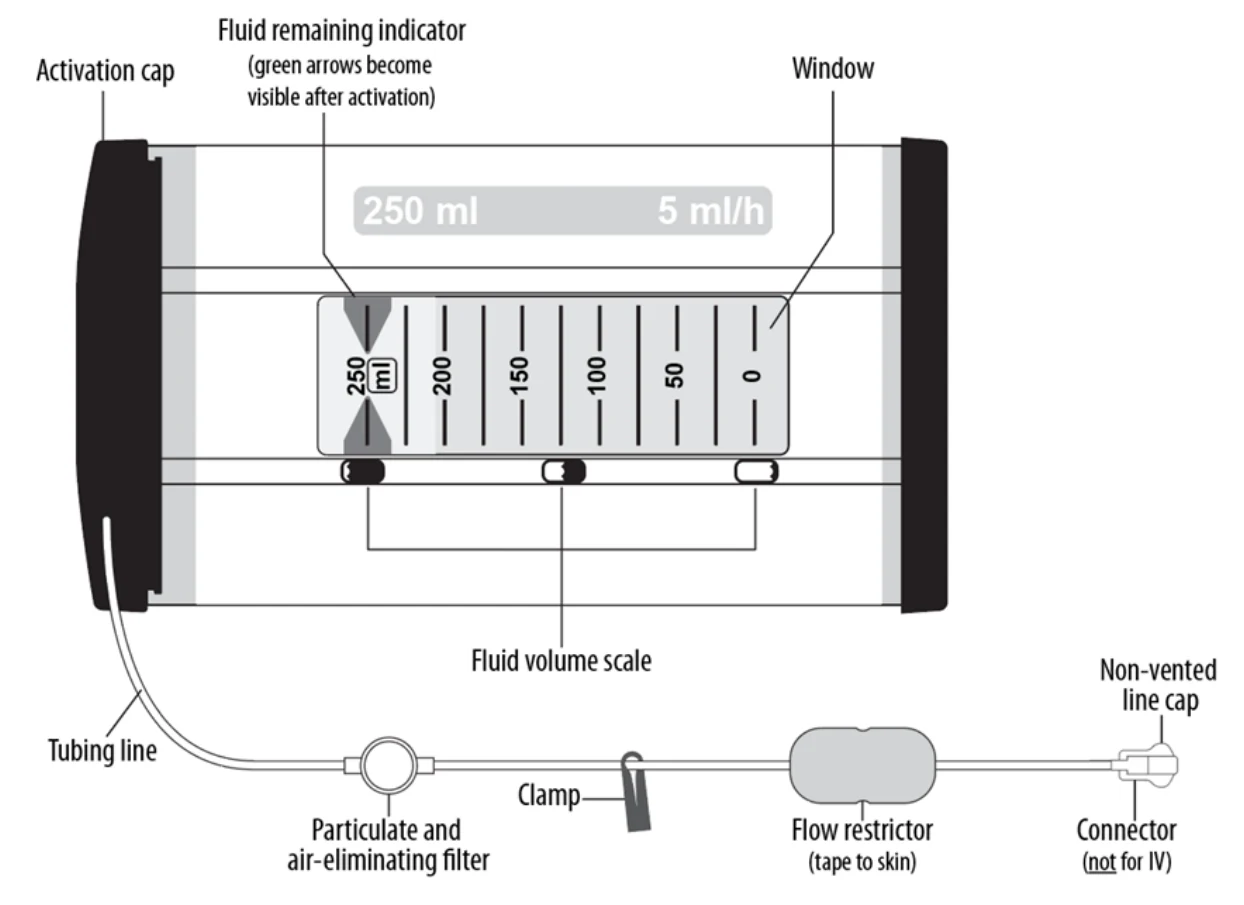
Fig. 1
Instructions for Use
|  |
|---|---|
| |
| |
| |
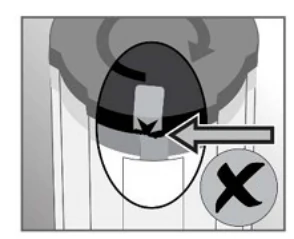
Fig. 2
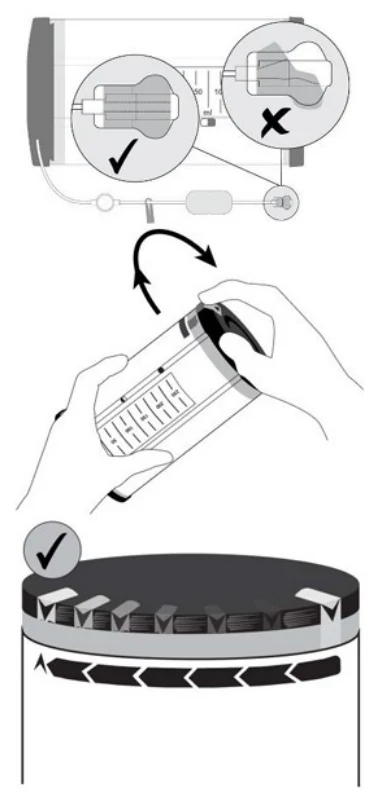 Fig. 4 Fig. 5 Fig. 3 | |
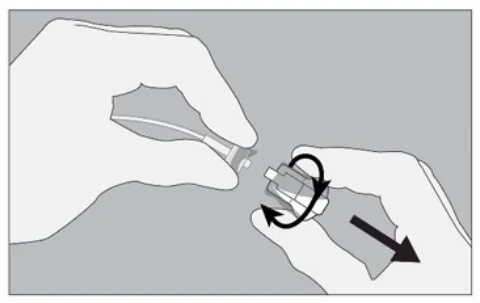 Fig. 6 |
| 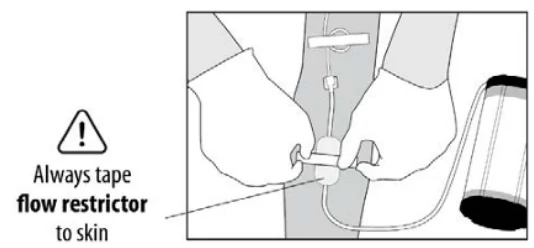 Fig. 7 | |
|---|---|---|
| 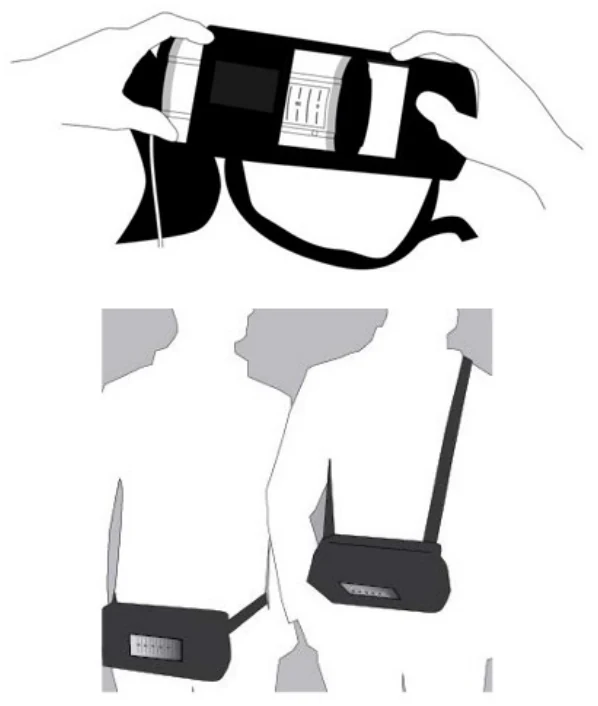 Fig. 8 Fig. 9 | |
| 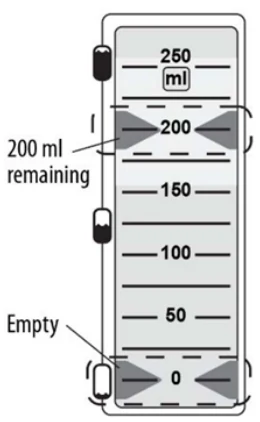 Fig. 10 | |
| ||
|
|---|
|
|
Warnings
- The dispenser is only intended for single use. Do not reuse or reconnect the dispenser.
- The dispenser must not be autoclaved. The fluid path in the dispensing system has been sterilized.
- The dispenser MUST NOT be connected to an i.v. line.
- Kinking of the tube must be avoided, as this could result in an improper fluid delivery rate.
- No tight wrappings should be placed around the tubing line.
- The dispenser should not be used if any part has been damaged or cracked, or if the connector on the tubing line appears broken, cracked or damaged in any way.
- The flow restrictor (clear rectangle) must remain taped to the patient’s skin (Fig. 7 – lower tape). Removing the tape or allowing the flow restrictor to lose contact with the skin may result in an improper fluid delivery rate.
- Flow rate may increase at higher ambient temperatures, and decrease with lower temperatures. Taping the flow restrictor to the patient can regulate temperature and reduce the variation in flow rate. For each degree Celsius change in temperature, the flow rate changes by 0.09 mL/h/°C.
- Do not place hot or cold packs over the flow restrictor as this could result in an improper fluid delivery rate.
To reduce the risk of infection:
- The dispenser should not be reconnected if it is accidentally disconnected from the catheter/port during medication delivery.
- The patient should not bathe or shower with the dispenser, or while the catheter/port is still in place under the skin.
- The patient should not tamper with the wound dressings or with the catheter/port.
- The dispenser should not be positioned more than 51 cm above or below the infusion site.
- The dispenser delivery accuracy has been tested at standard room temperature (20°C – 30°C), humidity (20 – 90% RH), and atmospheric pressure (70 – 101 kPa).
- Pump delivery accuracy has been validated when used with a fenestrated catheter of 70 cm length, 0.7 mm inner diameter, and 12 holes of approximately 0.25 mm diameter covering 6.5 cm length from the tip.
5 OVERDOSE
Systemic toxic reactions caused by high plasma levels during therapeutic use, overdose, or to unintended intravascular injection (see 7 WARNINGS AND PRECAUTIONS and 8 ADVERSE REACTIONS) primarily involve the central nervous system (CNS) and cardiovascular system.
Accidental intravascular injections may cause immediate (within seconds to a few minutes) toxic effects. For continuous infiltration, peak plasma concentrations may not be reached for 1 to 2 hours, with signs of toxicity thus being delayed.
Symptoms
CNS toxicity is a graded response with symptoms and signs of escalating severity. First symptoms are usually light-headedness, circumoral paraesthesia, numbness of the tongue, hyperacusis, tinnitus and visual disturbances. Dysarthria, muscular rigidity and muscular twitching are more serious and may precede the onset of generalized convulsions. These signs must not be mistaken for a neurotic behaviour. Unconsciousness and grand mal convulsions may follow which may last from a few seconds to several minutes. Hypoxia and hypercarbia occur rapidly following convulsions due to the increased muscular activity, together with the interference with normal respiration and loss of the airway. In severe cases apnoea may occur. Acidosis, hyperkalaemia, hypocalcaemia and hypoxia increase and extend the toxic effects of local anaesthetics.
Recovery is due to redistribution and metabolism of the local anaesthetic drug. Recovery may be rapid unless large amounts of the drug have been administered.
Cardiovascular system toxicity indicates a more severe situation and is generally preceded by signs of toxicity in the CNS, unless the patient is receiving a general anaesthetic or is heavily sedated with drugs such as a benzodiazepine or barbiturate. Hypotension, bradycardia, arrhythmia and cardiac arrest may occur as a result of high systemic concentrations of local anaesthetic. In volunteers, the i.v. infusion of ropivacaine resulted in signs of depression of conductivity and contractility.
In children early signs of local anaesthetic toxicity may be difficult to detect in cases where the block is given during general anaesthesia. It should be noted that XFusor is not approved for use in pediatric patients.
Treatment
The first consideration is prevention, best accomplished by careful monitoring of cardiovascular and respiratory vital signs and the patient’s state of consciousness after each local anaesthetic injection and during continuous infiltration. At the first sign of systemic toxicity, administration of all local anaesthetic (continuous infiltration and boluses) should be immediately stopped and immediate attention to the establishment and maintenance of a patent airway with assisted or controlled ventilation with oxygen and a delivery system capable of permitting immediate positive airway pressure by mask and bag or tracheal intubation. This may prevent convulsions if they have not already occurred.
If necessary, use drugs to control the convulsions. Prolonged convulsions may jeopardize the patient’s ventilation and oxygenation. If so, injection of a muscle relaxant such as succinylcholine will stop the muscle convulsions rapidly, so that ventilation and oxygenation can be controlled. Endo-tracheal intubation must be considered in such situations.
If cardiovascular depression is evident (hypotension, bradycardia), it should be managed according to the patient condition and standard of anaesthetic care. Should circulatory arrest occur, immediate cardiopulmonary resuscitation should be instituted. Optimal oxygenation and ventilation and circulatory support as well as treatment of acidosis are of vital importance.
Should cardiac arrest occur, prolonged resuscitative efforts may be required to improve the likelihood of a successful outcome.
Clinical data from patients experiencing local anaesthetic induced convulsions demonstrated rapid development of hypoxia, hypercarbia and acidosis within a minute of the onset of convulsions. These observations suggest that oxygen consumption and carbon dioxide production are greatly increased during local anaesthetic convulsions and emphasize the importance of immediate and effective ventilation with oxygen which may avoid cardiac arrest.
The supine position is dangerous in pregnant women at term because of aorto-caval compression by the gravid uterus. Therefore, during treatment of systemic toxicity (manifested, among other signs, by maternal hypotension or fetal bradycardia), the parturient should be maintained in the left lateral decubitus position if possible, or manual displacement of the uterus off the great vessels should be accomplished. Resuscitation of obstetrical patients may take longer than resuscitation of nonpregnant patients and closed chest cardiac compression may be ineffective. Rapid delivery of the foetus may improve the response to resuscitative efforts.
In human volunteers given i.v. ropivacaine, the mean maximum tolerated total and free arterial plasma concentrations were 4.3 and 0.6 µg/mL, respectively, at which time moderate CNS symptoms (muscle twitching) were noted.
| For management of a suspected drug overdose, contact your regional Poison Control Centre for the latest information. |
|---|
6 DOSAGE FORMS, STRENGTHS, COMPOSITION AND PACKAGING
Table 1 Dosage Forms, Strengths, Composition and Packaging
Description of Solution
Clear and colourless solution that is free from visible particulate matter.
Packaging
The XFusor dispenser is a cylinder with black caps on each side. It is designed to contain a translucent HDPE bellows bottle with 250 mL ropivacaine hydrochloride solution for infiltration. A latex free tubing line with connecter (Luer lock) is permanently attached to it. Components in contact with drug product solution not made with natural rubber latex.
Each pack contains one XFusor dispenser and a carrying pouch.
| Route of Administration | Dosage Form / Strength/Composition | Non-medicinal Ingredients |
| Infiltration | Sterile isotonic solution 2 mg/mL ropivacaine hydrochloride | Sodium chloride, sodium hydroxide and/or hydrochloric acid (for pH adjustment) and water for injection |
7 WARNINGS AND PRECAUTIONS
General
IN PERFORMING XFUSOR (ROPIVACAINE HYDROCHLORIDE) BLOCKS, UNINTENDED INTRAVASCULAR INJECTION IS POSSIBLE AND MAY RESULT IN CARDIAC ARRHYTHMIA OR CARDIAC ARREST. THE POTENTIAL FOR SUCCESSFUL RESUSCITATION HAS NOT BEEN STUDIED IN HUMANS.
LOCAL ANAESTHETICS SHOULD ONLY BE EMPLOYED BY CLINICIANS WHO ARE WELL VERSED IN THE DIAGNOSIS AND MANAGEMENT OF ACUTE SYSTEMIC TOXICITY INDUCED BY LOCAL ANESTHETICS. CLINICIANS SHOULD ALSO BE WELL VERSED IN THE DIAGNOSIS AND MANAGEMENT OF OTHER ACUTE EMERGENCIES WHICH MIGHT ARISE FROM THE BLOCK TO BE EMPLOYED. FOR MANAGEMENT OF TOXIC REACTIONS AND RELATED EMERGENCIES, CARDIOPULMONARY RESUSCITATIVE EQUIPMENT, OXYGEN, RESUSCITATIVE DRUGS, AND PERSONNEL RESOURCES SHOULD BE IMMEDIATELY AVAILABLE WHEN ANY LOCAL ANAESTHETIC IS USED. DELAY IN PROPER MANAGEMENT OF ACUTE SYSTEMIC TOXICITY, UNDERVENTILATION FROM ANY CAUSE AND/OR ALTERED SENSITIVITY MAY LEAD TO THE DEVELOPMENT OF ACIDOSIS, CARDIAC ARREST AND, POSSIBLY, DEATH (see 8 ADVERSE REACTIONS and 5 OVERDOSE).
PRIOR TO RECEIVING PERIPHERAL NERVE BLOCKS, THE GENERAL CONDITION OF THE PATIENT SHOULD BE OPTIMIZED AND THE PATIENT SHOULD HAVE AN I.V. LINE INSERTED. ALL NECESSARY PRECAUTIONS SHOULD BE TAKEN TO AVOID INTRAVASCULAR INJECTION.
XFUSOR IS NOT INDICATED FOR EMERGENCY SITUATIONS, WHERE A FAST ONSET OF SURGICAL ANAESTHESIA IS NECESSARY.
IT IS ESSENTIAL THAT ASPIRATION FOR BLOOD BE DONE PRIOR TO INJECTING ANY LOCAL ANAESTHETIC, BOTH FOR THE ORIGINAL DOSE AND ALL SUBSEQUENT DOSES, TO AVOID INTRAVASCULAR INJECTION. HOWEVER, A NEGATIVE ASPIRATION DOES NOT ENSURE AGAINST AN INTRAVASCULAR INJECTION.
XFUSOR IS CONTRAINDICATED FOR THE PRODUCTION OF RETROBULBAR BLOCK OR SPINAL ANAESTHESIA (INTRATHECAL BLOCK) DUE TO INSUFFICIENT DATA TO SUPPORT SUCH USE.
Reports of Irreversible Chondrolysis with Intra-articular Infusions of Local Anaesthetics Following Surgery: XFusor is contraindicated for Intra-articular administration (see 2 CONTRAINDICATIONS and 4 DOSAGE AND ADMINISTRATION). Post marketing cases of irreversible chondrolysis in patients receiving Intra-articular infusions of local anaesthetics, including ropivacaine, following arthroscopic and other surgical procedures have been reported. The majority of reported cases of irreversible chondrolysis have involved the shoulder joint; cases of gleno-humeral irreversible chondrolysis have been described in pediatric and adult patients following intra-articular infusions of local anaesthetics with and without epinephrine for periods of 48 to 72 hours. The time of onset of symptoms, such as joint pain, stiffness and loss of motion can be variable, but may begin as early as the 2nd month after surgery. Currently, there is no effective treatment for irreversible chondrolysis; patients who experienced irreversible chondrolysis have required additional diagnostic and therapeutic procedures and some required arthroplasty or shoulder replacement.
Inflammation and Sepsis: Local anaesthetic procedures should be performed with care in inflamed regions. Administration should not be performed through inflamed tissue nor when there is sepsis at or near the administration site.
Use with Other Local Anaesthetics: XFusor should be used with caution in patients receiving other local anaesthetics or agents structurally related to amide-type local anaesthetics, since the toxic effects are additive (see 9 DRUG INTERACTIONS).
Use in Patients Treated with Class III Antiarrhythmic Drugs: Patients treated with class III antiarrhythmic drugs (e.g., amiodarone) should be under close surveillance and electrocardiogram (ECG) monitoring, since cardiac effects may be additive (see 9 DRUG INTERACTIONS).
Epidural or Spinal Anaesthesia and Analgesia: XFusor is not indicated for epidural administration (1 INDICATIONS) and is contraindicated for spinal administration (intrathecal block; see 2 CONTRAINDICATIONS) .
High Risk Populations: Local anaesthetics should be used with caution in patients in poor general condition due to advanced age, debilitation, or other compromising factors such as partial or complete heart conduction block, advanced liver disease, or severe renal dysfunction (see 4 DOSAGE AND ADMINISTRATION).
XFusor is possibly porphyrinogenic and should only be prescribed to patients with acute porphyria when no safer alternative is available. Appropriate precautions should be taken in the case of vulnerable patients.
Cardiovascular
There have been rare reports of cardiac arrest during the use of ropivacaine for peripheral nerve blockade, especially after unintentional accidental intravascular administration in patients with concomitant heart disease (see 7 WARNINGS AND PRECAUTIONS, General and 10.2 Pharmacodynamics). In some instances, resuscitation has been difficult. Should cardiac arrest occur, prolonged resuscitative efforts may be required to improve the likelihood of a successful outcome.
Local anaesthetics should be used with caution in patients with impaired cardiovascular function who may be less able to compensate for functional changes associated with prolongation of AV conduction produced by these drugs. Hypotension, hypovolemia, or partial or complete heart block represent risk factors.
Acute systemic toxicity: Systemic toxic reactions primarily involve the central nervous system (CNS) and the cardiovascular system (CVS). Such reactions are caused by high blood concentration of a local anaesthetic, which may appear due to (accidental) intravascular injection, overdose or exceptionally rapid absorption from highly vascularised areas (see 5 OVERDOSE). High doses or unintentional intravascular injection may lead to high plasma levels and related depression of the myocardium, decreased cardiac output, heart block, hypotension, bradycardia, ventricular arrhythmias, including ventricular tachycardia and ventricular fibrillation, and cardiac arrest. Reactions due to systemic absorption may be either slow or rapid in onset. Cardiovascular collapse and cardiac arrest can occur rapidly. Cardiovascular toxic effects are generally preceded by signs of toxicity in the central nervous system, unless the patient is receiving a general anaesthetic or is heavily sedated with drugs such as benzodiazepines or barbiturates.
Driving and Operating Machinery
- Patients should not be driving or operating machinery while being administered XFusor and after its completion, until it is confirmed that the drug does not impair motor functions, mental functions, or coordination.
Ear/Nose/Throat
Small doses of local anaesthetics injected into the head and neck area, including dental and stellate ganglion blocks, may produce adverse reactions as a result of inadvertent intraarterial injection and subsequent retrograde flow to the cerebral circulation. These adverse reactions may be similar to systemic toxicity seen with unintentional intravascular injections of larger doses. Confusion, convulsions, respiratory depression and/or respiratory arrest and cardiovascular stimulation or depression have been reported. Patients receiving these blocks should have their circulation and respiration monitored and be constantly observed. Resuscitative equipment and personnel for treating adverse reactions should be immediately available. Dosage recommendations should not be exceeded.
Hepatic/Biliary/Pancreatic
Because amide-type local anaesthetics such as ropivacaine are metabolized by the liver, these drugs, especially repeat doses, should be used cautiously in patients with hepatic disease. Patients with severe hepatic disease, because of their inability to metabolize local anaesthetics normally, are at an increased risk of developing toxic plasma concentrations (see 7 WARNINGS AND PRECAUTIONS, General and 4 DOSAGE AND ADMINISTRATION).
Immune
Allergic: Allergic type reactions are rare and may occur as a result of sensitivity to local anaesthetics of the amide-type. These reactions are characterized by signs such as urticaria, pruritus, erythema, angioneurotic oedema (including laryngeal oedema), tachycardia, sneezing, nausea, vomiting, dizziness, syncope, excessive sweating, elevated temperature, and in the most severe instances, anaphylactic shock.
Monitoring and Laboratory Tests
It is recommended that hospitals using local anaesthetic infiltration have a treatment protocol in place for nursing to follow in order to safely monitor the level of the block and for the proper management of complications and/or toxic reactions (see 5 OVERDOSAGE).
Musculoskeletal
Risk of fall: For surgeries of the lower limbs, there is a risk of muscle weakness induced by local anesthetic nerve blocks that could increase the risk of fall. Patients should be careful when standing up, sitting or walking while being administered continuous infiltration of ropivacaine.
Neurologic
The incidence of adverse neurologic reactions may be related to the total dose of local anaesthetic administered but is also dependent upon the particular drug used, the route of administration and the physical status of the patient. Neurological effects may be related to local anaesthetic techniques, with or without a contribution from the drug.
Psychomotor effects: Local anaesthetics may have a dose-dependent effect on mental function and coordination, causing temporary impairment of locomotion and alertness, even in the absence of overt CNS toxicity.
Acute systemic toxicity: Systemic toxic reactions primarily involve the CNS and the cardiovascular systems. Such reactions are caused by high blood concentration of a local anaesthetic, which may appear due to accidental intravascular injection, overdose or exceptionally rapid absorption from highly vascularised areas (see 5 OVERDOSE). Reactions due to systemic absorption may be either slow or rapid in onset.
CNS reactions are similar for all amide local anaesthetics. They are characterized by excitation and/or depression. Excitement manifestation such as restlessness, anxiety, dizziness, tinnitus, blurred vision or tremors may occur, possibly proceeding to convulsions. However, excitement may be transient or absent, with depression being the first manifestation of an adverse reaction. This may quickly be followed by drowsiness merging into unconsciousness and respiratory arrest. Other CNS effects may be nausea, vomiting, chills and constriction of the pupils. The incidence of convulsions associated with the use of local anaesthetics varies with the procedure used and the total dose administered.
Ophthalmologic
XFusor is contraindicated for the production of retrobulbar block.
Peri-Operative Considerations
The safe and effective use of local anaesthetics depends on proper dosage, correct technique, adequate precautions and readiness for emergencies. Resuscitative equipment, oxygen and resuscitative drugs should be available for immediate use (see 8 ADVERSE REACTIONS and 5 OVERDOSE). During peripheral nerve blocks, the patients should be in an optimal condition and have i.v. fluids running via an indwelling catheter to assure a functioning i.v. pathway. The clinician responsible should take the necessary precautions to avoid intravascular injection (see 4 DOSAGE AND ADMINISTRATION) and be trained, and familiar with, the diagnosis and treatment of side effects, systemic toxicity and other complications.
Careful and constant monitoring of cardiovascular and respiratory vital signs (adequacy of ventilation) and the patient’s state of consciousness should be performed during the anaesthetic procedure. It should be kept in mind at such times that restlessness, anxiety, incoherent speech, light-headedness, numbness and tingling of the mouth and lips, metallic taste, tinnitus, dizziness, blurred vision, tremors, twitching, depression or drowsiness may be early warning signs of CNS toxicity.
Ropivacaine plasma concentrations may approach the threshold for CNS toxicity after the administration of 300 mg of ropivacaine for brachial plexus block. Caution should be exercised if a 300 mg dose of ropivacaine has been administered. XFusor does not deliver a 300 mg bolus dose; XFusor delivers a flow rate of approximately 5 mL/h, equivalent to 10 mg/h, over a maximum of 48 hours for a total dose of up to 480 mg (see 4.2 Recommended Dose and Dosage Adjustment).
Renal
Local anaesthetics should be used with caution in patients in poor general condition due to severe renal dysfunction (see 4 DOSAGE AND ADMINISTRATION).
Normally there is no need to modify the dose of ropivacaine when used for single dose or short-term treatment in patients with impaired renal function. Acidosis and reduced plasma protein concentration, frequently seen in patients with chronic renal failure, may increase risk of systemic toxicity (see 10.3 Pharmacokinetics).
Skin
Some observational studies indicated that continuous local anesthetic wound infiltration temporarily delays the initial maturation phase of the wound healing process which did not persist in the long-term. Caution should be exercised when using XFusor in patients prone to healing impairment (e.g. diabetics and immunocompromised patients) and appropriate precautions should be taken to avoid increasing the risk of infections.
7.1 Special Populations
7.1.1 Pregnancy
XFusor is not indicated for epidural administration (see 1 INDICATIONS). Following epidural administration of ropivacaine, high sympathetic blockade or cranial spread of local anaesthetic, especially in pregnant women, may occasionally result in Horner's syndrome characterised by miosis, ptosis, and anhidrosis.
There are no adequate data on the use of ropivacaine in human pregnancy. Ropivacaine should be used during pregnancy only if the potential benefit justifies the potential risk to the foetus.
Reproduction studies have been performed in rats and rabbits. The studies did not show evidence of adverse effects of ropivacaine on fertility and general reproductive performance (see Reproductive and Developmental Toxicology).
Teratogenicity studies in rats and rabbits did not show evidence of adverse effects of ropivacaine on organogenesis or early foetal development (see Reproductive and Developmental Toxicology).
Labour and Delivery: XFusor is not indicated for epidural administration (see 1 INDICATIONS) and is contraindicated for spinal administration (intrathecal blocks; see 2 CONTRAINDICATIONS). Local anaesthetics, including ropivacaine, rapidly cross the placenta, and can cause varying degrees of maternal, foetal and neonatal toxicity. The incidence and degree of toxicity depend upon the procedure performed, the type and amount of drug used and the technique of drug administration. Adverse reactions in the parturient, foetus and neonate involve alterations of the CNS, peripheral vascular tone and cardiac function. In vitro studies have shown that ropivacaine inhibits uterine contractions. However, the clinical significance of these findings remains uncertain. Given the theoretical risk of delayed or prolonged labor, this potential effect should be carefully considered during the third trimester of pregnancy. It is extremely important to avoid aortocaval compression by the gravid uterus before using XFusor on parturients. The patient should be maintained in the left lateral decubitus position if possible, or manual displacement of the uterus off the great vessels be accomplished.
7.1.2 Breastfeeding
There are no data available on the presence of ropivacaine or its metabolites in the milk of lactating women, on the effects of the drug on the breastfed infant, or on milk production.
However, data from animal studies have demonstrated that ropivacaine is present in the milk of lactating rats. A risk to the newborn infant cannot be excluded. A decision should be made whether to temporarily interrupt nursing during treatment with ropivacaine.
7.1.3 Pediatrics
Pediatrics: (<18 years of age): Health Canada has not authorized an indication for pediatric use as the safety and efficacy of XFusor have not been investigated in children under 18 years of age. In children, early signs of local anaesthetic toxicity may be difficult to detect in cases where the block is given during general anaesthesia (see 5 OVERDOSE).
7.1.4 Geriatrics
Geriatrics (> 65 years of age): Evidence from clinical studies and experience suggests that use in the geriatric population may be associated with differences in safety or effectiveness.
8 ADVERSE REACTIONS
8.1 Adverse Reaction Overview
Reactions to XFusor (ropivacaine hydrochloride) are characteristic of those associated with other long-acting local anaesthetics of the amide type.
8.2 Clinical Trial Adverse Reactions
Clinical trials are conducted under very specific conditions. The adverse reaction rates observed in the clinical trials, therefore, may not reflect the rates observed in practice and should not be compared to the rates in the clinical trials of another drug. Adverse reaction information from clinical trials may be useful in identifying and approximating rates of adverse drug reactions in real-world use.
XFusor is contraindicated for intravascular administration (see 2 CONTRAINDICATIONS). Adverse reactions to local anaesthetics are very rare in the absence of overdose or inadvertent intravascular injection. The effects of systemic overdose and unintentional intravascular injections can be serious and lead to acute systemic toxicity.
Acute systemic toxicity from local anaesthetics is generally dose-related and due to high plasma levels which may result from overdosage (see 5 OVERDOSE), rapid absorption from the injection site, diminished tolerance, or from inadvertent intravascular injection. Most commonly, the acute adverse experiences originate from the central nervous and cardiovascular systems.
The adverse reaction profile for ropivacaine is similar to those for other long acting local anaesthetics of the amide-type. Adverse drug reactions should be distinguished from the physiological effects of the nerve block itself.
The frequencies used in the following table are: very common (≥ 1/10), common (≥ 1/100 to <1/10), uncommon (≥ 1/1,000 to < 1/100), rare (≥ 1/10,000 to <1/1,000), very rare (<1/10,000) and not known (cannot be estimated from the available data).
Table 2 Adverse Drug Reaction Profile for Ropivacaine
| System Organ Class | Frequency | Undesirable Effect |
|---|---|---|
| Immune system disorders | Rare | Allergic reactions (anaphylactic reactions, angioneurotic oedema and urticaria) |
| Psychiatric disorders | Uncommon | Anxiety |
| Nervous System disorders | Common | Paraesthesia, dizziness, headache |
| Uncommon | Symptoms of CNS toxicity (convulsions, Grand mal convulsions, seizures, light-headedness, circumoral paraesthesia, numbness of the tongue, hyperacusis, tinnitus, visual disturbances, dysarthia, muscular twitching, tremor)*, hypoaesthesia | |
| Not known | Dyskinesia | |
| Cardiac disorders | Common | Bradycardia, tachycardia |
| Rare | Cardiac arrest, cardiac arrhythmias | |
| Vascular disorders | Very common | Hypotension |
| Common | Hypertension | |
| Uncommon | Syncope | |
| Respiratory, Thoracic and Mediastinal disorders | Uncommon | Dyspnoea |
| Gastrointestinal disorders | Very common | Nausea |
| Common | Vomiting | |
| Musculoskeletal and connective tissue disorders | Common | Back pain |
| Renal and Urinary disorders | Common | Urinary retention |
| General disorders and Administration site conditions | Common | Temperature elevation, chills |
| Uncommon | Hypothermia |
* These symptoms usually occur because of inadvertent intravascular injection, overdose or rapid absorption (see 5 OVERDOSAGE).
9 DRUG INTERACTIONS
9.2 Drug Interactions Overview
- XFusor (ropivacaine hydrochloride) should be used with caution in patients receiving other amide-type local anaesthetics (such as lidocaine, bupivacaine, mepivacaine and prilocaine) and with structurally related agents (such as the antiarrhythmics procainamide, disopyramide, tocainide, mexiletine and flecainide).
- If sedatives are used with XFusor, they should be used in reduced doses, since local anaesthetic agents, like sedatives, are CNS depressants which may have an additive effect.
- Simultaneous use of ropivacaine hydrochloride with general anaesthetics or opioids may potentiate each other’s adverse effects.
- Coadministration of ropivacaine with a selective and potent cytochrome P450 (CYP) 1A2 inhibitor may reduce plasma clearance of ropivacaine.
9.3 Drug-Behavioural Interactions
- Driving and Operating Machinery: Besides the direct anaesthetic effect, local anaesthetics may have a very mild effect on mental function and coordination even in the absence of overt CNS toxicity and may temporarily impair locomotion and alertness. Patients should not drive or operate machinery during the administration of XFusor and after its completion, until it is confirmed that the drug does not impair motor functions, mental functions, or coordination.
9.4 Drug-Drug Interactions
The drugs listed in this table are based on either drug interaction case reports or studies, or potential interactions due to expected magnitude and seriousness of the interaction (i.e., those identified as contraindicated).
Table 3 Established or Potential Drug-Drug Interactions
| [Non-proprietary name(s) of the drug product(s)] | Source of evidence | Effect | Clinical comment |
| Local anaesthetics and agents structurally related to amide-type local anaesthetics [e.g., lidocaine, bupivacaine, mepivacaine and prilocaine] | C and CT | Toxic effects are additive. | XFusor (ropivacaine hydrochloride) should be used with caution in patients receiving other amide-type local anaesthetics such as lidocaine, bupivacaine, mepivacaine and prilocaine since toxic effects are additive. |
| [Non-proprietary name(s) of the drug product(s)] | Source of evidence | Effect | Clinical comment |
| Anti-arrhythmic drugs [procainamide, disopyramide, tocainide, mexiletine and flecainide]. | T | Associated with a slight drop in left ventricular dP/dt max. | XFusor should be used with caution with structurally related agents such as the antiarrhythmics procainamide, disopyramide, tocainide, mexiletine and flecainide. |
| Class III Antiarrhythmic drugs [e.g., amiodarone] | T | Potential PK and/or PD interactions. Cardiac effects may be additive. | Specific interactions studies with ropivacaine and class III anti-arrhythmic drugs (e.g., amiodarone) have not been performed. Caution is advised when using Class III antiarrhythmic drugs concomitantly with ropivacaine due to potential pharmacodynamic or pharmacokinetic interactions, or both (see 7 WARNINGS AND PRECAUTIONS, General). Patients treated with class III antiarrhythmic drugs should be under close surveillance and ECG monitoring, since cardiac effects may be additive. |
| Sedatives | T | Potential additive effects as CNS depressants. | If sedatives are employed to reduce patient apprehension, they should be used in reduced doses, since local anaesthetic agents, like sedatives, are CNS depressants which in combination may have an additive effect. |
| [Non-proprietary name(s) of the drug product(s)] | Source of evidence | Effect | Clinical comment |
| Strong Inhibitors of CYP1A2 | CT T | PK drug interactions may occur with drugs inhibiting CYP1A2, which may lead to increased ropivacaine plasma levels. Thus, caution should be exercised when inhibitors are co-administered. | In vitro studies indicate that CYP1A2 is involved in the formation of 3hydroxy ropivacaine, the major metabolite of ropivacaine. Fluvoxamine and Enoxacin: In healthy volunteers, the plasma clearance of ropivacaine was reduced by up to 77% during co-administration of fluvoxamine, a selective and potent CYP1A2 inhibitor. Thus, strong inhibitors of CYP1A2, such as fluvoxamine and enoxacin, given concomitantly during repeated administration of ropivacaine, can interact with ropivacaine. Prolonged administration should be avoided in patients treated with such strong inhibitors of CYP1A2. Theophylline and Imipramine: Interactions with drugs known to be metabolized by CYP1A2 via competitive inhibition, such as theophylline and imipramine, may occur, but should be of less importance. |
Legend: C = Case Study; CT = Clinical Trial; T = Theoretical
9.5 Drug-Food Interactions
Interactions of ropivacaine with food have not been established.
9.6 Drug-Herb Interactions
Interactions of ropivacaine with herbal products have not been established.
9.7 Drug-Laboratory Test Interactions
Interactions of ropivacaine with laboratory tests have not been established.
10 CLINICAL PHARMACOLOGY
XFusor (ropivacaine hydrochloride), a local anaesthetic of the amino amide class, is supplied as the pure S-(-)-enantiomer.
Ropivacaine has both local anaesthetic and analgesic effects. At high doses, surgical anaesthesia is achieved. At lower doses, ropivacaine produces sensory block (analgesia) with limited and non-progressive motor block.
10.1 Mechanism of Action
XFusor, like other local anaesthetics, causes reversible blockade of impulse propagation along nerve fibres by preventing the inward movement of sodium ions through the cell membrane of the nerve fibres.
Onset and Duration of Action
The duration of action of local anaesthetics depends on the injection site, the route of administration, and the concentration and volume of the drug. The duration and intensity of ropivacaine block are not improved by the addition of epinephrine.
10.2 Pharmacodynamics
Ropivacaine, like other local anaesthetics, can also have effects on the central nervous and cardiovascular systems (see Neurologic and Cardiovascular). If excessive amounts of drug reach the systemic circulation, symptoms and signs of CNS toxicity and cardiotoxicity may appear (see 5 OVERDOSE).
Animal
Ropivacaine has been demonstrated to produce topical, infiltration, epidural, and brachial plexus anaesthesia in a range of animal models with potency and pharmacodynamic characteristics similar to those of bupivacaine. Like bupivacaine, ropivacaine is also capable of inducing convulsions and hemodynamic changes when administered i.v. in large doses. XFusor is contraindicated for intravascular administration (see 2 CONTRAINDICATIONS). Adverse reactions to local anaesthetics following inadvertent intravascular injection can be serious and lead to acute systemic toxicity (see 5 OVERDOSE).
In vivo studies in pigs indicate that a small 1 mL volume of 2.5 mg/mL of ropivacaine administered intradermally has a vasoconstrictive effect, and in humans, intradermally injected ropivacaine at low concentrations (0.6-5 mg/mL) also causes vasoconstriction. In addition, ropivacaine can inhibit cell proliferation/migration during wound healing. Ropivacaine induced inhibition of cell proliferation was shown in vitro with non-transformed cultured adult human fibroblasts, endothelial cells, and keratinocytes as well as in vivo in rats, where 1 mL of 7.5 mg/mL ropivacaine solution injected into the surrounding tissue of a wound, once a day for 10 days, inhibited wound healing by suppressing the proliferation and migration of keratinocytes. Although there is currently no clinical evidence in humans that ropivacaine wound infiltration can impair wound healing, there is a theoretical risk that could be considered.
10.3 Pharmacokinetics
XFusor is not indicated for epidural administration (see 1 INDICATIONS) and is contraindicated for intravascular and spinal/intrathecal administration (see 2 CONTRAINDICATIONS). The following information outline the general pharmacokinetic features of ropivacaine.
Absorption
The systemic concentration of local anaesthetics is dependent upon the total dose and the concentration administered, the route of administration, the patient’s hemodynamic/circulatory condition, and the vascularity of the injection site. Ropivacaine follows linear pharmacokinetics and the maximum plasma concentration is proportional to the dose.
When ropivacaine 2 mg/mL was administered continuously via peripheral nerve catheters at rates of 6 to 14 mL/h to trauma patients over a range of 6 to 27 days, the median serum concentration of free ropivacaine over the length of the study was 0.11 mg/L. The total duration of local anaesthetic infiltration did not seem to influence the free concentration of the ropivacaine.
When ropivacaine 2 mg/mL was administered by continuous wound infiltration at a rate of 5 mL/h in two studies (19 subjects undergoing joint replacement surgery and 19 subjects undergoing spine fusion surgery), the mean maximum plasma concentration (Cmax) of total ropivacaine was 0.71 mg/L and the time of Cmax was 24 hours after the continuous wound infiltration was initiated.
Distribution
Following i.v. administration, the volume of distribution of ropivacaine is approximately 40 L. Ropivacaine is extensively bound to alpha1-acid glycoprotein in plasma with an unbound, i.e., pharmacologically active, fraction of about 6%. An increase in total plasma concentration during continuous epidural infusion has been observed in postoperative patients and is related to the postoperative increase of alpha1-acid glycoprotein. Variations in ropivacaine unbound concentration (pharmacologically active form) have been much less than in total plasma concentration.
Ropivacaine readily crosses the placenta and equilibrium, in regard to unbound concentration, is rapidly reached. The degree of plasma protein binding in the foetus is less than in the mother, which results in lower total plasma concentrations in the foetus than in the mother. The ratios of umbilical vein to maternal vein total and free concentrations are 0.31 and 0.74, respectively.
Metabolism
There is no evidence of in vivo racemization of ropivacaine. All metabolites of ropivacaine have a local anaesthetic effect but of considerably lower potency and shorter duration than that of ropivacaine. Ropivacaine is extensively metabolized in the liver predominantly to 3-hydroxy ropivacaine by an aromatic hydroxylation process mediated by CYP1A2 and N-dealkylation to N-dealkylated pipecoloxylidide (S-PPX) mediated by CYP3A4. Conjugated and unconjugated 3-hydroxy ropivacaine represent the major urinary metabolites. Urinary excretion of 4-hydroxy ropivacaine, S-PPX and both the 3-hydroxy and 4-hydroxy N-dealkylated metabolites account for less than 3% of the dose. An additional metabolite, 2-hydroxy-methylropivacaine, has been identified, but not quantified in urine. S-PPX and 3-hydroxy ropivacaine are the major metabolites excreted in the urine during epidural infusion. A total S-PPX concentration in the plasma was about half that of total ropivacaine; however, mean unbound concentrations of S-PPX were about 7 to 9 times higher than that of unbound ropivacaine following continuous epidural infusion up to 72 hours. The threshold for CNS toxicity in rats due to unbound plasma concentrations of S-PPX is approximately 12 times higher than that of unbound ropivacaine. S-PPX, 3-hydroxy ropivacaine, and 4-hydroxy ropivacaine have a pharmacological activity in animal models less than that of ropivacaine.
Impaired renal function has little or no influence on unchanged ropivacaine pharmacokinetics. The renal clearance of S-PPX is significantly correlated with creatinine clearance. A lack of correlation between total exposure, expressed as area under the concentration-time curve (AUC), with creatinine clearance indicates that the total clearance of S-PPX includes a non-renal elimination in addition to renal excretion. Some patients with impaired renal function may show an increased exposure to S-PPX resulting from a low non-renal clearance. The relevance to humans of this increased exposure to S-PPX is unknown at this time.
Elimination
After intravascular administration, 86% of the total dose of ropivacaine is excreted in the urine of which approximately 1% is the parent compound and 36% is 3-hydroxy ropivacaine. Ropivacaine has a mean total plasma clearance in the order of 440 mL/min, an unbound plasma clearance of 8 L/min, a renal clearance of 1 mL/min, and a volume of distribution at steady state of 47 L. Ropivacaine has an intermediate hepatic extraction ratio of about 0.4. The terminal elimination half-life is 1.6 to 1.8 hours after i.v. administration, 4.1 to 6.5 hours after epidural administration, and 5.7 to 8.0 hours after brachial plexus block. The total and unbound clearance of epidural ropivacaine at term in pregnancy (223 to 256 mL/min and 2.8 to 3.3 L/min, respectively), are lower than that observed in non-pregnant patients.
11 STORAGE, STABILITY AND DISPOSAL
Stability and Storage Recommendations
Store XFusor at room temperature (15°C -30°C).
XFusor is only intended for single use. The dispenser must not be autoclaved.
PART II: SCIENTIFIC INFORMATION
13 PHARMACEUTICAL INFORMATION
Drug Substance
Proper name: ropivacaine hydrochloride monohydrate (Ph. Eur.)
ropivacaine hydrochloride (USP)
Chemical name: S-(-)-1-propyl-2’,6’-pipecoloxylidide hydrochloride monohydrate
Molecular formula and molecular mass: C17H26N2O.HCl.H2O, 328.89
Structural formula:
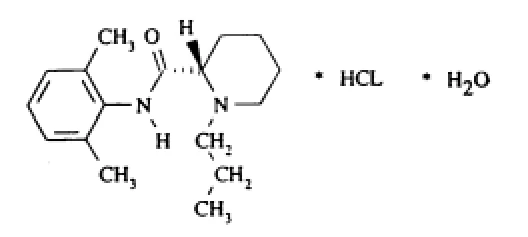
Physicochemical properties: Ropivacaine hydrochloride monohydrate is a white or almost white, crystalline powder. It is soluble in water and in ethanol (96%), slightly soluble in methylene chloride.
14 CLINICAL TRIALS
The efficacy/effectiveness of XFUSOR for continuous peripheral nerve block and continuous wound infiltration was supported using the totality of evidence provided by data from international market experience, randomized controlled trials (RCTs) in published literature, as well as data from Canadian and international market experience with ropivacaine. A total of 150 patients were exposed to ropivacaine 2 mg/mL up to 48hrs during continuous peripheral nerve block infiltrations in 6 published RCTs. A total of 160 patients were exposed to ropivacaine 2 mg/mL up to 48hrs during continuous wound infiltrations in 7 published RCTs.
15 MICROBIOLOGY
No microbiological information is required for this drug product.
16 NON-CLINICAL TOXICOLOGY
General Toxicology
Acute toxicity has been studied in mice and rats and besides death, the main signs observed were decreased motor activity, dyspnoea, piloerection, tremor, ataxia and clonic convulsions. These were all expected signs after administration of high doses of a local anaesthetic agent.
Table 4 Toxicity After Single Administration of Ropivacaine to Mice and Rats
| Species/Strain | Body Wt. (g) | No. Dose Groups | No. Animals/Group | Route of Administration | Estimated LD50 (mg/kg) | ||||||||
|---|---|---|---|---|---|---|---|---|---|---|---|---|---|
| Mouse/NMRI | 17-25 | 7 | 2-5 | s.c. | >120 | ||||||||
| 15-21 | 5 | 2-5 | s.c. | 100 | |||||||||
| Mouse/NMRI | 16-20 | 4 | 5 | i.v. | 14-20 | ||||||||
| 15-19 | 4 | 5 | i.v. | 28 | |||||||||
| Rat/Sprague Dawley | 270-340 | 4 | 5 | s.c. | 58-69 | ||||||||
| 180-220 | 4 | 2-5 | s.c. | 76 | |||||||||
| Rat/Sprague Dawley | 180-210 | 4 | 2-5 | i.v. | 9.9 | ||||||||
| 150-180 | 4 | 2-5 | i.v. | 12 | |||||||||
i.v. = intravenous; LD50 = median lethal dose; No. = number; s.c. = subcutaneous; Wt. = weight
In a single-dose toxicity study in Sprague Dawley rats, there were no treatment-related effects on clinical signs, body weight, ophthalmic evaluations, clinical pathology, organ weights or macroscopic pathology following two subcutaneous (s.c.) injections of 20 mg/kg/site ropivacaine, each separated by approximately 1 hour. There were no systemic, ropivacaine-related microscopic findings; however, on Day 3 post-dose, minimal myofiber necrosis, hemorrhage and/or inflammation were observed at less than half the injection sites in both males and females, which were recovered by Day 15.
In a two-week dose finding study in rats, the maximum tolerated s.c. dose of ropivacaine was determined to be below 30 mg/kg when 7 of 12 animals at this dose experienced convulsions which were fatal in 3 cases. In the main study, rats were treated subcutaneously with 3.3, 9.9 or 26 mg/kg ropivacaine for 1 month. A single male at the highest dose level showed convulsions and cyanosis on one occasion. The clinical chemistry investigation showed a slight, but dose dependent, decrease in serum potassium concentration. However, all values were within the laboratory reference limits. The pathological investigation did not disclose any changes that were caused by treatment with ropivacaine.
In dogs, the maximum tolerated s.c. dose of ropivacaine was reported to be below 16 mg/kg after convulsions were observed in 1 of 6 animals at this dose level. A repeat-dose study also conducted in dogs for 1 month, at daily doses of 3.3, 6.6 and 13 mg/kg, caused vomiting and tremor in all drug treated groups with females at the highest dose level being most affected. These signs are comparable with known actions of other local anaesthetics on the CNS at this dosage range. No chemical or pathologic changes that could be attributed to treatment were seen.
Carcinogenicity
No long-term animal studies have been performed to evaluate carcinogenic potential of ropivacaine.
Genotoxicity
Weak mutagenic activity was found in two mouse lymphoma assays. In the first test, weakly positive results were observed at the highest concentration of ropivacaine (890 mg/L) without metabolic activation and with metabolic activation in the 49 to 160 mg/L range. In the repeat test, in which a physiological medium was used, ropivacaine showed no mutagenic activity in the absence of activation despite achieving a twofold increase in test compound concentration. With metabolic activation, a lower magnitude of mutagenic activity than in the first test was seen at concentrations of 70 to 210 mg/mL. No mutagenicity was noted in any of the other in vitro/in vivo systems studied (Bacterial Reverse Mutation Assay, Mammalian Cell Micronucleus Assay in Human Peripheral Blood Lymphocytes and Single-Dose Subcutaneous Injection Study in Sprague Dawley Rats).
Reproductive and Developmental Toxicology
Fertility
Ropivacaine did not affect fertility or general reproductive performance over two generations in rats at dose levels up to 23 mg/kg when administered s.c. to males for 9 weeks up until mating, and in females, for two weeks prior to mating and up to 42 days post coitus. An increased pup loss was observed during the first few days post parturition in the 23 mg/kg dose group, but this was considered secondary to impaired maternal care of the newborn.
Development/Teratogenicity
Embryofetal developmental studies have been performed with ropivacaine in pregnant New Zealand White rabbits and Sprague-Dawley rats:
- During gestation days 6 through 18, rabbits received subcutaneous ropivacaine doses of 16 or 21 mg/kg. Convulsions as well as reduction in body weight gain and motor activity were observed. The convulsions resulted in the death of 2 of 4 animals. Thus, the highest dose level was reduced to 13 mg/kg/day SC. At that dose, no teratogenic effects, organogenesis or early fetal development were observed.
- During gestation days 6 through 15, rats received subcutaneous ropivacaine doses of up to 26 mg/kg/day. No teratogenic effects or adverse effects on organogenesis and early fetal development were observed.
In two prenatal and postnatal studies, female rats were dosed daily from Gestation Day 15 to Day 20 postpartum. Ropivacaine was administered at 5.3, 11 and 26 mg/kg/day s.c. There were no treatment-related effects on late foetal development, parturition, lactation, neonatal viability or growth of the offspring.
Special Toxicology
No evidence of neurotoxicity was observed in rats following ropivacaine single intrafascicular injections of 7.9 mg/mL, or twice daily intrathecal injections of 2.6, 5.3 or 11 mg/mL for two weeks. No evidence of neurotoxicity was observed in dogs following single epidural or intrathecal (7.9 to 10.6 mg/mL) injections, or continuous epidural infusions (6 mg/mL for 5 days).
Continuous epidural infusion (up to 0.34 mg/kg) for 4 consecutive weeks of ropivacaine 4 mg/mL with or without fentanyl in Beagles produced no treatment-related neurological signs, other than paresis and paralysis which were considered to be consistent with the pharmacological actions of an epidurally administered local anaesthetic agent. Generally, these responses decreased during the latter half of the 4-week infusion period and disappeared on discontinuation of the infusion. The presence of fentanyl necessitated a step-up dosing procedure, but once the highest dose of ropivacaine had been achieved fentanyl did not change the response to the drug.
17 SUPPORTING PRODUCT MONOGRAPHS
Naropin (Ropivacaine Hydrochloride Injection for Epidural Infusion, 2 mg/mL; Ropivacaine Hydrochloride Injection, 5 and 10 mg/mL), submission control 222913, Product Monograph, Aspen Pharmacare Canada Inc. (March 25, 2019).