


Patient Medication Information: uses, side effects, how to take - Xtoro
ABOUT THIS MEDICATION
What the medication is used for:
- the treatment of acute otitis externa (AOE), with or without otowick, in pediatric (age 1 year and older), adult and elderly patients. An otowick is a medicated sponge inserted into the ear to keep the ear canal open and help deliver medication deeper into the ear.
Antibacterial drugs like XTORO treat only bacterial infections. They do not treat viral infections such as the common cold. Although you may feel better early in treatment, XTORO should be used exactly as directed. Misuse or overuse of XTORO could lead to the growth of bacteria that will not be killed by XTORO (resistance). This means that XTORO may not work for you in the future. Do not share your medicine.
What it does:
XTORO interferes with bacterial DNA to stop growth and division, thereby leading to bacterial death and reducing the infection.
When it should not be used:
Do not use XTORO (finafloxacin otic suspension, 0.3% w/v) if you are allergic to finafloxacin or any other fluoroquinolones or any ingredients contained in XTORO otic suspension (see What the nonmedicinal ingredients are).
What the medicinal ingredient is:
Finafloxacin
What the important nonmedicinal ingredients are:
Preservative: benzalkonium chloride (0.005% w/v) Inactive ingredients: hydroxyethylcellulose, tyloxapol, magnesium chloride, purified water and sodium chloride. Hydrochloric acid and/or sodium hydroxide may be added to adjust pH. During drug product manufacturing, finafloxacin forms a complex with magnesium.
What dosage forms it comes in:
XTORO (finafloxacin otic suspension, 0.3% w/v) is a sterile, preserved, aqueous, ototopical suspension supplied in an opaque plastic bottle with a controlled drop tip and a white cap.
WARNINGS AND PRECAUTIONS
BEFORE you use XTORO Otic Suspension talk to your doctor or pharmacist if:
pregnant or planning to become pregnant. It is not known if XTORO otic suspension will harm your unborn baby.
- breast-feeding a baby or planning to breastfeed during treatment with this product. It is not known if finafloxacin passes into breast milk.
- you are taking any other medications (see Interactions with this medication).
XTORO otic suspension is for use in the ear only. Do not drop it in your eyes or mouth.
Do not give this product to children less than 1 year old.
Use XTORO otic suspension exactly as your healthcare provider tells you. Do not stop taking XTORO otic suspension without talking to your healthcare provider.
The bottle, and any remaining product, should be discarded after the prescribed therapy or after the expiration date on the medicine label or box.
It is important that the infected ear(s) remain clean and dry. When bathing avoid getting the infected ear(s) wet. Avoid swimming, unless your healthcare provider has instructed otherwise.
Do not use XTORO otic suspension for a condition for which it was not prescribed. Do not give XTORO otic suspension to other people, even if they have the same conditions as you. It may harm them.
INTERACTIONS WITH THIS MEDICATION
No specific drug interaction studies have been done with XTORO otic suspension.
Tell your health care provider about all the medicines you are taking (or recently took), including prescription and nonprescription medicines, over the counter, vitamins, and herbal products. XTORO otic suspension and other medicines may affect each other, causing side effects.
PROPER USE OF THIS MEDICATION
Usual dose: Adults and children over 1 year old:
Apply four (4) drops into the affected ear(s) twice daily for seven days. For patients requiring use of an otowick, the initial dose can be doubled (to 8 drops), followed by 4 drops in affected ear(s) twice daily for seven days.
How to use:
For use in the ear only.
It is best if another person can put the drops in for you. Children should never be allowed to put the drops in themselves.
- 1. Wash hands
The person giving XTORO otic suspension should wash his/her hands with soap and water before using XTORO.
- 2. Warm & shake the bottle
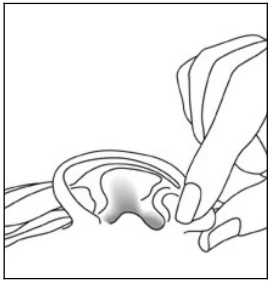
The person giving XTORO otic suspension should hold the bottle in their hand(s) for one or two minutes to warm the suspension (picture 1) to avoid the dizziness that may result from the instillation of a cold suspension into the ear canal, then shake the bottle well before use.
1
- 3. Add drops
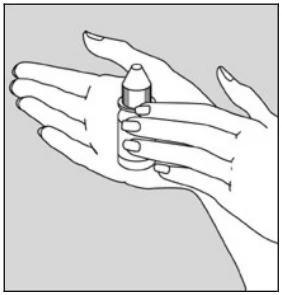
The person receiving XTORO otic suspension should lie on his/her side with the infected ear up (picture 2).
2
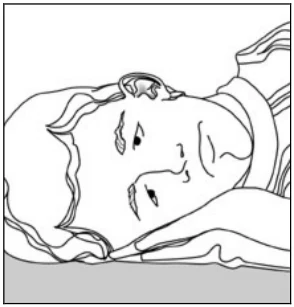
Patient should have 4 drops of XTORO otic suspension put into the infected ear (picture 3). If otowick is in place, patient should have 4 drops of XTORO put into the infected ear at the surface of the otowick. Do not touch the ear, fingers or any other surfaces with the tip of the bottle as it could contaminate the drops.
3
- 4.
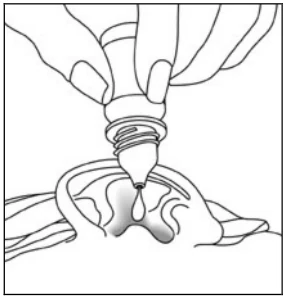
While the patient lies on his/her side, the person giving XTORO otic suspension should gently pull the outer ear lobe upward and backward (picture 4). This will allow the ear drops to flow down into the ear canal.
4
- 5. Stay on side
The patient should remain on his/her side for at least 60 seconds.
Repeat Steps 2-4 for the other ear if both ears are infected.
Overdose:
| In case of drug overdose, contact a health care practitioner, hospital emergency department or regional Poison Control Centre immediately, even if there are no symptoms. |
Missed Dose:
If a dose is missed, it should be given as soon as possible. If it is almost time for the next dose, skip the missed dose and go back to the regular dosing schedule. Do not double the dose.
SIDE EFFECTS AND WHAT TO DO ABOUT THEM
Common side effects (1-10%) include itchiness in the ear canal and headache.
Other side effects include earwax buildup, reduced sensitivity to sounds, nausea, dizziness and ear infection.
Tell your doctor or pharmacist if you have any side effects that bother you or do not go away.
If a severe allergic reaction occurs, with symptoms such as swelling of the lips, mouth and throat, difficulty breathing, rash, or hives, stop using XTORO and contact your doctor or pharmacist immediately.
This is not a complete list of side effects. For any unexpected effects while taking XTORO otic suspension, contact your doctor or pharmacist.
HOW TO STORE IT
Store at 2°C – 25°C. Do not freeze. Protect from light. Shake well before use. Keep out of the reach and sight of children.
Reporting Side Effects
You can report any suspected side effects associated with the use of health products to Health Canada by:
NOTE: Contact your health professional if you need information about how to manage your side effects. The Canada Vigilance Program does not provide medical advice. |
MORE INFORMATION
This document plus the full product monograph, prepared for health professionals can be found at: https://www.merlionpharma.com or by contacting the sponsor MerLion Pharmaceuticals GmbH at: info@merlionpharma.de
Last revised: March 8, 2019
®2019 MerLion