


Product Monograph - Xtoro
SUMMARY PRODUCT INFORMATION
| Route of Administration | Dosage Form / Strength | Clinically Relevant Nonmedicinal Ingredients |
| Otic (topical) | Suspension, 0.3% w/v | Magnesium Chloride For a complete listing see Dosage Forms, Composition and Packaging section. |
INDICATIONS AND CLINICAL USE
XTORO (finafloxacin otic suspension), 0.3% is indicated for the treatment of acute otitis externa (AOE) caused by susceptible strains of Pseudomonas aeruginosa and Staphylococcus aureus, with or without an otowick, in patients age 1 year and older.
To reduce the development of drug-resistant bacteria and maintain the effectiveness of XTORO and other antibacterial drugs, XTORO should be used only to treat infections that are proven or strongly suspected to be caused by susceptible bacteria. When culture and susceptibility information are available, they should be considered in selecting or modifying antibacterial therapy. In the absence of such data, local epidemiology and susceptibility patterns may contribute to the empiric selection of therapy.
Geriatrics (≥ 65 years of age):
No overall differences in safety and effectiveness have been observed between elderly and younger patients.
Pediatrics (1 year of age):
The safety and efficacy of XTORO in infants below one year of age have not been established. The safety and efficacy of XTORO has been studied in pediatric patients 1 year and older (314 patients) in controlled clinical trials.
CONTRAINDICATIONS
The use of XTORO is contraindicated in patients with a history of hypersensitivity to finafloxacin, to other quinolones, or to any of the components in this medication.
WARNINGS AND PRECAUTIONS
General
This product is for otic use only and not approved for ophthalmic use.
This product is not approved for injection. Serious and occasionally fatal hypersensitivity (anaphylactic) reactions, some following the first dose, were reported in patients receiving treatment based on systemically administered quinolones. Serious acute hypersensitivity reactions may require immediate emergency treatment.
If otorrhea persists after a full course of therapy, or if two or more episodes of otorrhea occur within six months, further evaluation is recommended to exclude an underlying condition such as cholesteatoma, foreign body, or a tumor.
Carcinogenesis and Mutagenesis
Carcinogenic potential of finafloxacin has not been studied. Finafloxacin was shown to be genotoxic and clastogenic in reverse mutation assay, mouse lymphoma cell forward mutation assay, and micronucleus assay in vitro.
Susceptibility/Resistance
Development of Drug Resistant Bacteria
Prescribing XTORO in the absence of a proven or strongly suspected bacterial infection is unlikely to provide benefit to the patient and risks the development of resistant organisms.
Potential for Microbial Overgrowth
As with other antibacterial preparations, prolonged use may lead to overgrowth of resistant organisms, including yeast and fungi. If the infection has not improved after one week of treatment, this treatment should be discontinued and cultures should be obtained to guide further treatment. If such infections occur, discontinue use and institute alternative therapy.
Special Populations
Pregnant Women:
Teratogenic Effects:
Finafloxacin was shown to be teratogenic following intravenous administration in rabbits. In the rabbit, the maternal NOEL was 3 mg/kg and fetal toxicity was observed at the lowest dose, 1 mg/kg. Fetal toxicity at 1 mg/kg was characterized by paw hyperflexure, exencephaly, decreased brain tissue, enlarged fontanel, and skeletal effects. Finafloxacin administered to male and female rats at oral doses of 100 mg/kg/day, approximately 60,000 times higher than the clinical dose (based on a 30 μL drop size, 4 drop per dose, BID, and a 50 kg person), resulted in no changes in the fertility index and implantation rate. Effects on male reproductive parameters, markedly low sperm counts and decreased motility, were observed at doses of
500mg/kg/day. Since there are no adequate and well- controlled studies in pregnant women, this drug should not be used in pregnant women unless the potential benefit to the mother justifies the potential risk to the embryo or fetus.
Nursing Women: Finafloxacin has been identified in the milk of nursing rats following oral administration. It is not known whether topical otic administration could result in sufficient systemic absorption to produce detectable quantities in the human breast milk. Nevertheless, caution should be exercised when finafloxacin is administered to a nursing mother.
Pediatrics (> 1 year and older): The safety and efficacy of XTORO in infants below one year of age have not been established.
Geriatrics (≥ 65 years of age): No overall differences in safety and effectiveness have been observed between elderly and younger patients.
ADVERSE REACTIONS
Adverse Drug Reaction Overview
A total of 618 patients were treated with XTORO in two Phase 3 clinical trials. No serious adverse reactions were reported. The most frequently reported adverse reactions of those exposed to XTORO occurring at an incidence of 0.5% included ear pruritus and dizziness.
Clinical Trial Adverse Drug Reactions
Because clinical trials are conducted under very specific conditions the adverse reaction rates observed in the clinical trials may not reflect the rates observed in practice and should not be compared to the rates in the clinical trials of another drug. Adverse drug reaction information from clinical trials is useful for identifying drug-related adverse events and for approximating rates.
| Table 1 - Overall Frequency and Incidence of Common Treatment-Emergent Adverse Events Occurring at ≥ 1.0% - C-10-018 and C-10-019 | |||
| Coded Adverse Event | Finafloxacin n= 618 (%) | Vehicle n= 616 (%) | |
| Ear and labyrinth disorders | |||
| Ear pruritus | 8 (1.3) | 6 (1.0) | |
| Ear Pain | 3 (0.5) | 9 (1.5) | |
| Ear discomfort | 2 (0.3) | 9 (1.5) | |
| Gastrointestinal disorders | |||
| Nausea | 7 (1.1) | 1 (0.2) | |
| Infections and infestations | |||
| Otitis media | 8 (1.3) | 14 (2.3) | |
| Otitis externa | 11 (1.8) | 9 (1.5) | |
| Nervous system disorders | |||
| Headache | 11 (1.8) | 18 (2.9) | |
Coded adverse event = MedDRA Preferred Term (version 15.0) presented by System Organ Class.
A total of 91 patients (14.7%) reported treatment-emergent adverse events in the finafloxacin otic suspension, 0.3% group, and 99 patients (16.1%) reported treatment-emergent adverse events in the Vehicle group. Table 1 presents common treatment-emergent adverse events reported at rates ≥ 1.0% during the Phase 3 efficacy and safety studies (C-10-018 and C-10-019).
Less Common Clinical Trial Adverse Drug Reactions (<1%)
The following adverse drug reactions (events assessed to be related in clinical trials to the use of XTORO) were reported at a rate of < 1.0%:
Ear and labyrinth disorders: ear pruritus, cerumen impaction, hypoacusis
Gastrointestinal disorders: nausea
Infections and infestations: ear infection fungal, otitis externa candida
Nervous system disorders: dizziness, headache
Abnormal Hematologic and Clinical Chemistry Findings
XTORO had no clinically relevant treatment-related effect upon laboratory parameters.
DRUG INTERACTIONS
Overview
Specific drug interaction studies have not been conducted with XTORO. Given the low systemic concentration of finafloxacin following topical otic administration of the product, drug interactions are unlikely to occur.
Drug-Drug Interactions
Specific drug interaction studies have not been conducted with XTORO (finafloxacin otic suspension, 0.3%). Given the low systemic concentration of finafloxacin following topical otic administration of the product, drug interactions are unlikely to occur.
Drug-Food Interactions
Interactions with food have not been established.
Drug-Herb Interactions
Interactions with herbal products have not been established.
Drug-Laboratory Interactions
Interactions with laboratory tests have not been established.
DOSAGE AND ADMINISTRATION
Recommended Dose and Dosage Adjustment
Instill four drops into the affected ear twice daily for seven days. For patients requiring use of an otowick, the initial dose can be doubled (to 8 drops), followed by 4 drops instilled into the affected ear twice daily for seven days.
Missed Dose
If a dose is missed, it should be given as soon as possible. If it is almost time for the next dose, skip the next dose and go back to the regular dosing schedule.
Administration
The suspension should be warmed by holding the bottle in the hand for one or two minutes prior to dosing in order to avoid dizziness which may result from the instillation of a cold suspension. The suspension should be shaken well immediately before using. The patient should lie with the affected ear upward and then the drops should be instilled. The position should be maintained for 60 seconds to facilitate penetration of the drops into the ear canal. Repeat if necessary for the opposite ear. Discard unused portion after therapy is complete.
This product is sterile when packaged. Patients should be advised not to allow the dropper tip to touch any surface, as this may contaminate the suspension.
Patients should be advised that if rash or allergic reaction occurs, they should discontinue the use of the product immediately and contact their physician.
OVERDOSAGE
| For management of a suspected drug overdose, contact your regional Poison Control Centre. |
Due to the characteristics of this preparation, no toxic effects are expected with an otic overdose of this product, nor in the event of accidental ingestion of the contents of one bottle.
ACTION AND CLINICAL PHARMACOLOGY
Mechanism of Action
Finafloxacin is a fluoroquinolone antibiotic targeting bacterial DNA gyrase and topoisomerase IV enzymes. DNA gyrase is important in DNA replication by relaxing the supercoiled DNA. Topoisomerase IV is implicated in separation of linked replicated daughter chromosomes. Inhibition of either or both of these enzymes will result in death of the replicating cell. Evidence that finafloxacin targets DNA gyrase and/or topoisomerase IV was shown by investigations of the activity of finafloxacin against bacteria with mutations in the genes encoding either DNA gyrase or topoisomerase IV enzymes.
Pharmacodynamics
Finafloxacin is an antibiotic that demonstrates improved antibacterial activity under acidic conditions (pH 5.8). Finafloxacin belongs to fluoroquinolone class of antibacterials which involves the inhibition of bacterial type II topoisomerase, DNA gyrase and topoisomerase IV. These enzymes are required for bacterial DNA replication, transcription, repair and recombination. Finafloxacin has been shown to be active against most isolates of
Pseudomonas aeruginosa and Staphylococcus aureus, in both in vitro and clinical studies.
Pharmacokinetics
Systemic pharmacokinetics of finafloxacin after ototopical administration of XTORO (finafloxacin otic suspension, 0.3%) has been studied in healthy subjects and in patients with acute otitis externa. Systemic exposure to finafloxacin was extremely low; and as a result there was insufficient data to determine pharmacokinetic parameters.
In a clinical study, healthy subjects received 4 drops in each ear twice daily for 7.5 days. Quantifiable finafloxacin concentrations (> 0.05 ng/mL) were observed in plasma samples from only 2 of the 14 subjects at 3 time points and the concentrations in these 3 samples were slightly above the quantitation limit. On Day 1, at 1 and 4 hours post dose, samples from 1subject showed plasma levels of 0.0534 ng/mL and 0.0603 ng/mL, respectively. On Day 8, at 12 hours post dose, the sample from the second subject showed a plasma level of 0.0812 ng/mL. At all other sampling time points, plasma levels in these 2 subjects were below the quantitation limit.
In another clinical study, AOE patients were randomized to the following 2 treatment groups: 4 drops of finafloxacin with otowick and 4 drops of finafloxacin without otowick. An additional nonrandomized treatment group of 8 drops of finafloxacin with otowick was included. Each treatment group consisted of 12 patients. Quantifiable finafloxacin concentrations (> 0.05 ng/mL) were observed in plasma samples from 2 of the 36 patients. Plasma concentrations of finafloxacin were not quantifiable (< 0.05 ng/mL) in all other samples collected. In the first of the 2 patients (male, 4 drops without otowick), quantifiable levels of 0.12 ng/mL, 0.100 ng/mL and 0.0735 ng/mL were observed at 0.5, 1.0 and 2 hours, respectively. In the second subject (female, 8 drops with otowick), quantifiable levels of 0.141 ng/mL and 0.234 ng/mL were observed at 1 and 2 hours, respectively.
Absorption: Finafloxacin plasma concentrations are very low following repeated ototopical doses of XTORO (finafloxacin otic suspension), 0.3%. In healthy subjects administered 4 drops in each ear daily for seven days quantifiable finafloxacin concentrations were observed in only 2 of 14 subjects at a total of 3 time points; and these concentrations were just above the quantitation limit (0.05 ng/mL).
Distribution: The protein binding of finafloxacin was determined in rat, dog and human plasma using the equilibrium dialysis method. Over a concentration range of 10 to 1000 ng/mL, the percent of bound drug was independent of concentration. At 10 ng/mL, a level relevant to levels following ototopical administration, the percents of bound drug in rat, dog and human plasma were 44.1%, 17.1% and 21.0%, respectively.
The distribution of 14C-AL-60731 as total radioactivity into blood cells was determined with blood and plasma from rats following a 2 mg (free base)/kg oral dose. At Cmax, the blood to plasma ratio was 0.91, which corresponds to a blood cell-to-plasma ratio of 0.79 at an assumed hematocrit of 0.45.
Metabolism: The systemic exposure to finafloxacin is extremely low following ototopical doses. Using a very sensitive mass spectrometry assay with a lower quantitation limit of 0.05 ng/mL, unchanged parent drug was detected in only a few samples.
Excretion: Data in rats showed the primary route of excretion of drug-derived radioactivity was via urine with a mean of 57.5 ± 3.45% of the dose recovered in urine through 120 hours post-dose. Excretion in feces accounted for 38.7 ± 5.66% of the dose. Only a trace of quantifiable radioactivity was recovered in traps designed for collection of expired CO2 and organic volatile components. An additional 5.50 ± 2.88% was recovered in cage rinses. At study termination (120 hours), a total of 102 ± 3.44% of the dose was recovered.
The excretion of radioactive drug equivalents was rapid with 92% of the dose recovered in the first 24 hours. The excretion of radioactivity in the bile following the intravenous dose indicates radioactive drug equivalents are excreted in the bile.
Special Populations and Conditions
Pediatrics:
The safety and efficacy of XTORO has been established in pediatric patients 1 year and older (314 patients) in adequate and well controlled clinical trials.
Geriatrics: No overall differences in safety and effectiveness have been observed between elderly and younger patients.
Gender and Race: The extent of exposure was slightly higher in females compared to males. The elimination half-life was similar between females and males.
A review of adverse events in the Phase 3 efficacy and safety studies (C-10-018 and C-10-019) by age category, gender, and race revealed no clinically relevant differences between the subgroups.
Renal Insufficiency & Hepatic Insufficiency:
There are no specific studies in patients with renal insufficiency or with hepatic insufficiency.
Genetic Polymorphism: No data available.
STORAGE AND STABILITY
Store at 2°C – 25°C. Do not freeze. Protect from light. Shake well before use.
SPECIAL HANDLING INSTRUCTIONS
None.
DOSAGE FORMS, COMPOSITION AND PACKAGING
XTORO (finafloxacin otic suspension) 0.3% w/v is a sterile, preserved, aqueous, ototopical suspension supplied in an opaque plastic bottle with a controlled drop tip and a white cap.
Net contents are 0.5 mL in a 4ml bottle (sample), 5 ml supplied in an 8 mL bottle and 7.5 mL supplied in a 10 mL bottle.
XTORO (finafloxacin otic suspension), 0.3% w/v. Active ingredient: finafloxacin, 0.3% w/v. Preservative: benzalkonium chloride (0.005 % w/v). Inactive ingredients include: sodium chloride, hydroxyethylcellulose, tyloxapol, magnesium chloride, and purified water. Hydrochloric acid and/or sodium hydroxide may be added to adjust pH.
During drug product manufacturing, finafloxacin forms a complex with magnesium.
PART II: SCIENTIFIC INFORMATION
PHARMACEUTICAL INFORMATION
Drug Substance
Proper name: finafloxacin
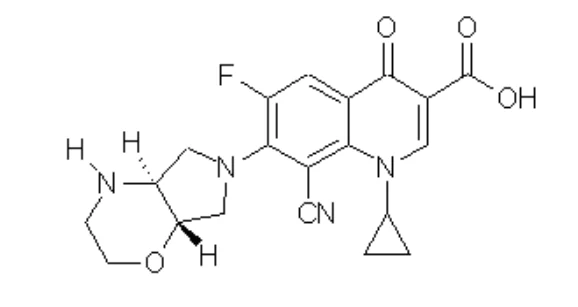
Chemical name: (-)-8-cyano-1-cyclopropyl-6-fluoro-7-[(4aS,7aS)-
hexahydropyrrolo[3,4-b]-1,4-oxazin-6(2H)-y]-4-oxo-1,4- dihydroquinoline-3-carboxylic acid
Molecular formula and molecular mass: C20H19FN4O4; 398.4
Structural formula:
Physicochemical properties: Finafloxacin is a white to yellow powder or crystals that is slightly soluble in water (0.125 mg/mL).
Polymorphic form A
pH and pKa: The dissociation constants reported for finafloxacin are pKa1 5.6
(carboxylate function and pKa2 7.8 (N in C7 substituent).
During drug product manufacturing, finafloxacin forms a complex with magnesium in situ.
CLINICAL TRIALS
Study demographics and trial design
Two pivotal clinical studies were conducted (C-10-018 and C-10-019). Both studies were multicenter, double-masked, parallel-group, vehicle-controlled, randomized studies and were conducted in patients 6 months of age and older. The objective of these studies was to demonstrate the superiority of XTORO (finafloxacin otic suspension, 0.3%) relative to Finafloxacin Vehicle (Vehicle) based upon clinical cures at test-of-cure (TOC) for the treatment of AOE.
The patient population chosen for inclusion in these clinical studies are directly representative of patients that are expected to be treated with XTORO in the general population.
Table 2 - Summary of patient demographics for pivotal clinical trials for the treatment of acute otitis externa (AOE)
| Study # | Trial design | Dosage, route of administration and duration | Study subjects (n=number) | Mean age (Range) | Gender |
| C-10-018 | Multicenter, double-masked, parallel-group, vehicle-controlled, randomized | 4 drops, twice daily for 7 days Ototpoical administration | n = 686 | 31.6 (0.8 – 85.0) | Male: 301 Female: 385 |
| C-10-019 | Multicenter, double-masked, parallel-group, vehicle-controlled, randomized | 4 drops, twice daily for 7 days Ototpoical administration | n = 548 | 18.9 (0.9 – 82.0) | Male:230 Female: 318 |
Study results
In two randomized multicenter, vehicle-controlled clinical trials, XTORO dosed 2 times per day for 7 days was superior to its Vehicle for both clinical and microbiological outcomes as well as in time to cessation of pain in patients with acute otitis externa (AOE). Among 560 patients (161 with an otowick) that were pathogen positive (baseline microbiological specimen that contained Staphylococcus aureus and/or Pseudomonas aeruginosa), clinical cure on Day 11 was 72% and 69% in XTORO versus 33% and 40% in Vehicle.
Table 3 – Clinical Cure Rate at Day 11 (TOC) for Pathogen Positive Subsets of ITT Population
| STUDY C-10-018 | |||||||
Fina (N=145) n (%) | Veh (N=138) n (%) | Difference | 95% CIa | p-valueb | |||
| 104 (71.7) | 46 (33.3) | 38.4 | (27.6, 49.1) | <0.0001 | |||
| STUDY C-10-019 | |||||||
Fina (N=147) n (%) | Veh (N=130) n (%) | Difference | 95% CIa | p-valueb | |||
| 101 (68.7) | 52 (40.0) | 28.7 | (17.4, 40.0) | <0.0001 | |||
| POOLED | |||||||
Fina (N=292) n (%) | Veh (N=268) n (%) | Difference | 95% CIa | p-valueb | |||
| 205 (70.2) | 98 (36.6) | 33.6 | (25.8, 41.4) | <0.0001 | |||
Fina = Finafloxacin Otic Suspension, 0.3%
Veh = Finafloxacin Vehicle
Clinical cure at Day 11 (TOC) was attained if the sum of tenderness, erythema, and edema was zero (i.e. none) at the Day 11 (TOC) visit.
CI = Confidence interval
a 95% confidence interval based on non-stratified analysis.
b Test = stratified CMH
In these same patients microbiological success (eradication of all baseline organisms) was achieved on Day 11 in 67% and 66% in XTORO versus 13% and 12% in the Vehicle treated patients.
Table 4 – Microbiological Success Rate at Day 11 (TOC) for Pathogen Positive Subsets of ITT Population
| STUDY C-10-018 | |||||||
Fina (N=145) n (%) | Veh (N=138) n (%) | Difference | 95% CIa | p-valueb | |||
| 97 (66.9) | 18 (13.0) | 53.9 | (44.4, 63.4) | <0.0001 | |||
| STUDY C-10-019 | |||||||
Fina (N=147) n (%) | Veh (N=130) n (%) | Difference | 95% CIa | p-valueb | |||
| 97 (66.0) | 15 (11.5) | 54.4 | (45.0, 63.9) | <0.0001 | |||
| POOLED | |||||||
Fina (N=292) n (%) | Veh (N=268) n (%) | Difference | 95% CIa | p-valueb | |||
| 194 (66.4) | 33 (12.3) | 54.1 | (47.4, 60.8) | <0.0001 | |||
Fina = Finafloxacin Otic Suspension, 0.3%
Veh = Finafloxacin Vehicle
Microbial success was attained if all pretherapy bacteria were absent from the exit specimen.
CI = Confidence interval
a 95% confidence interval based on non-stratified analysis.
b Test = stratified CMH
The median time to cessation of ear pain in patients treated with XTORO was 4.0 and 3.0 days compared to 7.0 and 6.5 days in vehicle.
Table 5 – Time to Cessation of Pain for Pathogen Positive Subsets of ITT Population
| STUDY C-10-018 | STUDY C-10-019 | POOLED | ||||||||||||||||||||
Fina (N=138) | Veh (N=128) | Fina (N=138) | Veh (N=125) | Fina (N=276) | Veh (N=253) | |||||||||||||||||
| Event | 123 (89.1%) | 88 (68.8%) | 122 (88.4%) | 86 (68.8%) | 245 (88.8%) | 174 (68.8%) | ||||||||||||||||
Median (95% CIa) | 4.0 (3.5, 4.5) | 7.0 (5.0, 8.5) | 3.0 (2.5, 3.5) | 6.5 (5.0, 8.0) | 3.5 (3.0, 3.5) | 7.0 (5.5, 8.0) | ||||||||||||||||
Difference in Medians (95% CIb) | -3.0 (-5.0, -0.8) | -3.6 (-5.0, -2.0) | -3.3 (-4.5, -2.0) | |||||||||||||||||||
Hazard Ratio (95% CI) | 1.8 (1.4, 2.4) | 2.3 (1.7, 3.0) | 2.0 (1.6, 2.4) | |||||||||||||||||||
| p-valuec | <0.0001 | <0.0001 | <0.0001 | |||||||||||||||||||
Fina = Finafloxacin Otic Suspension, 0.3%
Veh = Finafloxacin Vehicle
CI = Confidence interval
Cessation of ear pain was defined as occurring at the first time point that ear pain was absent (morning or evening) and did not return for any/all subsequent diary entries.
a Medians are product-limit estimates; 95% confidence intervals estimated using Brookmeyer-Crowley method with log-log transformation.
b Difference and 95% confidence interval estimated using bootstrap procedure with 10,000 bootstrap samples, non-stratified analysis.
c Test = Cox proportional hazard model, adjusted for pain medication use, for treatment comparisons.
In clinically cured patients XTORO demonstrated eradication rates 90% and 89% in Staphylococcus aureus and 88% and 90% for Pseudomonas aeruginosa. Vehicle eradication rates were 33% and 31% for Staphylococcus aureus and 15% and 24% for Pseudomonas aeruginosa.
DETAILED PHARMACOLOGY
Human Pharmacodynamics
Since absorption is very low after ototopical administration of XTORO (finafloxacin otic suspension, 0.3%), no human pharmacodynamics studies were conducted.
Animal Pharmacodynamics
Initial evaluations centered on the in vitro characterization of Gram-positive and Gram-negative clinical isolates of multiple species of bacteria associated with otic infections. The antibacterial activities of finafloxacin were increased at lower pH environment with the optimal pH range between pH 5.8–6.2. Finafloxacin demonstrated potent activity against otic pathogens P. aeruginosa and S. aureus when tested at pH 5.8 and neutral pH in vitro studies.
The finafloxacin clinical formulation was evaluated in the guinea pig AOE model using
P. aeruginosa clinical isolates, from human subjects with AOE, as the challenge organism.
The finafloxacin clinical formulation reduced the number of P. aeruginosa by approximately
5-log CFU/mL.
Human Pharmacokinetics
The systemic pharmacokinetics of finafloxacin after ototopical administration of XTORO in healthy subjects and in patients with acute otitis externa were studied. In the ototopical pharmacokinetic studies, systemic exposure to finafloxacin was extremely low; and as a result there was insufficient data to determine pharmacokinetic parameters.
Because of the very low levels of systemic exposure following ototopical doses of XTORO, drug-drug interactions are not likely. In addition, in vitro and in vivo studies have shown the following that support the lack of a potential for drug-drug interactions. Protein binding is relatively low (21%). Finafloxacin is not an inhibitor of the major cytochrome P-450 isozymes. No detectable conversion of finafloxacin was observed in incubations with human (as well as rat, rabbit and monkey) hepatic microsomes. Little or no oxidative Phase I metabolism has been observed in rats and dogs with the only discernible metabolite being a glucuronide metabolite.
Animal Pharmacokinetics
The systemic absorption, distribution and excretion pharmacokinetics of finafloxacin were determined in rats and dogs which are the primary species used in safety assessment studies.
Very low amounts of 14C- finafloxacin radioactive drug equivalents distribute into the inner ear past the tympanic membrane and external ear canal of guinea pigs even after multiple ototopical doses (BID for 7 days).
Protein binding in rat, dog and human plasma is relatively low (range 17.1% to 44.1%) and is not a concern for drug-drug interactions relating to protein binding.
Radioactive drug equivalents are secreted in the milk of lactating rats. However, both milk and maternal plasma drug equivalent levels decline in parallel and are <0.1% of those at Cmax after 12 hours post-dose.
Finafloxacin is not an inhibitor of the major cytochrome P450 isozymes (1A2, 2D6, 2C9, 2C19 and 3A4) indicating a low potential for cytochrome P450 mediated drug-drug interactions.
Following repeated doses in rats with finafloxacin, no meaningful changes were found in hepatic enzyme activities (total microsomal protein, total cytochrome P-450 content and cytochrome P450 and uridine-diphosphoglucuronosyl transferase activities.
MICROBIOLOGY
Microbiology
Finafloxacin belongs to fluoroquinolone class of antibacterials involved in the inhibition of bacterial type II topoisomerase, DNA gyrase and topoisomerase IV, which are required for bacterial DNA replication, transcription, repair and recombination. Finafloxacin has been shown in vitro and clinical studies to be active against the bacterial pathogens, Staphylococcus aureus and Pseudomonas aeruginosa, associated with acute otitis externa.
Resistance: Cross-resistance has been observed between finafloxacin and other fluoroquinolones. There is generally no cross-resistance between quinolones and other classes of antibacterial agents.
TOXICOLOGY
Carcinogenesis and Mutagenesis
Finafloxacin was not assessed for carcinogenic potential in mice or rats as the proposed finafloxacin drug product will only be used for infrequent short courses (7 day) of low dose topical clinical administration and the systemic exposure following topical otic administration is low.
Finafloxacin was shown to be genotoxic and clastogenic in reverse mutation assay, mouse lymphoma cell forward mutation assay, and micronucleus assay in vitro, although V79/HRPT test with or without UV irradiation and micronucleus test in vivo were negative.
Reproductive Toxicity and Teratogenicity Finafloxacin administered to male and female rats at oral doses of 100 mg/kg/day, approximately 60,000 times higher than the clinical dose (based on a 30 μL drop size, 4 drop per dose, BID, and a 50 kg person), resulted in no changes in the fertility index and implantation rate. Effects on male reproductive parameters, markedly low sperm counts and decreased motility, were observed at doses of 500mg/kg/day, approximately 300,000 times higher than the clinical dose. Two studies were performed investigating the effects on embryo-fetal development in rats (oral) and rabbits (IV). Finafloxacin was shown to be teratogenic following intravenous administration in rabbits, but not in the rat following oral administration. In the rabbit, the maternal NOEL was 3 mg/kg and fetal toxicity was observed at the lowest dose, 1 mg/kg. Fetal toxicity at 1 mg/kg was characterized by paw hyperflexure, exencephaly, decreased brain tissue, enlarged fontanel, and skeletal effects. Finafloxacin has been identified in the milk of nursing rats following oral administration.
Animal Toxicology and/or Pharmacology
In multiple studies performed in rodents and non-rodents, subchronic and chronic toxicity tests of finafloxacin showed systemic effects such as joint/cartilage defects in dogs and centrilobular hepatocellular hypertrophy in female dogs. Most, if not all of these effects were reversible after drug withdrawal. The NOAELs were 30 and 100 mg/kg/day in the dog and rat, respectively, which are 55,000x greater than given or absorbed by the otic route.
Two 14-day repeated-dose administration studies have been conducted utilizing administration to the external auditory canal of rabbits. Based upon the results of histological evaluations, there were no adverse effects of repeated administration of the finafloxacin suspension.
REFERENCES
- 1. Human Pharmacokinetics and Safety Profile of Finafloxacin, a New Fluoroquinolone Antibiotic, in Healthy Volunteers. Heena Patel, Arne Andresen, Andreas Vente, Hans-Dietrich Heilmann, Will Stubbings, Michael Seiberling, Luis Lopez-Lazaro, Rolf Pokorny, Harald Labischinski: Antimicrob Agents Chemother. 2011 September; 55(9): 4386–4393.
- 2. In Vitro Spectrum of Activity of Finafloxacin, a Novel, pH-Activated Fluoroquinolone, under Standard and Acidic Conditions. Will Stubbings, Pamela Leow, Goh Chee Yong, Falicia Goh, Barbara Körber-Irrgang, Michael Kresken, Rainer Endermann, Harald Labischinski: Antimicrob Agents Chemother. 2011 September; 55(9): 4394–4397.
- 3. Activity of the Investigational Fluoroquinolone Finafloxacin against Ciprofloxacin-Sensitive and -Resistant Acinetobacter baumannii Isolates. Paul G. Higgins, Will Stubbings, Hilmar Wisplinghoff, Harald Seifert: Antimicrob Agents Chemother. 2010 April; 54(4): 1613–1615.
- 4. Comparative In Vitro Activities of the Novel Antibacterial Finafloxacin against Selected Gram-Positive and Gram-Negative Bacteria Tested in Mueller-Hinton Broth and Synthetic Urine. Axel Dalhoff, Will Stubbings, Sabine Schubert: Antimicrob Agents Chemother. 2011 April; 55(4): 1814–1818.