


Product Monograph - Xultophy
Recent Major Label Changes
| 7 Warnings and Precautions, Gastrointestinal | 2024-04 |
|---|---|
| 7 Warnings and Precautions, Gastrointestinal | 2025-08 |
| 7 Warnings and Precautions, Perioperative considerations | 2025-08 |
Table of Contents
Recent Major Label Changes ................................................................................................. 2
Table of Contents .................................................................................................................. 2
Part 1: Healthcare Professional Information........................................................................... 5
1 Indications ................................................................................................................ 5
1.1 Pediatrics ............................................................................................................ 5
1.2 Geriatrics............................................................................................................. 5
2 Contraindications ....................................................................................................... 5
3 Serious Warnings and Precautions Box ....................................................................... 6
4 Dosage And Administration ........................................................................................ 6
4.1 Dosing Considerations ........................................................................................ 6
4.2 Recommended Dose And Dosage Adjustment .................................................. 7
4.4 Administration .................................................................................................... 9
4.5 Missed Dose ........................................................................................................ 9
5 Overdose ................................................................................................................. 10
6 Dosage Forms, Strengths, Composition and Packaging .............................................. 10
7 Warnings And Precautions ....................................................................................... 11
General .......................................................................................................................... 11
Avoidance Of Medication Errors ....................................................................................... 11
Carcinogenesis And Mutagenesis ..................................................................................... 11
Cardiovascular ................................................................................................................... 12
Driving And Operating Machinery .................................................................................... 12
Endocrine And Metabolism .............................................................................................. 12
Gastrointestinal ................................................................................................................. 14
Hepatic/Biliary/Pancreatic ................................................................................................ 14
Immune .......................................................................................................................... 15
Monitoring And Laboratory Tests ..................................................................................... 15
Perioperative Considerations ........................................................................................... 15
Ophthalmologic ................................................................................................................. 15
Renal .......................................................................................................................... 15
Reproductive Health: Female And Male Potential ........................................................... 16
Skin And Subcutaneous Tissue Disorders ......................................................................... 16
Thyroid Disease ................................................................................................................. 16
7.1 Special Populations ........................................................................................... 16
7.1.1 Pregnant Women .............................................................................................. 16
7.1.2 Breast-Feeding .................................................................................................. 16
7.1.3 Pediatrics ........................................................................................................... 17
7.1.4 Geriatrics ........................................................................................................... 17
8 Adverse Reactions .................................................................................................... 17
8.1 Adverse Reaction Overview .............................................................................. 17
8.2 Clinical Trial Adverse Reactions ........................................................................ 17
8.3 Less Common Clinical Trial Adverse Reactions ................................................ 19
8.5 Post-Market Adverse Reactions ....................................................................... 20
9 Drug Interactions ..................................................................................................... 20
9.2 Drug Interactions Overview .............................................................................. 20
9.3 Drug-Behavioural Interactions ......................................................................... 20
9.4 Drug-Drug Interactions ..................................................................................... 21
9.5 Drug-Food Interactions ..................................................................................... 23
9.6 Drug-Herb Interactions ..................................................................................... 23
9.7 Drug-Laboratory Test Interactions ................................................................... 24
10 Clinical Pharmacology .............................................................................................. 24
10.1 Mechanism Of Action ....................................................................................... 24
10.2 Pharmacodynamics .......................................................................................... 24
10.3 Pharmacokinetics ............................................................................................. 24
11 Storage, Stability And Disposal ................................................................................. 26
12 Special Handling Instructions .................................................................................... 27
Part 2: Scientific Information ............................................................................................... 28
13 Pharmaceutical Information ..................................................................................... 28
14 Clinical Trials ............................................................................................................ 29
14.1 Clinical Trials By Indication ............................................................................... 29
Type 2 Diabetes - Adults ................................................................................................... 29
15 Microbiology ............................................................................................................ 44
16 Non-Clinical Toxicology ............................................................................................ 44
Patient Medication Information .......................................................................................... 48
Part 1: Healthcare Professional Information
1 Indications
XULTOPHY® (insulin degludec + liraglutide injection) is indicated for:
- once-daily treatment, as an adjunct to diet and exercise and in combination with oral medicinal products for the treatment of diabetes (see 14 Clinical Trials for patient populations and drug combinations tested), to improve glycemic control in adults with type 2 diabetes mellitus.
XULTOPHY® should not be used for the treatment of type 1 diabetes mellitus or diabetic ketoacidosis.
Patients on basal insulin or GLP-1 receptor agonist should not continue these drugs when beginning treatment with XULTOPHY®, since XULTOPHY® contains both basal insulin and a GLP-1 receptor agonist.
XULTOPHY® has not been studied in combination with prandial insulin (short acting).
1.1 Pediatrics
Pediatrics (< 18 years of age): XULTOPHY® is not indicated for use in children and adolescents below 18 years of age. No studies have been performed with XULTOPHY® in patients below 18 years of age.
1.2 Geriatrics
Geriatrics (> 65 years of age): XULTOPHY® can be used in elderly patients. No overall difference in safety or efficacy was observed in clinical trial subjects ≥65 years of age compared to younger patients, but greater sensitivity of older individuals cannot be ruled out. XULTOPHY® was studied in a limited number of patients 75 years of age or older (see 7.1 Special Populations; 4 Dosage And Administration; and 10 Clinical Pharmacology sections). Glucose monitoring is to be intensified and the dose adjusted on an individual basis.
2 Contraindications
Insulin degludec and liraglutide injection is contraindicated in patients who are hypersensitive to XULTOPHY®, insulin degludec, liraglutide (the mono-components of XULTOPHY®), or to any ingredient in the formulation, including any non-medicinal ingredient, or component of the container. For a complete listing, see 6 Dosage Forms, Strengths, Composition and Packaging.
- Patients with a personal or family history of medullary thyroid carcinoma or in patients with Multiple Endocrine Neoplasia syndrome type 2 (MEN 2).
- Pregnant or breastfeeding women.
- During episodes of hypoglycemia (see 5 Overdosage).
3 Serious Warnings and Precautions Box
Hypoglycemia is the most common adverse effect of insulin products. As with all insulin products the timing of hypoglycemia may differ. Glucose monitoring shall be performed for all patients with Diabetes Mellitus treated with insulins (see 7 Warnings and Precautions, Endocrine and Metabolism, Hypoglycemia).
- Uncorrected hypoglycemic or hyperglycemic reactions can cause loss of consciousness, coma or even death.
- Any transfer of insulin products should be made cautiously and only under medical supervision (see 4 Dosage and Administration).
- XULTOPHY® should be inspected visually prior to administration and should only be used if the solution appears clear and colourless.
- XULTOPHY® must not be mixed with any other insulin.
- XULTOPHY® is a long-acting insulin-containing product and MUST NOT be administered Intravenously (IV) or be used in insulin infusion pumps.
Risk of Thyroid C-cell Tumours
- Liraglutide, one of the components of XULTOPHY® causes dose-dependent and treatment-duration-dependent thyroid C-cell tumours at clinically relevant exposures in both genders of rats and mice. It is unknown whether liraglutide causes thyroid C-cell tumours, including medullary thyroid carcinoma (MTC), in humans, as human relevance could not be ruled out by clinical or nonclinical studies.
- Liraglutide is contraindicated in patients with a personal or family history of MTC and in patients with Multiple Endocrine Neoplasia syndrome type 2 (MEN 2). Based on the findings in rodents, monitoring with serum calcitonin or thyroid ultrasound was performed during clinical trials, but this may have increased the number of unnecessary thyroid surgeries. It is unknown whether monitoring with serum calcitonin or thyroid ultrasound will mitigate human risk of thyroid C-cell tumours. Patients should be counselled regarding the risk and symptoms of thyroid tumours.
4 Dosage and Administration
4.1 Dosing Considerations
- XULTOPHY® is given once daily by subcutaneous administration.
- XULTOPHY® can be added to combined metformin and sulfonylurea therapy. The current dose of sulfonylurea can be lowered at the discretion of the doctor to minimize the risk of unacceptable hypoglycemia.
- XULTOPHY® is not recommended as first-line treatment for patients inadequately controlled on diet and exercise.
- XULTOPHY® can be administered at any time of the day independent of meals, preferably at the same time of the day.
- XULTOPHY® is to be dosed in accordance with the individual patient’s needs. It is recommended to optimise glycemic control via dose adjustment based on fasting plasma glucose.
- As with all insulin products, adjustment of dose may be necessary if patients undertake increased physical activity, change their usual diet or during concomitant illness.
4.2 Recommended Dose and Dosage Adjustment
The following are important dosing information for XULTOPHY®, a combination of insulin degludec and liraglutide:
- Discontinue therapy with GLP-1 receptor agonist or basal insulin prior to initiation of XULTOPHY®
- The recommended starting dose of XULTOPHY® in patients naïve to basal insulin or GLP-1 receptor agonist is 10 units (10 units of insulin degludec and 0.36 mg of liraglutide) given subcutaneously once daily.
- The recommended starting dosage of XULTOPHY® in patients currently on basal insulin or GLP-1 receptor agonist is 16 units (16 units of insulin degludec and 0.58 mg of liraglutide) given subcutaneously once daily.
- The maximum daily dosage of XULTOPHY® is 50 units (50 units of insulin degludec and 1.8 mg of liraglutide).
- The XULTOPHY® pen delivers doses from 1 to 50 units with each injection (see Table 1 )
Table 1 presents the units of insulin degludec and the milligrams of liraglutide in each dosage of XULTOPHY®
Table 1: Units of Insulin Degludec and Milligrams of Liraglutide in Each Dosage of XULTOPHY®
XULTOPHY® (dose counter display)1 | insulin degludec component dose | liraglutide component dose | Comment |
|---|---|---|---|
XULTOPHY® (dose counter display)1 | insulin degludec component dose | liraglutide component dose | Comment |
| 0 | 0 | 0 | |
| 1 | 1 unit | 0.04 mg | |
| 2 | 2 units | 0.07 mg | |
| 3 | 3 units | 0.11 mg | |
| 4 | 4 units | 0.14 mg | |
| 5 | 5 units | 0.18 mg | |
| 6 | 6 units | 0.22 mg | |
| 7 | 7 units | 0.25 mg | |
| 8 | 8 units | 0.29 mg | |
| 9 | 9 units | 0.32 mg | |
| 10 | 10 units | 0.36 mg | Recommended starting dose for patients naïve to basal insulin or GLP-1 receptor agonist |
| 11 | 11 units | 0.4 mg | |
| 12 | 12 units | 0.43 mg | |
| 13 | 13 units | 0.47 mg | |
| 14 | 14 units | 0.5 mg | |
| 15 | 15 units | 0.54 mg | |
| 16 | 16 units | 0.58 mg | Recommended starting dose for patients currently on basal insulin or GLP-1 receptor agonist |
| 17 | 17 units | 0.61 mg | |
| 18 | 18 units | 0.65 mg | |
| 19 | 19 units | 0.68 mg | |
| 20 | 20 units | 0.72 mg | |
| 21 | 21 units | 0.76 mg | |
| 22 | 22 units | 0.79 mg | |
| 23 | 23 units | 0.83 mg | |
| 24 | 24 units | 0.86 mg | |
| 25 | 25 units | 0.90 mg | |
| 26 | 26 units | 0.94 mg | |
| 27 | 27 units | 0.97 mg | |
| 28 | 28 units | 1.01 mg | |
| 29 | 29 units | 1.04 mg | |
| 30 | 30 units | 1.08 mg | |
| 31 | 31 units | 1.12 mg | |
| 32 | 32 units | 1.15 mg | |
| 33 | 33 units | 1.19 mg | |
| 34 | 34 units | 1.22 mg | |
| 35 | 35 units | 1.26 mg | |
| 36 | 36 units | 1.30 mg | |
| 37 | 37 units | 1.33 mg | |
| 38 | 38 units | 1.37 mg | |
| 39 | 39 units | 1.40 mg | |
| 40 | 40 units | 1.44 mg | |
| 41 | 41 units | 1.48 mg | |
| 42 | 42 units | 1.51 mg | |
| 43 | 43 units | 1.55 mg | |
| 44 | 44 units | 1.58 mg | |
| 45 | 45 units | 1.62 mg | |
| 46 | 46 units | 1.66 mg | |
| 47 | 47 units | 1.69 mg | |
| 48 | 48 units | 1.73 mg | |
| 49 | 49 units | 1.76 mg | |
| 50 | 50 units | 1.8 mg | Maximum daily dosage (see 7 Warnings and Precautions) |
- 1. The dose counter on the XULTOPHY® pen displays numbers for the even units and displays lines for the odd units.
Titration of XULTOPHY®
- After starting the recommended starting dose of XULTOPHY®, titrate the dosage upwards or downwards by two units (see Table 2) once weekly or twice weekly (every three to four days) based on the patient’s metabolic needs, blood glucose monitoring results, and glycemic control goal until the desired fasting plasma glucose is achieved. The dosage of XULTOPHY® is between 10 to 50 units (see Table 1 ).
- To minimize the risk of hypoglycemia or hyperglycemia, additional titration may be needed with changes in physical activity, meal patterns (i.e., macronutrient content or timing of food intake), or renal or hepatic function; during acute illness; or when used with other medications (see 7 Warnings and Precautions and 9 Drug Interactions).
- The dosage of XULTOPHY® should be individualized and titrated under the supervision of a health care provider in accordance with the metabolic needs of the patient and the glycemic control target and with appropriate glucose monitoring.
Table 2: Recommended Titration of XULTOPHY® (Once or Twice Weekly)1
Self-Monitored Fasting Plasma Glucose | XULTOPHY® Dosage Adjustment |
|---|---|
| Above target range | + 2 units |
| Within target range | 0 units |
| Below target range |
|
- 1. The recommended XULTOPHY® dosage is between 10 to 50 units (see Table 1)
Renal impairment
When XULTOPHY® is used in patients with mild or moderate renal impairment, glucose monitoring is to be intensified and the dose adjusted on an individual basis. XULTOPHY® cannot be recommended for use in patients with severe renal impairment including patients with end-stage renal disease (see 7 Warnings and Precautions and 10 Clinical Pharmacology).
Hepatic impairment
When XULTOPHY® is used in patients with hepatic impairment, glucose monitoring is to be intensified and the dose adjusted on an individual basis.
XULTOPHY® has not been studied in combination with dipeptidyl peptidase 4 (DPP-4) inhibitors, glinides or prandial insulin.
Pediatrics
Health Canada has not authorized an indication for pediatric use.
4.4 Administration
- The XULTOPHY® pen is for single-patient-use only (see WARNINGS AND PRECAUTIONS).
- Train patients on proper use and injection technique before initiating XULTOPHY®.
- Always check the label on the XULTOPHY® pen before administration (see 7 Warnings and Precautions).
- Inspect visually for particulate matter and discoloration prior to administration. Only use XULTOPHY® if the solution appears clear and colourless.
- Inject XULTOPHY® subcutaneously into the thigh, upper arm, or abdomen.
- Rotate injection sites within the same region from one injection to the next to reduce the risk of lipodystrophy and localized cutaneous amyloidosis (see 7 Warnings and Precautions and 8 Adverse Reactions).
- Use XULTOPHY® with caution in patients with visual impairment who may rely on audible clicks to dial their dose.
- The XULTOPHY® pen dials in one-unit increments.
- Do not administer XULTOPHY® intravenously, intramuscularly, or in an insulin infusion pump.
- Do not dilute or mix XULTOPHY® with any other insulin products or solutions.
- Do not split the dose of XULTOPHY®.
4.5 Missed Dose
- Instruct patients who miss a dose of XULTOPHY® to resume the once-daily regimen as prescribed with the next scheduled dose. Do not administer an extra dose or increase the dose to make up for the missed dose.
- If more than three days have elapsed since the last XULTOPHY® dose, reinitiate XULTOPHY® at the recommended starting dose to mitigate any gastrointestinal symptoms associated with reinitiation of treatment (see 4 Dosage and Administration).
5 Overdose
Limited data are available with regard to overdose of XULTOPHY®.
Hypoglycemia may develop if a patient is dosed with more XULTOPHY® than required:
- Mild hypoglycemic episodes can be treated by oral administration of glucose or other products containing sugar. It is therefore recommended that the patient always carries sugar-containing products
- Severe hypoglycemic episodes, where the patient is not able to treat themselves, can be treated with glucagon given intramuscularly, subcutaneously or intranasally by a trained person, or with glucose given intravenously by a healthcare professional. Glucose must be given intravenously if the patient does not respond to glucagon within 10 to 15 minutes. Upon regaining consciousness, administration of oral carbohydrates is recommended for the patient in order to prevent a relapse.
For the most recent information in the management of a suspected drug overdose, contact your regional poison control centre or Health Canada’s toll-free number, 1-844 POISON-X (1-844-764-7669).
6 Dosage Forms, Strengths, Composition and Packaging
To help ensure the traceability of biologic products, healthcare professionals should record both the brand name and the non-proprietary (active ingredient) name as well as other product-specific identifiers such as the Drug Identification Number (DIN) and the batch/lot number of the product supplied.
Table 3: Dosage Forms, Strengths, Composition and Packaging
XULTOPHY® is an injection supplied as a sterile, clear, colorless solution in a 3 mL pre-filled, disposable, single-patient use pen injector.
Pack sizes of 3 and 5 pre-filled pens.
Not all pack sizes may be marketed.
XULTOPHY® pre-filled pens are recommended to be used with NovoFine® needles
| Route of Administration | Dosage Form / Strength/Composition | Non-medicinal Ingredients |
| Subcutaneous use | Injectable, 100 units/mL (insulin degludec) + 3.6 mg/mL (liraglutide) | Glycerol, hydrochloric acid, phenol, sodium hydroxide, water for injections and zinc acetate. |
XULTOPHY® is a sterile, aqueous, clear, and colourless solution. Each pre-filled pen contains 3 mL equivalent to 300 units of insulin degludec and 10.8 mg of liraglutide. Each mL contains 100 units of insulin degludec and 3.6 mg of liraglutide. One unit contains 1 unit of insulin degludec and 0.036 mg of liraglutide.
7 Warnings and Precautions
Please see the Serious Warnings and Precautions Box at the beginning of Part I: Healthcare Professional Information.
General
XULTOPHY® should not be used in patients with type 1 diabetes mellitus or for the treatment of diabetic ketoacidosis.
Hypokalemia is among the potential clinical adverse effect associated with the use of all insulins therapies. This potential clinical adverse effect may be relevant in patients who are on potassium lowering drugs or losing potassium through other means (e.g. diarrhea) (See 8 Adverse Reactions). Untreated hypokalemia may cause respiratory paralysis, ventricular arrhythmia, and death. Monitor potassium levels in patients at risk for hypokalemia if indicated (e.g., patients using potassium-lowering medications, patients taking medications sensitive to serum potassium concentrations).
Thiazolidinediones (TZDs), alone or in combination with other anti-diabetic agents (including insulin), can cause heart failure and edema. The combination of insulin with a TZD is not indicated for the treatment of type 2 diabetes mellitus. Please refer to the respective TZD product monograph, (see 7 Warnings and Precautions), information when the use of these drugs in combination with any insulin-containing product, including XULTOPHY®, is contemplated.
The XULTOPHY® pen should never be shared between patients, even if the needle is changed. Sharing poses a risk for transmission of blood-borne pathogens.
Avoidance of medication errors
Patients must be instructed to always check the pen label before each injection to avoid accidental mix-ups between XULTOPHY® and other injectable diabetes medicinal products
Carcinogenesis and Mutagenesis
Risk of Thyroid C-Cell Tumours:
Liraglutide, one of the components of XULTOPHY®, causes dose-dependent and treatment-duration-dependent thyroid C-cell tumours (adenomas and/or carcinomas) at clinically relevant exposures in both genders of rats and mice (see 16 Non-Clinical Toxicology). Malignant thyroid C-cell carcinomas were detected in rats and mice. It is unknown whether liraglutide will cause thyroid C-cell tumours, including medullary thyroid carcinoma (MTC), in humans, as the human relevance of liraglutide-induced rodent thyroid C-cell tumours could not be confirmed by clinical or nonclinical studies. Cases of thyroid C-cell hyperplasia have been reported in liraglutide clinical trials. The data are insufficient to establish or exclude a causal relationship between thyroid C-cell tumours and liraglutide in humans.
Counsel patients regarding the risk of MTC and the symptoms of thyroid tumours (e.g. a mass in the neck, dysphagia, dyspnea or persistent hoarseness).
Liraglutide is contraindicated in patients with a personal or family history of MTC or in patients with MEN 2. The clinical value of routine monitoring of serum calcitonin has not been established.
Cardiovascular
There is limited experience in patients with congestive heart failure New York Heart Association (NYHA) class I-II and XULTOPHY® should therefore be used with caution in these patients. There is no experience in patients with congestive heart failure NYHA class III-IV and XULTOPHY® is therefore not recommended in these patients.
Increase in Heart Rate:
A 24 h time-averaged increase in mean heart rate of 7-8 bpm was reported with liraglutide treatment in a clinical trial in healthy volunteers undergoing serial ECG monitoring. In patients with diabetes, including patients with established and high risk for CV disease in the LEADER trial, a mean increase in heart rate from baseline of 2 to 4 beats per minute was observed with liraglutide in long-term clinical trials. The incidence of a composite endpoint for all tachyarrhythmia in pooled liraglutide Phase 3a clinical trials in diabetic patients was higher for liraglutide than for placebo.
PR Interval Prolongation:
A prolongation of the mean PR interval of up to 10 ms was reported with liraglutide treatment in a clinical trial in healthy volunteers. In healthy volunteers and in patients with diabetes, the incidence of first degree atrioventricular (AV) block was higher with liraglutide than with placebo. The clinical significance of these changes is not fully known; however, because of limited clinical experience in patients with pre-existing conduction system abnormalities (e.g., marked first-degree AV block or second- or third-degree AV block) and heart rhythm disturbances (e.g., tachyarrhythmia), caution should be observed in these patients.
Driving and Operating Machinery
Due caution should be exercised when driving or operating a vehicle or potentially dangerous machinery. Avoid driving or operating machinery if you feel dizzy.
Endocrine and Metabolism
Hypoglycemia
Hypoglycemia is the most common adverse reaction of all insulin preparations. Severe hypoglycemia can cause seizures, may be life-threatening or cause death. Hypoglycemia can impair concentration ability and reaction time; this may place an individual and others at risk in situations where these abilities are important (e.g., driving or operating other machinery). XULTOPHY®, or any insulin, should not be used during episodes of hypoglycemia (see 2 Contraindications).
Hypoglycemia can happen suddenly and symptoms may differ in each individual and change over time in the same individual. Symptomatic awareness of hypoglycemia may be less pronounced in patients with longstanding diabetes, in patients with diabetic nerve disease, in patients using medications that block the sympathetic nervous system (e.g., beta-blockers) (see 9 Drug Interactions), or in patients who experience recurrent hypoglycemia.
Risk Factors for Hypoglycemia
The timing of hypoglycemia usually reflects the duration of action of the administered insulin formulation and, in general, is highest when the glucose-lowering effect of the insulin is maximal. As with all insulin preparations, the glucose lowering effect time course of XULTOPHY® may vary among different individuals or at different times in the same individual and depends on many conditions, including both the blood supply and temperature at the injection site.
Other factors which may increase the risk of hypoglycemia include changes in meal pattern (e.g., macronutrient content or timing of meals), changes in level of physical activity, or changes to co-administered medication (see 9 Drug Interactions). Patients with renal or hepatic impairment may be at higher risk of hypoglycemia.
Risk Mitigation Strategies for Hypoglycemia
Patients and caregivers must be educated to recognise and manage hypoglycemia. Self- monitoring of blood glucose plays an essential role in the prevention and management of hypoglycemia. In patients at higher risk for hypoglycemia and patients who have reduced symptomatic awareness of hypoglycemia, increased frequency of blood glucose monitoring is recommended.
Hypoglycemia Due to Medication Errors
Patients must be instructed to always check the pen label before each injection to avoid accidental mix-ups between XULTOPHY® and other injectable diabetes medicinal products.
Do not transfer XULTOPHY® from the XULTOPHY® pen to a syringe. The markings on the insulin syringe will not measure the dose correctly and can result in overdosage and severe hypoglycemia.
Hypoglycemia Due to Changes in Insulin Regimen
Changes in insulin, manufacturer, type, or method of administration may affect glycemic control and predispose to hypoglycemia. These changes should be made cautiously and only under medical supervision and the frequency of blood glucose monitoring should be increased. For patients with type 2 diabetes, adjustments in concomitant oral anti-diabetic treatment may be needed (see 4 Dosage And Administration).
When XULTOPHY® is used in combination with sulphonylurea, the risk of hypoglycemia may be lowered by a reduction in the dose of sulphonylurea. Concomitant diseases in the kidney, liver or diseases affecting the adrenal, pituitary or thyroid gland may require changes of the XULTOPHY® dose. Patients whose blood-glucose control is greatly improved (e.g. by intensified therapy) may experience a change in their usual warning symptoms (see 8 Adverse Reactions, Hypoglycemia) of hypoglycemia, and must be advised accordingly. Usual warning symptoms of hypoglycemia may disappear in patients with long-standing diabetes. As with all products with a basal insulin component, prolonged effect of XULTOPHY® may delay recovery from hypoglycemia.
The patient’s ability to concentrate and react may be impaired as a result of hypoglycemia. This may constitute a risk in situations where these abilities are of special importance (e.g. driving a car or using machines).
Patients must be advised to take precautions to avoid hypoglycemia while driving. This is particularly important in those who have reduced or absent awareness of the warning signs of hypoglycemia or have frequent episodes of hypoglycemia. The advisability of driving should be considered in these circumstances.
Hyperglycemia
Inadequate dosing and/or discontinuation of anti-diabetic treatment may lead to hyperglycemia and potentially to diabetic ketoacidosis. Furthermore, concomitant illness, especially infections, may lead to hyperglycemia and thereby cause an increased requirement for anti-diabetic treatment.
Usually, the first symptoms of hyperglycemia develop gradually over a period of hours or days. They include thirst, increased frequency of urination, nausea, vomiting, drowsiness, flushed dry skin, dry mouth, and loss of appetite as well as acetone odour of breath. Administration of rapid-acting insulin should be considered in situations of severe hyperglycemia. Untreated hyperglycemic events eventually lead to hyperosmolar coma/diabetic ketoacidosis, which is potentially lethal.
In case of discontinuation of XULTOPHY®, ensure that instruction for initiation of alternative anti-diabetic medication is followed.
Gastrointestinal

Gastrointestinal Disease
The use of liraglutide is associated with transient gastrointestinal adverse reactions, including nausea, vomiting, and diarrhea.
There is no experience with XULTOPHY® in patients with inflammatory bowel disease and diabetic gastroparesis. XULTOPHY® is therefore not recommended in these patients.
Events of delayed gastric emptying, intestinal obstruction, and ileus have been reported in the post-marketing database (see 8.5 Post-Market Adverse Reactions).
Hepatic/Biliary/Pancreatic
Pancreatitis
In clinical trials with XULTOPHY®, there were no confirmed cases of pancreatitis among XULTOPHY®-treated patients.
Use of GLP-1 receptor agonists has been associated with the risk of developing acute pancreatitis. For liraglutide, a component of XULTOPHY®, acute pancreatitis has been reported from clinical trials and marketed use. Patients should be informed of the characteristic symptoms of acute pancreatitis. If pancreatitis is suspected, XULTOPHY® should be discontinued; if acute pancreatitis is confirmed, XULTOPHY® should not be restarted. Caution should be exercised in patients with a history of pancreatitis. In the absence of other signs and symptoms of acute pancreatitis, elevations in pancreatic enzymes alone are not predictive of acute pancreatitis.
XULTOPHY® has not been studied in patients with hepatic impairment. For more information see 10 Clinical Pharmacology and 4 Dosage and Administration.
Acute Gallbladder Disease
In the LEADER trial, 3.1% of liraglutide-treated patients versus 1.9% of placebo-treated patients reported an acute event of gallbladder disease, such as cholelithiasis or cholecystitis. The majority of events required hospitalization or cholecystectomy. If cholelithiasis is suspected, gallbladder studies and appropriate clinical follow-up are indicated.
Immune
Antibody formation
Administration of XULTOPHY® may cause formation of antibodies against insulin degludec and/or liraglutide. In rare cases, the presence of such antibodies may necessitate adjustment of the XULTOPHY® dose in order to correct a tendency to hyper- or hypoglycemia. Very few patients developed insulin degludec specific antibodies, antibodies cross-reacting to human insulin or anti-liraglutide antibodies following treatment with XULTOPHY®. Antibody formation has not been associated with reduced efficacy of XULTOPHY®.
Hypersensitivity and Allergic Reactions
Severe, life-threatening, generalized allergy, including anaphylaxis, angioedema, bronchospasm, hypotension, and shock can occur with XULTOPHY®. Allergic reactions (manifested with signs and symptoms such as urticaria, rash, pruritus) have been reported with XULTOPHY®.
There have been post-marketing reports of serious hypersensitivity reactions (e.g., anaphylactic reactions and angioedema) in patients treated with liraglutide, one of the components of XULTOPHY®. If a hypersensitivity reaction occurs, the patient should discontinue XULTOPHY® and other suspect medications and promptly seek medical advice.
Angioedema has also been reported with GLP-1 receptor agonists. Use caution in a patient with a history of angioedema with GLP-1 receptor agonist because it is unknown whether such patients will be predisposed to angioedema with XULTOPHY®
Monitoring and Laboratory Tests
As with all insulin containing products, the need for regular blood glucose self-monitoring should be considered when using XULTOPHY® to obtain optimal glycemic control. Periodic measurement of glycosylated hemoglobin is recommended for the monitoring of long-term glycemic control.

Perioperative Considerations
Aspiration in association with general anaesthesia or sedation
XULTOPHY® delays gastric emptying. Pulmonary aspiration has been reported in patients receiving GLP-1 receptor agonists undergoing general anaesthesia or sedation. This should be considered prior to such procedures.
Ophthalmologic
Eye disorder
Intensification of therapy with insulin, a component of XULTOPHY®, with abrupt improvement in glycaemic control may be associated with temporary worsening of diabetic retinopathy, while long-term improved glycaemic control decreases the risk of progression of diabetic retinopathy.
Renal
Dehydration
Signs and symptoms of dehydration, including renal impairment and acute renal failure have been reported in clinical trials with GLP-1 receptor agonists, including liraglutide, a component of XULTOPHY®. Patients treated with XULTOPHY® should be advised of the potential risk of dehydration in relation to gastrointestinal side effects and take precautions to avoid fluid depletion.
XULTOPHY® can be used in patients with mild and moderate renal impairment. When XULTOPHY® is used in patients with mild or moderate renal impairment, glucose monitoring is to be intensified and the dose adjusted on an individual basis. XULTOPHY® cannot be recommended for use in patients with severe renal impairment including patients with end-stage renal disease. For more information see 4 Dosage and Administration and 10 Clinical Pharmacology.
Reproductive Health: Female and Male Potential
Fertility
There is no clinical experience with XULTOPHY® with respect to fertility. Animal reproduction studies with insulin degludec have not revealed any adverse effects on fertility. A fertility study in rats has shown an increase in incidence of early embryonic death with liraglutide at 11 times the clinical exposure (see 16 Non-Clinical Toxicology).
Skin and Subcutaneous Tissue Disorders
Patients must be instructed to perform continuous rotation of the injection site to reduce the risk of developing lipodystrophy and cutaneous amyloidosis. There is a potential risk of delayed insulin absorption and worsened glycemic control following insulin injections at sites with these reactions. A sudden change in the injection site to an unaffected area has been reported to result in hypoglycemia. Blood glucose monitoring is recommended after the change in the injection site from an affected to an unaffected area, and dose adjustment of antidiabetic medications may be considered.
Thyroid Disease
Thyroid adverse events, such as goitre, have been reported in clinical trials, in particular in patients with pre-existing thyroid disease. Liraglutide should therefore be used with caution in these patients.
7.1 Special Populations
7.1.1 Pregnant Women
There is no clinical experience with use of XULTOPHY® in pregnant women. Animal reproduction studies with insulin degludec have not revealed any differences between insulin degludec and human insulin regarding embryotoxicity and teratogenicity. Animal studies with liraglutide have shown reproductive and developmental toxicity, including teratogenicity (see 16 Non-Clinical Toxicology).
XULTOPHY® should not be used during pregnancy (see 2 Contraindications). If a patient wishes to become pregnant, or pregnancy occurs, treatment with XULTOPHY® should be discontinued.
7.1.2 Breast-feeding
There is no clinical experience with use of XULTOPHY® during breastfeeding. It is unknown whether insulin degludec or liraglutide is excreted in human milk. A study in lactating rats administered insulin degludec showed that insulin degludec was secreted in milk; the concentration in milk was lower than in plasma. Studies in lactating rats administered liraglutide also showed that liraglutide was excreted unchanged in milk. Because many drugs are excreted in human milk and because of the potential for tumourigenicity shown for liraglutide in animal studies, women who are nursing should discontinue XULTOPHY® treatment.
7.1.3 Pediatrics
Safety and effectiveness of XULTOPHY® have not been established in pediatric patients.
7.1.4 Geriatrics
Of the total number of the 1881 subjects in phase 3a clinical studies of XULTOPHY®, 375 (19.9%) were 65 and over, while 52 (2.8%) were 75 and over. No overall differences in safety or effectiveness were observed between these subjects and younger subjects. Other reported clinical experience has not identified differences in responses between the elderly and younger patients, but greater sensitivity of some older individuals to the effects of XULTOPHY® cannot be ruled out.
Age had no clinically relevant effect on the pharmacokinetics of XULTOPHY® based on results from a population pharmacokinetic analysis including adult patients up to 83 years treated with XULTOPHY®.
In elderly patients with diabetes, the initial dosing, dose increments, and maintenance dosage should be conservative to avoid hypoglycemic reactions. Hypoglycemia may be more difficult to recognise in the elderly (see 7 Warnings and Precautions, hypoglycemia, 8 Adverse Reactions and 14 Clinical Trials).
8 Adverse Reactions
8.1 Adverse Reaction Overview
In the clinical development programme XULTOPHY® did not show increased incidence of specific adverse reactions as compared to the two monocomponents insulin degludec and liraglutide.
The most frequently reported adverse reactions during treatment with XULTOPHY® were hypoglycemia and gastrointestinal adverse reactions, of which nausea was the most frequently reported and declined as treatment continued.
When pooling the 5 completed phase 3 trials, serious adverse events occurred rarely and with similar frequencies between treatment groups. Events were reported for 3.9% of subjects receiving XULTOPHY® versus 4.7%, 4.8% and 3.4% of subjects receiving basal insulin, GLP-1 RA and placebo treatment, respectively.
8.2 Clinical Trial Adverse Reactions
Because clinical trials are conducted under very specific conditions, the adverse reaction rates observed in the clinical trials may not reflect the rates observed in practice and should not be compared to the rates in the clinical trials of another drug. Adverse reaction information from clinical trials is useful for identifying drug-related adverse events and for approximating rates.
Pool of Placebo and Active-Controlled Trials
The safety of XULTOPHY® has been evaluated in clinical trials. The data in Table 4 reflect the exposure of 1881 patients to XULTOPHY® and a mean duration of exposure of 33 weeks. The mean age was 57 years and 2.8% were older than 75 years; 52.6% were male, 75.0% were White, 6.2% were Black or African American and 15.9% were Hispanic or Latino. The mean body mass index (BMI) was 31.8 kg/m2. The mean duration of diabetes was 8.7 years and the mean HbA1c at baseline was 8.2%. A history of neuropathy, ophthalmopathy, nephropathy and cardiovascular disease at baseline was reported in 25.4%, 12.0%, 6.5% and 6.3% respectively. The mean estimated glomerular filtration rate (eGFR) at baseline was 88.3 mL/min/1.73 m2 and 6.24% of the patients had an eGFR less than 60 mL/min/1.73 m2.
Table 4: Treatment Emergent Adverse Reactions (possibly or probably related to XULTOPHY®) in Placebo and Active-Controlled Studies Reported in ≥1% of Patients Treated with XULTOPHY®
XULTOPHY® N = 1881 (%) | Basal Insulins1 N = 890 (%) | GLP-1 Receptor Agonists N = 557 (%) | Placebo N = 146 (%) | ||||||
|---|---|---|---|---|---|---|---|---|---|
| Gastrointestinal disorders | |||||||||
| Nausea | 97 (5.2) | 11 (1.2) | 80 (14.4) | 3 (2.1) | |||||
| Diarrhea | 65 (3.5) | 8 (0.9) | 39 (7.0) | 2 (1.4) | |||||
| Vomiting | 29 (1.5) | 5 (0.6) | 29 (5.2) | 1 (0.7) | |||||
| Dyspepsia | 24 (1.3) | 1 (0.1) | 12 (2.2) | 0 | |||||
| Constipation | 21 (1.1) | 1 (0.1) | 14 (2.5) | 0 | |||||
| General disorders and administration site conditions | |||||||||
| Injection site bruising | 21 (1.1) | 5 (0.6) | 7 (1.3) | 1 (0.7) | |||||
| Investigations | |||||||||
| Lipase increased | 68 (3.6) | 6 (0.7) | 20 (3.6) | 4 (2.7) | |||||
| Metabolism and nutrition disorders | |||||||||
| Decreased appetite | 46 (2.4) | 4 (0.4) | 26 (4.7) | 0 | |||||
| Nervous system disorders | |||||||||
| Headache | 23 (1.2) | 9 (1.0) | 11 (2.0) | 1 (0.7) | |||||
Hypoglycemia
Hypoglycemia is the most commonly observed adverse reaction in patients using insulin and insulin containing products, including XULTOPHY® (see 7 Warnings and Precautions). The number of reported hypoglycemia episodes depends on the definition of hypoglycemia used, insulin dose, intensity of glucose control, background therapies, and other intrinsic and extrinsic patient factors. For these reasons, comparing rates of hypoglycemia in clinical trials for XULTOPHY® with the incidence of hypoglycemia for other products may be misleading and also, may not be representative of hypoglycemia rates that will occur in clinical practice.
In the phase 3 clinical program (see 14 Clinical Trials), events of severe hypoglycemia were defined as an episode requiring assistance of another person to actively administer carbohydrate, glucagon, or other resuscitative actions (Table 5). Hypoglycemia episodes with a glucose level below 3.1 mmol/L associated with or without symptoms is shown in Table 5. No clinically important differences in risk of severe hypoglycemia between XULTOPHY® and comparators were observed in clinical trials.
Table 5: Hypoglycemia Episodes Reported in XULTOPHY®-Treated Patients with T2DM
| Patients naïve to basal insulin or GLP-1 receptor agonist | Patients currently on GLP-1 receptor agonist | Patients currently on basal insulin | |||||||||||||||||||||
|---|---|---|---|---|---|---|---|---|---|---|---|---|---|---|---|---|---|---|---|---|---|---|---|
| DUAL I | DUAL IV | DUAL IX | DUAL III | DUAL II | DUAL V | ||||||||||||||||||
| XULTOPHY® | XULTOPHY® | XULTOPHY® | XULTOPHY® | XULTOPHY® | XULTOPHY® | ||||||||||||||||||
| Total Subjects (N) | 825 | 288 | 209 | 291 | 199 | 278 | |||||||||||||||||
| Severe Hypoglycemia (%)1 | 0.2 | 0.7 | 0.5 | 0.3 | 0.5 | 0.0 | |||||||||||||||||
| Hypoglycemia with a glucose level <3.1 mmol/L (%) | 31.82 | 41.32 | 12.93 | 31.62 | 24.12 | 28.42 | |||||||||||||||||
- 1. episode requiring assistance of another person to actively administer carbohydrate, glucagon, or other resuscitative actions.
- 2. Episodes of hypoglycemia with a glucose level below 3.1 mmol/L that are associated with or without symptoms of hypoglycemia.
- 3. Episodes of hypoglycemia with a glucose level below 3.1 mmol/L that are associated with symptoms of hypoglycemia.
8.3 Less Common Clinical Trial Adverse Reactions
In addition, the following adverse events were assessed as possibly or probably related by investigator at an incidence of <1% in placebo controlled clinical trials (in >1 patient, with higher frequency than placebo group) for XULTOPHY® in the clinical program.
Blood and lymphatic system disorders: anaemia
Eye disorders: retinopathy, vision blurred,
Gastrointestinal disorders: abdominal distension, abdominal discomfort, abdominal pain, gastritis, abdominal pain upper, flatulence, gastrooesophageal reflux disease, hyperchlorhydria, dry mouth, eructation, abdominal pain lower, colitis,
General disorders and administration site conditions: fatigue, asthenia, injection site reaction, early satiety, hunger, injection site mass injection site rash, local swelling, malasie, oedema peripheral,
Infections and infestations: gastroenteritis,
Investigations: amylase increased, weight increased, weight decreased, blood calcitonin increased, blood creatine phosphokinase increased, blood fibrinogen increased, brain natriuretic peptide increased, C-reactive protein increased, pancreatic enzymes increased, platelet count decreased,
Metabolism and nutrition disorders: hypoglycemia, hyperphagia,
Musculoskeletal and connective tissue disorders: arthralgia, myalgia,
Nervous system disorders: dysgeusia, hypoglycaemic unconsciousness, migraine, paraesthesia,
Renal and urinary disorders: haematuria,
Respiratory, thoracic and mediastinal disorders: cough, dyspnoea
Skin and subcutaneous tissue disorders: hyperhidrosis, skin induration,
Vascular disorders: haematoma, hypotension,
Few cases of cholecystitis and cholelithiasis have been reported in the clinical trials with XULTOPHY®. These events were also reported in clinical trials with liraglutide 1.8 mg.
8.5 Post-Market Adverse Reactions
The following additional adverse reactions have been reported during post-approval use. Because these events are reported voluntarily from a population of uncertain size, it is generally not possible to reliably estimate their frequency or establish a causal relationship to drug exposure.
Insulin Degludec
- Localized cutaneous amyloidosis at the injection site has occurred. Hyperglycemia has been reported with repeated insulin injections into areas of localized cutaneous amyloidosis; hypoglycemia has been reported with a sudden change to an unaffected injection site.
Liraglutide
- Medullary thyroid carcinoma
- Dehydration resulting from nausea, vomiting and diarrhea.
- Increased serum creatinine, acute renal failure or worsening of chronic renal failure, sometimes requiring hemodialysis.
- Angioedema and anaphylactic reactions.
- Allergic reactions: rash and pruritus
- Acute pancreatitis, hemorrhagic and necrotizing pancreatitis sometimes resulting in death
- Hepatobiliary disorders: elevations of liver enzymes, hyperbilirubinemia, cholestasis, hepatitis
- Delayed gastric emptying
- Dizziness
- Ileus (grouped term covering Intestinal obstruction, Ileus, small intestinal obstruction)
9 Drug Interactions
9.2 Drug Interactions Overview
Hypokalemia is among the potential clinical adverse effect associated with the use of all insulins therapies. This potential clinical adverse effect may be relevant in patients who are on potassium lowering drugs or losing potassium through other means (e.g. diarrhea) (See 8 Adverse Reactions). Untreated hypokalemia may cause respiratory paralysis, ventricular arrhythmia, and death. Monitor potassium levels in patients at risk for hypokalemia if indicated (e.g., patients using potassium-lowering medications, patients taking medications sensitive to serum potassium concentrations).
Thiazolidinediones (TZDs), alone or in combination with other anti-diabetic agents (including insulin), can cause heart failure and edema. The combination of insulin with a TZD is not indicated for the treatment of type 2 diabetes mellitus. Please refer to the respective TZD product monograph, (see 7 Warnings and Precautions), information when the use of these drugs in combination with any insulin-containing product, including XULTOPHY®, is contemplated.
9.3 Drug-Behavioural Interactions
Hypoglycemia may occur as a result of an excess of insulin relative to food intake, energy expenditure, or both. Omission of a meal or unplanned strenuous physical exercise may lead to hypoglycemia (see 5 Overdosage).
9.4 Drug-Drug Interactions
Interaction studies with XULTOPHY® have not been performed. A number of medications affect glucose metabolism and may require dose adjustment of XULTOPHY® and particularly close monitoring.
Specific drug-drug interactions with liraglutide:
The drug-drug interaction studies were performed at steady state with liraglutide 1.8 mg/day. Before administration of concomitant treatment, subjects underwent a 0.6 mg weekly dose increase to reach the maximum dose of 1.8 mg/day. Administration of the interacting drugs was timed so that Cmax of liraglutide (8-12 h) would coincide with the absorption peak of the co-administered drugs.
Table 6 Established or Potential Drug-Drug Interactions
| Liraglutide | Source of Evidence | Effect | Clinical comment |
| Acetaminophen | CT | Liraglutide did not change the overall exposure (AUC) of acetaminophen following a single dose of 1,000 mg. acetaminophen Cmax was decreased by 31% and median tmax was delayed up to 15 min. | No dose adjustment for concomitant use of acetaminophen is required |
| Atorvastatin | CT | Liraglutide did not change the overall exposure (AUC) of atorvastatin following a single-dose administration of atorvastatin 40 mg. Atorvastatin Cmax was decreased by 38% and median tmax was delayed from 1 h to 3 h with liraglutide. | No dose adjustment of atorvastatin is required when given with liraglutide |
| Griseofulvin | CT | Liraglutide did not change the overall exposure (AUC) of griseofulvin following administration of a single dose of griseofulvin 500 mg. Griseofulvin Cmax increased by 37% while median tmax did not change. | Dose adjustments of griseofulvin and other compounds with low solubility and high permeability are not required |
| Digoxin | CT | A single dose administration of digoxin 1 mg with liraglutide resulted in a reduction of digoxin AUC by 16%; Cmax decreased by 31%. Digoxin median time to maximum concentration (tmax) was delayed from 1 h to 1.5 h. | No dose adjustment of digoxin is required based on these results. |
| Lisinopril | CT | A single-dose administration of lisinopril 20 mg with liraglutide resulted in a reduction of lisinopril AUC by 15%; Cmax decreased by 27%. Lisinopril median tmax was delayed from 6 h to 8 h with liraglutide. | No dose adjustment of lisinopril is required based on these results. |
| Oral contraceptives | CT | Liraglutide lowered ethinylestradiol and levonorgestrel Cmax by 12 and 13%, respectively, following administration of a single dose of an oral contraceptive product. Tmax was 1.5 h later with liraglutide for both compounds. There was no clinically relevant effect on the overall exposure (AUC) of either ethinylestradiol or levonorgestrel. The contraceptive effect is therefore anticipated to be unaffected when co-administered with liraglutide. | The contraceptive effect is therefore anticipated to be unaffected when co-administered with XULTOPHY® |
| Warfarin and other coumarin derivatives | T | No interaction study has been performed. A clinically relevant interaction with active substances with poor solubility or with narrow therapeutic index such as warfarin cannot be excluded. Upon initiation of liraglutide treatment in patients on warfarin or other coumarin derivatives more frequent monitoring of INR (International Normalised Ratio) is recommended. | Upon initiation of XULTOPHY® treatment in patients on warfarin or other coumarin derivatives, more frequent monitoring of international normalised ratio (INR) is recommended. |
| Combination with Insulin | CT | No pharmacokinetic interaction was observed between liraglutide and insulin detemir when separate subcutaneous injections of insulin detemir 0.5 Units/kg (single-dose) and liraglutide 1.8 mg (steady state) were administered in patients with type 2 diabetes. | No PK or PD interactions were observed between liraglutide and insulin detemir when administering a single dose of insulin detemir 0.5 U/kg with liraglutide 1.8 mg at steady state in patients with type 2 diabetes |
Legend: C = Case Study; CT = Clinical Trial; T = Theoretical
Drugs that may affect glucose metabolism:
A number of medications affect glucose metabolism and may require insulin dose adjustment and particularly close monitoring.
Drugs that may increase the blood-glucose-lowering effect of XULTOPHY® and susceptibility to hypoglycemia:
Antidiabetic agents, ACE inhibitors, angiotensin II receptor blocking agents, disopyramide, fibrates, fluoxetine, monoamine oxidase inhibitors, pentoxifylline, pramlintide, salicylates, somatostatin analogs (e.g., octreotide), sulfonamide antibiotics, GLP-1 receptor agonists, DDP-4 inhibitors, SGLT-2 inhibitors.
Drugs that may reduce the blood-glucose-lowering effect of XULTOPHY®:
Corticosteroids, danazol, diuretics, glucagon, isoniazid, niacin, phenothiazine derivatives, oral contraceptives, estrogens, progestogens (e.g., in oral contraceptives), protease inhibitors, somatropin, sympathomimetic agents (e.g., albuterol, epinephrine, salbutamol, terbutaline), thyroid hormones, and atypical antipsychotics (e.g., olanzapine and clozapine).
Drugs or substances that may increase or decrease the blood-glucose-lowering effect of XULTOPHY®:
Beta-blockers, clonidine, lithium salts, and alcohol
Drugs that may blunt the signs and symptoms of hypoglycemia:
Sympatholytic medicinal products, such as beta-blockers, clonidine, guanethidine, and reserpine,
Drugs that may be affected by slower gastric emptying effect of liraglutide:
The small delay of gastric emptying with liraglutide may influence absorption of concomitantly administered oral medicinal products. Interaction studies did not show any clinically relevant delay of absorption.
Drugs that Increase Heart Rate
Liraglutide causes an increase in heart rate. The impact on the heart rate of co-administration of liraglutide with other drugs that increase heart rate, (e.g., sympathomimetic drugs) has not been evaluated in drug-drug interaction studies. As a result, co-administration of liraglutide with these drugs should be undertaken with caution.
Drugs that Cause PR Interval Prolongation
Liraglutide causes an increase in the PR interval. The impact on the PR interval of co-administration of liraglutide with other drugs that prolong the PR interval (including calcium channel blockers, beta-adrenergic blockers, digitalis glycosides, and HIV protease inhibitors) has not been evaluated in drug-drug interaction studies. As a result, co-administration of liraglutide with these drugs should be undertaken with caution.
9.5 Drug-Food Interactions
Interaction with food has not been established.
9.6 Drug-Herb Interactions
Interaction with herbal products has not been established.
9.7 Drug-Laboratory Test Interactions
Interaction with laboratory tests has not been established.
10 Clinical Pharmacology
10.1 Mechanism of Action
XULTOPHY® is a combination product consisting of insulin degludec and liraglutide injection for subcutaneous use. XULTOPHY® is a fixed-ratio combination of a long-acting basal human insulin analog, insulin degludec, and a GLP-1 receptor agonist, liraglutide. Consult the Product Monographs for Tresiba® and Victoza® for further information about the component drugs.
Insulin degludec
Insulin degludec is a basal insulin that binds specifically to the human insulin receptor and results in the same pharmacological effects as human insulin. Insulin and its analogues lower blood glucose by stimulating peripheral glucose uptake, especially by skeletal muscle and fat, and by inhibiting hepatic glucose production. Insulin also inhibits lipolysis and proteolysis, and enhances protein synthesis.
Liraglutide
Liraglutide is a Glucagon-Like Peptide-1 (GLP-1) analogue that stimulates glucose-dependent insulin secretion, lowers glucagon secretion, and slows gastric emptying.
10.2 Pharmacodynamics
Following a single-dose administration, XULTOPHY® has a duration of action reflecting the combination of the individual action profiles of insulin degludec and liraglutide. Following once-daily administration, XULTOPHY® lowers fasting plasma glucose levels and postprandial blood glucose levels.
Cardiac Electrophysiology (QTc)
The effect of XULTOPHY® on QTc has not been studied.
Liraglutide
The effect of liraglutide, one of the components of XULTOPHY®, on cardiac repolarization was tested in a QTc study. Liraglutide at 1.2 mg and 1.8 mg doses was associated with statistically significant shortening of the QTc interval at most post-dose time points. The clinical significance of an acquired, drug-induced QTc shortening of this magnitude is not known.
10.3 Pharmacokinetics
Overall the pharmacokinetics of insulin degludec and liraglutide were not affected in a clinically relevant manner when administered as XULTOPHY®.
The following reflects the pharmacokinetic properties of XULTOPHY® unless stated that the presented data is from administration of insulin degludec or liraglutide alone.
Absorption: Following a single-dose administration in healthy subjects, the overall exposure of insulin degludec was equivalent following administration of XULTOPHY® versus insulin degludec alone while the Cmax was higher by 12%. The overall exposure of liraglutide was comparable following administration of XULTOPHY® versus liraglutide alone while Cmax was lower by 23%.
In patients with type 2 diabetes (mean body weight 87.5 kg) reaching the maximum daily dose (50 units/1.8 mg) of XULTOPHY®, the estimated mean steady-state exposure (AUC0-24h) of insulin degludec was 113 h*nmol/L and of liraglutide 327 h*nmol/L based on a population pharmacokinetic analysis. The corresponding maximum concentrations were 5196 pmol/L for insulin degludec and 14791 pmol/L for liraglutide. Steady-state concentrations of insulin degludec and liraglutide are reached after 2-3 days of daily administration.
Insulin degludec and liraglutide exposure increased proportionally with the XULTOPHY® dose within the full dose range based on a population pharmacokinetic analysis.
The pharmacokinetic profile of XULTOPHY® is consistent with once daily dosing and steady-state concentration of insulin degludec and liraglutide is reached after 2-3 days of daily administration.
Distribution: Insulin degludec and liraglutide are extensively bound to plasma proteins (>99% and >98%, respectively).
Metabolism:
Insulin degludec
Degradation of insulin degludec is similar to that of human insulin; all metabolites formed are inactive.
Liraglutide
During a 24-hour period following administration of a single radiolabelled [3H]-liraglutide dose to healthy subjects, the major component in plasma was intact liraglutide. Two minor plasma metabolites were detected (<9% and <5% of total plasma radioactivity exposure). Liraglutide is endogenously metabolised in a similar manner to large proteins without a specific organ as major route of elimination.
Elimination: At steady-state, the half-life of insulin degludec is approximately 25 hours and the half-life of liraglutide is approximately 13 hours, based on previous studies of insulin degludec (Tresiba®) and liraglutide (Victoza®).
Special Populations and Conditions
- Pediatrics: No studies have been performed with XULTOPHY® in children and adolescents below 18 years of age.
- Geriatrics: Age had no clinically relevant effect on the pharmacokinetics of XULTOPHY® based on results from a population pharmacokinetic analysis including adult patients up to 83 years treated with XULTOPHY®.
- Sex: Gender had no clinically relevant effect on the pharmacokinetics of XULTOPHY® based on results from a population pharmacokinetic analysis.
- Ethnic origin: Race had no clinically relevant effect on the pharmacokinetics of XULTOPHY® based on results from a population pharmacokinetic analysis including patients with different ethnic origins.
Hepatic Insufficiency:
Insulin degludec
Insulin degludec has been studied in a pharmacokinetic trial in 24 subjects (n=6/group) with normal or impaired hepatic function (mild, moderate, and severe hepatic impairment) following administration of a single dose (0.4U/kg) of Insulin degludec. Hepatic function was defined using Child-Pugh Scores ranging from 5 (mild hepatic impairment) to 15 (severe hepatic impairment). No differences in the pharmacokinetics of Insulin degludec were identified between healthy subjects and subjects with hepatic impairment (see 7 Warnings and Precautions).
Liraglutide
Subjects with varying degrees of hepatic insufficiency displayed a reduced exposure to liraglutide. After a single-dose, the AUC in mild (Child Pugh score 5-6), moderate, and severe (Child Pugh score > 9) compared to healthy subjects was lower on average by 23%, 13% and 44% respectively
Renal Insufficiency:
Insulin degludec
Pharmacokinetics of insulin degludec was studied in 32 subjects (n=4-8/group) with normal or impaired renal function/end-stage renal disease following administration of a single subcutaneous dose (0.4 U/kg) of insulin degludec. Renal function was defined using creatinine clearance (Clcr) as follows: ≥ 90 mL/min (normal), 60-89 mL/min (mild), 30-59 mL/min (moderate) and < 30 mL/min (severe).
Subjects requiring dialysis were classified as having end-stage renal disease (ESRD). Total (AUCIDeg,0-120h,SD) and peak exposure of insulin degludec were on average about 10-25% and 13-27% higher, respectively in subjects with mild to severe renal impairment except subjects with ESRD who showed similar exposure as compared to subjects with normal renal function. No systematic trend was noted for this increase in exposure across different renal impairment subgroups. Hemodialysis did not affect clearance of insulin degludec (CL/FIDeg,SD) in subjects with ESRD (see 7 Warnings and Precautions).
Liraglutide
Subjects with varying degrees of renal insufficiency displayed a reduced exposure to liraglutide. After a single-dose, the AUC in mild (CrCL 50-80 mL/min), moderate (CrCL 30-50 mL/min), severe (CrCL < 30 mL/min) and end-stage renal disease requiring dialysis compared to healthy subjects was lower on average by 33%, 14%, 27% and 26%, respectively (see 7 Warnings and Precautions).
- Body Weight: The effect of body weight on the exposure level of the components of XULTOPHY® was investigated in a population pharmacokinetic analysis. Exposure of insulin degludec and liraglutide was inversely correlated with body weight.
11 Storage, Stability and Disposal
Prior to first use, XULTOPHY® should be stored between 2°C and 8°C until the expiration date printed on the label. Store prefilled pens in the carton so they will stay clean and protected from light. Do not store in the freezer or directly adjacent to the refrigerator cooling element. Do not freeze. Do not use XULTOPHY® if it has been frozen.
After first use, the XULTOPHY® pen can be stored for 21 days at controlled room temperature (below 30°C) or in a refrigerator (2°C to 8°C). Keep all XULTOPHY® pens away from direct heat and light.
The storage conditions are summarized in Table 7:
Table 7: Storage Conditions for XULTOPHY® pen
| Prior to first use | After first use | |
|---|---|---|
Refrigerated (2°C to 8°C) | Room Temperature (below 30°C) | Refrigerated (2°C to 8°C) |
| Until expiration date | 21 Days | |
12 Special Handling Instructions
Always remove the needle after each injection and store the XULTOPHY® pen without a needle attached. This prevents contamination and/or infection, or leakage of the XULTOPHY® pen, and will ensure accurate dosing. Always use a new needle for each injection to prevent contamination.
Each XULTOPHY® pen is for use by a single patient. The XULTOPHY® pen should never be shared between patients, even if the needle is changed.
Part 2: Scientific Information
13 Pharmaceutical Information
Drug Substance
Proper name: XULTOPHY®
Chemical name: Insulin degludec and liraglutide
Molecular formula and molecular mass:
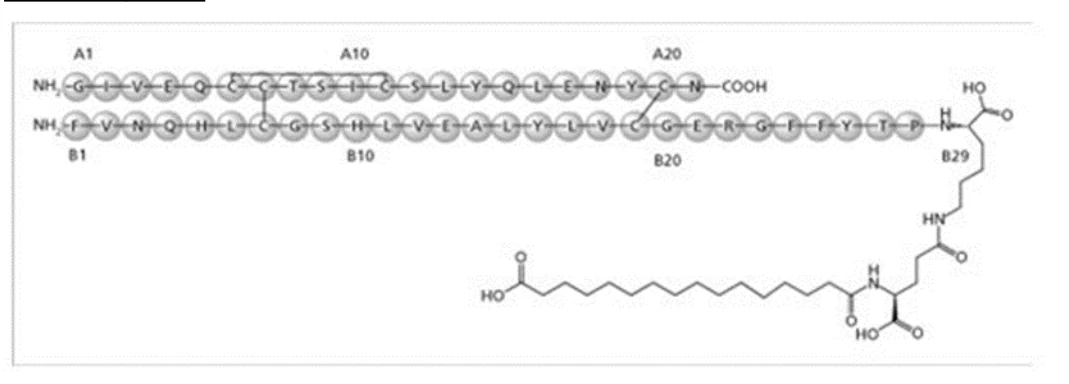
Insulin degludec:
C274H411N65O81S6 and 6103.97 dalton
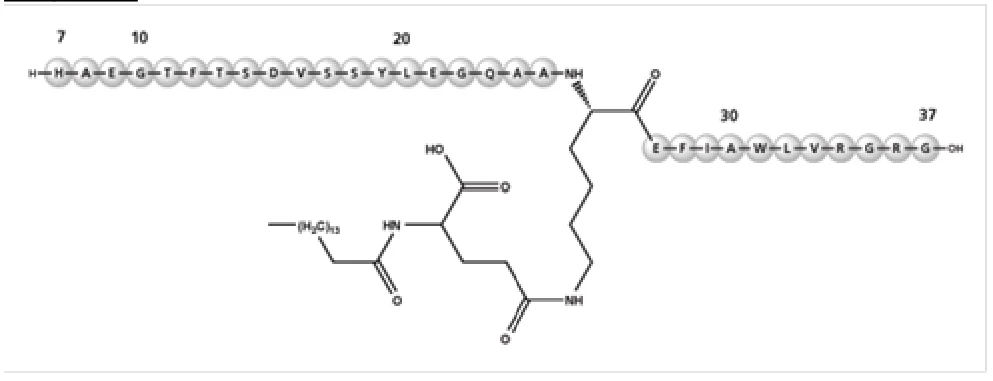
Liraglutide:
C172H265N43O51 and 3751.20 dalton
Structural formula:
Insulin degludec:
Liraglutide:
Physicochemical properties: XULTOPHY® is a sterile, aqueous, clear, and colourless solution. Each mL contains 100 units insulin degludec and 3.6 mg liraglutide. Each pre-filled pen contains 3 mL equivalent to 300 units insulin degludec and 10.8 mg liraglutide.
Product Characteristics
XULTOPHY® (insulin degludec and liraglutide injection), for subcutaneous use, is a combination of a long-acting basal human insulin analog, insulin degludec, and a GLP-1 receptor agonist, liraglutide.
Insulin degludec differs from human insulin in that the amino acid threonine in position B30 has been omitted and a side-chain consisting of glutamic acid and a C16 fatty acid has been attached (chemical name: LysB29(Nε-hexadecandioyl-γ-Glu) des(B30) human insulin).
Liraglutide is an analogue of human GLP-1 and acts as a GLP-1 receptor agonist. The peptide precursor of liraglutide, produced by a process that includes expression of recombinant DNA in Saccharomyces cerevisiae, has been engineered to be 97% homologous to native human GLP-1 by substituting arginine for lysine at position 34. Liraglutide is made by attaching a C16 fatty acid (palmitic acid) with a glutamic acid spacer on the remaining lysine residue at position 26 of the peptide precursor.
XULTOPHY® pens are designed to deliver doses from1 to 50 in a single injection with dose increments of 1 (each increment contains 1 unit insulin degludec and 0.036 mg liraglutide).
14 Clinical Trials
14.1 Clinical Trials by Indication
Type 2 Diabetes - Adults
A total of 3908 patients with type 2 diabetes participated in 6 randomized, parallel and active or placebo-controlled phase 3 trials of 26 weeks duration.
An overview of the trials pertaining to the authorized indication can be found in Table 8.Three trials (3697, 3951 and 4229) were conducted in adult subjects inadequately controlled on one or more oral anti-diabetic drugs (OADs) (e.g. metformin, pioglitazone, sulfonylurea, or sodium-glucose cotransporter-2 inhibitors (SGLT2i). Two trials (3912 and 3952) included adult subjects with type 2 diabetes who were inadequately controlled on metformin (±sulfonylurea±glinides) and basal insulin. One study, Study 3851, was conducted in subjects converting from liraglutide (with doses up to 1.8 mg). Subjects remained on background medications in all trials. In these trials (n=3908), mean duration of diabetes was 8.8 years, mean BMI was 31.8, 52.2 % were male, 75.2% were white, 17.8% were Asian, and 5.5% were black.
In all trials, XULTOPHY® was titrated twice weekly by increments or decrements of 2 units, as shown in Table 9 towards a pre-specified fasting blood glucose target. The same titration algorithm was applied for basal insulin comparators. In Study 3912, titration in the comparator arm was limited by a maximum dose of 50 units of insulin degludec.
Table 8: Summary of trial design and patient demographics
| Study # | Trial design and duration | Dosage, and route of administration | Background Therapy | Study subjects (n = number) | Mean age (Range) | Gender |
| Study # | Trial design and duration | Dosage, and route of administration | Background Therapy | Study subjects (n = number) | Mean age (Range) | Gender |
| Study # | Trial design and duration | Dosage, and route of administration | Background Therapy | Study subjects (n = number) | Mean age (Range) | Gender |
| Study # | Trial design and duration | Dosage, and route of administration | Background Therapy | Study subjects (n = number) | Mean age (Range) | Gender |
3697 DUAL I | 26 Weeks; Multi-centre, multi-national randomized (2:1:1), open-label, three-arm, parallel group, treat-to-target trial comparing XULTOPHY® to IDeg and liraglutide in subjects inadequately controlled on metformin ± pioglitazone. | XULTOPHY®: Starting dose of 10 units dosed once daily and titrated twice weekly according to Table 9. Maximum does of 50 units. S.C IDeg: Starting dose of 10 units dosed once daily and titrated twice weekly according to Table 9. No pre-defined maximum dose. S.C. Liraglutide: Weekly dose increase of 0.6 mg/day until reaching the maintenance dose of 1.8 mg/day. S.C. | Metformin: ≥ 1500 mg/day or maximum tolerated dose. Oral Pioglitazone:≥ 30 mg/day. Oral | XULTOPHY®: n=833 IDeg: n=413 Liraglutide: n=414 Total: n=1660 | XULTOPHY®: 55.1 (27.8-83.8) IDeg: 54.9 (24.0-79.1) Liraglutide: 55.0 (24.4-81.6) Total: 55.0 (24.0-83.8) | XULTOPHY®: Male: 435 Female: 398 IDeg: Male: 200 Female: 213 Liraglutide: Male: 208 Female: 206 Total: Male: 843 Female: 817 |
3951 DUAL IV | 26 Weeks, Multi-centre, multi-national randomised (2:1), double-blind, two-arm, parallel group, treat-to-target trial comparing XULTOPHY® to placebo in insulin naïve T2DM subjects inadequately controlled on sulphonylurea ± metformin. | XULTOPHY®: Starting dose of 10 units dosed once daily and titrated twice weekly according to Table 9. though with a titration target of 4-6 mmol/L. Maximum does of 50 units. S.C Placebo: Starting dose of 10 units dosed once daily and titrated twice weekly according to Table 9. though with a titration target of 4-6 mmol/L. Maximum does of 50 units. S.C | Sulphonylurea : Half maximum approved dose according to local label. Oral Metformin: ≥ 1500 mg/day or maximum tolerated dose. Oral | XULTOPHY®: n=289 Placebo: n=146 Total: n=435 | XULTOPHY®: 60.0 (27.6-87.0) Placebo: 59.4 (27.3-84.5) Total: 59.8 (27.3-87.0) | XULTOPHY®: Male: 154 Female: 135 Placebo: Male: 73 Female: 73 Total: Male:227 Female:208 |
4229 DUAL IX | 26 Weeks, Multi-centre, multi-national randomized (1:1), open-label, two-arm, parallel, treat-to-target trial comparing XULTOPHY® to IGlar in T2DM subjects inadequately controlled on SGLT2i ± other OADs. | XULTOPHY®: Starting dose of 10 units dosed once daily and titrated twice weekly according to Table 9. Maximum dose of 50 units. S.C IGlar: Starting dose of 10 units dosed once daily and titrated twice weekly according to Table 9. No pre-defined maximum dose. S.C | SGLT2i: Continued at unchanged pre-trial doses. Oral Metformin: Continued at unchanged pre-trial doses. Oral Pioglitazone: Continued at unchanged pre-trial doses. Oral | XULTOPHY®: n=210 IGlar: n=210 Total: n=420 | XULTOPHY®: 56.1 (25-83) IGlar: 57.2 (30-82) Total: 56.7 25-83 | XULTOPHY®: Male: 121 Female: 89 IGlar: Male: 126 Female: 84 Total: Male:247 Female:173 |
| 3851 DUAL III | 26 Weeks; Multi-centre, multi-national randomised (2:1), open-label, two-arm, parallel group, treat-to-target trial comparing XULTOPHY® to a continued pre-trial regimen of GLP-1 RA* both in combination with metformin±pioglitaz one±SU in insulin naïve T2DM subjects inadequately controlled on GLP-1 RA (liraglutide or exenatide). *In Table 13 only data from subjects treated with liraglutide at baseline are include. | XULTOPHY®: Starting dose of 16 units dosed once daily and titrated twice weekly according to Table 9. Maximum dose of 50 units. S.C GLP-1 RA: Maximum tolerated dose or maximum dose according to local label. S.C | Metformin (oral) Maximum tolerated dose or maximum dose according to local label. Oral | XULTOPHY®: n=292 GLP-1 RA: n=146 Total: n=438 | XULTOPHY®: 58.3 (22.0-77.9) GLP-1 RA: 58.4 (37.8-78.3) Total: 58.3 (22.0-78.3) | XULTOPHY®: Male: 153 Female: 139 GLP-1 RA: Male: 71 Female: 75 Total: Male: 224 Female: 214 |
| 3952 DUAL V | 26 Weeks; Multi-centre, multi-national, randomised (1:1), open-label, two-arm, parallel group, treat-to-target trial comparing XULTOPHY® + metformin to IGlar + metformin in T2DM subjects inadequately controlled on IGlar at a daily dose between 20 and 50 units (both inclusive) in combination with metformin. | XULTOPHY®: Starting dose of 16 units dosed once daily and titrated twice weekly according to Table 9. Maximum dose of 50 units. S.C IGlar: Starting dose equal to pre-trial daily dose of IGlar and titrated twice weekly according to Table 9. No pre-defined maximum dose. S.C | Metformin (oral) Maximum tolerated dose or maximum dose according to local label. Oral | XULTOPHY®: n=278 IGlar: n=279 Total: n=557 | XULTOPHY®: 58.4 (29.2-81.7) IGlar: 59.1 (27.6-80.4) Total: 58.8 (27.6-81.7) | XULTOPHY®: Male: 143 Female: 135 IGlar: Male: 137 Female: 142 Total: Male: 280 Female: 277 |
| 3912 DUAL II | 26 Weeks; Multi-centre, multi-national randomised (1:1), double-blind, two-arm, parallel group, treat-to-target trial comparing XULTOPHY® + metformin to IDeg + metformin in T2DM subjects inadequately controlled on basal insulin (20-40 units) + metformin ± sulphonylurea or glinides. | XULTOPHY®: Starting dose of 16 units of XULTOPHY® dosed once daily and titrated twice weekly according to Table 9. The maximum dose of XULTOPHY® was 50 units. S.C. IDeg: Starting dose of 16 units of IDeg, dosed once daily and titrated twice weekly according to Table 9. The maximum dose of IDeg in the comparator arm was 50 units. S.C | Metformin: ≥ 1500 mg/day or maximum tolerated dose. Oral | XULTOPHY®: n=199 IDeg: n=199 Total: n=398 | XULTOPHY®: 56.8 (31.4-76.9) IDeg: 57.5 (29.5-85.8) Total: 57.2 (29.5-85.8) | XULTOPHY®: Male: 112 Female: 87 IDeg: Male:106 Female: 93 Total: Male:218 Female:180 |
Abbreviations: IDeg = insulin degludec; IGlar = insulin glargine; OD = once-daily; S.C.= subcutaneous; T2DM = type 2 diabetes mellitus; GLP-1 RA = GLP-1 receptor agonist
Table 9: Titration of XULTOPHY® and basal insulin
| Pre-breakfast plasma glucose* | Dose adjustment | ||
|---|---|---|---|
| mmol/L | mg/dL | XULTOPHY® (units) | Basal insulin (units) |
| < 4.0 | < 72 | -2 | -2 |
| 4.0-5.0 | 72-90 | 0 | 0 |
| > 5.0 | > 90 | +2 | +2 |
Study Results
Patients with Type 2 Diabetes Uncontrolled on OAD Treatment:
Trial 3697 (DUAL I)
The efficacy and safety of XULTOPHY® compared to insulin degludec and liraglutide, all administered once-daily, was studied in a 26-week randomized, open-label, three-arm parallel trial in 1660 patients with type 2 diabetes mellitus inadequately controlled on 1-2 OADs (metformin or metformin with or without pioglitazone).
The starting dose of XULTOPHY® was 10 units (10 units insulin degludec and 0.36 mg liraglutide). The starting dose of insulin degludec was 10 units. XULTOPHY® and insulin degludec were titrated twice weekly towards a target fasting blood glucose goal of 4-5mmol/L. Patients in the liraglutide arm followed a fixed dose escalation scheme with a starting dose of 0.6 mg and a dose increase of 0.6 mg weekly until a daily dose of 1.8 mg was reached. Patients continued on pre-trial treatment with metformin or metformin and pioglitazone throughout the trial.
At the end of 26 weeks, treatment with XULTOPHY®, insulin degludec, and liraglutide resulted in a reduction in HbA1c from baseline of 1.81%, 1.35% and 1.21%, respectively, (see Table 10 and Figure 1). The end of trial dose of XULTOPHY® was 38 units (38 units insulin degludec and 1.37 mg liraglutide).
Table 10 Results of a 26 week trial with XULTOPHY® in patients with type 2 diabetes mellitus inadequately controlled on metformin alone or in combination with pioglitazone (Trial 3697, DUAL I)
| Previous treatment with OADs | |||
|---|---|---|---|
| Previous treatment with OADs | |||
XULTOPHY® + metformin ±pioglitazone | Insulin degludec + metformin ± pioglitazone | Liraglutide + metformin ± pioglitazone | |
XULTOPHY® + metformin ±pioglitazone | Insulin degludec + metformin ± pioglitazone | Liraglutide + metformin ± pioglitazone | |
| N | 833 | 413 | 414 |
HbA1c (%) Baseline→End of trial# LS mean change# Estimated difference* [95% CI]# p-value | 8.3→6.5 -1.81 | 8.3→6.9 -1.35 -0.46% [-0.59; -0.34] <0.0001A | 8.3→7.1 -1.21 -0.60% [-0.72; -0.47]A <0.0001A |
| Patients achieving HbA1c <7%** | 74.1% | 60.5% | 56.0% |
FPG (mmol/L) Baseline→End of trial# LS mean change# | 9.2→5.8 -3.43 | 9.4→5.9 -3.29 | 9.0→7.4 -1.80 |
A Primary endpoint was tested for non-inferiority of XULTOPHY® to insulin degludec based on a pre-specified non-inferiority margin of 0.3% and for superiority of XULTOPHY® to liraglutide. The primary objective was fulfilled only if both non-inferiority and superiority were confirmed. # Estimated using an ANCOVA method with treatment, baseline HbA1c stratum, sub-study, concomitant diabetes treatment and country as fixed factors, and baseline response as covariate Multiple imputation modelled “return to baseline” of the treatment effect for subjects having missing week 26 data. ** Patients with missing HbA1c value at week 26 data were considered non-responders. There were 11.8% of subjects in the XULTOPHY® arm, 12.3% in the insulin degludec arm and 15.5% in the liraglutide arm for whom HbA1c data was missing at week 26. | |||
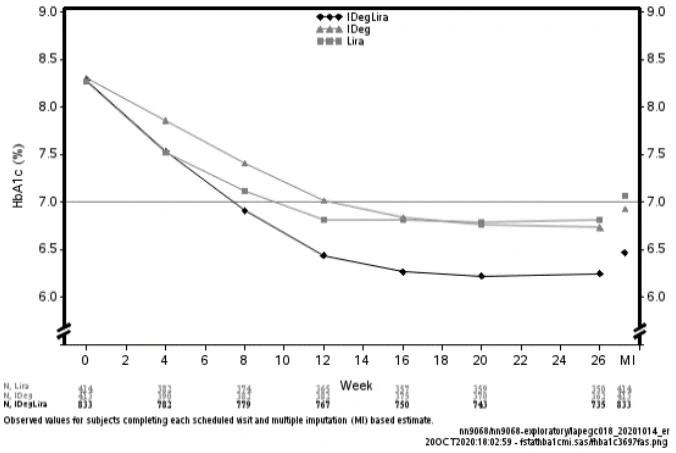
IDegLira=XULTOPHY®, IDeg=insulin degludec, Lira=Liraglutide
Figure 1: Mean HbA1c (%) by treatment week in patients with type 2 diabetes mellitus inadequately controlled on liraglutide (Trial 3697, DUAL I)
Trial 3951 (DUAL IV)
The efficacy and safety of XULTOPHY® compared to placebo were studied in a 26-week randomized, double-blind, treat-to-target trial in 435 patients with type 2 diabetes mellitus inadequately controlled on sulfonylurea alone or in combination with metformin.
XULTOPHY® was started at 10 units (10 units insulin degludec and 0.36 mg liraglutide) and titrated twice weekly towards a target fasting blood glucose goal of 4-6mmol/L. Patients continued on pre-trial treatment with sulfonylurea, with or without metformin throughout the trial.
Treatment with XULTOPHY® for 26 weeks resulted in a statistically significant reduction in mean HbA1c compared to placebo (see Table 11 and Figure 2). The end of trial dose of XULTOPHY® was 28 units (28 units insulin degludec and 1.01 mg liraglutide).
Table 11 Results of a 26 week trial with XULTOPHY® in patients with type 2 diabetes mellitus inadequately controlled on sulfonylurea alone or in combination with metformin (Trial 3951, DUAL IV)
| Previous treatment with OADs | ||
|---|---|---|
XULTOPHY® + sulfonylurea ± metformin | Placebo + sulfonylurea ± metformin | |
| N | 289 | 146 |
HbA1c (%) Baseline→End of trial# LS mean change Estimated difference [95% CI]# p-value | 7.9→6.5 -1.42 | 7.9→7.3 -0.62 -0.81 [-0.98; -0.63] <0.0001A |
| Patients achieving HbA1c <7%** | 70.9% | 26.7% |
FPG (mmol/L) Baseline→End of trial# LS mean change# | 9.1→6.6 -2.56 | 9.1→8.5 -0.67 |
A Primary endpoint was tested for superiority of XULTOPHY® to placebo. # Estimated using an ANCOVA with treatment, region and pre-trial medication as fixed factors and baseline response as covariate. Multiple imputation modelled “jump-to-control” of the treatment effect for subjects having missing week 26 data. ** Patients with missing HbA1c value at week 26 data were considered non-responders. There were 12.8% of subjects in the XULTOPHY® arm and 24.7% in the placebo arm for whom HbA1c data was missing at week 26. | ||
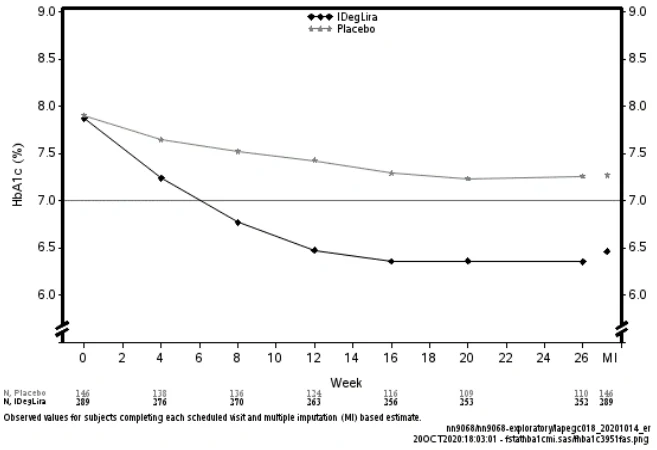
IDegLira=XULTOPHY®
Figure 2: Mean HbA1c (%) by treatment week in patients with type 2 diabetes mellitus inadequately controlled on sulphonylurea alone or in combination with metformin (Trial 3951, DUAL IV)
Trial 4229 (DUAL IX)
The efficacy and safety of XULTOPHY® compared to insulin glargine U-100, both administered once-daily, were studied in a 26-week randomized, open-label, two-arm parallel trial in 420 patients with type 2 diabetes mellitus inadequately controlled on a sodium-glucose cotransporter 2 inhibitors (SGLT2i) alone or in combination with other OADs (with or without metformin, pioglitazone, and/or dipeptidyl peptidase-4 [DPP4] inhibitor). At randomization, the DPP4 inhibitor was discontinued.
The starting dose of XULTOPHY® was 10 units (10 units insulin degludec and 0.36 mg liraglutide). The starting dose of insulin glargine U-100 was 10 units. XULTOPHY® and insulin glargine U-100 were titrated twice weekly to target a fasting blood glucose goal of 4-5mmol/L. Patients could not increase the dose of XULTOPHY® and insulin glargine U-100 by more than 4 units per week, and there was no maximum allowed dose of insulin glargine. The patients continued on pre-trial treatment with SGLT2i, with or without other OADs throughout the entire trial. The targeted mean fasting self-measured blood glucose goal was achieved by 49.0% of patients randomized to XULTOPHY® and 41.9% of patients randomized to insulin glargine at 26 weeks.
At the end of 26 weeks, XULTOPHY® resulted in a reduction in HbA1c from baseline of 1.95% and insulin glargine U-100 resulted in a reduction of 1.61% (see Table 12 and Figure 3). At the end of trial, the average dose of XULTOPHY® was 36 units (36 units insulin degludec and 1.01 mg liraglutide) and the dose of insulin glargine was 54 units; it is unclear that these observed differences in insulin doses are clinically important. The difference in HbA1c effect observed at 26 weeks may not necessarily reflect the effect in the care setting where insulin glargine may be more rapidly titrated.
Table 12 Results of a 26-Week Trial in Patients with Type 2 Diabetes Mellitus Inadequately Controlled on SGLT2i alone or in combination with Metformin, Pioglitazone and/or DPP4 Inhibitor (Trial 4229, DUAL IX)
| Previous treatment with OADs | ||
|---|---|---|
XULTOPHY® + SGLT2i ± metformin± pioglitazone | Insulin Glargine U-100 + SGLT2i ± metformin± pioglitazone | |
| N | 210 | 210 |
HbA1c (%) Baseline→End of trial# LS mean change# Estimated difference [95% CI]# p-value | 8.2→6.3 -1.95 | 8.4→6.7 -1.61 -0.34 [-0.48; -0.20] <0.0001A |
| Patients achieving HbA1c <7%*, ## | 79.5% | 68.6% |
FPG (mmol/L) Baseline→End of trial# LS mean change# | 9.5 → 5.8 -3.78 | 9.6 →6.1 -3.46 |
APrimary endpoint was tested for non-inferiority of XULTOPHY® to insulin glargine based on a pre-specified non-inferiority margin of 0.3%. # Estimated using an ANCOVA with treatment, pre-trial OAD and region as factors and corresponding baseline value as covariate. Data obtained after premature treatment discontinuation are included in the analysis. Missing data were imputed using conditional reference based multiple imputation including data obtained after premature treatment discontinuation. ## Patients with missing HbA1c value at week 26 data were considered non-responders. There were 6.2% of subjects in the XULTOPHY® arm and 3.8% in the insulin glargine arm for whom HbA1c data was missing at week 26. | ||
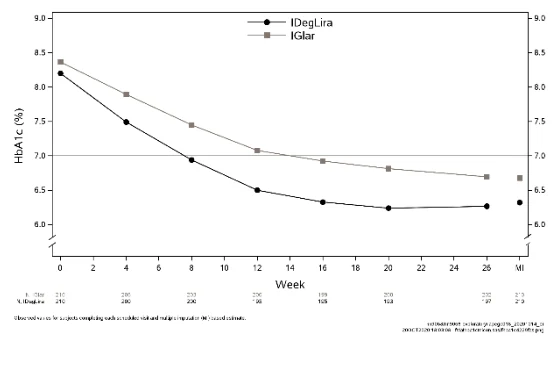
IDegLira=XULTOPHY®
Figure 3: Mean HbA1c (%) by treatment week in patients with type 2 diabetes mellitus inadequately controlled on GLP-1 receptor agonists (Trial 4229, DUAL IX)
Patients currently on basal insulin or GLP-1 receptor agonist
Trial 3851 (DUAL III)
Conversion from GLP-1 receptor agonist to XULTOPHY®
The efficacy and safety of XULTOPHY® (once-daily) compared to unchanged pre-trial liraglutide up to a dose of 1.8 mg daily was studied in a 26-weeks randomised, open-label, treat-to-target trial in patients with type 2 diabetes mellitus inadequately controlled on a maximum approved or tolerated dose of liraglutide and metformin alone (74.2%) or in combination with pioglitazone (2.5%), sulphonylurea (21.2%) or both (2.1%). Oral anti-diabetic drugs (OADs) were continued at pre-trial doses and dosing frequency throughout the trial.
When transferring from liraglutide, the starting dose of XULTOPHY® was 16 units (16 units insulin degludec and 0.6 mg liraglutide) and the dose was titrated twice weekly according to Table 9. The end of trial dose of XULTOPHY® was 43 units (43 units insulin degludec/1.6 mg liraglutide). For patients who remained on unchanged pre-trial liraglutide, the average starting dose was 1.7 mg. The primary endpoint, change in HbA1c, was tested for superiority of XULTOPHY® to unchanged liraglutide therapy.
Treatment with XULTOPHY® resulted in a statistically significant reduction in HbA1c at 26 weeks from baseline compared to unchanged liraglutide therapy (see Table 13 and Figure 4). The trial was designed to investigate the distinct efficacy and safety associated with transfer of therapy to XULTOPHY® in subjects treated with liraglutide and in need of treatment intensification, and this was the rationale for continuing unchanged pre-trial therapy in the arm not receiving XULTOPHY®. However, insulin naïve subjects inadequately controlled on liraglutide and in need of treatment intensification would not remain on unchanged liraglutide in clinical practice. Hence, the difference in HbA1c effect observed in the trial may not reflect the effect that will be observed in the care setting where insulin naïve subjects inadequately controlled on liraglutide and in need of treatment intensification would receive additional therapy.
Table 13: Results of a 26 week trial with XULTOPHY® in patients with type 2 diabetes mellitus inadequately controlled on liraglutide up to 1.8 mg daily (Trial 3851, DUAL III)
| Previous treatment with liraglutide | ||
|---|---|---|
| XULTOPHY® | Liraglutide | |
| N | 232 | 116 |
HbA1c (%) Baseline→End of trial LS mean change# Estimated difference [95% CI]# p-value | 7.8→6.4 -1.34 | 7.8→7.4 -0.42 -0.92A[-1.11; -0.73] p<0.001 |
| Patients achieving HbA1c <7%## | 74.6% | 30.2% |
FPG (mmol/L) Baseline→End of trial LS mean change# | 8.9→6.1 -2.94 | 9.4→8.7 -0.71 |
A Endpoint with confirmed superiority of XULTOPHY® vs. Liraglutide. The trial was designed to investigate the distinct efficacy and safety associated with transfer of therapy to XULTOPHY® in subjects treated with liraglutide and in need of treatment intensification, and this was the rationale for continuing unchanged pre-trial therapy in the arm not receiving XULTOPHY®. However, insulin naïve subjects inadequately controlled on liraglutide and in need of treatment intensification would not remain on unchanged liraglutide in clinical practice. Hence, the difference in HbA1c effect observed in the trial may not reflect the effect that will be observed in the care setting where insulin naïve subjects inadequately controlled on liraglutide and in need of treatment intensification would receive additional therapy. # Estimated using an ANCOVA with treatment, pre-trial liraglutide treatment and region as fixed factors and baseline response as covariate. Multiple imputation modelled “jump to reference” of the treatment effect for subjects having missing week 26 data. ## Patients with missing HbA1c data at week 26 were considered as non-responders. There were 5.2% of subjects in the XULTOPHY® arm and 19.0% in the liraglutide arm for whom HbA1c data was missing at week 26. | ||
IDegLira=XULTOPHY®
Figure 4: Mean HbA1c (%) by treatment week in patients with type 2 diabetes mellitus inadequately controlled on liraglutide (Trial 3851, DUAL III)
Trial 3952 (DUAL V)
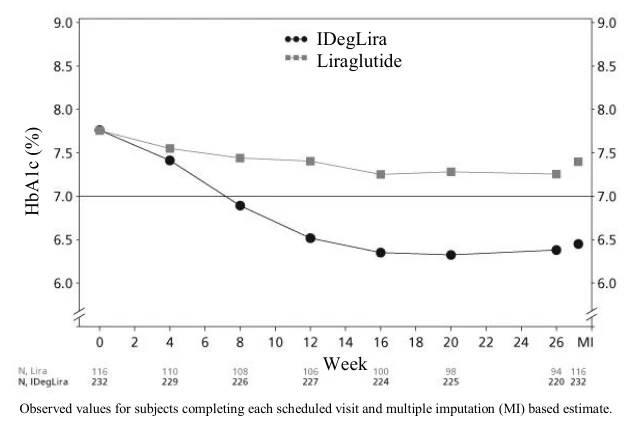
Conversion from insulin glargine
The efficacy and safety of XULTOPHY® compared to insulin glargine, both once daily and added to metformin, were studied in a 26-week randomised, open-label, treat-to-target trial in patients with type 2 diabetes mellitus inadequately controlled on insulin glargine (20-50 units) and metformin. The patients were randomised to two arms. In one arm, patients were switched from once-daily insulin glargine to once-daily XULTOPHY® at a starting dose of 16 units. In the other arm, patients continued insulin glargine with the starting dose equal to the pre-trial daily dose. The average starting dose of insulin glargine U-100 was 32 units. The dose was titrated twice weekly according to Table 9, but patients could not increase the dose of the two products by more than 4 units per week. The maximum allowed dose was 50 units for XULTOPHY®, while there was no maximum dose for insulin glargine. The targeted fasting plasma glucose goal was achieved in 39.6% of patients randomized to insulin glargine and 32.9% of the patients randomized to XULTOPHY® at 26 weeks. The primary endpoint, change in HbA1c, was tested for non-inferiority and superiority once non-inferiority was demonstrated of XULTOPHY® compared to insulin glargine.
At the end of 26 weeks, treatment with XULTOPHY® was non-inferior to insulin glargine based on a non-inferiority margin of 0.3%. At the end of trial, the average dose of XULTOPHY® was 41 units (41 units insulin degludec/1.5 mg liraglutide), and the dose of insulin glargine was 66 units, and it is unclear that these observed differences in insulin doses are clinically important. The difference in HbA1c effect observed in the trial may not necessarily reflect the effect that will be observed in the care setting where alternative insulin glargine dosage can be used.
Table 14: Results of a 26 week trial with XULTOPHY® in patients with type 2 diabetes mellitus inadequately controlled on insulin glargine (Trial 3952, DUAL V)
| Previous treatment with basal insulin | ||
|---|---|---|
| Previous treatment with basal insulin | ||
XULTOPHY® (Switched from insulin glargine) | Insulin glargine | |
XULTOPHY® (Switched from insulin glargine) | Insulin glargine | |
| N | 278 | 279 |
HbA1c (%) Baseline→End of trial LS mean change# Estimated difference [95% CI]# p-value for superiority | 8.4→6.6 -1.83 | 8.2→7.1 -1.22 -0.62A[-0.76; -0.48] p<0.001 |
| Patients achieving HbA1c <7%## | 68.3% | 46.2% |
| Rate of confirmed hypoglycemia* per patient year of exposure (percentage of patients) | 2.23 (28.4%) | 5.05 (49.1%) |
Body Weight (kg) Baseline→End of trial LS Mean change# | 88.3→86.9 -1.23 | 87.3→89.1 1.88 |
FPG (mmol/L) Baseline→End of trial | 8.9→6.1 | 8.9→6.1 |
| LS mean change# | -3.05 | -2.87 |
A Confirmed superiority of XULTOPHY® vs Insulin glargine. The difference in glucose lowering effect observed in the trial may not necessarily reflect the effect that will be observed in the care setting where alternative insulin glargine dosage can be used. The primary endpoint (HbA1c) was tested for superiority once non-inferiority (limit of 0.3%) was demonstrated. # Estimated using an ANCOVA with treatment and region as fixed factors and baseline response as covariate. Multiple imputation modelled “jump to reference” of the treatment effect for subjects having missing week 26 data. ## Patients with missing HbA1c value at week 26 data were considered non-responder. There were 10.1% of subjects in the XULTOPHY® arm and 4.7% in the insulin glargine arm for whom HbA1c data was missing at week 26. *Confirmed hypoglycemia defined as severe hypoglycemia (episode requiring assistance of another person) and/or minor hypoglycemia (plasma glucose<3.1 mmol/L irrespective of symptoms. | ||
HbA 1c (% ) Time since randomisation (week) IDegLira IGlar 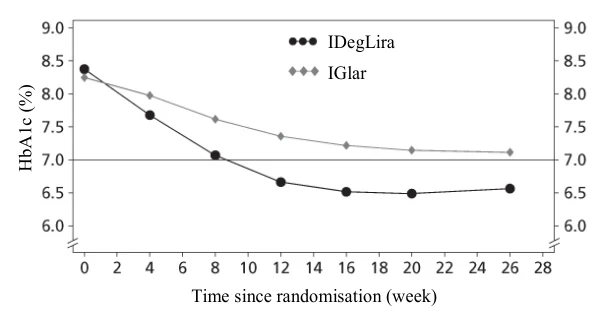
IDegLira=XULTOPHY®, IGlar = insulin glargine
Figure 5: HbA1c (%) by treatment week in patients with type 2 diabetes mellitus inadequately controlled on insulin glargine (Trial 3952, DUAL V)
Trial 3912 (DUAL II)
Conversion from basal insulin therapies
The efficacy and safety of XULTOPHY® compared to insulin degludec, both once daily and added on to metformin, were studied in a 26-weeks randomised, double-blind, treat-to-target trial in patients with type 2 diabetes mellitus inadequately controlled on basal insulin (20-40 units) and metformin alone or in combination with sulphonylurea/glinides. Basal insulin and sulphonylurea/glinides were discontinued at randomisation. The starting dose of XULTOPHY® and insulin degludec was 16 units (16 units insulin degludec/0.6 mg liraglutide) and 16 units once daily, respectively, and the dose was titrated in the same way for both twice weekly according to Table 9 above. Patients could not increase their dose by more than 4 units per week and the maximum allowed dose was 50 units for XULTOPHY® and 50 units for insulin degludec. The targeted fasting plasma glucose goal was achieved in 24.0% of patients randomized to insulin degludec and 31.6% of the patients randomized to XULTOPHY® at 26 weeks. The primary endpoint, change in HbA1c, was tested for superiority of XULTOPHY® compared to insulin degludec.
Treatment with XULTOPHY® resulted in a statistically significant reduction in HbA1c at 26 weeks from baseline compared to insulin degludec (
Table 15). The trial was designed to show the contribution of the liraglutide component to glycemic lowering, and the insulin degludec dosing algorithm was selected to isolate the effect of the GLP-1 component. At the end of the trial, the doses of insulin degludec were comparable between treatment groups. The mean final dose of XULTOPHY® and insulin degludec was 45 units (for XULTOPHY® 45 units insulin degludec/1.6 mg liraglutide). The difference in glucose lowering effect observed in the trial may not necessarily reflect the effect that will be observed in the care setting where insulin degludec dosage can be different than that used in the trial.
Table 15: Results of a 26 week trial with XULTOPHY® in patients with type 2 diabetes mellitus inadequately controlled on basal insulin therapies (Trial 3912, DUAL II)
| Previous treatment with basal insulin | ||
|---|---|---|
| XULTOPHY® | Insulin degludec Maximum dose 50 units | |
| N | 199 | 199 |
HbA1c (%) Baseline→End of trial LS mean change# Estimated difference [95% CI]# Superiority p-value | 8.7→6.9 -1.96 | 8.8→8.0 -0.97 -0.99A[-1.20; -0.78] p<0.001 |
| Patients achieving HbA1c <7%## | 57.3% | 22.6% |
FPG (mmol/L) Baseline→End of trial LS mean change# | 9.7→6.2 -3.52 | 9.6→7.0 -2.93 |
A Confirmed superiority of XULTOPHY® vs Insulin Degludec. The trial was designed to show the contribution of the liraglutide component to glycemic lowering, and the insulin degludec dosing algorithm was selected to isolate the effect of the GLP-1 component. At the end of the trial, the doses of insulin degludec were comparable between treatment groups. The mean final dose of XULTOPHY and insulin degludec was 45 units (for XULTOPHY 45 units insulin degludec/1.6 mg liraglutide). The difference in glucose lowering effect observed in the trial may not necessarily reflect the effect that will be observed in the care setting where alternative insulin degludec dosage can be used. # Estimated using an ANCOVA with treatment, country, and previous antidiabetic treatment as fixed factors and baseline response as covariate. Multiple imputation modelled “jump to reference” of the treatment effect for subjects having missing week 26 data. ## Patients with missing HbA1c data at week 26 were considered non-responders. There were 11.1% of subjects in the XULTOPHY® arm and 13.1% in the insulin degludec arm for whom HbA1c data was missing at week 26. | ||
Hb A1 c (%) Time since Randomisation (Week) IDegLira IDeg 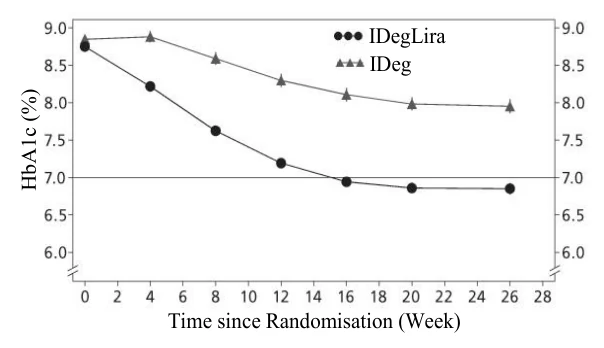



IDegLira=XULTOPHY®, IDeg=insulin degludec
Figure 6: Mean HbA1c (%) by treatment week in patients with type 2 diabetes mellitus inadequately controlled on basal insulin (Trial 3912, DUAL II)
Cardiovascular Outcomes Trials in Patients with Type 2 Diabetes Mellitus and Atherosclerotic Cardiovascular Disease Conducted with Liraglutide 1.8 mg and Insulin Degludec
The effect of XULTOPHY® on the risk of cardiovascular outcomes in patients with type 2 diabetes mellitus and atherosclerotic cardiovascular disease has not been established. The studies below were conducted with liraglutide 1.8 mg and insulin degludec, individually.
Victoza® (liraglutide 1.8 mg)
The LEADER trial randomized 9,340 patients with inadequately controlled type 2 diabetes and with cardiovascular disease to either liraglutide 1.8 mg or placebo. Each was administered subcutaneously once daily, in addition to standard of care treatments for type 2 diabetes mellitus and cardiovascular disease, for a median follow up of 3.5 years.
Patients either were 50 years of age or older with established, stable cardiovascular, cerebrovascular, peripheral artery disease, chronic kidney disease or chronic heart failure (80% of patients) or were 60 years of age or older and had other specified risk factors for cardiovascular disease (20% of patients). The population was 64% male, 78% Caucasian, 10% Asian, and 8% Black; 12% of the population was Hispanic or Latino. The mean duration of type 2 diabetes was 13 years, the mean HbA1c was 8.7% and the mean BMI was 33 kg/m2; the mean eGFR at baseline was 79 mL/min/1.73 m2.
In total, 96.8% of the patients completed the trial; vital status was available for 99.7%. The primary endpoint was the time from randomization to first occurrence of a major adverse cardiovascular event (MACE) defined as: cardiovascular death, non-fatal myocardial infarction, or non-fatal stroke. No increased risk for MACE was observed with liraglutide 1.8 mg. The total number of primary MACE endpoints was 1302 (608 [13.0%] with liraglutide 1.8 mg and 694 [14.9%] with placebo).
Tresiba® (insulin degludec injection)
The DEVOTE trial randomized 7,637 patients with inadequately controlled type 2 diabetes mellitus and with cardiovascular disease to either insulin degludec or insulin glargine U-100. Each was administered subcutaneously once-daily, in addition to standard of care treatments for type 2 diabetes mellitus and cardiovascular disease, for a median duration of follow-up of 2 years.
Patients either were 50 years of age or older and had established, stable cardiovascular, cerebrovascular, peripheral artery disease, chronic kidney disease or chronic heart failure (85% of patients) or were 60 years of age or older and had other specified risk factors for cardiovascular disease (15% of patients). The population was 63% male, 76% White, 11% Black or African American, and 10% Asian; 15% of the population was Hispanic or Latino. The mean HbA1c was 8.4% and the mean BMI was 33.6 kg/m2. The baseline mean eGFR was 68 mL/min/1.73m2.
In total, 98% of the patients completed the trial; vital status was known at the end of the trial for 99%. The primary endpoint was the time from randomization to the first occurrence of a major adverse cardiovascular event (MACE), defined as: cardiovascular death, non-fatal myocardial infarction, or non-fatal stroke. No increased risk for MACE was observed with insulin degludec when compared to insulin glargine U-100. The total number of primary MACE endpoints was 681 (325 [8.5%] with insulin degludec and 356 [9.3%] with insulin glargine).
15 Microbiology
No microbiological information is required for this drug product.
16 Non-Clinical Toxicology
Insulin degludec/liraglutide
The non-clinical development programme for insulin degludec/liraglutide included a pivotal 90-day toxicity study in a single relevant species (Wistar rats) using a combination product with the same fixed-ratio as the clinical formulation. Local tolerance was assessed in rabbits.
Non-clinical safety data reveal no additional safety concern for humans based on the 90-day toxicity study conducted in rats subcutaneously administered insulin degludec/liraglutide daily. No novel toxicity was observed with the fixed ratio combination test article. Effects observed were attributed to the pharmacological effects of insulin degludec or liraglutide previously observed in rats (e.g., decrease in plasma glucose concentration and decrease in body weight, respectively, compared to the control). The NOAEL was determined to be 20 nmol insulin degludec/32 nmol liraglutide per kg body weight per day, the highest dose tested (2.1 times the estimated human AUC for insulin degludec and 3.3 times that for liraglutide). The local tissue reactions observed following a single subcutaneous, intramuscular, or intravenous injection in rabbits were attributed to the injection procedure or the vehicle.
No studies have been conducted with the insulin degludec/liraglutide combination to evaluate carcinogenesis, genotoxicity, or developmental and reproductive toxicity. The following data are based upon studies with insulin degludec and liraglutide individually.
Insulin degludec
Standard 2-year carcinogenicity studies in animals have not been performed to evaluate the carcinogenic potential of insulin degludec. In a 52-week study, rats were dosed subcutaneously with insulin degludec at 3.3, 6.7, and 10 U/kg/day, resulting in 5 times the human exposure (AUC) when compared to a human subcutaneous dose of 0.75 U/kg/day. Human insulin was dosed at 6.7 U/kg/day as a comparator. No treatment-related increases in incidences of hyperplasia or in benign or malignant tumours were recorded in female mammary glands from rats dosed with insulin degludec and no treatment-related changes in the female mammary gland cell proliferation were observed. Overall, no treatment-related changes in the occurrence of hyperplastic or neoplastic lesions were seen in any animals dosed with insulin degludec when compared to vehicle or human insulin exposed animals.
Genotoxicity testing of insulin degludec was not performed.
Insulin degludec consists of desB30 human insulin, glutamate, and 1, 16-hexadecanedioic acid. None of the individual components possess mutagenic potential.
In developmental toxicity studies, female rats were subcutaneously administered insulin degludec and human insulin before mating and throughout pregnancy until weaning, while rabbits were exposed during organogenesis. The effect of insulin degludec was consistent with those observed with human insulin as both resulted in pre- and post-implantation losses and skeletal malformations and variations in rats at an insulin degludec dose of 21 U/kg/day (approximately 5 times the human exposure [AUC] at a human subcutaneous dose of 0.75 U/kg/day) and in rabbits at a dose of 3.3 U/kg/day (approximately 10 times the human exposure [AUC]). The effects were probably secondary to maternal hypoglycemia, as similar effects were seen after human insulin-induced hypoglycemia in non-diabetic animals.
In a combined fertility and embryo-fetal developmental study in rats, subcutaneous administration of insulin degludec (up to 21 U/kg/day; approximately 5 times the human exposure [AUC]) had no effect on mating performance or fertility in either males or females.
Carcinogenicity
Liraglutide
A 104-week carcinogenicity study was conducted in male and female mice at doses of 0.03, 0.2, 1.0, and 3.0 mg/kg/day administered by subcutaneous bolus injection. Systemic exposures at the 0.03, 0.2, 1, and 3 mg/kg/day doses were 0.2, 1.8, 10.0, and 45.0 times the human exposure, respectively, at the maximum recommended human dose (MRHD) of 1.8 mg/day based on plasma AUC0-24 comparison. Treatment resulted in an increased incidence of focal C-cell hyperplasia for males and females dosed at 1.0 and 3.0 mg/kg/day and for females dosed at 0.2 mg/kg/day. Incidence rates of focal C-cell hyperplasia for the 0, 0.03, 0.2, 1.0, and 3.0 mg/kg/day groups, respectively, were 0%, 0%, 1.5%, 16.4%, and 38.0% for males and 0%, 0%, 10.4%, 10.5%, and 33.3% for females. There was also a dose-related increase in benign thyroid C-cell adenomas in the 1.0 and the 3.0 mg/kg/day groups with incidences of 13% and 19% in males and 6% and 20% in females, respectively. C-cell adenomas did not occur in control groups or in the 0.03 and 0.2 mg/kg/day groups. Treatment-related malignant C-cell carcinomas occurred in 3% of females in the 3.0 mg/kg/day group. Thyroid C-cell tumours are rare findings during carcinogenicity testing in mice. In addition, there was a treatment-related increase in fibrosarcomas on the dorsal skin and subcutis, the body surface used for drug injection, in males in the 3 mg/kg/day group. These fibrosarcomas were attributed to the high local concentration of drug near the injection site. The liraglutide concentration in the clinical formulation of liraglutide (6 mg/mL) is 10-times higher than the concentration in the formulation used to administer 3 mg/kg/day liraglutide to mice in the carcinogenicity study (0.6 mg/mL). The NOAEL for this study is 0.03 mg/kg/day.
A 104-week carcinogenicity study was conducted in male and female rats at doses of 0.075, 0.25 and 0.75 mg/kg/day administered by bolus subcutaneous injection with exposures 0.5, 2.2, and 7.6 times the human exposure level, respectively, at the MRHD based on plasma AUC0-24 comparison. There was a treatment-related increase in the incidence and severity of focal C-cell hyperplasia in the 0.25 and 0.75 mg/kg/day groups. Incidence rates of focal C-cell hyperplasia for the 0, 0.075, 0.25, and 0.75 mg/kg/day groups, respectively, were 22%, 29%, 40%, and 48% for males and 28%, 29%, 55%, and 48% for females. In addition, there was a treatment-related increase in benign thyroid C-cell adenomas noted for males in the 0.25 and 0.75 mg/kg/day groups and for females in all treated groups. Incidence rates of thyroid C-cell adenomas for the 0, 0.075, 0.25, and 0.75 mg/kg/day groups, respectively, were 12%, 16%, 42%, and 46% for males and 10%, 27%, 33%, and 56% for females. A treatment-related increase in malignant thyroid C-cell carcinomas was observed in all male liraglutide-treated groups and in females at 0.25 and 0.75 mg/kg/day. Incidences rates of thyroid C-cell carcinomas for the 0, 0.075, 0.25, and 0.75 mg/kg/day groups, respectively, were 2%, 8%, 6%, and 14% in males and 0%, 0%, 4%, and 6% in females. Thyroid C-cell carcinomas are rare findings during carcinogenicity testing in rats. Based on liraglutide-related adverse findings at all doses tested, a NOAEL could not be determined for this study.
The human relevance of thyroid C-cell tumours observed in rats and mice is unknown and could not be determined based on the results of the nonclinical studies (refer to WARNINGS AND PRECAUTIONS, Carcinogenesis and Mutagenesis; Boxed Warnings and Precautions).
Genotoxicity
Liraglutide was not mutagenic or clastogenic with or without metabolic activation in the following tests: Ames test, human peripheral blood lymphocyte chromosome aberration test, and in vivo micronucleus test in the rat.
Reproductive and Developmental Toxicology
In rat fertility and embryo-fetal developmental study, rats were administered liraglutide subcutaneously at doses of 0.1, 0.25 and 1.0 mg/kg/day. Males were treated for 4 weeks prior to and throughout mating and females were treated 2 weeks prior to and throughout mating until gestation day 17. No direct adverse effects on male fertility were observed up to the highest dose levels tested, which represented a systemic exposure 11 times the human exposure at the MRHD based on plasma AUC. Body weight gain and food intake were transiently reduced at all dose levels. At 1.0 mg/kg/day, there was an increased incidence of early embryonic death and an increase in the number of fetuses and litters with minimally kinked ribs. The fetal NOAEL/NOEL was therefore considered to be 0.25 mg/kg/day.
In a rabbit developmental study, pregnant females were administered liraglutide subcutaneously at doses of 0.01, 0.025, and 0.05 mg/kg/day from gestation day 6 through day 18 inclusive. The estimated systemic exposures were less than the human exposure at the MRHD at all doses, based on plasma AUC. Fetal weight was decreased and the incidence of total major fetal abnormalities was increased at all dose levels tested. Single cases of microphthalmia were noted at all dose levels. Since microphthalmia is a very rare malformation, and was not observed in the control group or in any of the historical control groups, this finding is considered to be related to treatment. In addition, there was an increase in the fetal incidence of connected parietals in the high dose group and a single case of split sternum in the 0.025 and 0.05 mg/kg/day groups, which could not be ruled out as unrelated to treatment. Minor abnormalities considered to be treatment-related were an increase in the incidence of jugal(s) connected/fused to maxilla at all dose levels and an increase in the incidence of bilobed/bifurcated gallbladder at 0.025 and 0.50 mg/kg/day. The noted findings exceeded the incidence noted in the concurrent and historical controls. Based on these data, a NOEL/NOAEL for embryo/fetal toxicity could not be determined. Liraglutide is considered to be a possible teratogen in rabbits due to the increased incidence of major abnormalities noted at all dose levels tested.
In a pre- and post-natal study, pregnant female rats were administered subcutaneous doses of 0.1, 0.25, and 1.0 mg/kg/day liraglutide from gestation day 6 through weaning or termination of nursing on lactation day 24. Estimated systemic exposures were 0.8-, 3-, and 11-times the human exposure, respectively, based on plasma AUC. Reduced body weight gain/weight loss and decreased food consumption were observed in all treated groups, evident primarily during the first 3 days of dosing. At 1.0 mg/kg/day, following the initial weight loss, the difference in absolute weight when compared to controls was not recovered by the end of gestation. Lesser effects were noted at the lower dose levels. In addition, decreased weight gain was evident in F0 females that had been treated with 1.0 mg/kg/day between Days 1 and 14 of lactation. Litter size and survival were similar in all groups, but decreased weight gain was evident in the F1 pups prior to weaning at all dose levels. The reduced body weight of F1 pups persisted in the post-weaning period, but only at 1.0 mg/kg/day was there also a reduction in weight gain, which was noted for males, as well as for females during the lactation period. There were no apparent treatment-related effects on the development, behaviour, physiology, or reproductive function of the F1 animals, except for a slight reduction in body weights of F2 pups at 1.0 mg/kg/day.