


Patient Medication Information: uses, side effects, how to take - Zenhale (Organon Canada, 100 mcg / 5 mcg, 200 mcg / 5 mcg)
What ZENHALE is used for:
ZENHALE is used in children (12 years of age and older) and adults who have reversible obstructive airway disease. It is used to treat:
- asthma that is not well controlled with other asthma controlling medications or
- asthma that is severe enough that the healthcare professional recommends starting asthma treatment with two asthma medications
How ZENHALE works:
ZENHALE contains two medicines, mometasone furoate and formoterol fumarate dihydrate:
- Mometasone furoate is an inhaled corticosteroid (ICS). Corticosteroids are used to prevent asthma attacks because they have an anti-inflammatory effect (reduce swelling and irritation in the walls of the small air passages of the lungs, easing breathing problems).
- Formoterol fumarate dihydrate is a long-acting bronchodilator (LABA). Bronchodilators help the airways in the lungs to stay open. It makes breathing easier by relaxing muscle spasms in the air passages of the lungs.
The ingredients in ZENHALE are:
Medicinal ingredients: mometasone furoate and formoterol fumarate dihydrate.
Non-medicinal ingredients: ethanol, HFA-227 (propellant), oleic acid
ZENHALE comes in the following dosage forms:
ZENHALE is supplied to you in an inhaler containing 100 or 200 mcg of mometasone furoate and 5 mcg of formoterol fumarate per actuation (puff). The inhaler contains 60 or 120 actuations (puffs).
Do not use ZENHALE if:
- you are allergic to mometasone furoate, formoterol fumarate dihydrate or any of the ingredients contained in ZENHALE.
- you have a sudden attack of breathlessness. You may need another medicine (i.e. fast acting ‘reliever’ medication) in a different inhaler. You should always carry the ‘reliever’ medication that your healthcare professional has prescribed, just in case you experience a sudden attack of asthma.
- you have an untreated infection (fungal, bacterial, viral or parasitic) or tuberculosis infection of the respiratory tract.
- you have herpes simplex infection in the eye.
- you have a heart problem called tachyarrhythmia (fast and/or irregular heart beat).
To help avoid side effects and ensure proper use, talk to your healthcare professional before you take ZENHALE. Talk about any health conditions or problems you may have, including if you:
- are currently taking other medicines for asthma
- are diabetic
- have high blood pressure
- have or have had a heart problem, such as rapid or irregular heartbeat or abnormal electrical signal called “prolongation of the QT interval”
- have liver disease or cirrhosis
- have problems with your thyroid or adrenal glands
- have low levels of potassium in your blood
- have or have ever had tuberculosis
- have a fungal infection (thrush) in your mouth or throat
- have eye problems such as glaucoma or cataracts
- have hypoprothrombinemia (a blood clotting problem) and are taking acetylsalicylic acid (aspirin)
- have an aneurysm (area where an artery is swollen like a sack because the wall of the artery is weak)
- have pheochromocytoma (a tumor of the adrenal gland that can affect blood pressure)
are pregnant or plan to become pregnant
- are breastfeeding or plan to breastfeed.
Other warnings you should know about:
ZENHALE should not be used to treat sudden symptoms of asthma. Always have a rescue inhaler with you to treat sudden symptoms. If you do not have a rescue inhaler, call your healthcare professional to have one prescribed for you. If you experience sudden shortness of breath or wheezing, or develop any other symptoms of an asthma attack, you should use your rapid onset, short duration, inhaled bronchodilator (such as salbutamol) and seek medical attention.
Do not stop taking ZENHALE without talking to your healthcare professional first. If you stop treatment on your own, your symptoms may worsen. Talk to your healthcare professional right away if:
- there is a change in your symptoms such as more coughing, wheezing, chest tightness or breathlessness
- you find that you need to use your rescue inhaler more often than usual
These could be warning signs that your condition may be getting worse
Effect on growth: All cortisone-type medicines, especially when used for a long time, may affect the usual growth pattern in growing children and adolescents. Your healthcare professional will monitor the height of your child/adolescent often if they are being treated with ZENHALE for a long time.
Paradoxical bronchospasm: If you feel tightness of the chest, coughing, wheezing or breathlessness right after using ZENHALE, you may have a serious condition called “paradoxical bronchospasm” (an unexpected closing of your airways). Stop using ZENHALE and seek medical help right away.
Measles and chickenpox: You should avoid coming into contact with people who have measles or chicken pox while taking ZENHALE. If you are exposed, tell your healthcare professional right away.
Eye problems: Medicines like ZENHALE can cause eye disorders:
- Cataracts: Clouding of the lens in the eye, blurry vision, eye pain;
- Glaucoma: An increased pressure in your eyes, eye pain. Untreated, it may lead to permanent vision loss;
- Central serous chorioretinopathy (CSCR): Blurry vision or other changes in vision.
Contact your healthcare professional if you experience blurry vision or other vision problems. You should have regular eye exams.
Risk of Bone Fractures: When using medicines like ZENHALE for long term treatment, you may be at risk of:
- breaking a bone
- osteoporosis (brittle bones)
You should take extra care to avoid any injuries, especially falls. Your healthcare professional should also monitor you.
Monitoring and testing: Your healthcare professional will monitor your health throughout your treatment with ZENHALE. They may do specific tests to monitor:
- your growth (for children and adolescents)
- your bones and eyes
- your blood sugar levels, especially if you have diabetes
- your blood potassium levels, especially if you already have low levels of potassium
Worsening of your condition: If you notice any of the following symptoms, tell your healthcare professional right away. They could be warning signs that your condition may be getting worse.
- There is a change in your symptoms such as more coughing, attacks of wheezing, chest tightness, or an unusual increase in the severity of the breathlessness.
- You wake up at night with chest tightness, wheezing or shortness of breath.
- You are using your rescue inhaler more often.
- Your rescue inhaler does not work well to relieve your symptoms.
Transfer from oral corticosteroids to ZENHALE: Your healthcare professional will guide you through the process of transferring from an oral corticosteroid to ZENHALE. This needs to be done slowly and with medical supervision to help you avoid side effects. You may still need to take oral corticosteroids to help you during a severe asthma attack or times of illness or stress. Carry a supply of oral corticosteroids and a warning card that explains that you may need to take oral corticosteroids during stress or a severe asthma attack.
Tell your healthcare professional about all the medicines you take, including any drugs, vitamins, minerals, natural supplements or alternative medicines.
The following may interact with ZENHALE:
- medicines called beta-blockers (such as atenolol or propranolol) used to treat high blood pressure or other heart problems, or to treat glaucoma (such as timolol)
- antifungals (such as ketoconazole and itraconazole)
- corticosteroids (by mouth or by injection), used to suppress the immune system and treat inflammation
- diuretics, also known as “water pills”, used to lower fluid levels and treat high blood pressure
- Xanthine medicines, used to treat asthma (such as theophylline and aminophylline)
- medicines for a fast or uneven heartbeat (such as quinidine)
- tricyclic anti-depressants and monoamine oxidase inhibitors, medicines used to treat depression
- other medicines containing a long-acting beta2-agonist (such as formoterol and salmeterol)
- disopyramide and procainamide, used to treat heart rhythm problems
- phenothiazines, used to treat mental health problems
- medicines used to treat HIV (such as ritonavir, atazanavir, indinavir, nelfinavir, and saquinavir)
- macrolide antibiotics (such as erythromycin, azithromycin, clarithromycin, and cobicistat-containing products)
- inhaled anaesthetics, used during surgery (such as halogenated hydrocarbons like halothane). Inform your healthcare professional that you use ZENHALE if you are to have surgery under anaesthesia.
- acetylsalicylic acid (aspirin), used to treat pain, inflammation and fever.
How to take ZENHALE:
- Take ZENHALE exactly as your healthcare professional tells you to. Talk to your healthcare professional if you are not sure.
- Take ZENHALE in the morning and the evening. Do not take more than twice a day or exceed the prescribed dose.
- It is important to continue using ZENHALE regularly even if you do not have any symptoms. Do not stop using ZENHALE without talking to your healthcare professional.
- Your healthcare professional may also prescribe you an inhaled short-acting bronchodilator for the treatment of symptoms that may occur suddenly. Use this rescue inhaler if your asthma symptoms occur between doses.
- Rinse your mouth and gargle with water after taking your dose. Do NOT swallow the water.
Usual dose:
Your healthcare professional will decide on the right dose of ZENHALE for you. This may depend on the severity of your asthma, other medicines/treatments you take, and how you respond to ZENHALE.
The usual dose of ZENHALE is 2 inhalations in the morning and 2 inhalations in the evening.
Instructions for use
The parts of your ZENHALE inhaler
There are four main parts of the ZENHALE inhaler (see Figure 1):
- The metal canister that holds the medicine.
- The blue plastic actuator that sprays the medicine from the canister.
- The green cap that covers the blue mouthpiece of the actuator.
- The dose counter that shows the amount of actuations left in the inhaler.
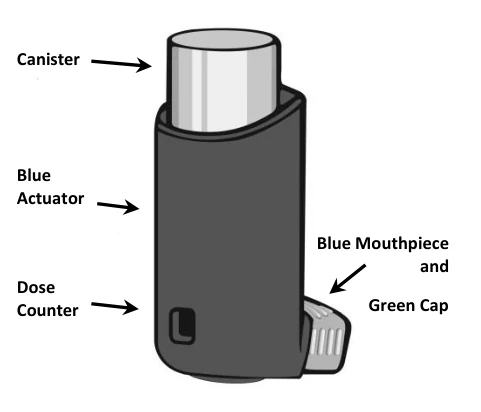
Figure 1
The inhaler contains 60 or 120 actuations (puffs).
The dose counter
The inhaler comes with a dose counter located on the plastic actuator (See Figure 2).
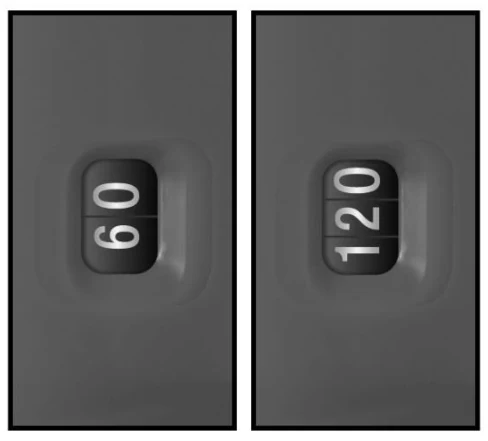
Figure 2
- The dose counter shows the number of actuations left in your inhaler. The dose counter will initially display “64” or “124” actuations remaining.
- The counter will count down by one each time you release a puff of medicine (either when preparing your ZENHALE inhaler for use or when taking the medicine).
- The counter will stop counting at “0”.
How to prime your ZENHALE inhaler
Before you use your ZENHALE inhaler for the first time, or if your inhaler has not been used for more than 5 days, it must be primed. Priming helps ensure that ZENHALE is working properly and delivering the correct dose of medicine to you.
To prime the inhaler:
Canister
Blue Actuator
Dose Counter
Blue Mouthpiece and
Green Cap
- 1. Remove the cap from the mouthpiece.
- 2. Shake the inhaler well.
- 3. Hold the inhaler in the upright position and pointing away from your face.
- 4. Release 1 actuation into the air.
- 5. Repeat steps 2-4 three times. In total you will release 4 actuations. After releasing 4 actuations, the dose counter should read either “60” or “120”.
How to use your ZENHALE inhaler properly
Use the ZENHALE canister only with the actuator supplied with the product. Do not use parts of the ZENHALE inhaler with parts from any other inhalation drug product.
Do NOT remove the canister from the actuator because:
- You may not receive the correct amount of medication.
- The dose counter may not function properly.
- Reinsertion may cause the counter to count down by 1 and may discharge a puff.
Be in an upright position when using ZENHALE. Do not spray into your eyes.
- 1. Remove the cap from the mouthpiece of the actuator (see Figure 3).
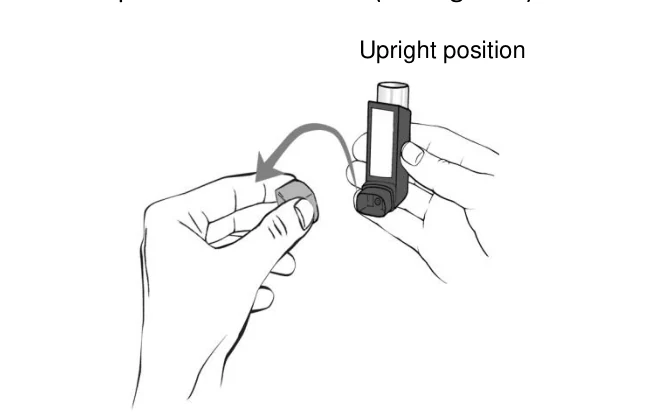
Figure 3
- 2. Check the mouthpiece for foreign objects and make sure the canister is fully inserted into the actuator.
- 3. Hold the canister upright between your thumb and forefinger and shake the inhaler.
- 4.
Breathe out fully through your mouth as far as is comfortable, expelling as much air from your lungs as possible. Hold the inhaler in the upright position and place the mouthpiece into your mouth. Close your lips around the mouthpiece (see Figure 4).
Upright position
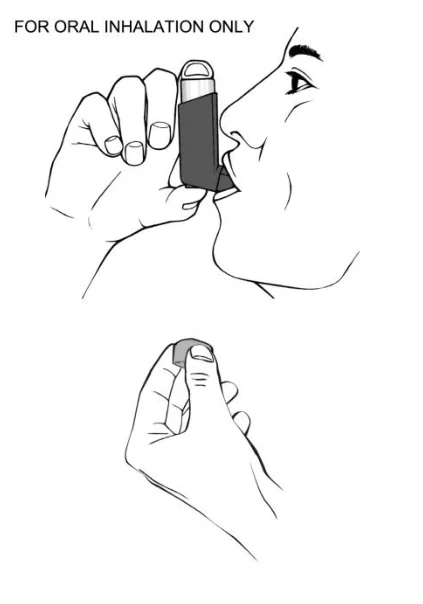
Figure 4
- 5. While breathing in deeply and slowly through your mouth, press down firmly and fully on the canister top until it stops moving in the actuator. Take your finger off the canister.
- 6. When you have finished breathing in, hold your breath for up to 10 seconds, or for as long as is comfortable. Then remove the inhaler from your mouth and breathe out through your nose while keeping your lips closed.
- 7. For administration of a second puff, wait about 30 seconds. Shake the inhaler well and repeat steps 4 through 6.
- 8. Immediately after use, firmly replace the cap (see Figure 5). Do not use excessive force.
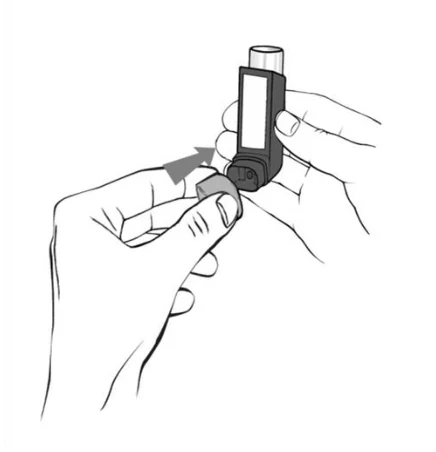
Figure 5
- 9. After completing both inhalations, rinse your mouth thoroughly with water and spit out the contents. Do not swallow the water after rinsing.
Use with a spacer
If necessary, your healthcare professional will prescribe the use of a spacer to help you properly take this medication. Instructions provided with the spacer device should be consulted prior to use.
How to clean your ZENHALE inhaler
The mouthpiece should be cleaned using a dry wipe after every 7 days of use.
To clean the inhaler:
- Remove the cap off the mouthpiece.
- Wipe the inside and outside surfaces of the actuator mouthpiece with a clean, dry lint-free tissue or cloth.
- Do not wash or put any parts of your inhaler in water.
- Put the cap back on the mouthpiece after cleaning.
- Do not remove the canister from the actuator.
- Do not attempt to unblock the actuator with a sharp object, such as a pin.
When to replace your ZENHALE inhaler
When the dose counter reads 20, you should refill your prescription or talk to your healthcare professional if you need a new prescription for ZENHALE.
When to discard your ZENHALE inhaler
Discard ZENHALE when the counter reaches “0”. Do not continue to use the inhaler when the dose counter reaches “0”. Your inhaler may not feel empty and it may continue to operate, but you will not get the right amount of medicine if you keep using it.
Never try to change the numbers on the counter or remove the counter from the actuator.
Warning: Do not use the inhaler after the expiration date.
Overdose:
If you have used larger doses for a long period of time, you should talk to your healthcare professional. This is because larger doses of ZENHALE may reduce the amount of steroid hormones produced by the adrenal gland.
Symptoms of an overdose may include:
- nausea
- vomiting
- headache
- trembling
- drowsiness
- low potassium levels
- high sugar levels
- high blood pressure
- rapid or irregular heartbeat
| If you think you, or a person you are caring for, have taken too much ZENHALE, contact a healthcare professional, hospital emergency department, regional poison control centre or Health Canada’s toll-free number, 1-844 POISON-X (1-844-764-7669) immediately, even if there are no signs symptoms. |
|---|
Missed dose:
If you miss a dose, take it as soon as you remember. However, if it is nearly time for your next dose, skip the missed dose. Do not take a double dose to make up for the forgotten dose.
Possible side effects from using ZENHALE:
These are not all the possible side effects you may have when taking ZENHALE. If you experience any side effects not listed here, tell your healthcare professional.
Side effects may include:
- disturbed sleep
- dizziness
- dry mouth
- fainting
- headache
- hoarseness
- loss of bone density
- muscle cramps
- nausea
- nervousness
- rounded face
- shakiness
- sore throat
- tremor
- upper respiratory tract infection
Serious side effects and what to do about them
| Frequency/Side Effect/Symptom | Talk to your healthcare professional | Stop taking this drug and get immediate medical help | |
|---|---|---|---|
| Frequency/Side Effect/Symptom | Talk to your healthcare professional | Stop taking this drug and get immediate medical help | |
| Only if severe | In all cases | ||
| Only if severe | In all cases | ||
| Common | |||
| Thrush (yeast infection in the mouth): white patches in the mouth and on the tongue, sore throat | √ | ||
| Uncommon | |||
| Heart problems: faster heartbeat than usual, irregular heartbeats or rhythms, palpitations, chest discomfort, shortness of breath, or weakness | √ | ||
| Hypertension (high blood pressure): shortness of breath, fatigue, dizziness or fainting, chest pain or pressure, swelling in your ankles and legs, bluish colour to your lips and skin, racing pulse or heart palpitations | √ | ||
| Rare | |||
| Allergic Reaction: difficulty swallowing or breathing, wheezing, feeling sick to your stomach and throwing up, hives or rash, swelling of the face, lips, tongue or throat | √ | ||
| Bronchospasm (when there is a sudden narrowing of the airway): difficulty breathing with wheezing or coughing | √ | ||
| Cataracts: clouding of the lens in the eye, blurry vision, dim vision and/or eye pain | √ | ||
| Distorted vision/blurred vision | √ | ||
| Glaucoma: increased pressure in your eyes, eye and head pain, swelling or redness in or around the eye, and changes in vision, hazy or blurred vision, sudden sight loss | √ | ||
| Unknown | |||
| Chest Pain | √ | ||
| Churg-Strauss Syndrome: a flu-like illness, rash, pins and needles or numbness of arms and legs, severe sinusitis and worsening lung or breathing problems. | √ | ||
| Decreased adrenal function: nausea and vomiting, low blood pressure, tiredness, weakness. | √ | ||
| Hyperglycemia (high blood sugar): increased thirst, frequent urination, dry skin, headache, blurred vision and fatigue | √ | ||
| Hypokalemia (low level of potassium in the blood): muscle weakness, muscle spasms, cramping, constipation, feeling of skipped heart beats or palpitations, fatigue, tingling or numbness | √ | ||
| Worsening of asthma: coughing, shortness of breath, wheezing and difficulty breathing | √ | ||
If you have a troublesome symptom or side effect that is not listed here or becomes bad enough to interfere with your daily activities, tell your healthcare professional.
Reporting side effects
You can report any suspected side effects associated with the use of health products to Health Canada by:
NOTE: Contact your healthcare professional if you need information about how to manage your side effects. The Canada Vigilance Program does not provide medical advice. |
Storage:
Store ZENHALE between 15°C to 30°C. If the inhaler is exposed to low temperatures, warm it to room temperature (by warming in the hand) before use. Do not freeze. Keep out of reach and sight of children.
The 120-actuation inhaler can be stored in any position. For the 60-actuation inhalers, after priming, store the inhaler with the mouthpiece down or sideways.
Contents under pressure. Do not place in hot water or near radiators, stoves or other sources of heat. Do not puncture or incinerate container or store at temperatures over 50°C.
Do not use ZENHALE if you notice that the pack is damaged or shows signs of tampering.
Medicines should not be disposed of via wastewater or household waste. Ask your pharmacist how to dispose of medicines no longer required. These measures will help to protect the environment.
If you want more information about ZENHALE:
- Talk to your healthcare professional
- Find the full product monograph that is prepared for healthcare professionals and includes the Patient Medication Information by visiting the Health Canada Drug Product Database website: (https://www.canada.ca/en/health-canada/services/drugs-health-products/drug-products/drug-product-database.html); the manufacturer’s website www.organon.ca; or by calling 1-844-820-5468.
Date of Authorization: 2025-06-09
® N.V. Organon. Used under license.
© 2025 Organon Canada Inc. All rights reserved.