


Product Monograph - Zolinza
Recent Major Label Changes
| 7 Warnings and Precautions, Reproductive Health | 2025-10 |
|---|---|
| 7.1 Special Populations, 7.1.1 Pregnancy | 2025-10 |
Table of Contents
Recent Major Label Changes ................................................................................................. 2
Table of Contents ................................................................................................................. 2
Part 1: Healthcare Professional Information.......................................................................... 4
- 1.
Indications..................................................................................................................... 4
1.1. Pediatrics .................................................................................................................... 4
1.2. Geriatrics .................................................................................................................... 4
- 2. Contraindications .......................................................................................................... 4
- 3. Serious Warnings and Precautions Box ........................................................................... 4
- 4.
Dosage and Administration ............................................................................................ 4
4.1. Dosing Considerations ............................................................................................... 4
4.2. Recommended Dose and Dosage Adjustment .......................................................... 4
4.4. Administration ........................................................................................................... 5
4.5. Missed Dose ............................................................................................................... 5
- 5. Overdose ....................................................................................................................... 5
- 6. Dosage Forms, Strengths, Composition, and Packaging .................................................. 6
- 7.
Warnings and Precautions ............................................................................................. 6
General ................................................................................................................................... 6
Carcinogenesis and Genotoxicity ........................................................................................... 7
Cardiovascular ........................................................................................................................ 7
Driving and Operating Machinery .......................................................................................... 8
Endocrine and Metabolism .................................................................................................... 8
Gastrointestinal ...................................................................................................................... 8
Hematologic ........................................................................................................................... 8
Hepatic/Biliary/Pancreatic ..................................................................................................... 8
Monitoring and Laboratory Tests ........................................................................................... 9
Perioperative Considerations ................................................................................................. 9
Renal ....................................................................................................................................... 9
Reproductive Health ............................................................................................................... 9
7.1. Special Populations .................................................................................................. 10
7.1.1. Pregnancy ......................................................................................................... 10
7.1.2. Breastfeeding ................................................................................................... 10
7.1.3. Pediatrics .......................................................................................................... 10
7.1.4. Geriatrics .......................................................................................................... 10
- 8.
Adverse Reactions ....................................................................................................... 10
8.1. Adverse Reaction Overview ..................................................................................... 10
8.2. Clinical Trial Adverse Reactions ............................................................................... 10
8.4. Abnormal Laboratory Findings: Hematologic, Clinical Chemistry, and Other Quantitative Data ................................................................................................................. 12
- 9.
Drug Interactions ......................................................................................................... 13
9.2. Drug Interactions Overview ..................................................................................... 13
9.4. Drug-Drug Interactions ............................................................................................ 13
9.5. Drug-Food Interactions ............................................................................................ 15
9.6. Drug-Herb Interactions ............................................................................................ 15
9.7. Drug-Laboratory Test Interactions........................................................................... 15
- 10.
Clinical Pharmacology .................................................................................................. 15
10.1. Mechanism of Action ............................................................................................... 15
10.2. Pharmacodynamics .................................................................................................. 15
10.3. Pharmacokinetics ..................................................................................................... 17
- 11. Storage, Stability, and Disposal .................................................................................... 20
- 12. Special Handling Instructions ....................................................................................... 20
Part 2: Scientific Information .............................................................................................. 21
- 13. Pharmaceutical Information ........................................................................................ 21
- 14.
Clinical Trials ............................................................................................................... 21
14.1. Clinical Trials by Indication ...................................................................................... 21
- 16. Non-Clinical Toxicology ................................................................................................ 24
Patient Medication Information ......................................................................................... 27
Part 1: Healthcare Professional Information
1. Indications
ZOLINZA® (vorinostat) is indicated for:
the treatment of cutaneous manifestations in patients with advanced cutaneous T-cell lymphoma (CTCL) who have progressive, persistent or recurrent disease subsequent to prior systemic therapies.
The indication was approved based on response rate demonstrated in a single-arm phase II study (see section 14 Clinical Trials)
1.1. Pediatrics
Pediatrics (< 18 years of age): The safety and effectiveness of ZOLINZA® in pediatric patients have not been studied, therefore, Health Canada has not authorized an indication for pediatric use.
1.2. Geriatrics
Geriatrics (≥ 65 years of age): In clinical studies, the efficacy and safety of ZOLINZA® in the elderly (≥ 65 years) were comparable to those seen in younger patients (< 65 years).
2. Contraindications
ZOLINZA® is contraindicated in:
- Patients who are hypersensitive to this drug or to any ingredient in the formulation, including any non-medicinal ingredient, or component of the container. For a complete listing, see section 6 Dosage Forms, Strengths, Composition, and Packaging.
- Patients who have severe hepatic impairment (total bilirubin ≥ 3x ULN).
3. Serious Warnings and Precautions Box
ZOLINZA® should be administered under the supervision of a physician experienced with the use of chemotherapy and with treatment of cutaneous T-cell lymphoma.
The following are clinically important adverse events:
- Thromboembolism including fatal cases
- Thrombocytopenia and anemia
4. Dosage and Administration
4.1. Dosing Considerations
- Patients should be instructed to drink at least 2 L/day of fluid to prevent dehydration.
4.2. Recommended Dose and Dosage Adjustment
The recommended dose is 400 mg orally once daily with food.
ZOLINZA® should be withheld in the presence of Grade 3–4 drug-related toxicity until the toxicity resolves to Grade 1 or less with the exception of Grade 3 anemia and thrombocytopenia. After recovering from drug-related toxicity, subsequent doses may be reduced to 300 mg orally once daily with food. The dose schedule may be further reduced to 300 mg once daily with food for 5 consecutive days each week, as necessary.
Treatment may be continued as long as there is no evidence of progressive disease or unacceptable toxicity.
Hepatic impairment
ZOLINZA® should be used with caution in patients with mild hepatic impairment (total bilirubin > 1.0x to 1.5x ULN or total bilirubin ≤ ULN and AST > ULN). It is recommended to reduce the starting dose to 300 mg orally daily because this is the maximum tolerated dose in this patient population (see section 10 Clinical Pharmacology). ZOLINZA® is not recommended in patients with moderate hepatic impairment (total bilirubin 1.5x to ≤3x ULN) as a safe and effective dose has not been established. ZOLINZA® is contraindicated in patients with severe hepatic impairment (total bilirubin ≥ 3x ULN) (see section 7 Warnings and Precautions, Hepatic/Biliary/Pancreatic).
Renal impairment
ZOLINZA® has not been studied in patients with renal impairment. Caution should be taken when ZOLINZA® is administered in patients with renal impairment (see section 7 Warnings and Precautions, Renal and section 10 Clinical Pharmacology, 10.3 Pharmacokinetics).
Geriatric population (≥ 65 years of age)
No dosage adjustment is necessary for the elderly (see section 7 Warnings and Precautions, 7.1.4 Geriatrics).
Pediatrics (< 18 years of age)
Health Canada has not authorized an indication for pediatric use (see section 1 Indications, 1.1 Pediatrics).
4.4. Administration
ZOLINZA® capsules should not be opened or crushed (See section 12 Special Handling instructions).
4.5. Missed Dose
If a dose is missed, it should be taken as soon as possible. If the patient does not remember until it is nearly time for the next dose, the patient should skip the missed dose and go back to the regular schedule. A double dose of ZOLINZA® should not be taken.
5. Overdose
No specific information is available on the treatment of overdosage of ZOLINZA®.
In clinical studies, the frequencies of more severe thrombocytopenia, anemia, fatigue and thromboembolic events were increased at doses higher than 400 mg once daily of ZOLINZA®.
The pharmacological effects may be prolonged after serum levels of active vorinostat are no longer present. It is not known if vorinostat is dialyzable.
In the event of overdose, it is reasonable to employ the usual supportive measures, e.g., remove unabsorbed material from the gastrointestinal tract, employ clinical monitoring, and institute supportive therapy, if required.
For the most recent information in the management of a suspected drug overdose, contact your regional poison control centre or Health Canada’s toll-free number, 1-844 POISON-X (1-844-764-7669).
- 6. Dosage Forms, Strengths, Composition, and Packaging
Table 1 – Dosage Forms, Strengths, and Composition
Each 100 mg ZOLINZA® capsule for oral administration contains 100 mg vorinostat.
ZOLINZA®, 100 mg capsule, is a white, opaque, hard gelatin capsule with "568" over "100 mg" printed within radial bar in black ink on the capsule body. Available in high density polyethylene bottles of 120 capsules.
7. Warnings and Precautions
See 3 Serious Warnings and Precautions Box.
General
Dehydration
Dehydration has been reported as a common serious drug-related adverse experience in clinical trials. Fluid and electrolyte replacement should be administered to prevent dehydration (see section 8 Adverse Reactions). Patients should be instructed to drink at least 2 L/day of fluids for adequate hydration. Pre-existing nausea, vomiting, and diarrhea should be adequately controlled before beginning therapy with ZOLINZA®.
Drug Interactions
Other Histone Deacetylase (HDAC) Inhibitors
Severe thrombocytopenia and gastrointestinal bleeding have been reported with concomitant use of ZOLINZA® and other HDAC inhibitors (e.g., valproic acid). Concurrent use of ZOLINZA® with other HDAC inhibitors is not recommended (see section 9 Drug Interactions, 9.4 Drug-Drug Interactions).
Coumarin-Derivative Anticoagulants
Physicians should carefully monitor PT and INR in patients concurrently administered ZOLINZA® and coumarin-derivatives (see section 9 Drug Interactions, 9.4 Drug-Drug Interactions).
| Route of Administration | Dosage Form/ Strength/Composition | Non-Medicinal Ingredients |
| oral | capsules 100mg vorinostat | magnesium stearate, microcrystalline cellulose and sodium croscarmellose. The capsule shell excipients are gelatin, titanium dioxide and may contain sodium lauryl sulfate. |
Carcinogenesis and Genotoxicity
Carcinogenicity studies have not been performed with vorinostat.
Cardiovascular
Thromboembolism
Pulmonary embolism and deep vein thrombosis have been reported as drug-related adverse experiences in clinical trials with ZOLINZA®. In the pivotal study in patients with CTCL treated with vorinostat 400 mg once daily (median duration of exposure ~4 months), the reported incidence of pulmonary embolism was 4.7% (4/86) and of deep vein thrombosis was 1.2% (1/86). In all completed and ongoing studies of vorinostat monotherapy in patients with CTCL, the proportion of patients with a venous thromboembolic event was 6.8% (10/147). In more than 1000 patients with hematologic malignancies and solid tumors who have been treated with vorinostat as monotherapy, or in combination with other chemotherapy agents, in completed and ongoing clinical studies, the proportion of patients that experienced a venous thromboembolic event was approximately 5.0%. In addition, there was an increase in the incidence of venous thromboembolic events in a randomized, double-blind study of patients with advanced non-small cell lung cancer who received vorinostat (400 mg once daily) in combination with chemotherapy (carboplatin and paclitaxel) as compared to patients who received chemotherapy alone. In this study, deep venous thrombosis and/or pulmonary embolism was reported in 6.5% (8/124) of patients in the vorinostat/chemotherapy treatment arm compared to 2.4% (3/124) of patients in the placebo/chemotherapy treatment arm.
Physicians should closely monitor patients for signs and symptoms of these events, particularly in patients with a prior history of thromboembolic events (see section 8 Adverse Reactions, 8.2 Clinical Trial Adverse Reactions, Serious Drug-Related Adverse Events).
QT/QTc Prolongation
ZOLINZA® is associated with QT/QTc interval prolongation (see section 7 Warnings and Precautions, Monitoring and Laboratory Tests and section 10 Clinical Pharmacology, 10.2 Pharmacodynamics, Cardiac Electrophysiology). Many drugs that cause QT/QTc prolongation are suspected to increase the risk of torsade de pointes.
Torsade de pointes is a polymorphic ventricular tachyarrhythmia. Generally, the risk of torsade de pointes increases with the magnitude of QT/QTc prolongation produced by the drug. Torsade de pointes may be asymptomatic or experienced by the patient as dizziness, palpitations, syncope, or seizures. If sustained, torsade de pointes can progress to ventricular fibrillation and sudden cardiac death.
Particular care should be exercised when administering ZOLINZA® to patients who are suspected to be at an increased risk of experiencing torsade de pointes during treatment with a QT/QTc-prolonging drug. Risk factors for torsade de pointes in the general population include, but are not limited to, the following: female gender; age 65 years or older; baseline prolongation of the QT/QTc interval; presence of genetic variants affecting cardiac ion channels or regulatory proteins, especially congenital long QT syndromes; family history of sudden cardiac death at < 50 years; cardiac disease (e.g., myocardial ischemia or infarction, congestive heart failure, left ventricular hypertrophy, cardiomyopathy, conduction system disease); history of arrhythmias (especially ventricular arrhythmias, atrial fibrillation, or recent conversion from atrial fibrillation); electrolyte disturbances (e.g., hypokalemia, hypomagnesemia, hypocalcemia); bradycardia (< 50 beats per minute); acute neurological events (e.g., intracranial or subarachnoid haemorrhage, stroke, intracranial trauma); nutritional deficits (e.g., eating disorders, extreme diets); diabetes mellitus; and autonomic neuropathy.
Physicians who prescribe drugs that prolong the QT/QTc interval should counsel their patients concerning the nature and implications of the ECG changes, underlying diseases and disorders that are considered to represent risk factors, demonstrated and predicted drug-drug interactions, symptoms suggestive of arrhythmia, risk management strategies, and other information relevant to the use of the drug.
Heart Rate
ZOLINZA® has been associated with increases in heart rate (see section 10 Clinical Pharmacology, 10.2 Pharmacodynamics, Cardiac Electrophysiology). Increases in heart rate may lead to worsening of cardiac conditions in patients with a history of ischemic heart disease or tachyarrhythmias. Caution should be observed in this patient population.
Driving and Operating Machinery
Dizziness and syncope have been reported in patients receiving ZOLINZA®, which may affect a patient’s ability to drive or operate machinery (see section 8 Adverse Reactions).
Endocrine and Metabolism
Hyperglycemia
Hyperglycemia has been observed commonly in patients receiving ZOLINZA® (see section 8 Adverse Reactions, 8.4. Abnormal Laboratory Findings: Hematologic, Clinical Chemistry, and Other Quantitative Data). Serum glucose should be monitored, especially in diabetic or potentially diabetic patients. Adjustment of diet and/or anti-hyperglycemic therapy may be necessary. Dose reduction or interruption may be considered in patients who develop severe hyperglycemia during ZOLINZA® treatment.
Gastrointestinal
Gastrointestinal disturbances, including nausea, vomiting and diarrhea have been reported very commonly in patients treated with ZOLINZA® (see section 8 Adverse Reactions) which may require the use of antiemetic and antidiarrheal medications. Women may experience more nausea, diarrhea and dysguesia than men.
Hematologic
Treatment with ZOLINZA® is associated with dose-related thrombocytopenia and anemia. If platelet counts and/or hemoglobin are severely reduced (platelets < 25 x 103/mm3 and/or hemoglobin < 6.5 g/dL) during treatment with ZOLINZA®, the dose should be modified or therapy discontinued (see section 7 Warnings and Precautions, Monitoring and Laboratory Tests, section 8 Adverse Reactions and section 4 Dosage and Administration).
Hepatic/Biliary/Pancreatic
ZOLINZA® was studied in 42 non-CTCL cancer patients with varying degrees of hepatic impairment using single and multiple-dose administration. Although there were no statistically significant differences in any pharmacokinetic parameter across hepatic impairment groups, the degree of hepatic impairment did affect tolerability such that maximum tolerated doses decreased with increasing severity of hepatic impairment. Based on these results, ZOLINZA® should be used with caution at a reduced dose in patients with mild hepatic impairment (total bilirubin > 1.0x to 1.5x ULN or total bilirubin ≤ ULN and AST > ULN). ZOLINZA® is not recommended in patients with moderate hepatic impairment (total bilirubin 1.5x–≤ 3x ULN) as a safe and effective dose has not been established. ZOLINZA® is contraindicated in patients with severe hepatic impairment (total bilirubin > 3x ULN) (see section 2 Contraindications, section 4 Dosage and Administration, 4.2 Recommended Dose and Dosage Adjustment, Hepatic Impairment and section 10 Clinical Pharmacology, 10.3 Pharmacokinetics, Special Populations and Conditions, Hepatic Insufficiency).
Monitoring and Laboratory Tests
Careful monitoring of blood cell counts and chemistry tests, including electrolytes, glucose and serum creatinine, should be performed every 2 weeks during the first 2 months of therapy and monthly thereafter. Electrolyte monitoring should include potassium, magnesium and calcium. Baseline and periodic ECGs should be performed during treatment (see section 7 Warnings and Precautions, Cardiovascular, QT/QTc prolongation).
ZOLINZA® should be administered with particular caution in patients with congenital long QT syndrome, and patients taking anti-arrhythmic medicines or other medicinal products that lead to QT prolongation. Hypokalemia or hypomagnesemia should be corrected prior to administration of ZOLINZA®, and consideration should be given to monitoring potassium and magnesium in symptomatic patients (e.g., patients with nausea, vomiting, diarrhea, fluid imbalance or cardiac symptoms).
Perioperative Considerations
In some patients recovering from surgery of the bowel and treated peri-operatively with ZOLINZA®, anastomotic healing adverse experiences including fistulas, perforations, and abscess formation have been reported. Therefore, caution should be exercised in the use of ZOLINZA® in the perioperative period when patients require bowel surgery (see section 8 Adverse Reactions, 8.2 Clinical Trial Adverse Reactions, Adverse Experiences in Non-CTCL Patients).
Renal
ZOLINZA® has not been studied in patients with renal impairment. Although negligible amount of vorinostat was excreted via the kidney, over 50% of the vorinostat dose was recovered as two major metabolites in the urine (see section 10 Clinical Pharmacology). Patients with renal impairment should be treated with caution.
Reproductive Health
ZOLINZA® has the potential to cause fetal harm when administered to pregnant women. Advise females of reproductive potential to use effective contraception during treatment and for at least 6 months after the last dose. Advise males with female sexual partners of reproductive potential to use effective contraception during treatment and for at least 3 months after the last dose (see section 7.1.1. Pregnancy).
- Fertility
There are no clinical data on the effect of ZOLINZA® on human fertility. Findings from fertility studies in animals are limited by drug exposures lower than human exposure (see section 16 Non-Clinical Toxicology, Reproductive and developmental toxicology).
7.1. Special Populations
7.1.1. Pregnancy
There are no adequate and well-controlled studies in pregnant women using ZOLINZA®. Based on animal data and its mechanism of action, ZOLINZA® has the potential to cause fetal harm when administered to pregnant women (see section 16 Non-Clinical Toxicology, Reproductive and developmental toxicology). Therefore, ZOLINZA® should not be used during pregnancy. Advise females of reproductive potential to use effective contraception during treatment and for at least 6 months after the last dose. Advise males with female sexual partners of reproductive potential to use effective contraception during treatment and for at least 3 months after the last dose. If ZOLINZA® is used during pregnancy, or if the patient becomes pregnant while taking this drug, the patient should be apprised of the potential hazard to the fetus.
7.1.2. Breastfeeding
It is not known whether this drug is excreted in human milk. Because many drugs are excreted in human milk and because of the potential for serious adverse reactions in nursing infants from ZOLINZA®, women should be advised against breastfeeding while taking ZOLINZA®.
7.1.3. Pediatrics
Pediatrics (< 18 years of age): The safety and effectiveness of ZOLINZA® in pediatric patients have not been studied, therefore, Health Canada has not authorized an indication for pediatric use.
7.1.4. Geriatrics
Geriatrics (≥ 65 years of age): In clinical studies, the safety of ZOLINZA® in the elderly (≥ 65 years) was comparable to those seen in younger patients (< 65 years). No dosage adjustment is necessary in elderly patients.
8. Adverse Reactions
8.1. Adverse Reaction Overview
The safety of ZOLINZA® was evaluated in 107 CTCL patients in two single-arm clinical studies in which 86 patients received 400 mg once daily.
The most common drug-related adverse experiences in patients on 400 mg once daily could be classified into 4 symptom complexes: gastrointestinal symptoms (diarrhea, nausea, anorexia, weight decreased, vomiting, constipation, decreased appetite), constitutional symptoms (fatigue, chills), hematologic abnormalities (thrombocytopenia, anemia), and taste disorders (dysgeusia, dry mouth).
8.2. Clinical Trial Adverse Reactions
Clinical trials are conducted under very specific conditions. Therefore, the frequencies of adverse reaction rates observed in the clinical trials may not reflect frequencies observed in clinical practice and should not be compared to frequencies in clinical trials of another drug.
Common Clinical Trial Adverse Drug Reactions (≥ 5%)
Table 2 summarizes the specific drug-related adverse experiences by frequency and National Cancer Institute-Common Terminology Criteria for Adverse Events (NCI-CTCAE, version 3.0) Grade in the CTCL patients who received 400 mg once daily.
Table 2 – Drug-related Clinical or Laboratory Adverse Experiences Occurring in CTCL Patients (Incidence ≥ 5%)
| ZOLINZA® 400 mg once daily (N=86) | |||||||||
| Adverse Experiences | All Grades | Grade 3–5* | |||||||
| n | % | n | % | ||||||
| Blood and lymphatic system disorders | |||||||||
| Thrombocytopenia | 22 | (25.6) | 5 | (5.8) | |||||
| Anemia | 11 | (12.8) | 2 | (2.3) | |||||
| Gastrointestinal disorders | |||||||||
| Diarrhea | 40 | (46.5) | 0 | (0.0) | |||||
| Nausea | 33 | (38.4) | 3 | (3.5) | |||||
| Dry mouth | 14 | (16.3) | 0 | (0.0) | |||||
| Vomiting | 10 | (11.6) | 0 | (0.0) | |||||
| Constipation | 9 | (10.5) | 0 | (0.0) | |||||
| Abdominal pain | 7 | (8.1) | 1 | (1.2) | |||||
| General disorders and administration site conditions | |||||||||
| Fatigue | 39 | (45.3) | 2 | (2.3) | |||||
| Chills | 9 | (10.5) | 1 | (1.2) | |||||
| Investigations | |||||||||
| Weight decreased | 17 | (19.8) | 1 | (1.2) | |||||
| Blood creatinine increased | 11 | (12.8) | 0 | (0.0) | |||||
| Metabolism and nutrition disorders | |||||||||
| Anorexia | 20 | (23.3) | 2 | (2.3) | |||||
| Decreased appetite | 10 | (11.6) | 1 | (1.2) | |||||
| Musculoskeletal and connective tissue disorders | |||||||||
| Muscle spasms | 14 | (16.3) | 2 | (2.3) | |||||
| Nervous system disorders | |||||||||
| Dysgeusia | 20 | (23.3) | 0 | (0.0) | |||||
| Dizziness | 6 | (7.0) | 1 | (1.2) | |||||
| Headache | 5 | (5.8) | 0 | (0.0) | |||||
| Renal and urinary disorders | |||||||||
| Proteinuria | 7 | (8.1) | 0 | (0.0) | |||||
| Respiratory, thoracic and mediastinal disorders | |||||||||
| Dyspnea | 6 | (7.0) | 0 | (0.0) | |||||
| Skin and subcutaneous tissue disorders | |||||||||
| Alopecia | 14 | (16.3) | 0 | (0.0) | |||||
* None of these adverse experiences were Grade 5.
Serious Drug-Related Adverse Events
The most common serious drug-related adverse experiences in the 86 CTCL patients in two clinical studies receiving 400 mg once daily of ZOLINZA® were pulmonary embolism, reported in 4.7% (4/86) of patients and anemia reported in 2.3% (2/86) of patients. There were single experiences of thrombocytopenia, death (of unknown cause), ischemic stroke, deep vein thrombosis, gastrointestinal hemorrhage, streptococcal bacteremia, dehydration, and syncope.
Three cases (4.1%, 3/74) of squamous cell carcinoma, not considered drug related by the investigator, were reported as serious clinical adverse experiences in the pivotal study.
Dose Modifications and Discontinuations
Of the CTCL patients who received the 400 mg once daily dose, 10.5% (9/86) of patients required a dose modification of ZOLINZA® due to adverse experiences. These adverse experiences included increased serum creatinine, decreased appetite, hypokalemia, leukopenia, nausea, neutropenia, thrombocytopenia and vomiting. The median time to the first adverse experience resulting in dose reduction was 42 days (range 17 to 263 days).
Of the CTCL patients who received the 400 mg once daily dose, 10.5% (9/86) of patients discontinued ZOLINZA® due to drug-related adverse experiences. These adverse experiences included anemia, angioneurotic edema, asthenia, chest pain, death, deep vein thrombosis, ischemic stroke, lethargy, pulmonary embolism and skin lesion.
Dehydration
Based on reports of dehydration as a serious drug-related adverse experience in clinical trials, patients were instructed to drink at least 2 L/day of fluids for adequate hydration. After these precautions were implemented, the incidence of dehydration decreased (see section 7 Warnings and Precautions, Gastrointestinal and Monitoring and Laboratory Tests).
Adverse Experiences in Non-CTCL Patients
In addition to the 107 CTCL patients, 312 patients with malignancies other than CTCL received ZOLINZA® as monotherapy or in combination with other anti-cancer therapies. Drug-related adverse experiences reported in non-CTCL patients were generally similar to those reported in CTCL patients. However, the frequencies of individual adverse experiences were higher in the non-CTCL population. Drug-related serious adverse experiences reported in the non-CTCL population which were not observed in the CTCL population included single experiences of blurred vision, deafness, dysphagia, asthenia, abdominal pain, diverticulitis, hyponatremia, non-small cell lung cancer, tumor hemorrhage, Guillain-Barré syndrome, renal failure, urinary retention, cough, hemoptysis, hypertension and vasculitis.
In some patients recovering from surgery of the bowel and treated peri-operatively with ZOLINZA®, anastomotic healing adverse experiences including fistulas, perforations, and abscess formation have been reported.
8.4. Abnormal Laboratory Findings: Hematologic, Clinical Chemistry, and Other Quantitative Data
Clinical Trial Findings
Abnormal Hematologic and Clinical Chemistry Findings
Laboratory abnormalities were reported in the 86 patients who received the 400 mg dose and one patient who received a 350 mg dose.
Increased serum glucose was detected by laboratory safety tests in 69% (60/87) of CTCL patients, but was severe (Grade 3) in only 5 of these. Hyperglycemia was reported as a drug-related adverse experience in 4.7% (4/86) of CTCL patients who received the 400 mg once daily dose (see section 7 Warnings and Precautions, Endocrine and Metabolism).
Transient, non-severe increases in serum creatinine were detected in 47.1% (41/87) of CTCL patients.
Proteinuria was detected as a laboratory abnormality in 38 of 74 (51.4%) patients tested. The clinical significance of this finding is unknown.
- 9. Drug Interactions
9.2. Drug Interactions Overview
Clinical studies to evaluate drug-drug interactions of ZOLINZA® have not been conducted. In animal models and in vitro human systems, the major pathways of metabolism of vorinostat involve glucuronidation and hydrolysis followed by β-oxidation. It is possible that vorinostat may interact with drugs metabolized via the same pathways.
9.4. Drug-Drug Interactions
The drugs listed in this table are based on either drug interaction case reports or studies, or potential interactions due to the expected magnitude and seriousness of the interaction (i.e., those identified as contraindicated).
Table 3 - Established or Potential Drug-Drug Interactions
| Vorinostat with | Source of Evidence | Effect | Clinical comment |
| Coumarin-Derivative Anticoagulants | CT | Prolongation of prothrombin time (PT) and International Normalized Ratio (INR) were observed infrequently in patients receiving ZOLINZA® concomitantly with coumarin-derivative anticoagulants. | Physicians should carefully monitor PT and INR in patients concurrently administered ZOLINZA® and coumarin derivatives. |
| Other HDAC Inhibitors | CT | Severe (Grade 4) thrombocytopenia with associated gastrointestinal bleeding and anemia has been reported with the concomitant use of ZOLINZA® and valproic acid. | ZOLINZA® should not be administered concomitantly with other HDAC inhibitors (e.g., valproic acid) as class-specific adverse reactions may be additive. |
| Other QT/QTc Prolonging Drugs* | T | Concomitant use of ZOLINZA® with another QTc prolonging drug may have an additive effect on QTc interval. | The concomitant use of ZOLINZA® with another QT/QTc-prolonging drug should be avoided to the extent possible. |
| Drugs that disrupt electrolyte levels** | T | Electrolyte imbalance such as hypokalemia increases risk of QTc interval prolongation | The use of ZOLINZA® with drugs disrupting electrolyte level is discouraged. |
Legend: C = Case Study; CT = Clinical Trial; T = Theoretical
*For additional information see Other QT/QTc Prolonging Drugs.
**For additional information see Drugs that Disrupt Electrolyte Levels.
Other QT/QTc Prolonging Drugs: The concomitant use of ZOLINZA® with another QT/QTc-prolonging drug should be avoided to the extent possible. Drugs that have been associated with QT/QTc interval prolongation and/or torsade de pointes include, but are not limited to, the examples in the following list. Chemical/pharmacological classes are listed if some, although not necessarily all, class members have been implicated in QT/QTc prolongation and/or torsade de pointes:
Class IA antiarrhythmics (e.g., quinidine, procainamide, disopyramide); Class III antiarrhythmics (e.g., amiodarone, sotalol, ibutilide); Class 1C antiarrhythmics (e.g., flecainide, propafenone); anthracyclines, including a history of prior treatment (e.g., doxorubicin, epirubicin); tyrosine kinase inhibitors (e.g., sunitinib, nilotinib, lapatinib); antipsychotics (e.g., chlorpromazine, pimozide, haloperidol, droperidol, ziprasidone); antidepressants (e.g., fluoxetine, venlafaxine, tricyclic/tetracyclic antidepressants e.g., amitriptyline, imipramine, maprotiline); opioids (e.g., methadone); macrolide antibiotics and analogues (e.g., erythromycin, clarithromycin, telithromycin); quinolone antibiotics (e.g., moxifloxacin, levofloxacin); pentamidine; antimalarials (e.g., quinine, chloroquine); azole antifungals (e.g., ketoconazole, fluconazole, voriconazole); domperidone; 5-HT3 receptor antagonists (e.g., dolasetron, ondansetron); tacrolimus; beta-2 adrenoceptor agonists (e.g., salbutamol, formoterol).
Drugs that Disrupt Electrolyte Levels: Drugs that can disrupt electrolyte levels include, but are not limited to, the following: loop, thiazide, and related diuretics; laxatives and enemas; amphotericin B; high dose corticosteroids.
9.5. Drug-Food Interactions
Following a single dose 400 mg vorinostat administration, a high-fat meal was associated with a 38% increase in the systemic exposure of vorinostat and a modest decrease in the rate of absorption (2.5 hour delay in median Tmax) (see section 4 Dosage and Administration and section 10.3 Pharmacokinetics, Absorption).
9.6. Drug-Herb Interactions
Interactions with herbal products have not been established.
9.7. Drug-Laboratory Test Interactions
Interactions with laboratory tests have not been established.
10. Clinical Pharmacology
10.1. Mechanism of Action
ZOLINZA® is a histone deacetylase (HDAC) inhibitor. HDACs catalyze the removal of acetyl groups from the lysine residues of proteins, including histones and transcription factors.
Vorinostat is an inhibitor of histone deacetylases HDAC1, HDAC2 and HDAC3 (Class I) and HDAC6 (Class II) (IC50 < 86 nM). These enzymes catalyze the removal of acetyl groups from the lysine residues of proteins, including histones. The anti-neoplastic effect of vorinostat is attributed to the inhibition of HDAC activity and subsequent accumulation of acetylated proteins, including histones. Histone acetylation results in transcriptional activation of genes, including tumor suppressor genes, whose expression leads to induction of differentiation, apoptosis and/or inhibition of tumor growth.
Vorinostat induces apoptosis and inhibits cell growth in a wide variety of transformed cells in culture. In human colon carcinoma cells, inhibition of cell proliferation was observed at concentrations of vorinostat that cause the accumulation of acetylated histones. In vivo, vorinostat demonstrates anti-neoplastic activity in rodent tumour models including xenograft models of human prostate, breast and colon carcinoma. Overall, tumour regression was not observed. Rather, vorinostat mediated a decrease in tumour growth rate.
10.2. Pharmacodynamics
Cardiac Electrophysiology
The effect of ZOLINZA® on cardiac electrophysiology was studied in a placebo controlled, two period crossover study in which patients with relapsed or refractory cancer (N=24, 12M/12F) were randomised to receive single doses of ZOLINZA® 800 mg and placebo. The QT data were corrected for heart rate using the Fridericia formula (QTcF correction factor 0.33) and a study population-specific correction (QTcP correction factor 0.49). The maximum increase was 13.06 ms (90% CI 9.32, 16.81 ms) for QTcP at 4 hours post-dosing and 6.51 ms (90% CI 3.19, 9.82 ms) for QTcF at 24 hours post-dosing.
The magnitude of QTc prolongation observed in a clinical trial will depend on the study conditions, such as the subject population, the dose and duration of treatment, the equipment used, and the methods employed for reading the ECGs and analysing the QTc data. For this reason, QTc data from different clinical trials are not suitable for direct comparison in terms of magnitude of effect.
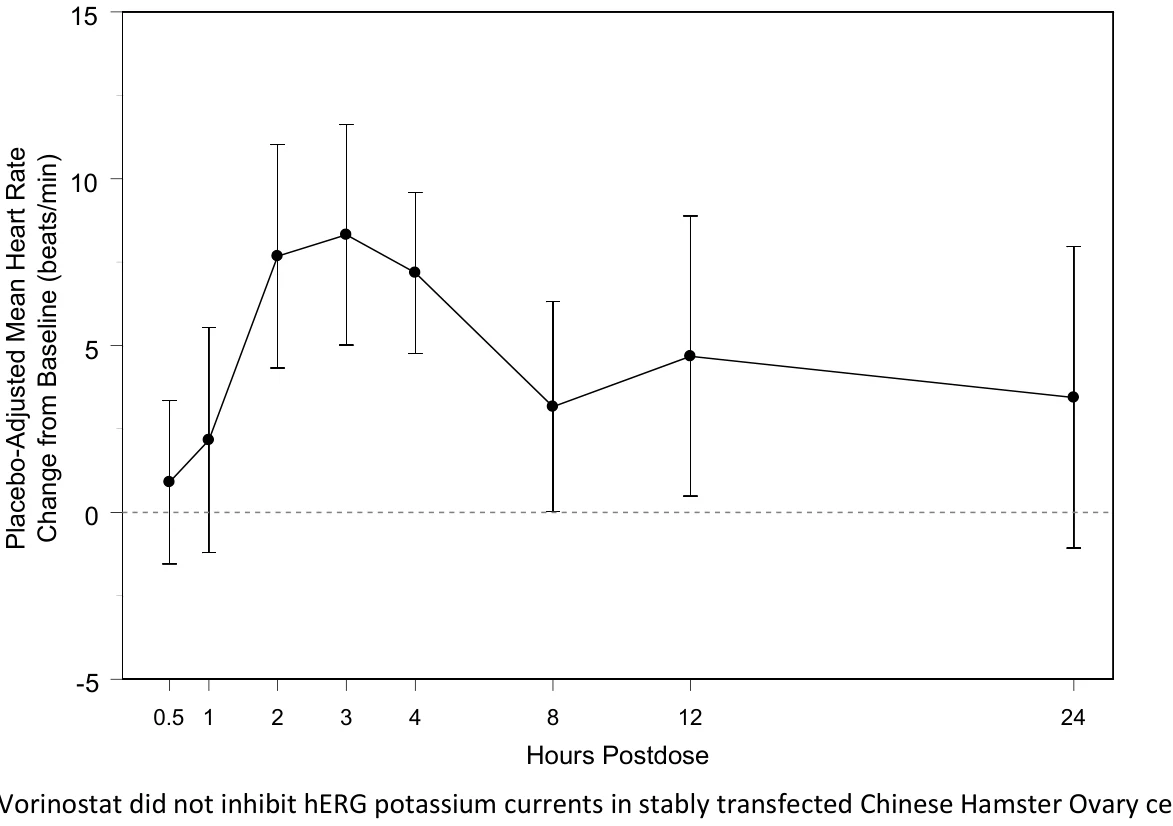
Heart rate increases were observed in the ZOLINZA® 800 mg treatment arm from 2 to 12 hours post-dosing, with a mean maximum increase of 8.32 bpm (90% CI 5.02, 11.63 bpm) at 3 hours post-dosing (see Figure 2).
Figure 1 – Placebo-Adjusted Means and 90% Confidence Intervals for Change-From-Baseline QTc Interval (msec) After Administration of Single-Dose 800-mg Vorinostat to Male and Female Patients with Advanced Cancer (N=24)
QTcP values are corrected for heart rate using a study population-specific correction (QTc=QT/RR0.49)
QTcP vs RR slope: -0.005, 95% CI -0.022, 0.012
QTcF values are corrected for heart rate using a Fridericia’s correction (QTc=QT/RR0.33)
QTcF vs. RR slope: 0.074, 95% CI 0.057, 0.091
Figure 2 – Placebo-Adjusted Means and 90% Confidence Intervals for Change-From-Baseline Heart Rate (beats/min) After Administration of Single-Dose 800-mg Vorinostat to Male and Female Patients with Advanced Cancer (N=24)
Vorinostat did not inhibit hERG potassium currents in stably transfected Chinese Hamster Ovary cells (N=7-9/concentration) at nominal concentrations up to 300 µM (limit of solubility). No QTc prolongation was observed in a cardiovascular telemetry study in conscious dogs (N=4) receiving single oral doses of 20, 60, or 160 mg/kg vorinostat according to an escalating dose design. Treatment-related increases in heart rate were observed at 60 and 160 mg/kg vorinostat.
10.3. Pharmacokinetics
The pharmacokinetic parameters of vorinostat following single and multiple doses of 400 mg in patients with cancer are shown in Table 4.
Table 4 – Summary Statistics for Vorinostat Pharmacokinetic Parameters Following Single and Multiple Doses of Vorinostat 400 mg Daily in Male and Female Cancer Patients
| Dose/Diet | Cmax µM (Geometric mean [95% CI]) | AUC µM·hr* (Geometric mean [95% CI]) | Tmax hr (Median [range]) | t½ hr (Harmonic mean [jackknife standard deviation]) | fe║** (Arithmetic mean) |
| 400 mg Single Dose Fasted (N=23) | 1.12 [0.94, 1.33] | 3.87 [3.31, 4.52] | 1.5 [0.5, 10] | 1.74 [0.78] | 0.0021 |
| Dose/Diet | Cmax µM (Geometric mean [95% CI]) | AUC µM·hr* (Geometric mean [95% CI]) | Tmax hr (Median [range]) | t½ hr (Harmonic mean [jackknife standard deviation]) | fe║** (Arithmetic mean) |
| 400 mg Single Dose Fed (N=20) | 1.02 [0.85, 1.23] | 5.33 [4.53, 6.28] | 4.0 [2.0, 10] | 1.44 [0.65] | 0.0030 |
400 mg Multiple Dose Fed (N=14) 22 Days Once Daily | 1.13 [0.91, 1.41] | 6.46 [5.42, 7.69] | 4.21 [0.5, 14] | 1.34 [0.58] | 0.0037 |
* AUC0-inf reported for single dose data; AUC0-24 hr reported for multiple doses. AUC0-inf ~AUC0-24 hr
║ Arithmetic mean (single dose fasted N=22, single dose fed N=21, multiple dose fed N=12).
** Fraction excreted unchanged in urine
Absorption
The pharmacokinetics of vorinostat were evaluated in 23 patients with cancer. After oral administration of a single 400 mg dose of vorinostat with a high-fat meal, the mean area under the curve (AUC), peak serum concentration (Cmax), and the median time to maximum concentration (Tmax) were approximately 5.33 µM•hr, 1.02 µM and 4.00 hours, respectively.
In the fasted state, oral administration of a single 400 mg dose of vorinostat resulted in a mean AUC and Cmax and median Tmax of 3.87 µM•hr, 1.12 µM and 1.50 hours, respectively. Oral administration of vorinostat with a high-fat meal resulted in a 38% increase in mean AUC and a modest decrease in the rate of absorption (Tmax delayed 2.5 hours) compared to the fasted state. Oral administration of multiple 400 mg doses of vorinostat with food resulted in a further 21% increase in mean AUC with Cmax and Tmax comparable to those following a single dose in the fed state. In the fed-state, oral administration of multiple 400-mg doses of vorinostat resulted in a mean AUC and Cmax and a median Tmax of 6.46 µM•hr, 1.13 µM and 4.21 hours, respectively.
Distribution
Vorinostat is approximately 71% bound to human plasma proteins over the concentration range of 0.5 to 50 µg/mL.
Metabolism
The major pathways of vorinostat metabolism involve glucuronidation to form O-glucuronide vorinostat and hydrolysis followed by β-oxidation to form 4-anilino-4-oxobutanoic acid. Human serum levels were measured and, compared to vorinostat, the mean steady state serum exposures of O-glucuronide vorinostat and 4-anilino-4-oxobutanoic acid are approximately 4-fold and 13-fold higher, respectively. Both metabolites are pharmacologically inactive.
In vitro studies using human liver microsomes indicate negligible biotransformation by cytochromes P450 (CYP).
Elimination
Vorinostat is eliminated predominantly through metabolism, with less than 1% of the dose recovered as unchanged drug in urine. The mean urinary recovery of two major pharmacologically inactive metabolites at steady state was 16±5.8% of vorinostat dose as the O-glucuronide of vorinostat, and 36±8.6% of vorinostat dose as 4-anilino-4-oxobutanoic acid. Total urinary recovery of these two metabolites averaged 52±13.3% of vorinostat dose. The mean terminal half-life (t½) was ~2.0 hours for both vorinostat and the O-glucuronide metabolite, while that of the 4-anilino-4-oxobutanoic acid metabolite was 11 hours.
Drug Interactions with additional pharmacokinetic data
No formal clinical studies have been conducted to evaluate drug interactions with vorinostat. In animal models and in vitro human systems, the major pathways of metabolism of vorinostat involve glucuronidation and hydrolysis followed by β-oxidation. It is possible that vorinostat may interact with drugs metabolized via the same pathways.
Vorinostat inhibits CYP drug metabolizing enzymes (CYP1A2, 2B6, 2C8, 2C9, 2C19, 2D6 and 3A4) in human liver microsomes only at high concentrations (IC50 > 75 µM). Using primary human hepatocytes, CYP1A1, 1A2, 2B6, 2C9, 2C19 and 3A4 activities were evaluated. Decreased CYP2C9 and 3A4 activities were observed at concentrations higher (≥ 10 µM) than pharmacologically relevant. Overall, vorinostat is not expected to affect the pharmacokinetics of other agents. As vorinostat is not eliminated via the CYP pathways, it is anticipated that vorinostat will not be subject to drug-drug interactions when co-administered with drugs that are known CYP inhibitors or inducers.
In vitro studies indicate that vorinostat is not a substrate of human P-glycoprotein (P-gp). In addition, vorinostat has no inhibitory effect on human P-gp-mediated transport of vinblastine (a marker P-gp substrate) at concentrations of up to 100 μM. Thus, vorinostat is not likely to inhibit P-gp at the pharmacologically relevant serum concentration of 2 μM (Cmax) in humans.
Special Populations and Conditions
Based upon an exploratory analysis of limited data, gender, race, and age do not appear to have meaningful effects on the pharmacokinetics of vorinostat.
- Pediatrics : Vorinostat was not evaluated in patients < 18 years of age.
- Geriatrics : Of the total number of patients with CTCL in trials (N=107), 46 percent were 65 years of age and over, while 15 percent were 75 years of age and over. No overall differences in safety or effectiveness were observed between these subjects and younger subjects, and other reported clinical experience has not identified differences in responses between the elderly and younger patients, but greater sensitivity of some older individuals cannot be ruled out.
Hepatic Insufficiency: The single dose pharmacokinetics of a 400 mg vorinostat dose administered in a fasted state was evaluated in patients with non-CTCL cancers. There were no statistically significant differences in any pharmacokinetic parameter across hepatic impairment groups. There did not appear to be any trends in any PK parameter with the increasing severity of hepatic impairment.
The safety of multiple daily doses of vorinostat was also evaluated in patients with non-CTCL cancers with varying degrees of hepatic impairment. The highest dose studied in mild, moderate and severe hepatic impairment was 400, 300 and 200 mg daily, respectively. A total of nine patients had dose-limiting toxicities (DLTs) and the most frequently reported DLT was Grade 4 thrombocytopenia. The DLT event of Grade 4 thrombocytopenia occurred in one (6.7%) patient with mild hepatic impairment at the 400 mg dose and in two (13.3%) patients with moderate hepatic impairment at the 300 mg dose. In patients with severe hepatic impairment, this DLT event occurred in three (27.3%) patients.
- Renal Insufficiency: Vorinostat was not evaluated in patients with renal impairment.
- Storage, Stability, and Disposal
Store at room temperature (15°C – 30°C).
12. Special Handling Instructions
Direct contact of the powder in ZOLINZA® capsules with the skin or mucous membranes should be avoided. If such contact occurs, wash thoroughly. ZOLINZA® capsules should not be opened or crushed (see section 16 Non-Clinical Toxicology).
Part 2: Scientific Information
13. Pharmaceutical Information
Drug Substance
Non-proprietary name of the drug substance(s): vorinostat
Chemical name: N-hydroxy-N’-phenyloctanediamide
Molecular formula and molecular mass: C14H20N2O3 264.32
Structural formula:
NH HN O O OH
Physicochemical properties: vorinostat is a white to off-white powder. It is very slightly soluble in water, slightly soluble in ethanol, isopropanol and acetone, freely soluble in dimethyl sulfoxide and insoluble in methylene chloride.
14. Clinical Trials
14.1. Clinical Trials by Indication
Study Design
In an open-label, single-arm, multicenter Phase IIb study, 74 patients with CTCL of all stages were treated with 400 mg once daily ZOLINZA®. Dose modification (300 mg once daily for 7 days/week, 300 mg for 5 consecutive days/week) was allowed by the protocol after recovery from dose-related toxicities. The primary endpoint was response rate measured by modified Severity Weighted Assessment Tool (mSWAT) in patients with advanced CTCL (Stage IIB and higher) who have progressive, persistent, or recurrent disease on or following at least two systemic therapies. One of these therapies must have contained bexarotene unless the patient was intolerant of or not a candidate for bexarotene therapy.
Extent of skin disease was quantitatively assessed by investigators using mSWAT. The investigator measured the percentage total body surface area (%TBSA) involvement separately for patches, plaques, and tumors within 12 body regions using the patient’s palm as a “ruler”. The total %TBSA for each lesion type was multiplied by a severity weighting factor (1=patch, 2=plaque and 4=tumor) and summed to derive the mSWAT score.
Efficacy was measured as either a Complete Clinical Response (CCR) defined as no evidence of skin disease, or Partial Response (PR) defined as a ≥ 50% decrease in skin mSWAT assessment score compared to baseline. Response had to be maintained for at least 4 weeks to be considered either CCR or PR. For patients with Sézary syndrome who have achieved a CCR or PR, peripheral blood flow cytometry was conducted to monitor malignant T cell (CD4+CD26-) counts. However, the presence or worsening of T cell (CD4+CD26-) count in peripheral blood did not overrule a CCR or PR in cutaneous response.
Secondary endpoints included relief of pruritus; response duration; time to objective response; and safety and tolerability. Duration of response was measured from the time when criteria were first met for CCR or PR (whichever was first recorded) until the first date when an increase in skin assessment by mSWAT score was greater than 50% of the difference between baseline score and nadir score.
Baseline patient demographic and clinical characteristics are shown in Table 5.
Table 5 – Baseline Patient Demographic and Clinical Characteristics (All Patients As Treated)
| Characteristics | Vorinostat |
| (N=74) | |
| Age (years) | |
| Mean (SD) | 61.2 (11.3) |
| Median (Range) | 60.0 (39.0, 83.0) |
| Gender, n (%) | |
| Male | 38 (51.4%) |
| Female | 36 (48.6%) |
| CTCL stage, n (%) | |
| IB | 11 (14.9%) |
| IIA | 2 (2.7%) |
| IIB | 19 (25.7%) |
| III | 22 (29.7%) |
| IVA | 16 (21.6%) |
| IVB | 4 ( 5.4%) |
| Racial Origin, n (%) | |
| Asian | 1 ( 1.4%) |
| 11 (14.9%) | |
| Other | 1 ( 1.4%) |
| White | 61 (82.4%) |
| Time from Initial CTCL Diagnosis (year) | |
| Median (range) | 2.6 (0.0, 27.3) |
| Clinical Characteristics | |
| Presence of clinically abnormal lymph nodes, n (%) | 34 (45.9%) |
| Presence of histologically involved lymph nodes, n (%) | 19 (25.7%) |
| Presence of skin tumor, n (%) | 22 (29.7%) |
| Presence of Sézary syndrome, n (%) | 30 (40.5%) |
| Number of prior systemic treatments, median (range) | 3.0 (1.0, 12.0) |
| BSA involvement (%), median (range) | |
| Patch | 15.6 (0.0, 100.0) |
| Plaque | 5.9 (0.0, 98.0) |
| Tumor | 0.0 (0.0, 91.5) |
Study Results
The overall objective response was 29.7% (22/74, see Table 6) in all patients treated with ZOLINZA®. In patients with Stage IIB and higher CTCL, the overall objective response was 29.5% (18/61). One patient with T3 tumor disease and limited skin involvement (1.65% of total body surface area) achieved a CCR. Median time to response was 55 and 56 days (range 28 to 171 days), in the overall population and in patients with Stage IIB and higher CTCL, respectively. Overall, the median time to response was less than 2 months; however, in rare cases it took up to 6 months for patients to achieve an objective response to ZOLINZA®.
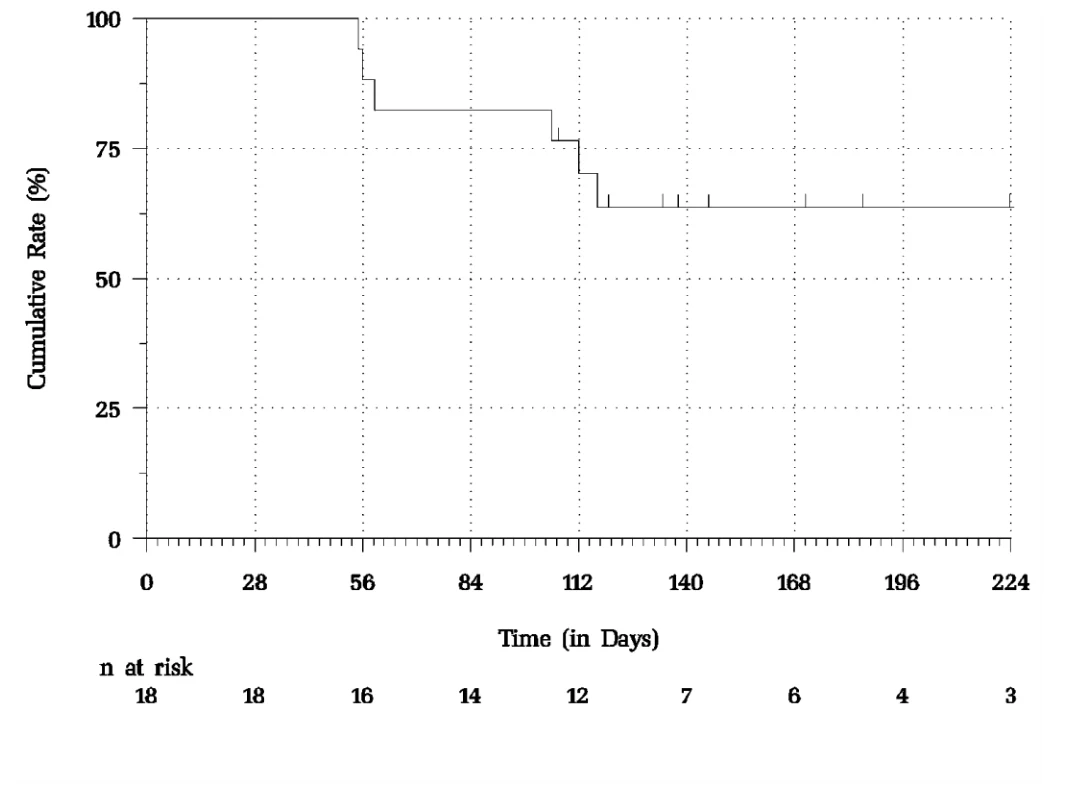
The median number of days on ZOLINZA® treatment in this study was 119 days with a range of 2 to 365 days. The median response duration in the 18 responders with stage IIB and higher CTCL was not reached during this study (see Figure 3).
Table 6 – Number of Patients Treated with ZOLINZA® with an Objective Response of Cutaneous Manifestations (All CTCL Patients)
| Population | Patients Treated with ZOLINZA® with an Objective Response | ||||||
|---|---|---|---|---|---|---|---|
| N | n (%) | (95% CI) | Time to Objective Response† (days) Median (Range) | ||||
| All Patients | 74 | 22 (29.7%) | (19.7, 41.5) | 55 (28, 171) | |||
| Stage IIB or Higher‡ | 61 | 18 (29.5%) | (18.5, 42.6) | 56 (28, 171) | |||
| Patients with Sézary syndrome | 30 | 10 (33.3%) | (17.3, 52.8) | 56 (28, 171) | |||
| Patients with T3 tumor disease | 22 | 5 (22.7%) | (7.8, 45.4) | 31 (29, 87) | |||
| † Objective Response: confirmed complete clinical response or partial response of cutaneous manifestation | |||||||
| ‡ Stages IIB, III, IVA and IVB | |||||||
| CI = Confidence Interval | |||||||
Figure 3 – Response Duration – Observed Kaplan-Meier Curve during Treatment with Vorinostat For Patients Who Achieved An Objective Response (Patients With Stage IIB And Higher Cancer)
Anti-pruritus and other medications to ameliorate pruritus were allowed during the study. In all CTCL patients treated with ZOLINZA® with pruritus intensity ≥ 3 of 10 points at baseline, 32.3% (21/65) had pruritus relief, as measured by a minimum decrease of 3 points, and 9.2% (6/65) had complete resolution of their pruritus. Similarly, in patients with Stage IIB and higher CTCL, 30.2% (16/53) had pruritus relief, and 11.3% (6/53) had complete resolution of their pruritus. This relief was maintained for at least 4 weeks without an increase in their pruritus medication. Among 23 CTCL patients with pruritus relief, 10 also experienced an objective response while 13 patients experienced pruritus relief without an objective response.
16. Non-Clinical Toxicology
General Toxicology
Acute Toxicity
Mortality did not occur in either mice or rats following a single oral dose of vorinostat at 2000 mg/kg (only dose tested), which is equivalent to 6000 mg/m2 in mice and 12,000 mg/m2 in rats, and is greater than 24 times the recommended daily human dose on a mg/m2 basis.
Single-dose studies were also conducted in mice, rats and dogs by the IV route. Mortality was not observed in rats at doses that are equivalent to the recommended daily human dose on a mg/m2 basis. In mice, the estimated LD10 = 1534 mg/kg (4626 mg/m2). In dogs the lethal dose was > 200 mg/kg (4000 mg/m2) following 4 hours of continuous infusion and < 72 mg/kg (1440 mg/m2) following 120 hours of continuous infusion. All doses are greater than the recommended daily human dose on a mg/m2 basis.
Chronic Toxicity
Vorinostat was evaluated in a series of repeat dose oral toxicology studies of up to 26 weeks in rats at doses of 20, 50 and 150 mg/kg/day and in dogs at doses of 20, 60 and 160 mg/kg/day. All doses were < 1 times the human exposure based on AUC0-24. The primary effects observed were anorexia, decreased food consumption, weight loss, decreased activity, hematologic and gastrointestinal effects.
In rats, a no effect level was not established (< 20 mg/kg/day). From this dose, decreased platelet, WBC and lymphocyte counts were observed. Immunophenotyping indicated that total T lymphocytes, TH cells, Tc cells, and total B cells were decreased. At the microscopic level erythroid hyperplasia and myeloid hypoplasia was observed in femur and sternum bone marrow. From 50 mg/kg/day, dose-dependent reductions in food consumption, body weight gain, decreased serum globulin, and increased pro-thrombin time was observed. At 150 mg/kg/day, extravascular hemolysis, increased absolute reticulocyte counts and lymphoid depletion (spleen, thymus) were noted.
In a 4-week dog study, a dose of 100 mg/kg/day (high-dose) produced severe adverse clinical signs, decreased body weight and food consumption, hematological toxicity and gastrointestinal lesions. These animals were terminated after 17 days of dosing. The no effect level was 40 mg/kg/day (mid-dose). In the 26-week dog study gastrointestinal lesions were also noted along the length of the GI tract at 160 mg/kg/day (no effect level = 60 mg/kg/day).
Reversibility of toxic effects was assessed in the high-dose rats and dogs. Most findings were reversible. Partial recovery was observed with respect to body weight (male rats) and select erythroid and myeloid blood cell parameters (male rats). In dogs, recovery was observed for all GI findings in the 26-week but not 4-week study.
Genotoxicity
Vorinostat was assessed with respect to mutagenicity and clastogenicity in the in vitro bacterial reverse mutation assay (Ames test), chromosome aberration test using Chinese Hamster Ovary (CHO) cells and human peripheral blood lymphocytes, and the in vivo chromosomal aberration test using mouse bone marrow cells.
In the bacterial reverse mutation assays (Ames test), vorinostat was weakly positive in S. typhimurium at the highest concentration tested.
Vorinostat was clastogenic in the chromosomal aberration test when tested with CHO cells (transformed cells) but not with normal human peripheral blood lymphocytes (non-transformed cells). Chromosomal aberrations in CHO cells were associated with suppression of cell growth, suggesting that aberration induction may be an indirect effect due to perturbation of DNA synthesis.
In the in vivo mouse micronucleus assay male mice were orally dosed with vorinostat at 500, 1000 and 2000 mg/kg. Vorinostat was weakly positive at doses ≥ 500 mg/kg.
Carcinogenicity
Carcinogenicity studies have not been performed with vorinostat.
Reproductive and developmental toxicology
Reproduction
Female rats were orally dosed with vorinostat at 15, 50 and 150 mg/kg/day. Female toxicity was observed at 150 mg/kg/day. There were no vorinostat-related effects on mating, fertility or fecundity indices at doses up to 150 mg/kg/day (< 1 times the human exposure based on AUC0-24). An increased number of corpora lutea was observed from 15 mg/kg/day. An increased number of resorptions and increased percent peri-implantation loss was observed from 50 mg/kg/day. An increase in percent post-implantation loss and a decreased number of live fetuses per litter were observed at 150 mg/kg/day. The no observed effect level for reproductive performance, based on the number of corpora lutea, was < 15 mg/kg/day (< 1 times the human exposure based on AUC0-24).
Male rats were orally dosed with vorinostat at 20, 50 and 150 mg/kg/day. There were no treatment-related effects of vorinostat on mating performance, fertility, embryonic/fetal survival, sperm count and motility, testicular weight or testicular and epididymal histomorphology and, when mated with untreated females, there were no effects on embryonic/fetal survival up to 150 mg/kg/day (< 1 times the human exposure based on AUC0-24).
Development
Rats and rabbits were orally administered vorinostat at 5, 15 and 50 mg/kg/day and 20, 50 and 150 mg/kg/day, respectively. Treatment-related developmental effects including decreased mean live fetal weights, low incidences of incomplete ossifications and low incidences of skeletal variations at the highest doses of vorinostat tested were observed. An increased incidence of gallbladder malformations was observed in rabbits. The no observed effect level was 15 and 20 mg/kg/day in rats and rabbits, respectively (< 1 times the human exposure based on AUC0-24).
Placental Transfer
Vorinostat rapidly crossed the placenta in rats and rabbits at doses that are equivalent to less than 1 times human exposure (based on AUC0-24). Transplacental equilibrium was reached within 30 minutes post-dose.