


Product Monograph - Zymar
RECENT MAJOR LABEL CHANGES
| None at the time of the most recent authorization. |
TABLE OF CONTENTS
Sections or subsections that are not applicable at the time of authorization are not listed.
RECENT MAJOR LABEL CHANGES .......................................................................................... 2
TABLE OF CONTENTS ............................................................................................................ 2
PART I: HEALTH PROFESSIONAL INFORMATION .................................................................... 4
1 INDICATIONS ............................................................................................................. 4
1.1 Pediatrics .................................................................................................................. 4
1.2 Geriatrics .................................................................................................................. 4
2 CONTRAINDICATIONS ................................................................................................ 4
4 DOSAGE AND ADMINISTRATION ................................................................................ 4
4.2 Recommended Dose and Dosage Adjustment ........................................................ 4
4.4 Administration ......................................................................................................... 5
4.5 Missed Dose ............................................................................................................. 5
5 OVERDOSAGE ............................................................................................................ 5
6 DOSAGE FORMS, STRENGTHS, COMPOSITION AND PACKAGING ................................ 5
7 WARNINGS AND PRECAUTIONS ................................................................................. 5
7.1 Special Populations .................................................................................................. 7
7.1.1 Pregnant Women ............................................................................................... 7
7.1.2 Breast-feeding .................................................................................................... 7
7.1.3 Pediatrics ............................................................................................................ 7
7.1.4 Geriatrics ............................................................................................................ 7
8 ADVERSE REACTIONS................................................................................................. 8
8.1 Adverse Reaction Overview ..................................................................................... 8
8.2 Clinical Trial Adverse Reactions ............................................................................... 9
8.5 Post-Market Adverse Reactions ............................................................................... 9
9 DRUG INTERACTIONS ................................................................................................ 9
9.2 Drug Interactions Overview ..................................................................................... 9
9.3 Drug-Behavioural Interactions ................................................................................. 9
9.4 Drug-Drug Interactions .......................................................................................... 10
9.5 Drug-Food Interactions .......................................................................................... 10
9.6 Drug-Herb Interactions .......................................................................................... 10
9.7 Drug-Laboratory Test Interactions......................................................................... 10
10 CLINICAL PHARMACOLOGY ...................................................................................... 10
10.1 Mechanism of Action ....................................................................................... 10
10.2 Pharmacodynamics .......................................................................................... 10
10.3 Pharmacokinetics ............................................................................................. 11
11 STORAGE, STABILITY AND DISPOSAL ........................................................................ 17
12 SPECIAL HANDLING INSTRUCTIONS .......................................................................... 17
PART II: SCIENTIFIC INFORMATION ..................................................................................... 18
13 PHARMACEUTICAL INFORMATION .......................................................................... 18
14 CLINICAL TRIALS ...................................................................................................... 18
14.1 Clinical Trials by Indication .............................................................................. 18
Bacterial Conjunctivitis .................................................................................................... 18
15 MICROBIOLOGY ...................................................................................................... 19
16 NON-CLINICAL TOXICOLOGY .................................................................................... 20
PATIENT MEDICATION INFORMATION ................................................................................ 29
PART I: HEALTH PROFESSIONAL INFORMATION
1 INDICATIONS
ZYMAR® (gatifloxacin) is indicated for the treatment of patients 1 year of age and older with bacterial conjunctivitis caused by susceptible strains of the following bacteria:
Aerobic Gram-positive bacteria:
- Staphylococcus aureus
- Staphylococcus epidermidis
- Streptococcus pneumoniae
Aerobic Gram-negative bacteria:
- Haemophilus influenzae
To reduce the development of drug-resistant bacteria and maintain the effectiveness of ZYMAR and other antibacterial drugs, ZYMAR should be used only to treat infections that are proven or strongly suspected to be caused by susceptible bacteria.
1.1 Pediatrics
Pediatrics (≥ 1 year and ≤ 12 years of age): Based on the data submitted and reviewed by Health Canada, the safety and efficacy of ZYMAR in pediatric patients 1 year of age and older has been established; therefore, Health Canada has authorized an indication for pediatric use. See 7.1.3 Pediatrics.
1.2 Geriatrics
Geriatrics (> 65 years of age): No overall differences in safety or effectiveness have been observed between elderly and younger patients.
2 CONTRAINDICATIONS
ZYMAR is contraindicated in patients who have shown hypersensitivity to gatifloxacin, to other quinolones, or to any ingredient in the formulation, including any non-medicinal ingredient, or components in this container. See 6 DOSAGE FORMS, STRENGTH, COMPOSITION AND PACKAGING.
4 DOSAGE AND ADMINISTRATION
4.2 Recommended Dose and Dosage Adjustment
The recommended dosage regimen for ZYMAR in the treatment of patients 1 year of age and older with bacterial conjunctivitis is:
- Days 1 and 2: Instill one drop every two hours in the affected eye(s) while awake, up to 8 times daily.
- Days 3 to 7: Instill one drop four times daily in the affected eye(s) while awake.
- Doses should be evenly spaced throughout the day.
4.4 Administration
Patients should be instructed to avoid allowing the tip of the bottle to contact the eye or surrounding structures to avoid eye injury and contamination of the eye drops.
Patients wearing soft (hydrophilic) contact lenses should be instructed to remove contact lenses prior to administration of ZYMAR and wait at least 15 minutes following administration before reinserting soft contact lenses.
4.5 Missed Dose
Patients should be instructed to instill the drops as soon as they remember, and then to return to their regular routine.
5 OVERDOSAGE
A topical overdosage of ZYMAR is considered to be a remote possibility. Discontinue medication when heavy or protracted use is suspected. A topical overdosage may be flushed from the eye(s) with warm tap water.
If a 10 kg child swallowed the contents of a 5 mL bottle of ZYMAR (15 mg of drug) it would be exposed to 1.5 mg/kg of gatifloxacin. This is equivalent to 25% of the recommended adult systemic therapeutic dose of gatifloxacin of 400 mg/day for a 70 kg adult (6.0 mg/kg).
| For management of a suspected drug overdose, including accidental ingestion, contact your regional Poison Control Centre. |
6 DOSAGE FORMS, STRENGTHS, COMPOSITION AND PACKAGING
Table 1 – Dosage Forms, Strengths, Composition and Packaging
ZYMAR is supplied sterile in a white, low density polyethylene bottle with a controlled dropper tip and a tan, high density polyethylene (HIPS) cap. ZYMAR is supplied in 1 mL and 5 mL sizes.
7 WARNINGS AND PRECAUTIONS
General
NOT FOR INJECTION INTO THE EYE. FOR TOPICAL OPHTHALMIC USE ONLY.
ZYMAR should not be injected subconjunctivally, nor should it be introduced directly into the anterior chamber of the eye.
| Route of Administration | Dosage Form / Strength/Composition | Non-medicinal Ingredients |
| ophthalmic | solution, 0.3% w/v | benzalkonium chloride 0.005% w/v, as preservative, edetate disodium; purified water and sodium chloride. May contain hydrochloric acid and/or sodium hydroxide to adjust pH. |
ZYMAR contains the preservative benzalkonium chloride. See 6 DOSAGE FORMS, STRENGTHS, COMPOSITION AND PACKAGING.
The use of gatifloxacin with other products may lead to drug interactions. For established or potential drug interactions. See 9 DRUG INTERACTIONS.
As with all topical ophthalmic drugs, there is a potential for a systemic reaction.
Driving and Operating Machinery
As with any ocular medication, if transient blurred vision occurs at instillation, the patient should wait until the vision clears before driving or using machinery.
Immune
Hypersensitivity
If an allergic reaction to gatifloxacin occurs, discontinue the drug. Serious acute hypersensitivity reactions may require immediate emergency treatment. Oxygen and airway management should be administered as clinically indicated.
Hypersensitivity reactions including anaphylactic reaction, dyspnea, rash, Stevens-Johnson syndrome and urticaria have been reported in association with ZYMAR. See 8 ADVERSE REACTIONS.
Systemic quinolones have been associated with hypersensitivity reactions, even following a single dose.
In patients receiving systemic quinolones, serious and occasionally fatal hypersensitivity (anaphylactic) reactions, some following the first dose, have been reported. Some reactions were accompanied by cardiovascular collapse, loss of consciousness, angioedema (including laryngeal, pharyngeal or facial edema), airway obstruction, dyspnea, urticaria, and itching.
As with all antibiotics, serious and sometimes fatal events, some due to hypersensitivity and some due to uncertain etiology, have been reported in patients receiving systemic quinolone therapy. These events may be severe and generally occur following administration of multiple doses. Clinical manifestations may include one or more of the following: fever, rash or severe dermatologic reactions (e.g., toxic epidermal necrolysis, Stevens-Johnson syndrome); vasculitis, arthralgia, myalgia, serum sickness; allergic pneumonitis, interstitial nephritis; acute renal insufficiency or failure; hepatitis, jaundice, acute hepatic necrosis or failure; anemia, including hemolytic and aplastic; thrombocytopenia, including thrombotic thrombocytopenic purpura; leukopenia; agranulocytosis; pancytopenia; and/or other hematologic abnormalities.
Musculoskeletal and Connective Tissue
Tendon inflammation and rupture may occur with systemic fluoroquinolone therapy including gatifloxacin, particularly in elderly patients and in those treated concurrently with corticosteroids. Treatment with ZYMAR should be discontinued at the first sign of tendon inflammation.
Arthropathy
As with other members of the quinolone class, gatifloxacin has caused arthropathy and/or chondrodysplasia in juvenile rats and dogs when given systemically. See 16 NON-CLINICAL TOXICOLOGY.
Arthrotoxic and osteotoxic potential of ZYMAR was not assessed in animals.
Ophthalmologic
Contact Lenses
Patients should not wear contact lenses while they have signs and symptoms of bacterial conjunctivitis. ZYMAR contains the preservative benzalkonium chloride, which may be absorbed by and cause discoloration of soft contact lenses.
Susceptibility/Resistance
Development of Drug Resistant Bacteria
Prescribing ZYMAR in the absence of a proven or strongly suspected bacterial infection is unlikely to provide benefit to the patient and risks the development of drug-resistant organisms.
Potential for Microbial Overgrowth
As with other anti-infectives, prolonged use of ZYMAR may result in overgrowth of nonsusceptible organisms, including fungi. If superinfection occurs discontinue use and institute alternative therapy. Whenever clinical judgment dictates, the patient should be examined with the aid of magnification, such as slit lamp biomicroscopy and, where appropriate, fluorescein staining.
7.1 Special Populations
7.1.1 Pregnant Women
There are no adequate and well-controlled studies of ZYMAR in pregnant women. This drug should not be used in pregnant women unless, in the physician’s opinion, the potential benefit to the mother justifies the potential risk to the fetus.
ZYMAR solution has not been studied in pregnant animals. Oral and intravenous studies in pregnant animals indicate that gatifloxacin crosses the placenta and that reproductive and fetal effects occur at doses of ≥ 150 mg/kg/day, which cause maternal toxicity. See 16 NON-CLINICAL TOXICOLOGY.
7.1.2 Breast-feeding
It is not known whether gatifloxacin is excreted in human milk, although gatifloxacin has been shown to be excreted in the breast milk of rats. Because gatifloxacin may be excreted in human milk, a decision should be made either to discontinue nursing or to discontinue the administration of ZYMAR, taking into account the importance of ZYMAR therapy to the mother and the possible risk to the infant.
7.1.3 Pediatrics
The safety and efficacy of ZYMAR in infants under 1 year of age have not been established. ZYMAR ophthalmic solution has been used to treat conjunctivitis in 14 infants between 1 to 2 years of age and 47 children between 3 to 12 years of age.
7.1.4 Geriatrics
No overall differences in safety or effectiveness have been observed between elderly and younger patients.
8 ADVERSE REACTIONS
8.1 Adverse Reaction Overview
In clinical studies 364 patients were treated with ZYMAR for up to 5 days. Treatment-related adverse events were reported for 14.6% (53/364) of patients. The most frequently reported treatment-related adverse events occurring in 0.5 to 5% of patients treated with gatifloxacin are listed below:
Table 2 – Percent of Patients in Phase 3 Trials with Treatment-Related Adverse Events Reported by 0.5 to 5% of Patients in the Active Treatment Arm
| Gatifloxacin N = 364 | |
|---|---|
Eye disorders superficial punctate keratitis eye irritation dry eye eyelid oedema lacrimation increased visual acuity reduced eye pain conjunctivitis papillary eye discharge | 4.4% 1.9% 1.6% 1.4% 1.4% 1.1% 0.8% 0.8% 0.5% |
General disorders and administration site conditions Edema | 0.5% |
Nervous system disorders Taste disturbance | 1.4% |
Respiratory, thoracic and mediastinal disorders Rhinorrhea | 0.5% |
Skin and subcutaneous tissue disorders Erythema Dermatitis, contact | 0.8% 0.5% |
Other treatment-related adverse events occurring in less than 0.5% of patients included, conjunctival disorder, conjunctivitis, chemosis, conjunctival cyst, conjunctival hemorrhage, corneal deposits, eye disorder, photophobia, subepithelial opacities, blurred vision, dermatitis, generalized urticaria, nausea, sore throat, sneezing, dizziness, and iritis.
ZYMAR was discontinued due to an adverse event, either related or unrelated to the drug, in 1.6% (6/364) of patients.
8.2 Clinical Trial Adverse Reactions
Clinical trials are conducted under very specific conditions. The adverse reaction rates observed in the clinical trials; therefore, may not reflect the rates observed in practice and should not be compared to the rates in the clinical trials of another drug. Adverse reaction information from clinical trials may be useful in identifying and approximating rates of adverse drug reactions in real-world use.
8.5 Post-Market Adverse Reactions
The following additional adverse reactions have been identified during postmarketing use of gatifloxacin ophthalmic solution 0.3% in clinical practice. Because postmarketing reporting of these reactions is voluntary and from a population of uncertain size, it is not always possible to reliably estimate the frequency of these reactions.
Eye disorders: blepharitis allergic, corneal disorder, corneal ulcer, endophthalmitis, eye edema (including corneal and conjunctival edema), eye redness, eye pruritus, keratoconjunctivitis, macular edema, uveitis.
Rare cases of corneal melts and perforation have been reported in patients with multiple confounding factors including preexisting large corneal ulcer, corneal thinning, undiagnosed dacryocystitis, and use of multiple topical medications. Thus, it is difficult to determine the relationship of the events to ZYMAR.
In one case, an elderly female with chronic conjunctivitis due to methicillin-resistant Staphylococcus aureus and a history of dacrocystitis, reported corneal perforation. This patient was using multiple concomitant antibiotics and had demonstrated evidence of a corneal defect associated with the infection prior to using ZYMAR and continued using ZYMAR during a successful post operative repair healing period.
Immune system disorders: anaphylactic reactions, angioneurotic edema (including pharyngeal, oral or facial edema), hypersensitivity, pruritus allergic, rash, Stevens-Johnson syndrome.
Nervous system disorders: headache, paraesthesia oral, tinnitus, tremor.
Respiratory, thoracic and mediastinal disorders: dyspnea.
9 DRUG INTERACTIONS
9.2 Drug Interactions Overview
Specific drug interaction studies have not been conducted with ZYMAR. Limited information is available on the concurrent use of ZYMAR with other ophthalmic products.
9.3 Drug-Behavioural Interactions
No formal drug-behavioural interaction studies were conducted with ZYMAR.
9.4 Drug-Drug Interactions
Topical Ophthalmic
Interactions with drugs have not been established.
Systemic
Probenecid
Systemic administration of gatifloxacin (single oral 200 mg dose) with probenecid (500 mg BID x 1 day) resulted in a 42% increase in AUC and 44% longer half-life of gatifloxacin.
Digoxin
Overall, only modest increases in Cmax and AUC of digoxin were noted (12% and 19%, respectively) in 8 of 11 healthy volunteers who received concomitant administration of gatifloxacin (400 mg oral tablet, once daily for 7 days) and digoxin (0.25 mg orally, once daily for 7 days). In 3 of 11 subjects, however, a significant increase in digoxin concentrations was observed. In these 3 subjects, digoxin Cmax increased by 18, 29, and 58% while digoxin AUC increased by 66, 104, and 79%, and digoxin clearance decreased by 40, 51, and 45%.
Systemic studies have also shown that gatifloxacin is chelated by polyvalent ions, such as iron, magnesium, zinc and aluminum.
No significant pharmacokinetic interactions occur when cimetidine, midazolam, theophylline, warfarin, or glyburide is administered concomitantly with oral gatifloxacin.
9.5 Drug-Food Interactions
Interactions with food have not been established.
9.6 Drug-Herb Interactions
Interactions with herbal products have not been established.
9.7 Drug-Laboratory Test Interactions
Interactions with laboratory tests have not been established.
10 CLINICAL PHARMACOLOGY
10.1 Mechanism of Action
ZYMAR is a sterile solution for topical ophthalmic use. Gatifloxacin is an 8-methoxy synthetic fluoroquinolone antibacterial agent with in vitro activity against gram-negative and gram-positive, aerobic and anaerobic and clinically important atypical microorganisms.
The antibacterial action of gatifloxacin results from inhibition of DNA gyrase and topoisomerase IV. DNA gyrase is an essential enzyme that is involved in the replication, transcription and repair of bacterial DNA. Topoisomerase IV is an enzyme known to play a key role in the partitioning of the chromosomal DNA during bacterial cell division. See 15 MICROBIOLOGY.
10.2 Pharmacodynamics
No pharmacodynamic studies were conducted.
10.3 Pharmacokinetics
Ocular Administration
Gatifloxacin ophthalmic solutions 0.3 and 0.5% were administered to 1 eye of 6 healthy male subjects each (see Table 3). At all time points, serum gatifloxacin levels were below the lower limit of quantification (5 ng/mL) in all subjects. Pharmacokinetic parameters for ophthalmic dosing could not therefore be calculated. There is no human pharmacokinetic data available with respect to tear concentration following ocular administration.
Absorption
Systemic absorption of ZYMAR following ocular administration was investigated in 12 healthy volunteers. Below is a summary of the pharmacokinetic data from this study
Table 3 – Clinical Ocular Pharmacokinetic Studies
| Study Description and Design | Treatment Groups, Dosing Regimen and No. Enrolled/Completed | Demographics | Pharmacokinetic Parameters | |||
|---|---|---|---|---|---|---|
Cmax (ng/mL) | Tmax (hr) | AUC0-last (ng.hr/mL) | t ½ (hr) | |||
| Phase 1, randomized, single-centre, single-blind, placebo controlled, paired-eye design study of the pharmacokinetics of gatifloxacin ophthalmic solution in healthy volunteers. | Group 1: 2 drops Gatifloxacin 0.3% in one eye/ 2 drops Placebo in contralateral eye 1x daily on day 1 4x daily on days 2 to 8 8x daily on days 9 to 11 N=6/6 Group 2: 2 drops Gatifloxacin 0.5% in one eye/ 2 drops Placebo in contralateral eye 1x daily on day 1 4x daily on days 2 to 8 8x daily on days 9 to 11 N=6/6 | sex: all 12 subjects were male race: Asian (all volunteers were Japanese) Mean Age ± SD (range): 24.7 ± 4.3 yrs (20-35 yrs) | -Blood samples were collected on: Day 2: at predose Day 5 (after 4th dose): at 0.5, 1, and 2 hrs Day 8 (after 7th dose): at 0.5, 1, and 2 hrs Day 9: at predose Day 11 (after the 8th dose): at 0.5, 1, 2 and 12 hrs
| |||
| ||||||
Systemic Administration
Gatifloxacin is well absorbed from the gastrointestinal tract after oral administration and can be given without regard to food. The absolute bioavailability of gatifloxacin is 96%. Peak plasma concentrations of gatifloxacin usually occur 1 to 2 hours after oral dosing.
Absorption
The mean (SD) pharmacokinetic parameters of gatifloxacin after single 200 mg oral doses, single and multiple 400 mg oral doses, and single and multiple 1-hour intravenous infusions of 200 and 400 mg are listed below:
Table 4 – Oral Administration
Cmax (mcg/mL) | Tmax a (h) | AUC b (mcg⋅h/mL) | T½ (h) | |
| 200 mg -- Healthy Volunteers | ||||
| Single dose (n=12) | 2.0 ±0.4 | 1.00 (0.50, 2.50) | 14.2 ±0.4 | -- |
| 400 mg -- Healthy Volunteers | ||||
| Single dose (n=202) | 3.8 ±1.0 | 1.00 (0.50, 6.00) | 33.0 ±6.2 | 7.8 ±1.3 |
| Multiple dose (n=18) | 4.2 ±1.3 | 1.50 (0.50, 4.00) | 34.4 ±5.7 | 7.1 ±0.6 |
| 400 mg -- Patients with Infection | ||||
| Multiple dose (n=140) c | 4.2 ±1.9 | -- | 51.3 ±20.4 | -- |
| 400 mg -- Single Dose Subjects with Renal Insufficiency | ||||
| Clcr 50-80mL/min (n=8) | 4.4 ±1.1 | 1.13 (0.75, 2.00) | 48.0 ±12.7 | 11.2 ±2.8 |
| Clcr 30-49mL/min (n=8) | 5.1 ±1.8 | 0.75 (0.50, 6.00) | 74.9 ±12.6 | 17.2 ±8.5 |
| Clcr < 30mL/min (n=8) | 4.5 ±1.2 | 1.50 (0.50, 6.00) | 149.3 ±35.6 | 30.7 ±8.4 |
| Hemodialysis (n=8) | 4.7 ±1.0 | 1.50 (1.00, 3.00) | 180.3 ±34.4 | 35.7 ±7.0 |
| CAPD (n=8) | 4.7 ±1.3 | 1.75 (0.50, 3.00) | 227.0 ±60.0 | 40.3 ±8.3 |
a. Median (Minimum, Maximum) b. Single dose: AUC0-∞, Multiple dose: AUC0-24 c. Based on the patient population pharmacokinetic modeling, n=103 for Cmax Cmax: Maximum serum concentration; Tmax : Time to Cmax ; AUC: Area under concentration versus time curve; T1/2 : Serum half-life | ||||
Table 5 – Intravenous Administration
Cmax (mcg/mL) | Tmax a (h) | AUC b (mcg⋅h/mL) | T½ (h) | VDss (L/kg) | |
| 200 mg -- Healthy Volunteers | |||||
| Single dose (n=12) | 2.2 ±0.3 | 1.00 (0.67, 1.50) | 15.9 ±2.6 | 11.1 ±4.1 | 1.9 ±0.1 |
| Multiple dose (n=8) | 2.4 ±0.4 | 1.00 (0.67, 1.00) | 16.8 ±3.6 | 12.3 ±4.6 | 2.0 ±0.3 |
| 400 mg -- Healthy Volunteers | |||||
| Single dose (n=30) | 5.5 ±1.0 | 1.00 (0.50, 1.00) | 35.1 ±6.7 | 7.4 ±1.6 | 1.5 ±0.2 |
| Multiple dose (n=5) | 4.6 ±0.6 | 1.00 (1.00, 1.00) | 35.4 ±4.6 | 13.9 ±3.9 | 1.6 ±0.5 |
a. Median (Minimum, Maximum) b. Single dose: AUC0-∞, Multiple dose: AUC0-24 Cmax: Maximum serum concentration; Tmax : Time to Cmax ; AUC: Area under concentration versus time curve; T1/2 : Serum half-life | |||||
Metabolism
Following oral or intravenous administration, gatifloxacin undergoes limited biotransformation in humans with less than 1% of the dose excreted in the urine as ethylenediamine and methylethylenediamine metabolites.
In vivo studies in humans (and animals) indicate that gatifloxacin is not an enzyme inducer; therefore, gatifloxacin is unlikely to alter the metabolic elimination of itself or other coadmnistered drugs.
Distribution
Serum protein binding of gatifloxacin is approximately 20% and is concentration independent. Following single and multiple intravenous infusions of 200 mg and 400 mg gatifloxacin, the mean volume of distribution of gatifloxacin at steady-state (Vdss) ranged from 1.5 to 2.0 L/Kg. Gatifloxacin is widely distributed throughout the body into many tissues and fluids. The distribution of gatifloxacin into tissues results in higher gatifloxacin concentrations in most target tissues than in serum.
Excretion
Gatifloxacin is excreted as unchanged drug primarily by the kidney. More than 70% of the administered dose was recovered as unchanged drug in the urine following oral and intravenous administration, and 5% was recovered in the feces. Renal clearance is independent of dose with mean values ranging from 124 to 161 mL/min. The magnitude of this value, coupled with the significant decrease in the elimination of gatifloxacin seen with concomitant probenecid administration, indicates that gatifloxacin undergoes both glomerular filtration and tubular secretion. Gatifloxacin may also undergo minimal biliary and/or intestinal elimination, since 5% of an intravenous dose was recovered in the feces as unchanged drug.
Preclinical Pharmacology
Ocular Administration
The table below summarizes the single- and multiple dose pharmacokinetic studies conducted to study the ocular absorption, distribution, metabolism and excretion of gatifloxacin following topical ophthalmic administration.
Table 6 –Preclinical Ocular Pharmacokinetic Studies
| Study Description | Species/ Strain | No./ Sex | Ophthalmic Dose and Regimen | Tissue/Samples2 Examined and Sampling Times | Results |
|---|---|---|---|---|---|
Study 1: A single dose pharmaco- kinetic study conducted to investigate the ocular absorption, distribution, and metabolism of gatifloxacin following topical ophthalmic administrati on in rabbits. | Adult rabbit (pigmented, and non- pigmented)/ Dutch and Japanese White | 57/M (4/TP1) | [14C]-Gatifloxacin 0.5 mg (0.5%)/animal administered as 50mcl/eye given as two 25mcl instillations within 5 mins. Bilateral Single dose | Tissues: cornea, conjunctiva, extraocular muscle (EOM), sclera, iris and ciliary body (ICB), aqueous humor (AH), lens, vitreous humor (VH), retina, choroid and plasma At 0.5, 1, 2, 4, 8, 24 hrs and 7, 28, and 84 days after instillation in Dutch rabbits. At 1, 4, and 24 hrs after instillation for Japanese rabbits |
Plasma 0.5*/63/ 0.81 1*/16/ NC Cornea 0.5*/8951/ 4.6 1*/3269/ 2.8 Conjunctiva 0.5*/1768/ 5.6 1*/1077/ 2.8 EOM 0.5*/530/ 5.3 1*/158/ 4.7 Sclera 0.5*/719/ 3.6 1*319/ 4.3 ICB 8/7562/ 528 1*/435/ 5.8 AH 1/987/ 4.1 1*/480/ 3.2 Lens ½2/ 24 1*/18/ 45.6 VH ½0/ 12 1*/9/ 3.6 Retina 0.5*/125/ 9.4 24**/97/ NC Choroid 24/2264/ 984 1*/191/ 33.6 |
| Study Description | Species/ Strain | No./ Sex | Ophthalmic Dose and Regimen | Tissue/Samples2 Examined and Sampling Times | Results |
Study 2: A single dose pharmaco- kinetic study conducted to investigate the ocular distribution, and excretion of gatifloxacin following topical ophthalmic administrati on in rabbits. | Adult rabbit (pigmented)/ Dutch | 30/M (3/TP) | Gatifloxacin 0.3 mg (0.3%)/animal administered as 50mcl/eye given as two 25mcl instillations within 5 mins.Bilateral Single dose | Tissues: plasma, blood, anterior aqueous conjunctiva, extraocular muscle, cornea, iris/ciliary body, crystalline lens, vitreous body, retinochoroid, sclera, lacrimal gland, accessory lacrimal gland, nasal mucosa, and tongue. At 0.5, 1, 2, 4, 8 and 24 hrs and 7, 28, and 84 days after instillation for ocular tissue and plasma/blood examination. At 0.5, 1, 4, and 24 hrs, and 7 and 28 days after instillation for examination of various body tissues/organs Samples (from 3 rabbits) urine, feces Collected once between 0-24 hrs after instillation, and once every 24 hrs thereafter (up to 168 hrs) |
Pharmacokinetic Parameters of Radioactivity in Tissue Tissue AUC (mcg eq.×hr ×mL-1) Cornea 32.7 (0-28 days)/33.0 (0-∞) ICB 1900 (0-84 days)/2030 (0-∞) Retina and Choroid 533 (0-84 days)/705 (0-∞) Sclera 76.4 (0-84 days)/81.6 (0-∞) Plasma Data not available
Cumulative Excretion of 14C-gatifloxacin (mean% of dose±SD) Time (hr) Urine / Feces 0-24 30.8±8.3 / 54.7±9.9 48 33.8±8.8 / 60.9±11.5 72 34.6±8.9 / 61.8±11.3 96 34.7±9.0 / 62.2±11.3 120 35.0±9.0 / 62.3±11.2 144 35.1±9.1 / 62.3±11.2 168 35.1±9.1 / 62.3±11.2 |
| Study Description | Species/ Strain | No./ Sex | Ophthalmic Dose and Regimen | Tissue/Samples2 Examined and Sampling Times | Results |
Study 3: A repeat dose pharmaco- kinetics study conducted to investigate the ocular distribution of gatifloxacin following topical ophthalmic administrati on in rabbits. | Adult rabbit (pigmented)/ Dutch | 30/M (3/TP) | Gatifloxacin 0.3 mg (0.3%) TID for 15 days (total of 43 instillation)/ea ch dose per animal was administered as 50mcl/eye given as two 25mcl instillations within 5 mins. Bilateral Repeated dose | Tissues: plasma, blood, anterior aqueous conjunctiva, extraocular muscle, cornea, iris, ciliary body, crystalline lens, vitreous body, retinochoroid, sclera, lacrimal gland, accessory lacrimal gland, nasal mucosa, tongue, liver and skin. Day 4: 1 hr post instillation #10 Day 8: 1 hr post instillation #22 Day 15: 1, 2, 4, 8, and 24 hrs and 7, 28, and 84 days post instillation #43 (last dose) |
Tissue T½ (day) 5 Cmax (ng-eq/g or mL) AUC (mcg eq.×hr ×mL-1)5 Plasma Data not available 29±4 Data not available Cornea 5.3 (2hr-28 days) 4322±1387 84.0 (0-28 days)/88.0 (0-∞) ICB 17 (4hr-84 days) 40286±4254 13900 (0-84 days)/14700 (0-∞) Retina+Choroid 24 (2hr-84 days) 13144±1232 6210 (0-84 days)/7170 (0-∞) Sclera 21 (24 hr-84 days) 1815±567 655 (0-84 days)/721 (0-∞) |
1 = timepoint; * = first sampling timepoint; ** = Last sampling timepoint, 2 = Gatifloxacin concentrations in tear film were not studied in animals.
| |||||
11 STORAGE, STABILITY AND DISPOSAL
ZYMAR should be stored at 15 to 25°C. Protect from freezing.
Keep bottle tightly closed in the outer carton (to protect from light) and discard 28 days after opening.
Keep out of the reach and sight of children.
12 SPECIAL HANDLING INSTRUCTIONS
Not applicable.
PART II: SCIENTIFIC INFORMATION
13 PHARMACEUTICAL INFORMATION
Drug Substance
Proper name: gatifloxacin
Chemical name: (±)-1-cyclopropyl-6-fluoro-1,4-dihydro-8-methoxy-7-(3-methyl-1- piperazinyl)-4-oxo-3-quinolinecarboxylic acid sesquihydrate
Molecular formula and molecular mass: C19H22FN3O4 × 1.5 H2O and 402.42 g/mol
Structural formula:
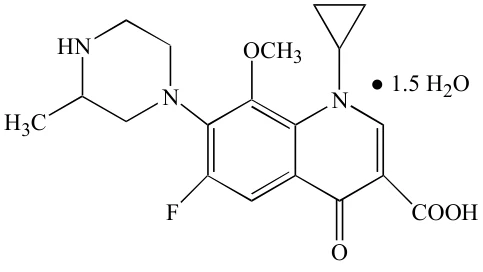
Physicochemical properties: Gatifloxacin is a sesquihydrate crystalline powder and is white to pale yellow in colour. It exists as a racemate, with no net optical rotation. The solubility of the gatifloxacin in water is pH dependent. It is slightly soluble in ethanol and water and freely soluble in acetic acid. Gatifloxacin melts at approximately 183°C.
ZYMAR is a sterile, clear, pale yellow coloured isotonic unbuffered solution formulated at a target pH of 6.
14 CLINICAL TRIALS
14.1 Clinical Trials by Indication
Bacterial Conjunctivitis
At the time of authorization, the trial design and study demographics were not included in the Product Monograph.
Study results
In a randomized, double-masked, multicentre clinical trial where patients, aged > 1 year, were dosed for 4 to 6 days, ZYMAR ophthalmic solution 0.3% was superior to its vehicle on follow-up assessment (days 5 to 7) in patients with conjunctivitis and positive conjunctival cultures. Clinical outcomes for the trial demonstrated clinical cure of 76.9% (40/52) for the gatifloxacin treated group versus 58.3% (28/48) for the vehicle treated group on days 5 to 7. Microbiological outcomes for the same clinical trial demonstrated a statistically superior eradication rate for causative pathogens of 92.3% (48/52) for gatifloxacin vs. 72.3% (34/47) for vehicle on days 5 to 7. Please note that microbiological eradication does not always correlate with clinical cure in anti-infective trials.
15 MICROBIOLOGY
Gatifloxacin has in vitro activity against a wide range of gram-negative and gram-positive aerobic and anaerobic microorganisms. Gatifloxacin also has in vitro activity against clinically important atypical microorganisms. The antibacterial action of gatifloxacin results from inhibition of DNA gyrase and topoisomerase IV. DNA gyrase is an essential enzyme that is involved in the replication, transcription and repair of bacterial DNA. Topoisomerase IV is an enzyme known to play a key role in the partitioning of the chromosomal DNA during bacterial cell division.
The mechanism of action of fluoroquinolones including gatifloxacin is different from that of penicillins, cephalosporins, aminoglycosides, macrolides and tetracyclines. Therefore, gatifloxacin may be active against pathogens that are resistant to these antibiotics and these antibiotics may be active against pathogens that are resistant to gatifloxacin. There is no cross-resistance between gatifloxacin and aforementioned classes of antibiotics.
Cross-resistance has been observed between systemic gatifloxacin and some other fluoroquinolones.
From in vitro synergy tests, gatifloxacin as with other fluoroquinolones is antagonistic with rifampicin against enterococci. Resistance to gatifloxacin in vitro develops slowly via multiple-step mutation. Resistance to gatifloxacin in vitro occurs at a general frequency of between 1 x 10⁻⁷ to 10-10.
Gatifloxacin has been shown to be active against most strains of the following organisms both in vitro and clinically, in conjunctival infections as described in 1 INDICATIONS.
Table 7 – In vitro Activity of Gatifloxacin against the indicated Bacterial Isolates from Clinical Trials
| Bacterial Species | No. of Isolates | MIC90 (mcg/mL) |
|---|---|---|
| Gram-Positive Aerobic Bacteria | ||
| Staphylococcus aureus | 71 | 0.25 |
| Staphylococcus epidermidis | 94 | 2 |
| Streptococcus pneumoniae | 78 | 0.5 |
| Gram-Negative Aerobic Bacteria | ||
| Haemophilus influenzae | 93 | 0.03 |
The following in vitro data are available, but their clinical significance in ophthalmic infections is unknown. The safety and effectiveness of ZYMAR in treating ophthalmic infections due to the following organisms have not been established in adequate and well controlled clinical trials.
The following organisms are considered susceptible when evaluated using systemic breakpoints. However, a correlation between the in vitro systemic breakpoint and ophthalmological efficacy has not been established. The following list of organisms is provided as guidance only in assessing the potential treatment of conjunctival infections.
Table 8 – In Vitro Activity against Bacterial Conjunctivitis Pathogens and Ocular Pathogens
| Organism (number of isolates) | MIC50 or MIC50 Range (mcg/mL) | MIC90 or MIC90 Range (mcg/mL) |
|---|---|---|
| AEROBES, GRAM-POSITIVE | ||
| Bacillus species (14) | 0.09 (9) | 0.032 - 0.120 (5) |
| Enterococcus faecalis (16) | * | 0.25 - 1.0 |
| Staphylococcus capitis (11) | * | 2 |
| Staphylococcus warneri (13) | * | 0.19-2.0 |
| Streptococcus mitis (26) | * | 0.5 |
| Streptococcus oralis (14) | * | 1 |
| Streptococcus, viridans group (24) | 0.25 (10) | 0.38 - 1.0 (14) |
| CoagNeg Staphylococcus (20) | 0.09 - 2 | * |
| AEROBES, GRAM-NEGATIVE | ||
| Moraxella catarrhalis (18) | * | 0.023 - 0.06 |
| Pseudomonas aeruginosa (39) | * | 1.95 - 32 |
| Serratia marcescens (29) | * | 0.25 - 1.0 |
| * Data not available | ||
Susceptibility Tests
There are currently no NCCLS approved standards for assessing in vitro susceptibility of conjunctival isolates to topical antibiotics, including gatifloxacin. Standardized systemic susceptibility tests may not be appropriate to predict clinical effectiveness in treating conjunctivitis.
16 NON-CLINICAL TOXICOLOGY
Topical, Ocular Administration
Subacute and Chronic Toxicity: Gatifloxacin ophthalmic solution was evaluated in repeat dose ocular toxicity studies in rabbits and dogs, up to 1 month and 3 months in duration, respectively. Summaries of these studies are given in Tables Table_99, 10, 11 and 12.
Arthrotoxic and osteotoxic potential of ZYMAR was not assessed in animals.
Table 9 – Subacute Toxicity Study
Species/ Strain | Number per Group/Sex/ Age/Initial Body Weight | Treatment Groups | Dosing Regimen/Duration | Evaluated Parameters | Results |
|---|---|---|---|---|---|
Rabbits, Japanese White Albino | 3 males 9 weeks old on receipt 1.98 to 2.13 kg | Saline 0.5% gatifloxacin (GFLX) | 100 mcL 8 times/day (i.e. at an interval of 100mcL/hr), left eye -7 days 100 mcL 8 times/day (i.e. at an interval of 100mcL/hr), right eye -4 mg/rabbit/day -7 days |
-on days 1 to 7 (prior to first dose), -on day 7 +1 (day after completion of administration)
-on day 1 (prior the first dose), -on day 7 + 1 (day after completion of administration)
-area of corneal opacity -degree of corneal opacity -palpebral redness -palpebral edema -bulbar redness -discharge -nictitating membrane, and -iris appearance, response On day 0 (prior to initiation of administration), and days 1, 4, and 7, 30 min. following last administration. 4)Fluorescein staining: -On day 0 (prior to initiation of administration), and days 1, 4, and 7. |
|
Table 10 – Chronic Toxicity
Species/ Strain | Number per Group/Sex/ Age/Initial Body Weight | Treatment Groups | Dosing Regimen | Evaluated Parameters | Results |
|---|---|---|---|---|---|
Rabbits, Dutch (pigmented) | 5 males 20 weeks old upon receipt 1.73-1.97 kg | Saline 0.5% Gatifloxacin (GFLX) 1.0% Gatifloxacin (GFLX) Made fresh weekly from gatifloxacin hydrate, | 100 mcL 4 times/day, each eye, 28 days 100 mcL 4 times/day, each eye, 28 days -4 mg/rabbit/day -28 days 100 mcL 4 times/day, each eye, 28 days -8 mg/rabbit/day -28 days |
2)Body weights: once weekly; and once on day 28, prior to necropsy 3)Ocular observations including: -area of corneal opacity -degree of corneal opacity -iris appearance, response -palpebral redness -palpebral chemosis -bulbar redness -condition of nictitating membrane -discharge once before start of study, and once weekly.
-corneal fluorescein exam -lens and vitreous exam -ocular fundus exam once before start of study and once weekly.
once at termination of study
|
Blood Chemistry: no treatment-related changes.
|
Table 11 – Chronic Toxicity
Species/ Strain | Number per Group/Sex/ Age/Initial Body Weight | Treatment Groups | Dosing Regimen | Evaluated Parameters | Results |
|---|---|---|---|---|---|
| Rabbits, Haz (NZW) SPF albino | 5 males 13 weeks old at treatment initiation 2.11-2.52 kg | Saline 0.5% Gatifloxacin with 0.005% BAK, 0.01% EDTA | 100 mcL 8 times/day, each eye, 30 days 100 mcL 8 times/day, each eye, 30 days -8 mg/rabbit/day -30 days |
-corneal opacity -degree of corneal opacity -iris values -palpebral redness -palpebral chemosis -discharge once before start of administration, on the first day of administration, and once weekly thereafter.
-tonometry -corneal exam -lens and vitreous exam -ocular fundus exam once before start of administration, on the first day of administration, and once weekly thereafter.
|
|
Species/ Strain | Number per Group/Sex/ Age/Initial Body Weight | Treatment Groups | Dosing Regimen | Evaluated Parameters | Results |
|
|
Table 12 – Chronic Toxicity
Species/ Strain | Number per Group/Sex/ Age/Body Weight | Treatment Groups | Dosing Regimen/Duration | Evaluated Parameters | Results |
|---|---|---|---|---|---|
| Beagle dogs | 4/sex/group sacrificed at end of treatment; 2/sex/group sacrificed after 1 month recovery period 13-14 | Placebo ophthalmic solution 0.5% Gatifloxacin Placebo | 2 drops (80 mcL) 10 times/day, right eye, 1 month 2 drops (80 mcL) 10 times/day, right eye, 4 mg/dog/day for 1 month 2 drops (80 mcL) 32 |
-conjunctival hyperemia -conjunctival chemosis-ocular discharge twice daily during week 1 of treatment and twice weekly for |
-After the first three weeks of treatment, there was a slight increase in the frequency of mild hyperemia in the treated eye of drug-treated males. Hyperemia was rare among females. -These findings were not accompanied by gross or microscopic pathology changes. -No drug related hyperemia during recovery period, indicating reversibility of the effect.
|
Species/ Strain | Number per Group/Sex/ Age/Body Weight | Treatment Groups | Dosing Regimen/Duration | Evaluated Parameters | Results |
months old at start of treatment 7.5-11.7 kg during treatment | ophthalmic solution 0.5% Gatifloxacin | times/day for 2 days, 16 times/day for 5 days, then 4 times/day for 11 weeks, right eye, 3 months total 2 drops (80 mcL) 32 times/day for 2 days, 16 times/day for 5 days, then 4 times/day for 11 weeks, right eye, 3 months total 12.8 mg/dog/day for 2 days, 6.4 mg/dog/day for 5 days, and 1.6 mg/dog/day for 11 weeks | remainder of treatment period; once weekly during recovery.
once prior to start of treatment; end of week 4 and week 13 of treatment; and end of recovery.
-Day 7 and 28 for 1 month treatment groups -Day 1 and 90 for 3 month treatment groups. | body weight in any drug-treated animals.
Cmax (ng/mL) = 73.7 (day 7); 65 (day 28) AUC0-t(ng×h/mL) =581 (day 7); 616 (day 28) 3 month study: Cmax (ng/mL) = 162 (day 1); 18 (day 90) AUC0-t(ng×h/mL) = 1980 (day 1); 182 (day 90) 9)Necropsy, Organ Weights, Gross and Microscopic pathology: -no treatment related changes in organ weights -no treatment related macroscopic lesions. -no treatment related histopathological changes-no treatment related changes in corneas, exterior or internal ocular structures. | |
Species/ Strain | Number per Group/Sex/ Age/Body Weight | Treatment Groups | Dosing Regimen/Duration | Evaluated Parameters | Results |
| |||||
In vitro Corneal Epithelial Wound Closure: Some quinolone antibacterials have been shown to alter corneal healing rates dose dependently in nonclinical models. In an in vitro model of wound closure in primary cultures of rabbit corneal epithelial cells, wound healing rates with gatifloxacin at 0.2, 0.4 and 0.6 mM (75, 150, or 230 mcg/mL, respectively) were 88.1, 62.8 or 33.3 percent, respectively, of the wound healing rate for untreated control cultures. Wounds in control cultures closed within 38 hours. In this assay a 5 to 7 mm diameter mechanical wound was made in a confluent culture of cells. Triplicate cultures were treated with each concentration of gatifloxacin, without preservatives or pharmaceutical excipients, at 37oC for 64 hours. Digital images of the wounds were taken at treatment initiation and at 13, 22, 38, 45 and 64 hours thereafter. Wound areas were measured and relative rates of wound closure calculated (change in relative wound area per hour as a percent of the control rate).
Oral/Intravenous Administration
Acute Toxicity: In single-dose oral studies, no major adverse effects were seen in rats at doses up to 2000 mg/kg or dogs at a dose of 160 mg/kg. Single intravenous doses up to 120 mg/kg in rats and 15 mg/kg in dogs were well tolerated.
Subacute and Chronic Toxicity: In a series of repeat-dose oral studies, gatifloxacin was given for up to 6 months to rats at doses of 30, 60, 120, and 240 mg/kg/day and dogs a t doses of 6, 12, and 24 mg/kg/day. In rats, gatifloxacin was well tolerated for 6 months at a dose of 30 mg/kg daily. At 60 mg/kg/day, hepatocellular lipid droplets were observed microscopically in the liver, while at 120 mg/kg/day, and higher, similar liver changes and vacuolation of pancreatic β cells were seen. In dogs, the drug was well tolerated for 6 months at a dose of 6 mg/kg daily. At 12 mg/kg/day and higher, the primary finding was vacuolation of pancreatic β cells. In a 5 month oral monkey study (15, 30, and 60 mg/kg), drug related changes at 15 and 30 mg/kg/day were limited to vacuolation of the pancreatic β cells (only observed upon ultrastructural examination). At 60 mg/kg, in addition to the pancreatic changes, decreases in body weight and food consumption were noted. The changes observed in all of the oral studies were generally reversible upon cessation of treatment.
In 1 month intravenous studies, gatifloxacin was well tolerated in rats at doses up to 30 mg/kg daily. Doses of 90 mg/kg daily were overtly toxic, resulting in several deaths. In dogs, no drug-related changes were seen after 1 month of intravenous dosing at 7 mg/kg/day. At 15 mg/kg/day, drug-related findings were limited to emesis and salivation. Doses of 30 mg/kg daily produced numerous clinical signs, changes in clinical-pathology parameters, and a decrease in lymphocytes in the cortex of the thymus. With the exception of some minor irritation at the injection sites in rats, all of the changes observed in these studies were reversible upon cessation of treatment.
Carcinogenicity: There was no increase in neoplasms among B6C3F1 mice given gatifloxacin in the diet for 18 months at doses averaging 81 mg/kg/day in males and 90 mg/kg/day in females.
There was no increase in neoplasms among Fischer 344 rats given gatifloxacin in the diet for 2 years at doses averaging 47 mg/kg/day in males and 139 mg/kg/day in females. A statistically significant increase in the incidence of large granular lymphocyte (LGL) leukemia was seen in high-dose males (52%) when compared to controls (16%). Although LGL leukemia is commonly seen in the F344 rat, the incidence of this change in high-dose males slightly exceeded the historical control range (5.7 to 40.4%) established for this strain. These findings suggest that gatifloxacin may have exacerbated the onset and development of this commonly occurring neoplasm. The incidence of LGL leukemia in all of the other drug-treated groups was comparable to that in controls. There were no other neoplastic or non-neoplastic lesions observed in the study that were considered directly attributable to treatment with gatifloxacin.
Genotoxicity: Gatifloxacin was negative in five in vivo genotoxicity studies that included oral and intravenous micronucleus tests in mice, an oral cytogenetics test in rats, and oral DNA repair tests in two strains of rats.
Gatifloxacin was evaluated as positive in three in vitro gene-mutation studies and two in vitro chromosomal-aberration studies. These findings were not unexpected; similar findings have been obtained with other quinolone antibiotics and are considered to be due to the inhibitory effects that high concentrations of these compounds have on eukaryotic cell type II DNA topoisomerase. This enzyme is related to bacterial DNA gyrase, the target at which all quinolones exert their antibiotic activity.
Reproductive and Developmental Toxicology: Animal data shows that there were no teratogenic effects observed in rats or rabbits following oral gatifloxacin doses up to 50 mg/kg/day. However, skeletal/craniofacial malformations or delayed ossification, atrial enlargement, and reduced fetal weight were observed in fetuses from rats given ≥ 150 mg/kg/day. In a perinatal/postnatal study, increased late post-implantation loss and neonatal/perinatal mortalities were observed at 200 mg/kg/day.
Special Toxicology:
- Arthrotoxicity
Oral gatifloxacin was evaluated in a series of special toxicity studies. In juvenile rats (doses ≥ 600 mg/kg) and dogs (≥ 10 mg/kg), gatifloxacin produced arthrotoxic and osteotoxic effects similar to those seen with other quinolone antibiotics. Relevance of these findings to the clinical use of gatifloxacin ophthalmic solution is unknown.
- Phototoxicity/photosensitization
There was no evidence of phototoxicity and/or photosensitization in numerous oral studies of gatifloxacin in mice and guinea pigs.
- Effects on glucose/insulin/pancreatic β cells
Gatifloxacin produced reversible changes in glucose tolerance, serum insulin levels, and morphology of pancreatic β cells when given orally to rats for 7 days at a dose of 810 mg/kg/day, but not at 270 mg/kg/day. Similar changes in β cells were seen in dogs (6 months at 24 mg/kg/day) and monkeys (5 months at 60 mg/kg/day) given gatifloxacin orally.