


Product Monograph - Accel-Apremilast
Recent Major Label Changes
| None at time of the most recent authorization |
|---|
Table of Contents
Certain sections or subsections that are not applicable at the time of the preparation of the most recent authorized product monograph are not listed.
Recent Major Label Changes .................................................................................................. 2
Table of Contents .................................................................................................................. 2
Part 1: Healthcare Professional Information........................................................................... 4
- 1.
Indications ......................................................................................................................... 4
1.1. Pediatrics ................................................................................................................. 4
1.2. Geriatrics ................................................................................................................. 4
- 2. Contraindications .............................................................................................................. 4
- 4.
Dosage and Administration .............................................................................................. 5
4.1. Dosing Considerations ............................................................................................. 5
4.2. Recommended Dose and Dosage Adjustment ....................................................... 5
4.4. Administration ......................................................................................................... 6
4.5. Missed Dose ............................................................................................................ 6
- 5. Overdose ........................................................................................................................... 6
- 6. Dosage Forms, Strengths, Composition and Packaging ................................................... 6
- 7.
Warnings and Precautions ................................................................................................ 7
Cardiovascular .................................................................................................................. 7
Endocrine and Metabolism ............................................................................................... 7
Gastrointestinal ................................................................................................................ 7
Immune ............................................................................................................................. 8
Monitoring and Laboratory Tests ..................................................................................... 8
Neurologic ......................................................................................................................... 8
Psychiatric ......................................................................................................................... 9
Renal ................................................................................................................................. 9
7.1. Special Populations ................................................................................................. 9
7.1.1. Pregnancy .................................................................................................. 9
7.1.2. Breastfeeding .......................................................................................... 10
7.1.3. Pediatrics ................................................................................................. 10
7.1.4. Geriatrics ................................................................................................. 10
- 8.
Adverse Reactions .......................................................................................................... 10
8.1. Adverse Reaction Overview .................................................................................. 10
8.2. Clinical Trial Adverse Reactions ............................................................................. 11
8.3. Less Common Clinical Trial Adverse Reactions ..................................................... 14
8.5. Post-Market Adverse Reactions ............................................................................ 15
- 9.
Drug Interactions ............................................................................................................ 15
9.2. Drug Interactions Overview .................................................................................. 15
9.3. Drug-Behaviour Interactions ................................................................................. 15
9.4. Drug-Drug Interactions .......................................................................................... 15
9.5. Drug-Food Interactions ......................................................................................... 16
9.6. Drug-Herb Interactions ......................................................................................... 17
9.7. Drug-Laboratory Test Interactions ........................................................................ 17
- 10.
Clinical Pharmacology .......................................................................................... 17
10.1. Mechanism of Action ............................................................................................ 17
10.2. Pharmacodynamics ............................................................................................... 17
10.3. Pharmacokinetics .................................................................................................. 17
- 11. Storage, Stability, and Disposal ............................................................................ 20
Part 2: Scientific Information ............................................................................................... 21
- 13. Pharmaceutical Information ................................................................................ 21
- 14.
Clinical Trials ......................................................................................................... 21
14.1. Clinical Trials by Indication .................................................................................... 21
14.2. Comparative Bioavailability Studies ...................................................................... 30
- 15. Microbiology ......................................................................................................... 30
- 16. Non-Clinical Toxicology ........................................................................................ 30
- 17. Supporting Product Monographs ......................................................................... 34
Patient Medication Information .......................................................................................... 35
Part 1: Healthcare Professional Information
1. Indications
Plaque Psoriasis
ACCEL-APREMILAST (apremilast tablets) is indicated for the treatment of adult patients with moderate to severe plaque psoriasis who are candidates for phototherapy or systemic therapy.
Limitations of Use:
Apremilast tablets has not been studied and is therefore not indicated in combination with other systemic (conventional or biologic) therapies or phototherapy for psoriasis.
Psoriatic Arthritis
ACCEL-APREMILAST (apremilast tablets), alone or in combination with methotrexate, is indicated for the treatment of active psoriatic arthritis in adult patients who have had an inadequate response, intolerance, or contraindication to a prior disease-modifying anti-rheumatic drug (DMARD).
Behçet’s Disease
ACCEL-APREMILAST is indicated for the treatment of adult patients with oral ulcers associated with Behçet’s disease who are candidates for systemic therapy.
See 4.1 Dosing Considerations
1.1. Pediatrics
Pediatrics (< 18 years of age): No data are available to Health Canada; therefore, Health Canada has not authorized an indication for pediatric use.
1.2. Geriatrics
Geriatrics (≥ 65 years of age): The geriatric population may be at a higher risk of complications of severe diarrhea, nausea and vomiting caused by ACCEL-APREMILAST (see 7. Warnings and Precautions, Gastrointestinal). No overall differences were observed in the efficacy of apremilast tablets between elderly patients ≥ 65 years of age and younger adult patients < 65 years of age in the clinical studies. Clinical data in patients 75 years of age or older are limited. ACCEL-APREMILAST should be used with caution in patients ≥ 65 years of age.
2. Contraindications
ACCEL-APREMILAST is contraindicated in:
- patients with known hypersensitivity to the active substance or to any of the excipients. For a complete listing, see 6. Dosage Forms, Strengths, Composition, and Packaging.
- pregnancy.
- breastfeeding.
4. Dosage and Administration
4.1. Dosing Considerations
Apremilast tablets has not been evaluated and is therefore not indicated in combination with potent immunosuppressants or biological therapeutics for psoriasis, psoriatic arthritis or Behçet’s disease such as tumor necrosis factor (TNF) antagonists and anti-IL-12/23 p40 antibodies (see 1. Indications).
In Behçet’s disease, ACCEL-APREMILAST should be used by physicians who have knowledge of Behçet’s disease and who have fully familiarized themselves with the efficacy and safety profile of apremilast tablets.
4.2. Recommended Dose and Dosage Adjustment
Recommended adult dose (≥ 18 years of age and older):
The recommended dose of ACCEL-APREMILAST is 30 mg twice daily. ACCEL-APREMILAST tablets can be taken with or without food. An initial titration schedule is required, as shown below in Table 1, to reduce the risk of gastrointestinal symptoms.
Please note: ACCEL-APREMILAST is not available in the 10 mg and 20 mg strength tablets. Commercially available apremilast 10 mg and 20 mg tablets should be used for dose titration.
Table 1 Dose Titration Schedule
| Day 1 | Day 2 | Day 3 | Day 4 | Day 5 | Day 6 | |||||
|---|---|---|---|---|---|---|---|---|---|---|
| AM | AM | PM | AM | PM | AM | PM | AM | PM | AM | PM |
| 10 mg | 10 mg | 10 mg | 10 mg | 20 mg | 20 mg | 20 mg | 20 mg | 30 mg | 30 mg | 30 mg |
Special Populations
Pediatrics (< 18 years of age): The safety and effectiveness of apremilast tablets in pediatric patients have not been established. Therefore, ACCEL-APREMILAST should not be used in this patient population.
Geriatrics (≥ 65 years of age): No dosage adjustment is necessary for elderly patients (≥ 65 years of age). Due to limited data available in very elderly patients (≥ 75 years of age), ACCEL-APREMILAST should be used with caution in this patient population. See 1.2 Geriatrics.
Hepatic Impairment: No dosage adjustment is necessary in patients with moderate and severe hepatic impairment.
Renal Impairment: No dosage adjustment is necessary in patients with mild or moderate renal impairment. The safety and efficacy of apremilast tablets have not been evaluated in patients with severe renal impairment. The maximal recommended dose of ACCEL-APREMILAST is 30 mg once daily in patients with severe renal impairment (creatinine clearance [CLcr] of less than 30 mL per minute estimated by the Cockroft–Gault equation). For initial dosage titration, titrate using only the morning dose (AM dose) in Table 1 and skip the afternoon dose (PM dose). Continue thereafter at 30 mg once daily (see 7. Warnings and Precautions, Renal).
4.4. Administration
ACCEL-APREMILAST tablets should be swallowed whole. The tablets should not be crushed, split or chewed.
4.5. Missed Dose
Patients should be advised that if they miss a dose of ACCEL-APREMILAST, they should continue with the next tablet at the usual time. Patients should not take a double dose to make up for a missed dose.
5. Overdose
In case of overdose, patients should seek immediate medical help. Patients should be managed by symptomatic and supportive care.
| For the most recent information in the management of a suspected drug overdose, contact your regional poison control centre or Health Canada’s toll-free number, 1-844 POISON-X (1-844-764-7669). |
|---|
6. Dosage Forms, Strengths, Composition and Packaging
Table 2 Dosage Forms, Strengths, and Composition
| Route of Administration | Dosage Form/ Strength/Composition | Non-Medicinal Ingredients |
| Oral | 30 mg tablets | Croscarmellose sodium, Hypromellose, Iron oxide black, Iron oxide red, Iron oxide |
ACCEL-APREMILAST is supplied as tablets containing 30 mg apremilast. The tablets are dark pink, diamond shaped, biconvex film-coated tablets, debossed with “30” on the one side.
ACCEL-APREMILAST is supplied as blisters in cartons:
56 tablets: 14 tablets per blister x 4
Note: There are 7 tablets per blister strip with two strips together. The two blister strips are separable into blister strips of 7 tablets each.
7. Warnings and Precautions
Cardiovascular
Tachyarrhythmia
There have been uncommon reports of tachyarrhythmia, including atrial fibrillation, in Phase 2/3 studies. The incidence of tachyarrhythmia events was 0.2% for placebo and 0.6% for apremilast tablets 30 mg BID patients. Of these, atrial fibrillation had an incidence of 0.1% for placebo and 0.3% for apremilast tablets patients. Use with caution in patients with a history of tachyarrhythmia or conditions that can be worsened by increases in heart rate (eg, ischemic heart disease or congestive heart failure) (see 10. Clinical Pharmacology, Cardiac Electrophysiology).
Endocrine and Metabolism
Weight loss
In Phase 3 studies, clinically significant weight loss was observed. Weight decreases of greater than 5% of baseline body weight were observed more frequently in women than in men.
Patients treated with ACCEL-APREMILAST should have their weight monitored regularly. If unexplained or clinically significant weight loss occurs, weight loss should be evaluated, and discontinuation of ACCEL-APREMILAST should be considered.
Gastrointestinal
Diarrhea, Nausea and Vomiting
Physicians should discuss with patients and/or caregivers the potential for diarrhea, vomiting and nausea when taking ACCEL-APREMILAST.
| yellow, Macrogol 8000, Magnesium stearate, Mannitol, Microcrystalline cellulose, Talc, Titanium dioxide |
In clinical trials, apremilast tablets was associated with severe adverse reactions of diarrhea, nausea or vomiting (incidence 0.11%). In post-marketing reports, apremilast tablets was associated with reports of severe diarrhea, nausea, or vomiting which in some cases, led to hospitalization (see 8. Adverse Reactions). Most events occurred within the first few weeks of treatment.
Dosing of ACCEL-APREMILAST should be suspended or discontinuation considered if patients develop severe adverse reactions of diarrhea, nausea or vomiting.
Elderly (≥ 65 years of age) or patients taking medication or with intercurrent conditions (such as gastrointestinal illness) that lead to volume depletion or hypotension may be at a higher risk of complications, such as dehydration, hypotension and electrolyte imbalance. Appropriate precaution should be taken to limit the risk of volume depletion when administering ACCEL-APREMILAST in these patients.
Immune
Apremilast tablets has not been studied in patients with severe immunological diseases, severe acute infectious diseases, or psoriasis patients treated with immunosuppressive medicinal products. Experience in patients with latent infections such as tuberculosis, viral hepatitis, herpes viral infection and herpes zoster is limited. ACCEL-APREMILAST should be used with caution in these patient populations. ACCEL-APREMILAST is not recommended in combination with potent immunosupressants, including biological therapies and cyclosporine (see 9. Drug Interactions, 4. Dosage and Administration).
Monitoring and Laboratory Tests
Weight
Patients treated with ACCEL-APREMILAST should have their weight monitored regularly. If unexplained or clinically significant weight loss occurs, weight loss should be evaluated, and discontinuation of ACCEL-APREMILAST should be considered.
Renal Function
Assessment of renal function is recommended prior to initiation of ACCEL-APREMILAST.
Neurologic
Apremilast tablets was associated with an increased incidence of headache and migraine during the placebo-controlled period (see 8. Adverse Reactions).
Physicians should discuss the potential for headache/migraine with ACCEL-APREMILAST with their patients and/or caregivers.
Psychiatric
Depression
In Phase 3 psoriasis studies, treatment with apremilast tablets was associated with an increase in adverse reactions of depression during the placebo-controlled period. The incidence of depression or depressed mood was 1.44% for apremilast tablets 30 mg BID and 0.48% for placebo. In Phase 2/3 studies, the incidences of serious events of depression or of suicidal ideation were < 0.5% in patients treated with apremilast tablets 30 mg BID. Similar incidences were observed in the psoriatic arthritis and Behçet’s disease studies.
Before using ACCEL-APREMILAST in patients with a history of depression and/or suicidal thoughts or behavior, prescribers should carefully weigh the risks and benefits of treatment with ACCEL-APREMILAST in such patients. Physicians should discuss psychiatric adverse events with their patients and/or caregivers. Patients and/or caregivers should be instructed to notify the physician if these events do occur.
Renal
A dosage reduction of ACCEL-APREMILAST to 30 mg once daily is recommended in patients with severe renal impairment (see 4. Dosage and Administration and 10. Clinical Pharmacology). The safety and efficacy of apremilast tablets in patients with severe renal impairment have not been evaluated. Therefore, use with caution in these patients. Assessment of renal function is recommended prior to initiation of ACCEL-APREMILAST.
7.1. Special Populations
7.1.1. Pregnancy
ACCEL-APREMILAST is contraindicated during pregnancy and should not be used in patients attempting to conceive (see 2. Contraindications). There are no adequate and well-controlled studies of apremilast in pregnancy.
A pregnancy registry conducted by the Organization of Teratology Information Specialists (OTIS) in the United States and Canada, assessed the risk of major birth defects in liveborn infants of women with psoriatic arthritis, psoriasis, or Behçet’s Disease exposed to apremilast in the first trimester. The study compared pregnant women treated with apremilast (n = 15) with disease-matched pregnant women who were not exposed to apremilast (n = 106). In the apremilast-exposed cohort, one stillbirth was reported while there were no stillbirths reported in the diseased unexposed cohort. The registry data did not include reports of liveborn infants with major birth defects nor spontaneous abortions in the apremilast-exposed cohort. These observations are limited by the small sample size of apremilast-exposed pregnancies.
Fetal loss (including stillbirth and spontaneous abortion) has also been reported in pregnant women exposed to apremilast through post-marketing surveillance.
Given the findings in animals (see Section 16. Non-Clinical Toxicology), and considering the limited available human data, an increased risk of fetal loss cannot be excluded.
Enhanced Surveillance Program for Adverse Pregnancy Outcomes
An Enhanced Surveillance Program for Adverse Pregnancy Outcomes has been established to collect information about the effect of ACCEL-APREMILAST exposure during pregnancy. Physicians are encouraged to enroll pregnant women in the Enhanced Surveillance Program for Adverse Pregnancy Outcomes by calling 1-877-822-2235 or visiting www.accelpharma.com.
7.1.2. Breastfeeding
It is not known whether apremilast, or its metabolites, are excreted in human milk. Therefore, ACCEL-APREMILAST is contraindicated during breastfeeding (see 2. Contraindications).
Apremilast was detected in milk of lactating mice. An increased incidence of peri- and post-natal pup mortality was observed at doses ≥ 80 mg/kg/day (≥4.0-fold clinical exposure) (see 16. Non-Clinical Toxicology).
7.1.3. Pediatrics
Pediatrics (< 18 years of age): No data are available to Health Canada; therefore, Health Canada has not authorized an indication for pediatric use.
7.1.4. Geriatrics
Geriatrics (≥ 65 years of age): Patients 65 years of age or older may be at a higher risk of complications of severe diarrhea, nausea and vomiting caused by ACCEL-APREMILAST (see 7. Warnings and Precautions, Gastrointestinal). Clinical data in patients of 75 years of age or older are limited. ACCEL-APREMILAST should be used with caution in patients ≥ 65 years of age.
8. Adverse Reactions
8.1. Adverse Reaction Overview
In the Phase 3 psoriasis studies, the most common adverse reactions (≥ 5%) were diarrhea, nausea, upper respiratory tract infection, tension headache, and headache (Error! Reference source not found.3). The incidences of these events were higher in females than males. In particular, during the placebo-controlled period, nausea was experienced by 29.7% of women (compared to 9.9% of males), diarrhea by 24.0% of women (compared to 14.6% of men), vomiting by 7.9% of women (compared to 1.6% of men), and tension headache by 11.5% of women (compared to 5.2% of men). The majority of the adverse reactions of diarrhea, nausea, tension headache, and headache began within the first two weeks of treatment, and nearly half of these adverse reactions resolved within 2 weeks of onset. These events were mostly mild in intensity with the incidence of severe events ranging from 0.1 % - 0.6 %.
In the period of exposure to apremilast tablets in the pivotal psoriasis trials, the most common serious adverse event for patients exposed to apremilast tablets was nephrolithiasis (0.3%). The most common adverse reactions leading to discontinuation for patients taking apremilast tablets were nausea, diarrhea, psoriasis, headache, and vomiting.
In the Phase 3 psoriatic arthritis studies, diarrhea, nausea, and headache were the most commonly reported (≥ 5%) adverse drug reactions. The incidences of these events were higher in females than males. More than half of these events occurred in the first 15 days of exposure and more than half of these resolved within the first 30 days. These events were mostly mild to moderate in intensity in the placebo-controlled period with the incidence of severe episodes ranging from 0.2% - 0.6%.
In the period of exposure to apremilast tablets in the pivotal psoriatic arthritis trials, the most common serious adverse event for patients exposed to apremilast tablets was psoriatic arthropathy (0.6%), of which 6 of 7 cases were women. The most common adverse reactions leading to discontinuation for patients taking apremilast tablets were nausea (2.2%), diarrhea (2.2%), and headache (1.5%).
In the placebo-controlled period of the Phase 3 Behçet’s disease study, diarrhea, nausea, headache and upper respiratory tract infection were the most commonly reported (≥ 10%) adverse drug reactions. Most of these were mild to moderate in severity. Serious adverse events that were observed in patients exposed to apremilast tablets during the placebo-controlled period, were Behçet’s syndrome (1%), migraine (1%), and soft tissue injury (1%). The most common adverse reactions leading to discontinuation for patients taking apremilast tablets were headache (1%), upper abdominal pain (1%), Behçet’s syndrome (1%), nausea (1%) and vomiting (1%).
8.2. Clinical Trial Adverse Reactions
Clinical trials are conducted under very specific conditions. Therefore, the frequencies of adverse reactions observed in the clinical trials may not reflect frequencies observed in clinical practice and should not be compared to frequencies reported in clinical trials of another drug.
In two 52-week Phase 3 pivotal trials in psoriasis (Studies ESTEEM 1 and ESTEEM 2) (see 14. Clinical Trials), 418 subjects were randomized to receive placebo, and 832 subjects to receive at least one dose of apremilast tablets 30 mg BID. Including placebo subjects switched to receive apremilast tablets 30 mg BID at Week 16, a total of 1184 subjects were exposed to apremilast tablets 30 mg BID. A total of 564 subjects received apremilast tablets 30 mg BID for at least 52 weeks. Patients ranged in age from 18 to 83 years, with an overall median age of 46 years.
Table 3 Treatment-Emergent Adverse Events With Subject Incidence ≥ 2% in Any Treatment Group and the Incidence in Apremilast Tablets Exceeded Placebo During Weeks 0-16 (PSOR Phase 3 Data Pool)
| Subjects as Initially Treated at Week 0 | |||||||
|---|---|---|---|---|---|---|---|
| System organ class | Placebo (N = 418) | Apremilast tablets 30 BID (N = 832) | |||||
| Preferred Term | n (%) | n (%) | |||||
| Gastrointestinal disorders | |||||||
| Diarrhea | 28 (6.7) | 148 (17.8) | |||||
| Nausea | 28 (6.7) | 138 (16.6) | |||||
| Vomiting | 7 (1.7) | 31 (3.7) | |||||
| Dyspepsia | 4 (1.0) | 25 (3.0) | |||||
| Abdominal discomfort | 6 (1.4) | 18 (2.2) | |||||
| Frequent bowel movements | 1 (0.2) | 17 (2.0) | |||||
| Abdominal pain | 6 (1.4) | 17 (2.0) | |||||
| Abdominal pain upper | 4 (1.0) | 18 (2.2) | |||||
| Infections and infestations | |||||||
| Upper respiratory tract infection | 27 (6.5) | 70 (8.4) | |||||
| Nasopharyngitis | 29 (6.9) | 61 (7.3) | |||||
| Sinusitis | 6 (1.4) | 18 (2.2) | |||||
| Nervous system disorders | |||||||
| Tension headache | 14 (3.3) | 61 (7.3) | |||||
| Headache | 14 (3.3) | 48 (5.8) | |||||
| Migraine | 4 (1.0) | 17 (2.0) | |||||
| General disorders and administration site conditions | |||||||
| Fatigue | 6 (1.4) | 25 (3.0) | |||||
| Metabolism and nutrition disorders | |||||||
| Decreased appetite | 4 (1.0) | 23 (2.8) | |||||
| Musculoskeletal and connective tissue disorders | |||||||
| Back pain | 4 (1.0) | 20 (2.4) | |||||
| Psychiatric disorders | |||||||
| Insomnia | 4 (1.0) | 20 (2.4) | |||||
Apremilast tablets was evaluated in three 52-week, Phase 3 pivotal trials (Studies PALACE 1, PALACE 2, and PALACE 3) of similar design in adult patients with active psoriatic arthritis. Across the 3 studies, 1493 patients were randomized equally to placebo, apremilast tablets 20 mg twice daily or apremilast tablets 30 mg twice daily. Patients ranged in age from 18 to 83 years, with an overall median age of 51 years.
Table 4 Treatment-Emergent Adverse Events With Subject Incidence ≥ 1% in Any Treatment Group and where the Incidence in Apremilast Tablets Exceeded
Placebo by ≥ 0.5% During Weeks 0-16 (PsA Phase 3 Data Pool)
System organ class Preferred Term | Patients as Initially Treated at Week 0 | ||||
|---|---|---|---|---|---|
Placebo n = 495 n (%) | Apremilast tablets 30 BID n = 497 n (%) | ||||
| Cardiac Disorders | |||||
| Palpitations | 1 (0.2) | 5 (1.0) | |||
| Gastrointestinal Disorders | |||||
| Diarrheaa | 14 (2.8) | 83 (16.7) | |||
| Nauseaa | 22 (4.4) | 76 (15.3) | |||
| Vomitinga | 4 (0.8) | 19 (3.8) | |||
| Abdominal pain upper | 1 (0.2) | 13 (2.6) | |||
| Abdominal pain | 8 (1.6) | 13 (2.6) | |||
| Dyspepsia | 6 (1.2) | 11 (2.2) | |||
| Frequent Bowel Movements | 0 (0.0) | 8 (1.6) | |||
| Gastroesophageal reflux disease | 1 (0.2) | 7 (1.4) | |||
| Flatulence | 1 (0.2) | 7 (1.4) | |||
| General Disorders and Administrative Site Conditions | |||||
| Fatigue | 5 (1.0) | 9 (1.8) | |||
| Infections and Infestations | |||||
| Upper Respiratory Tract Infection | 12 (2.4) | 21 (4.2) | |||
| Nasopharyngitis | 9 (1.8) | 14 (2.8) | |||
| Influenza | 1 (0.2) | 5 (1.0) | |||
| Investigations | |||||
| Weight Decreased | 2 (0.4) | 7 (1.4) | |||
| Nervous System Disorders | |||||
| Headachea | 20 (4.0) | 52 (10.5) | |||
| Dizziness | 6 (1.2) | 11 (2.2) | |||
| Migraine | 0 (0.0) | 9 (1.8) | |||
| Respiratory, Thoracic and Mediastinal Disorders | |||||
| Cough | 2 (0.4) | 8 (1.6) | |||
a One patient experienced a serious adverse drug reaction of nausea and vomiting in apremilast tablets 30 mg twice daily; 1 patient treated with apremilast 20 mg twice daily experienced a serious adverse drug reaction of diarrhea. One patient treated with apremilast tablets 30 mg twice daily experienced a serious adverse drug reaction of headache.
Apremilast tablets was evaluated in a Phase 3, multicenter, randomized, placebo-controlled study (RELIEF) (see 14. Clinical Trials) in adult patients with Behçet’s disease with active oral ulcers. A total of 207 patients were randomized to receive apremilast tablets 30 mg twice daily or placebo twice daily. Titration was used over the first 5 days. After Week 12, all patients received treatment with apremilast tablets 30 mg twice daily. Patients ranged in age from 19 to 72, with a mean age of 40 years.
Table 5 Treatment-Emergent Adverse Events With Subject Incidence ≥5% in Any Treatment Group, and Where the Incidence in Apremilast Tablets Exceeded
Placebo by ≥ 1%, During Weeks 0 - 12) (RELIEF Study)
System organ class Preferred Term | Patients as Initially Treated at Week 0 | ||||
|---|---|---|---|---|---|
Placebo (N=103) n (%) | Apremilast tablets 30 BID (N=104) n (%) | ||||
| Diarrheaa | 21 (20.4) | 43 (41.3) | |||
| Nauseaa | 11 (10.7) | 20 (19.2) | |||
| Headache | 11 (10.7) | 15 (14.4) | |||
| Upper respiratory tract infection | 5 (4.9) | 12 (11.5) | |||
| Abdominal pain upper | 2 (1.9) | 9 (8.7) | |||
| Vomitinga | 2 (1.9) | 9 (8.7) | |||
| Back pain | 6 (5.8) | 8 (7.7) | |||
| Viral upper respiratory tract infection | 5 (4.9) | 7 (6.7) | |||
| Arthralgia | 3 (2.9) | 6 (5.8) | |||
a There were no serious adverse reactions of diarrhea, nausea or vomiting.
8.3. Less Common Clinical Trial Adverse Reactions
Adverse reactions reported in less than 1% of patients on apremilast tablets in clinical studies for psoriatic arthritis and at least 0.5% greater than placebo; or in less than 2% of patients on apremilast tablets in clinical studies (including extension phases) in plaque psoriasis and other patient populations; or in less than 5% of patients on apremilast tablets in clinical studies in Behçet’s disease and at least 1% greater than placebo:
- Cardiac disorders: Palpitations
- Gastrointestinal Disorders: Abdominal distension, Abdominal pain, Gastroesophageal reflux disease
- Immune System Disorders: Hypersensitivity
- Infections and Infestations: Bronchitis, Influenza, Pharyngitis, Pneumonia, Rhinitis
- Investigations: Weight decrease
- Metabolism and nutrition Disorders: Decreased appetite
- Musculoskeletal and Connective Tissue Disorders: Arthralgia, Muscle spasms, Myalgia
- Nervous System Disorders: Paresthesia, Sinus headache
- Psychiatric Disorders: Depression
- Respiratory, Thoracic, and Mediastinal Disorders: Cough
- Skin and Subcutaneous Tissue Disorders: Rash
The long-term safety profile of apremilast tablets treatment, was comparable to that observed with apremilast tablets during the placebo-controlled period of the PsA/PSOR/BD studies.
8.5. Post-Market Adverse Reactions
Gastrointestinal: Severe diarrhea, nausea and/or vomiting, gastrointestinal hemorrhage (see 7. Warnings and Precautions, Gastrointestinal).
Skin and Subcutaneous Tissue Disorders: urticaria, angioedema.
9. Drug Interactions
9.2. Drug Interactions Overview
In vitro, apremilast is not an inhibitor of CYP1A2, CYP2A6, CYP2B6, CYP2C8, CYP2C9, CYP2C19, CYP2D6, CYP2E1, or CYP3A4 and not an inducer of CYP1A2, CYP2B6, CYP2C9, CYP2C19, or CYP3A4. Apremilast is a substrate, weak inhibitor of P- glycoprotein (P-gp) and is not a substrate or an inhibitor of organic anion transporter (OAT)1 and OAT3, organic cation transporter (OCT)2, organic anion transporting polypeptide (OATP)1B1 and OATP1B3, or breast cancer resistance protein (BCRP). Therefore, apremilast is unlikely to result in clinically relevant drug-drug interactions when co-administered with drugs that are substrates or inhibitors of these CYP enzymes or transporters.
9.3. Drug-Behaviour Interactions
Population pharmacokinetic studies demonstrated that apremilast pharmacokinetics were similar between smokers and non-smokers.
9.4. Drug-Drug Interactions
No significant interactions were observed when 30 mg oral apremilast was administered with ketoconazole (CYP3A4 inhibitor), methotrexate and oral contraceptives (CYP3A4 substrate) containing ethinyl estradiol and norgestimate.
Combination with:
Strong CYP3A4 Inducers
Apremilast exposure (AUC) and maximal concentrations (Cmax) were decreased by 72% and 43% when co-administered with CYP3A4 inducer rifampin, and may result in reduced clinical efficacy of apremilast. Hence co-administration of rifampin or other CYP3A4 inducers (eg, phenobarbital, carbamazepine, phenytoin) along with ACCEL-APREMILAST is not recommended (Error! Reference source not found.).
Cyclosporine
Apremilast tablets has not been evaluated and is not indicated in combination with potent immunosuppressive drugs (eg, cyclosporine, tacrolimus). ACCEL-APREMILAST is not recommended in combination with potent immunosuppressive drugs (see 1. Indications; 7. Warnings and Precautions, Immune).
Biological Therapeutics
Apremilast tablets has not been evaluated and is not indicated to be used in combination with biological therapeutics, for psoriasis or psoriatic arthritis, such as TNF antagonists and anti-IL-12/23 p40 antibodies. ACCEL-APREMILAST is not recommended in combination with these biological therapeutics (see 1. Indications; 7. Warnings and Precautions, Immune).
Table 6 Established or Potential Drug-Drug Interactions
| Proper name | Ref | Effect | Clinical comment |
|---|---|---|---|
| Rifampin | CT | Co-administration of the strong CYP3A4 inducer rifampin (600 mg once daily for 15 days), with a single oral dose of 30 mg apremilast, resulted in reduction of apremilast’s AUC and Cmax by approximately 72% and 43%, respectively and may result in reduced clinical response of apremilast. | ACCEL-APREMILAST is NOT RECOMMENDED for co- administration along with rifampin or other potent CYP3A4 inducers. |
| Ketoconazole | CT | Co-administration of ketoconazole (a strong CYP3A4 inhibitor, 400 mg QD) with a single dose (20 mg) of apremilast increased mean apremilast AUC 0-∞ and Cmax by approximately 36 % and by 5%, respectively, which is not clinically meaningful. | ACCEL-APREMILAST can be co- administered with a potent CYP3A4 inhibitor like ketoconazole. No dosage adjustment of ACCEL-APREMILAST is required on co-administration. |
| Methotrexate | CT | There was no pharmacokinetic drug-drug interaction between apremilast (30 mg BID) and methotrexate (between 7.5 mg and 20 mg once a week) in psoriatic arthritis patients. | In psoriasis, the efficacy and safety of ACCEL-APREMILAST in combination with methotrexate has not been established and is therefore NOT INDICATED. |
| oral contraceptives | CT | There was no pharmacokinetic drug-drug interaction between apremilast (30 mg BID) and oral contraceptives containing ethinyl estradiol (0.035 mg) and norgestimate (0.18 mg/0.215 mg/0.25 mg). | ACCEL-APREMILAST can be taken with oral contraceptives without clinically relevant drug-drug interaction. No dosage adjustment of ACCEL-APREMILAST is required on co-administration. |
Legend: AUC = Area under curve; CT = Clinical Trial; CYP = Cytochrome P450.
9.5. Drug-Food Interactions
Interactions with food have not been established.
9.6. Drug-Herb Interactions
St John’s Wort is a CYP3A4 inducer, and co-administration with ACCEL-APREMILAST may result in loss of efficacy or reduced clinical response, and is not recommended.
9.7. Drug-Laboratory Test Interactions
Interactions with laboratory tests have not been established.
10. Clinical Pharmacology
10.1. Mechanism of Action
Apremilast, a small-molecule inhibitor of phosphodiesterase 4 (PDE4), works intracellularly to modulate a network of pro-inflammatory and anti-inflammatory mediators. Phosphodiesterase 4 inhibition elevates intracellular cAMP levels, thereby reducing the inflammatory response by modulating the expression of tumor necrosis factor-α (TNF-α), interleukin-23 (IL-23), IL-17 and IL-10.
10.2. Pharmacodynamics
In clinical trials in patients with psoriasis, apremilast decreased lesional skin epidermal thickness, inflammatory cell infiltration, and expression of pro-inflammatory genes, including those for inducible nitric oxide synthase (iNOS), IL-12/IL-23p40, IL-23p19, IL- 17A, IL-22 and IL-8.
Cardiac Electrophysiology
A double-blind, placebo- and positive-controlled, randomized, multiple-dose, four period crossover study was performed to investigate the effects of apremilast on ECG interval parameters in healthy male volunteers (N=60). Apremilast was tested at a therapeutic dose (30 mg BID on days 1-4 and 30 mg QD on day 5) and a supratherapeutic dose (50 mg BID on days 1-4 and 50 mg QD on day 5). Apremilast 30 mg and 50 mg did not have noteworthy effects on the QTc, QRS, or PR intervals on day 5 of treatment. For the therapeutic 30 mg treatment arm, heart rate was increased from 0.5 h- 4 h post- dosing on day 5, with a maximum mean difference from placebo of 3.4 bpm (90% CI: 1.1, 5.6) at 2 h. For the supratherapeutic 50 mg BID treatment arm, heart rate was increased from 0.5 h-4 h and at 23 h post-dosing on day 5, with a maximum mean difference from placebo of 4.9 bpm (90% CI: 3.3, 6.6) at 3 h (see 7. Warnings and Precautions, Cardiovascular).
10.3. Pharmacokinetics
Table 7 Summary of Apremilast Pharmacokinetic Parameters after 30 mg Twice Daily in Psoriasis and Psoriatic Arthritis Subjects
| Indication and Dose | Cmax (ng/mL) | t½ (h) | AUC0-τ (ng•h/mL) | CL/F (L/h) | V/F (L) |
|---|---|---|---|---|---|
Psoriasis 30 mg BID (N=166) | 382 (36.4) | 9.67 (22.3) | 3425 (42.0) | 8.76 (41.2) | 122 (24.4) |
Psoriatic Arthritis 30 mg BID (N = 61) | 423 (42.6) | 8.88 (25.4) | 3720 (49.6) | 8.07 (36.5) | 103 (26.1) |
Legend: AUC= Area under curve; BID = Twice daily; Cmax = Maximum concentration; CL/F = apparent clearance; t1/2 = terminal half-life; V/F = apparent volume of distribution
Note: Values are displayed as geometric mean (coefficient of variation [%]).
Absorption
Apremilast is well absorbed, with an absolute oral bioavailability of approximately 73%, with peak plasma concentrations (Cmax) occurring at a median time (tmax) of approximately 2.5 hours. Apremilast pharmacokinetics are linear, with a dose- proportional increase in systemic exposure and less than dose proportional increase in Cmax between the dose range of 10 to 100 mg daily in healthy volunteers. Co- administration with food does not alter the extent of absorption (AUC and Cmax), but slightly delays time to maximum concentration (tmax) of apremilast by 0.75 hour; therefore, apremilast can be administered with or without food.
Distribution
Human plasma protein binding of apremilast is approximately 68%. Mean apparent volume of distribution (Vd) is 87 L, indicative of extravascular distribution.
Metabolism
Following oral administration in humans, apremilast is a major circulating component (45%) followed by inactive metabolite M12 (39%), a glucuronide conjugate of O- demethylated apremilast. It is extensively metabolized in humans with up to 23 metabolites identified in plasma, urine and feces. Apremilast is metabolized by both cytochrome (CYP) oxidative metabolism with subsequent glucuronidation and non-CYP mediated hydrolysis. In vitro, CYP metabolism of apremilast is primarily mediated by CYP3A4, with minor contributions from CYP1A2 and CYP2A6.
Elimination
The plasma clearance of apremilast is on average about 10 L/hr in healthy subjects, with a terminal elimination half-life of approximately 6-9 hours. Following oral administration of radiolabeled apremilast, about 58% and 39% of the radioactivity is recovered in urine and feces, respectively, with about 3% and 7% of the radioactive dose recovered as apremilast in urine and feces, respectively.
Special Populations and Conditions
- Pediatrics: No data are available to Health Canada; therefore, Health Canada has not authorized an indication for pediatric use (see 1.1 Pediatrics, 7.1.3 Warnings and Precautions, Special Populations, Pediatrics).
- Geriatrics: A single oral dose of 30 mg apremilast was studied in young adults and elderly healthy subjects. The apremilast exposure in elderly subjects (65 to 85 years of age) was about 13% higher in AUC, and about 6% higher in Cmax, than in younger subjects (18 to 55 years of age). Age did not have a clinically meaningful effect on the pharmacokinetics of apremilast (see 1.2 Geriatrics, 7.1.4 Warnings and Precautions, Special Populations, Geriatrics).
- Sex: In a pharmacokinetic study of apremilast in healthy volunteers, the exposure (AUC0-∞) and maximal concentrations (Cmax) in females were 31% and 8% higher than in male subjects. Sex did not have a clinically meaningful effect on the pharmacokinetics of apremilast.
- Genetic polymorphism: No studies have been conducted specifically to evaluate genetic polymorphisms.
- Ethnic origin: The pharmacokinetics of apremilast in Chinese and Japanese healthy male subjects is comparable to that in Caucasian healthy male subjects. Pharmacokinetic analyses based on the pooled data from Phase 1 studies showed that apremilast exposure is also similar among Hispanic Caucasians, non-Hispanic Caucasians, and African Americans. The exposure (AUC0-∞ or AUC0- τ) and maximal concentrations (Cmax) were ~5% and 4% lower in Asian, and ~11% and 1% higher in African American than in Caucasian White. Race and ethnicity did not have a clinically meaningful effect on the pharmacokinetics of apremilast.
- Hepatic Insufficiency: Apremilast pharmacokinetics were characterized in subjects with moderate (Child Pugh B) and severe (Child Pugh C) hepatic impairment. The AUC0-inf and Cmax decreased by 5.4% and 15.9% in moderate hepatic impaired subjects and by 1.6% and 35% in severely hepatic impaired patients with wider confidence intervals in the geometric mean ratios, and are not considered clinically meaningful (see 4. Dosage and Administration).
Renal Insufficiency: In 8 subjects with mild renal impairment administered a single dose of 30 mg apremilast, the AUC0-inf decreased by approximately 14% and Cmax increased by approximately 6%. For moderate renally impaired subjects the AUC0-inf increased by approximately 23% and Cmax decreased by approximately 13%. These changes in AUC0-inf and Cmax are not considered clinically meaningful (see 4. Dosage and Administration).
In 8 subjects with severe renal impairment administered a single dose of 30 mg apremilast, the AUC0-inf and Cmax of apremilast increased by approximately 88% and 42%, respectively. These changes in AUC0-inf and Cmax are considered clinically meaningful (see 7. Warnings and Precautions, Renal 4. Dosage and Administration).
- Storage, Stability, and Disposal
Store at 15°C - 30°C.
Part 2: Scientific Information
13. Pharmaceutical Information
Drug Substance
Proper name:
Apremilast
Chemical name:
N-{2-[(1S)-1-(3-Ethoxy-4-methoxyphenyl)-2-(methylsulfonyl)ethyl]-1,3-dioxo-2,3-dihydro-1H-isoindol-4-yl}acetamide
Molecular formula and molecular mass:
C22H24N2O7S
460.5 g/mol
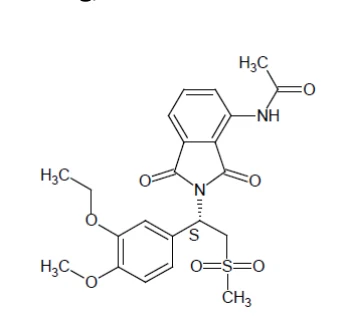
Structural formula:
Physicochemical properties:
Apremilast is a white to pale yellow non- hygroscopic powder. It is practically insoluble in water and heptane, very slightly soluble in methanol, and soluble in acetone.
14. Clinical Trials
14.1. Clinical Trials by Indication
Plaque Psoriasis
Table 8 Summary of Patient Demographics for Studies ESTEEM 1 and ESTEEM 2
| Study | Trial design | Dosage, route of administration | Study Subjects (n) | Mean age (Range) | Sex |
|---|---|---|---|---|---|
PSOR-008 ESTEEM 1 | 52-Week, Multicentre, Randomized, Double Blind, Placebo- controlled study | Apremilast tablets 30 mg twice a day PO; placebo | n = 844 | 46.0 (18, 82) | M = 573 F = 271 |
PSOR-009 ESTEEM 2 | 52-Week, Multicentre, Randomized, Double Blind, Placebo- controlled study | Apremilast tablets 30 mg twice a day PO; placebo | n = 411 | 45.4 (18, 83) | M =276 F = 135 |
Study demographics and trial design
Two multicenter, randomized, double-blind, placebo-controlled studies (Studies ESTEEM 1 and ESTEEM 2) enrolled a total of 1257 patients 18 years of age and older, with a diagnosis of plaque psoriasis for at least 12 months, moderate to severe plaque psoriasis at screening [i.e. had a body surface area (BSA) involvement of ≥ 10%, static Physician Global Assessment (sPGA) of ≥ 3 (moderate or severe disease), and a Psoriasis Area and Severity Index (PASI) score ≥ 12], and who were candidates for phototherapy or systemic therapy. Concomitant anti-psoriatic medications were prohibited during the study up to Week 32, with the exception of low potency topical corticosteroids on the face, axillae and groin, coal tar shampoo and/or salicylic acid scalp preparations. Efficacy on a background of other medications or phototherapy has not been adequately studied with apremilast tablets.
Study ESTEEM 1 and Study ESTEEM 2 had a similar design through Week 32. In both studies, patients were randomized 2:1 to apremilast tablets 30 mg BID or placebo for 16 weeks (Placebo-Controlled Phase). All patients were initiated on study drug with dose-titration over 5 days. From Weeks 16-32, all patients received apremilast tablets 30 mg BID (Maintenance Phase). From Weeks 32-52, a selected subgroup of patients underwent a Randomized Treatment Withdrawal Phase.
In both studies, the primary endpoint was the proportion of patients who achieved PASI- 75 at Week 16. The major secondary endpoint was the proportion of patients who achieved a sPGA score of clear (0) or almost clear (1) at Week 16.
Baseline demographics were generally similar across the treatment groups in each study and comparable between the studies. Across both studies, patients ranged in age from 18 to 83 years, with an overall median age of 46 years. A total of 108 patients (8.6%) were aged ≥65 years old, including 9 patients (0.7%) aged ≥75 years old. Most of the patients (68%) were male. Race was predominantly White (90%). Baseline demographics for patients in each trial are presented in Table 8.
Baseline disease characteristics were generally similar across the treatment groups in each study and comparable between the studies. The mean baseline BSA involvement was 25.19% (median 21.0%), the mean baseline PASI score was 19.07 (median 16.80), and the proportions of patients with sPGA scores of 3 (moderate) and 4 (severe) at baseline were 70.0% and 29.8%, respectively. The mean duration since diagnosis of plaque psoriasis was 19 (median 16.6) years. A total of 18% of patients had a history of psoriatic arthritis.
Approximately 35% of patients had not received prior phototherapy, conventional systemic or biologic therapy for the treatment of psoriasis. Approximately 30% of all patients had received prior phototherapy, 38% had received prior conventional systemic therapy, and 30% had received prior biologic therapy for the treatment of psoriasis.
Study results
Clinical Response in Patients with Plaque Psoriasis:
The proportion of patients achieving PASI -75 and -50 responses, and a sPGA score of clear (0) or almost clear (1), are presented in Table 9 below. Apremilast tablets resulted in a significant improvement in moderate to severe plaque psoriasis, as demonstrated by the proportion of patients who achieved PASI-75 response at Week 16, compared with placebo. Clinical improvements measured by sPGA and PASI-50 responses were also demonstrated at Week 16 (Table 9).
The proportions of patients who discontinued by Week 16 were 12% in the placebo group and 11% in the apremilast tablets group in ESTEEM 1 and 18% in the placebo group and 13% in the apremilast tablets group in ESTEEM 2.
Table 9 Clinical Response at Week 16a in Studies ESTEEM 1 and ESTEEM 2 (FASb; LOCFc)
| Study ESTEEM 1 | Study ESTEEM 2 | ||||||||||
|---|---|---|---|---|---|---|---|---|---|---|---|
| Placebo | Apremilast tablets 30 mg BID | Placebo | Apremilast tablets 30 mg BID | ||||||||
| N | N = 282 | N = 562 | N = 137 | N = 274 | |||||||
| PASId -75, n (%) | 15 (5.3) | 186 (33.1) | 8 (5.8) | 79 (28.8) | |||||||
| sPGAe of Clear or Almost Clearf, n (%) | 11 (3.9) | 122 (21.7) | 6 (4.4) | 56 (20.4) | |||||||
| PASId -50f, n (%) | 48 (17) | 330 (58.7) | 27 (19.7) | 152 (55.5) | |||||||
a All p values < 0.0001
b FAS = Full Analysis Set
c LOCF = Last Observation Carried Forward
d PASI = Psoriasis Area and Severity Index
e sPGA = Static Physician Global Assessment
f Secondary endpoint
The clinical benefit of apremilast tablets on the primary endpoint (i.e. PASI-75) was demonstrated across subgroups defined by baseline demographics, baseline clinical disease characteristics (including psoriasis disease duration and patients with a history of psoriatic arthritis), prior psoriasis medication usage and response to prior psoriasis treatments. Similar response rates were observed across all weight subgroups, and baseline disease severity classifications including BSA.
Mean percent changes in PASI score from Weeks 0 to 16 are shown in Figure .
Figure 1 Studies ESTEEM 1 and ESTEEM 2: Mean Percent Change (Improvement) in PASI Score from Baseline over 16 Weeks ± Standard Error (FAS, LOCF)
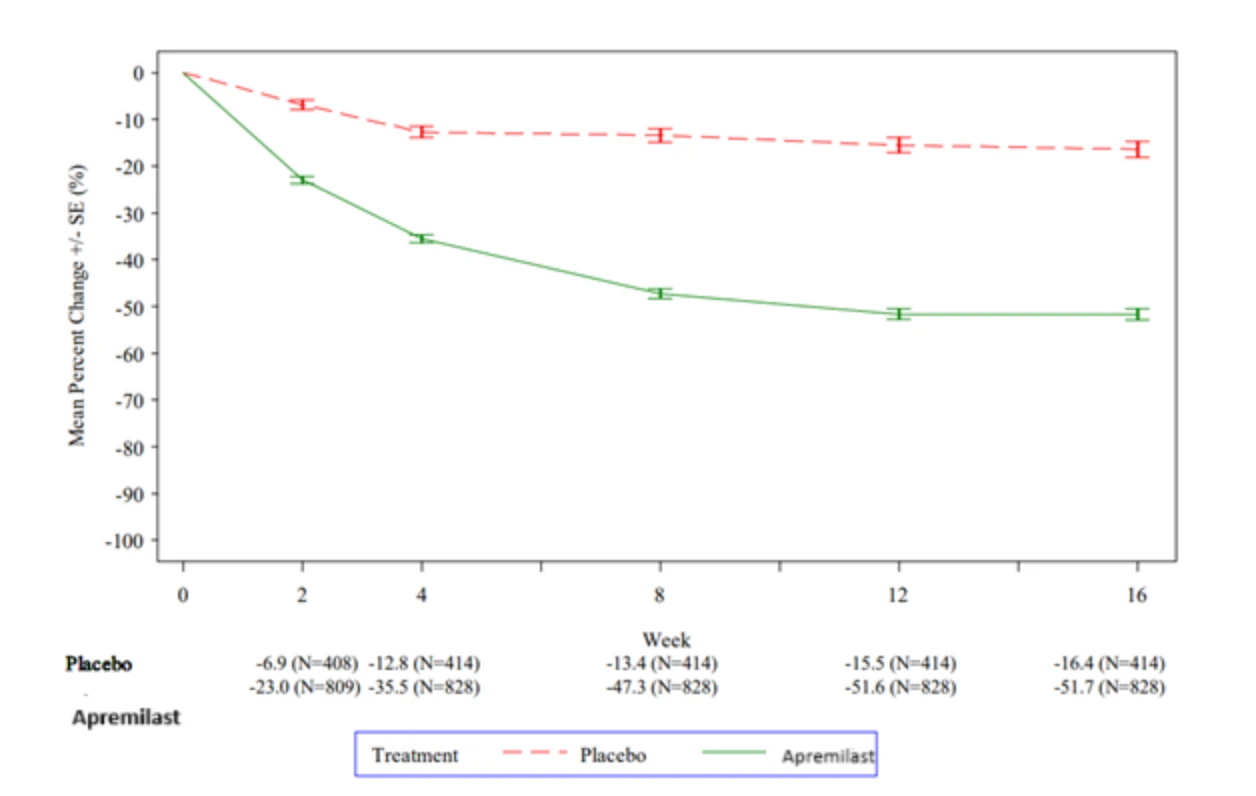
Last observation carried forward (LOCF) method was used to impute missing PASI score percent change at each week.
Psoriatic Arthritis
Table 10 Summary of Patient Demographics for Studies PALACE 1, PALACE 2, and PALACE 3
| Study | Study design | Dosage, route of administration | Study Subjects (N) | Mean age (Range) | Sex |
|---|---|---|---|---|---|
| PSA-002 PALACE 1 | 24-week randomized, double-blind, placebo- controlled phase followed by 28-week, double-blind extension phase | Apremilast tablets 30 mg twice a day PO; apremilast tablets 20 mg twice a day PO; placebo | N = 504 | 50.4 (19, 83) | M = 249 F = 255 |
| PSA-003 PALACE 2 | 24-week randomized, double-blind, placebo- controlled phase followed by | Apremilast tablets 30 mg twice a day PO; apremilast tablets 20 mg twice a day PO; | N = 484 | 50.9 (19, 80) | M = 209 F = 275 |
| 28-week, double-blind extension phase | placebo | ||||
| PSA-004 PALACE 3 | 24-week randomized, double-blind, placebo- controlled phase followed by 28-week, double-blind extension phase | Apremilast tablets 30 mg twice a day PO; apremilast tablets 20 mg twice a day PO; placebo | N = 505 | 49.7 (18, 77) | M = 236 F = 269 |
Study demographics and trial design
The safety and efficacy of apremilast tablets was evaluated in 3 multi-center, randomized, double-blind, placebo-controlled trials (Studies PALACE 1, PALACE 2, and PALACE 3) of similar design. A total of 1493 adult patients with active PsA (≥ 3 swollen joints and ≥ 3 tender joints), despite prior or current treatment with disease-modifying antirheumatic drug (DMARD) therapy, were randomized. Patients enrolled in these studies had a diagnosis of PsA for at least 6 months. One qualifying psoriatic skin lesion of at least 2 cm in diameter was required in Study PALACE 3. Previous treatment with a biologic, including TNF-blockers, was allowed (up to 10% could be TNF-blocker therapeutic failures). Across the 3 studies, patients were randomly assigned to placebo (n = 496), apremilast tablets 20 mg (n = 500), or apremilast tablets 30 mg (n = 497) given orally twice daily. Patients were allowed to receive stable doses of concomitant methotrexate (MTX) (≤ 25 mg/week), sulfasalazine (SSZ) (≤ 2 g/day), leflunomide (LEF) (≤ 20 mg/day), low dose oral corticosteroids (equivalent to ≤ 10 mg of prednisone/day), and/or nonsteroidal anti-inflammatory drugs (NSAIDs) during the trial. Treatment assignments were stratified based on small-molecule DMARD use at baseline in PALACE 1, 2 and 3. There was an additional stratification of body surface area (BSA) ≥ 3% with psoriasis in PALACE 3. The patients who were therapeutic failures of > 3 agents for PsA (small molecules or biologics), or > 1 biologic TNF blocker, were excluded.
The primary endpoint was the percentage of patients achieving American College of Rheumatology (ACR) 20 response at Week 16. At Week 16, patients whose tender and swollen joint counts had not improved by at least 20% were considered non-responders Placebo patients who were considered non-responders were re-randomized 1:1 in a blinded fashion to either apremilast tablets 20 mg twice daily or 30 mg twice daily. Apremilast tablets patients remained on their initial treatment. At Week 24, all remaining placebo patients were re-randomized to either 20 mg twice daily or 30 mg twice daily. Baseline demographic characteristics are presented in Table 10. A total of 146 patients (9.8%) were aged ≥65 years old, including 19 patients (1.3%) aged ≥75 years old. Race was predominantly White (94%).
Patients with specific subtypes of PsA were not restricted for enrolment across the 3 studies. The most common subtypes represented in these trials were symmetric polyarthritis (62.0%) and asymmetric oligoarthritis (26.9%). The median duration of PsA disease was 5 years. Prior treatment with small-molecule DMARDs was reported in 76.4% of patients and prior treatment with biologic DMARDs was reported in 22.4% of patients. The majority of patients received concomitant therapy with at least one DMARD, the most common being MTX (54.5%). Apremilast was not studied in combination with biologic DMARDs or with cyclosporine.
Study results
Clinical Response in patients with psoriatic arthritis:
Apremilast tablets resulted in significant improvements in the signs and symptoms of PsA, as assessed by the ACR 20 response criteria, compared to placebo at Week 16. The proportion of patients with ACR 20/50/70 responses in Studies PALACE 1, PALACE 2 and PALACE 3 are shown in Table 11.
Based on data collected up to Week 52, there was no evidence to suggest an attenuation of efficacy on ACR20 for up to 52 weeks of continuous treatment with apremilast.
Table 11 Proportion of Patients with ACR 20/50/70 Responses in Studies PALACE 1, PALACE 2, and PALACE 3 at Week 16
| PALACE 1 | PALACE 2 | PALACE 3 | |||||||||||||||||
|---|---|---|---|---|---|---|---|---|---|---|---|---|---|---|---|---|---|---|---|
| Response | Placebo ± DMARDs N = 168 | Apremilast tablets 30 mg twice daily ± DMARDs N = 168 | Placebo ± DMARDs N = 159 | Apremilast tablets 30 mg twice daily ± DMARDs N = 162 | Placebo ± DMARDs N = 169 | Apremilast tablets 30 mg twice daily ± DMARDs N = 167 | |||||||||||||
| ACR 20 | 19.0% | 38.1%* | 18.9% | 32.1%* | 18.3% | 40.7%* | |||||||||||||
| ACR 50 | 6.0% | 16.1% | 5.0% | 10.5% | 8.3% | 15.0% | |||||||||||||
| ACR 70 | 1.2% | 4.2% | 0.6% | 1.2% | 2.4% | 3.6% | |||||||||||||
* p ≤ 0.01 for apremilast vs. placebo.
Note: For each study, N is the number of randomized and treated patients for Weeks 16.
Overall, the greater proportions of patients who achieved ACR20 did not appear to be primarily driven by mean improvements on any specific ACR component score(s) (i.e. number of tender joints, number of swollen joints, patient’s assessment of pain, patient’s global assessment of disease, physician’s global assessment of disease, HAQ-DI, and C-reactive protein).
Similar Week 16 ACR20 responses were observed with patients with symmetric polyarthritis and asymmetric oligoarthritis PsA subtypes.
In the pooled post hoc data analyses (Studies PALACE 1, PALACE 2 and PALACE 3), significantly greater ACR 20 responses compared to placebo were observed in both male and female subjects treated with apremilast tablets 30 mg BID. The placebo-adjusted ACR 20 response at Week 16 was higher for male subjects than for female subjects (see Table 12).
Table 12 Proportion of Male and Female Subjects Achieving a Modified ACR 20 Response at Week 16 in Pooled Analysis (FAS; NRI)
| Sex | Placebo | Apremilast tablets 30 mg | Treatment effect | |||
|---|---|---|---|---|---|---|
| twice daily | ||||||
| Male | 16.3% | 42.8% | 26.5% | |||
| Female | 21.1% | 32.4% | 11.6% | |||
FAS = full analysis set; NRI = nonresponder imputation
Physical Function Response:
Apremilast tablets-treated patients demonstrated statistically significant improvement in physical function, as assessed by the disability index of the health assessment questionnaire (HAQ-DI) change from baseline, compared to placebo at Week 16. Placebo-adjusted responses on HAQ-DI in patients treated with apremilast tablets 30mg twice daily were -0.182, - 0.140, and -0.127 in PALACE 1, PALACE 2, and PALACE 3, respectively (all significant at p < 0.01).
Behçet’s Disease
Study demographics and trial design
A multicenter, randomized, placebo-controlled trial (RELIEF) enrolled a total of 207 adult patients with Behçet’s disease with active oral ulcers. Patients were previously treated with at least one nonbiologic Behçet’s disease medication and were candidates for systemic therapy. Patients met the International Study Group (ISG) Criteria for Behçet’s disease. Patients had at least 2 oral ulcers at screening and at least 2 oral ulcers at randomization and without currently active major organ involvement. Concomitant treatment for Behçet’s disease was not allowed.
Patients were randomized 1:1 to receive either apremilast tablets 30 mg twice daily (n=104) or placebo (n=103) for 12 weeks (placebo-controlled phase). After Week 12, all patients received apremilast tablets 30 mg twice daily from weeks 12 to 64 (open-label active treatment phase).
Efficacy was assessed based on the number and pain of oral ulcers. The primary endpoint was the area under the curve (AUC) for the number of oral ulcers from baseline through Week 12. Secondary endpoints included other measures of oral ulcers: oral ulcer pain Visual Analog Scale (VAS), proportion of patients achieving resolution of oral ulcers by Week 6, and who remain oral ulcer free at every visit for at least 6 additional weeks, as well as proportion of patients who are oral ulcer-free (complete response) during the 12-week placebo-controlled phase.
Patients ranged in age from 19 to 72, with a mean age of 40 years. The mean duration of Behçet’s disease was 6.84 years. All subjects had a history of recurrent oral ulcers that were currently active. The mean baseline oral ulcer counts were 4.2 and 3.9 in the apremilast tablets and placebo groups, respectively.
Study results
Clinical Response in Patients with Behçet’s Disease:
Apremilast tablets 30 mg twice daily resulted in significant improvement in oral ulcers as demonstrated by the AUC for the number of oral ulcers from baseline through Week 12 (p<0.0001), compared with placebo (Table 13). The daily average number of oral ulcers during the 12-week placebo-controlled treatment phase was 2.6 ulcers in the placebo group and 1.5 ulcers in the apremilast tablets 30 mg twice daily group (difference -1.1; 95% CI: -1.6, -0.7).
Table 13 Clinical Response of Oral Ulcers at Week 12 in Study RELIEF (ITT population)
| Endpoint | Placebo N = 103 | Apremilast tablets 30 BID N = 104 | Absolute Adjusted Treatment Differencec |
|---|---|---|---|
| AUC for the number of oral ulcers from baseline through Week 12 (MI) | LS Mean 222.14 | LS Mean 129.54 | 92.60a |
| Change from baseline in the pain of oral ulcers as measured by VASb at Week 12 (MMRM) | LS Mean -18.7 | LS Mean
| 24.1a |
| Proportion of subjects achieving resolution of oral ulcers (oral ulcer-free) by Week 6, and who remain oral ulcer free at every visit for at least 6 additional weeks during the 12-week Placebo-controlled Treatment Phase | 4.9% | 29.8% | 25.1%a |
| Proportion of subjects achieving oral ulcer complete response (oral ulcer-free) at Week 12 (NRI) | 22.3% | 52.9% | 30.6%a |
ITT=intent to treat; LS=least squares; MI=multiple imputation; MMRM=mixed-effects model for repeated measures; NRI = NRI=non-responder imputation; AUC = area under the curve
a p-value < 0.0001 for all apremilast vs. placebo
b VAS=visual analog scale; 0=no pain, 100=worst possible pain
c Adjusted difference in proportions is the weighted average of the treatment differences across the 4 strata of combined sex and region factors with the Cochran-Mantel-Haenszel weights.
Figure displays the mean number of oral ulcers for each treatment group at each visit, while Figure displays mean oral ulcer pain on a visual analog scale for each treatment group at each visit.
Figure 2 Mean Number of Oral Ulcers by Time Point through Week 12 (ITT Population)
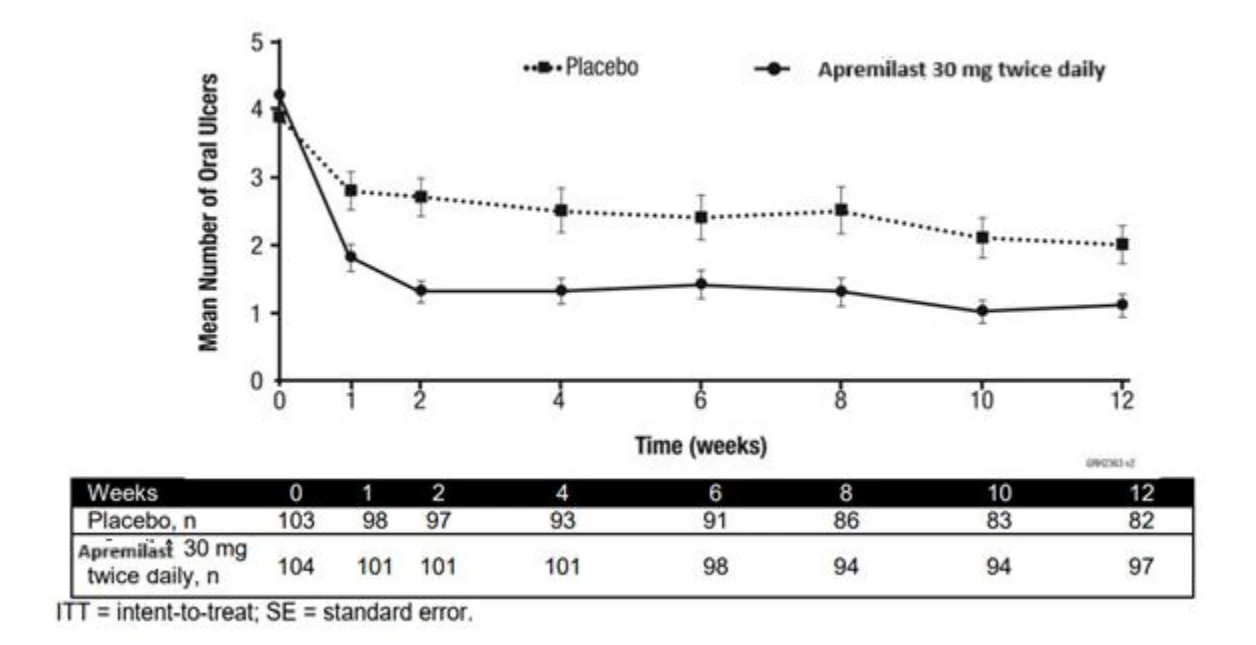
Figure 3 Mean (± SE) Oral Ulcer Pain on a Visual Analog Scale by Time Point through Week 12 (ITT Population)
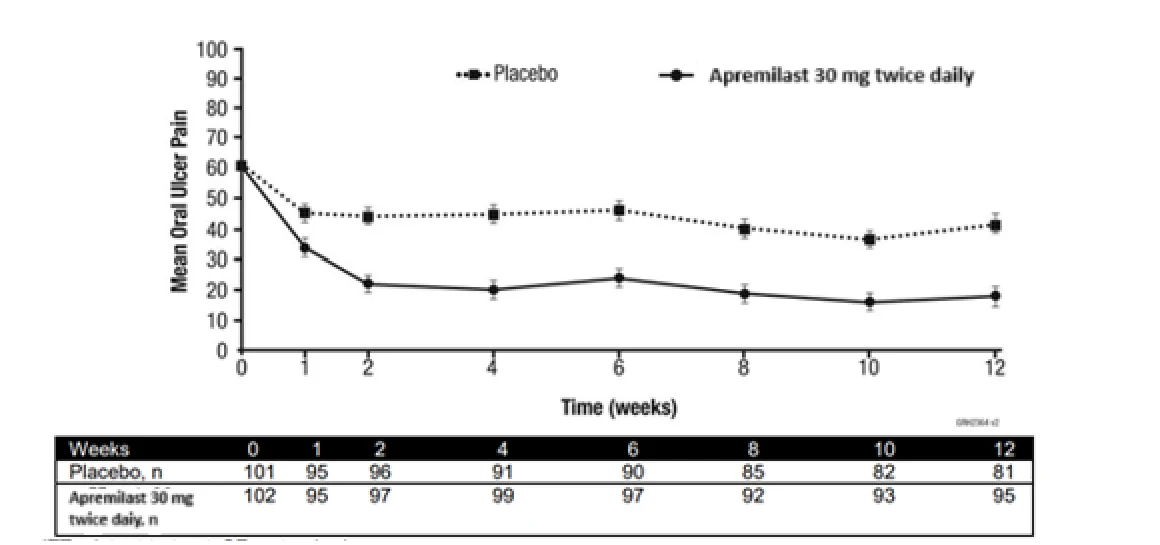
ITT = intent-to-treat; SE = standard error.
Oral ulcer pain was assessed on a 100-mm Visual Analog Scale 0 = no pain and 100 = worst possible pain. Mean baseline Visual Analog Scale pain scores were 61.2and 0.8 in the apremilast 30 mg twice daily treatment group and placebo treatment group, respectively.
Among 104 patients originally randomized to apremilast tablets 30 mg twice daily, 75 patients (approximately 72%) remained on treatment and maintained improvements in oral ulcers and reduction of oral ulcer pain through Week 64 (data as observed).
14.2. Comparative Bioavailability Studies
A double-blind, randomized, two-treatment, two-period, single-dose (1 x 30 mg), two-way crossover bioavailability study of ACCEL-APREMILAST tablets, 30 mg (Accel Pharma Inc.) and PrOTEZLA® tablets (Amgen Canada Inc.) was conducted in healthy, adult male and female subjects under fasting conditions. Comparative bioavailability data from 22 subjects that were included in the pharmacokinetic and statistical analysis are presented in the following table.
SUMMARY TABLE OF THE COMPARATIVE BIOAVAILABILITY DATA
Apremilast (1x 30 mg) Geometric Mean Arithmetic Mean (CV %) | ||||
| Parameter | Test1 | Reference2 | % Ratio of Geometric Means | Confidence Interval (90%) |
| AUCT (ng.h/mL) | 2765.4 3008.5 (45.6) | 2680.2 2919.2 (43.14) | 103.2 | 98.0 - 108.6 |
AUCI (ng.h/mL) | 3003.1 3311.6 (51.59) | 2900.0 3198.6 (48.97) | 103.6 | 98.8 - 108.6 |
Cmax (ng/mL) | 329.7 341.9 (25.31) | 316.7 329.0 (24.26) | 104.1 | 96.5 - 112.3 |
| Tmax3 (h) | 3.16 (32.38) | 2.88 (43.23) | ||
| T½3 (h) | 7.38 (38.86) | 7.58 (42.19) | ||
1 ACCEL-APREMILAST (apremilast) tablets, 30 mg (Accel Pharma Inc.).
2 OTEZLA® (apremilast) tablets 30 mg (Amgen Canada Inc.).
3 Expressed as the arithmetic mean (CV%) only.
15. Microbiology
No microbiological information is required for this drug product.
16. Non-Clinical Toxicology
General toxicology
Apremilast has low potential for acute toxicity. In mice, the minimum lethal oral dose was > 2000 mg/kg, and the minimum lethal intravenous (IV) doses were 120 mg/kg and > 120 mg/kg for males and females, respectively. In rats, the minimum lethal IV dose was > 60 mg/kg and < 75 mg/kg, and the minimum lethal oral doses were 2000 mg/kg and > 300 mg/kg for males and females, respectively.
Apremilast was evaluated in a series of repeat-dose oral toxicity studies of up to 6 months duration in mice (dose levels of 10, 100 and 1000 mg/kg/day; equivalent to 0.8-, 3.7- and 10-fold clinical exposure based on AUC), 12 months duration in monkeys (dose levels of 60, 180 and 600 mg/kg/day; equivalent to 2.3-, 3.2- and 4.8-fold clinical exposure based on AUC) and 90 days duration in rats.
Apremilast-related mortality was observed in mice and rats and was primarily attributed to vascular and/or perivascular inflammation. Dose-related inflammatory responses were predominantly observed in mice and rats and included neutrophilia, lymphopenia, and changes in serum proteins (decreased albumin, increased globulin, and increased hapotoglobin, C-reactive protein [CRP], and/or fibrinogen). These inflammatory responses were associated with arteritis and perivascular inflammation in various tissues and organs (eg, mesentery, heart, lungs, thymus, liver, skeletal muscle, mammary gland, skin and pancreas) in mice and rats, but not in monkeys, even at higher systemic exposures than those achieved in mice and rats. Complete or partial reversibility of the inflammatory findings in mice and rats was observed. Other target organs of apremilast toxicity include non-adverse centrilobular hepatocellular hypertrophy in the liver (mouse) and variable lymphoid depletion in lymphoid tissues (mouse and rat).
The no observed adverse effect level (NOAEL) for the 6-month mouse and 12-month monkey studies, were 10 and 600 mg/kg/day, respectively.
Based on the finding that apremilast induced inflammation in rodents, an investigative in vitro study was conducted. The study demonstrated that apremilast stimulates IL-6 production in rodents, but not in monkeys or humans.
Genotoxicity
Apremilast is not genotoxic. Apremilast did not induce mutations in an Ames assay or chromosome aberrations in cultured human peripheral blood lymphocytes in the presence or absence of metabolic activation. Apremilast was not clastogenic in an in vivo mouse micronucleus assay at doses up to 2000 mg/kg/day.
Carcinogenicity
Apremilast is not carcinogenic. Daily oral administration to male and female mice at 100 mg/kg/day for 103 or 99 weeks, respectively, at 300/200 mg/kg/day (lowered to 200 mg/kg/day in Week 73) for 98 or 96 weeks, respectively, at 1000 mg/kg/day to males for 73 weeks (dosing was terminated in Week 73), or at 1000/500 mg/kg/day (lowered to 500 mg/kg/day in Week 73) to females for 102 weeks, followed by necropsy in Weeks 102/103, did not show any evidence of carcinogenicity (up to 8.8-fold clinical exposure based on AUC).
In rats, daily oral administration to males at 3 mg/kg/day for 91 weeks, 10/6 mg/kg/day (lowered to 6 mg/kg/day in Week 66) for 89 weeks, and 20 mg/kg/day for 66 weeks followed by euthanasia in Weeks 95 to 100 did not show any evidence of carcinogenicity (up to 0.08-fold clinical exposure based on AUC). Likewise, daily oral administration to female rats at 0.3, 1, and 3 mg/kg/day until Weeks 103, 101, and 94, respectively, followed by necropsy in Week 104, showed no evidence of carcinogenicity (up to 1.1- fold clinical exposure based on AUC).
Reproductive and developmental toxicology
Male Fertility:
In a male mouse fertility study, apremilast at oral dosages of 1, 10, 25, and 50 mg/kg/day produced no effects on male fertility. The NOAEL was greater than 50 mg/kg/day (3-fold clinical exposure based on AUC).
Female Fertility and Embryo-fetal Development:
In a combined female mouse fertility and embryo-fetal developmental toxicity study with oral dosages of 10, 20, 40, and 80 mg/kg/day, altered estrous cycling and increased time to mating was observed from 20 mg/kg/day. Nevertheless, all mice mated and pregnancy rates were unaffected. The no observed effect level (NOEL) for female fertility was 10 mg/kg/day (1-fold clinical exposure based on AUC).
Pregnant female mice exhibited increased absolute and/or relative heart weights from 20 mg/kg/day. Increased numbers of early resorptions and reduced numbers of ossified tarsals were observed at doses ≥ 20 mg/kg/day (2-fold clinical exposure). Reduced fetal weights and retarded ossification of the supraoccipital bone of the skull were observed at 40 and 80 mg/kg/day, doses higher than the currently recommended highest human dose. The maternal and developmental NOEL was 10 mg/kg/day (1.3-fold clinical exposure based on AUC). Developmental malformations were not observed up to the highest dosage of 80 mg/kg/day (4.0-fold clinical exposure). Apremilast crosses the maternal blood-placental barrier in mice. Apremilast was not teratogenic in mice.
In a monkey embryo-fetal developmental toxicity study, oral dosages of 20, 50, 200, and 1000 mg/kg/day resulted in a dose-related increase in prenatal loss (abortions) from 50 mg/kg/day (2-fold clinical exposure). Prenatal loss was not observed at 20 mg/kg/day (1.4-fold clinical exposure). No treatment-related fetal developmental effects or malformations were observed in the monkey up to the highest dosage of 1000 mg/kg/day in the study (3.5-fold clinical exposure based on AUC). Apremilast crosses the blood-placental barrier in monkeys. Apremilast was not teratogenic in monkeys.
Pre- and Post-natal Development:
In a pre- and post-natal development study, apremilast was administered orally to pregnant female mice at dosages of 0, 10, 80 and 300 mg/kg/day from GD 6 to Day 20 of lactation. One mortality associated with difficulty in delivering pups was observed at 300 mg/kg/day. Clinical signs of maternal toxicity associated with delivering pups were also observed in one mouse in each of the 80 and 300 mg/kg/day dose groups. Apremilast was detected in the milk of lactating mice. Increased peri- and post-natal pup mortality and reduced pup body weights during the first week of lactation were observed at doses ≥ 80 mg/kg/day (≥ 4.0-fold clinical exposure). Pup mortality and developmental effects observed during the first week of the post-natal period were likely related to the apremilast-related pup toxicity (decreased pup weight and viability) and/or lack of maternal care (higher incidence of no milk in the stomach of pups). There were no apremilast-related effects on duration of pregnancy, number of pregnant mice at the end of the gestation period, number of mice that delivered a litter, or any developmental effects in the pups beyond post-natal day 7 during the remaining pre- and post-weaning periods. The NOEL for maternal toxicity and the F1 generation was 10 mg/kg/day (1.3- fold clinical exposure based on AUC).
17. Supporting Product Monographs
- 1. PrOTEZLA® tablets, 10 mg, 20 mg, and 30 mg of Apremilast, Control no.: 302288, product monograph, Amgen Canada Inc. [2026-04-10]