


Product Monograph - AG-Almotriptan
SUMMARY PRODUCT INFORMATION
| Route of Administration | Dosage Form / Strength | All Non-medicinal Ingredients |
|---|---|---|
| Oral | Tablet / 6.25 mg and 12.5 mg | Hypromellose, mannitol, microcrystalline cellulose, polyethylene glycol, polyvinylpyrrolidone, sodium starch glycolate, sodium stearyl fumarate, titanium dioxide. |
INDICATIONS AND CLINICAL USE
Adults (> 18 years of age)
AG-Almotriptan (almotriptan malate) tablets are indicated for the acute treatment of migraine attacks with or without aura.
AG-Almotriptan is not intended for the prophylactic therapy of migraine or for use in the management of hemiplegic, ophthalmoplegic or basilar migraine (see CONTRAINDICATIONS).
Safety and effectiveness of almotriptan malate have not been established for cluster headache, which is present in an older, predominantly male population.
AG-Almotriptan should only be used where a clear diagnosis of migraine has been established. If a patient has no response for the first migraine attack treated with AG-Almotriptan, the diagnosis of migraine should be reconsidered before AG-Almotriptan is administered to treat any subsequent attacks.
Pediatrics
Adolescents (12-17 years of age)
AG-Almotriptan is indicated for the acute treatment of migraine headache pain in patients 12-17 years of age who have a history of migraine attacks with or without aura usually lasting 4 hours or longer (when untreated). Efficacy of almotriptan malate on migraine- associated symptoms of nausea, photophobia and phonophobia has not been established.
Children (< 12 years of age)
AG-Almotriptan is not indicated for use in patients under 12 years of age.
Geriatrics (> 65 years of age)
Clinical studies of almotriptan malate did not include sufficient numbers of subjects over 65 years of age to determine whether they respond differently from younger subjects. In general, dose selection for an elderly patient should be cautious, usually starting at the low end of the dosing range, reflecting the greater frequency of decreased renal, cardiac, and hepatic function, and of concomitant disease or other drug therapy (See WARNINGS AND PRECAUTIONS, Special Populations).
CONTRAINDICATIONS
AG-Almotriptan (almotriptan malate) is contraindicated in:
- patients who are hypersensitive to this drug or to any ingredient in the formulation or component of the container. For a complete listing, see the Dosage Forms, Composition and Packaging section of the product monograph.
- patients with history, symptoms, or signs of ischemic cardiac, cerebrovascular or peripheral vascular syndromes, valvular heart disease or cardiac arrhythmias (especially tachycardias). In addition, patients with other significant underlying cardiovascular diseases (e.g., atherosclerotic disease, congenital heart disease) should not receive AG-Almotriptan. Ischemic cardiac syndromes include, but are not restricted to, angina pectoris of any type (e.g., stable angina of effort and vasospastic forms of angina such as the Prinzmetal’s variant), all forms of myocardial infarction, and silent myocardial ischemia. Cerebrovascular syndromes include, but are not limited to, strokes of any type as well as transient ischemic attacks (TIAs). Peripheral vascular disease includes, but is not limited to, ischemic bowel disease, or Raynaud’s syndrome (see WARNINGS AND PRECAUTIONS).
- patients with uncontrolled hypertension because AG-Almotriptan may increase blood pressure (see WARNINGS AND PRECAUTIONS).
- within 24 hours of treatment with another 5-HT1 agonist, or an ergotamine-containing or ergot-type medication, such as dihydroergotamine or methysergide.
- patients with hemiplegic, ophthalmoplegic or basilar migraine.
- patients with severe hepatic impairment (see DOSAGE AND ADMINISTRATION)
WARNINGS AND PRECAUTIONS
General
AG-Almotriptan (almotriptan malate) tablets should only be used where a clear diagnosis of migraine has been established.
AG-Almotriptan should be administered with caution to patients with diseases that may alter the absorption, metabolism or excretion of drugs, such as those with mild to moderate hepatic impairment or with impaired renal function (see ACTION AND CLINICAL PHARMACOLOGY, Special Populations and DOSAGE AND ADMINISTRATION).
Treatment is contraindicated in patients with severe hepatic impairment (see CONTRAINDICATIONS).
Medication Overuse Headache: Overuse of acute migraine treatments has been associated with the exacerbation of headache (medication overuse headache, MOH) in susceptible patients.
Medication overuse headache may present as migraine-like daily headaches or as a marked increase in frequency of migraine attacks. Detoxification of patients, including withdrawal of the overused drugs, and treatment of withdrawal symptoms (which often includes a transient worsening of headache) may be necessary.
Hypersensitivity to Sulfonamides
Caution should be exercised when prescribing almotriptan to patients with known hypersensitivity to sulfonamides. The chemical structure of almotriptan contains a sulfonyl group, which is structurally different from a sulfonamide. Cross-sensitivity to almotriptan in patients allergic to sulfonamides has not been evaluated.
Ability to Operate Machinery and Vehicles
AG-Almotriptan may cause dizziness, somnolence, visual disturbances, and other CNS symptoms that can interfere with driving or operating machinery. Patients should be advised to avoid driving a car, operating complex machinery, or engage in hazardous activities until they are reasonably certain that AG-Almotriptan does not affect them adversely.
Carcinogenesis and Mutagenesis
The carcinogenic potential of almotriptan was evaluated by oral gavage for up to 103 weeks in mice at doses of up to 250 mg/kg/day, and in rats for up to 104 weeks at doses up to 75 mg/kg/day. These doses were associated with plasma exposures (AUC) to parent drug that were approximately 40 and 78 times, in mice and rats respectively, the plasma AUC observed in humans receiving the MRDD of 25 mg. Because of high mortality rates in both studies, which reached statistical significance in high-dose female mice, all female rats, all male mice and high-dose female mice were terminated between weeks 96 and 98. There was no increase in tumors related to almotriptan administration.
Almotriptan was not mutagenic, with or without metabolic activation, when tested in two gene mutation assays, the Ames test and the in vitro thymidine locus mouse lymphoma assay.
Almotriptan was not determined to be clastogenic in two in vitro cytogenetics assays in human lymphocytes and an in vivo mouse micronucleus assay. Almotriptan produced an equivocal weakly positive response in in vitro cytogenetics assays in human lymphocytes.
Cardiovascular
Risk of Myocardial Ischemia and/or Infarction and Other Adverse Cardiac Events
Because of the potential of this class of compounds (5-HT1B/1D agonists) to cause coronary vasospasm, AG-Almotriptan should not be given to patients with documented ischemic or vasospastic coronary artery disease (see CONTRAINDICATIONS). It is strongly recommended that 5-HT1 agonists (including almotriptan) not be given to patients in whom unrecognized coronary artery disease (CAD) is predicted by the presence of risk factors such as: hypertension, hypercholesterolemia, smoker, obesity, diabetes, strong family history of CAD, female with surgical or physiological menopause, or male over 40 years of age, unless a cardiovascular examination provides satisfactory clinical evidence that the patient is reasonably free of coronary artery and ischemic myocardial disease or other significant underlying cardiovascular disease. The sensitivity of cardiac diagnostic procedures to detect cardiovascular diseases or predisposition to coronary artery vasospasm is modest at best. If, during the cardiovascular evaluation, the patient’s medical history, electrocardiogram (ECG) or other evaluations reveal findings indicative of, or consistent with, coronary artery vasospasm, or myocardial ischemia, AG-Almotriptan should not be administered (see CONTRAINDICATIONS).
These evaluations, however, may not identify every patient who has cardiac disease, and in very rare cases, serious cardiac events, such as myocardial infarction or coronary ischemia have occurred in patients without evidence of underlying cardiovascular disease.
For patients with risk factors predictive of CAD, who are determined to have a satisfactory cardiovascular evaluation, it is strongly recommended that administration of the first dose of AG-Almotriptan takes place in a clinical setting, such as the physician’s office or a similarly staffed medical facility, unless the patient has previously received almotriptan. Because cardiac ischemia can occur in the absence of any clinical symptoms, consideration should be given to obtaining an ECG during the interval immediately following the first use of AG-Almotriptan in a patient with risk factors. However, an absence of drug-induced cardiovascular effects on the occasion of the initial dose does not preclude the possibility of such effects occurring with subsequent administrations. If symptoms consistent with angina occur after the use of AG-Almotriptan, ECG evaluation should be carried out to look for ischemic changes.
It is recommended that patients who are intermittent long-term users of AG-Almotriptan and who have or acquire risk factors predictive of CAD as described above undergo periodic interval cardiovascular evaluation as they continue to use AG-Almotriptan.
The systematic approach described above is intended to reduce the likelihood that patients with unrecognized cardiovascular disease are inadvertently exposed to AG-Almotriptan.
As with other 5-HT1 agonists, sensations of tightness, pain, pressure, and heaviness in the precordium, throat, neck and jaw have been reported after treatment with almotriptan malate. These events have not been associated with arrhythmias or ischemic ECG changes in clinical trials. Because drugs in this class, including AG-Almotriptan, may cause coronary artery vasospasm, patients who experience signs or symptoms suggestive of angina following dosing should be evaluated for the presence of CAD or a predisposition to
Prinzmetal’s variant angina before receiving additional doses of the medication and should be monitored electrocardiographically if dosing is resumed and similar symptoms recur. Similarly, patients who experience other symptoms or signs suggestive of decreased arterial flow, such as ischemic bowel syndrome or Raynaud’s syndrome following the use of any 5-HT1 agonist, are candidates for further evaluation (see CONTRAINDICATIONS and WARNINGS AND PRECAUTIONS).
Cardiac Events and Fatalities Associated with 5-HT1 Agonists
Serious adverse cardiac events, including acute myocardial infarction have been reported within a few hours following administration of almotriptan. Life-threatening disturbances of cardiac rhythm and death have been reported within a few hours following the administration of other 5- HT1 agonists. Due to the common pharmacodynamic actions of 5-HT1 agonists, the possibility of cardiovascular effects of the nature described below should be considered for all agents of this class.
Considering the extent of use of 5-HT1 agonists in patients with migraine, the incidence of these events is extremely low.
Almotriptan malate can cause coronary vasospasm; at least one of these events occurred in a patient with no cardiac history and with documented absence of coronary artery disease.
Patients with symptomatic Wolff-Parkinson-White syndrome or arrhythmias associated with other cardiac accessory conduction pathway disorders should not receive AG-Almotriptan.
Premarketing experience with almotriptan
Among the 3865 subjects/patients who received almotriptan malate in premarketing clinical trials, one patient was hospitalized for observation after a scheduled ECG was found to be abnormal (negative T-waves on the left leads) 48 hours after taking a single 6.25 mg dose of almotriptan malate. The patient, a 48-year-old female, had previously taken 3 other doses for earlier migraine attacks. Myocardial enzymes at the time of the abnormal ECG were normal. The patient was diagnosed as having had myocardial ischemia and it was also found that she had a family history of coronary disease. An ECG performed 2 days later was normal, as was a follow- up coronary angiography. The patient recovered without incident.
Postmarketing experience with almotriptan
Serious cardiovascular events have been reported in association with the use of almotriptan malate in both adults and adolescents. The uncontrolled nature of postmarketing surveillance, however, makes it impossible to definitely determine the proportion of the reported cases that were actually caused by almotriptan or to reliably assess causation in individual cases (see Post- Market Adverse Drug Reactions).
Cerebrovascular Events and Fatalities with 5-HT1 Agonists
Cerebral hemorrhage, subarachnoid hemorrhage, stroke and other cerebrovascular events have been reported in patients treated with other 5-HT1 agonists, and some have resulted in fatalities. In a number of cases, it appears possible that the cerebrovascular events were primary, the agonist having been administered in the belief that the symptoms experienced were a consequence of migraine, when they were not. Before treating migraine headaches with AG-Almotriptan, in patients not previously diagnosed as migraineurs, and in migraineurs who present with atypical symptoms, care should be taken to exclude other potentially serious neurological conditions. If a patient does not respond to the first dose, the opportunity should be taken to review the diagnosis before a second dose is given. It should be noted, however, that patients who suffer from migraine may have an increased risk of certain cerebrovascular events such as stroke, hemorrhage or transient ischemic attack.
Other Vasospasm-Related Events
5-HT1 agonists may cause vasospastic reactions other than coronary artery vasospasm. Both peripheral vascular ischemia and colonic ischemia with abdominal pain and bloody diarrhea have been reported with 5-HT1 agonists.
Increases in Blood Pressure
Significant elevations in systemic blood pressure, including hypertensive crisis, have been reported on rare occasions in patients with and without a history of hypertension treated with other 5-HT1 agonists. AG-Almotriptan is contraindicated in patients with uncontrolled hypertension (see CONTRAINDICATIONS). In patients with controlled hypertension, almotriptan malate should be administered with caution, as transient increases in blood pressure and peripheral vascular resistance have been observed in a small portion of patients. In volunteers, small increases in mean systolic and diastolic blood pressure relative to placebo were seen over the first 4 hours after administration of 12.5 mg of almotriptan (0.21 and 1.35 mmHg, respectively). The effect of almotriptan malate on blood pressure was also assessed in patients with hypertension controlled by medication. In this population, mean increases in systolic and diastolic blood pressure relative to placebo over the first 4 hours after administration of 12.5 mg of almotriptan were 4.87 and 0.26 mmHg, respectively. The slight increases in blood pressure in both volunteers and controlled hypertensive patients were not considered clinically significant (see ADVERSE REACTIONS and WARNINGS AND PRECAUTIONS).
Special Cardiovascular Pharmacology Studies With Another 5-HT1 Agonist
In subjects (n=10) with suspected coronary artery disease undergoing angiography, a 5-HT1 agonist at a subcutaneous dose of 1.5 mg produced an 8% increase in aortic blood pressure, an 18% increase in pulmonary artery blood pressure, and an 8% increase in systemic vascular resistance. In addition, mild chest pain or tightness was reported by four subjects. Clinically significant increases in blood pressure were experienced by three of the subjects (two of whom also had chest pain/discomfort). Diagnostic angiogram results revealed that 9 subjects had normal coronary arteries and 1 had insignificant coronary artery disease.
In an additional study with this same drug, migraine patients (n=35) free of cardiovascular disease were subjected to assessments of myocardial perfusion by positron emission tomography while receiving a subcutaneous 1.5 mg dose in the absence of a migraine attack. Reduced coronary vasodilatory reserve (~10%), increased coronary resistance (~20%), and decreased hyperaemic myocardial blood flow (~10%) were noted. The relevance of these findings to the use of the recommended oral dose of this 5-HT1 agonist is not known.
Similar studies have not been done with almotriptan malate. However, owing to the common pharmacodynamic actions of 5-HT1 agonists, the possibility of cardiovascular effects of the nature described above should be considered for any agent of this pharmacological class.
Dependence/Tolerance
Although the abuse potential of almotriptan malate has not been specifically assessed, no abuse of, tolerance to, withdrawal from, or drug-seeking behaviour was observed in patients who received almotriptan malate in clinical trials or their extensions. The 5-HT1B/1D agonists, as a class, have not been associated with drug abuse.
Endocrine and Metabolism
Selective Serotonin Reuptake Inhibitors/Serotonin Norepinephrine Reuptake Inhibitors and Serotonin Syndrome
Cases of life-threatening serotonin syndrome have been reported during combined use of selective serotonin reuptake inhibitors (SSRIs)/serotonin norepinephrine reuptake inhibitors (SNRIs) and triptans. If concomitant treatment with AG-Almotriptan and SSRIs (e.g., fluoxetine, paroxetine, sertraline) or SNRIs (e.g., venlafaxine) is clinically warranted, careful observation of the patient is advised, particularly during treatment initiation and dose increases. Serotonin syndrome symptoms may include mental status changes (e.g., agitation, hallucinations, coma), autonomic instability (e.g., tachycardia, labile blood pressure, hyperthermia), neuromuscular aberrations (e.g., hyperreflexia, incoordination) and/or gastrointestinal symptoms (e.g., nausea, vomiting, diarrhea) (see WARNINGS AND PRECAUTIONS, Drug Interactions).
Hepatic/Biliary/Pancreatic
AG-Almotriptan should be used with caution in patients with mild to moderate hepatic impairment and treatment is contraindicated in patients with severe hepatic disease (see CONTRAINDICATIONS). The maximum daily dose should not exceed 12.5 mg over a 24-hour period, and a starting dose of 6.25 mg is recommended (see ACTION AND CLINICAL PHARMACOLOGY, Special Populations and DOSAGE AND ADMINISTRATION).
Neurologic
Care should be taken to exclude other potentially serious neurologic conditions before treating headache in patients not previously diagnosed with migraine or who experience a headache that is atypical for them. There have been rare reports where patients received 5-HT1 agonists for severe headache that were subsequently shown to have been secondary to an evolving neurological lesion. For newly diagnosed patients or patients presenting with atypical symptoms, the diagnosis of migraine should be reconsidered if no response is seen after the first dose of AG-Almotriptan.
Ophthalmologic
Corneal Opacities
Three male dogs (out of a total of 14 treated) in a 52-week toxicity study of oral almotriptan developed slight corneal opacities that were noted after 51, but not after 25, weeks of treatment. The doses at which this occurred were 2, 5, and 12.5 mg/kg/day. The opacity reversed in the affected dog at 12.5 mg/kg/day after a 4-week drug-free period. Systemic exposure (plasma AUC) to parent drug at 2 mg/kg/day was approximately 2.5 times the exposure in humans receiving the maximum recommended daily dose of 25 mg. A no-effect dose was not established.
Renal
AG-Almotriptan should be used with caution in patients with severe renal impairment. The maximum daily dose should not exceed 12.5 mg over a 24-hour period, and a starting dose of 6.25 mg should be used (see ACTION AND CLINICAL PHARMACOLOGY, Special Populations and DOSAGE AND ADMINISTRATION).
Sensitivity/Resistance
Rare hypersensitivity (anaphylaxis/anaphylactoid) reactions have occurred in patients receiving other 5-HT1 agonists. Such reactions can be life threatening or fatal. In general, hypersensitivity reactions to drugs are more likely to occur in individuals with a history of sensitivity to multiple allergens. Owing to the possibility of cross-reactive hypersensitivity reactions, almotriptan malate should not be used in patients having a history of hypersensitivity to chemically related 5- HT1 receptor agonists. (see ADVERSE REACTIONS and WARNINGS AND PRECAUTIONS).
Sexual Function/Reproduction
When female rats received almotriptan by oral gavage prior to and during mating and up to implantation at doses of 25, 100, and 400 mg/kg/day, prolongation of the estrous cycle was observed at a dose of 100 mg/kg/day (exposure, based on mg/m2, was approximately 40 times exposure in humans receiving the maximum recommended daily dose (MRDD) of 25 mg). No effects on fertility were noted in female rats at 25 mg/kg/day (exposure approximately 10 times human exposure at MRDD). No adverse effects were noted in male rats at 400 mg/kg/day (160 times the human exposure based on mg/m2).
Skin
Binding to Melanin-Containing Tissues
When pigmented rats were given a single oral dose of 5 mg/kg of radiolabelled almotriptan, the elimination half-life of radioactivity from the eye was 22 days, suggesting that almotriptan and/or its metabolites may bind to the melanin of the eye. Because almotriptan could accumulate in the melanin-rich tissues over time, there is the possibility that it could cause toxicity in these tissues over extended use. However, no adverse ocular effects related to treatment with almotriptan were noted in any of the toxicity studies. Although no systemic monitoring of ophthalmic function was undertaken in clinical trials, and no specific recommendations for ophthalmic monitoring are offered, prescribers should be aware of the possibility of long-term ophthalmic effects.
Special Populations
Pregnant Women: When almotriptan was administered orally during organogenesis to pregnant rats at doses of 125, 250, 500 and 1000 mg/kg/day, an increase in embryolethality was seen at the 1000 mg/kg/day dose (maternal exposure [based on plasma AUC of parent drug] was approximately 958 times the human exposure at MRDD of 25 mg). Increased incidences of fetal skeletal variations (decreased ossification) were noted at doses greater than the no-observed- effect level in rats of 125 mg/kg/day (maternal exposure 80 times human exposure at MRDD).
Similar studies in rabbits conducted with almotriptan at doses of 5, 20 and 60 mg/kg/day demonstrated increases in embryolethality at 60 mg/kg/day (maternal exposure, based on mg/m2, 50 times human exposure at MRDD). When almotriptan was administered to rats throughout the periods of gestation and lactation at doses of 25, 100 and 400 mg/kg/day, gestation length was increased and litter size and offspring body weight were decreased at the high dose (maternal exposure, based on mg/m2, 160 times human exposure at MRDD). The decrease in pup weight persisted throughout lactation. The no-observed-effect level in this study was 100 mg/kg/day (maternal exposure 40 times human exposure at MRDD).
There have been no adequate and well-controlled studies or clinical trials in pregnant women; therefore AG-Almotriptan should only be used during pregnancy if the potential benefit justifies the risk to the fetus.
Nursing Women: It is not known whether almotriptan is excreted in human milk. Since many drugs are excreted in human milk, caution should be exercised when AG-Almotriptan is administered to a nursing woman. Levels of almotriptan in rat milk were up to 7 times higher than in rat plasma. Infant exposure may be minimized by avoiding breast feeding for 24 hours after treatment.
Pediatrics
Adolescents (12-17 years of age)
The pharmacokinetics of almotriptan malate have been evaluated in adolescent patients aged 12- 17 years. The pharmacokinetic parameters in adolescents were similar to those of adults with the exception of oral clearance which was slightly higher (see CLINICAL TRIALS).
Children (< 12 years of age):
Safety and efficacy of almotriptan malate in pediatric patients under the age of 12 years have not been studied and almotriptan malate is not indicated for use in this patient population. Post-marketing experience with other triptans include a limited number of reports that describe pediatric (under 12 years of age) and adolescent (12-17 years of age) patients who have experienced clinically serious adverse events that are similar in nature to those reported as rare occurrences in adults (See Post-Market Adverse Drug Reactions).
Geriatrics (> 65 years of age): Clinical studies of almotriptan malate did not include sufficient numbers of subjects over 65 years of age to determine whether they respond differently from younger subjects. Renal and total clearance, and amount of drug excreted in the urine were lower in elderly non-migraineur volunteers (age 65 to 76 years) than in younger non-migraineur volunteers (age 19 to 34 years), resulting in longer terminal half-life and higher area under the plasma concentration-time curve. Although clearance of almotriptan was lower in elderly volunteers, there were no differences in the safety and tolerability between the two populations (see ACTION AND CLINICAL PHARMACOLOGY, Special Populations). In general, dose selection for an elderly patient should be cautious, usually starting at the low end of the dosing range, reflecting the greater frequency of decreased renal, cardiac, and hepatic function, and of concomitant disease or other drug therapy (See INDICATIONS AND PRECAUTIONS).
ADVERSE REACTIONS
Adverse Drug Reaction Overview
Serious cardiac events, including some that have been fatal, have occurred following use of other 5-HT1 agonists. These events are extremely rare and most have been reported in patients with risk factors predictive of CAD. Events reported have included coronary artery vasospasms, transient myocardial ischemia, myocardial infarction, ventricular tachycardia, and ventricular fibrillation (see CONTRAINDICATIONS, WARNINGS AND PRECAUTIONS).
Serious cardiac events, including myocardial infarction, coronary artery vasospasm and intermediate coronary syndrome, have occurred following the use of almotriptan tablets. These events are extremely rare and have been reported mostly in patients with cardiovascular risk factors (see WARNINGS AND PRECAUTIONS and Post-Market Adverse Drug Reactions).
Clinical Trial Adverse Drug Reactions
Because clinical trials are conducted under very specific conditions the adverse reaction rates observed in the clinical trials may not reflect the rates observed in practice and should not be compared to the rates in the clinical trials of another drug. Adverse drug reaction information from clinical trials is useful for identifying drug-related adverse events and for approximating rates.
As with other 5-HT1 agonists, almotriptan malate has been associated with sensations of heaviness, pressure, tightness or pain which may be intense. These may occur in any part of the body including the chest, throat, neck, jaw and upper limbs.
Significant elevations in systemic blood pressure, including hypertensive crisis, have been reported on rare occasions in patients with and without a history of hypertension treated with other 5-HT1 agonists. AG-Almotriptan is contraindicated in patients with uncontrolled hypertension (see CONTRAINDICATIONS). In volunteers, small increases in mean systolic and diastolic blood pressure relative to placebo were seen over the first 4 hours after administration of 12.5 mg of almotriptan (0.21 and 1.35 mmHg, respectively). The effect of almotriptan malate on blood pressure was also assessed in patients with hypertension controlled by medication. In this population, mean increases in systolic and diastolic blood pressure relative to placebo over the first 4 hours after administration of 12.5 mg of almotriptan were 4.87 and 0.26 mmHg, respectively. The slight increases in blood pressure in both volunteers and controlled hypertensive patients were not considered clinically significant (see also CONTRAINDICATIONS and WARNINGS AND PRECAUTIONS).
Adverse events were assessed in controlled clinical trials that included 1840 patients who received one or two doses of almotriptan tablets and 386 patients who received placebo.
The most common adverse events during treatment with almotriptan malate were nausea, somnolence, headache, paresthesia, and dry mouth. In long-term, open-label studies where patients were allowed to treat multiple attacks for up to one year, 5% (63 out of 1347 patients) withdrew due to adverse experiences.
Tables 1 and 2 list the adverse events in clinical trials of adult patients and adolescents (12-17 years of age), respectively, that occurred in at least 1% of the patients treated with almotriptan malate, and at an incidence greater than in patients treated with placebo, regardless of drug relationship. These events reflect experience gained under closely monitored conditions of clinical trials in a highly selected patient population. In actual clinical practice or in other clinical trials, these frequency estimates may not apply, as the conditions of use, reporting behaviour, and the kinds of patients treated may differ.
Table 1 – Incidence of Adverse Events in Controlled Clinical Trials in Adults (Reported in at Least 1% of Patients Treated with Almotriptan Malate, and at an Incidence Greater than Placebo)
| Adverse Event | Percentage of Patients Reporting the Event | ||
|---|---|---|---|
| Placebo (n=386) (%) | Almotriptan malate 6.25 mg (n=527) (%) | Almotriptan malate 12.5 mg (n=1313) (%) | |
| Digestive Nausea Dry Mouth Nervous Parasthesia | 1 | 1 | 2 |
| 0.5 | 1 | 1 | |
| 0.5 | 1 | 1 | |
Table 2 – Adverse Drug Reactions Reported by ≥ 1% of Adolescent Patients Treated with Almotriptan Malate in 1 Placebo-Controlled, Double-Blind Clinical Trial
System/Organ Class Adverse Reaction | Placebo (n=172) (%) | Almotriptan Malate 6.25 mg (n=180) (%) | Almotriptan Malate 12.5 mg (n=182) (%) | Almotriptan Malate 25 mg (n=186) (%) | ||||
|---|---|---|---|---|---|---|---|---|
Nervous System Disorders Dizziness Somnolence Headache Parasthesia Gastrointestinal Disorders Nausea Vomiting | 2 | 4 | 3 | 6 | ||||
| 2 | <1 | 5 | 3 | |||||
| 2 | 1 | 2 | 1 | |||||
| <1 | <1 | 1 | 1 | |||||
| 0 | 1 | 3 | 2 | |||||
| <1 | 2 | 0 | 2 | |||||
Almotriptan malate is generally well tolerated. Most adverse events were mild in intensity and were transient and did not lead to long-lasting effects. The incidence of adverse events in controlled clinical trials was not affected by gender, weight, age, presence of aura, or use of prophylactic medications or oral contraceptives. There were insufficient data to assess the effect of race on the incidence of adverse events.
Less Common Clinical Trial Adverse Drug Reactions (<1%)
The frequencies of less commonly reported adverse events are presented below. However, the role of almotriptan malate in their causation cannot be reliably determined. Furthermore, variability associated with adverse event reporting, the terminology used to describe adverse events, etc., limit the value of the quantitative frequency estimates provided. Event frequencies are calculated as the number of patients who used almotriptan malate in controlled clinical trials and reported an event, divided by the total number of patients exposed to almotriptan malate in these studies. All reported events are included, except the ones already listed in the previous table, and those unlikely to be drug related. Events are further classified within body system categories and enumerated in order of decreasing frequency using the following definitions: frequent adverse events are those occurring in at least 1/100 patients; infrequent adverse events are those occurring in 1/100 to 1/1000 patients; and rare adverse events are those occurring in fewer than 1/1000 patients.
Adults
Total Body System: Frequent was headache. Infrequent were abdominal cramp or pain, asthenia, chills, back pain, chest pain, neck pain, fatigue, and rigid neck. Rare were fever and photosensitivity reaction.
Cardiovascular: Infrequent were vasodilation, palpitations, and tachycardia. Rare were intermediate coronary syndrome, abnormal cardiac rhythm, hypertension, and syncope.
Digestive: Infrequent were diarrhea, vomiting, and dyspepsia. Rare were decreased appetite, increased appetite, colitis, gastritis, gastroenteritis, esophageal reflux, increased thirst, and increased salivation.
Metabolic: Infrequent were hyperglycemia and increased serum creatine phosphokinase. Rare were increased gamma glutamyl transpeptidase and hypercholesteremia.
Musculoskeletal: Infrequent were myalgia and muscular weakness. Rare were arthralgia, arthritis, and myopathy.
Nervous: Frequent were dizziness and somnolence. Infrequent were tremor, vertigo, anxiety, hypesthesia, restlessness, CNS stimulation, insomnia, and shakiness. Rare were change in dreams, impaired concentration, abnormal coordination, depressive symptoms, euphoria, hyperreflexia, hypertonia, nervousness, neuropathy, nightmares, and nystagmus.
Respiratory: Infrequent were pharyngitis, rhinitis, dyspnea, laryngismus, sinusitis, bronchitis, and epistaxis. Rare were hyperventilation, laryngitis, and sneezing.
Skin: Infrequent were diaphoresis, dermatitis, erythema, pruritus, and rash.
Special Senses: Infrequent were ear pain, conjunctivitis, eye irritation, hyperacusis, and taste alteration. Rare were diplopia, dry eyes, eye pain, otitis media, parosmia, scotoma, and tinnitus.
Urogenital: Dysmenorrhea was infrequent.
Pediatrics
Adolescents (12-17 years of age)
Total Body System: Infrequent were asthenia, chest discomfort, chest pain, discomfort, fatigue, feeling hot, gastroenteritis, increased body temperature, lethargy, photosensitivity reaction, thirst, urinary tract infections, vasoconstriction and viral infection.
Blood and Lymphatic System: Infrequent were anaemia, eosinophilia, lymphocytosis and neutropenia.
Cardiovascular: Infrequent were electrocardiogram QT prolonged, nodal rhythm, palpitations, sinus arrhythmia, supraventricular extrasystoles and tachycardia.
Digestive: Infrequent were abdominal pain, diarrhea, dry mouth, oral hypoaesthesia and upper abdominal pain.
Metabolism: Infrequent were anorexia, diabetes mellitus insulin-dependent, increased blood creatine phosphokinase and increased monocyte count.
Musculoskeletal: Infrequent were muscle cramp, limb injury, muscle stiffness, muscle tightness, musculoskeletal stiffness, myalgia, neck pain, pain in extremity and wrist fracture.
Nervous: Infrequent were hyperaesthesia, hypoaesthesia, migraine, psychomotor hyperactivity, tremor, trismus and vertigo.
Respiratory: Infrequent were cough, dry throat, dyspnoea, influenza, nasal congestion, nasopharyngitis, pharyngolaryngeal pain, rhinitis, sinusitis, throat irritation, throat tightness, upper respiratory infections and wheezing.
Skin: Infrequent were flushing, generalized pruritus, increased sweating, pallor, pruritus, rash, skin laceration and warm skin.
Special Senses: Infrequent were conjunctivitis, blurred vision, ear pain and otitis media.
Urogenital: Dysmenorrhea was infrequent.
Long-term Safety
Adults (> 18 years of age)
In a long-term open label study, 762 adult patients treated 13,751 migraine attacks with almotriptan malate over a period of up to 1 year. Migraine headaches could be treated with either a single dose of 12.5 mg almotriptan malate or an initial 12.5 mg dose followed by a second 12.5 mg dose if needed. In this study, 3% (24 of 762) of patients withdrew due to an adverse experience. The most common adverse events (defined as occurring in more than 3% of patients) in descending order frequency were as follows: back pain (8%), bronchitis (6.4%), influenza-like symptoms (5.8%), pharyngitis (4.6%), vomiting (4.2%), rhinitis (4.1%), skeletal pain (3.4%) and sinusitis (3.4%). Due to the lack of placebo control in this study, the role of almotriptan malate in causation cannot be reliably determined.
Pediatrics
Adolescents (12-17 years of age)
In a long-term open label safety study in adolescents, 420 patients with a history of migraine with or without aura treated each migraine attack with one or two doses of almotriptan (12.5 mg each) for up to 12 months. A total 319 patients (71.4%) completed the study. Ten (2.4%) of the subjects withdrew from the study due to one or more adverse events. Adverse events that occurred in ≥2% of subjects in decreasing order of subject frequency were: nasopharyngitis (12.4%), sinusitis (6.9%), upper respiratory tract infection (6.7%), pharyngolaryngeal pain (6.4%), nausea (6.0%), vomiting (5.5%), streptococcal pharyngitis (4.3%), nasal congestion
(4.0%), cough (3.8%), pyrexia (3.6%), viral gastroenteritis (3.6%), influenza (3.3%), viral infection (3.1%), joint sprain (2.9%), pharyngitis (2.6%), upper abdominal pain (2.4%), and bronchitis (2.1%). Some of the adverse events that occurred in between 1% and 2% of subjects were: dizziness (1.9%), diarrhea (1.9%), insomnia (1.9%), dysmenorrhea (1.7%) and syncope
(1.4%).
Post-Market Adverse Drug Reactions
In addition to the adverse experiences reported during clinical trials of almotriptan malate, the following adverse events have been reported in patients receiving marketed almotriptan malate from worldwide use since approval. Due to the uncontrolled nature of post-marketing surveillance, it is not possible to definitely determine the proportion of the reported cases that were actually caused by almotriptan malate or to reliably assess causation. The adverse drug reactions are ranked by frequency, using the following convention:
Very common ≥ 1/10 Common ≥ 1/100 and < 1/10
Uncommon ≥ 1/1,000 and < 1/100 Rare ≥ 1/10,000 and < 1/1000 Very rare < 1/10,000
Serious cardiovascular adverse events, including acute myocardial infarction, coronary vasospasm and angina pectoris have been reported within a few hours following administration of almotriptan malate.
Although very rare, almotriptan malate can cause coronary vasospasm; at least one of these events occurred in a patient with no cardiac history and with documented absence of coronary artery disease (see CONTRAINDICATIONS, WARNINGS AND PRECAUTIONS, ADVERSE REACTIONS and PRECAUTIONS).
Post-marketing experience with other triptans include a limited number of reports that describe pediatric (under 12 years of age) and adolescent (12-17 years of age) patients who have experienced clinically serious adverse events that are similar in nature to those reported as rare occurrences in adults (See WARNINGS AND PRECAUTIONS, Special Populations).
Adults
| Adverse Event | Reporting Case | |||
|---|---|---|---|---|
| Common | Uncommon | Rare | Very Rare | |
Blood and Lymphatic System Disorders
| X X | |||
Cardiac Disorders
| X X | |||
Eye Disorders
| X X X X X X | |||
Gastrointestinal Disorders
| X X X X X X | |||
| Adverse Event | Reporting Case | |||
|---|---|---|---|---|
| Common | Uncommon | Rare | Very Rare | |
General Disorders and Administration Site Conditions
| X X X X X X X X X | |||
Immune System Disorders
| X X | |||
Injury, Poisoning and Procedural Complications
| X X | |||
Investigations
| X | |||
Musculoskeletal and Connective Tissue Disorders
| X | X X X X X X | ||
| Adverse Event | Reporting Case | |||
|---|---|---|---|---|
| Common | Uncommon | Rare | Very Rare | |
Nervous System Disorders
| X X X X X X X X X X X X X X | |||
Psychiatric Disorders
| X X X X X X X X | |||
Renal and Urinary Disorders
| X X | |||
Reproductive System and Breast Disorders
| X X X X | |||
| Adverse Event | Reporting Case | |||
|---|---|---|---|---|
| Common | Uncommon | Rare | Very Rare | |
Respiratory, Thoracic and Mediastinal Disorders
| X X X | |||
Skin and Subcutaneous Tissue Disorders
| X X X X X | |||
Vascular Disorders
| X X X X | |||
Pediatrics
Adolescents (12-17 years of age)
| Adverse Event | Reporting Case | |||
|---|---|---|---|---|
| Common | Uncommon | Rare | Very Rare | |
Cardiac Disorders
| X X | |||
Ear and Labyrinth Disorders
| X | |||
Gastrointestinal Disorders
| X | |||
General Disorders and Administration Site Conditions
| X X | |||
| Adverse Event | Reporting Case | |||
|---|---|---|---|---|
| Common | Uncommon | Rare | Very Rare | |
Musculoskeletal and Connective Tissue Disorders
| X | |||
Nervous System Disorders
| X X X X | |||
Reproductive System and Breast Disorders
| X | |||
DRUG INTERACTIONS
Overview
All drug interaction studies were performed in healthy volunteers using a single 12.5 mg dose of almotriptan and multiple doses of the other drug. Interaction studies were performed with monamine oxidase A inhibitors, beta-blockers, selective serotonin re-uptake inhibitors, calcium channel blockers or inhibitors of Cytochrome P450 isoenzymes 3A4 and 2D6. There are no in vivo interaction studies assessing the effect of almotriptan on other drugs.
Drug-Drug Interactions
Table 3 – Established or Potential Drug-Drug Interactions
| <Proper Name> | Ref | Effect | Clinical Comment |
|---|---|---|---|
| Ergot-Containing Drugs | T | Additive. | These drugs have been reported to cause prolonged vasospastic reactions. As there is a theoretical basis that these effects may be additive, use of ergotamine-containing or ergot-type medications (dihydroergotamine or methylsergide) and almotriptan malate within 24 hours of each other should be avoided (see CONTRAINDICATIONS). |
Selective Serotonin Reuptake | C | Life-threatening serotonin | Cases of life-threatening serotonin syndrome have been reported during combined use of selective |
| <Proper Name> | Ref | Effect | Clinical Comment |
| Inhibitors/Serotonin Norepinephrine Reuptake Inhibitors | syndrome. | serotonin reuptake inhibitors (SSRIs) or serotonin norepinephrine reuptake inhibitors (SNRIs) and triptans (see WARNINGS AND PRECAUTIONS). Coadministration of almotriptan and fluoxetine (60 mg daily for 8 days), a potent inhibitor of CYP2D6, had no effect on almotriptan clearance, but maximal concentrations of almotriptan were increased by 18%. This difference is not clinically significant. | |
| Monoamine Oxidase Inhibitors (MAOIs) | CT/T | Decrease in almotriptan clearance and an increase in Cmax. No dose adjustment necessary. Serotoninergic syndrome with MAOIs cannot be ruled out. | Coadministration of almotriptan and moclobemide (150 mg b.i.d. for 8 days) resulted in a 27% decrease in almotriptan clearance and an increase in Cmax of approximately 6%. No dose adjustment is necessary. |
| Propanolol | CT | No significant changes. | Coadministration of almotriptan and propranolol (80 mg b.i.d. for 7 days) resulted in no significant changes in the pharmacokinetics of almotriptan. |
| Verapamil | CT | Not clinically significant. | Coadministration of almotriptan and verapamil (120 mg sustained-release tablets b.i.d. for 7 days), an inhibitor of CYP4503A4, resulted in a 20% increase in the area under the plasma concentration-time curve, and in a 24% increase in maximal plasma concentrations of almotriptan. Neither of these changes is clinically significant. |
| Other 5-HT1B/1D Agonists | CT | Contraindicated. | Concomitant use of other 5-HT1B/1D agonists within 24 hours of treatment with almotriptan malate is contraindicated (see CONTRAINDICATIONS). |
| Ketoconazole and Other Potent CYP3A4 Inhibitors | CT/T | Additive. | Coadministration of almotriptan and the potent CYP3A4 inhibitor ketoconazole (400 mg q.d. for 3 days) resulted in an approximately 60% increase in the area under the plasma concentration-time curve and maximal plasma concentrations of almotriptan. Although the interaction between almotriptan and other potent CYP3A4 inhibitors (e.g. itraconazole, ritonavir, and erythromycin) has not been studied, increased exposures to almotriptan may be expected when almotriptan is used concomitantly with these medications. |
| Herbal preparations containing St. John’s | T | Undesirable effects may be | |
| <Proper Name> | Ref | Effect | Clinical Comment |
| Wort (Hypericum perforatum) | more common during concomitant use with triptans. |
Legend: C = Case Study; CT = Clinical Trial; T = Theoretical
Drug-Laboratory Interactions
Almotriptan is not known to interfere with any commonly employed clinical laboratory tests. No specific laboratory tests are recommended for monitoring patients.
DOSAGE AND ADMINISTRATION
Dosing Considerations
AG-Almotriptan (almotriptan malate) is not indicated for use in pediatric patients under 12 years of age (see INDICATIONS).
Hepatic Impairment
Treatment is contraindicated in patients with severe hepatic disease (see CONTRAINDICATIONS). There are no data including no pharmacokinetics of almotriptan that have been assessed in this population. The maximum decrease expected in the clearance of almotriptan due to hepatic impairment is 60%. Therefore, the maximum daily dose should not exceed 12.5 mg over a 24-hour period, and a starting dose of 6.25 mg should be used (see ACTION AND CLINICAL PHARMACOLOGY, Special Populations and WARNINGS AND PRECAUTIONS).
Renal Impairment
In patients with severe renal impairment, the clearance of almotriptan was decreased. Therefore, the maximum daily dose should not exceed 12.5 mg over a 24-hour period, and a starting dose of
6.25 mg should be used (see ACTION AND CLINICAL PHARMACOLOGY, Special Populations and WARNINGS AND PRECAUTIONS).
Recommended Dose and Dosage Adjustment Adults and Adolescents (≥12 years of age)
In controlled clinical trials, single doses of 6.25 mg and 12.5 mg of almotriptan malate were effective for the acute treatment of migraine in adults and adolescents of age 12 to 17 years. In some adult patients, the 12.5 mg dose tends to be a more effective dose (see CLINICAL TRIALS). However, the 12.5 mg dose was generally associated with a higher frequency of adverse events in adolescents. Individuals may vary in response to doses of almotriptan malate. The choice of dose should therefore be made on an individual basis.
If the headache returns, the dose may be repeated after 2 hours, but no more than two doses of
12.5 mg in total (maximum of 25 mg) should be given within a 24-hour period. Controlled trials have not adequately established the effectiveness of a second dose if the initial dose is ineffective. The safety of treating an average of more than four headaches in a 30-day period has not been established.
The maximum recommended dose of almotriptan should not be exceeded.
OVERDOSAGE
| For the most recent information in the management of a suspected drug overdose, contact your regional poison control centre or Health Canada’s toll-free number, 1-844 POISON-X (1-844-764-7669). |
|---|
Patients and volunteers receiving single oral doses of 100 to 150 mg of almotriptan malate did not experience significant adverse events. Some of the adverse events reported as a result of receiving single oral doses of 100 to 150 mg of almotriptan malate were somnolence, nausea, vomiting and chest discomfort. During the clinical trials, one patient ingested 62.5 mg in a five- hour period and another patient ingested 100 mg in a 38-hour period. Neither patient experienced adverse reactions.
Based on the pharmacology of 5-HT1 agonists, hypertension or other more serious cardiovascular symptoms could occur after overdosage. Overdose should be treated symptomatically and vital functions should be maintained. Clinical and electrocardiographic monitoring should be continued for at least 20 hours, even if clinical symptoms are not observed.
The effects of hemodialysis or peritoneal dialysis on plasma concentrations of almotriptan are unknown.
ACTION AND CLINICAL PHARMACOLOGY
Mechanism of Action
AG-Almotriptan (almotriptan malate) is a selective 5-hydroxytryptamine1B/1D (5- HT1B/1D) receptor agonist. Almotriptan binds with high affinity to 5-HT1D, 5-HT1B and 5-HT1F receptors. Almotriptan has a weak affinity for 5-HT1A and 5-HT7 receptors, but has no significant affinity or pharmacological activity at 5-HT2, 5-HT3, 5-HT4, 5-HT6; alpha or beta adrenergic; adenosine (A1, A2); angiotensin (AT1, AT2); dopamine (D1, D2); endothelin (ETA, ETB); or tachykinin (NK1, NK2, NK3) binding sites. The exact mechanism of action of almotriptan in humans is unknown.
Pharmacodynamics
Current theories on the etiology of migraine headaches suggest that symptoms are due to local cranial vasodilatation and/or to the release of vasoactive and pro-inflammatory peptides from the sensory nerve endings in an activated trigeminal system. The therapeutic activity of almotriptan in migraine can most likely be attributed to agonist effects at 5-HT1B/1D receptors on the extracerebral, intracranial blood vessels that become dilated during a migraine attack, and on the nerve terminals in the trigeminal system. Activation of these receptors results in cranial vessel constriction, inhibition of the neuropeptide release, and reduced transmission in the trigeminal pain pathways.
Pharmacokinetics
Absorption: Almotriptan is well absorbed following oral administration. The mean oral absolute bioavailability is approximately 70%, and peak plasma concentrations of approximately 40 ng/mL are reached 1 to 3 hours after a single 12.5 mg dose. The rate and extent of absorption are not affected by food intake or by administration during a migraine attack. Almotriptan does not undergo substantial first-pass elimination.
Distribution: Almotriptan is extensively distributed. Almotriptan is minimally protein bound (approximately 35%), and the mean apparent volume of distribution is approximately 180 to 200 litres.
Metabolism: Almotriptan is metabolized by one minor and two major pathways. Monoamine oxidase (MAO)-mediated oxidative deamination (approximately 27% of the dose) and cytochrome P450-mediated oxidation (approximately 12% of the dose) are the major routes of metabolism, while flavin mono-oxygenase is the minor route. MAO-A is responsible for the formation of the indoleacetic acid metabolite, whereas cytochrome P450 (3A4 and 2D6) catalyzes the hydroxylation of the pyrrolidine ring to an intermediate that is further oxidized by aldehyde dehydrogenase to the gamma-aminobutyric acid derivative. Both metabolites are inactive.
Excretion: The mean half-life of almotriptan is between 3 and 4 hours. The primary route of elimination is via renal clearance, accounting for 75% of the administered dose. Approximately 40% of an administered dose is excreted unchanged in urine. Renal clearance exceeds the glomerular filtration rate by approximately 3-fold, indicating an active mechanism.
Approximately 13% of the administered dose is excreted via feces, both unchanged and metabolized.
Special Populations and Conditions Pediatrics
Adolescents (12-17 years of age)
A pharmacokinetics study of almotriptan was conducted in adolescents (12 to 17 years) and adults (18 to 55 years) with or without a history of migraine with eighteen subjects in each group. No differences were observed in the rate or extent of absorption of almotriptan in adolescents compared with adults. Weight-corrected almotriptan clearance was higher in adolescents, which offset the increase in exposure expected on the basis of their lower body weights.
Children (< 12 years old)
No data are available for pediatrics under 12 years of age. AG-Almotriptan is not indicated for use in this population (see INDICATIONS).
Geriatrics: Renal and total clearance, and amount of drug excreted in the urine (10 L/h, 33 L/h and 30% respectively) were lower in elderly non-migraineur volunteers (aged 65 to 76 years) than in younger non-migraineur volunteers (aged 19 to 34 years), resulting in longer terminal half-life (3.7 h vs. 3.2 h) and higher area under the plasma concentration-time curve (405 ng.h/mL vs. 325 ng.h/mL) in the elderly subjects. However, the differences do not appear to be clinically significant.
Gender: No significant gender differences have been observed in pharmacokinetic parameters. Pharmacokinetic parameters of almotriptan malate between the genders have not been studied in adolescents 12 to17 years of age.
Race: No significant differences have been observed in the pharmacokinetic parameters between Caucasian and African-American adult volunteers. Pharmacokinetic parameters of
almotriptan malate among the different races have not been studied in adolescents 12 to17 years of age.
Hepatic Insufficiency: The pharmacokinetics of almotriptan have not been assessed in this population. Based on the known mechanisms of the clearance of almotriptan, the maximum decrease in expected almotriptan clearance due to hepatic impairment would be 60% (see DOSAGE AND ADMINISTRATION and Hepatic Impairment in WARNINGS AND PRECAUTIONS).
Renal Insufficiency: The clearance of almotriptan was approximately 65% lower in adult patients with severe renal impairment (Cl/F = 19.8 L/h; creatinine clearance between 10 and 30 mL/min) and approximately 40% lower in patients with moderate renal impairment (Cl/F = 34.2 L/h; creatinine clearance between 31 and 71 mL/min) compared to healthy volunteers. Maximum plasma concentrations of almotriptan increased by approximately 80% in these patients (see DOSAGE AND ADMINISTRATION and Renal Impairment in WARNINGS AND PRECAUTIONS). Pharmacokinetic parameters of almotriptan malate have not been studied in adolescents 12 to17 years of age with renal insufficiency.
STORAGE AND STABILITY
Store at controlled room temperature (15-30°C).
DOSAGE FORMS, COMPOSITION AND PACKAGING
AG-Almotriptan (almotriptan malate) contains almotriptan malate equivalent to 6.25 mg of almotriptan and is a white to off-white round film-coated tablet debossed with “AL1” on one side and “JP” on the other side. Supplied in blister packs of 6 tablets.
AG-Almotriptan (almotriptan malate) contains almotriptan malate equivalent to 12.5 mg of almotriptan and is a white to off-white round film-coated tablet debossed with “AL2” on one side and “JP” on the other side. Supplied in blister packs of 6 tablets.
Composition:
Medicinal Ingredient: almotriptan malate
Inactive Ingredients: Hypromellose, mannitol, microcrystalline cellulose, polyethylene glycol, polyvinylpyrrolidone, sodium starch glycolate, sodium stearyl fumarate, titanium dioxide.
PART II: SCIENTIFIC INFORMATION
PHARMACEUTICAL INFORMATION
Drug Substance
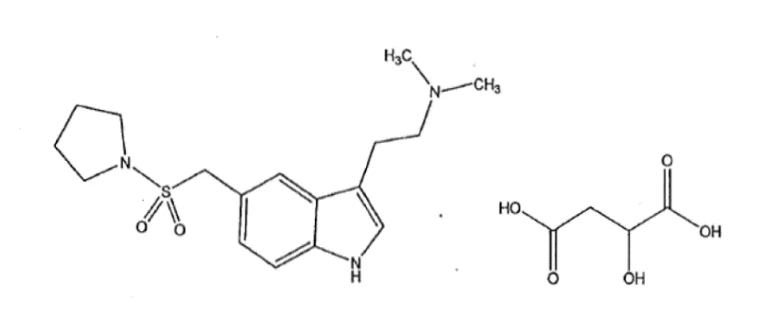
Proper name: almotriptan malate
Chemical name: 1-[[[3-[2-(Dimethylamino)ethyl]-1H-indol-5-
yl]methyl]sulfonyl]pyrrolidine (±)-hydroxybutanedioate (1:1)
Molecular formula: C17H25N3O2S • C4H6O5
Molecular mass 469.55 g/mol Structural formula:
Description: Almotriptan malate is white to slightly yellow crystalline powder.
Solubility: Soluble in water, slightly soluble in methanol and in
N,N-Dimethylformamide, in acetonitrile, in ethanol, in ethyl acetate, in propanol, in tetrahydrofuran and in toluene, practically insoluble in chloroform and in methylene chloride.
pKa: 9.3
pH: 1% aqueous solution has a pH of about 4.08 (at about 25oC).
Partition Coefficient: A partition coefficient of (-) 0.4 between 1-octanol layer/ aqueous layer was determined.
UV: UV maximum at 208.6 nm and 227.4 nm.
CLINICAL TRIALS
Comparative Bioavailability Studies
A double-blind, randomized, single dose, two-way, cross-over, comparative bioavailability study of AG-Almotriptan 12.5 mg tablets (Angita Pharma Inc.) with MYLAN-ALMOTRIPTAN 12.5 mg tablets (Mylan Pharmaceuticals ULC) was conducted in 22 healthy, adult male subjects under fasting conditions. Comparative bioavailability data from 20 subjects that were included in the statistical analysis are presented in the following table.
SUMMARY TABLE OF THE COMPARATIVE BIOAVAILABILITY DATA
Almotriptan (1 x 12.5 mg) Geometric Mean Arithmetic Mean (CV %) | ||||
|---|---|---|---|---|
| Parameter | Test1 | Reference2 | % Ratio of Geometric Means | 90% Confidence Interval |
AUCT (ng·h/mL) | 467.44 479.08 (22.90) | 461.92 473.49 (22.22) | 101.2 | 96.9 – 105.7 |
AUCI (ng·h/mL) | 487.33 499.30 (22.67) | 487.64 500.19 (22.54) | 99.9 | 95.8 – 104.3 |
Cmax (ng/mL) | 59.89 62.19 (34.89) | 55.46 58.49 (38.72) | 108.0 | 100.3 – 116.3 |
Tmax 3 (h) | 2.84 (0.75 – 4.50) | 2.84 (0.75 – 5.00) | ||
T½4 (h) | 5.30 (26.47) | 5.32 (20.66) | ||
1 AG-Almotriptan (almotriptan as almotriptan malate) tablets, 12.5 mg (Angita Pharma Inc.)
2 MYLAN-ALMOTRIPTAN (almotriptan as almotriptan malate) tablets, 12.5 mg (Mylan Pharmaceuticals ULC)
3 Expressed as the median (range) only
4 Expressed as the arithmetic mean (CV %) only.
The pharmacological activity of almotriptan in the treatment of migraine has been assessed in Phase II and Phase III clinical trials.
Study demographics and trial design Adults (> 18 years of age)
The efficacy of almotriptan malate was established in 3 multi-center, randomized, double-blind, placebo-controlled trials. Patients enrolled in these studies were primarily female (86%) and Caucasian (more than 98%), with a mean age of 41 years (range of 18 to 72) (see Table 4).
Patients were instructed to treat a moderate to severe migraine headache. Two hours after taking one dose of study medication, patients evaluated their headache pain. If the pain had not decreased in severity to mild or to no pain, the patient was allowed to take an escape medication. If the pain had decreased to mild or to no pain at 2 hours but subsequently increased in severity between 2 and 24 hours, it was considered a relapse and the patient was instructed to take a second dose of study medication. Associated symptoms of nausea, vomiting, photophobia, and phonophobia were also evaluated.
In these studies, the percentage of patients achieving a response (mild or no pain) 2 hours after treatment was significantly greater in patients who received either almotriptan malate 6.25 mg or
12.5 mg, compared with those who received placebo. A higher percentage of patients reported pain relief after treatment with the 12.5 mg dose than with the 6.25 mg dose. Doses greater than
12.5 mg did not lead to significantly better response. These results are summarized in Tables 5 to 7.
Table 4 – Summary of patient demographics for clinical trials in adult patients.
| Study # | Placebo | Dosage, route of administration and duration | Study subjects (n = number) | Mean age (Range) | Gender |
|---|---|---|---|---|---|
1-3 (Adults) | Multi-center, randomized, double- blind, placeco- controlled | 6.25 mg & 12.5 mg, oral over 24 hours | 1602 (88% of subjects completed study) | 41 (18-72) | M/F |
Study results Adults
The efficacy of almotriptan malate was established in 3 multi-center, randomized, double-blind, placebo-controlled European trials. Patients enrolled in these studies were primarily female (86%) and Caucasian (more than 98%), with a mean age of 41 years (range of 18 to 72). Patients were instructed to treat a moderate to severe migraine headache. Two hours after taking one dose of study medication, patients evaluated their headache pain. If the pain had not decreased in severity to mild or to no pain, the patient was allowed to take an escape medication. If the pain had decreased to mild or to no pain at 2 hours but subsequently increased in severity between 2 and 24 hours, it was considered a relapse and the patient was instructed to take a second dose of study medication. Associated symptoms of nausea, vomiting, photophobia, and phonophobia were also evaluated.
In these three studies, the percentage of patients achieving a response (mild or no pain) 2 hours after treatment was significantly greater in patients who received either almotriptan malate 6.25 mg or 12.5 mg, compared with those who received placebo. In study 1, Almotriptan 12.5 mg was superior to placebo as early as 30 minutes after drug administration (pairwise comparison, p = 0.0485). A higher percentage of patients reported pain relief after treatment with the 12.5 mg dose than with the 6.25 mg dose. Doses greater than 12.5 mg did not lead to significantly better response. These results are summarized in Tables 5-7.
Table 5 – Results of study 1 in adult patients.
| Primary Endpoint | Associated value and statistical significance for Drug at specific dosages | Associated value and statistical significance for Placebo |
|---|---|---|
Patients achieving a response (mild or no pain) 2 hours after treatment | 6.25 mg – 56.3%* (n = 167) 12.5 mg – 58.5%† (n = 164) | 32.5% (n = 80) |
* p value 0.002 in comparison to placebo
† p value <0.001 in comparison to placebo
Table 6 – Results of study 2 in adult patients.
| Primary Endpoint | Associated value and statistical significance for Drug at specific dosages | Associated value and statistical significance for Placebo |
|---|---|---|
Patients achieving a response (mild or no pain) 2 hours after treatment | 12.5 mg – 56.5%‡ (n = 184) | 42.4% (n = 98) |
‡ p value 0.008 in comparison to placebo
Table 7 – Results of study 3 in adult patients.
| Primary Endpoint | Associated value and statistical significance for Drug at specific dosages | Associated value and statistical significance for Placebo |
|---|---|---|
Patients achieving a response (mild or no pain) 2 hours after treatment | 6.25 mg – 57.3% (n = 360) 12.5 mg – 64.6%† (n = 373) | 33.9% (n = 176) |
† p value <0.001 in comparison to placebo
These results cannot be validly compared with results of anti-migraine treatments in other studies. Because studies are conducted at different times, with different samples of patients, by different investigators, employing different criteria and/or different interpretations of the same criteria under different conditions (dose, dosing regimen, etc.), quantitative estimates of treatment responses and the timing of responses may be expected to vary considerably from study to study.
For adult patients with migraine-associated photophobia, phonophobia, nausea, and vomiting at baseline, there was a decreased incidence of these symptoms following administration of almotriptan malate compared with placebo.
Two to 24 hours following the initial dose of study medication, patients were allowed to take an escape medication or a second dose of study medication for pain response.
Escape medication was taken more frequently by patients in the placebo groups than by those in the active almotriptan treatment groups.
The efficacy of almotriptan malate was unaffected by the presence of aura; by gender, weight, or age of the patient; or by concomitant use of common migraine prophylactic drugs (e.g. beta- blockers, calcium channel blockers, tricyclic antidepressants), or oral contraceptives. There were insufficient data to assess the effect of race on efficacy.
Adolescents (12-17 years)
The efficacy of almotriptan tablets in adolescent patients was evaluated in a double-blind, randomized, placebo-controlled study of 42 days in duration with 4 treatment arms (almotriptan malate 6.25 mg, 12.5 mg, 25 mg and placebo). Patients enrolled in this study had at least a one- year history of migraine attacks with or without aura, experienced 1-6 moderate attacks per month, were primarily female (60%) and Caucasian (75%). Approximately 80% of the patients in both placebo and almotriptan arms completed the study. Patients were instructed to take their dose of study medication as soon as possible and no more than 4 hours after a moderate to severe migraine attack. Two hours after taking one dose of study medication, patients evaluated their headache pain. Migraine-associated symptoms of nausea, photophobia, and phonophobia were also evaluated.
In this study, the percentages of patients achieving pain relief 2 hours after treatment were statistically significantly greater for each of the 3 almotriptan malate arms compared to placebo. The 2-hour pain relief results for the 6.25 and 12.5 mg dose groups are summarized in Table 8. The 25 mg dose provided no added improvement for pain relief.
Table 8 – Response Rates 2 Hours Following Treatment of Initial Headache.
| Study # | Placebo | Almotriptan Malate 6.25 mg | Almotriptan Malate 12.5 mg |
|---|---|---|---|
| 1 | 55.3% 94/170 patients | 71.8%* 127/177 patients | 72.9%† 132/181 patients |
* p value 0.001 in comparison with placebo
† p value <0.001 in comparison with placebo
Although not statistically significant, there was a decreased incidence of migraine-associated photophobia and phonophobia following administration of almotriptan malate 6.25 mg and 12.5 mg compared with placebo.
DETAILED PHARMACOLOGY
Almotriptan was developed with the aim of producing a more specific 5-HT1B/1D agonist that would have an improved efficacy and adverse event profile. The pharmacology of almotriptan has been assessed in vitro in human artery tissue. In vitro, almotriptan was superior to sumatriptan, in both the capacity to induce, as well as the affinity for, vasoconstriction in human meningeal arteries. In addition, almotriptan has been shown to have a higher affinity for meningeal artery tissue than pulmonary or coronary artery tissue. The affinity of almotriptan for human meningeal artery tissue was three times greater than that of sumatriptan. The relevance of these in vitro data to the clinical safety of almotriptan is not known.
The affinity of almotriptan for the serotonergic receptors, namely 5-HT1B and 5-HT1D, was demonstrated by radioligand displacement in membrane preparations. Additional receptor binding studies extended the characterization of almotriptan binding to other receptor subtypes, the only significant binding occurring at non-selective muscarinic receptors, and opiate receptors. Almotriptan displayed little or no affinity for CGRP, dopamine D1 or D2, endothelin, tachykinin, or histamine receptors. It was also inactive on adenosine, norepinephrine and serotonin uptake sites.
Based upon data from dose finding studies, the 6.25 and 12.5 mg doses were selected as the safest and most effective for relief of migraine pain and associated symptoms. Two studies evaluated the effect of almotriptan on vascular resistance, heart rate and blood pressure in anesthetized cats, and showed no consistent changes in either mean blood pressure or heart rate up to doses of 3 mg/kg, although some transient rises in blood pressure were observed. An increase in carotid vasculature resistance (276% of baseline) was observed along with a decrease in blood flow (72% of baseline).
Almotriptan was also shown to induce a dose-dependent decrease in blood flow through the arteriovenous anastomoses.
TOXICOLOGY
Acute Toxicity
Single-dose toxicity studies were conducted in rats and mice by oral, intravenous and subcutaneous routes. Single oral doses of almotriptan caused mortality at 2000 mg/kg in both mice and rats, but 1000 mg/kg was a non-lethal dose. Clinical signs included palpebral ptosis, tremors, abnormal gait, mydriasis (rats) and clonic convulsions, which generally preceded death. Gross findings of injection site irritation were noted in both mice and rats after subcutaneous doses.
Chronic Toxicity
The central nervous and cardiovascular systems were the primary organ systems affected by the toxicity of almotriptan. Central nervous system and related clinical signs were noted in rats at oral doses of 100 mg/kg or greater. Dogs were more sensitive, with signs and symptoms being noted at 2 mg/kg/day and higher. In a 4-week oral study, dogs had numerous clinical signs approximately 1 hour after dosing including mydriasis; splayed and/or stiff hind limbs; unsteadiness on the feet; vocalization; rapid heart rate; hyperactivity; hypersensitivity to external stimuli; tremors; circling; nervous, excited or aggressive behaviour; increased respiratory rate and lacrimation. The incidence and severity of the clinical signs appeared to be dose-related. The sensitivity of dogs to the CNS effects of triptans has been observed with other drugs.
Cardiovascular findings in both male and female dogs were increases in heart rate within 1 hour after dosing by oral, subcutaneous or intravenous routes. Histologic changes in the thyroid gland were seen in rats administered almotriptan at oral doses of 400 mg/kg/day or greater. Minor hematology, clinical chemistry or urinalysis changes in rats and dogs were reported as possibly related to almotriptan treatment. However, no drug-related gross or microscopic lesions could be correlated to these changes.
Nursing Mothers
Lactating rats dosed with almotriptan had milk levels equivalent to maternal plasma levels at 0.5 hours, and 7 times higher than plasma levels at 6 hours after dosing.
REFERENCES
- 1. Bou J, Domenech T, Puig J, Heredia A, Gras J, Fernandez-Forner D, Beleta J, Palacios JM. Pharmacological characterization of almotriptan: An indolic 5-HT receptor agonist for the treatment of migraine. Eur J Pharmacol 2000;410(1):33-41.
- 2. Boyce M, Dunn K, Warrington S. Hemodynamic and electrocardiographic effects of almotriptan in healthy volunteers. J Cardiovasc Pharmacol 2001;37:280-289.
- 3. Cabarrocas X, Esbri R, Peris F, Ferrer P. Long-term efficacy and safety of oral almotriptan: interim analysis of a 1-year open study. Headache 2001;41:57-62.
- 4. Cabarrocas X, Robert M, Warrington SJ, Zayas JM, et al. Cardiovascular safety of almotriptan in healthy volunteers [abstract]. Headache 1999;39(5):346-7.
- 5. Colman SS, Brod MI, Krishnamurthy A, Rowland CR, Jirgens KJ, Gomez-Mancilla B. Treatment satisfaction, functional status, and health-related quality of life of migraine patients treated with almotriptan or sumatriptan. Clin Ther 2001;23:127-145.
- 6. Cull R. Almotriptan: a balanced approach to migraine. Hosp Med 2001;62:96-100.
- 7. Dahlöf C, Tfelt-Hansen P, Massiou H, et al. Dose finding, placebo-controlled study of oral almotriptan in the acute treatment of migraine. Neurology 2001;57:1811-1817.
- 8. Deleu D, Hanssens Y. Current and emerging second-generation triptans in acute migraine therapy: A comparative review. J Clin Pharmacol 2000;40(7):687-700.
- 9. Dowson AJ, Massiou H, Lainez JM et al. Almotriptan is an effective and well-tolerated treatment for migraine pain: results of a randomized, double-blind, placebo-controlled clinical trial. Cephalagia 2002;22:453-461.
- 10. Fleishaker JC, Ryan KK, Carel BJ, Azie NE. Evaluation of the potential pharmacokinetic interaction between almotriptan and fluoxetine in healthy volunteers. J Clin Pharmacol 2001;41:217-223.
- 11. Fleishaker JC, Ryan KK, Jansat JM, Carel BJ, Bell DJ, Burke MT, Azie NE. Effect of MAO-A inhibition on the pharmacokinetics of almotriptan, an antimigraine agent in humans. Br J Clin Pharmacol 2001;51:437-441.
- 12. Fleishaker JC, Sisson TA, Carel BJ, Azie NE. Lack of pharmacokinectic interaction between the antimigraine compound, almotriptan, and propanolol in healthy volunteers. Cephalalgia 2001;21:61-65.
- 13. Gras J, Bou J, Llenas J, Fernandez AG, Palacios JM. Functional profile of almotriptan in animal models predictive of antimigraine activity. Eur J Pharmacol 2000;410(1):43-51.
- 14. Gras J, Cardelus I, Llenas J, Palacios JM. Cardiovascular safety profile of almotriptan, a new indolic derivative for the treatment of migraine. Eur J Pharmacol 2000;410(1):53- 59.
- 15. Pascual J, Falk R, Docekal P, Prusinski A, Jelencsik J, Carbarrocas X, Segarra X, Luria X, Ferrer P. Tolerability and efficacy of almotriptan in the long-term management of migraine. Eur Neurol 2001;45:206-213.
- 16. Pascual J, Falk RM, Piessens F, Prusinski A, Docekal P, Robert M, Ferrer P, Luria X, Segarra R, Zayas JM. Consistent efficacy and tolerability of almotriptan in the acute treatment of multiple migraine attacks: Results of a large, randomized, double-blind, placebo-controlled study. Cephalalgia 2000;20(6):588-96.
- 17. Robert M, Cabarrocas X, Zayas JM, et al. Overall response of oral almotriptan in the treatment of 3 migraine attacks [abstract]. Cephalalgia 1999;19(4):363.
- 18. Tfelt-Hansen P, De Vries P, Saxena PR. Triptans in migraine: A comparative review of pharmacology, pharmacokinetics and efficacy. Drugs 2000;60(6):1259-87.
- 19. Product Monograph for PrAXERT® (Almotriptan Malate Tablets). McNeil Consumer Healthcare Division of Johnson & Johnson Inc., Markham, Ontario, Canada. Control No.190856. Date of Revision: April 13, 2016.
- 20. Product Monograph- PrMYLAN-ALMOTRIPTAN (Almotriptan Malate Tablets), Mylan Pharmaceuticals ULC, Control No. 195564. Date of Revision: June 15, 2016.