


Product Monograph - Amitiza
SUMMARY PRODUCT INFORMATION
| Route of Administration | Dosage Form/Strength | Clinically Relevant Nonmedicinal Ingredients |
| Oral | Soft capsules, 24 mcg | Gelatin For a complete listing see Dosage Forms, Composition, and Packaging section. |
INDICATIONS AND CLINICAL USE
AMITIZA® (lubiprostone) is indicated for the treatment of chronic idiopathic constipation (CIC) in adults.
- The efficacy of AMITIZA® has been established in double-blinded, placebo-controlled clinical studies of 4 weeks duration. Efficacy of AMITIZA® beyond 4 weeks has not been established.
Geriatrics (≥ 65 years of age): No overall clinical differences in safety or effectiveness have been observed between elderly and adult patients.
Pediatrics (< 18 years of age): AMITIZA® is not recommended for use in children as the safety and efficacy of AMITIZA® in pediatric patients has not been established.
CONTRAINDICATIONS
AMITIZA® is contraindicated in patients with known or suspected mechanical gastrointestinal obstruction.
AMITIZA® is contraindicated in patients who are hypersensitive to the drug or any ingredient in the formulation. For a complete listing, see the DOSAGE FORMS, COMPOSITION AND PACKAGING section of the product monograph.
WARNINGS AND PRECAUTIONS
Gastrointestinal
Nausea
Patients taking AMITIZA® very commonly experienced nausea. Of all reported nausea, the majority were mild to moderate in severity. In a few instances, patients have discontinued treatment with AMITIZA® due to nausea. AMITIZA® is recommended to be taken orally with food and water as this may reduce potential symptoms of nausea (see DOSAGE AND ADMINISTRATION).
Diarrhea
Patients taking AMITIZA® commonly developed diarrhea. Of all reported diarrhea, the majority were mild to moderate in severity. Patients should be instructed to discontinue treatment with AMITIZA® if they develop severe or persistent diarrhea and to contact their healthcare professional.
Bowel Obstruction
If a patient demonstrates symptoms suggestive of a mechanical gastrointestinal obstruction, their healthcare professional should perform a thorough evaluation to confirm the absence of an obstruction prior to initiating treatment with AMITIZA® (see CONTRAINDICATIONS).
Hepatic
Patients with hepatic impairment taking AMITIZA® may experience higher systemic drug exposure and higher frequency and severity of adverse reactions. AMITIZA® is not recommended in patients with severe hepatic impairment (see ACTION AND CLINICAL PHARMACOLOGY). Dosage adjustment is recommended for patients with moderate hepatic impairment (see DOSAGE AND ADMINISTRATION).
Respiratory
Dyspnea
Patients taking AMITIZA® commonly experienced dyspnea. In a few instances, patients have discontinued treatment with AMITIZA® because of dyspnea. These events have usually been described as a sensation of chest tightness and difficulty breathing. Events generally have an acute onset within 30–60 minutes after taking the first dose of AMITIZA®. Dyspnea generally resolved within a few hours after the administered dose, but recurrence has been frequently reported with subsequent doses of AMITIZA®.
Special Populations
Pregnant Women
AMITIZA® is not recommended during pregnancy or in women of child bearing potential not using contraception. The safety of AMITIZA® in pregnancy has not been evaluated in adequate and well controlled clinical studies in humans. Animal studies have shown reproductive toxicity at doses higher than the maximum recommended human dose (see TOXICOLOGY). AMITIZA® should not be used during pregnancy unless the potential benefit justifies the potential risk to the embryo/fetus.
Nursing Women
It is not known whether AMITIZA® is excreted in human breast milk. In rats, neither lubiprostone nor its active metabolites were detectable in breast milk; however, in these rats, other metabolites were observed to pass the placental barrier and into breast milk. Although these metabolites are considered inactive, their potential pharmacodynamic and toxicological effect in neonates is unknown. Caution should be exercised when AMITIZA® is administered to nursing women.
Pediatrics (< 18 years of age)
AMITIZA® is not recommended for use in children.
Geriatrics (≥ 65 years of age)
No overall clinical difference in the safety of AMITIZA® has been observed between elderly and adult patients.
ADVERSE REACTIONS
Adverse Drug Reaction Overview
The safety of AMITIZA® 24 mcg twice daily was evaluated in 301 patients with chronic idiopathic constipation (CIC), in three phase III, double-blind, placebo-controlled clinical trials. In addition, 784 patients with CIC were treated in open-label studies with AMITIZA® for up to 12 months.
Overall, 650 and 297 patients were treated with AMITIZA® 24 mcg twice daily for 6 months and 12 months, respectively, in clinical studies comprising patients with CIC. Across the clinical studies, AMITIZA® was generally well-tolerated, with a majority of reported adverse events being mild to moderate in intensity. The most commonly observed adverse reactions in AMITIZA®-treated CIC patients from placebo-controlled studies were nausea, diarrhea, abdominal pain/discomfort, headache, and dizziness.
In pivotal phase III, double-blind, placebo-controlled clinical trials in patients with CIC, 8.0% of patients treated with AMITIZA® and 0.7% of patients treated with placebo discontinued prematurely due to adverse events. In the AMITIZA® treatment group, the most common reason for study discontinuation due to adverse events was nausea (4.0%; an additional 1.3% of patients temporarily discontinued AMITIZA® treatment due to nausea). In these trials, no patient treated with AMITIZA® experienced a serious adverse event.
Clinical Trial Adverse Drug Reactions
Because clinical trials are conducted under very specific conditions the adverse reaction rates observed in the clinical trials may not reflect the rates observed in practice and should not be compared to the rates in the clinical trials of another drug. Adverse drug reaction information from clinical trials is useful for identifying drug-related adverse events and for approximating rates.
Chronic Idiopathic Constipation
In three pivotal, phase III, double-blind, randomised, placebo-controlled clinical trials, 603 adult patients with CIC were randomized to receive placebo or AMITIZA® 24 mcg twice daily for 4 weeks.
Table 1 presents adverse drug reactions that occurred in at least 1% of patients treated with AMITIZA® and more frequently with study drug than placebo.
Table 1: Adverse Drug Reactions Occurring in ≥ 1% of AMITIZA® Treated Patients* in Three Phase 3 Placebo-Controlled CIC Trials
| MedDRA‡ System Organ Class/ Preferred Term | Placebo N=302 (%) | AMITIZA® 24 mcg BID N=301 (%) |
|---|---|---|
| Gastrointestinal disorders | ||
| Nausea | 10 (3.3) | 71 (23.6) |
| Diarrhea | 2 (0.7) | 25 (8.3) |
| Abdominal pain | 9 (3.0) | 19 (6.3) |
| Abdominal discomfort/tenderness | 1 (0.3) | 8 (2.7) |
| Flatulence | 3 (1.0) | 8 (2.7) |
| Abdominal distension | 4 (1.3) | 5 (1.7) |
| Dyspepsia | 3 (1.0) | 4 (1.3) |
| Dry mouth | 1 (0.3) | 3 (1.0) |
| Nervous system disorders | ||
| Headache | 13 (4.3) | 24 (8.0) |
| Dizziness | 2 (0.7) | 14 (4.7) |
| General disorders and administration site conditions | ||
| Chest discomfort/pain | 0 (0.0) | 7 (2.3) |
| Fatigue | 2 (0.7) | 6 (2.0) |
| Respiratory, thoracic, and mediastinal disorders | ||
| Dyspnea | 0 (0.0) | 5 (1.7) |
| Cardiac disorders | ||
| Palpitations | 0 (0.0) | 3 (1.0) |
| Skin and subcutaneous tissue disorders | ||
| Hyperhidrosis | 0 (0.0) | 3 (1.0) |
| Vascular disorders | ||
| Hot flush | 0 (0.0) | 3 (1.0) |
*only reactions occurring more frequently with study drug vs placebo are shown
‡ MedDRA version 18.0
Less Common Clinical Trial Adverse Drug Reactions (<1%)
Adverse drug reactions that were reported in <1% of patients treated with AMITIZA®, occurred more frequently in patients receiving AMITIZA® than those receiving placebo, and occurred in at least 2 patients in pivotal phase III, double-blind, placebo-controlled clinical trials are listed below by body system:
Gastrointestinal disorders: Gastroesophageal reflux disease, vomiting
General disorders and administration site conditions: Chills, oedema, pyrexia
Psychiatric disorders: Anxiety
Post-Market Adverse Drug Reactions
The following additional adverse drug reactions have been identified during post-approval use of AMITIZA® in clinical practice. As these events are reported voluntarily from a population of unknown size, estimates of frequency cannot be made: Asthenia, colitis ischaemic, hypersensitivity/allergic-type reactions (including rash, swelling, and throat tightness), hypotension, malaise, muscle spasms, syncope/loss of consciousness, and tachycardia.
DRUG INTERACTIONS
Drug–Drug Interactions
No in vivo drug–drug interaction studies have been performed. Based upon the results of in vitro human microsome studies, there is low likelihood of drug–drug interactions.
In vitro studies using human liver microsomes indicate that cytochrome P450 isoenzymes are not involved in the metabolism of lubiprostone. Further in vitro studies indicate microsomal carbonyl reductase may be involved in the extensive biotransformation of lubiprostone to the metabolite M3.
Additionally, in vitro studies in human liver microsomes demonstrate that lubiprostone does not inhibit cytochrome P450 isoforms 3A4, 2D6, 1A2, 2A6, 2B6, 2C9, 2C19, or 2E1, and in vitro studies of primary cultures of human hepatocytes show no induction of cytochrome P450 isoforms 1A2, 2B6, 2C9, and 3A4 by lubiprostone.
Based on the available information, no plasma protein binding–mediated or cytochrome P450 mediated drug interactions of clinical significance are anticipated.
Drug–Food Interactions
A study was conducted with a single 72-mcg dose of 3H-labeled lubiprostone to evaluate the potential of a food effect on lubiprostone absorption, metabolism, and excretion. Pharmacokinetic parameters of total radioactivity demonstrated that Cmax decreased by 55% while AUC0-∞ was unchanged when lubiprostone was administered with a high-fat meal. The clinical relevance of the effect of food on the pharmacokinetics of lubiprostone is not clear. However, AMITIZA® was administered with food in a majority of clinical trials.
Drug–Herb Interactions
Interactions with herbal products have not been established.
Drug–Laboratory Interactions
Interactions with laboratory tests have not been established.
DOSAGE AND ADMINISTRATION
Dosing Considerations
AMITIZA® is recommended to be taken orally with food and water as this may reduce potential symptoms of nausea. Patients should be instructed to discontinue treatment with AMITIZA® if they develop severe diarrhea and to inform their healthcare professional.
AMITIZA® capsules should be swallowed whole.
Recommended Dose and Dosage Adjustment
Adults: 24 mcg capsule of AMITIZA® orally twice daily with food and water.
Elderly (>65 years): No dosage adjustment is recommended for the elderly.
Children (<18 years): AMITIZA® is not recommended for use in children.
Patients with renal impairment: No dose adjustment is recommended for patients with renal impairment.
Patients with hepatic impairment: AMITIZA® is not recommended for patients with severe hepatic impairment (e.g., Child-Pugh classification C) (see ACTION AND CLINICAL PHARMACOLOGY). For patients with moderate hepatic impairment (e.g., Child-Pugh classification B), the initial daily dosage should be decreased to 24 mcg (i.e., 1 capsule once daily with food and water). If the initial dose is tolerated and an adequate response has not been obtained within 7 days, healthcare professionals may consider increasing daily dosage to 48 mcg (i.e., 1 capsule twice daily with food and water), while maintaining appropriate monitoring of patient response.
No dosage adjustment is required for patients with mild hepatic impairment.
Missed Dose
If a dose of AMITIZA® is missed, the patient should take the missed dose as soon as possible; however, patients should not take more than one dose at any time. All doses should be taken at least 5 hours apart.
Administration
AMITIZA® is recommended to be taken orally with food and water. Swallow capsules whole; do not break apart or chew.
OVERDOSAGE
In a clinical study, subjects who were administered supratherapeutic dosages of AMITIZA® (144 mcg; 6 times the recommended individual dose) reported several adverse events at an incidence and severity greater than that observed for the recommended dose. In particular, subjects experienced increased occurrences of nausea, diarrhea, vomiting, dizziness, flushing/hot flash, retching, and dyspnea. Should an overdose occur, the patient should be treated symptomatically and supportive measures instituted, as required.
| For management of a suspected drug overdose, contact your regional Poison Control Centre. |
ACTION AND CLINICAL PHARMACOLOGY
Mechanism of Action
Lubiprostone is a locally acting chloride channel activator that promotes the secretion of a chloride-rich intestinal fluid without altering electrolyte concentrations in the serum. Lubiprostone acts by specifically activating C1C-2, a normal constituent of the apical cell membrane of human intestinal epithelial cells, in a protein kinase A-independent mechanism. By increasing intestinal fluid secretion, lubiprostone can facilitate passage of the stool and alleviate some symptoms associated with constipation.
Patch clamp studies in human cell lines indicate that the majority of the beneficial biological activity of lubiprostone and its metabolites is observed only on the apical (luminal) portion of the gastrointestinal epithelium.
Additionally, activation of ClC-2 by lubiprostone has been shown to stimulate recovery of mucosal barrier function via the restoration of tight junction protein complexes in ex vivo studies of ischemic porcine intestine.
Lubiprostone, via activation of apical ClC-2 channels in intestinal epithelial cells, bypasses the anti-secretory action of opiates that results from suppression of secretomotor neuron excitability, without inhibiting the analgesic activity of opioid therapy.
Pharmacodynamics
See DETAILED PHARMACOLOGY.
Pharmacokinetics
See DETAILED PHARMACOLOGY.
Special Populations and Conditions
Hepatic Insufficiency:
In a multicentre, open-label study, non-constipated adult subjects with moderate hepatic impairment [Child-Pugh Class B] (n=8), severe hepatic impairment [Child-Pugh Class C] (n=9), or normal hepatic function (n=8) were treated with a single dose of either 12 mcg or 24 mcg of AMITIZA® – subjects were matched by gender, age, and weight. Blood samples for the determination of pharmacokinetic parameters were collected up to 24 hours post-dose. Following administration, AMITIZA® plasma concentrations were below the limit of quantification (10 pg/mL) except for two subjects. Subjects with hepatic impairment exhibited a progressively greater metabolite M3 Cmax and AUC0-24 with greater degree of hepatic impairment relative to subjects with normal hepatic function (Table 2). Non-constipated subjects with severe hepatic impairment had a greater number of AEs (n=13) compared to subjects with moderate hepatic impairment (n=2) or normal hepatic function (n=0). The majority of AEs were of mild severity and consistent with the pharmacodynamics of the drug.
Table 2: Pharmacokinetic Parameters of Metabolite M3 in Subjects with Hepatic Impairment Following a Single 24 mcg Dose of AMITIZA®
| Hepatic Function Status | Cmax (pg/mL) | Change vs. Normal (%) | AUC0-t (pg•hr/mL) | Change vs. Normal (%) |
| Normal (n=8) | 37.5 (15.9) | - | 39.6 (18.7) | - |
| Child-Pugh Class B (n=8) | 70.9 (43.5) | 66 | 119 (104) | 119 |
| Child-Pugh Class C (n=8) | 114 (59.4) | 183 | 234 (61.6) | 521 |
Values: Mean (SD)
Renal Insufficiency:
In a multicentre, open-label study, adult subjects (n=8) with severe renal impairment (creatinine clearance [CrCl] < 20 mL/min) requiring hemodialysis were treated with a single dose of 24 mcg AMITIZA® and compared to adult subjects (n=8) with normal renal function (CrCl > 80 mL/min) – subjects were matched by gender, age, and weight. Blood samples for the determination of pharmacokinetic parameters were collected up to 24 hours post-dose. Following administration, AMITIZA® plasma concentrations were below the limit of quantitation (10 pg/mL). Subjects with severe renal impairment exhibited 24% greater Cmax [39.4 (15.9) pg/mL; mean (standard deviation)] and 44% greater AUC0-24 [54.7 (45.6) pg•hr/mL; mean (standard deviation)] of the active metabolite M3 compared to subjects with normal renal function; however, these values were within the range of exposure from previous clinical experience with AMITIZA® and not associated with notable difference in safety.
STORAGE AND STABILITY
Temperature: Store at 15-30°C. Protect from extreme temperatures. Do not freeze.
Light: Protect from light.
SPECIAL HANDLING INSTRUCTIONS
None.
DOSAGE FORMS, COMPOSITION, AND PACKAGING
AMITIZA® is available as an oval, soft gelatin capsule containing 24 mcg of lubiprostone with “SPI” printed on one side.
- one bottle of AMITIZA® 24 mcg contains 60 soft capsules
- one bottle of AMITIZA® 24 mcg contains 14 soft capsules (physician sample)
Composition:
Medicinal Ingredient: lubiprostone
Non-medicinal Ingredients: medium-chain triglycerides, gelatin, sorbitol, black ink and purified water; Black ink composition: Propylene glycol, black iron oxide, polyvinyl acetate phthalate, and polyethylene glycol. May contain trace levels of lecithin.
PART II: SCIENTIFIC INFORMATION
PHARMACEUTICAL INFORMATION
Drug Substance
Proper name: Lubiprostone
Chemical name: (–)-7-[(2R,4aR,5R,7aR)-2-(1,1-difluoropentyl)-2-hydroxy-6-oxooctahydrocyclopenta[b]pyran-5-yl]heptanoic acid
Molecular formula and molecular mass: C20H32F2O5
M = 390.46 g/mol
Structural formula:
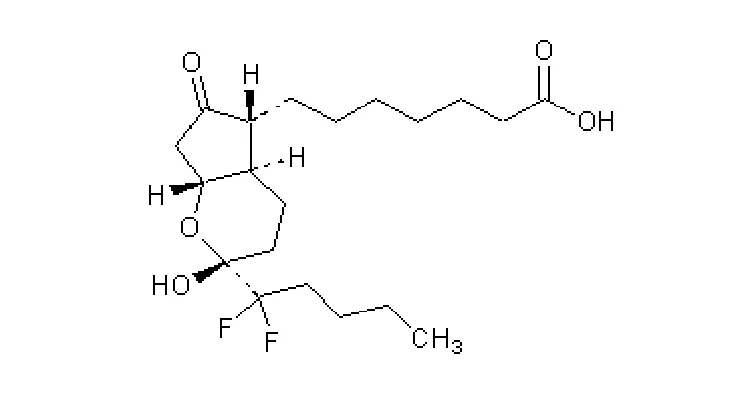
Physicochemical properties: Lubiprostone drug substance occurs as white, odorless crystals or crystalline powder, is very soluble in ether and ethanol, and is practically insoluble in hexane and water. AMITIZA® is available for oral administration in an imprinted, oval, soft gelatin capsule containing 24 mcg of lubiprostone and the following inactive ingredients: medium-chain triglycerides, gelatin, sorbitol, black ink and purified water.
CLINICAL TRIALS
Chronic Idiopathic Constipation (CIC)
Study Demographics and Trial Design
The efficacy of AMITIZA® (lubiprostone) for the treatment of CIC was established in three double-blind, placebo-controlled, randomized, multicentre trials in adult patients. The majority of patients had previously used laxative(s). A total of 301 patients with diagnosed CIC (as per ROME II criteria) received treatment with AMITIZA® 24 mcg twice daily in the three trials. A summary of trial designs and patient demographics are presented in Table 3. In replicate pivotal studies SC0131 and SC0232 – both conducted in the United States – 81% of patients were White, 10% were Black, and 7% were Hispanic. All patients (100%) enrolled in pivotal study CC0831 – conducted in Japan – were Asian.
Table 3: Summary of Patient Demographics for Clinical Trials Supporting Efficacy of AMITIZA® in the Treatment of Chronic Idiopathic Constipation
| Study No. | Trial Design | Dosage, Route of Administration, and Duration | Study Subjects | Median Age (Range) | Gender |
SC0131 (Ref. 1) | Phase 3, double-blind, randomized, multicentre, placebo-controlled | Lubiprostone 24 mcg BID or Placebo BID; Oral; 4 weeks | 242 (120 active; 122 placebo) | 48 years (22-80 years) | Female: 90% Male: 10% |
SC0232 (Ref. 2) | Phase 3, double-blind, randomized, multicentre, placebo-controlled | Lubiprostone 24 mcg BID or Placebo BID; Oral; 4 weeks | 237 (119 active; 118 placebo) | 46 years (20-81 years) | Female: 88% Male: 12% |
CC0831 (Ref. 3) | Phase 3, double-blind, randomized, multicentre, placebo-controlled | Lubiprostone 24 mcg BID or Placebo BID; Oral; 4 weeks | 124 (62 active; 62 placebo) | 39 years (20-82 years) | Female: 88% Male: 12% |
Study Results
Three double-blinded, placebo-controlled studies of similar design were conducted in patients with CIC. Constipation was defined as, on average, less than three spontaneous bowel movements (SBMs) per week in the absence of rescue medication use (i.e., enema or suppository). A total of 603 patients were randomized; 301 patients received AMITIZA® twice daily (48 mcg/day) and 302 received placebo twice daily for 4 weeks. The primary endpoint of pivotal studies SC0131 and SC0232 was the frequency of SBM at week 1; in the third pivotal study CC0831, the primary endpoint was the change from baseline in frequency of SBMs at week 1.
All studies demonstrated that patients treated with AMITIZA® had a higher frequency of SBMs and significantly increased post-treatment changes from baseline in frequency of SBMs during week 1 as compared to placebo-treated patients. In all studies, results similar to those in week 1 were also observed at weeks 2–4 of therapy (Table 4).
Table 4: Weekly Spontaneous Bowel Movement† Frequency Analyses for Clinical Trials Supporting Efficacy of AMITIZA® in the Treatment of Chronic Idiopathic Constipation
| SC0131 | SC0232 | CC0831 | Three Studies Pooled | ||||||||||||||||||||||
| Placebo | AMITIZA® | Placebo | AMITIZA® | Placebo | AMITIZA® | Placebo | AMITIZA® | ||||||||||||||||||
| Week 1 | |||||||||||||||||||||||||
Mean Change‡ (SD) | 2.0 (2.20) | 4.2 (4.30) | 2.5 (2.65) | 4.4 (3.97) | 1.2 (1.70) | 3.5 (2.56) | 2.0 (2.34) | 4.2 (3.86) | |||||||||||||||||
Median (min, max) | 2.0 (-2.0, 9.5) | 3.0 (-2.0, 22.0) | 1.5 (-2.0, 10.5) | 3.5 (-2.0, 25.0) | 1.1 (-2.3, 6) | 2.9 (-1.3, 11.7) | 1.5 (-2.3, 10.5) | 3.2 (-2.0, 25.0) | |||||||||||||||||
Difference (95% CI)§ | 2.3 (1.39, 3.12) | 1.9 (1.02, 2.79) | 2.3 (1.52, 3.06) | 2.1 (1.61, 2.64) | |||||||||||||||||||||
| p-value* | <0.0001 | <0.0001 | <0.0001 | <0.0001 | |||||||||||||||||||||
| Week 2 | |||||||||||||||||||||||||
Mean Change‡ (SD) | 1.7 (2.51) | 3.7 (3.96) | 2.2 (2.61) | 4.0 (3.93) | 1.3 (1.82) | 2.6 (2.22) | 1.8 (2.44) | 3.6 (3.66) | |||||||||||||||||
Median (min, max) | 1.0 (-2.9, 13.5) | 3.0 (-2.5, 15.0) | 2.0 (-1.7, 11.5) | 2.9 (-2.0, 18.4) | 1.2 (-2.3, 6.1) | 2.2 (-0.9, 8.1) | 1.5 (-2.9, 13.5) | 2.7 (-2.5, 18.4) | |||||||||||||||||
Difference (95% CI)§ | 2.0 (1.18, 2.90) | 1.8 (0.86, 2.65) | 1.3 (0.58, 2.05) | 1.8 (1.25, 2.28) | ||||
| p-value* | 0.0004 | 0.0009 | 0.0006 | <0.0001 | ||||
| Week 3 | ||||||||
Mean Change‡ (SD) | 1.4 (2.30) | 4.0 (4.77) | 2.0 (2.62) | 4.4 (4.41) | 1.5 (2.05) | 2.5 (2.38) | 1.6 (2.39) | 3.8 (4.25) |
Median (min, max) | 1.0 (-3.5, 12.5) | 3.0 (-2.0, 26.0) | 1.5 (-2.5, 15.5) | 3.2 (-2.5, 20.4) | 1.1 (-1.9, 8.1) | 2.1 (-0.5, 10.7) | 1.5 (-3.5, 15.5) | 3 (-2.5, 26.0) |
Difference (95% CI)§ | 2.6 (1.62, 3.55) | 2.4 (1.39, 3.35) | 1.1 (0.25, 1.85) | 2.2 (1.59, 2.73) | ||||
| p-value* | 0.0001 | 0.0003 | 0.0200 | <0.0001 | ||||
| Week 4 | ||||||||
Mean Change‡ (SD) | 1.4 (2.57) | 3.9 (4.08) | 2.2 (3.07) | 4.2 (4.57) | 1.6 (2.53) | 2.7 (2.39) | 1.8 (2.78) | 3.7 (3.99) |
Median (min, max) | 1.0 (-4.5, 12.5) | 3.5 (-2.0, 18.0) | 2.0 (-2.0, 17.5) | 3.3 (-2.0, 25.4) | 1.1 (-2.3, 11.1) | 2.53 (-1.3, 7.7) | 1.1 (-4.5, 17.5) | 3.0 (-2.0, 25.4) |
Difference (95% CI)§ | 2.5 (1.60, 3.38) | 2.0 (0.93, 3.08) | 1.1 (0.18, 1.96) | 1.98 (1.41, 2.56) | ||||
| p-value* | <0.0001 | 0.0003 | 0.0170 | <0.0001 | ||||
† SBM frequency based on observed SBMs per week; when less than 4 days of completed data are available in any week, these data are reported as missing.
‡ Change from baseline value based on individual patient analysis.
§ Difference calculated on mean values; 95% CI calculated based on t distribution.
* Test for differences between groups are based on van Elteren tests stratified by pooled centre.
Pivotal studies SC0131 and SC0232 were conducted at a time prior to the development of guidelines regarding evaluation of treatments for chronic constipation. In an effort to address current regulatory recommendations, a post-hoc cumulative responder analysis based on weekly SBM frequencies for the duration of study was conducted. This analysis comprised the proportion of patients with at least 3 SBM/week and an increase of at least 1 SBM/week compared to baseline; a responder was defined as fulfilling this criterion for 3 of the 4-week duration of the studies. Similar post-hoc responder based analyses were performed for assessed symptomology parameters. These analyses comprised the proportion of patients with at least a 1 point unit change on ordinal scale improvement in symptom (e.g., stool consistency, degree of straining) from baseline; a responder was defined as fulfilling this criterion for 3 of the 4-week duration of the studies.
AMITIZA® is associated with a greater proportion of patient responders compared to placebo that experienced a clinically relevant increase in stool frequency (Table 5). In study SC0131, there was a statistically significant greater frequency of responders treated with AMITIZA® (57.5%) compared to placebo (35.2%). In study SC0232, a similar trend was observed with AMITIZA® (56.3%), however, this change was not statistically significantly greater compared to placebo (47.5%). In study CC0831, there was a statistically significantly greater frequency of responders treated with AMITIZA® (61.3%) compared to placebo (38.7%). A pooled analysis of pivotal studies resulted in a 17.1% difference in responders in favour of AMITIZA®. Overall, there is a consistent trend towards a greater proportion of patient responders treated with AMITIZA® compared to placebo.
Table 5: Cumulative Spontaneous Bowel Movement† Responder‡ Analyses for Clinical Trials Supporting Efficacy of AMITIZA® in the Treatment of Chronic Idiopathic Constipation
| SC0131 | SC0232 | CC0831 | Three Studies Pooled | |||||||||||||||||||||||||||
| Placebo | AMITIZA® | Placebo | AMITIZA® | Placebo | AMITIZA® | Placebo | AMITIZA® | |||||||||||||||||||||||
| N | 122 | 120 | 118 | 119 | 62 | 62 | 302 | 301 | ||||||||||||||||||||||
Responder, % (n) | 35.2% (43) | 57.5% (69) | 47.5% (56) | 56.3% (67) | 38.7% (24) | 61.3% (38) | 40.7% (123) | 57.8% (174) | ||||||||||||||||||||||
Difference (95% CI)§ | 22.3% (9.7%, 33.9%) | 8.8% (-3.8%, 21.1%) | 22.6% (5.0%, 38.3%) | 17.1% (9.1%, 24.7%) | ||||||||||||||||||||||||||
| p-value | 0.0007 | 0.2125 | 0.0131 | 0.0001 | ||||||||||||||||||||||||||
† SBM frequency based on observed SBMs per week; when less than 4 days of completed data are available in any week, these data are reported as missing.
‡ Responder analysis based on proportion of patients with at least 3 SBMs/week and an increase of at least 1 SBM/week compared to baseline; a responder is defined as fulfilling the criteria for at least 3 of the 4-week treatment duration.
§ Test for differences between groups are based on van Elteren tests stratified by pooled centre; 95% CI calculated based on Newcombe-Wilson test.
AMITIZA® is associated with a greater proportion of patient responders compared to placebo that experienced a clinically relevant softening of stool (Table 6) and reduction in degree of straining (Table 7). A pooled analysis of pivotal studies resulted in a 21.3% and 14.3% difference in responders in favour of AMITIZA® with respect to stool consistency and degree of straining, respectively.
Table 6: Summary of Overall Responders† in Symptomology -- Stool Consistency‡ for Clinical Trials Supporting Efficacy of AMITIZA® in the Treatment of Chronic Idiopathic Constipation
| SC0131 | SC0232 | CC0831 | Three Studies Pooled | |||||||||||||||||||||||||
| Placebo | AMITIZA® | Placebo | AMITIZA® | Placebo | AMITIZA® | Placebo | AMITIZA® | |||||||||||||||||||||
| N | 122 | 120 | 118 | 119 | 62 | 62 | 302 | 301 | ||||||||||||||||||||
Responder, % (n) | 9.0% (11) | 35.0% (42) | 12.7% (15) | 25.2% (30) | 14.5% (9) | 43.5% (27) | 11.6% (35) | 32.9% (99) | ||||||||||||||||||||
Difference (95% CI)§ | 26.0% (15.8%, 35.7%) | 12.5% (2.5%, 22.3%) | 29.0% (13.2%, 43.1%) | 21.3% (14.8%, 27.6%) | ||||||||||||||||||||||||
| p-value | <0.0001 | 0.0139 | 0.0007 | 0.0001 | ||||||||||||||||||||||||
† Responder analysis based on proportion of patients with at least 1 point unit change on ordinal scale; a responder is defined as fulfilling the criteria for at least 3 of the 4-week treatment duration.
‡ Stool consistency ratings in SC0131 and SC0232: 0 (Very loose), 1 (Loose), 2 (Normal), 3 (Hard), and 4 (Very hard); 7-point Bristol stool scale use for study CC0831 with higher scores indicating softer stools.
§ Tests for differences between the placebo and AMITIZA® groups are based on the CMH test stratified by pool site for SC0131 and SC0232 and by study site for CC0831; 95% CI calculated based on Newcombe-Wilson test.
Table 7: Summary of Overall Responders† in Symptomology – Degree of Straining‡ for Clinical Trials Supporting Efficacy of AMITIZA® in the Treatment of Chronic Idiopathic Constipation
| SC0131 | SC0232 | CC0831 | Three Studies Pooled | |||||||||||||||||||||||||||
| Placebo | AMITIZA® | Placebo | AMITIZA® | Placebo | AMITIZA® | Placebo | AMITIZA® | |||||||||||||||||||||||
| N | 122 | 120 | 118 | 119 | 62 | 62 | 302 | 301 | ||||||||||||||||||||||
Responder, % (n) | 11.5% (14) | 35.0% (42) | 21.2% (25) | 26.9% (32) | 19.4% (12) | 32.3% (20) | 16.9% (51) | 31.2% (94) | ||||||||||||||||||||||
Difference (95% CI)§ | 23.5% (13.0%, 33.5%) | 5.7% (-5.2%, 16.4%) | 12.9% (-2.5%, 27.6%) | 14.3% (7.6%, 21.0%) | ||||||||||||||||||||||||||
| p-value | <0.0001 | 0.2848 | 0.0798 | 0.0001 | ||||||||||||||||||||||||||
† Responder analysis based on proportion of patients with at least 1 point unit change on ordinal scale; a responder is defined as fulfilling the criteria for at least 3 of the 4-week treatment duration.
‡ Degree of straining ratings: 0 (Absent), 1 (Mild), 2 (Moderate), 3 (Severe), and 4 (Very severe).
§ Tests for differences between the placebo and AMITIZA® groups are based on the CMH test stratified by pool site for SC0131 and SC0232 and by study site for CC0831; 95% CI calculated based on Newcombe-Wilson test.
AMITIZA® did not provide a significant reduction in abdominal discomfort; abdominal pain was not assessed. The sensation of completeness of evacuation was not assessed in the pivotal trials SC0131 or SC0232; the supportive trial CC0831 detected a statistically significant reduction in sensation of incomplete evacuation associated with AMITIZA® compared to placebo at only the first week of treatment.
In all studies, AMITIZA® demonstrated an increased proportion of patients (57%-63%) achieving spontaneous bowel movements within the first 24 hours after administration, when compared to placebo (31%-37%).
The results were consistent in subpopulation analyses for gender, race, and elderly patients.
No serious adverse reactions of electrolyte imbalance were reported in clinical studies, and no clinically significant changes were seen in serum electrolyte levels in patients receiving AMITIZA.
DETAILED PHARMACOLOGY
Pharmacodynamics
Although the pharmacologic effects of lubiprostone in humans have not been fully evaluated, animal studies have shown that oral administration of lubiprostone increases chloride ion transport into the intestinal lumen, enhances fluid secretion into the bowels, and improves fecal transit.
Pharmacokinetics
Lubiprostone has low systemic bioavailability following oral administration and concentrations of lubiprostone in plasma are below the limit of quantitation (10 pg/ml). Therefore, standard pharmacokinetic parameters, such as area under the curve (AUC), maximum concentration (Cmax) and half-life (t1/2), cannot be reliably calculated. However, the pharmacokinetic parameters of M3 (the only measurable active metabolite) have been established. Gender has no effect on the pharmacokinetics of M3 when lubiprostone is taken orally. No ethnic differences were noted.
Absorption
Peak plasma levels of M3, after a single oral dose of 24 mcg of lubiprostone, occurred at approximately 1.10 hours. The Cmax was 41.5 pg/ml and the mean AUC0-t was 57.1 pg/hr/ml. The AUC0-t of M3 increases proportionally to the dosage in the case of a single dose of 24 mcg and of 144 mcg of lubiprostone.
Distribution
In vitro protein-binding studies demonstrate that lubiprostone is approximately 94%-bound to human proteins. Studies on rats given radio-labelled lubiprostone indicate minimal distribution beyond the gastrointestinal tissues. Concentrations of radio-labelled lubiprostone at 48 hours post-administration were minimal in all tissues of the rats.
Metabolism
The results of both human and animal studies indicate that lubiprostone is rapidly and extensively metabolised by 15-position reduction, α-chain β-oxidation, and ω-chain ω-oxidation. These biotransformations are not mediated by the hepatic cytochrome P450 system, but rather appear to be mediated by the ubiquitously expressed carbonyl reductase. M3, a metabolite of lubiprostone found in both humans and animals, is formed by the reduction of the carbonyl group at the 15-hydroxy moiety, which consists of both α-hydroxy and β-hydroxy epimers. M3 makes up less than 10% of the dose of radio-labelled lubiprostone. Animal studies have shown that metabolism of lubiprostone occurs rapidly within the stomach and jejunum, very likely in the absence of any systemic absorption. This is presumed to be the same in humans.
Elimination
Lubiprostone could not be detected in plasma, but M3 has a t ½ ranging from 0.9 to 1.4 hours. After a single oral dose of 72 mcg of ³H-labelled lubiprostone, 60% of the administered radioactivity was excreted in the urine within 24 hours and 30% of the administered radioactivity was found in the faeces within 168 hours. Only trace amounts of lubiprostone and M3 were detected in human faeces. Overall, approximately 95% radioactivity was recovered by 168 hr post-dose; the majority of this was excreted within 72 hours.
TOXICOLOGY
Carcinogenesis
Two 2-year oral (gavage) carcinogenicity studies (one in Crl:B6C3F1 mice and one in Sprague-Dawley rats) were conducted with lubiprostone. In the 2-year carcinogenicity study in mice, lubiprostone doses of 25, 75, 200, and 500 mcg/kg/day (approximately 2, 6, 17, and 42 times the highest recommended human dose, respectively, based on body surface area) were used. In the 2-year rat carcinogenicity study, lubiprostone doses of 20, 100, and 400 mcg/kg/day (approximately 3, 17, and 68 times the highest recommended human dose, respectively, based on body surface area) were used. In the mouse carcinogenicity study, there was no significant increase in any tumor incidences. There was a significant increase in the incidence of interstitial cell adenoma of the testes in male rats at the 400 mcg/kg/day dose; the relevance of these increases in animals has not been established in humans. There was a significant trend in the increases in squamous cell papilloma in the forestomach in rats of both genders at 100 mcg/kg and higher. The increases of squamous cell papilloma may not be relevant to humans, and were most likely species specific. In female rats, treatment with lubiprostone produced hepatocellular adenoma at the 400 mcg/kg/day dose.
Mutagenesis
Lubiprostone was not genotoxic in the in vitro Ames reverse mutation assay, the in vitro mouse lymphoma (L5178Y TK+/−) forward mutation assay, the in vitro Chinese hamster lung (CHL/IU) chromosomal aberration assay, and the in vivo mouse bone marrow micronucleus assay.
Reproductive and Developmental Toxicity
Lubiprostone, at oral doses of up to 1000 mcg/kg/day (approximately 169 times the recommended human dose based upon body surface area), had no effect on the fertility and reproductive function of male rats. At 1000 mcg/kg/day, the number of implantation sites and live embryos was significantly reduced in rats. In rats, at a dose of 2000 mcg/kg/day (approximately 338 times the recommended human dose based upon body surface area), soft tissue malformations were increased; however, this dose was also toxic to dams. In guinea pigs, lubiprostone caused fetal loss at repeated doses of 1, 10 and 25 mcg/kg/day (approximately 0.2, 2 and 6 times the recommended human dose, respectively, based on body surface area) administered on days 40 to 53 of gestation; such losses were observed under conditions of increased maternal toxicity and stress. In monkeys, no lubiprostone-related fetal loss was seen at doses of 10 and 30 mcg/kg/day (approximately 3 and 10 times the recommended human dose, respectively, based on body surface area) administered on days 110 to 130 of gestation.
REFERENCES
- 1. Johanson J F, Morton D, Geenen J, Ueno R. Multicenter, 4-week, double-blind, randomized, placebo-controlled trial of lubiprostone, a locally-acting type-2 chloride channel activator, in patients with chronic constipation. The American Journal of Gastroenterology 103(1):170-177, 2008.
- 2. Barish CF, Drossman D, Johanson JF, Ueno R. Efficacy and safety of lubiprostone in patients with chronic constipation. Digestive Diseases and Sciences, 55(4):1090-1097, 2010.
- 3. Fukudo S, Hongo M, Kaneko H, Takano M, Ueno R. Lubiprostone Increases Spontaneous Bowel Movement Frequency and Quality of Life in Patients with Chronic Idiopathic Constipation. Clinical Gastroenterology and Hepatology, 2014.