


Product Monograph - Ibsrela
RECENT MAJOR LABEL CHANGES
| 7 WARNINGS AND PRECAUTIONS, 7.1.2 Breast-feeding | [07/2025] |
|---|
TABLE OF CONTENTS
Sections or subsections that are not applicable at the time of authorization are not listed.
TABLE OF CONTENTS ............................................................................................................... 2
PART I: HEALTH PROFESSIONAL INFORMATION ....................................................................... 4
1 INDICATIONS ................................................................................................................ 4
1.1 Pediatrics ............................................................................................................... 4
1.2 Geriatrics ............................................................................................................... 4
2 CONTRAINDICATIONS .................................................................................................. 4
3 SERIOUS WARNINGS AND PRECAUTIONS BOX ............................................................. 4
4 DOSAGE AND ADMINISTRATION .................................................................................. 4
4.1 Dosing Considerations ........................................................................................... 5
4.2 Recommended Dose and Dosage Adjustment ...................................................... 5
4.4 Administration ....................................................................................................... 5
4.5 Missed Dose .......................................................................................................... 5
5 OVERDOSAGE ............................................................................................................... 5
6 DOSAGE FORMS, STRENGTHS, COMPOSITION AND PACKAGING .................................. 5
7 WARNINGS AND PRECAUTIONS ................................................................................... 6
7.1 Special Populations ................................................................................................ 6
7.1.1 Pregnant Women .............................................................................................. 6
7.1.2 Breast-feeding ................................................................................................... 7
7.1.3 Pediatrics ........................................................................................................... 7
7.1.4 Geriatrics ........................................................................................................... 7
8 ADVERSE REACTIONS ................................................................................................... 7
8.1 Adverse Reaction Overview ................................................................................... 7
8.2 Clinical Trial Adverse Reactions ............................................................................. 8
8.3 Less Common Clinical Trial Adverse Reactions ...................................................... 9
8.4 Abnormal Laboratory Findings: Hematologic, Clinical Chemistry and Other Quantitative Data .............................................................................................................. 9
8.5 Post-Market Adverse Reactions ............................................................................ 9
9 DRUG INTERACTIONS ................................................................................................. 10
9.2 Drug Interactions Overview ................................................................................. 10
9.3 Drug-Behavioural Interactions ............................................................................. 10
9.4 Drug-Drug Interactions ........................................................................................ 10
9.5 Drug-Food Interactions ........................................................................................ 11
9.6 Drug-Herb Interactions ........................................................................................ 11
9.7 Drug-Laboratory Test Interactions ....................................................................... 11
10 CLINICAL PHARMACOLOGY ........................................................................................ 11
10.1 Mechanism of Action ........................................................................................... 11
10.2 Pharmacodynamics ............................................................................................. 11
10.3 Pharmacokinetics ................................................................................................ 11
11 STORAGE, STABILITY AND DISPOSAL .......................................................................... 13
PART II: SCIENTIFIC INFORMATION ........................................................................................ 14
13 PHARMACEUTICAL INFORMATION ............................................................................. 14
14 CLINICAL TRIALS ......................................................................................................... 15
14.1 Clinical Trials by Indication .................................................................................. 15
15 MICROBIOLOGY ......................................................................................................... 18
16 NON-CLINICAL TOXICOLOGY ...................................................................................... 18
PATIENT MEDICATION INFORMATION ................................................................................... 20
PART I: HEALTH PROFESSIONAL INFORMATION
1 INDICATIONS
Irritable Bowel Syndrome with Constipation (IBS-C)
IBSRELA® (tenapanor) is indicated for the treatment of irritable bowel syndrome with constipation (IBS-C) in adults.
1.1 Pediatrics
Pediatrics (< 18 years of age): IBSRELA is contraindicated in children up to 6 years of age and is not recommended in children between 6 and 18 years of age. In studies in juvenile rats, tenapanor resulted in decreased body weight and mortality due to dehydration [see 2 CONTRAINDICATIONS, 3 SERIOUS WARNINGS AND PRECAUTIONS BOX, 7.1.3 Pediatrics, 16 NON-CLINICAL TOXICOLOGY, Juvenile ].
Based on the data submitted and reviewed by Health Canada, the safety and efficacy of IBSRELA in pediatric patients has not been established; therefore, Health Canada has not authorized an indication for pediatric use.
1.2 Geriatrics
Geriatrics (> 65 years of age): The safety profile of IBSRELA in patients > 65 years of age (8%) was consistent with the safety profile of overall IBS-C study population. Clinical studies of IBSRELA did not include sufficient numbers of patients > 65 years of age to determine whether they respond differently than patients < 65 years of age [see 7.1.4 Geriatrics].
2 CONTRAINDICATIONS
Tenapanor is contraindicated in:
- Pediatric patients under 6 years of age due to the risk of serious dehydration [see 1.1 Pediatrics, 3 SERIOUS WARNINGS AND PRECAUTIONS BOX, 7.1.3 Pediatrics, 16 NON-CLINICAL TOXICOLOGY, Juvenile ].
- Patients who are hypersensitive to tenapanor or to any ingredient in the formulation, including any non-medicinal ingredient, or component of the container. For a complete listing, see Table 1 in the 6 DOSAGE FORMS, STRENGTHS, COMPOSITION AND PACKAGING.
- Patients with known or suspected mechanical gastrointestinal obstruction.
3 SERIOUS WARNINGS AND PRECAUTIONS BOX
Serious Warnings and Precautions
- Tenapanor is contraindicated in patients less than 6 years of age.
- The use of Tenapanor in patients between 6 years and 18 years of age is not recommended.
[see 1.1 Pediatrics, 2 CONTRAINDICATIONS, 7.1.3 Pediatrics, 16 NON-CLINICAL TOXICOLOGY, Juvenile ]
4 DOSAGE AND ADMINISTRATION
4.1 Dosing Considerations
IBSRELA is a tablet containing 50 mg of tenapanor (53.2 mg of tenapanor hydrochloride).
4.2 Recommended Dose and Dosage Adjustment
The recommended dosage in adults is 50 mg, oral twice daily.
Renal impairment: No dosage adjustment is required for patients with an eGFR >30 ml/min/1.73m2. Patients with creatinine above 176 µmol/L, which includes all patients with severe or end stage renal impairment (eGFR <30 ml/min/1.73m2), were excluded from the pivotal studies.
DDI: Monitor blood pressure and increase the dosage of enalapril (an OATP2B1 substrate), if needed, when IBSRELA is co-administered with enalapril [see 9.4 Drug-Drug Interactions].
Pediatrics: Health Canada has not authorized an indication for pediatric use.
4.4 Administration
Take IBSRELA immediately prior to breakfast or the first meal of the day and immediately prior to dinner. Swallow IBSRELA tablets whole and do not crush or chew.
4.5 Missed Dose
In the event that a dose is missed, the patient should skip that dose. Do not take two tablets to account for the missed dose. Wait until it is time for the next dose and then take the usual dose.
5 OVERDOSAGE
There has been no overdosage experience with IBSRELA in patients with IBS-C.
Single oral doses as high as 900 mg of IBSRELA have been administered to healthy volunteers, with minimal systemic exposure. Based on nonclinical data, overdose of IBSRELA may result in local effects such as diarrhea as a result of exaggerated pharmacology with a risk for dehydration if diarrhea is severe or prolonged.
For management of a suspected drug overdose, contact your regional poison control centre.
6 DOSAGE FORMS, STRENGTHS, COMPOSITION AND PACKAGING
Table 1 – Dosage Forms, Strengths, Composition and Packaging
| Route of Administration | Dosage Form / Strength/Composition | Non-medicinal Ingredients |
| Oral | tablet 50 mg | colloidal silicon dioxide, low-substituted hydroxypropyl cellulose, microcrystalline cellulose, propyl gallate, stearic acid, tartaric acid, and the coating agent OPADRY®, which consists of hypromellose, titanium dioxide and triacetin. |
Tablets: 50 mg tenapanor supplied as an oval, white to off-white film-coated, biconvex tablet, debossed with “ 50” on one side and “5791” on the other side.
The tablets are packaged in a 75 mL high-density polyethylene (HDPE) bottle, with silica gel desiccant, induction sealed, and capped with a polypropylene child-resistant closure. Each bottle contains 60 tablets.
7 WARNINGS AND PRECAUTIONS
Please see 3 SERIOUS WARNINGS AND PRECAUTIONS BOX.
Risk of Serious Dehydration in Pediatric Patients
IBSRELA is contraindicated in patients below 6 years of age. The safety and effectiveness of IBSRELA in patients less than 18 years of age has not been established. In young juvenile rats (less than 1 week old; approximate human age equivalent of less than 2 years of age), oral administration of tenapanor resulted in decreased body weight and mortality due to dehydration. Although there are no data available in older juvenile rats (human age equivalent 2 years to less than 12 years), given the deaths in younger rats and the lack of clinical safety and efficacy data in pediatric patients, the use of IBSRELA in patients 6 years to less than 18 years of age is not recommended [See 1.1 Pediatrics, 2 CONTRAINDICATIONS, 7.1.3 Pediatrics, 16 NON-CLINICAL TOXICOLOGY, Juvenile ].
Gastrointestinal
Diarrhea was the most common adverse reaction in IBSRELA-treated patients in the pooled IBS-C double-blind, placebo-controlled trials. The incidence of diarrhea was higher in IBSRELA-treated patients than placebo-treated patients. Severe diarrhea was reported in 2.5% of IBSRELA-treated patients. [see 8.1 Adverse Reaction Overview, 8.2 Clinical Trial Adverse Reactions].
If severe diarrhea occurs, suspend dosing and rehydrate patient.
Hepatic Impairment
The safety and efficacy of IBSRELA in IBS patients with hepatic dysfunction (ALT or AST > 2.5 times the upper limit of normal) has not been established. See Section 10.3 Pharmacokinetics, Special Populations and Conditions.
Renal Impairment
Safety and efficacy of patients with IBS-C and a creatinine above 176 µmol/L, which includes all patients with severe or end stage renal impairment (eGFR <30 ml/min/1.73m2), have not been established.
In patients with IBS-C treated with IBSRELA, diarrhea, including severe diarrhea, is more common in those with renal impairment than in those with normal renal function [see 8 ADVERSE REACTIONS].
In patients with chronic kidney disease (eGFR 25-70 ml/min/1.73m2) and Type 2 diabetes mellitus treated with IBSRELA in a clinical trial for an unapproved indication, serious adverse reactions of hyperkalemia were reported [see 8.4 Abnormal Laboratory Findings: Hematologic, Clinical Chemistry and Other Quantitative Data].
7.1 Special Populations
7.1.1 Pregnant Women
IBSRELA should not be used during pregnancy unless the potential benefit justifies the potential risk to the fetus.
There are no adequate and well-controlled studies with IBSRELA in pregnant women.
In an embryofetal development study in rats, tenapanor was administered orally to pregnant rats during the period of organogenesis at dose levels of 1, 10 and 30 mg/kg/day. Tenapanor doses of 10 and 30 mg/kg/day were not tolerated and were associated with mortality and moribundity with body weight loss. The 10 and 30 mg/kg dose group animals were sacrificed early, and the fetuses were not examined for intrauterine parameters and fetal morphology. No adverse fetal effects were observed in rats at 1 mg/kg/day (approximately 0.1 times the maximum recommended human dose) and in rabbits at doses up to 45 mg/kg/day (approximately 8.8 times the maximum recommended human dose, based on body surface area).
In a pre-and post-natal developmental study in mice, tenapanor at doses up to 200 mg/kg/day (approximately 9.7 times the maximum recommended human dose, based on body surface area) had no adverse effects on pre-and post-natal development with the exception of tenapanor-related lower mean body weight gains and mean body weight in pups throughout the pre-weaning periods at doses of 60 and 200 mg/kg/day.
7.1.2 Breast-feeding
Tenapanor and its major metabolite, M1, were not detected in the breast milk of lactating women. Maternal use of IBSRELA is not expected to result in exposure to tenapanor or its metabolite in breastfed infants. There is no information on the effects of IBSRELA on milk production. The developmental and health benefits of breastfeeding should be considered along with the mother’s clinical need for IBSRELA and any potential adverse effects on the breastfed infant from IBSRELA or from the underlying maternal condition.
IBSRELA is not measurable in plasma following administration of the recommended clinical doses [see 10.3 Pharmacokinetics].
7.1.3 Pediatrics
Pediatrics (< 18 years of age): IBSRELA is contraindicated in children under 6 years of age and is not recommended for use in children between 6 and 18 years of age [see 1.1 Pediatrics, 2 CONTRAINDICATIONS, 3 SERIOUS WARNINGS AND PRECAUTIONS BOX].
In nonclinical studies, deaths occurred in young juvenile rats (< 1 to 3 week-old rats; approximately equivalent to human pediatric patients less than 2 years of age) following administration of single daily oral doses of IBSRELA [See 16 NON-CLINICAL TOXICOLOGY, Juvenile ].
Based on the data submitted and reviewed by Health Canada, the safety and efficacy of IBSRELA in pediatric patients has not been established; therefore, Health Canada has not authorized an indication for pediatric use.
7.1.4 Geriatrics
The safety profile of IBSRELA in patients > 65 years of age (7%) was consistent with the safety profile of the overall IBS-C study population. Clinical studies of IBSRELA did not include sufficient numbers of patients > 65 years of age to determine whether they respond differently than patients < 65 years of age [see 1.2 Geriatrics].
8 ADVERSE REACTIONS
8.1 Adverse Reaction Overview
The safety of IBSRELA for the treatment of irritable bowel syndrome with constipation (IBS-C) was evaluated in 1,073 patients exposed to IBSRELA 100 mg per day (either 100 mg QD or 50 mg BID) in the Phase 2 and 3 clinical studies and 738 patients exposed to placebo. The incidence of patients reporting a treatment-emergent adverse event (TEAE) was 44% in the IBSRELA 100 mg dose group and 33% in the placebo group. A TEAE was considered drug-related in 20% of the IBSRELA 100 mg dose group and 8.3% in the placebo group. A TEAE was considered severe in 2.2% and 0.3% of patients in the IBSRELA 100 mg dose group and placebo group, respectively. There were 1.2% and 1.1% patients with serious adverse events in the IBSRELA 100 mg dose group and placebo group, respectively.
Diarrhea was the most common TEAE reported by all patients who received IBSRELA (14.8% of those who received the proposed daily dose [100 mg] of tenapanor) and 2.3% of patients administered placebo, often occurring during the first week of treatment.
A total of 77 (7.2%) and 9 (1.2%) patients were discontinued due to adverse events in the IBSRELA 100 mg dose group and placebo group, respectively. Diarrhea was the most commonly observed adverse event leading to study discontinuation (5.9%) in the IBSRELA 100 mg dose group compared with placebo (0.5%). Most often, this diarrhea was mild to moderate in severity. Nonetheless, severe diarrhea leading to study discontinuation was experienced in 1.7% of patients receiving a daily dose of IBSRELA 100 mg (18 of 1073) compared to 0.14% (1 of 738) of patients receiving placebo.
8.2 Clinical Trial Adverse Reactions
Clinical trials are conducted under very specific conditions. Therefore, the adverse reaction rates observed in the clinical trials, may not reflect the rates observed in practice and should not be compared to the rates in the clinical trials of another drug. Adverse reaction information from clinical trials may be useful in identifying and approximating rates of adverse drug reactions in real-world use.
The data described below reflect exposure to IBSRELA in two Phase 3 double-blind, placebo-controlled clinical trials (TEN-01-301 and TEN-01-302) involving 602 adult patients with IBS-C treated with tenapanor 100 mg per day. Demographic characteristics were comparable between treatment groups across all studies. Patients were randomized to receive placebo or IBSRELA at 100 mg daily. The double-blind treatment period lasted for 12 weeks in TEN-01-301 and 26 weeks in TEN-01-302 [see 14
CLINICAL TRIALS].
Table 2 - Treatment-Emergent Adverse Events Reported by ≥1% of Patients treated with IBSRELA 100 mg and at an Incidence Greater than in Placebo-Treated Patients in Two Phase 3 Placebo-Controlled Trials in IBS-C
System Organ Class Preferred Term | IBSRELA 100 mg (N=602) n (%) | Placebo (N=601) n (%) |
| Gastrointestinal Disorders | ||
| Diarrhea | 92 (15.3) | 16 (2.7) |
| Flatulence | 15 (2.5) | 10 (1.7) |
| Abdominal Distension | 15 (2.5) | 1 (0.2) |
| Gastrointestinal Sounds Abnormal | 7 (1.2) | 1 (0.2) |
| Infections and Infestations | ||
| Nasopharyngitis | 18 (3.0) | 16 (2.7) |
| Nervous System Disorders | ||
| Dizziness | 6 (1.0) | 2 (0.3) |
Diarrhea was the most common adverse reaction that occurred more frequently in IBSRELA-treated patients (15.3%) compared to placebo-treated patients (2.7%) as described in Table 2.
Diarrhea was the most common adverse event leading to discontinuation: 6.5% of IBSRELA-treated patients compared to 0.7% of placebo-treated patients. The majority of these events were of mild or moderate intensity (67.4%).
Patients with Renal Impairment
There were 368 patients (31%) with baseline renal impairment (eGFR between 30 and 90mL/min/1.73m2) and 835 patients (69%) with normal renal function in studies TEN-01-301 and TEN-01-302. In patients with renal impairment, diarrhea, including severe diarrhea, was reported in 20% (39/194) of IBSRELA-treated patients and 0.6% (1/174) of placebo-treated patients. In patients with normal renal function at baseline, diarrhea, including severe diarrhea, was reported in 13% (53/407) of IBSRELA-treated patients and 3.5% (15/426) of placebo-treated patients. No other differences in the safety profile were reported in the renally impaired subgroup. The incidence of diarrhea and severe diarrhea in IBSRELA-treated patients did not correspond to the severity of renal impairment.
8.3 Less Common Clinical Trial Adverse Reactions
Less Common Clinical Trial Adverse Drug Reactions Reported by <1% of Patients treated with IBSRELA 100 mg are listed below by system organ class.
Gastrointestinal disorders: abdominal tenderness, defecation urgency, fecal incontinence, gastroesophageal reflux disease, rectal hemorrhage, vomiting.
General Disorders and Administration Site Conditions: thirst.
Infections and Infestations: gastroenteritis viral.
Investigations: blood bicarbonate decreased, blood potassium increased.
Metabolism and Nutrition Disorders: dehydration, hyperkalemia.
8.4 Abnormal Laboratory Findings: Hematologic, Clinical Chemistry and Other Quantitative Data
Refer to 8.3 Less Common Clinical Trial Adverse Reactions, Investigations and Metabolism and Nutrition Disorders for information on abnormal hematologic and clinical chemistry findings.
Hyperkalemia
In a trial of another patient population with chronic kidney disease (defined by eGFR from 25 to 70 mL/min/1.73m2) and Type 2 diabetes mellitus, three serious adverse reactions of hyperkalemia resulting in hospitalization were reported in 3 patients (2 IBSRELA-treated patients and 1 placebo-treated patient). In this trial, there were 7 (9%) IBSRELA-treated patients who experienced hyperkalemia or increase in blood potassium vs 1 (1%) placebo-treated patient.
8.5 Post-Market Adverse Reactions
The following adverse reactions have been identified during post approval use of IBSRELA. Because these reactions are reported voluntarily from a population of uncertain size, it is not always possible to reliably estimate their frequency or establish a causal relationship to drug exposure.
Immune system disorders: hypersensitivity (including anaphylactic reaction, angioedema, pruritus, rash, stomatitis, urticaria).
9 DRUG INTERACTIONS
9.2 Drug Interactions Overview
CYP Metabolism Mediated Drug Interactions
IBSRELA and its major metabolite did not inhibit CYP1A2, CYP2B6, CYP2C8, CYP2C9, CYP2C19, and CYP2D6 in vitro. Although IBSRELA and its major metabolite inhibited CYP3A4 in vitro, there was no inhibition of CYP3A4 by IBSRELA in clinical studies.
IBSRELA and its major metabolite did not induce CYP1A2, CYP2B6, and CYP3A4 in vitro. IBSRELA did not induce CYP3A4 in clinical studies.
Membrane Transporter Mediated Drug Interactions
IBSRELA and its major metabolite did not inhibit P-gp, BCRP, OATP1B1, and OATP1B3. The major metabolite of IBSRELA did not inhibit OAT1, OAT3, OCT2, MATE1, and MATE2-K. IBSRELA is not a substrate of P-gp, BCRP, OATP1B1, and OATP1B3 in vitro. The major metabolite of IBSRELA is a weak substrate of P-gp, but not a substrate of BCRP, OAT1, OAT3, OCT2, MATE1, and MATE2K in vitro.
IBSRELA had no effect on PepT1 activity in clinical studies.
Tenapanor is an inhibitor of intestinal uptake transporter, OATP2B1. Enalapril, an OATP2B1 substrate, may have reduced exposures when concomitantly taken with IBSRELA.
9.3 Drug-Behavioural Interactions
Interactions with individual behavioural risks have not been established.
9.4 Drug-Drug Interactions
In clinical studies, co-administration of omeprazole, a proton pump inhibitor, did not affect safety and tolerability of IBSRELA. Co-administration of sevelamer carbonate, a phosphate binder, did not affect the pharmacodynamic activity of IBSRELA.
Following co-administration of a single dose of IBSRELA 50 mg with repeated doses of itraconazole 200 mg, a CYP3A4 inhibitor, the mean AUC and Cmax of M1, which is not active against NHE3, was decreased 50% in healthy subjects. Plasma concentrations of tenapanor were mostly below the limit of quantitation (less than 0.5 ng/mL) after co-administration of itraconazole.
No significant inhibition or induction of CYP3A4 enzyme using midazolam as a substrate was observed when IBSRELA 50 mg was administered twice daily for 13 days in healthy subjects.
No significant effect on CYP2C9 activity using warfarin as a substrate was observed when tenapanor 30 mg was administered twice a day (a dosage 0.6 times the recommended dosage) for 12 days in healthy subjects.
No significant effect on P-gp activity using digoxin as a substrate was observed when tenapanor 30 mg was administered twice a day (a dosage 0.6 times the recommended dosage) for 12 days in healthy subjects.
Enalapril is a substrate of OATP2B1. Following administration of a single 20 mg dose of enalapril with tenapanor (30 mg twice daily for five days, a dosage 0.6 times the recommended dosage) at steady state in healthy subjects, the mean systemic exposure (AUC) and peak exposure (Cmax) of enalapril was decreased by 64% and 69%, respectively, compared to when enalapril was administered alone. Furthermore, the mean AUC and Cmax of its active metabolite, enalaprilat, was decreased by 52% and 68%, respectively. Monitor blood pressure and increase the dosage of enalapril, if needed, when IBSRELA is co-administered with enalapril.
9.5 Drug-Food Interactions
IBSRELA was more effective at increasing the 24-hour stool sodium excreted when administered before a meal compared to after a meal or in fasting conditions in a crossover study with healthy volunteers. In clinical studies in IBS-C patients, IBSRELA was administered immediately prior to breakfast or the first meal of the day and immediately prior to dinner [see 10.3 Pharmacokinetics].
9.6 Drug-Herb Interactions
Interactions with herbal products have not been established.
9.7 Drug-Laboratory Test Interactions
Interactions with laboratory tests have not been established.
10 CLINICAL PHARMACOLOGY
10.1 Mechanism of Action
IBSRELA is a locally acting inhibitor of the sodium/hydrogen exchanger 3 (NHE3), an antiporter expressed on the apical surface of the small intestine and colon primarily responsible for the absorption of dietary sodium.
In vitro and animal studies indicate its major metabolite, M1, is not active against NHE3.
By inhibiting NHE3 on the apical surface of the enterocytes, IBSRELA reduces absorption of sodium from the small intestine and colon, resulting in an increase in water secretion into the intestinal lumen, which accelerates intestinal transit time and results in a softer stool consistency.
IBSRELA has also been shown to reduce abdominal pain by decreasing visceral hypersensitivity and by decreasing intestinal permeability in animal models. In rat model of colonic hypersensitivity, tenapanor reduced visceral hyperalgesia and normalized colonic sensory neuronal excitability.
10.2 Pharmacodynamics
Cardiac Electrophysiology
No formal thorough QT prolongation study was conducted. In a dose-ranging study with tenapanor, at 3 times the mean maximum exposure of M1 at the recommended dosage, there were no clinically relevant effects on the QTc interval.
Food effect
IBSRELA was more effective at increasing the 24-hour stool sodium excreted when administered 5 minutes before a meal, standardized for sodium content (1500 mg/meal) compared to 30 minutes after a meal or in fasting conditions (1 hour before breakfast or 3 hours after dinner and 1 hour before the next meal) in a crossover study with healthy volunteers. In clinical studies in IBS-C patients, IBSRELA was administered immediately prior to breakfast or the first meal of the day and immediately prior to dinner.
10.3 Pharmacokinetics
Absorption
IBSRELA is minimally absorbed with negligible systemic availability following repeat, twice daily oral administration. Greater than 91% of plasma of plasma concentrations of IBSRELA were below the limit of quantitation (< 0.5 ng/mL) in patients following repeated dosing of IBSRELA 50 mg twice daily. Therefore, standard pharmacokinetic parameters such as area under the curve (AUC), maximum concentration (Cmax), and half-life (t1/2) could not be determined.
Distribution
In vitro protein binding studies show IBSRELA is approximately 99% bound to human plasma proteins. The major metabolite of IBSRELA is approximately 97% plasma protein-bound. Due to the low systemic exposures of IBSRELA, the volume of distribution could not be determined for IBSRELA or its major metabolite. As IBSRELA is minimally absorbed, it is not expected to distribute to tissues in any clinically relevant extent.
Metabolism
IBSRELA is metabolized primarily by CYP3A4/5 and low levels of its major metabolite are detected in plasma. The Cmax of its major metabolite is approximately 11 ng/mL at steady state in patients. In vitro and animal studies indicate its major metabolite is not active against NHE3.
Elimination
Following administration of a single 15 mg radiolabeled 14C-IBSRELA dose to healthy volunteers, approximately 79% of the radioactivity was excreted in feces through 240 hours post-dose (70% through 120 hours post-dose), mostly as the parent molecule. Approximately 9% of the dose was recovered in the urine, primarily as metabolites while IBSRELA was not detected. The major metabolite is excreted in urine unchanged (1.5% of dose recovered 144 hours post-dose).
Special Populations and Conditions
Pediatrics: IBSRELA is contraindicated in children up to 6 years of age and is not recommended in children between 6 and 18 years of age as safety and efficacy of IBSRELA in pediatric patients
- have not been established [see 1.1 Pediatrics, 2 CONTRAINDICATIONS, 7.1.3 Pediatrics, and 16 NON-CLINICAL TOXICOLOGY, Juvenile ].
Clinical studies to determine the impact of age on the clinical pharmacokinetics of tenapanor have not been conducted as tenapanor is rarely detectable in plasma.
In a nonclinical range-finding study, deaths occurred in young juvenile rats (< 1 to 3 week-old-rats following oral administration of approximately equivalent to human pediatric patients less than 2 years of age) following administration of a single oral dose of IBSRELA [see 16 NON-CLINICAL TOXICOLOGY, Juvenile ].
- Geriatrics: No clinical studies to determine the impact of age on the pharmacokinetics of IBSRELA were conducted [See 7.1.4 Geriatrics].
- Sex: Clinical studies to determine the impact of sex on the pharmacokinetics of IBSRELA have not been conducted. Gender is not expected to affect the pharmacokinetics of IBSRELA.
Pregnancy and Breast-feeding: Insufficient information is available to evaluate the use of IBSRELA in pregnant women with IBS-C. IBSRELA is minimally absorbed with low systemic availability following, repeat twice-daily oral administration [See 7.1.1 Pregnant Women].
A clinical lactation study was conducted in seven healthy adult women who were between 22 to 37 years of age. Following oral administration of IBSRELA 50mg twice daily for 3 days, the concentrations of tenapanor and its major metabolite were below the limit quantitation (<1 ng/mL and 1 ng/mL) in all breast milk samples collected over 24 hours post-dosing [7.1.2 Breast-feeding].
- Ethnic Origin: Ethnic origin is not expected to affect the pharmacokinetics of IBSRELA.
- Hepatic Insufficiency: Following a single dose of tenapanor 100 mg in patients with moderate hepatic impairment (Child Pugh B), more PK profiles had quantifiable tenapanor concentrations (6 out 10 vs 3 out of 10 in subjects with moderate hepatic impairment and normal hepatic function, respectively) and geometric mean Cmax was higher (approximately 53%) when compared to those of healthy subjects. However, it is notable that plasma concentrations of tenapanor for all subjects were mostly below the limit of quantitation (< 0.5 ng/mL) and the pharmacokinetic parameters for tenapanor could not be determined. The geometric mean AUC and Cmax of the major metabolite, M1, which is not active against NHE3, were approximately 33% and 27% lower, respectively, in patients with moderate hepatic impairment compared to those of healthy subjects. [See 7 WARNINGS AND PRECAUTIONS, Hepatic Impairment].
Renal Insufficiency: Patients with creatinine above 176 µmol/L, which includes all patients with severe or end stage renal impairment (eGFR <30 ml/min/1.73m2), were excluded from the pivotal studies.
The pharmacodynamic activity of IBSRELA in patients with renal disease is similar to IBS-C patients and healthy volunteers at comparable doses [See 7 WARNINGS AND PRECAUTIONS, Renal Impairment].
11 STORAGE, STABILITY AND DISPOSAL
Store at room temperature (15 to 30°C).
Keep IBSRELA tablets in the original container. Protect from moisture. Do not remove desiccant from the container.
PART II: SCIENTIFIC INFORMATION
13 PHARMACEUTICAL INFORMATION
Drug Substance
Proper name: tenapanor hydrochloride
Chemical name: 12,15-Dioxa-2,7,9-triazaheptadecanamide, 17-[[[3-[(4S)-6,8-dichloro-1,2,3,4-tetrahydro-2-methyl-4-isoquinolinyl]phenyl]sulphonyl]amino]-N-[2-[2-[2-[[[3-[(4S)-6,8-dichloro-1,2,3,4-tetrahydro-2-methyl-4-isoquinolinyl]phenyl]sulphonyl]amino]ethoxy]ethoxy]ethyl]-8-oxo-, hydrochloride (1:2)
Molecular formula and molecular mass: C50H68Cl6N8O10S2, 1218 Daltons
Structural formula:
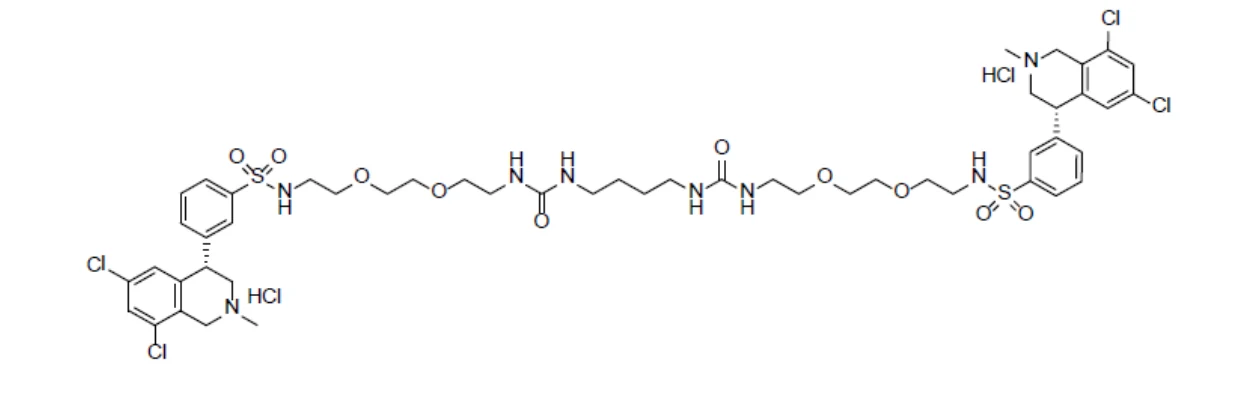
Physicochemical properties: Tenapanor is a white to off-white to light brown solid. It is a chiral molecule which contains 2 stereocenters, both of which are in the S configuration. Amorphous solid; Tg = 117°C; no known stable polymorphs. Has a high hygroscopicity. It is sparingly soluble in water, soluble in dilute hydrochloric acid, very slightly soluble in acetonitrile, sparingly soluble in ethanol and soluble in methanol.
14 CLINICAL TRIALS
14.1 Clinical Trials by Indication
Irritable Bowel Syndrome with Constipation (IBS-C)
Table 3 - Summary of Patient Demographics for Clinical Trials Supporting Efficacy of IBSRELA in the Treatment of IBS-Ca (Intention-to-Treat [ITT] Population)
| Study # | Study design | Dosage, route of administration and duration | Study subjects (n) | Mean age (Range) | Sex |
| TEN-01-301 | Phase 3, multicenter, randomized, double-blind, placebo-controlled | Tenapanor 50 mg tablets or matching placebo; administered BID* PO** immediately prior to first meal of the day and dinner, for 12 weeks | 606 patients | 45.0 years (18-75) | Males: 113 Females: 493 |
| TEN-01-302 | Phase 3, multicenter, randomized, double-blind, placebo-controlled | Tenapanor tablets 50 mg tablets or matching placebo; administered BID* PO** immediately prior to first meal of the day and dinner, for 26 weeks | 593 patients | 45.4 years (18-75) | Males: 106 Females: 487 |
* BID: twice daily
** PO: per os
a IBS-C: irritable bowel syndrome with constipation, defined by the Rome III Criteria for the Diagnosis of IBS
The efficacy of IBSRELA for the treatment of IBS-C was established in two double-blind, placebo-controlled, randomized, multicenter trials in adult patients (TEN-01-301 and TEN-01-302). A total of 606 patients in TEN-01-301 and 593 patients in TEN-01-302 in the ITT population were enrolled with a mean age of 45.7 years in the IBSRELA group and 45 years in the placebo group (range: 18 to 75 years). More than 80% of patients were females in both studies, the majority of patients were White (IBSRELA 66.1%, placebo 64.2%) or Black/African American (IBSRELA 28.5%, placebo 31.1%).
To enter the study, all patients who met Rome III criteria* for IBS-C were required to meet the following clinical criteria during the 2-week baseline run-in period:
- a mean abdominal pain score of at least 3 on a 0-to-10-point numeric rating scale where a score of 0 indicates no pain and 10 indicates very severe pain
- less than 3 complete spontaneous bowel movements (CSBMs) per week, where a CSBM is defined as a spontaneous bowel movement (SBM) that is associated with a sense of complete evacuation (an SBM is a bowel movement occurring in the absence of laxative use)
- less than or equal to 5 SBMs per week
*ROME III criteria. Diagnosis required recurrent abdominal pain or discomfort at least 3 days/months in the last 3 months with 2 or more of the following:
- Improvement with defecation;
- Onset associated with a change in frequency of stool;
- Onset associated with a change in form of stool.
The trial designs of TEN-01-301 and TEN-01-302 were identical through the first 12 weeks of treatment, and thereafter differed in that TEN-01-301 included a 4-week randomized withdrawal (RW) period, and TEN-01-302 continued for 14 additional weeks (total of 26 weeks) of double-blind treatment. During the trials, patients were allowed to continue stable doses of bulk laxatives or stool softeners but were not allowed to take osmotic laxatives, bismuth, prokinetic agents, or other drugs to treat IBS-C or chronic constipation. Bisacodyl (5 mg tablet or 10 mg suppository) was allowed as rescue medication for severe constipation.
Study Results
Efficacy of IBSRELA was assessed using responder analyses based on abdominal pain intensity and stool frequency responder (CSBM) endpoint and change-from-baseline endpoints. Efficacy was assessed using information provided by patients on a daily basis in eDiaries.
A responder was defined as a patient who met both the abdominal pain intensity and stool frequency responder criteria in the same week for at least 6 of the first 12 weeks of treatment. The abdominal pain and stool frequency responder criteria assessed each week were defined as:
- Abdominal pain responder: a patient who experienced a decrease of at least 30% from baseline in abdominal pain score.
- Stool frequency responder: a patient who experienced an increase of at least 1 CSBM from baseline.
The responder rates for the components of the responder endpoint (abdominal pain or CSBM) were pre-specified key secondary endpoints (Table 4).
Durability of efficacy response in TEN-01-301 and TEN-01-302 studies was based on pre-specified key secondary endpoints. For the 9 of 12 weeks (designated as “9/12 weeks”) overall responder endpoint (CSBM and abdominal pain), a patient was required to have at least a 30% reduction from baseline in mean abdominal pain score, an increase of at least 1 CSBM from baseline, and at least 3 CSBMs, all in the same week, for at least 9 of the first 12 weeks of treatment. The responder rates for the component of the responder endpoint (i.e., CSBM or abdominal pain) were also pre-specified key secondary endpoints.
In addition, durability of efficacy was also assessed for a longer period in TEN-01-302 based on a patient being a weekly responder for at least 13 out of the 26 weeks of treatment. For the 13 out of 26 weeks (designated as “13/26 weeks”) overall responder endpoint (CSBM and abdominal pain), a patient had to have at least 30% reduction from baseline in mean abdominal pain score and an increase of at least 1 CSBM from baseline, all in the same week, for at least 13 out of the 26 weeks of continued treatment. The responder rates for the components of the responder endpoint (i.e., abdominal pain or CSBM) were also pre-specified key secondary endpoints.
Table 4 – Efficacy Responder Rates in Placebo-Controlled Trials (TEN-01-301 and TEN-01-302) in Adults with IBS-C: Responder for at least 6 of the 12 weeks of treatment
| TEN-01-301 | ||||
|---|---|---|---|---|
| Responder Rates | IBSRELA 50 mg BIDa (N=307) | Placebo (N=299) | Treatment Difference [95% CIb] | CMH p-valued |
Responder* (Abdominal Pain and CSBMc Responder in the same week) | 27% | 19% | 8% [1.7%, 15.0%] | 0.020 |
Abdominal Pain Responder** (≥ 30% Abdominal Pain Reduction from Baseline) | 44% | 33% | 11% [3.2%, 18.6%] | 0.008 |
CSBMc Responder** (Increase ≥ 1 CSBM from Baseline) | 34% | 29% | 4% [-3.0%, 11.8%] | 0.270 |
| TEN-01-302 | ||||
| Responder Rates | IBSRELA 50 mg BID (N=293) | Placebo (N=300) | Treatment Difference [95% CI] | CMH p-valued |
Responder* (Abdominal Pain and CSBM Responder in the same week) | 37% | 24% | 13% [5.5%, 20.2%] | <0.001 |
Abdominal Pain Responder** (≥ 30% Abdominal Pain Reduction from Baseline) | 50% | 38% | 12% [3.6%, 19.4%] | 0.004 |
CSBMc Responder** (Increase ≥ 1 CSBM from Baseline) | 47% | 33% | 14% [6.3%, 21.9%] | <0.001 |
* Primary Endpoint
** Key Secondary Endpoint
a BID = twice daily
b CI- Confidence Interval
c CSBM = complete spontaneous bowel movement
d CMH p-value based on 1-degree of freedom test for association between treatment stratified by pooled investigator sites
In both clinical trials, the proportion of responders for the 9/12 weeks was greater in IBSRELA-treated patients compared to placebo-treated patients. In addition, in study TEN-01-302, the proportion of responders for the 13/26 weeks was greater in IBSRELA-treated patients compared to placebo-treated patients.
In both trials, improvements from baseline in average weekly CSBMs and abdominal pain were observed by Week 1.
In study TEN-01-301, IBSRELA-treated patients re-randomized to placebo demonstrated a worsening on average of CSBM frequency and abdominal pain severity over the 4-week period but remained improved compared to baseline. Patients who continued on IBSRELA maintained their response to therapy on average over the additional 4 weeks. Patients on placebo who were re-randomized to IBSRELA had an average increase in CSBM frequency and a decrease in abdominal pain.
15 MICROBIOLOGY
No microbiological information is required for this drug product.
16 NON-CLINICAL TOXICOLOGY
General Toxicology (Repeat-dose toxicity): Repeat-dose oral toxicology studies with tenapanor were conducted at doses up to 10 mg/kg/day in Sprague Dawley rats for 6 months, 200 mg/kg/day in CD-1 mice for 28 days and 1000 mg/kg/day in Beagle dogs for 9 months. Clinical signs and toxic effects in rats and mice increased in severity and incidence with dose level and duration of dosing and were reflective of gastrointestinal pharmacological action of tenapanor. Clinical signs in rodents included diarrhea, softening of feces and/or decreased defecation. Secondary effects of tenapanor in rodents included: decreased body weight, food consumption, and altered water consumption; changes in activity levels (mice); lower heart and spleen weights (mice); decreased goblet cell numbers sometimes accompanied by inflammatory infiltrates in the cecum, colon, and/or rectum; transient changes in red cell indices, white blood cells and serum protein, potassium, and phosphorus. At higher dose levels, the exaggerated pharmacology led to dehydration, marked changes in body weight, hemoconcentration, debilitation and death. In studies that included a non-dosing period following treatment, signs of recovery or reversibility were noted in surviving animals. The lowest NOAEL in rats was 3 and 10 mg/kg/day (0.29 and 0.97 times the maximum recommended human dose based on body surface area in males and females respectively) in a 6 month study and 50 mg/kg/day (2.4 times the maximum recommended human dose based on body surface area) in a one month study in CD-1 mice.
In dogs, tenapanor was generally well tolerated and clinical signs related to the expected pharmacology of tenapanor were limited to sporadic abnormal excreta at most dose levels. The NOAEL in all dog studies was 1000 mg/kg/day (>100 times the maximum recommended human dose based on body surface area) and was independent of study duration from 28 days to 9 months.
Carcinogenicity: The carcinogenic potential of tenapanor was assessed in a 6-month carcinogenicity study in TgrasH2 mice and in a 2-year carcinogenicity study in rats. Tenapanor was not tumorigenic at oral doses up to 100 mg/kg/day (approximately 4.5 times the recommended human dose, based on the body surface area) in male mice and 800 mg/kg/day (approximately 39 times the maximum recommended human dose, based on the body surface area) for female mice. Tenapanor was not tumorigenic in male and female rats at oral doses up to 5 mg/kg/day (approximately 0.5 times the recommended human dose, based on the body surface area). The major metabolite of tenapanor, M1, was not tumorigenic in TgrasH2 mice at oral doses up to 165 mg/kg/day (approximately 8 times the maximum recommended human dose, based on the body surface area).
Genotoxicity: IBSRELA was not mutagenic or clastogenic or genotoxic in the following tests with and without metabolic activation: in vitro bacterial reverse mutation (Ames) assays or in vitro chromosomal aberration assay in cultured human peripheral blood lymphocytes or in vivo micronucleus assays in mice and rats.
Reproductive and Developmental Toxicology: Tenapanor had no effect on fertility or reproductive function in male rats at oral doses up to 10 mg/kg/day (approximately 0.97 times the recommended human dose, based on the body surface area) and in female mice at oral doses up to 50 mg/kg/day (approximately 2.4 times the recommended human dose, based on the body surface area).
Juvenile Toxicity: In a 21-day oral dose-range finding toxicity study in juvenile rats, tenapanor was administered to neonatal rats (Post Natal Day (PND) 5) at doses of 5 and 10 mg/kg/day. Tenapanor was not tolerated in male and female pups and the study was terminated on PND 16 due to mortalities and decreased body weight (24% to 29% reduction in females at the respective dose groups and 33% reduction in males in the 10 mg/kg/day group, compared to control).
In a second dose-range finding study, tenapanor doses of 0.1, 0.5, 2.5, or 5 mg/kg/day were administered to neonatal rats from PND 5 through PND 24. Treatment-related mortalities were observed at 0.5, 2.5, and 5 mg/kg/day doses. These premature deaths were observed as early as PND 8, with majority of deaths occurring between PND 15 and 25. In the 5 mg/kg/day group, mean body weights were 47% lower for males on PND 23 and 35% lower for females on PND 22 when compared to the controls. Slightly lower mean tibial lengths (5% to 11%) were noted in males and females in the 0.5, 2.5, and 5 mg/kg/day dose groups on PND 25 and correlated with the decrements in body weight noted in these groups. Lower spleen, thymus, and/or ovarian weights were noted at the 0.5, 2.5 and 5 mg/kg/day doses. Tenapanor-related gastrointestinal distension and microscopic bone findings of increased osteoclasts, eroded bone, and/or decreased bone in sternum and/or femorotibial joint were noted in males and females in the 0.5, 2.5 and 5 mg/kg/day dose groups.
In an 8-week definitive juvenile toxicology study followed by a 4-week recovery period, tenapanor administered to juvenile rats from PND 5 through PND 61 at dose levels of 0.03, 0.1 and 0.3 mg/kg/day resulted in tenapanor-related deaths, reduced mean absolute body weights (up to 15.8% and 16.8% in males and females, respectively) and shortened mean tibial lengths (starting on PND 22 and 19 in males and females, respectively) in the 0.3 mg/kg/day dose group [See 1.1 Pediatrics, 2 CONTRAINDICATIONS, 7.1.3 Pediatrics, 4.2 Recommended Dose and Dosage Adjustment].
A 60-day juvenile toxicity study was performed to determine the tolerability of tenapanor when given via oral gavage to juvenile Crl:CD(SD) Sprague-Dawley rats on PND 21 through 80 at dose levels of 0.1, 0.3, 0.7 (male) and 1.0 (female) mg/kg/day. Persistence or progression of any effects following a 14-day recovery period were also evaluated. No tenapanor-related mortality occurred on study. Abnormal consistency of the feces, and reductions in body weight and food consumption were observed in male and female rats at doses above 0.1 mg/kg/day. In the male rats at 0.3 and 0.7 mg/kg/day, there were decreases in tibia length recorded during the in-life phase of the study and a reduction in urine pH at the end of the dose. Therefore, the no-observed adverse-effect level (NOAEL) was considered to be 0.1 mg/kg/day in both sexes.