


Product Monograph - Constella
RECENT MAJOR LABEL CHANGES
| 1 INDICATIONS, 1.1 Pediatrics | 09/2024 |
|---|---|
| 2 CONTRAINDICATIONS | 09/2024 |
| 3 SERIOUS WARNINGS AND PRECAUTIONS | 09/2024 |
| 4 DOSAGE AND ADMINISTRATION, 4.2 Recommended Dose and Dosage Adjustment | 09/2024 |
| 4 DOSAGE AND ADMINISTRATION, 4.4 Administration | 09/2024 |
| 7 WARNINGS AND PRECAUTIONS, Gastrointestinal | 09/2024 |
| 7 WARNINGS AND PRECAUTIONS, 7.1.3 Pediatrics | 09/2024 |
TABLE OF CONTENTS
Sections or subsections that are not applicable at the time of authorization are not listed.
RECENT MAJOR LABEL CHANGES ............................................................................................ 2
TABLE OF CONTENTS .............................................................................................................. 2
PART I: HEALTH PROFESSIONAL INFORMATION ...................................................................... 5
1 INDICATIONS ............................................................................................................... 5
1.1 Pediatrics .............................................................................................................. 5
1.2 Geriatrics .............................................................................................................. 5
2 CONTRAINDICATIONS ................................................................................................. 5
3 SERIOUS WARNINGS AND PRECAUTIONS BOX ............................................................ 6
4 DOSAGE AND ADMINISTRATION ................................................................................. 6
4.1 Dosing Considerations .......................................................................................... 6
4.2 Recommended Dose and Dosage Adjustment ..................................................... 6
4.4 Administration ...................................................................................................... 6
4.5 Missed Dose ......................................................................................................... 7
5 OVERDOSAGE .............................................................................................................. 8
6 DOSAGE FORMS, STRENGTHS, COMPOSITION AND PACKAGING ................................. 8
7 WARNINGS AND PRECAUTIONS .................................................................................. 8
7.1 Special Populations ............................................................................................... 9
7.1.1 Pregnant Women ............................................................................................. 9
7.1.2 Breast-feeding .................................................................................................. 9
7.1.3 Pediatrics .......................................................................................................... 9
7.1.4 Geriatrics .......................................................................................................... 9
8 ADVERSE REACTIONS ................................................................................................ 10
8.1 Adverse Reaction Overview ................................................................................ 10
8.2 Clinical Trial Adverse Reactions – Adults ............................................................ 10
8.2.1 Clinical Trial Adverse Reactions – Pediatrics ................................................... 13
8.3 Less Common Clinical Trial Adverse Reactions ................................................... 13
8.4 Abnormal Laboratory Findings: Hematologic, Clinical Chemistry and Other Quantitative Data ........................................................................................................... 14
8.5 Post-Market Adverse Reactions ......................................................................... 14
9 DRUG INTERACTIONS ................................................................................................ 14
9.2 Drug Interactions Overview ................................................................................ 14
9.3 Drug-Behavioural Interactions ............................................................................ 14
9.4 Drug-Drug Interactions ....................................................................................... 14
9.5 Drug-Food Interactions ....................................................................................... 15
9.6 Drug-Herb Interactions ....................................................................................... 15
9.7 Drug-Laboratory Test Interactions ...................................................................... 15
10 CLINICAL PHARMACOLOGY ....................................................................................... 15
10.1 Mechanism of Action .......................................................................................... 15
10.2 Pharmacodynamics ............................................................................................ 16
10.3 Pharmacokinetics ............................................................................................... 17
11 STORAGE, STABILITY AND DISPOSAL ......................................................................... 19
12 SPECIAL HANDLING INSTRUCTIONS ........................................................................... 19
PART II: SCIENTIFIC INFORMATION ....................................................................................... 20
13 PHARMACEUTICAL INFORMATION ............................................................................ 20
14 CLINICAL TRIALS ........................................................................................................ 21
14.1 Clinical Trials by Indication ................................................................................. 21
Irritable Bowel Syndrome with Constipation (IBS-C) in adults ........................................ 21
Chronic Idiopathic Constipation (CIC) in Adults .............................................................. 28
Functional Constipation (FC) in Pediatric Patients 6 to 17 Years of Age ......................... 35
15 MICROBIOLOGY ........................................................................................................ 36
16 NON-CLINICAL TOXICOLOGY ..................................................................................... 36
PATIENT MEDICATION INFORMATION .................................................................................. 39
PART I: HEALTH PROFESSIONAL INFORMATION
1 INDICATIONS
CONSTELLA (linaclotide capsules) is indicated for the treatment of:
- irritable bowel syndrome with constipation (IBS-C) in adults.
- chronic idiopathic constipation (CIC) in adults.
- functional constipation (FC) in pediatric patients 6 to 17 years of age.
1.1 Pediatrics
CONSTELLA is contraindicated in children under 6 years of age. See 2 CONTRAINDICATIONS, 3 SERIOUS WARNINGS AND PRECAUTIONS BOX, 7.1.3 Pediatrics and 16 NON-CLINICAL TOXICOLOGY.
Based on the data submitted and reviewed by Health Canada, the safety and efficacy of CONSTELLA for FC in pediatric patients 6 to 17 years of age have been established. The results are consistent across both the 6 to 11 years and 12 to 17 years age subgroups. See 7.1.3 Pediatrics, 8 ADVERSE REACTIONS and 14 CLINICAL TRIALS.
1.2 Geriatrics
Irritable Bowel Syndrome with Constipation: Of 1,605 IBS-C patients in the placebo-controlled clinical studies of CONSTELLA, 85 (5%) were at least 65 years of age, while 20 (1%) were at least 75 years old. Clinical studies of CONSTELLA did not include sufficient numbers of subjects aged 65 years and over to determine whether they respond differently from younger subjects.
Chronic Idiopathic Constipation: Of 2,498 CIC patients in the placebo-controlled clinical studies of CONSTELLA, 273 (11%) were at least 65 years of age, while 56 (2%) were at least 75 years old. Clinical studies of CONSTELLA did not include sufficient numbers of subjects aged 65 and over to determine whether they respond differently from younger subjects.
2 CONTRAINDICATIONS
CONSTELLA is contraindicated in:
- pediatric patients under 6 years of age due to the risk of serious dehydration. See 7.1.3 Pediatrics.
- patients who are hypersensitive to linaclotide or to any ingredient in the formulation or component of the container. For a complete listing see 6 DOSAGE FORMS, STRENGTHS, COMPOSITION AND PACKAGING.
- patients with known or suspected mechanical gastrointestinal obstruction.
3 SERIOUS WARNINGS AND PRECAUTIONS BOX
Serious Warnings and Precautions
CONSTELLA is contraindicated in children less than 6 years of age. In nonclinical studies in neonatal mice, administration of a single, clinically relevant oral dose of linaclotide caused deaths due to dehydration. See 2 CONTRAINDICATIONS, 7.1.3 Pediatrics, 16 NON-CLINICAL TOXICOLOGY. |
|---|
4 DOSAGE AND ADMINISTRATION
4.1 Dosing Considerations
Patients should be counselled that improvement of bowel symptoms should occur within the first week of CONSTELLA treatment, but improvement of abdominal symptoms may take longer (see 14 CLINICAL TRIALS). Physicians should periodically assess the need for continued treatment with CONSTELLA.
Patients on treatment who experience severe diarrhea should stop CONSTELLA and contact their physician (see 7 WARNINGS AND PRECAUTIONS).
Exceeding the daily dose of 145 mcg for the treatment of CIC is not expected to increase efficacy.
4.2 Recommended Dose and Dosage Adjustment
Irritable Bowel Syndrome with Constipation (IBS-C) in adults
The recommended dose of CONSTELLA is 290 mcg taken orally once daily on an empty stomach, at least 30 minutes before a meal. See 10.3 Pharmacokinetics.
Chronic Idiopathic Constipation (CIC) in adults
The recommended dose of CONSTELLA is 145 mcg taken orally once daily on an empty stomach, at least 30 minutes before a meal. See 10.3 Pharmacokinetics. A dose of 72 mcg may be used depending on individual clinical presentation or response to the starting dose.
Functional Constipation (FC) in pediatric patients 6 to 17 years of age
The recommended dose of CONSTELLA in pediatric patients 6 to 17 years is 72 mcg taken orally once daily on an empty stomach, at least 30 minutes before a meal. See 10.3 Pharmacokinetics.
Special Populations
No dose adjustments are required for patients with hepatic or renal impairment. See 10.3 Pharmacokinetics.
4.4 Administration
CONSTELLA capsules should be taken orally once daily on an empty stomach, at least 30 minutes before a meal. The capsules should be swallowed whole and should not be chewed. For patients who are unable to swallow the capsule whole, CONSTELLA capsules can be opened and administered orally in applesauce or with water or administered with water via a nasogastric or gastric tube. Sprinkling of CONSTELLA beads on other soft foods or in other liquids has not been tested.
For administration in applesauce:
- Place one teaspoonful of applesauce at room temperature into a clean container.
- Open the capsule.
- Sprinkle entire contents (beads) on applesauce.
- Consume the contents immediately. Do not chew the beads. Do not store the applesauce and beads for later use.
For administration in water:
- Pour approximately 30 mL of bottled water at room temperature into a clean cup.
- Open the capsule.
- Sprinkle entire contents (beads) into the water.
- Gently swirl beads and water for at least 20 seconds.
- Swallow the mixture of beads and water immediately.
- Add another 30 mL of water to any beads remaining in the cup, swirl for 20 seconds and swallow immediately.
- Do not store the bead-water mixture for future use.
Note: The drug is coated on the surface of the beads and will dissolve off the beads into the water. The beads will remain visible and will not dissolve. Therefore, it is not necessary to consume all of the beads to deliver the complete dose.
For nasogastric or gastric feeding tube administration in water:
- Open the capsule and empty the beads into a clean container with 30 mL of room temperature bottled water.
- Mix by gently swirling beads for at least 20 seconds.
- Draw up the bead-water mixture into an appropriately sized catheter-tipped syringe and apply rapid and steady pressure (10 mL/10 seconds) to dispense the syringe contents into the tube.
- Add another 30 mL of water to any beads remaining in the container and repeat the process.
- After administering the bead-water mixture, flush the nasogastric/gastric tube with a minimum of 10 mL of water.
- Use the mixture of beads and water immediately. Do not store for future use.
Note: It is not necessary to flush all of the beads through to deliver the complete dose.
A meal can be consumed 30 minutes after dosing of CONSTELLA.
4.5 Missed Dose
In the event that a dose is missed, the patient should skip that dose. Do not take two capsules to account for the missed dose. Wait until it is time for the next dose and then take the usual dose on an empty stomach.
5 OVERDOSAGE
There is limited experience with overdose of CONSTELLA. During the clinical development program of CONSTELLA, single doses of 2897 mcg were administered to 22 healthy volunteers; the safety profile in these subjects was consistent with that in the overall CONSTELLA-treated population, with diarrhea being the most commonly reported adverse reaction.
| For management of a suspected drug overdose, contact your regional poison control centre. |
|---|
6 DOSAGE FORMS, STRENGTHS, COMPOSITION AND PACKAGING
Table 1 – Dosage Forms, Strengths, Composition and Packaging
| Route of Administration | Dosage Form/ Strength/Composition | Non-medicinal Ingredients |
| Oral | Capsules 145 mcg, 290 mcg | calcium chloride dihydrate, gelatin, hypromellose, iron oxide black, iron oxide yellow, L-leucine, microcrystalline cellulose, shellac glaze and titanium dioxide |
Capsules 72 mcg | calcium chloride dihydrate, gelatin, iron oxide black, iron oxide yellow, L-histidine, microcrystalline cellulose, polyvinyl alcohol, shellac glaze, talc and titanium dioxide | |
CONSTELLA contains linaclotide-coated beads in hard gelatin capsules. CONSTELLA is available as 72, 145 or 290 mcg capsules for oral administration.
- 72 mcg Capsules: Each 72 mcg white to off-white, opaque, hard, gelatin capsule is imprinted with grey imprint “FL 72”. Available in bottles of 30 capsules.
- 145 mcg Capsules: Each 145 mcg white to off-white, opaque, hard, gelatin capsule is imprinted with a grey imprint “FL 145.” Available in bottles of 30 capsules.
- 290 mcg Capsules: Each 290 mcg white to off-white, opaque, hard, gelatin capsule is imprinted with a grey imprint “FL 290.” Available in bottles of 30 capsules.
7 WARNINGS AND PRECAUTIONS
Please see 3 SERIOUS WARNINGS AND PRECAUTIONS BOX.
Gastrointestinal
Diarrhea
In adults, diarrhea was the most common adverse reaction of CONSTELLA-treated patients in the pooled IBS-C and CIC double-blind placebo-controlled trials. The incidence of diarrhea was similar between IBS-C and CIC populations. The incidence of diarrhea was higher in linaclotide-treated patients than placebo-treated patients. See 8 ADVERSE REACTIONS. Severe diarrhea was reported in 2% of the 145 and 290 mcg CONSTELLA-treated patients, and in <1% of 72 mcg CONSTELLA-treated CIC patients.
Diarrhea has also been reported in pediatric patients 6 to 17 years of age with FC treated with linaclotide. In a double-blind placebo-controlled trial, diarrhea was the most common adverse reaction and was reported in 4% of pediatric patients 6 to 17 years of age treated with CONSTELLA 72 mcg once daily. Severe diarrhea was reported in one CONSTELLA-treated patient. See 8 ADVERSE REACTIONS.
Instruct patients to stop CONSTELLA if severe diarrhea occurs and to contact their healthcare provider, who should consider dose suspension. See 8 ADVERSE REACTIONS.
In post-marketing experience, severe diarrhea associated with dizziness, syncope, hypotension and electrolyte abnormalities (hypokalemia and hyponatremia) requiring hospitalization or intravenous fluid administration have been reported in patients treated with CONSTELLA.
7.1 Special Populations
7.1.1 Pregnant Women
There are no adequate and well-controlled studies with CONSTELLA in pregnant women. In animal developmental studies, adverse fetal effects were observed only with maternal toxicity and at doses of linaclotide much higher than the maximum recommended human dose. CONSTELLA should be used during pregnancy only if the potential benefit justifies the potential risk to the fetus. See Reproductive and Developmental Toxicology.
7.1.2 Breast-feeding
CONSTELLA is minimally absorbed following oral administration and neither linaclotide nor its active metabolite were detected in the milk of lactating women (see 10.3 Pharmacokinetics). Therefore breastfeeding is not expected to result in exposure of the infant to CONSTELLA. The effects of linaclotide or its metabolite on milk production in lactating women have not been studied.
7.1.3 Pediatrics
CONSTELLA is contraindicated in children under 6 years of age. In nonclinical studies, deaths occurred within 24 hours in neonatal mice (human age equivalent of approximately 0 to 28 days) following oral administration of linaclotide which increased fluid secretion as a consequence of age-dependent elevated GC-C agonism resulting in rapid and severe dehydration. See 2 CONTRAINDICATIONS , 3 SERIOUS WARNINGS AND PRECAUTIONS BOX, and 16 NON-CLINICAL TOXICOLOGY.
The safety and effectiveness of CONSTELLA for the treatment of FC in pediatric patients 6 to 17 years of age have been established. Use of CONSTELLA for this indication is supported by evidence from adequate and well-controlled studies in adult and pediatric patients 6 years of age and older. The safety of CONSTELLA in adult and pediatric patients 6 to 17 years of age was similar. See 8 ADVERSE REACTIONS and 14 CLINICAL TRIALS.
7.1.4 Geriatrics
Irritable Bowel Syndrome with Constipation: Of 1,605 IBS-C patients in the placebo-controlled clinical studies of CONSTELLA, 85 (5%) were at least 65 years of age, while 20 (1%) were at least 75 years old. Clinical studies of CONSTELLA did not include sufficient numbers of subjects aged 65 years and over to determine whether they respond differently from younger subjects.
Chronic Idiopathic Constipation: Of 2,498 CIC patients in the placebo-controlled clinical studies of CONSTELLA, 273 (11%) were at least 65 years of age, while 56 (2%) were at least 75 years old. Clinical studies of CONSTELLA did not include sufficient numbers of subjects aged 65 and over to determine whether they respond differently from younger subjects.
8 ADVERSE REACTIONS
8.1 Adverse Reaction Overview
The safety of CONSTELLA in irritable bowel syndrome with constipation (IBS-C) and chronic idiopathic constipation (CIC) was evaluated in 5,505 adult patients who were exposed to linaclotide in the Phase 2 and 3 clinical studies. Total exposure of IBS-C patients to linaclotide was 2,253 patient-years and total exposure of CIC patients to linaclotide was 1,636 patient-years.
Oral doses from 72 to 966 mcg once daily were evaluated. Approximately 2,570 patients were treated for 6 months or longer, 2,040 patients for 1 year or longer, and 1,220 patients for 18 months or longer (not mutually exclusive). CONSTELLA was generally well-tolerated, with most adverse events being mild to moderate in intensity.
The most commonly observed adverse reaction in both the CONSTELLA-treated IBS-C and CIC patients in placebo-controlled studies (incidence ≥ 5% and at least twice the rate of placebo) was diarrhea.
In placebo-controlled trials in patients with IBS-C 9.4% of patients treated with 290 mcg of CONSTELLA and 2.9% of patients treated with placebo discontinued prematurely due to adverse reactions. In the CONSTELLA treatment group, the most common reasons for discontinuation due to adverse reactions were diarrhea (5.3%) and abdominal pain (1.2%). In comparison, less than 1% of patients in the placebo group withdrew due to diarrhea or abdominal pain.
In placebo-controlled trials in patients with CIC, 2.9% of patients treated with 72 mcg and 6.3% of patients treated with 145 mcg of CONSTELLA discontinued prematurely due to adverse reactions compared with 2.4% of patients treated with placebo. In the CONSTELLA treatment groups, the most common reasons for discontinuation due to adverse reactions were diarrhea (2.4% with 72 mcg and 3.9% with 145 mcg) and abdominal pain (0 with 72 mcg and 0.7% with 145 mcg). In comparison, 0.2% and 0.4% of patients in the placebo group withdrew due to diarrhea and abdominal pain respectively.
In placebo-controlled trials in patients with IBS-C, a total of 0.7% of patients treated with 290 mcg of CONSTELLA and 1.1% of patients treated with placebo experienced at least 1 serious adverse event. There were no serious adverse events of diarrhea. Of the 7 serious adverse events that were reported in the CONSTELLA patients, 2 (pericarditis and pericardial effusion in 1 patient) were possibly related to treatment. Overall, serious adverse events were low and there was no obvious pattern in the types of serious adverse events experienced in either the placebo or CONSTELLA group.
In placebo-controlled trials in patients with CIC, 0.7% of patients treated with 72 mcg and 1.0% of patients treated with 145 mcg of CONSTELLA experienced at least 1 on-therapy serious adverse event compared with 1.7% of patients treated with placebo. There were no serious adverse events of diarrhea. Of the 12 serious adverse events that were reported in the CONSTELLA patients, 3 (colitis, bronchitis and atrial fibrillation in 1 patient each) were possibly related to treatment. Overall, serious adverse events were low and there was no obvious pattern in the types of serious adverse events experienced in either the placebo or CONSTELLA group.
8.2 Clinical Trial Adverse Reactions – Adults
Clinical trials are conducted under very specific conditions. The adverse reaction rates observed in the clinical trials; therefore, may not reflect the rates observed in practice and should not be compared to the rates in the clinical trials of another drug. Adverse reaction information from clinical trials may be useful in identifying and approximating rates of adverse drug reactions in real-world use.
Irritable Bowel Syndrome with Constipation (IBS-C) in Adults
Common Adverse Reactions
The data described below reflect exposure to CONSTELLA in the two double-blind, placebo-controlled clinical trials involving 1,605 adult patients with IBS-C. Patients were randomized to receive placebo or 290 mcg CONSTELLA once daily on an empty stomach, for up to 26 weeks. Demographic characteristics were comparable between the CONSTELLA treatment group and placebo (see 14 CLINICAL TRIALS).
Table 2 provides the incidence of adverse reactions reported in ≥ 1% of CONSTELLA-treated IBS-C patients and at an incidence that was greater than in placebo-treated patients in the Phase 3 placebo-controlled trials.
Table 2 - Adverse Reactions Occurring in ≥ 1% of CONSTELLA-Treated Patients and at an Incidence Greater than in Placebo-Treated Patients in Two Phase 3 Placebo-Controlled Trials in IBS-C
System Organ Class Preferred Term | CONSTELLA 290 mcg/day n=807 (%) | Placebo n=798 (%) | ||
| Gastrointestinal disorders | ||||
| Diarrhea | 19.8 | 3.0 | ||
| Abdominal pain | 5.1 | 3.3 | ||
| Flatulence | 4.3 | 1.9 | ||
| Abdominal distension | 2.2 | 1.1 | ||
| Vomiting | 1.7 | 1.3 | ||
| Gastroesophageal reflux disease | 1.2 | 0.9 | ||
| General disorders and administration site conditions | ||||
| Fatigue | 1.5 | 1.4 | ||
| Infectious disease | ||||
| Gastroenteritis viral | 2.6 | 1.4 | ||
Diarrhea
Diarrhea was the most commonly reported adverse reaction of the CONSTELLA-treated patients in the pooled IBS-C Phase 3 placebo-controlled trials. In these trials, 19.8% of CONSTELLA-treated patients reported diarrhea compared to 3.0% of placebo-treated patients. Severe diarrhea was reported in 2.0% of the CONSTELLA-treated patients versus less than 1% of the placebo-treated patients, and 5.3% of the CONSTELLA-treated patients discontinued due to diarrhea versus less than 1% of placebo-treated patients. The majority of reported cases of diarrhea started within the first 2 weeks of CONSTELLA treatment. See Gastrointestinal .
Chronic Idiopathic Constipation (CIC) in Adults
Common Adverse Reactions
The data described below reflect exposure to CONSTELLA in the two double-blind, placebo-controlled clinical trials involving 1,275 adult patients with CIC. Patients were randomized to receive placebo, 145 mcg CONSTELLA or 290 mcg CONSTELLA once daily on an empty stomach, for at least 12 weeks. Of these patients, 430 patients received CONSTELLA at the recommended dose of 145 mcg once daily, while 422 patients were treated with 290 mcg CONSTELLA once daily. Demographic characteristics were comparable between both CONSTELLA treatment groups and placebo (see 14 CLINICAL TRIALS).
Table 3 provides the incidence of adverse reactions reported in ≥ 1% of CONSTELLA-treated CIC patients in the 145 and 290 mcg CONSTELLA treatment groups and at an incidence that was greater than in placebo-treated patients in the Phase 3 placebo-controlled trials.
Table 3 - Adverse Reactions Occurring in ≥ 1% of All CONSTELLA-Treated Patients and at an Incidence Greater than in Placebo-Treated Patients in the Two Phase 3 Placebo-Controlled Trials in CIC
System Organ Class Preferred Term | CONSTELLA 145 mcg/day n=430 (%) | CONSTELLA 290 mcg/day n=422 (%) | CONSTELLA Both Doses n=852 (%) | Placebo n=423 (%) | ||||
| Gastrointestinal | ||||||||
| Diarrhea | 16.0 | 14.2 | 15.1 | 4.7 | ||||
| Flatulence | 5.6 | 5.0 | 5.3 | 5.2 | ||||
| Abdominal pain | 4.0 | 4.7 | 4.3 | 3.1 | ||||
| Nausea | 3.5 | 4.3 | 3.9 | 3.5 | ||||
| Abdominal distension | 3.5 | 3.6 | 3.5 | 2.4 | ||||
| Abdominal pain upper | 3.0 | 1.2 | 2.1 | 1.7 | ||||
| Dyspepsia | 1.9 | 0.7 | 1.3 | 0.7 | ||||
| Infections and infestations | ||||||||
| Gastroenteritis viral | 1.9 | 0.5 | 1.2 | 0.5 | ||||
| Nervous system disorders | ||||||||
| Dizziness | 0.9 | 1.4 | 1.2 | 0.5 | ||||
The safety of a 72 mcg dose was evaluated in a placebo-controlled trial in which 1223 patients were randomized to CONSTELLA 72 mcg, 145 mg or placebo once daily for 12 weeks (Trial 5). Demographic characteristics were comparable between both CONSTELLA treatment groups and Placebo. See 14 CLINICAL TRIALS.
Table 4 provides the incidence of adverse reactions reported in ≥ 1% of CONSTELLA-treated CIC patients in the 72 or 145 mcg CONSTELLA treatment groups and at an incidence that was greater than in placebo-treated patients in Trial 5.
Table 4 - Adverse Reactions Occurring in ≥ 1% of CONSTELLA-Treated Patients at Either Dose and at an Incidence Greater than in Placebo-Treated Patients in Trial 5
System Organ Class Preferred Term | CONSTELLA 72 mcg/day n=411 (%) | CONSTELLA 145 mcg/day n=411 (%) | Placebo n=401 (%) | |||
| Gastrointestinal | ||||||
| Diarrhea | 19.2 | 22.1 | 7.0 | |||
| Abdominal distension | 2.2 | 1.2 | 0.5 | |||
| Flatulence | 1.5 | 0.7 | 1.2 | |||
| Infections and infestations | ||||||
| Upper Respiratory Tract Infection | 1.5 | 1.5 | 1.2 | |||
| Sinusitis | 1.0 | 1.9 | 0.2 | |||
| Nasopharyngitis | 0.5 | 1.5 | 0.5 | |||
Diarrhea
Diarrhea was the most commonly reported adverse reaction of the CONSTELLA-treated patients in the pooled CIC Phase 3 placebo-controlled trials. Severe diarrhea was reported in less than 1% of the 72 mcg CONSTELLA-treated patients (Trial 5) and in 1.6% (Trials 3 and 4) and 2.4% (Trial 5) of 145 mcg CONSTELLA-treated patients versus less than 1% of the placebo-treated patients (Trials 3, 4, and 5). The majority of reported cases of diarrhea started within the first 2 weeks of CONSTELLA treatment. See Gastrointestinal.
8.2.1 Clinical Trial Adverse Reactions – Pediatrics
Functional Constipation (FC) in Pediatric Patients 6 to 17 years of age
The safety of CONSTELLA 72 mcg once daily was evaluated in pediatric patients 6 to 17 years of age with FC in a 12-week double-blind, placebo-controlled clinical trial (Trial 6). See 14 CLINICAL TRIALS, Pediatric Functional Constipation. There were 164 patients per treatment group.
Diarrhea was the most common adverse reaction and was reported in 4% of CONSTELLA-treated patients compared to 2% of placebo-treated patients. One patient in the CONSTELLA-treated group reported severe diarrhea, and subsequently discontinued treatment, versus no patients in the placebo-treated group. No other CONSTELLA- or placebo-treated patients discontinued due to diarrhea. Most reported cases of diarrhea started within the first 2 weeks of CONSTELLA treatment.
Other adverse reactions reported at a higher incidence in the CONSTELLA group than the placebo group included nausea (2 patients) and abdominal discomfort and dehydration (1 patient each).
8.3 Less Common Clinical Trial Adverse Reactions
IBS-C
Other adverse reactions that were reported in less than 1% of IBS-C patients are listed below by body system:
Gastrointestinal disorders: Abdominal discomfort, anal fissure, bowel movement irregularity, defecation urgency, eructation, fecal incontinence, feces discoloured, frequent bowel movements, gastrointestinal pain, gastrointestinal sounds abnormal, hemorrhoidal hemorrhage, rectal fissure, rectal tenesmus
Infections and infestations: Gastroenteritis
Investigations: Blood bicarbonate decreased
CIC
Other adverse reactions that were reported in less than 1% of CIC patients are listed below by body system:
Gastrointestinal disorders: Abdominal discomfort, anal fissure, anorectal discomfort, defecation urgency, fecal incontinence, feces discoloured, frequent bowel movements, gastroesophageal reflux disease, gastrointestinal pain, gastrointestinal sounds abnormal, hemorrhoids, mucous stools, proctalgia, rectal spasm
General disorders and administration site conditions: Fatigue
Investigations: Blood magnesium decreased, blood potassium decreased, blood pressure decreased
Metabolism and nutrition disorders: Dehydration, hyponatremia
Nervous system disorders: Presyncope, syncope
Renal and urinary disorders: Azotemia
Vascular disorders: Orthostatic hypotension
8.4 Abnormal Laboratory Findings: Hematologic, Clinical Chemistry and Other Quantitative Data
No clinically significant changes in laboratory findings were identified during clinical trials or post-market.
8.5 Post-Market Adverse Reactions
The following adverse reactions have been identified during post approval use of linaclotide. Because these reactions are reported voluntarily from a population of uncertain size, it is not always possible to reliably estimate their frequency or establish a causal relationship to drug exposure.
- Hypersensitivity reactions: Anaphylaxis, angioedema, rash (including hives or urticaria)
- Gastrointestinal reactions: Hematochezia, rectal hemorrhage.
9 DRUG INTERACTIONS
9.2 Drug Interactions Overview
Linaclotide and its active metabolite are not measurable in plasma following administration of the recommended clinical doses; hence, no systemic drug-drug interactions or drug interactions mediated by plasma protein binding of linaclotide or its metabolite are expected. See 10.3 Pharmacokinetics.
Linaclotide does not interact with the cytochrome P450 enzyme system based on the results of in vitro studies. In addition, linaclotide is neither a substrate nor an inhibitor of the efflux transporter P-glycoprotein (P-gp).
9.3 Drug-Behavioural Interactions
Drug-behavioural interactions have not been established.
9.4 Drug-Drug Interactions
No drug-drug interaction studies have been conducted with CONSTELLA.
9.5 Drug-Food Interactions
Taking CONSTELLA immediately after a high fat breakfast resulted in looser stools and a higher stool frequency compared with taking it in the fasted state, in healthy subjects; the effect in patients with IBS-C, CIC and FC has not been established. In clinical trials, CONSTELLA was administered on an empty stomach, at least 30 minutes before a meal. See 10.3 Pharmacokinetics.
9.6 Drug-Herb Interactions
Interactions with herbal products have not been established.
9.7 Drug-Laboratory Test Interactions
Interactions with laboratory tests have not been established.
10 CLINICAL PHARMACOLOGY
Irritable bowel syndrome (IBS) is a functional bowel disorder in which abdominal pain and discomfort are associated with altered defecation. The disorder has a spectrum ranging from mild to severe and is associated with deterioration in quality of life. The etiology and pathophysiology are poorly understood and appear to be multifactorial, resulting from a combination of visceral hypersensitivity, alteration in gastrointestinal (GI) motility, and psychosocial factors. Treatment of IBS is aimed at symptomatic relief of abdominal symptoms (i.e., abdominal pain, abdominal discomfort, and bloating), normalization of defecation, and improvement of quality of life.
Chronic idiopathic constipation (CIC) is a functional GI disorder. Patients with CIC report multiple bowel and abdominal symptoms including straining, gas, hard stools, abdominal discomfort, infrequent bowel movements, bloating, a sense of incomplete evacuation, and abdominal pain. Treatment of CIC is aimed at normalizing the frequency and consistency of bowel movements, as well as relieving the abdominal symptoms commonly associated with this condition.
Functional constipation (FC) is a functional GI disorder which may affect children of all ages. Symptoms suggestive of FC include infrequent bowel movements, hard or large diameter stools, painful defecation, straining, retentive posturing and fecal incontinence. Treatment of FC is aimed at normalizing the frequency and consistency of bowel movements.
10.1 Mechanism of Action
Linaclotide, a synthetic 14-amino acid peptide, is a potent and selective guanylate cyclase-C (GC-C) agonist with visceral analgesic and secretory activities. This first-in-class orally active peptide is structurally related to the guanylin peptide family, which is involved in the regulation of fluid homeostasis and bowel function of the GI tract. Both linaclotide and its active metabolite bind to GC-C and act locally on the luminal surface of the intestinal epithelium. Activation of GC-C results in an increase in both intracellular and extracellular concentrations of cyclic guanosine monophosphate (cGMP). Elevation in intracellular cGMP stimulates secretion of chloride and bicarbonate into the intestinal lumen, through activation of the cystic fibrosis transmembrane conductance regulator (CFTR) ion channel, resulting in increased intestinal fluid and accelerated transit. Linaclotide has been shown to both accelerate GI transit and reduce intestinal pain. The linaclotide-induced reduction in visceral pain is thought to be mediated by increased extracellular cGMP, which was shown to decrease the activity of pain-sensing nerves.
10.2 Pharmacodynamics
Although the pharmacologic effects of CONSTELLA in humans have not been fully evaluated, CONSTELLA has been shown, in clinical studies, to accelerate colonic transit, soften stools, and increase stool frequency.
Orally administered linaclotide acts on the luminal surface of the intestine. The pharmacodynamics of orally administered linaclotide was evaluated in healthy subjects and patients through bowel symptom assessments of stool, severity of straining associated with bowel movements, stool frequency, and stool weight. Because the form of the feces largely depends on the time spent in the colon (i.e., slower transit results in harder stool form), stool consistency is a surrogate for GI transit. Single (29 to 2897 mcg) and repeated once daily doses (29 to 966 mcg) of linaclotide softened stools and decreased straining with bowel movements in healthy subjects relative to placebo, with more profound effects noted following doses ≥ 290 mcg.
Oral administration of linaclotide (97 or 966 mcg) for five days to IBS-C patients, softened stools, increased stool frequency, improved ease of passage, and decreased time to first bowel movement, with a dose-dependent response for stool consistency. In addition to its effects on bowel movement parameters in these IBS-C patients, linaclotide was found to increase colonic transit using radiographic techniques.
Animal Pharmacology
In vitro pharmacodynamics
Several competitive binding studies were conducted using radiolabled pSTa (E. coli heat-stable enterotoxin derived from a porcine source) to confirm the molecular target of linaclotide and characterize its binding to guanylate cyclase-C (GC-C). Linaclotide and its active primary metabolite, MM-419447, each bound with similar high affinities to human colon carcinoma T84 cells, which are known to express high levels of GC-C. The binding was found to be pH-independent. Linaclotide bound to rat intestinal epithelial cells and brush-border membranes with high affinity, providing further evidence that linaclotide binds to GC-C. A study using intestinal mucosal membranes from wild-type (WT) and GC-C knock-out (KO) mice showed high affinity binding of linaclotide to GC-C in intestinal mucosal membranes from WT mice, but not those from GC-C KO mice, confirming that the GC-C is the molecular target of linaclotide.
Upon binding to GC-C, both linaclotide and its active metabolite stimulate the production of cGMP intracellularly, in a concentration-dependent manner, with similar minimal effective concentrations in human T84 cells. In human colonic adenocarcinoma (Caco-2) cell monolayers, linaclotide increased intracellular cGMP and induced both basolateral (submucosal) and apical (lumenal) cGMP efflux. This bidirectional cGMP efflux was inhibited by several known efflux transporter inhibitors, demonstrating that intracellular cGMP is actively transported out from intestinal epithelial cells.
In vivo pharmacodynamics
The pharmacological activities of linaclotide and MM-419447 have been characterized in a number of studies in rodent models of intestinal secretion, GI transit, and visceral pain. Linaclotide and MM-419447 stimulated a significant, dose-dependent increase in intestinal secretion in suckling mice with equal potency at a minimal effective dose of 2.5 mcg/kg. In adult mice and rats, using a loop-ligation assay, linaclotide stimulated a significant increase in intestinal fluid secretion, accompanied by a significant increase in luminal cGMP secretion. The effect of linaclotide on intestinal fluid and cGMP secretion is GC-C dependent since the effect was only observed in WT mice, but not in GC-C KO mice.
In mice, linaclotide at oral doses of 25 mcg/kg (single dose) and 60 mcg/kg, QD (5-day repeat dosing) significantly induced GI transit in WT mice, but not in GC-C KO mice. In Sprague-Dawley rats, both linaclotide at 6.25 mcg/kg, p.o. and MM-419447 at 12.5 mcg/kg, p.o. produced a significant increase in GI transit.
In addition to its effect on intestinal secretion and GI transit, linaclotide significantly reduced visceral hypersensitivity. In a model of trinitrobenzene sulfonic acid (TNBS)-induced visceral hypersensitivity in WT mice, linaclotide (0.01 mcg/kg, p.o.) reduced visceral hyperalgesia but had no effect in GC-C KO mice. In models of both inflammation- and stress-induced (i.e., partial restraint, water avoidance) visceral hyperalgesia in rats, linaclotide produced antinociceptive effects, without affecting the colonic tone. However, a clear dose-response relationship was not observed.
Safety pharmacology
Linaclotide tested at 10 and 100 µM concentrations exhibited negligible and not statistically significant inhibition (10 μM = 3.7% ± 2.0%; 100 μM = 0.9% ± 0.8%; vehicle = 0.7% ± 0.3%) of the human ether-a-go-go-related gene (hERG) channel current when tested in vitro in stably transfected human embryonic kidney (HEK) cells. In an in vivo safety pharmacology study, linaclotide did not produce any noticeable adverse respiratory or cardiovascular effects in dogs after administration of intravenous doses of up to 5 mg/kg.
10.3 Pharmacokinetics
Absorption: CONSTELLA is minimally absorbed with low systemic availability following oral administration. Concentrations of linaclotide and its active metabolite in plasma were below the limit of quantitation after oral doses of 72, 145, or 290 mcg were administered, regardless of participant gender, age, or race. Therefore, standard pharmacokinetic parameters such as area under the curve (AUC), maximum concentration (Cmax) and half-life (t1/2) cannot be calculated.
Distribution: Given that linaclotide plasma concentrations following therapeutic oral doses are not measurable, linaclotide is expected to be minimally distributed to tissues.
Metabolism: Linaclotide is metabolized within the gastrointestinal tract to its principal, active metabolite by loss of the terminal tyrosine moiety. Both linaclotide and the metabolite are proteolytically degraded within the intestinal lumen to smaller peptides and naturally occurring amino acids.
Elimination: Active peptide recovery in the stool samples of fasted and fed subjects following the daily administration of 290 mcg of linaclotide for seven days averaged ~5% (fasted) and ~3% (fed) and virtually all as the active metabolite. These results demonstrate that despite the early rapid metabolism and degradation of linaclotide and MM-419447 in the proximal small intestine, some active peptide is available to interact with GC-C throughout the entire intestinal tract, including the colon.
Food Effect: In a cross-over study, 18 healthy subjects were administered CONSTELLA 290 mcg for 7 days both in the non-fed and fed state. Neither linaclotide nor its active metabolite was detected in the plasma. Taking CONSTELLA immediately after the high fat breakfast resulted in looser stools and a higher stool frequency compared with taking it in the fasted state. In clinical trials, CONSTELLA was administered on an empty stomach, at least 30 minutes before a meal.
No clinical studies assessing drug-drug interactions were conducted. Linaclotide has a low permeability coefficient in Caco-2 cells and is not a substrate, inhibitor, or inducer of cytochrome P450 enzymes. At clinically relevant concentrations, linaclotide is not a substrate for P-glycoprotein (P-gp) and does not inhibit common efflux and uptake transporters, including P-gp. The observed minimal systemic exposure to linaclotide and MM-419447 following oral administration of linaclotide, the extensive metabolism of both peptides within the GI tract, and the lack of interaction with common drug-transporting and drug-metabolizing enzymes have led to the conclusion that linaclotide is unlikely to interact with concomitantly administered medications.
Animal pharmacokinetics
Following oral dosing, linaclotide is minimally absorbed in all studied species, including mice, rats, and monkeys, with a low absolute oral bioavailability (≤ 0.2%).
While the predominant mechanism of clearance of orally administered linaclotide and its active primary metabolite is through proteolytic degradation in the lumen of the intestine, fecal recovery studies in rats have shown that a small amount of active peptide (≤ 1%), predominately in the form of the active metabolite, is excreted in the feces. These results also demonstrate that despite early rapid metabolism and degradation of linaclotide and MM-419447 in the proximal small intestine, some active peptide is available to interact with GC-C throughout the entire intestinal tract, including the colon.
Although very little active peptide is absorbed into systemic circulation after oral administration, when given intravenously in rats, both linaclotide and MM-419447 are rapidly cleared by at least two pathways. The kidney is a major clearance organ for systemically circulating linaclotide and MM-419447, and studies have indicated the presence of additional, non-renal pathways of clearance, including biliary clearance.
Special Populations and Conditions
- Pediatrics: Clinical studies to determine the impact of age on the clinical pharmacokinetics of linaclotide have not been conducted as linaclotide is rarely detectable in plasma. Similar to adult data, the plasma concentrations of linaclotide and its active metabolite MM-419447 were below the limit of quantitation (< 0.1 ng/mL) in most of the pediatric participants, with the exception of 4 participants in the 6 to 11 years of age group, in the Phase 2 study with pediatric patients aged 6 to 17 years. Thus, no PK parameters were calculated. CONSTELLA is contraindicated in children under 6 years of age (see 2 CONTRAINDICATIONS, 3 SERIOUS WARNINGS AND PRECAUTIONS BOX and Juvenile Toxicity).
- Geriatrics: Clinical studies to determine the impact of age on the pharmacokinetics of CONSTELLA have not been conducted (see 7.1.4 Geriatrics) for information regarding patients aged 65 years and older.
Breast-feeding: A pharmacokinetic study assessed the amount of linaclotide and its active metabolite in breast milk following multiple, once daily doses of oral linaclotide (72, 145, or 290 μg) in seven lactating women receiving the drug therapeutically. The concentrations of linaclotide and its metabolite in breast milk were below the limits of quantitation (LoQ) (<0.25 ng/mL and <1.00 ng/mL, respectively) in all samples during the dosing interval. Therefore, breastfeeding is not expected to result in exposure of linaclotide or its metabolite to the breastfed child.
There is no information on the effects of linaclotide or its active metabolite on milk production (see 7.1.2 Breastfeeding). The developmental and health benefits of breastfeeding should be considered along with the mother’s clinical need for CONSTELLA and any potential adverse effects on the breastfed infant from CONSTELLA or from the underlying maternal condition.
- Sex: Clinical studies to determine the impact of gender on the pharmacokinetics of CONSTELLA have not been conducted. Gender is not expected to affect the pharmacokinetics of CONSTELLA.
- Hepatic Insufficiency: CONSTELLA has not been specifically studied in patients who have hepatic impairment. Hepatic impairment is not expected to affect the metabolism or clearance of the parent drug or its metabolite because linaclotide has low systemic availability following oral administration and is metabolized within the gastrointestinal tract.
- Renal Insufficiency: CONSTELLA has not been specifically studied in patients who have renal impairment. Renal impairment is not expected to affect clearance of the parent drug or its metabolite because linaclotide has low systemic availability following oral administration and is metabolized within the gastrointestinal tract.
11 STORAGE, STABILITY AND DISPOSAL
Store at room temperature (15 to 25°C).
Keep CONSTELLA in the original container. Do not subdivide or repackage. Protect from moisture. Do not remove desiccant from the container. Keep bottles tightly closed in a dry place.
12 SPECIAL HANDLING INSTRUCTIONS
There are no special handling instructions.
PART II: SCIENTIFIC INFORMATION
13 PHARMACEUTICAL INFORMATION
Drug Substance
Proper name: Linaclotide
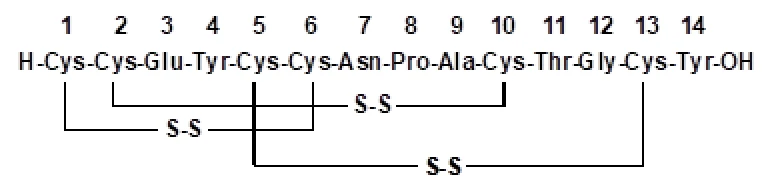
Chemical name: L-cysteinyl-L-cysteinyl-L-glutamyl-L-tyrosyl-L-cysteinyl-L-cysteinyl-L-asparaginyl-L-prolyl-L-alanyl-L-cysteinyl-L-threonyl-glycyl-L-cysteinyl-L-tyrosine, cyclic (1-6), (2-10), (5-13)-tris (disulfide)
Molecular formula and molecular mass: C59H79N15O21S6 1526.8
Structural formula: Linaclotide is a 14-amino acid peptide with the following sequence:
Physicochemical properties: Linaclotide is an amorphous, white to off-white powder. It is slightly soluble in water and aqueous sodium chloride (0.9%).
14 CLINICAL TRIALS
14.1 Clinical Trials by Indication
Irritable Bowel Syndrome with Constipation (IBS-C) in adults
Table 5- Summary of Patient Demographics for Clinical Trials Supporting Efficacy of CONSTELLA in the Treatment of IBS-C (Intention-to-Treat [ITT] Population)
| Trial # | Trial Design/Duration | Oral Dosage | Study Subjects (N) [Female/Male (F/M)] | Mean Age (Range) | Mean Baseline Characteristics | |||
|---|---|---|---|---|---|---|---|---|
| 1 | 12-week, randomized, multicenter, double-blind, placebo-controlled, Plus 4-week randomized withdrawal (RW) period | CONSTELLA 290 mcg, once daily | N=800 [F=724; M=76] | 43.5 (18-84) | CSBMs/week: 0.2 (0.0-2.9) Abdominal paina (min, max): 5.6 (2.8-10) | |||
| 2 | 26-week, randomized, multicenter, double-blind, placebo-controlled | CONSTELLA 290 mcg, once daily | N=804 [F=720; M=84] | 44.3 (18-87) | CSBMs/week: 0.2 (0.0-2.9) Abdominal paina (min, max): 5.6 (2.9-10) | |||
a Abdominal pain score based on 11-point numerical rating scale (NRS) (0=none, 10=very severe) CSBM=Complete Spontaneous Bowel Movement | ||||||||
The efficacy of CONSTELLA for the treatment of IBS-C was established in two double-blind, placebo-controlled, randomized, multicenter trials in adult patients (Trials 1 and 2). A total of 800 patients in Trial 1 and 804 patients in Trial 2 received treatment with CONSTELLA 290 mcg or placebo once daily, and were evaluated for efficacy. A summary of trial designs and patient demographics is presented in Error! Reference source not found. above. In the two pivotal trials, 77% of patients were White, 19% were Black, and 12% were Hispanic.
All patients met Rome II criteria for IBS and were required, during the 2-week baseline period, to meet the following criteria:
- a mean abdominal pain score of at least 3 on a 0-to-10-point numeric rating scale,
- less than 3 complete spontaneous bowel movements (CSBMs) per week [a CSBM is a spontaneous bowel movement (SBM) that is associated with a sense of complete evacuation; a SBM is a bowel movement occurring in the absence of laxative use], and
- less than or equal to 5 SBMs per week.
The trial designs were identical through the first 12 weeks, and thereafter differed only in that Trial 1 included a 4-week randomized withdrawal (RW) period, and Trial 2 continued for 14 additional weeks (total of 26 weeks) of double-blind treatment. During the trials, patients were allowed to continue stable doses of bulk laxatives or stool softeners but were not allowed to take bismuth, prokinetic agents, or other drugs to treat IBS-C including laxatives (except for bisacodyl, the protocol-specified rescue medication).
Study Results
Trials 1 and 2
Efficacy of CONSTELLA was assessed using overall responder analyses (primary endpoints) and change-from-baseline analyses (secondary endpoints). Results for endpoints were based on information provided daily by patients in electronic diaries, via an interactive voice response system.
Primary Endpoints
The 4 primary efficacy responder endpoints were based on a patient being a weekly responder for either at least 9 out of the first 12 weeks of treatment or at least 6 out of the first 12 weeks of treatment. For the 9 out of 12 weeks combined primary responder endpoint, a patient had to have at least a 30% reduction from baseline in mean abdominal pain, at least 3 CSBMs and an increase of at least 1 CSBM from baseline, all in the same week, for at least 9 out of the first 12 weeks of treatment. Each of the 2 components of the 9 out of 12 weeks combined responder endpoint, abdominal pain and CSBMs, was also a primary endpoint.
For the 6 out of 12 weeks combined primary responder endpoint, a patient had to have at least a 30% reduction from baseline in mean abdominal pain and an increase of at least 1 CSBM from baseline, all in the same week, for at least 6 out of the first 12 weeks of treatment. To be considered a responder for this analysis, patients did not have to have at least 3 CSBMs per week.
In the two pivotal trials (Trials 1 and 2) CONSTELLA demonstrated statistically superior benefits, for the primary endpoint, compared to placebo in the treatment of IBS-C. In both trials, the proportion of patients who were responders to CONSTELLA 290 mcg was statistically significantly higher than with placebo. The primary efficacy results are shown in Error! Reference source not found. below.
Table 6 - Primary Efficacy of CONSTELLA in IBS-C (ITT Population)
| Primary Responder Endpoints | Trial 1 | Trial 2 | ||||||||||||
|---|---|---|---|---|---|---|---|---|---|---|---|---|---|---|
CONSTELLA 290 mcg (N=405) | Placebo (N=395) | Treatment Difference [95% CI] | CONSTELLA 290 mcg (N=401) | Placebo (N=403) | Treatment Difference [95% CI] | |||||||||
9/12 Week Combined Responder (Abdominal Pain and CSBM Responder) | 12.1%b | 5.1% | 7.0% [3.2%, 10.9%] | 12.7c | 3.0% | 9.7% [6.1%, 13.4%] | ||||||||
CSBM Responder (≥ 3 CSBMs and Increase ≥ 1 CSBM from Baseline) | 19.5c | 6.3% | 13.2% [8.6%, 17.7%] | 18.0c | 5.0% | 13.0% [8.7%, 17.3%] | ||||||||
| Abdominal Pain Responder (≥ 30% Reduction) | 34.3%a | 27.1% | 7.2% [0.9%, 13.6%] | 38.9%c | 19.6% | 19.3% [13.2%, 25.4%] | ||||||||
| 6/12 Week Combined Responder (Abdominal Pain and CSBM Responder) | 33.6%c | 21.0% | 12.6% [6.5%, 18.7%] | 33.7%c | 13.9% | 19.8% [14.0%, 25.5%] | ||||||||
a p≤0.05, b p<0.001, c p<0.0001 Note: Analyses based on first 12 weeks of treatment for both Trials 1 and 2 CI = Confidence Interval, CSBM=Complete Spontaneous Bowel Movement | ||||||||||||||
Secondary Endpoints
The secondary efficacy endpoints consisted of both responder and change from baseline assessments. The responder endpoints were based on a patient being a CSBM weekly responder or an abdominal pain responder for at least 6 out of the first 12 weeks of treatment. For the 6 out of 12 weeks CSBM responder endpoint, a patient had to have an increase of at least 1 CSBM from baseline for at least 6 out of the first 12 weeks of treatment. For the abdominal pain responder, a patient had to have at least a 30% reduction from baseline in mean abdominal pain.
The change from baseline secondary endpoints were the change from baseline in 12-week CSBM and SBM frequency rate, stool consistency, severity of straining, abdominal pain at its worst, abdominal discomfort, bloating and percent of abdominal pain-free days.
In Trial 1 and 2, for the 6/12 week CSBM and abdominal pain endpoints, statistically significantly more patients receiving CONSTELLA 290 mcg were responders versus placebo (Error! Reference source not found.).
Table 7 - Secondary Efficacy of CONSTELLA in IBS-C (6/12 Week Responder Endpoints, ITT Population)
| Secondary Responder Endpoints | Trial 1 | Trial 2 | ||||||||||||
|---|---|---|---|---|---|---|---|---|---|---|---|---|---|---|
CONSTELLA 290 mcg (N=405) | Placebo (N=395) | Treatment Difference (%) [95% CI] | CONSTELLA 290 mcg (N=401) | Placebo (N=403) | Treatment Difference (%) [95% CI] | |||||||||
| CSBM Responder (Increase ≥ 1 CSBM from Baseline) | 48.6%c | 29.6% | 19.0% [12.4%, 25.7%] | 47.6%c | 22.6% | 25.1% [18.7%, 31.4%] | ||||||||
| Abdominal Pain Responder (≥ 30% Abdominal Pain Reduction) | 50.1%b | 37.5% | 12.7% [5.8%, 19.5%] | 48.9%c | 34.5% | 14.4% [7.6%, 21.1%] | ||||||||
a p≤0.05, b p<0.001, c p<0.0001 Note: Analyses based on first 12 weeks of treatment for Both Trials 1 and 2 CI=Confidence Interval, CSBM=Complete Spontaneous Bowel Movement | ||||||||||||||
For change-from-baseline endpoints, patients who received CONSTELLA 290 mcg across the 2 trials demonstrated statistically significantly greater improvements compared with patients receiving placebo in both abdominal symptoms (pain, discomfort and bloating) and bowel symptoms (straining, stool frequency and consistency) (Error! Reference source not found.). In a pooled analysis of Trials 1 and 2, 67% of CONSTELLA -treated patients had an SBM within 24 hours of taking their first dose versus 42% of placebo patients (p < 0.0001).
Table 8- Secondary Efficacy of CONSTELLA in IBS-C (Mean Change from Baseline, ITT Population)
| Trial 1 | Trial 2 | |||||||||||||
|---|---|---|---|---|---|---|---|---|---|---|---|---|---|---|
| 12-week Parameter | CONSTELLA 290 mcg (N=405) | Placebo (N=395) | LSMD [95% CI] | CONSTELLA 290 mcg (N=401) | Placebo (N=403) | LSMD [95% CI] | ||||||||
| CSBMs/Week | 2.3c | 0.7 | 1.6 (1.2, 1.9) | 2.2c | 0.7 | 1.5 (1.2, 1.9) | ||||||||
| SBMs/Week | 3.9c | 1.1 | 2.8 (2.3, 3.2) | 4.0c | 1.3 | 2.7 (2.3, 3.2) | ||||||||
| Stool Consistency (BSFS Score) | 2.1c | 0.7 | 1.4 (1.3, 1.6) | 1.9c | 0.6 | 1.3 (1.1, 1.5) | ||||||||
| Straining (5-point Ordinal scale) | -1.3%c | -0.7 | -0.7 (-0.8, -0.5) | -1.2c | -0.7 | -0.6 (-0.7, -0.5) | ||||||||
| Abdominal Pain at its Worst (11-point NRS) | -1.9c | -1.1 | -0.7 (-1.0, -0.5) | -1.9c | -1.1 | -0.8 (-1.0, -0.5) | ||||||||
| Abdominal Discomfort (11-point NRS) | -2.0c | -1.2 | -0.7 (-1.0, -0.5) | -1.9c | -1.1 | -0.8 (-1.1, -0.6) | ||||||||
| Bloating (11-point NRS) | -1.9c | -1.1 | -0.8 (-1.1, -0.6) | -1.9c | -1.0 | -0.9 (-1.1, -0.6) | ||||||||
| Trial 1 | Trial 2 | ||||||||||
|---|---|---|---|---|---|---|---|---|---|---|---|
| 12-week Parameter | CONSTELLA 290 mcg (N=405) | Placebo (N=395) | LSMD [95% CI] | CONSTELLA 290 mcg (N=401) | Placebo (N=403) | LSMD [95% CI] | |||||
| Percent of Abdominal Pain-free Days | 9.8a | 5.3 | 4.5 (1.9, 7.2) | 10.5b | 4.8 | 5.7 (2.9, 8.5) | |||||
a p≤0.05, b p<0.001, c p<0.0001 Note: Analyses based on first 12 weeks of treatment for both Trials 1 and 2 BSFS=Bristol Stool Form Scale, CI=Confidence Interval, CSBM=Complete Spontaneous Bowel Movement, LSMD=Least Squares Mean Difference, SBM=Spontaneous Bowel Movement, NRS=Numerical Rating Scale | |||||||||||
In each trial, improvement from baseline in abdominal pain and CSBM frequency was seen over the first 12-weeks of the treatment periods. For change from baseline in the 11-point abdominal pain scale, CONSTELLA 290 mcg began to separate from placebo in the first week. Maximum effects were seen at Weeks 6 - 9 and were maintained until the end of the study. The mean treatment difference from placebo at Week 12 was a decrease in pain score of approximately 1.0 point in both trials (using an 11-point scale).
The maximum effect on CSBM frequency occurred within the first week. For the change from baseline in CSBM frequency at Week 12, the difference between placebo and CONSTELLA was approximately 1.5 CSBMs per week in both trials.
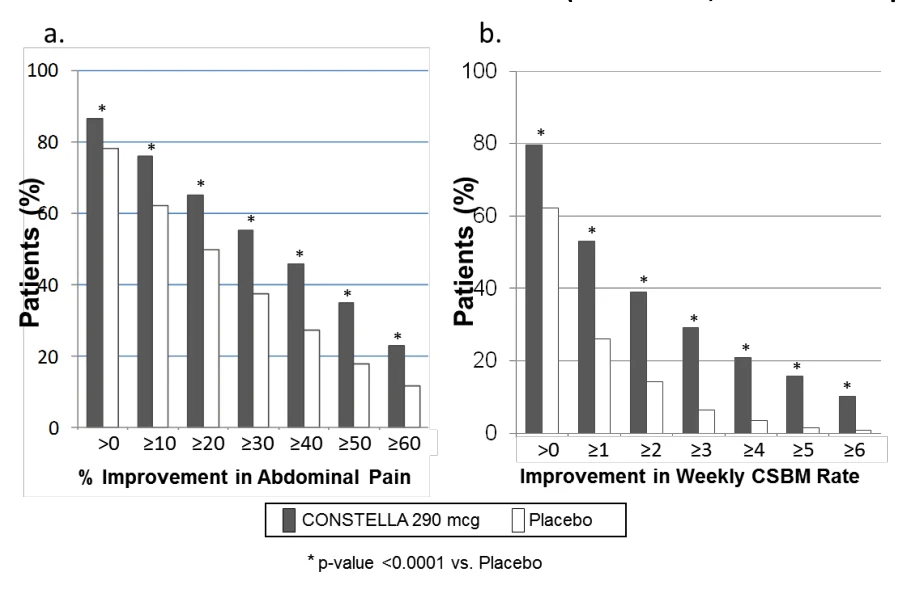
The proportions of patients who met response criteria of increasing levels of symptom improvement compared to baseline over 12 weeks of treatment were analyzed for both abdominal pain and CSBMs. At each level, a statistically significantly greater proportion of patients treated with CONSTELLA 290 mcg met the response criterion compared to placebo patients (Figure 1).
Figure 1 - Percentage of Patients with Specified Improvements in (a) Abdominal Pain and (b) CSBMs over the First 12 Weeks of Treatment in IBS-C (Trials 1 & 2, Pooled ITT Population)
CSBM=Complete Spontaneous Bowel Movement
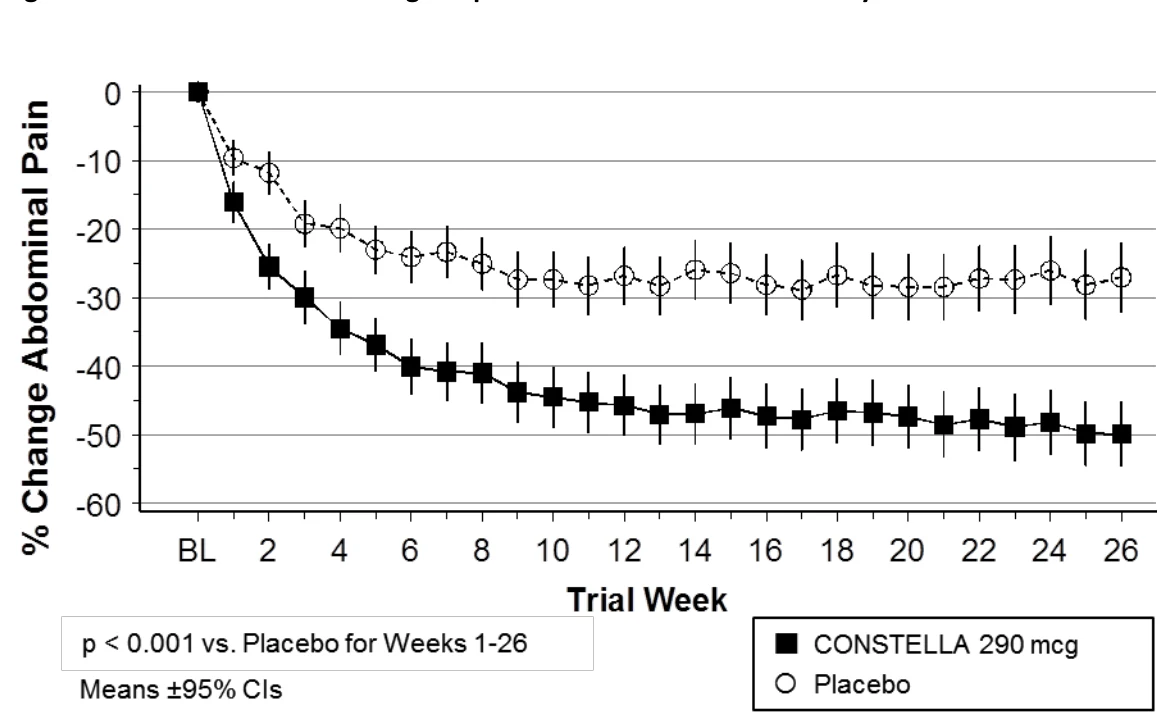
Figure 2 presents results for improvement in abdominal pain (% change from baseline) for each of the 26 weeks of treatment in Trial 2. CONSTELLA 290 mcg demonstrated a statistically significant separation from placebo that was present at the first week and sustained across the 26 weeks of the treatment period (p < 0.001 at all time-points during the treatment period). Similar results for improvement in CSBM frequency were demonstrated throughout the 26-week treatment period. Maximum effect on CSBM frequency occurred by Week 1, but the effect on abdominal pain continued to increase over the first 6 to 8 weeks.
Figure 2 - Trial 2 - Mean Percentage Improvement in Abdominal Pain by Week over 26 Weeks in IBS-C
CI=Confidence Interval
During the 4-week randomized withdrawal period in Trial 1, patients who received CONSTELLA during the 12-week treatment period were re-randomized to receive placebo or continue treatment on CONSTELLA 290 mcg. In CONSTELLA-treated patients re-randomized to placebo, CSBM frequency and abdominal-pain severity returned toward baseline within 1 week with no evidence of rebound worsening compared to baseline. Patients who continued on CONSTELLA maintained their response to therapy over the additional 4 weeks. Patients on placebo who were allocated to CONSTELLA had an increase in CSBM frequency and abdominal pain levels that were similar to the levels observed in patients taking CONSTELLA during the treatment period.
Quality of Life Assessment
The Irritable Bowel Syndrome-Quality of Life (IBS-QOL) instrument was utilized in the Phase 3 pivotal trials to assess the impact of IBS on a patient’s quality of life. The IBS-QOL evaluated 8 dimensions: dysphoria, interference with activity, body image, health worry, food avoidance, social reaction, sexual, and relationships on a 0 to 100 point scale. A pooled analysis of the IBS-QOL data at Week 12 demonstrated that a higher proportion of patients receiving CONSTELLA 290 mcg were responders versus placebo for the overall score and the 8 subscale scores (all p<0.05). Error! Reference source not found. provides an overview of the IBS-QOL responder data from Trials 1 and 2.
Table 9 - Quality of Life Results for CONSTELLA in IBS-C (Responder Analyses, Pooled ITT Population)
| IBS-QOL Parameter | CONSTELLA 290 mcg N=805 | Placebo N=797 | CONSTELLA 290 mcg N=805 | Placebo N=797 | ||||
|---|---|---|---|---|---|---|---|---|
| % of Patients with ≥10 point improvement | % of patients with ≥14 point improvement | |||||||
| IBS-QOL Overall Score | 64.3%d |
| 53.8%d | 39.0% | ||||
| Dysphoria | 62.0%b | 53.6% | 56.2%d | 45.7% | ||||
| Body Image |
| 59.5% | 62.1%d | 43.2% | ||||
| Health Worry | 67.6%d | 56.1% | 67.6%d | 56.1% | ||||
| Food Avoidance | 57.4%d | 46.6% | 57.4%d | 46.6% | ||||
| Social Reaction | 52.5%b |
| 42.4%c | 32.9% | ||||
| Sexual | 54.2%c | 44.4% | 37.9%d | 26.9% | ||||
| Relationships | 41.6%b | 34.7% | 41.6%b | 34.7% | ||||
| Interference with Activity | 54.7%a | 48.5% | 47.5%b | 39.0% | ||||
a p<0.05, b p <0.01, c p <0.001, d p<0.0001(vs. placebo, CMH test) IBS-QOL=Irritable Bowel Syndrome-Quality of Life | ||||||||
Chronic Idiopathic Constipation (CIC) in Adults
Table 10 - Summary of Patient Demographics for Clinical Trials Supporting Efficacy of CONSTELLA in the Treatment of CIC (ITT Population)
| Trial # | Trial Design/Duration | Oral Dosage | Study Subjects (N) [Female/Male (F/M)] | Mean Age (Range) | Mean Baseline Characteristics |
|---|---|---|---|---|---|
| 3 | 12-week, randomized, multicenter, double-blind, placebo-controlled, parallel-group Plus 4-week randomized withdrawal (RW) period | CONSTELLA 145 or 290 mcg once daily | N=642 [F=561; M=81] | 48.0 (18-85) | CSBMs/week: 0.3 (0.0-2.9) |
| 4 | 12-week, randomized, multicenter, double-blind, placebo-controlled, parallel-group | CONSTELLA 145 or 290 mcg once daily | N=630 [F=570; M=60] | 47.6 (20-83) | CSBMs/week: 0.3 (0.0-2.4) |
| 5 | 12-week, randomized, multicenter, double-blind, placebo-controlled, parallel-group | CONSTELLA 72 or 145 mcg once daily | N = 1223 [F = 942; M = 281] | 46.0 (18 – 90) | CSBMs/week 0.2 (0.0 – 2.9) |
CSBM=Complete Spontaneous Bowel Movement
The efficacy of CONSTELLA for the treatment of CIC was established in two double-blind, placebo-controlled, randomized, multicenter trials in adult patients (Trials 3 and 4). A total of 642 patients in Trial 3 and 630 patients in Trial 4 received treatment with the recommended 145 mcg dose of CONSTELLA, the 290 mcg dose of CONSTELLA, or placebo once daily, and were evaluated for efficacy. A summary of trial designs and patient demographics is presented in Table 10 - Summary of Patient Demographics for Clinical Trials Supporting Efficacy of CONSTELLA in the Treatment of CIC (ITT Population)Table 10. In the two pivotal trials, 76% of patients were White, 22% were Black, and 10% were Hispanic.
The efficacy of the 72 mcg dose (Trial 5) was established by using a 12-week CSBM Overall Responder endpoint that was the same as in Trials 3 and 4. A total of 1223 patients [overall mean age of 46 years (range 18 to 90 years), 71% White, 24% Black, 43% Hispanic] received treatment with CONSTELLA 72, 145 mcg, or placebo once daily, and were evaluated for efficacy.
All patients met modified Rome II criteria (Trials 3 and 4) or Rome III criteria (Trial 5) for functional constipation. Modified Rome II criteria were less than 3 spontaneous bowel movements (SBMs) per week and 1 of the following symptoms for at least 12 weeks, which need not be consecutive, in the preceding 12 months (Rome II) or with onset at least 6 months before diagnosis (Rome III):
- Straining during greater than 25% of bowel movements
- Lumpy or hard stools during greater than 25% of bowel movements
- Sensation of incomplete evacuation during greater than 25% of bowel movements
Patients were also required to have less than 3 complete spontaneous bowel movements (CSBMs) per week and less than or equal to 6 SBMs per week during a 2-week baseline period. Patients were excluded if they met criteria for IBS-C or had fecal impaction that required emergency room treatment.
The trial designs were identical through the first 12 weeks. Trial 3 also included an additional 4-week randomized withdrawal (RW) period. During the trials, patients were allowed to continue stable doses of bulk laxatives or stool softeners but were not allowed to take bismuth, prokinetic agents, or other drugs to treat chronic constipation including laxatives (except for bisacodyl, the protocol-specified rescue medication).
Study Results
Trials 3 and 4
Efficacy of CONSTELLA was assessed using overall responder analysis (primary endpoint) and change-from-baseline analyses (secondary endpoints). Results for endpoints were based on information provided daily by patients in electronic diaries, via an interactive voice response system.
Both doses of CONSTELLA were statistically superior to placebo for the primary and secondary endpoints in each pivotal trial, with no incremental benefit of the 290 mcg dose over the 145 mcg dose. Therefore, the 145 mcg dose is the recommended dose.
Primary Endpoint
The primary efficacy endpoint was the proportion (%) of patients who had at least 3 CSBMs and an increase of at least 1 CSBM from baseline in a given week for at least 9 weeks out of the 12 weeks treatment period.
In the two pivotal trials (Trials 3 and 4), CONSTELLA demonstrated statistically superior benefits, for the primary endpoint, compared to placebo in the treatment of CIC. In both trials, the proportion of patients who were CSBM responders was statistically significantly greater with CONSTELLA than with placebo. Results are summarized in Table 11 and
Table 12.
Table 11 - Trial 3 - Primary Efficacy of CONSTELLA in CIC (ITT Population)
| Trial 3 | |||||||||||
|---|---|---|---|---|---|---|---|---|---|---|---|
Placebo (N=209) | CONSTELLA 145 mcg (N=217) | Treatment Difference [95% CI] | CONSTELLA 290 mcg (N=216) | Treatment Difference [95% CI] | |||||||
CSBM Responder (≥ 3 CSBMs and Increase ≥ 1 CSBM from Baseline) | 3.3% | 21.2%a | 17.8% [11.9%, 23.8%] | 19.4%a | 16.1% [10.3%, 21.9%] | ||||||
a p<0.0001 CI=Confidence Interval, CSBM=Complete Spontaneous Bowel Movement | |||||||||||
Table 12 - Trial 4 - Primary Efficacy of CONSTELLA in CIC (ITT Population)
| Trial 4 | |||||||||||
|---|---|---|---|---|---|---|---|---|---|---|---|
Placebo (N=215) | CONSTELLA 145 mcg (N=213) | Treatment Difference [95% CI] | CONSTELLA 290 mcg (N=202) | Treatment Difference [95% CI] | |||||||
CSBM Respondera,b (≥ 3 CSBMs and Increase ≥ 1 CSBM from Baseline) | 6.0% | 16.0%a | 9.9% [4.1%, 15.8%] | 21.3%b | 15.2% [8.8%, 21.7%] | ||||||
a p≤0.05, b p<0.0001 CI=Confidence Interval, CSBM=Complete Spontaneous Bowel Movement | |||||||||||
Secondary Endpoints
The secondary efficacy endpoints were the change from baseline in 12-week CSBM and SBM frequency, stool consistency, severity of straining, abdominal discomfort, bloating, and constipation severity.
Patients who received CONSTELLA across the 2 trials demonstrated statistically significantly greater improvements compared with patients receiving placebo for all secondary endpoints, including change from baseline in 12 week CSBM and SBM frequency, stool consistency (as measured by the Bristol Stool Form Scale (BSFS)), severity of straining, abdominal discomfort, bloating and constipation severity (Table 13 and Table 14).
CSBM frequency reached maximum level during Week 1 and was also demonstrated over the remainder of the 12-week treatment period in Trial 3 and Trial 4. For the mean change from baseline in CSBM frequency at Week 12, the difference between placebo and CONSTELLA was approximately 1.5 CSBMs.
Table 13 - Trial 3 - Secondary Efficacy of CONSTELLA in CIC (Mean Change from Baseline, ITT Population)
| 12-Week Parameter | Placebo (N=209) | CONSTELLA 145 mcg (N=217) | LSMD (95% CI) | CONSTELLA 290 mcg (N=216) | LSMD (95% CI) | ||||||
|---|---|---|---|---|---|---|---|---|---|---|---|
| CSBMs/week | 0.5 | 1.9c | 1.5 (1.0, 1.9) | 2.0c | 1.6 (1.2, 2.0) | ||||||
| SBMs/week | 1.1 | 3.0c | 2.0 (1.4, 2.5) | 3.0c | 1.9 (1.4, 2.5) | ||||||
| Stool Consistency* | 0.6 | 1.9c | 1.3 (1.1, 1.5) | 1.8c | 1.3 (1.0, 1.5) | ||||||
| Severity of Straining** | -0.5 | -1.1c | -0.6 (-0.7, -0.5) | -1.2c | -0.6 (-0.8, -0.5) | ||||||
| Abdominal Discomfort** | -0.3 | -0.5b | -0.2 (-0.3, -0.1) | -0.4a | -0.1 (-0.2, 0.0) | ||||||
| Bloating** | -0.2 | -0.5c | -0.2 (-0.3, -0.1) | -0.4a | -0.2 (-0.3, -0.1) | ||||||
| Constipation Severity** | -0.3 | -0.9c | -0.6 (-0.8, -0.5) | -0.8c | -0.5 (-0.7, -0.4) | ||||||
a p≤0.05, b p<0.001, c p<0.0001 *BSFS Score, **5-point Ordinal Scale BSFS=Bristol Stool Form Scale, CI=Confidence Interval, CSBM=Complete Spontaneous Bowel Movement, LSMD=Least Squares Mean Difference, SBM=Spontaneous Bowel Movement | |||||||||||
Table 14 - Trial 4 - Secondary Efficacy of CONSTELLA in CIC (Mean Change from Baseline, ITT Population)
| 12-Week Parameter | Placebo (N=215) | CONSTELLA 145 mcg (N=213) | LSMD (95% CI) | CONSTELLA 290 mcg (N=202) | LSMD (95% CI) | ||||||
|---|---|---|---|---|---|---|---|---|---|---|---|
| CSBMs/week | 0.6 | 2.0b | 1.4 (0.9, 1.9) | 2.7b | 2.0 (1.5, 2.6) | ||||||
| SBMs/week | 1.1 | 3.4b | 2.3 (1.7, 3.0) | 3.7b | 2.6 (1.9, 3.2) | ||||||
| Stool Consistency* | 0.6 | 1.8b | 1.3 (1.0, 1.5) | 2.0b | 1.4 (1.2, 1.7) | ||||||
| Severity of Straining** | -0.6 | -1.1b | -0.6 (-0.7, -0.4) | -1.2b | -0.7 (-0.8, -0.5) | ||||||
| Abdominal Discomfort** | -0.3 | -0.5a | -0.2 (-0.3, -0.1) | -0.5b | -0.2 (-0.3, -0.1) | ||||||
| Bloating** | -0.2 | -0.4a | -0.2 (-0.3, -0.1) | -0.5b | -0.3 (-0.4, -0.1) | ||||||
| Constipation Severity** | -0.3 | -0.9b | -0.6 (-0.8, -0.5) | -1.0b | -0.6 (-0.8, -0.5) | ||||||
a p<0.001, b p<0.0001 *BSFS Score, **5-point Ordinal Scale BSFS=Bristol Stool Form Scale, CI=Confidence Interval, CSBM=Complete Spontaneous Bowel Movement, LSMD=Least Squares Mean Difference, SBM=Spontaneous Bowel Movement | |||||||||||
The proportions of patients who met response criteria of increasing levels of stool frequency compared to baseline (i.e., increases of >0, ≥1, ≥2, ≥3, ≥4, ≥5, and ≥6 CSBMs per week) over 12 weeks of treatment were analyzed. At each level, a statistically significantly greater proportion of patients treated with either dose of CONSTELLA met the response criterion compared with placebo patients (Figure 3).
Figure 3 - Percentage of CIC Patients with Incremental Increases in CSBM Frequency (Trials 3 & 4, Pooled ITT Population)
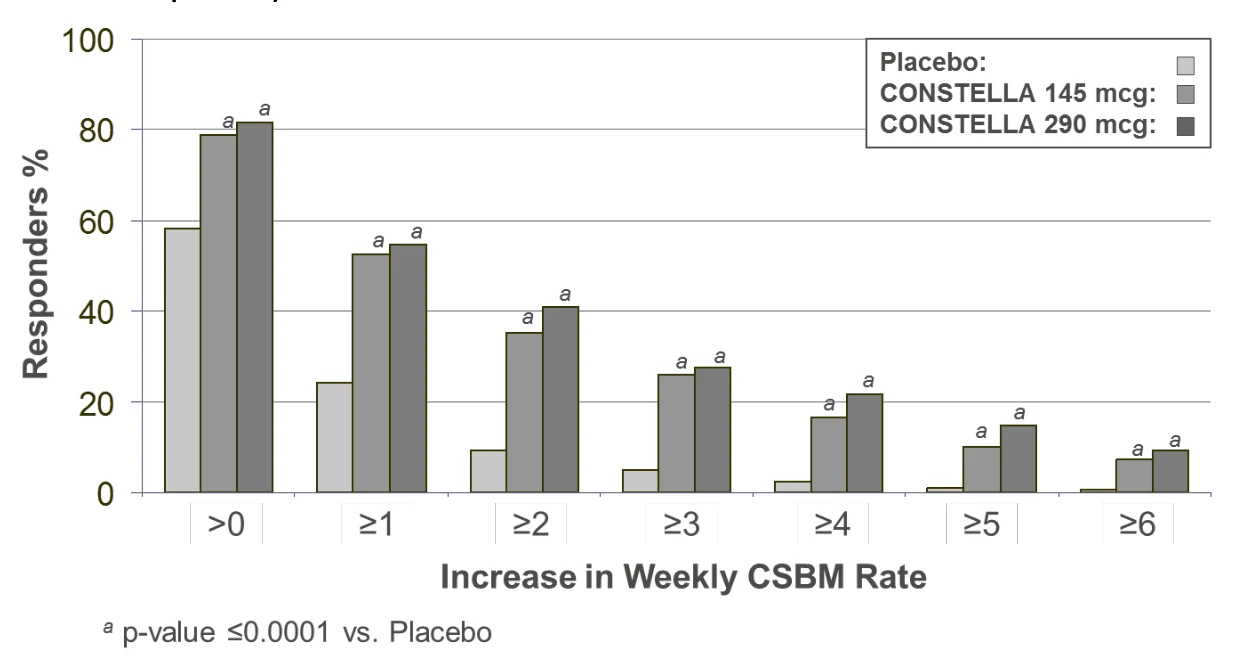
p≤0.0001 for all comparisons of linaclotide vs placebo
CSBM=Complete Spontaneous Bowel Movement
For CSBM and SBM frequency, each dose of CONSTELLA demonstrated a statistically significant separation from placebo that was present at the first week and sustained across the 12 weeks of the treatment period (p < 0.001 for each dose vs. placebo at all time-points) for both trials.
During the 4-week randomized withdrawal period in Trial 3, patients who received CONSTELLA during the 12-week treatment period were re-randomized to receive placebo or continue treatment on the same dose of CONSTELLA taken during the treatment period. In CONSTELLA-treated patients re-randomized to placebo, CSBM and SBM frequency returned toward baseline within 1 week with no evidence of rebound worsening compared to baseline. Patients who continued on CONSTELLA maintained their response to therapy over the additional 4 weeks. Patients on placebo who were allocated to CONSTELLA had an increase in CSBM and SBM frequency similar to the levels observed in patients taking CONSTELLA during the treatment period (Figure 4).
Figure 4 - Trial 3 - Mean (a) CSBM and (b) SBM Frequency by Week Over the 12-week Treatment Period and 4-week Randomized Withdrawal Period
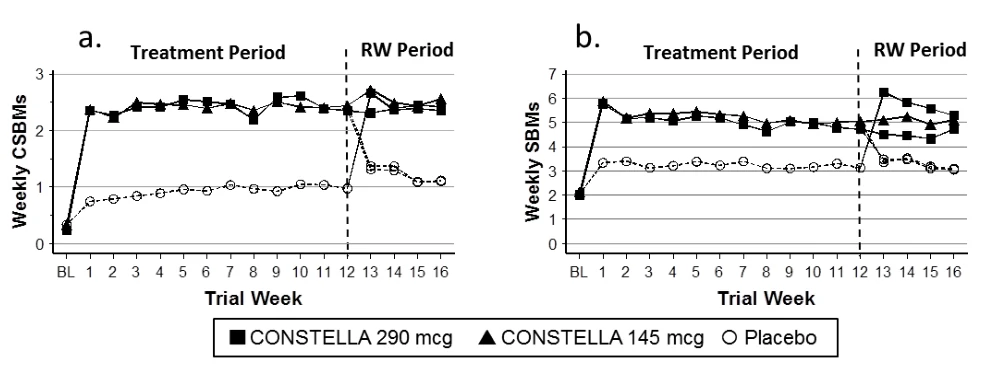
CSBM=Complete Spontaneous Bowel Movement, SBM=Spontaneous Bowel Movement
Quality of Life Assessment
The Patient Assessment of Constipation – Quality of Life (PAC-QOL) instrument was utilized in the Phase 3 pivotal trials to assess the impact of constipation on a patient’s quality of life. The PAC-QOL evaluated 4 dimensions: physical discomfort, psychosocial discomfort, worries/concerns, and satisfaction on a 0 to 4 point scale. A pooled analysis of the PAC-QOL data at Week 12 demonstrated that a higher proportion of patients receiving CONSTELLA 145 mcg or CONSTELLA 290 mcg were responders versus placebo for the overall score and the 4 subscale scores (all p<0.05). Table 15 provides an overview of the pooled PAC-QOL responder data from Trials 3 and 4.
Table 15 - Quality of Life Results for CONSTELLA in CIC (Responder Analyses, Pooled ITT Population)
| PAC-QOL Parameter | CONSTELLA 145 mcg N=430 | CONSTELLA 290 mcg N=418 | Placebo N=423 | |||
|---|---|---|---|---|---|---|
| % of Patients with ≥1 point improvement | ||||||
| PAC-QOL Overall Score | 43.6%b | 41.0%b | 23.4%b | |||
| Satisfaction | 53.8%b | 52.3%b | 28.3%b | |||
| Physical Discomfort | 55.4%b | 54.6%b | 30.8%b | |||
| Worries/Concerns | 48.1%b | 45.1%b | 26.7%b | |||
| Psychosocial Discomfort | 24.7%a | 29.1%b | 18.6%b | |||
a p≤0.05, b p<0.0001(vs. placebo, CMH test) PAC-QOL=Patient Assessment of Constipation-Quality of Life | ||||||
72 mcg Trial (Trial 5)
The efficacy of the 72 mcg dose was established by using a 12-week CSBM Overall Responder endpoint that was the same as in Trials 3 and 4. In addition, to assess whether the response was sustained over time, a separate analysis (CSBM Sustained Responder) was performed, where responders were both a 12 -weeks Overall Responder and a CSBM weekly responder for at least 3 of the last 4 weeks of the treatment period.
The response rates for the CSBM Overall Responder endpoint were 13.4% for CONSTELLA 72 mcg 12.4% for CONSTELLA 145 mcg and 4.7% for placebo. Results for the 12-week CSBM Sustained Responder were 12.4% for CONSTELLA 72 mcg, 11.2% for CONSTELLA 145 mcg and 4.7% for placebo.
Functional Constipation (FC) in Pediatric Patients 6 to 17 Years of Age
Table 16 – Summary of Patient Demographics for Clinical Trial Supporting Efficacy of CONSTELLA in the Treatment of Pediatric FC (ITT Population)
| Trial # | Trial Design/Duration | Oral Dosage | Study Subjects (N) [Female/Male (F/M)] | Mean Age (Range) | Mean Baseline Characteristics |
|---|---|---|---|---|---|
| 6 | Randomized, multicenter, double-blind, placebo-controlled | CONSTELLA 72 mcg once daily | N=328 [164 in each group] [F=181; M=147] | 11.1 (6-17) | SBMs/week: 1.2 (0.0 – 2.9) Stool consistency: BSFS 2.4 (1.0 – 5.0) |
The efficacy of CONSTELLA for the treatment of FC in pediatric patients 6 to 17 years of age was established in a 12-week double-blind, placebo-controlled, randomized, multicenter, clinical trial (Trial 6). A summary of trial design and patient demographics is provided in Table 16. A total of 328 patients received treatment CONSTELLA 72 mcg or placebo once daily and were evaluated for efficacy. Patients in the trial had a mean age of 11 years (range 6 to 17 years); 55% were female; 45% identified as Hispanic or Latino; 70% identified as White, 26% as Black or African American, 2% as Asian, and 2% identified as another racial group.
For trial enrollment, Rome III criteria for child/adolescent FC were modified to require that patients have less than 3 Spontaneous Bowel Movements (SBMs) per week (defined as a BM that occurred in the absence of laxative, enema, or suppository use on the calendar day of or before the BM) and 1 or more of the following criteria at least once per week for at least 2 months before the screening visit:
- History of stool withholding or excessive voluntary stool retention
- History of painful or hard bowel movements (BMs)
- History of large diameter stools that may obstruct the toilet
- Presence of a large fecal mass in the rectum
- At least 1 episode of fecal incontinence per week
Patients were also required to have an average of less than 3 SBMs per week during the 2-week baseline period. Patients were excluded if they met criteria for pediatric IBS-C or had fecal impaction. Patients were allowed to continue previously stable doses of bulk laxatives, fiber, stool softeners, or probiotics. During the trial, patients could use bisacodyl or senna as needed, but were not allowed to take other laxatives, bismuth, prokinetic agents, or other drugs to treat functional constipation.
The efficacy of CONSTELLA in the treatment of FC in pediatric patients 6 to 17 years of age was assessed using change-from-baseline endpoints. The primary efficacy endpoint was the 12-week change from baseline in SBM frequency rate. The results demonstrated that patients who received CONSTELLA had statistically significant improvements compared with placebo as shown in Table 17.
Table 17- Efficacy Endpoint in Pediatric FC Trial 6: 12-week Change from Baseline in SBM Frequency Rate (SBMs/week)
| Trial 6 | |||||||
|---|---|---|---|---|---|---|---|
CONSTELLA 72 mcg (N=164) | Placebo (N=164) | Treatment Difference [95% CI] | |||||
| Baseline SBM Frequency Rate | 1.2 | 1.3 | |||||
| Least Squares 12-week Mean Change from Baseline in SBM Frequency Rate* | 2.6 | 1.3 | 1.3a [0.7, 1.8] | ||||
* Primary Endpoint a p < 0.0001 CI = Confidence Interval | |||||||
SBM frequency improved during week 1 and was maintained throughout the remainder of the 12-week treatment period.
15 MICROBIOLOGY
Not applicable
16 NON-CLINICAL TOXICOLOGY
General Toxicology:
Single-dose Toxicity
In rats, there was no detectable systemic exposure to linaclotide at single oral dose levels of up to 5.0 mg/kg (lower limit of quantitation [LLOQ] was 3 ng/mL). There were no linaclotide-related effects observed on survival, body weight, food consumption, clinical observations, or macroscopic evaluations. The no-observed-adverse-effect level (NOAEL) was determined to be ≥ 5.0 mg/kg in rats (both sexes) given linaclotide as a single oral dose.
Cynomolgus monkeys were administered a single oral dose of linaclotide at dose levels of 0.5, 1.5, 3.0, or 5.0 mg/kg. Monkeys receiving a single oral dose ≥ 1.5 mg/kg exhibited changes in stool consistency (non-formed and/or liquid feces), qualitatively reduced food consumption, and/or abdominal distention. There were no significant changes in individual body weight data for these animals. A monkey dosed orally for five consecutive days at 1.5 mg/kg/day exhibited non-formed and liquid feces over the course of the dosing period, with mild abdominal distention occurring on the fourth dosing day. These results demonstrated that linaclotide was well tolerated by Cynomolgus monkeys following a single oral dose at dose levels up to 5.0 mg/kg. Clinical signs related to the exaggerated pharmacological effects of linaclotide on stool consistency were observed at oral doses of ≥ 1.5 mg/kg/day.
Repeat-dose Toxicity
Repeated-dose studies of orally administered linaclotide have been conducted in mice, rats and monkeys. In Good Laboratory Practice (GLP) two-week repeated-dose oral toxicity studies in rats and monkeys, the administration of linaclotide at dose levels of 20 mg/kg/day in rats and 5 mg/kg/day in monkeys was associated with no noteworthy findings in rats and reversible changes in stool consistency in monkeys, respectively. In a GLP 7-day repeated-dose intravenous toxicity study in monkeys, the administration of linaclotide at a dose level of 15 mg/kg/day was associated with stool consistency changes.
In GLP repeated-dose oral toxicity studies in rats and monkeys, linaclotide did not produce findings considered to be adverse when administered for up to 13 weeks at doses up to 100 mg/kg/day in rats and up to 5 mg/kg/day in monkeys. Reversible changes in stool consistency were observed in monkeys and are the exaggerated pharmacological effect of linaclotide. During a GLP 13-week repeated-dose oral toxicity study in mice, mortality related to linaclotide administration was observed at dose levels ≥ 100 mg/kg/day. Linaclotide-related microscopic changes were noted in the lymphoid system (spleen and thymus), GI tract (stomach, cecum), kidney, and heart at doses ≥ 100 mg/kg/day in both males and females. The NOAEL for linaclotide in mice was 20 mg/kg/day administered orally once daily for 13 weeks.
Based upon the increased sensitivity of mice to linaclotide administration, mice were chosen as the species for the GLP 26-week repeated-dose oral toxicity study in rodents. In the 26-week toxicity study, mortality was observed early in the study in the high dose (100/80 mg/kg/day) group. However, no linaclotide-related clinical pathology changes, gross or microscopic findings were noted at any dose level in either sex. Based on the mortality observed, the NOAEL was 20 mg/kg/day in mice administered linaclotide orally for 26 weeks.
In the GLP 39-week study in monkeys, changes in stool consistency (watery feces) were present at all dose levels evaluated in both sexes and were consistent with the exaggerated pharmacological effects of linaclotide. Repeated daily oral dosing for up to 39 weeks did not result in any apparent decrease in the pharmacological effects of linaclotide on stool consistency during the dosing interval and the effects on stool consistency were reversible upon discontinuation of dosing. Two monkeys (one male at the mid dose [10 mg/kg/day] and one female at the high dose [50 mg/kg/day]) were euthanized moribund due to severe watery feces (e.g., diarrhea) and associated progressive dehydration. Mortality in these monkeys was considered to be related to exaggerated pharmacology of linaclotide. Clinical observations and histopathologic findings in the large intestine (colon, cecum, and rectum) identified the GI system as target organs in both animals euthanized moribund. In other animals in this study which survived until scheduled necropsy, there were no linaclotide-related clinical pathology changes, nor any gross or microscopic findings. Based on mortality, the NOAEL was determined to be 5 mg/kg/day in monkeys administered linaclotide orally for 39 weeks.
Carcinogenicity: In 2-year carcinogenicity studies, linaclotide was not tumorigenic in rats at doses up to 3,500 mcg/kg/day or in mice at doses up to 6,000 mcg/kg/day.
Genotoxicity: Linaclotide was not genotoxic in an in vitro bacterial reverse mutation (Ames) assay or in the in vitro chromosomal aberration assay in cultured human peripheral blood lymphocytes.
Reproductive and Developmental Toxicology: Linaclotide had no effect on fertility or reproductive function in male and female rats at oral doses of up to 100 mg/kg/day.
The potential for linaclotide to cause teratogenic effects was studied in rats, rabbits, and mice. Oral administration of up to 100 mg/kg/day in rats and 40 mg/kg/day in rabbits produced no maternal toxicity and no effects on embryo-fetal development. In mice, oral dose levels of at least 40 mg/kg/day produced severe maternal toxicity including death, reduction of gravid uterine and fetal weights, and effects on fetal morphology. Oral doses of 5 mg/kg/day did not produce maternal toxicity or any adverse effects on embryo-fetal development in mice.
Juvenile Toxicity: In a 5-day oral range-finding tolerability study, linaclotide was tolerated at higher dose levels in juvenile mice when treatment was initiated on Day 21 post-partum (PP) (100 mcg/kg/day) compared with initiation of dosing on Day 14 (50 mcg/kg) or Day 7 (10 mcg/kg). In mice, younger animals were more sensitive to linaclotide-related mortality and deaths were due to rapid and severe dehydration produced by significant fluid shifts into the intestinal lumen. In the definitive GLP 9-week repeated-dose oral toxicity study in juvenile mice initiated on Day 7 PP, there was an increase in mortality after administration of 1 or 2 doses of linaclotide at 10 mcg/kg through Day 9 PP. However, the dose of 10 mcg/kg was well tolerated after Day 9 PP for the remaining treatment period in the surviving juvenile mice, with no linaclotide-related adverse effects or microscopic findings and no effects on the physical development or neurobehavioral assessments. In the GLP 9-week study in juvenile mice, the NOAEL was determined to be 3 mcg/kg. These data suggest that the increased sensitivity of juvenile mice to linaclotide may be related to an increased expression of intestinal GC-C receptors in young animals or possibly other factors such as those related to an immature GI system. (see 2 CONTRAINDICATIONS, 3 SERIOUS WARNINGS AND PRECAUTIONS BOX, and Special Populations and Conditions).